
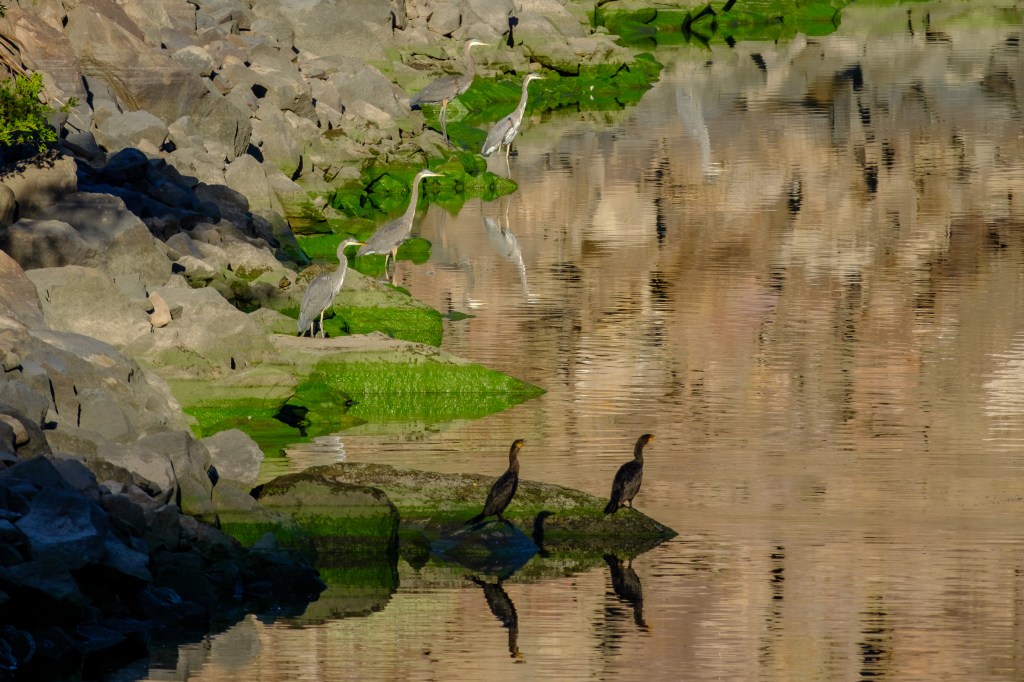
Bishop is in the high desert at 4000 feet. Despite being in a desert, we have Great Blue Herons; lots of them. They have been seen at 260 feet below sea level in Death Valley and as high as 11,000 feet near Sawmill Pass. They build nests in Cottonwoods throughout the Owens Valley; rookeries of several nests can be found. They fish in streams, canals, ponds, and reservoirs. They hunt small mammals in fields.
Compare a Heron with a Bald Eagle. Both prefer fish. The Heron catches fish with its long bill, the Eagle grasps them with its talons. They have colossal wingspans; 6 feet for the Heron, 6.5 feet for the Eagle. But the Heron is a lithe ballet dancer: 4.5 feet tall, 6.5 pounds. The Eagle is a muscle-bound thug: 2.5 feet, 9.5 pounds.
I have taken thousands of photos of Great Blue Herons. They are common and big, making them an easy target. I currently (March 2024) have 674 saved Heron photos, more than for any other bird. A heron was the first bird I managed to photograph while in flight. Their large size and straight path makes it easier to get pictures. Most photos in this post were taken near the Buckley Ponds or the Bishop Creek Canal.
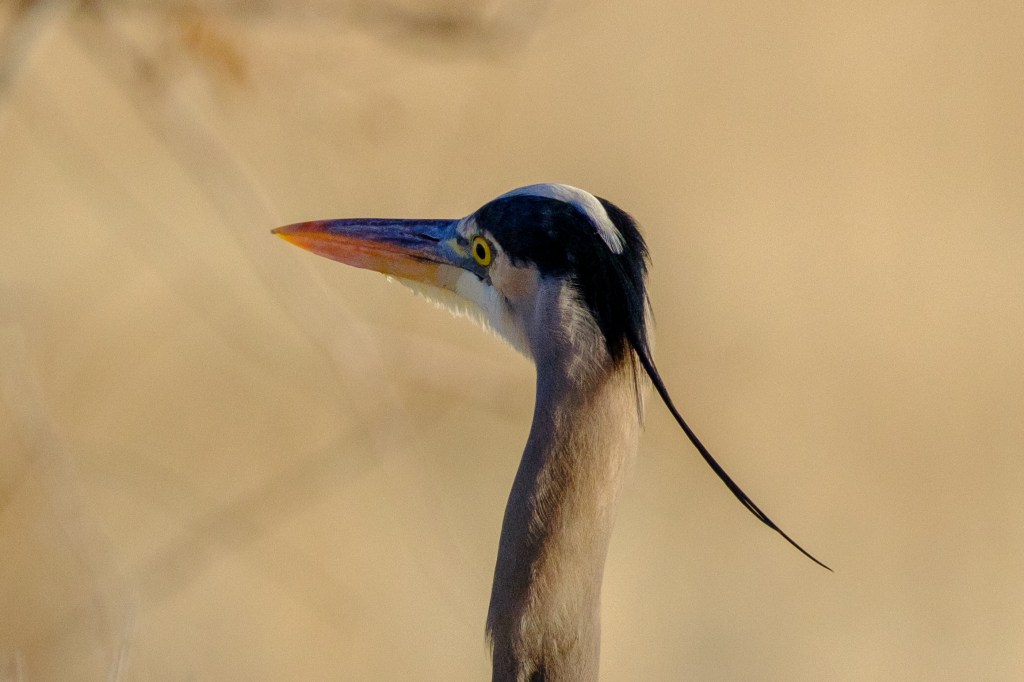
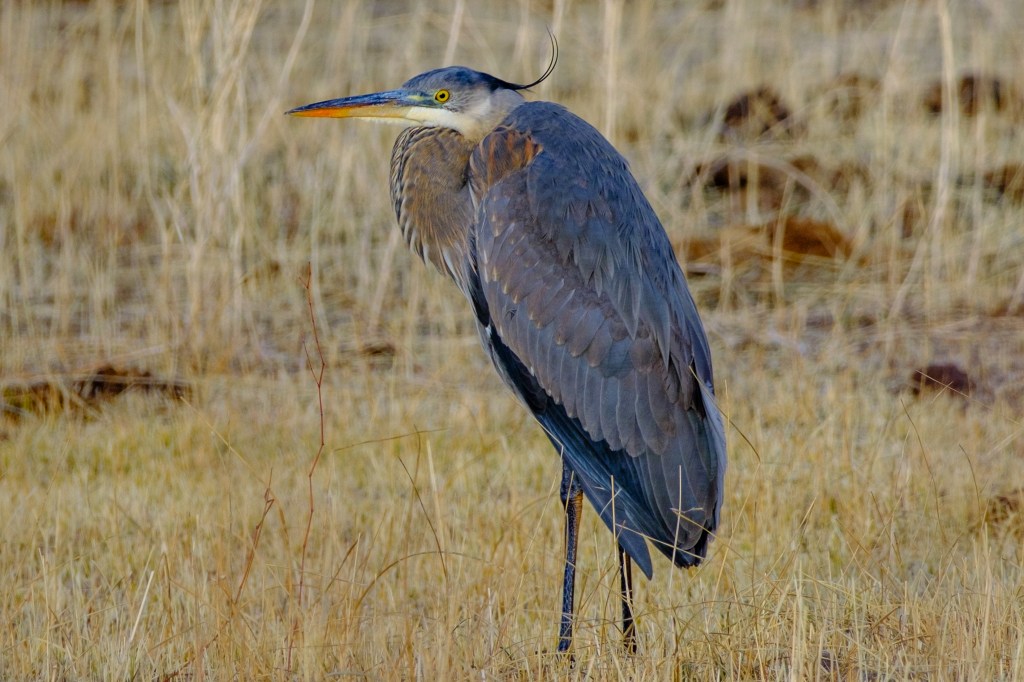
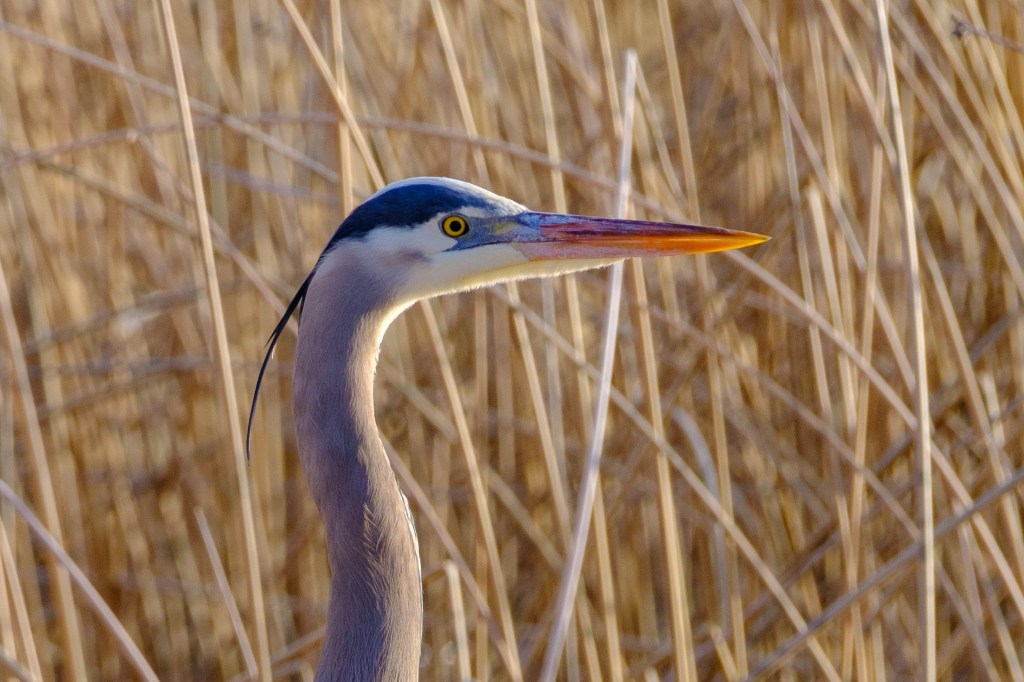
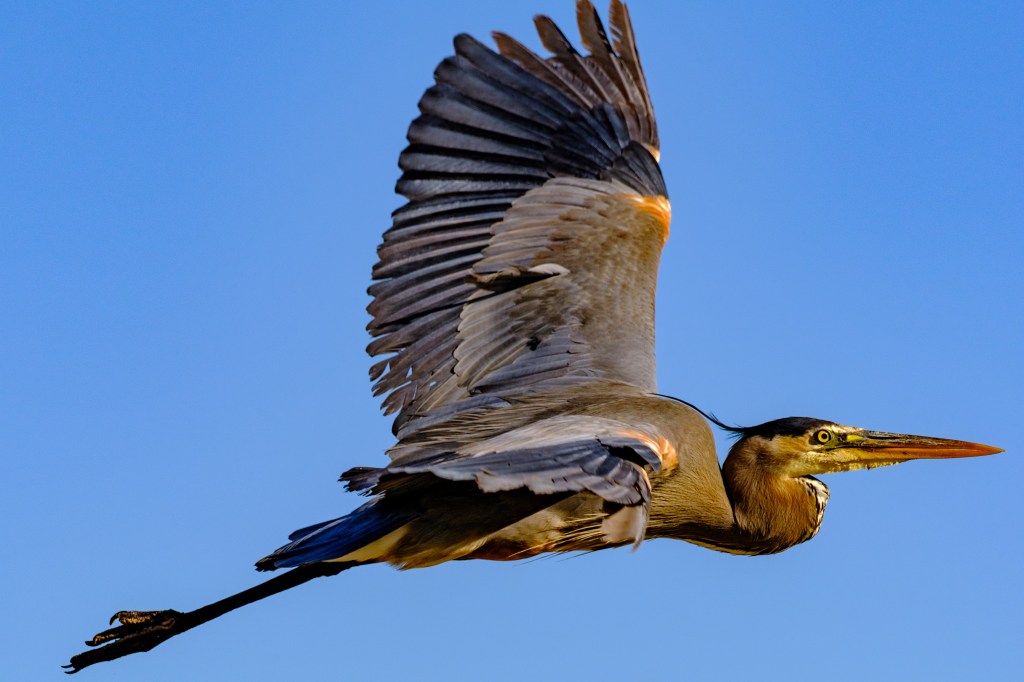
Pony tails.
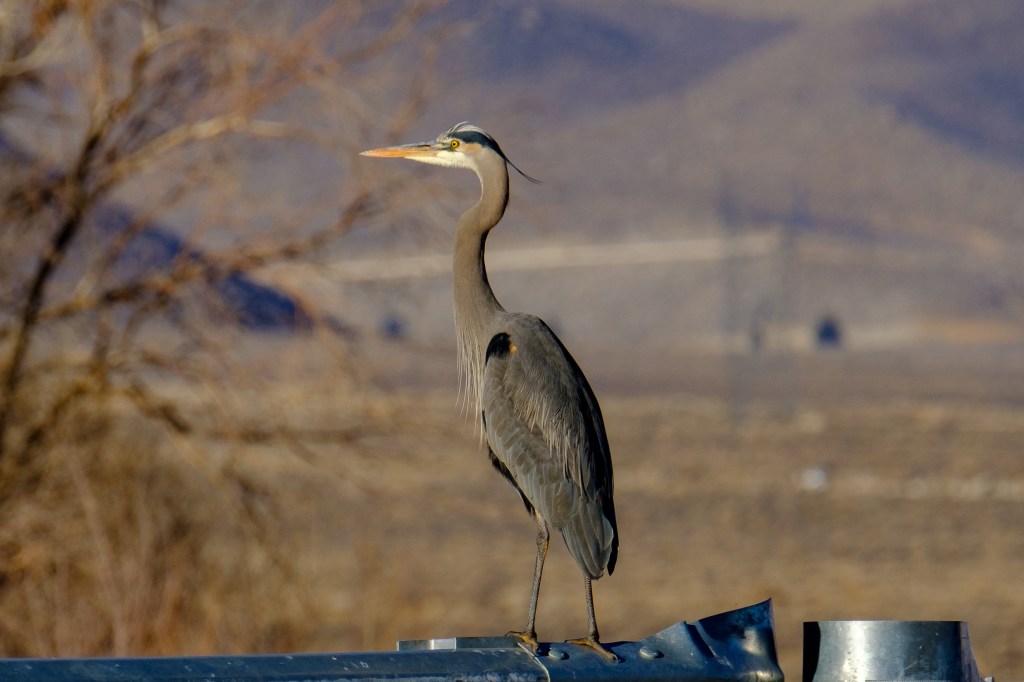
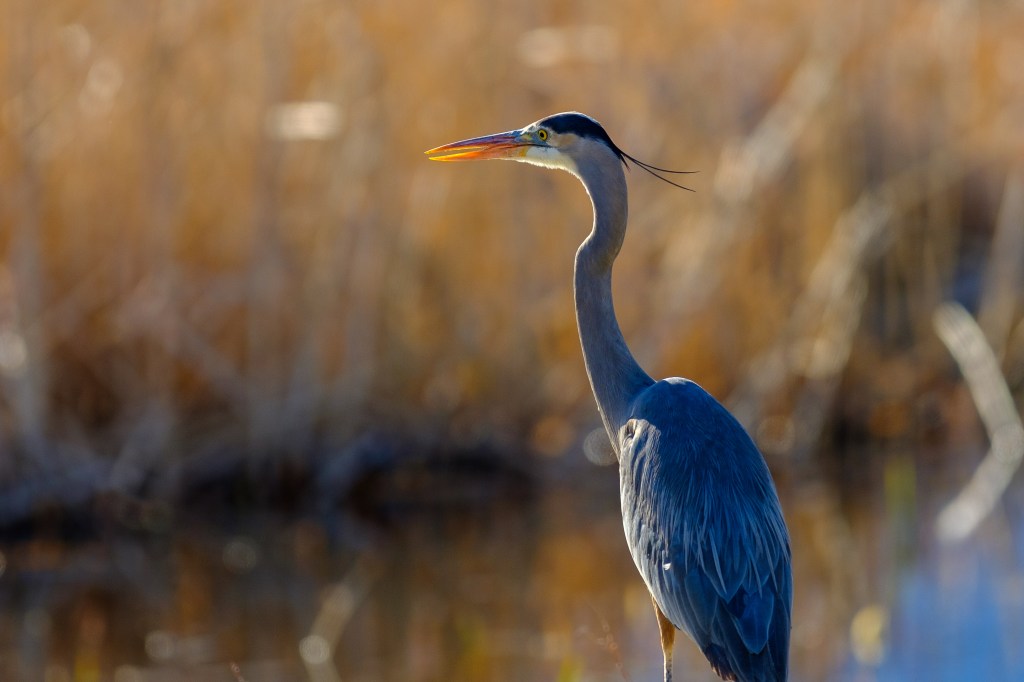
Herons have pony tails. Technically, these are occipital plumes. Apparently these feathers are used for mating displays. In reviewing my photos, the pony tails seem longest around January, when mating starts, shortest or absent in late summer. Or maybe this difference arises because juvenile Herons lack long plumes. Below are a few examples.
Shake it, baby!
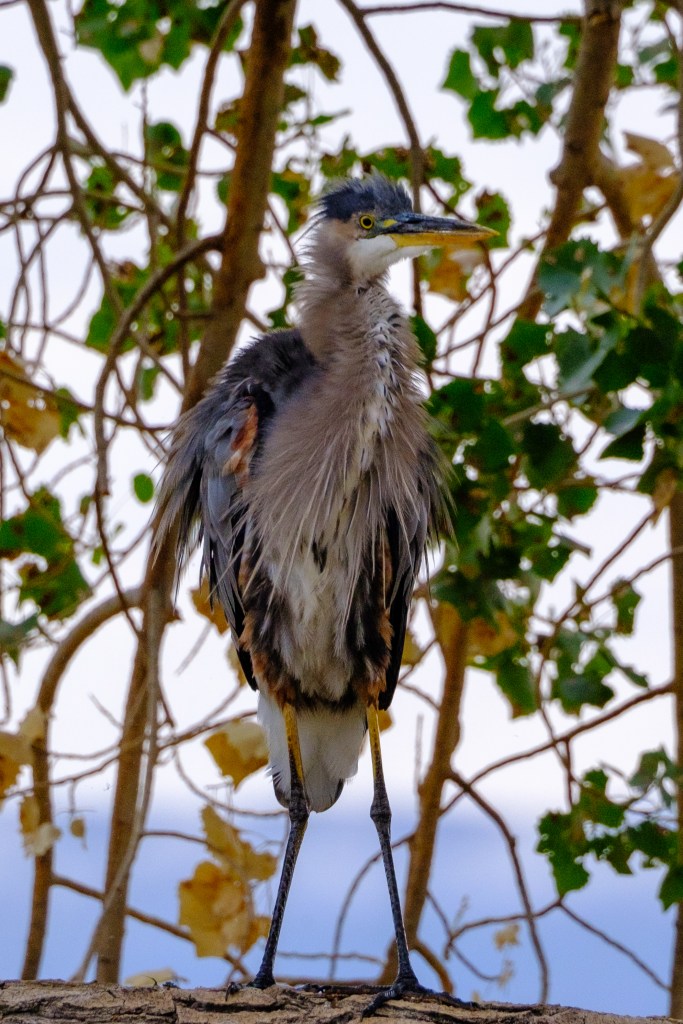
Sometimes birds give themselves a vigorous shake, fluffing their feathers into a disorderly mess. Why? Are they trying to shed dust or parasites? Below is a sequence of photos showing this shaking.

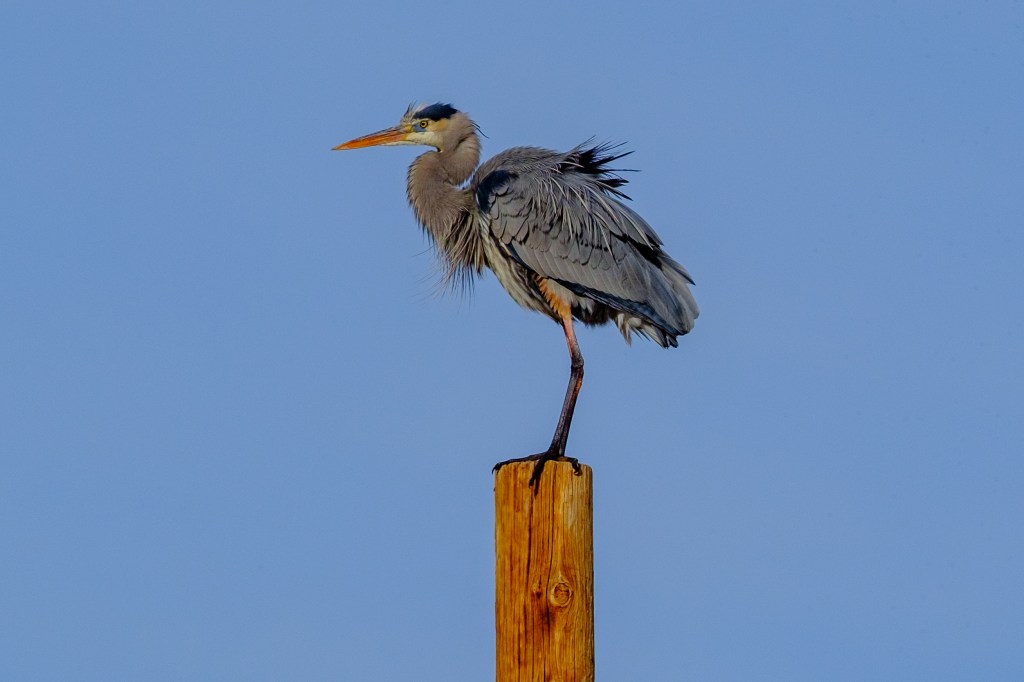
Here is another example of shaking.
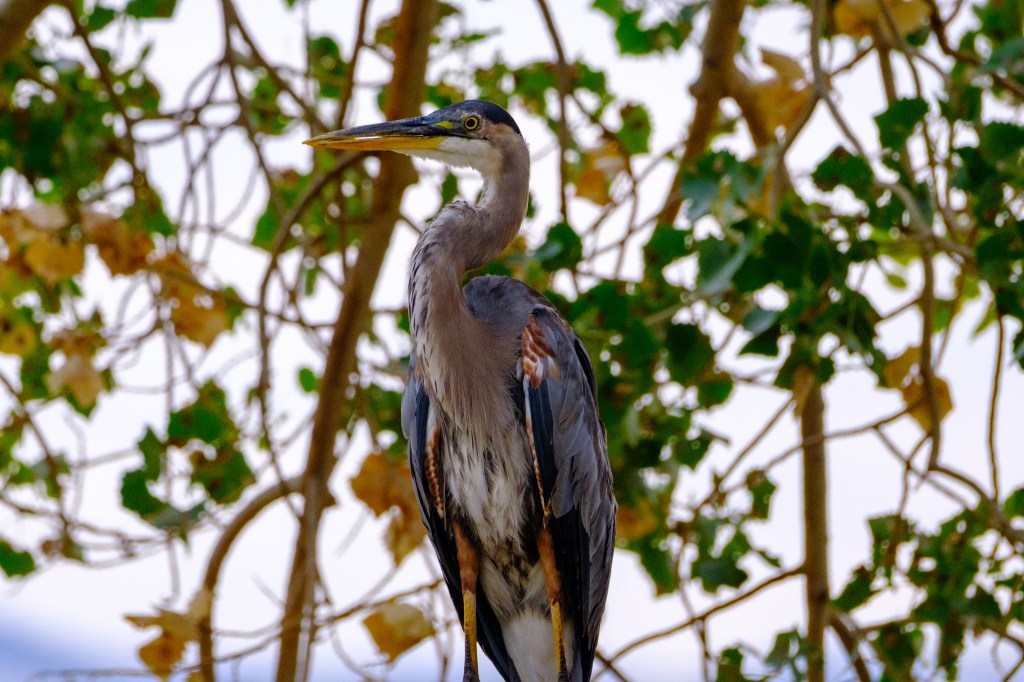
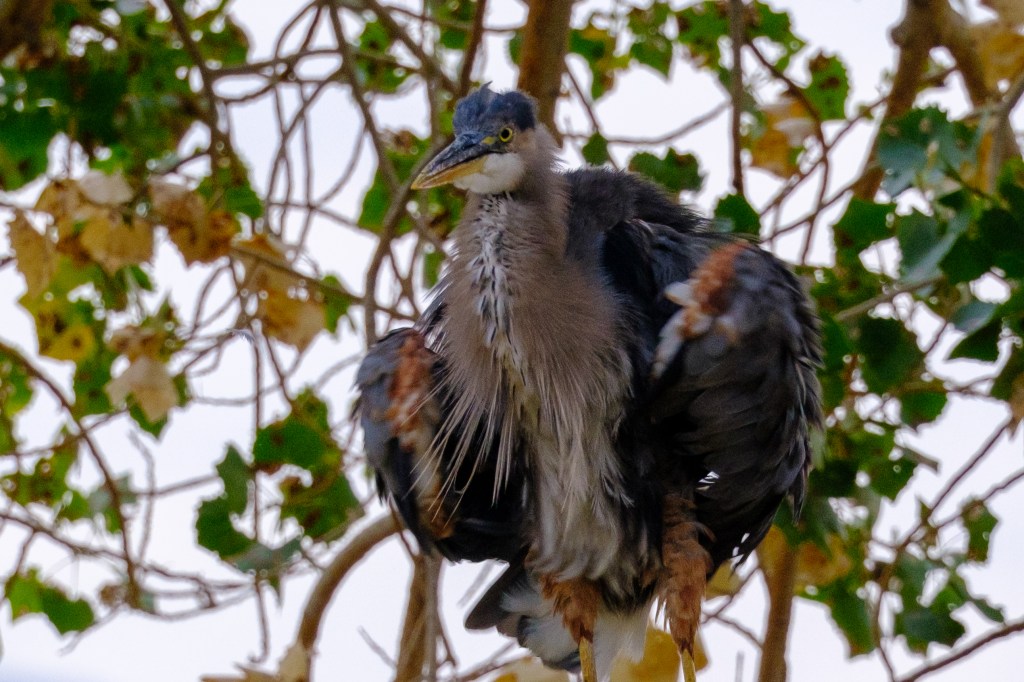
Feeding.
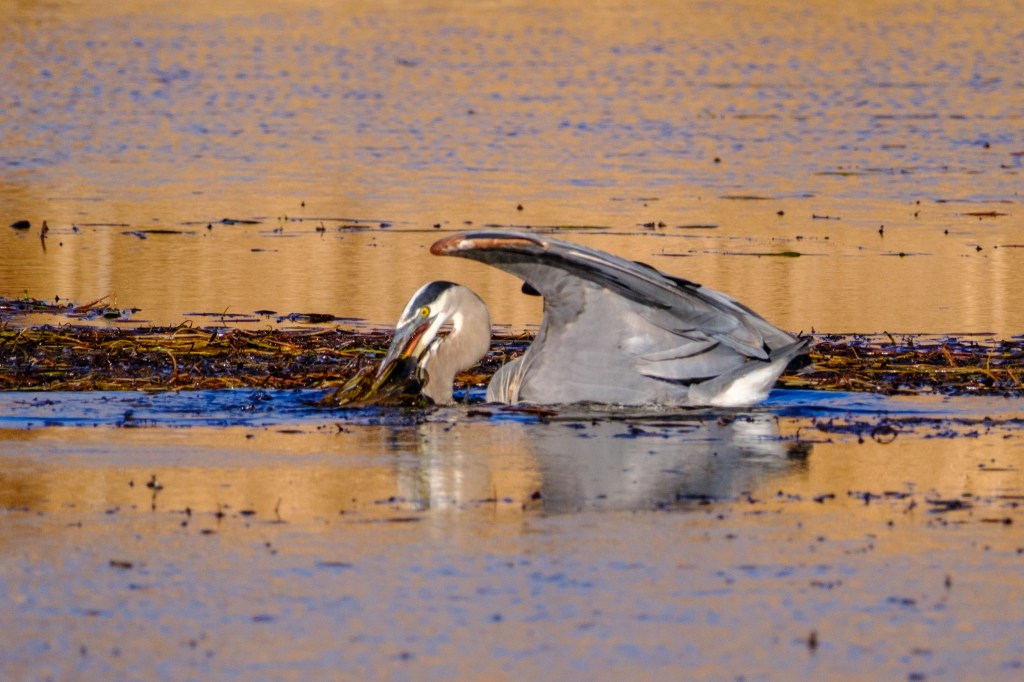
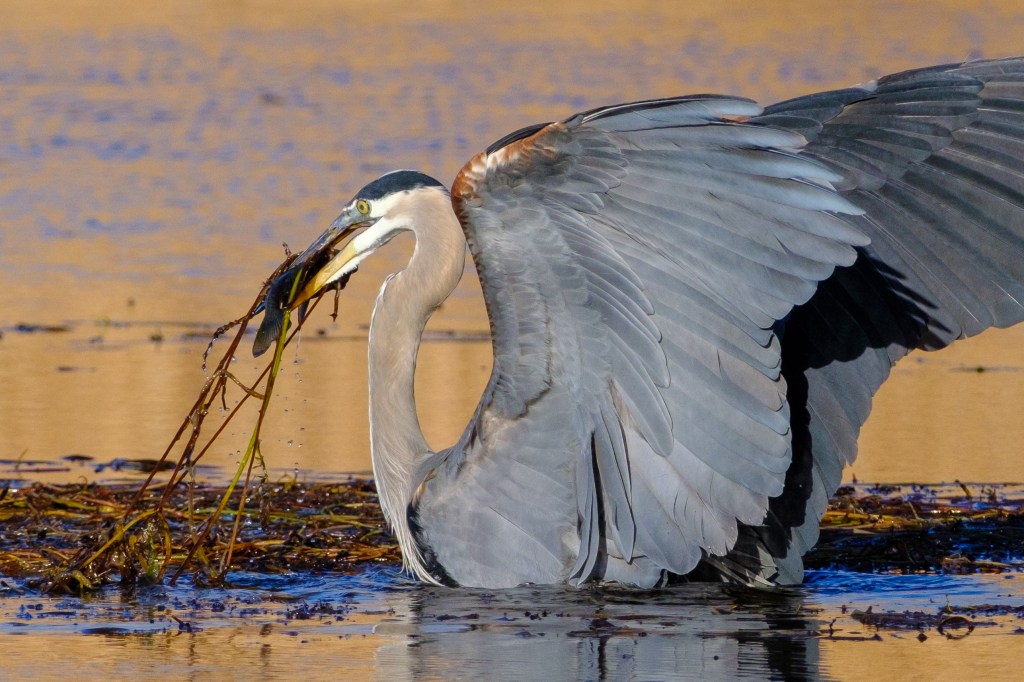
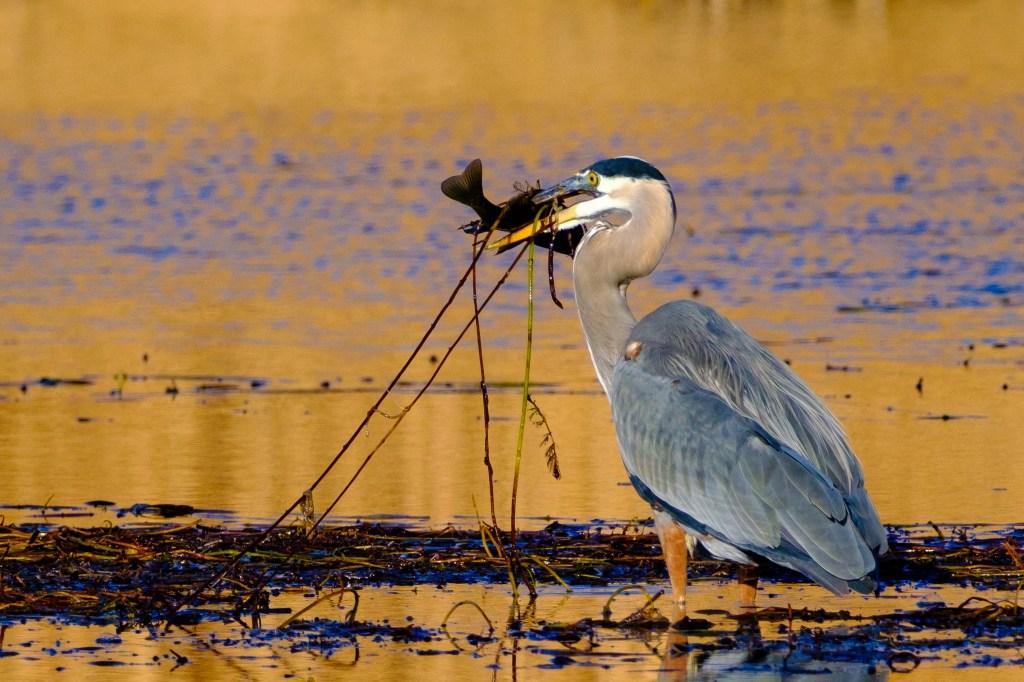
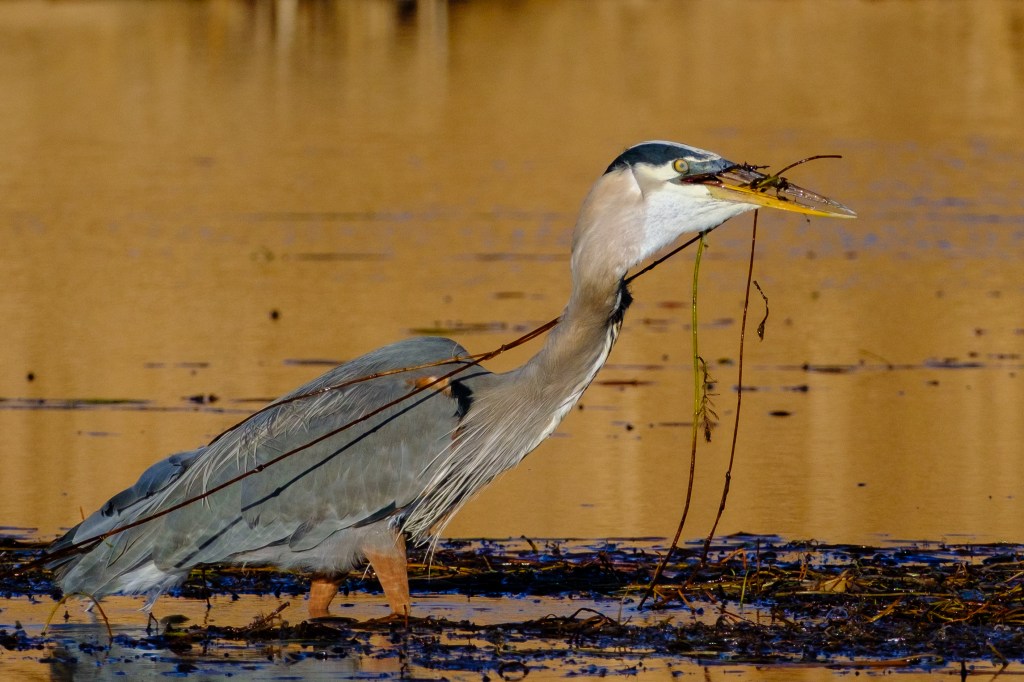
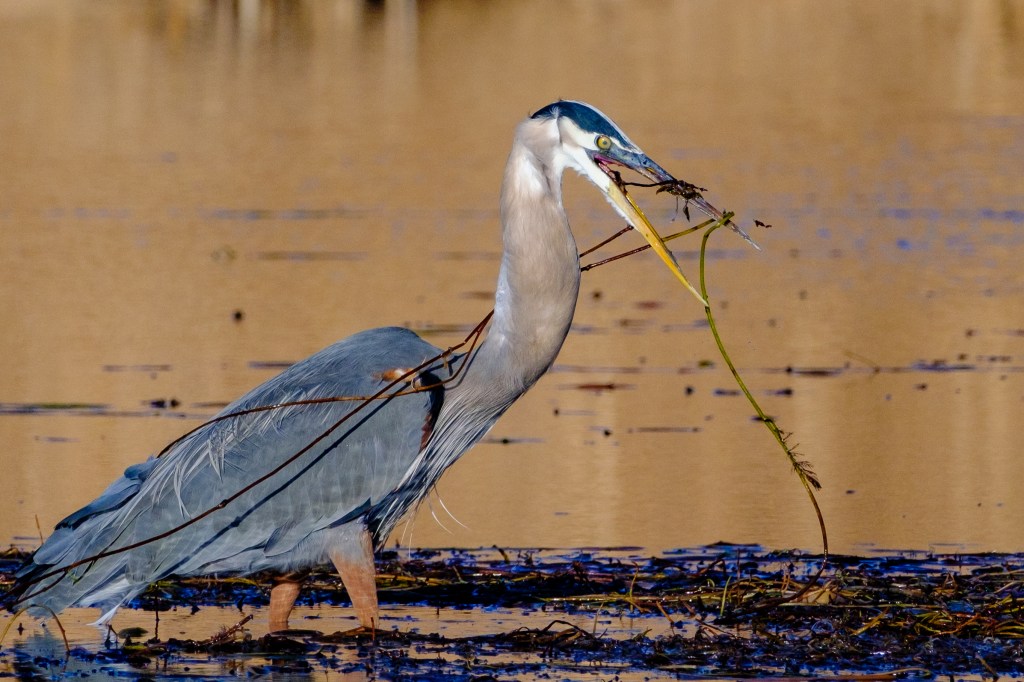
Herons usually hunt near or in water. They may stand motionless, or move slowly. Then they strike quickly and grab a fish. They may hold it for a while, until the flopping stops, then maneuver it so that it can be swallowed head first. If the fish is large you can see a bulge move down the bird’s neck. In addition to fish they eat crustaceans, amphibians, other birds, and small mammals.
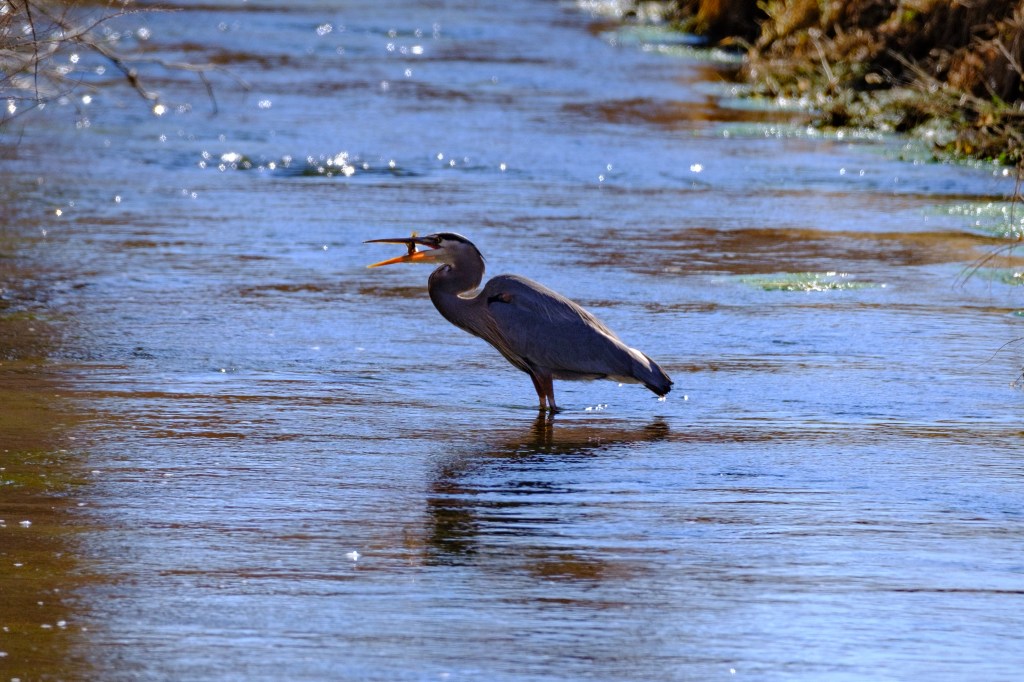
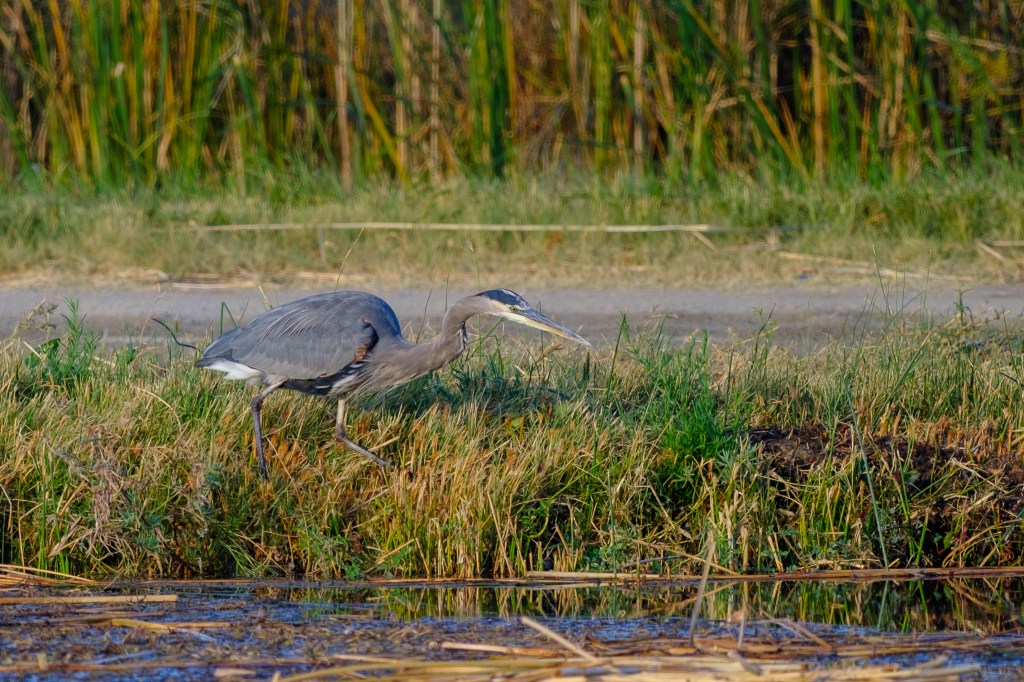
In the sequence below, a Heron catches a carp at the Buckley Ponds. The time from first to last photo is 52 seconds. Imagine if you had to eat this way.

Flight.
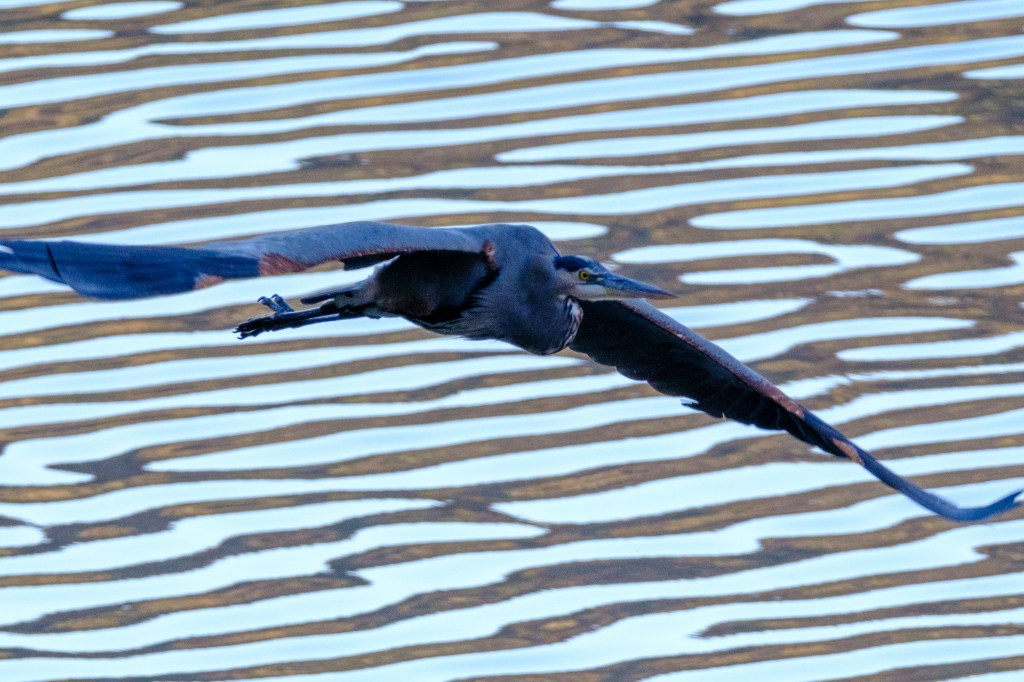
Herons use big, powerful, rhythmic wing-beats and tend to cruise in a straight line. I like to think of them as lumbering aircraft, an avian B-52. At the start of flight the neck is extended. Then it may coil back onto the shoulders, but not always. With the neck extended the bird often looks awkward, as if it has no business being in the air. The big primary feathers at the ends of the wings often have tears and holes, like a car riding on bald tires. Sometimes an entire feather is missing.

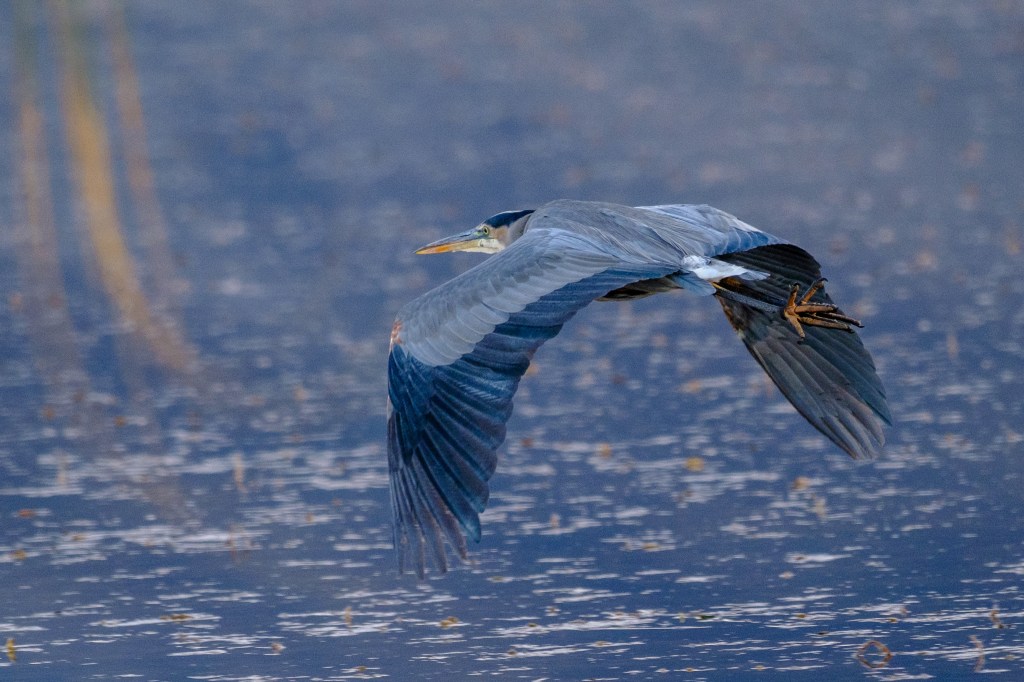
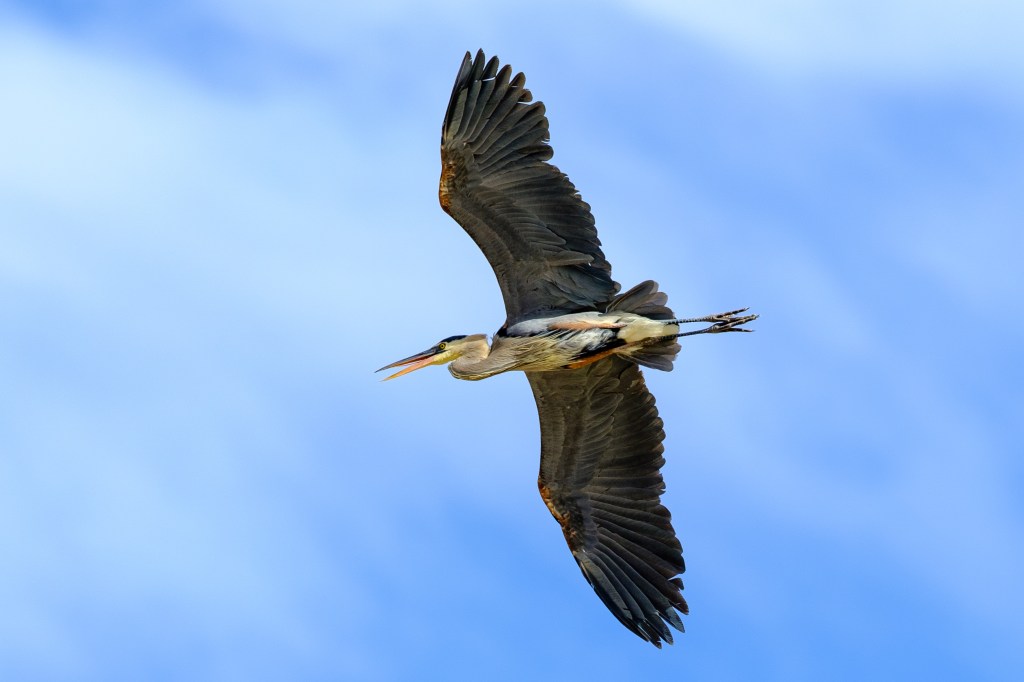
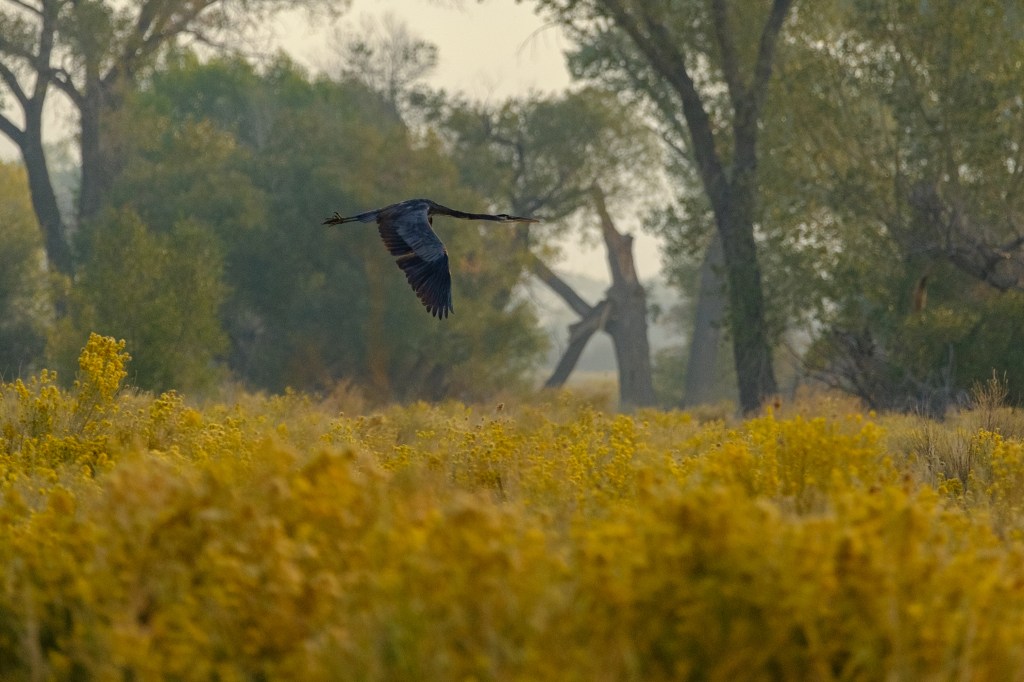
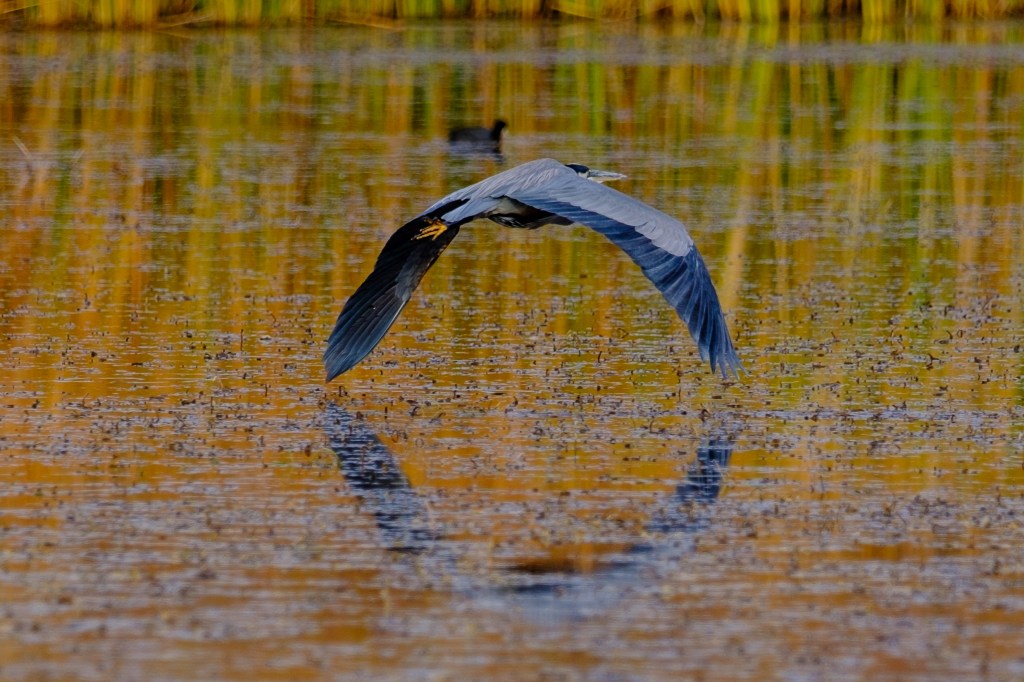
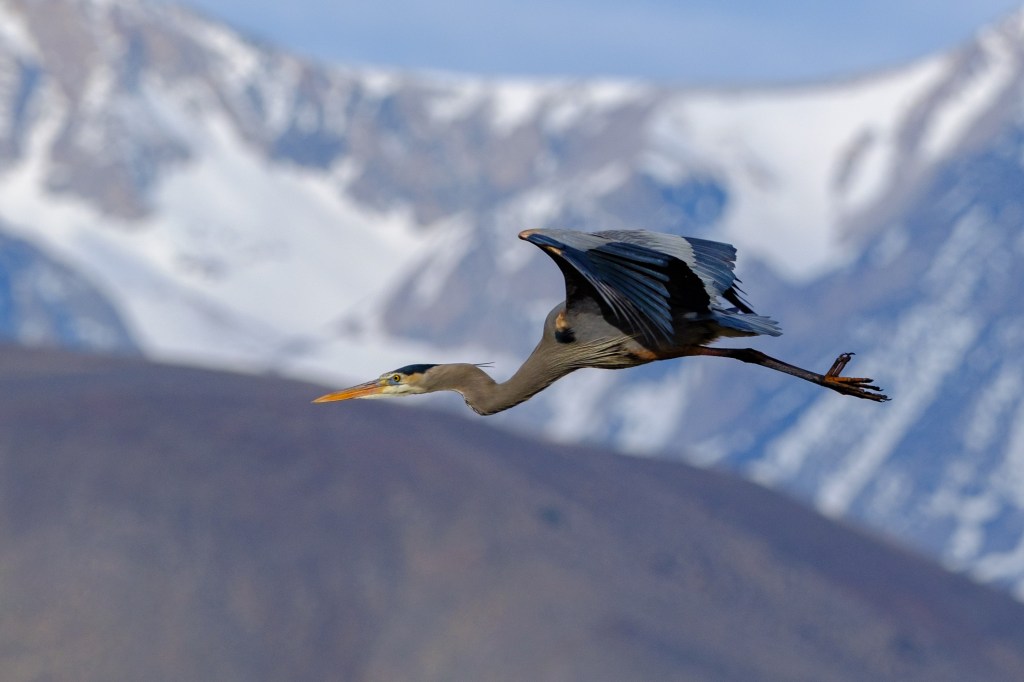
Birds descended from dinosaurs, but I find that hard to grasp when I see a Bald Eagle. But I can easily imagine the Heron below is a dinosaur.
Portraits.
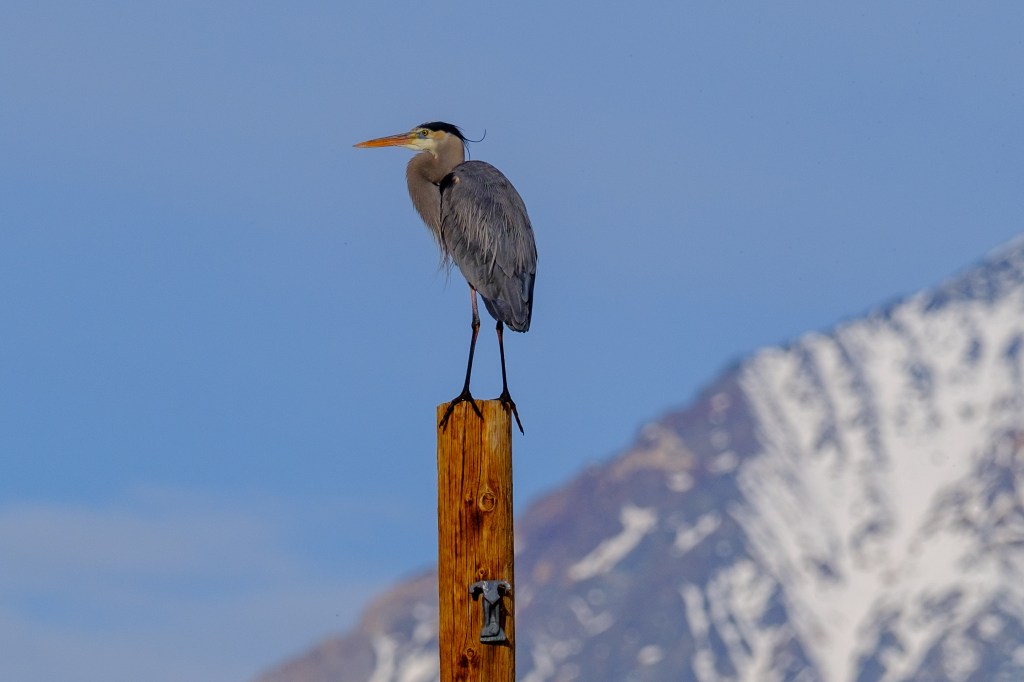
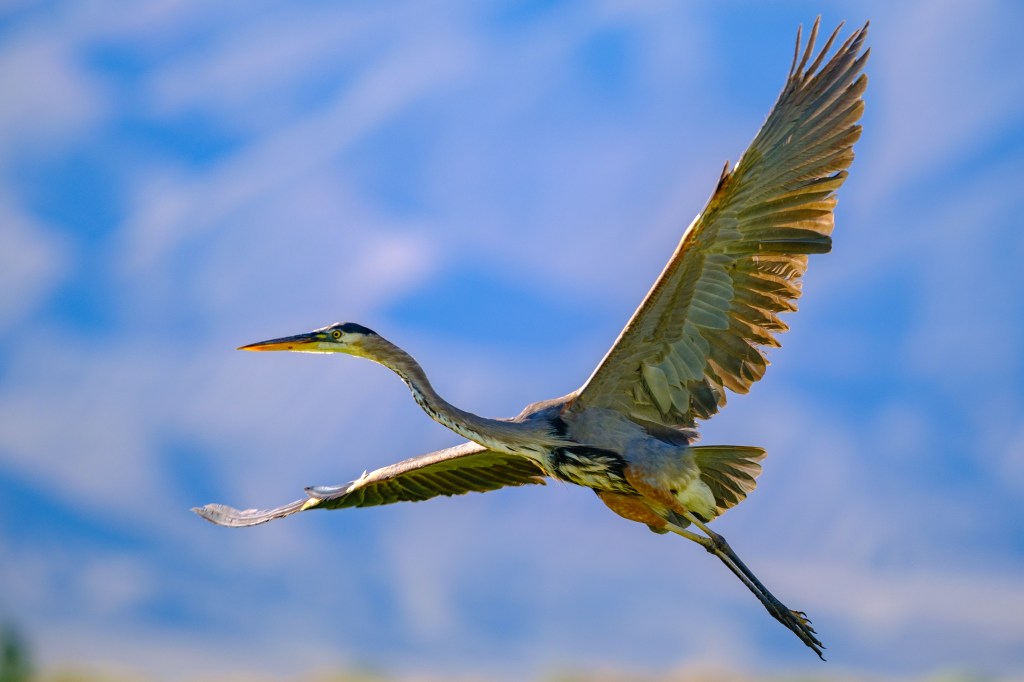
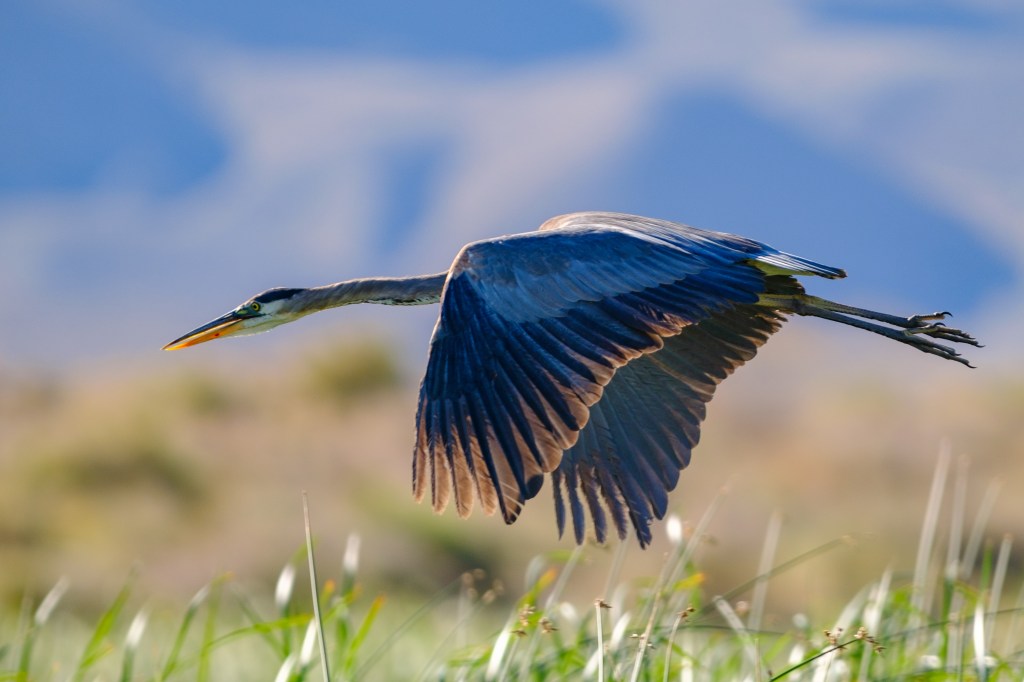
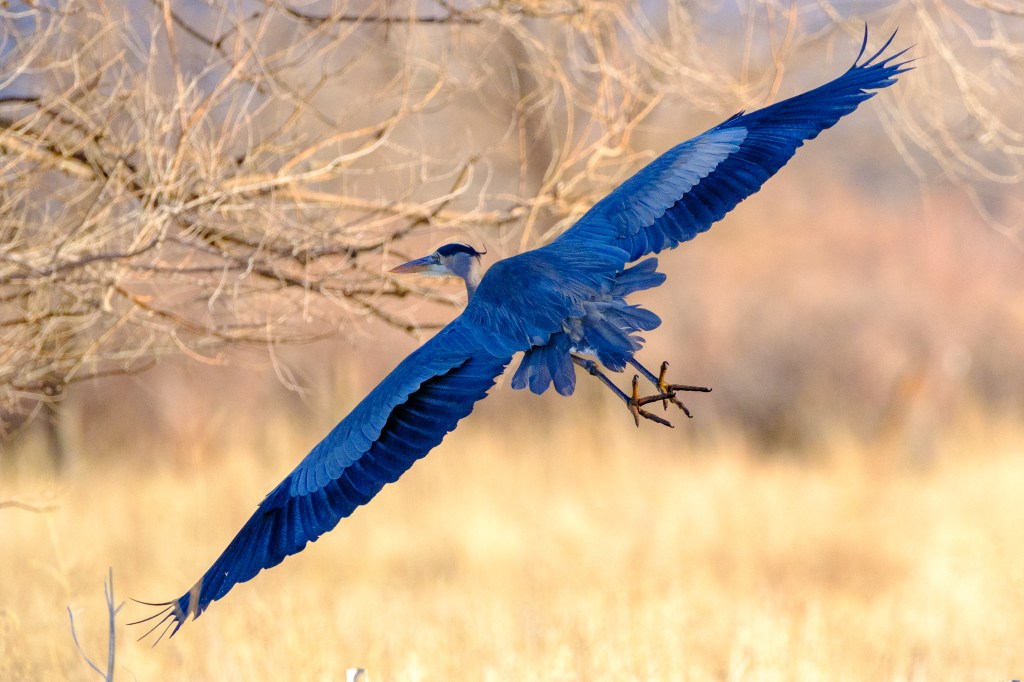
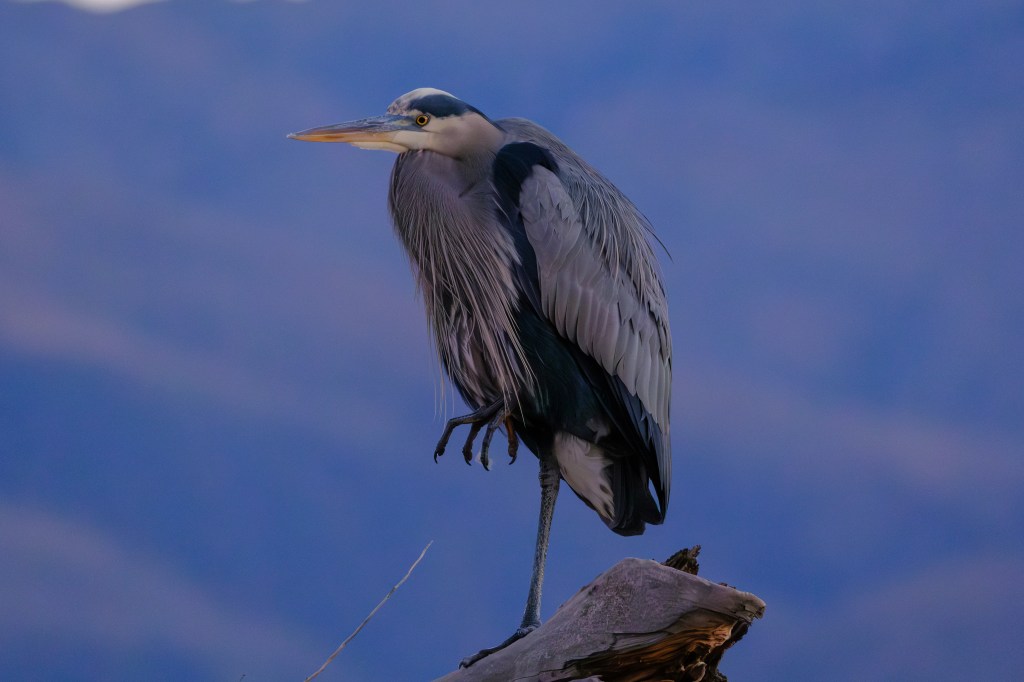
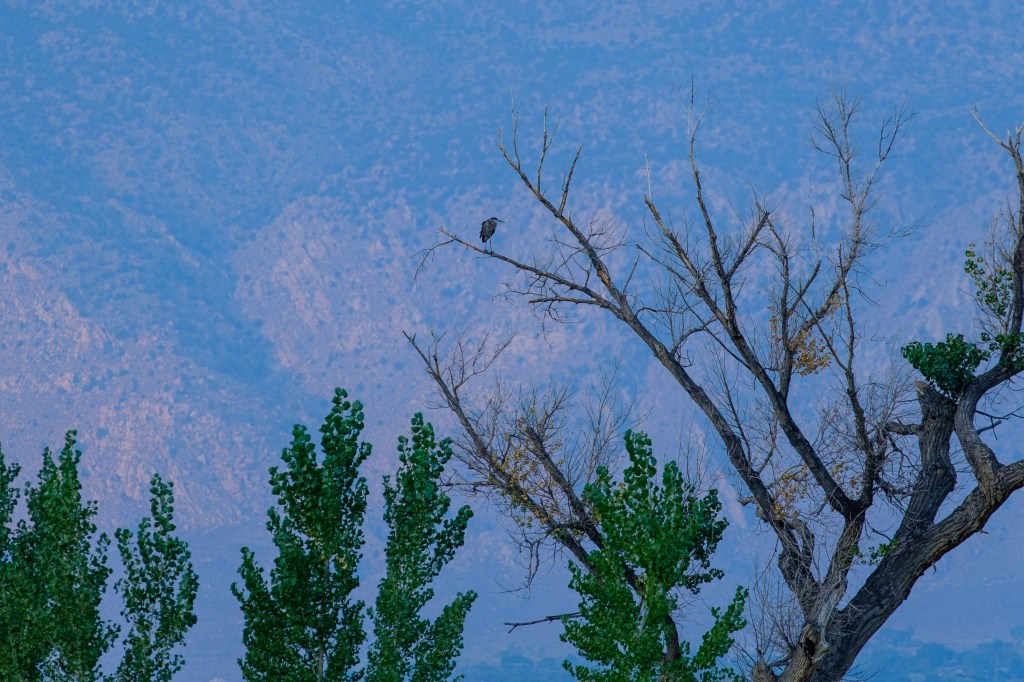
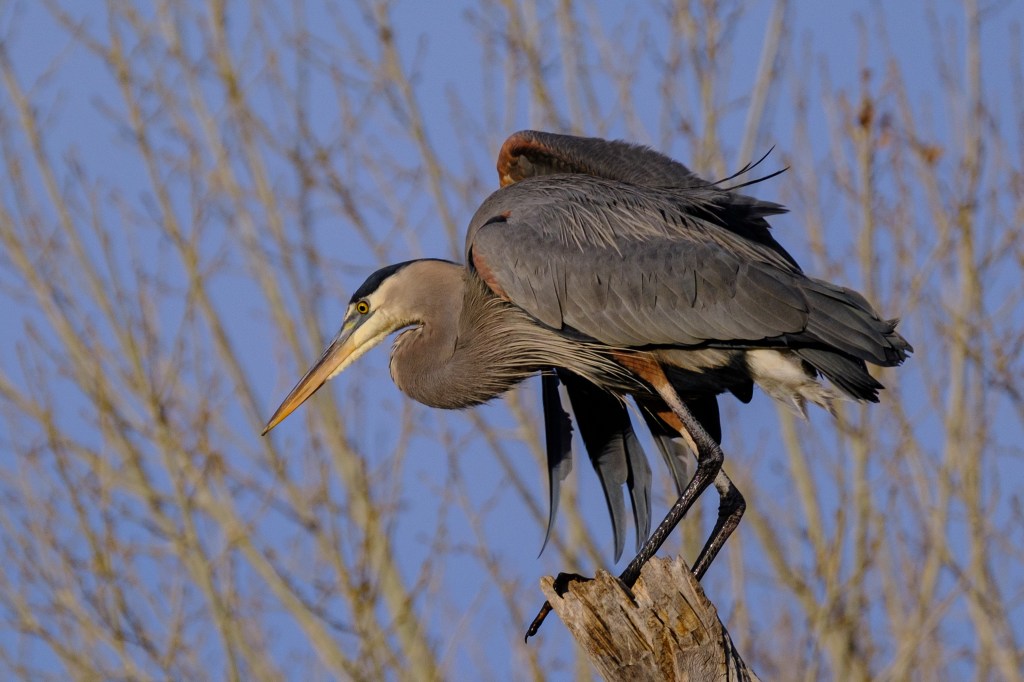
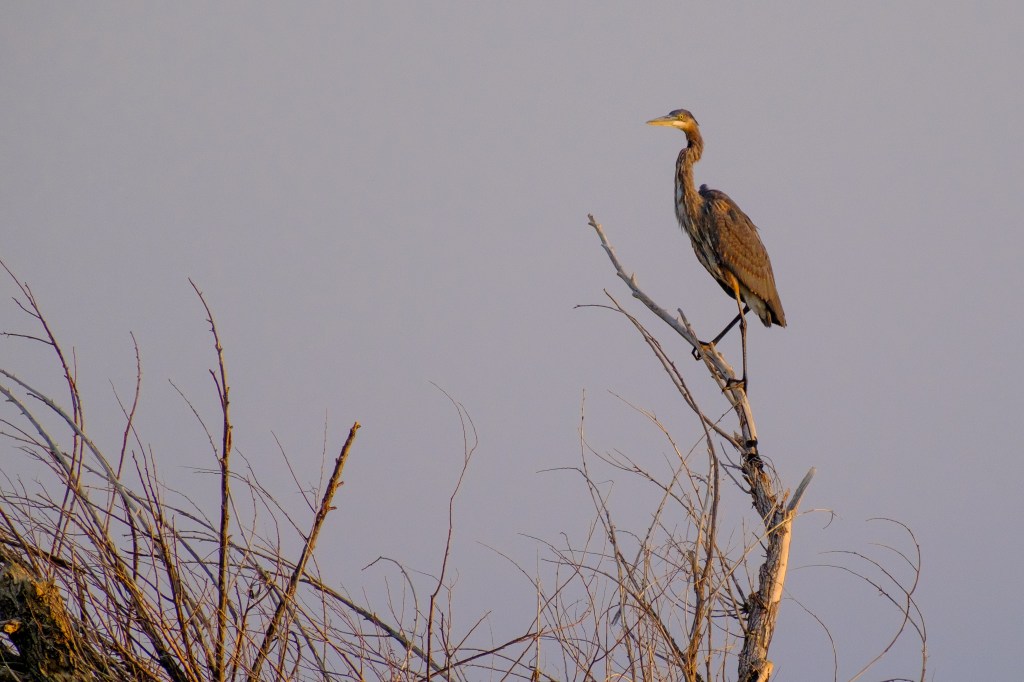
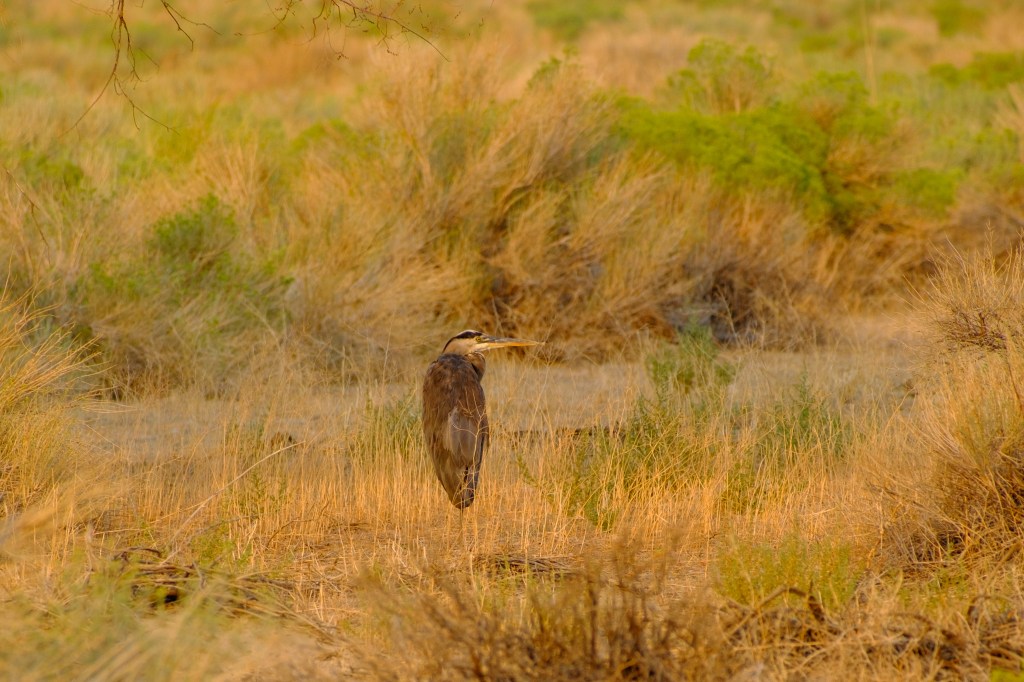
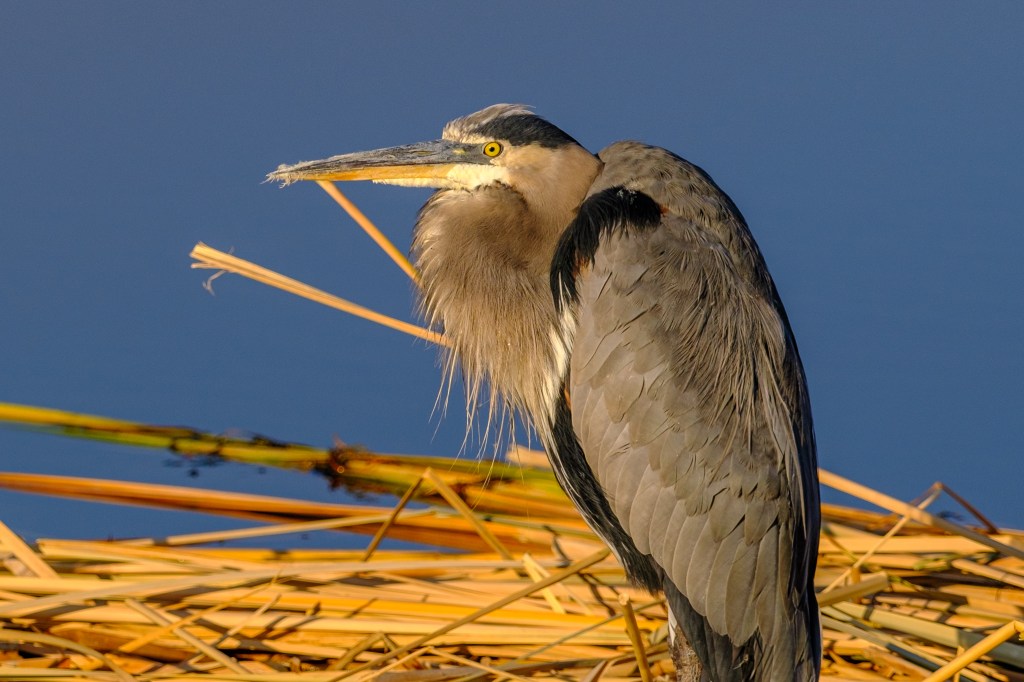
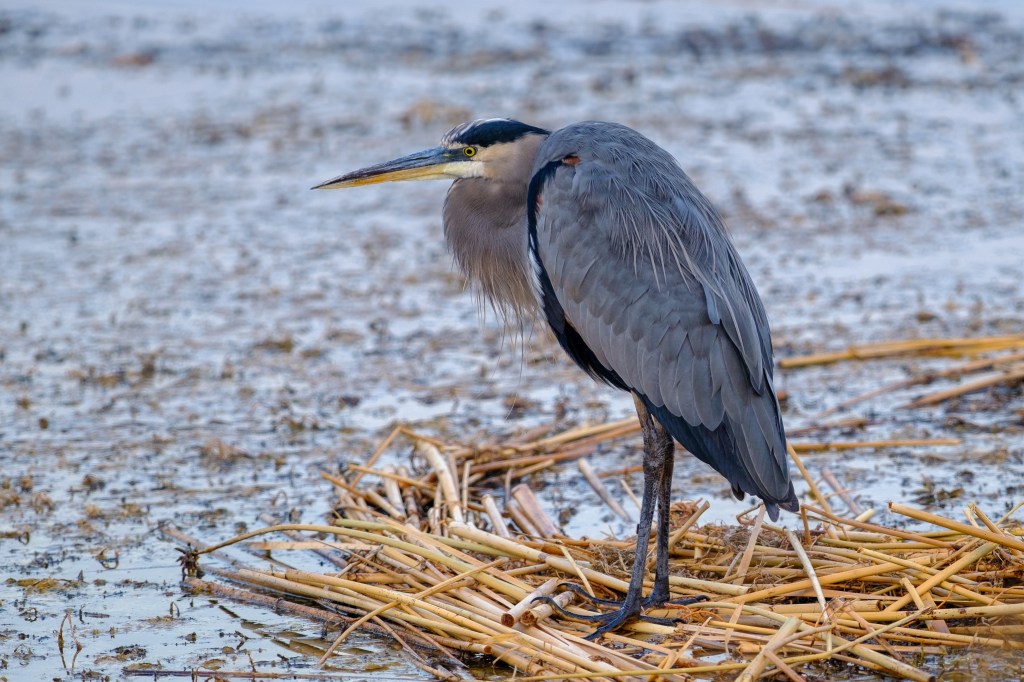
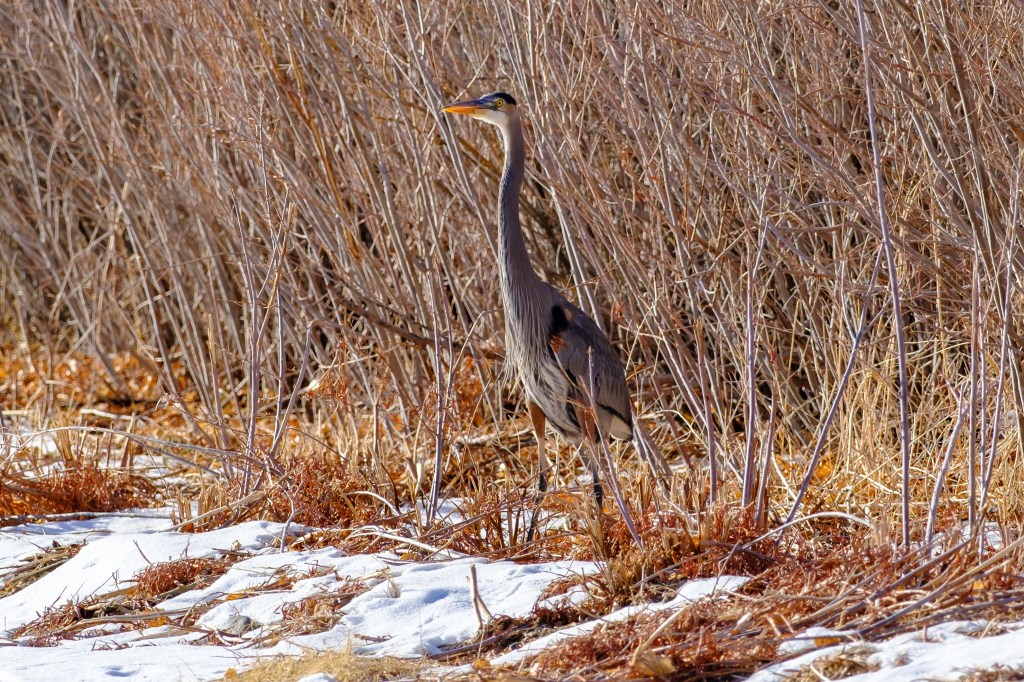
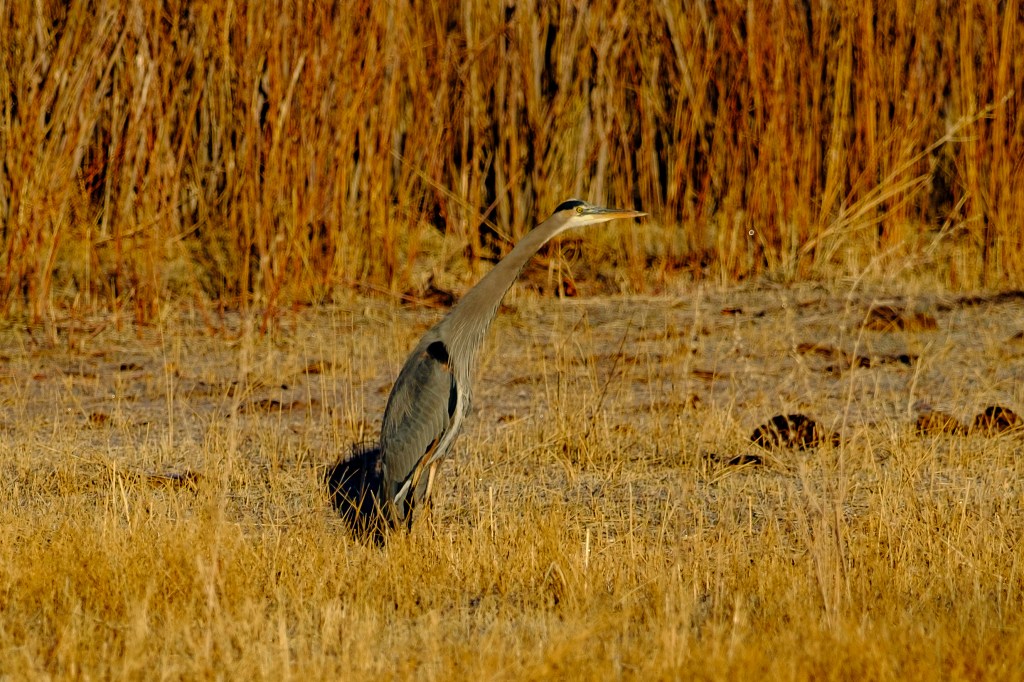
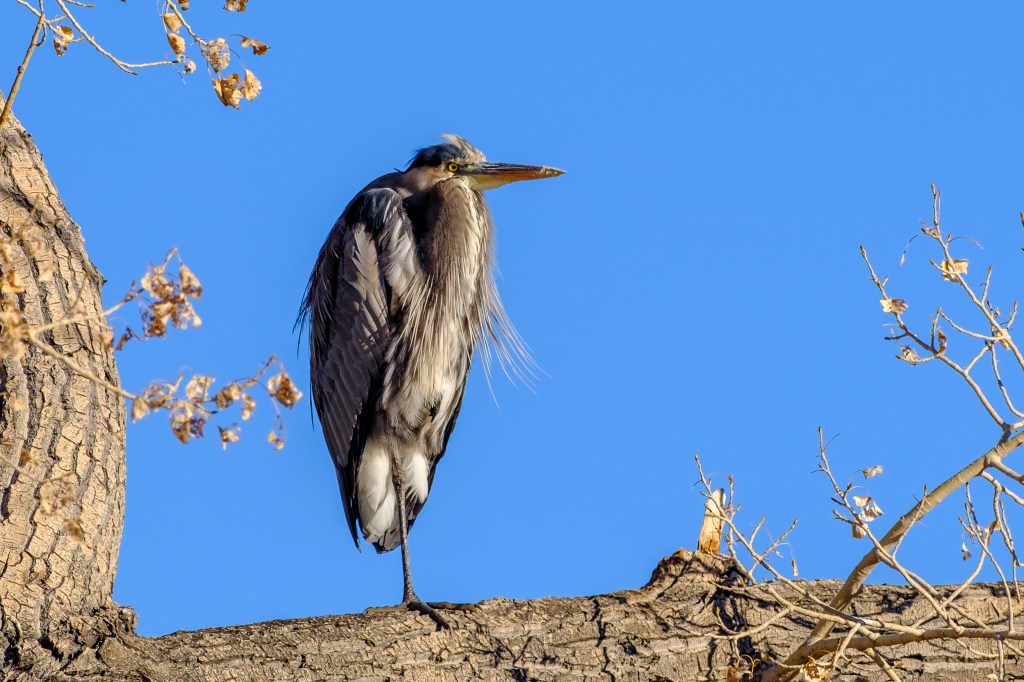
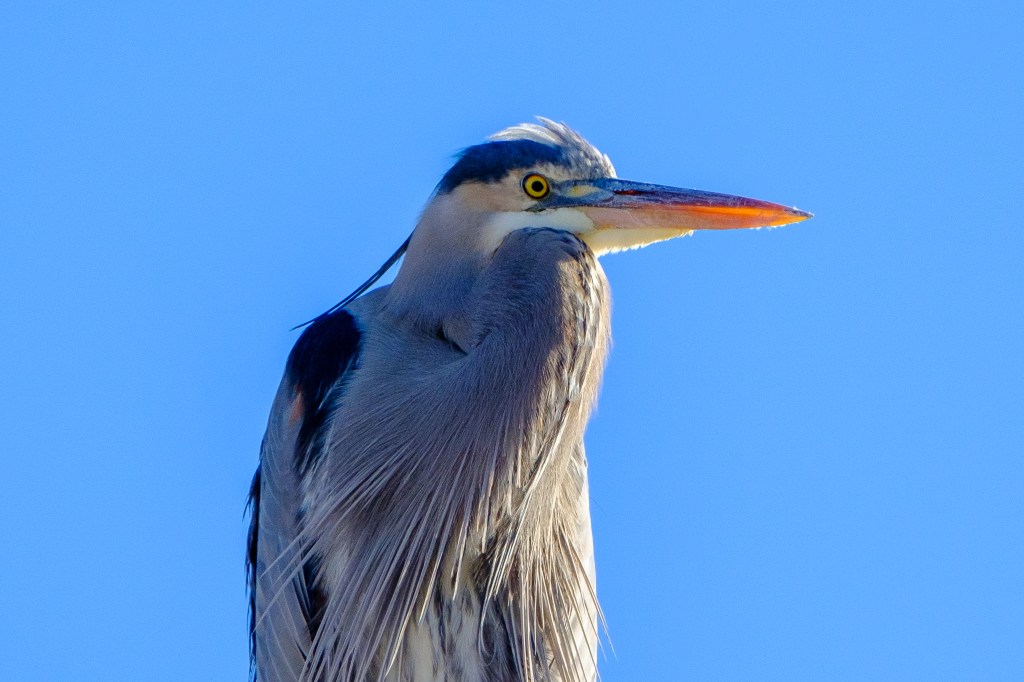
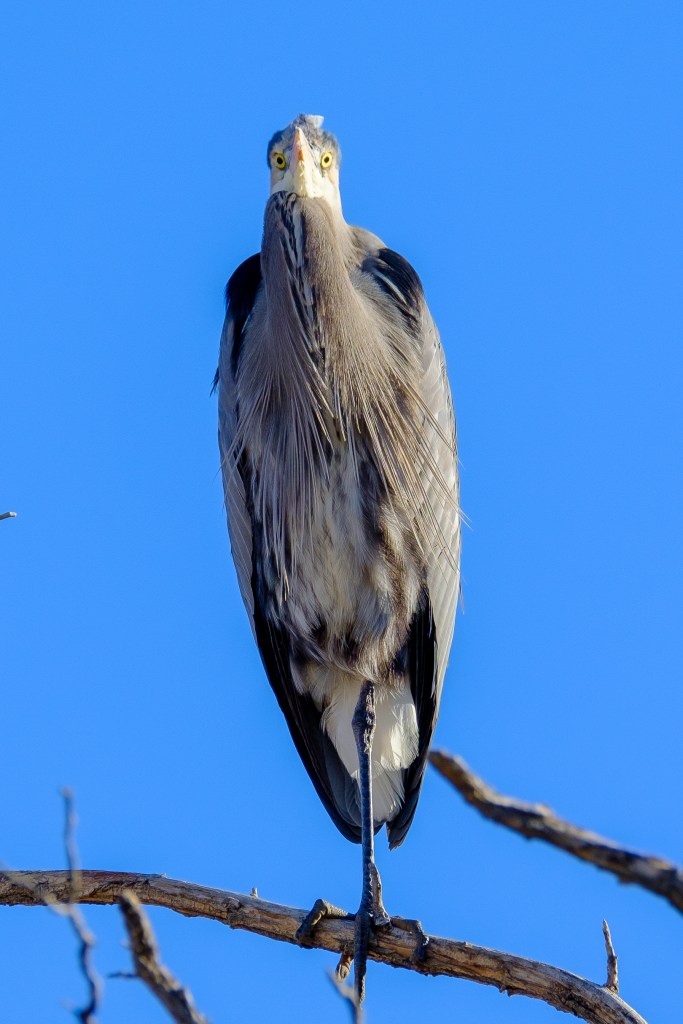
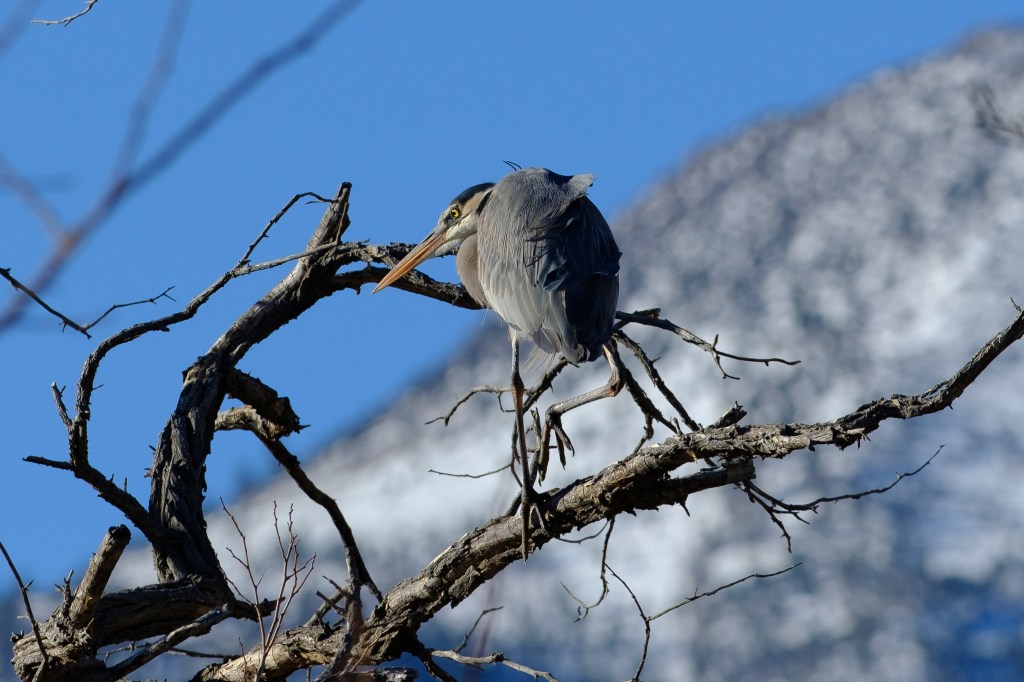
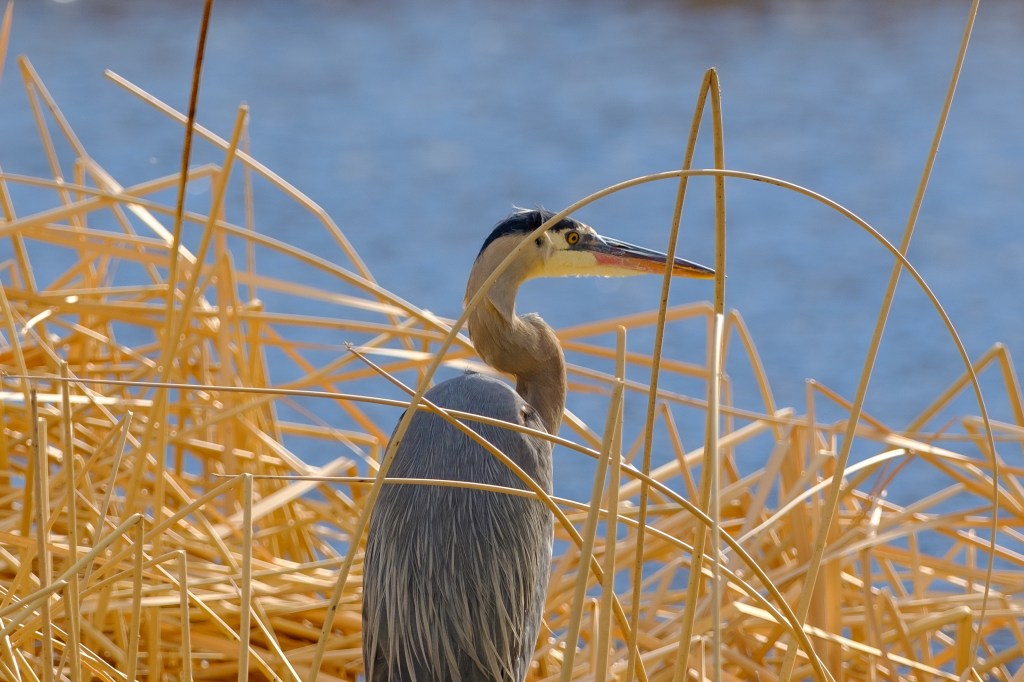
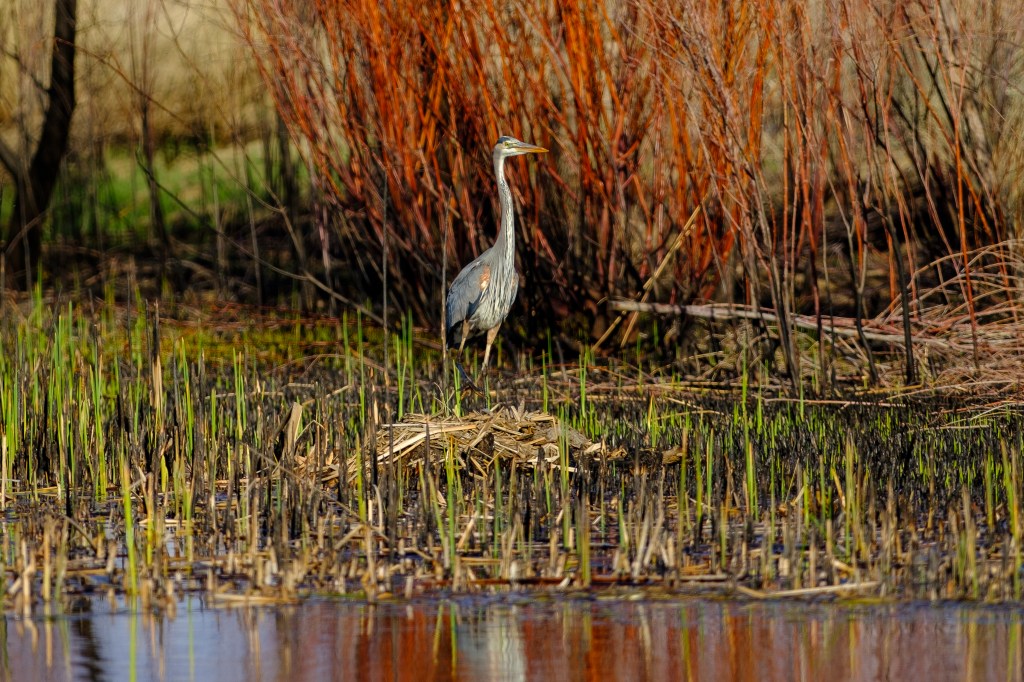
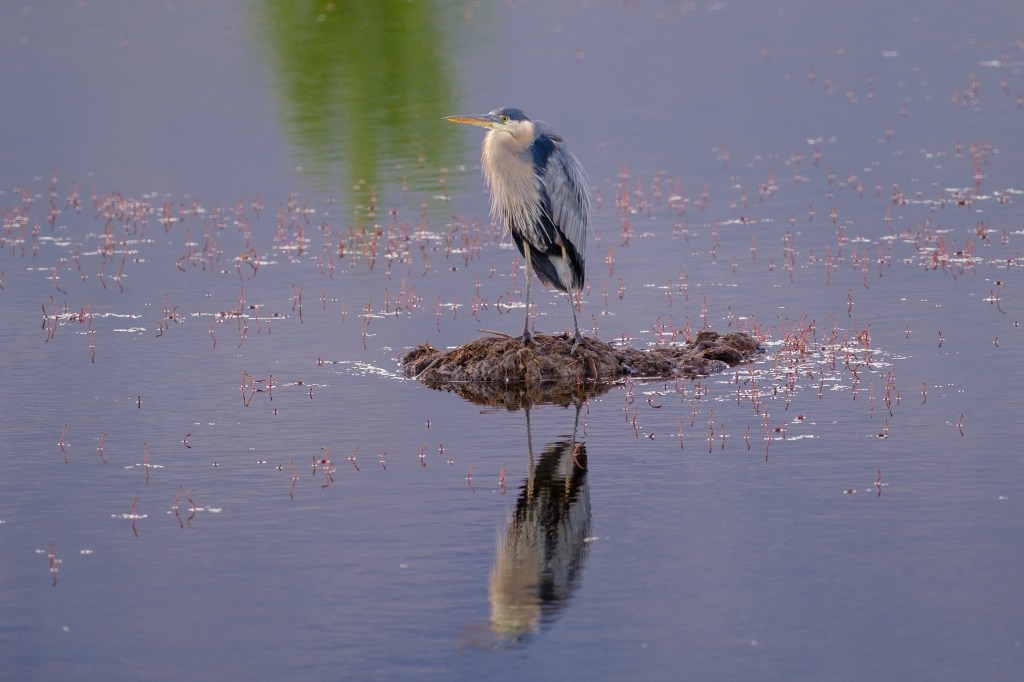
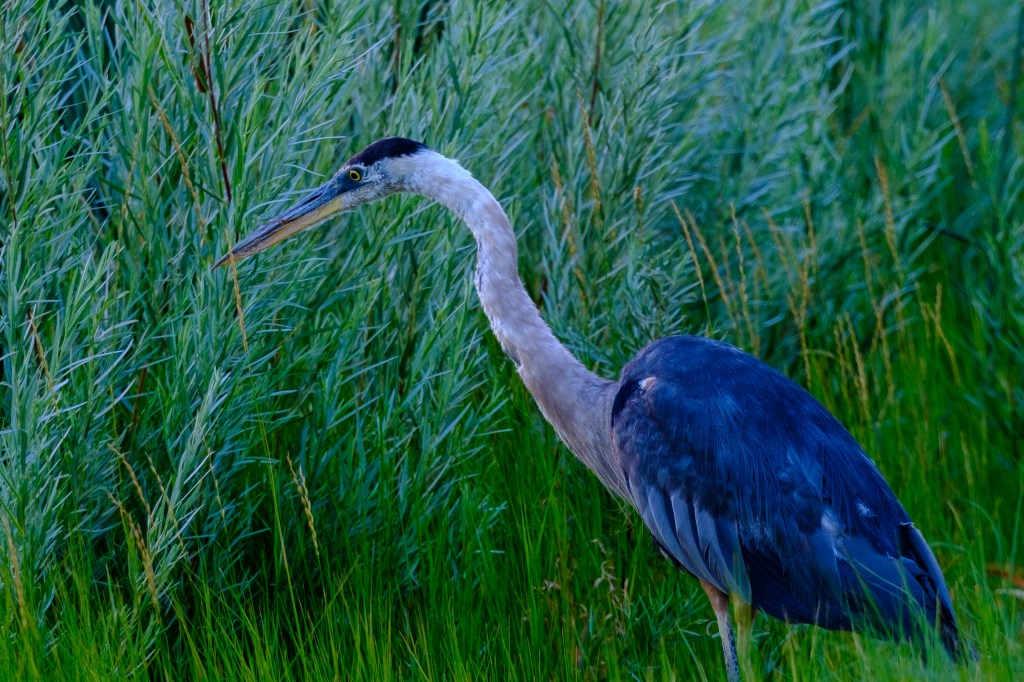
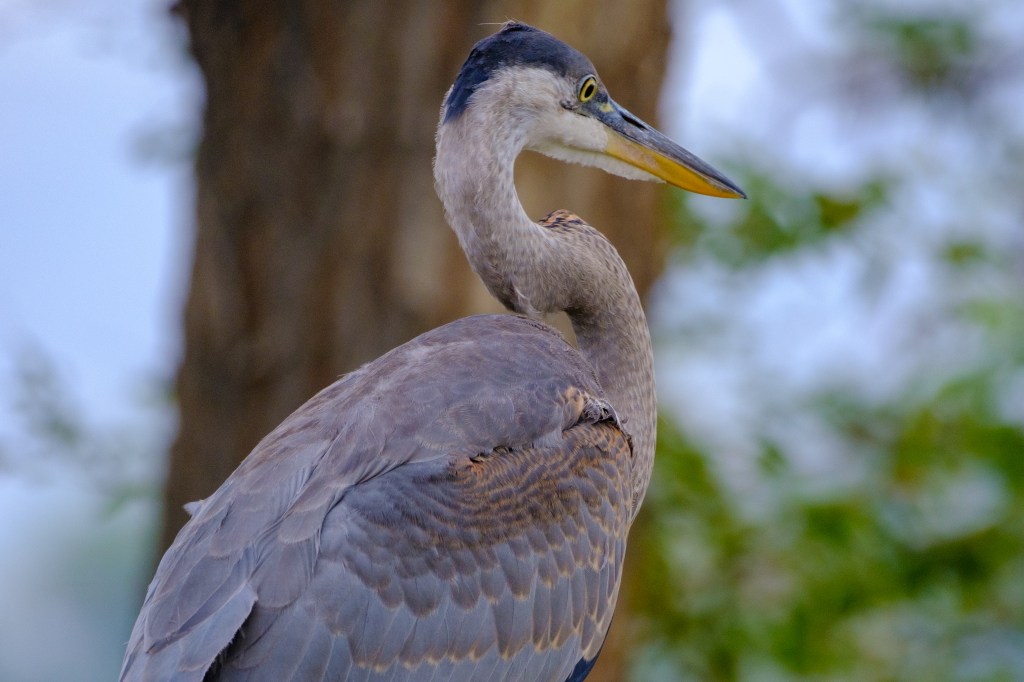
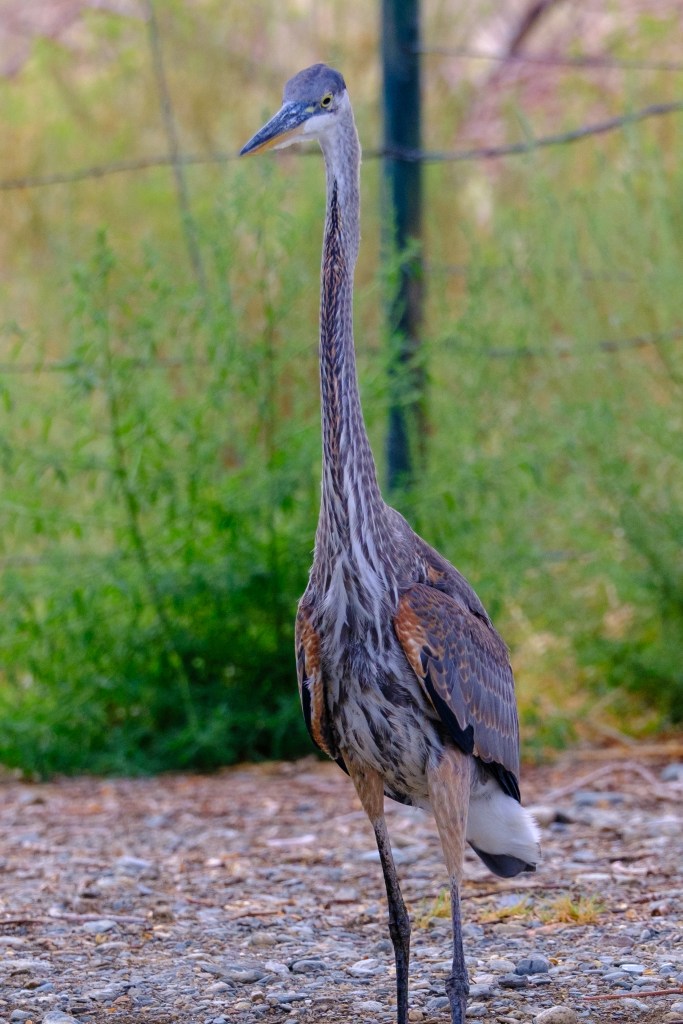
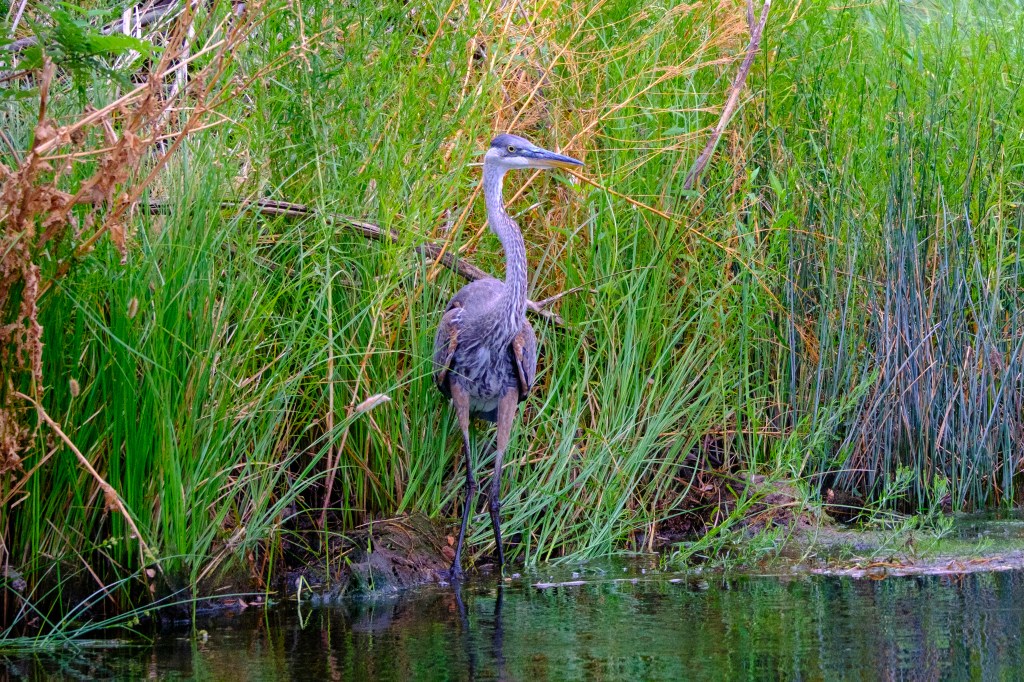
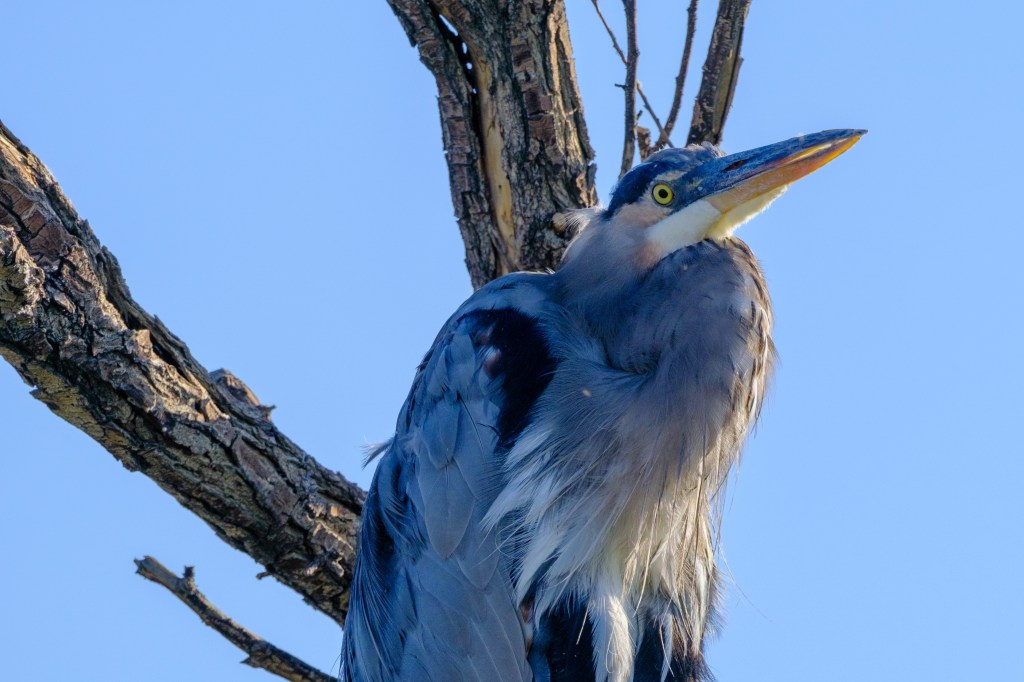
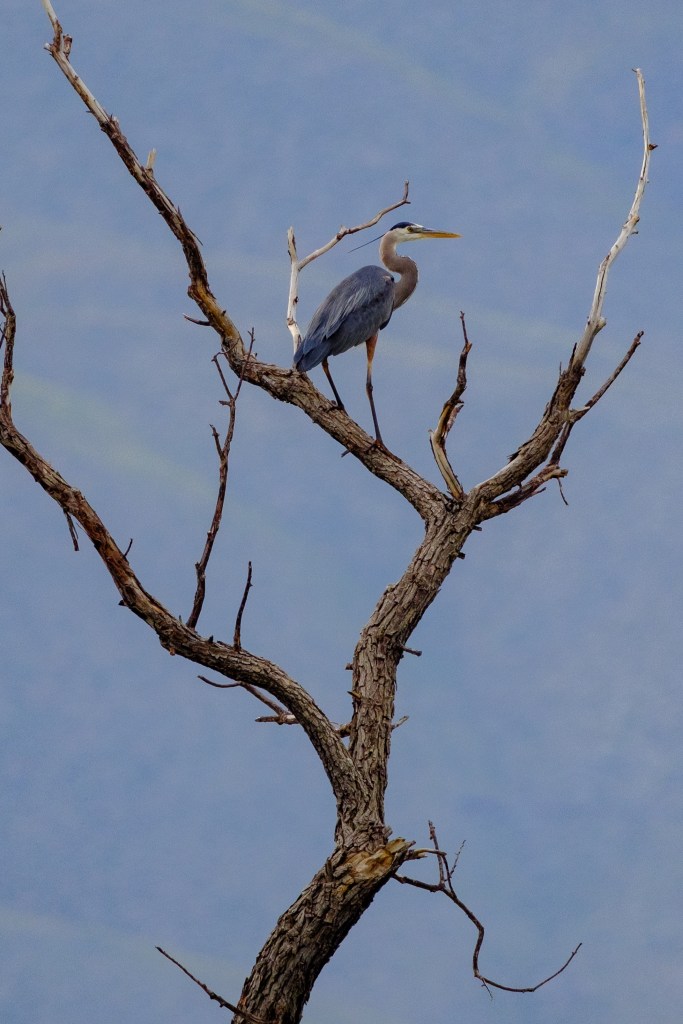
I selected a portfolio of portraits to show Herons in a variety of places and poses. Their eyes look like sewn-on yellow buttons. The giant toes and hooked talons are remarkable. There is usually reddish coloration of thighs, wrists, and shoulders. They like to perch high up on poles, branches, and bridge structures. I picked many photos for unusual lighting or colors.

Herons often prefer to stand on one leg. They will do this even on windy days. They will lift up one leg and it will disappear into the feathers on their belly. All birds will stand on one leg, but this is more obvious in large birds such as Herons and Hawks. Sometimes a few toes will protrude from the feathers. The one-legged stance seems like a tricky and unnecessary balancing act. Humans have balance sensors, the vestibular system, in their ears; this helps us stand upright with our eyes closed. Birds have similar balancing sensors in their ears, but have another balance sensor in their pelvis, so they can move their heads independently of their bodies while perched on a bobbing branch. To stand on one leg they must have their foot right under their center of mass. They have a knob in their pelvis which allows them to lean on and lock-off the leg they are standing on.




 Birds of Bishop