
During April, Roberta and I traveled the Eastern Sierra from Owens Lake to Mono Lake, collecting photos. I decided to create this month’s blog using a selection of those pictures, mostly bird images. I will group the photos by location and list the places from south to north.
Owens Lake
On April Fools’ Day, we got up in the dark and drove to Owens Lake to photograph the dawn on Mt Whitney. It was cold and windy, so I froze taking pictures, while Roberta sat in the warm car sipping coffee; smart woman.
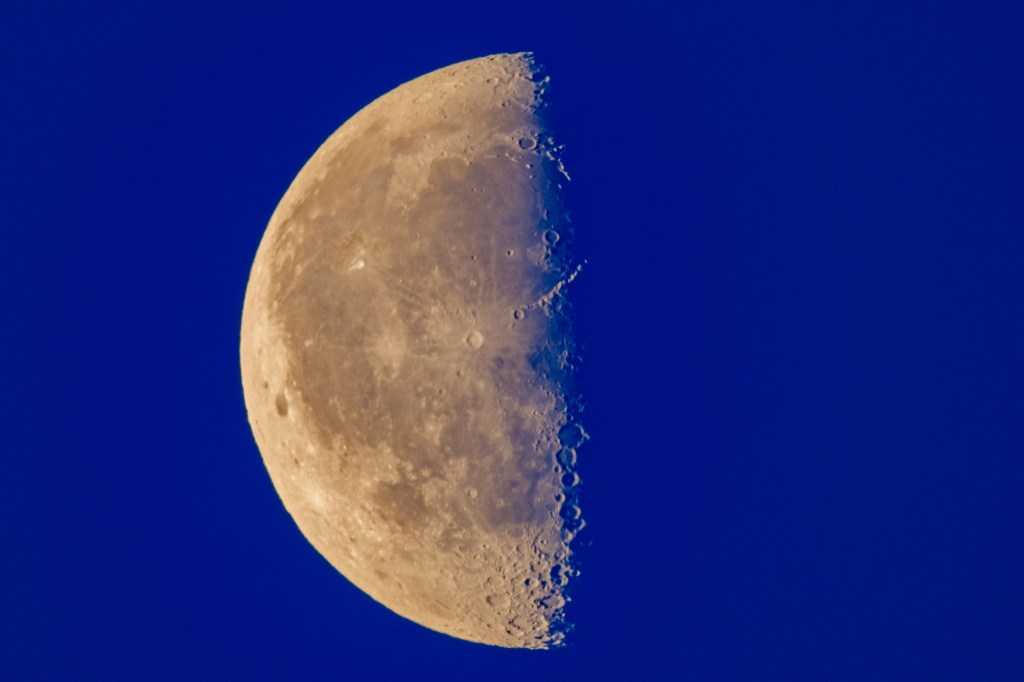
The moon was at third quarter. The giant crater Copernicus is near the center of the photo below; this crater is fully lit and a white blanket of ejecta spreads out over a diameter of 300 miles. The crater walls are 13,000 feet high. Above and right is the crater Erastosthenes and the Appenine mountain range extends, from there, further up and right into the darkness of the terminator (the line between dark and light). The brightest area in this range is a feature that is white on its left side, dark on the right side; this is Mt Huygens, 18,000 feet, the highest lunar peak. So the tallest mountain I saw that morning was Huygens, not Whitney (14,505 ft). Lower in the picture, right on the terminator, are 3 big craters in a line. From top to bottom they are Ptolemaeus, Alphonsus, and Arzachel.
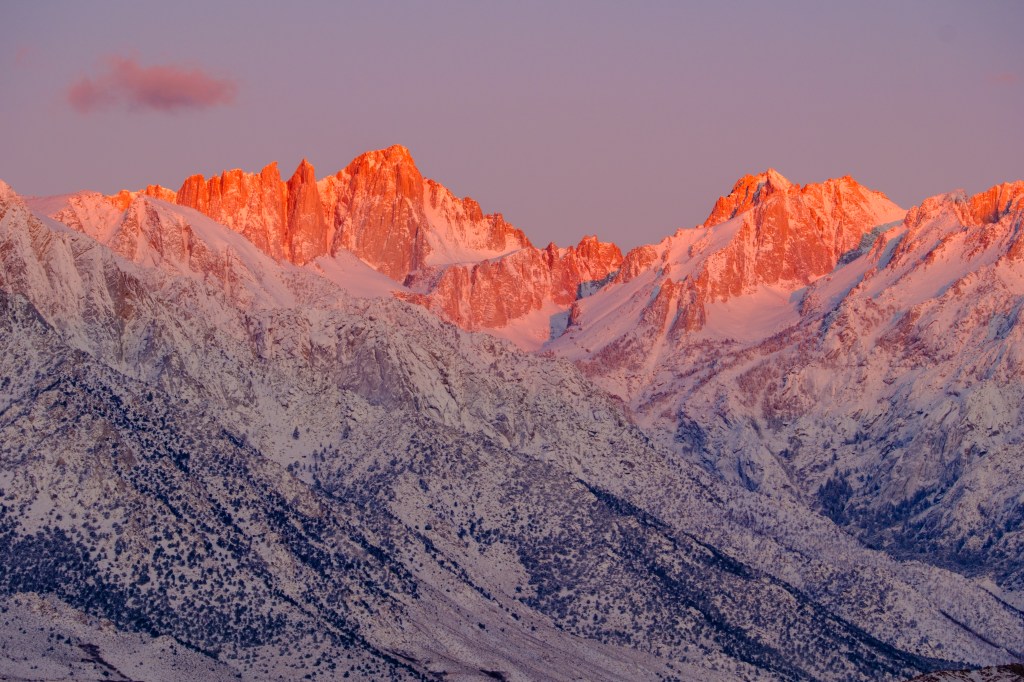
In the photo below, the tall point left of center is Whitney.
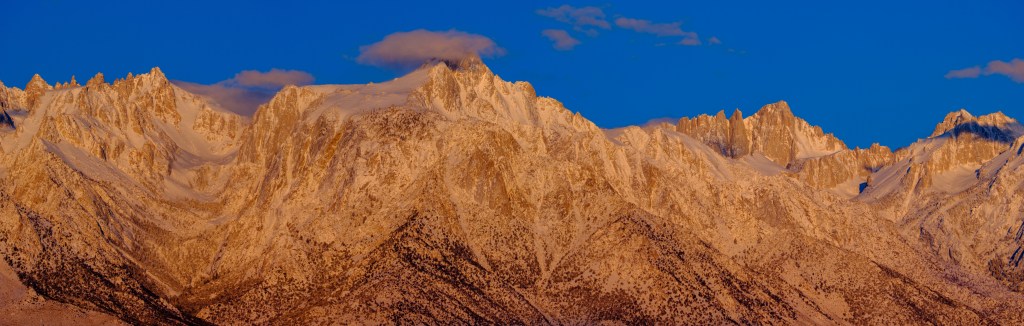
Below, a panorama shows, from left to right, Sharktooth, Mt Corcoran, Mt LeConte, Lone Pine Peak (12,944) in the middle, and Mt Whitney on the right. Lone Pine Peak looks taller because it is closer.
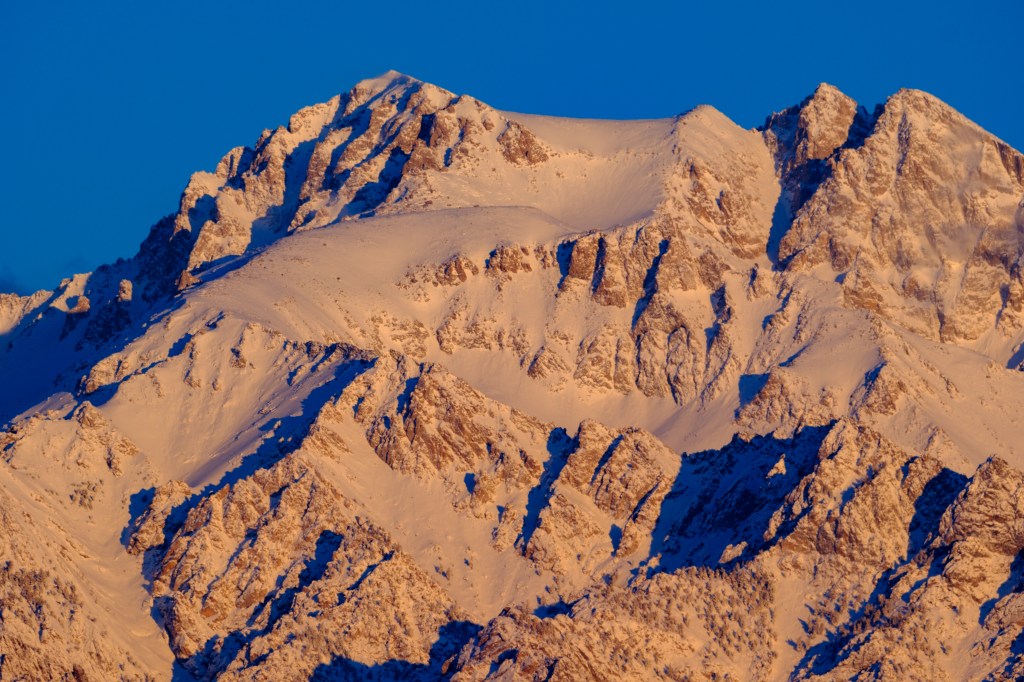
Mt Willliamson (14,375) is California’s second highest peak. The summit is on the left.
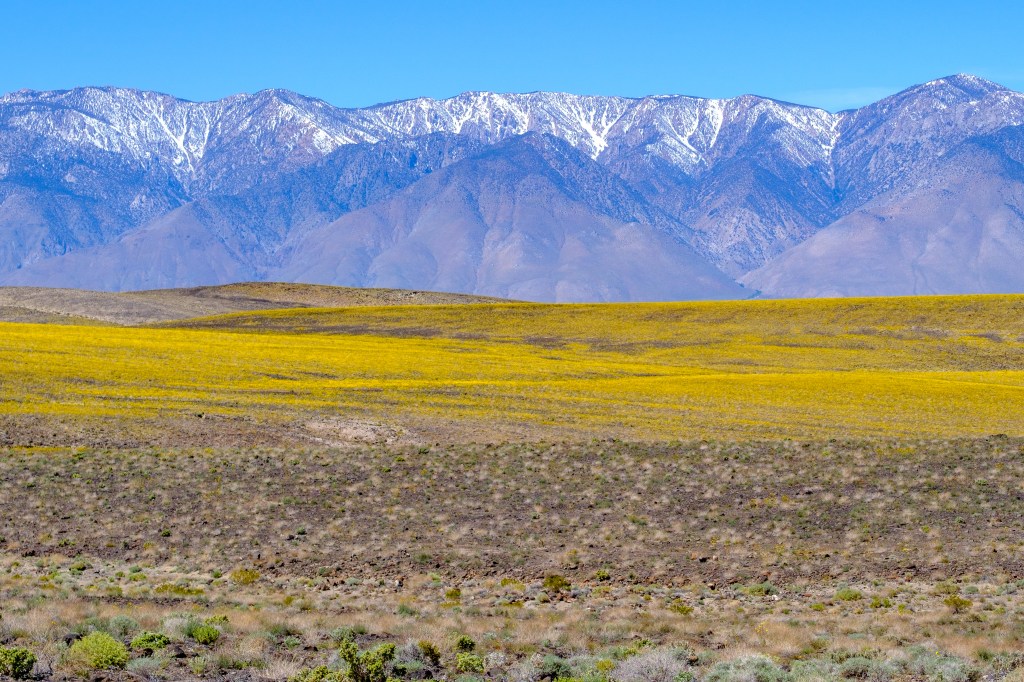
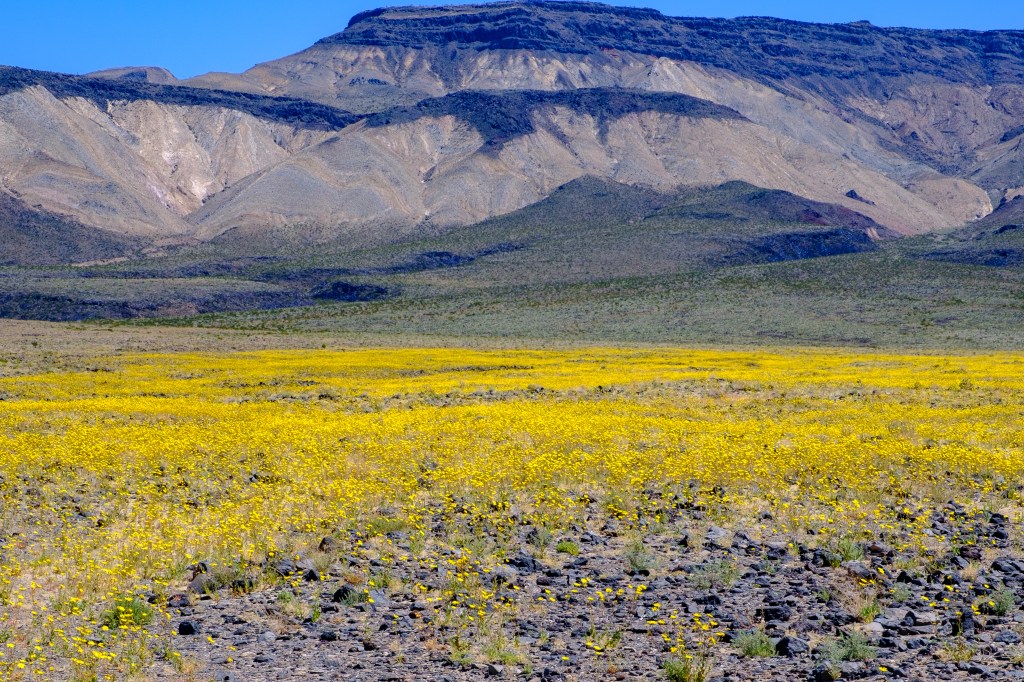
South of Owens Lake, along Highway 190, there was a bloom of Desert Sunflowers. The southern Sierra is in the background.
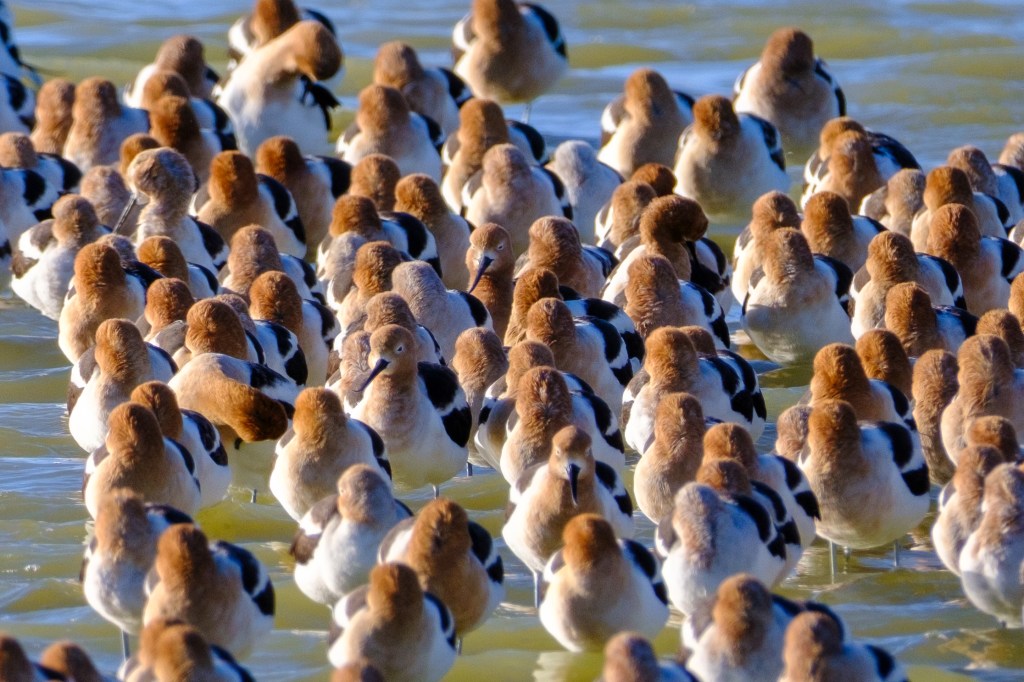
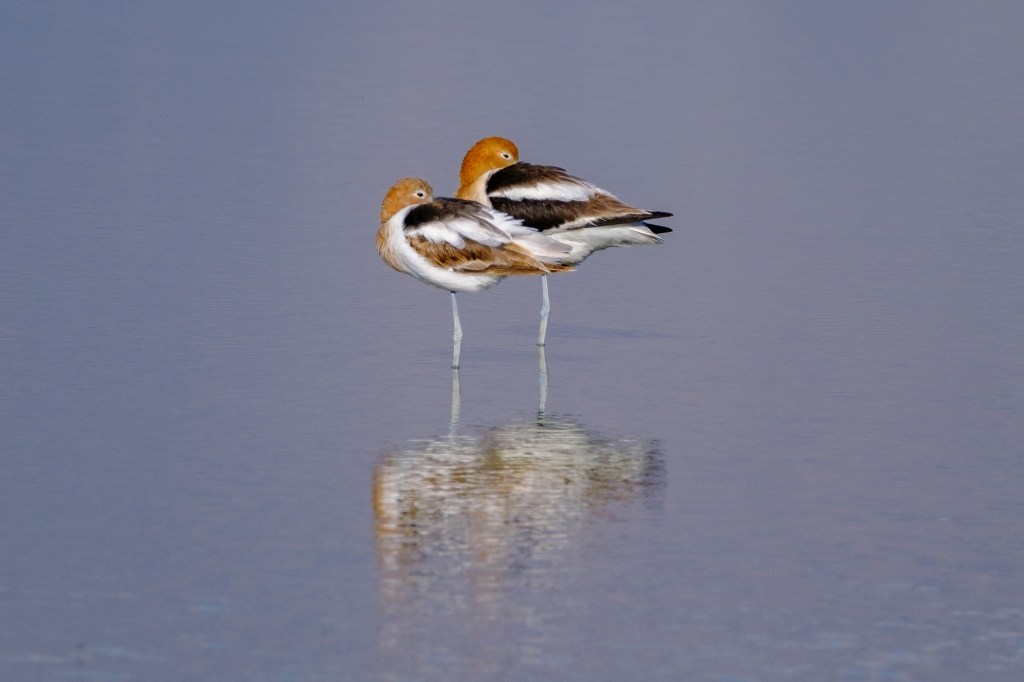
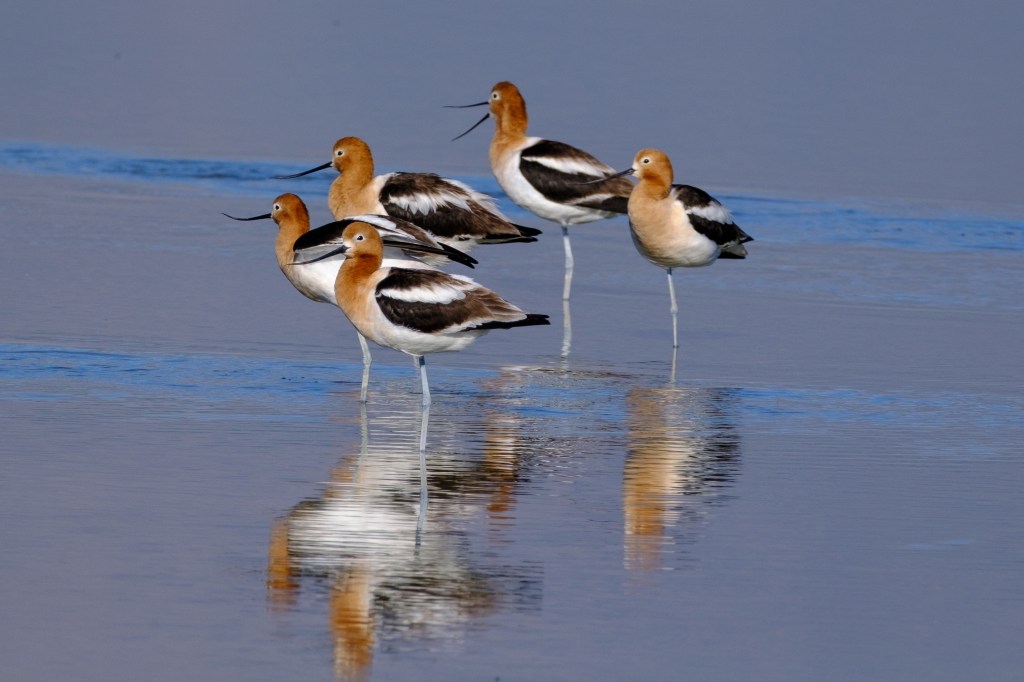
On April 1, American Avocets were on Owens Lake, sheltering from the wind behind an elevated road. Their bodies are facing north, but most have turned their heads to face south, away from the cold wind.
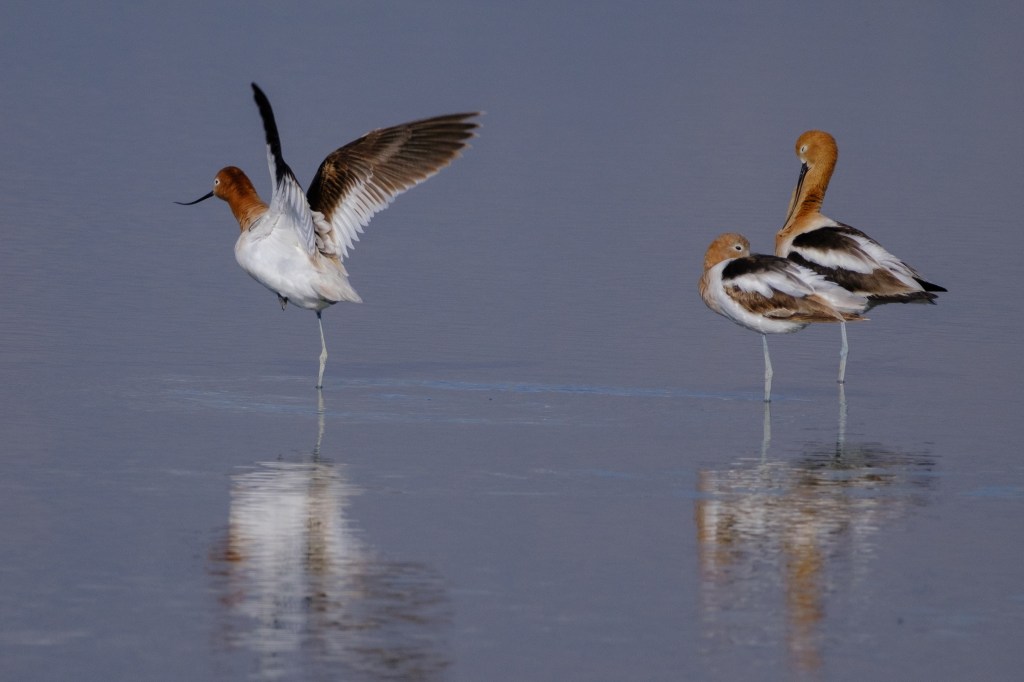
On April 20 we joined the Owens Lake Bird Festival and toured the Lake with expert bird photographer Martin Powell. It was a warm, calm day. Many Avocets were standing around on one leg. In the first photo, an Avocet was hopping on one leg.
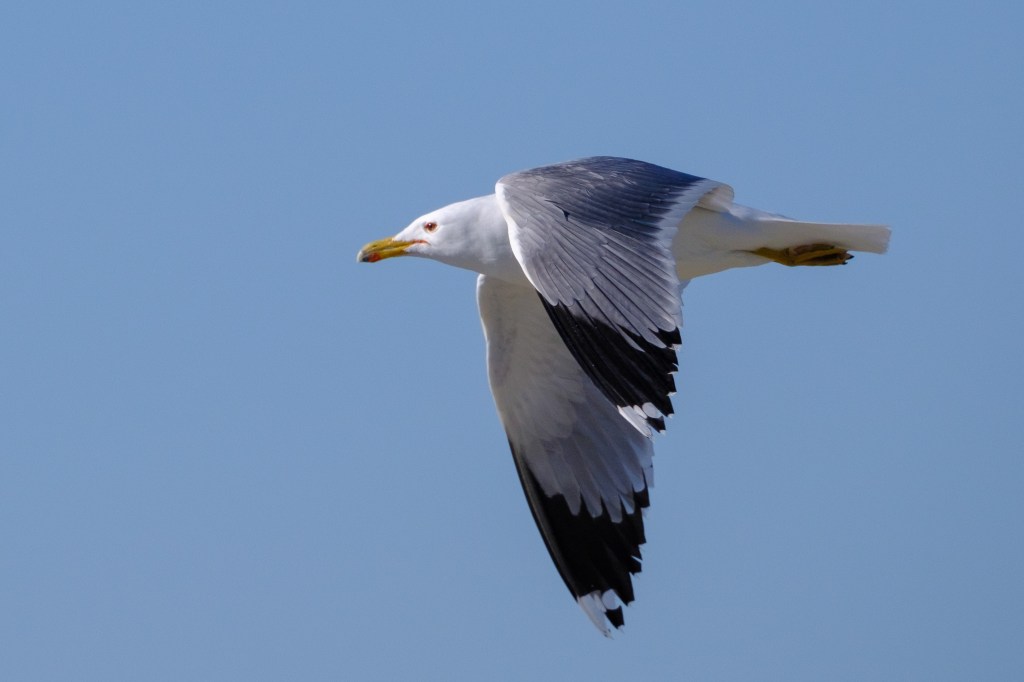
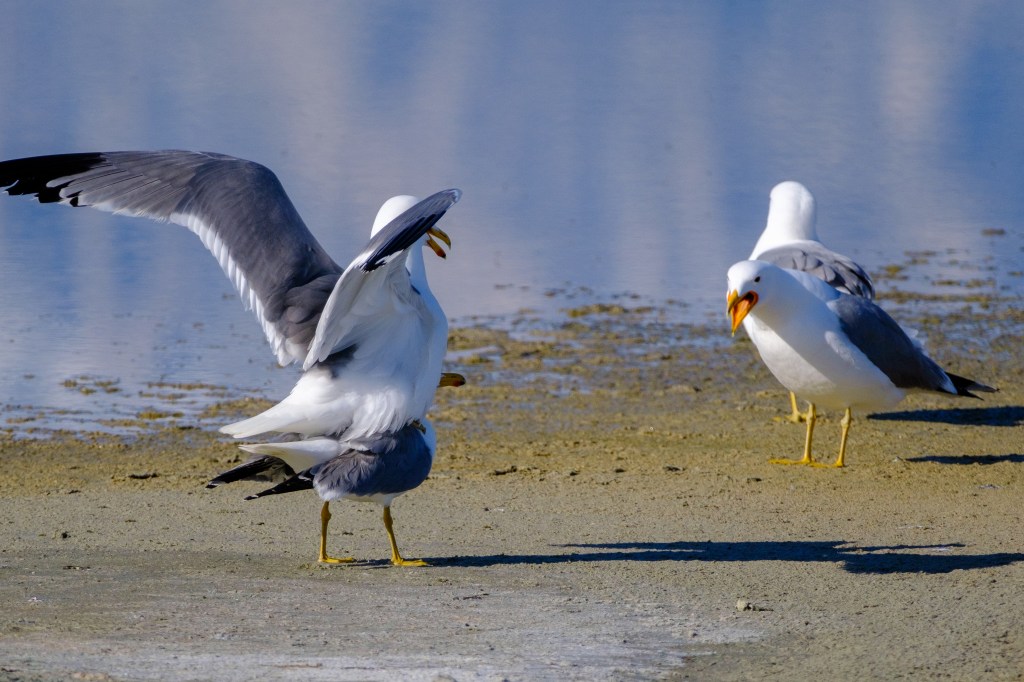
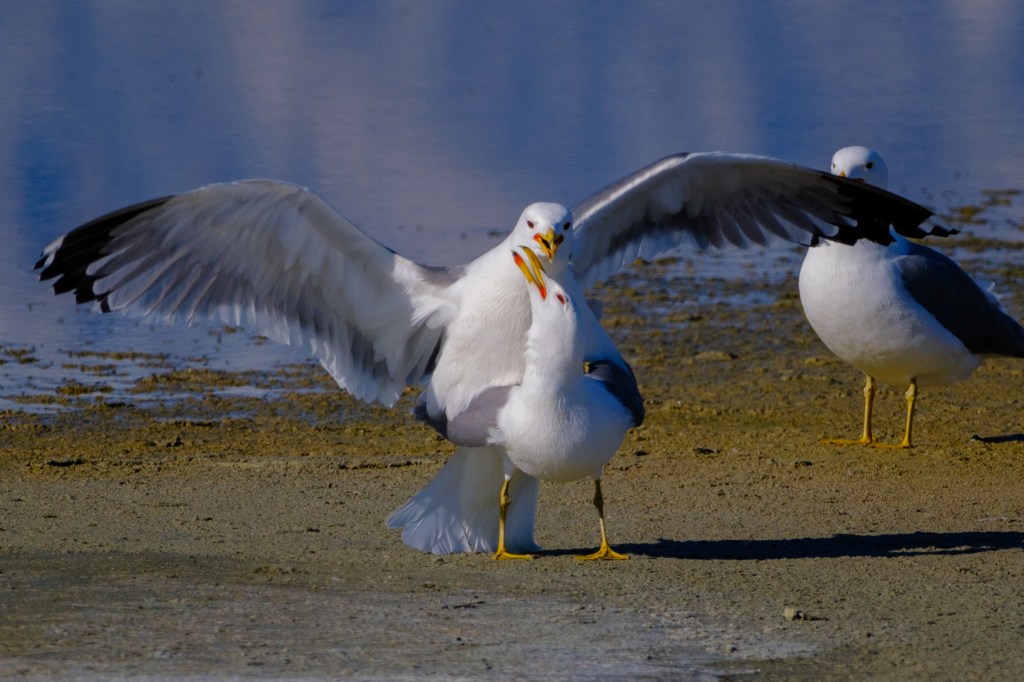
California Gulls migrate from the coast to the Owens Valley to breed.
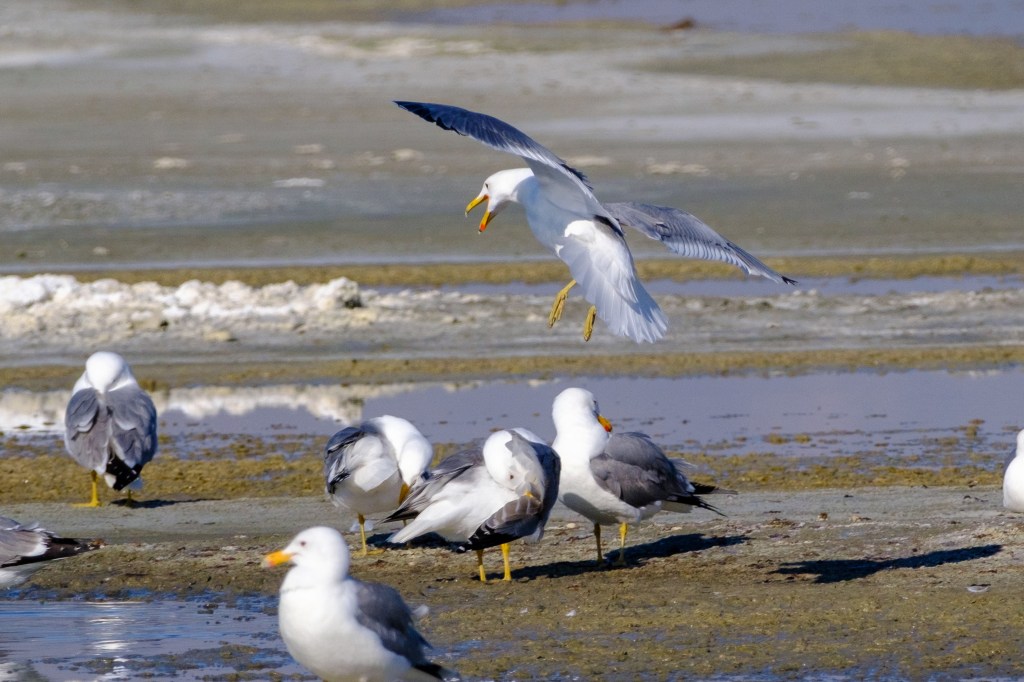
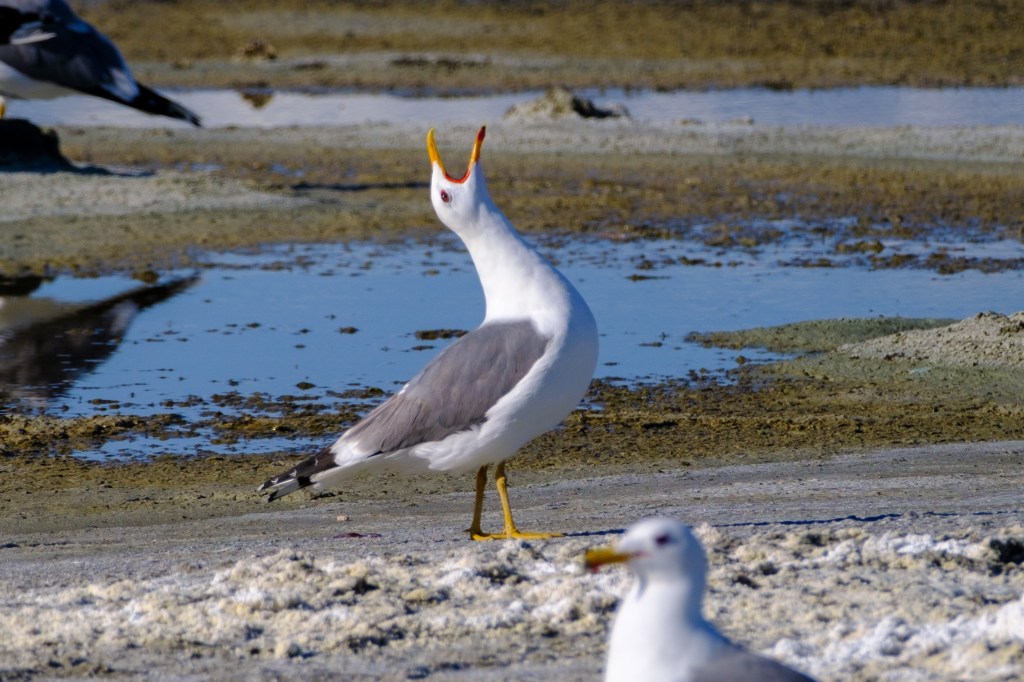
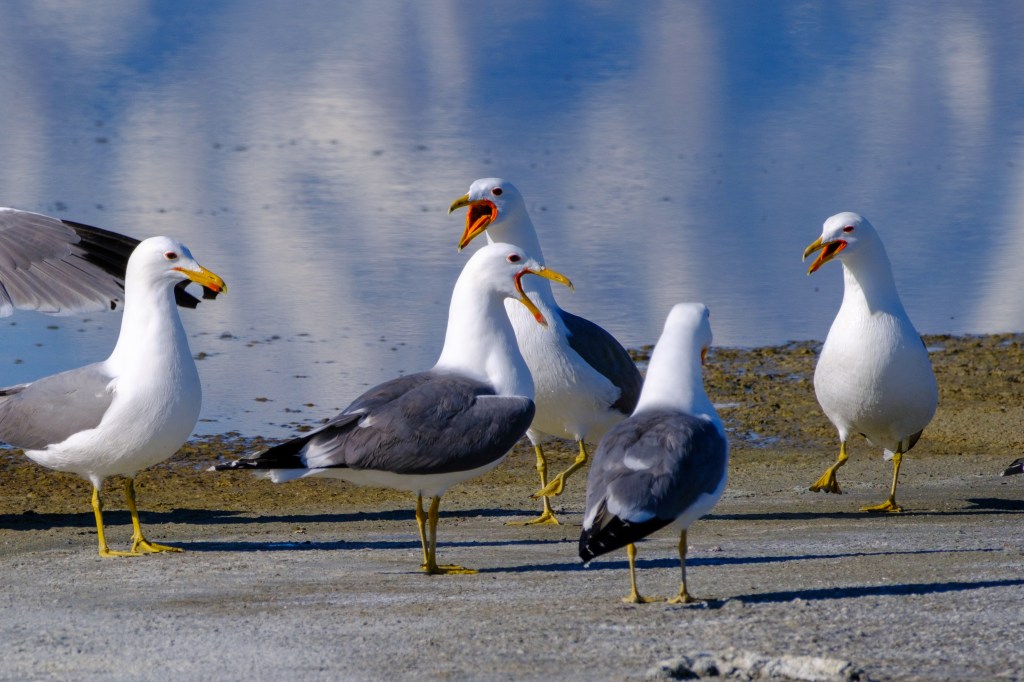
One Gull couple gets serious about breeding; the Gull on the right is saying “Get a room!”
Least Sandpipers flying in front of the Sierra.

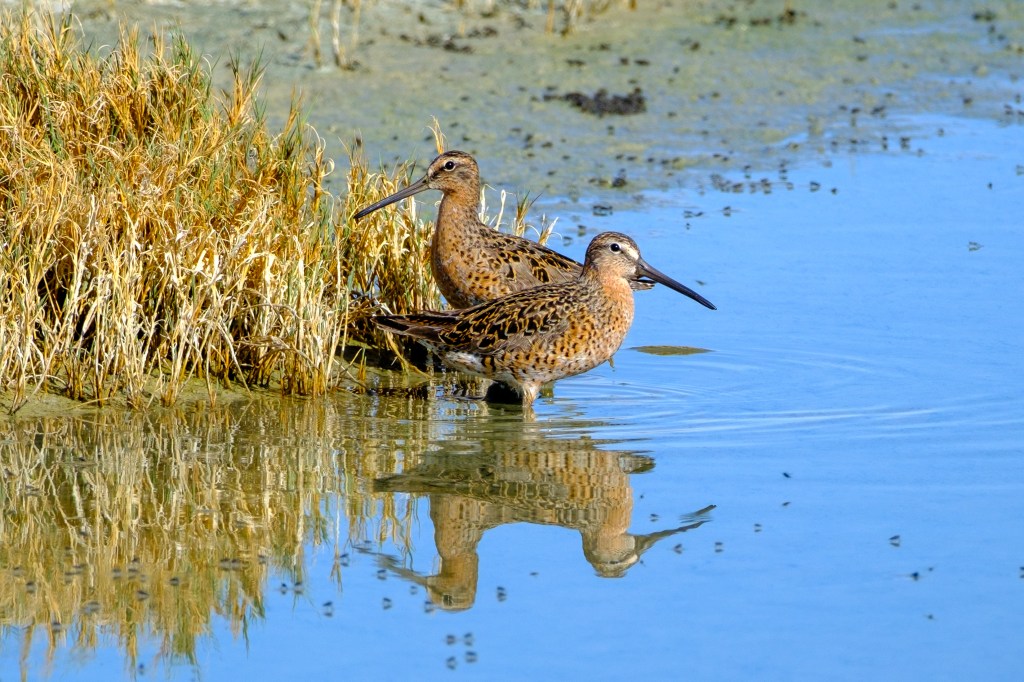
Long-billed Dowitchers have a dull red-brown plumage.
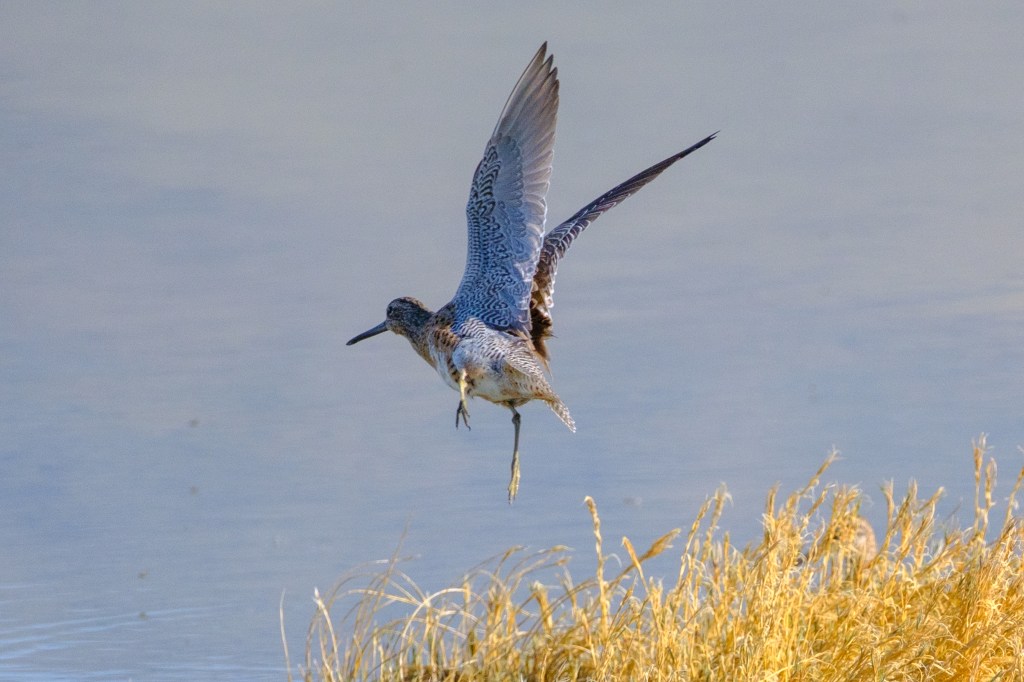
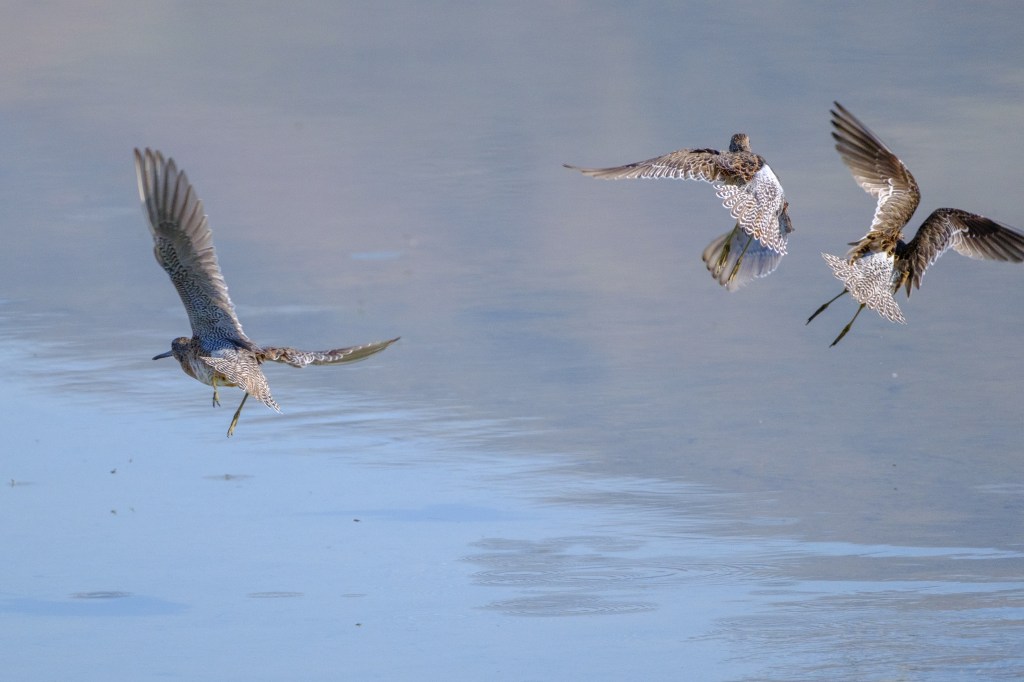
But when Dowitchers take off, they reveal intricate patterns in their wing and tail feathers.
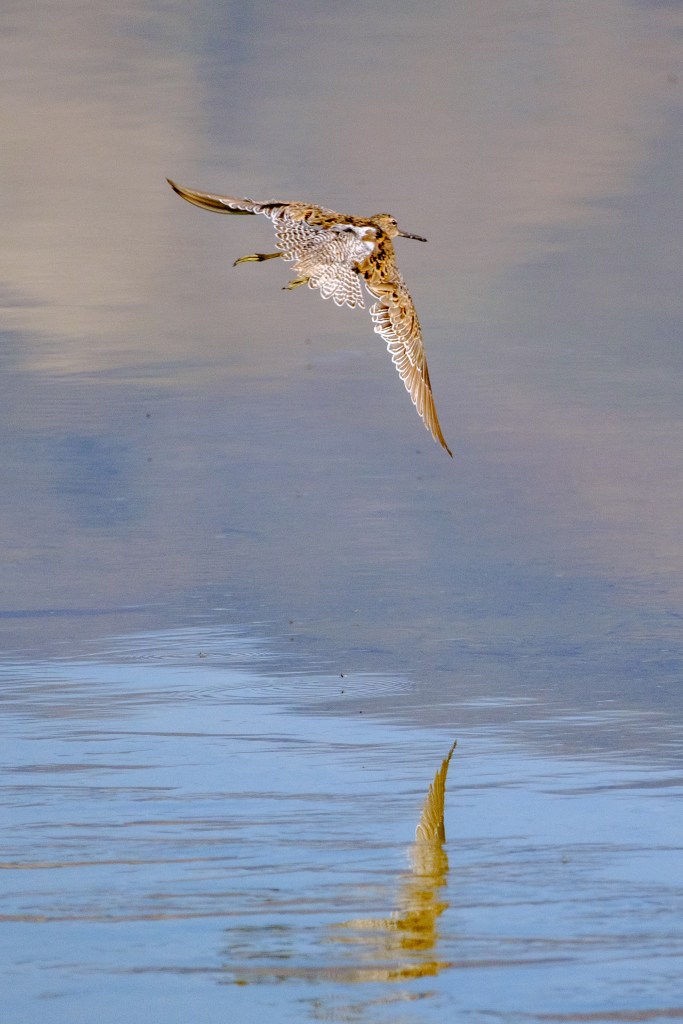
The Dowitcher below is reflected in the lake; it look as if a wing is reaching up from the water.
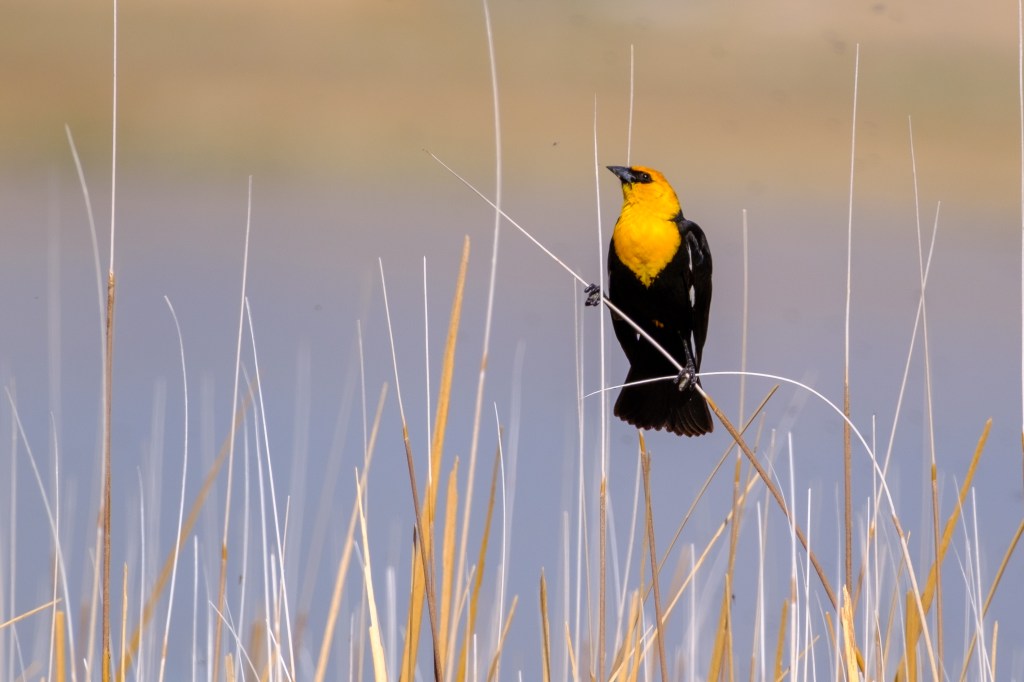
Yellow-headed Blackbirds are found in the reeds.
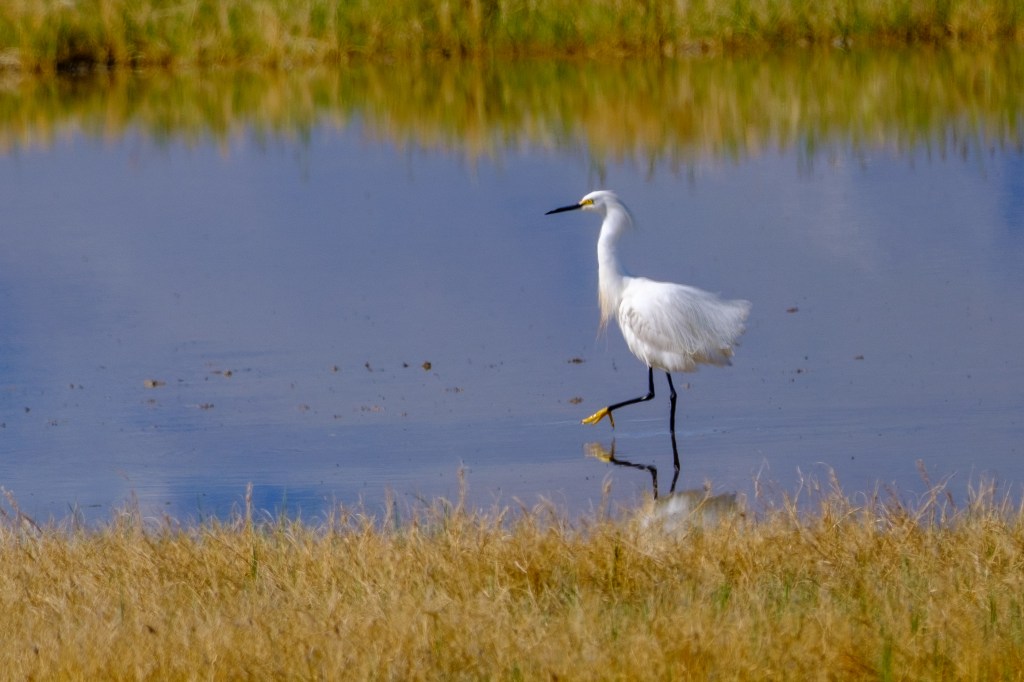
A Snowy Egret, with breeding plumes, looks stately at first, but then shakes itself into a mess.

Buckley Ponds
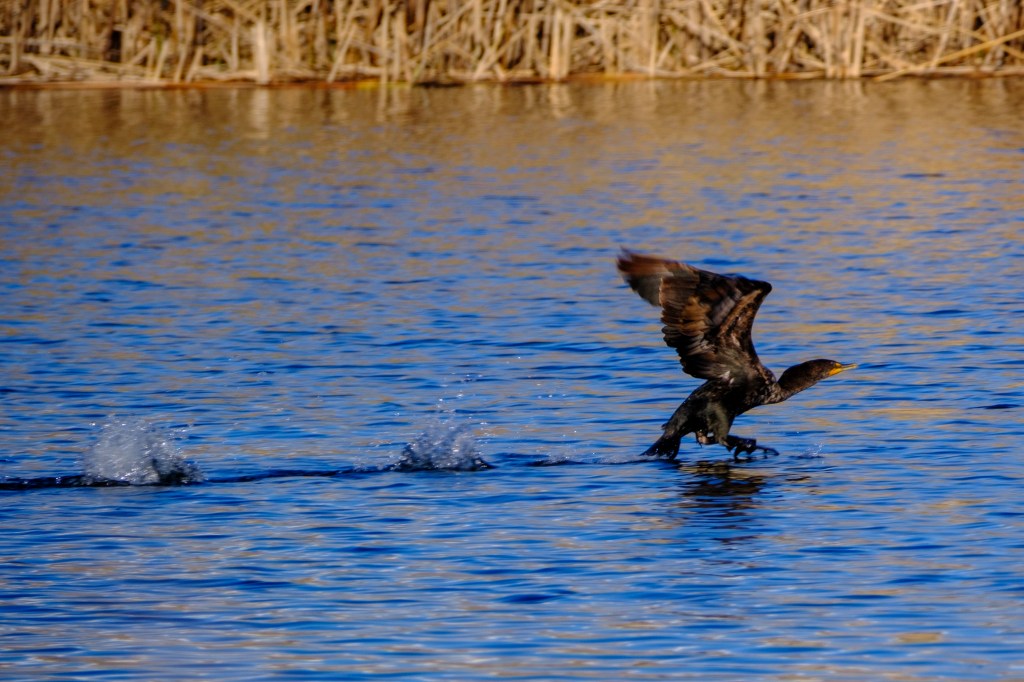
The Ponds are just a few miles east of Bishop. Here a Double-crested Cormorant takes off by pushing on the water.

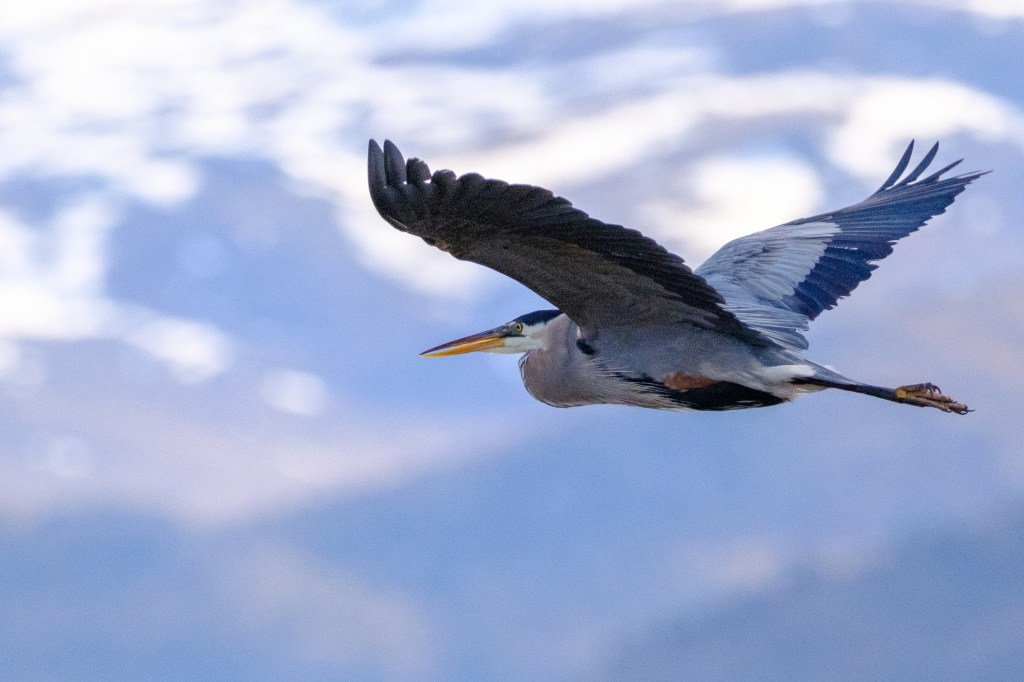
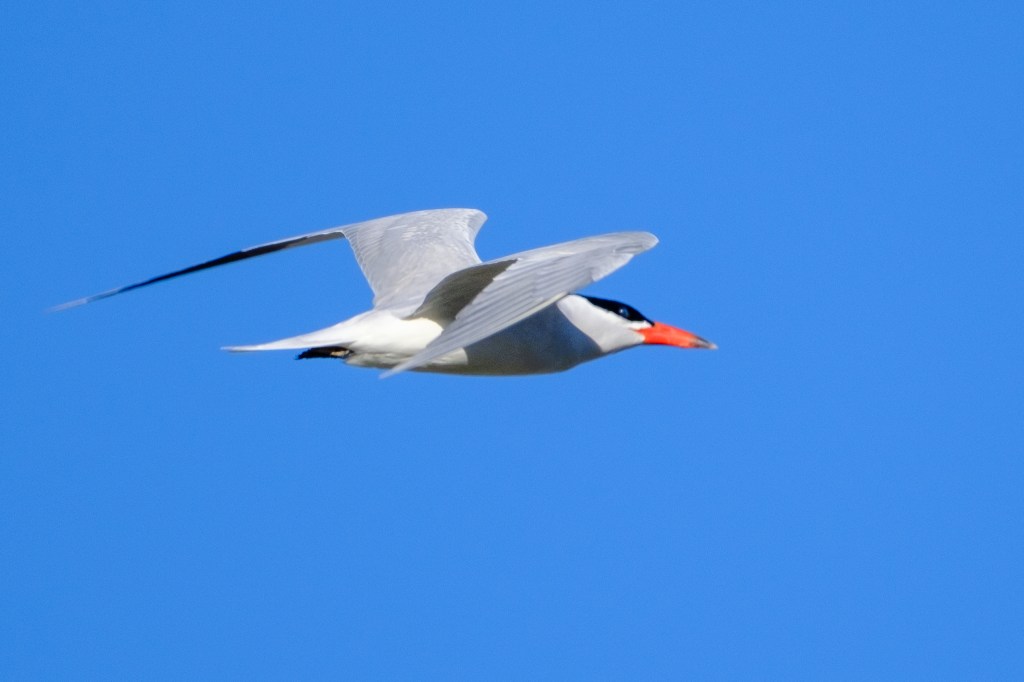
Two Caspian Terns streaked past, heading north; I was lucky to get a shot. This bird may have spent the winter on the Mexico coast. I photographed two of them at the Ponds in April of 2022. They were feeding there for at least two days.
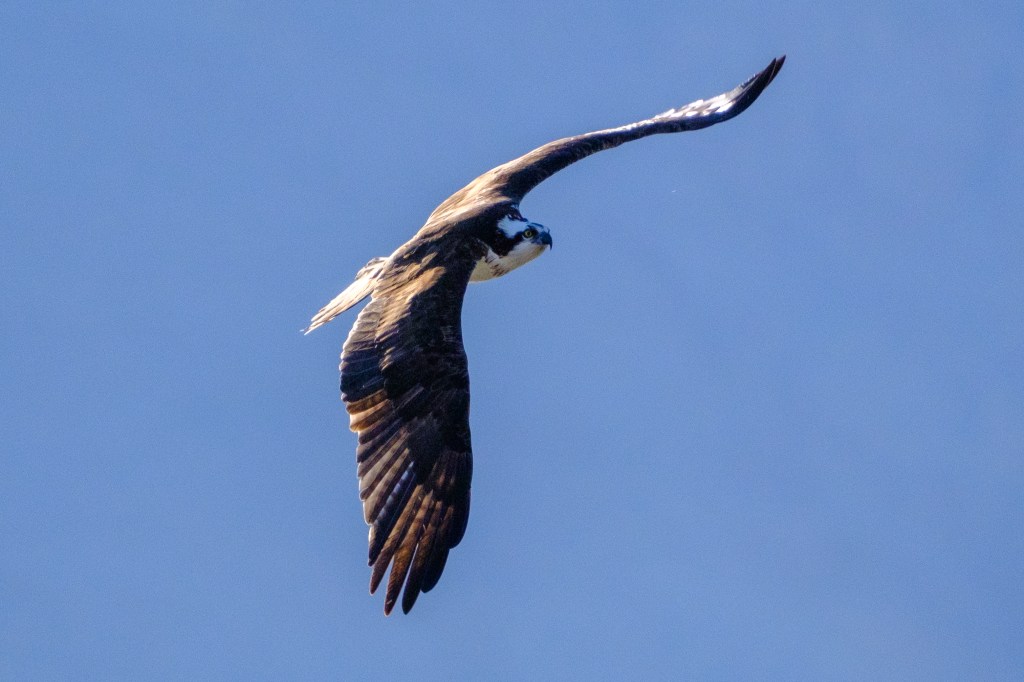
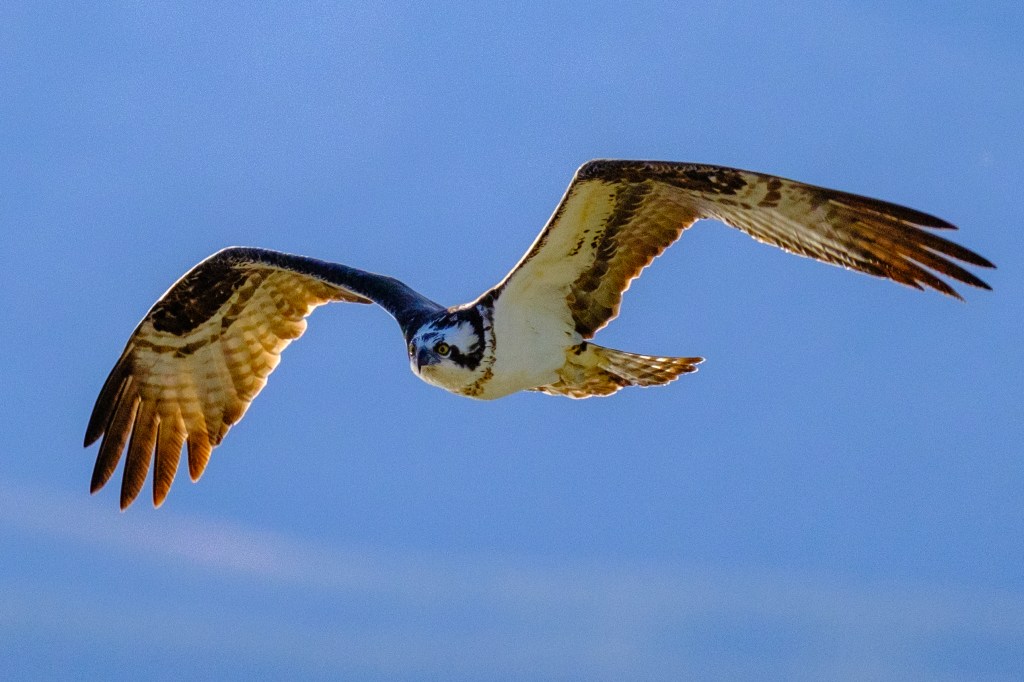
An Osprey circled toward me, a turn that lasted 9 seconds; the camera captured over 100 images. Here are two of my favorites.
Bishop Creek Canal
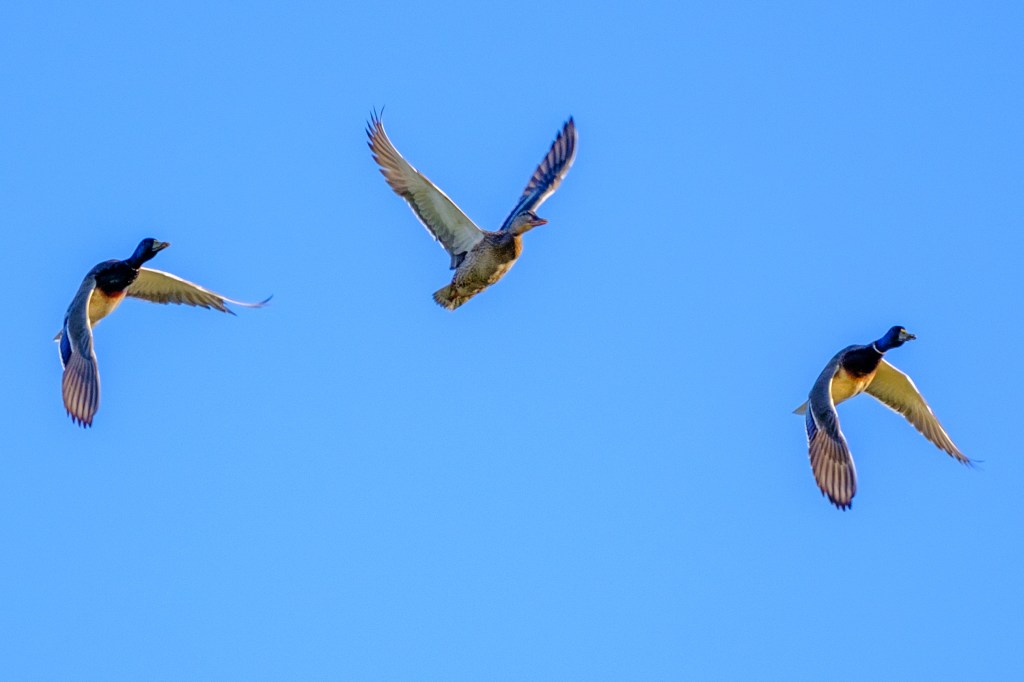
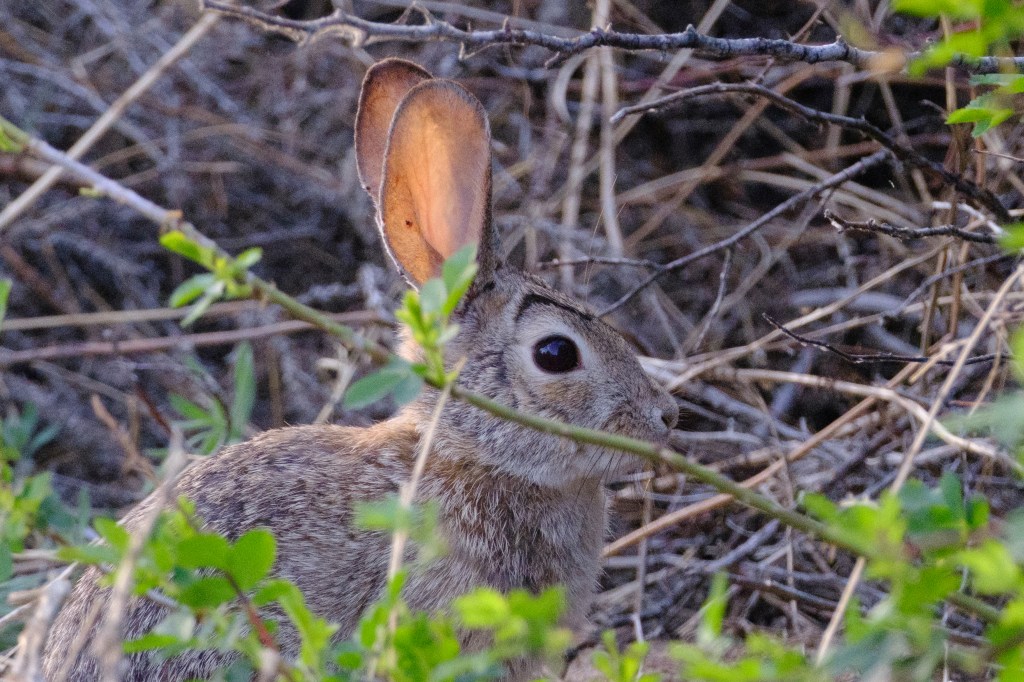
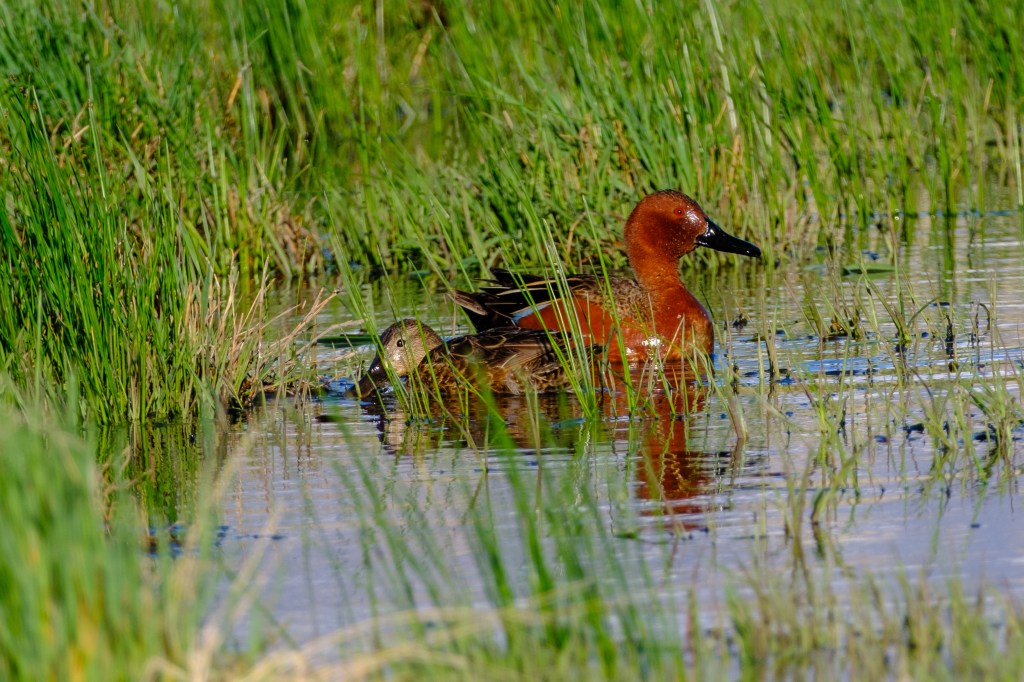
This area, including South Airport Road, is usually reliable for bird pictures.
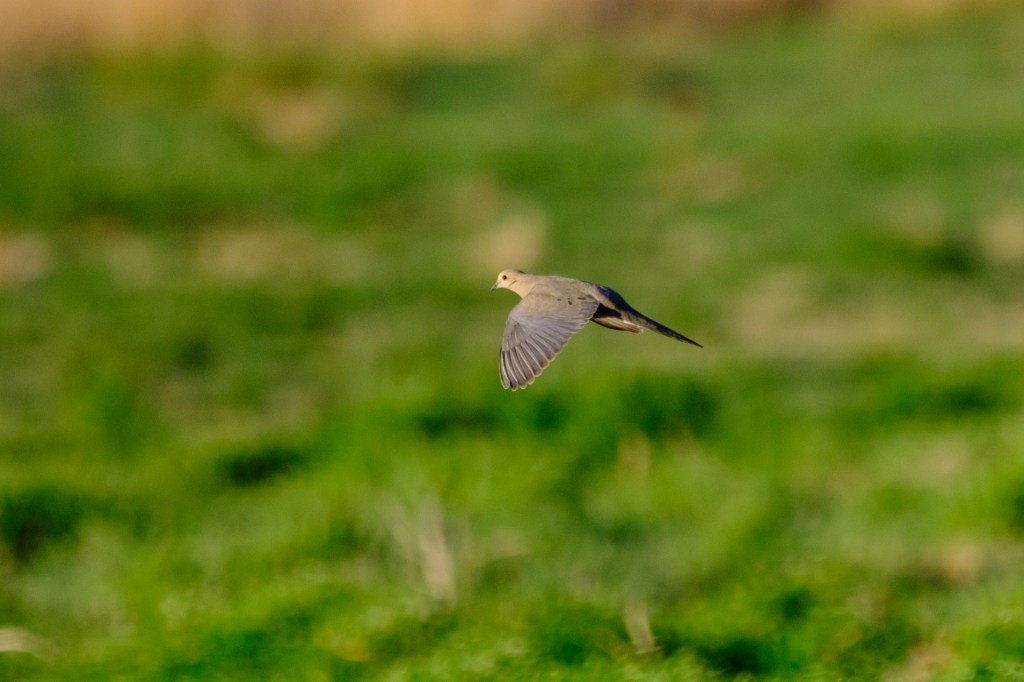
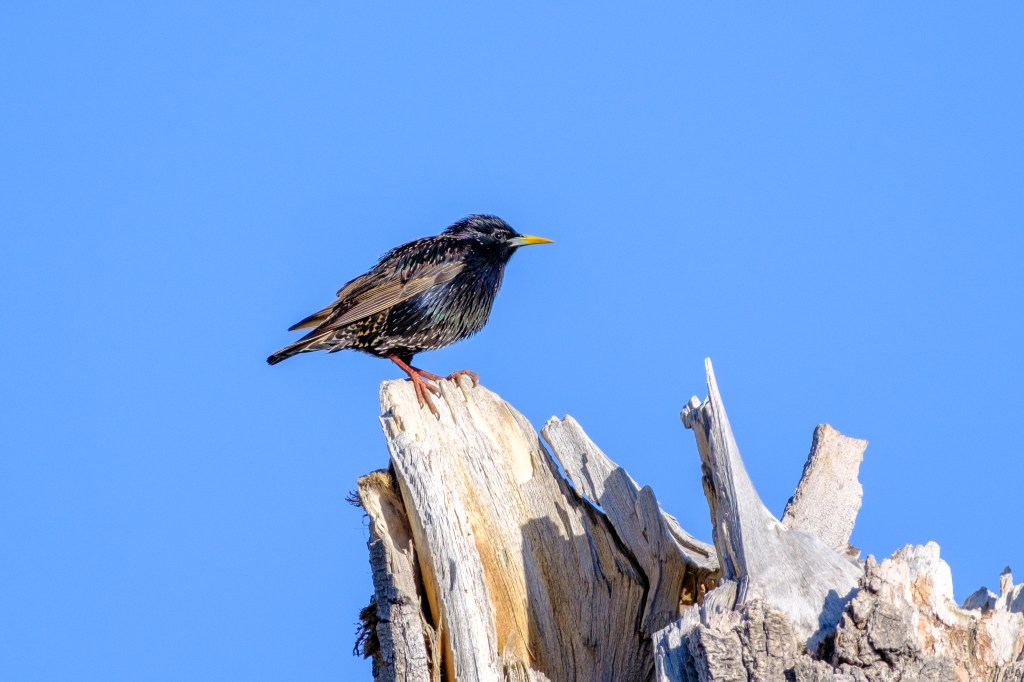
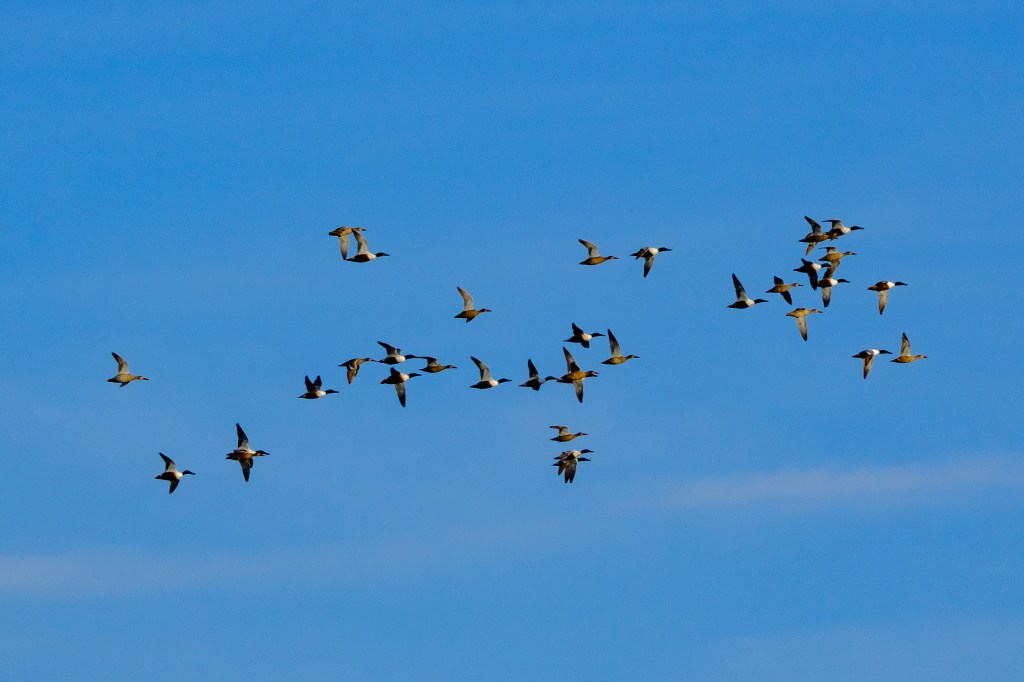
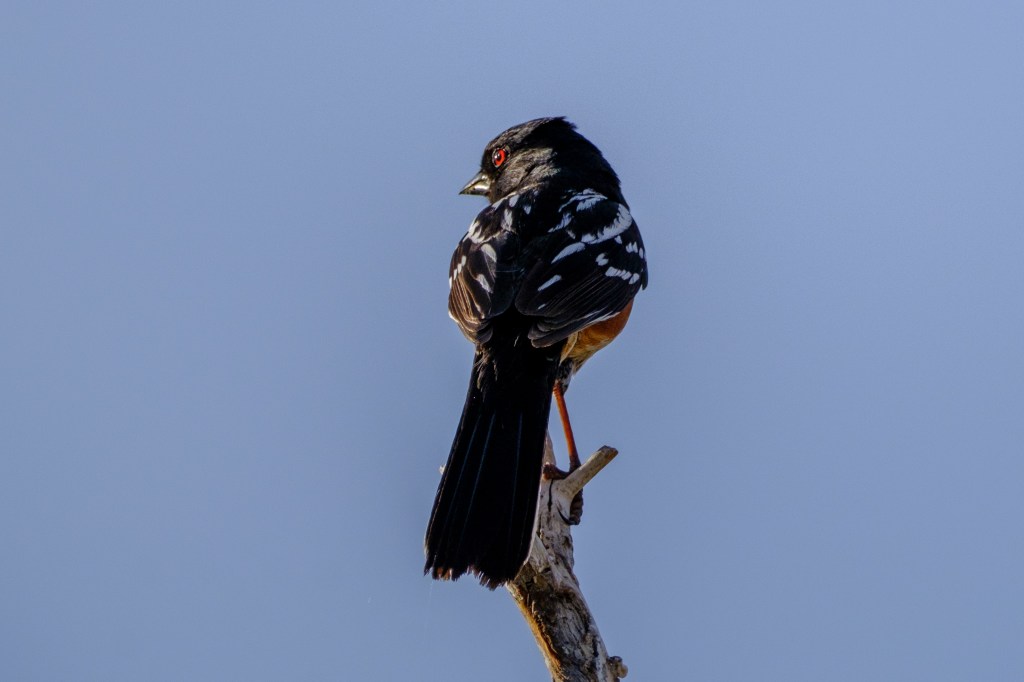
Western Bishop
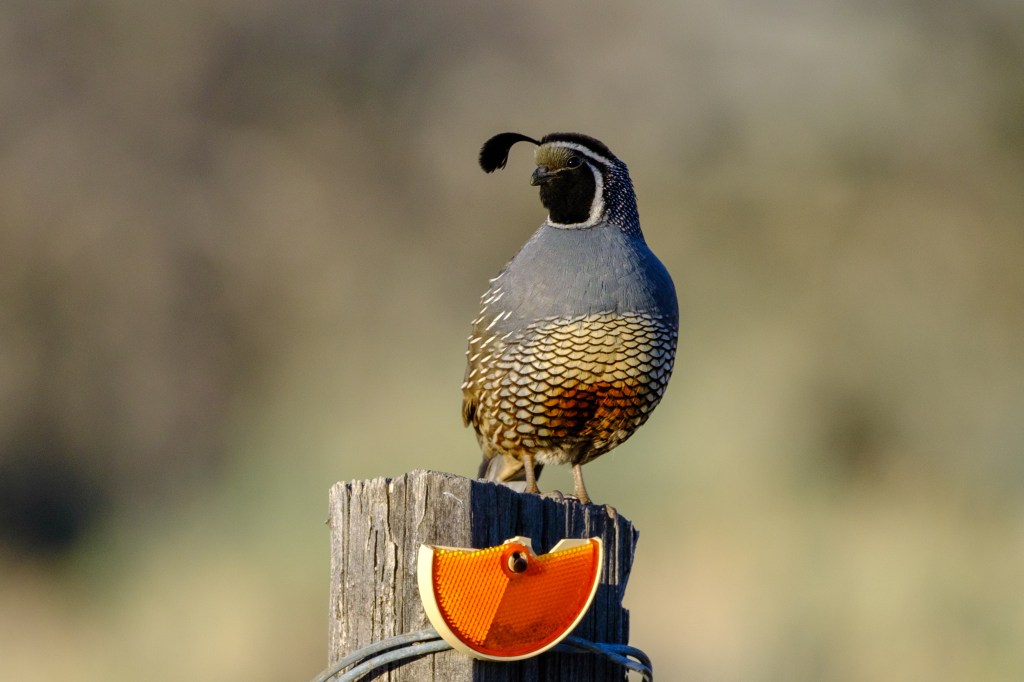
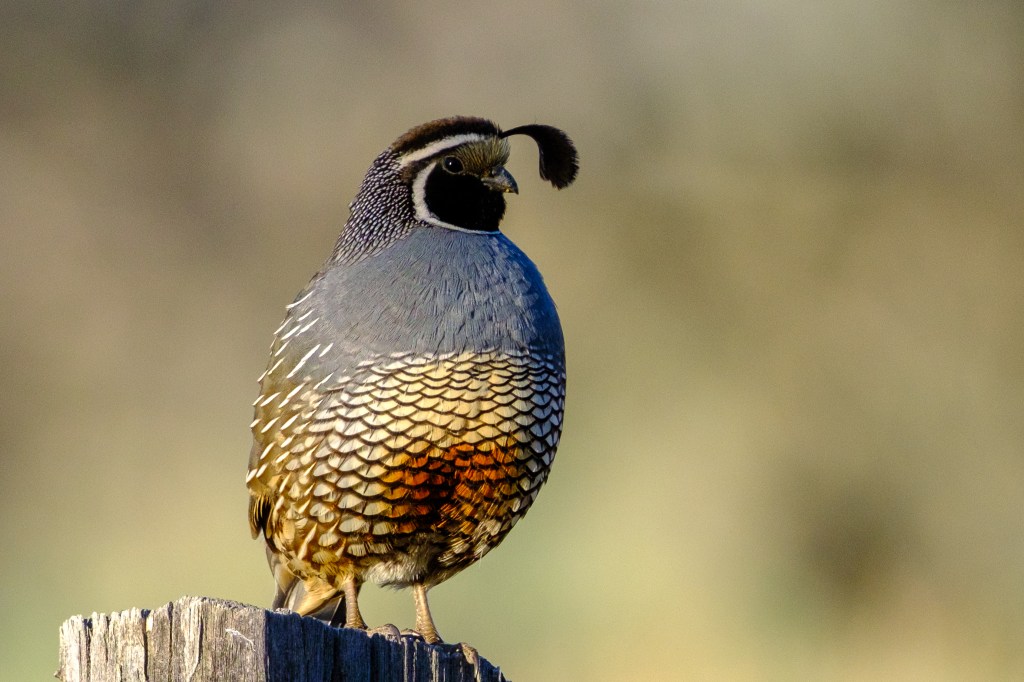
California Quail, our State Bird, are common around Bishop. I find them hard to photograph; they usually run off quickly, so most of my pictures show Quail butts. But on Riata Lane, a male ignored me as I walked past.
The Sierra
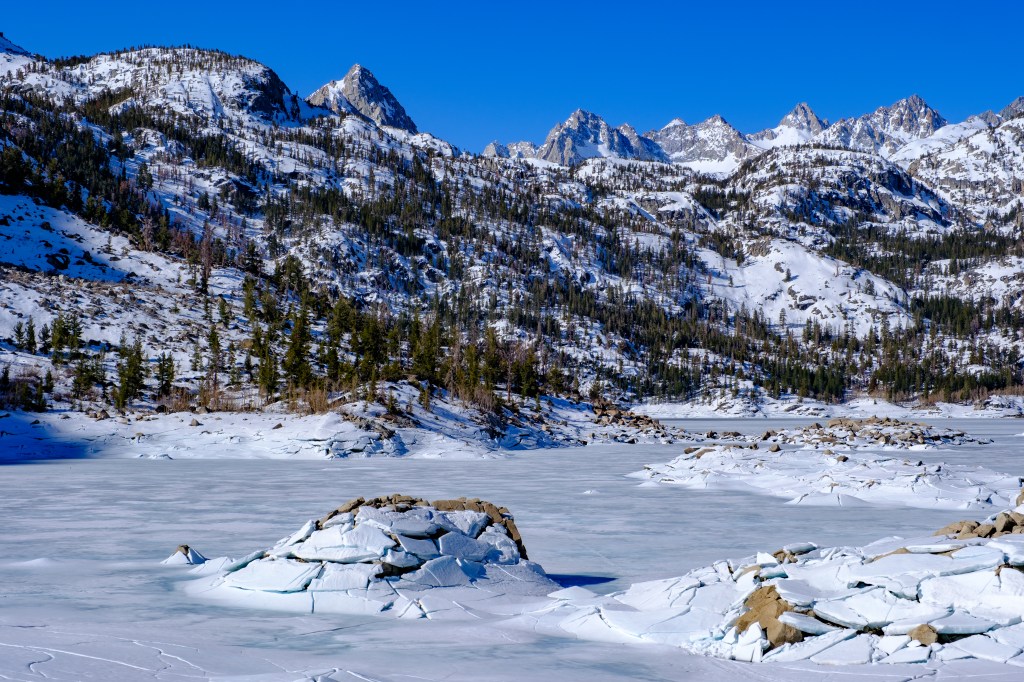
Friends visited us in April. On the 25th we drove to Lake Sabrina at 9200 feet. Winter is still here. Fishing season opened in the valley at 5am on April 27, but it will be a while before fishing opens in the high Sierra.
Dixon Lane and further north
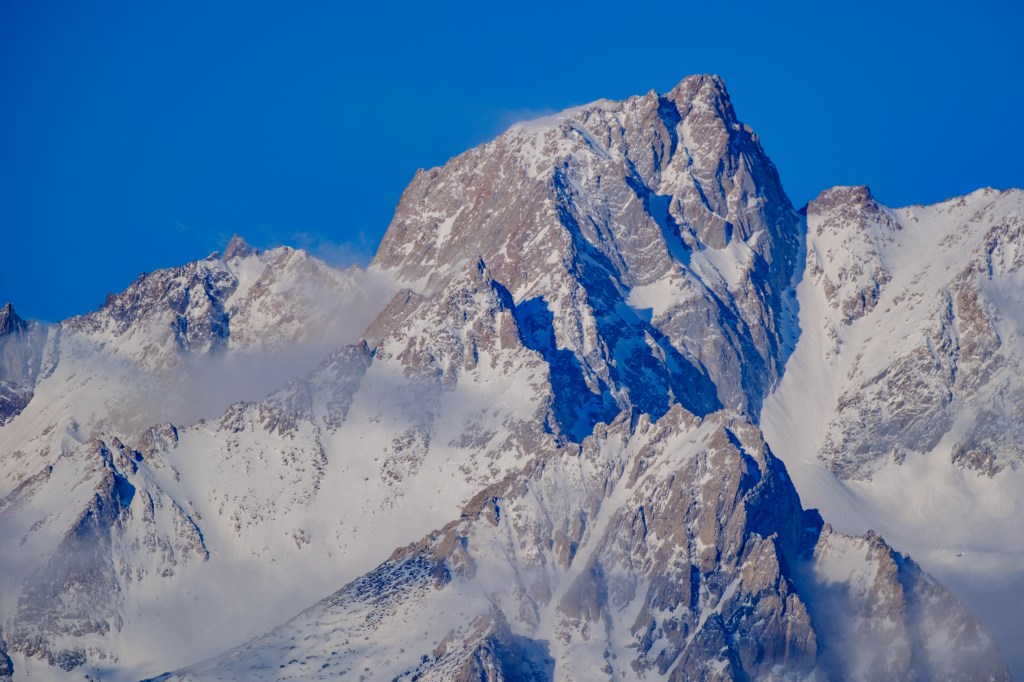
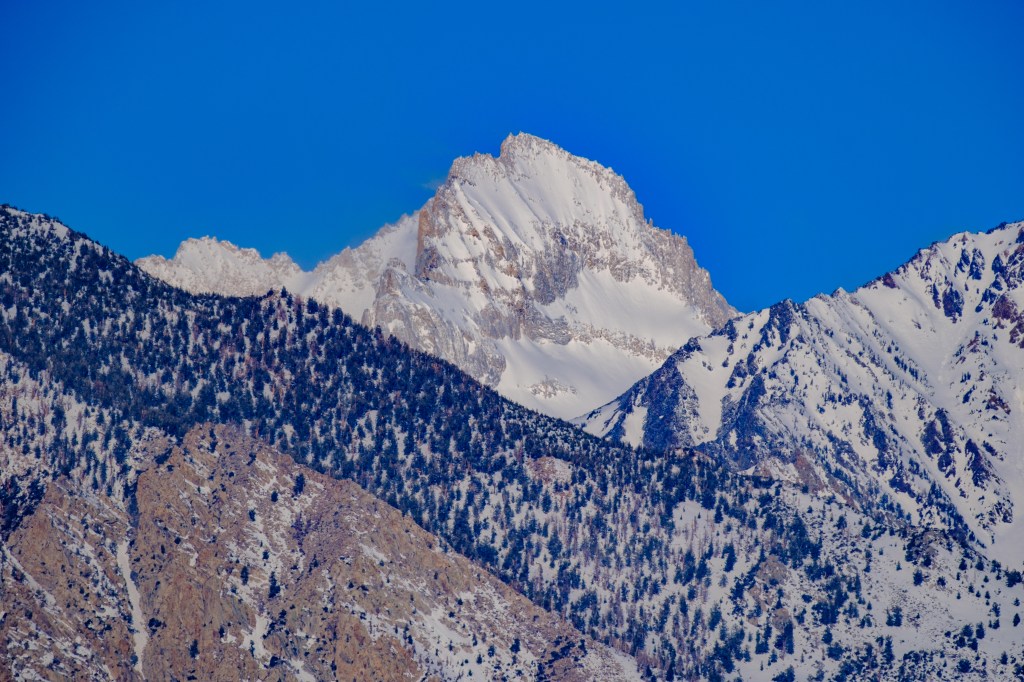
Just north of Bishop, on Dixon Lane, is a road with a green gate. Owls often nest here and other birds use the area. From Dixon Lane you can get nice views of the mountains.
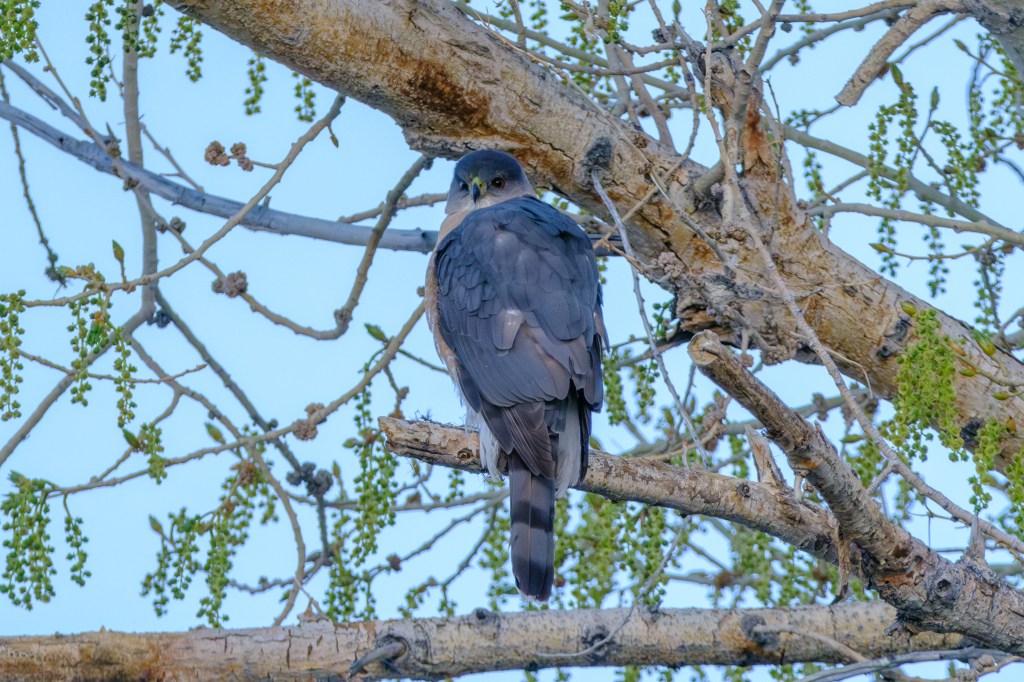
A Cooper’s Hawk was present.
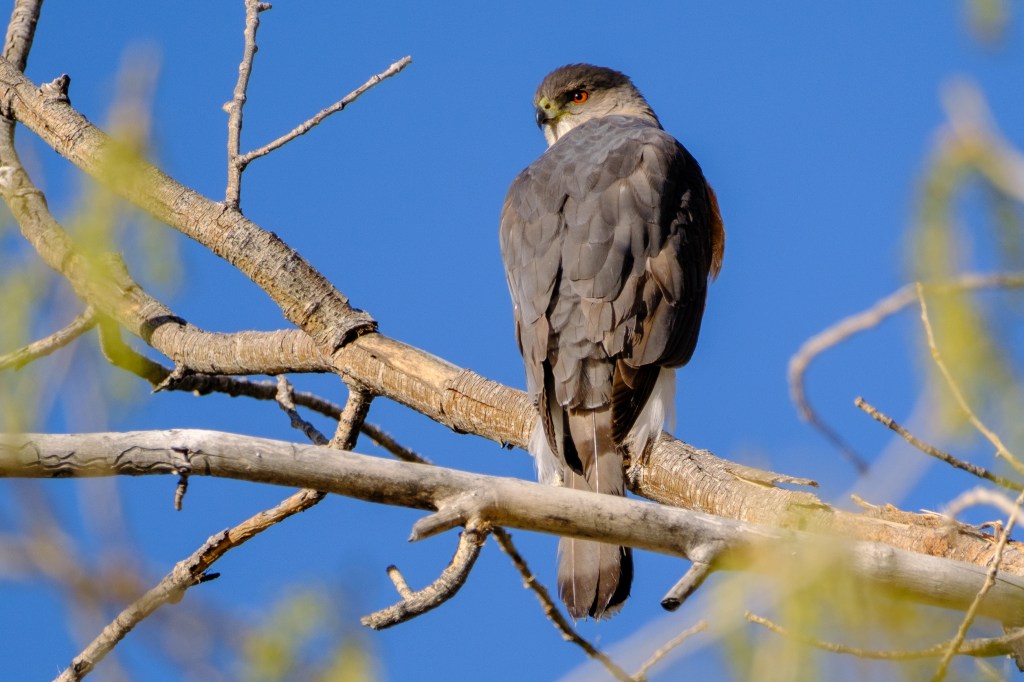
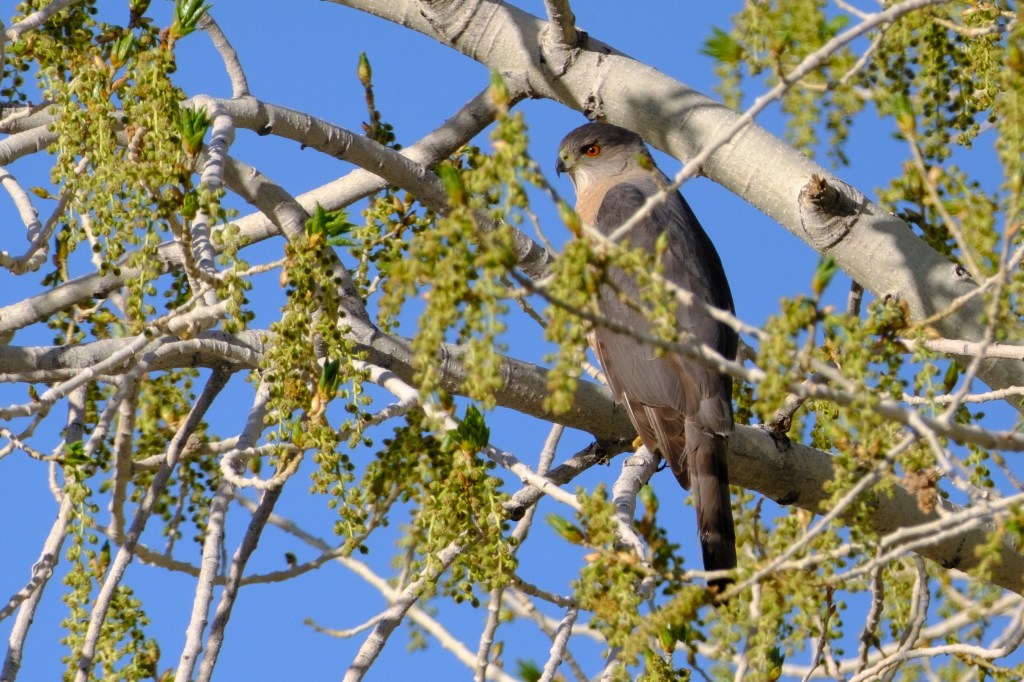
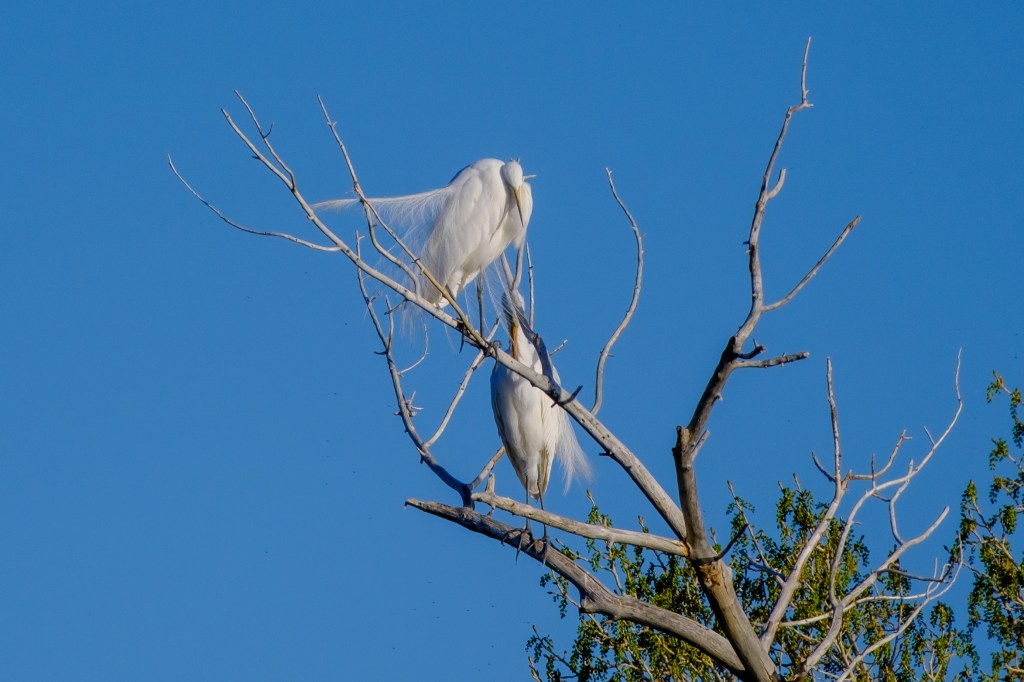
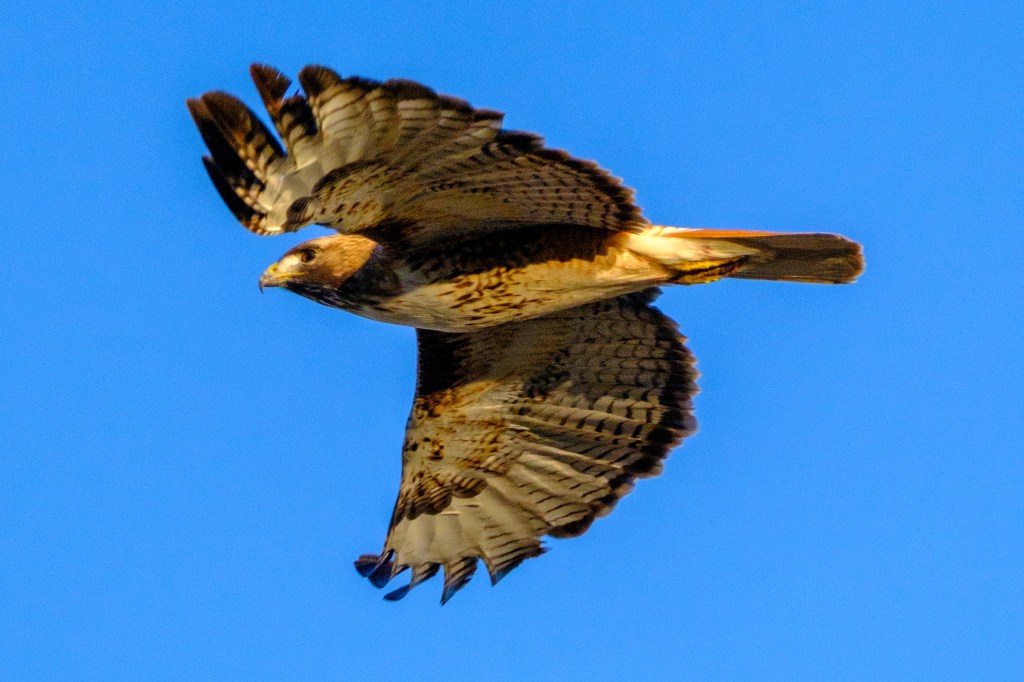
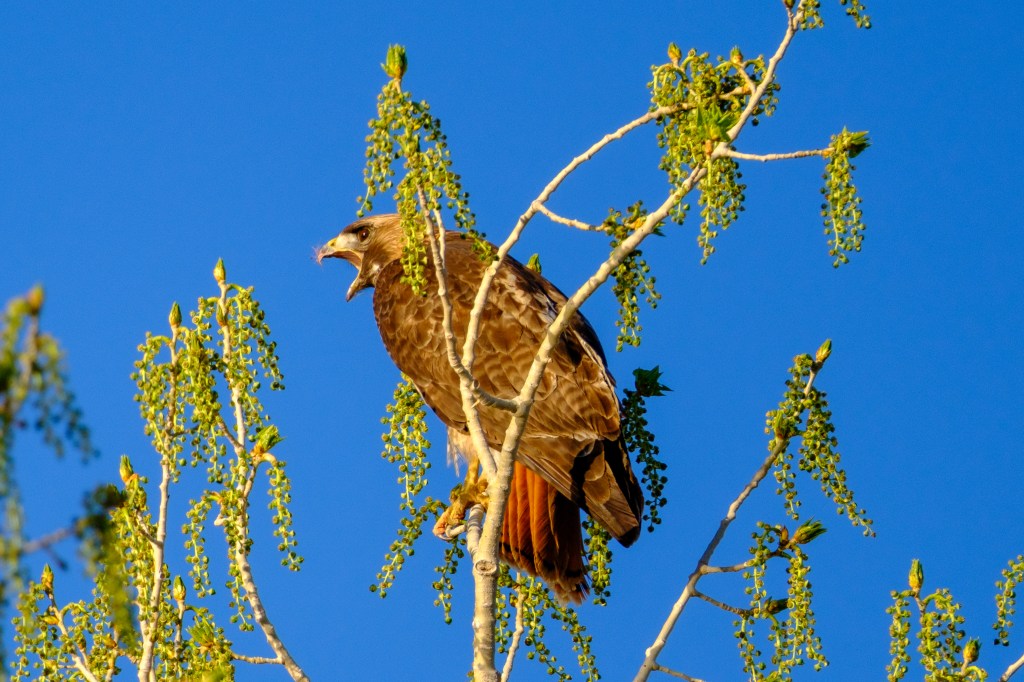
This year the Great Horned Owls put their nest high in a tree with a lot of leaves. This made it hard to get pictures: inconsiderate of them. Why does this owl seem to be wearing red eye-shadow?
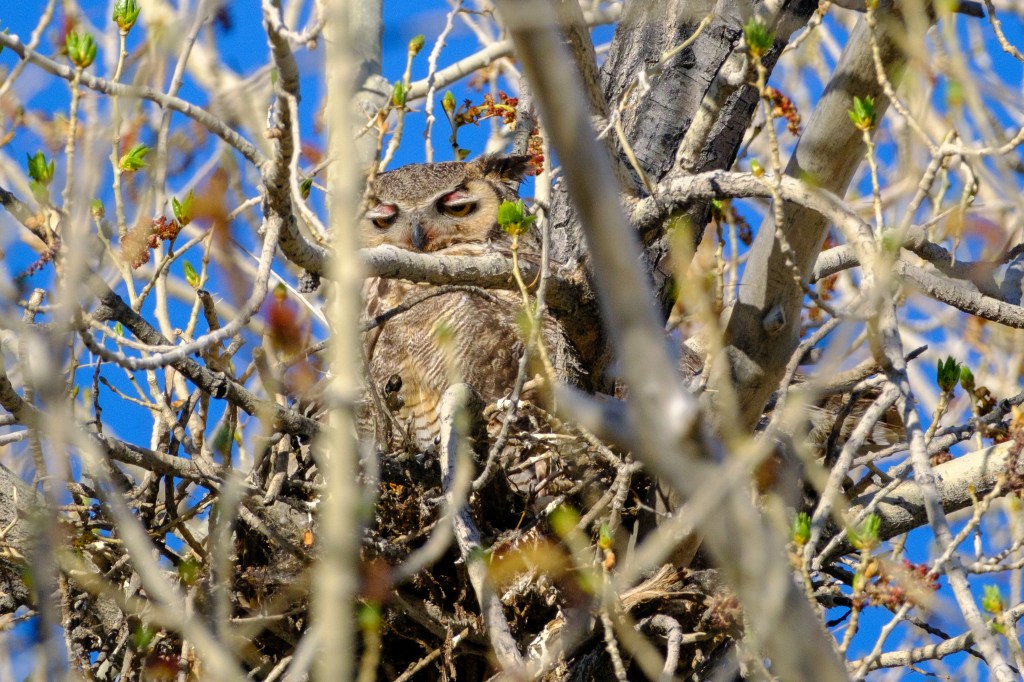
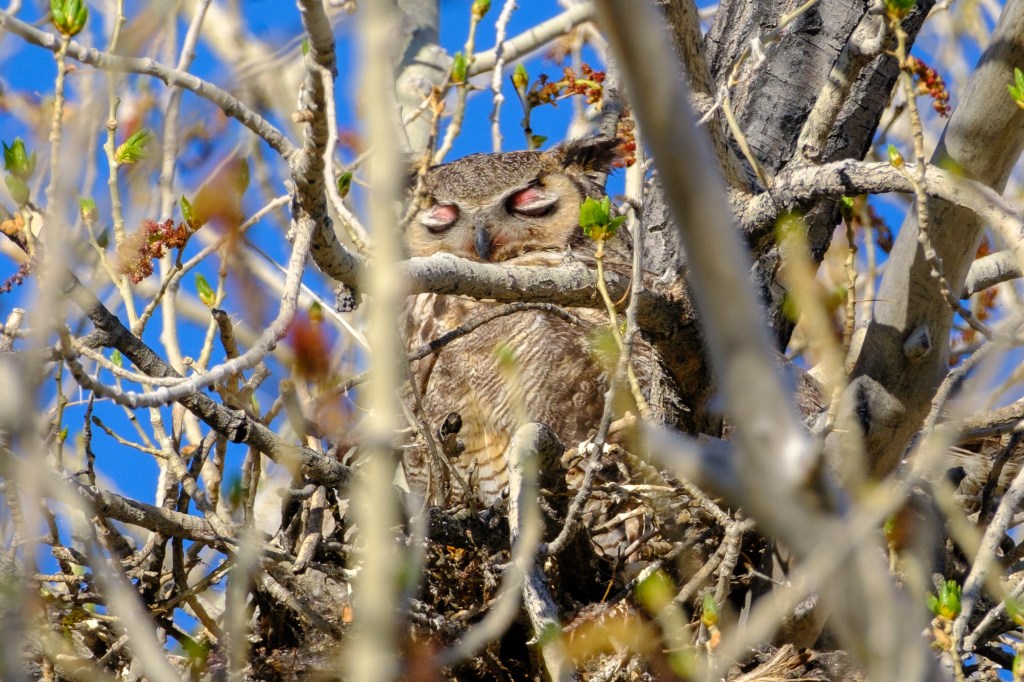
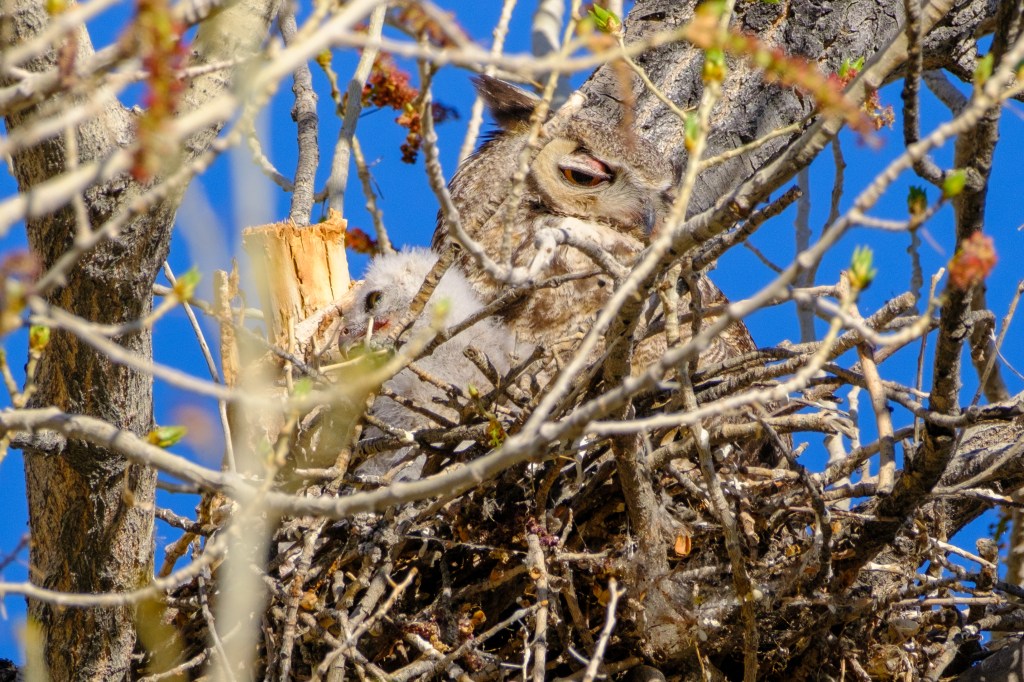
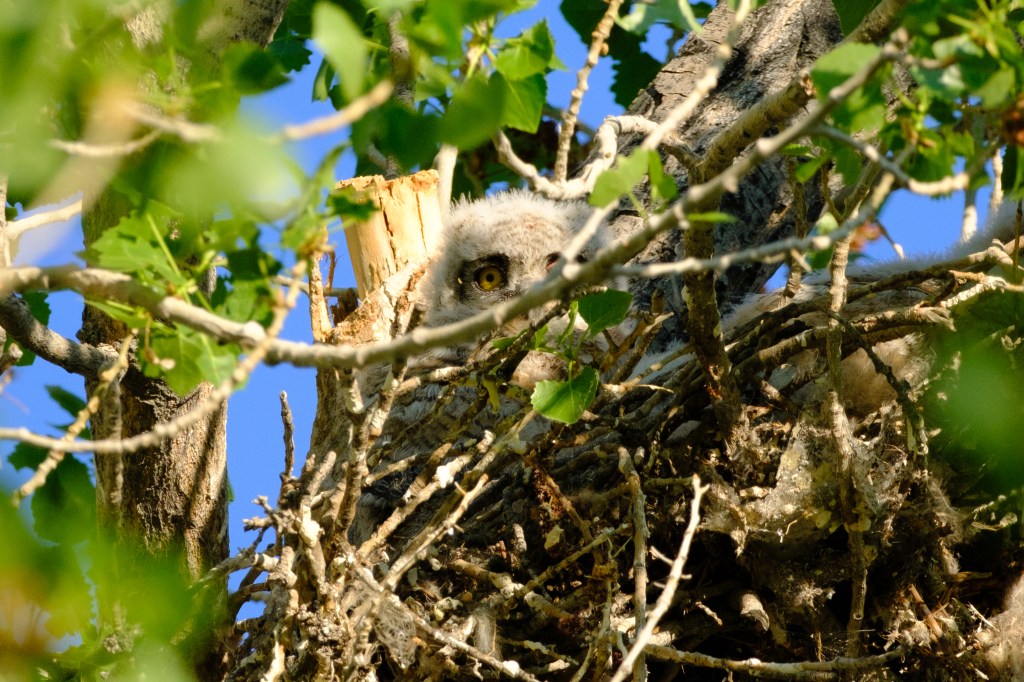

When you see a nest with one adult, the other owl is usually nearby. Finding them can be difficult, as they blend into the shadows of the Cottonwoods.
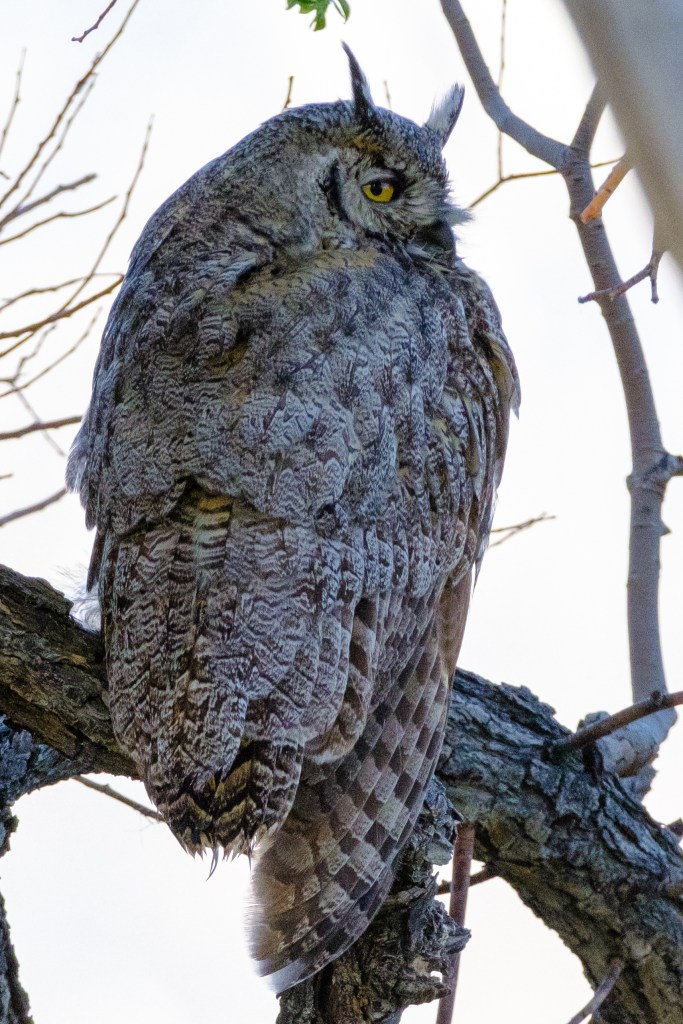
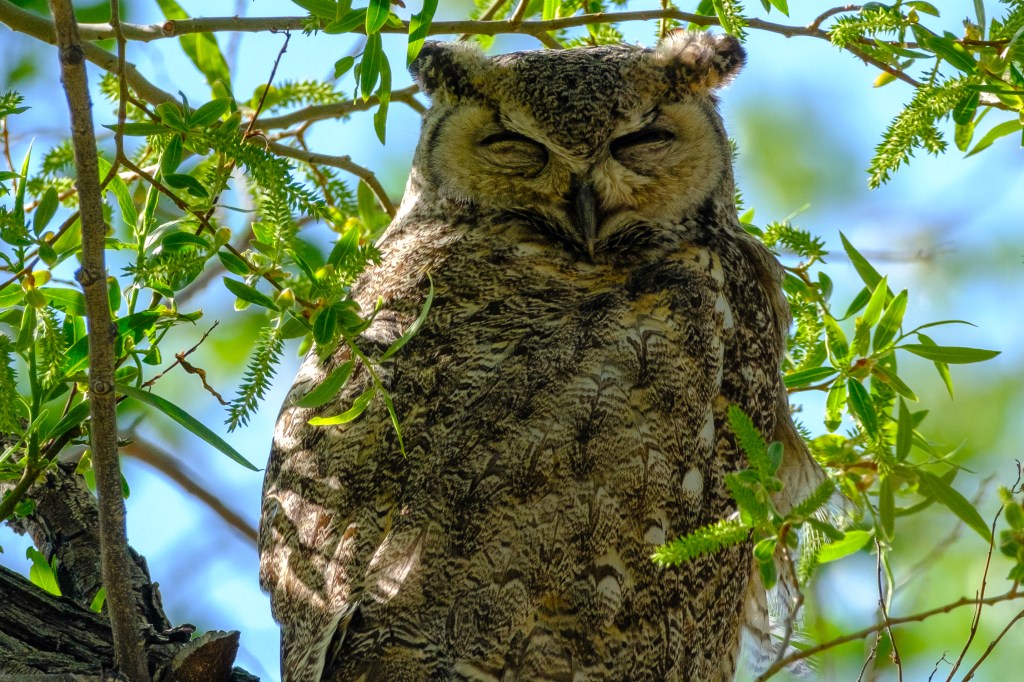
Pleasant Valley Reservoir
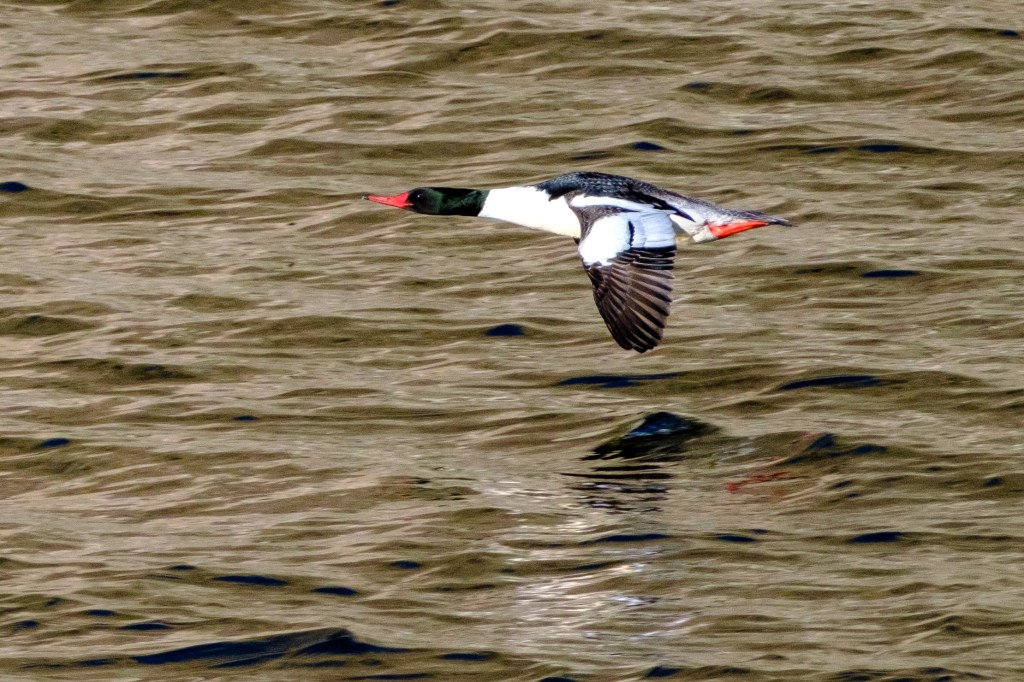
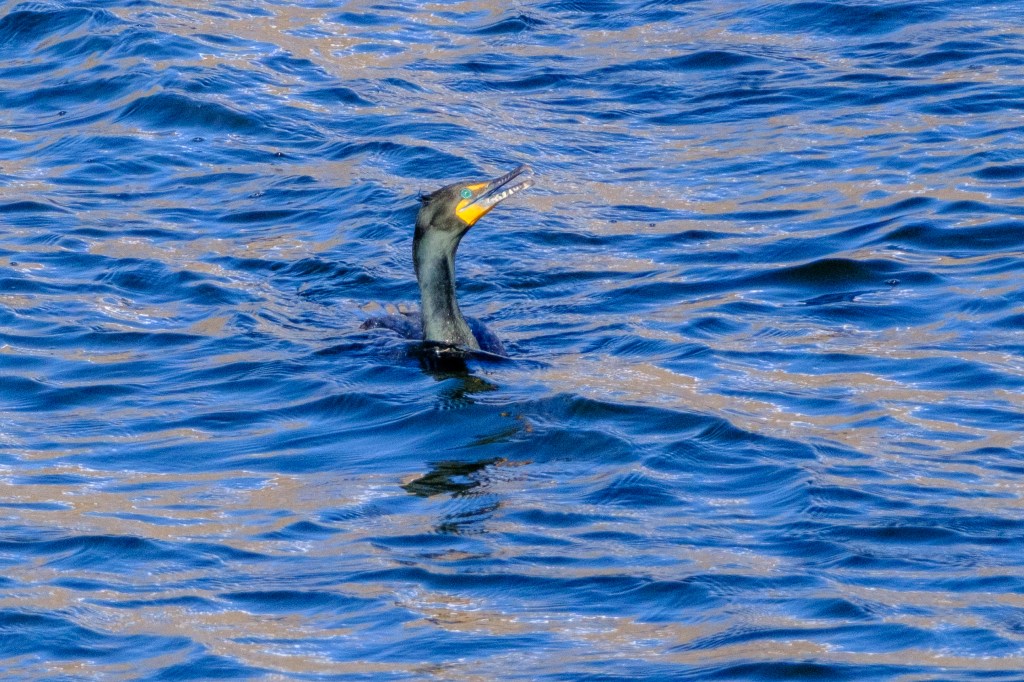
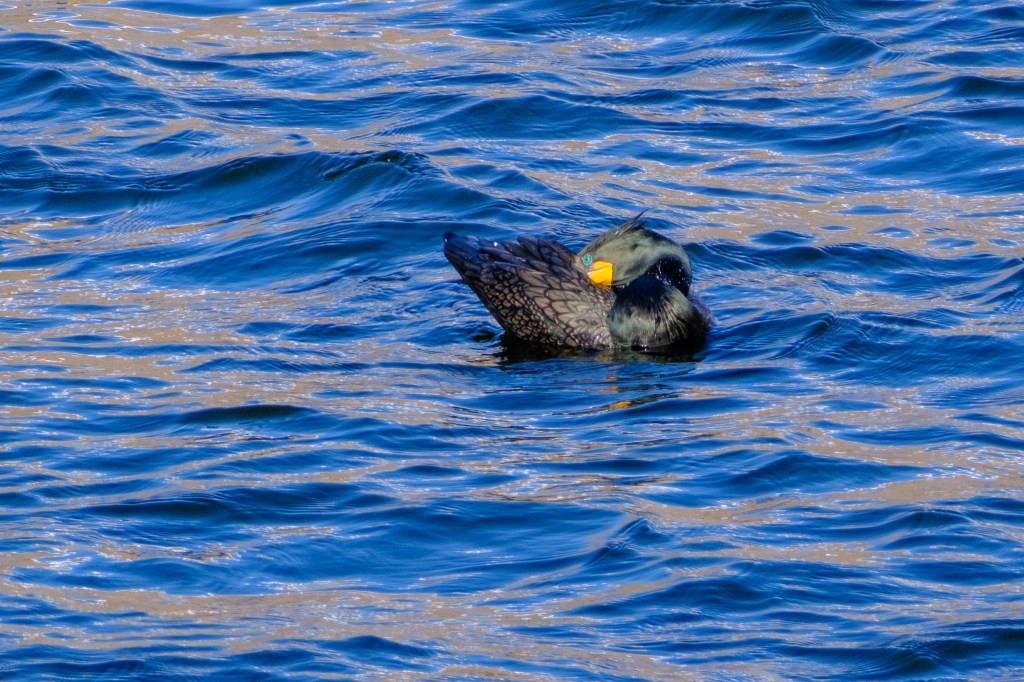
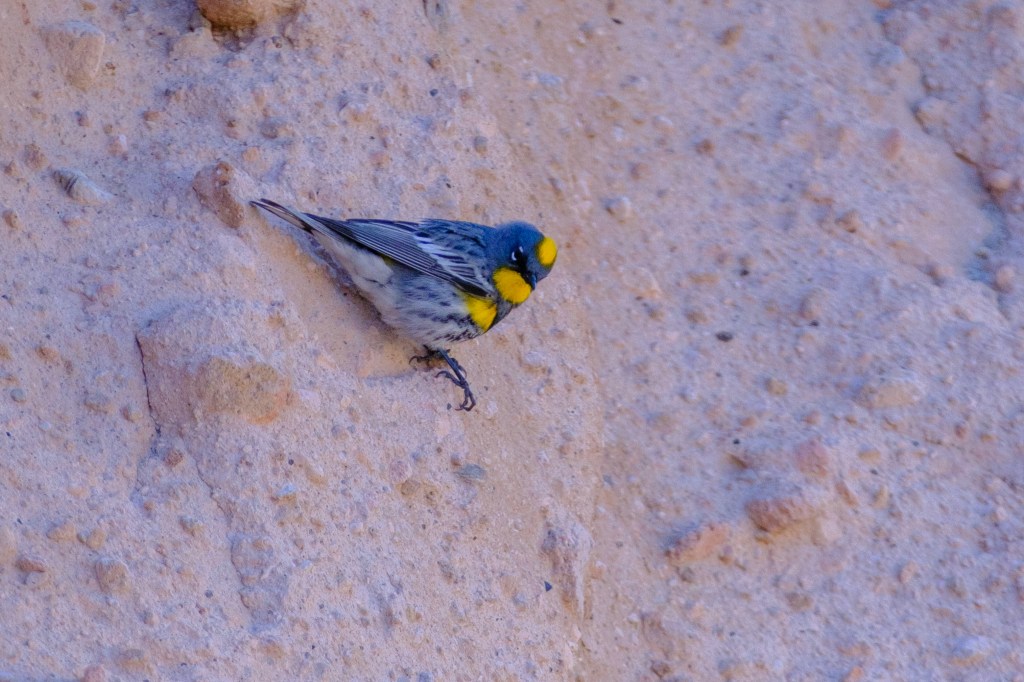
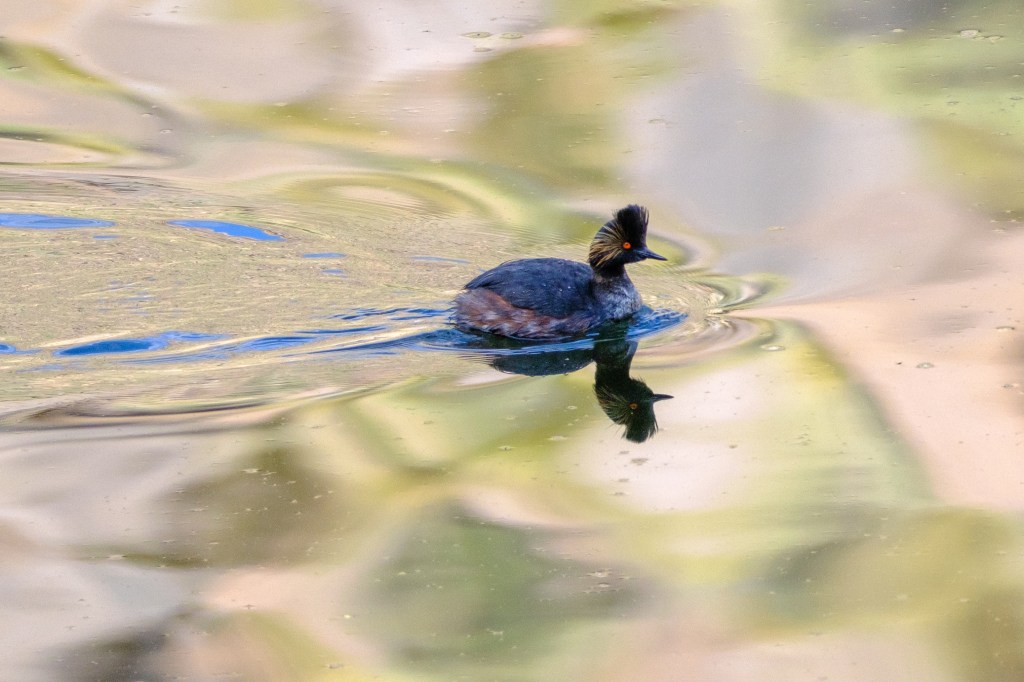
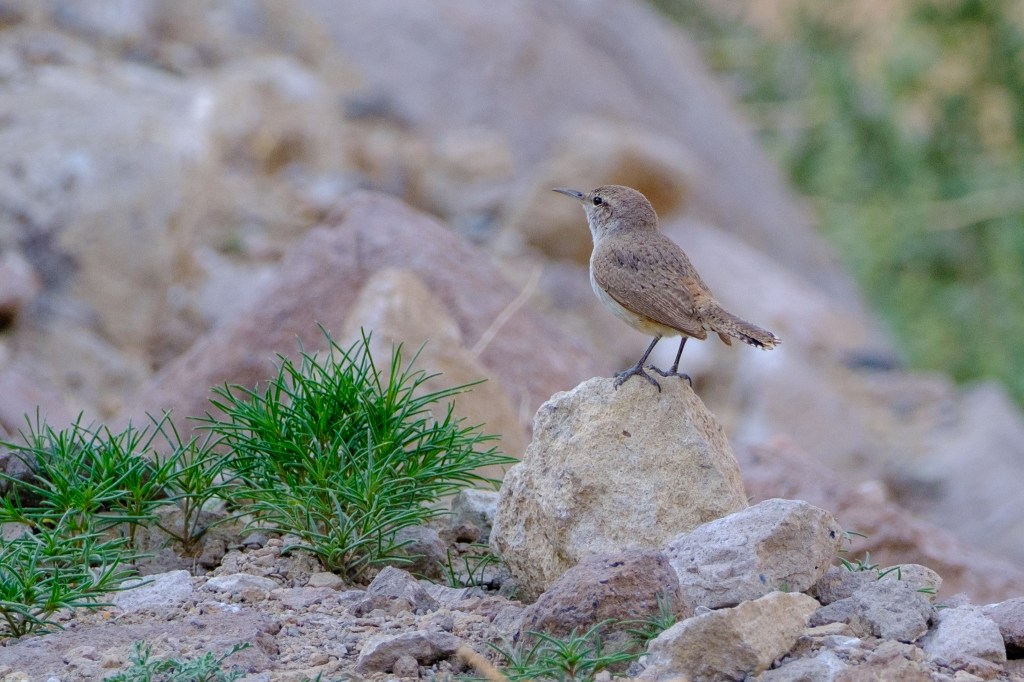
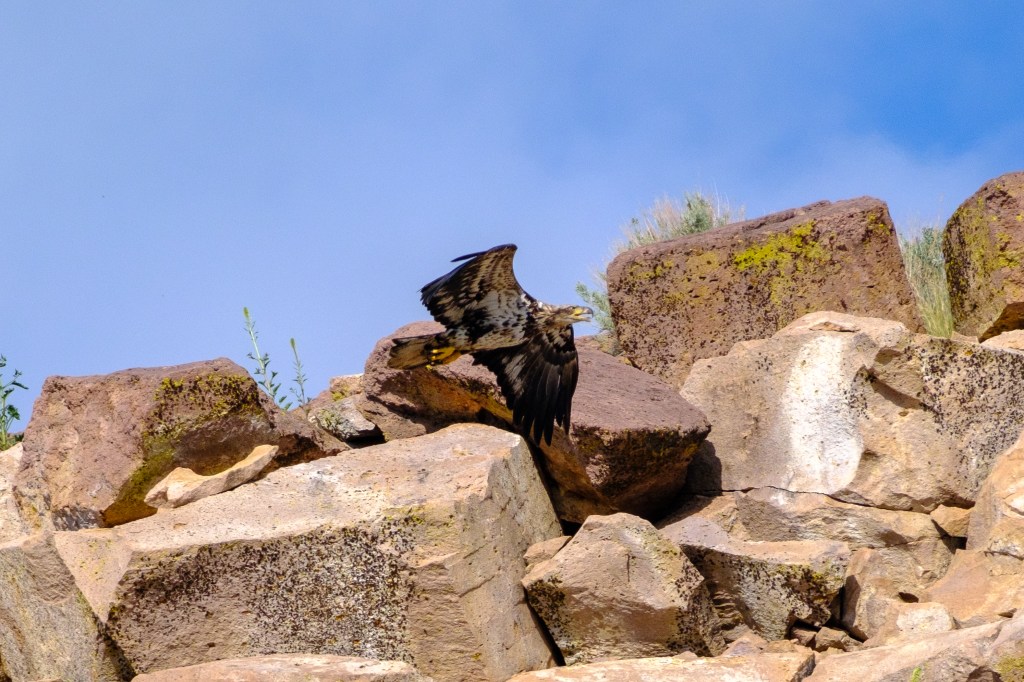
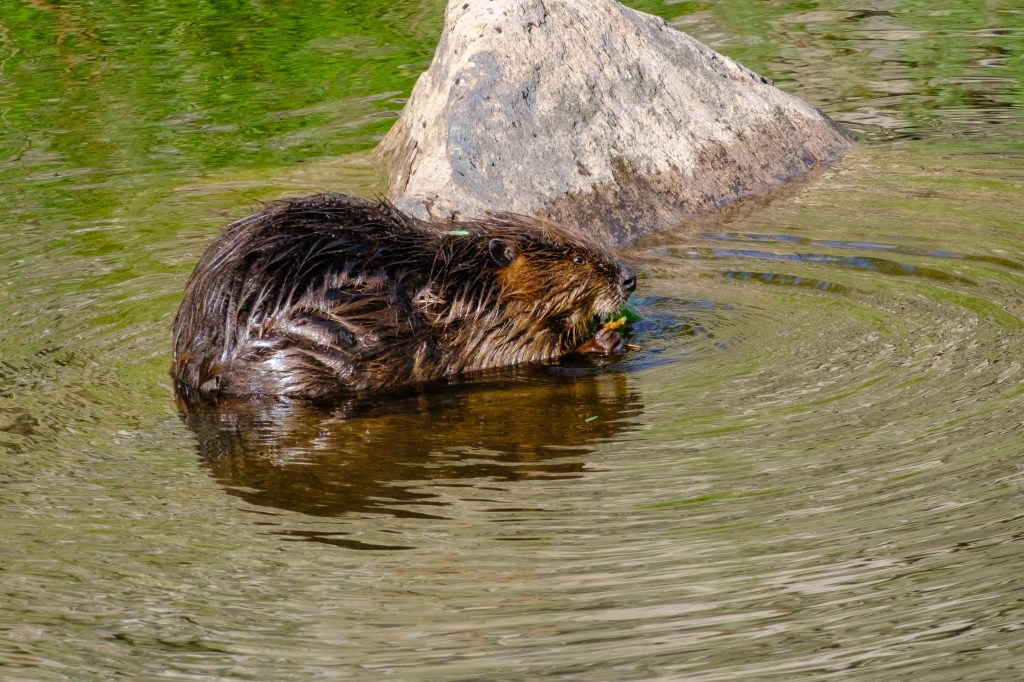
It took me years to realize that Beavers are common in the waters near Bishop. The most obvious sign of their presence is a newly-downed Cottonwood, with tooth-marks on the remaining stump. Sinuous marks from their tails can be seen on dirt roads. But getting photos of these creatures has been hard. The pictures below were taken where the Owens River flows into the Reservoir.

Convict Lake
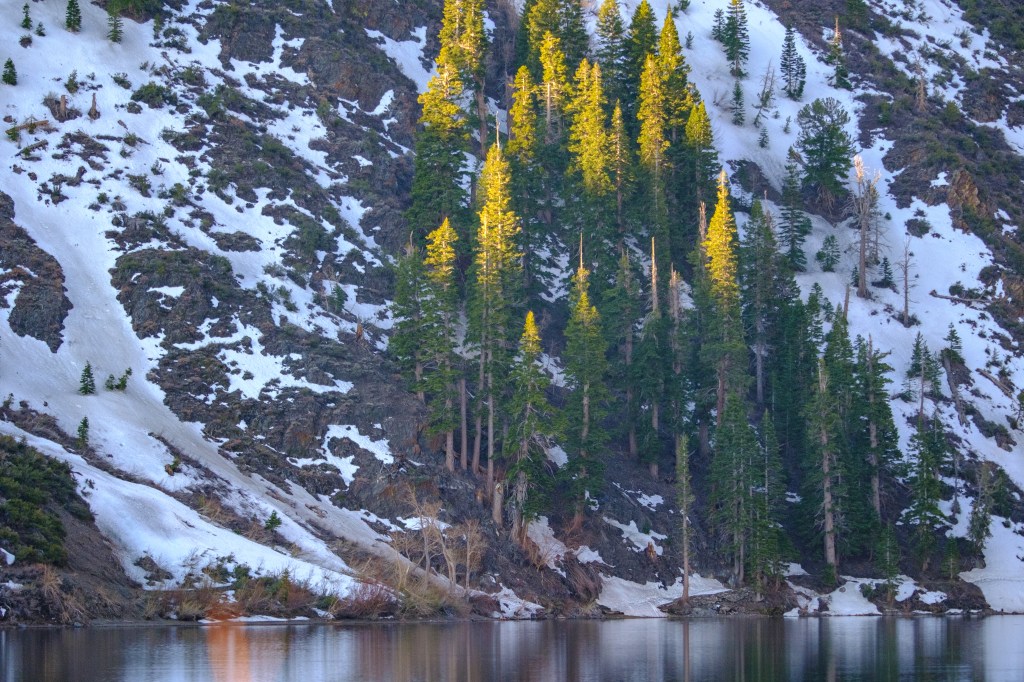
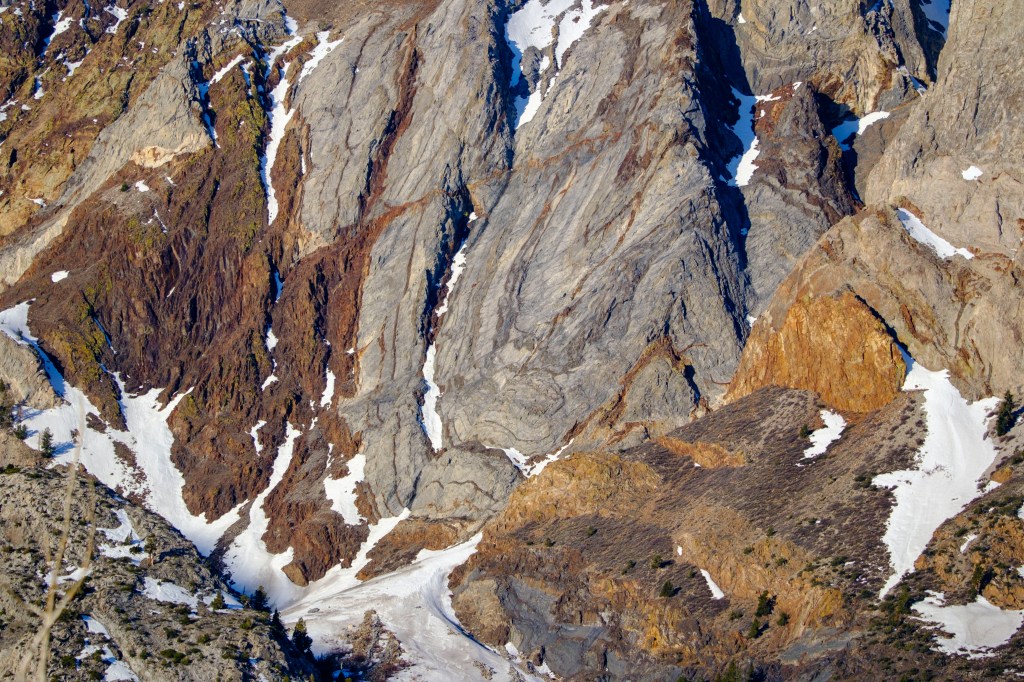
We visited Convict Lake (elevation 7850 ft) on April 23. The ice has melted, but snow still lingers on the south shore and higher up along Convict Creek.

Mono Lake
In June, thousands of birds will come here. But in April it is pretty quiet.
 Birds of Bishop