
Kestrels are tiny falcons, just 9” long with a wingspan of 22”, weight 4 oz. When perched, they can be mistaken for a Dove, a Shrike, or even a Blackbird. I did not start to identify Kestrels until I bought a telephoto lens and started collecting pictures in 2020. Thanks to the camera, I now realize that the Bishop area is infested with American Kestrels. They hang out on trees near fields and sagebrush flats. They like to stand on naked branches, from which they hunt insects, lizards, mice, and small birds.
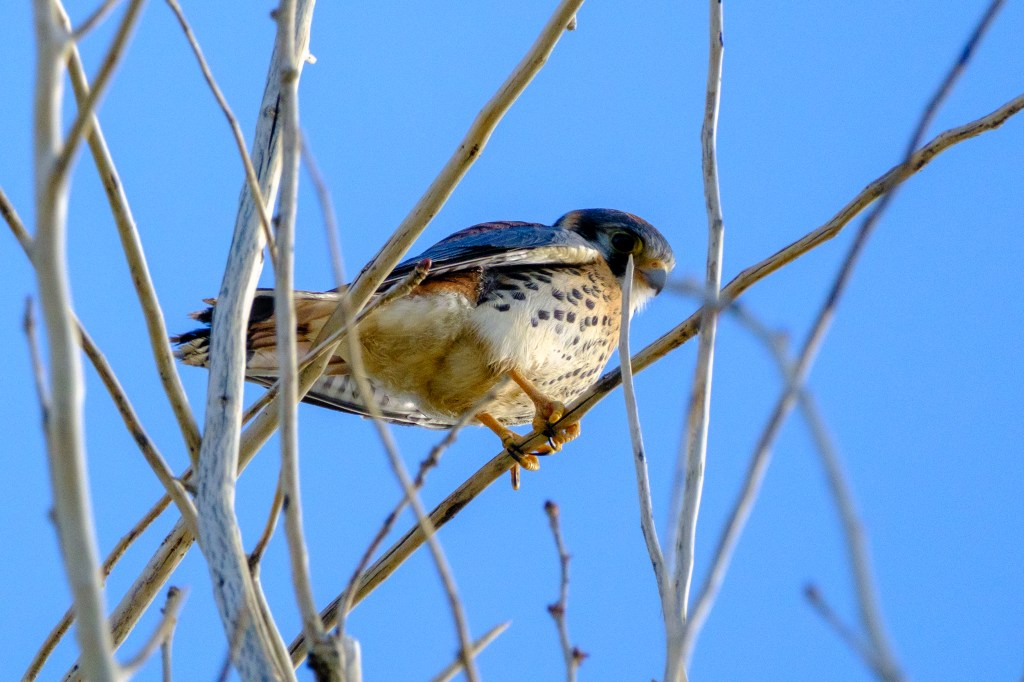
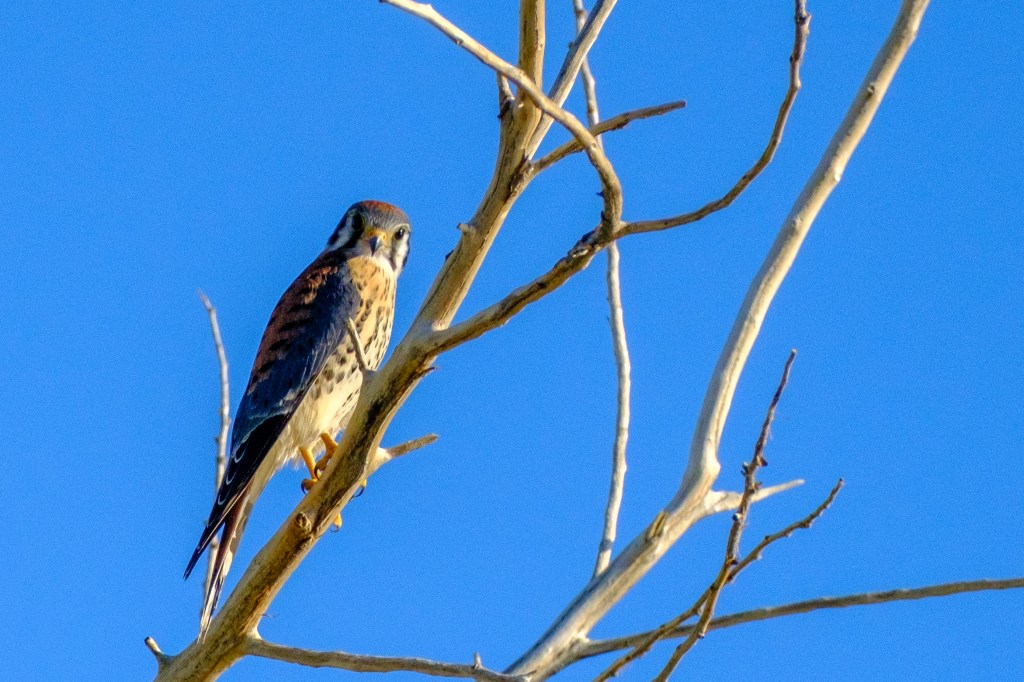
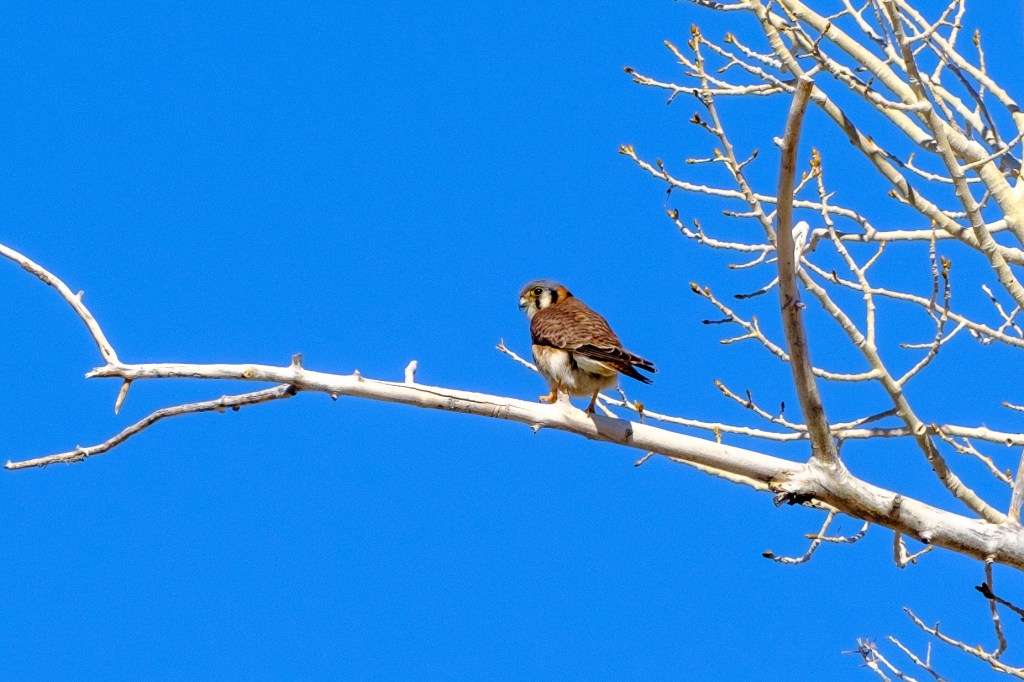
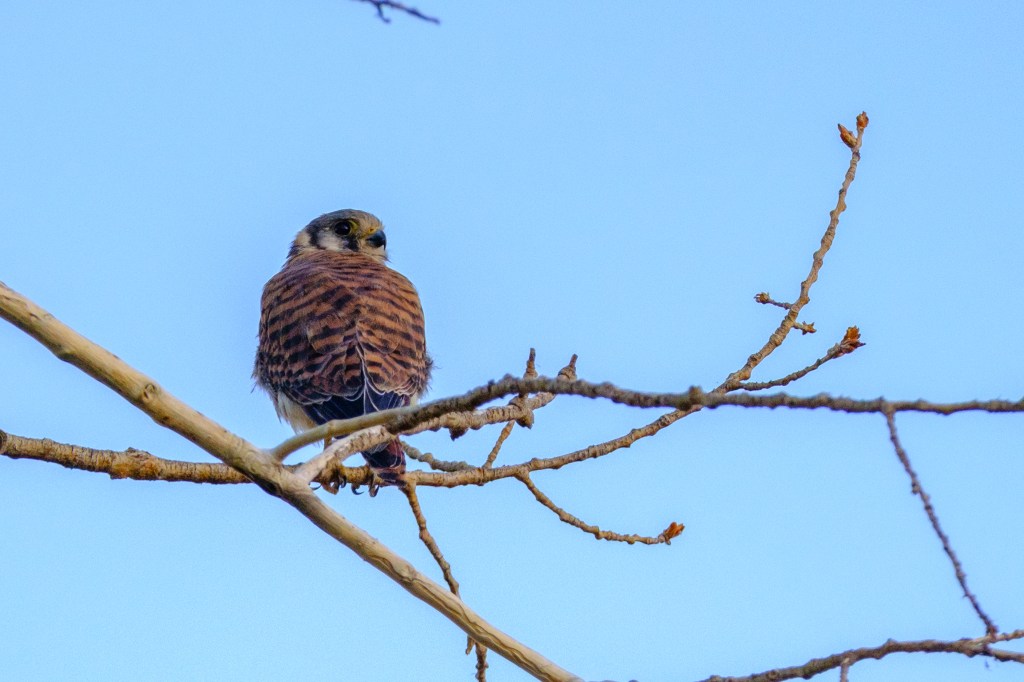
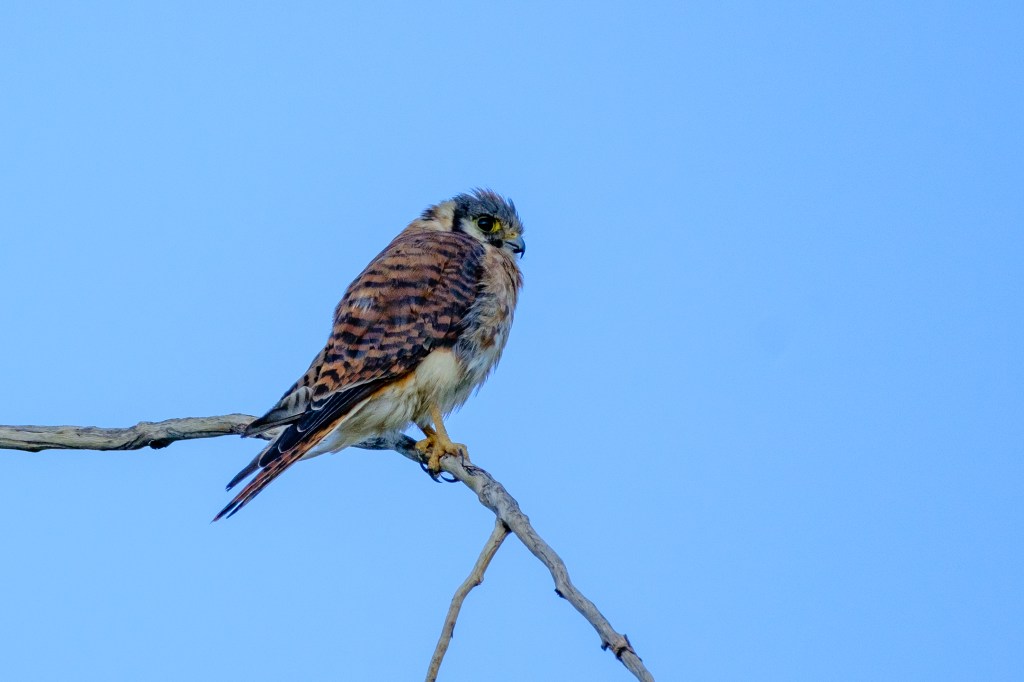
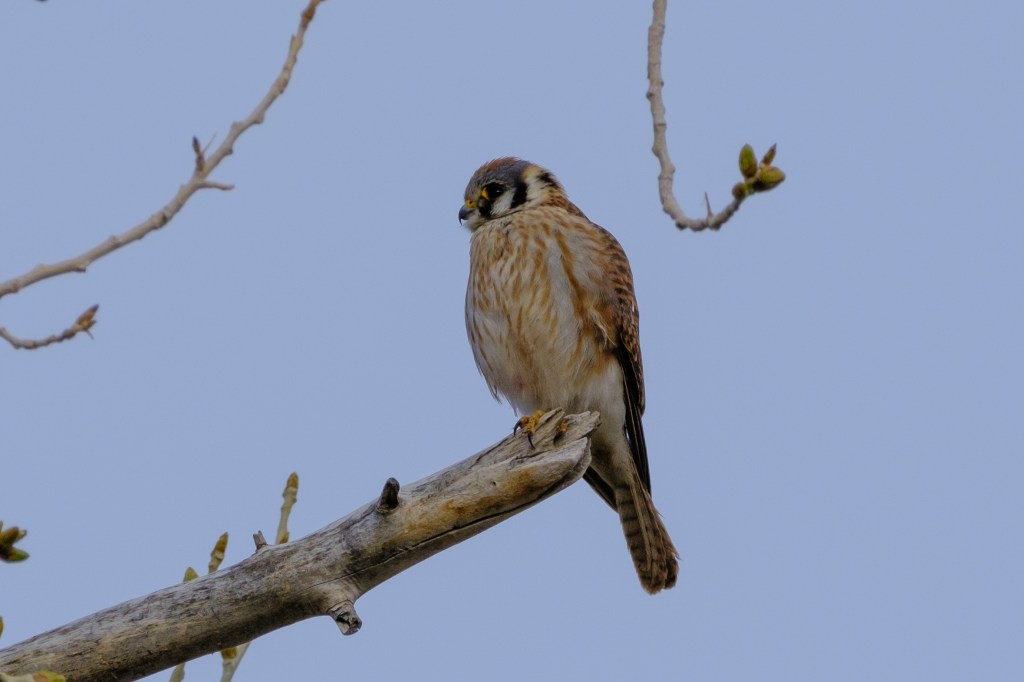
Like other falcons, Kestrels have pointed wings, dark eyes, and a facial “mustache.” Their tails are flashy red. They appear to have “eyes” in the back of their heads, thanks to black feathers that form dark circles. The males have blue-gray wings, orange-brown backs with black horizontal dashes, and black spots on their white chests. A blue-orange, white-black combo. Females have a rufous back with horizontal black stripes. Their wings are colored like their backs and they have brown vertical streaks on their white chests. These little carnivores stand out for their gaudy feathers.
Falcons have short beaks that are sharply hooked. The beaks have a “tooth” that is used to sever the spine of their prey. They have big feet and long toes for striking their quarry. They may hold the victim with their talons, tearing it apart with their beaks.
Portraits of Male Kestrels
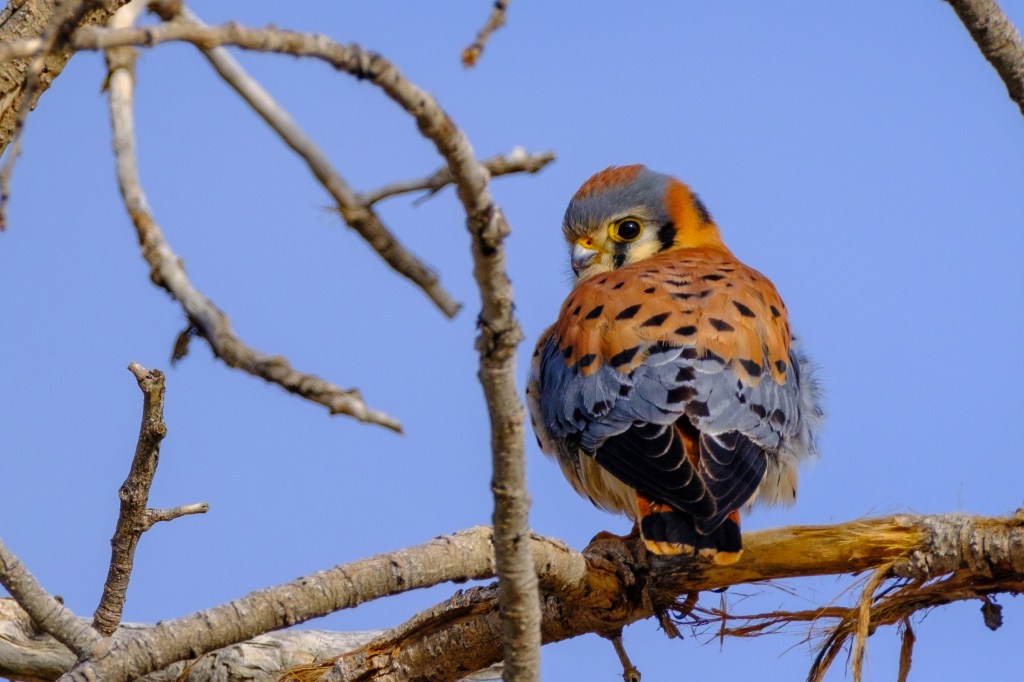
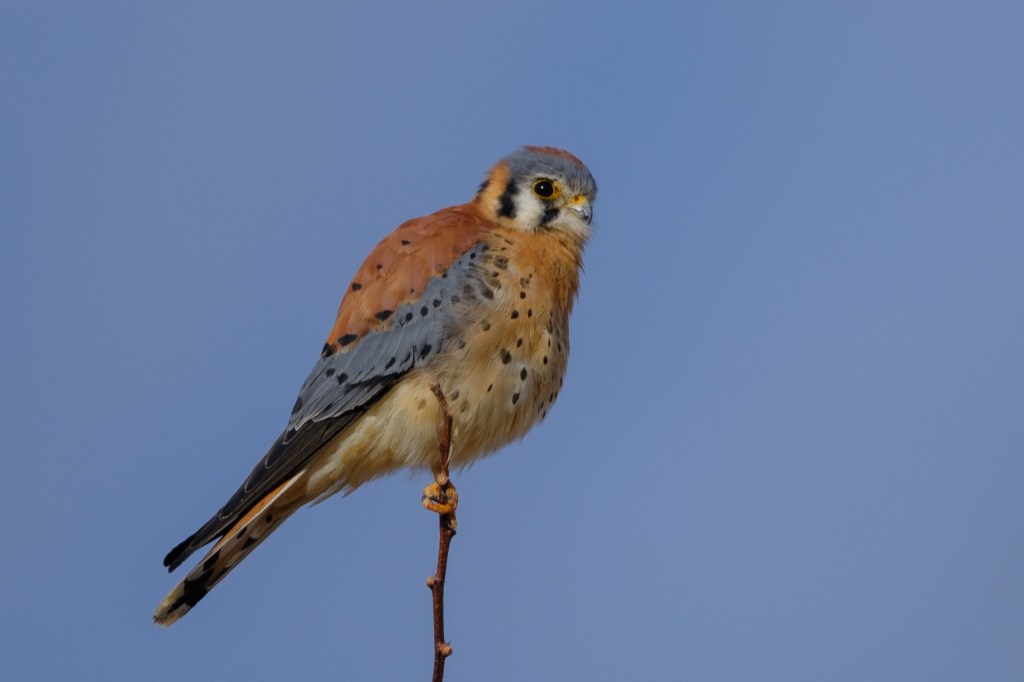
I will start with photos of male Kestrels. All these pictures were taken in the Bishop area near the Bishop Creek Canal, Airport Road, and the Buckley Ponds. The first image shows the black “mustache” that drops below the eye. Note the short, hooked beak. Black markings are on the back. The primary wing feathers cover most of the tail. The bird is looking over its shoulder, a come-hither look that is common for Kestrels.
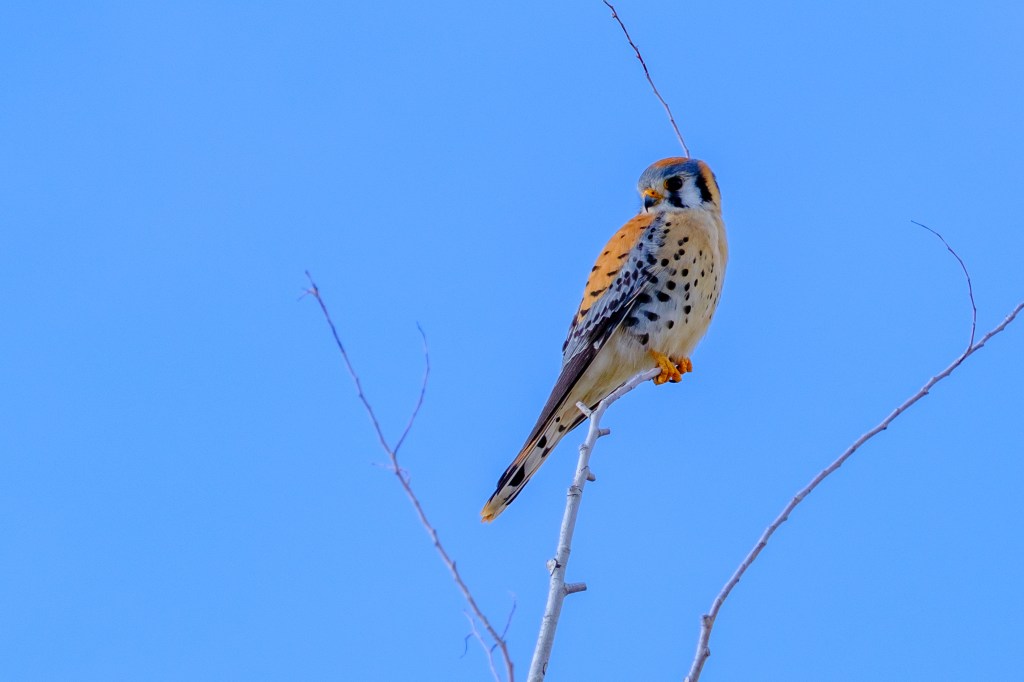
The next five photos show a Kestrel near the Buckley Ponds. The lighting was particularly attractive that morning.
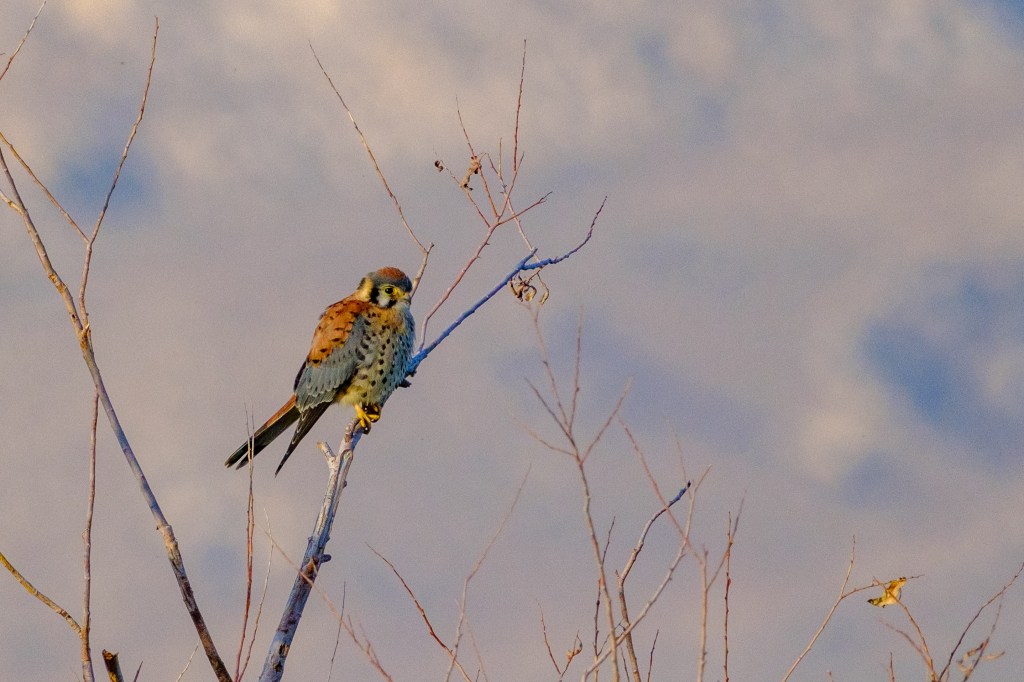
The next photo shows the “mustache” of black color below the eyes.

In the next image the bird shakes itself. This cleans the feathers of dust and dirt.
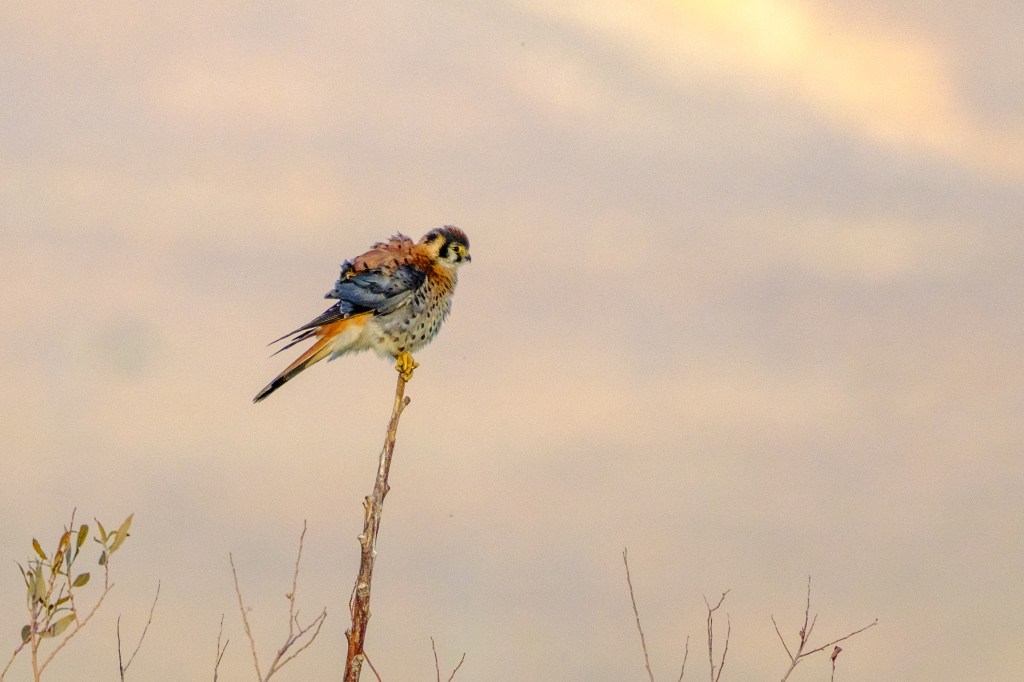
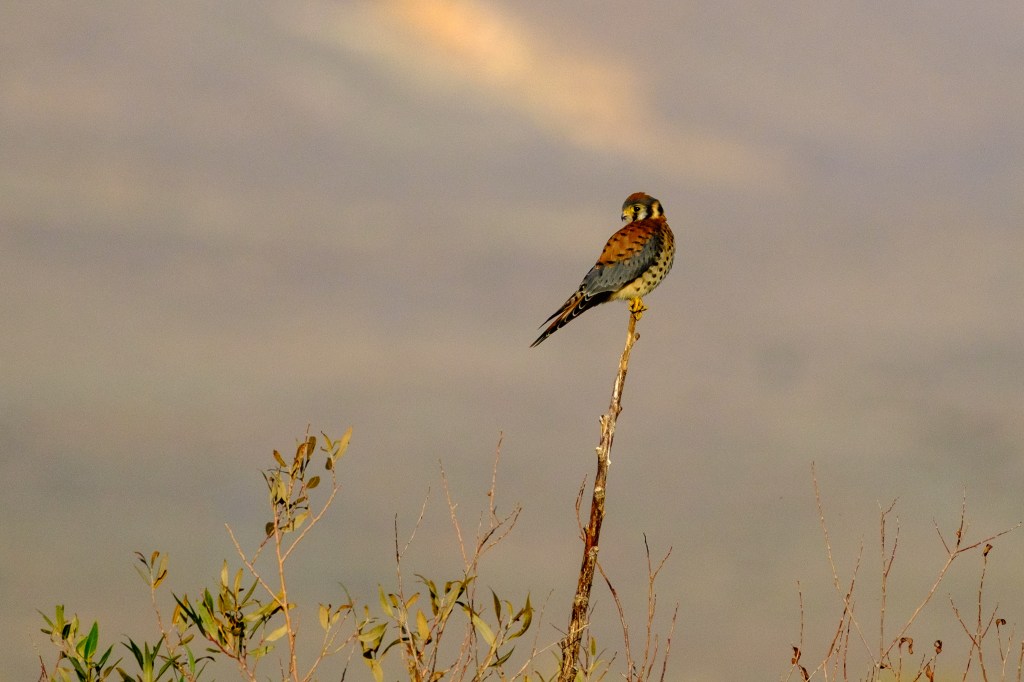
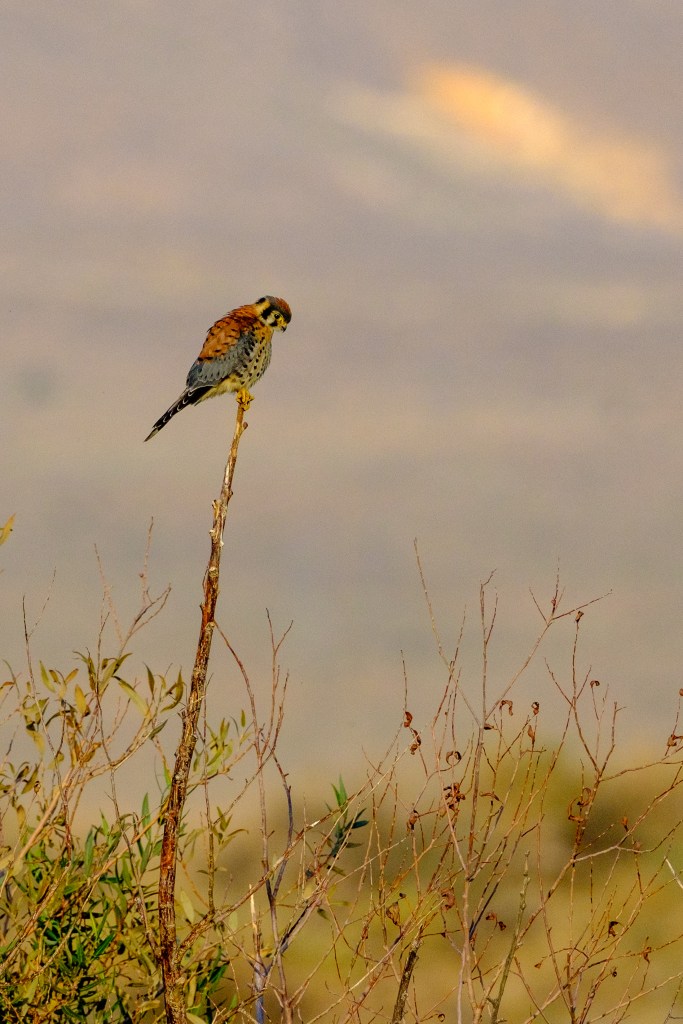
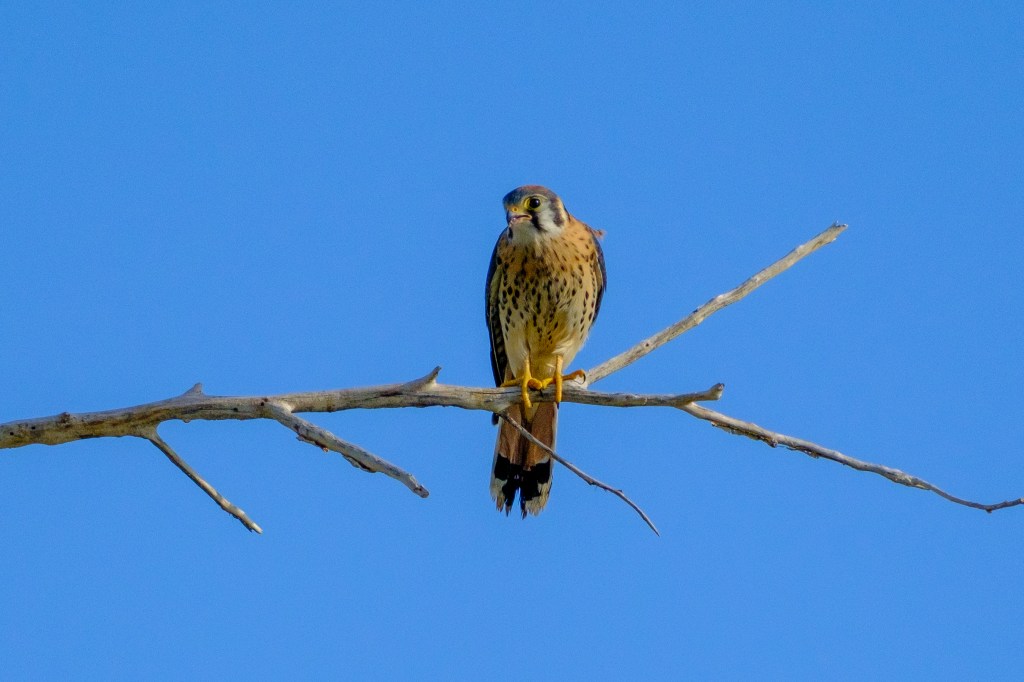
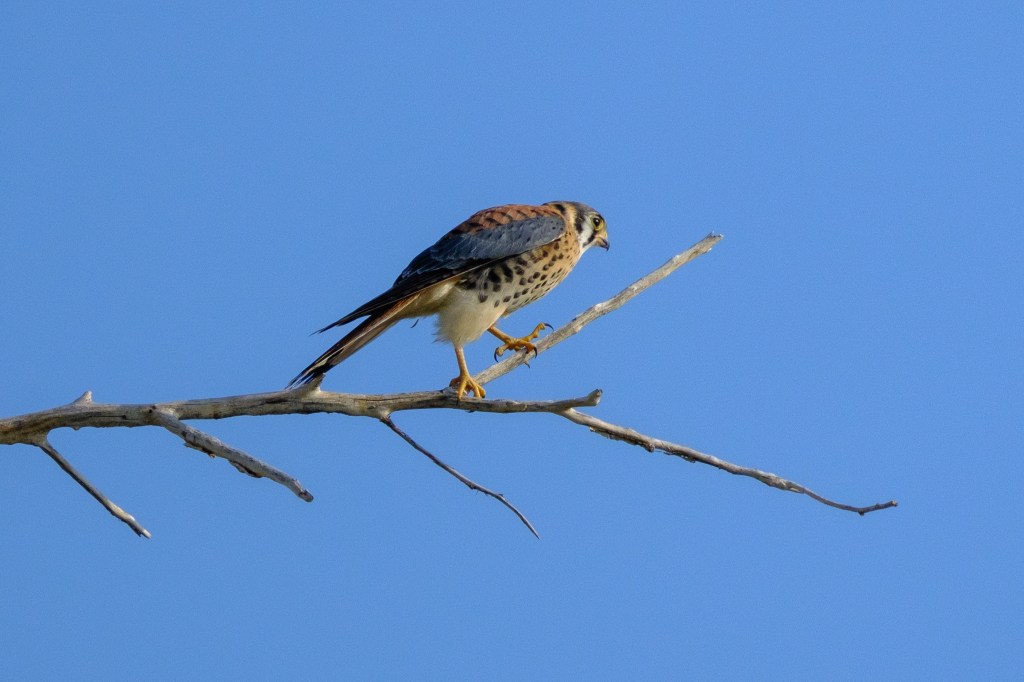
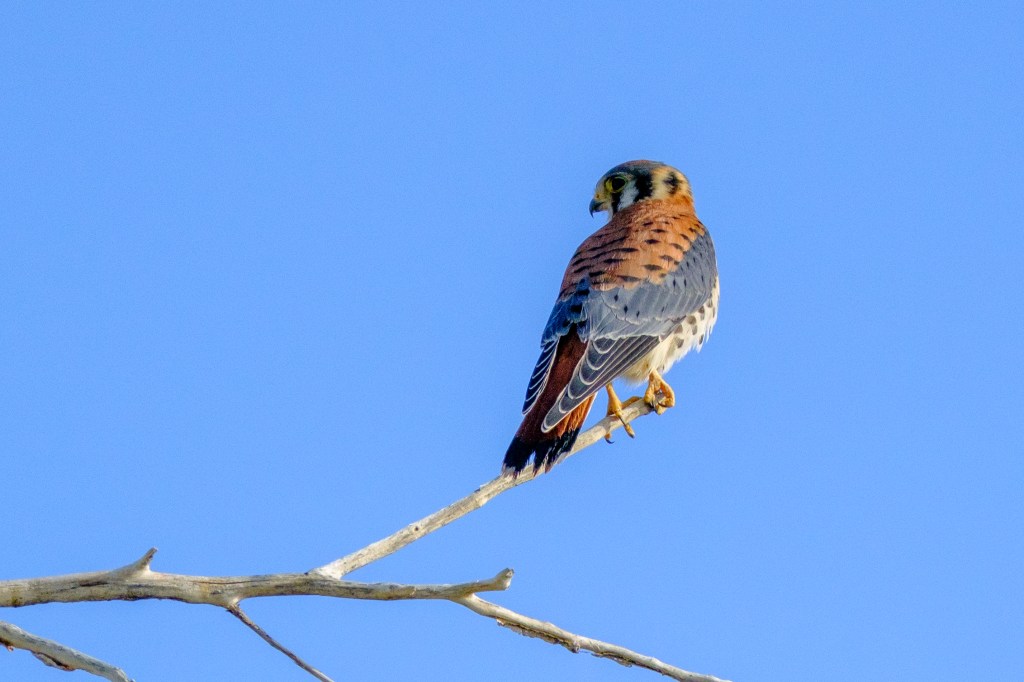
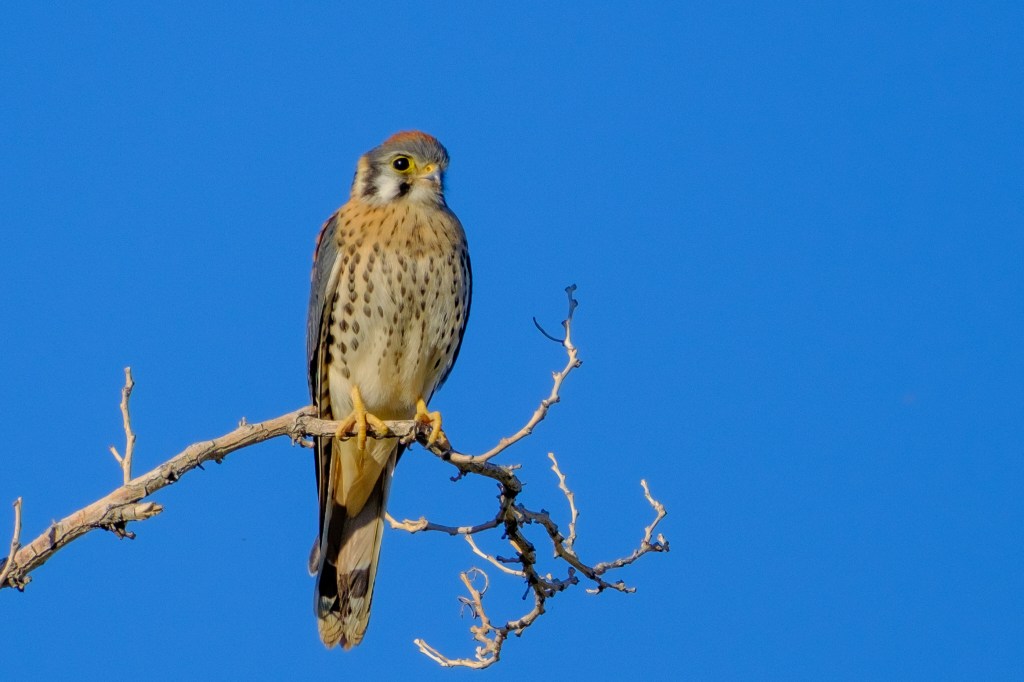

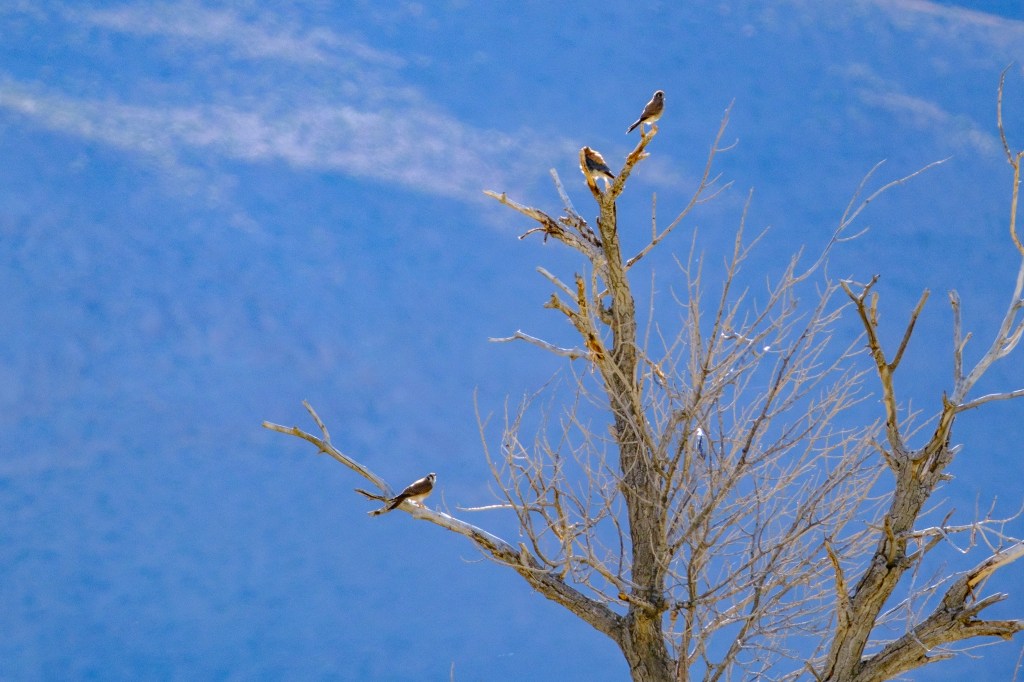
One of my favorite images is below. The bird’s body is outlined by the dead branches.
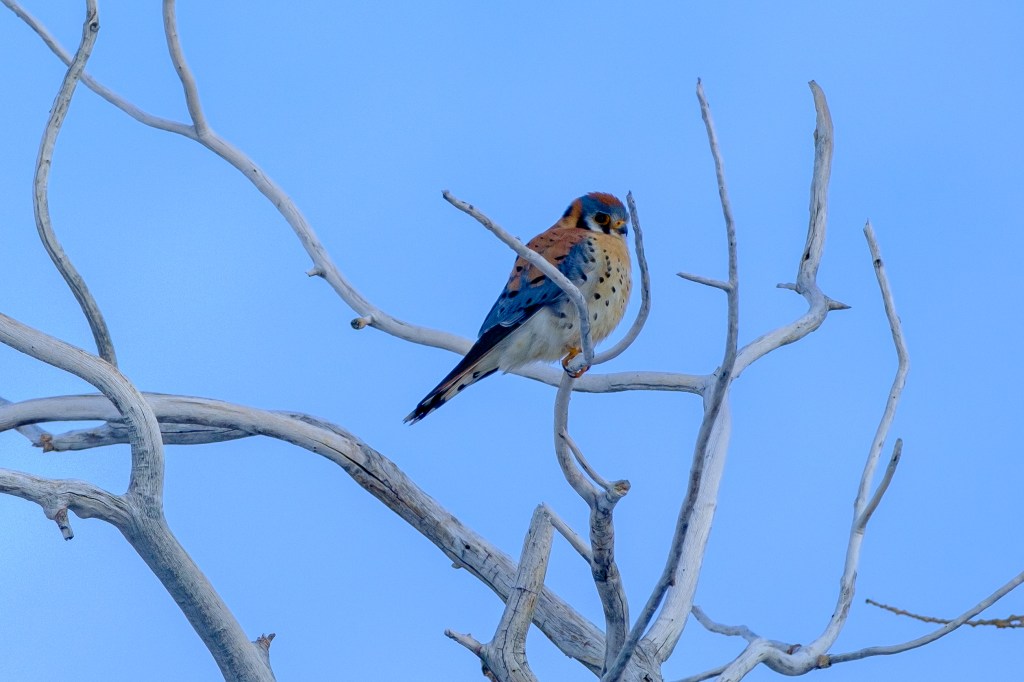
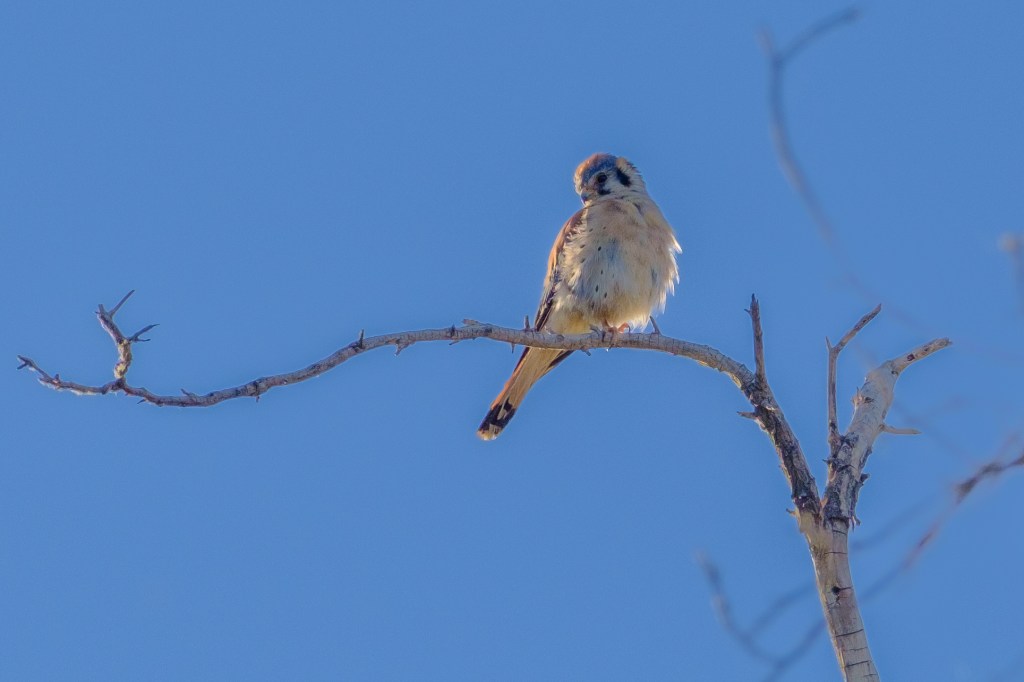
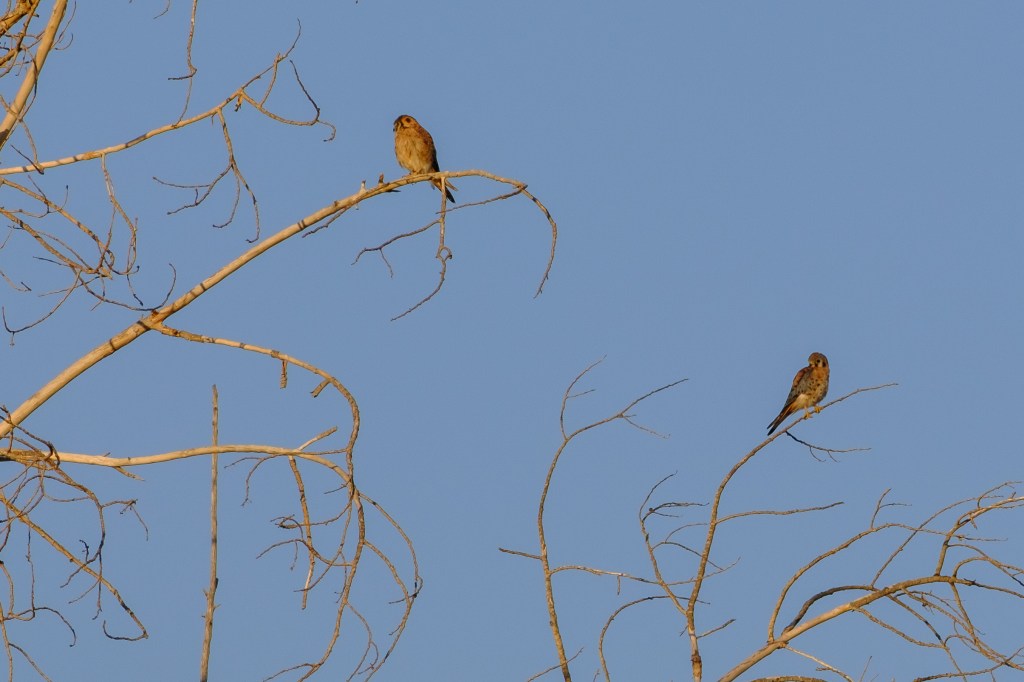
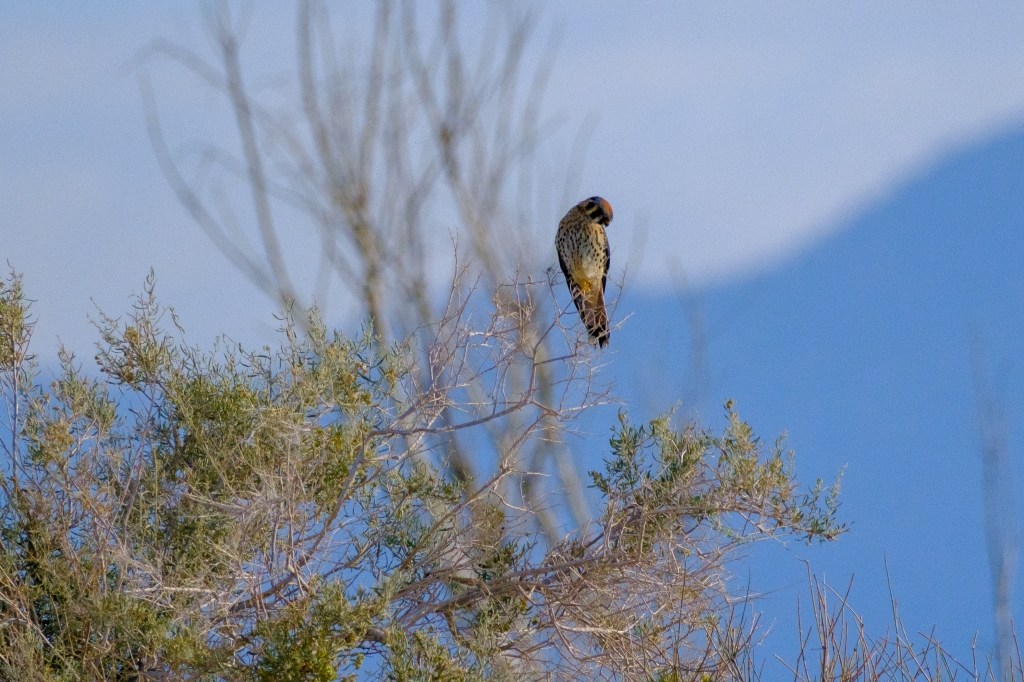
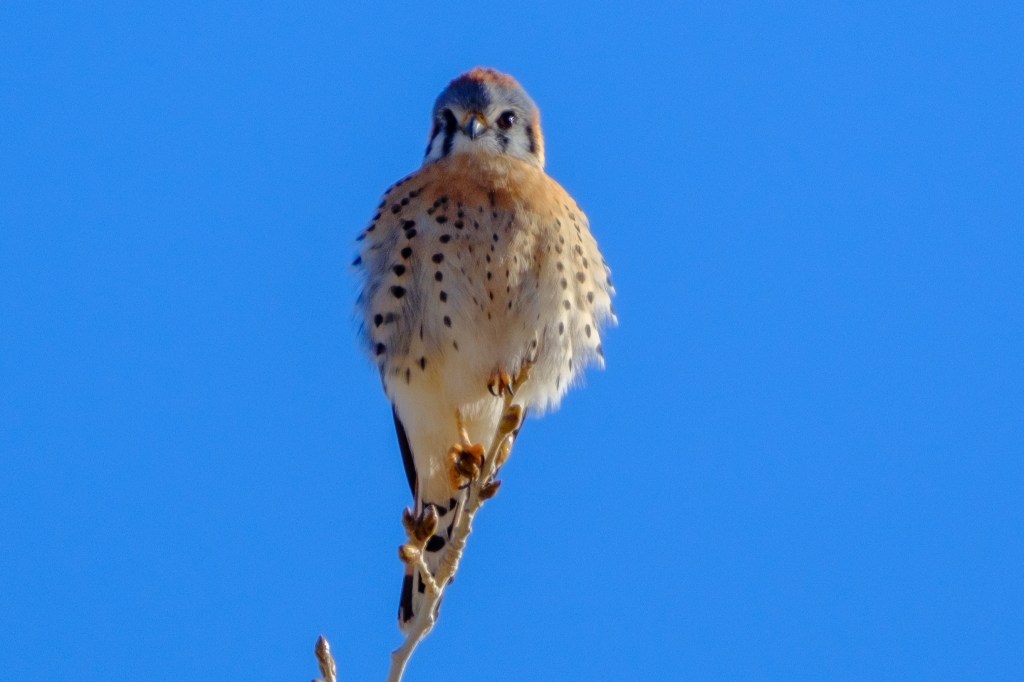
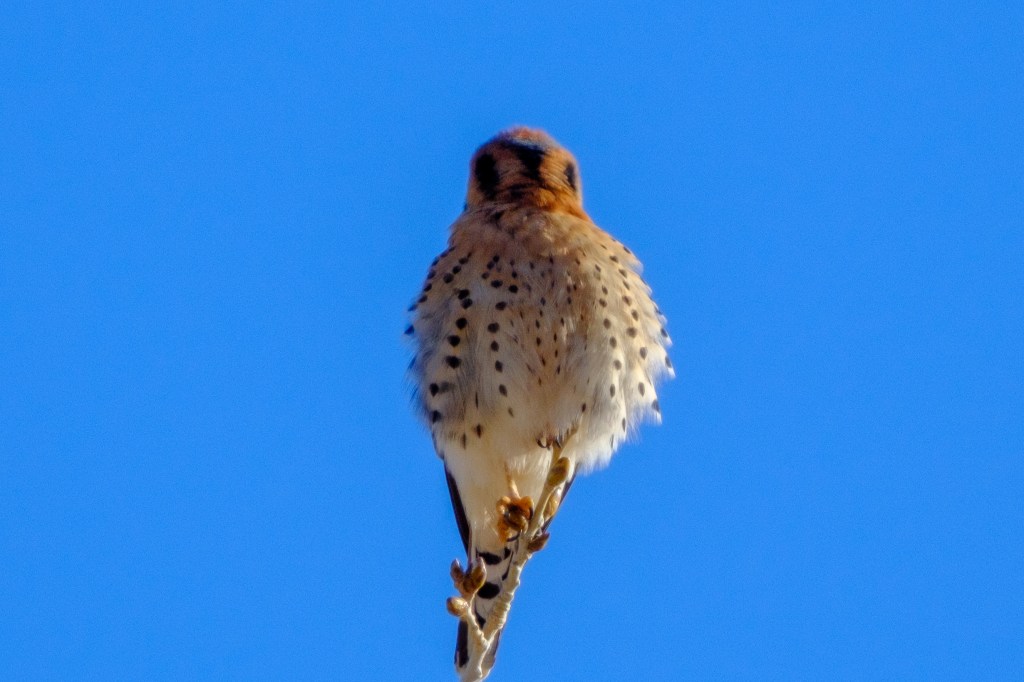
Portraits of Female Kestrels

Flight
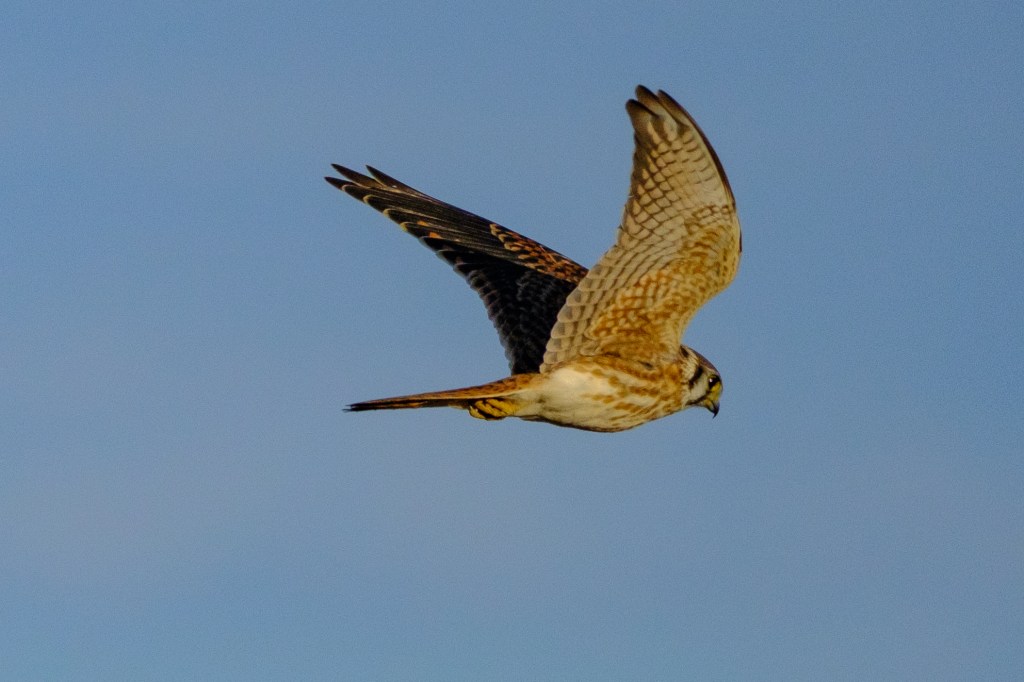
Most falcons are built for speed. Not this bird. It can fly at 30 mph, but generally is lazy and takes its time. It is perfectly happy to eat grasshoppers, so there is no reason to rush about.
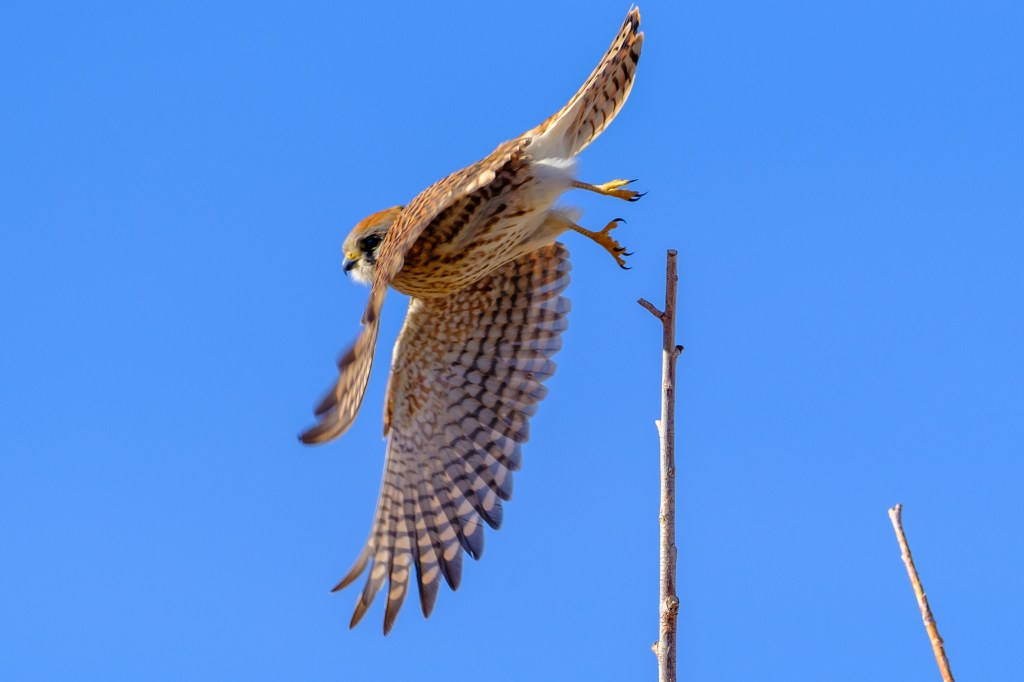
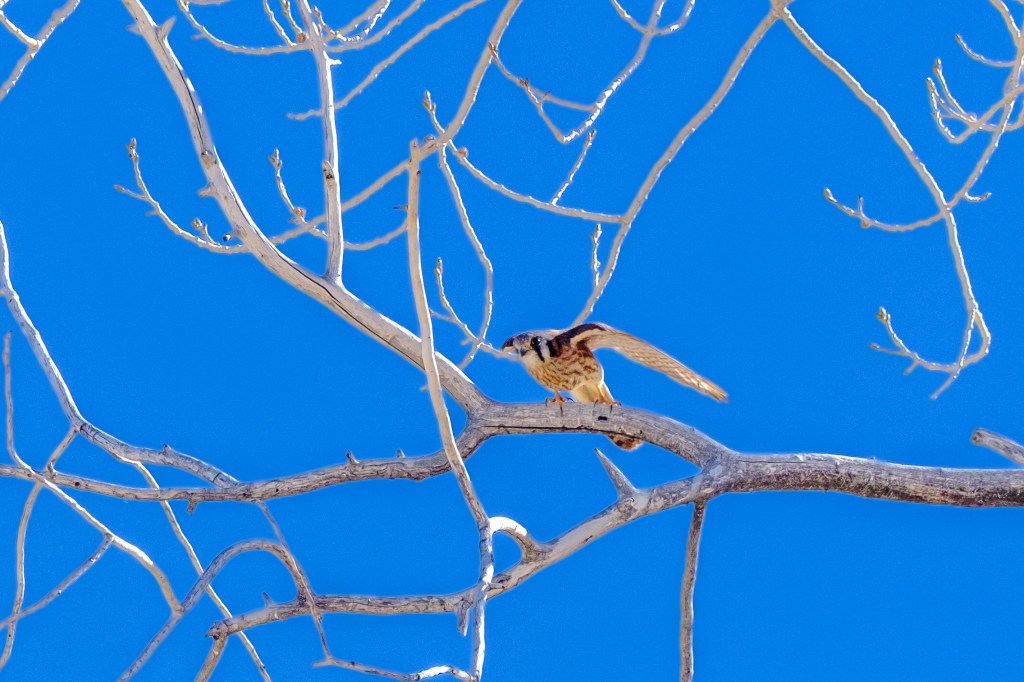
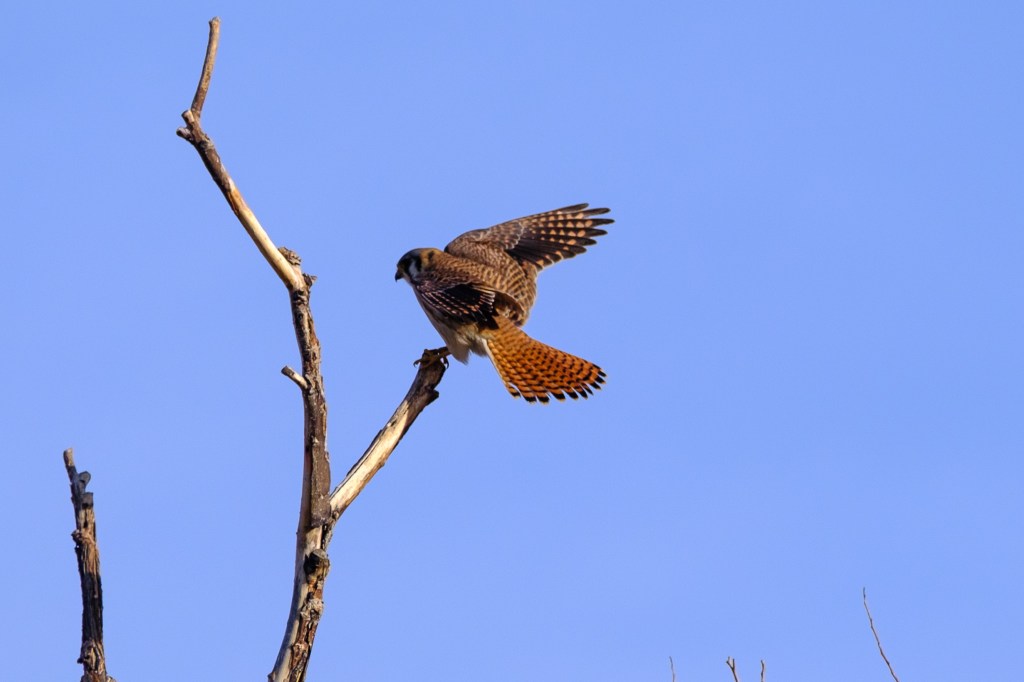

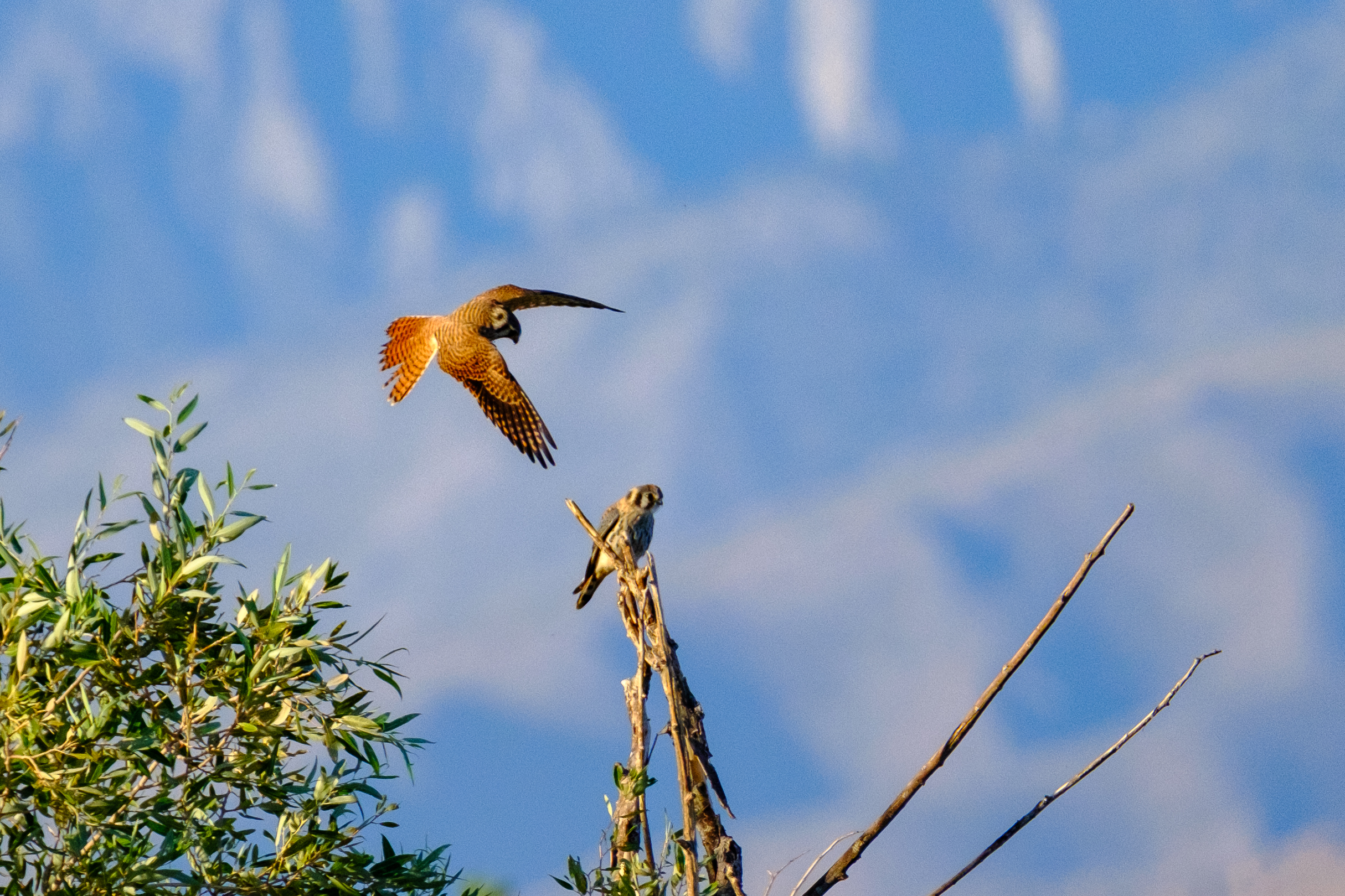
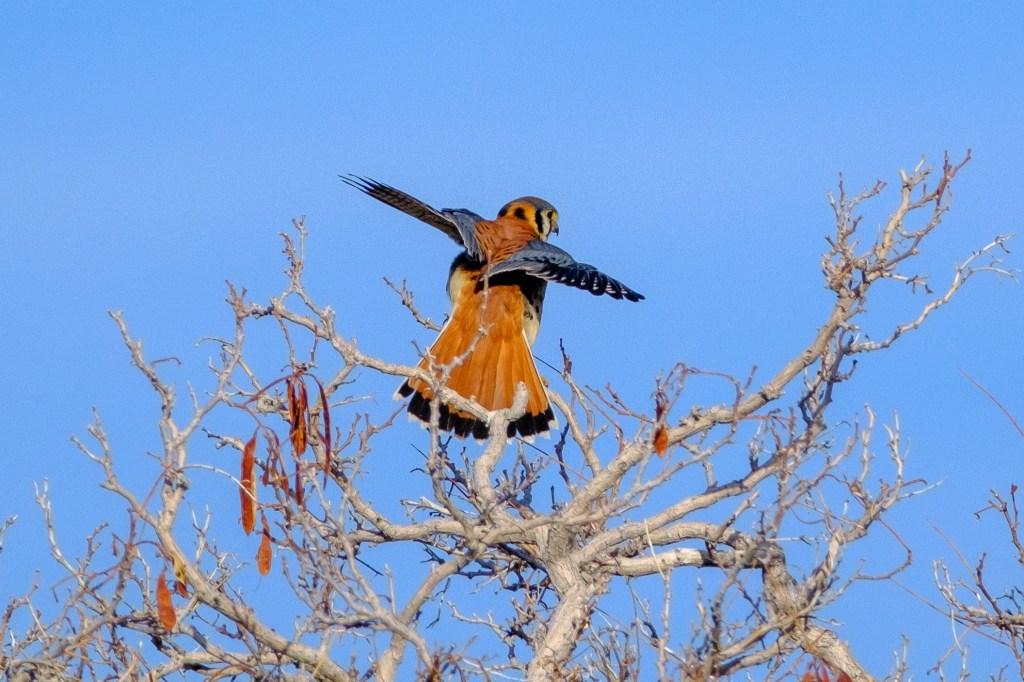
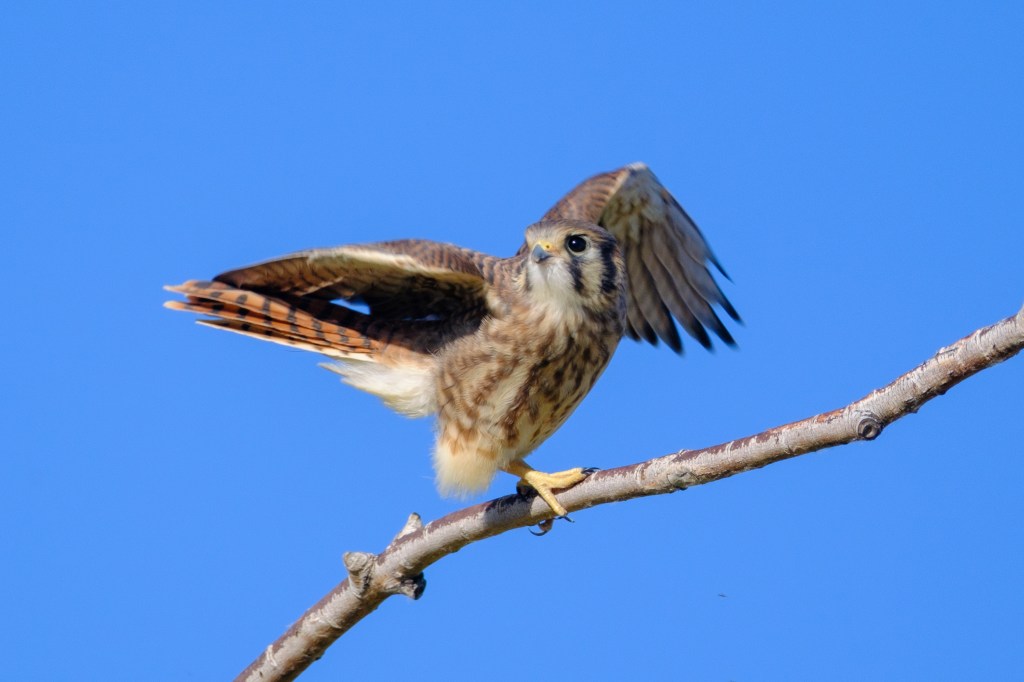
Male below seems to be lost in thought. Female approaches. At first she looks threatening, but she is just trying to land.
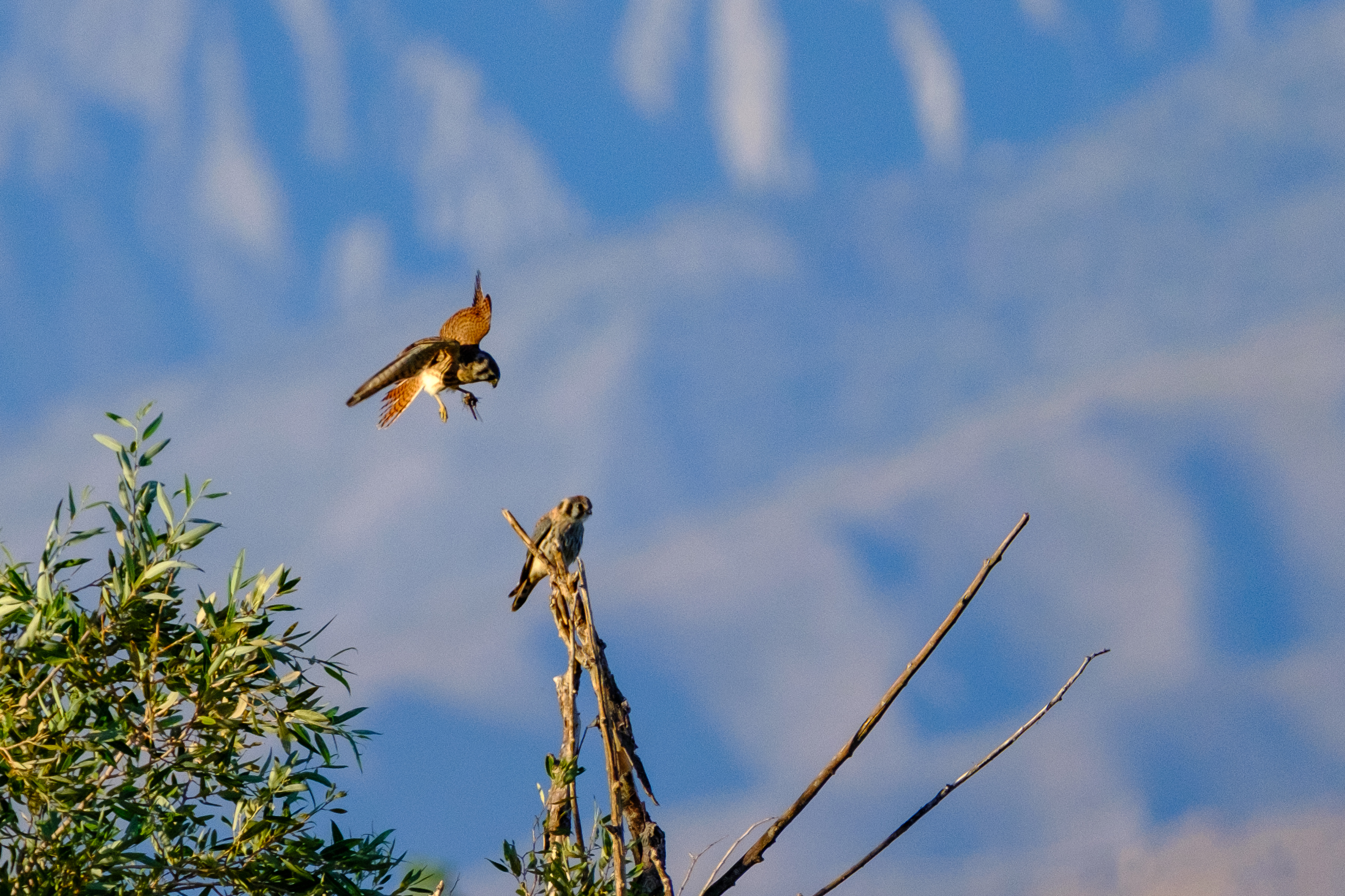
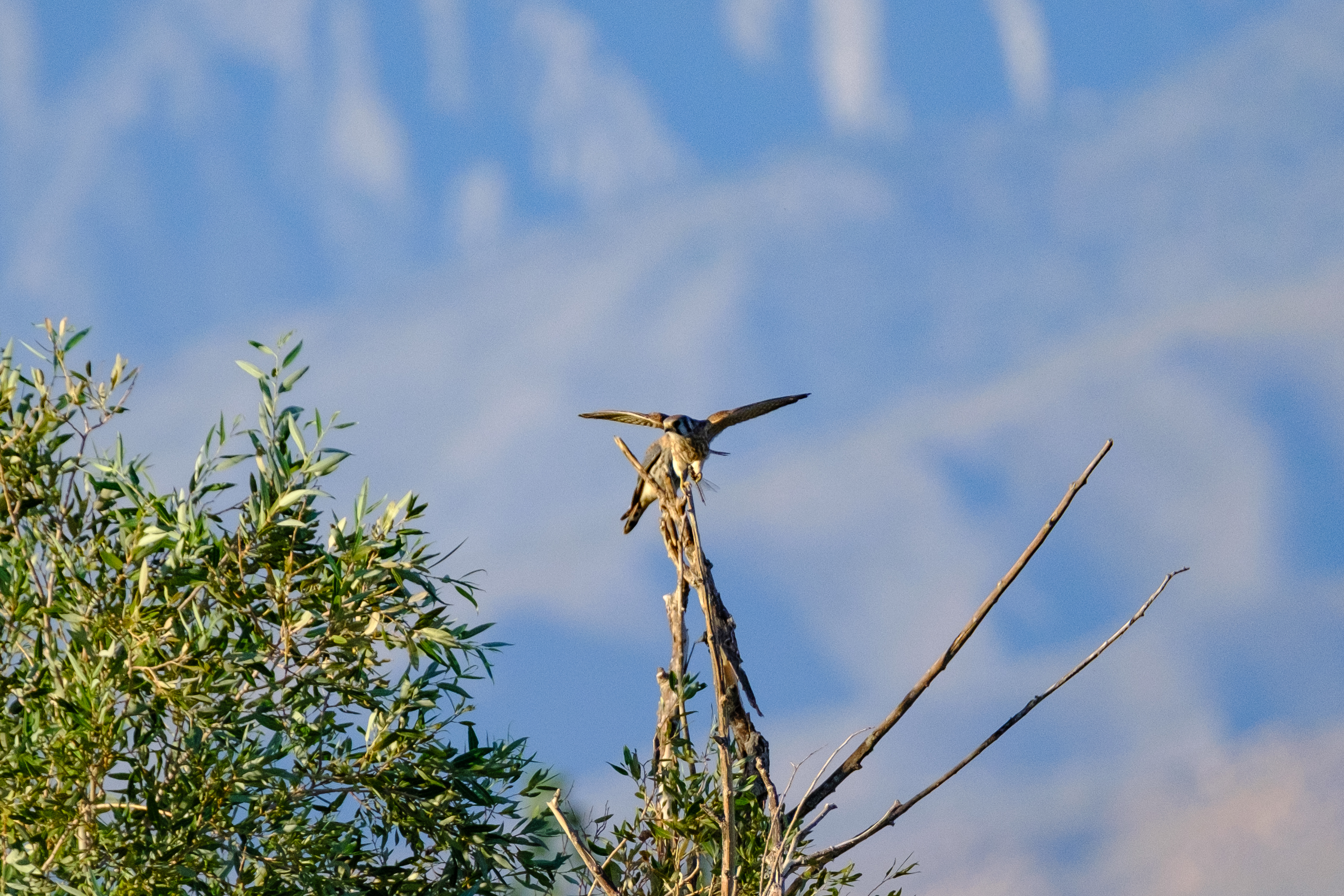
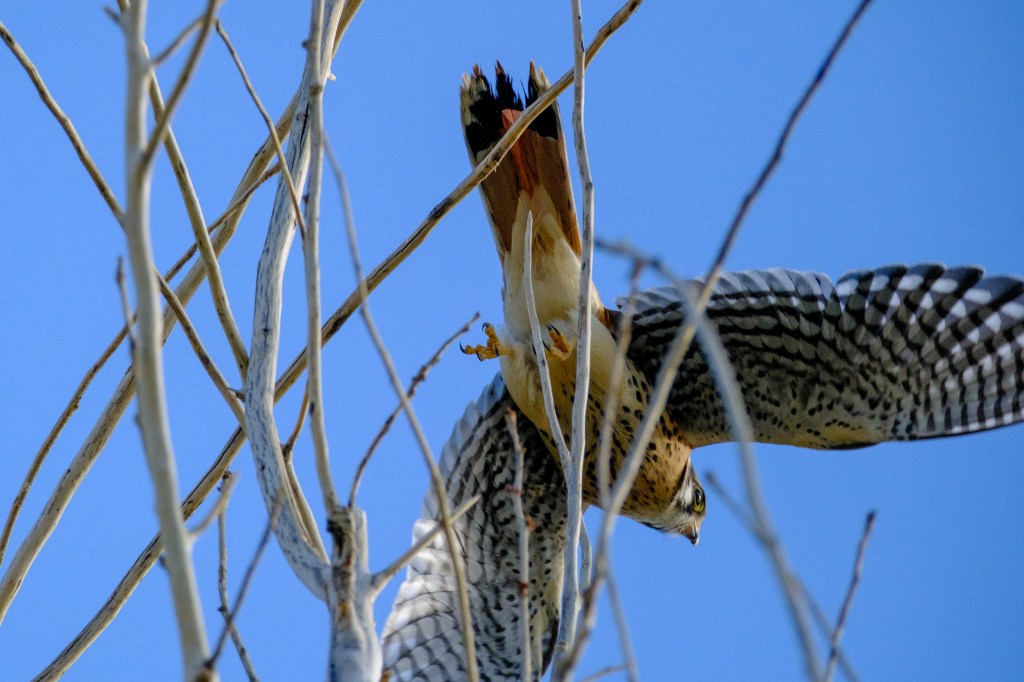
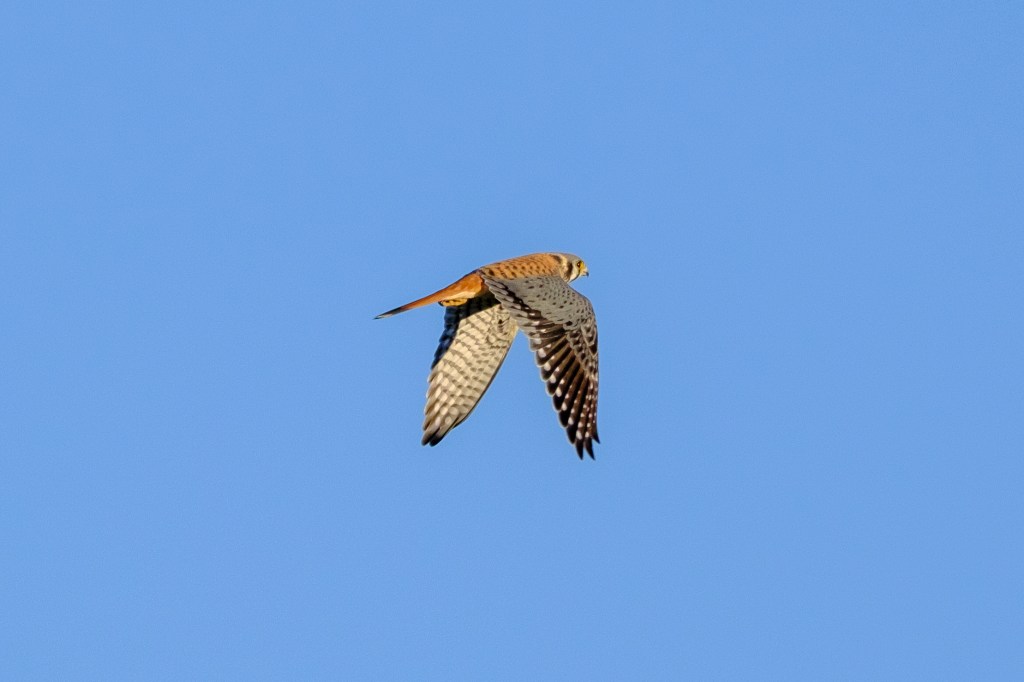
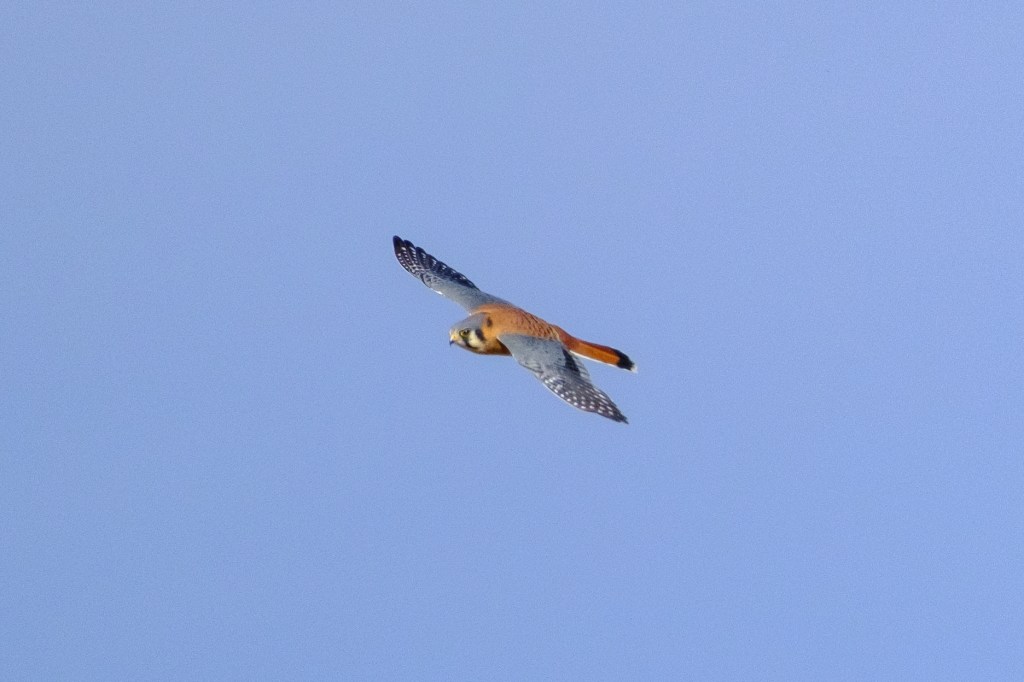
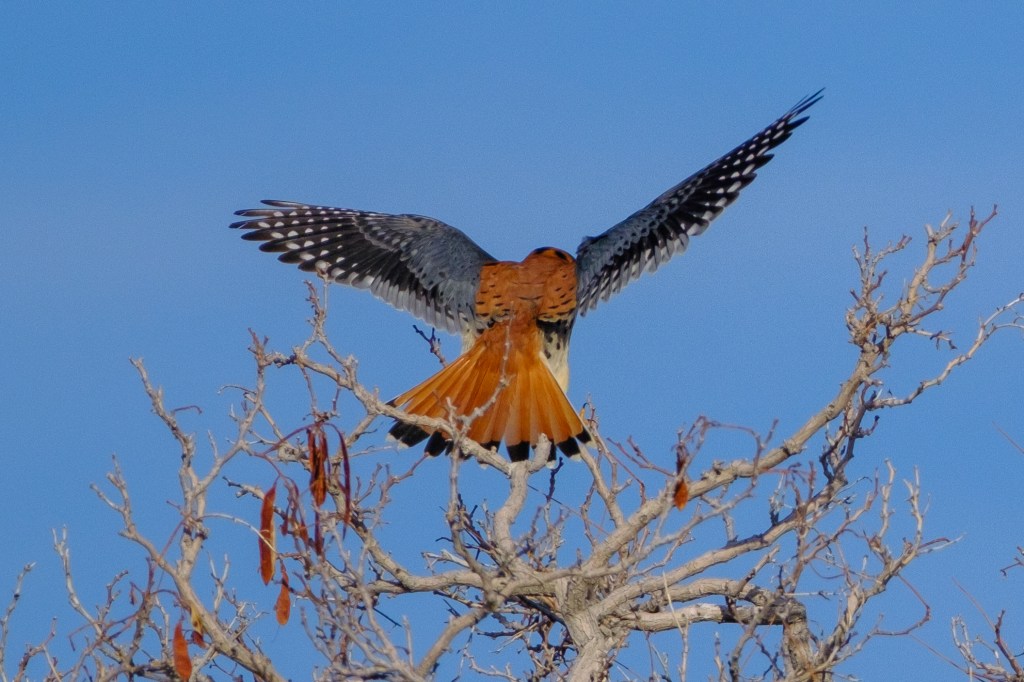
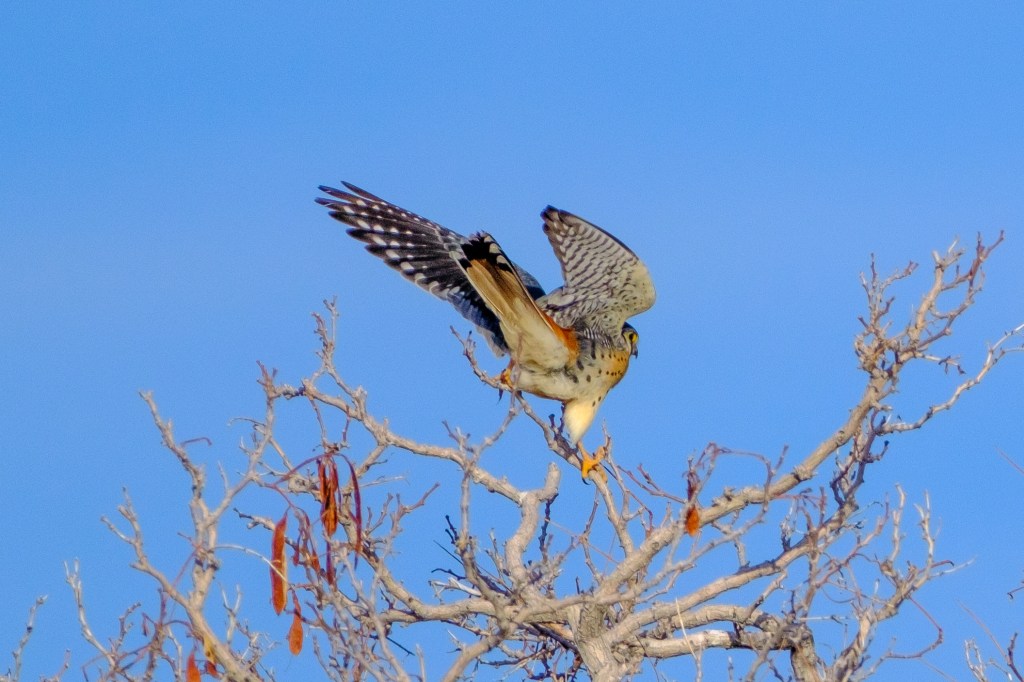
Below a male lands. Then he staggers about trying not to overshoot the branch. Wings and tail wave about. This balancing act is common for these birds, as if it is hard for them to judge their final speed.
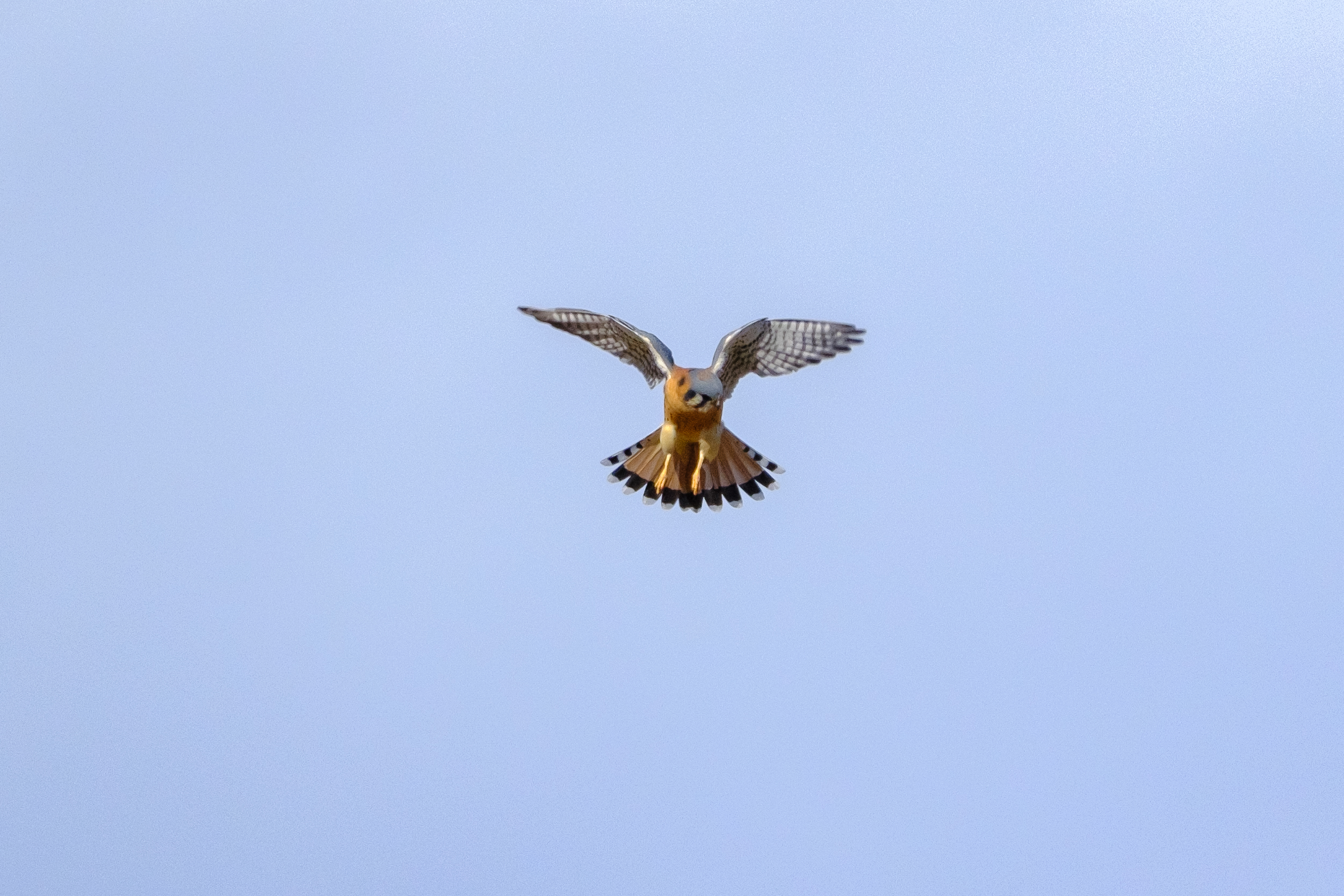
Hovering
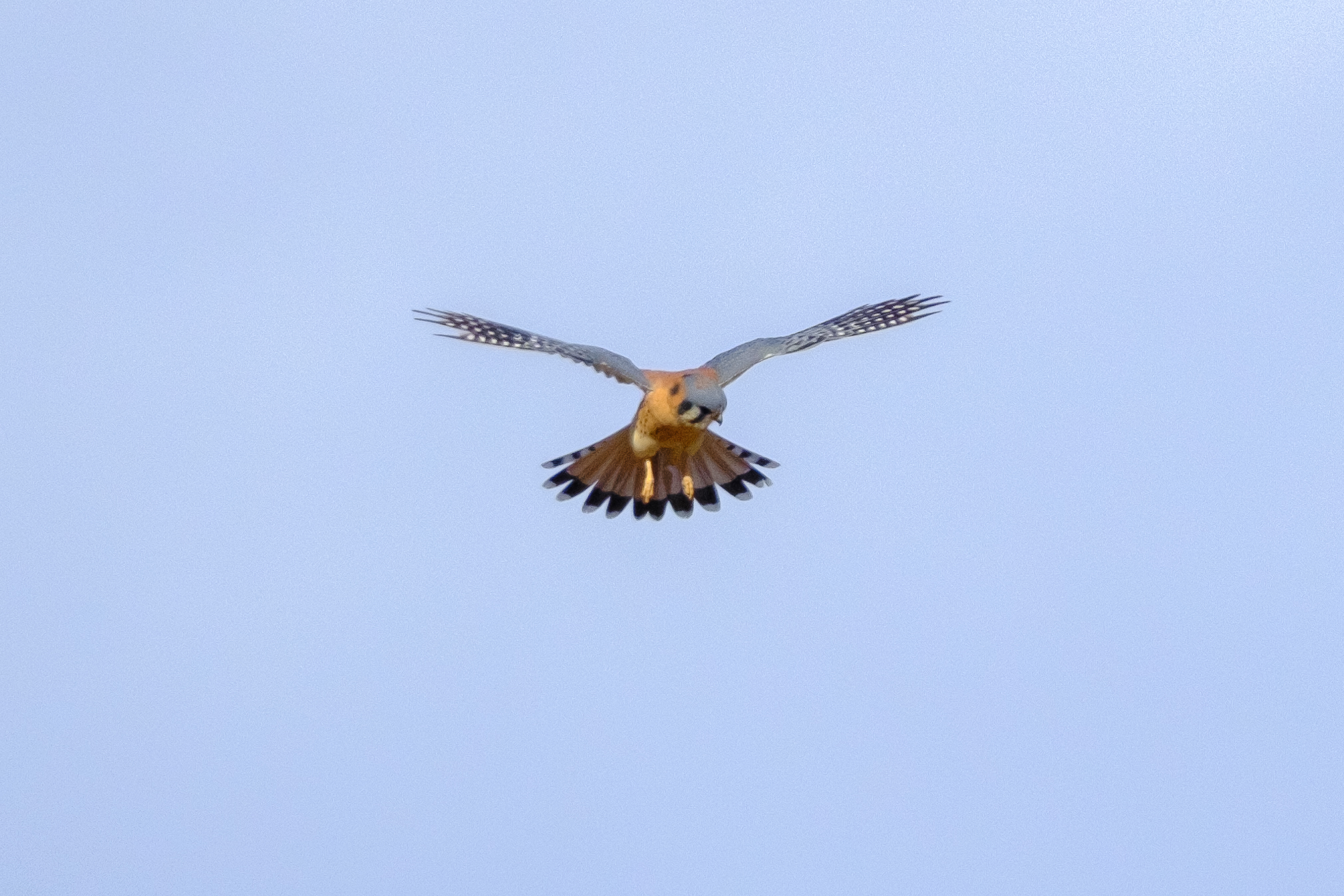
Sometimes Kestrels will hover. They will face into a breeze and maneuver their wings and tail to keep their head steady, while they search the ground below.

Fun Facts
Pay attention. Some of this may be on the quiz.
First, Kestrels do not need to drink water. When kept in captivity, they can get all the water they need from their carnivorous diet. This makes it easier for them to live in the desert.
Second, DNA studies suggest that Falcons are not closely related to other hawks. They are related to cuckoos.
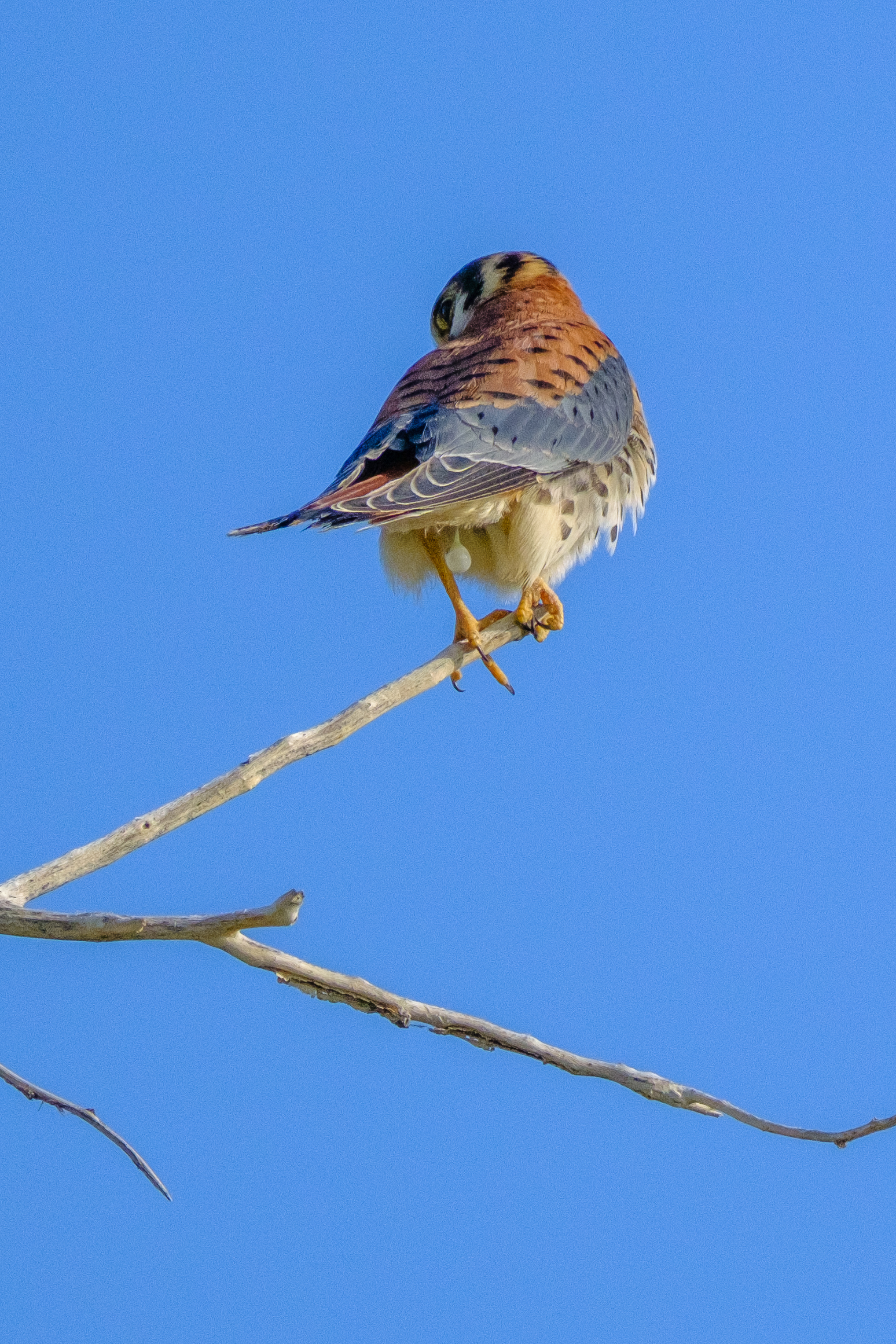
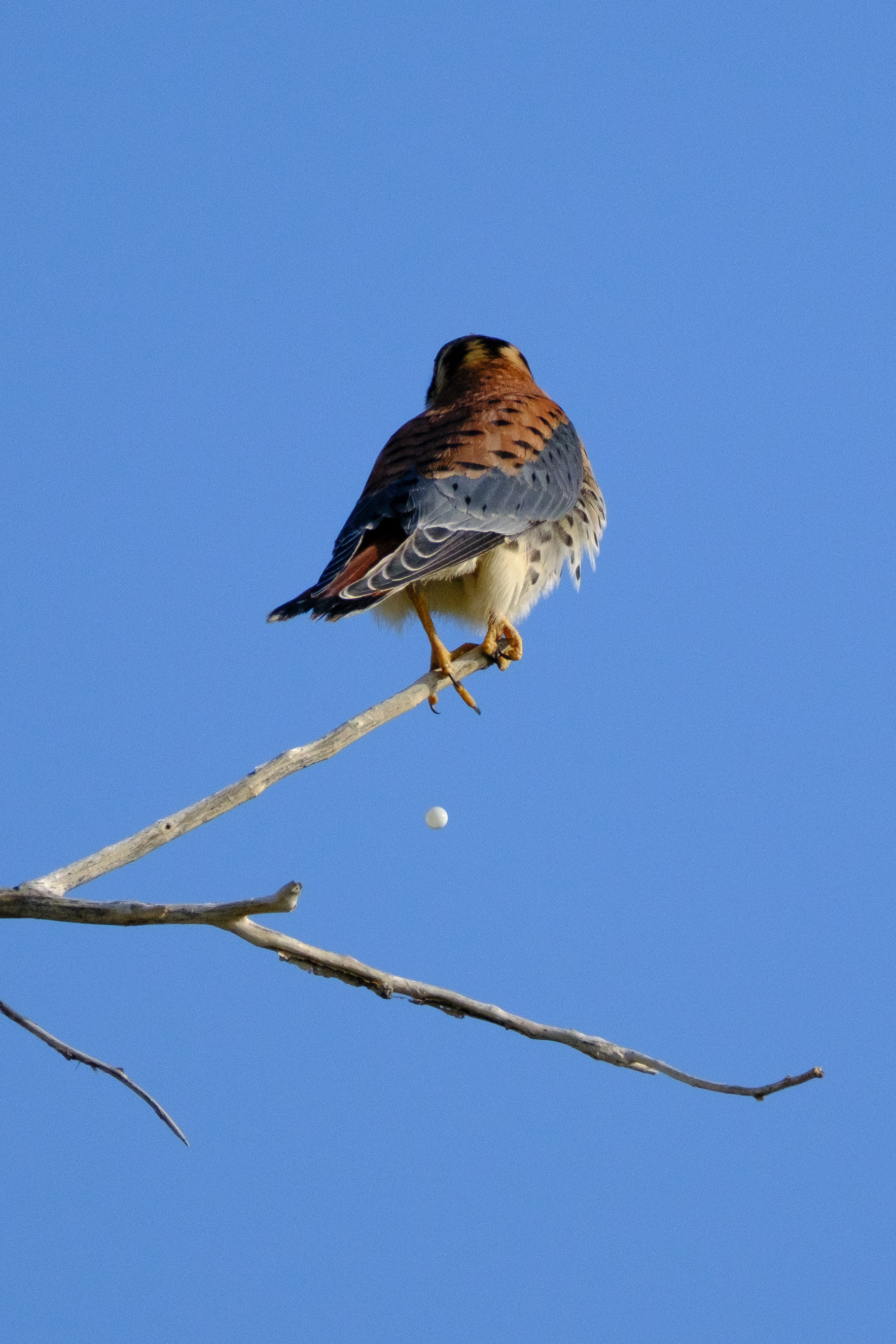
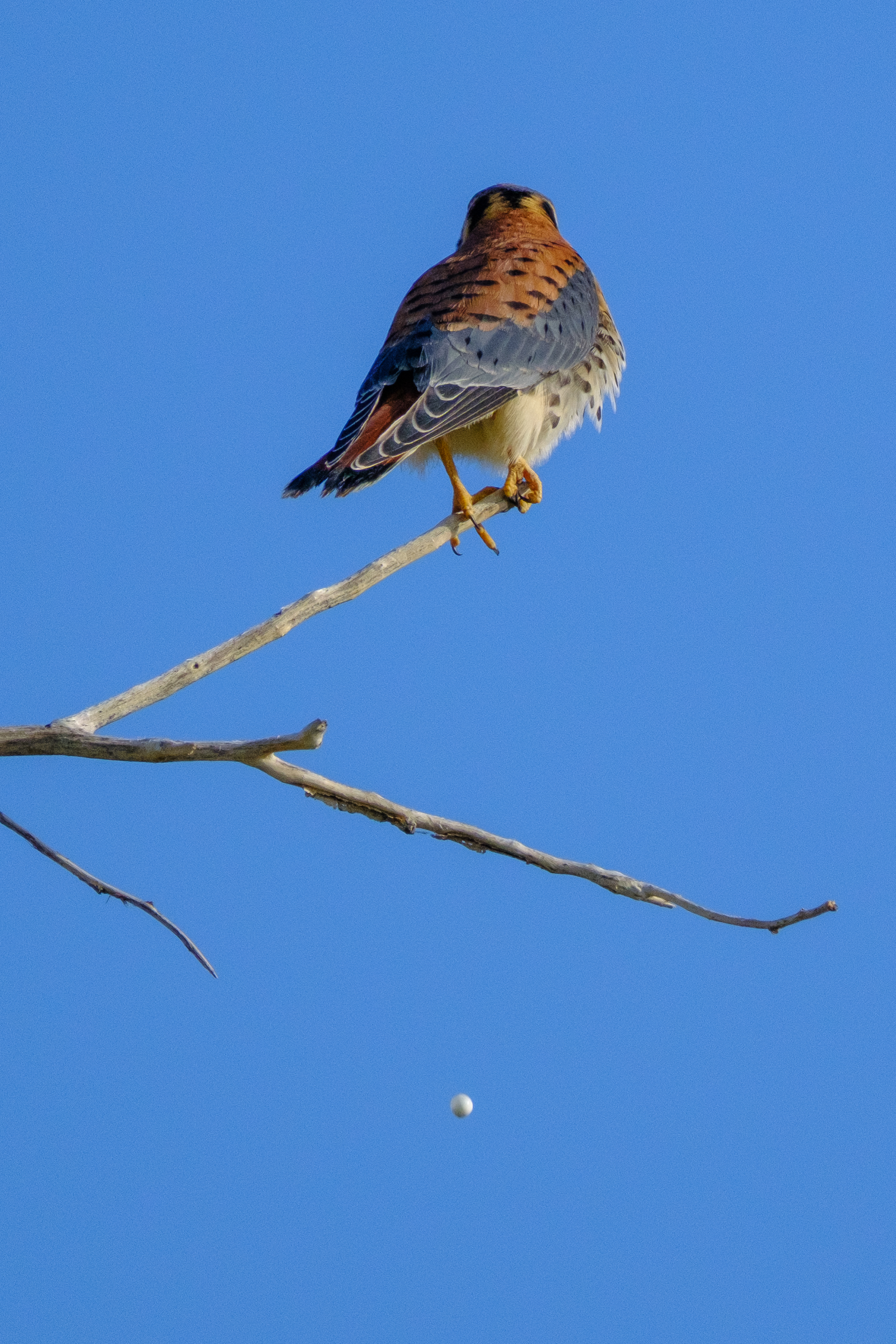
The third fact is related to defecation. If you are squeamish, you can skip this section. Kestrels do not build nests. They prefer to find cavities, such as holes left by woodpeckers. You have heard the phrase “Don’t soil your own nest.” Or, more crudely, “Don’t shit where you live.” Kestrels take this literally. Their waste, containing undigested food and a white paste of uric acid, is wrapped in a fecal sac, which is then evacuated. The bird can then throw this out of the cavity it resides in. Very tidy. Below, a photo sequence shows a bird evacuating and dropping this sac:
Other falcons
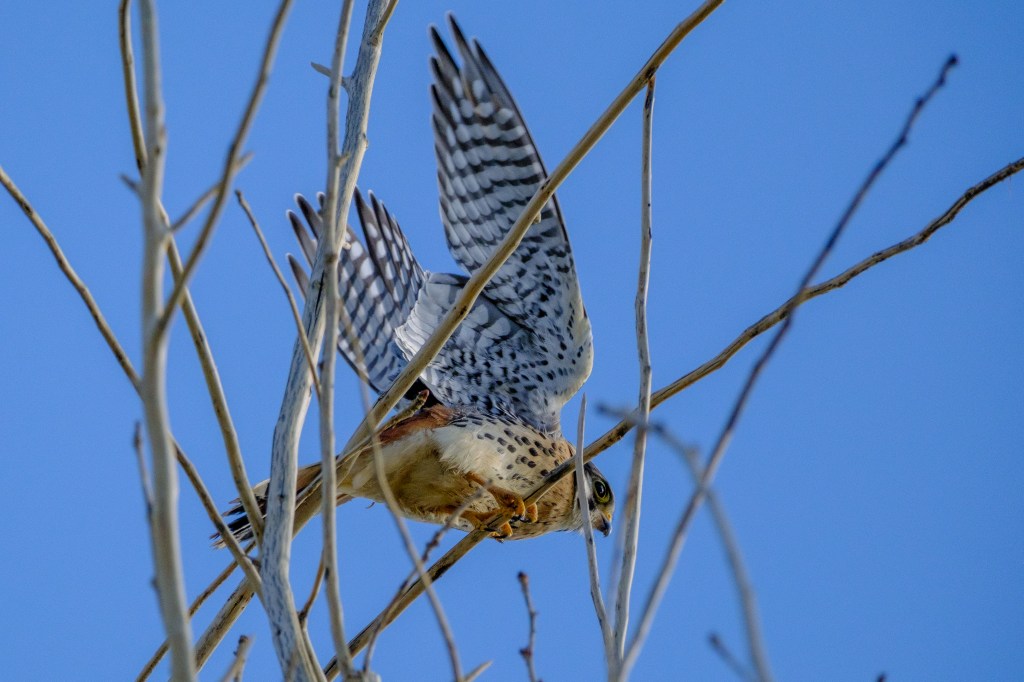
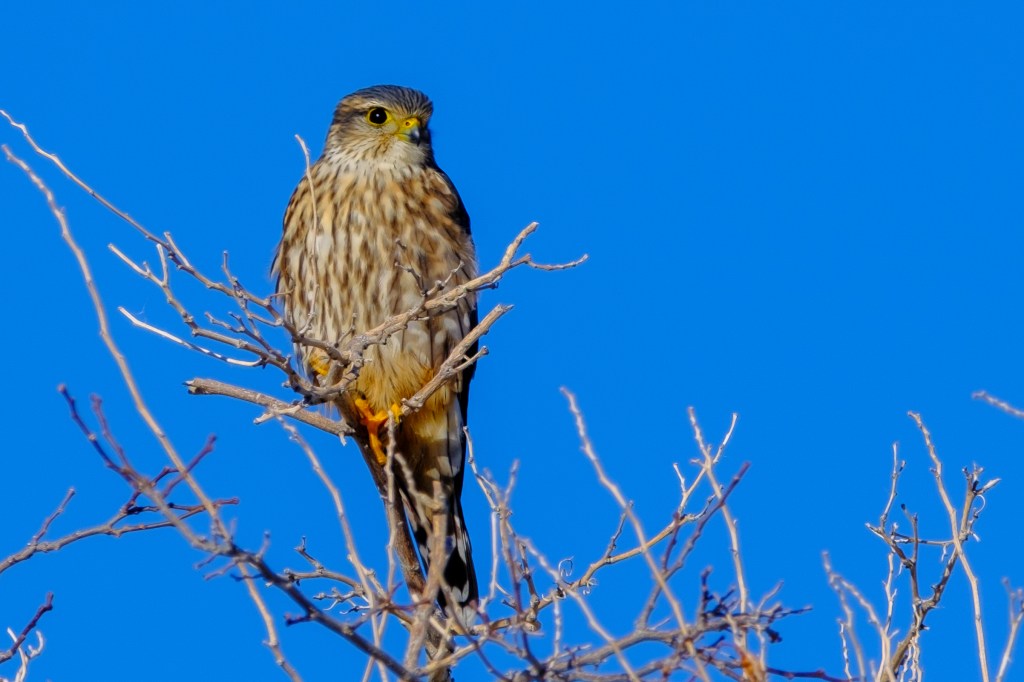
Three other falcon species can be found in the Bishop area. First is the Merlin, only a little bigger than a Kestrel: 10″ long, wingspan 24″, and 6.5 oz. They visit in fall and winter. Known for aggressive pursuit of other birds. Merlins come in 3 flavors: Pacific, Taiga, and Prairie. The photo below shows a bird with a faint mustache; probably a Taiga Merlin.
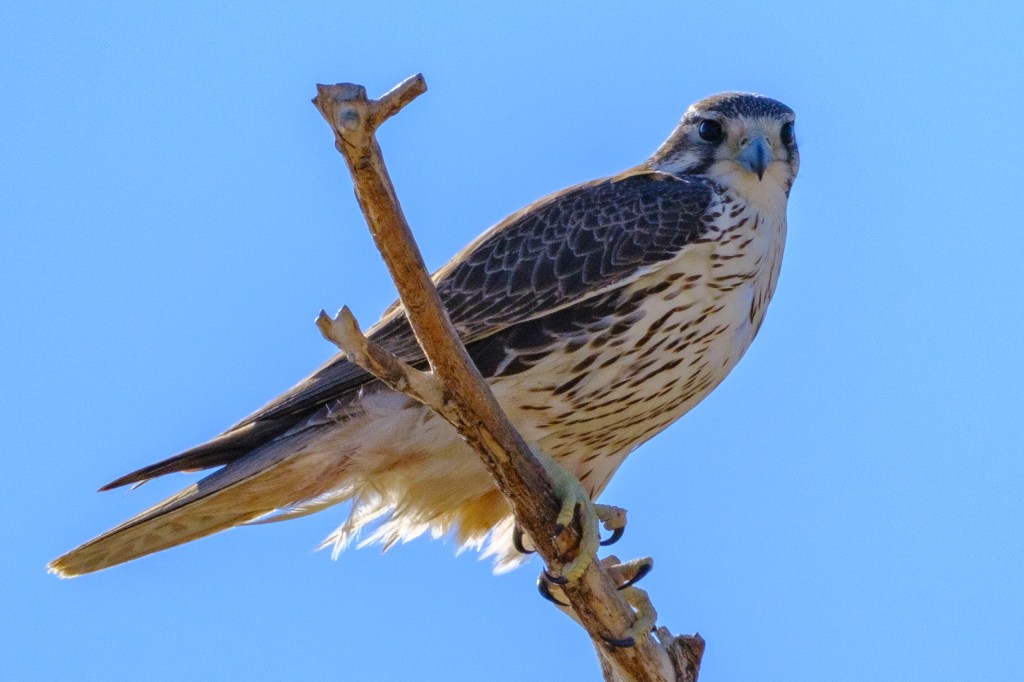
Much bigger is the Prairie Falcon: length 16″, wingspan 40″, 1.6 lb. Other birds should fear this hunter.
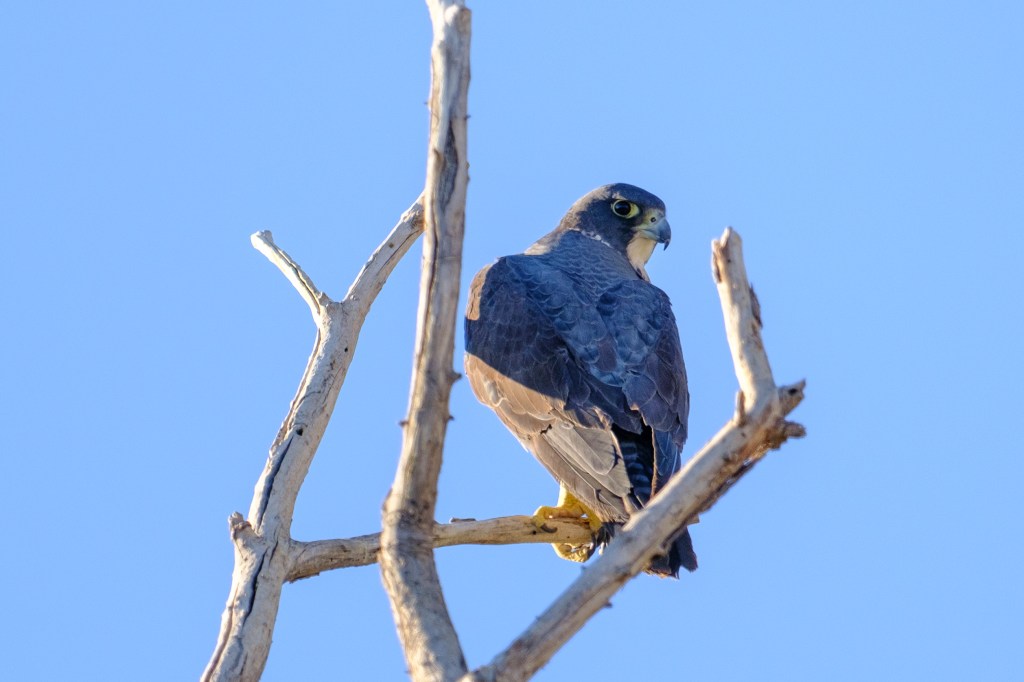
Slightly bigger still is the Peregrine Falcon: length 16″, wingspan 41″, weight 1.6 lb. This bird dives from high above, can reach a speed over 200 mph, and can kill a duck or pigeon in mid-air by striking with its feet.
 Birds of Bishop