
The ancient Greek myths tell us that the First Bird, Archaeopteryx, bargained with the Gods. In a swap for the gift of flight, the Bird gave up his arms, hands, and fingers in exchange for feathered wings. But Zeus let the Bird keep his legs, feet, toes, and talons, which the Bird could use for carrying, climbing, diving, eating, fighting, hopping, hovering, jumping, landing, mating, paddling, perching, preening, running, scratching, swimming, taking off, wading, and walking.
Ok, I made up that Greek myth. But that was, in effect, the bargain that birds made when they evolved from dinosaurs. They exchanged their arms for wings, but kept feet which they later modified. This essay shows pictures of bird feet, a feature of birds that I’ve come to notice through photography.
The Four-toed Foot
The Red-winged Blackbird demonstrates the prototype of an avian foot; three toes point forward, one toe points backward. Each toe has a long claw or talon. Falconers wear gloves to protect their arms from sharp talons; but even a tiny blackbird has claws that look sharp and long.
The photo below shows the three forward toes and single backward toe of both feet. The backwards toe, the hallux, is equivalent to our big toe.
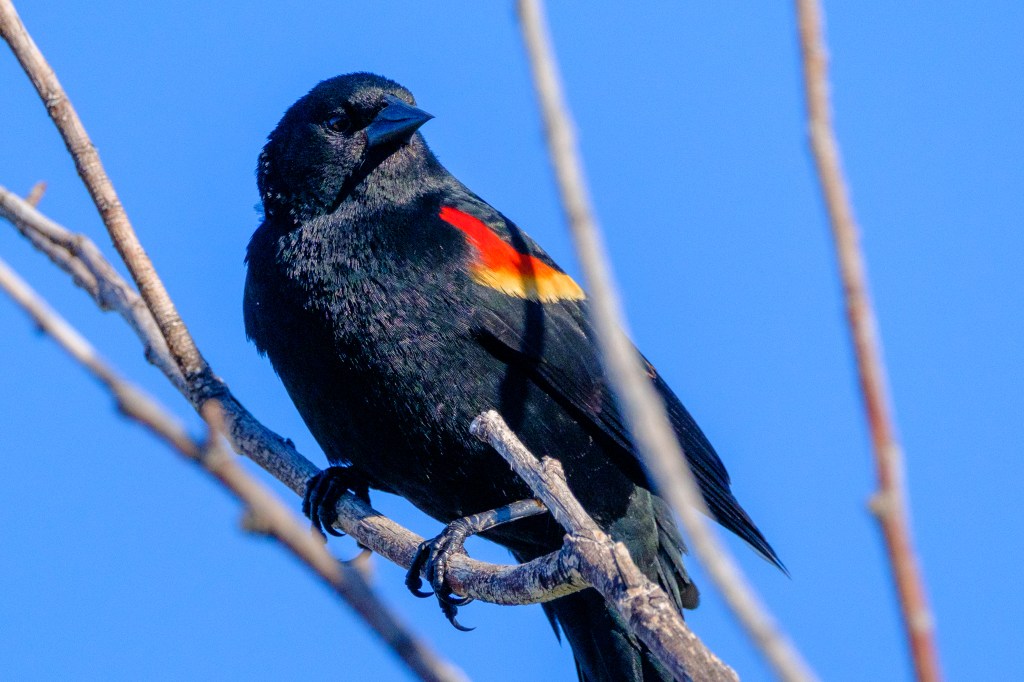
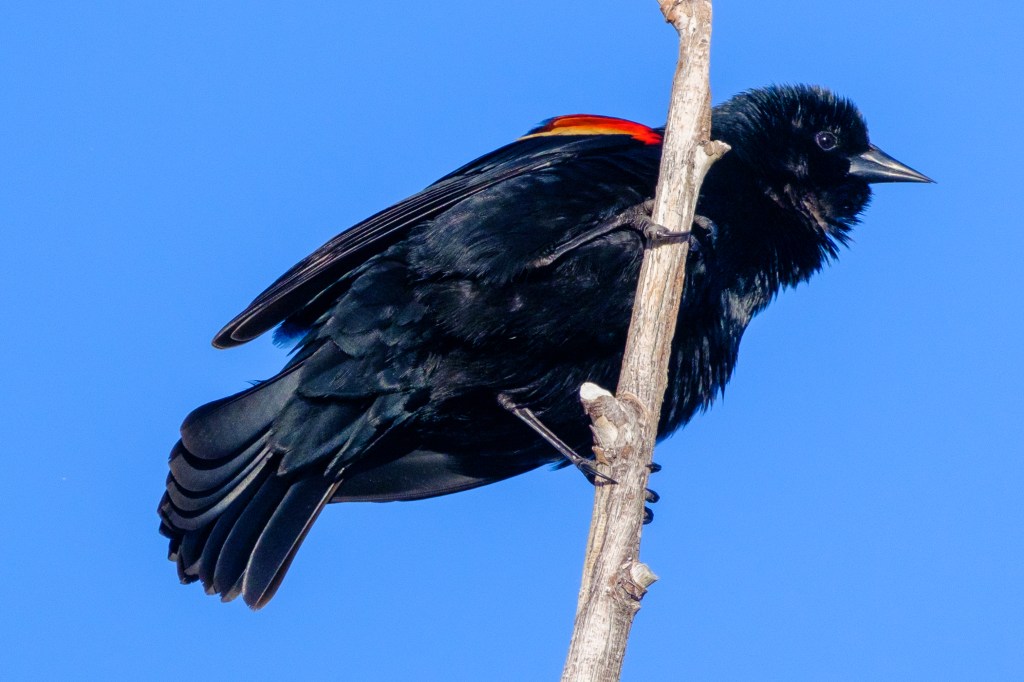
The next photo reveals the sharpness of the talons of the left foot. Talons, or claws, grow constantly; they are kept to a reasonable length by wear and tear. The bird’s position in the photo looks stressful, clinging to an upright limb. It looks like a pole dancer at a nightclub. [Full disclosure: I have never seen a pole dancer, aside from movie scenes.] But birds use this type of side-perch all the time, so it must be easy for them. Bird toes have a clever design. The tendon in each toe has bumps on its surface. Once the bird grips something, the tendon bumps mesh with corresponding notches in the surrounding tendon sheath. Sibley writes that this locks off the tendon much like a plastic zip tie. The bird can maintain its grip with little muscular effort.
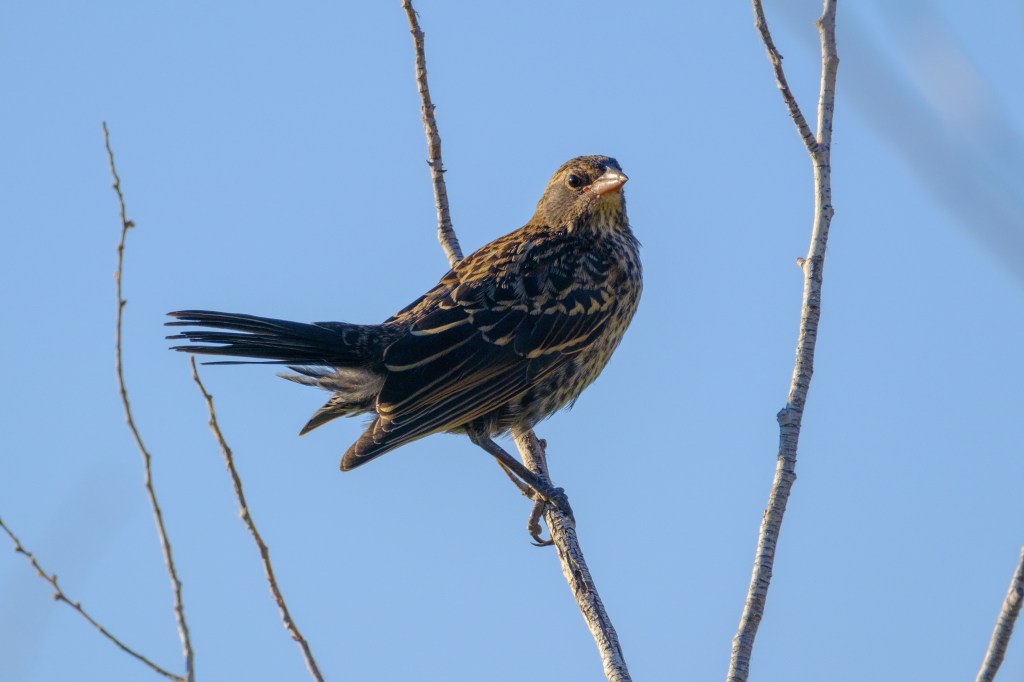
The bird below is a female Red-winged Blackbird. We can see the first joint in her leg. Is that her knee? If so, her knee seems to bend backwards compared with our knees. This impression is wrong. The long bone from the first joint down to the toes is actually the tarsus, equivalent to the mid-bones of the human foot. What we call the foot of a bird is just the toes. The first joint that we see in the photo is the heel, not the knee. Birds literally walk and perch on tip-toe. The actual knee and femur are usually hidden by feathers and flesh.
There are variations on this prototypical bird foot. Some birds have two toes or three, some have webbing, some have lobes, some have two toes forward and two backwards, and so on. A few of these variations will appear later.
Foot portraits
Raptors
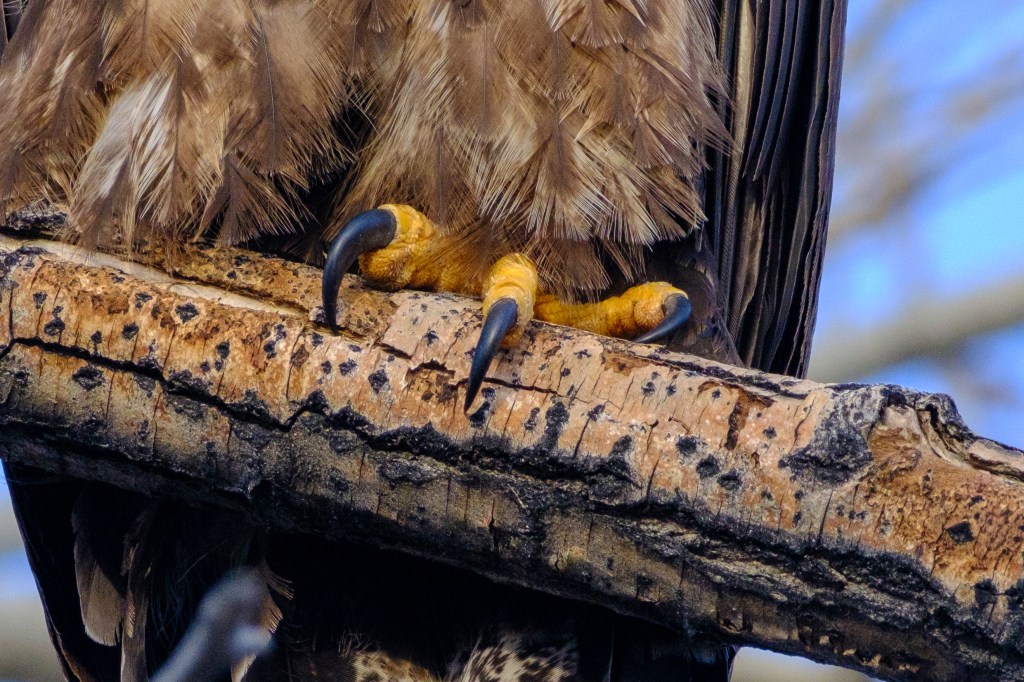
I’ll start with raptors, because their toes and talons are so big and dramatic. The raptor-foot photos all show that yellow is the fashion choice for these carnivores.
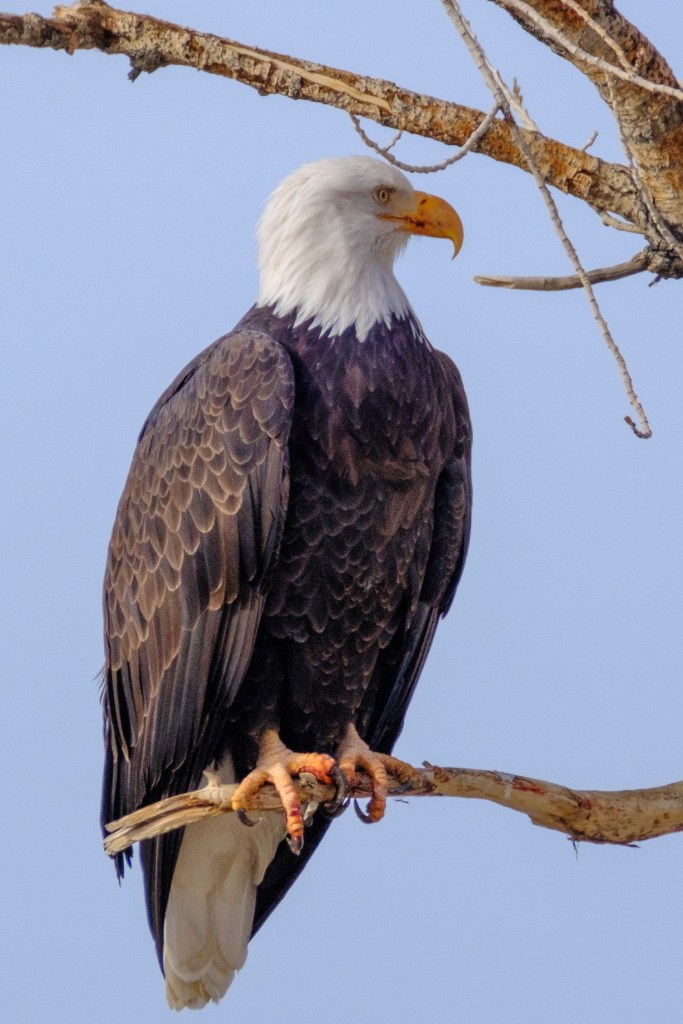
The talons of a Bald Eagle are fearsome. These should not be legal.
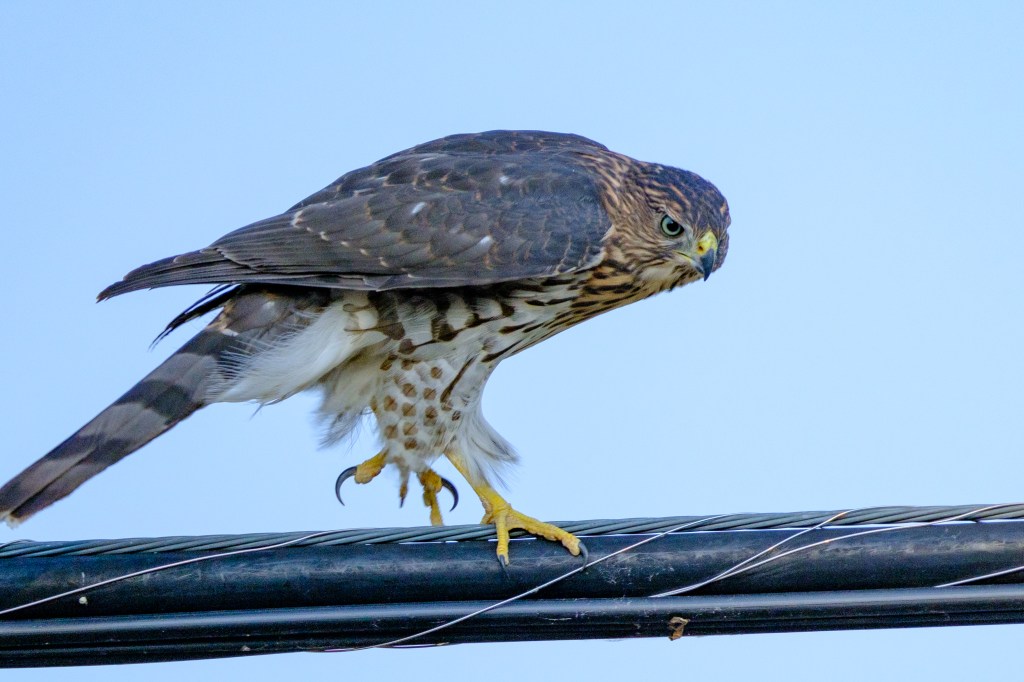
A Cooper’s Hawk has very long toes.
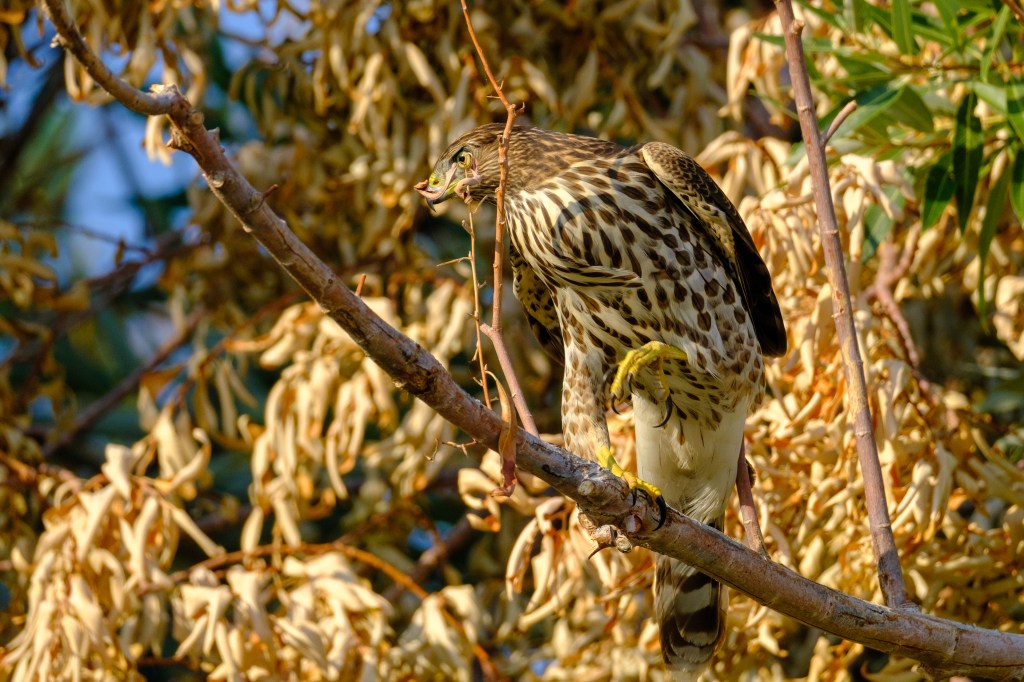
A juvenile Cooper’s Hawk uses a powerline in my backyard to hunt for birds.
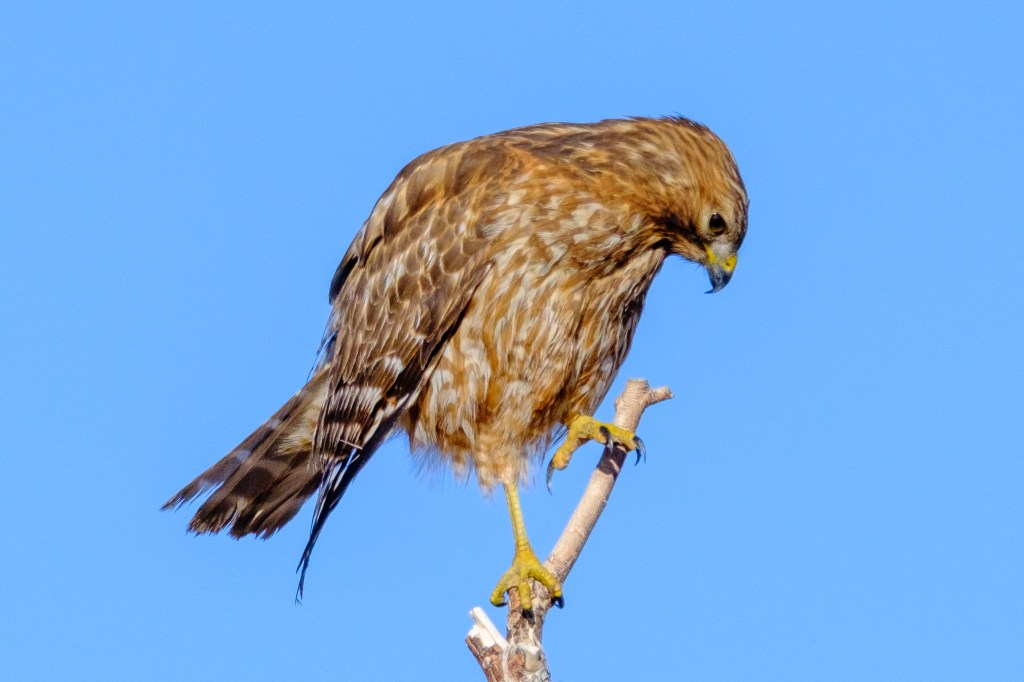
A Red-shouldered Hawk shows off its talons.
A Peregrine Falcon brings its reign of terror to the Bishop Creek Canal. These hunters kill birds by either grabbing them in the air or by slamming into them with their big feet. Their feet must be tough as they use them like boxing gloves with daggers.
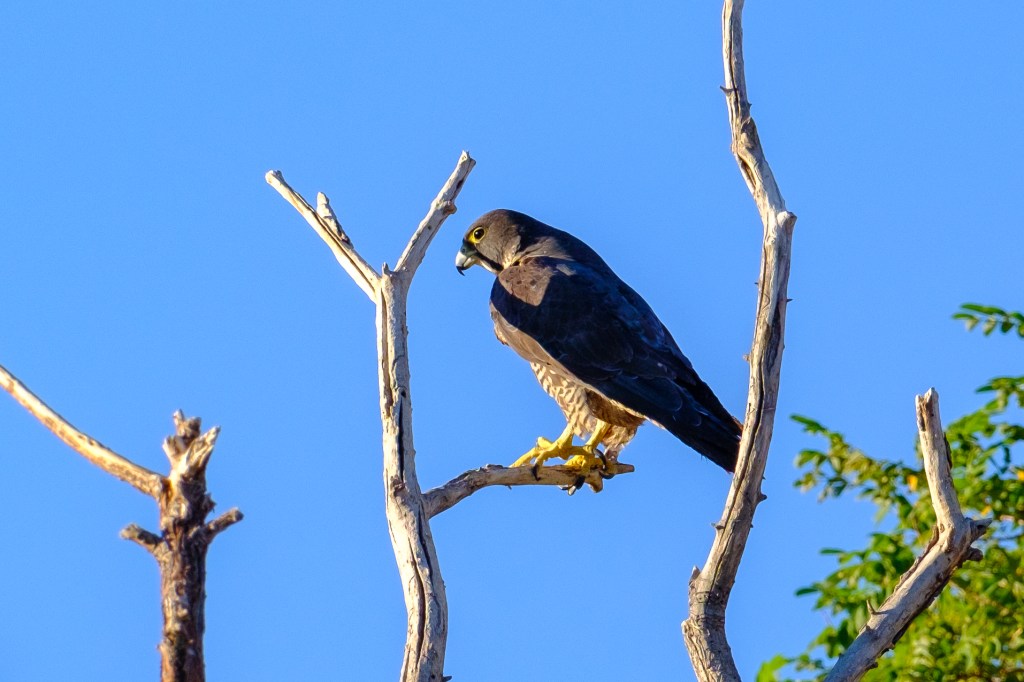
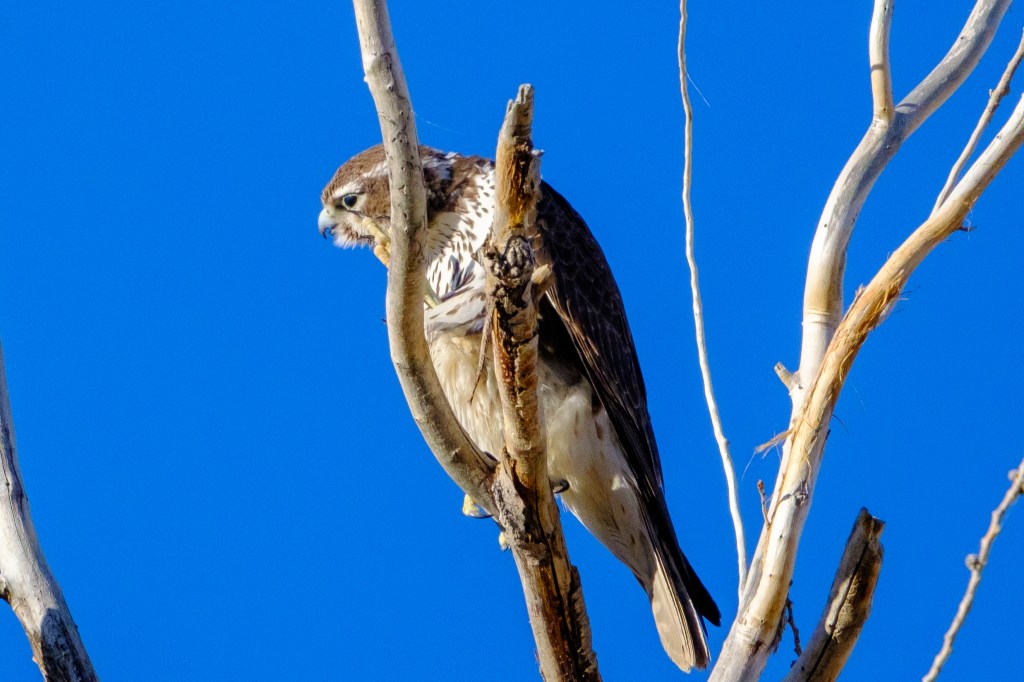
A Prairie Falcon poses next.
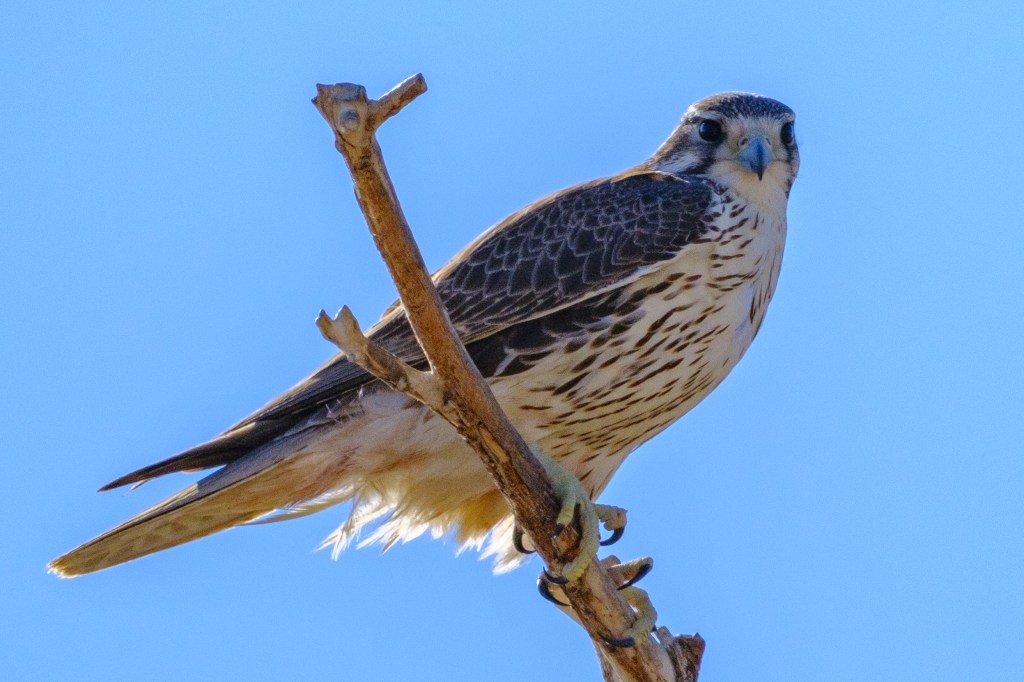
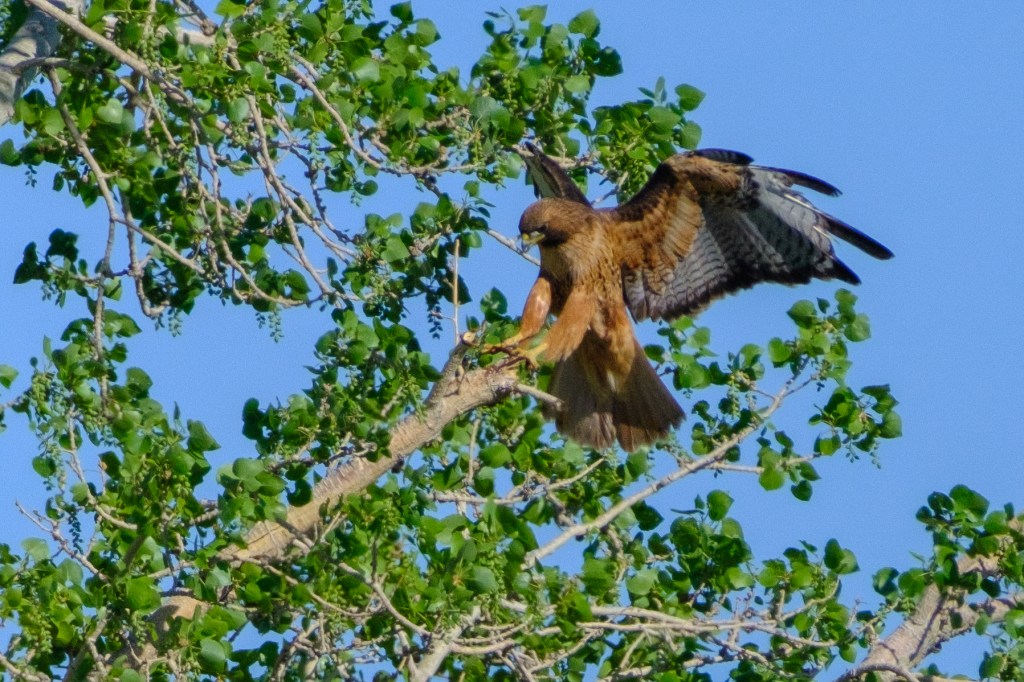
The next few photos show Red-tailed Hawks. First, a classic pose shows how the feet grab a branch. The bird seems to let part of the branch rest in its “palm.” You will later see a Western Meadowlark use a similar pose.
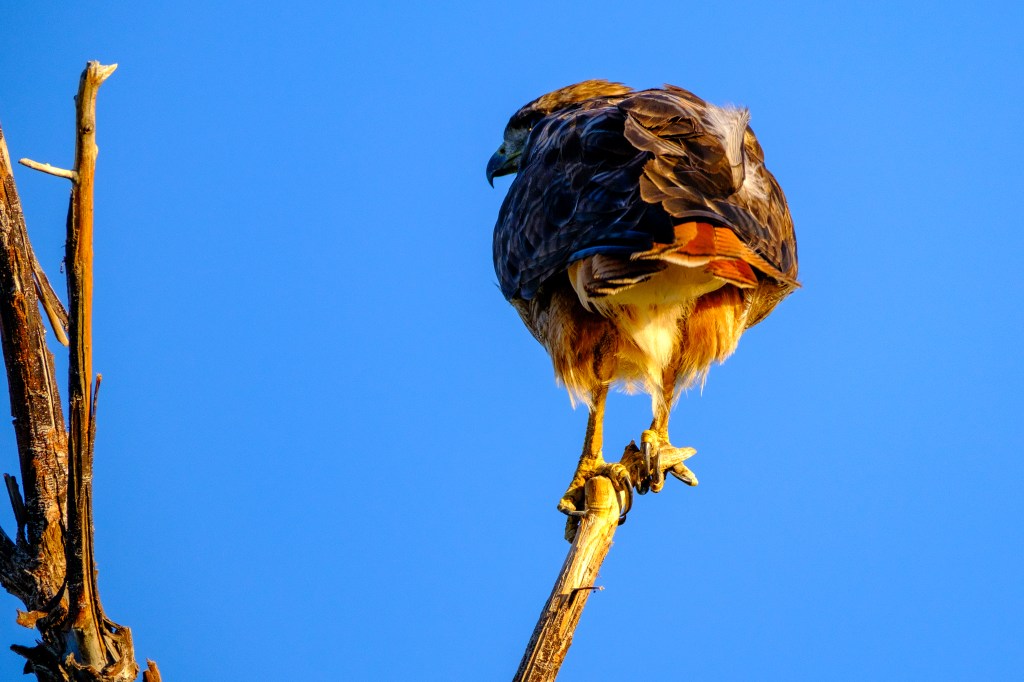
Then a nice view of talons.
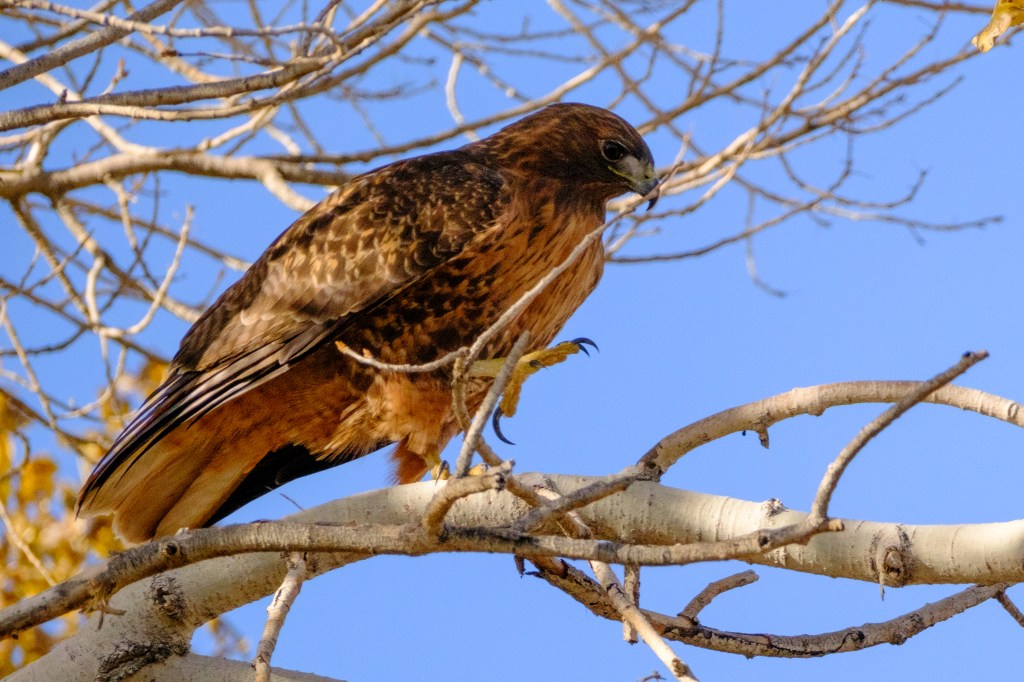
The photo below shows a common habit of Red-tails and some other birds. The bird perches on one foot, then hides the other foot in its belly feathers. It looks as if it is growing a foot out of a belly-button. Except birds don’t have belly buttons.
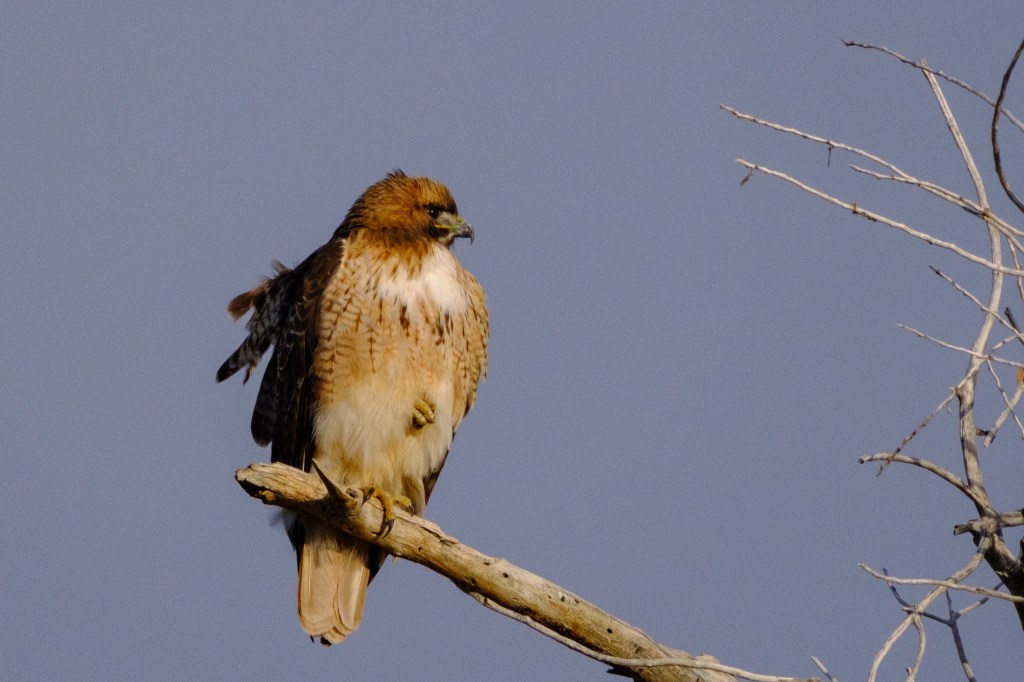
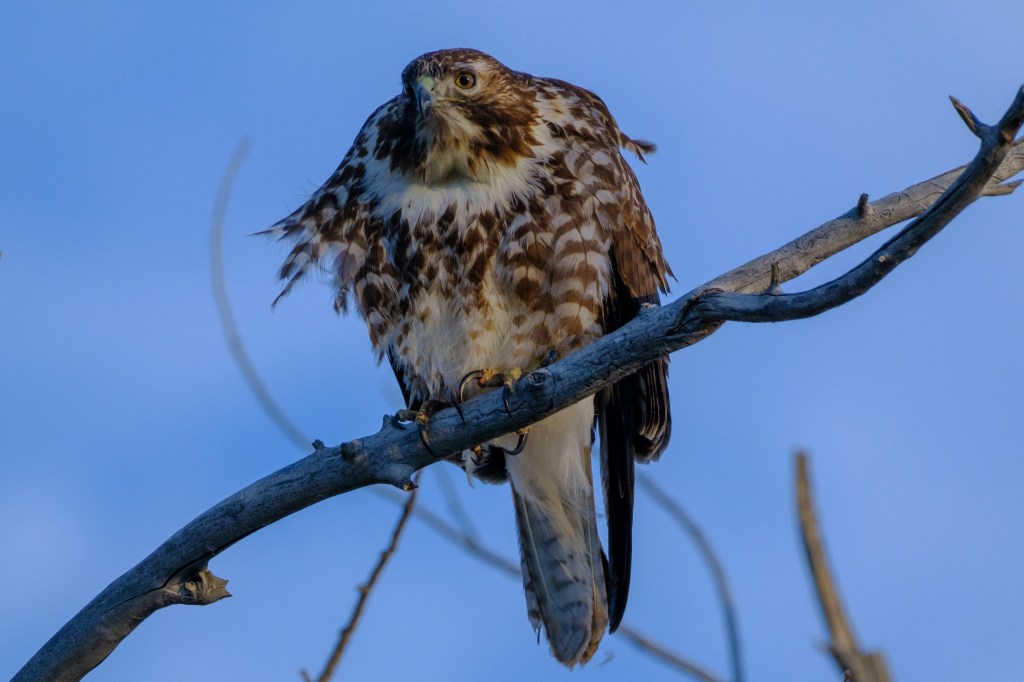
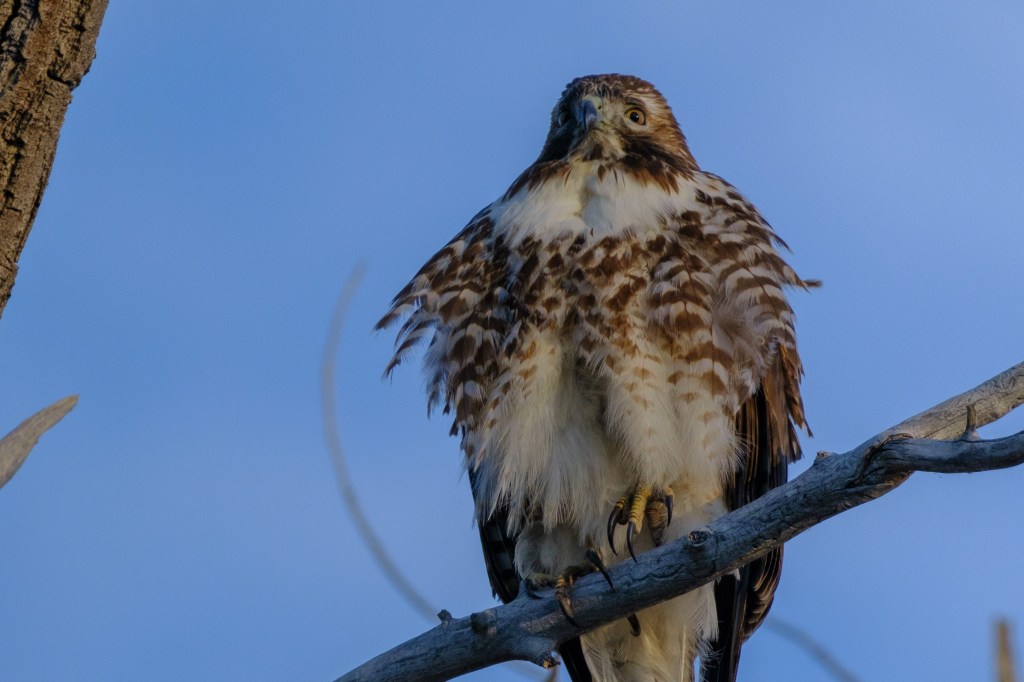
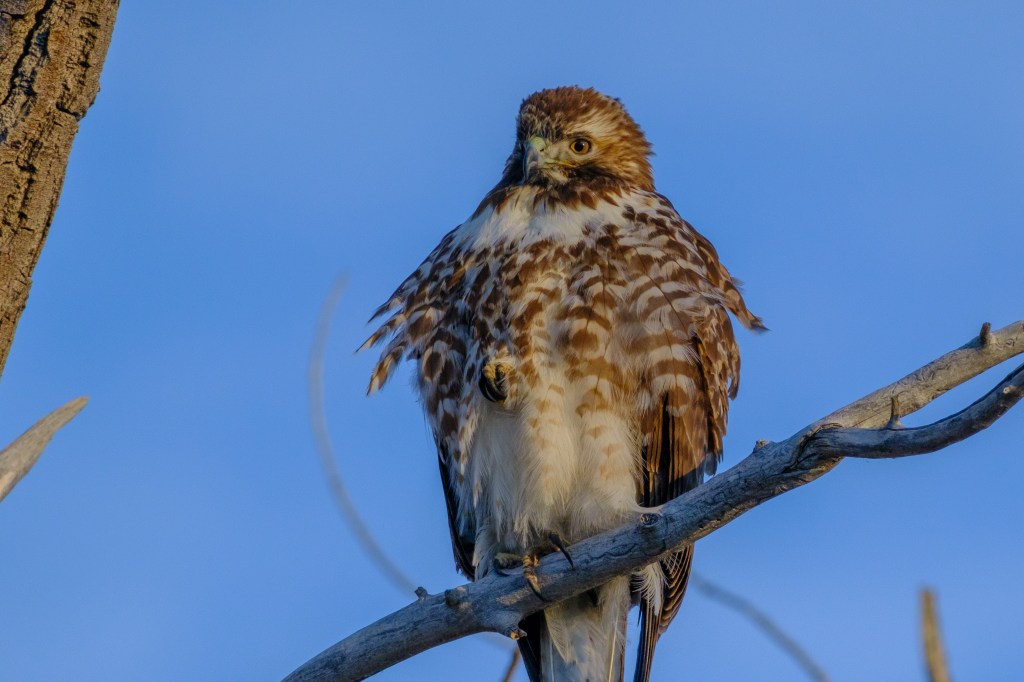
The next 3 photos show a young Red-tail that lifts its left foot and hides it in its feathers. Why do this? Their feet have little blood flow and are very resistant to cold. Still, perhaps it has to do with minimizing heat lose. Or perhaps this just feels comfortable for the bird.
Songbirds
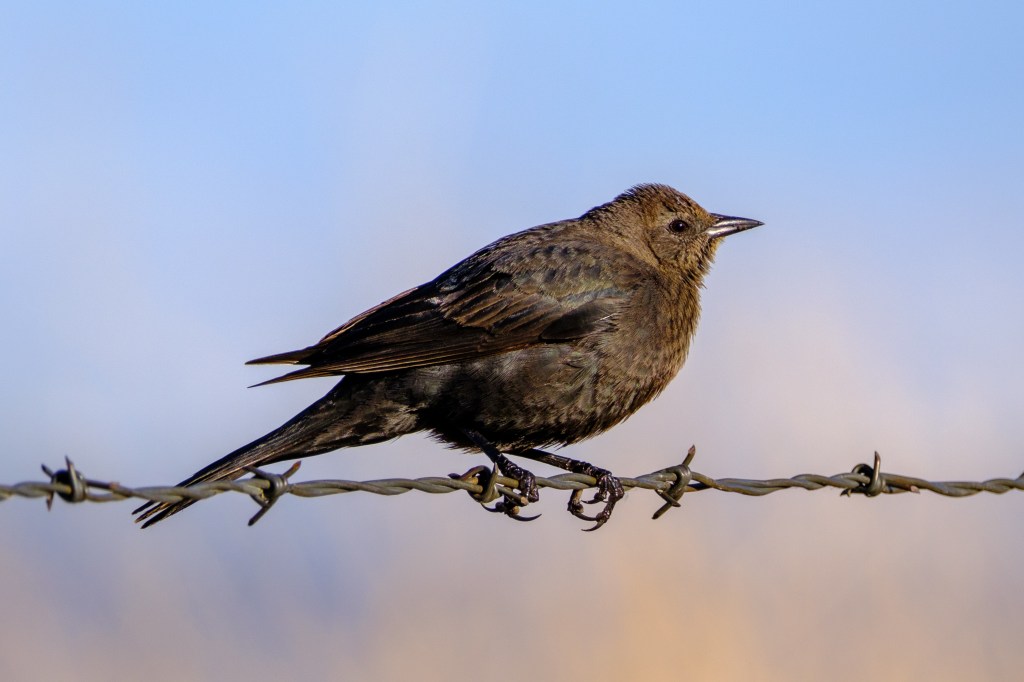
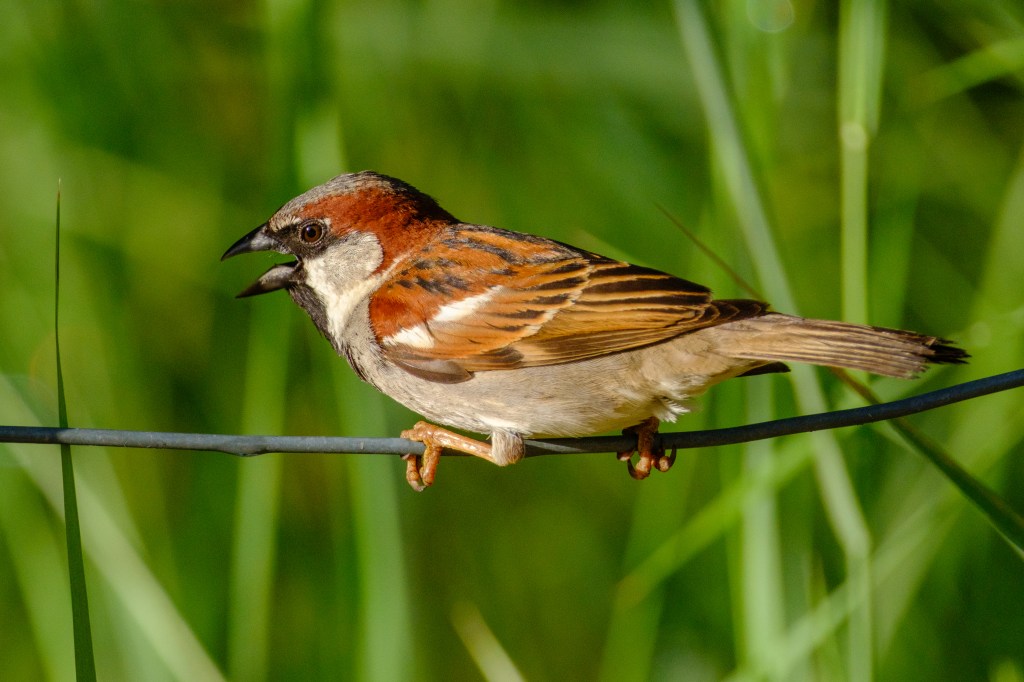
Let’s move on to the feet of songbirds. Their feet look similar from one bird to the next, although the color varies. The first two pictures show a female Brewer’s Blackbird. She lifts her foot and turns herself around on a strand of barbed wire. Bird’s have terrific balance. It used to be thought that birds could perch on a branch because they had a very tight grip. But in fact their grip is often loose and the key is superb balance. Birds have one balance center in their brain and another in the pelvis. They are all miniature Simone Biles.

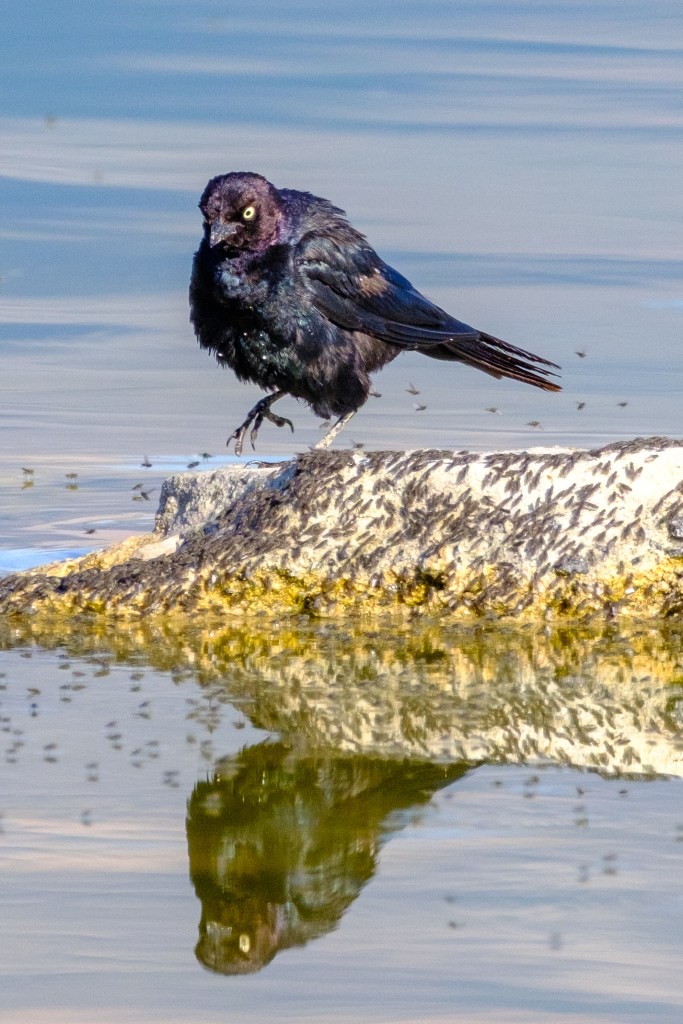
A male Brewer’s Blackbird is feeding on alkali flies at Mono Lake. The yellow eye gives him an angry look.
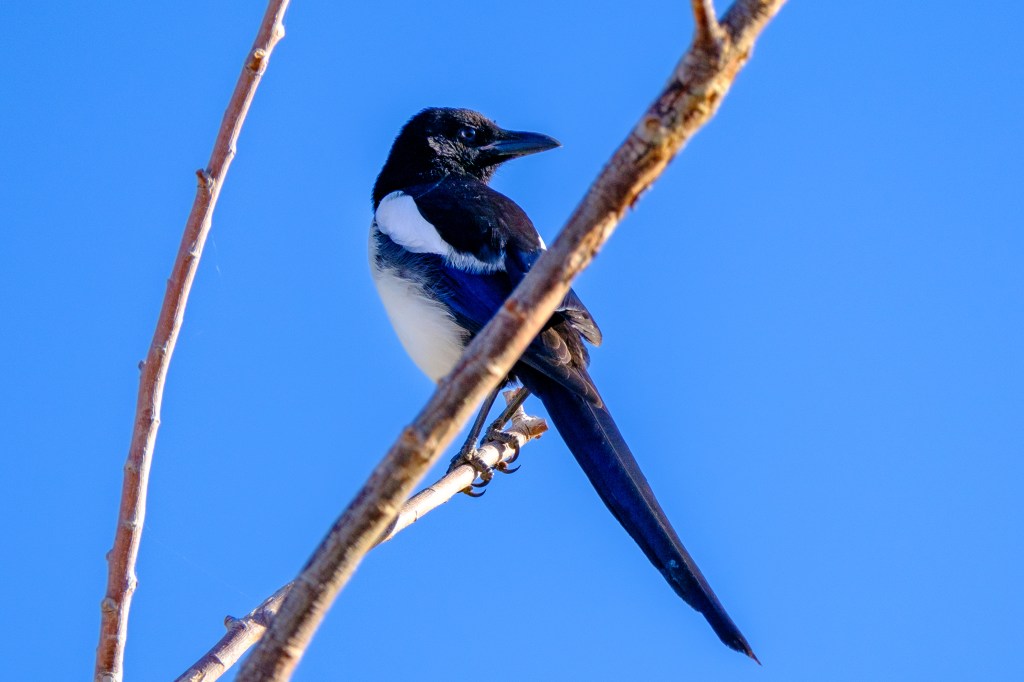
How does a Black-billed Magpie manage that long tail?
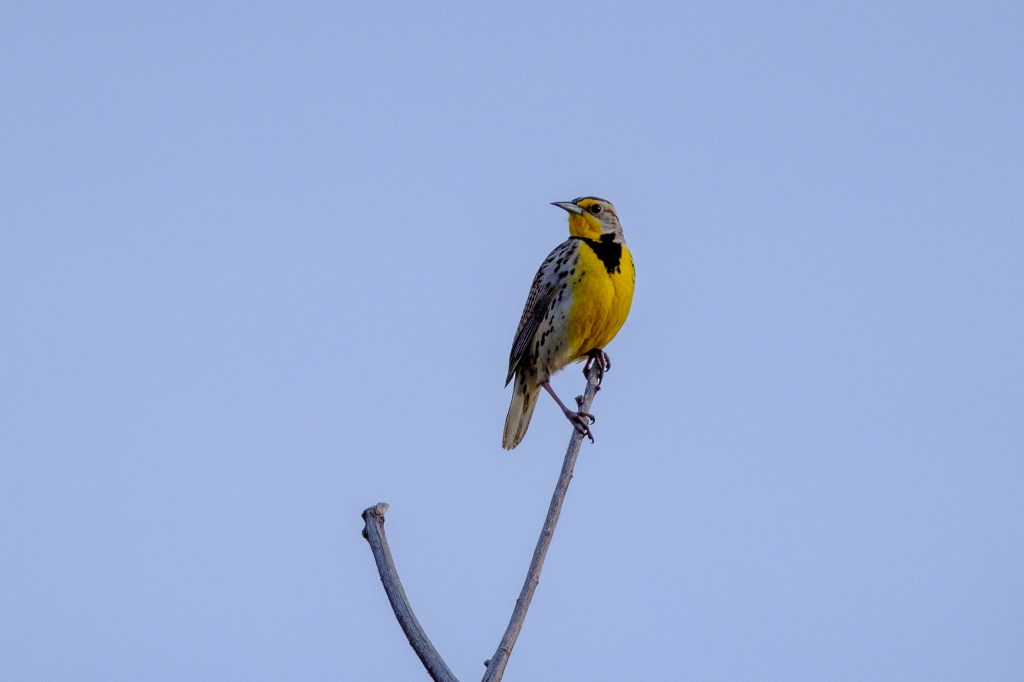
Western Meadowlark. The position shown here is used by many birds. One foot rests right on the end of a branch; it is as if the branch is covered by the palm of a hand. The other foot holds on below. For another example, see the first photo of a Red-tailed Hawk, shown above.

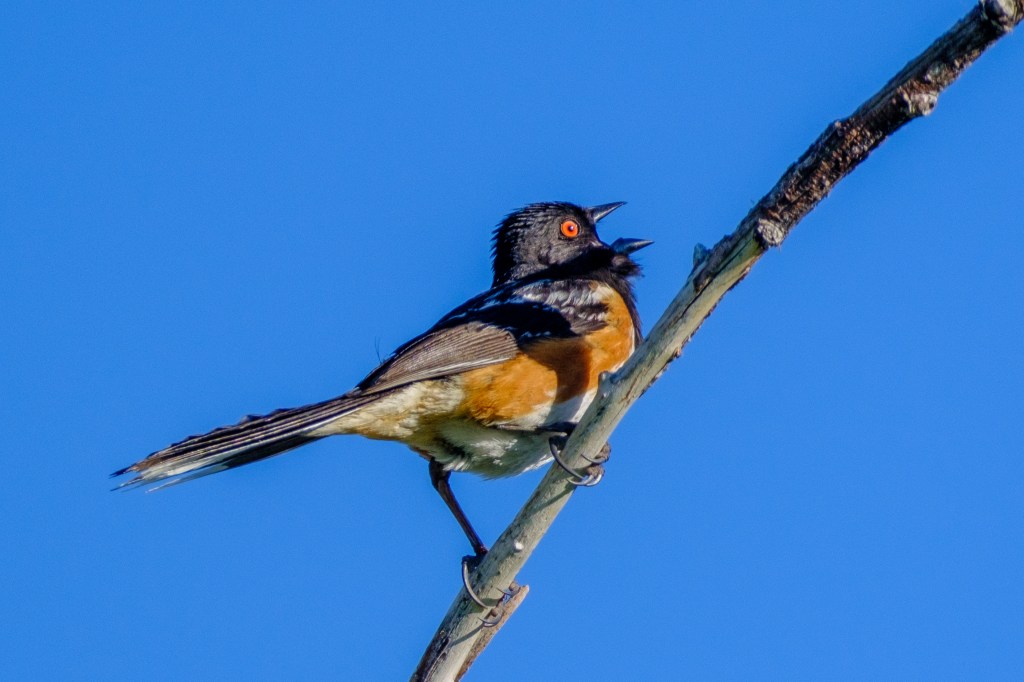
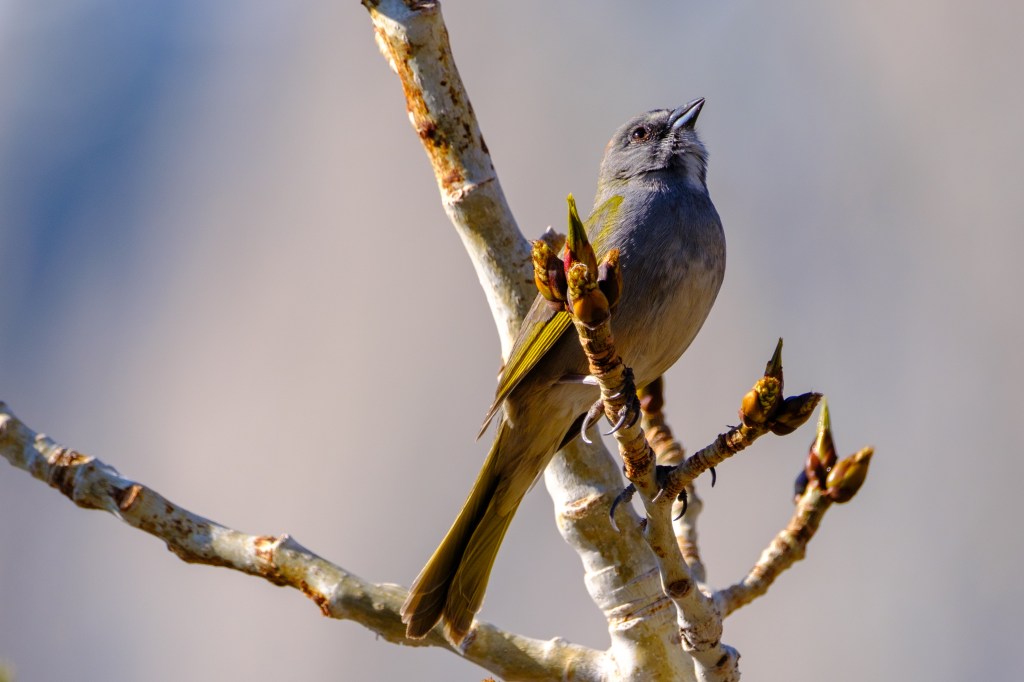
Fun fact about Towhees. Apparently the origin of the word “Towhee” is unknown.
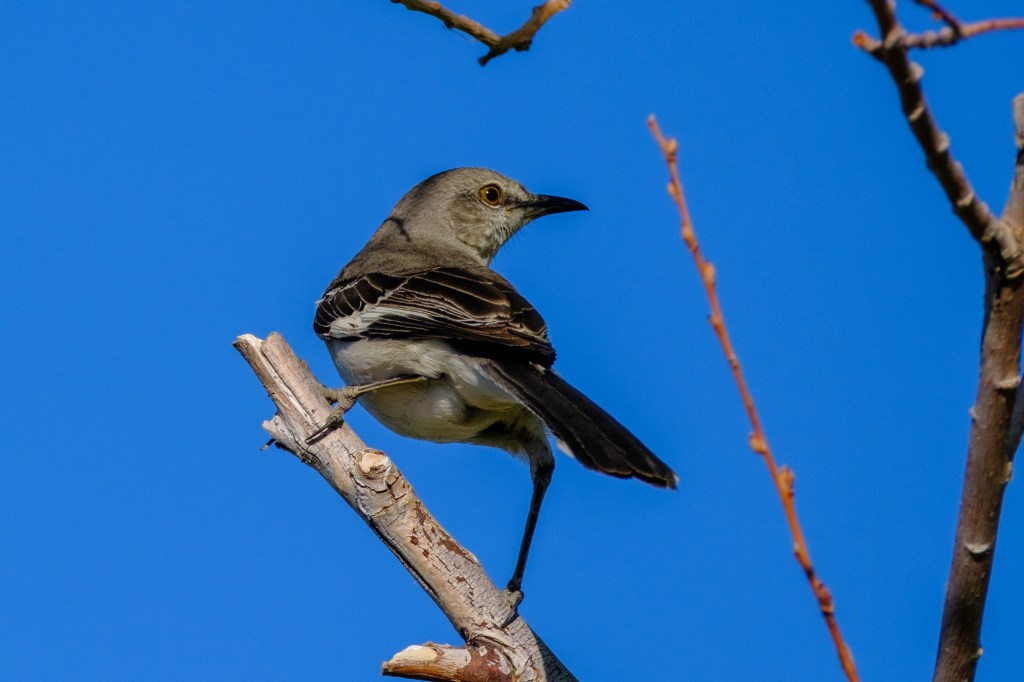
Northern Mockingbird. This spread-legged stance is common, even though it looks awkward. When they perch, birds are constantly balancing over their feet, with little effort. They can sleep all night on a branch, even in a wind.
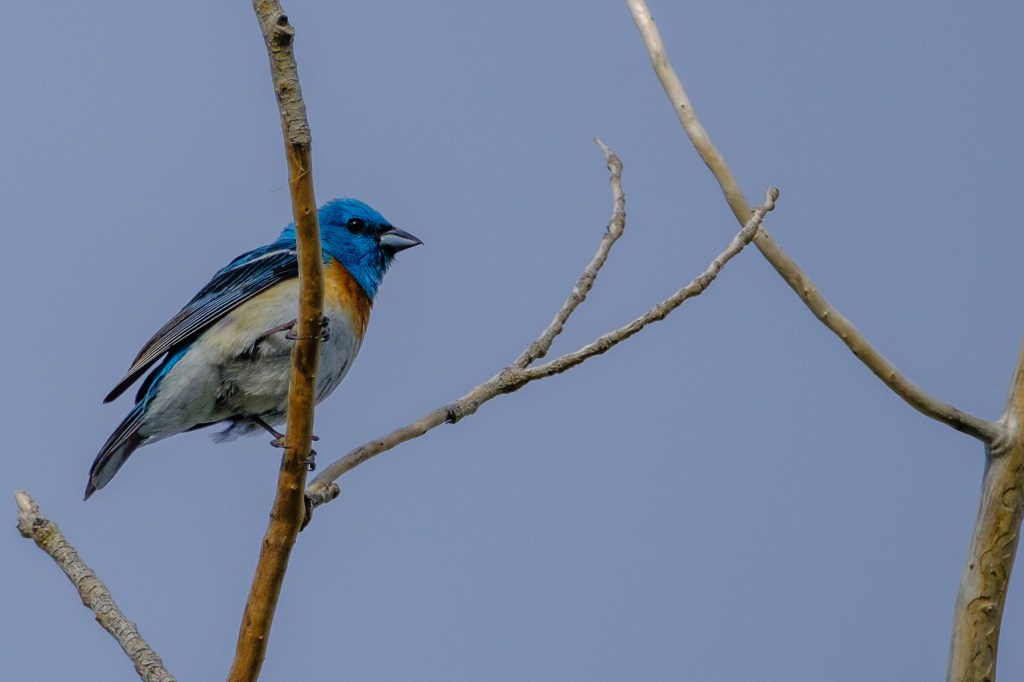
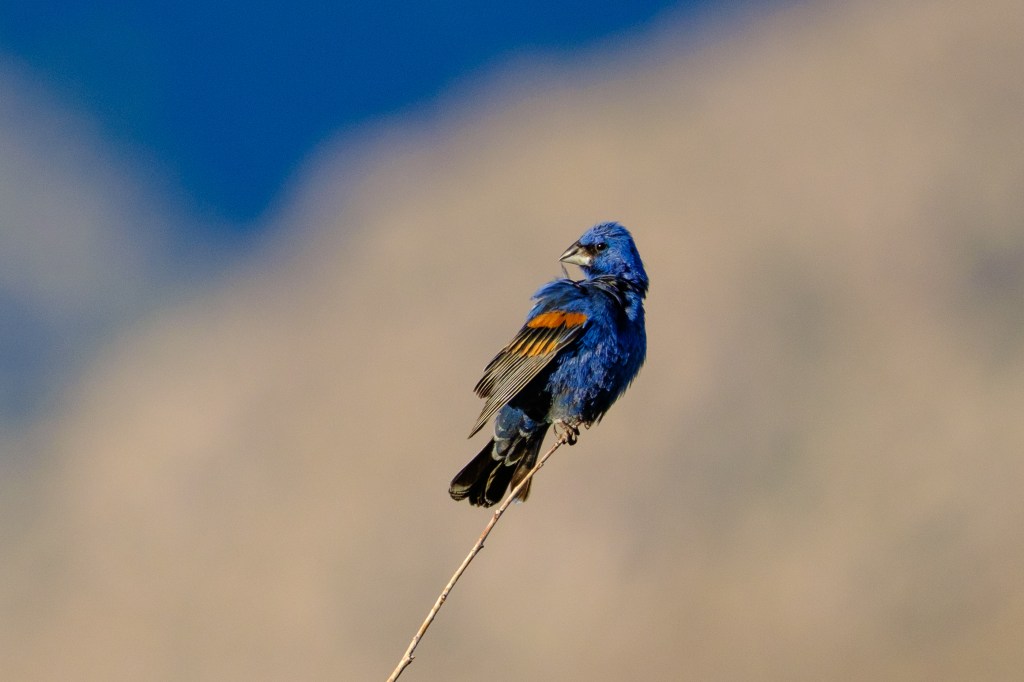
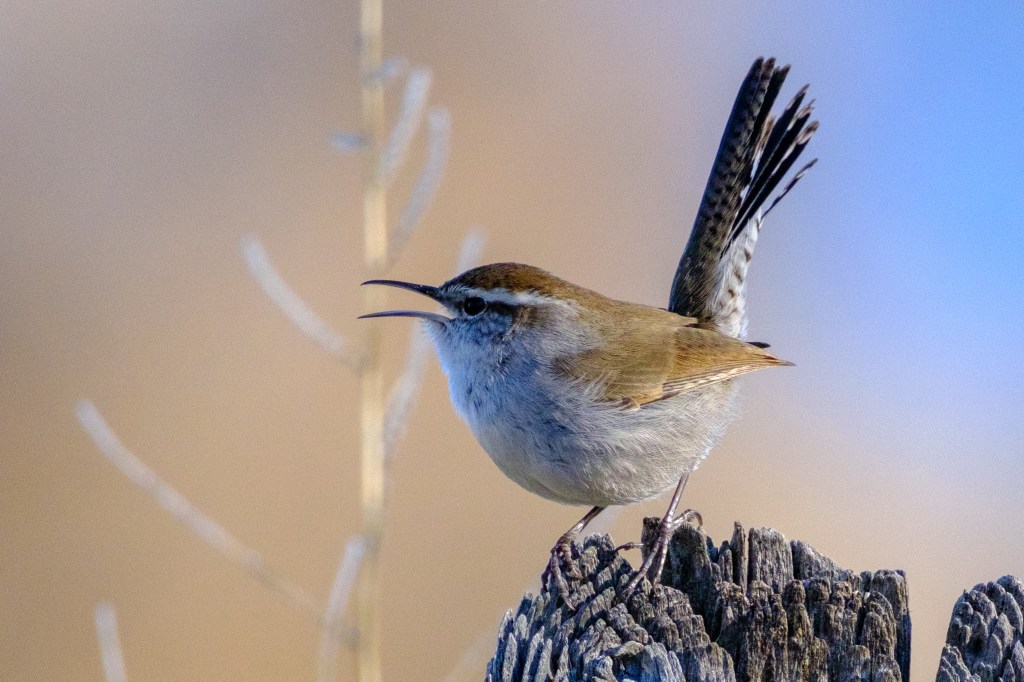
Bewick’s Wren. These little guys hide in bushes and sing and sing; really noisy.
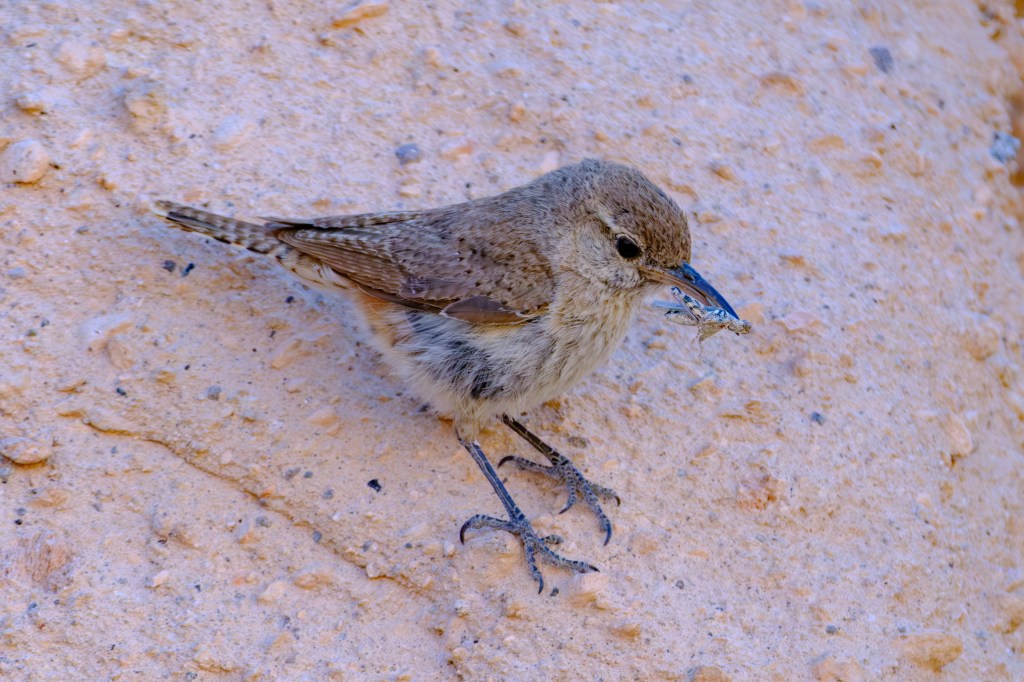
Rock Wren, trying to eat a grasshopper.
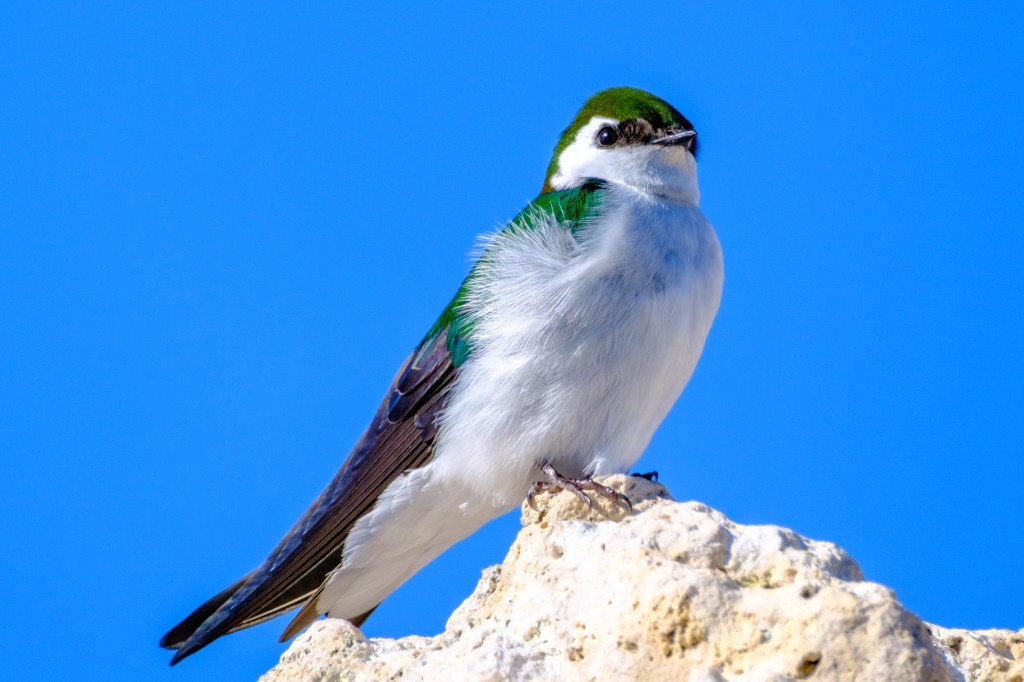
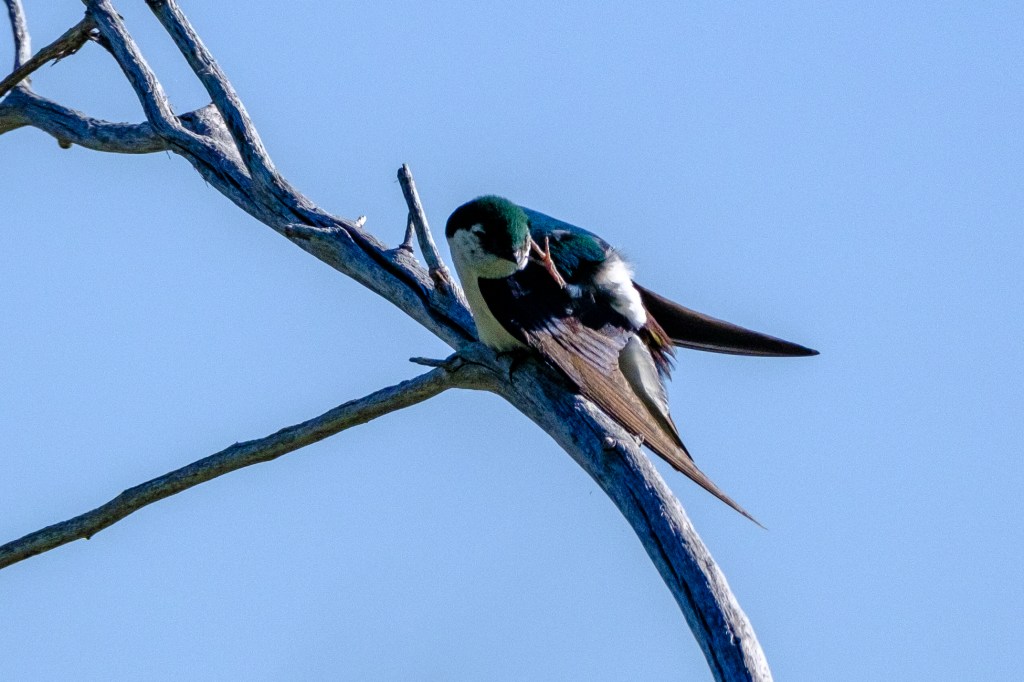
A Violet-green Swallow. For some reason, she let me get very close.
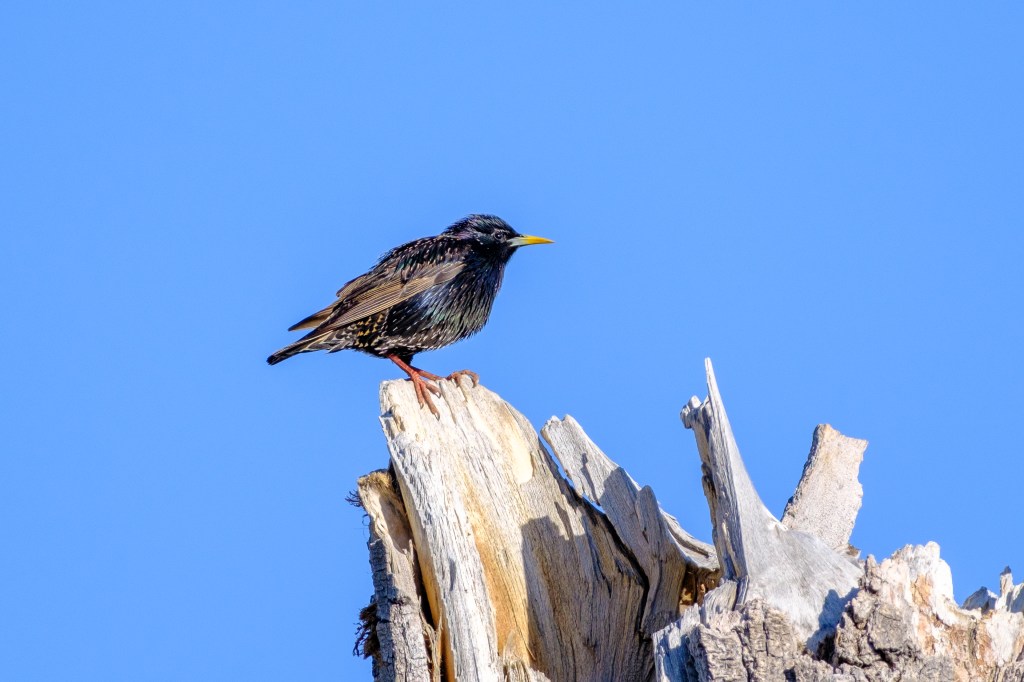
European Starlings. These birds are famous for flying in large flocks; murmurations. Their toes seem strangely long.
Water Birds
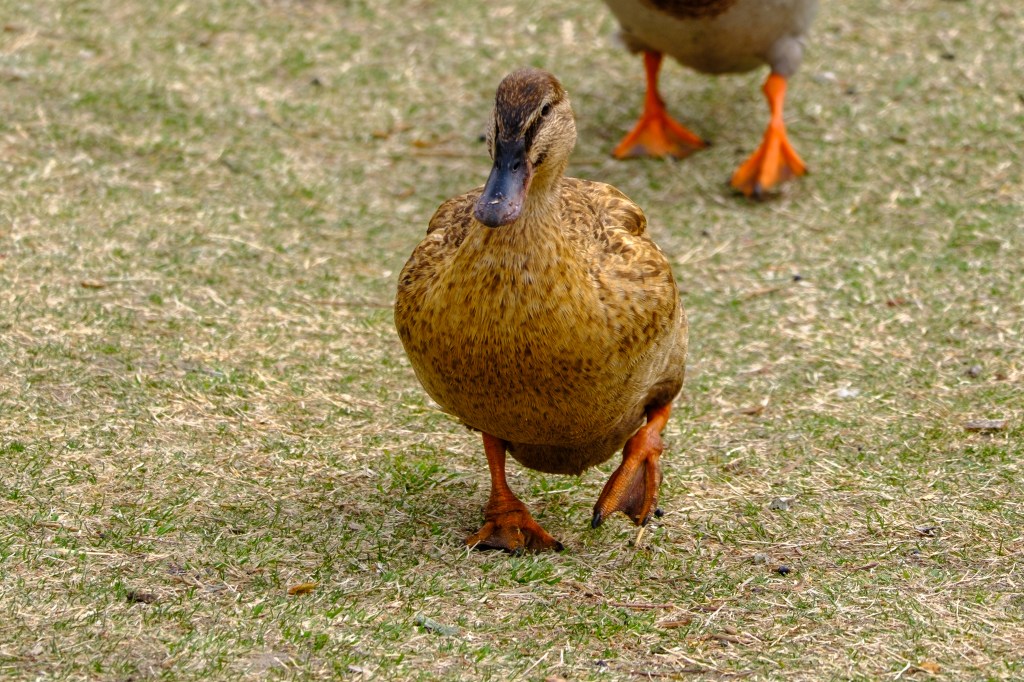
Birds that swim and wade have distinctive feet. A female Mallard has large webbed feet for swimming and wading. She has three forward toes, joined by webbing. And a rear-facing toe that is very small.
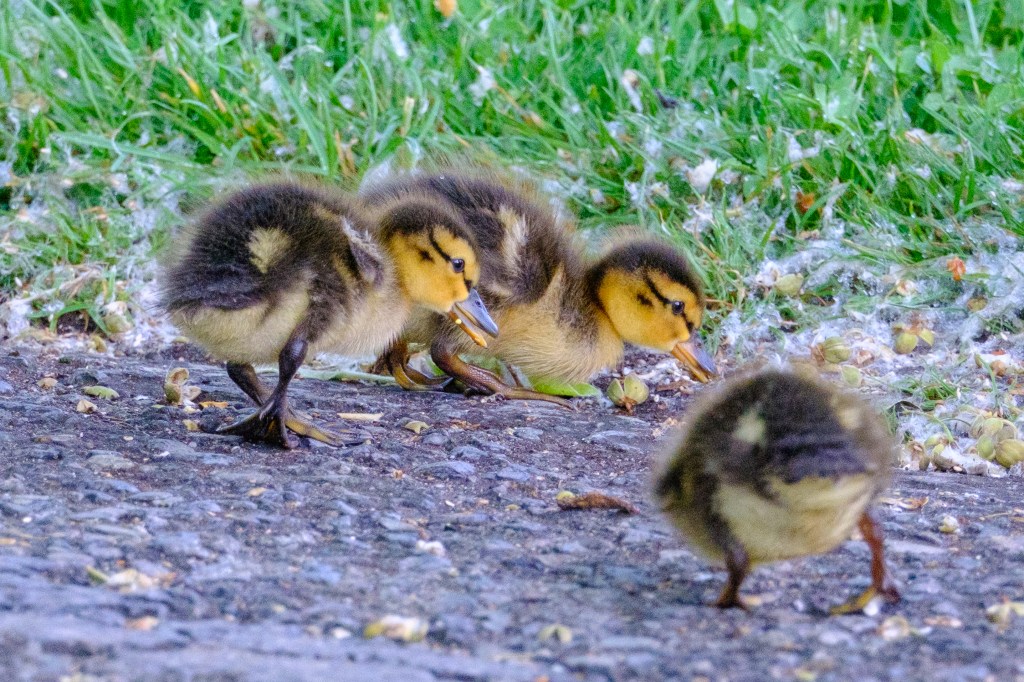
Mallard ducklings already have big feet. Instead of a large rear-pointing toe, they have a short pointed toe. This is their remnant of the big toe, the hallux. You can see this toe in the duckling on the left.
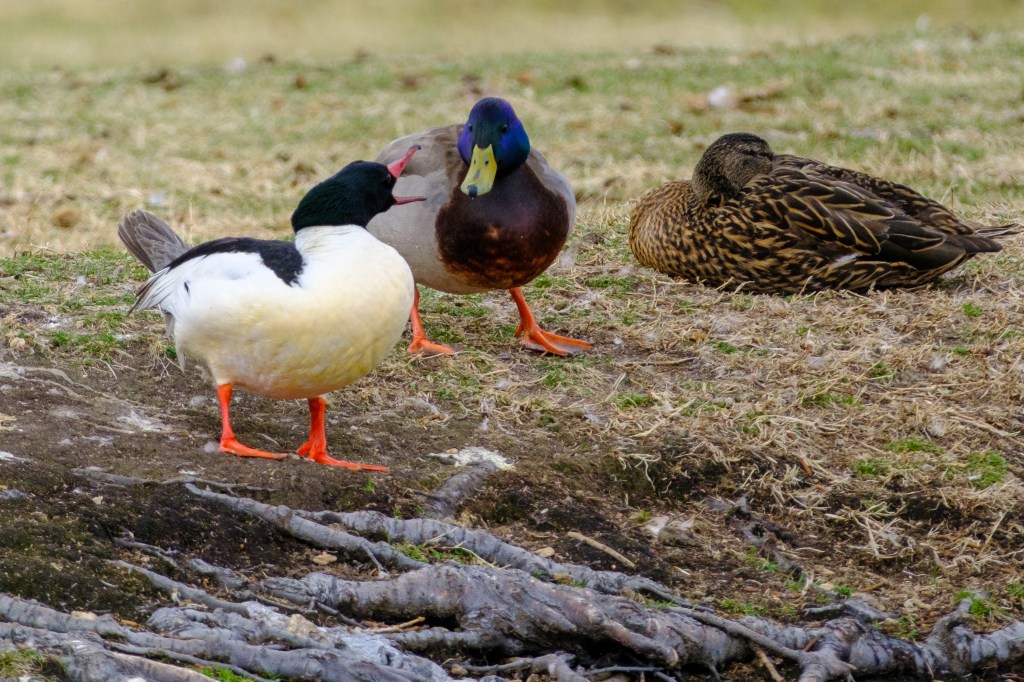
A Common Merganser is shouting at a male Mallard. Both of them have a stubby hallux pointing to the rear. Why do both have orange-red feet?
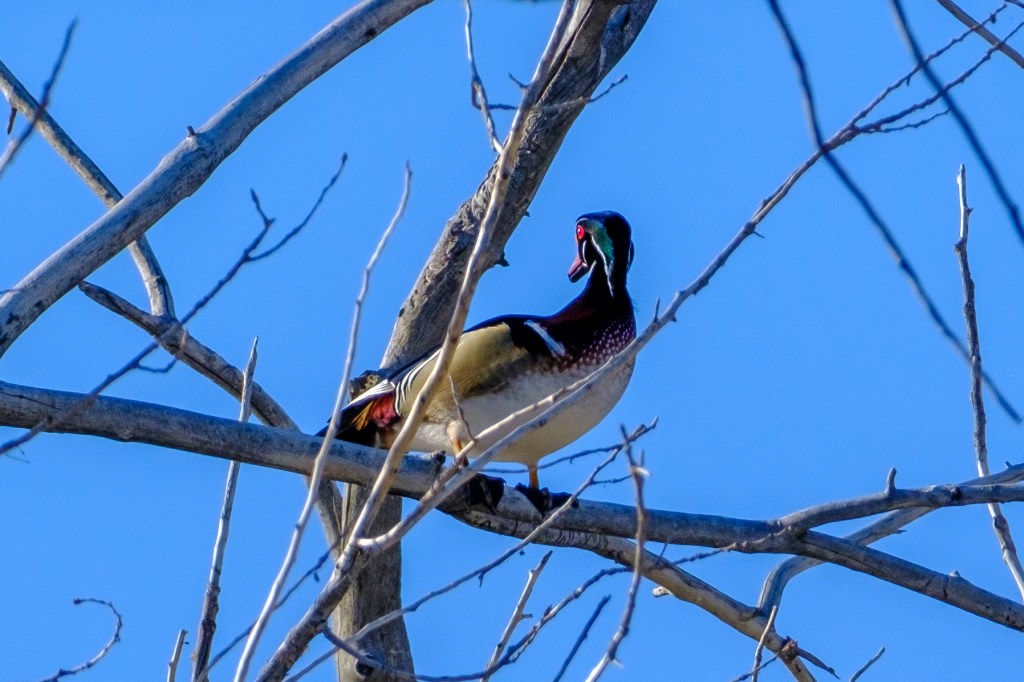
A Wood Duck is a strange sight up in tree. They are called Wood Ducks because they have adapted to living in trees; but it still looks funny. The webbed feet wrap partly around the branch.
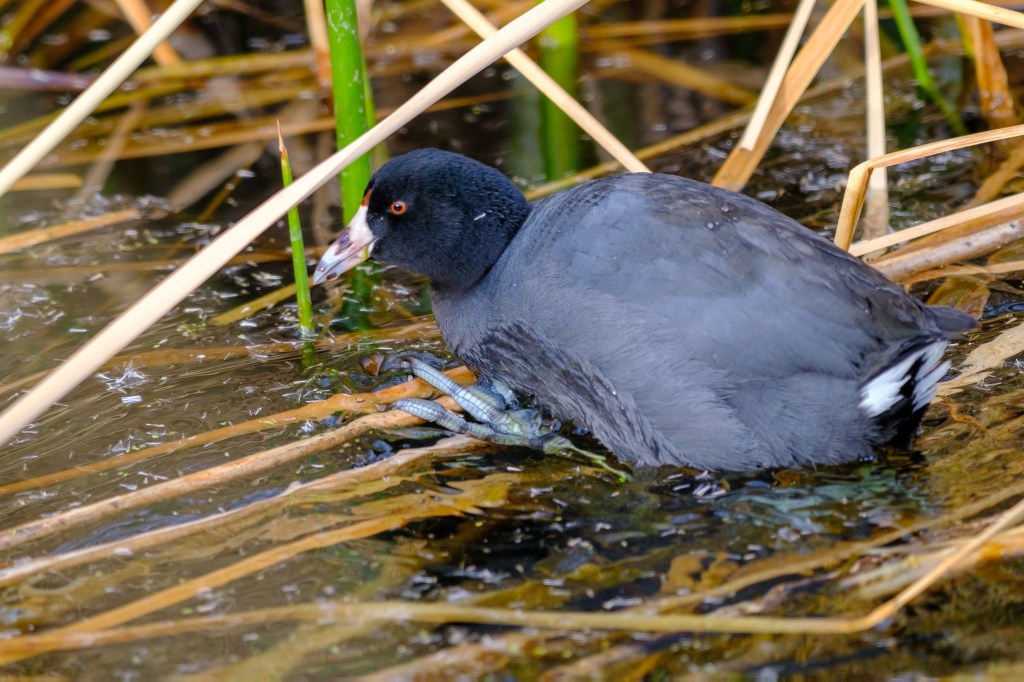
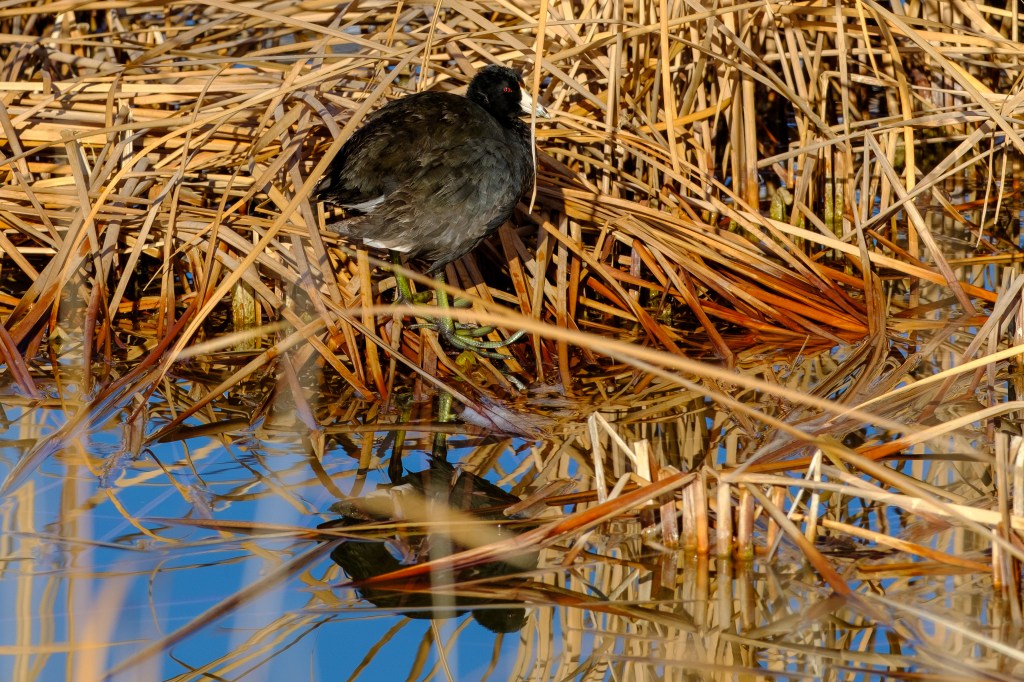
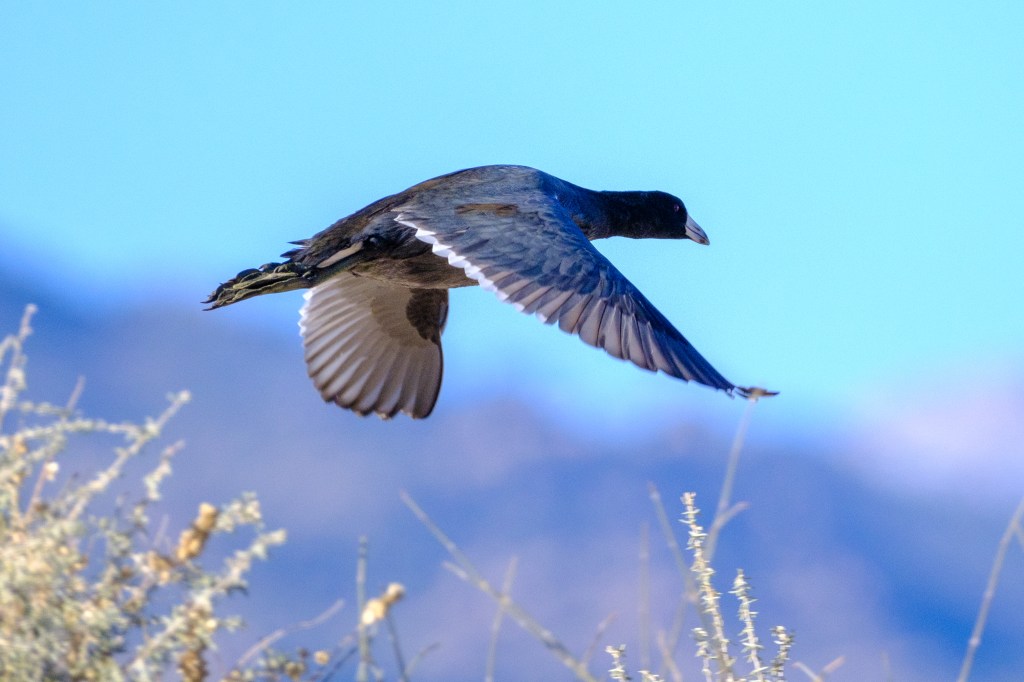
The American Coot has lobes on the side of its toes, instead of webbing. These lobes help with paddling. Big green feet.
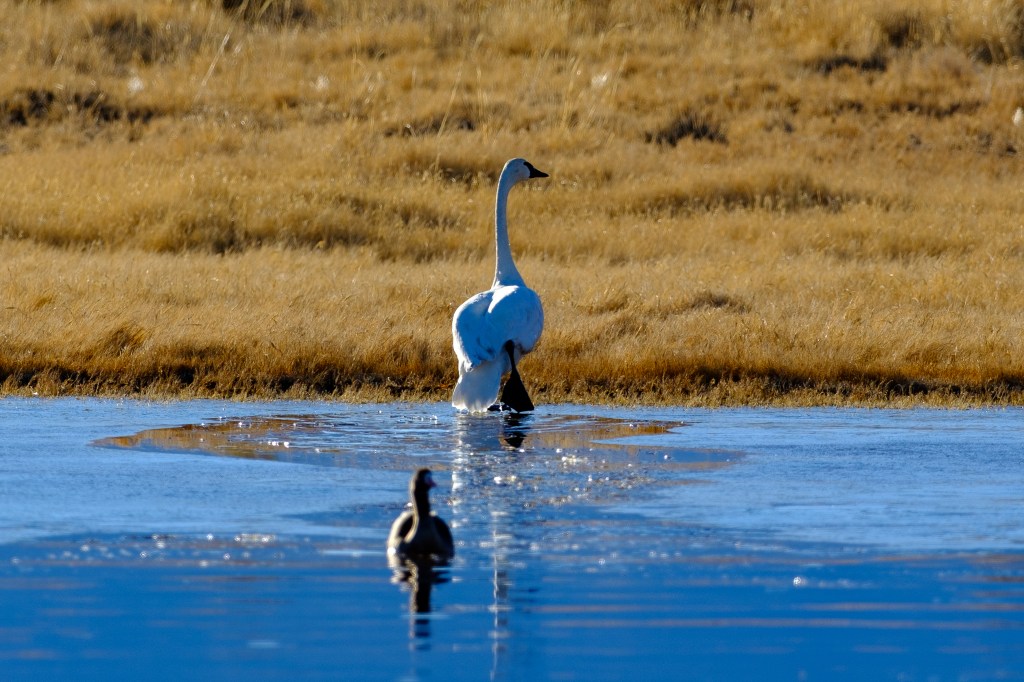
The webbed foot of a Tundra Swan is enormous.
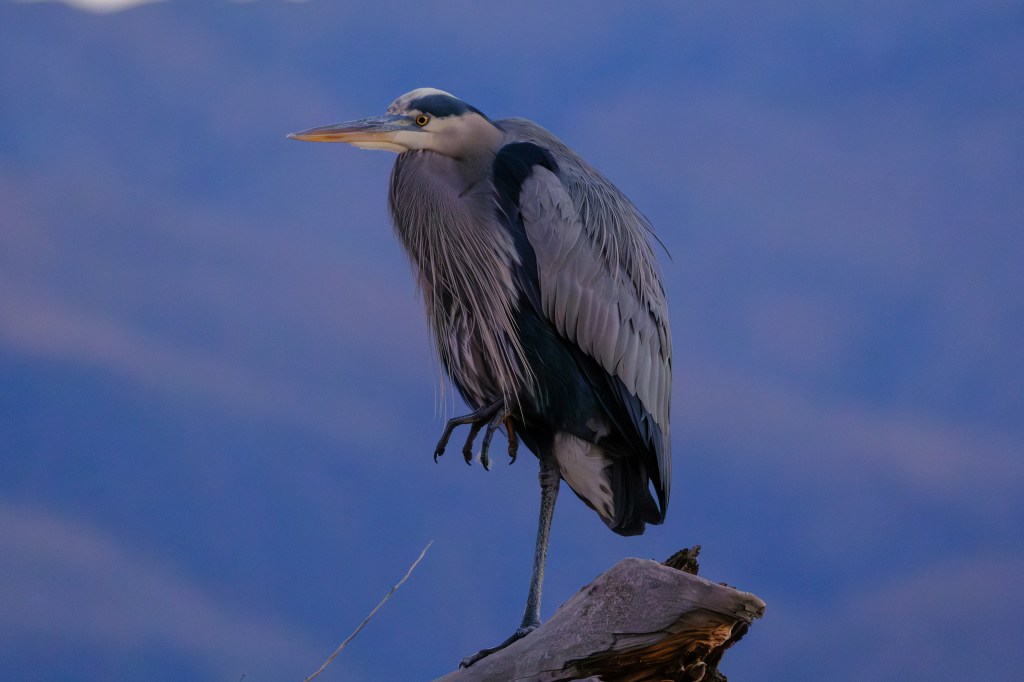
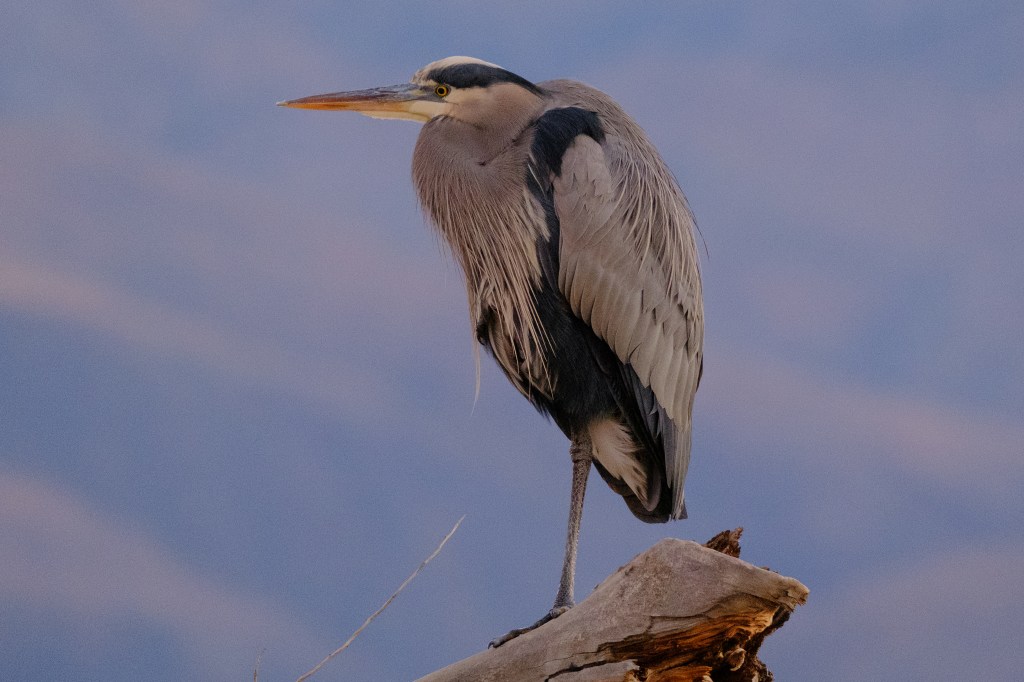
A Great Blue Heron lifts its giant foot and then hides it in its belly feathers. You can still see a little bit of a toe in the second photo. Roberta and I were walking in the early morning; so dark that we almost walked into this bird.
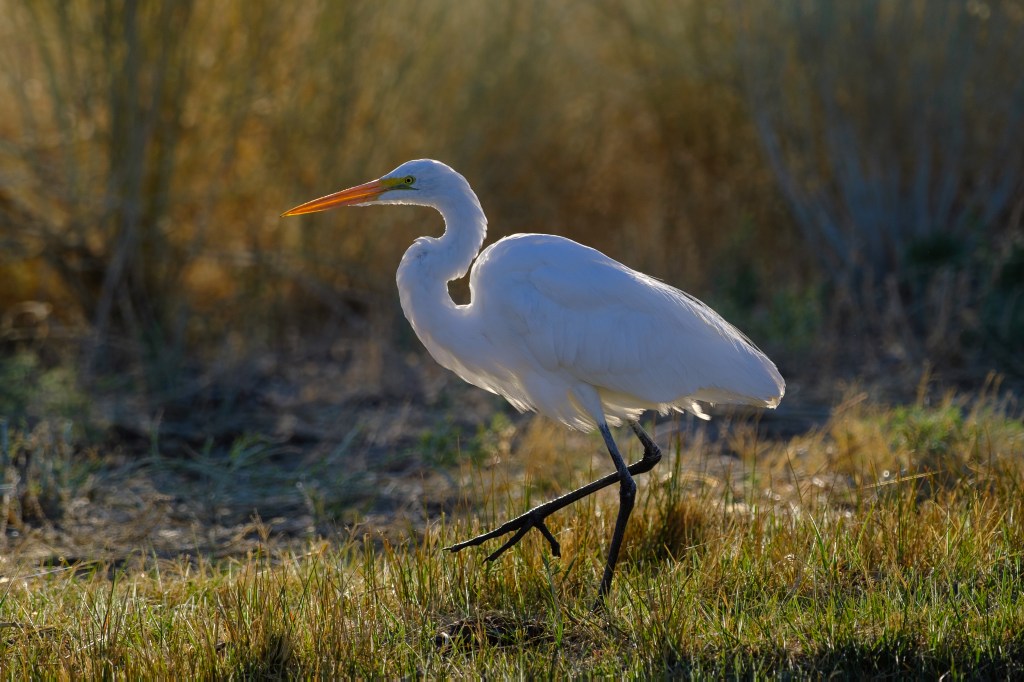
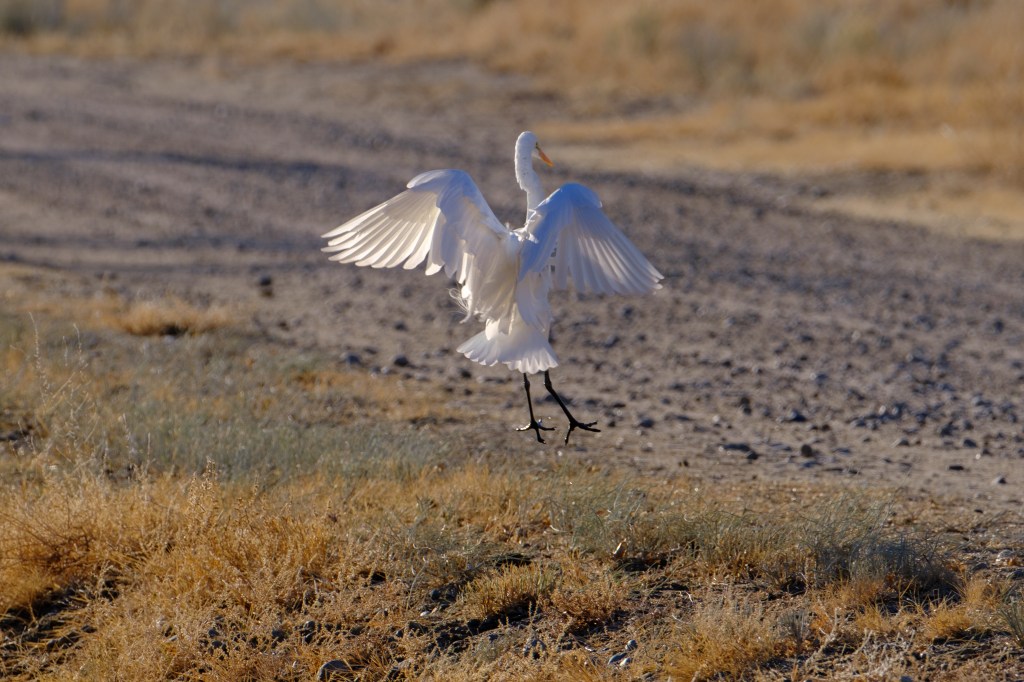
The foot of a Great Egret is gigantic.
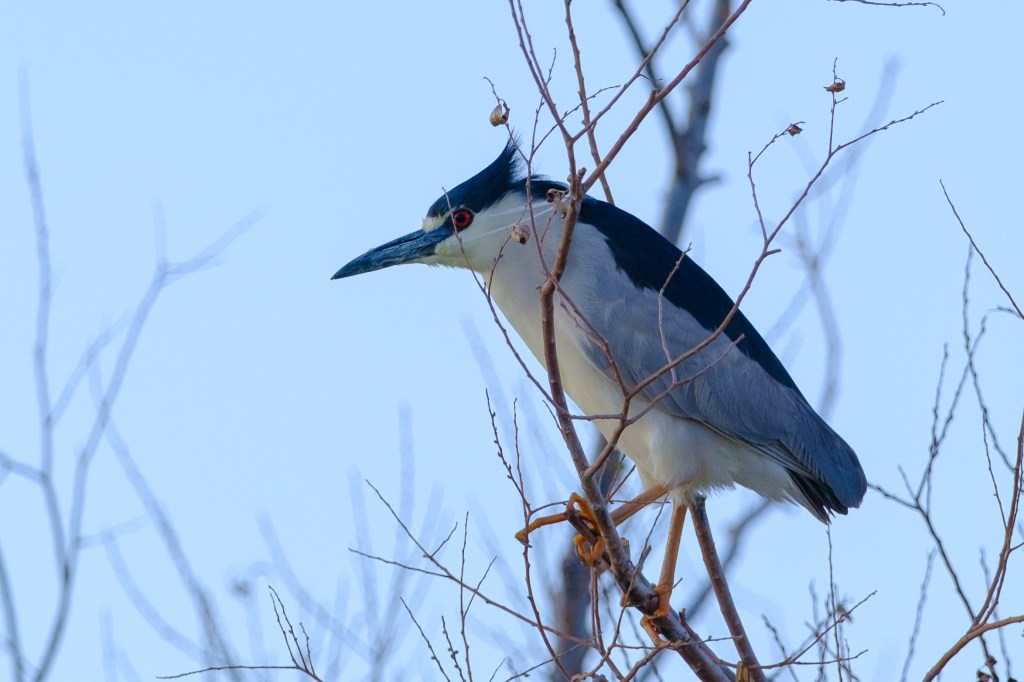
The Black-Crowned Night Heron is a wading bird with big feet. I think these lovely birds look like a colorful football. I wish I could see them more often, but they hunt at night; our schedules do not overlap much.
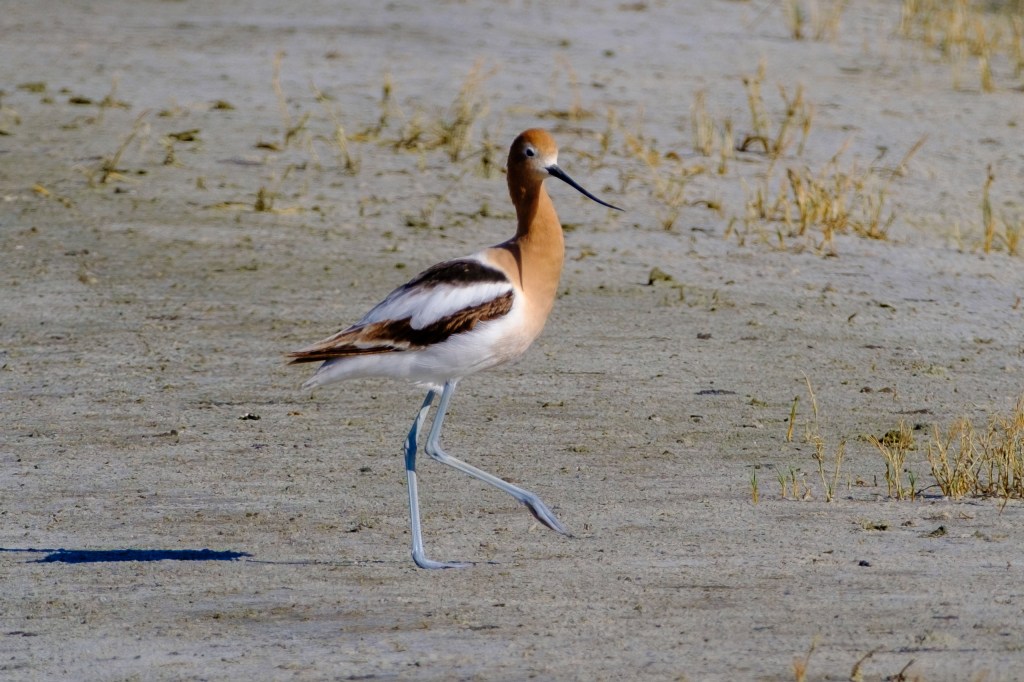
The American Avocet has nearly translucent legs and feet. This bird looks very full of itself.
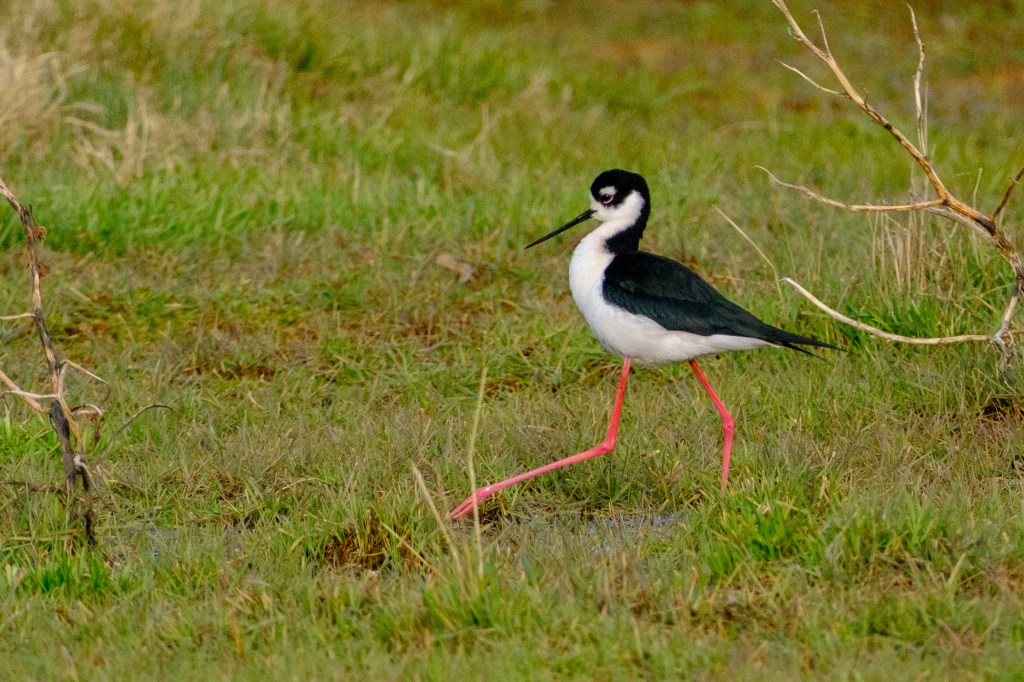
The Black-necked Stilt looks like a cartoon bird. Seriously, pink legs? Remember, everything below the backwards “knee” is actually the foot.
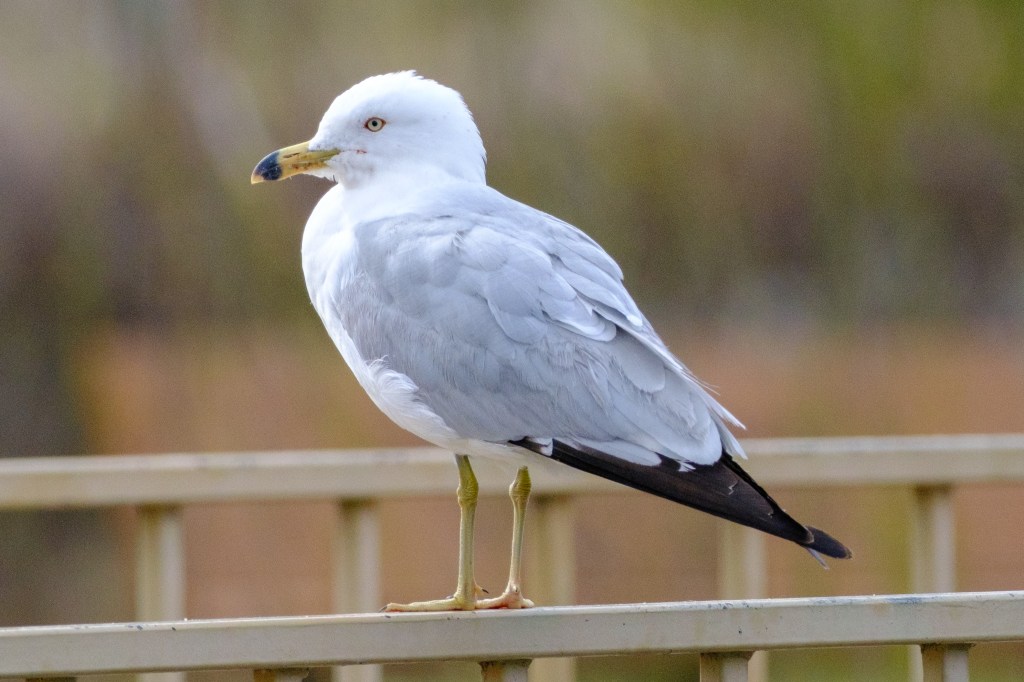
A young California Gull perches at the Bishop City Park. Note the short, spiky toe at the back of the “foot.”
A Snowy Egret wears yellow socks.

Miscellaneous Birds
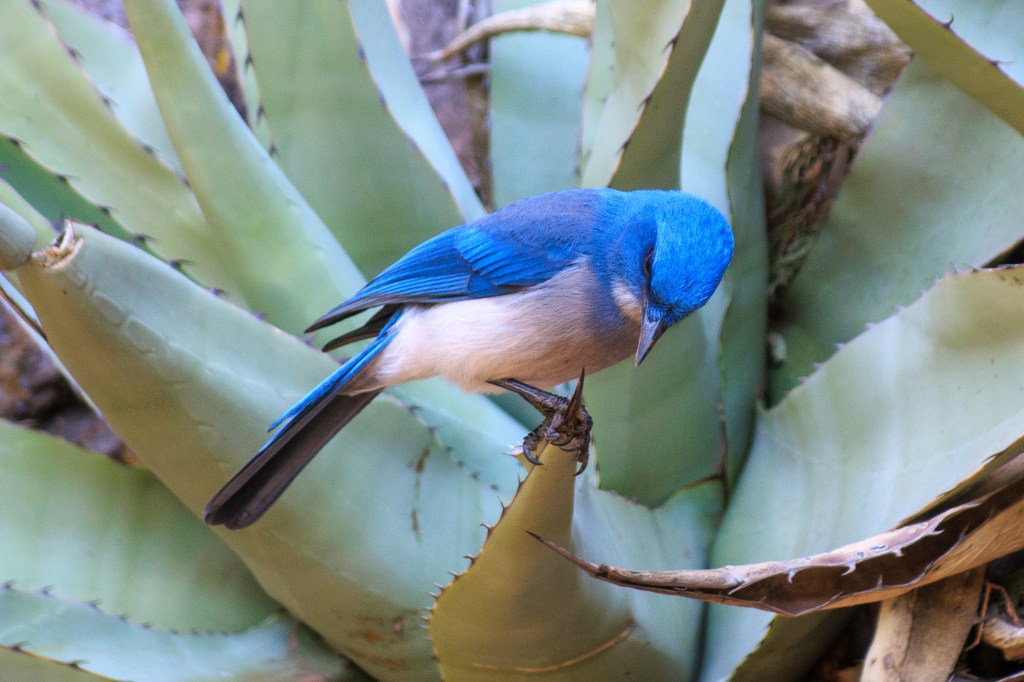
A Mexican Jay in Big Bend National Park, Texas, grasps the sharp spine of a Harvard Agave. These spines are seriously dangerous — very sharp and strong. But the Jay can deal with it.
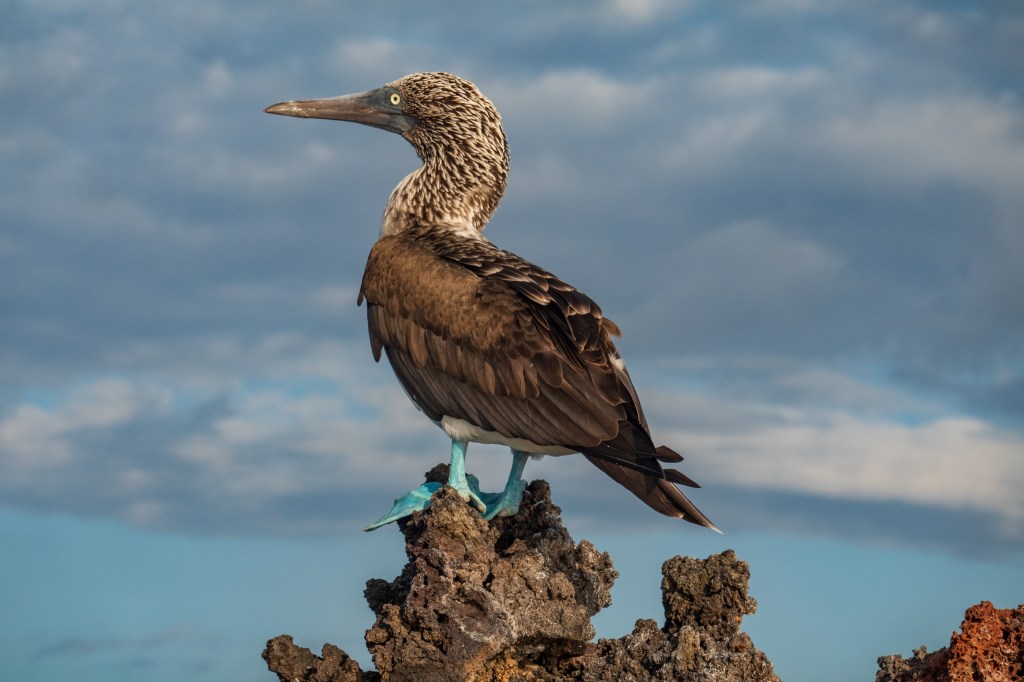
This Blue-footed Booby (yes, real name) was photographed in the Galapagos Islands by my friend Bart O’Brien in 2023. Nice photo of a great bird! I’ve seen these birds when kayaking in Baja, but I have no photos of them.
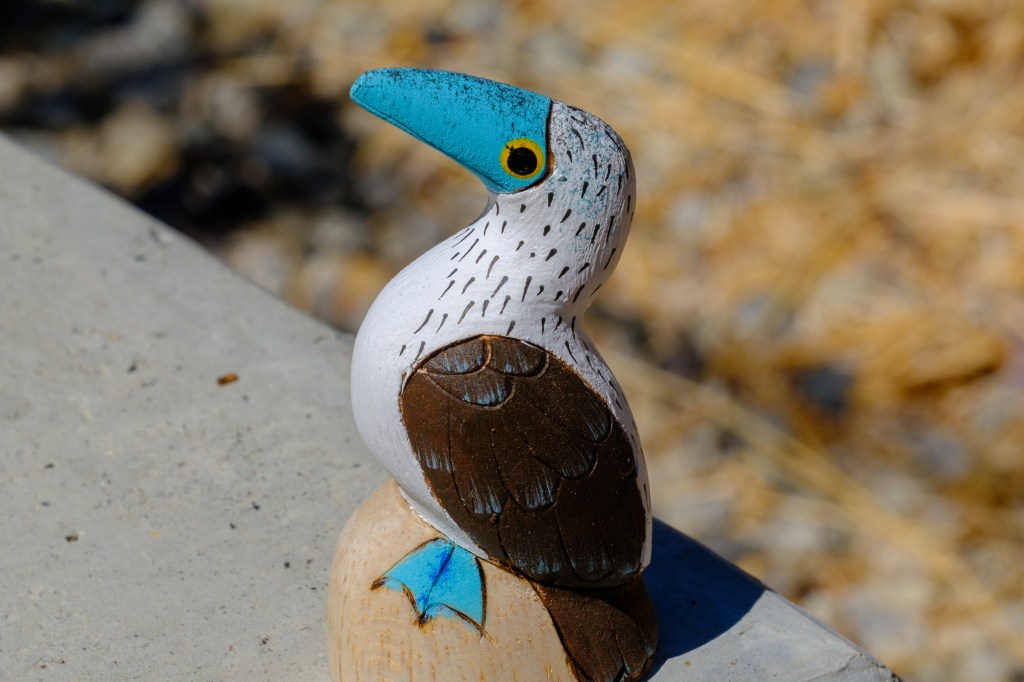
Bart brought home a Booby as a present for me. I was going to let it free at the Buckley Ponds near Bishop. But Bart had to hide this gift from customs and sadly it was strangled by a pair of socks in his luggage. I had it stuffed and mounted in my yard.
Feet in Flight
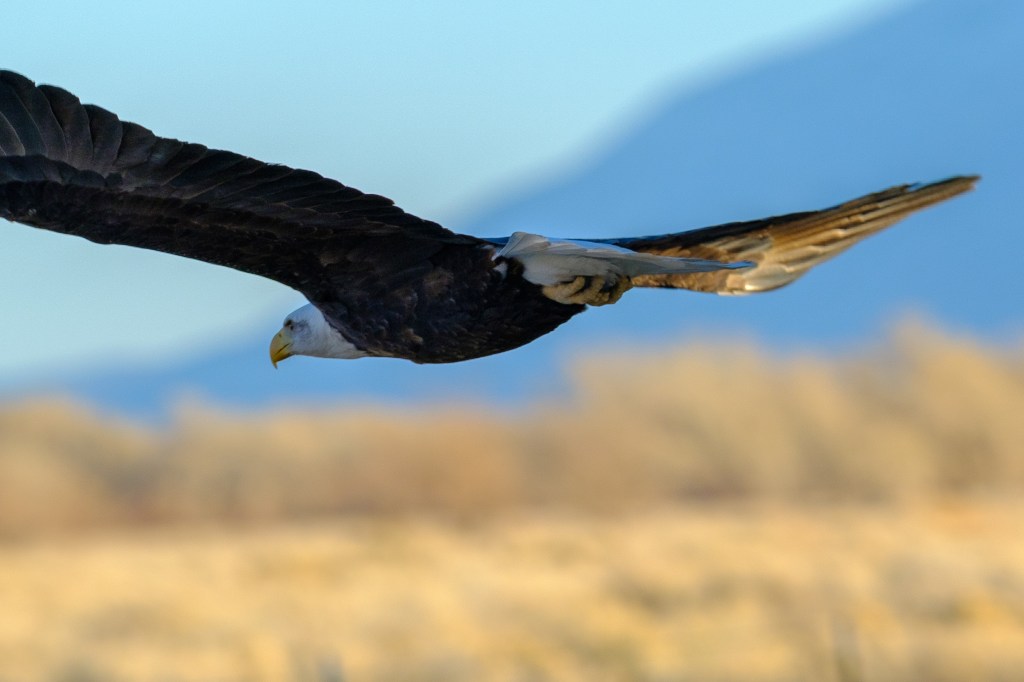
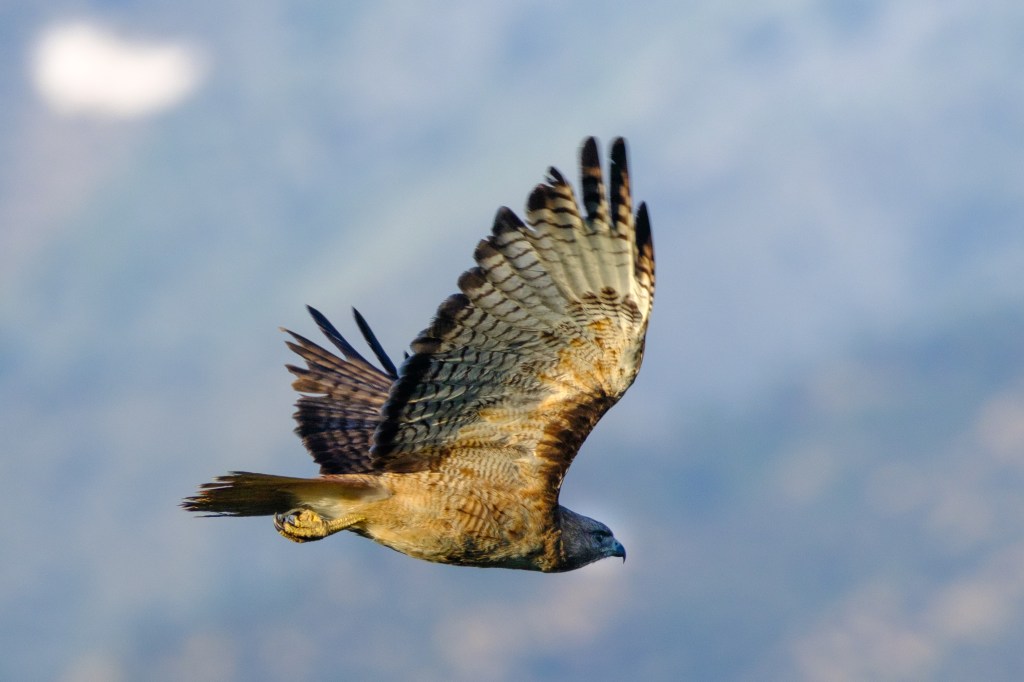
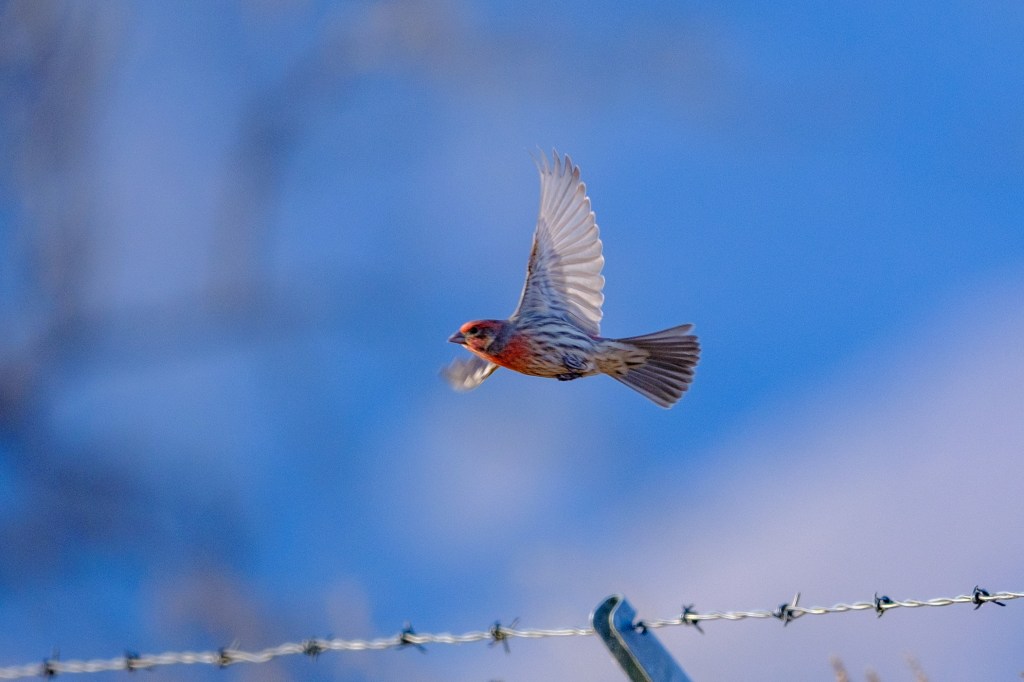
In the air, the legs of a bird are less than useless. They add weight and create air resistance. For a bird trying to travel, it makes sense to abandon its feet and rent a new pair when it lands. In flight, birds copy the approach of a jet airplane. They fold up their landing gear into an aerodynamic position, then lower it on return to earth.
The Bald Eagle shows the strategy most used by raptors; fold up the feet and stow them out of the way, under the tail feathers.
The Red-tailed Hawk uses the same method, although the stowage below the tail is a bit sloppy in the photo below.
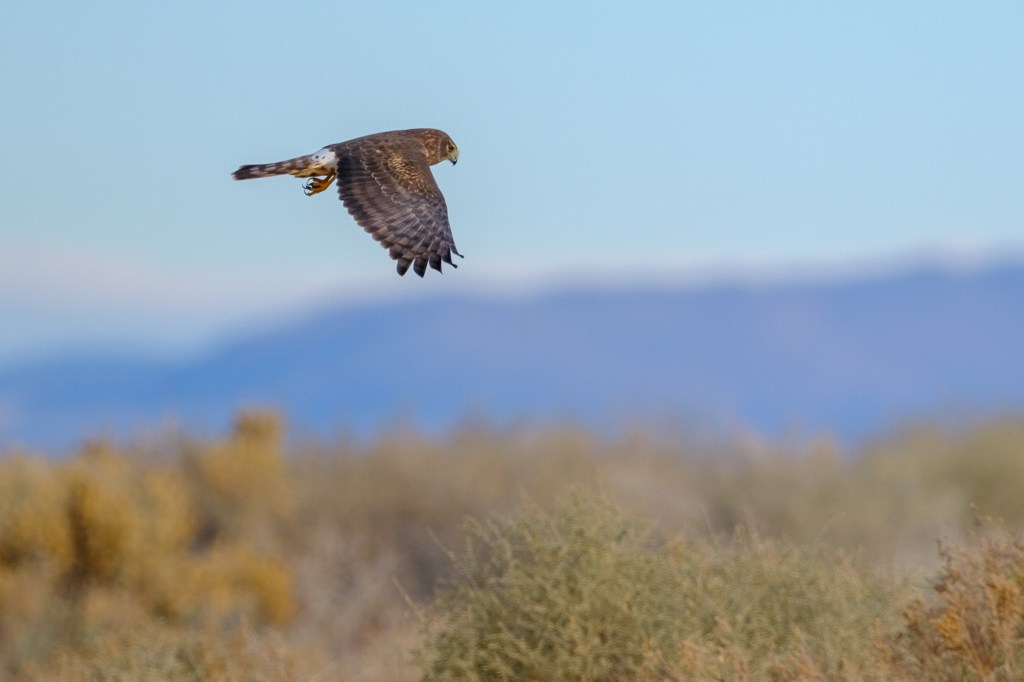
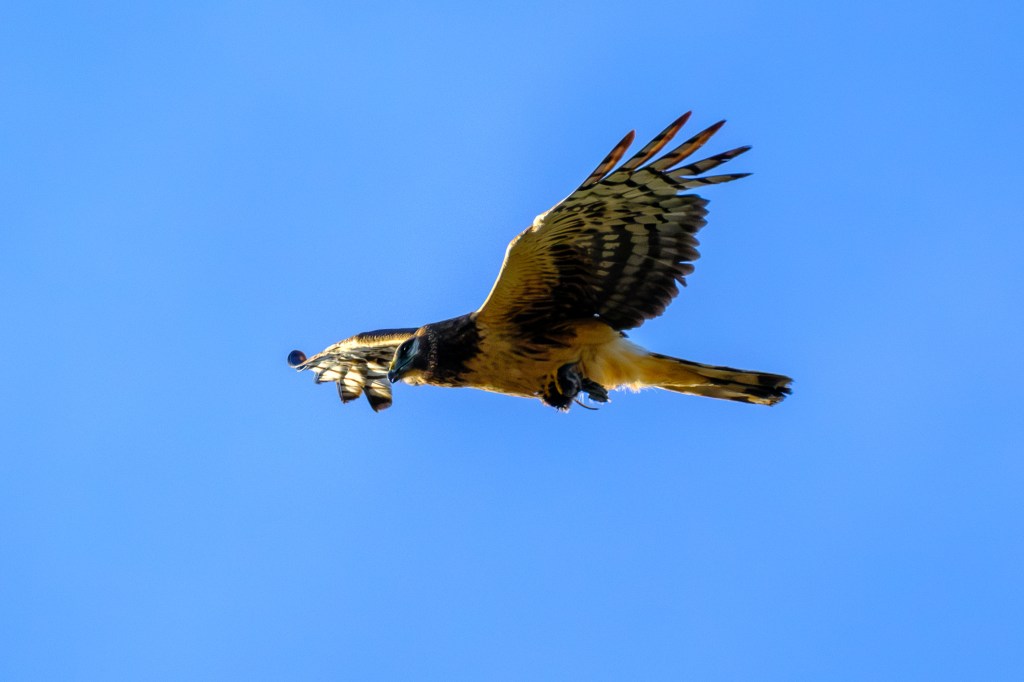
A Northern Harrier will often let its feet hang down a bit. This bird flies low, finds its victims, and suddenly drops. So high speed is often not important and having the feet ready to grasp an unsuspecting mouse is handy.
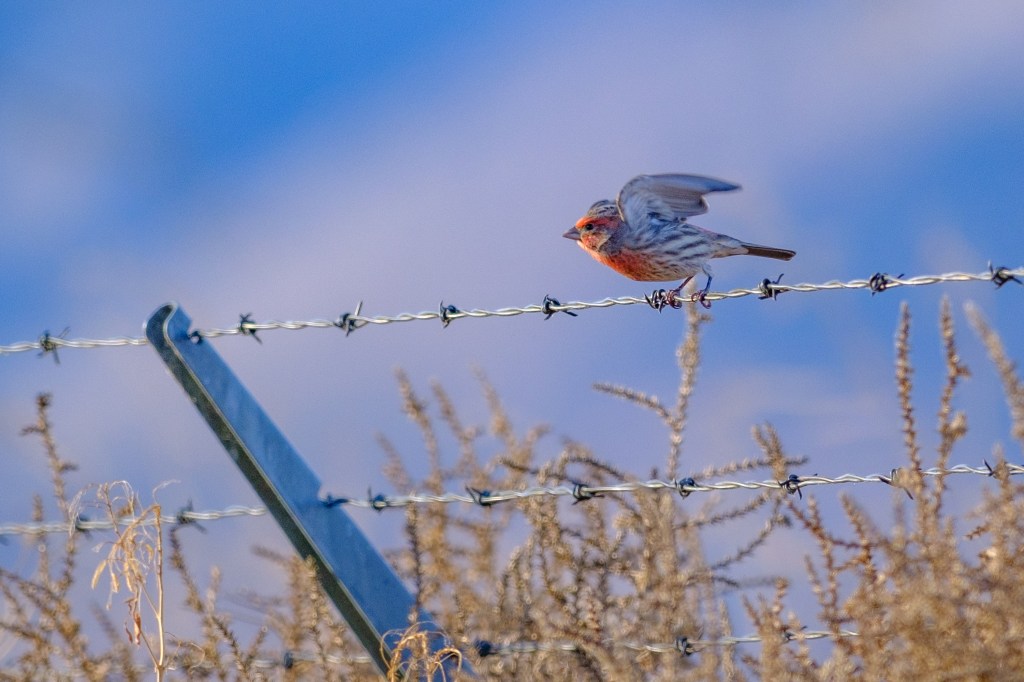
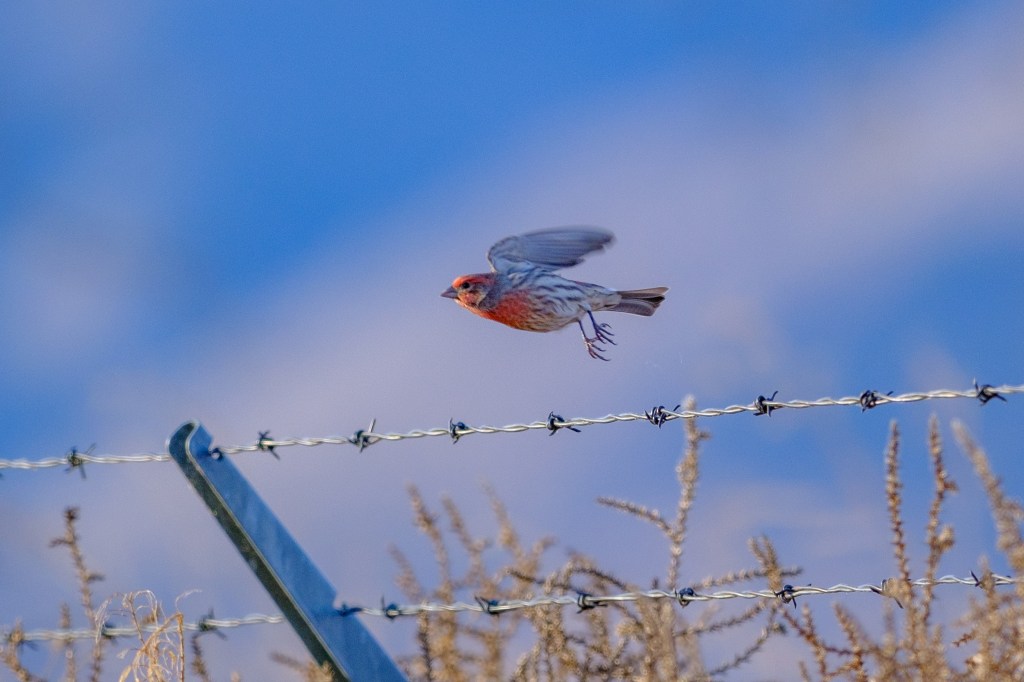
A House Finch shows perfect technique, quickly stowing the landing gear for flight.
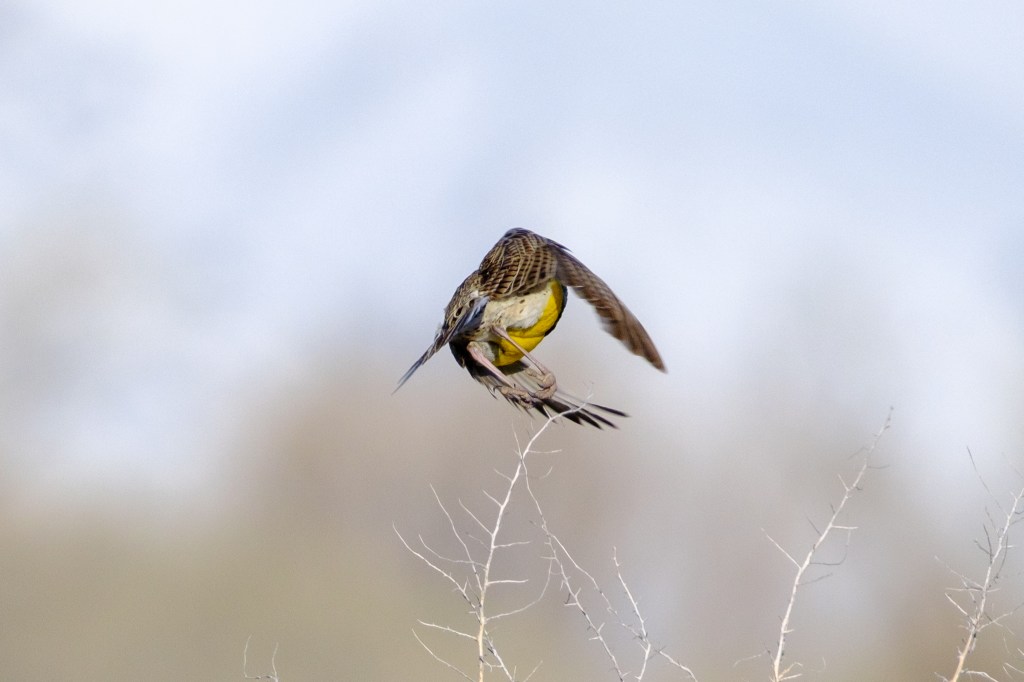
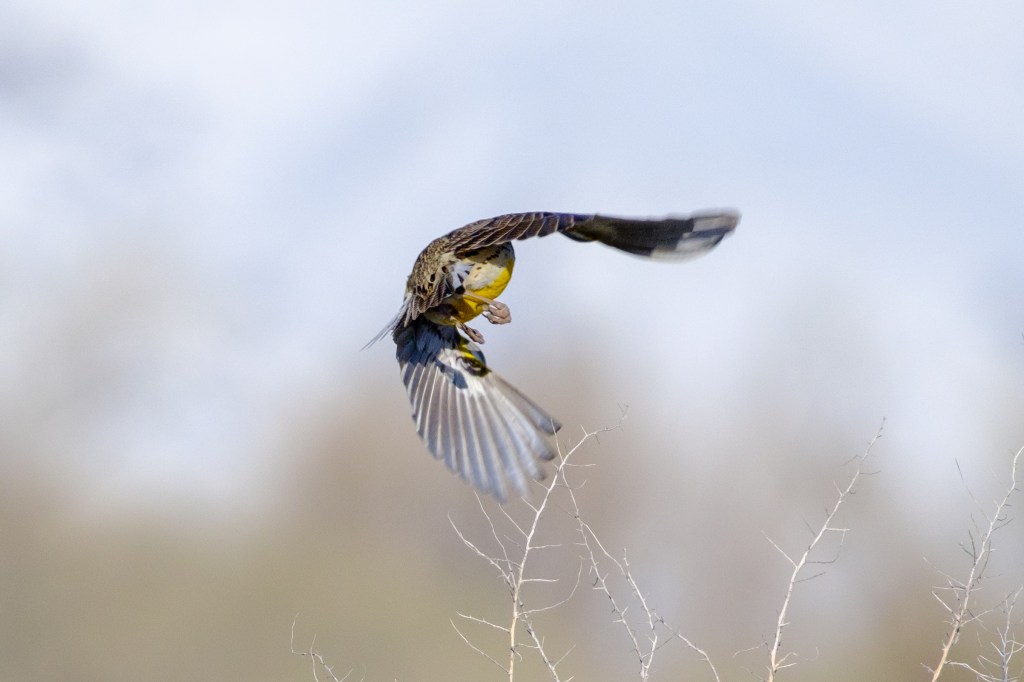
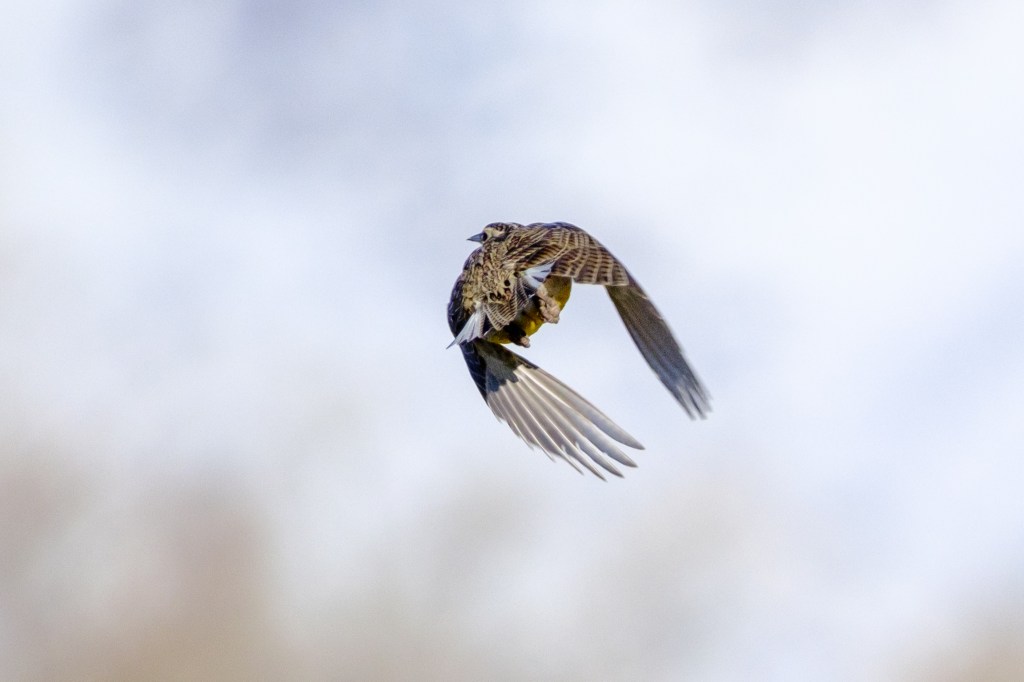
A Western Meadowlark brings up its feet quickly after take-off.
A Great Blue Heron has no place to hide its legs and feet. They are just too long. So it lifts the legs up and hold the toes out to minimize drag in the air. Sort of like an airplane dragging the luggage behind.

Several other wading/swimming birds also drag their feet behind them, raised up as best they can.


American White Pelicans can stow their big orange feet under their tail feathers. The ones shown below were part of a large flock flying in front of the White Mountains. These birds have 9-foot wingspans and weigh 16 pounds. They are the biggest North American bird, after the California Condor. Watching them cruise through the Owens Valley is a terrific sight.

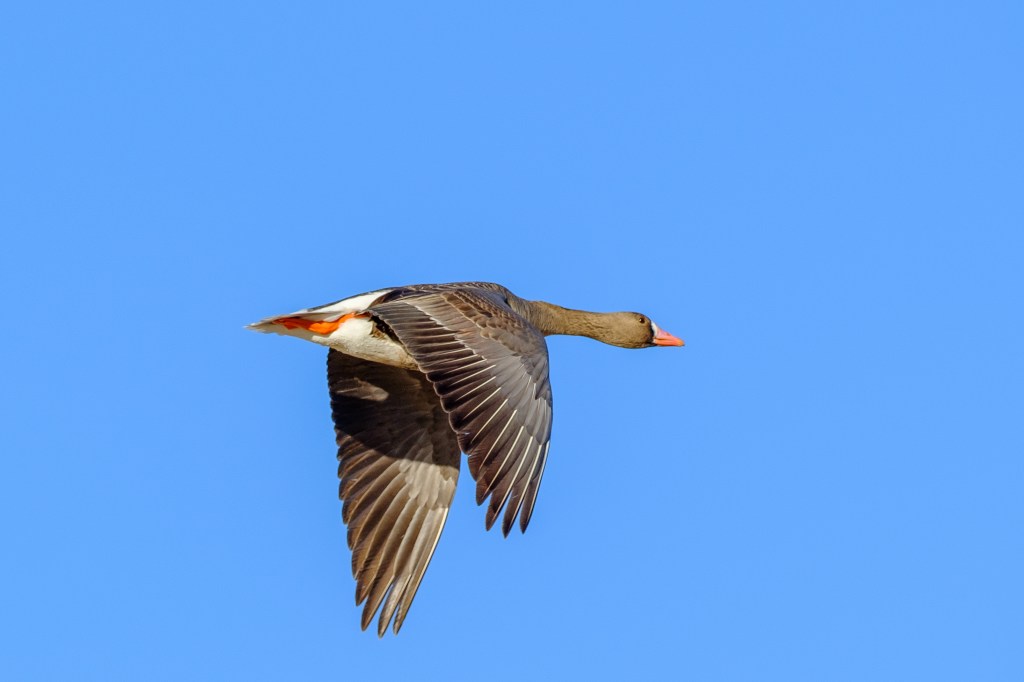
A Greater White-fronted Goose does a fine job of hiding its webbed feet under the tail.
A Common Merganser has bright orange-red at both ends.

Mallards tuck up their webbed feet.

The feet of a Common Tern are tiny — you can barely see them in the photo below.

Landing
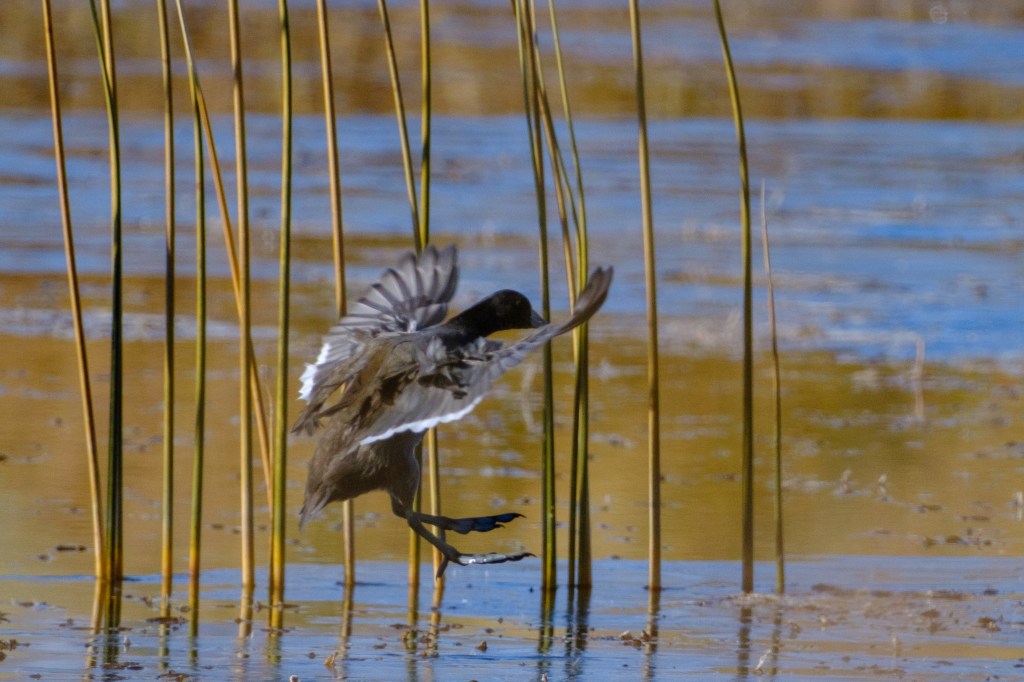
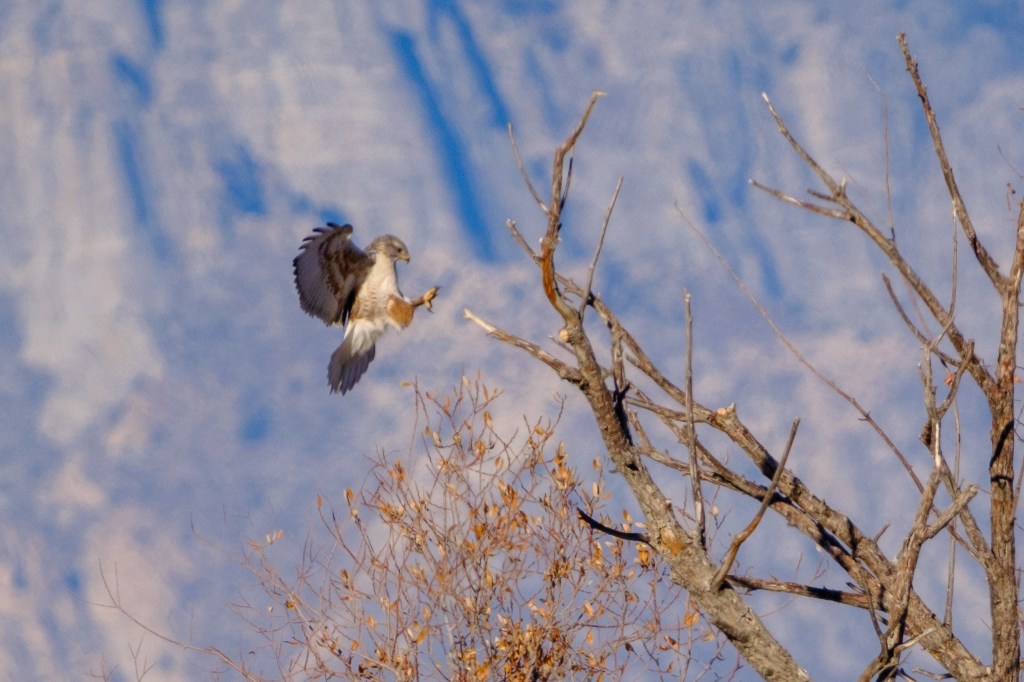
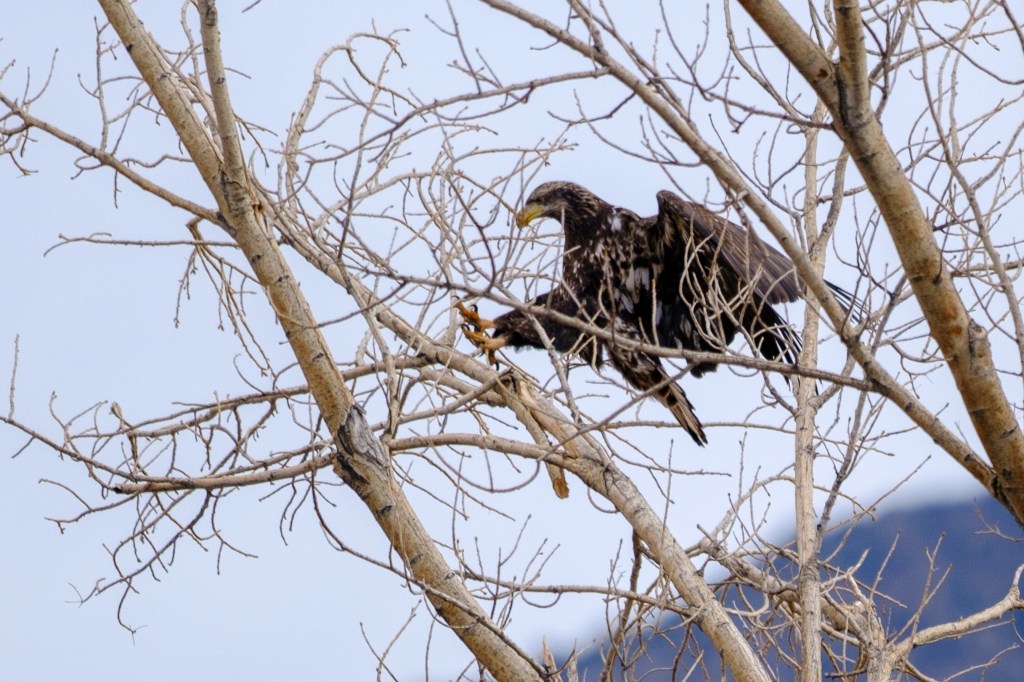
Bird toes have to be tough. They contact rough wood, barbed wire, dirt, and rock. Every day they absorb the shock of landing, over and over. Here are some landing photos.
An Osprey lands on a nest at Mono Lake. Note that both legs have bands on them. They look like handcuffs.

Preening and Scratching
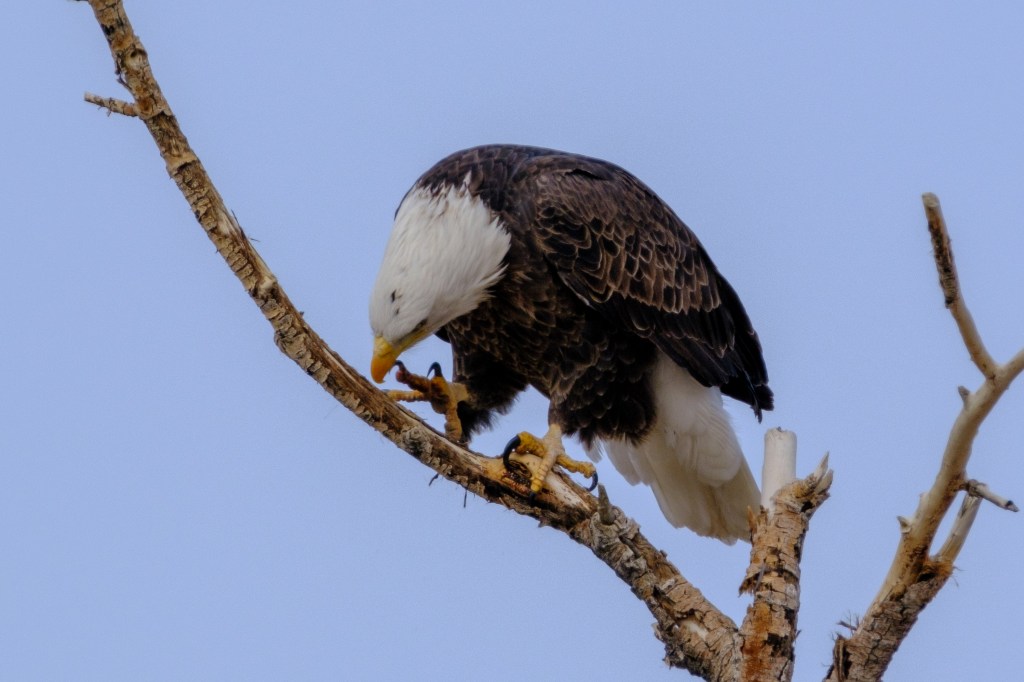
Birds use their feet to manage their feathers and to scratch themselves. The first photo shows a Bald Eagle that had dirt and vegetation on its beak and head. She is trying to clean up.
Violet-green Swallow scratching itself.
Prairie Falcon scratching. Putting those talons right near an eye looks hazardous.
Northern Mockingbird scratching and going nuts. Why?

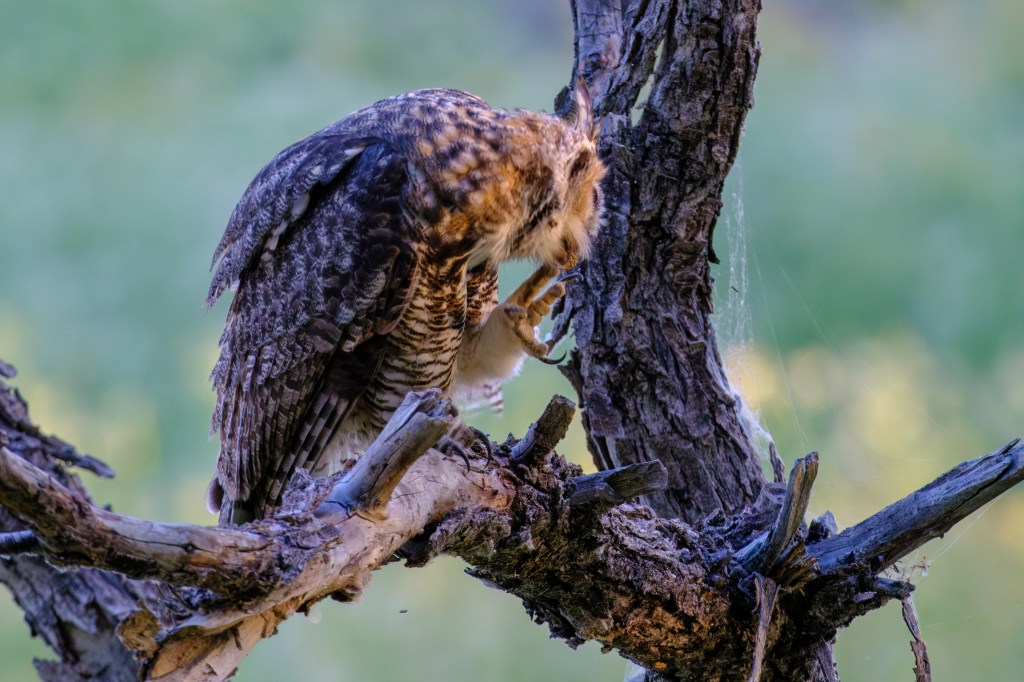
Owl scratches near its face.
Mating and Courtship
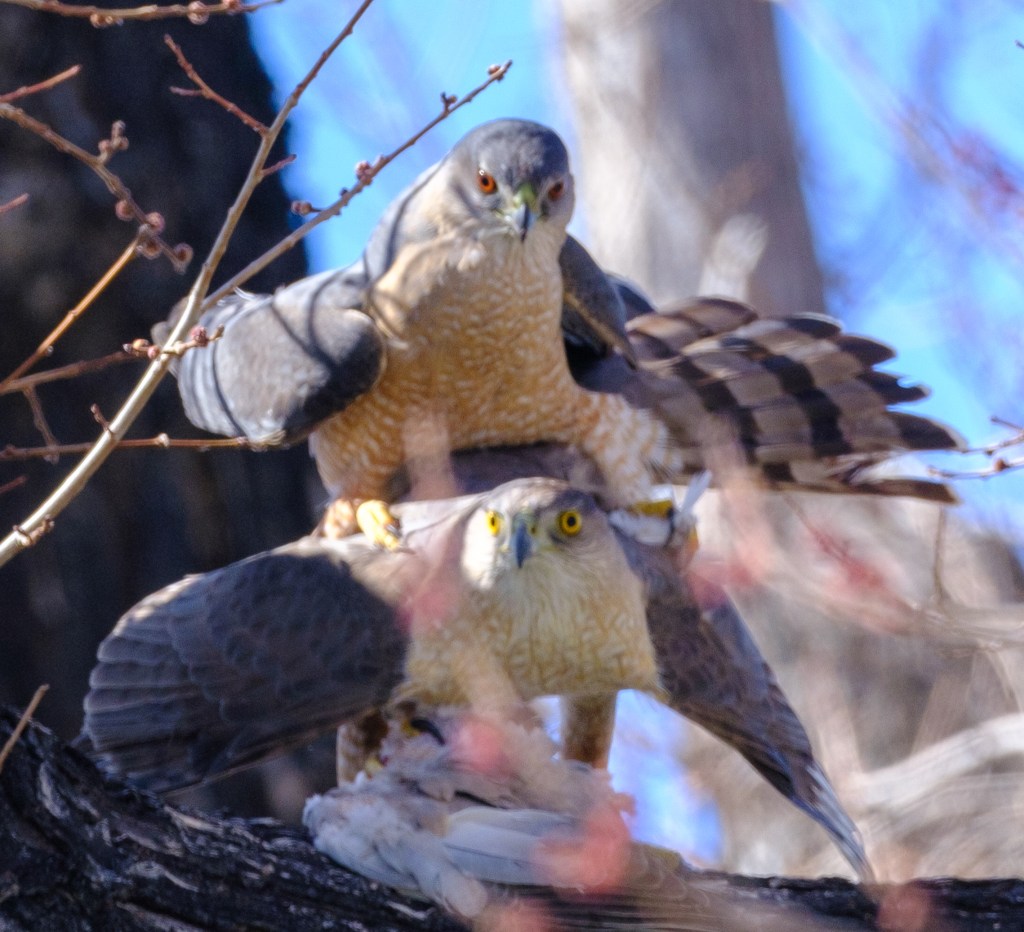
A male bird mounts the back of the female, so of course the feet are involved. Below we see a pair of Cooper’s Hawks. She has her right foot wrapped around a dead bird, probably an Eurasian Collared-Dove. The male Hawk has to take care not to hurt her with his talons.
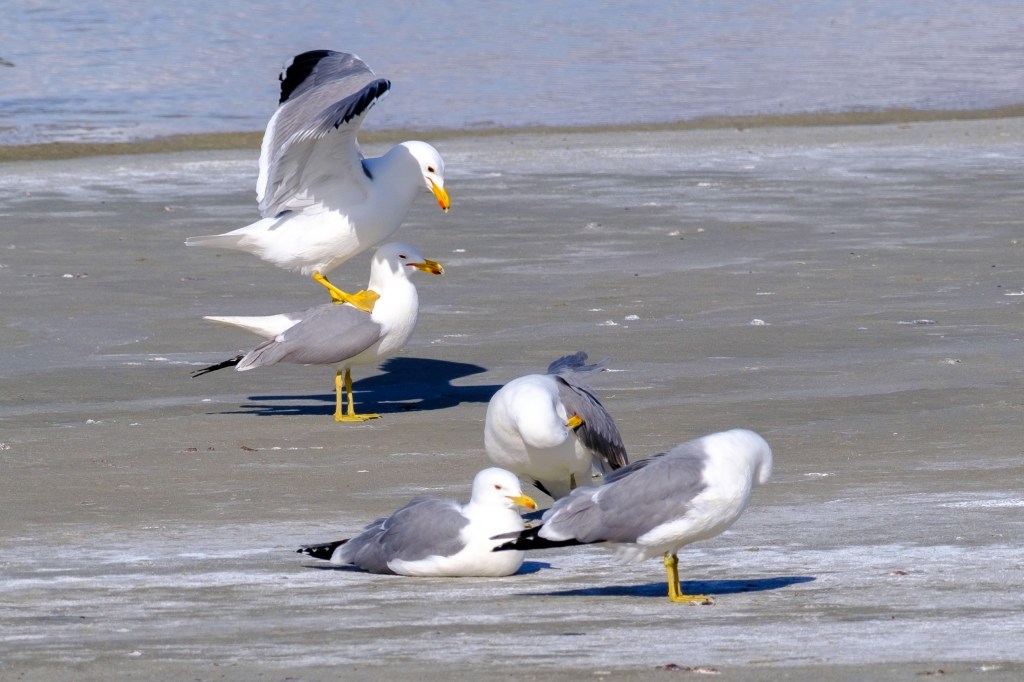
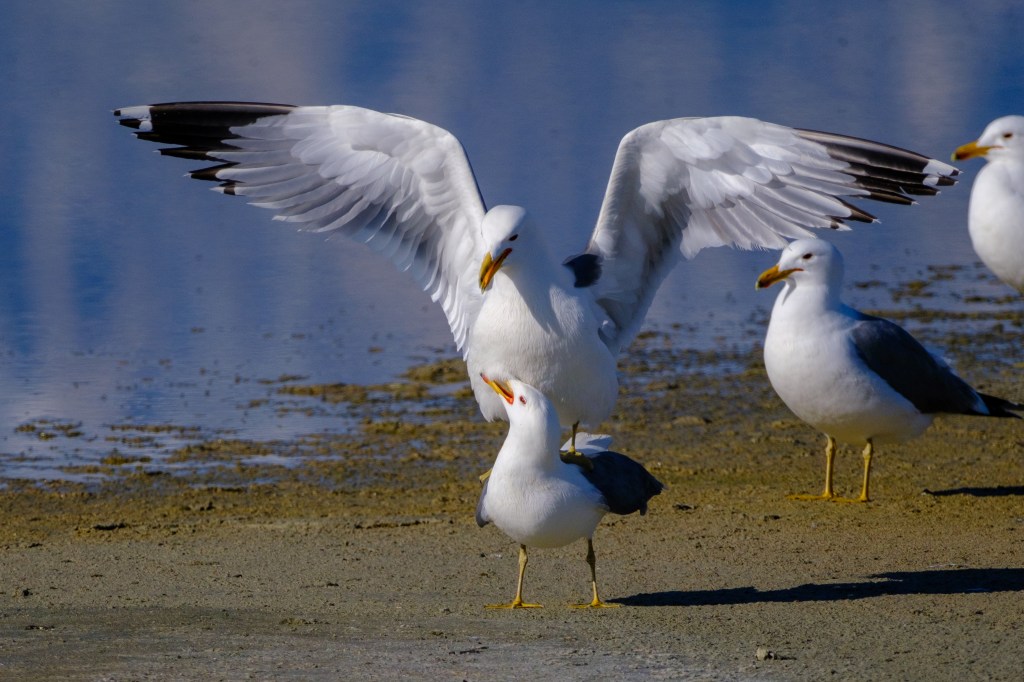
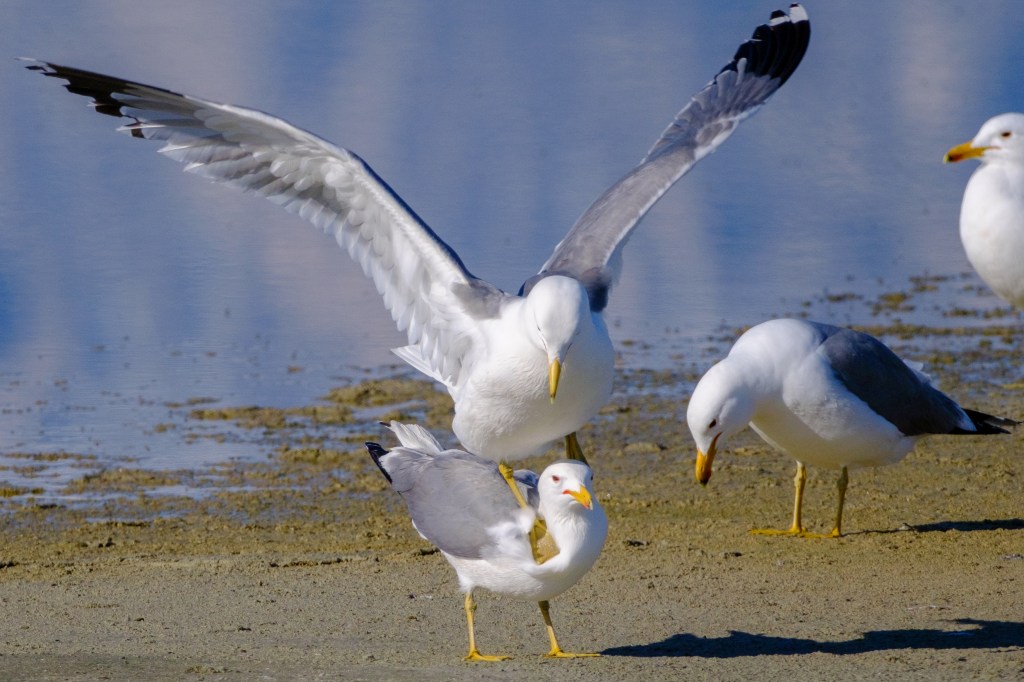
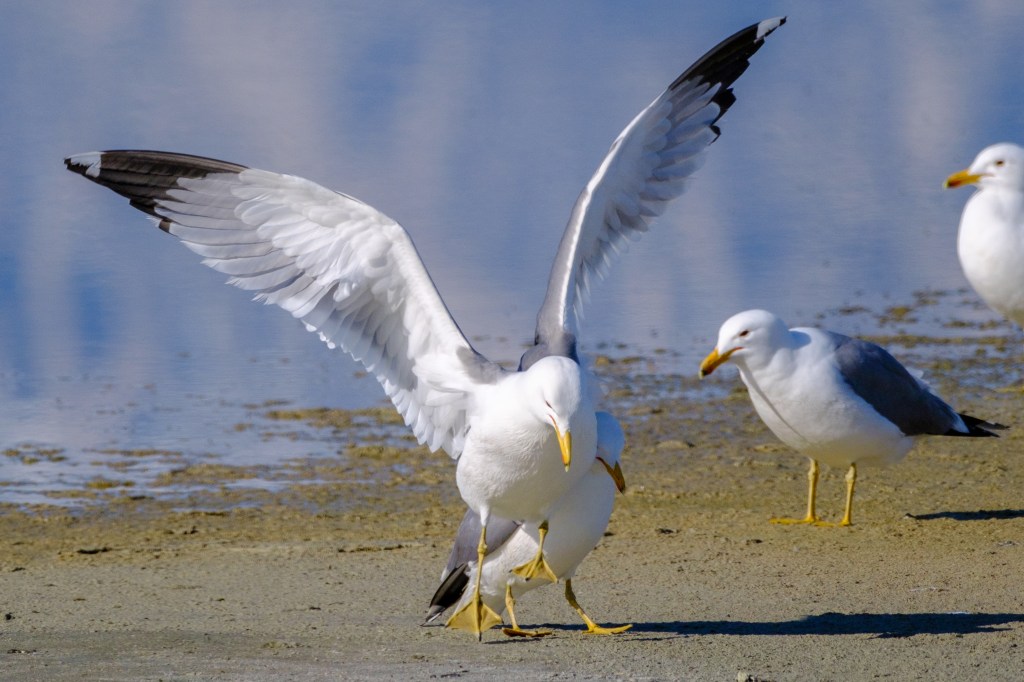
California Gulls mating at Owens Lake. Get a room!
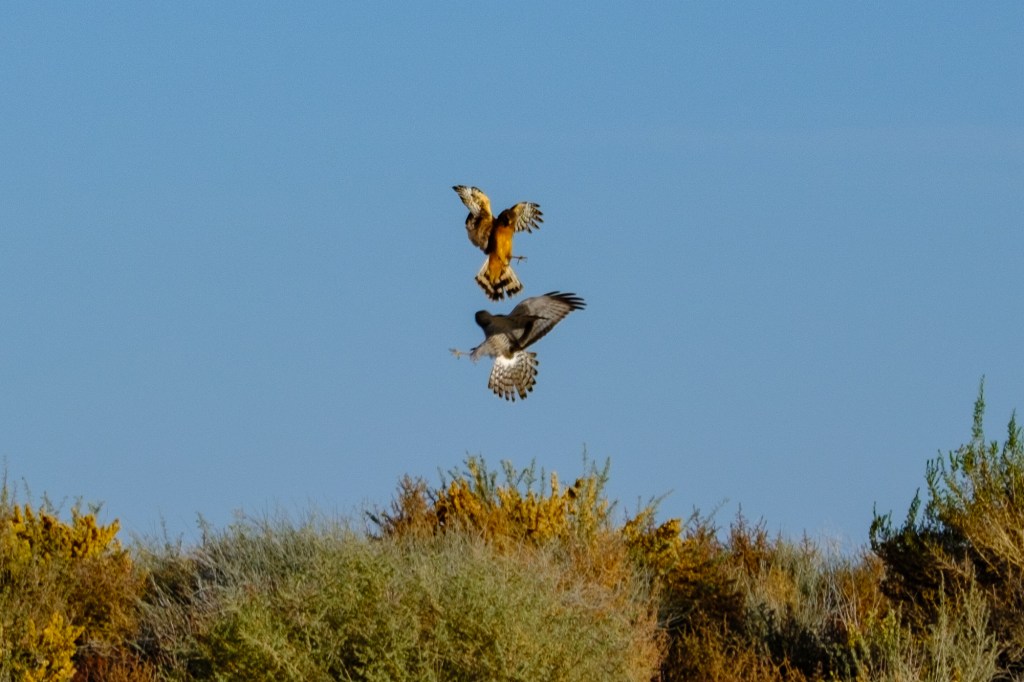
A male (grey color) and female (brown) Northern Harrier were hunting back and forth over the Buckley Ponds. Suddenly they flew up, displaying their talons toward each other. This looks like aggression, but it is actually a form of courtship display. A split-second later they flew apart and resumed the hunt.
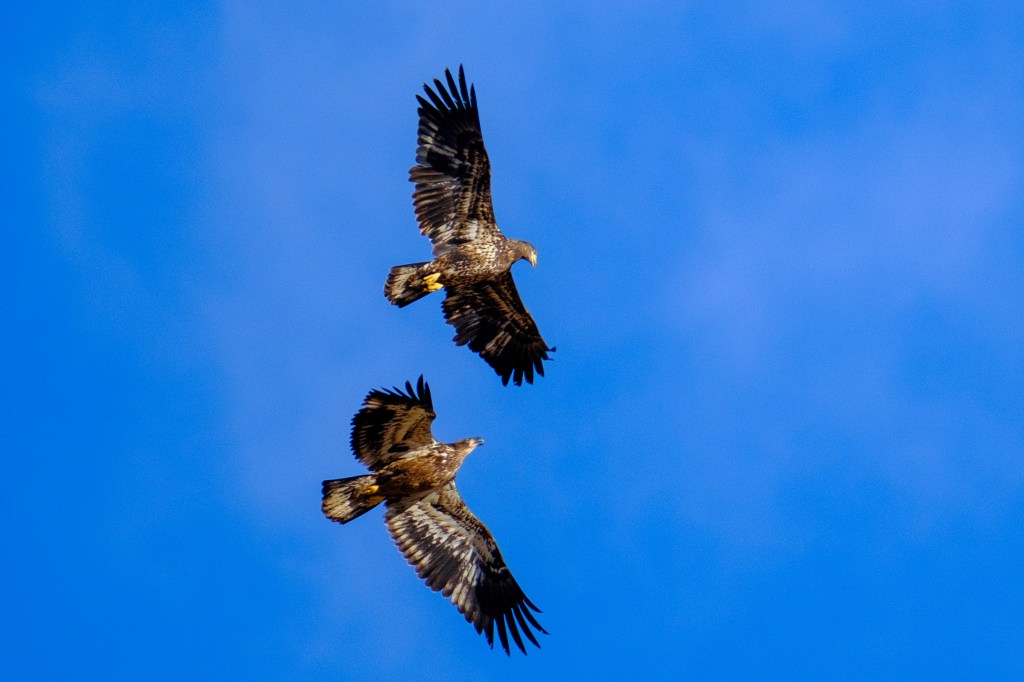
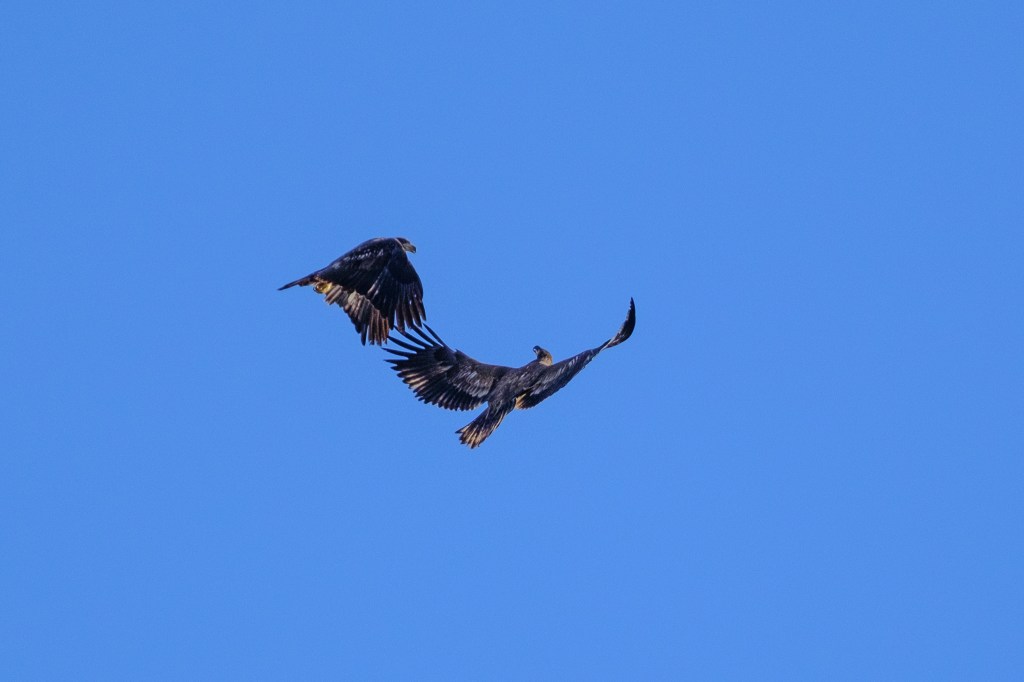
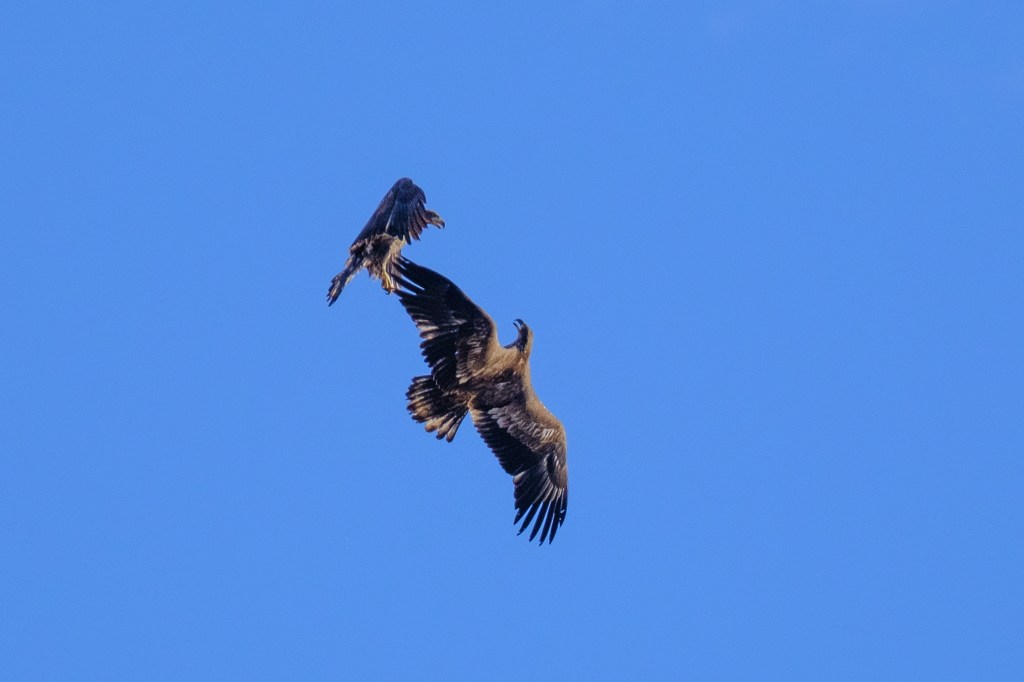
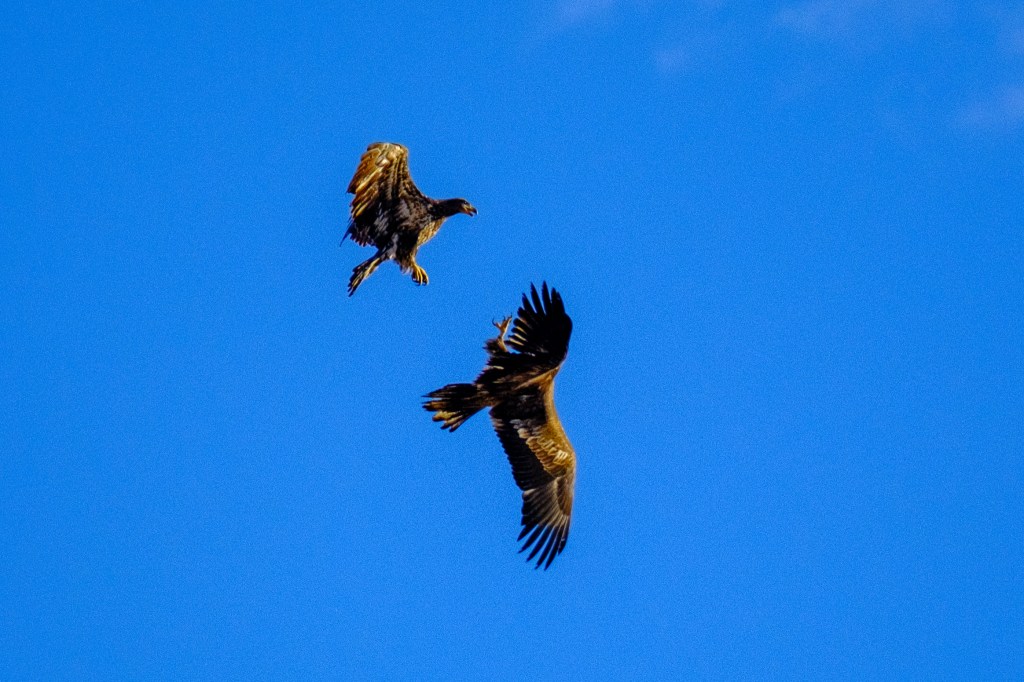
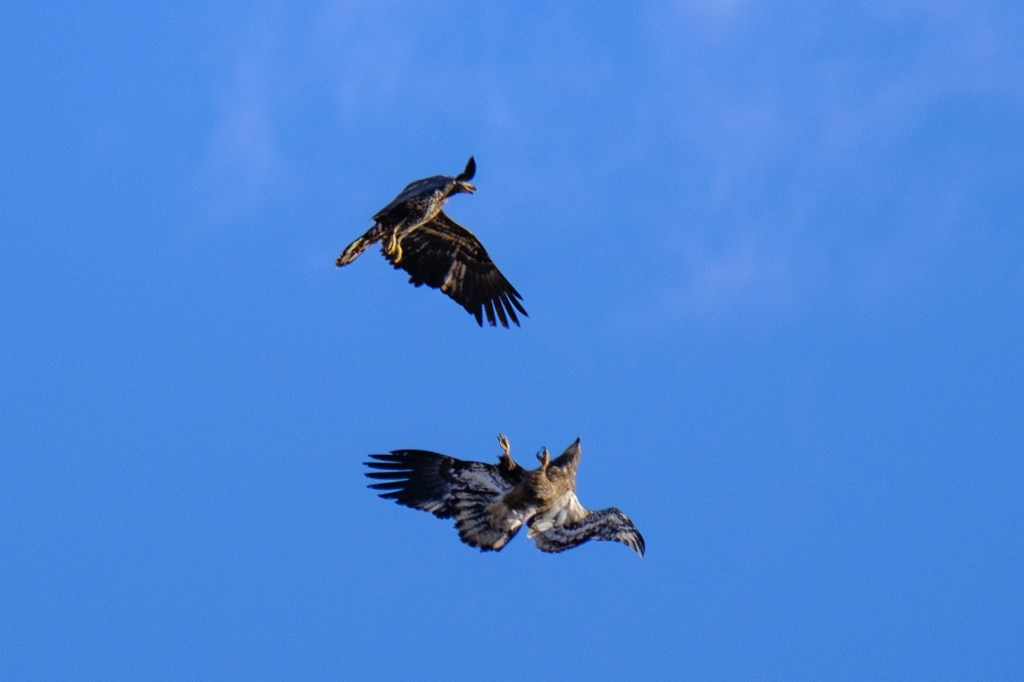
I saw two Bald Eagles high up and started shooting pictures. They were juveniles, maybe three years old. At first they flew side by side, but then one flew upward, rolled on its back, displayed its talons, and then completed the roll to an upright position. The other Eagle braked, hovered, and held out its talons. This is a courtship display. I was lucky to see this.



Ice and Snow
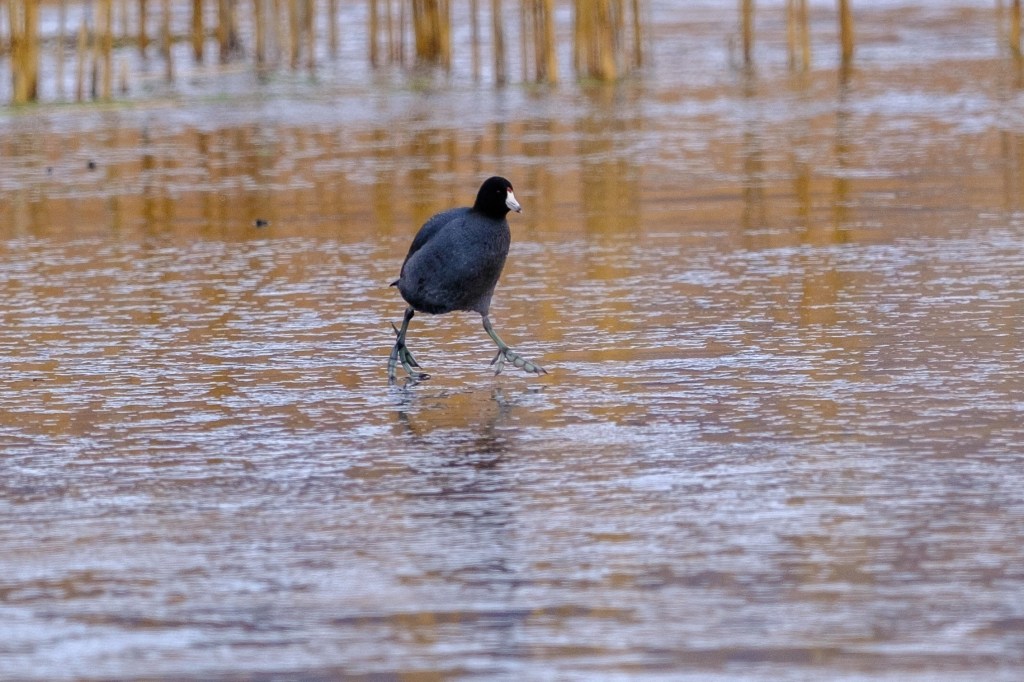
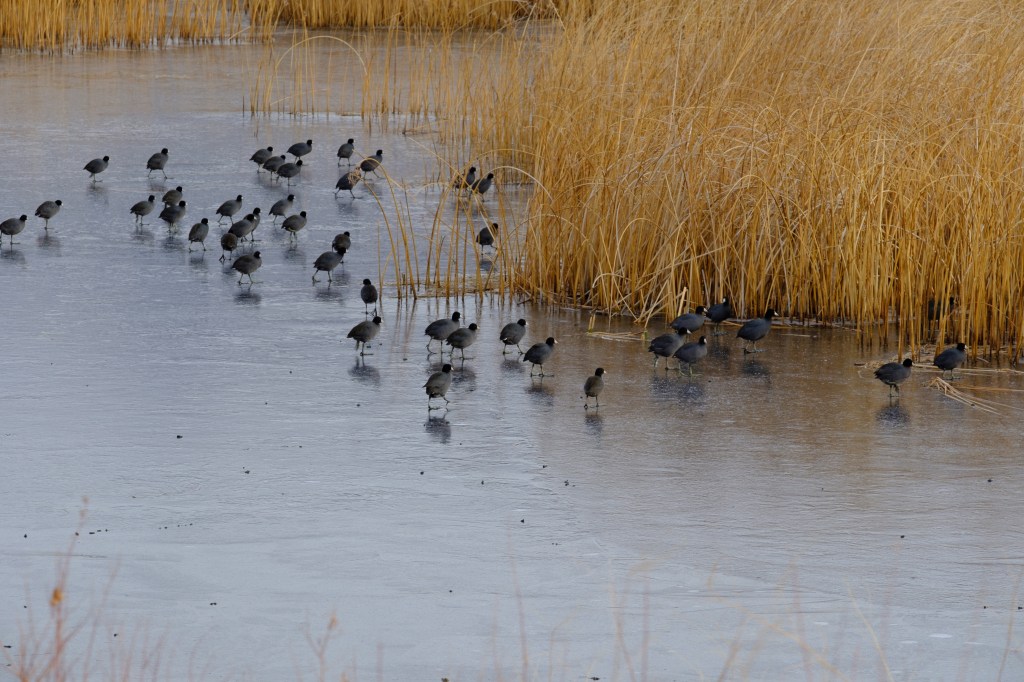
Birds can get frostbite, but that is rare. Their toes contain bone, tendons, only a few nerves and blood vessels, no muscles, and a tough outer sheath. Apparently their feet tolerate cold and heat well. Below we see Coots on ice. When the Buckley Ponds freeze, Coots lose their watery protection and they are cut off from food. Fortunately for Coots, the freezes are usually short.
A male California Quail hunts for food in the snow near Dixon Lane, north of Bishop.

Hovering
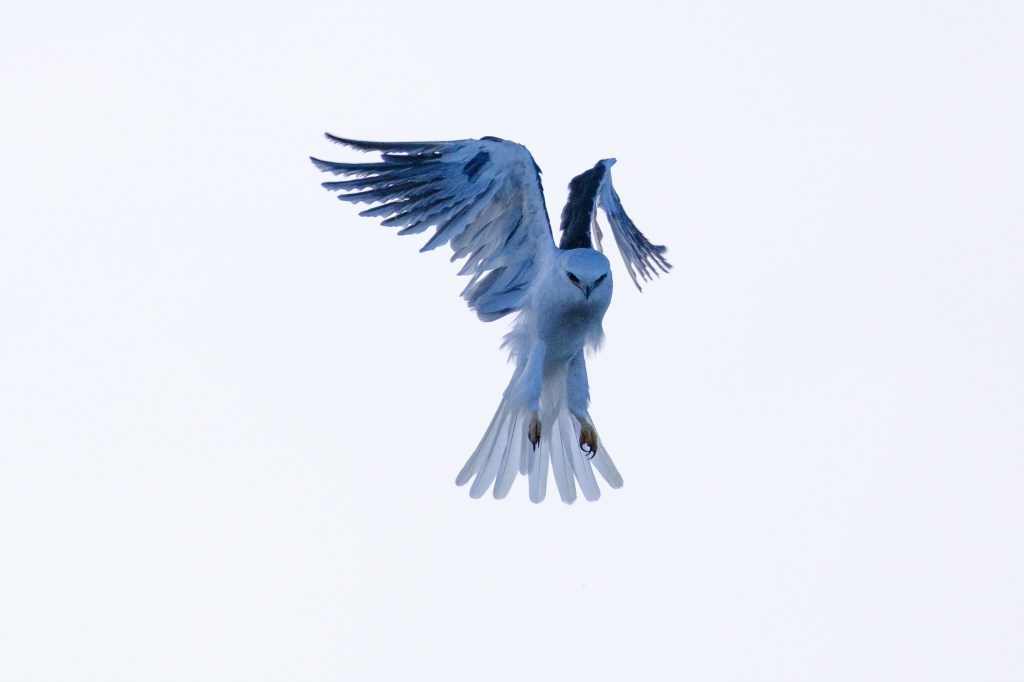
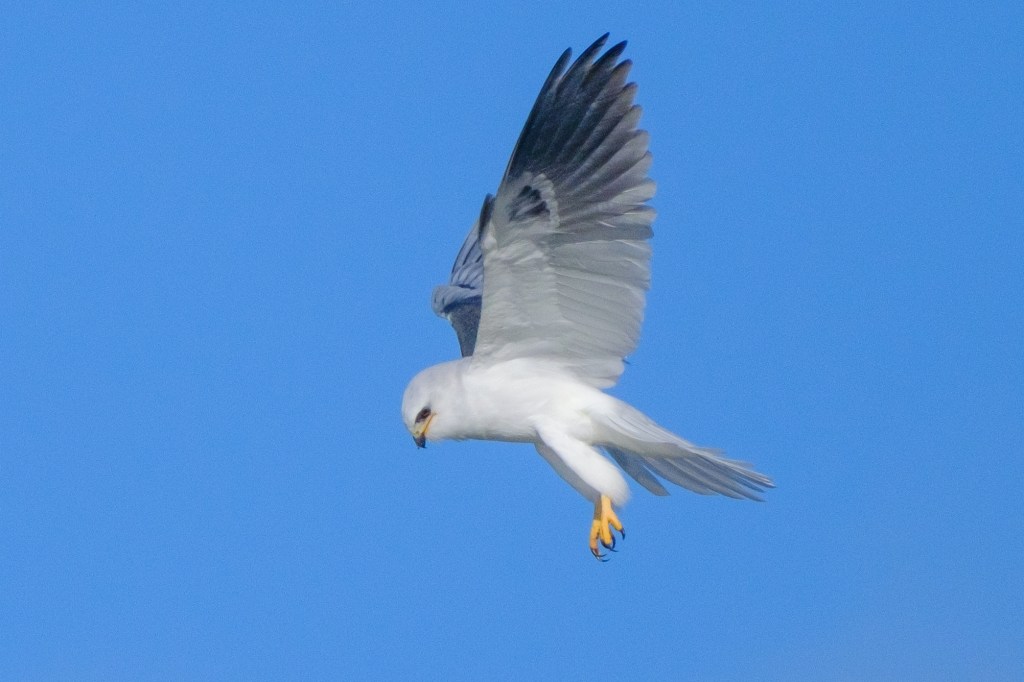
When a bird hovers, its feet can be useful in the air. The bird lets the feet hang down to catch the wind and slow their forward speed. Birds often hover to hunt.
White-tailed Kites at the California coast, hunting over the headlands. The first photo shows a creature that looks like a white demon.
Northern Harrier (male) at the coast near Fort Bragg. The coastal meadows have lots of squirrels, highly valued by these hawks.
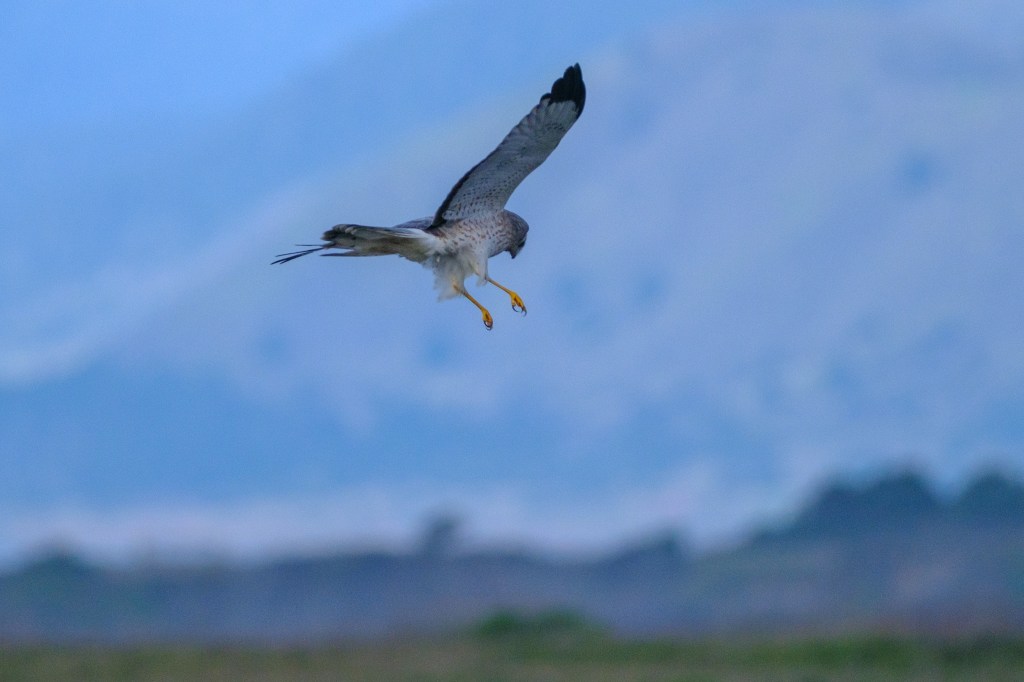
A Swainson’s Hawk hunting over a meadow in Yellowstone National Park.
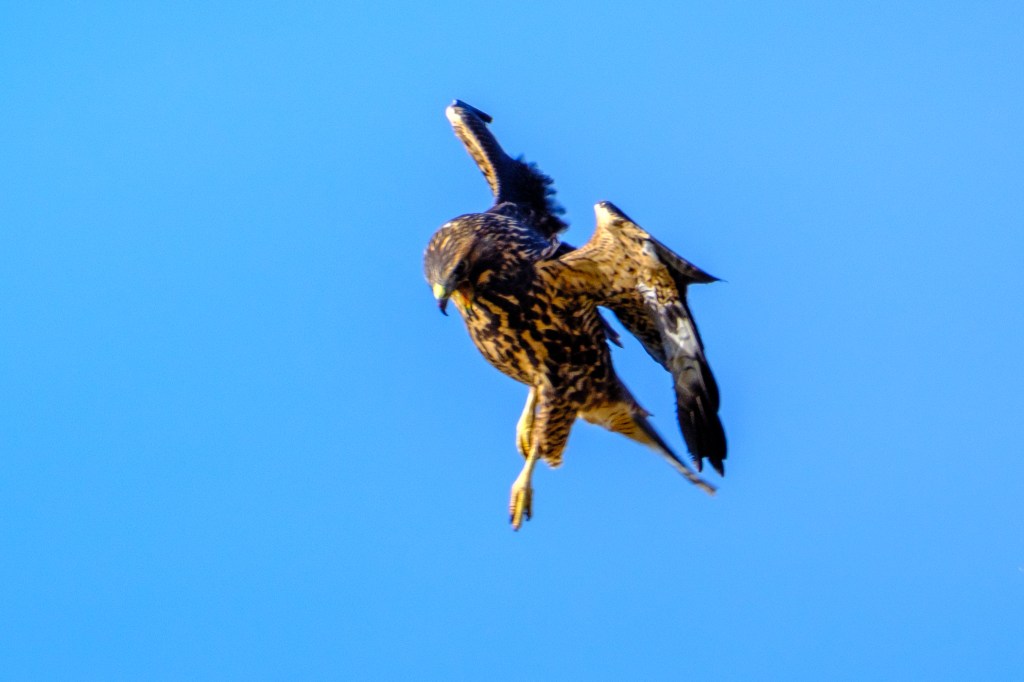
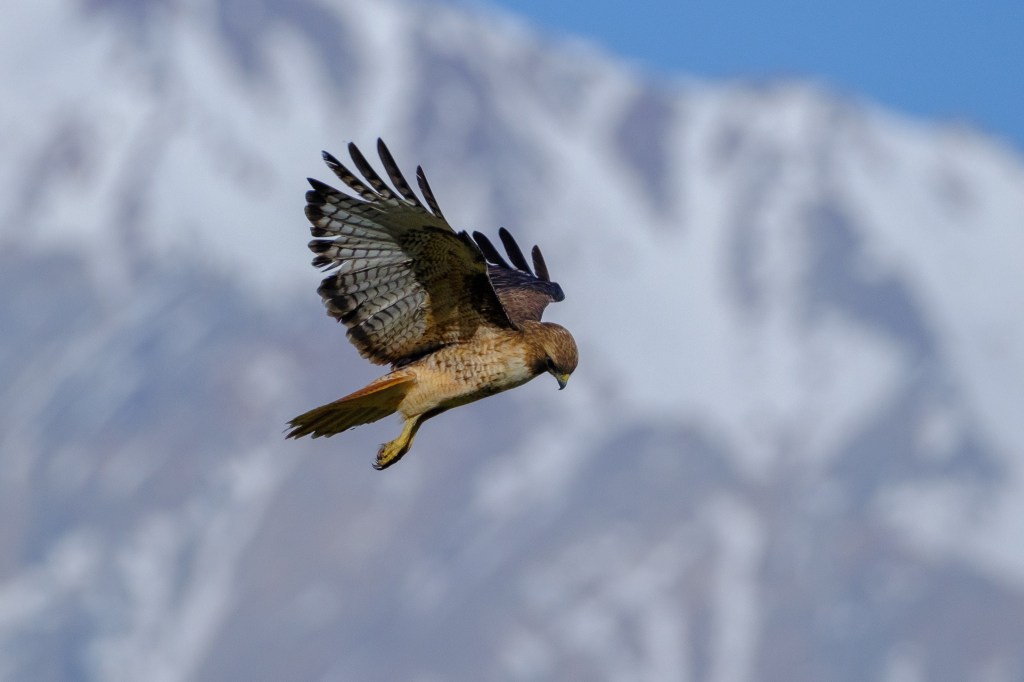
Red-tailed Hawk hovers over a field near Bishop.
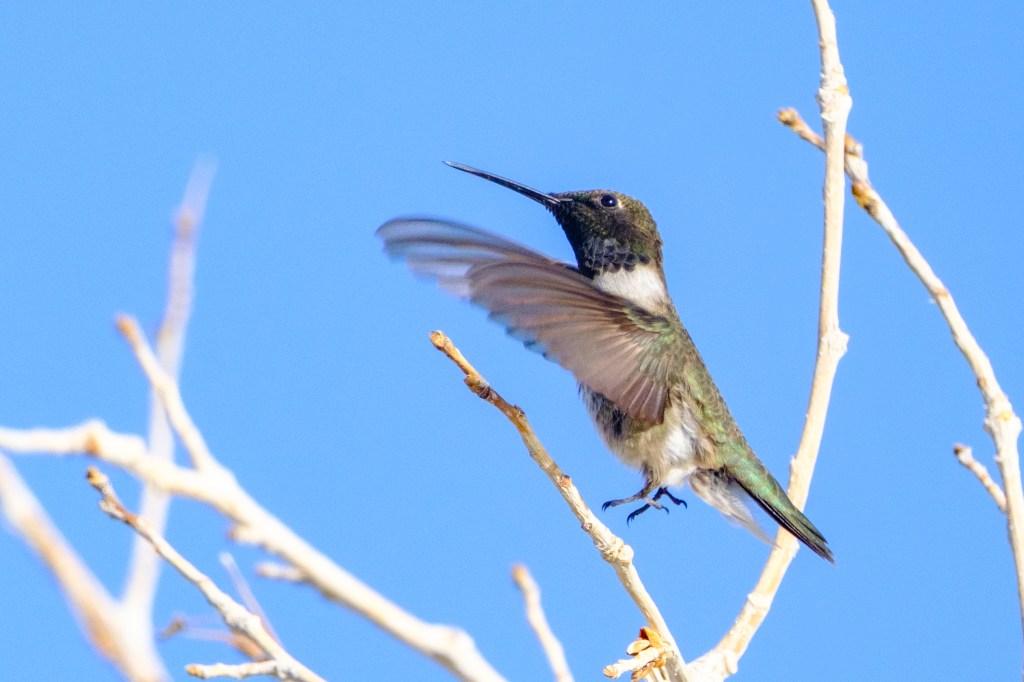
A Black-throated Hummingbird takes off near Bishop. This is true hovering; all the other photos show birds that can only “hover” by flying into a breeze.
A Belted Kingfisher hovers at the Buckley Ponds The bird had just dived into the water and I think the hovering, which involved a lot of wing-flapping, was mostly to get rid of water on its feathers.

Aggression
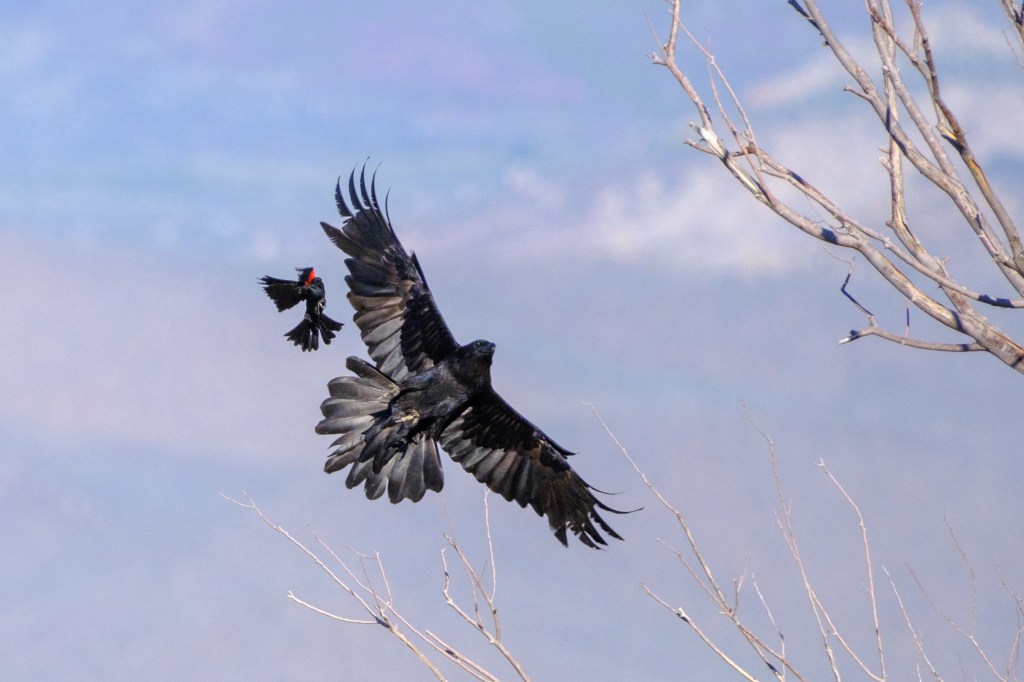
Birds can attack with beaks or feet. First we see a Red-winged Blackbird using its feet to attack a Red-tailed Hawk.
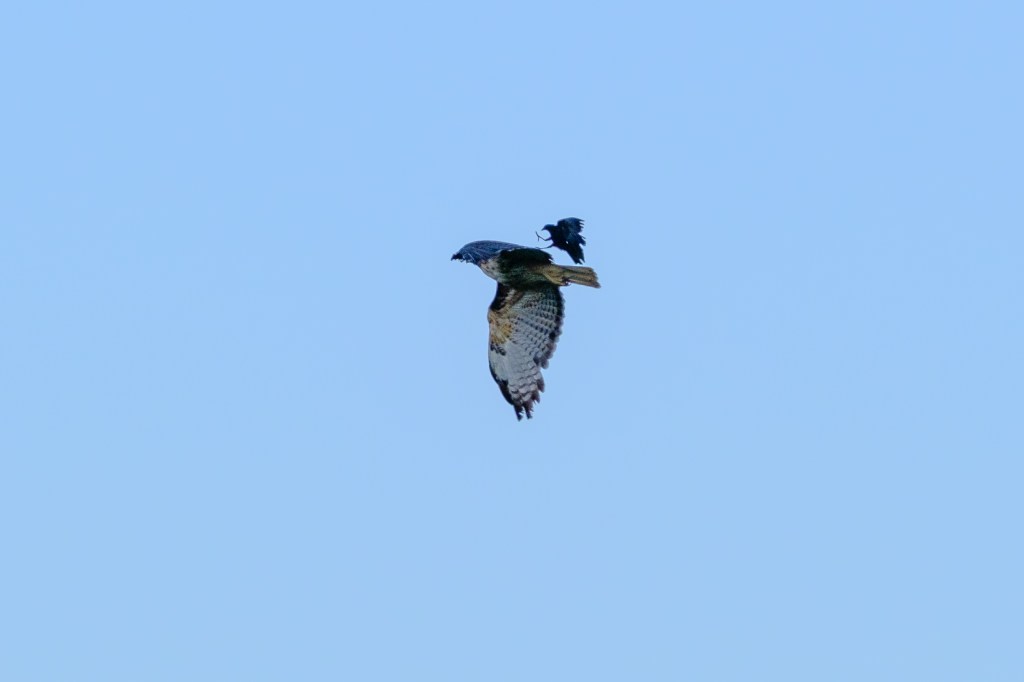
Below, a Red-winged Blackbird attacks a Swainson’s Hawk. The Hawk’s eye looks strangely blue because it is covered by the nictitating membrane. The Hawk can see through this membrane, but it helps protect the eye.
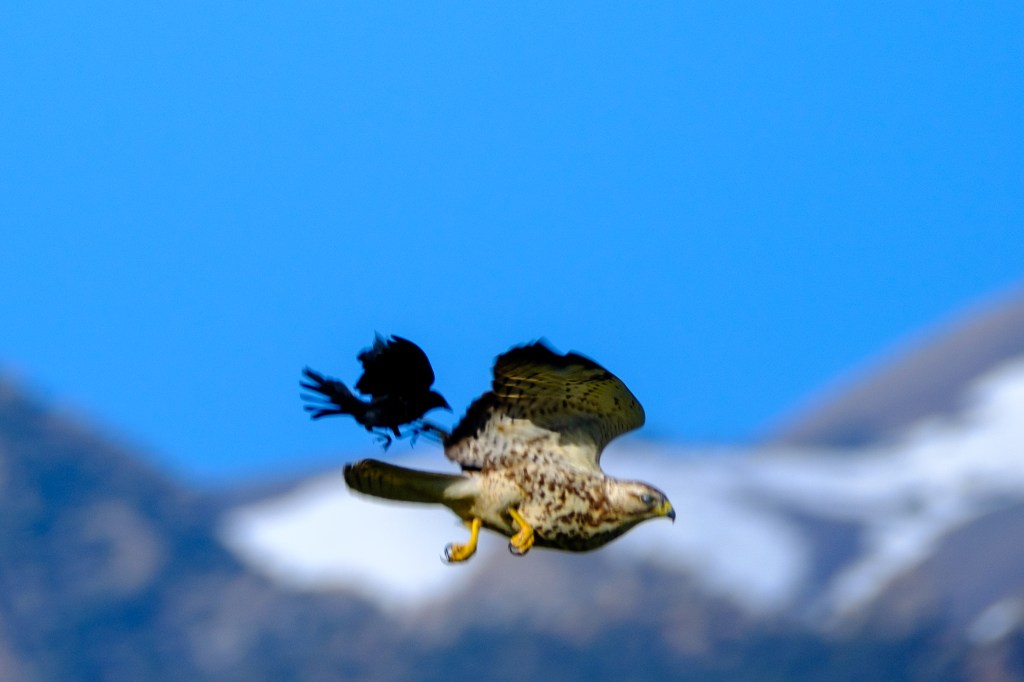
Last, a Blackbird attacks a Raven. The Blackbird is using its feet. Why can’t birds be friends?
Eating and Hunting
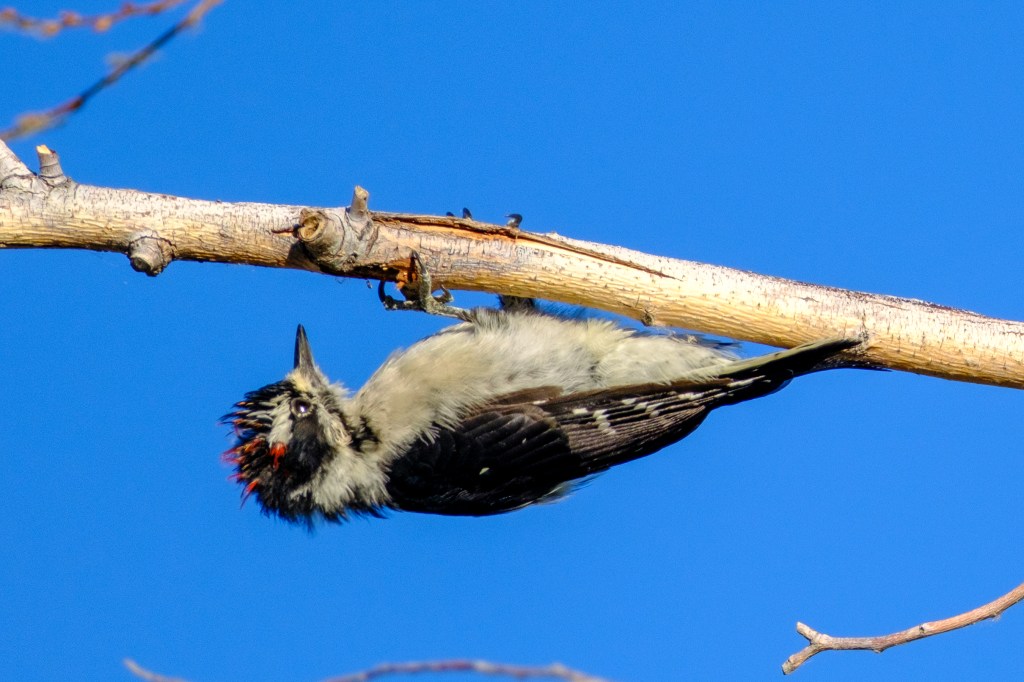
A Hairy Woodpecker uses its feet to climb and hang on to a tree limb, while hunting for bugs.
A Bald Eagle uses its feet to hold down a Double-crested Cormorant, while the beak tears apart the victim.
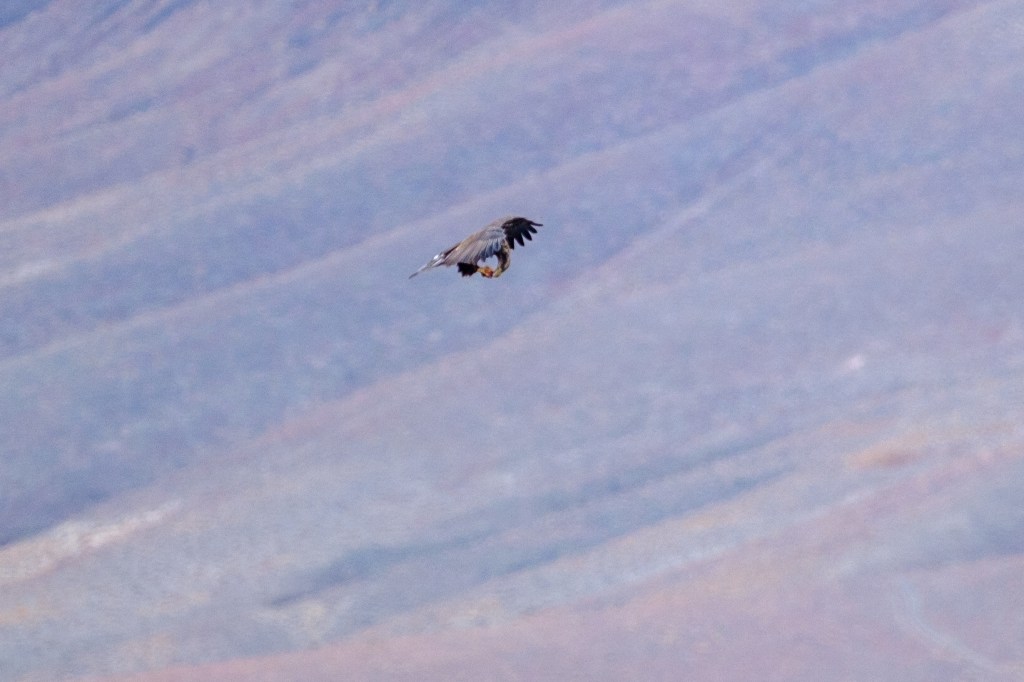
A Bald Eagle in the air bites into something it is holding. The bird may be snacking on the go. Or using its beak to kill a victim that is still struggling. Earlier I mentioned that bird toes use a mechanism similar to a zip tie, so the bird can easily hold prey that may be struggling or slippery.
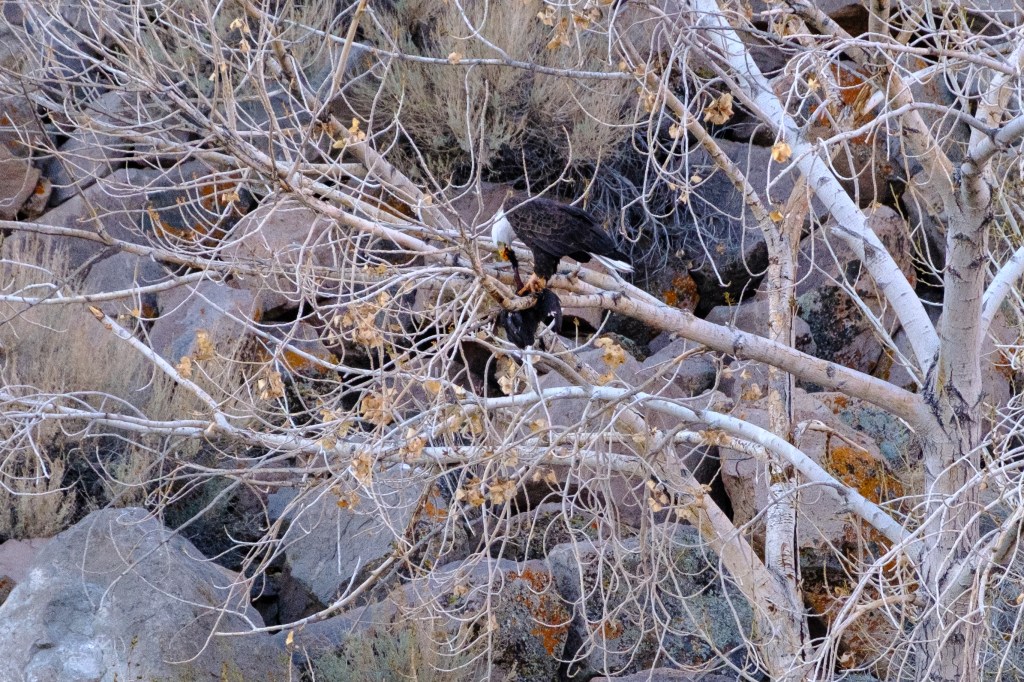
A Bald Eagle in a tree, shown below, has blood on both the beak and the toes. The Eagle killed a Snow Goose at the Buckley Ponds. Then it tore the Goose apart and ate most of it in less than an hour, leaving a pile of feathers and bones. A Northern Harrier stole part of the meat, as did the Red-tailed Hawk shown in the next photo.
Red-tailed Hawk with part of a Snow Goose clutched in its talons. Note feathers on beak. And blood.
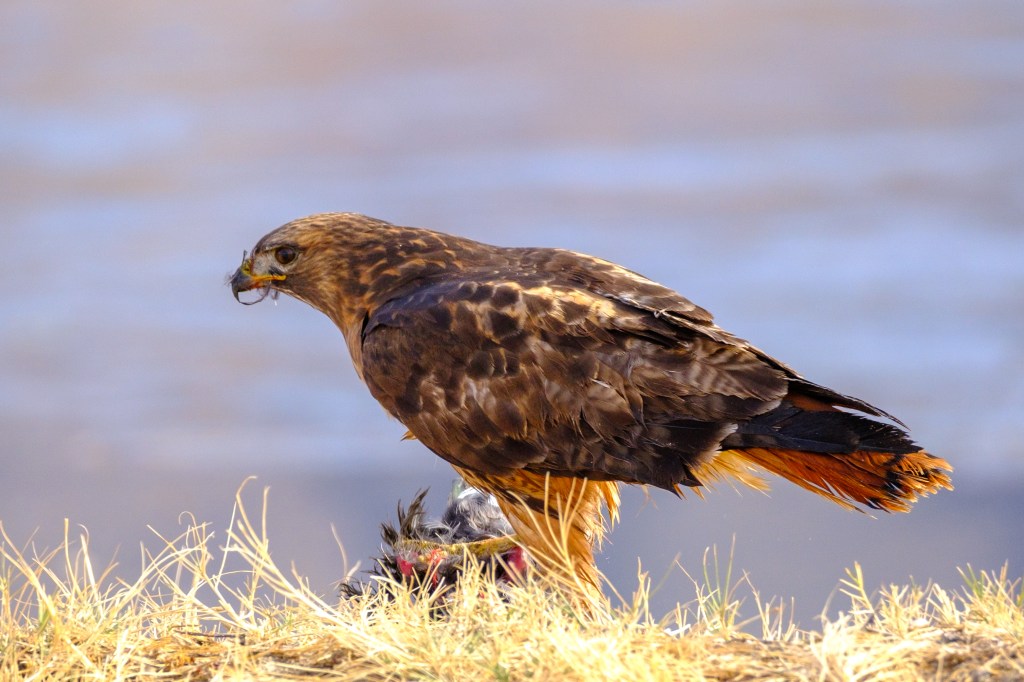
In the next three photos, a Red-shouldered Hawk tears apart a rodent (Norway Rat?) near the Methodist Church in Bishop.
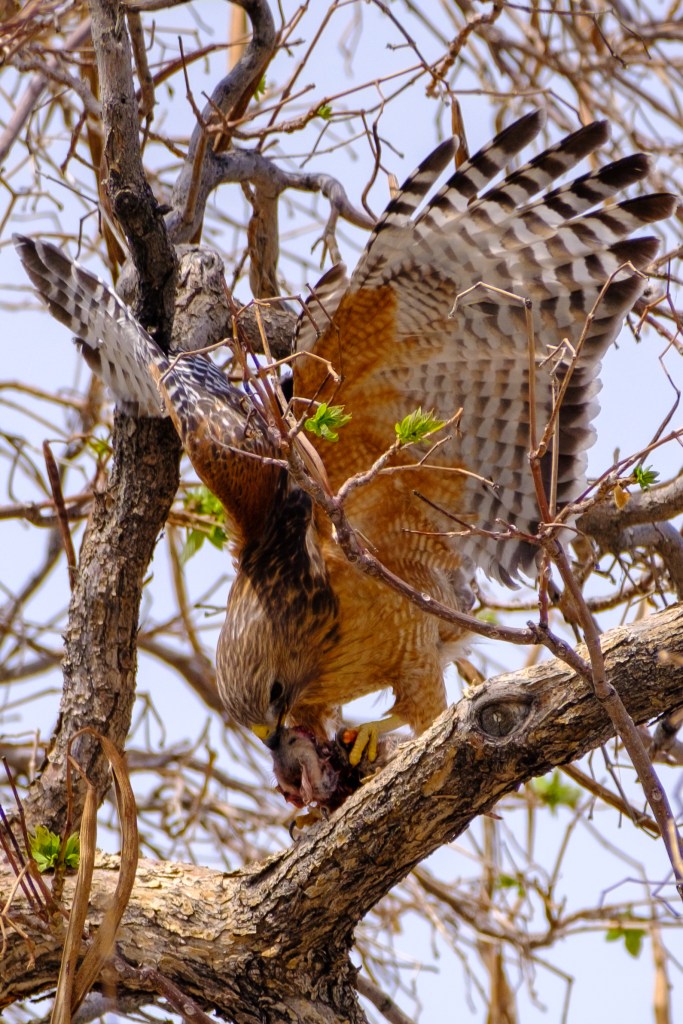

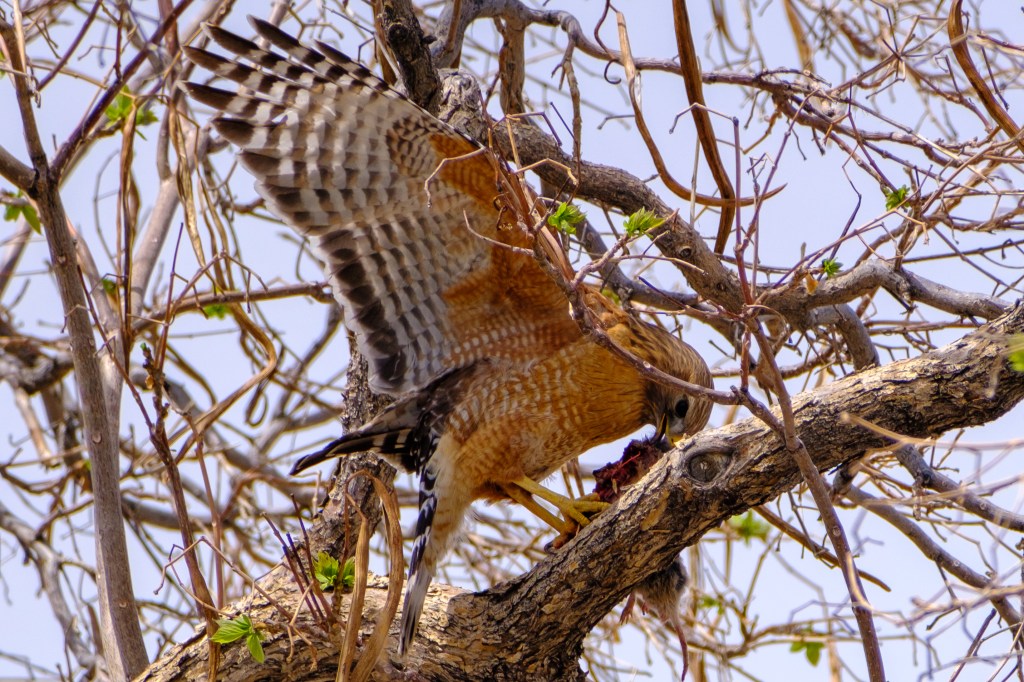
A female Cooper’s Hawk is in a tree in downtown Bishop. She is clutching her kill, probably a Eurasian Collared-Dove. She is calling out to her mate, who soon will arrive for sex and a meal.

A Northern Harrier is carrying a rodent. You can see the tail.
The Osprey below plunged into the Pleasant Valley Reservoir and caught a trout. The bird then rocketed along the shore. Osprey’s have spiked scales on their toes to help them hold a slippery fish. They carry the fish with the head pointed forward, to reduce air resistance.
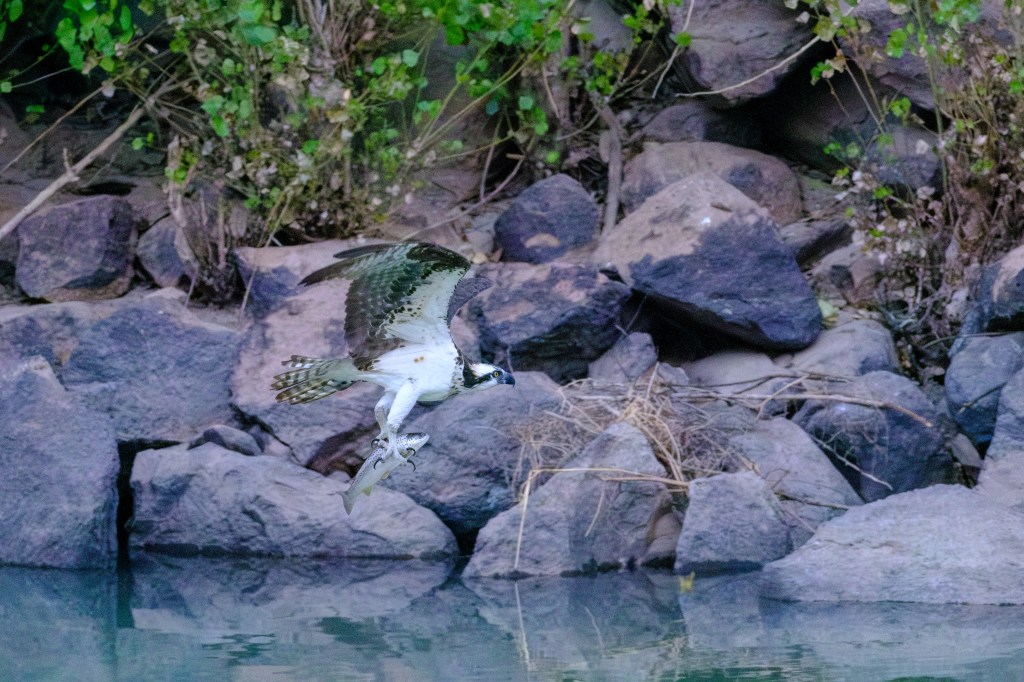
(There is a technical aspect to the Osprey photo that I will describe. The lake was still in morning shadow and I was using a shutter speed of 1/2000 second, to prevent blurring due to motion. The low light resulted in a high ISO (6400) which produced a grainy (noisy) looking photo. But modern Lightroom software allowed me to reduce the noise in the photo by smoothing out the color changes from one pixel to the next. The result is a better picture. Digital cameras and software keep making clever improvements to produce better images.)
A story about bird feet: In 1965 I helped start a weekly newspaper, The Southern Courier, in Alabama. We covered news about civil rights and the Black community, stories that were not in the local press. Part of my job was to help with distribution, which led me Andalusia where William Shakespeare (yes, that was his name) was our local distributor. He was born to poor Black farmers around 1930 and grew up with his siblings in a small home with a dirt floor. His family could not afford to waste food, so when he was the youngest, he was given the chicken feet. He recalled, with a smile, that he was probably three years-old before he realized there were chicken parts other than feet. Mr. Shakespeare now owned an excellent fried chicken restaurant with a small dining room. He vowed to never eat chicken feet again.
 Birds of Bishop