
November’s blog was a bit technical, with few photos. This month, December, will have more photos, fewer words. I selected pictures from 2022; 38 show birds or other creatures, 10 show landscapes.
Some Water Birds
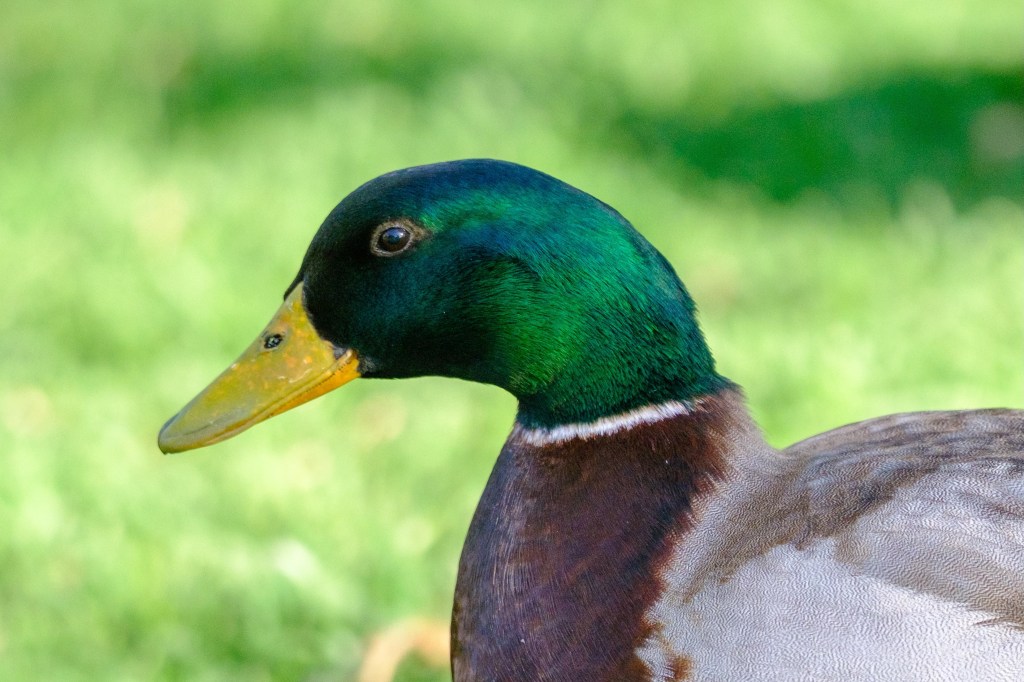
Mallards are usually found at Bishop City Park. They sleep in my backyard and they float on our local ponds and canals. During breeding season the males have bright green heads, but the light angle can make the head look purple, blue, or black. For years, I thought there were two species of Mallards until I saw a duck that seemed to change its color right in front of me. The male below has a head that seems to be half black and half green.

The male below posed at the Bishop City Park, letting me photograph detail in the feathers.
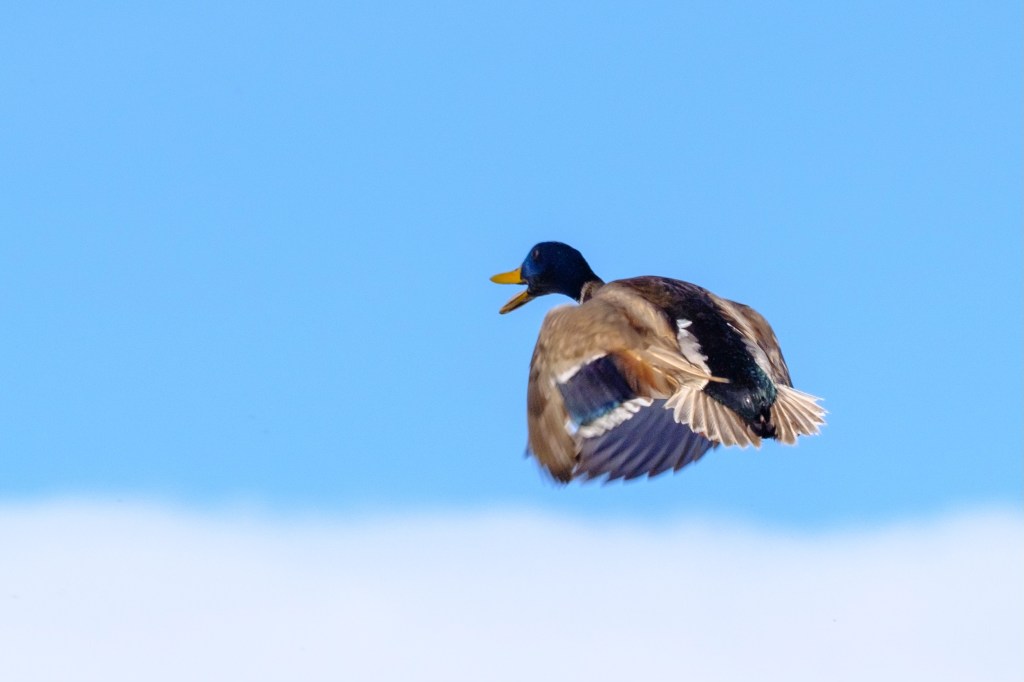
Mallards take off with explosive force; their wings boost them up by pushing down on the water. At Airport Road, Roberta and I have been startled when 100 ducks take off at once. The picture below shows a quacking Mallard that just took off from the Buckley Ponds.
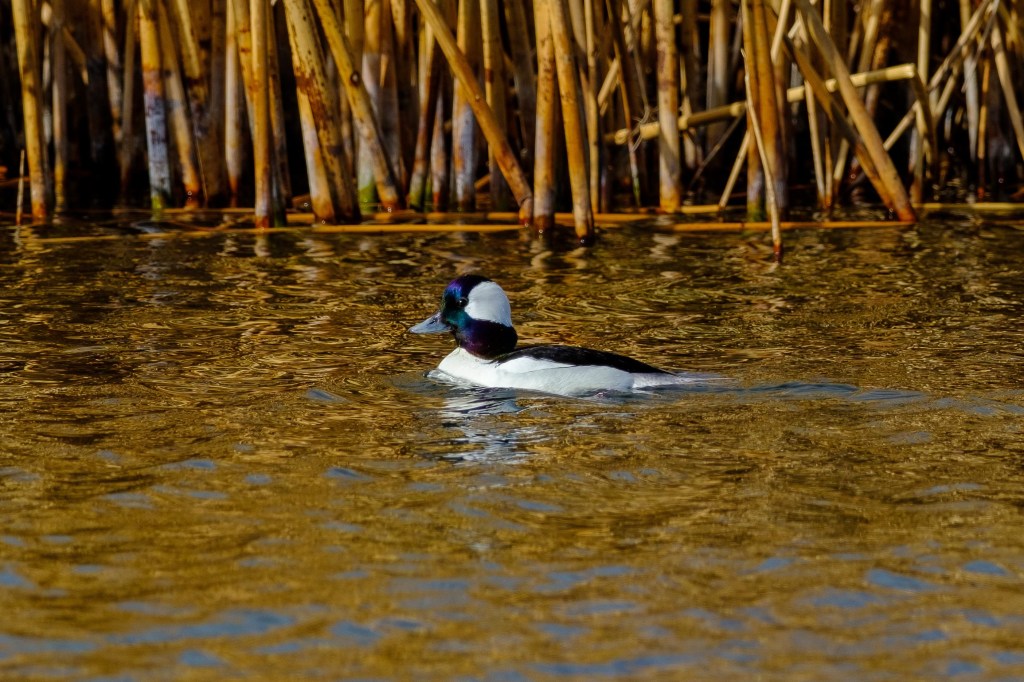
Buffleheads are easy to identify; the male below was in breeding plumage at the Buckley Ponds in March.
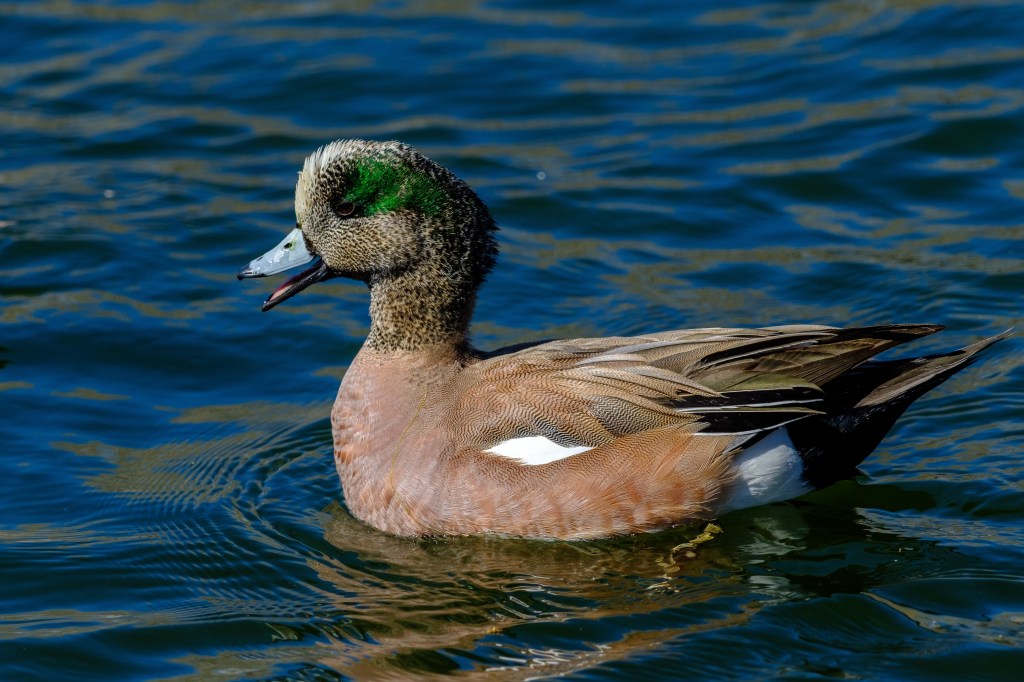
American Wigeons are often at the City Park.
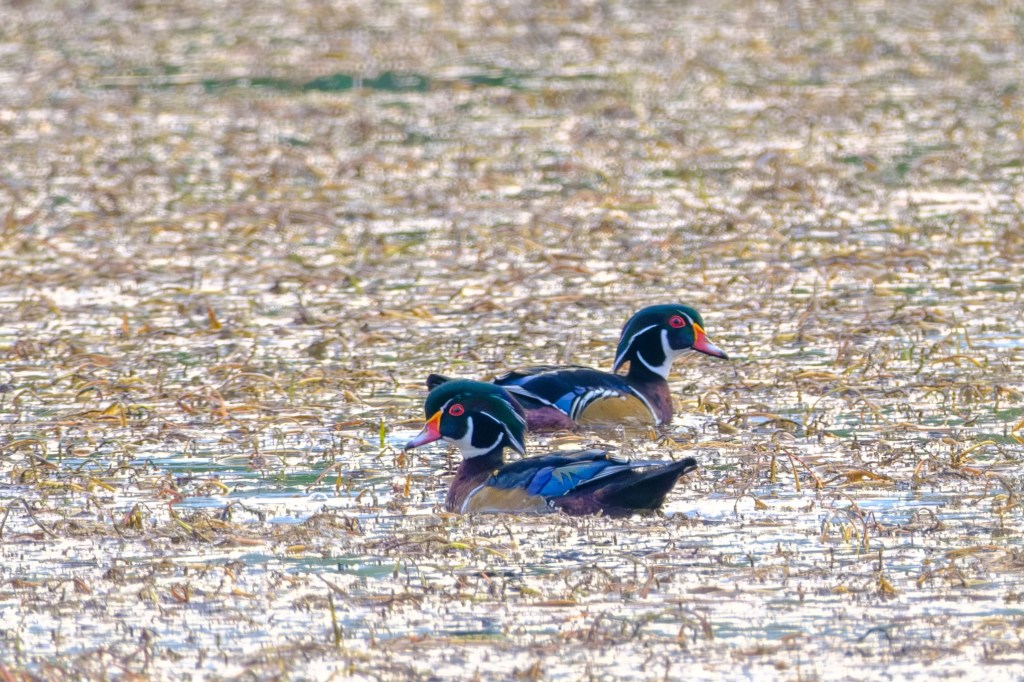
Male Wood Ducks have implausible colors.
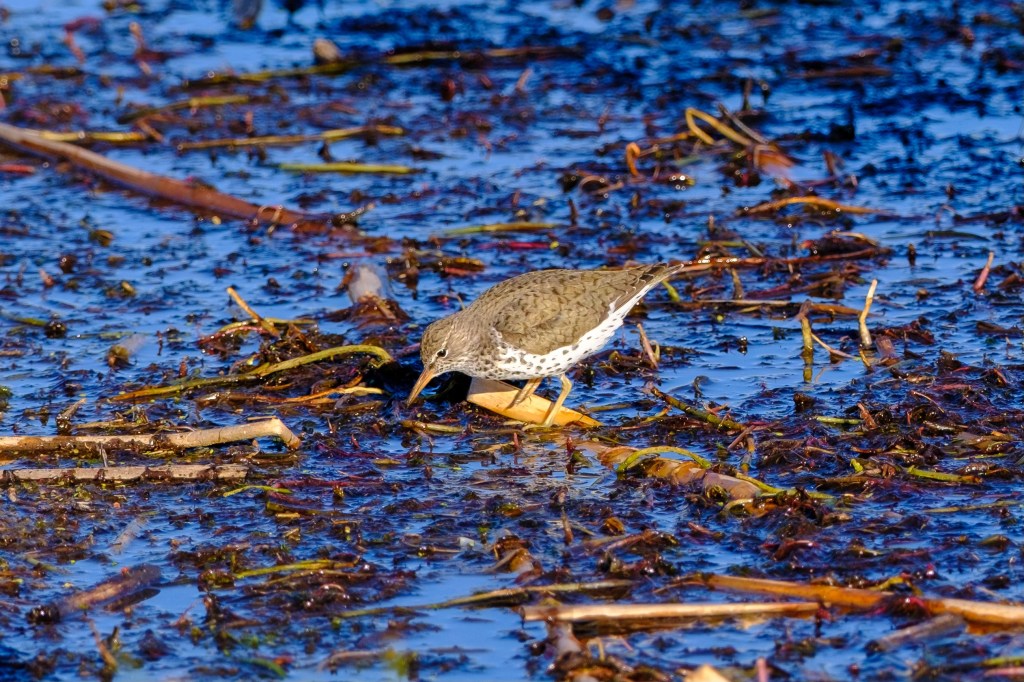
Years ago a friend showed us shorebirds in the Owens Valley. I was amazed and amused to learn that we have sandpipers (Least, Western, and Spotted) in our local desert.
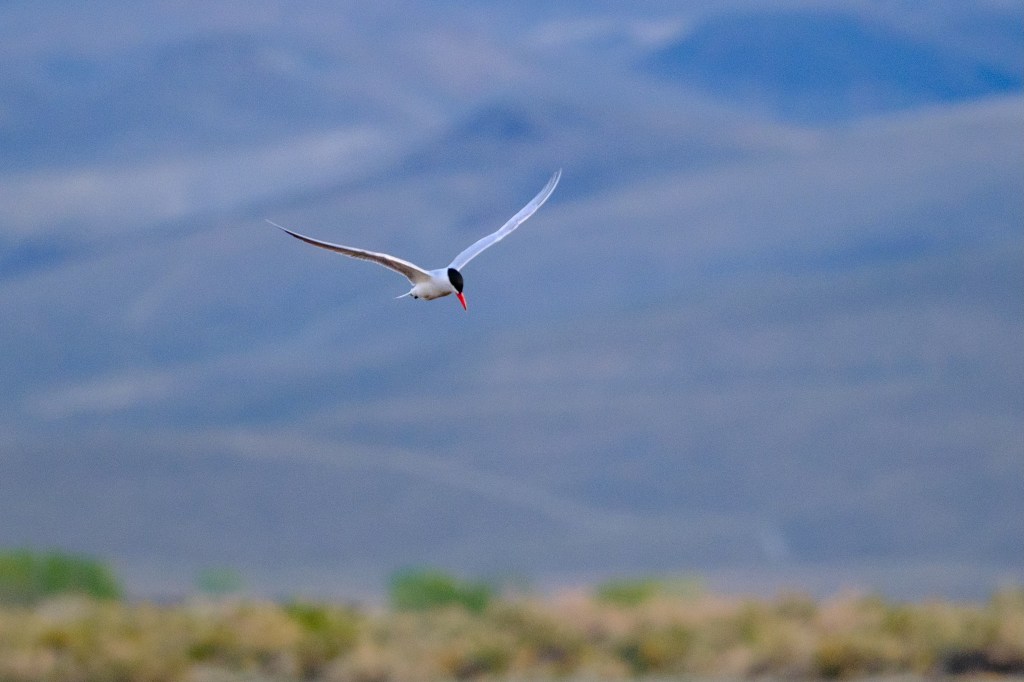
Occasionally a tern will turn (pun!) up at the Buckley Ponds. When there are two of them, we always say “One good tern deserves another.” Lame, I admit! The Caspian Tern winters on the coast, breeds in the Great Basin. A spectacular bird.
Some Small Birds
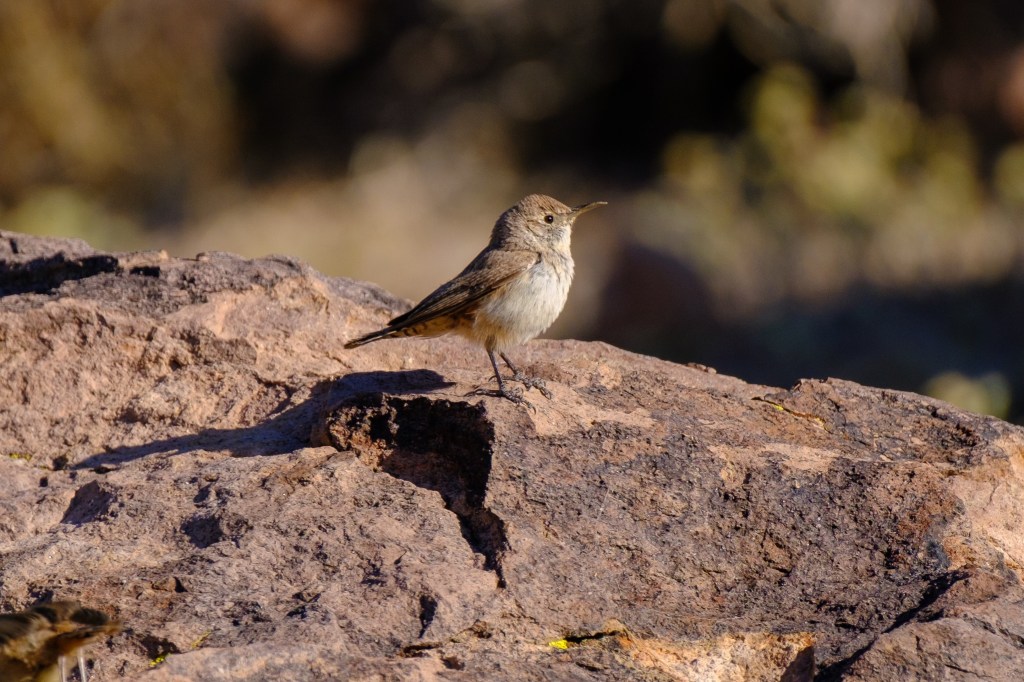
Rock Wrens are common at the Pleasant Valley Reservoir.
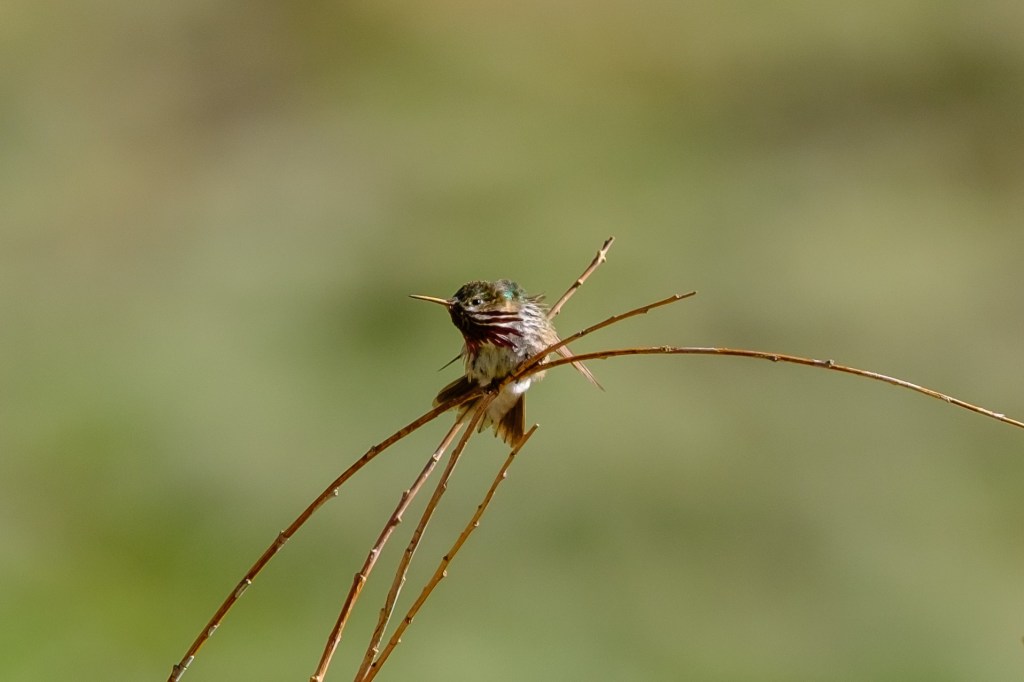
The Calliope Hummingbird winters in southern Mexico, breeds in the Sierra.
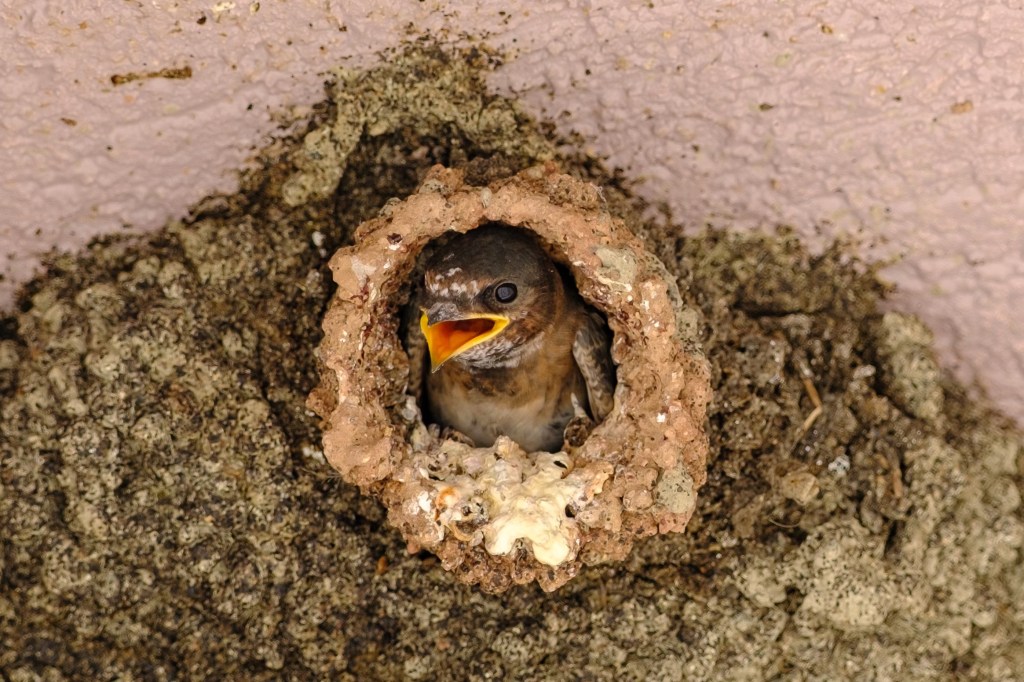
Cliff Swallows build their mud nests on the side of the Mono Basin Visitor’s Center in Lee Vining. The fledglings want food in early July.
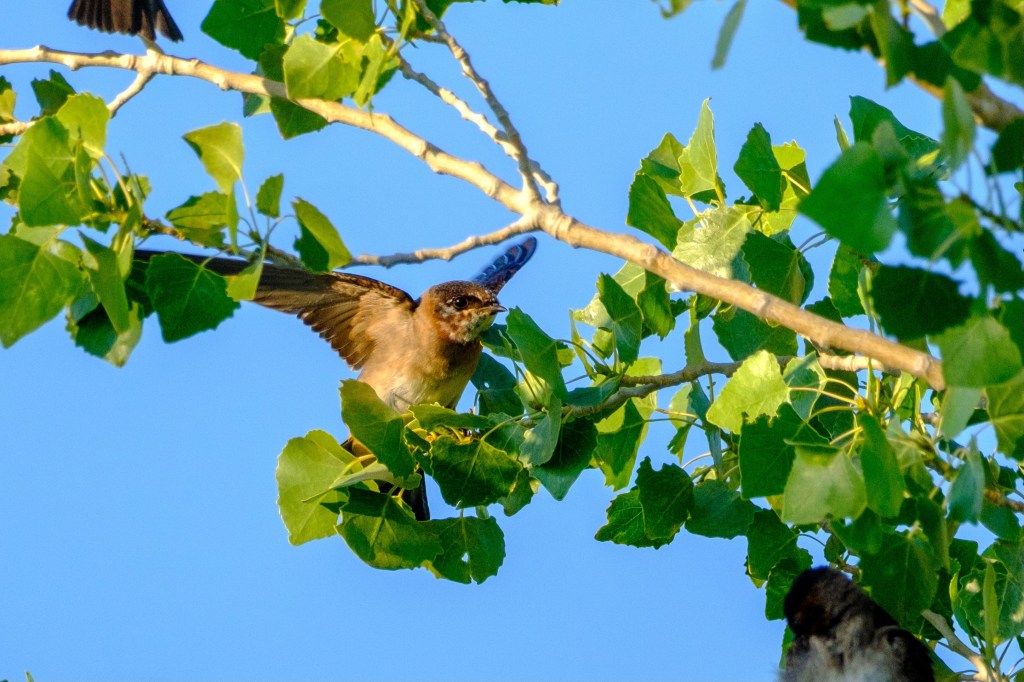
Violet-green Swallows are found on the tufa towers of Mono Lake, where they hunt for bugs in the air.

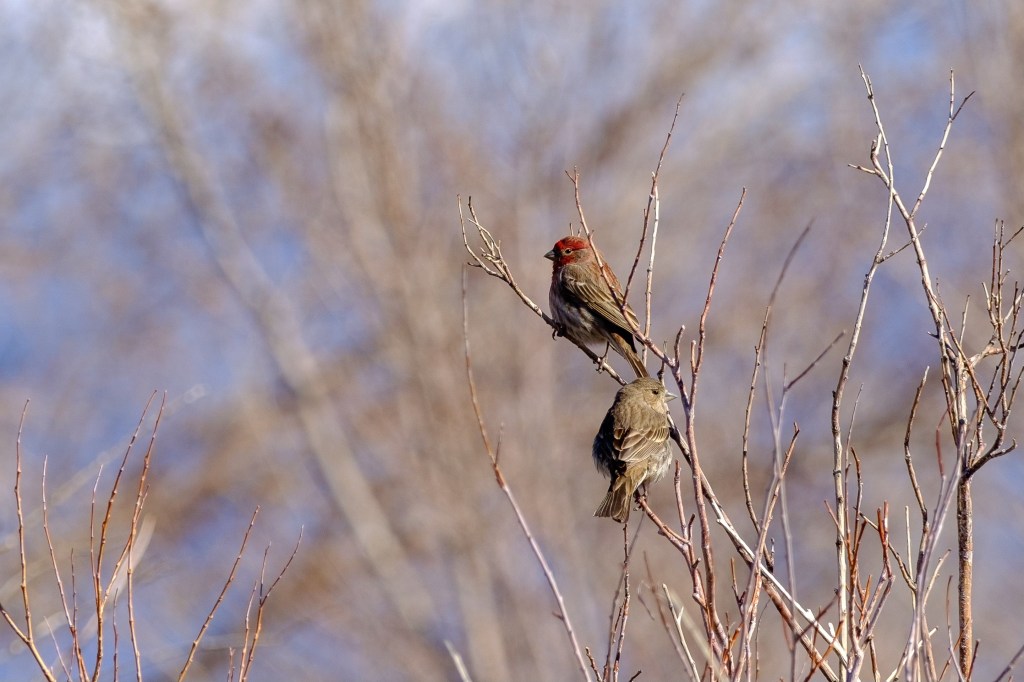
I mistake House Finches for sparrows, but the red color and fat beaks make them easy to identify in photos.
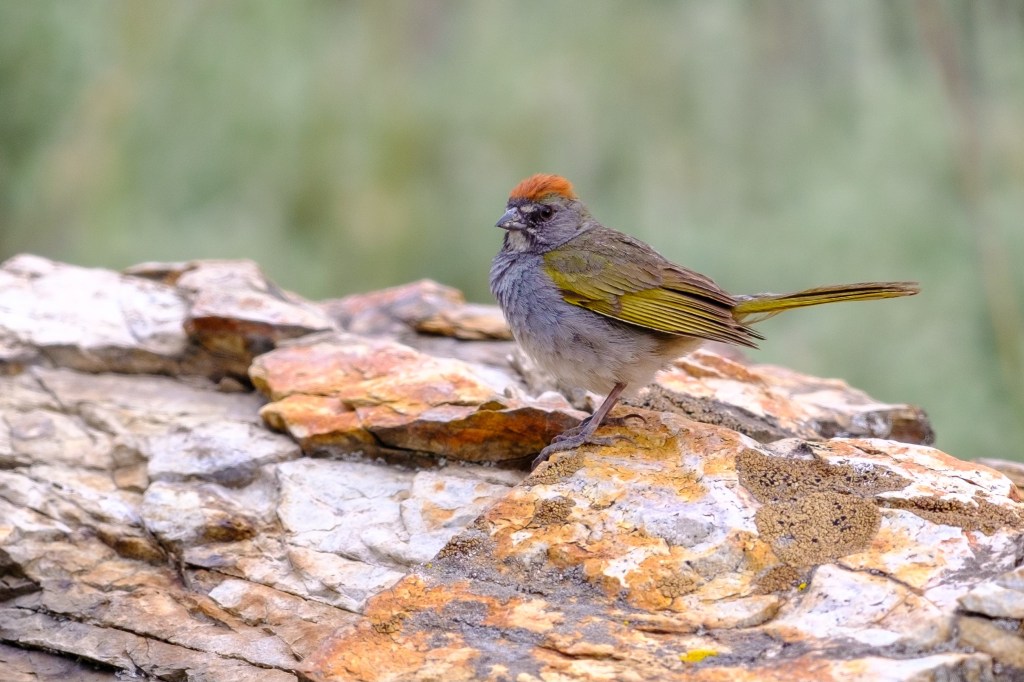
Green-tailed Towhees are often found near Convict Lake and in McGee Creek canyon.
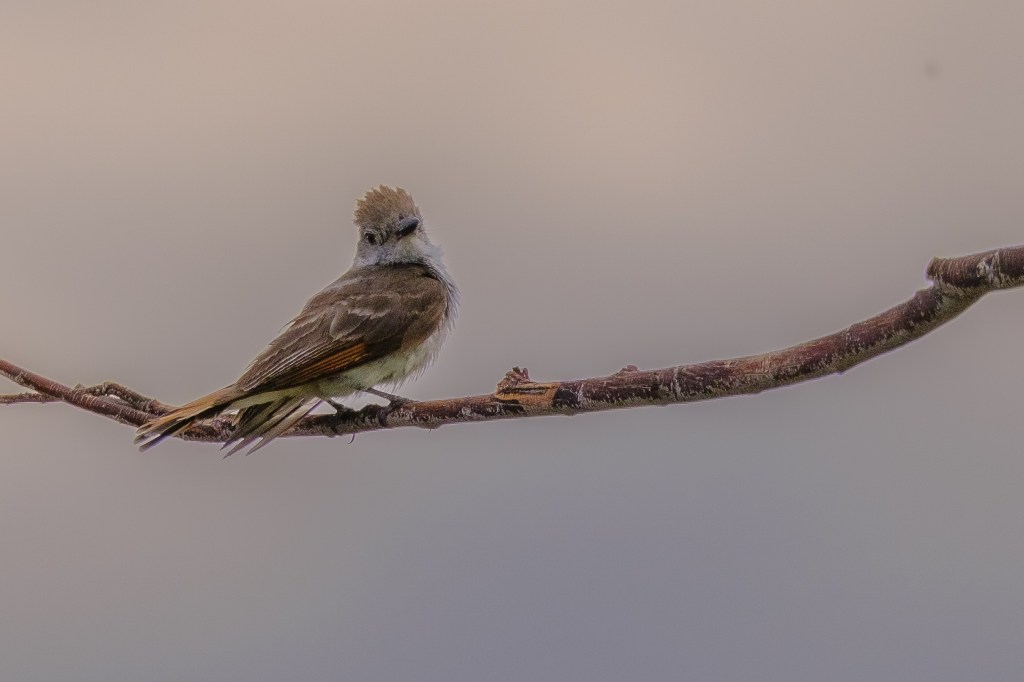
Ash-throated Flycatcher. An “ordinary” bird that is lovely when you look closely.
A Few Bigger Birds
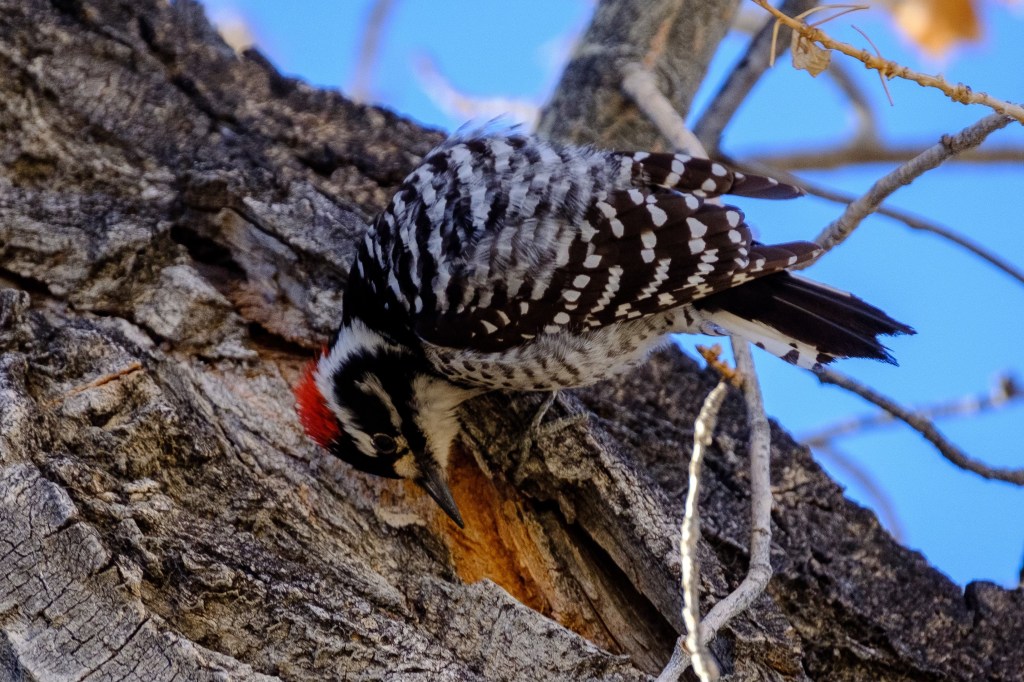
The Ladder-backed Woodpecker has a distinctive back.
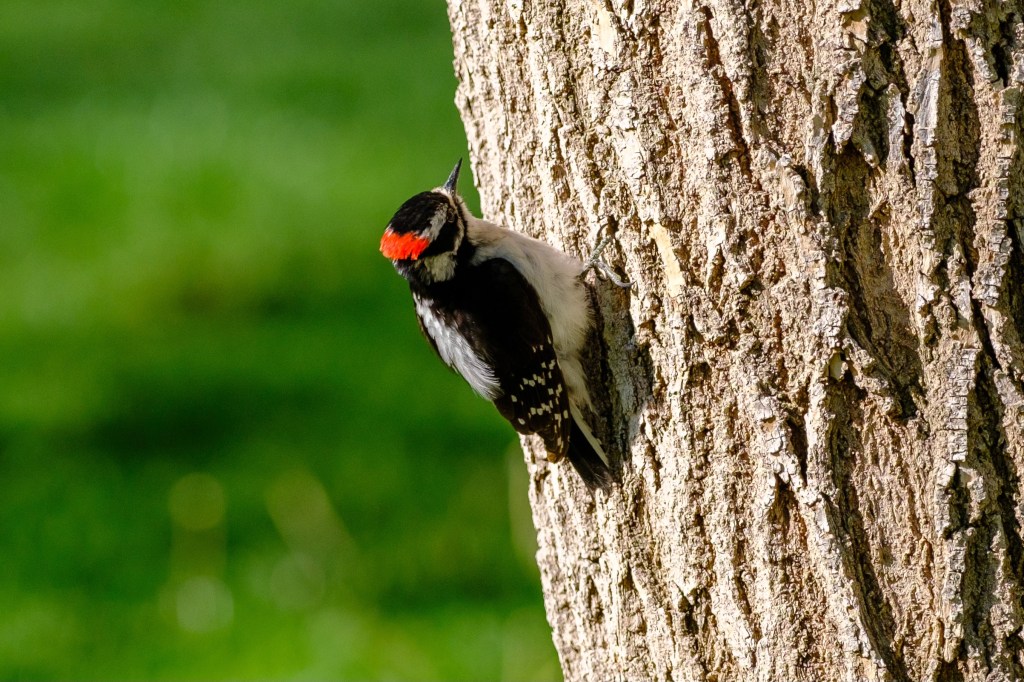
The Hairy Woodpecker is common in the Owens Valley, but this one was in the Arboretum in Reno.
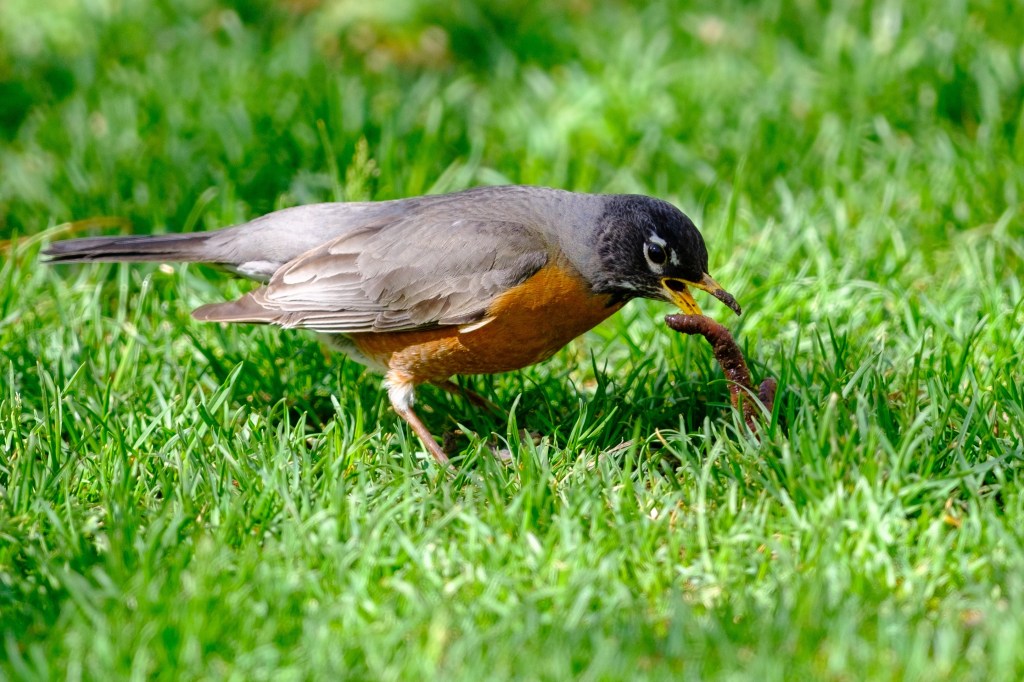
This Robin was putting on a show at the Arboretum in Reno.
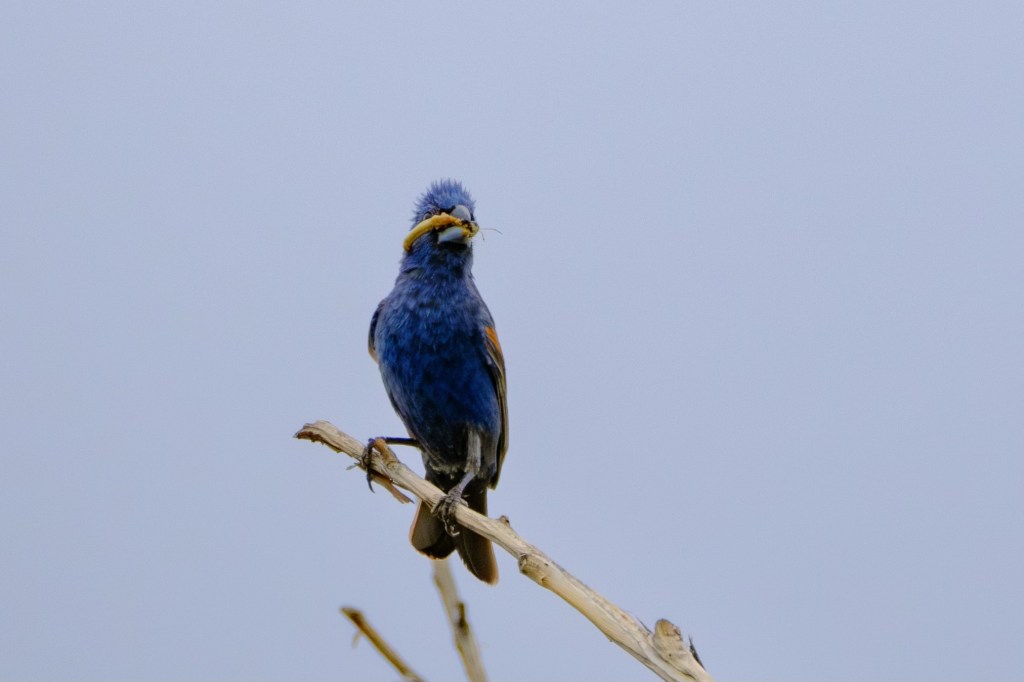
A Blue Grosbeak looks unreal.
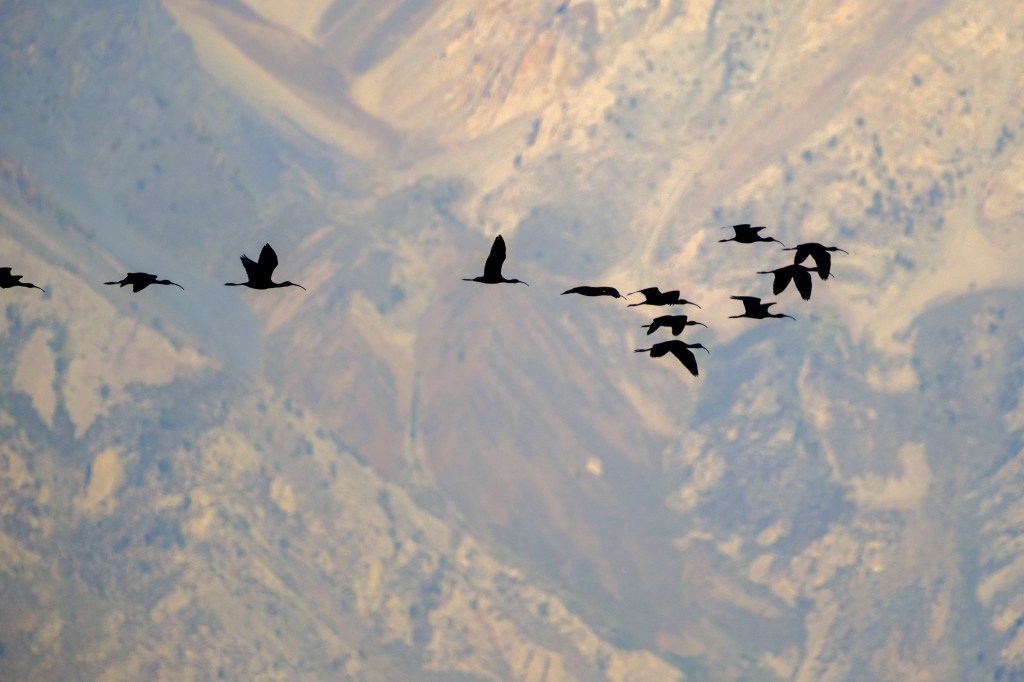
White-faced Ibis migrant past Bishop in large flocks. They look dramatic against the mountains.
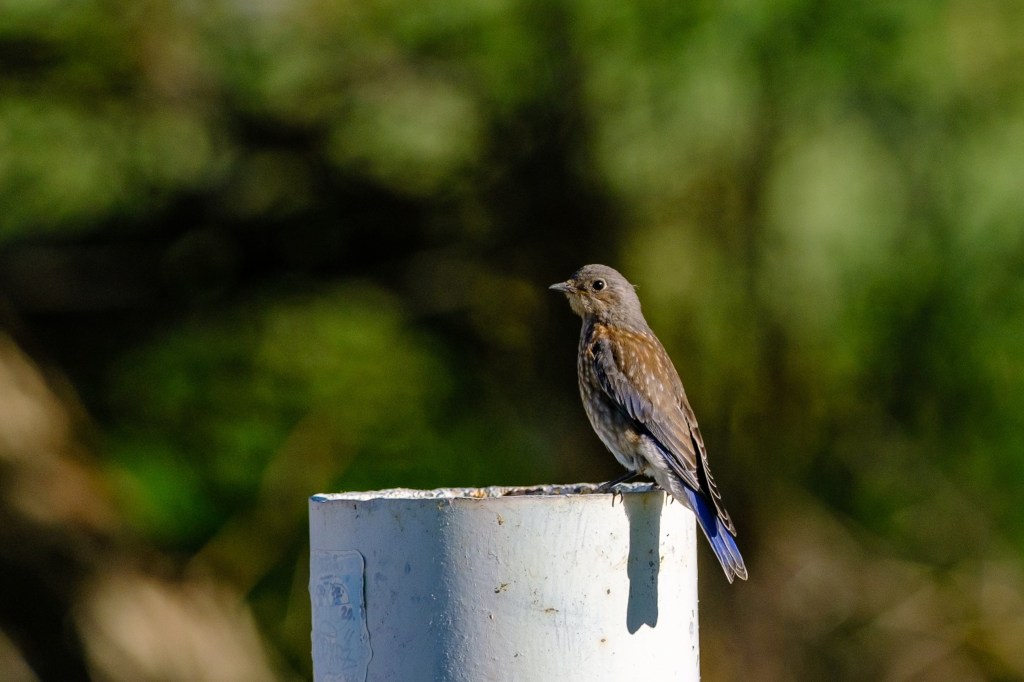
A juvenile Western Bluebird poses on a post.
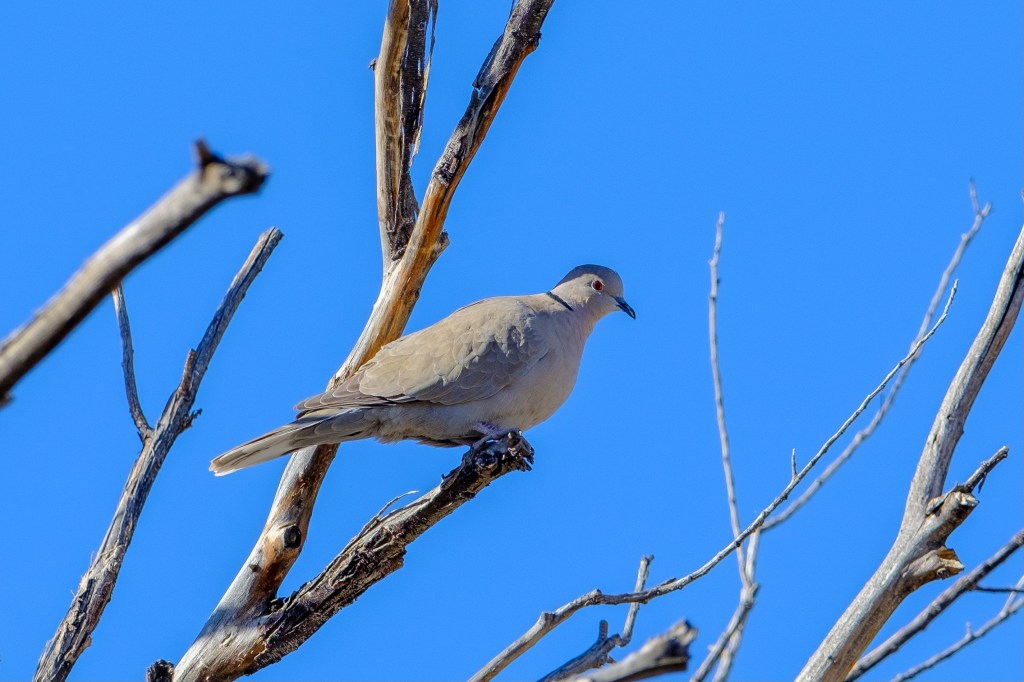
The Eurasian Collared Dove has become the most common dove in the Owens Valley. This bird only arrived in California about 30 years ago.
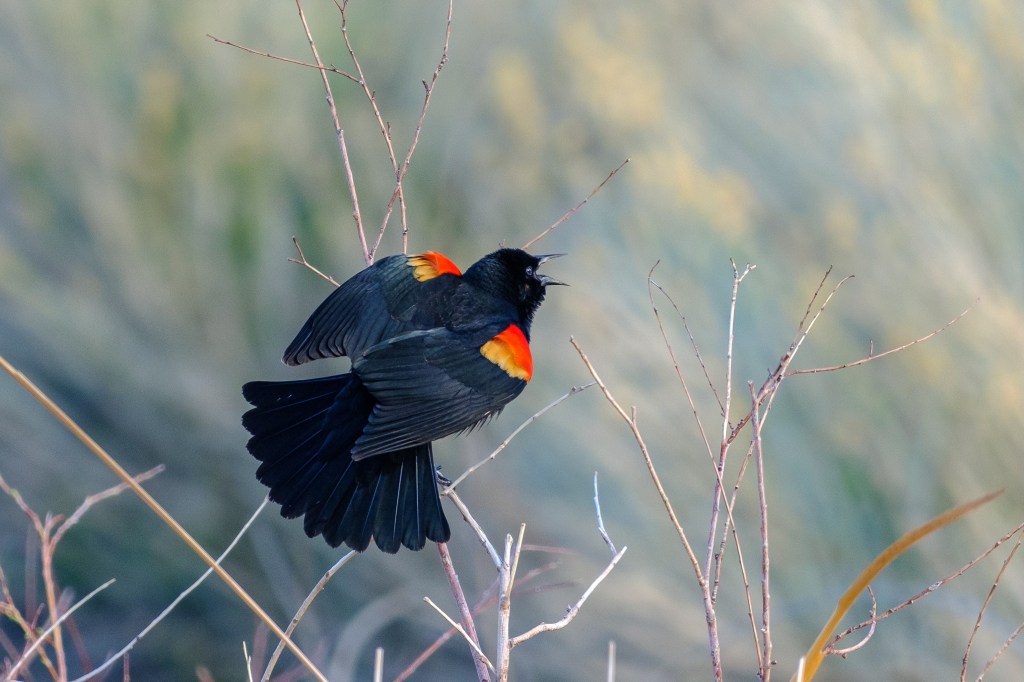
Red-winged Blackbirds show up in late February and sing incessantly for months.
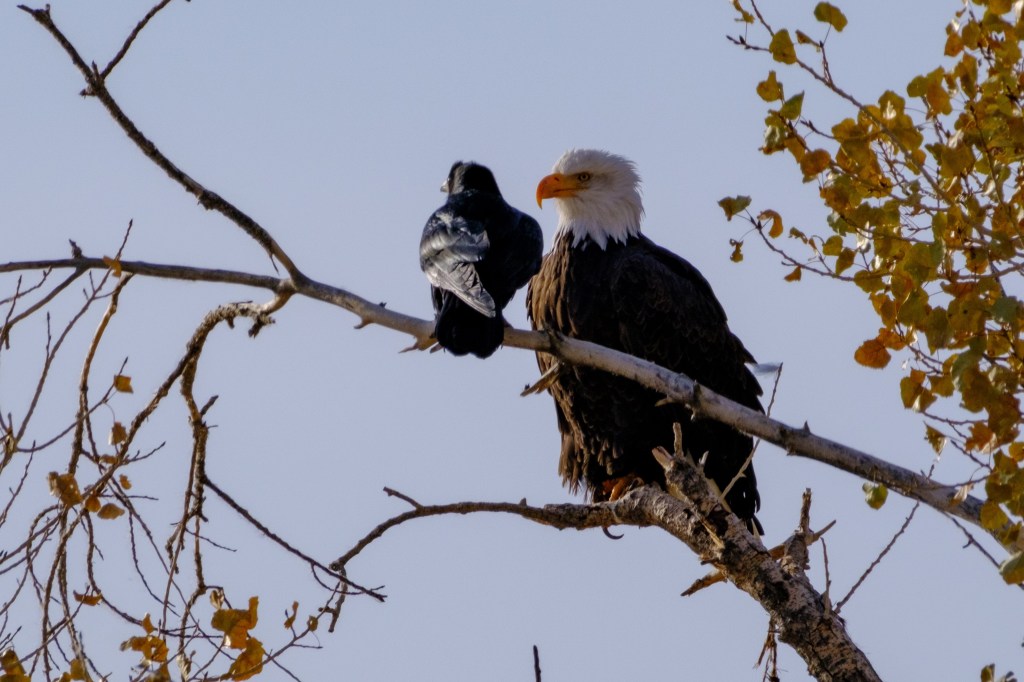
It looks as if this Bald Eagle is chatting with a Raven. I suspect the Raven is harassing the eagle.
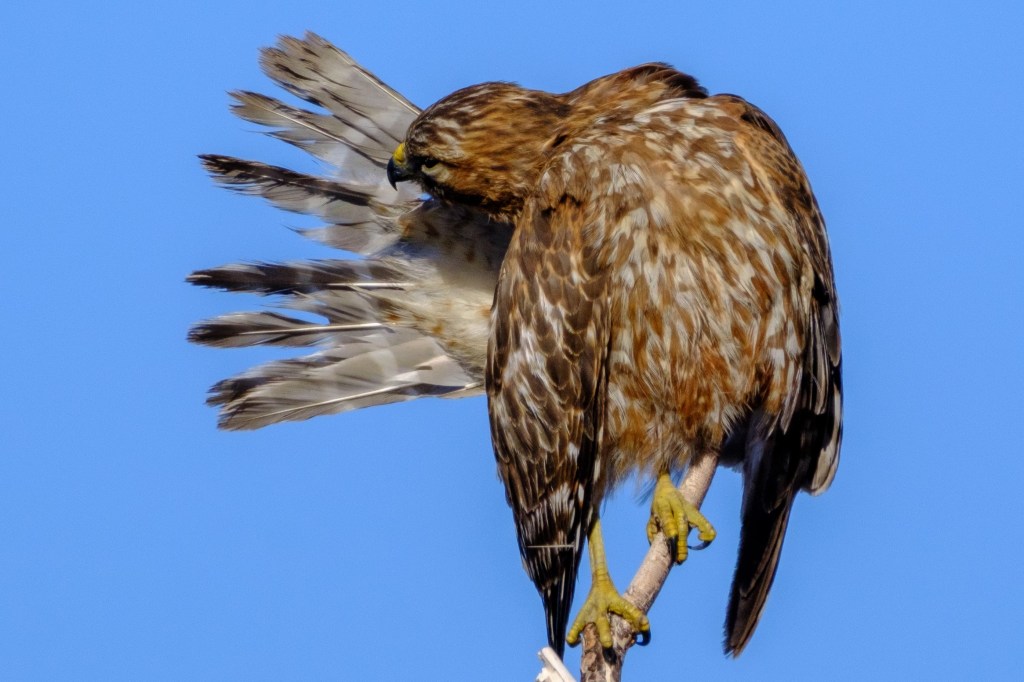
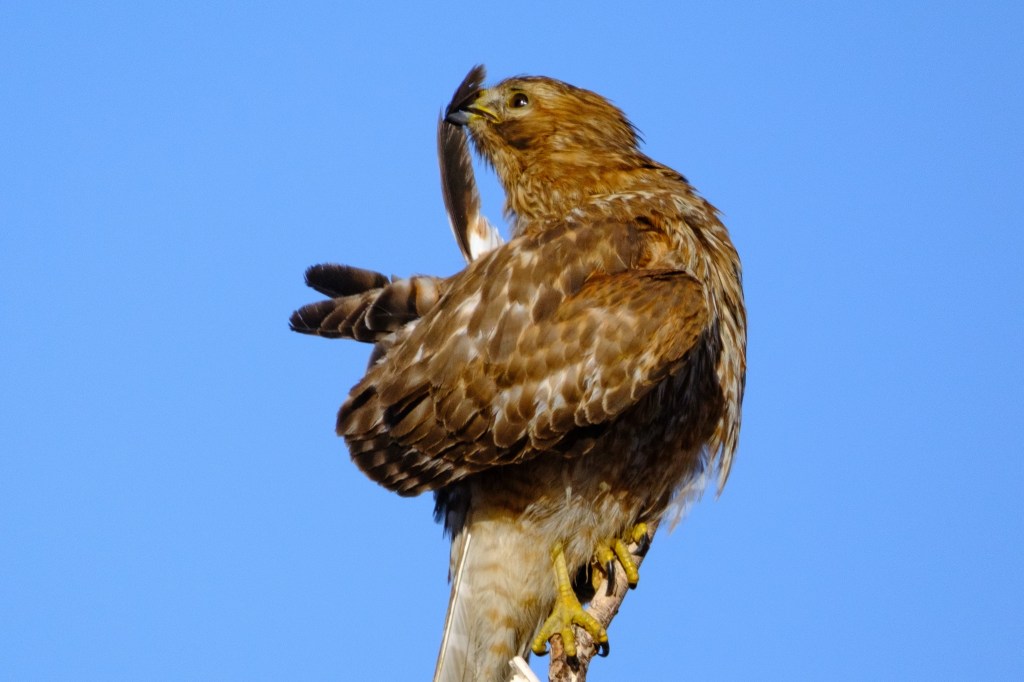
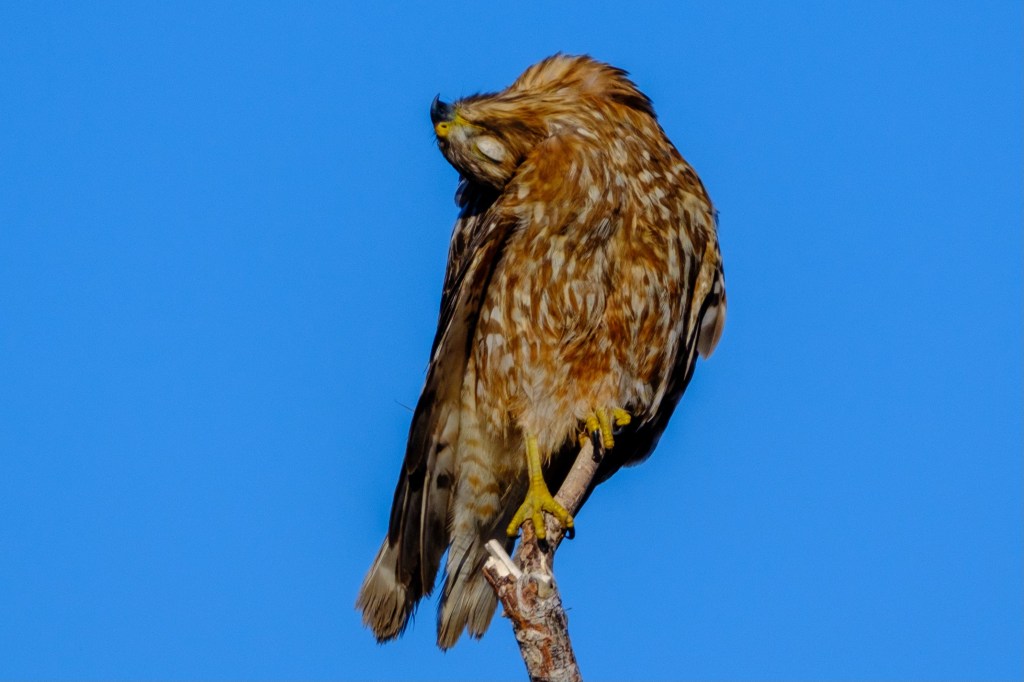
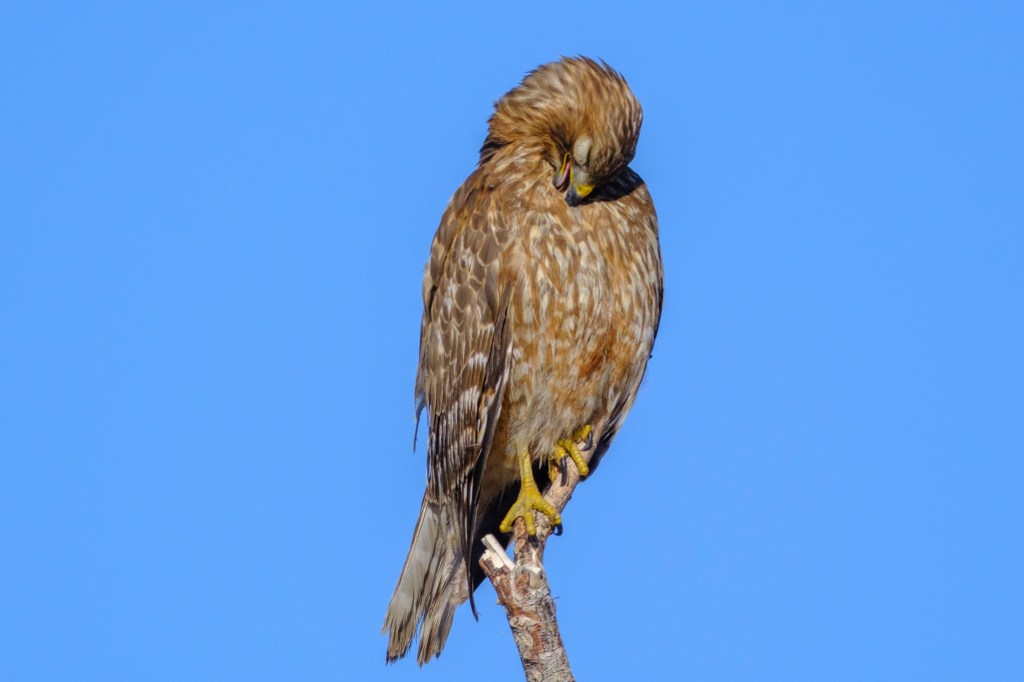
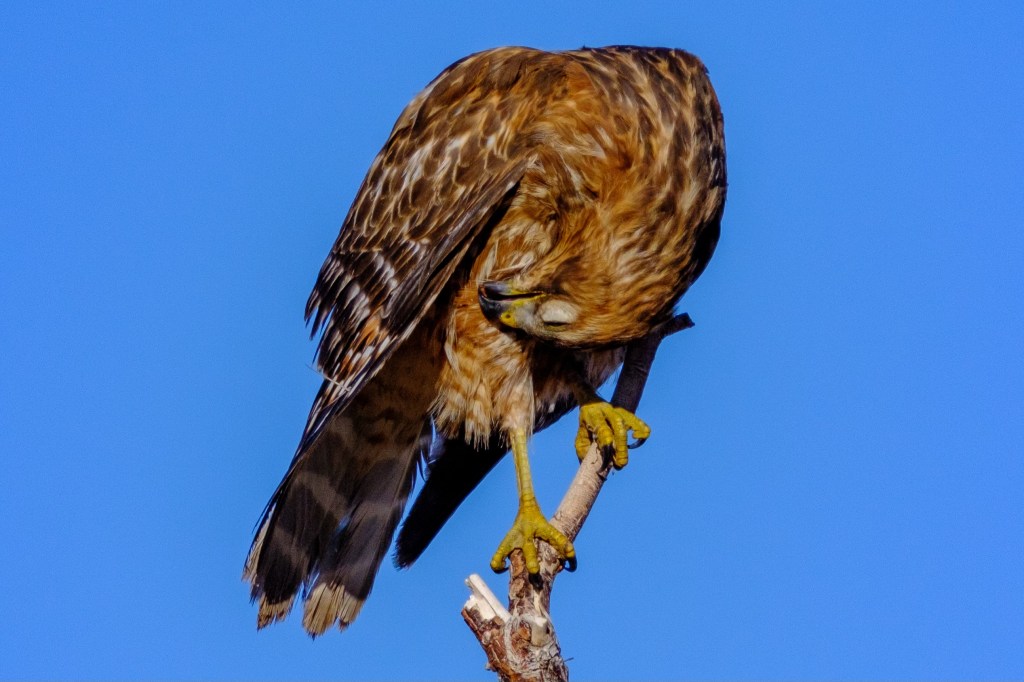
Birds spend a lot of time preening — taking care of their feathers. This Red-shouldered Hawk was tearing out feathers, licking them, and generally going nuts at the Buckley Ponds.
Animals
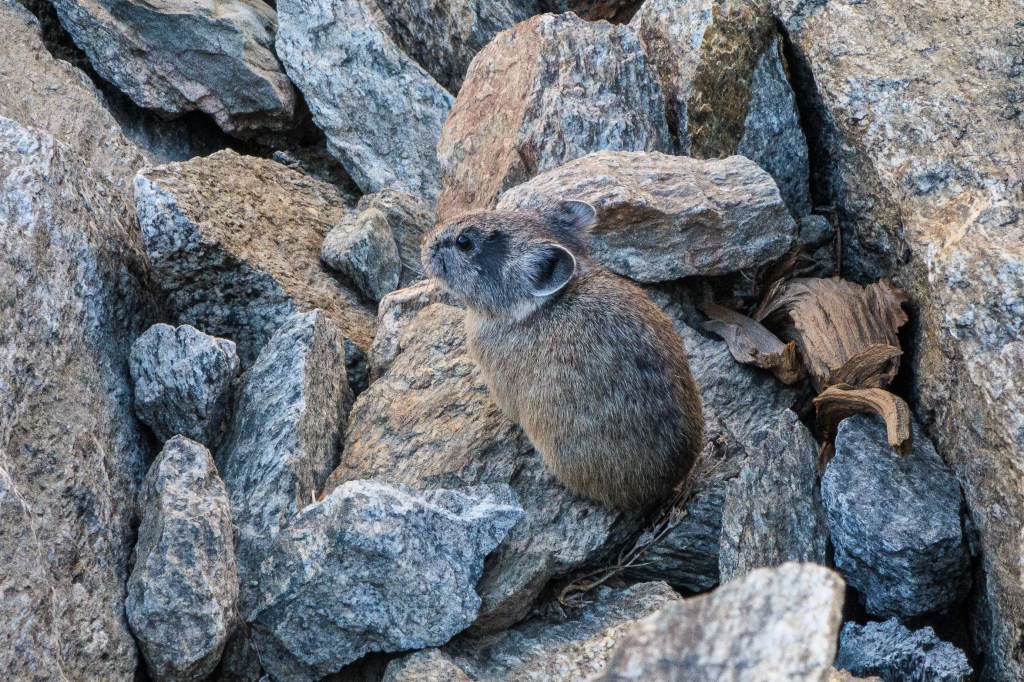
American Pikas live in the high Sierra.
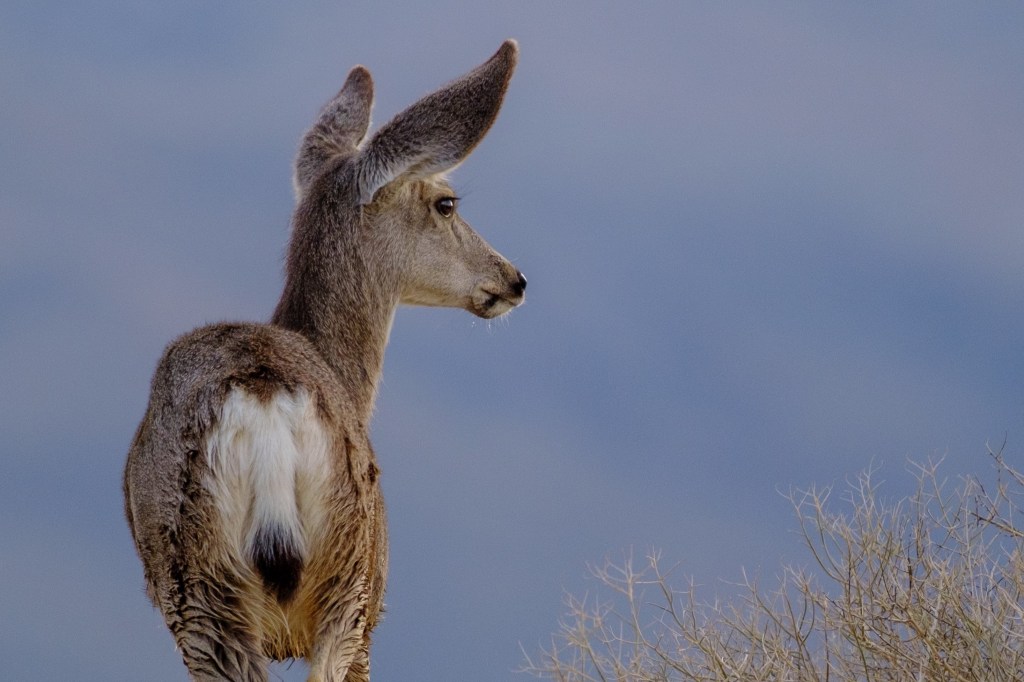
Mule deer are in our mountains and in the fields and desert near Bishop. This one is partly wet because she just crossed the Rawson Canal. They are named for their ears.
The Coast at Fort Bragg
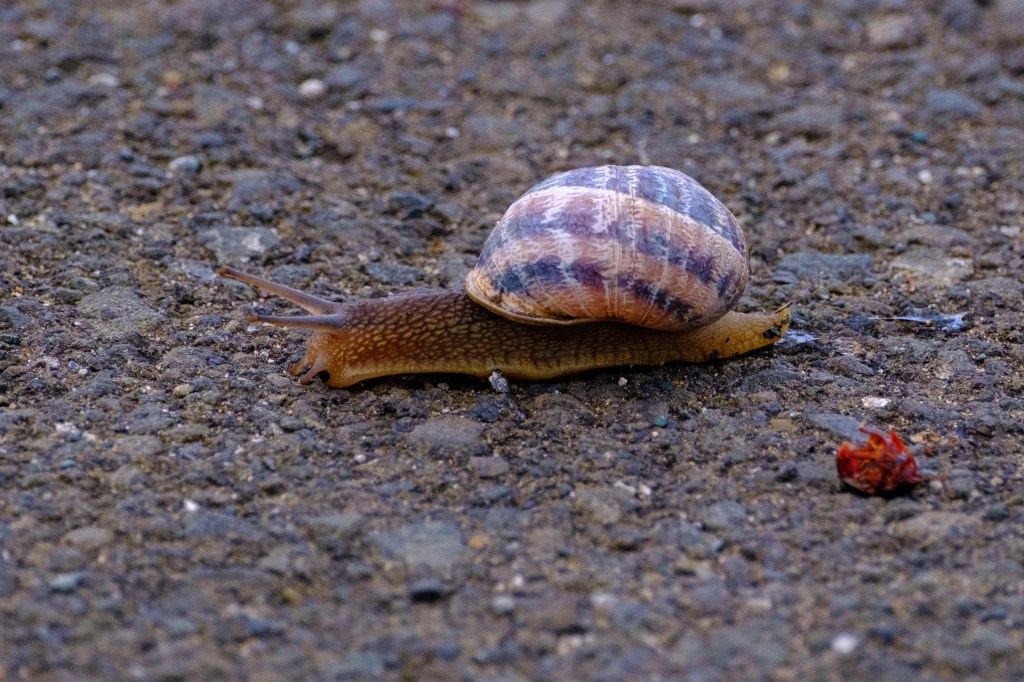
Roberta and I visit Fort Bragg about once a year. Recently Fort Bragg built the Noyo Headlands trail on the bluffs between the ocean and a defunct lumber mill. Snails cross this trail.
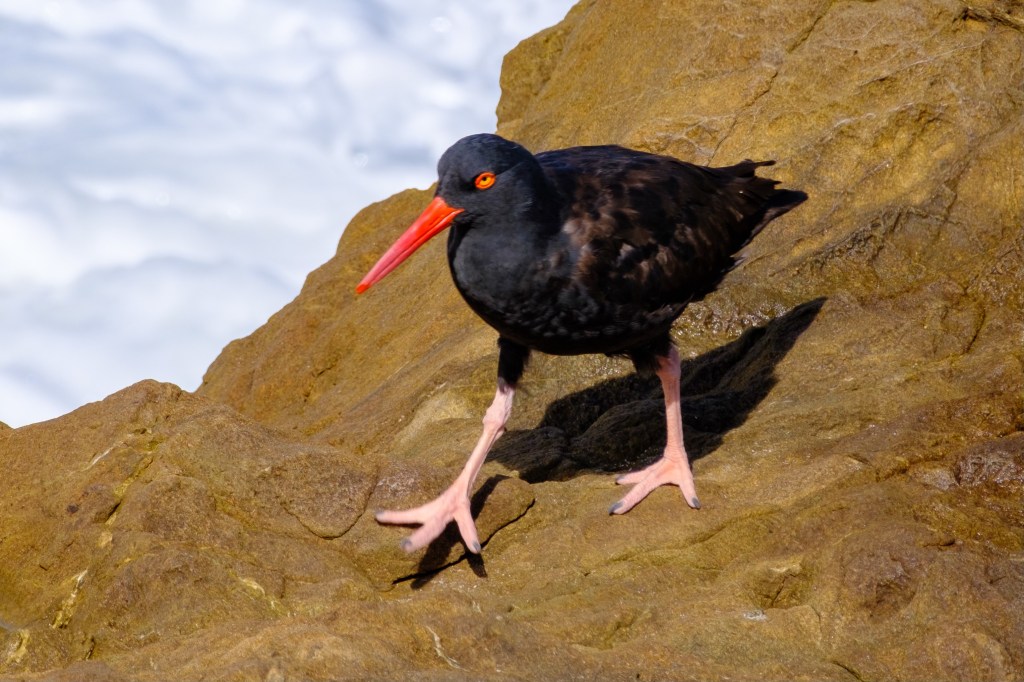
Below a Black Oystercatcher seems to be wearing nail polish.
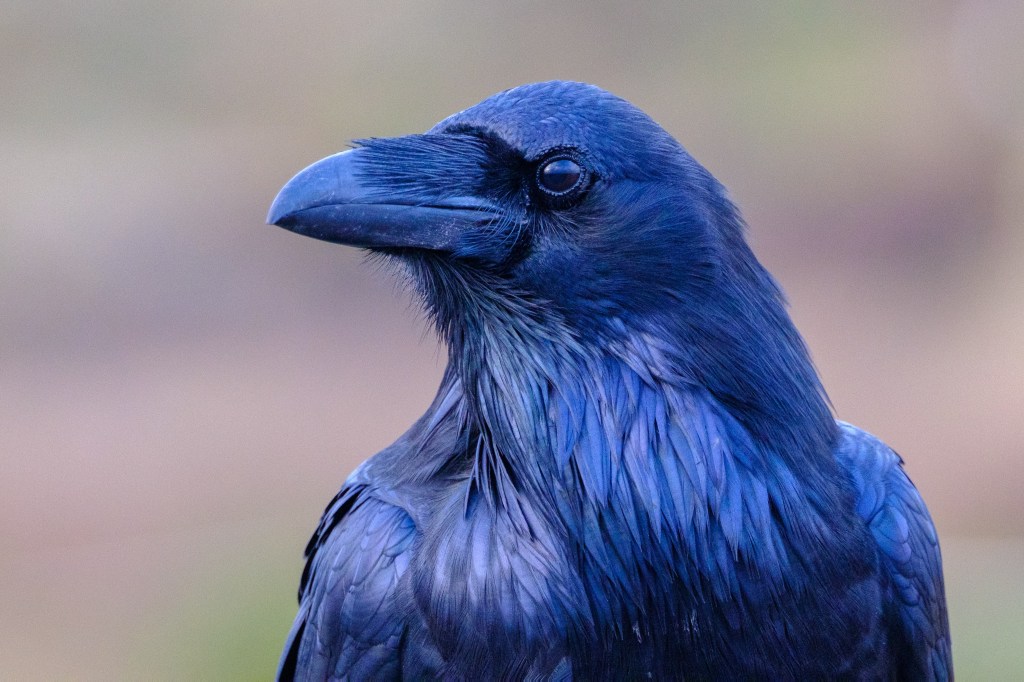
The Common Raven is common around Bishop. But they are hard to approach. At the coast, where people sometimes feed them, they are easier to photograph.
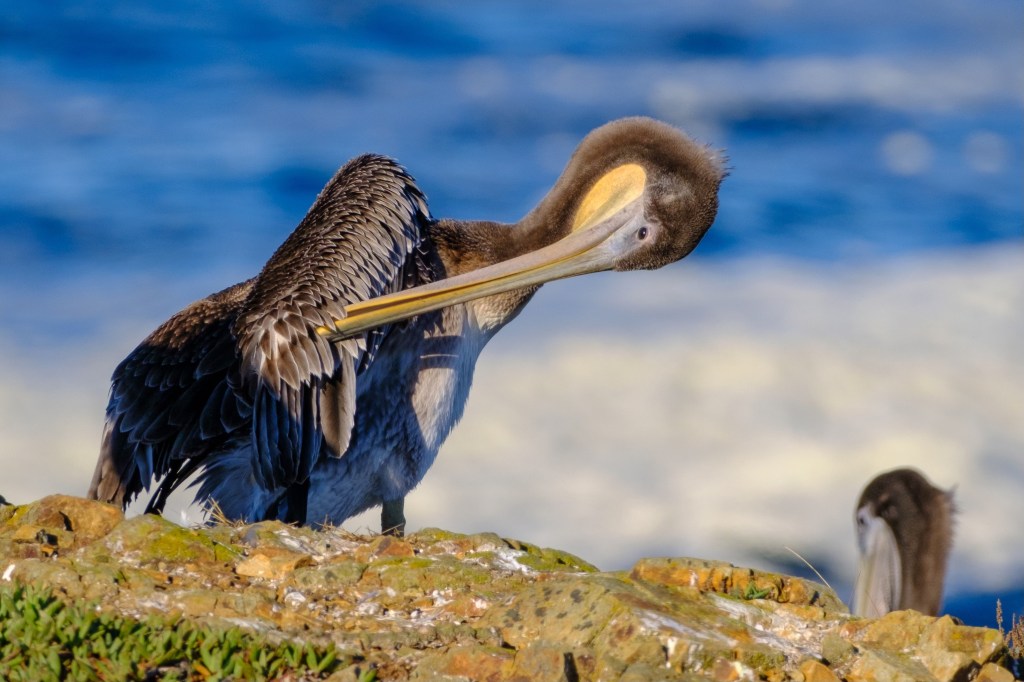
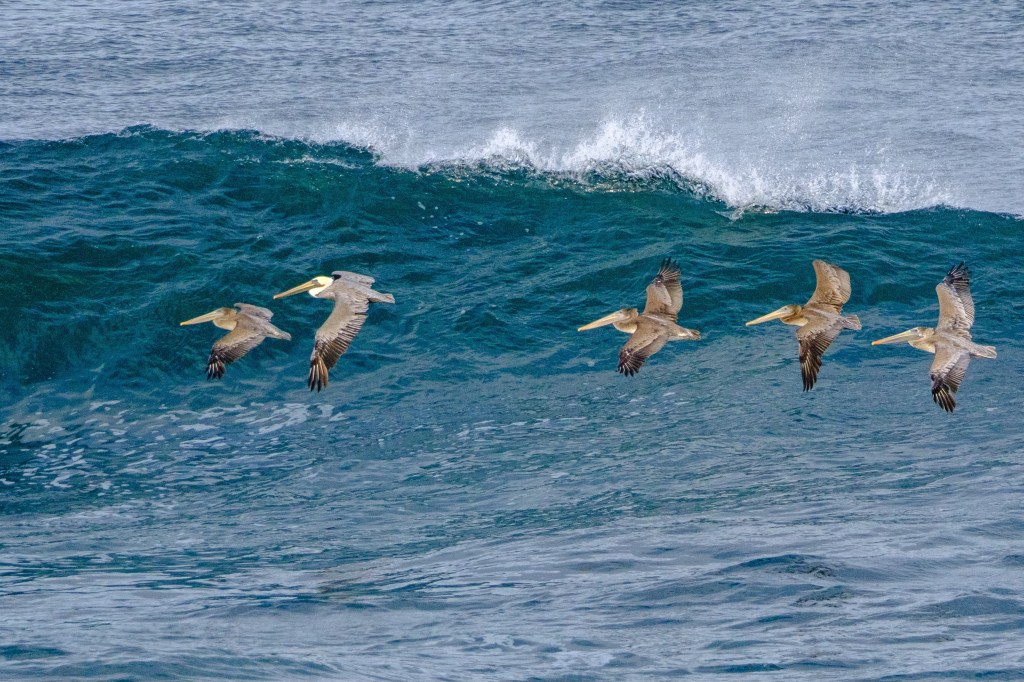
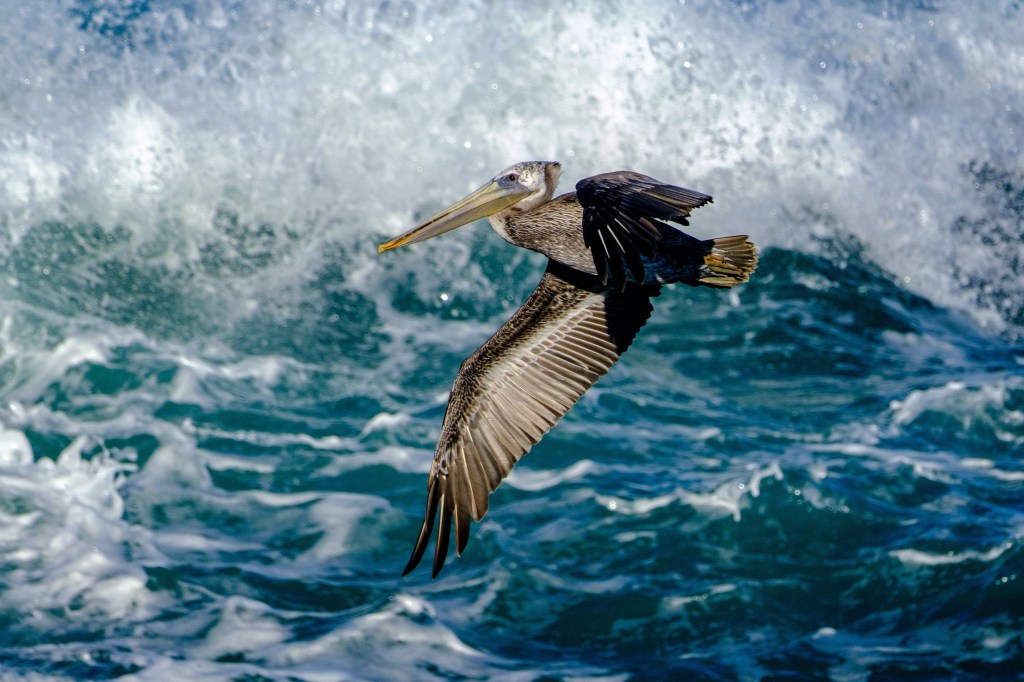
Brown Pelicans are easy to photograph because they are big and they fly in predictable lines.
Scenes Without Birds
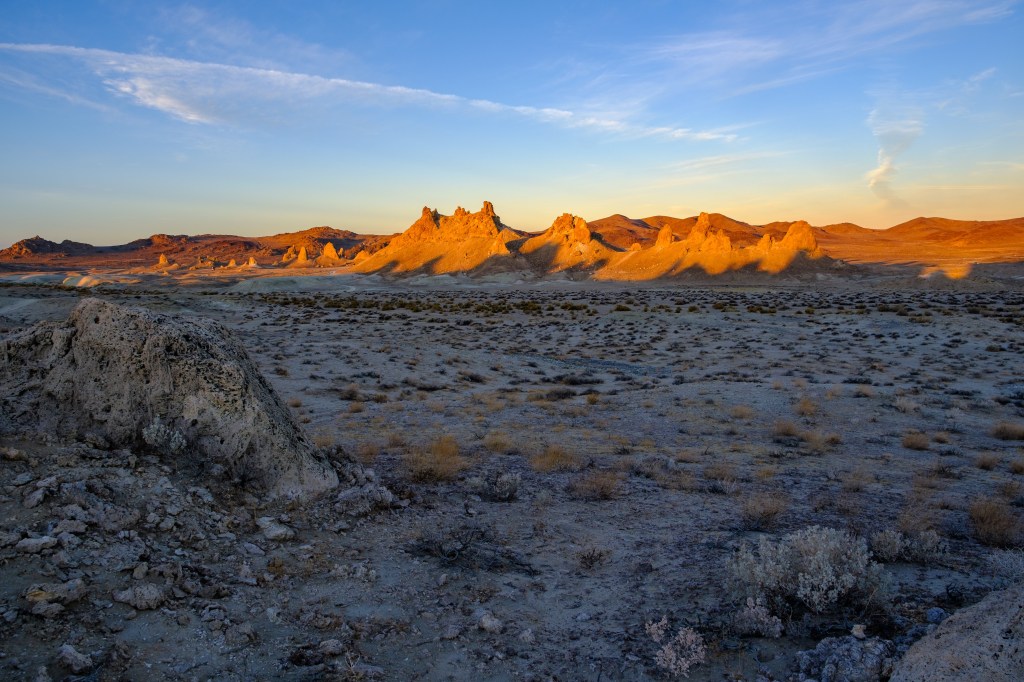
If you drive 2.5 hours south of Bishop, you can camp amid the Trona Pinnacles. These are tufa (calcium carbonate) formations from an ancient lake. They were featured in a Star Trek episode.
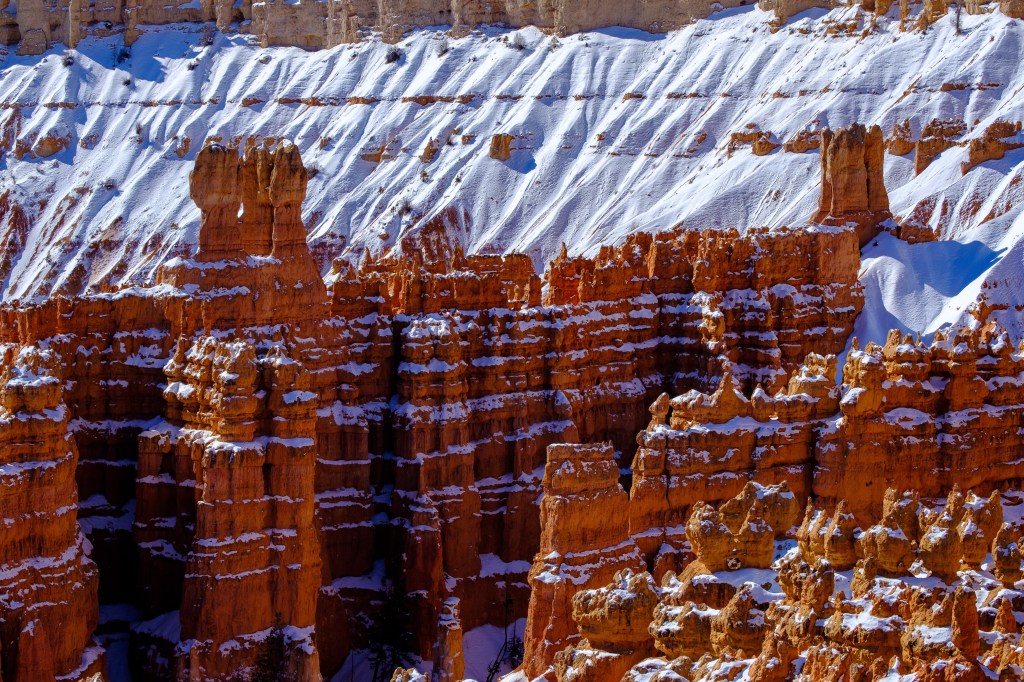
Bryce Canyon National Park in February.
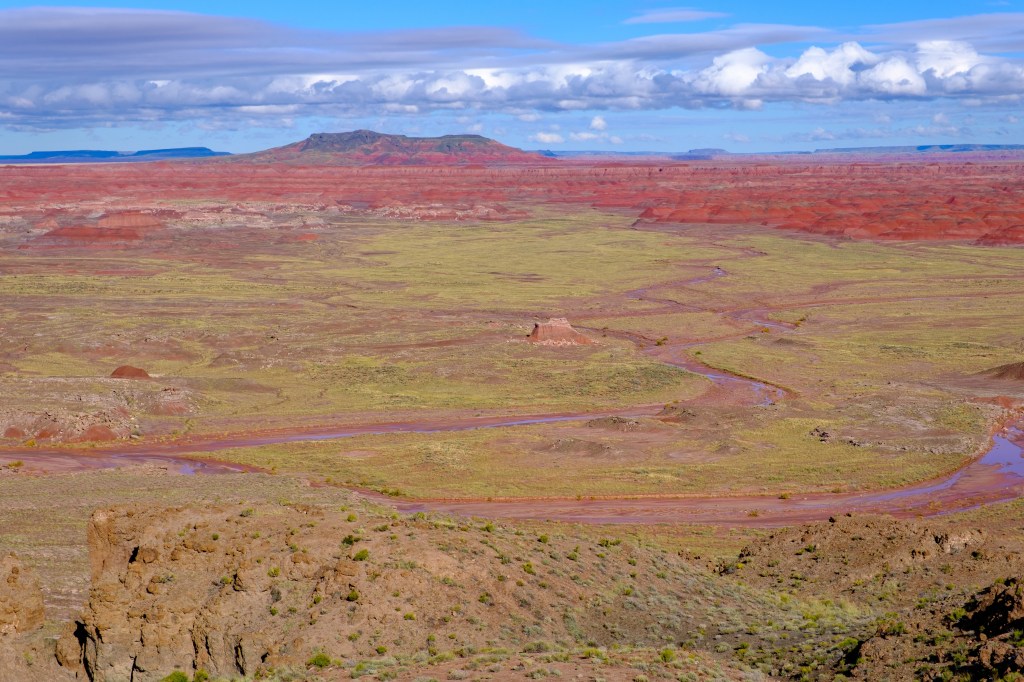
The Painted Desert seen from Petrified Forest National Park in Arizona. Creek in foreground is Lithodendron Wash. Pilot Rock is the distant butte against the sky.
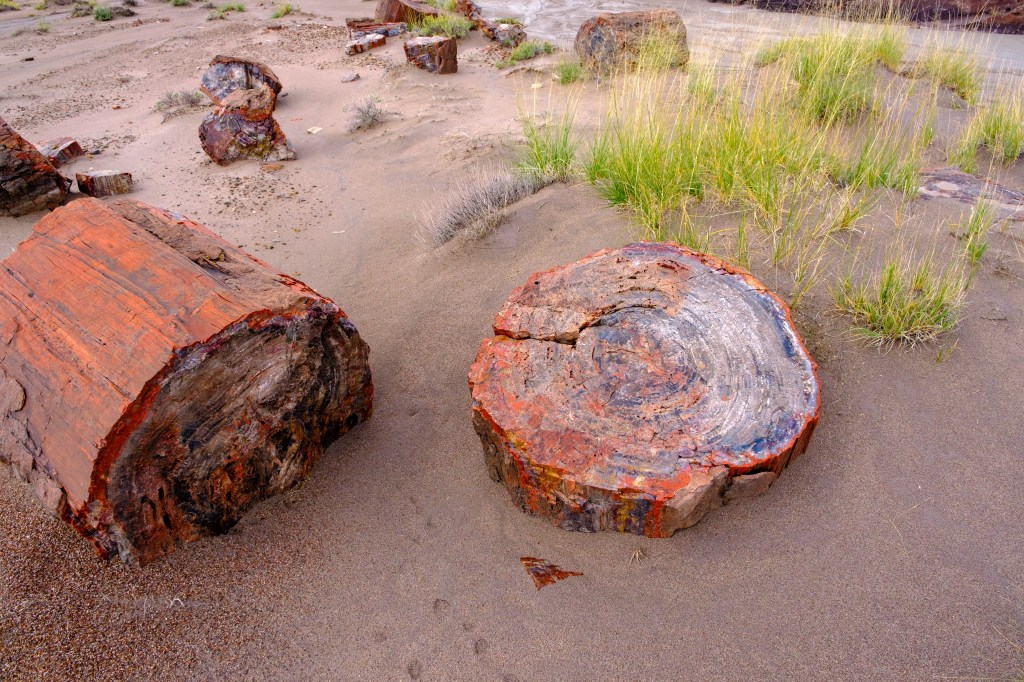
Petrified trees litter Petrified Forest National Park.
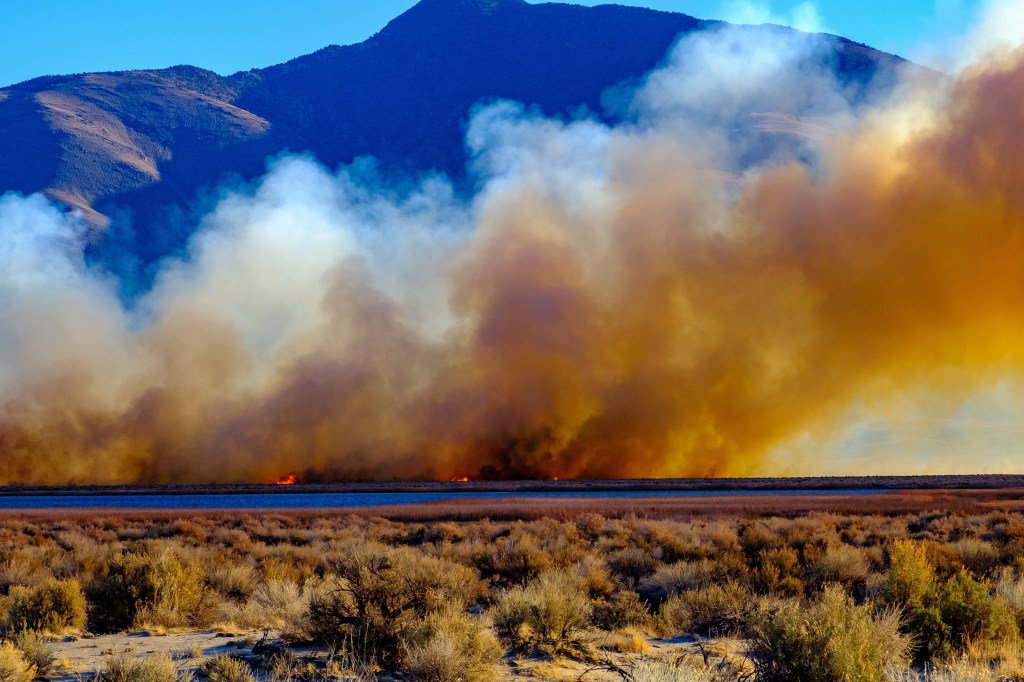
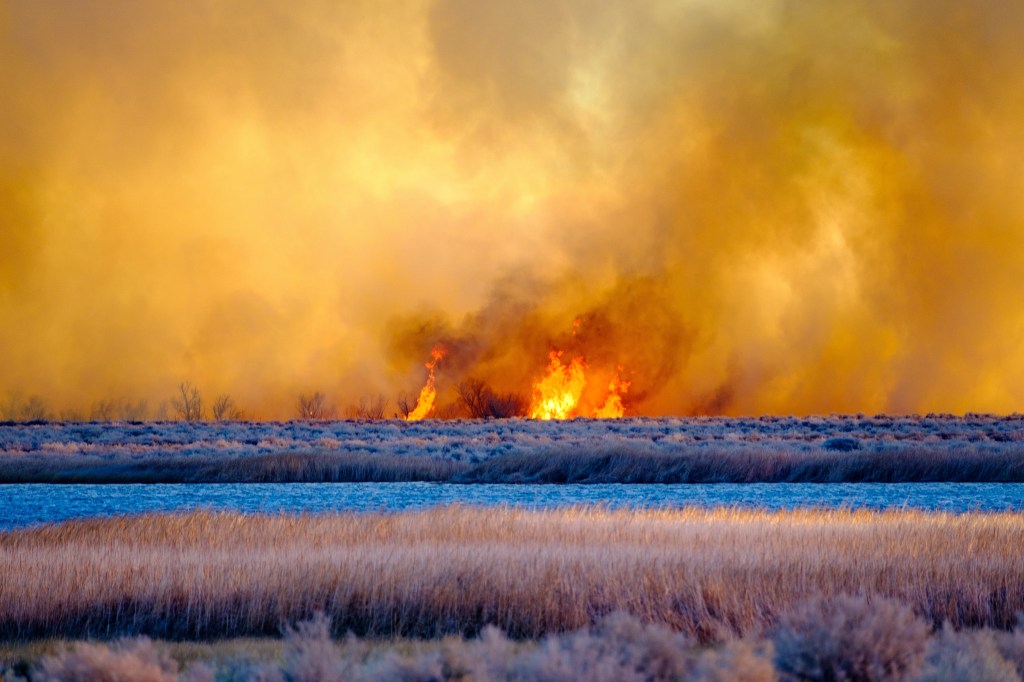
In February, the Airport Fire started near Bishop’s airport. It jumped to the cottonwoods along the Owens River. High winds pushed the flames south along the stream for over 15 miles, threatening Big Pine. I took photos looking across Klondike Lake.
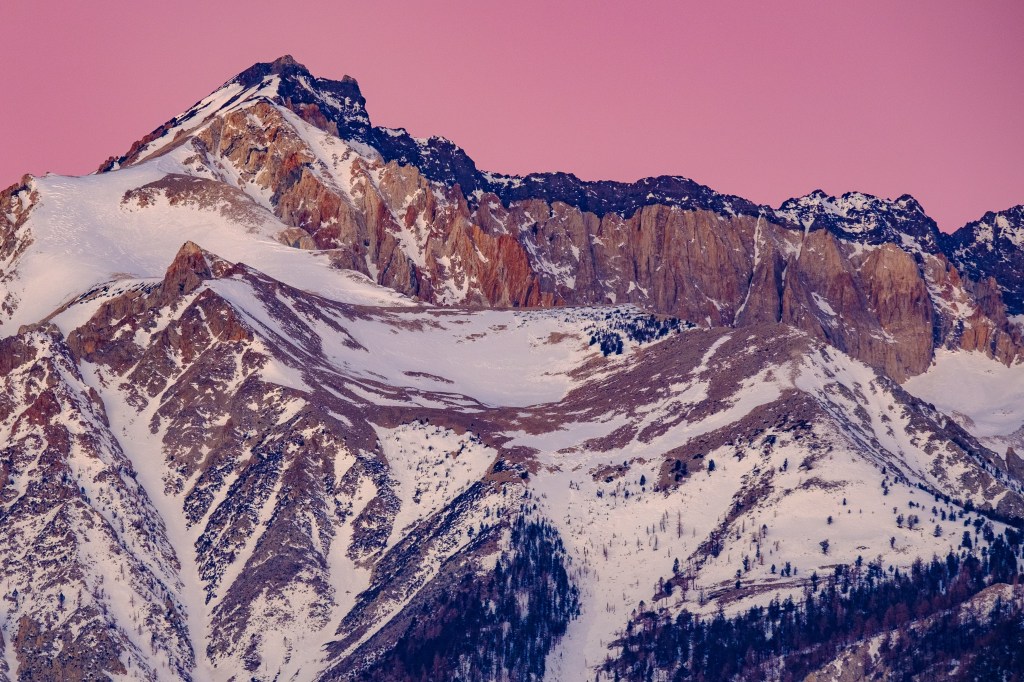
Roberta and I drove east of 395 on Aberdeen Road to photograph the sunrise on the Sierra. The first photo shows Cardinal Mountain in twilight at 6:49am. Six minutes later the sun cleared the Inyo Mountains behind me and the same scene was lit by red alpenglow. Both photos show a dark band of rock on the top of the ridge. This is a roof pendant. The dark rock on top is older volcanic or sedimentary rock. Molten granite rose up under this dark layer and cooled. The dark older rock eroded away across most of the Sierra. But in some places, such as here, the old rocks remained as a layer on top of the younger granite.

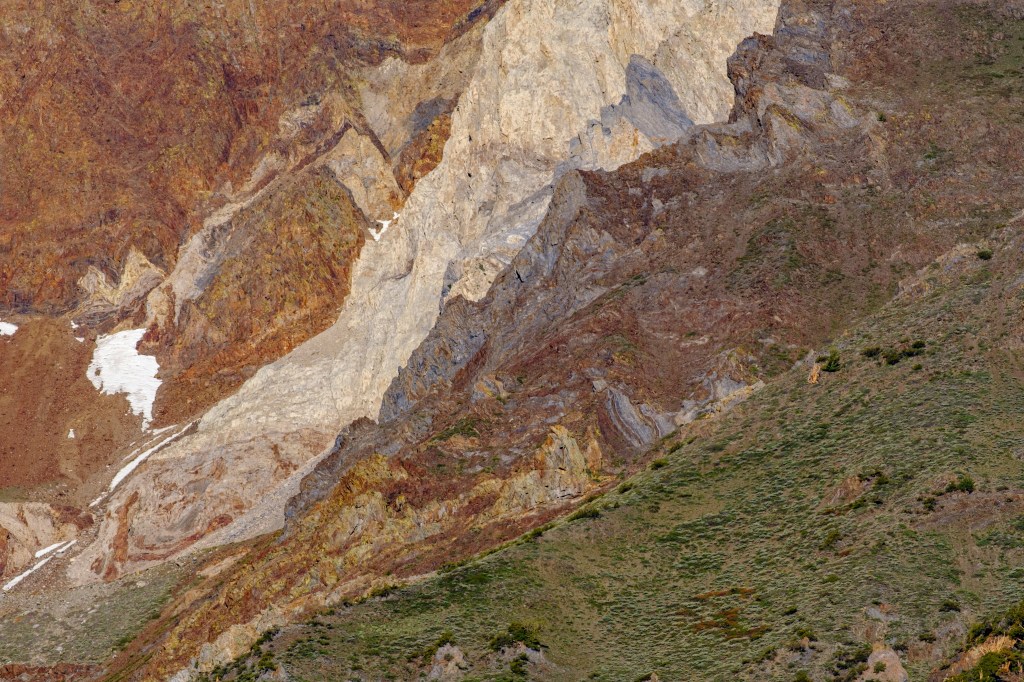
McGee Creek (and nearby Convict Creek) both have colorful twisted layers of sedimentary rock. The telephoto shot below shows ridges of different rock types that cover the north wall of the canyon.
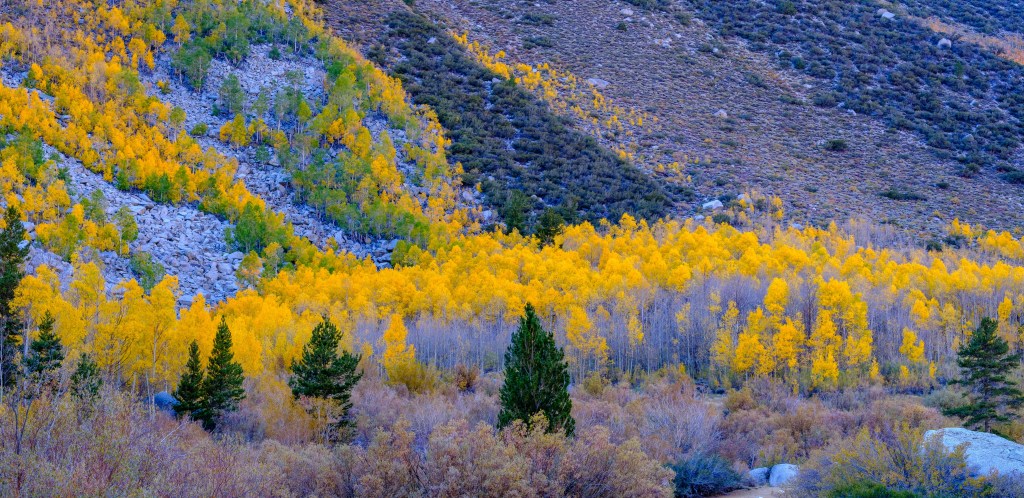
In October, the aspens change colors. This panorama shot was taken up the canyon from the Bishop Creek Lodge.
 Birds of Bishop