
My blog is focused on birds of the Eastern Sierra, from Owens Lake to Mono Lake. But this post focuses on the coast near Fort Bragg, about half-way between San Francisco and Oregon. The geography here is simple: from west to east is the Pacific ocean, then a shallow shore with rocky islands, sometimes a strip of beach, followed by cliffs topped by flat headlands. Then the earth rises into low coastal mountains that are covered by wet forests. Fort Bragg lies on a narrow stretch of flat land between the ocean and the forests.
Roberta and I walk paths on the coastal bluffs. To the north of town is an old logging haul road that leads to Mackerricher State Park. To the south is Mendocino Headlands State Park. A timber mill used to occupy the scenic land between Fort Bragg and the ocean. The mill closed in 2002, leaving the bluffs with rusted buildings, waste, and weeds. In the last few years the town cleaned up some of this land and built the Noyo Headlands Park, which provides gorgeous walks overlooking the Pacific. The new trails have benches and signs that describe the area’s history and wildlife. The coast is alive with wildlife; birds, deer, rodents, seals, Grey whales, shellfish, etc.
These photos were taken on trips we made from 2021 through 2025; a cumulative period of about 20 days. I’ll periodically comment about whether a bird can be found in the Eastern Sierra.
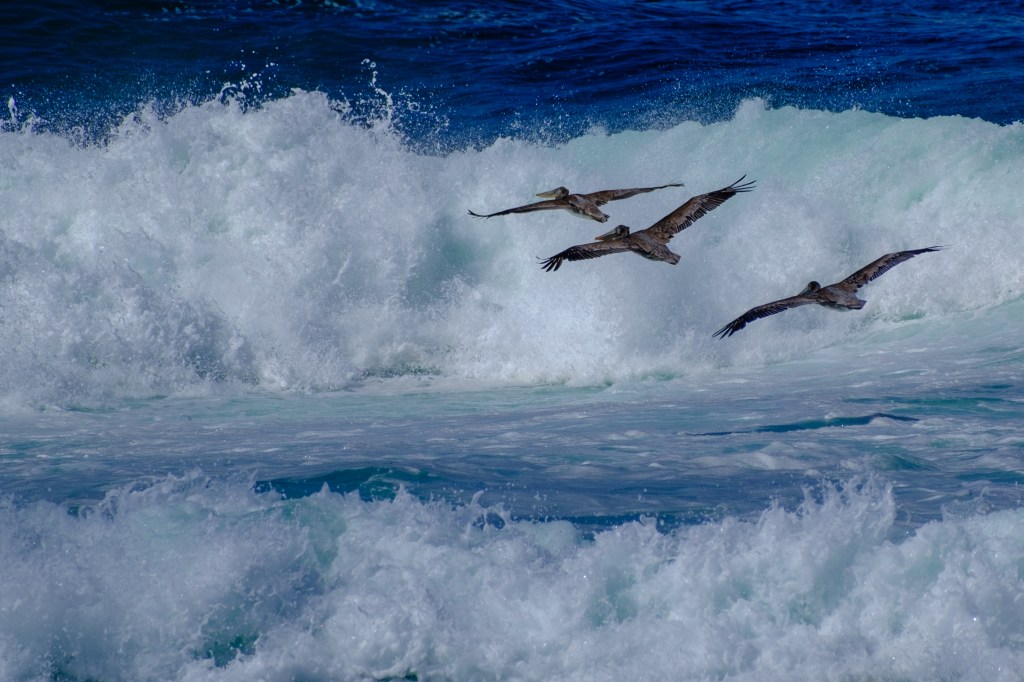
Brown Pelicans in Flight
Decimated by DDT in the 60’s, populations have recovered. Weight 8 lb, wingspan 6.5 feet. Awkward on land, but graceful aeronauts. When they plunge-dive for fish, their beaks can fill with 10 quarts of sea-water. Easy to identify; no other creature looks like this. Easy to photograph in the air because of they are so big and they have a predictable flight path; a few wing-beats lift them up, then they glide down, then up again, with little change in direction. The Brown Pelicans are birds of the coast and the Mississippi River valley. (In the Owens Valley, we have the much bigger American White Pelican; weight 16 lb, wingspan 9 feet.)
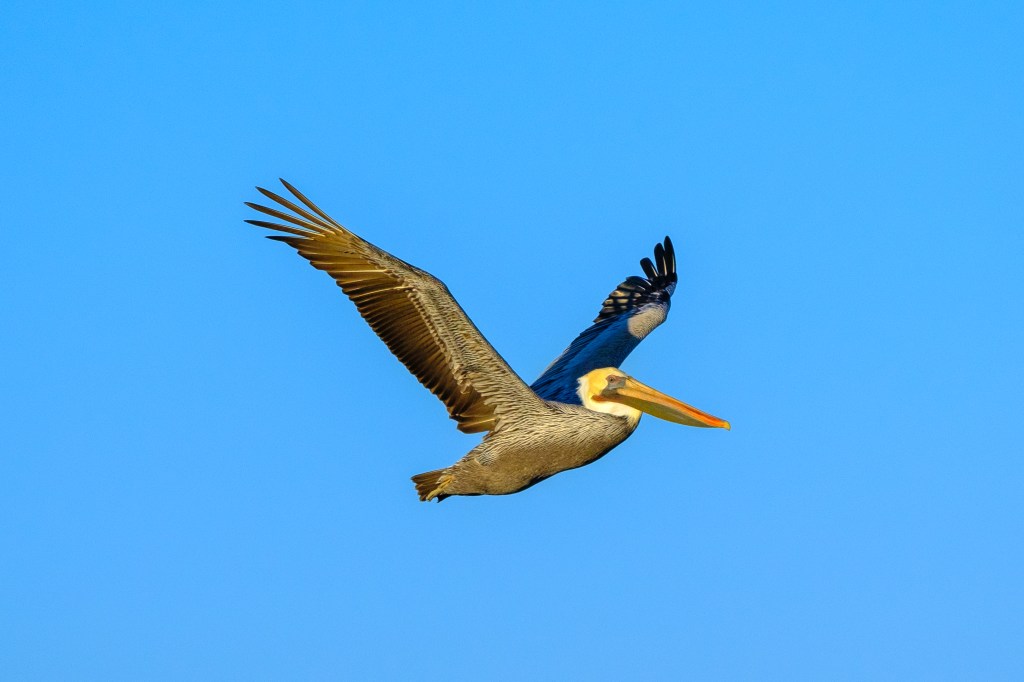

The young pelicans are browner, with a brown and grey head. The mature pelicans have white heads and necks.
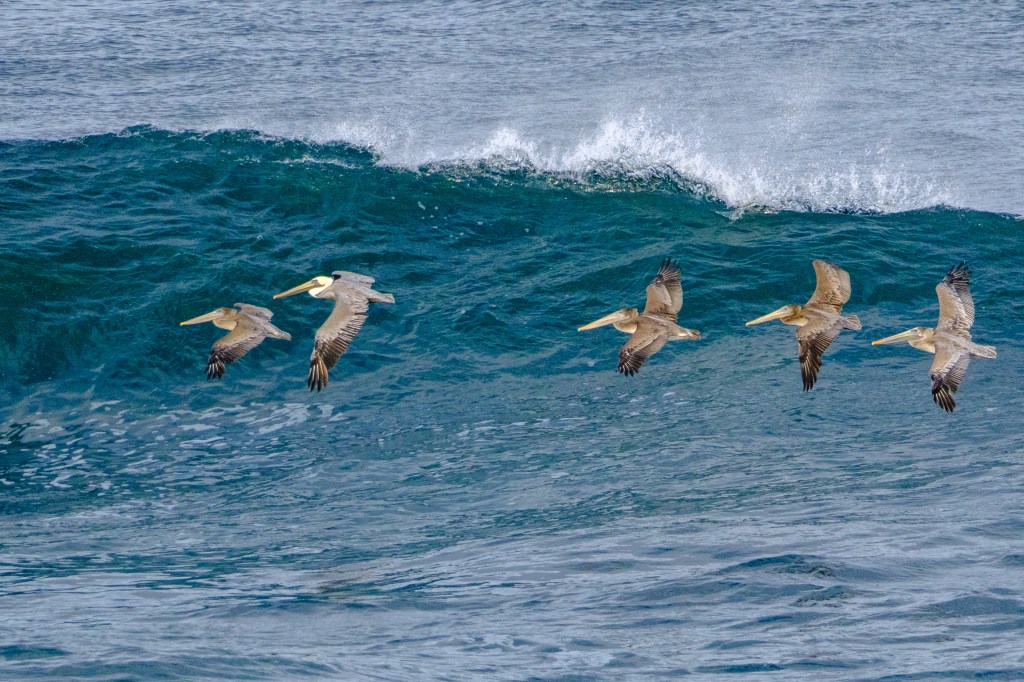
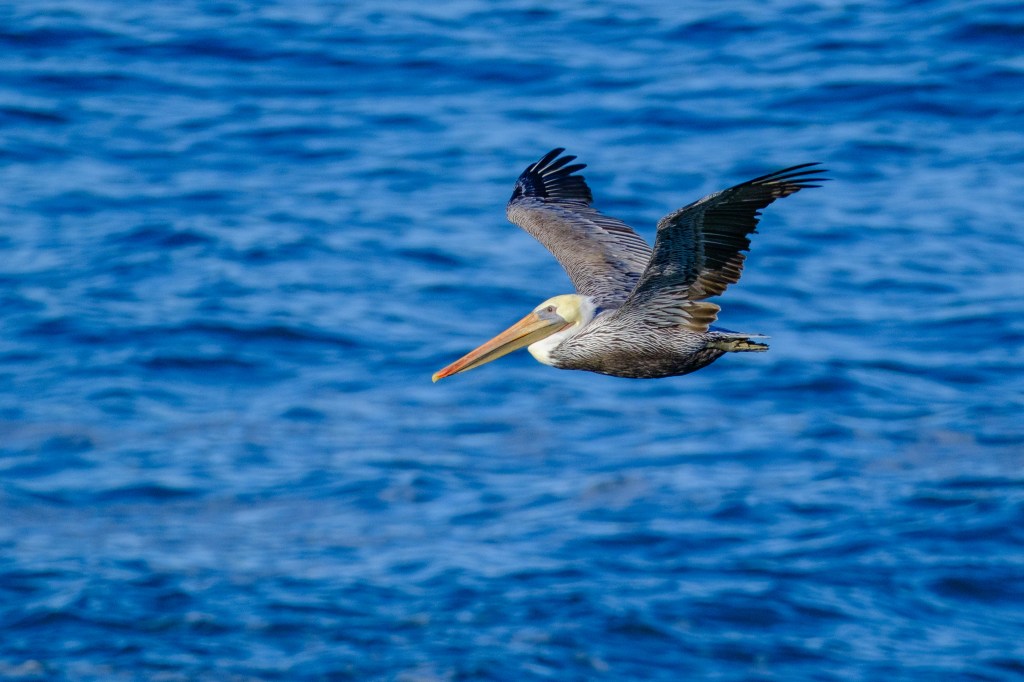
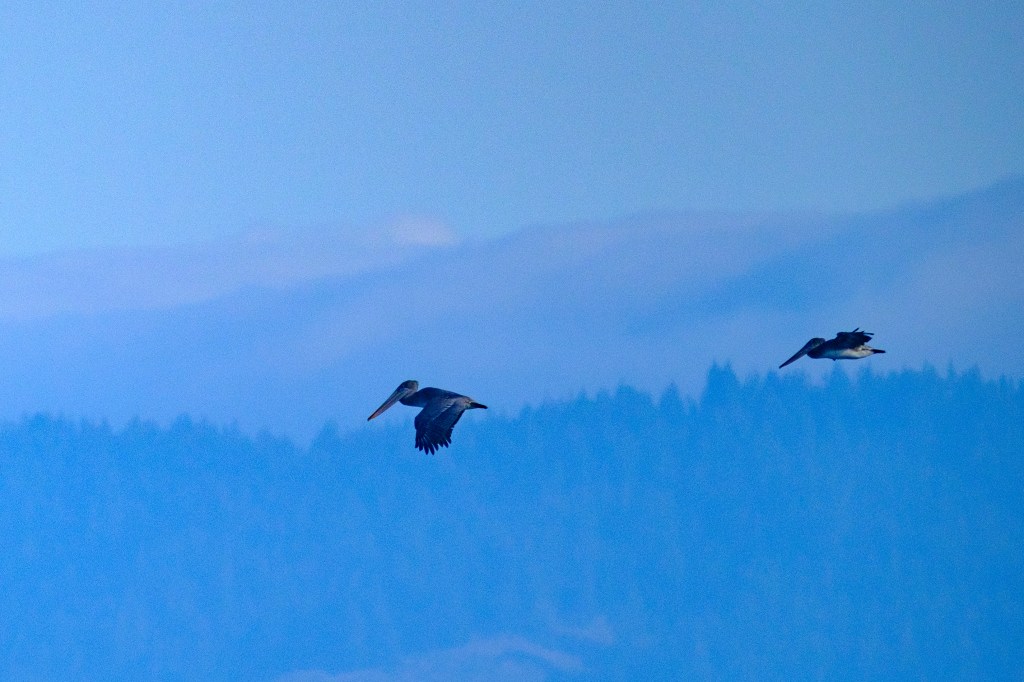
Below two Pelicans look ghostly as they fly over the forest.
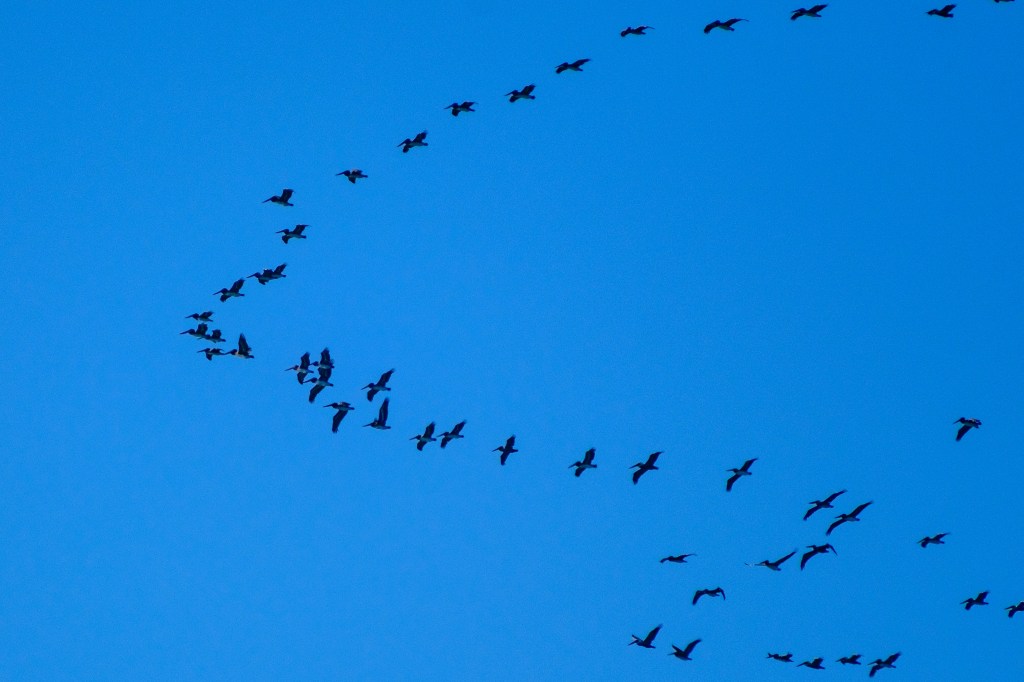
Large number of Pelicans flying south in a V-formation.
Pelicans on Land
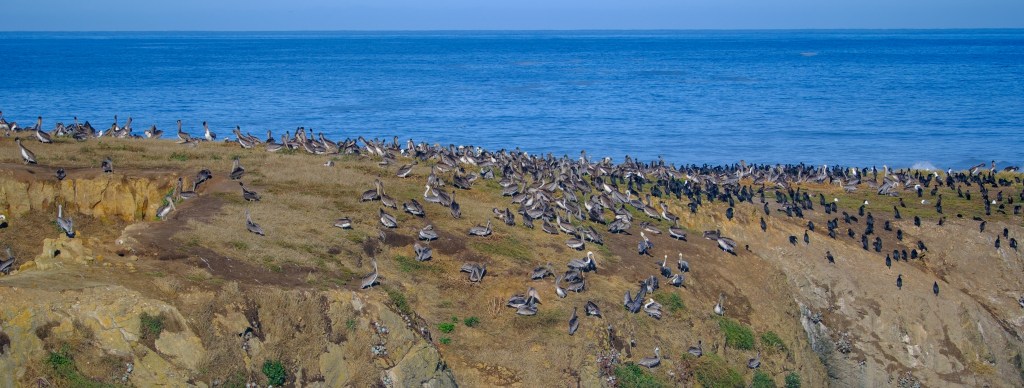
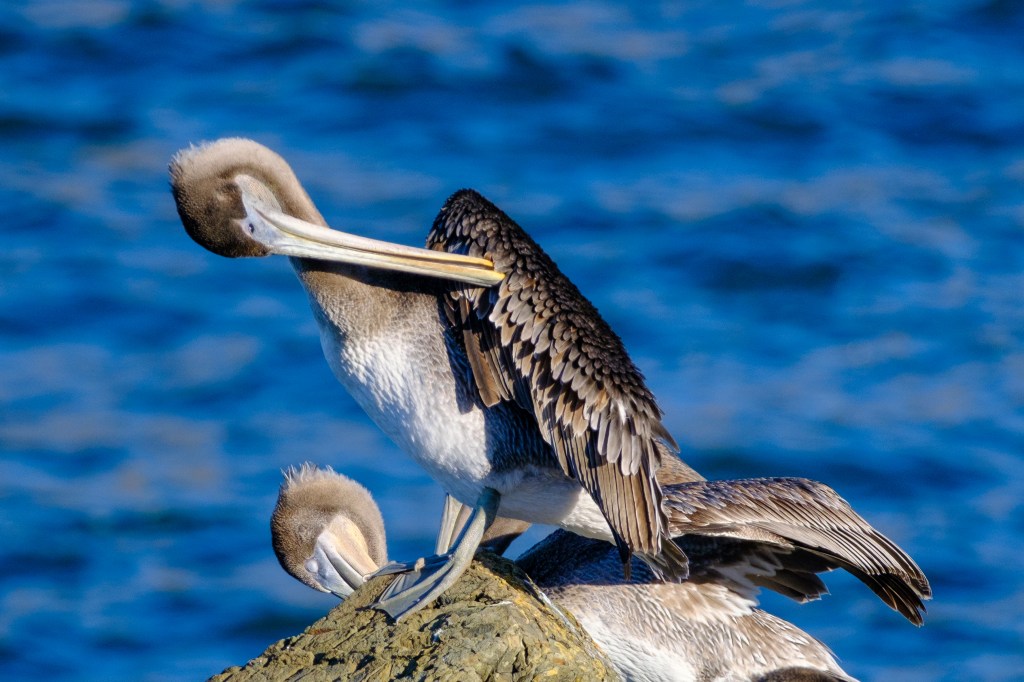
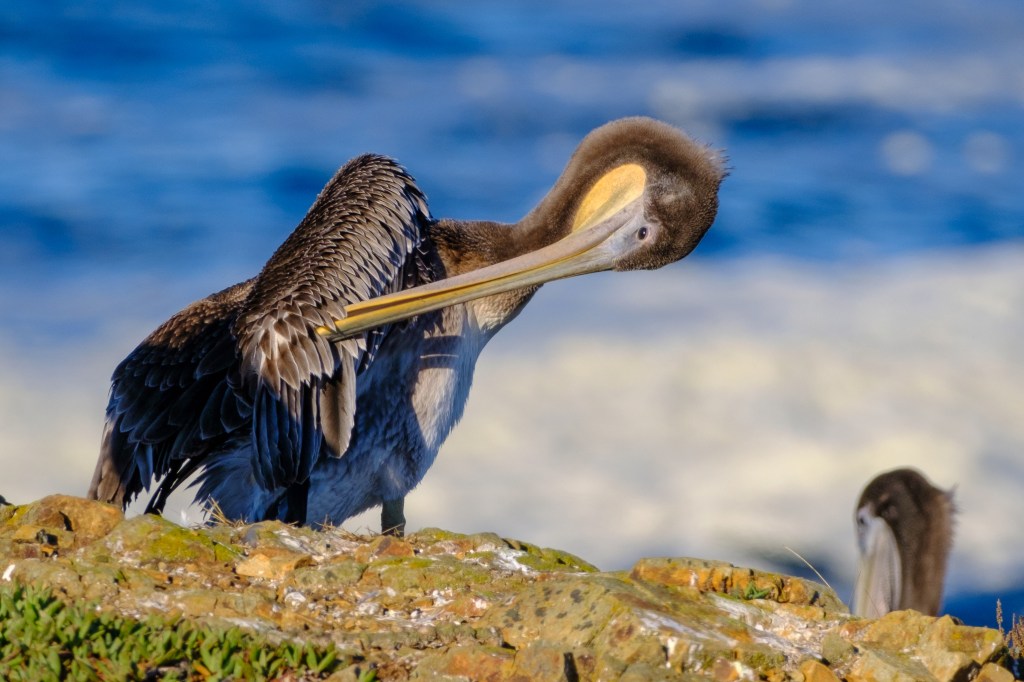
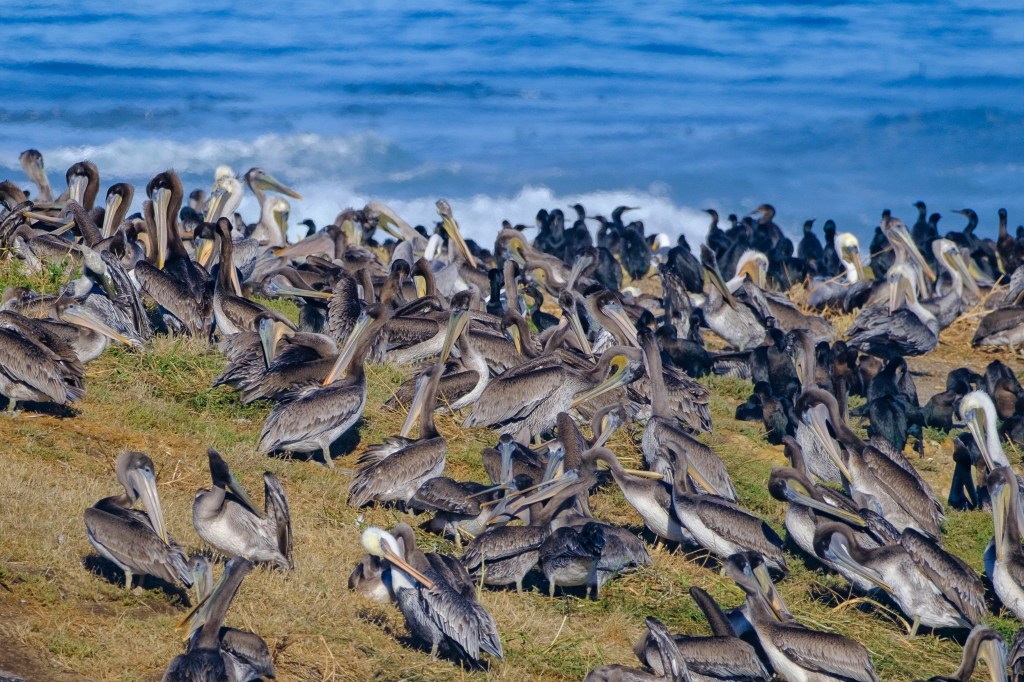
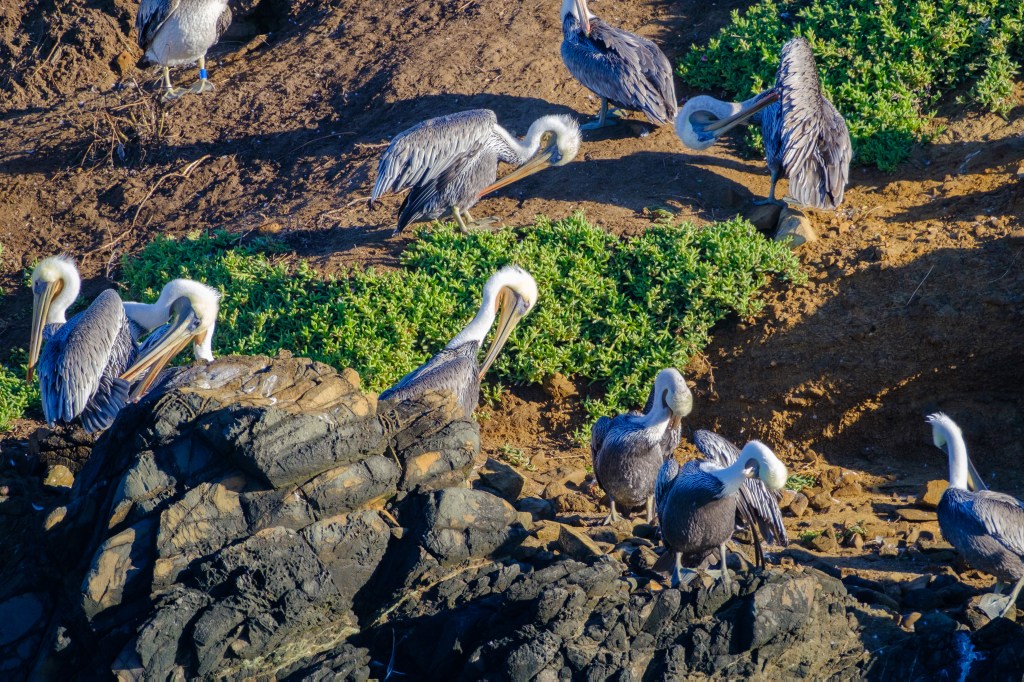
On land, Pelicans obsessively preen their feathers. Occasionally one takes off, flies over the waves, and lands again in a different spot. Are they just visiting other Pelicans? Are they testing their feathers, checking if the preening is satisfactory? There are hundreds of them in the area in fall, but they vanish in winter. These photos were taken at the Mendocino Headlands in the fall.
There were probably 100 Pelicans in the scene below and maybe 1000 more on nearby bluffs. The black birds on the right are Pelagic Cormorants. A few Western Gulls, very white, are scattered about.
A close-up of preening behavior.
Brown pelicans and Pelagic Cormorants.
Everyone is busy.
Cormorants
The Double-crested Cormorant has yellow-orange color around the bill. This bird lives on the coast and is the only cormorant found inland. Near Bishop, this bird hangs out above the dam of the Pleasant Valley Reservoir. They also appear at the Buckley Ponds.
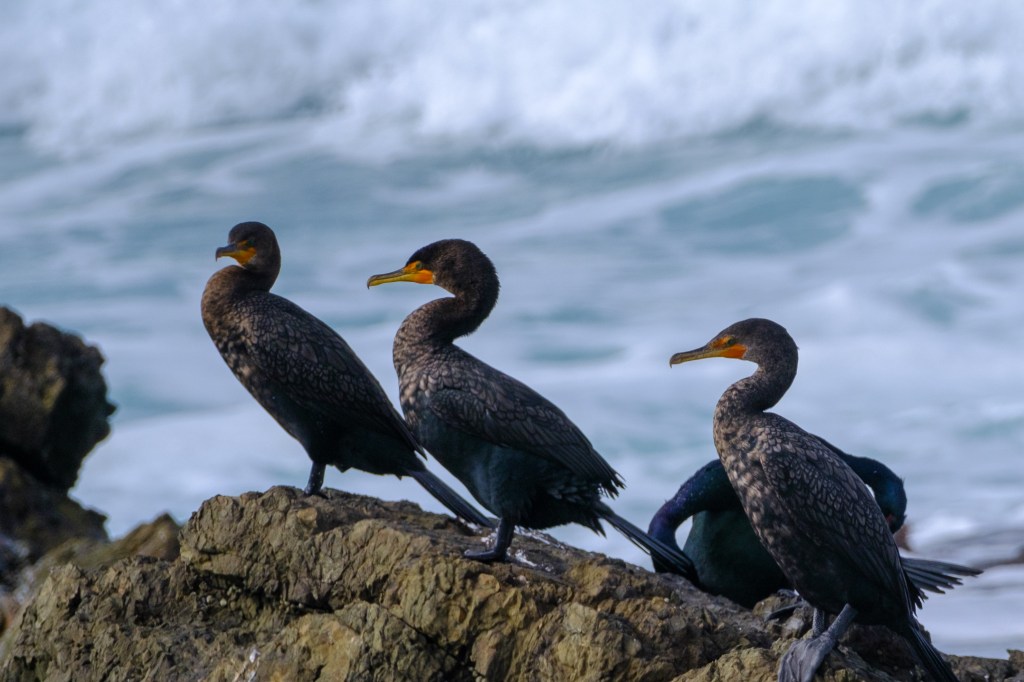
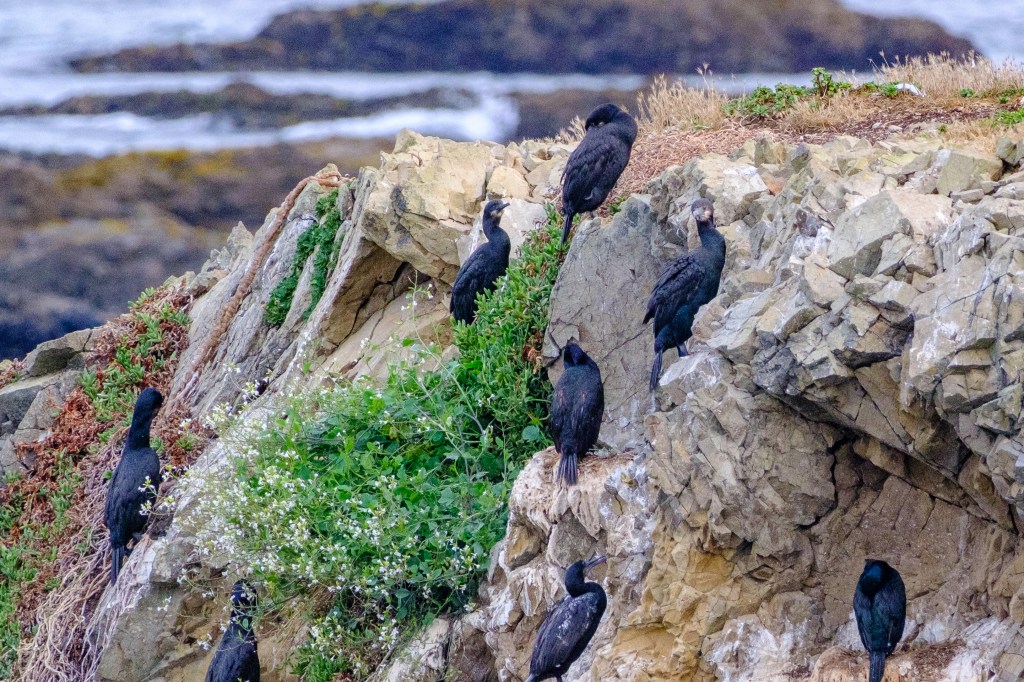
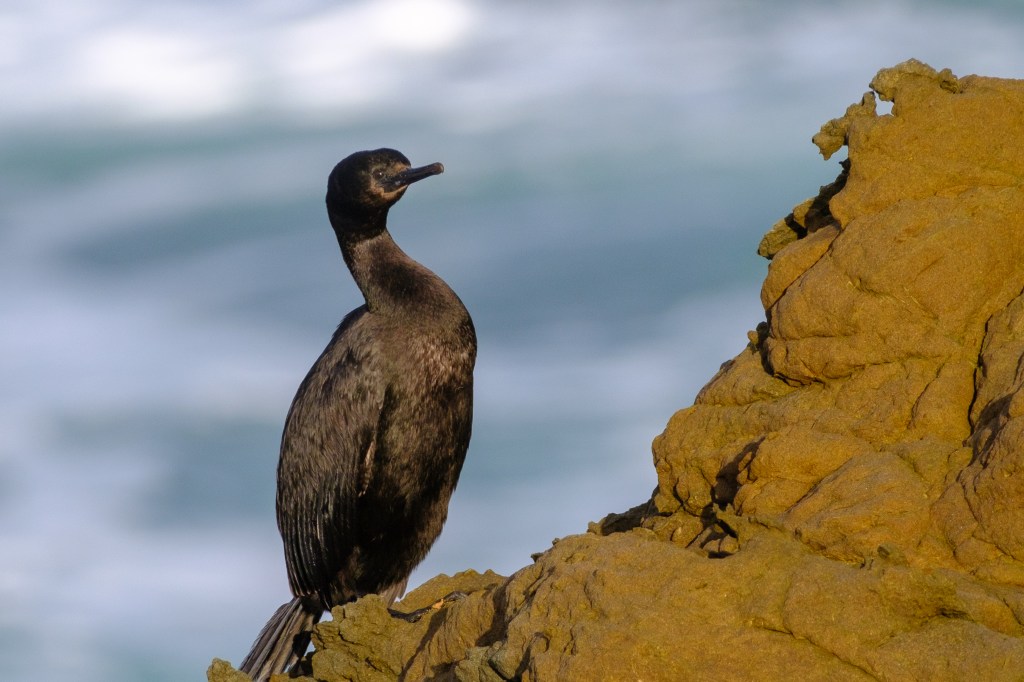
The Pelagic Cormorant swims on the water, then dives up to 120 feet for fish.
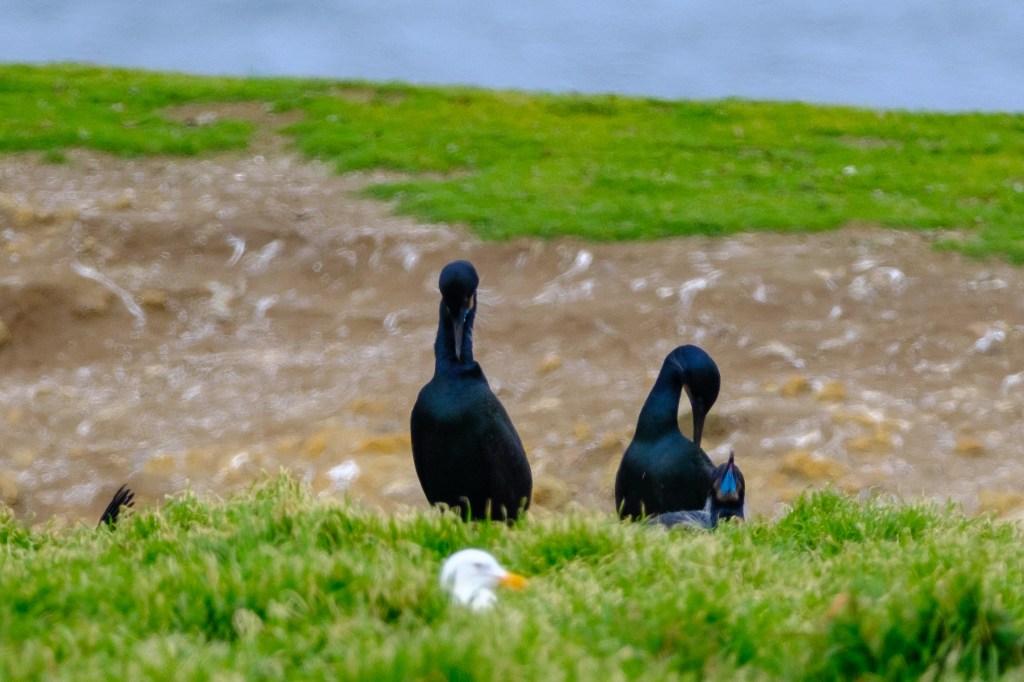
Brandt’s Cormorant has a blue patch under the bill when in breeding plumage.
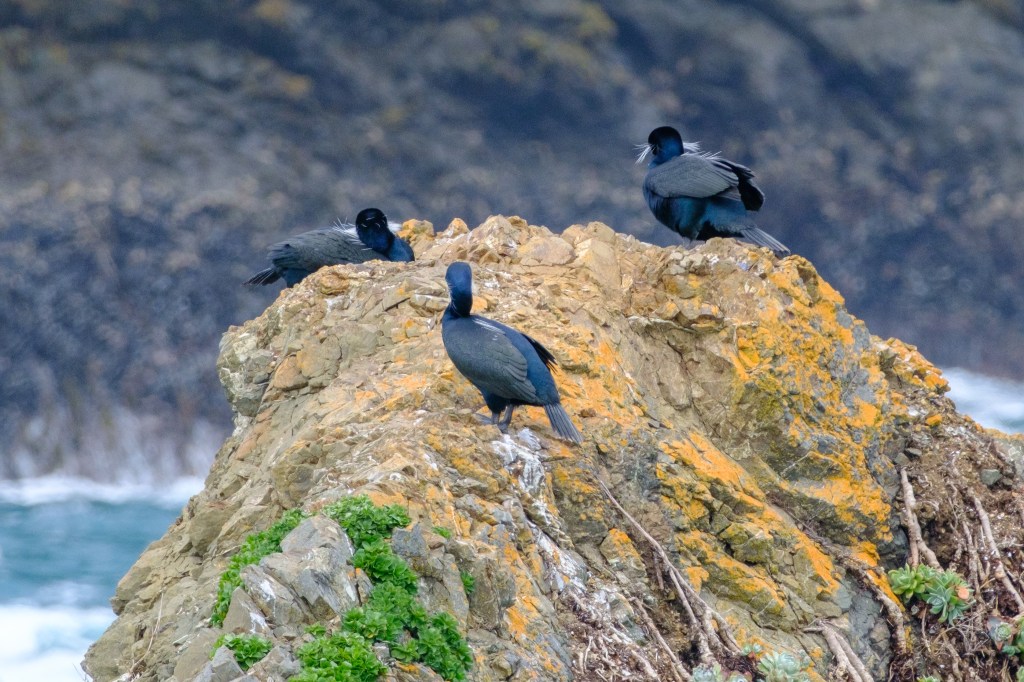
White plumes on the neck are part of the breeding wardrobe of Brandt’s Cormorants.
Western Gulls
Western Gulls are common here. Immature birds are dark, adults white and grey with pink legs. (A warning: gull identification can be difficult. The species often look similar. And these birds change their look as they grow older. I have met birders who say: “I don’t do gulls.” If you think some of these are not Western Gulls, let me know.)
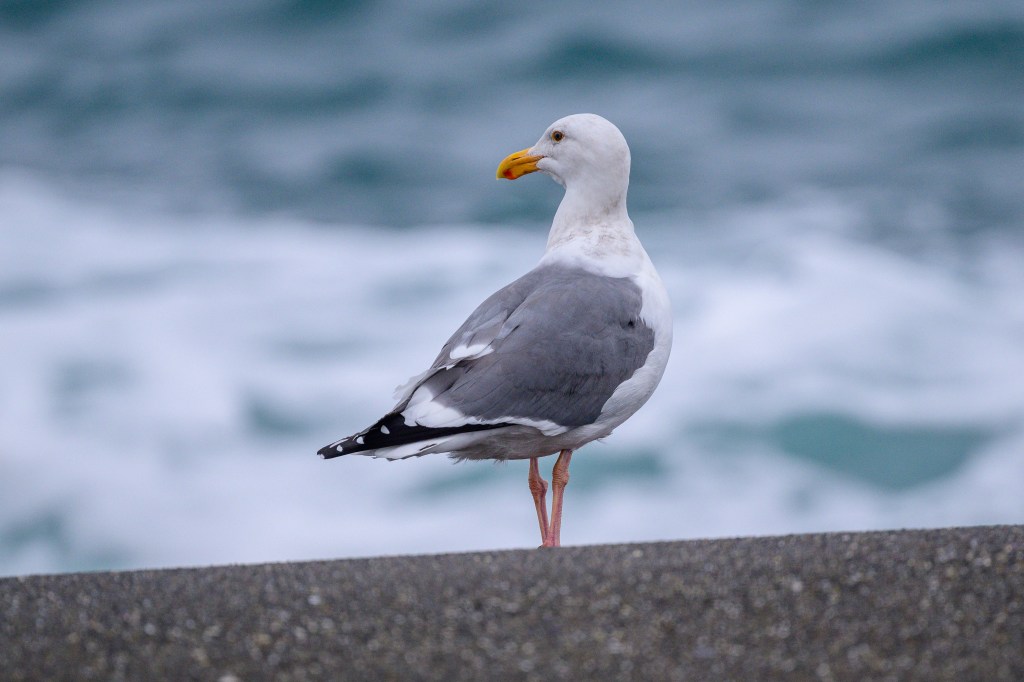
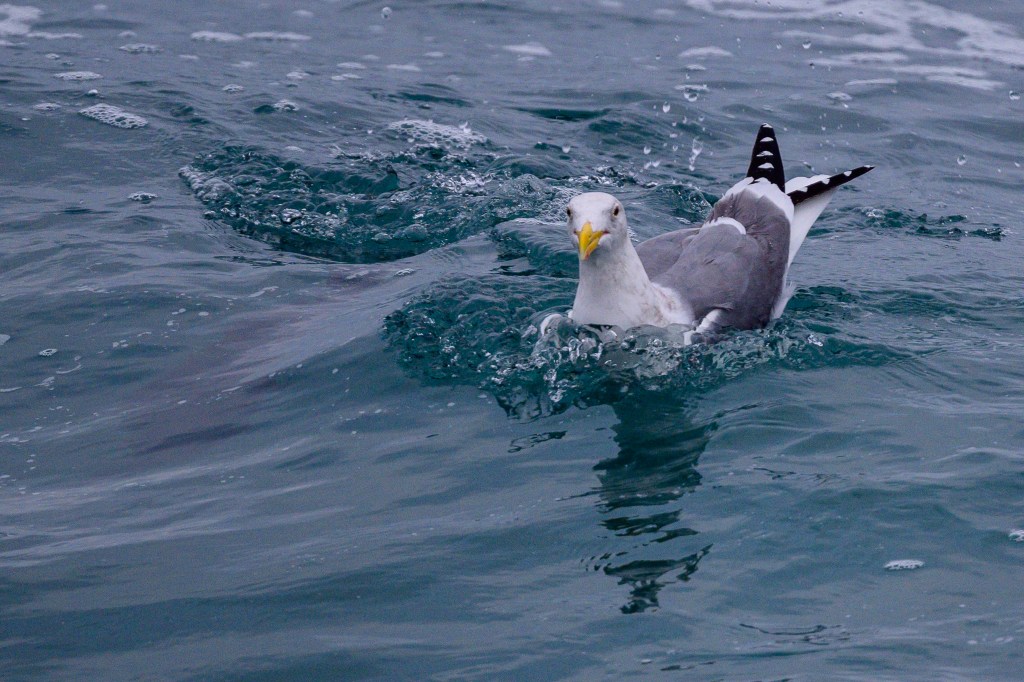

Young gull.

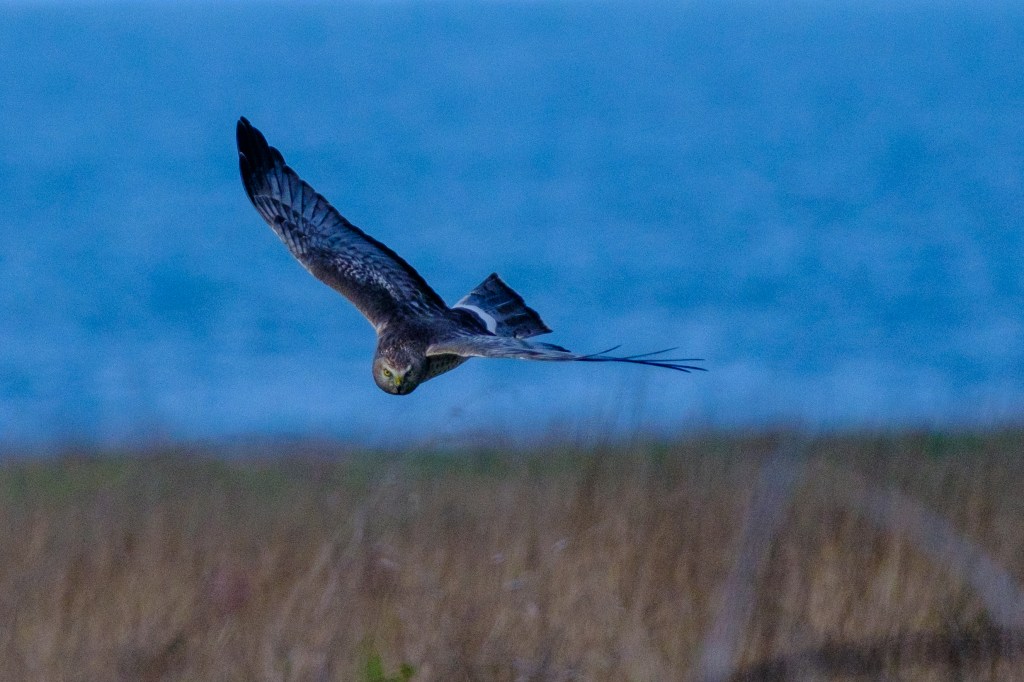
Northern Harrier
This raptor hunts rodents by cruising low and slow over the ground. It often flies looking straight down, sort of like a person who is looking at their phone instead of watching where they are going. While it appears they might run into a tree, they are agile flyers, able to navigate confined areas and turn on a dime. I once saw a Harrier fly at speed under a low strand of barbed wire. When they spot a rodent, they drop quickly. They sometimes hunt in pairs. At the coast, they cruise the coastal bluffs. This bird is common over the fields near Bishop.

The Harrier below is looking down.
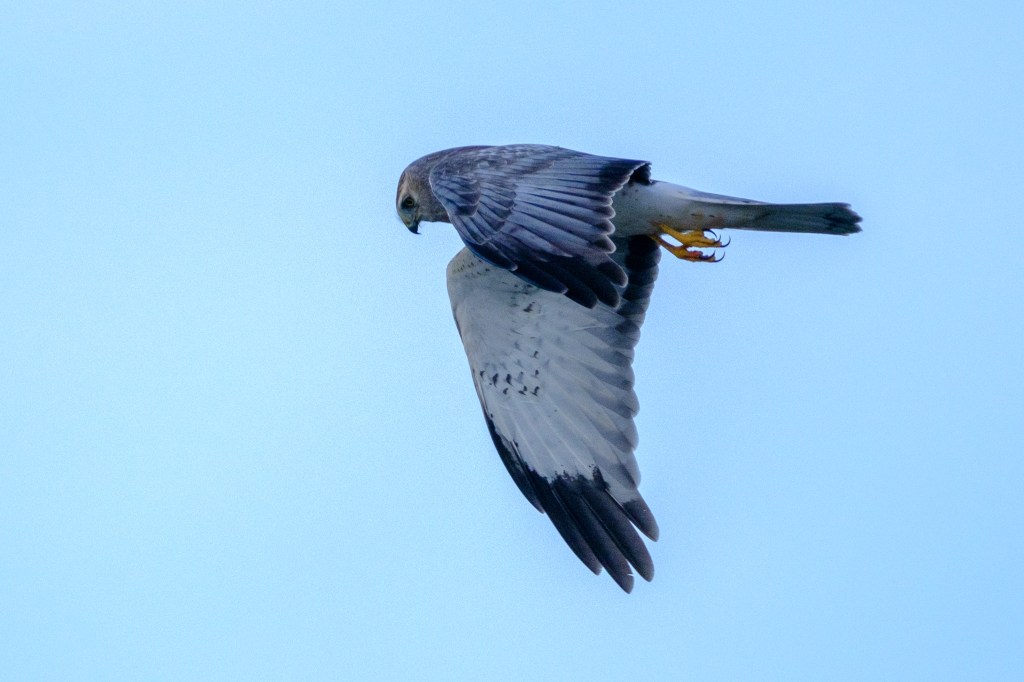
Note the white rump in the image below. The Harrier is the only raptor with this distinctive butt.
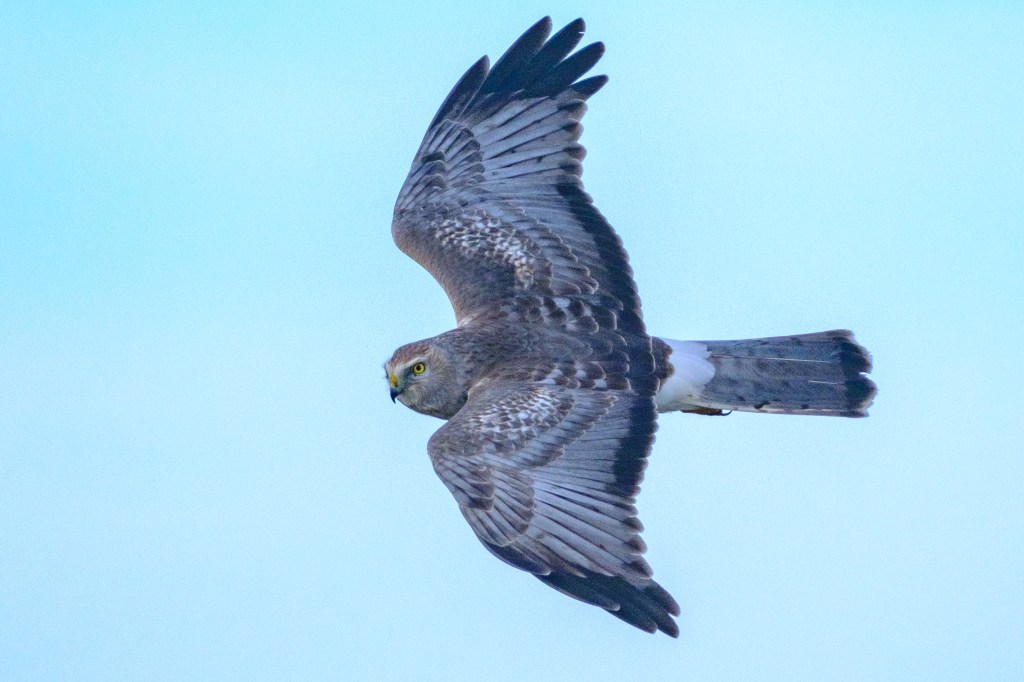
Another feature is the ruff of feathers around the face.
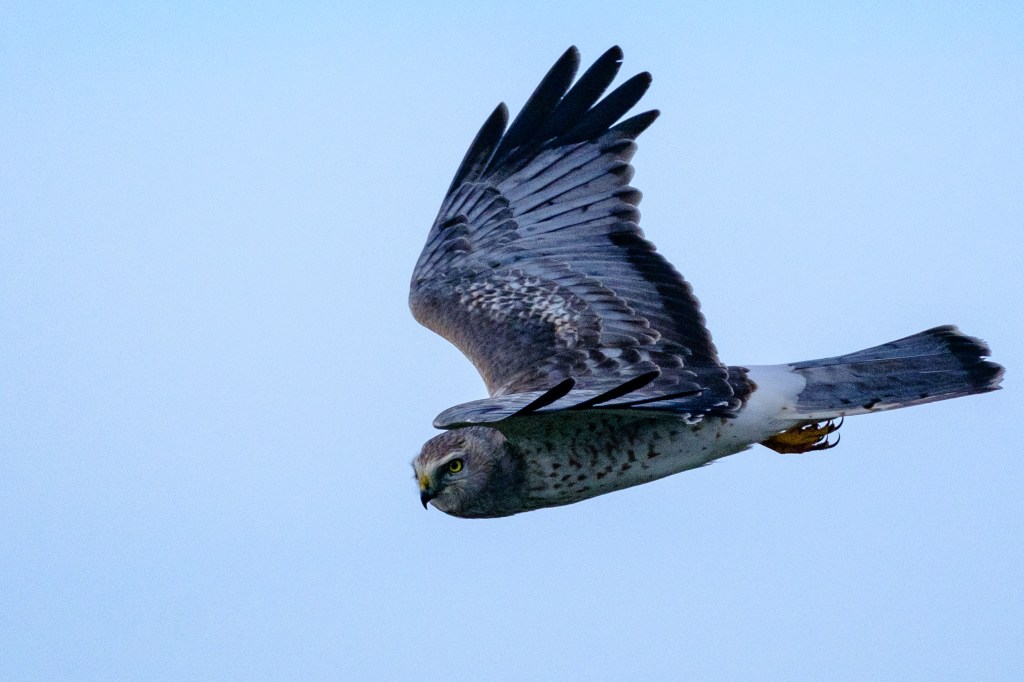
The view below may be the last thing a mouse sees.
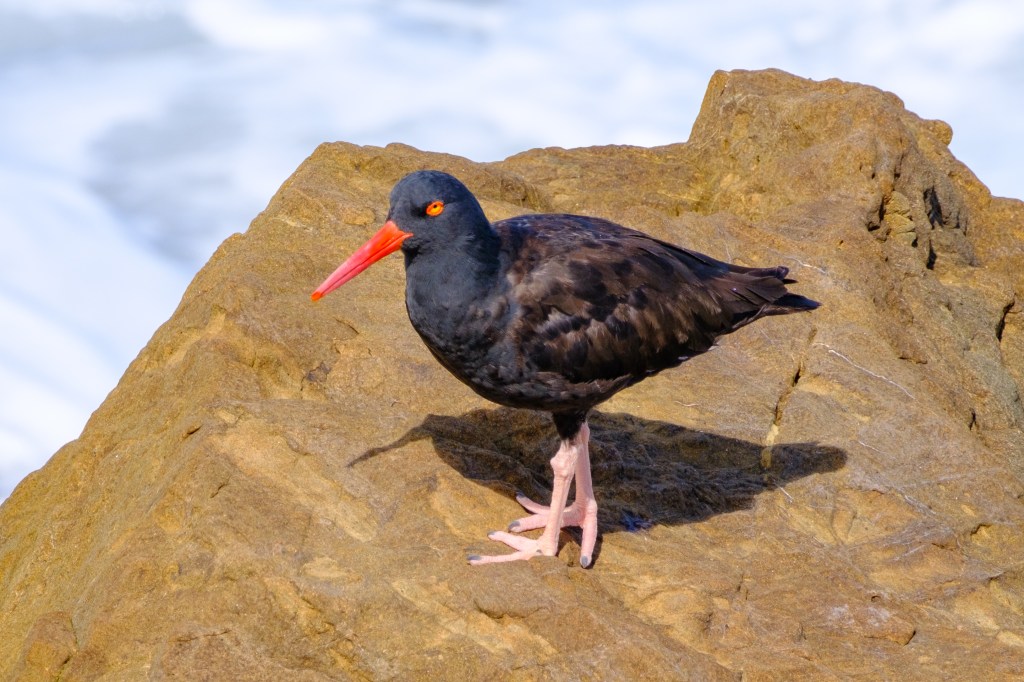
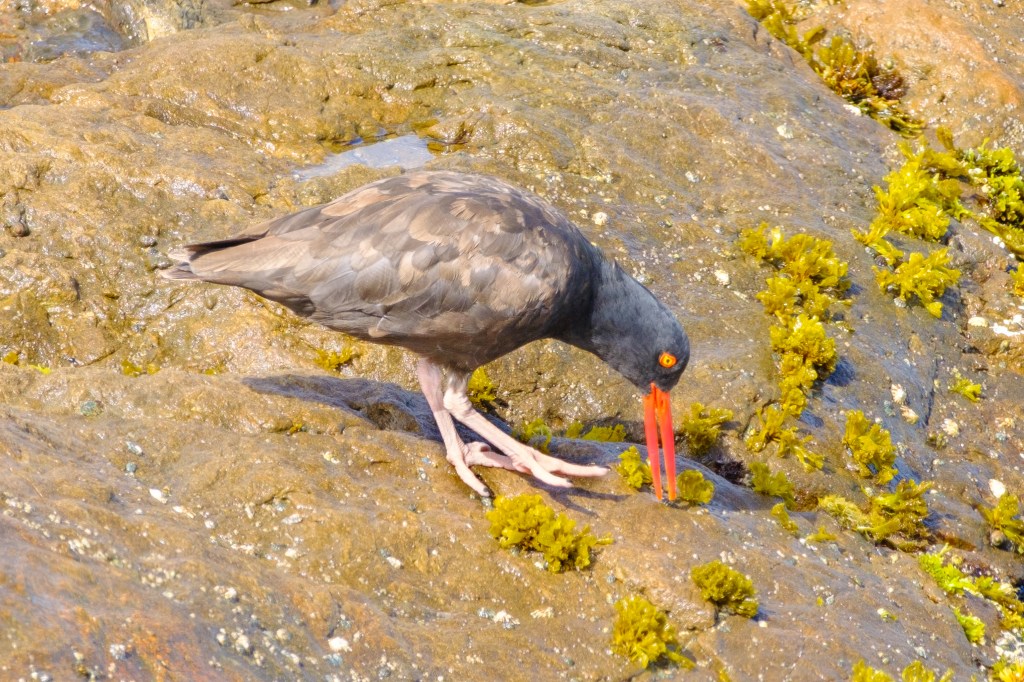
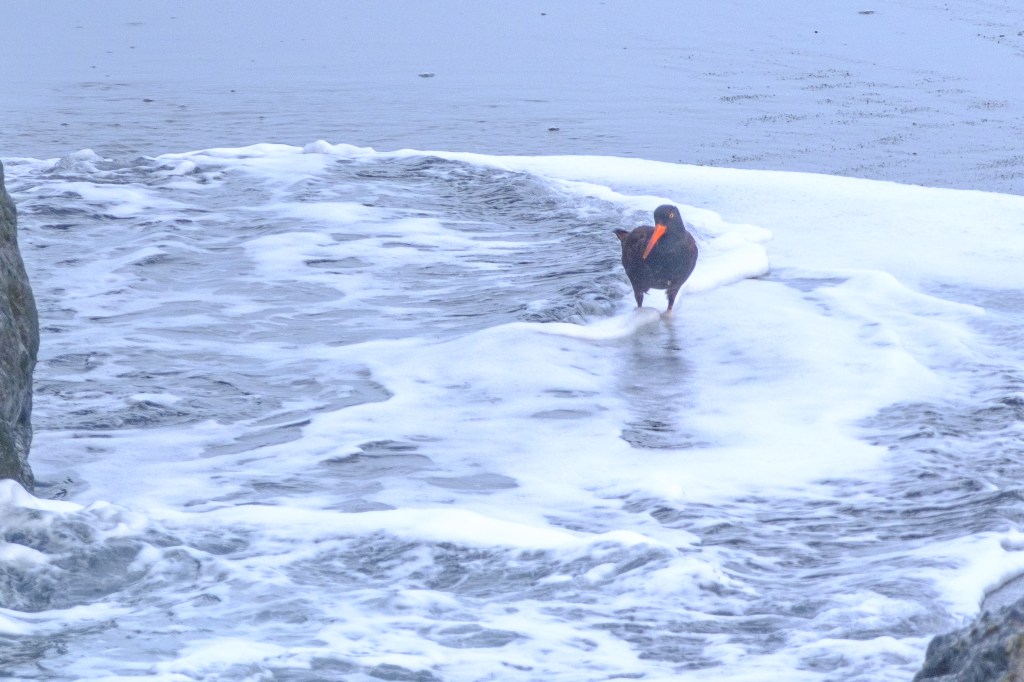
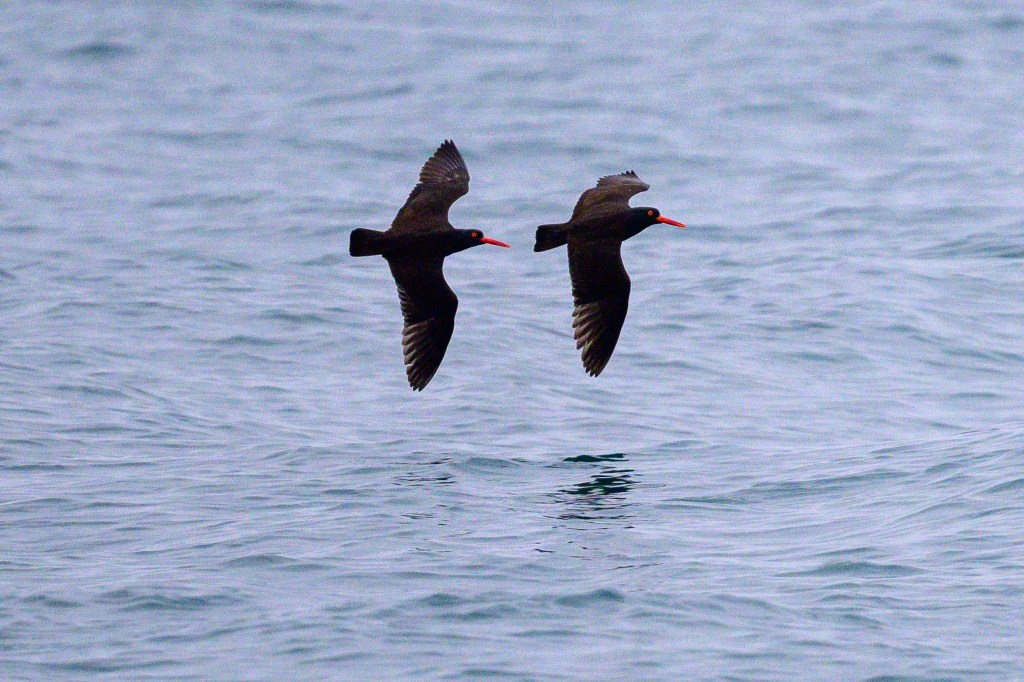
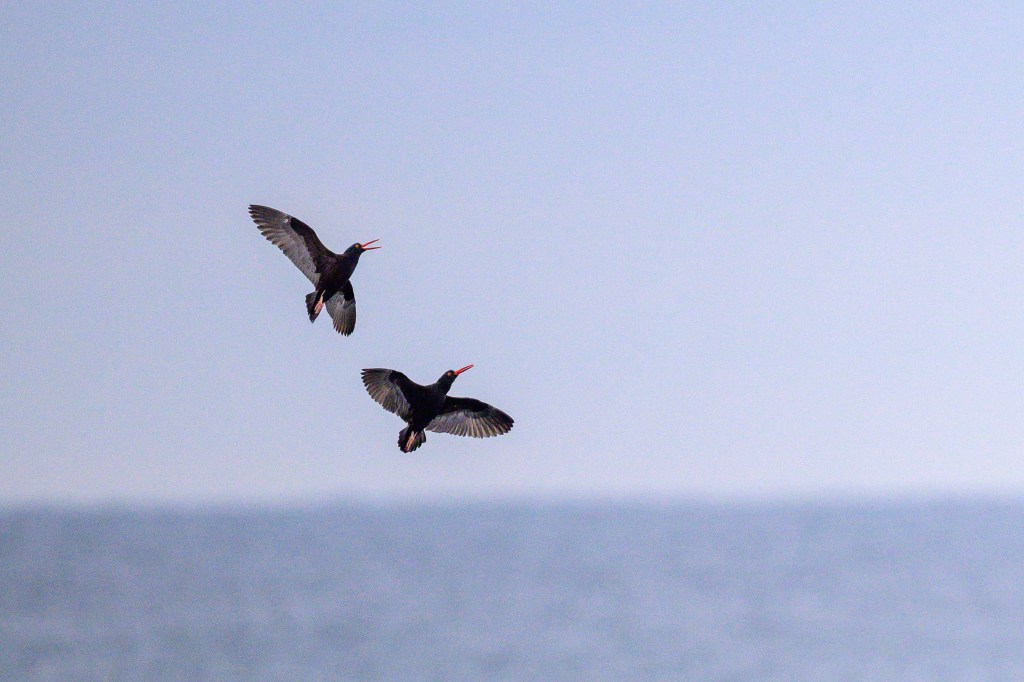
Black Oystercatchers
Clownish in appearance, with yellow eye, red eye-ring and bill, dark feathers, and pink legs. Toes seem to have toenails. A bird created by a comedian. They can chisel mollusks off rocks and then pry the shells open.
White-tailed Kite
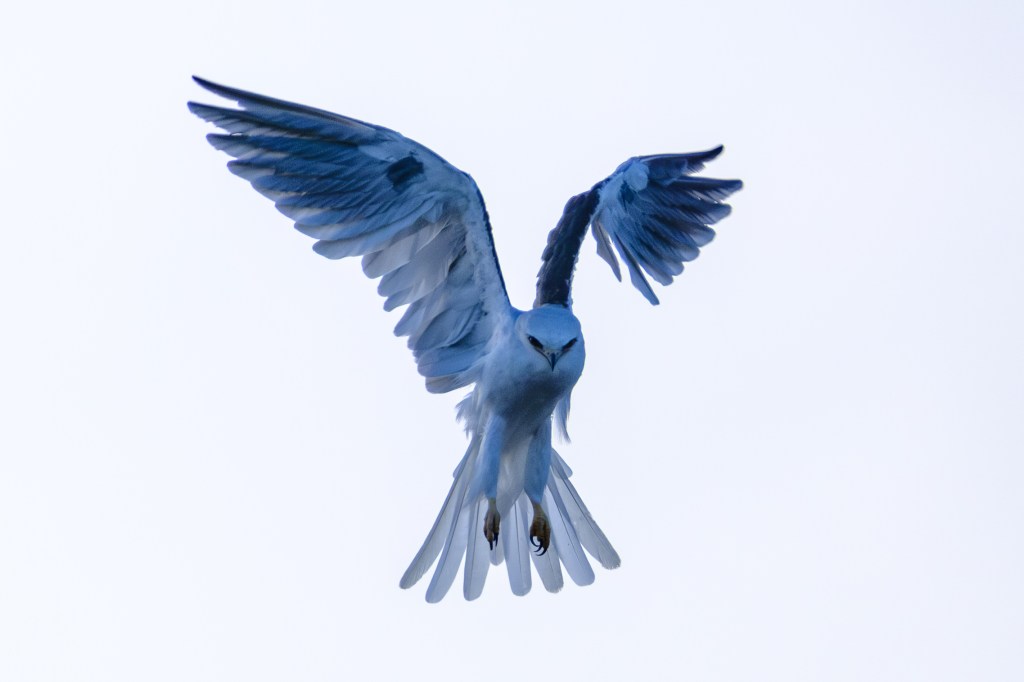
White-tailed Kites live on the West Coast, in the Southwest, and along the Gulf of Mexico. They rarely visit the Owens Valley; I have never seen one near Bishop. They hunt by hovering, ready to drop and grab small rodents. The white wings look angelic, but the red eyes look devilish. For the last 3 years I’ve seen these birds at the coast.
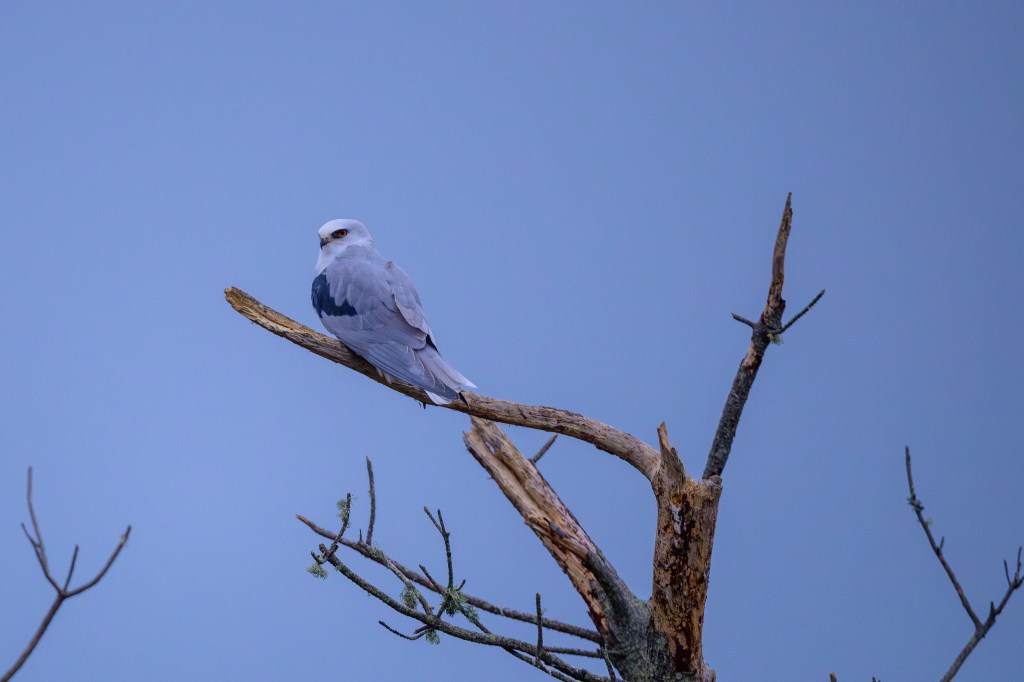
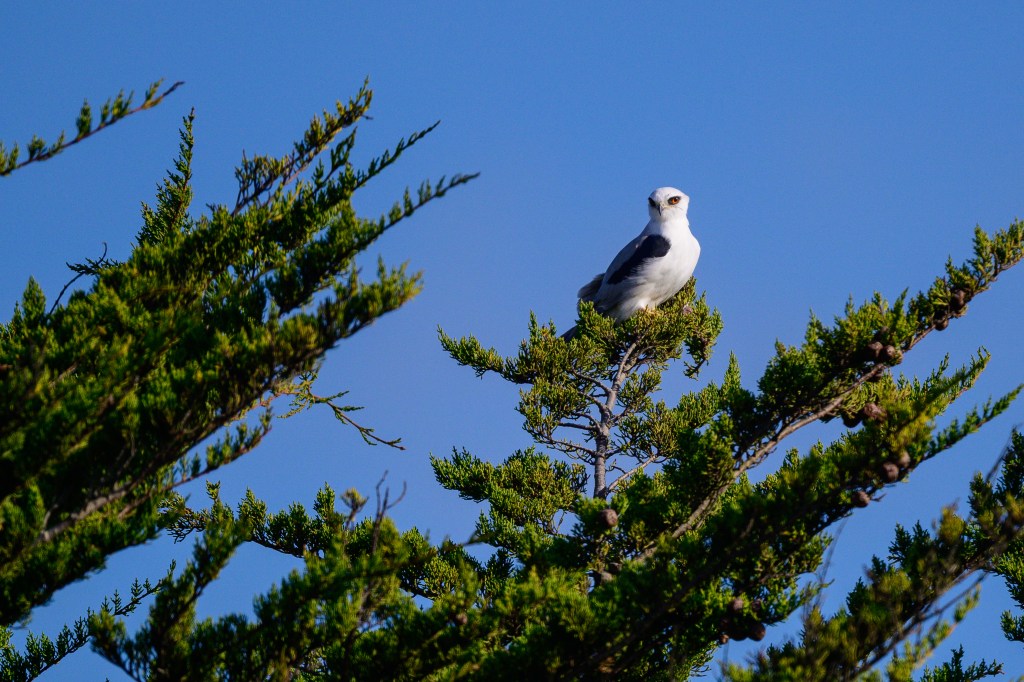
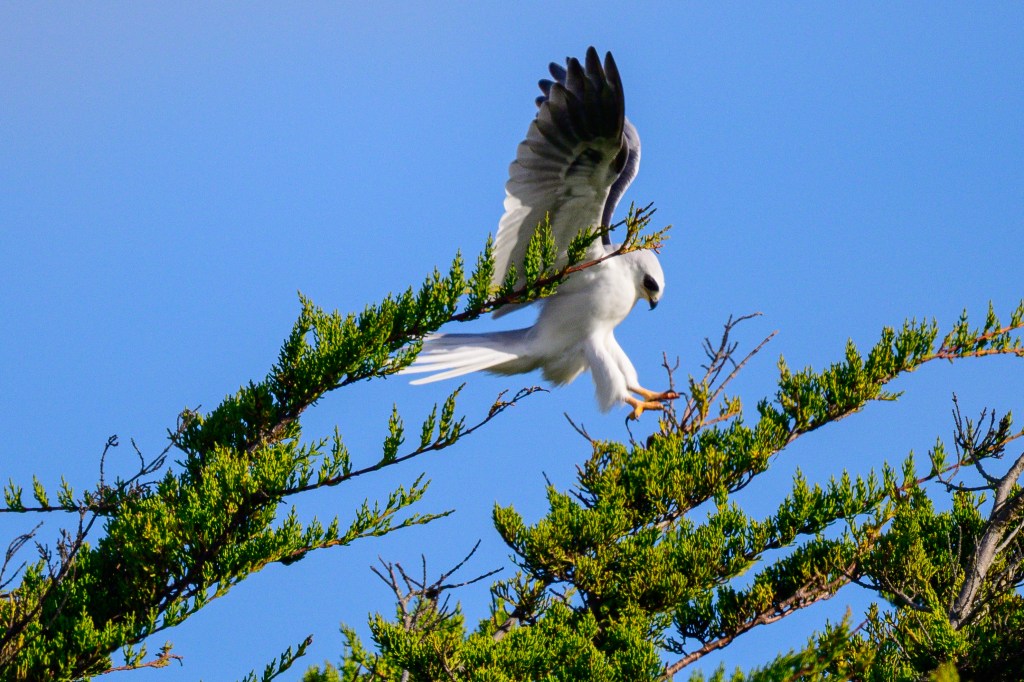
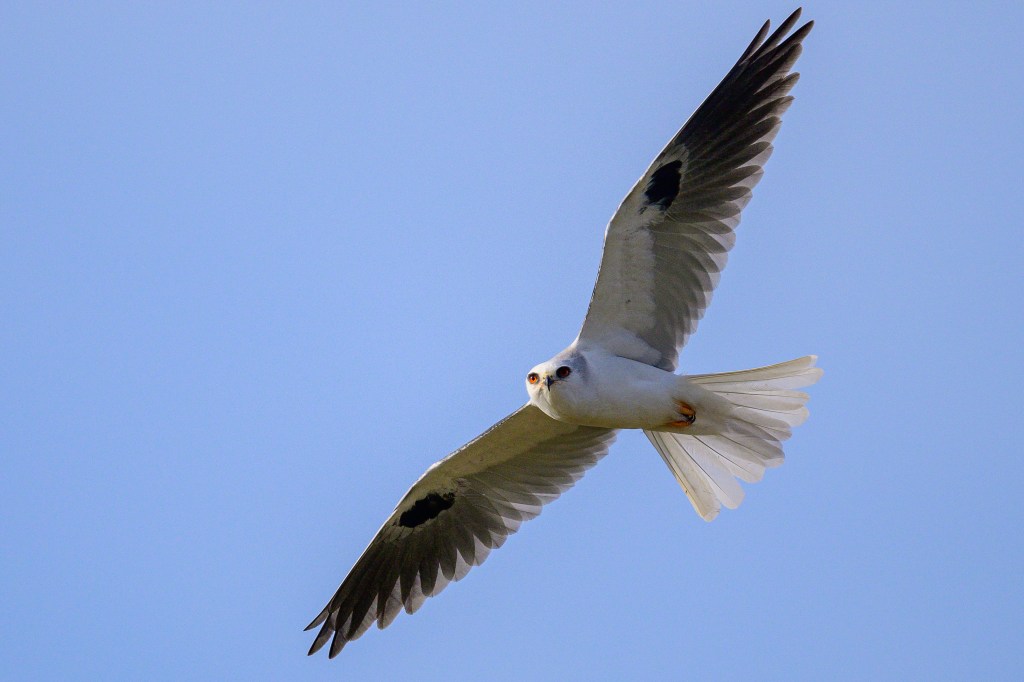
Hovering, ready to grab a vole. A mixture of angel and devil.
Other seabirds
Snowy Plovers, shown flying below, appear sometimes in the Owens Valley. I resent these birds. Humans are banned from many California beaches, to protect the eggs that stupid plovers lay on the sand. If you leave your iPhone on a beach and someone steps on it, I feel that is on you. I feel the same way about plover eggs. (Ok, I agree we should protect the Snowy Plover. But still…)
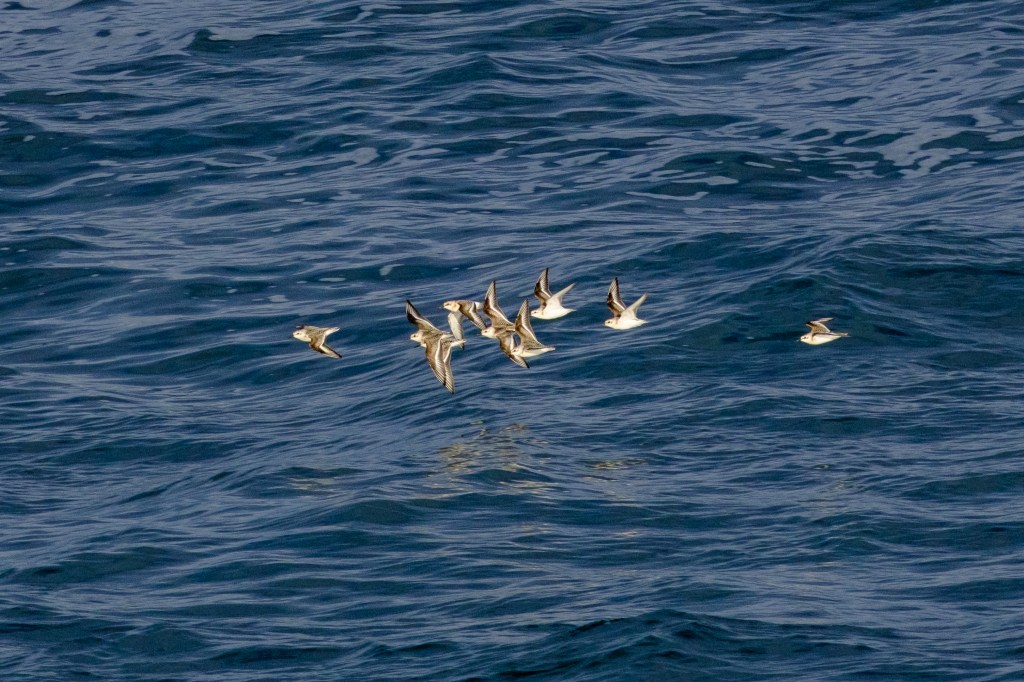
The Black-bellied Plover, seen below, breeds in the Arctic. In non-breeding plumage, the black-belly is absent.

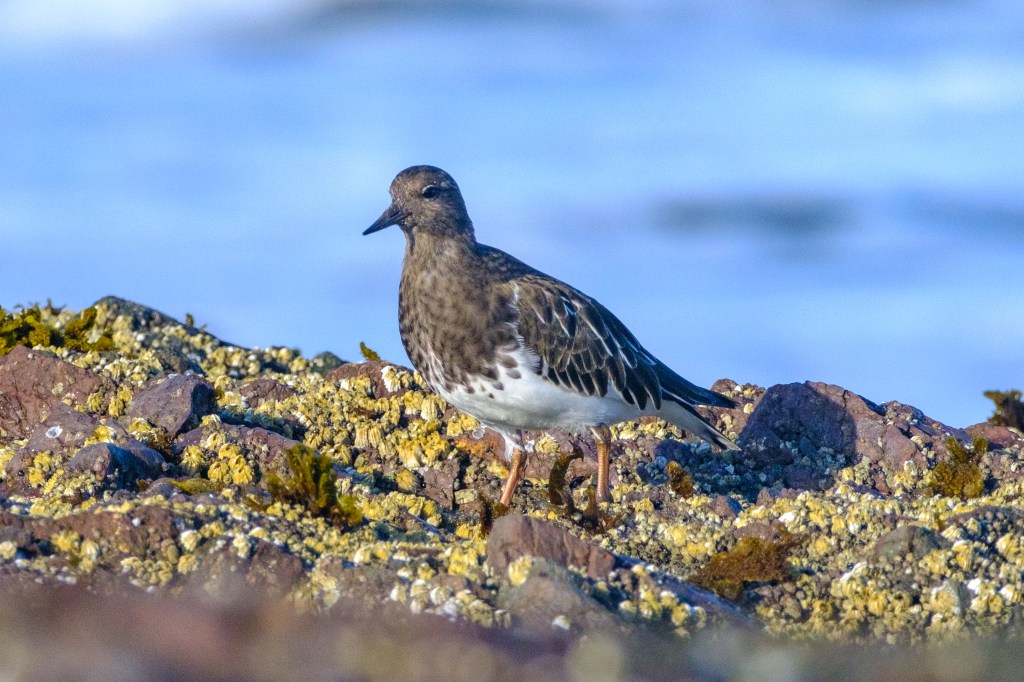
Black Turnstone below. Breeds in Alaska, winters on the coast.
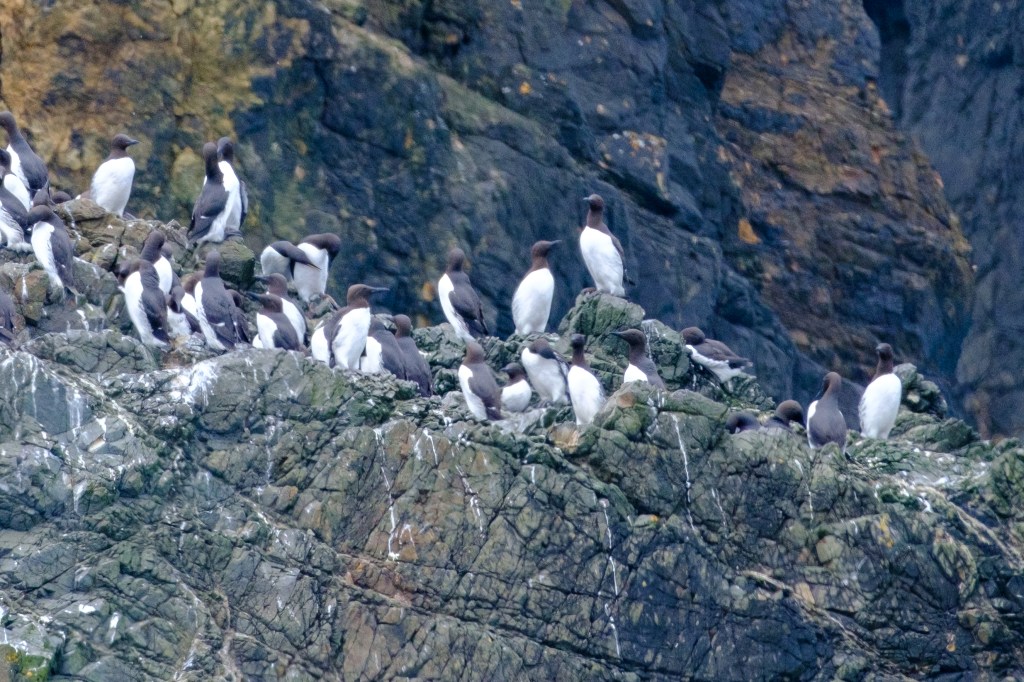
A colony of Common Murees.
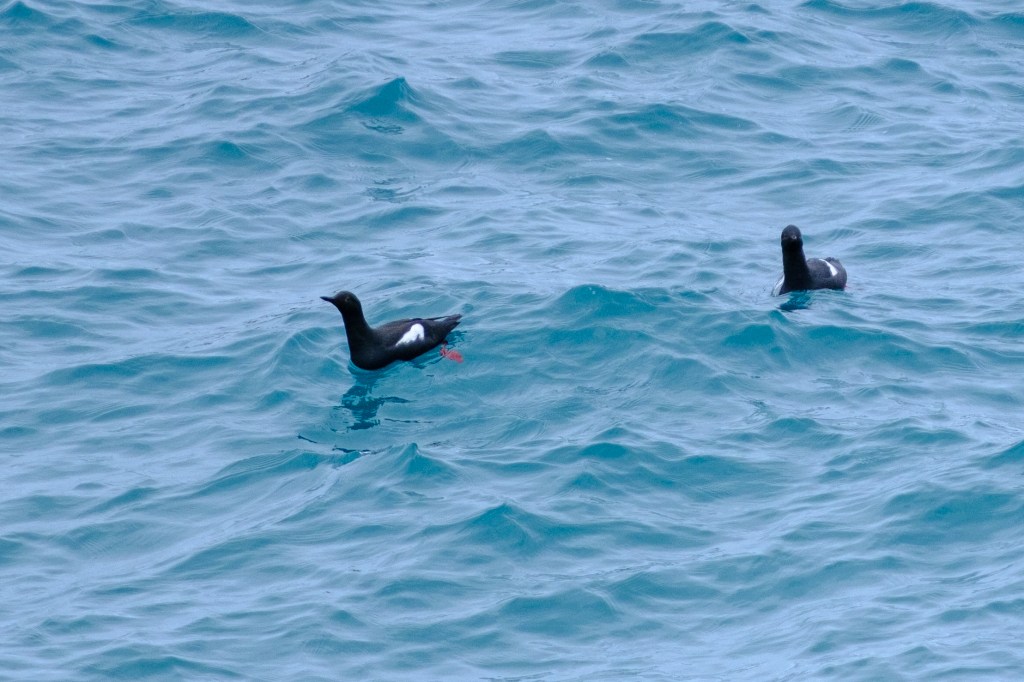
Pigeon Guillemots, below.
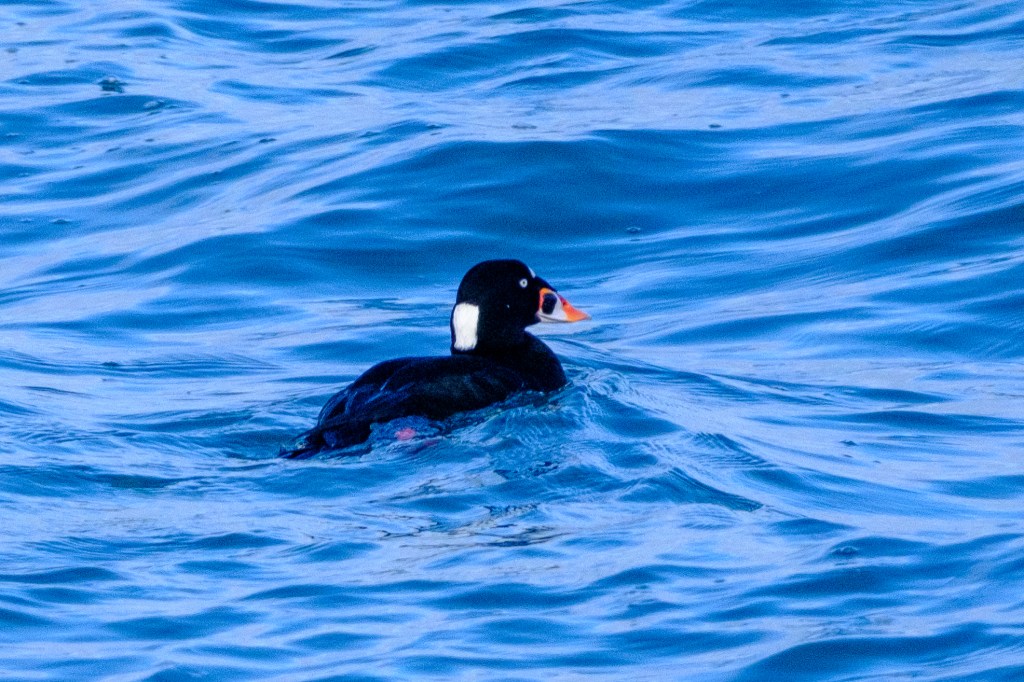
Surf Scoter is a sea duck. The male is very colorful.
Other Water Birds
The next 3 birds are common both on the coast and in the Eastern Sierra.
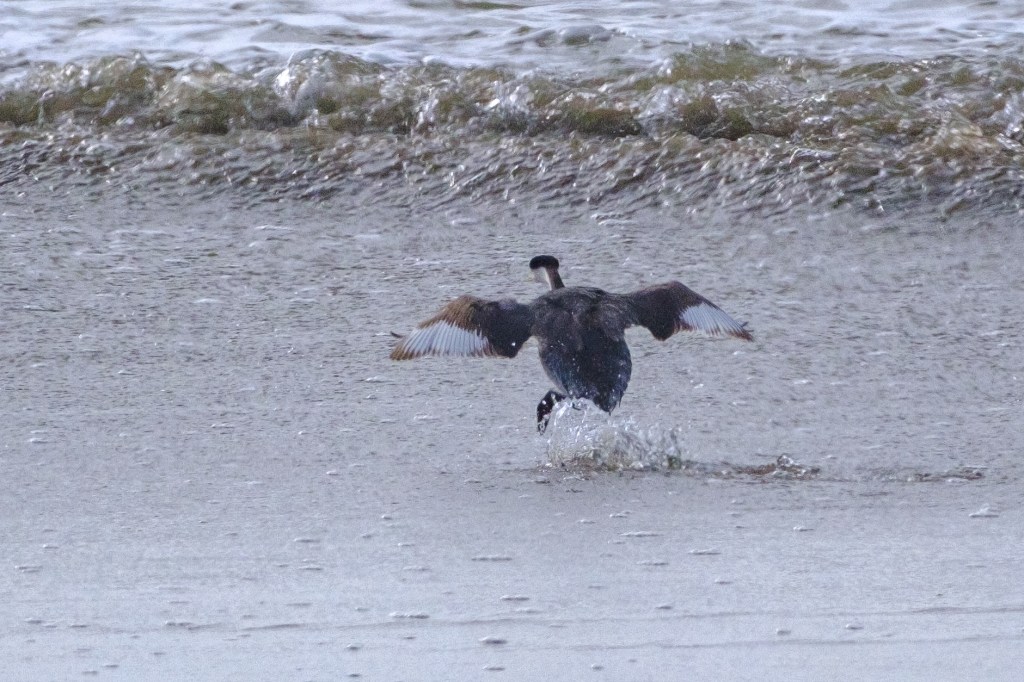
Western Grebes are famous for doing a water dance. A mating pair will join each other in “walking” on the water surface. The bird below was single, but practicing this dance in the surf.
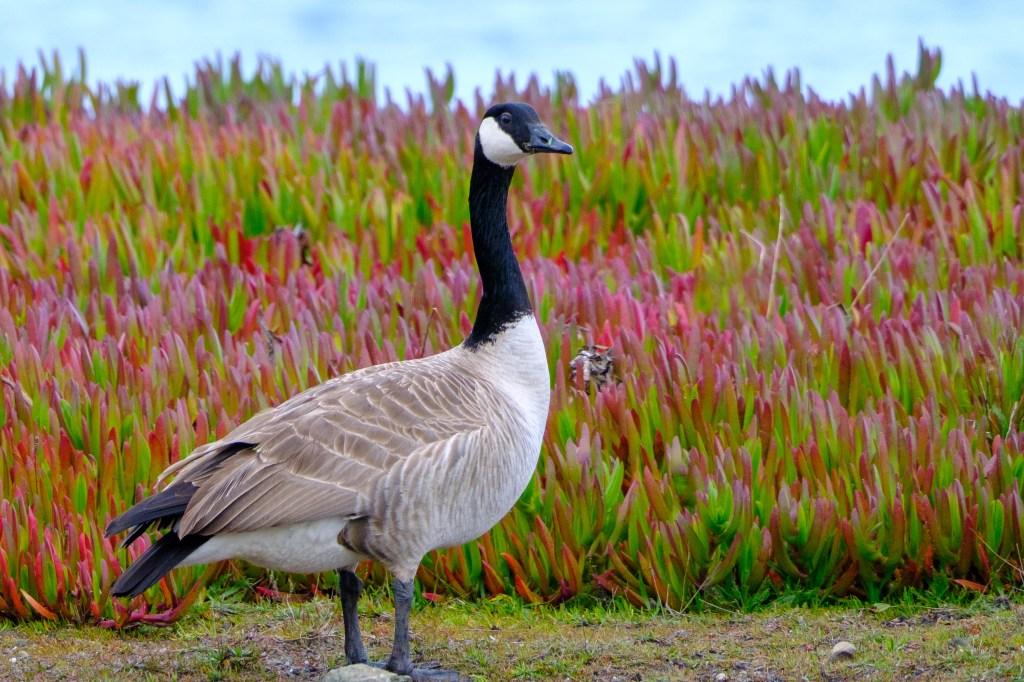
Canada Goose posing with ice plants.
A Great Egret at a pond in Mackerricher State Park.

Other Land Birds
The next group of “land” bird photos shows birds that are common to both the Coast and the Eastern Sierra.
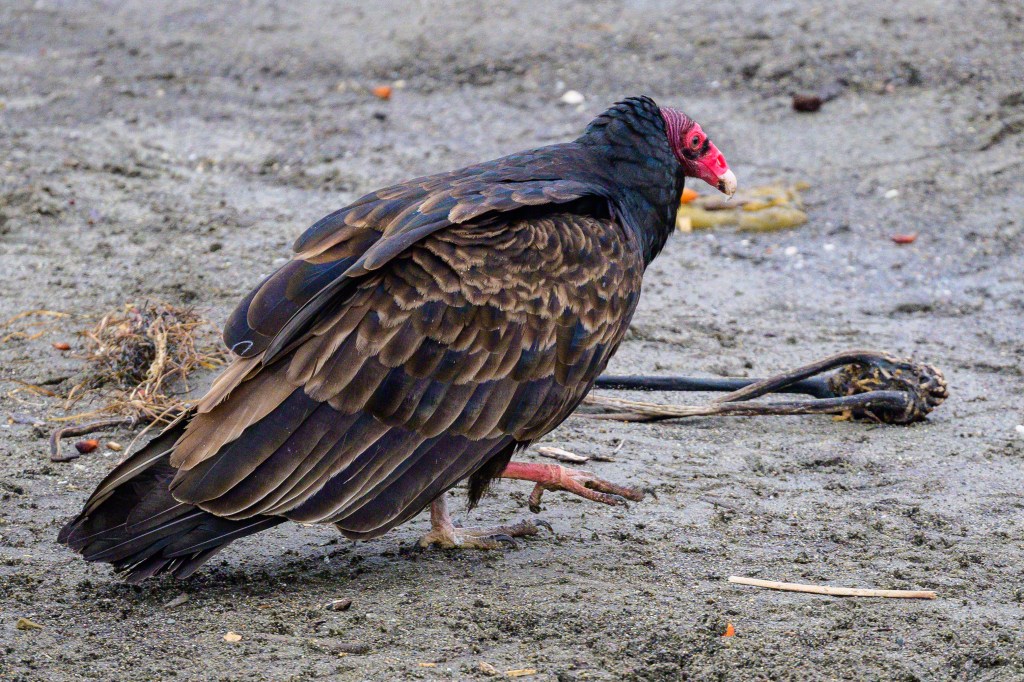
The Turkey Vulture is a bird that only a mother could love. But they are terrific flyers who sail gracefully on the wind. The bird below was with a vulture group on the beach.
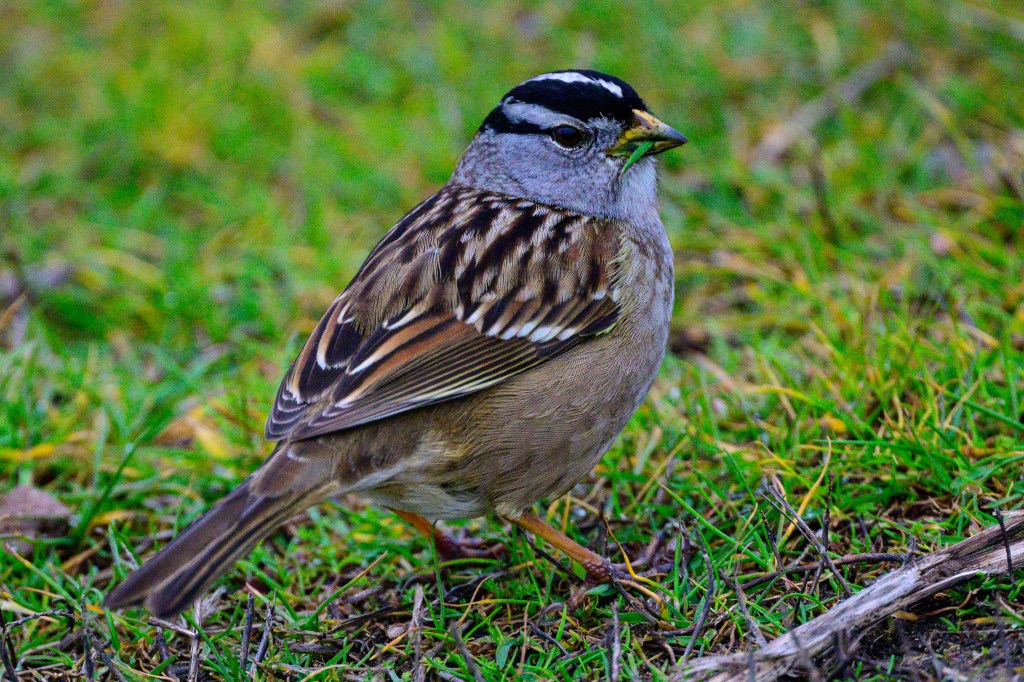
A White-crowned Sparrow eating vegetation.
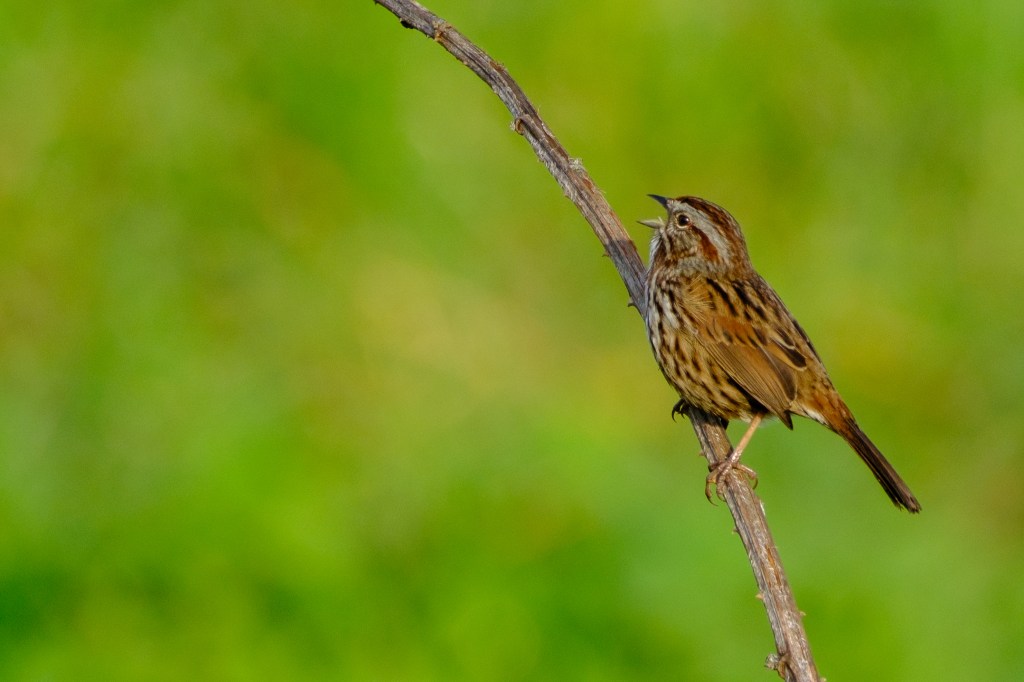
A Song Sparrow doing its thing. You can see the bird’s tiny tongue.
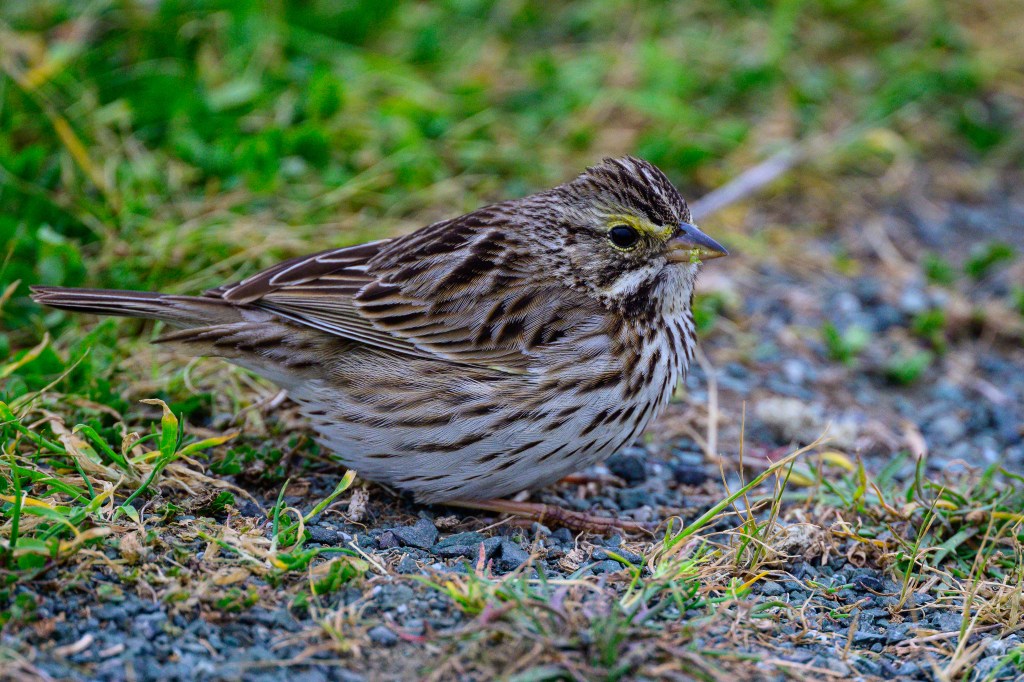
The Savannah Sparrow has a yellow eyebrow.
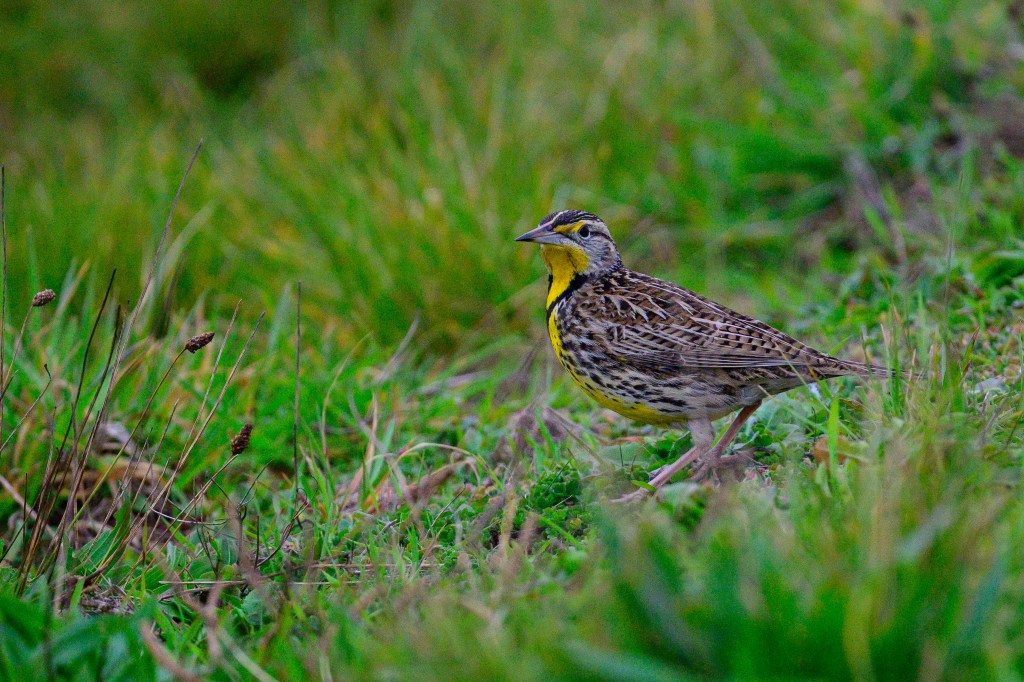
A Western Meadowlark.
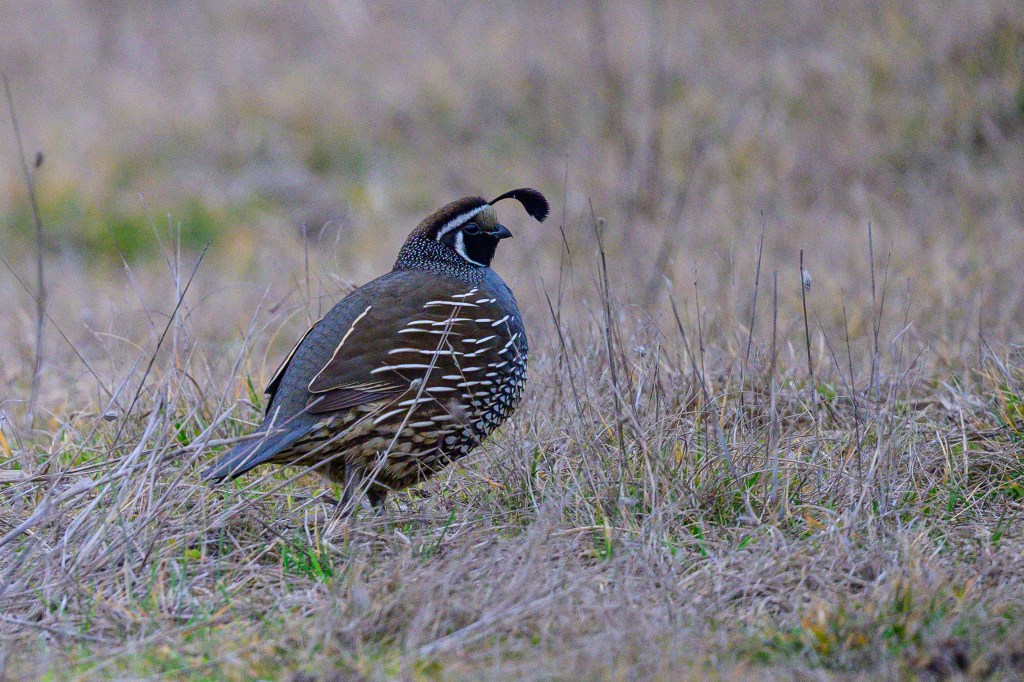
California Quail (male).
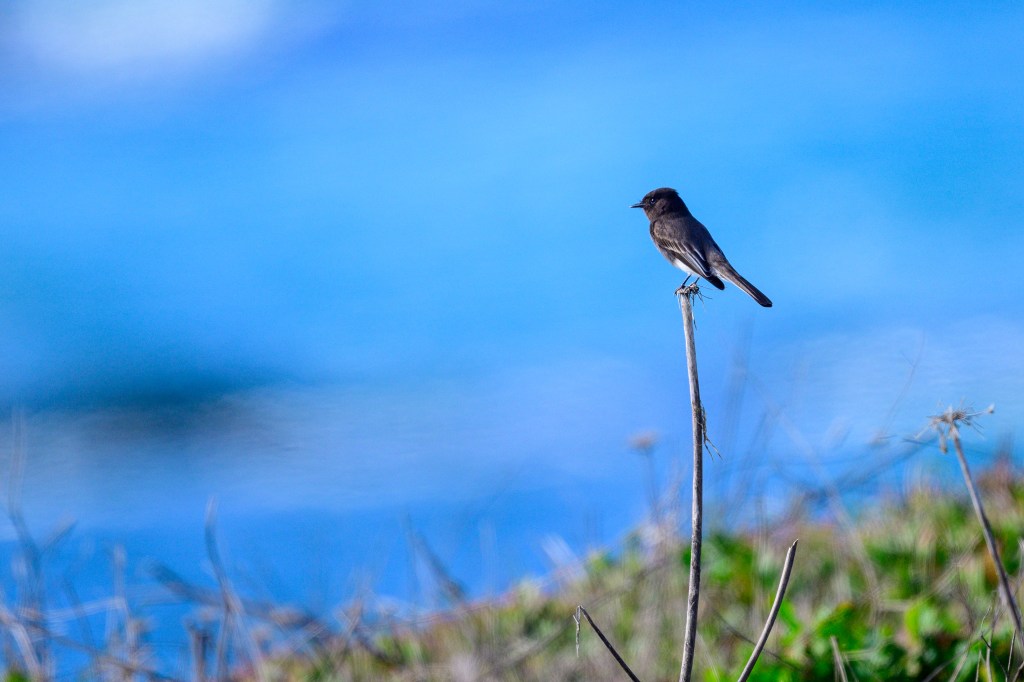
Black Phoebe.
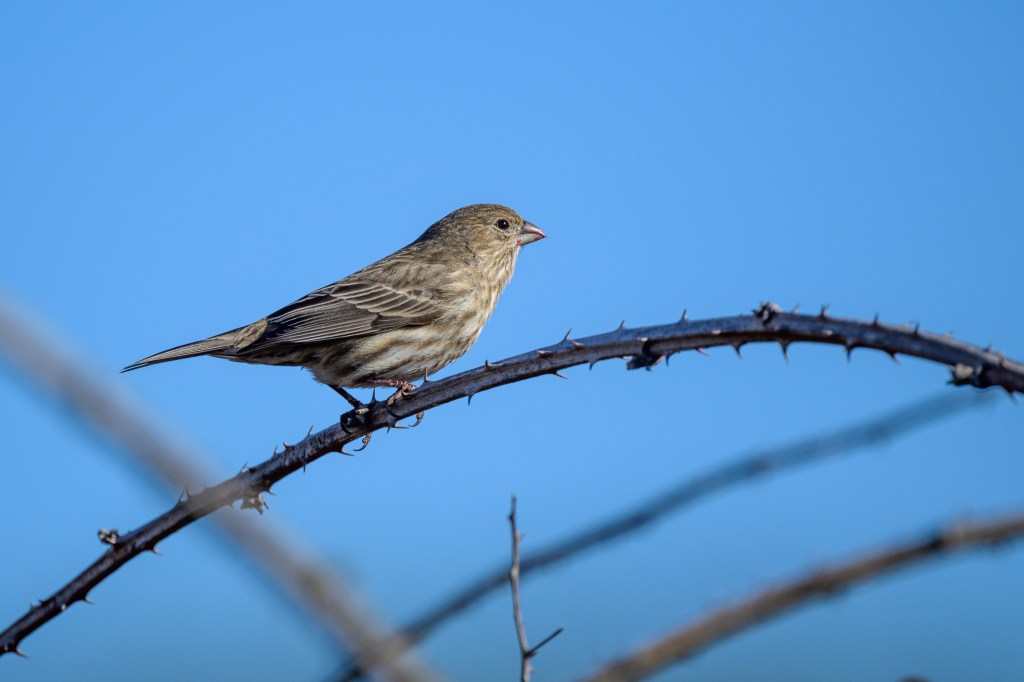
Female House Finch.
Red-tailed Hawk amid ice plant.

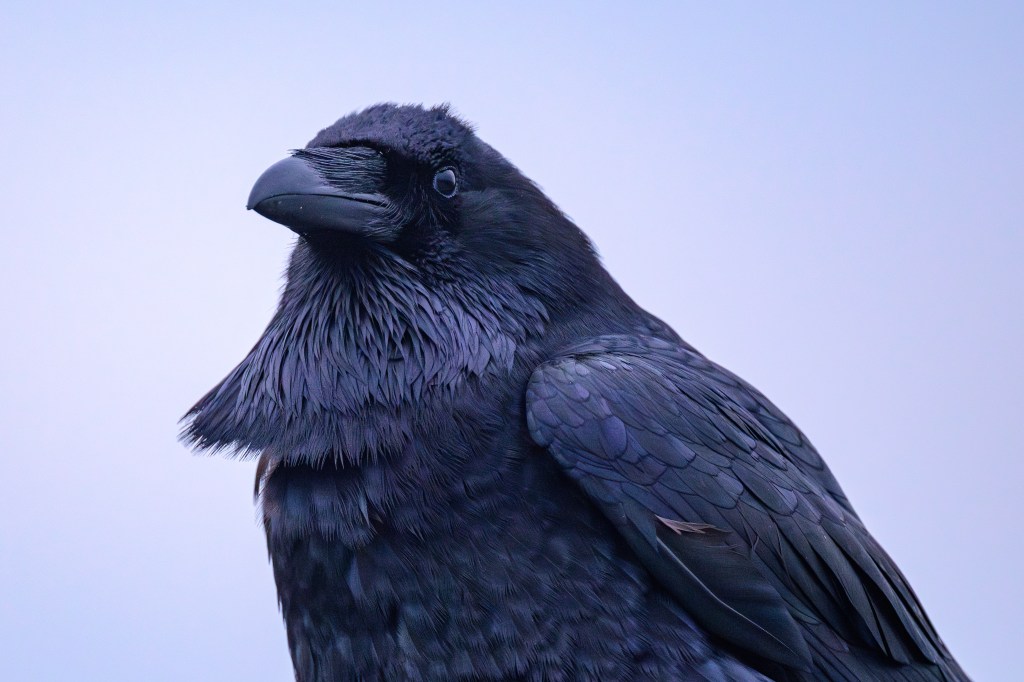
Common Raven. They are big on the coast. People feed them and this makes it easy to get close for a portrait.
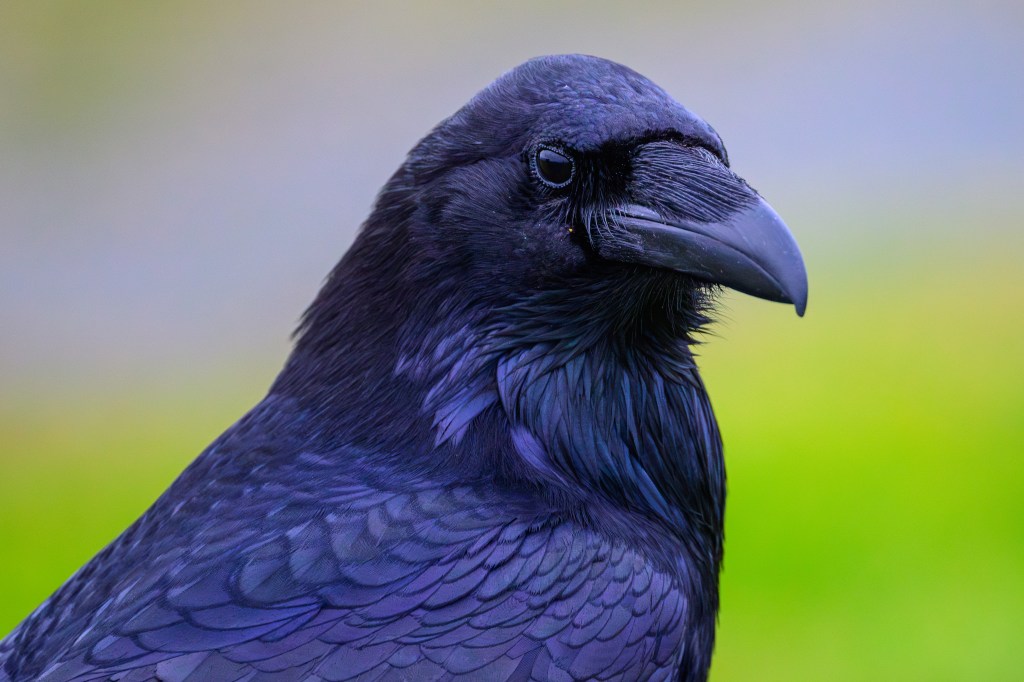
The coastal ravens remind me to the large and aggressive ravens in Death Valley, particularly at the Stovepipe Wells Campground. Those birds will hop about on the picnic tables, trying to eat your food. Years ago I composed a limerick about Death Valley Ravens:
There once was a Raven named Bruce
Who was almost as big as a goose.
He would knock over campers
To steal food from their hampers.
And I’m afraid he is still on the loose.
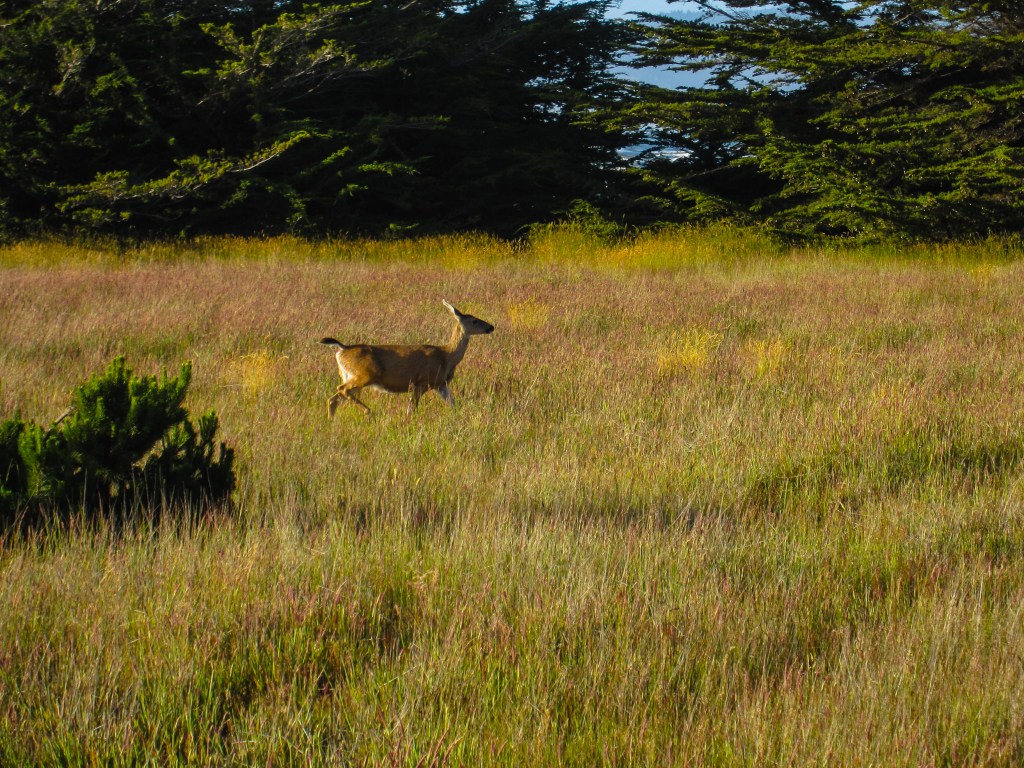
Animals
Mule deer on the headlands.
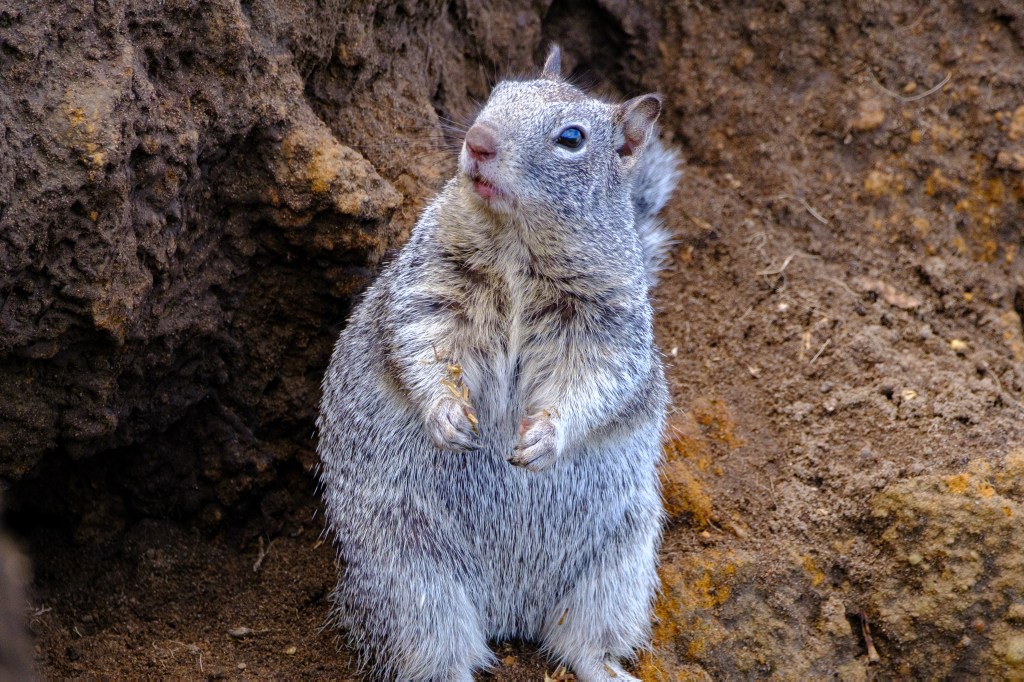
California Ground Squirrel. They dig thousands of holes on the headlands and beg for food.
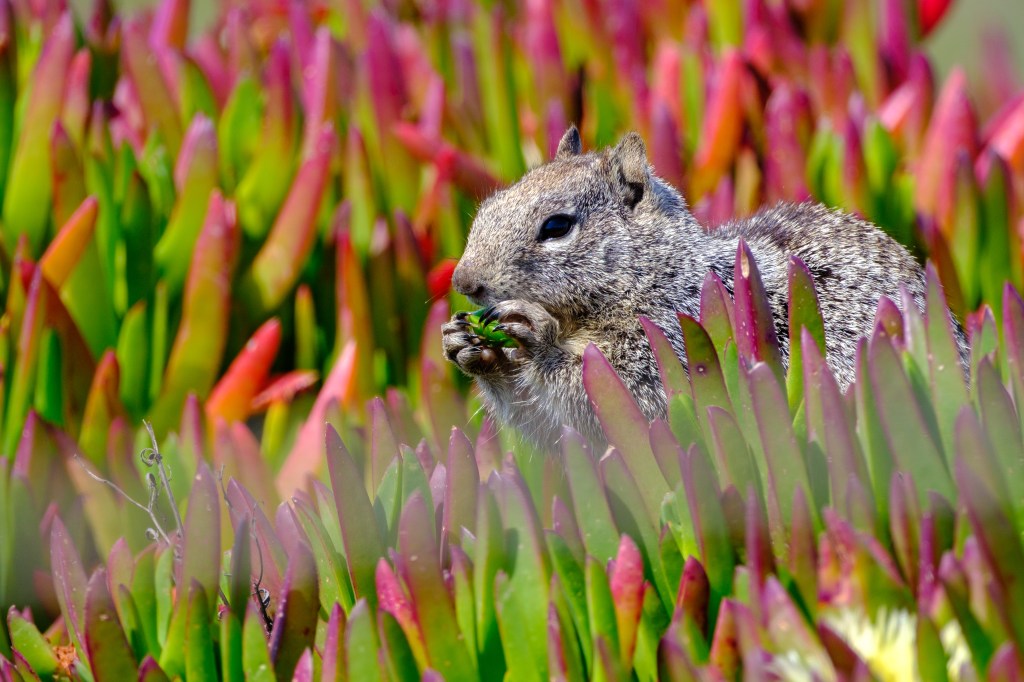
California Ground Squirrel eating ice plant.
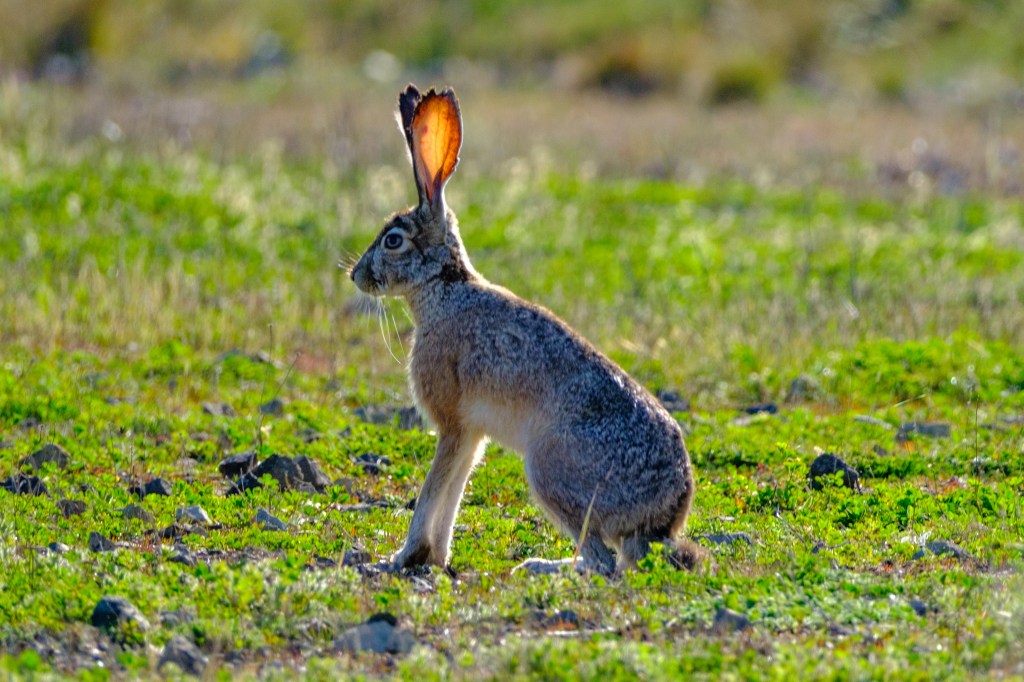
Black-tailed Jackrabbit. Note tattered ears.
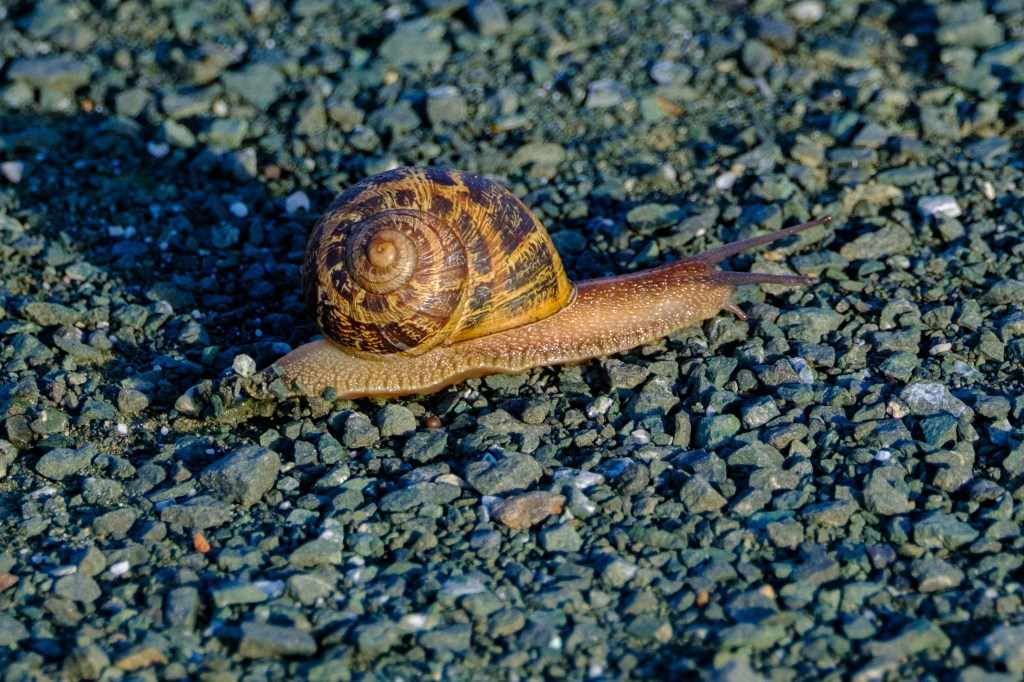
Brown Garden Snail.
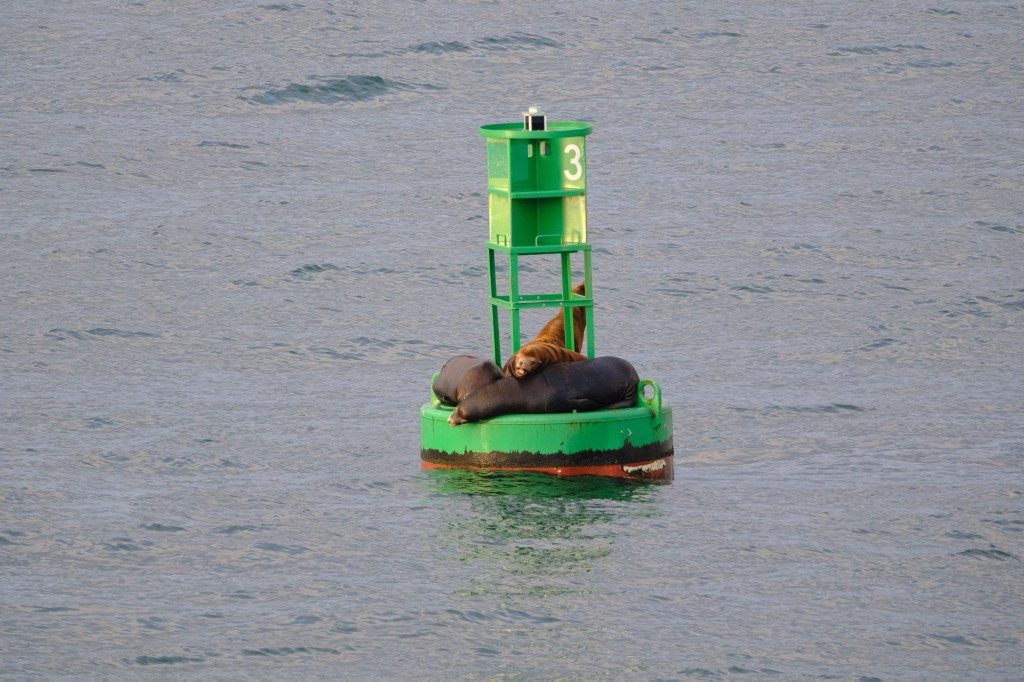
Northern Sea-lions.
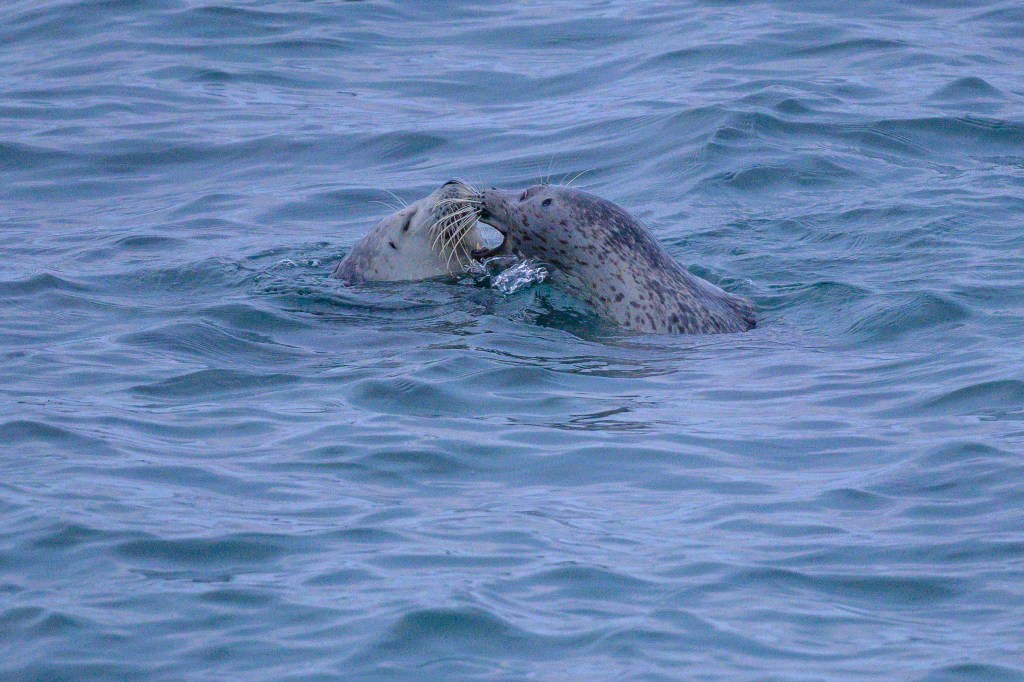
Harbor Seals. Why do they have mustache whiskers and eyebrows?
Miscellaneous sights
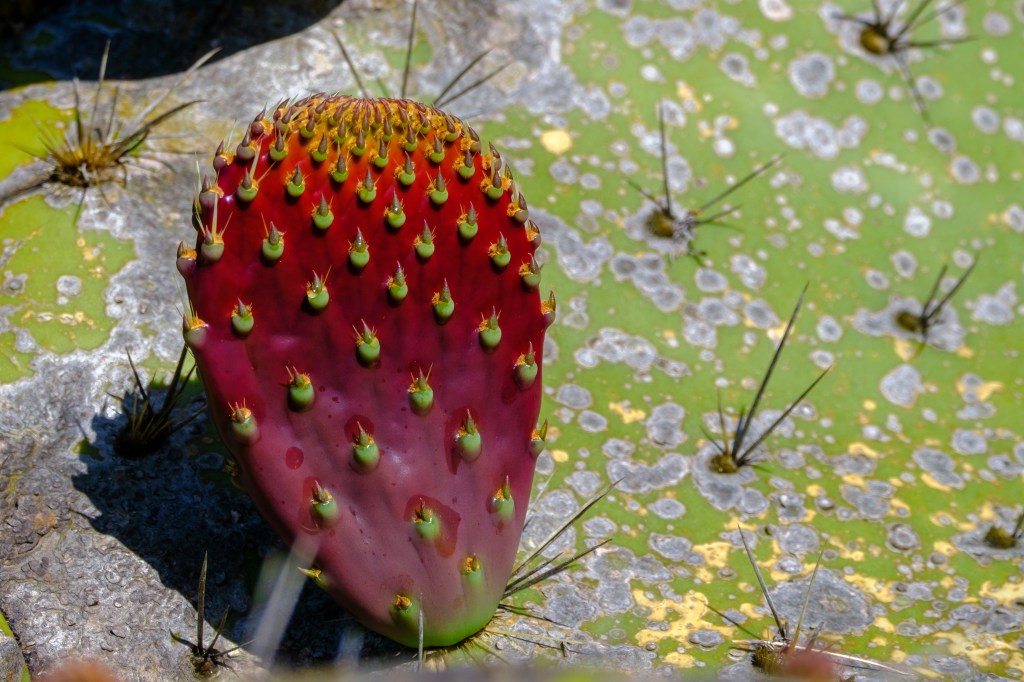
The Mendocino Coast Botanical Gardens always have something interesting. Below is an Opuntia – prickly pear cactus.
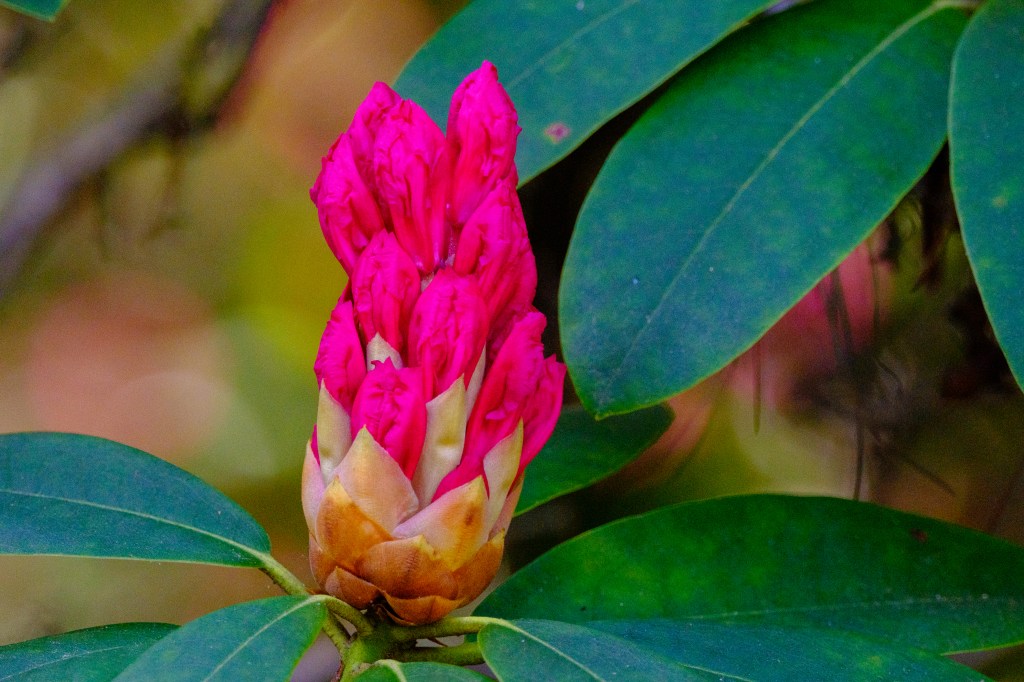
Rhododendron.
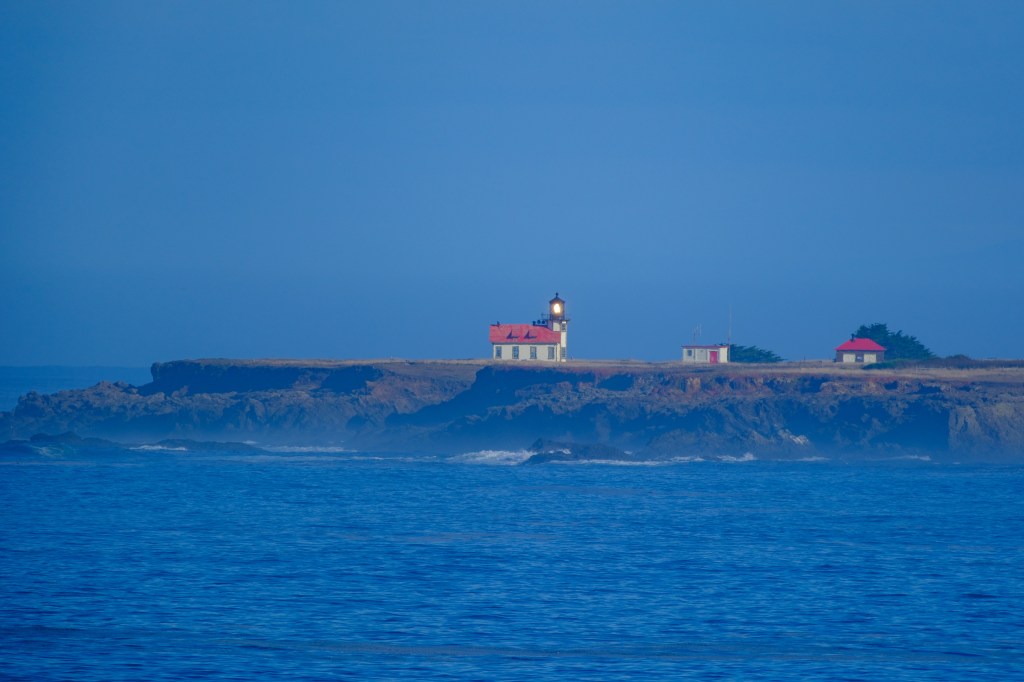
Point Cabrillo Light Station.
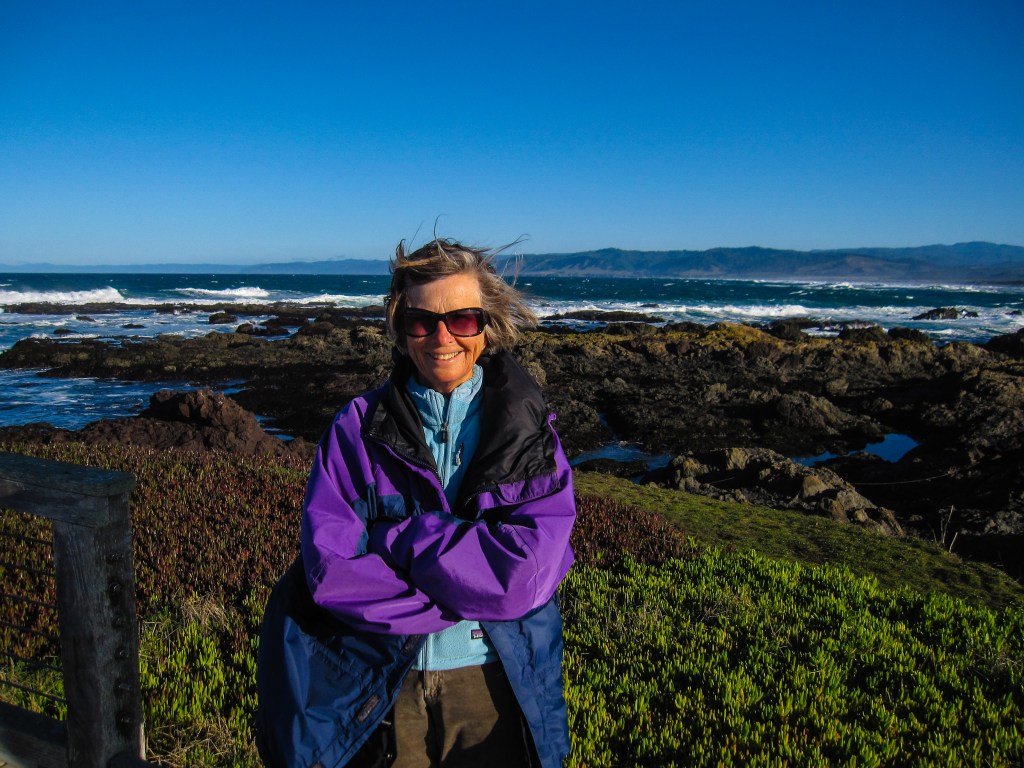
When you visit the coast, it is good to have a guide. Especially someone with sharp eyes who can find birds and other wildlife. I highly recommend the guide below. Her vast knowledge and cheerful attitude will make your walk more enjoyable.
A Little History
Fort Bragg (pop 7000) was founded in 1857 as a military post to oversee the Mendocino Indian Reservation. The government later opened the area to settlers, forcing the Indians to abandon their coastal property for a smaller area in the forests. The officer who set up the new camp named it for another officer that he knew from the Mexican-American War: Braxton Bragg, a man from North Carolina who never saw the California town that bears his name. Bragg enslaved people on his Louisiana sugar plantation and was later a Confederate General. Wikipedia says he was “generally considered among the worst generals of the Civil War.” He was hated by many troops because of his rigid discipline and disliked by many superior officers for his bad temper and quarrelsome habits. Bragg lost nearly all of his battles. The better-known Fort Bragg, the U.S. Army base in North Carolina with 50,000 troops, was renamed Fort Liberty in 2022. There has been some effort to change the name of Fort Bragg, California, but Braxton Bragg continues to be memorialized here. Signs saying “Fort Bragg Forever” can be seen in some yards around the town.
On February 10, 2025, at about the time I published this post, the name of Fort Liberty in North Carolina was changed to Fort Bragg by Defense Secretary Pete Hegseth. The Secretary says the new name is to honor Roland L. Bragg, a private who was awarded a Silver Star in World War II.
 Birds of Bishop