
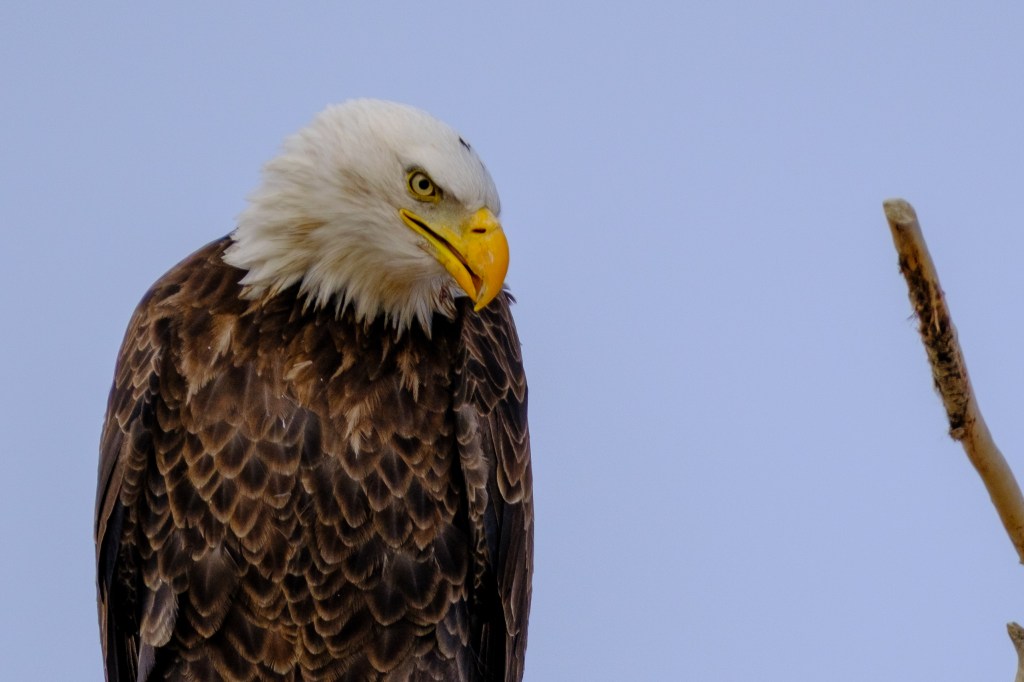
The Bald Eagle is low-hanging fruit for a photographer. These big birds (10 pounds, wingspan 6.5 feet) often perch on a bare limb. With just a smartphone you can capture a classic pose: the fierce bird surveying its realm. The distinct white head makes it simple for the casual observer to spot and identify this bird. Even when flying, getting a photo is not hard due to the bird’s large size and straight path.
Bald Eagles show up at the Buckley Ponds near Bishop in November and depart in February. People get excited if they spot an eagle. When they see me walking with my camera, they love to tell me about this bird. I try to cheerfully thank them, suppressing a grumpy urge to say that I’ve been photographing the bird for weeks. Eagles so excite the public that I own five guidebooks that feature a Bald or Golden Eagle on the cover: The Audubon Society Encyclopedia of North American Birds, Smithsonian Birds of North America, National Geographic Complete Birds of North America, The Crossley ID Guide Raptors, and Birds of the Great Basin: A Natural History. Publishers know that eagles sell.
In winter, Bald Eagles can be found in several areas close to Bishop: Airport Road, Warm Springs Road, north of Dixon Lane, the alfalfa fields near the dump. I’ve seen them year-round at the Pleasant Valley Reservoir. They show up near Big Pine, Tinemaha Reservoir, and Mono Lake. In summer they can be found at Sabrina Lake (9200 feet) and Convict Lake (7900 feet).
Classic Poses of Mature Eagles
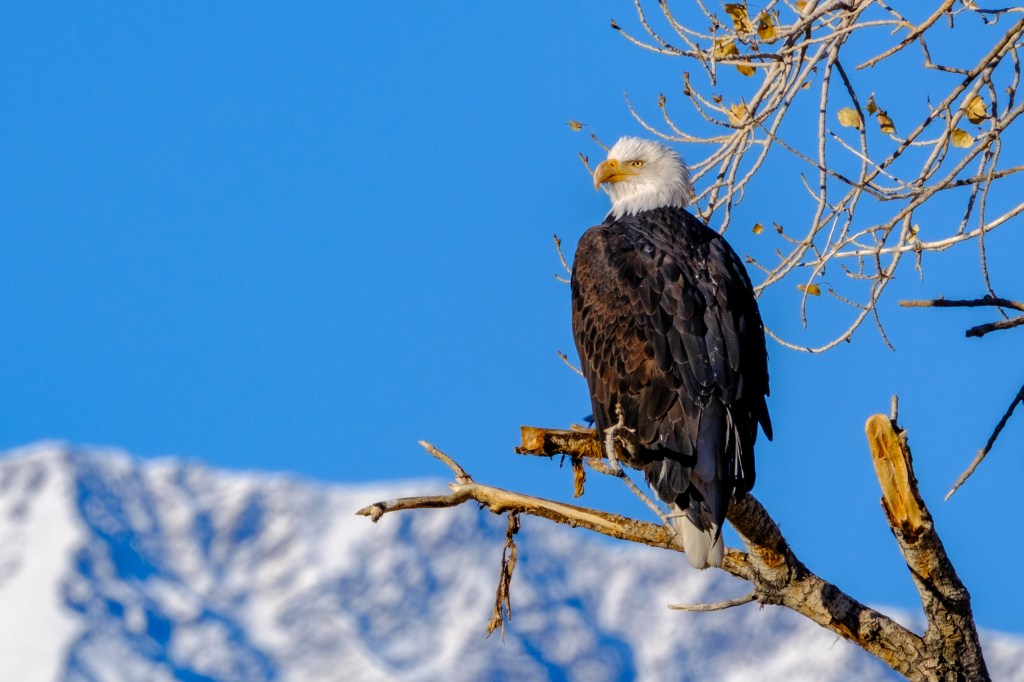
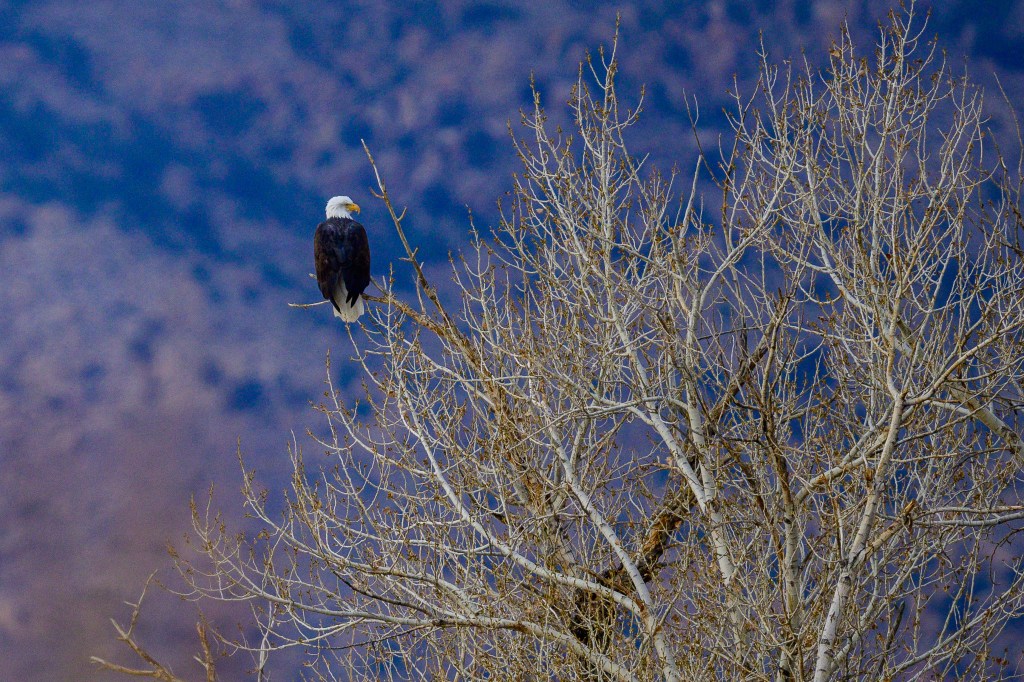
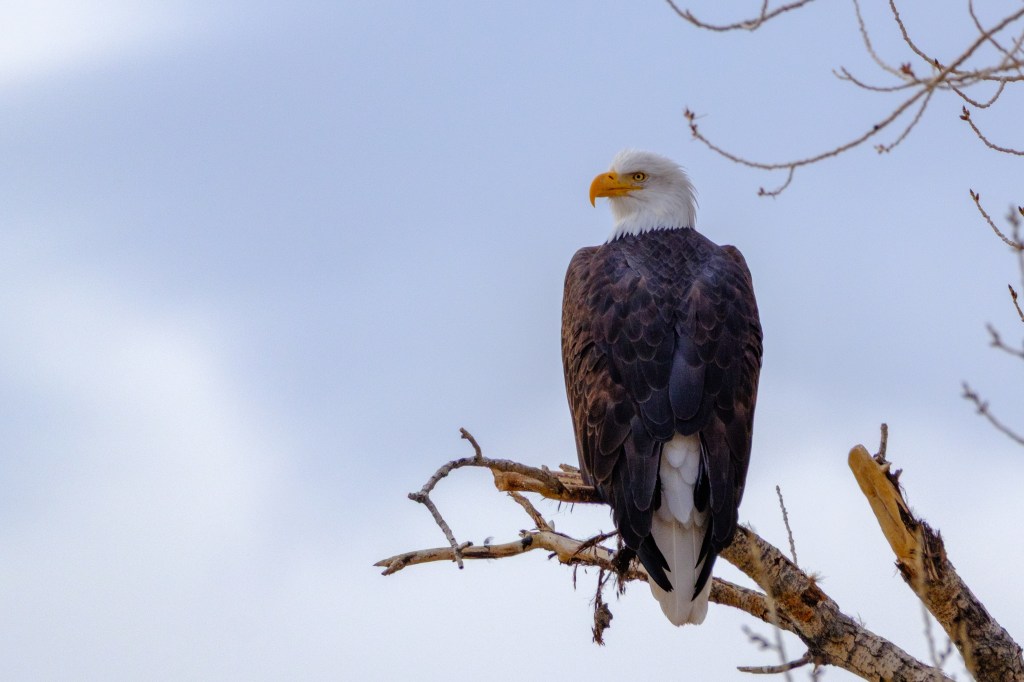
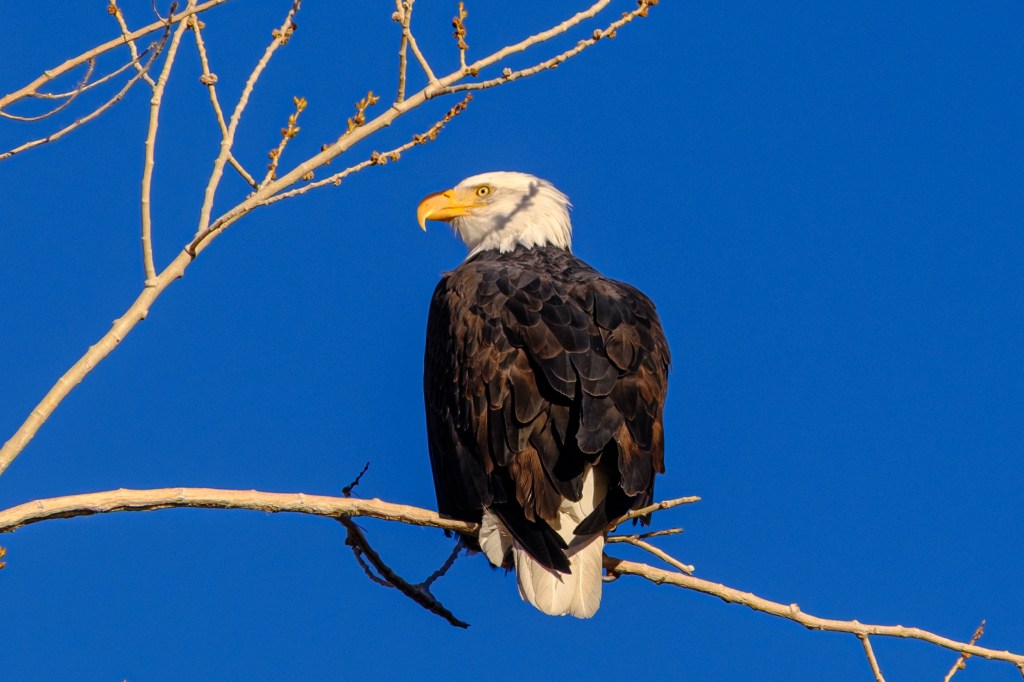
I’ll start with photos that show mature Bald Eagles in a classic perched pose. These birds are impressive. They look muscular and fierce. You can think of them as gangsters of the avian world. The first eight photos were taken at the Buckley Ponds and were selected because they also show some of the surrounding landscape.

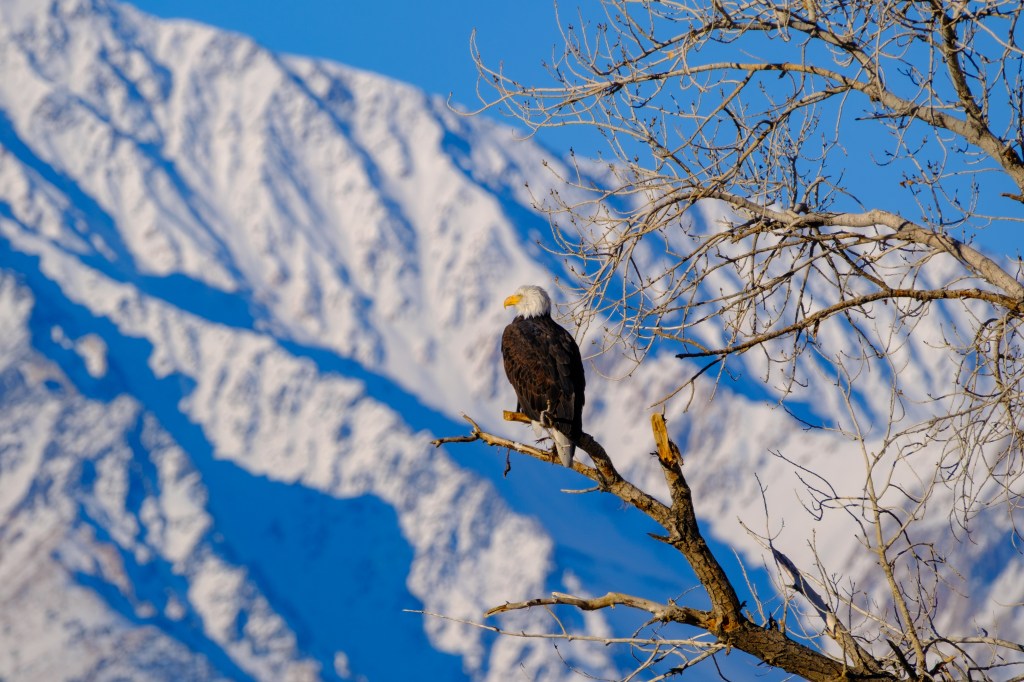
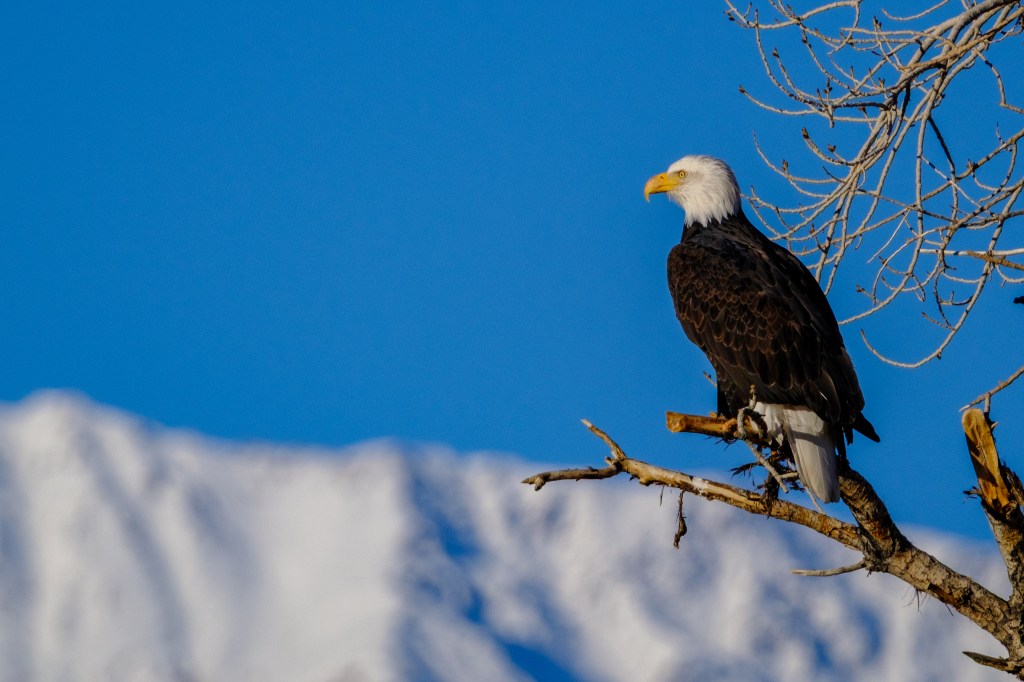

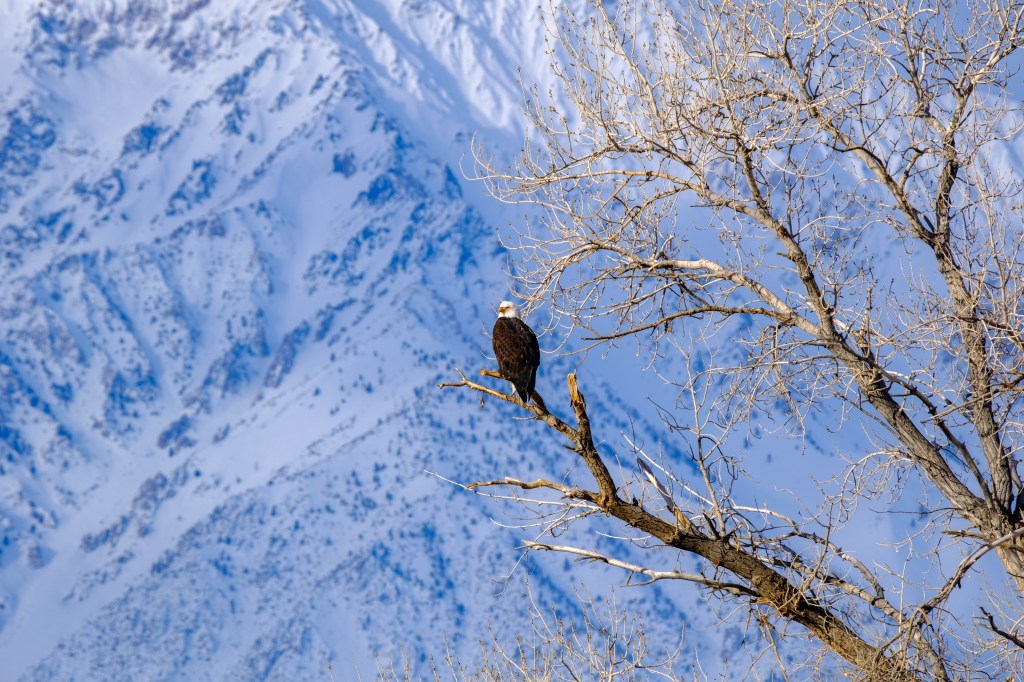
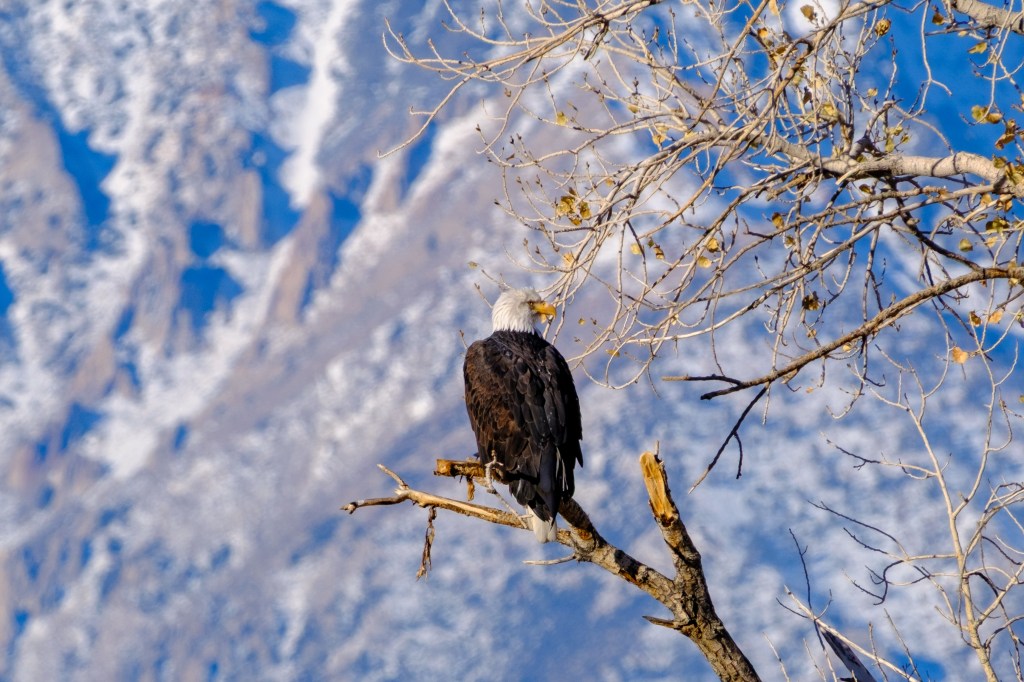
Take another look at the last two photos. They show the same bird. Did you notice the scattered white blotches on the back of the bird? This bird has excrement on its back, undoubtedly from another Eagle that was flying above it. This majestic bird needs a bath.
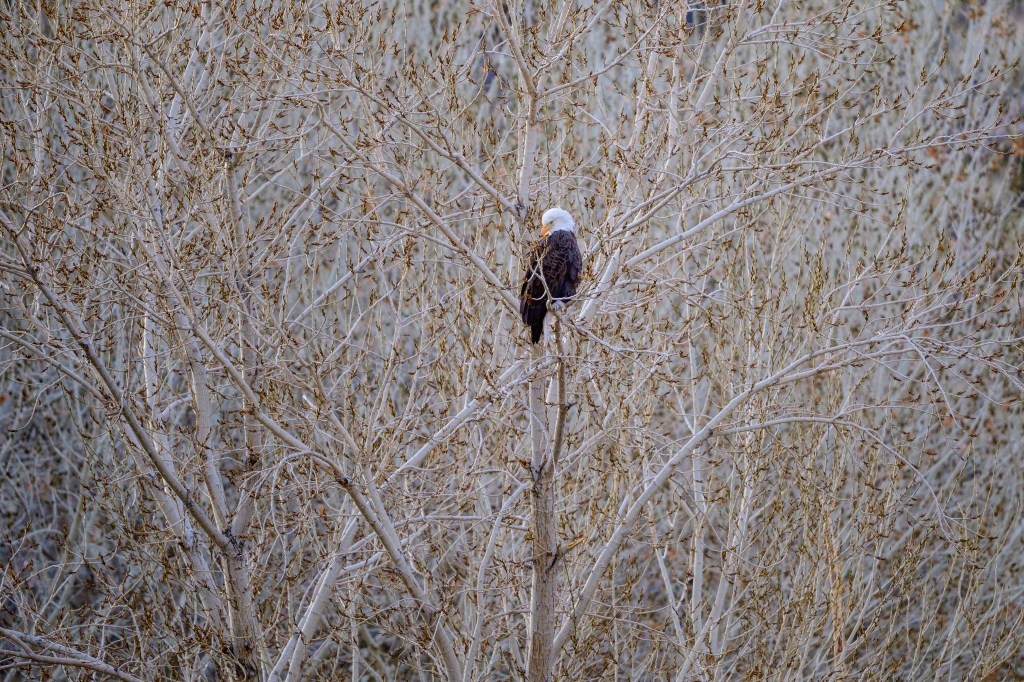
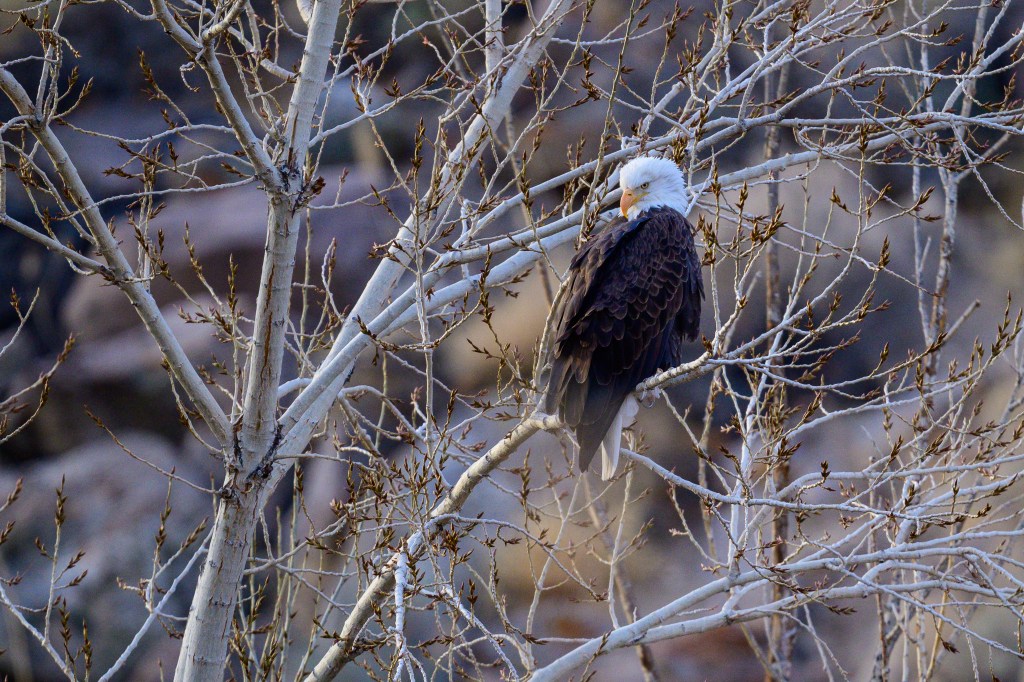
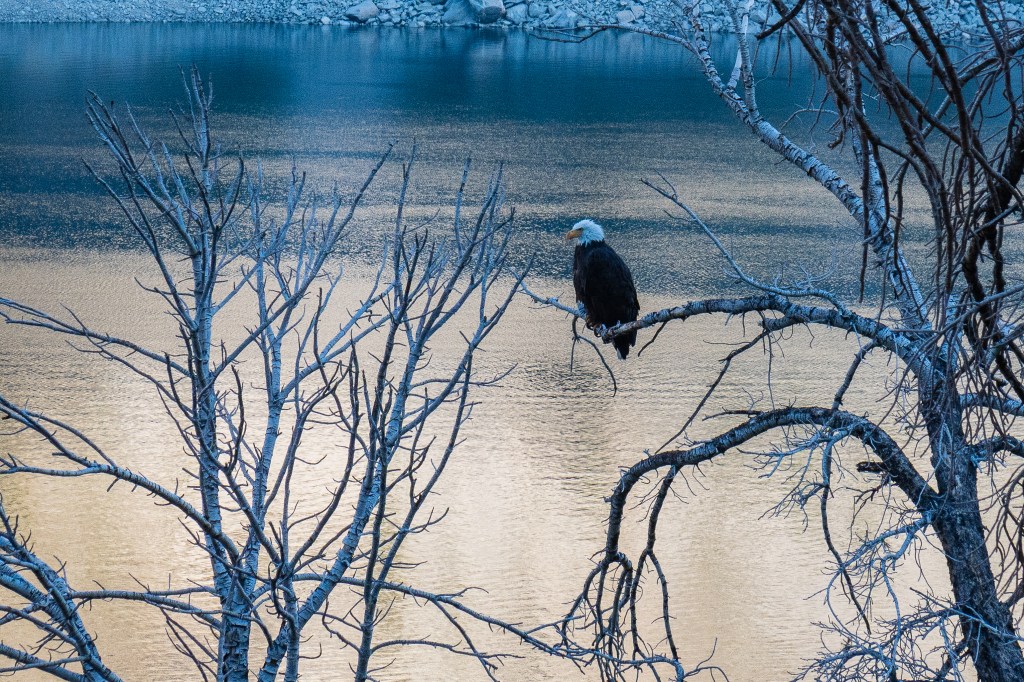
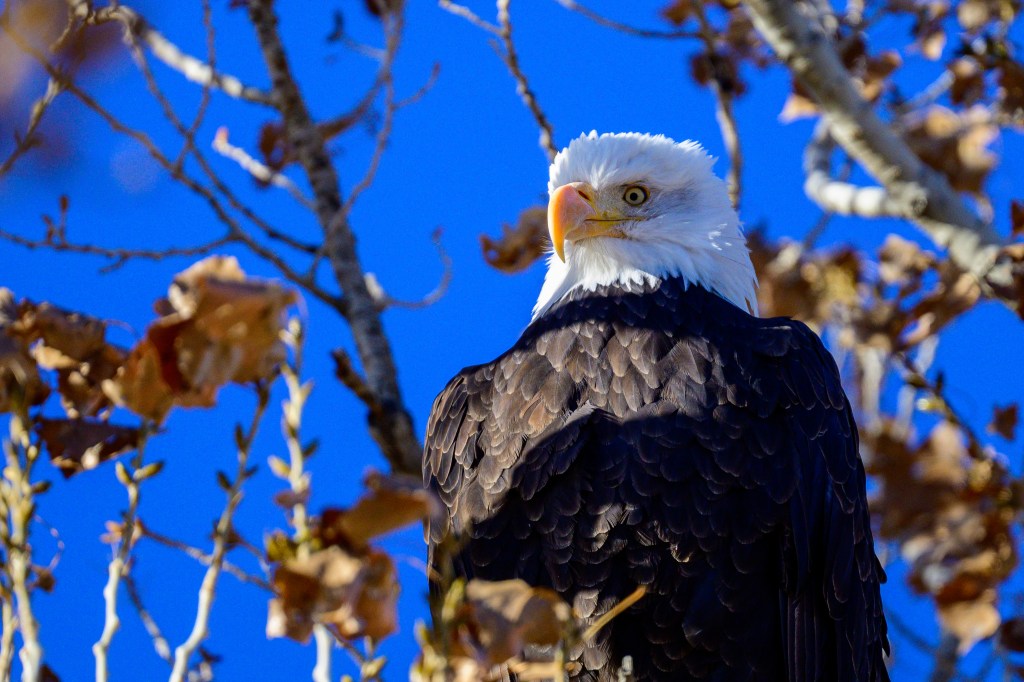
The next 6 photos show Eagles at the Pleasant Valley Reservoir. They dine on fish and sometimes other birds. The first photo, showing an eagle surrounded by tree branches, is one of my favorites.
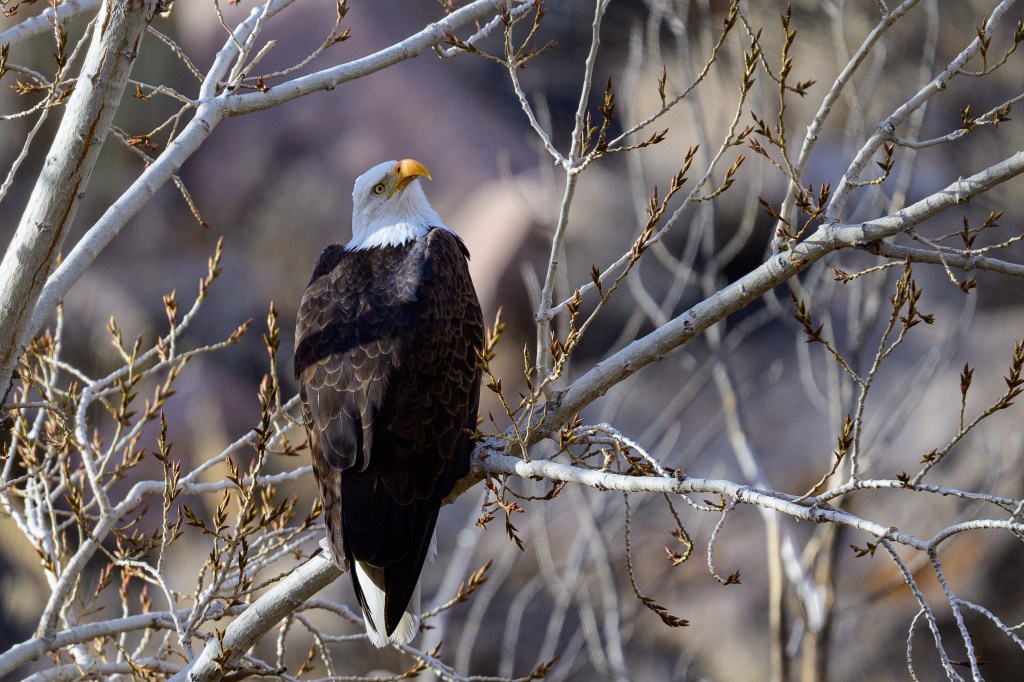

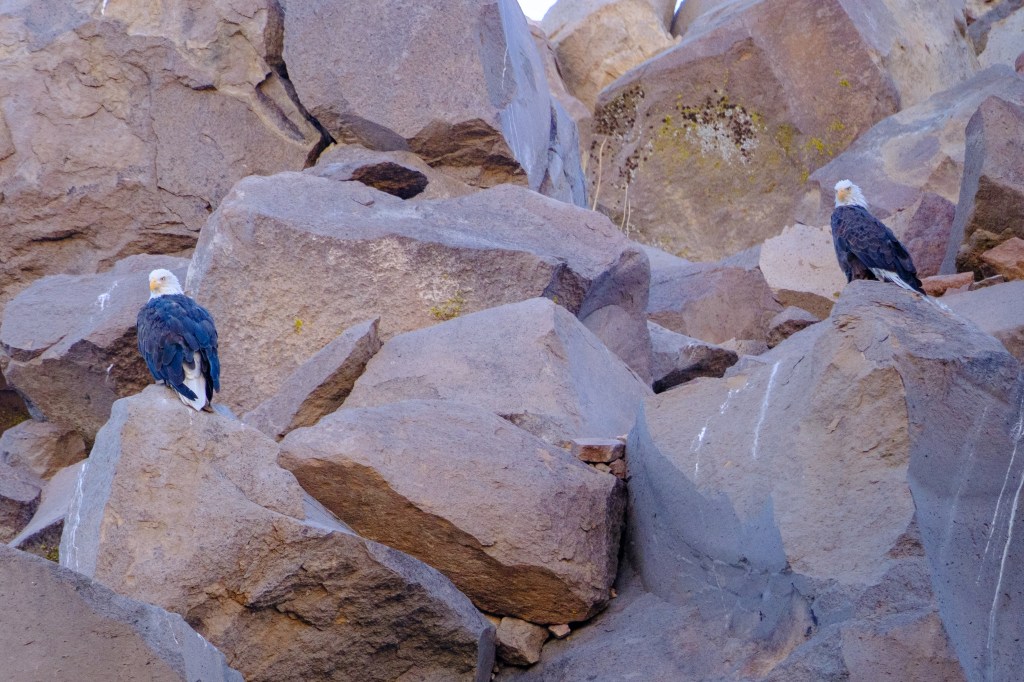
The Eagle below is at Sabrina Lake in August. A nice fishing spot for Eagles and people.
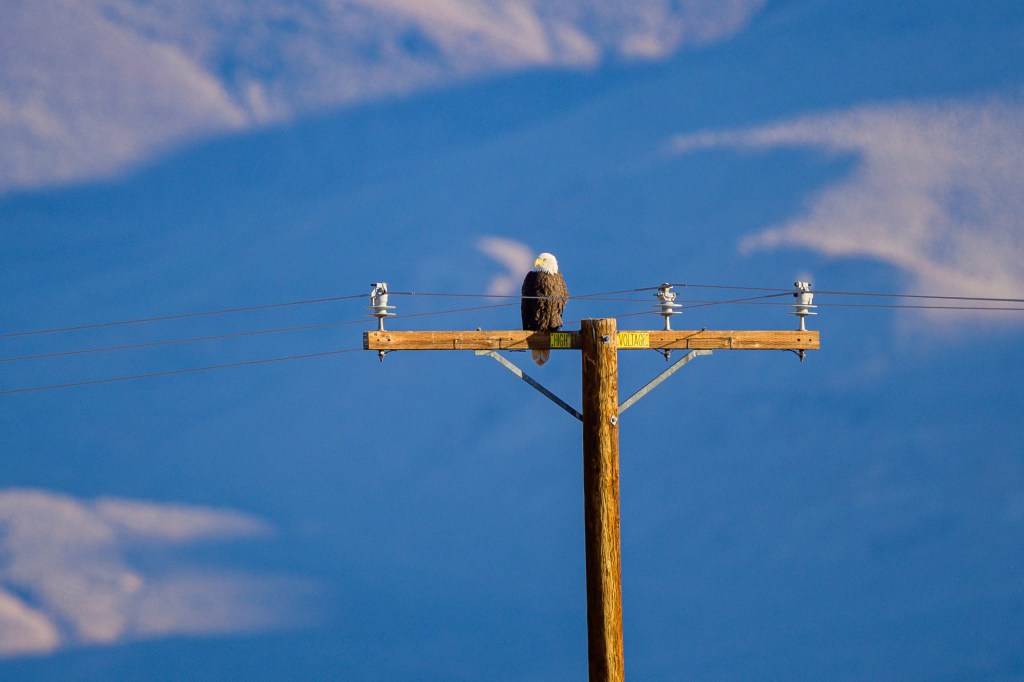
Eagle below checks out the electrical grid north of Bishop.
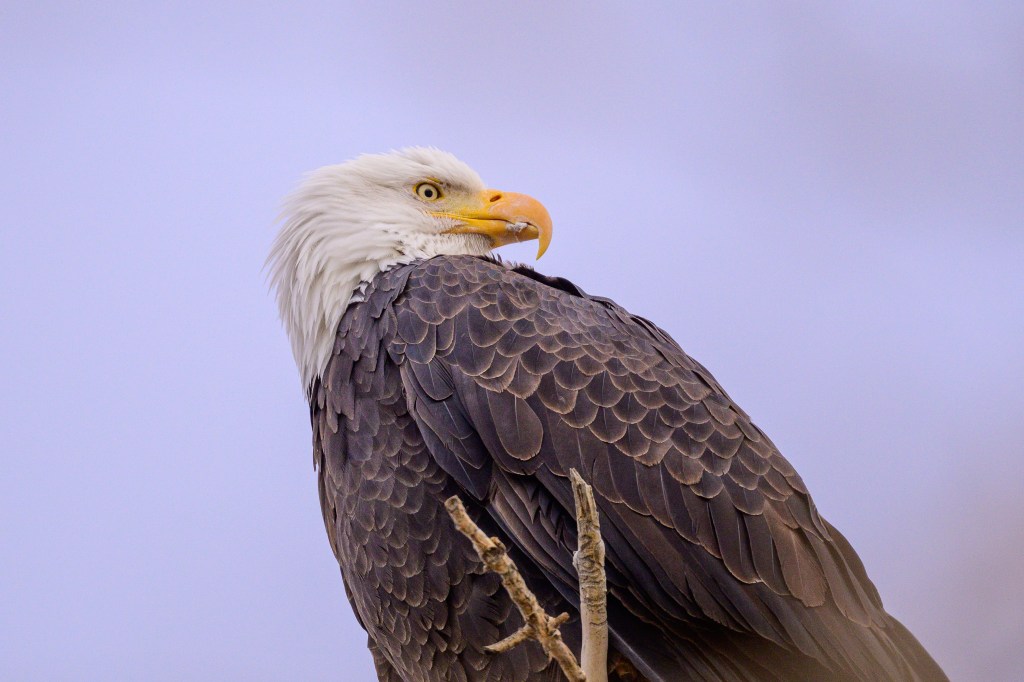
The next five photos are all Eagle portraits taken at the Buckley Ponds. It is often possible to get fairly close to these birds. Of course a telephoto lens helps.
Bald Eagles Have White Heads, Right?
In February of 2022, I saw a mature Bald Eagle near the Bishop Creek Canal. Then Roberta spotted a dark-colored eagle nearby. I examined my photos and realized that the second bird was a juvenile Bald Eagle, with a pale belly and scattered white feathers on the neck. Until that encounter, I thought all Bald Eagles had white heads.
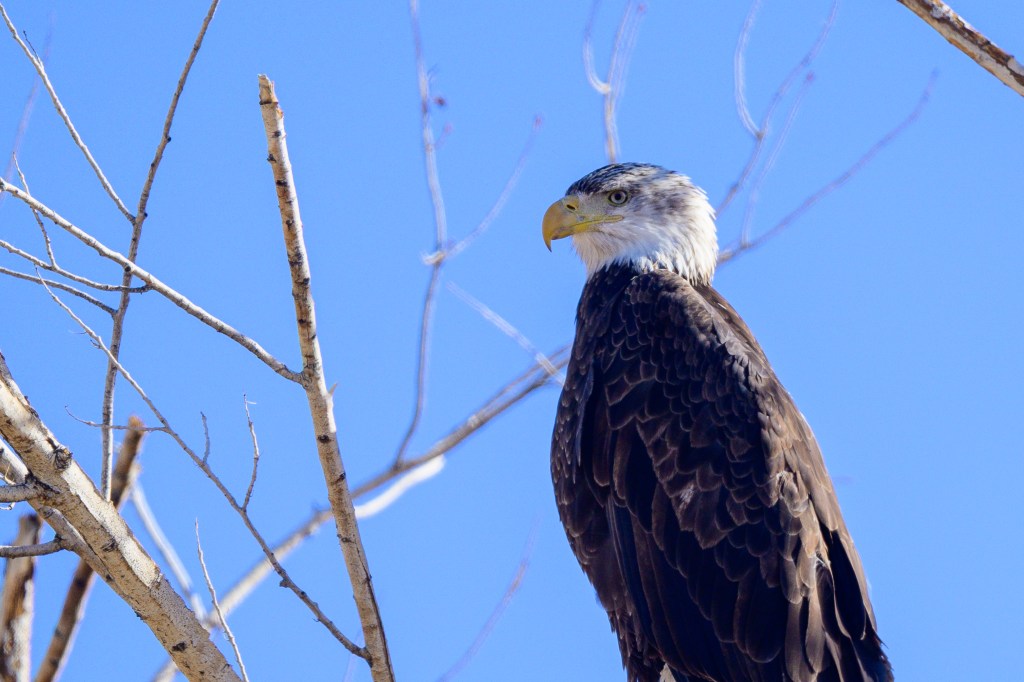
Bald Eagles take about 5 years to develop their dramatic white head and tail. In their first year, they have dark brown heads and bills that are black. This change with age was worked out by bird artist Charles Wilson Peale in 1797; by the 1820s this was well-known to bird experts. Two centuries passed before I got the message. I lived in Seattle for over a decade and saw many Bald Eagles. Not once did I notice a juvenile Bald Eagle; this shows that you see only what you look for. Young Bald Eagles can be distinguished from Golden Eagles by several features; a pale belly, no golden feathers on the neck, white wing pits, lots of white color under the wings, a tail with messy-white feathers, lower legs free of feathers, brown eyes that become yellow with age, dark beaks that become bicolored and then yellow, massive beaks with a sharp hook at the end. Bald Eagles hang out with other Bald Eagles. Bald Eagles favor water and prefer to eat fish. Golden Eagles like cliffs and rabbits. In 2022, looked through my photo library and realized every “Golden” eagle in my collection was a young Bald Eagle.
Below I show photos of Bald Eagles ordered, approximately, from age one year to age 4 years. If you are a birding expert and think my age estimates are off, let me know.
One year old
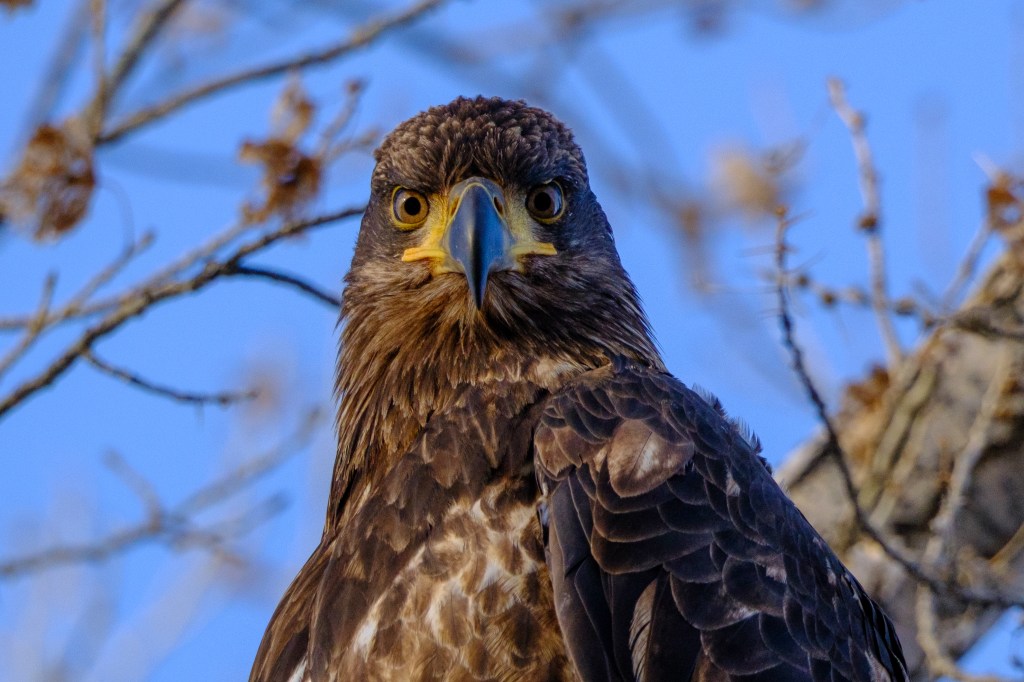
The massive, hooked beak, below, tells you this is a Bald Eagle.
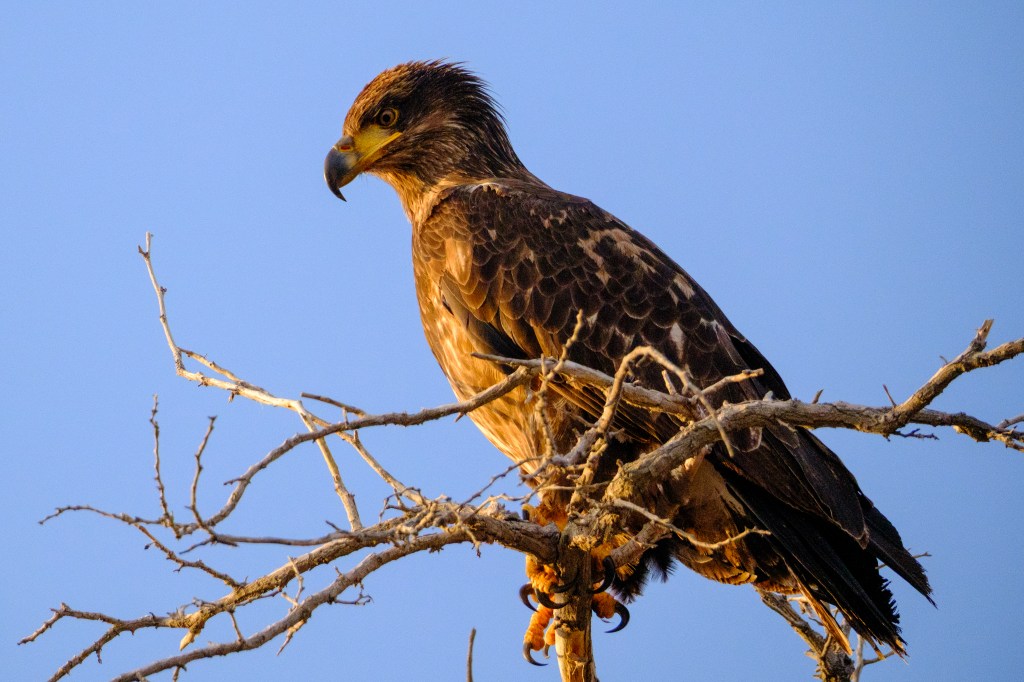
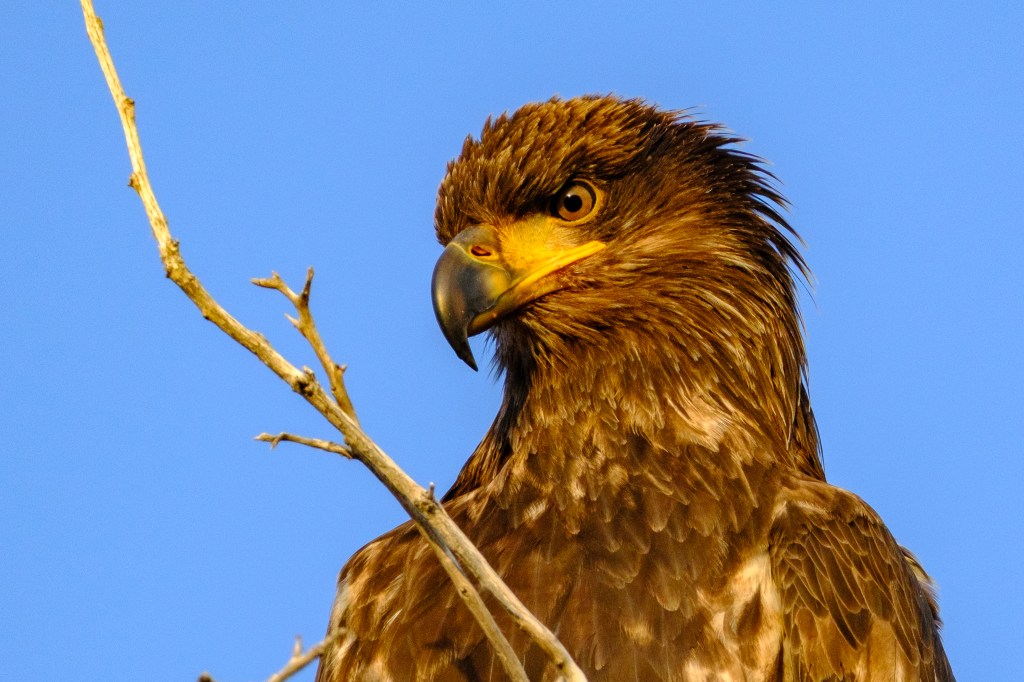
Alfalfa fields near the Bishop dump, below.
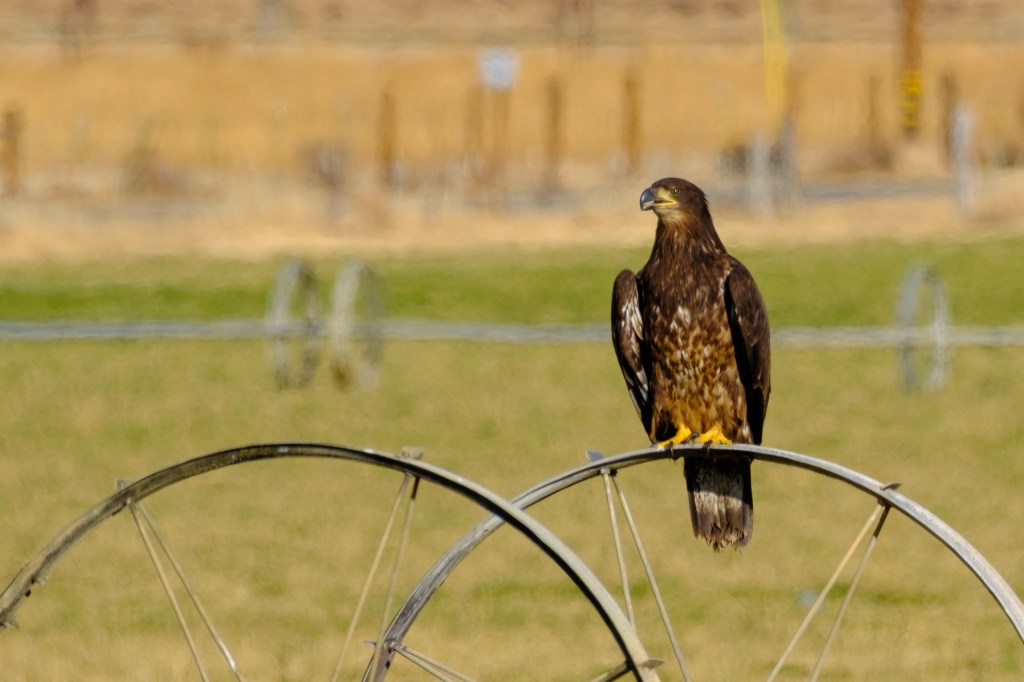

Age two years
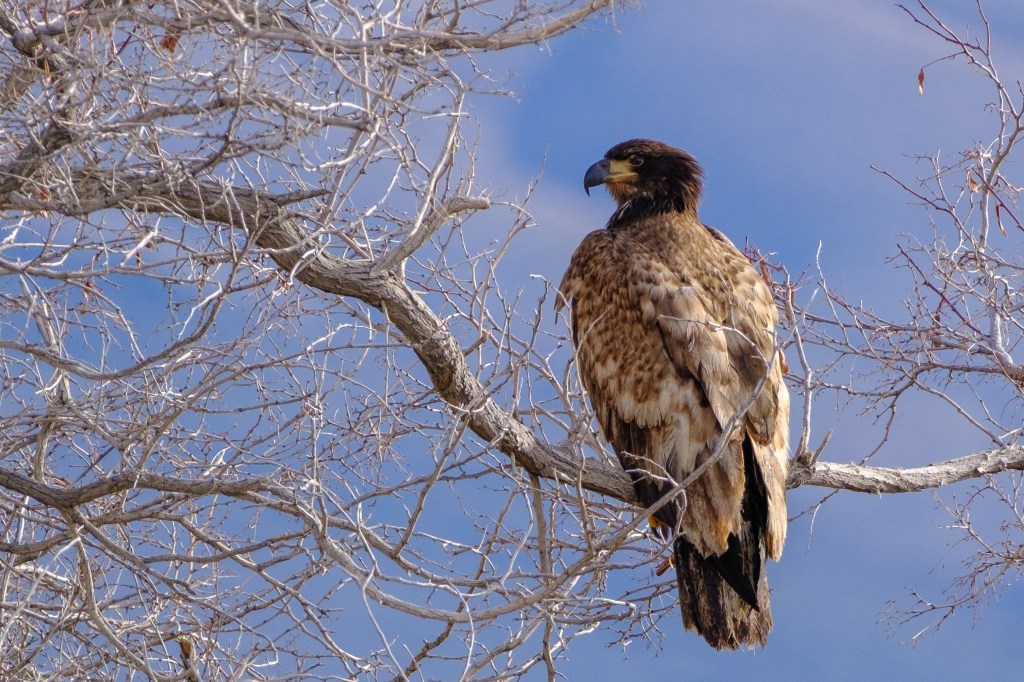
Age 3 years


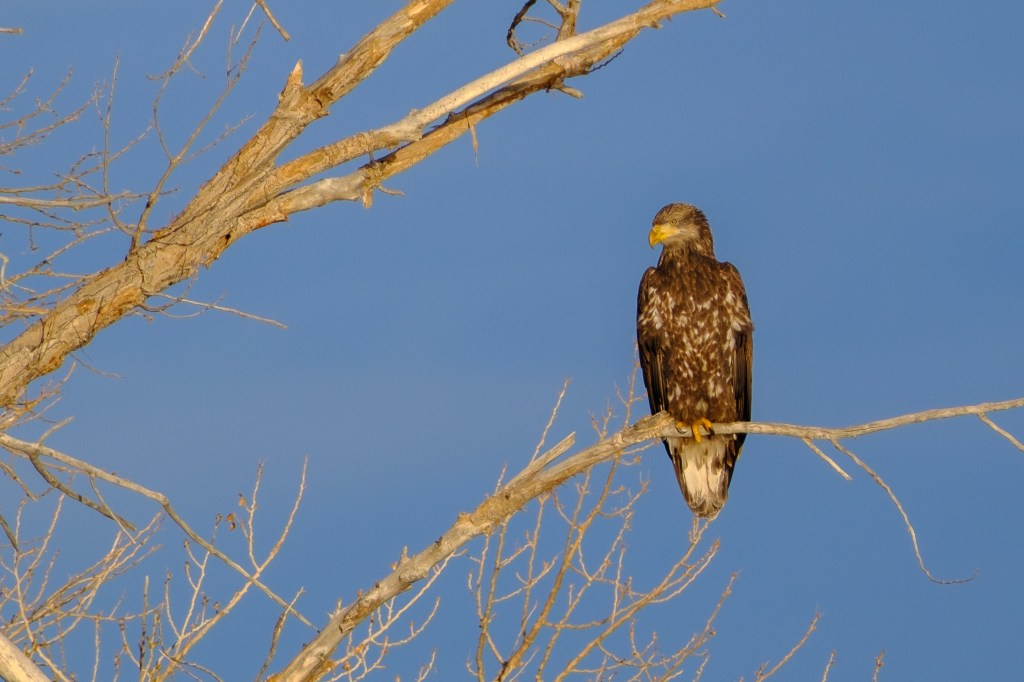
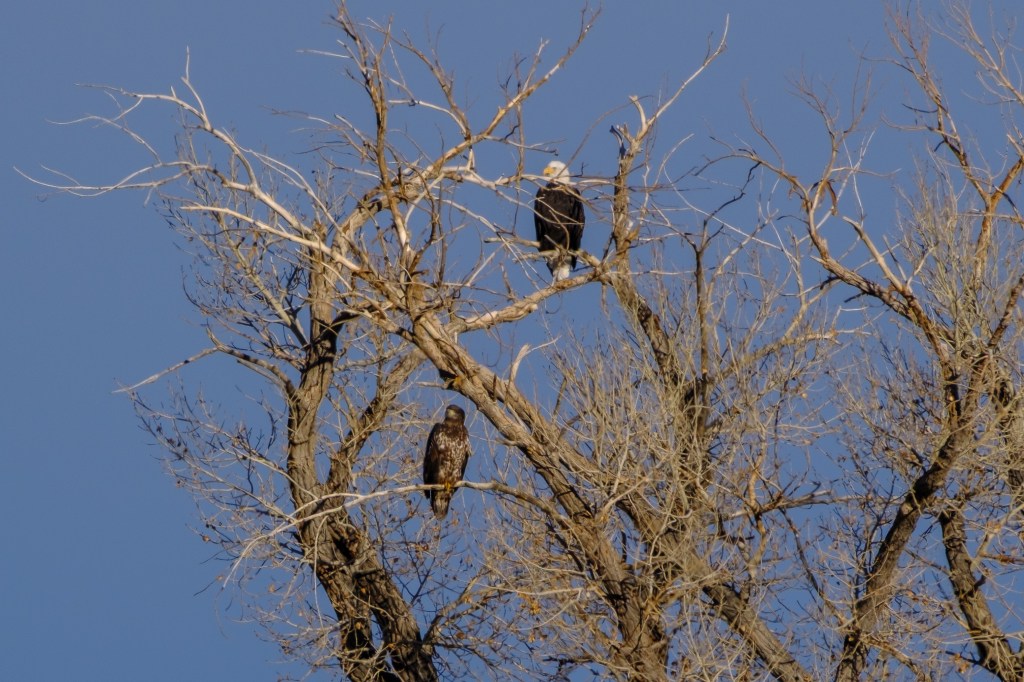
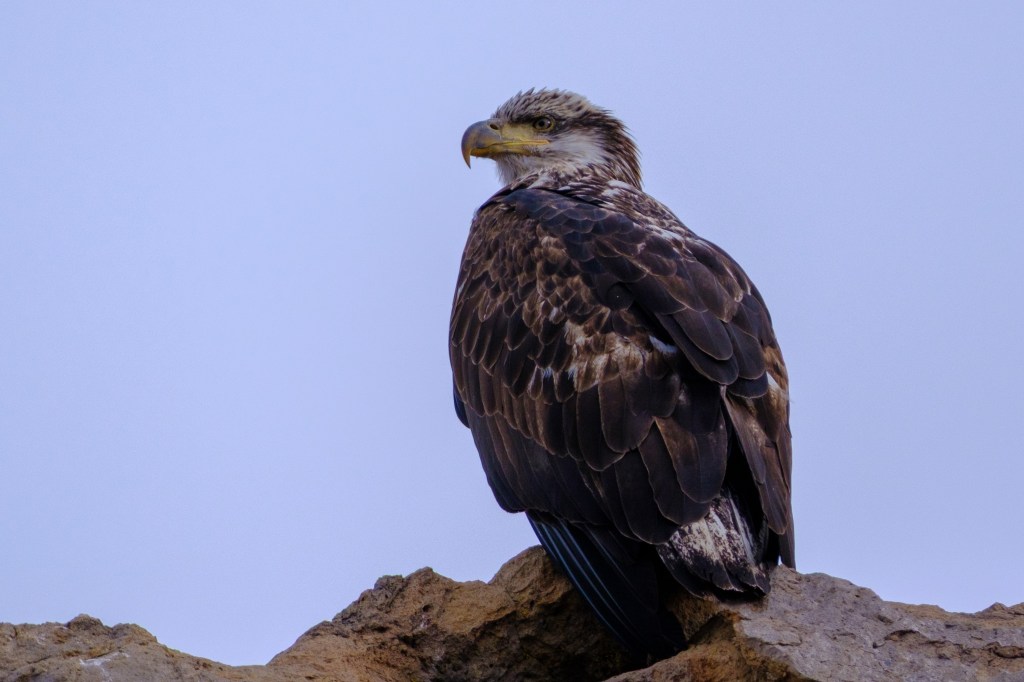
Age 4 years. By now the head is almost white, the eyes yellow, the beak nearly all yellow.
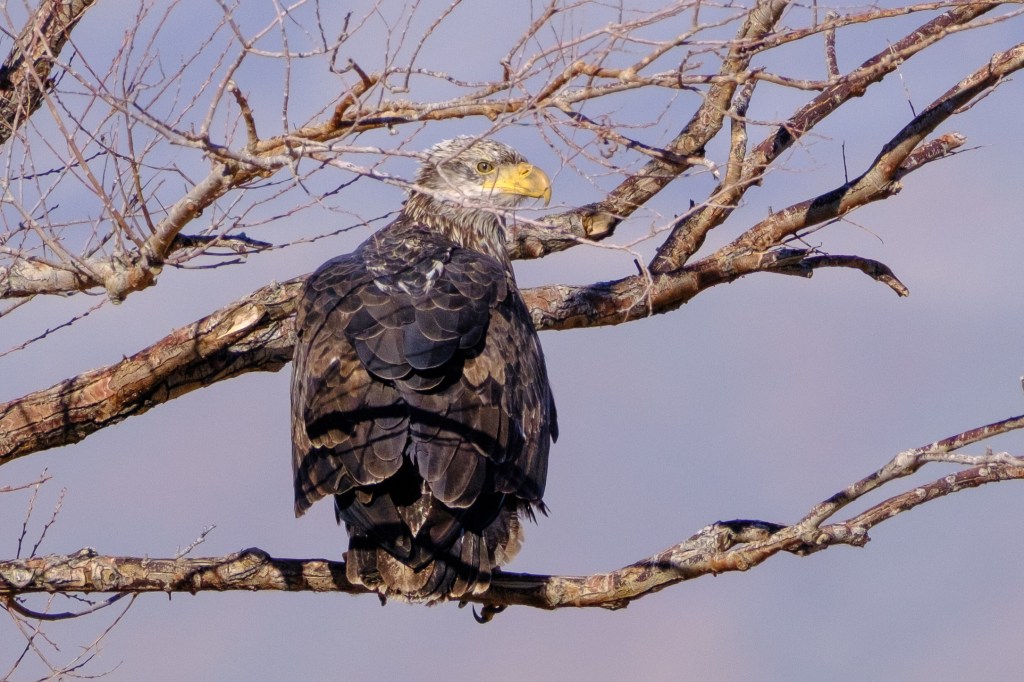
Flight
Below, an Eagle over Convict Lake, October, looking for fish. This was one of my first eagle photos: 2018. I did not even need a telephoto lens.
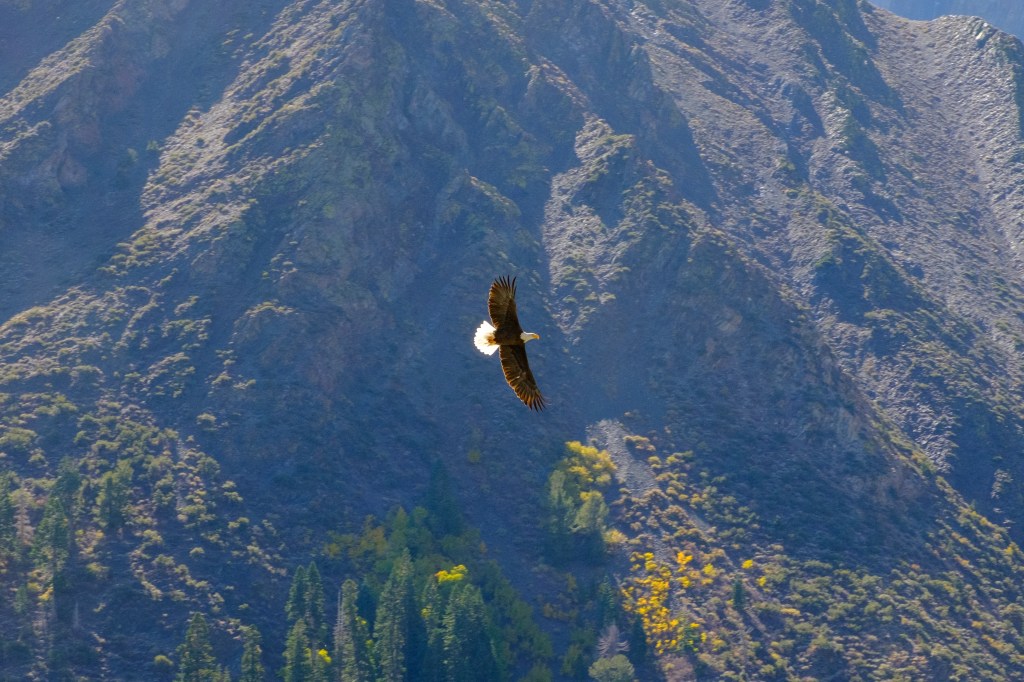
White Mountain in the background below:
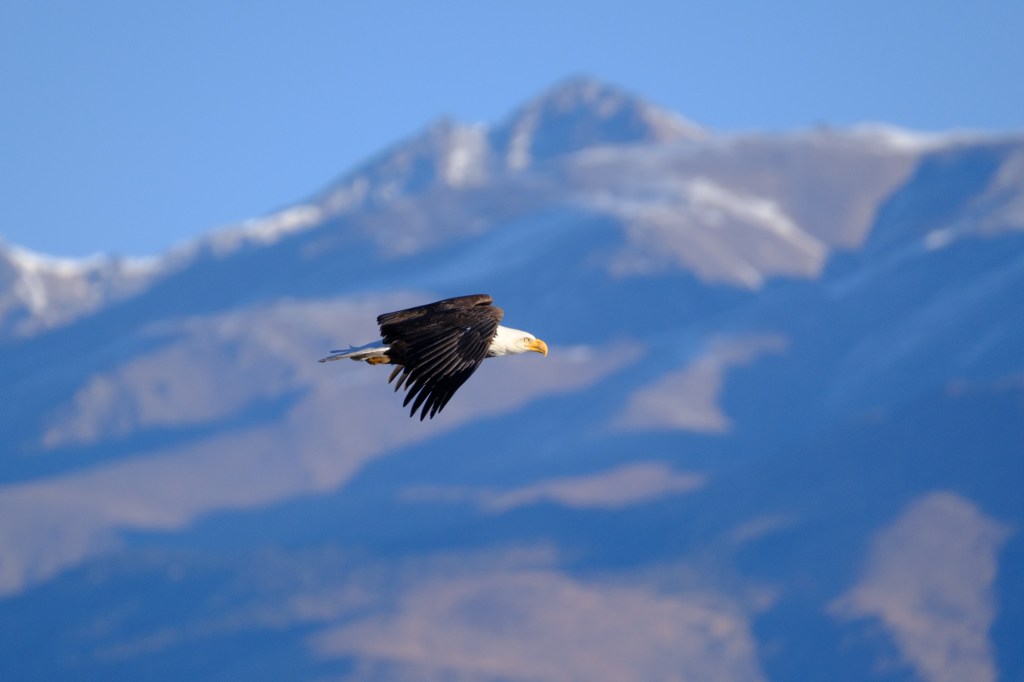
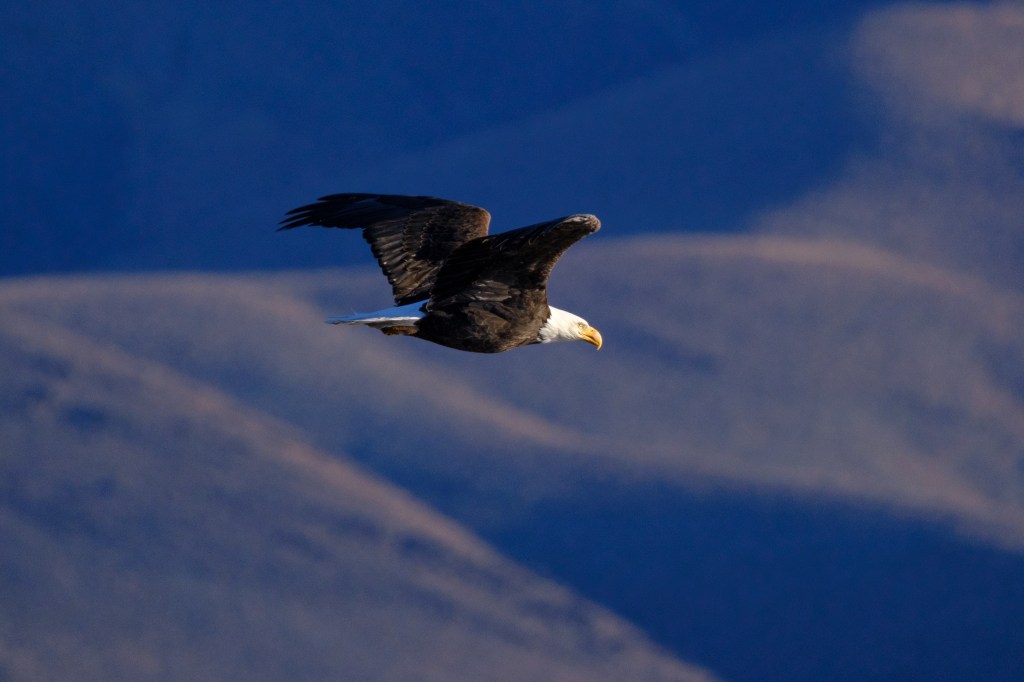
Below, a young eagle hunting at the Buckley Ponds. When the Eagle takes off, dozens of American Coots go wild trying to fly or swim away from the Eagle’s path.
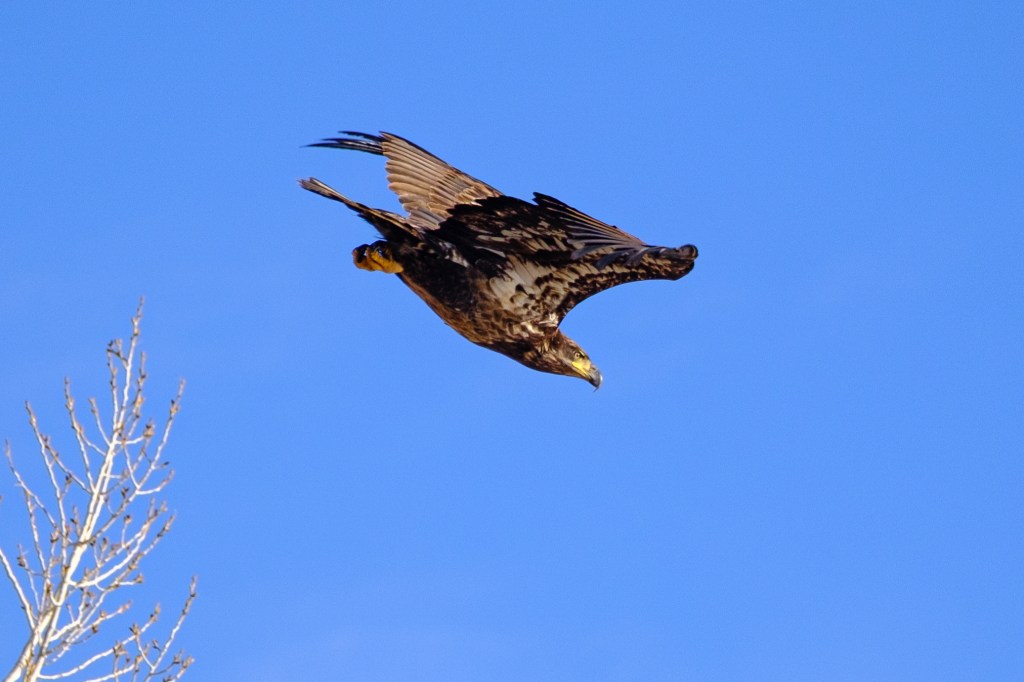
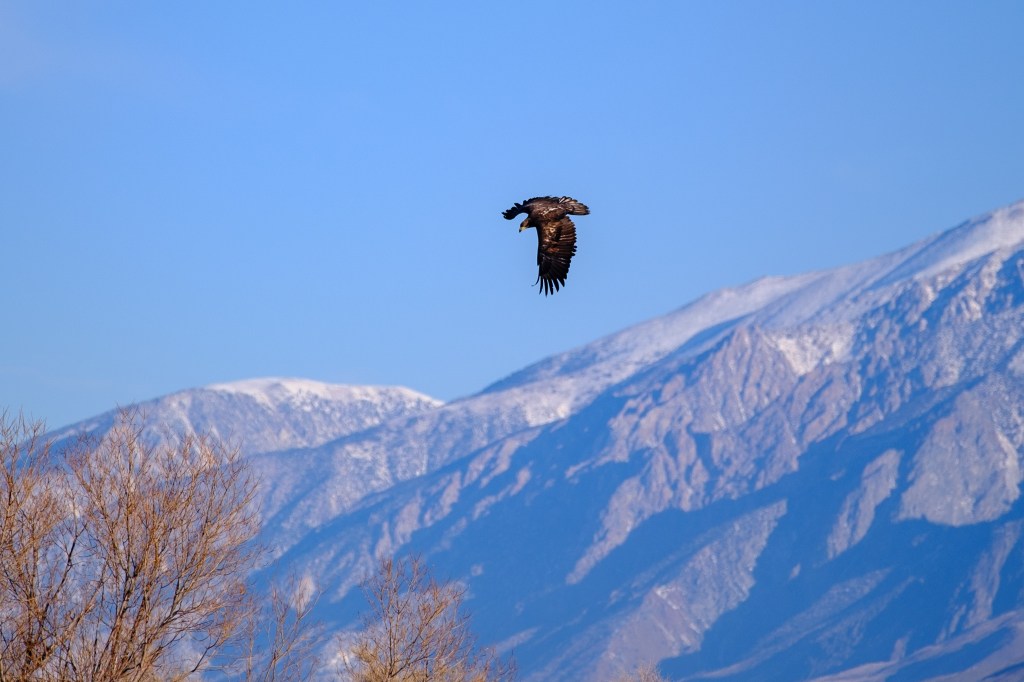

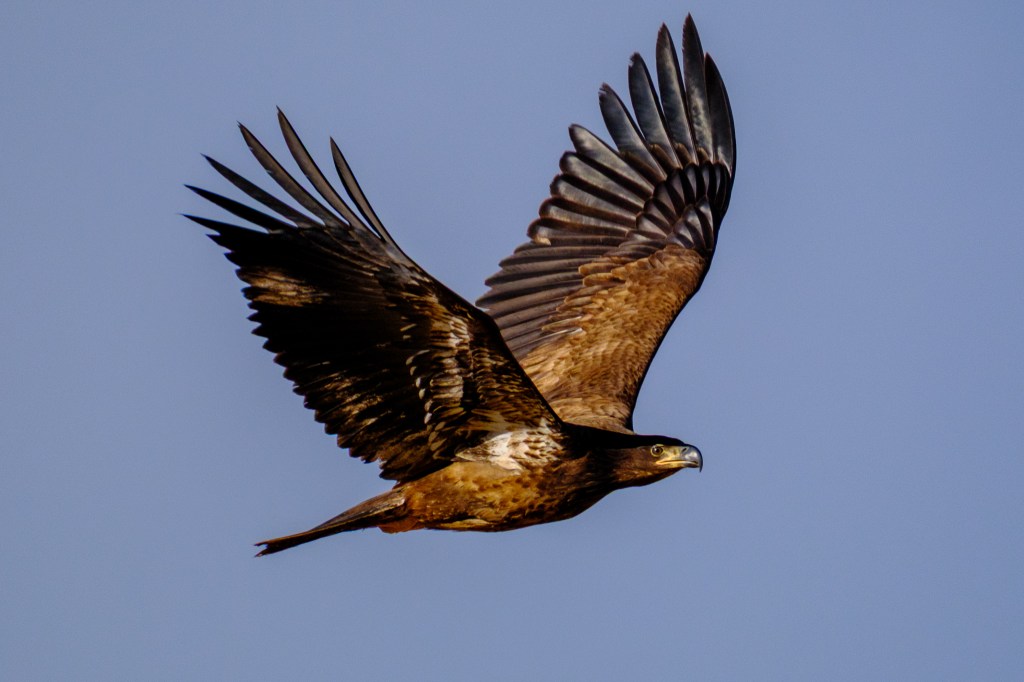
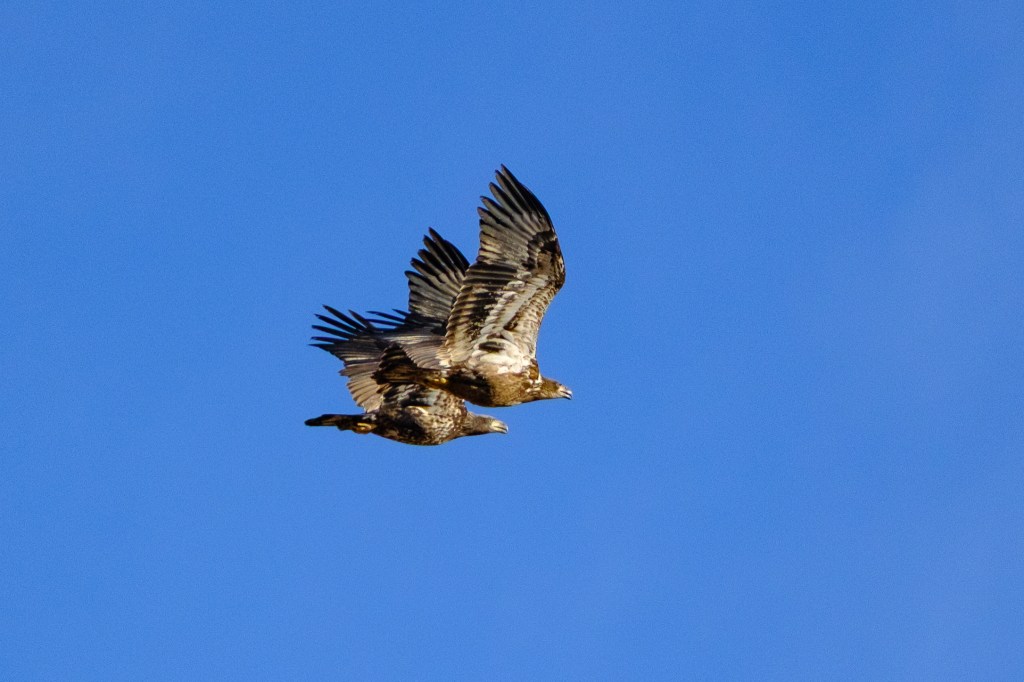
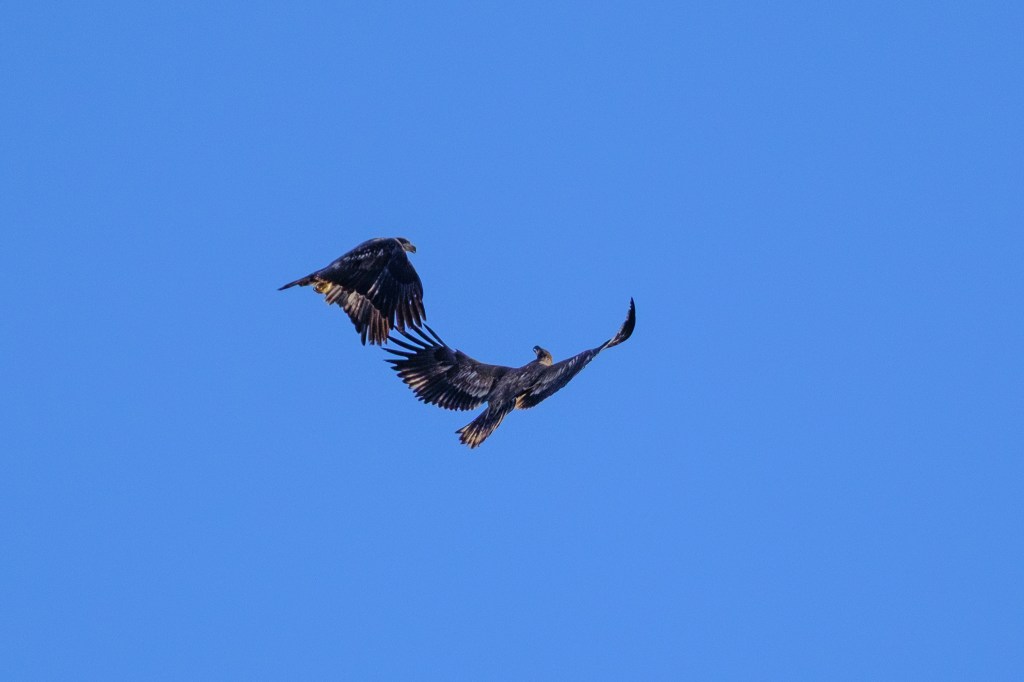
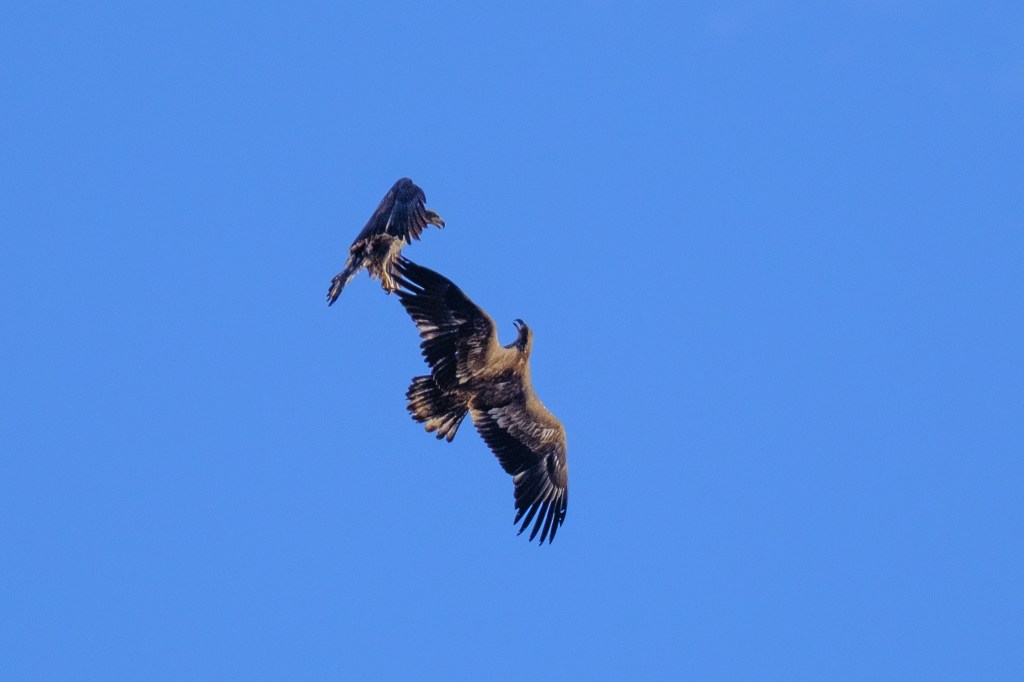
In December of 2022, I was walking on Warm Springs Road. I saw two birds flying toward me and I started shooting. These were two young Eagles. As they flew past, one Eagle braked and slowed, while the other bird did a barrel-role and displayed its talons. This behavior is sometimes described as a mating ritual. Or were they were just having fun? These are some of my favorite photos. How I wish I could see something like this again.


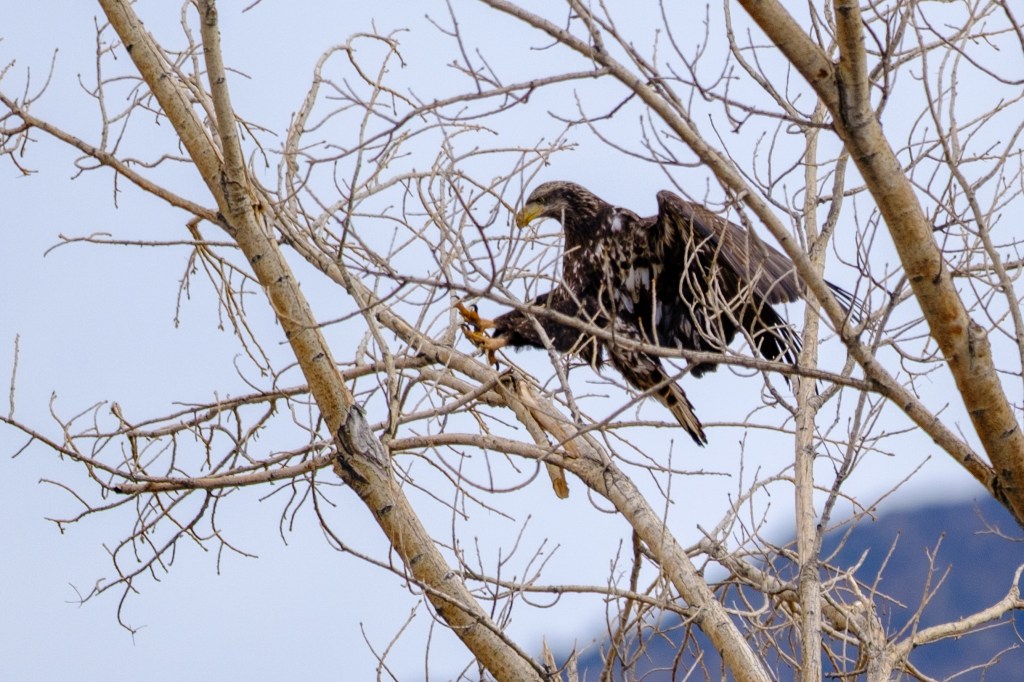
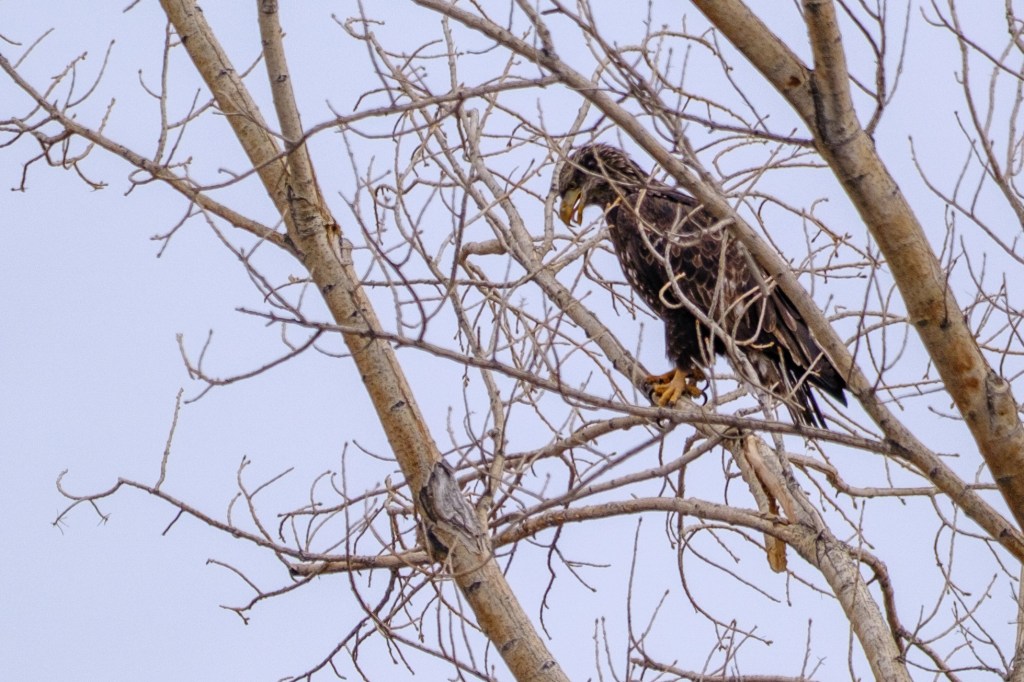
Below are 4 photos that show a young Eagle landing in a Cottonwood at the Buckely Ponds. It overshoots a bit, failing to stick the landing; then it balances properly. In the last photo you can see the bird’s tongue.


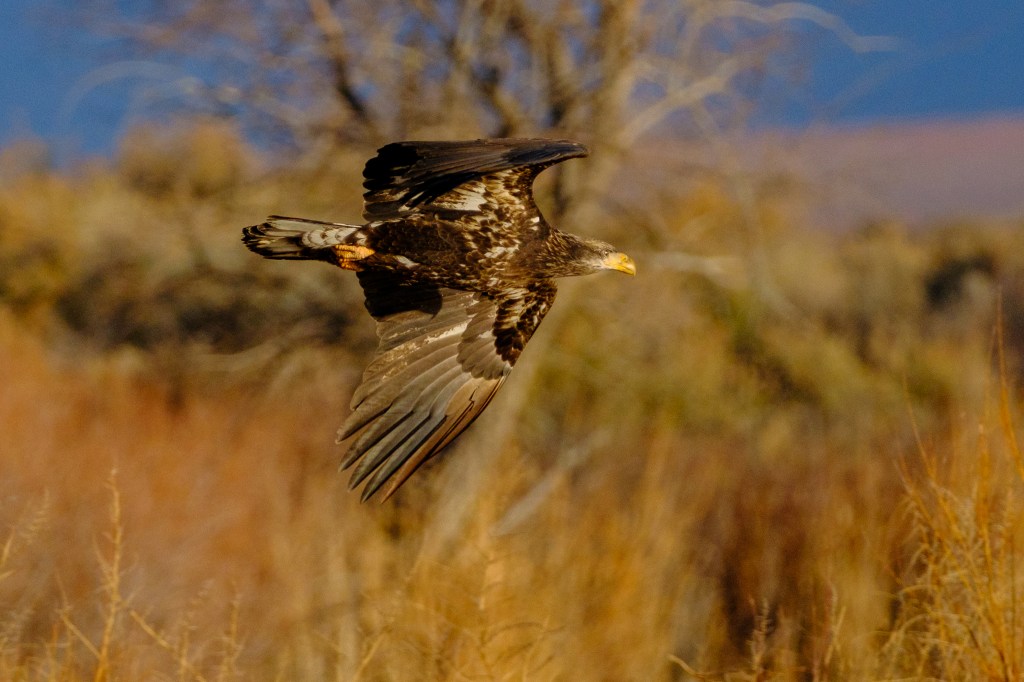
A young Bald Eagle takes off at the Buckley Ponds and swoops low over the ground.


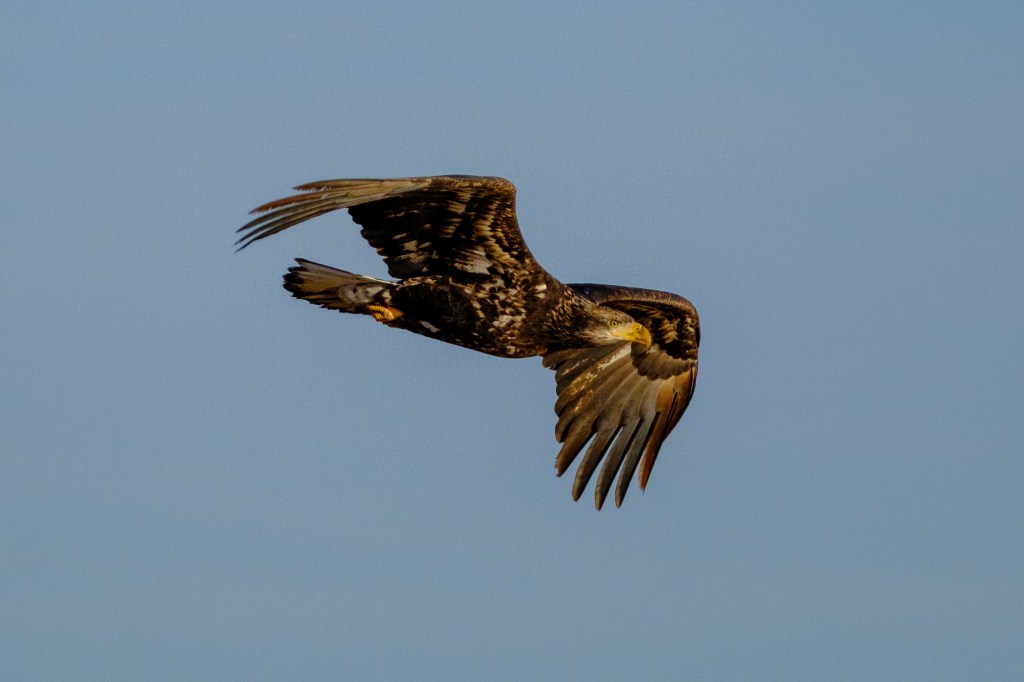
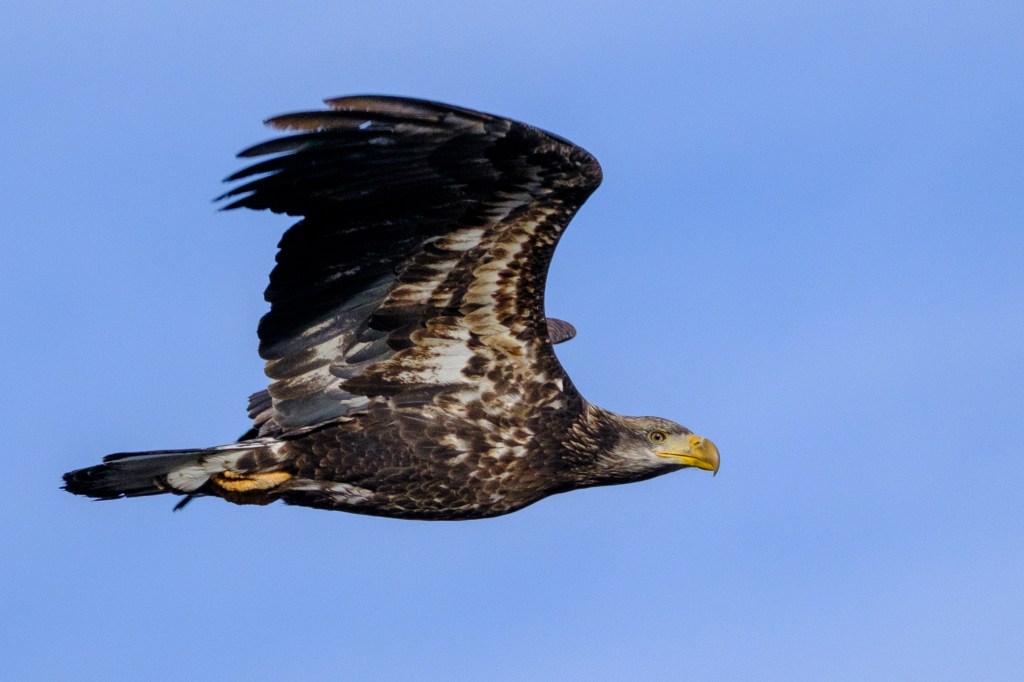

A young Bald Eagle soars above the Pleasant Valley Reservoir.

In January of 2025, a 4-year old Eagle takes off at the Buckley Ponds. One of my favorite Eagle photos.


Eating
Double-crested Cormorants catch fish at the Pleasant Valley Reservoir. The Eagle below caught a Cormorant. You can see the Eagle is tearing apart its prey.
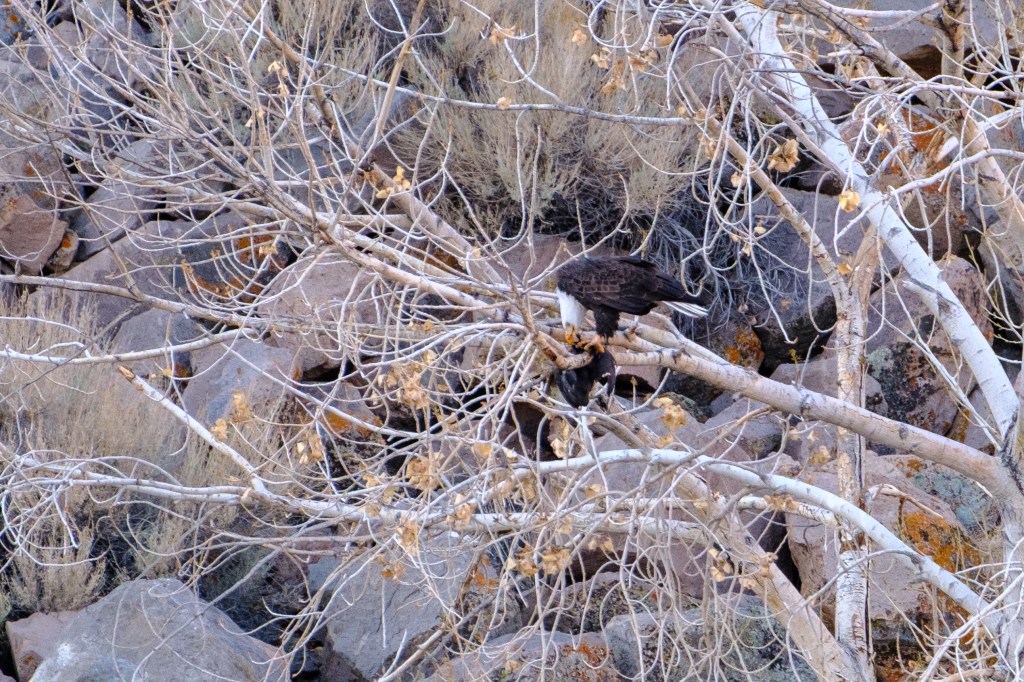
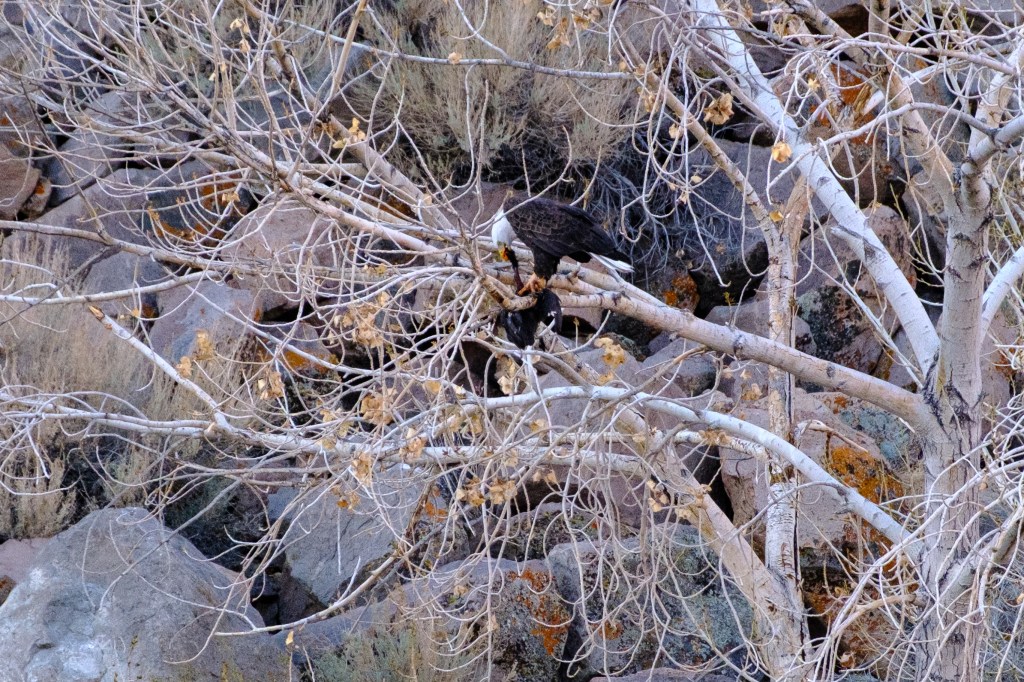
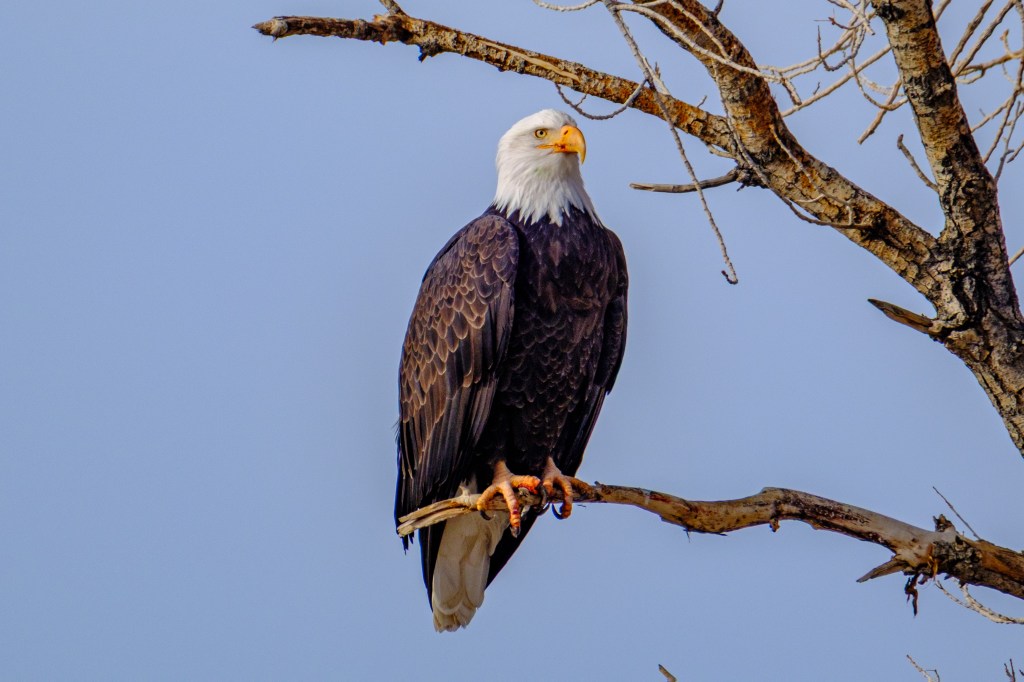
The Eagle below was perched at the Buckley Ponds on Dec 18, 2021:
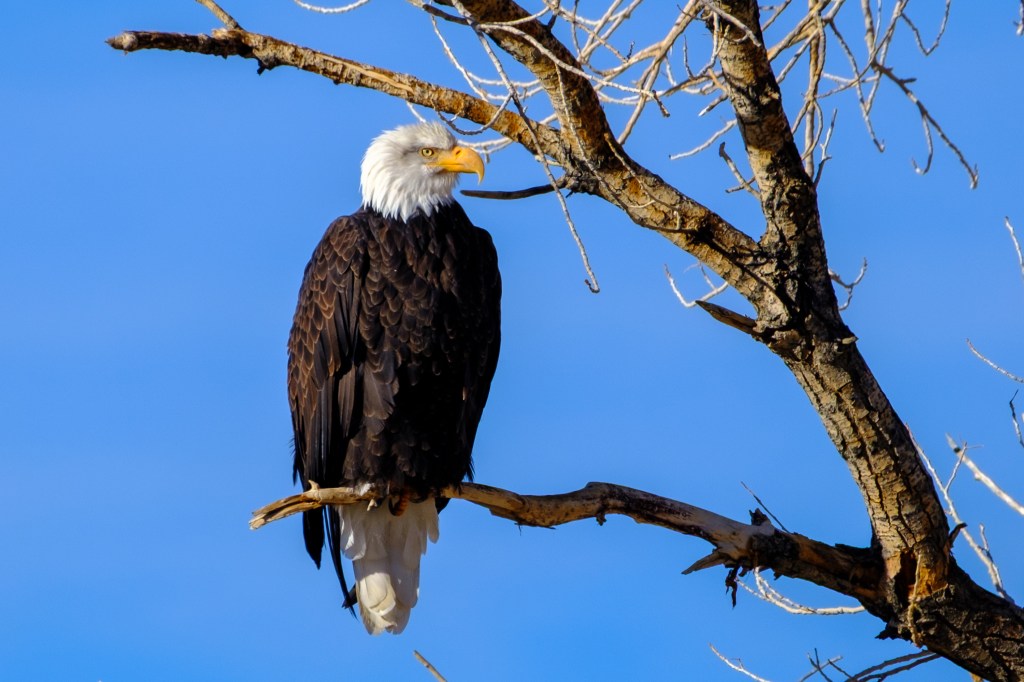
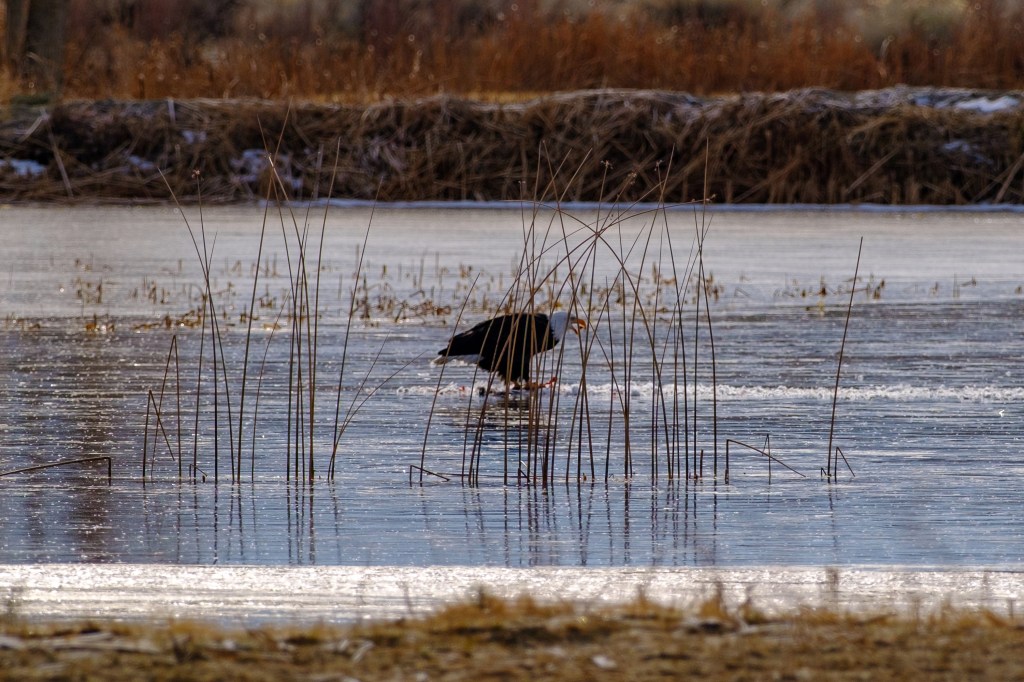
A few days later, on Dec 22, I walked alone at the Ponds. It was 26 degrees and the Ponds were mostly frozen. I rounded a corner and found a Snow Goose on the road. I was surprised and so was the Goose; it flew off before I could get a photo. An hour later I came back to my car and saw an Eagle eating on the frozen lake; the fluffy stuff on the ice is white down, the remains of the Snow Goose. Blood, flesh, and bones were mixed with the down.
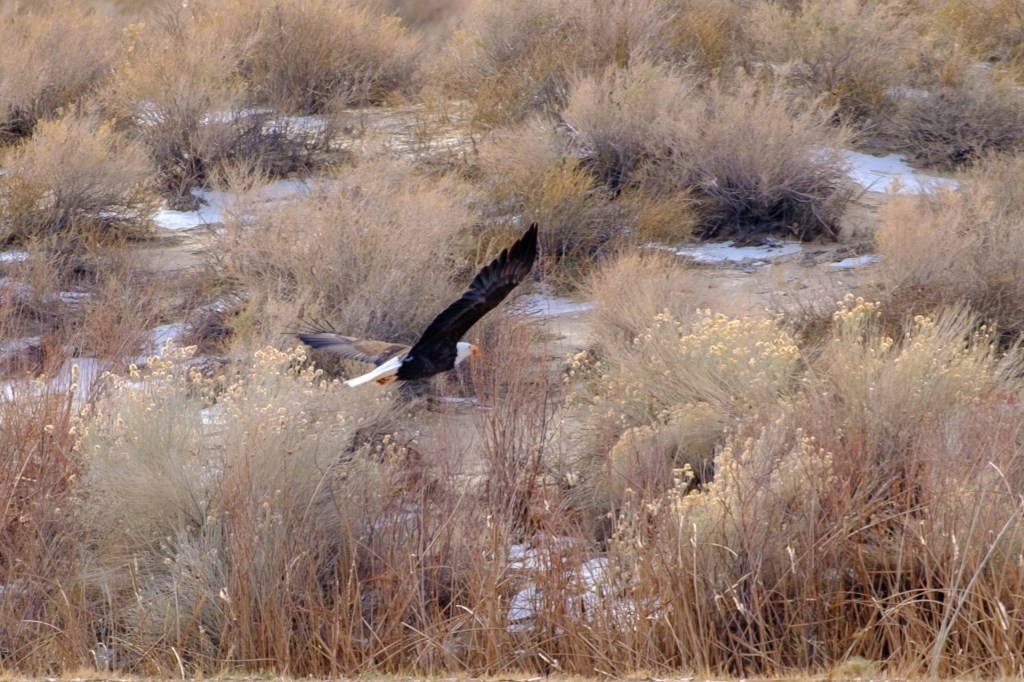
The Eagle flew off. You can see it below and even make out blood on the beak and feet. Some snow is on the ground.
The next photo, below, shows the Eagle perched, with blood on beak and toes. Compare with the picture shown above for Dec 18. This is the same perch and probably the same Eagle.
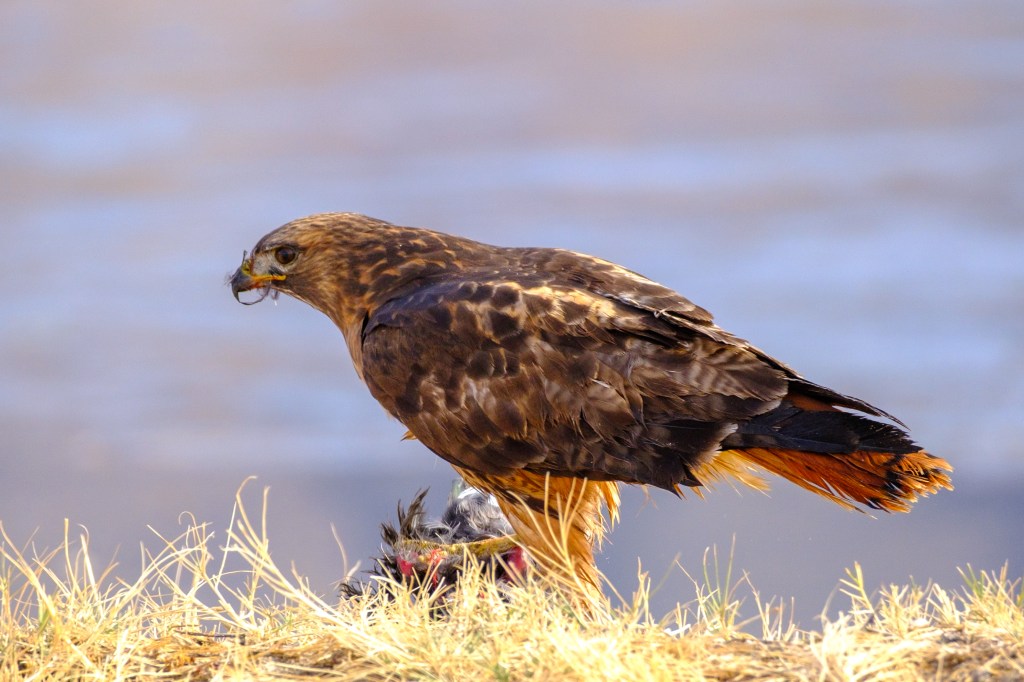
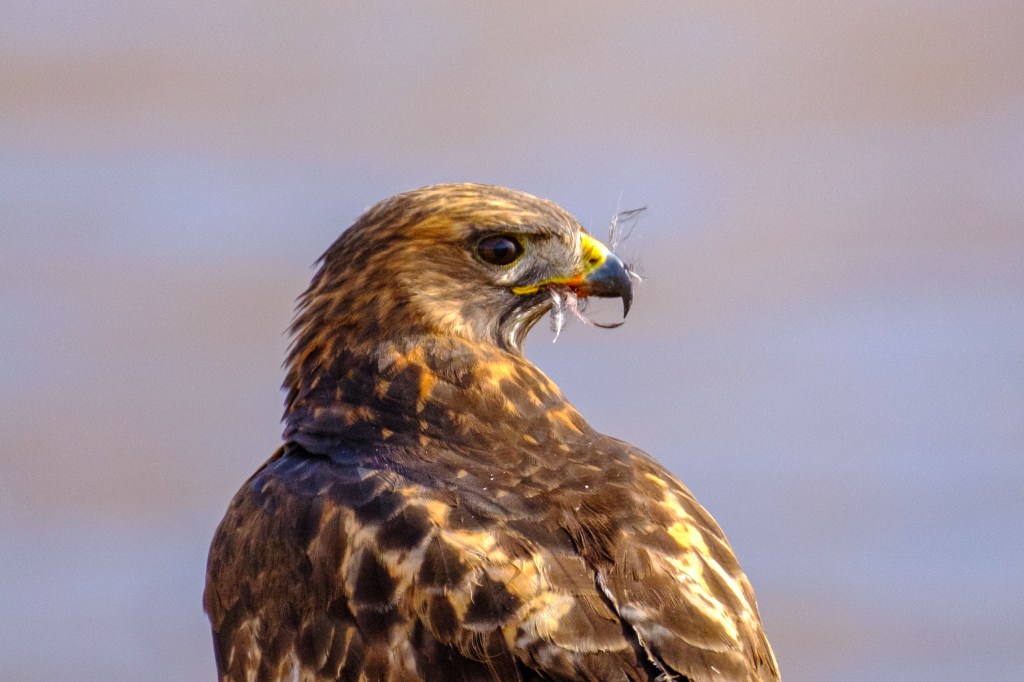
A Northern Harrier then arrived and tried to steal some of the remaining flesh; the Eagle chased the Harrier off. Later in the day, I came back to the Ponds and found a Red-tailed Hawk had managed to get some of the Goose meat. So three raptors dined on Goose that day. I wondered if my sudden appearance caused the Goose to carelessly fly into the path of the Eagle?
Below are 2 photos of the Red-tail, with Goose feathers on its beak:
The next picture shows a young Eagle flying near the Buckley Ponds. The bird is clutching something and seems to be pecking or biting whatever was in its talons.

Miscellaneous
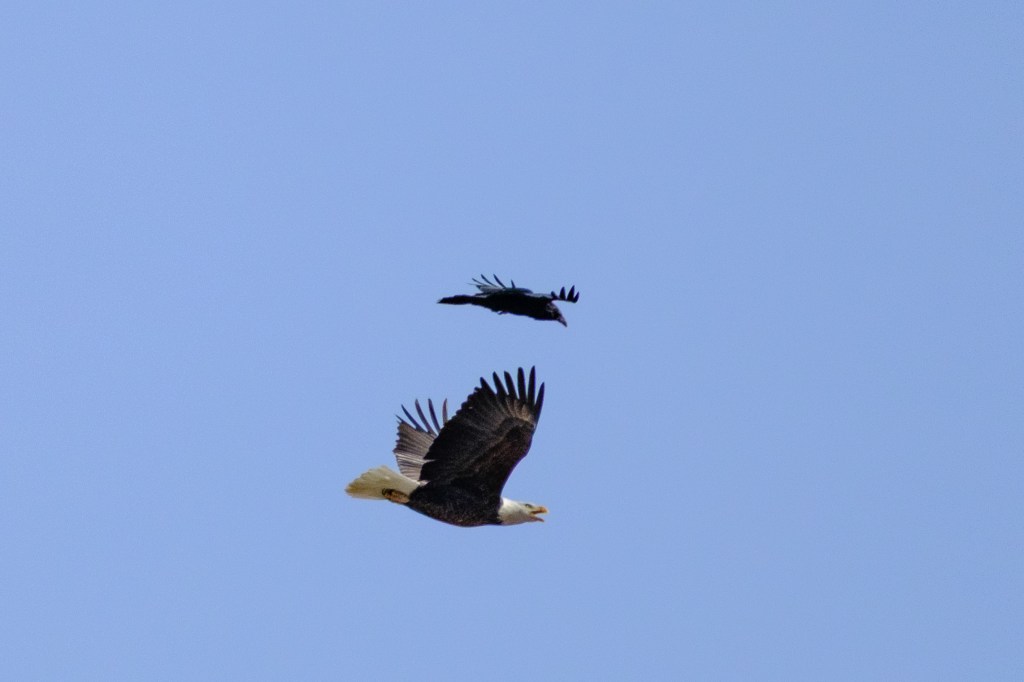
The photo below shows a group of Crows harassing a Bald Eagle near Airport Road. The Eagle looks downcast.

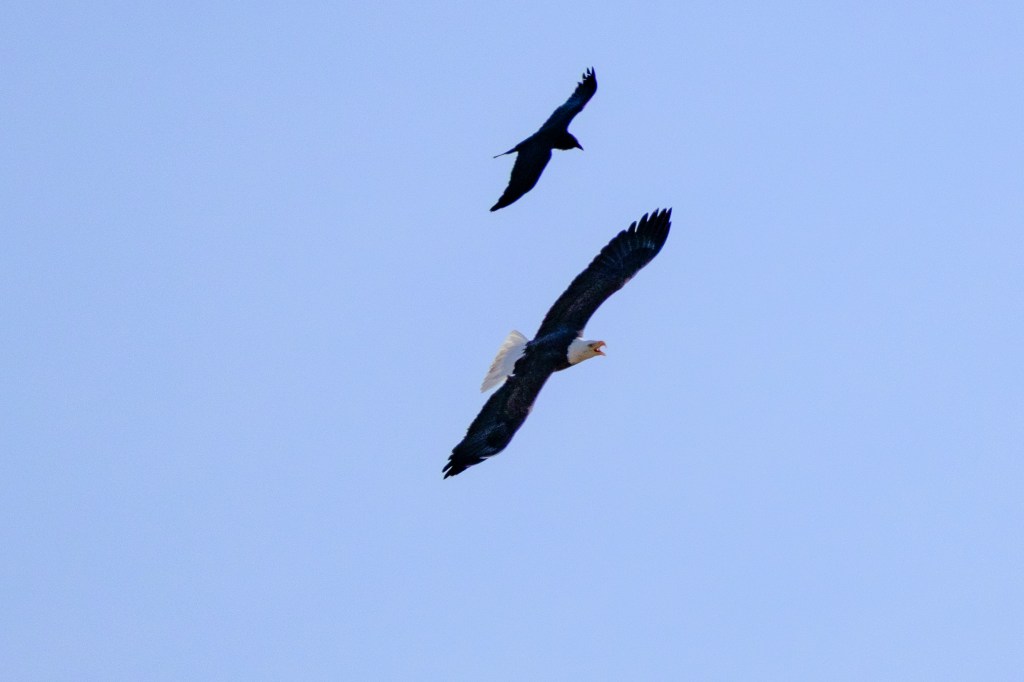
The next two photos show a Crow chasing a Bald Eagle.
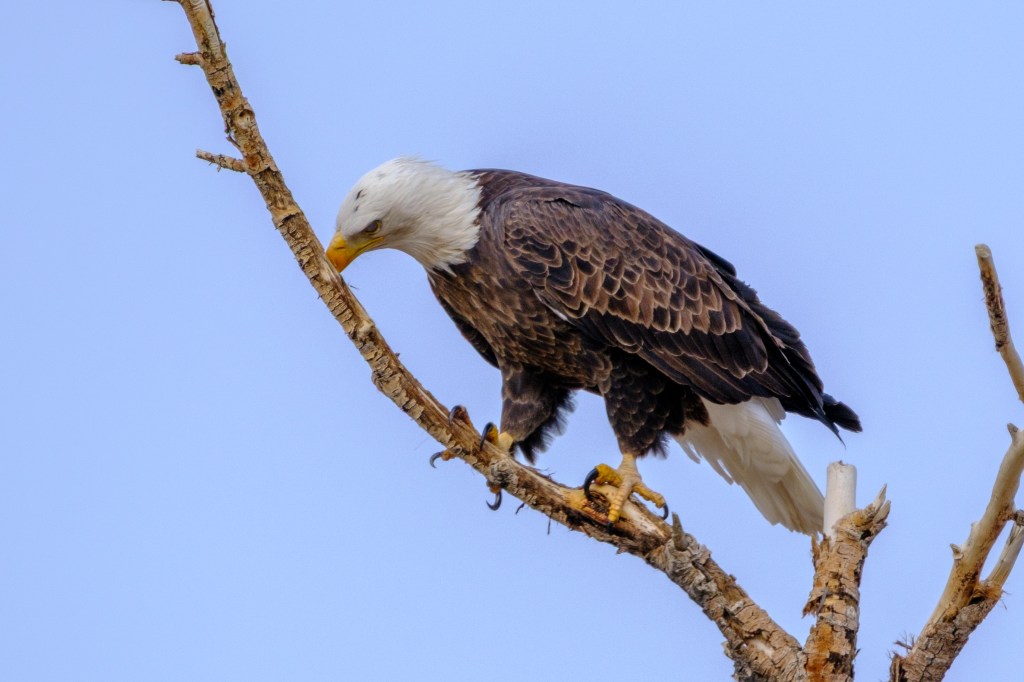
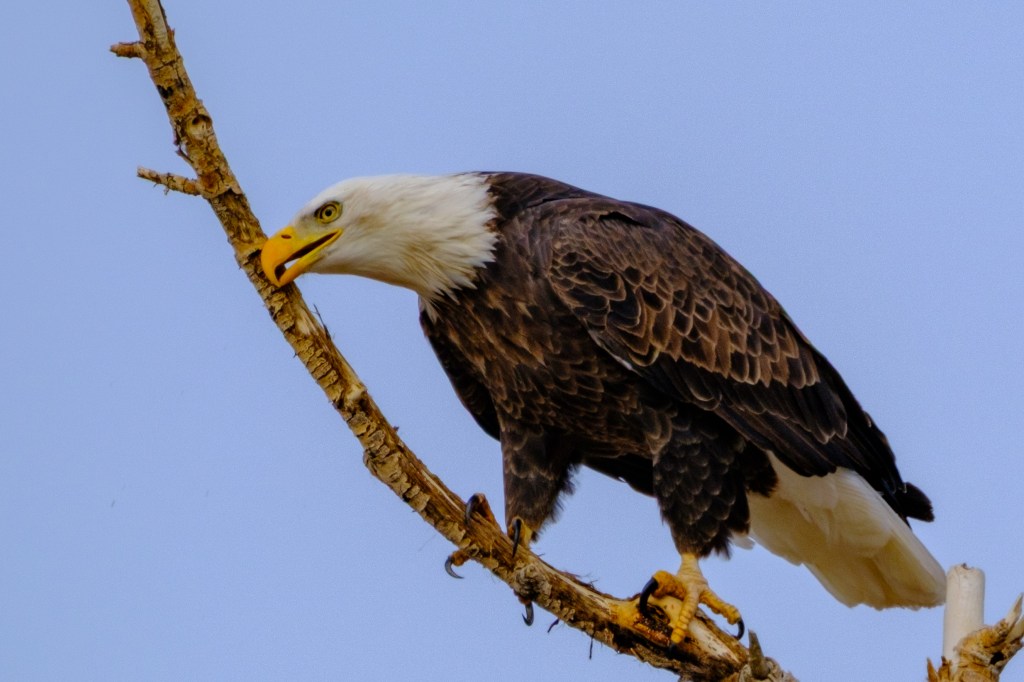
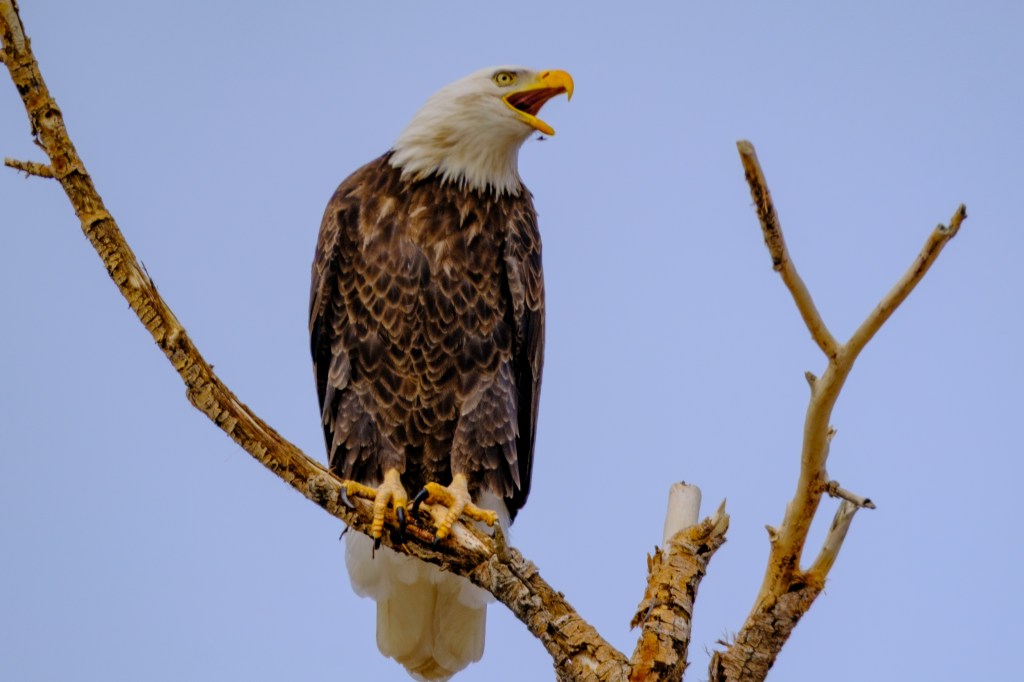
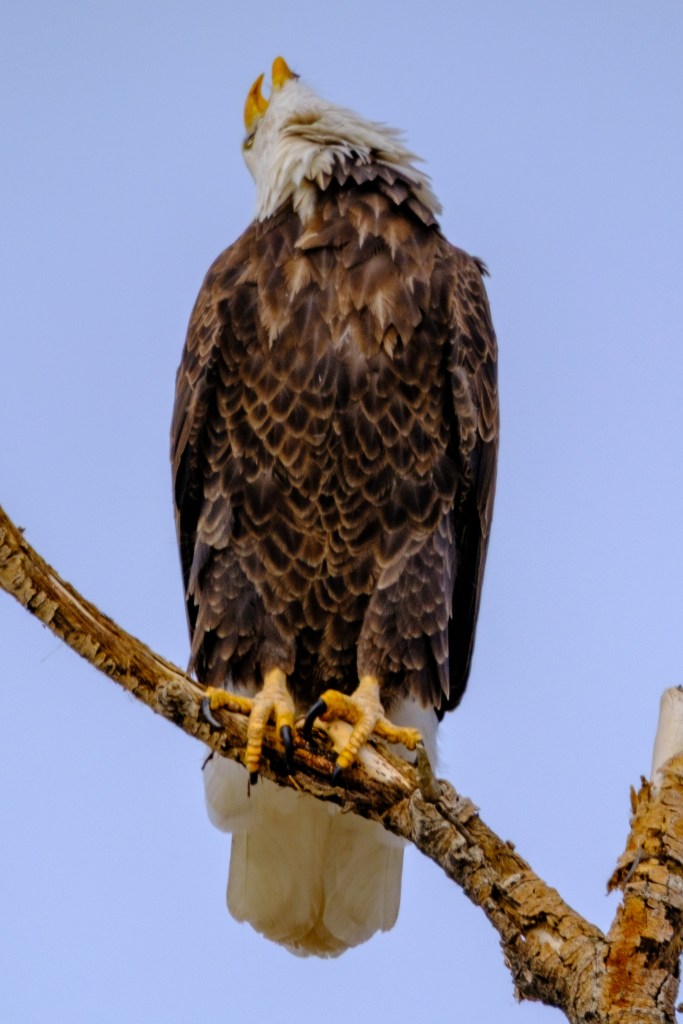
The next 4 photos show a Bald Eagle cleaning its beak on a branch near the Buckley Ponds. The bird cries out in the last two pictures.
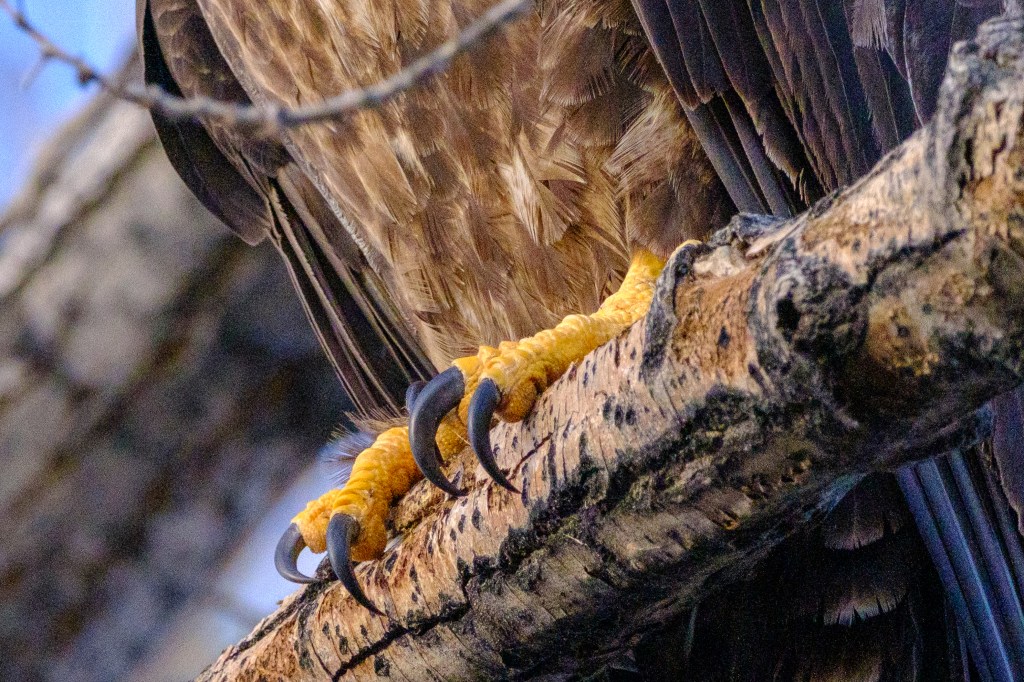
The final photo shows the talons of a young Eagle.
A Fictional Eagle
Kenn Kaufman’s new (2024) book, The Birds that Audubon Missed: Discovery and Desire in the American Wilderness, describes how John James Audubon created a fictitious bird which he called the “Bird of Washington, Falco washingtonii.” Audubon claimed that this was a newly discovered species of eagle, 25% larger than a Bald Eagle, with a wingspan over ten feet. He did this to sell subscriptions for his expensive book series, Birds of America, which was printed in Britain starting in 1827. Audubon knew that Eagles sell. Recently, historians discovered that Audubon’s painting of this counterfeit bird was plagiarized from an illustration of a generic raptor in a book by Abraham Rees.
 Birds of Bishop