
I first climbed in Africa in 1984; a failed attempt on Mt Kenya (in Kenya) and a successful climb of the Western Breach route on Kilimanjaro (in Tanzania), the highest summit (19,340 ft) in Africa. In July 1990 I returned to Mt. Kenya with my friend, Bart O’Brien. This post uses digitized slides from that trip. The photos of me were, obviously, taken by Bart.
Safari photos
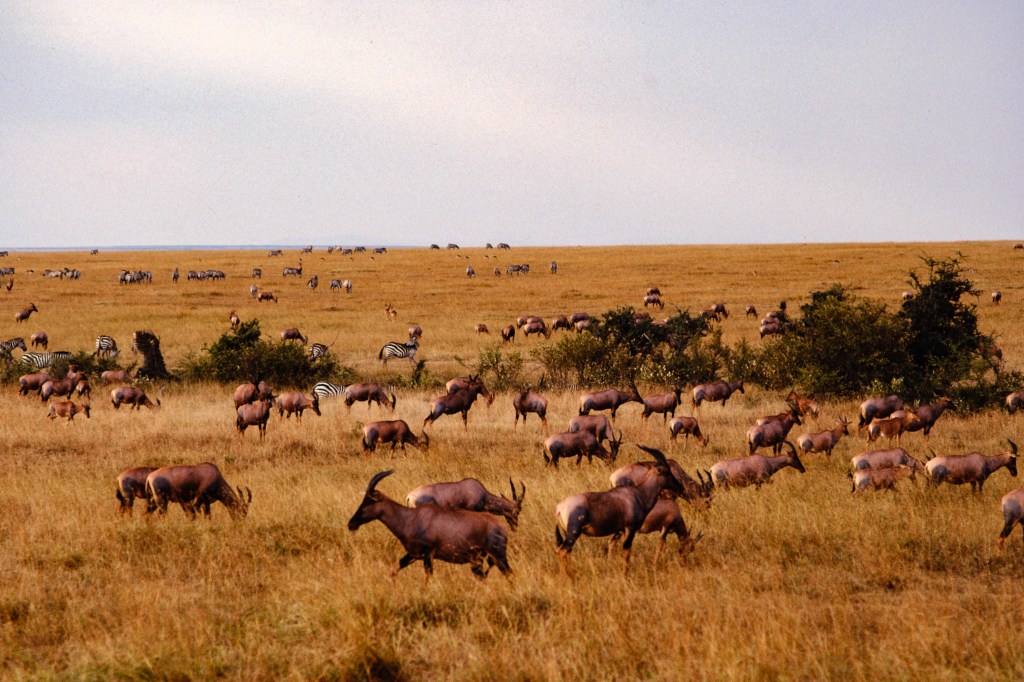
First we spent a week visiting some of Kenya’s game parks. The photo below shows Zebras and Hartebeests on the Serengeti.
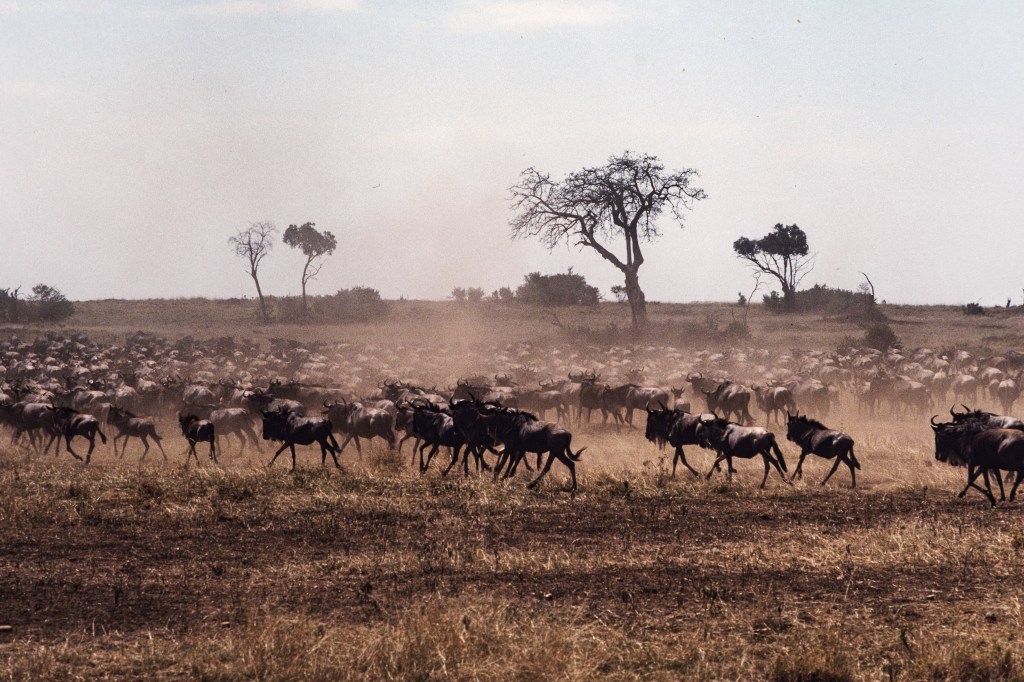
Wildebeests below.
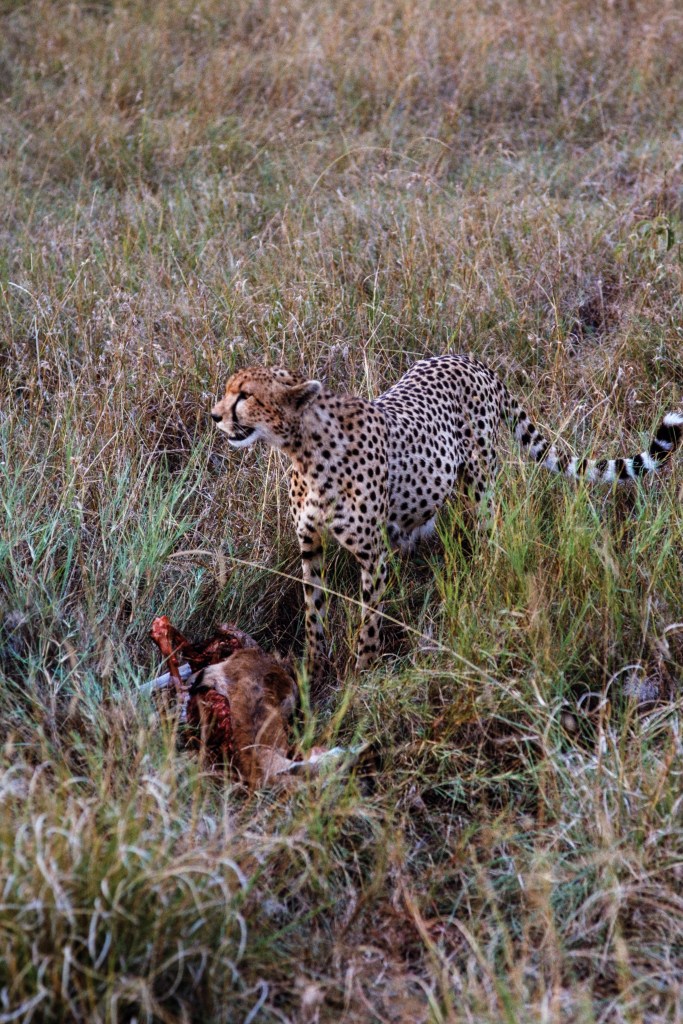
Cheetah eating a gazelle.
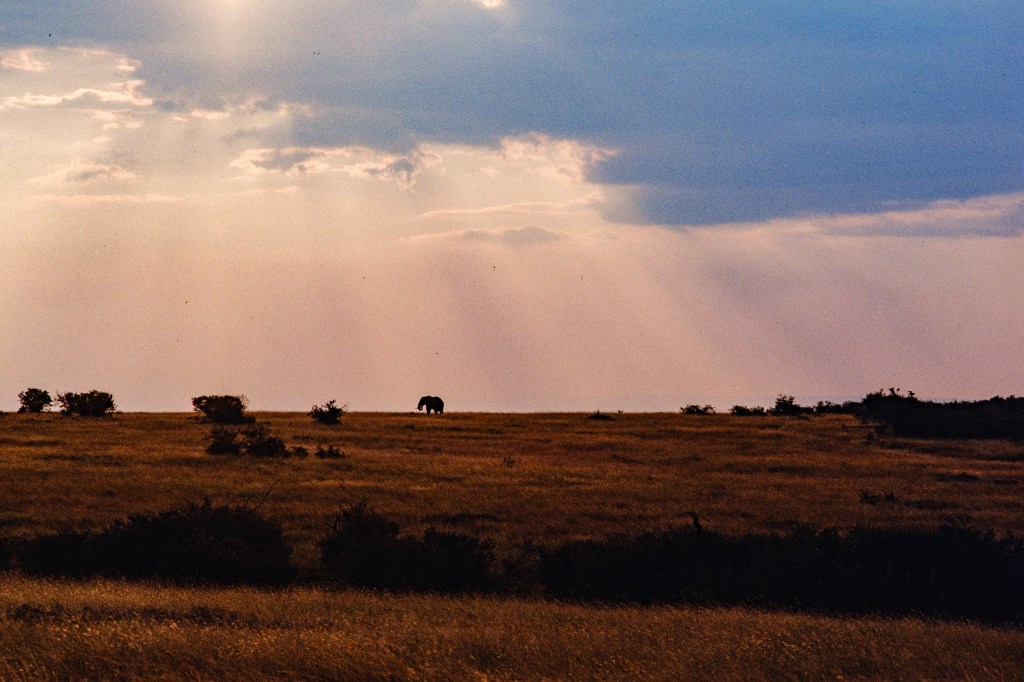
Lone Elephant.
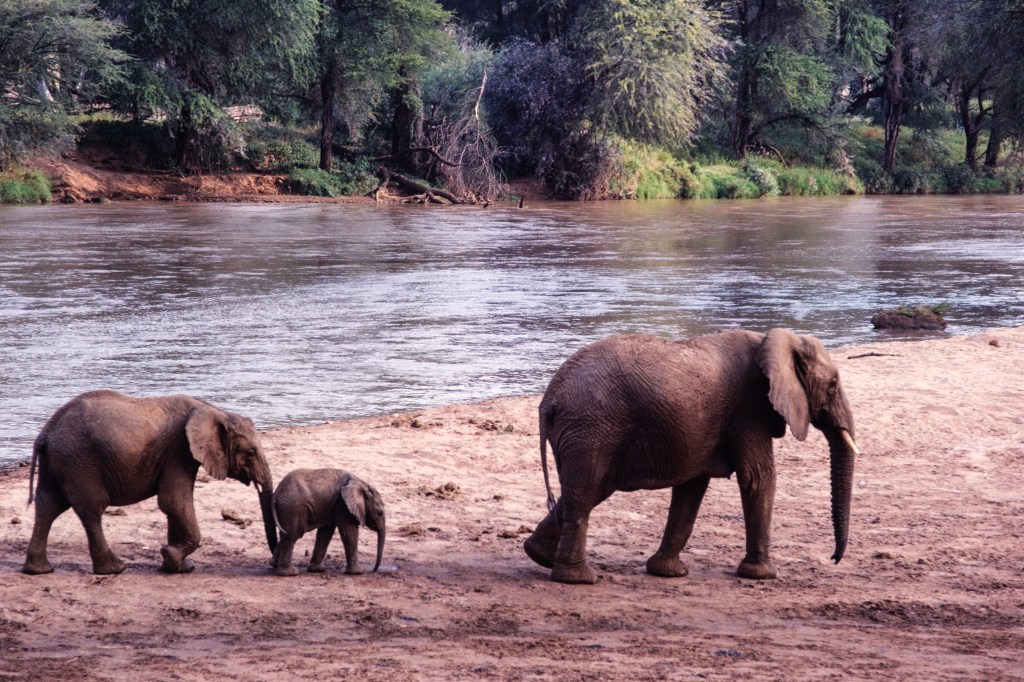
Elephant family.
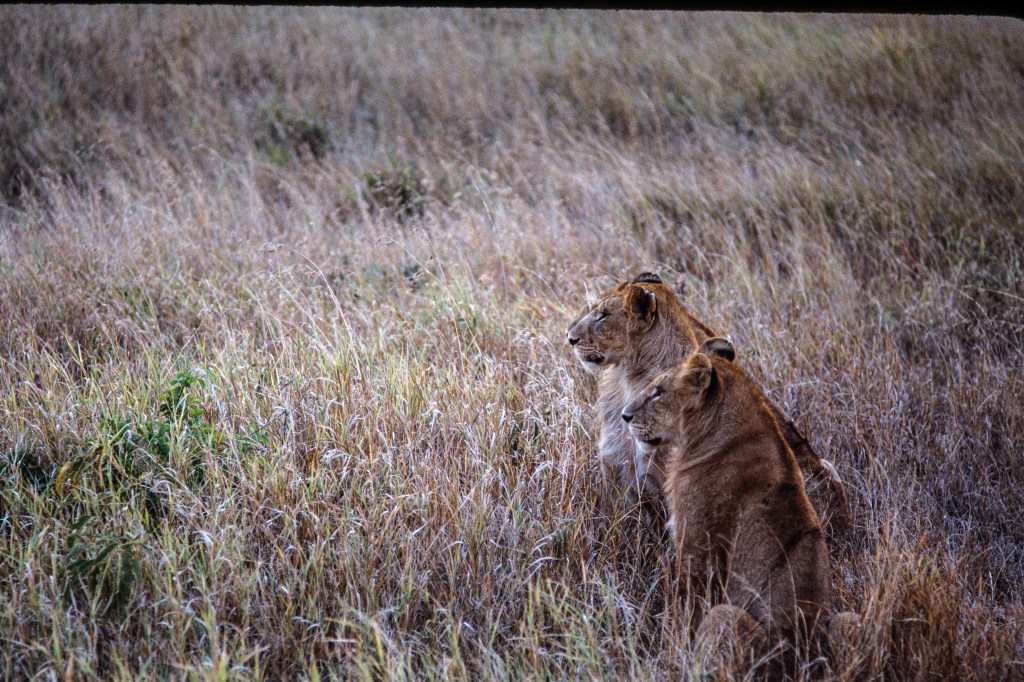
Lion King; not the musical.

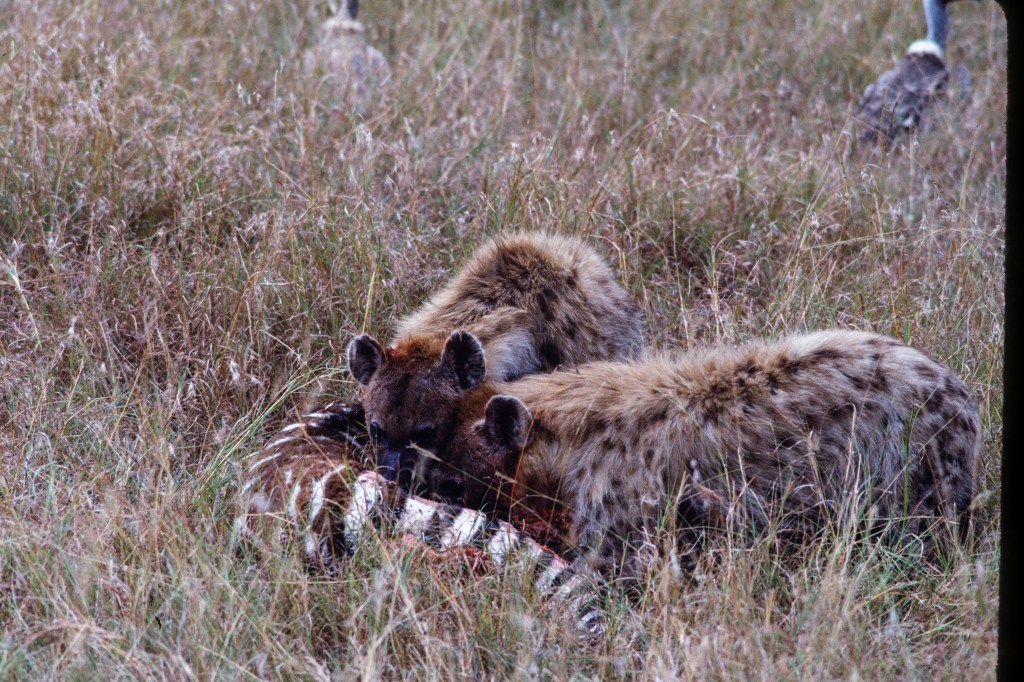
Hyenas eating a Zebra-burger.
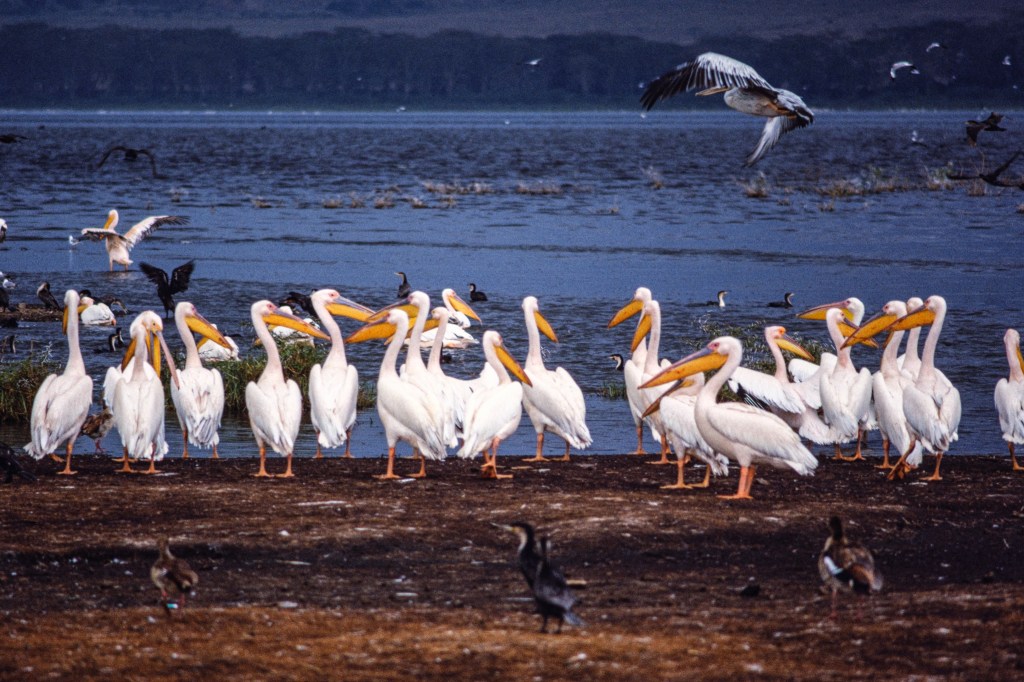
Great White Pelicans.
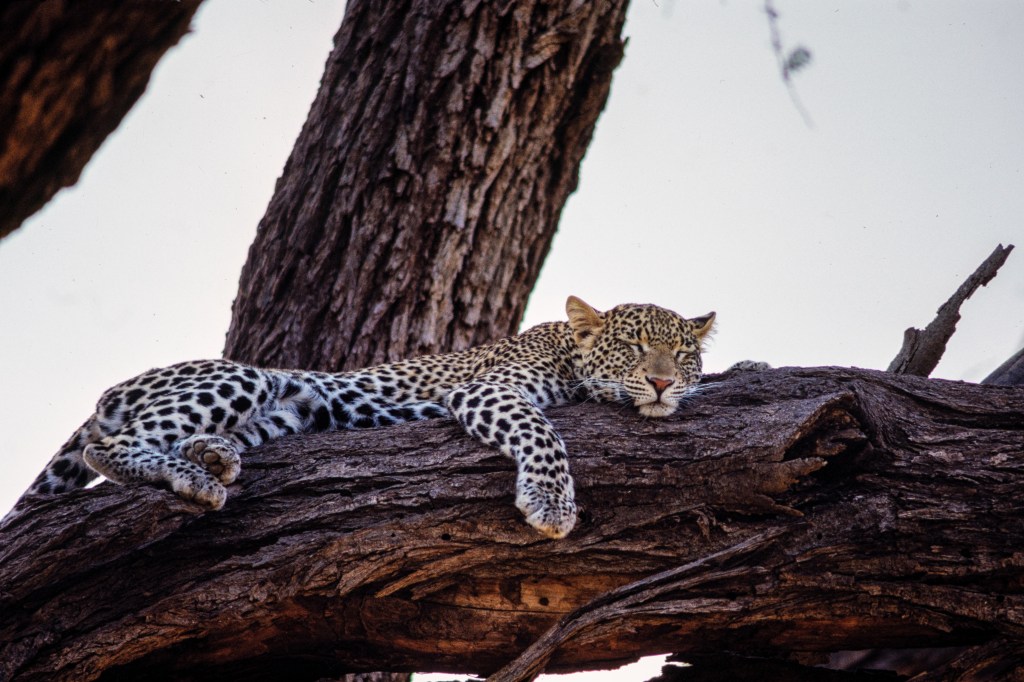
Leopard.
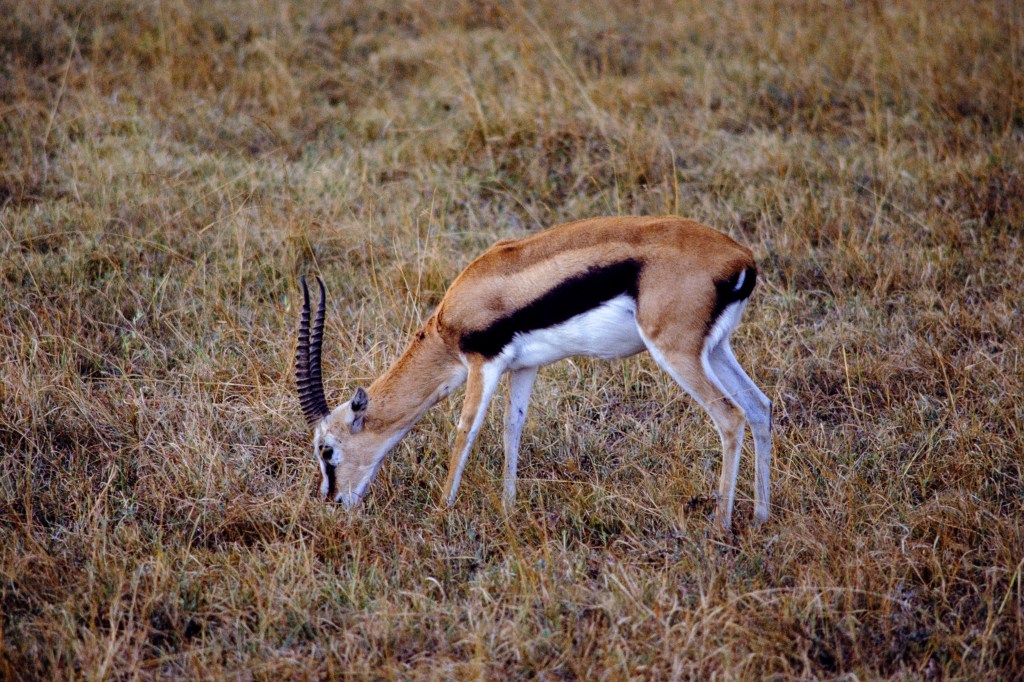
Thompson’s Gazelle.
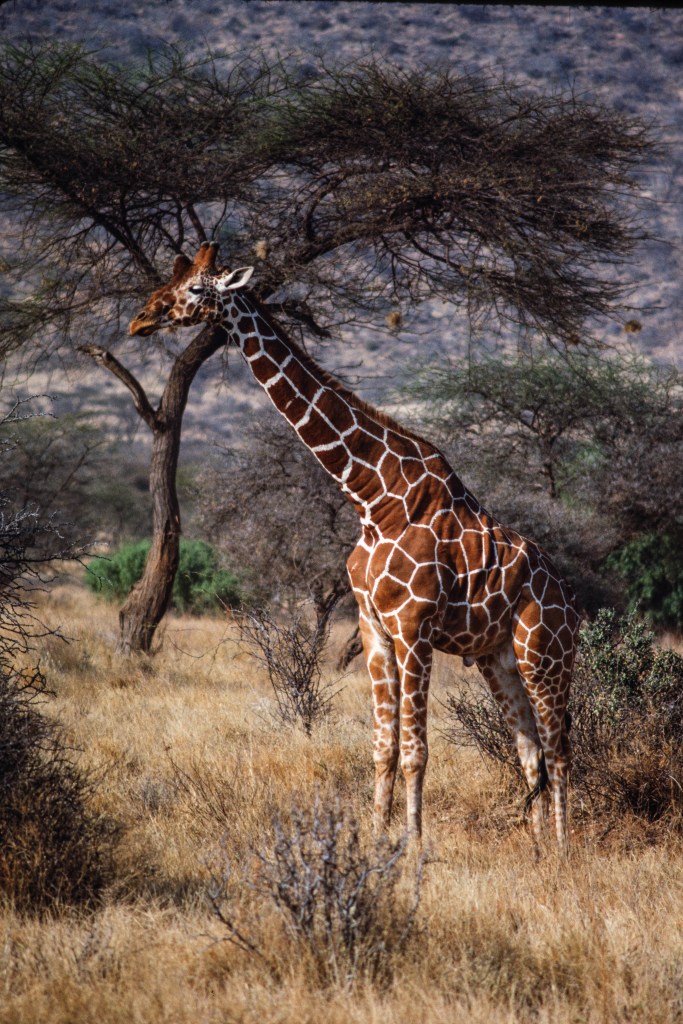
Reticulated Giraffe.
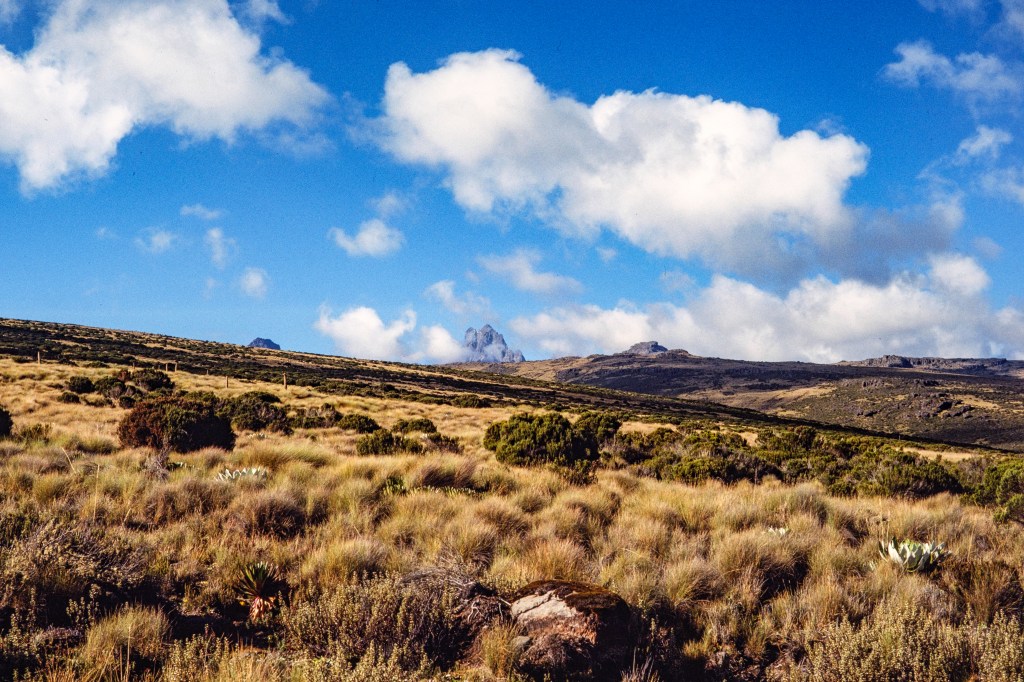
Approach to Mt. Kenya
Mt Kenya had a volcanic origin. Later it was covered by ice which severely eroded the rock; what remains is the interior plug of the original volcano. This created steep towers of hard rock with a rough texture; ideal for climbing. Most visitors to Mt Kenya hike up Pt. Lenana (16,355 feet), a peak which only requires walking; perhaps 10,000 ascents per year. The main summit of Mt Kenya, Batian (17,057 feet), involves roped climbing and has about 50 ascents per year. Batian was first climbed in 1899 by Halford Mackinder (English geologist), and two professional guides, Cesar Ollier and Josef Brocherel. The West Ridge, rated 5.8 in difficulty, was first climbed in 1930 by Eric Shipton and Bill Tilman. Both men were English coffee growers who later left Africa and became famous explorers of peaks in Asia and elsewhere. (I met Shipton in 1975 in Portland, Oregon, when he showed slides of trips to Tibet and Everest in the 1930s.)
Bart and I planned to spend 2+ weeks in the park; our main goal was to climb Mt Kenya’s West Ridge. We hired 3 porters to help carry our gear to climbing routes on the north side of the peak. Over two days we hiked the Sirimon Route to a tarn near the Kami Hut, at 14,600 feet, arriving on July 19. The porters left us here.
Mt Kenya’s main summit in the distance,
The porters enter the Mackinder Valley

Bart near our tent in Mackinder Valley.

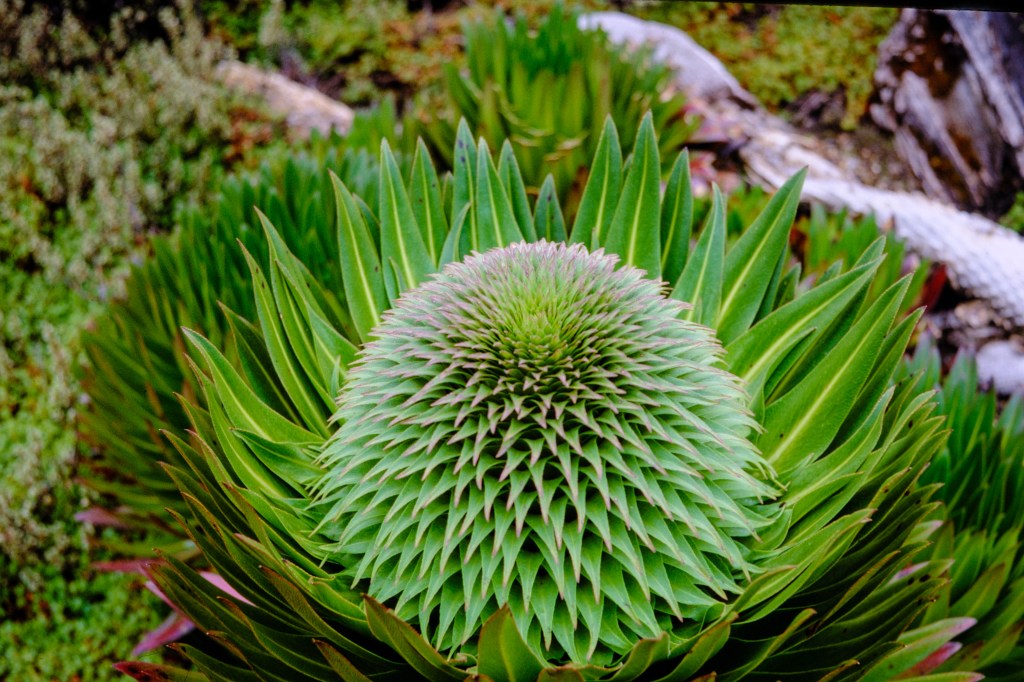
Lobelia, a lovely plant.
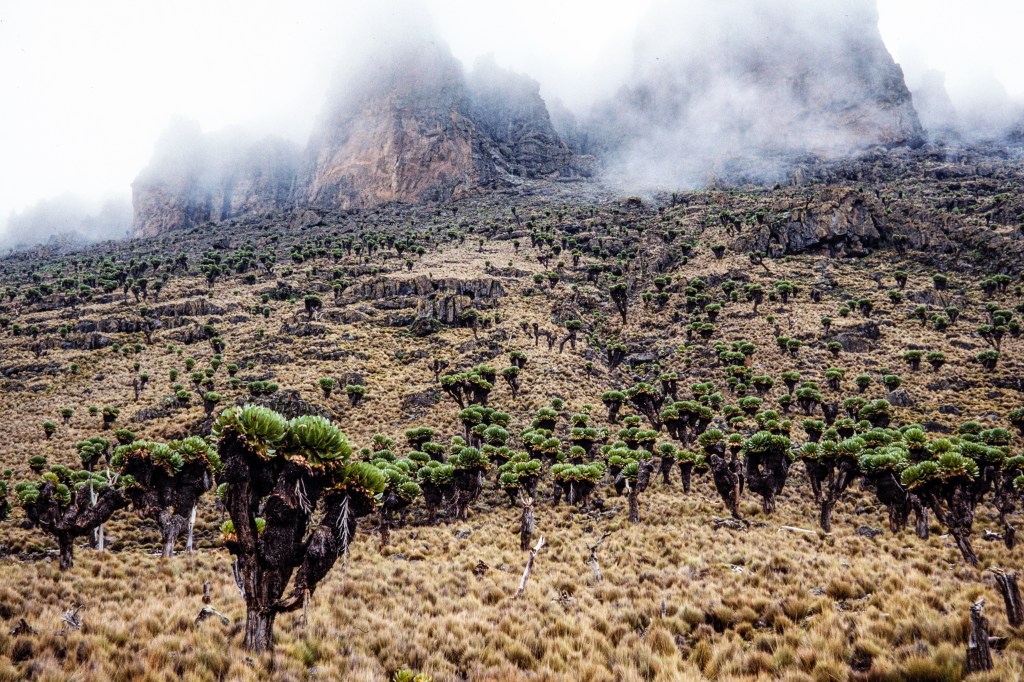
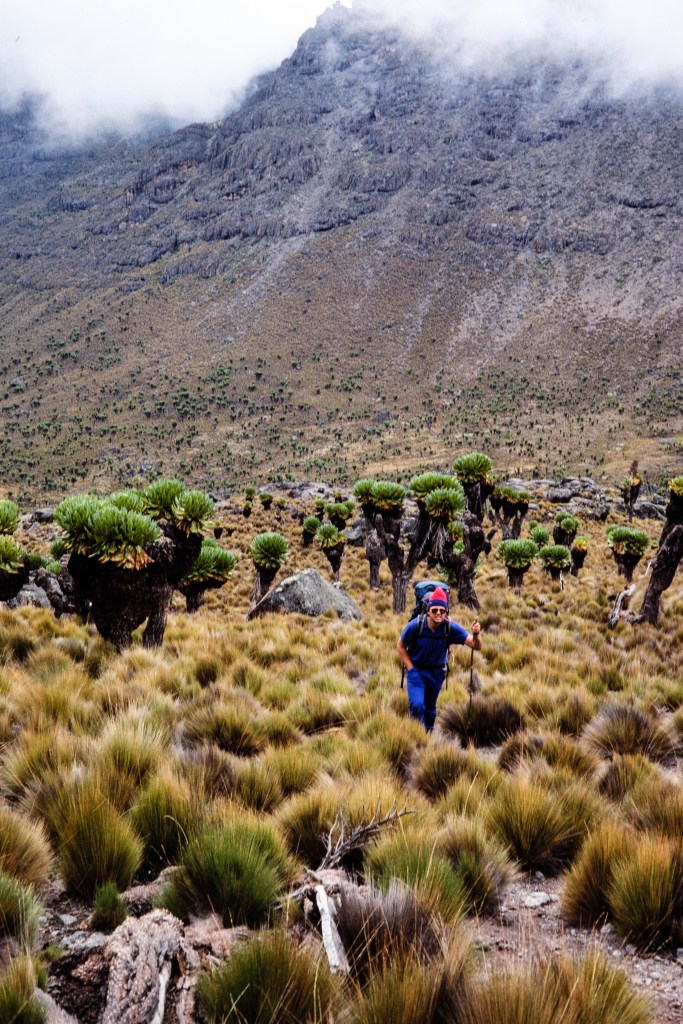
A forest of Giant Groundsel.
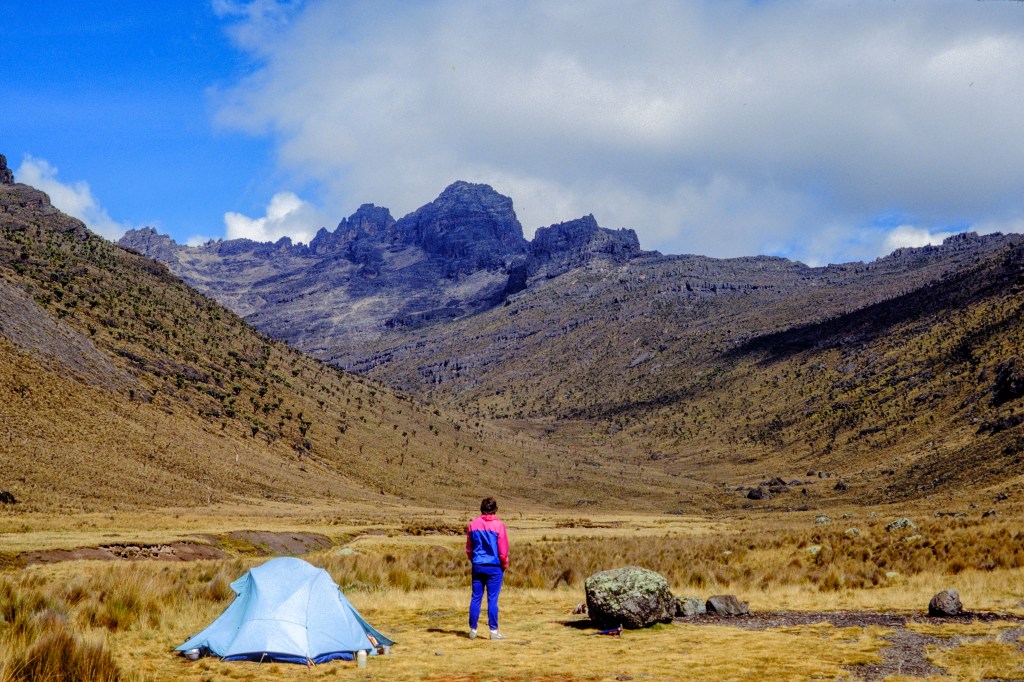
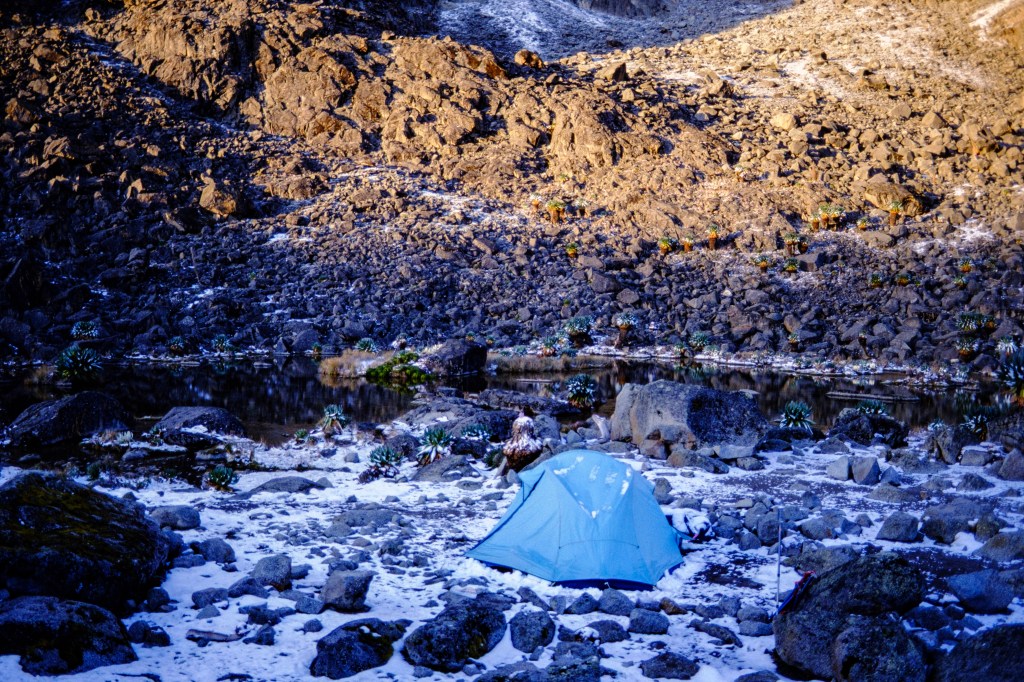
Kami Tarn, 14,600 ft. Our blue tent is near center of photo.
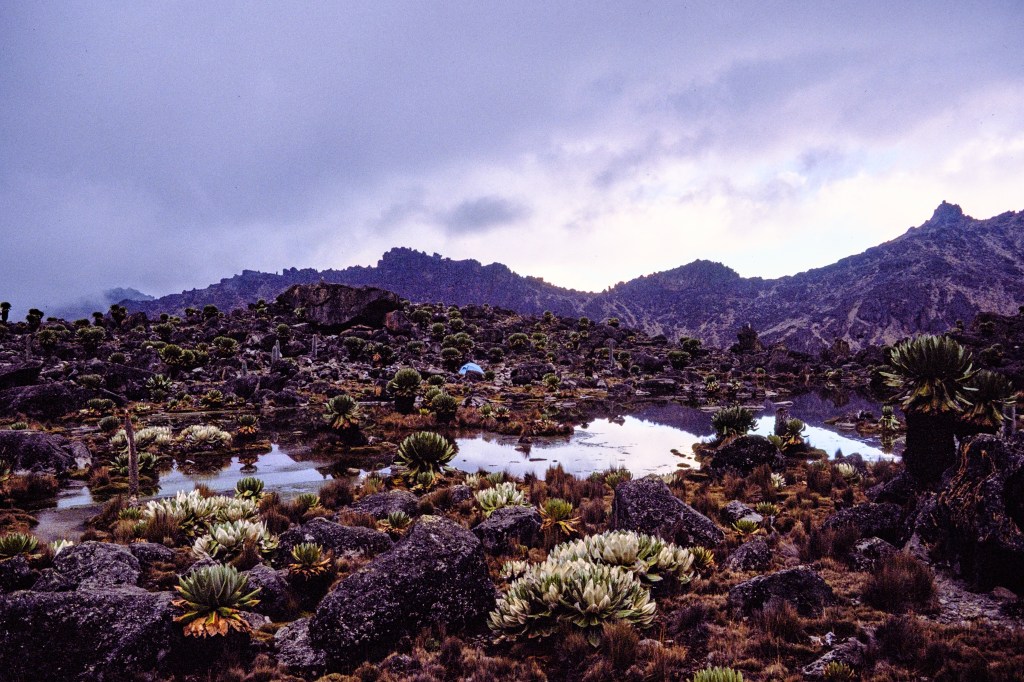
Fresh snow.
Initial climbs
The Kami Tarn was our home for 8 nights. On July 21 we climbed Pt. Peter (15,607).
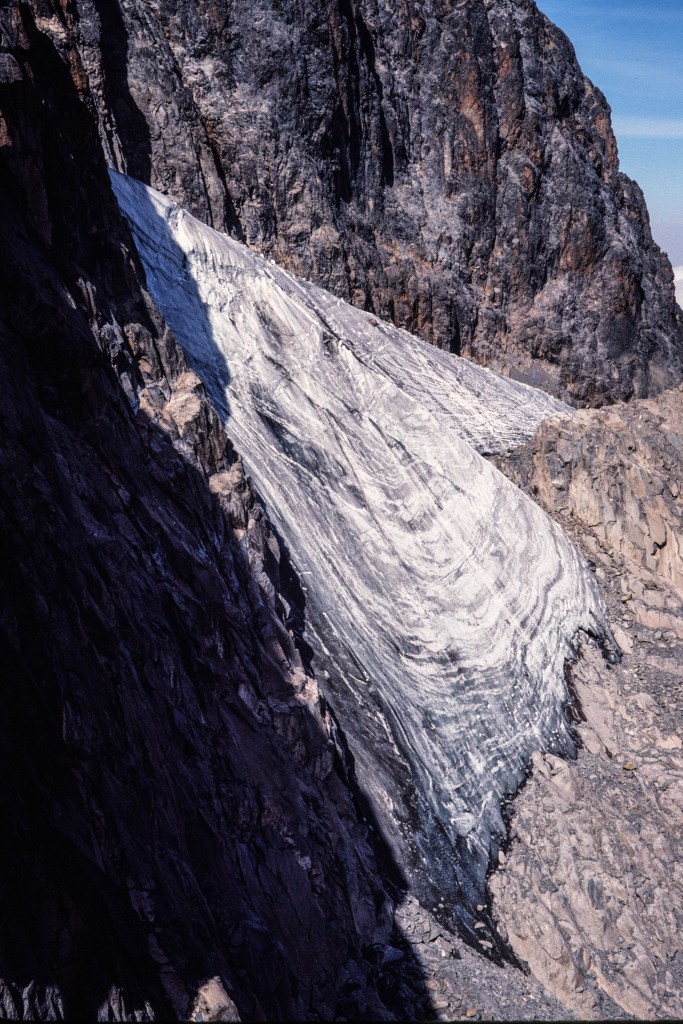
Josef Glacier from Pt. Peter.
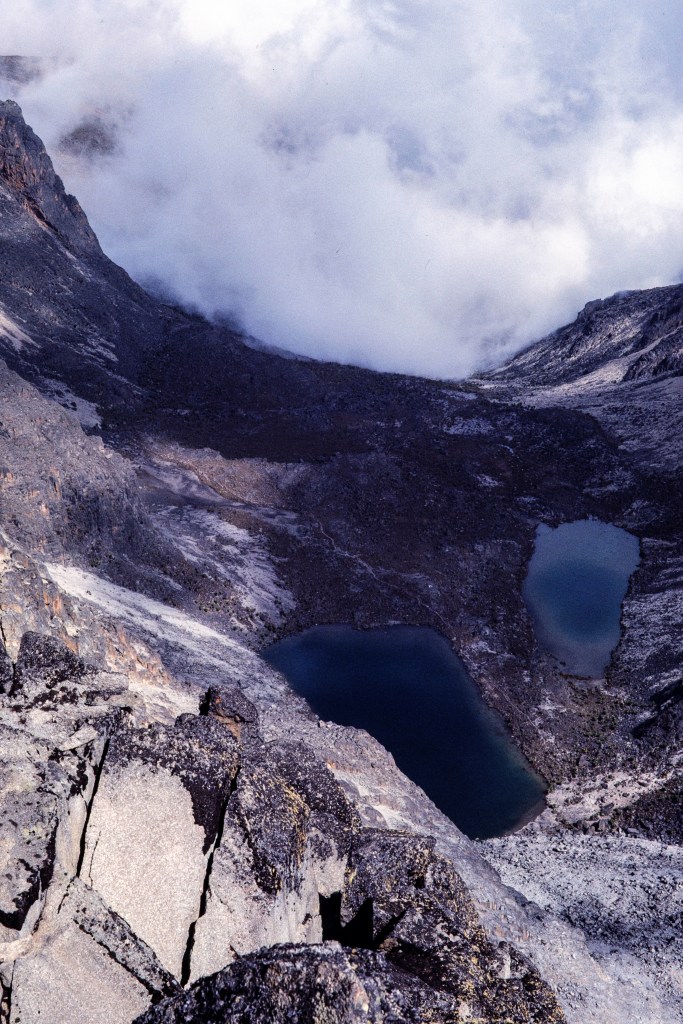
Oblong Tarn and Hausberg Tarn.
Bart uses a rappel to descend.
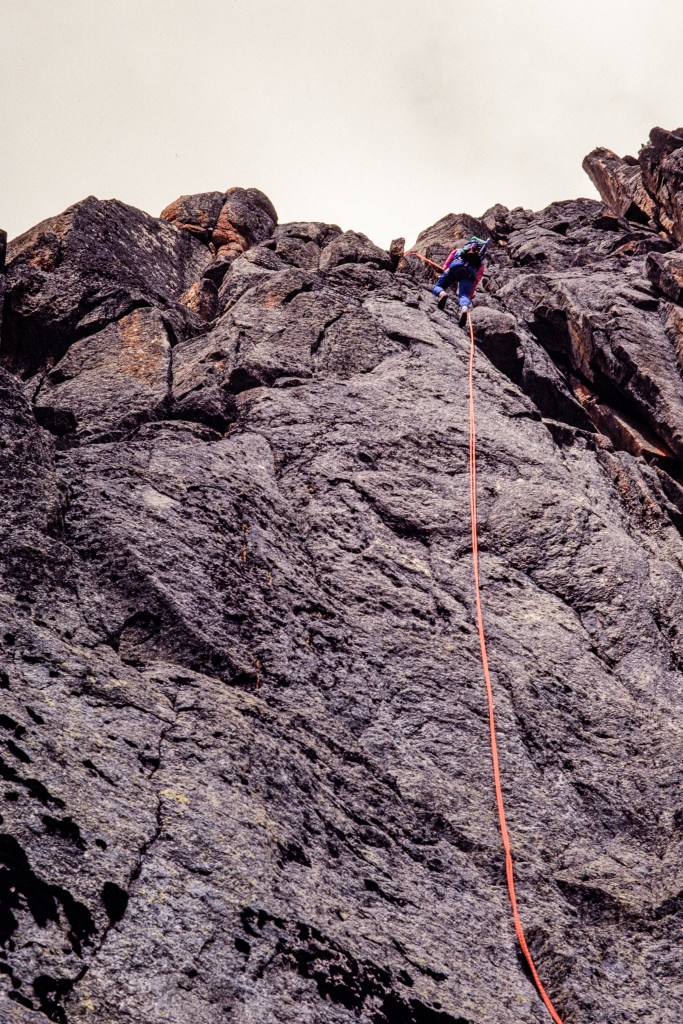
The next day we climbed Pt Dutton (16,207), shown below.
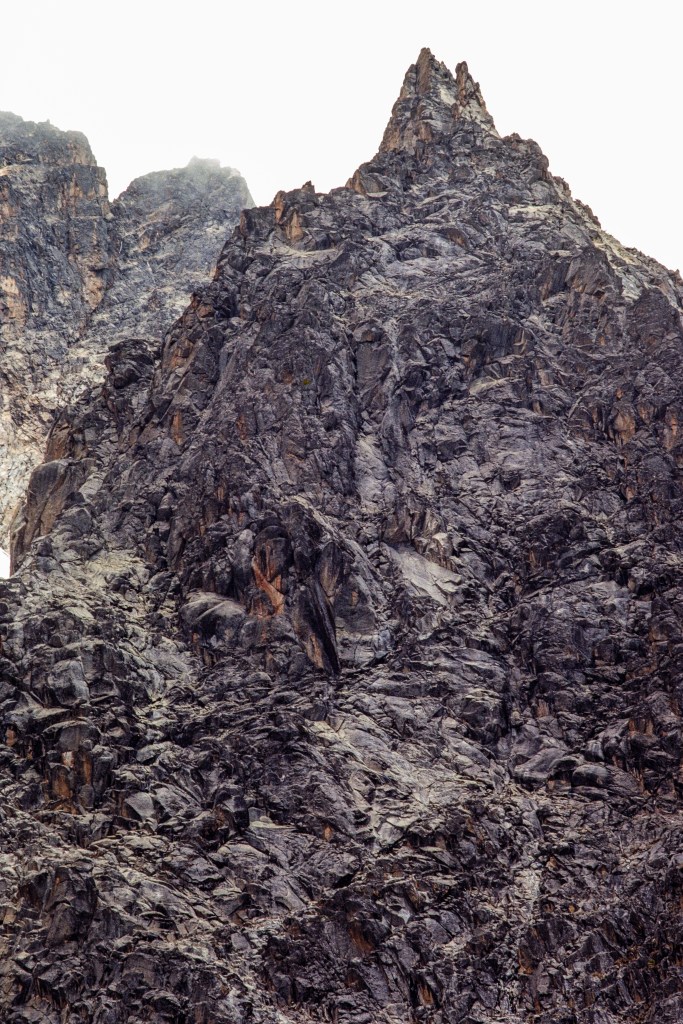
Bart leads up.
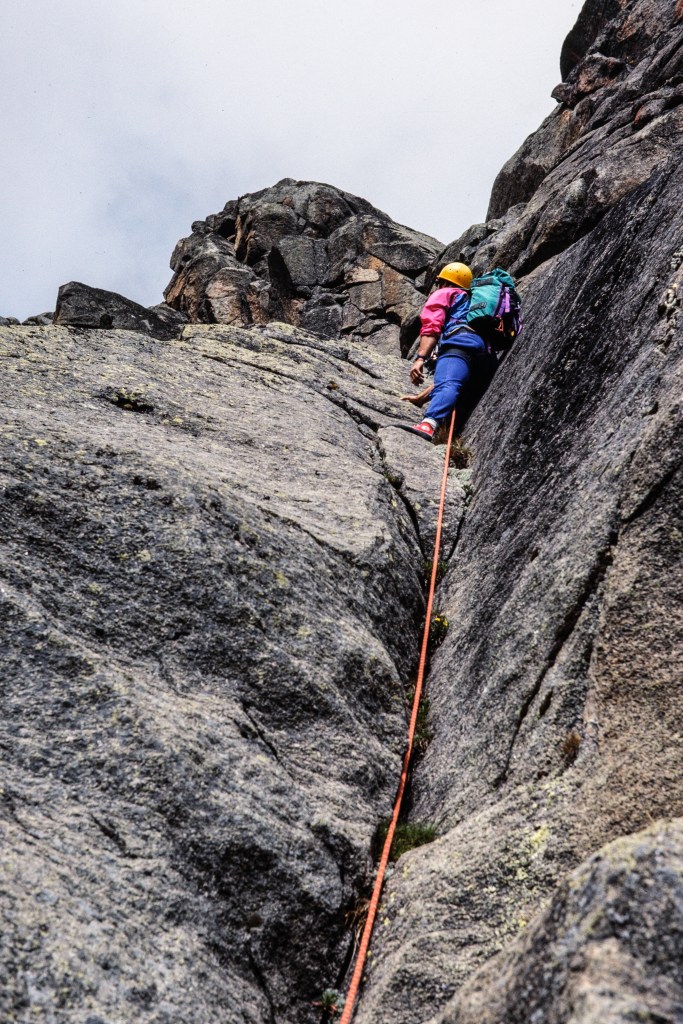
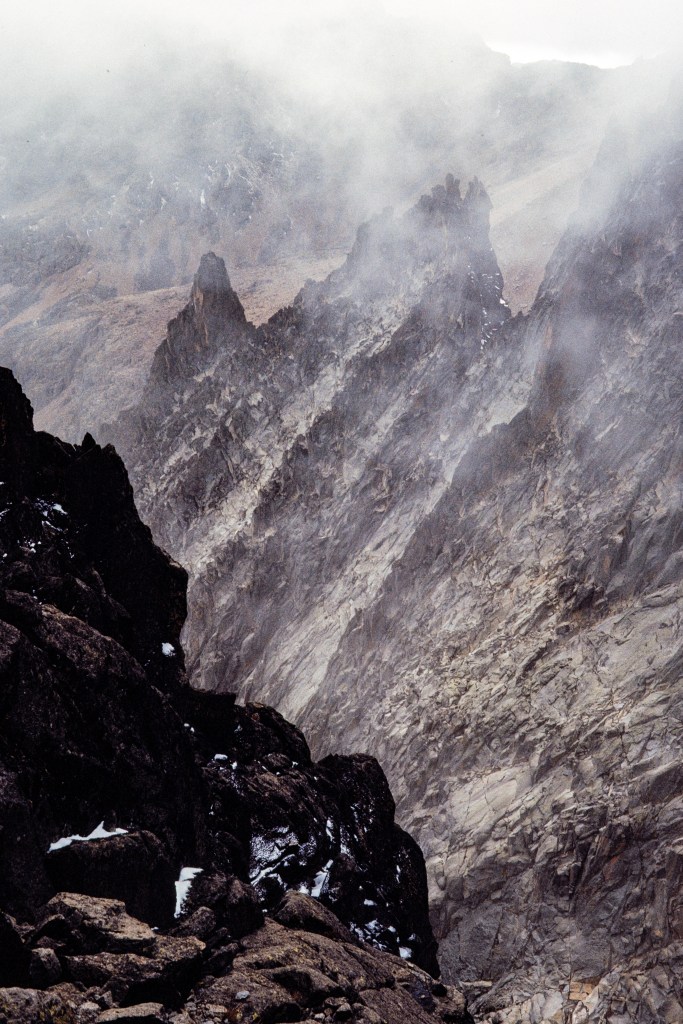
Peter follows. Kami Tarn and our tent, a blue dot, are in upper right.
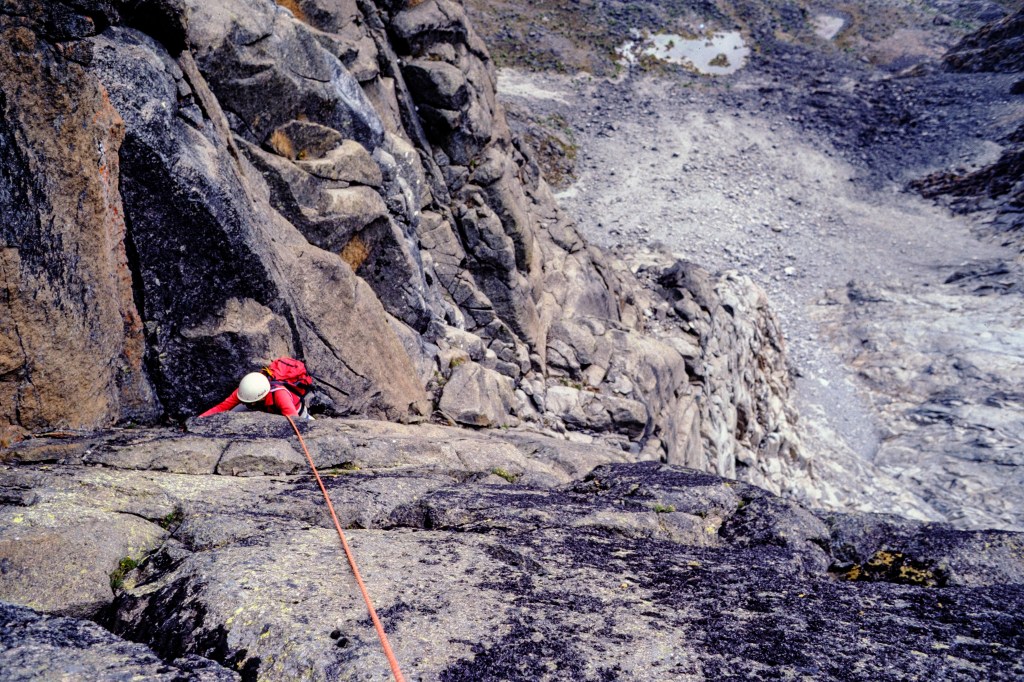
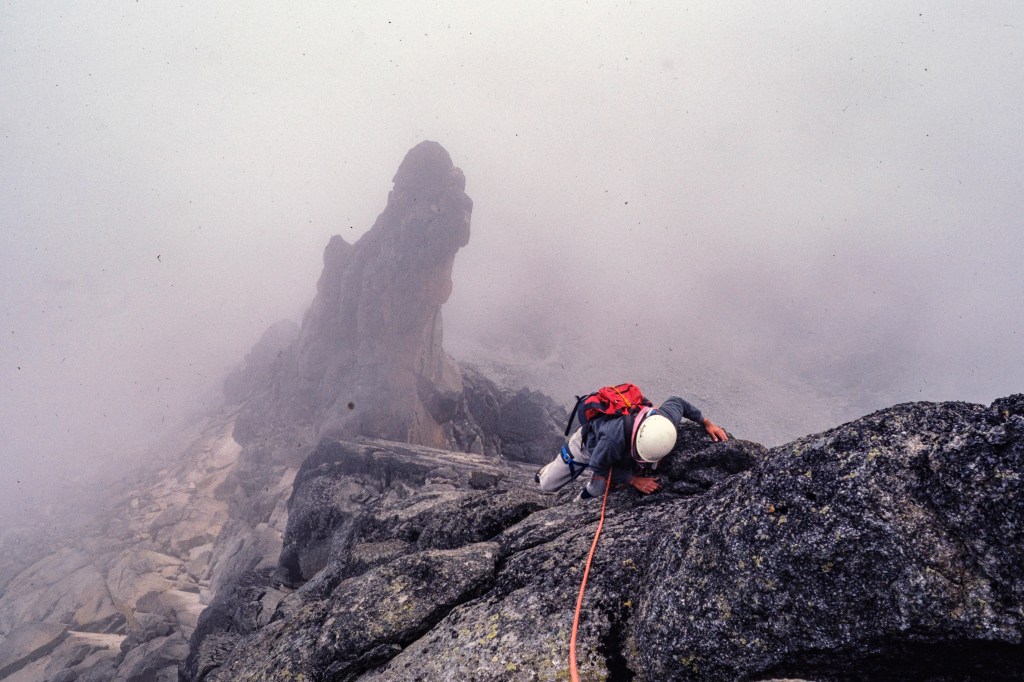
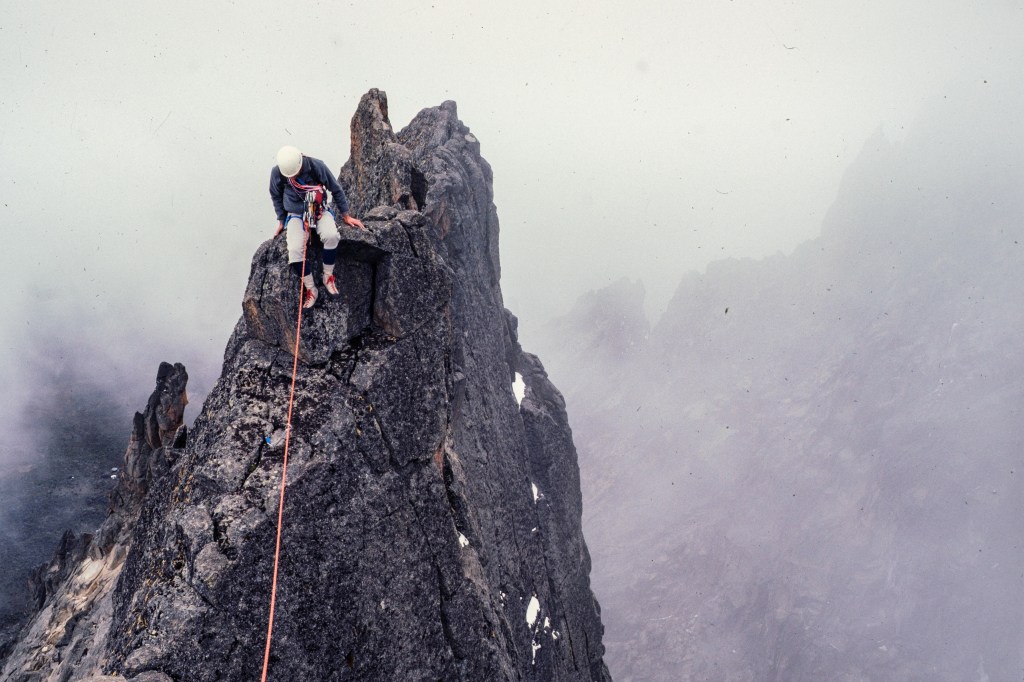
Peter contemplates his fate. Note how rope runs through an anchor set in the rock.
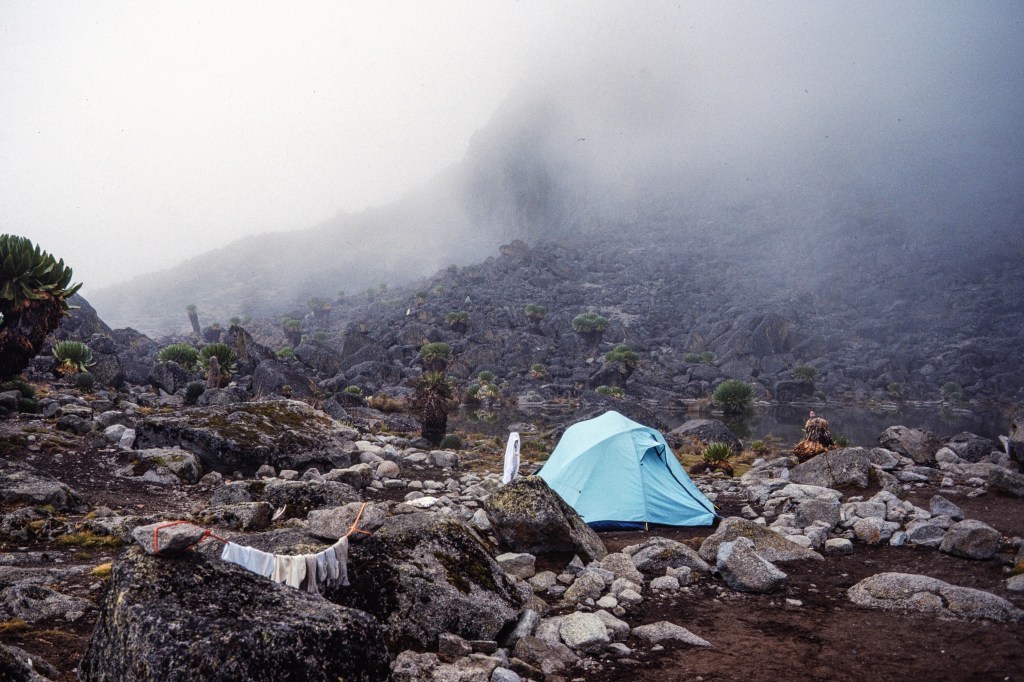
Laundry day.
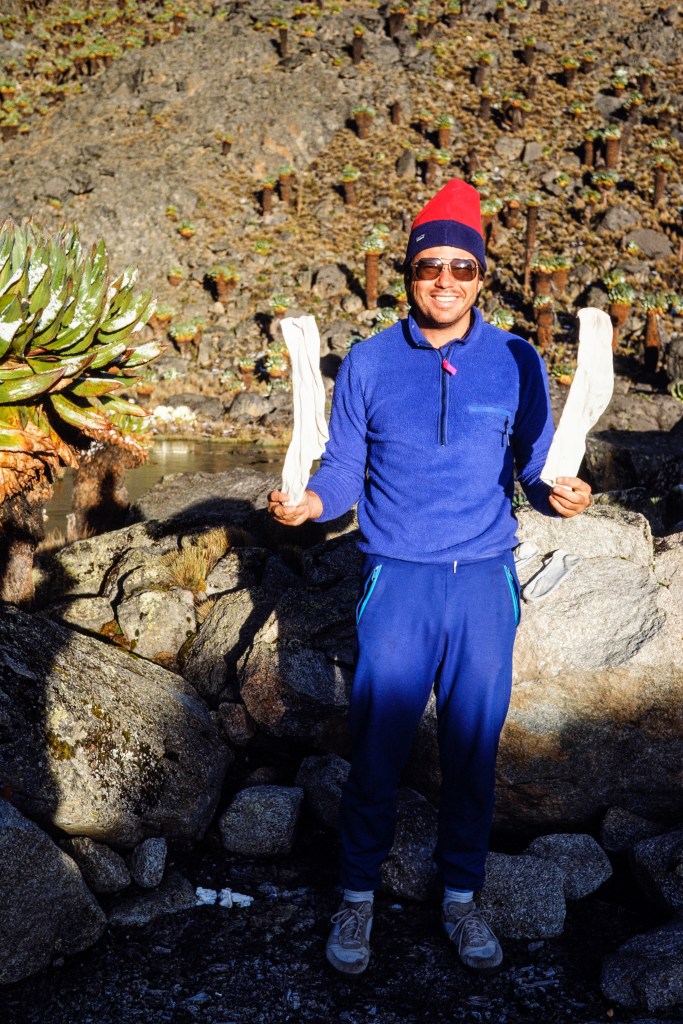
Bart demonstrates clean, but frozen, socks.
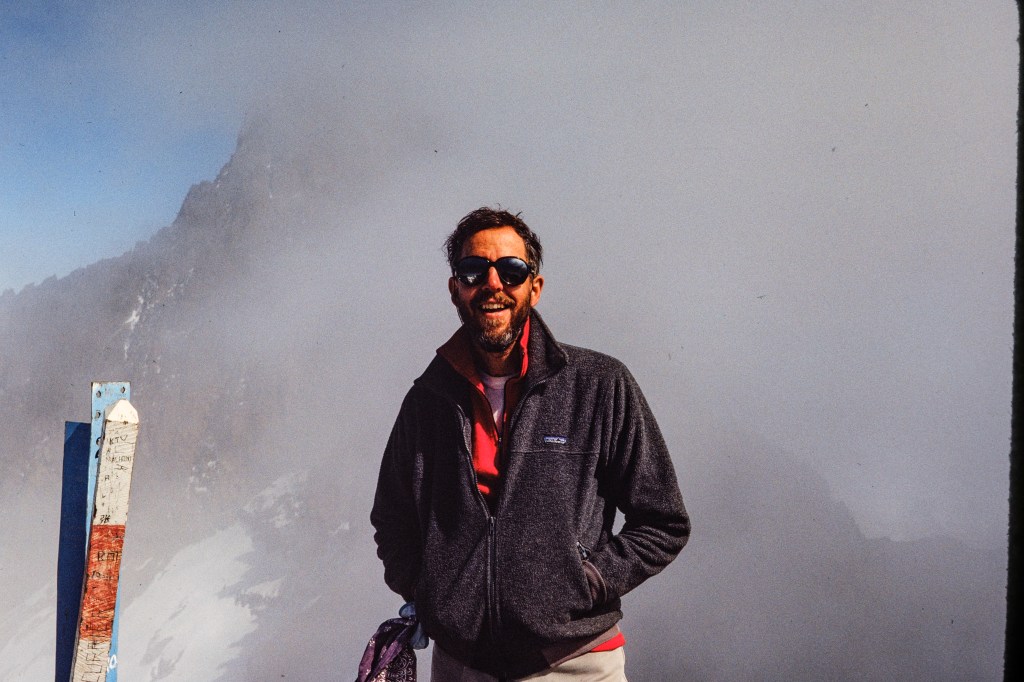
On July 23, we climbed Pt Lenana (16,355), then rested on 7/24. Below, Peter smiles on top of Lenana. Only a little gray in his beard back then.
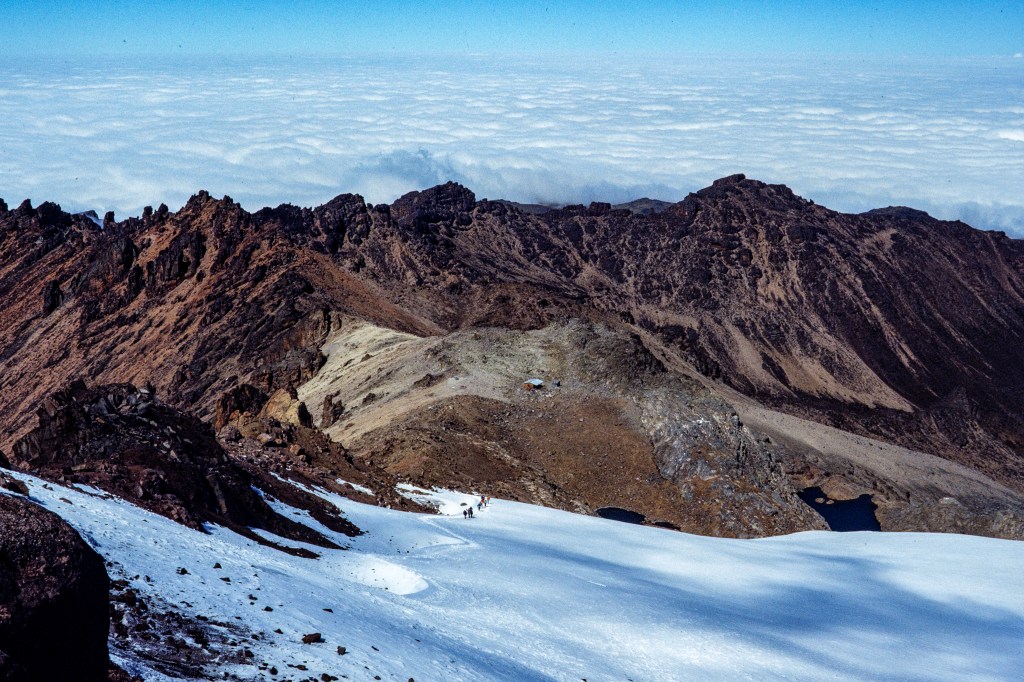
People hiking up Pt Lenana from Austrian Hut.
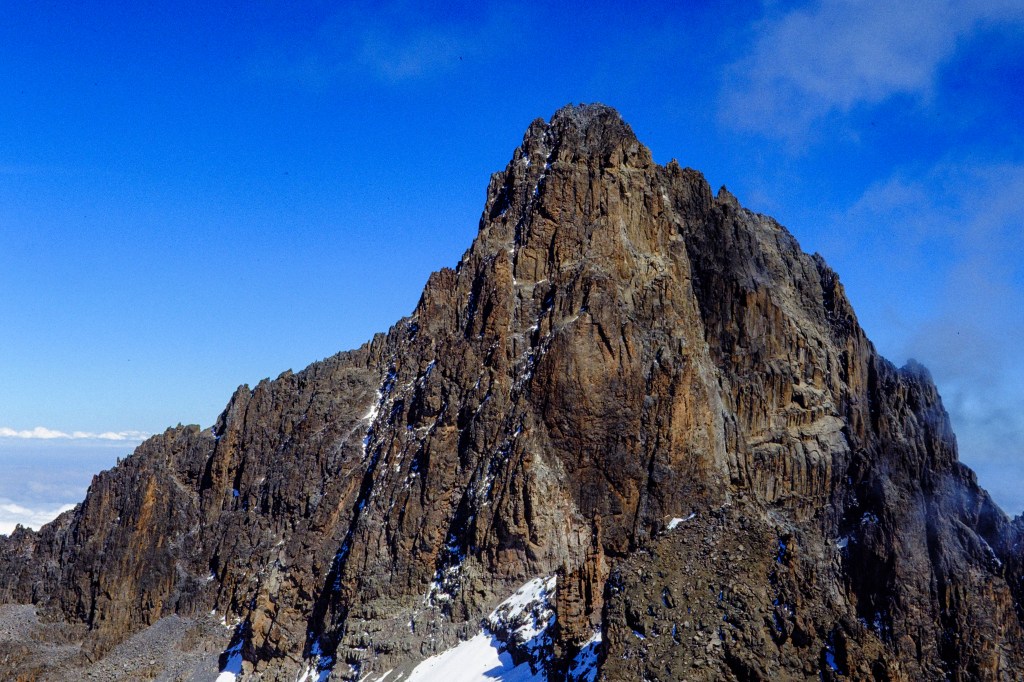
Nelion, Mt Kenya’s second highest summit (17,021 ft.) The true summit, Batian, is hidden behind Nelion.
Upper part of the Chogoria route which I hiked in 1984.
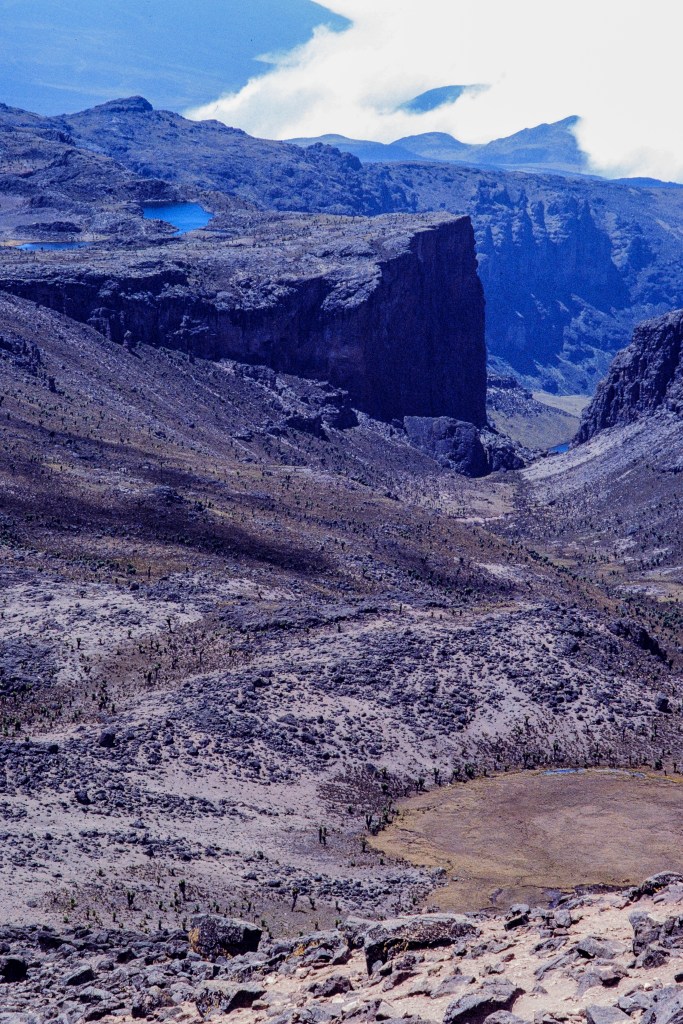
The West Ridge
We were now acclimated and ready to attempt the summit, Batian, via the West Ridge. We sorted gear, each preparing a small pack with extra clothing, sleeping pads, bivouac sacs, some food, 1 quart of water, climbing gear. No sleeping bags. The plan was to go light and fast, sleeping one night on the climb.
A glossary of some climbing terms used in this blog:
Roped climbing: About two centuries ago, ropes were introduced for climbing. Imagine two guys on a ledge. (Guys invented this sorry scheme.) Each ties himself to one end of a rope. The leader starts up. If the leader falls, he lands on the ledge; the rope offers him no help. If he falls past the ledge, he pulls off the second climber and both die. Imagine the leader climbs up 100 feet. He stops, tries to find a strong position, and pulls the rope up to assist the second climber. If the second climber falls, the leader tries to keep a grip on the rope. This wretched method was used for a century.
The old method of roped climbing produced many disasters. Edward Whymper (English) made the first ascent of the Matterhorn in 1865. On the descent, the 7 climbers were roped together. Douglas Haddow slipped, he pulled Michel Croz off the rock, and their combined weight pulled off Charles Haddon and Francis Douglas. Whymper and the Taugwalders (father and son) would have been pulled off as well, but the rope broke above Douglas; 4 men died, 3 survived. So one man slipped and the rope killed 3 more.
Belaying. Eventually climbers invented the belay. When the leader climbs, the second anchors himself to the rock with rope, pitons, other devices, and strong webbing. If the leader falls, the second will probably live thanks to his anchor. When the leader has climbed 100 feet to the next ledge, he stops and anchors himself to the rock. Then the second climber removes his anchor and comes up. This arrangement is called “belaying.” If the second falls, he may get banged up, but he should not fall far if the leader holds the rope.
Anchors. Climbers realized that anchors could be used between the climber and the belayer. The leader climbs while the belayer pays out rope. The leader may spot a crack after 20 feet. She puts an anchor in that crack, attaches a carabiner (snaplink) with webbing, and runs the rope through the carabiner. Now she climbs up 10 feet more. If she falls, the belayer holds the rope and the leader only drops 10 feet below the last anchor. Remarkably, this works. I’ve fallen more than once and I’m still alive. Placing anchors is a skill; they must be strong, placed quickly, and easily removed by the second climber.
Rappels. To get down some cliffs, climbers set up an anchor, attach nylon webbing, and slide half the rope through the webbing. If the rope is 150 feet long, the two 75-foot halves hang down from the anchor. The climber, using a metal device, slides down the rope. A lot can go wrong. You can slide off the end of the rope, you can detach from the rope, the anchor can fail, the rope can be cut, and more. But if you do this right, rappelling provides a fast descent.
Verglas. Clear ice on rock, hard to see, very slippery. Same thing as “black ice” on the highway; black, because you see the asphalt through the invisible ice.
July 24
Rest and get ready. Bart frets a bit about the route. He is the better climber, so he will lead, place all the anchors. The responsibility for finding the route rests on him. My job is to follow as fast as I can, be cheerful, quickly remove each anchor, and return the gear to him in neat order when I get to his belay station.
July 25
Breakfast 5am, on the go at 6. Fast hiking, then scrambling. At 7:50 we are at the notch between Pt Dutton and the Petit Gendarme. We climb about 100 feet – there is a lot of air below and we rope up. We are now on the West Ridge. We reach the top of the Petit Gendarme at 9am. Then climb and rappel down into a deep notch. Long traverses put us below the Grand Gendarme; really steep as we head up to a large ledge, around 11am.
Photo below shows the West Ridge Route from the Northwest.
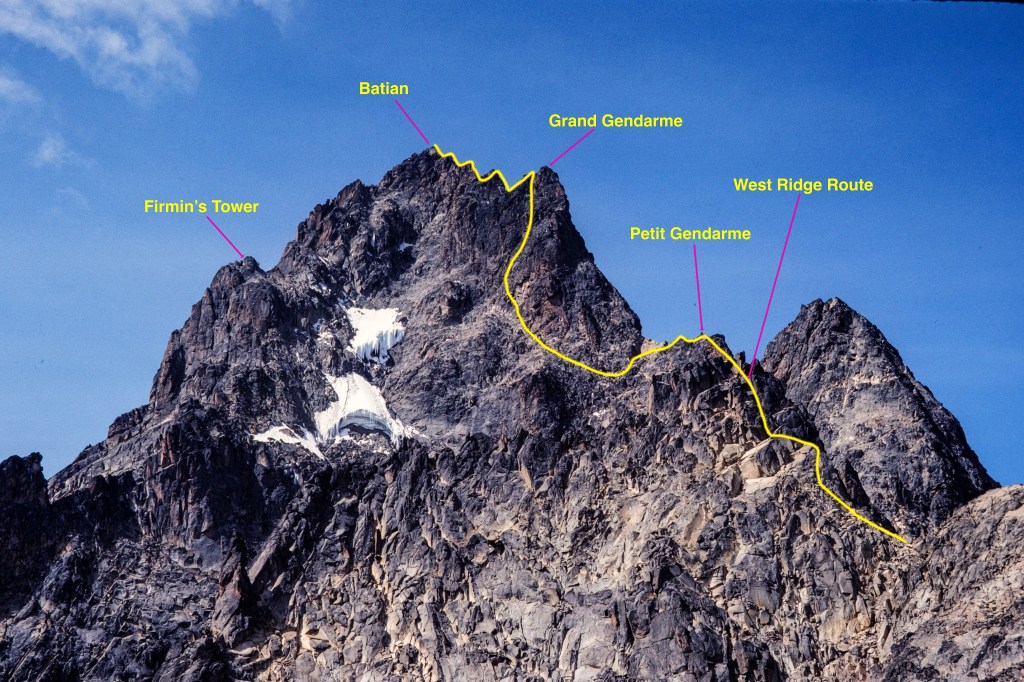
In photo below, the Petit Gendarme is above Bart’s head. Grand Gendarme off to the left. We roped up soon after this photo was taken.

Looking down on Pt. Dutton.

Peter passes summit of Petit Gendarme.
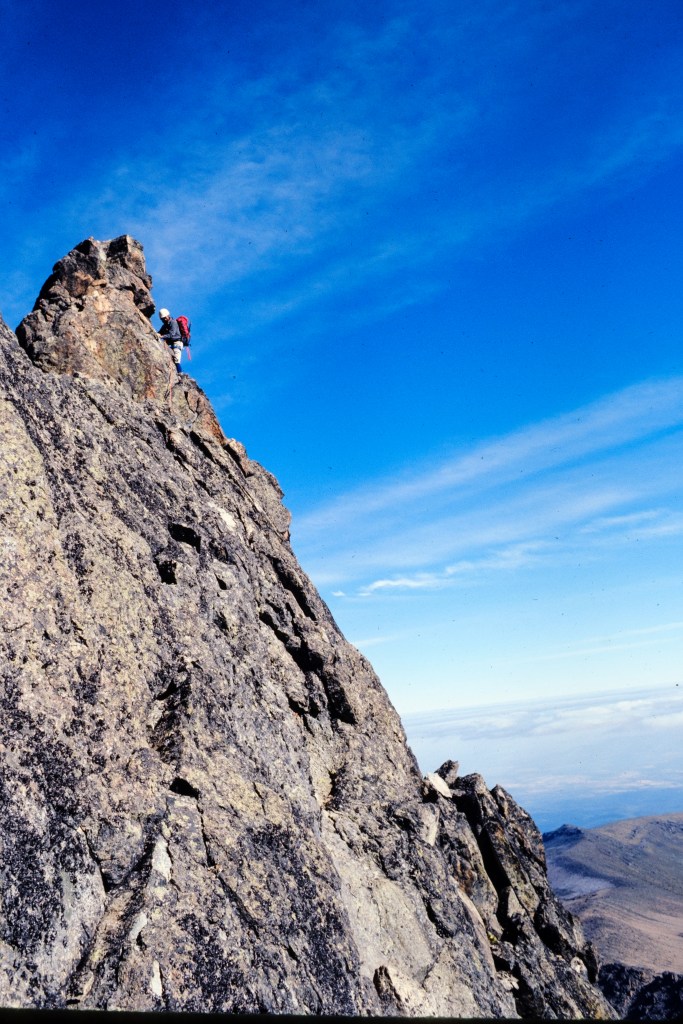
Bart belaying on ridge of Petit Gendarme. We have to descend into the space behind him, then climb to the ledge in sunlight on the left.
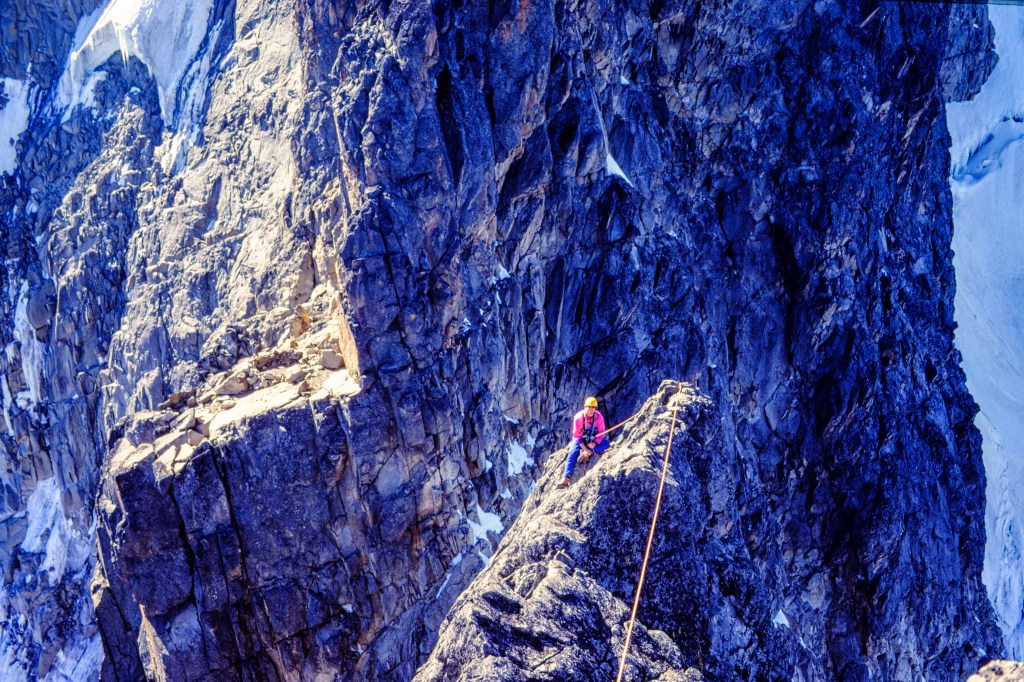
Photo below is a view from a distant point, showing the Petit Gendarme on the right and Grand Gendarme near the middle.
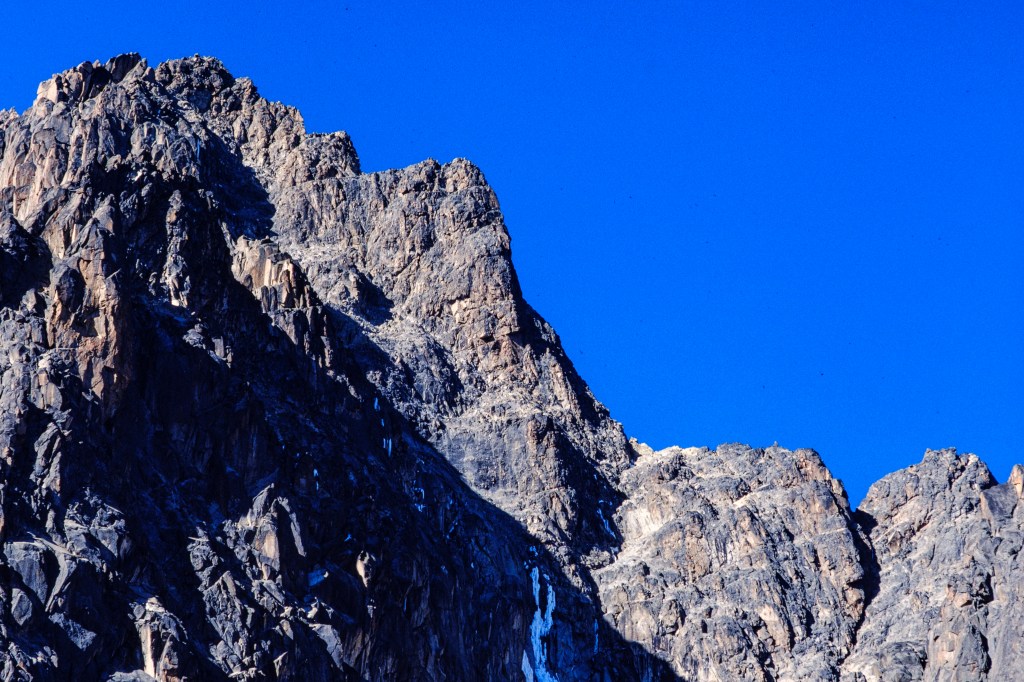
Bart follows ledges on side of Grand Gendarme.

View looking back at Petit Gendarme.
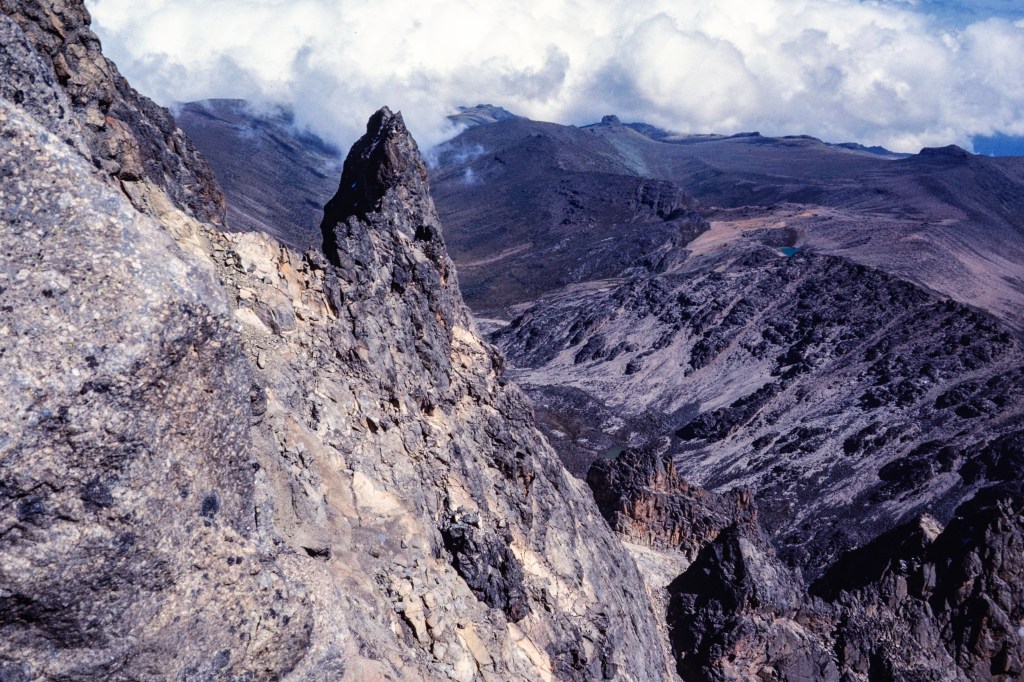
Bart climbing up the Grand Gendarme.
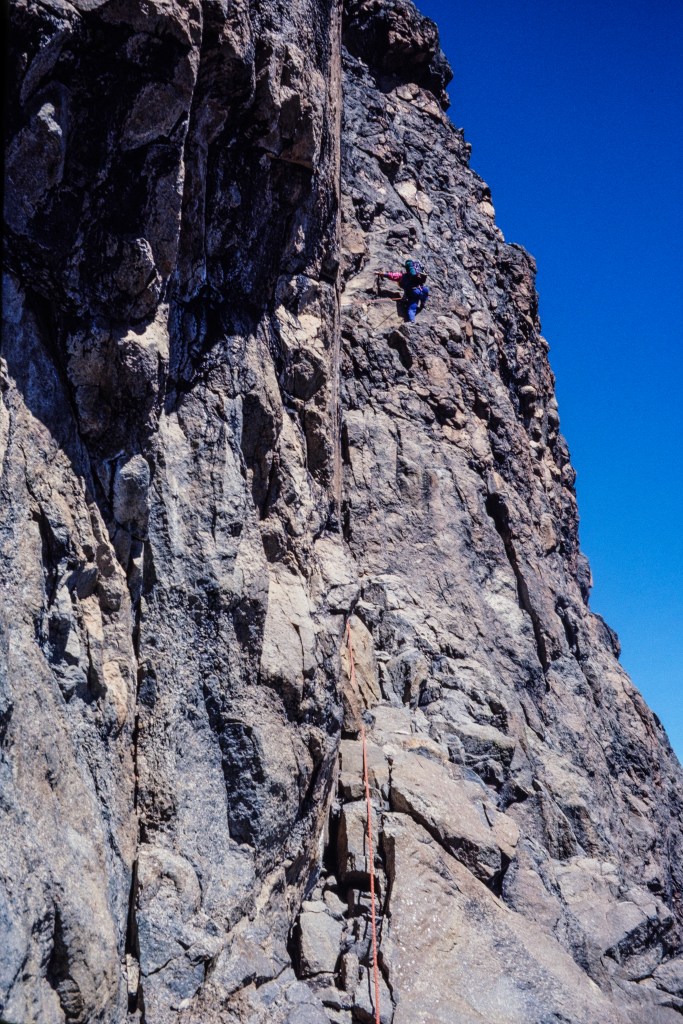
This distant view shows the big ledge on top of the Grand Gendarme. In the previous photo, Bart was on the wall a little to the right of this picture’s center.

A bite to eat, a sip of water.
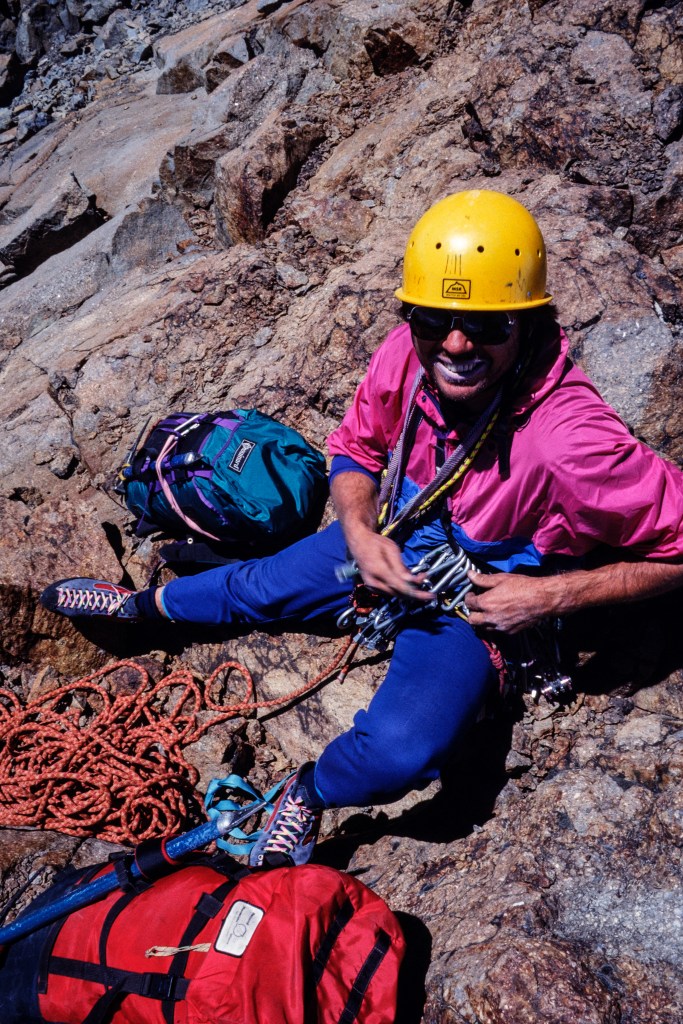
Up to a steep wall; Bart shoots up without his pack, hauls it after him. I follow. We are now past the hardest spots, but the ridge goes on and on. It is like being in an airplane, looking down on one side or the other.
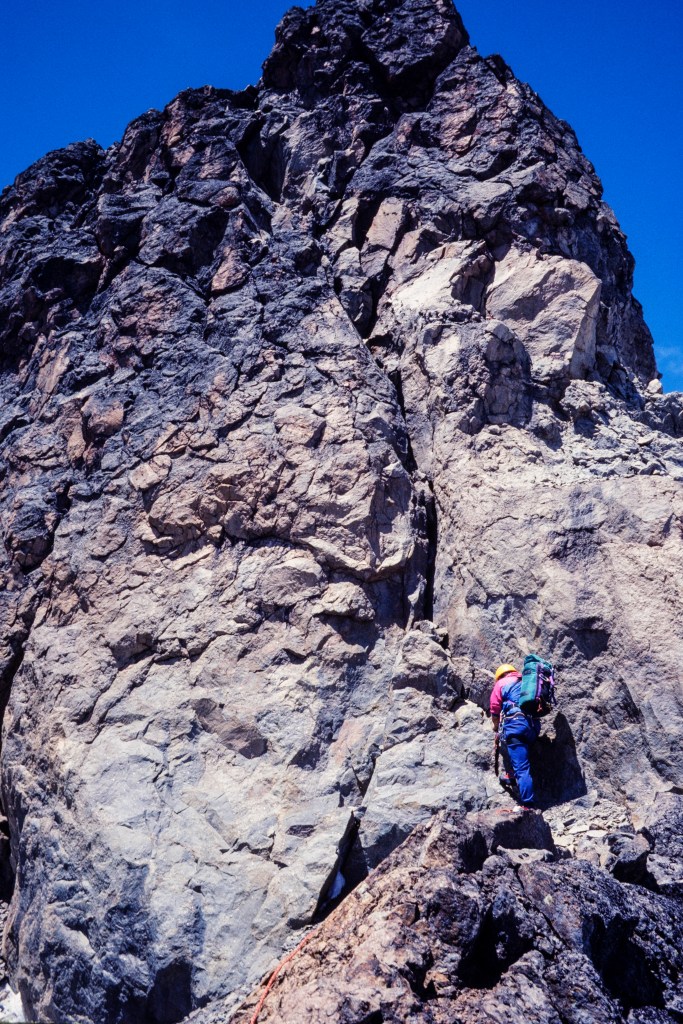
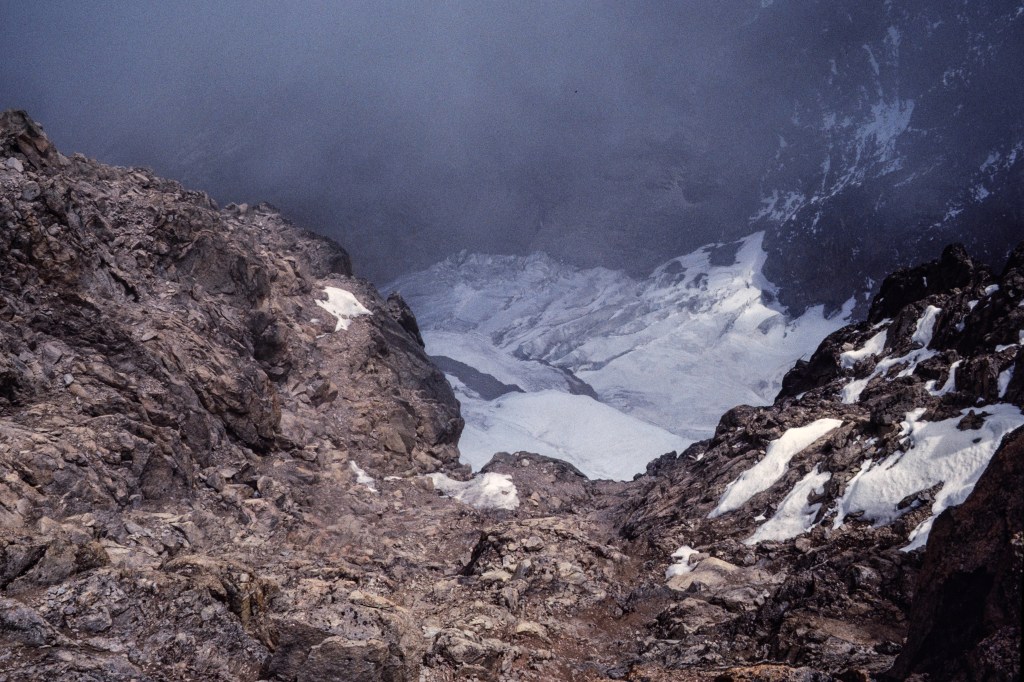
We reach Shipton’s Notch. Bart belays me.

A few more hard sections, and then easier.
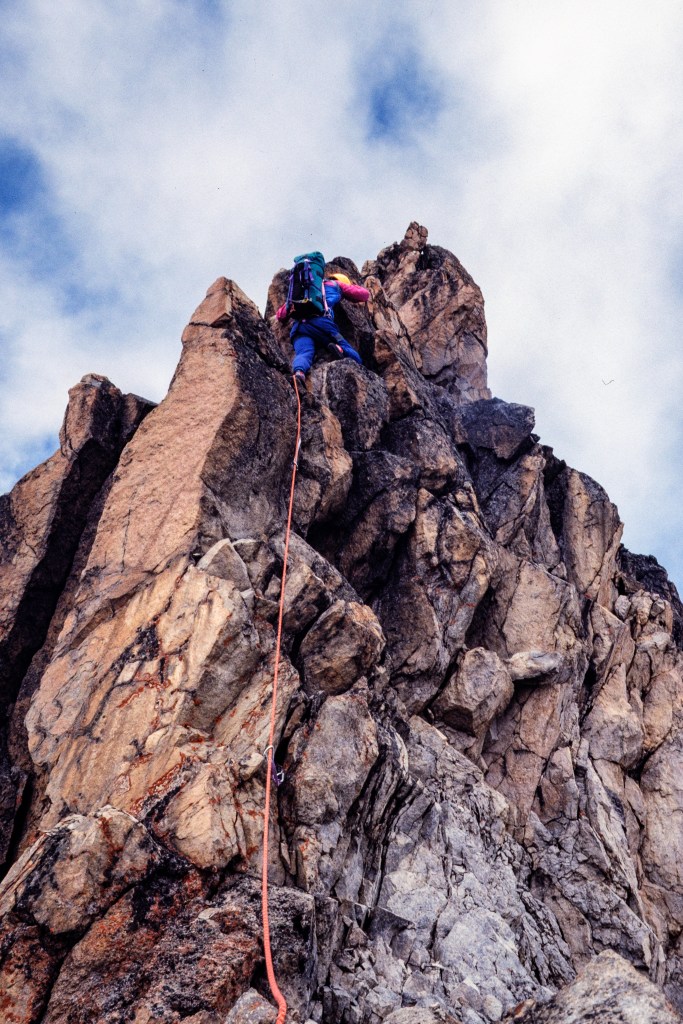
A distant view of the final section of the West Ridge. Batian on left skyline. Firman’s Tower is the pinnacle about 25% of the way from the right margin of the photo.
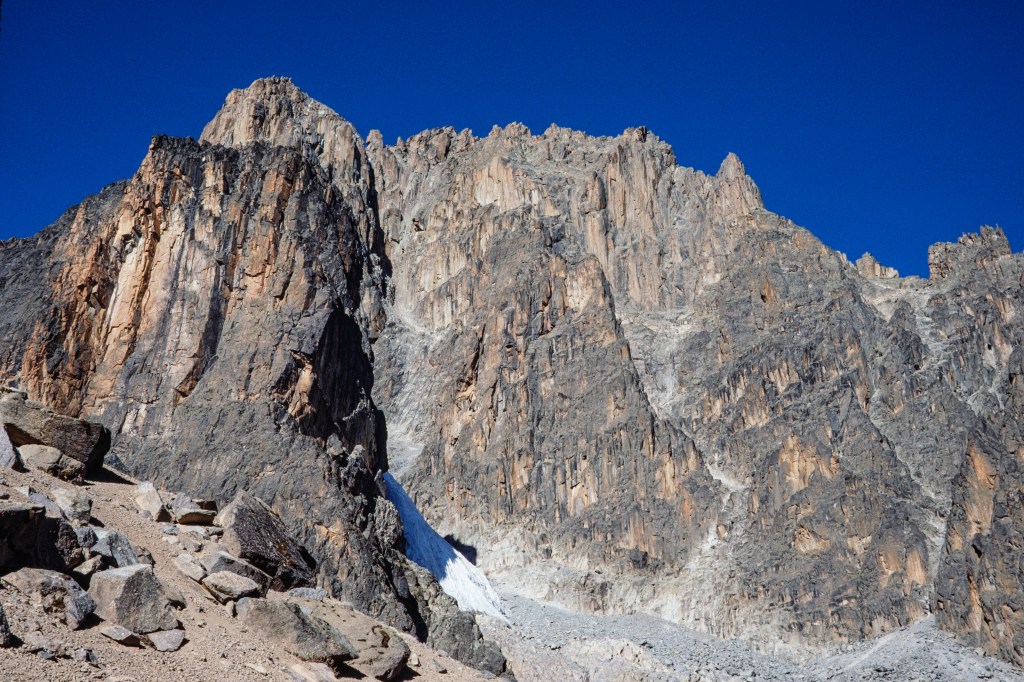
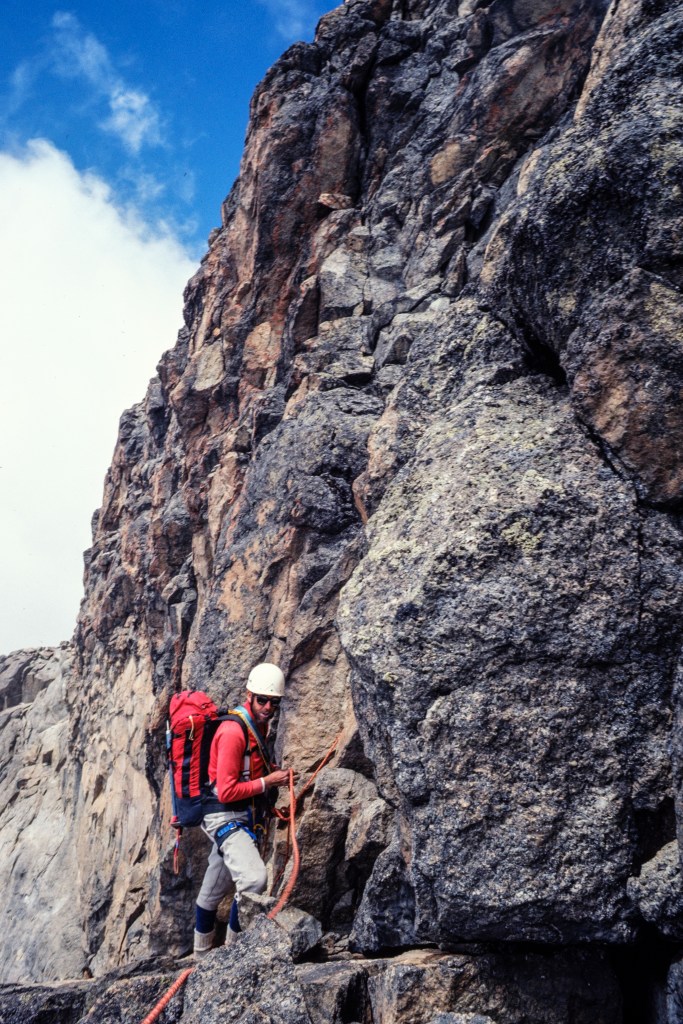
At 2:50 pm we are on top of Batian, 17,055, the summit of Mt Kenya.
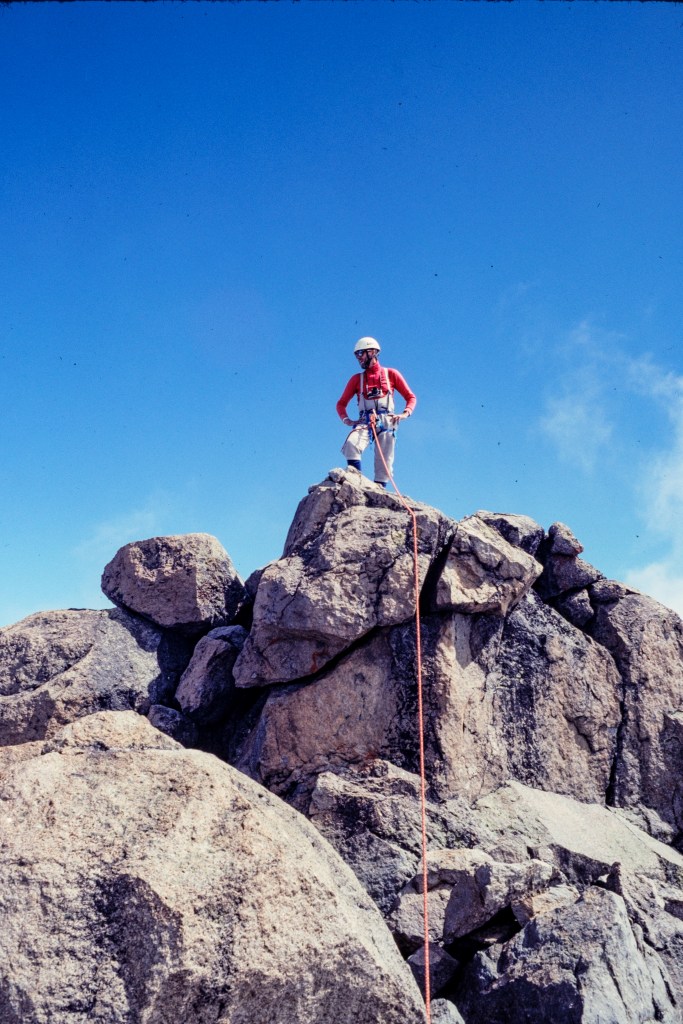
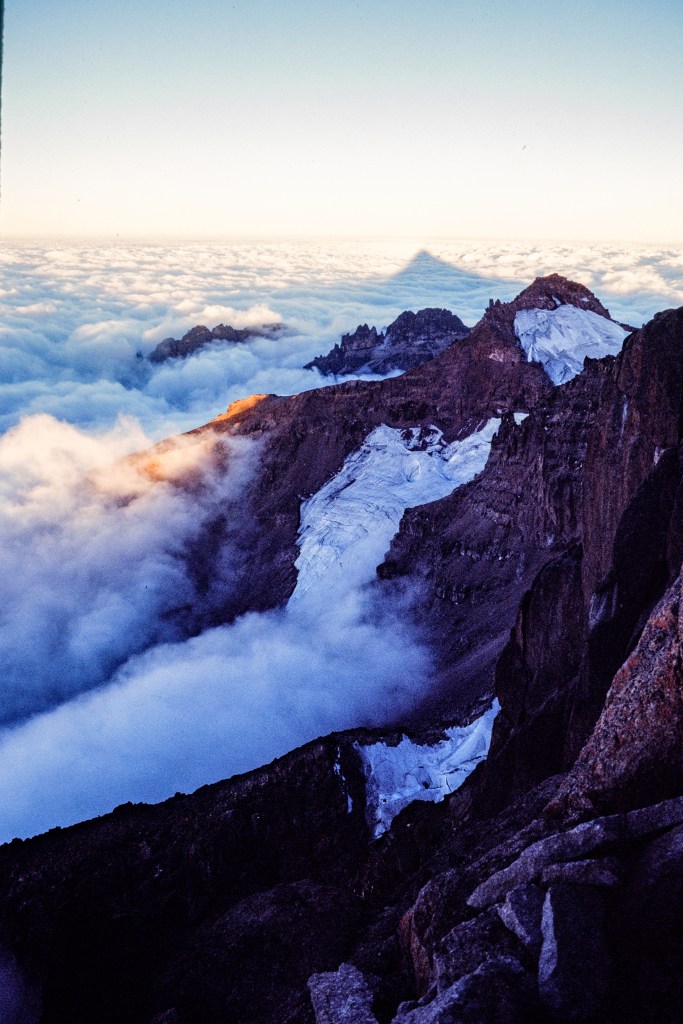
We have been moving for 9 hours. We decide to descend the standard North Face route. Back to Shipton’s notch, then further, then downclimbing and 2 rappels. We make a mistake — we follow old rappel anchors down, but they lead nowhere. We have to climb back up. We are tired and want to rest. But no whining or cursing. Back up two hundred feet, on to the North Ridge, 2 more rappels, and we find flat spots near Firmin’s Tower. We each have a small ledge with a rock wall to keep us from the void. It is 6:40 pm. The shadow of the peak falls on the clouds below. By 7 it is dark. The temperature plunges.
Bart gets ready for a cold night.
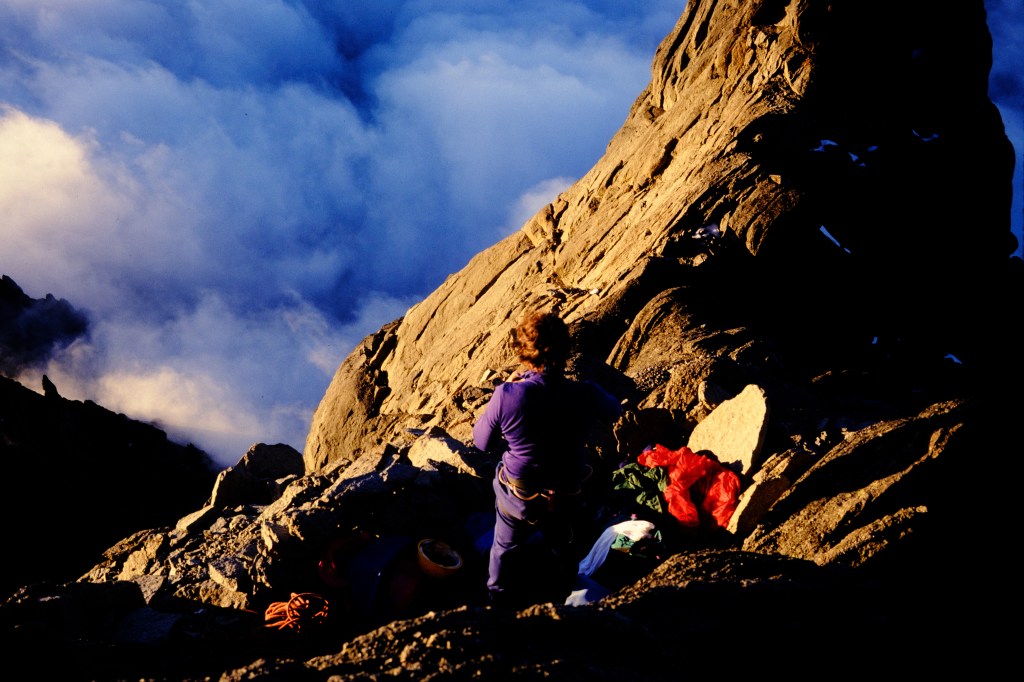
Top of Firman’s Tower.
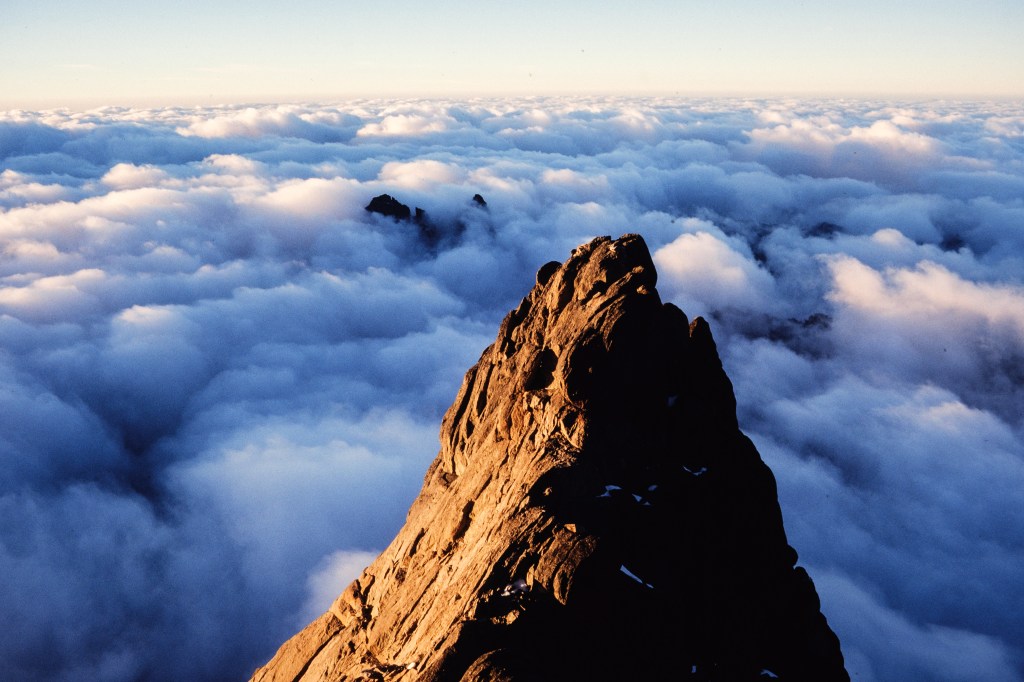
Shadow of the summit on top of clouds.
July 26
The equatorial night was 11 hours; I slept 4 hours. I shivered from 3am to dawn. Finally, the sun warms us. I finished all my water the previous day. Bart saved a pint, but it froze in his bivy sack; he cannot drink the ice. Below, Bart sits up as the sun reaches him.

We start down at 7:45am. First, 6 rappels.

Concentrate; no more mistakes. Scramble down an amphitheater. Two more rappels, then climb down a gully, then 2 more rappels. At 10:30 we are walking. Water flows from the Krapf glacier. We drink and drink and drink. By noon we are in camp. Rest. We are so happy. 12 hours of sleep. July 27 is a rest day.
Around the mountain
July 28
We move camp. No porters now. But we are fit and 11 days of food are gone. Bart’s load is 100 lb., mine is 75. In 4 hours we hike to the south side of the mountain, set up camp. Nearby is a group of 12 friendly British climbers; medical students and registrars from St. Mary’s Hospital in London.
Bart with 100 pounds of gear.
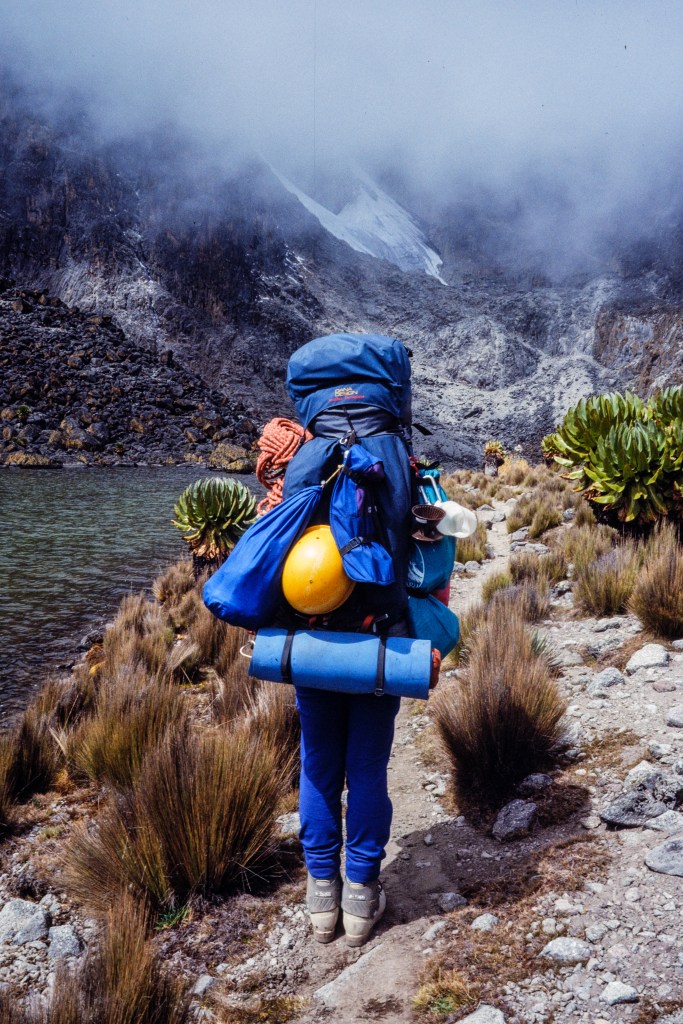
Hausberg tarn on left, Oblong tarn on right. Trail in middle.
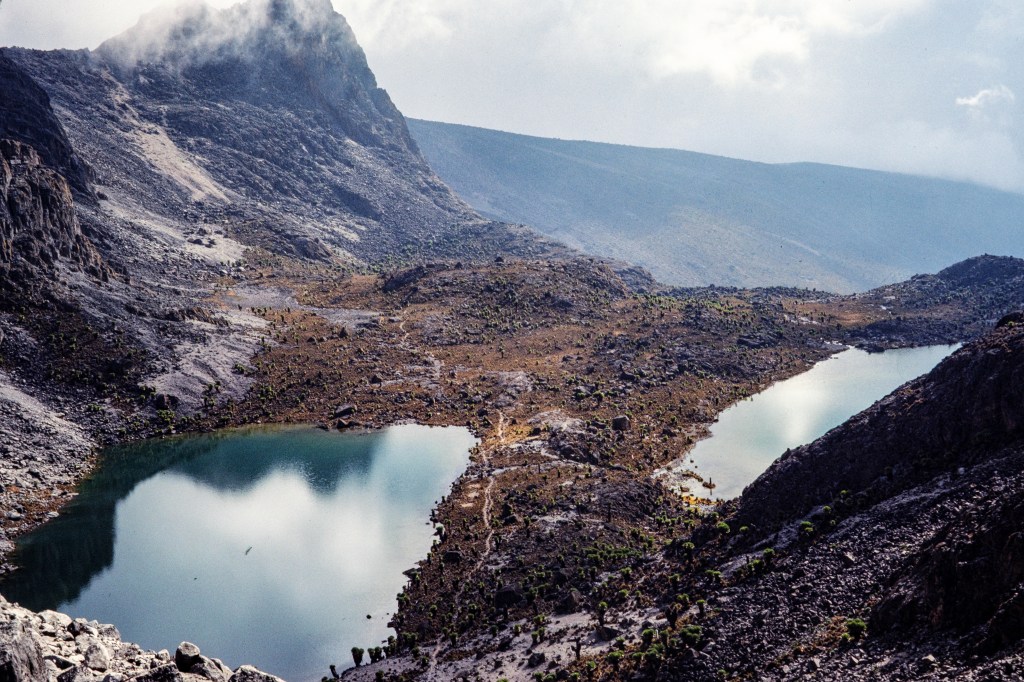
Emerald Tarn.
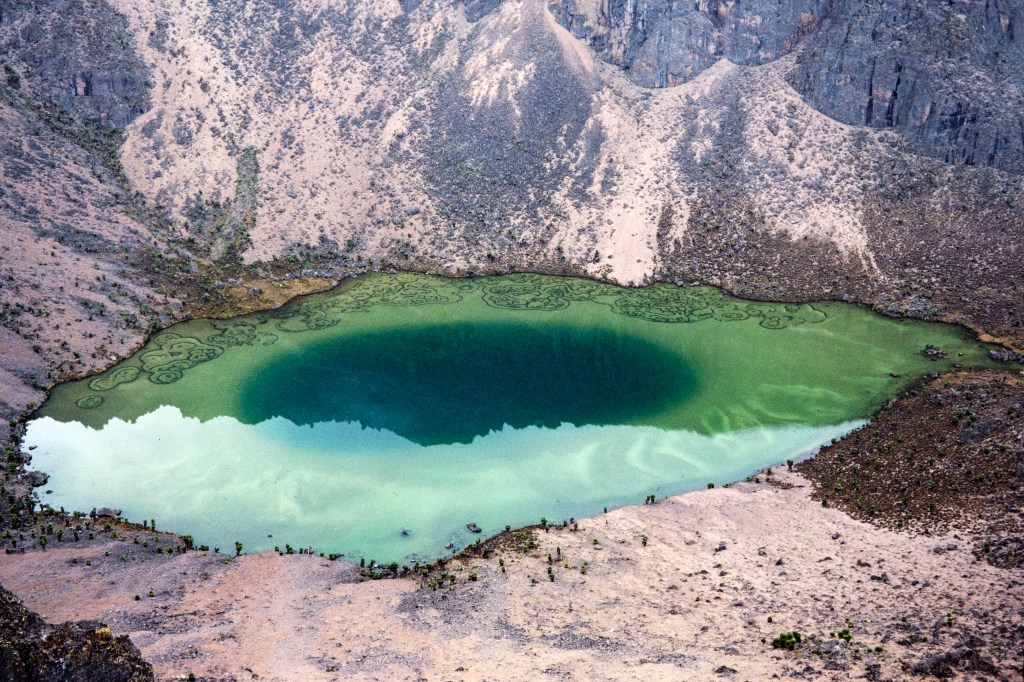
Darwin Glacier, Pt. John.
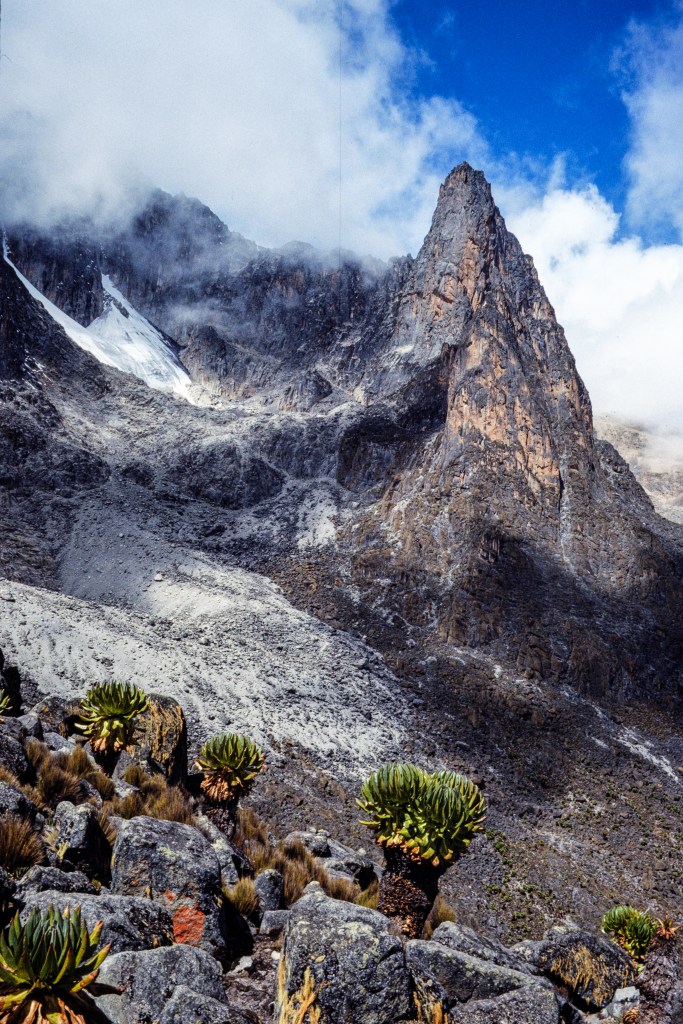
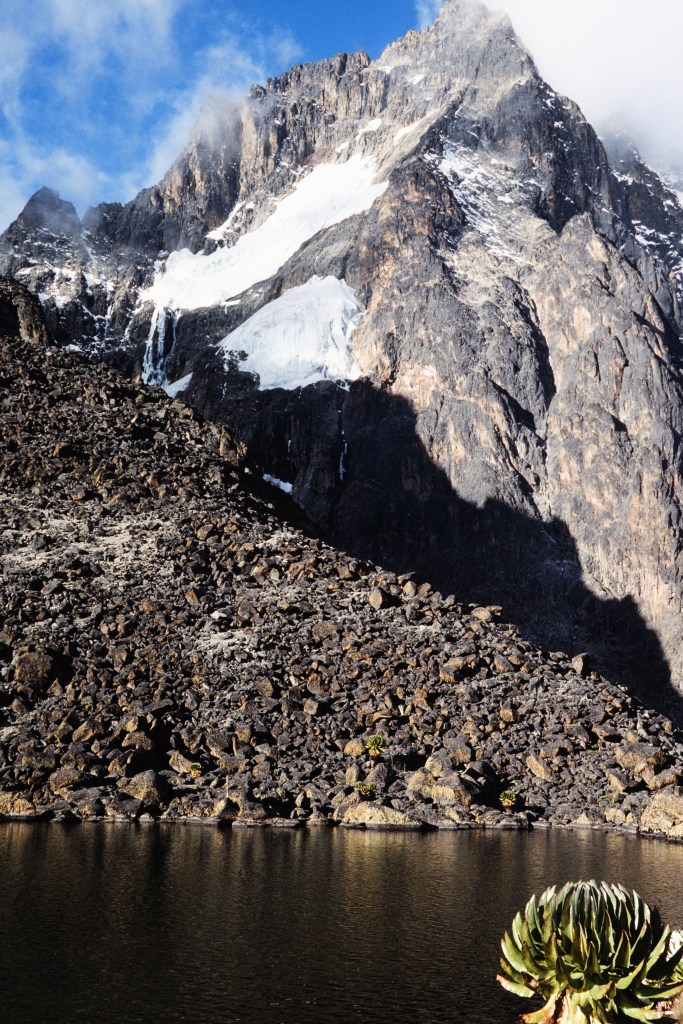
West Ridge on left skyline. Tyndall Glacier, Tyndall Tarn.
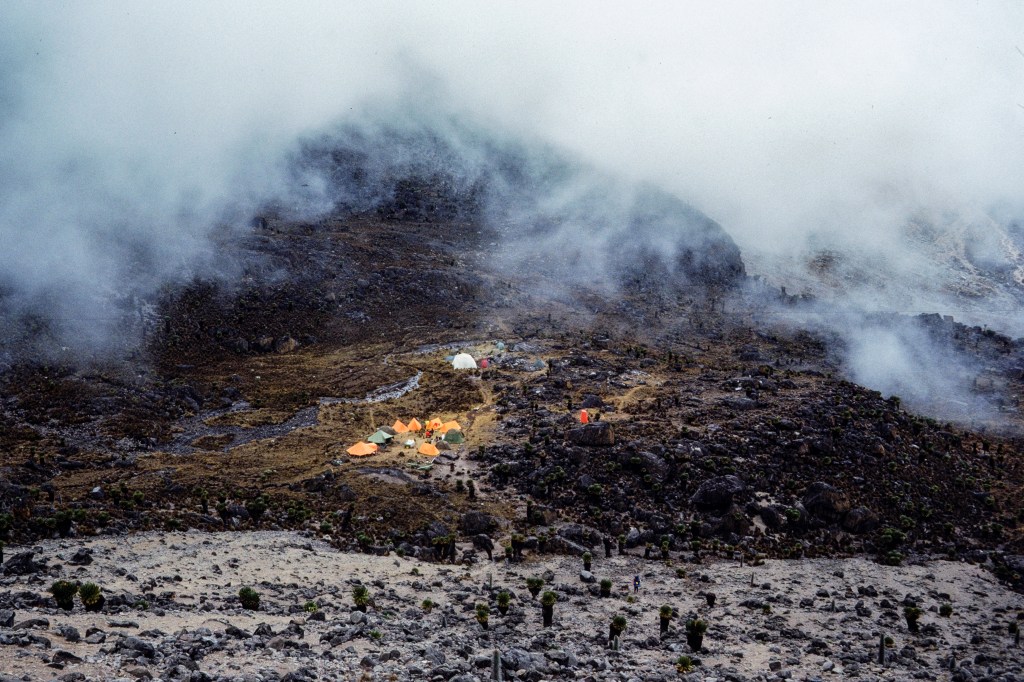
The British camp, with dining tent, outhouse, etc.
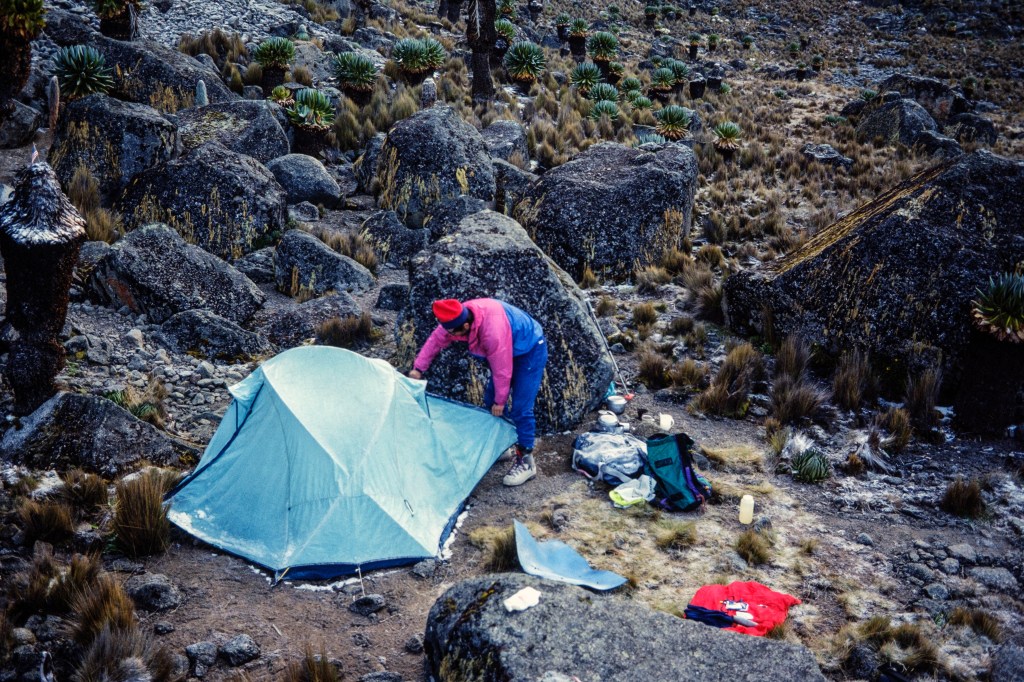
Our pathetic little camp. Bart shakes fresh snow off the tent fly.
Final climbs and hikes
July 28-31
Rain, mist, snow. Dayhikes, scrambles up peaks named for Shipton and Tilman. The Brits invite us to dinner. We exchange stories and get to know them.
Batian seen on left, Nelion in cloud on right. Gates of the Mist in between. Diamond Glacier and Diamond Couloir below the Gates.
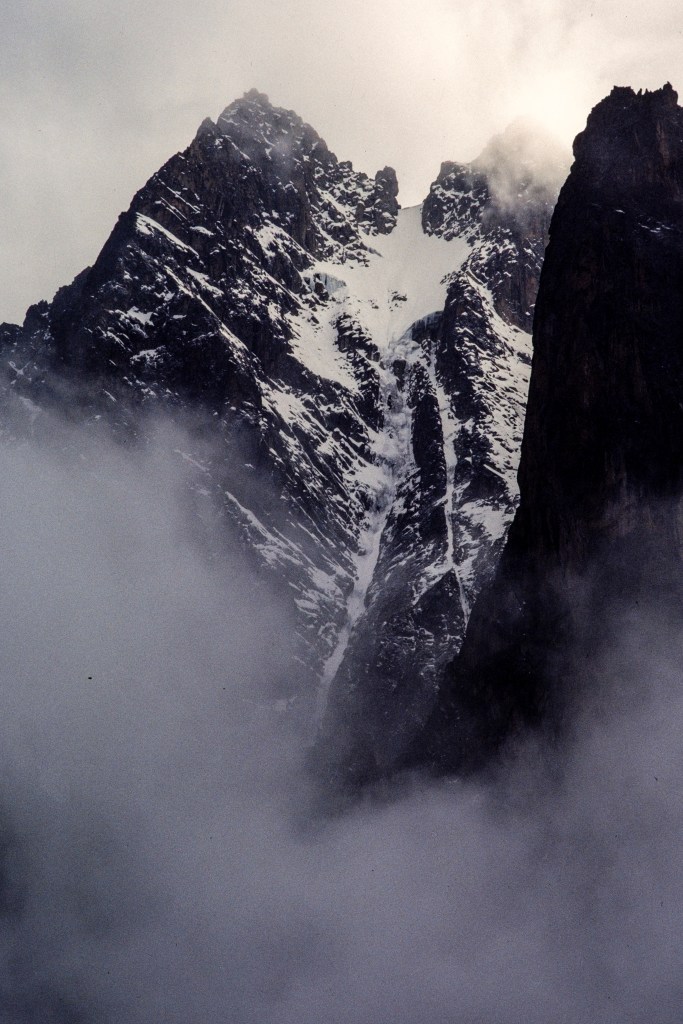
Climbers in the Diamond Couloir.
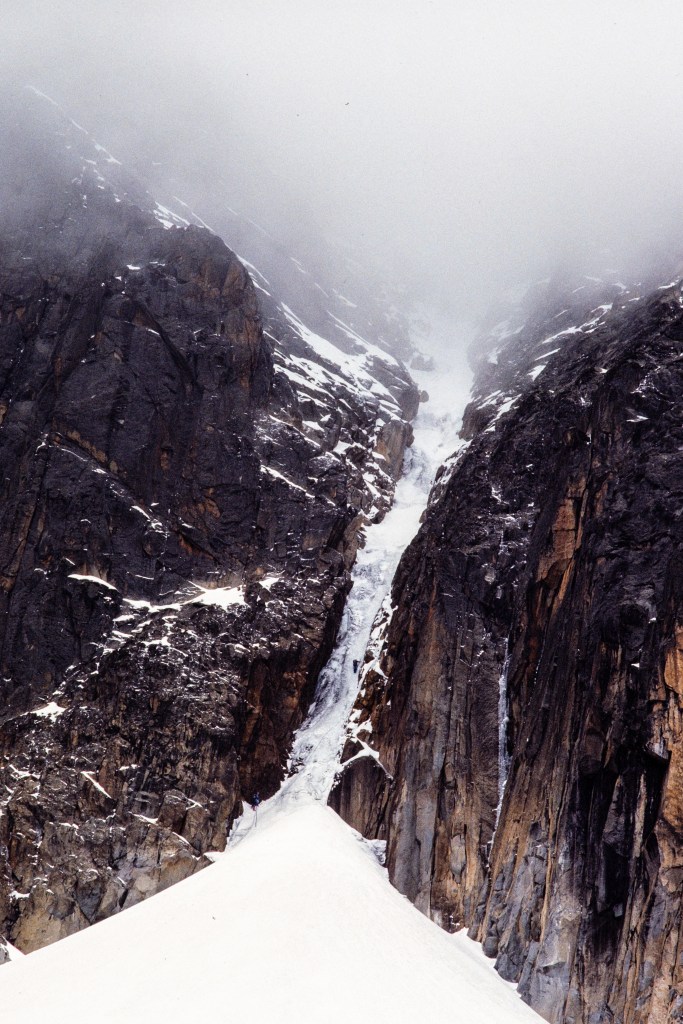
Tyndall Glacier.

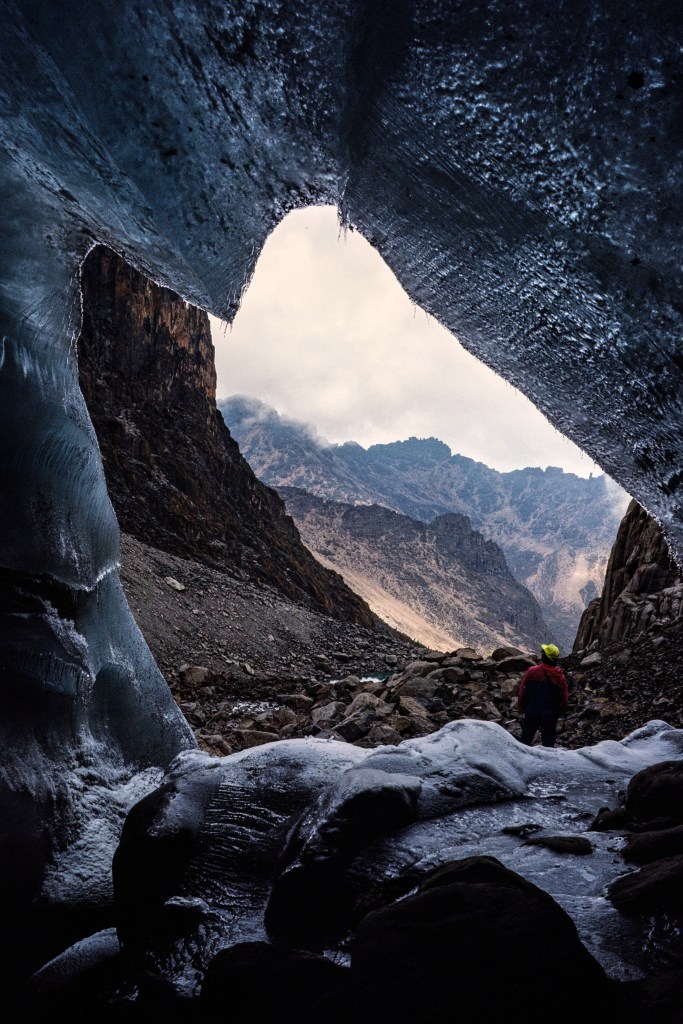
Ice cave.
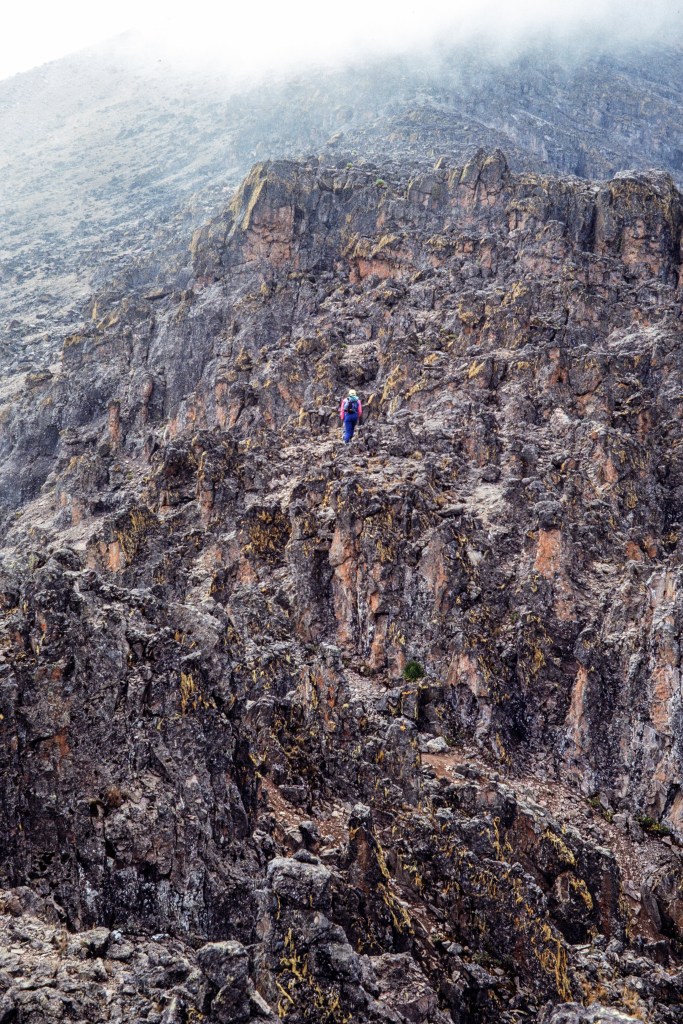
We climbed Shipton Peak and Tilman Peak in mist.
Tragedy
Aug 1
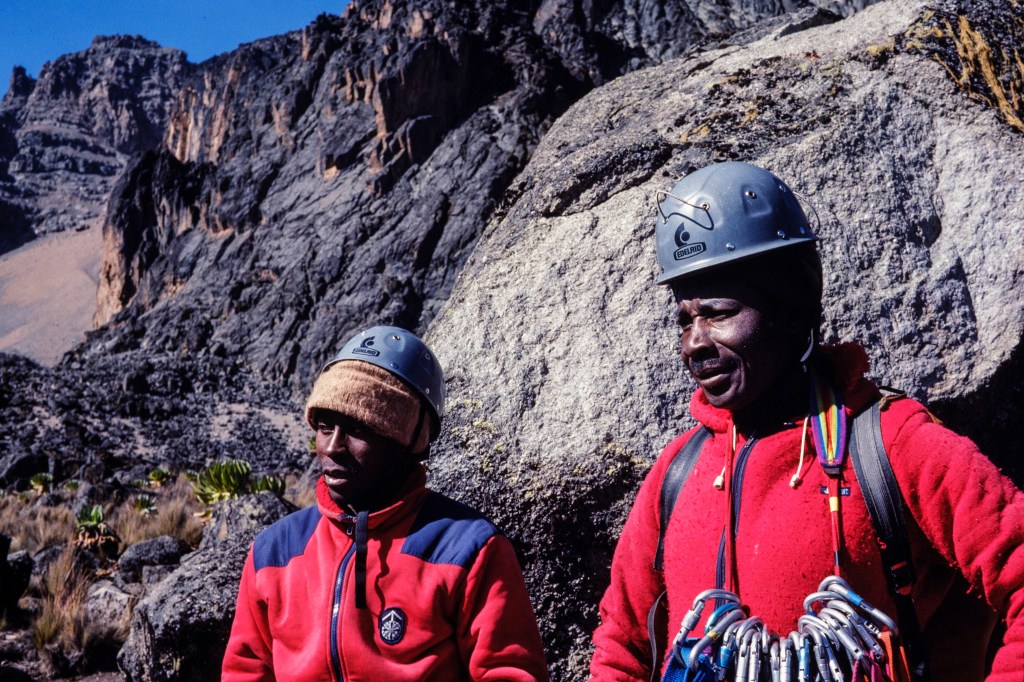
Four of the Brits hiked around the mountain on July 30, then climbed the North Face route to sleep on ledges above Firmin’s Tower. On July 31 they headed to the summit. Bill was leading, roped to Elunid. He slipped, yelled “Oh my God,” and flew downward. Elunid was not anchored, so the rope yanked her after Bill. Jim and Jed searched the area; they found blood, but no bodies. They descended. Now the Brits want us to help find Bill and Looney. We gather gear, quickly hike around the peak. Bart and I opt to climb the Krapf Rognon (15,748), a rock hulk, and use binoculars to view locations further east of the searched area. Our guess was right. We spot the broken bodies in a giant gulley. I cry for a while. We scramble down and tell others at the Kami Hut. John Omirah, a climbing ranger for the park, is in charge. (He played the role of a tracker in the movie, Gorillas in the Mist. Sigourney Weaver played Diane Fossey.) He says porters will remove the bodies the next day. Bart and I hike back to camp.
The North side, with West Ridge on skyline. The Krapf Rognon is the bulky rock blob in the lower left of photo.
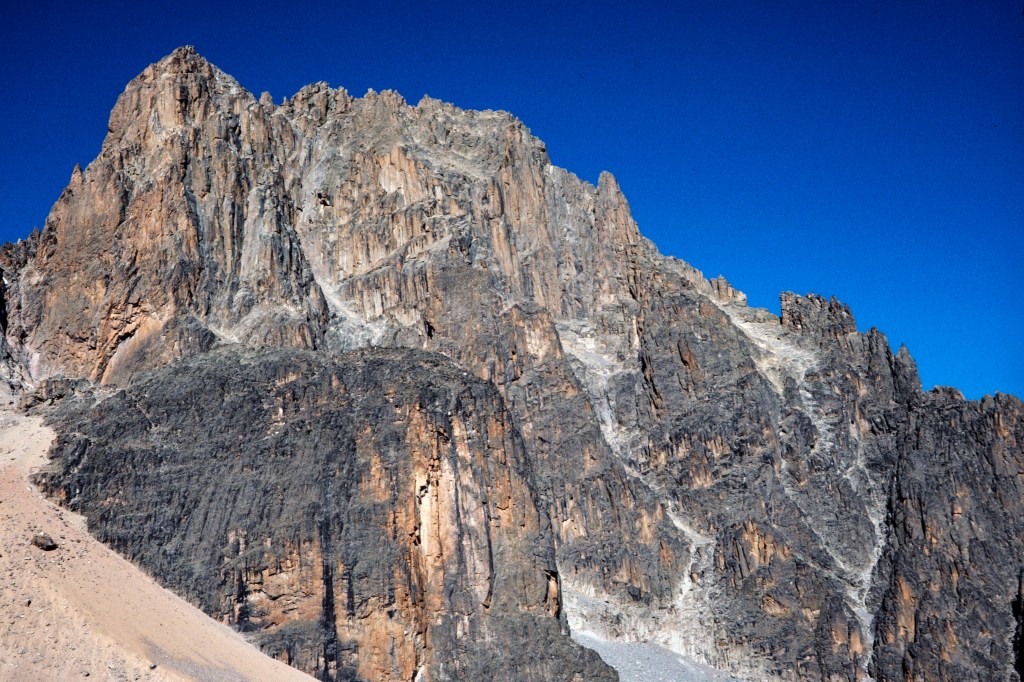
The bodies.

Park rangers. John Omirah on the right with helmet.
Aug 2
We sleep in, but John Omirah wakes us. The bodies lie above a 100 foot cliff and porters cannot reach them. Can we help? At 7:30 we leave and by 9 we are at Kami Hut. We collect some ropes and reach the base of the gully by 11:30. Bart leads up and places an anchor. Omirah and I enter the gully — steep, loose, dangerous. I’ve never seen humans pulverized like this. We drop the bodies below the cliff, where they can be retrieved. By 2:30 we are done. All of us are shaken. A cup of tea at Kami Hut, then 2 hours back to our tent.
What can we say about these senseless deaths? One strategy is to find mistakes. The recent rain and mist made verglas likely, especially in the morning. Bill probably slipped on ice that he never saw. There were no anchors, so once Bill fell, Elunid was doomed. Bart and I climbed through this area on July 25, using belays and anchors. You will be safe if you just avoid mistakes.
This blame-the-victim approach is common. An annual report, Accidents in North American Mountaineering, is published by the American Alpine Club. This is a ghoulish litany of deaths in the previous year. Accounts are followed by a list of mistakes that were made. When I started climbing, I began to realize that some “mistakes” were irrelevant. For example, a solo hiker would stumble off a cliff and die; the analysis criticized the hiker for being alone. But 1) had there been a companion, the hiker would still have died and 2) are we supposed to never go alone? Over the years, the reports became more thoughtful. Less “that would never happen to me” and more “but for the Grace of God…” Often the dead were doing what many climbers would do. And ran out of luck.
Another way to think about climbing deaths is to acknowledge that climbing is insanely dangerous – it is all a mistake. Climbing, like any sport, has no useful objective; put a ball in a hoop, run fastest to the tape, reach the summit. Sport is for amusement, challenge, diversion. When you step into the batter’s box or the starting blocks, your risk of death is minimal. That isn’t true for climbing. Some climbing magazines have obituary columns; most of those listed are young. I’ve done over a 1000 climbs. Friends died on expeditions with me and on domestic peaks. I’ve stepped over frozen bodies. I’ve seen climbers die. I’ve narrowly missed death several times. Why did I accept these risks? Was it an addiction – foolish, but irresistible? A type of gambling in which the bet limit is your life?
Edward Whymper wrote, “Climb if you will, but remember that courage and strength are nought without prudence, and that a momentary negligence may destroy the happiness of a lifetime. Do nothing in haste; look well to each step; and from the beginning think what may be the end.” Poetic advice, but illusory. If you climb, haste is often necessary and unbroken prudence is a fantasy. Want prudence? — stay home. I don’t believe life should be risk-free or that the person who lives longest wins. But the chances many climbers take, myself included, seem hard to justify.
While we were on Mt Kenya we came across several metal plaques, affixed to rocks, commemorating dead climbers. They are the alpine equivalent of the white crosses that mark fatal crash sites on highways.
Last climb and hike out.
Aug 3
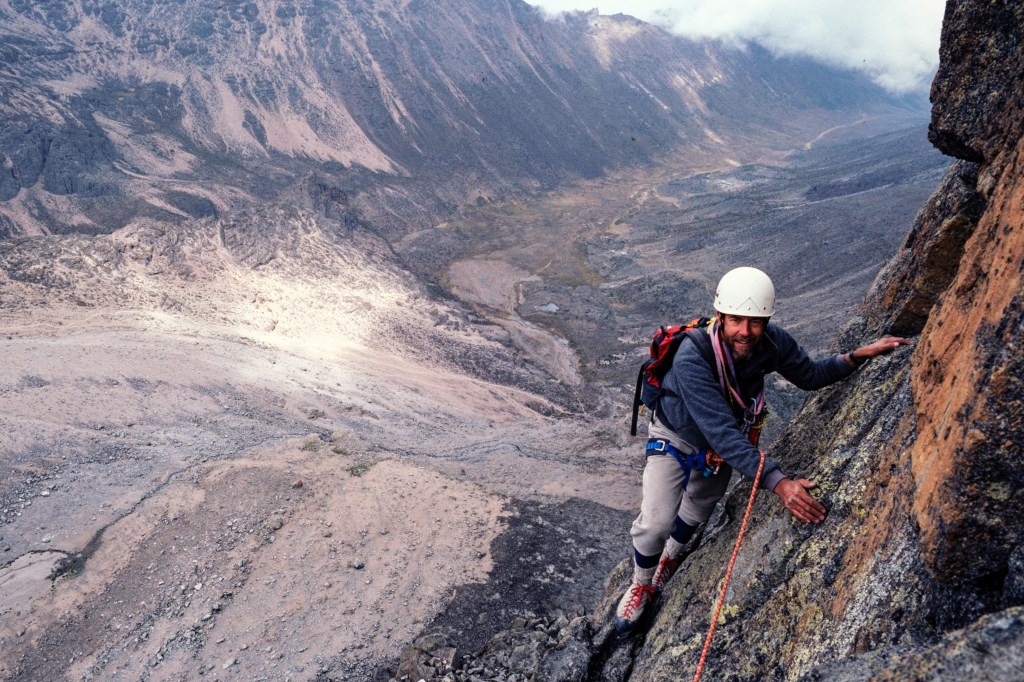
I want to stay in camp, but I know Bart wants to climb Pt John (16,020). We make quick work of this peak in a mild snow storm. We are smiling on top. Rappel off and back to camp. I later learn that Bart did the climb because he thought I wanted to go. Dinner with the Brits.
Pt. John.
Peter hangs on and smiles for the camera.
Darwin Glacier.
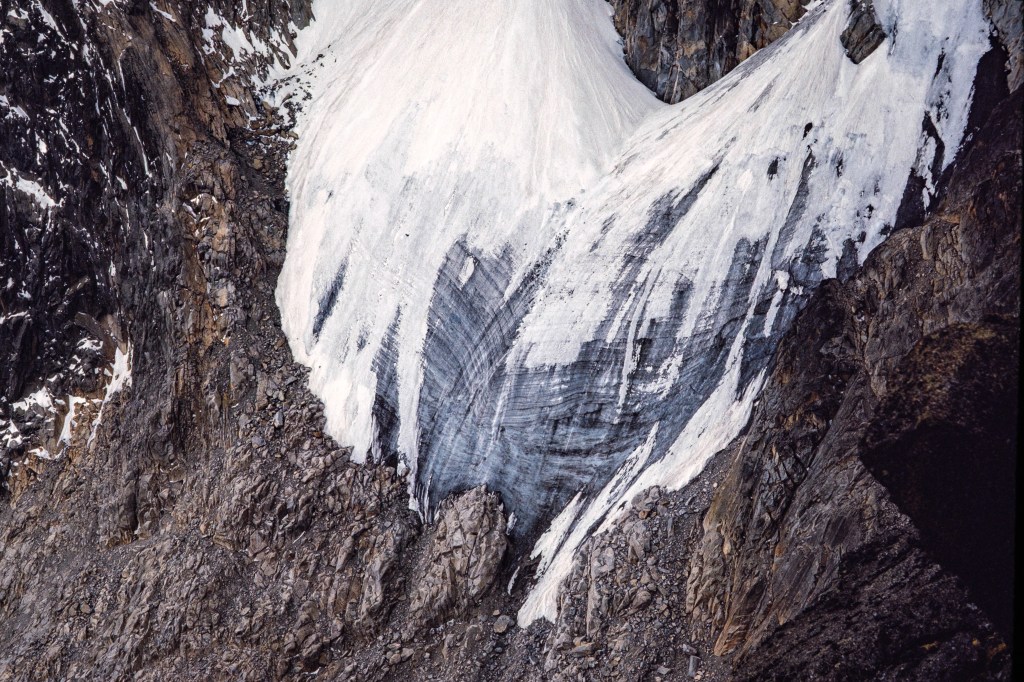
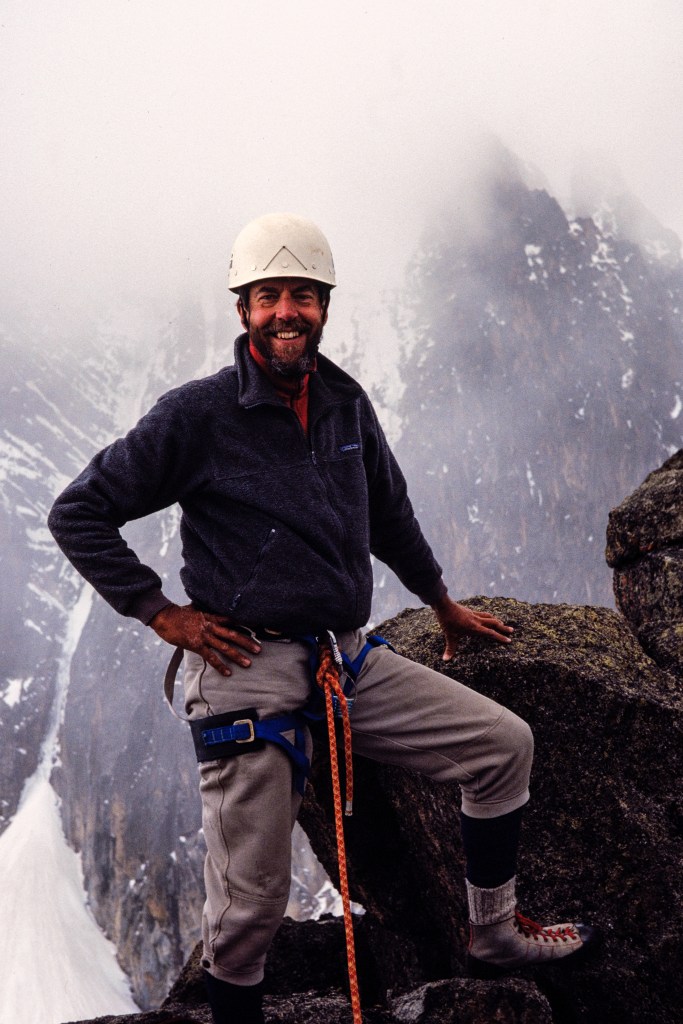
Peter on top. Diamond Couloir behind his right elbow.
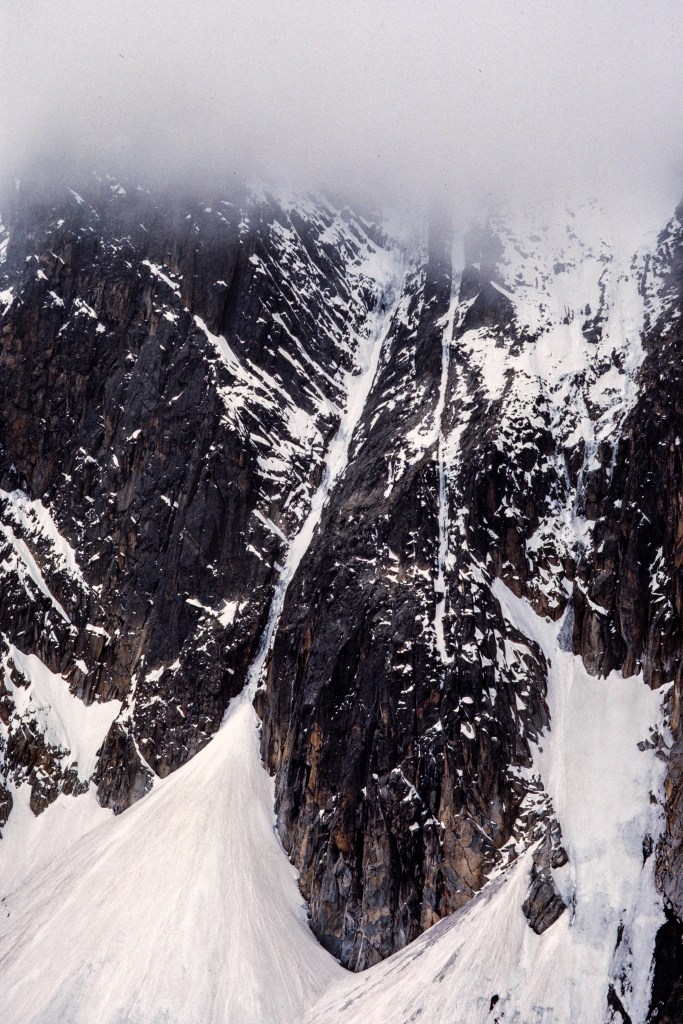
View of the Diamond Couloir.
Aug 4
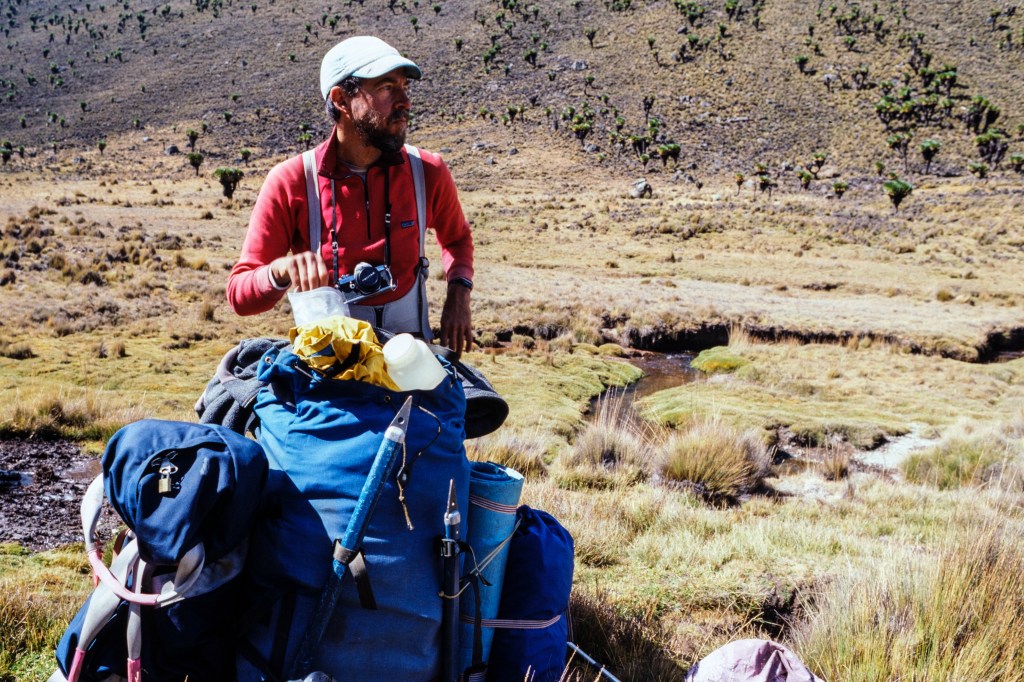
A long slog with heavy loads gets us off the mountain via the Naro Moro route. Reach Nairobi the next day. Below, Peter eats food off of his heavy load.
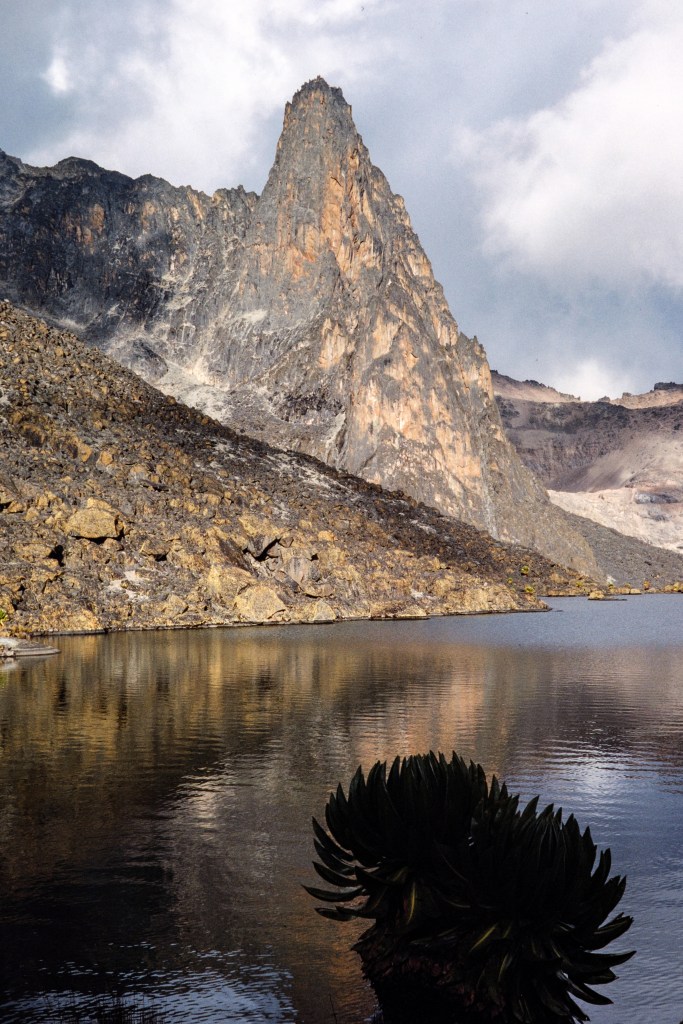
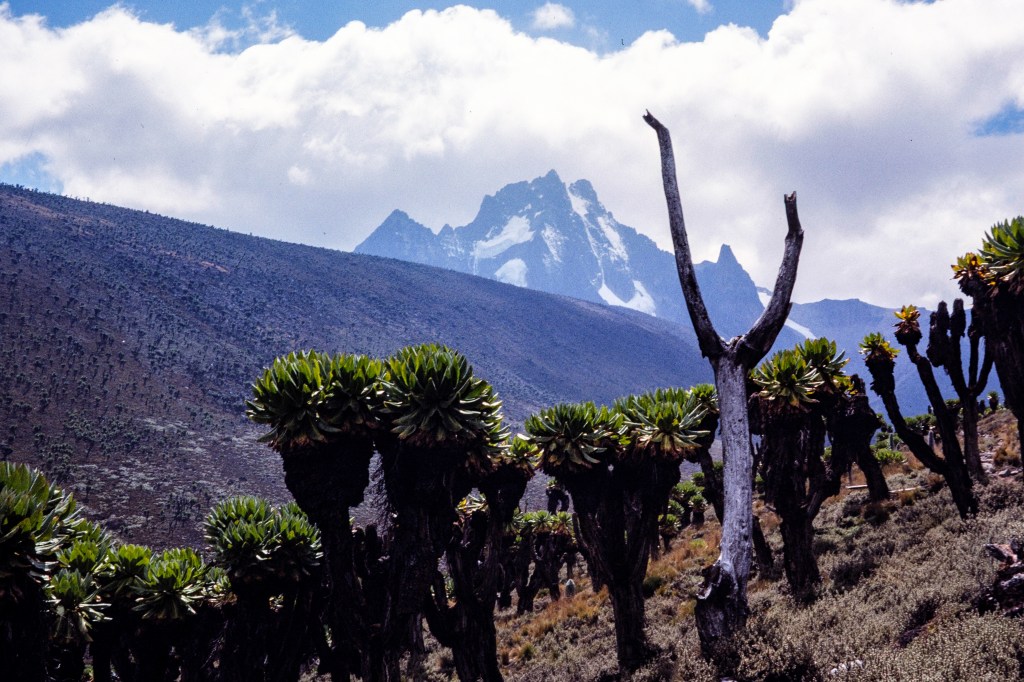
Final view of the south side of Mt Kenya. Batian in center, with west ridge on left. Diamond Glacier and Nelion just right of center. Pt. John in the Y of the dead Groundsel limbs.
The West Ridge of Mt Kenya is one of my favorite climbs; 30 hours of exciting effort. But the meaningless deaths cast a shadow on this memory.
Anecdote from my 1984 trip:
Brad Neiman and I shouldered giant packs (about 90 lb. each: 10 days of food plus camping and climbing gear) and began a 3-day walk to reach the peak via the Chogoria route; a scenic path which we had to ourselves. We staggered along in the forest and found a sleeping Cape Buffalo that was 25 feet away. He stood up and looked grumpy. This animal weighs 1500 lb. Wikipedia says: “One of the “big five” African game, it is known as “the Black Death” or “the widow-maker,” and is widely regarded as a very dangerous animal. According to some estimates, it gores and kills over 200 people every year…” Brad was a little ahead of me; with just a few steps he vanished into the jungle. I stupidly stood there and lifted my camera to take a picture. Brilliant! The buffalo charged; I turned and waddled away, knowing that I would be gored and trampled in two seconds. But after 100 feet, I was still alive; I looked back and saw the buffalo had stopped — I circled past the buffalo and joined Brad.
 Birds of Bishop