
I selected bird pictures from the 2024-25 winter. All were shot in the Eastern Sierra, most close to Bishop. All were taken with my new full-frame camera, the Nikon Z8. I picked 60 photos that had some special appeal to me.
The Buckley Ponds
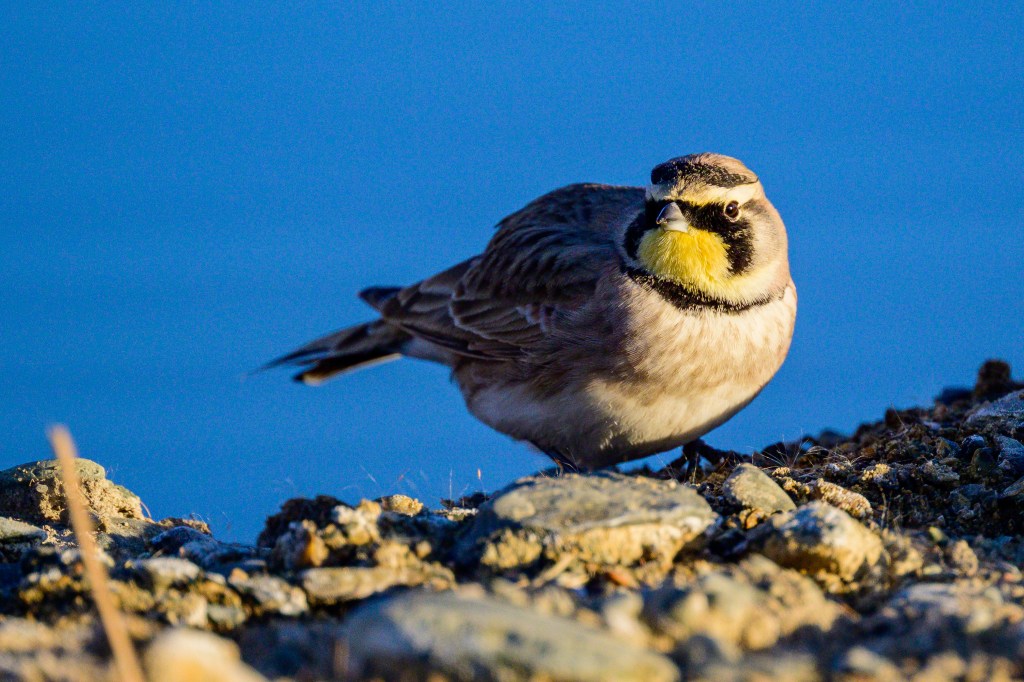
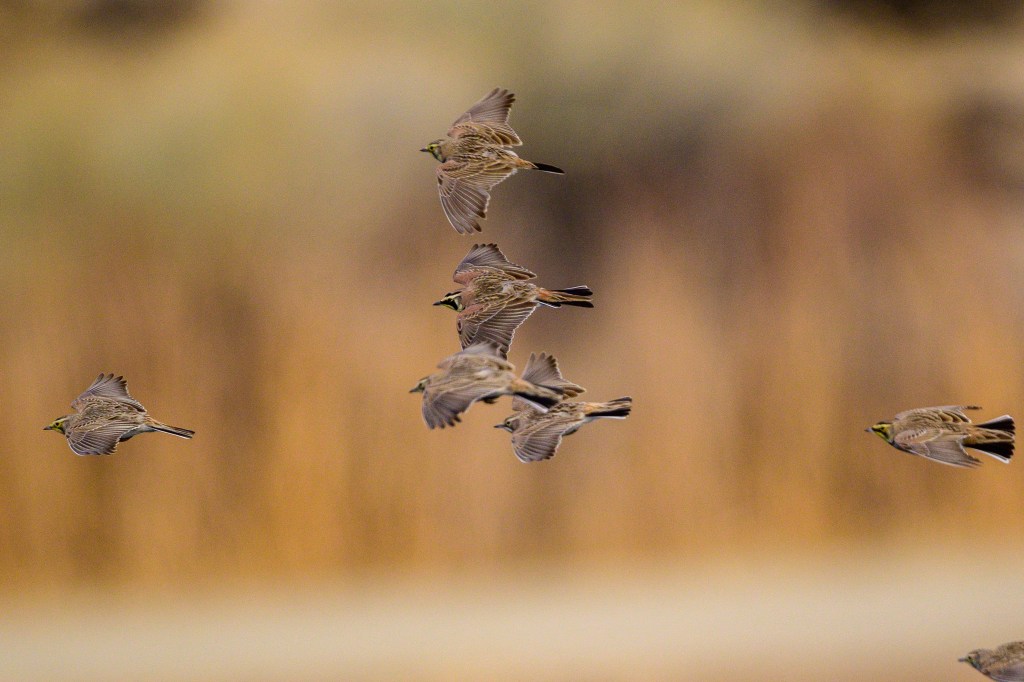
Horned Larks hang out in flocks of 30-40 birds. They hop about on the ground, scratch for food, and then take-off in unison to zoom about. They seem skittish, nervous, and hyperactive.
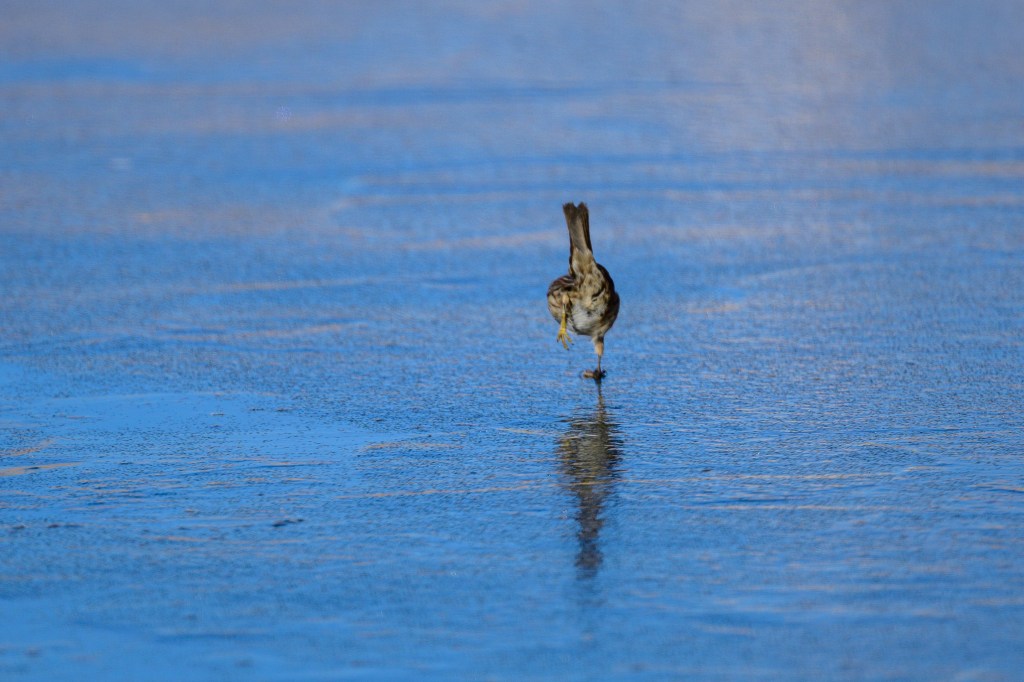
The Song Sparrow below was trying to find food on the ice. In the second image, the bird is executing a Hamill camel. If this term is not familiar, look up Dorothy Hamill.

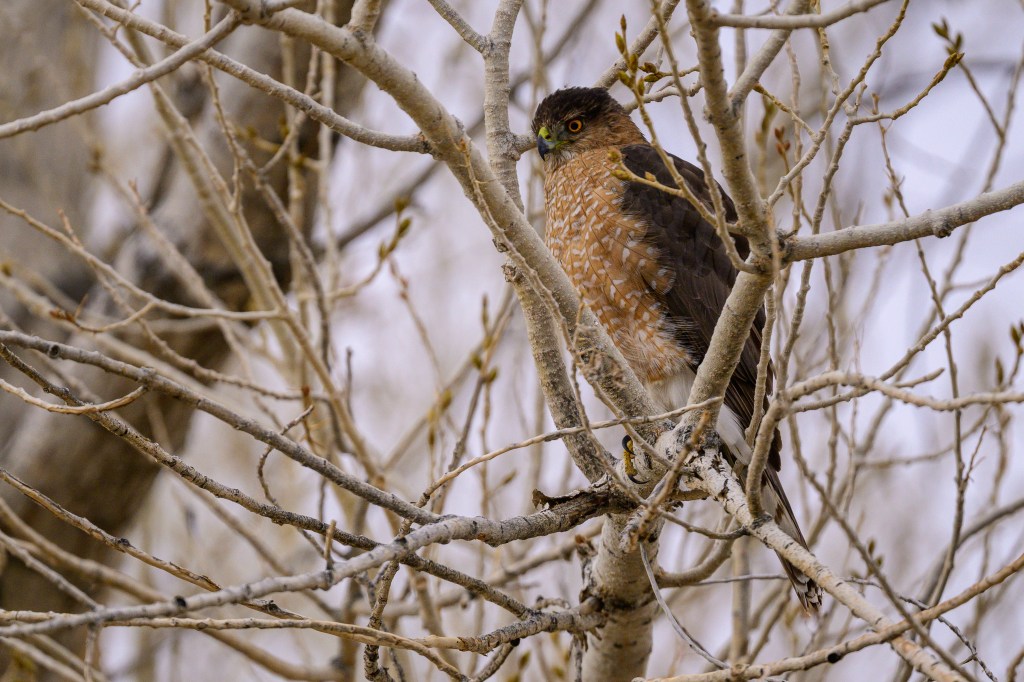
A mature Cooper’s Hawk was in the trees on the Rawson Canal.
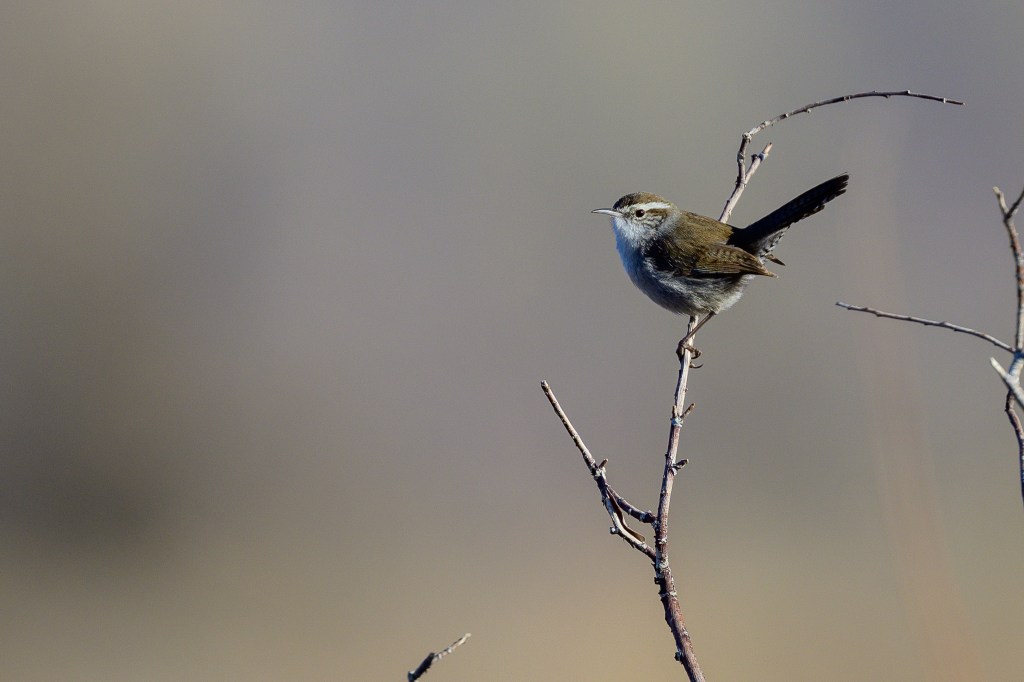
A Bewick’s Wren weighs 1/3 of an oz, but can bellow out over a dozen melodies. I often hear this bird, but cannot find it in thickets. Sometimes it poses politely, as shown below.
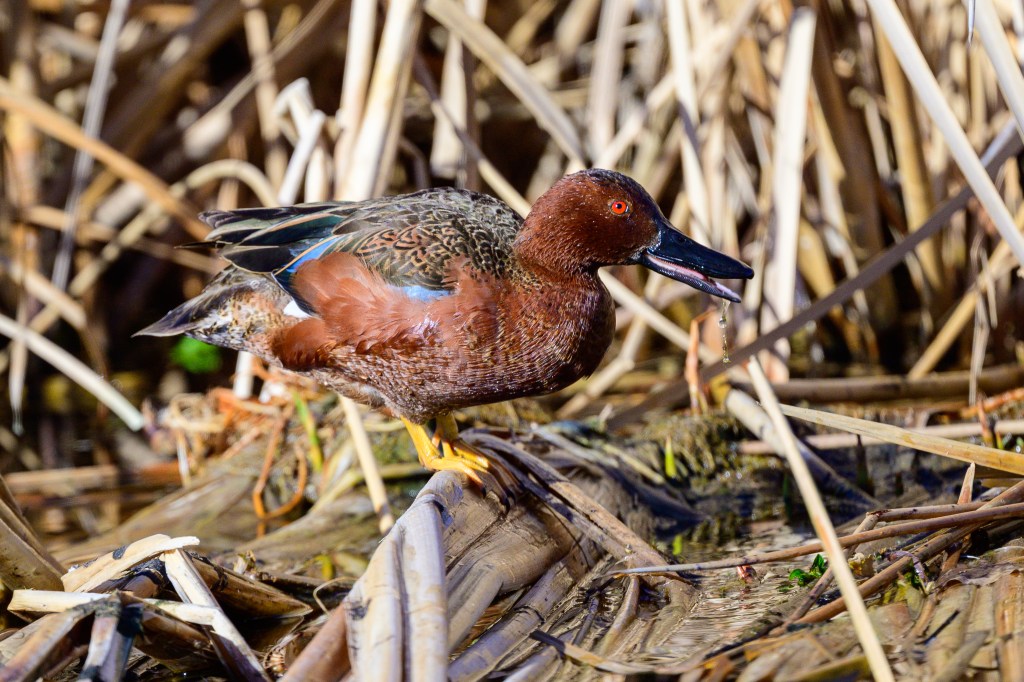
This Cinnamon Teal looks a little comical with his beak open.
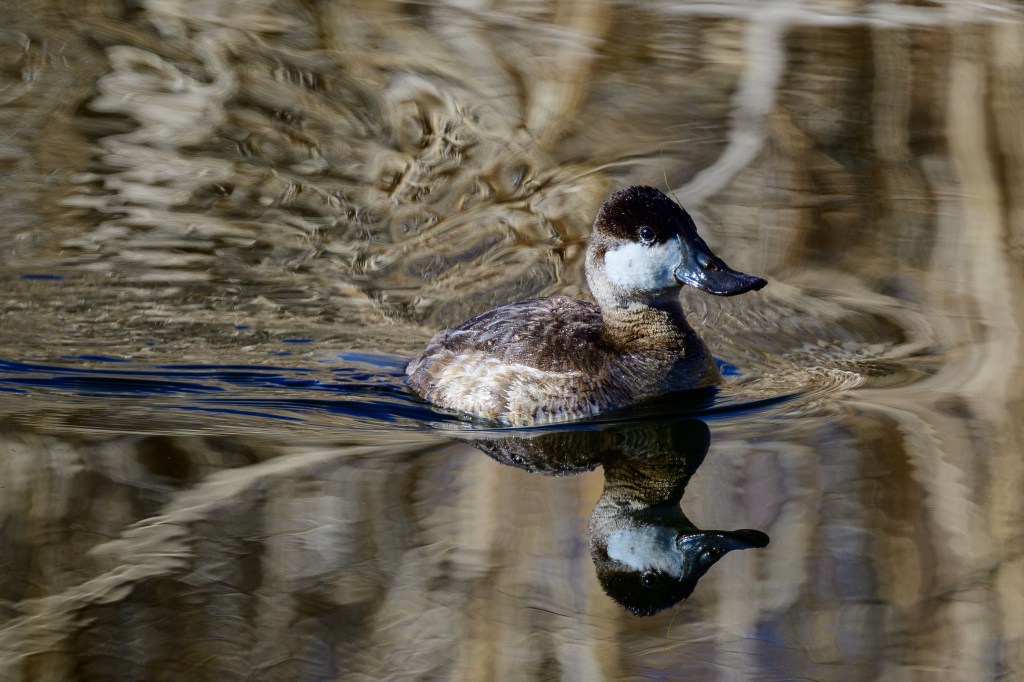
The Ruddy Duck below looks calm and relaxed. I like the way his paddling churns up the water in his wake.
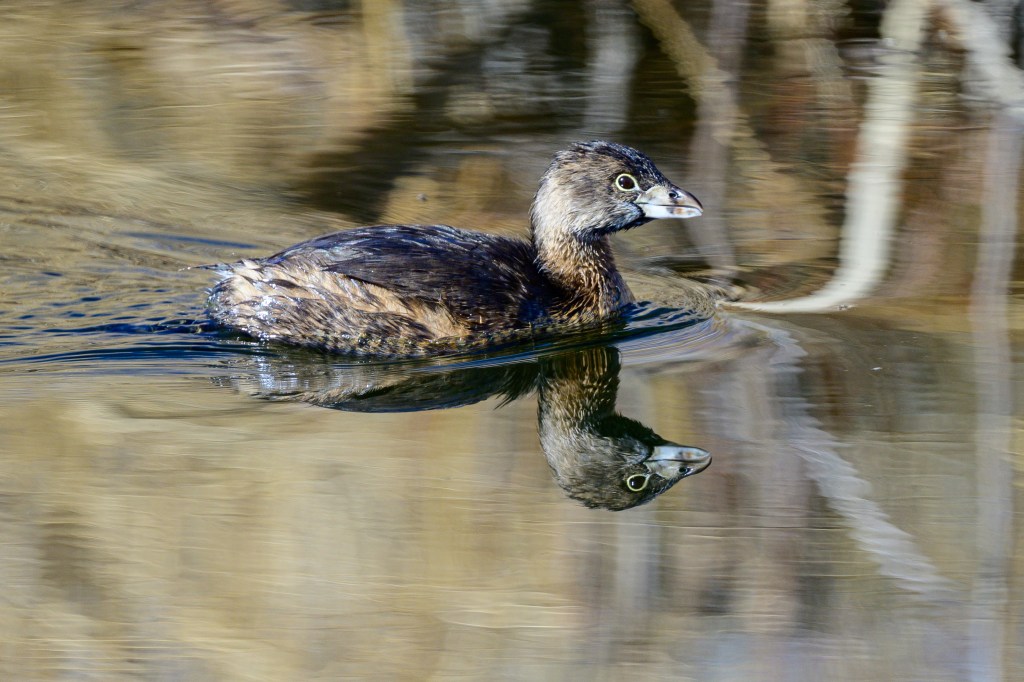
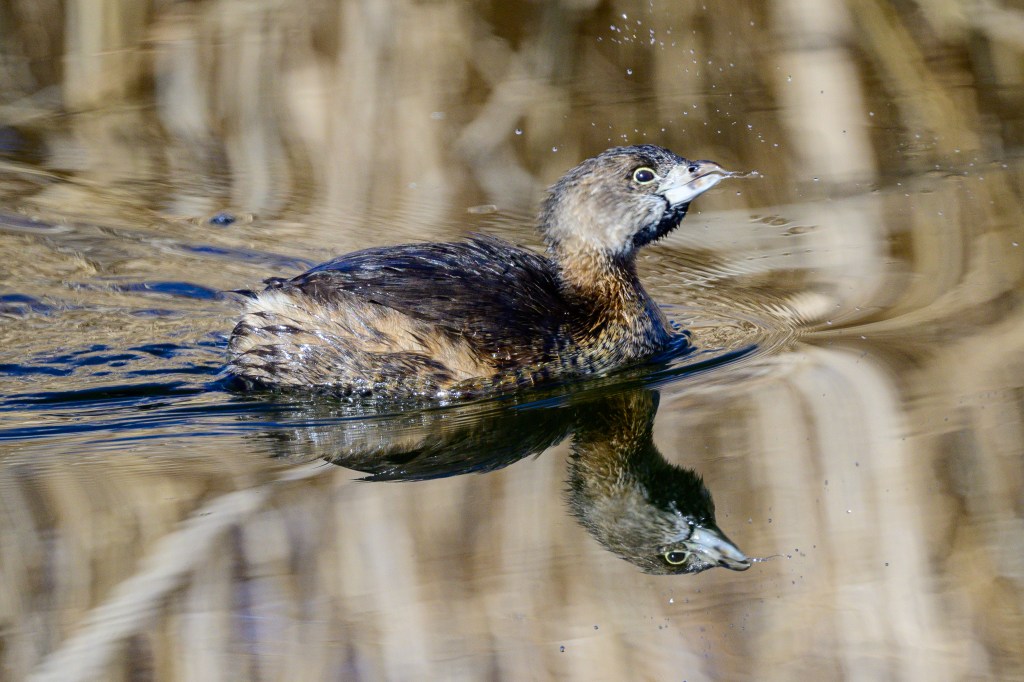
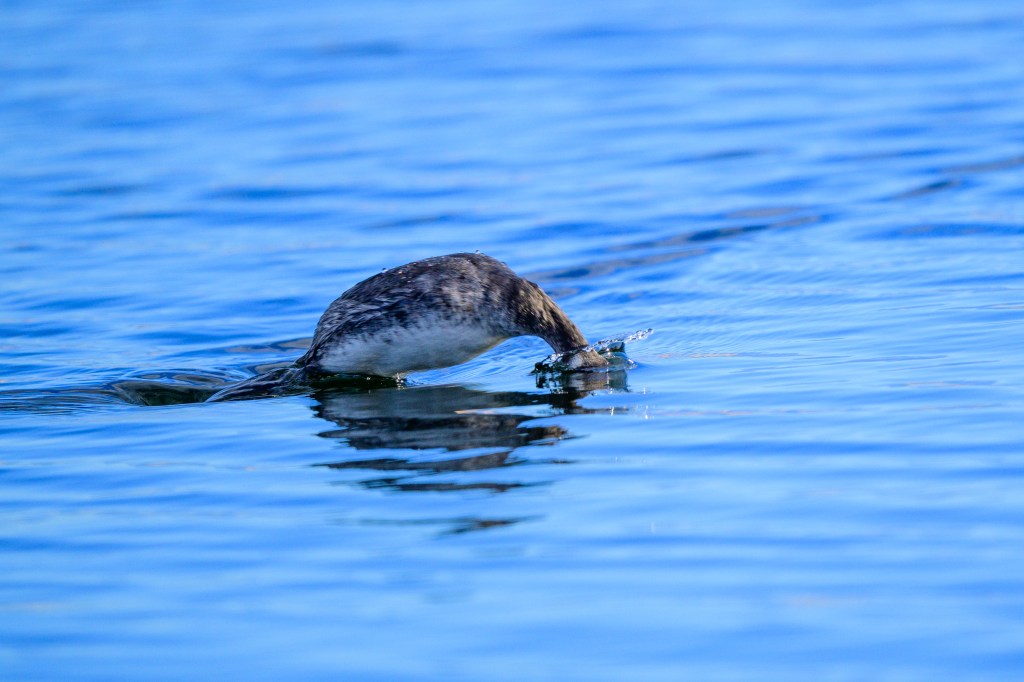
This Pied-billed Grebe also seemed tranquil, but then suddenly spit out water.
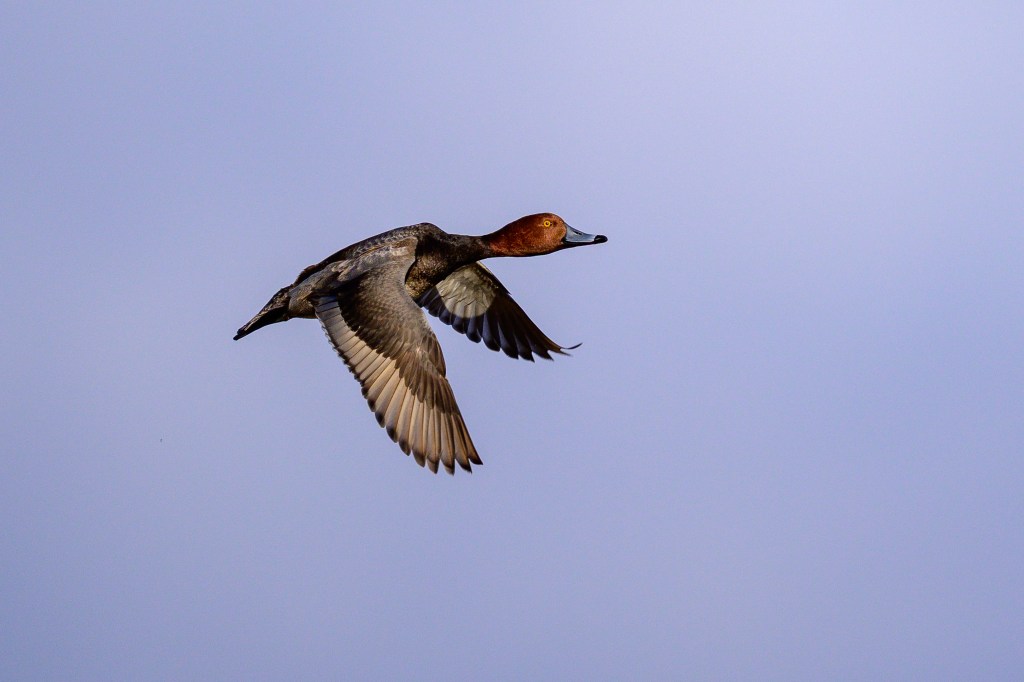
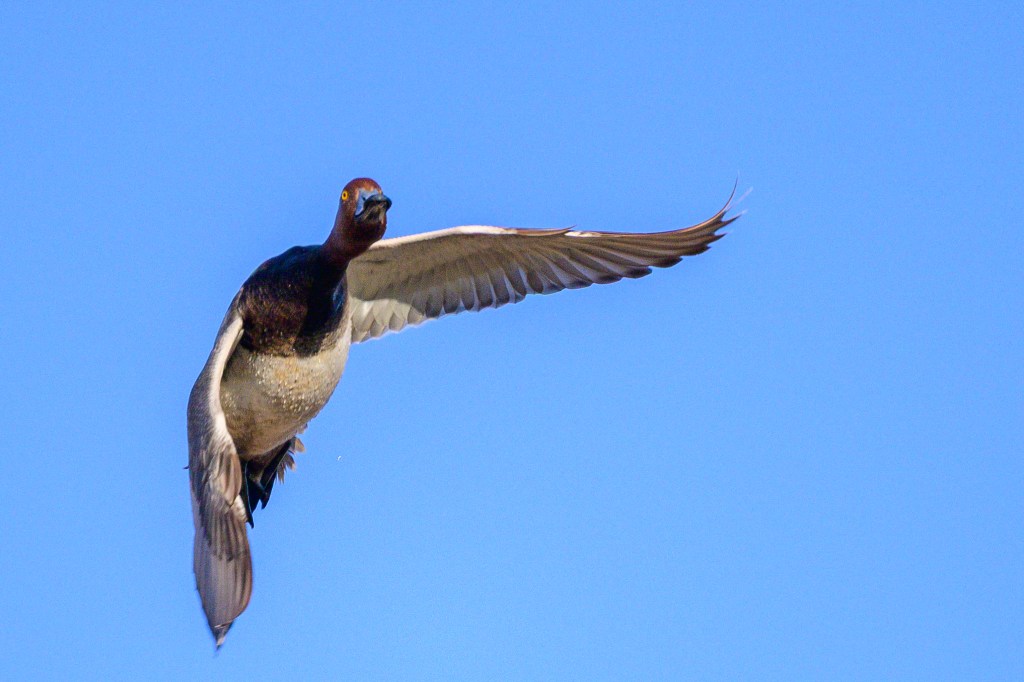
A male Redhead cruised by and then turned to fly over me.
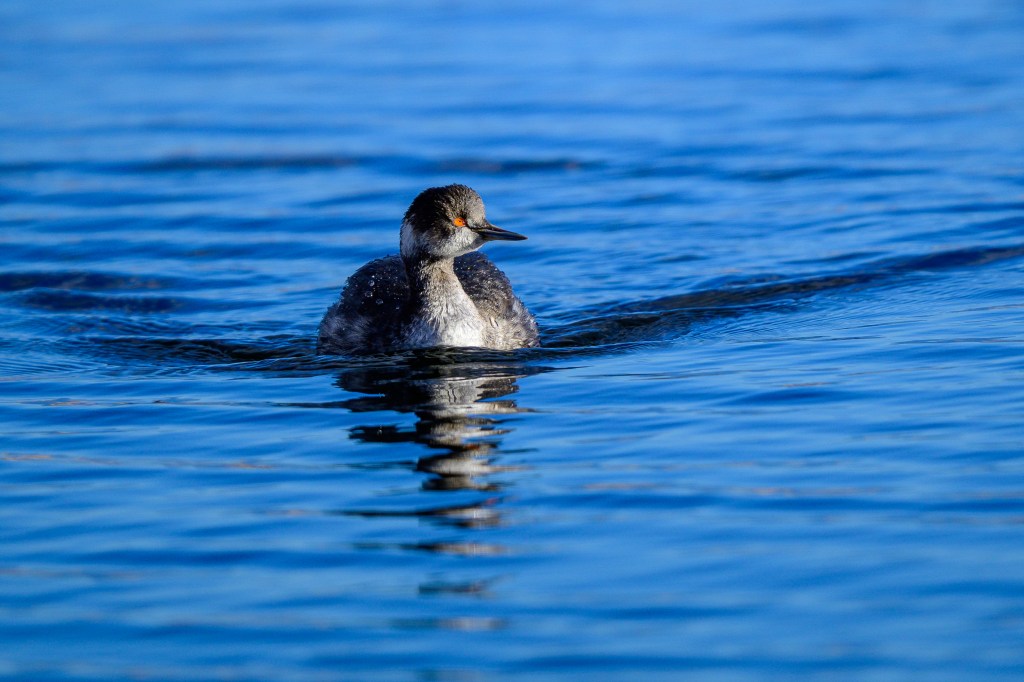
The Eared Grebe below does not have the characteristic “ears” (tufts of feathers) that appear in mating season. It dives for food in the second shot.
Most of my flight photos of Red-tailed Hawks show the underside of this bird. But this hawk banked so that I captured a good view of its back and the red tail feathers. Note the messy white feather in the middle of the tail. Blackbirds will often chase and attack these hawks. Was the white feather partly pulled out by a Red-winged Blackbird?

Northern Harriers patrol low over open areas. I usually identify them by this flight pattern and the prominent band of white feathers where the tail meets the body. The white rump is easy to spot as the birds twist and turn over the sagebrush.
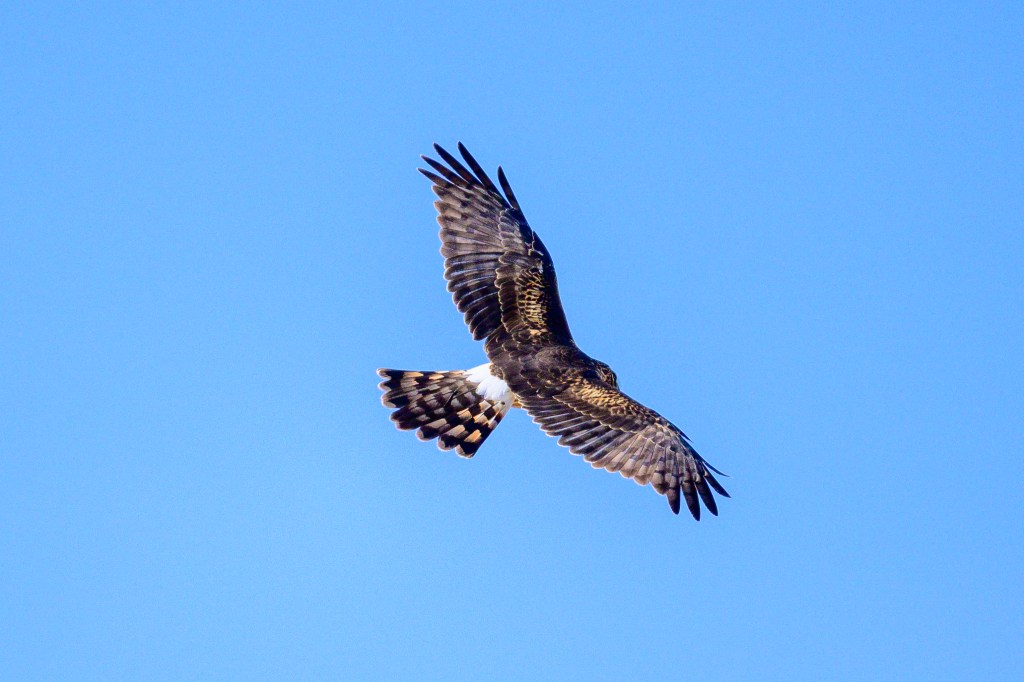
A Harrier couple was hunting at the ponds and in the surrounding desert. Back and forth, back and forth, over the brush. The female, seen below, wears a brown outfit.

The male sports a conservative gray suit, a dignified look.
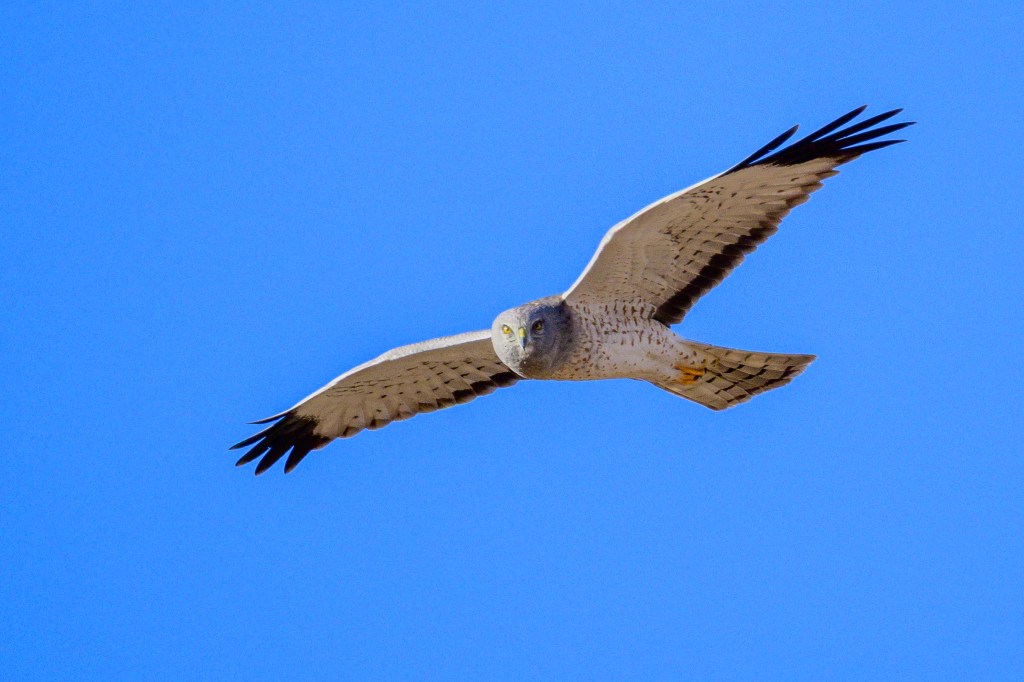
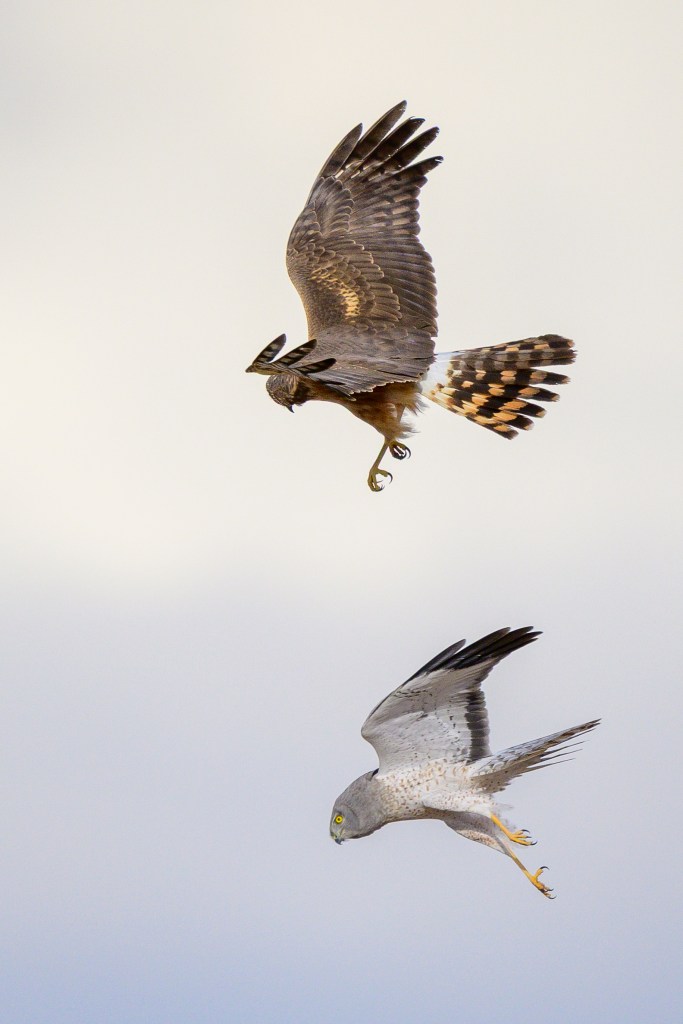
I parked along the Rawson Canal, a little north of the ponds, and walked about, hoping to get more shots of the Harriers. I was tracking the brown female when the gray male came close, as seen below. I was pumped when I saw the encounter in the viewfinder. The camera was shooting 12 frames per second with a shutter speed of 1/2000. I wasn’t initially sure if I captured the action, or if the image was well focused. Later, when I saw the images on my computer, I was pleased. The camera caught sharp pictures of this split-second meeting.
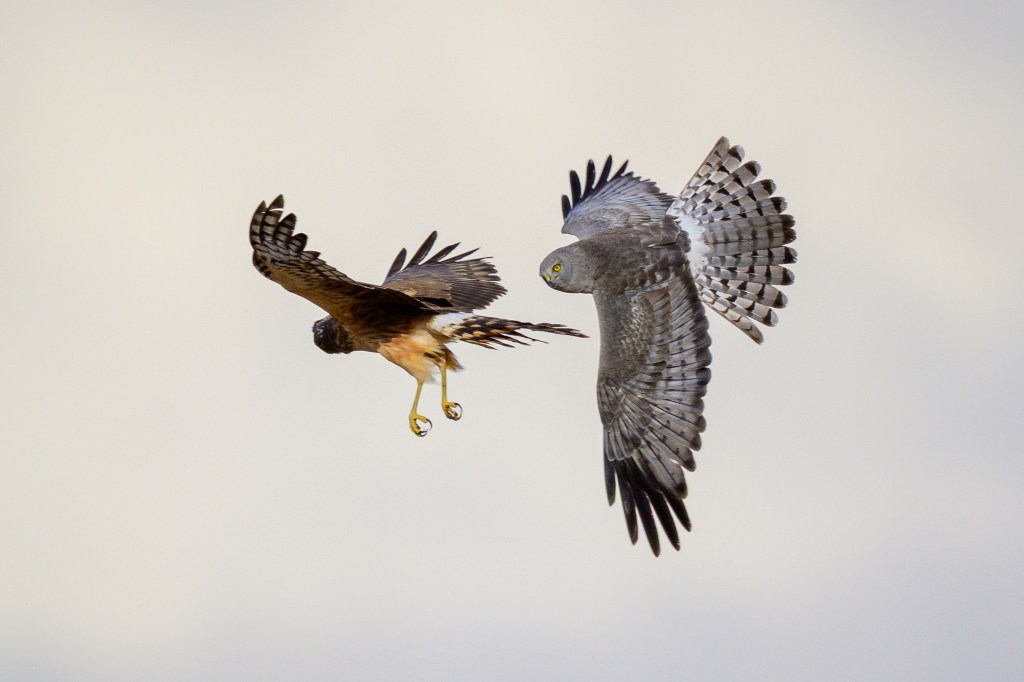
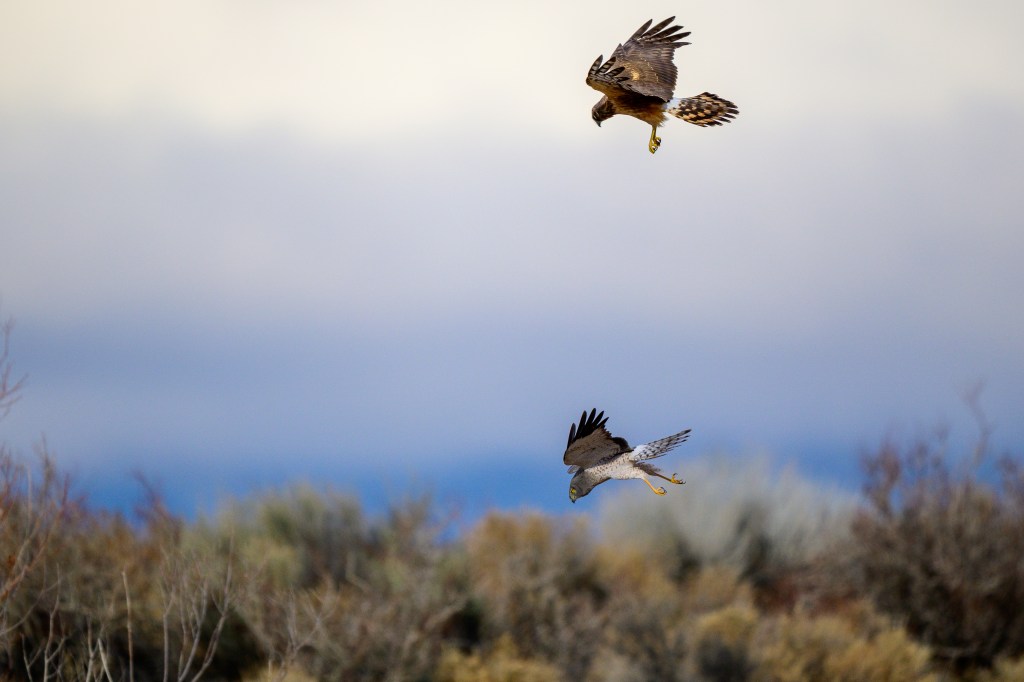
In the next two pictures, the female hovered while the male plunges toward earth. But no bird hit the ground. These superb fliers were in control.
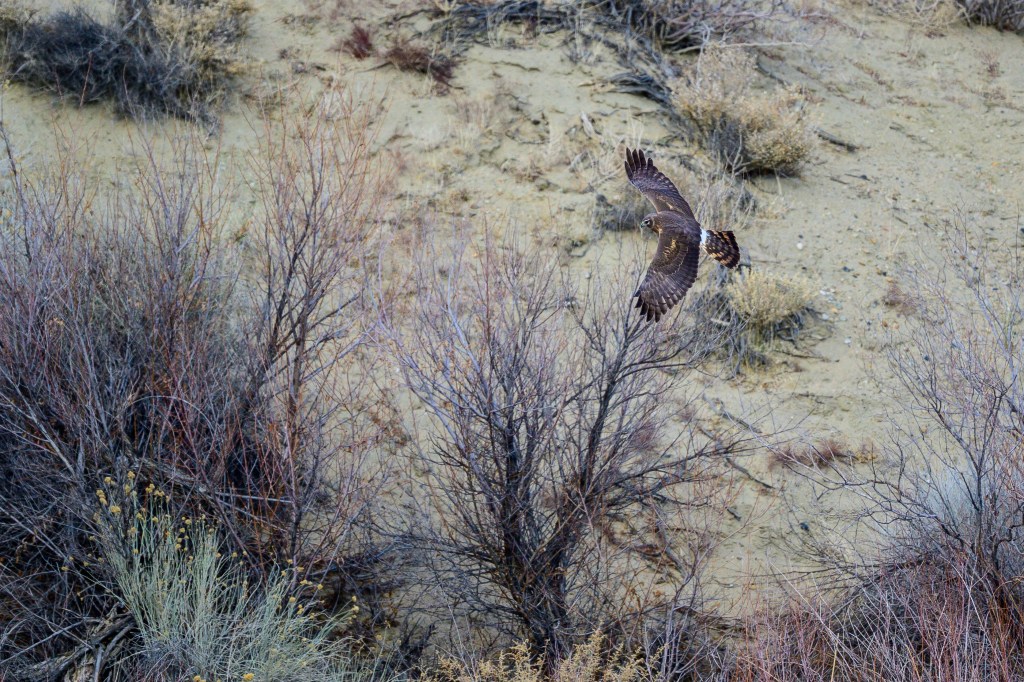
The next photo shows the female continuing her patrol of the desert.
The COSA
The COSA (Conservation Open Space Area) is a 25-acre plot of land right in Bishop, managed by the Bishop Paiute Tribe. It is just north of the Forest Service Office Building and the Hospital. On the east is a school and to the west is a health clinic. There are 1.2 miles of popular trails. Birds of all kinds frequent this area.
This winter a pair of Wood Ducks were often here. The colors of the male are so gaudy that they seem comical.

A Ring-necked Duck, below, was bathing itself in the pond.

Female Mallards have lovely feather patterns. I like the first Mallard photo for the reflection.
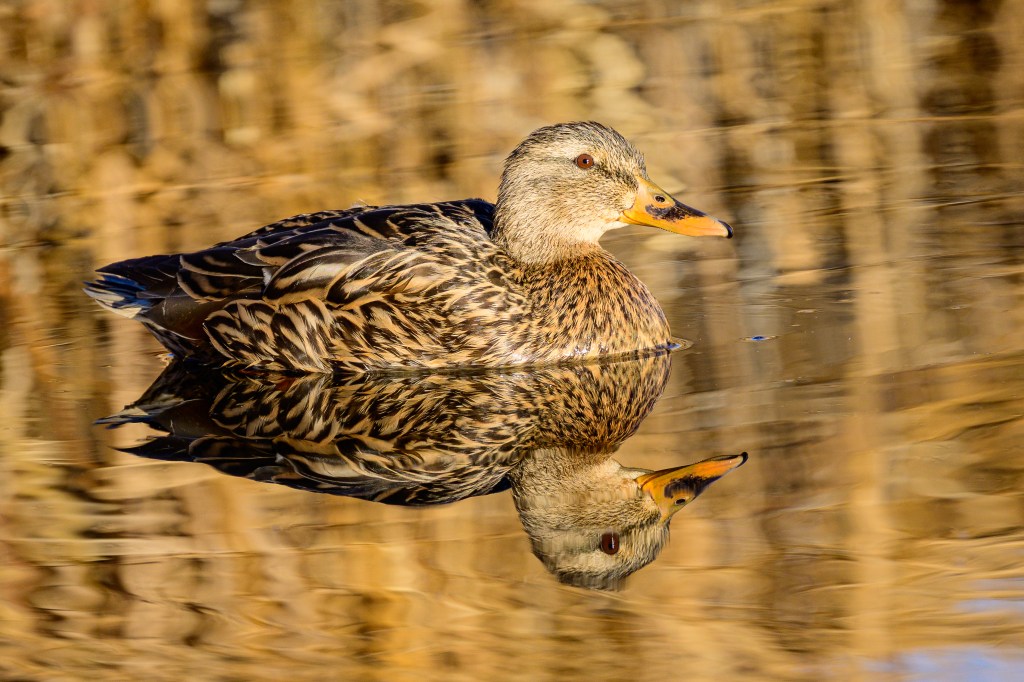
As we were leaving the COSA, we surprised two Mallards in a small drainage ditch. The ditch behind the female was in shadow, creating a portrait that reveals detail against a black background. A Mallard counterpart to Vermeer’s Girl with a Pearl Earring.

A Sharp-shinned Hawk yielded two photos that I liked.
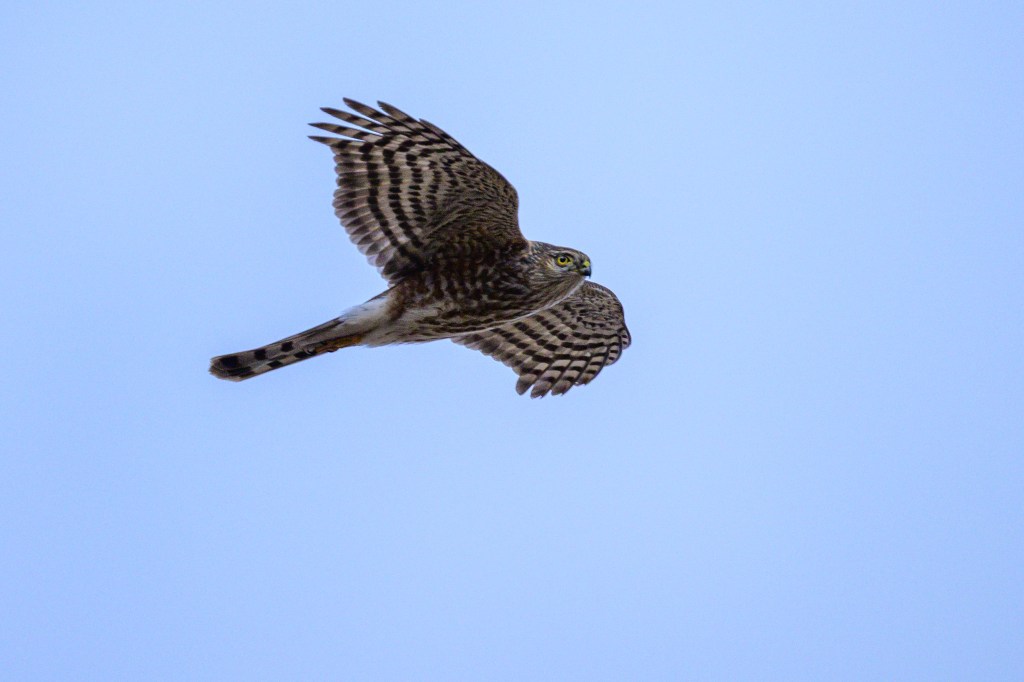
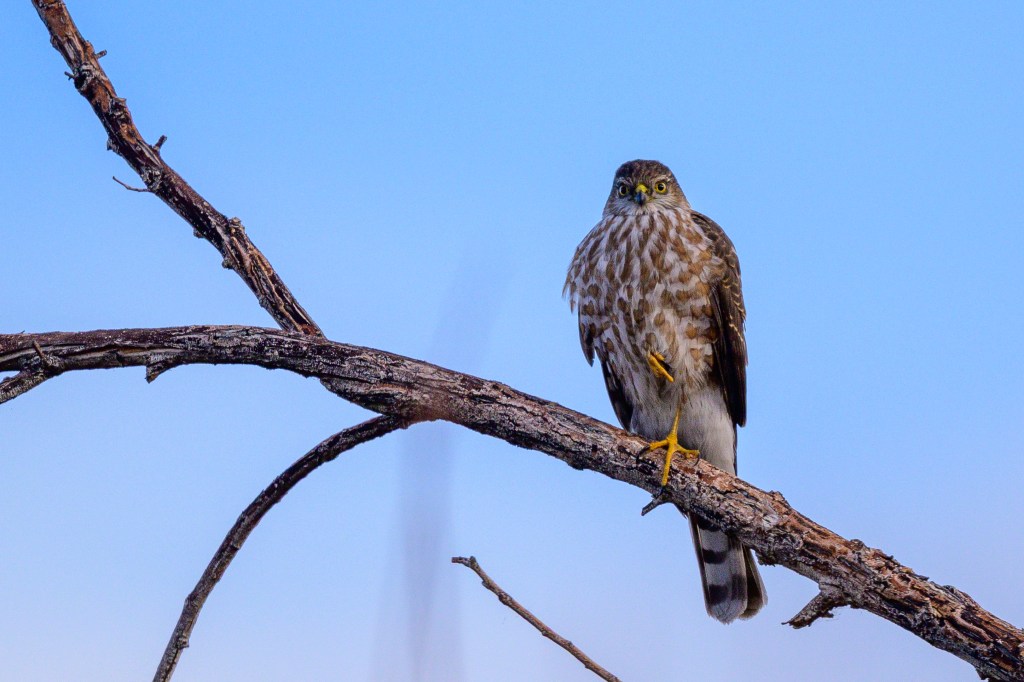
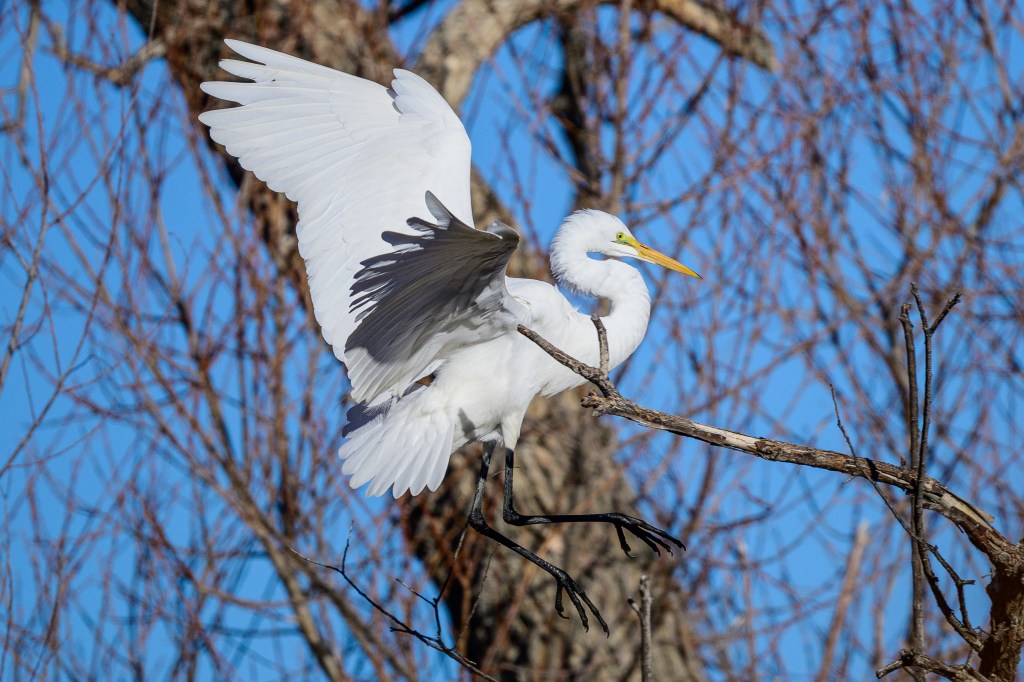
A Great Egret lands, using wings to brake and legs to reach out for a perch.
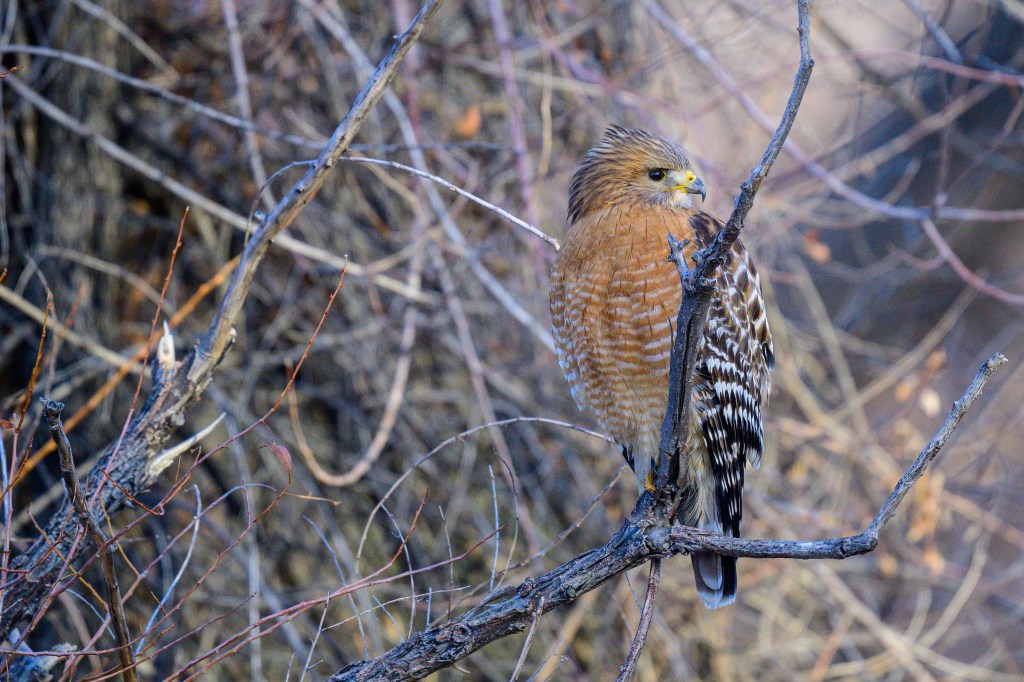
A Red-shouldered Hawk.
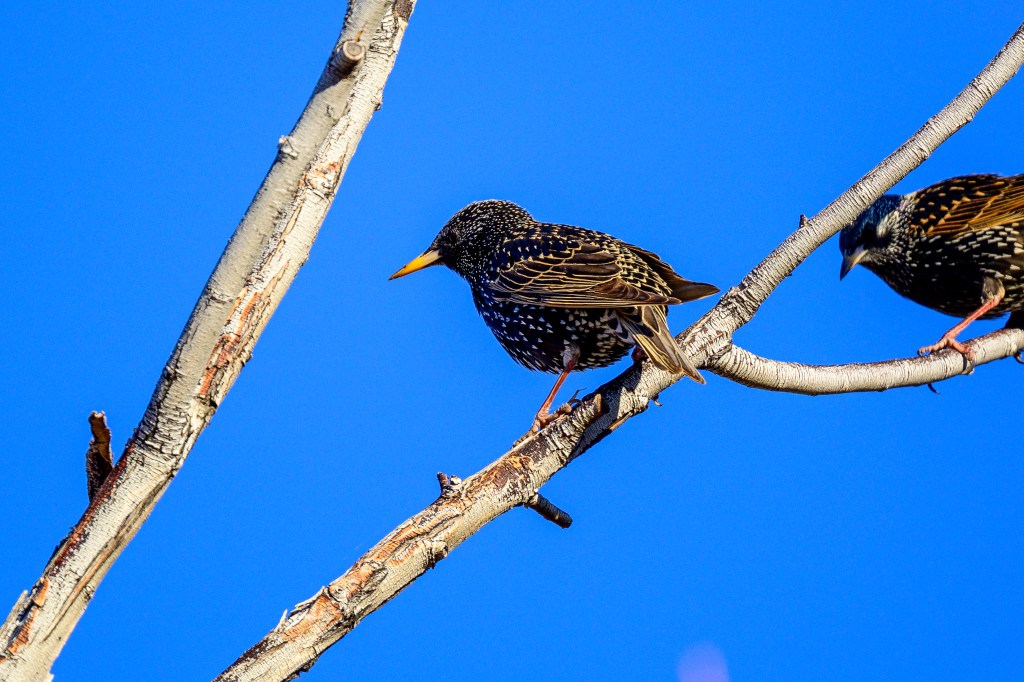
European Starlings have intricate patterns.
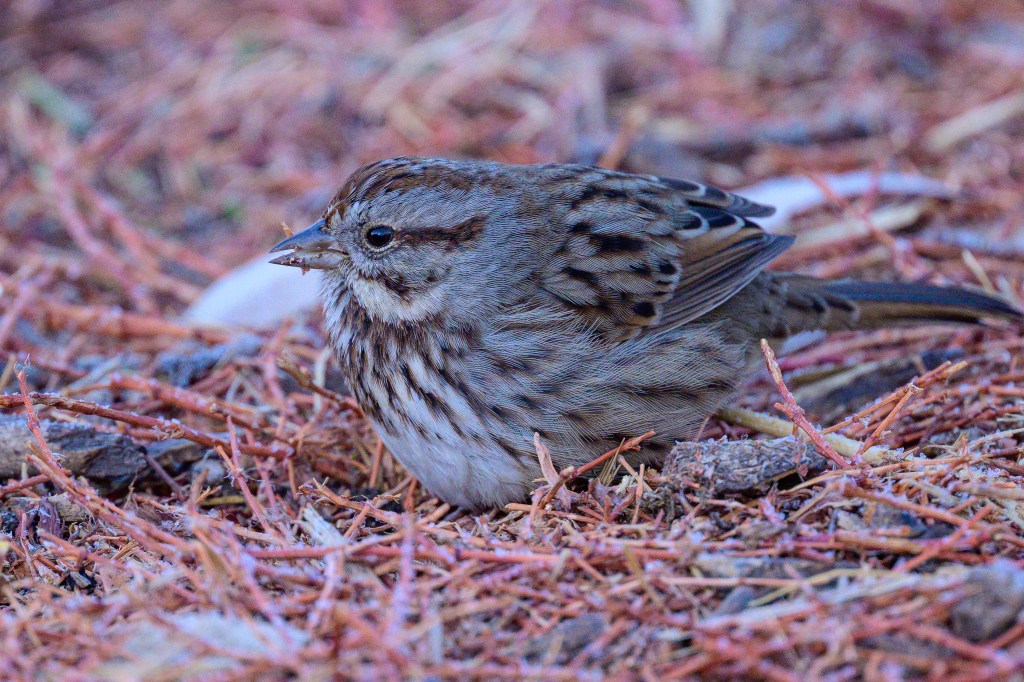
A Song Sparrow.
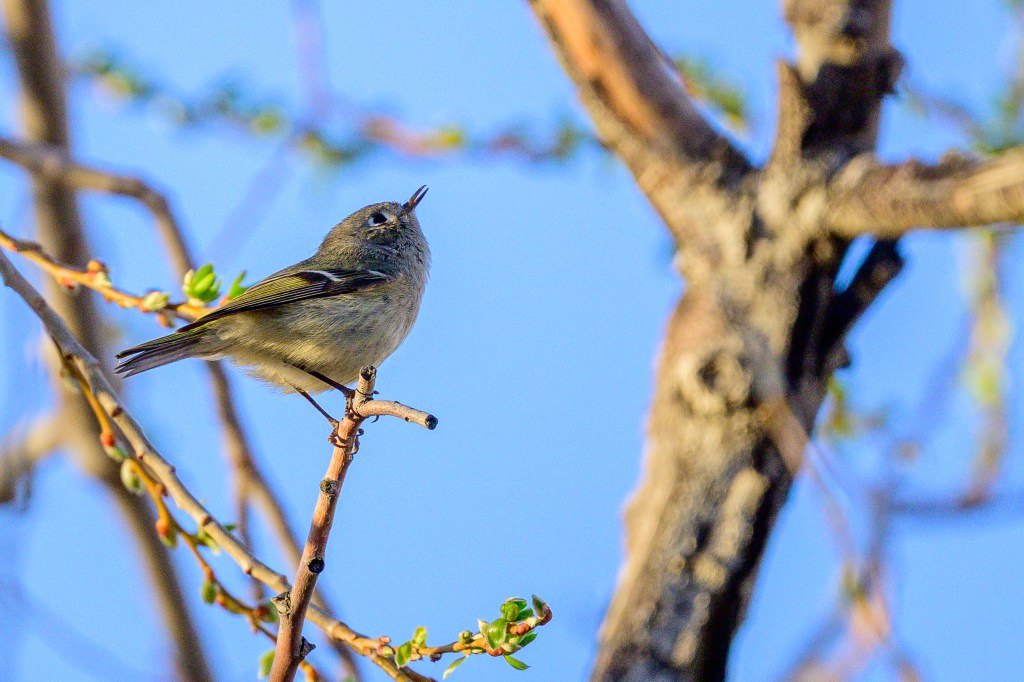
A Ruby-crowned Kinglet weighs ¼ of an ounce. Hard to photograph because they won’t hold still. It is wearing spectacles.
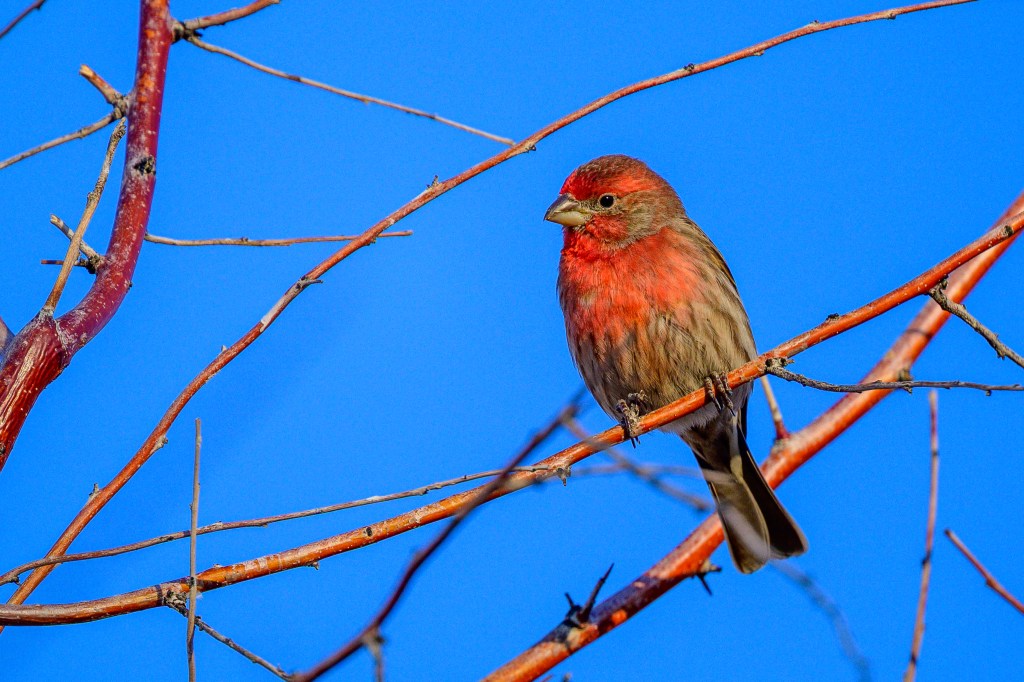
A male House Finch looks as if it was dipped head-first in red powder.
I liked the feather detail in this image of a Eurasian-Collared Dove. This bird species originated in India, spread throughout Asia and Europe around 1600, arrived in North America about 50 years ago. They are now the most common dove in the Bishop area.

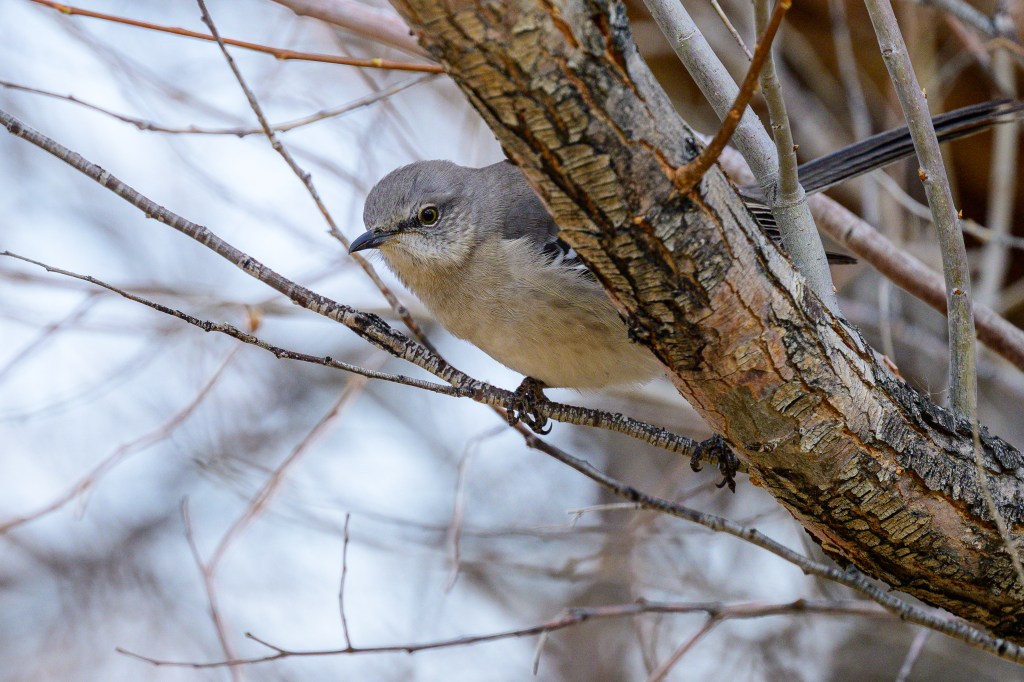
A Northern Mockingbird peeks around a branch.
Airport Road
The intersection of South Airport Road and Gus Cashbaugh Lane is a good place to find birds.
A flock of Canada Geese is heading south in March. The wrong direction!
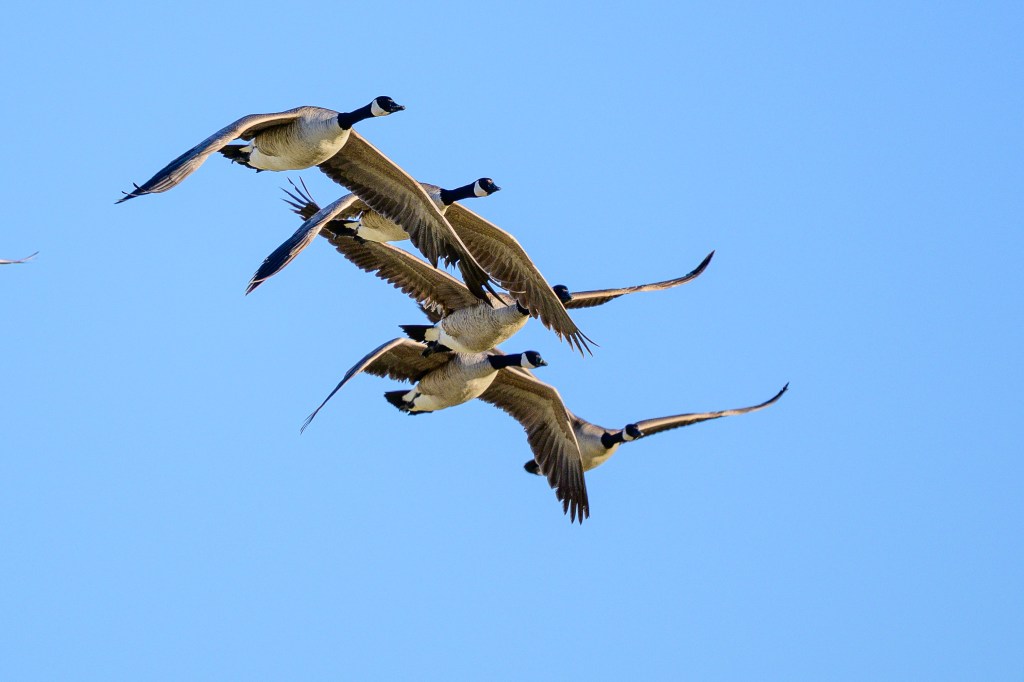
Another flock of Geese heads north, with the Sierra in the background.

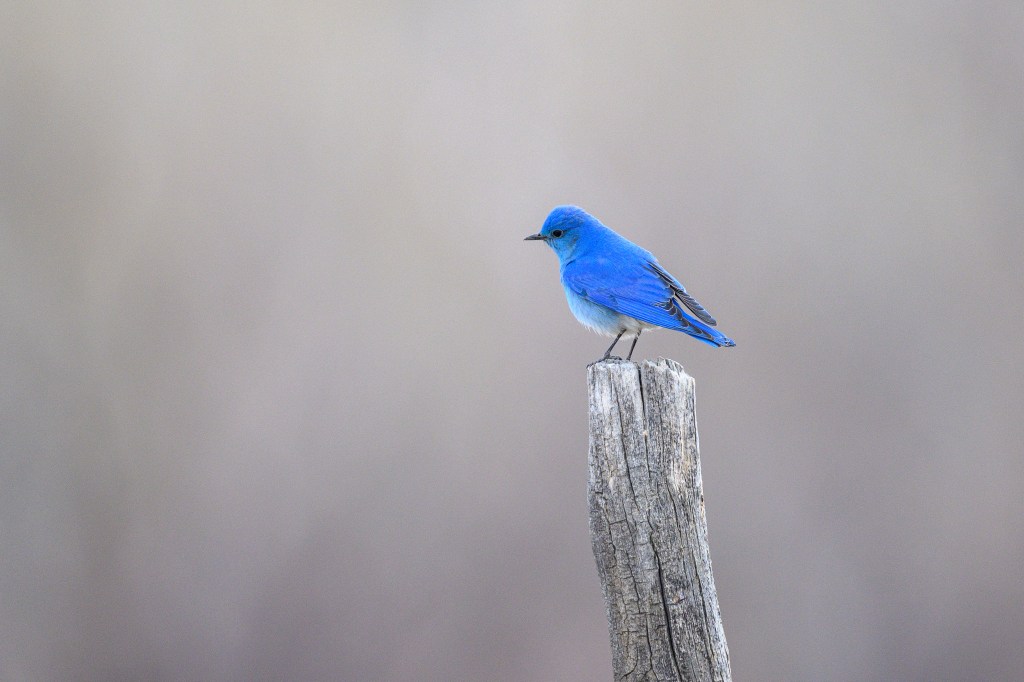
This Mountain Bluebird appeared in early March.

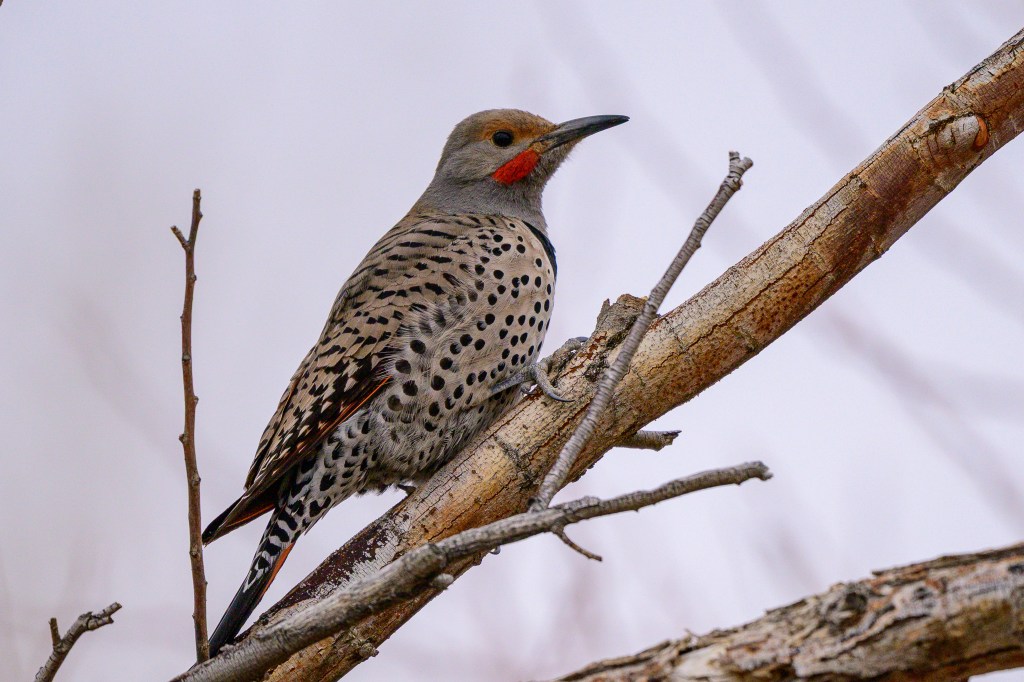
A male Northern Flicker.
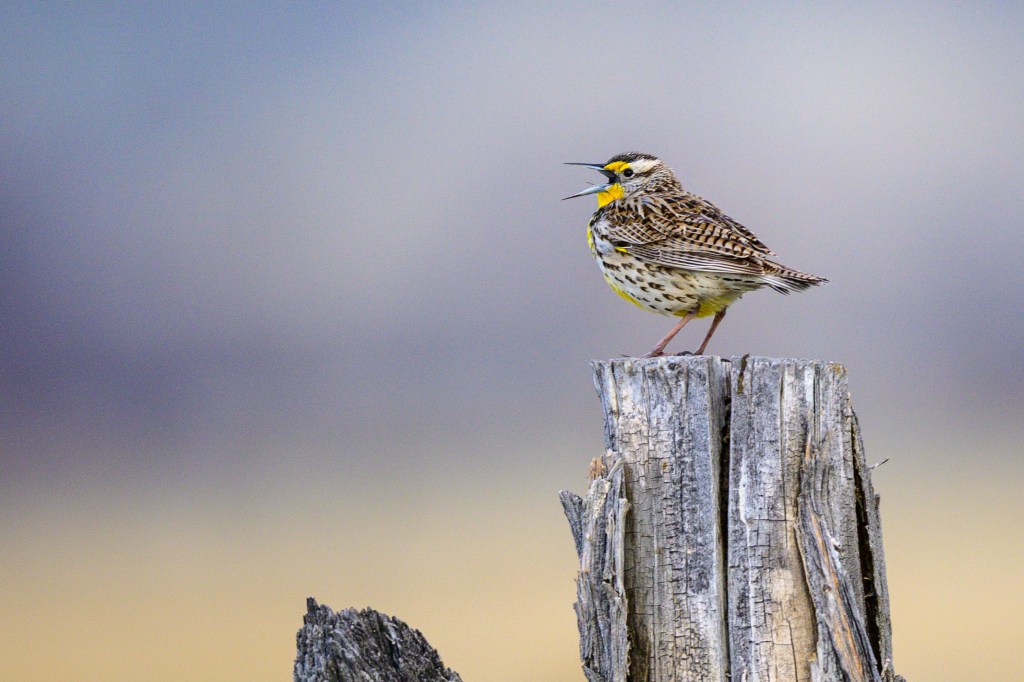
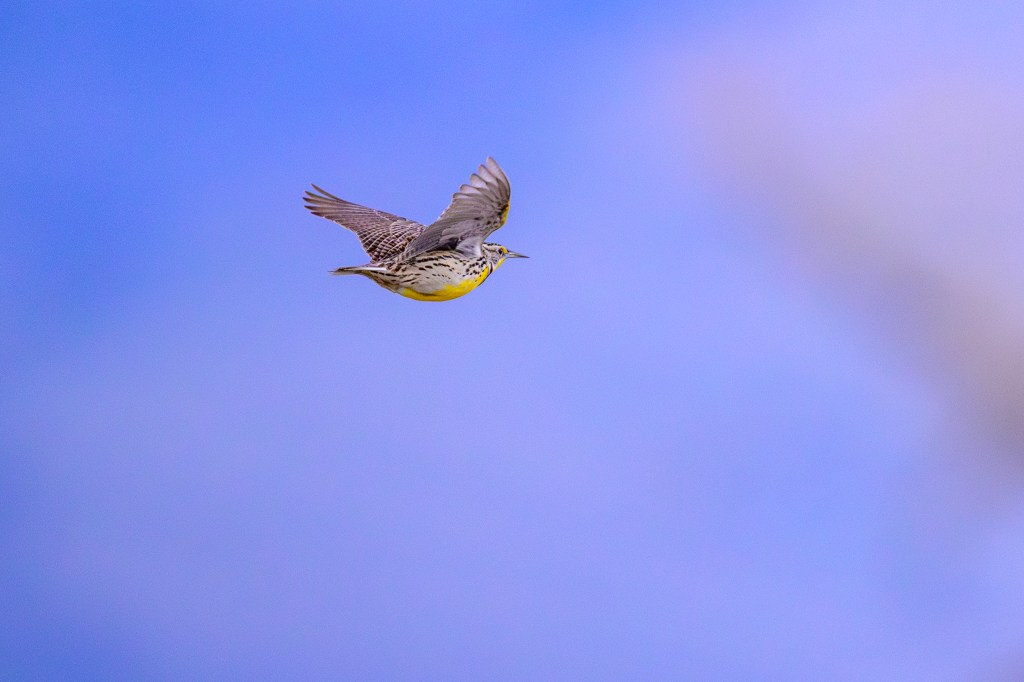
Western Meadowlarks perch on the fences along the road. Their loud and lovely song is often heard here. In the first photo you can see the bird’s tongue. I managed to catch the bird in the air.
Pleasant Valley Reservoir
In winter the reservoir is used by all sorts of water birds, plus others.
The image below shows four Double-crested Cormorants. One thinks it is performing on Dancing with the Stars. The nearest bird is trying to ignore this display, while two other birds look on in shock.

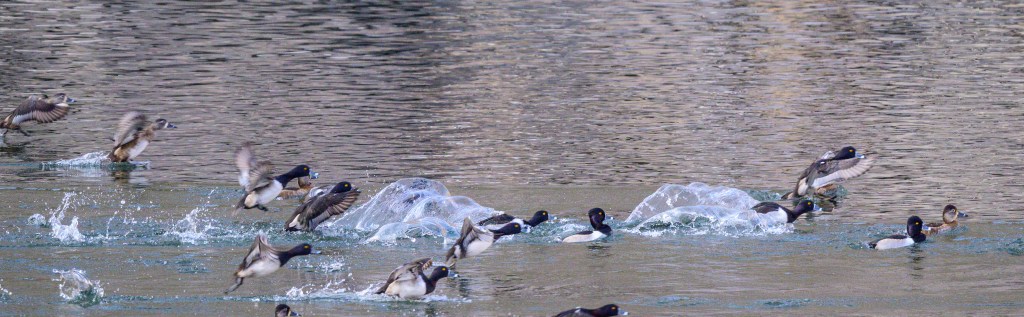
A group of Ring-necked Ducks tries to take-off in a panic.
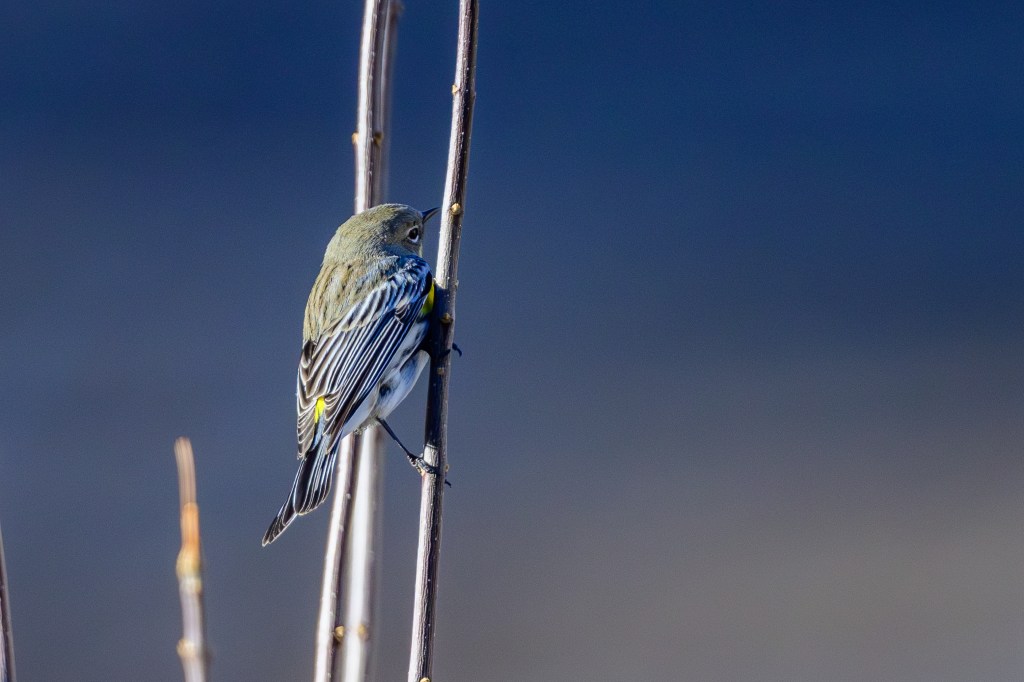
A Yellow-rumped Warbler displays the reason for its name.
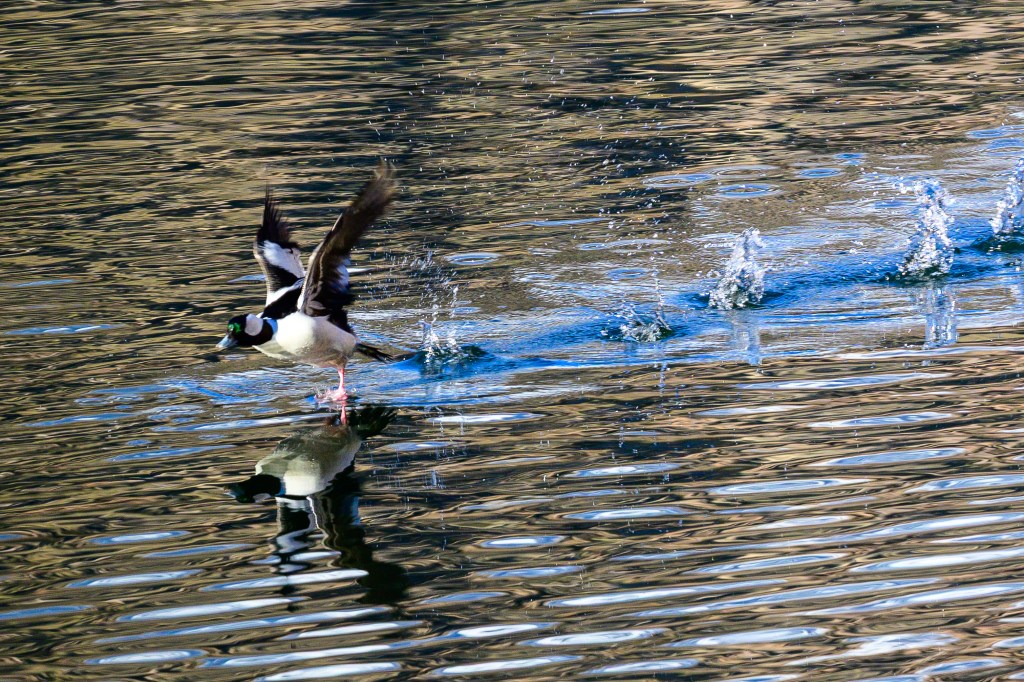
A male Bufflehead tries to get airborne by pushing off the water with its pink feet.
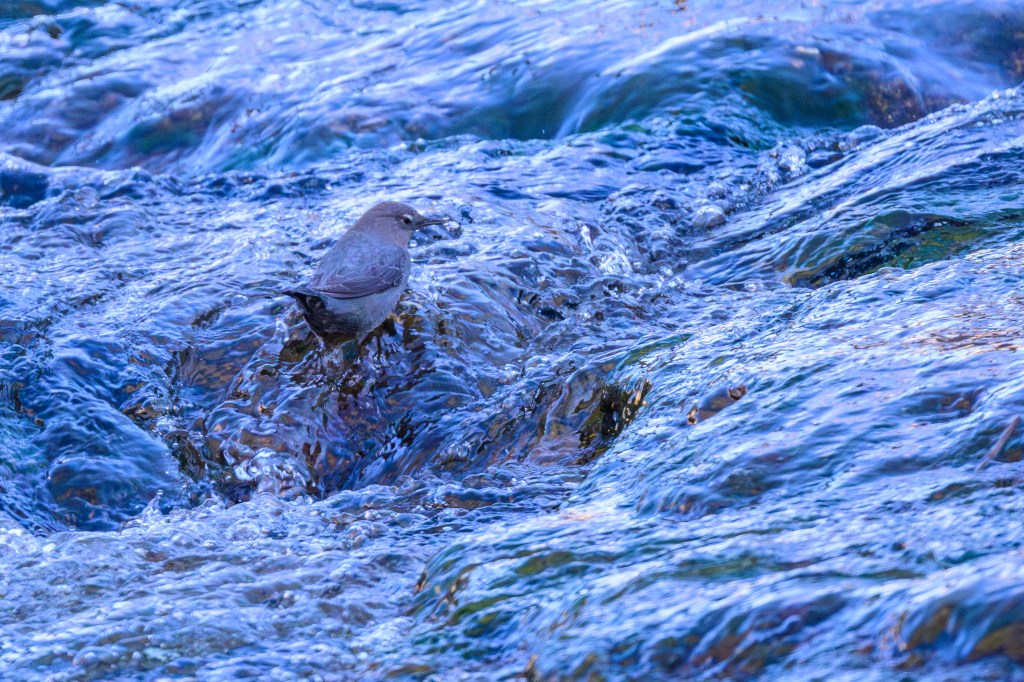
The American Dipper (previously the Water Ouzel) was John Muir’s favorite bird. If you hike in the Sierra and take a break near a forested stream, you can watch this bird as it flies upstream and downstream near the water surface. It may dive into the water and re-emerge in another spot. When it lands on a rock, it bobs up and down as if it was doing squats. My favorite Dipper encounter was in Shinumo Creek in the Grand Canyon. I was wading down the creek bed; the clear water was about a foot deep, placidly flowing over a bottom of rock and sand. I watched a dipper that was walking about underwater searching for bugs. In the photo below, the Dipper was looking for food where the Owens River flows into the reservoir.
Miscellaneous places
Across the street from my house, a flock of male Brewer’s Blackbirds mingled with female Red-winged Blackbirds.

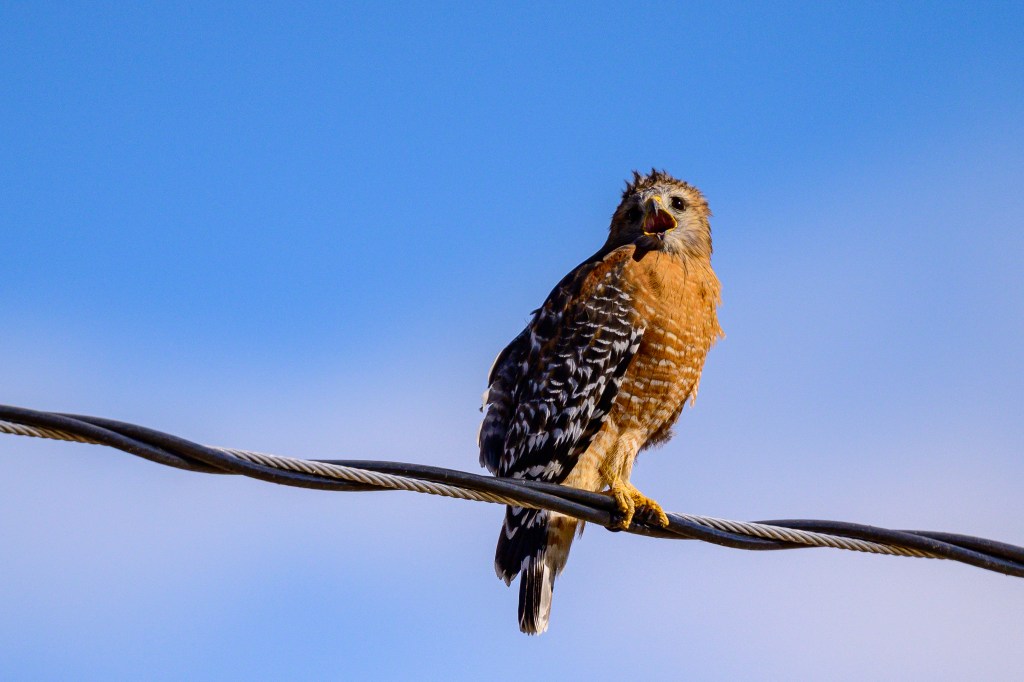
On Brockman Lane, a Red-shouldered Hawk was sounding off.
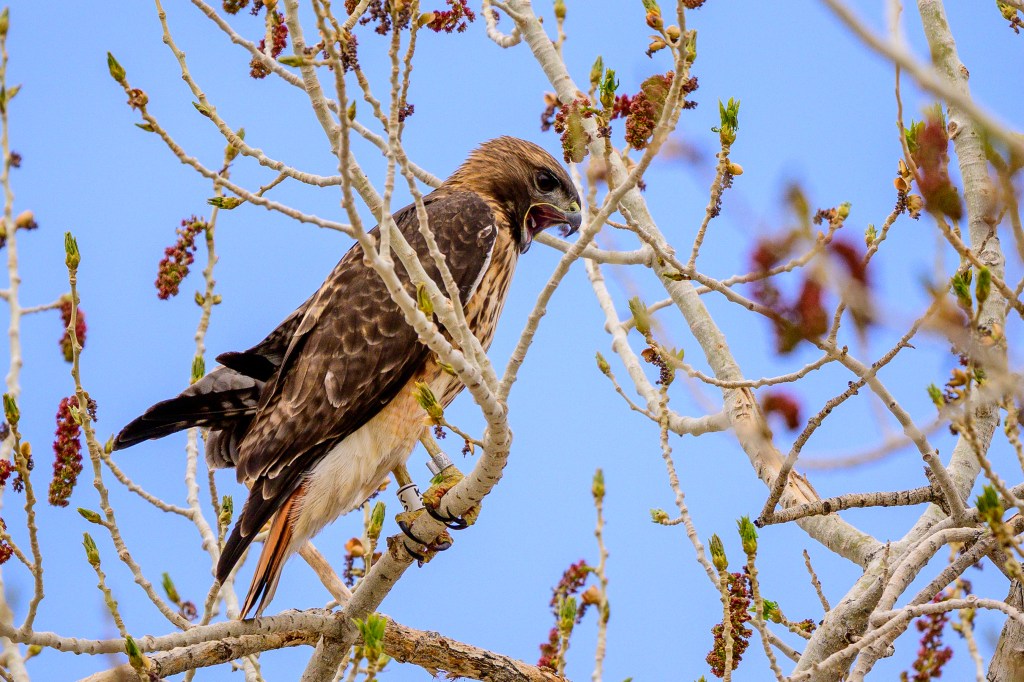
On Warm Springs Road, a Red-tailed Hawk was yelling.
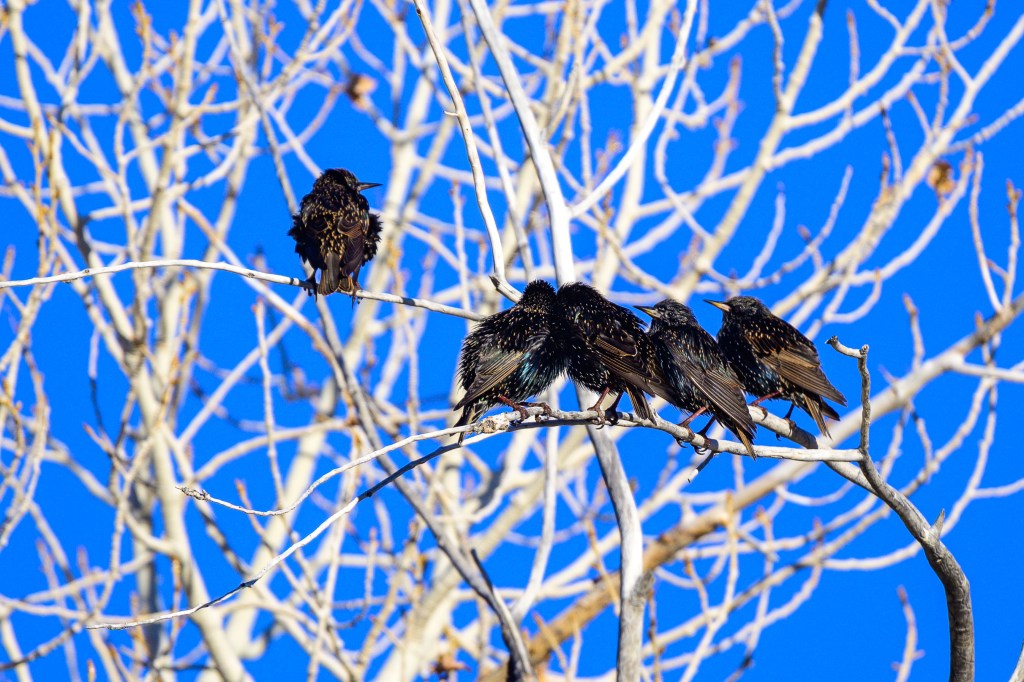
A quartet of European Starlings rehearses with their conductor along the Bishop Creek Canal.
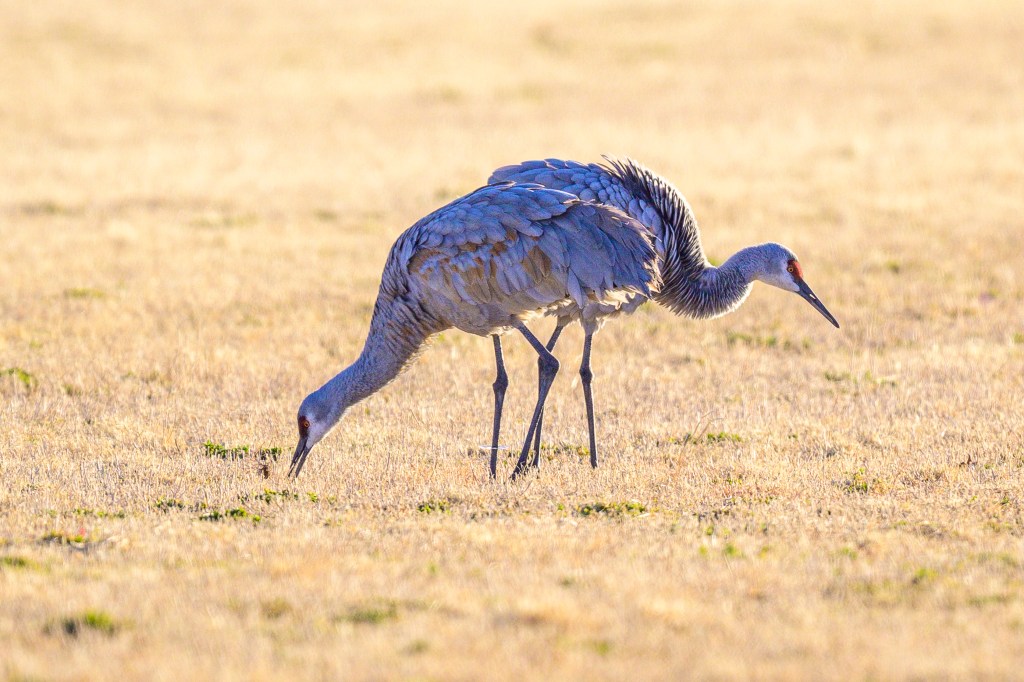
In January a couple of Sandhill Cranes spent three days feeding in a mowed alfalfa field north of the Bishop-Sunland Landfill. These Cranes are common on the West side of the Sierra. These two must have made a wrong turn.
A male American Kestrel perches on a power line near the Bishop Landfill.

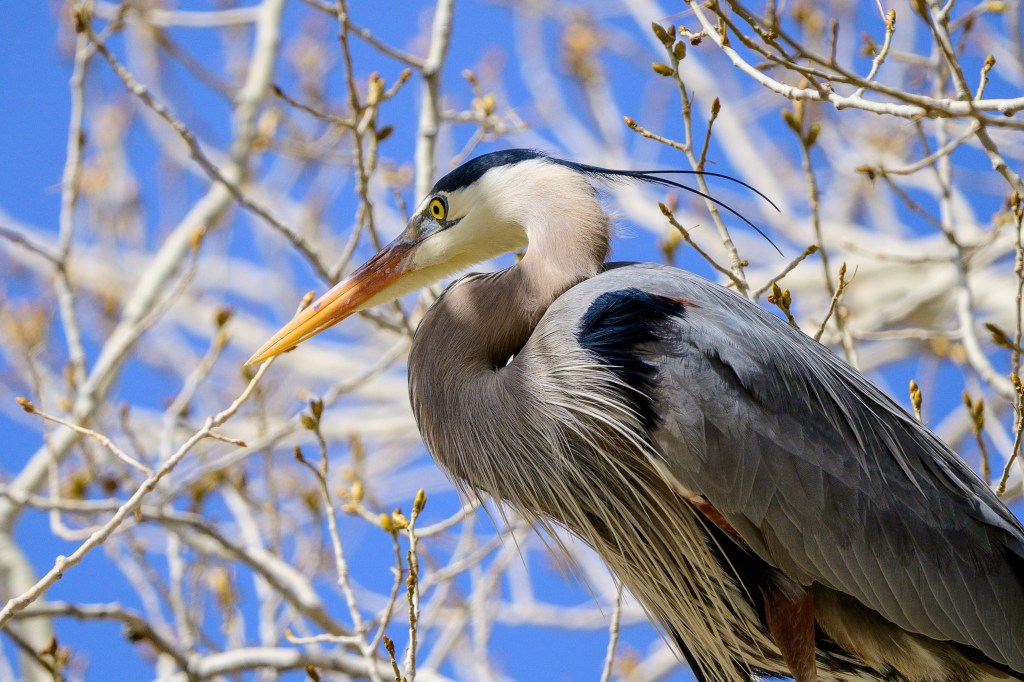
A Great Blue Heron in a tree near Dixon Lane.
Another Great Blue Heron flies away from me at Klondike Lake, south of Bishop. Note missing feathers on right wing.

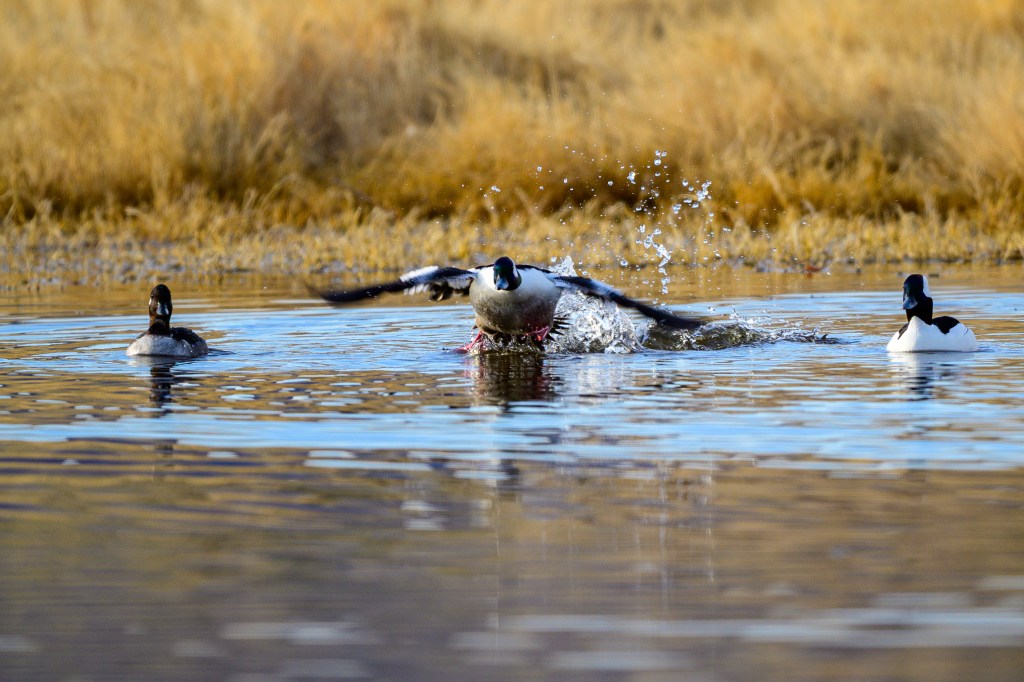
A male Bufflehead tries to take off from a pond near Klondike Lake.
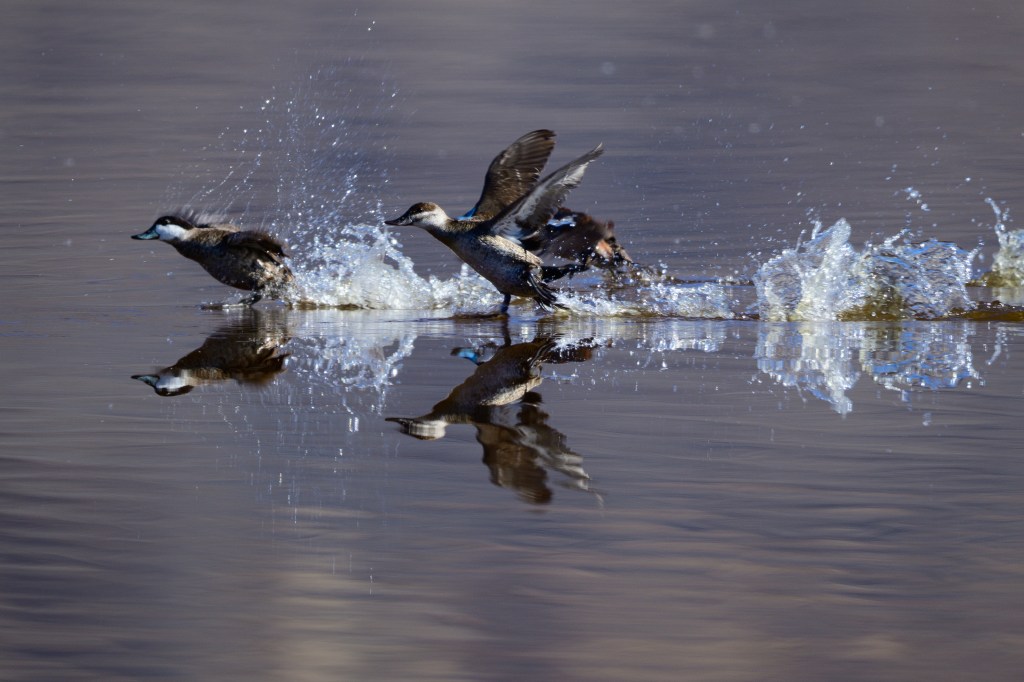
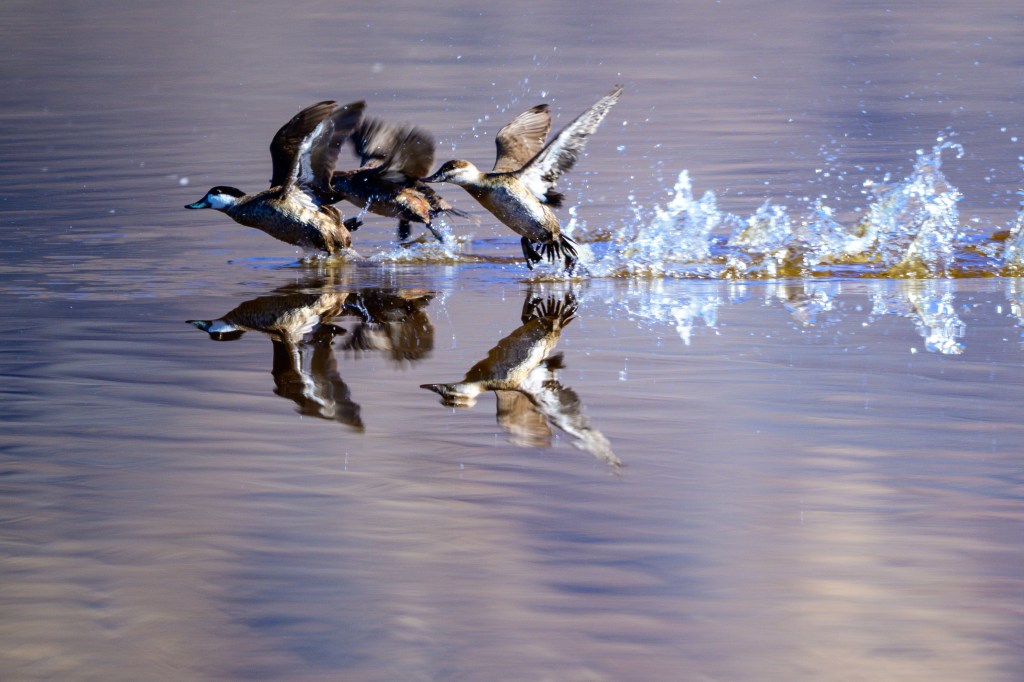
Three Ruddy Ducks launching at Owens Lake.
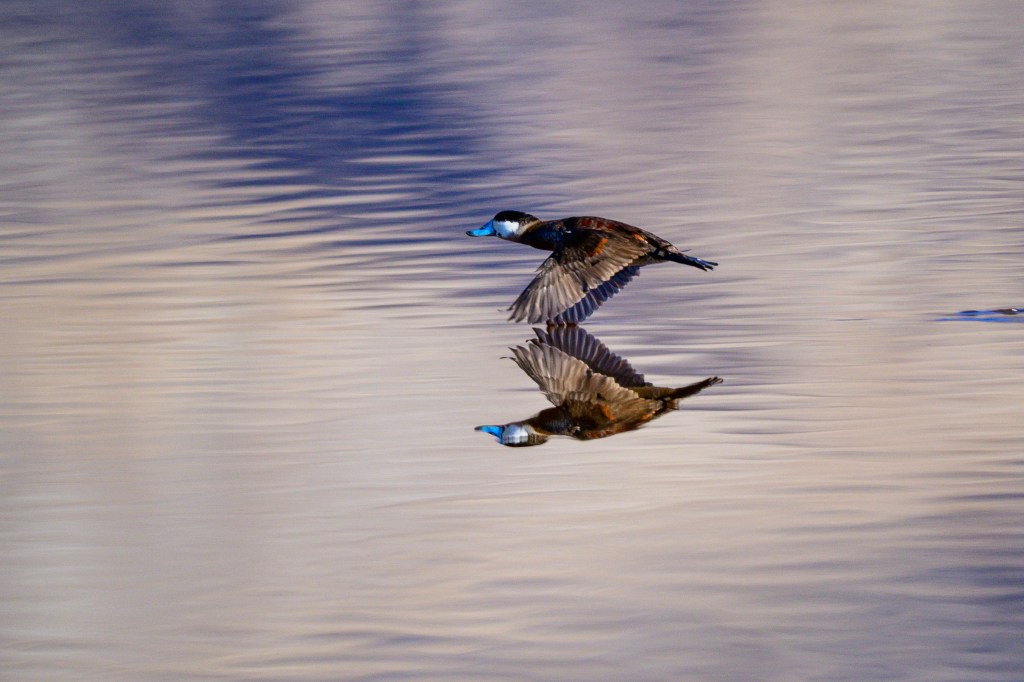
Finally one of the Ruddy Ducks is in the air, its wing-tip dipping into the smooth water.
 Birds of Bishop