
Sixty-five photos of birds taken near Bishop in April-May of 2025. Organized by location and species.
Buckley Ponds
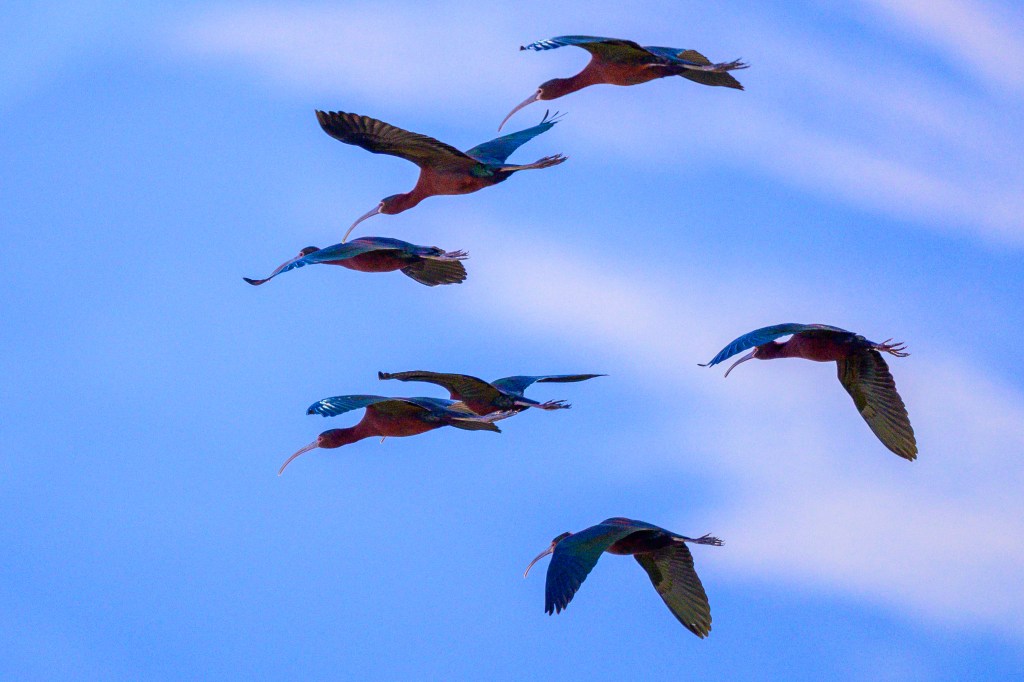
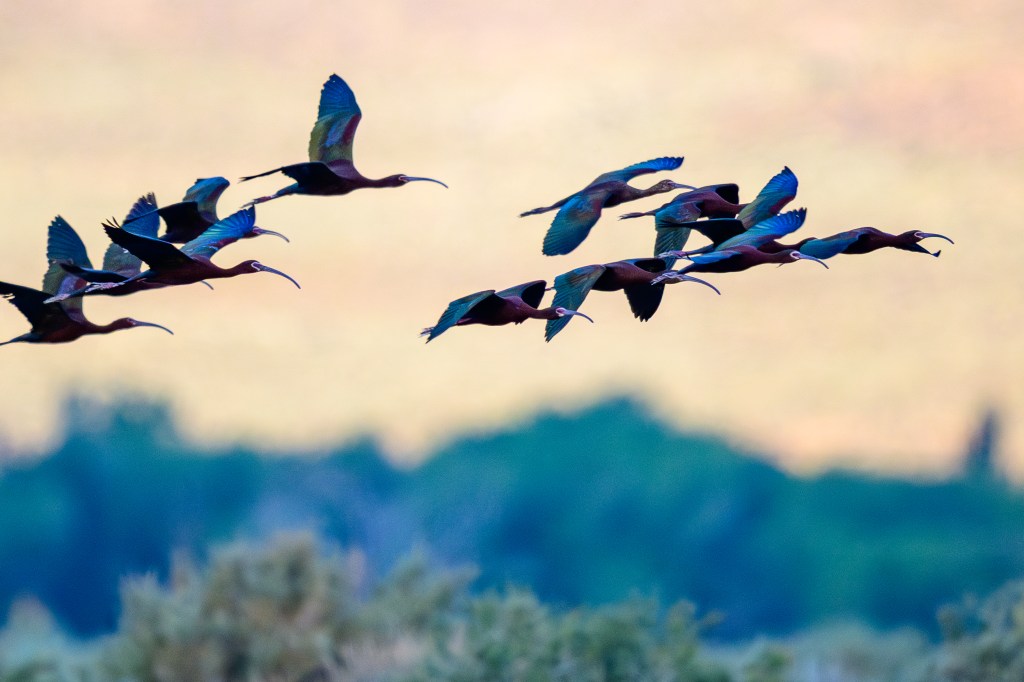
A flock of White-faced Ibis flies north. The name refers to the white rim around their eyes and base of their beaks; this appears during breeding season. Their glossy feathers seem to change colors with the lighting.
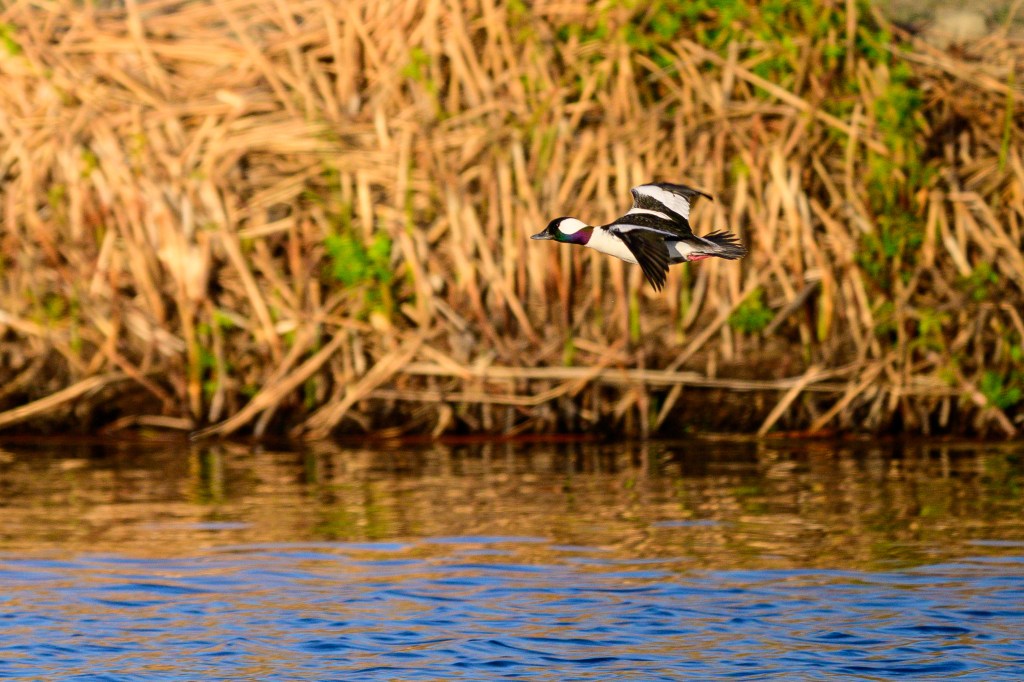
Male Bufflehead flies over the Ponds.
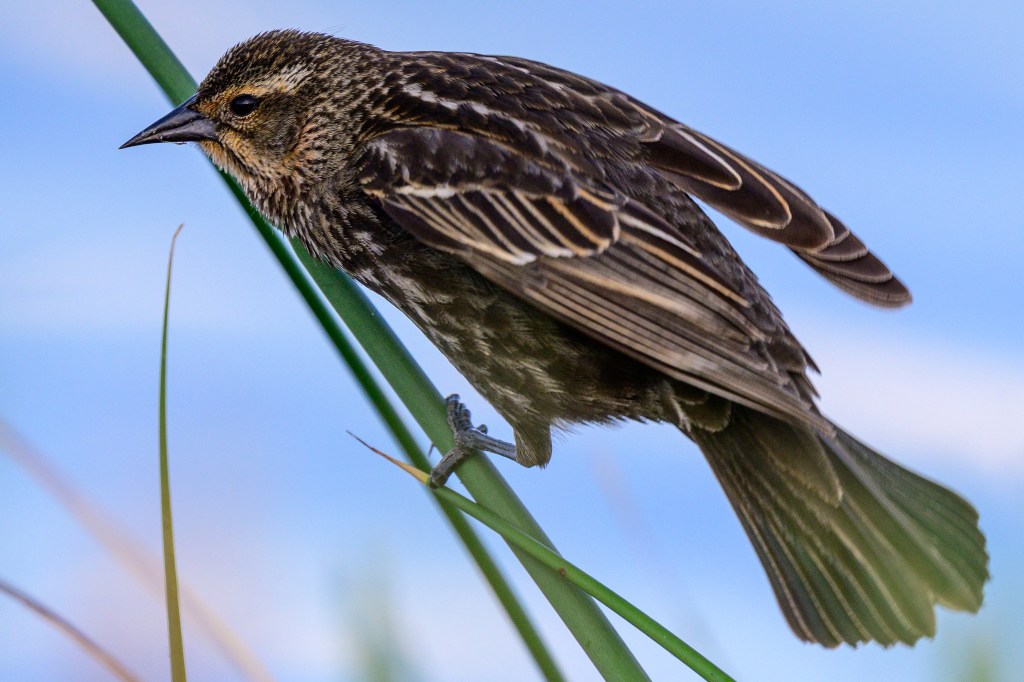
The Red-winged Blackbirds are everywhere in the reeds in late winter and spring. A female is shown below.
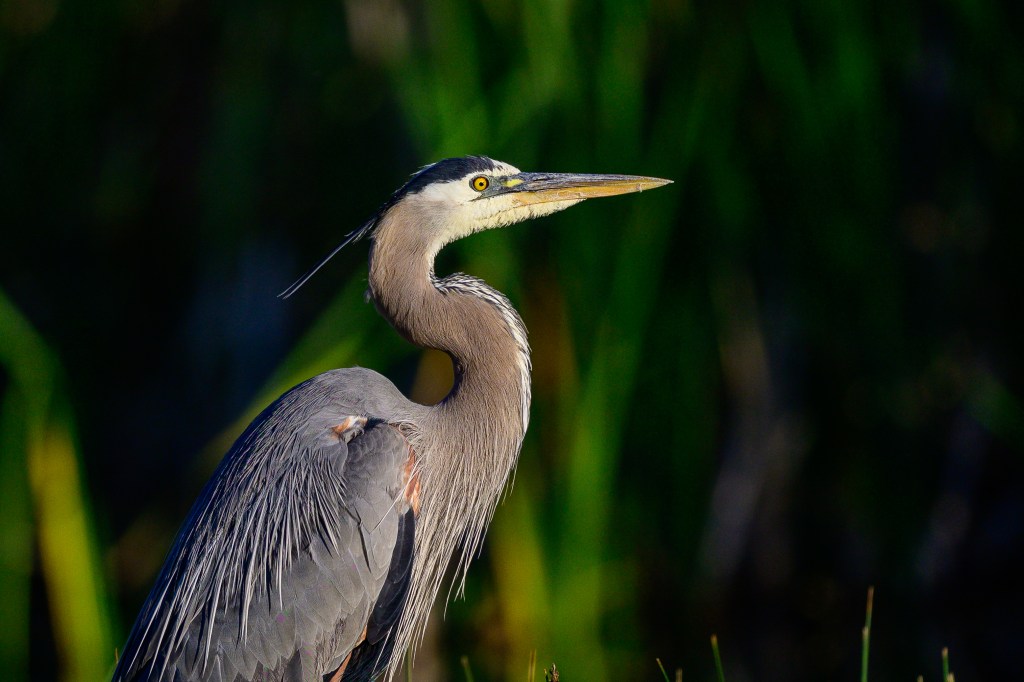
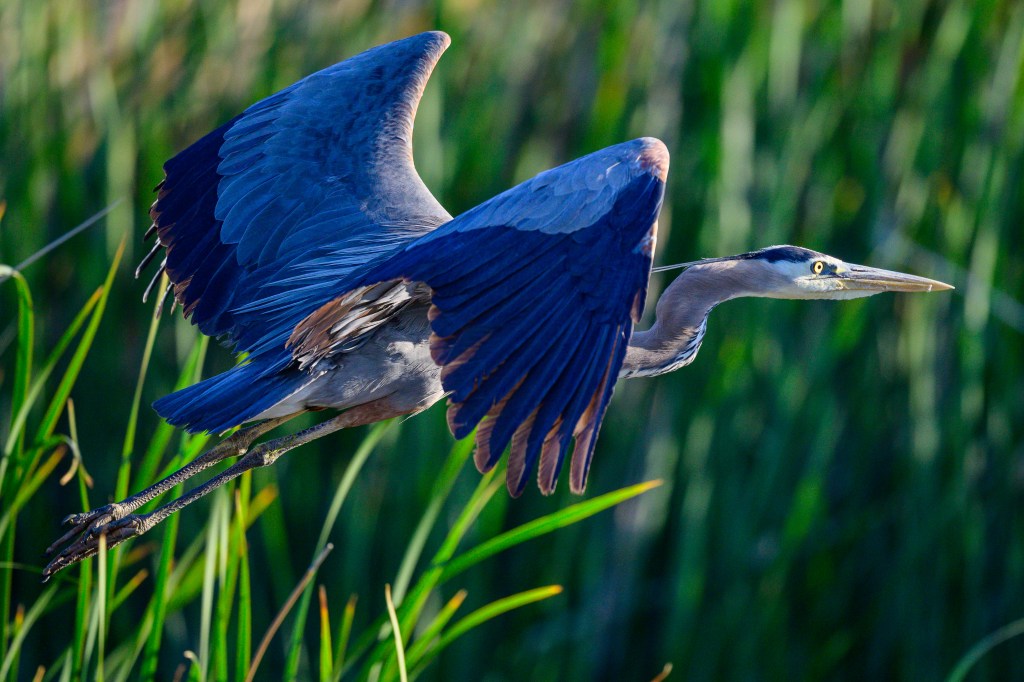
Great Blue Herons were common in May.
Conservation Open Space Area (COSA)
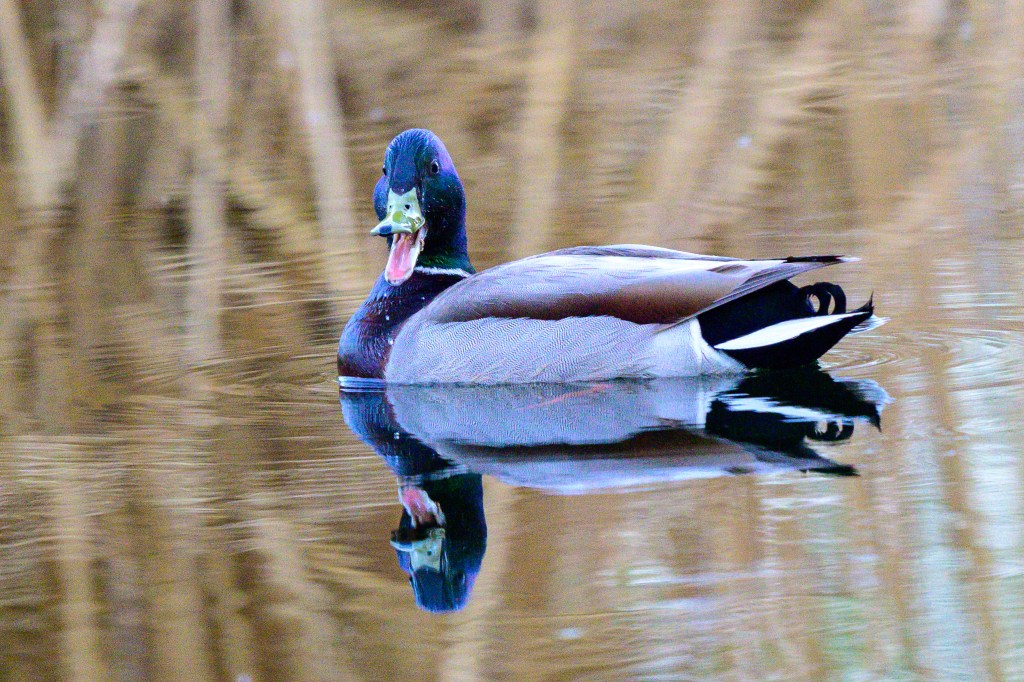
A male Mallard looks outraged.
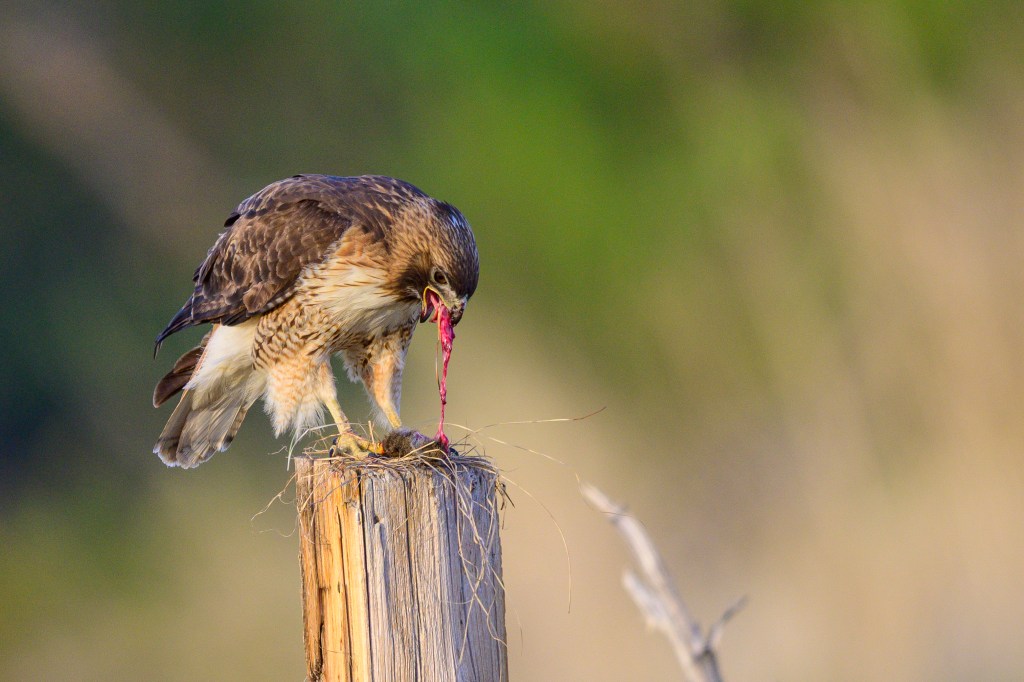
A Red-tailed Hawk landed on a post with a freshly caught rodent. Carnivorous birds have no teeth, so eating consists of tearing apart and choking down their prey. I used to think that if I died and could come back as another creature, I would want to be a bird. Eating like this make me reconsider that choice.

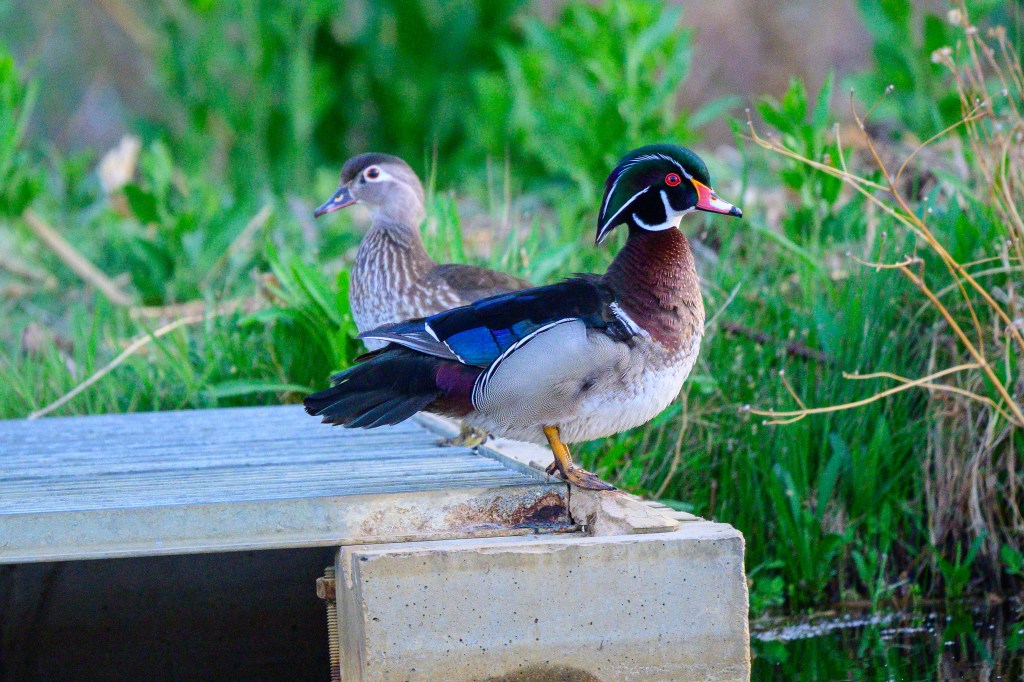
A female Wood Duck is not as gaudy as her male partner, but still a lovely bird.
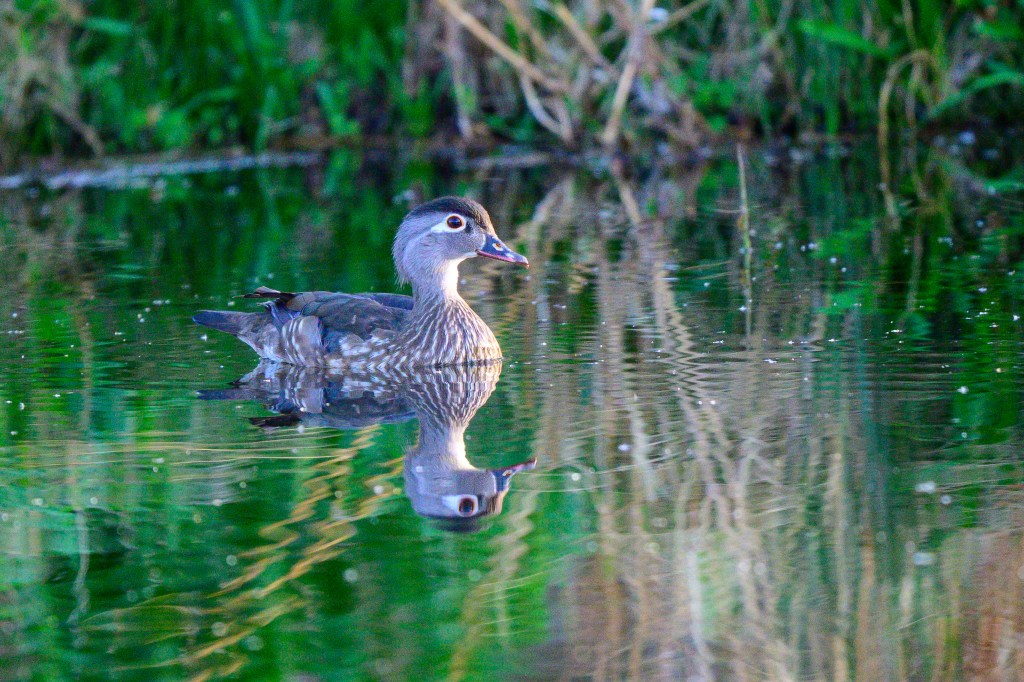
Male and female Wood Ducks.
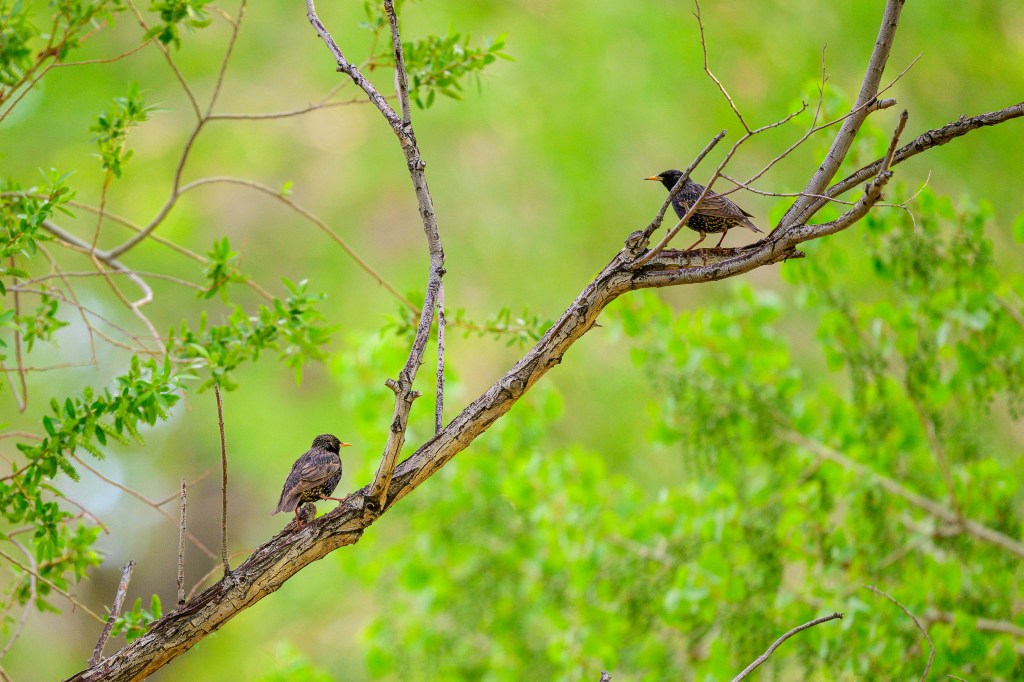
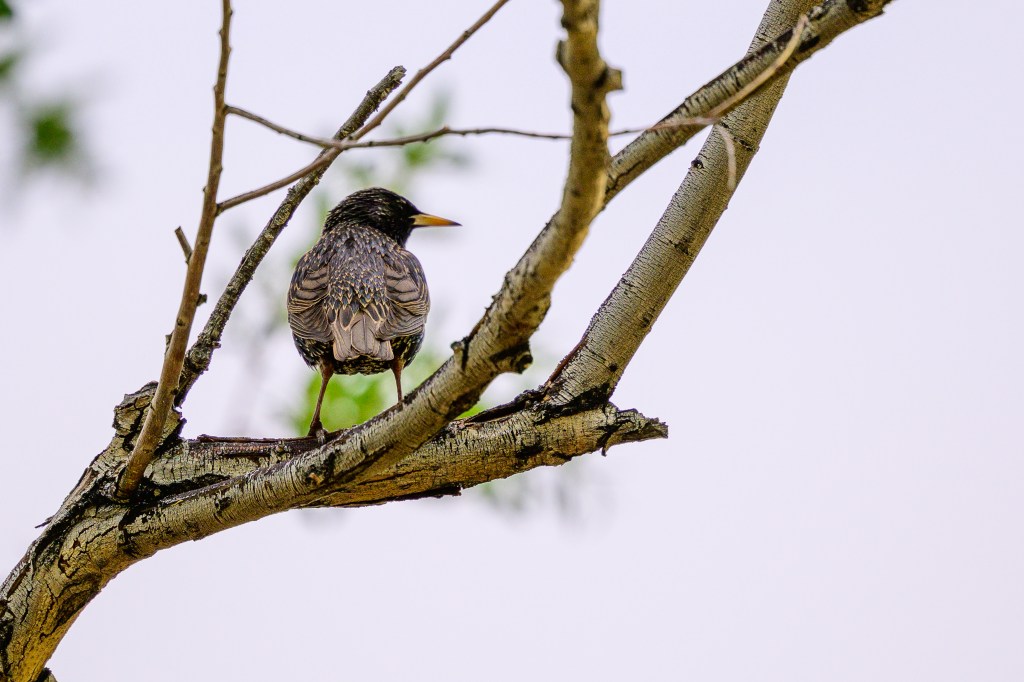
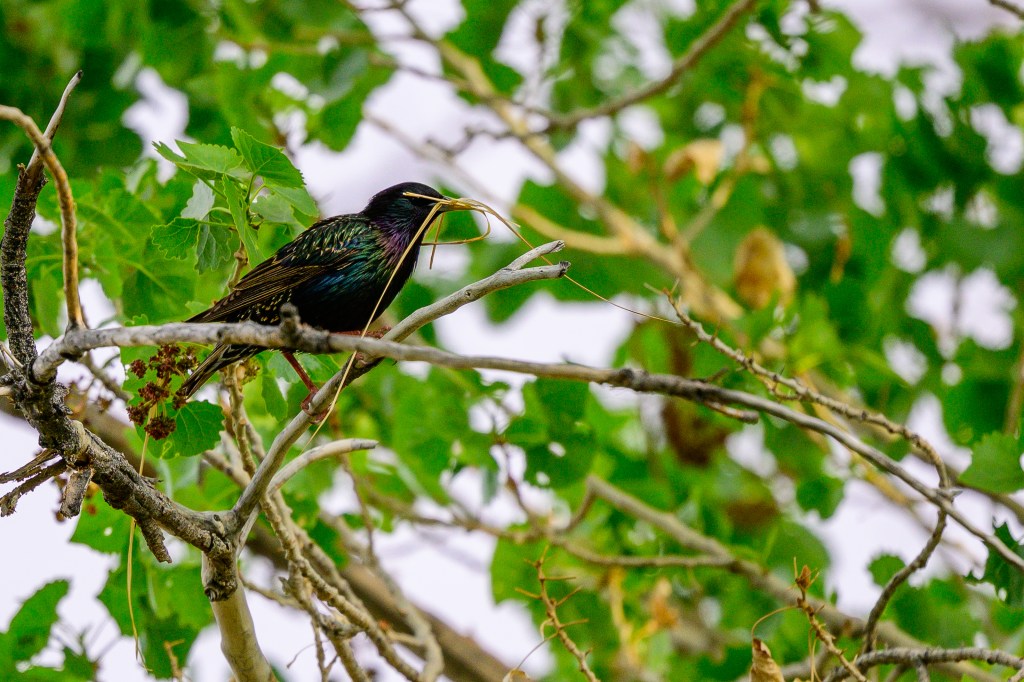
European Starlings are famous for their murmurations in large flocks. I also enjoy the colors of the individual birds. In winter they are covered in bright spots. In breeding season the spots fade, the bird develops glossy feathers, and the bill becomes yellow.

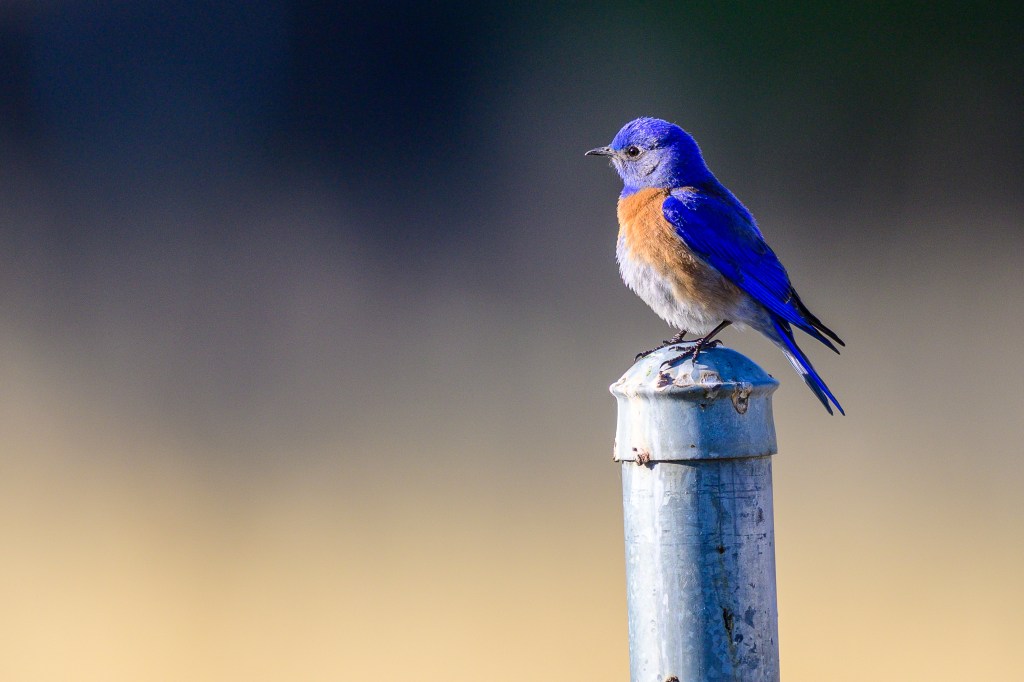
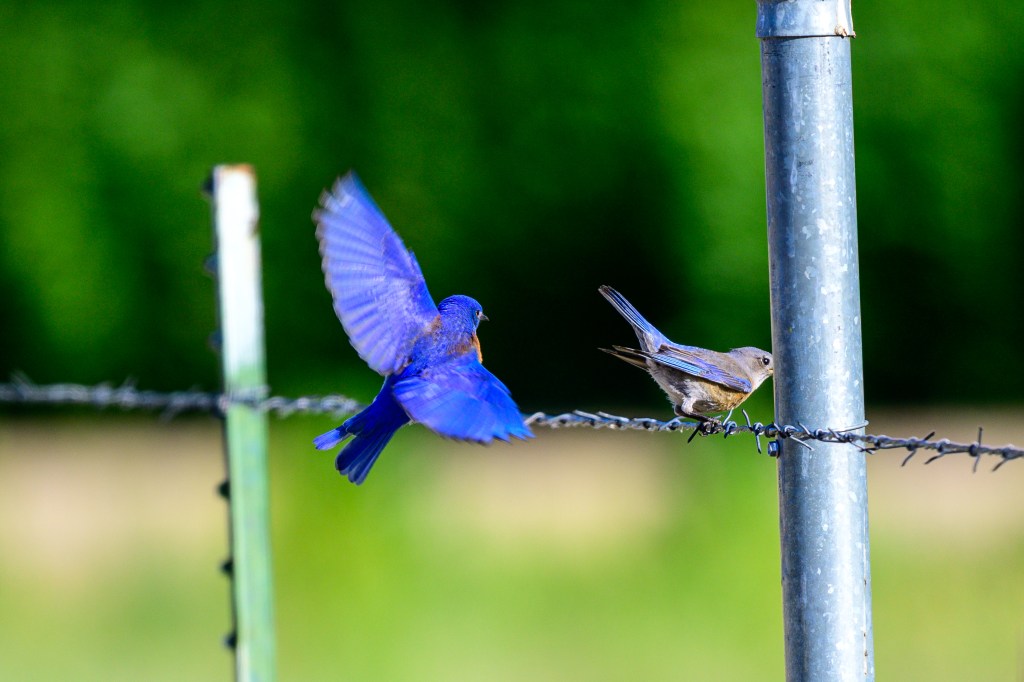
Western Bluebirds were often on a fence line in Spring.
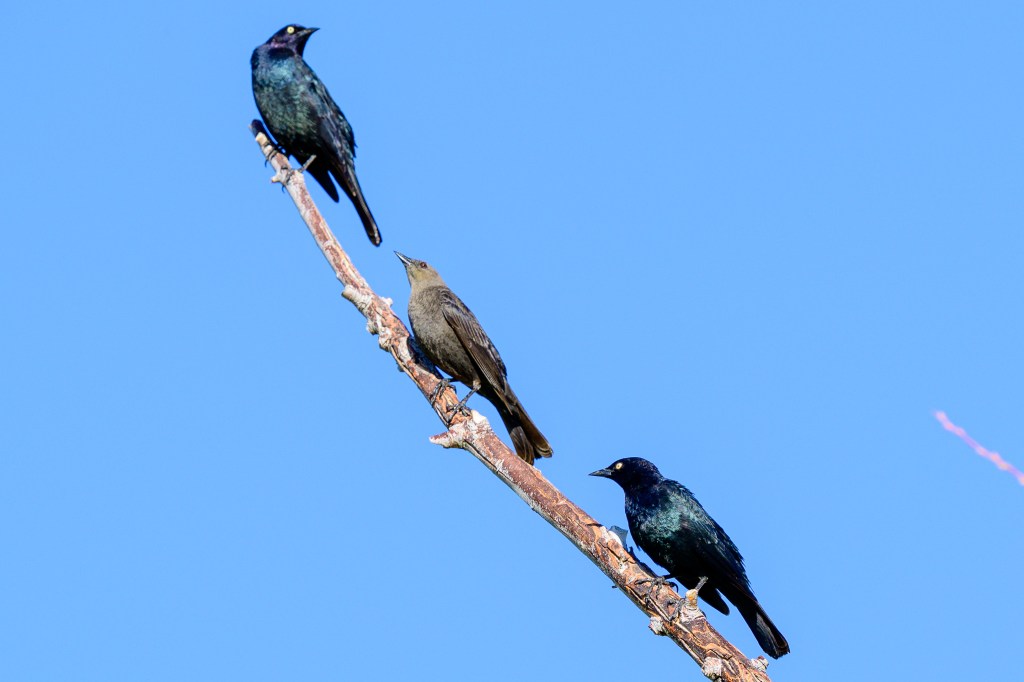
Brewer’s Blackbirds lined up on a dead branch. The males, with their yellow eyes, bracket a female. These birds like to hang out in the Vons parking lot and near the tables at the Great Basin Bakery.
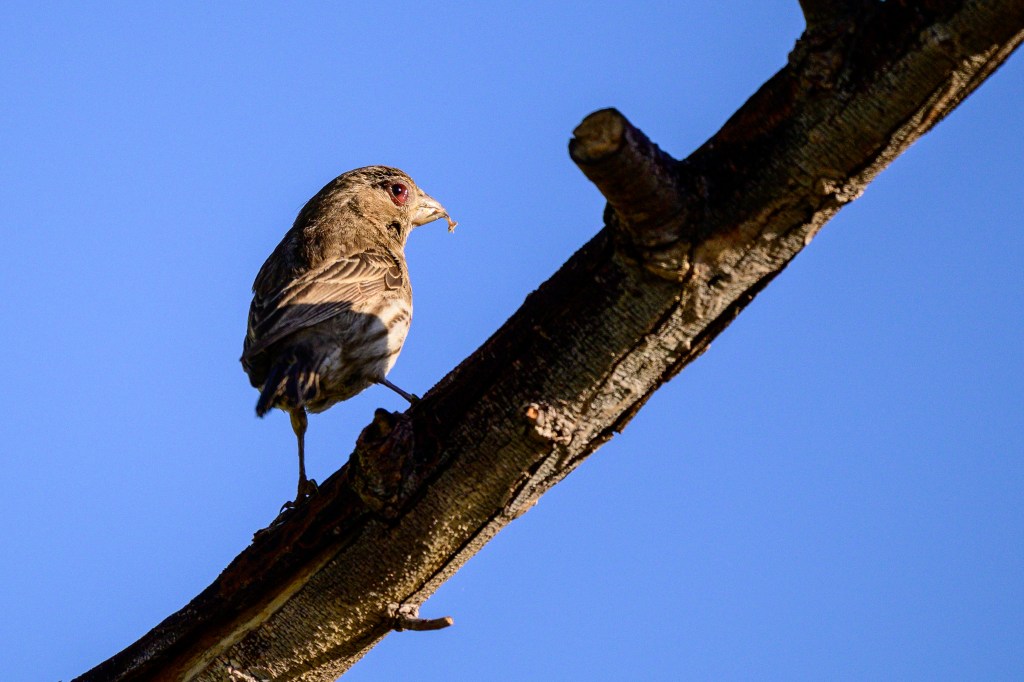
Below is a female House Finch. Her eye is swollen, red, and bulging. Her conjunctivitis is likely due to Mycoplasma gallisepticum, a bacteria that often infects poultry. This disease first appeared among House Finches in the mid-Atlantic states in 1994 and killed off about half of the House Finches in the area. The illness moved west, reaching California House Finches in 2006. Birds die due to lose of vision; they cannot feed themselves and are killed by predators. Will this bird survive her illness?
Airport Road
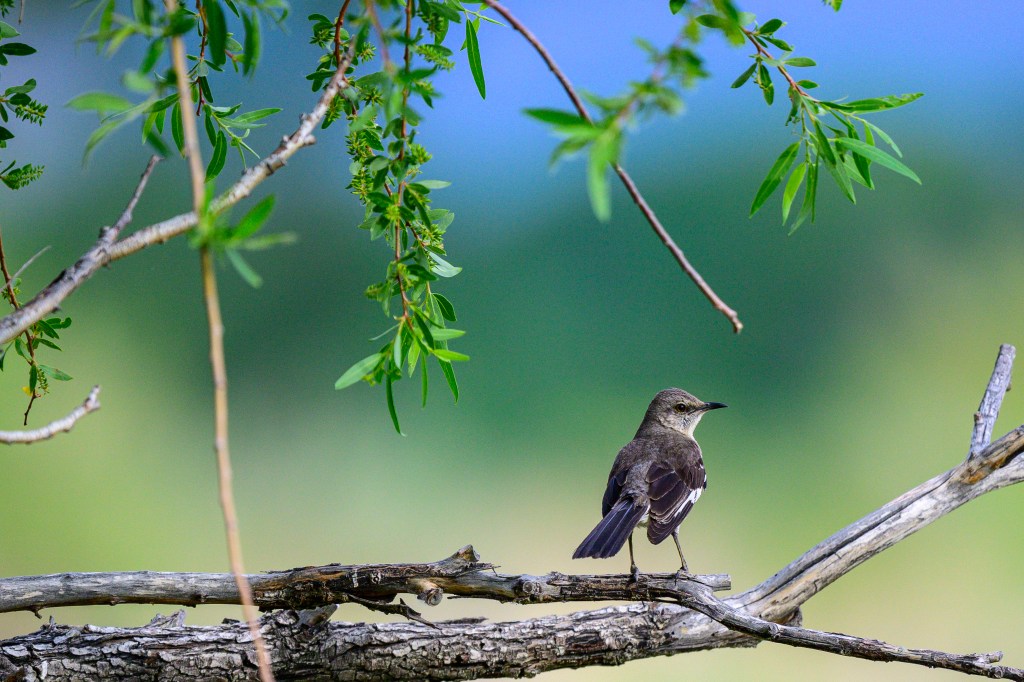
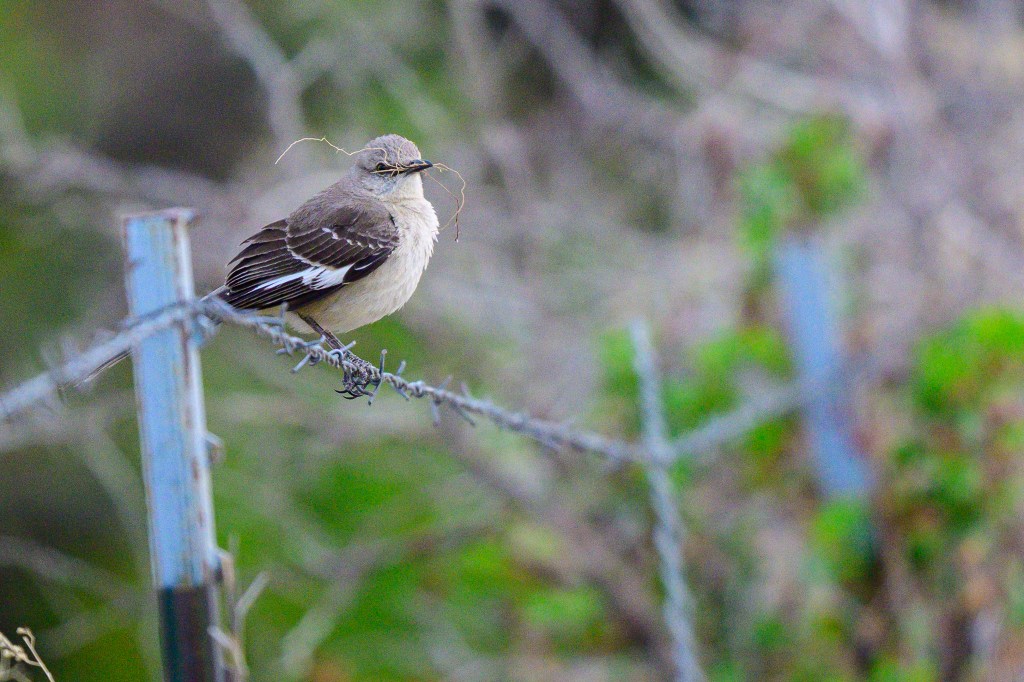
Northern Mockingbirds are common along the fence line of Gus Cashbaugh Lane. The second photo shows a bird with nest-building material in its beak.
A Savannah Sparrow perches on a reed. As a photographer, I am particularly fond of this photo, showing this tiny bird posed against a green background of new reeds.

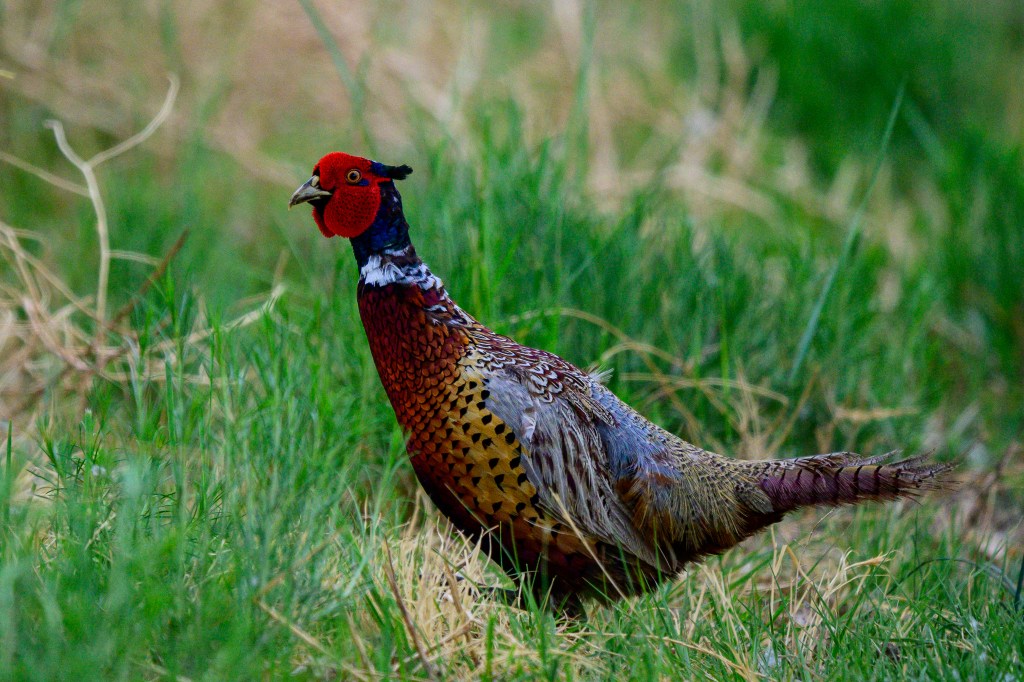
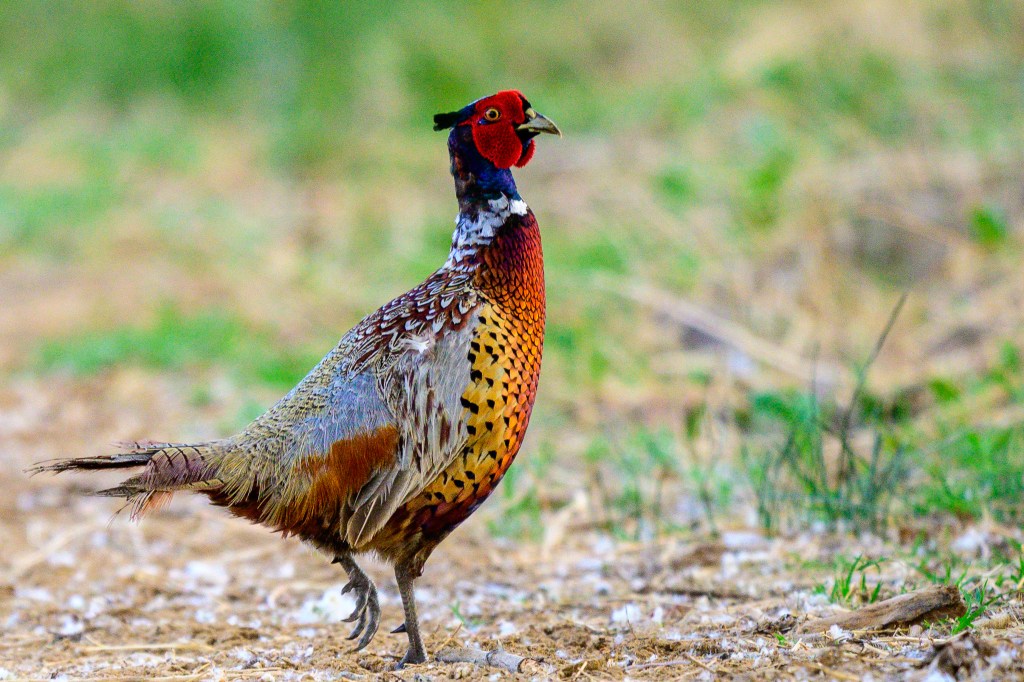
The male Ring-necked Pheasant shown below was walking on Airport Road near the sewage ponds. I was excited to see this bird, a new species for me. This bird comes from Asia and was introduced to California around 1855. It was introduced to the Owens Valley for hunting in the early 1900s. The Fish and Game Department continued to spread these birds until 1977.
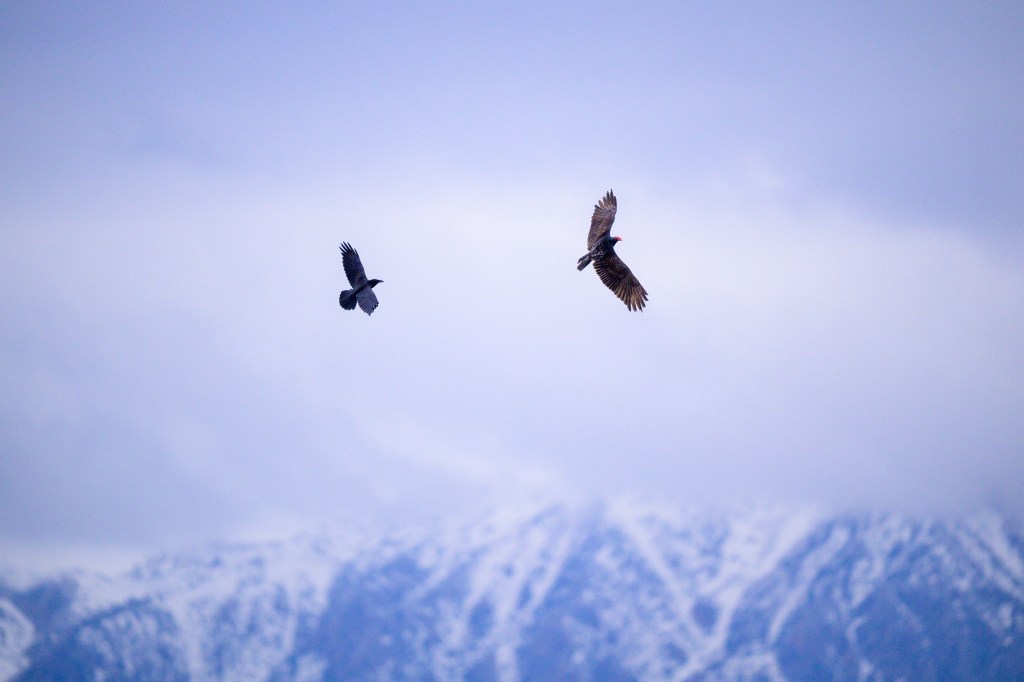
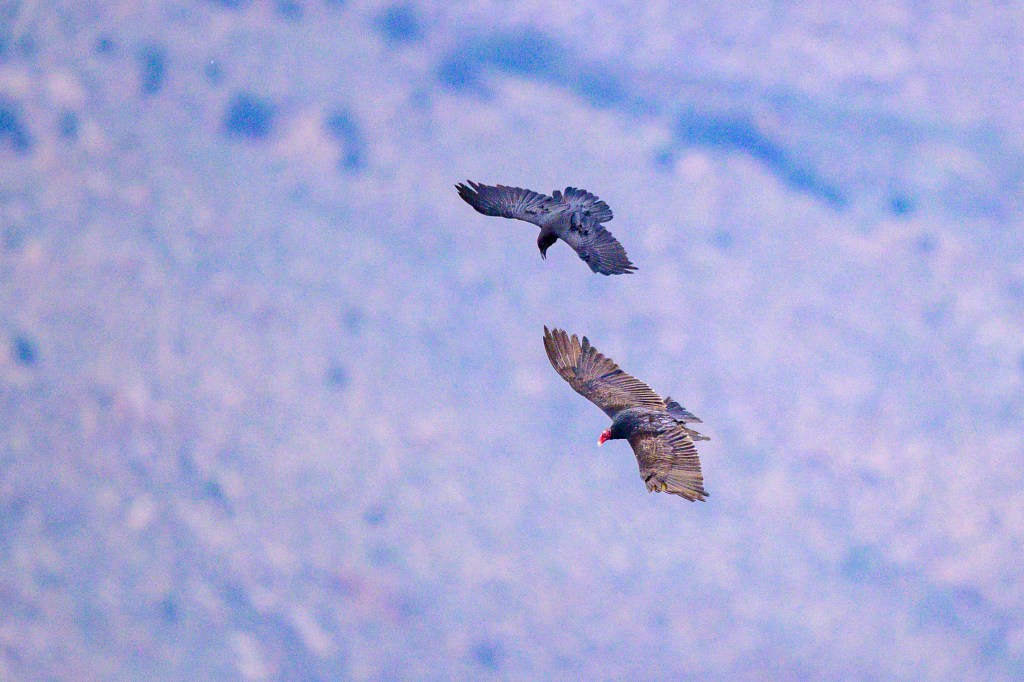
Ravens and Crows often harass other birds. Below a Common Raven torments a Turkey Vulture with the Sierra in the background.
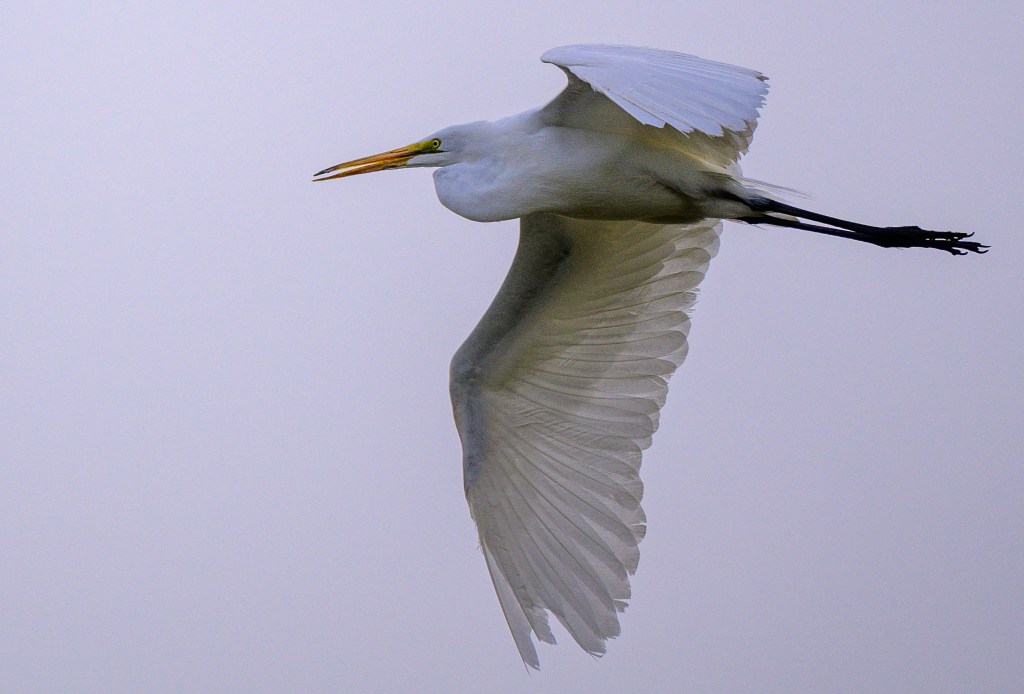
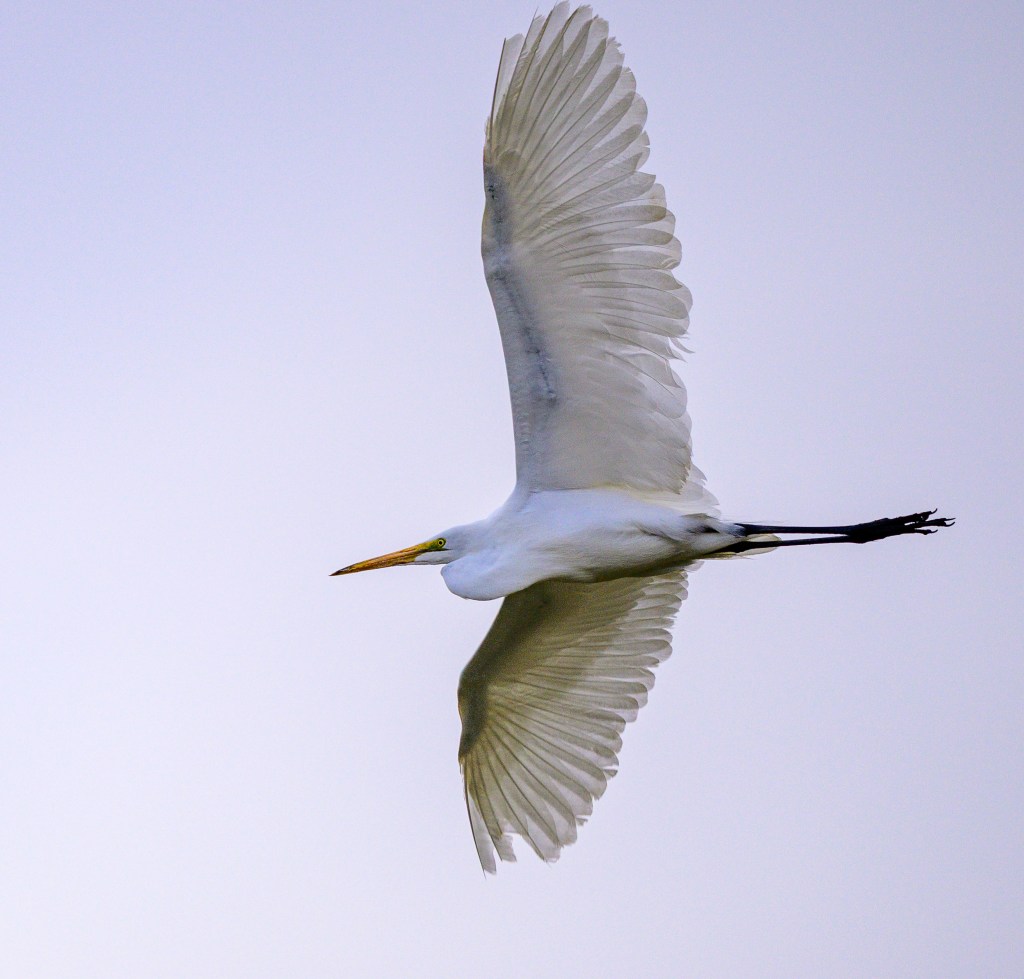
I have many photos of Great Egrets in flight, but the pictures below were unusual. The sky was a bit overcast and the bird flew in front of darker clouds; this lighting made the wing feathers unusually translucent. Near the leading edge of each wing you can see some of the bone structure.
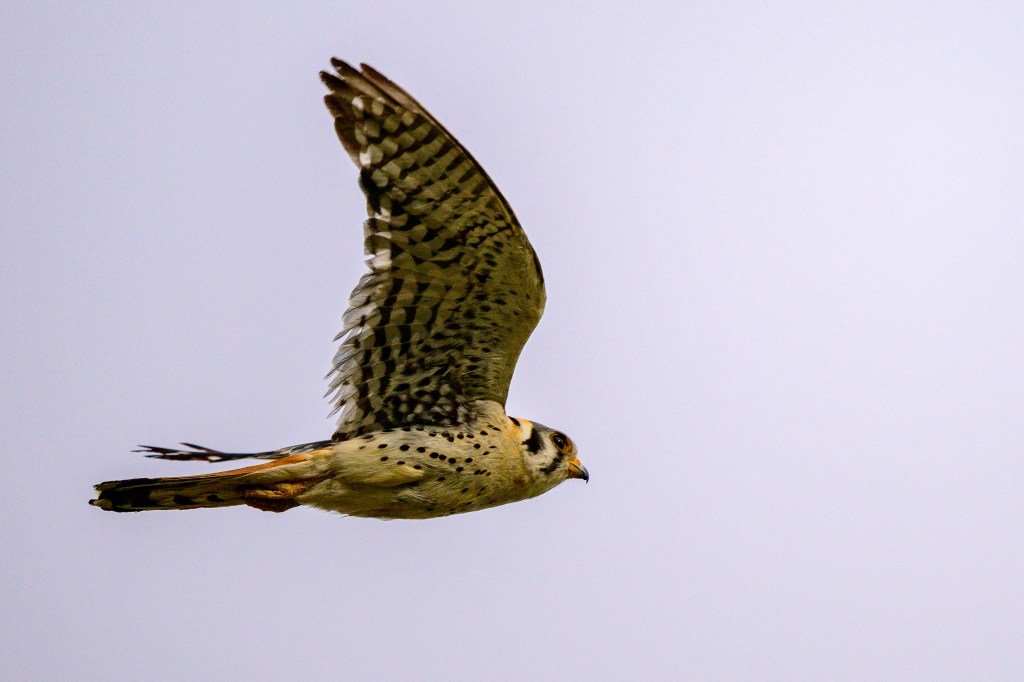
A male American Kestrel flies past.
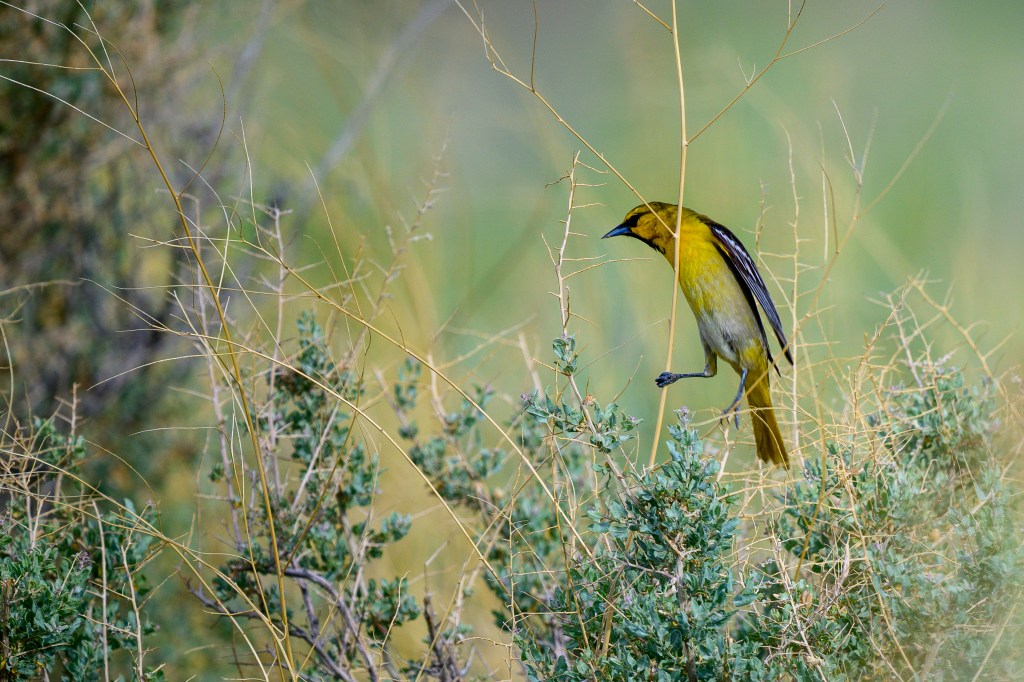
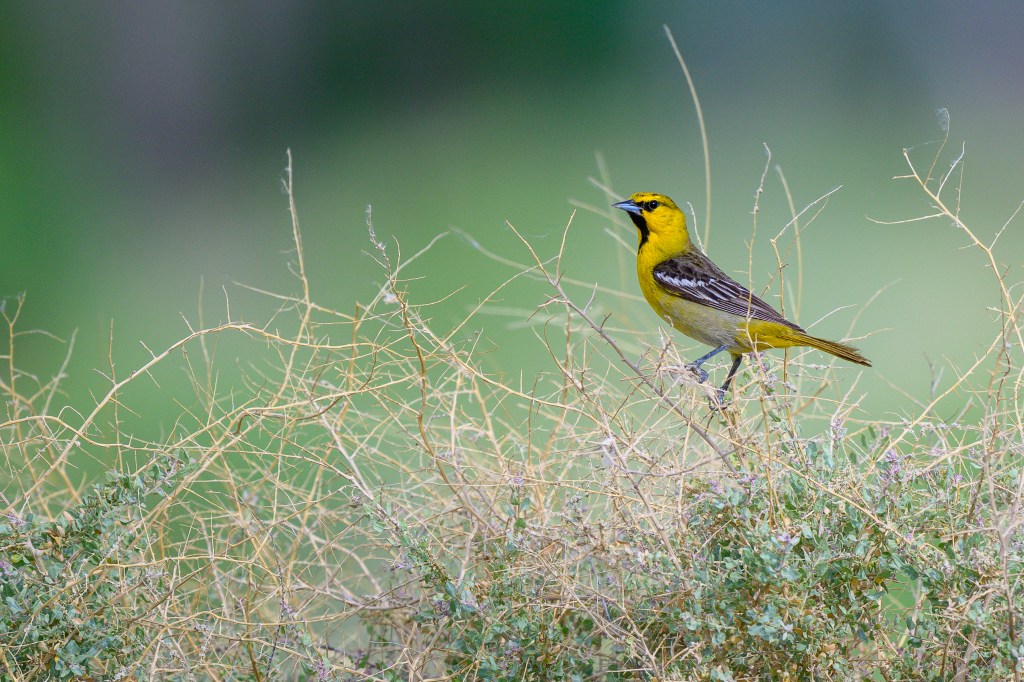
A Bullock’s Oriole does a balancing act on some vegetation.
Pleasant Valley Reservoir
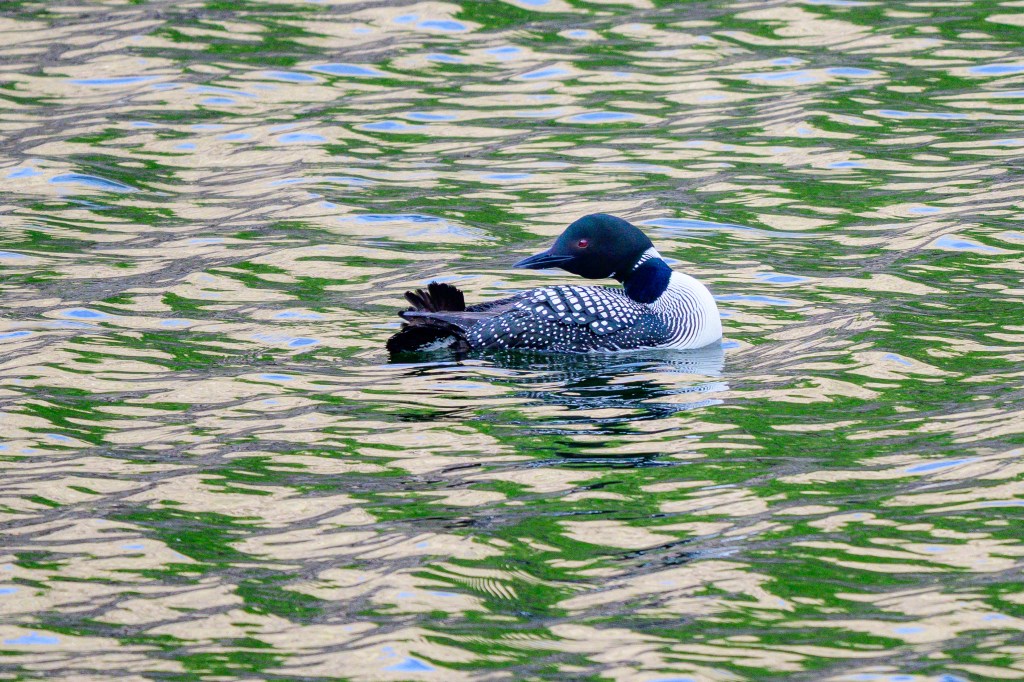
A Common Loon floats alone.
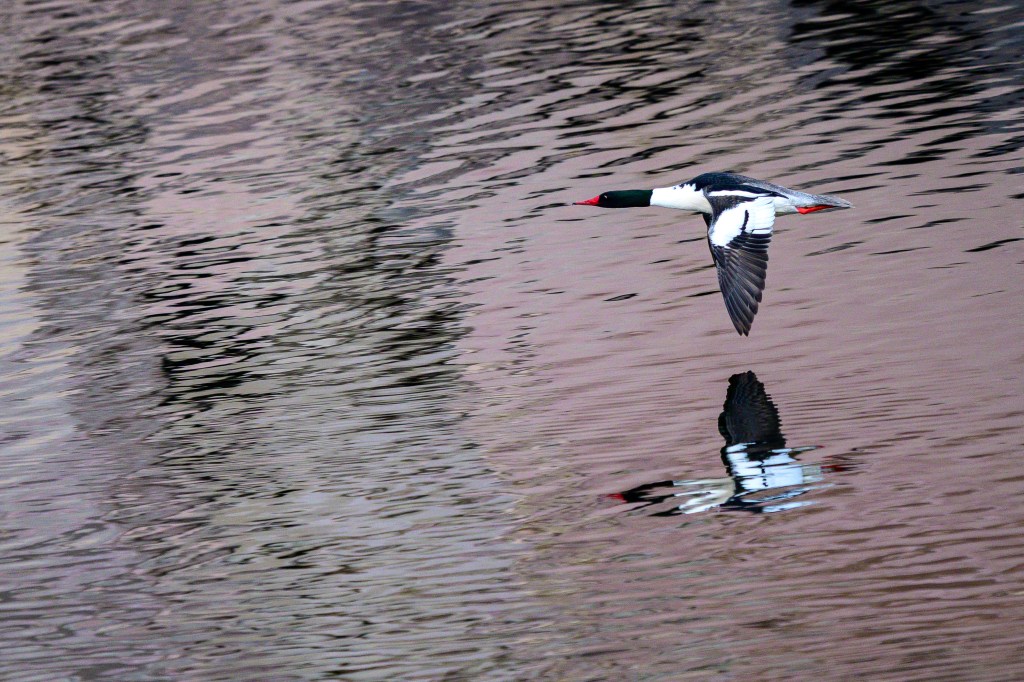
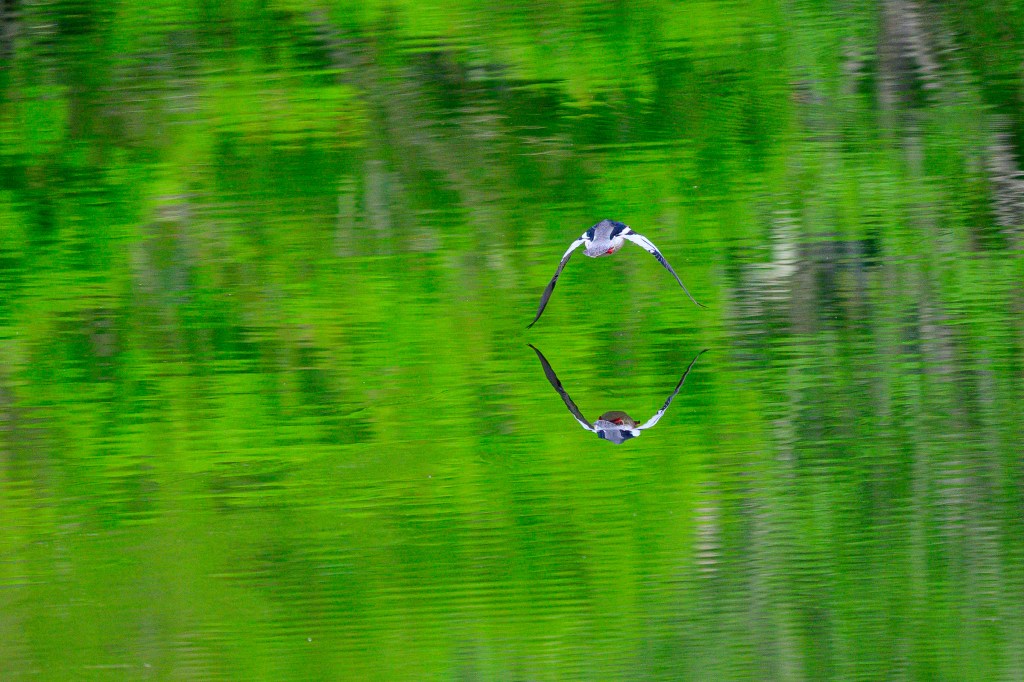
A male Common Merganser streaks over the water. In the second photo, the bird is moving away from us and the water looks green due to reflections from trees. I liked the reflections of the bird in both photos.
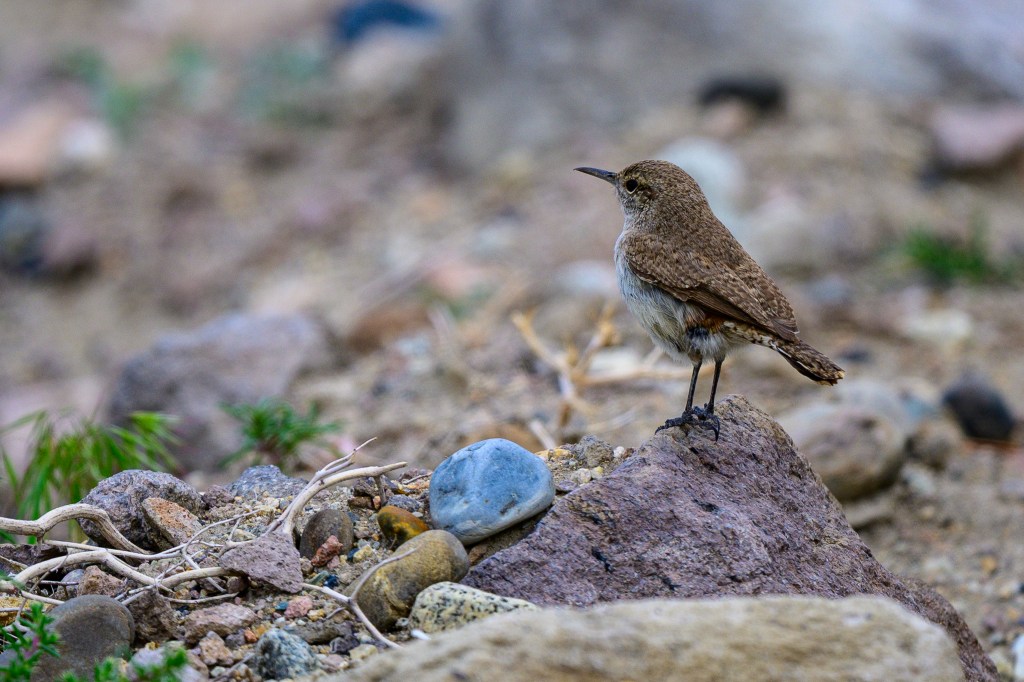
Rock Wrens are common along the Reservoir road. In the second picture, the Wren picks up a fly.

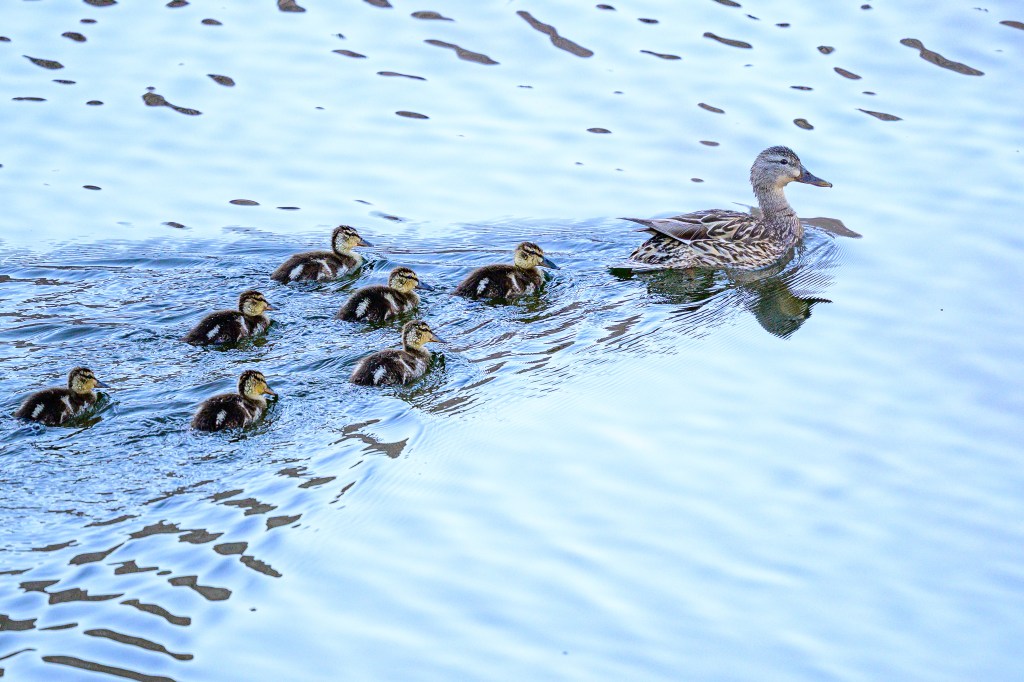
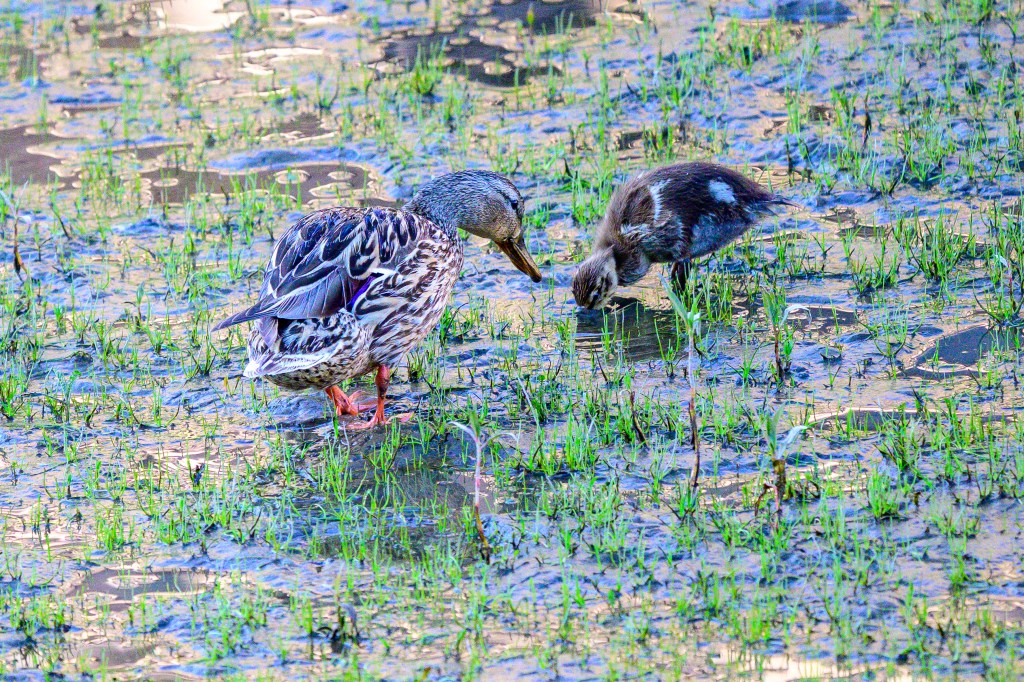
Two pictures of a Mallard and her family.
Owens Lake
For the third year in a row, Roberta and I attended the Owens Lake Bird Festival, sponsored by Friends of the Inyo. Each year we sign up for a photo shoot with Martin Powell; he grew up near the lake and has photographed birds there for many years. We cruise a network of gravel roads to get close to some birds. Drive and shoot, drive and shoot.
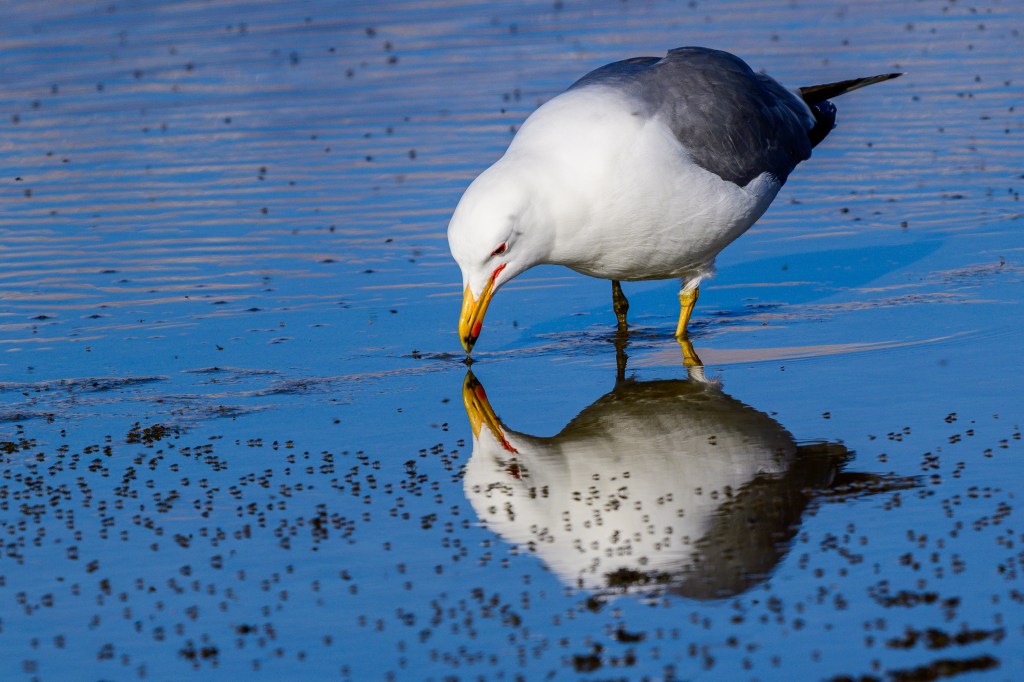
California Gulls are plentiful in the Spring and it is fun to see them flying and and feeding on the alkali flies.
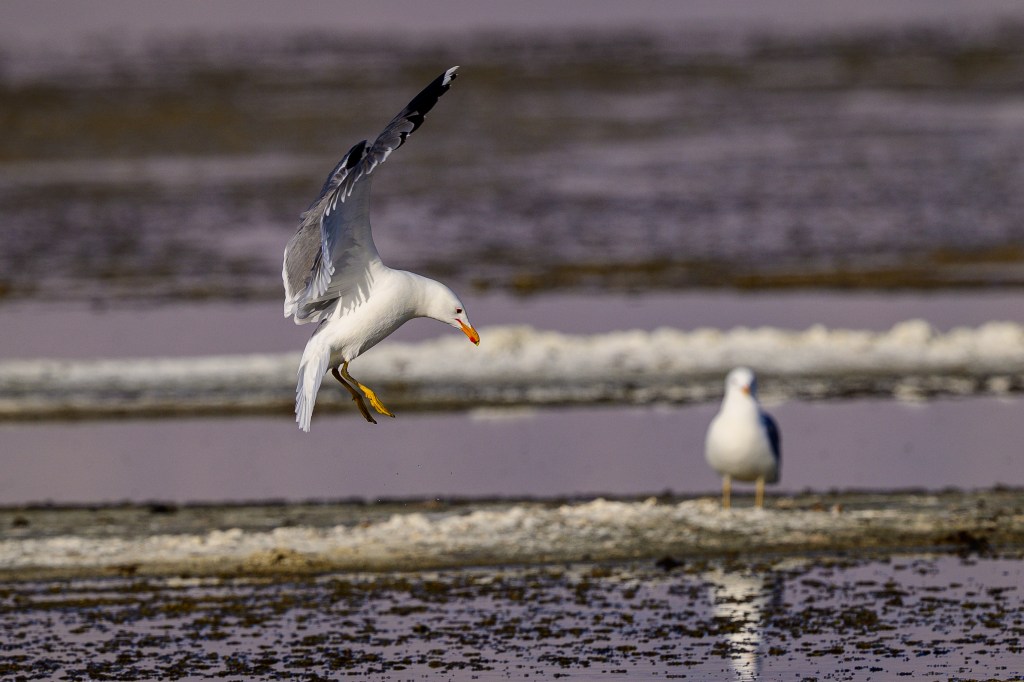
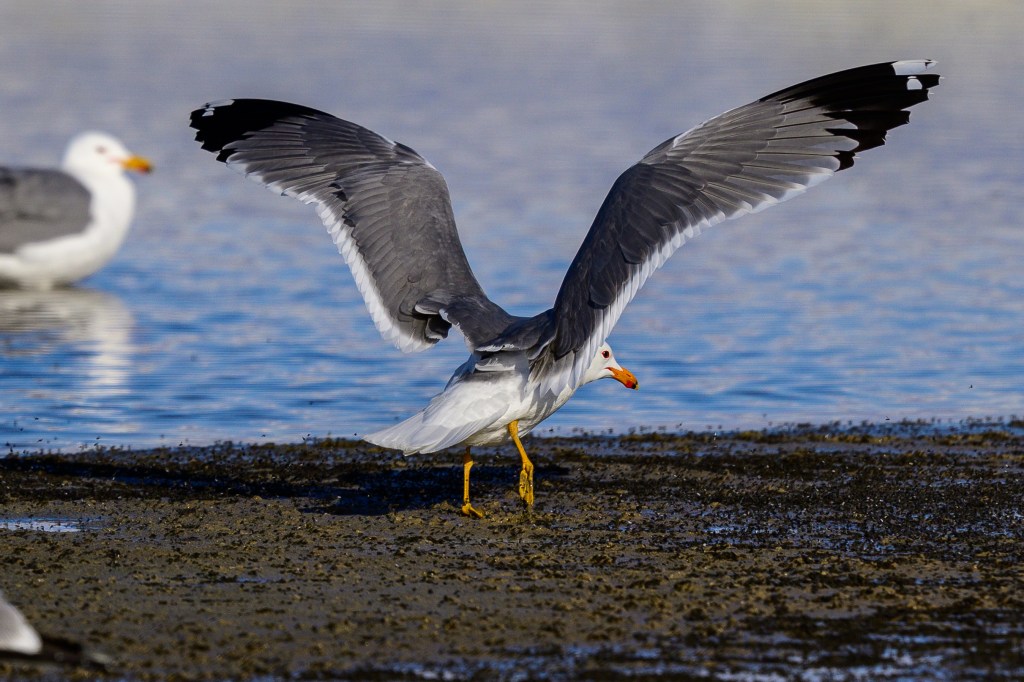
In the image below, you can see the bird’s iris.

The black specks are alkali flies.

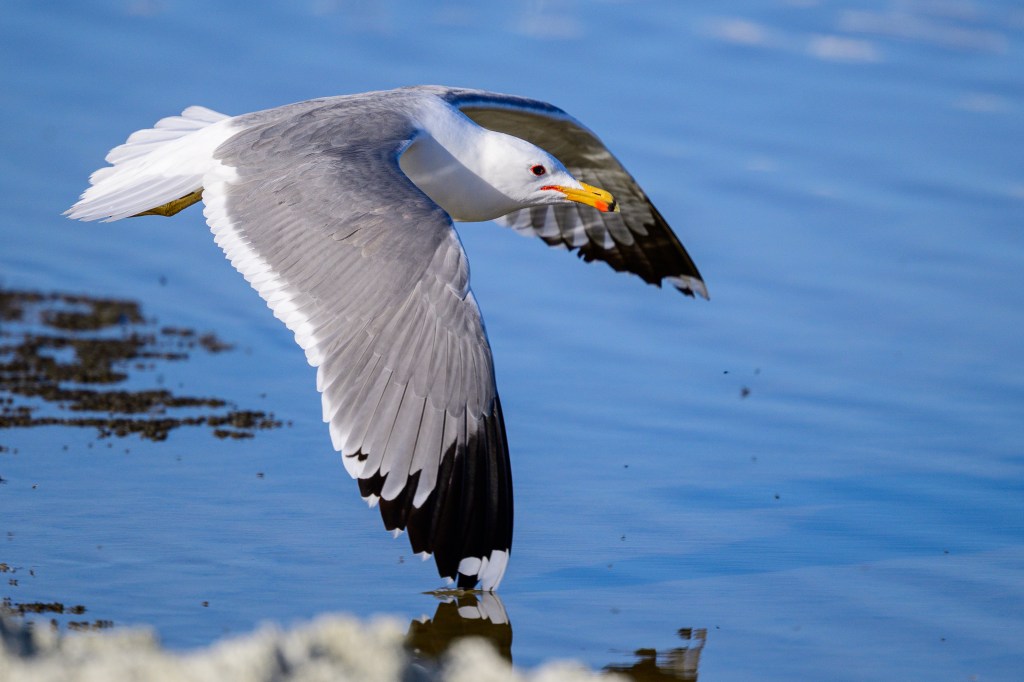
Waterbirds will often dip a wingtip into the water as they fly close to the surface. I used to think this was a minor flight error, like a car dragging its muffler. But I’ve seen this often with many bird species. My thought now is that the bird is tapping the water to assess or maintain its altitude, just as you might rest your hand lightly on a railing on a flight of stairs.
A long-billed curlew contorts itself to get food into its beak tip.

American Avocets.

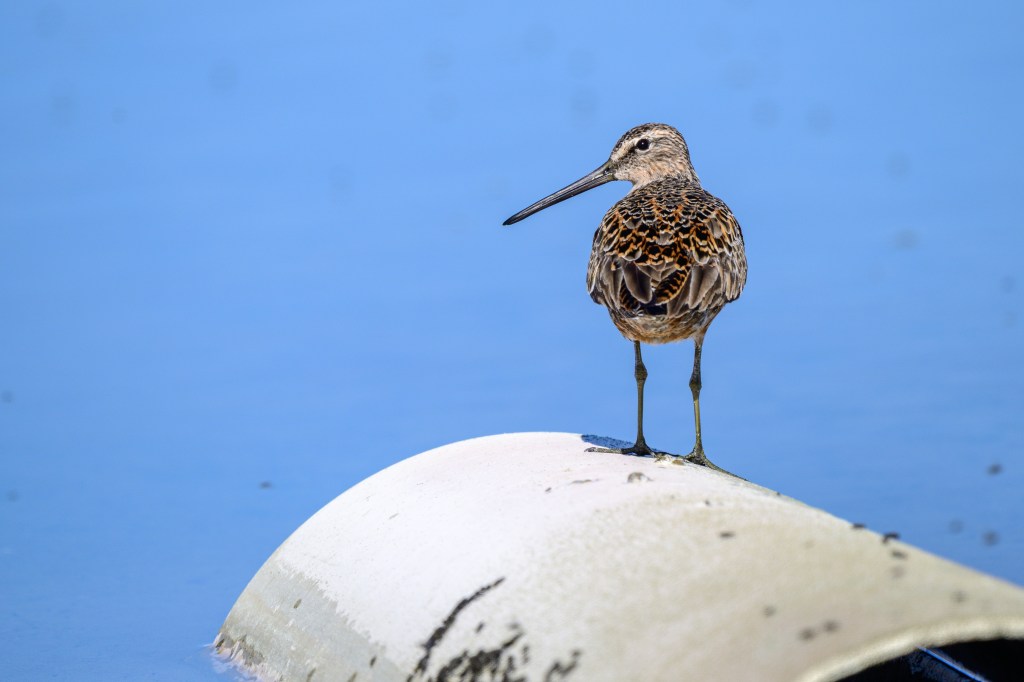
Long-billed Dowitcher.
Green Gate road off of Dixon Lane
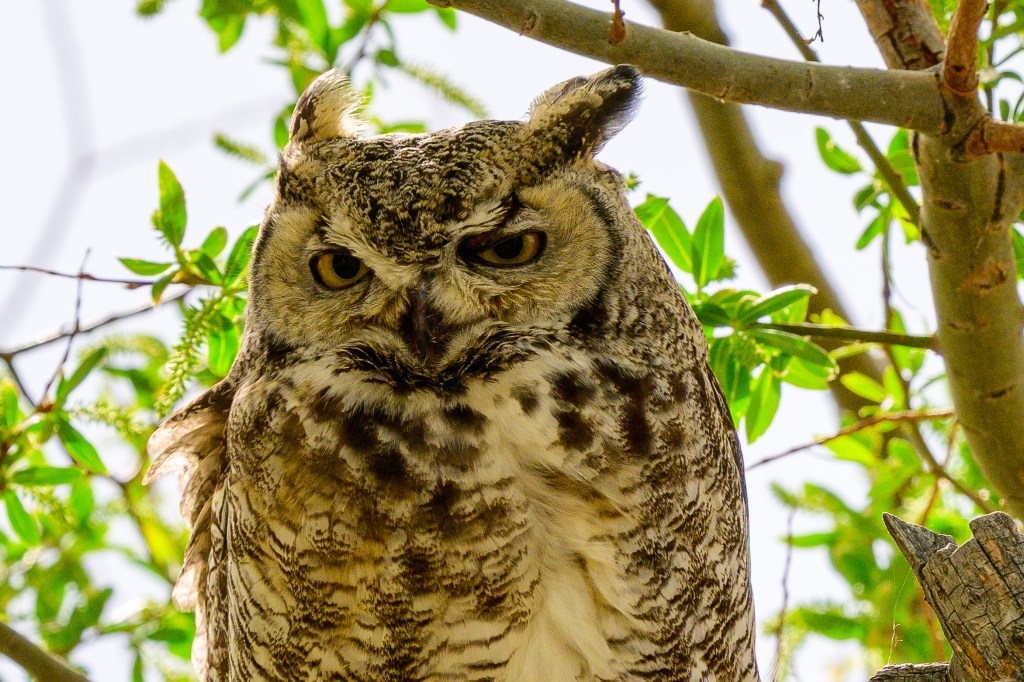
Two Great Horned Owls have been hanging out here. But no babies this year.
European Starlings showing their breeding plumage, particularly in the third picture.
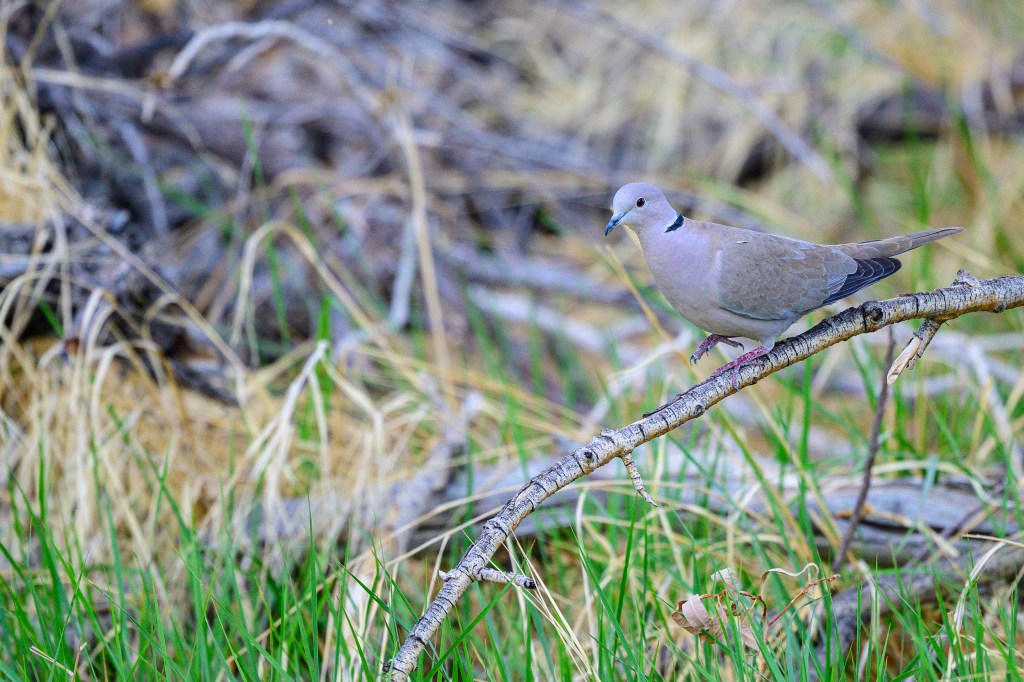
Eurasian Collared Dove.
Bishop Creek Canal
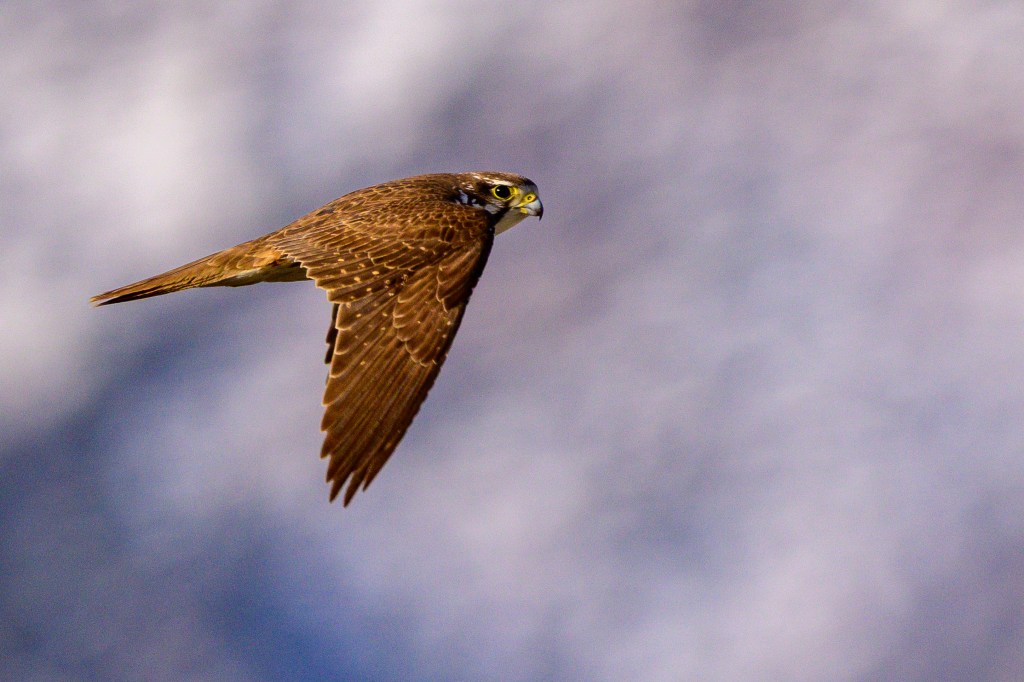
Prairie Falcons are not common here and I had no good pictures of them in flight. This changed on April 8, when the bird below shot past me. The falcon headed north and then turned east. Flight was so smooth and predictable that I captured over 100 images with the bird in perfect focus.
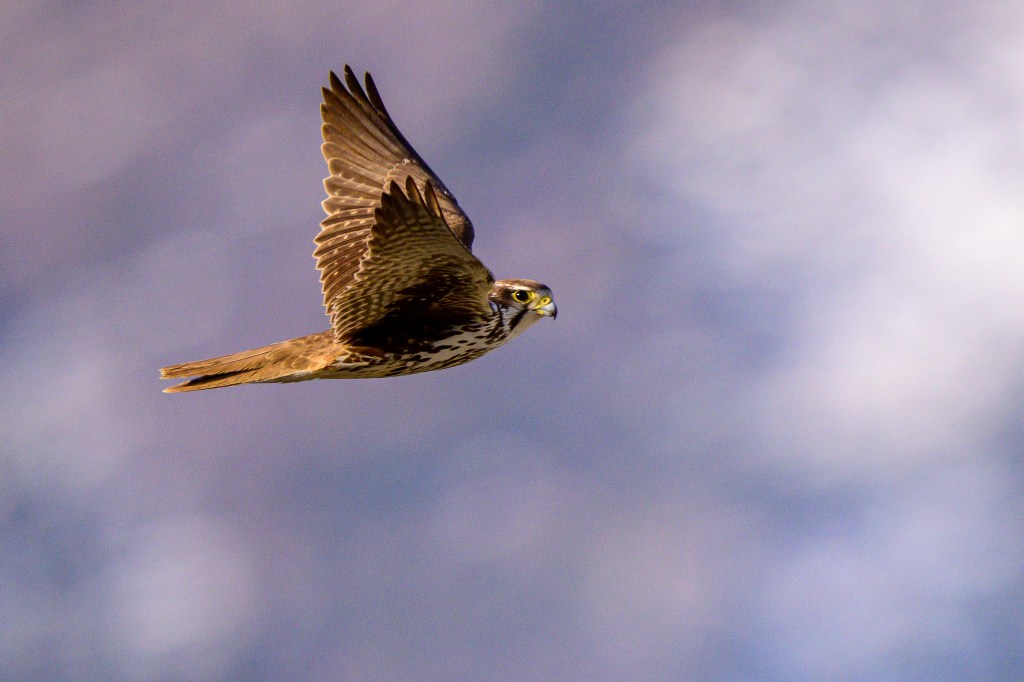
The Falcon has fine white dots on the wings, something that was not known to me.
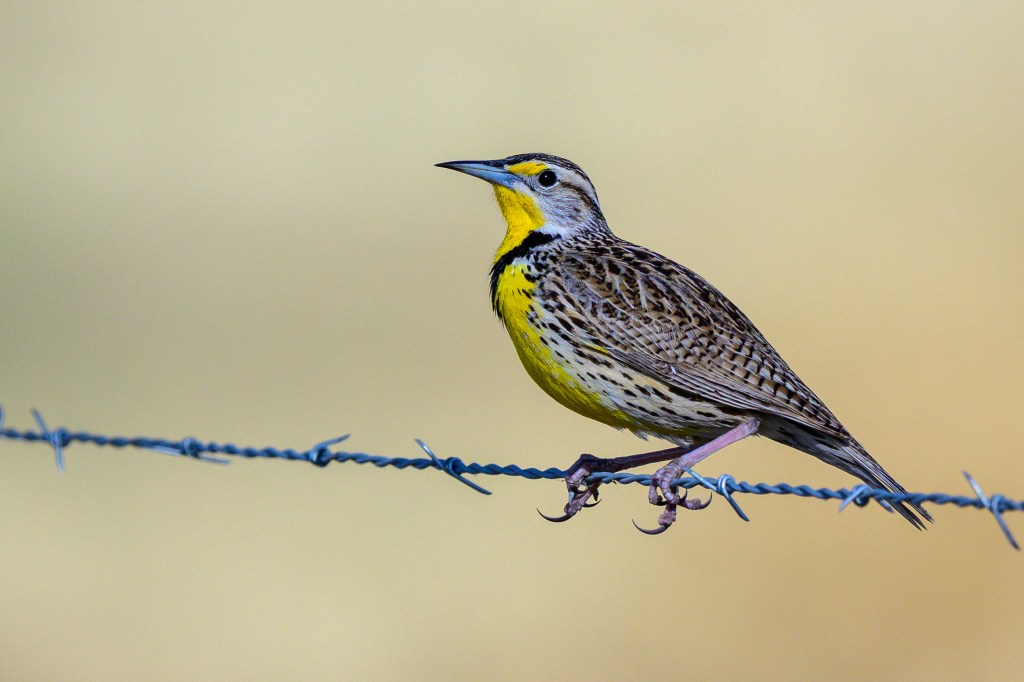
Western Meadowlark. The song of this bird is just as lovely as its feathers.
Red-tailed Hawks have a nest on Warm Springs Road. I managed to find two babies for pictures. They have already been banded.
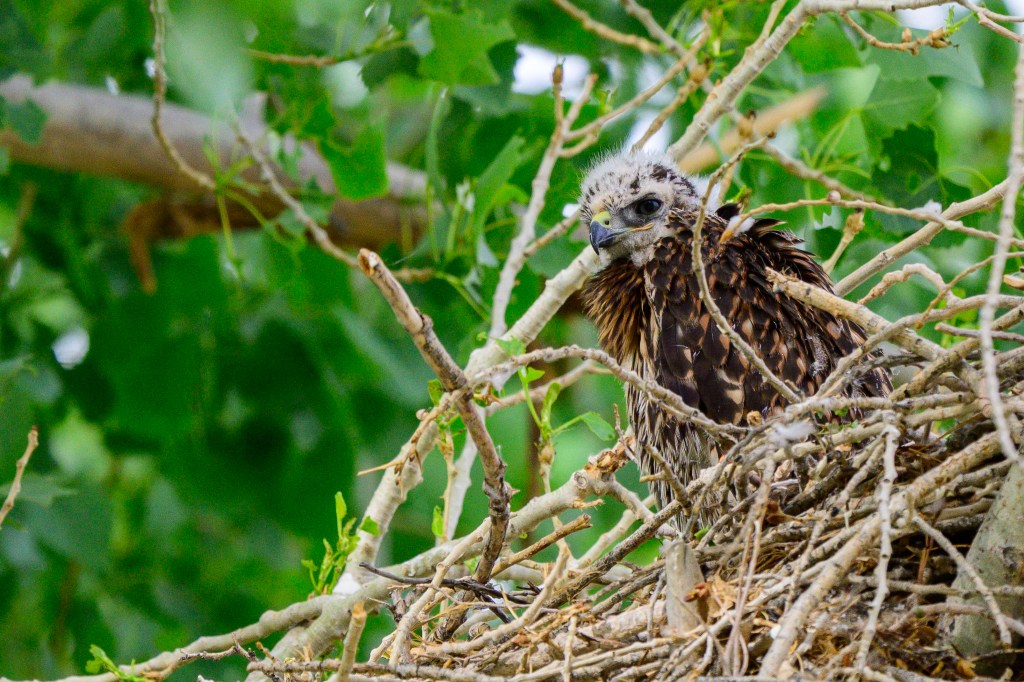
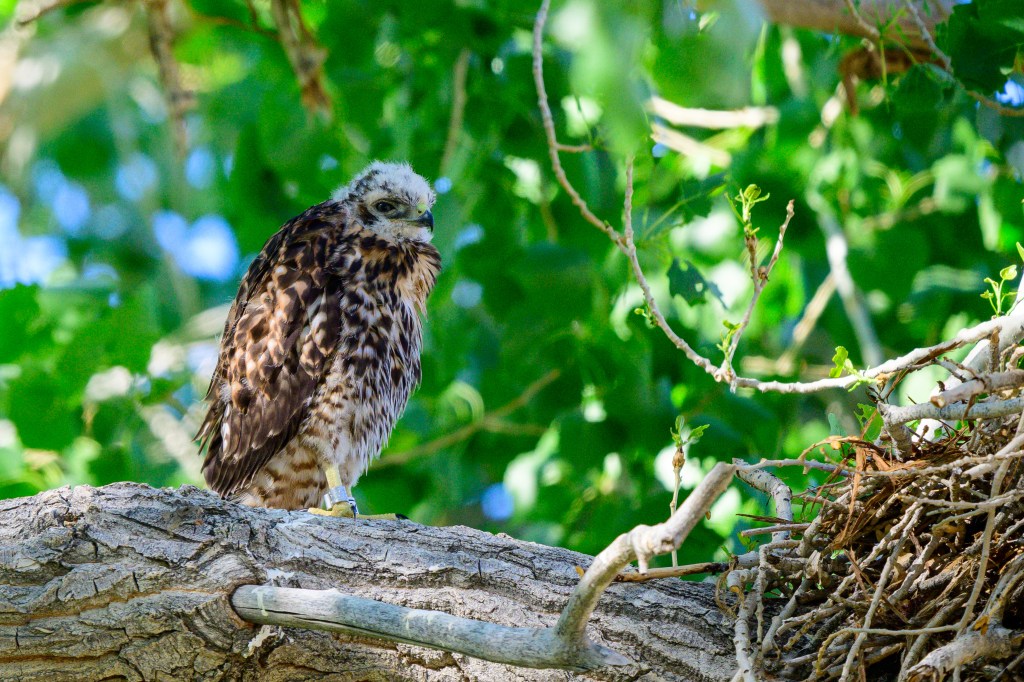
Two photos of a young Red-tail near the canal. Note damage to feathers in both wings.
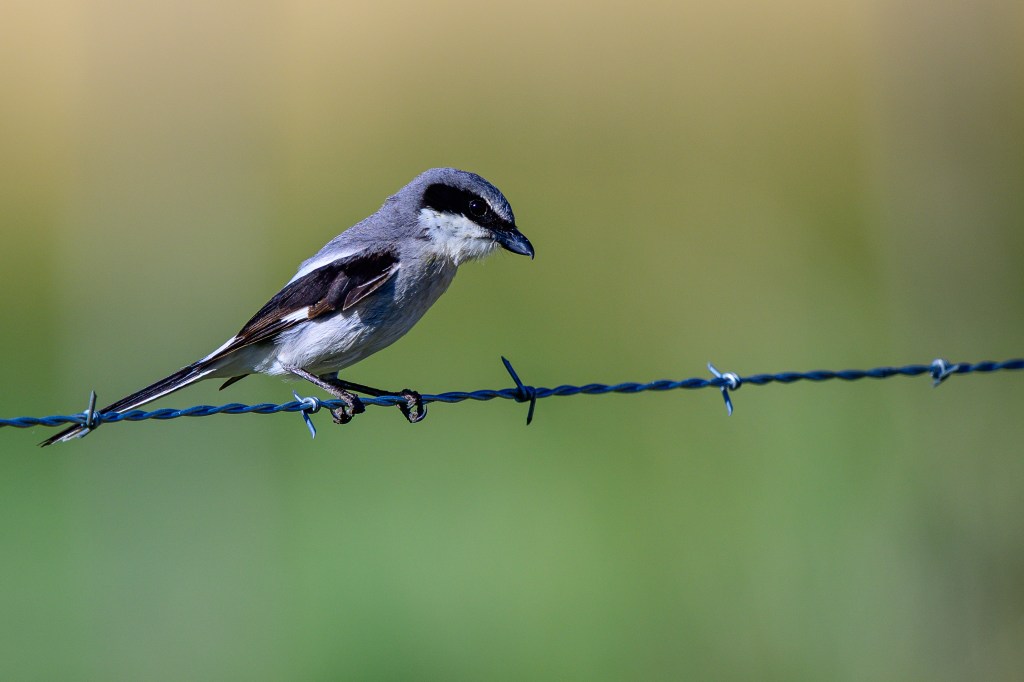
Loggerhead Shrike.
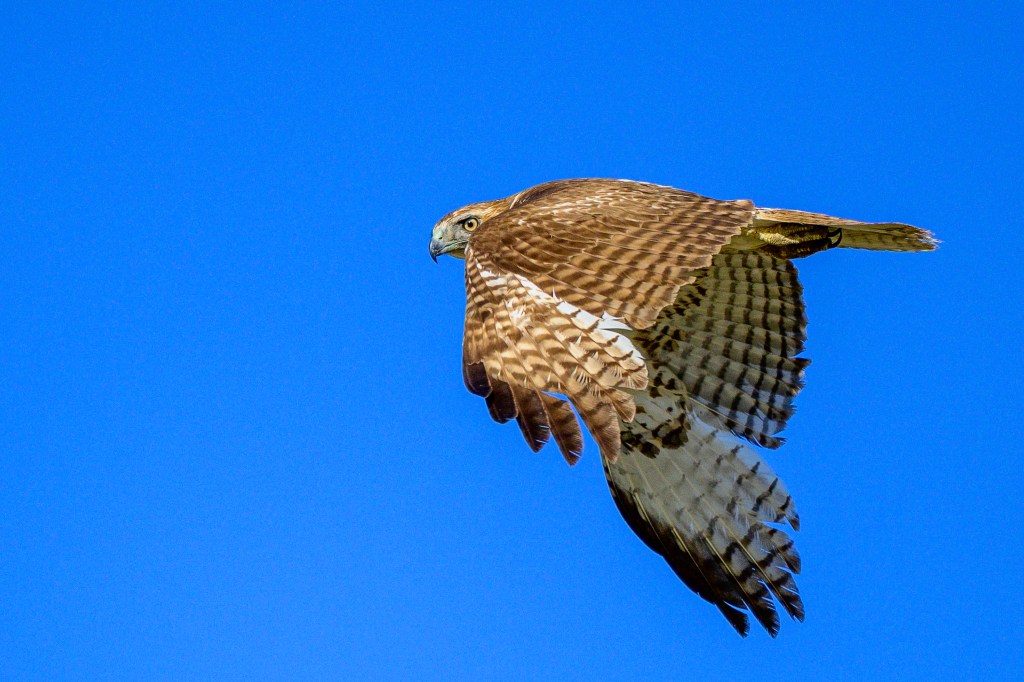
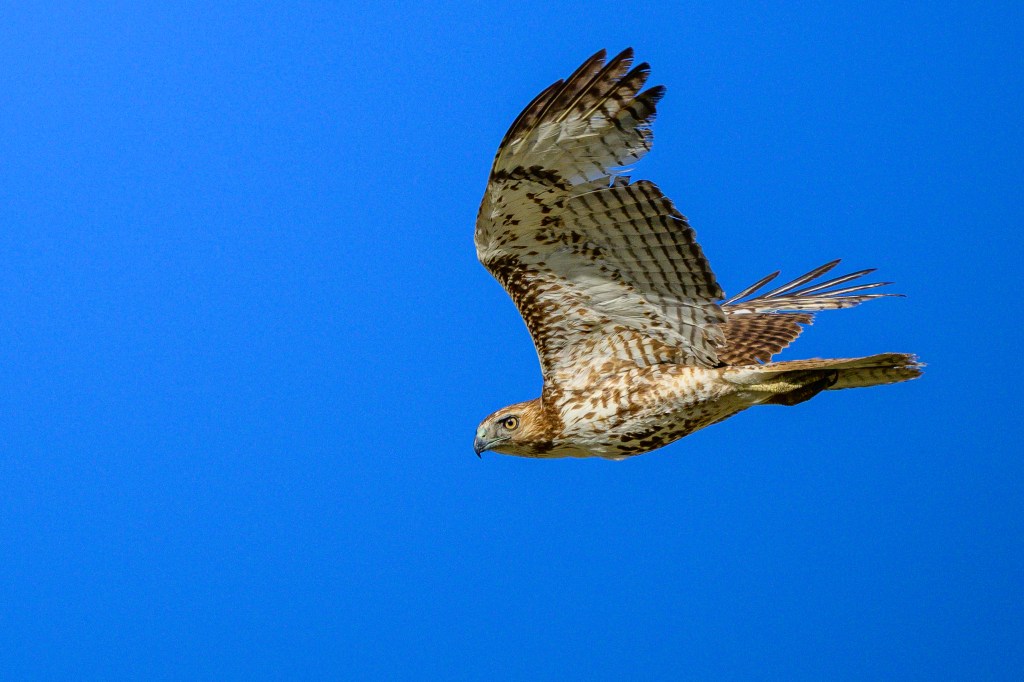
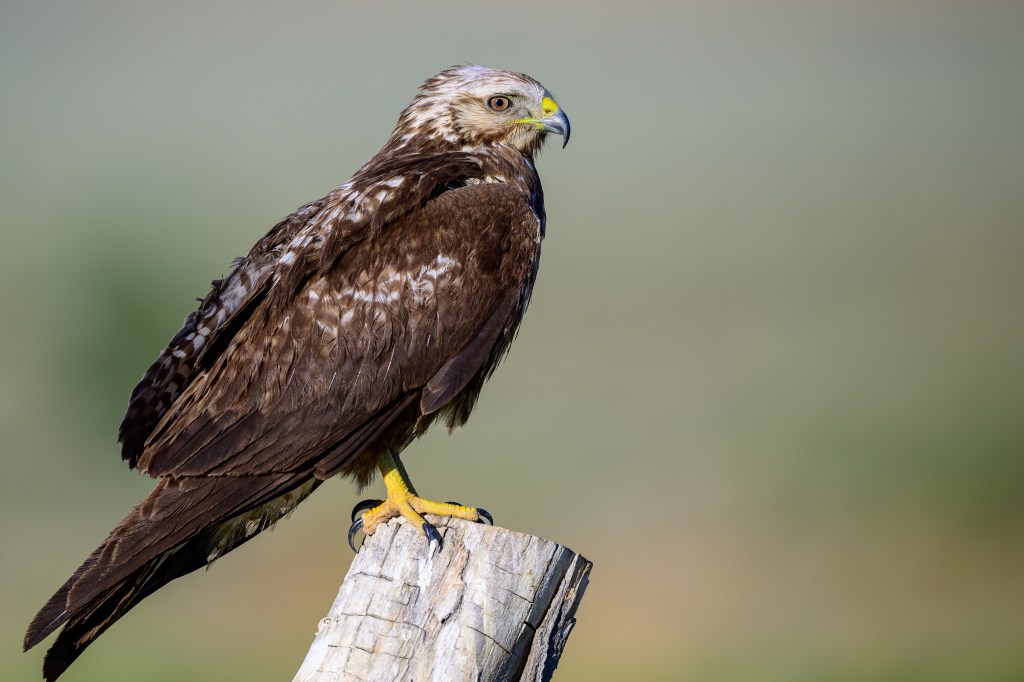
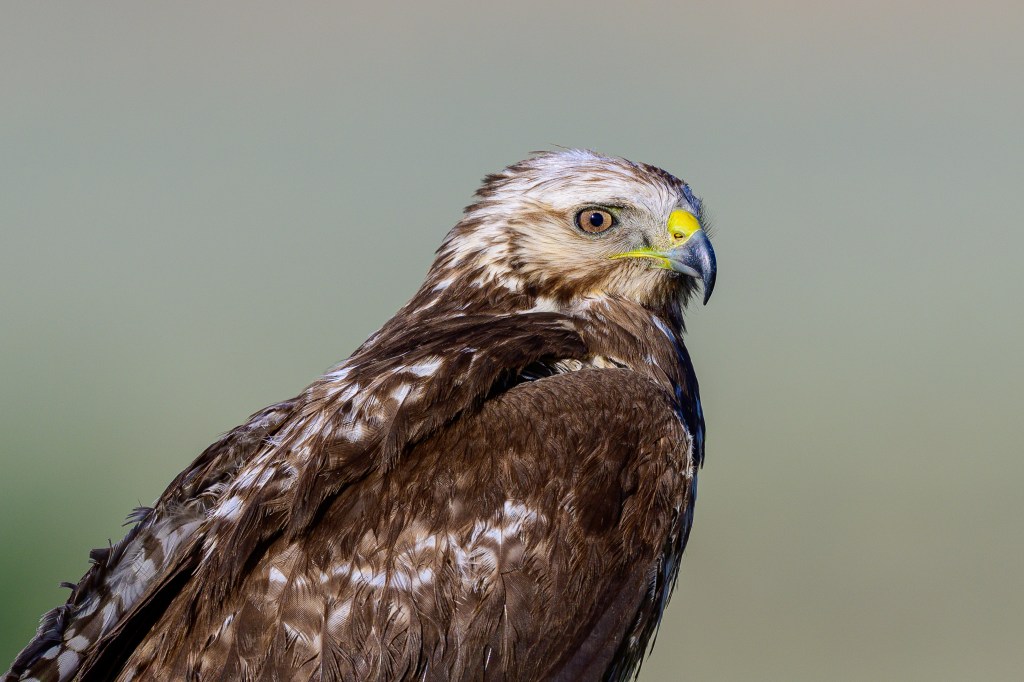
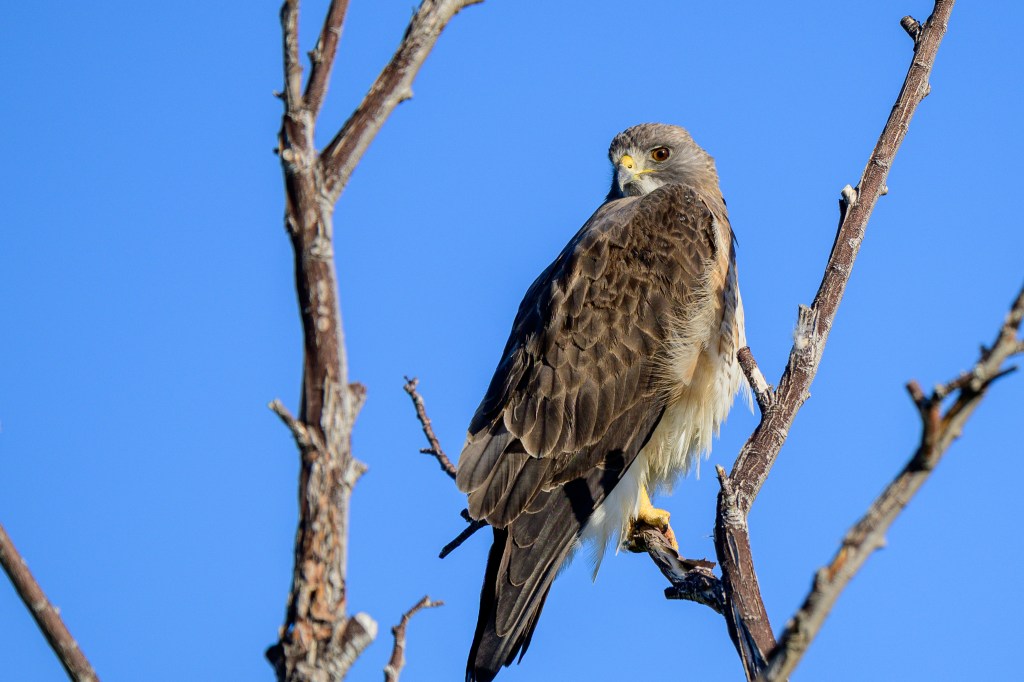
Roberta and I spotted 4 hawks that were flying close to each other near Warm Springs Road. They had white rumps and at first we thought they were Northern Harriers. But as we got closer, we realized these were something else. Later, looking at the photos, I decided they were Swainson’s Hawks. The first two photos below show a juvenile Swainson’s; the third photo shows a mature bird. These pictures were taken from the car. These hawks winter in locations from Mexico to Argentina. They come here to breed. They are not common here and I was happy to get photos with so much detail.
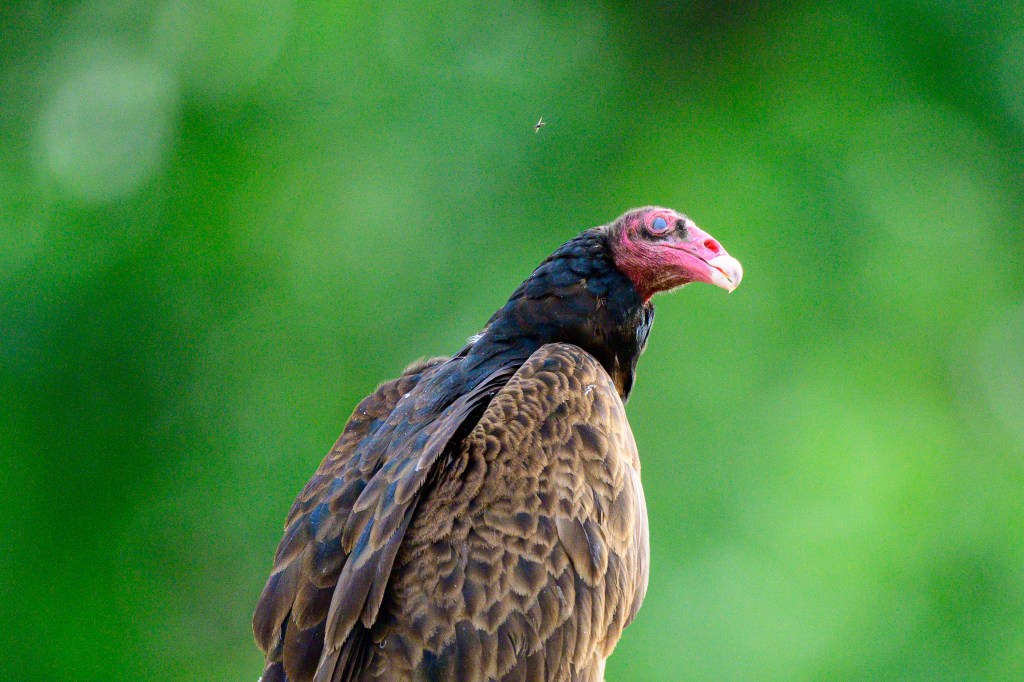
A Turkey Vulture was perched near the road. A bug (fly?) passed over the Vulture’s head and the Vulture turned to look at the bug; you can see this flying bug in the picture. The Vulture rolled its blue nictitating membrane over its eye, possibly for protection.
Miscellaneous
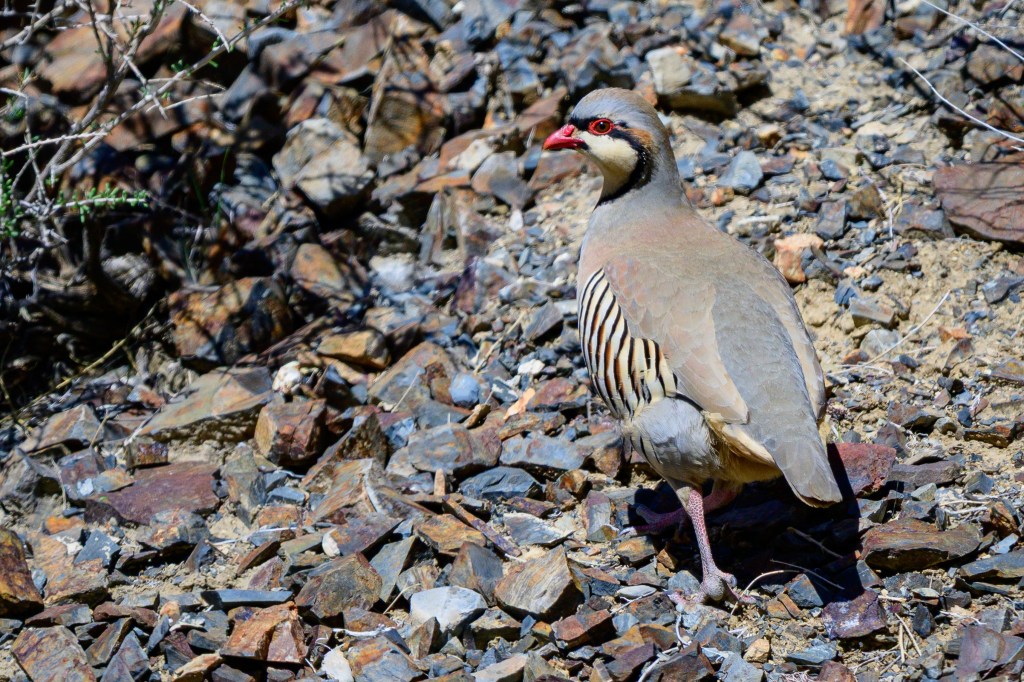
Chukars were introduced from areas that are now part of Pakistan. Like the Ring-necked Pheasant shown earlier, they were brought from Asia and turned loose to be hunted. The Pheasants like the habitat of agricultural fields. Chukars prefer dry rocky slopes. This bird was in Mazourka Canyon in the White Mountains. I got out of the car to get this picture. The Chukar did what they usually do. It ran off uphill.
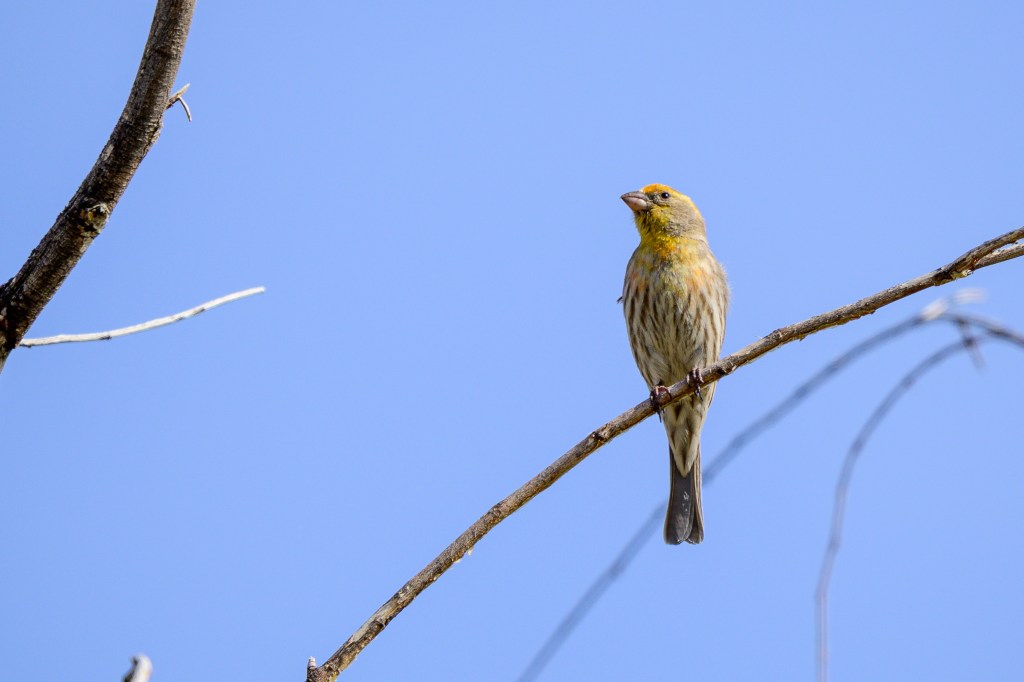
The male House Finch shown below was singing like mad in my neighbor’s front yard. But his color is wrong; he should have bright red feathers on head and upper body. Instead he is yellow. Apparently this Finch cannot produce red feathers because his diet is deficient in certain chemicals that are needed.
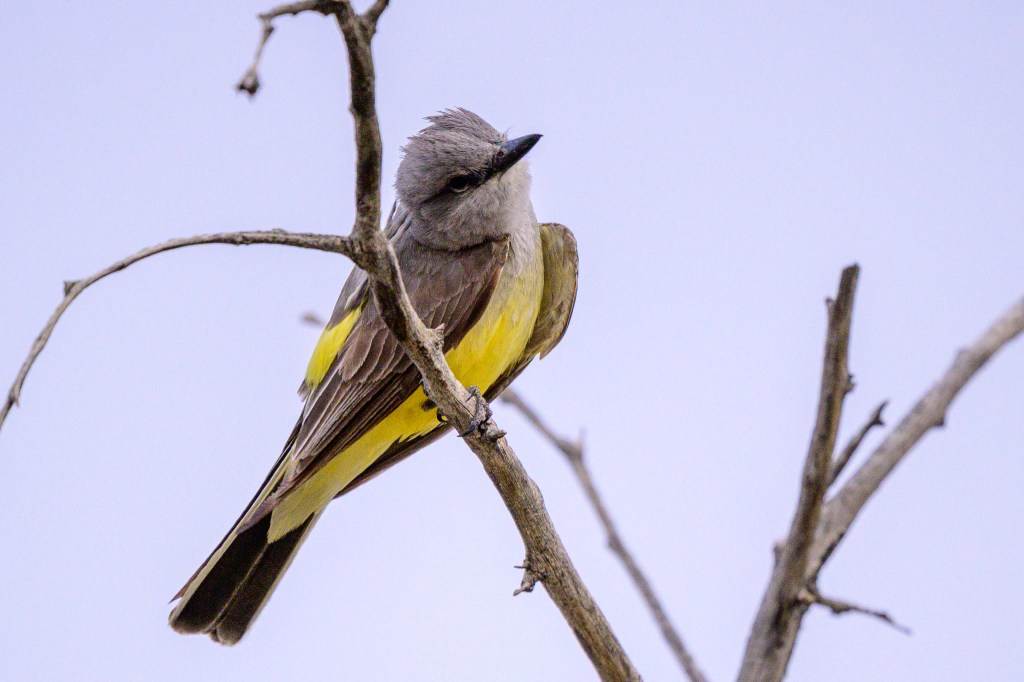
Roberta spotted a Western Kingbird in a tree next to Ed Powers Road. The bird kept flying out to grab something in the air, then perching again.

A short comment
In this collection I showed two birds that were introduced from Asia so that people could shoot them in North America. This introduction of species for hunting is common. If you visit White Sands National Monument in New Mexico, you can also visit the nearby White Sands Proving Grounds. The Army tests missiles here. The visitor’s center has a missile museum, but surprisingly has heads of Oryx, a large African antelope, mounted on the wall. The State Fish and Game Department introduced 95 of these animals into the missile range between 1969 and 1977. Now the population numbers around 5000 and they are hunted as big game. They have also become a road hazard for motorists. On another trip, we were in the Davis Mountains of west Texas and saw a herd of what we initially thought were deer; but these were Barbary Sheep, imported from North Africa to be shot by hunters in Texas. These are all small, quirky examples of how humans have manipulated nature. For a more sweeping discussion, see Beth Shapiro: Life as We Made It: How 50,000 Years of Human Innovation Refined — and Redefined — Nature.
 Birds of Bishop