
The Osprey is ubiquitous. They aren’t particularly common, but they are found on 6 continents. There are Ospreys in every state. If there is a pond, ocean, lake, stream, or river, an Osprey may be nearby.
An Osprey Family
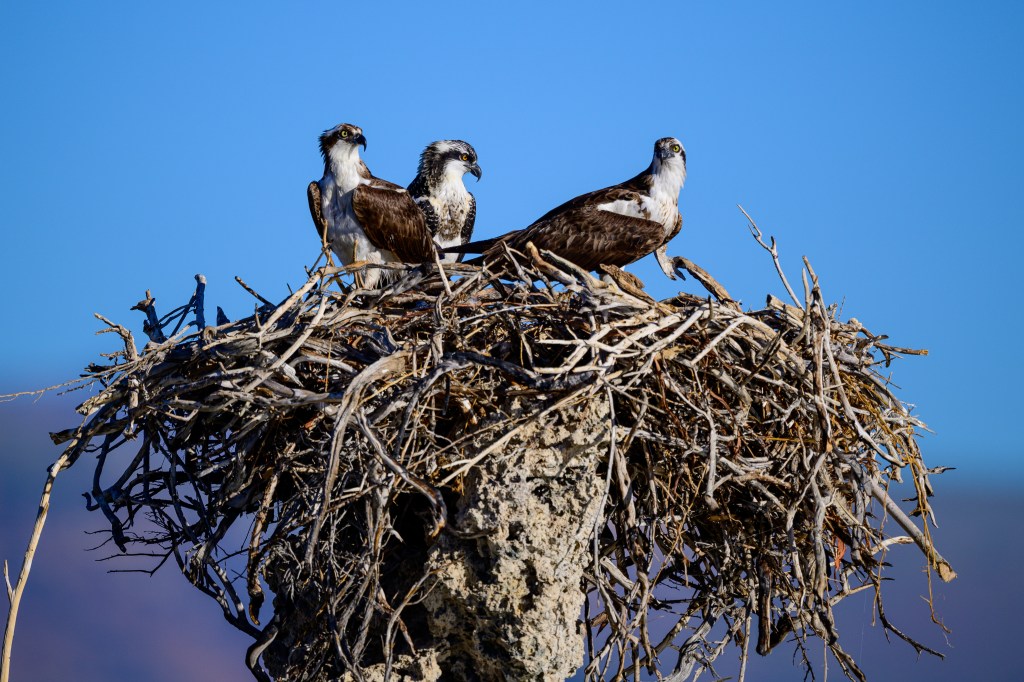
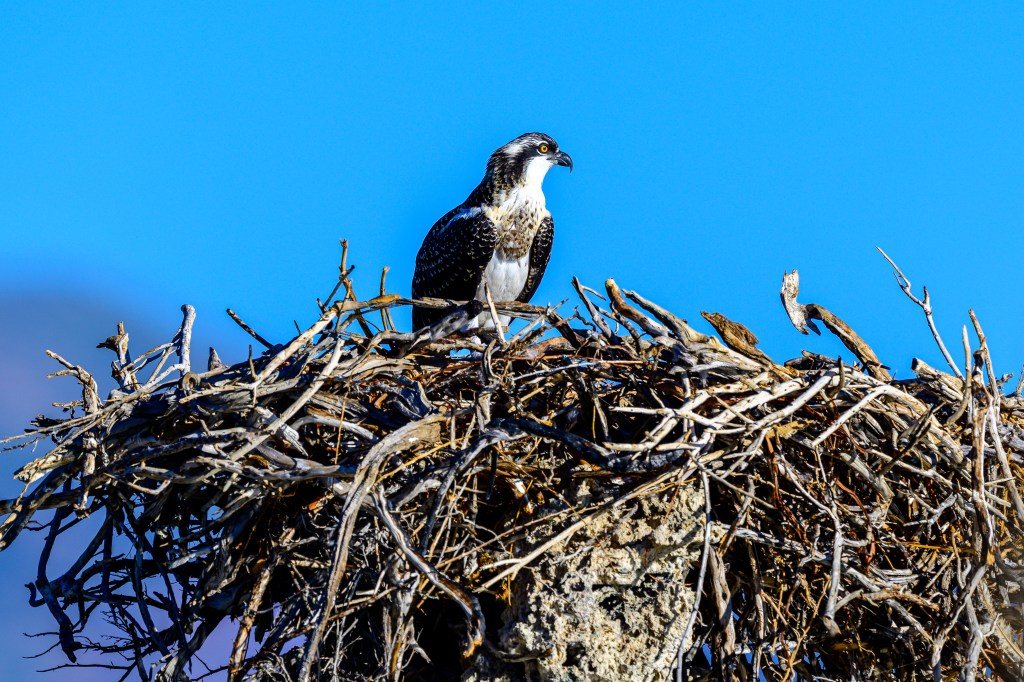
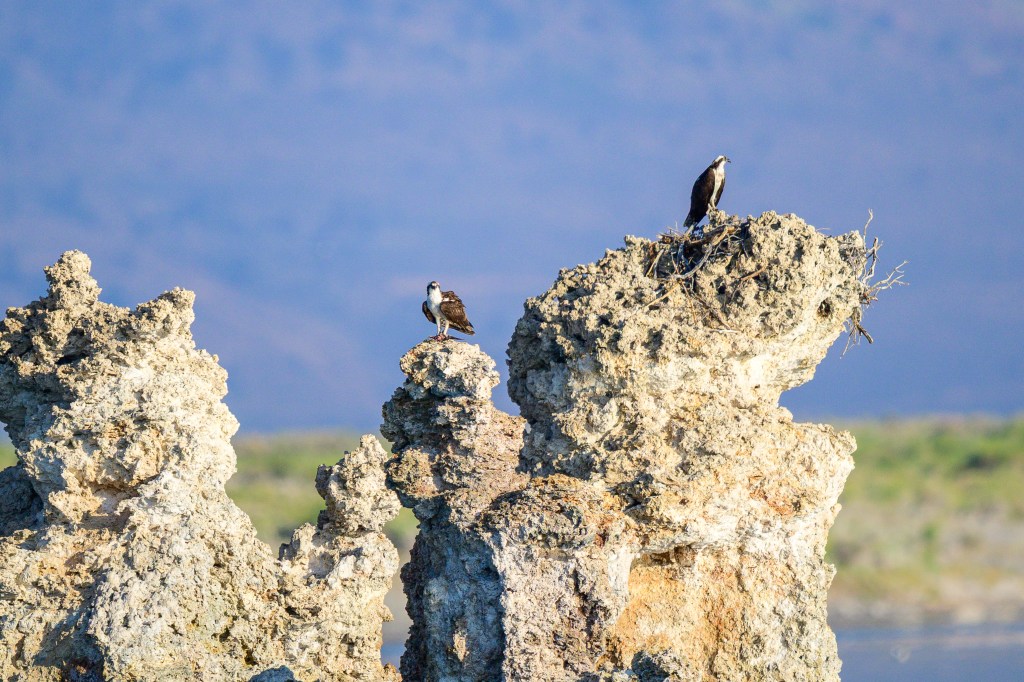
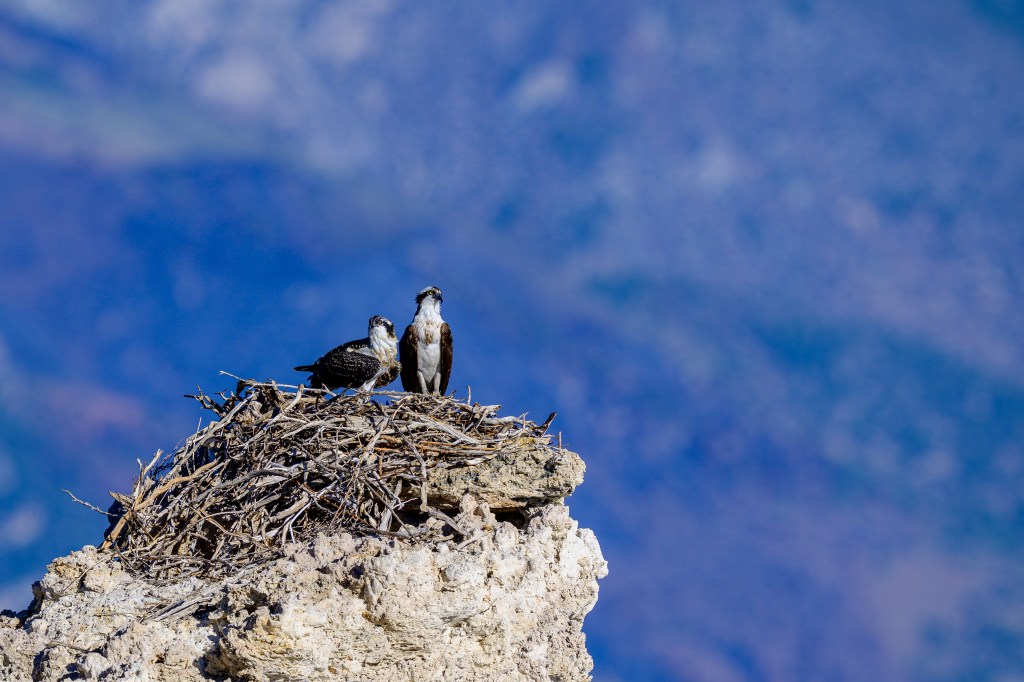
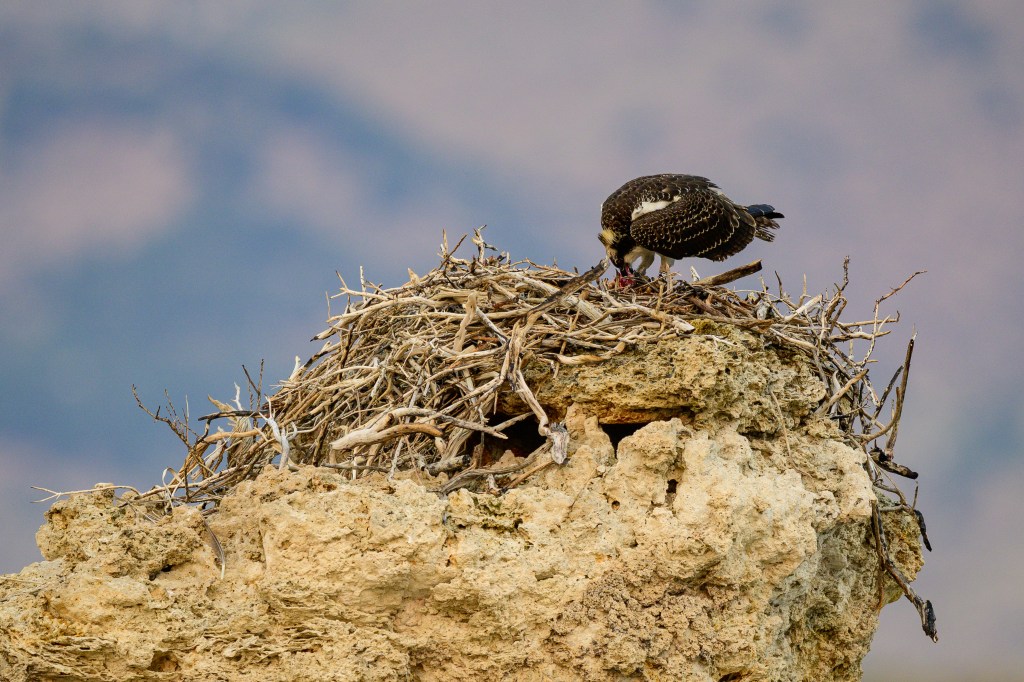
Let’s meet a typical Osprey family in their rural home, a nest on a tufa tower in Mono Lake. The nest is a large pile of wood, about 6 feet across, constructed over many years. In the first photo, Dad is on the left; his chest is white, his eye yellow, and his feathers are brown. Mom is on the right. She wears a necklace of brown feathers on her chest and she is a bit bigger than Dad. Junior, about three months old, has black feathers outlined with white, giving him a scaly look. His eye is red/orange. All three birds have a chest and belly that is mostly bright white and a band of dark feathers that runs across the eye and down the neck to the back. Adults weigh 3.5 lb. Their 63” wingspan approaches the 80” of a Bald Eagle, but the Eagle weighs 3 times as much; a thuggish brute compared with the slender Osprey.
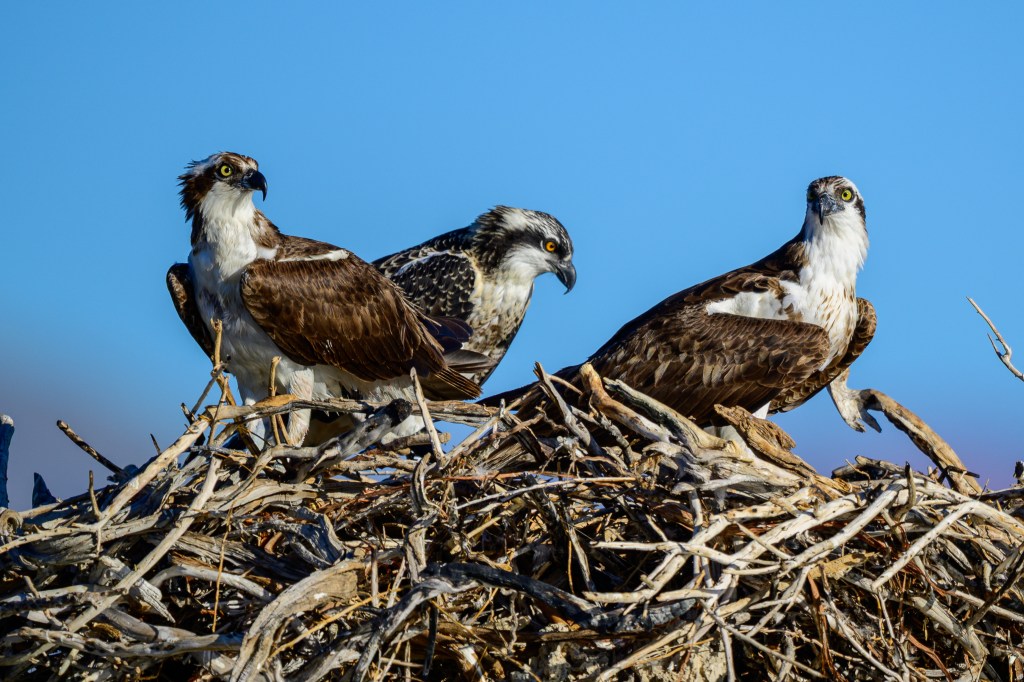
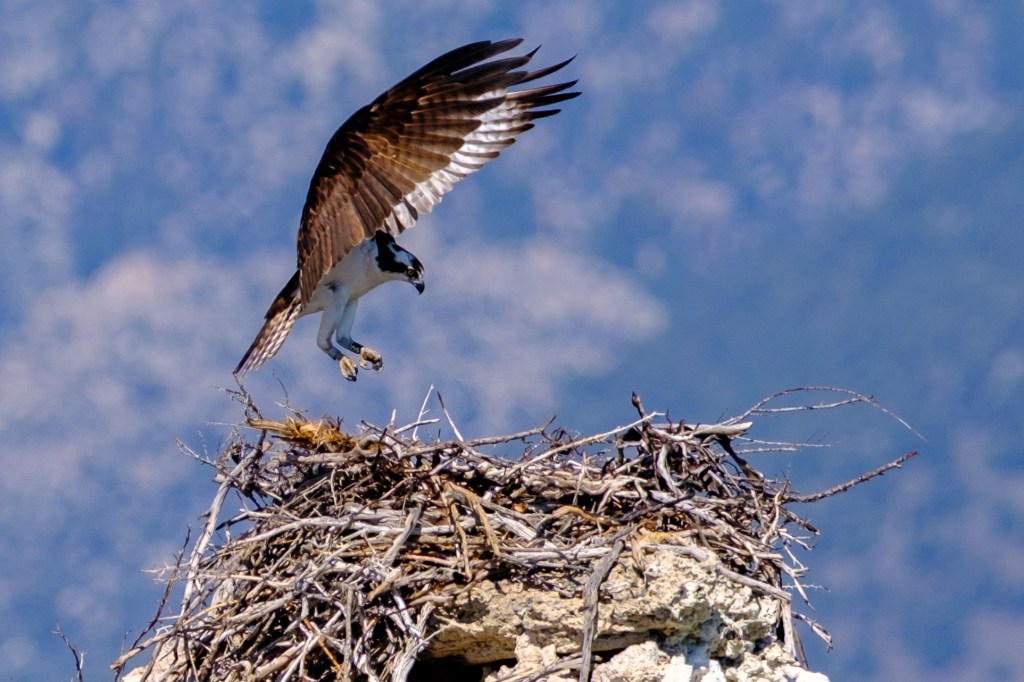
This cooperative family posed for more images. The next shot shows the size of the nest.
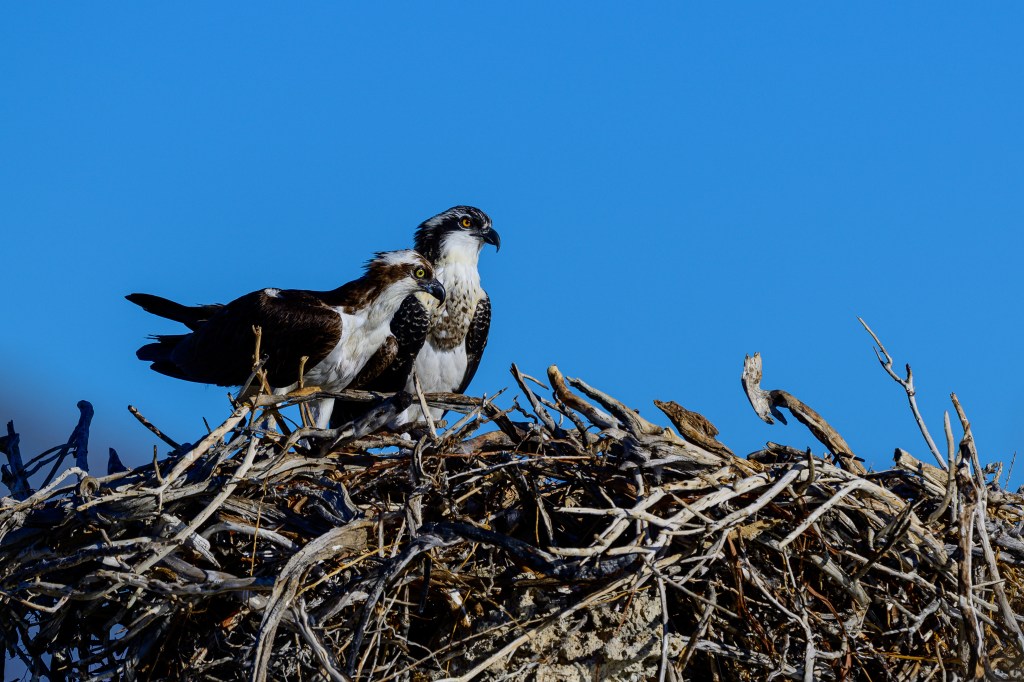
Mom flies off, leaving Dad and Junior to bond.
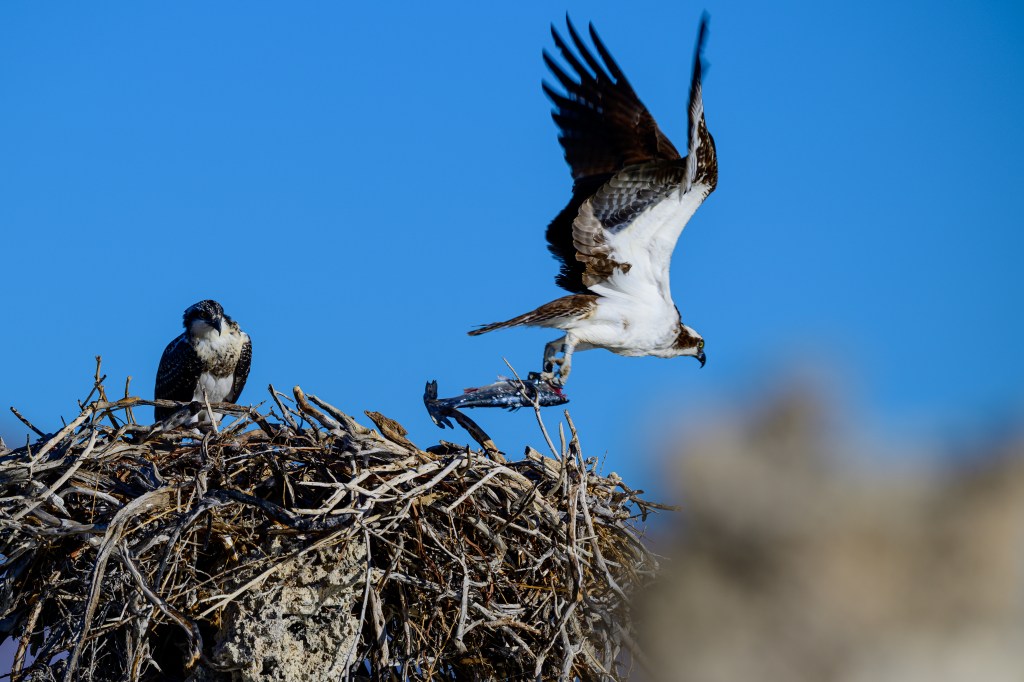
But after a minute, Dad departs with his lunch. Junior is left alone, a latchkey bird.
What Does “Osprey” Mean?
Most birds have a species label made from two or three words: Great Blue Heron, Say’s Phoebe, Yellow-headed Blackbird. A select few have a single moniker: Mallard, Killdeer, Merlin. The Osprey is one of these, but the name is a mystery. One theory is that the Latin “avis praedae” (bird of prey) became the French “ospreit” which evolved into the English “osprei” in 1460 — maybe, but why was this the “bird of prey” any more than some other Eagle, Hawk or Falcon? A second theory notes that the Lammergeier, an old world vulture, was called the “ossifragus” in Latin, which means bone-breaker. “Os” means bone (ossify, etc.) and fragus means break (or fragment). This bird likes to eat bones and breaks its preferred food items by dropping them from a height. Somehow “ossifragus” migrated to a different bird of prey, the Osprey, although Ospreys are not bone-eaters. Neither theory seems terribly satisfying.
What do Ospreys Eat?
There are reports of Ospreys eating mice, rabbits, ducks, even a baby alligator. These are exceptions. This bird prefers fish for breakfast, lunch, and dinner. Each meal has a fish appetizer, a main course with gills, fins, and tail, and a desert fish. If you ask an Osprey to eat out, they will suggest a Sushi bar or Legal Sea Food. Ospreys generally avoid carrion, even dead fish. They always ask, “Is the fish fresh?”
Ospreys at Mono Lake
Mono Lake is three times saltier than the ocean; consequently, it has no fish. So why are Ospreys nesting on the tufa towers that rise up above the water? The answer is safety. Tufa is calcium carbonate, or limestone. Tufa towers form below the lake surface, where freshwater springs emerge and mix their load of calcium with carbonate in the water. When Los Angeles Department of Water and Power diverted water from the Mono Basin, the lake level fell, exposing these offshore tufa platforms. After World War II, the towers rose above the falling lake waters and Ospreys built their nests on these protected spots. To get fish, the Ospreys commute to nearby Rush Creek or a bit further to Grant Lake.
In August of 2025, Roberta and I visited Mono’s South Tufa area. We counted 10 Ospreys, adults and juveniles. Here are photos of these birds:

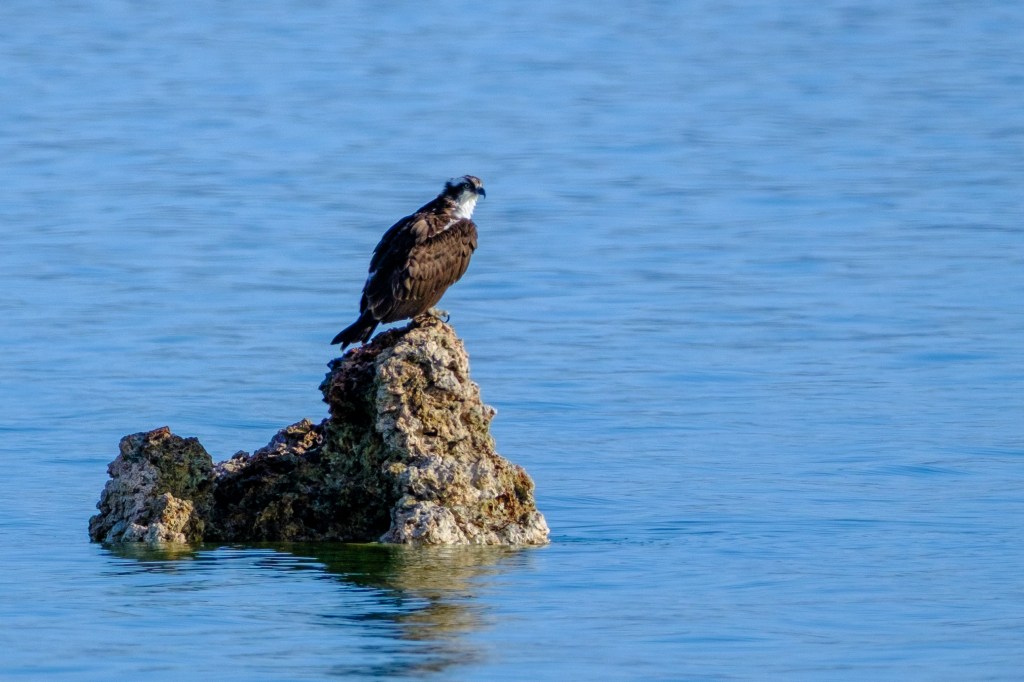
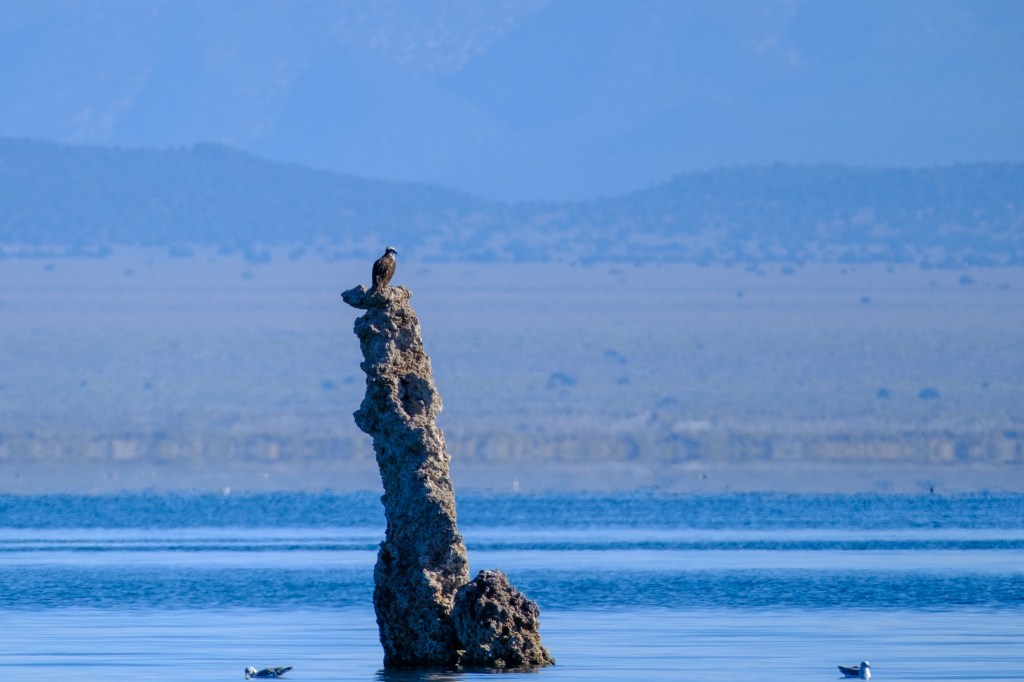
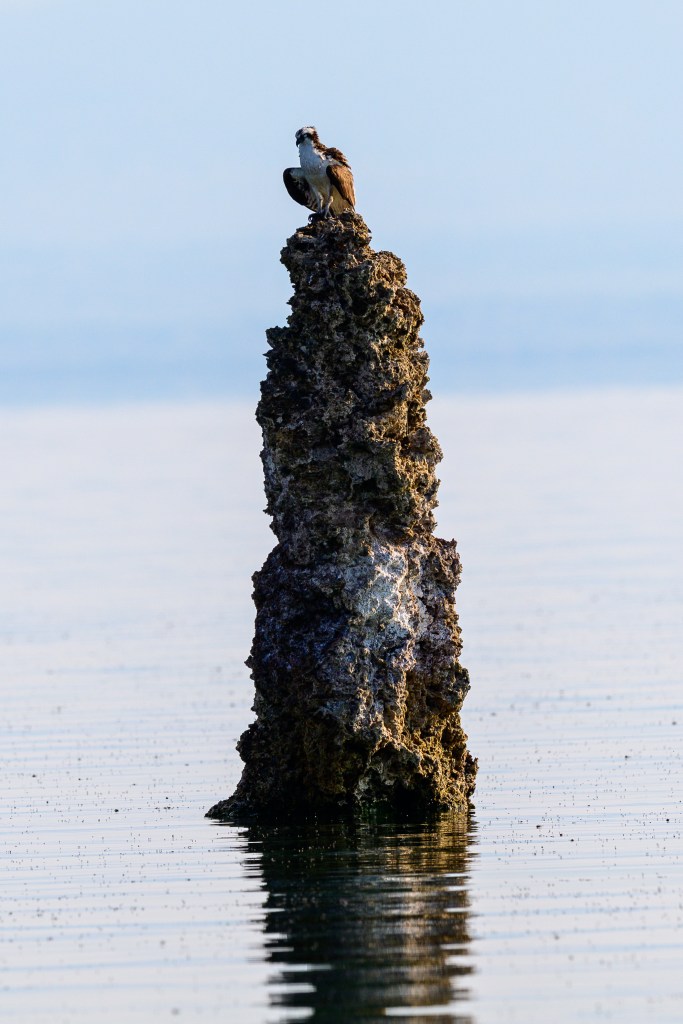
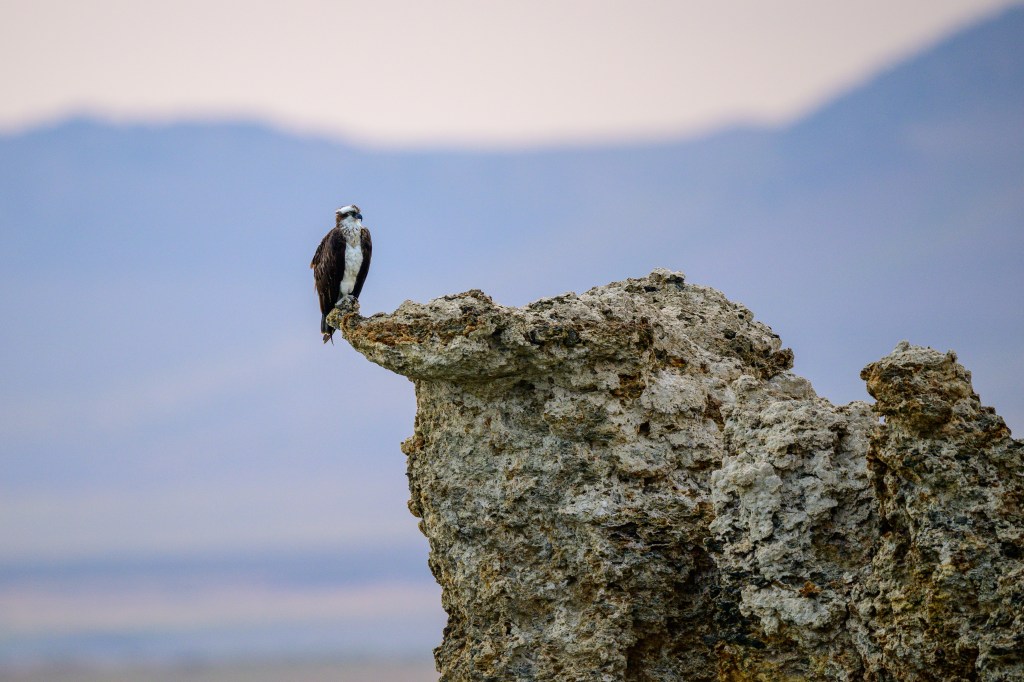
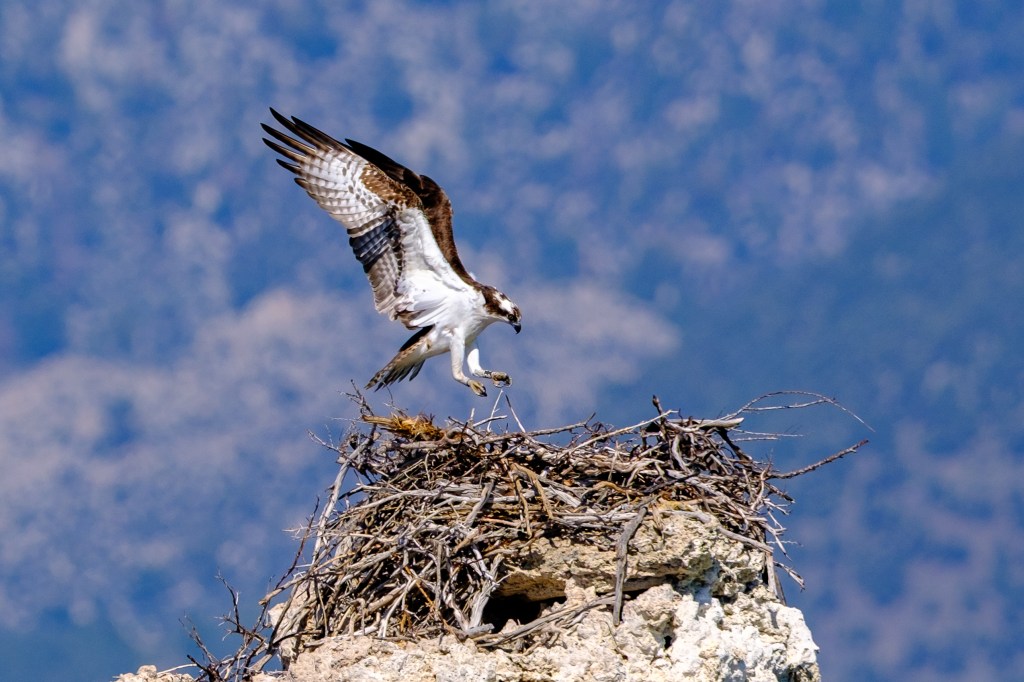
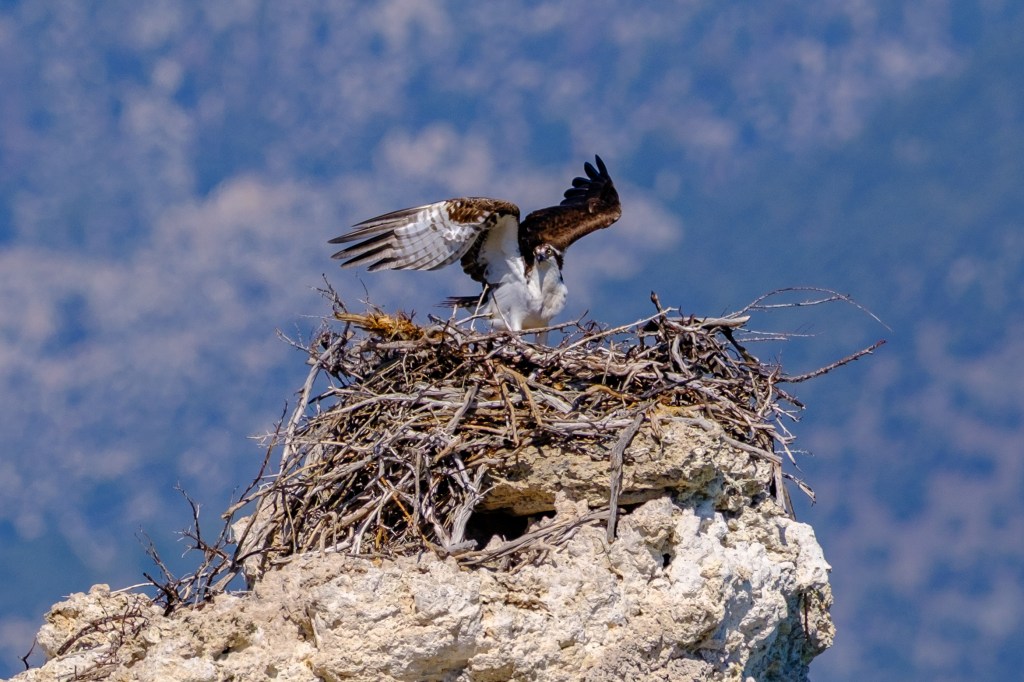
Below an Osprey lands on a nest. Note the bands on both legs. In the third photo, the wings bend at the wrist, a common sight with these birds.
Below is the mother with one of the fledglings we saw in the first photo of this blog. This picture was taken July 14, while the first photo was taken Aug 6.

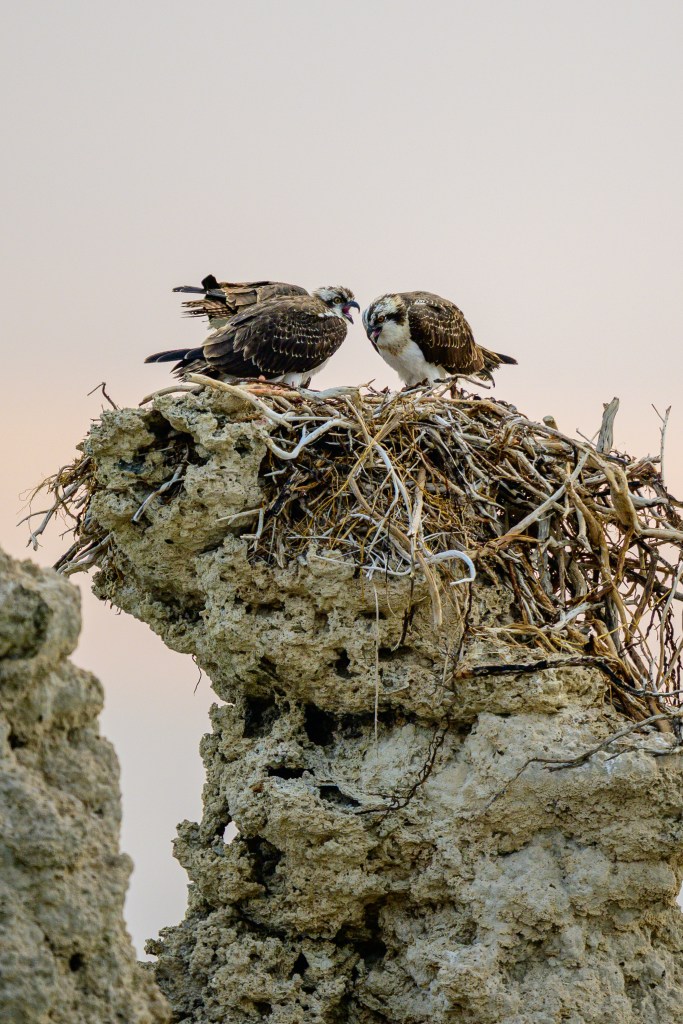
The next few photos show these birds on nests. They often make a racket — high-pitched cries of “PIERP! PIERP!”

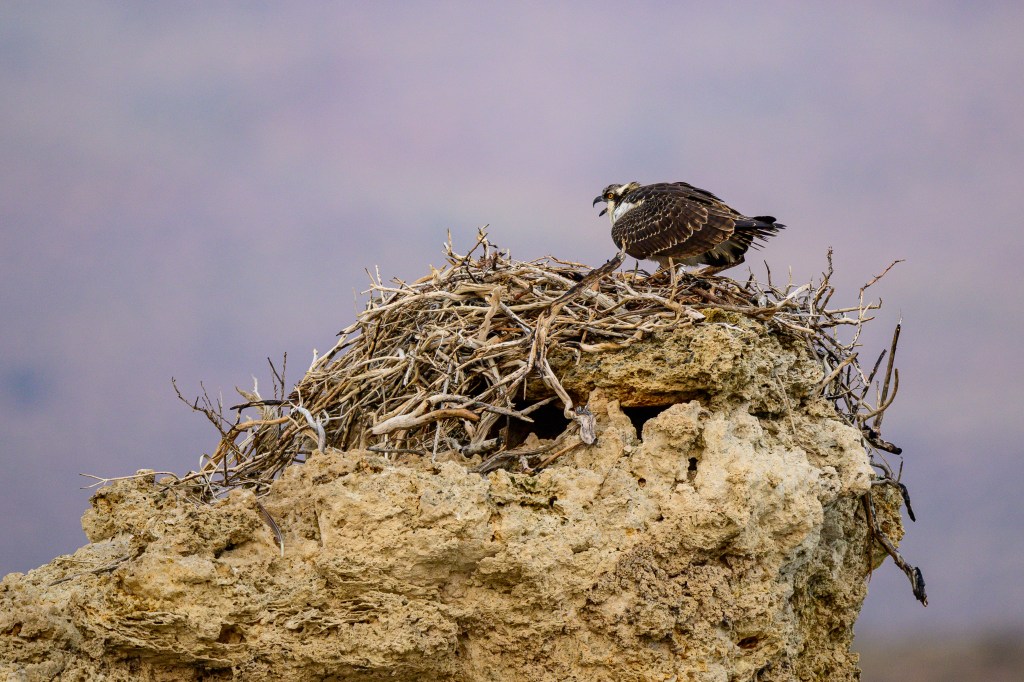

The next photo shows a juvenile having a meal.
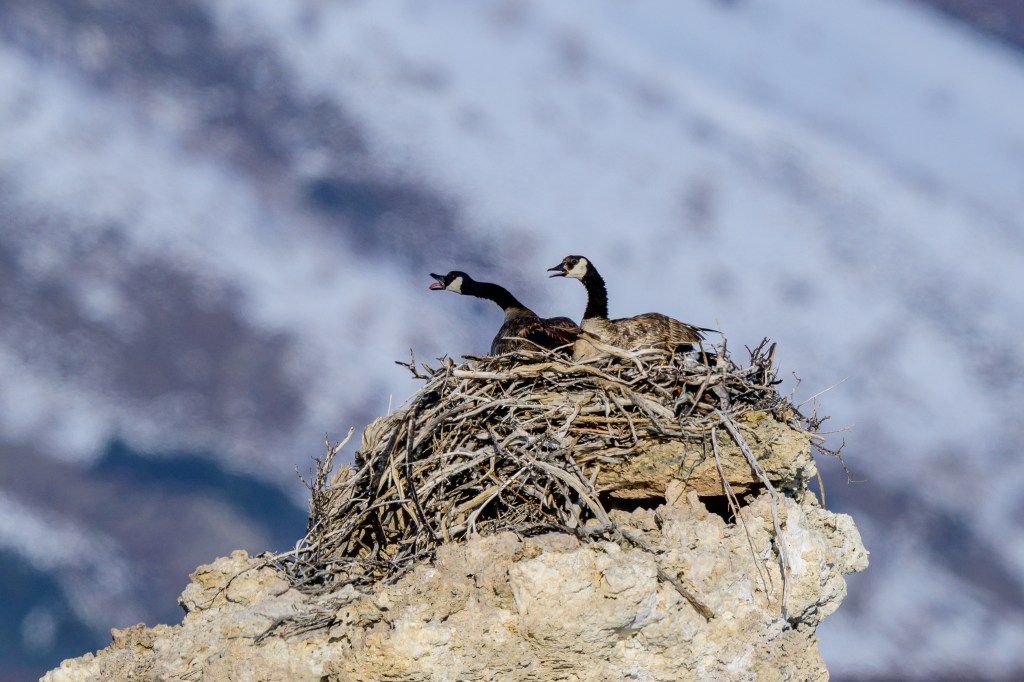
Canada Geese sometimes use Osprey nests:
A Taxi for Fish
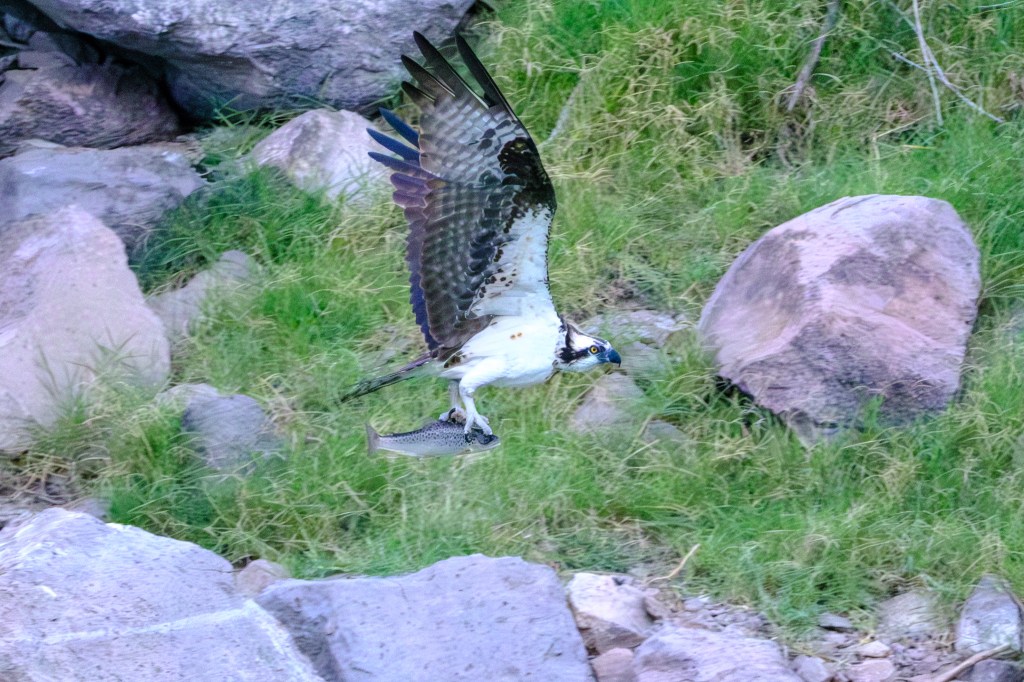
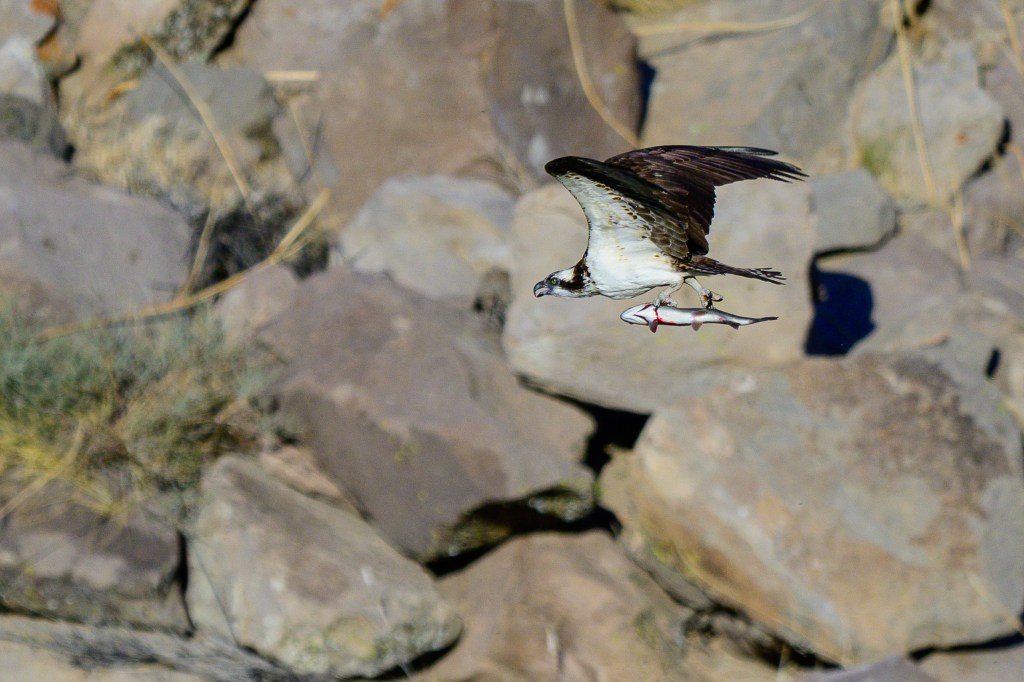
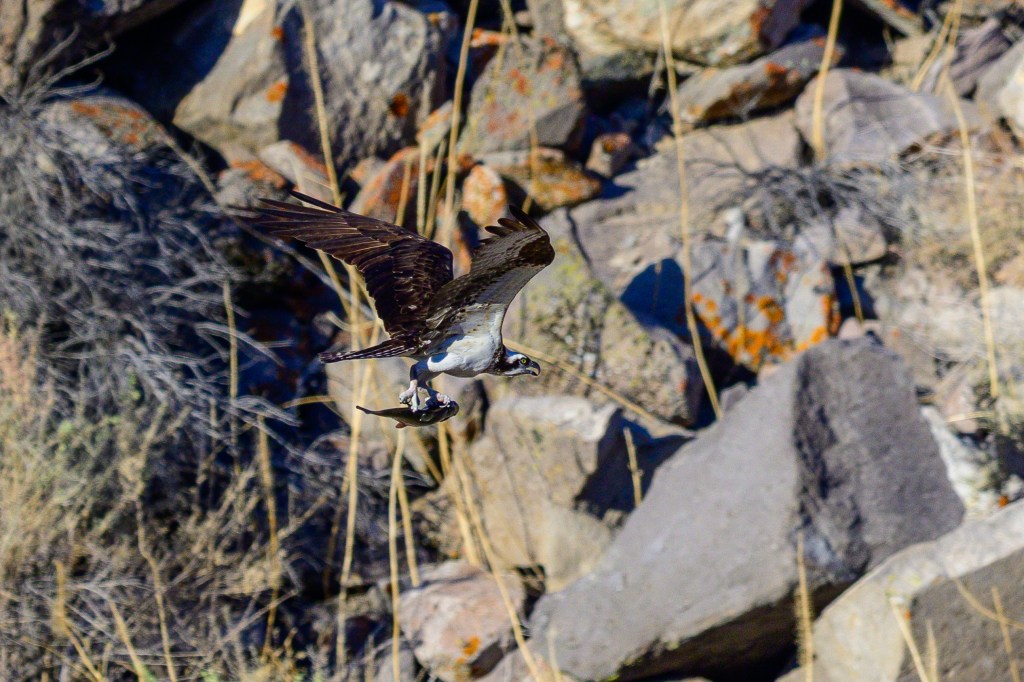
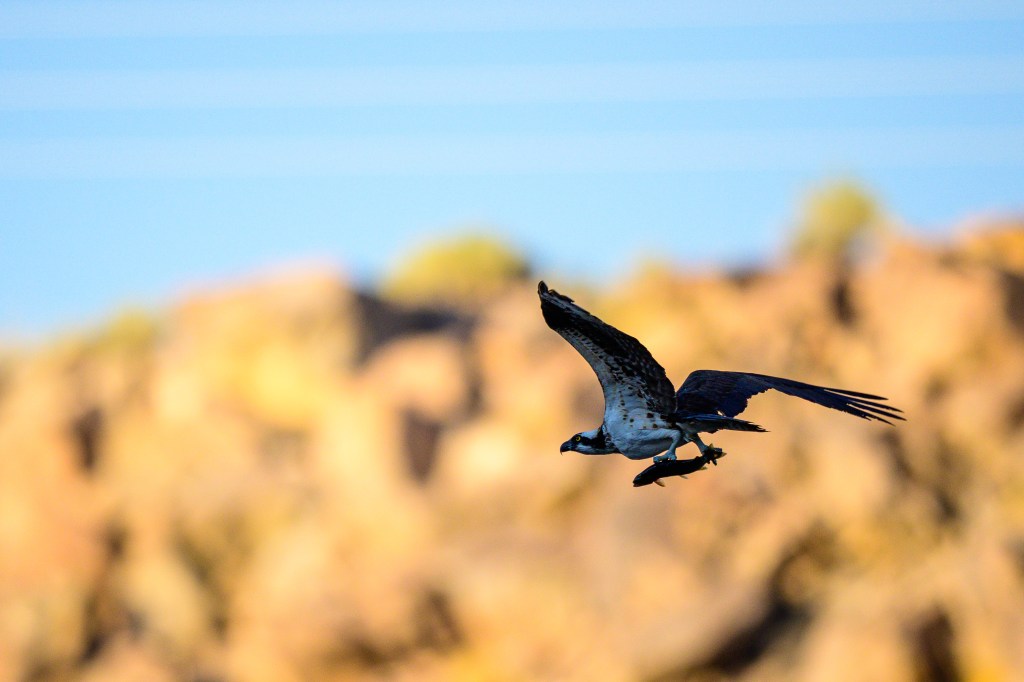
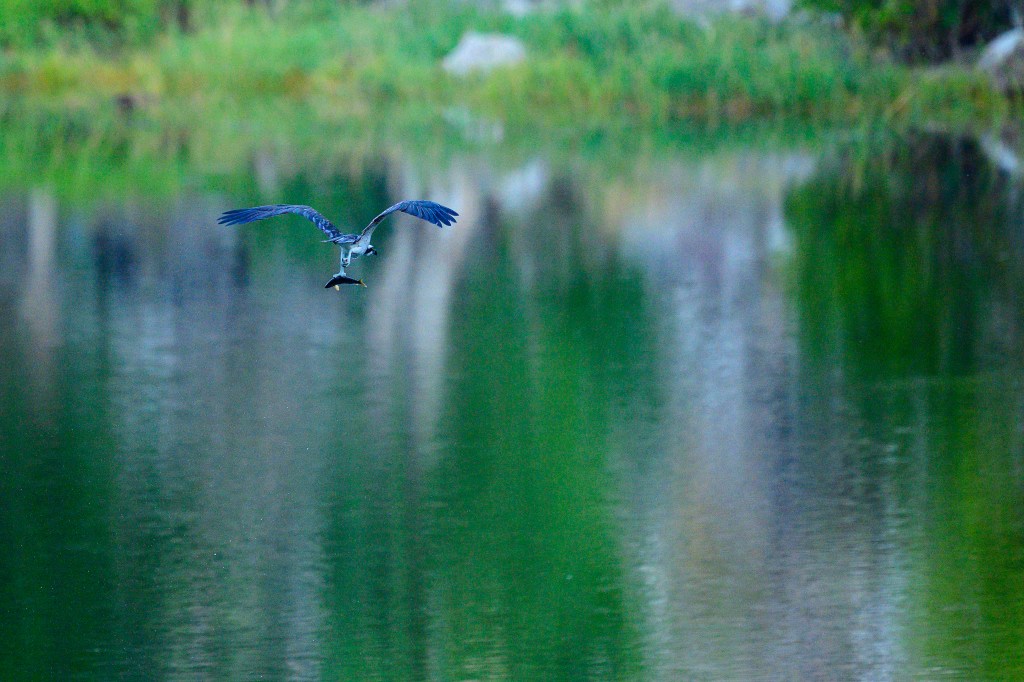
After catching a fish, Ospreys usually point the fish head-first and zoom off to find a safe dining location. The fish has a final aerial ride, but gets little joy. It isn’t easy to hold a cold, wet, slippery, wriggling trout. To hang on, Ospreys can rotate one toe so that two talons are on one side of the fish, two on the other side. The talons are strong and have tiny barbs that help grip the fish. The pads of the toes and feet have sharp spikes. Below are photos showing this transport. The first picture shows an Osprey landing at a Mono Lake nest with a fish.
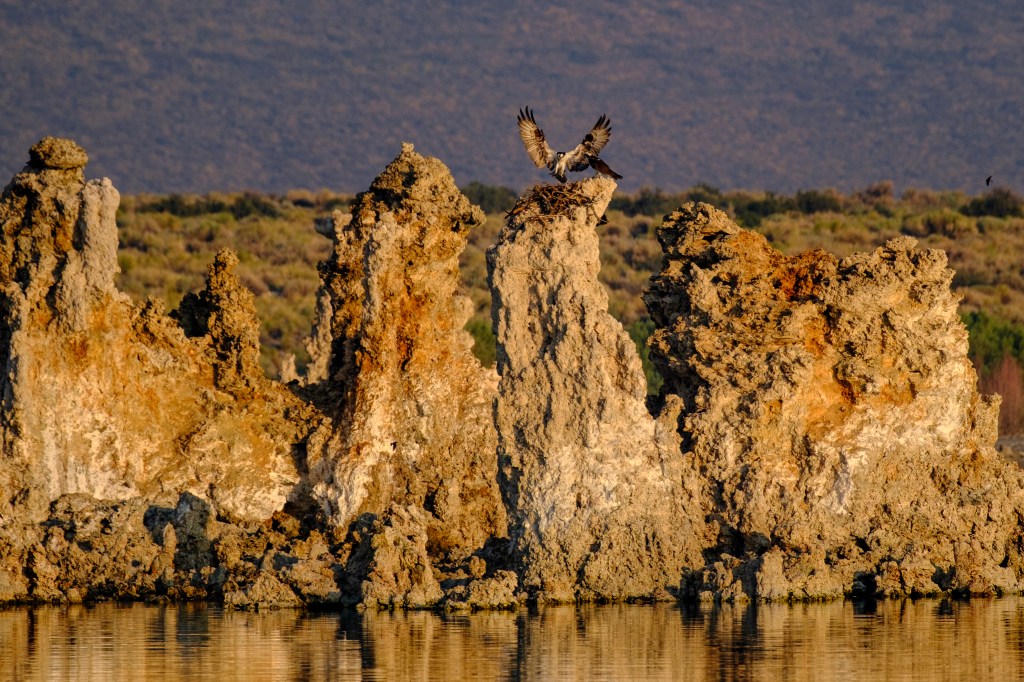
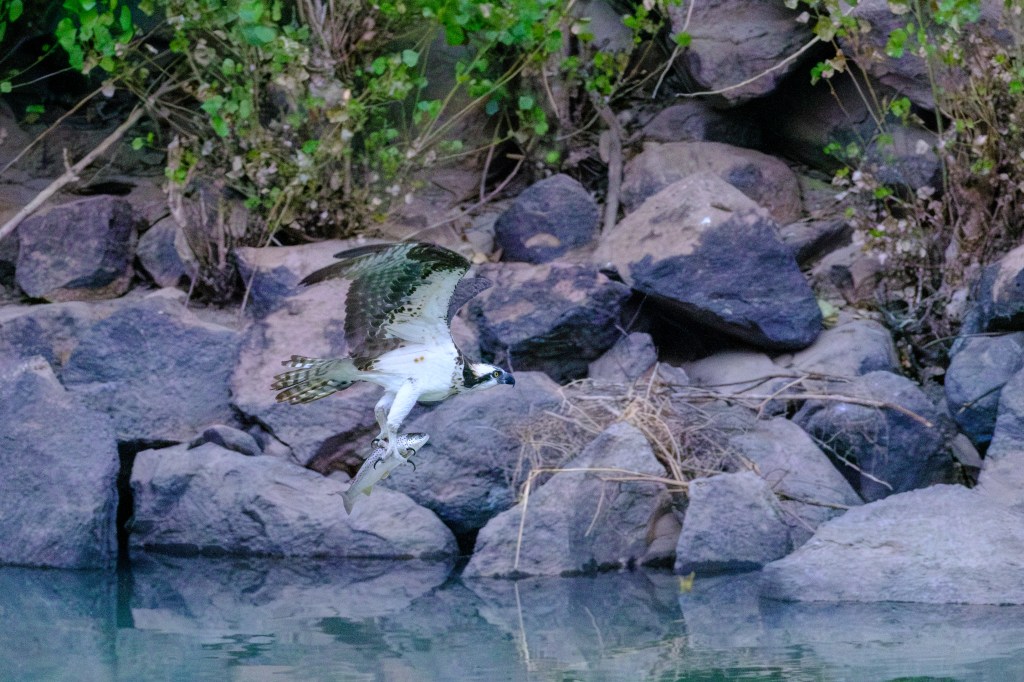
The following pictures are from the Pleasant Valley Reservoir in 2025. In the first and last photo, the Osprey uses only 1 foot to hold on. Rarely an Osprey will catch two fish at once, one with each foot.



The Catch
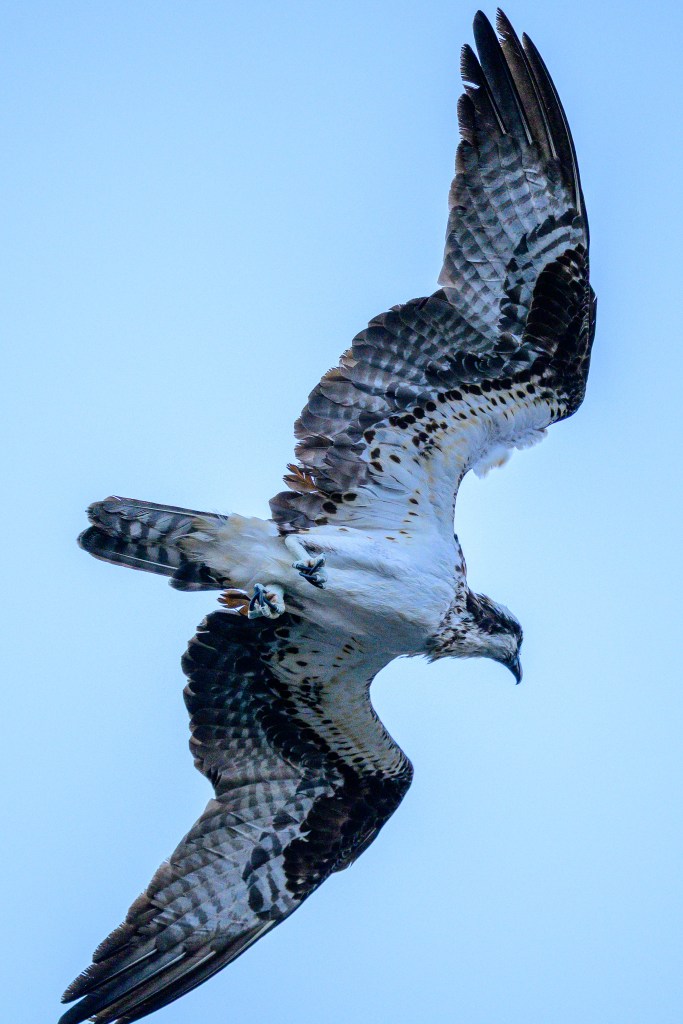
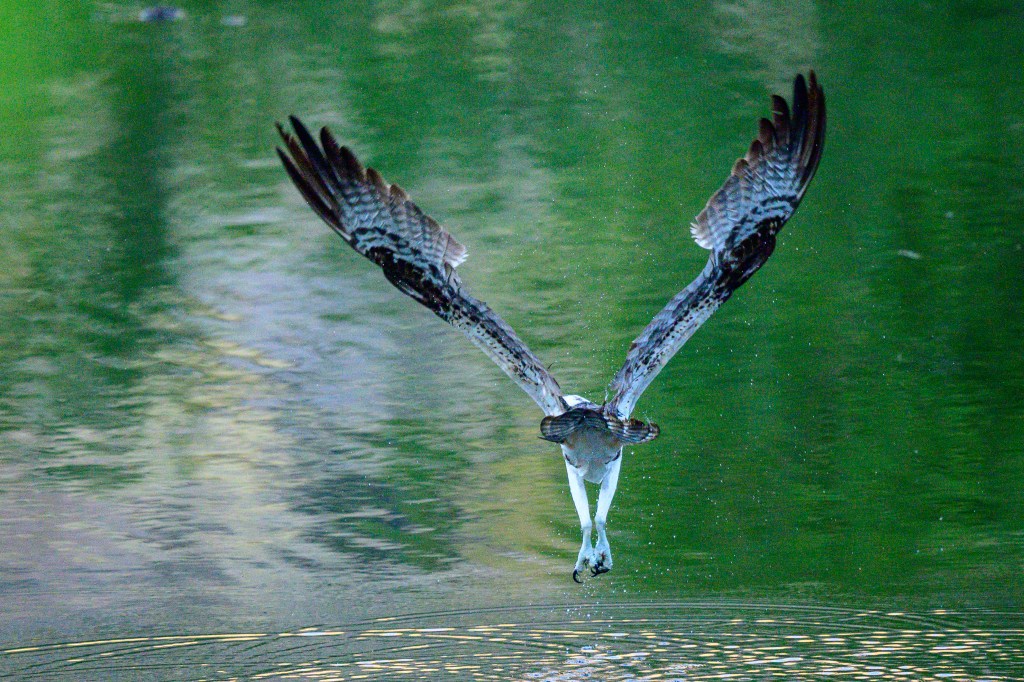
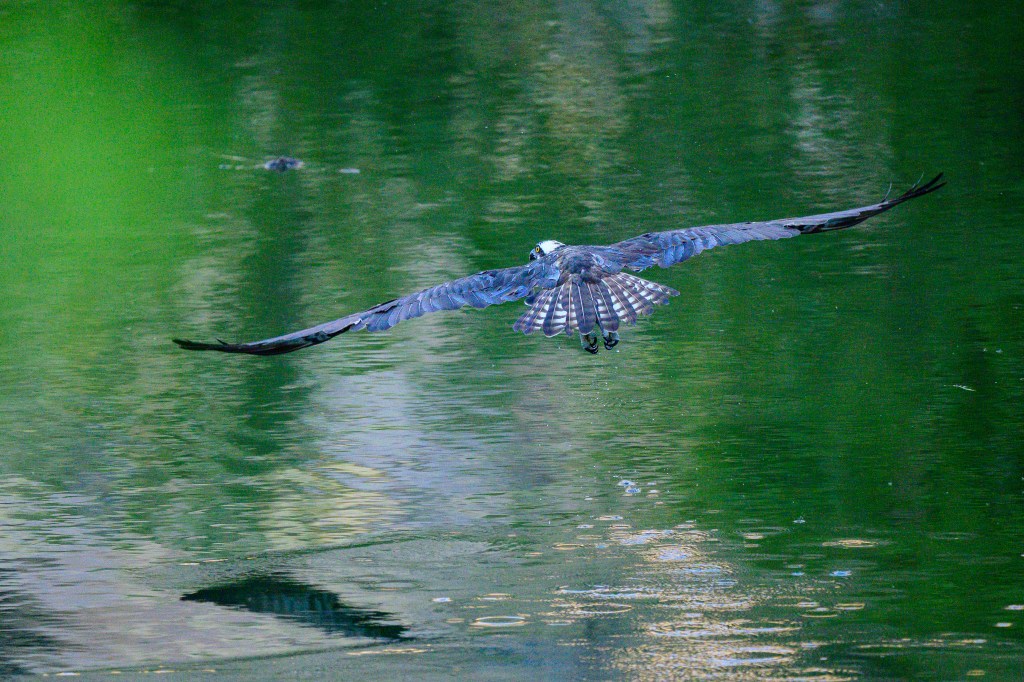
Ospreys cruise 20 to 100 feet over the Pleasant Valley Reservoir, looking for fish within four feet of the surface. When the dive starts, they use a head-first position, but in the last tenth of a second, the feet come forward with talons open for the catch. The splash is impressively noisy. The bird may submerge entirely. Then powerful wingbeats lift it, with a squirming burden, back up into the air. Observers have reported that 20 to 80% of dives are successful. Success depends on type of fish, water conditions, lighting, and so on.
The next three pictures show a dive that failed. The bird came up empty.
The next series of pictures shows a successful dive. First the bird spots a target.
Then the dive starts.
Head first now

Feet drop down and talons open.
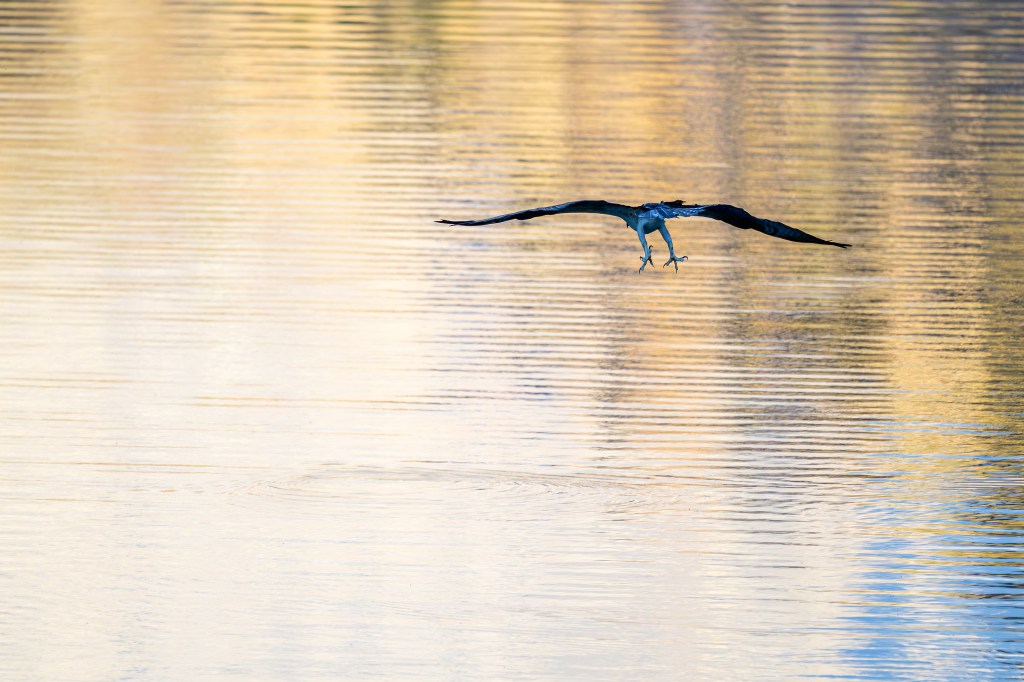
Feet thrust forward in last split-second
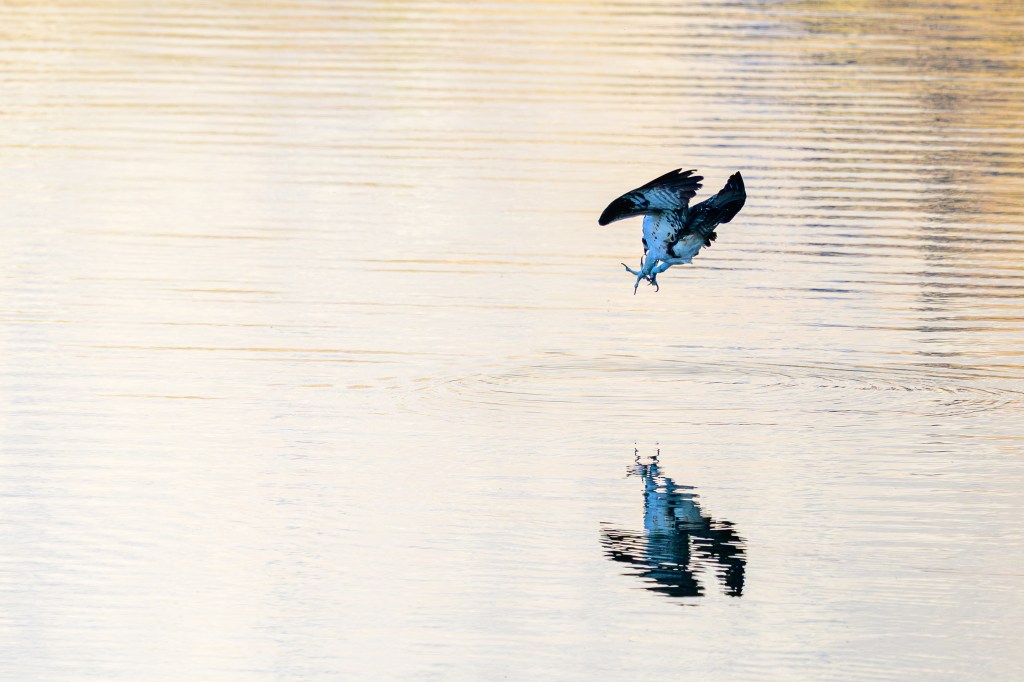
Wham. Impact speeds up to 40 mph have been reported. The bird vanished right after the impact.
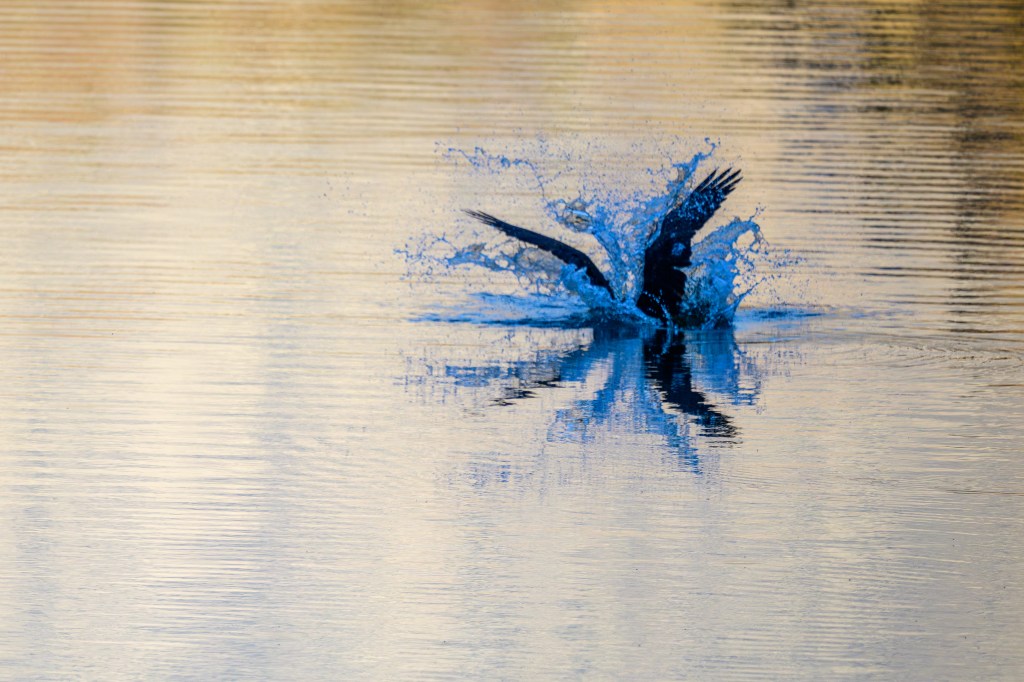
Head appears
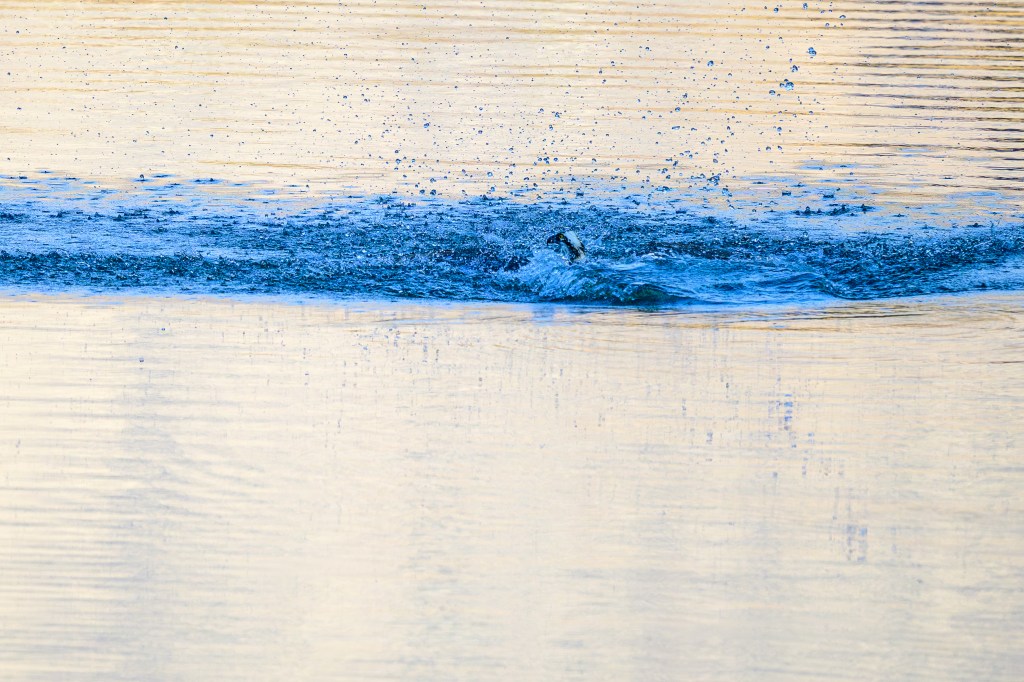
Wings appear

The struggle to get into the air, using powerful wing muscles.


Success!


One footed hold
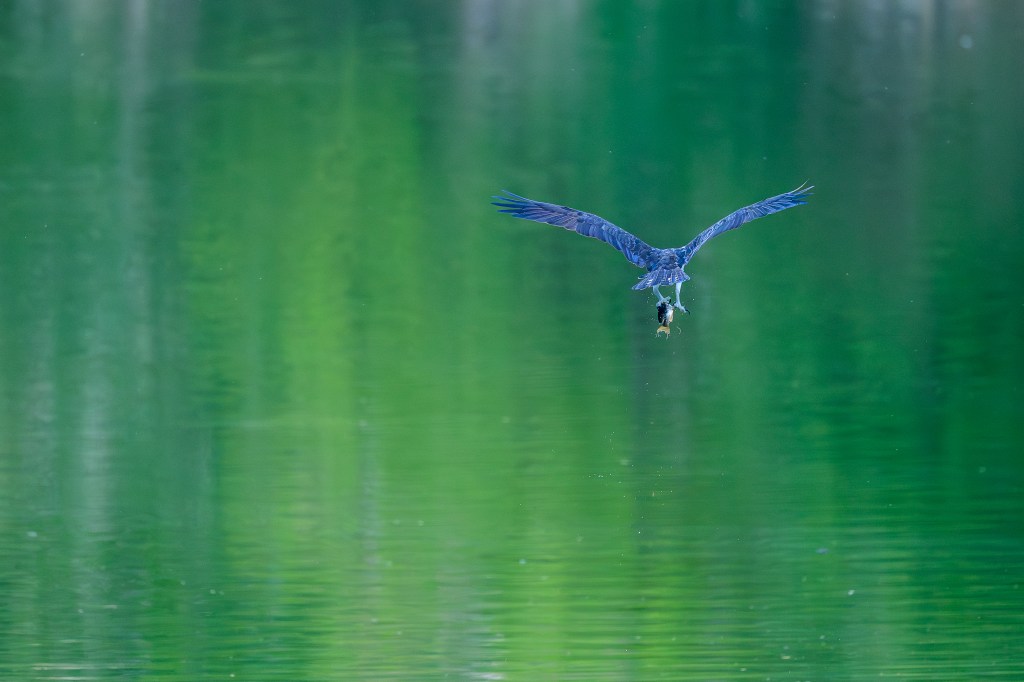
In the next shot, the bird throws its tail to the left, to shake out water. More about this shaking later.

The bird continues to use just one foot to hold the fish
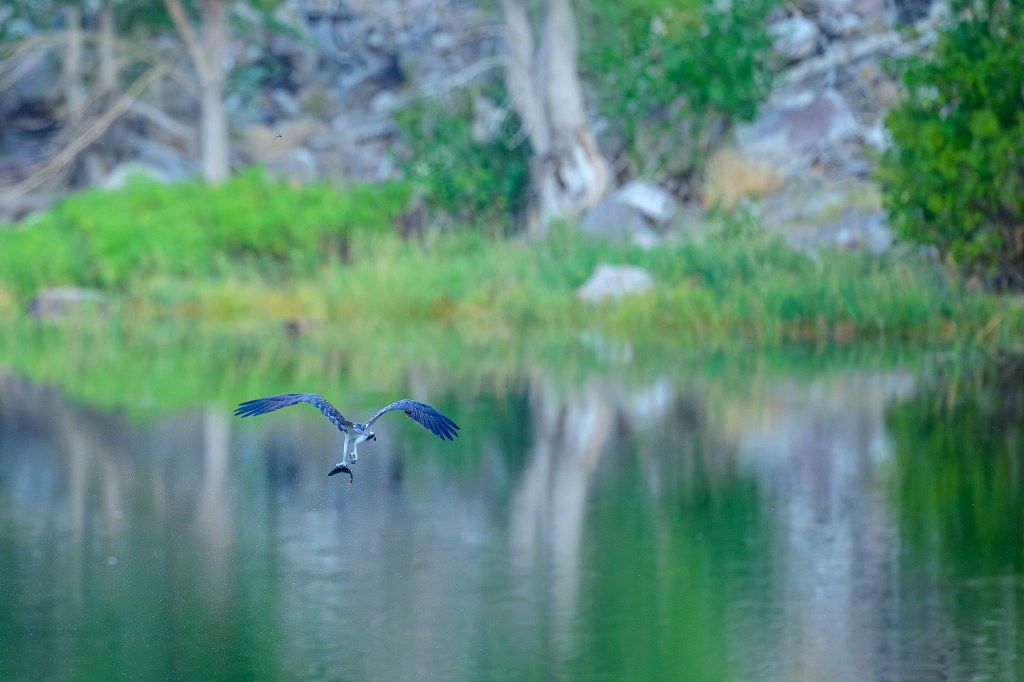
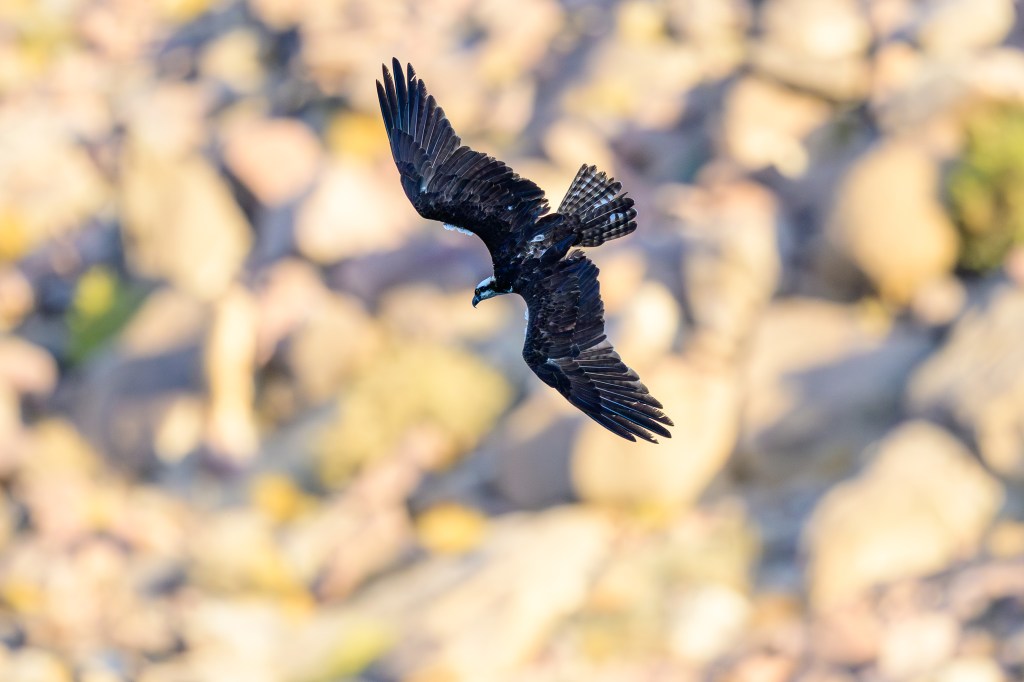
On September 21, 2025, I filmed another dive. The first photo shows the start, with the bird well lit by the sun.
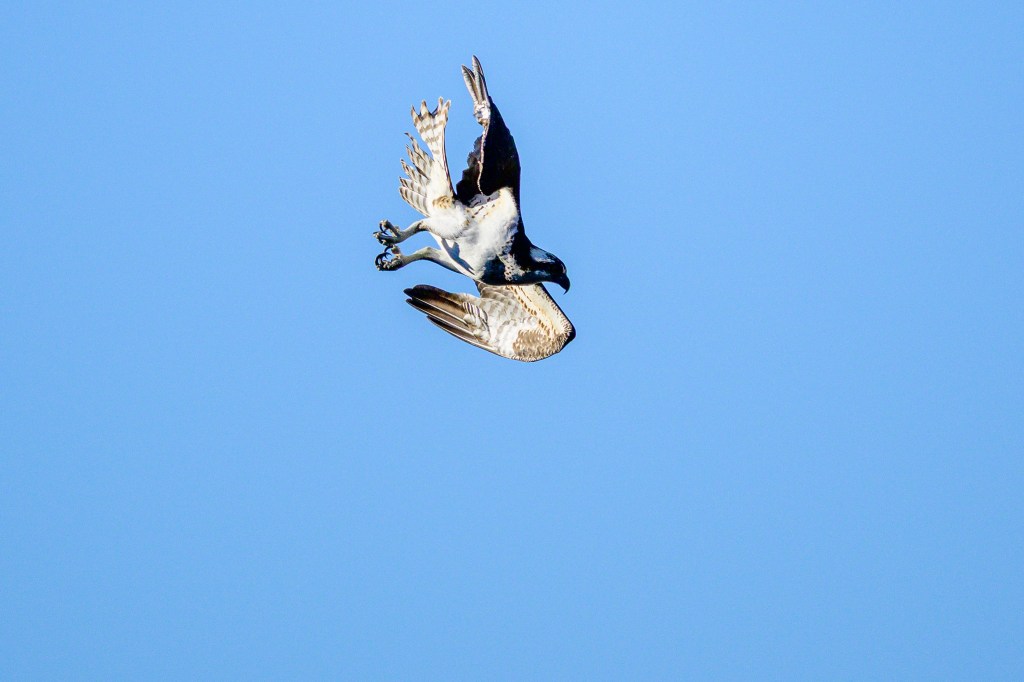
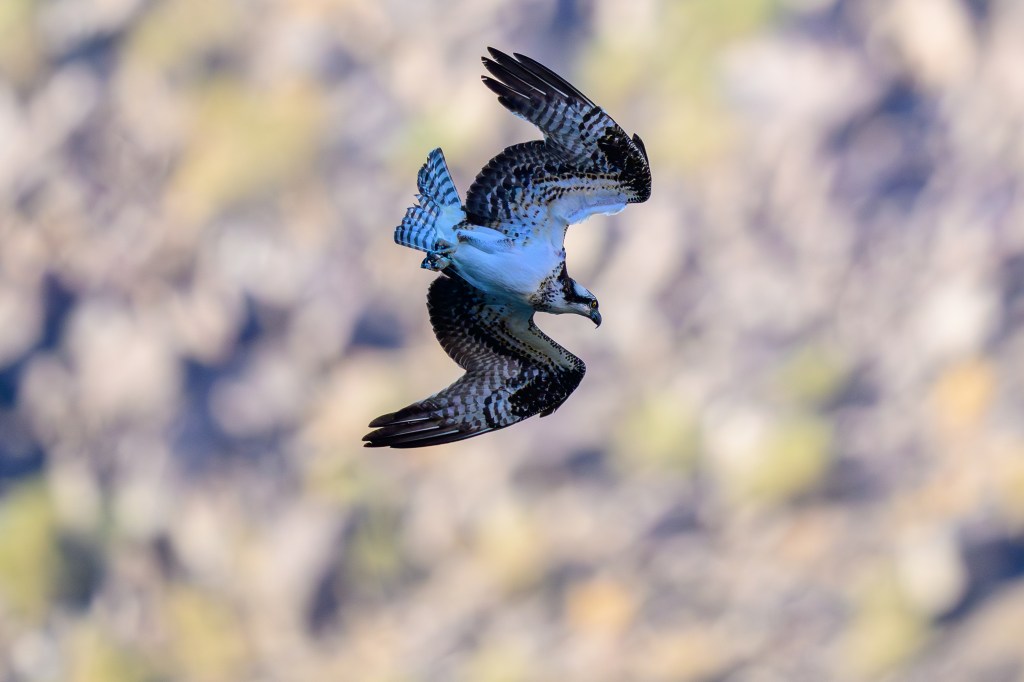
The next photo shows the bird lower down, wings in a “W” formation. This dive came to an end before the bird hit the water; evidently the fish moved.
Shake it Baby!
After diving for a fish, the osprey will often be soaked. Its feathers are oily and dense, to resist getting totally soggy. But the bird still needs to shed water to save weight, to allow the feathers to work properly, and to avoid losing heat. Getting dry makes flight faster and easier. Wet feathers waste energy and make the bird vulnerable. In one earlier photo, I commented that the bird was shaking its tail to get rid of water. Next I’ll show two sequences of this shaking behavior, both taken at the Pleasant Valley Reservoir.
Series A. A juvenile bird failed to get a fish. Three photos show water dripping behind and below the flying bird.

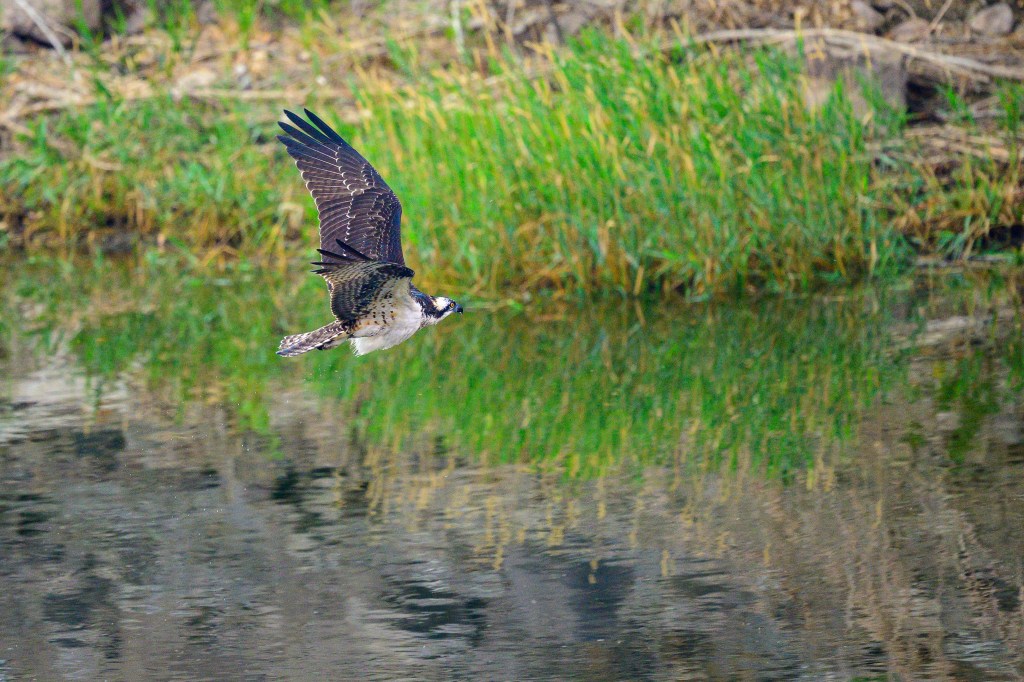
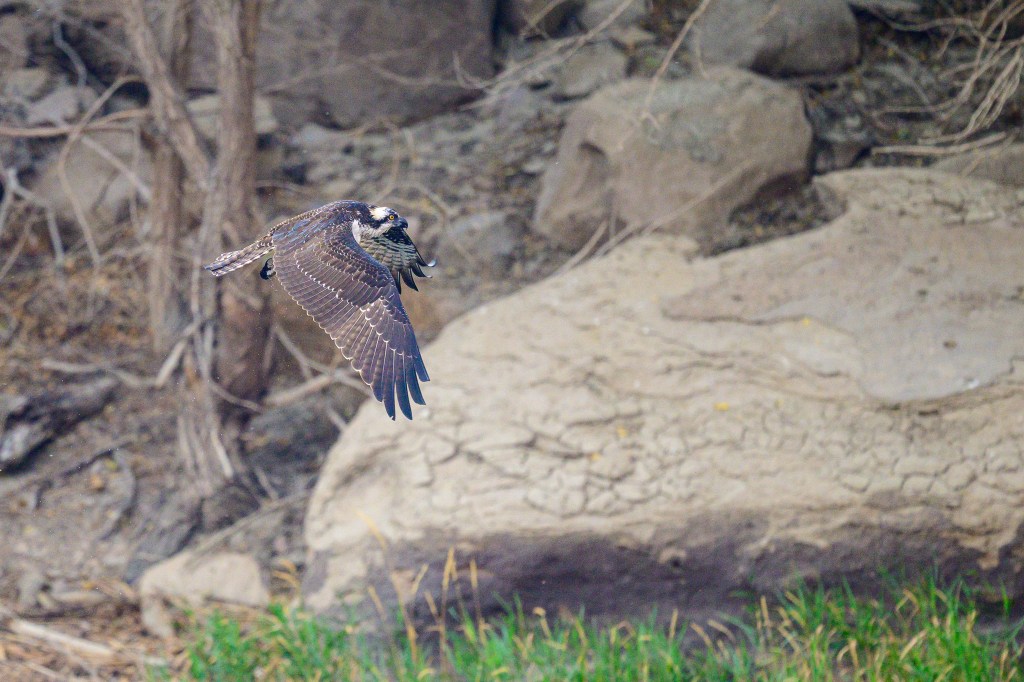
In the next picture the bird starts to swivel its head to shake it
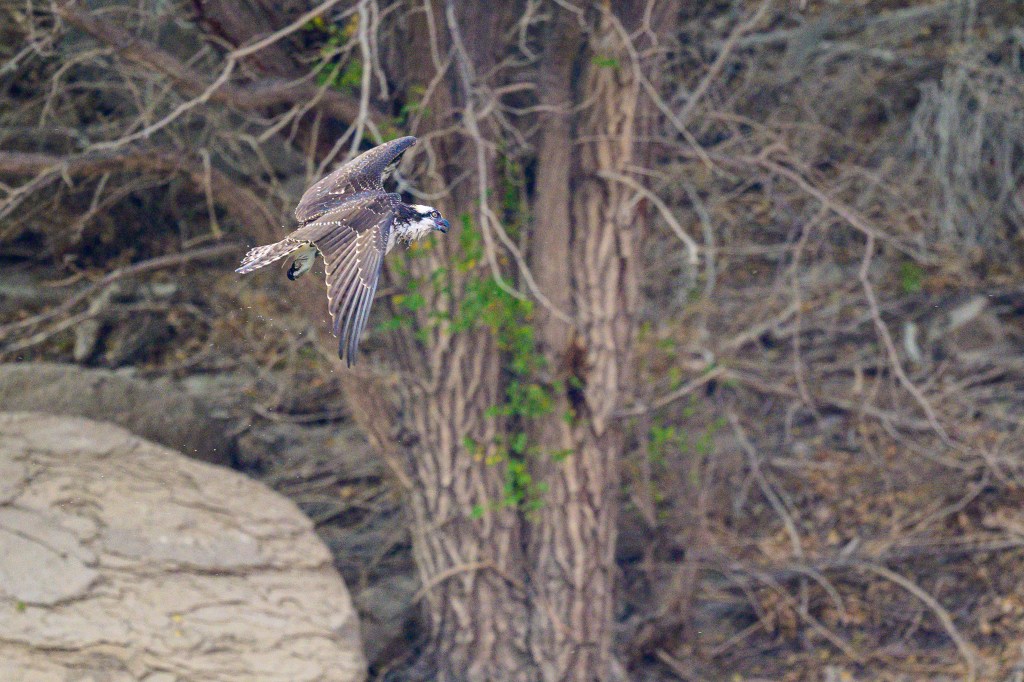
Then the bird acts as if it is in the Exorcist. Fierce shaking throws off a cloud of water
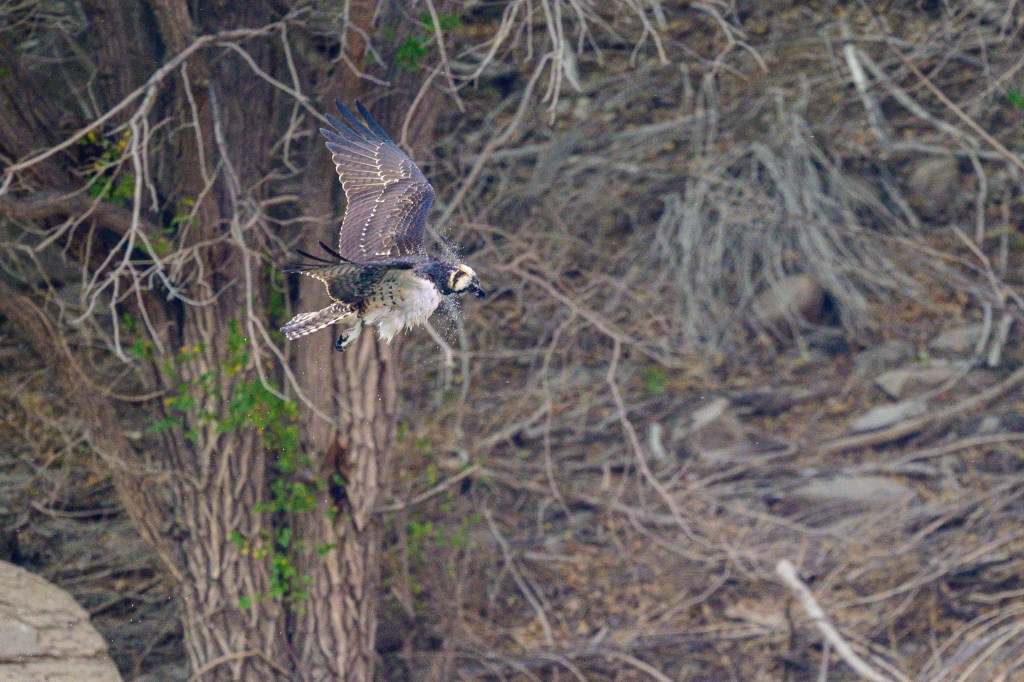

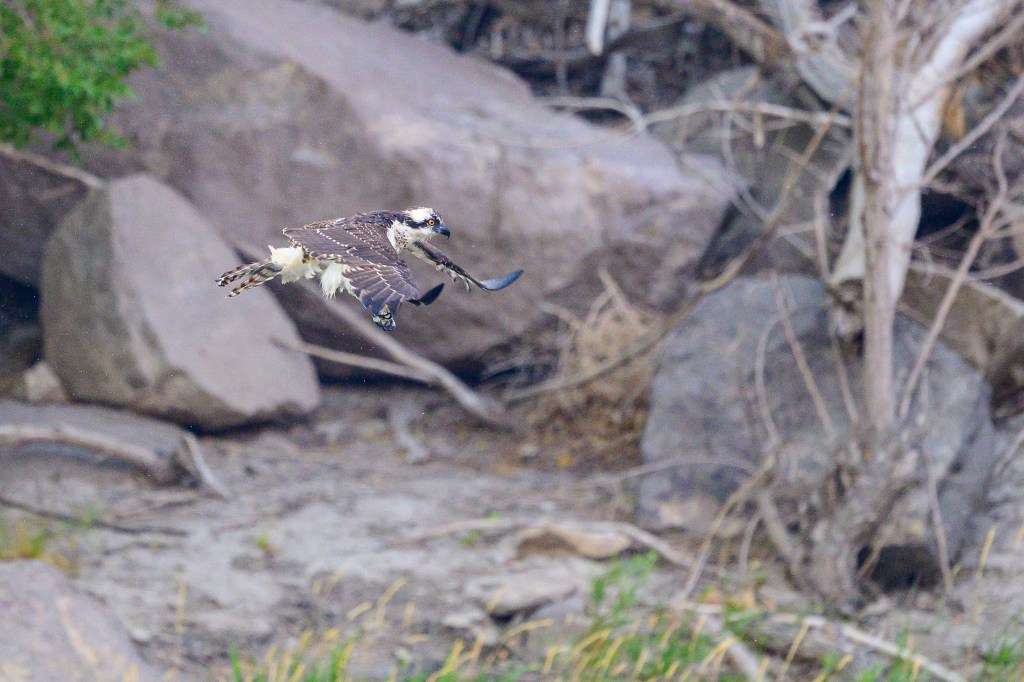
Shaking stops, but feathers are disheveled
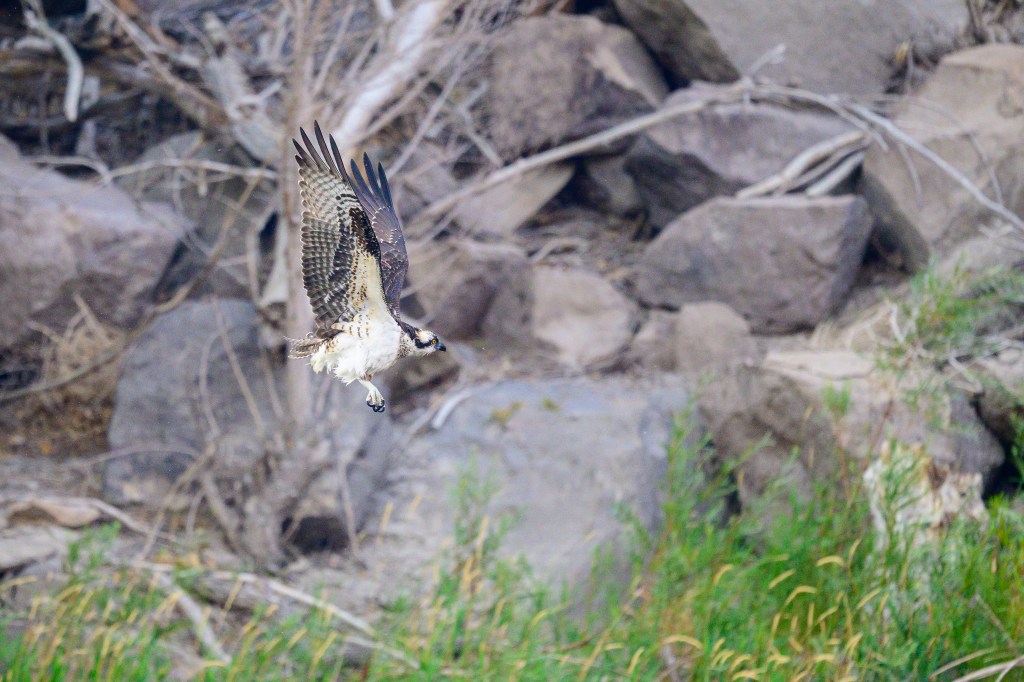
Just three seconds later, the bird looks smooth and orderly, as if it dried off with a little towel.
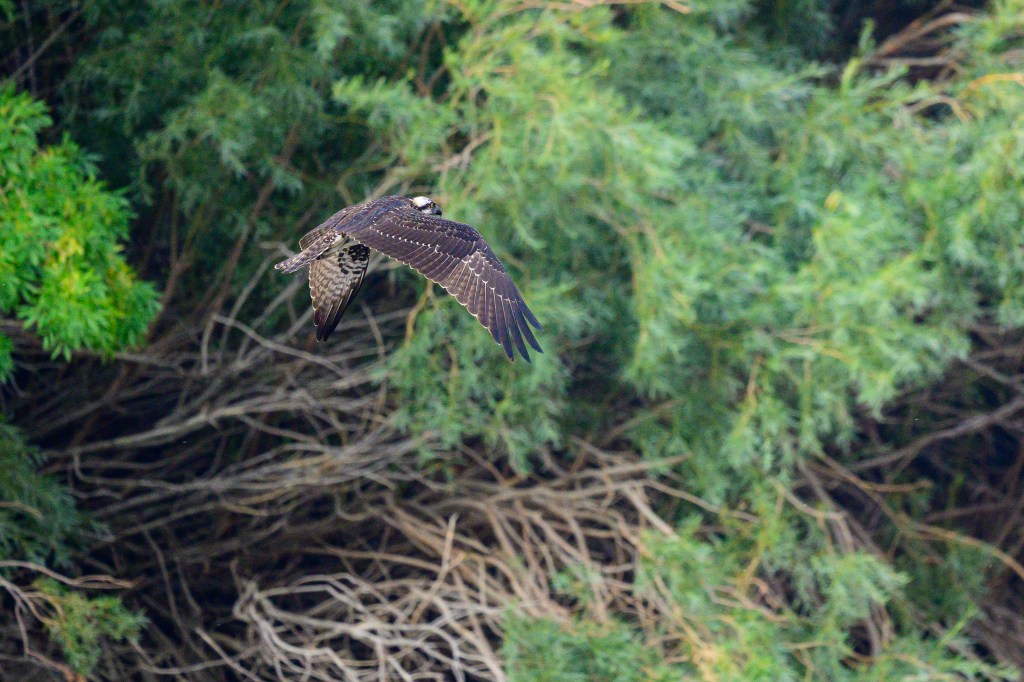
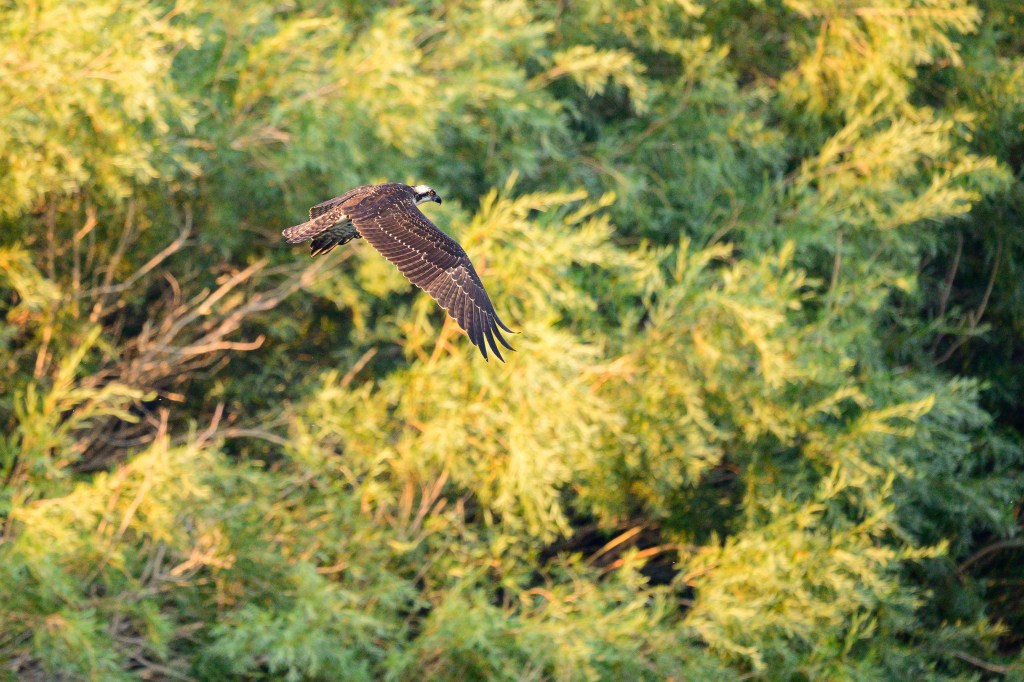
Series B. The bird below plunged into the water a little behind me. I heard the splash and started taking pictures as it rose up without a fish. Water drips from the feathers and the belly looks like a wet rag.
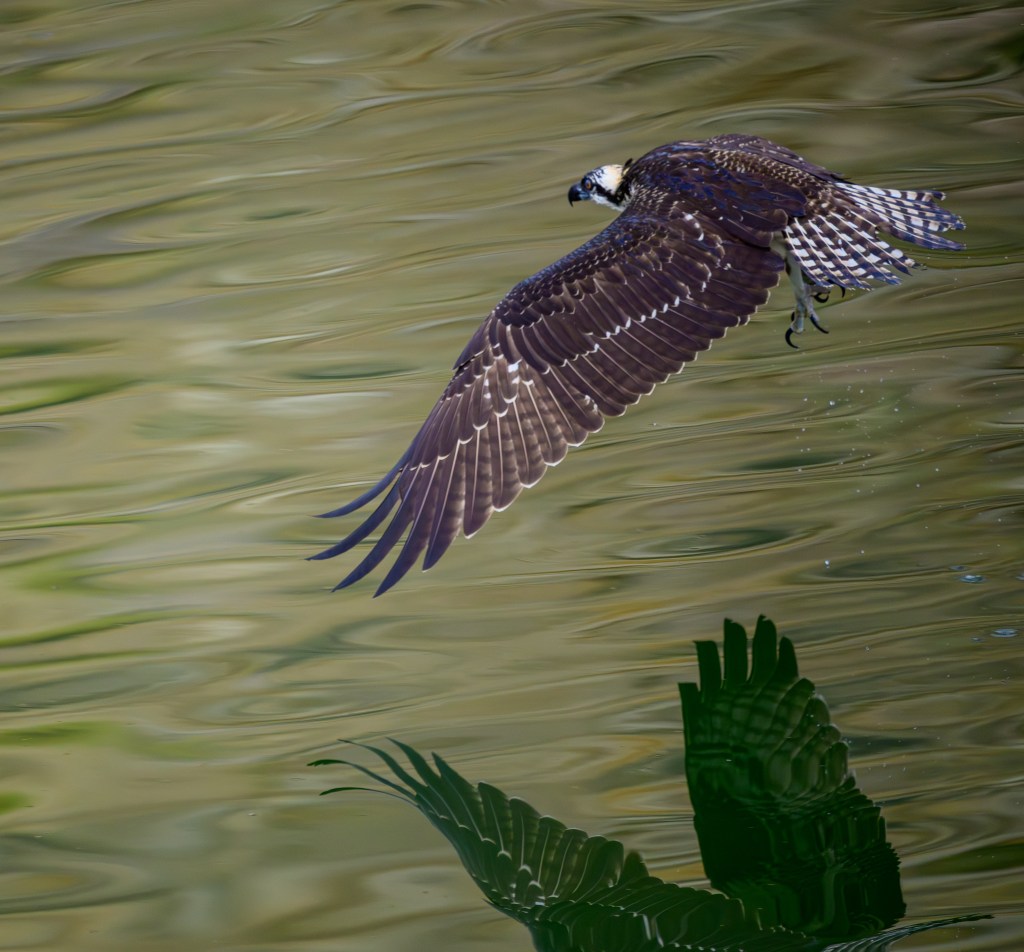
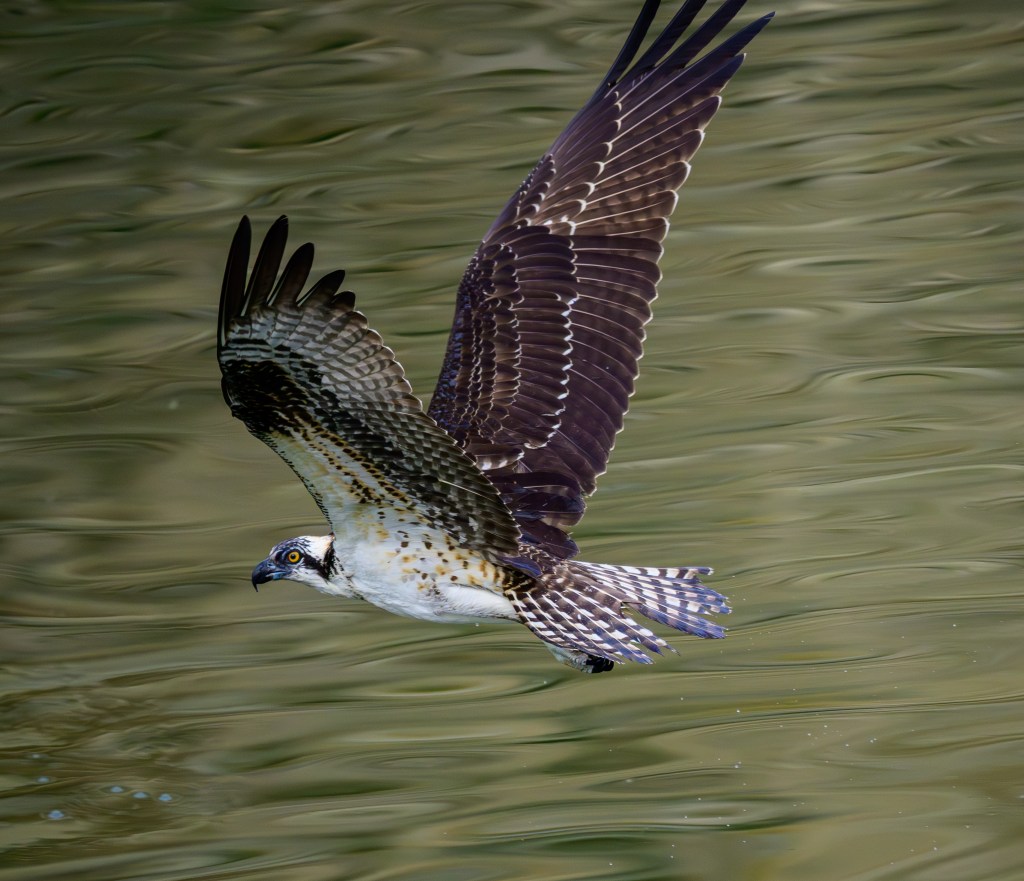
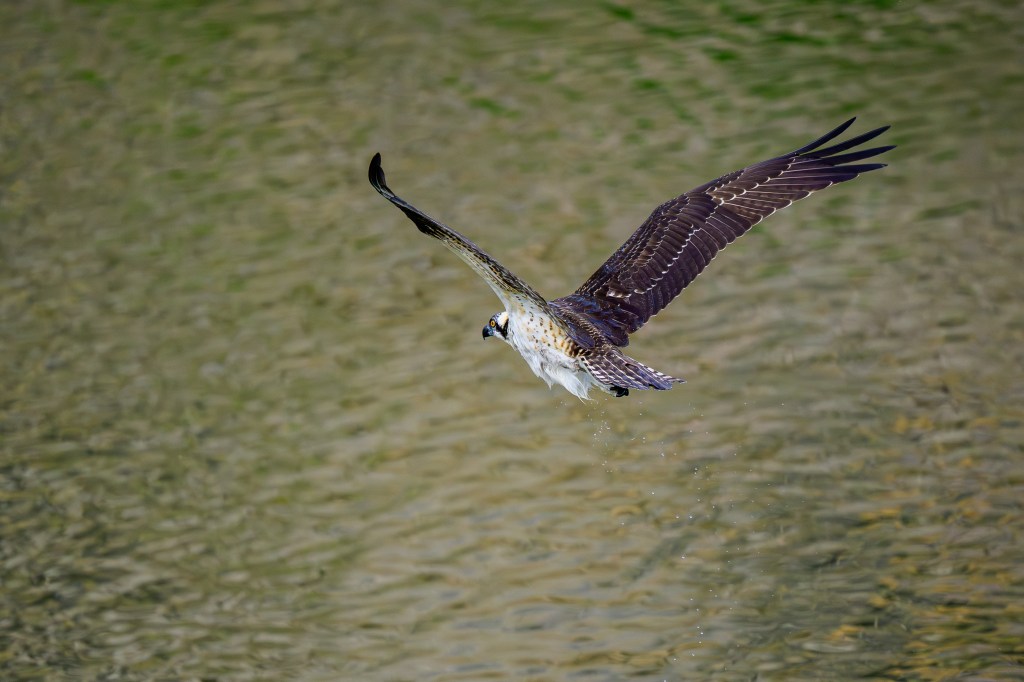
First the head starts shaking, followed by spasms of the body, tail, and even wings. A cloud of water flies off the bird. By the last photo the bird is so bedraggled that it is actually falling out of the air. This was all over in one second.
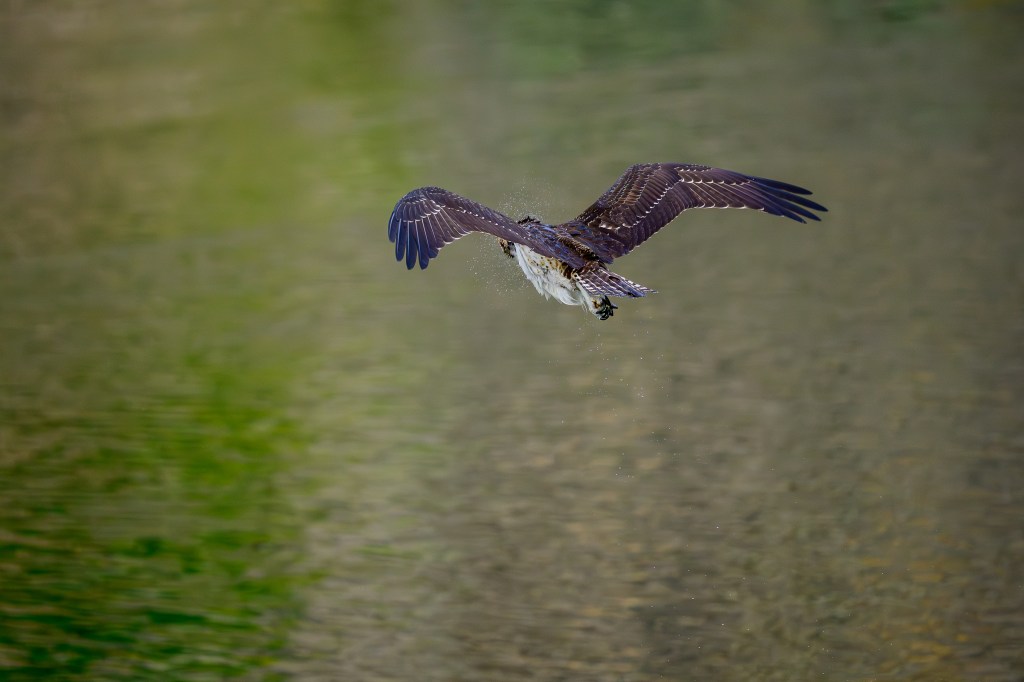
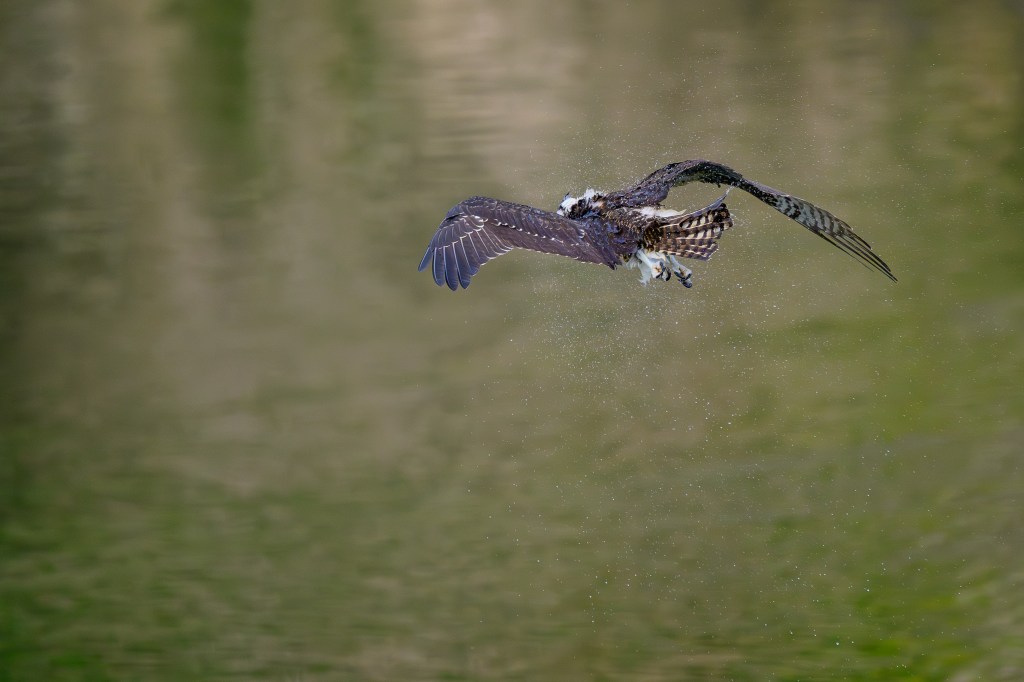
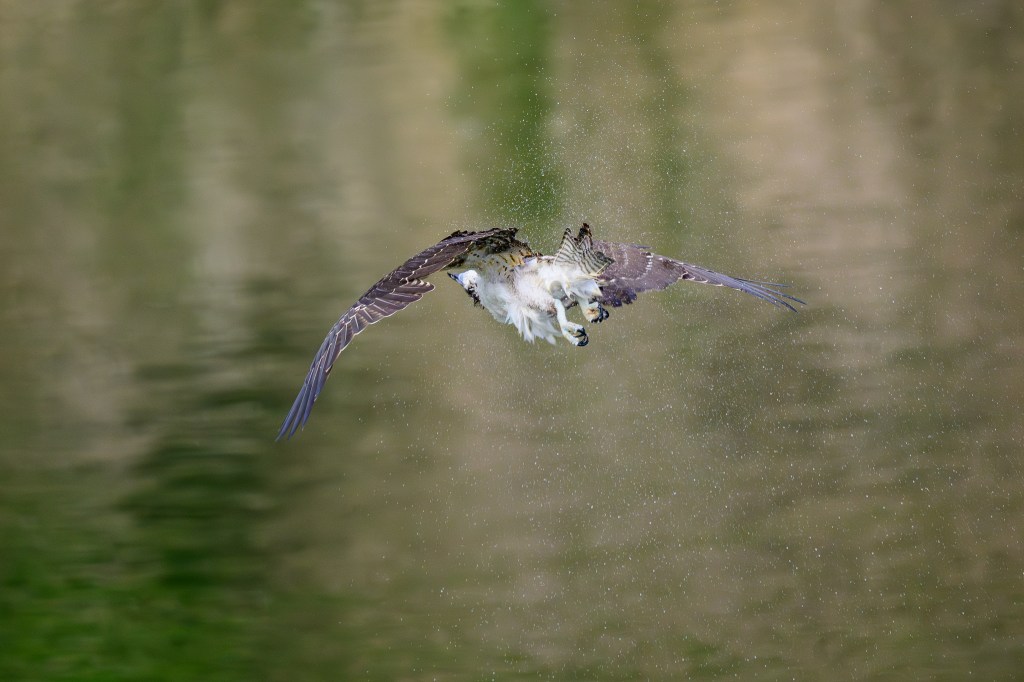
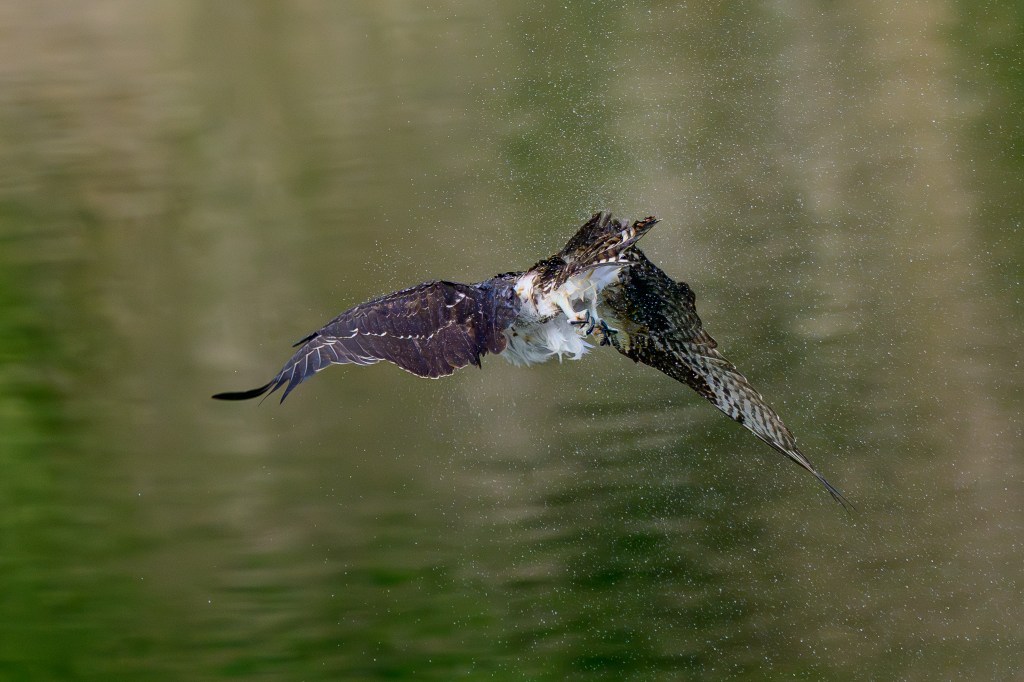
This shaking behavior of Ospreys is well-described in books. I’ve photographed other birds that shake themselves dry in the air: Belted Kingfisher, Double-crested Cormorant, Green-winged Teal.
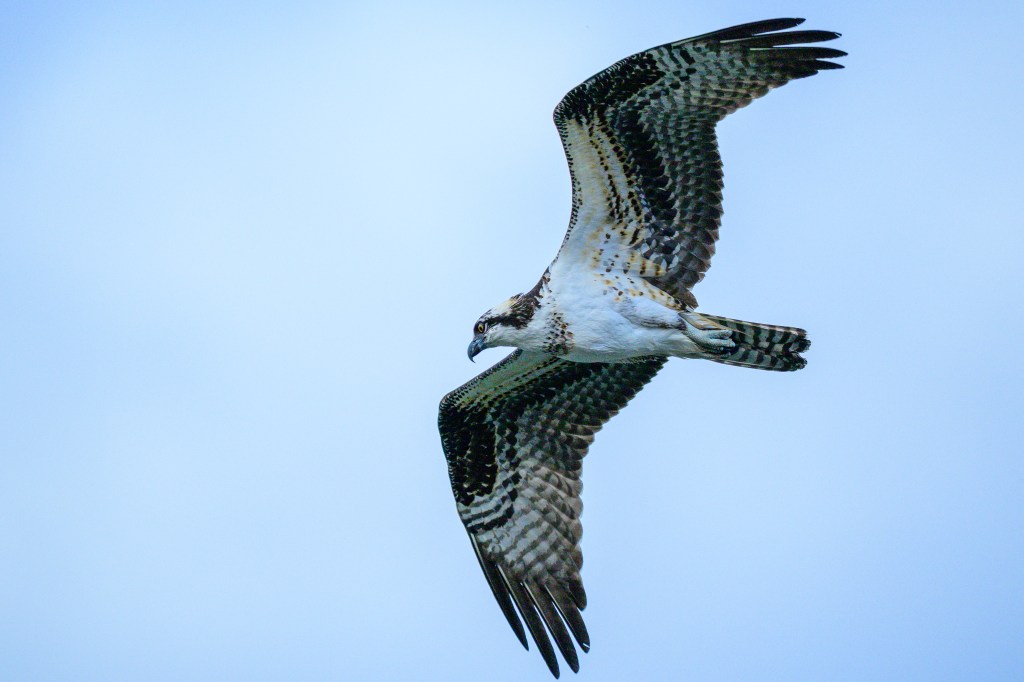
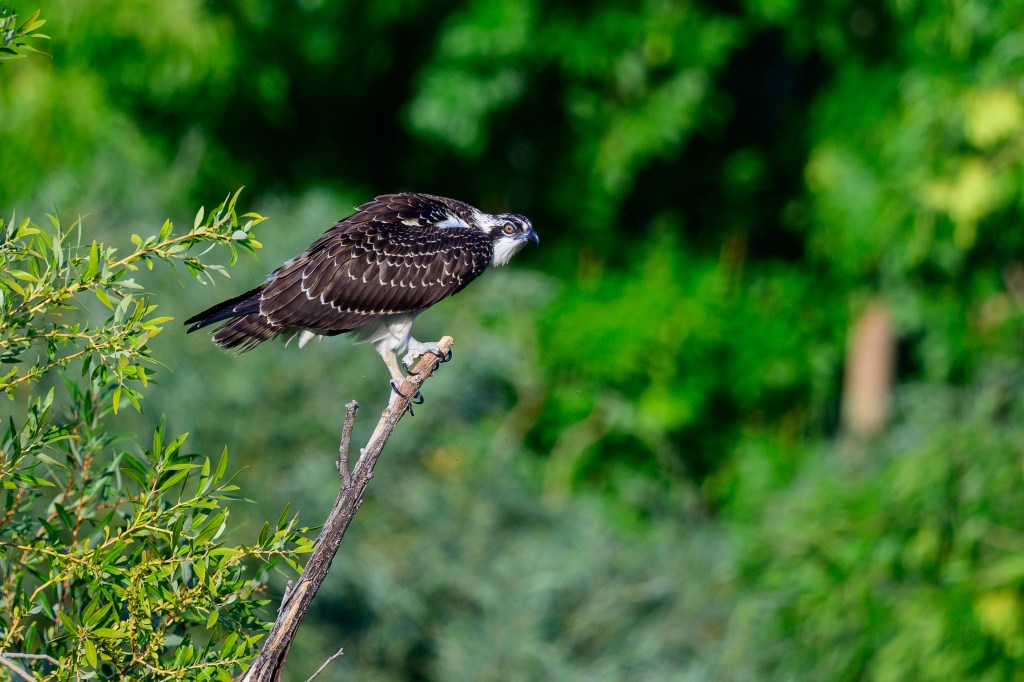
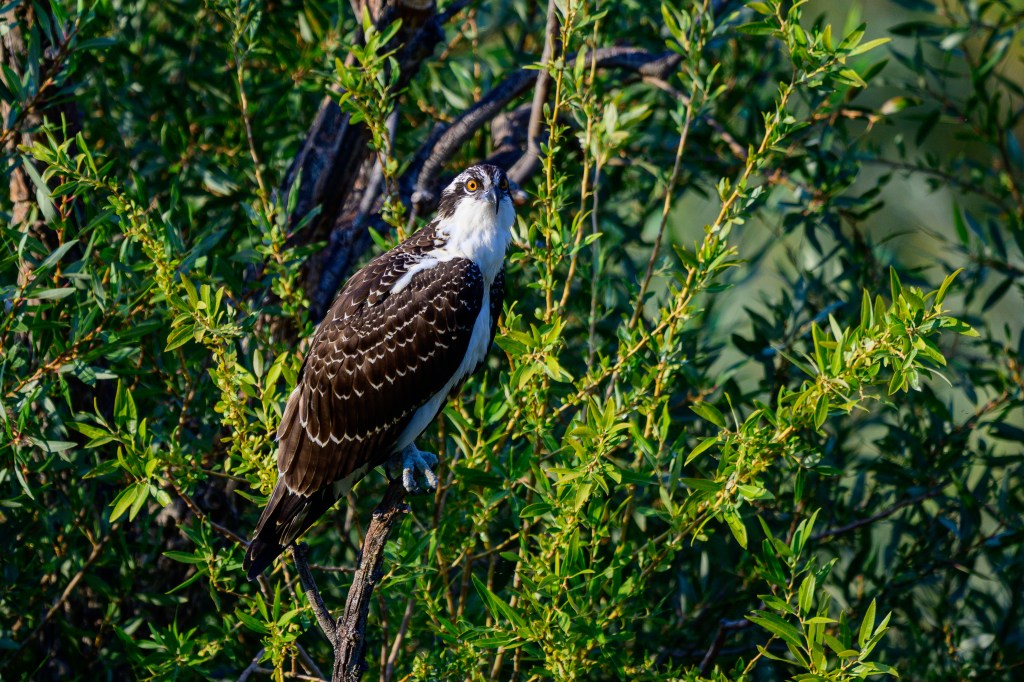
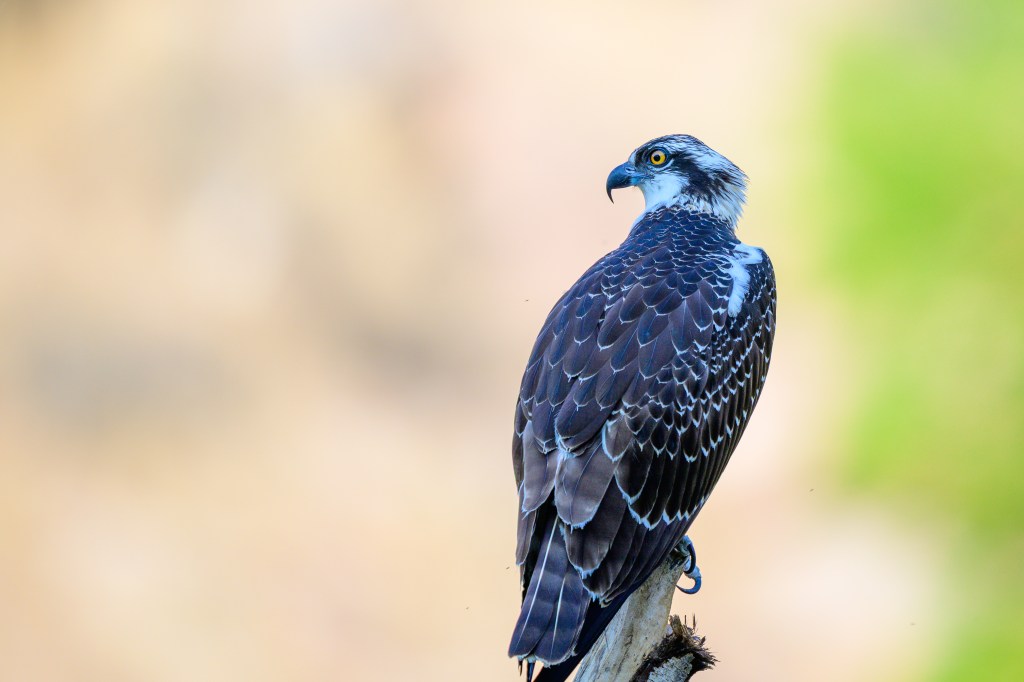
Portraits
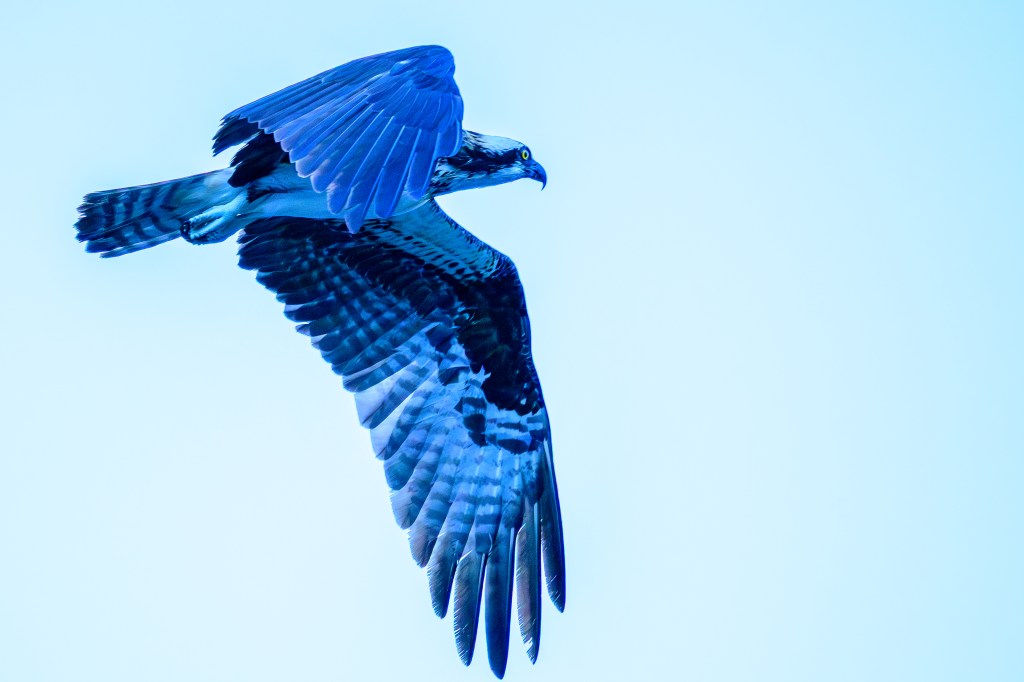
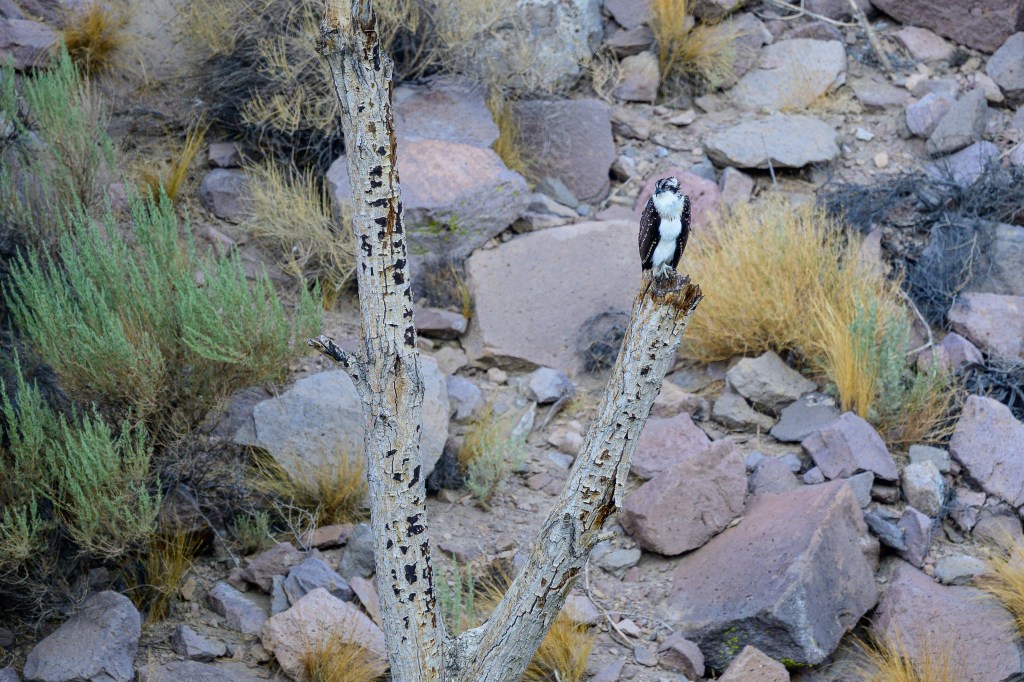
The next photos are Osprey portraits from several Bishop locations. First an Osprey takes off along Bishop Creek Canal.
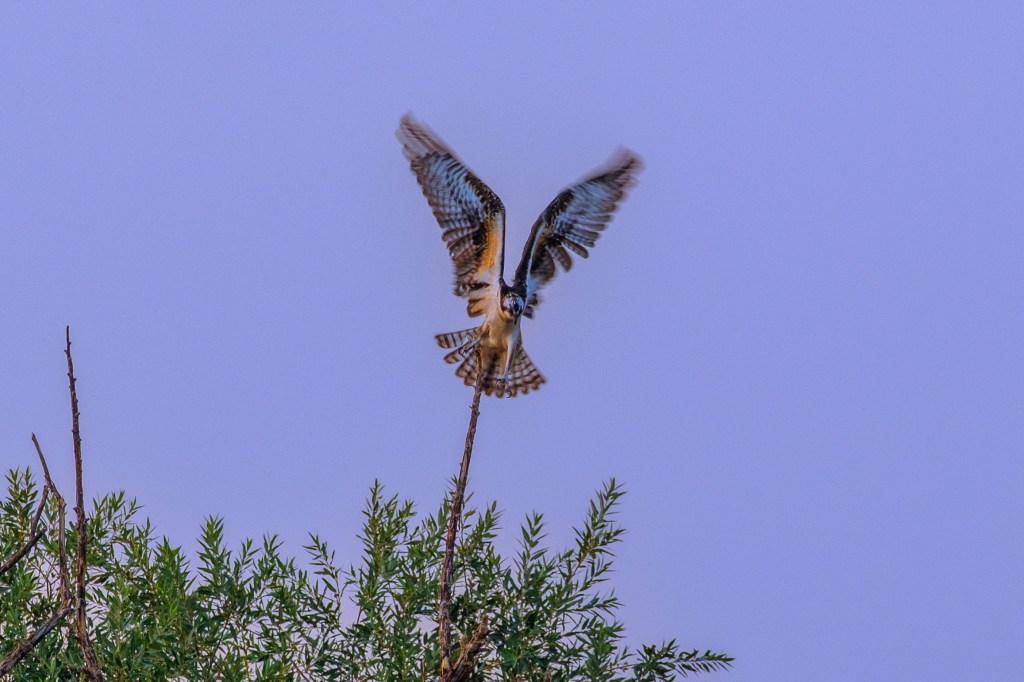
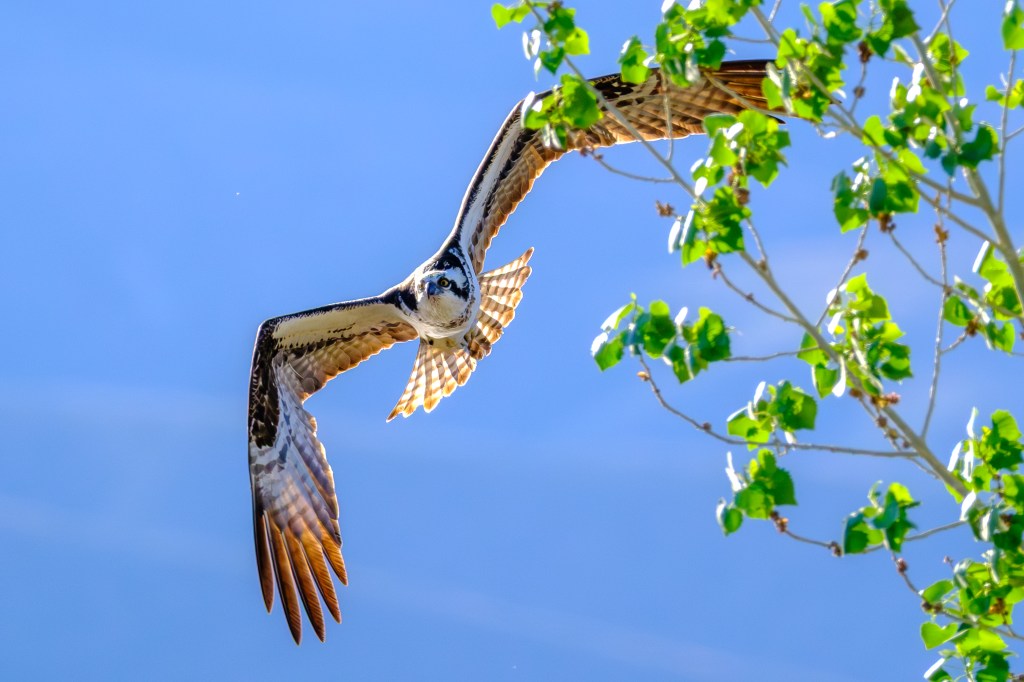
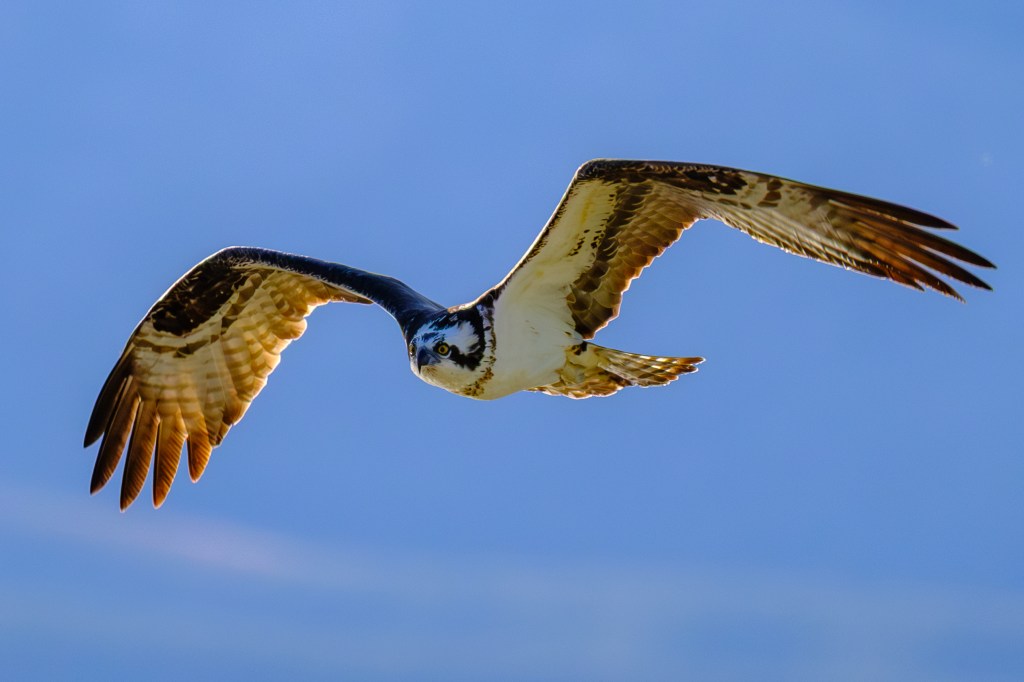
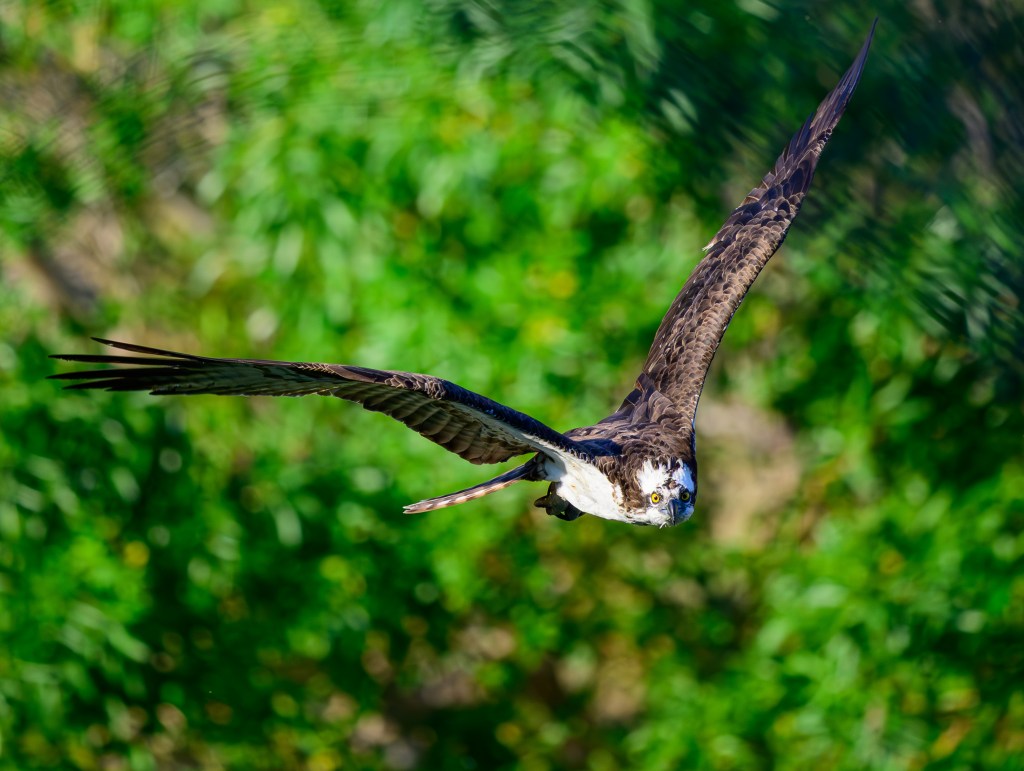
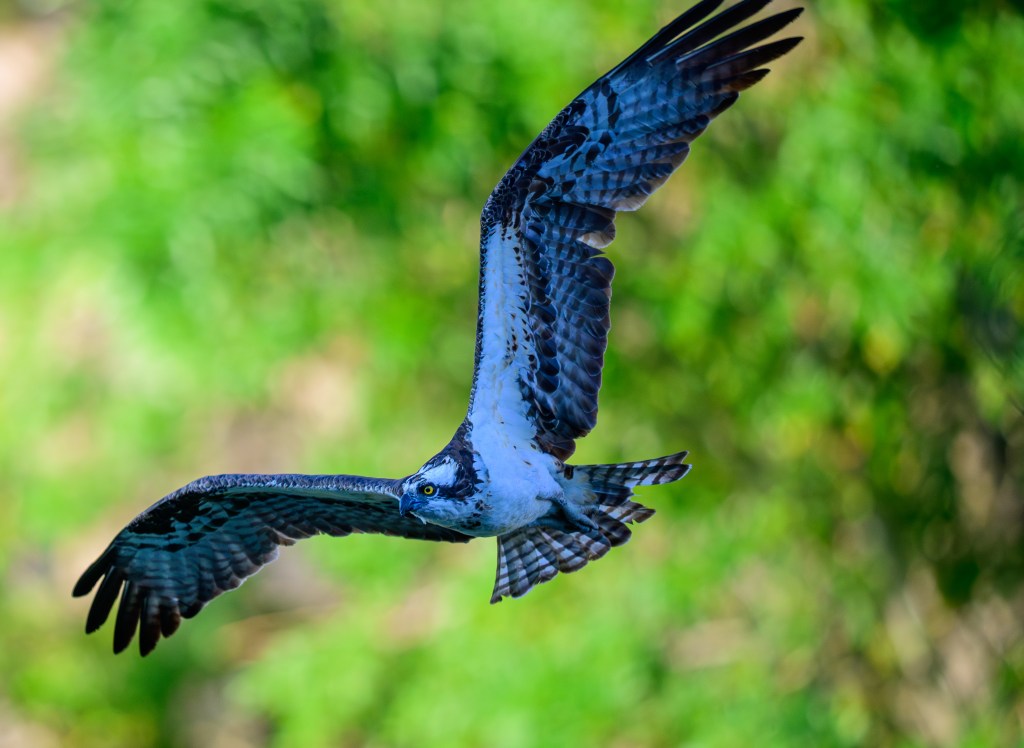
Then two pictures from the Buckley Ponds. Ospreys in the air often bend their wings at the wrist, so they form a W (or M) shape.
Osprey at the Conservation Open Space Area (COSA)
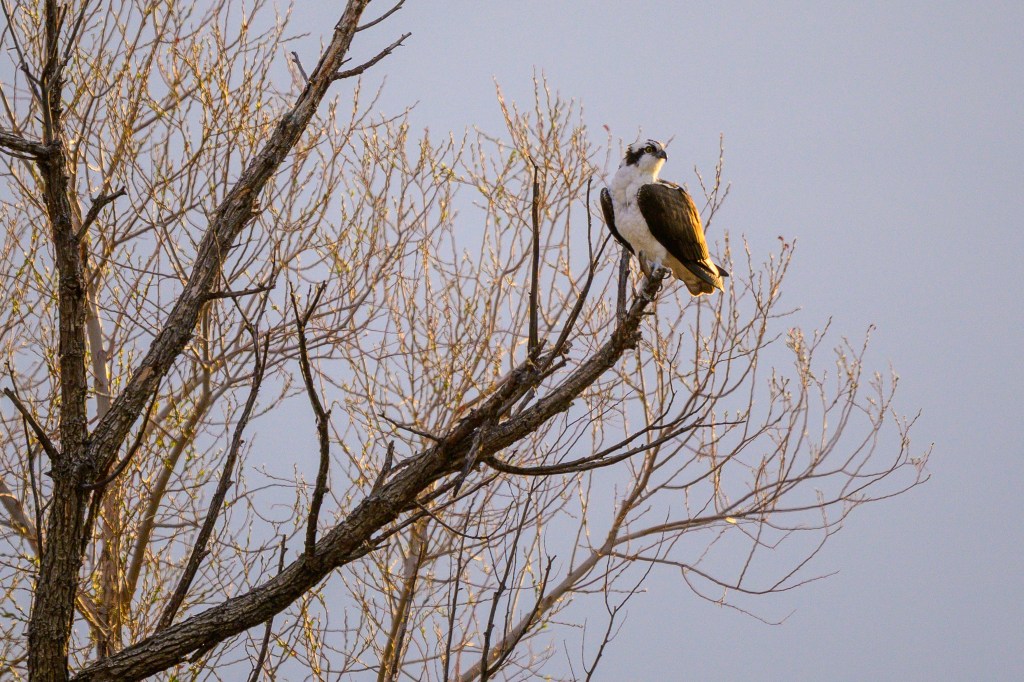
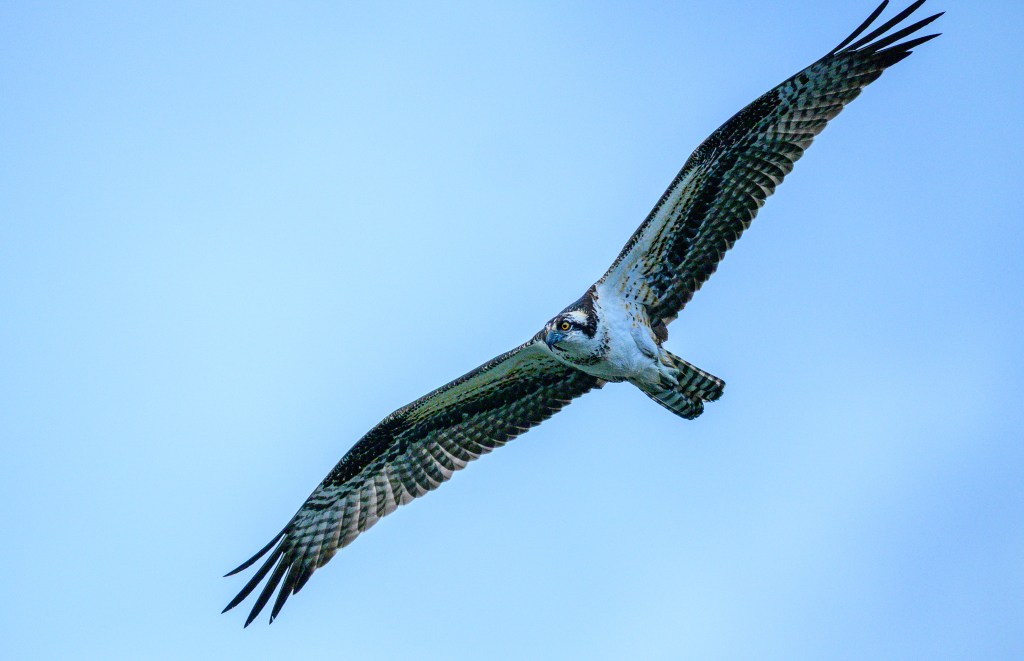
The remaining portraits are from the Pleasant Valley Reservoir.

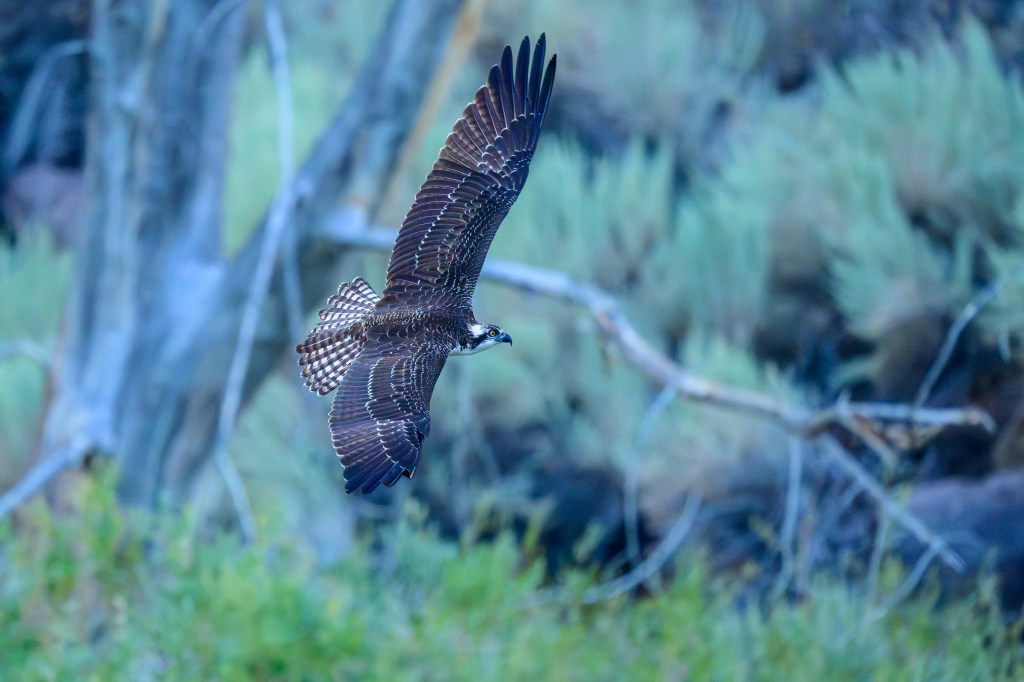
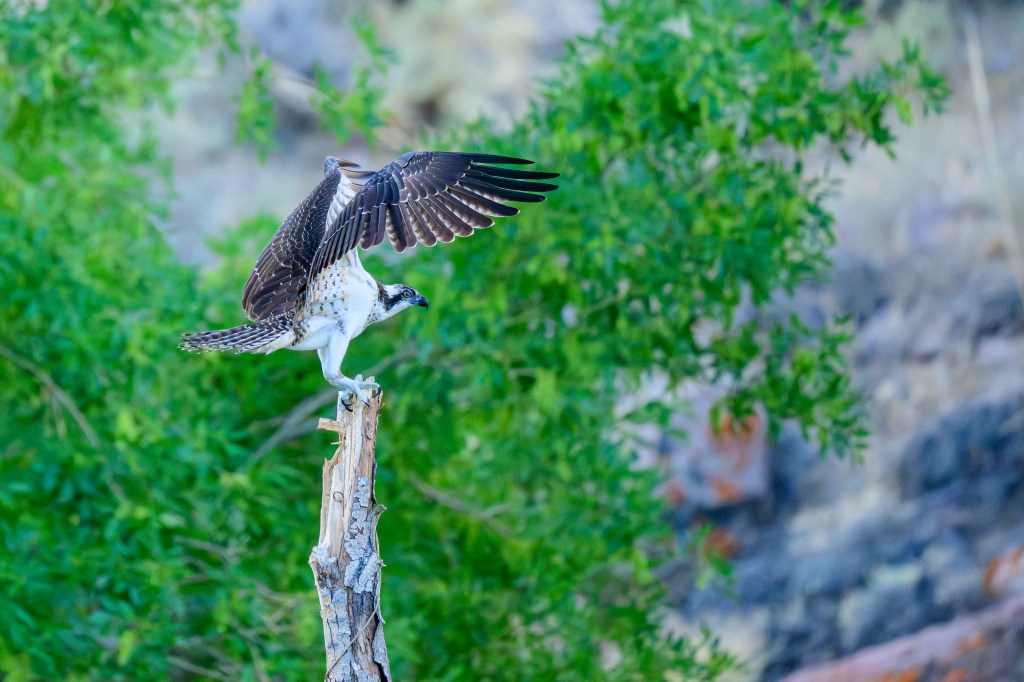
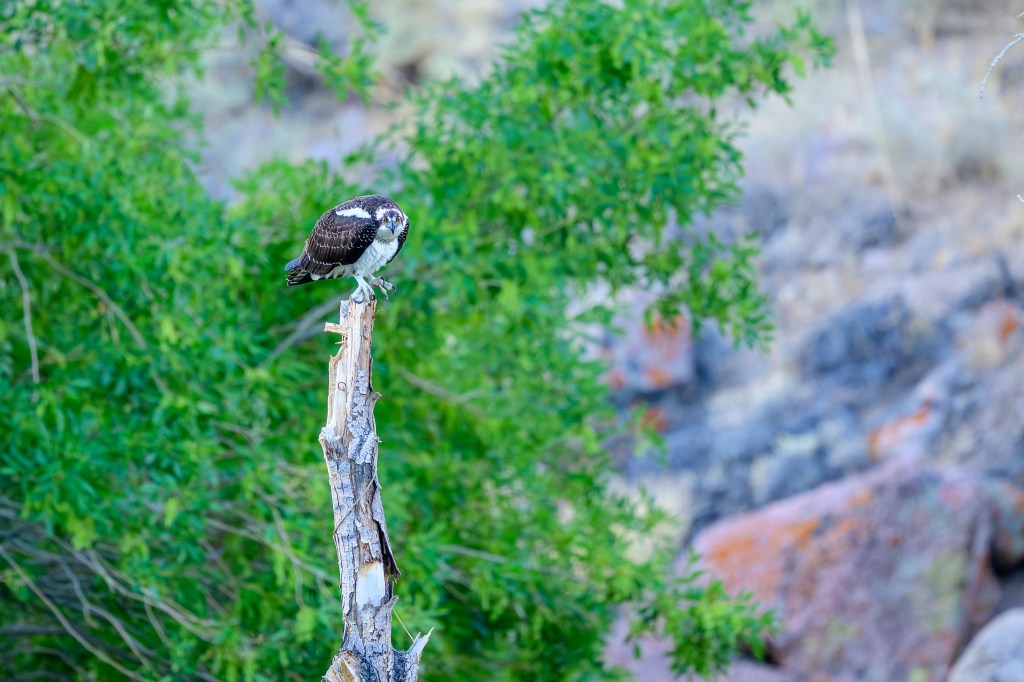

The Competition
Humans fish at the Pleasant Valley Reservoir. When we walk there, it is common to meet a half-dozen fishermen with gear that may include small rafts and up to five rods per person. Osprey are competing for fish with these humans. They are also competing with other birds, including the ones below, all photographed at the Reservoir:
Bald Eagles have been known to attack Ospreys in the air and steal their fish.

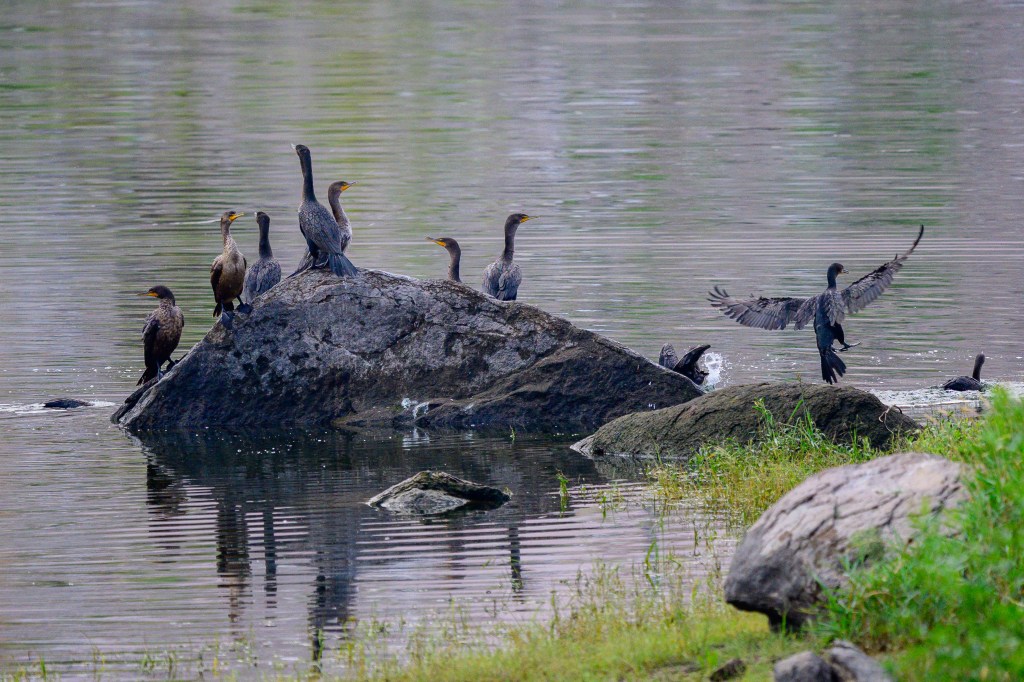
Double-crested Cormorants. Some cormorants are reported to be the most efficient fish-catchers of all birds; more ounces of fish per calorie of effort.
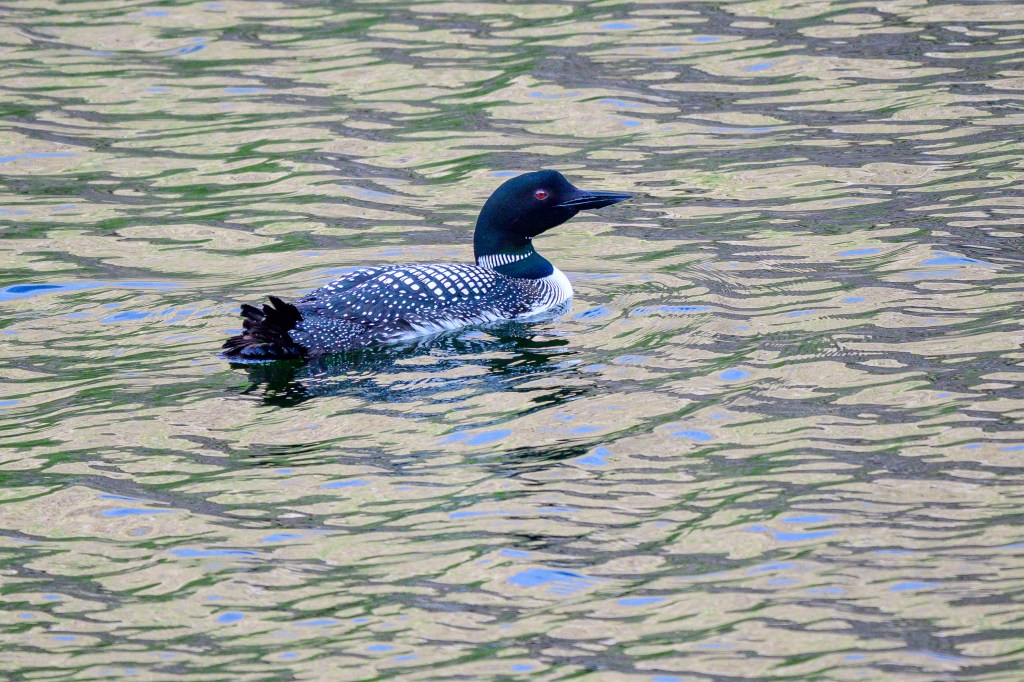
Common Loon
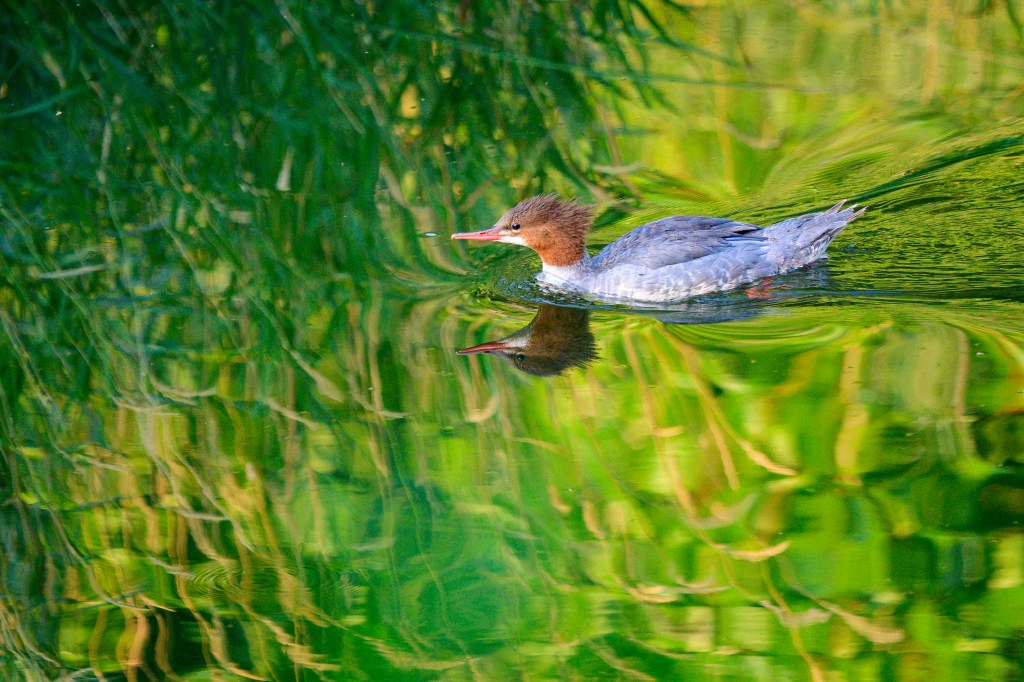
Common Merganser
Great Egret in the process of catching a small fish

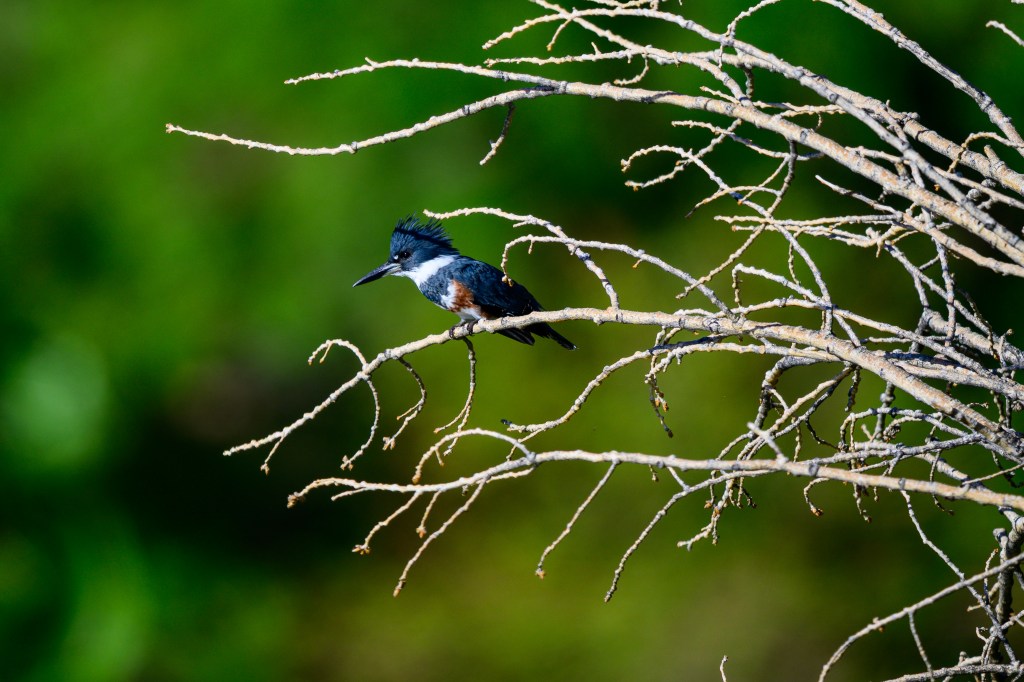
Belted Kingfisher
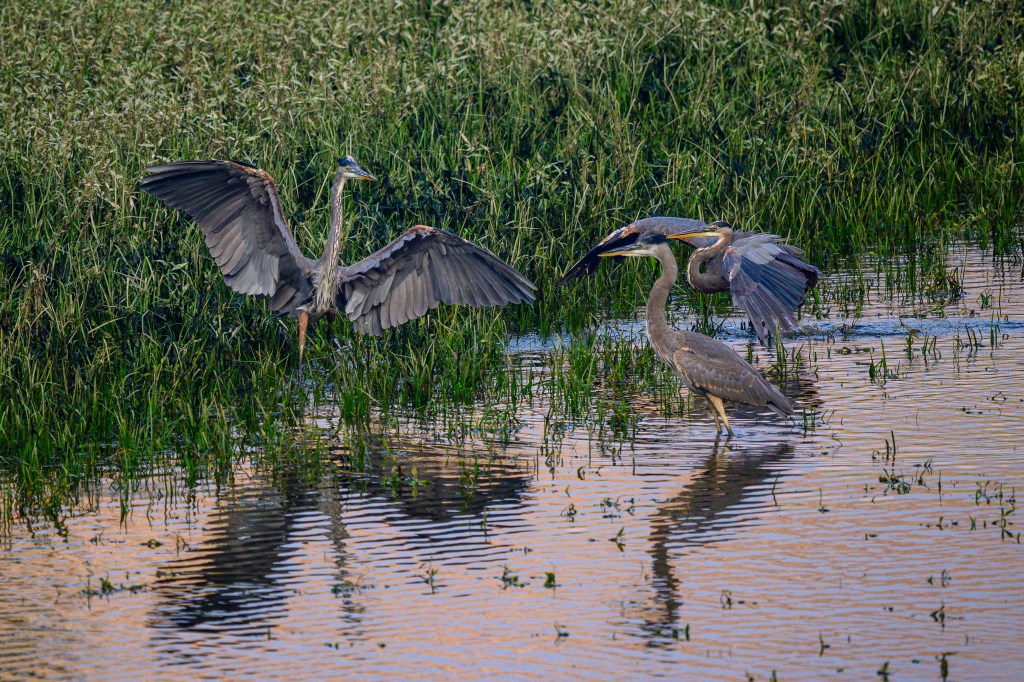
Great Blue Herons, a group of three
Great Blue Heron with a large fish. These birds do not spear fish; they catch them between their mandibles. The heron had a lot of trouble choking down this fish.
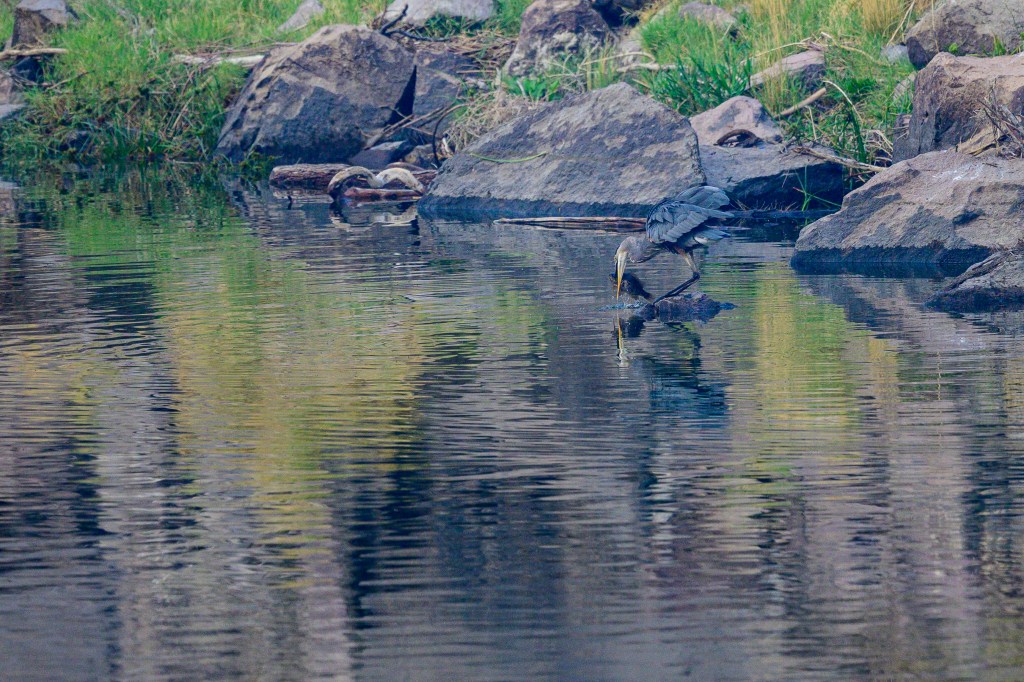
The poor fish; everyone wants a piece of them.
 Birds of Bishop