
Bishop lies at 4000 feet in the sagebrush ocean. The landscape hosts Giant Sagebrush, Rabbitbrush, Sulfur Buckwheat, and other drought-tolerant plants. Precipitation averages 5 inches a year. Despite being a desert town, the nearby Sierra Nevada collects snow and rain, which fills local creeks and canals. We have ponds in the City Park and the Conservation Open Space Area. Within a ten-mile radius is the Pleasant Valley Reservoir, the Buckley Ponds, and Klondike Lake. Because of this water, we have waterfowl; Swans, geese, and ducks. Most birds that migrate via the Pacific Flyway pass west of the Sierra, over California’s great Central Valley. But a sliver of this migration passes on the east side of the Sierra, over the Owens Valley. This blog post contains pictures of twenty waterfowl species that I photographed within ten miles of Bishop in the last 5 years.
What are waterfowl? This is a North American term applied to swans, geese, and ducks. They have webbed feet and a spatula-like bill. In Britain, this group is generally called wildfowl. Another characteristic is that people think of these birds as food. They are hunted and eaten. Their down feathers are used in pillows.
I’ve sorted these birds into a few tribes. Within each tribe, I ordered them from heaviest to lightest and provide average weight information from Richard Crossley’s guide: Crossley R, Baicich P, Barry J. The Crossley ID Guide: Waterfowl. West Cape May, New Jersey: Crossley Books; 2017. I also give the seasons during which each bird is most likely to be seen, using data from Heindel TS, Heindel JA. Birds of Inyo County, California, Including Death Valley National Park. Camarillo, CA: Western Field Ornithologists; 2023.
Swans
1. Tundra Swan – 15 lb. Winter.
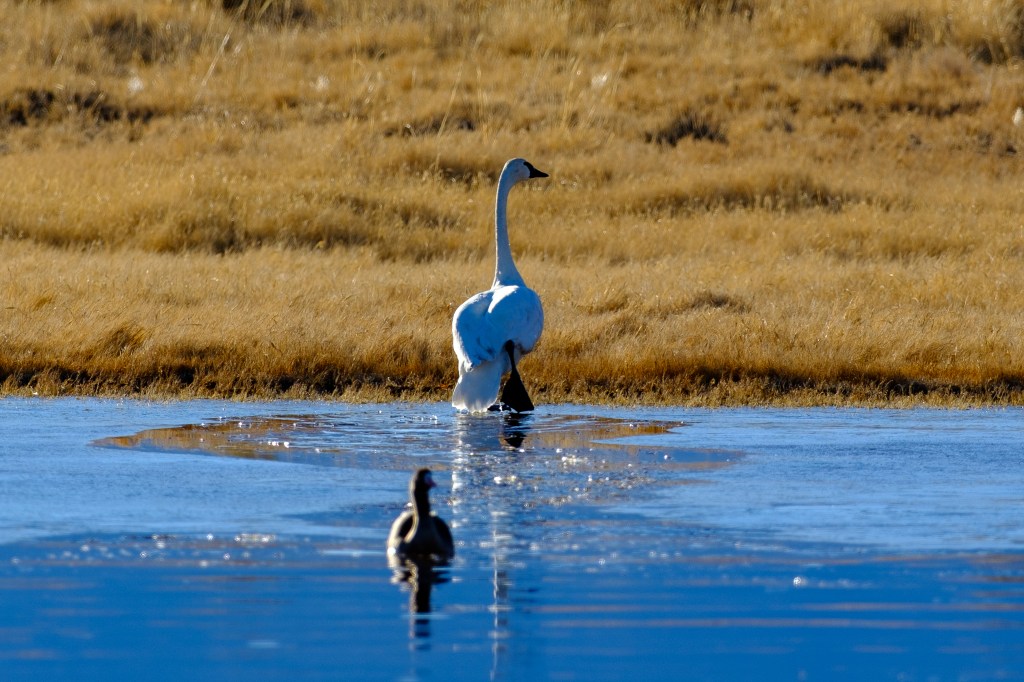
These big birds breed on the tundra of northern Canada. A few winter near Bishop. The photo below was taken at a small pond near Klondike Lake. The Swan’s foot looks like a scuba diver’s flipper. The blurry bird in the foreground is a Greater White-fronted Goose; it looks tiny compared with the Swan.
In the air, you can see that the belly feathers are stained by the muddy water.
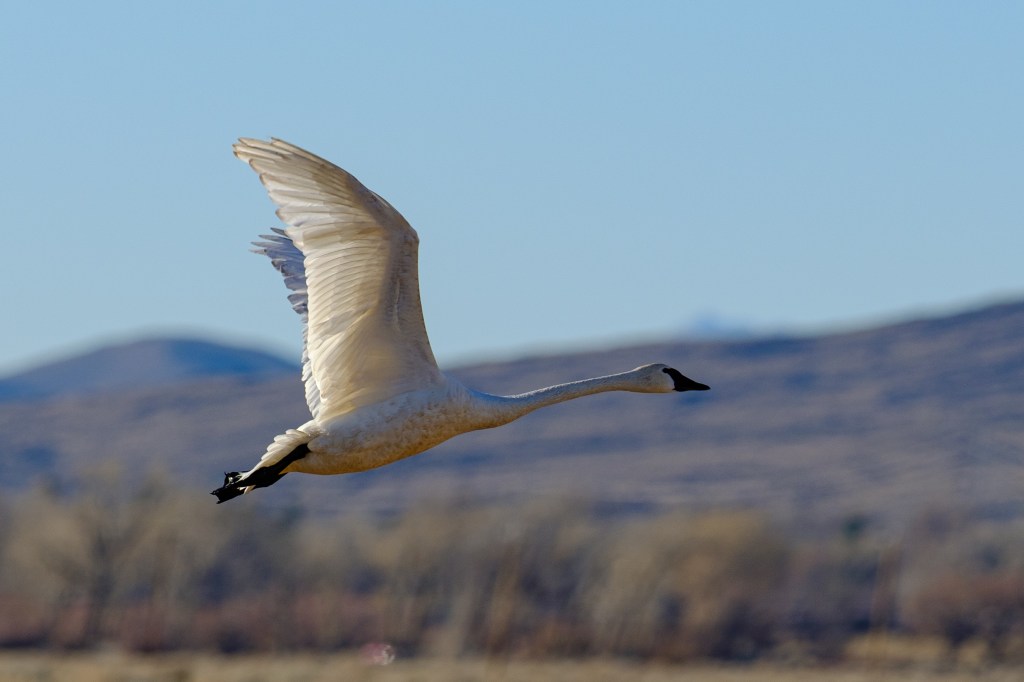
The Swan below was on the Buckley Ponds in December. Note the yellow spot at the base on the bill, in front of the eye. This marking is diagnostic.

Geese
2. Canada Goose – 10 lb. Fall/Winter.
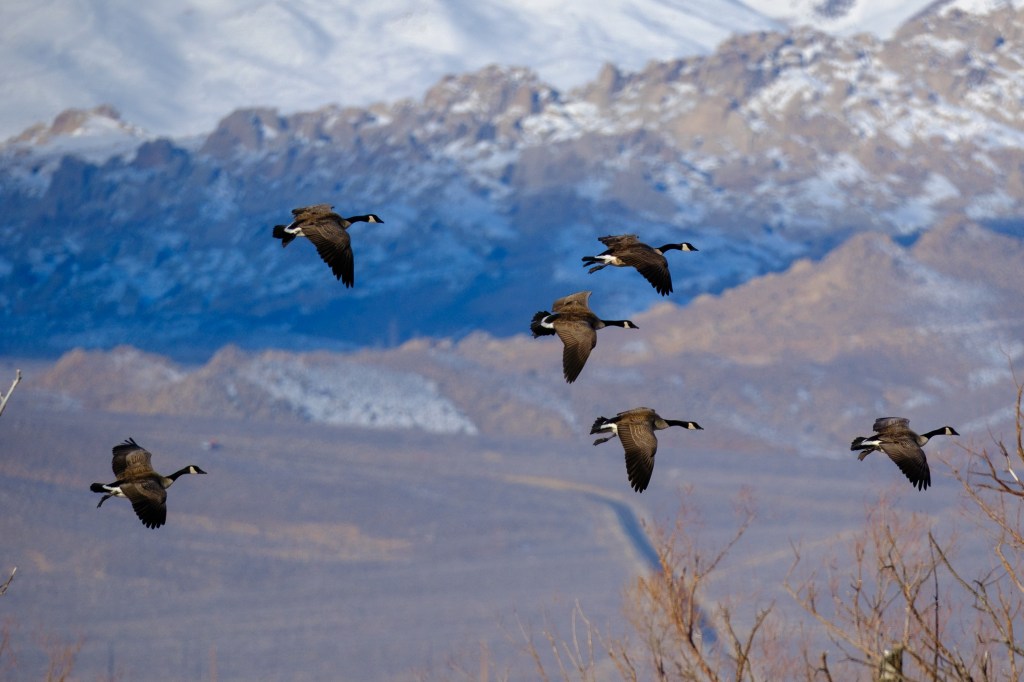
Honking flocks of geese announce the arrival of fall. One of my favorite sounds. The photos below were all taken from Airport Road south of Line Street. These birds are found almost everywhere in Canada and the US.
In December, a flock passes in front of the Wheeler Crest.
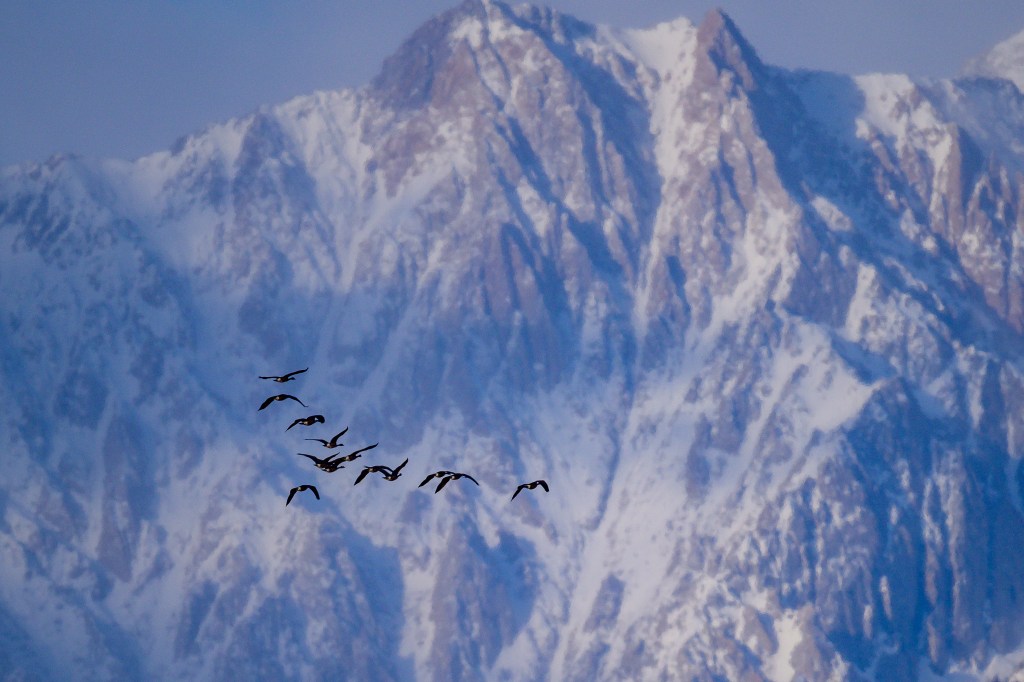
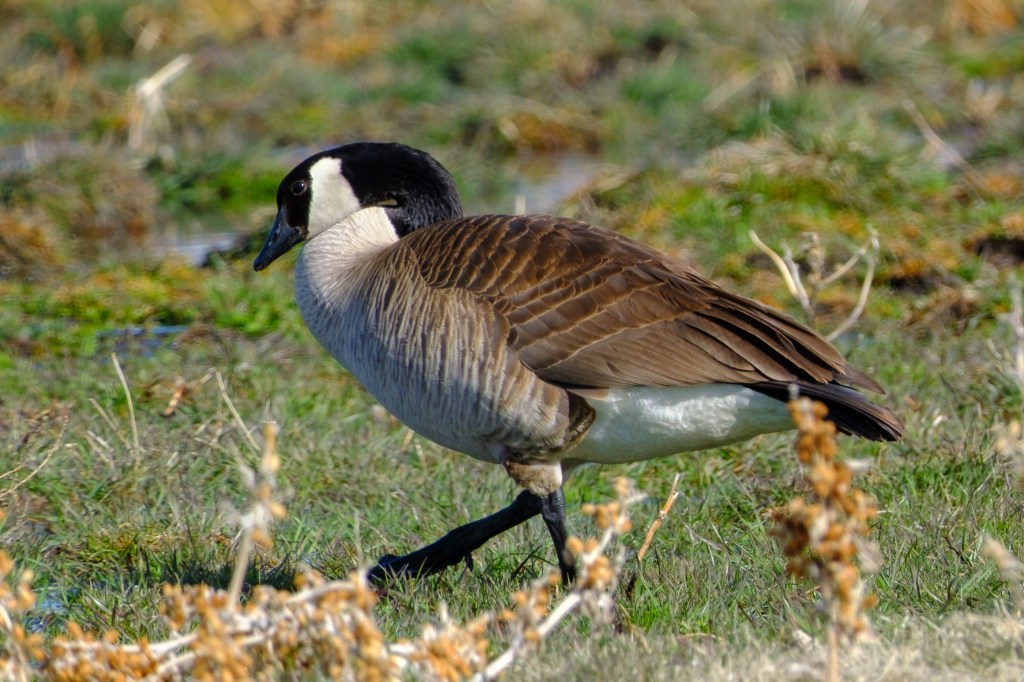
The remaining photos were taken in March.
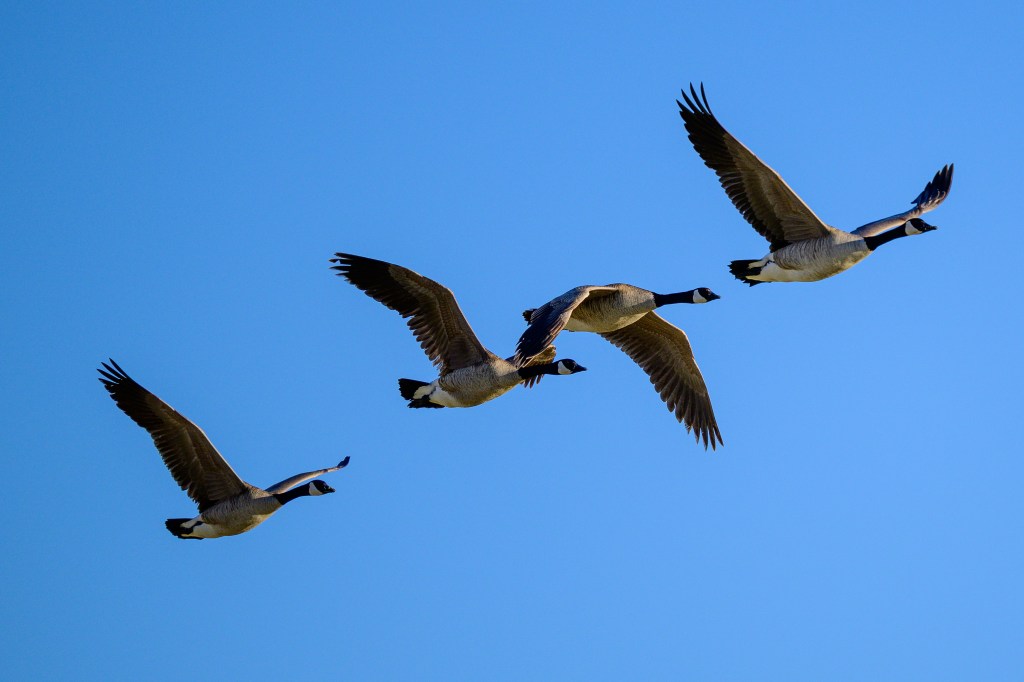
This is a heavy bird; see below.
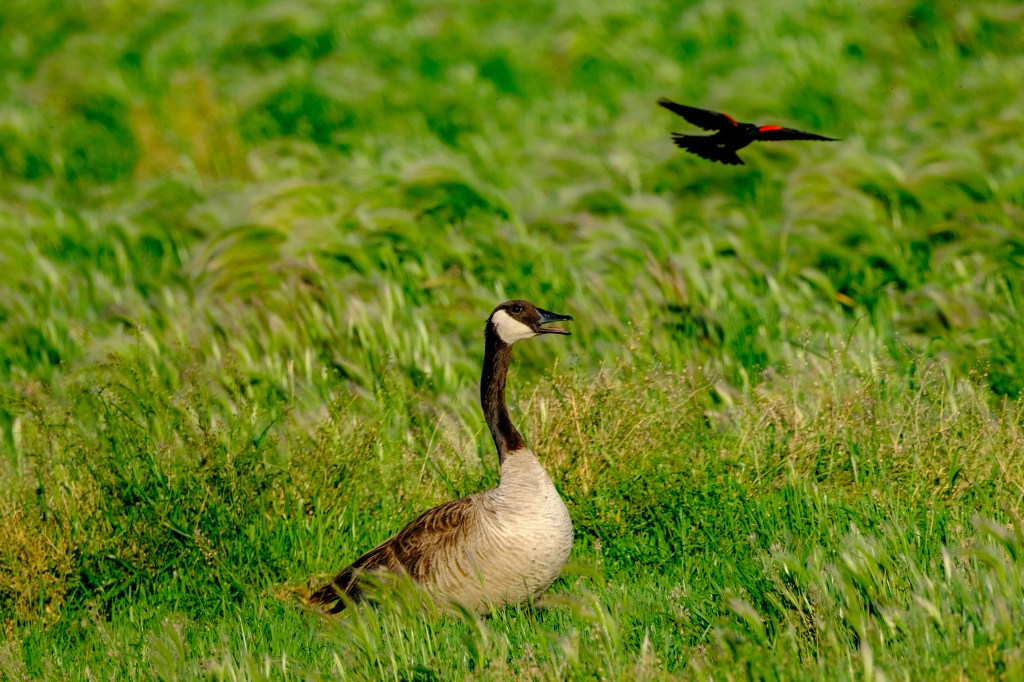
Goose honks at a Red-winged Blackbird.
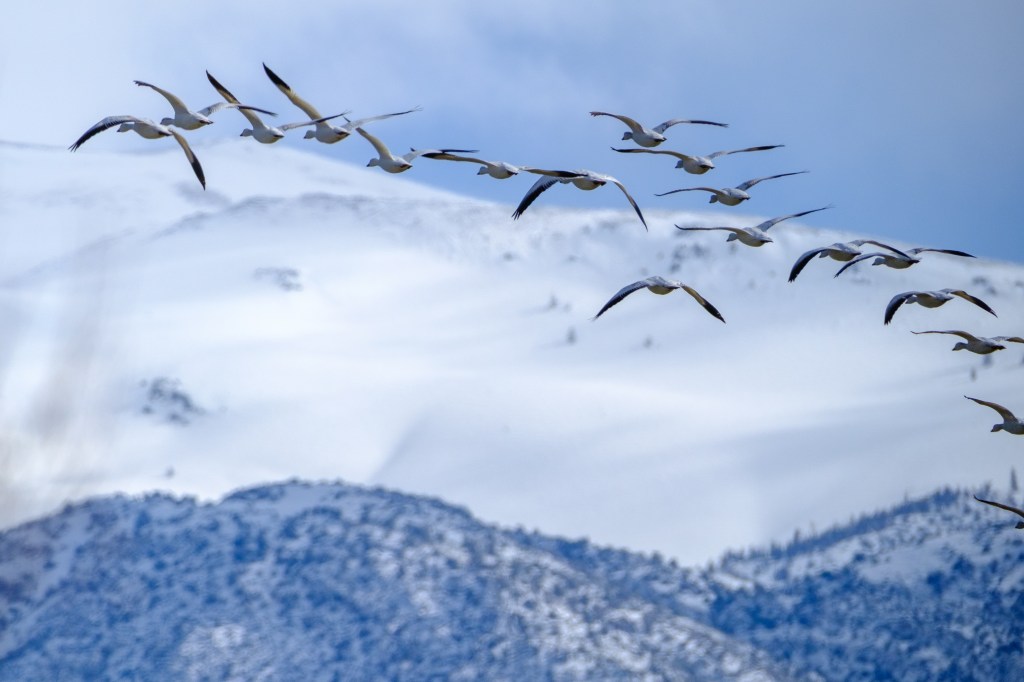
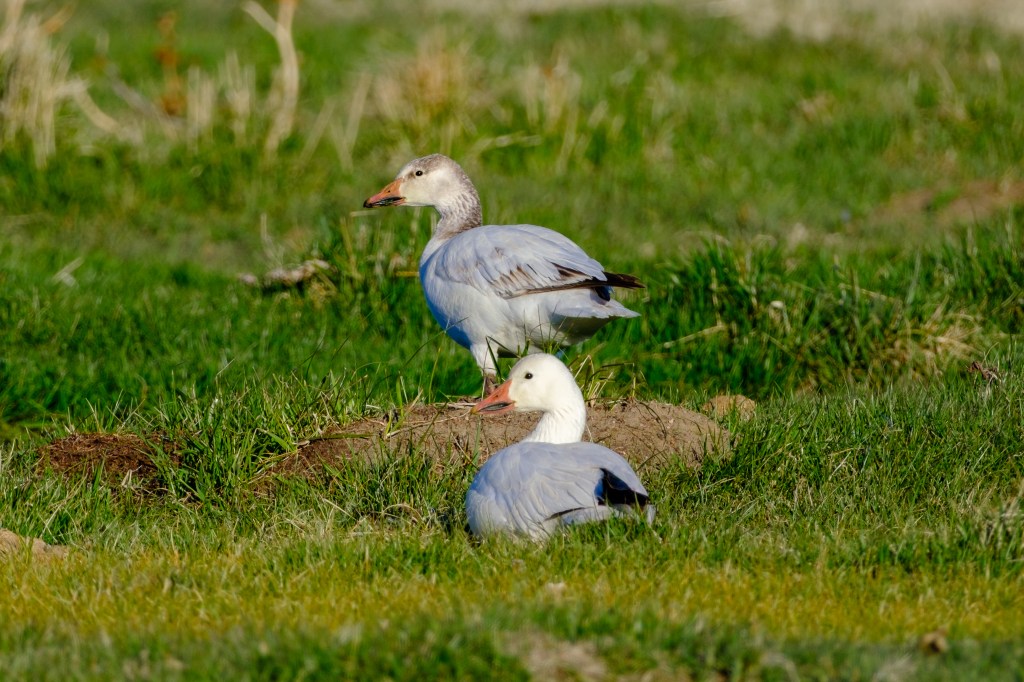
3. Snow Goose – 6 lb. Fall/Winter.
Snow Geese often mingle in the air or on the ground with both Canada Geese and Greater White-fronted Geese. The pictures below were taken in winter along Airport Road.
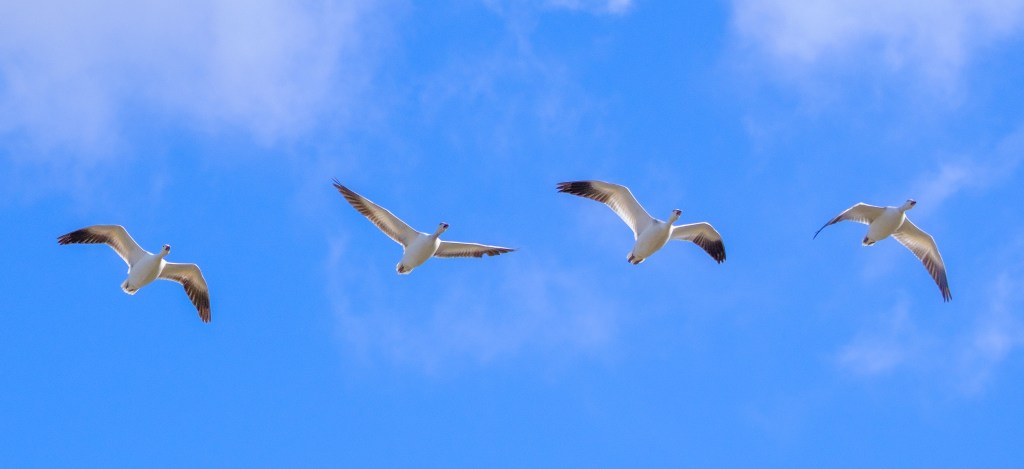
A flock flies past the White Mountains.
Resting in a field.
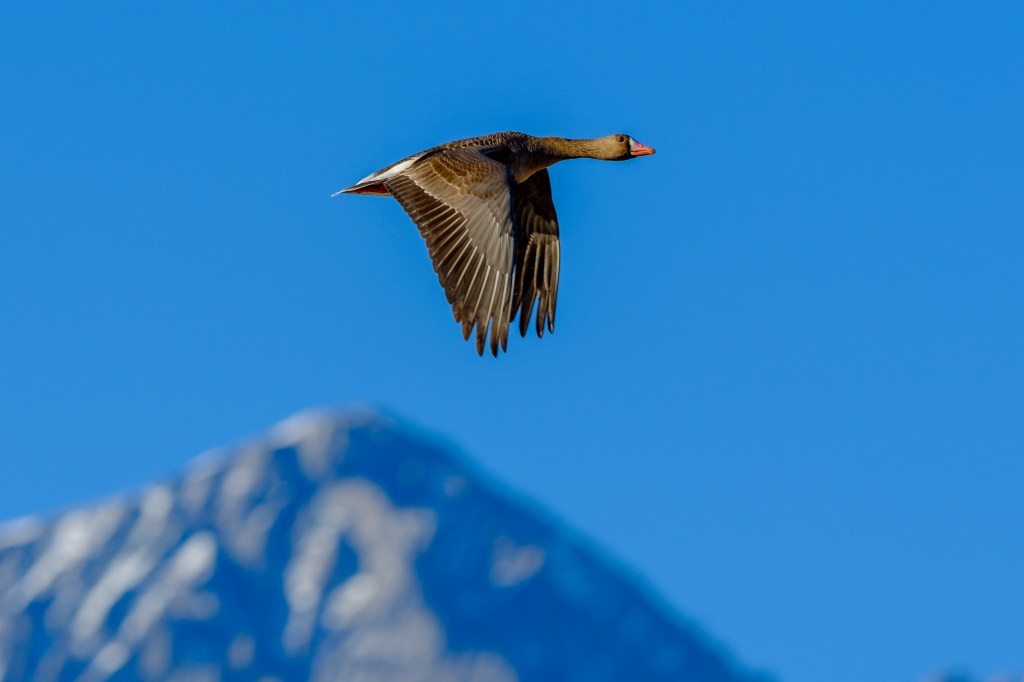
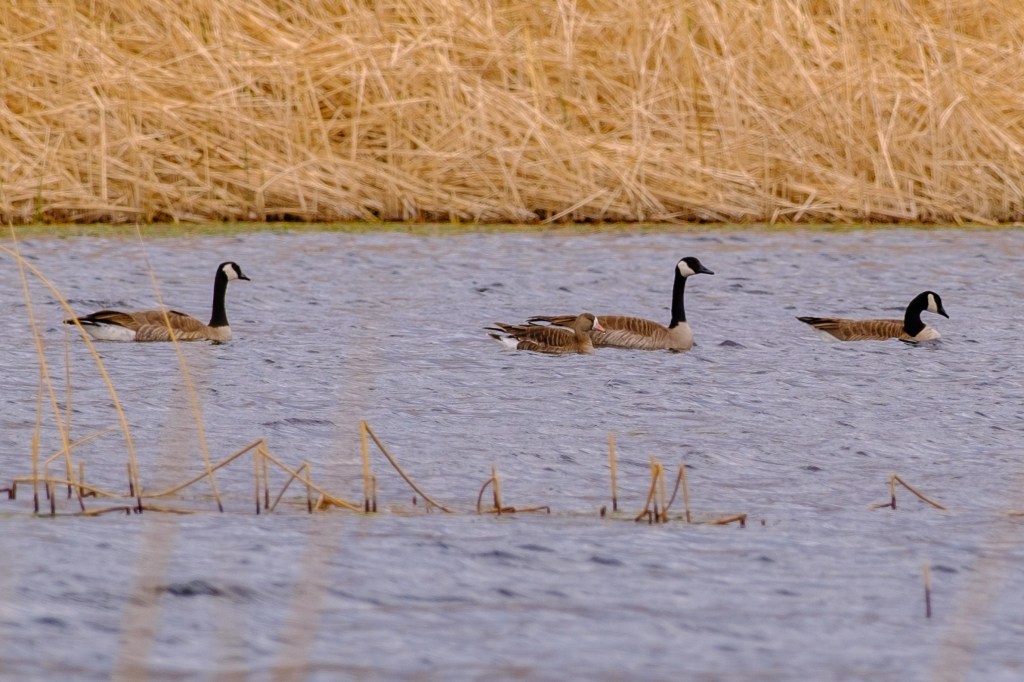
4. Greater White-fronted Goose – 5 lb. Fall/Winter.
A Greater White-faced Goose near Klondike Lake.
Swimming with Canada Geese at the Buckley Ponds.
A mixed flock of Greater White-fronted (dark) and Snow Geese (white).
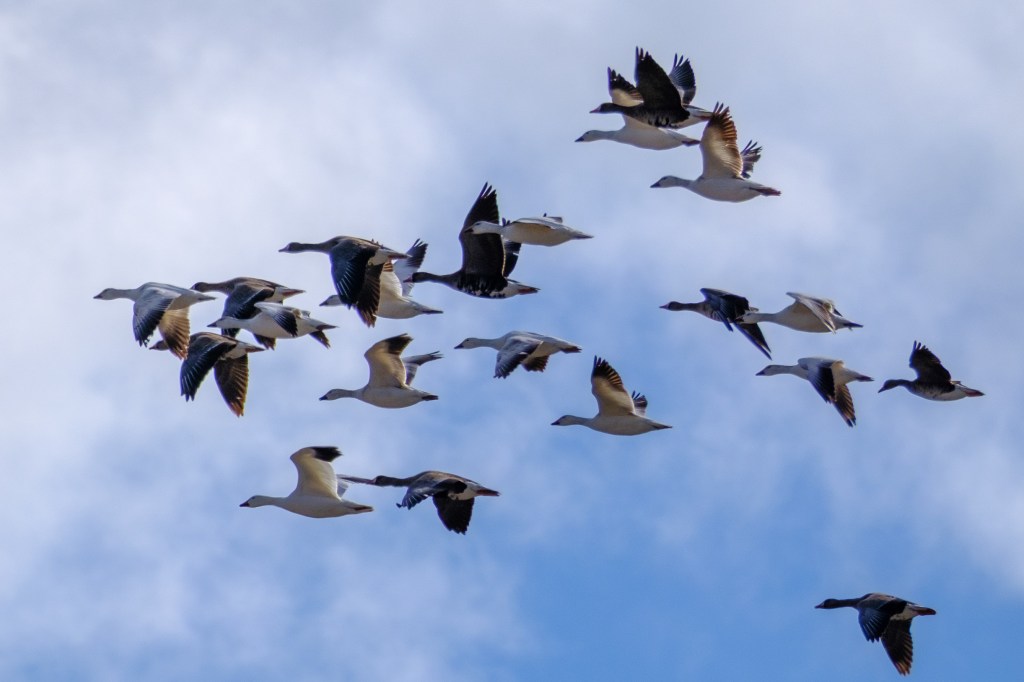
Feeding near Airport Road.
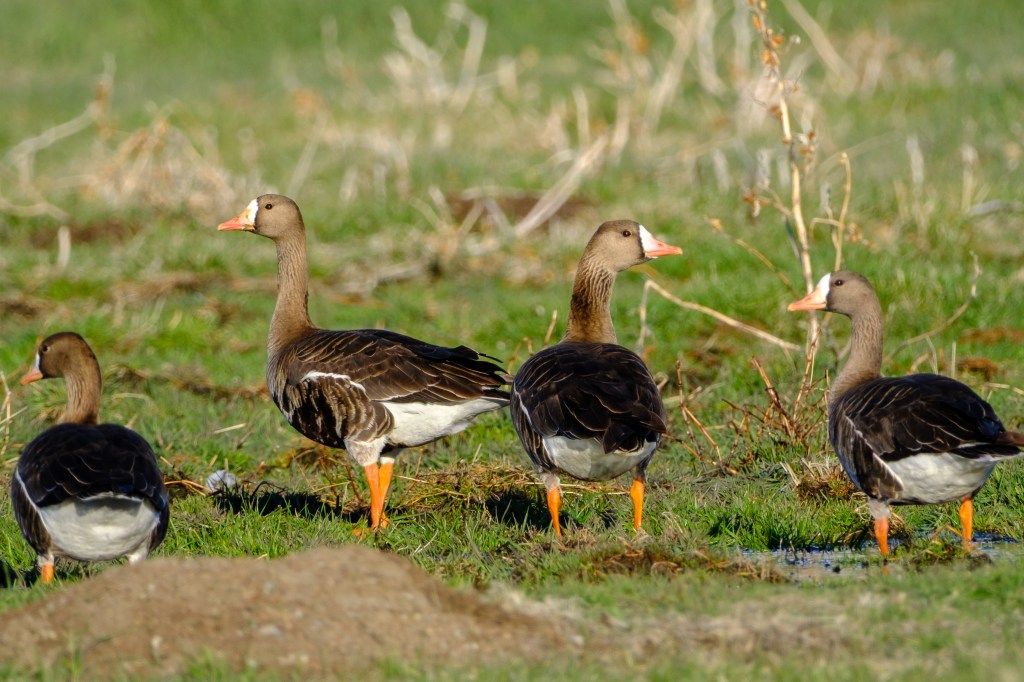
Perching Ducks
This tribe consists of Wood Ducks and Muscovy Ducks; only the former visit Bishop. They are surface-feeding, woodland birds with sharp claws on their toes. They perch and nest in tree cavities.
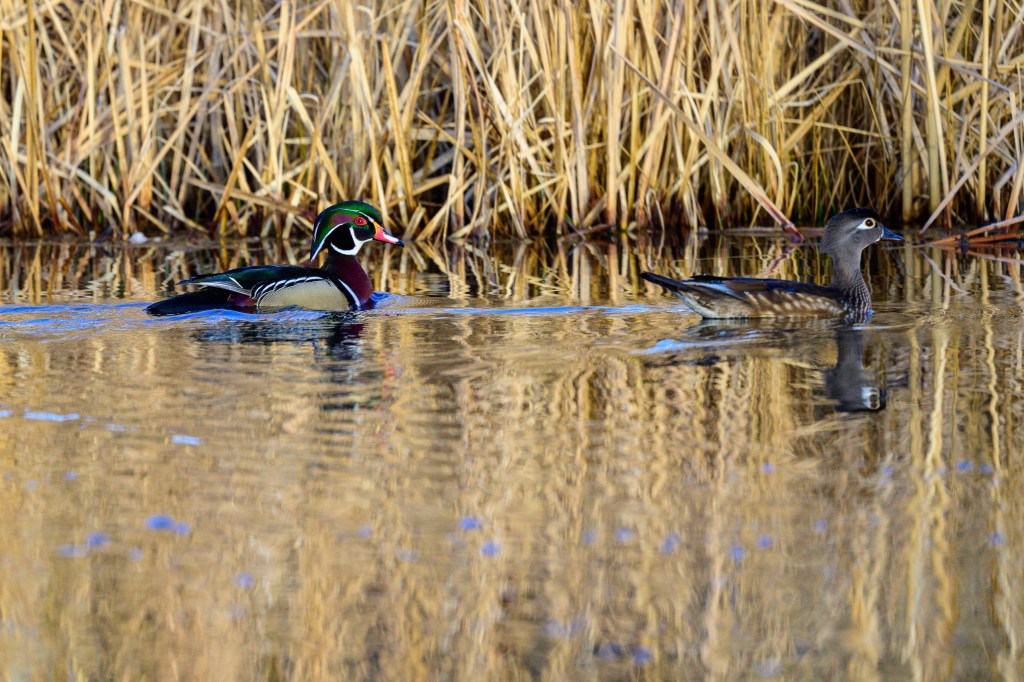
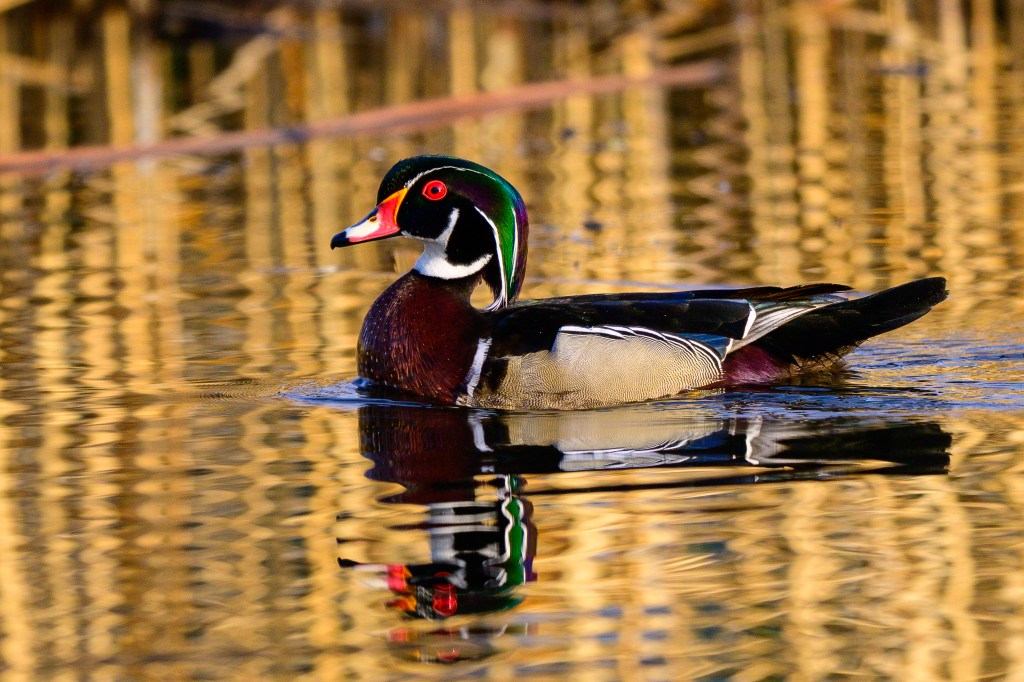
5. Wood Duck – 1.3 lb. All year.
Seeing a duck in a tree seems like a prank. The first three photos were taken on Gus Cashbaugh Lane.
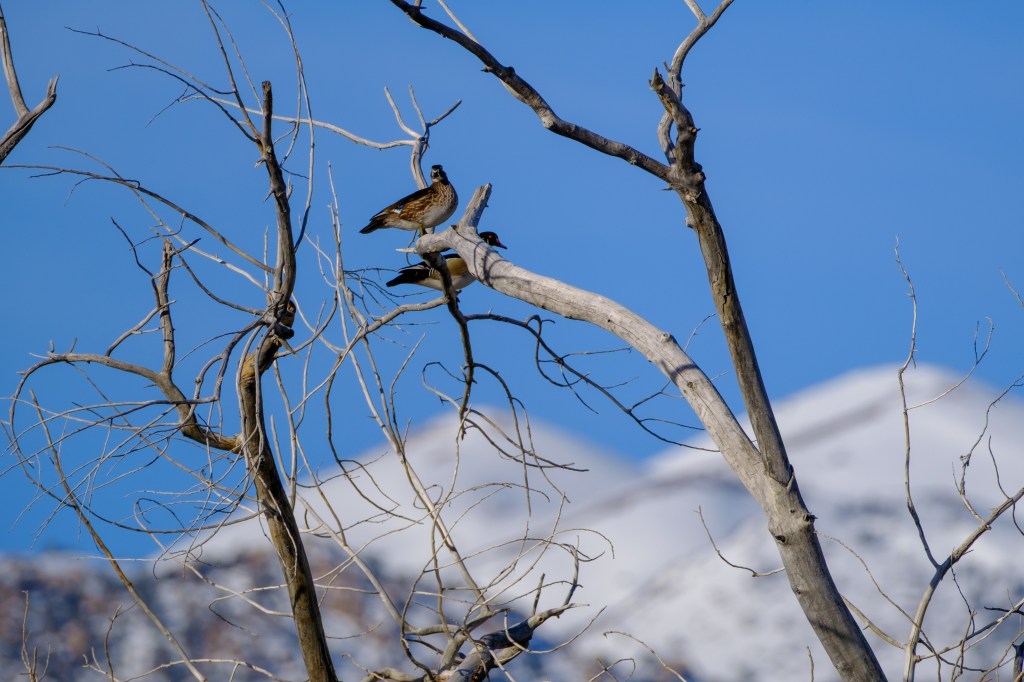
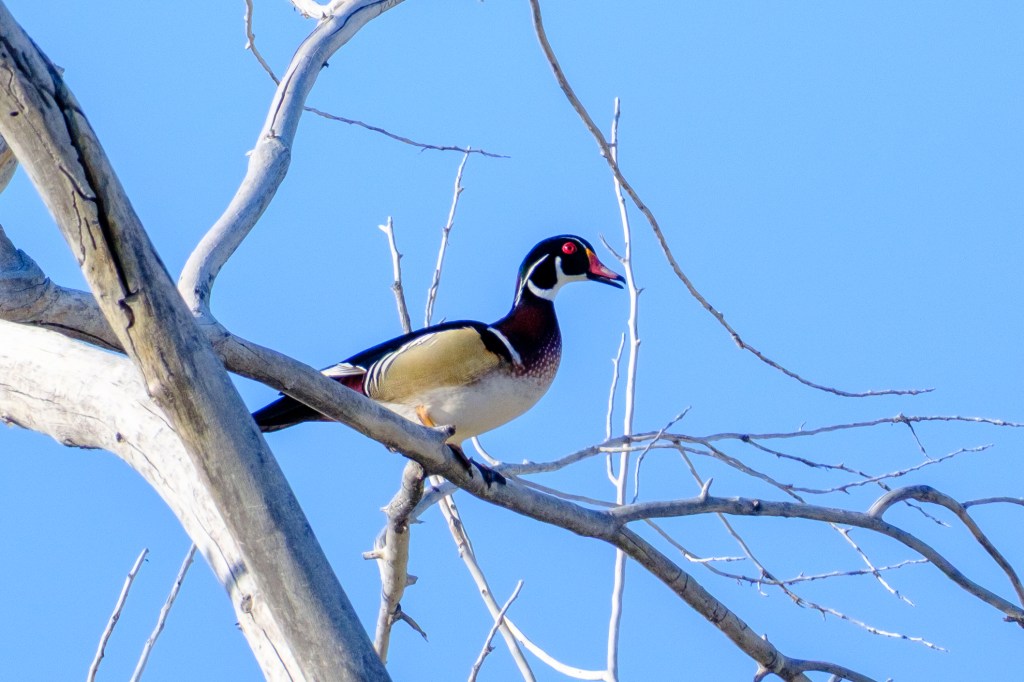

The next two pictures were taken at the Conservation Space Open Area (COSA). The plumage of the male Wood-Duck is garish or gorgeous, depending on your taste.
Dabbling Ducks (Puddle ducks)
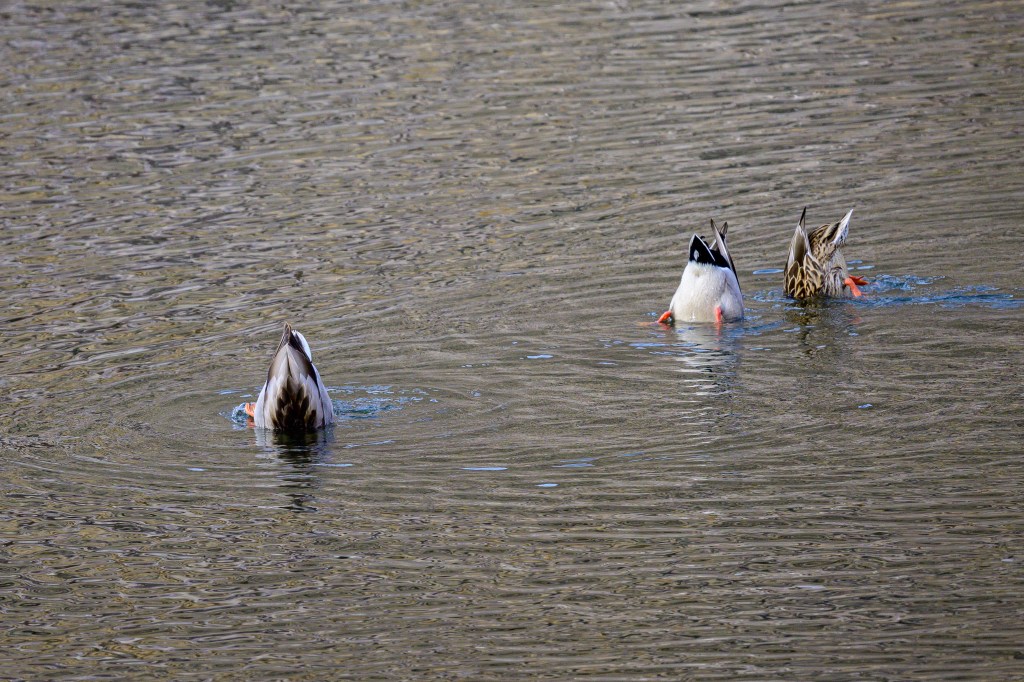
Dabblers feed on or near the surface. They often tip themselves up so their butts are in the air while their heads are submerged. Their feet are located in a mid-position under their bodies, so they can walk about on land. Powerful wings let them explode almost vertically from the water into the air. To lift off, the first wing-beat of a Mallard usually pushes on the surface of the water. I find it hard to photograph dabbler take-offs because they are so fast. The outspread wings are decorated with a rectangular patch of colored feathers, called the speculum. This area of color is often bordered by a white band.
6. Mallard – 2.6 lb. All year.
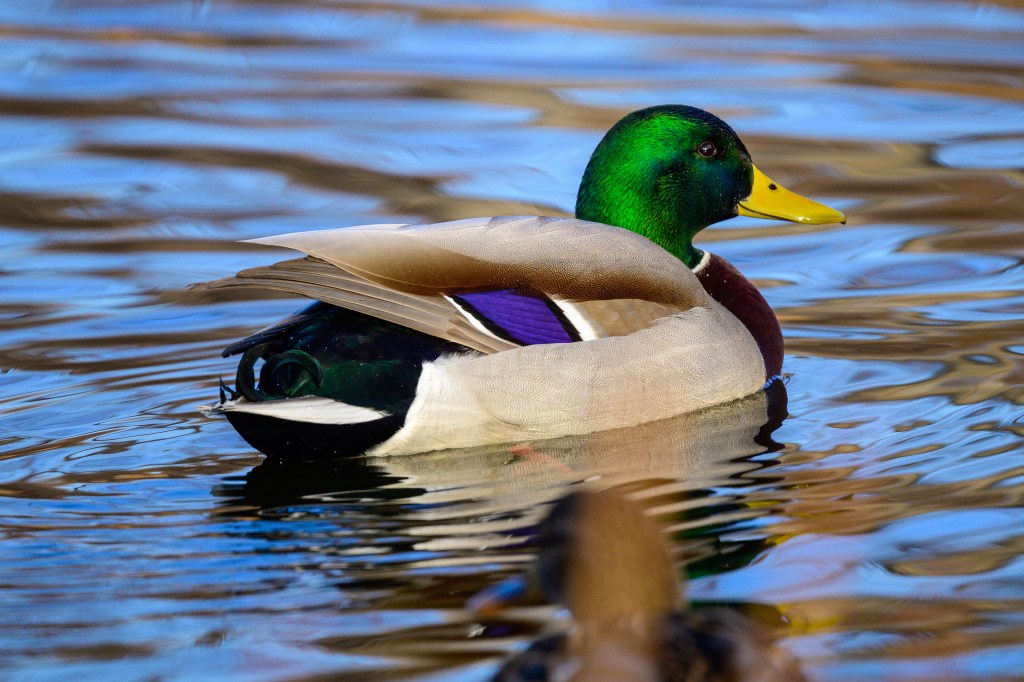
The Mallard is the “Make Way for Ducklings” duck. To see this bird, visit the Bishop City Park. Or almost any place with water. They sometimes stroll across highway 395, our Main Street. A friend had to wait in traffic when a Mallard-pair copulated on the highway. Mallards are so common that I have more pictures of this bird than all other ducks combined. I picked over a dozen Mallard photos for this blog.
Two females and a male in the air in October. Note the blue speculum, bordered front and back by a white band.

Mallards waking up at Pleasant Valley Reservoir, November.
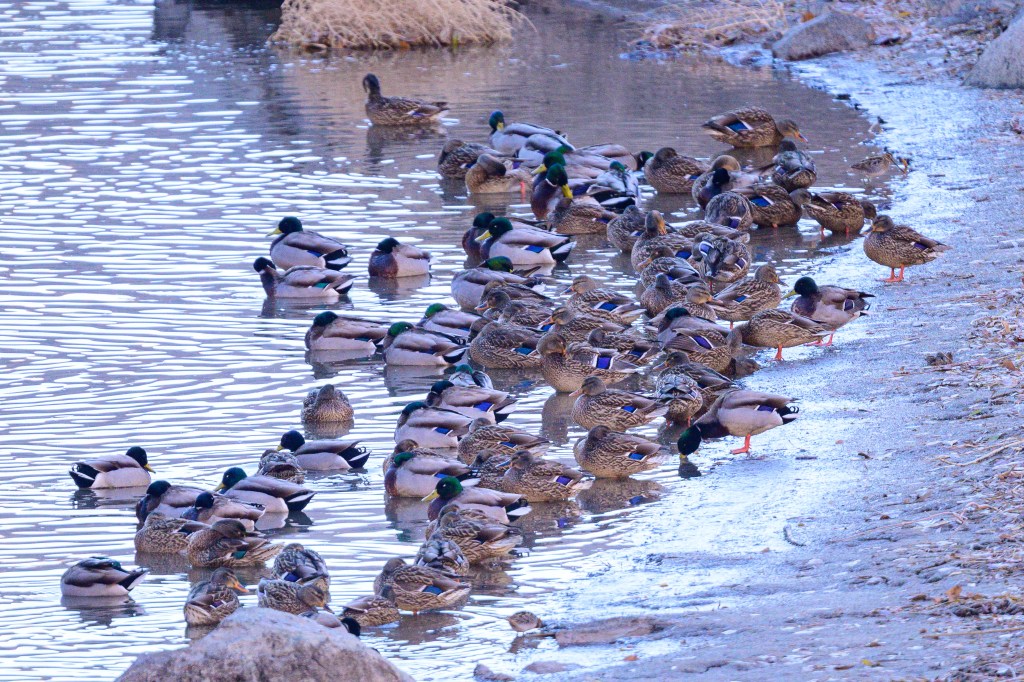
Mallards on ice, Conservation Open Space Area, December.
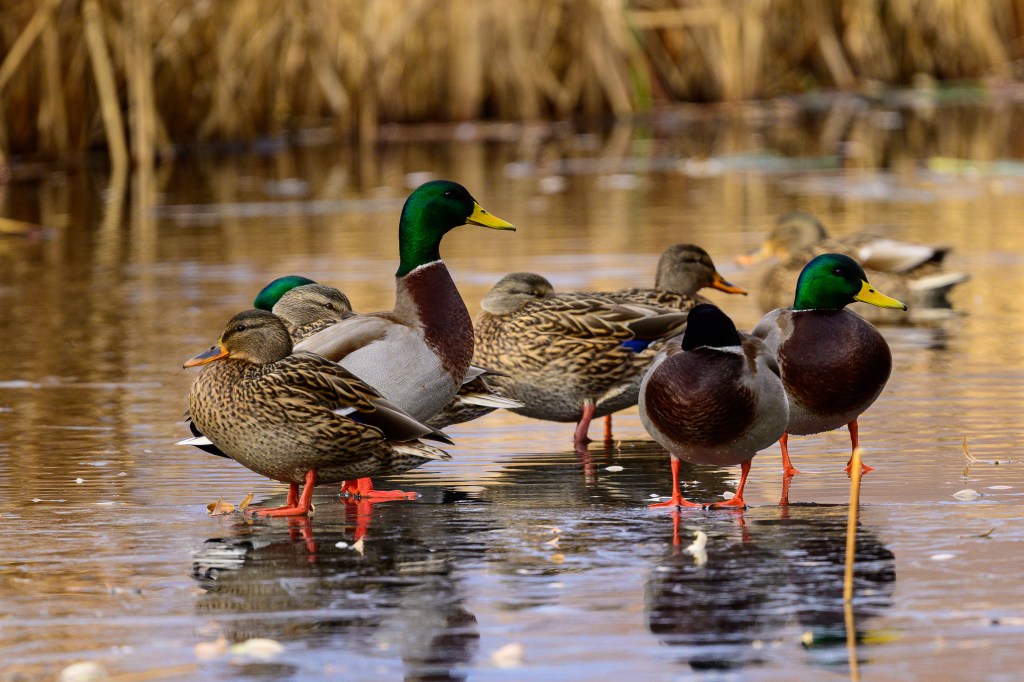
Dinner on Christmas day, Reservoir.
This bird may seem ordinary, because we are so familiar with them. But are striking creatures. COSA in January.
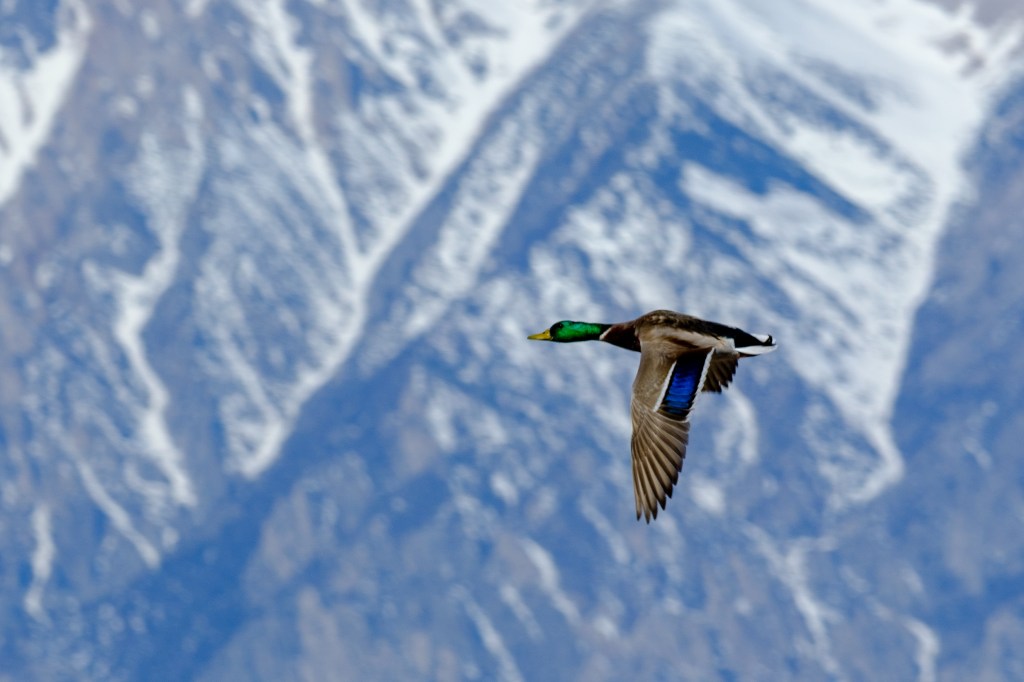
Flying past the Sierra, February.
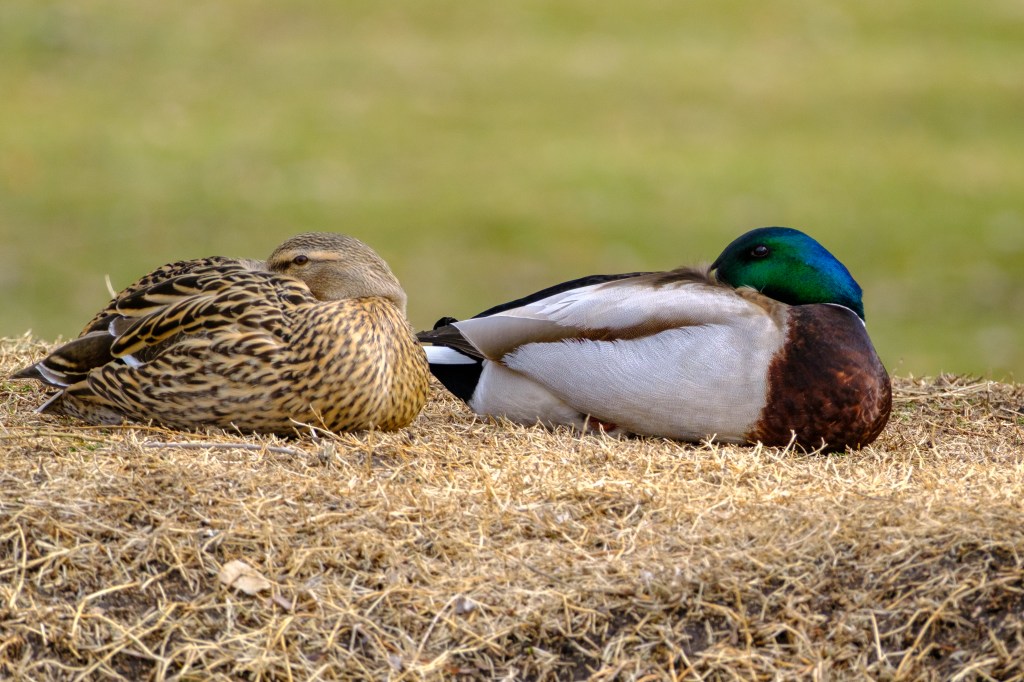
Nap in City Park, March.
Strolling at the COSA, March.

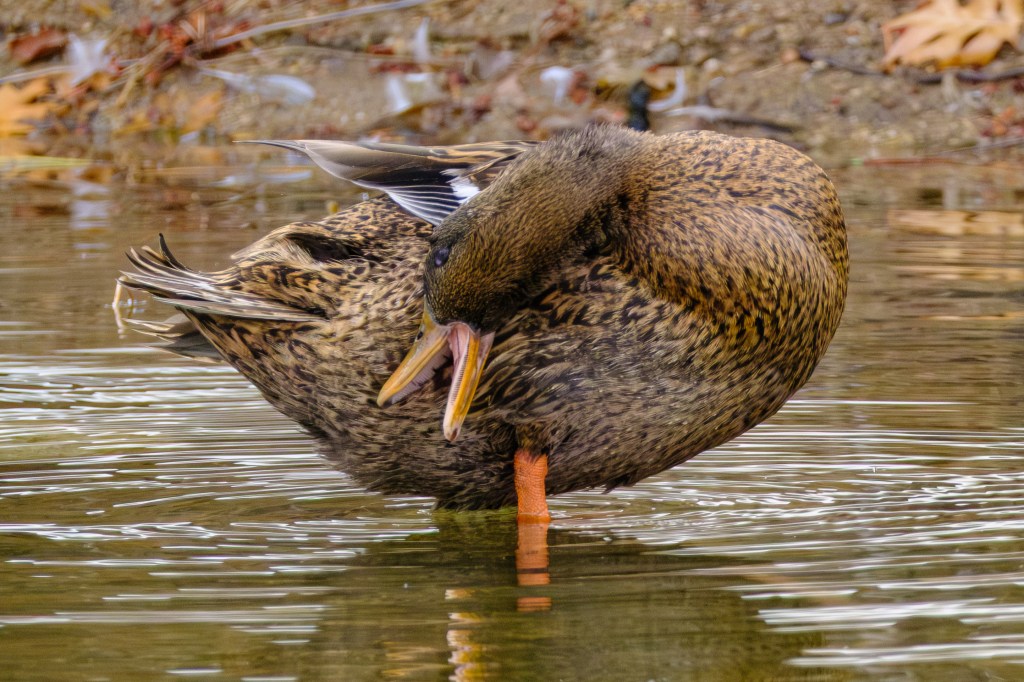
Preening at City Park, April.
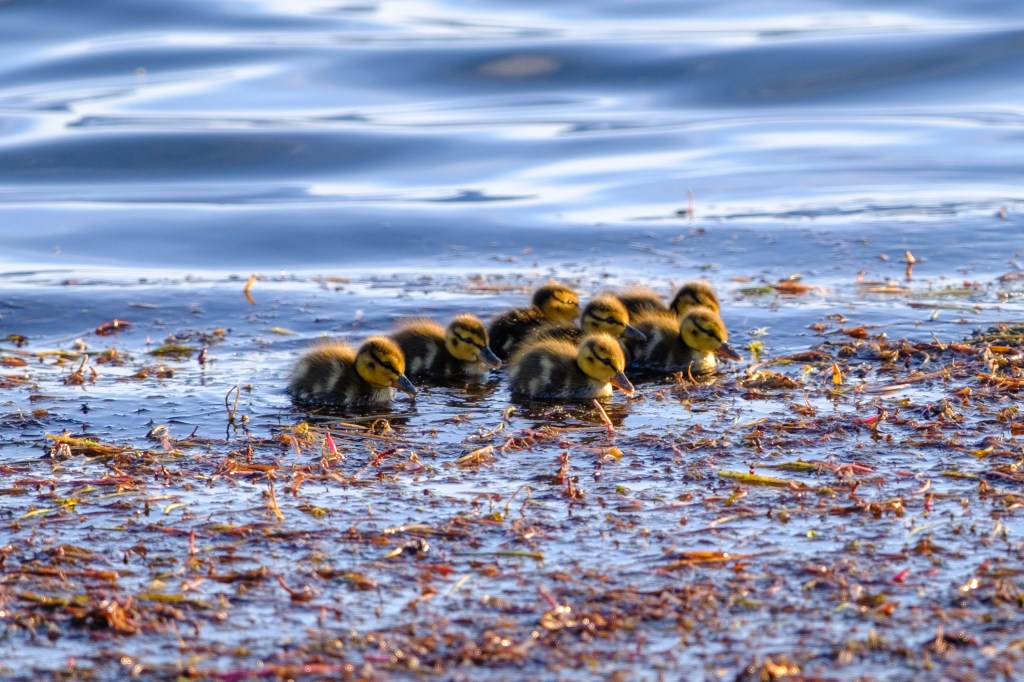
Make way for you-know-what at Buckley Ponds, May. Awww, mira que cute.
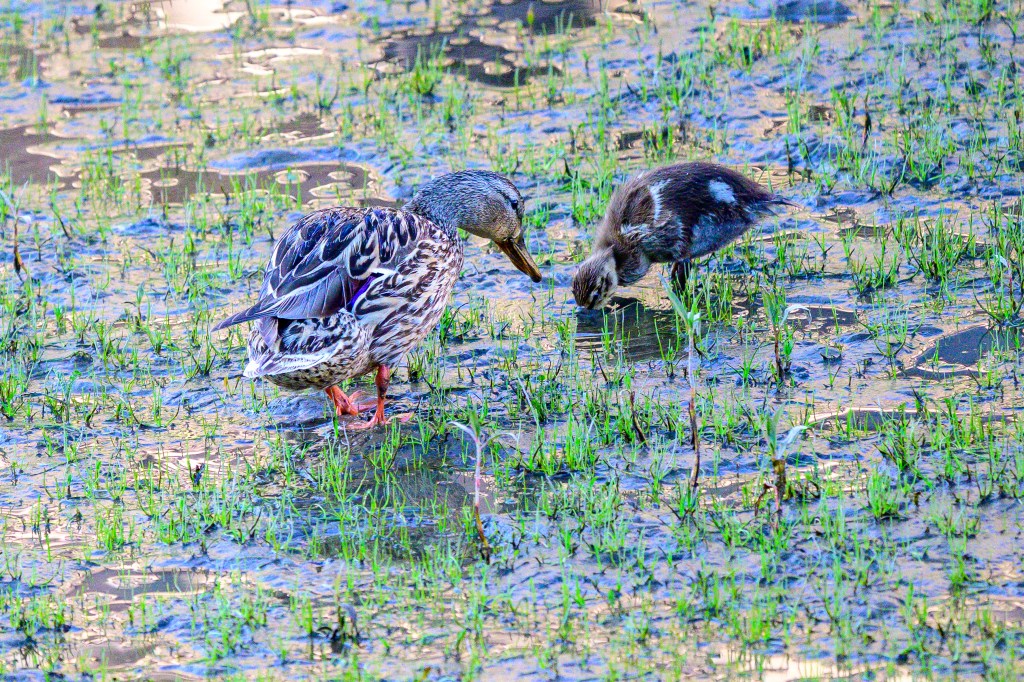
Mom and child, Reservoir. May.
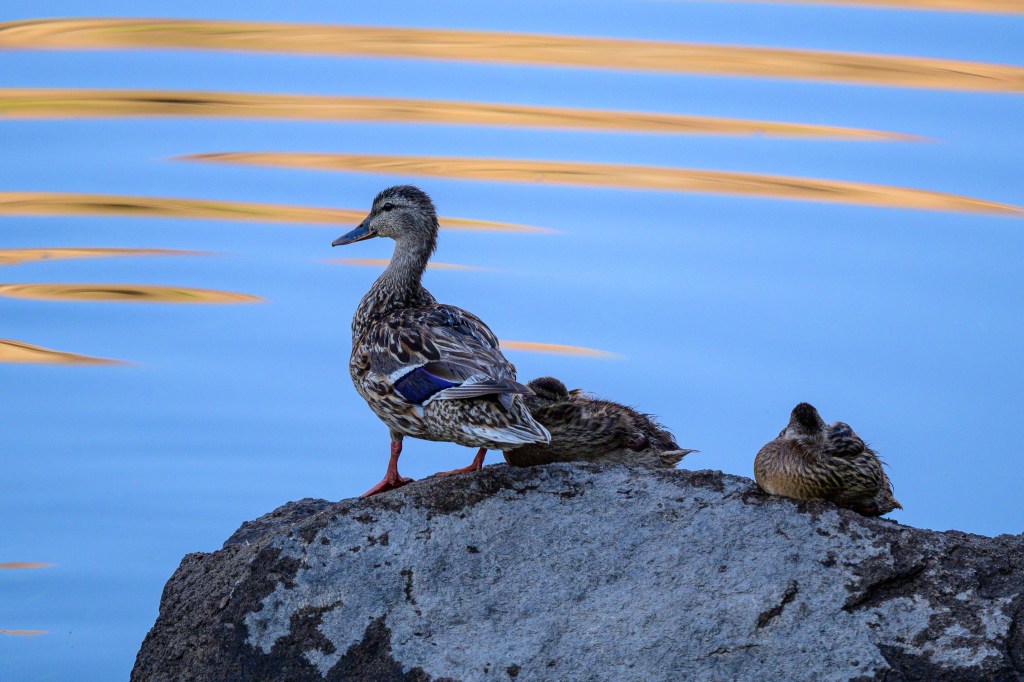
Mother and teenagers, July. Reservoir.
Airborn at Reservoir. Males are in their “eclipse” (non-breeding) plumage, so males and females look similar. August.
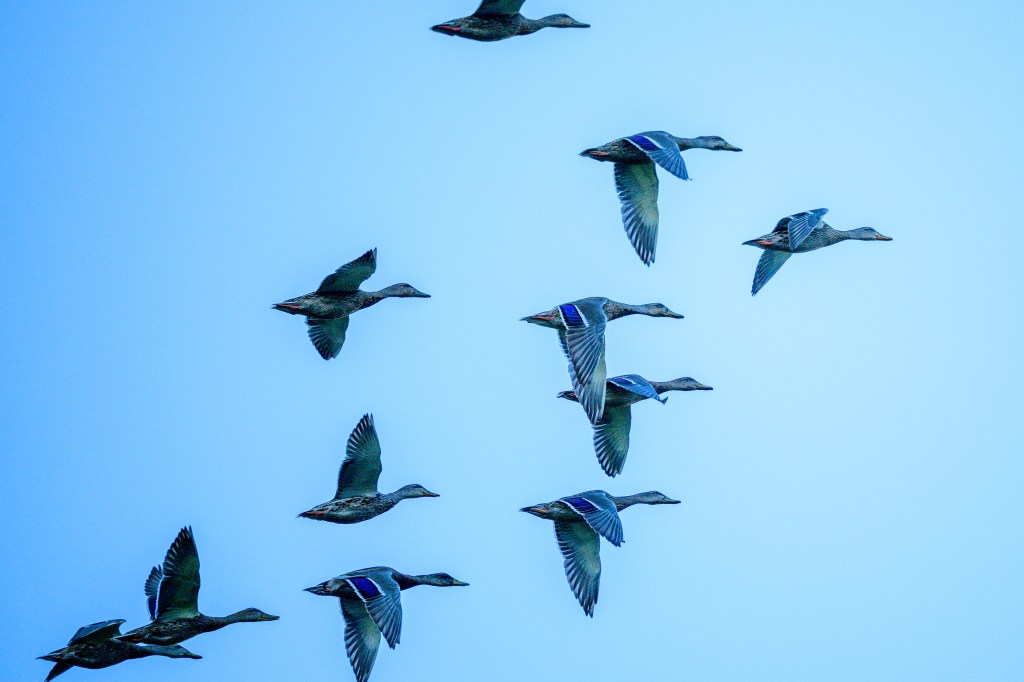
Flying over the Reservoir, August.
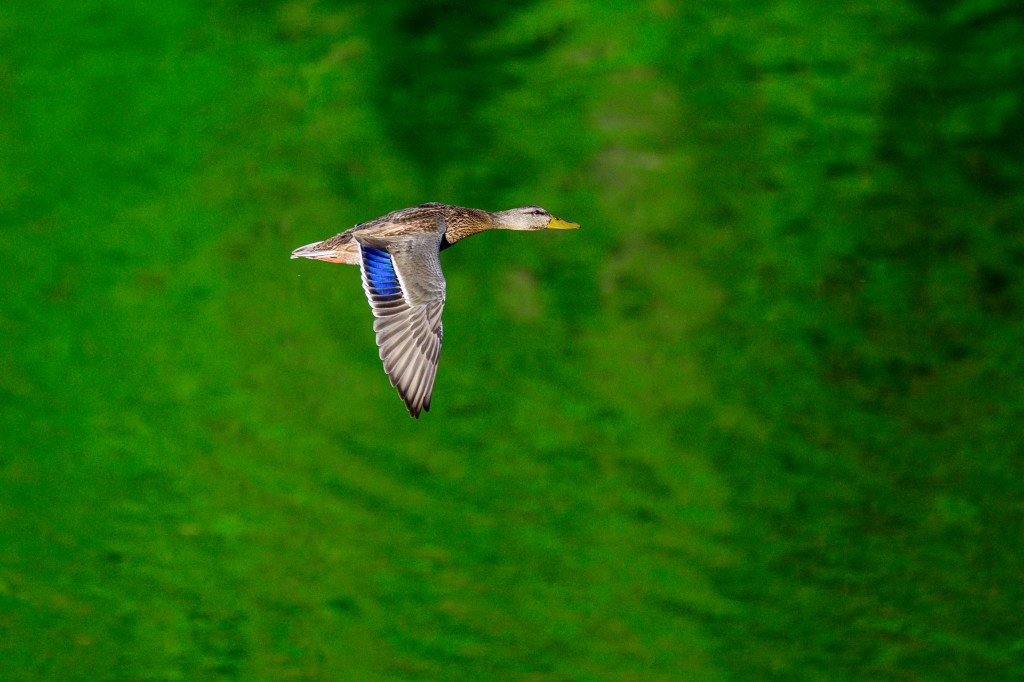
7. Northern Pintail 2.1 lb. Spring & Fall.
I have only one photo of this bird, standing on ice at Buckley Ponds.
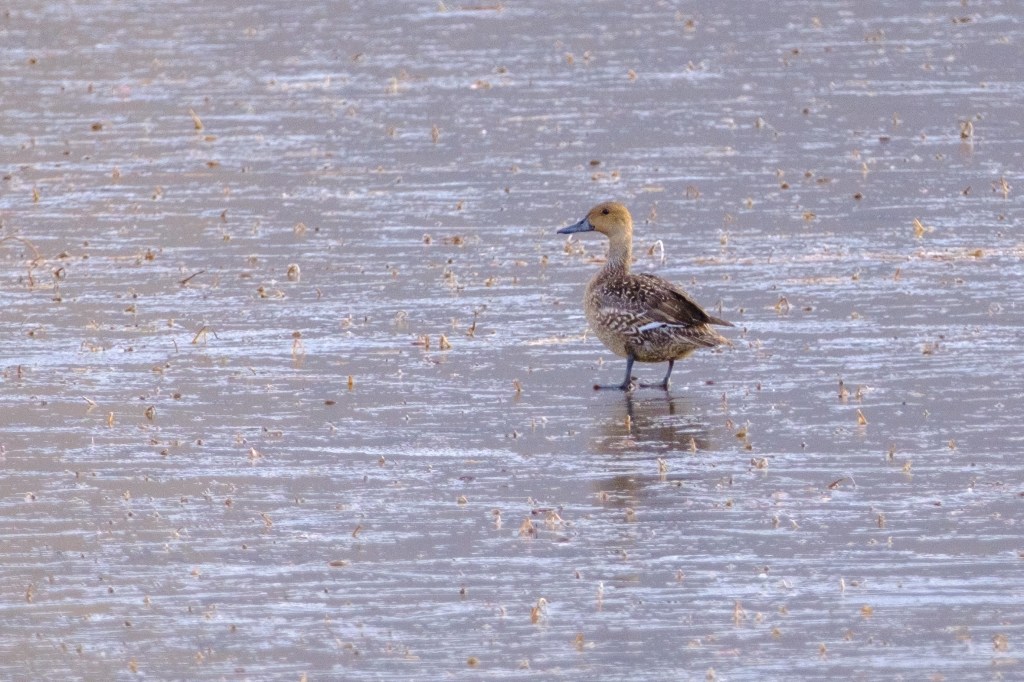
8. Gadwall – 2 lb. All year.
Not colorful, but delicate feather patterns. First two photos taken on Airport Road.
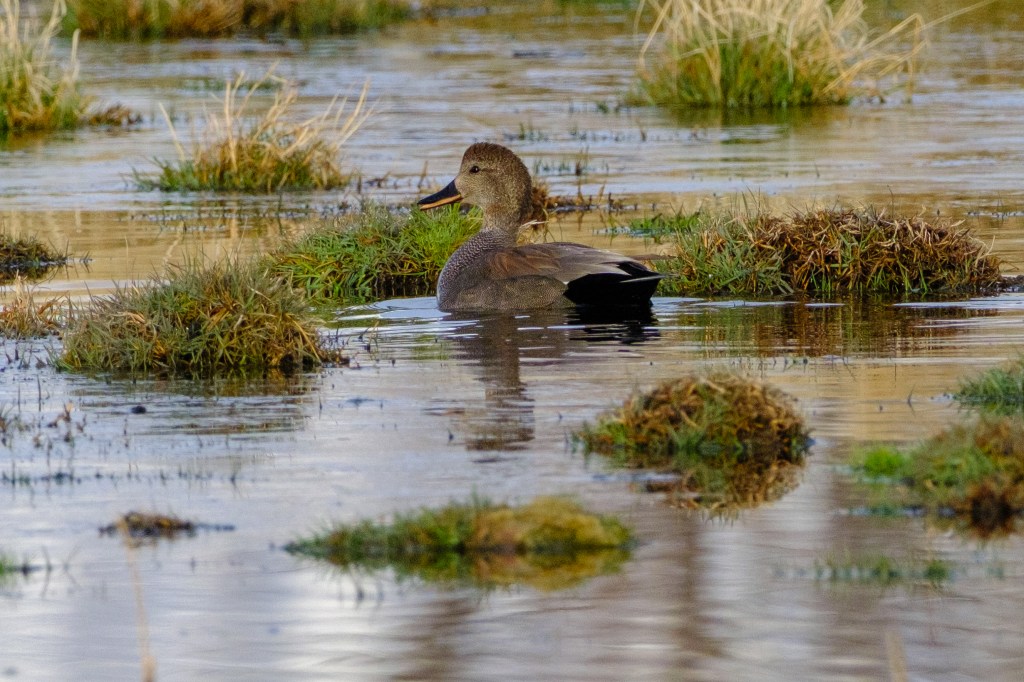

Flying at Buckley Ponds.
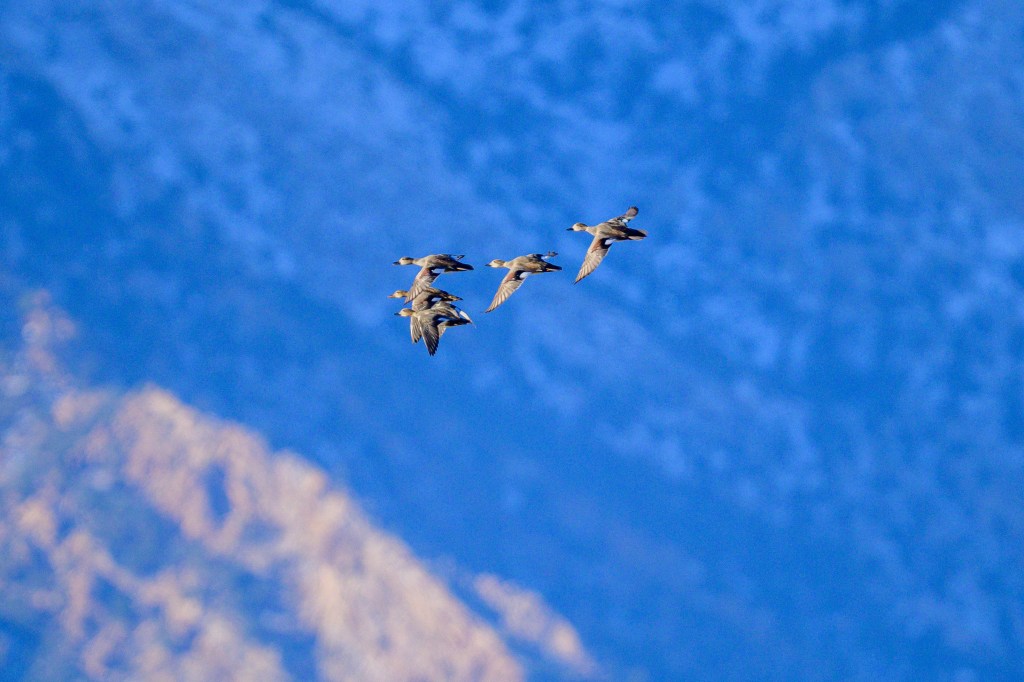
Swimming at Pleasant Valley Reservoir.

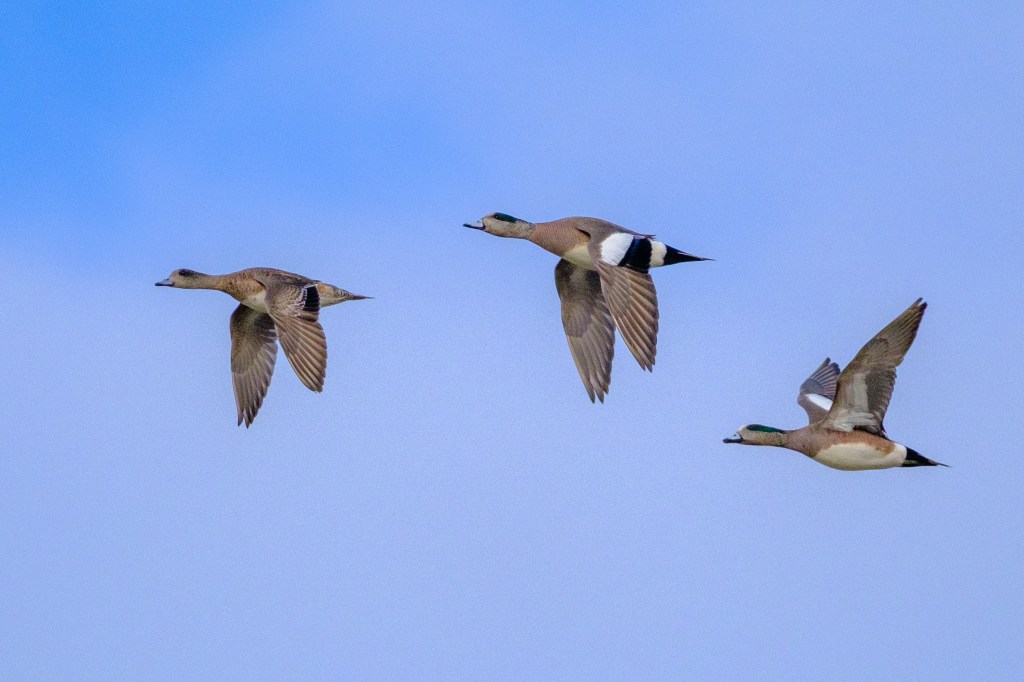
9. American Wigeon – 1.8 lb. Fall/Winter/Spring.
Wigeons are usually at City Park.


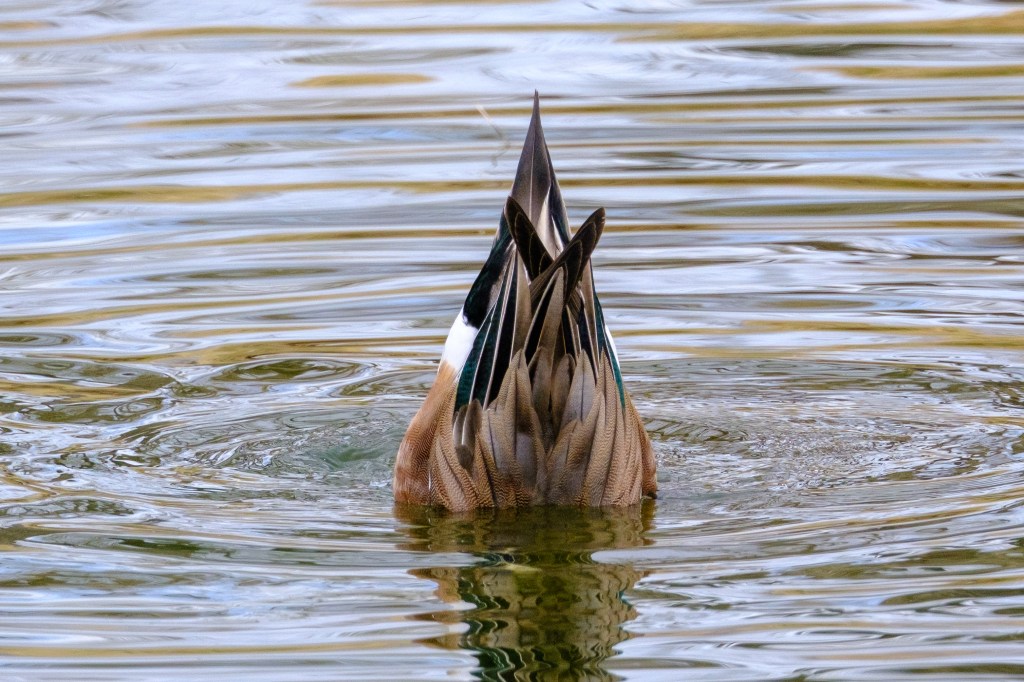
Here they are at Airport Road.
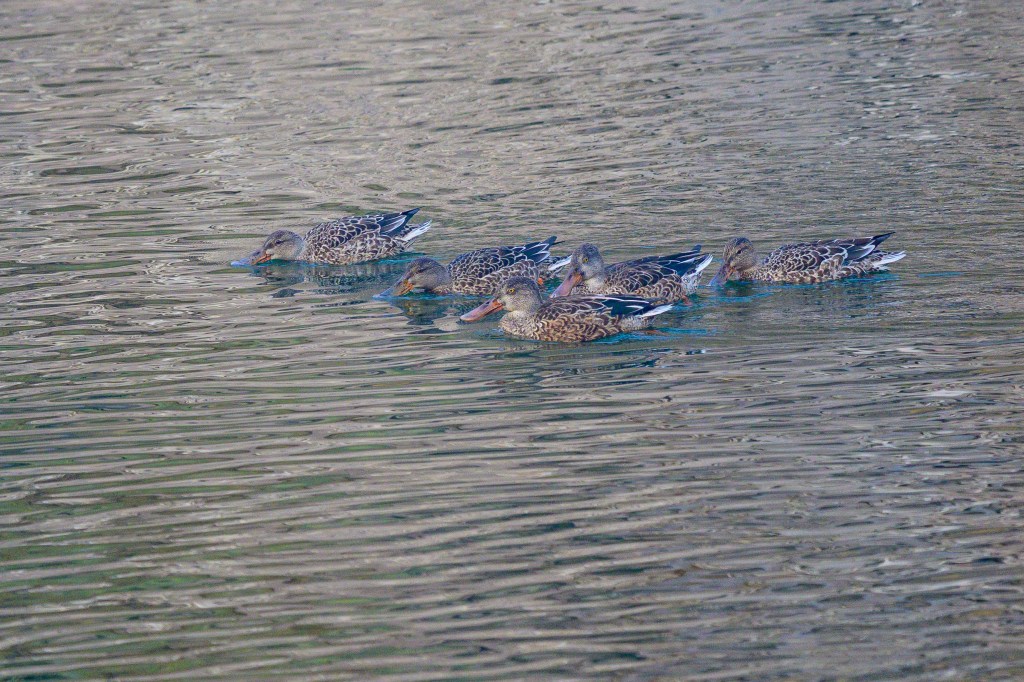
10. Northern Shoveler – 1.5 lb. Fall/Winter/Spring.
Shovelers crack me up. They look like they are wearing a fake nose.
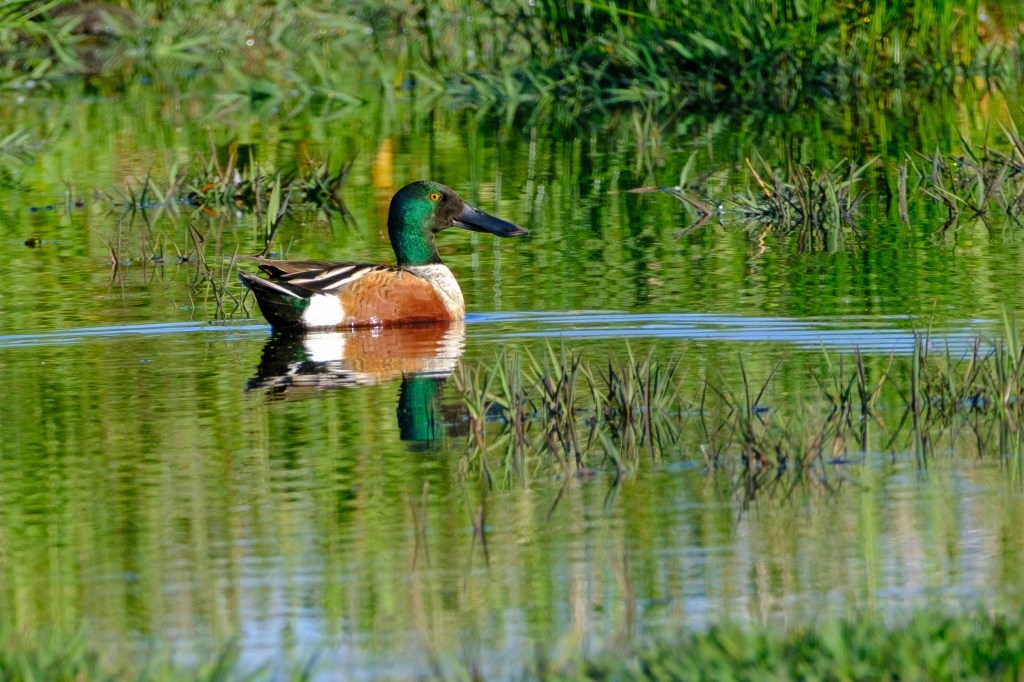
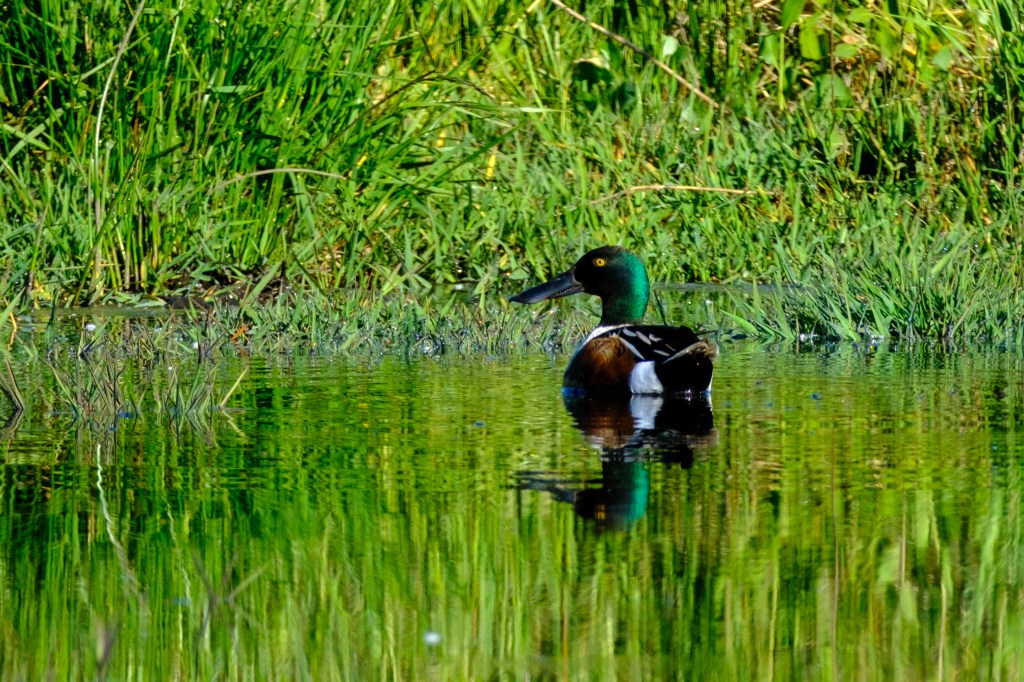
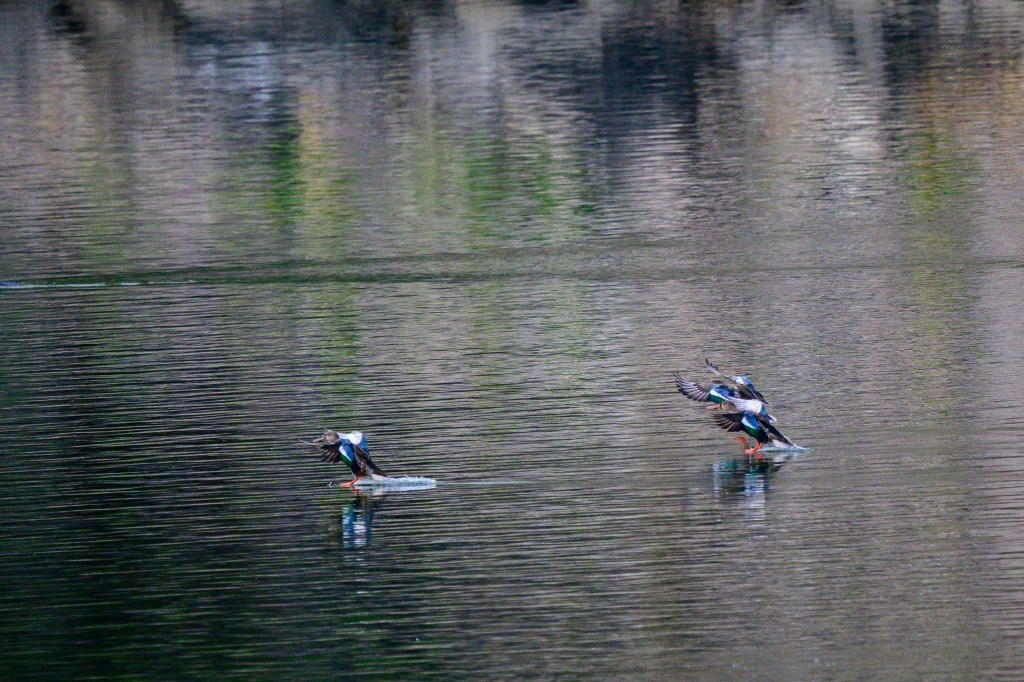
In the air they look strikingly colorful. Next 4 photos all from the Reservoir.
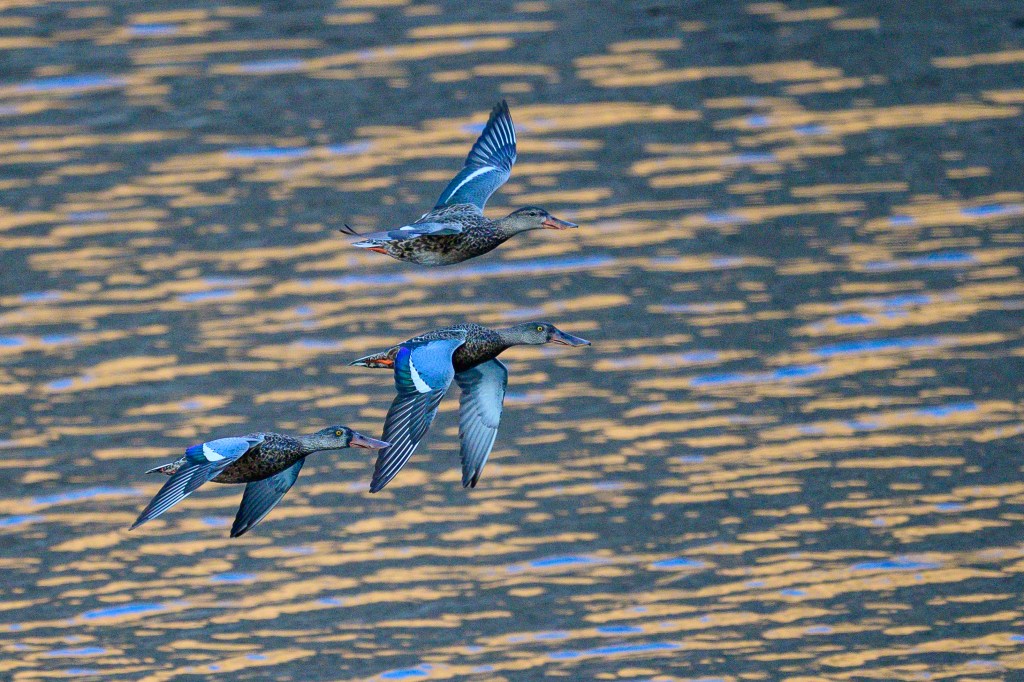
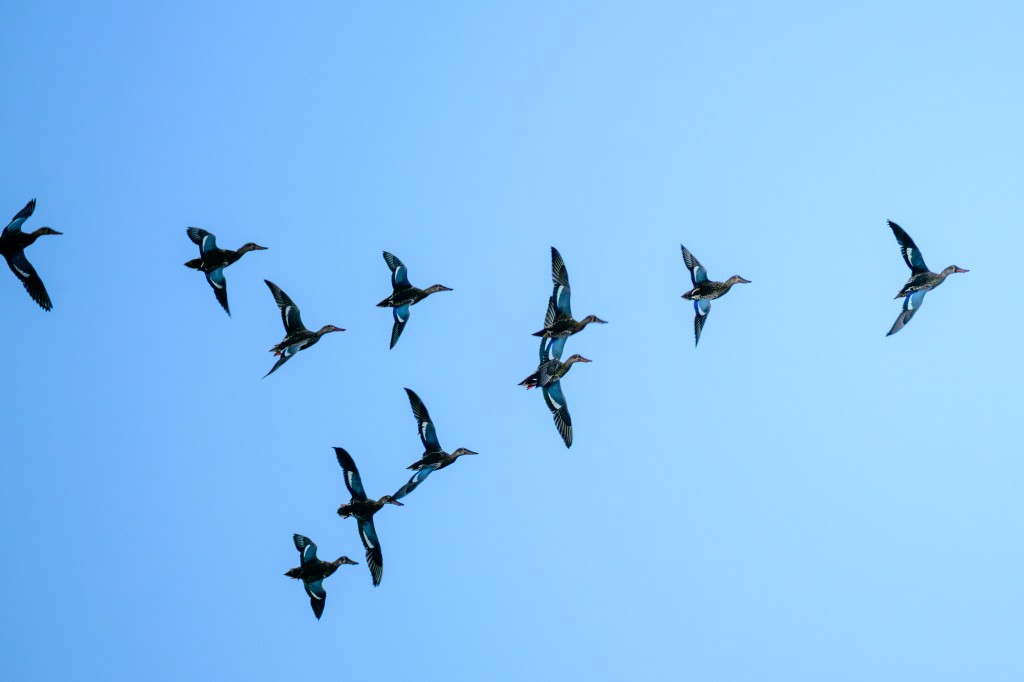
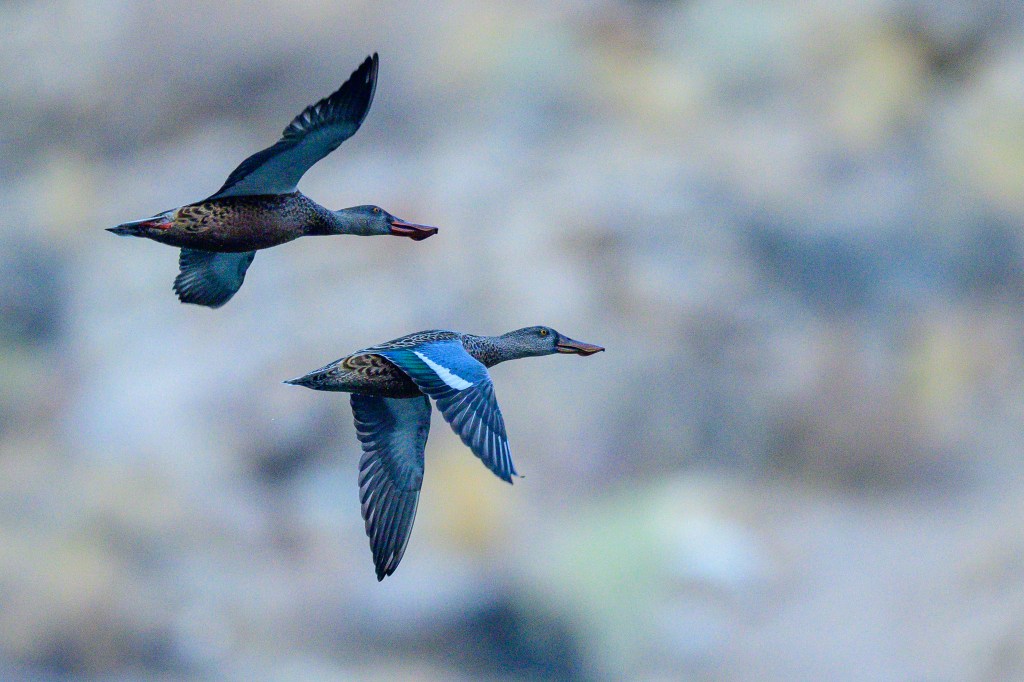
When landing on water, the tails touch first, then the feet. The birds ski on this 3-point platform for a while, then settle on the water.
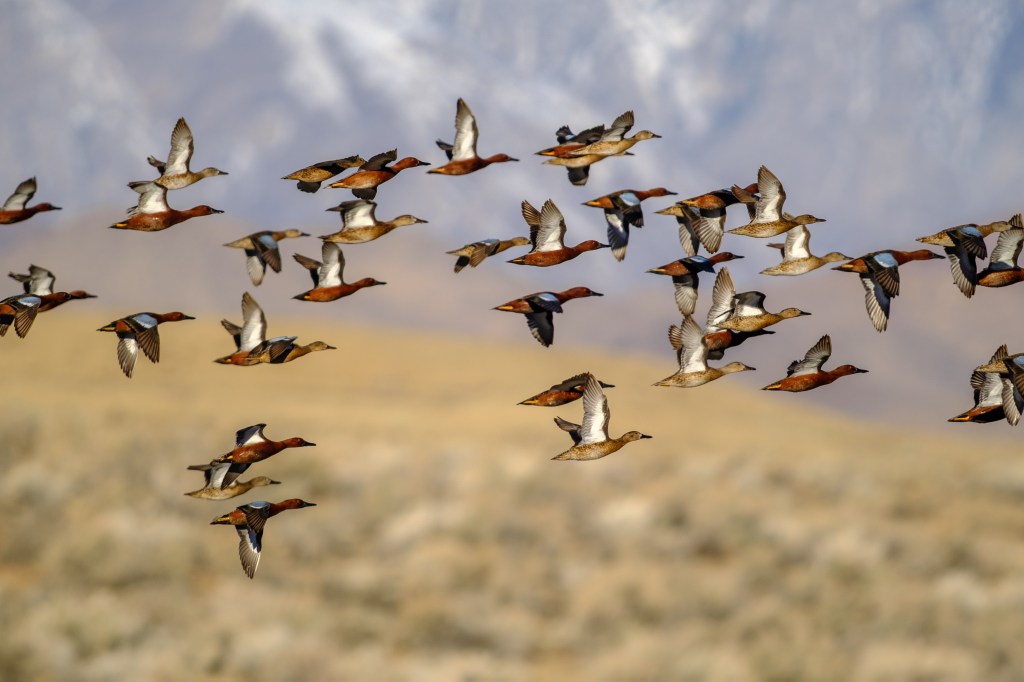
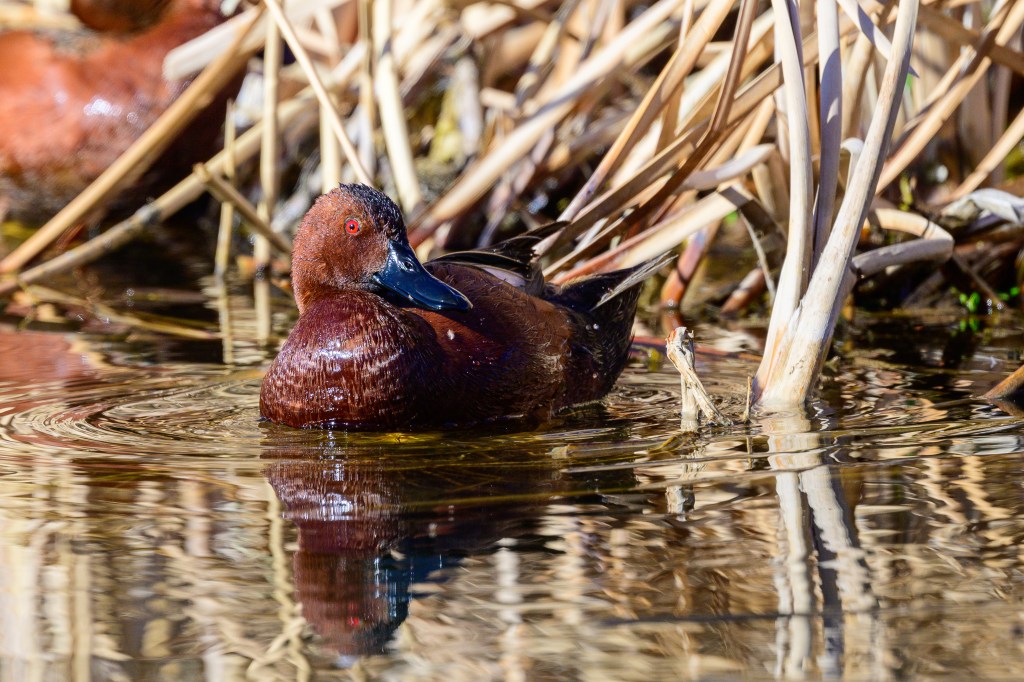
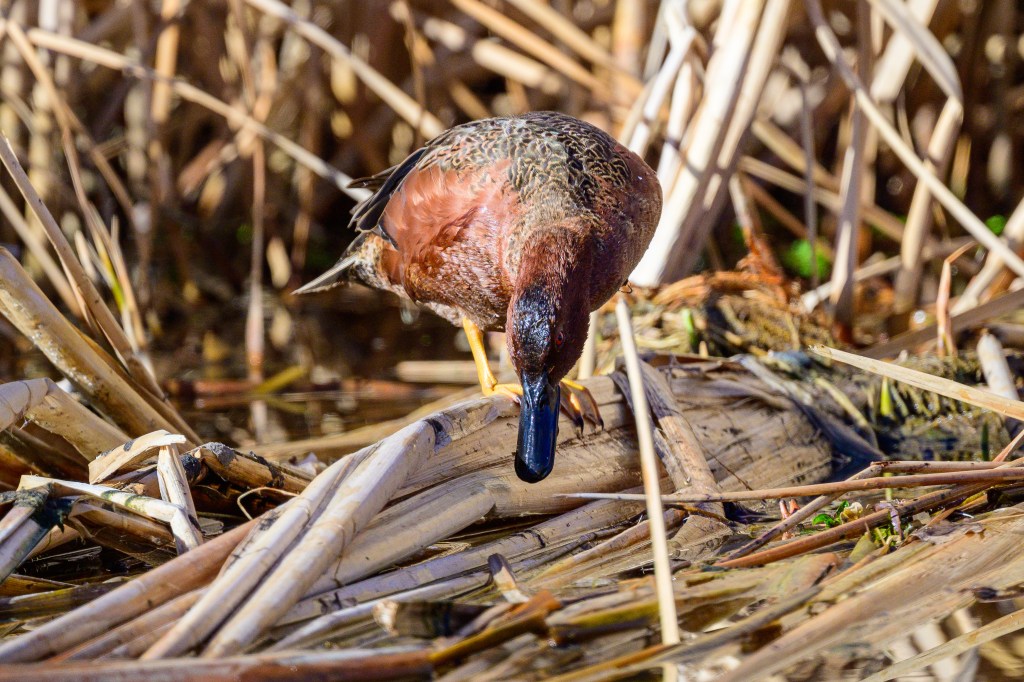
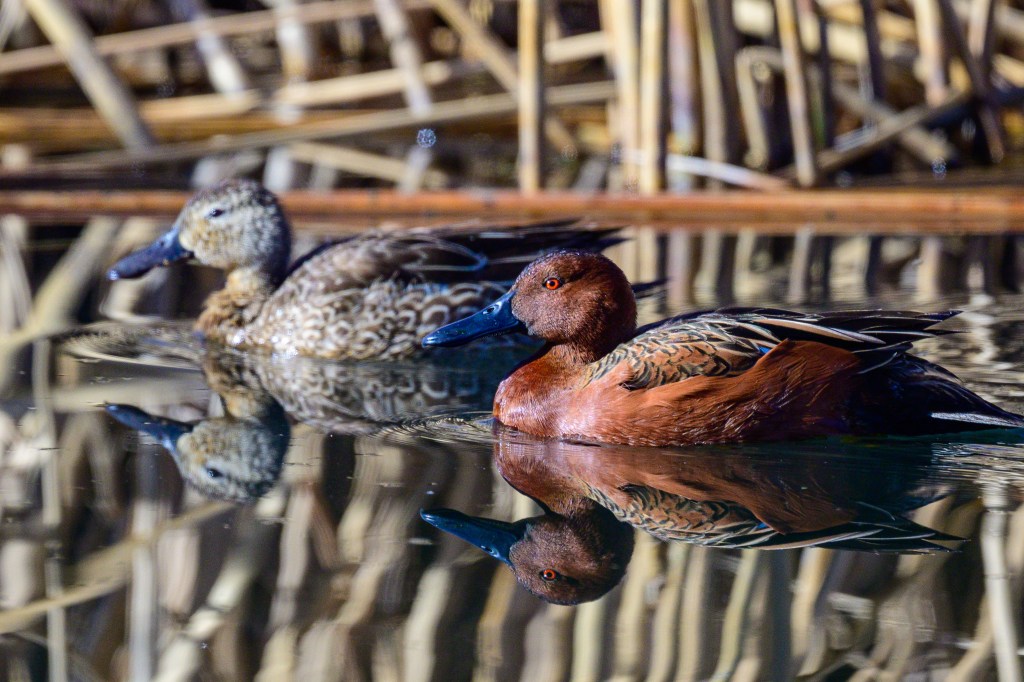
11. Cinnamon Teal – 0.9 lb. Spring & Fall.
Three different Teal species visit Bishop. Cinnamon Teals are the most common. In flight their colors seem to change with their position and the angle of the sun.
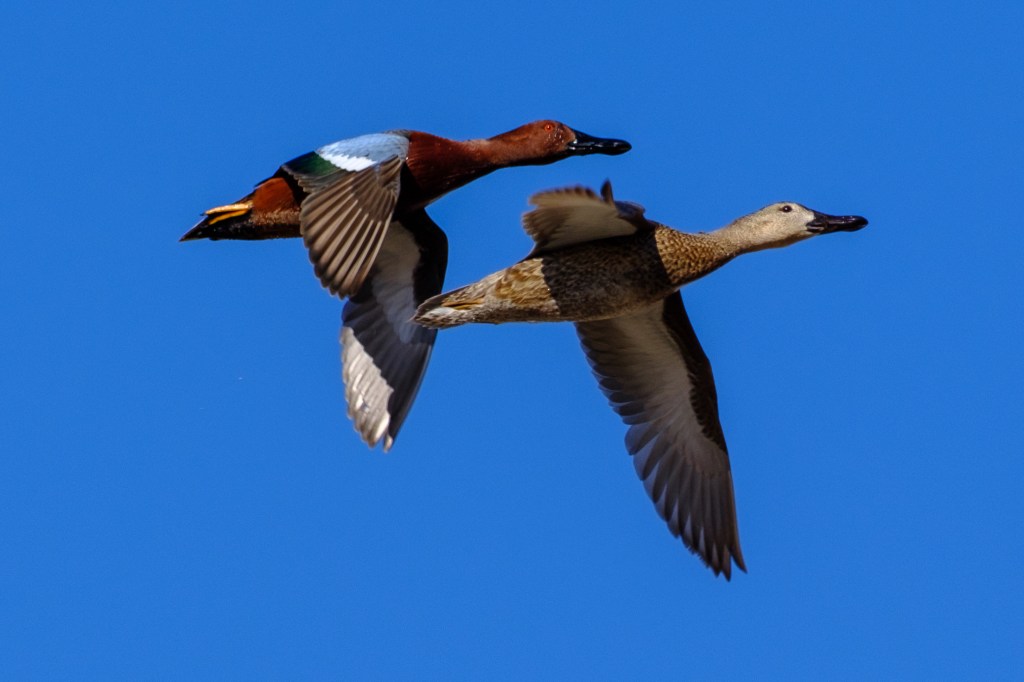
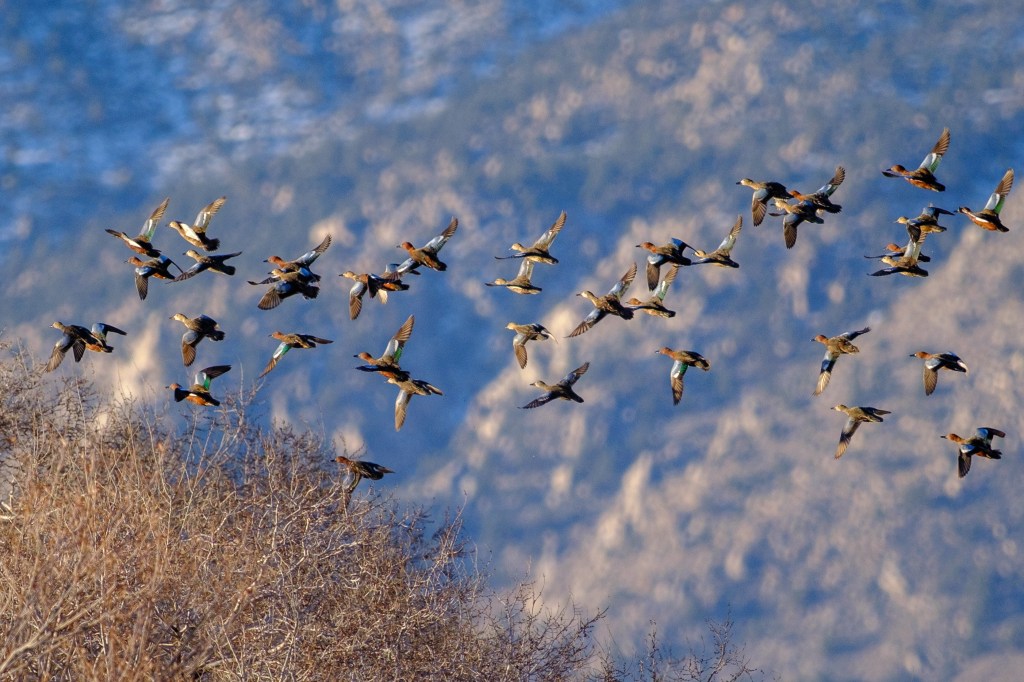
In the water or on land, the plumage is striking.
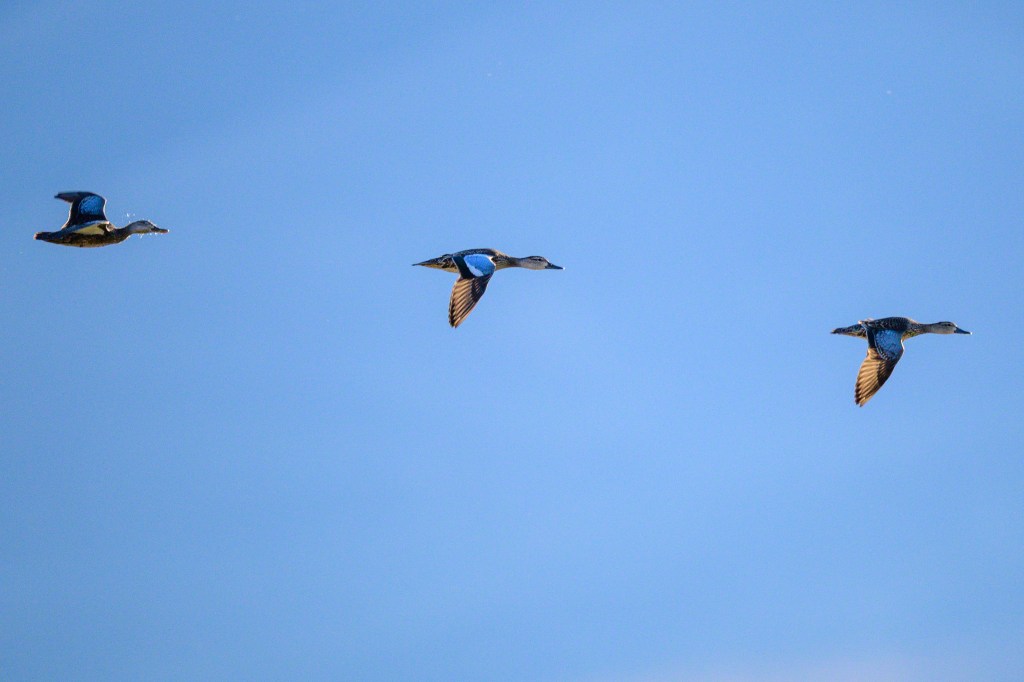
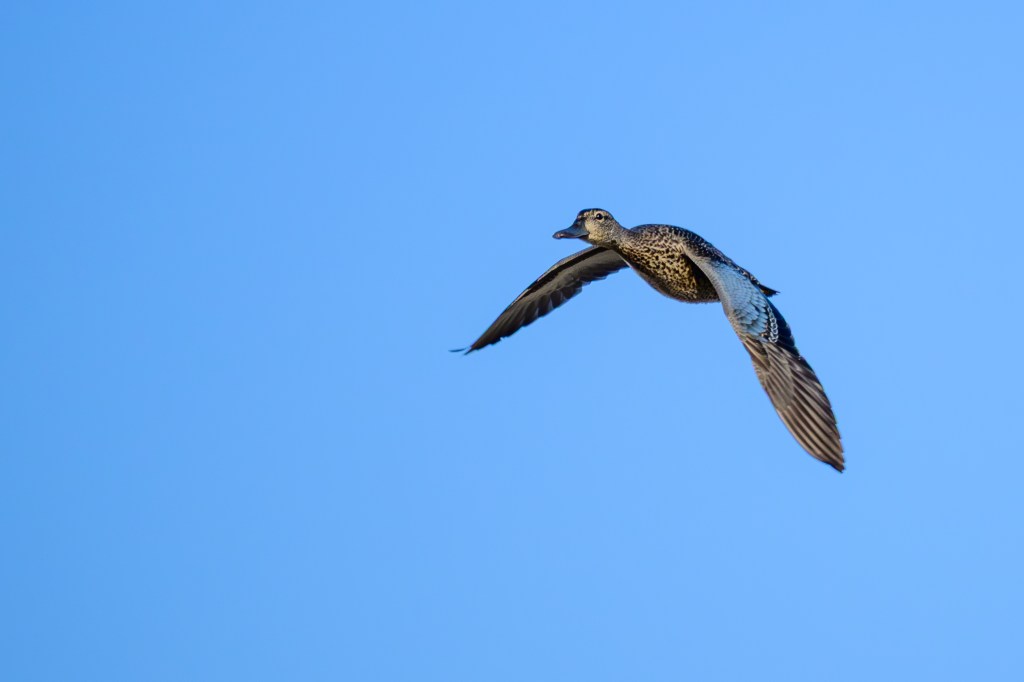
12. Blue-winged Teal – 0.9 lb. Spring & Fall.
This bird has a large blue area on the wing, plus a green speculum, and a wedge of white. If you compare this with the wings of Northern Shovelers, shown earlier, you can see the same pattern.

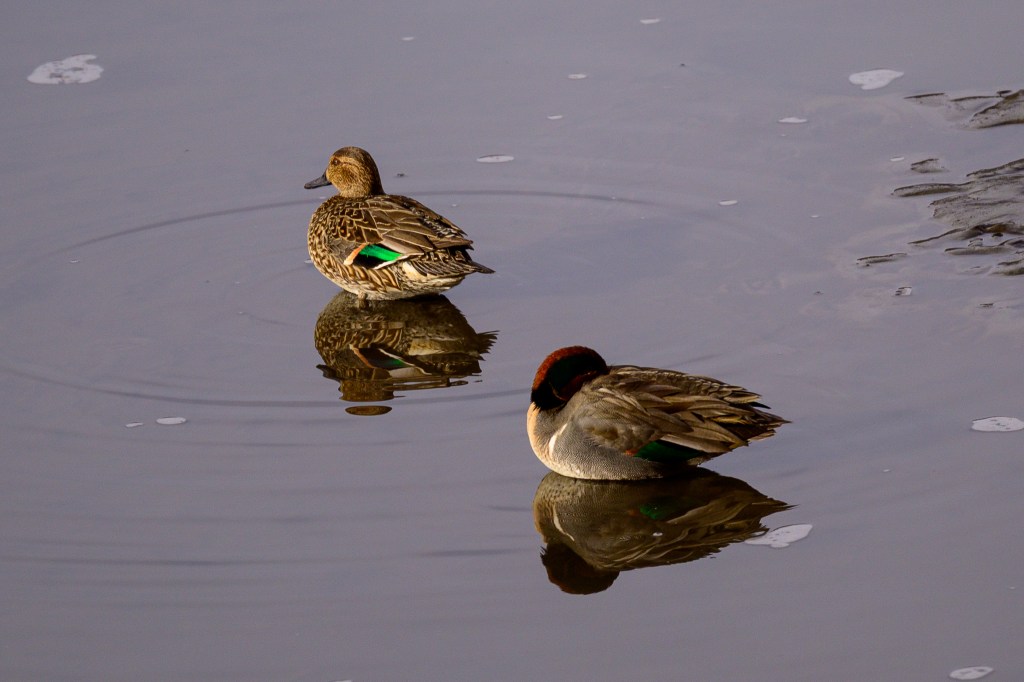
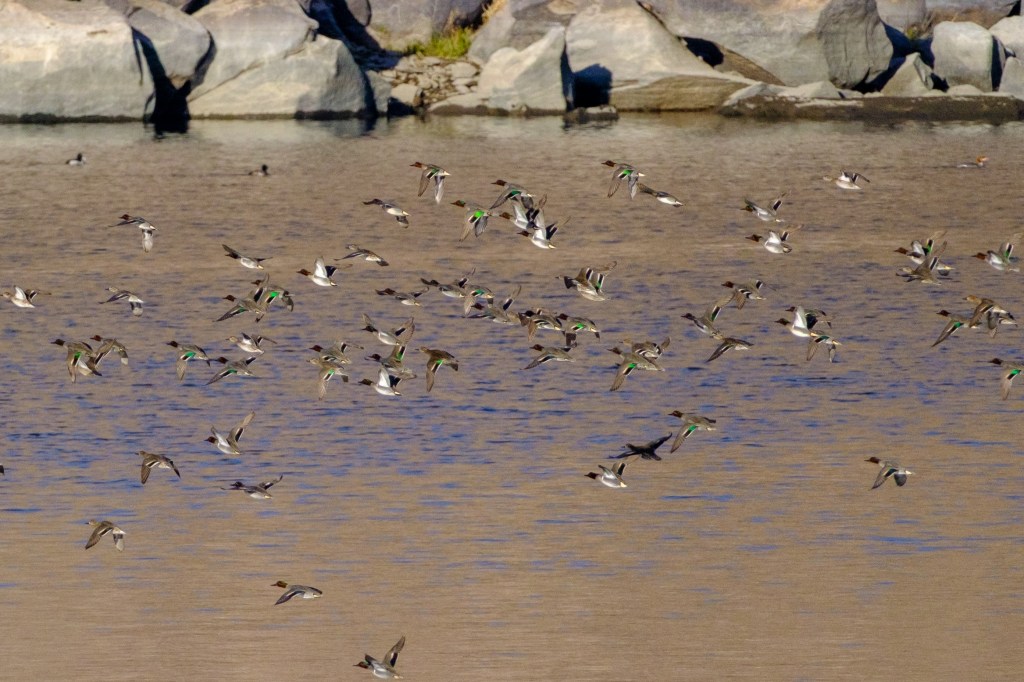
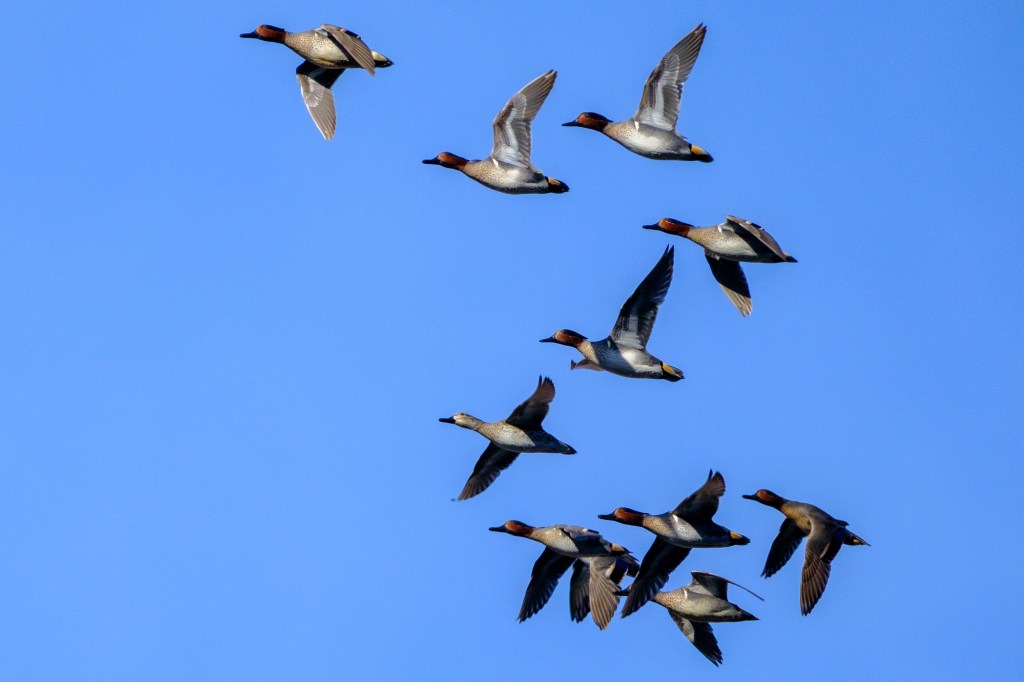
13. Green-winged Teal – 0.7 lb. Fall/Winter/Spring.
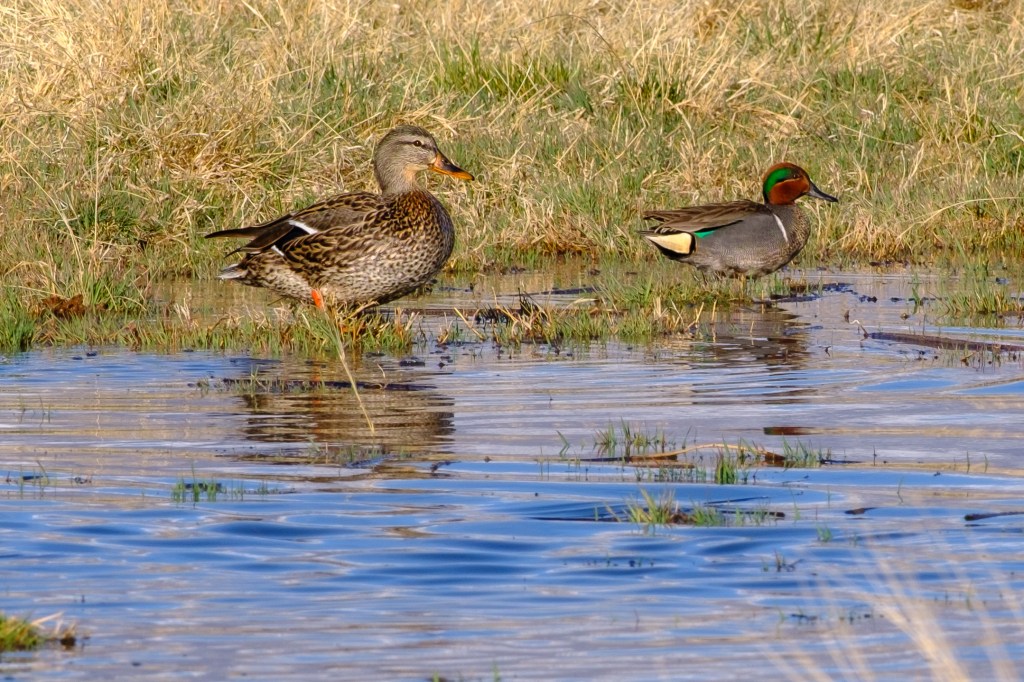
Teals are all small ducks, weighing less than a pound. The photo below shows a diminutive Green-winged Teal with a massive female Mallard.
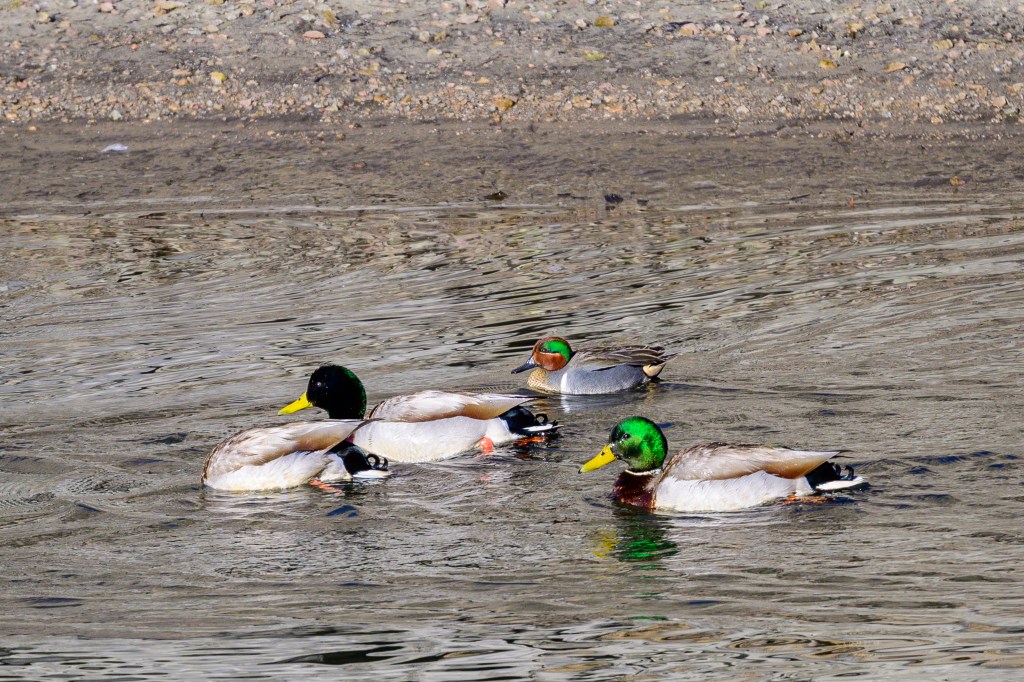
Below, a small Green-winged Teal swims with male Mallards at the Reservoir.
The next 3 photos all show Green-winged Teals at the Reservoir in winter.
Diving Ducks (Bay Ducks)
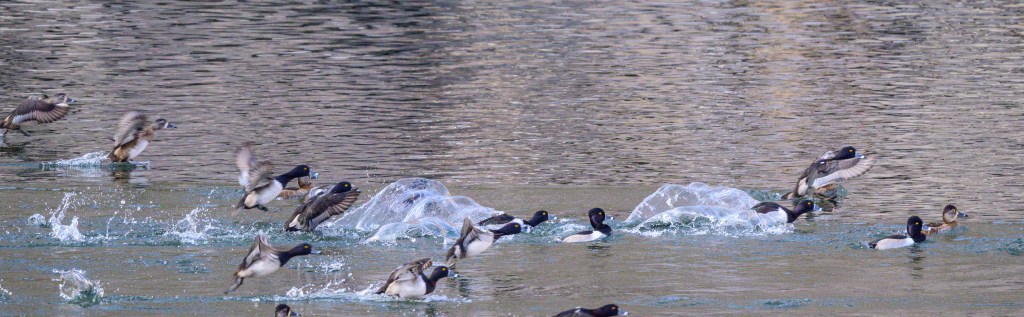
This group of ducks can dive to 20 feet for food. Their powerful legs are positioned to the rear, so they swim well underwater, but have trouble walking. It is hard for them to take wing, as their bodies are heavy compared with the surface areas of their wings. To get into the air, they run on the surface, pushing on the water with their feet. Take-off requires a long runway and a lot of splashing. These birds have no speculum on the wings.
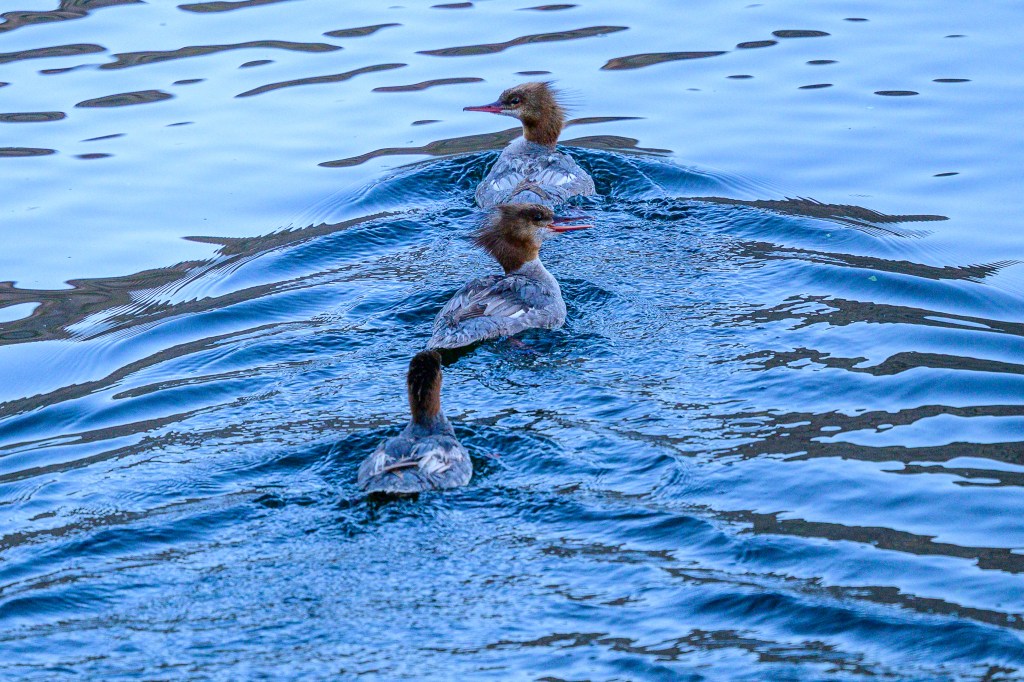
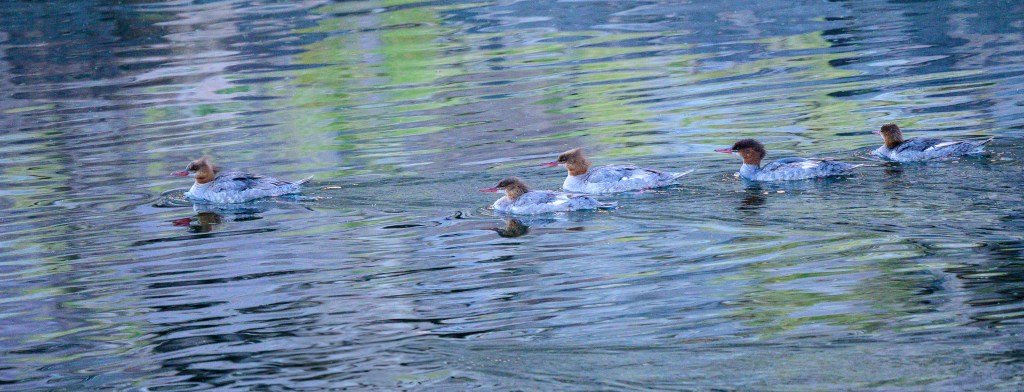
14. Merganser – 3.2 lb. Fall/Winter.
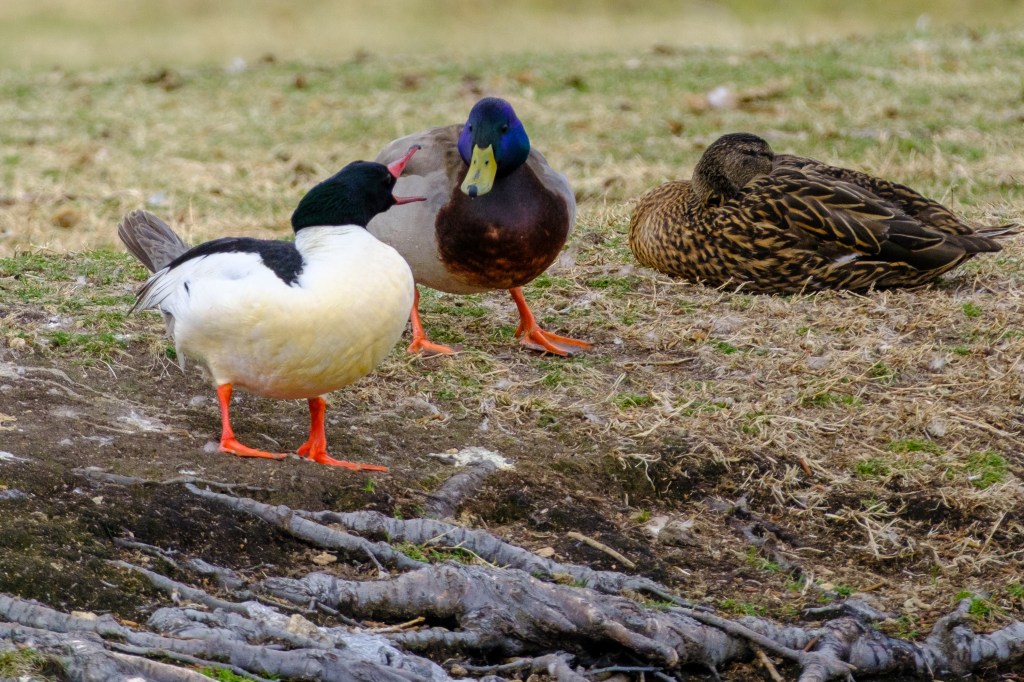
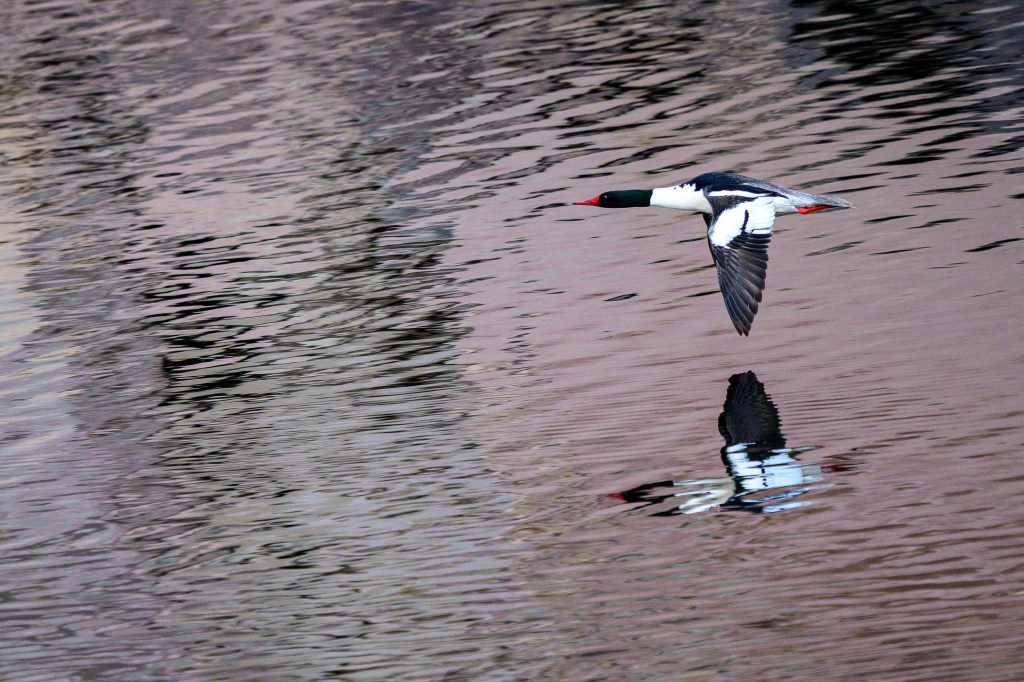
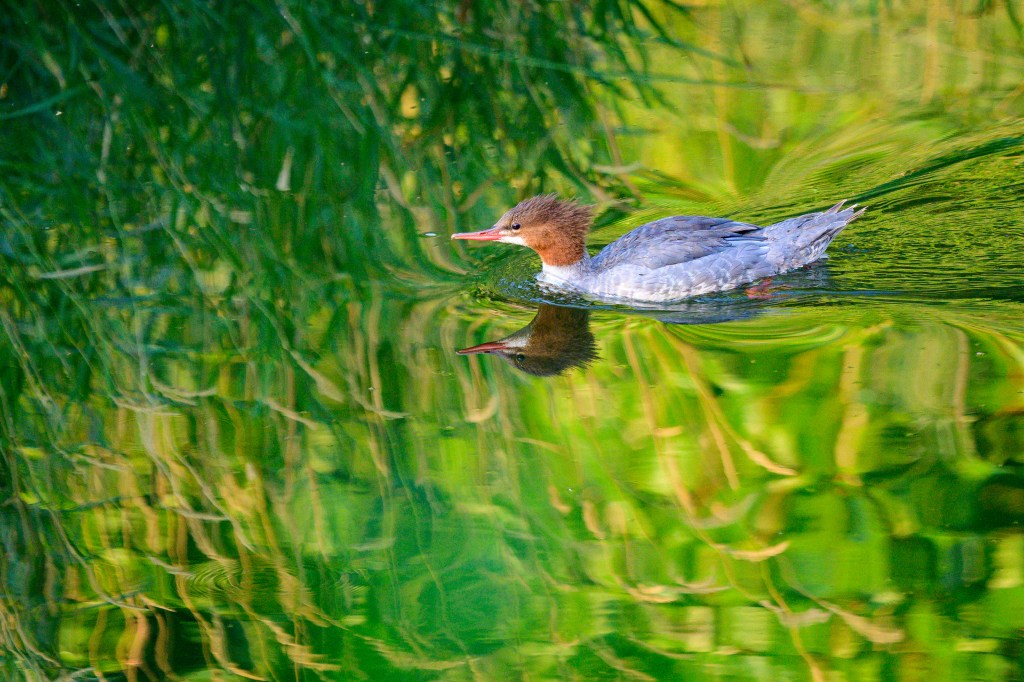
Mergansers have a long bill with a hook at the end. I find it hard to think of them as ducks, as they lack the spatula-shaped bill. In flight, they look long and narrow. Below, a fleet of Mergansers cruises on the Buckley Ponds. Males have sleek dark heads, females have messy red “hair.”
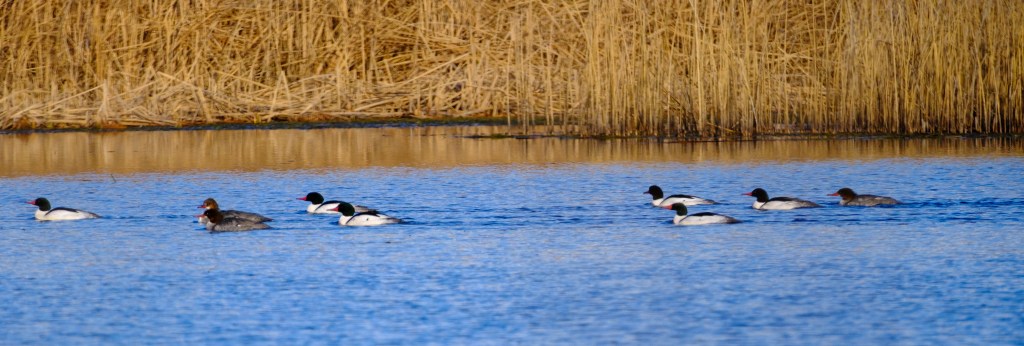
At City Park, a heavy Merganser bullies a Mallard. Both birds wear similar socks and shoes. Later the Merganser poses alone.
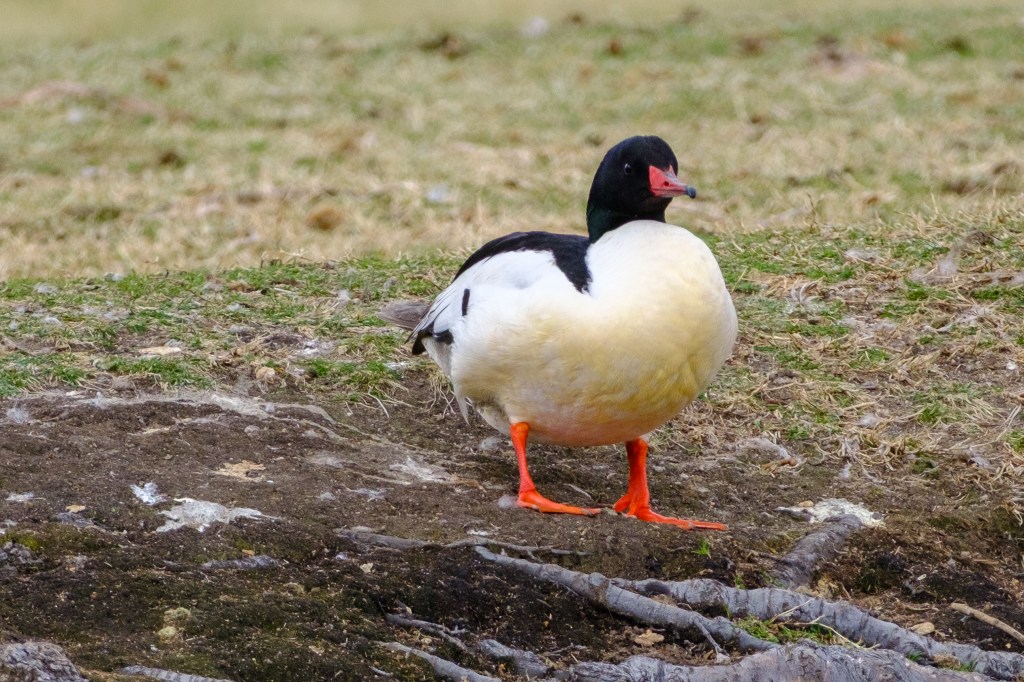
Male Mergansers patrol the Ponds. Adult females look similar to juveniles of both sexes.
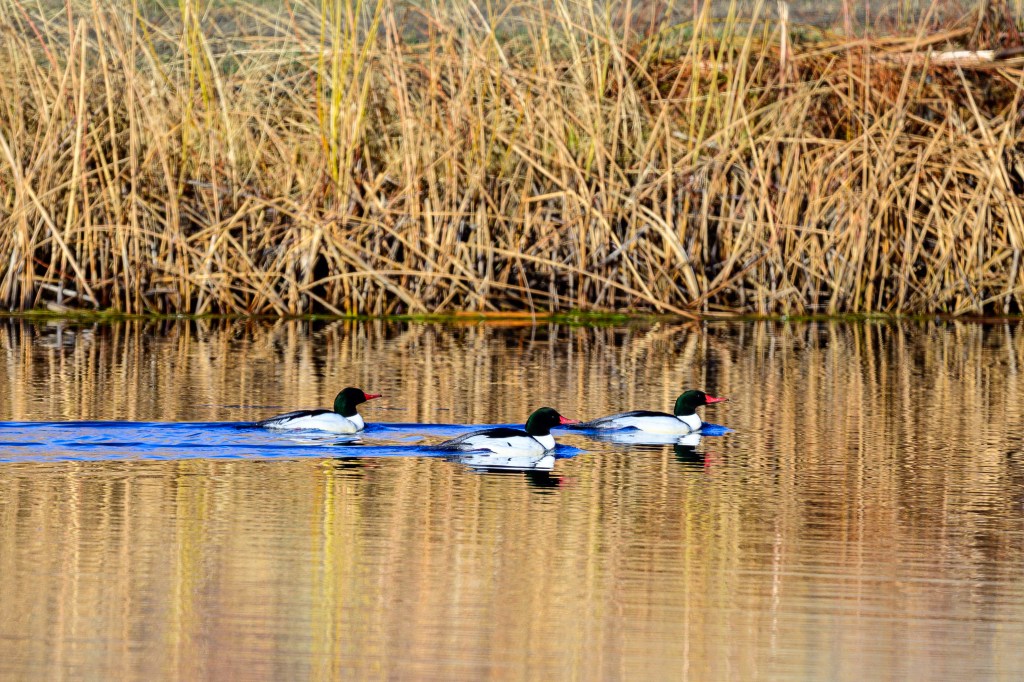
Scenes at the Reservoir.
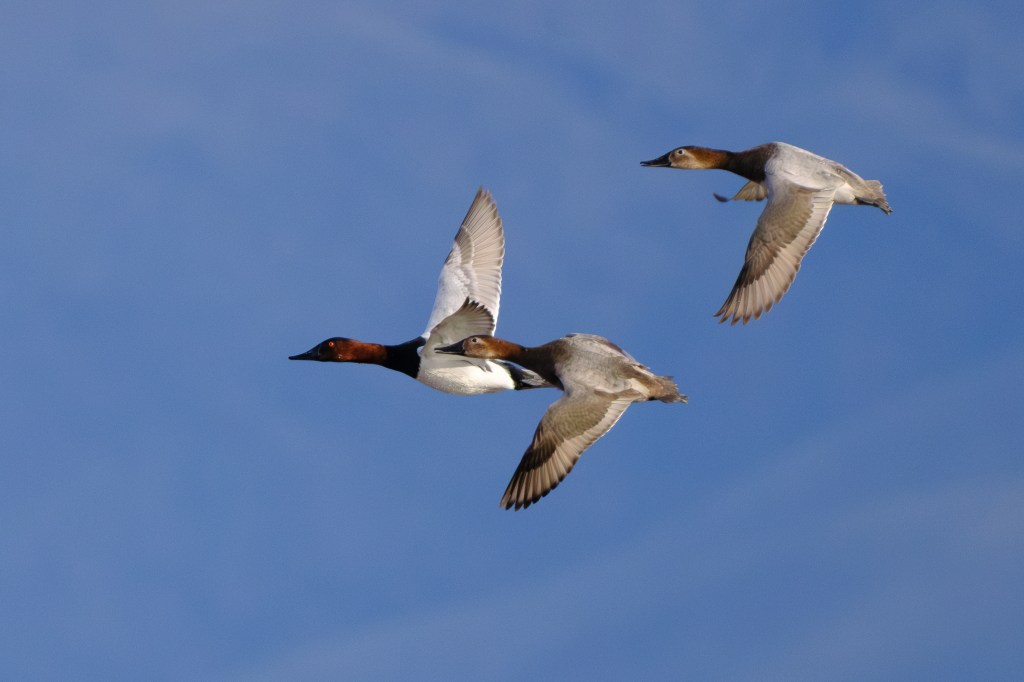
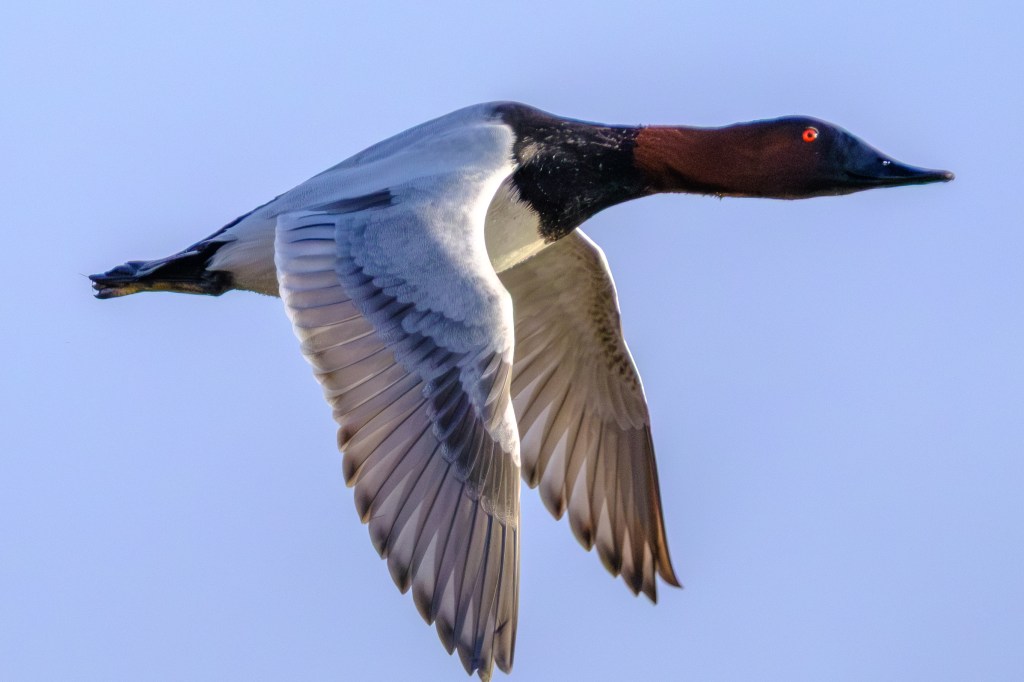
15. Canvasback – 2.7 lb. Fall/Winter.
A big duck. Below are 4 views at the Ponds, all in winter.
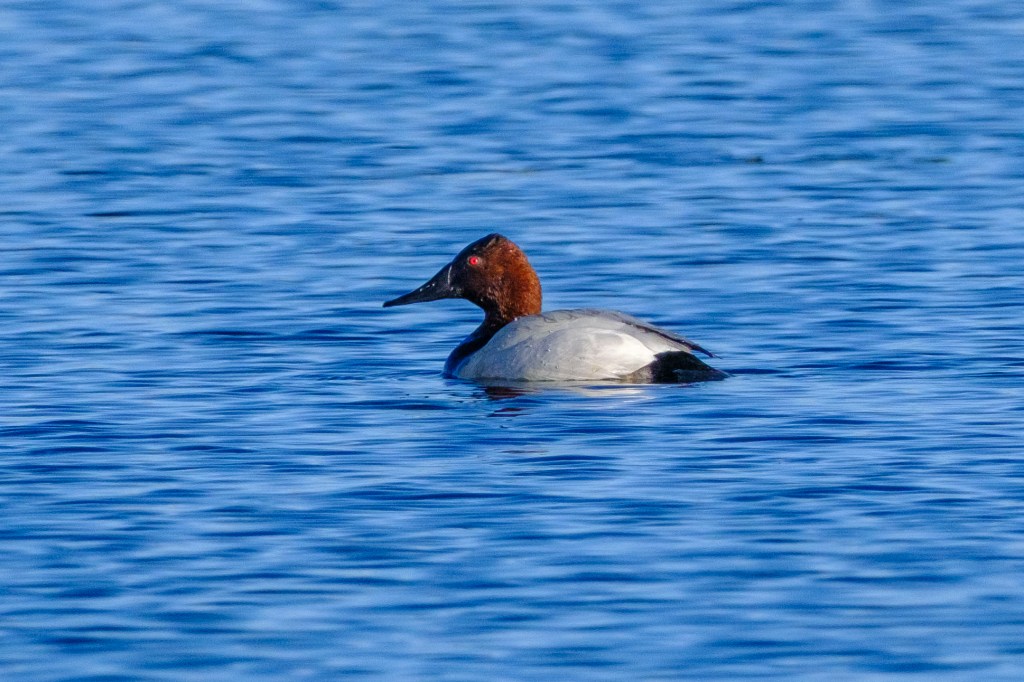

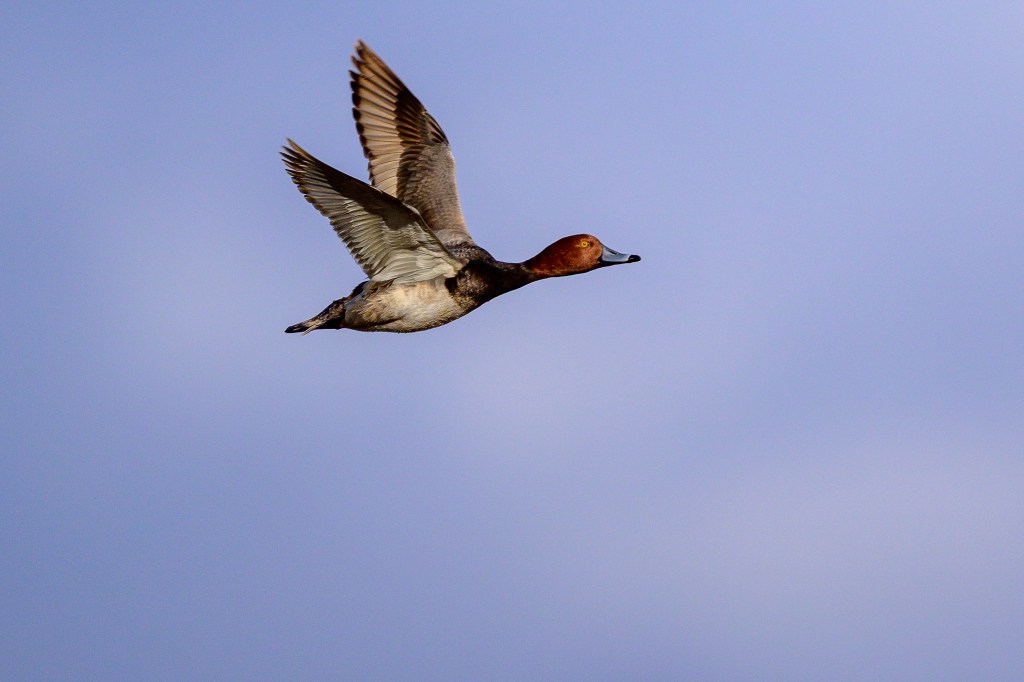
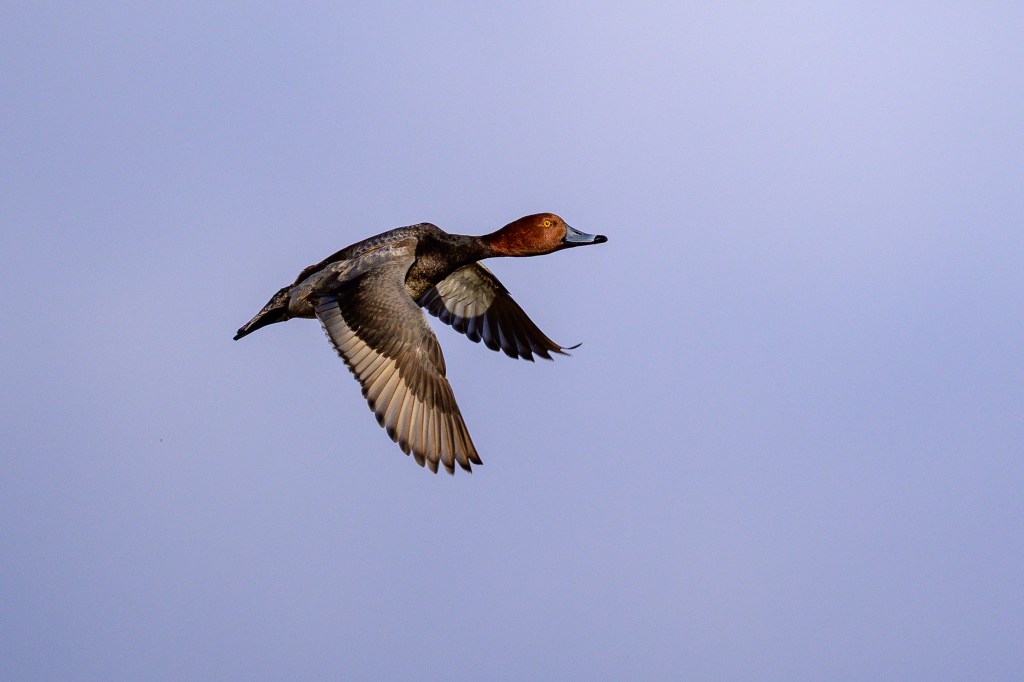
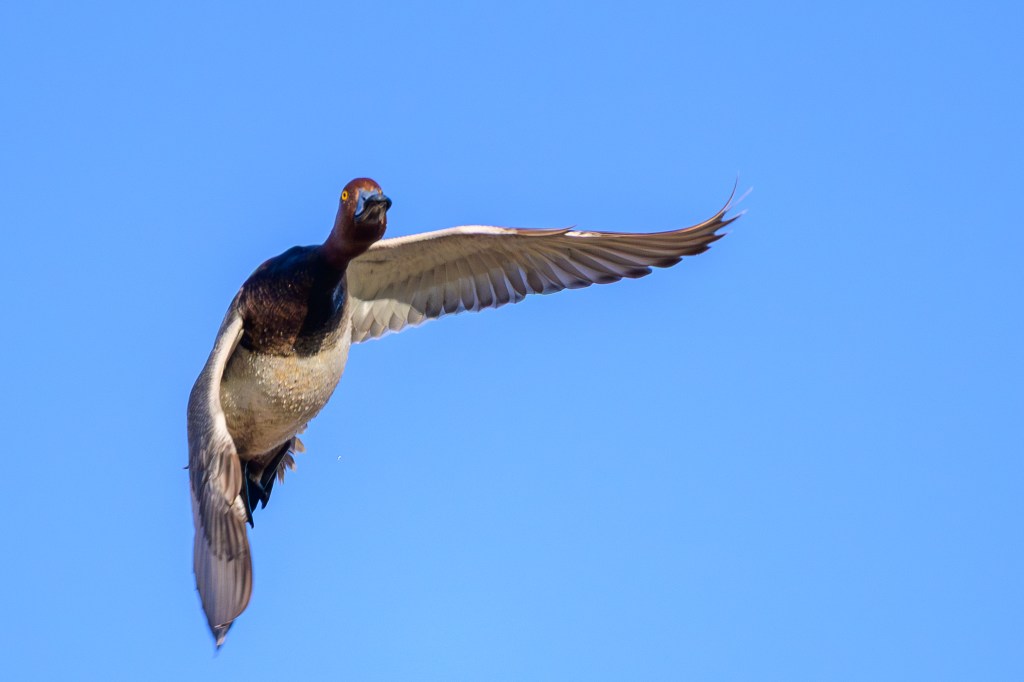
16. Redhead – 2.3 lb. Spring/Summer/Fall.
Color pattern similar to a Canvasback. Three photos from the Ponds in March.
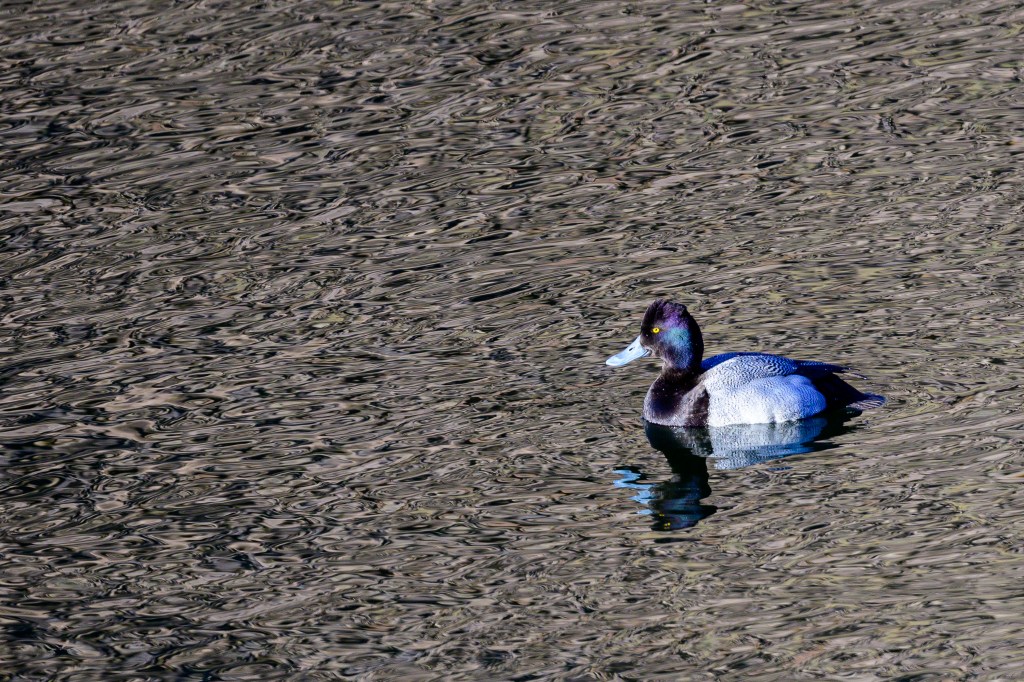
17. Lesser Scaup – 1.7 lb. Fall/Winter/Spring.
Iridescent head, delicate feather pattern on back. Visits the Reservoir in winter.
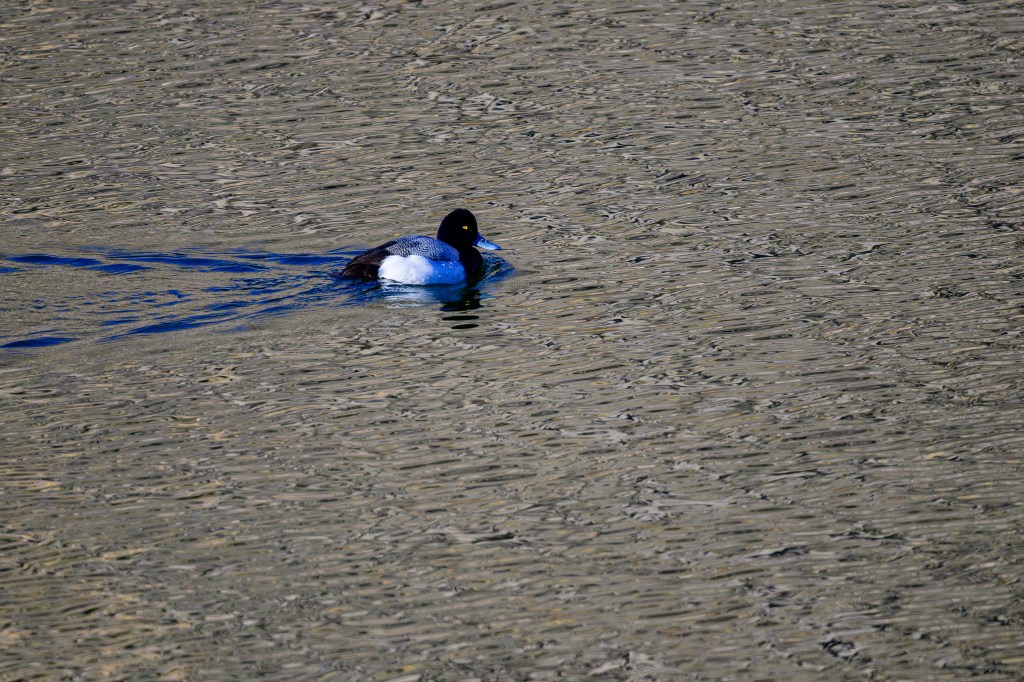
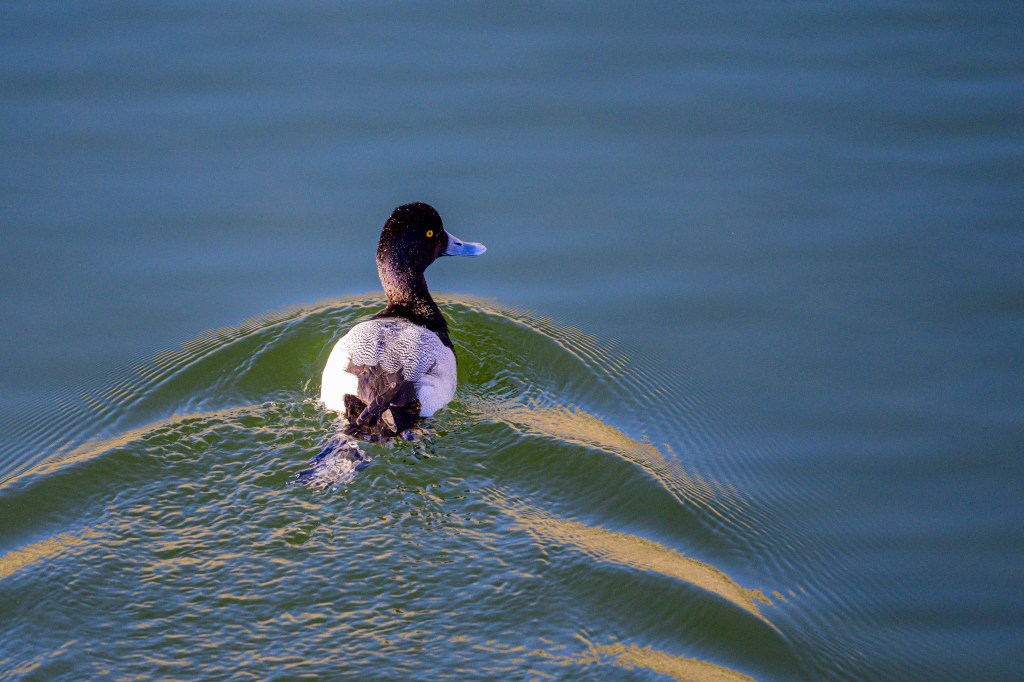
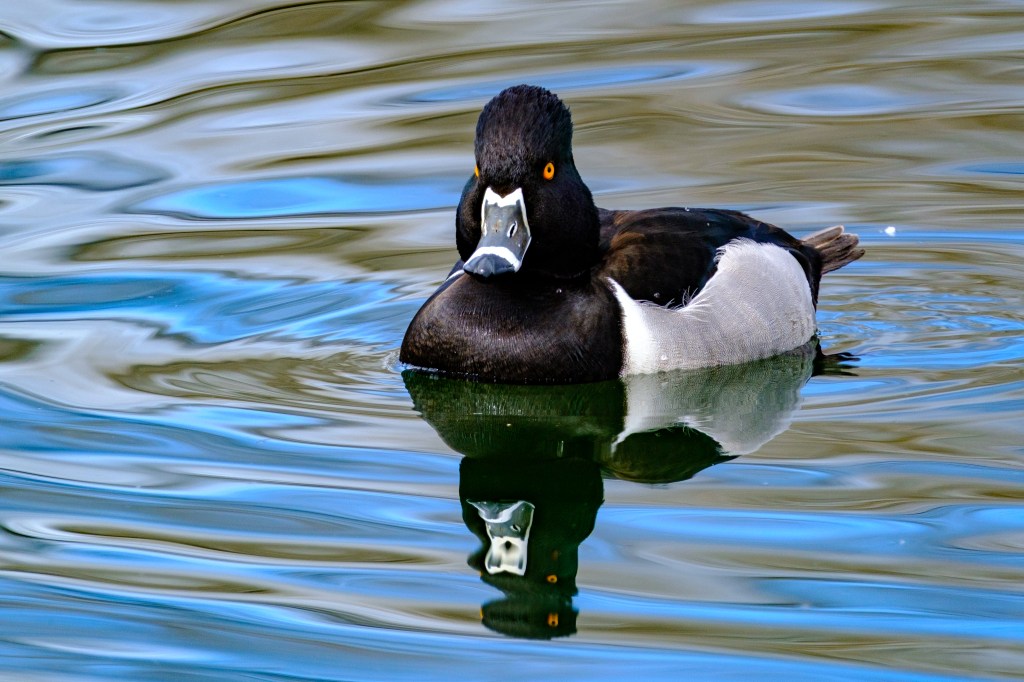
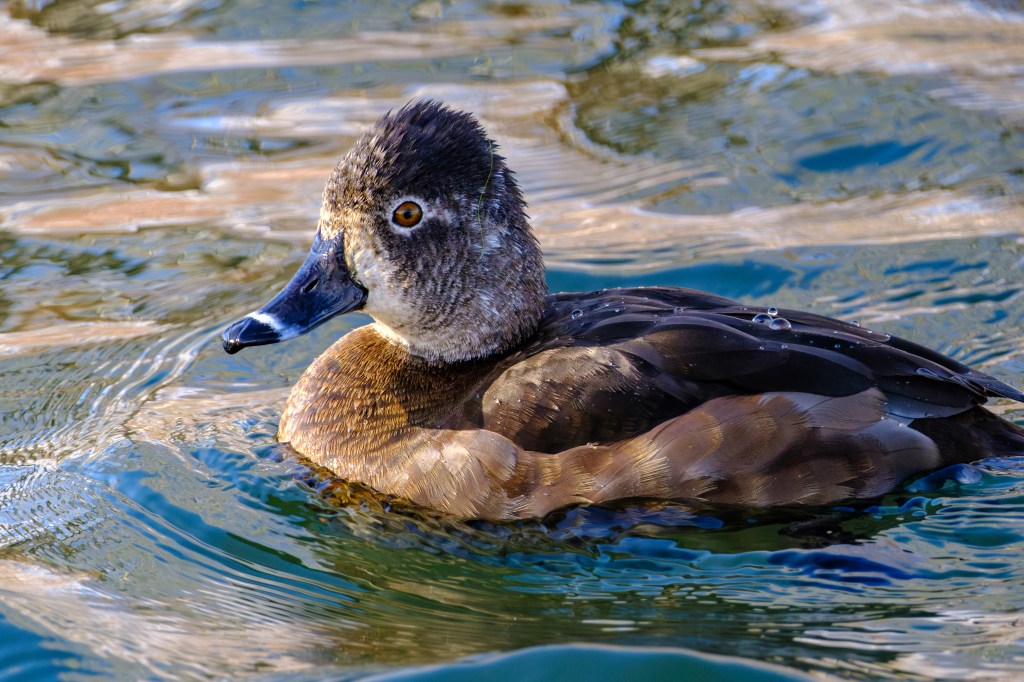
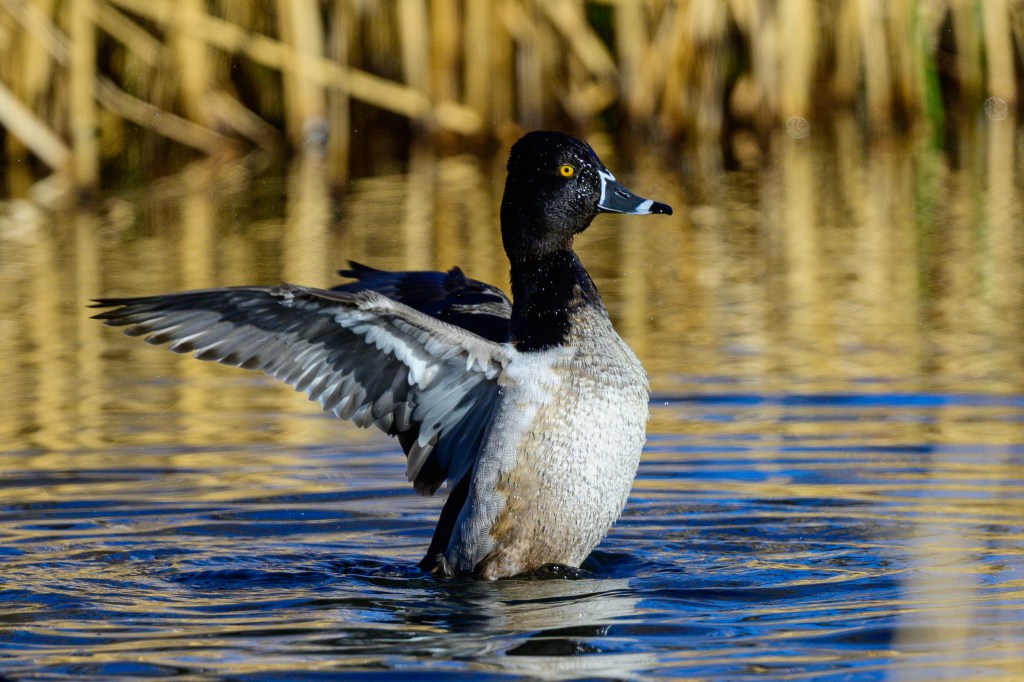
18. Ring-necked Duck – 1.6 lb. Fall/Winter/Spring.
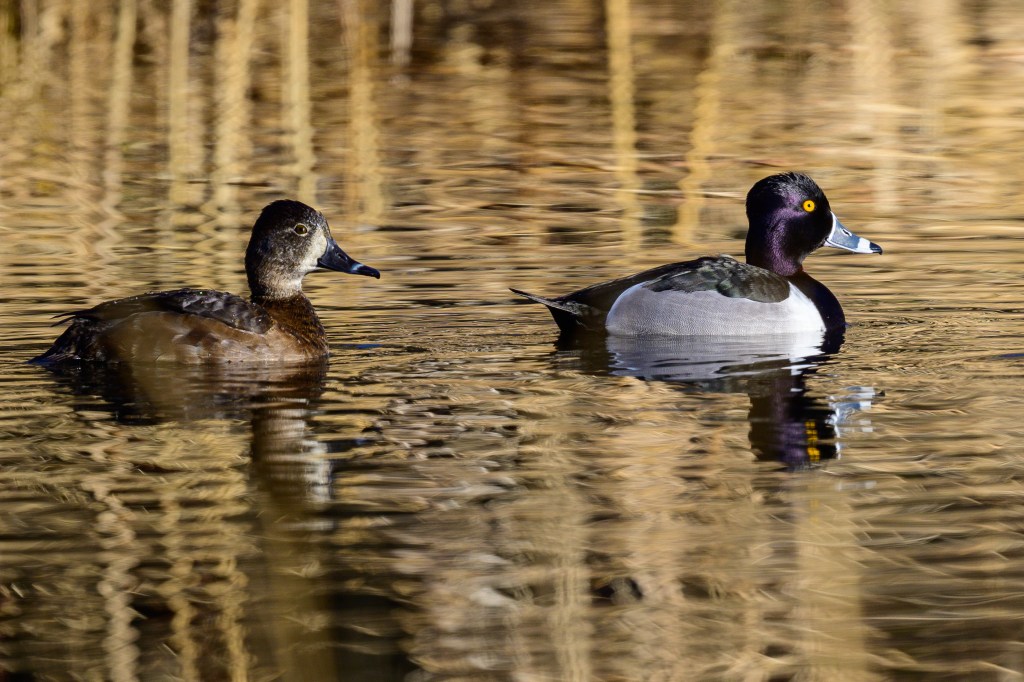
This bird has the wrong name. The ring on the bill is obvious. The ring on the neck is obscure. This should be called the ring-billed duck.
A male at the City Park looks fierce when seen head on.
A female at the Park. She looks placid as she demonstrates that water rolls off a duck’s back.
At the Reservoir, a group of Ring-necked Ducks thrashes about as they try to take off.
Three images taken at the COSA. In the last photo you can see the ring on the neck.

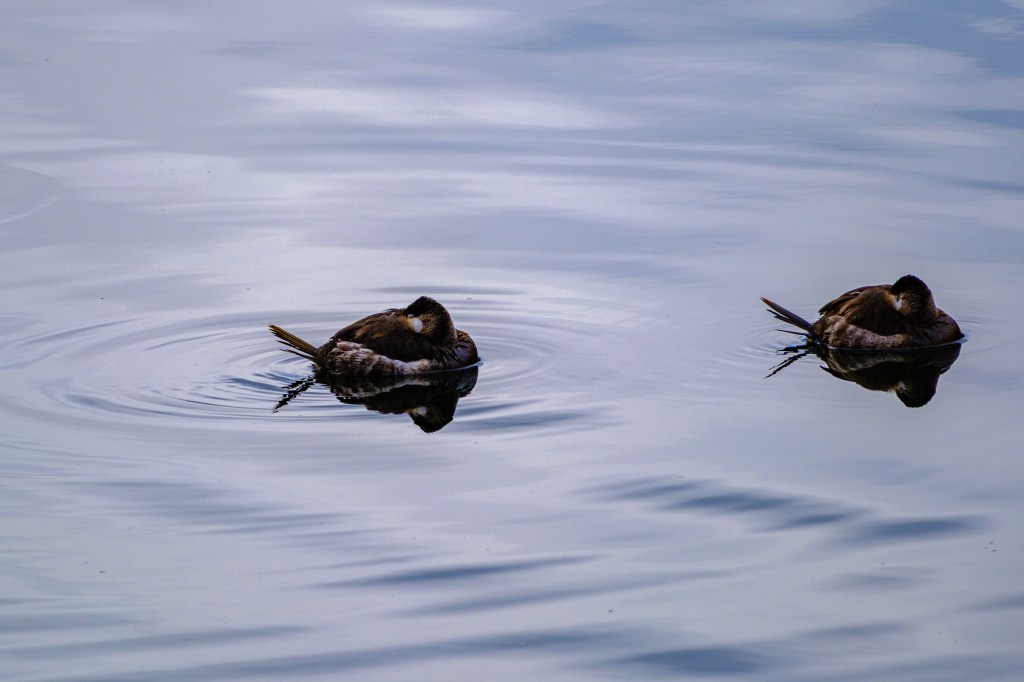
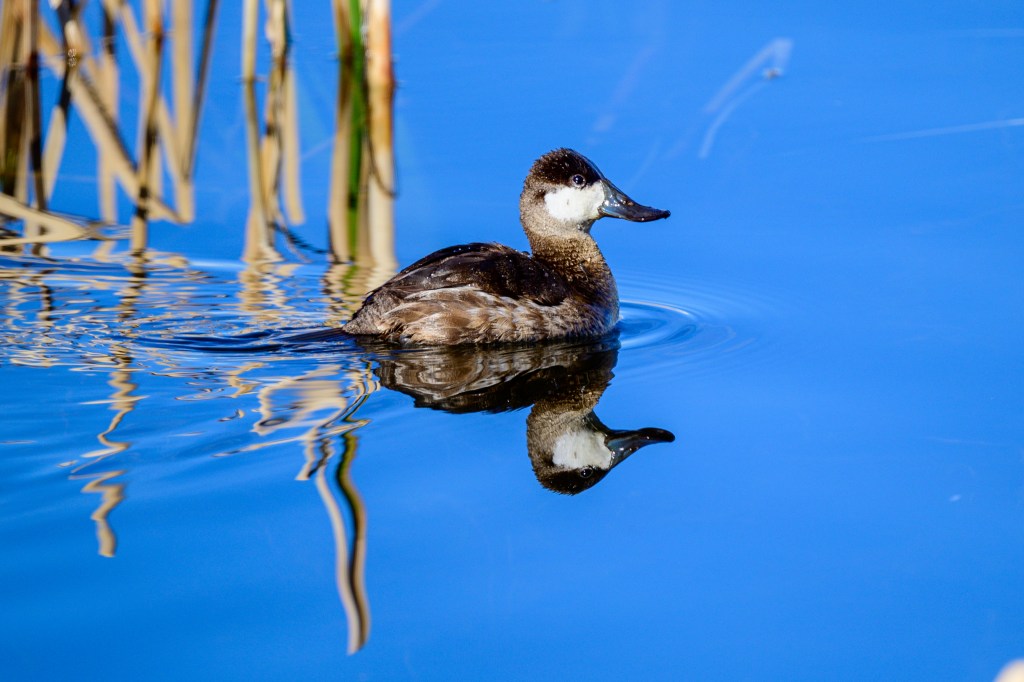
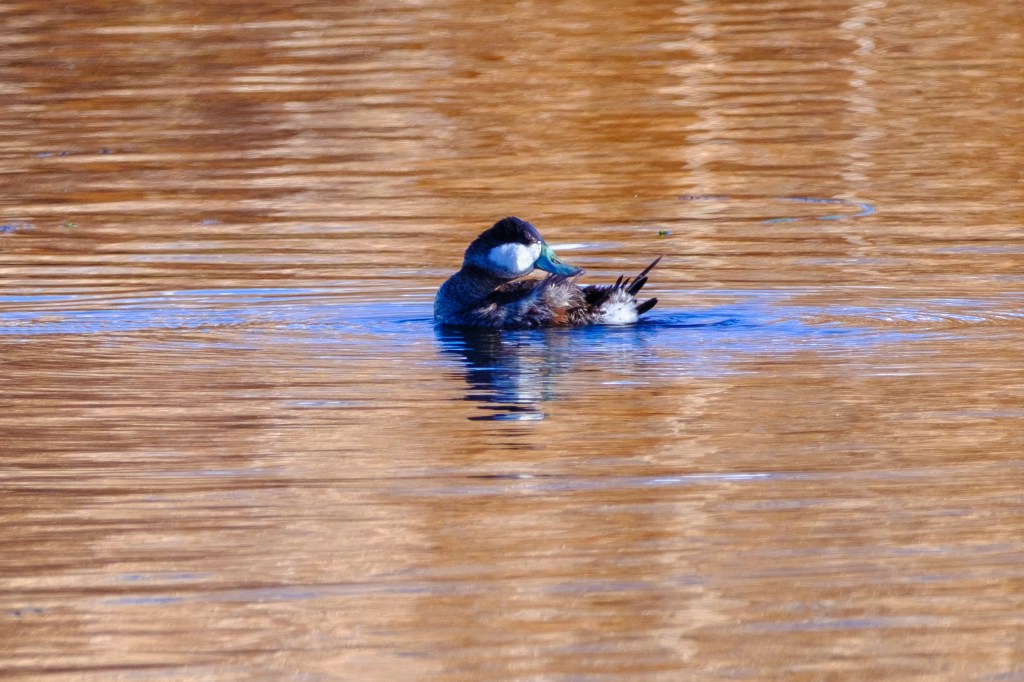
19. Ruddy – 1.3 lb. All year.
These are called stiff-tailed ducks, as their tail feathers stick up. On a cold morning they sleep in, heads tucked away, tails pointed up. I think they look like a bowl of noodles with chop sticks inserted. Or a basket of yarn with knitting needles. The three photos below were taken in winter. First at the Reservoir, last two at the Ponds. Note the blue bill.
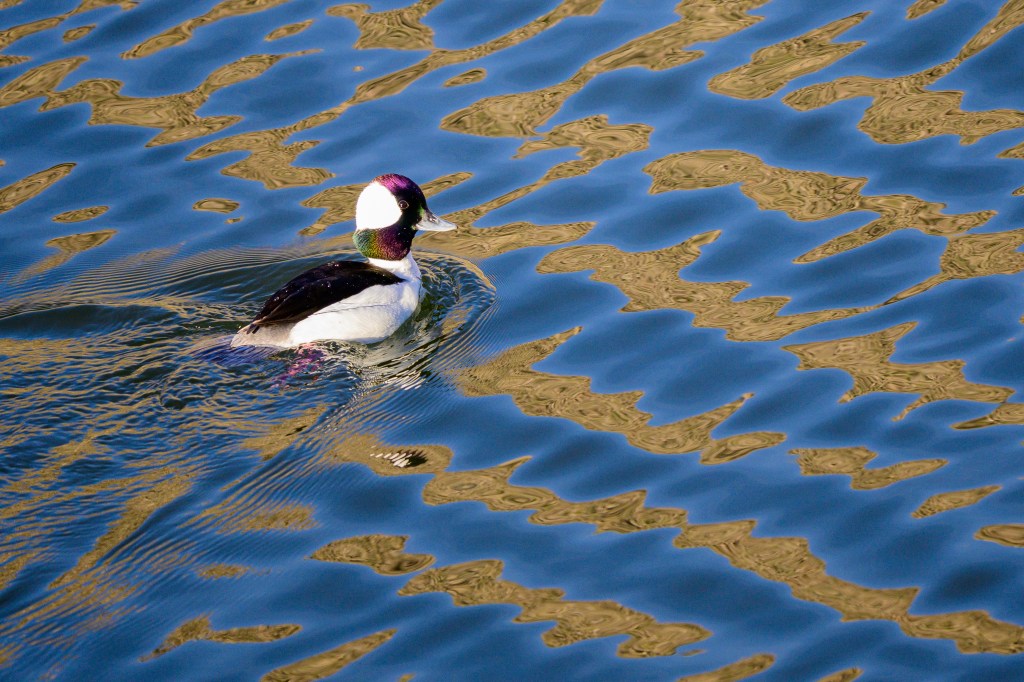
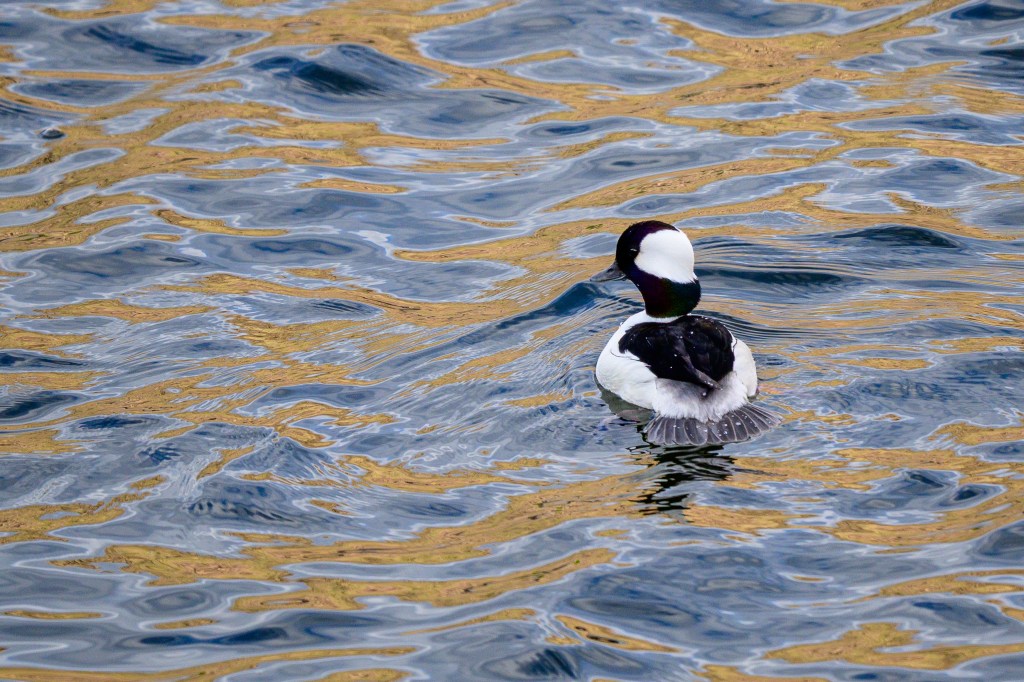
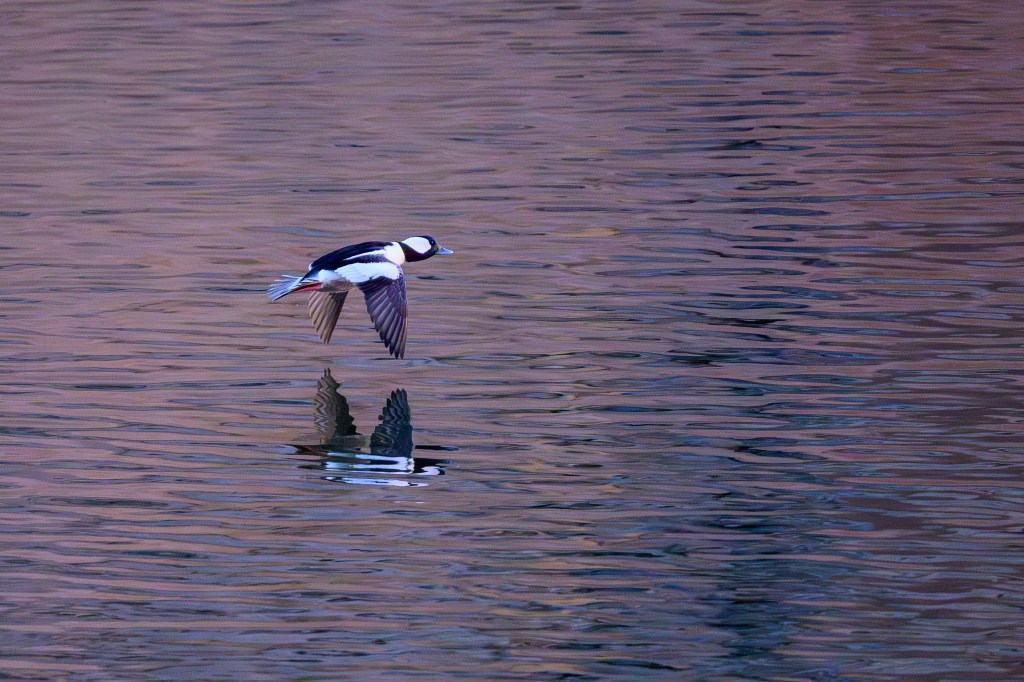
20. Bufflehead – 0.9 lb. Fall/Winter/Spring.
Small diving duck. Head iridescent in sunlight, black and white in shade. First 4 photos taken at the Reservoir.
Below you can see how a diving duck uses its feet to take off.

Last photo shows what a diving duck does to eat; it dives.

 Birds of Bishop