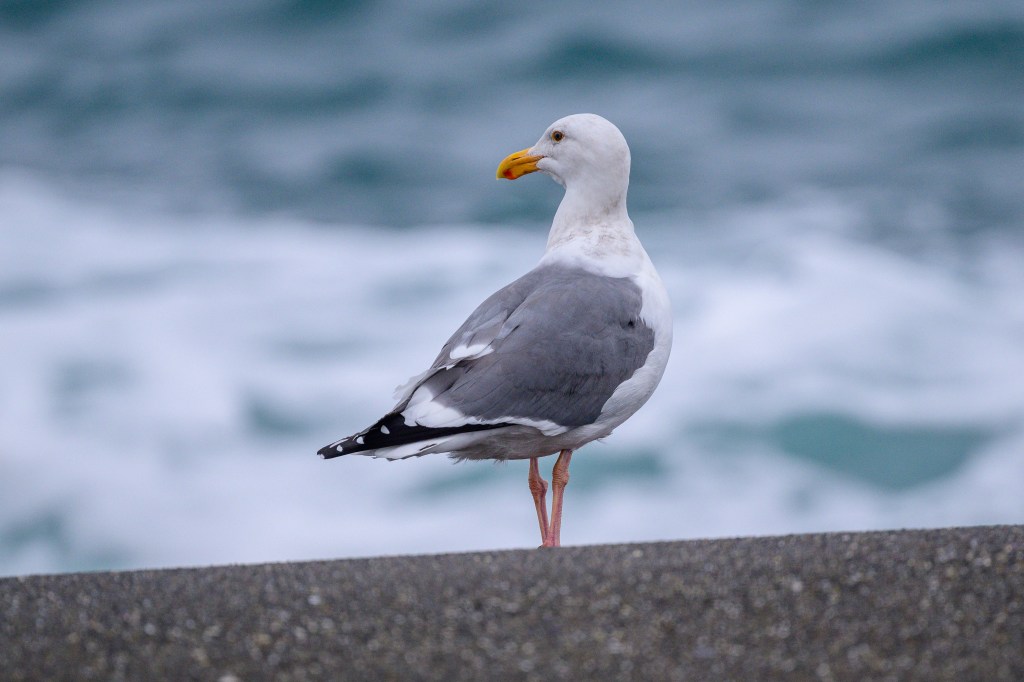
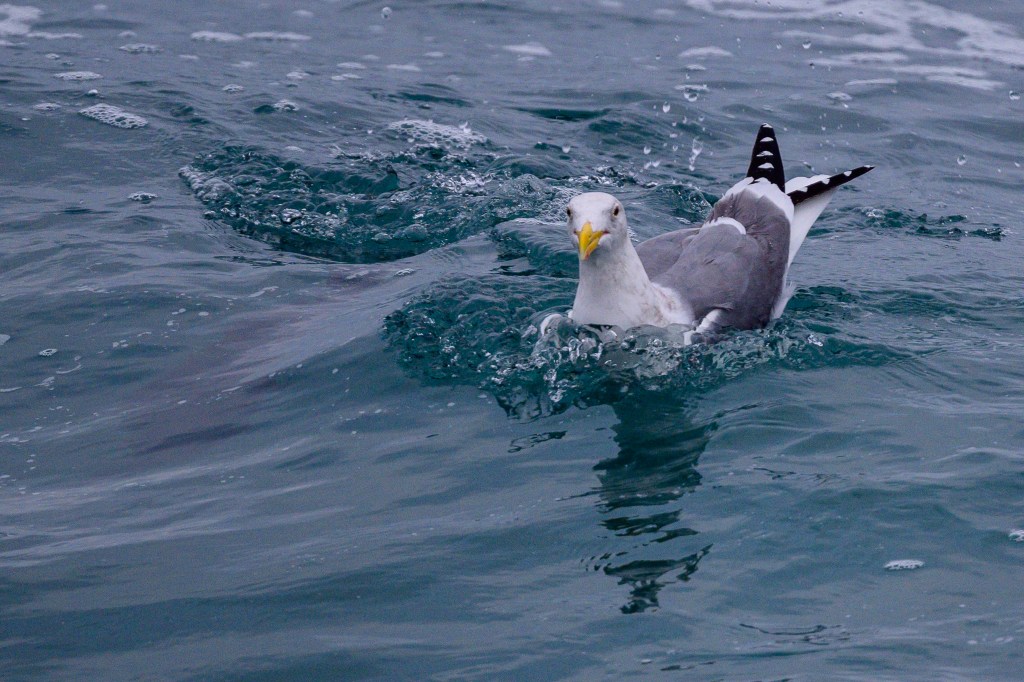
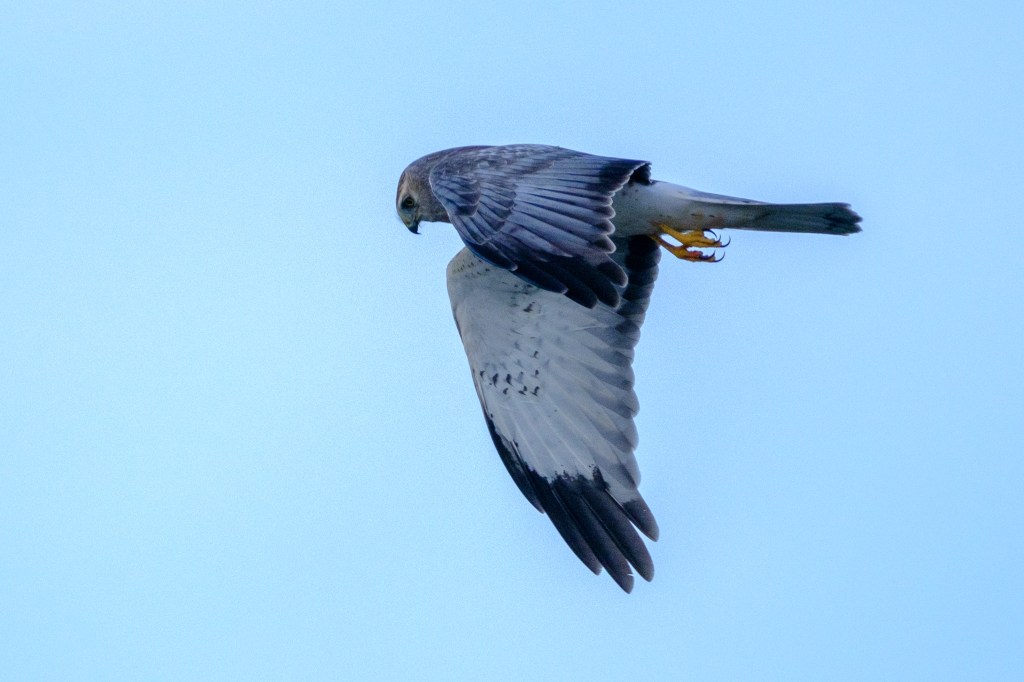
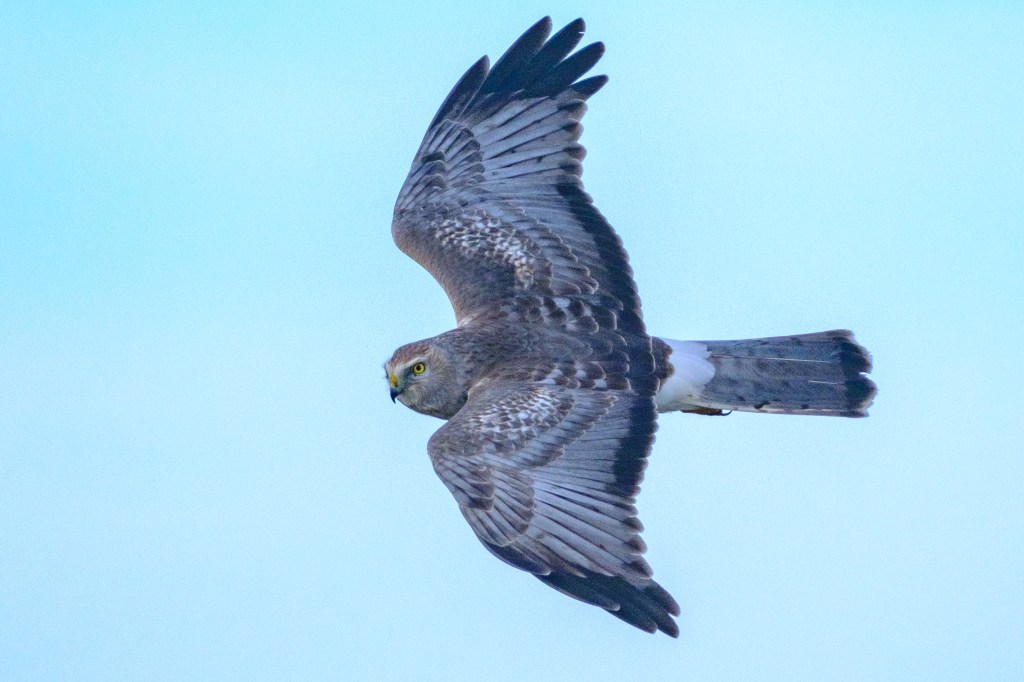
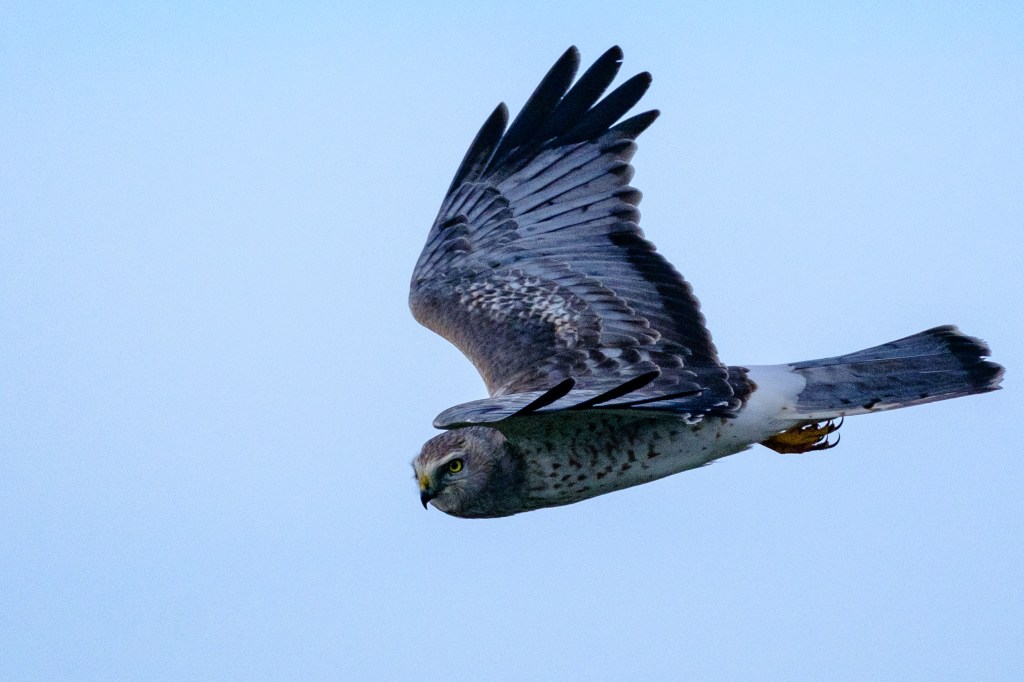
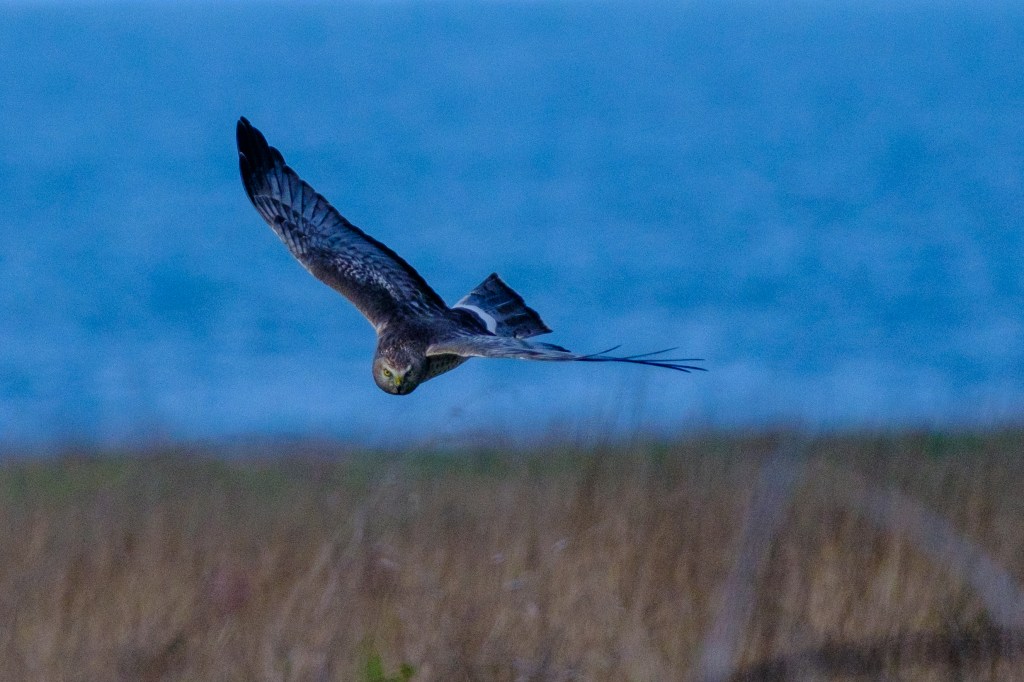
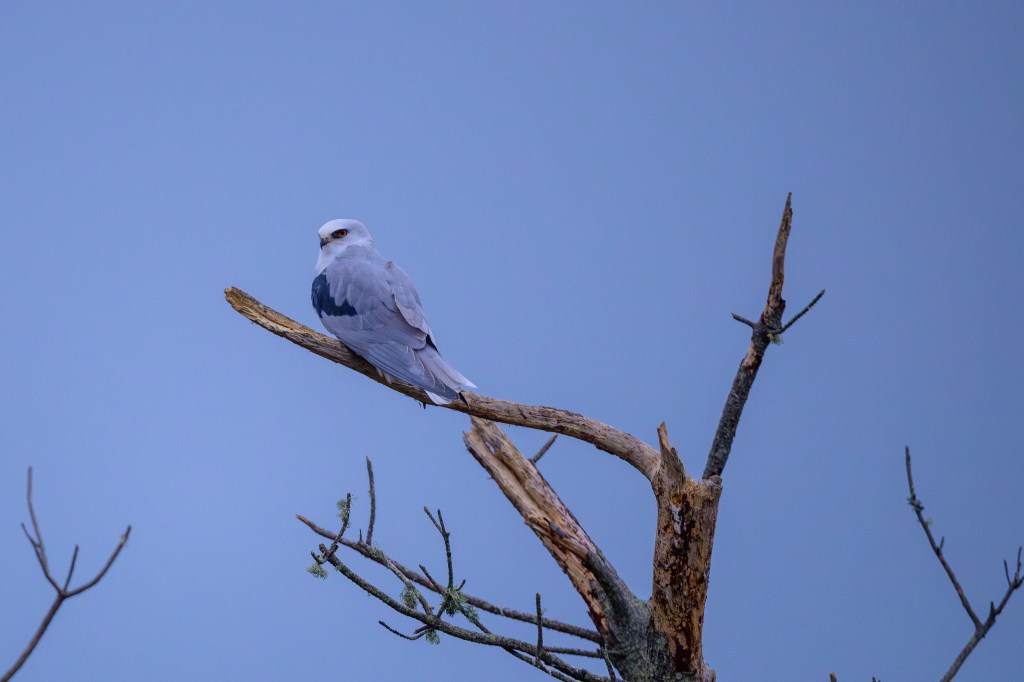
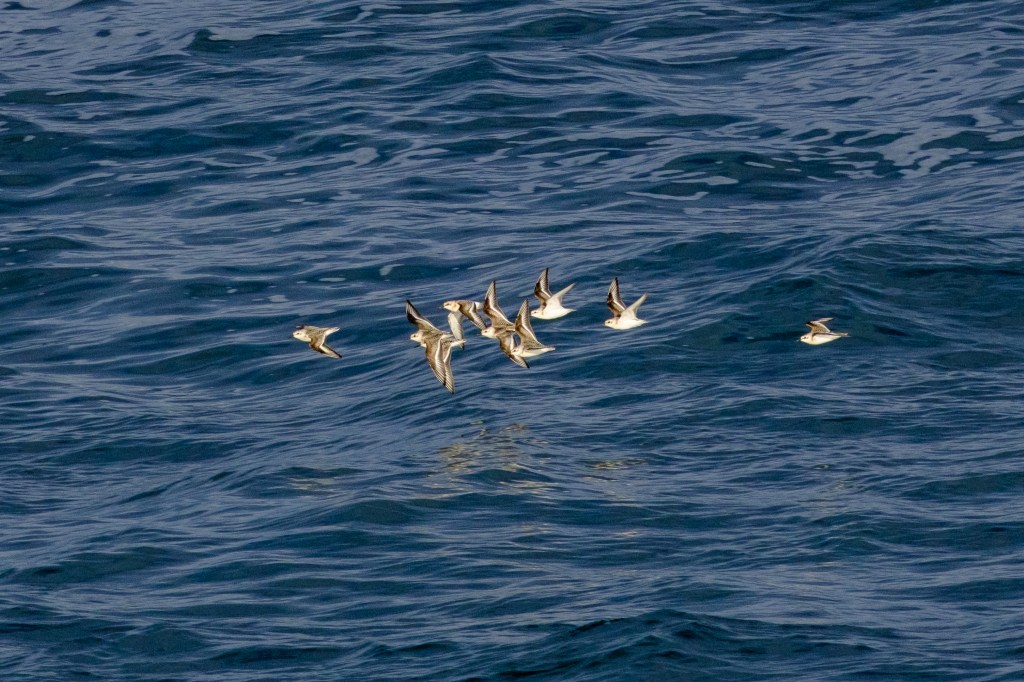
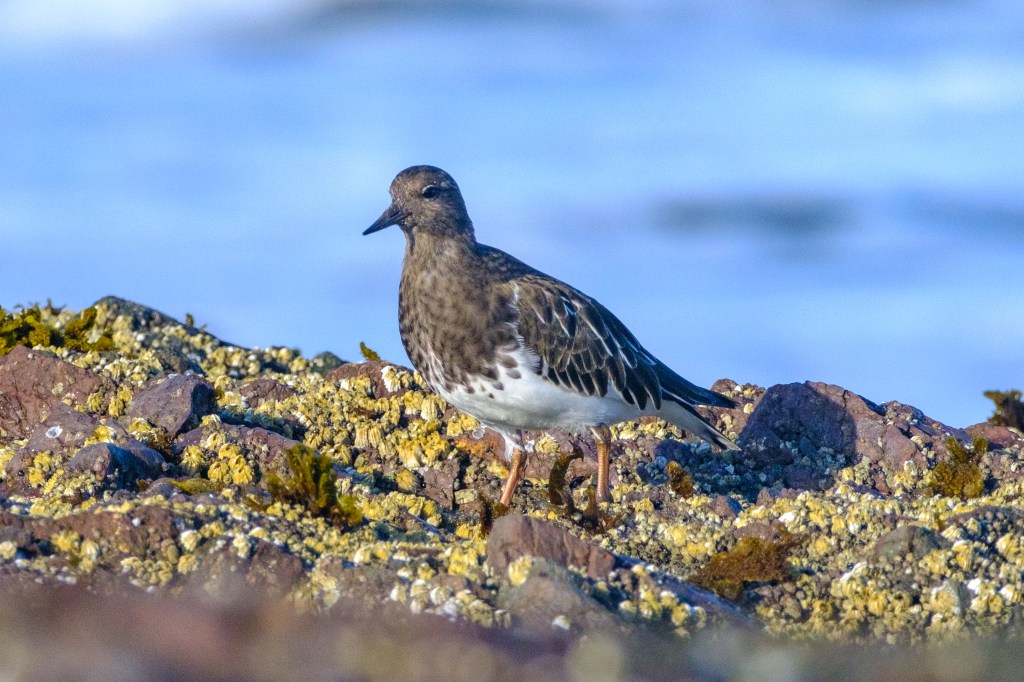
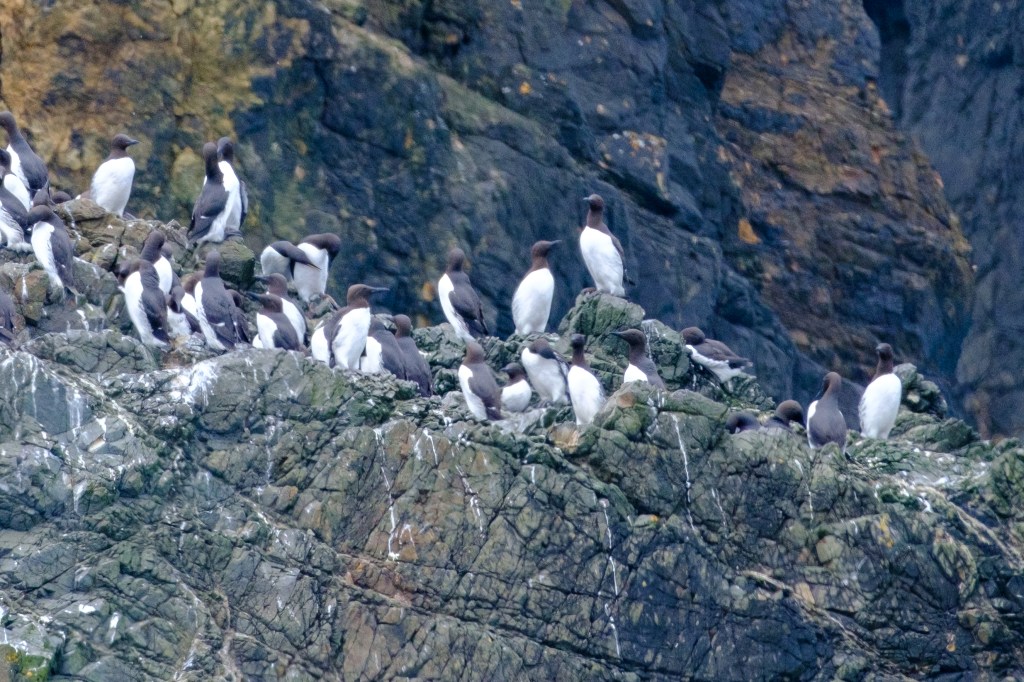
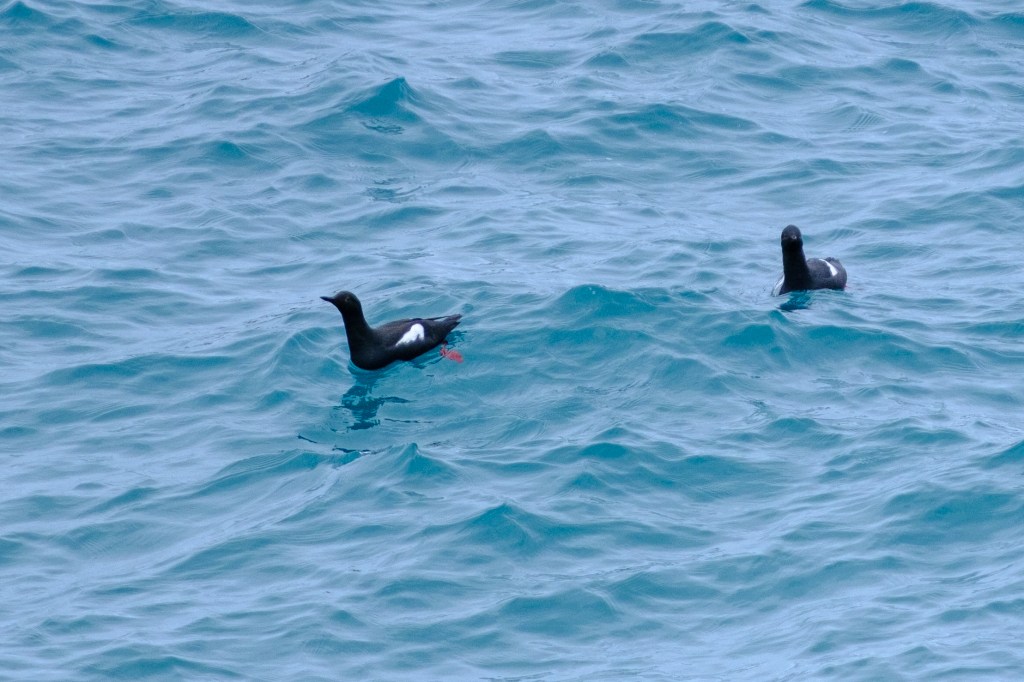
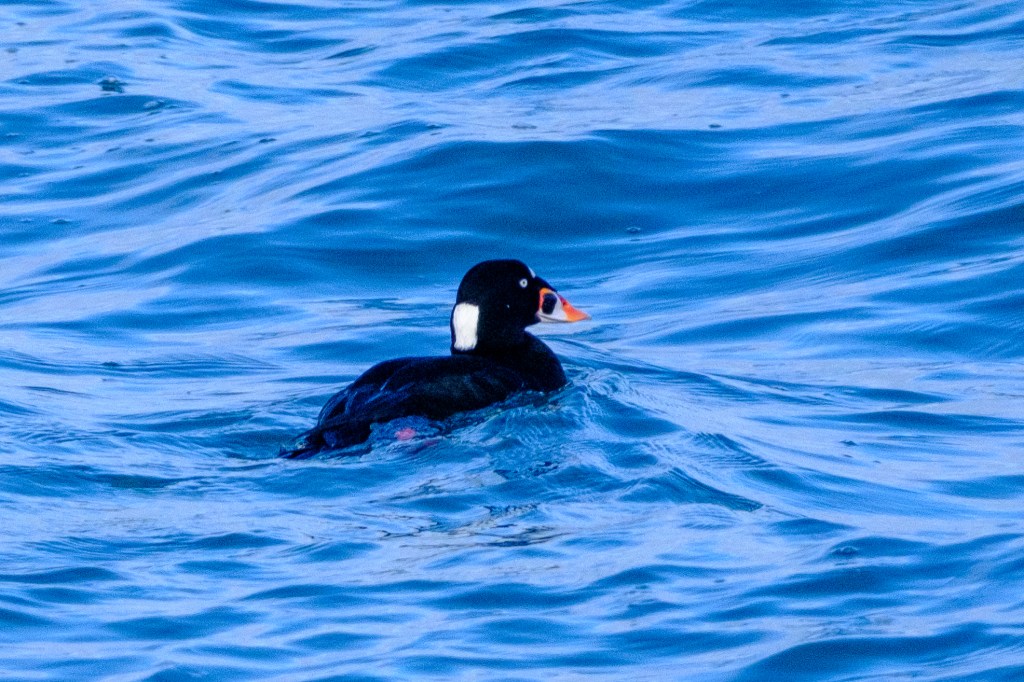
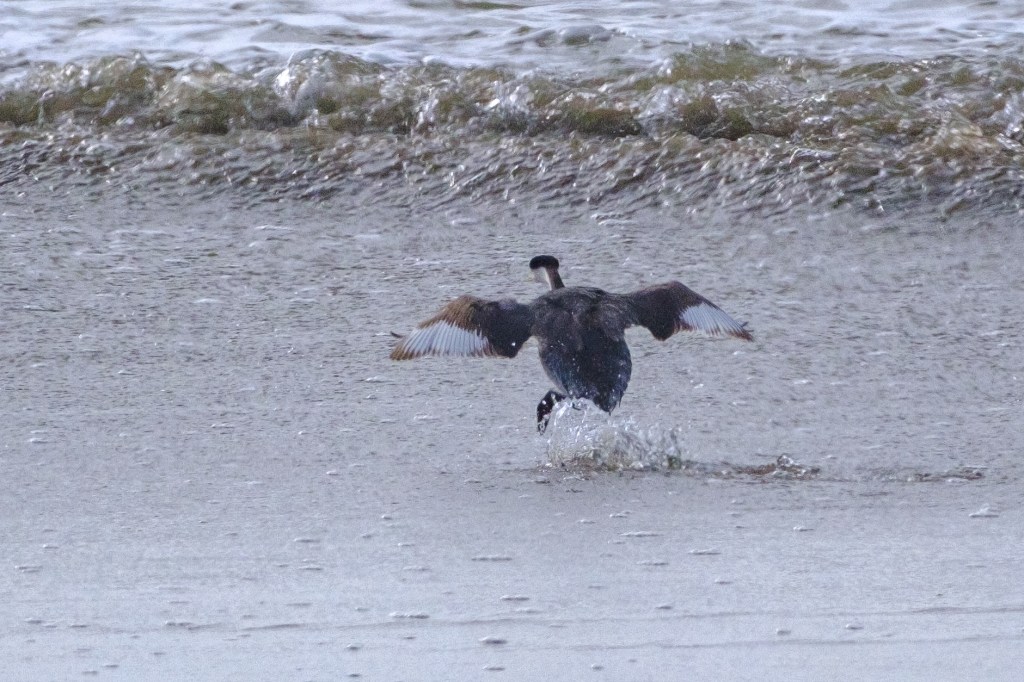
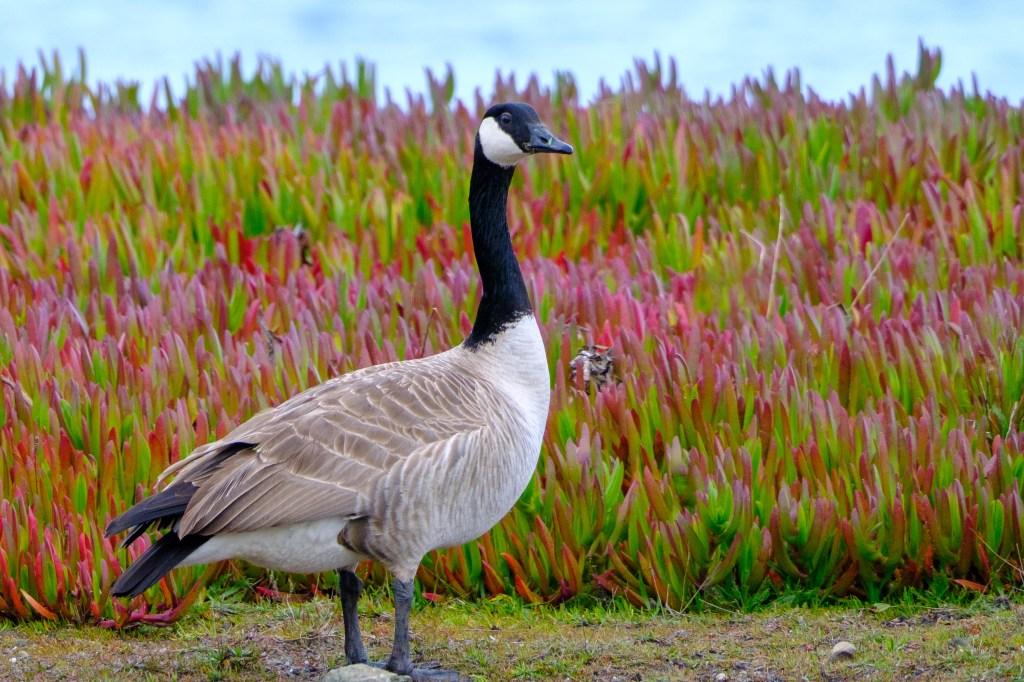
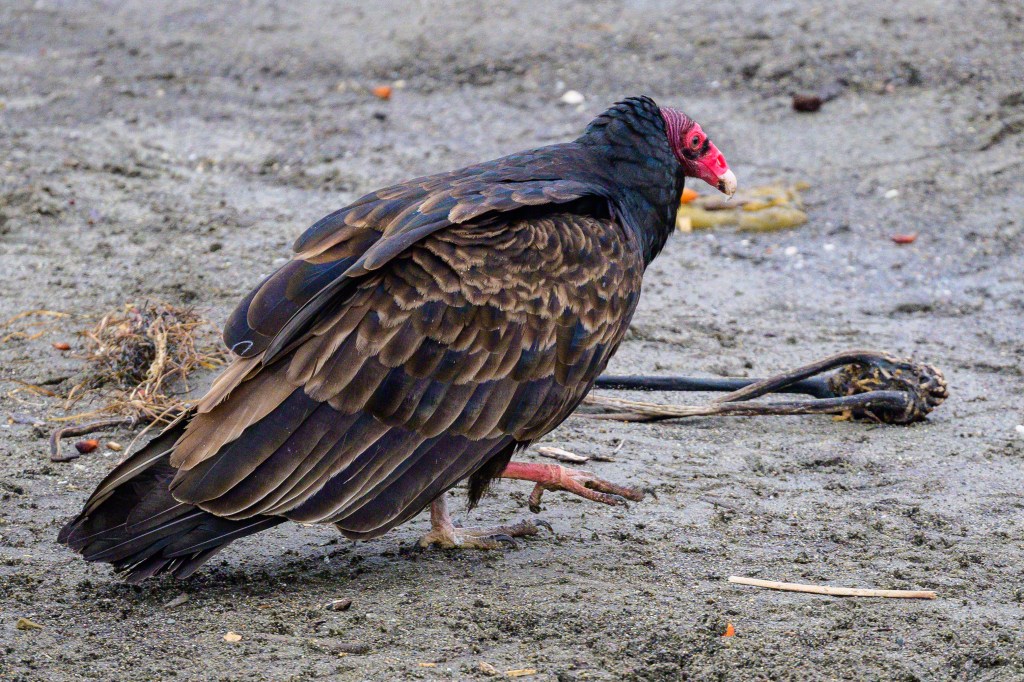
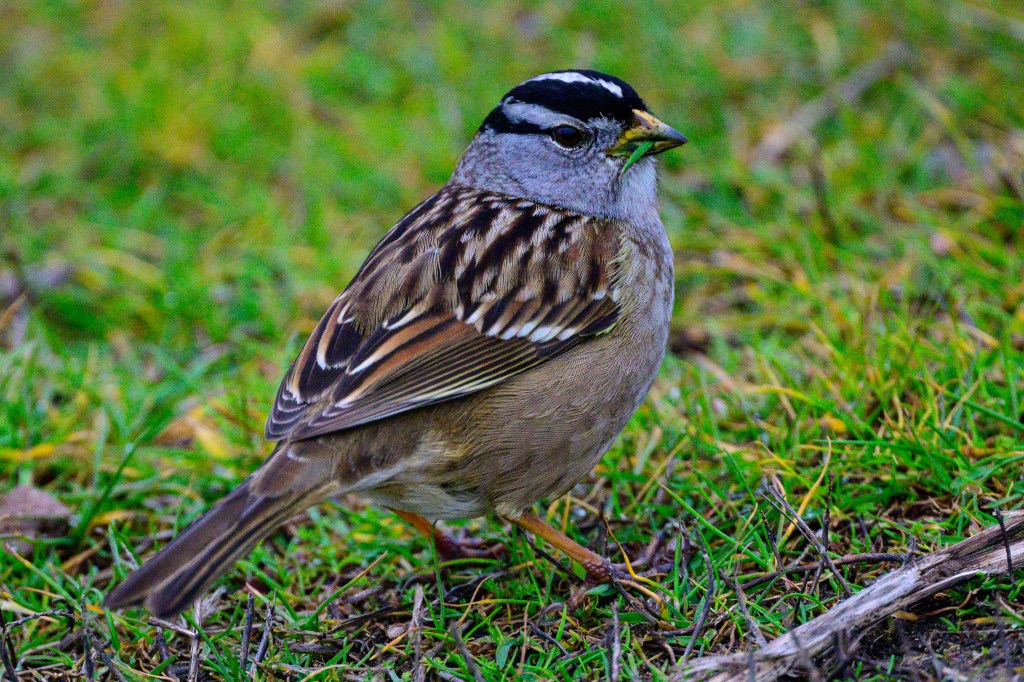
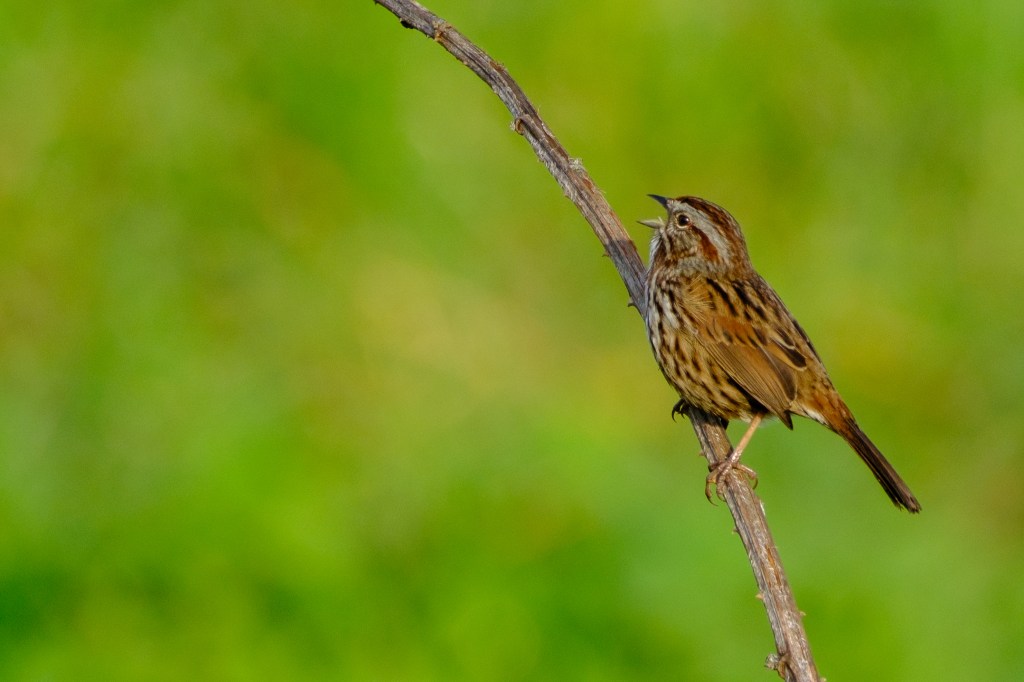
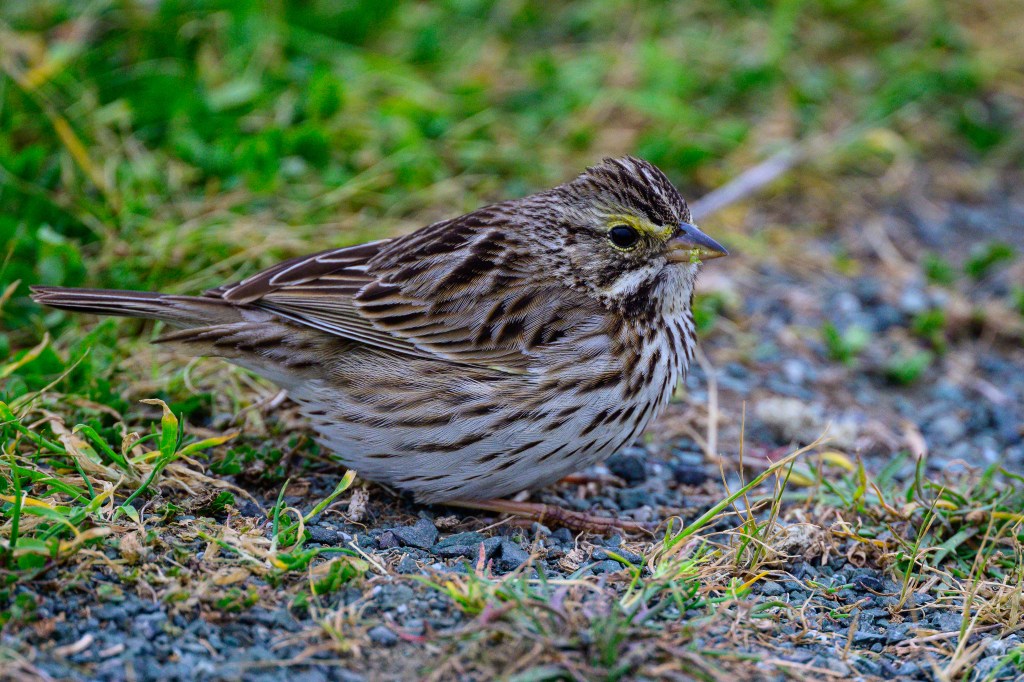
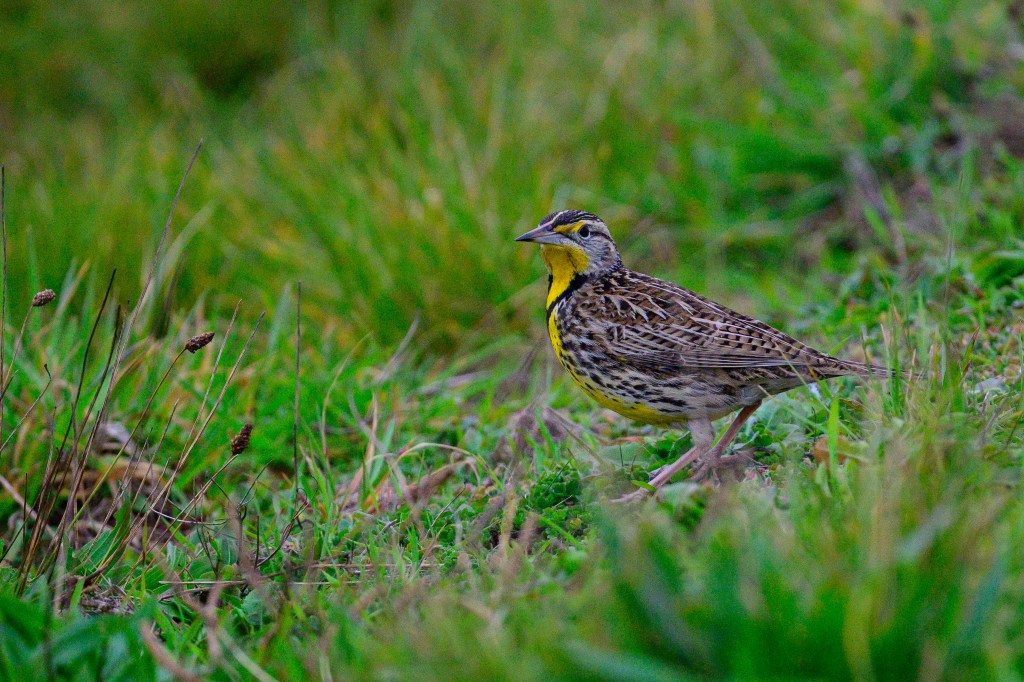
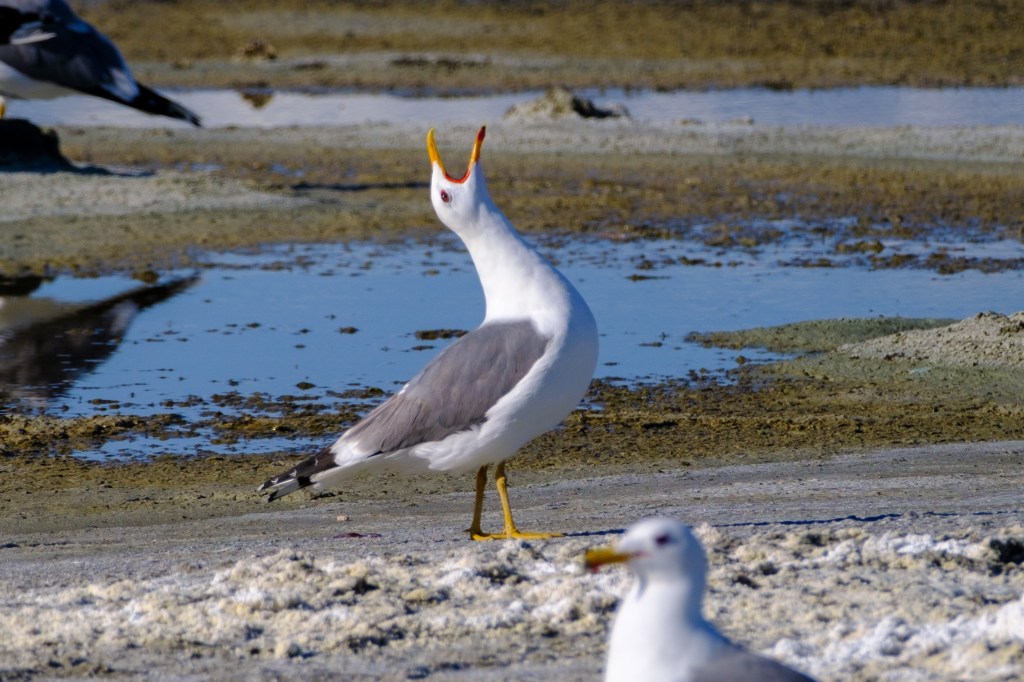
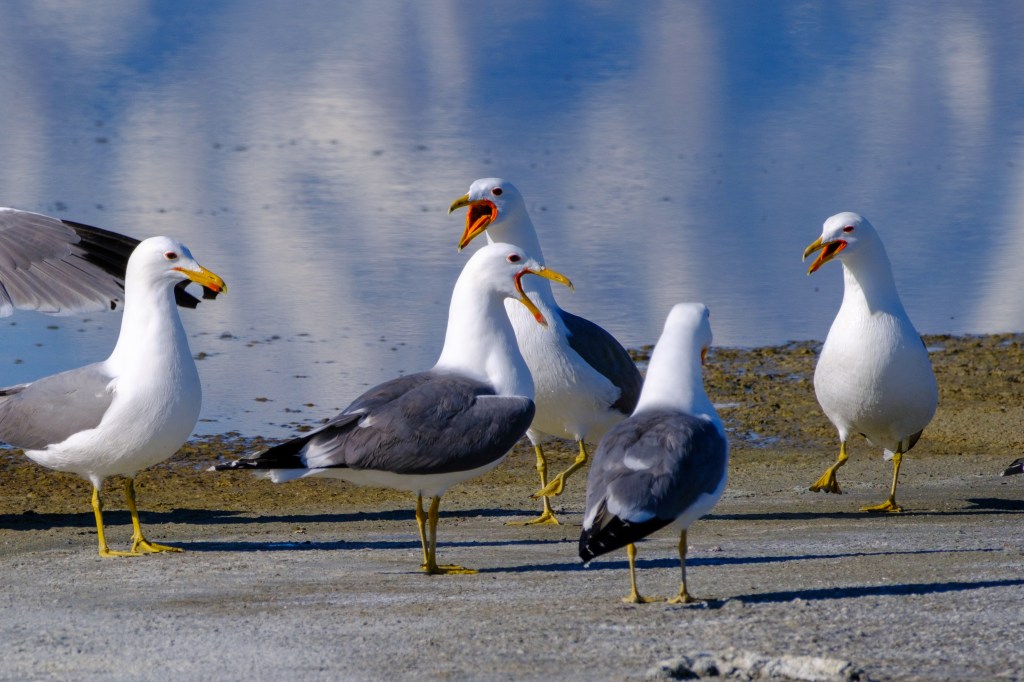
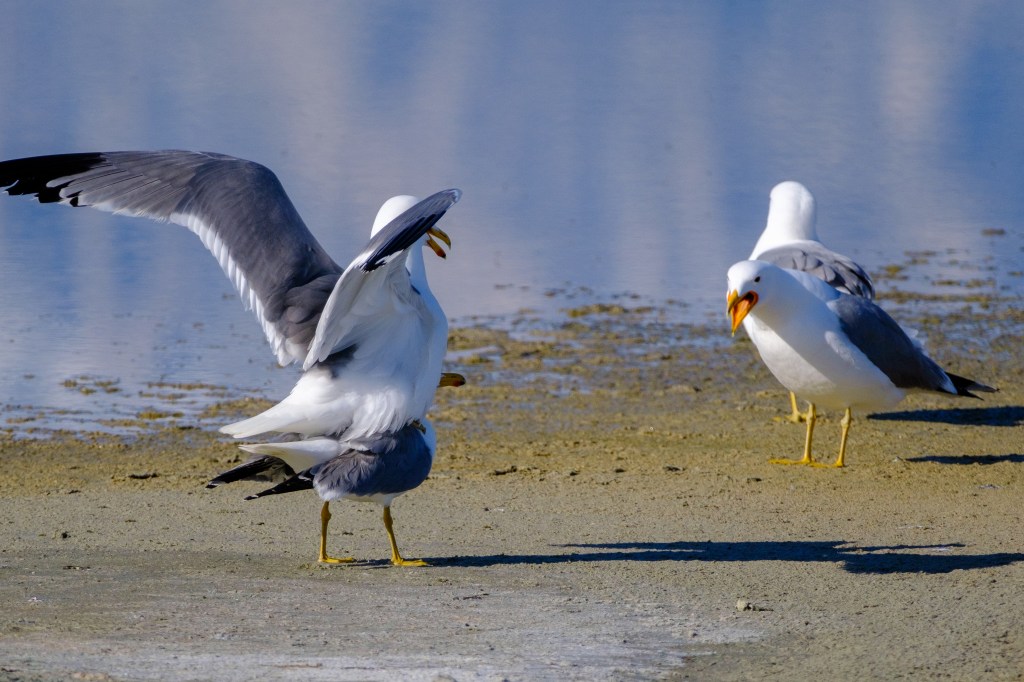
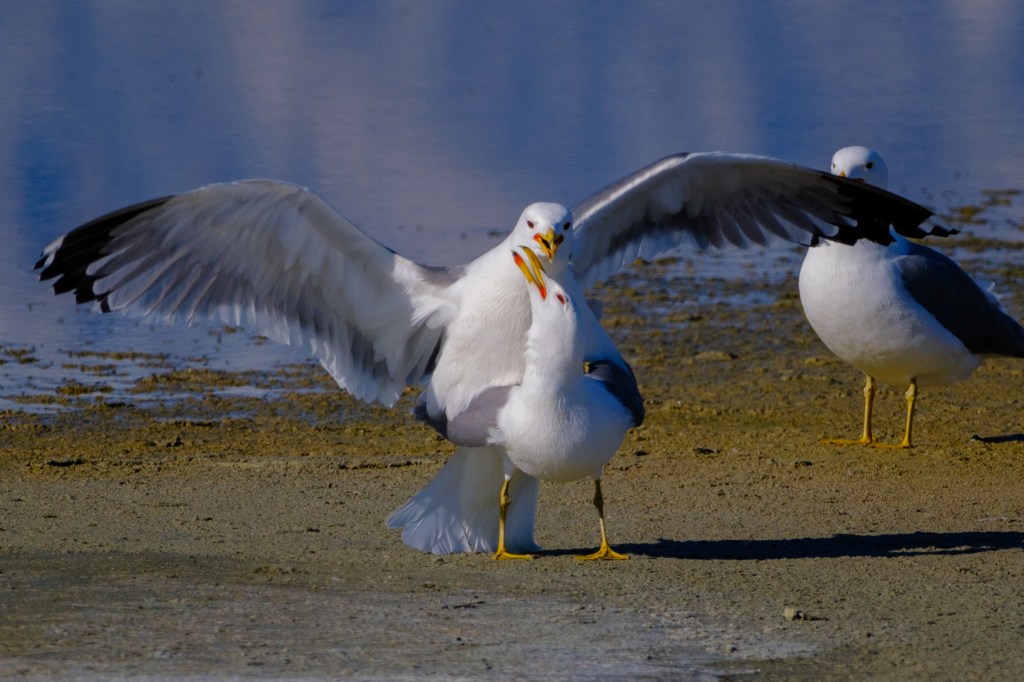
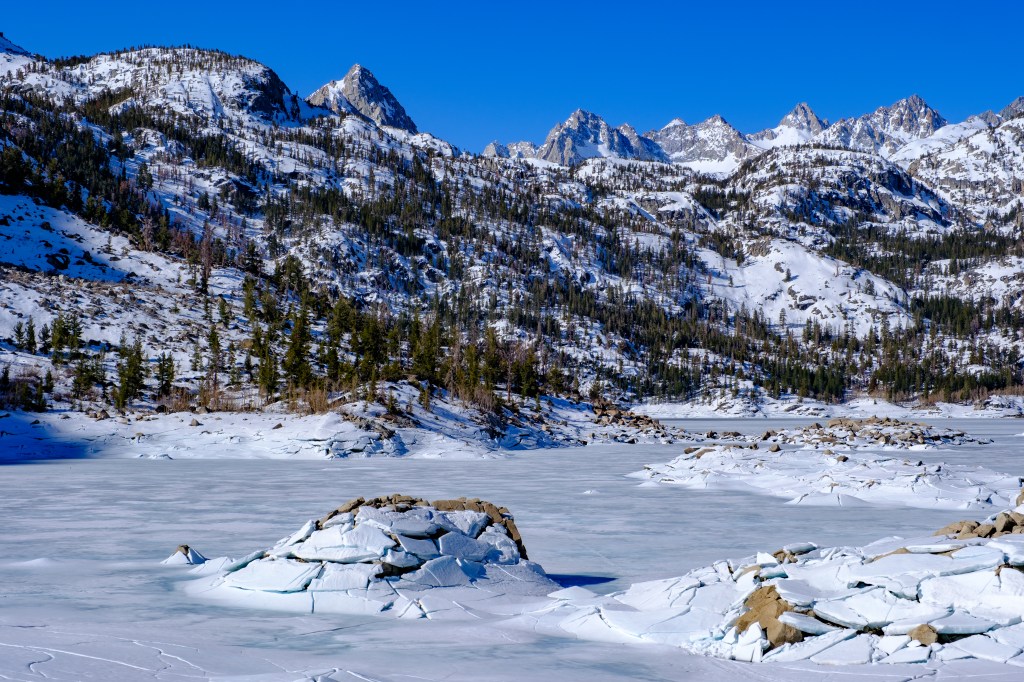
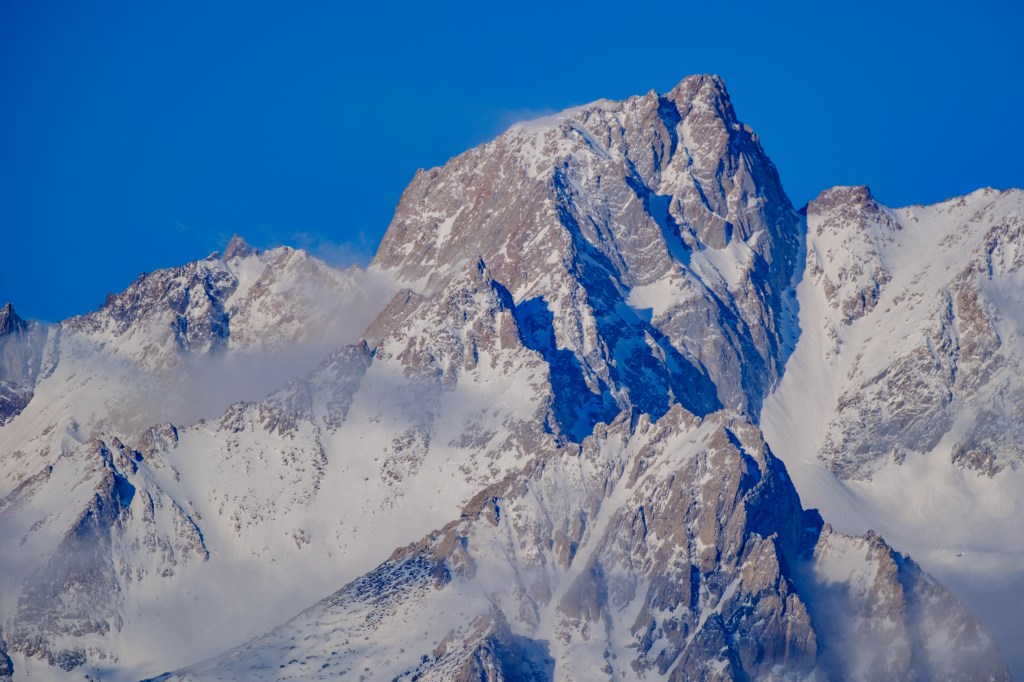
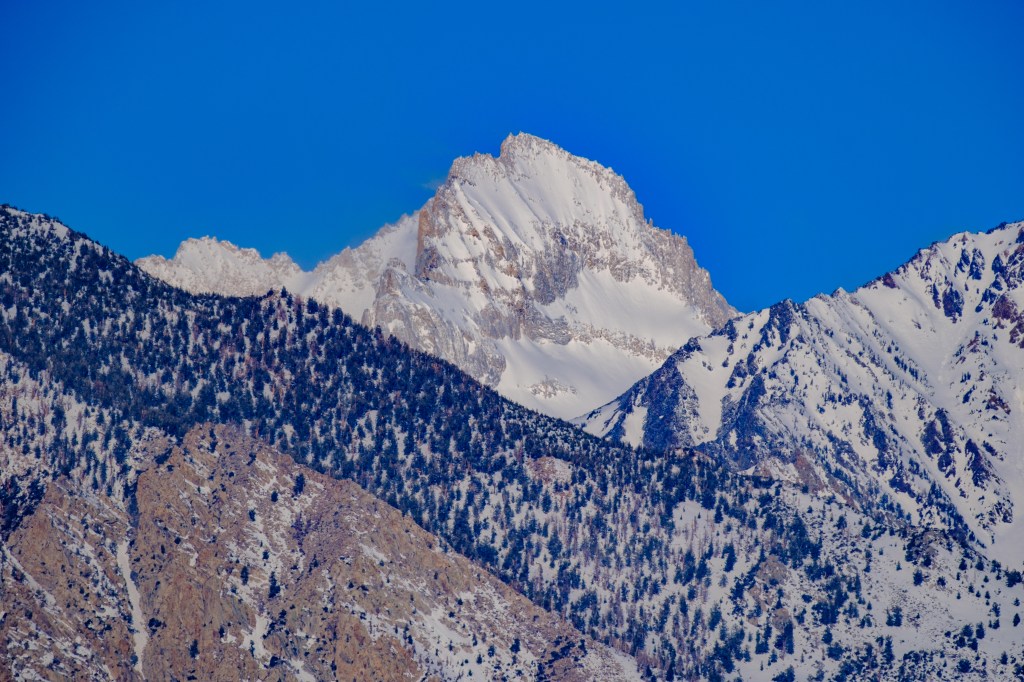
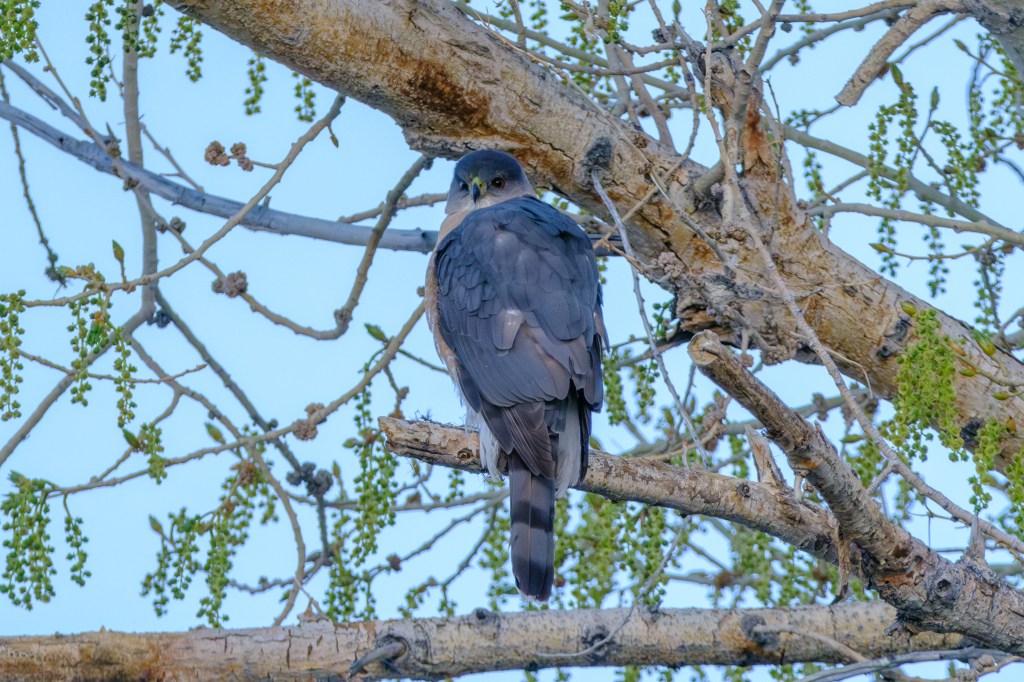
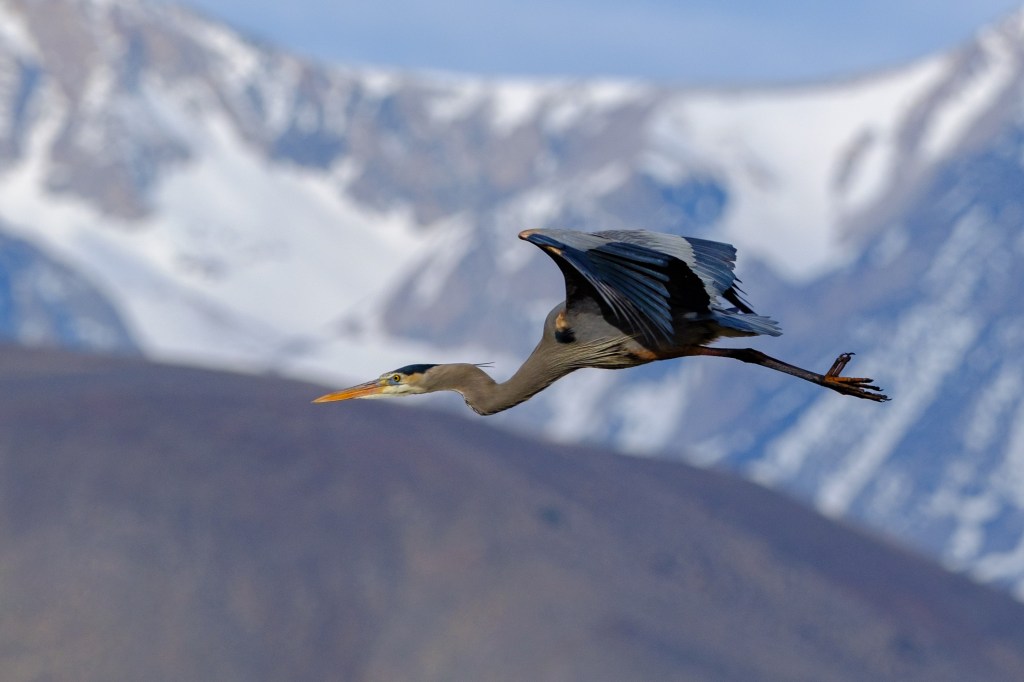
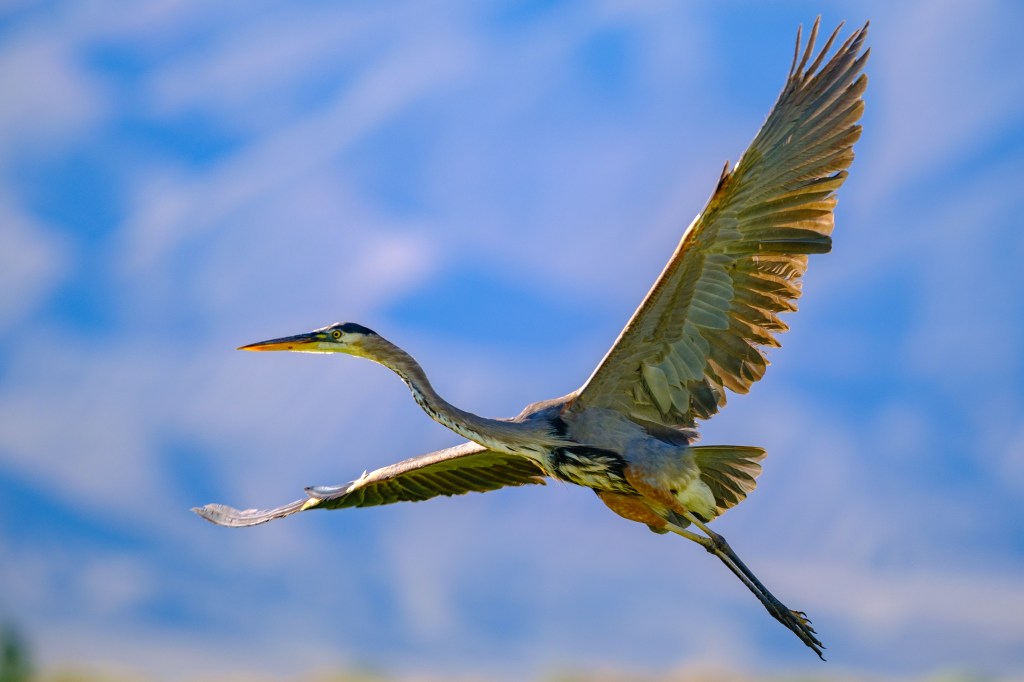
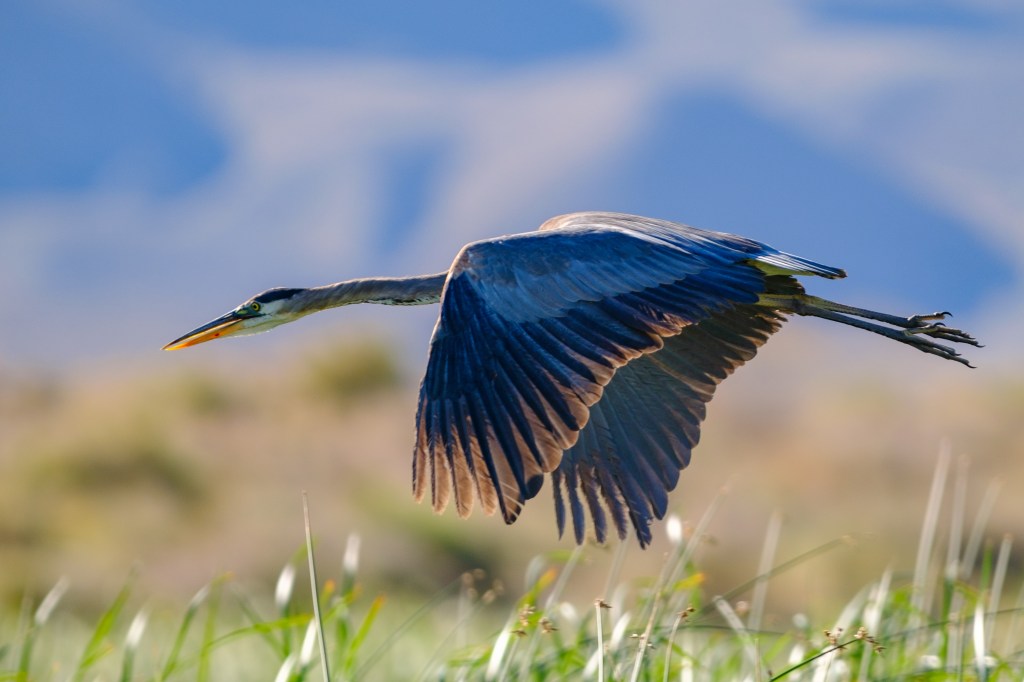
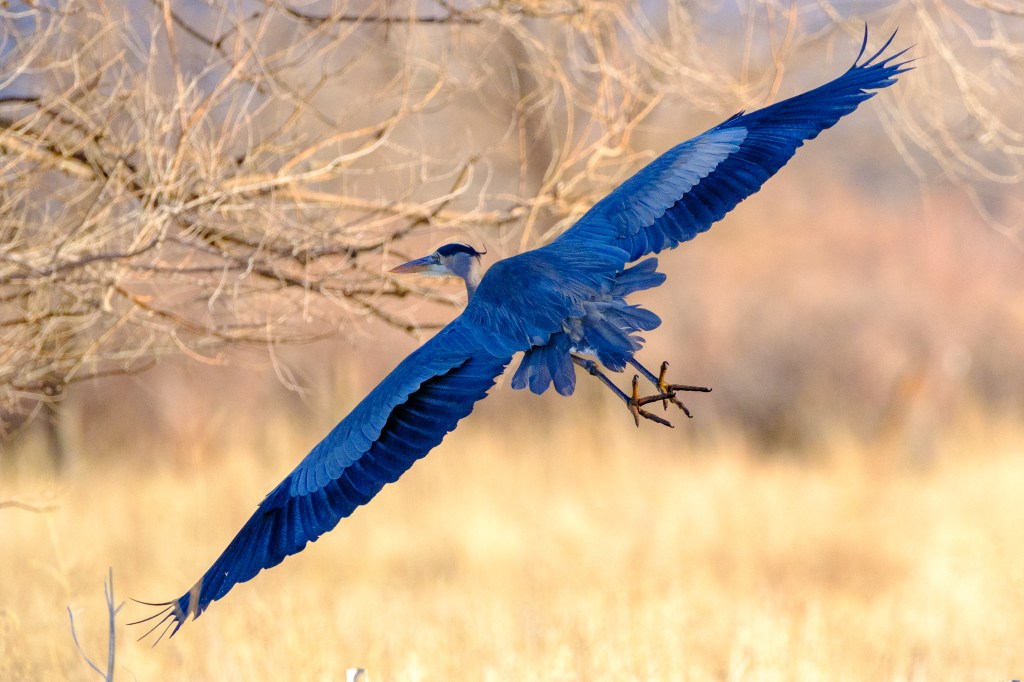
Photos from 2022

            November’s blog was a bit technical, with few photos. This month, December, will have more photos, fewer words. I selected pictures from 2022; 38 show birds or other creatures, 10 show  landscapes.
Some Water Birds

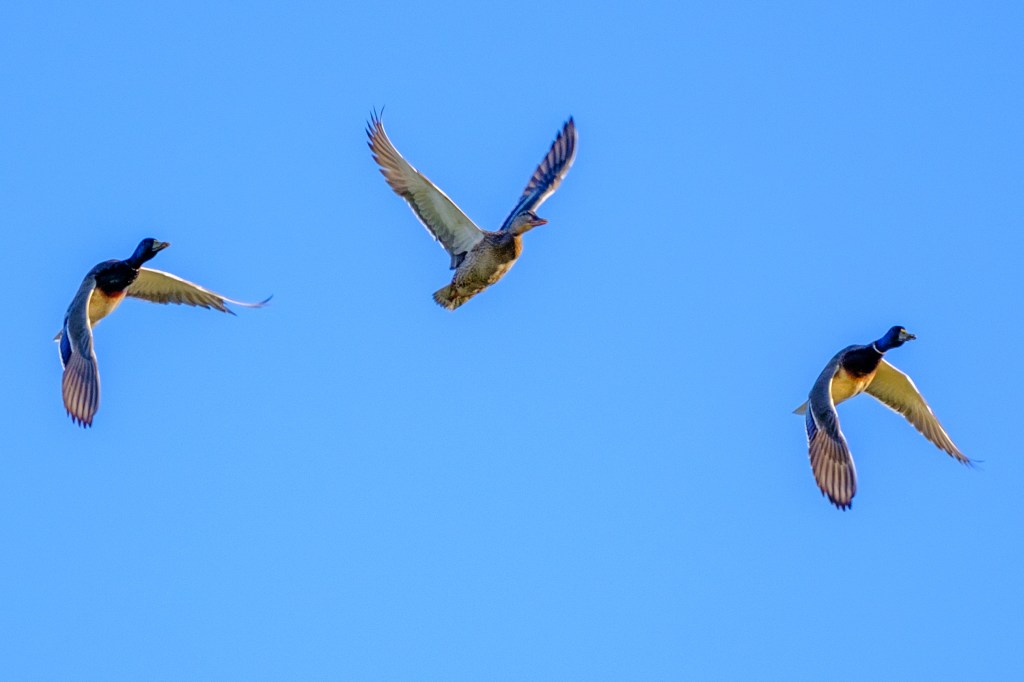
          Mallards are usually found at Bishop City Park. They sleep in my backyard and they float on our local ponds and canals. During breeding season the males have bright green heads, but the light angle can make the head look purple, blue, or black. For years, I thought there were two species of Mallards until I saw a duck that seemed to change its color right in front of me. The male below has a head that seems to be half black and half green.

Mallards, Airport Road, Bishop

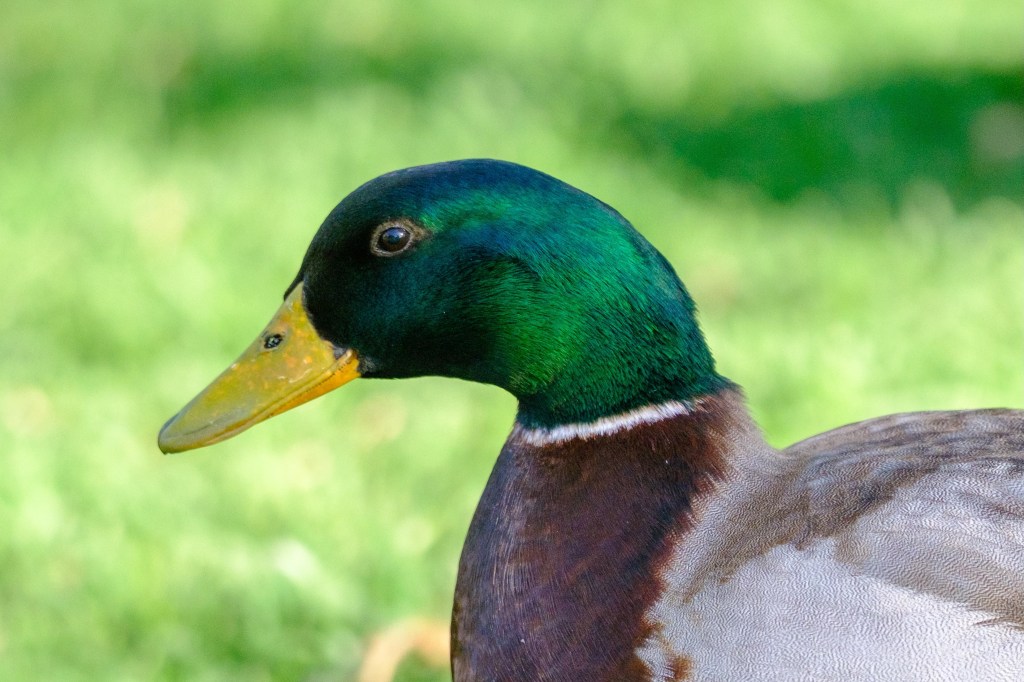
            The male below posed at the Bishop City Park, letting me photograph detail in the feathers.

Mallard, Bishop City Park

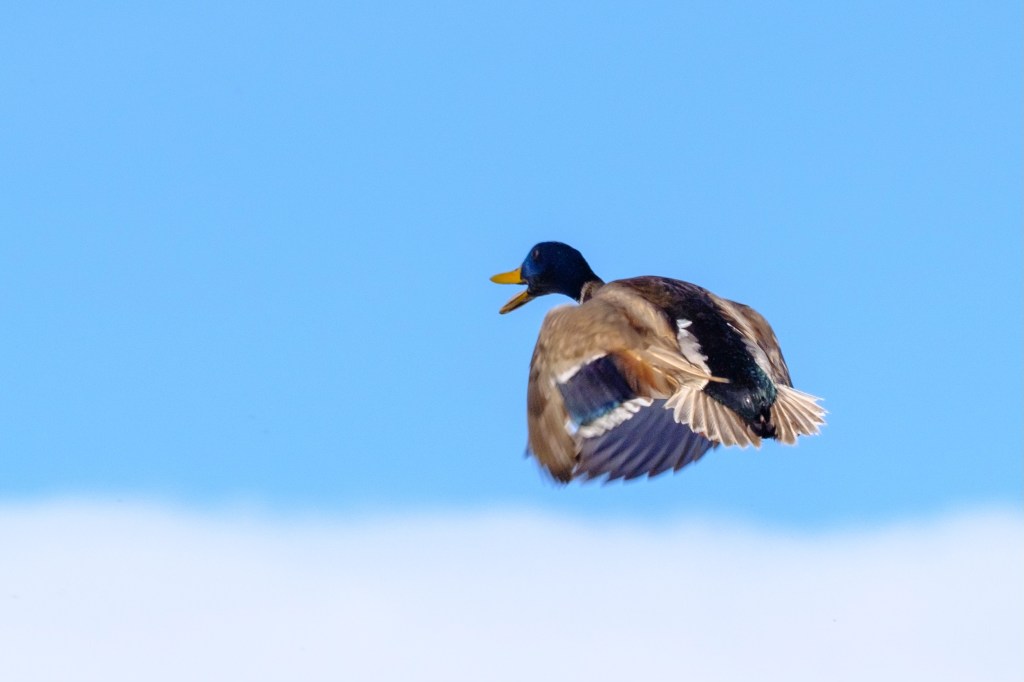
            Mallards take off with explosive force; their wings boost them up by pushing down on the water. At Airport Road, Roberta and I have been startled when 100 ducks take off at once. The picture below shows a quacking Mallard that just took off from the Buckley Ponds.

Mallard, Buckley Ponds

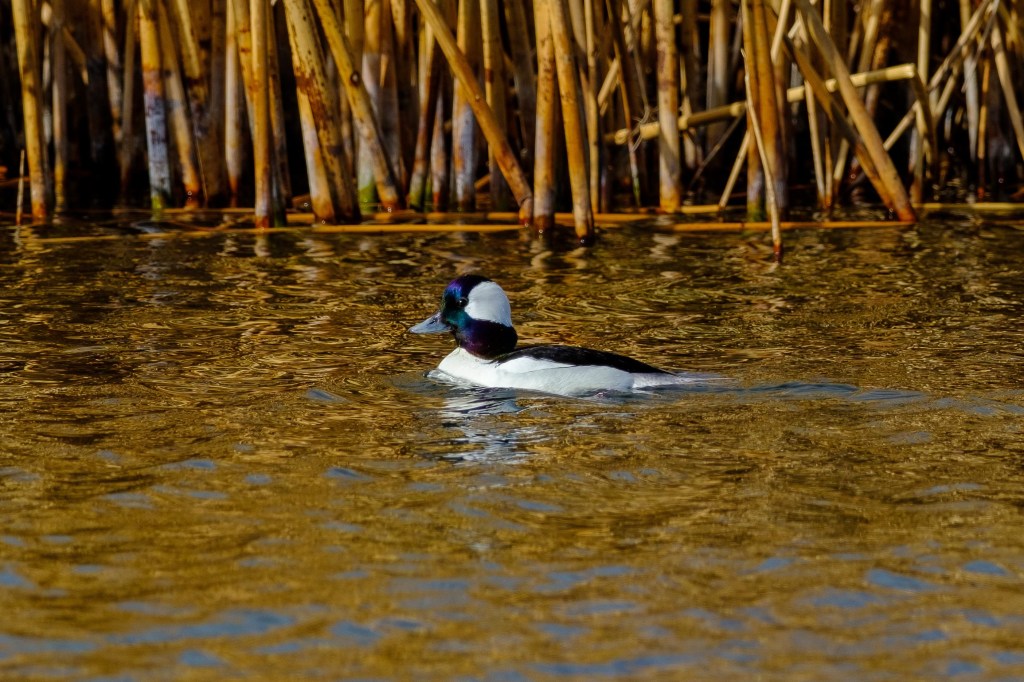
            Buffleheads are easy to identify; the male below was in breeding plumage at the Buckley Ponds in March.

Bufflehead, Buckley Ponds, Bishop

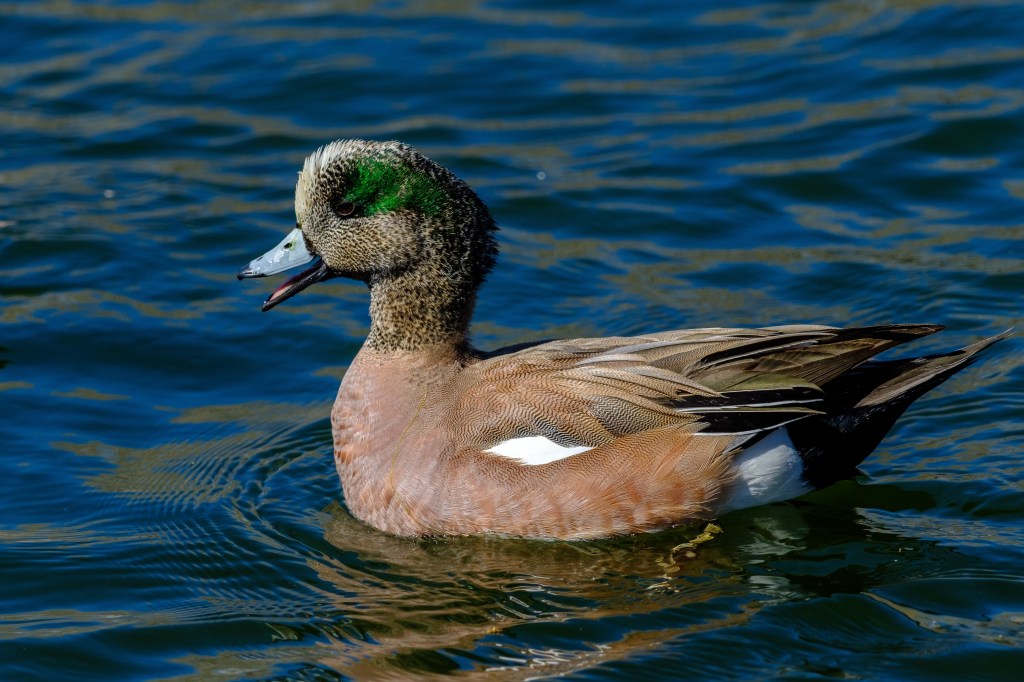
            American Wigeons are often at the City Park.

American Wigeon. Bishop City Park.

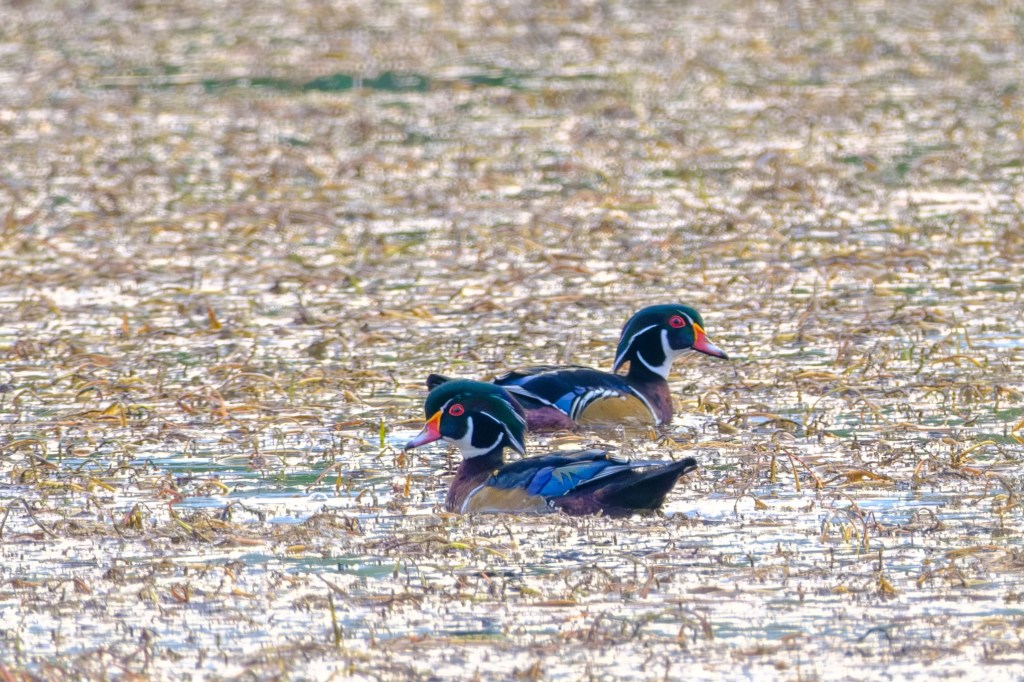
            Male Wood Ducks have implausible colors.

Wood Ducks. Buckley Ponds, Bishop.

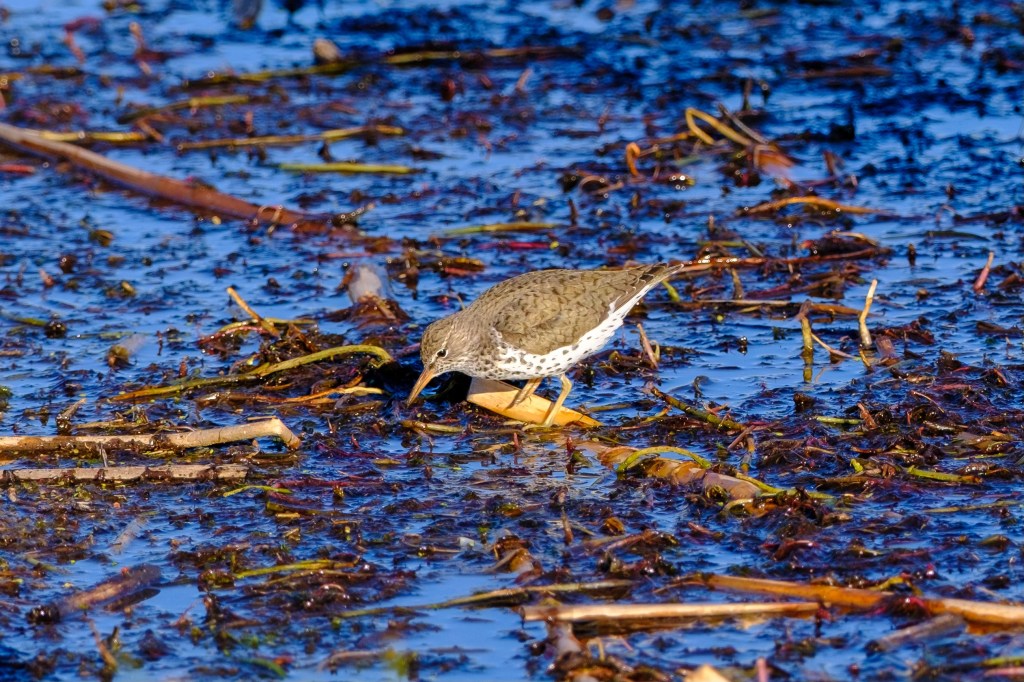
            Years ago a friend showed us shorebirds in the Owens Valley. I was amazed and amused to learn that we have sandpipers (Least, Western, and Spotted) in our local desert.

Spotted Sandpiper. Buckley Ponds, Bishop.

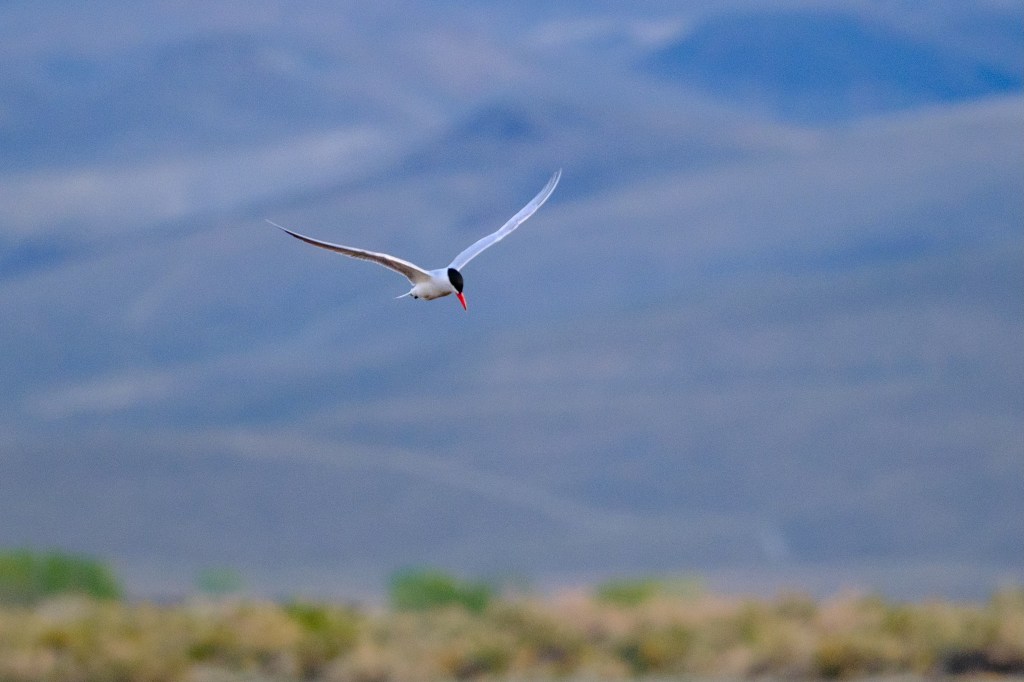
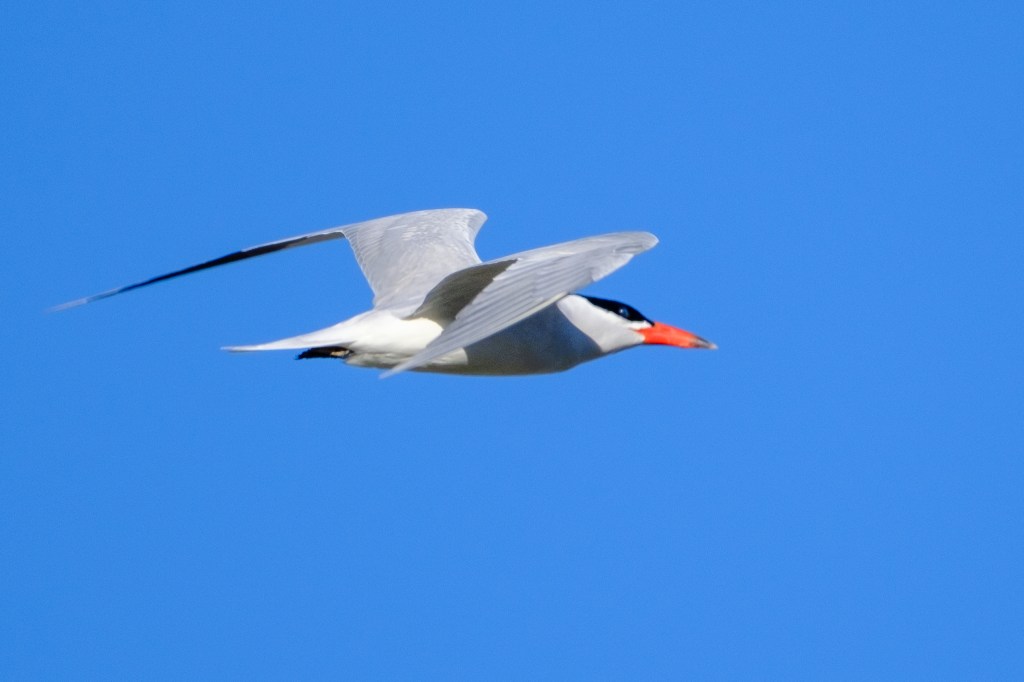
            Occasionally a tern will turn (pun!) up at the Buckley Ponds. When there are two of them, we always say “One good tern deserves another.” Lame, I admit! The Caspian Tern winters on the coast, breeds in the Great Basin. A spectacular bird.

Caspian Tern. Buckley Ponds, Bishop.

Some Small Birds

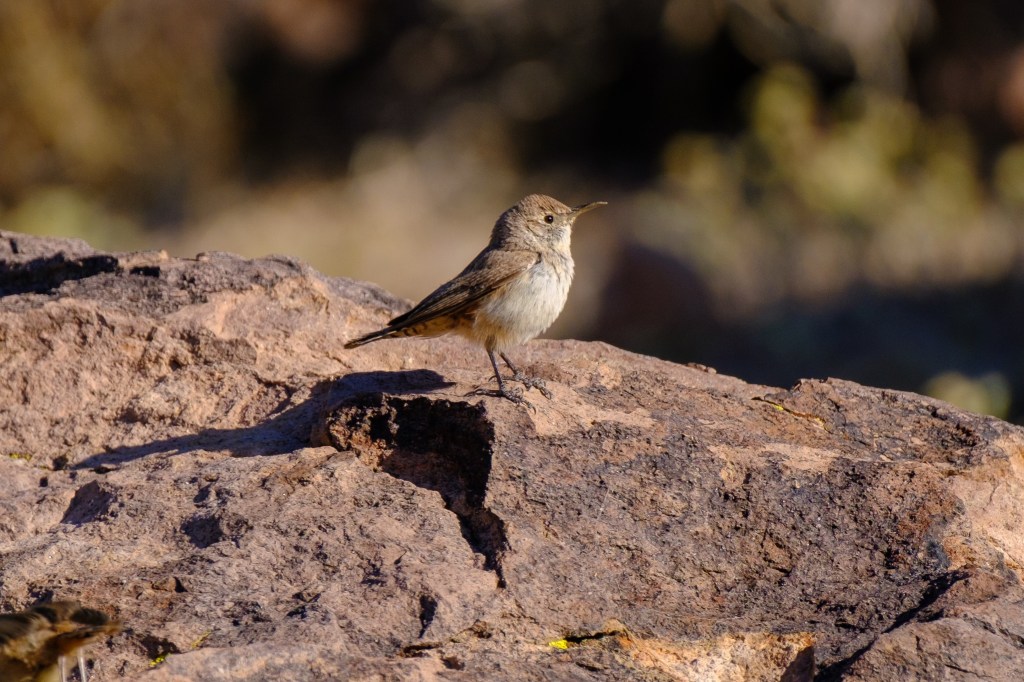
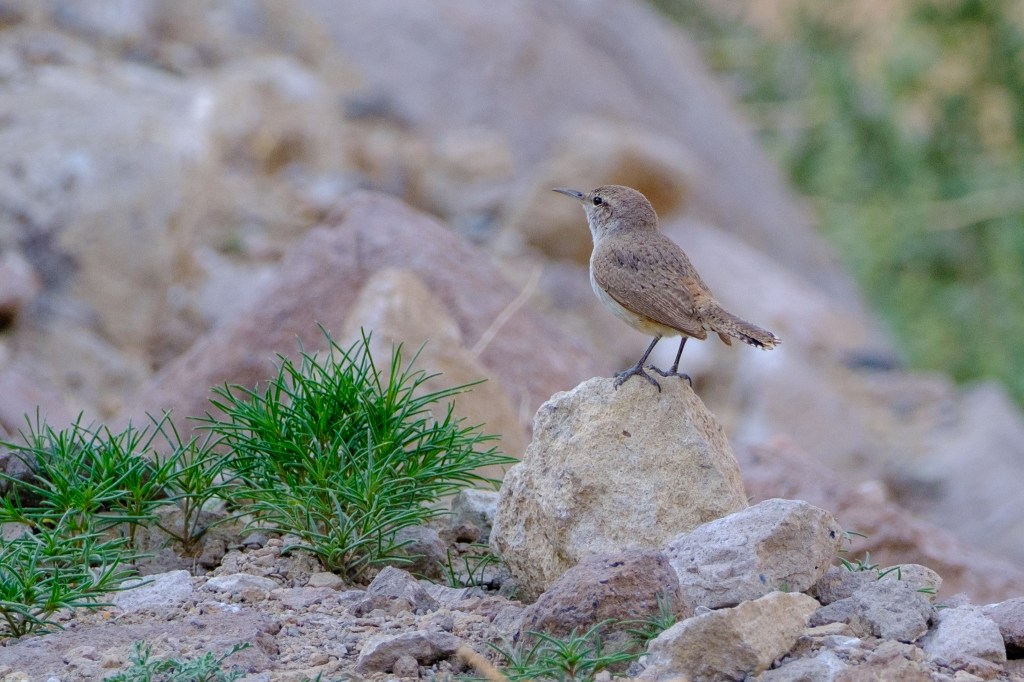
            Rock Wrens are common at the Pleasant Valley Reservoir.

Rock Wren. Pleasant Valley Reservoir, Bishop.

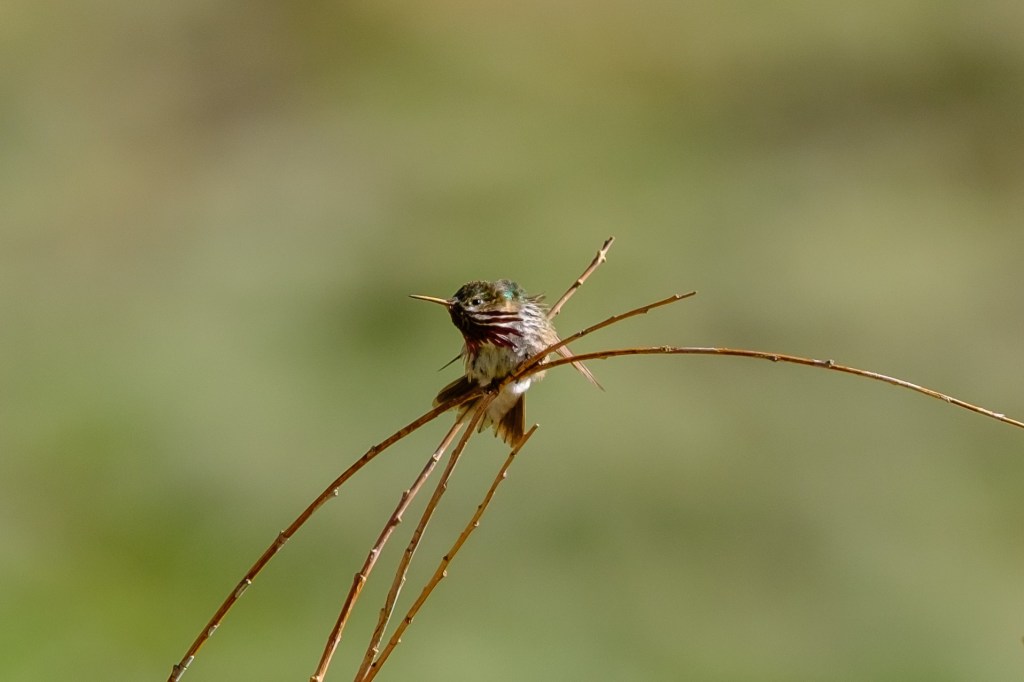
            The Calliope Hummingbird winters in southern Mexico, breeds in the Sierra. 

Calliope Hummingbird. McGee Creek, Sierra Nevada.

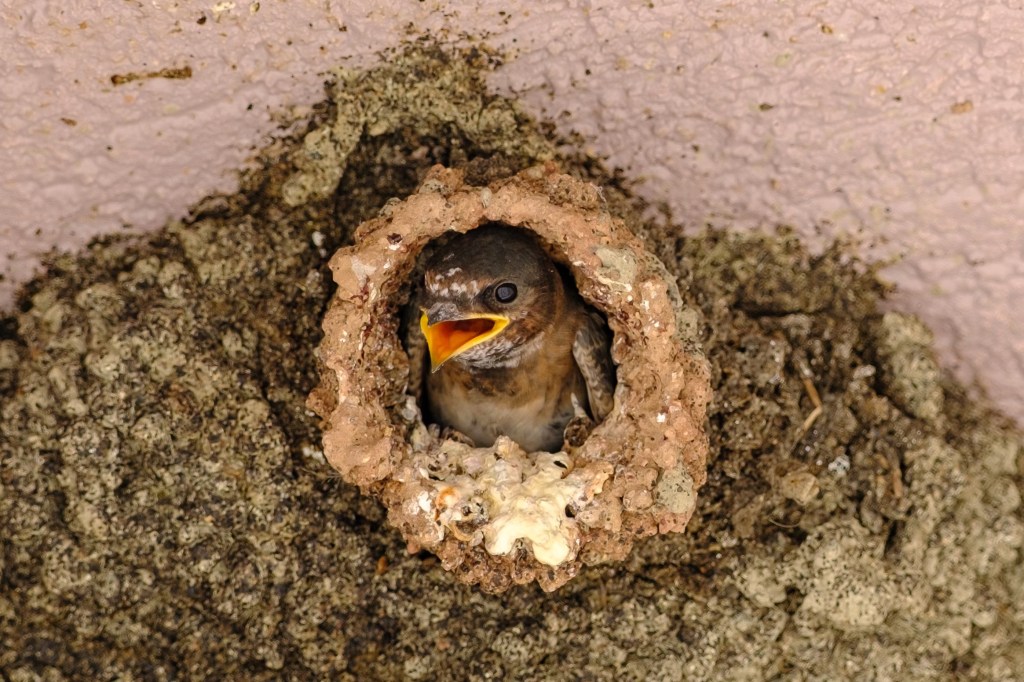
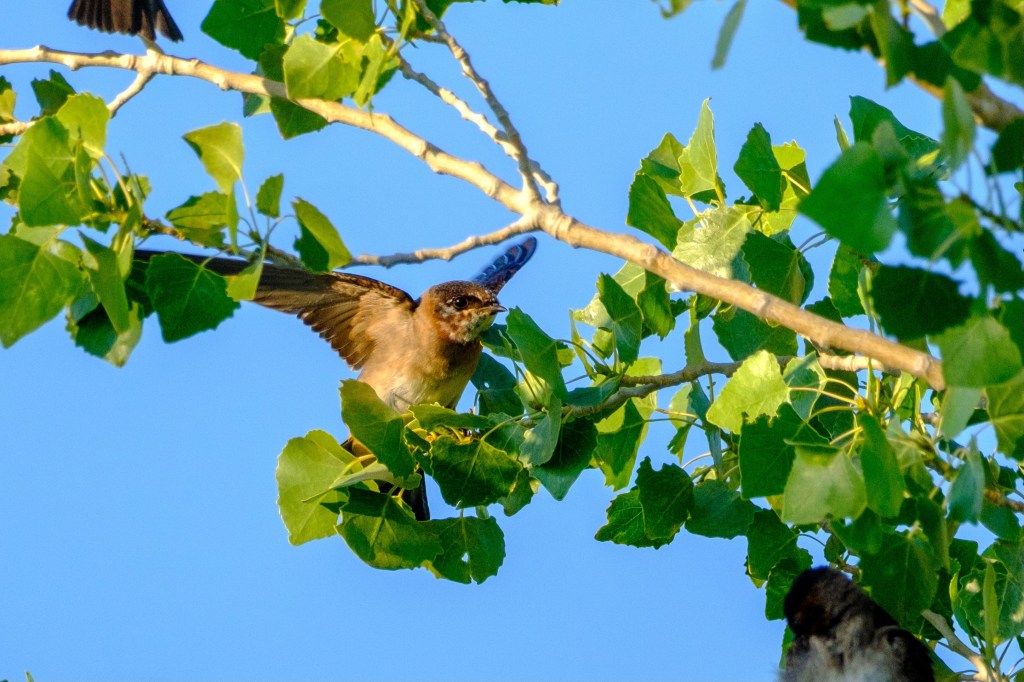
            Cliff Swallows build their mud nests on the side of the Mono Basin Visitor’s Center in Lee Vining. The fledglings want food in early July.

Cliff Swallow fledgling. Lee Vining.
Cliff Swallow learning to fly. Lee Vining, Mono Lake.

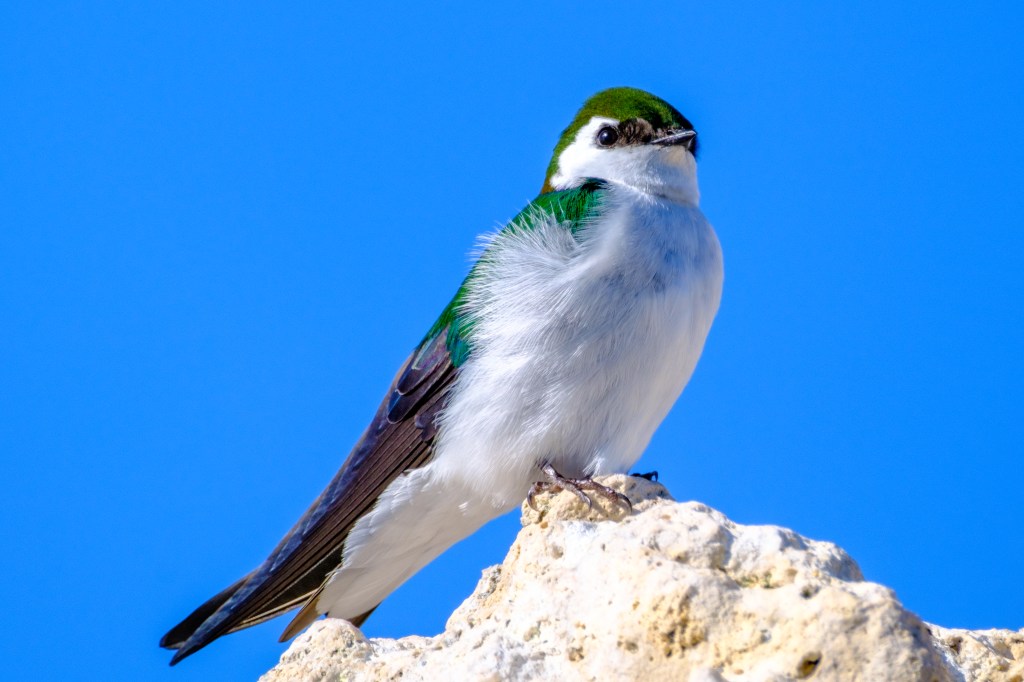
            Violet-green Swallows are found on the tufa towers of Mono Lake, where they hunt for bugs in the air.

Violet-green Swallow. South Beach, Mono Lake.

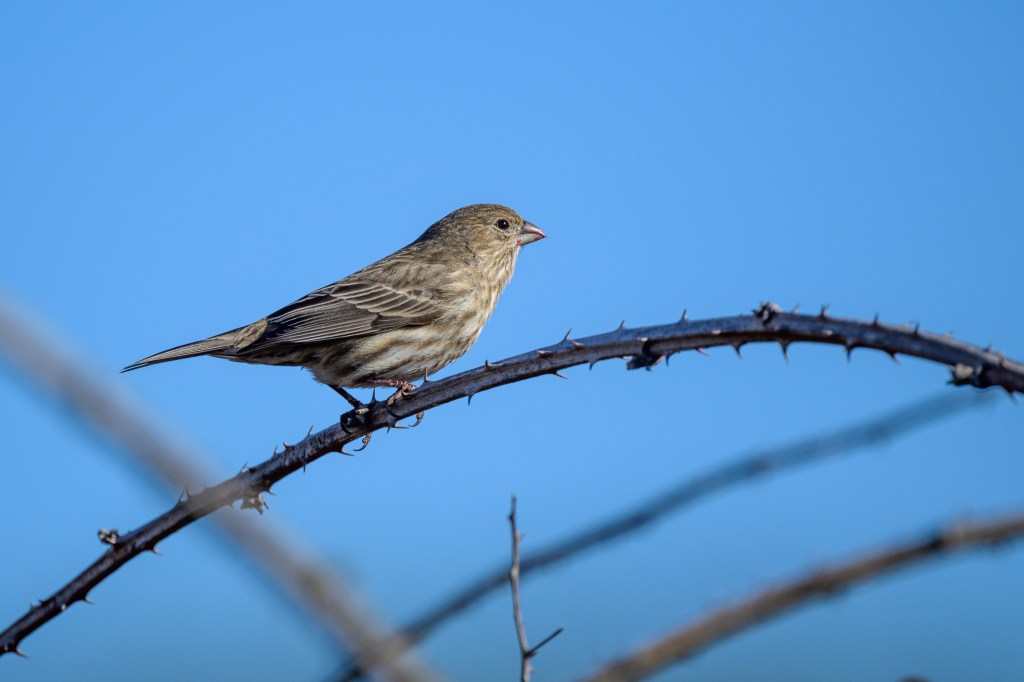
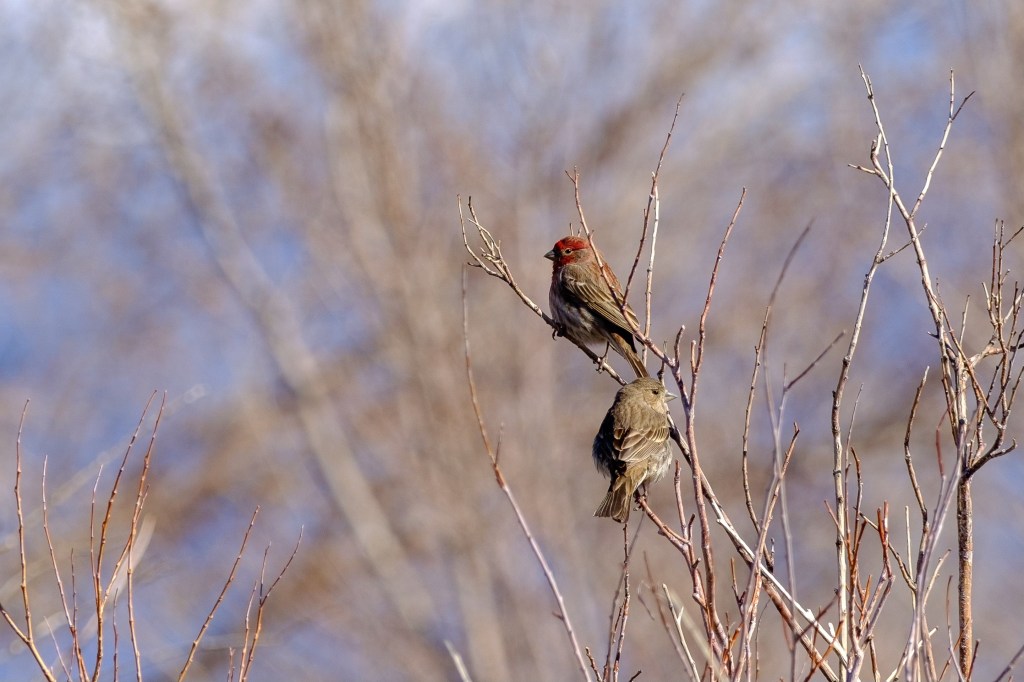
            I mistake House Finches for sparrows, but the red color and fat beaks make them easy to identify in photos.

House Finches. Bishop Creek Canal.

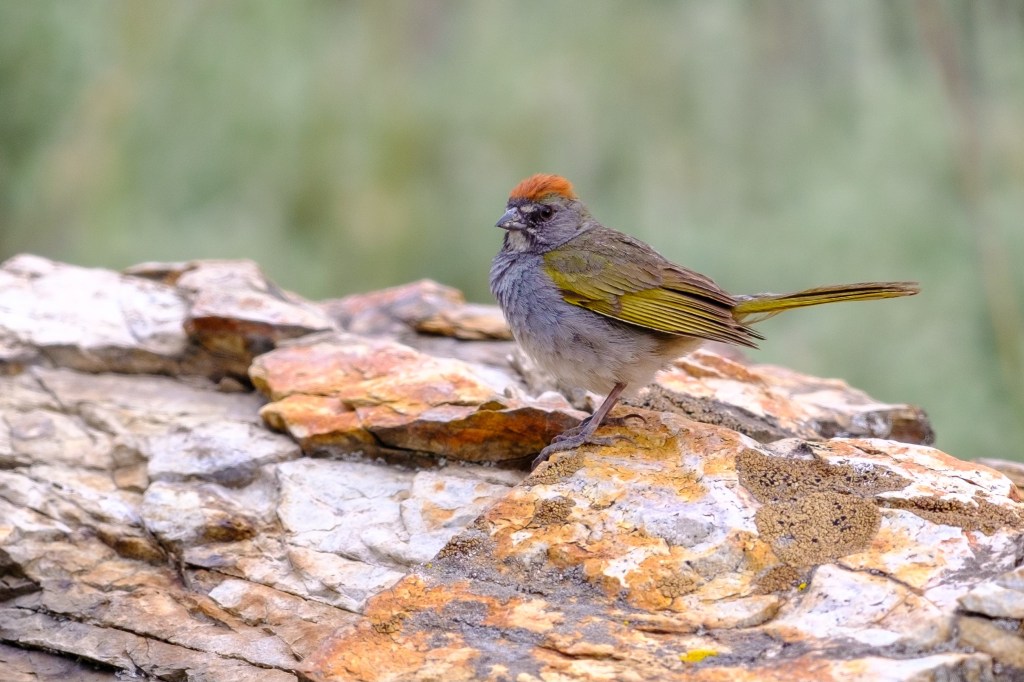
            Green-tailed Towhees are often found near Convict Lake and in McGee Creek canyon.

Green-tailed Towhee. McGee Creek, Sierra.

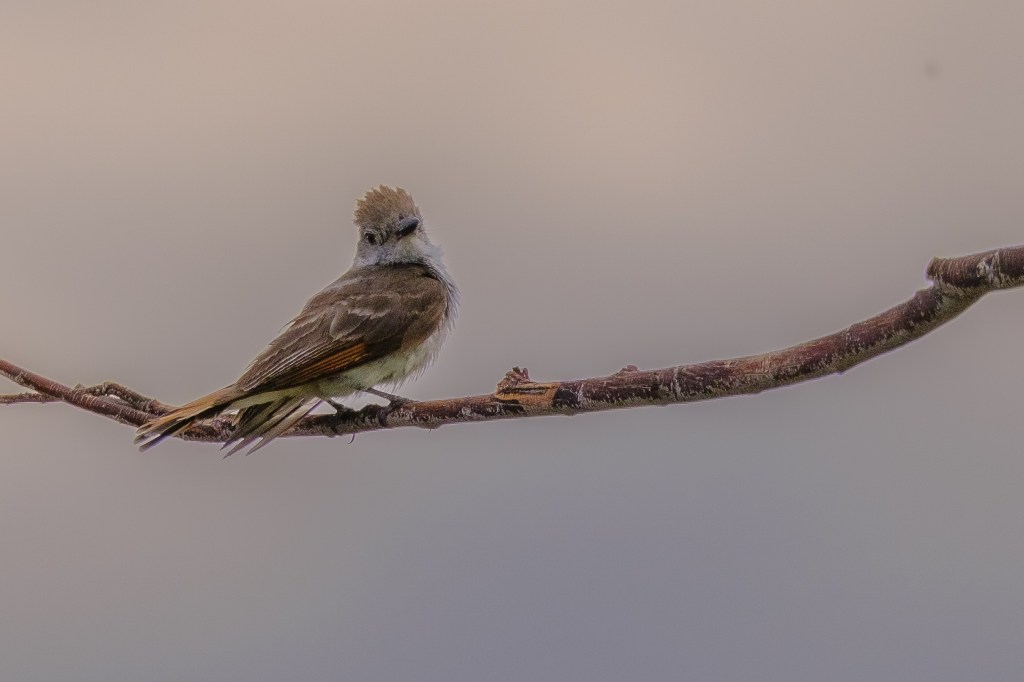
            Ash-throated Flycatcher. An “ordinary” bird that is lovely when you look closely.

Ash-throated Flycatcher. Buckley Ponds.

A Few Bigger Birds

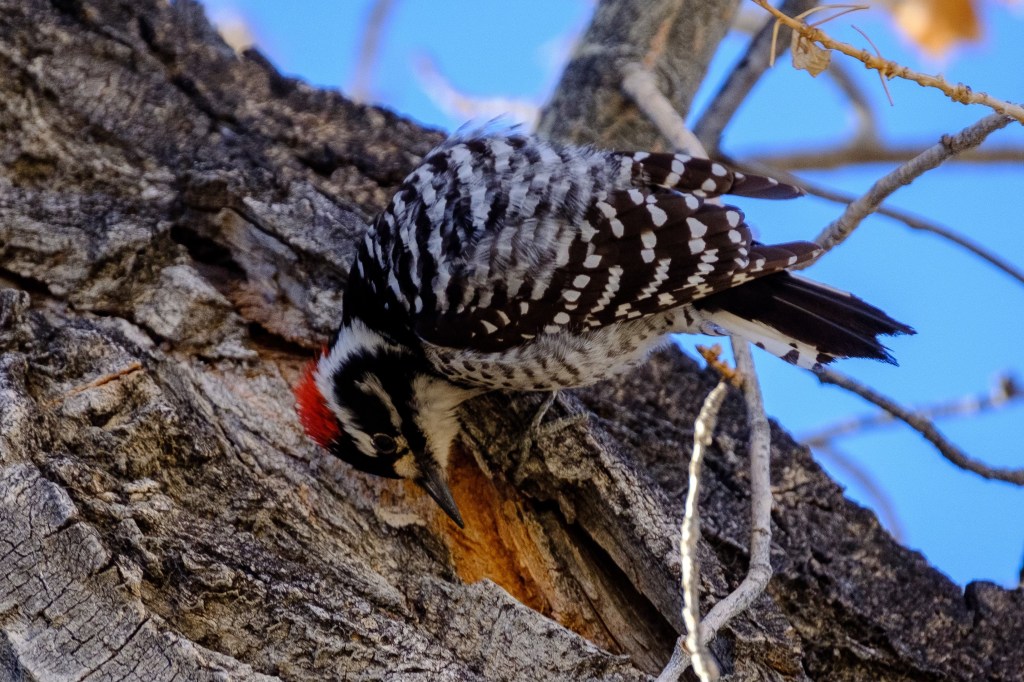
            The Ladder-backed Woodpecker has a distinctive back.

Ladder-backed Woodpecker. Bishop Creek Canal.

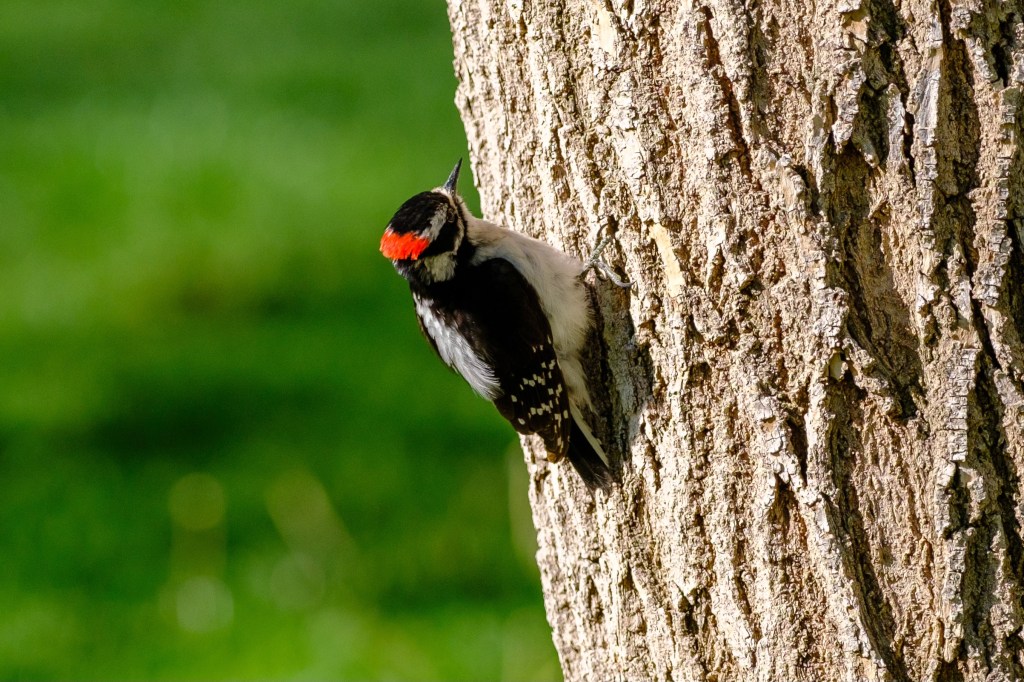
            The Hairy Woodpecker is common in the Owens Valley, but this one was in the Arboretum in Reno.

Hairy Woodpecker. Arboretum, Beno NV.

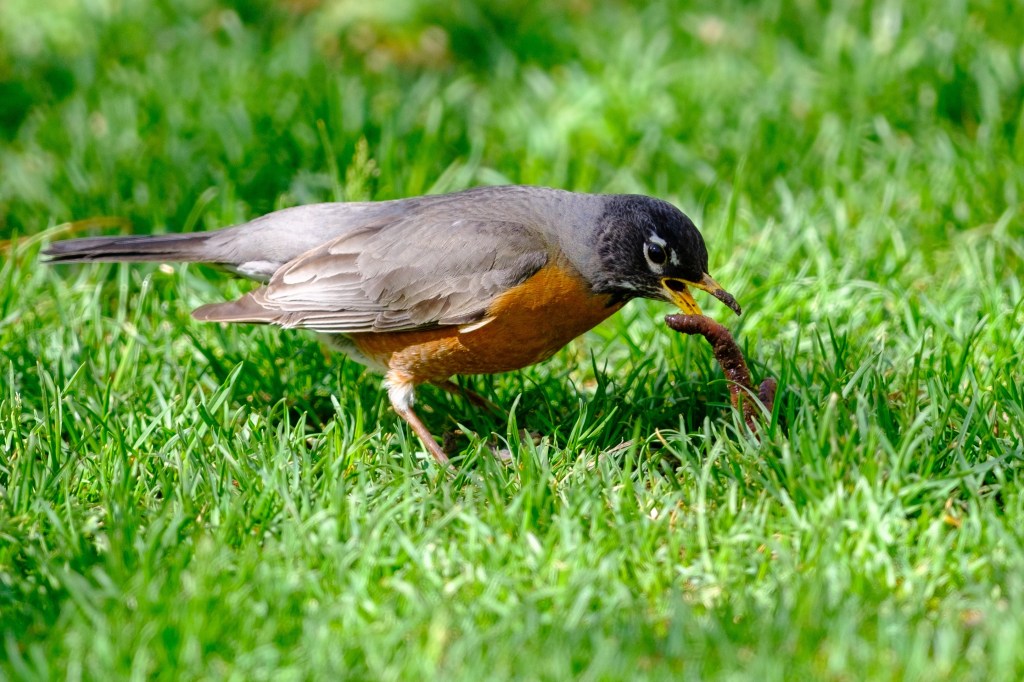
            This Robin was putting on a show at the Arboretum in Reno.

American Robin. Arboretum, Reno NV.

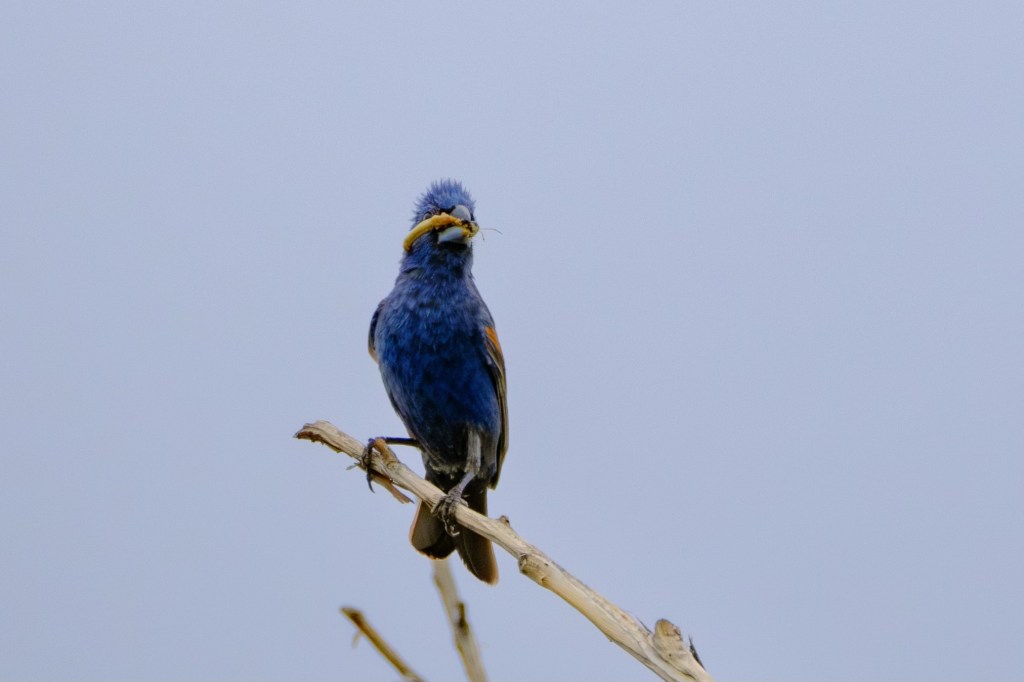
            A Blue Grosbeak looks unreal.

Blue Grosbeak. Buckley Ponds, Bishop.

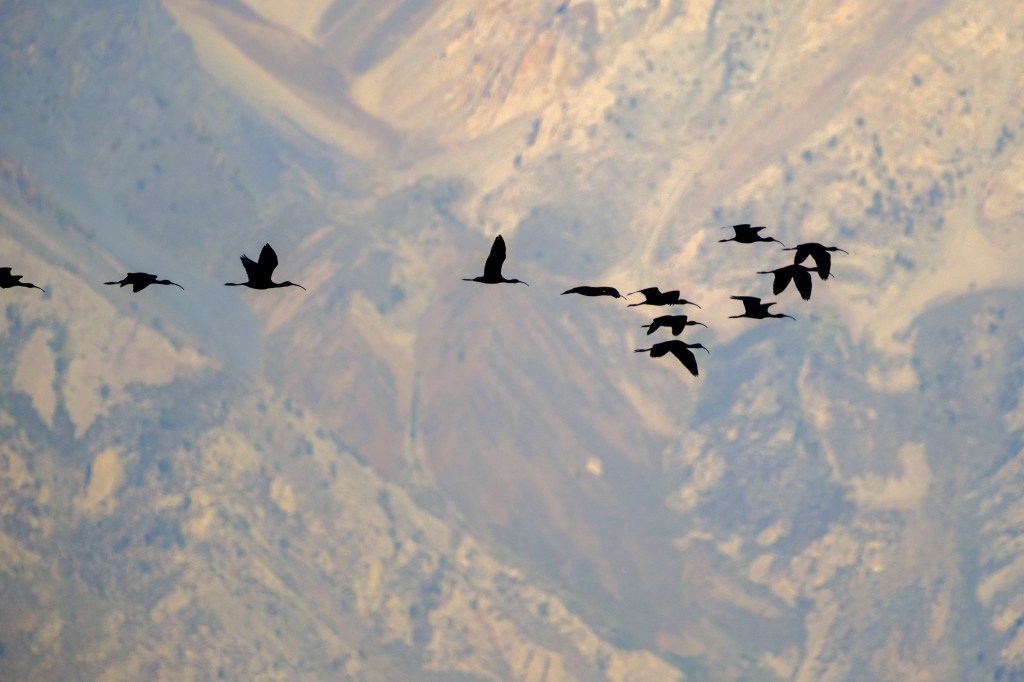
            White-faced Ibis migrant past Bishop in large flocks. They look dramatic against the mountains.

White-faced Ibis. Buckley Ponds.

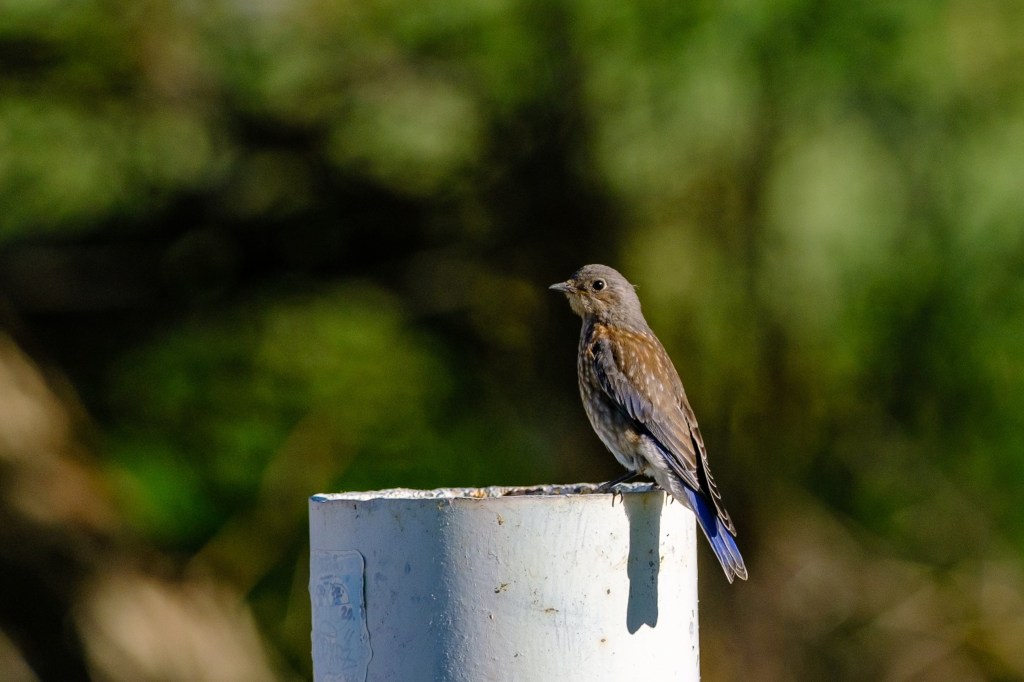
            A juvenile Western Bluebird poses on a post.

Western Bluebird. Bishop Creek Canal.

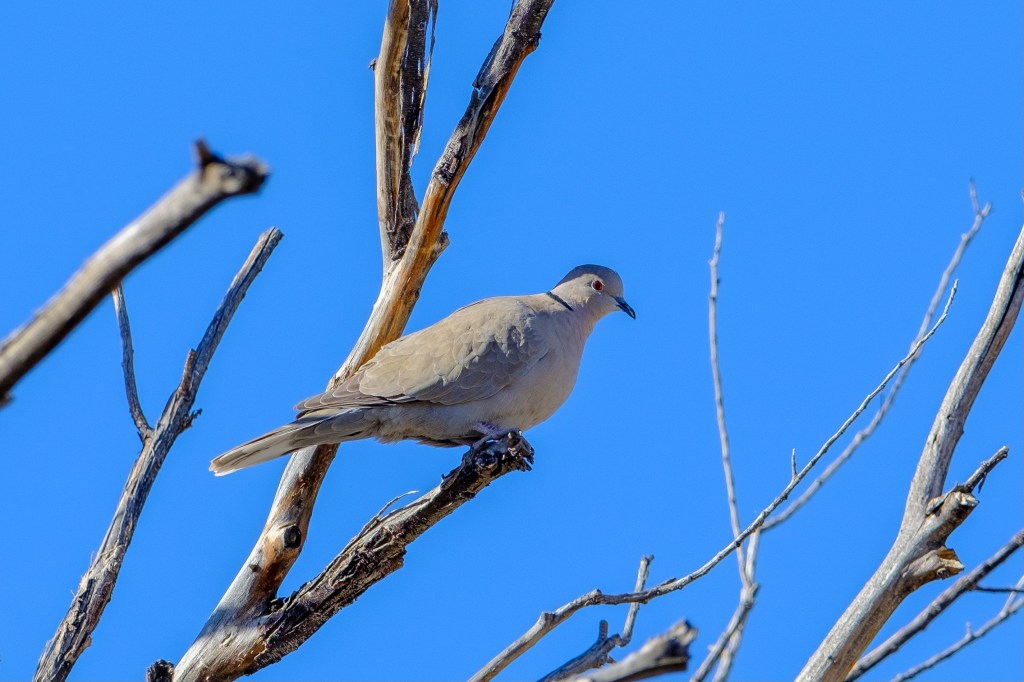
            The Eurasian Collared Dove has become the most common dove in the Owens Valley. This bird only arrived in California about 30 years ago.

Eurasian Collared Dove. Bishop Creek Canal.

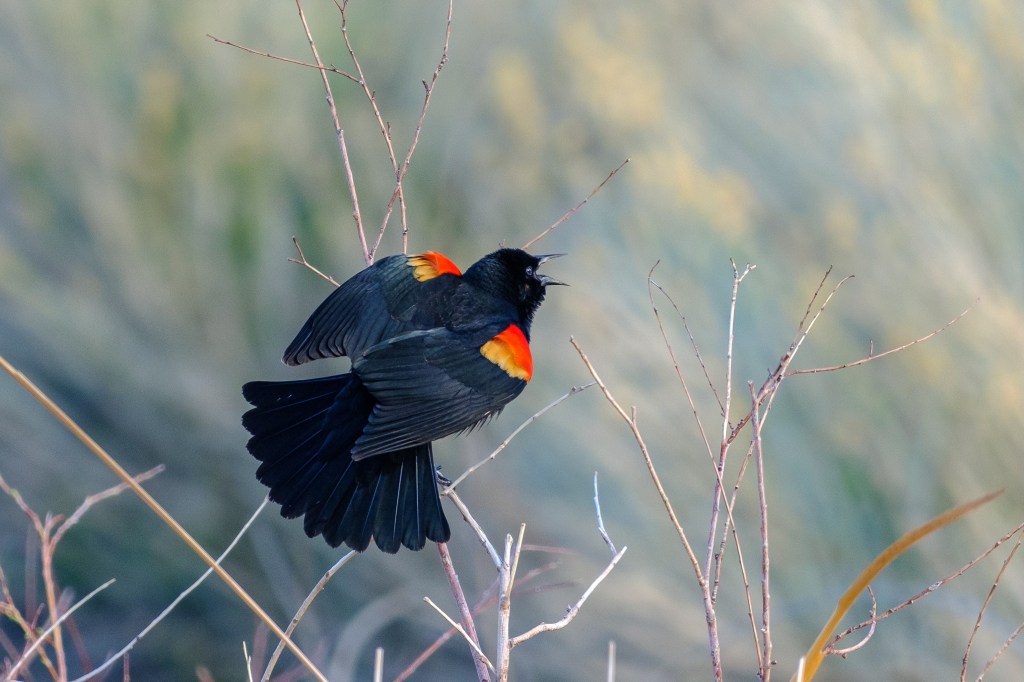
            Red-winged Blackbirds show up in late February and sing incessantly for months.

Red-winged Blackbird. Buckley Ponds.

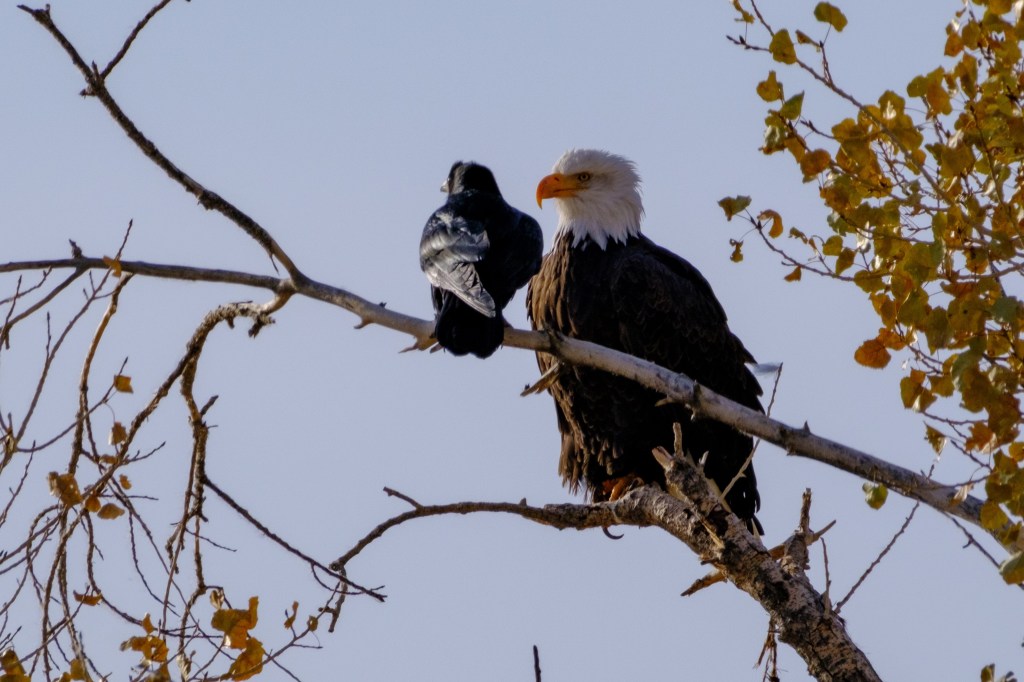
            It looks as if this Bald Eagle is chatting with a Raven. I suspect the Raven is harassing the eagle.

Bald Eagle. Common Raven. Buckley Ponds.

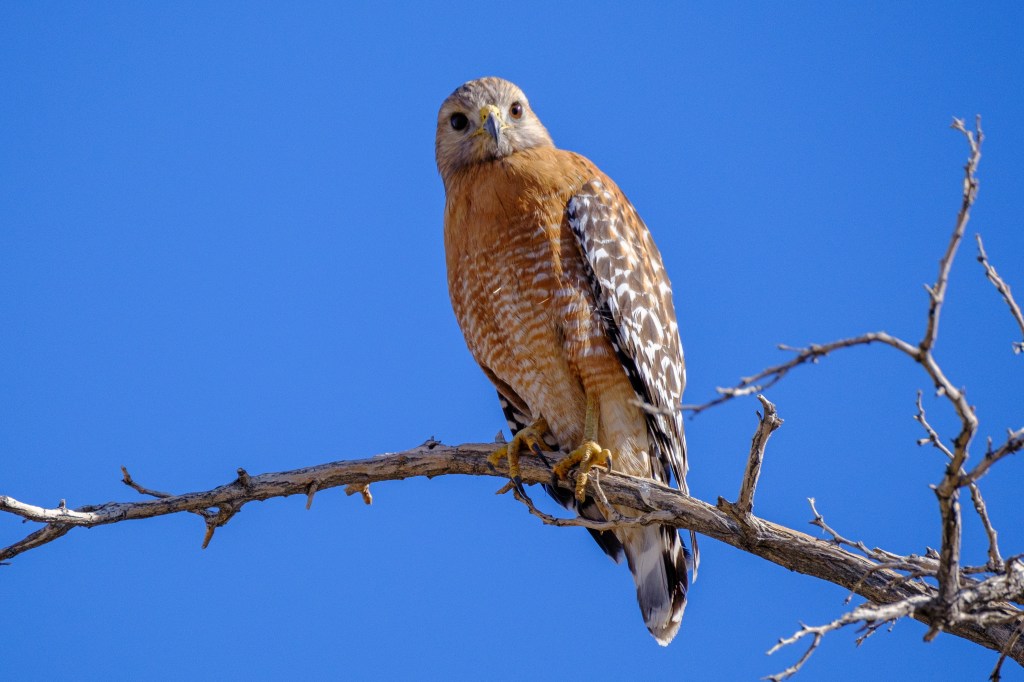
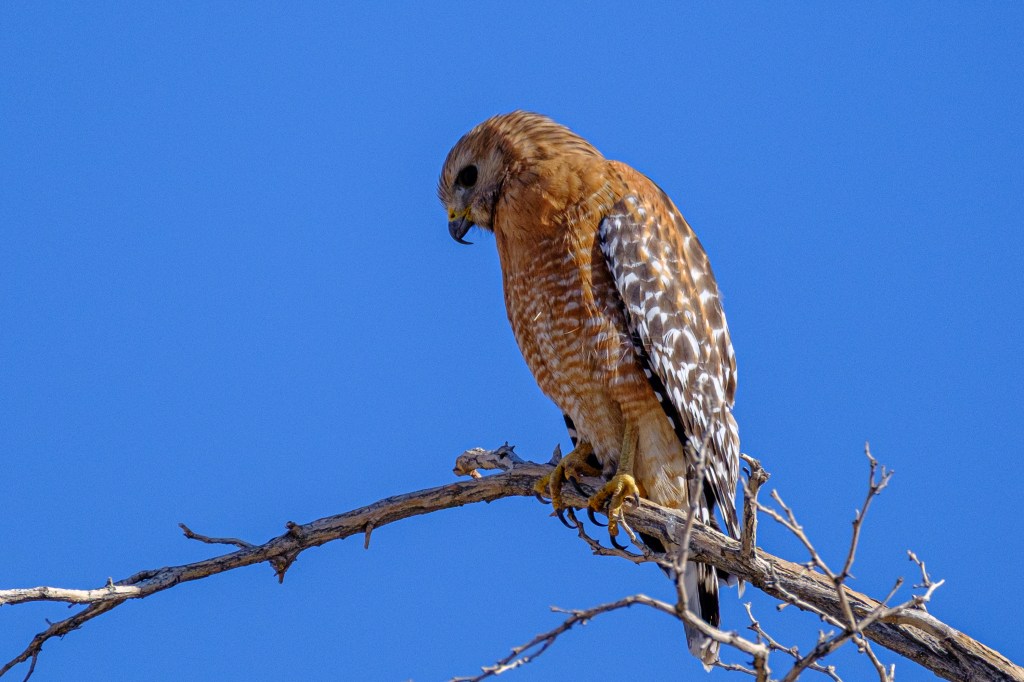
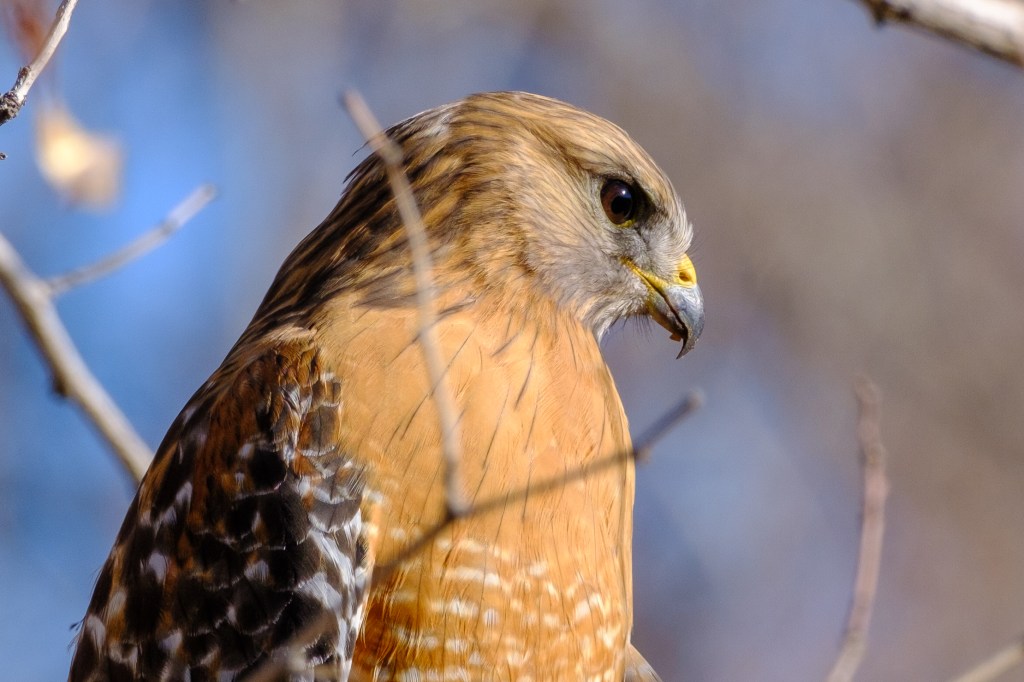
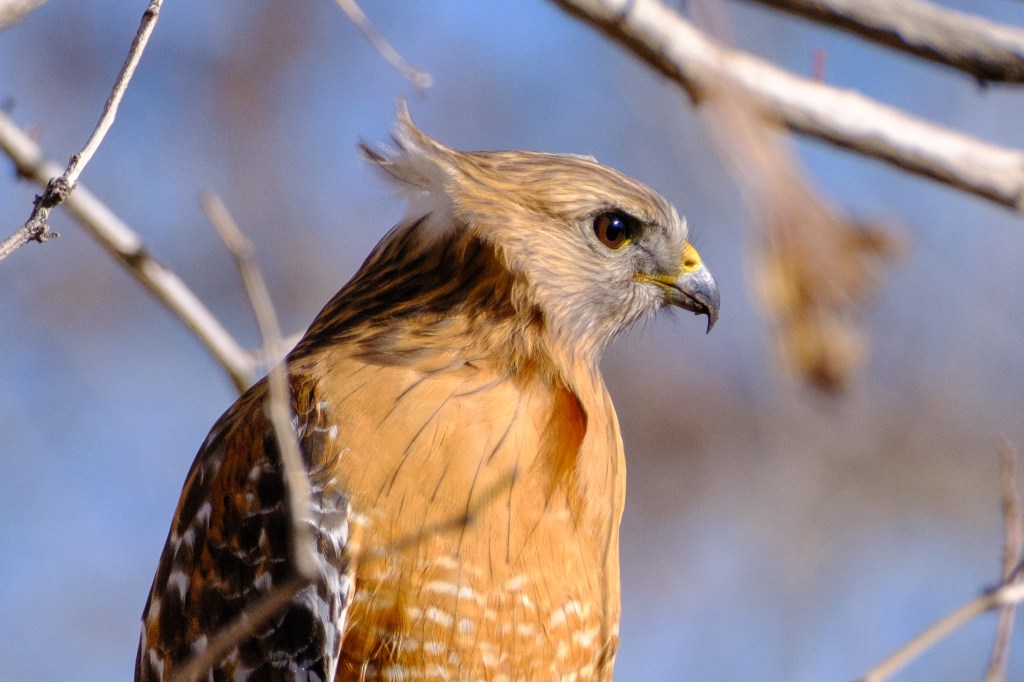
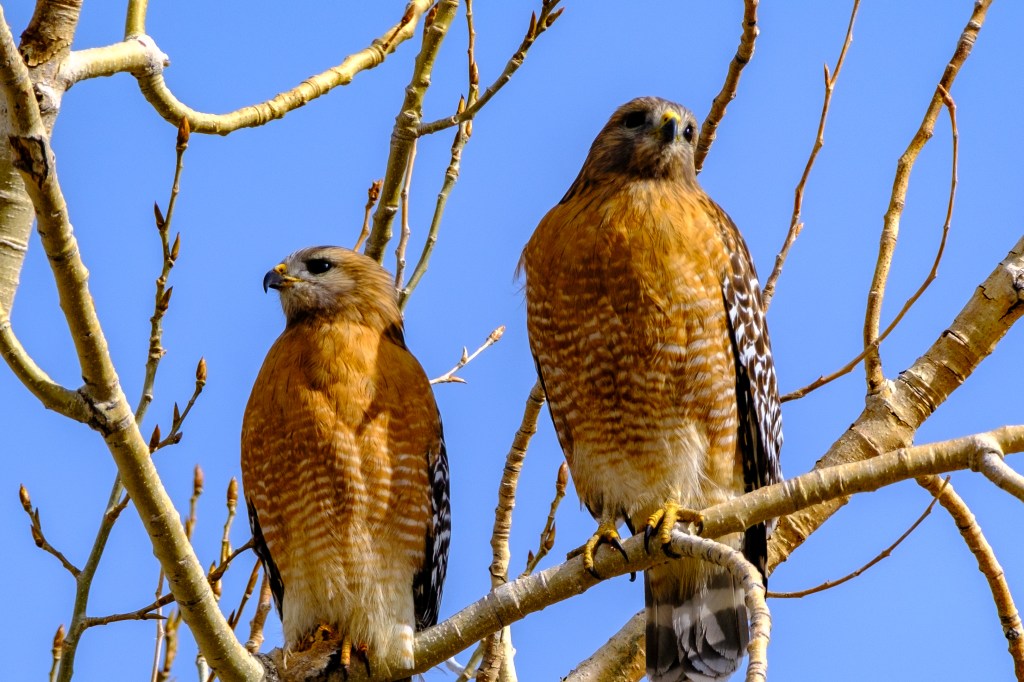
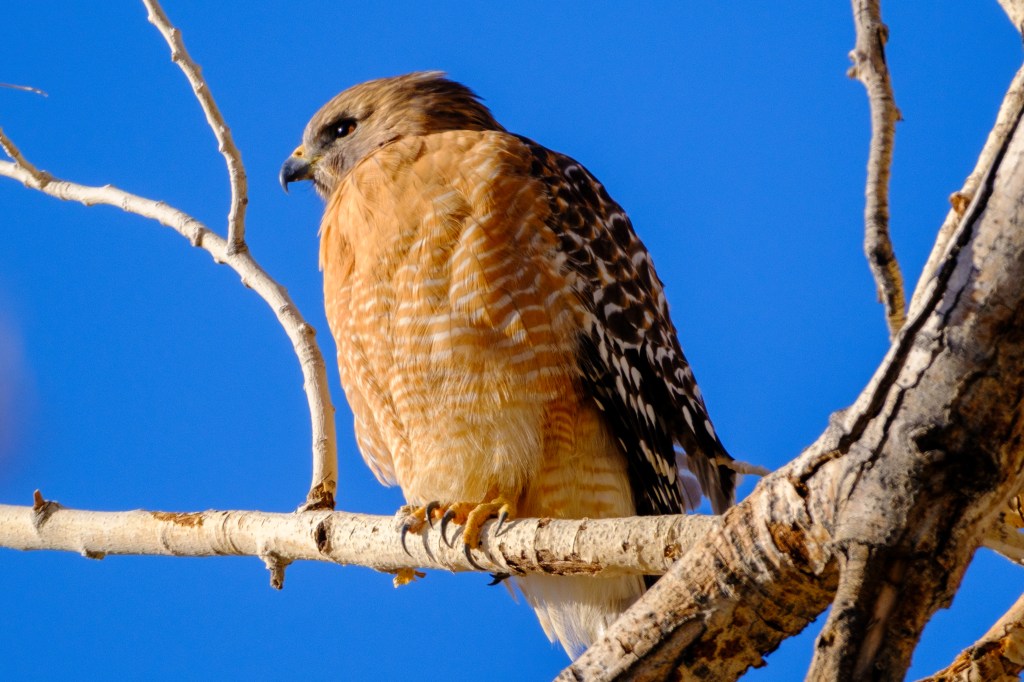
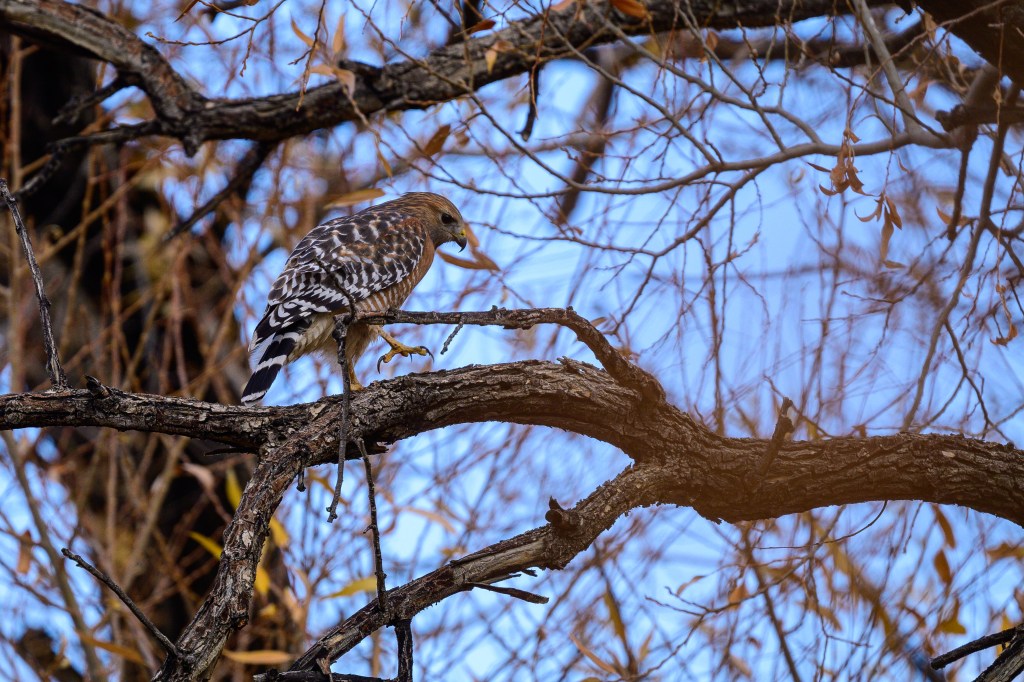
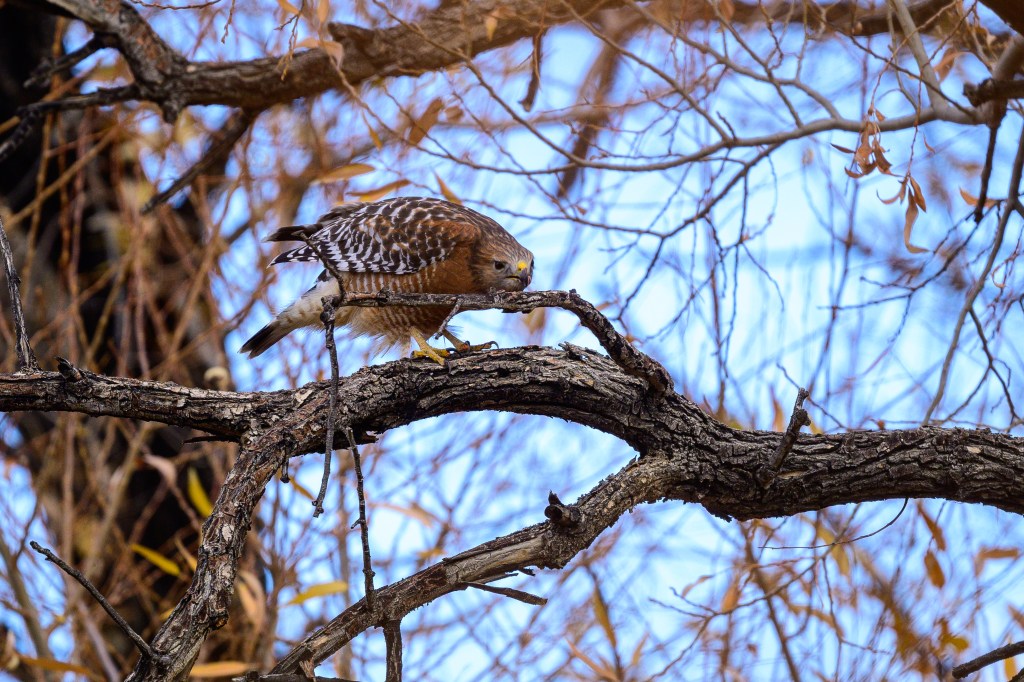
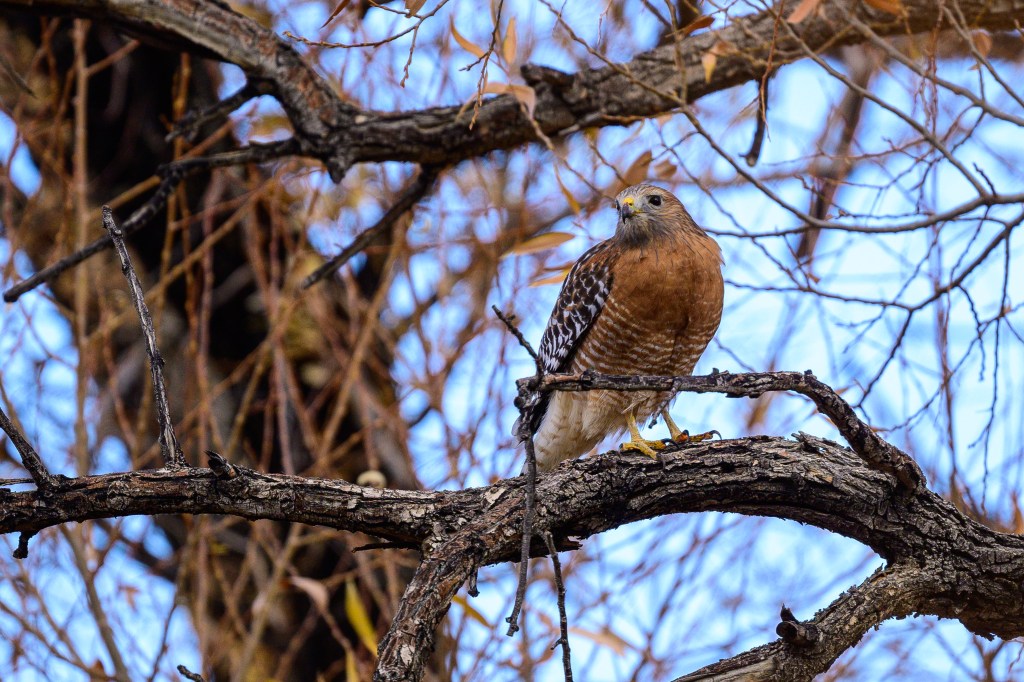
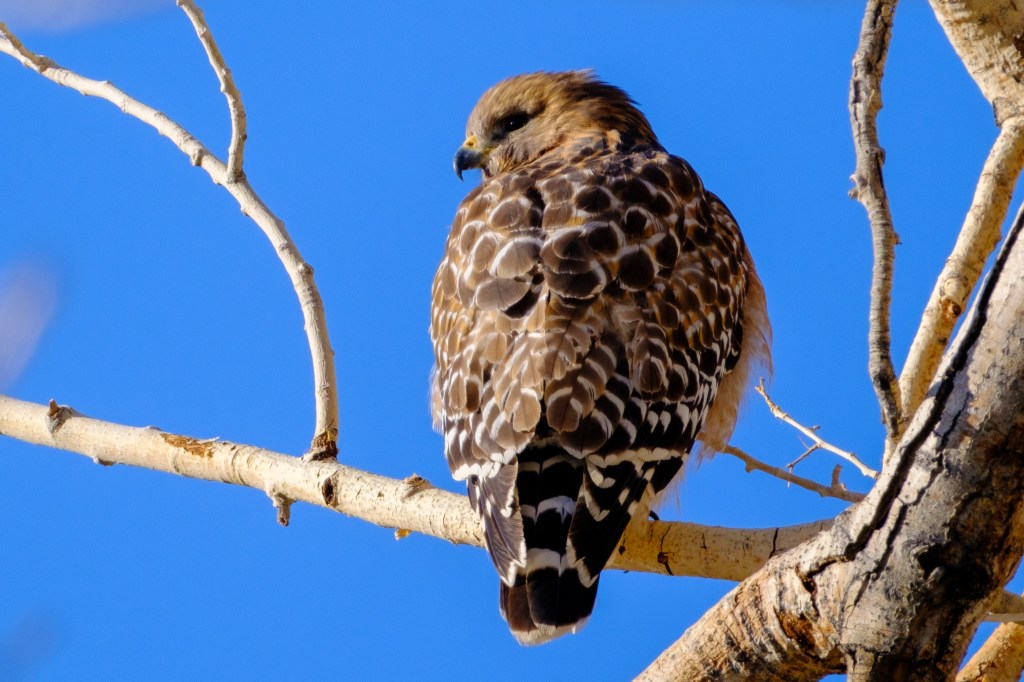
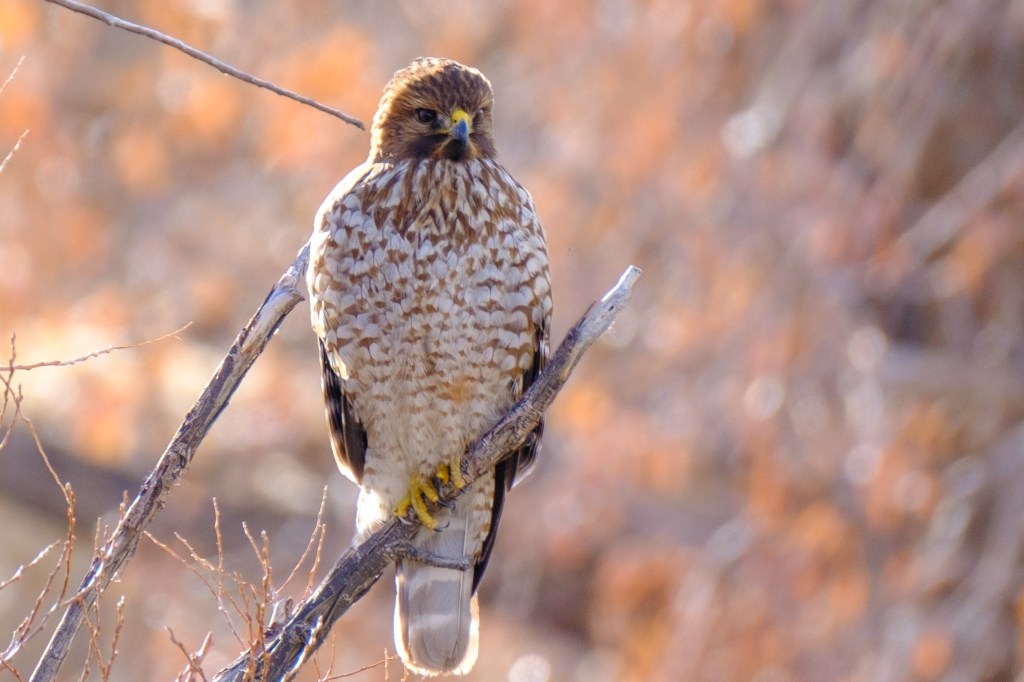
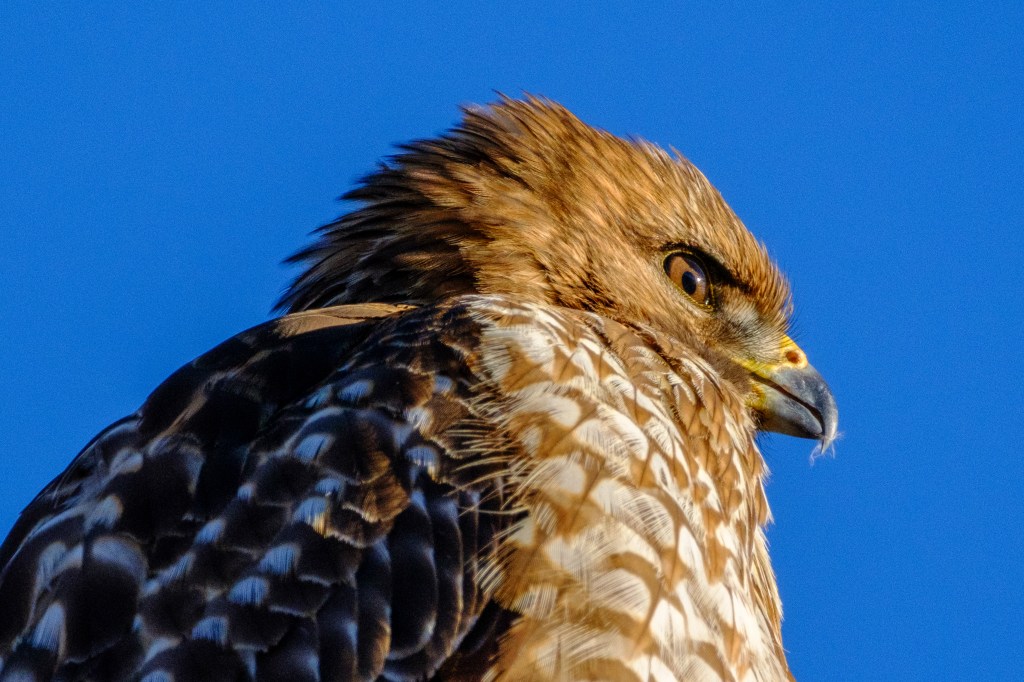
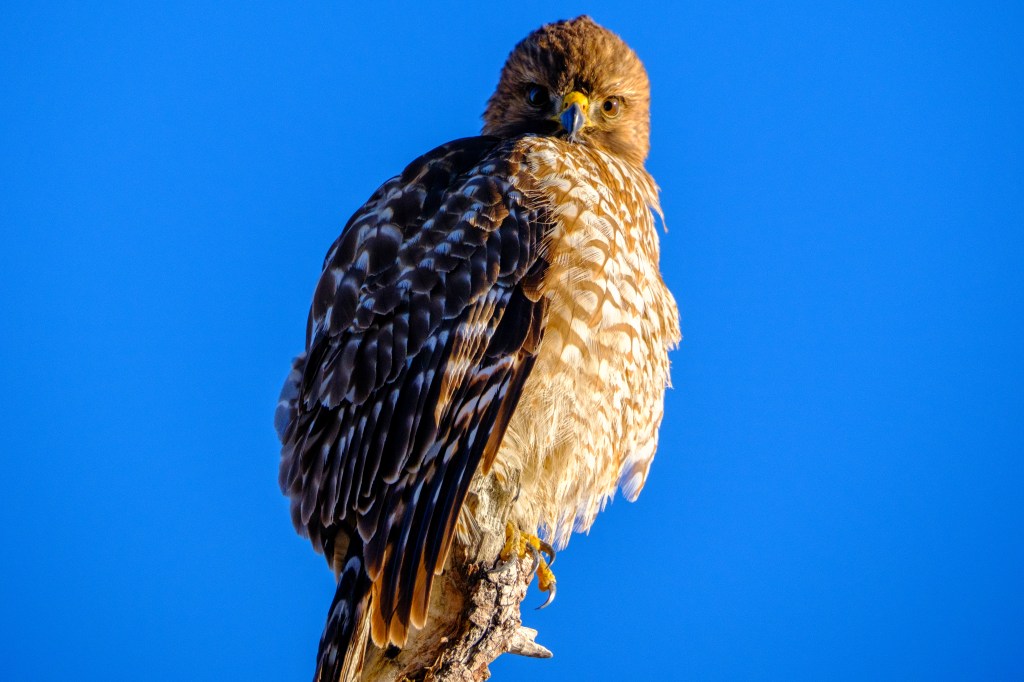
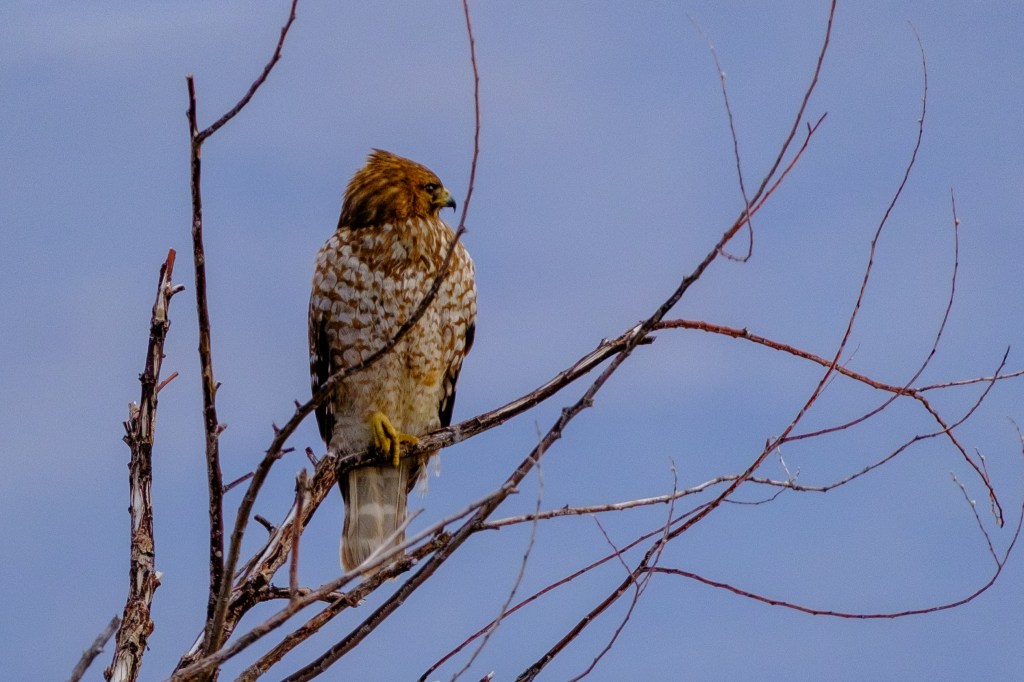
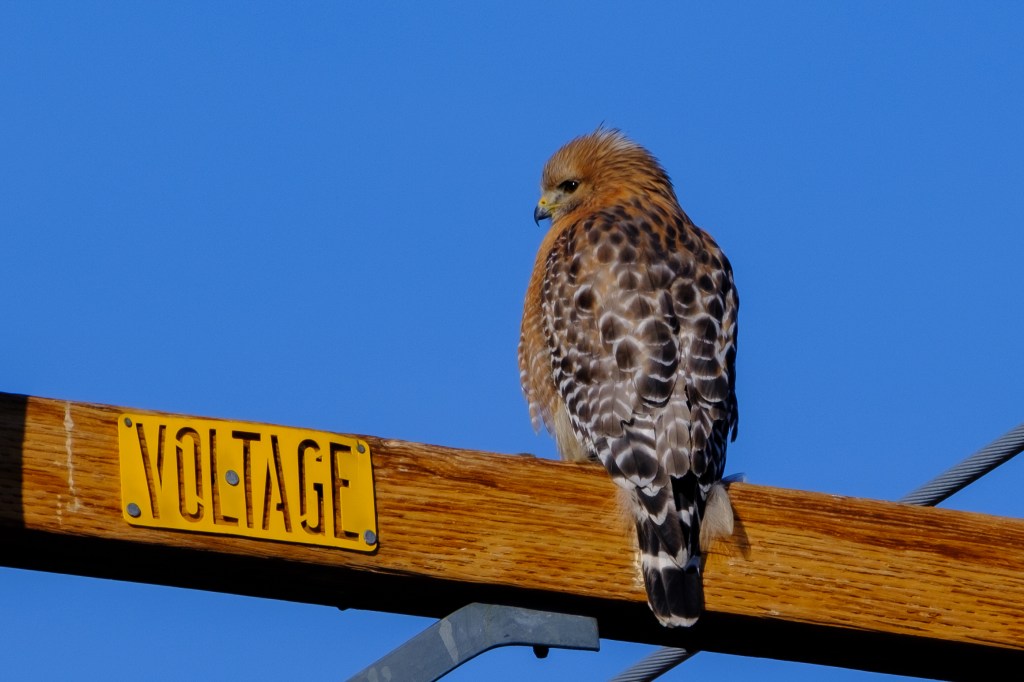
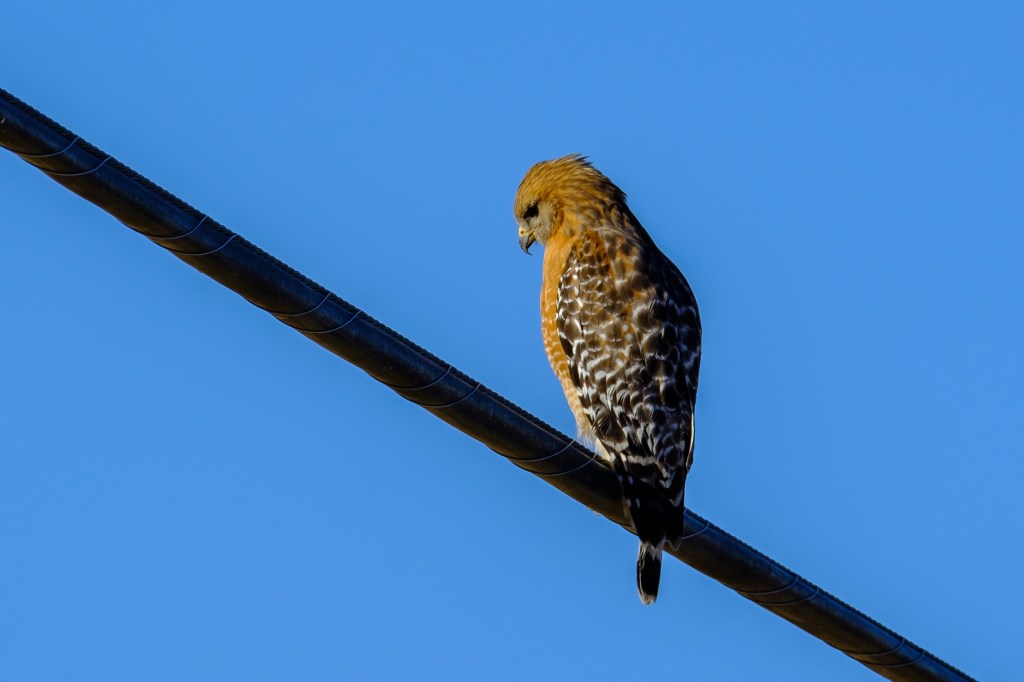
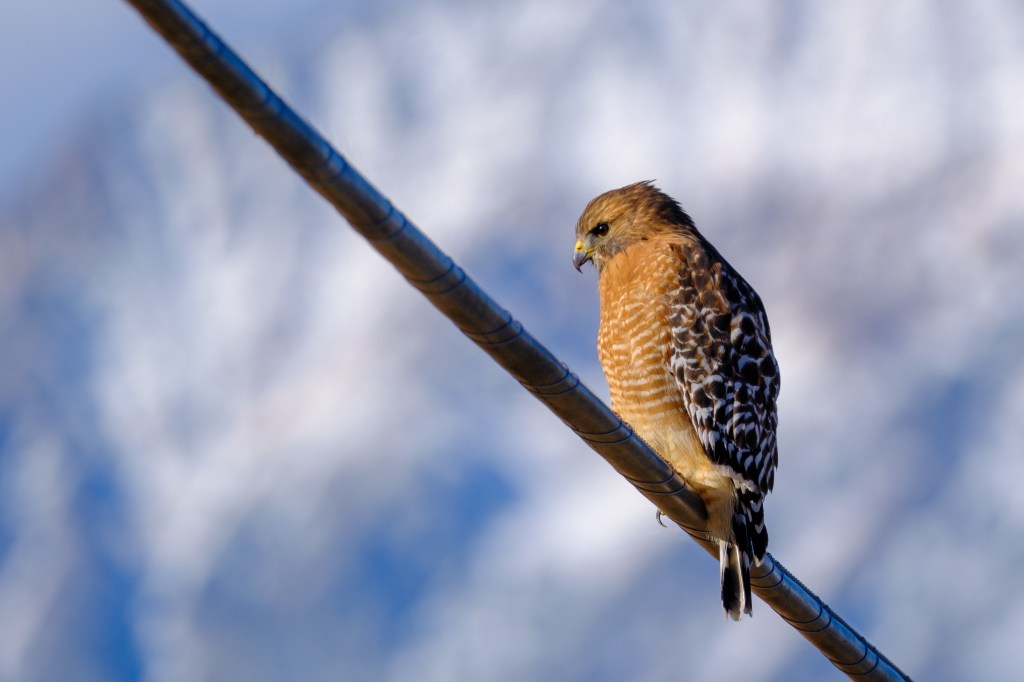
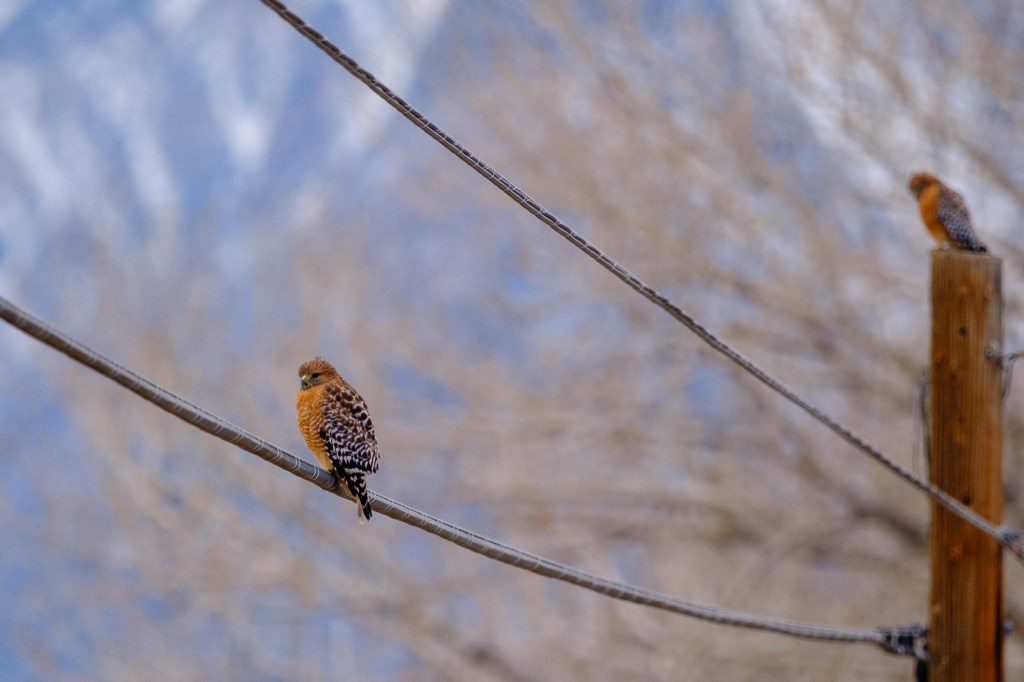
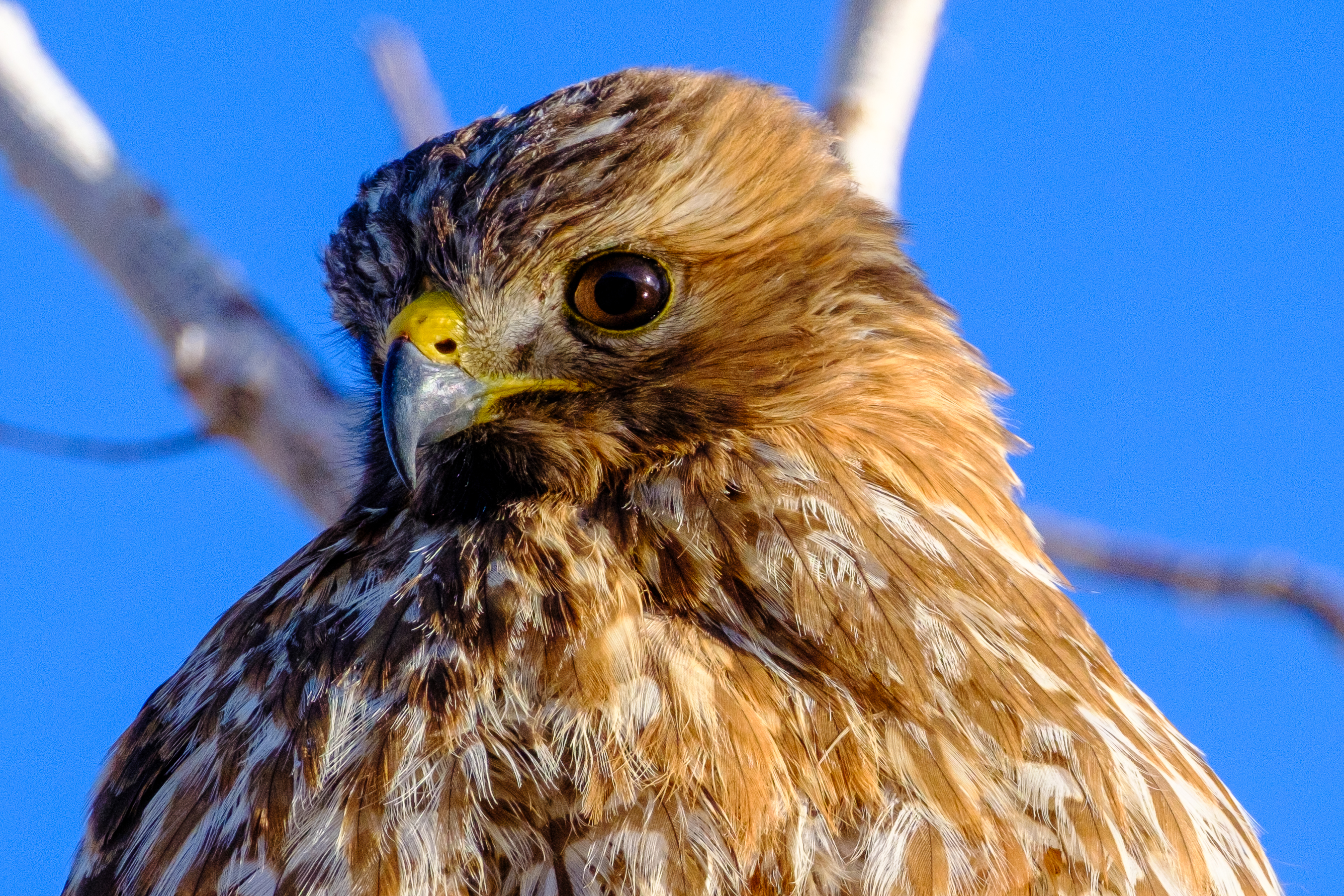
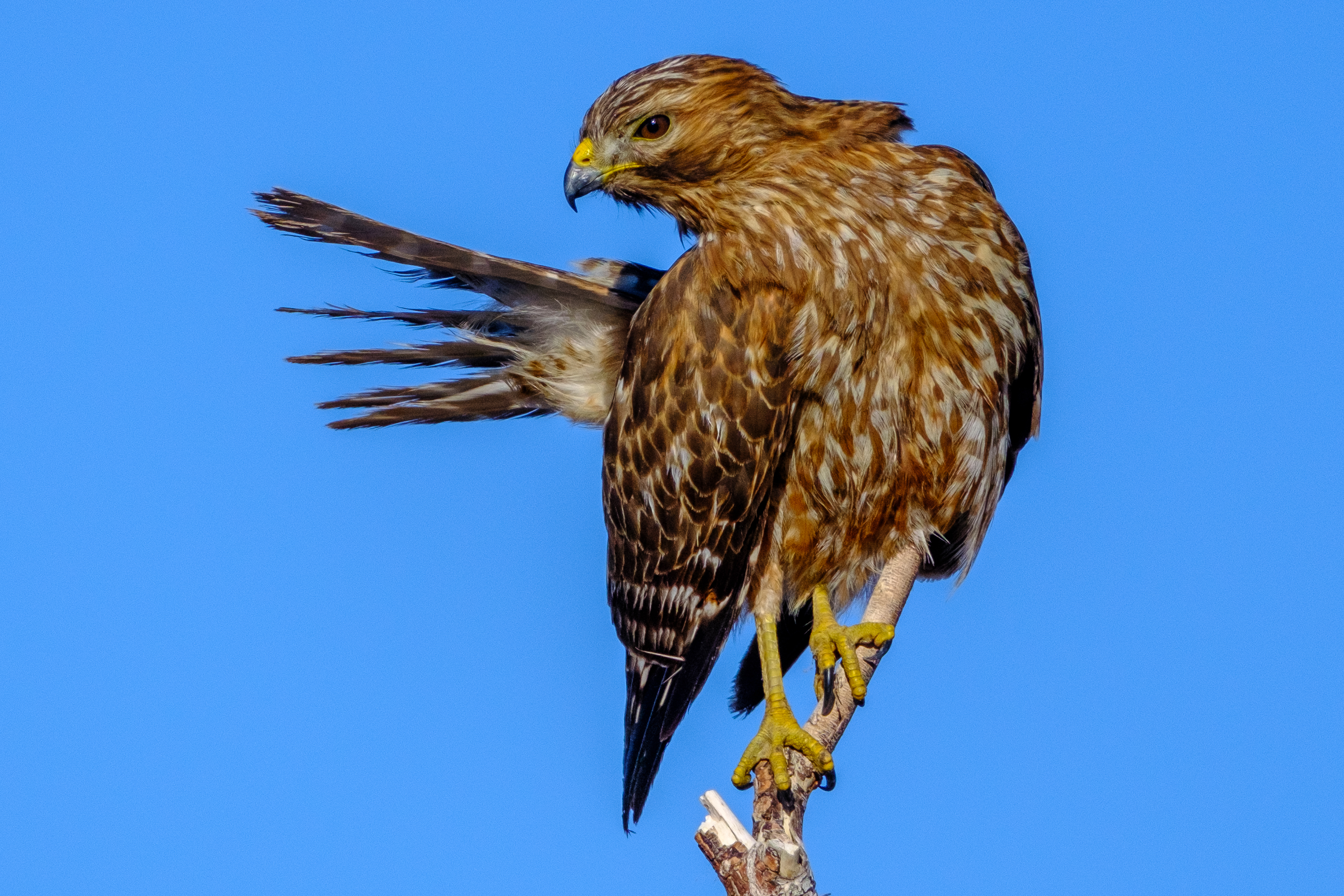
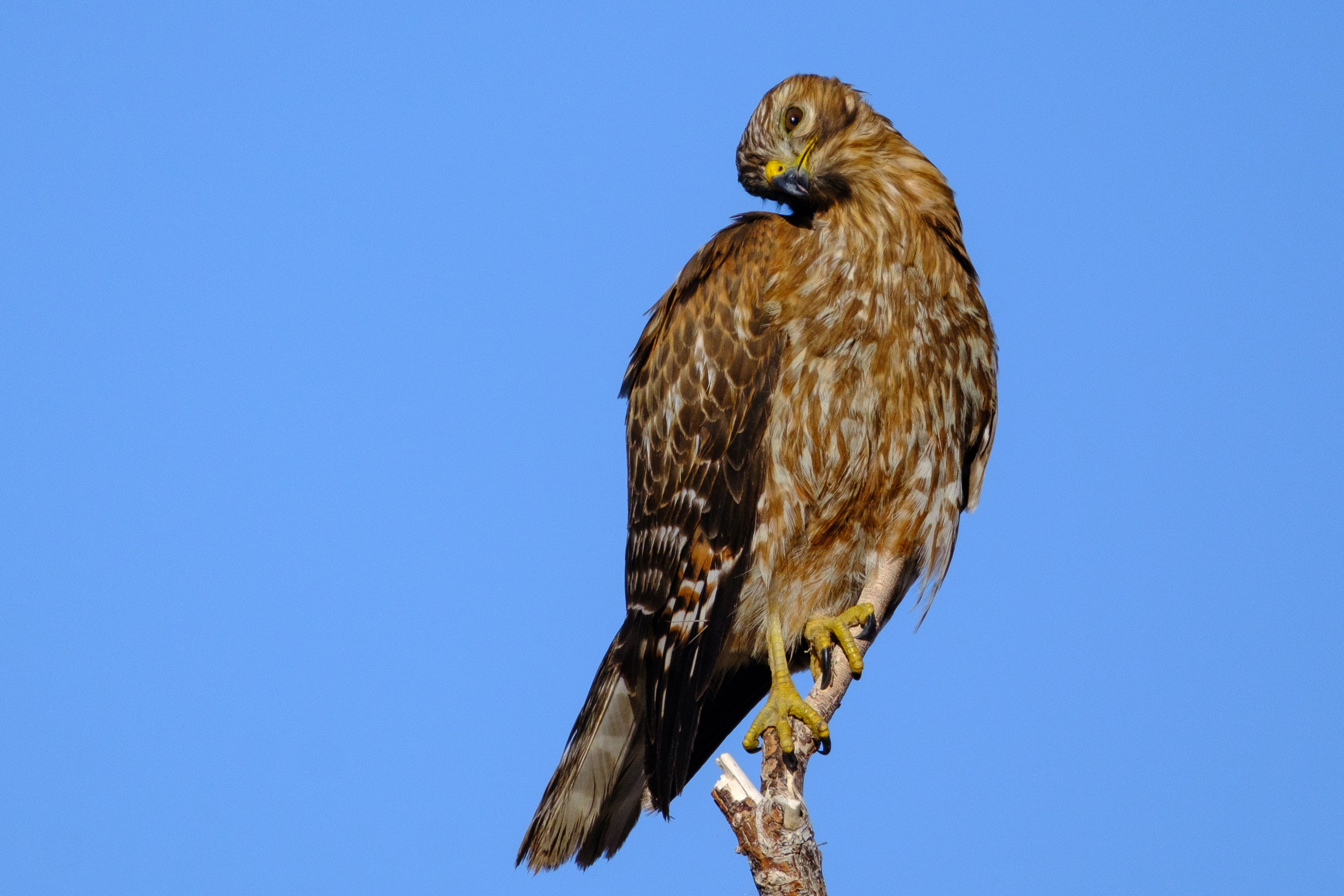
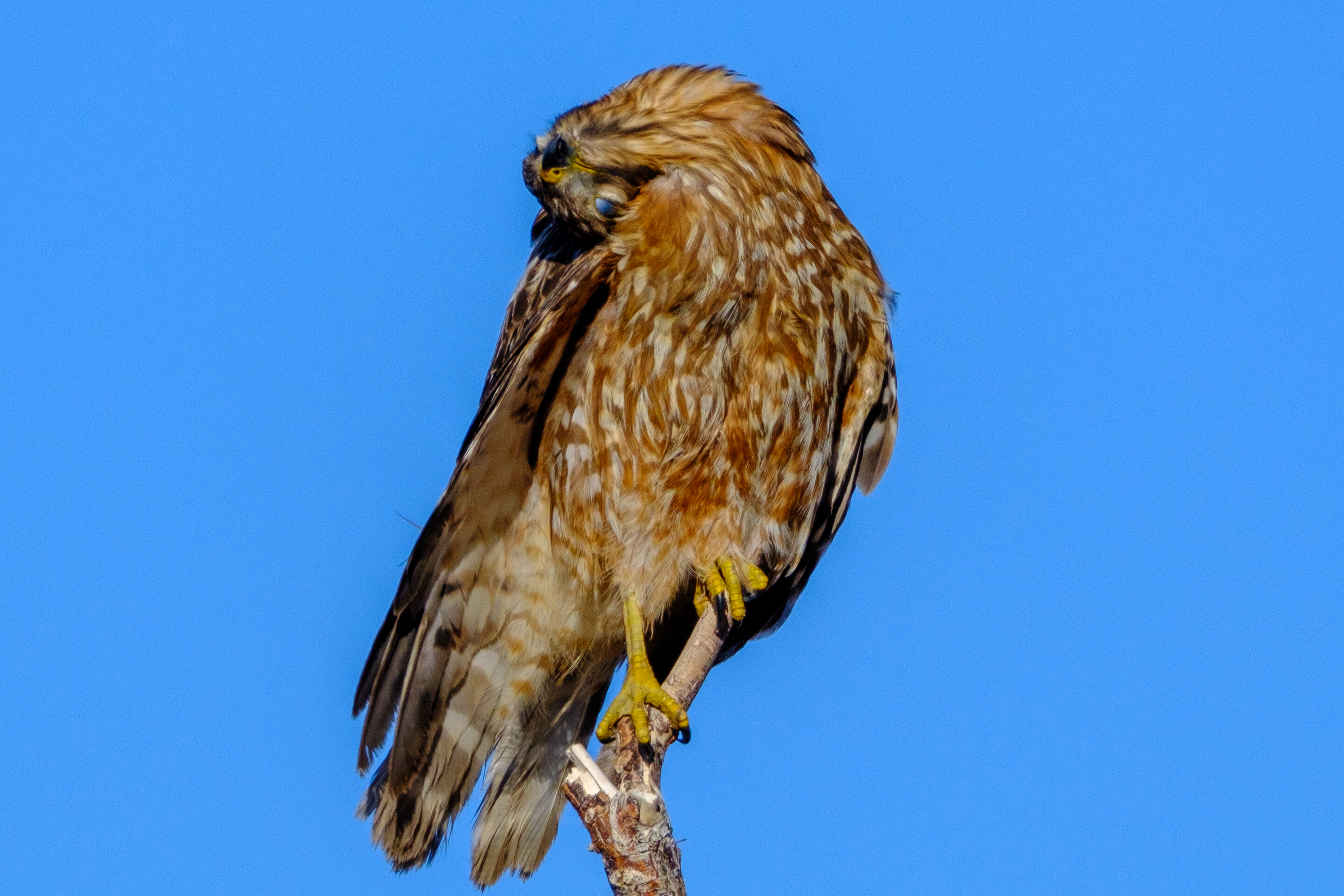
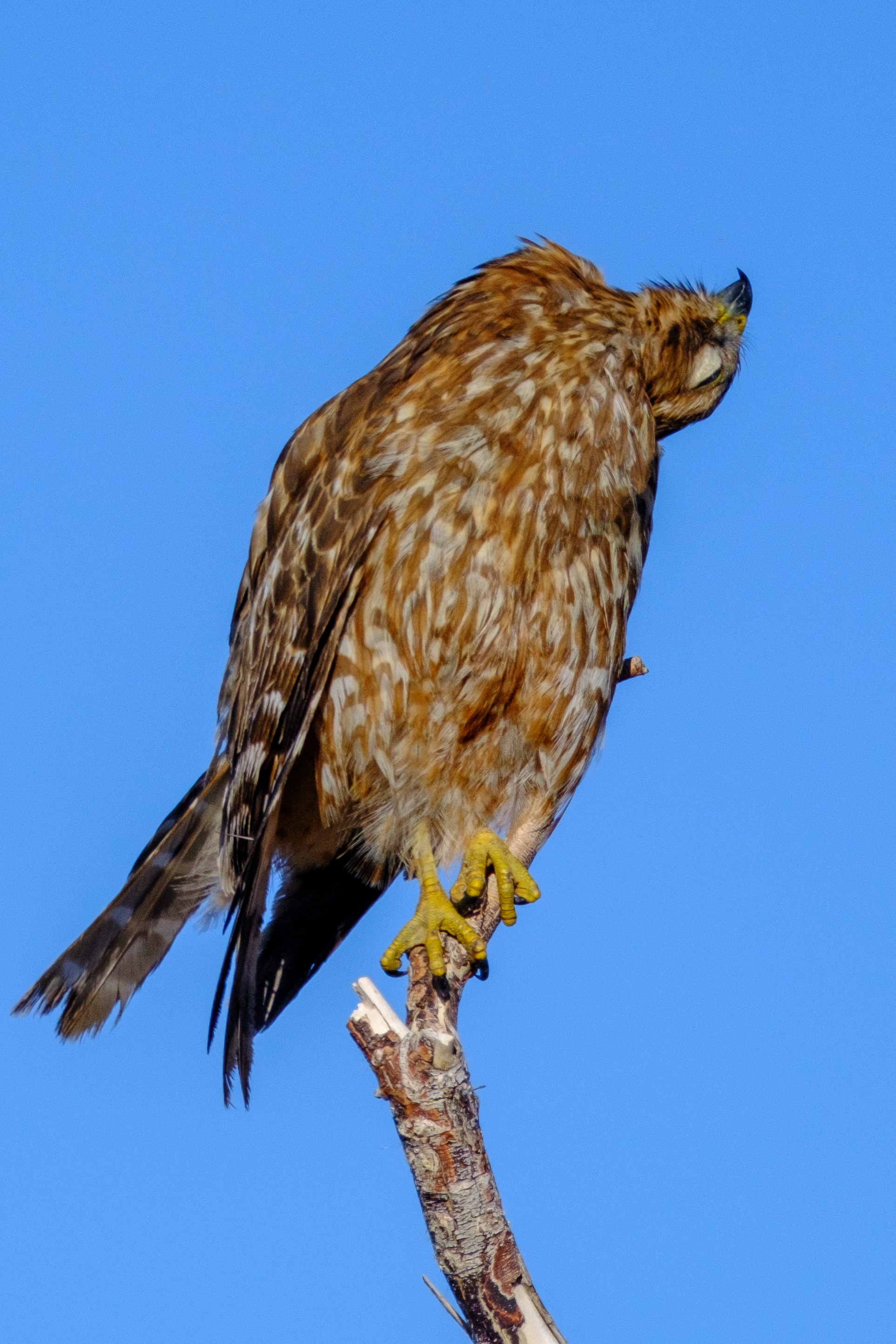
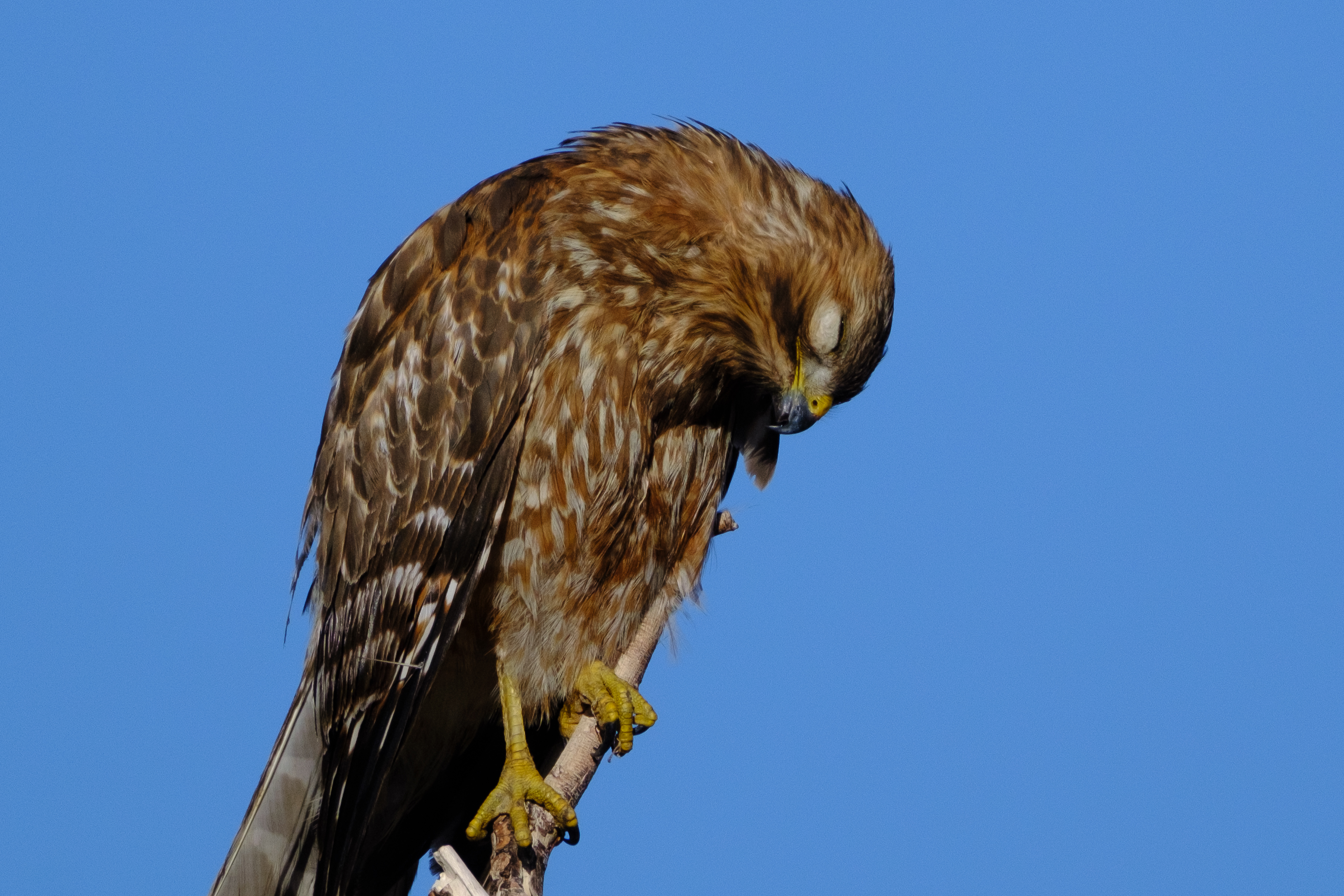
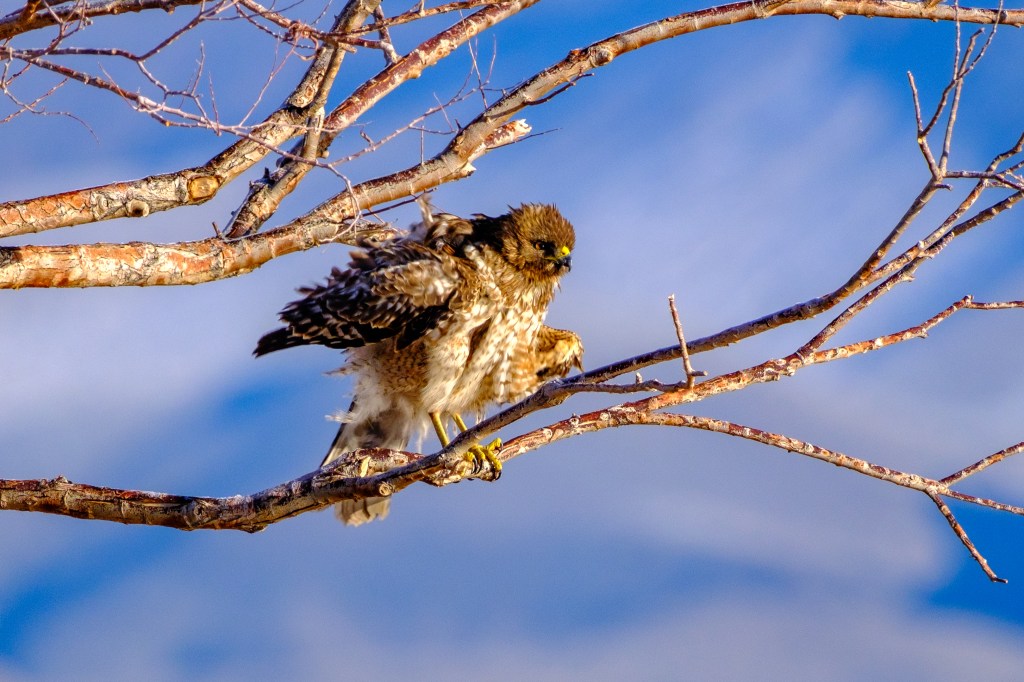
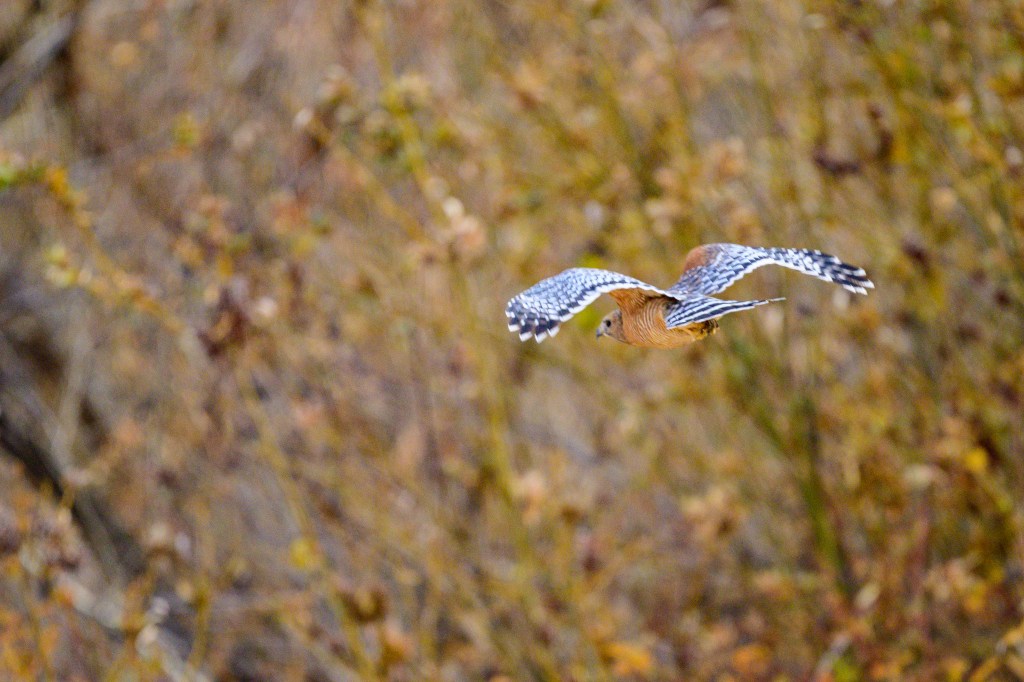
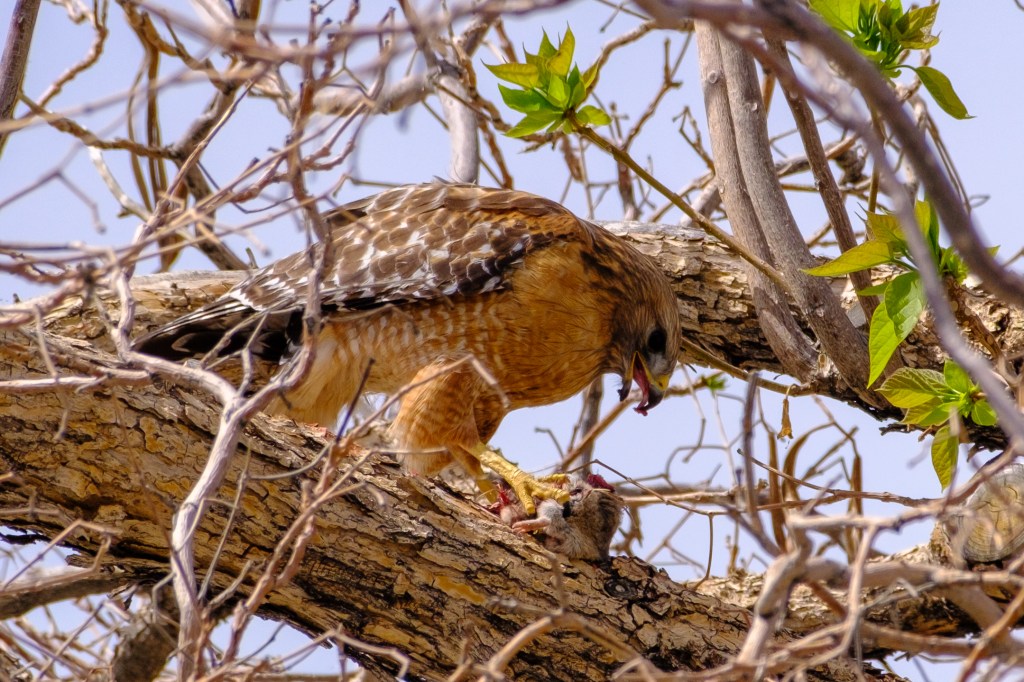
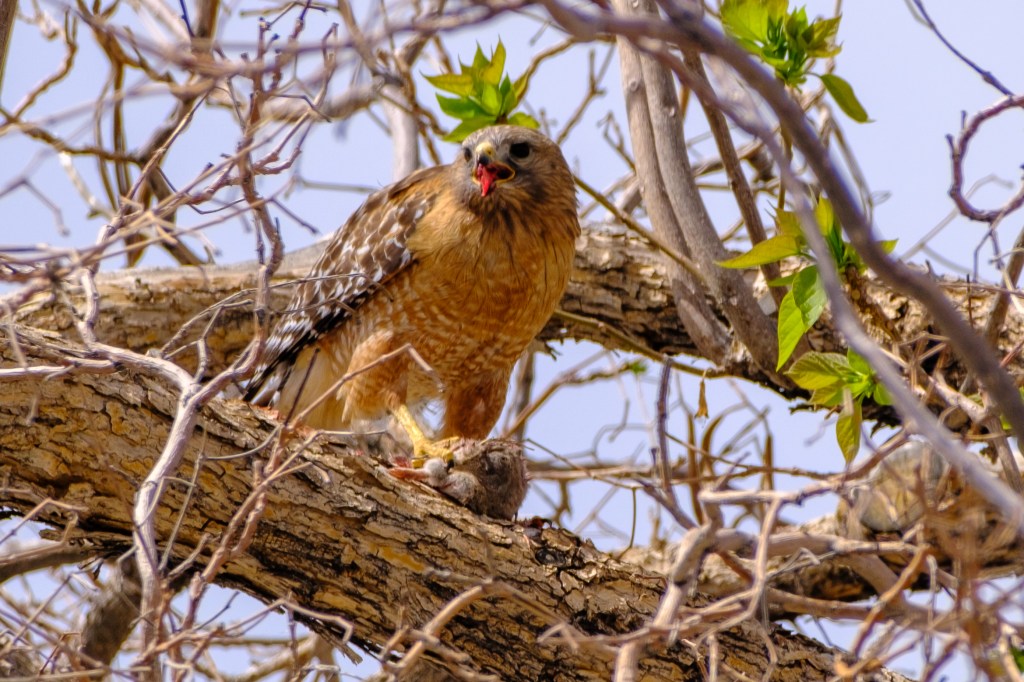
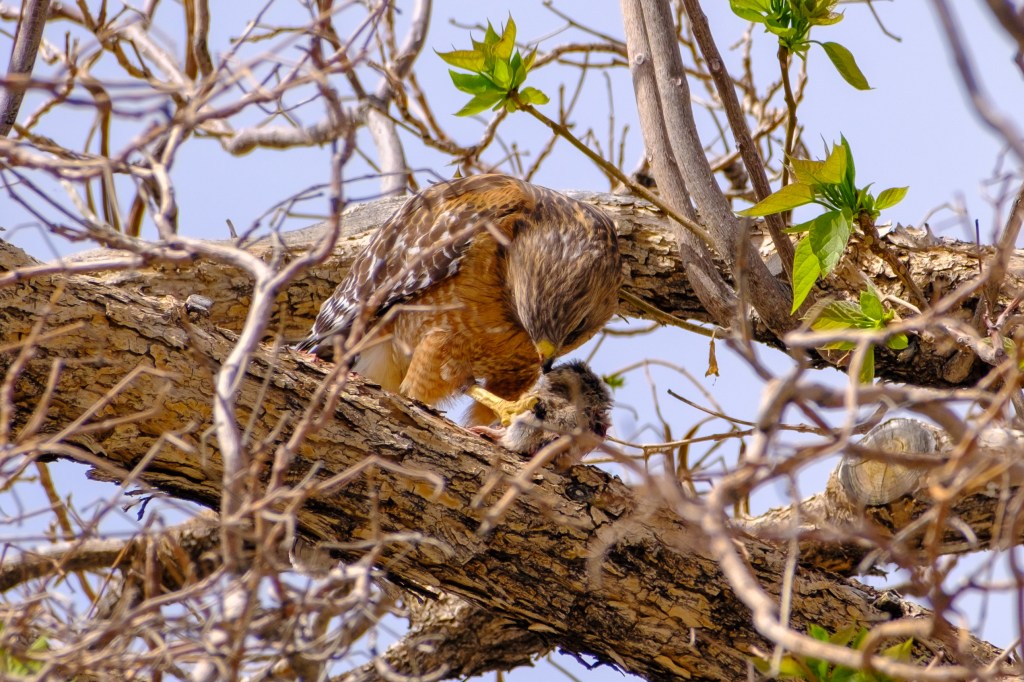
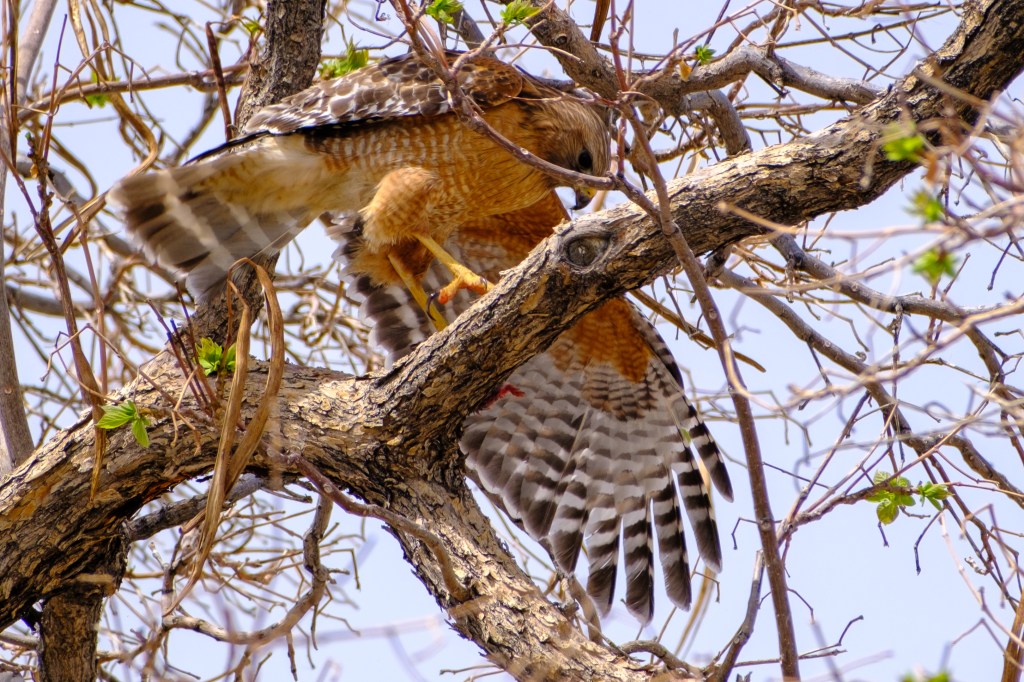
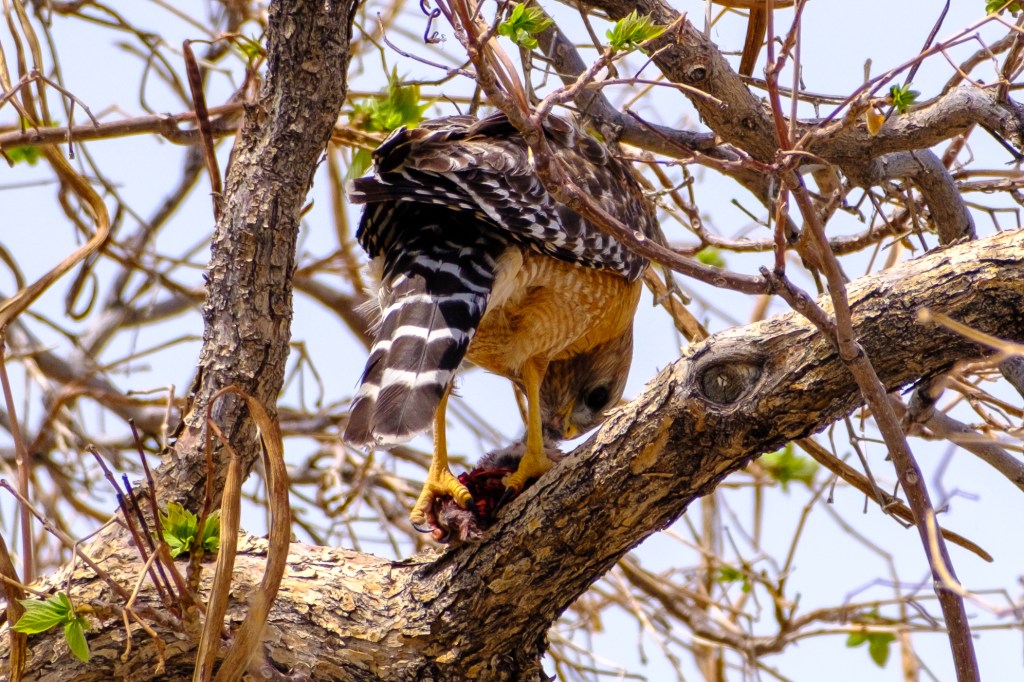
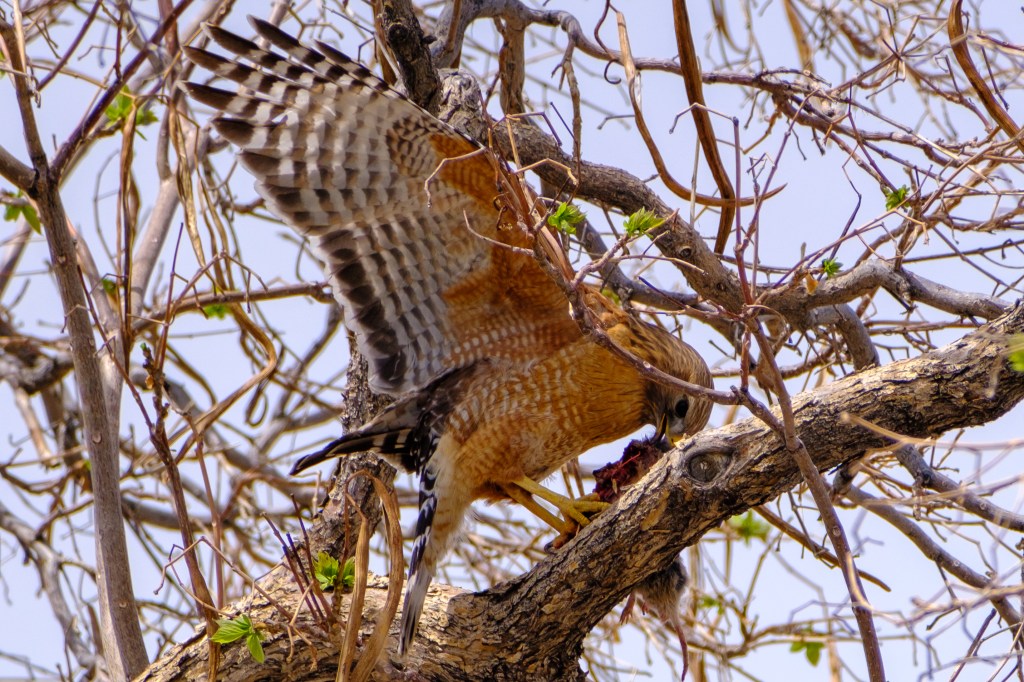
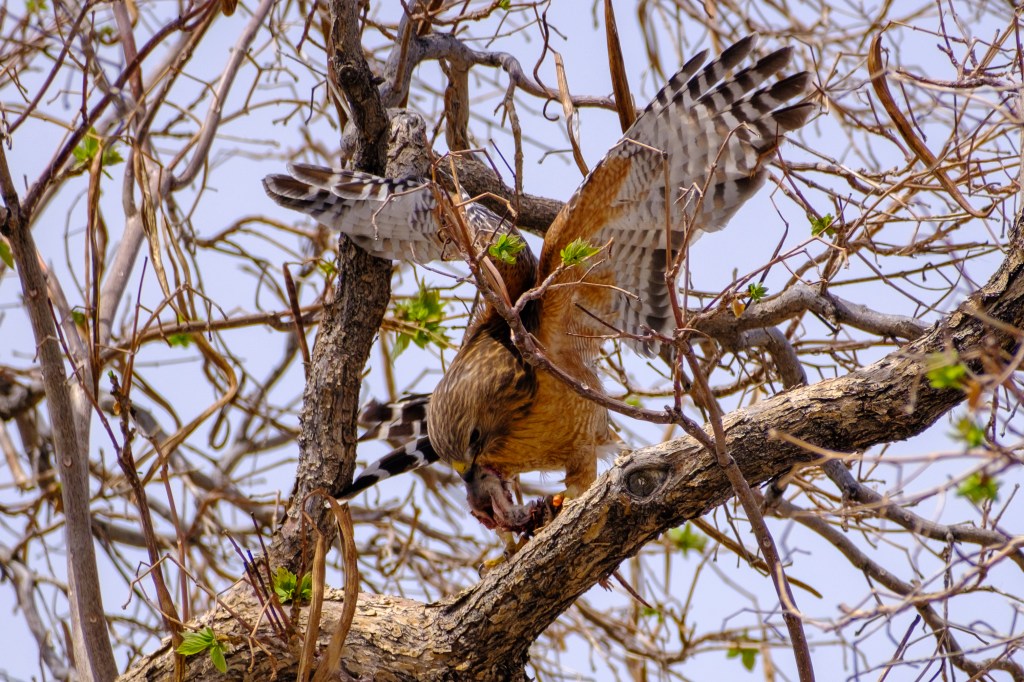
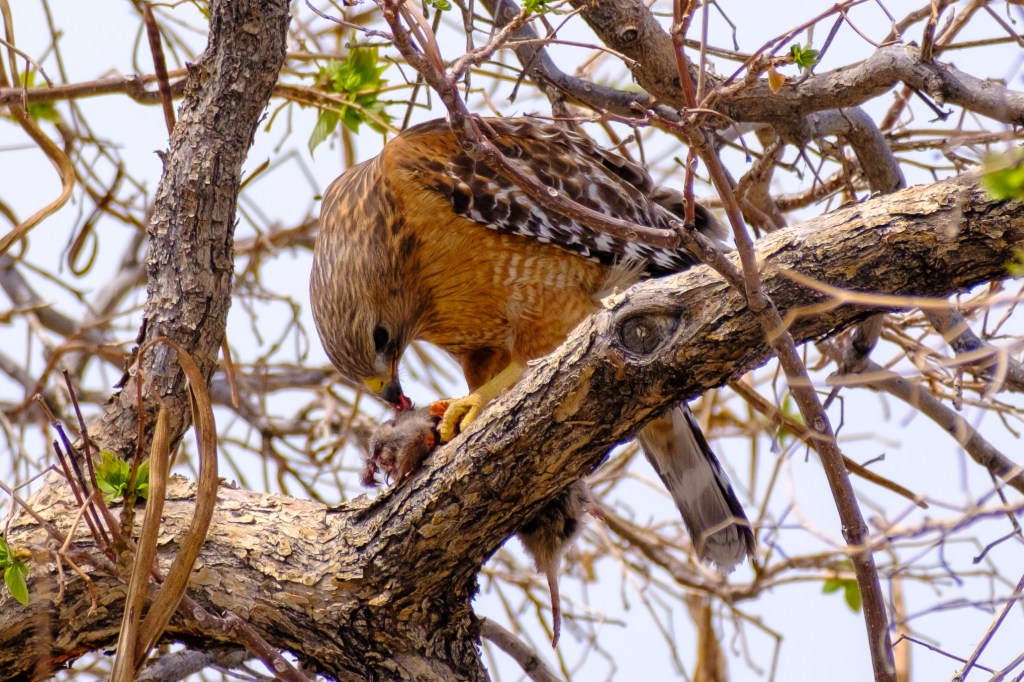
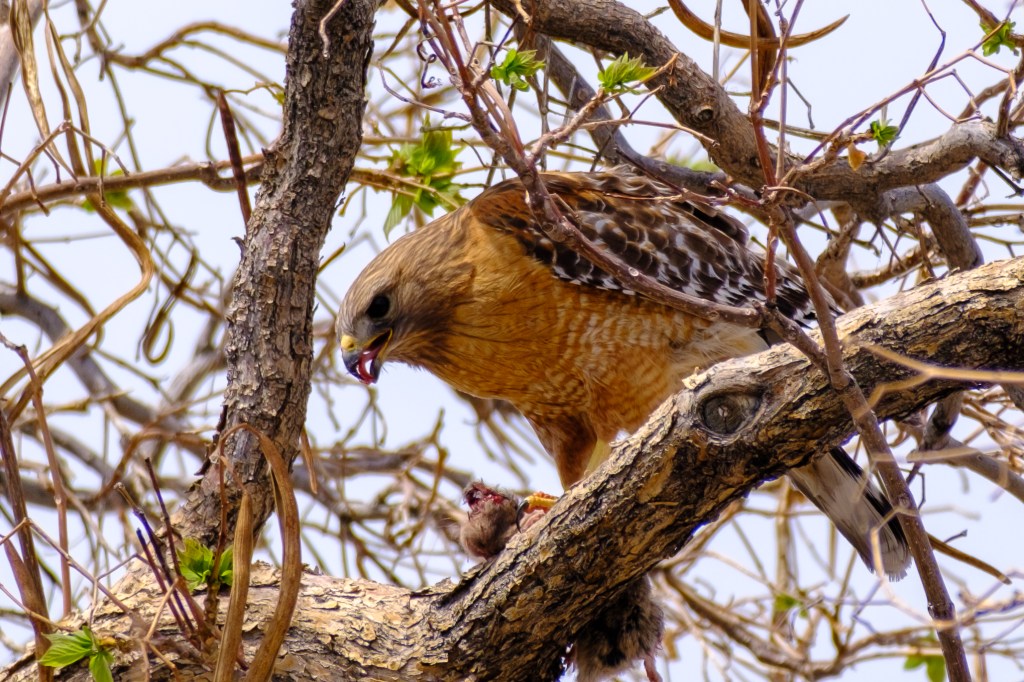
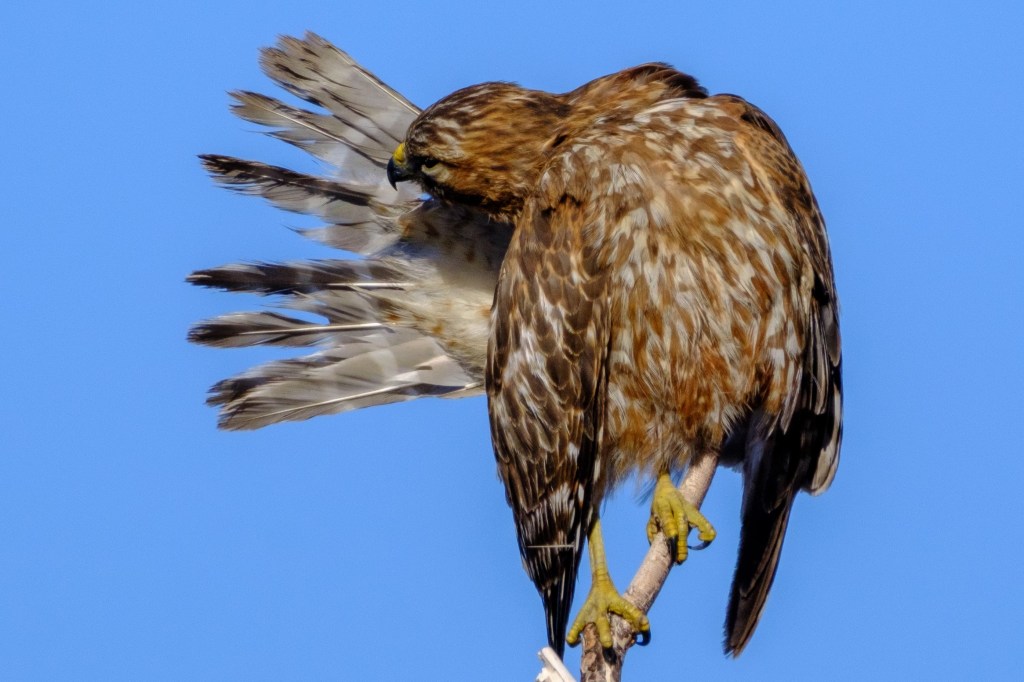
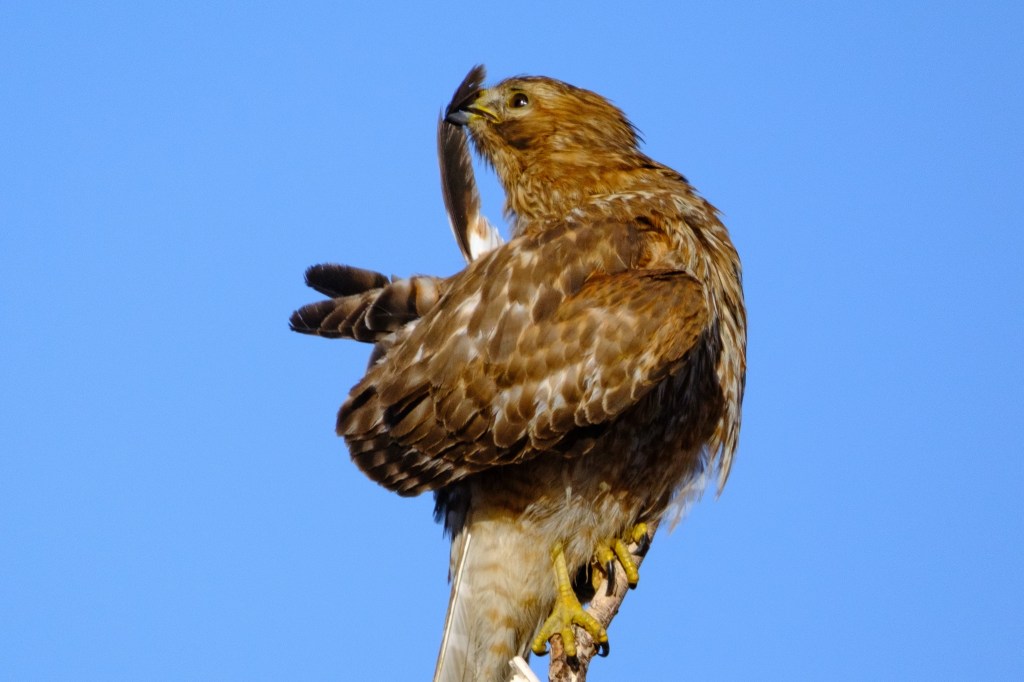
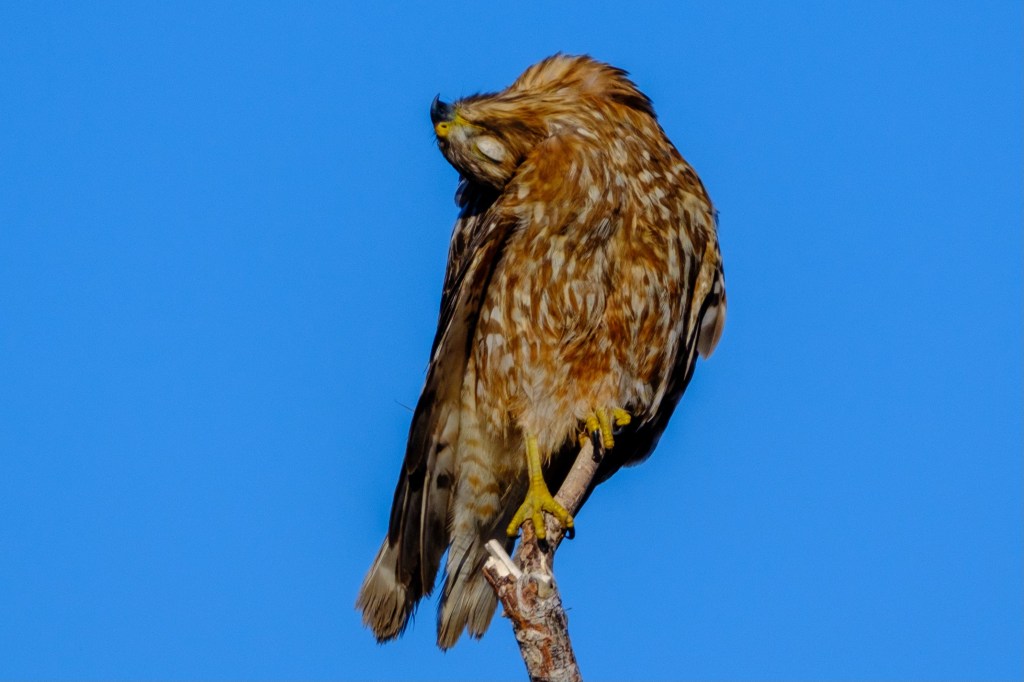
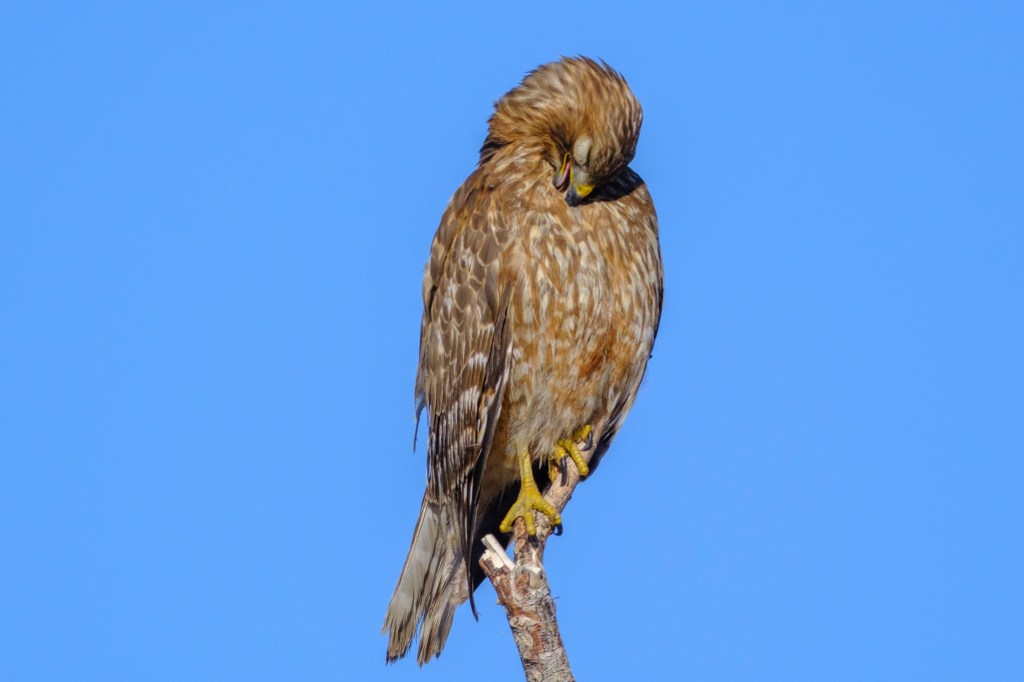
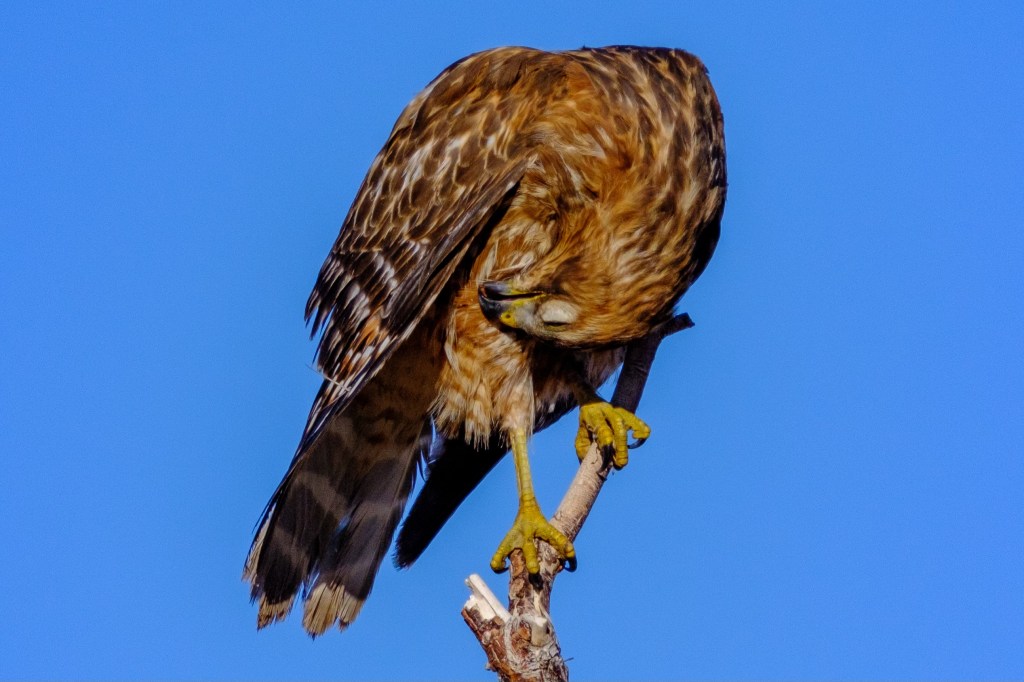
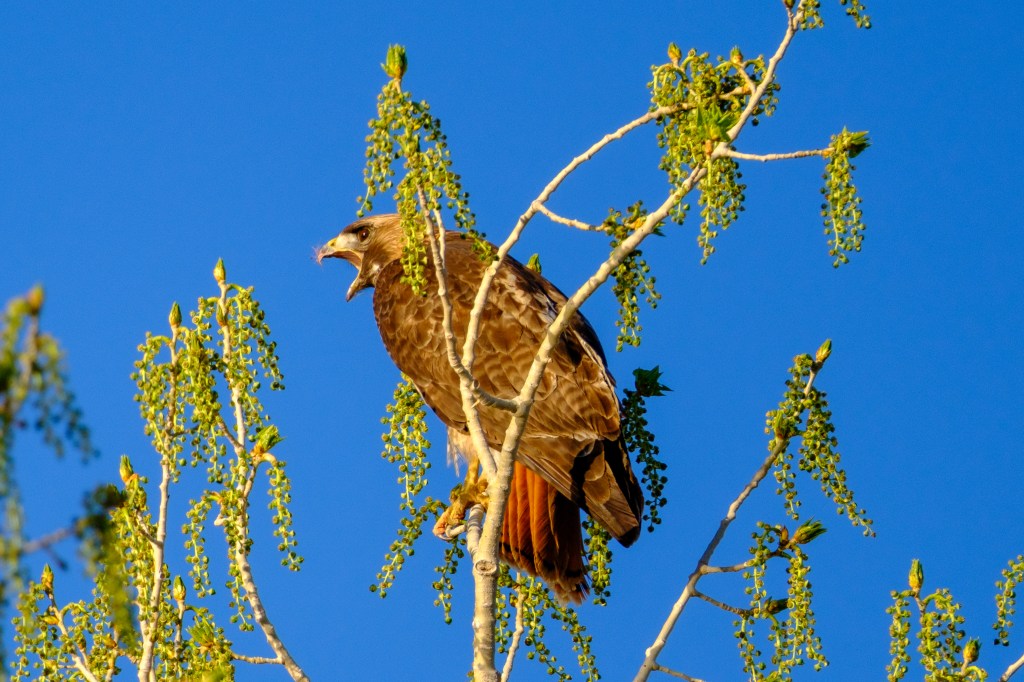
            Birds spend a lot of time preening — taking care of their feathers. This Red-shouldered Hawk was tearing out feathers, licking them, and generally going nuts at the Buckley Ponds.

Animals

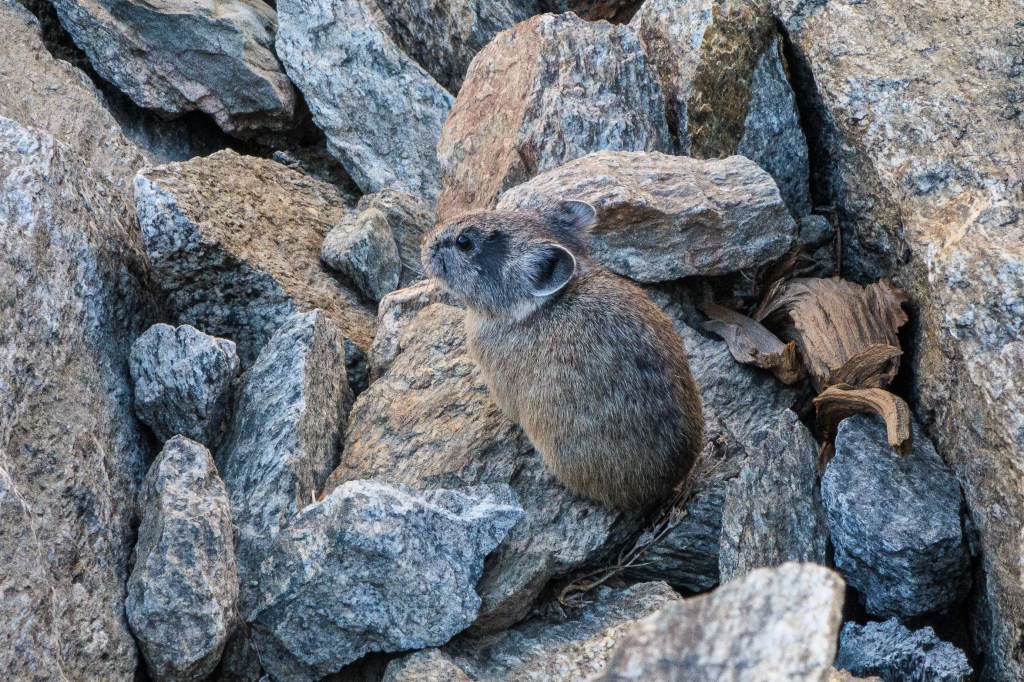
            American Pikas live in the high Sierra.

American Pika. Bishop Pass Trail.

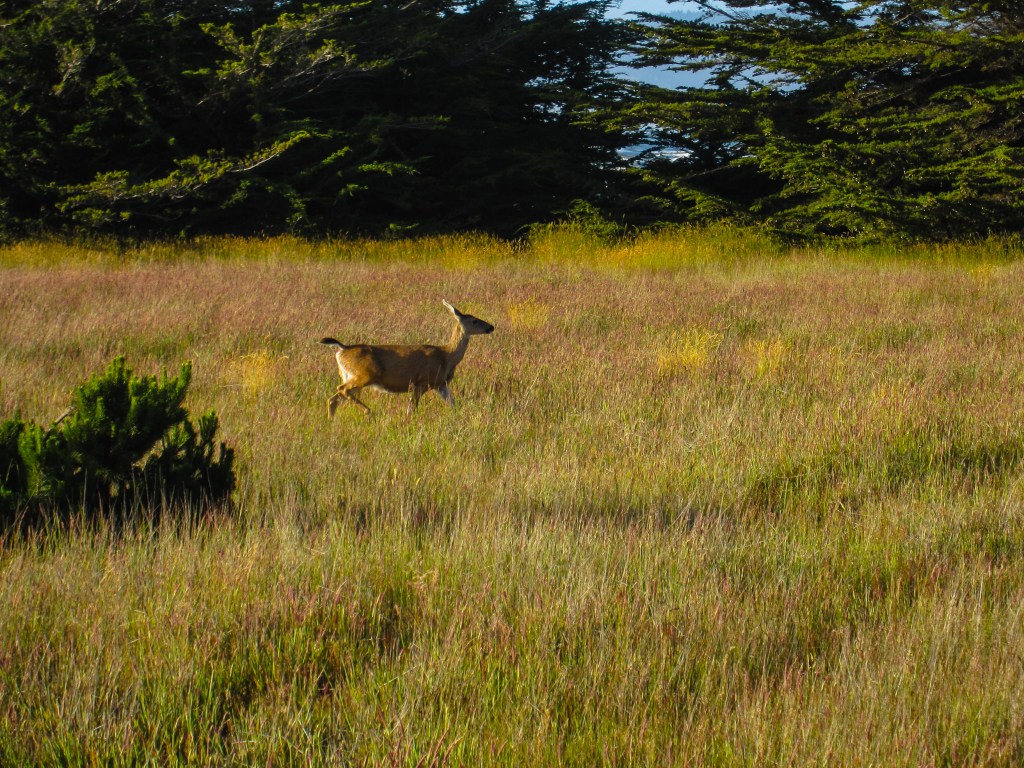
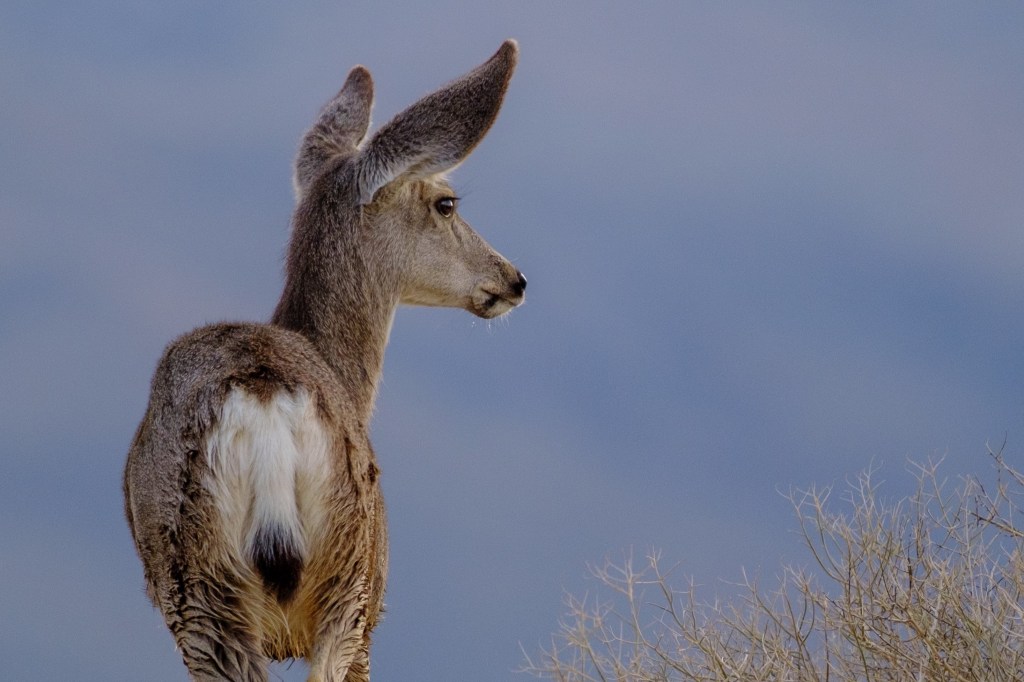
            Mule deer are in our mountains and in the fields and desert near Bishop. This one is partly wet because she just crossed the Rawson Canal. They are named for their ears.

Mule Deer. Buckley Ponds.

The Coast at Fort Bragg

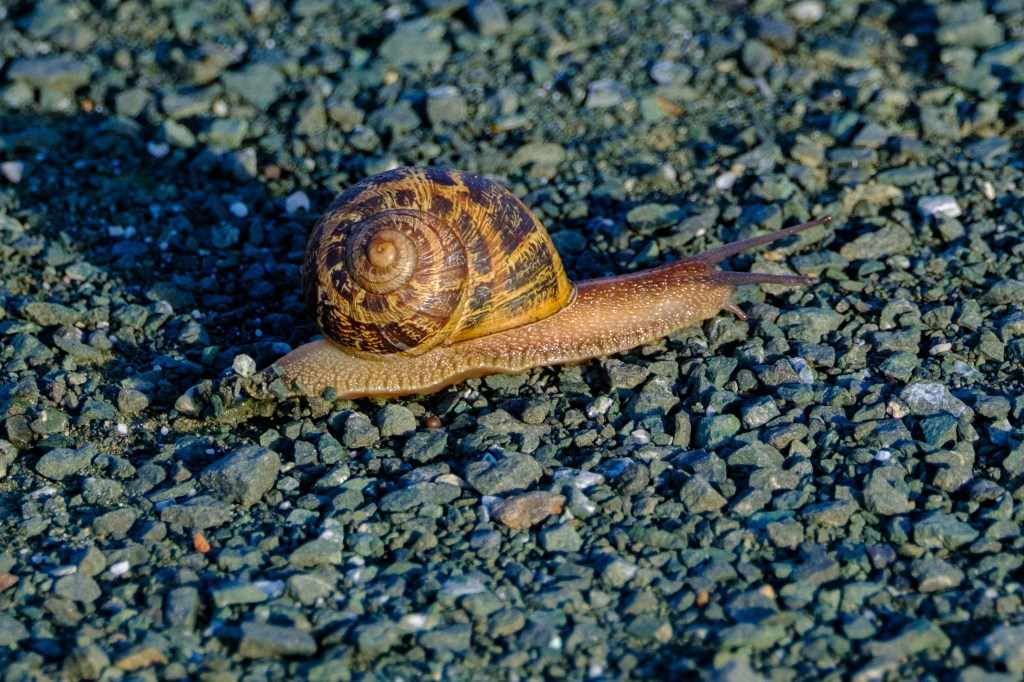
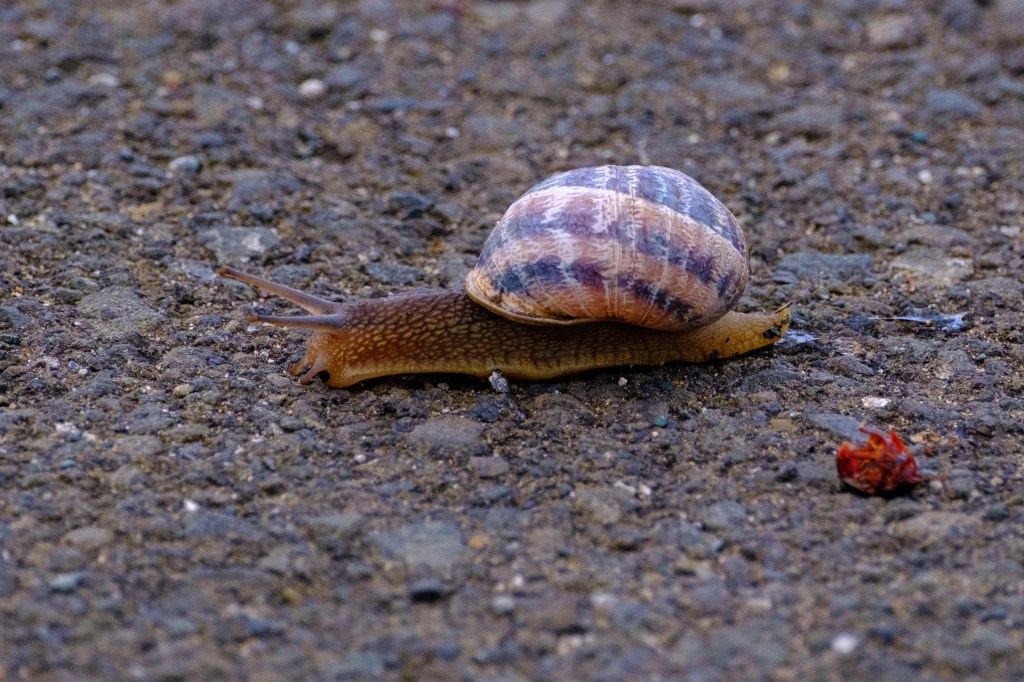
            Roberta and I visit Fort Bragg about once a year. Recently Fort Bragg built the Noyo Headlands trail on the bluffs between the ocean and a defunct lumber mill. Snails cross this trail.

Brown Garden Snail. Fort Bragg, CA

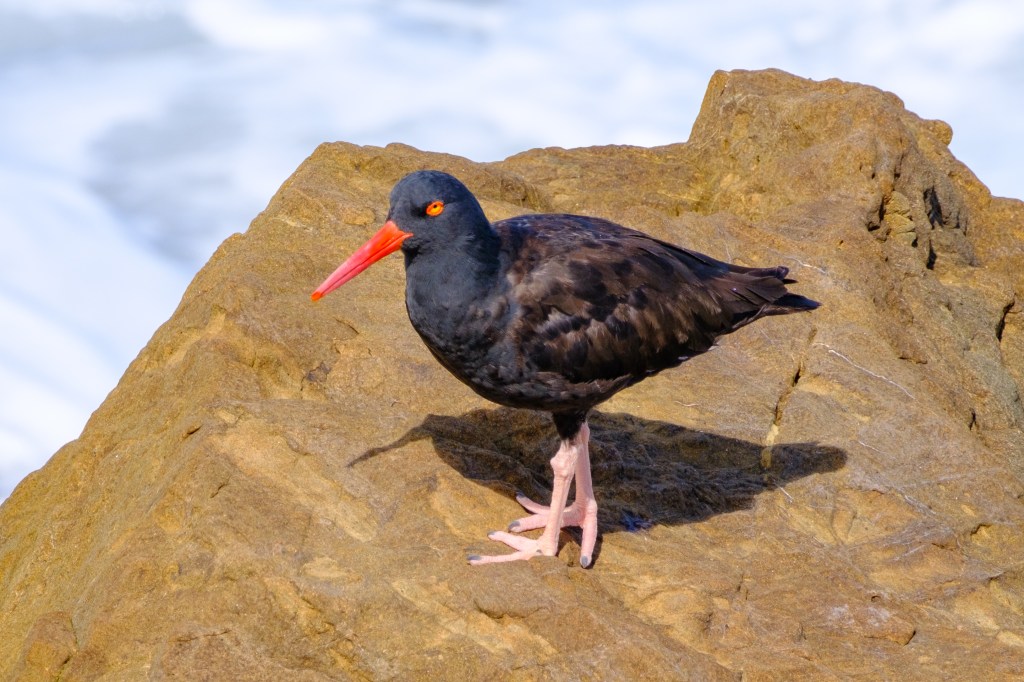
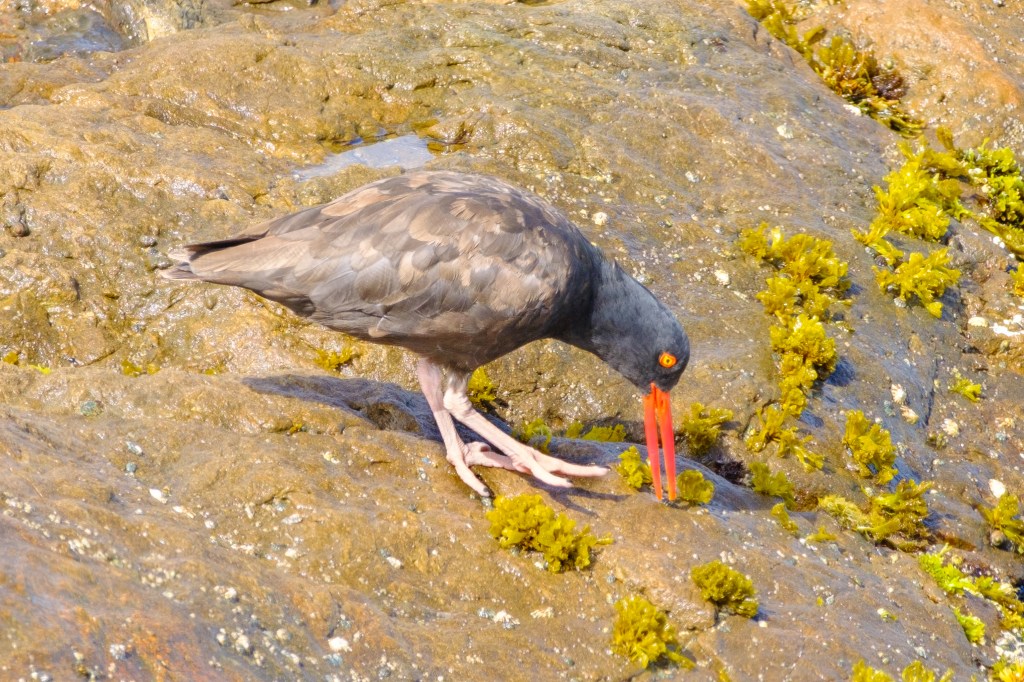
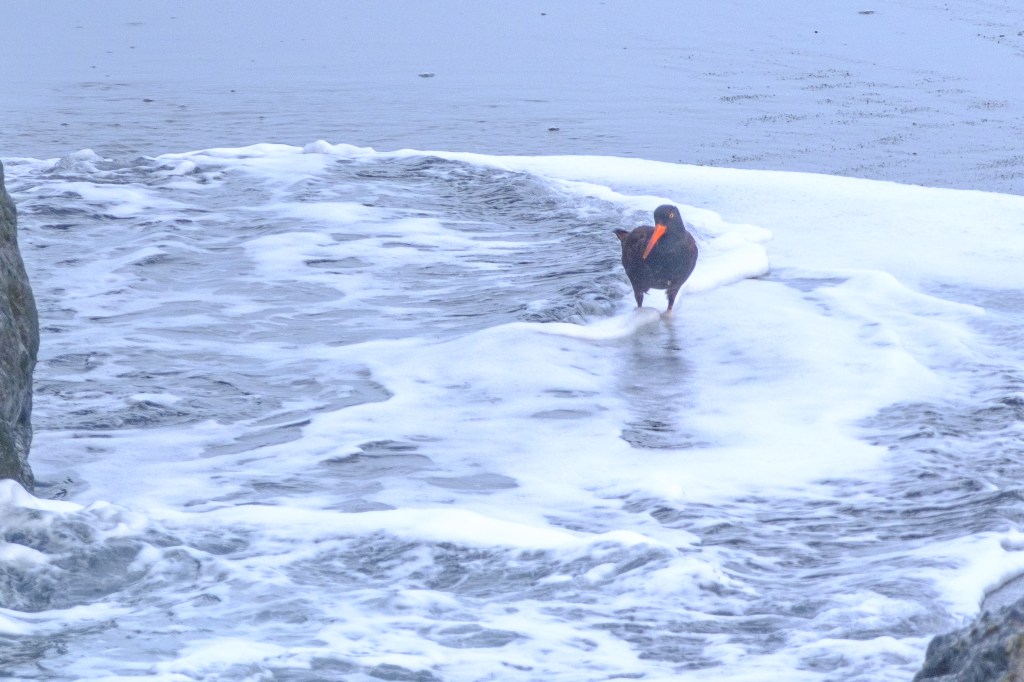
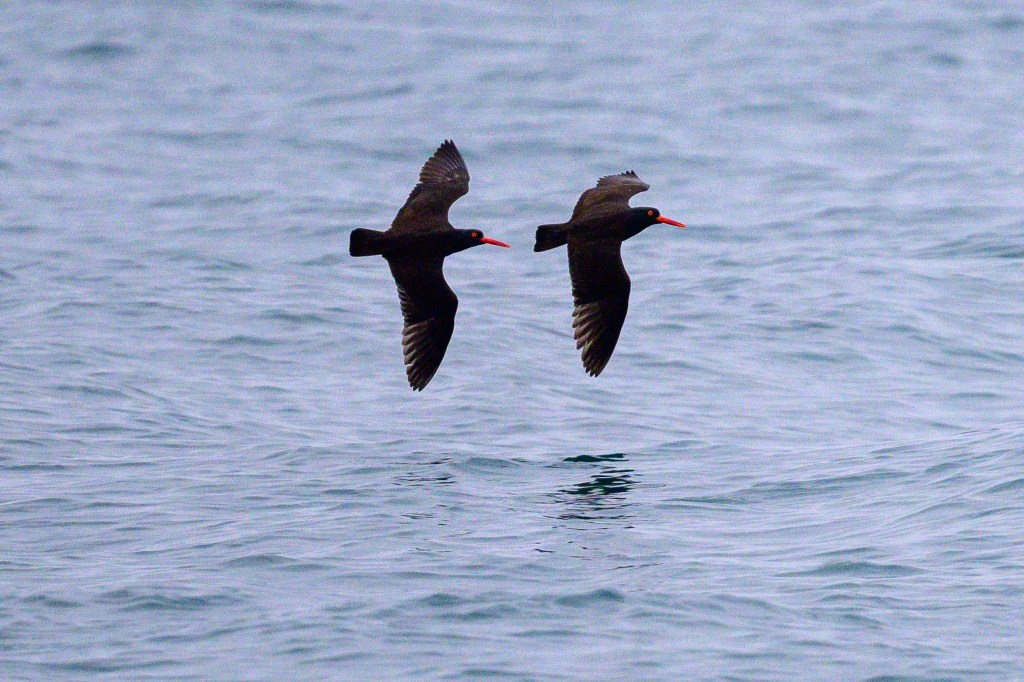
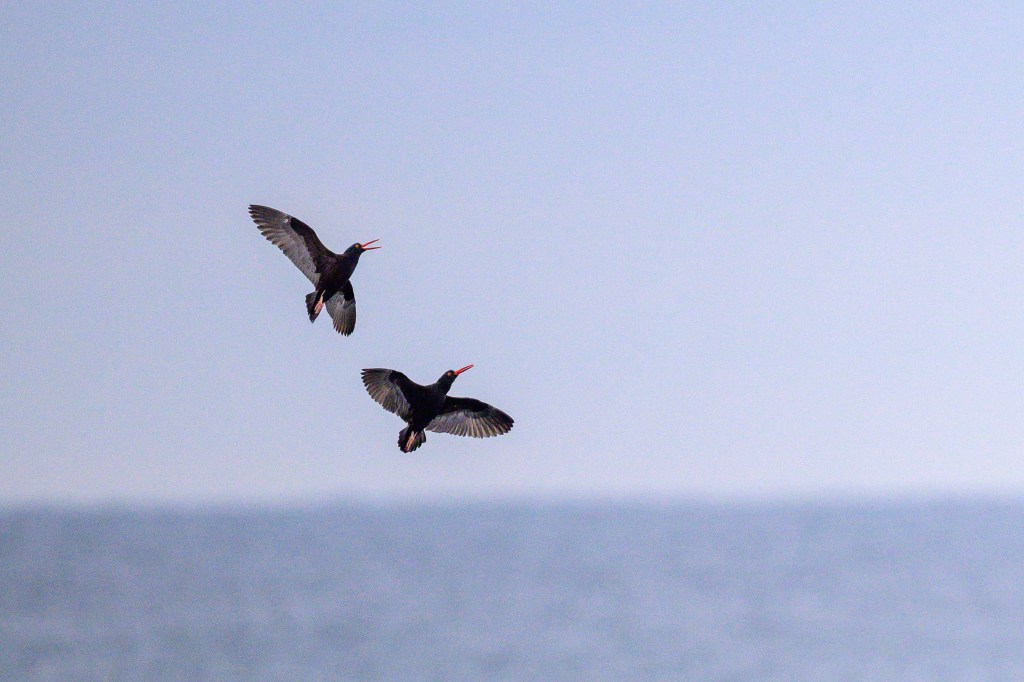
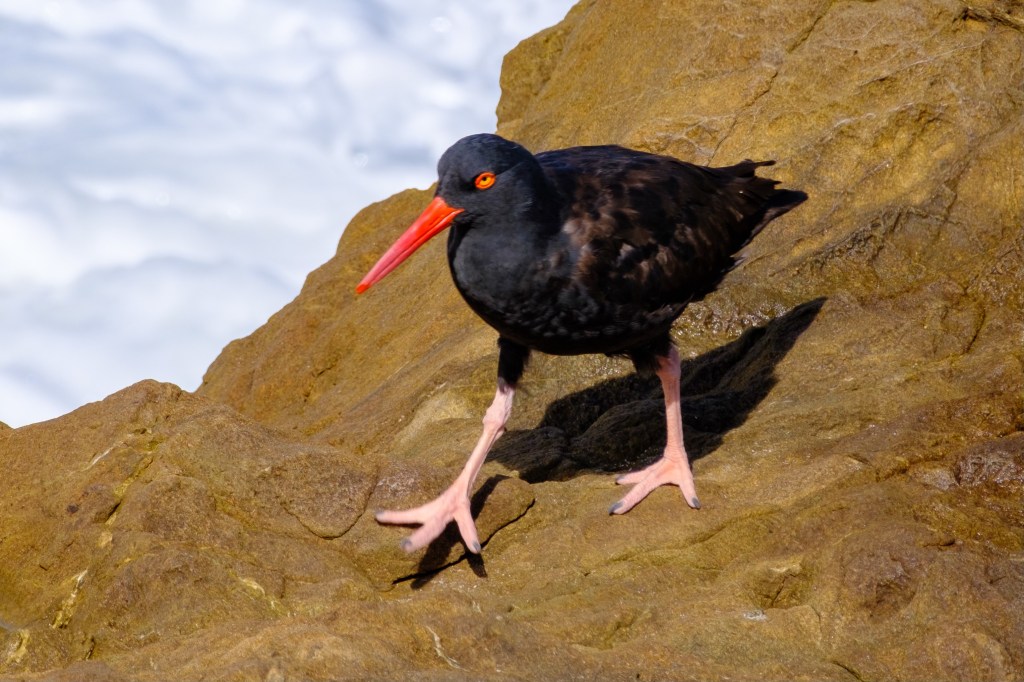
            Below a Black Oystercatcher seems to be wearing nail polish.

Black Oystercatcher. Fort Bragg, CA.

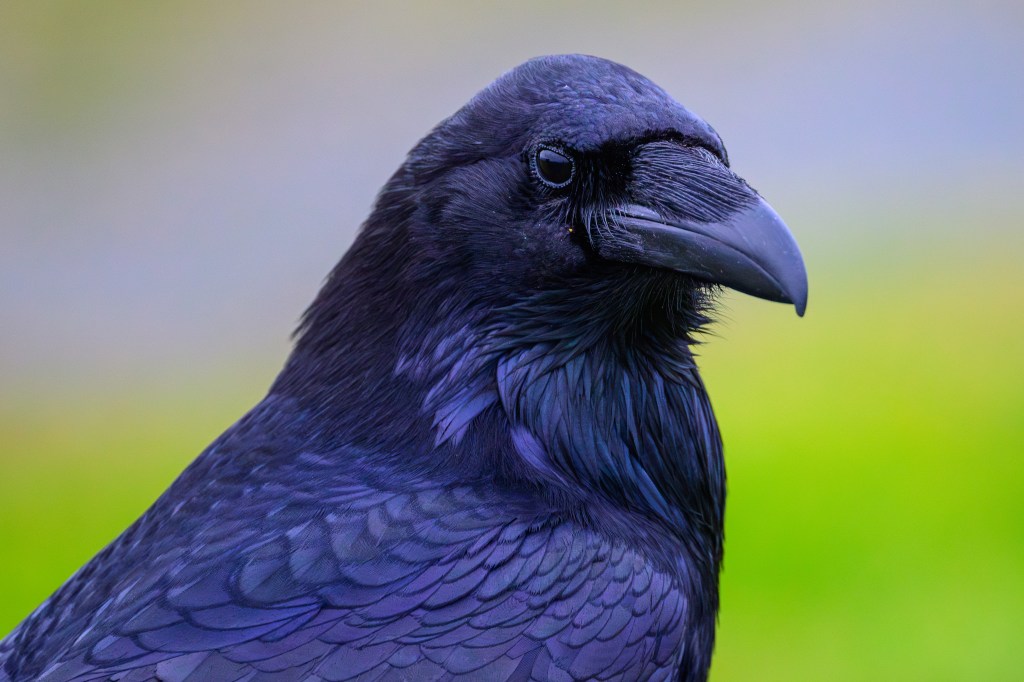
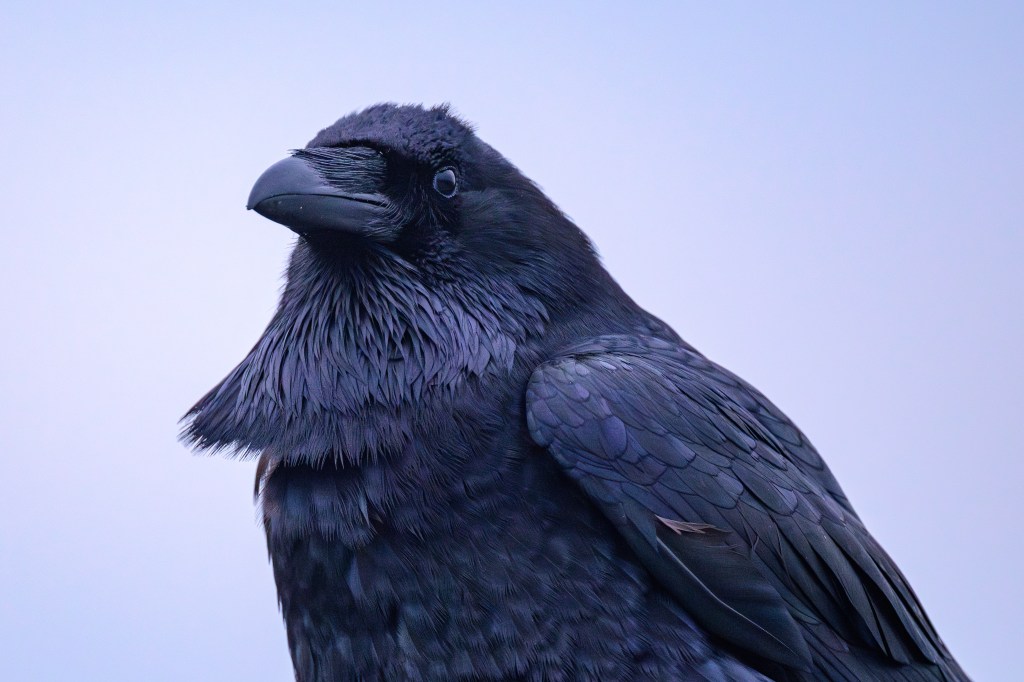
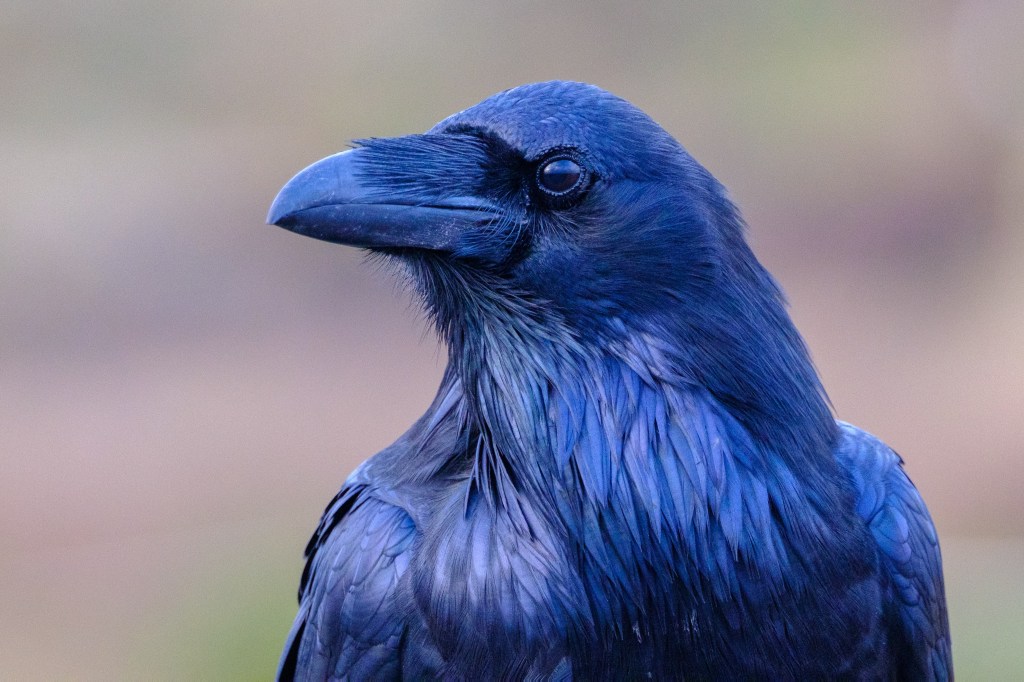
            The Common Raven is common around Bishop. But they are hard to approach. At the coast, where people sometimes feed them, they are easier to photograph.

Common Raven. Fort Bragg, CA.

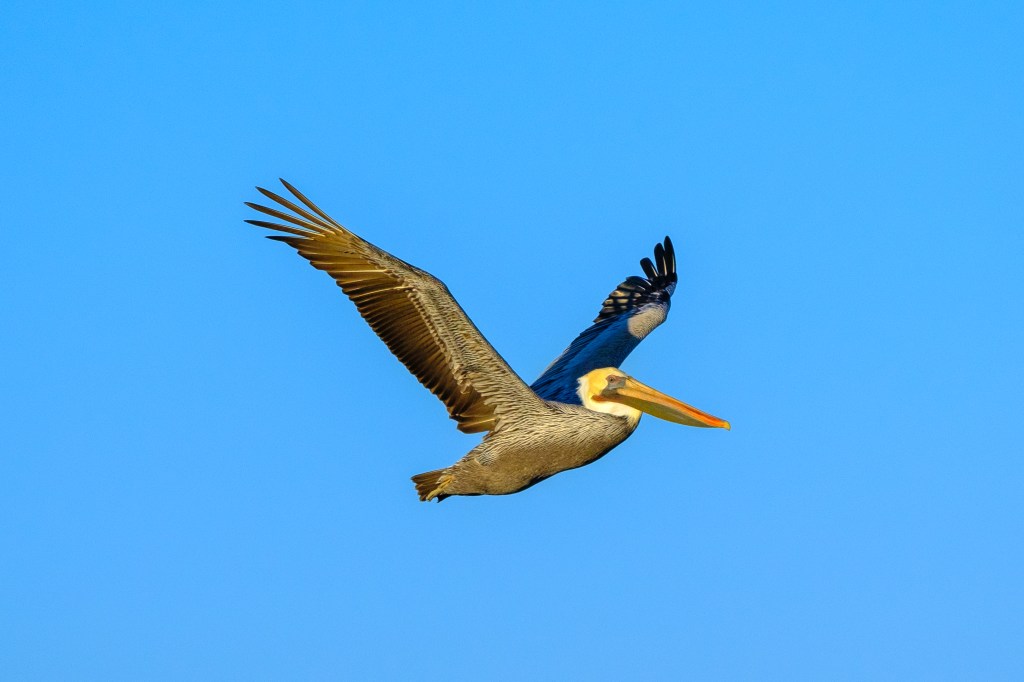
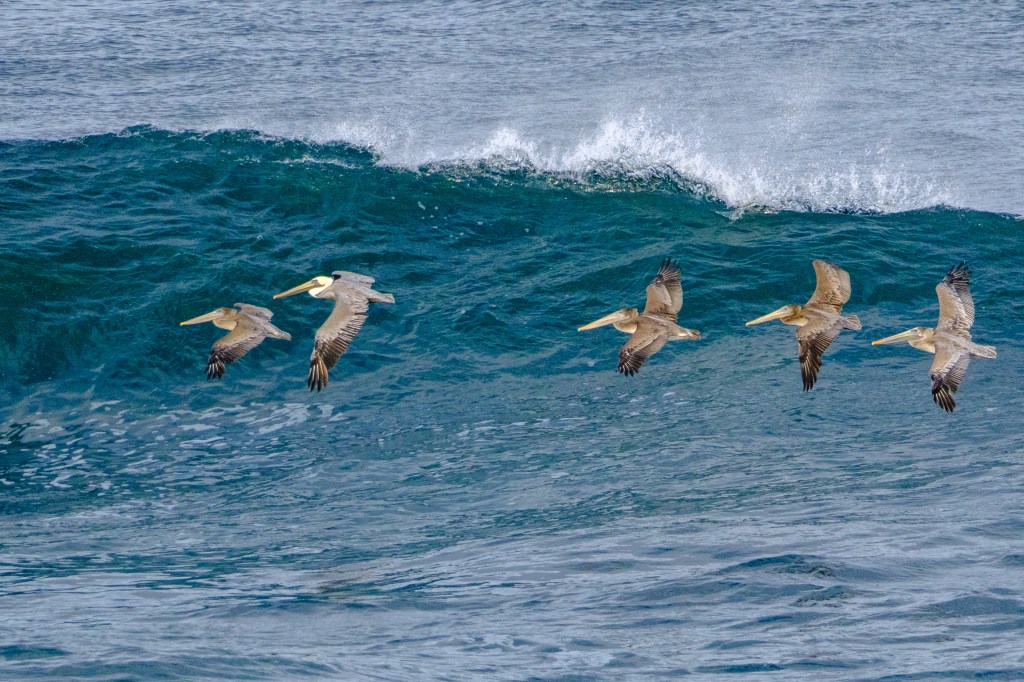
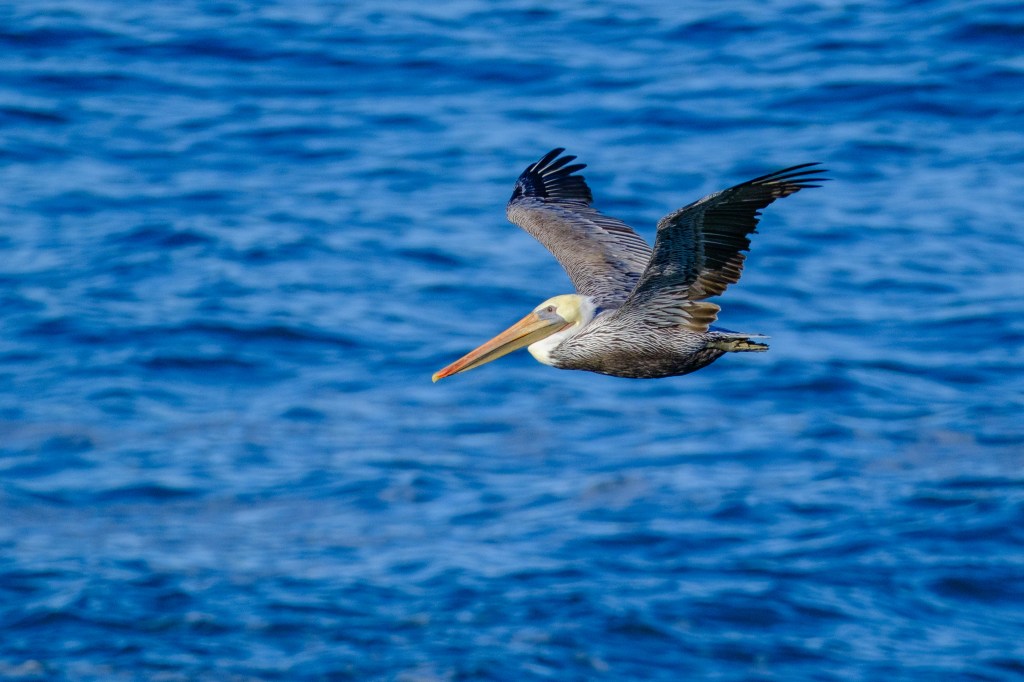
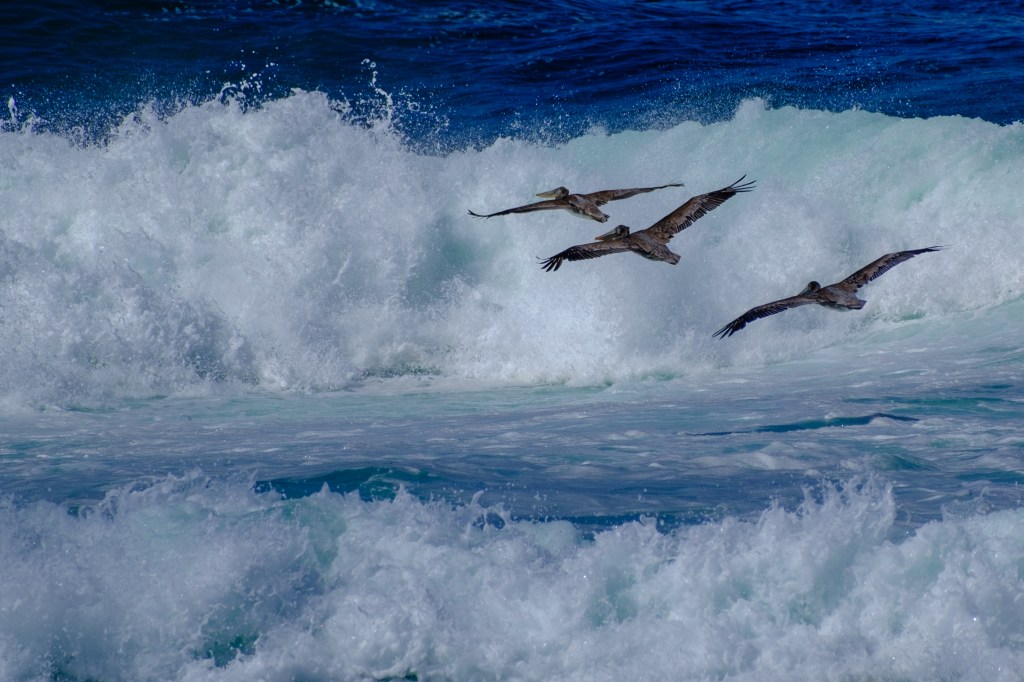
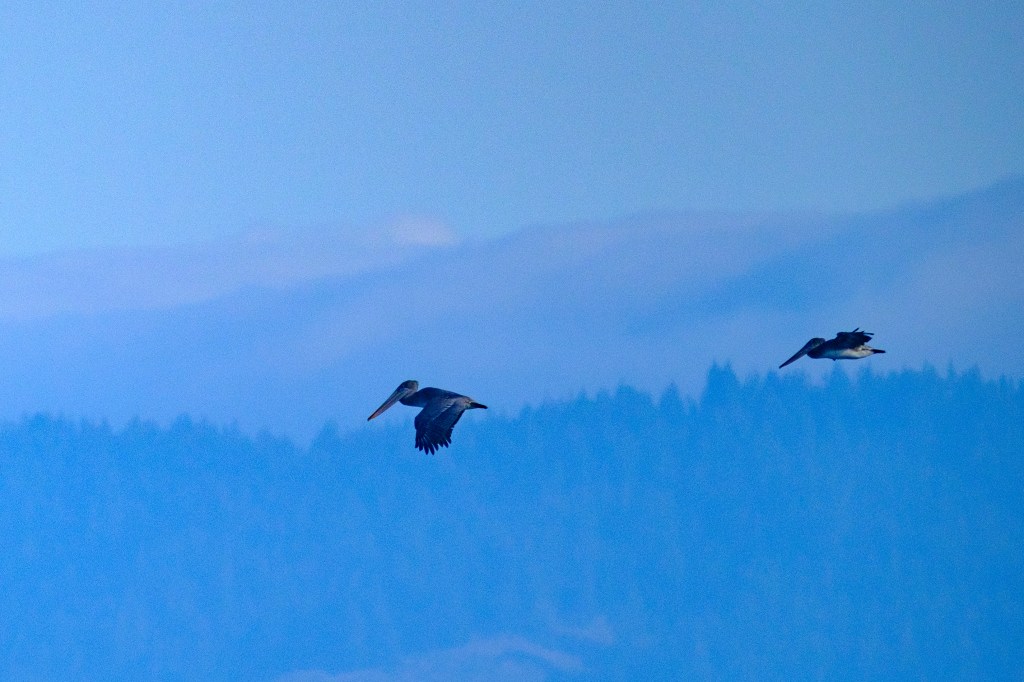
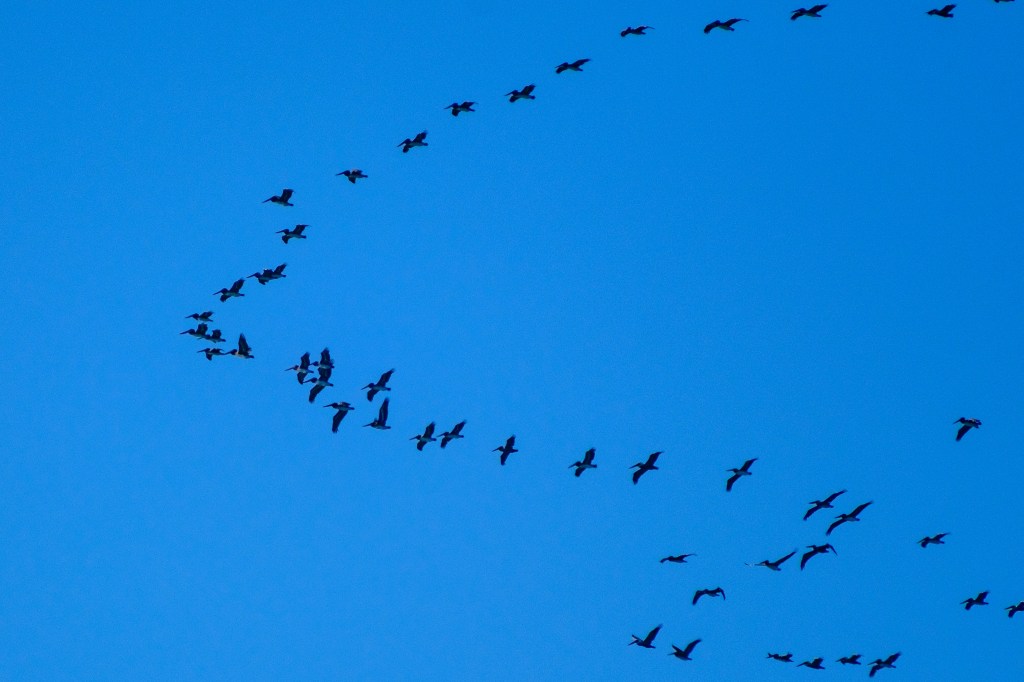
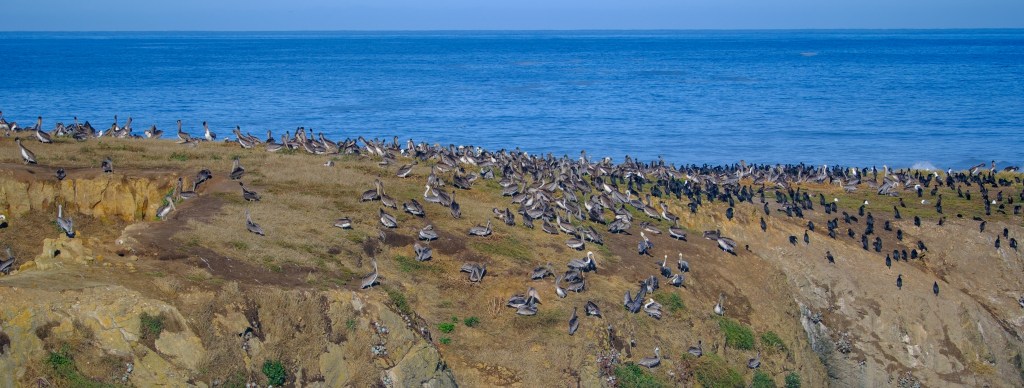
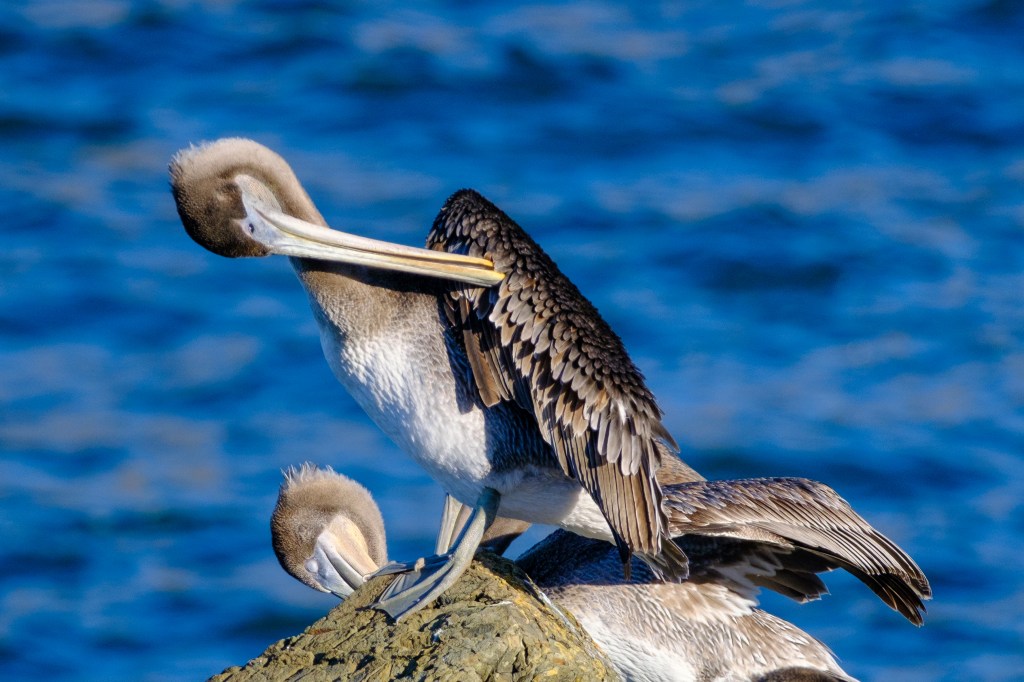
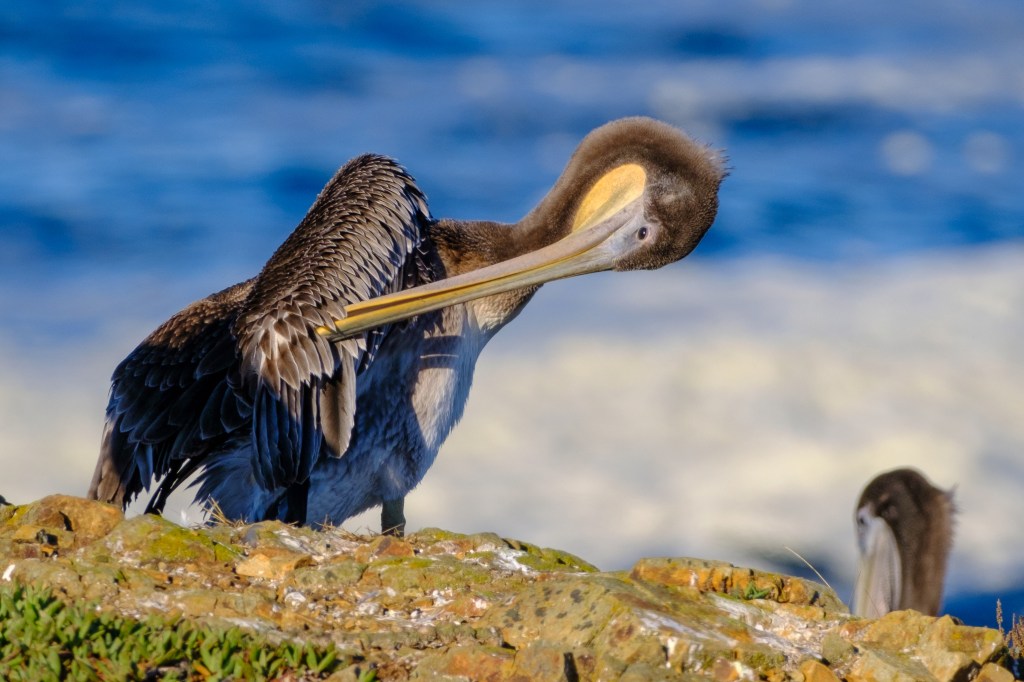
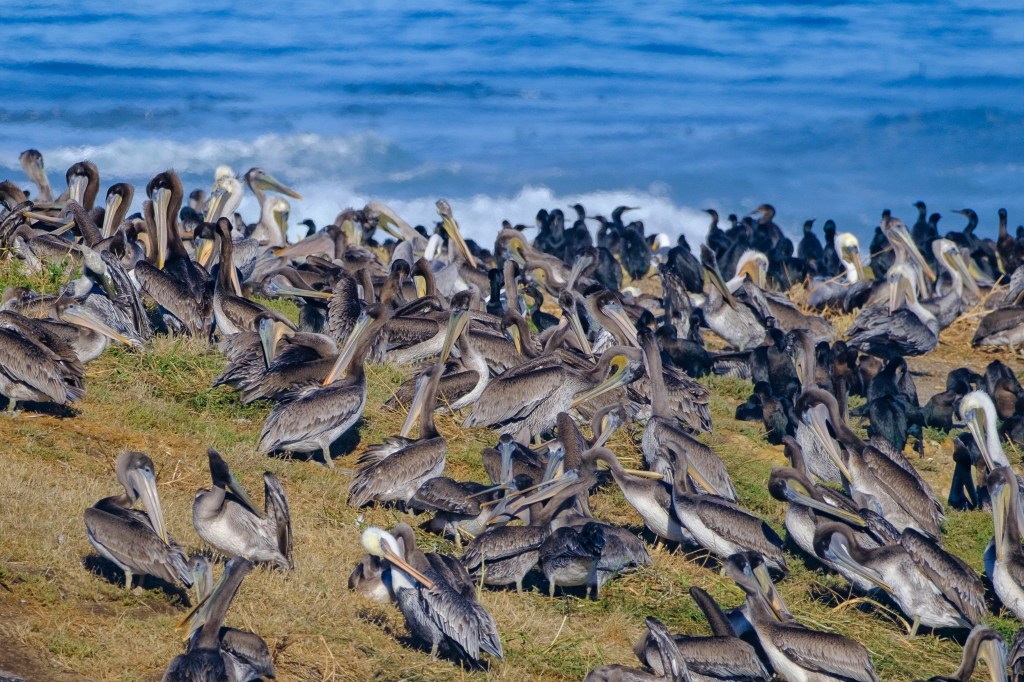
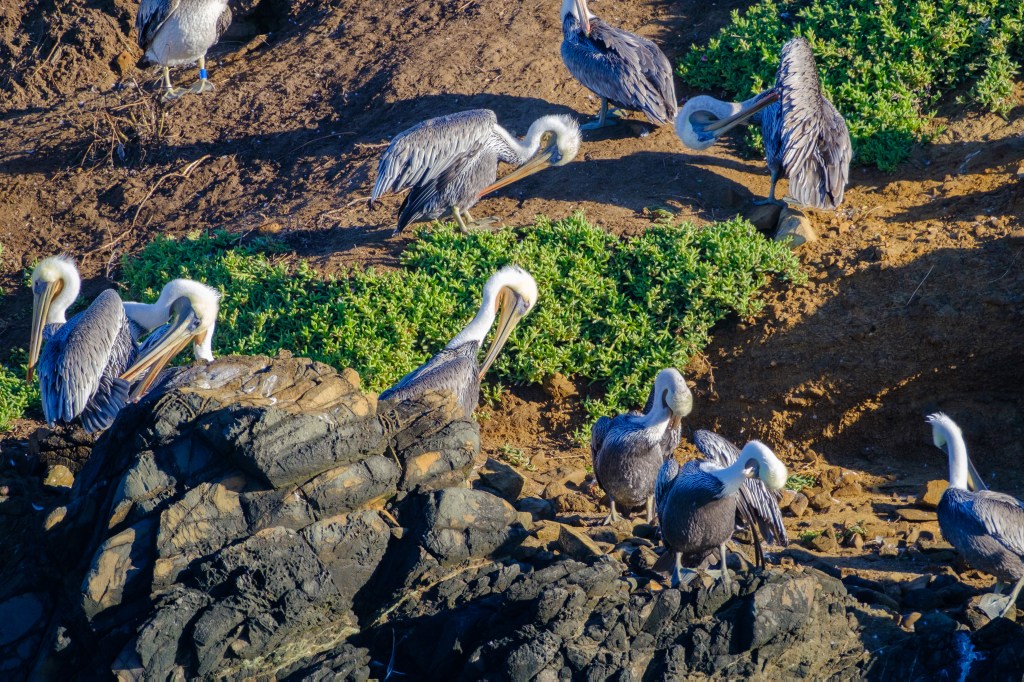
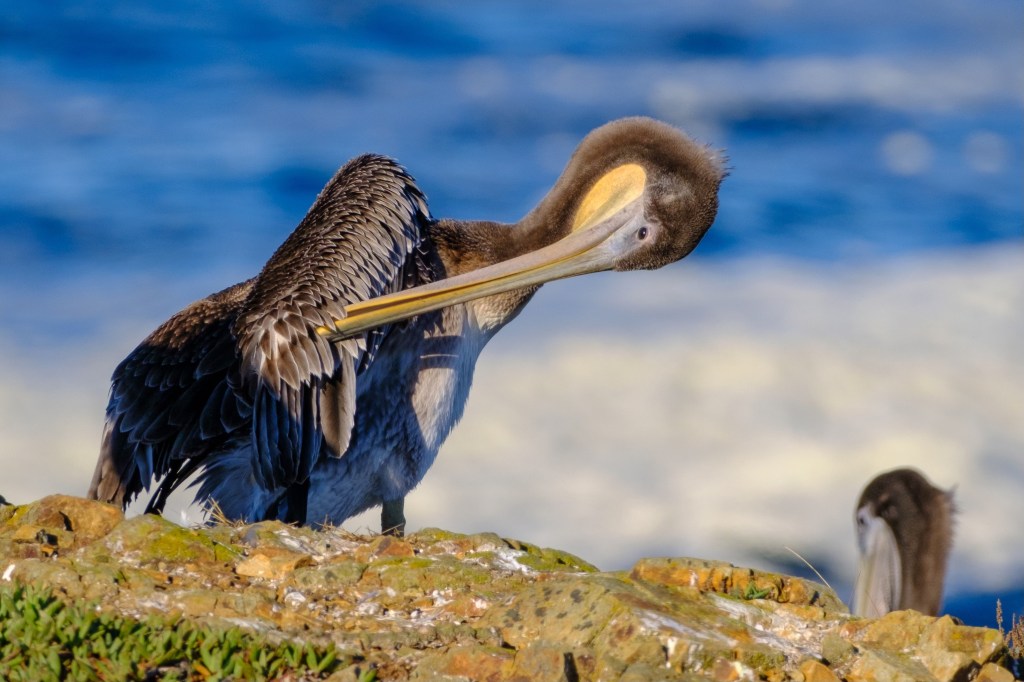
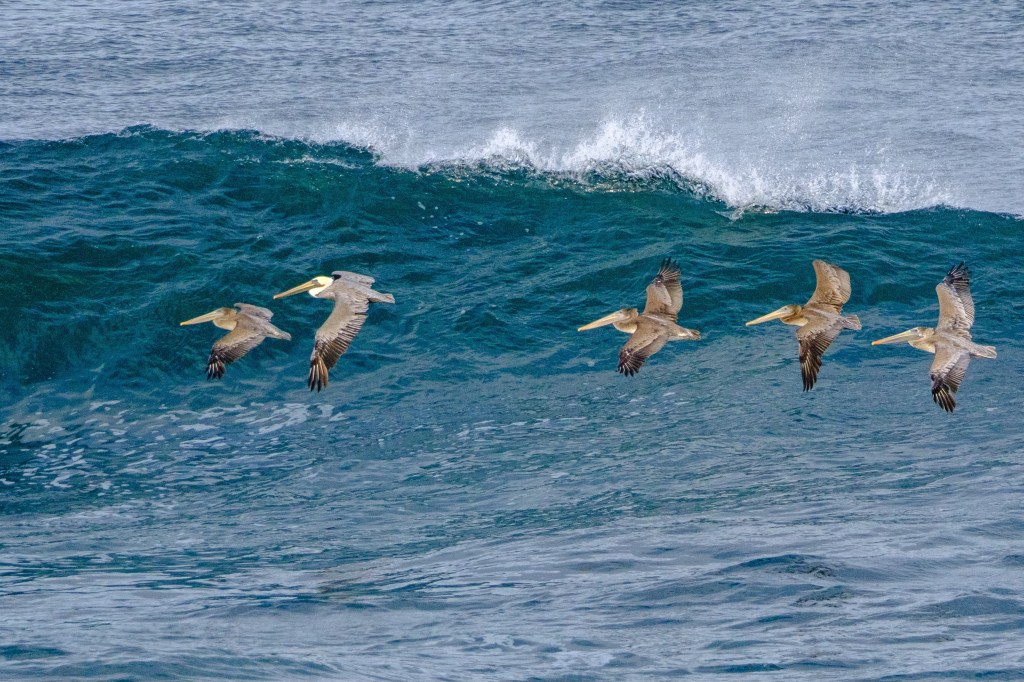
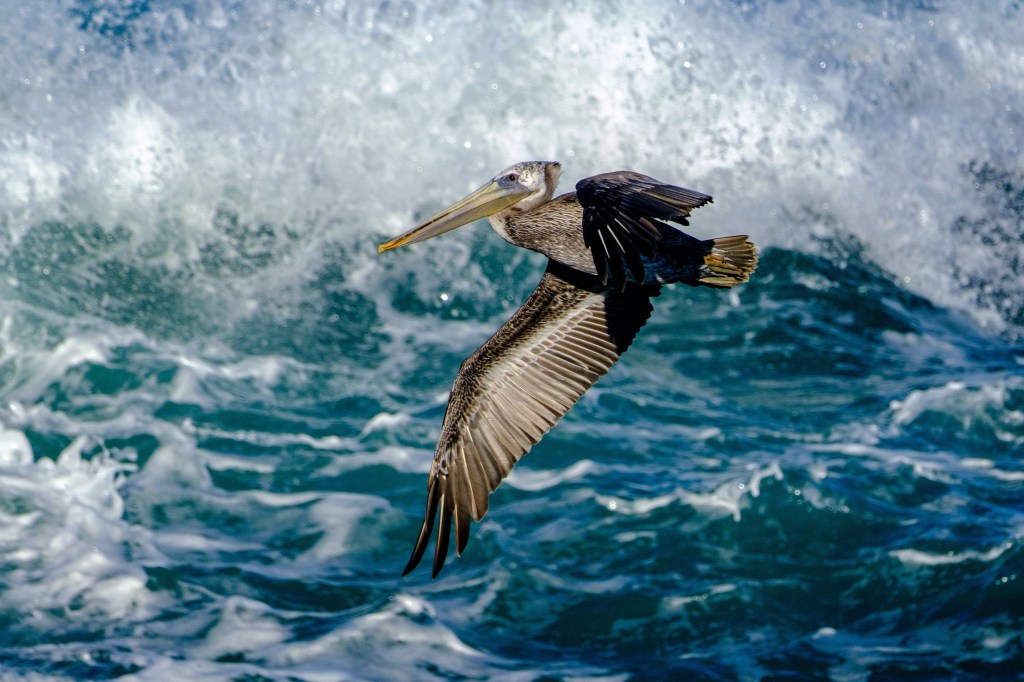
            Brown Pelicans are easy to photograph because they are big and they fly in predictable lines.

Scenes Without Birds

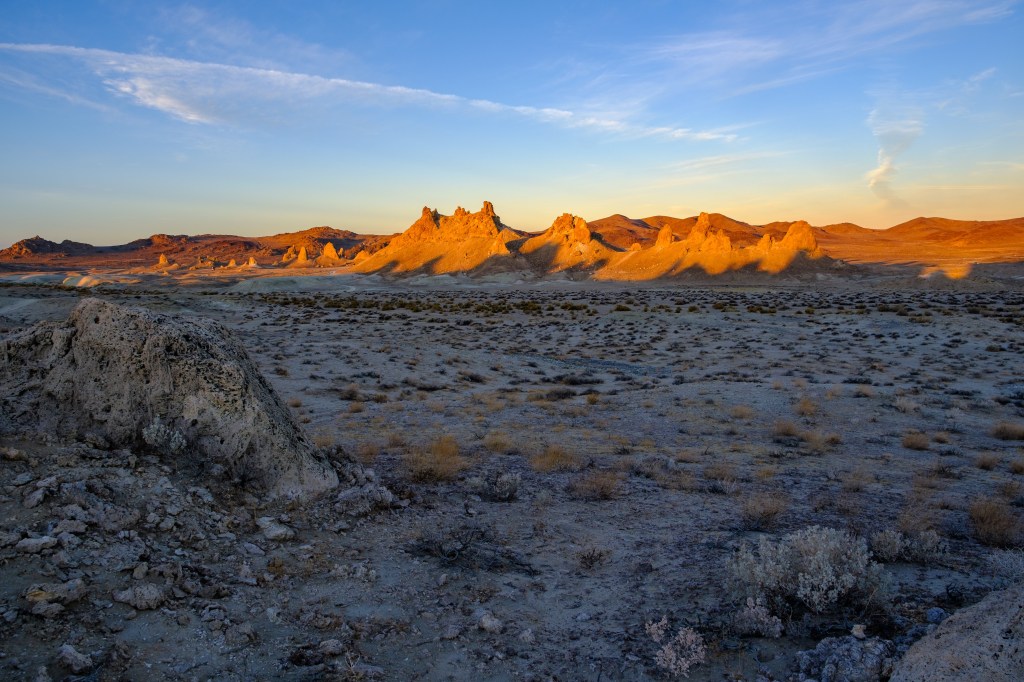
            If you drive 2.5 hours south of Bishop, you can camp amid the Trona Pinnacles. These are tufa (calcium carbonate) formations from an ancient lake. They were featured in a Star Trek episode.

Trona Pinnacles. Trona, CA.

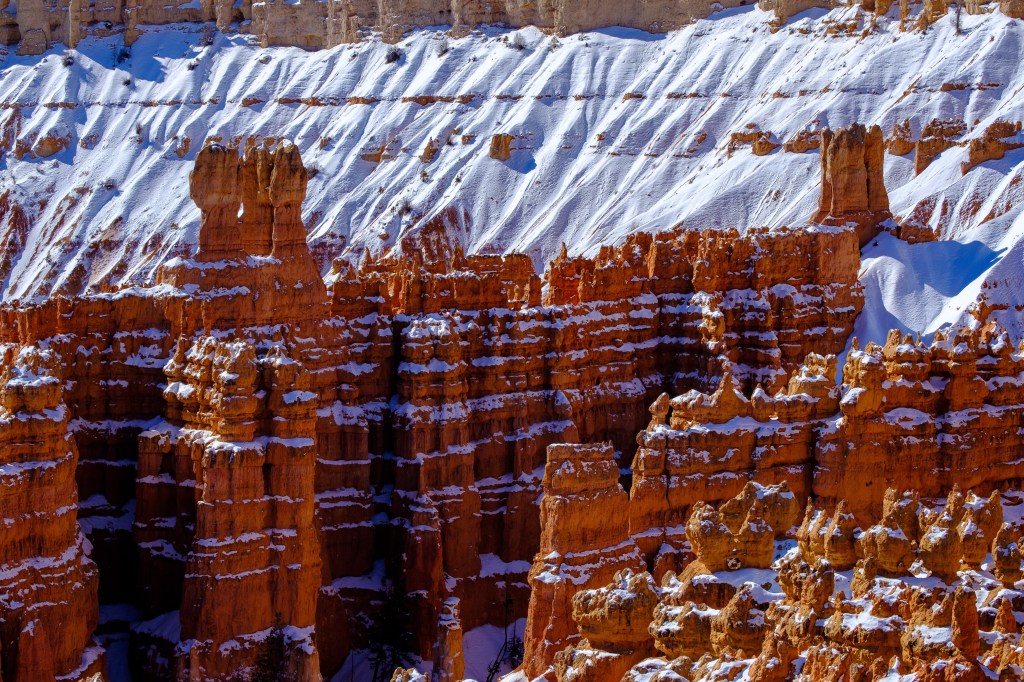
            Bryce Canyon National Park in February.

Bryce Canyon National Park, Utah.

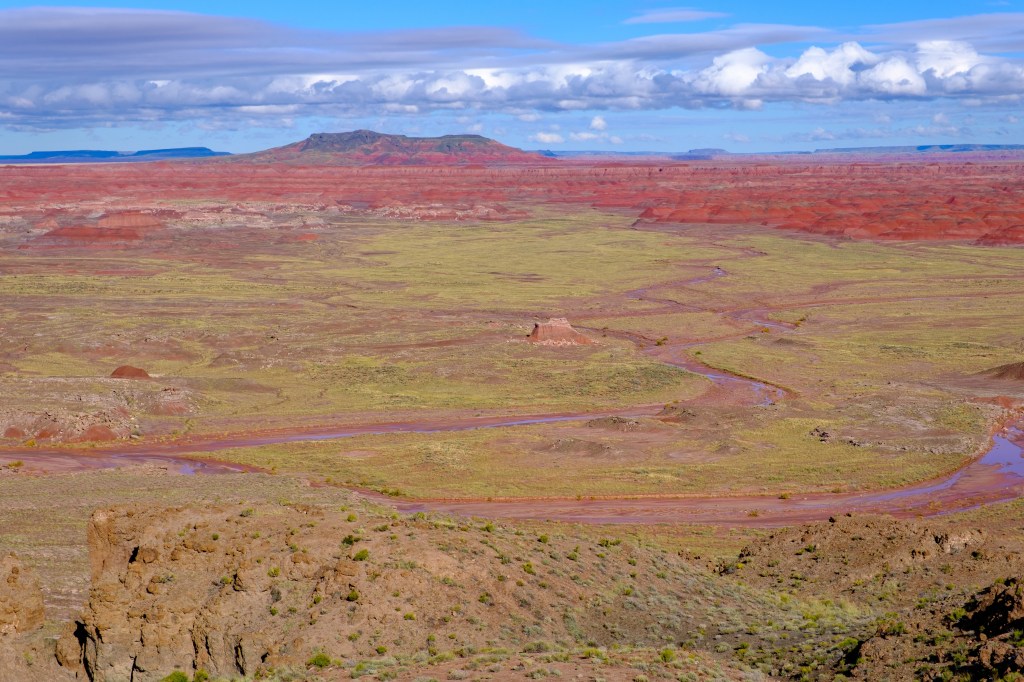
            The Painted Desert seen from Petrified Forest National Park in Arizona. Creek in foreground is Lithodendron Wash. Pilot Rock is the distant butte against the sky.

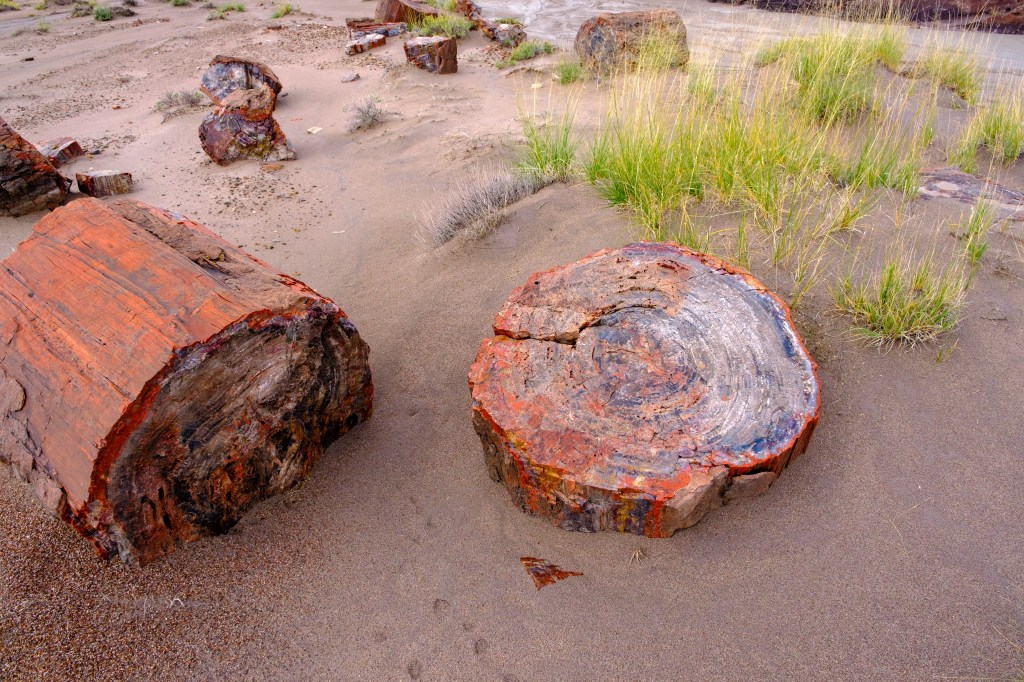
Petrified trees litter Petrified Forest National Park.

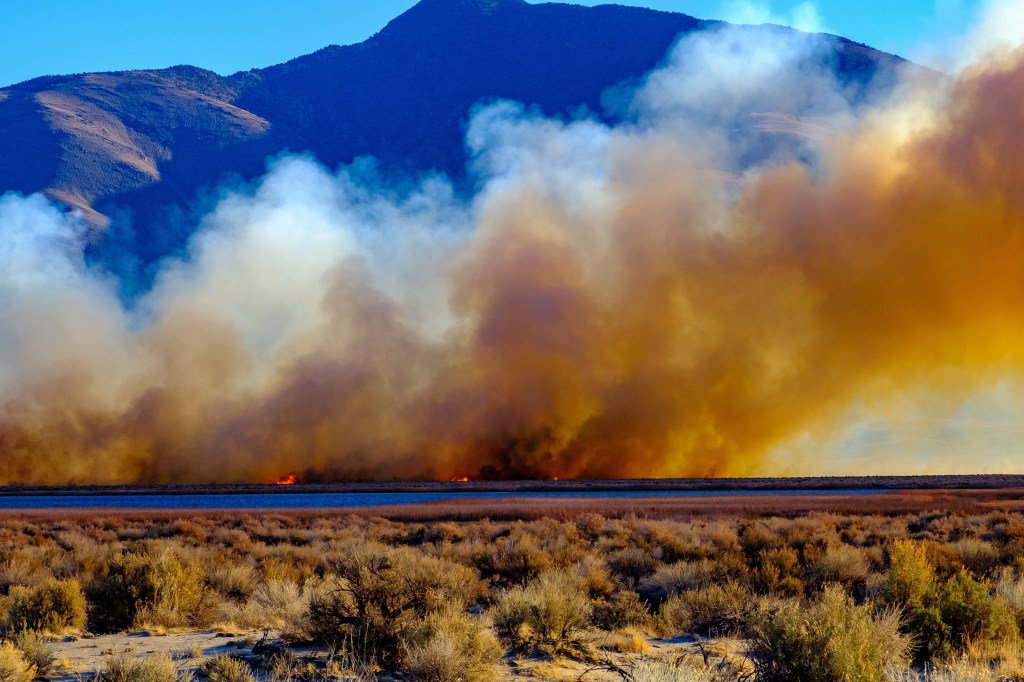
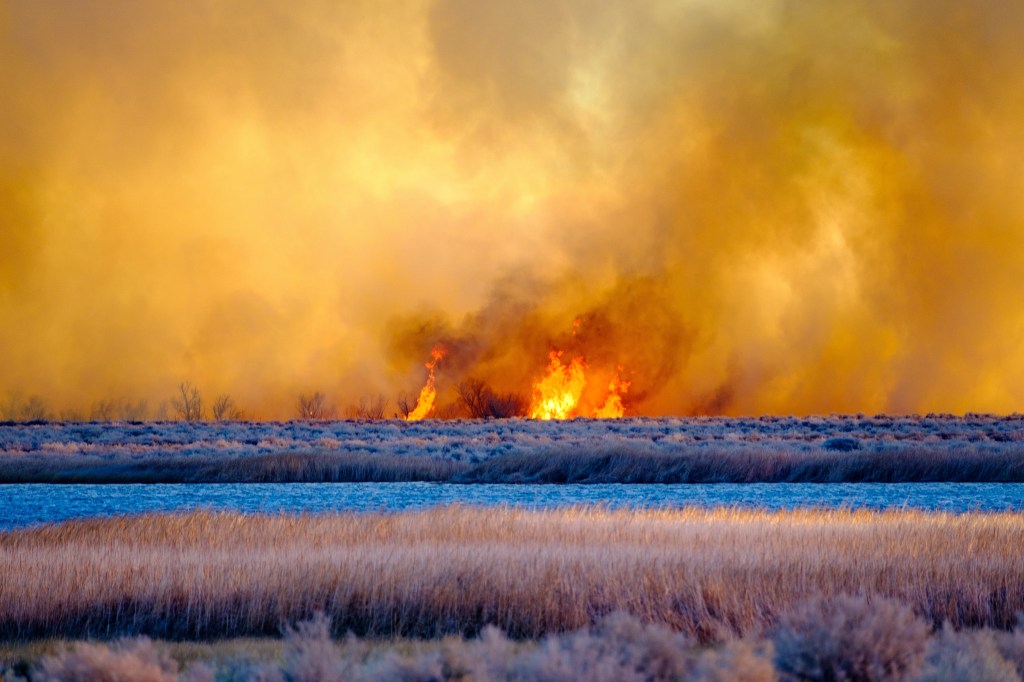
            In February, the Airport Fire started near Bishop’s airport. It jumped to the cottonwoods along the Owens River. High winds pushed the flames south along the stream for over 15 miles, threatening Big Pine. I took photos looking across Klondike Lake.

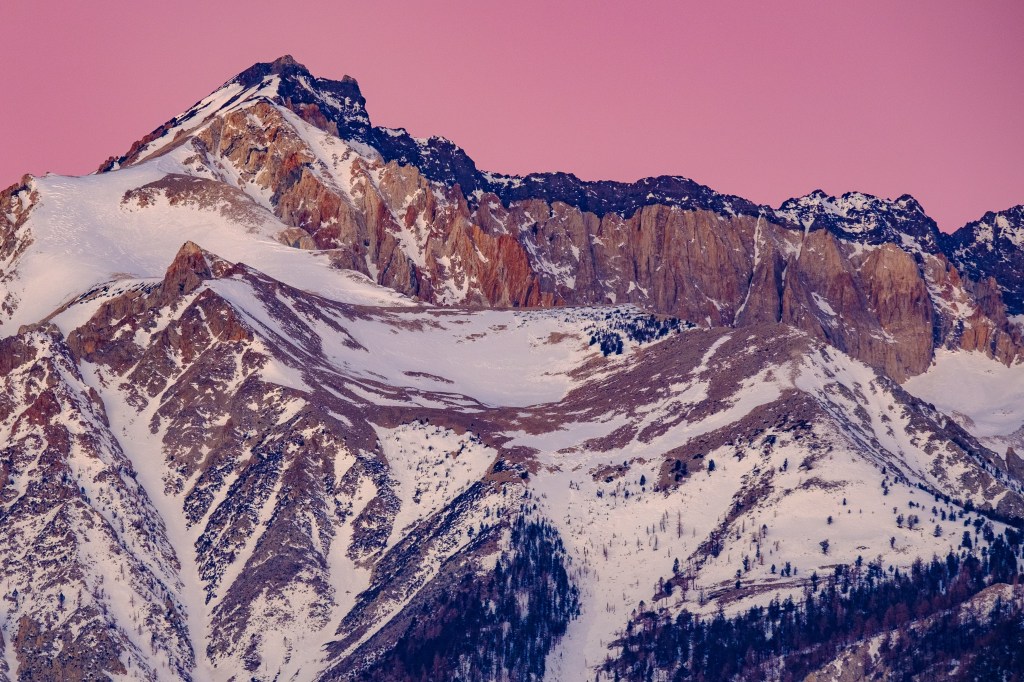
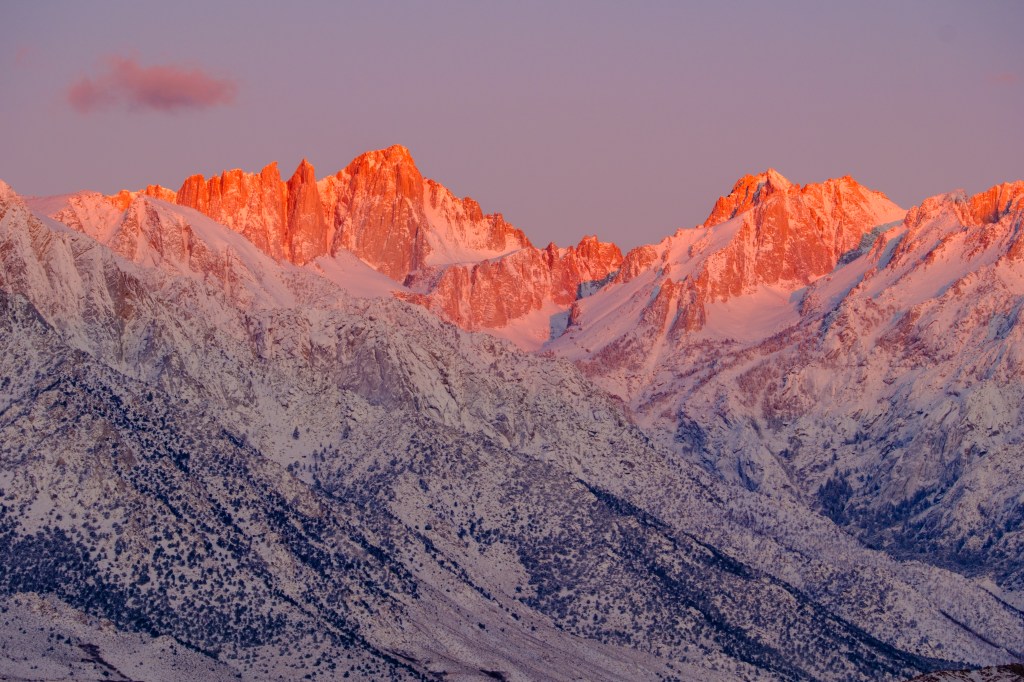
            Roberta and I drove east of 395 on Aberdeen Road to photograph the sunrise on the Sierra. The first photo shows Cardinal Mountain in twilight at 6:49am. Six minutes later the sun cleared the Inyo Mountains behind me and the same scene was lit by red alpenglow. Both photos show a dark band of rock on the top of the ridge. This is a roof pendant. The dark rock on top is older volcanic or sedimentary rock. Molten granite rose up under this dark layer and cooled. The dark older rock eroded away across most of the Sierra. But in some places, such as here, the old rocks remained as a layer on top of the younger granite.

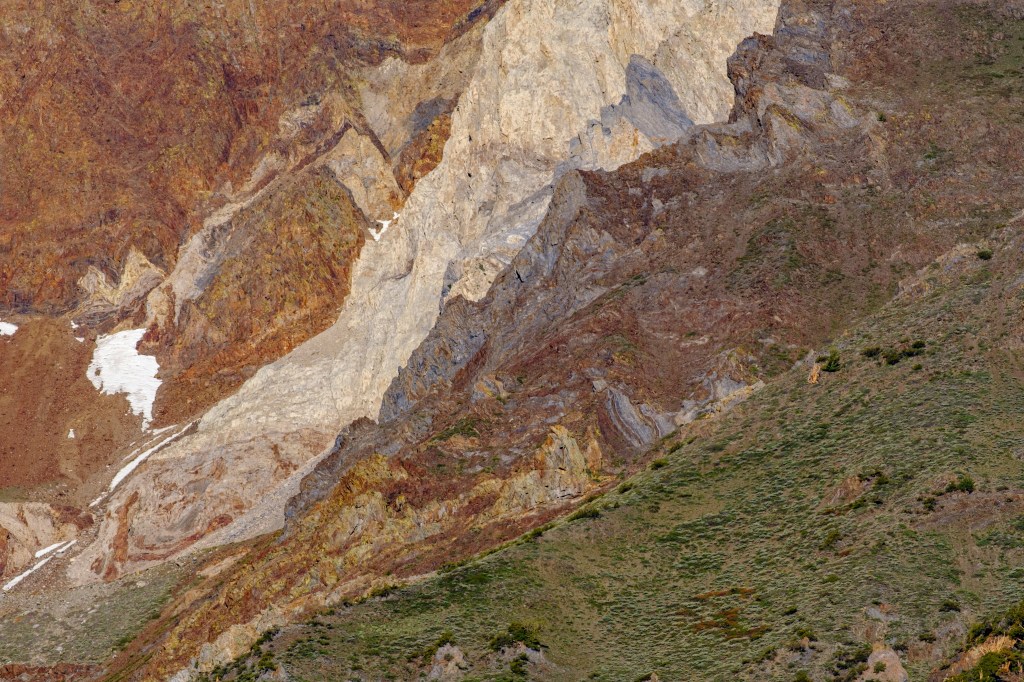
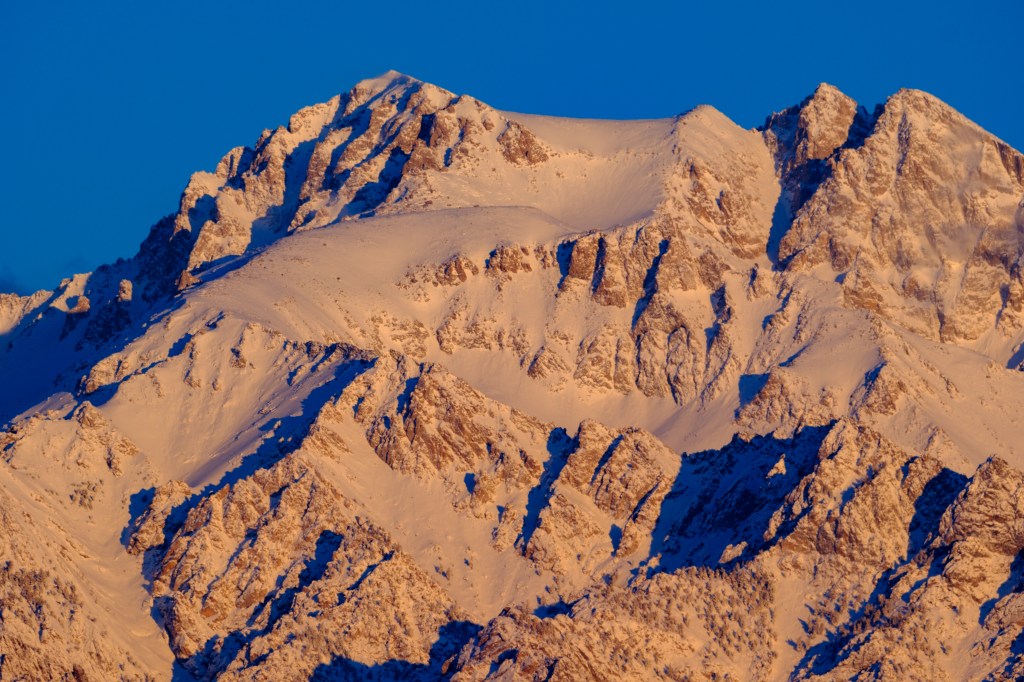
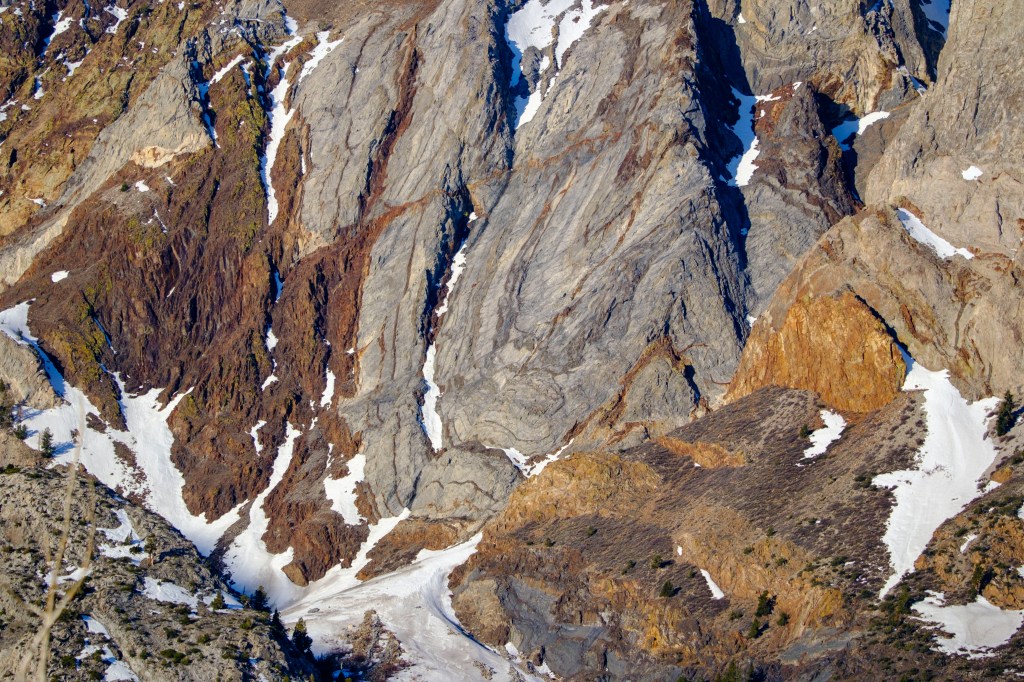
McGee Creek (and nearby Convict Creek) both have colorful twisted layers of sedimentary rock. The telephoto shot below shows ridges of different rock types that cover the north wall of the canyon.

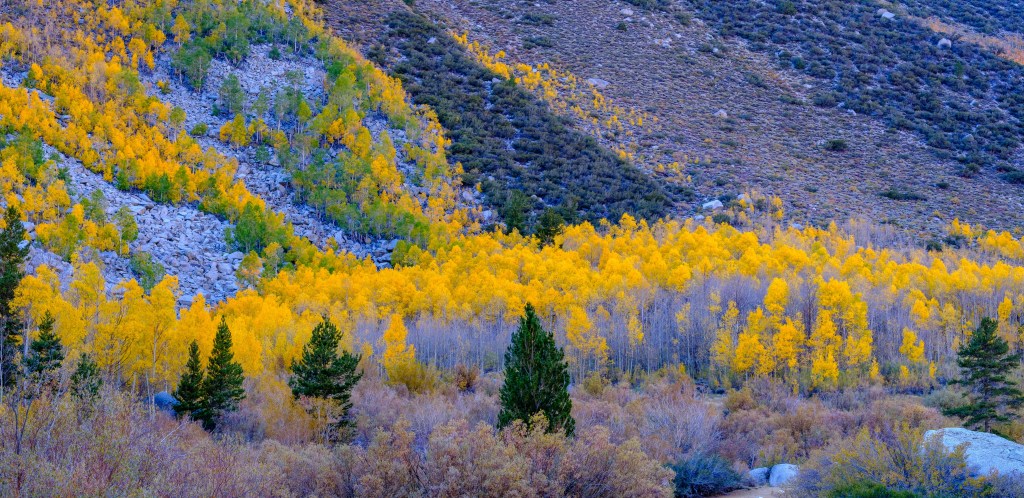
            In October, the aspens change colors. This panorama shot was taken up the canyon from the Bishop Creek Lodge.

Great Horned Owl – the silent hunter

            In their book about Sierra Nevada birds, Beedy and Pandolfino wrote: “Eagles may get all the press, but Great Horned Owls are really the top predator of the North American bird world. They feed primarily on rodents and rabbits but will kill almost any animal they can carry, including birds, snakes, fish, and even animals other predators avoid completely, like porcupines and skunks. They can fly away with prey as much as three times their own weight and are known to kill house cats, small dogs, geese, and Great Blue Herons on occasion.”

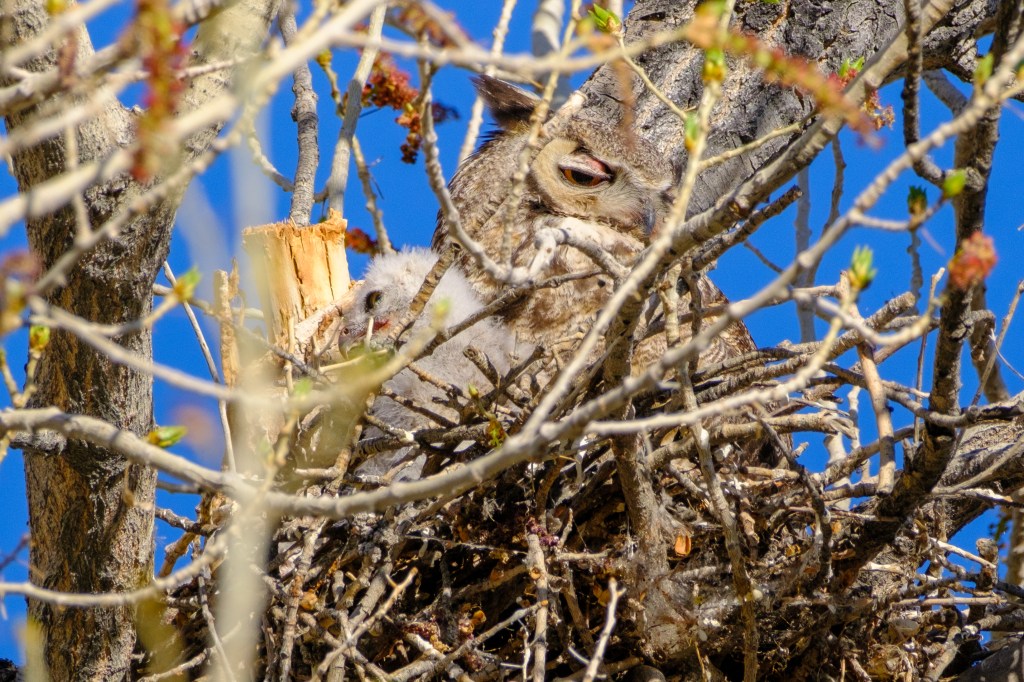
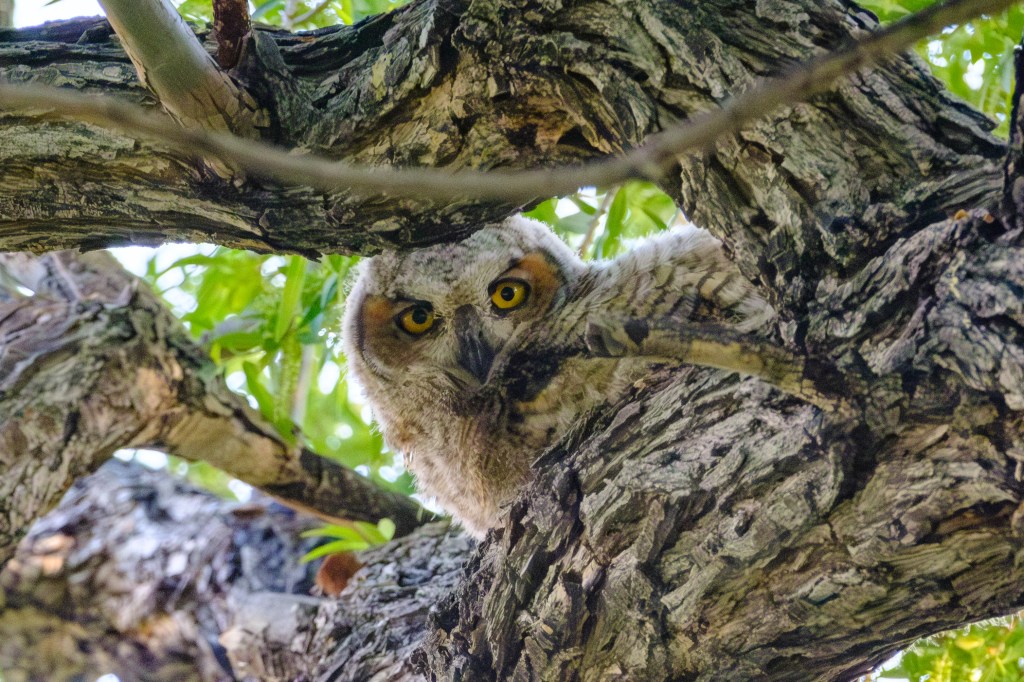
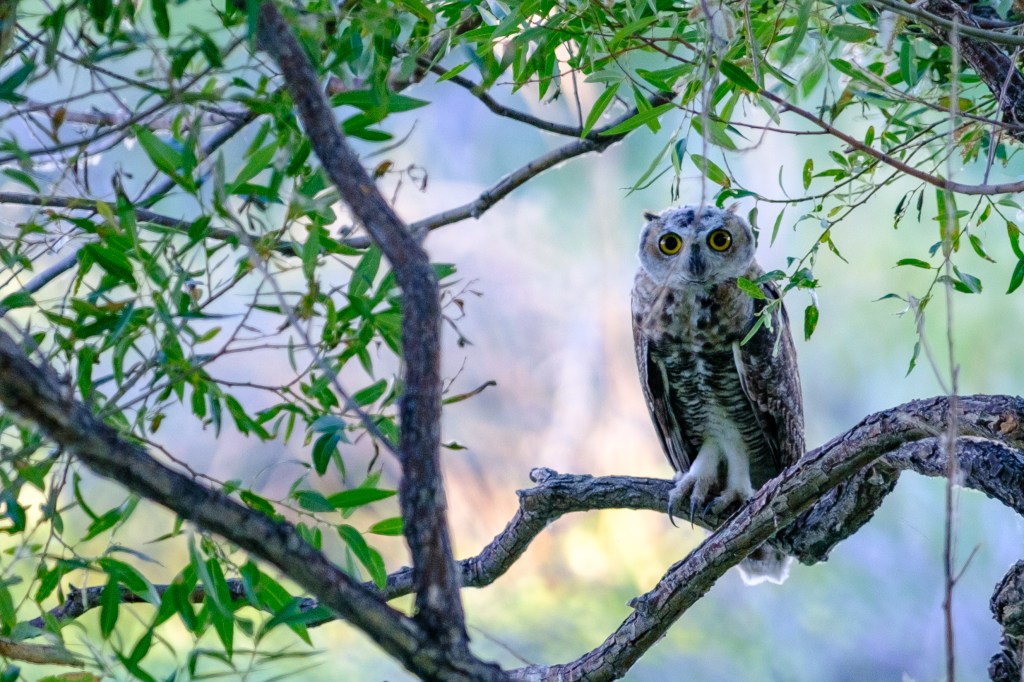
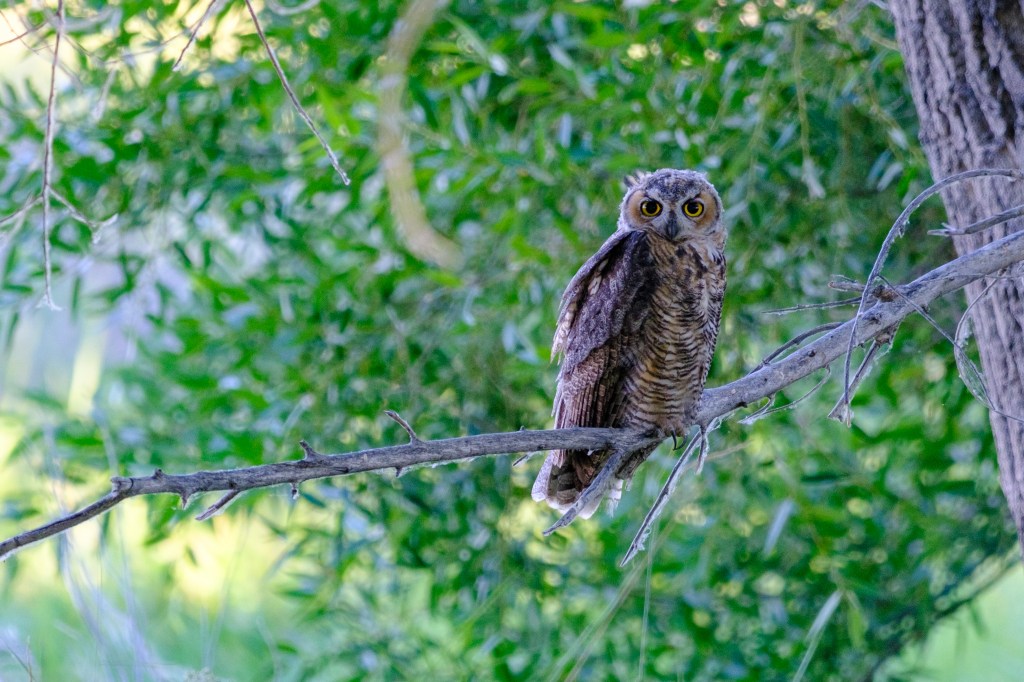
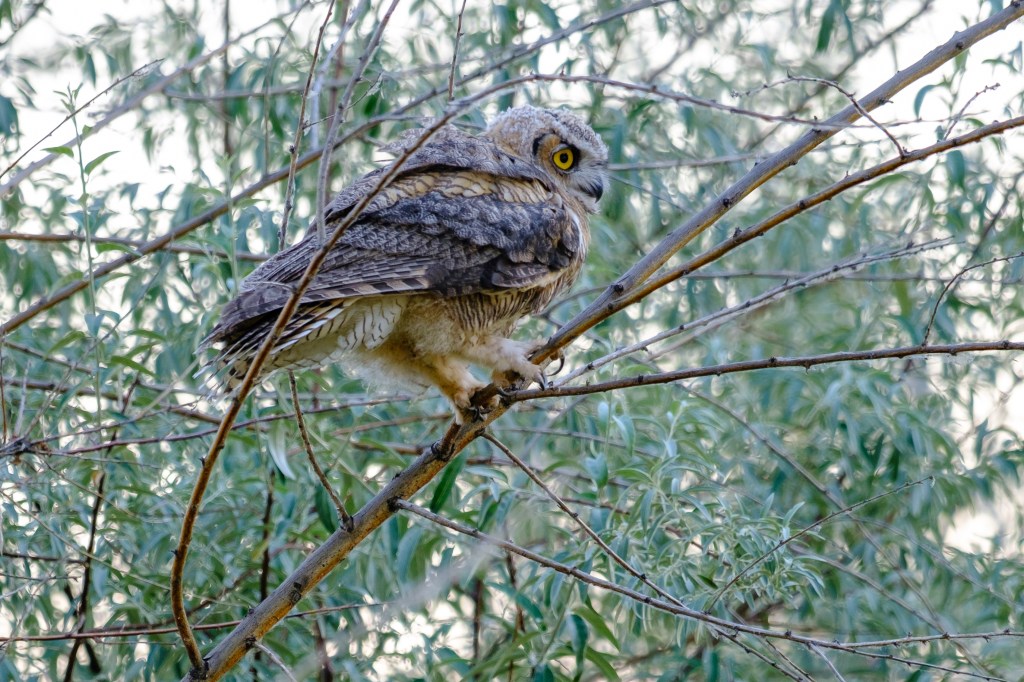
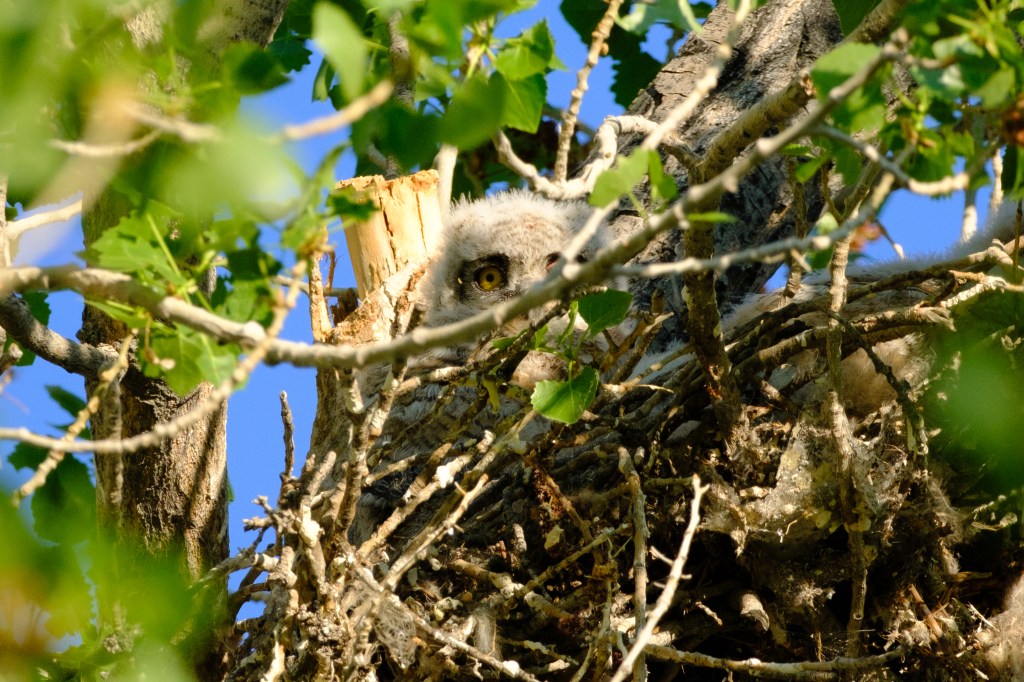
            Roberta and I have seen Great Horned Owls near Bishop at the Bishop Creek Canal, Airport Road, and the Buckley Ponds. One reliable location is a dirt road that branches off Dixon Lane. The road is lined with cottonwoods and owls sometimes raise their young there. In January or February, a pair of owls will occupy a nest that was built by Red-tailed Hawks. Eggs arrive in March and babies appear in April. Two months later the fledglings are learning to fly. We have seen from 1 to 4 baby owls in the spring. Dozens of people walk this road every day, often with dogs, but the owls still like the location. This year there were 4 fledglings and I was able to collect some photos.

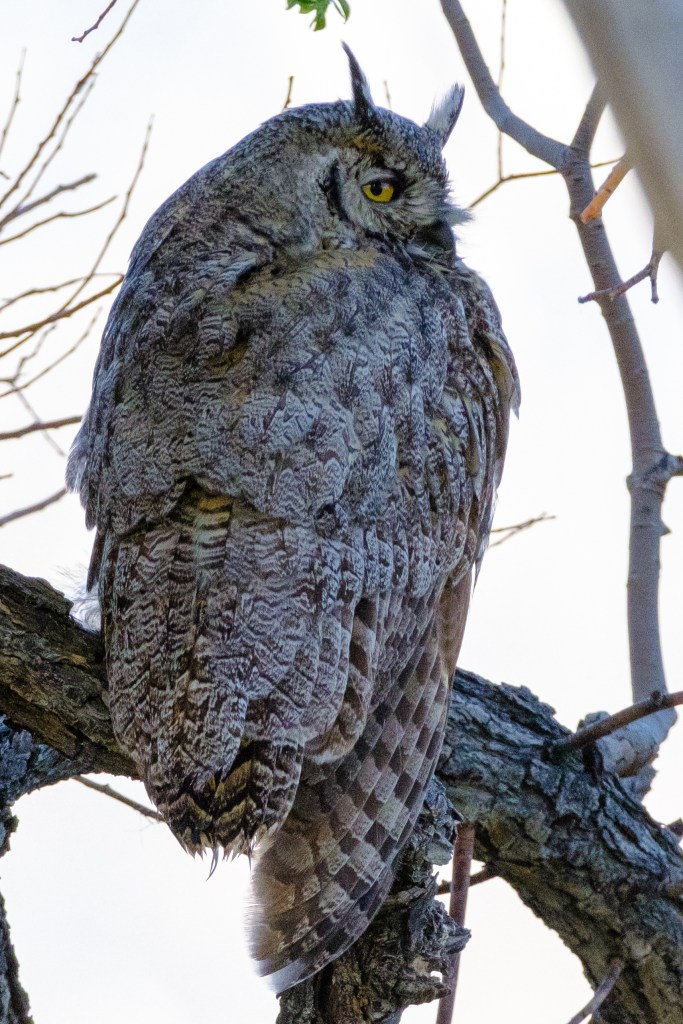
            An adult Great Horned Owl is almost 2 feet long, has a wing-span of 3.5 feet, and weighs 3 pounds; a little bigger than a Red-tailed Hawk. In daytime, the owls sit on the ground or branches and blend in with surrounding trees. At night they use incredible hearing and eye-sight to hunt.

            When a bird flies through the air, the feathers create turbulence that produces sound. You can sometimes hear a whooshing noise when a large flock of Phalaropes or Blackbirds flies past. When a Common Raven flies nearby, up to 100 feet away, I often hear the sound of each wing-beat. The bird is constantly surrounded by this noise when flying. Most owls, however, use their ears to locate prey in the dark. These night hunters have evolved special feathers that smooth the airflow and muffle the sound of the wing slicing the air. Silent flight enables an owl to locate faint sounds that give away the victim’s position. The other night creatures do not hear the danger until it is too late. 

Adult Owl Portraits

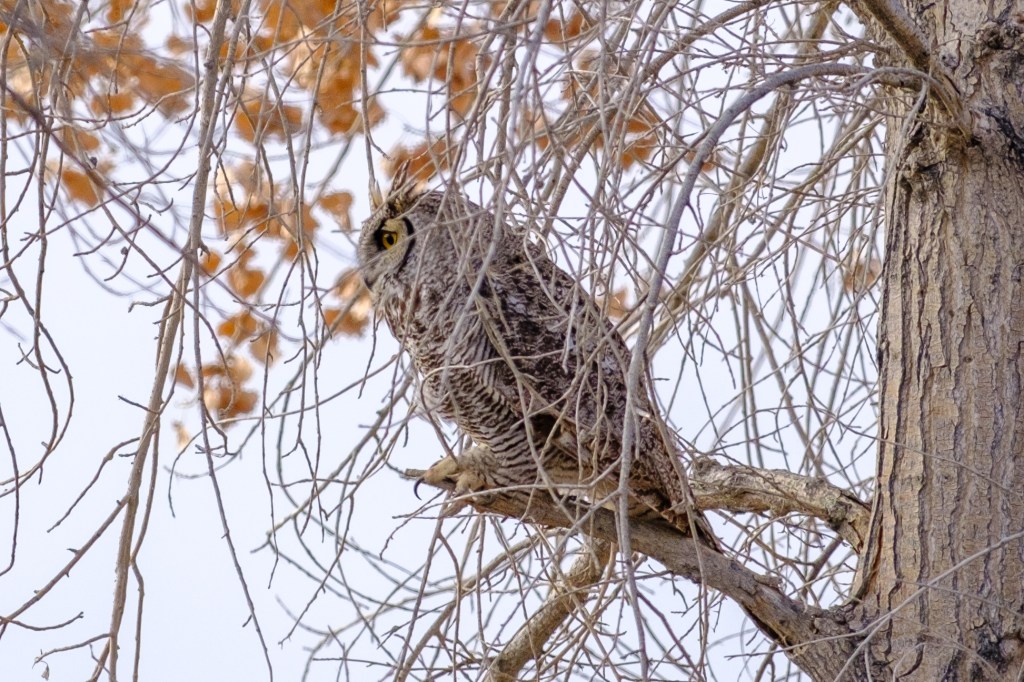
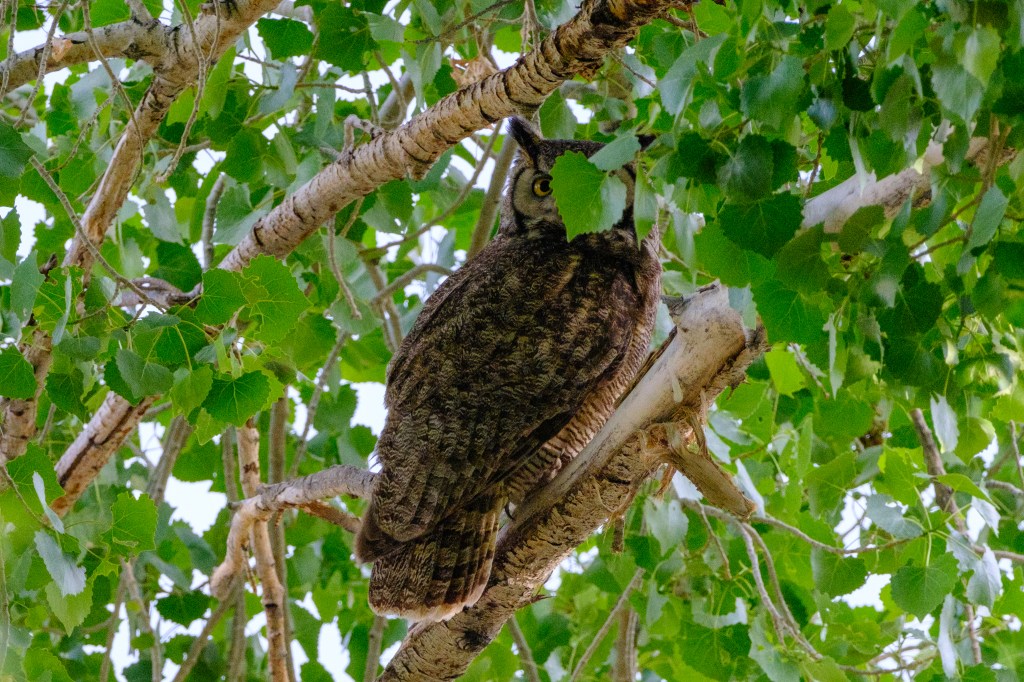
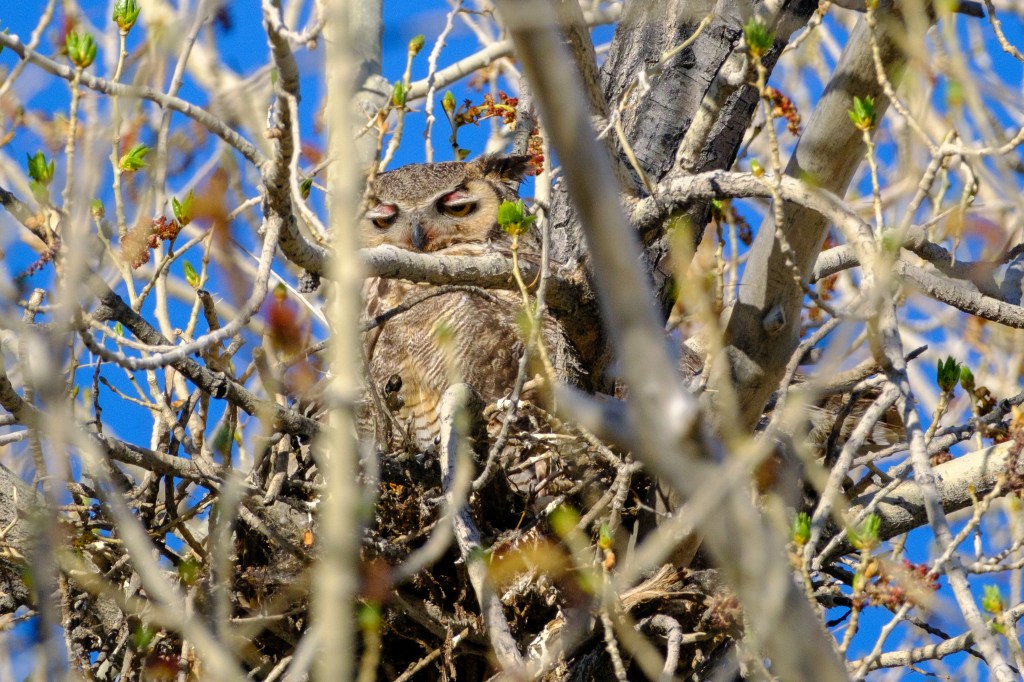
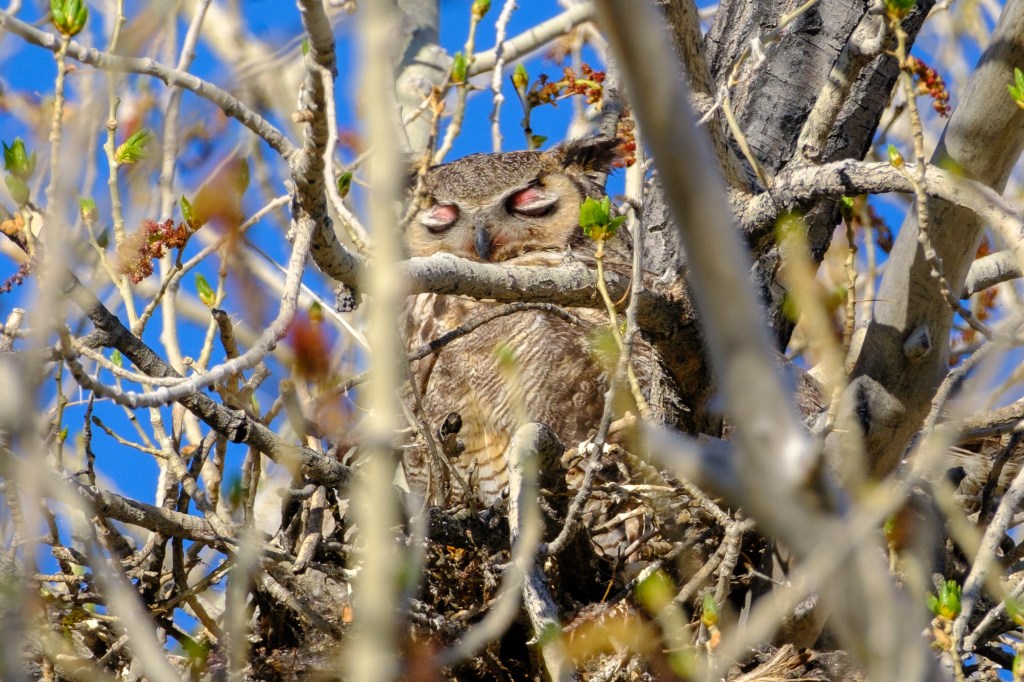
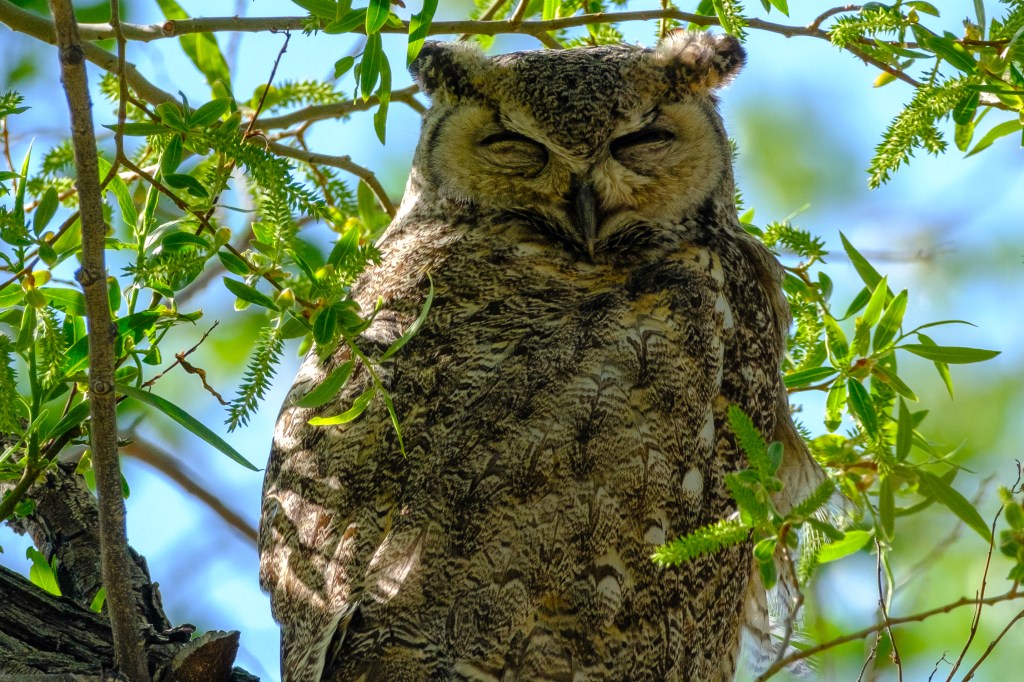
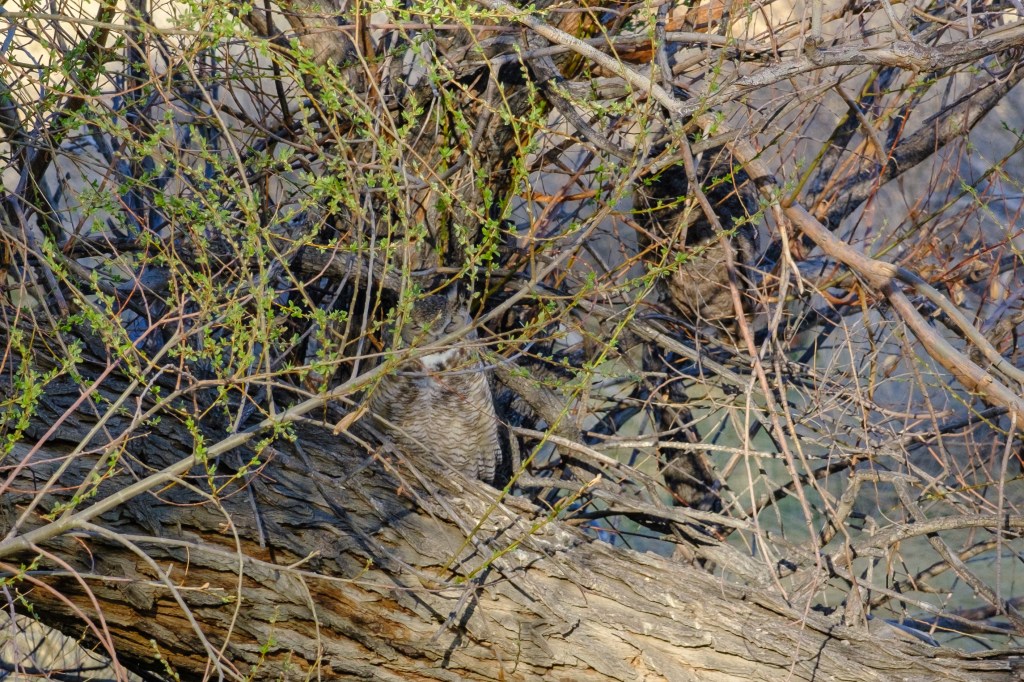
            Below are photos of a typical owl, hiding in shadow behind branches. This is frustrating; it makes me want to carry hedge clippers so I can get a good photo. To find an owl, Roberta and I use camera or binoculars to study shaded areas. Often we spot an “owl” that turns out to be a stump or branch. One day we could not find an owl that we were sure was there; until we looked up and realized it was sitting on a branch just 4 feet above Roberta’s head.

There are two owls in this picture. Can you find them?
Owl hiding near the Buckley Ponds

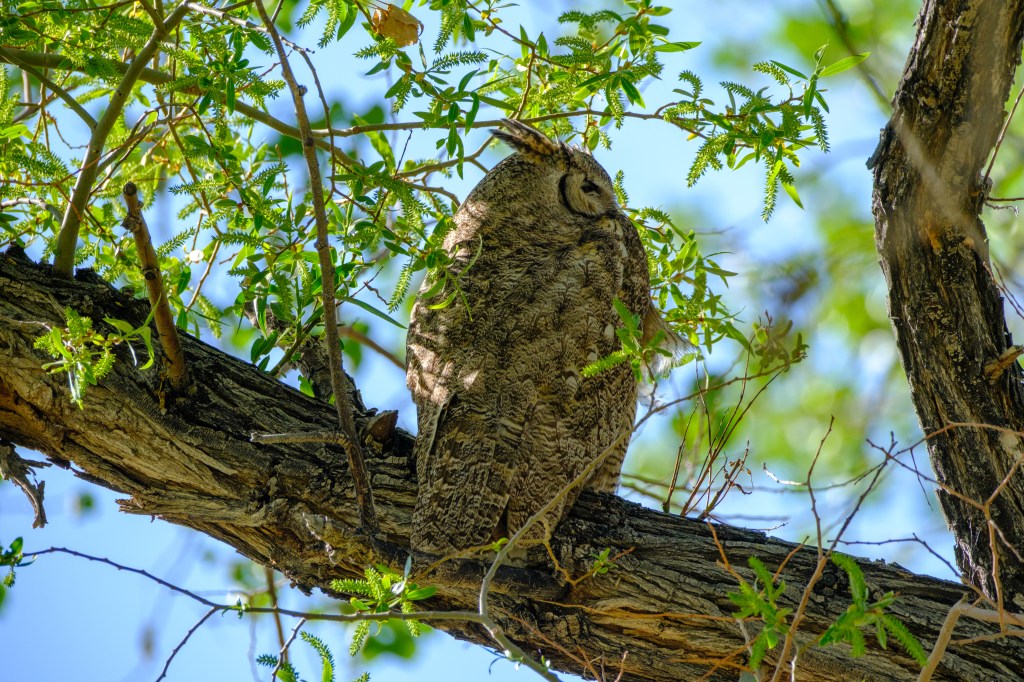
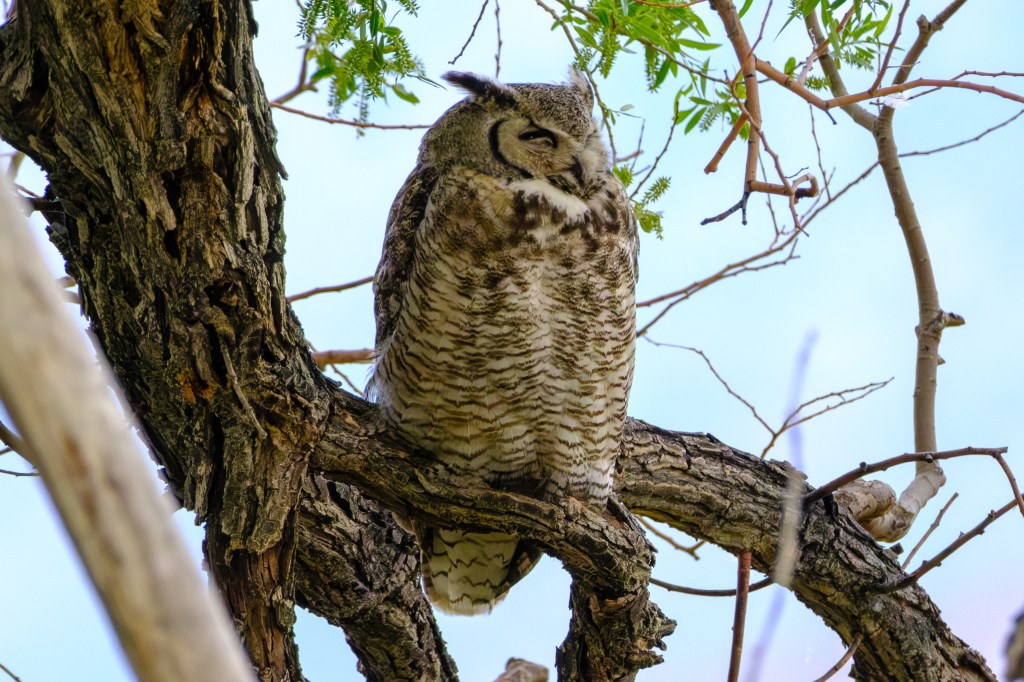
            Sometimes adults are easy to spot. This seems to be especially true in early morning, when they are sitting with fledglings.  Here are a few adult portraits.

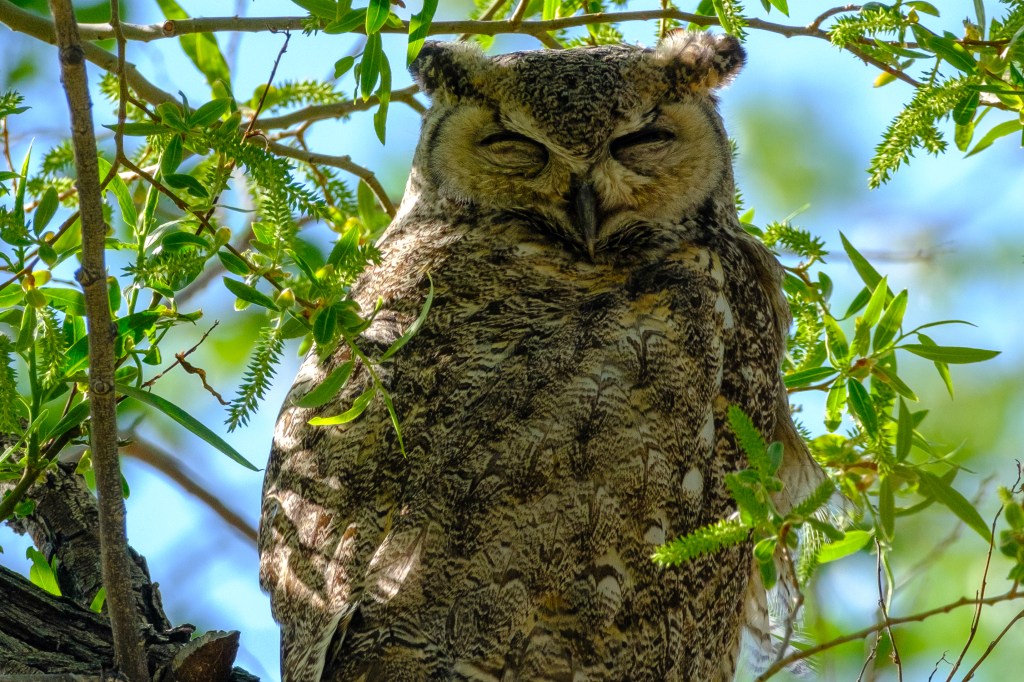
The feathers are the same color as the tree bark.

Look closely at the “horns” in the picture above. They are just feathers. They have nothing to do with hearing. Some authors suggest they help with camouflage.

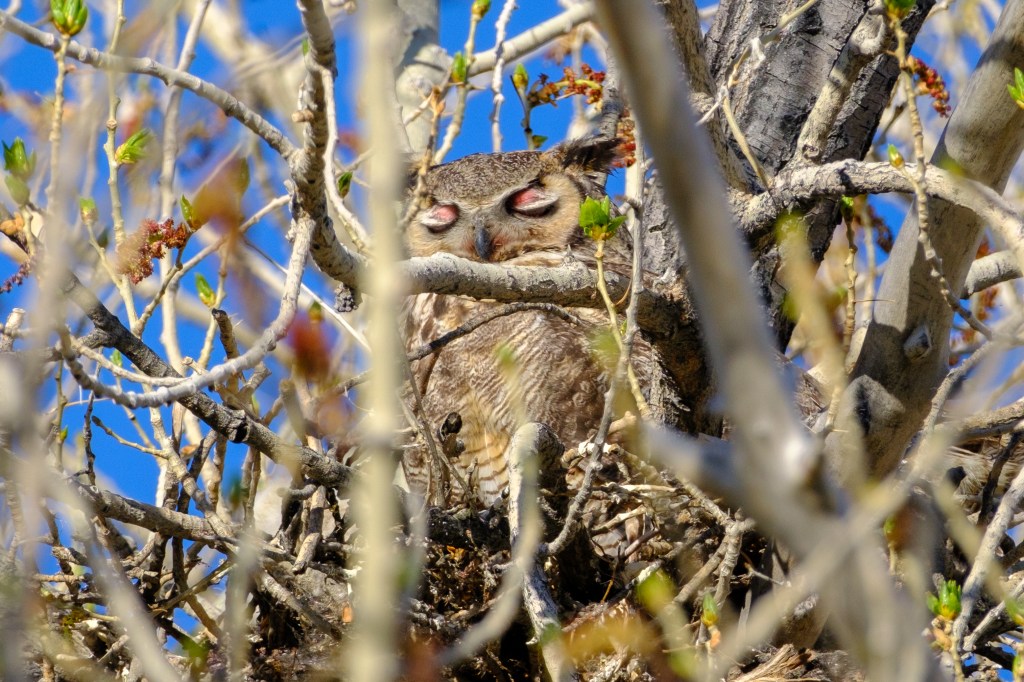
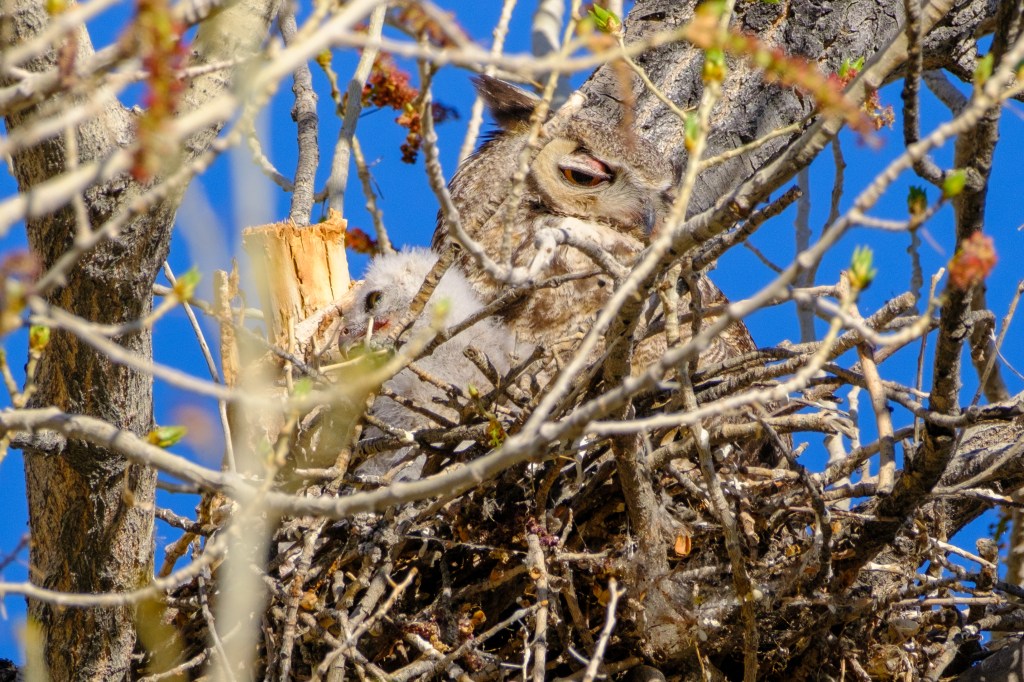
Adult owl on nest. Why does she appear to have red eye-shadow?

Fledgling Owl Photos

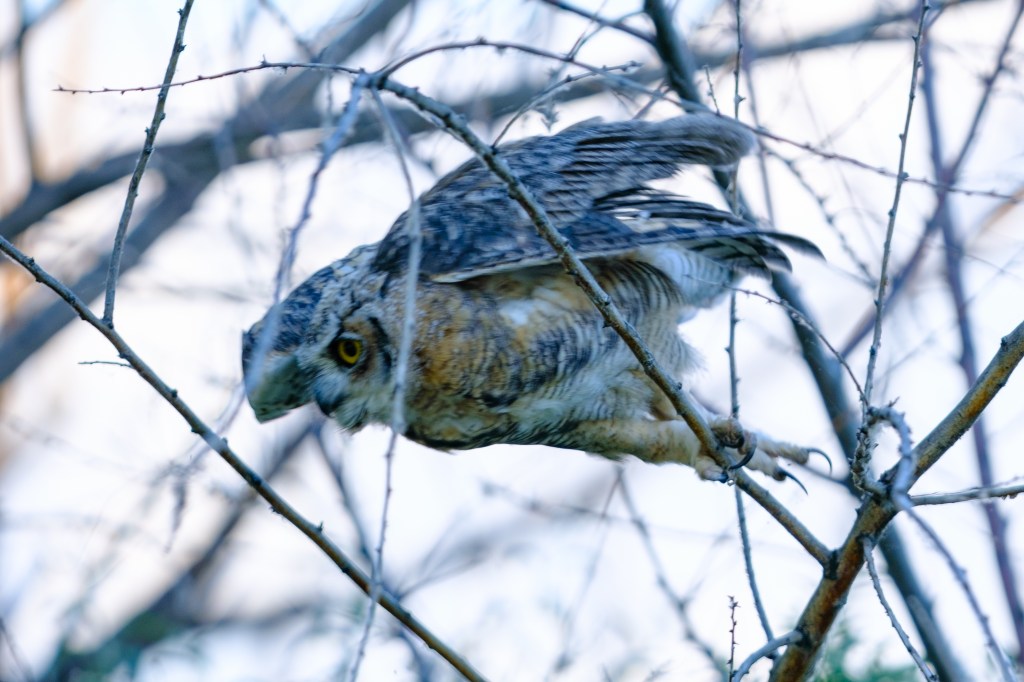
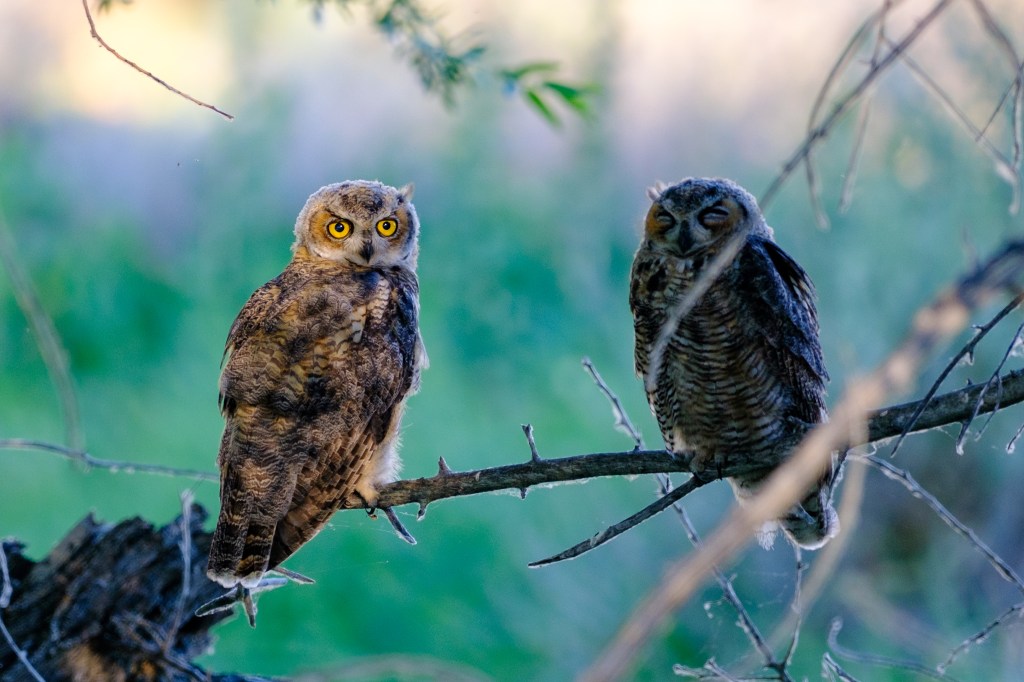
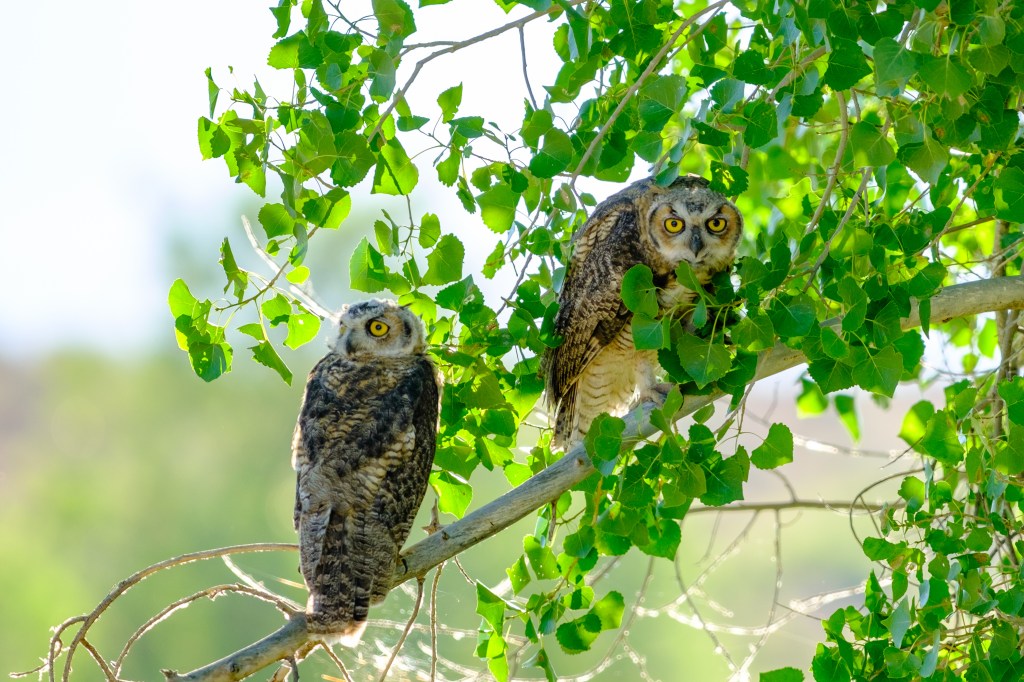
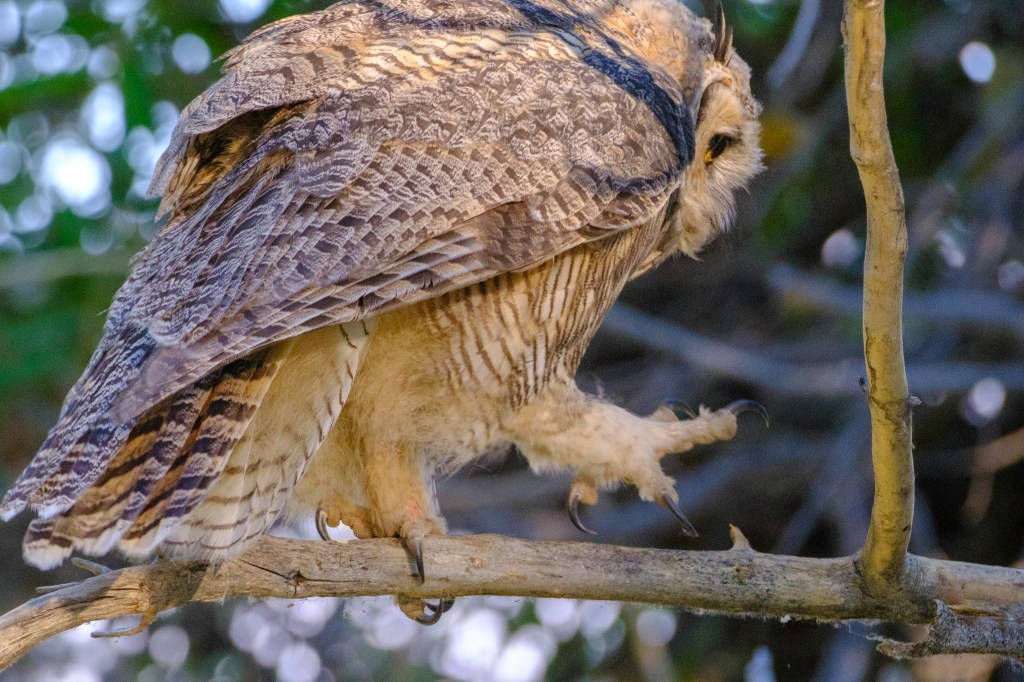
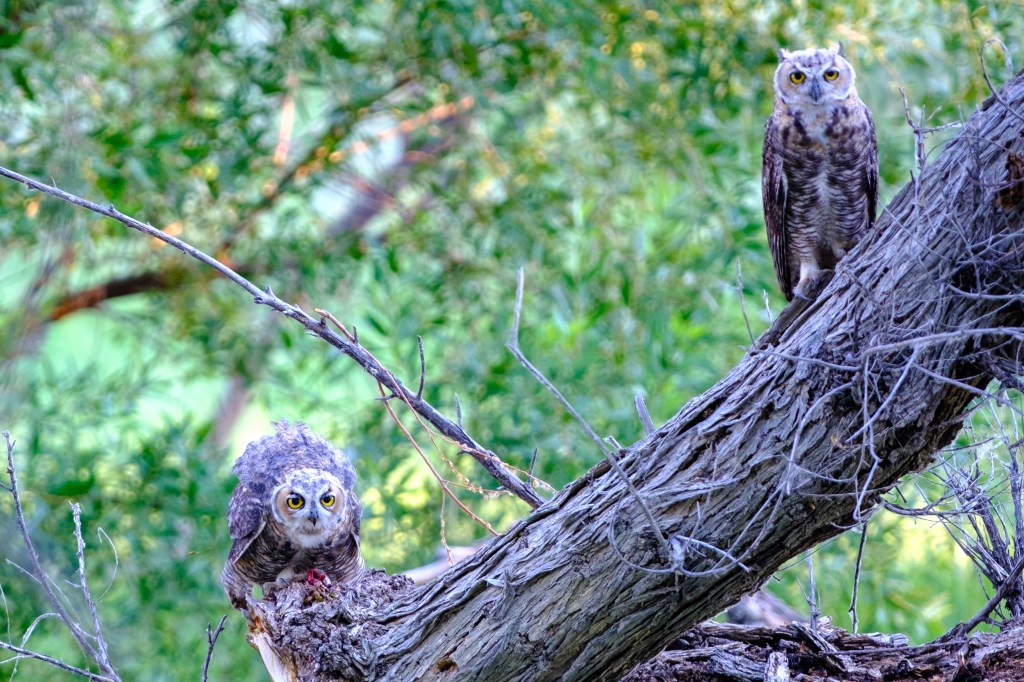
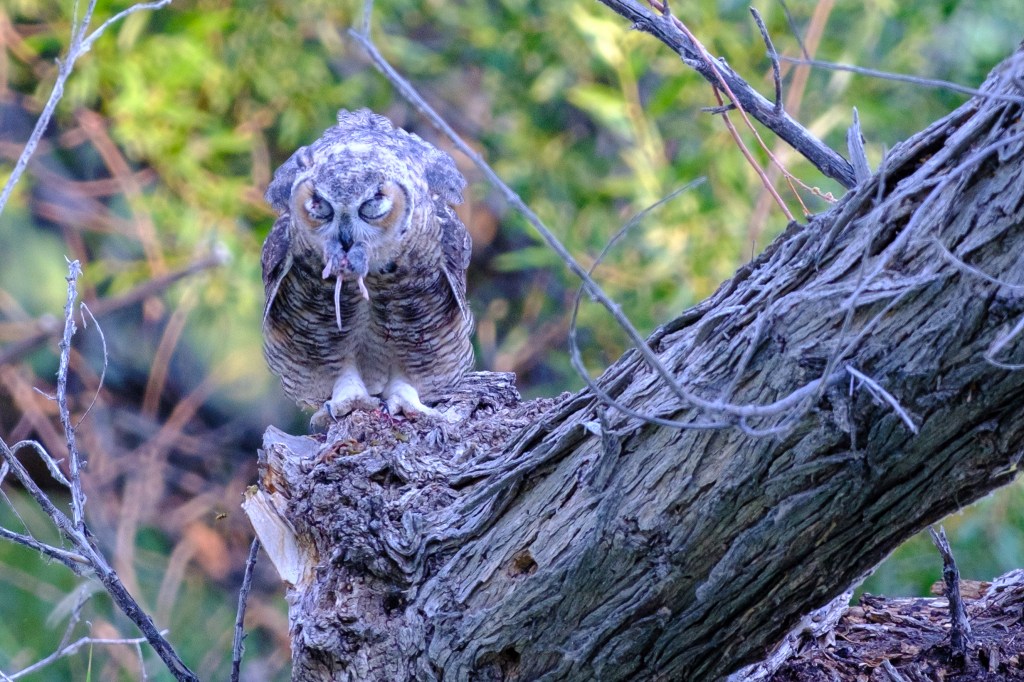
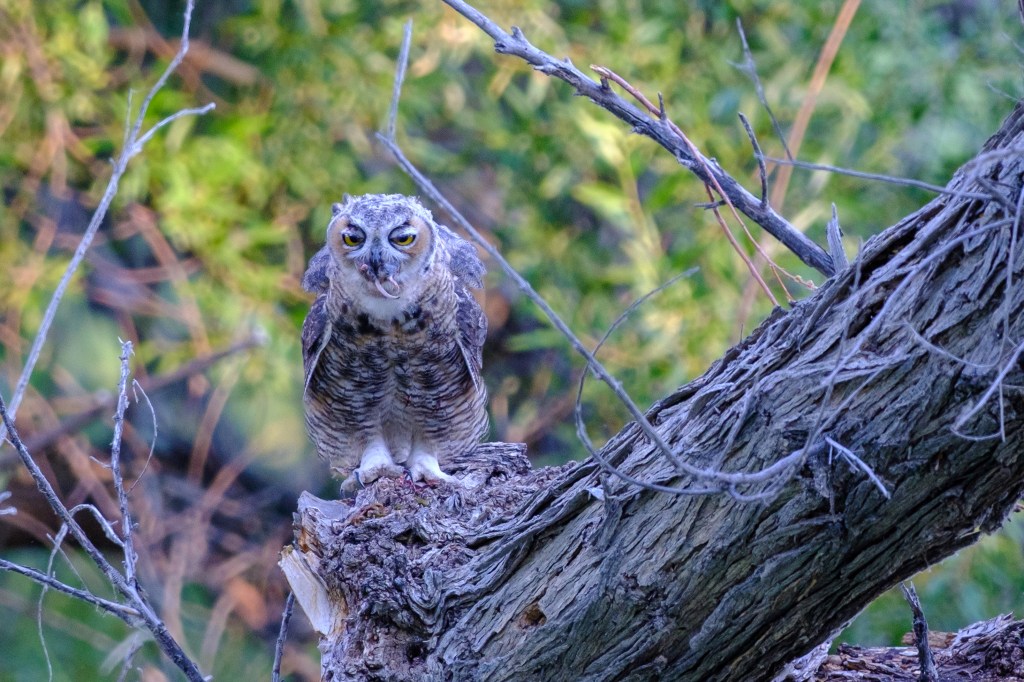
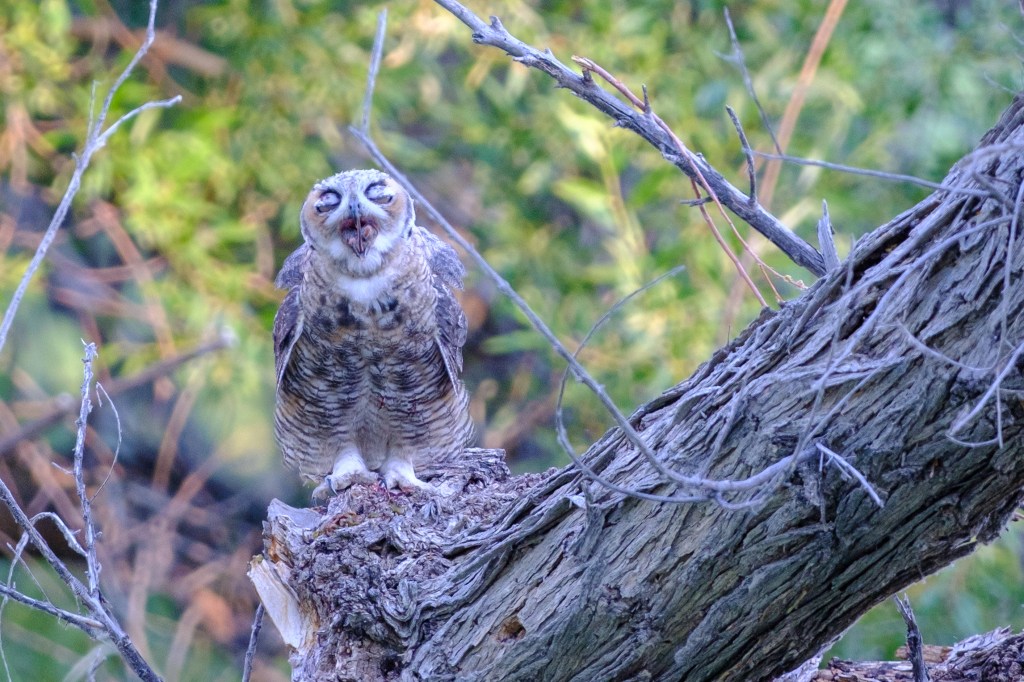
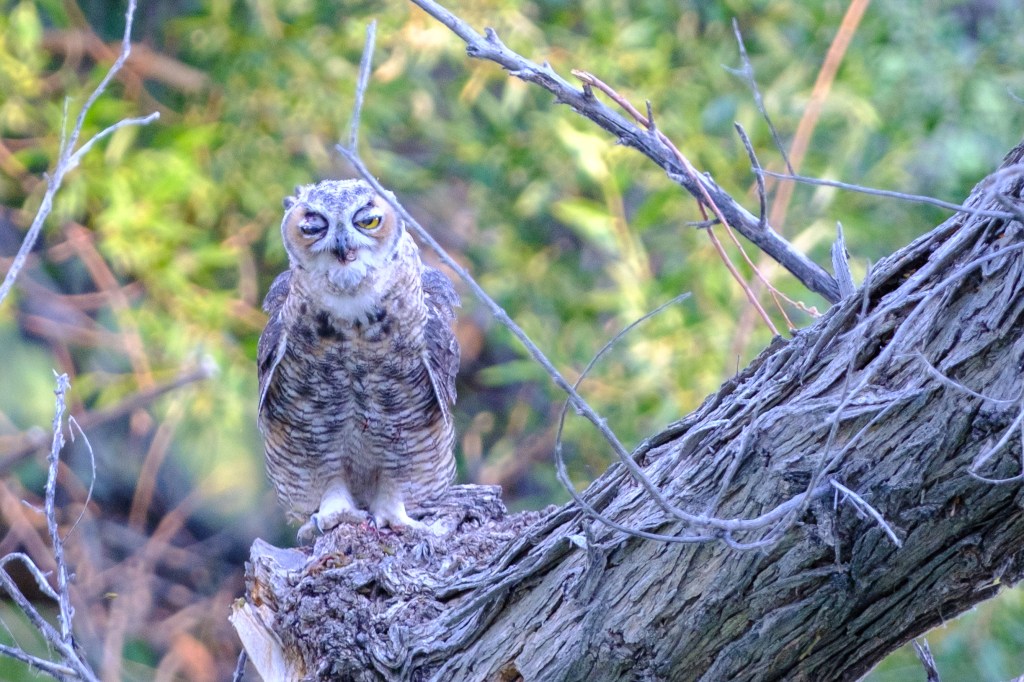
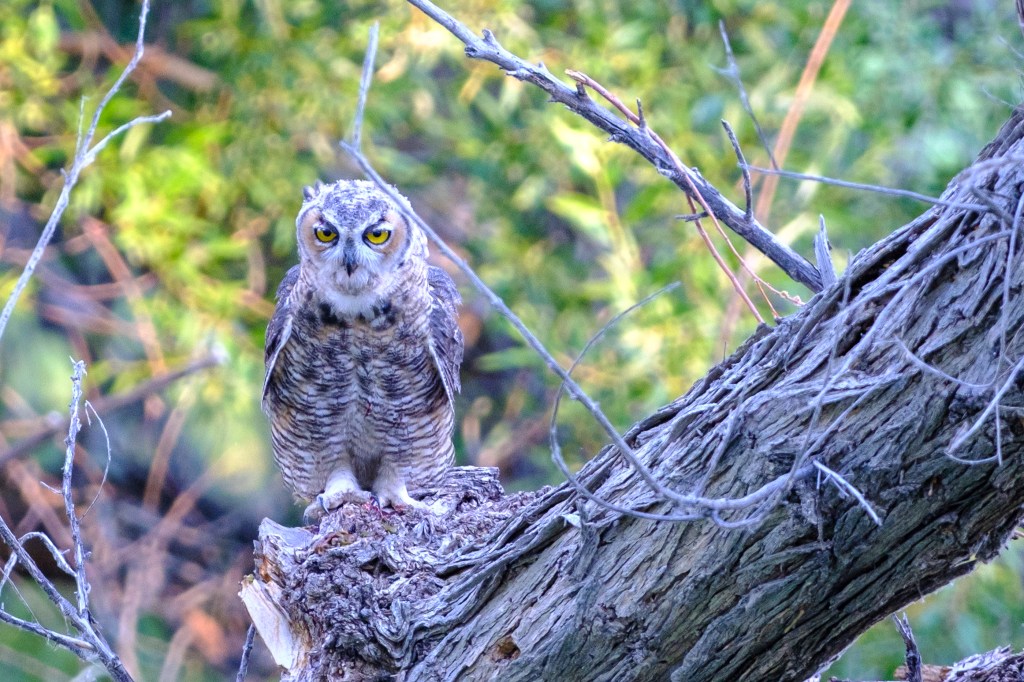
        The youngest fledglings look ridiculous. They have white feathers and no “horns.” In just a few months they start to look like adults. By fall they go off to live on their own. Here are pictures of babies, starting with the youngest:

The white-feathered fledgling has blood on its mouth from a recent meal.
Two babies look out from their nest.
“Horns” start to appear. Feathers on legs and toes.
No “horns” yet. White feathers still on head and feet.
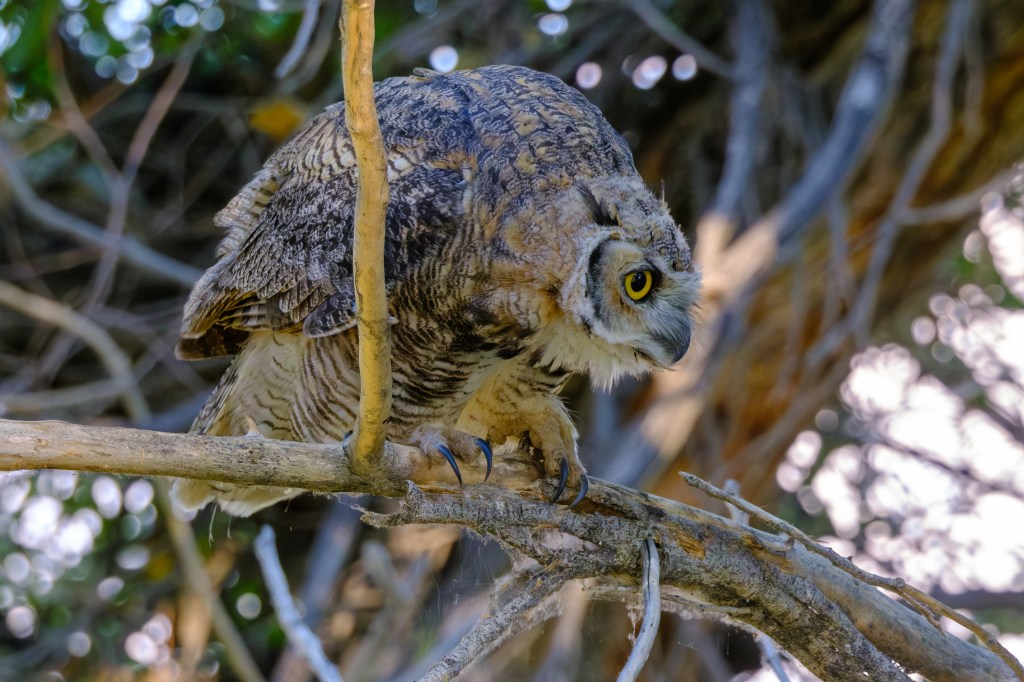
Learning to fly.
Left foot seems to show 3 toes in forward position.
Siblings. The owl in shadow looks older.
Siblings hanging out.
Good view of “horn” feathers.
Looking very grown up.

The “X” feet

         Most birds have 4 toes; 3 point forwards, 1 points back. This is true of hawks, herons, sparrows, etc. But owls have one toe that can point forwards or backwards. When that toe points to the rear, their feet look like a large “X.” See the photos below. Having a powerful grip and sharp talons is useful for grabbing squirming prey. But other predator birds do not have this “X” formation; birds with this kind of “X” foot include cuckoos, woodpeckers, and parrots.

Fledgling owl shows its “X” foot.
Same owl shows two toes pointing forward on both feet. Sharp talons.

Outdoor dining

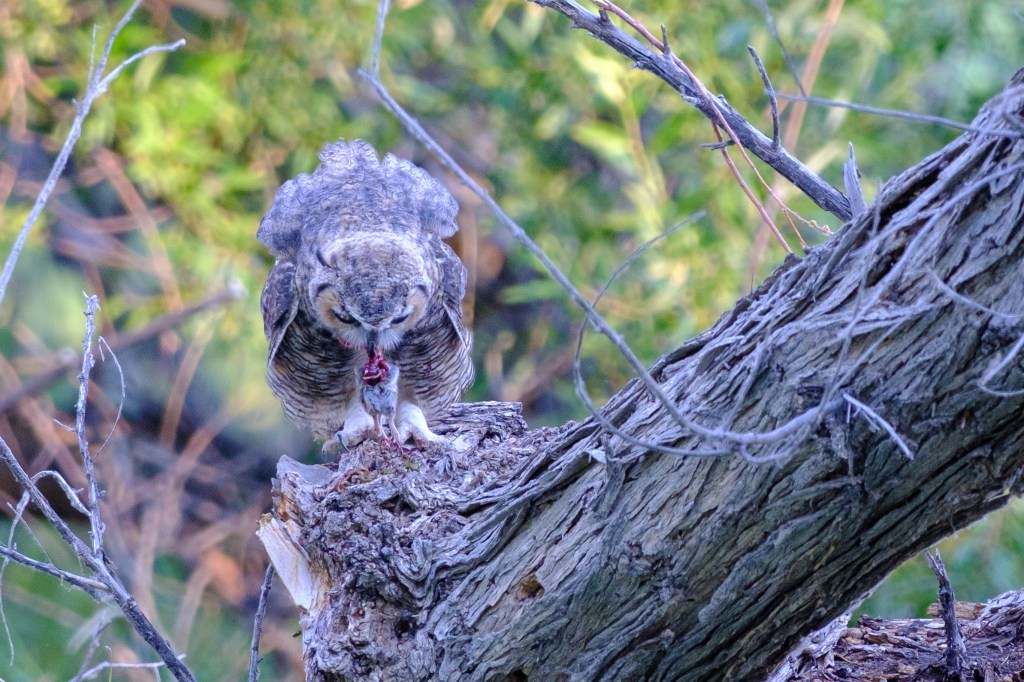
            The next section is R rated for violence, blood, and atrocious table manners. When owls catch prey, they carry it back to their daytime hiding area, so they can eat in peace. They dismember the body, often decapitating the victim. Next they choke down large chunks. Photos below show a fledgling that cuts a mouse in half and swallows the headless body. You can see the feet and tail sticking out of owl’s mouth. The faint-of-heart should skip these photos.

Siblings. The lower owl is having breakfast.
Rodent tartare, a favorite.
Half a mouse in one swallow.
Mouse tail and feet visible.
What a pig!
Birds have no teeth. Just gulp it down.
Almost finished.
Burp!

Sometimes I like to daydream about being born-again as a bird and having the power of flight. Photos like those above just kill those dreams.

Three short owl anecdotes:

1. Just after Christmas 2009, I did a loop hike in Death Valley with three friends. One morning we were walking on a dirt road which had a few inches of snow. Dan Ward, who sees things that I miss, pointed out that every 100 feet or so, there were rodent tracks and nearby feather marks. An owl had been hunting mice and it probably missed a few kills. Then Dan found a spot with similar markings and drops of blood in the snow; a mouse did not live to see the sunrise.

2. In 1985 I was leaving Kings Canyon National Park to get home to Visalia. It was late, the narrow paved road was pitch black. As my headlights came around a curve, the beams illuminated a Great Horned Owl descending over a mouse. The mouse changed direction at the last moment and the owl missed. This was a 2-second Nature Channel moment. The only thing missing was David Attenborough saying “The owl went hungry, but the mouse lived to see another day.”

3. Roberta and I like to walk; I carry a camera and often she spots a bird. We still haven’t learned to communicate well, partly because we both get too excited. We are not yet a well-oiled machine. In February of 2024, we were walking on the grassy headlands above the ocean near Fort Bragg, California. Roberta spotted a small owl in the grass just a dozen feet in front of us and she started yelling: “Owl! Owl!” I started yelling “What? Where?” The photo below was the result. We need to step up our game.

What kind of owl is this?

American Kestrel: Colorful Killer

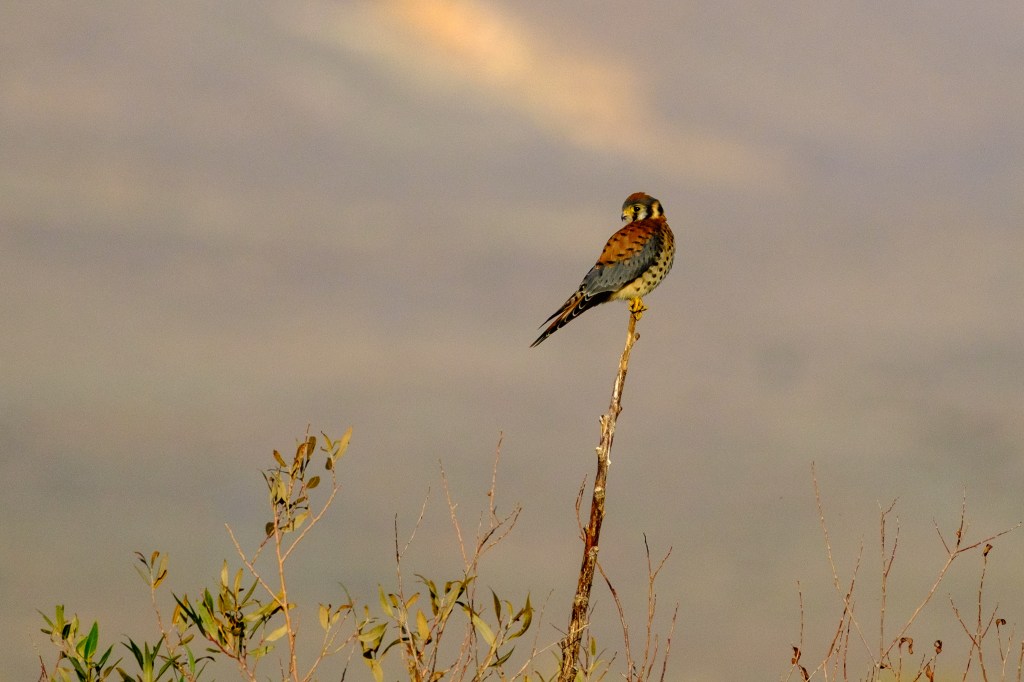
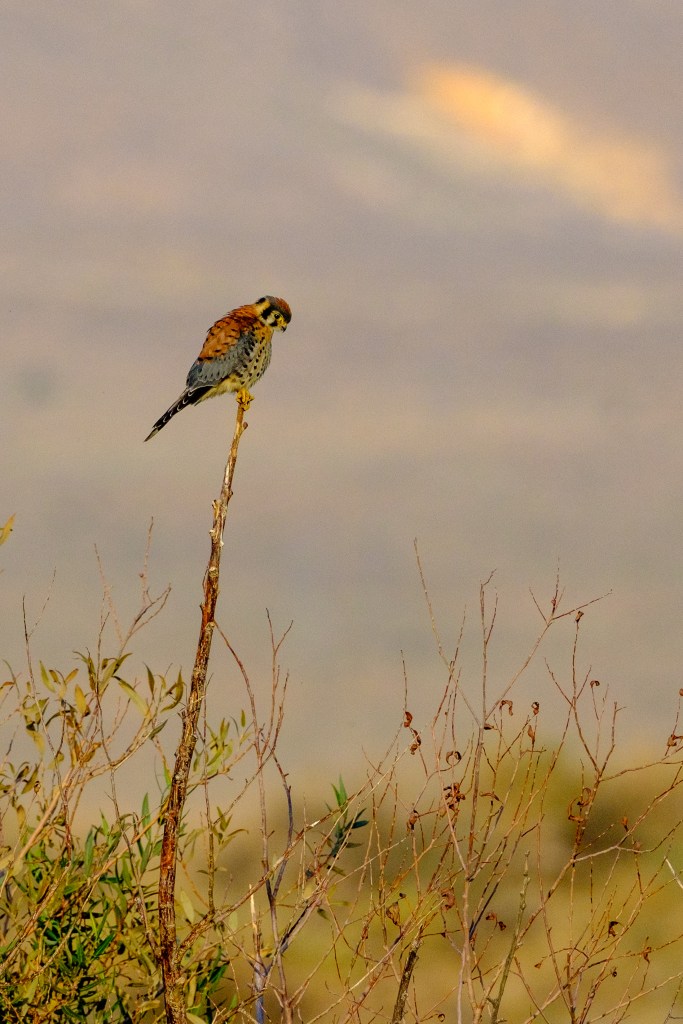
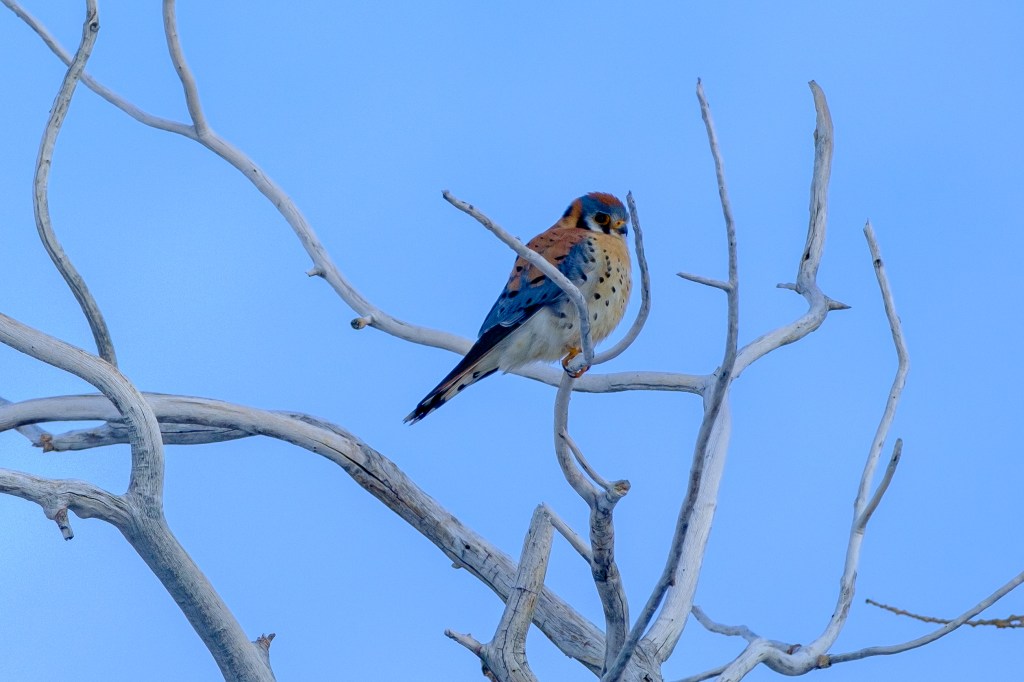
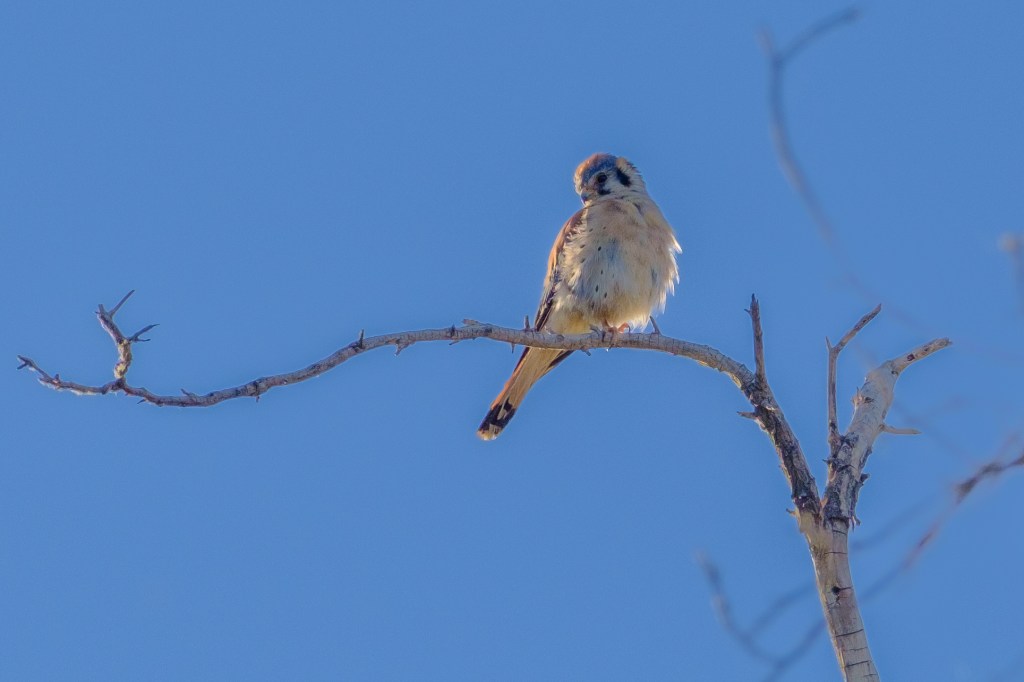
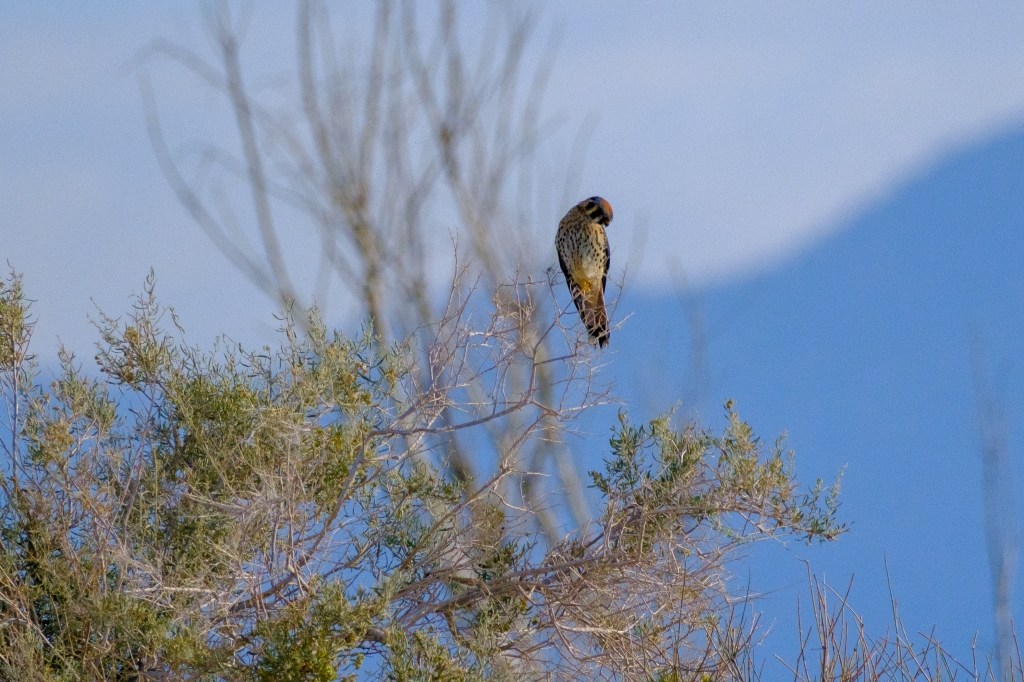
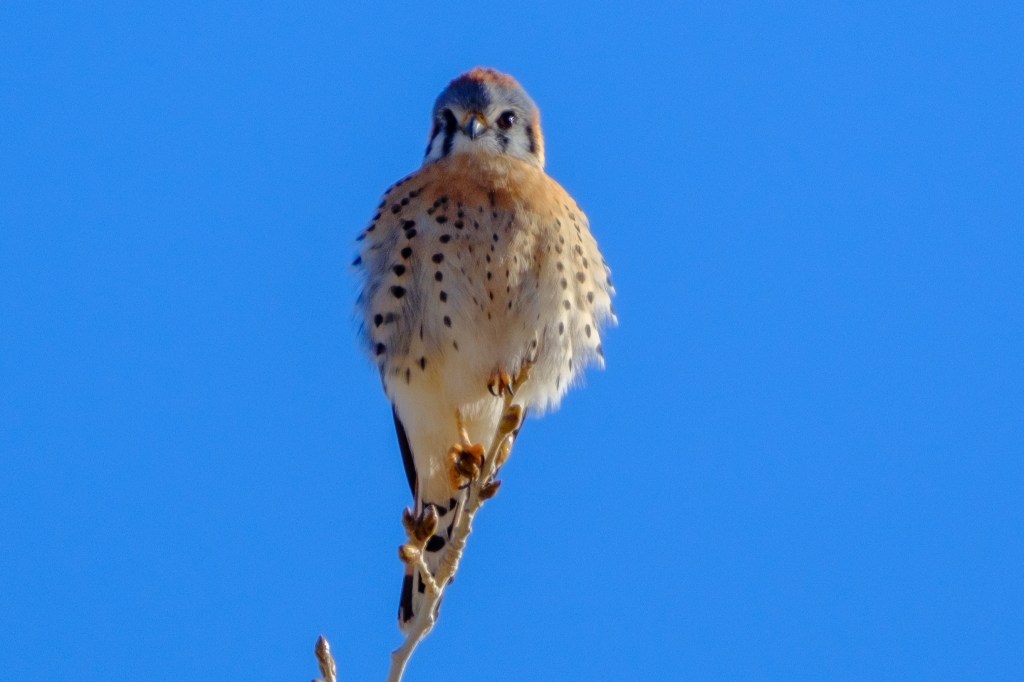
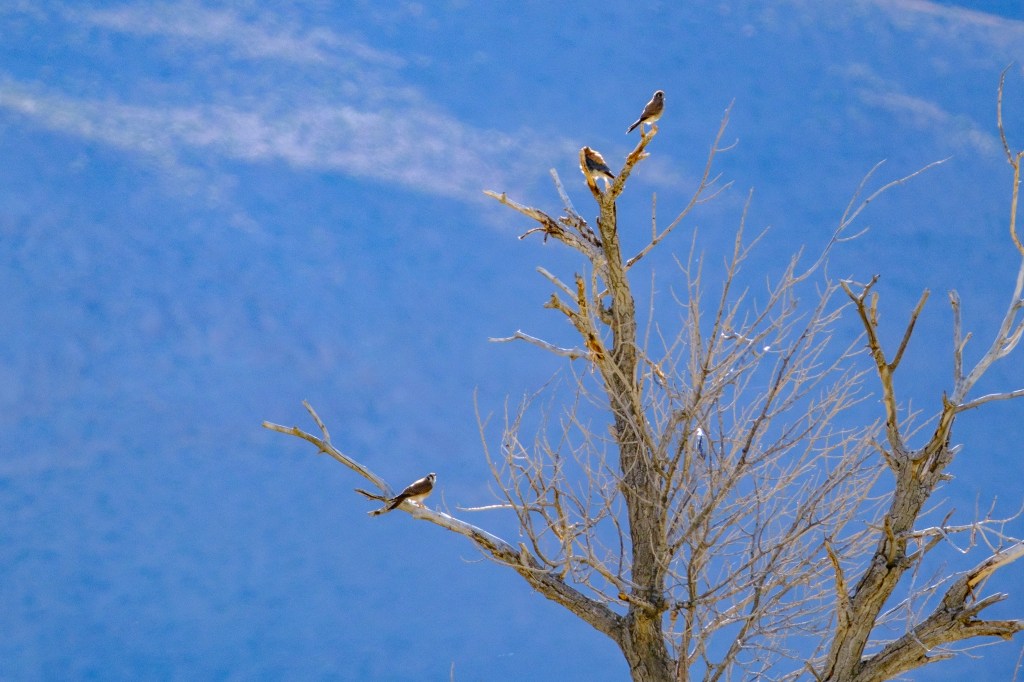
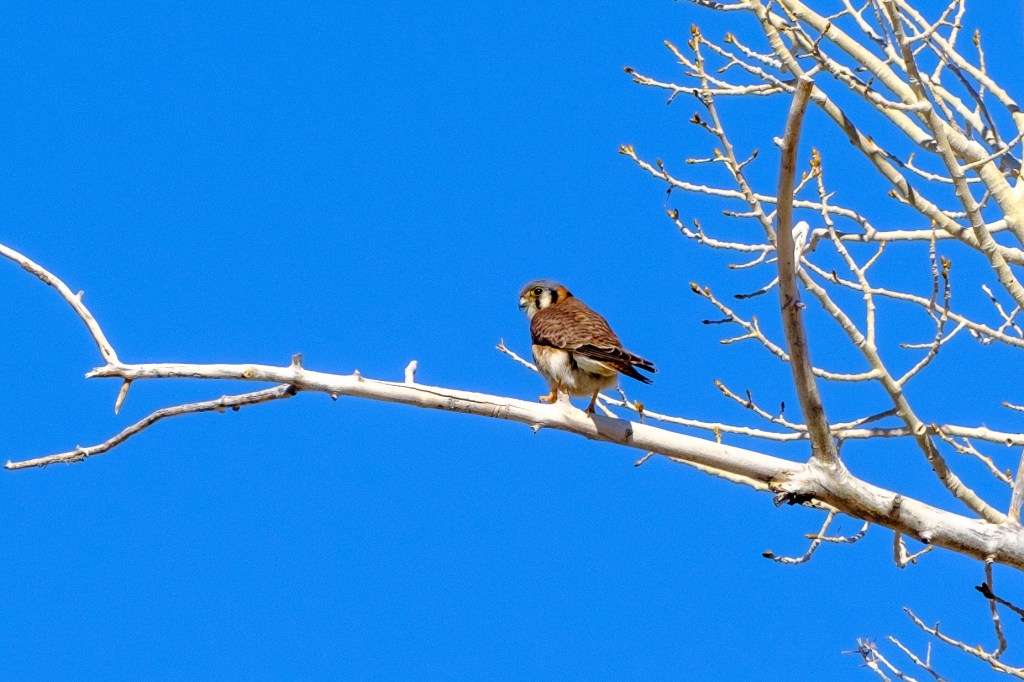
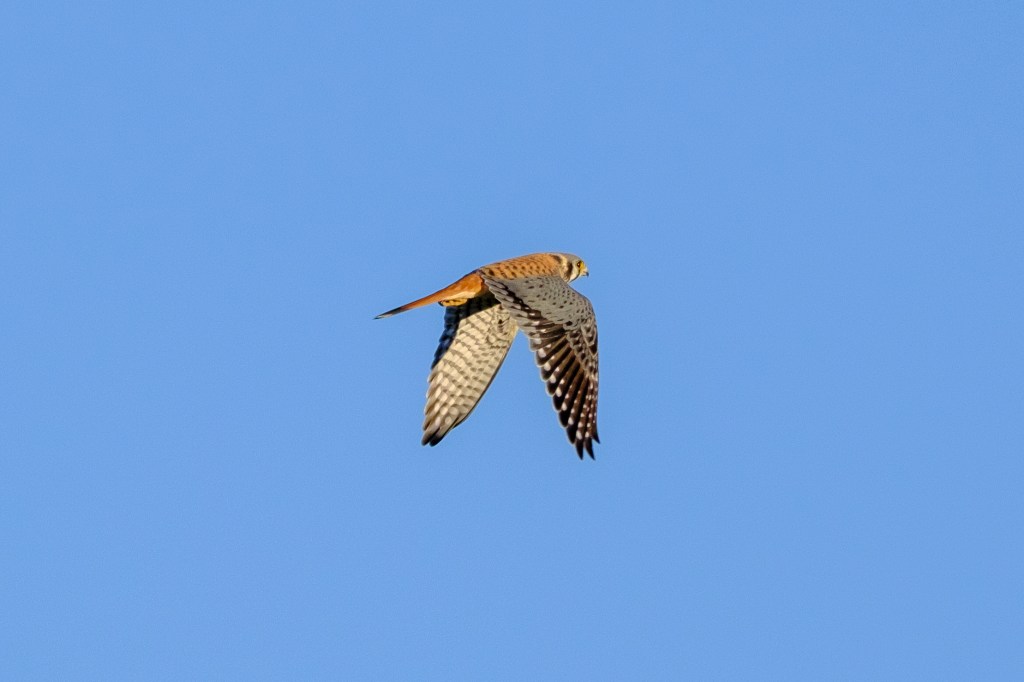
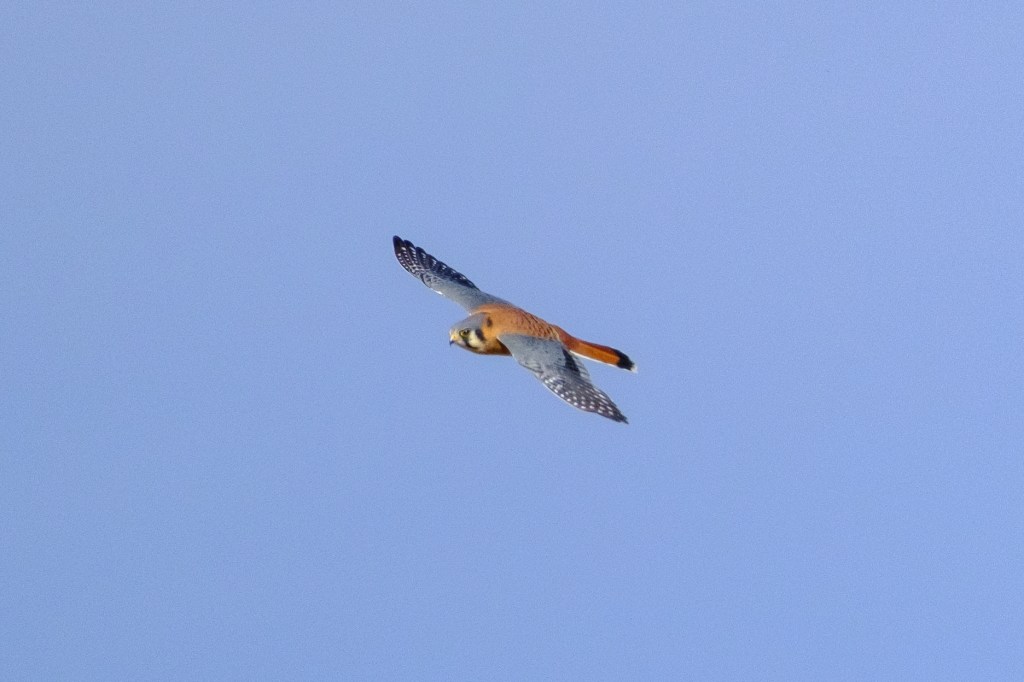
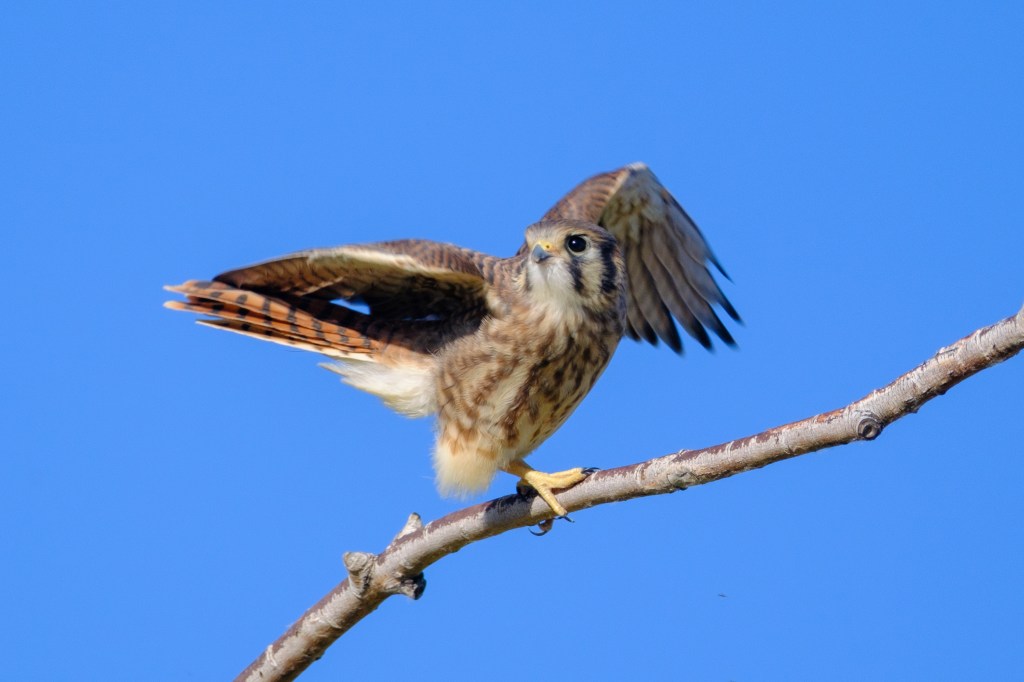
            Kestrels are tiny falcons, just 9” long with a wingspan of 22”, weight 4 oz. When perched, they can be mistaken for a Dove, a Shrike, or even a Blackbird. I did not start to identify Kestrels until I bought a telephoto lens and started collecting pictures in 2020. Thanks to the camera, I now realize that the Bishop area is infested with American Kestrels. They hang out on trees near fields and sagebrush flats. They like to stand on naked branches, from which they hunt insects, lizards, mice, and small birds. 

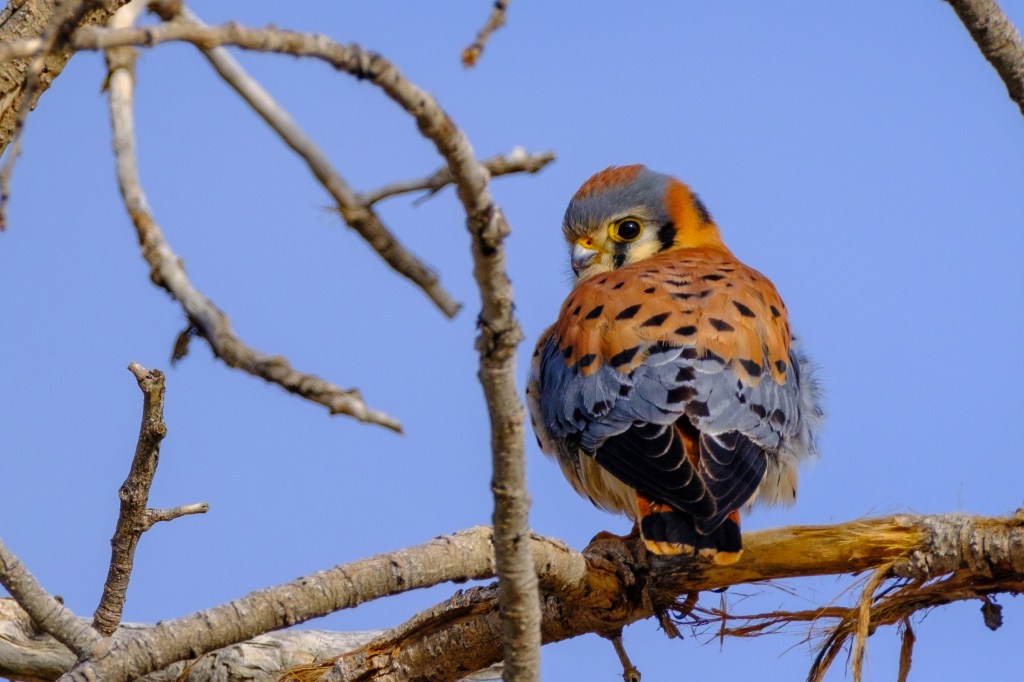
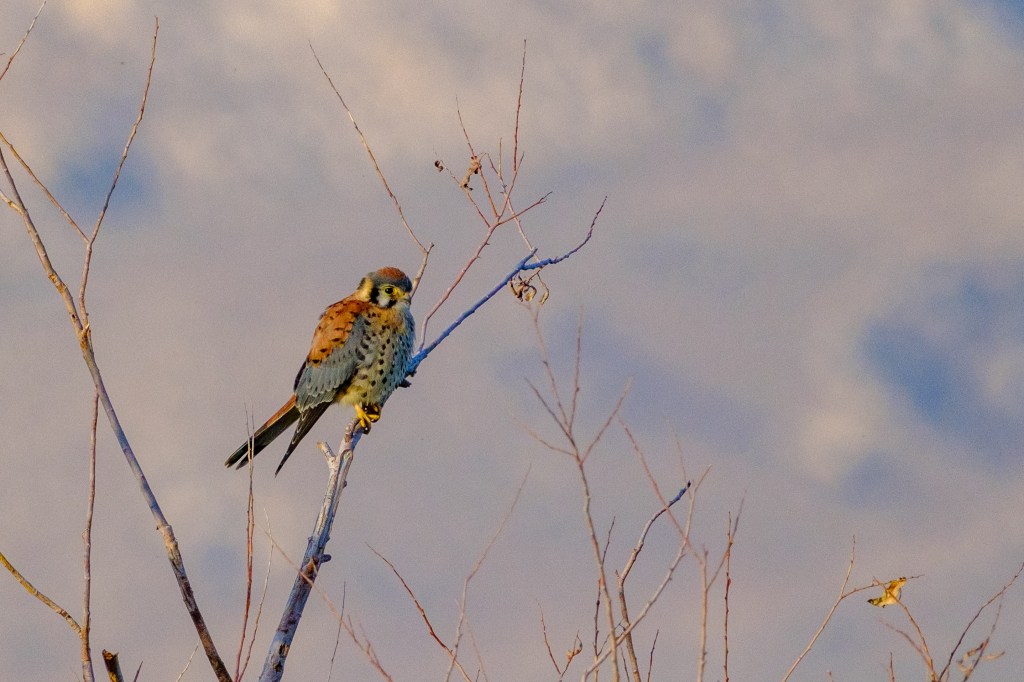
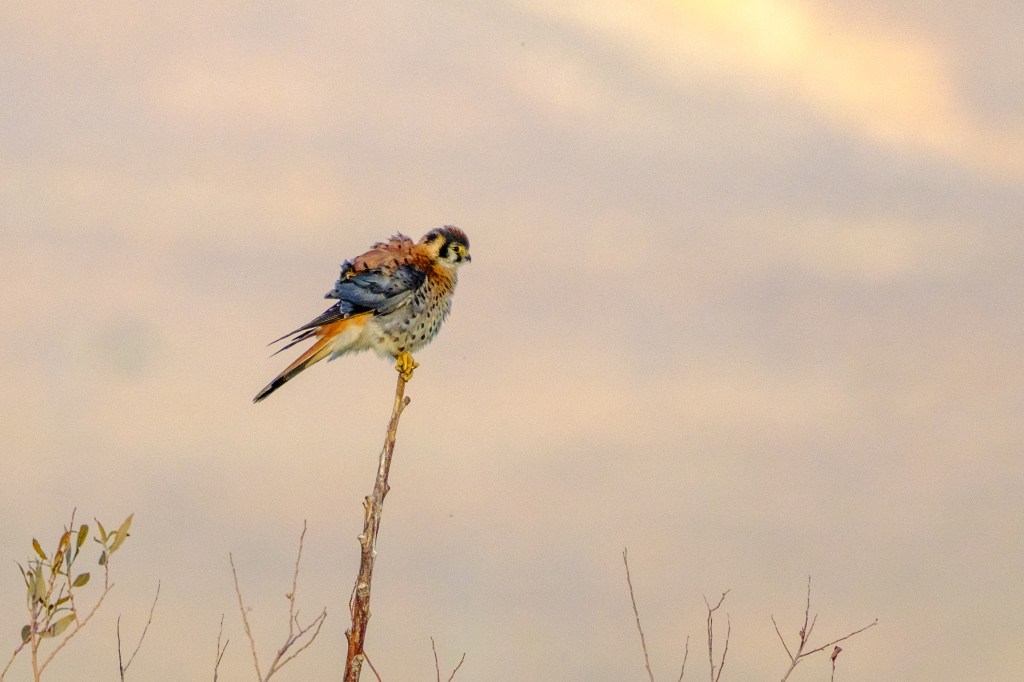
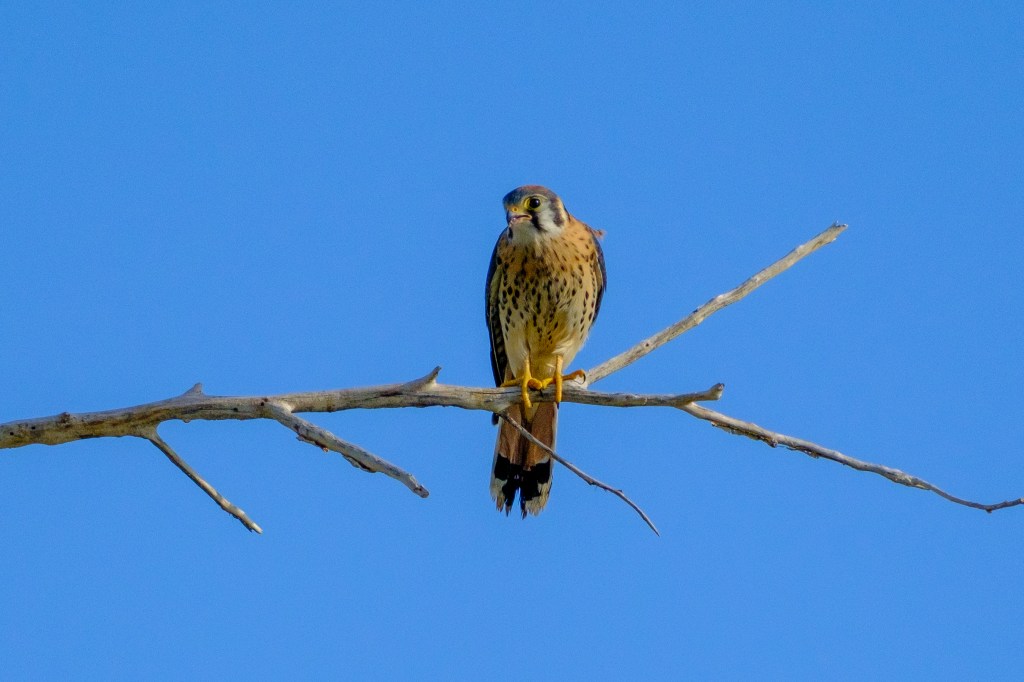
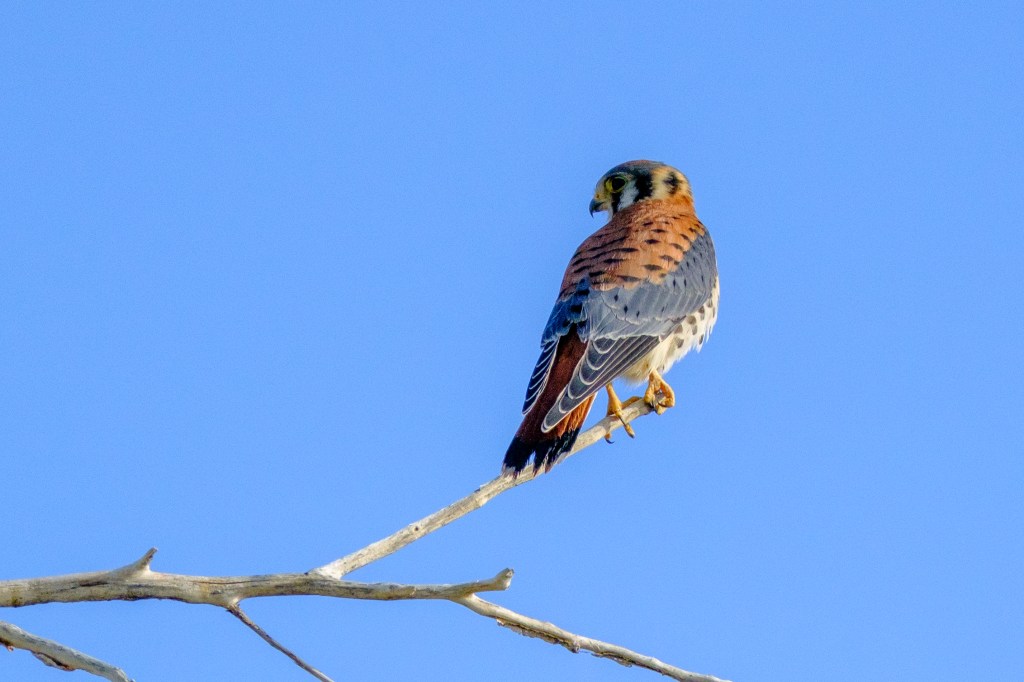
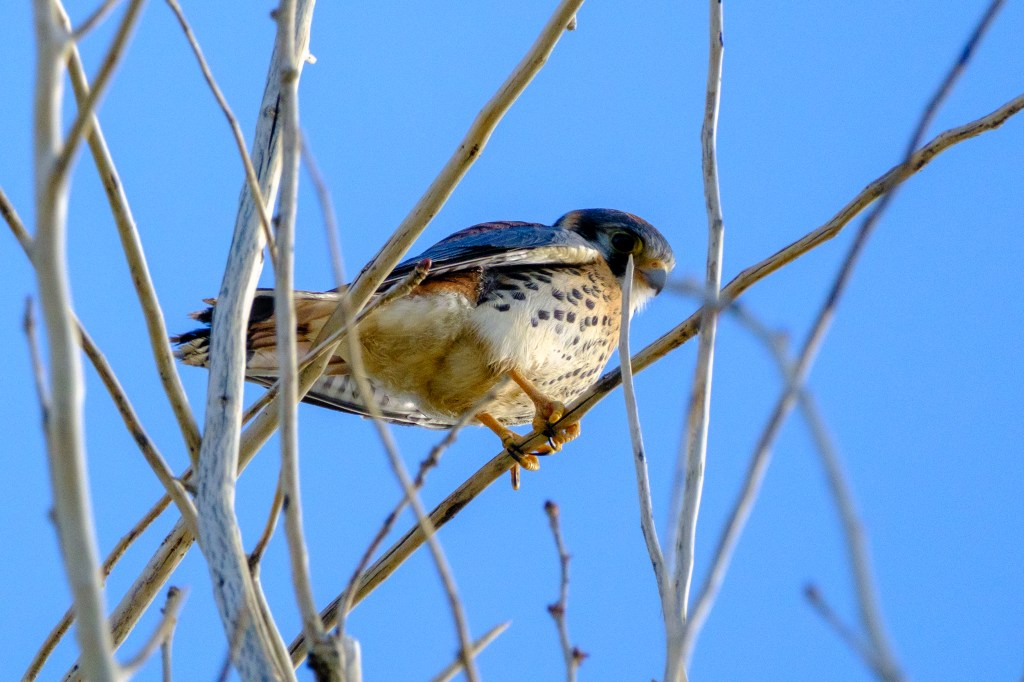
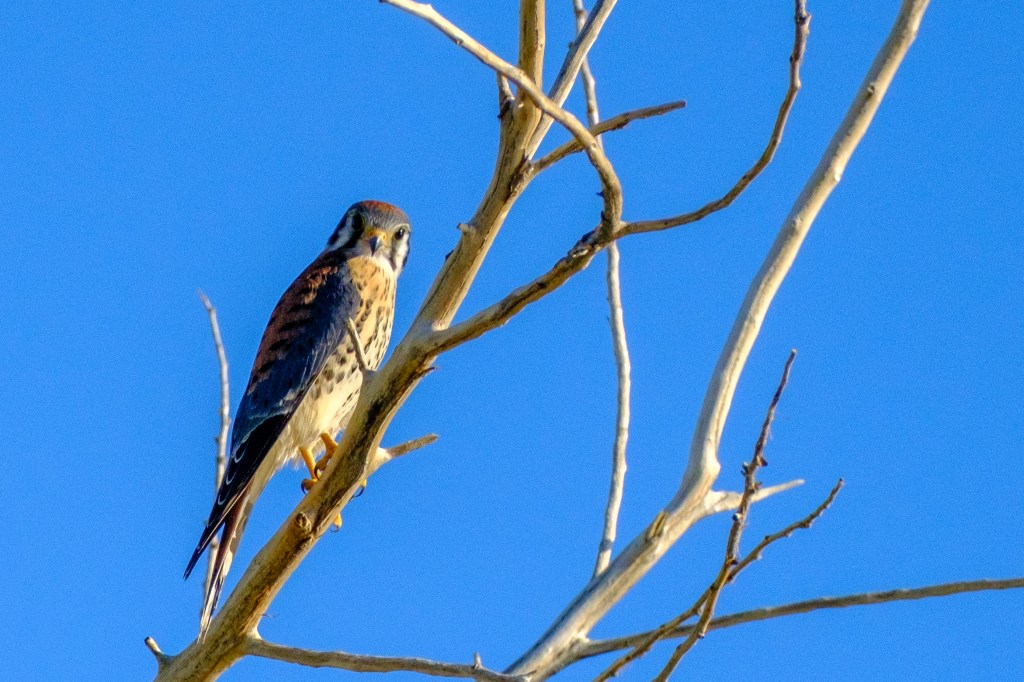
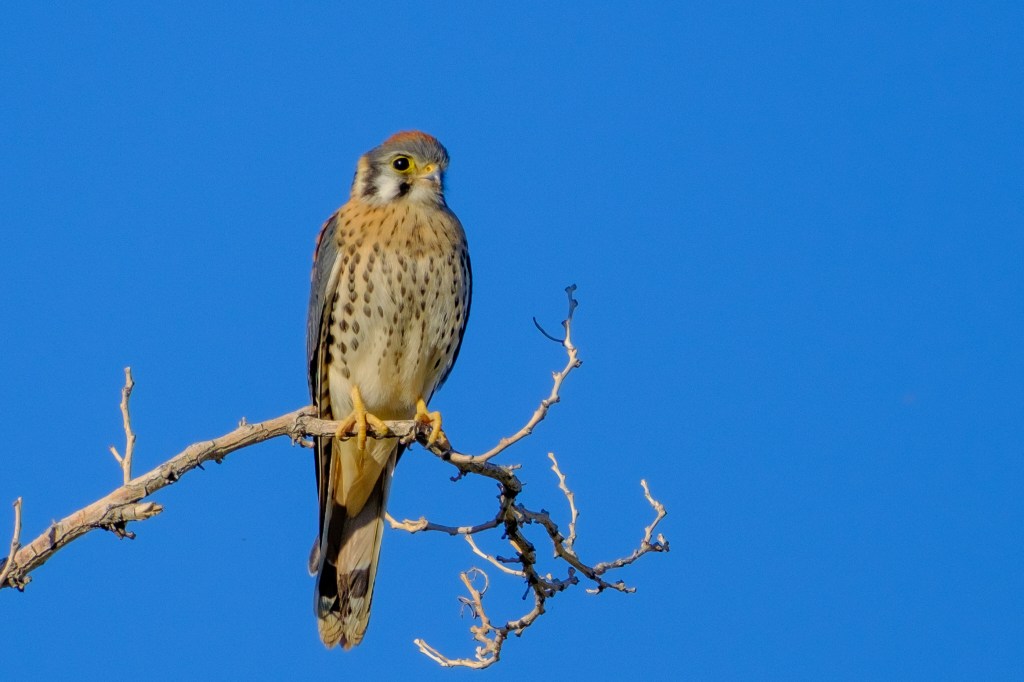
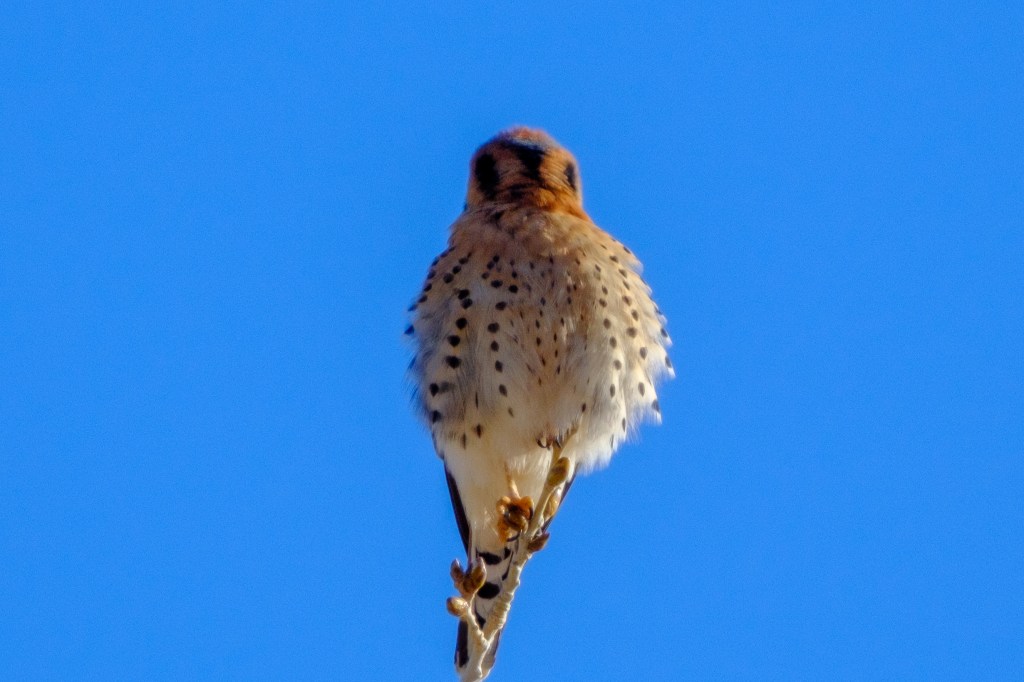
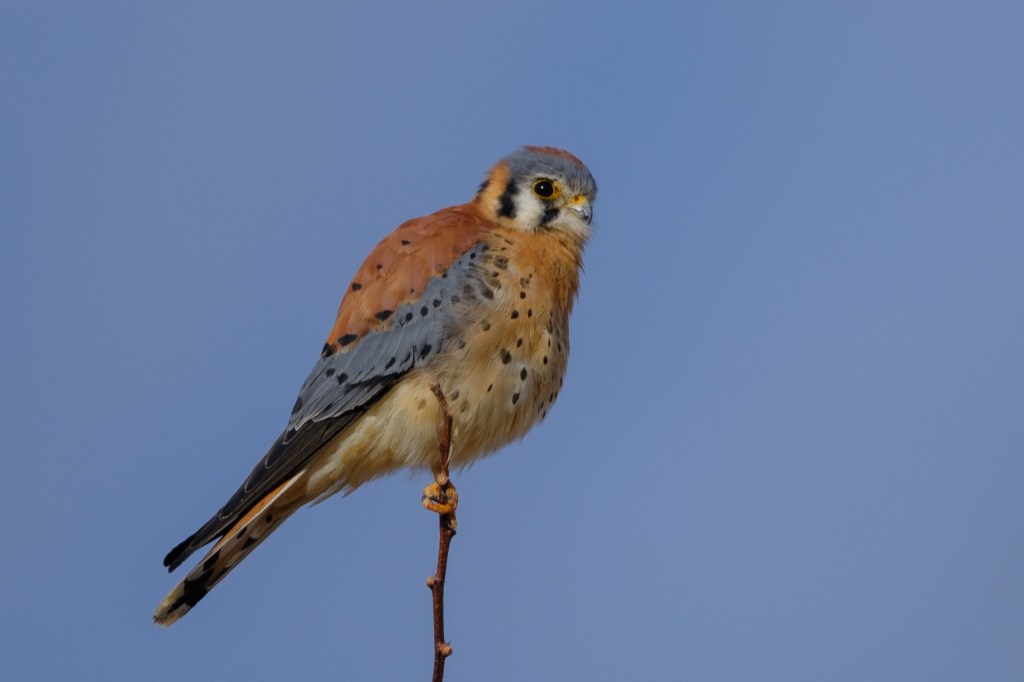
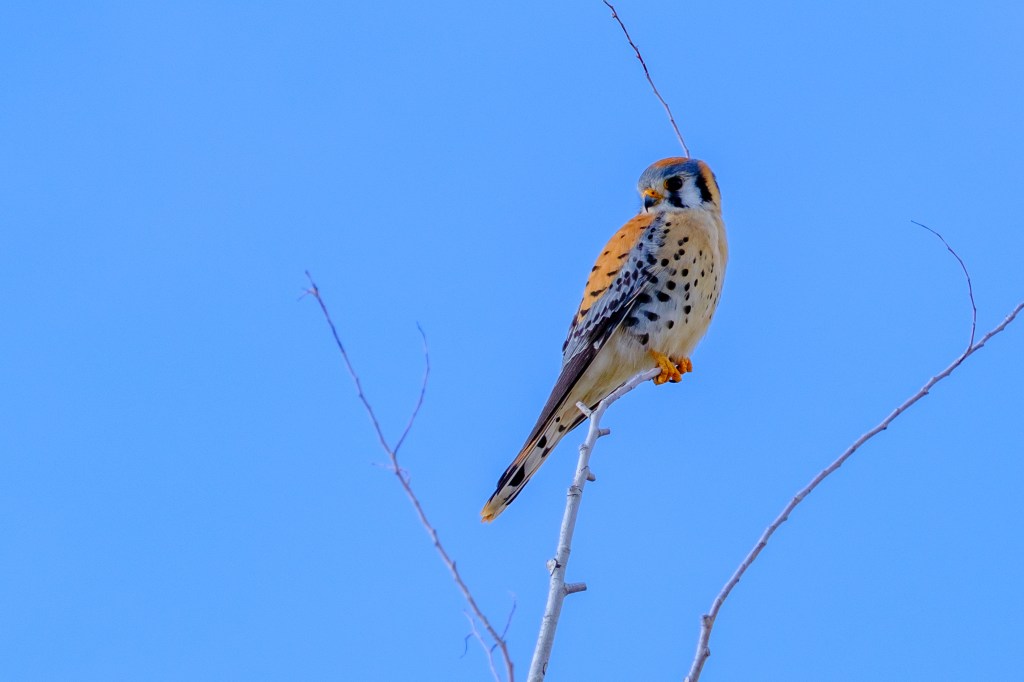
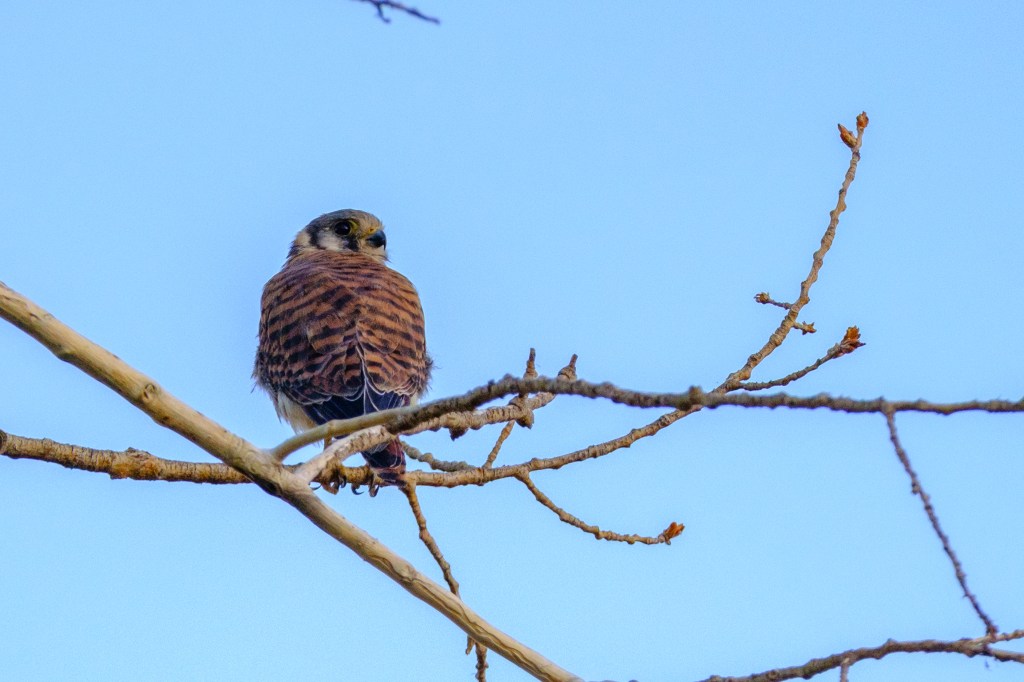
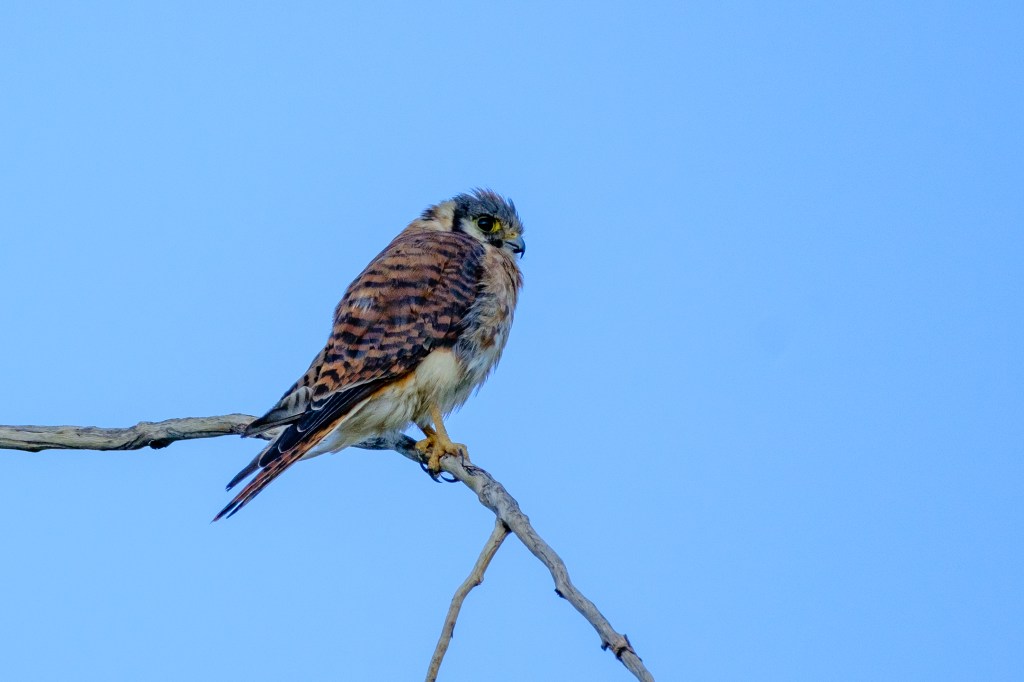
            Like other falcons, Kestrels have pointed wings, dark eyes, and a facial “mustache.” Their tails are flashy red. They appear to have “eyes” in the back of their heads, thanks to black feathers that form dark circles. The males have blue-gray wings, orange-brown backs with black horizontal dashes, and black spots on their white chests. A blue-orange, white-black combo. Females have a rufous back with horizontal black stripes. Their wings are colored like their backs and they have brown vertical streaks on their white chests. These little carnivores stand out for their gaudy feathers.

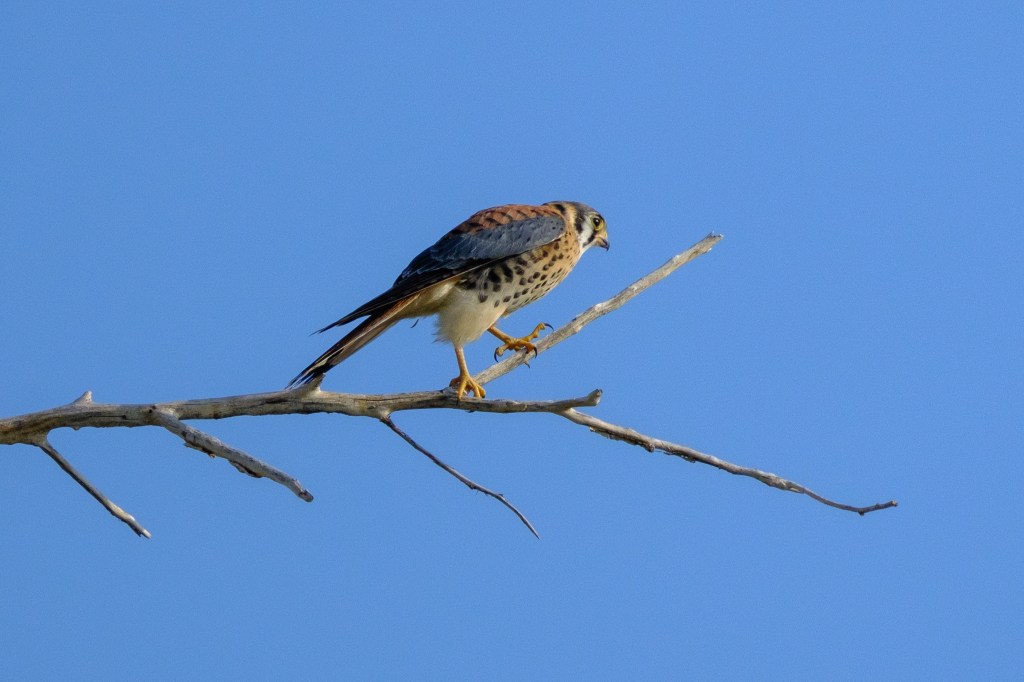
            Falcons have short beaks that are sharply hooked. The beaks have a “tooth” that is used to sever the spine of their prey. They have big feet and long toes for striking their quarry. They may hold the victim with their talons, tearing it apart with their beaks.

Portraits of Male Kestrels

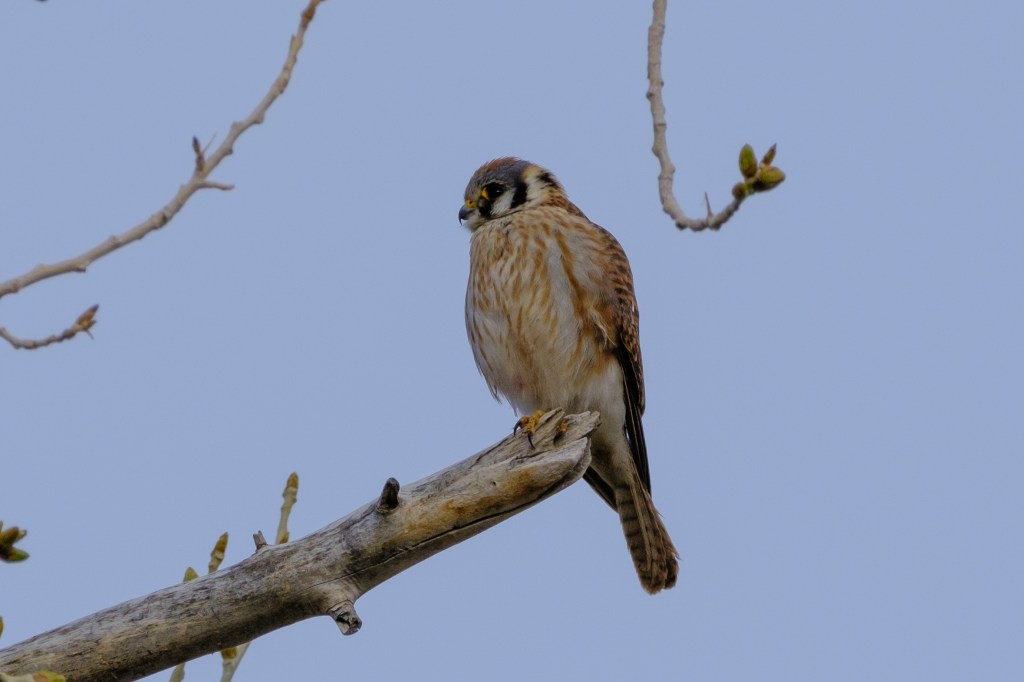
I will start with photos of male Kestrels. All these pictures were taken in the Bishop area near the Bishop Creek Canal, Airport Road, and the Buckley Ponds. The first image shows the black “mustache” that drops below the eye. Note the short, hooked beak. Black markings are on the back. The primary wing feathers cover most of the tail. The bird is looking over its shoulder, a come-hither look that is common for Kestrels.

The next five photos show a Kestrel near the Buckley Ponds. The lighting was particularly attractive that morning.

Note the black spots on chest.

The next photo shows the “mustache” of black color below the eyes.

In the next image the bird shakes itself. This cleans the feathers of dust and dirt.

Big toes.
My, what big feet you have! And talons.
Hooked beak. Tail longer than wing feathers.
One foot on end of branch, the other lower down. Common pose.

One of my favorite images is below. The bird’s body is outlined by the dead branches.

Chest has few spots. A young bird?
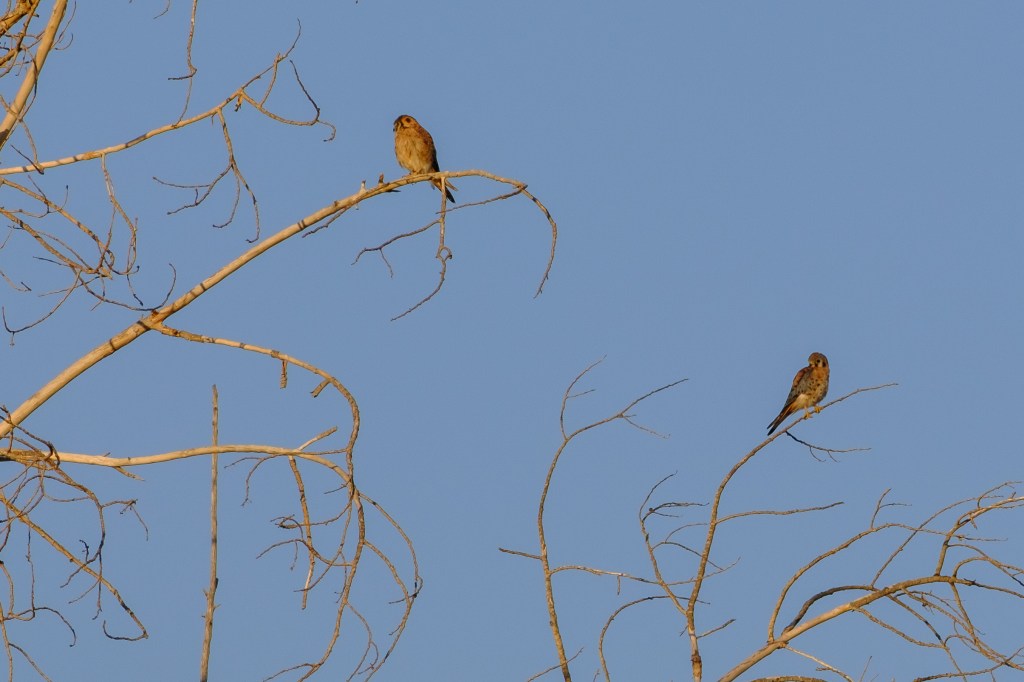
Female on left, male on right. A mating couple? Siblings?
Lightweight bird on tiny branches.
Same bird as the previous picture. Good view of the fake “eyes” on back of head.
Sometimes the young birds hang with their parents. Here are two females and a male. Family?

Portraits of Female Kestrels

Stripes across the back.
Forgot to comb her hair.
Chest has brown streaks.
One foot on end of branch.

Flight

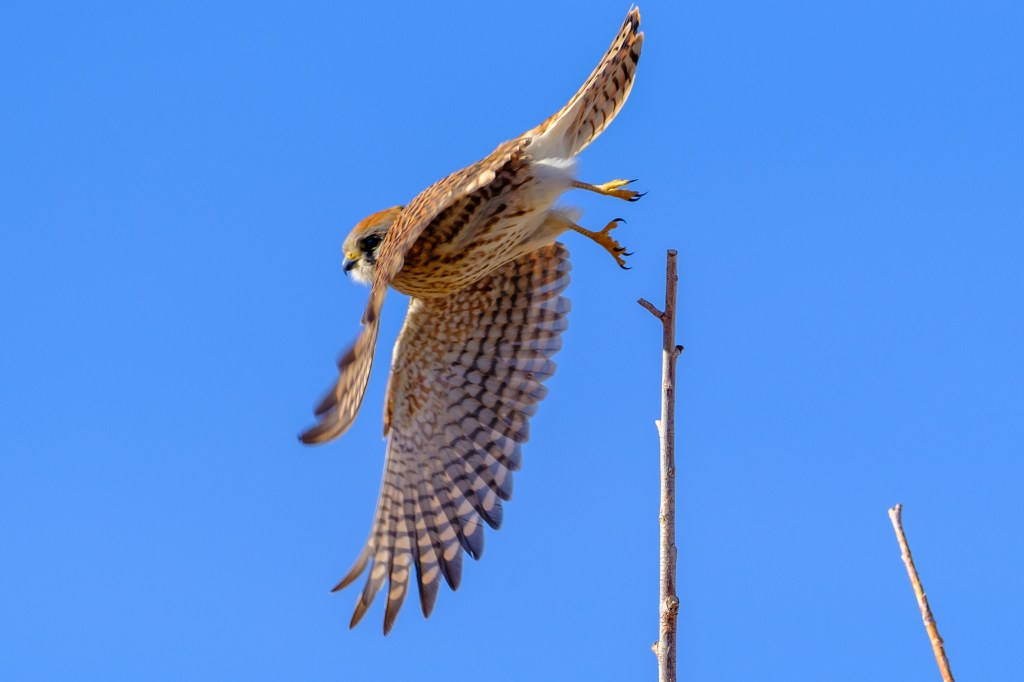
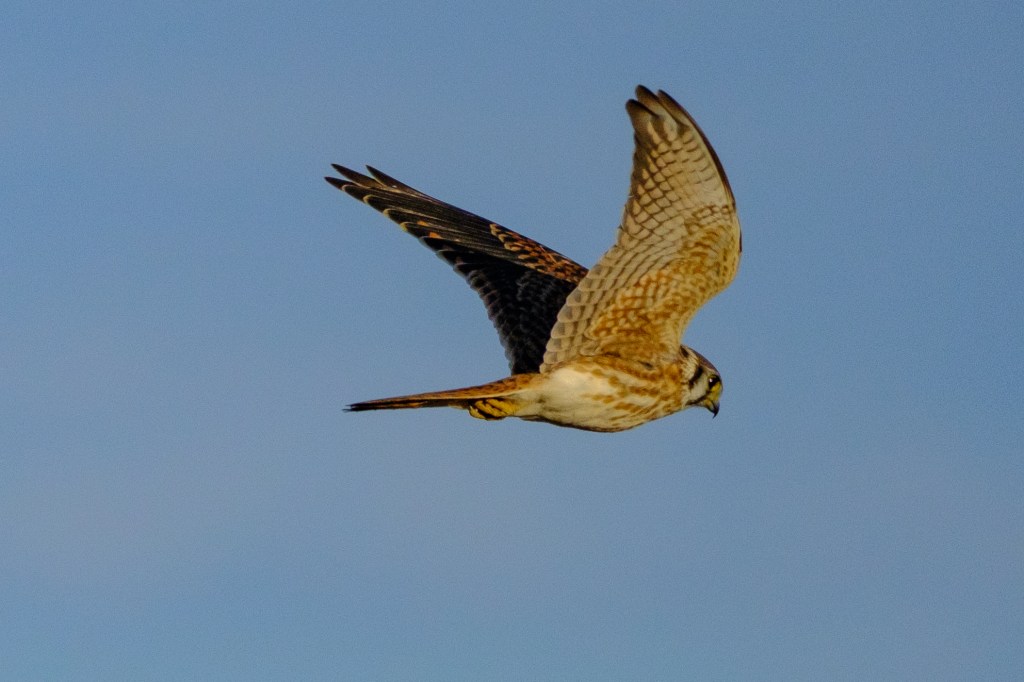
Most falcons are built for speed. Not this bird. It can fly at 30 mph, but generally is lazy and takes its time. It is perfectly happy to eat grasshoppers, so there is no reason to rush about.

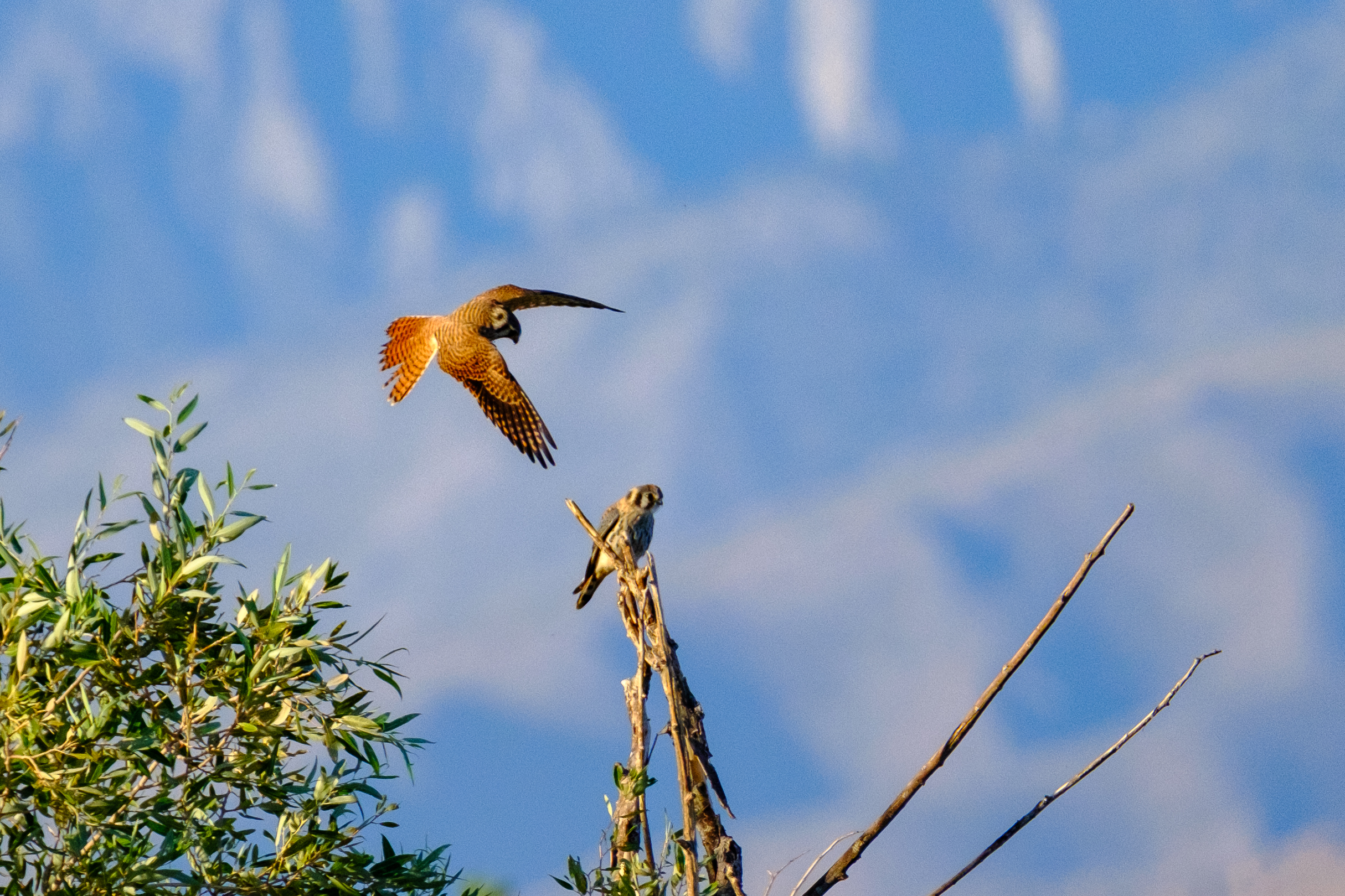
Female takes off.
Another female ready to leap.
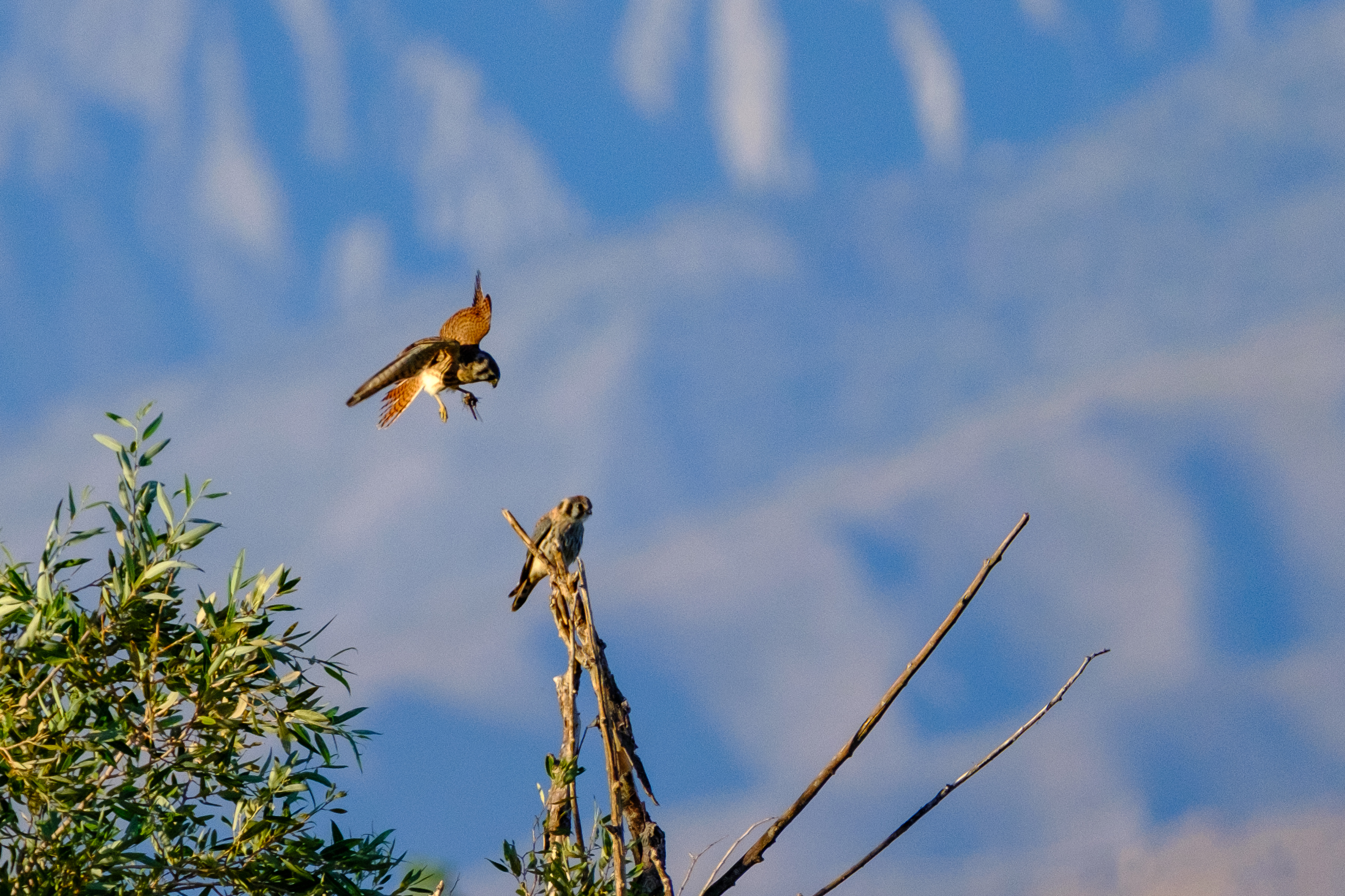
A female lands. Tail is RED!
Female lands. The spots in air are from cottonwood trees or bugs.

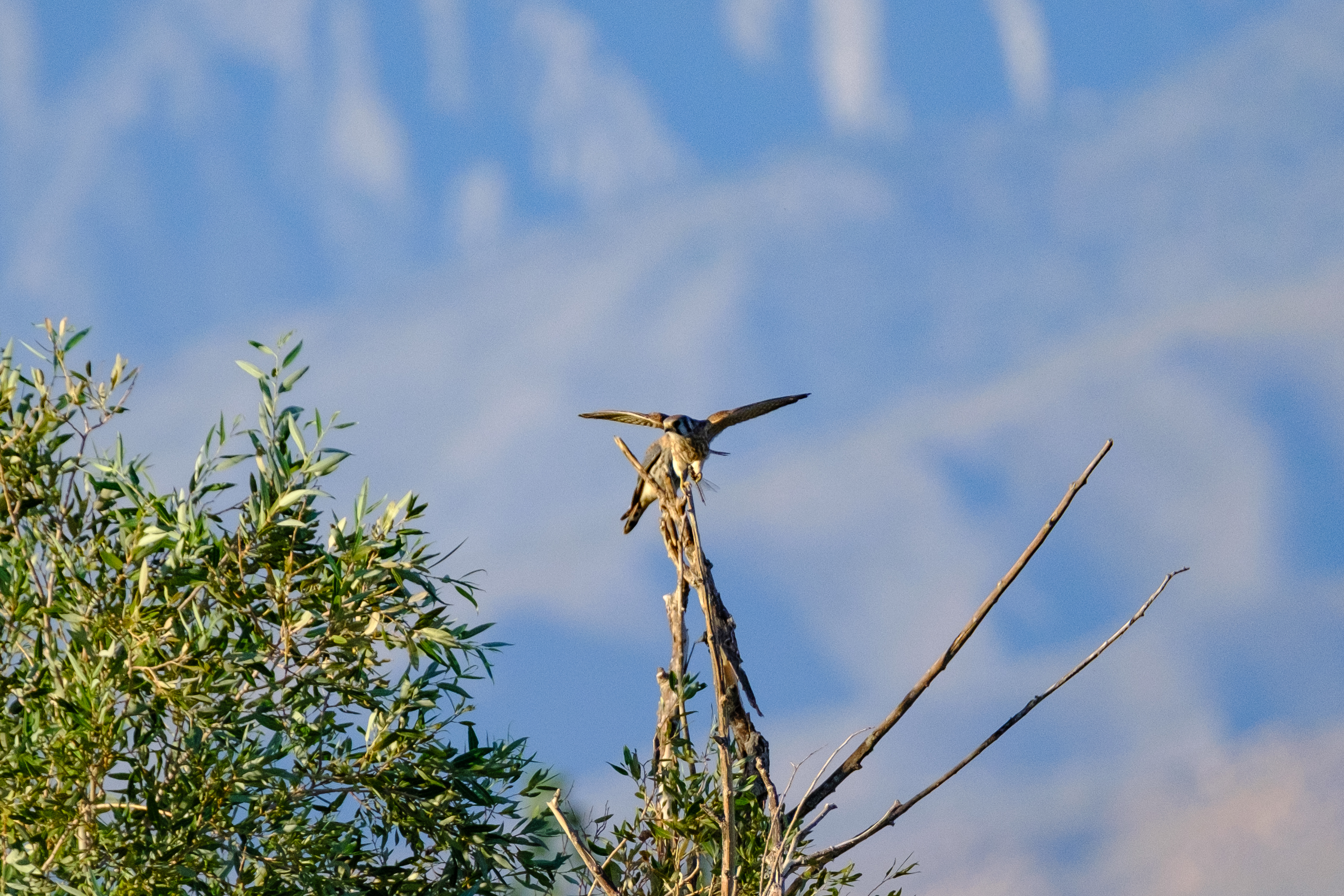
Male below seems to be lost in thought. Female approaches. At first she looks threatening, but she is just trying to land.

Male, looking for breakfast.
A male. Blue color in wings.
Pointed wings.

Below a male lands. Then he staggers about trying not to overshoot the branch. Wings and tail wave about. This balancing act is common for these birds, as if it is hard for them to judge their final speed.

Female pivots to her right to launch from branch.

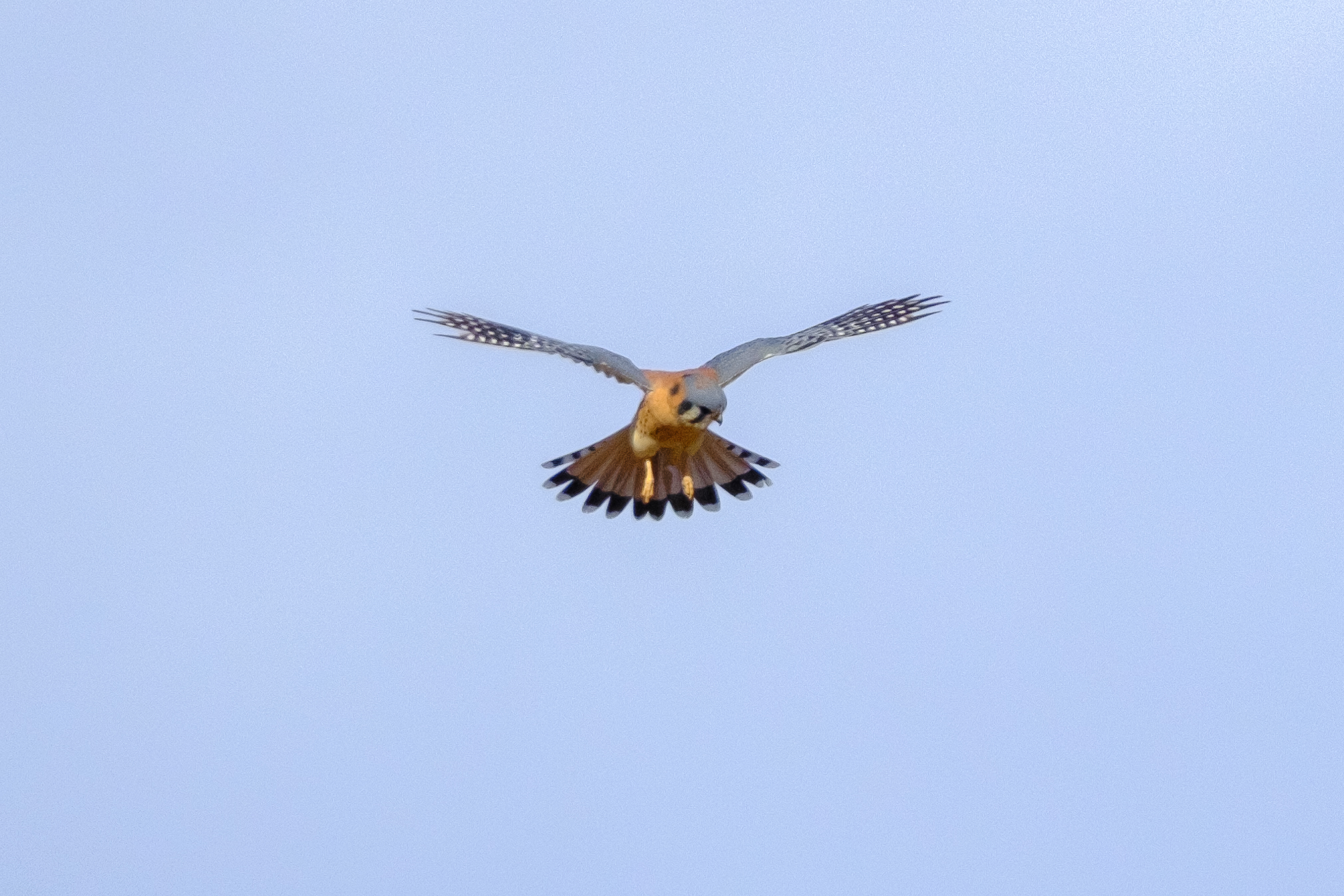
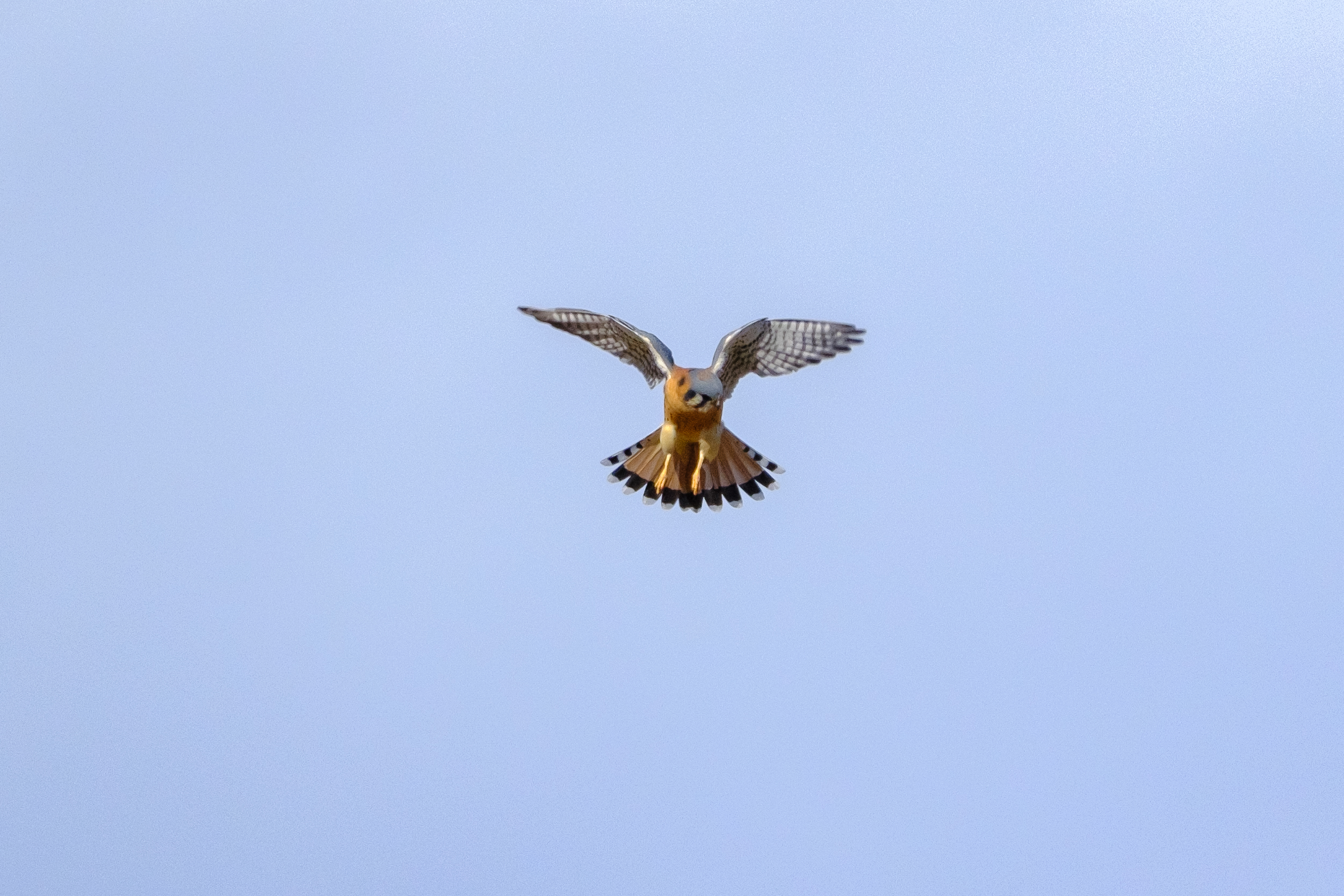
Hovering

Sometimes Kestrels will hover. They will face into a breeze and maneuver their wings and tail to keep their head steady, while they search the ground below.

Fun Facts

Pay attention. Some of this may be on the quiz.

First, Kestrels do not need to drink water. When kept in captivity, they can get all the water they need from their carnivorous diet. This makes it easier for them to live in the desert.

Second, DNA studies suggest that Falcons are not closely related to other hawks. They are related to cuckoos.

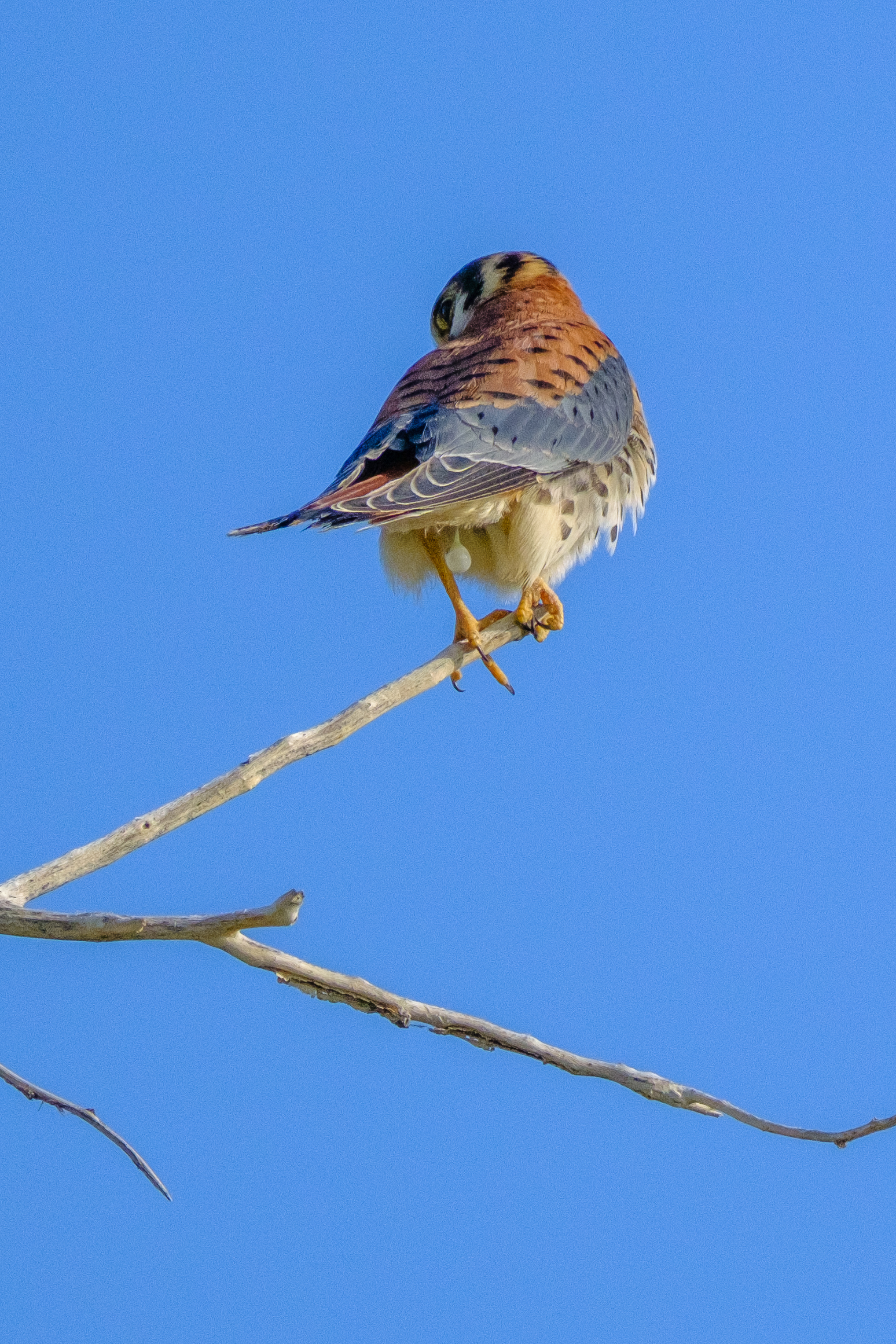
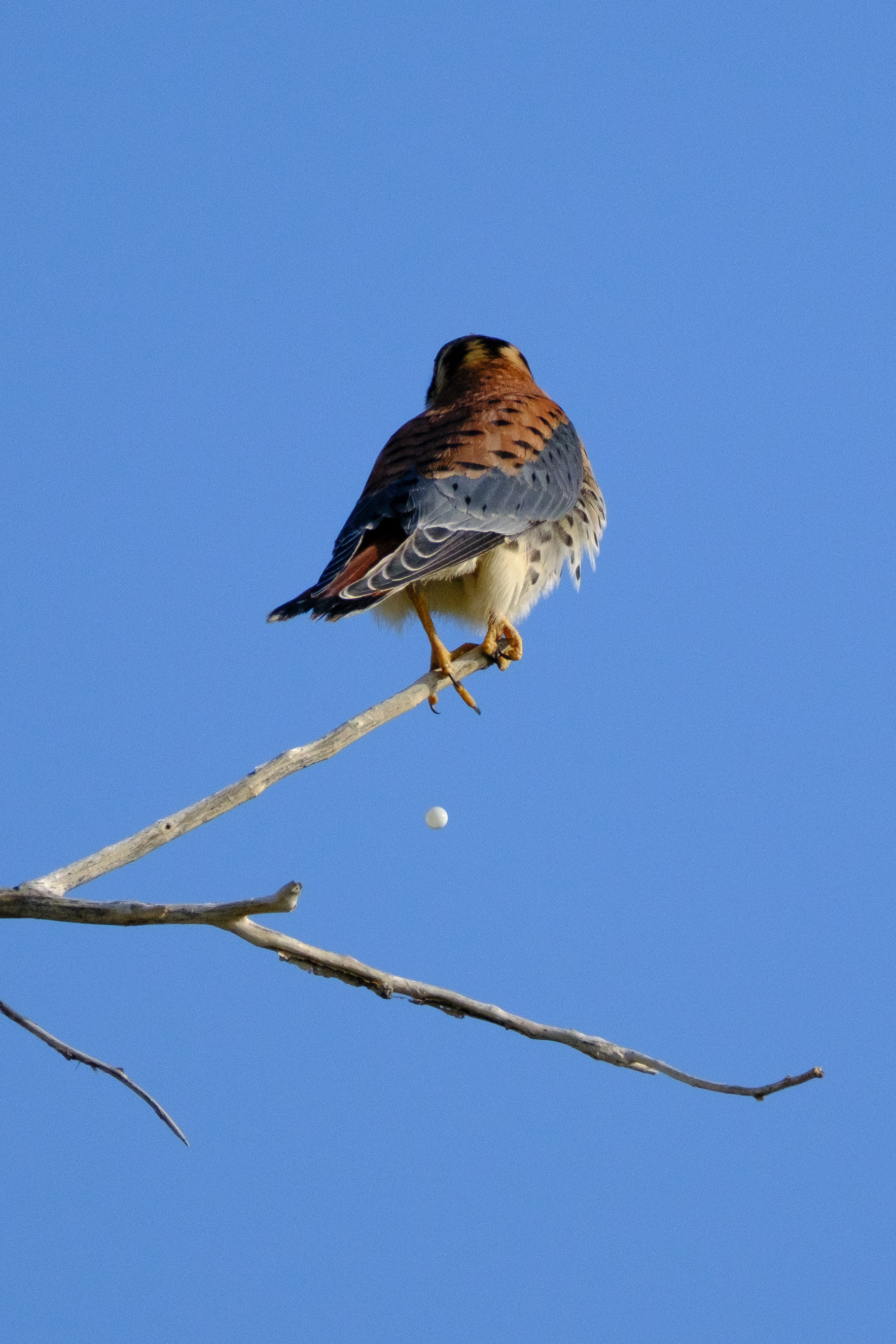
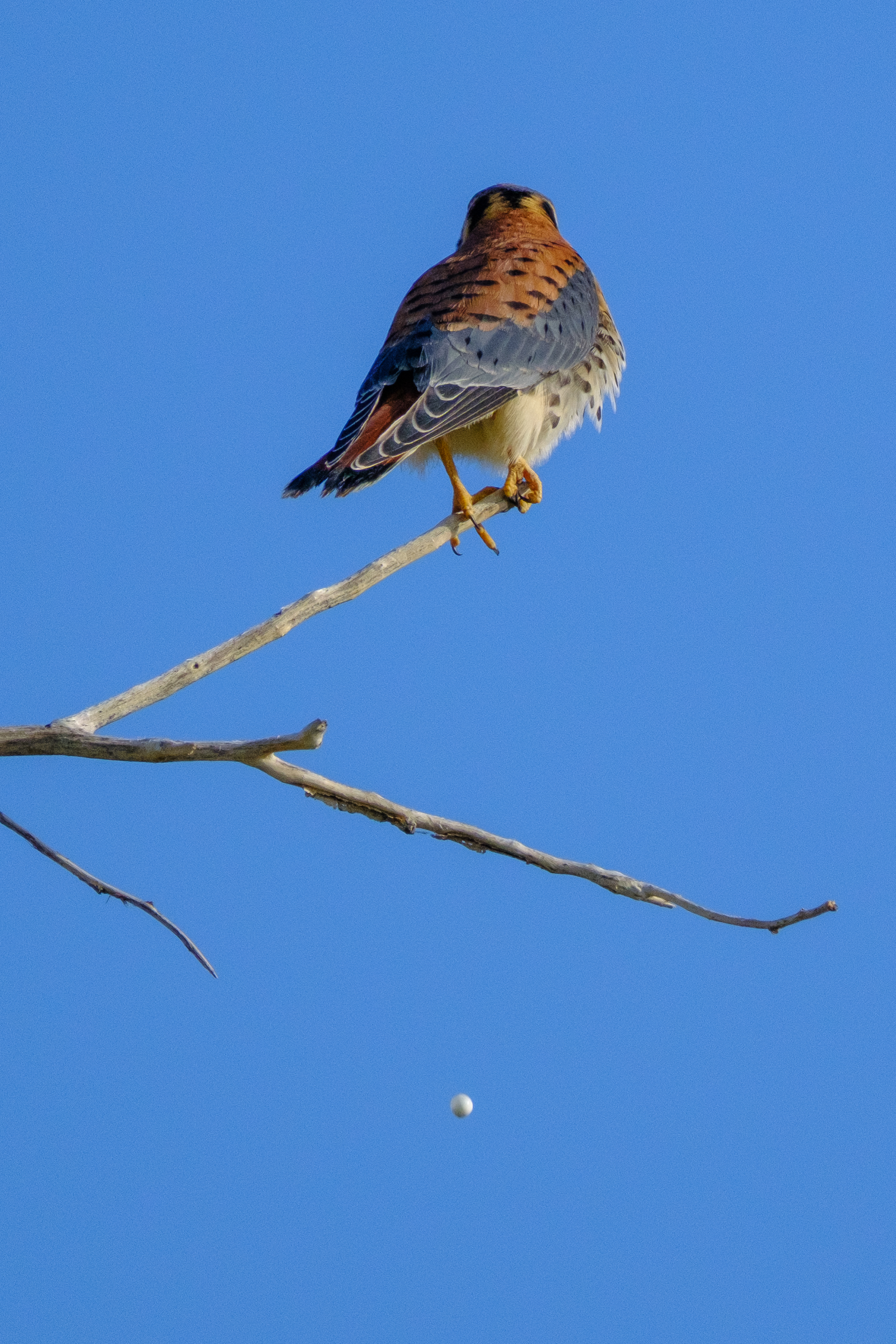
The third fact is related to defecation. If you are squeamish, you can skip this section. Kestrels do not build nests. They prefer to find cavities, such as holes left by woodpeckers. You have heard the phrase “Don’t soil your own nest.” Or, more crudely, “Don’t shit where you live.” Kestrels take this literally. Their waste, containing undigested food and a white paste of uric acid, is wrapped in a fecal sac, which is then evacuated. The bird can then throw this out of the cavity it resides in. Very tidy. Below, a photo sequence shows a bird evacuating and dropping this sac:

Other falcons

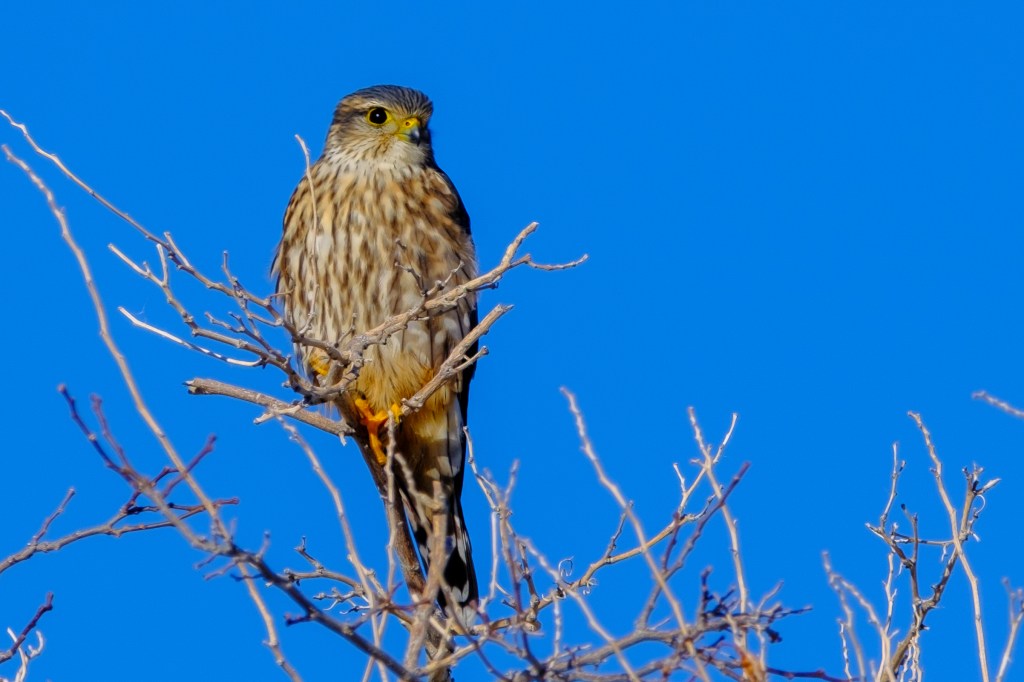
Three other falcon species can be found in the Bishop area. First is the Merlin, only a little bigger than a Kestrel: 10″ long, wingspan 24″, and 6.5 oz. They visit in fall and winter. Known for aggressive pursuit of other birds. Merlins come in 3 flavors: Pacific, Taiga, and Prairie. The photo below shows a bird with a faint mustache; probably a Taiga Merlin.

Merlin, Sunland Road.

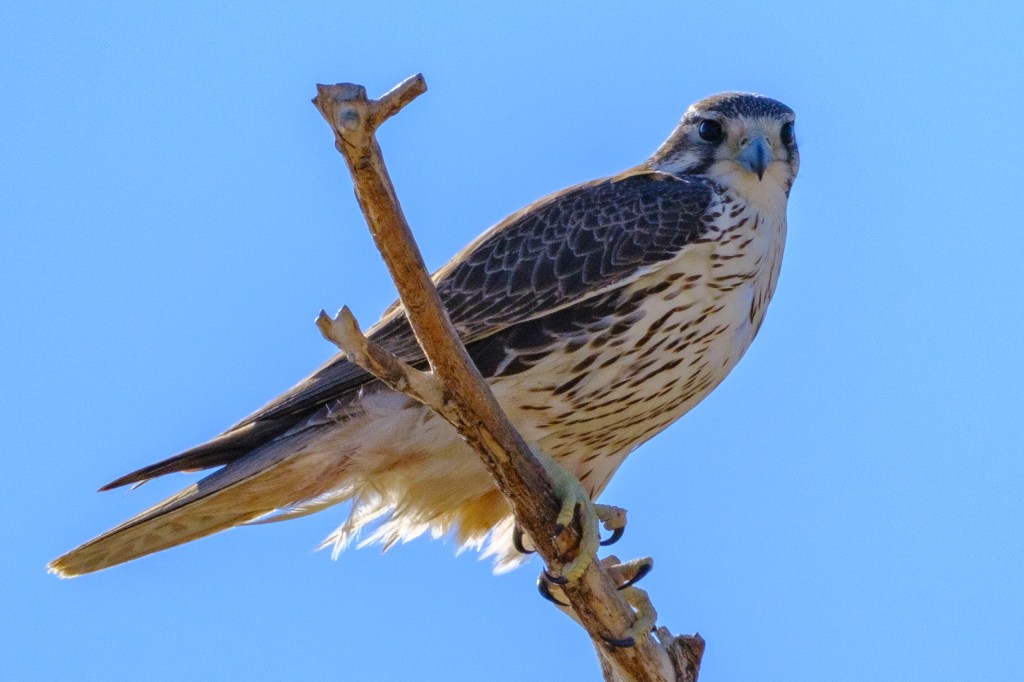
Much bigger is the Prairie Falcon: length 16″, wingspan 40″, 1.6 lb. Other birds should fear this hunter.

Prairie Falcon, Warm Springs Road. Note the talons.

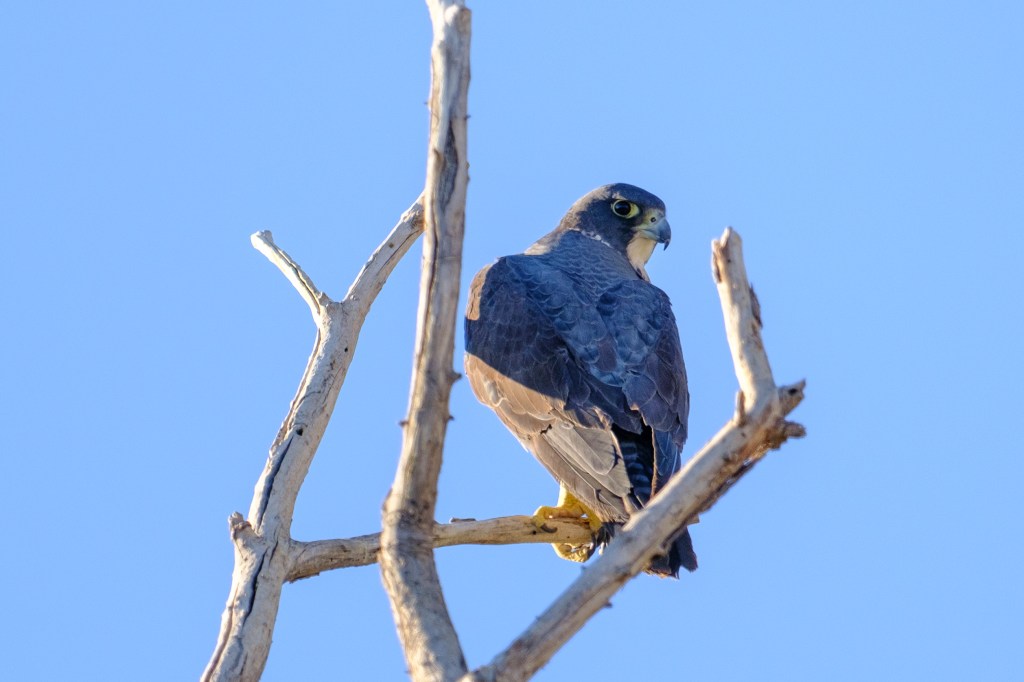
Slightly bigger still is the Peregrine Falcon: length 16″, wingspan 41″, weight 1.6 lb. This bird dives from high above, can reach a speed over 200 mph, and can kill a duck or pigeon in mid-air by striking with its feet.

Peregrine Falcon. Bishop Creek Canal.

April 2024

            During April, Roberta and I traveled the Eastern Sierra from Owens Lake to Mono Lake, collecting photos. I decided to create this month’s blog using a selection of those pictures, mostly bird images. I will group the photos by location and list the places from south to north.

Owens Lake

            On April Fools’ Day, we got up in the dark and drove to Owens Lake to photograph the dawn on Mt Whitney. It was cold and windy, so I froze taking pictures, while Roberta sat in the warm car sipping coffee; smart woman.

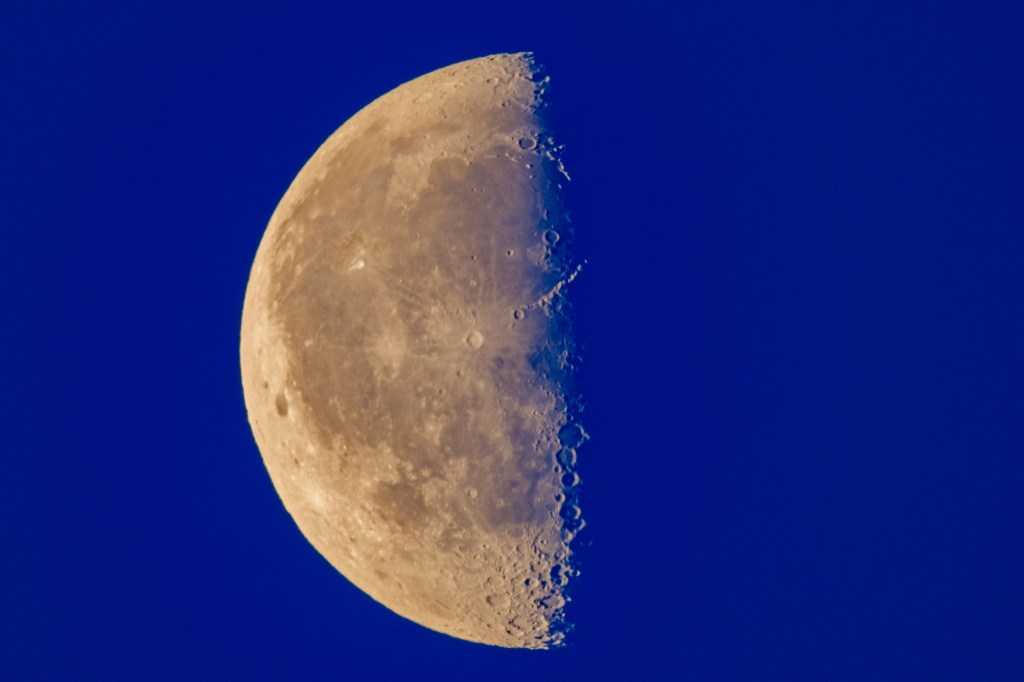
            The moon was at third quarter. The giant crater Copernicus is near the center of the photo below; this crater is fully lit and a white blanket of ejecta spreads out over a diameter of 300 miles. The crater walls are 13,000 feet high. Above and right is the crater Erastosthenes and the Appenine mountain range extends, from there, further up and right into the darkness of the terminator (the line between dark and light). The brightest area in this range is a feature that is white on its left side, dark on the right side; this is Mt Huygens, 18,000 feet, the highest lunar peak. So the tallest mountain I saw that morning was Huygens, not Whitney (14,505 ft). Lower in the picture, right on the terminator, are 3 big craters in a line. From top to bottom they are Ptolemaeus, Alphonsus, and Arzachel.

Third Quarter Moon

            In the photo below, the tall point left of center is Whitney.

Mt Whitney

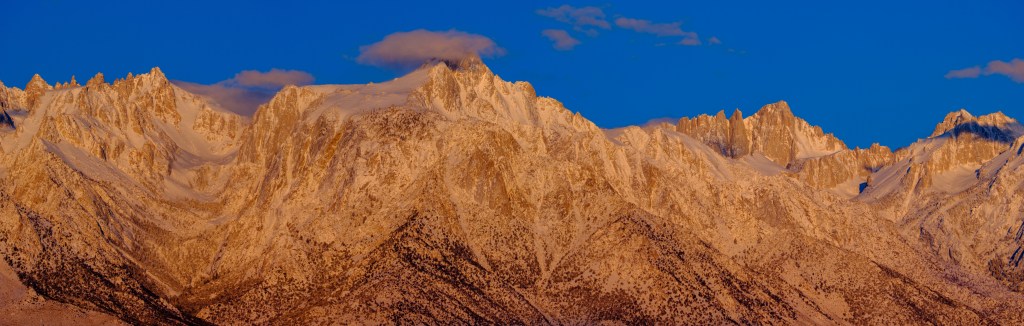
            Below, a panorama shows, from left to right, Sharktooth, Mt Corcoran, Mt LeConte, Lone Pine Peak (12,944) in the middle, and Mt Whitney on the right. Lone Pine Peak looks taller because it is closer.

            Mt Willliamson (14,375) is California’s second highest peak. The summit is on the left.

Mt Williamson

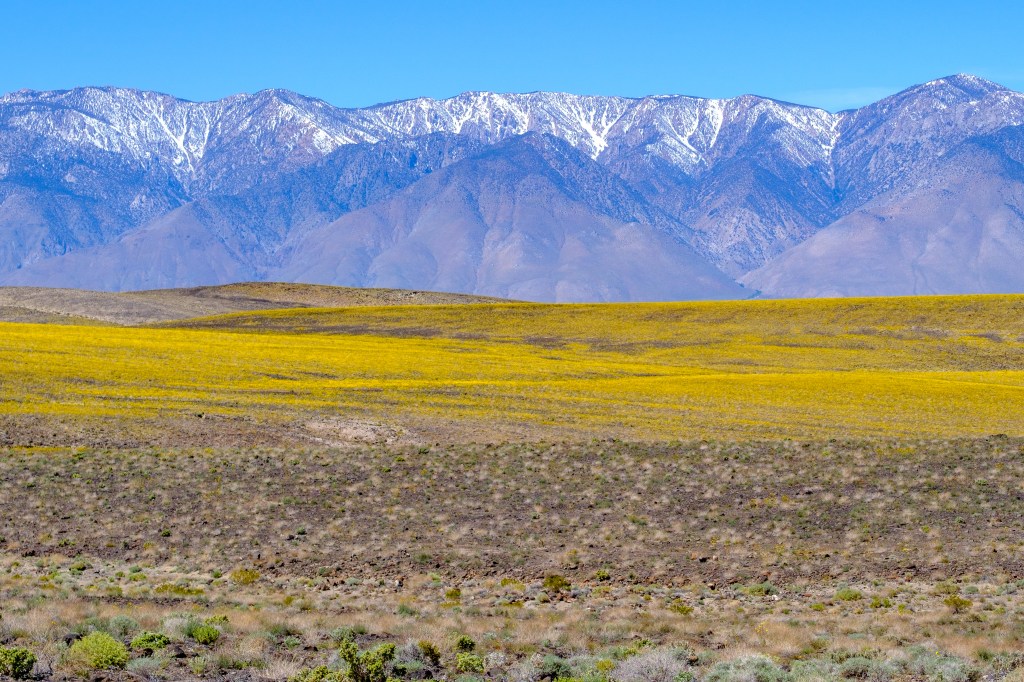
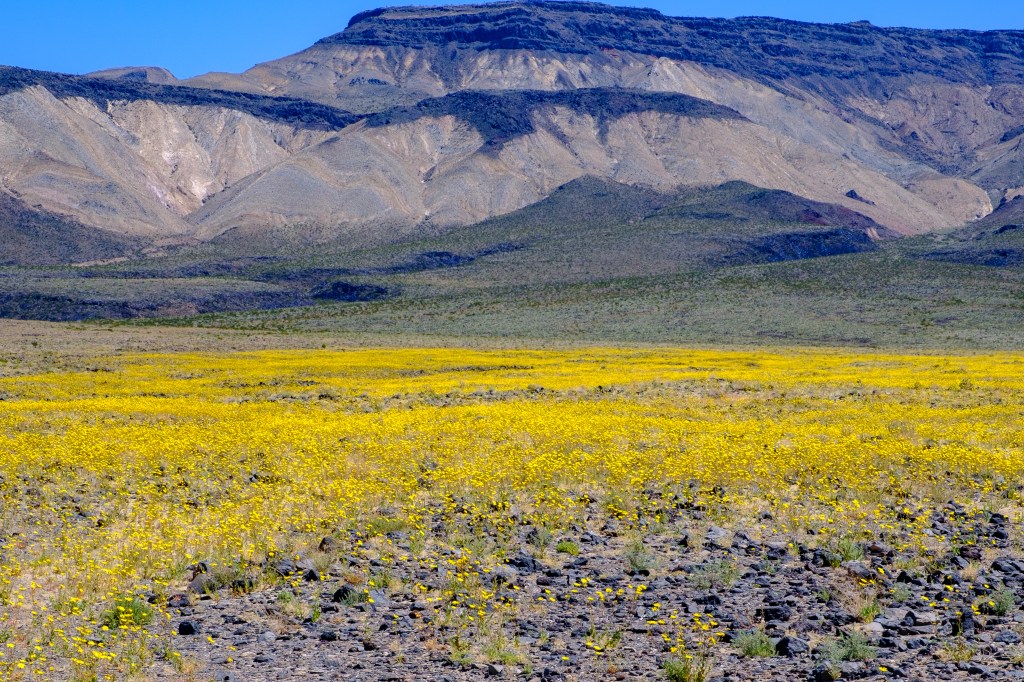
            South of Owens Lake, along Highway 190, there was a bloom of Desert Sunflowers. The southern Sierra is in the background.

Desert Sunflowers. Malpais Mesa in background.

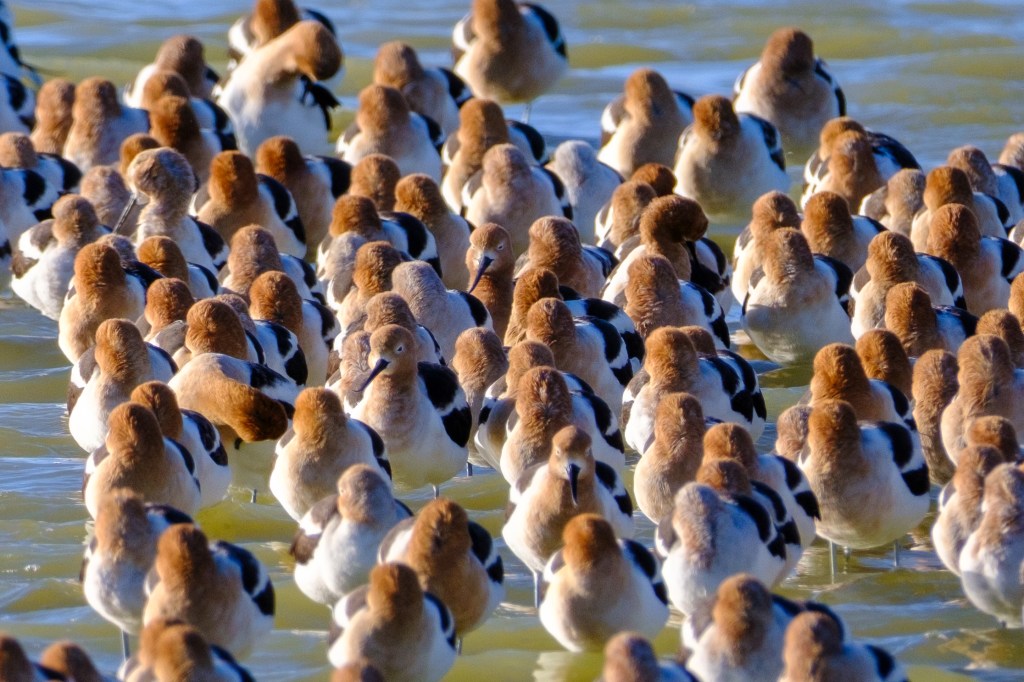
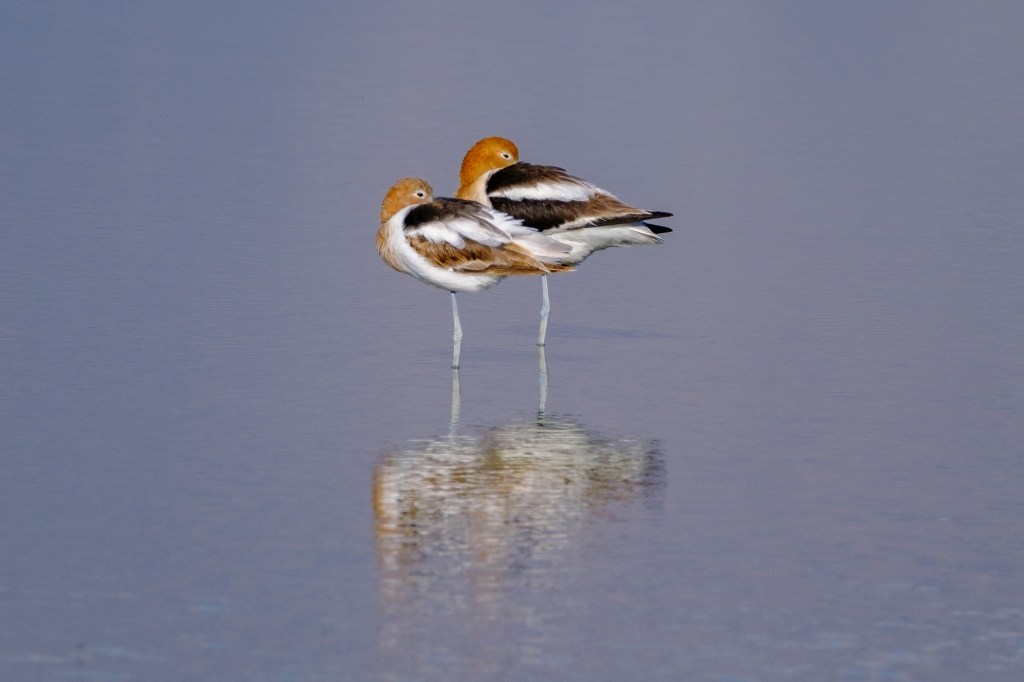
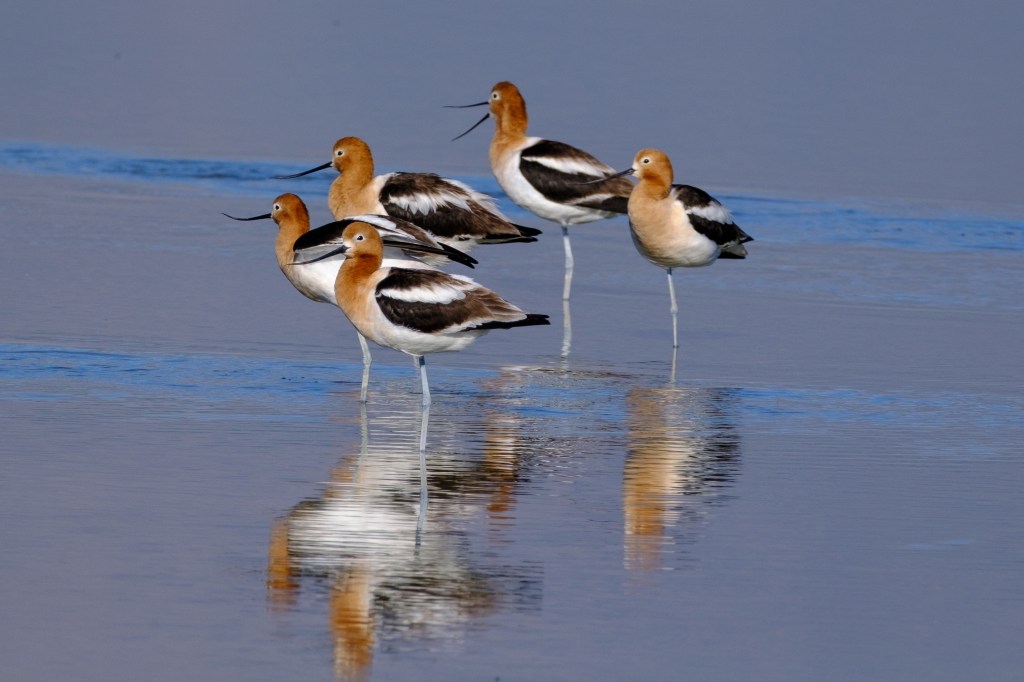
            On April 1, American Avocets were on Owens Lake, sheltering from the wind behind an elevated road. Their bodies are facing north, but most have turned their heads to face south, away from the cold wind.

American Avocets, Owens Lake

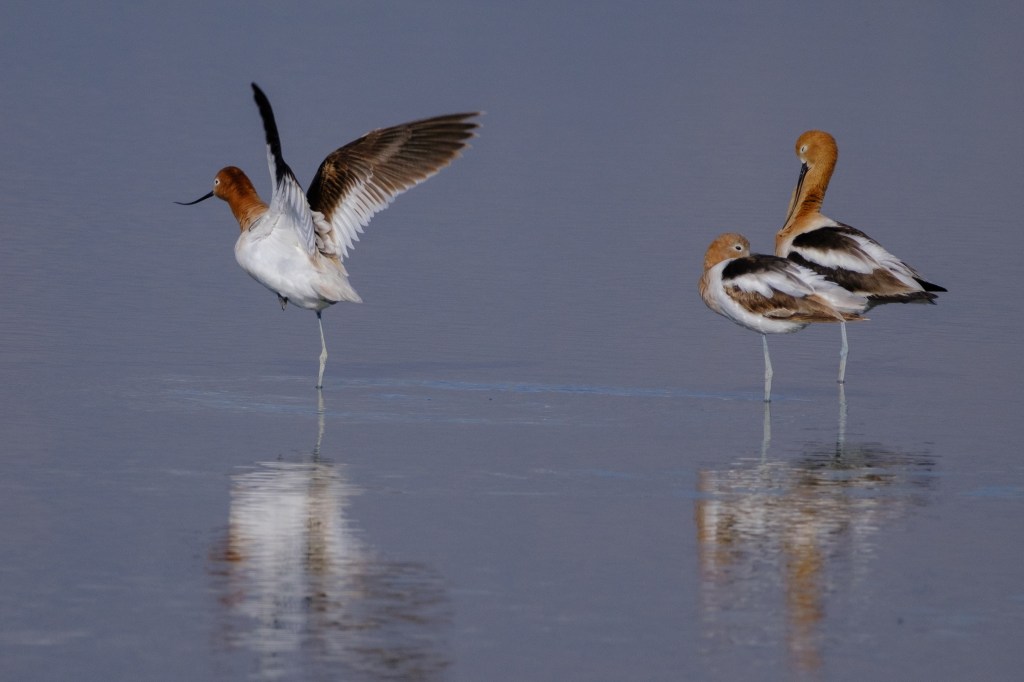
            On April 20 we joined the Owens Lake Bird Festival and toured the Lake with expert bird photographer Martin Powell. It was a warm, calm day. Many Avocets were standing around on one leg. In the first photo, an Avocet was hopping on one leg.

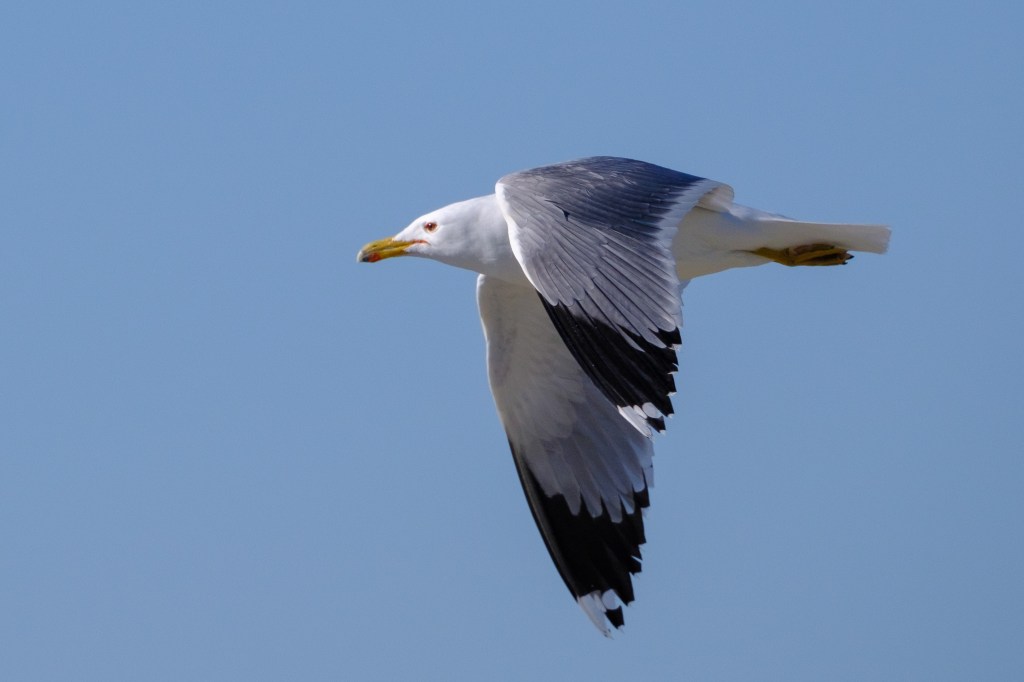
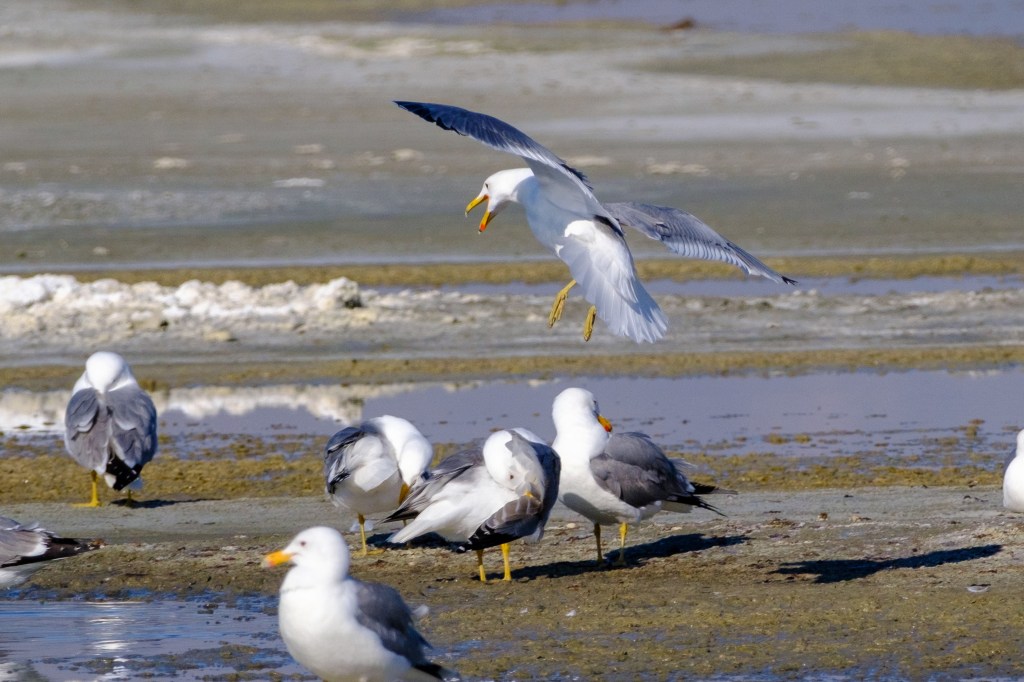
California Gulls migrate from the coast to the Owens Valley to breed.

            One Gull couple gets serious about breeding; the Gull on the right is saying “Get a room!”

Will you still respect me in the morning?

            Least Sandpipers flying in front of the Sierra.

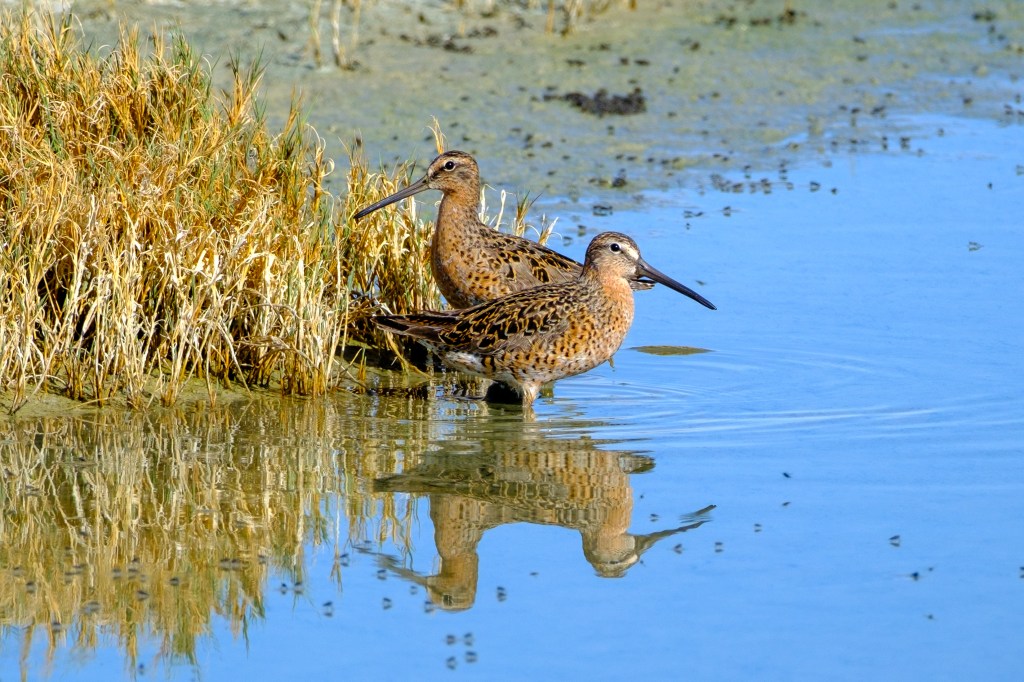
Long-billed Dowitchers have a dull red-brown plumage.

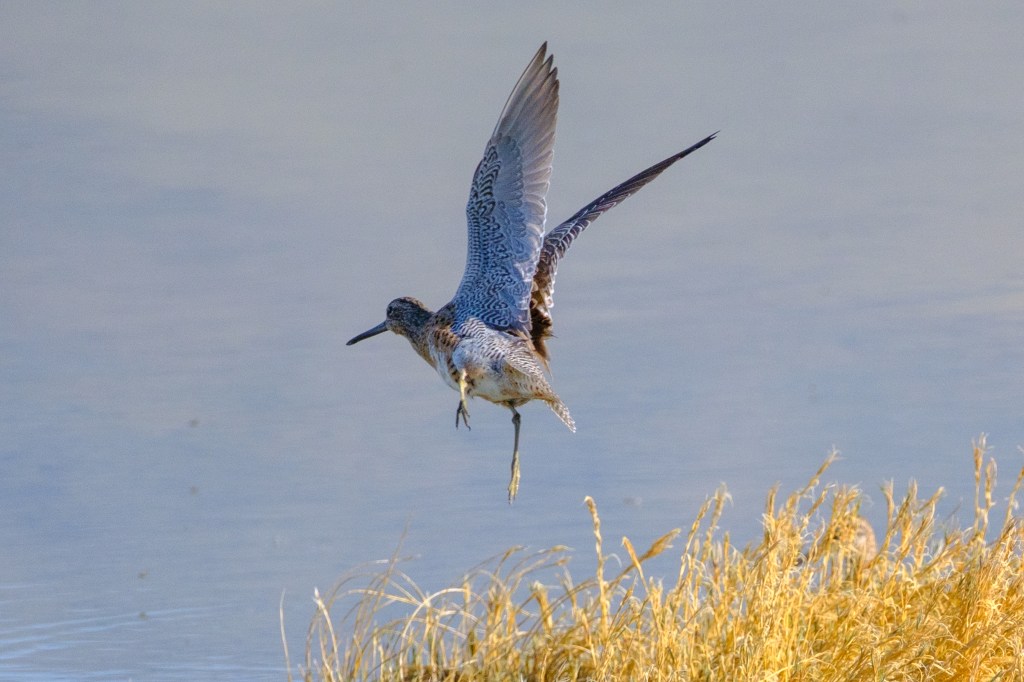
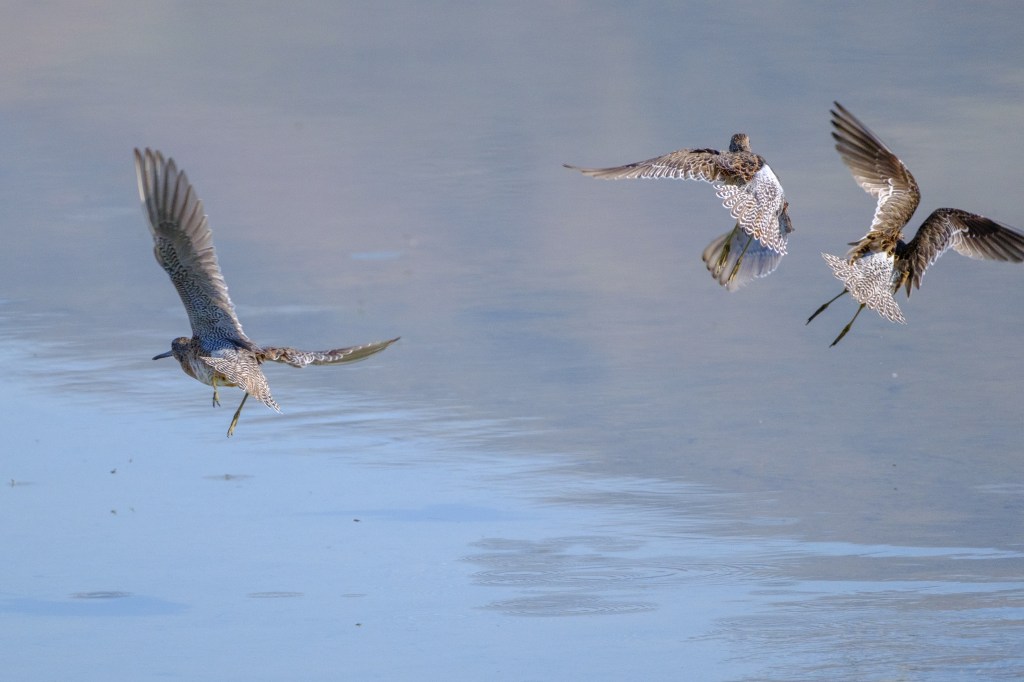
            But when Dowitchers take off, they reveal intricate patterns in their wing and tail feathers.

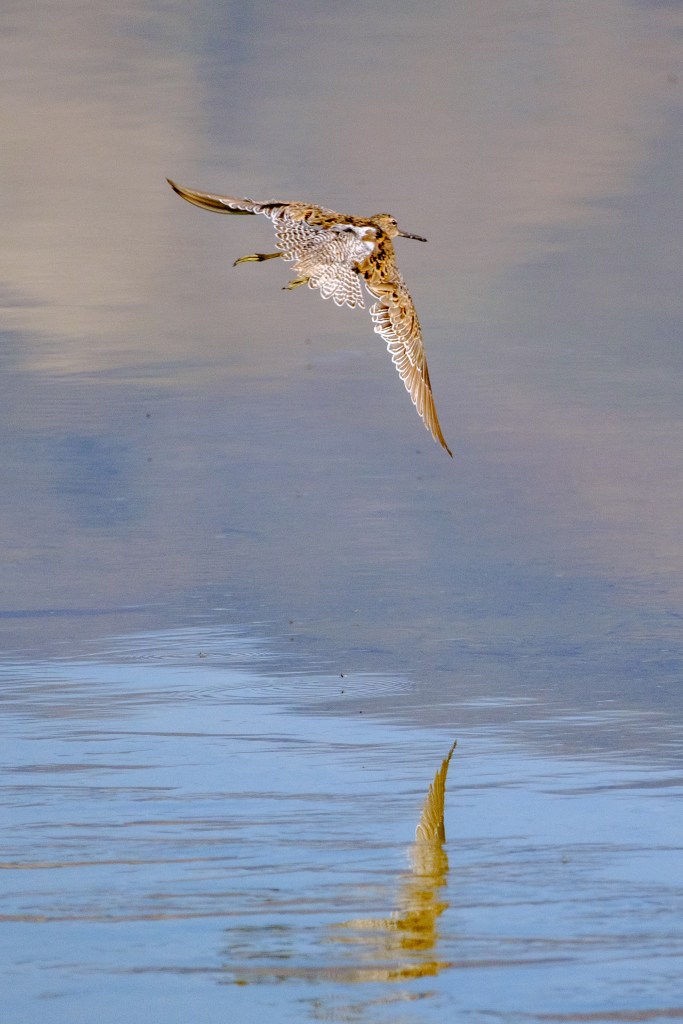
The Dowitcher below is reflected in the lake; it look as if a wing is reaching up from the water.

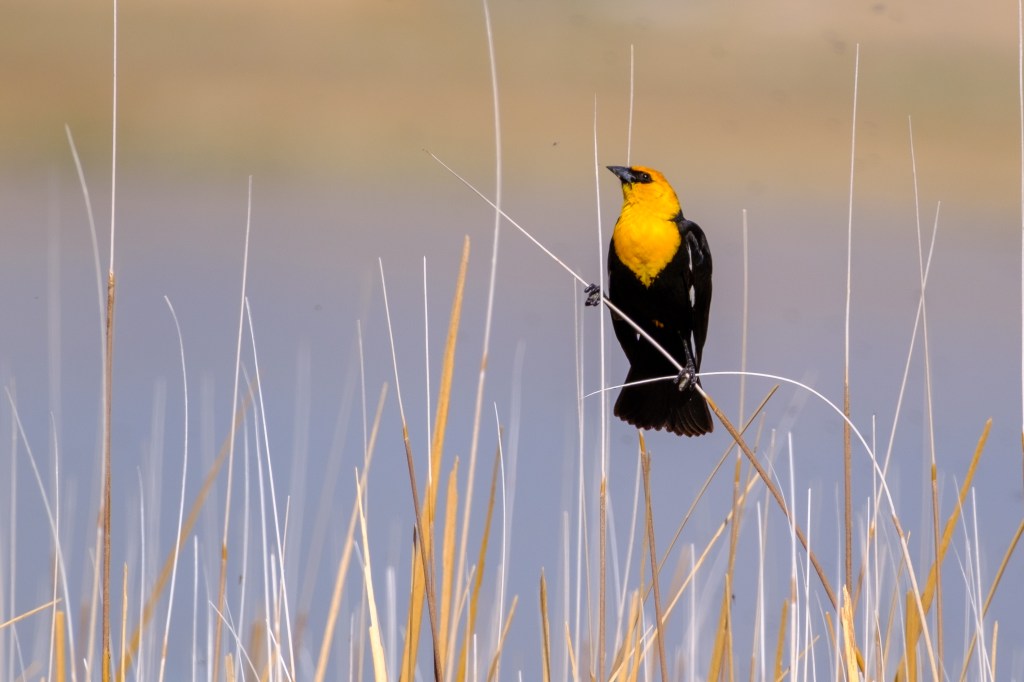
Yellow-headed Blackbirds are found in the reeds.

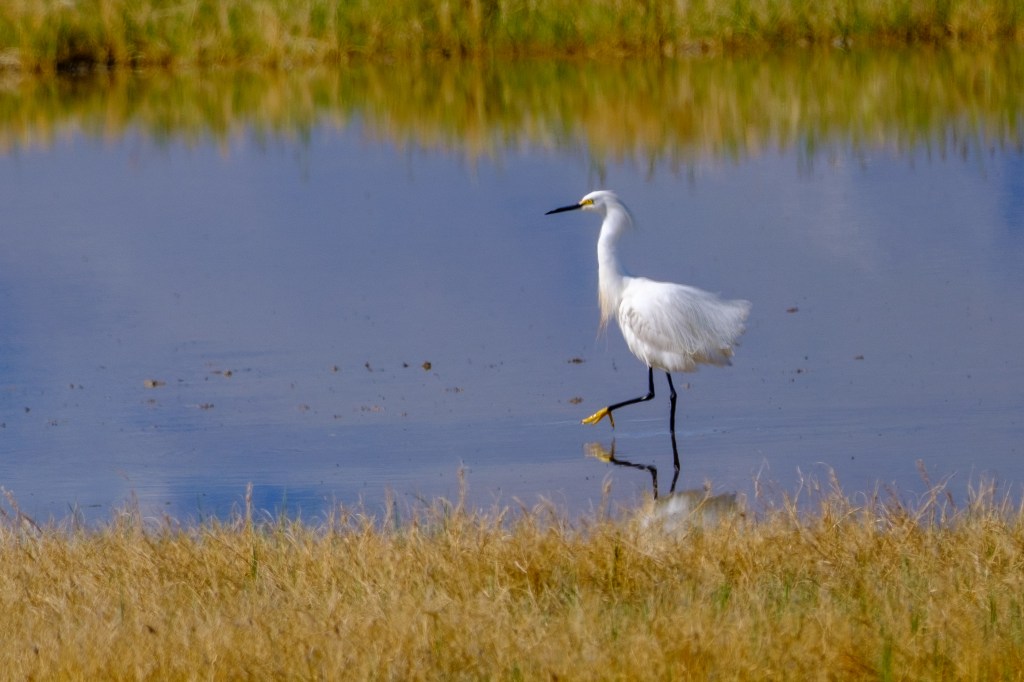
            A Snowy Egret, with breeding plumes, looks stately at first, but then shakes itself into a mess.

Buckley Ponds

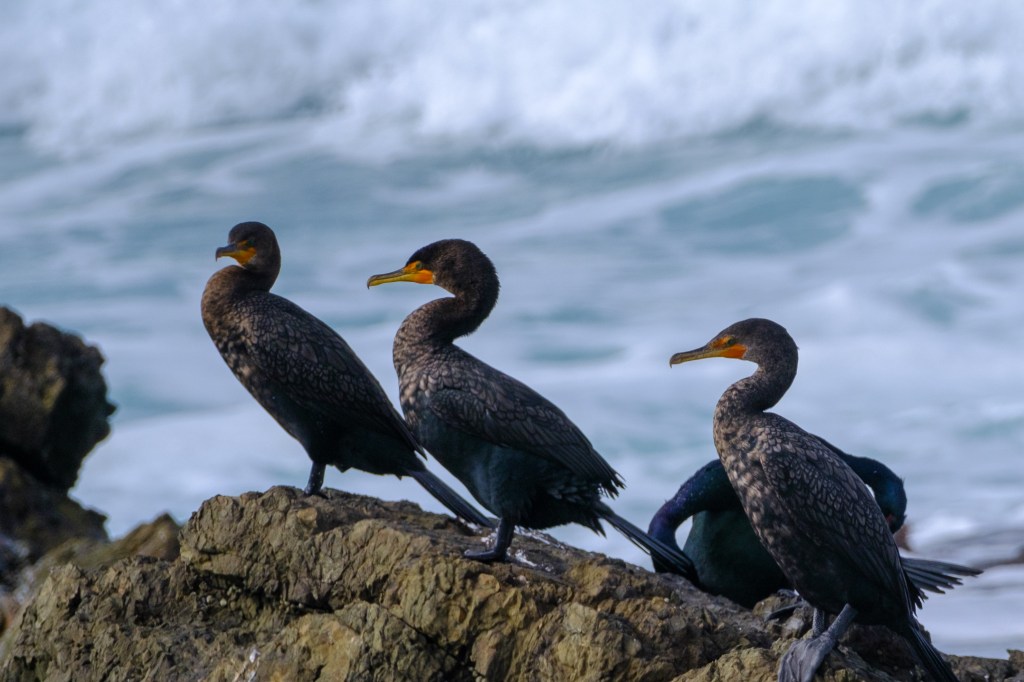
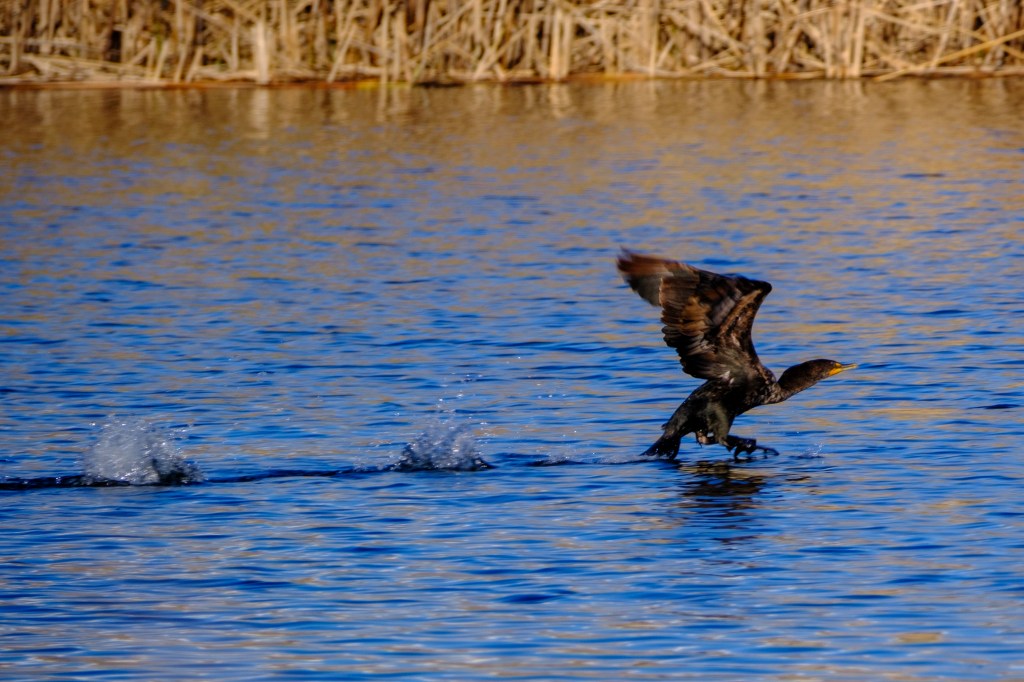
            The Ponds are just a few miles east of Bishop. Here a Double-crested Cormorant takes off by pushing on the water.

Eared Grebe
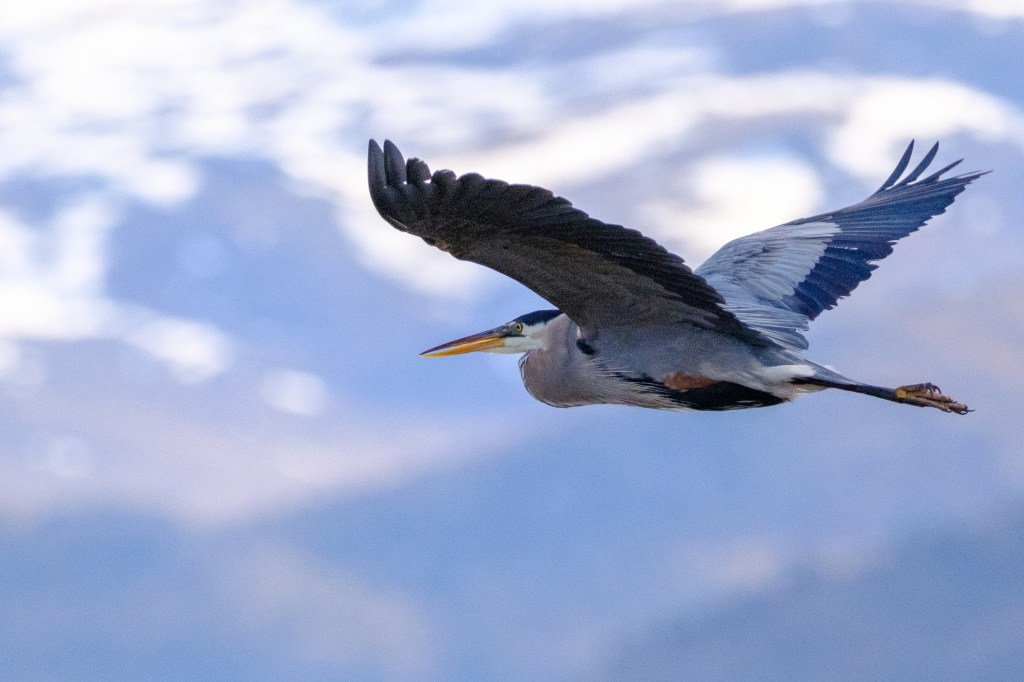
Great Blue Heron. White Mountains in background.

            Two Caspian Terns streaked past, heading north; I was lucky to get a shot. This bird may have spent the winter on the Mexico coast. I photographed two of them at the Ponds in April of 2022. They were feeding there for at least two days.

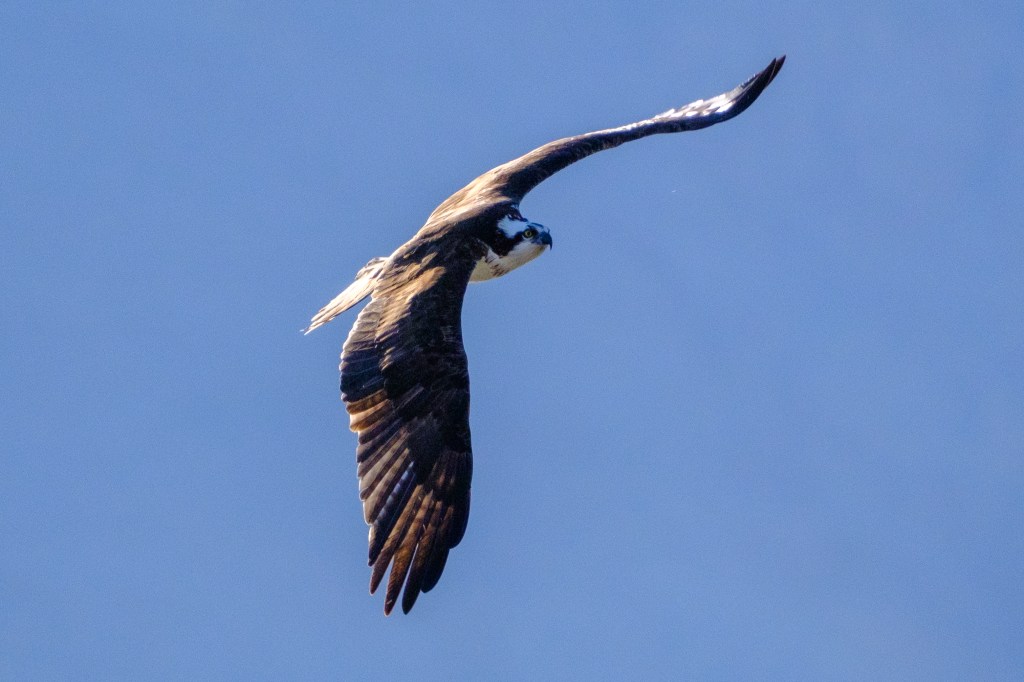
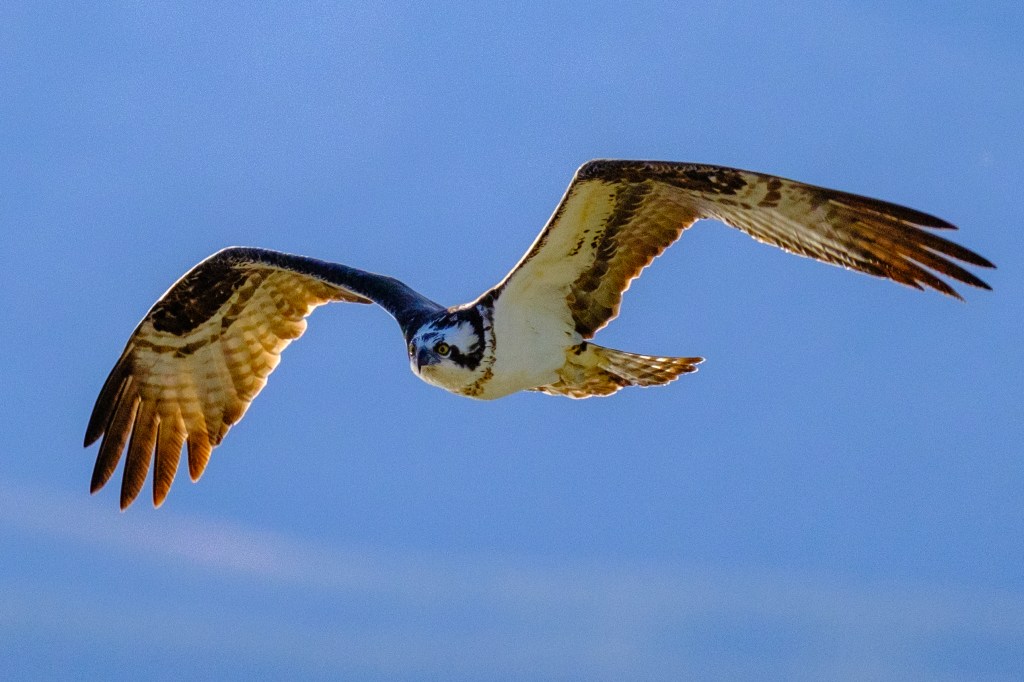
            An Osprey circled toward me, a turn that lasted 9 seconds; the camera captured over 100 images. Here are two of my favorites.

Bishop Creek Canal

            This area, including South Airport Road, is usually reliable for bird pictures.

Mallards
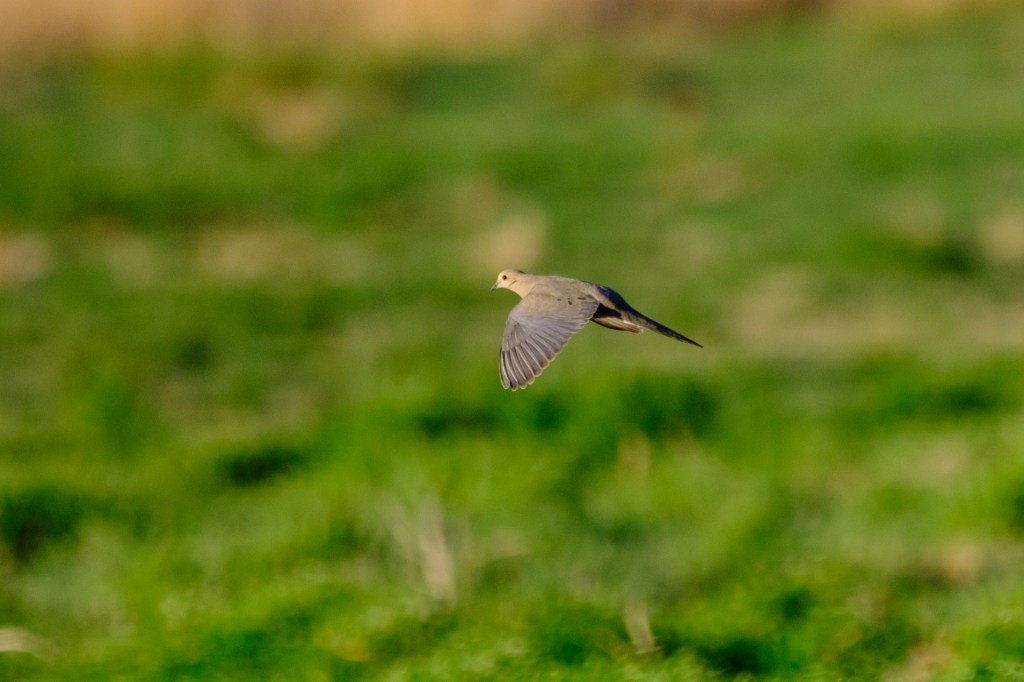
Mourning Dove
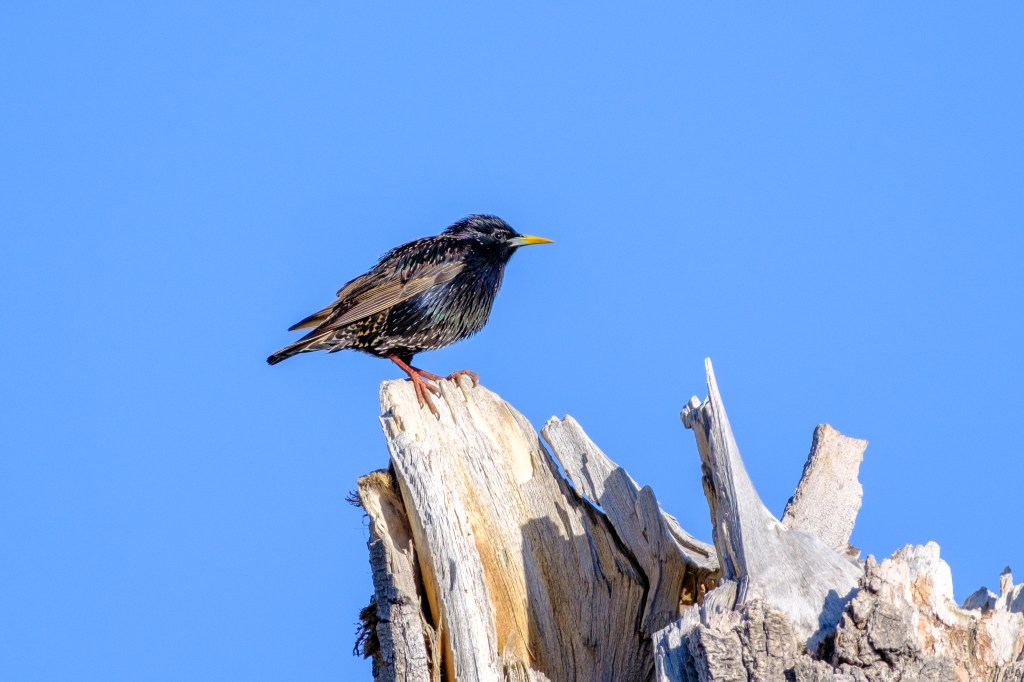
European Starling. Big toes!
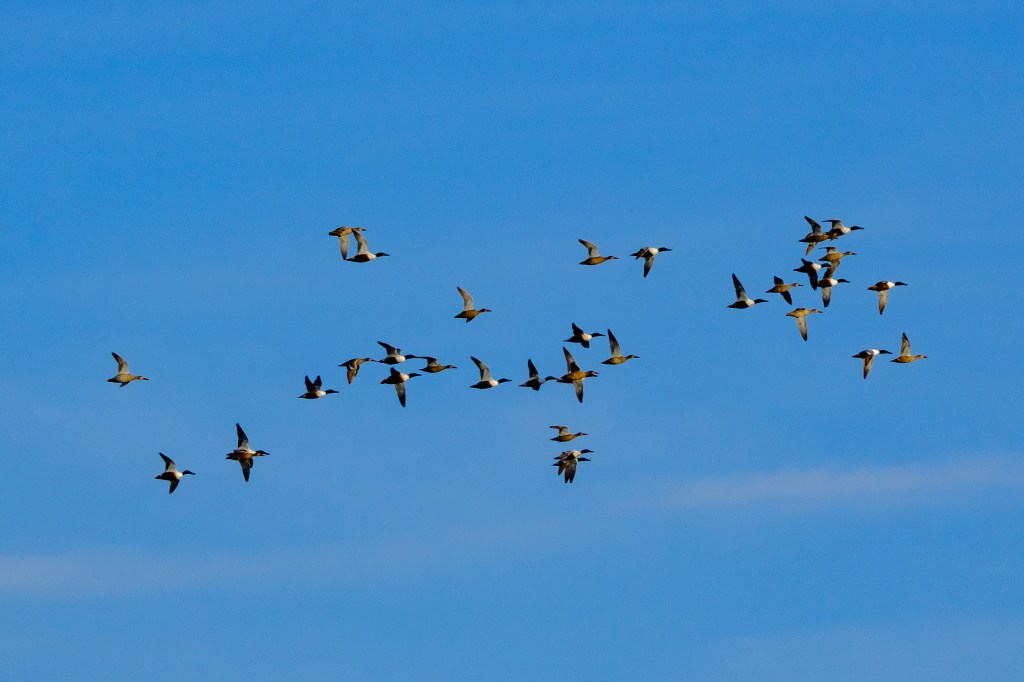
Northern Shovelers migrate north
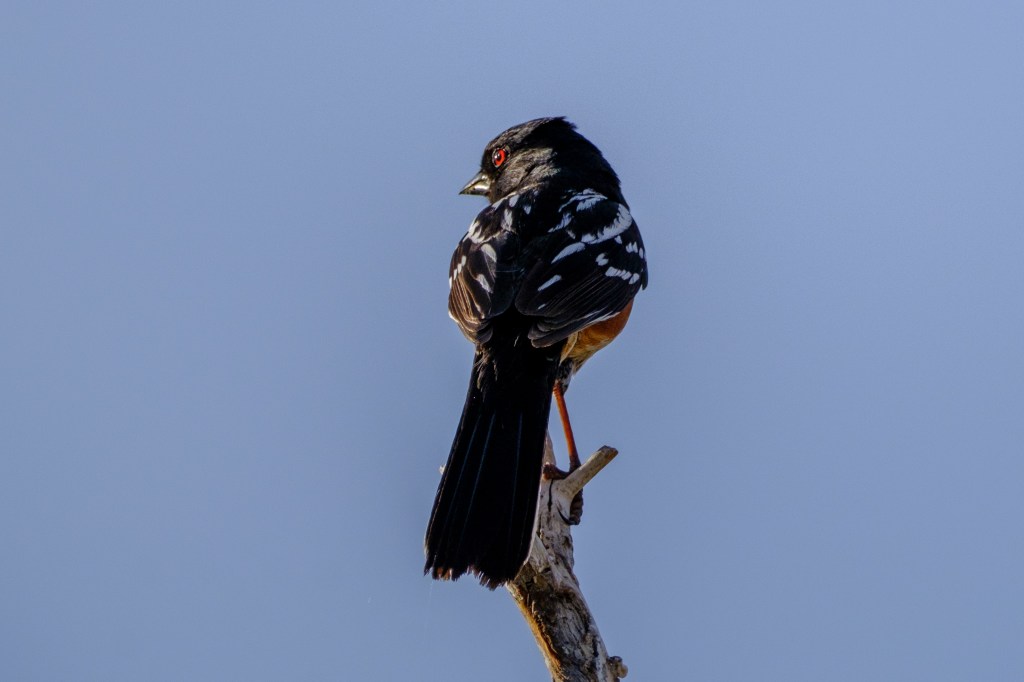
Spotted Towhee
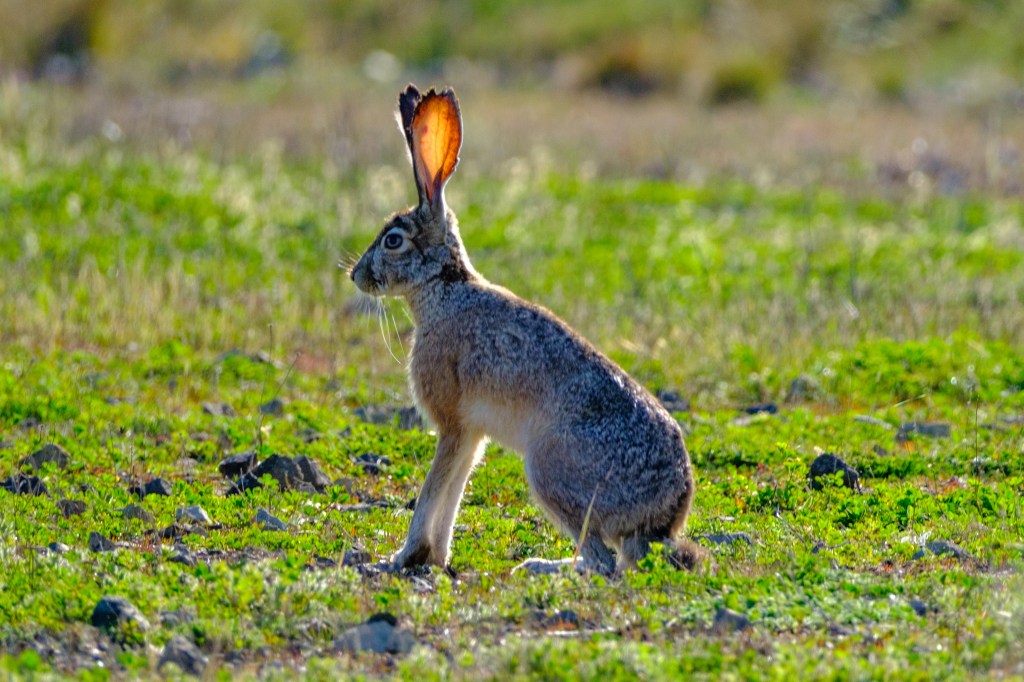
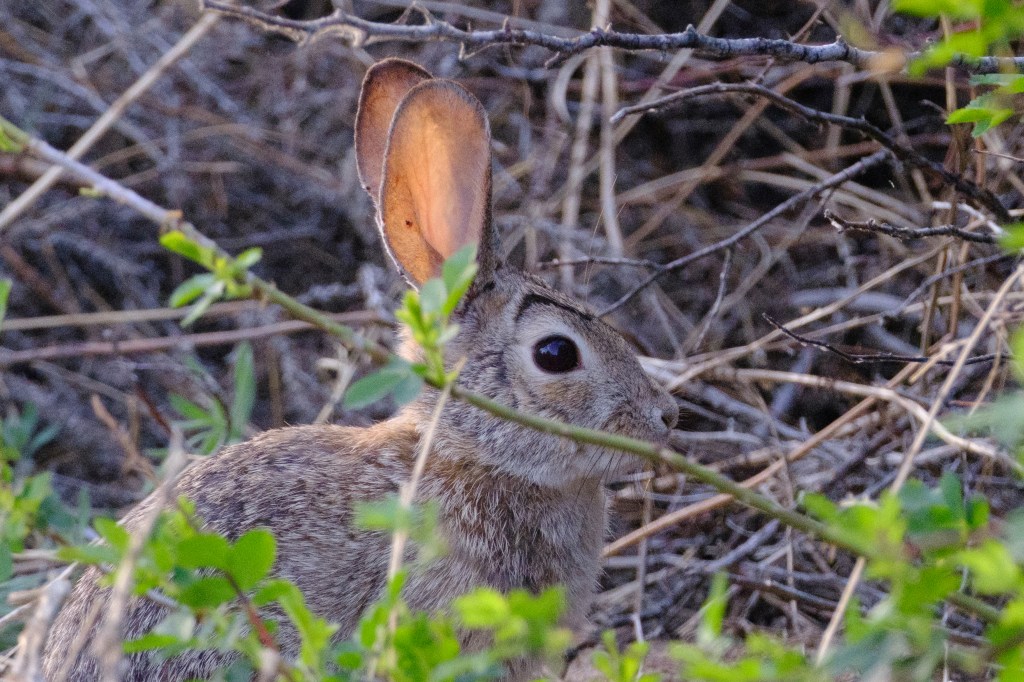
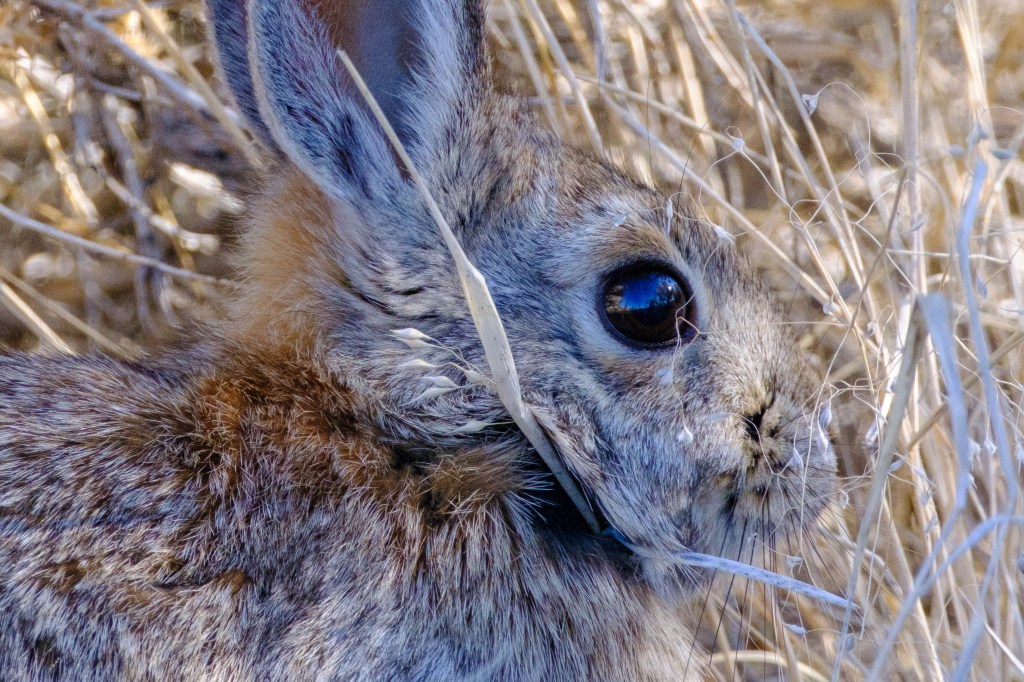
Desert Cottontail
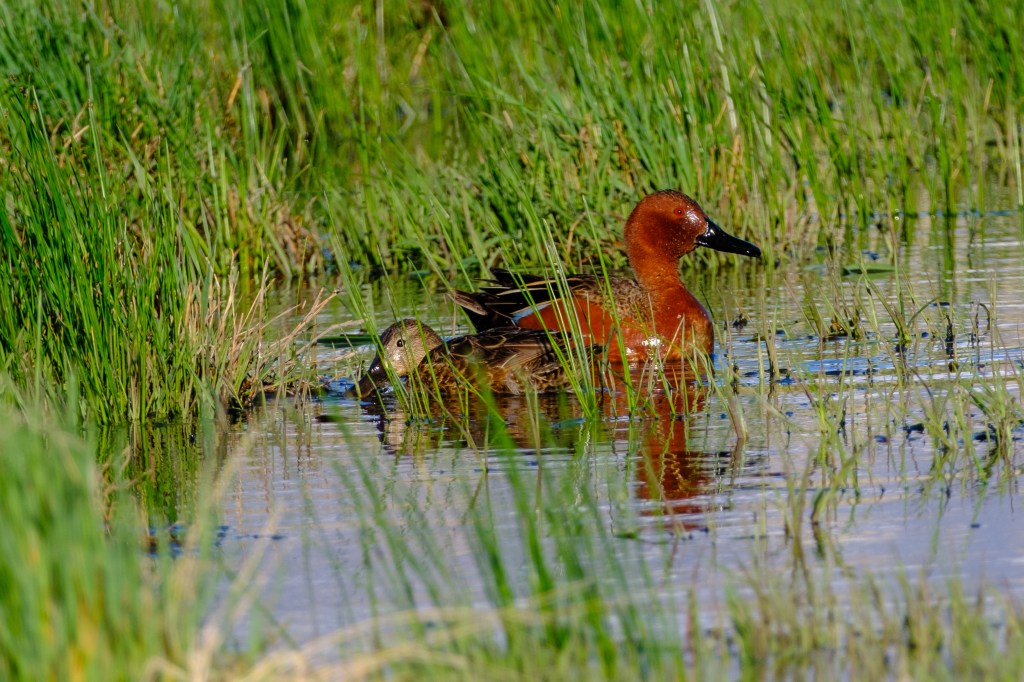
Cinnamon Teal

Western Bishop

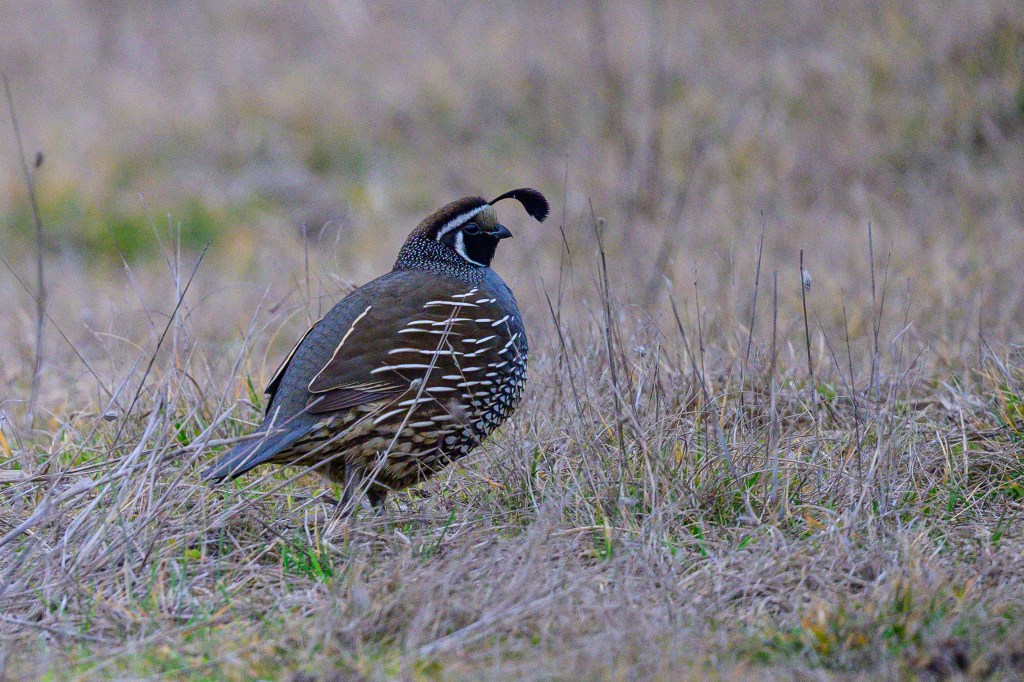
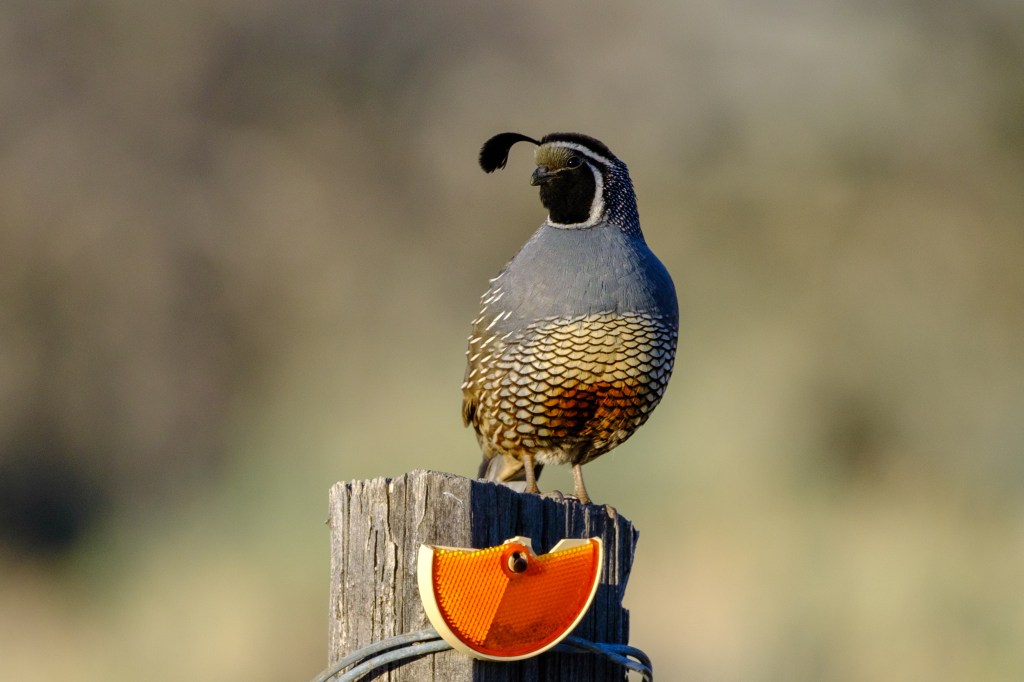
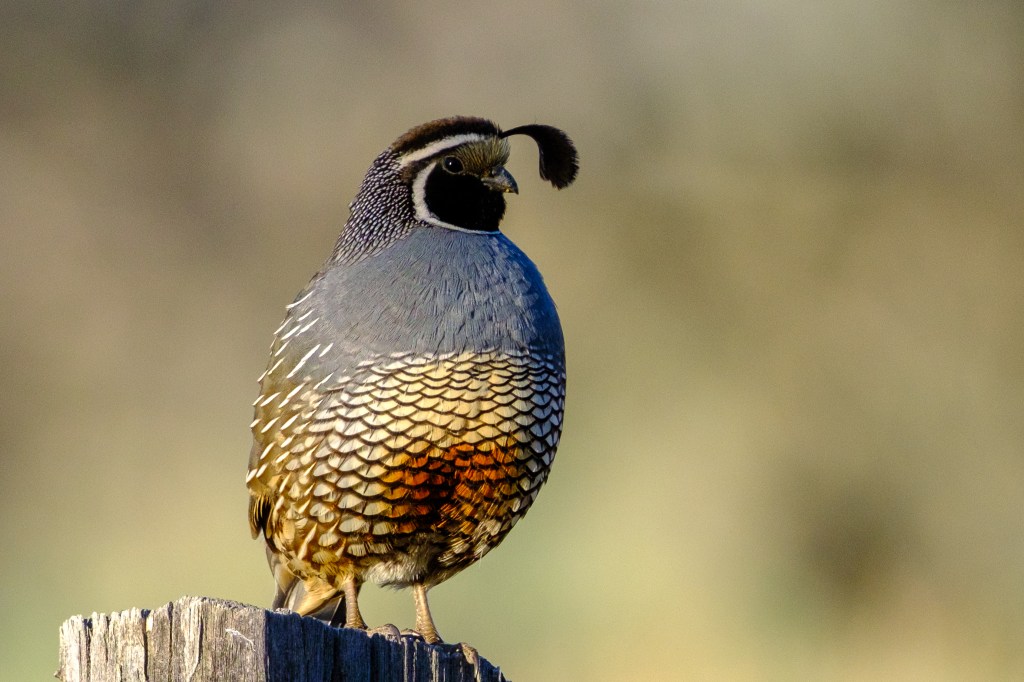
            California Quail, our State Bird, are common around Bishop. I find them hard to photograph; they usually run off quickly, so most of my pictures show Quail butts. But on Riata Lane, a male ignored me as I walked past.

The Sierra

            Friends visited us in April. On the 25th we drove to Lake Sabrina at 9200 feet. Winter is still here. Fishing season opened in the valley at 5am on April 27, but it will be a while before fishing opens in the high Sierra.

Lake Sabrina

Dixon Lane and further north

            Just north of Bishop, on Dixon Lane, is a road with a green gate. Owls often nest here and other birds use the area. From Dixon Lane you can get nice views of the mountains.

Mt Humphreys. Peaklet in foreground.
Bear Creek Spire

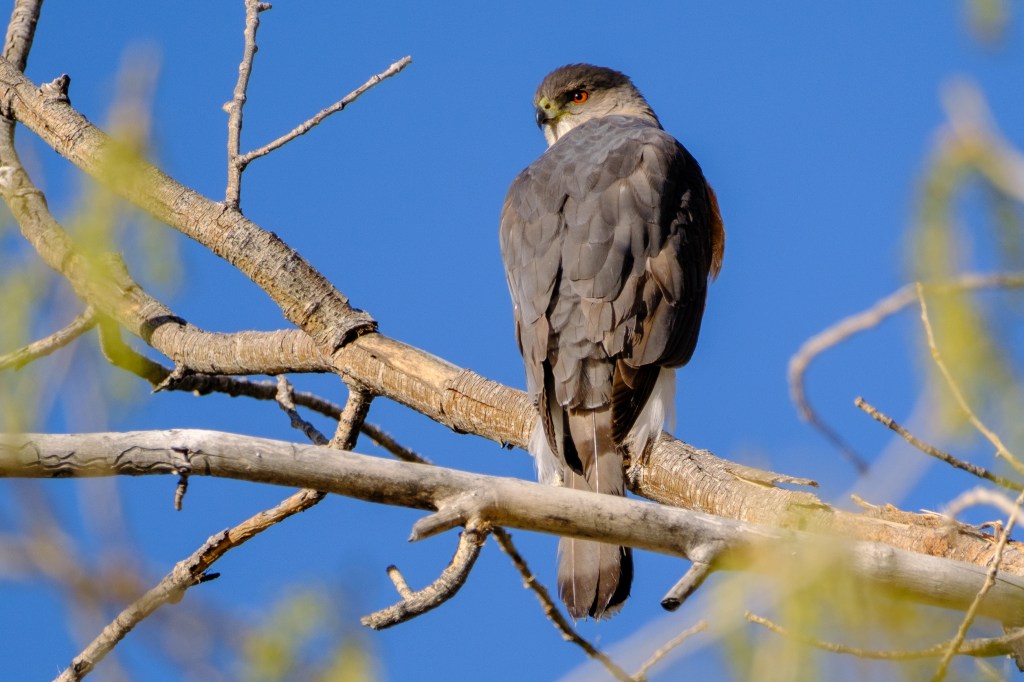
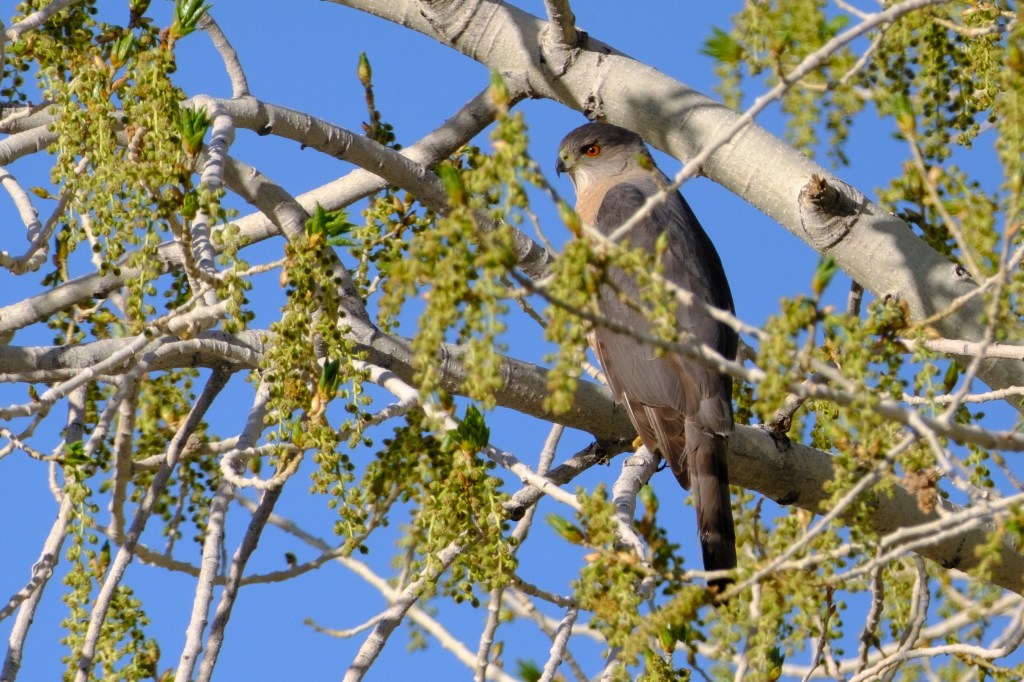
A Cooper’s Hawk was present.

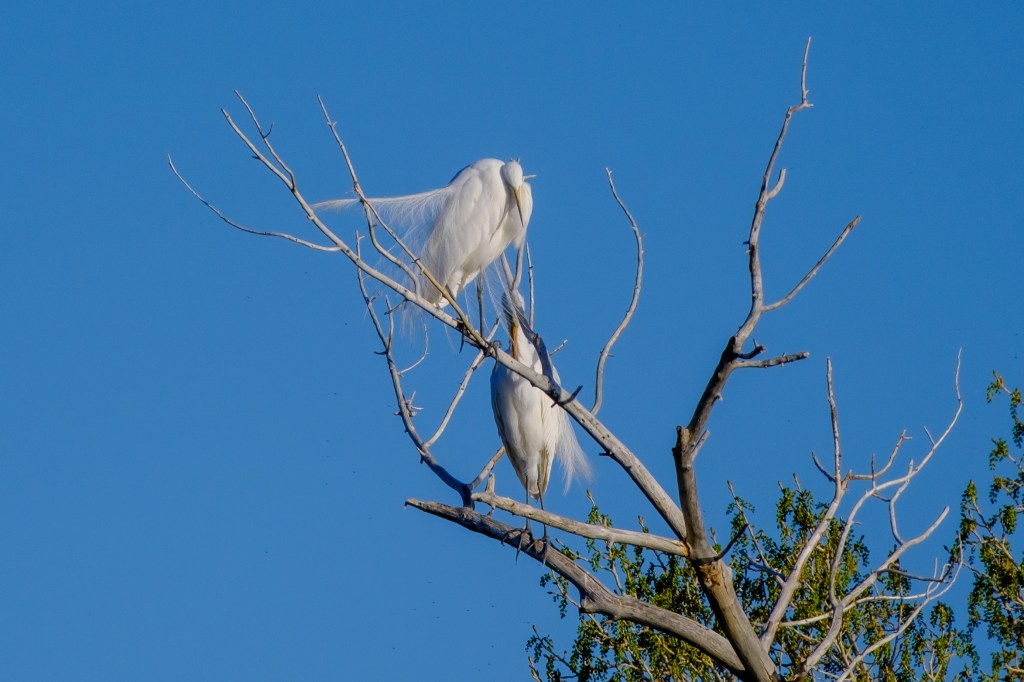
Great Egrets in breeding plumage
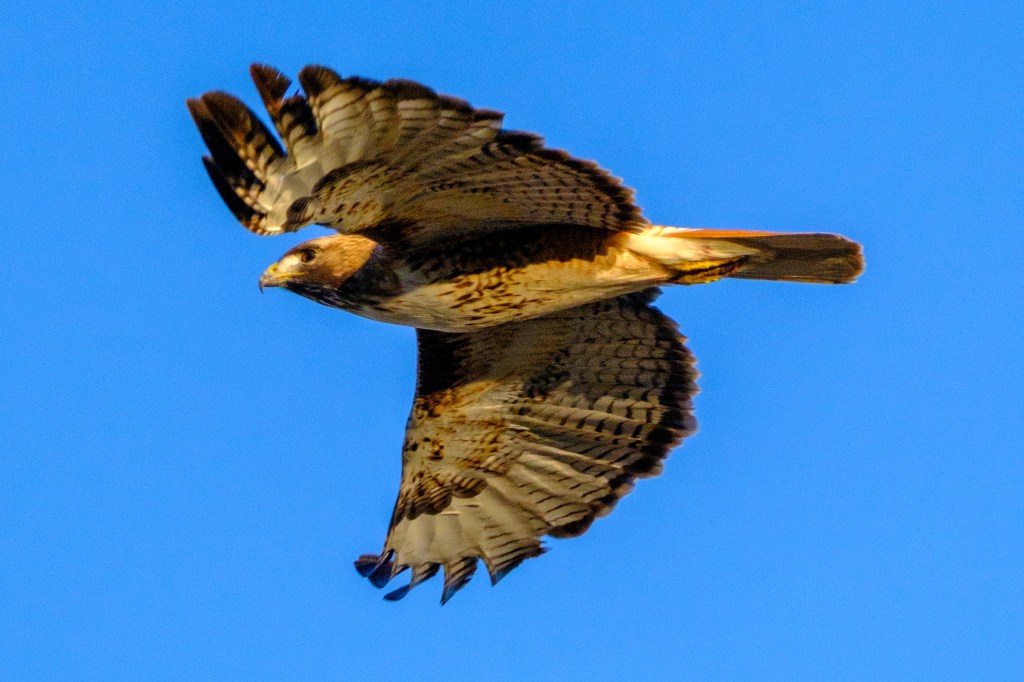
Red-tailed Hawk
Red-tailed Hawk

            This year the Great Horned Owls put their nest high in a tree with a lot of leaves. This made it hard to get pictures: inconsiderate of them. Why does this owl seem to be wearing red eye-shadow?

Great Horned Owls; adult and fledgling
The baby looks ridiculous.
A week later. There are at least 3 babies in the nest.

When you see a nest with one adult, the other owl is usually nearby. Finding them can be difficult, as they blend into the shadows of the Cottonwoods.

Pleasant Valley Reservoir

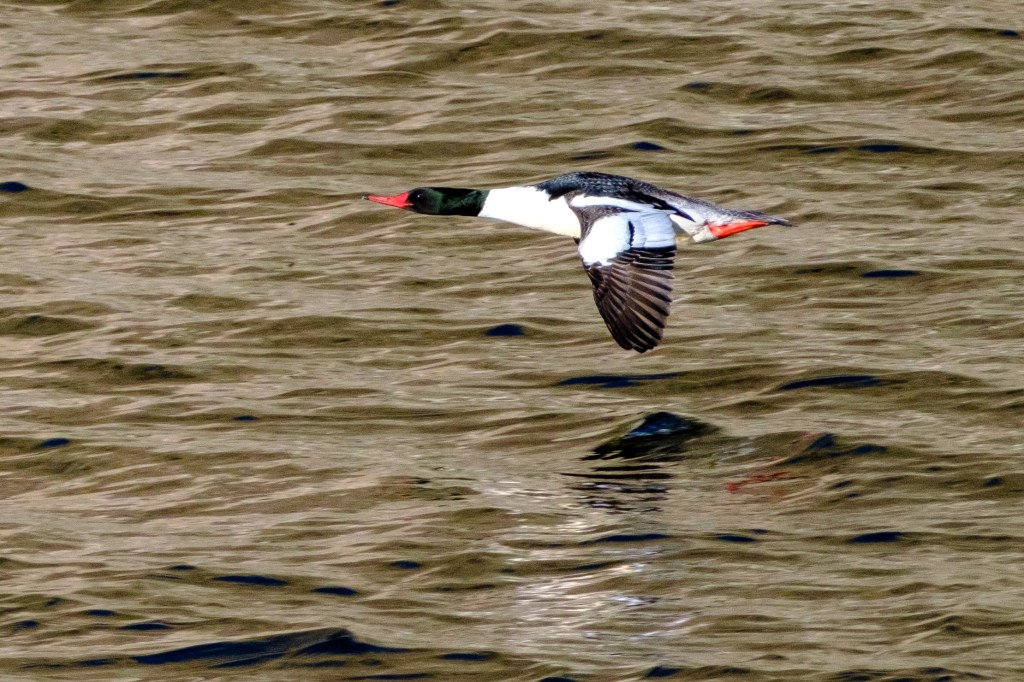
Common Merganser (male).
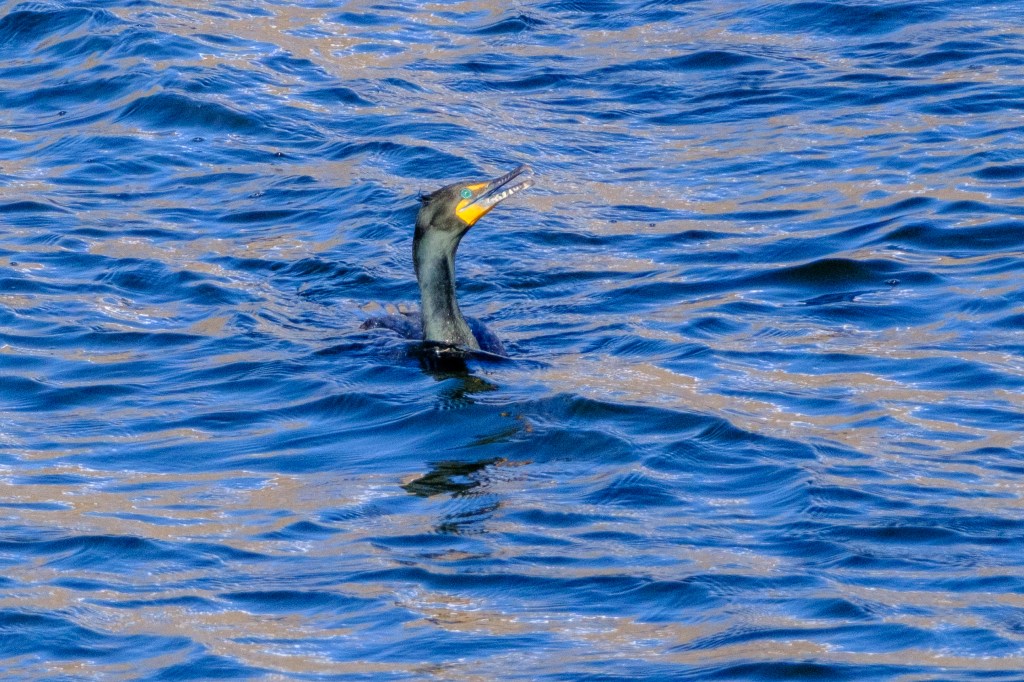
Double-crested Cormorant. Looks like it is sinking.
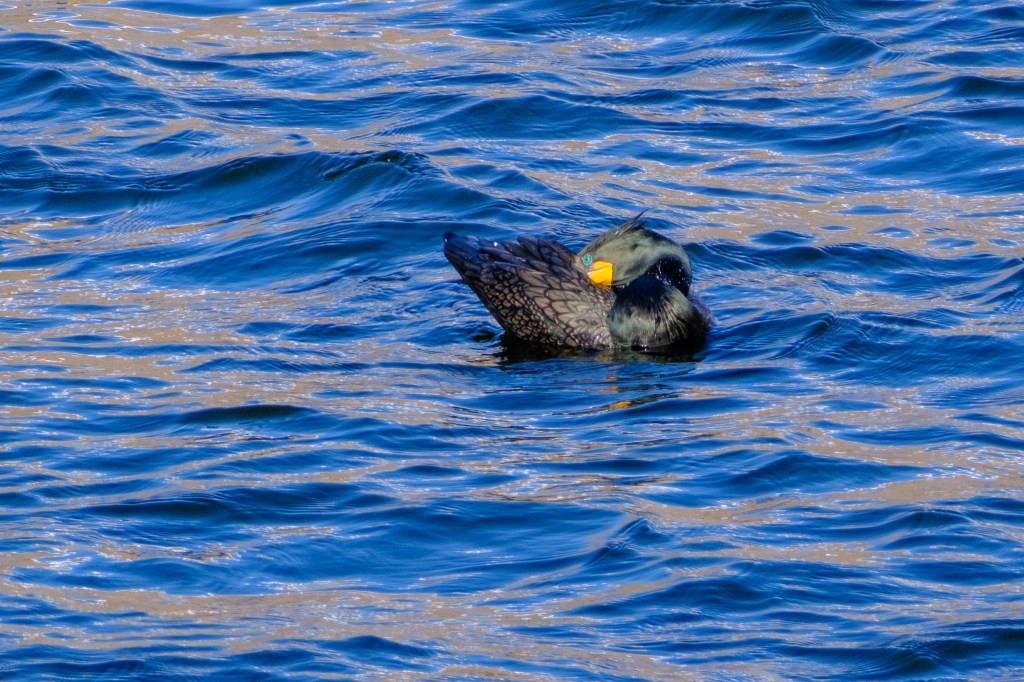
Double-crested Cormorant, preening. Eyes look like sewn-on blue buttons.
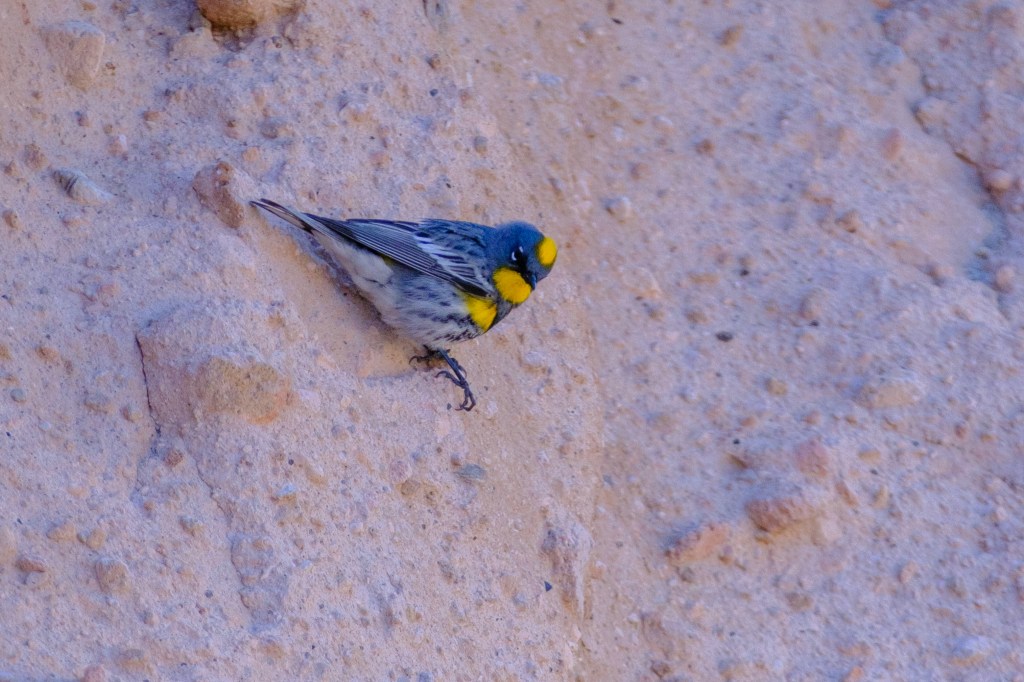
Yellow-rumped Warbler.
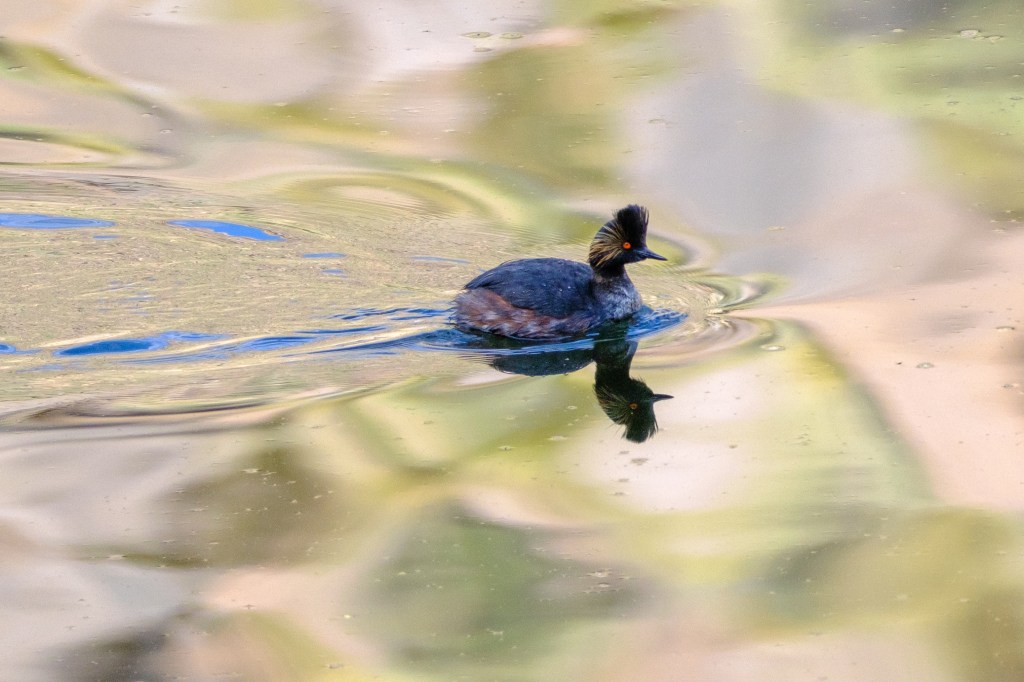
Eared Grebe.
Rock Wren
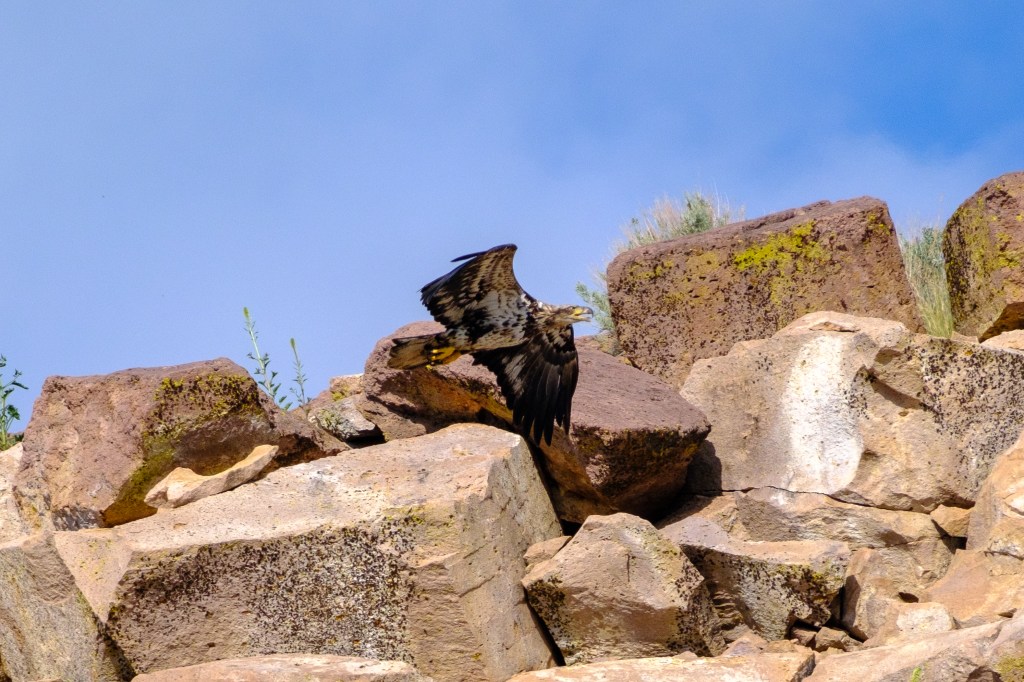
Immature Bald Eagle

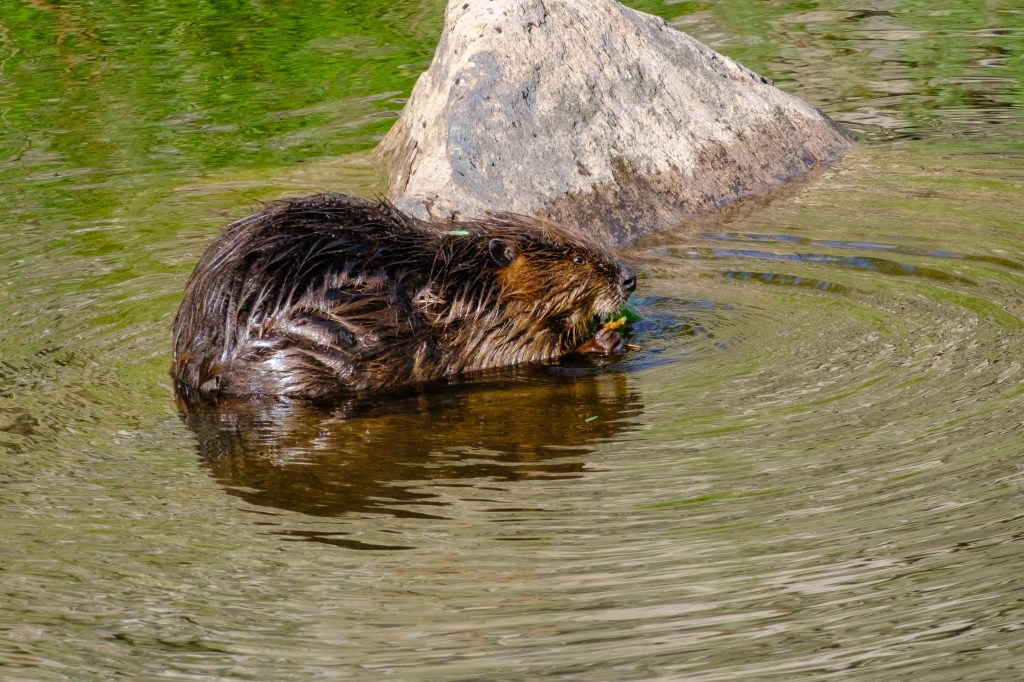
            It took me years to realize that Beavers are common in the waters near Bishop. The most obvious sign of their presence is a newly-downed Cottonwood, with tooth-marks on the remaining stump. Sinuous marks from their tails can be seen on dirt roads. But getting photos of these creatures has been hard. The pictures below were taken where the Owens River flows into the Reservoir.

American Beaver
Eating a Cottonwood branch.

Convict Lake

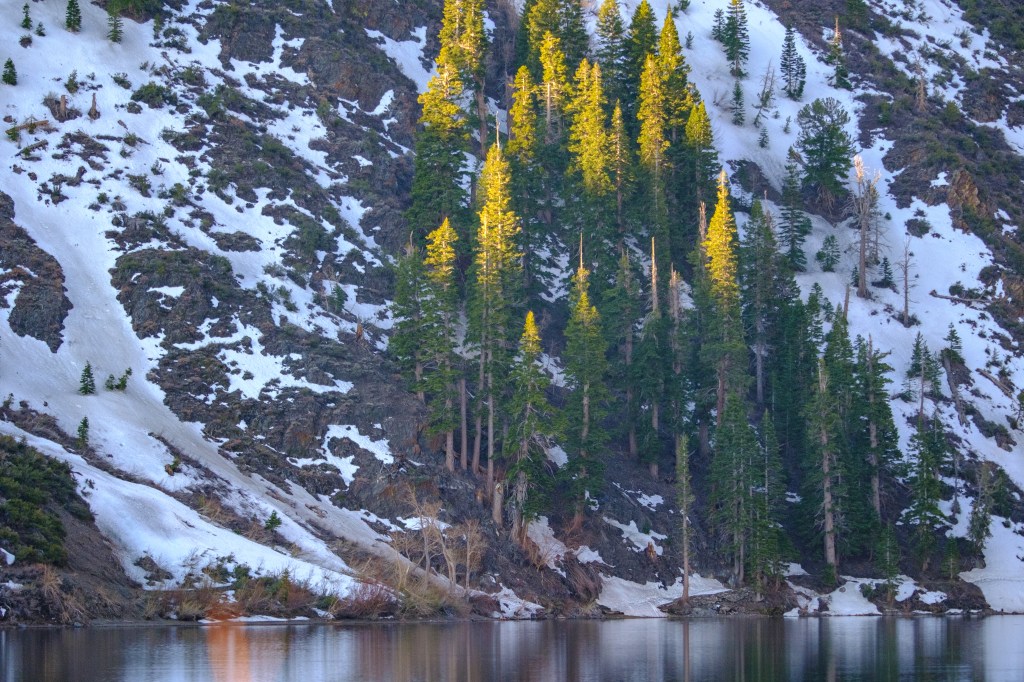
            We visited Convict Lake (elevation 7850 ft) on April 23. The ice has melted, but snow still lingers on the south shore and higher up along Convict Creek.

Twisted rock layers of Laurel Mountain
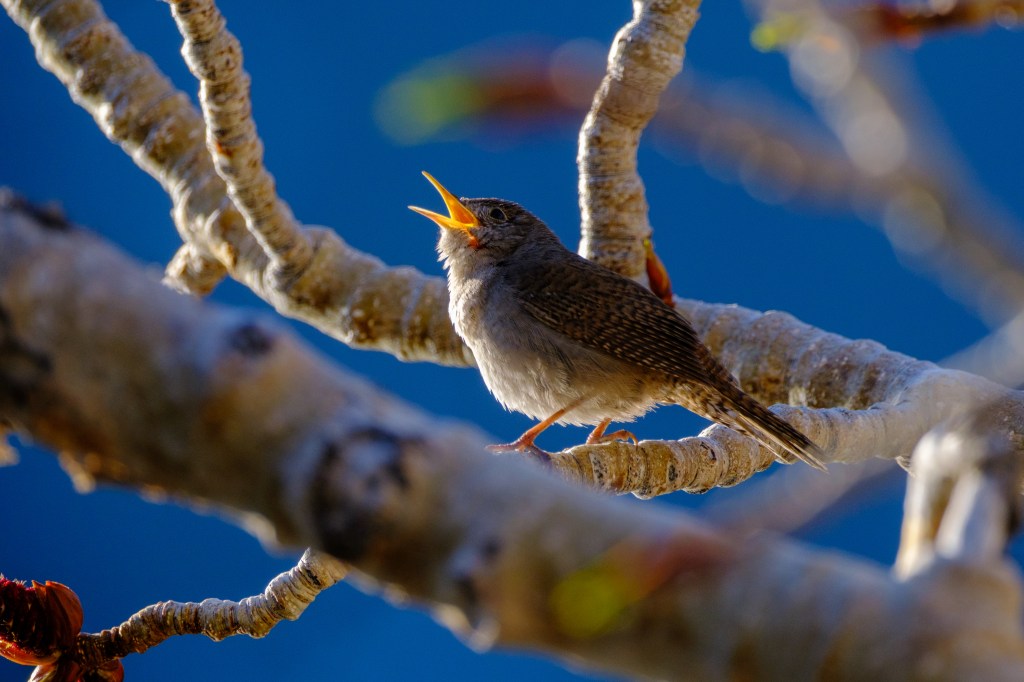
House Wren
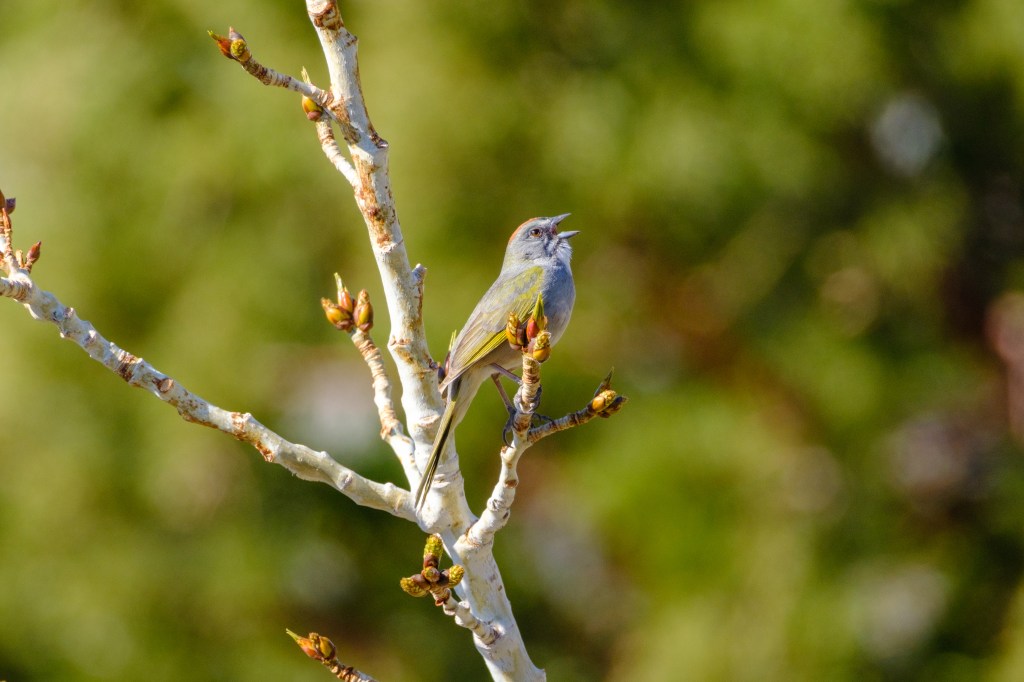
Green-tailed Towhee
Green-tailed Towhee

Mono Lake

            In June, thousands of birds will come here. But in April it is pretty quiet.

Desert Cottontail.
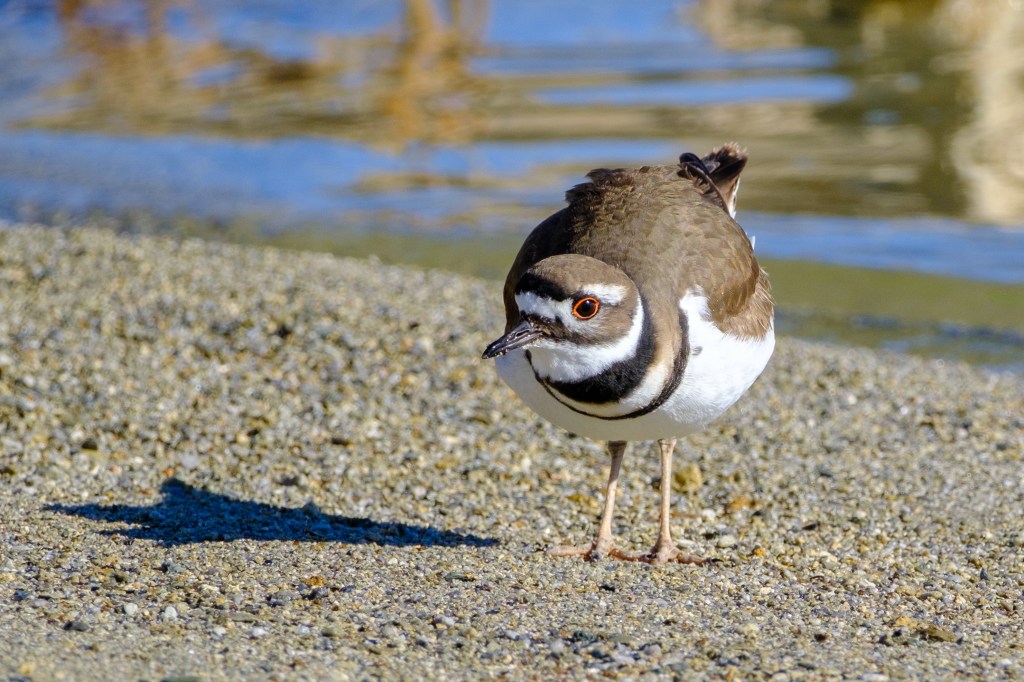
Killdeer.
Violet-green Swallow

Wilson’s Phalarope

            These shorebirds birds are 9 inches long, have a wingspan of 17 inches, and weigh 2 oz. They mate in the Dakotas and Saskatchewan in May. The females lay eggs and promptly leave, heading south to the saline lakes of the Great Basin: Great Salt Lake, Abert’s Lake in Oregon, and Mono Lake north of Bishop. The males look after the eggs, but once the chicks are hatched, the males also head south. The chicks are born with feathers and find their own food; soon they also go south. The birds show up at Mono Lake from mid-June to August. Surveys at Mono Lake done 35 years ago estimated up to 80,000 phalaropes in a year, but survey methods then and now are pretty crude. The females arrive first, then males, then juveniles. They hang out for a month doubling their weight on brine shrimp and alkali flies — an unlimited, but monotonous, buffet. They use the time and food energy to molt, discarding their old feathers and growing new ones. Then they fly south – a 3-day non-stop to South America, about 3000-4000 miles. They spend the Boreal winter at inland saline lakes near the Andes Mountains of Argentina, Bolivia, and Chile. In spring of the next year, they fly north and do this all over again.

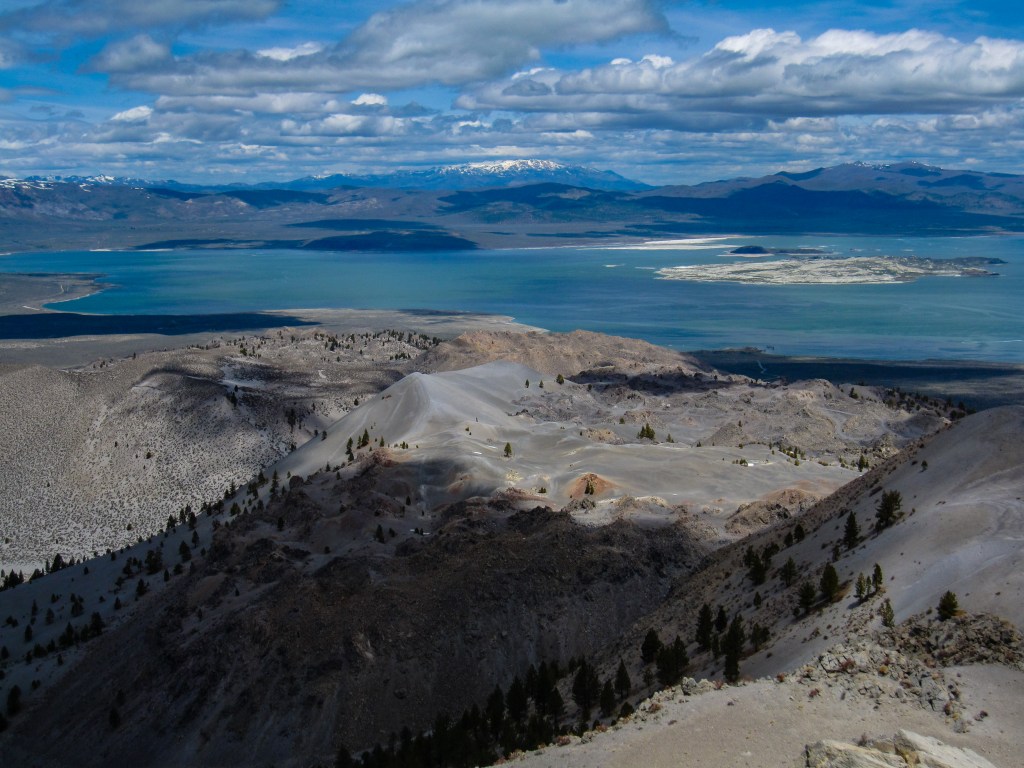
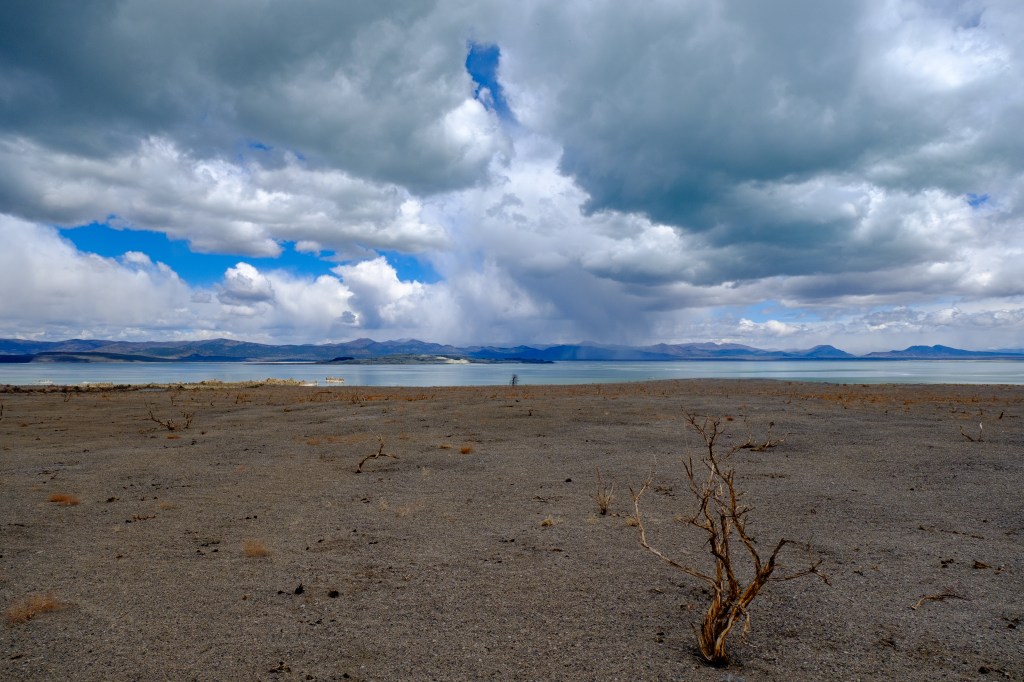
Below are photos of Mono Lake, where thousands of Phalaropes gather every summer. The first photo was taken from the Mono Craters, a group of volcanos south of the lake. In the foreground is volcanic ash and rubble. In the middle distance on the right is an island called Paoha. Most California Gulls migrate from the coast to this island in the summer, nest, and raise their chicks. In the far distance are the snowy summits of the Sweetwater Mountains, which straddle the California-Nevada border.

Mono Lake from Mono Craters. Looking north.

The winter view below, looking south, shows the Lake from near Conway Summit. The large road is Highway 395. The town of Lee Vining is in the distance on the right. Rain and snow are coming down from the clouds.

Mono Lake, looking south.

Sunrise from the Lake’s south shore.

Mono Lake sunrise.

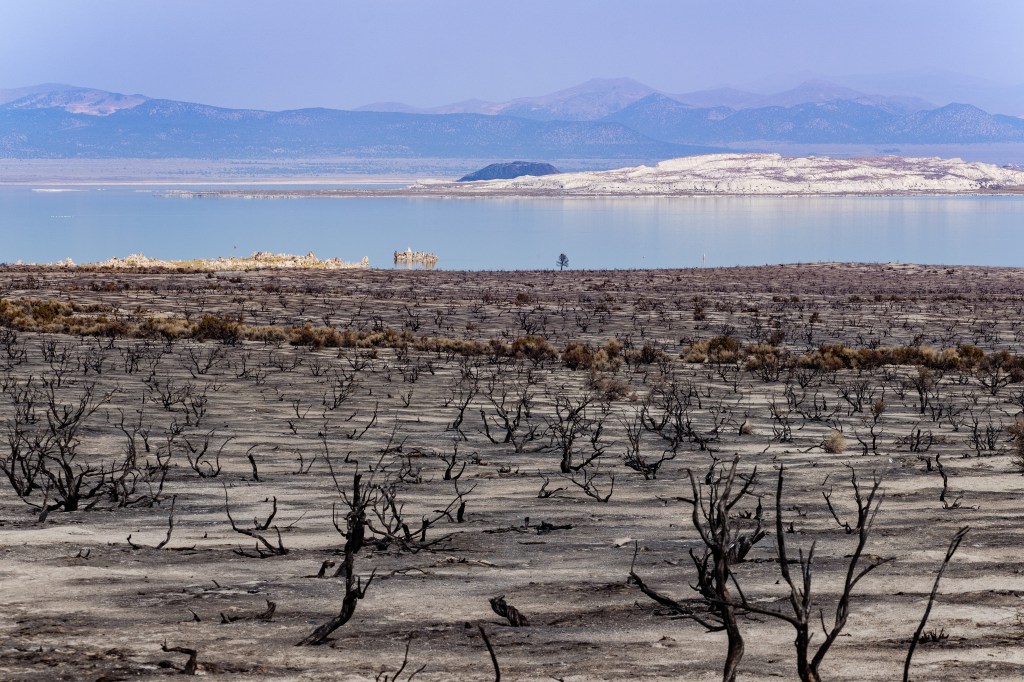
Lightning started a fire just a few years ago. It burned off sagebrush and rabbitbrush from a large area on the Lake’s south shore.

Mono Lake south shore. South Tufa area on left, Navy Beach on right. Burned from lighting fire.

Another view of the burned area.

Mono Lake south shore. Burned area.

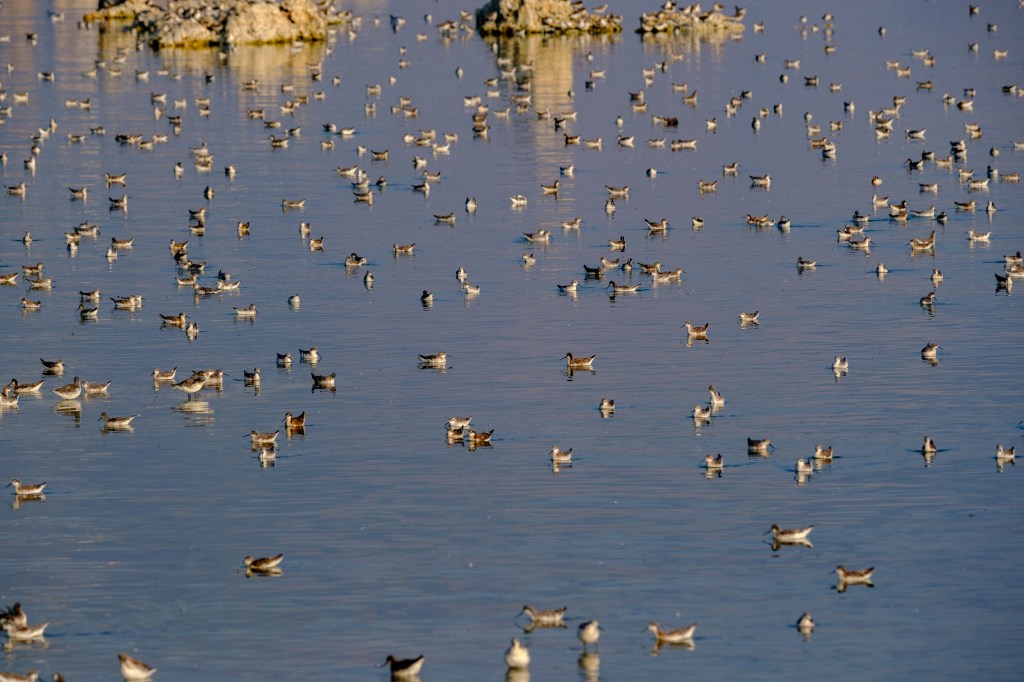
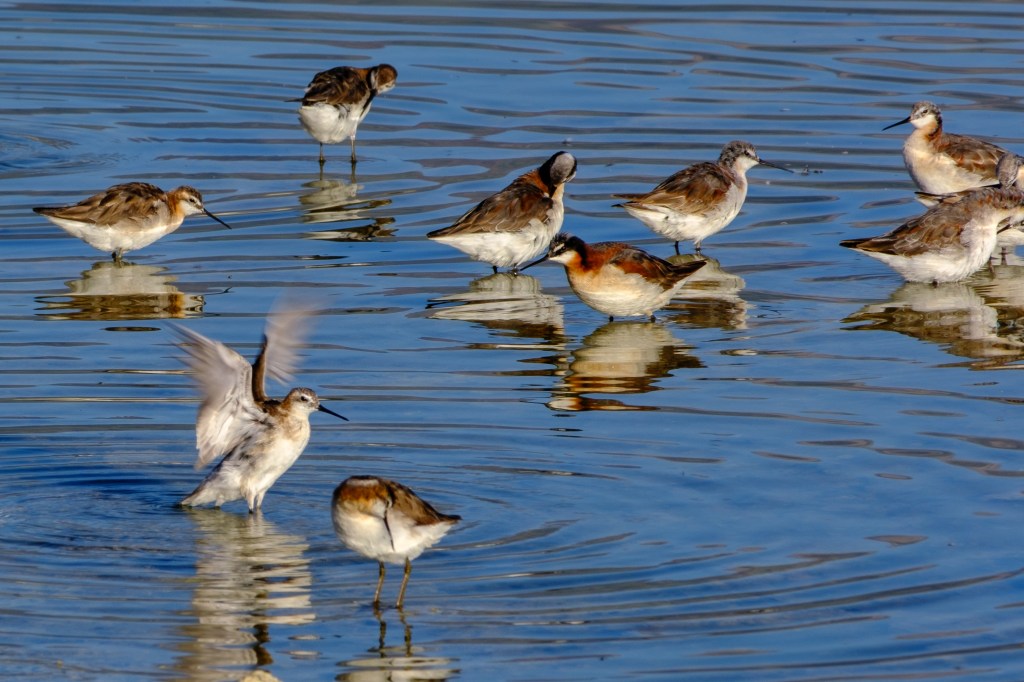
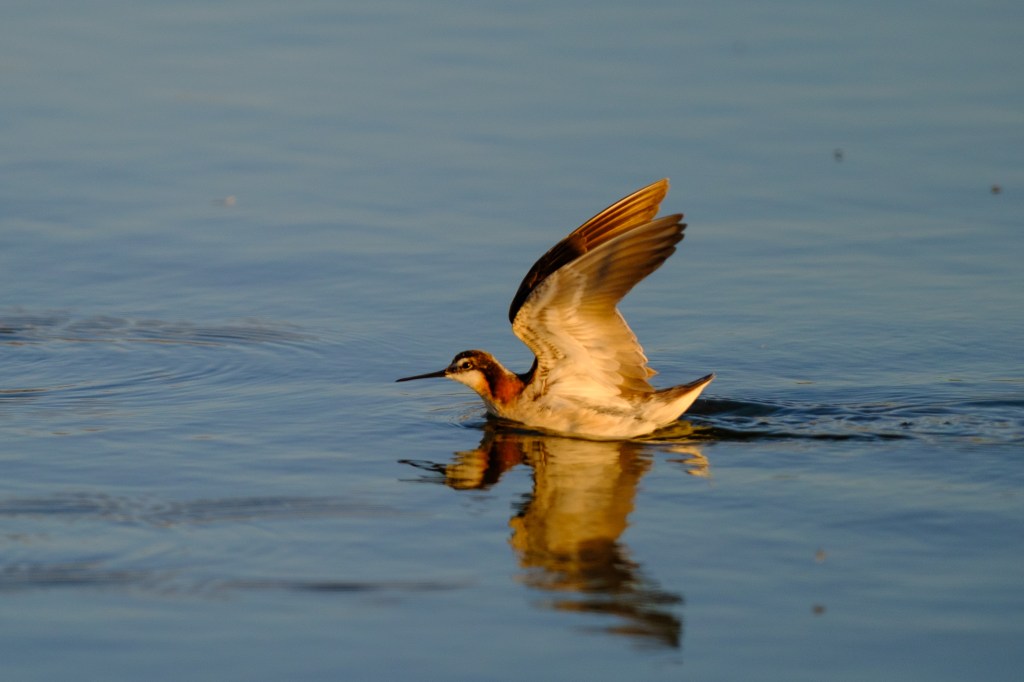
Below are pictures of Wilson’s Phalaropes floating, preening, and feeding. These images were taken from the South Tufa area of Mono Lake, which has easy road access and a boardwalk that leads to the water. The female birds have a black facial stripe that morphs into a cinnamon color on the back of the neck; very elegant. Colors for the males and juveniles are muted; a blah look.

Wilson’s Phalaropes. Mono Lake. Two bird on the right are females in breeding plumage.
Wilson’s Phalaropes are wading birds, but also happy swimming about.
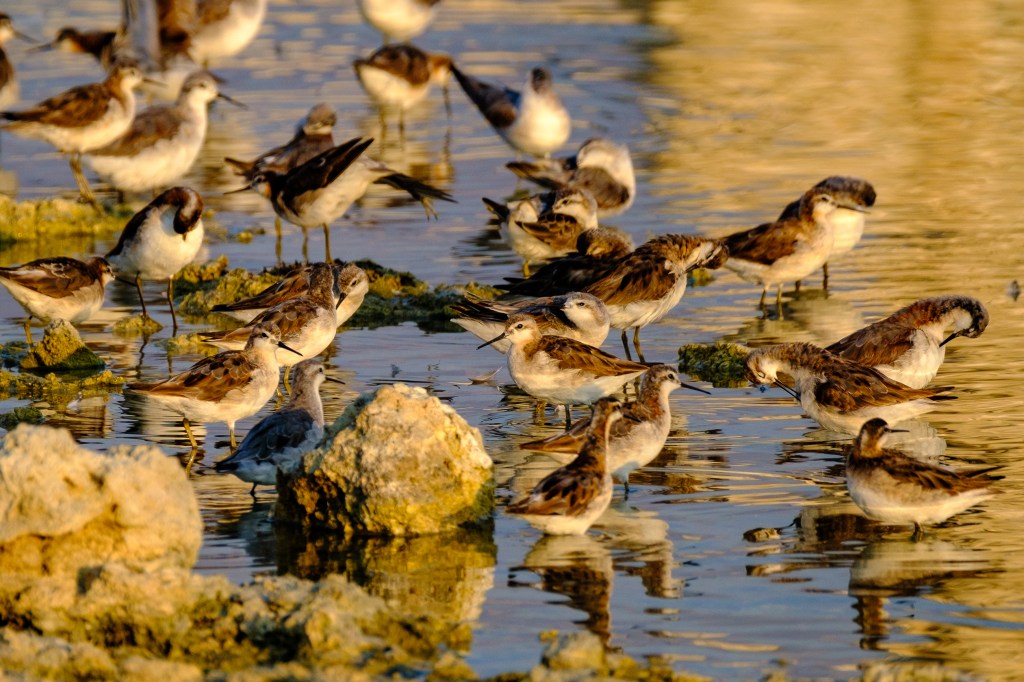
Lots of preening here. These birds are molting, getting entirely new outfits.
Preening.
Preening. Some are also feeding.

The image above shows some birds feeding. All they have to eat here are brine shrimp, which are less than a half-inch long, and small alkali flies. They grasp brine shrimp or flies with the tip of their bills, then open the bill so that a water droplet containing the food moves up to the mouth using surface-tension. Two California biologists studied this with high-speed cameras and their article shows photos of water droplets moving up a bird’s bill from tip to mouth in 0.01 seconds. (Rubega MA, Obst BS. Surface Tension Feeding in Phalaropes: Discovery of a Novel Feeding Mechanism. The Auk: A Quarterly Journal of Ornithology. 1993;110(2):169-173.)

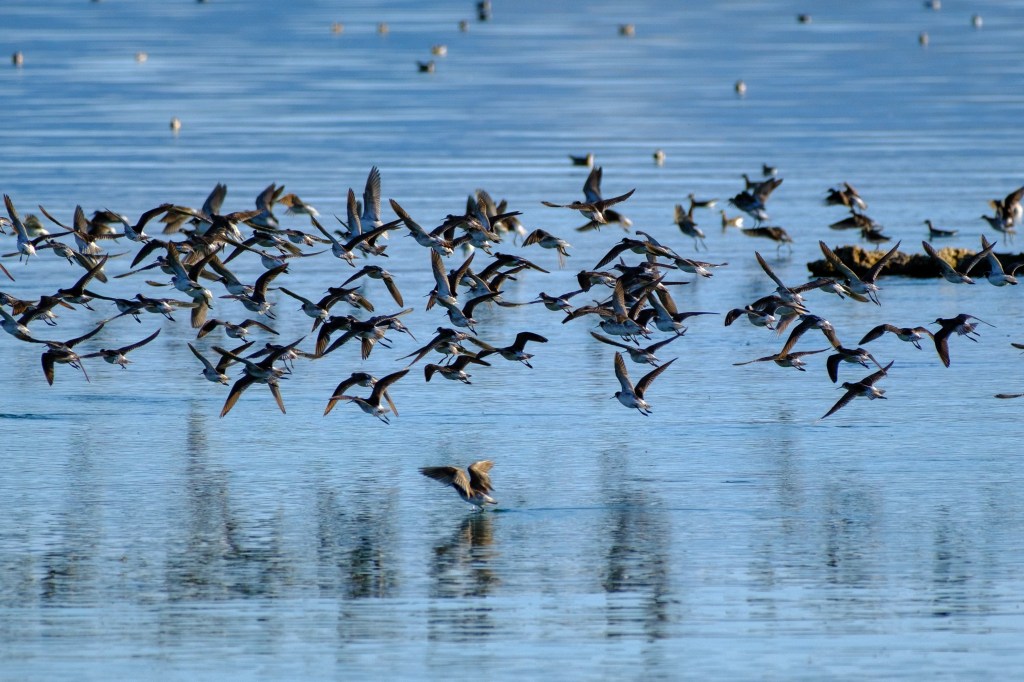
Until 2021, I knew nothing about this bird. Roberta and I visited Mono Lake’s South Tufa beach early on July 2 and found thousands of them at the shore, floating on the water, and flying about in flocks of hundreds, even thousands. We came back on July 6 and 13 to get more photos. The birds made little noise; just faint gurgling sounds. At the shore they seemed restless, either eating or preening themselves. The scene was one of the most exciting wildlife events I’ve ever seen, comparable to seeing animal herds on the Serengeti.

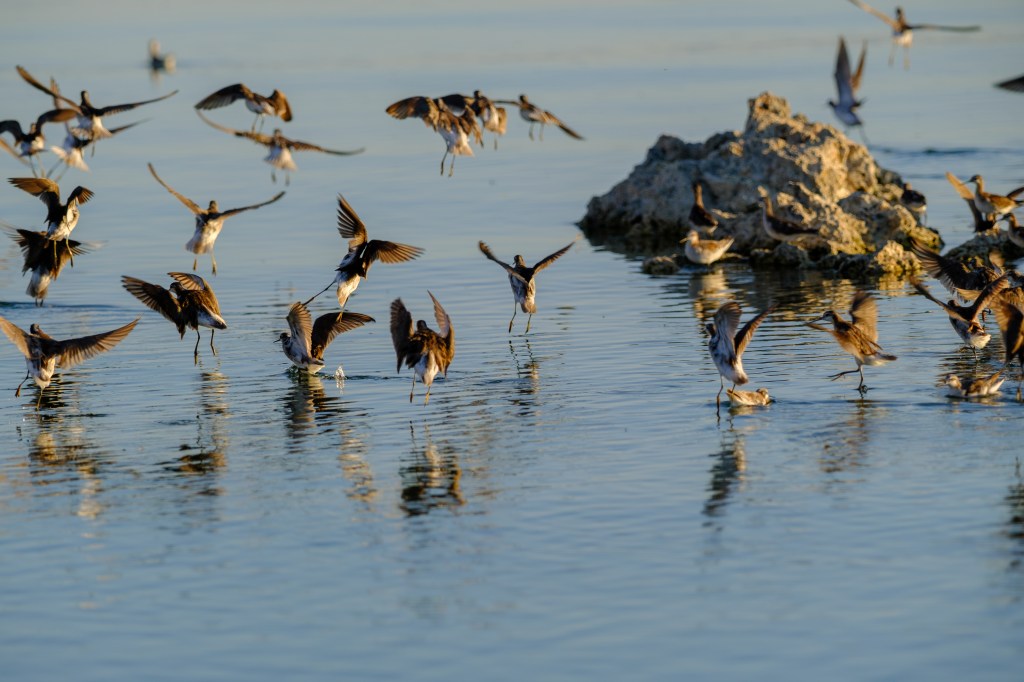
Below are two images of Phalaropes landing.

This female has just landed.
This is a different bird, also landing. As they come down, they take a few steps on the water.

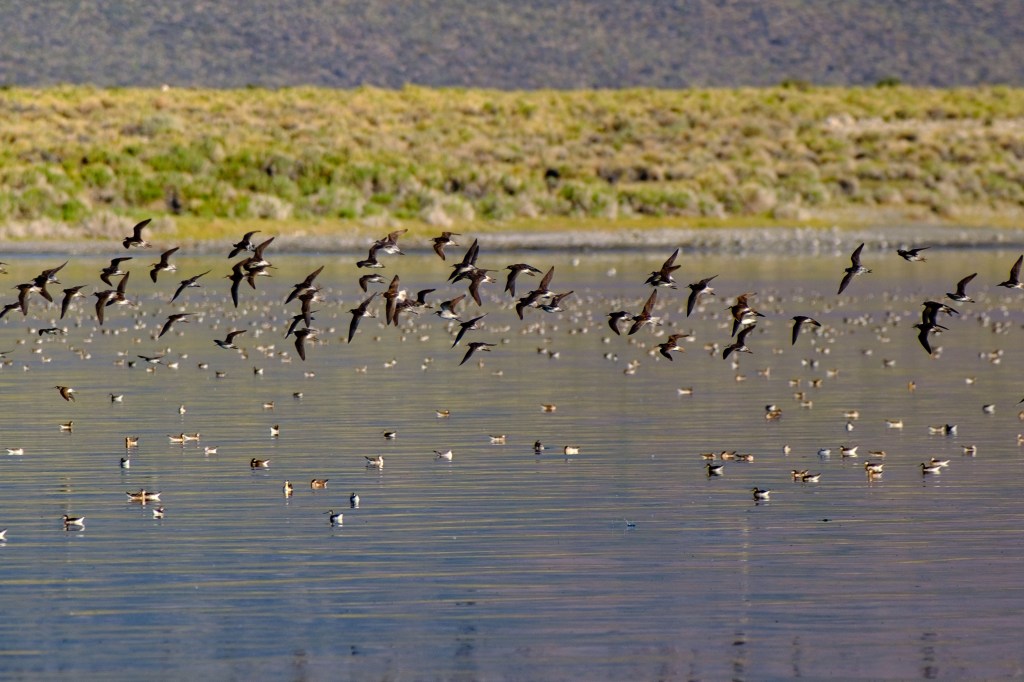
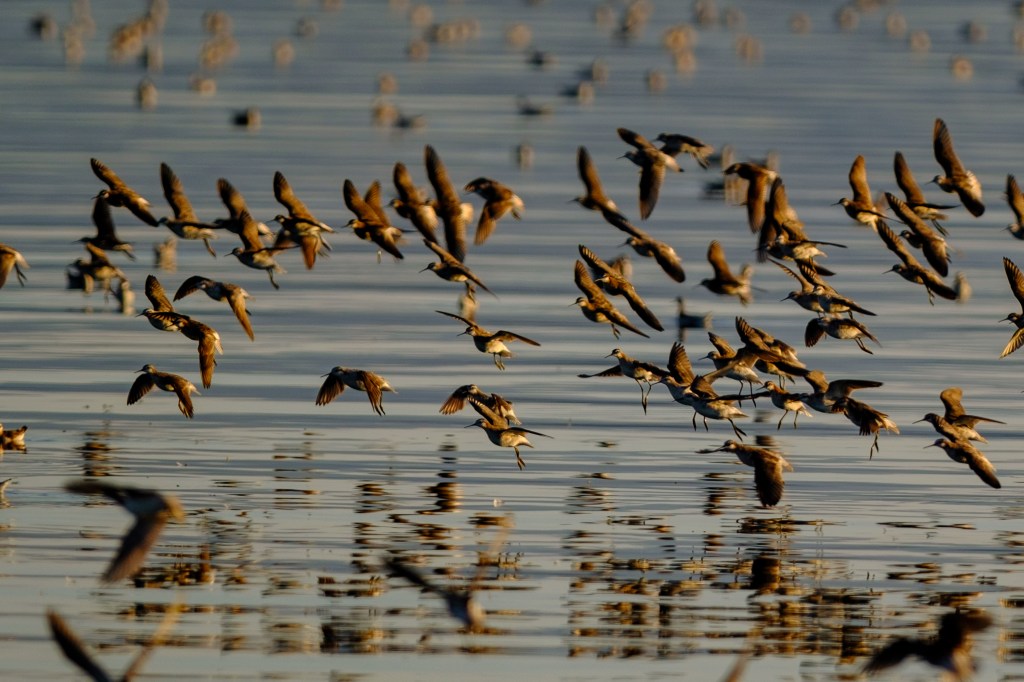
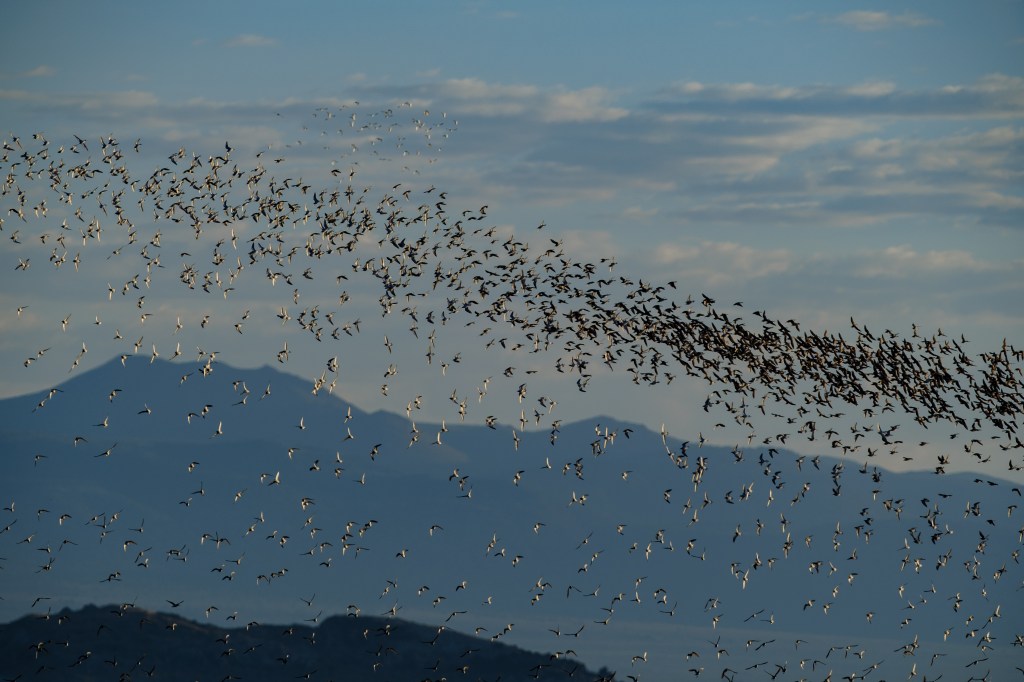
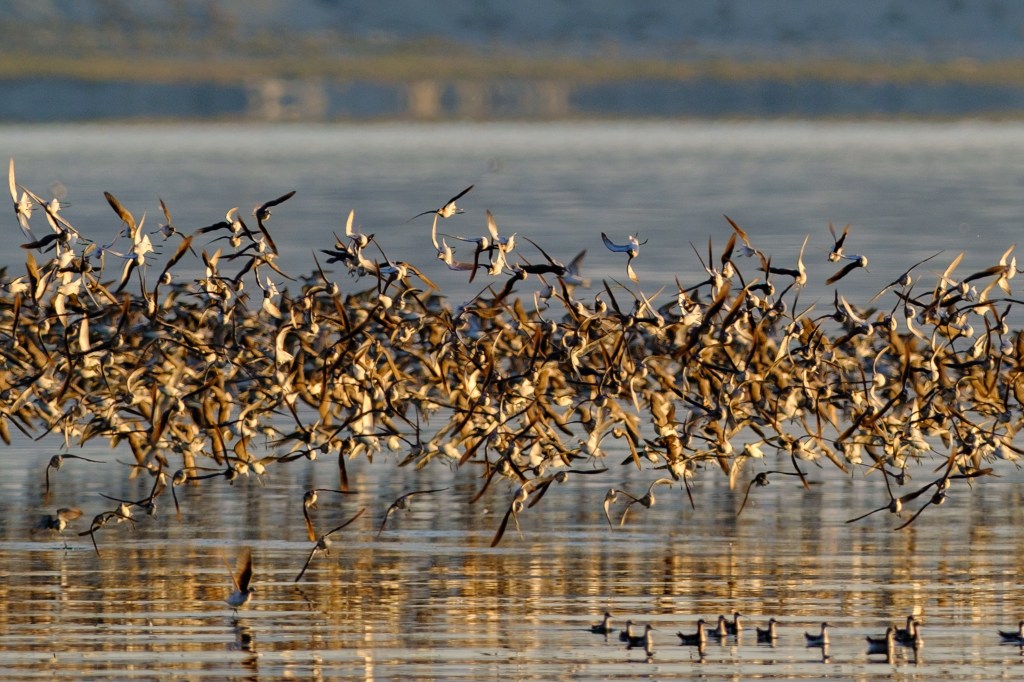
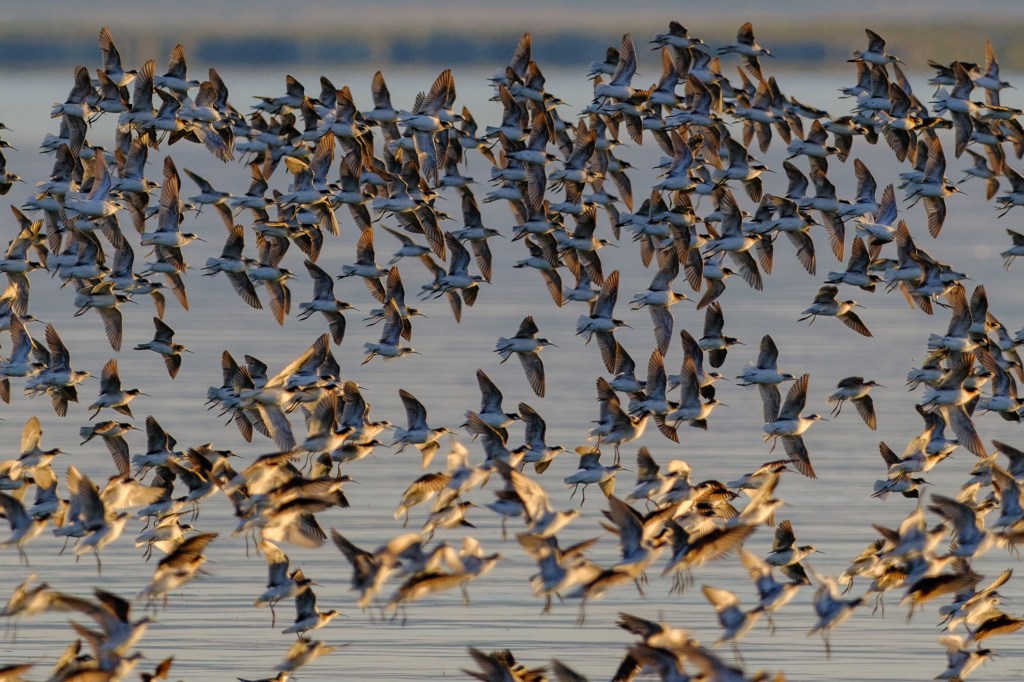
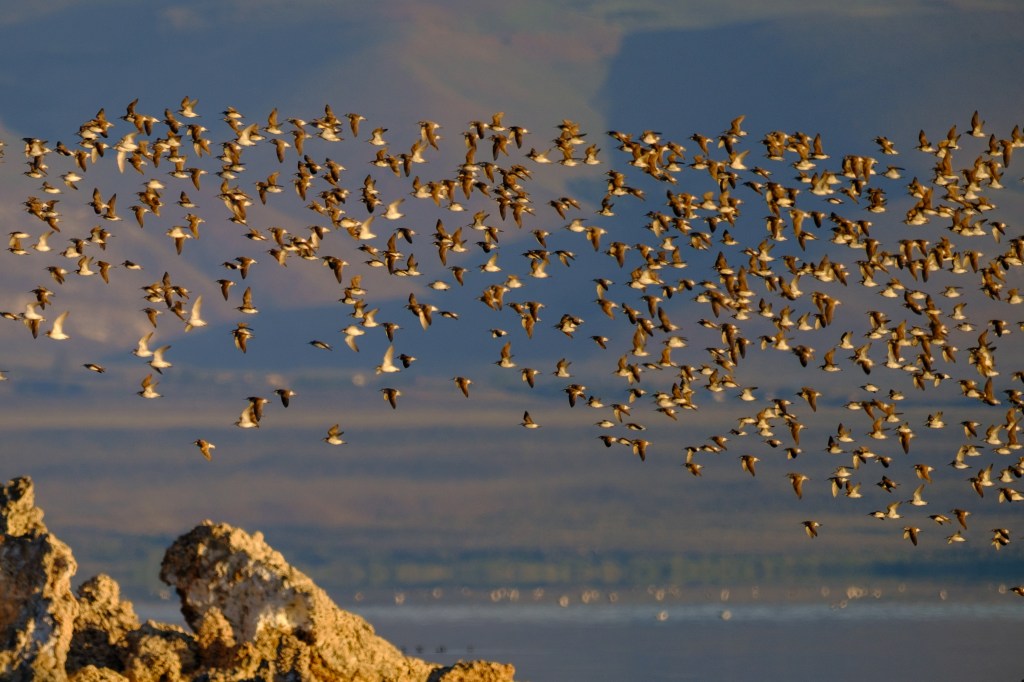
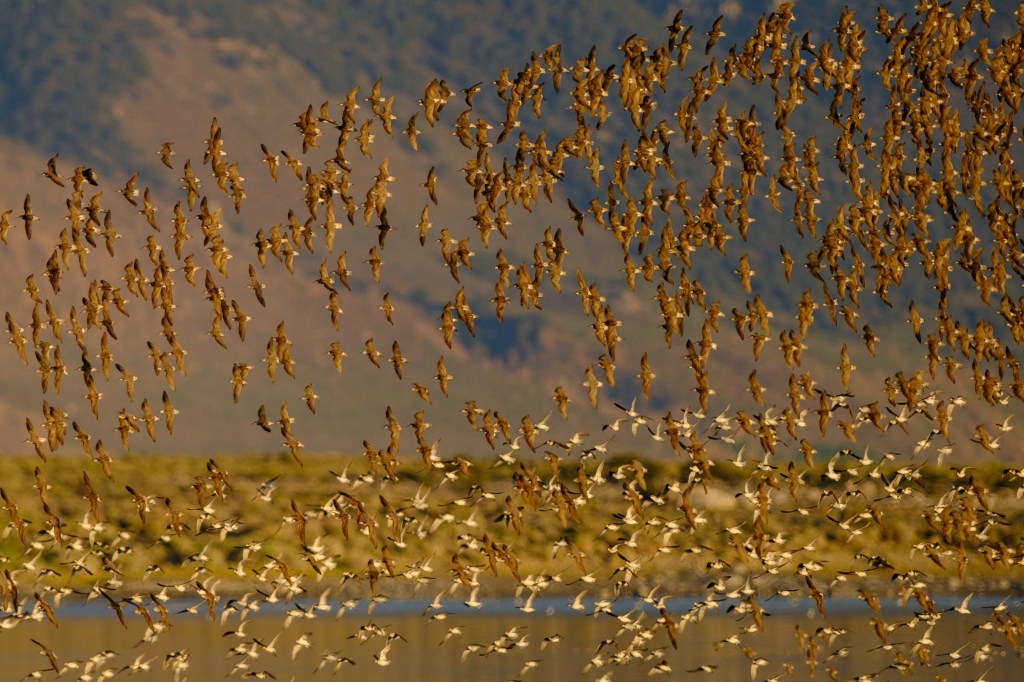
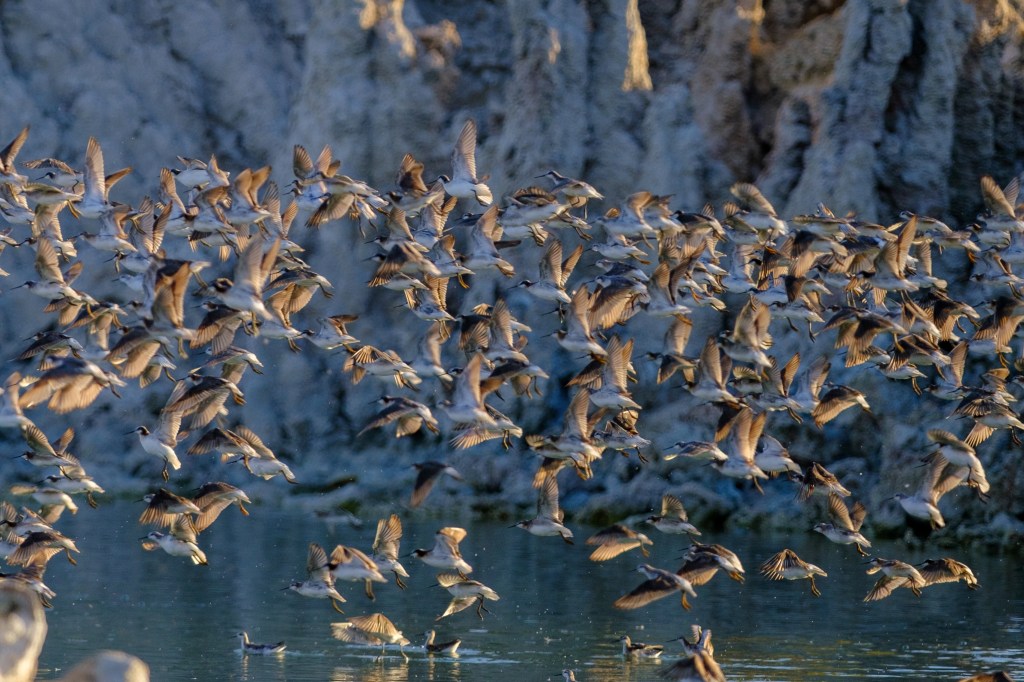
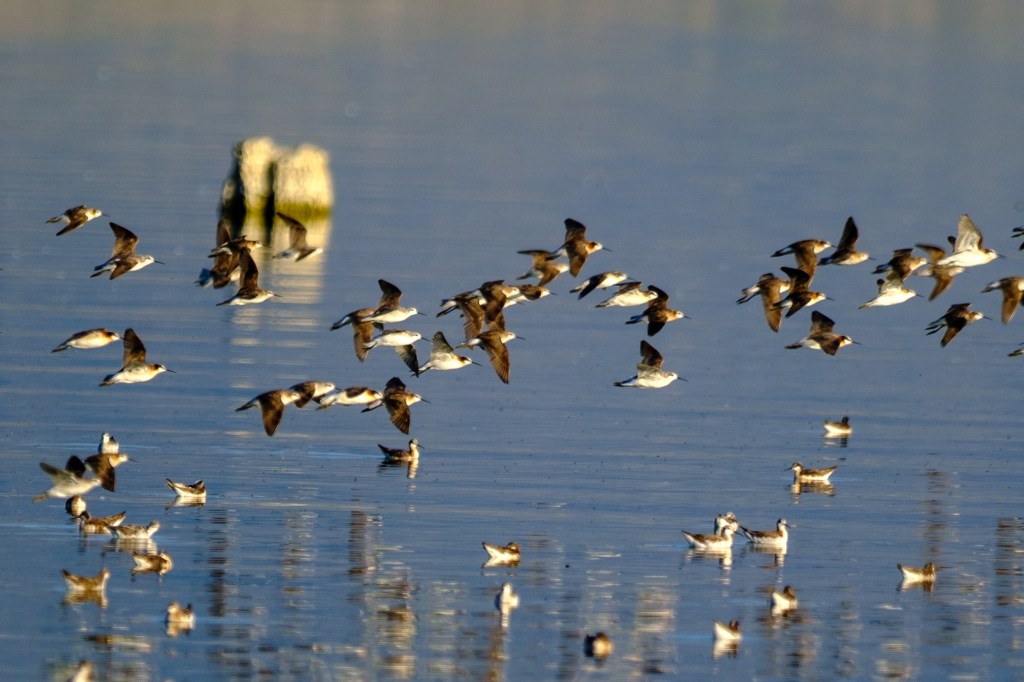
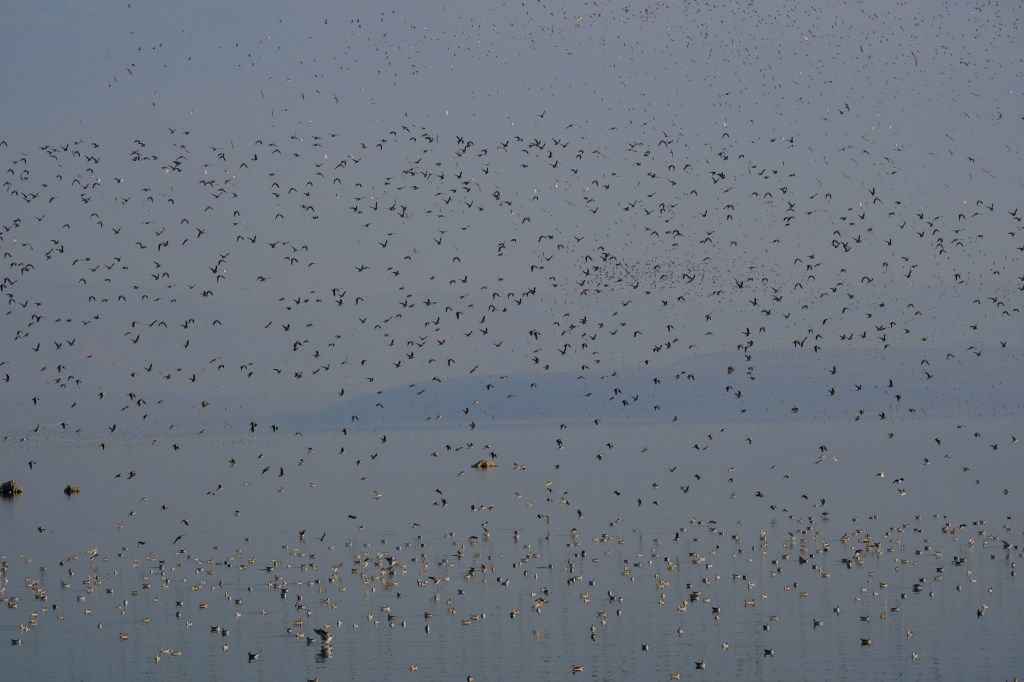
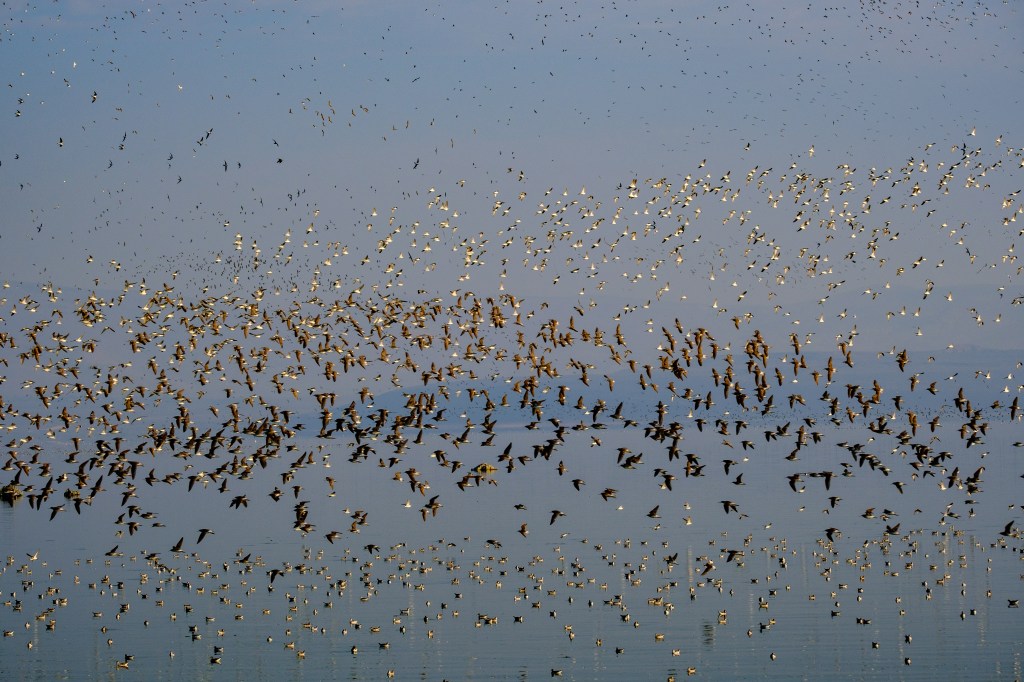
Every few minutes a flock of hundreds or thousands took off, zoomed about (at speeds up to 50 mph) near the water surface or high above the water, and then landed on the water. Large flocks made a “whooshing” sound as they went past. The landings looked like a controlled crash; the birds spread their wings, put out their feet, and take several steps on the water before flopping down. Their bellies are white, backs are a mix of browns. So depending on their angle in flight, they make look white, brown, grey, or black. As they change direction, the color of the flock changes — a fast moving plume of black smoke seems to turn white. Sometimes a dark-appearing flock crosses the path of another flock that looks white.

Taking off.
The flying birds here look brown.
We see the bellies, so these birds look white.
This group is landing.
Some groups look dark, some white.
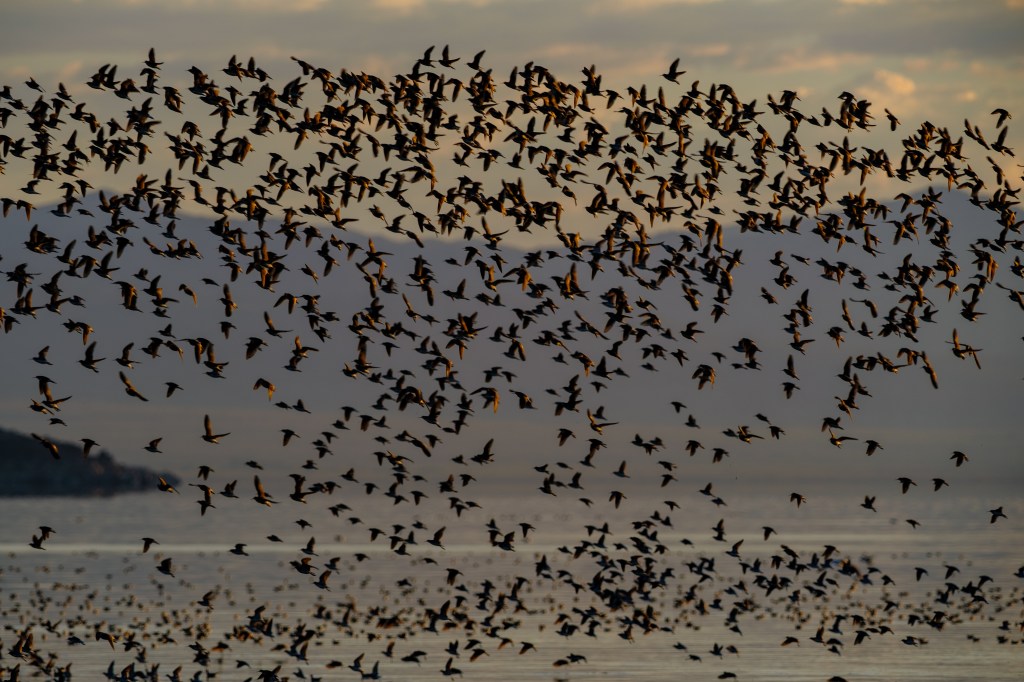
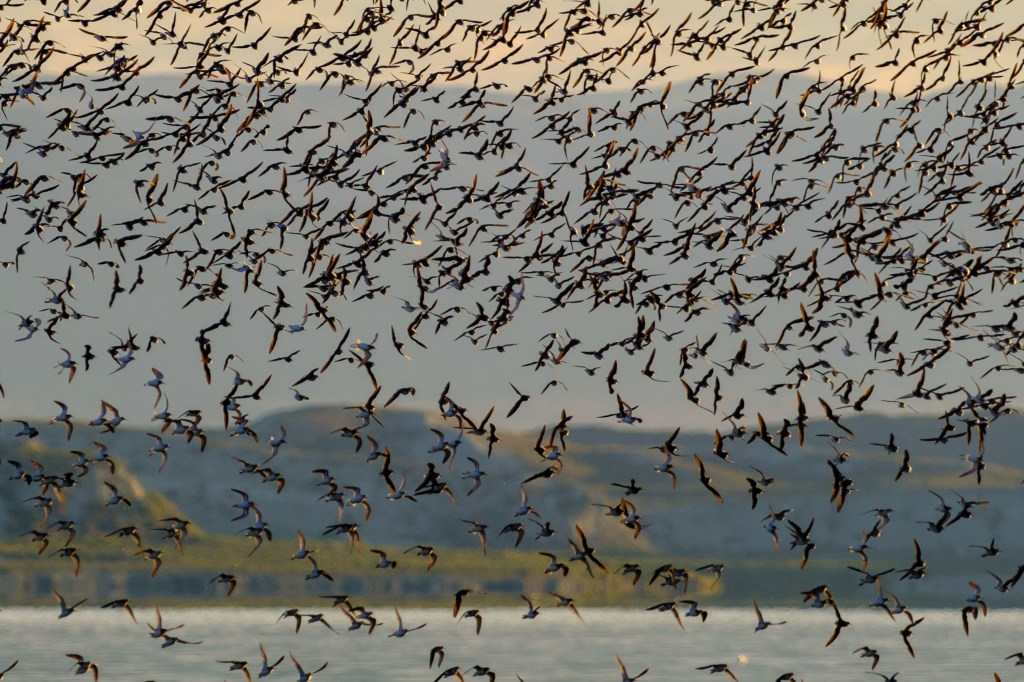
How many birds are in this photo?

In some photos, individual birds are upside down! Does air turbulence from the flock tip them over? Or are they just banking a turn very hard? How do they avoid crashing into each other? As they land, they seem to touch at times. 

At the top of this group, right of center, one bird is upside down. Feet point into the air.
Landing.
The more you magnify this photo, the more birds you can see. Could there be a thousand birds in this picture?

Why do they fly about so much? I assume they are getting their muscles in shape for the 3000-mile trip to South America. They are training, just as a human trains for a marathon. Are they also practicing how to fly as a group? When they head south, they usually lift off at night, head for the coast, and fly over the ocean. I wonder what it would look like to see a flock pass overhead against the stars or the moon?

Who was Wilson?

            Alexander Wilson (1766 to 1813) was born in Scotland. He moved to America in 1794 (age 27) in the hope of escaping poverty. He lived in Pennsylvania. Before his death at age 47, he published 9 books of bird illustrations; American Ornithology (1808-1814). His name is attached to Wilson’s Storm-Petrel, Wilson’s Plover, Wilson’s Snipe, Wilson’s Phalarope, and Wilson’s Warbler.

            In 2023, the American Ornithological Society announced a plan to revise North American bird names. Instead of naming birds for people (all white males of European heritage), names will be revised to describe the birds. They plan to revise 10 names in 2024, including Wilson’s Warbler and Snipe. Europeans did not discover these birds; they were known to indigenous people for thousands of years.

A couple of additional photos remind us that Phalaropes are not the only creatures at Mono Lake. Roberta spotted this Desert Cottontail on April 2, 2024.

Aw, mira que cute.

Great Blue Herons

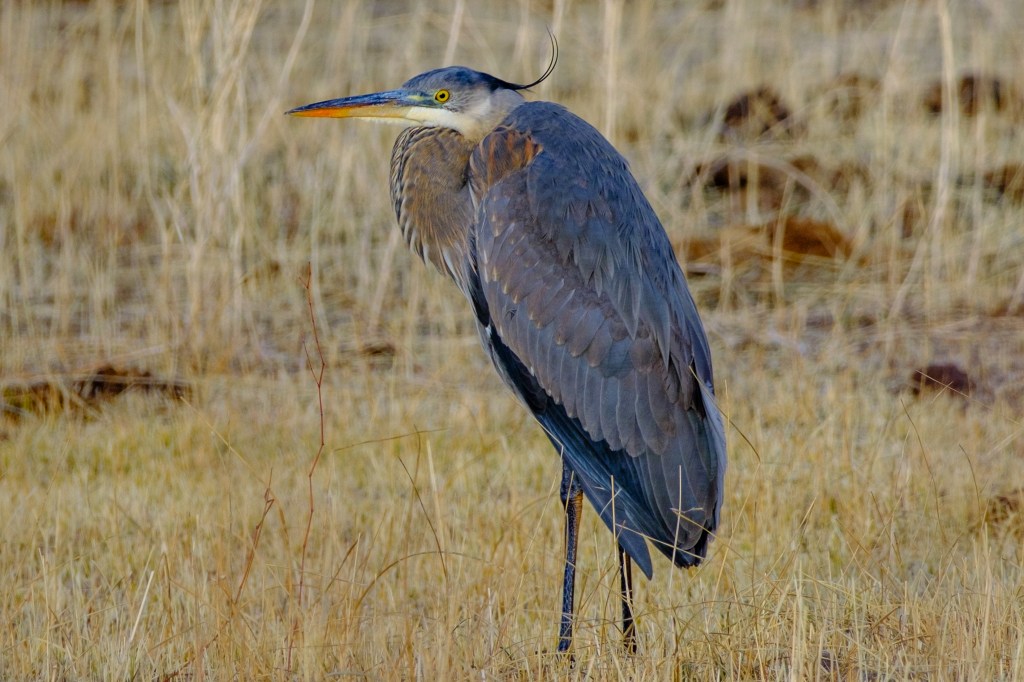
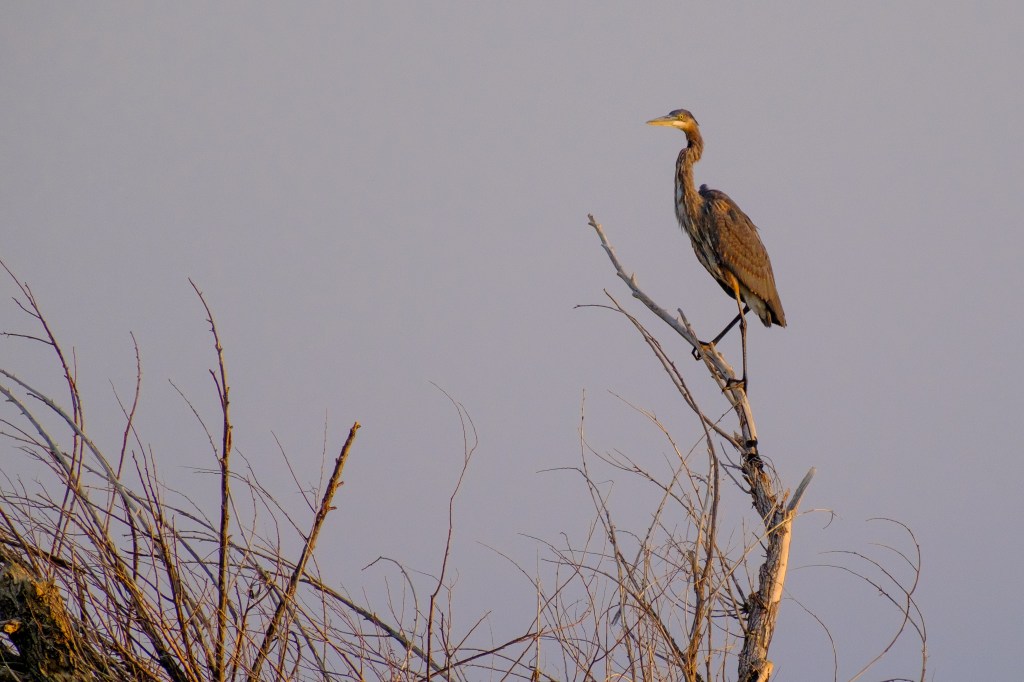
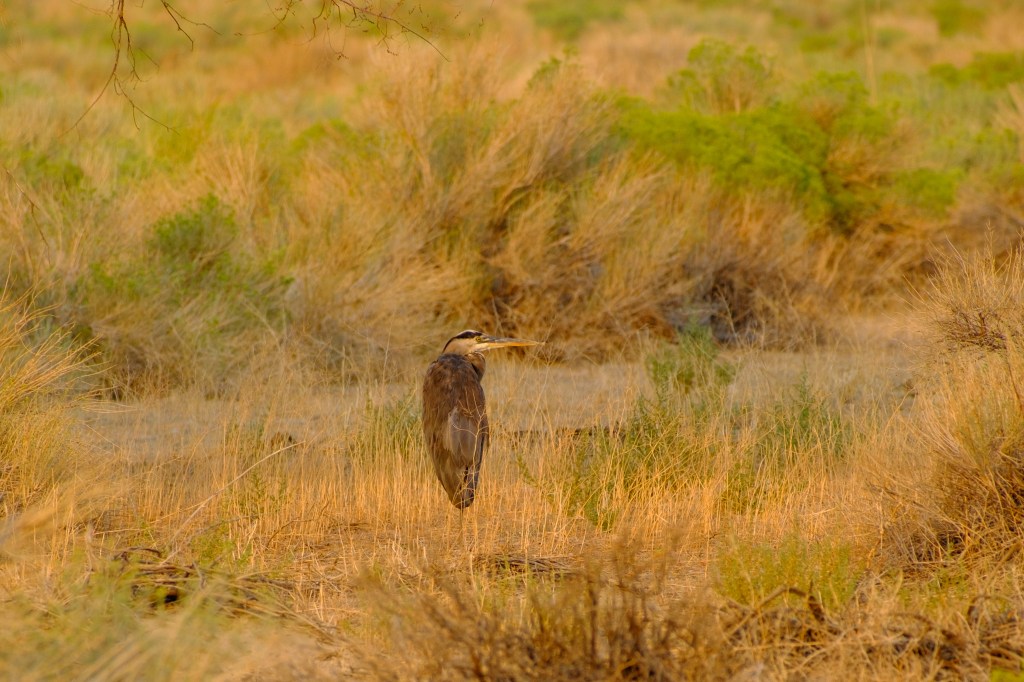
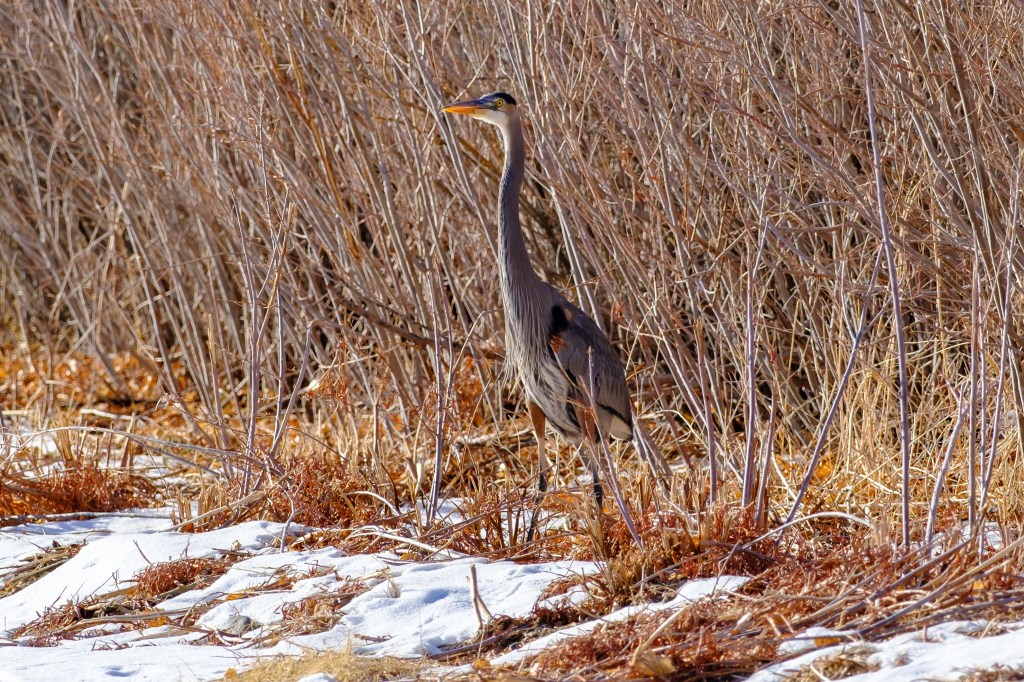
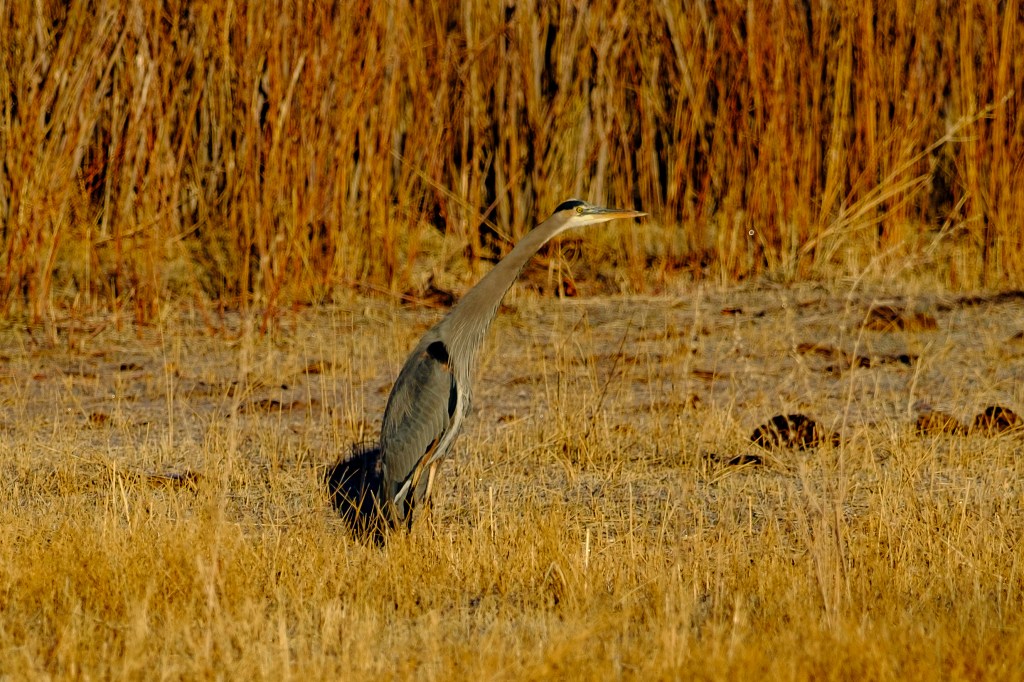
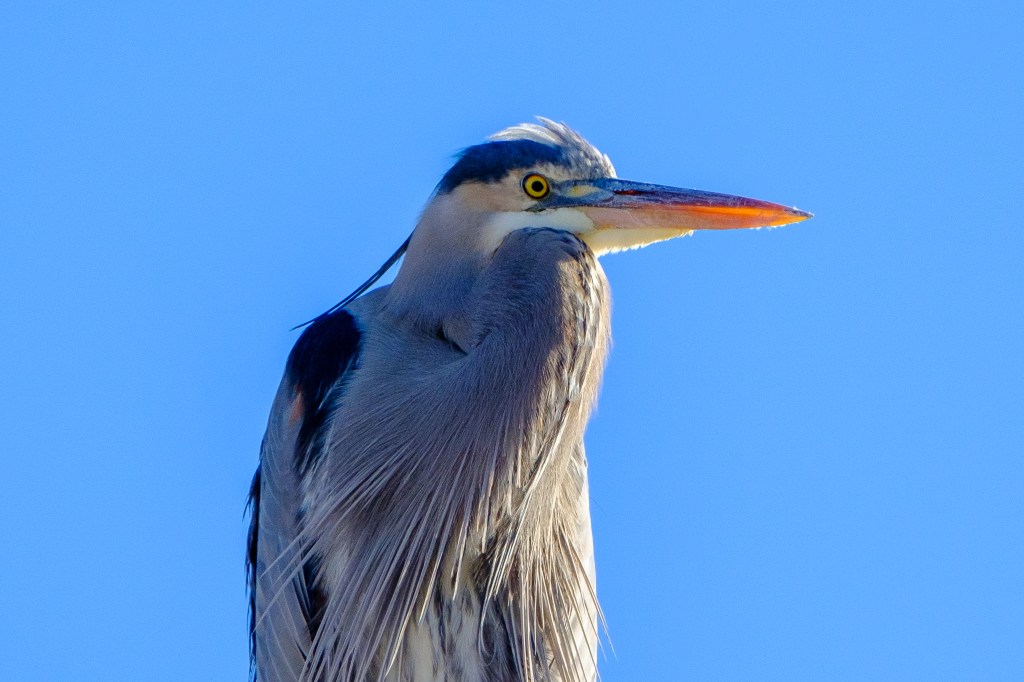
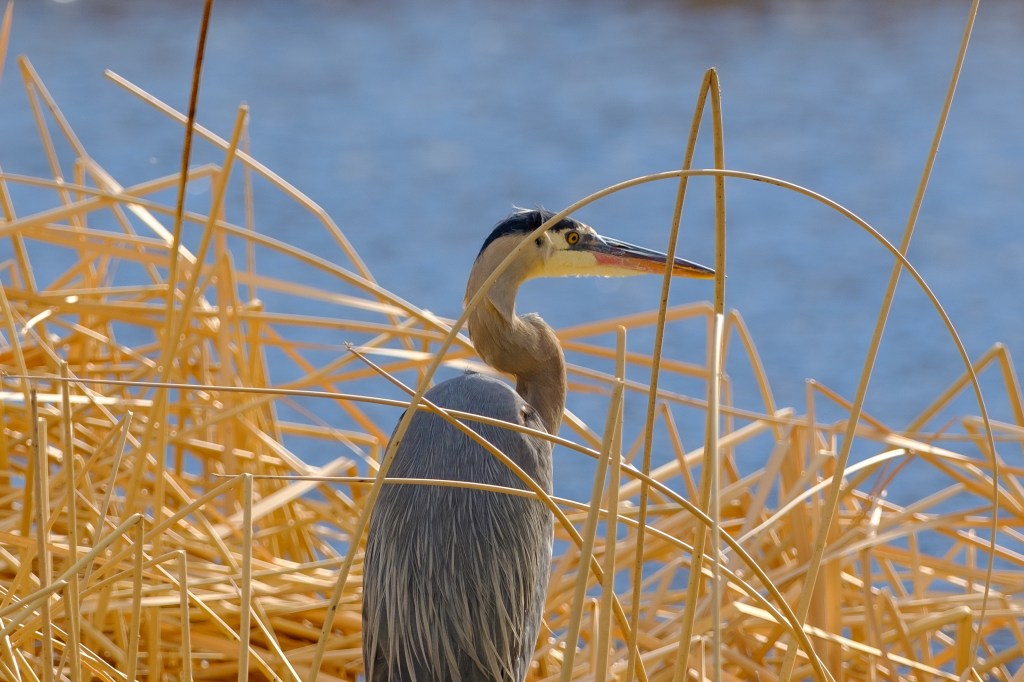
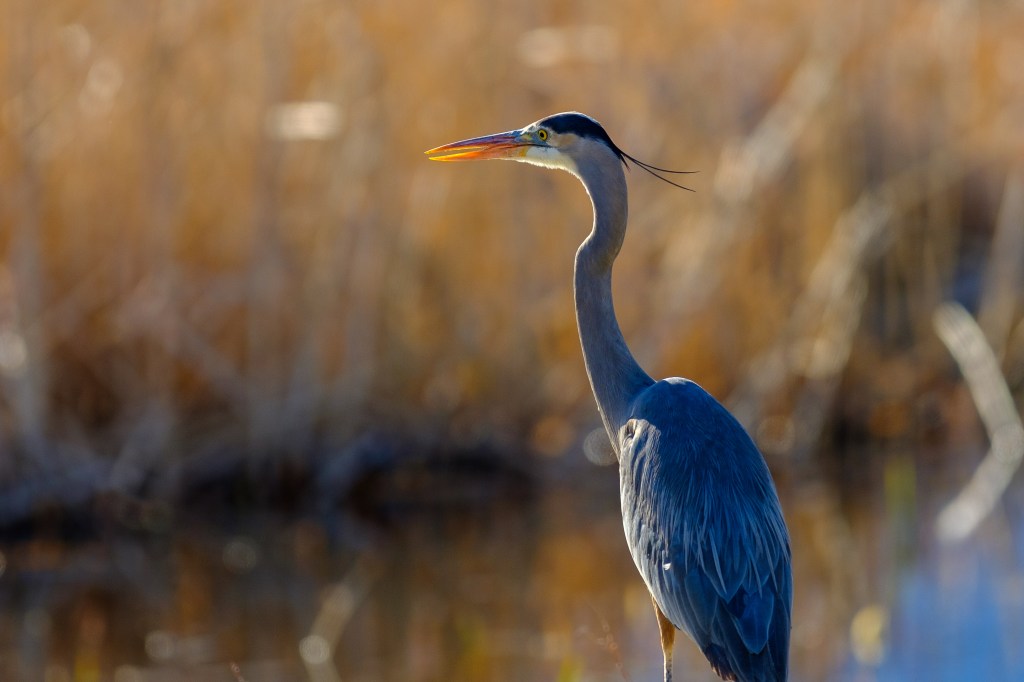
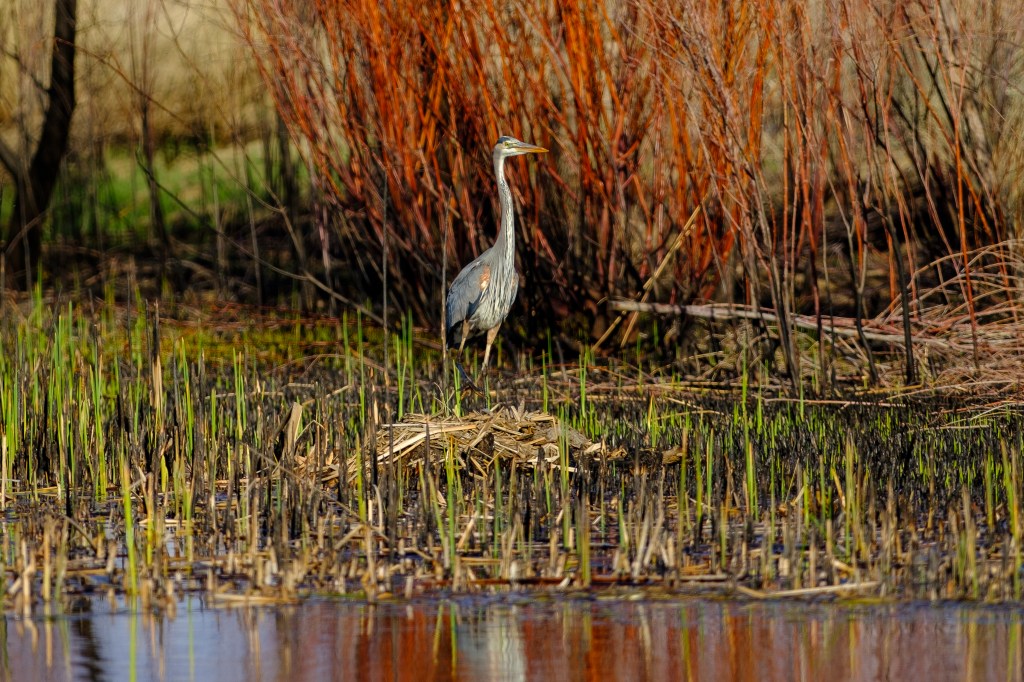
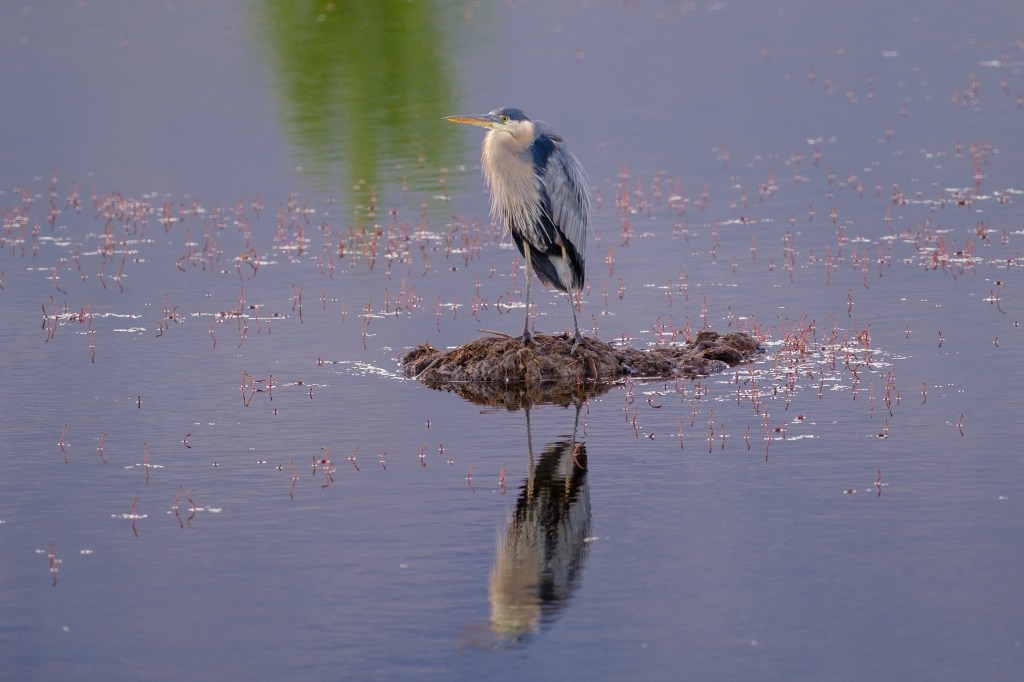
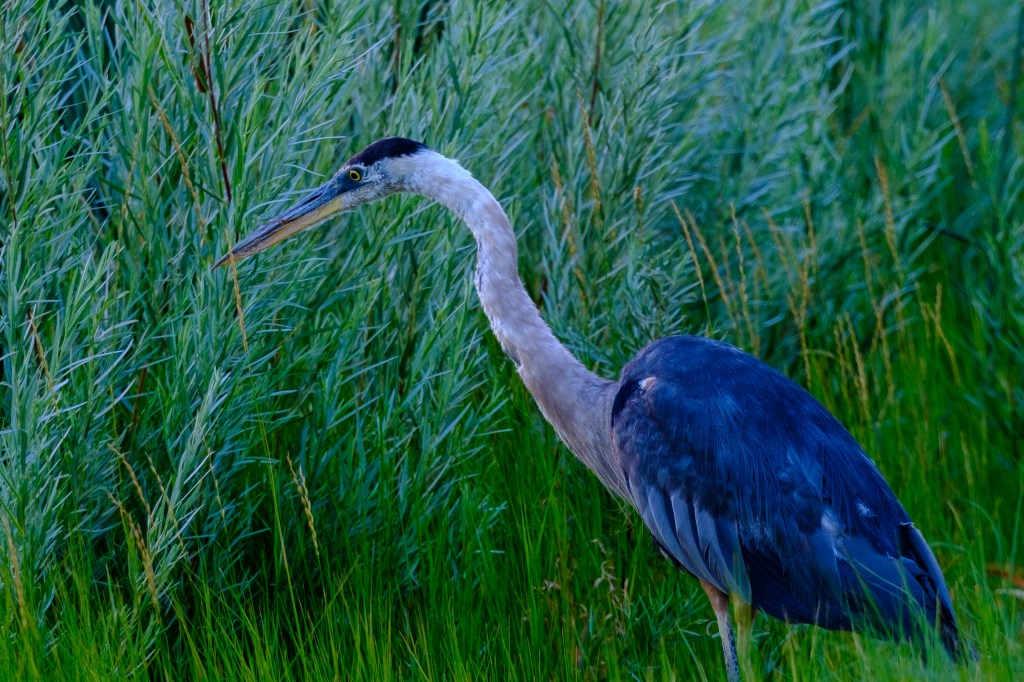
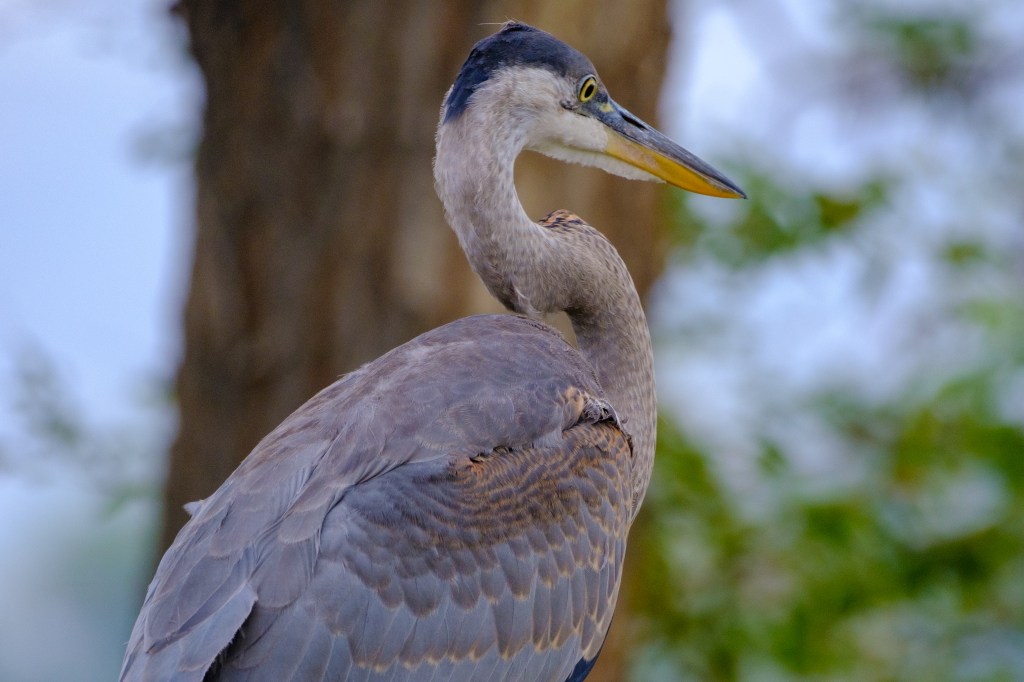
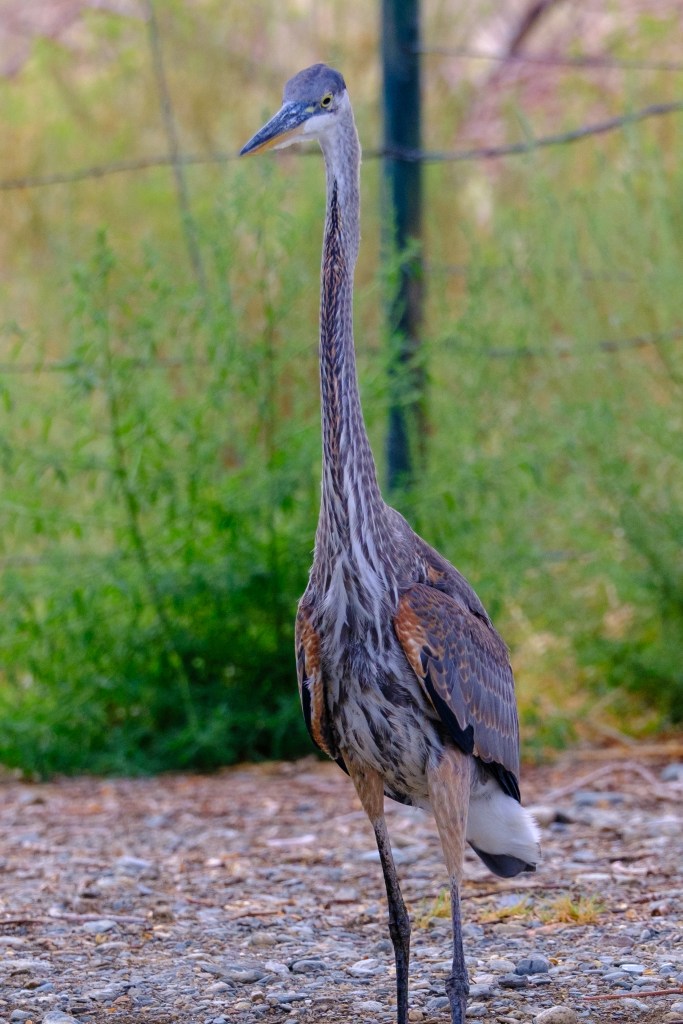
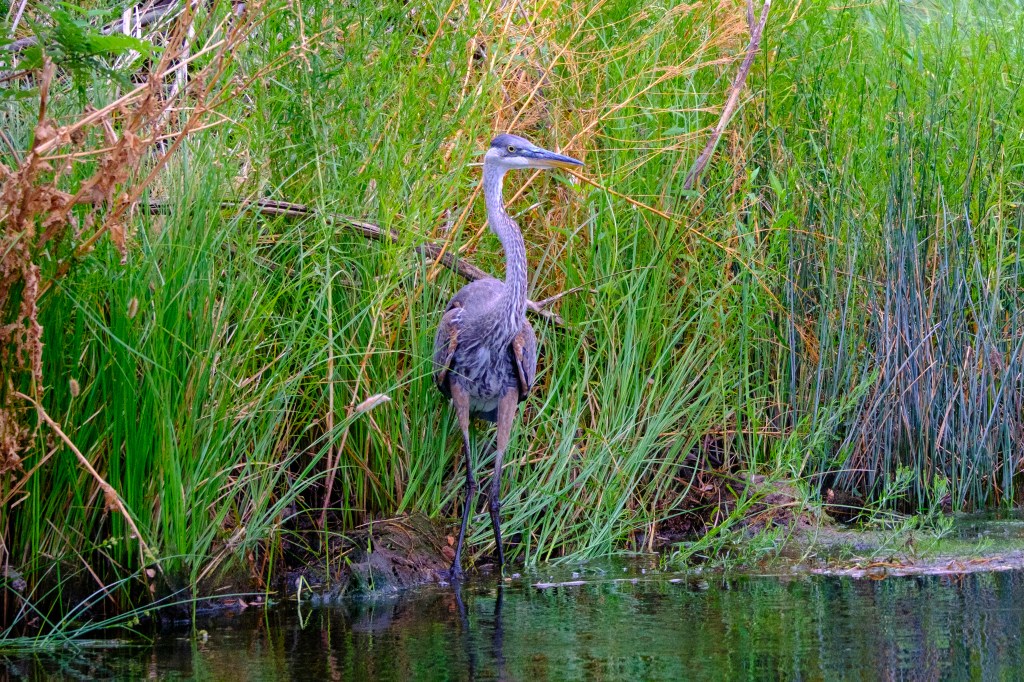
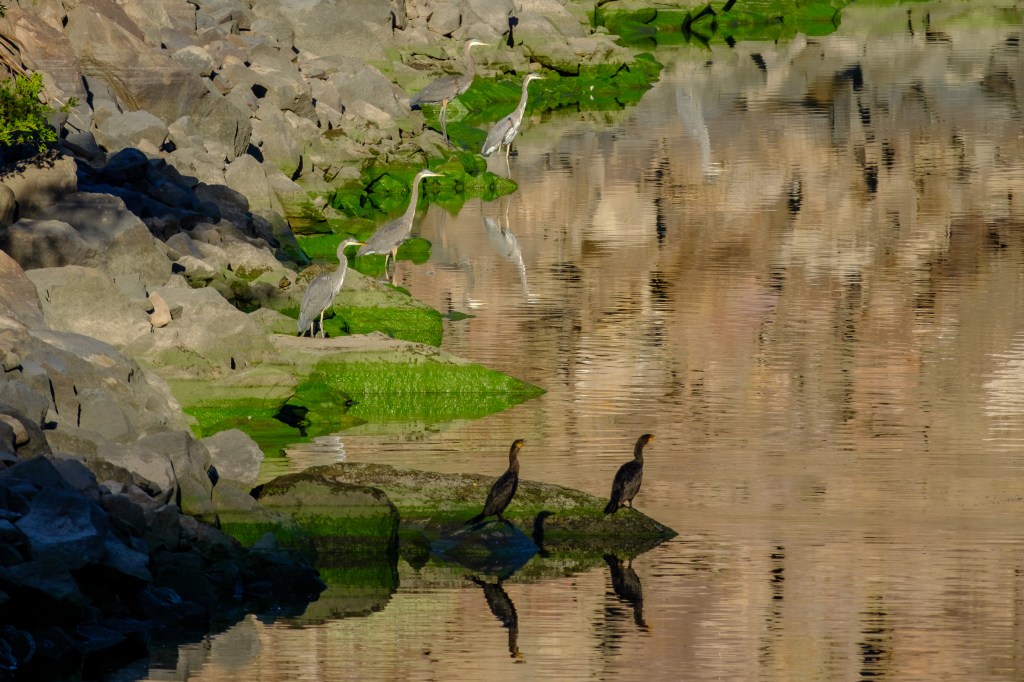
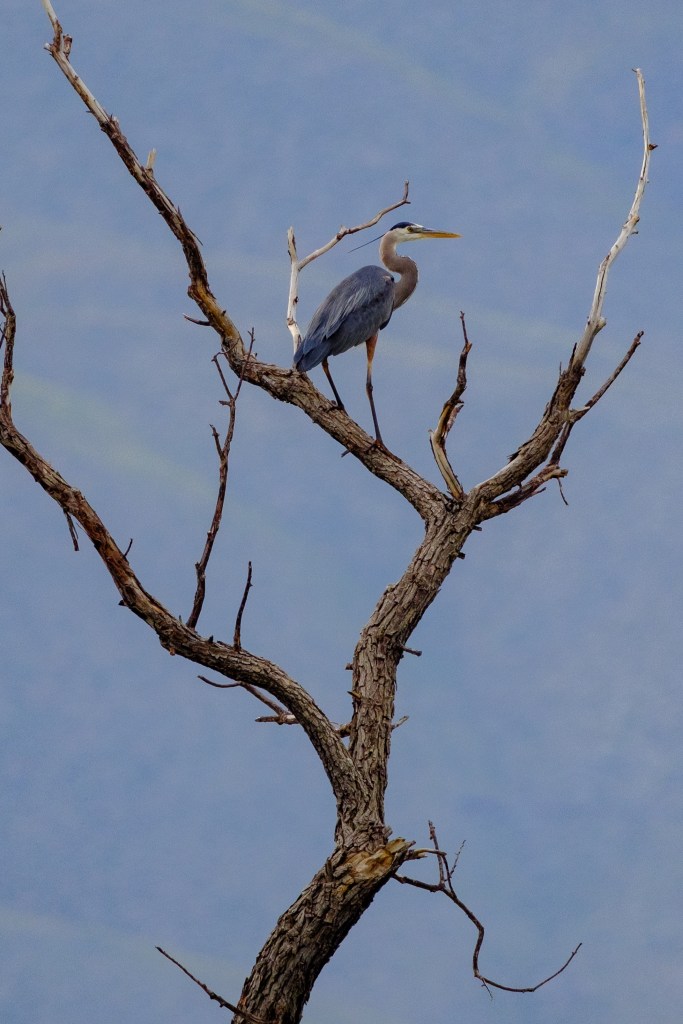
Bishop is in the high desert at 4000 feet. Despite being in a desert, we have Great Blue Herons; lots of them. They have been seen at 260 feet below sea level in Death Valley and as high as 11,000 feet near Sawmill Pass. They build nests in Cottonwoods throughout the Owens Valley; rookeries of several nests can be found. They fish in streams, canals, ponds, and reservoirs. They hunt small mammals in fields.

Compare a Heron with a Bald Eagle. Both prefer fish. The Heron catches fish with its long bill, the Eagle grasps them with its talons. They have colossal wingspans; 6 feet for the Heron, 6.5 feet for the Eagle. But the Heron is a lithe ballet dancer: 4.5 feet tall, 6.5 pounds. The Eagle is a muscle-bound thug: 2.5 feet, 9.5 pounds.

I have taken thousands of photos of Great Blue Herons. They are common and big, making them an easy target. I currently (March 2024) have 674 saved Heron photos, more than for any other bird. A heron was the first bird I managed to photograph while in flight. Their large size and straight path makes it easier to get pictures. Most photos in this post were taken near the Buckley Ponds or the Bishop Creek Canal.

Pony tails.

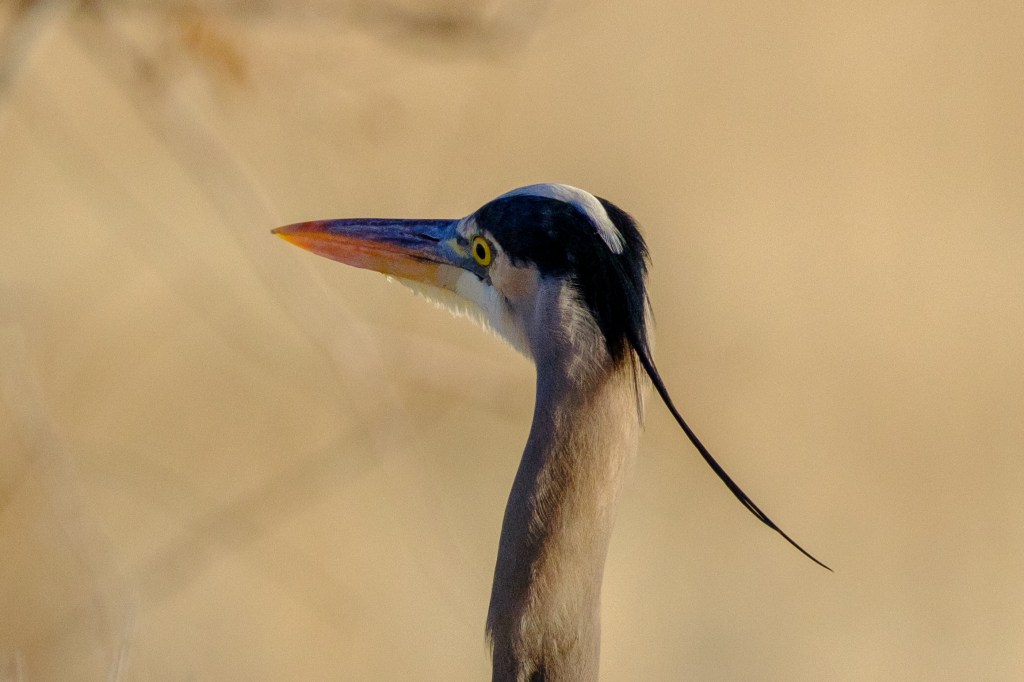
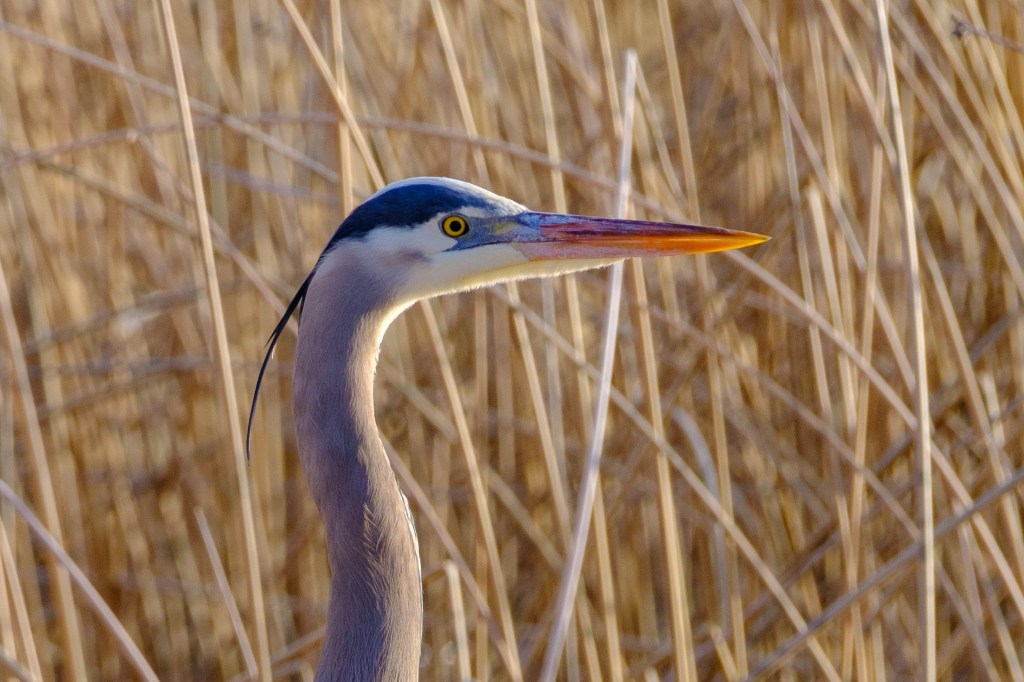
Herons have pony tails. Technically, these are occipital plumes. Apparently these feathers are used for mating displays. In reviewing my photos, the pony tails seem longest around January, when mating starts, shortest or absent in late summer. Or maybe this difference arises because juvenile Herons lack long plumes. Below are a few examples.

The pony tail floats above the back. Note all the holes in the wing feathers.

Shake it, baby!

Sometimes birds give themselves a vigorous shake, fluffing their feathers into a disorderly mess. Why? Are they trying to shed dust or parasites? Below is a sequence of photos showing this shaking.

Nice pony tail. Giant toes.
Shaking begins.
The result is a mess.

Here is another example of shaking.

Note that the legs look like carbon-fiber hiking poles.

Feeding.

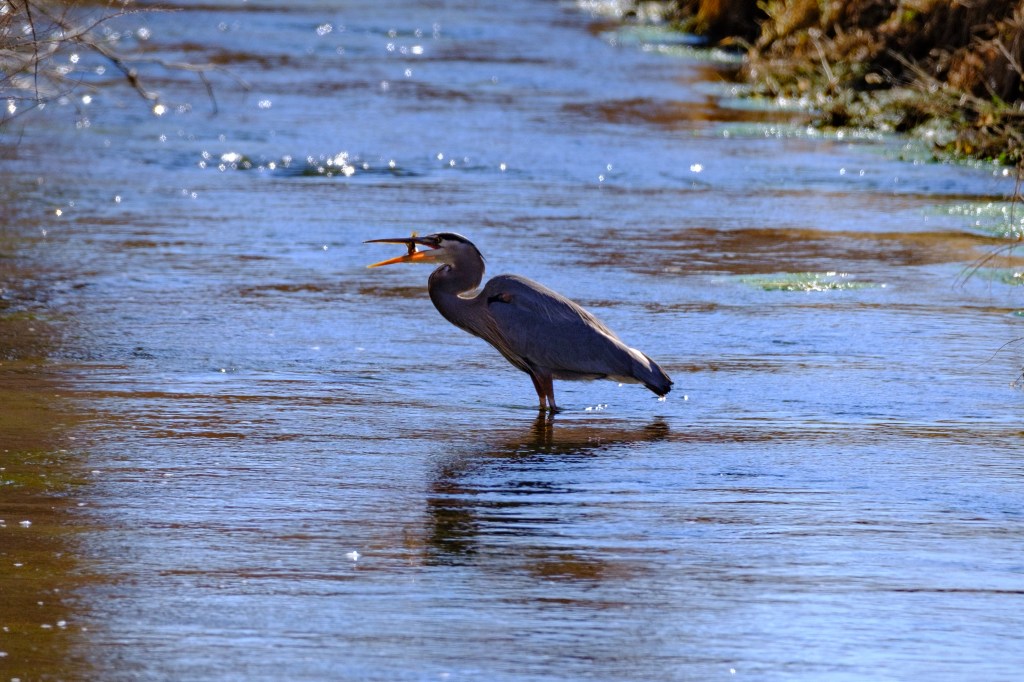
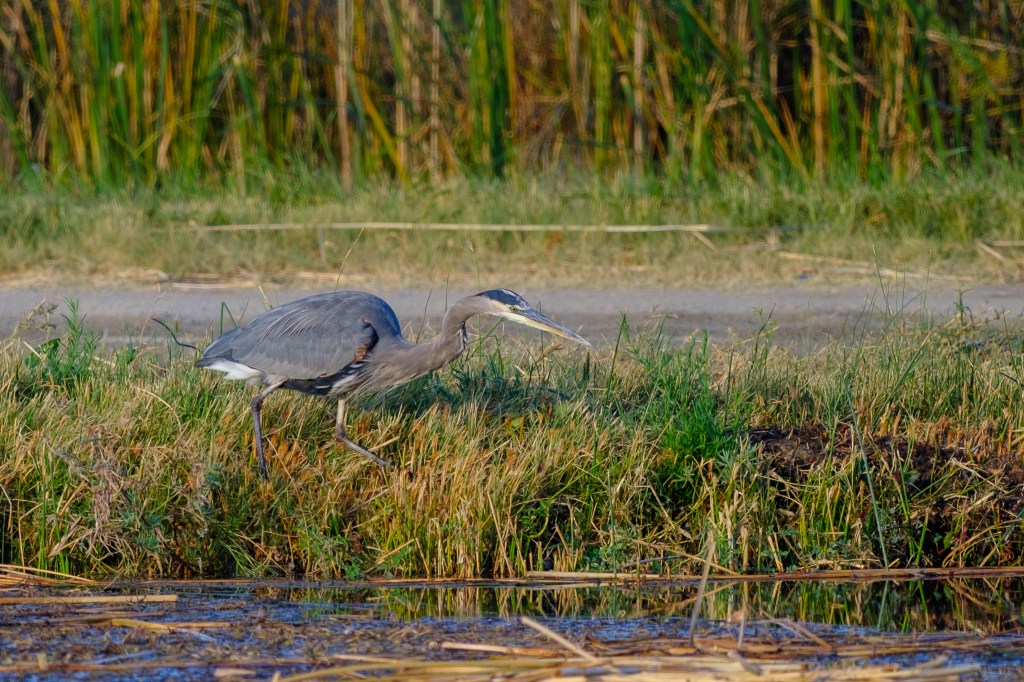
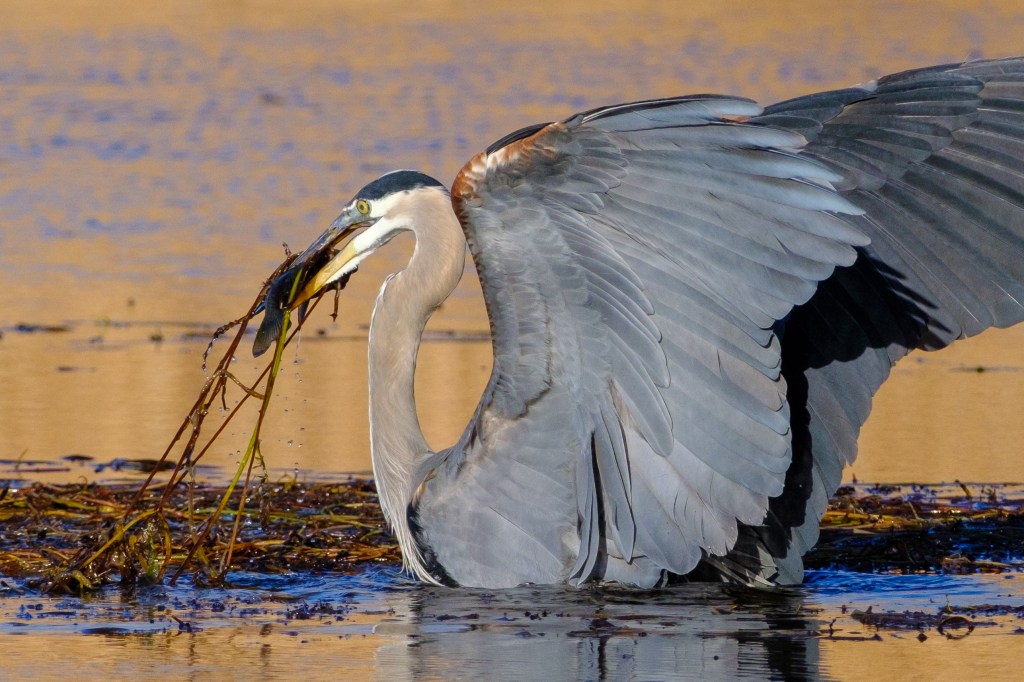
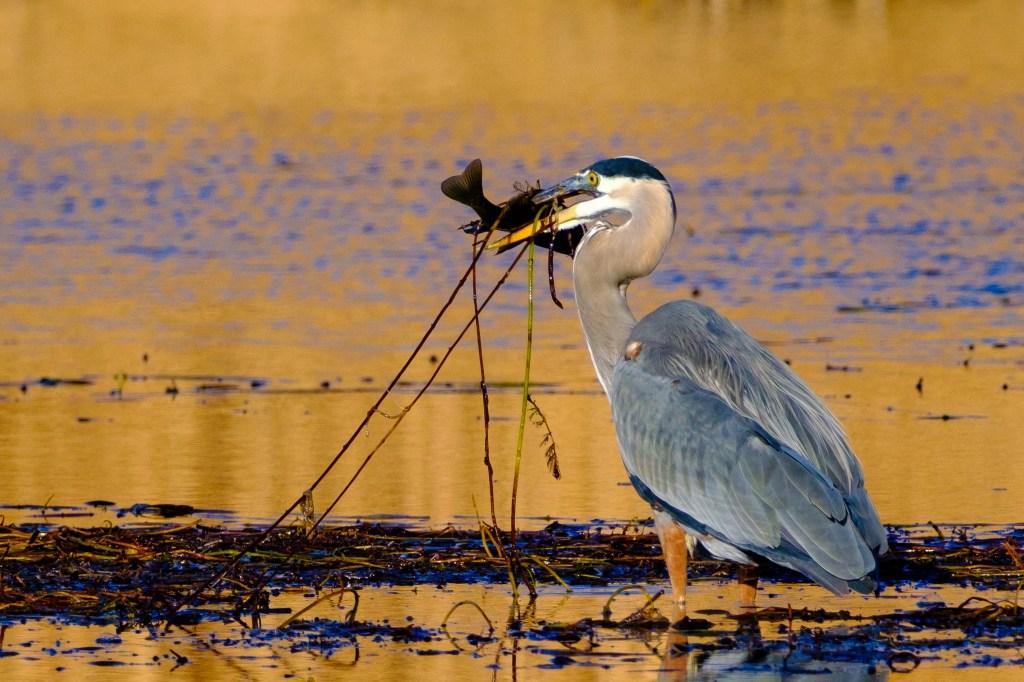
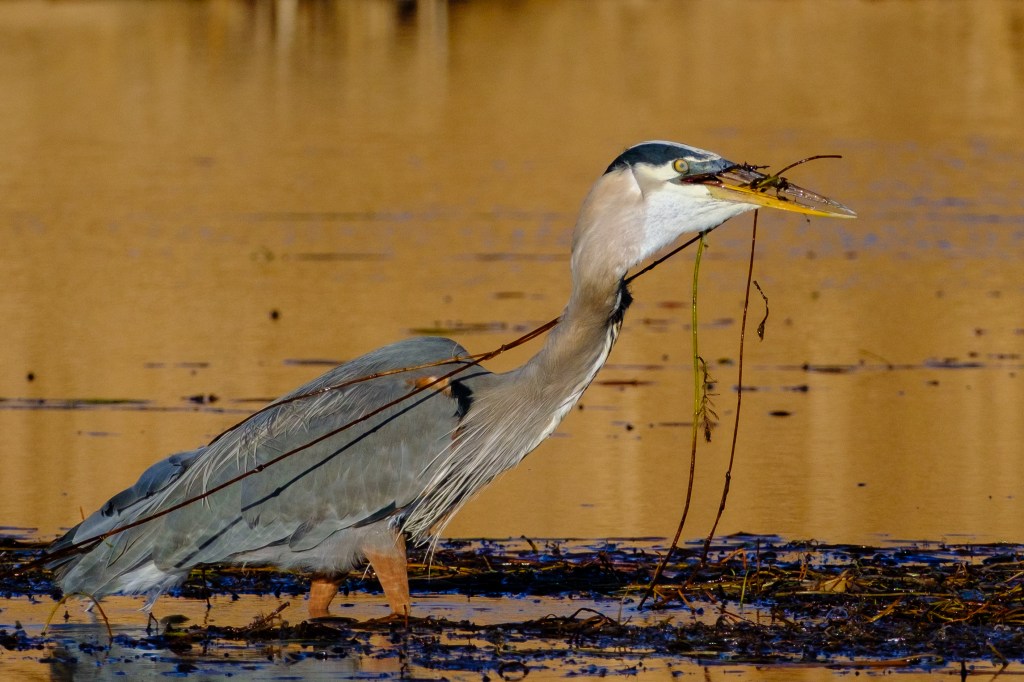
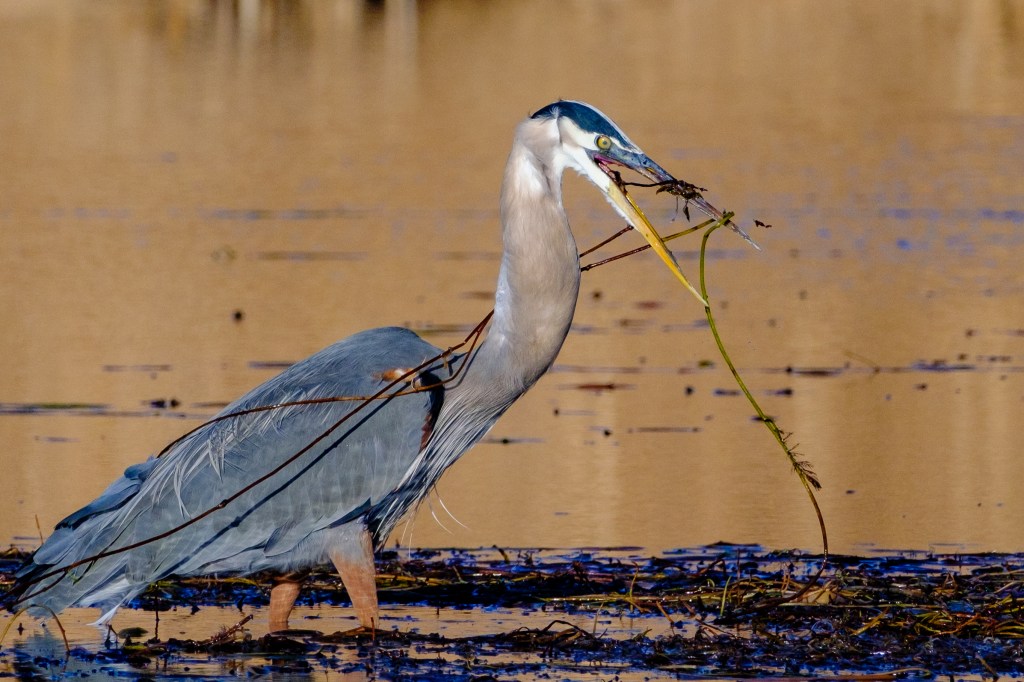
Herons usually hunt near or in water. They may stand motionless, or move slowly. Then they strike quickly and grab a fish. They may hold it for a while, until the flopping stops, then maneuver it so that it can be swallowed head first. If the fish is large you can see a bulge move down the bird’s neck. In addition to fish they eat crustaceans, amphibians, other birds, and small mammals.

Heron with fish in Bishop Creek Canal
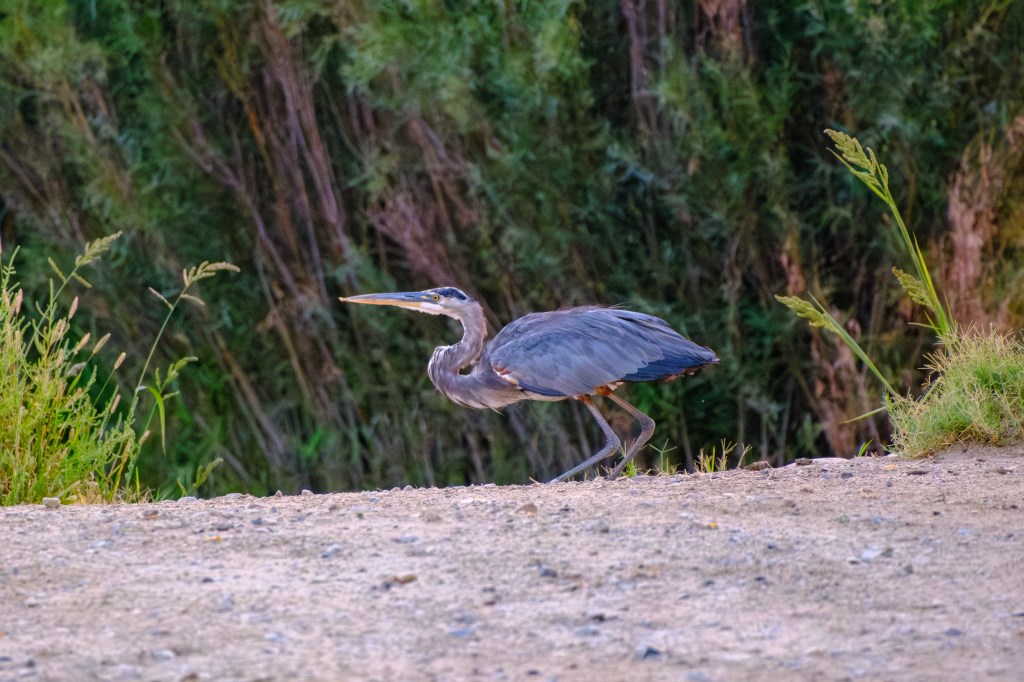
Heron stalking fish or frogs at Buckley Ponds.

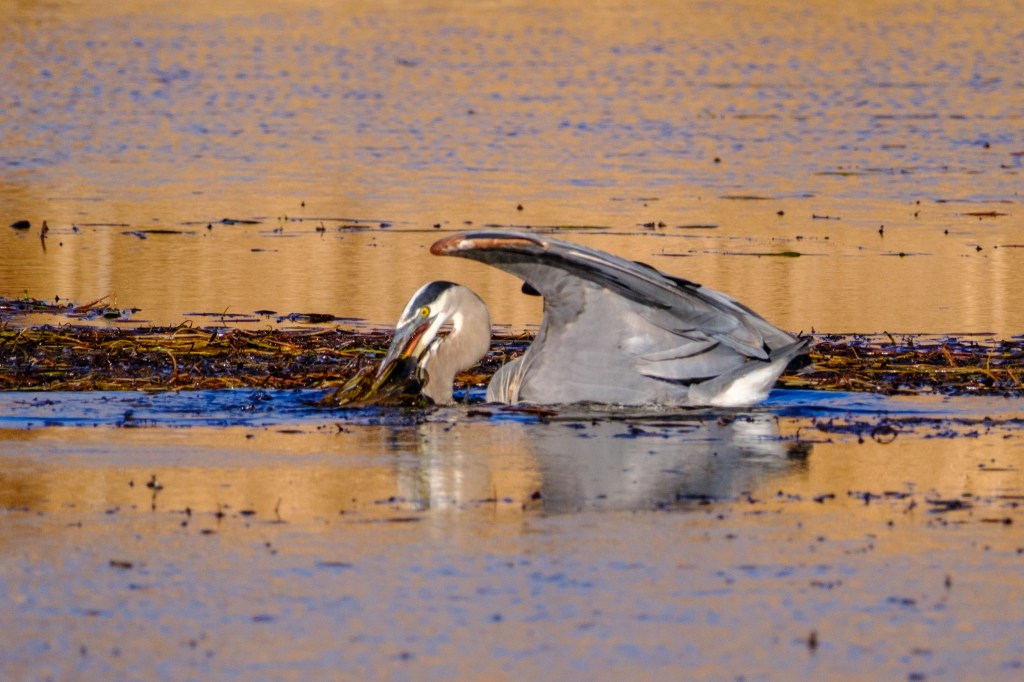
In the sequence below, a Heron catches a carp at the Buckley Ponds. The time from first to last photo is 52 seconds. Imagine if you had to eat this way.

Flight.

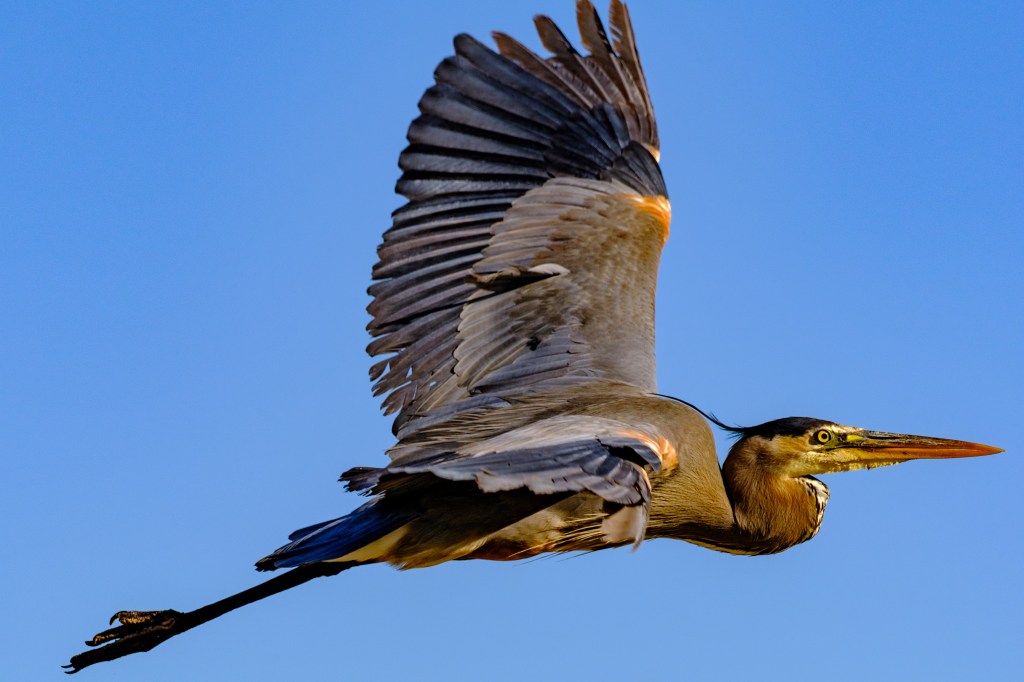
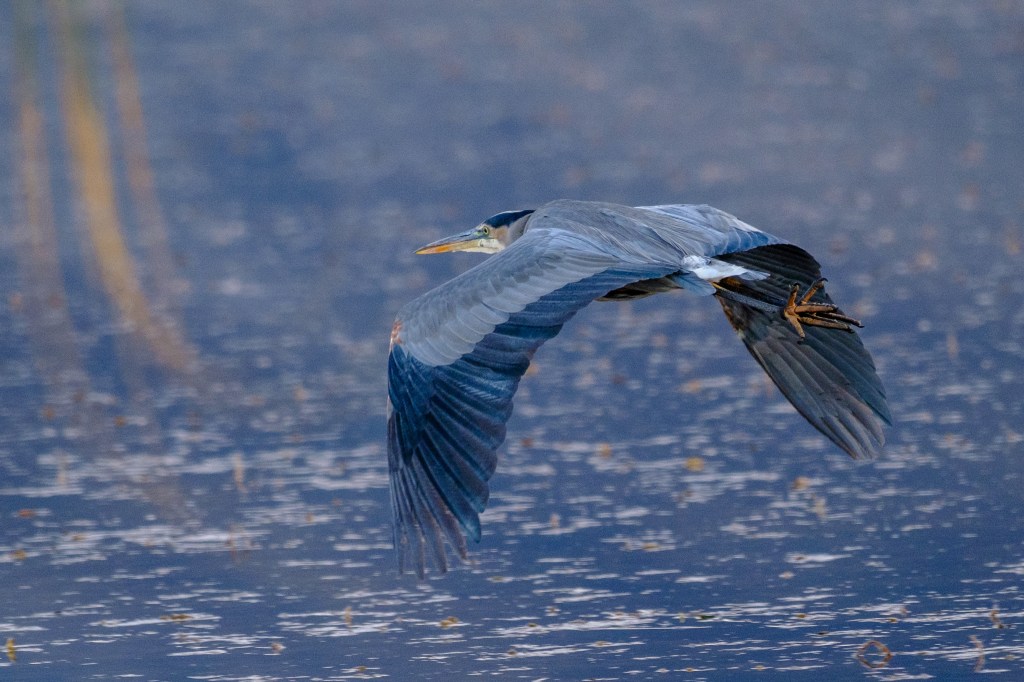
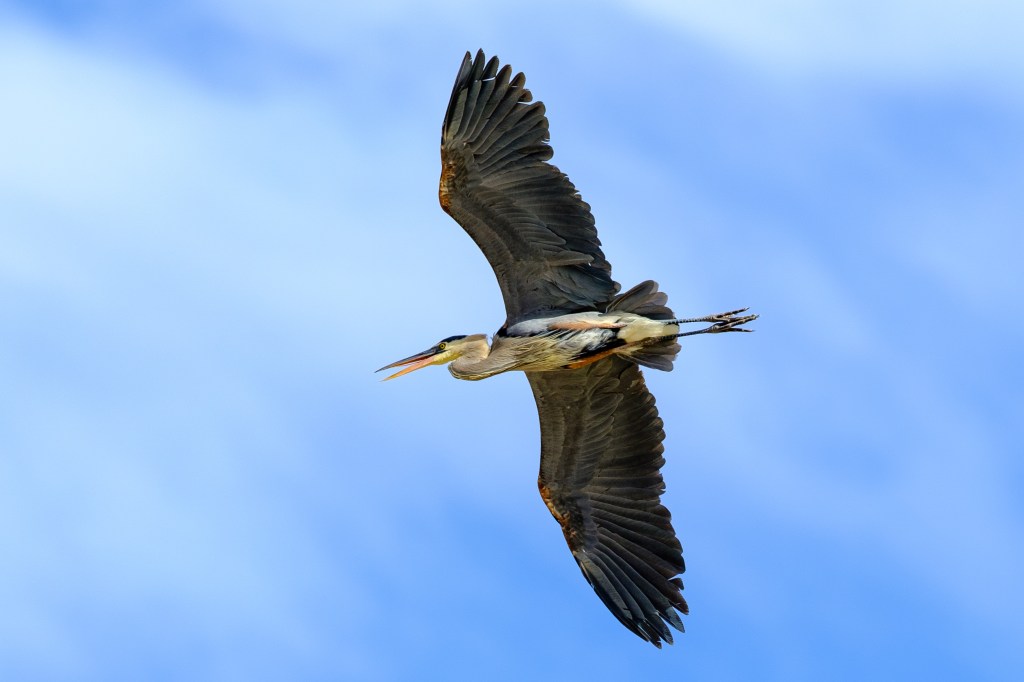
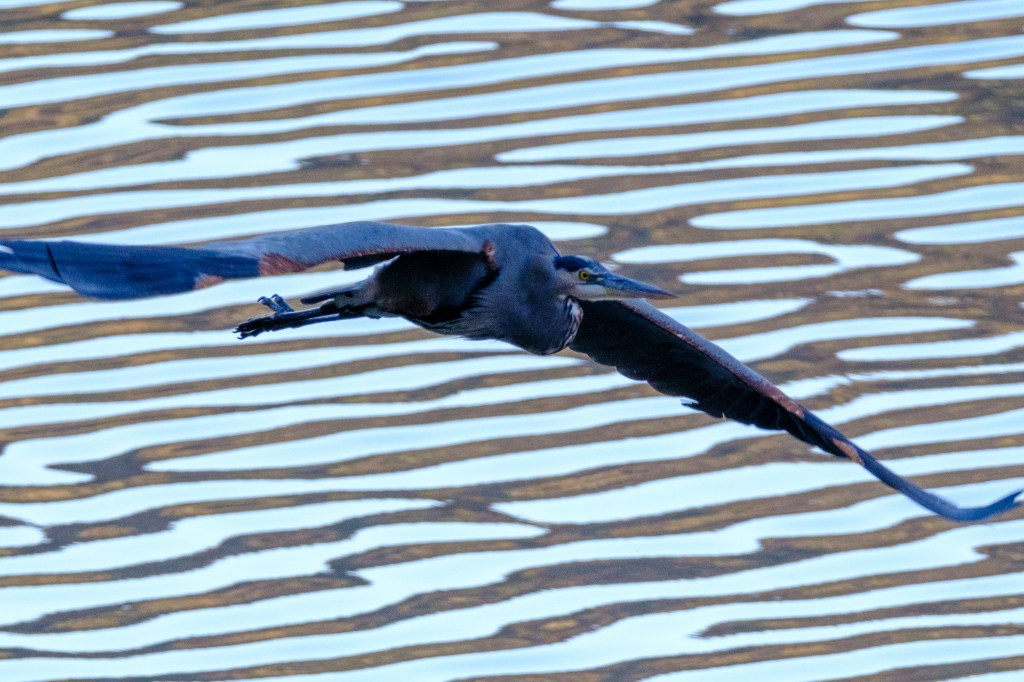
Herons use big, powerful, rhythmic wing-beats and tend to cruise in a straight line. I like to think of them as lumbering aircraft, an avian B-52. At the start of flight the neck is extended. Then it may coil back onto the shoulders, but not always. With the neck extended the bird often looks awkward, as if it has no business being in the air. The big primary feathers at the ends of the wings often have tears and holes, like a car riding on bald tires. Sometimes an entire feather is missing.

Torn feathers. The legs trail behind.
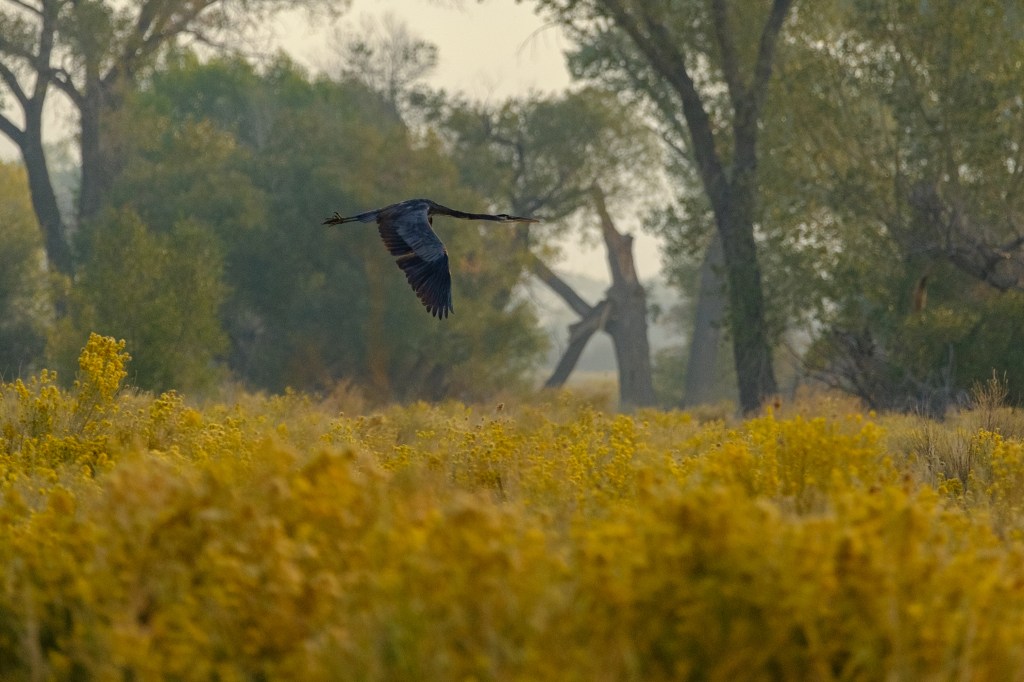
Flight through cottonwoods. Yellow plant is rabbitbrush.
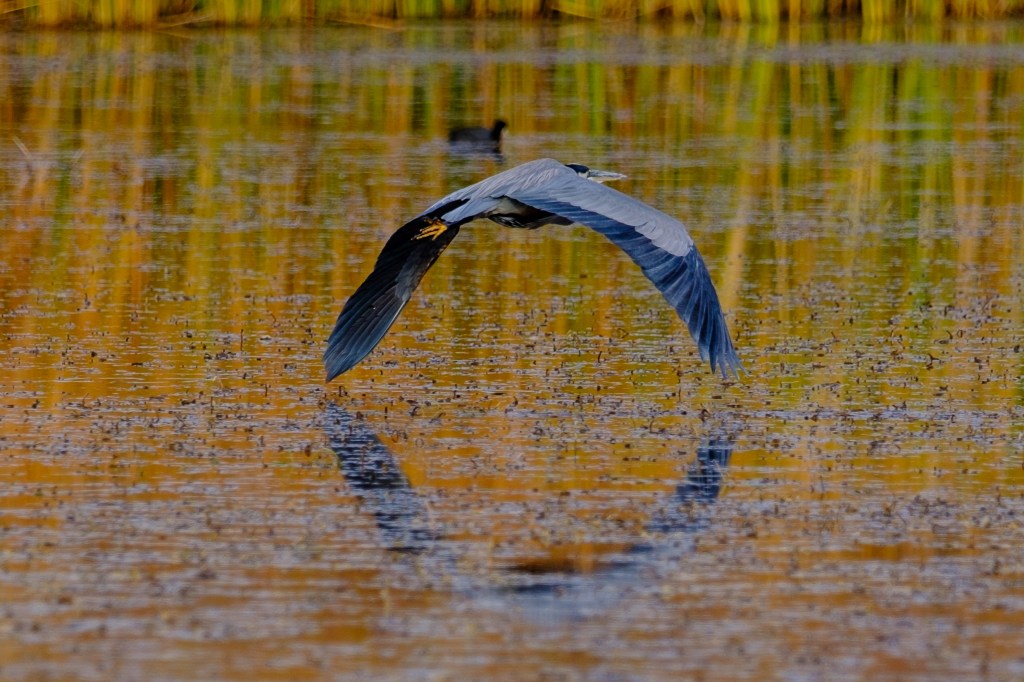
Wings and reflection form a circle. Sometimes wing-tips touch the water.
Neck still mostly extended. The head and legs hang below the body. Ungainly look.

Birds descended from dinosaurs, but I find that hard to grasp when I see a Bald Eagle. But I can easily imagine the Heron below is a dinosaur.

Nice view of the big feet
Heron cruising over Pleasant Valley Reservoir, early morning.

Portraits.

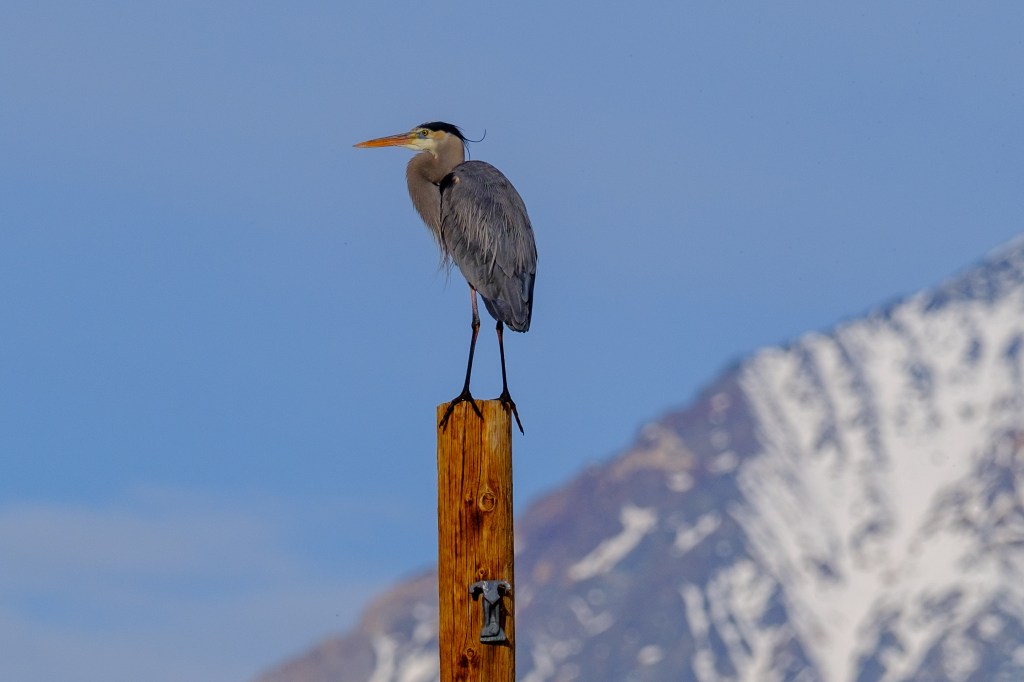
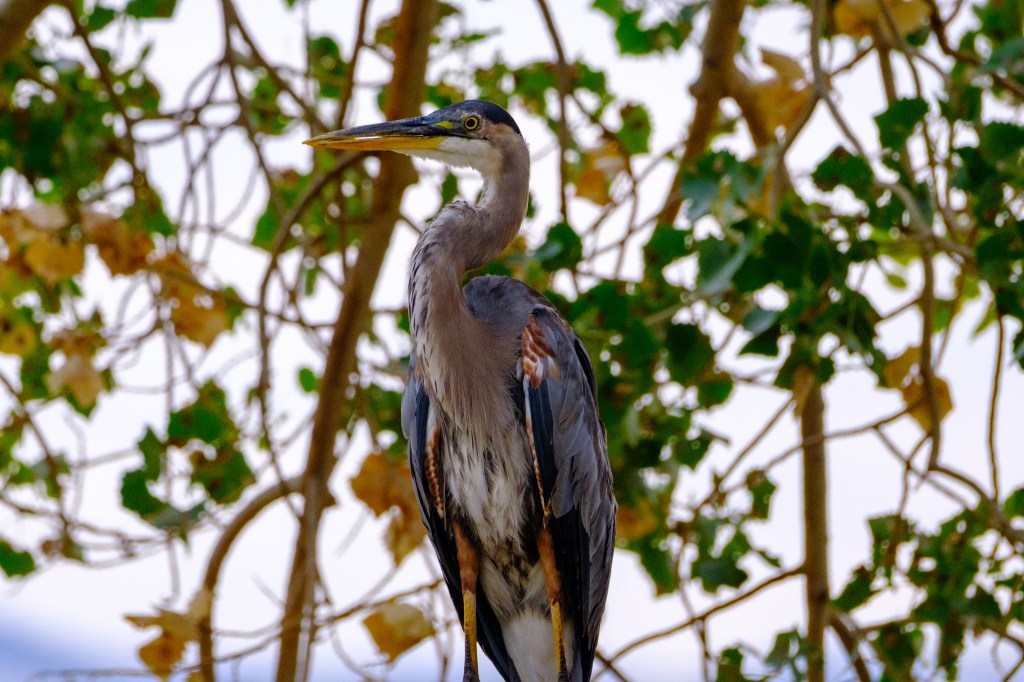
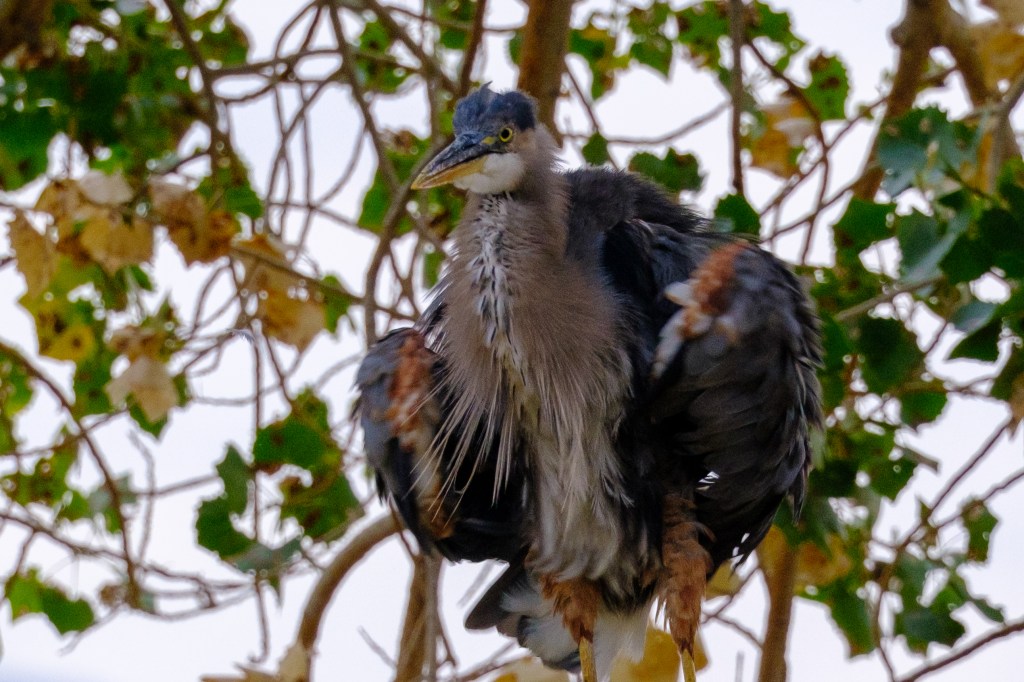
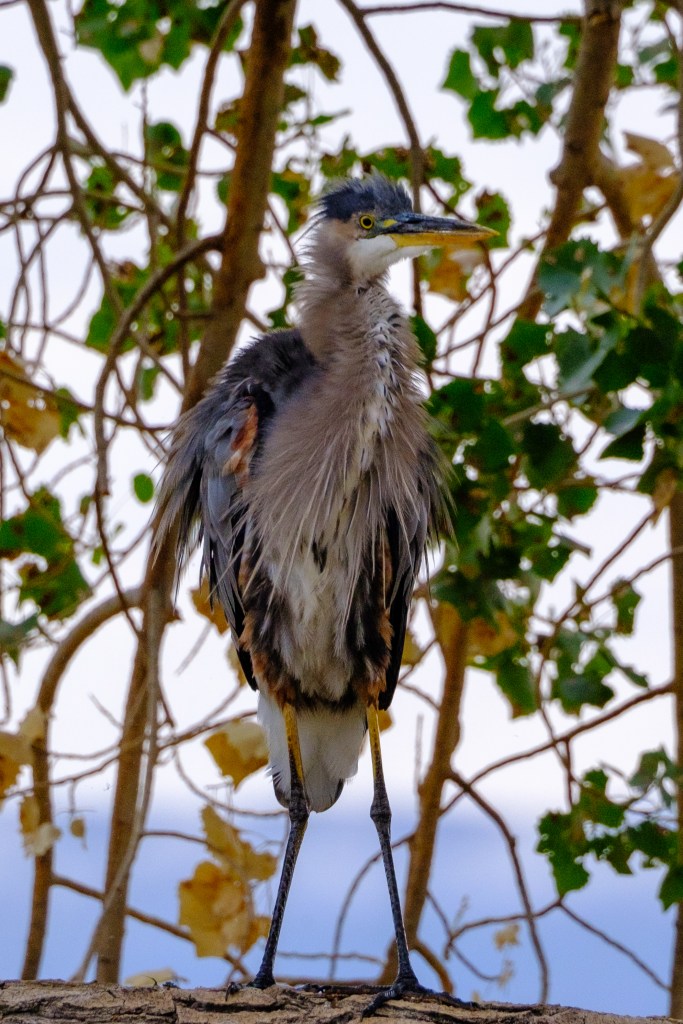
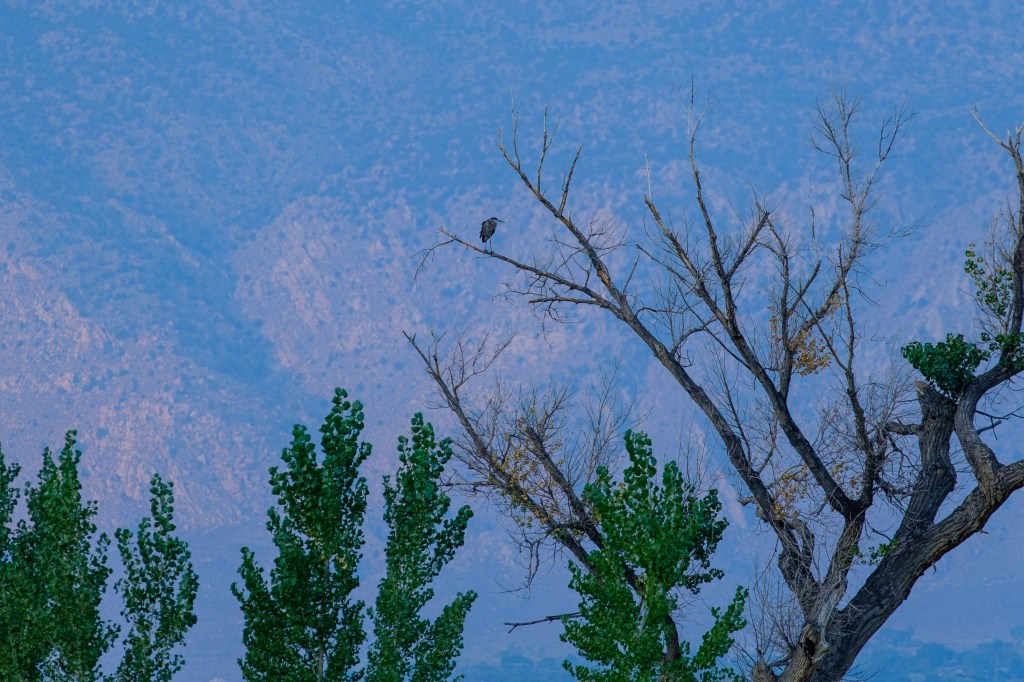
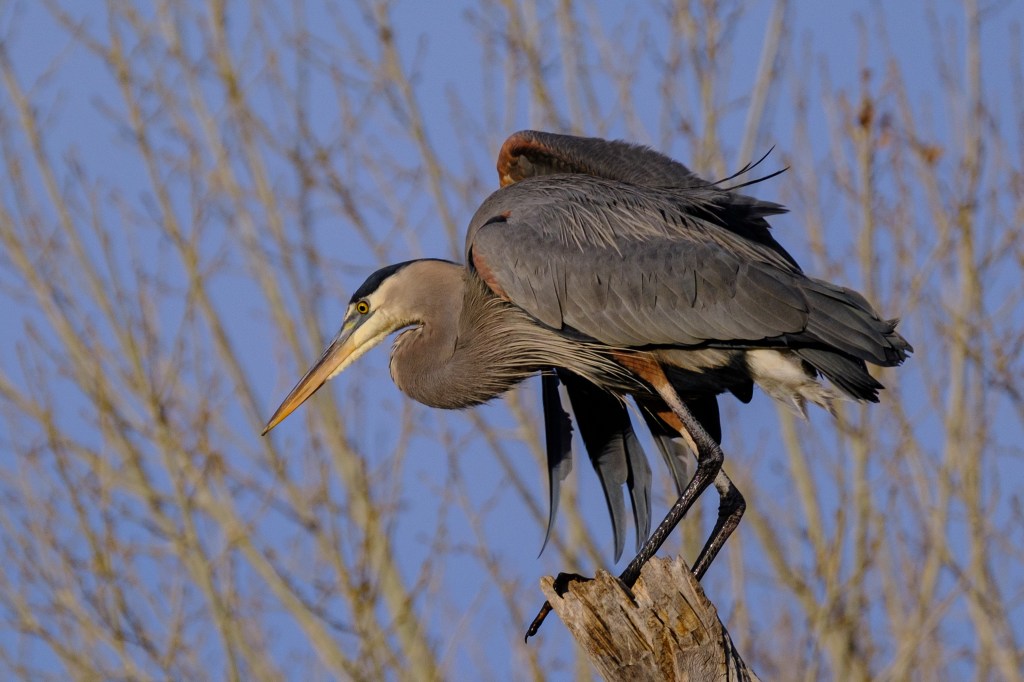
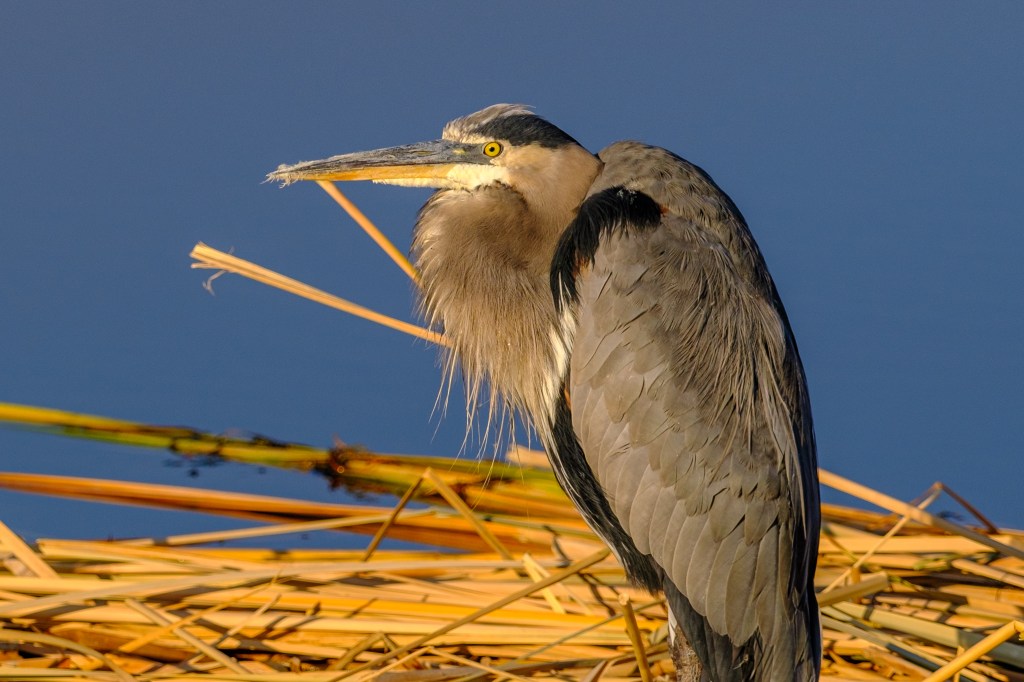
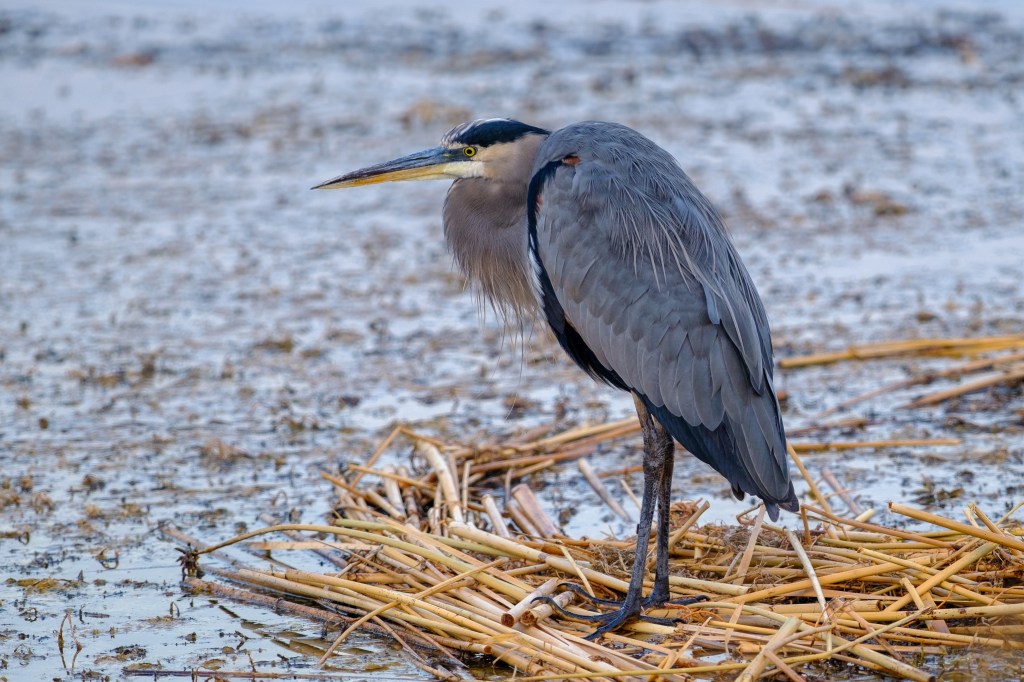
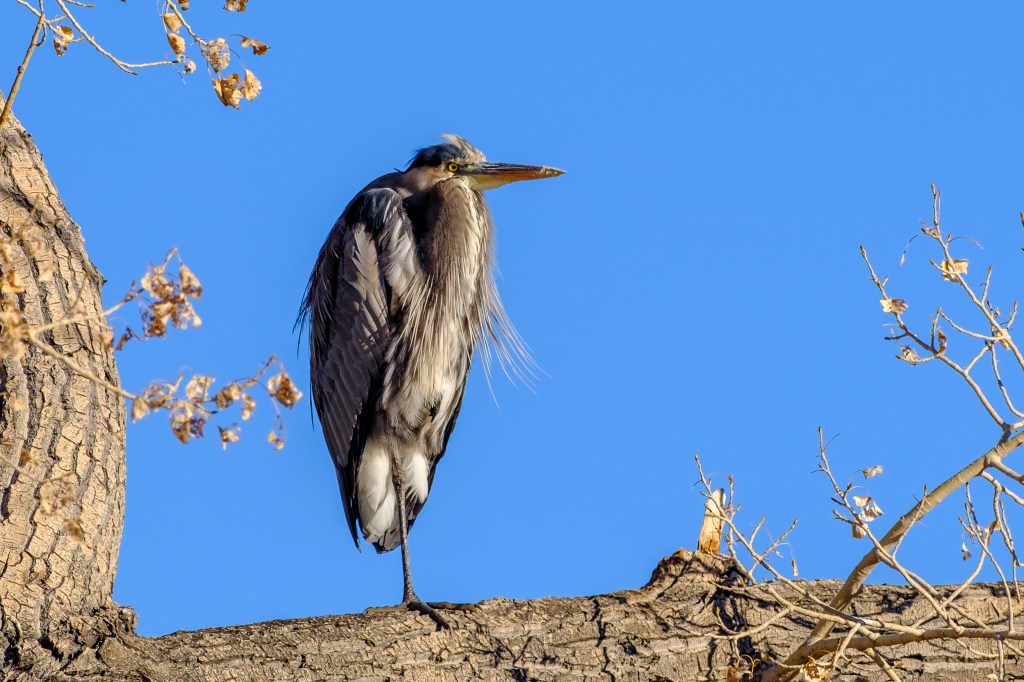
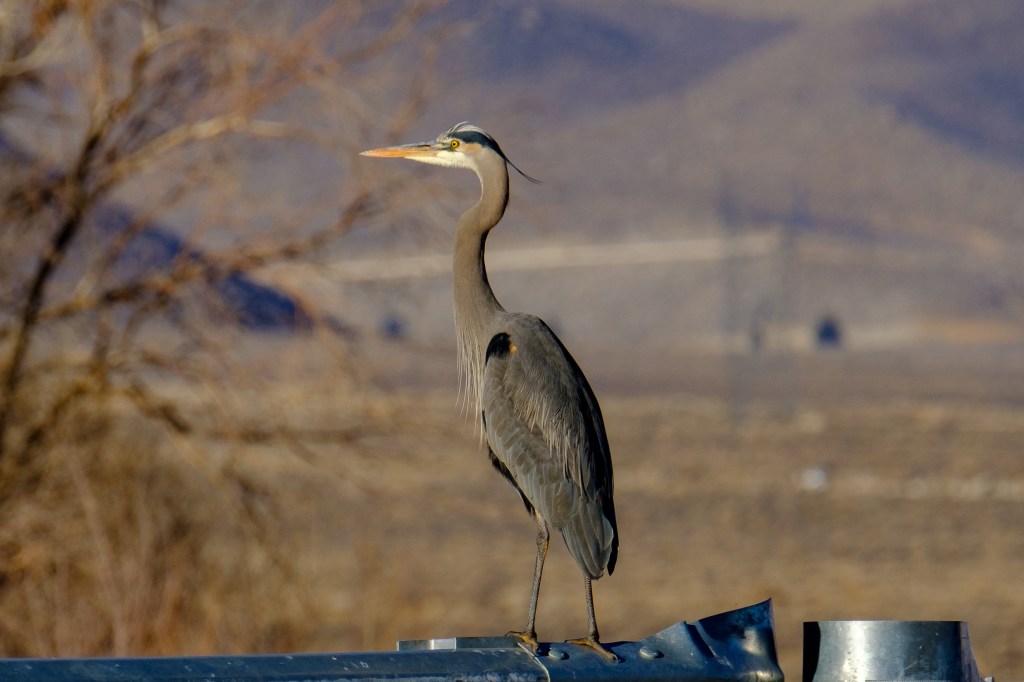
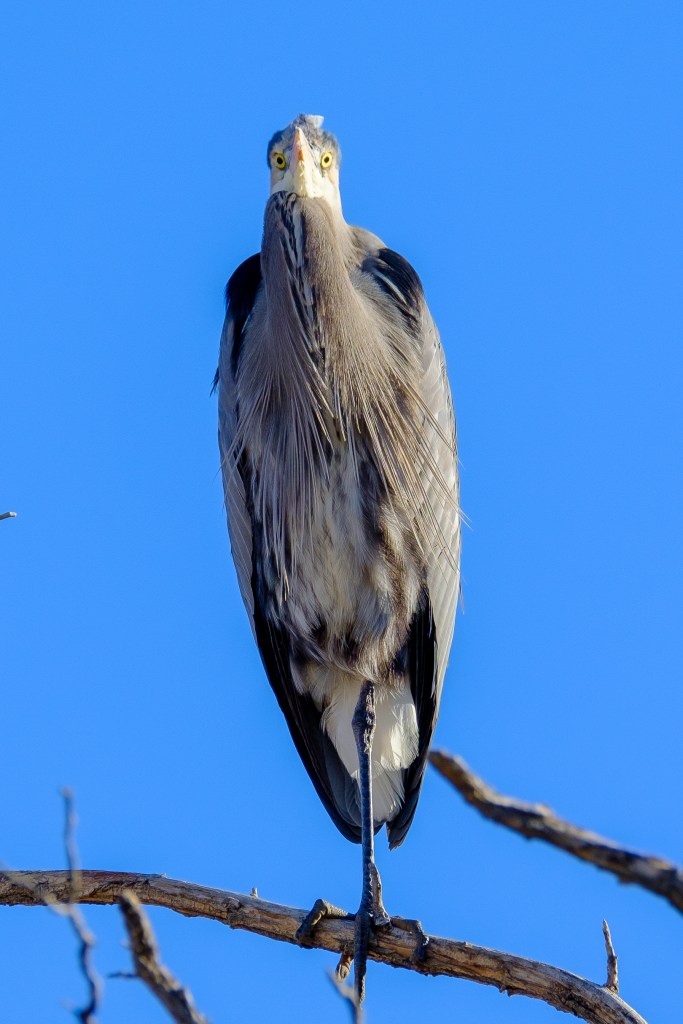
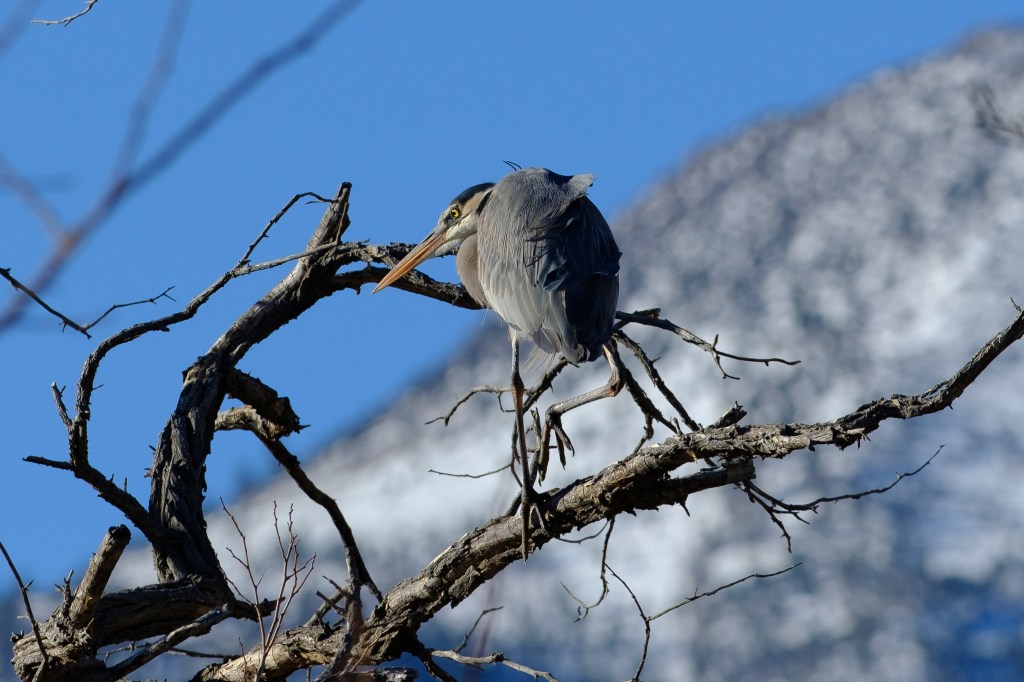
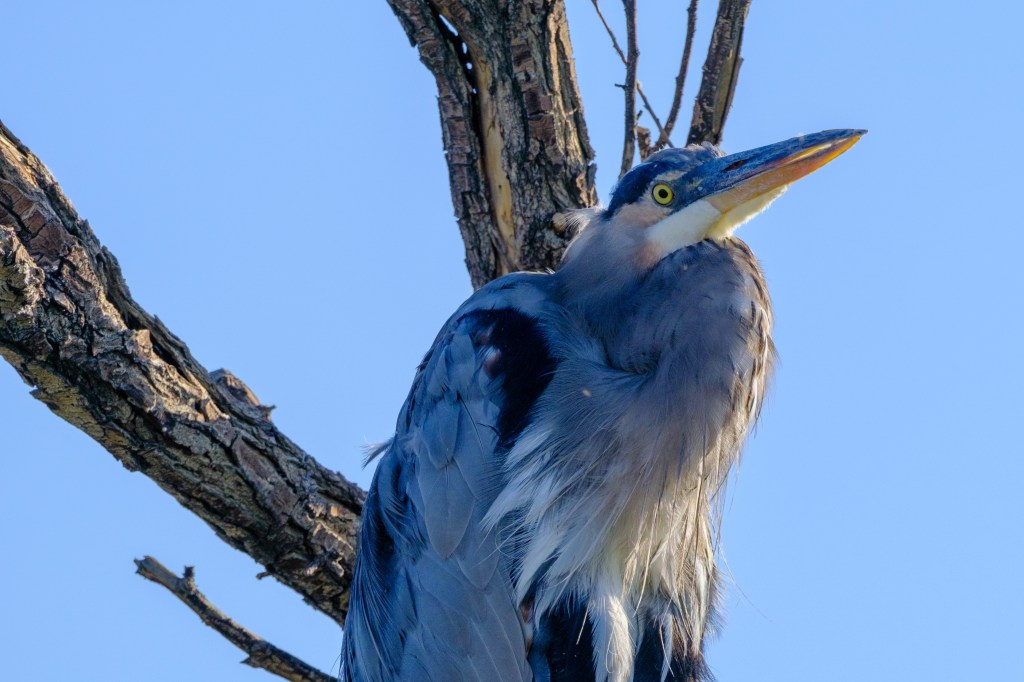
I selected a portfolio of portraits to show Herons in a variety of places and poses. Their eyes look like sewn-on yellow buttons. The giant toes and hooked talons are remarkable. There is usually reddish coloration of thighs, wrists, and shoulders. They like to perch high up on poles, branches, and bridge structures. I picked many photos for unusual lighting or colors.

Red thighs look like knickers

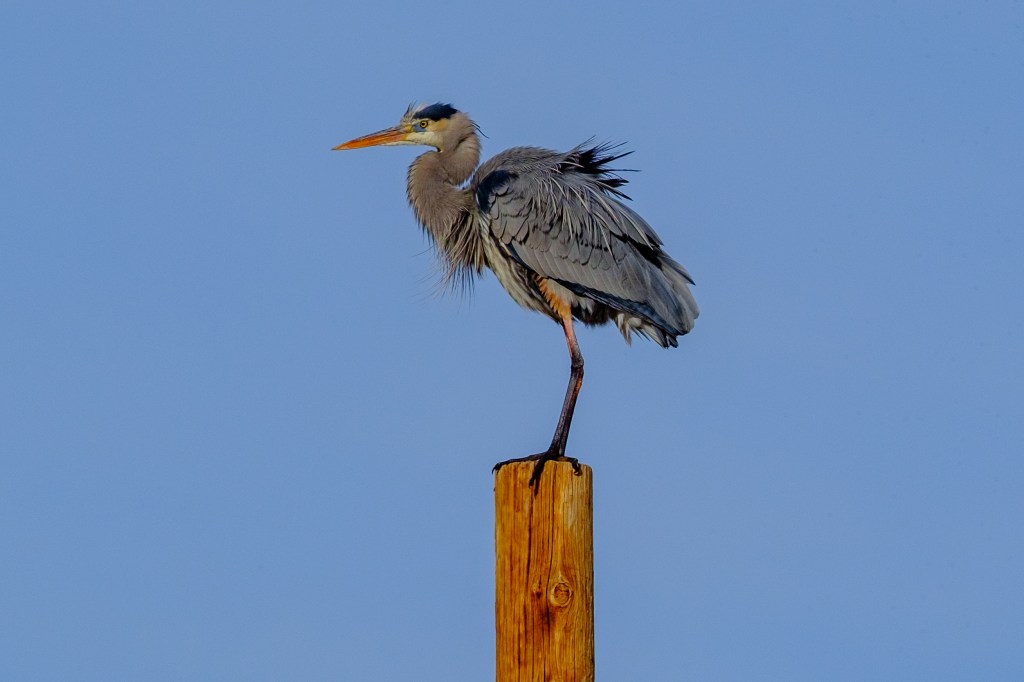
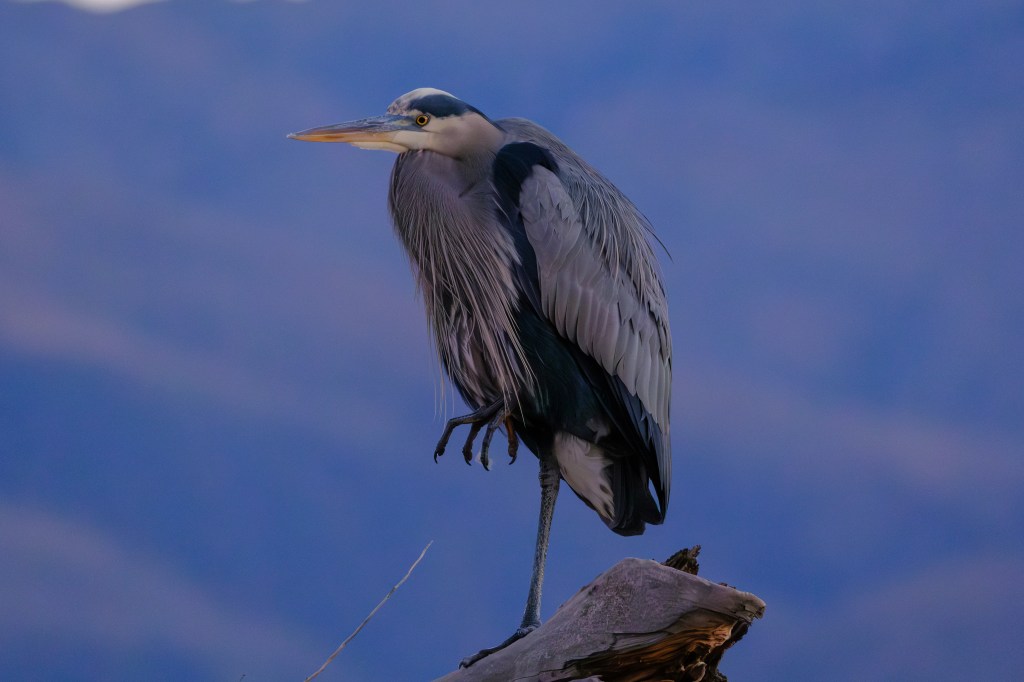
Herons often prefer to stand on one leg. They will do this even on windy days. They will lift up one leg and it will disappear into the feathers on their belly. All birds will stand on one leg, but this is more obvious in large birds such as Herons and Hawks. Sometimes a few toes will protrude from the feathers. The one-legged stance seems like a tricky and unnecessary balancing act. Humans have balance sensors, the vestibular system, in their ears; this helps us stand upright with our eyes closed. Birds have similar balancing sensors in their ears, but have another balance sensor in their pelvis, so they can move their heads independently of their bodies while perched on a bobbing branch. To stand on one leg they must have their foot right under their center of mass. They have a knob in their pelvis which allows them to lean on and lock-off the leg they are standing on.

Roberta and I were walking near the canal, talking as usual. Suddenly this bird appeared out of the dark.
Legs appear to be made from carbon fiber.
What is this bird looking at?
Crossing a road.
Look ma, no hands.
They are often in fields, looking for mice or insects. Note one-legged stance.
Recent snow storm.
What is the reason for this pose?
Standing on right leg. Left foot partly visible in feathers of lower body.
Standing on a bridge railing.
Hard to see where the neck actually is.
Standing on one leg. Face and head very narrow. Giant toes and talons.
Wind pushes from the right, lifting pony tail and other feathers. Despite wind, bird moves on one leg.
Shadows can bring out colors.
Smoke from forest fires helped create this lighting.
Four Herons, two Double-crested Cormorants. Pleasant Valley Reservoir.

Takeoff

Gravity binds humans to the earth. We travel freely in two dimensions: back and forth, side to side. But our ability to move up and down is limited. We can climb a cliff or descend a cavern, but we must cling to a surface or tether ourselves with rope. Without equipment, our muscles can only lift us into the air for a moment. The ballerina, high-jumper, or gymnast is focused on landing even before they take off. Balloons, wingsuits, hang-gliders, Piper Cubs, jets, and rockets let us stay aloft longer. With a boarding pass, any human can fly faster and higher than a falcon. Yet clever engineering provides only temporary and complicated release from the ground. Our usual lives are earthbound.

Birds, however, live in three dimensions. Hundreds of times a day, herons and hummingbirds take to the air using only muscles and feathers. They make this transition as easily as we step off a curb. Some can fly for days without landing. Some sleep in the air, fight in the air, and eat in the air. Not all birds fly. Some birds near Bishop prefer the ground; Roadrunners and California Quail. But the essence of most birds is flight.

To photograph a flying bird, I often start with a non-flying bird on a branch, on the ground, or floating on a pond. I aim the camera and let it automatically focus and set the lens aperture. I take pictures of the perched bird. Then I wait.

If nothing happens in a minute, I continue my walk. But if the bird takes off, or seems likely to do that, I depress the shutter button and keep it down while panning the camera to follow the bird. This method sometimes captures the moment of takeoff, when a bird transitions from earth to air. This blog article displays photos of bird launches.

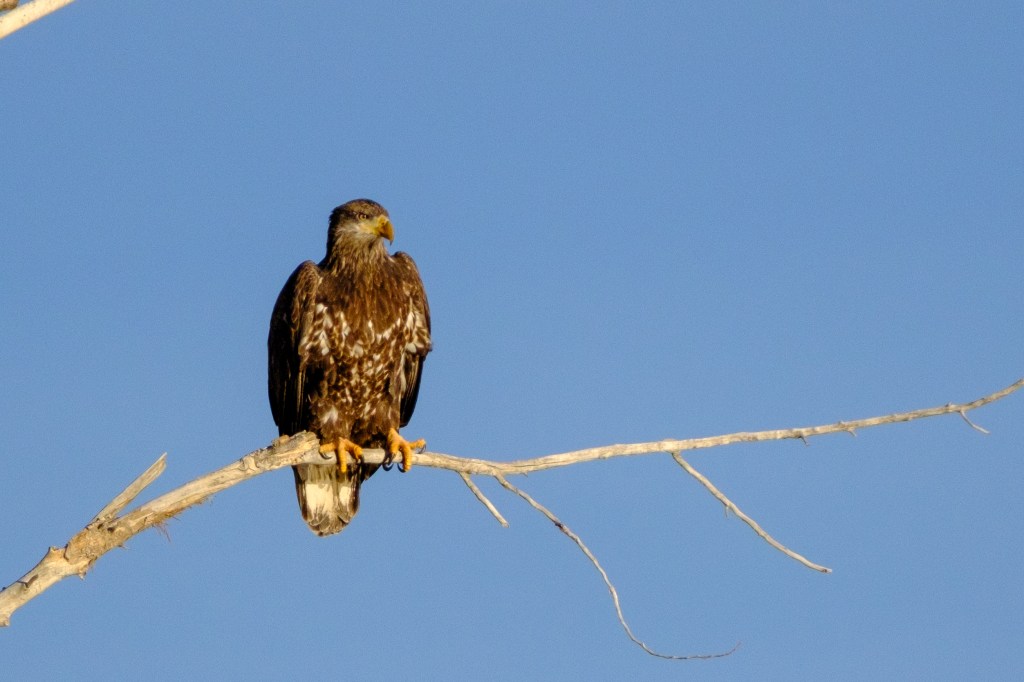
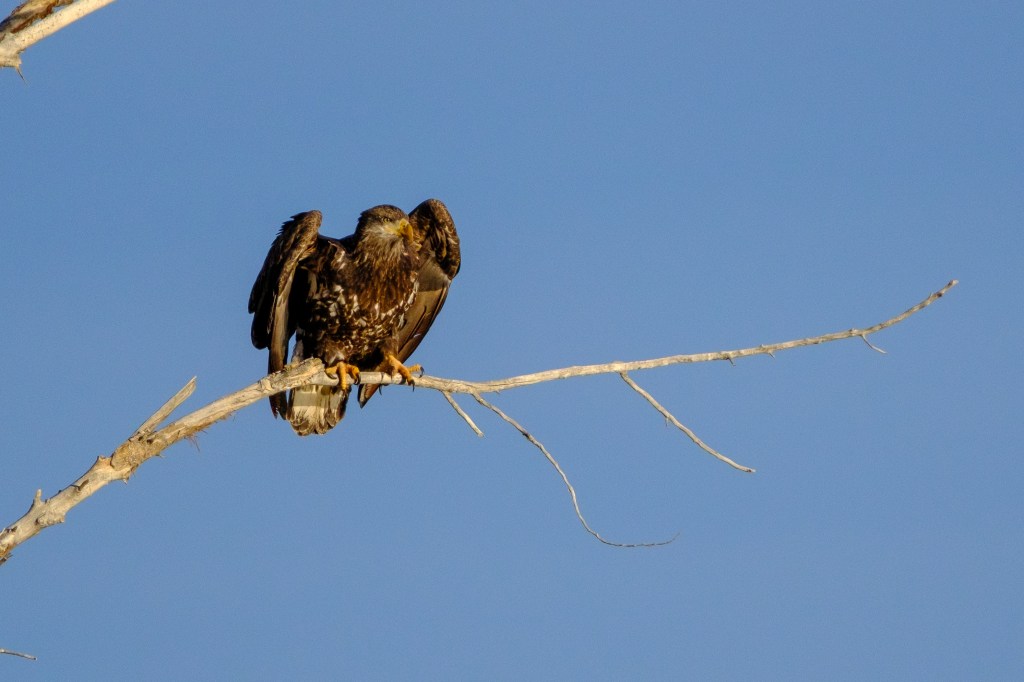
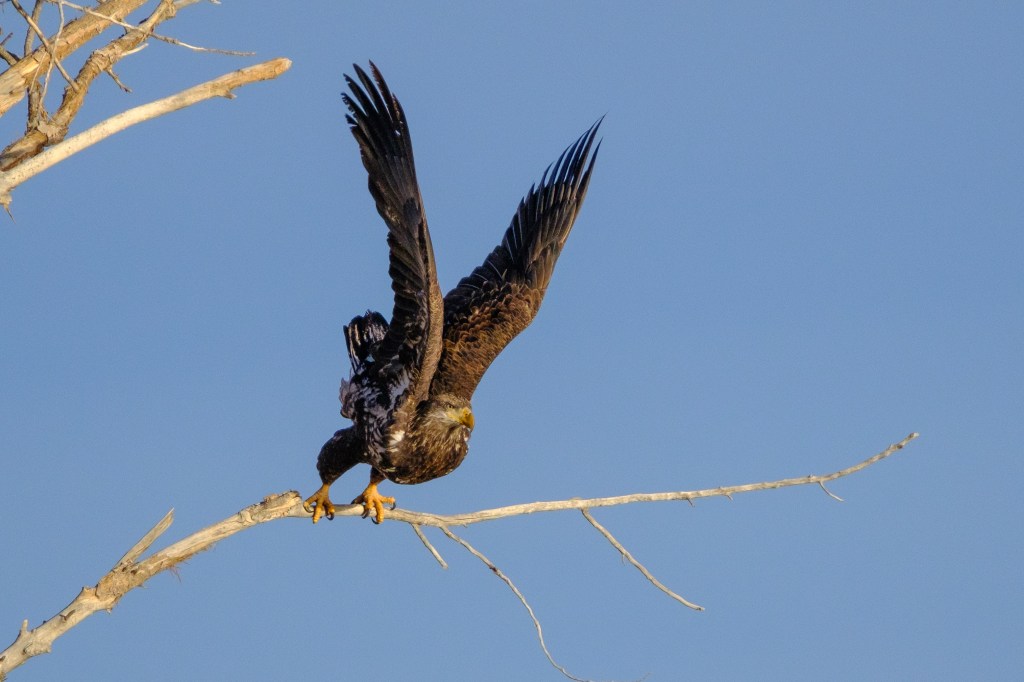
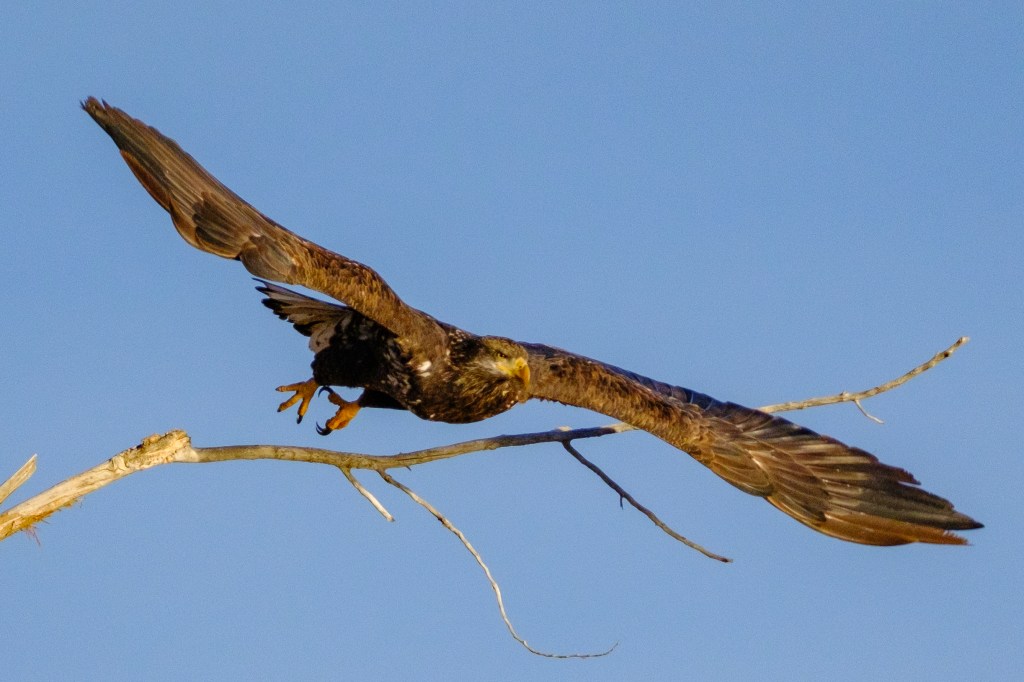
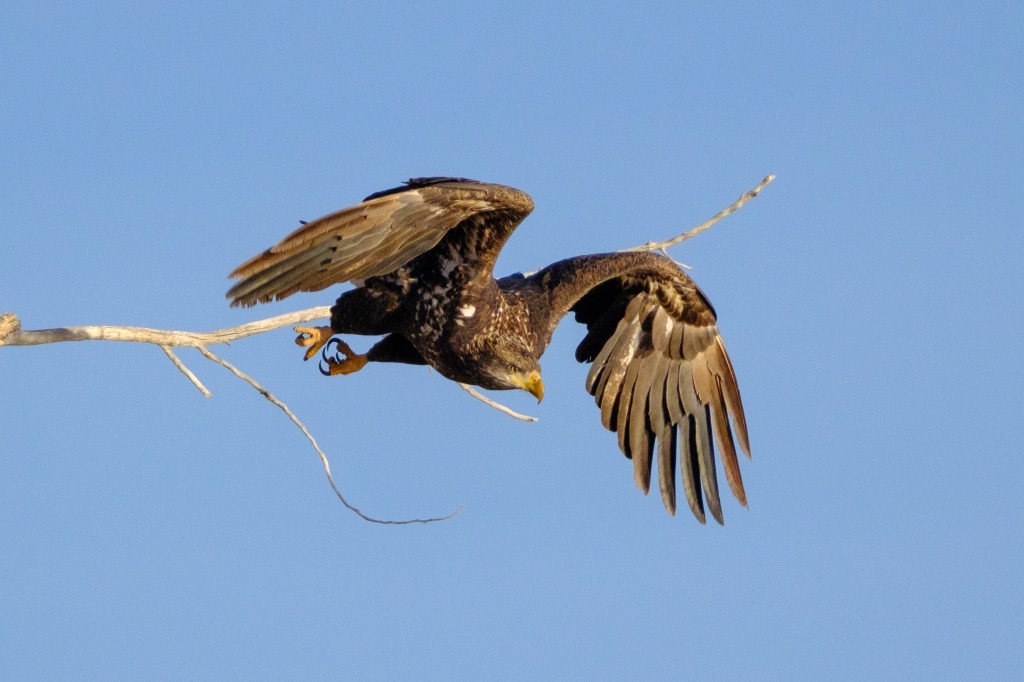
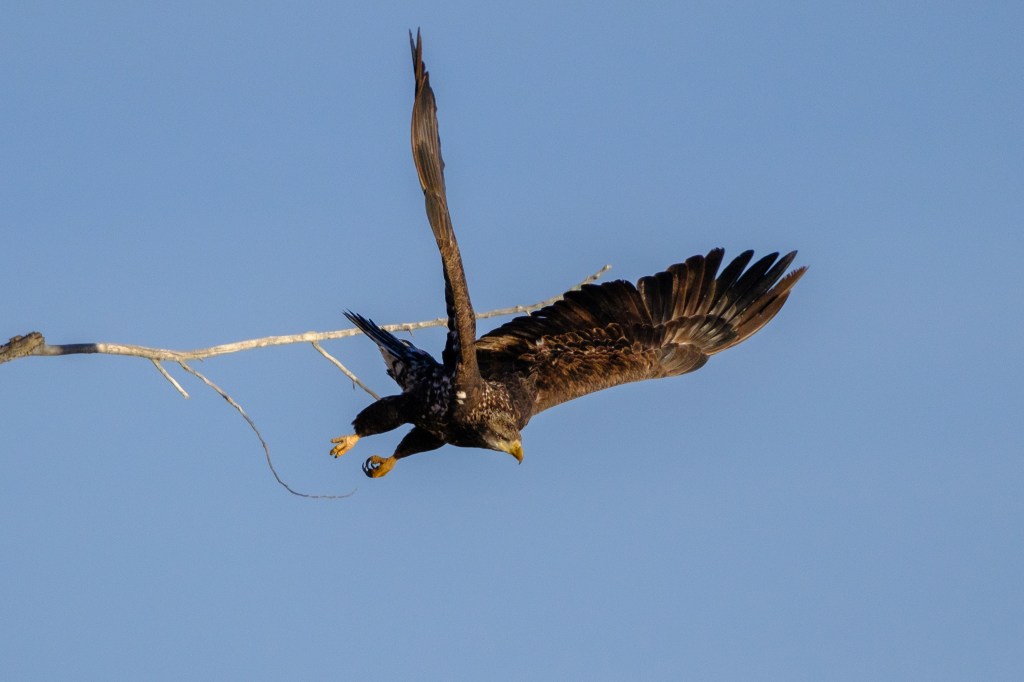
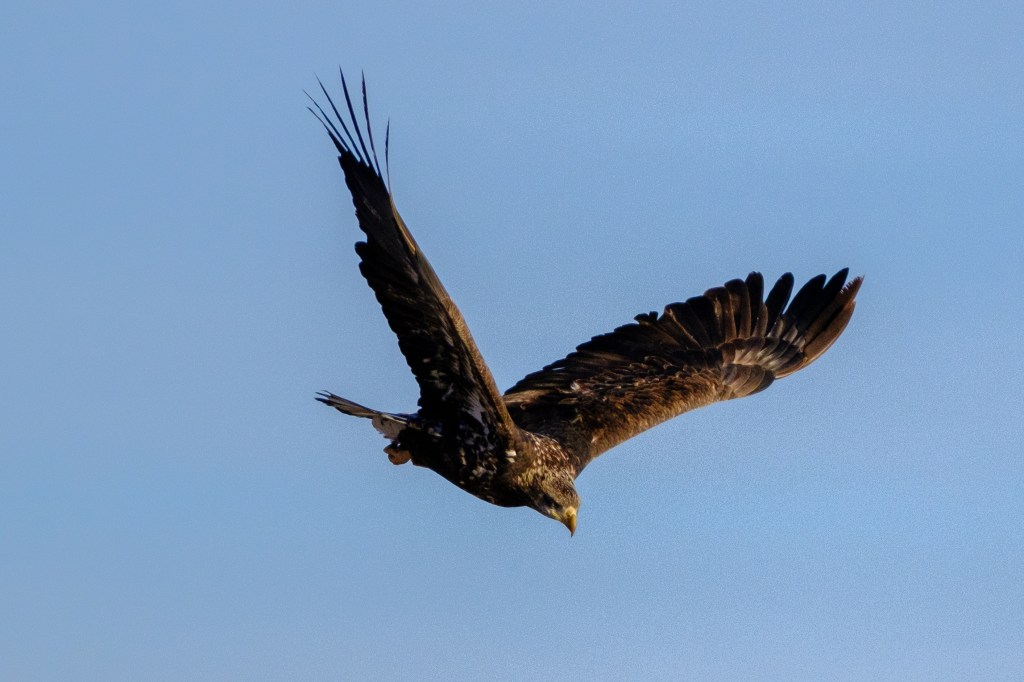
Bald Eagles appear at the Buckley Ponds from November to February. They come to eat fish and American Coots. Below are images of a juvenile Bald Eagle at the Buckley Ponds in January of 2024. The bird used a common liftoff routine: leap and flap. First the legs crouch and the wings start to rise. The wings unfurl as high as possible. Then the legs push off the branch as the wings come down to push on the air. If the bird starts high enough, it may dive to increase speed. Faster airflow over the wings produces lift, so the bird stays aloft using less energy. In this sequence of photos, the time from first movement to leaving the branch was one second. The time from the first photo to the last was 4 seconds.

By pushing off with its legs, the bird gains airspeed to produce lift. There is another advantage to a push; it lets the bird get clear of branches or wires before using the wings. This may prevent injuries.

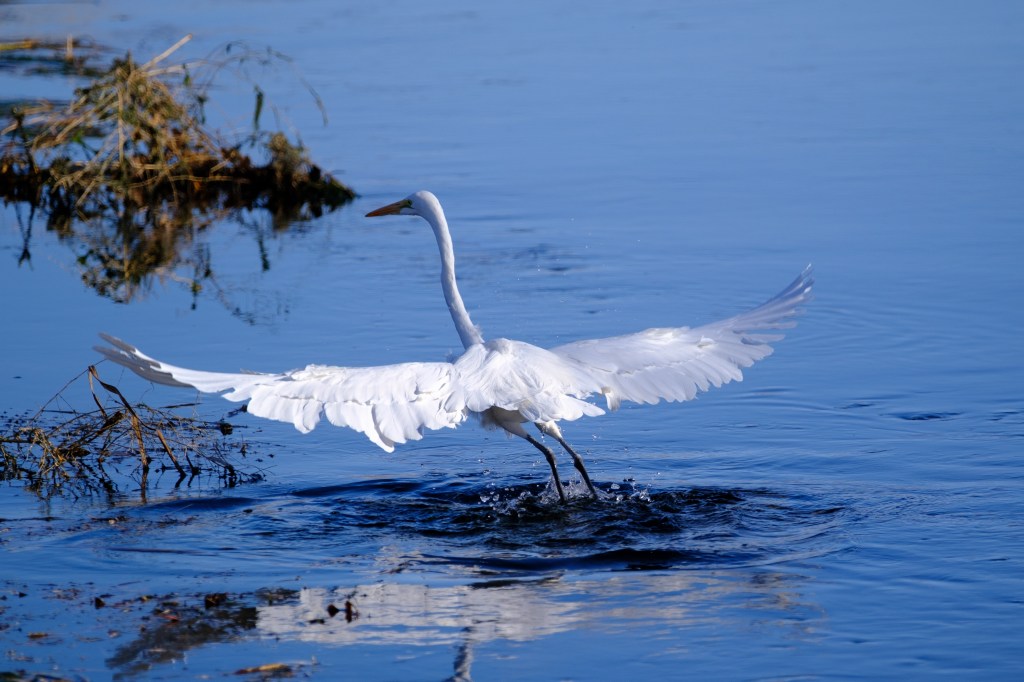
A Great Egret uses a similar leap and flap technique, pushing off the bottom of the Bishop Creek Canal with its long legs.

Great Egret. Bishop Creek Canal.

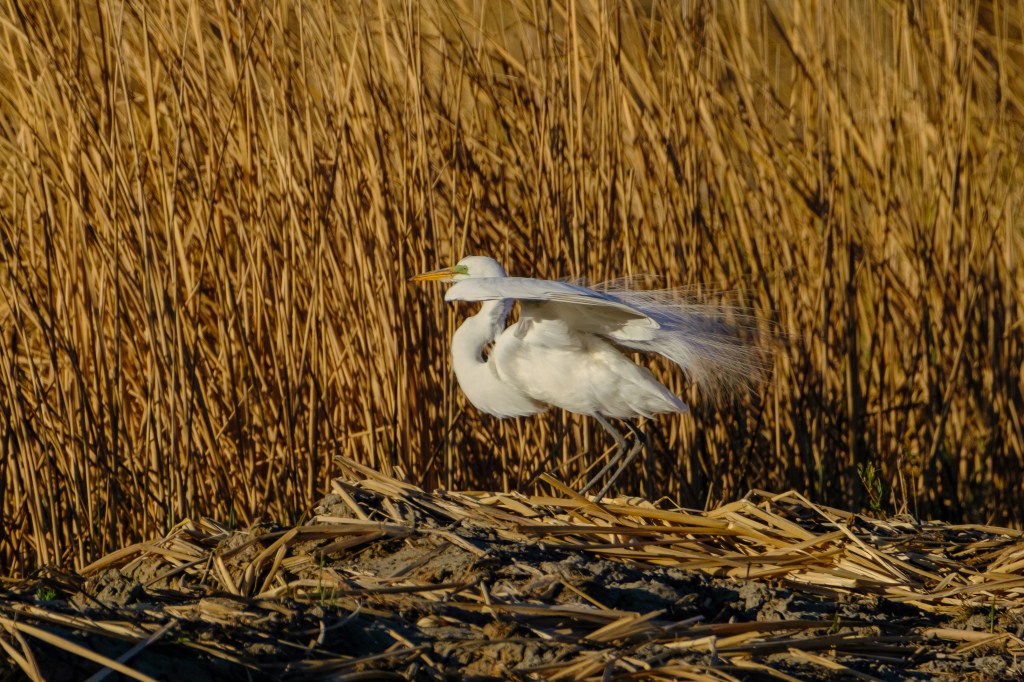
Another Great Egret crouches to start flight from the shore of the Buckley Ponds. The area between the eye and bill, the “lore,” is green. This color appears during mating season. The filamentous feathers (plumes) that trail behind are also part of mating plumage.

Belted Kingfishers are common along the Bishop Creek Canal. They don’t like my approach and the photo below shows a typical response. The bird always flies off away from me. For a moment it seems suicidal, plunging down. Then a burst of flapping lifts it up.

Belted Kingfisher. Bishop Creek Canal.

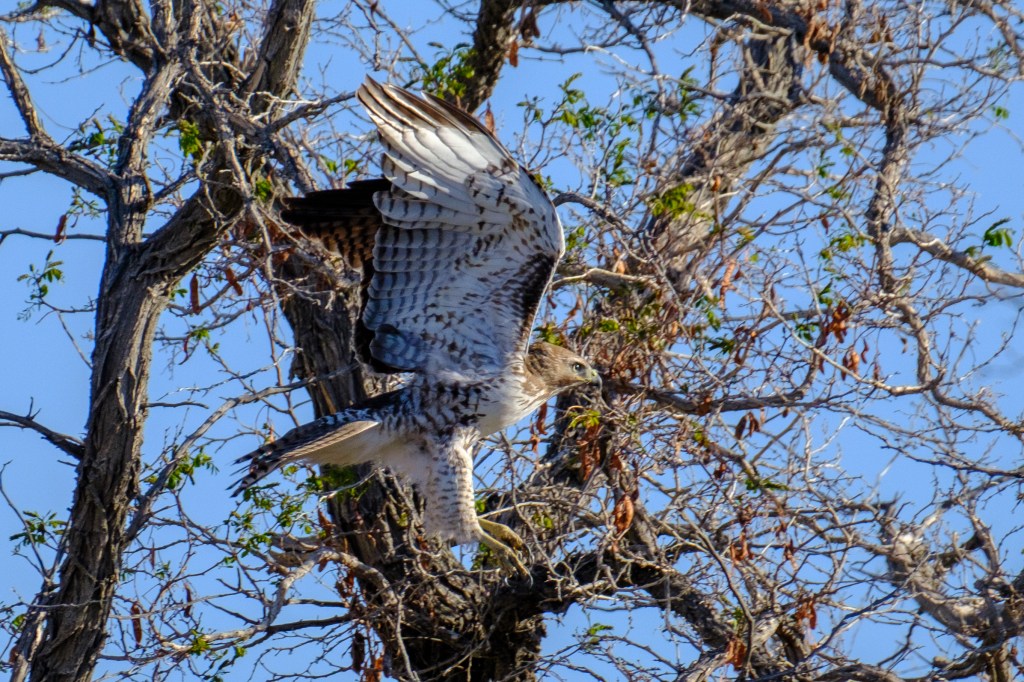
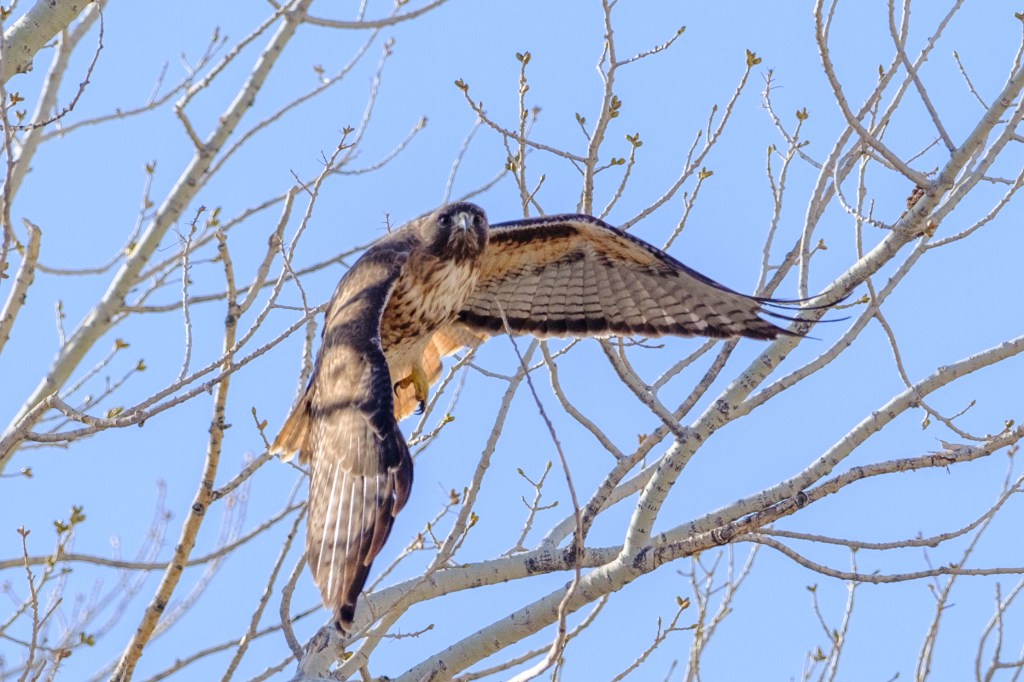
Red-tailed hawks push off hard with their feet, then a couple of wing flaps gets them into forward flight and the feet retract up.

Red-tailed Hawk. Bishop Creek Canal.

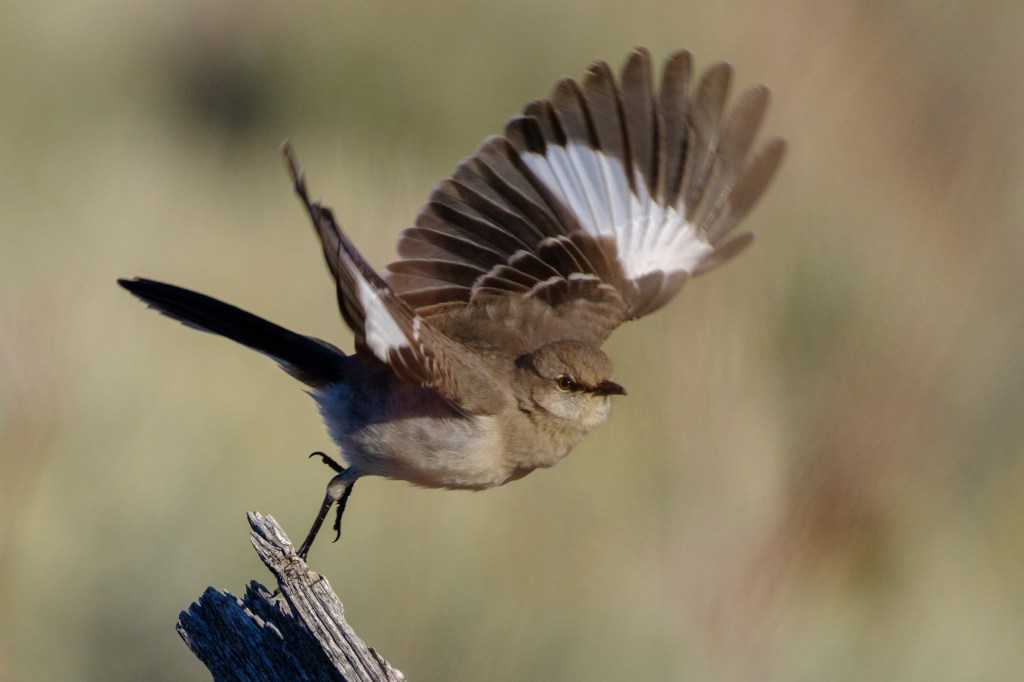
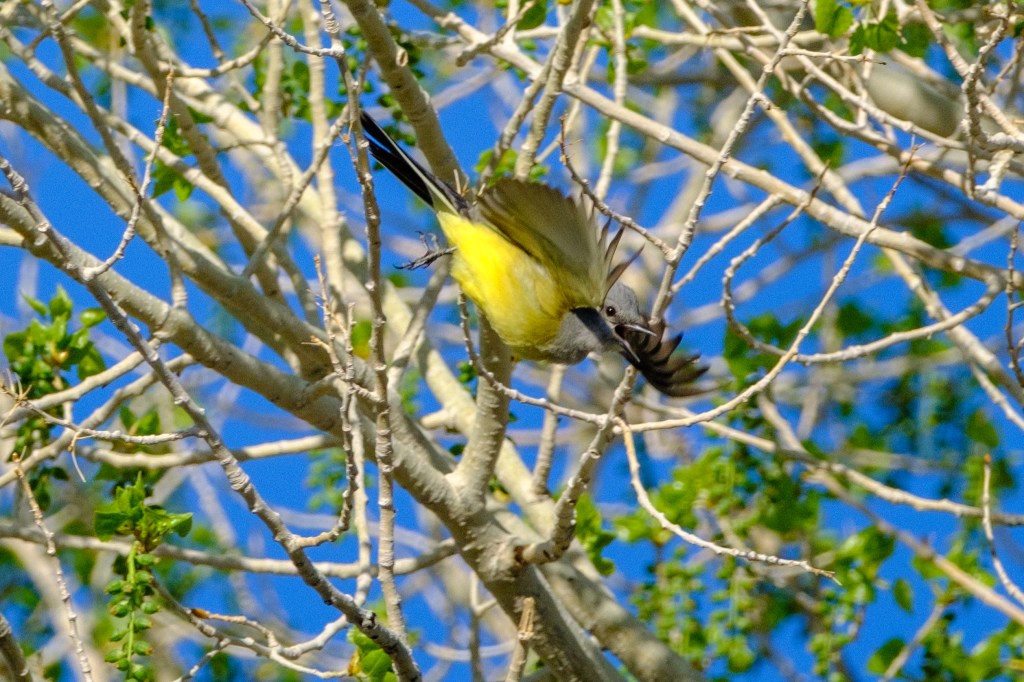
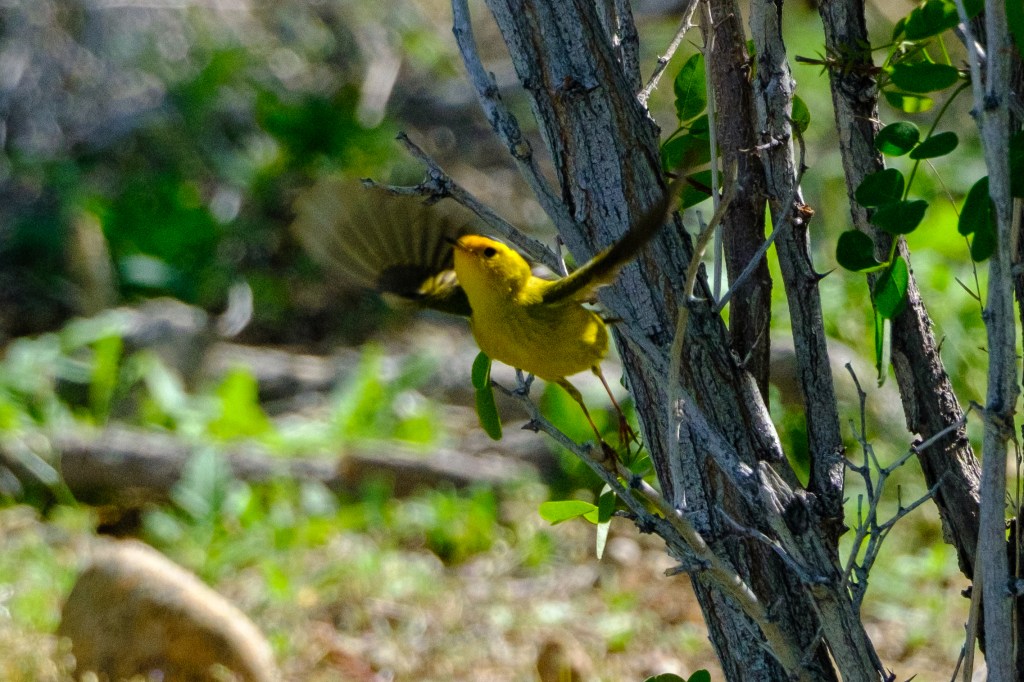
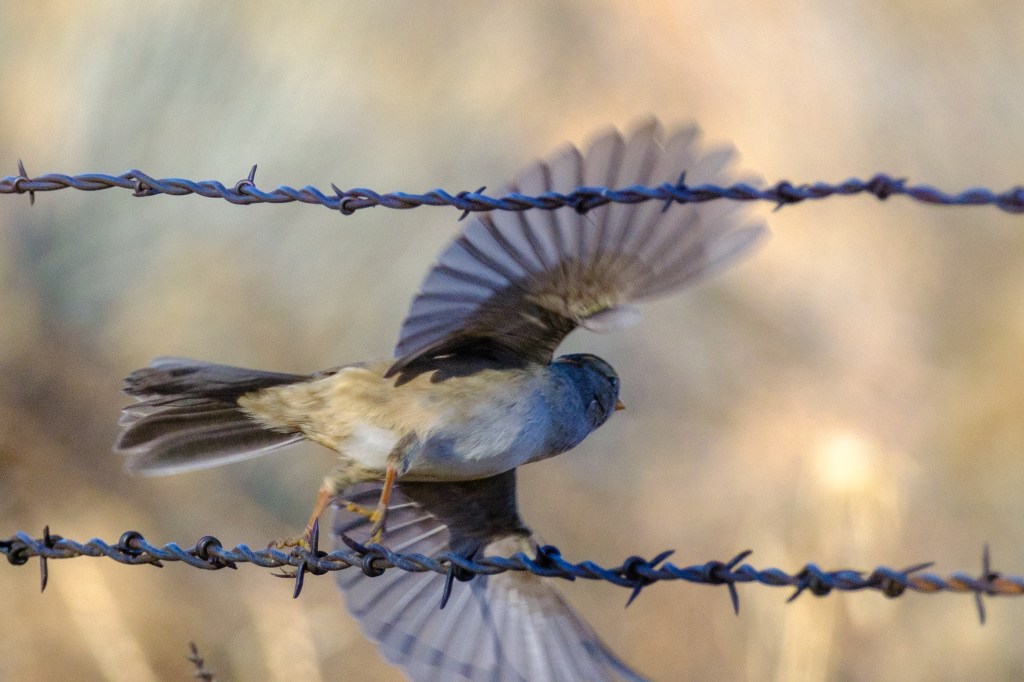
Below are several photos that show songbirds blasting off from brush near the Bishop Creek Canal.

Northern Mockingbird. Gus Cashbaugh Lane, near Bishop Creek Canal.
Western Kingbird. Bishop Creek Canal.
Yellow-rumped Warbler. Bishop Creek Canal.
Wilson’s Warbler. Bishop Creek Canal.
Bullock’s Oriole. Bishop Creek Canal.
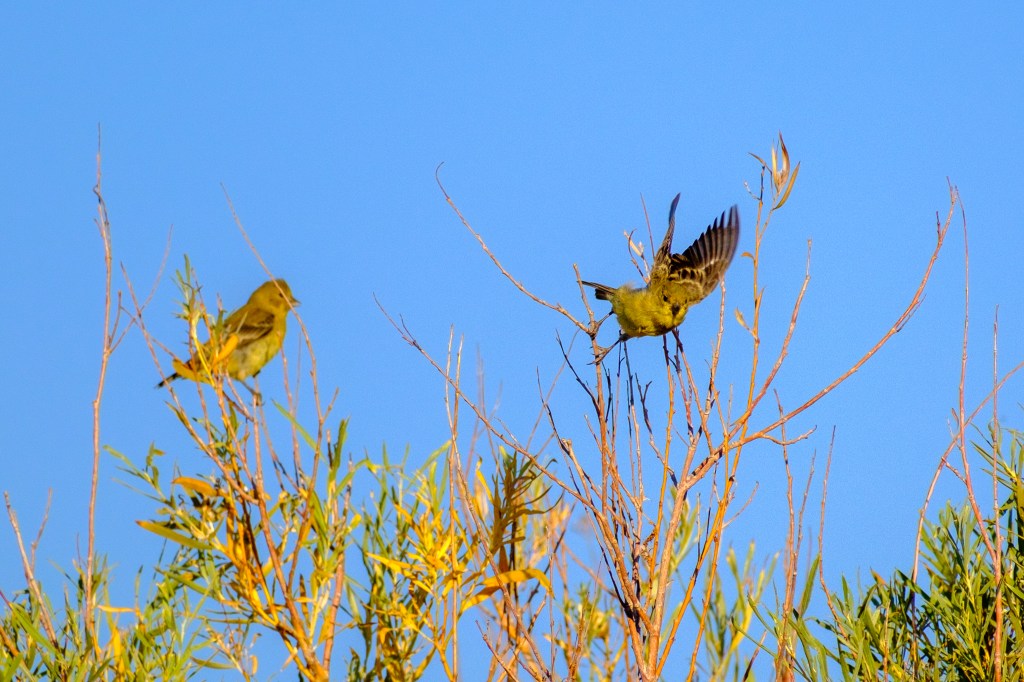
Lesser Goldfinch. Bishop Creek Canal.
White-crowned Sparrow. Bishop Creek Canal.

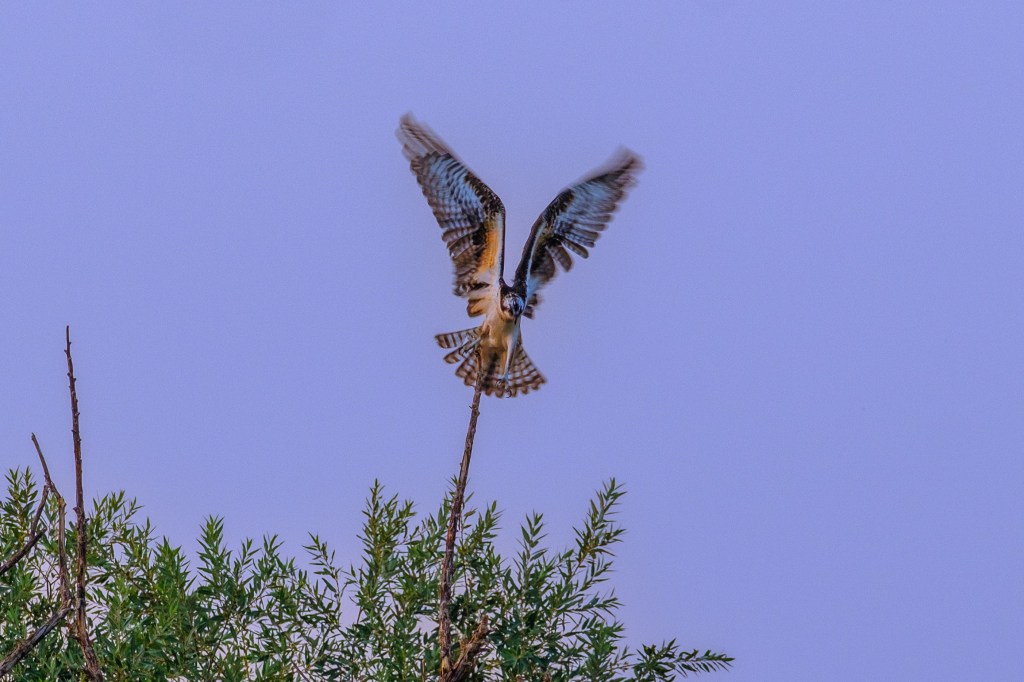
The Osprey below did not push off. It daintily stepped into space, like a person stepping into a jacuzzi. It fell for a moment and then the wings grabbed the air.

Osprey. Bishop Creek Canal.

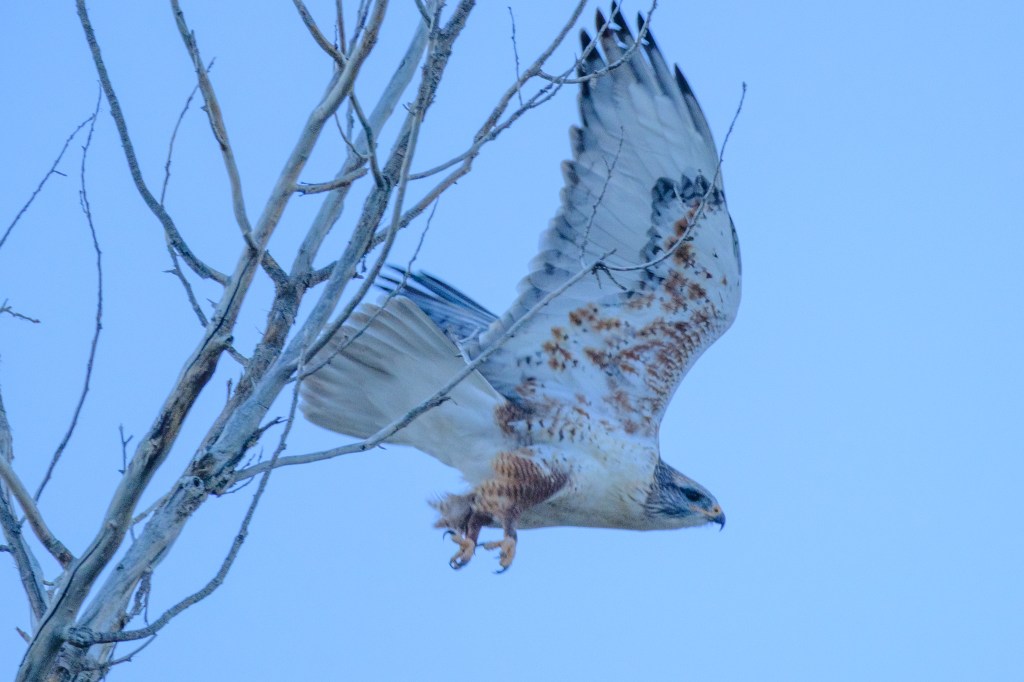
In the morning shade, a Ferruginous Hawk launches.

Ferruginous Hawk. Gus Cashbaugh Lane, near Bishop Creek Canal.

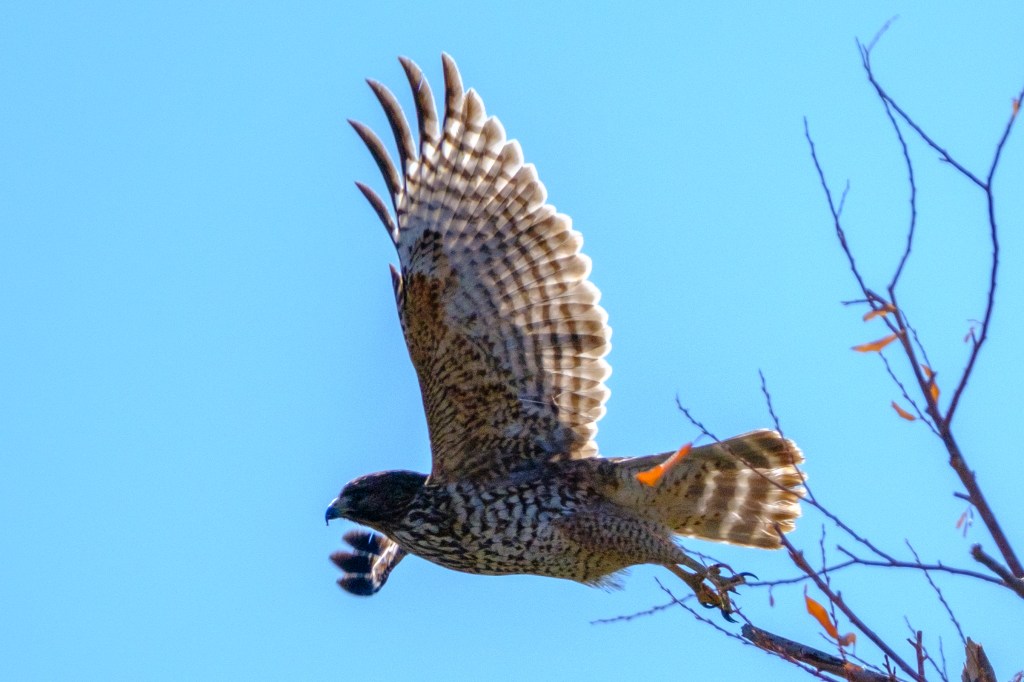
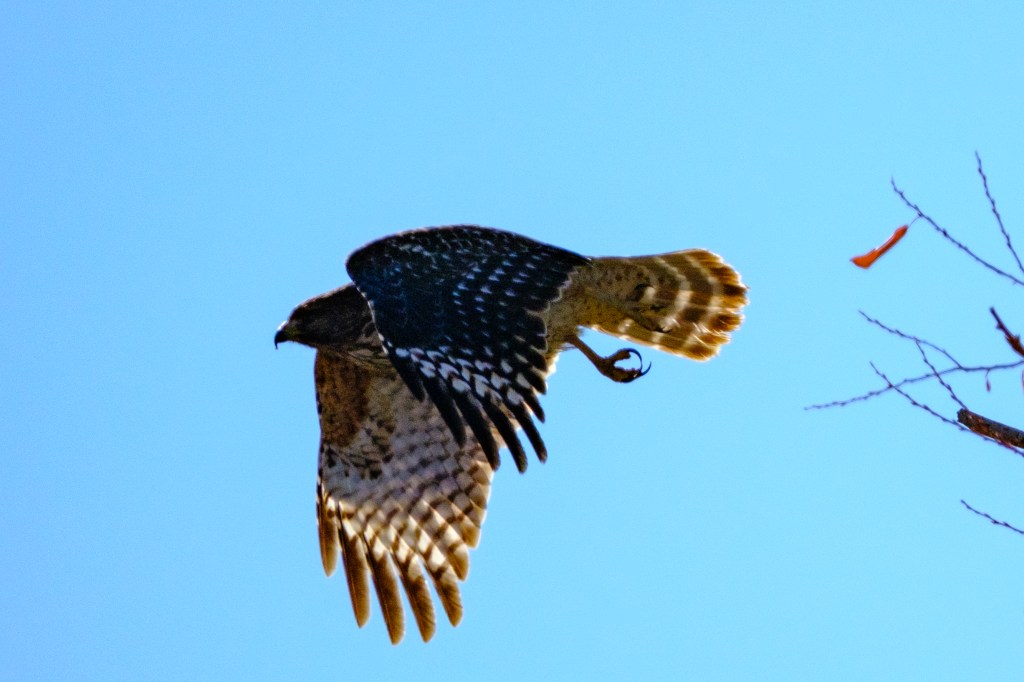
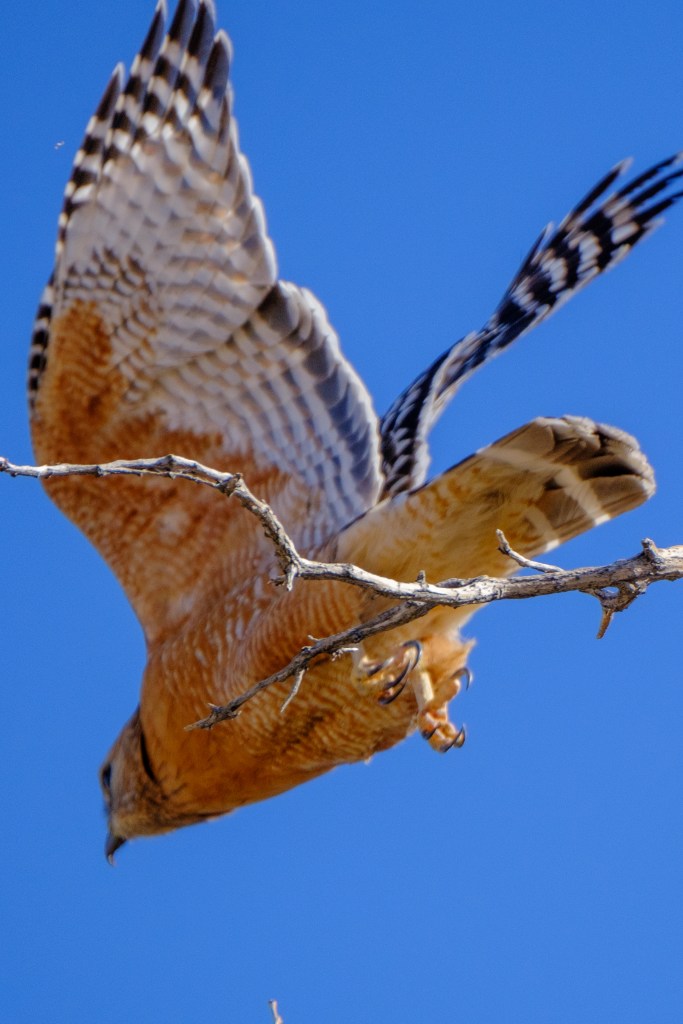
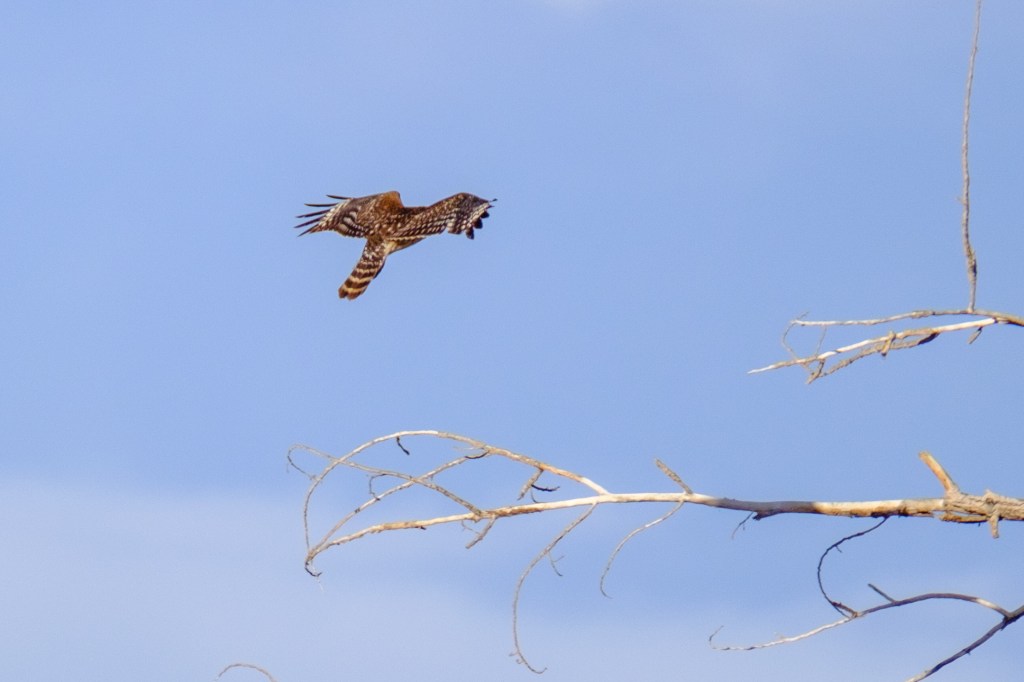
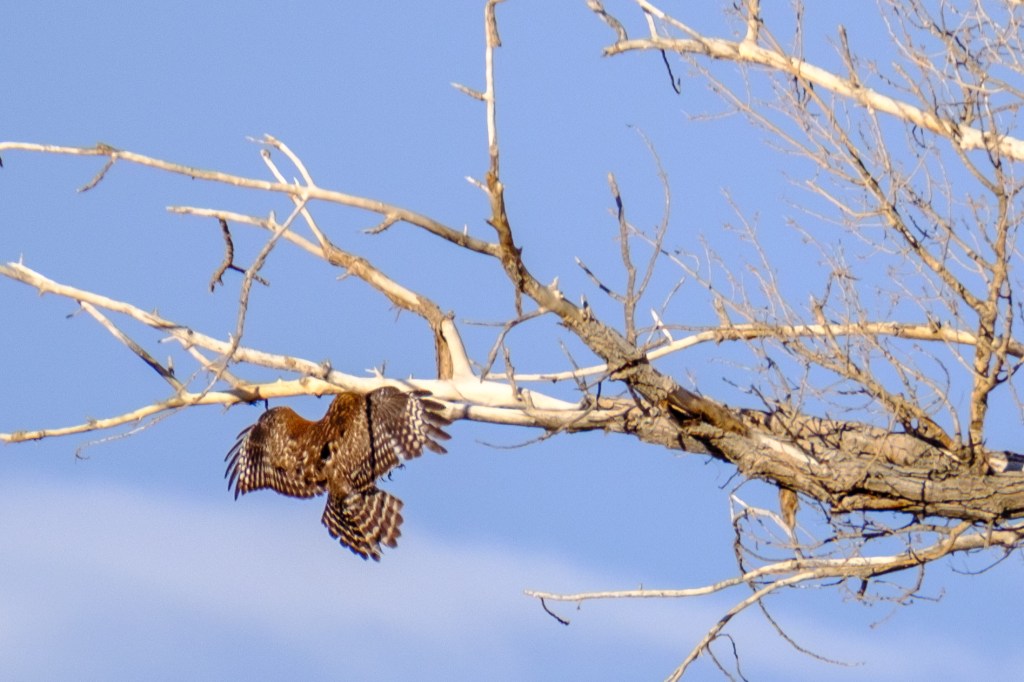
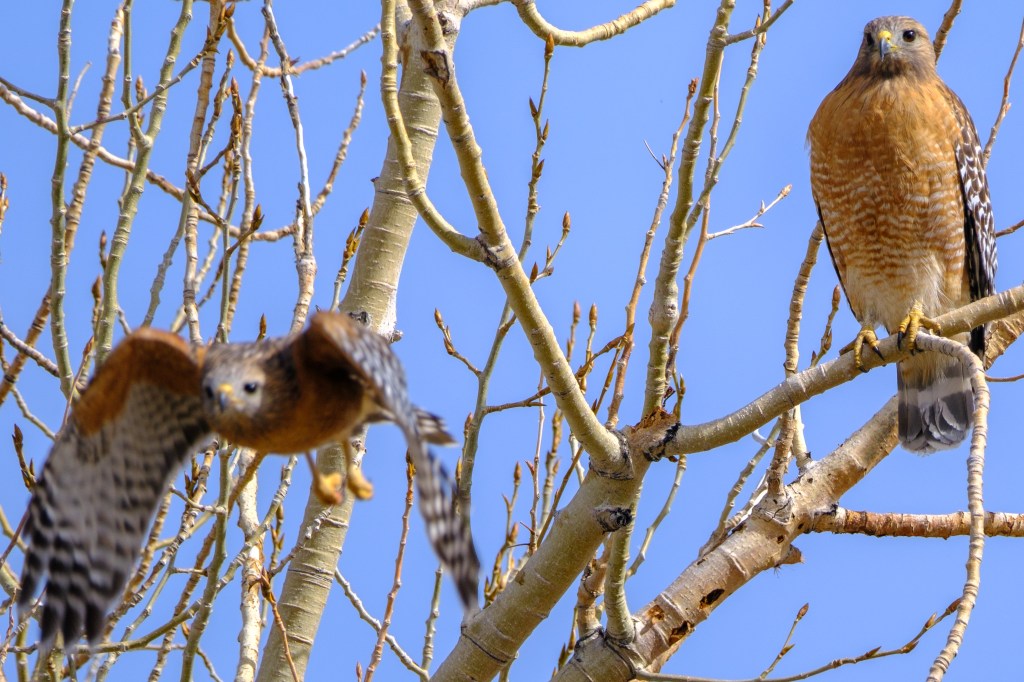
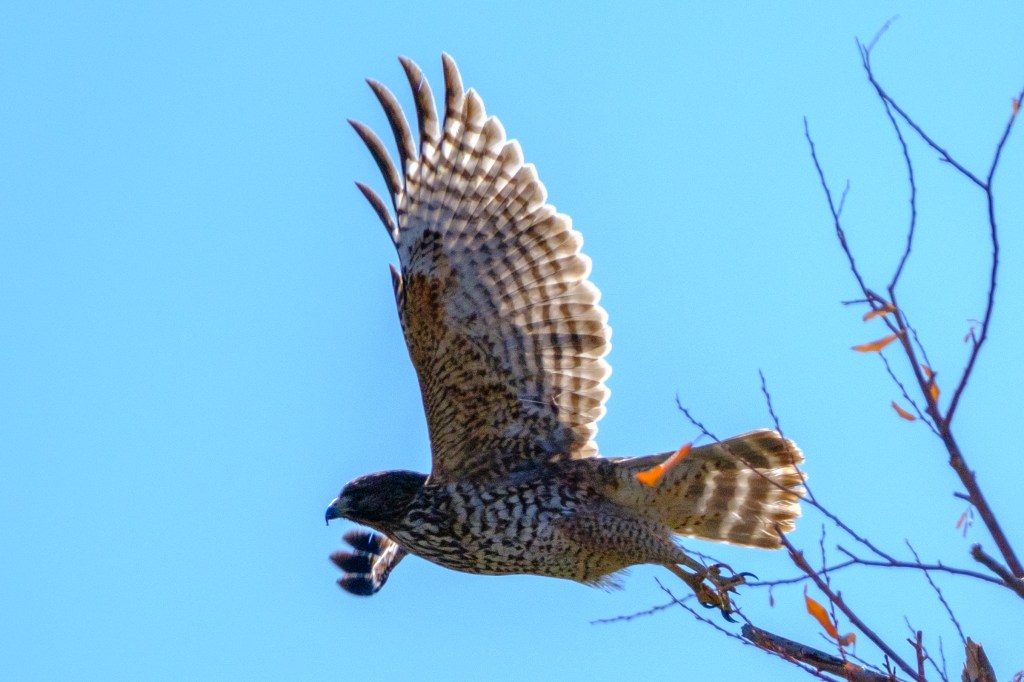
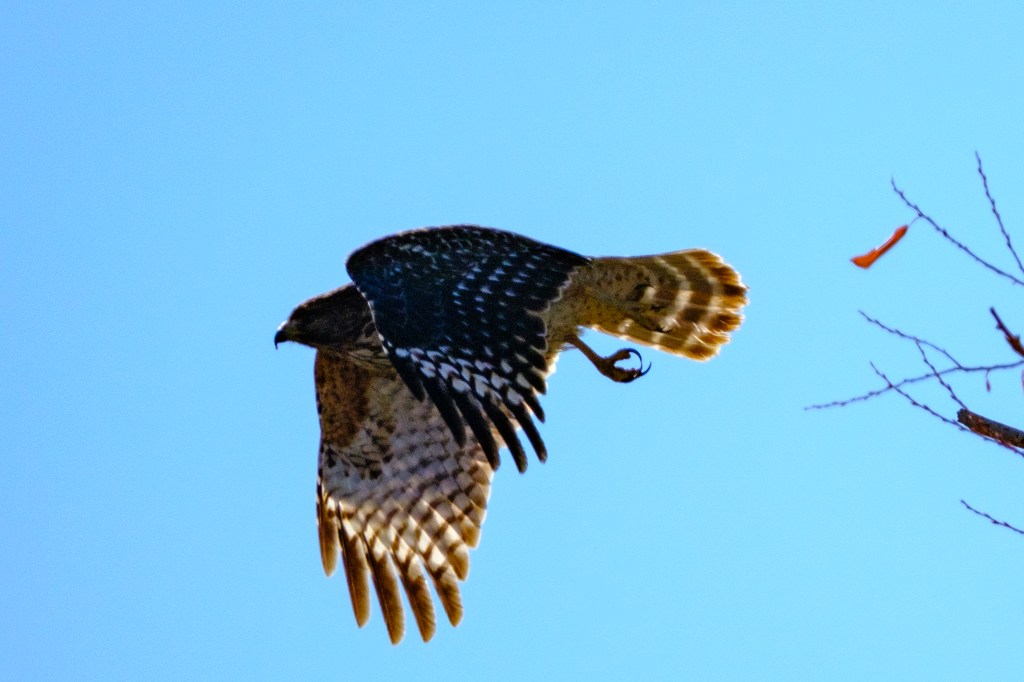
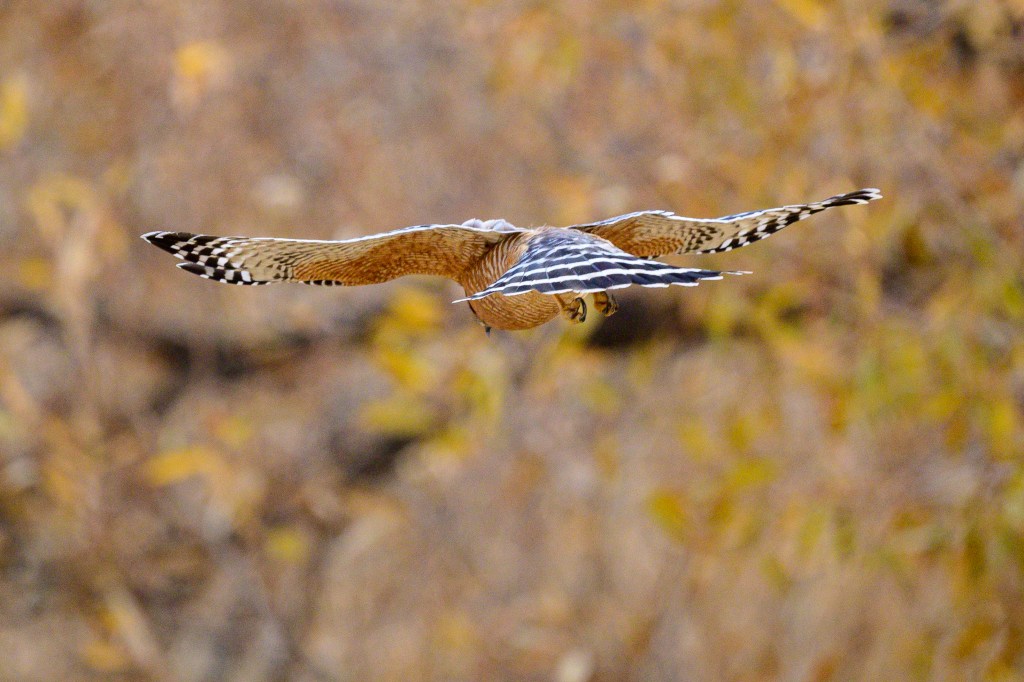
The next two photos show a Red-shouldered Hawk leaping from a tree. In the second photo you can see a feature of this bird; “windows” in the wings. The wings have long primary feathers near the tips. In the near wing there is a band of white color several inches from the tips of the feathers. This colored band is somewhat translucent; in the far wing, light shines through this “window.” Also note the landing gear retracting upward to streamline the bird.

Red-shouldered Hawk. Warm Springs Road near Bishop Creek Canal.

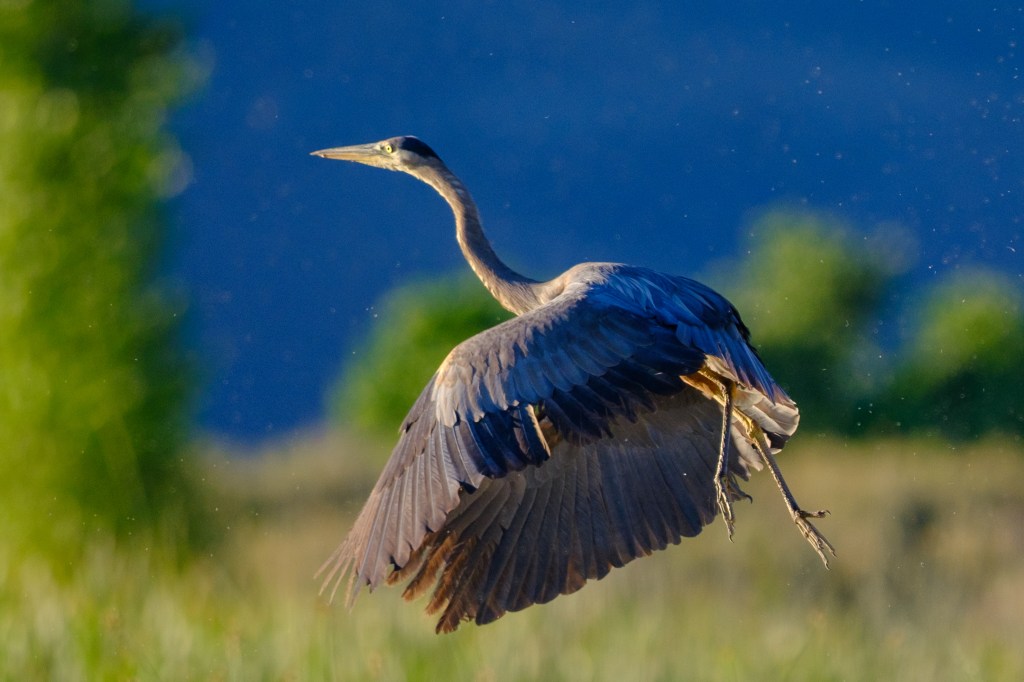
Great Blue Herons crouch, then jump up, as shown in the next three photos. For a moment it looks as if the Heron will crash, but powerful wing beats keep them aloft. In the third photo there are white specks in the air; those are mosquitos in the morning light.

Great Blue Heron. Bishop Creek Canal.
Great Blue Heron. Buckley Ponds

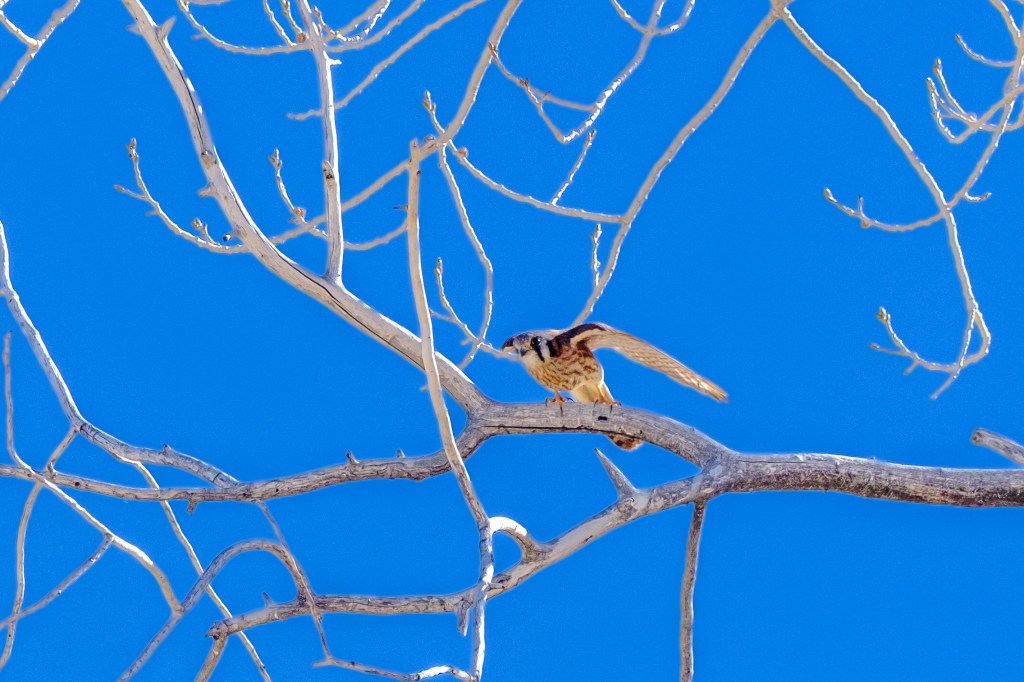
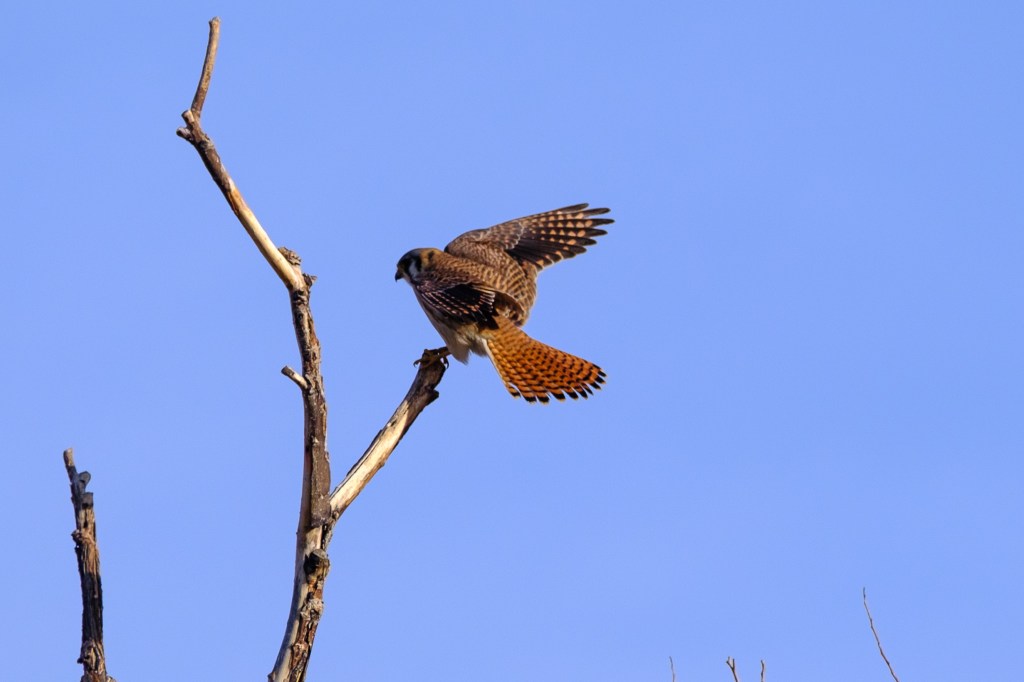
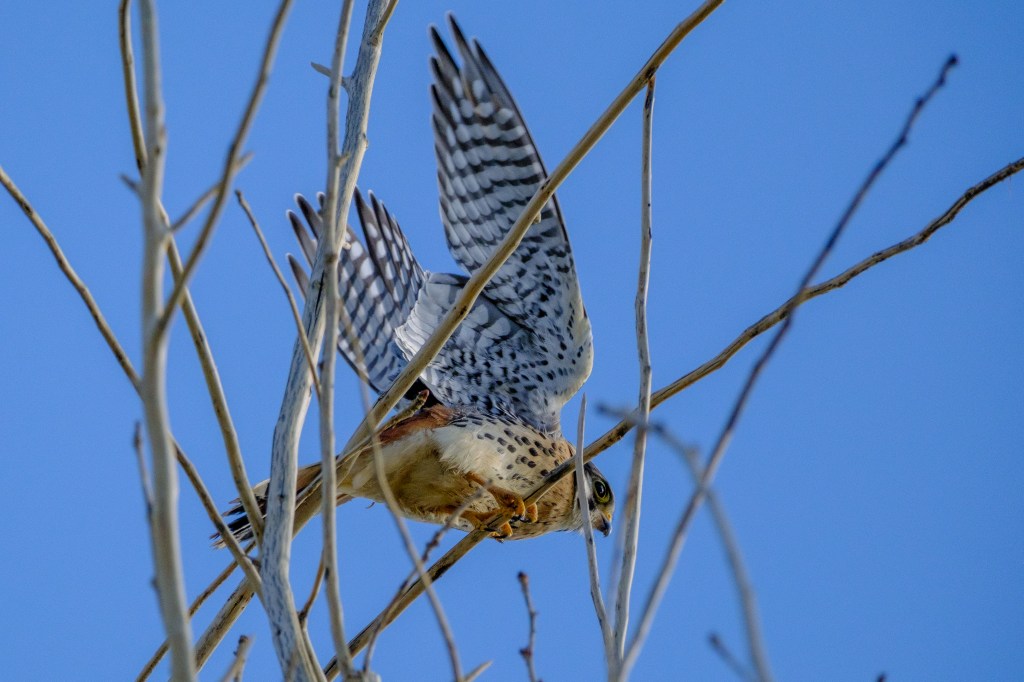
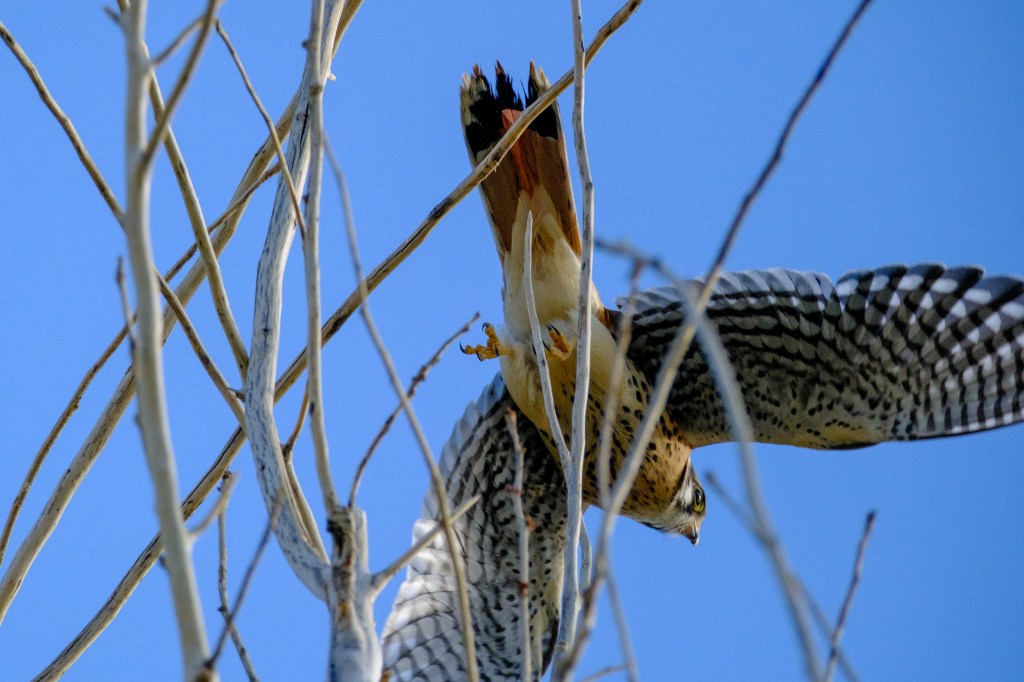
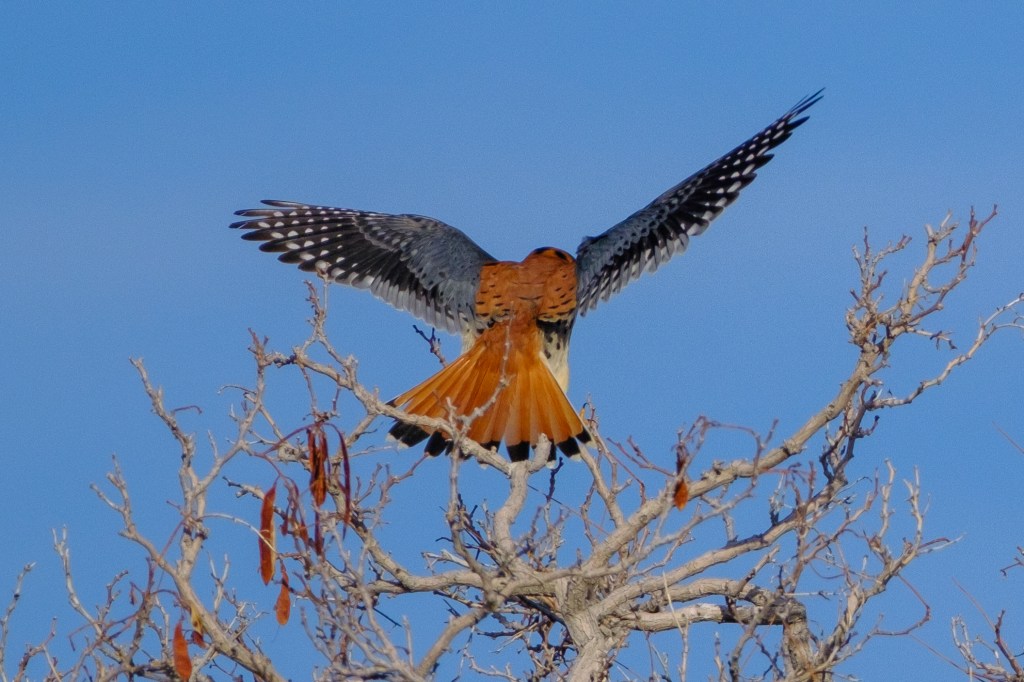
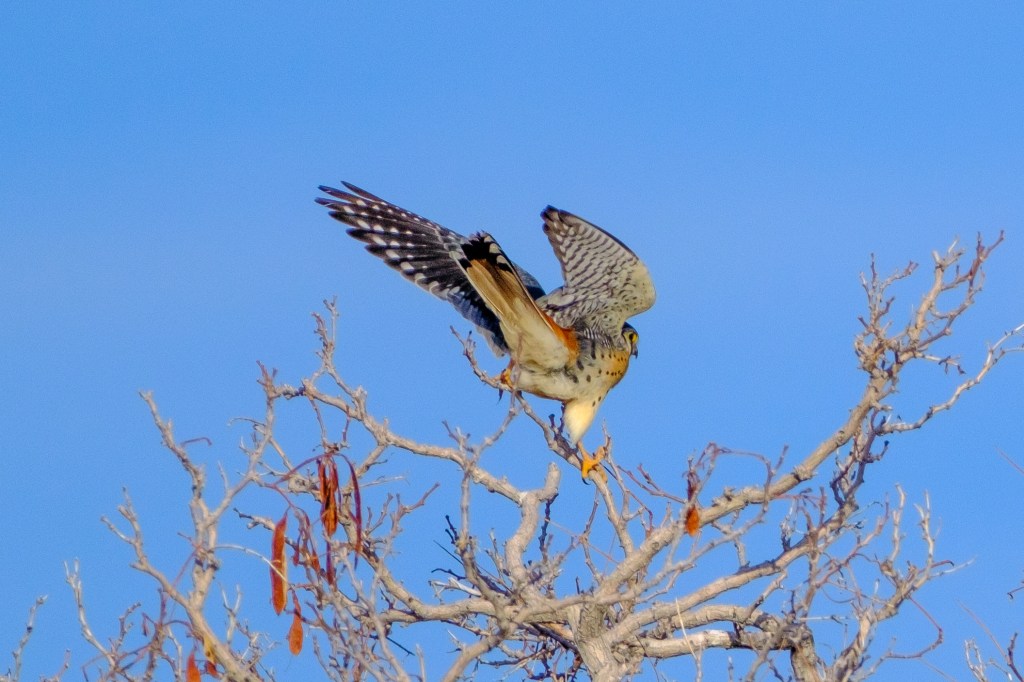
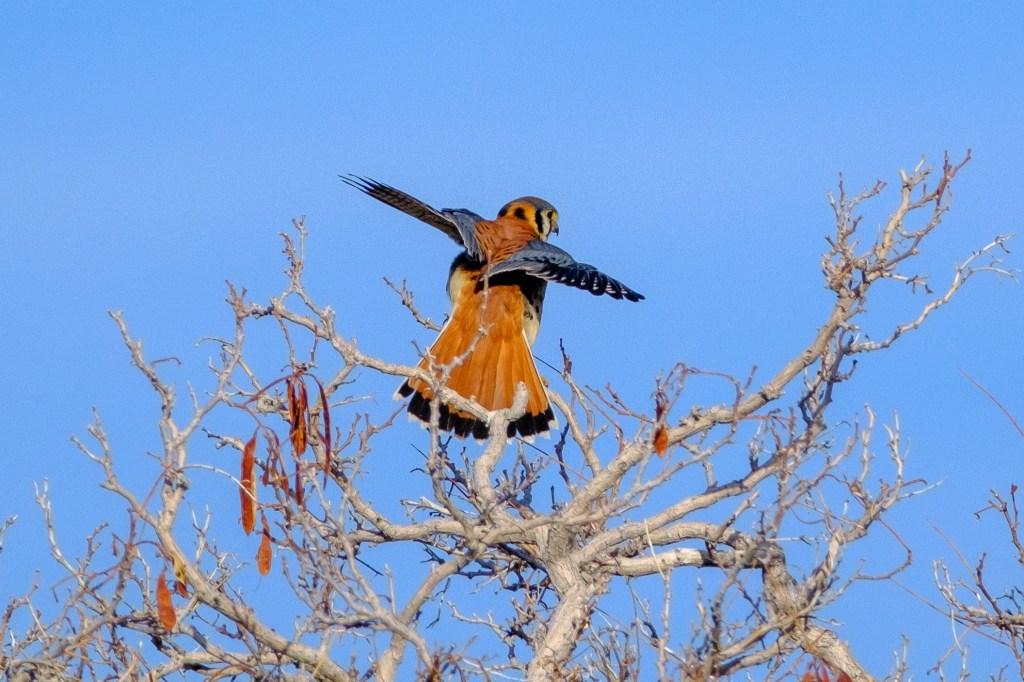
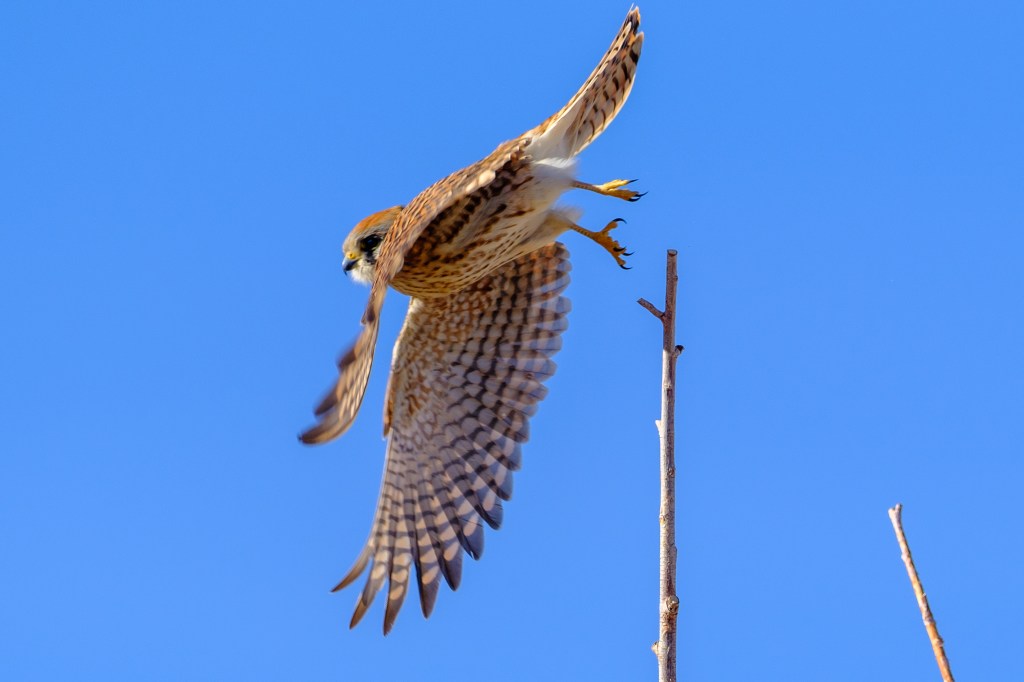
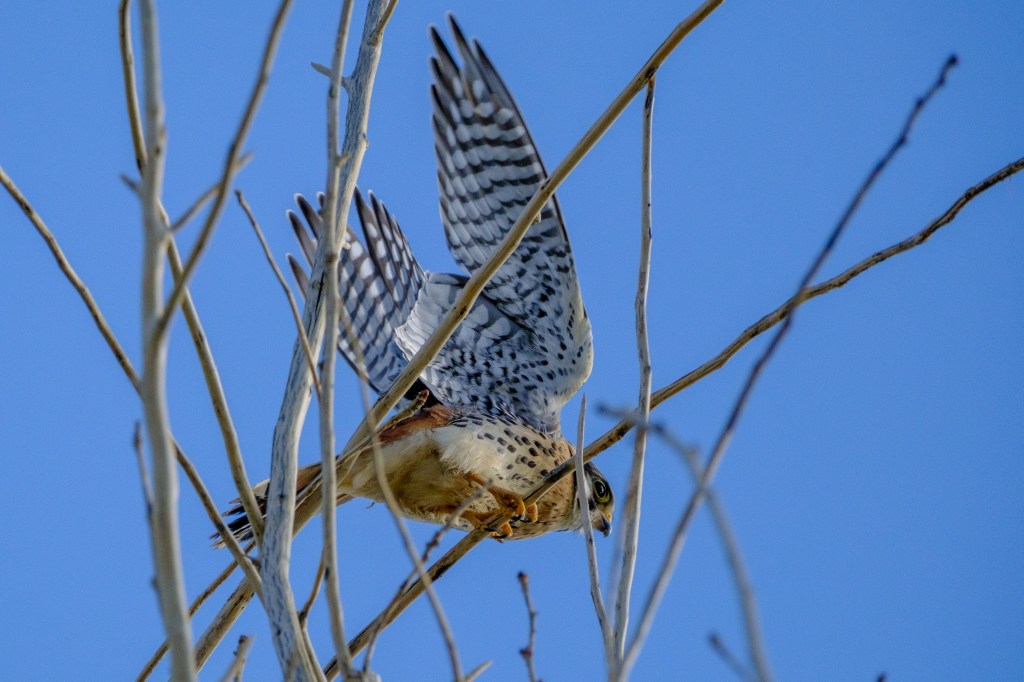
A female American Kestrel has just left her perch. Her wings are rusty-brown. In the second photo, a male Kestrel has started to crouch and spread his wings. His wings are blue-grey.

American Kestrel (female). Bishop Creek Canal.
American Kestrel (male). Buckley Ponds.

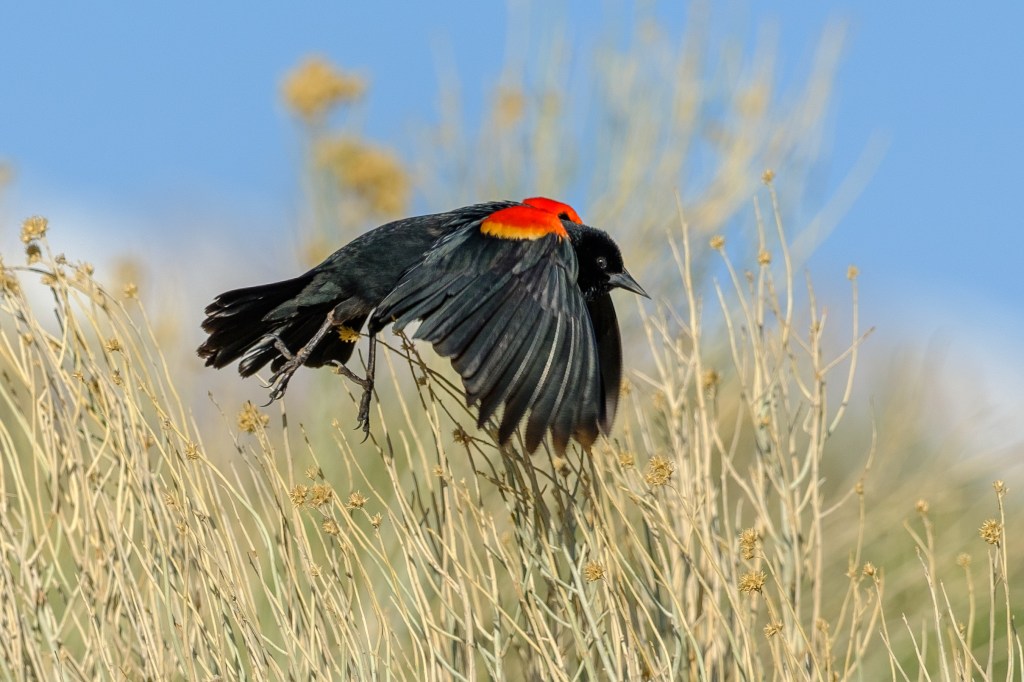
Lots of birds are at the Buckley Ponds. A Red-winged Blackbird uses the leap and flap method. These birds gather in the hundreds in spring and stay for months, raising their young.

Red-winged Blackbird leaps from Rabbitbrush. Buckley Ponds.

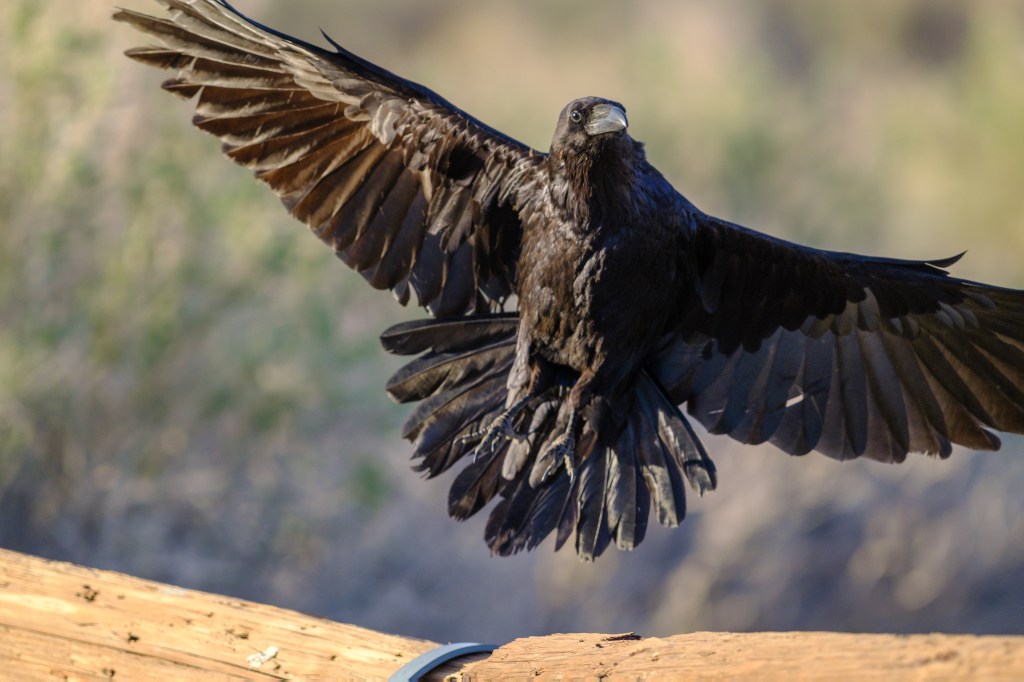
The Common Raven does not like to be photographed. They depart when I point the lens at them. This one springs from a wooden barrier.

Common Raven. Buckley Ponds.

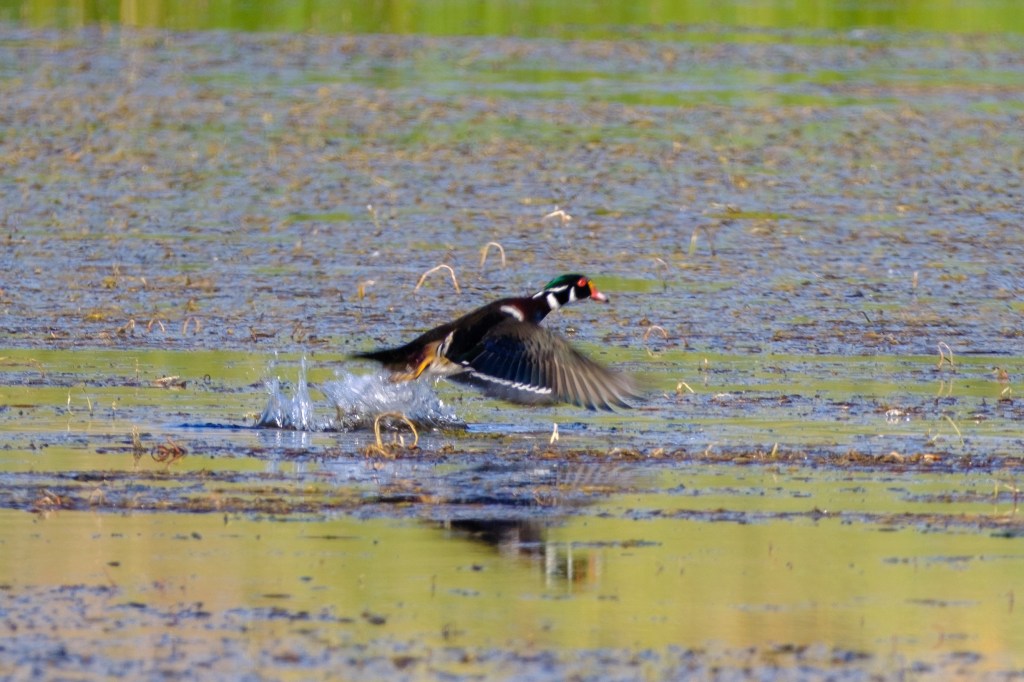
A Wood Duck uses webbed feet to shove off the water at the Buckley Ponds.

Wood Duck (male). Buckley Ponds.

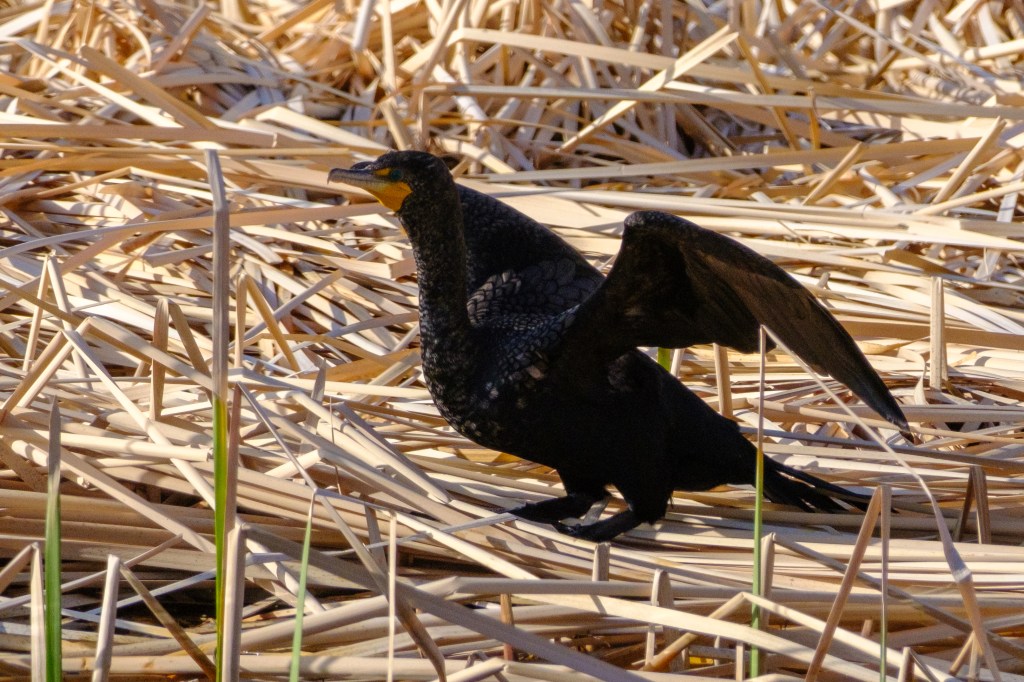
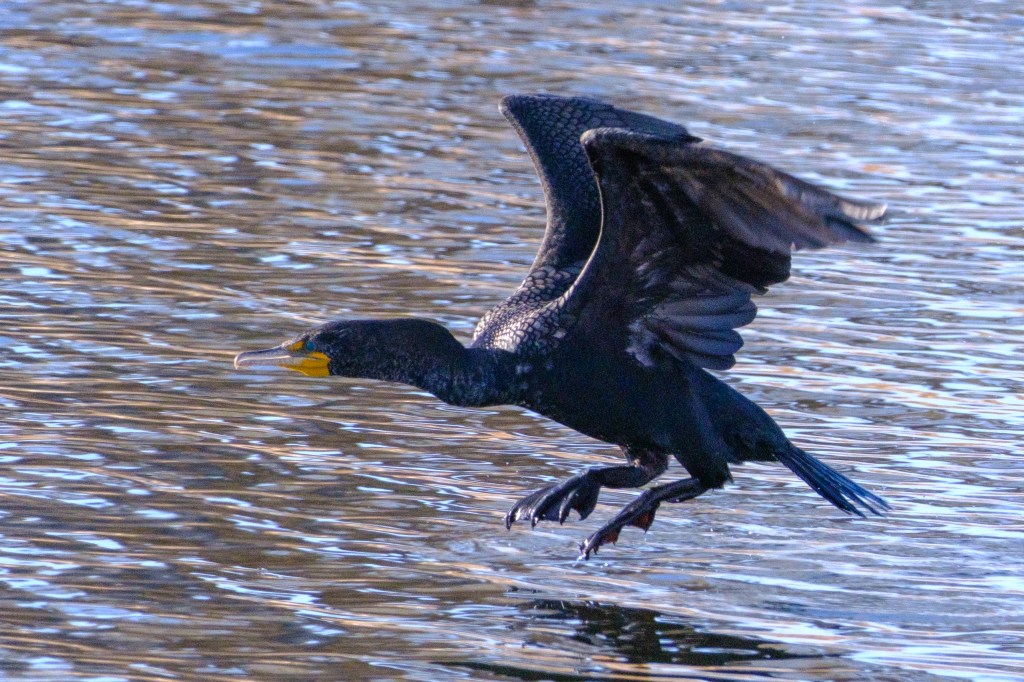
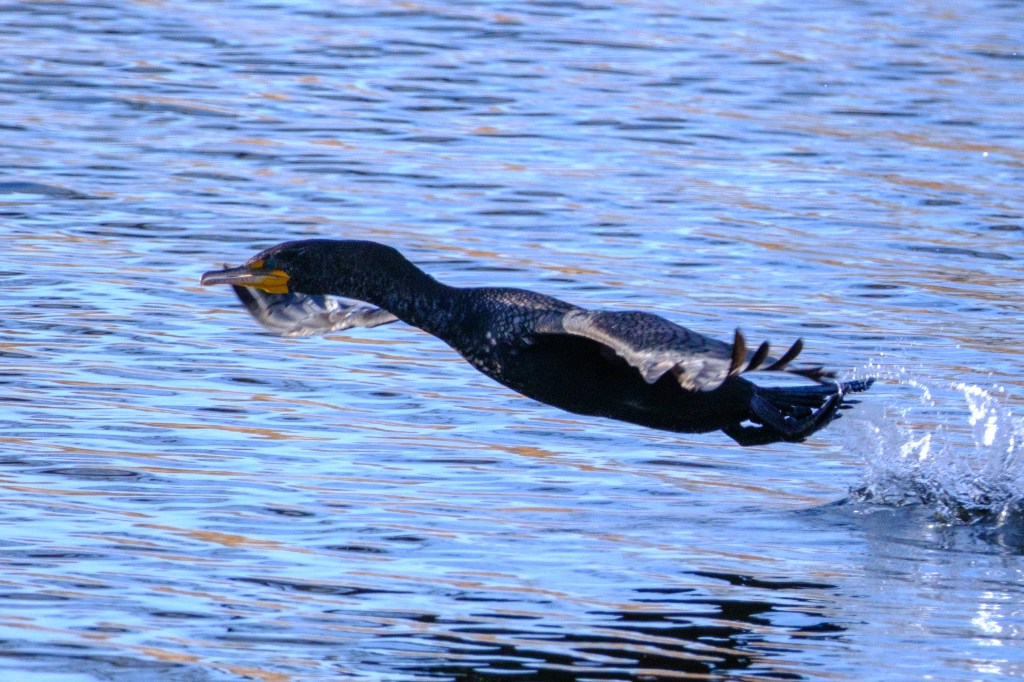
Double-Crested Cormorants are the only cormorant species in the Eastern Sierra. This one vaults over the water and then shoves on the water with its webbed feet. Each push is synchronized with a wing downbeat. The second photo shows preparation for a push; I think the bird looks like a dragon from Game of Thrones.

Double-crested Cormorant. Buckley Ponds.

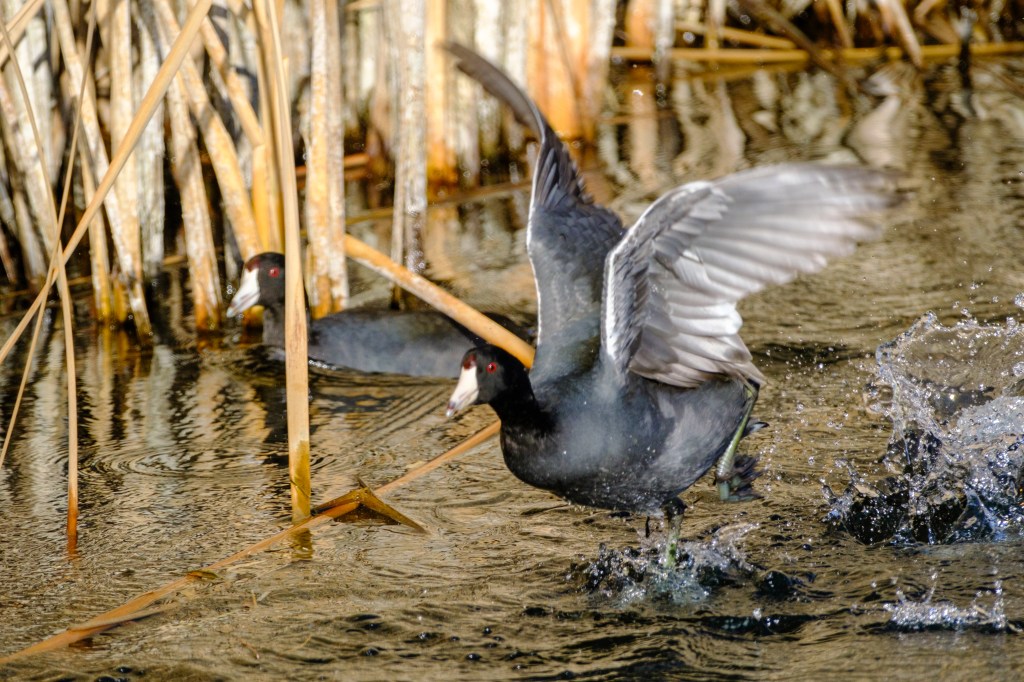
About three hundred American Coots winter at the Buckley Ponds. Their green feet propel them on the surface, splashing like mad to climb into the air. The whole operation is noisy and graceless. When a Bald Eagle swoops over the Ponds, dozens of panicked Coots try to slosh their way to safety.

American Coot. Rawson Canal next to Buckley Ponds.

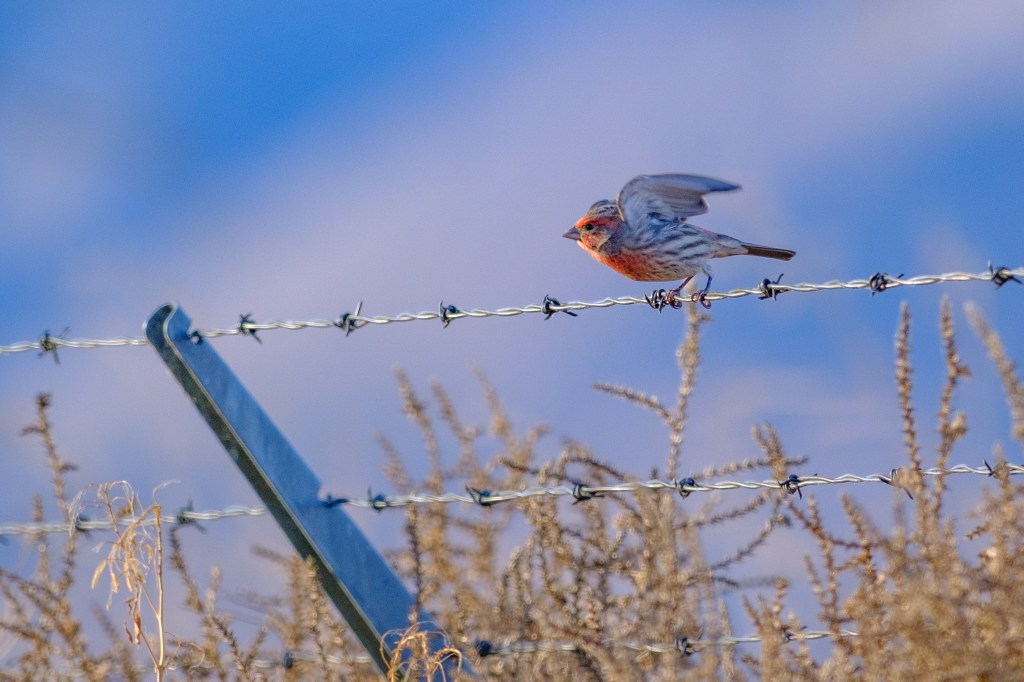
The House Finch below leaves the fence that surrounds the Bishop Sewage Ponds.

House Finch, South Airport Road.

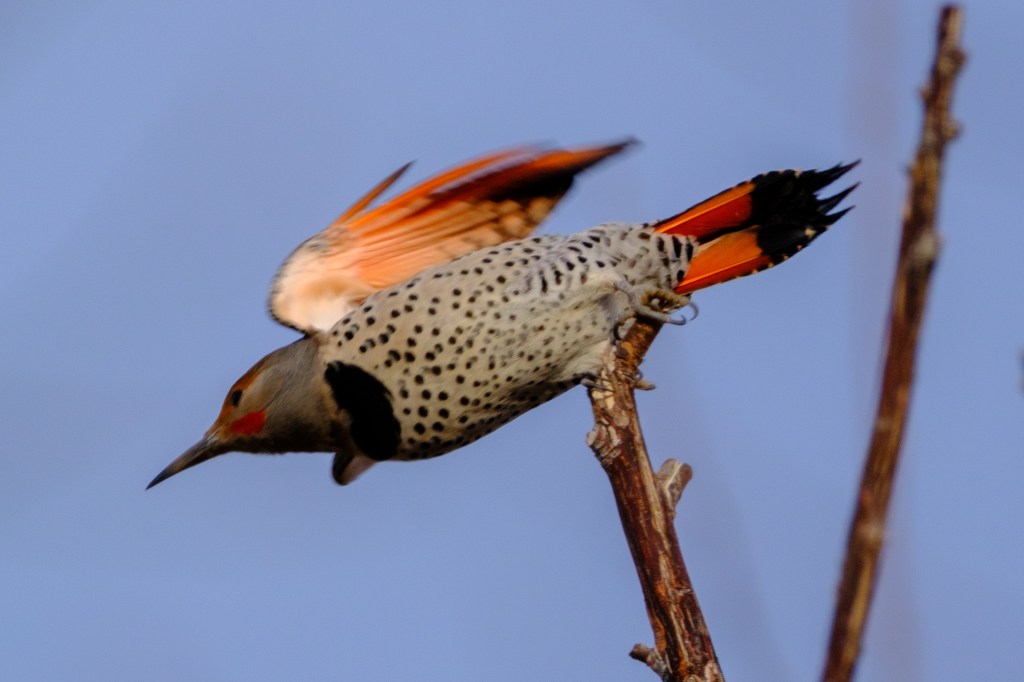
A male Northern Flicker blasts off on South Airport Road.

Northern Flicker, South Airport Road.

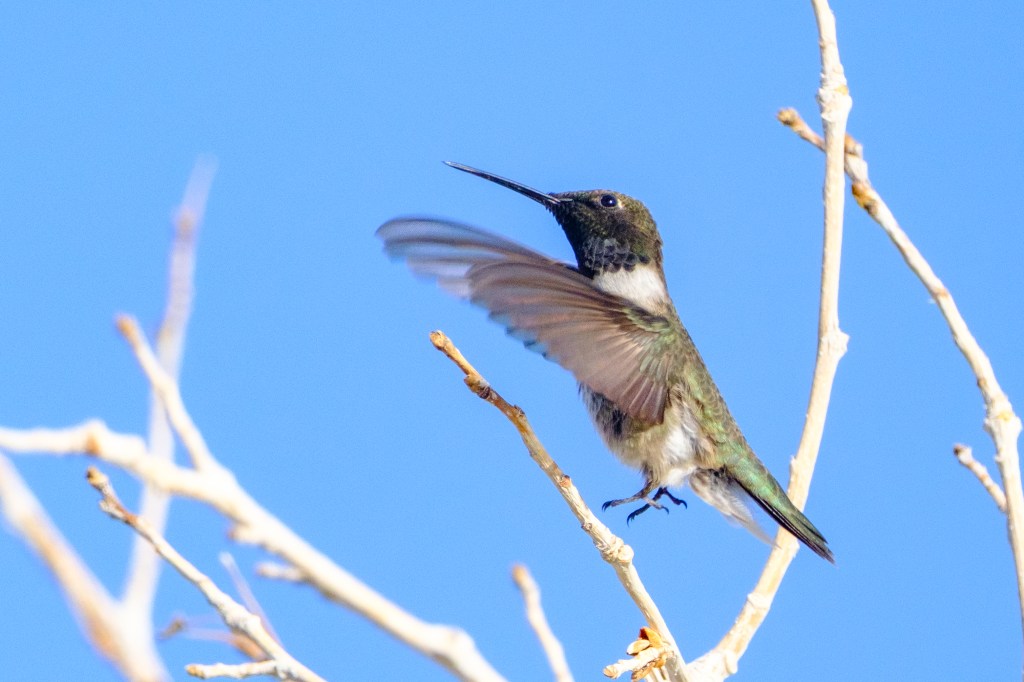
Many birds, such as Kestrels, Kingfishers, and Harriers, can fly in place for a while, but they need some wind to do this. According to Sibley, only hummingbirds can truly hover. The hummingbird can flap its wings so fast that it just rises up, as demonstrated by a Black-chinned Hummingbird.

Black-chinned Hummingbird. Green Gate road off Dixon Lane.

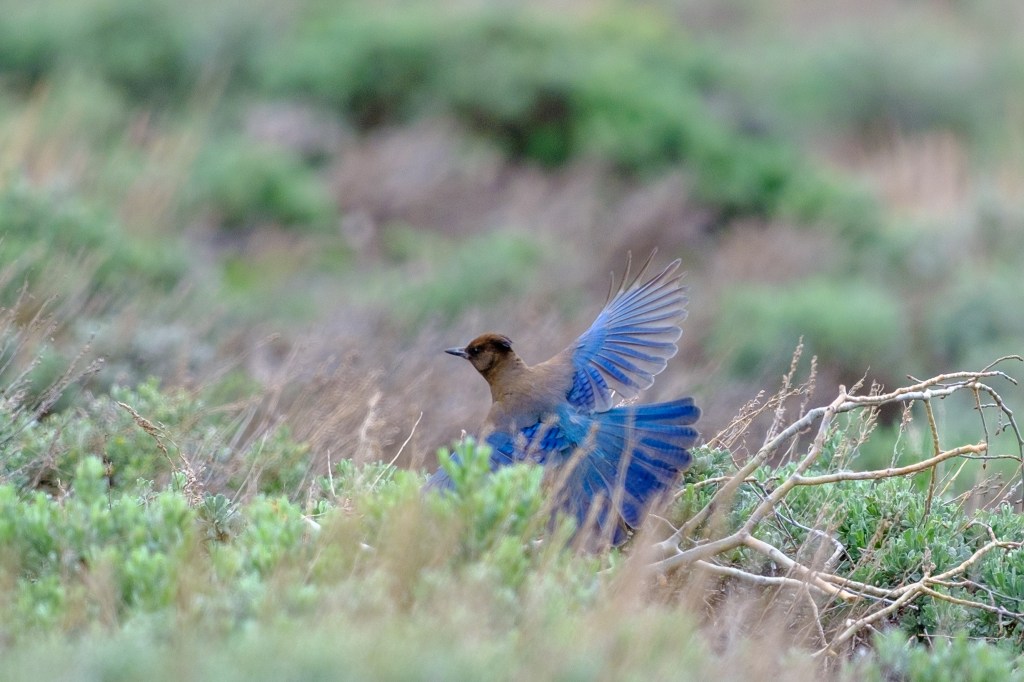
A Steller’s Jay on McGee Creek starts to fly.

Steller’s Jay. McGee Creek.

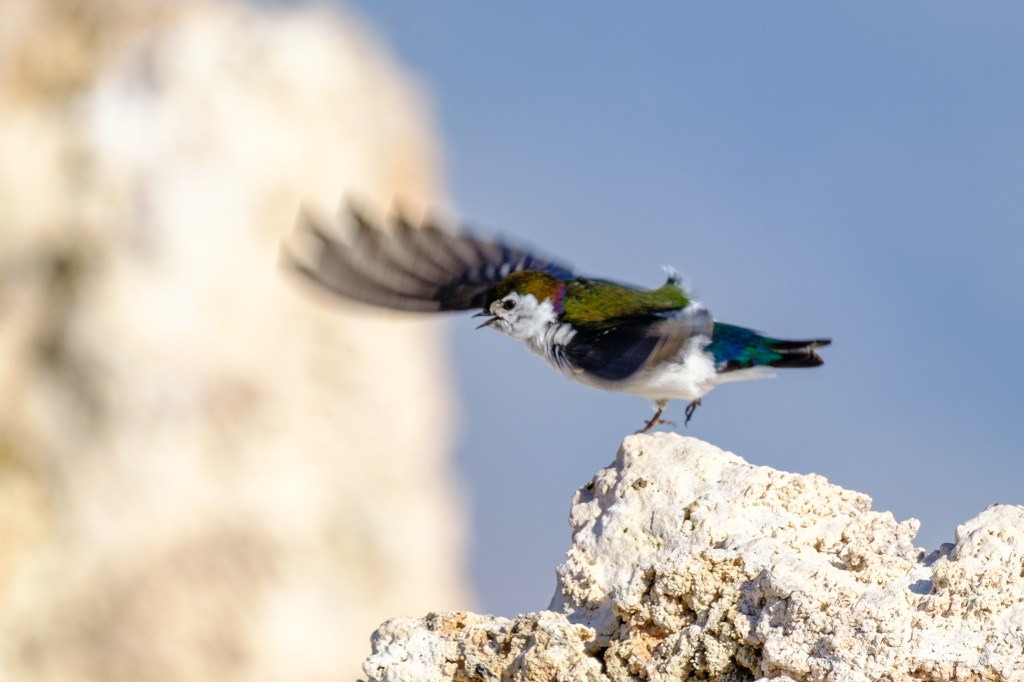
This Violet-Green Swallow is cleared for takeoff from a tufa tower at Mono Lake. These pocket-rockets are hard to photograph when flying, so I try to focus when they land on the tufa. Their rest breaks are short and they soon rocket off to hunt bugs in the air.

Violet-green Swallow. South Beach, Mono Lake.