Great Blue Herons

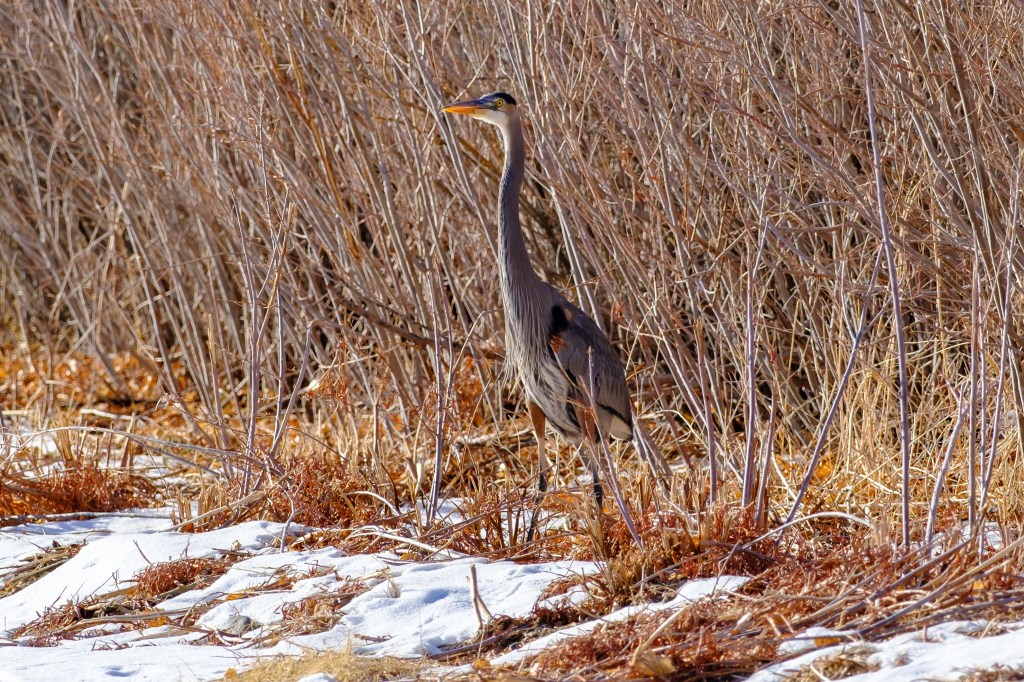
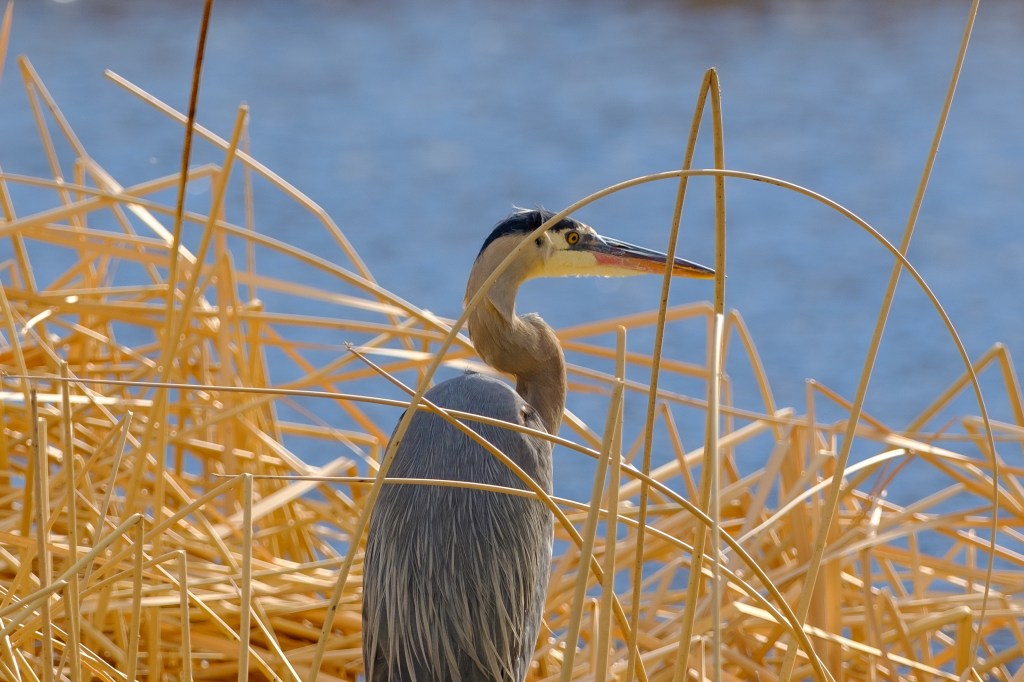
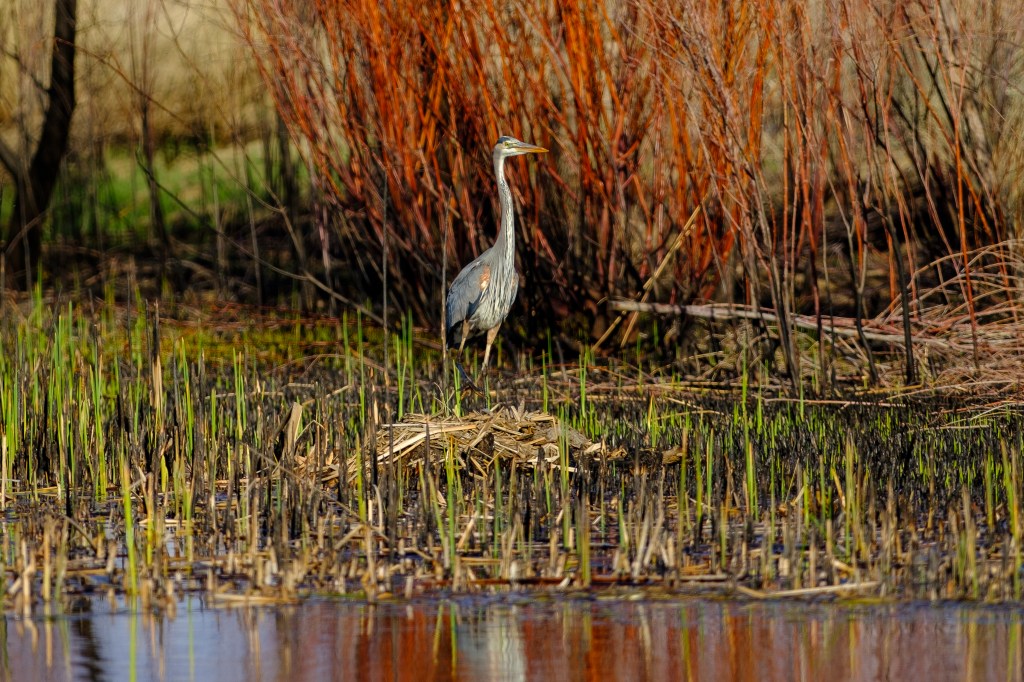
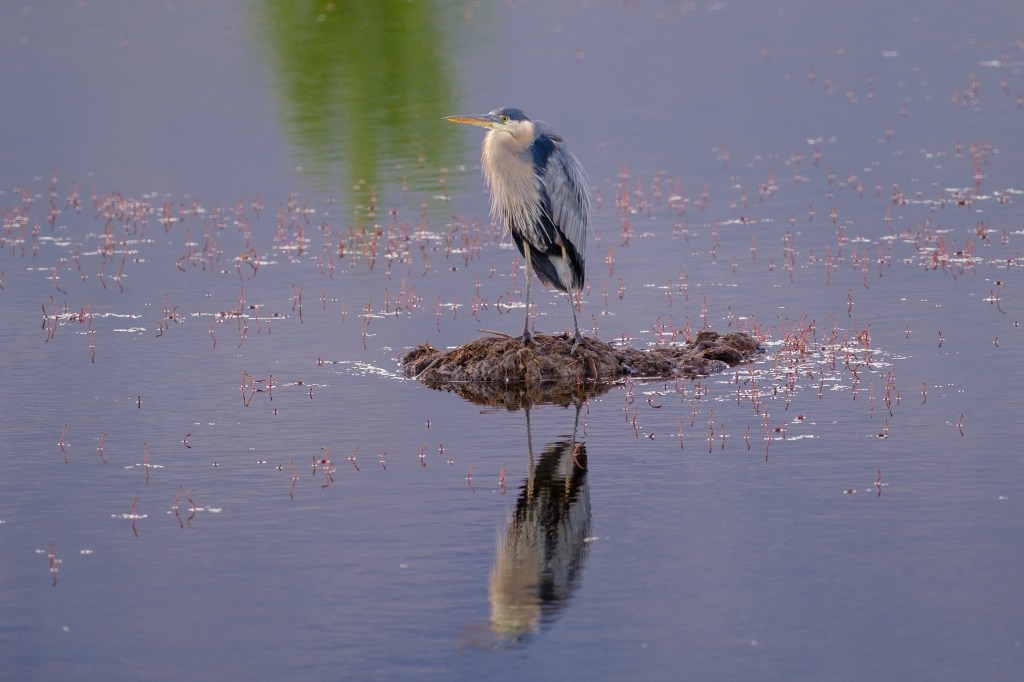
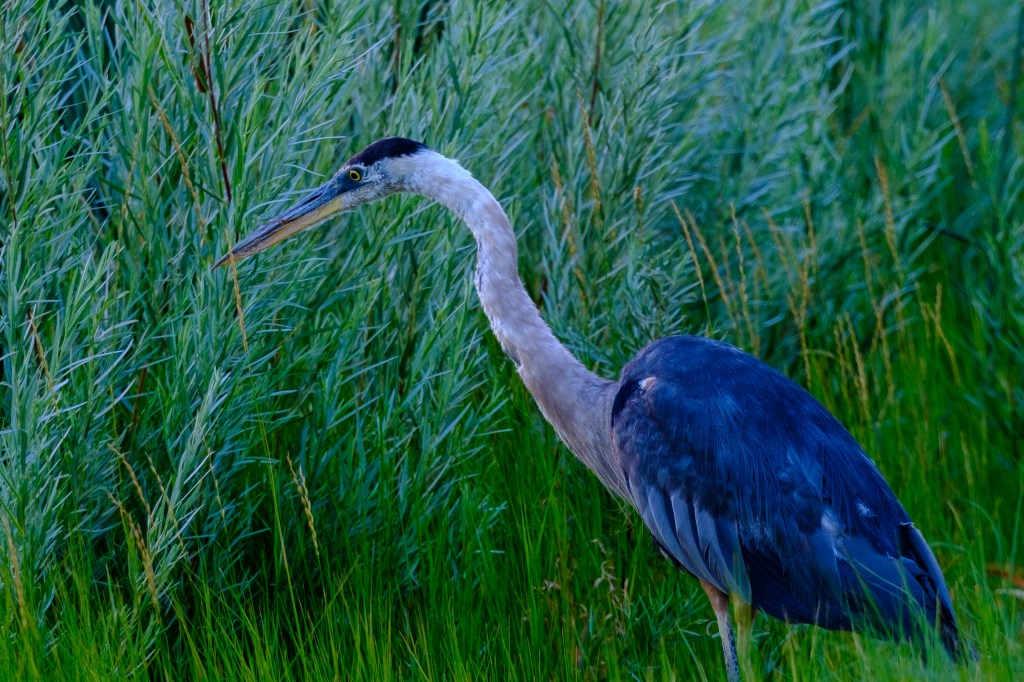
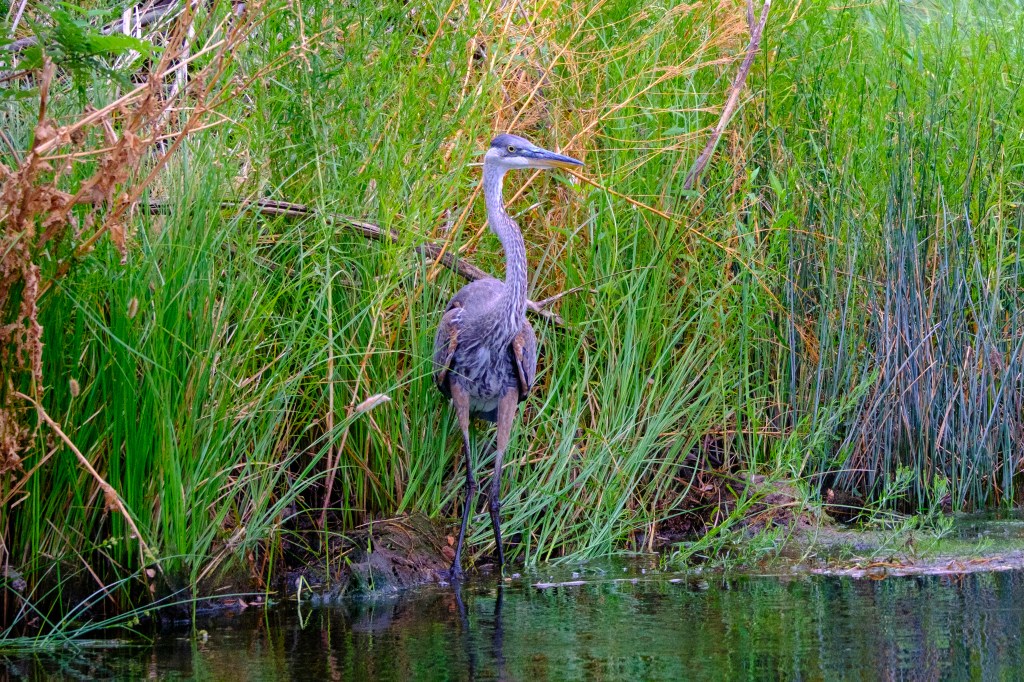
Bishop is in the high desert at 4000 feet. Despite being in a desert, we have Great Blue Herons; lots of them. They have been seen at 260 feet below sea level in Death Valley and as high as 11,000 feet near Sawmill Pass. They build nests in Cottonwoods throughout the Owens Valley; rookeries of several nests can be found. They fish in streams, canals, ponds, and reservoirs. They hunt small mammals in fields.

Compare a Heron with a Bald Eagle. Both prefer fish. The Heron catches fish with its long bill, the Eagle grasps them with its talons. They have colossal wingspans; 6 feet for the Heron, 6.5 feet for the Eagle. But the Heron is a lithe ballet dancer: 4.5 feet tall, 6.5 pounds. The Eagle is a muscle-bound thug: 2.5 feet, 9.5 pounds.

I have taken thousands of photos of Great Blue Herons. They are common and big, making them an easy target. I currently (March 2024) have 674 saved Heron photos, more than for any other bird. A heron was the first bird I managed to photograph while in flight. Their large size and straight path makes it easier to get pictures. Most photos in this post were taken near the Buckley Ponds or the Bishop Creek Canal.

Pony tails.

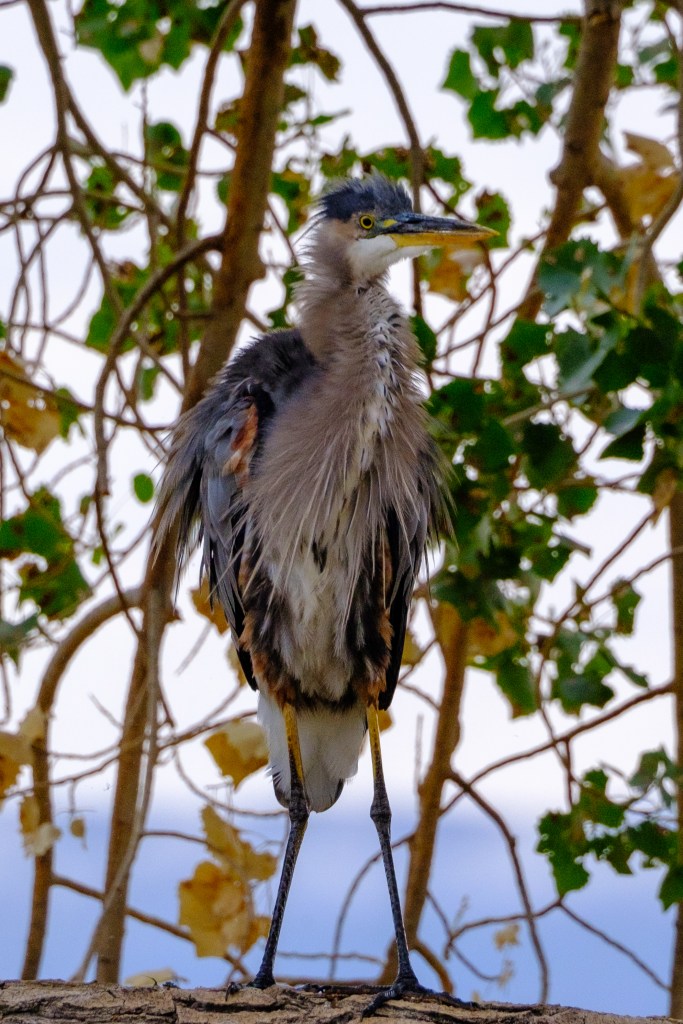
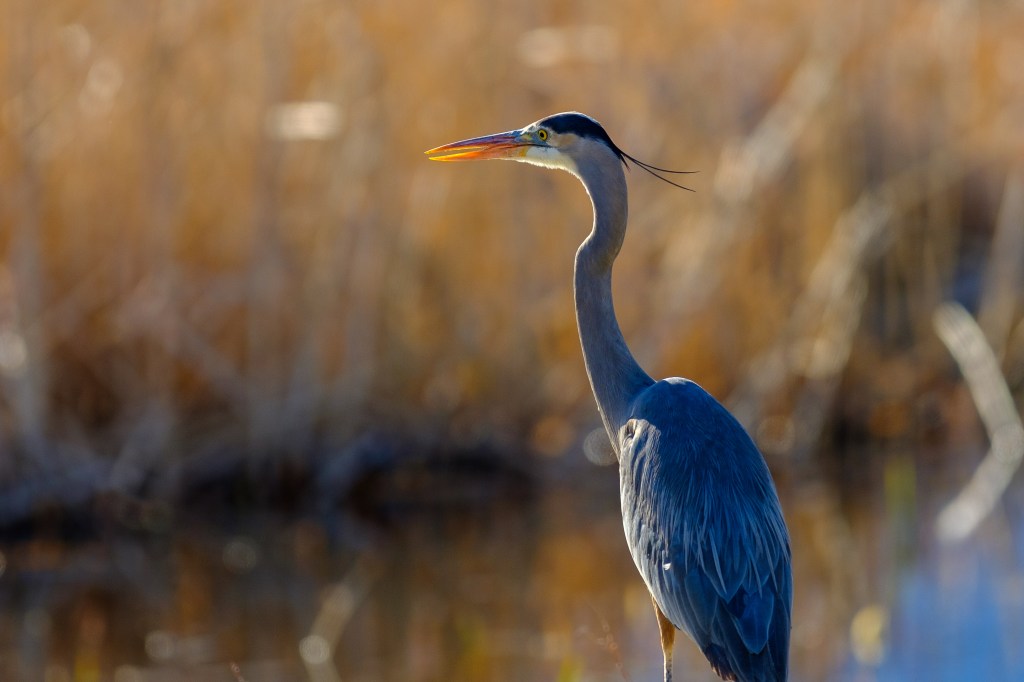
Herons have pony tails. Technically, these are occipital plumes. Apparently these feathers are used for mating displays. In reviewing my photos, the pony tails seem longest around January, when mating starts, shortest or absent in late summer. Or maybe this difference arises because juvenile Herons lack long plumes. Below are a few examples.
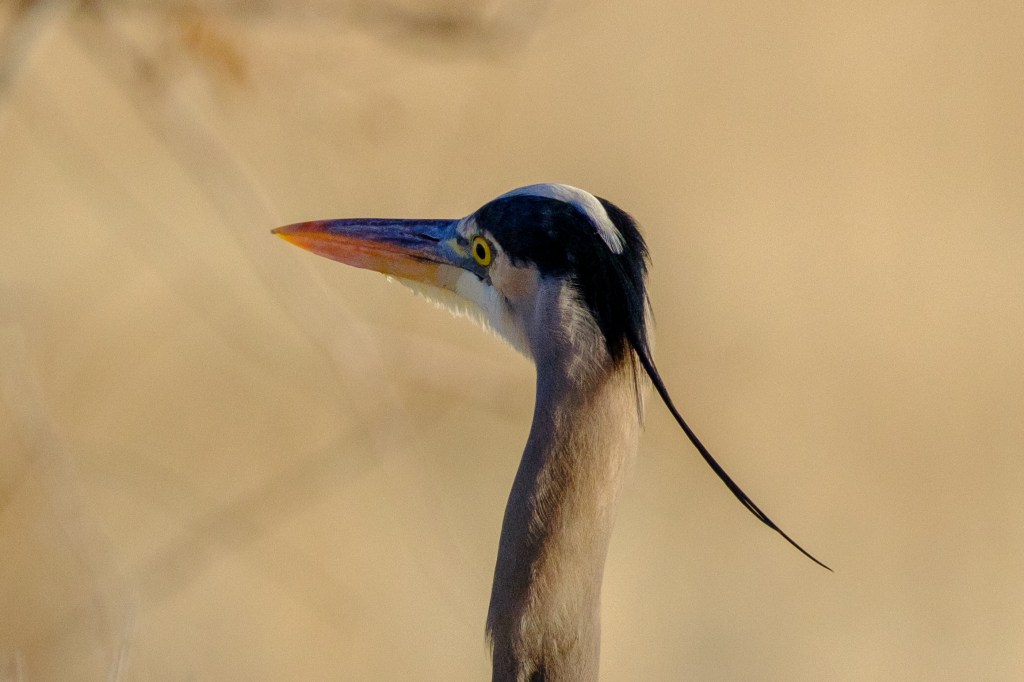
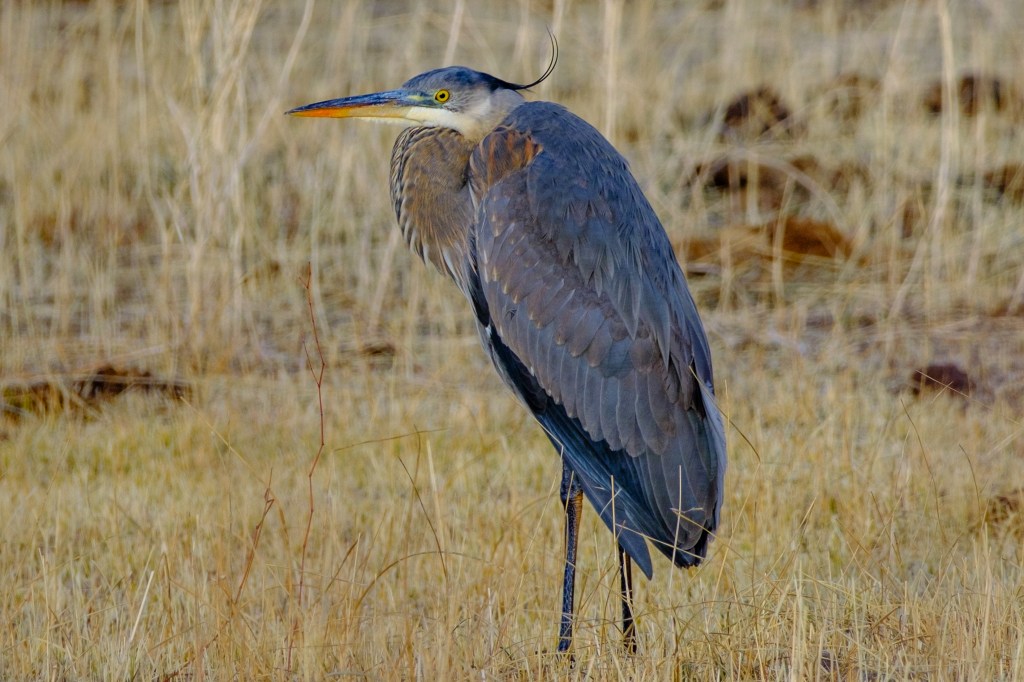
The pony tail floats above the back. Note all the holes in the wing feathers.

Shake it, baby!

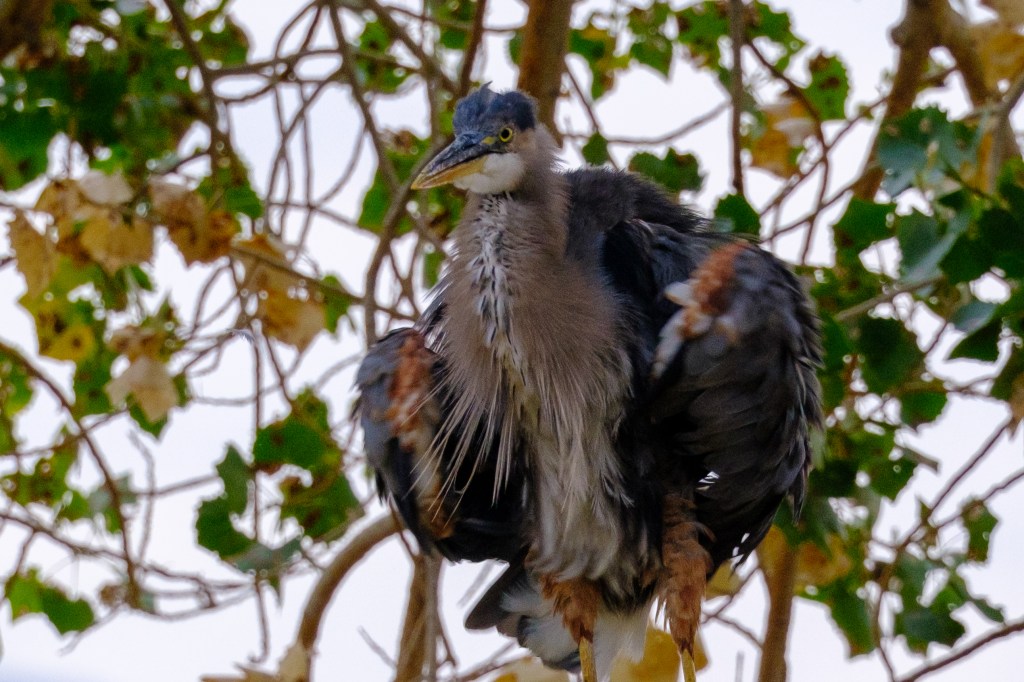
Sometimes birds give themselves a vigorous shake, fluffing their feathers into a disorderly mess. Why? Are they trying to shed dust or parasites? Below is a sequence of photos showing this shaking.
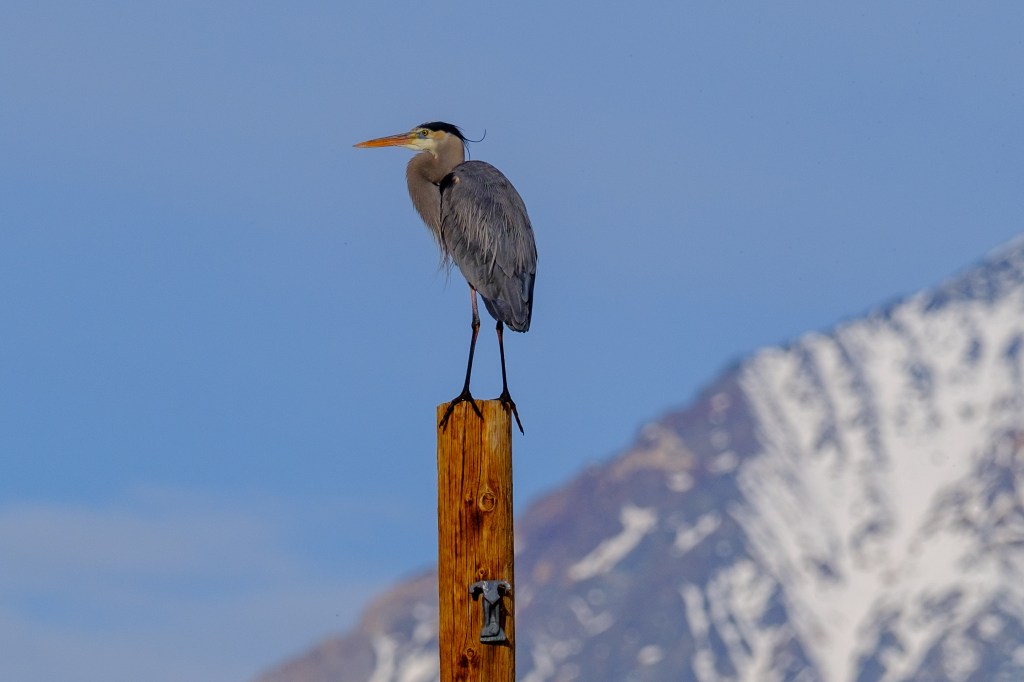
Nice pony tail. Giant toes.
Shaking begins.
The result is a mess.

Here is another example of shaking.
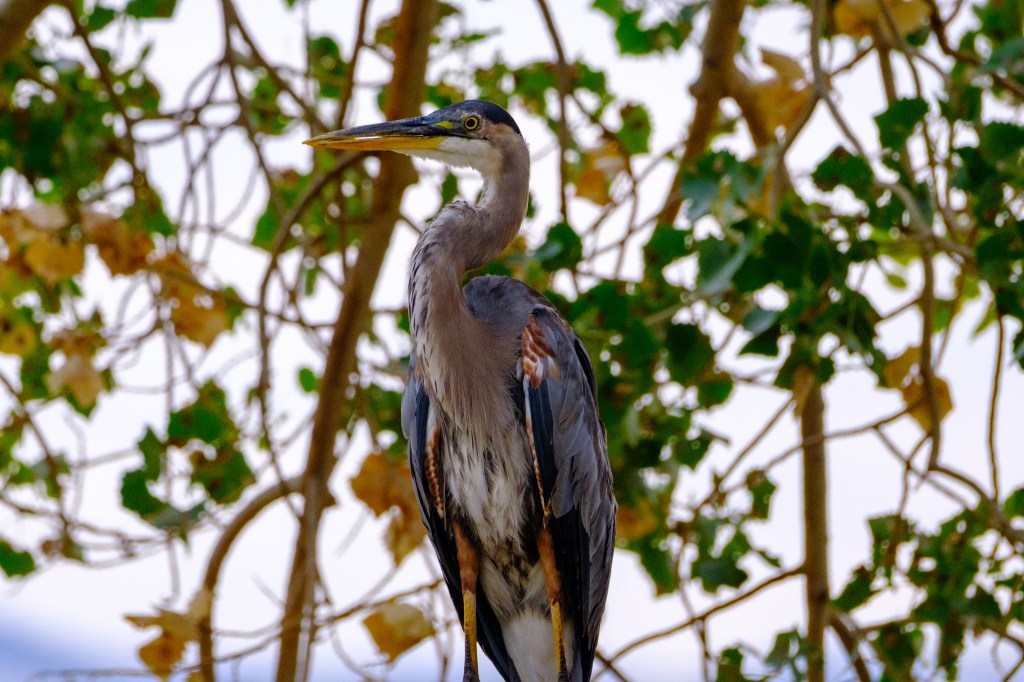
Note that the legs look like carbon-fiber hiking poles.

Feeding.

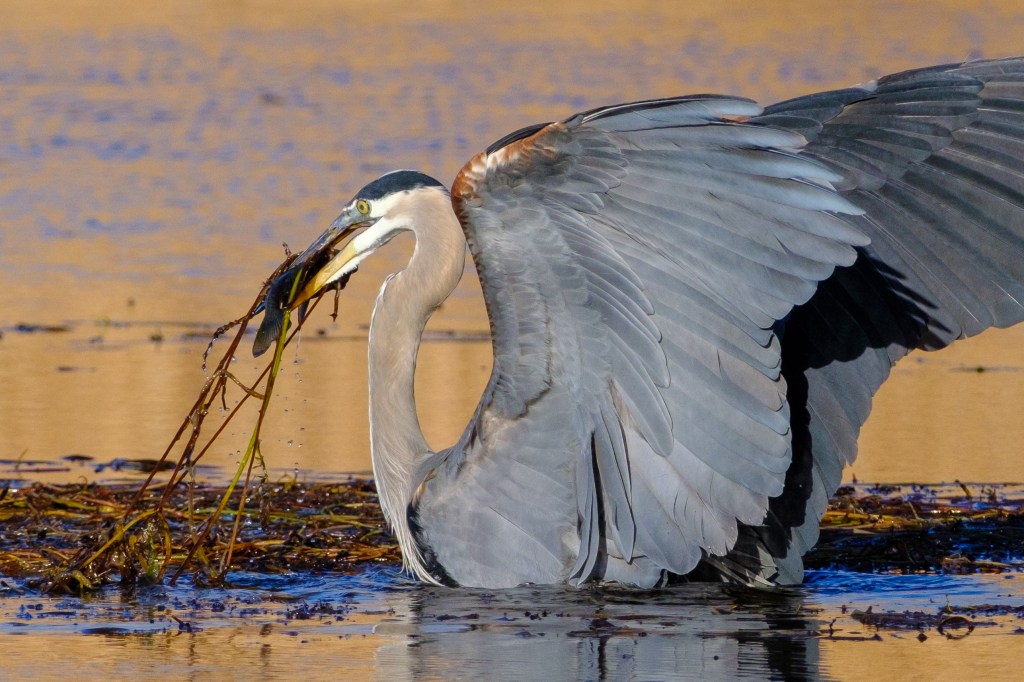
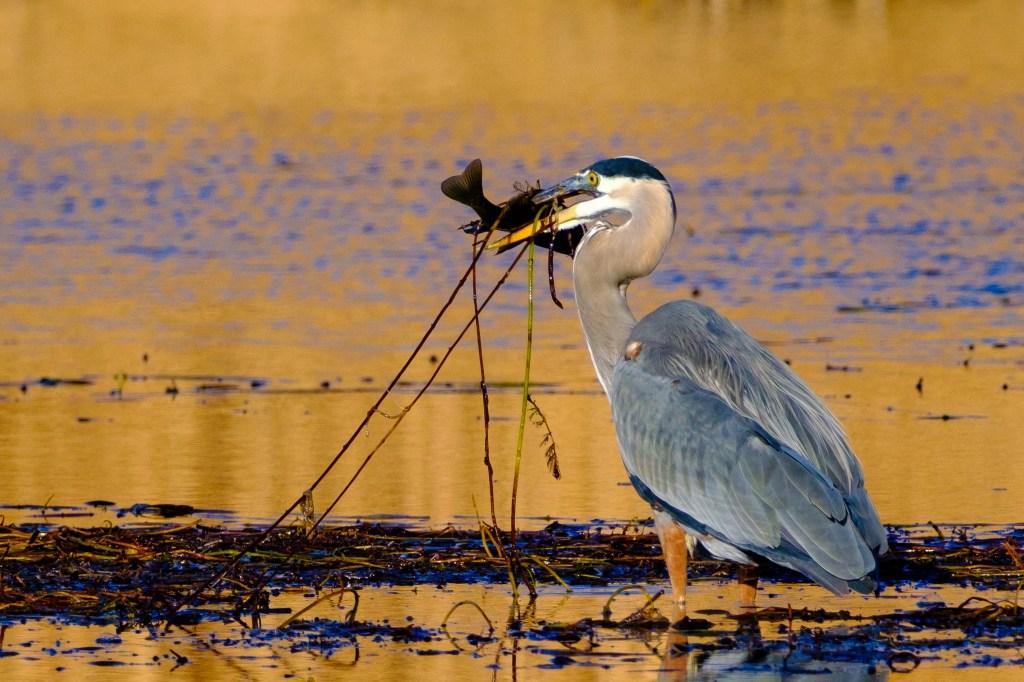
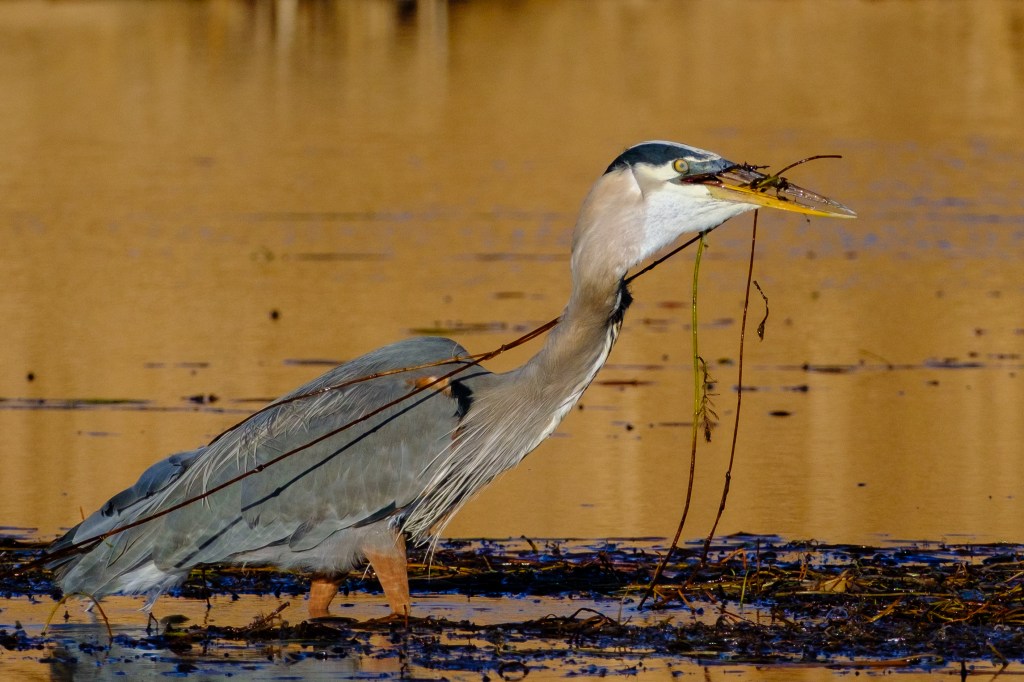
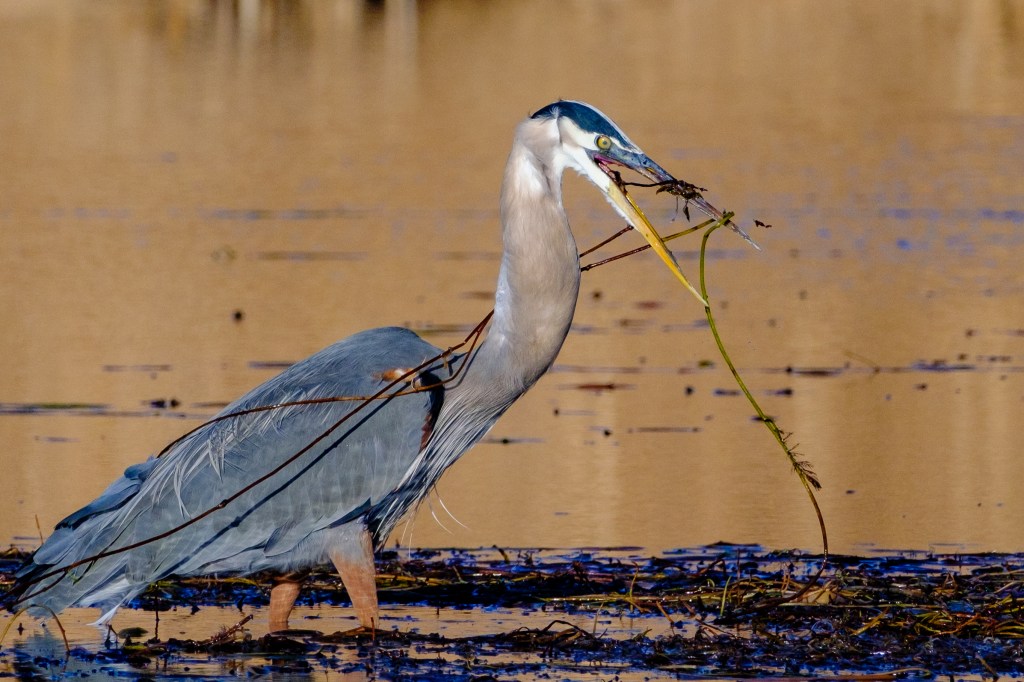
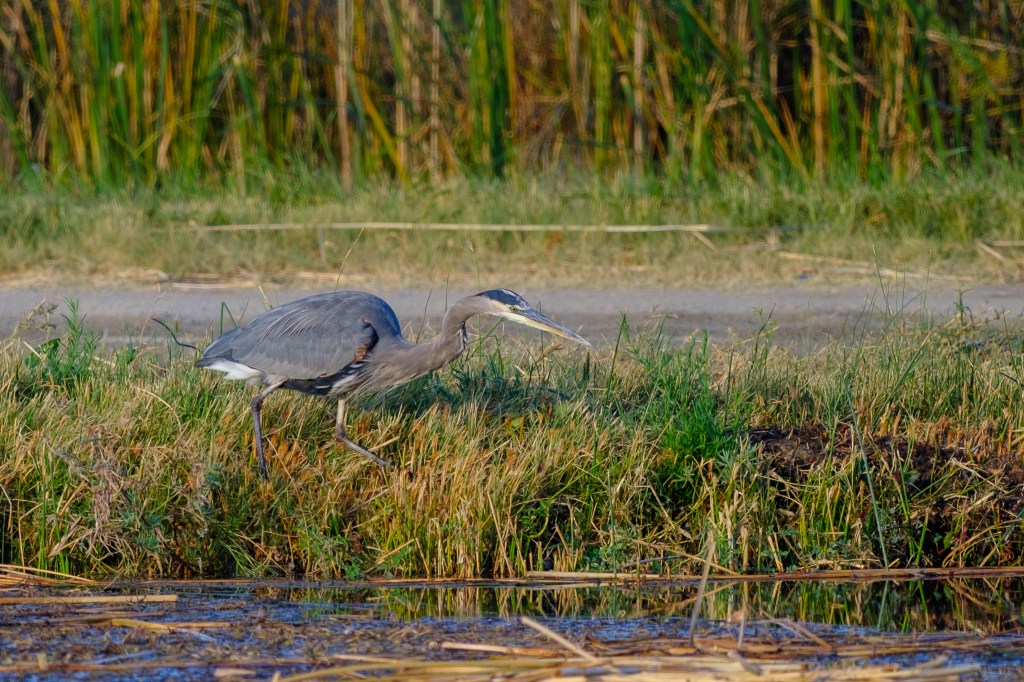
Herons usually hunt near or in water. They may stand motionless, or move slowly. Then they strike quickly and grab a fish. They may hold it for a while, until the flopping stops, then maneuver it so that it can be swallowed head first. If the fish is large you can see a bulge move down the bird’s neck. In addition to fish they eat crustaceans, amphibians, other birds, and small mammals.
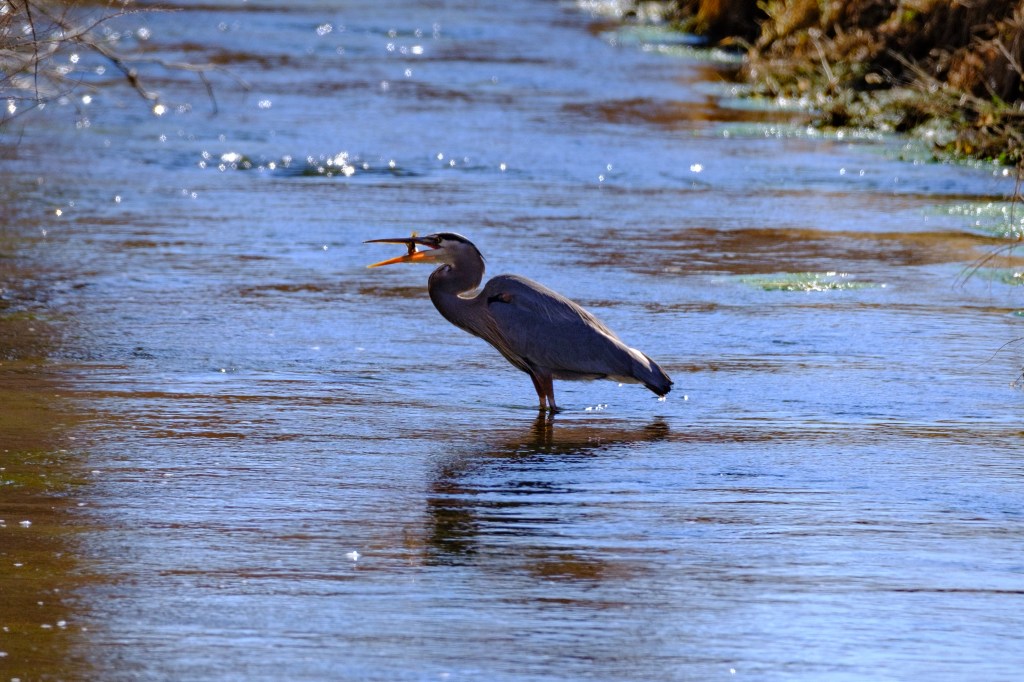
Heron with fish in Bishop Creek Canal
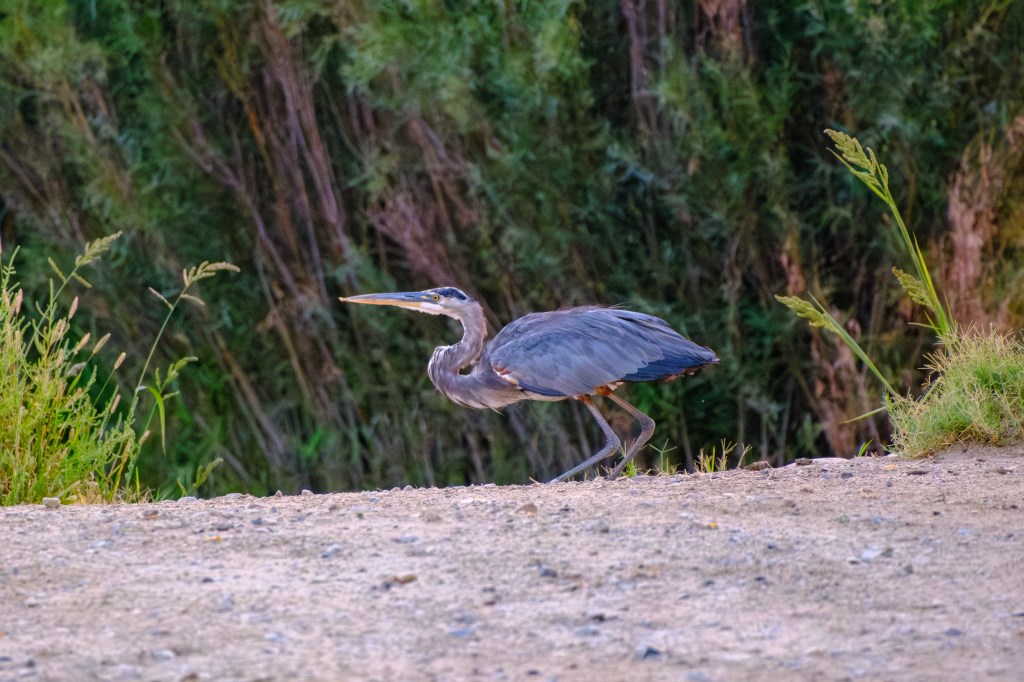
Heron stalking fish or frogs at Buckley Ponds.

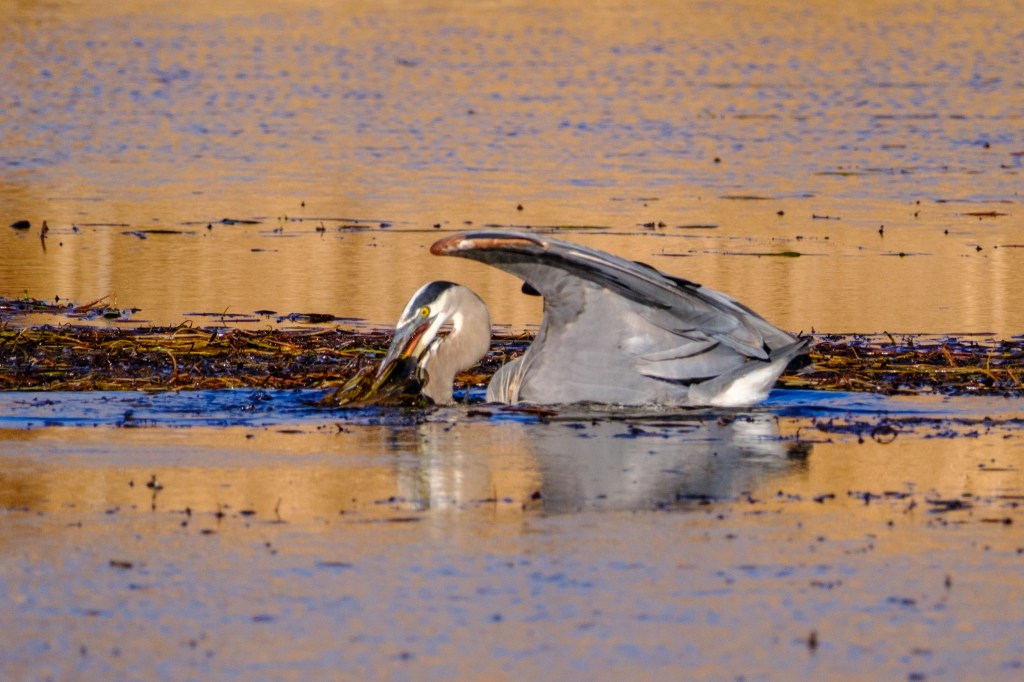
In the sequence below, a Heron catches a carp at the Buckley Ponds. The time from first to last photo is 52 seconds. Imagine if you had to eat this way.
Flight.

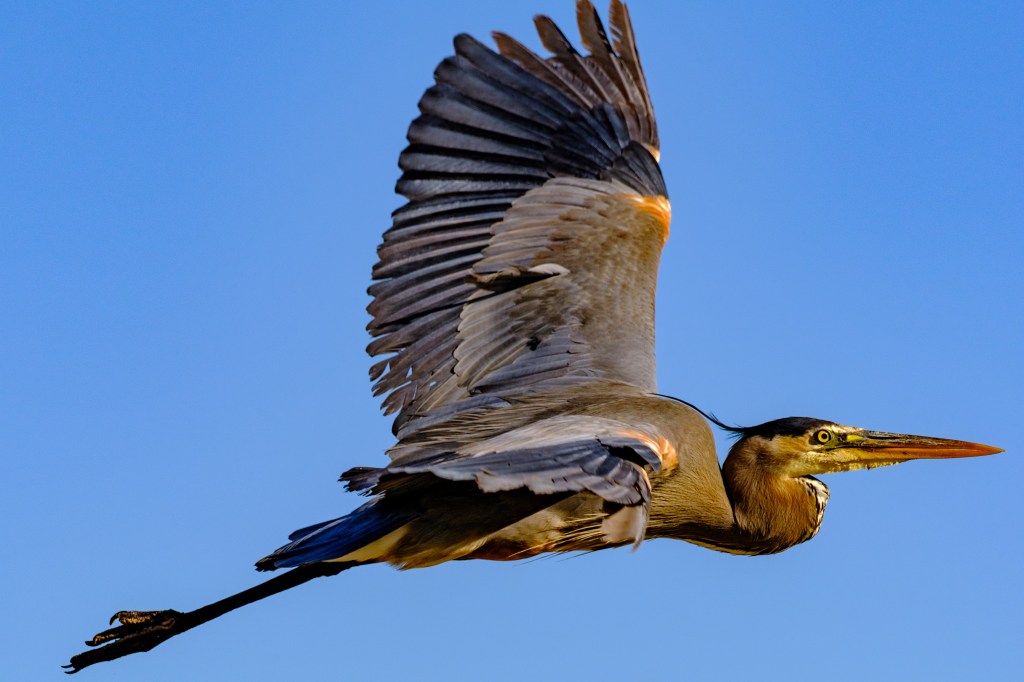
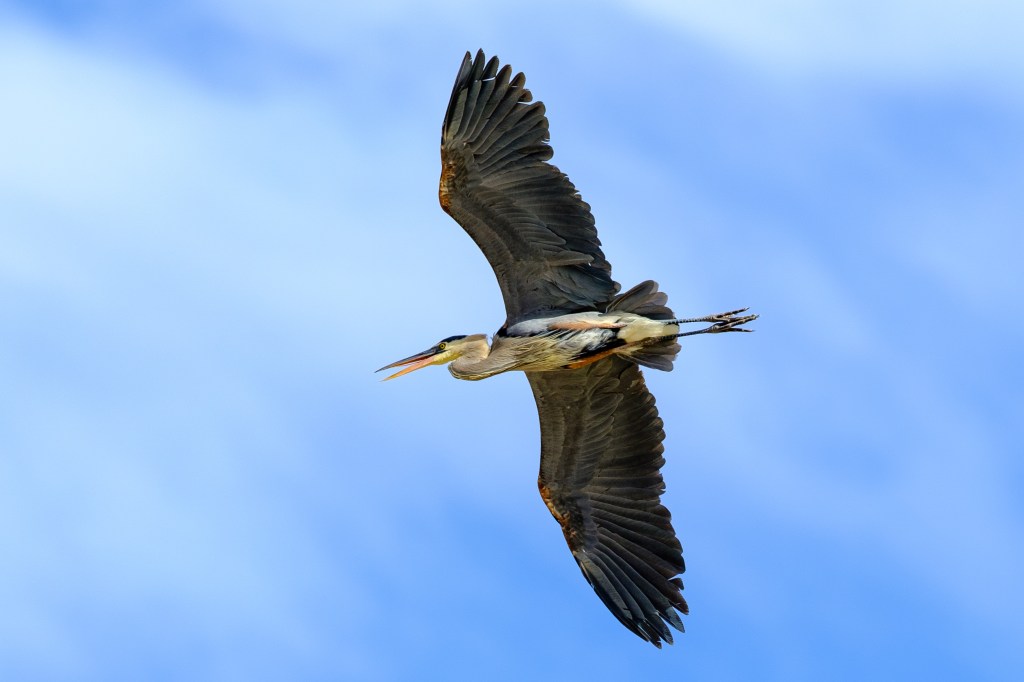
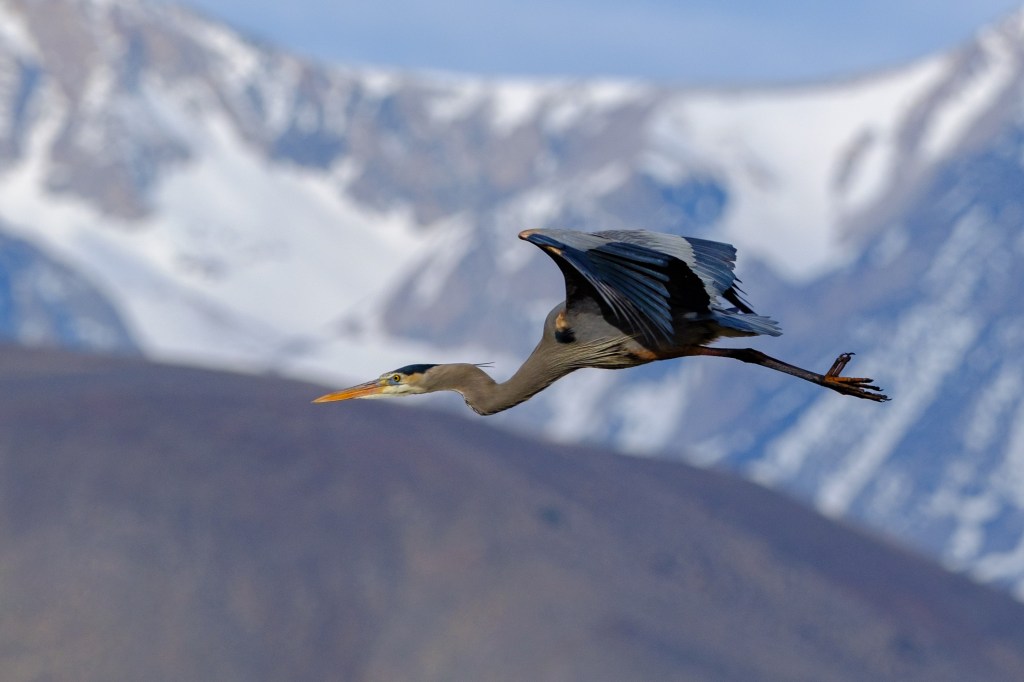
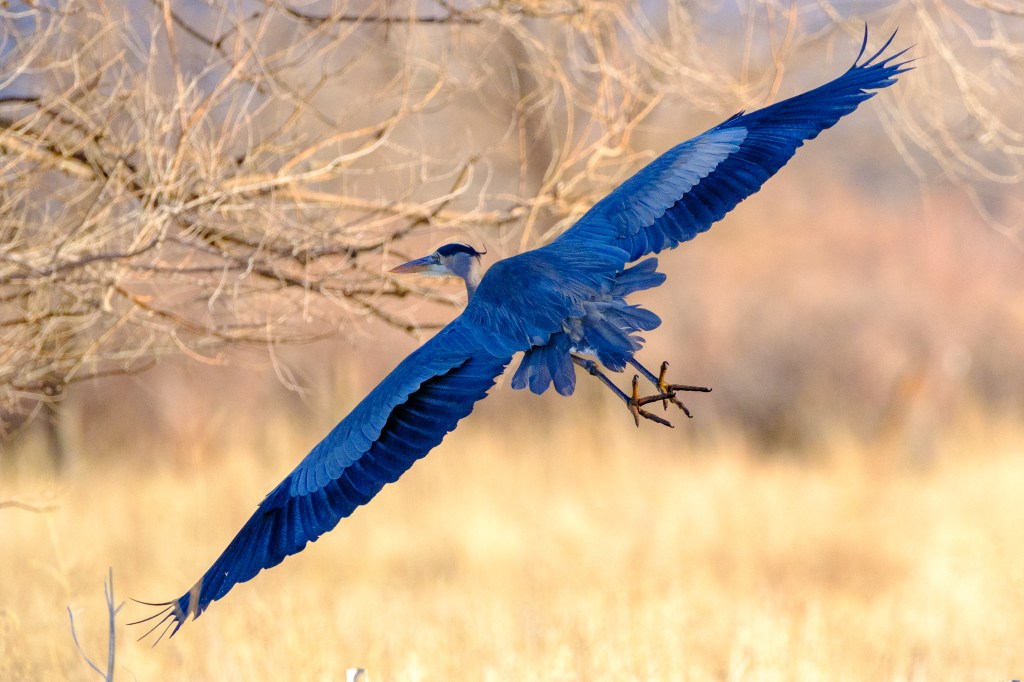
Herons use big, powerful, rhythmic wing-beats and tend to cruise in a straight line. I like to think of them as lumbering aircraft, an avian B-52. At the start of flight the neck is extended. Then it may coil back onto the shoulders, but not always. With the neck extended the bird often looks awkward, as if it has no business being in the air. The big primary feathers at the ends of the wings often have tears and holes, like a car riding on bald tires. Sometimes an entire feather is missing.

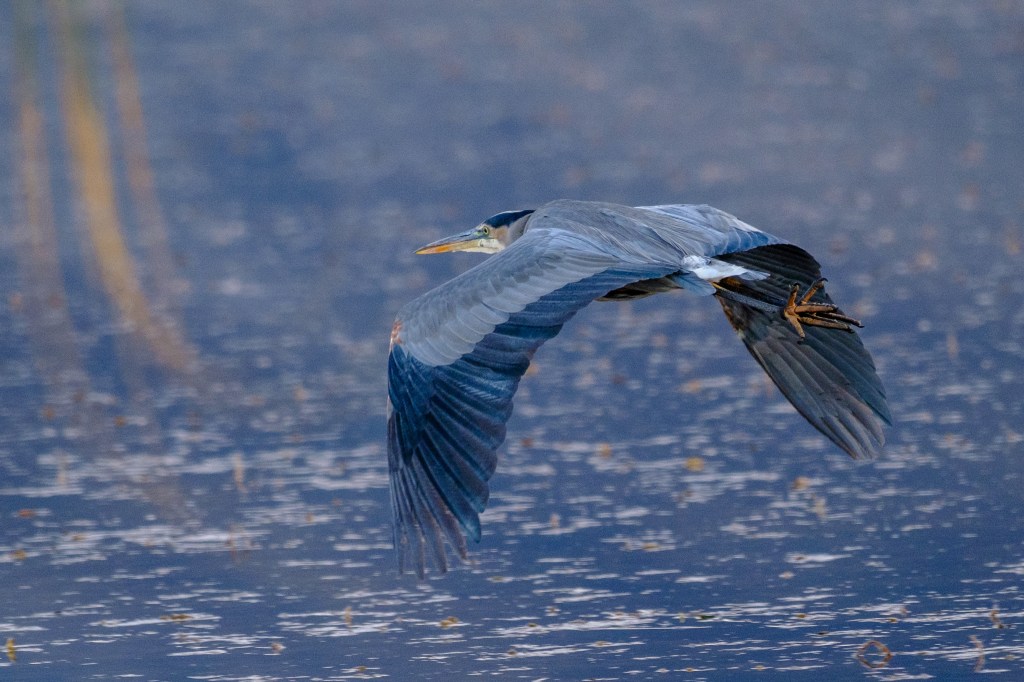
Torn feathers. The legs trail behind.
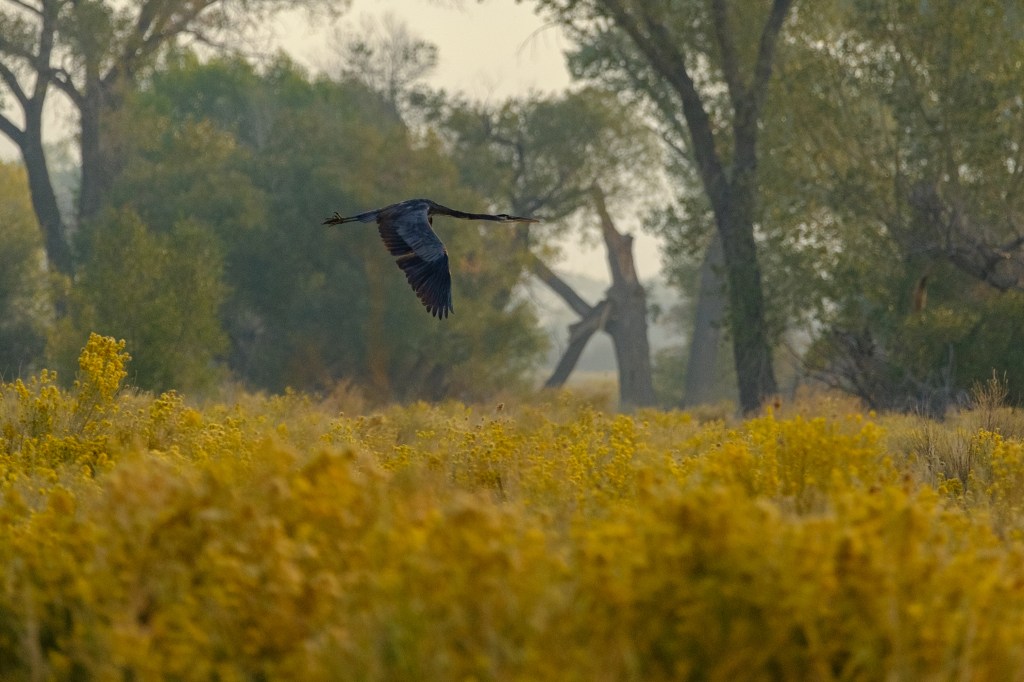
Flight through cottonwoods. Yellow plant is rabbitbrush.
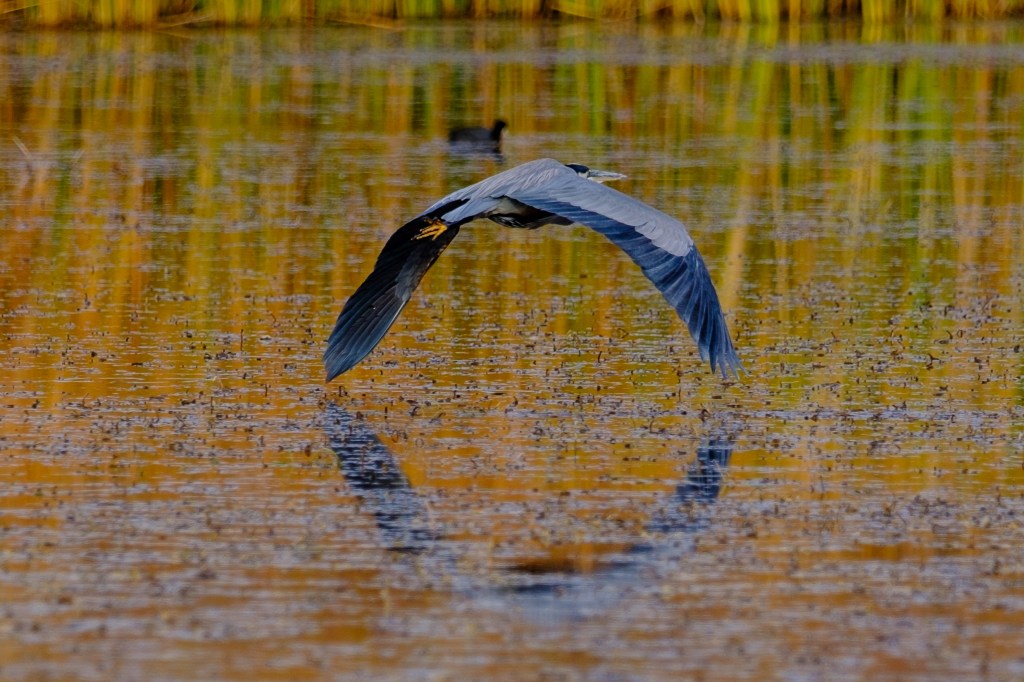
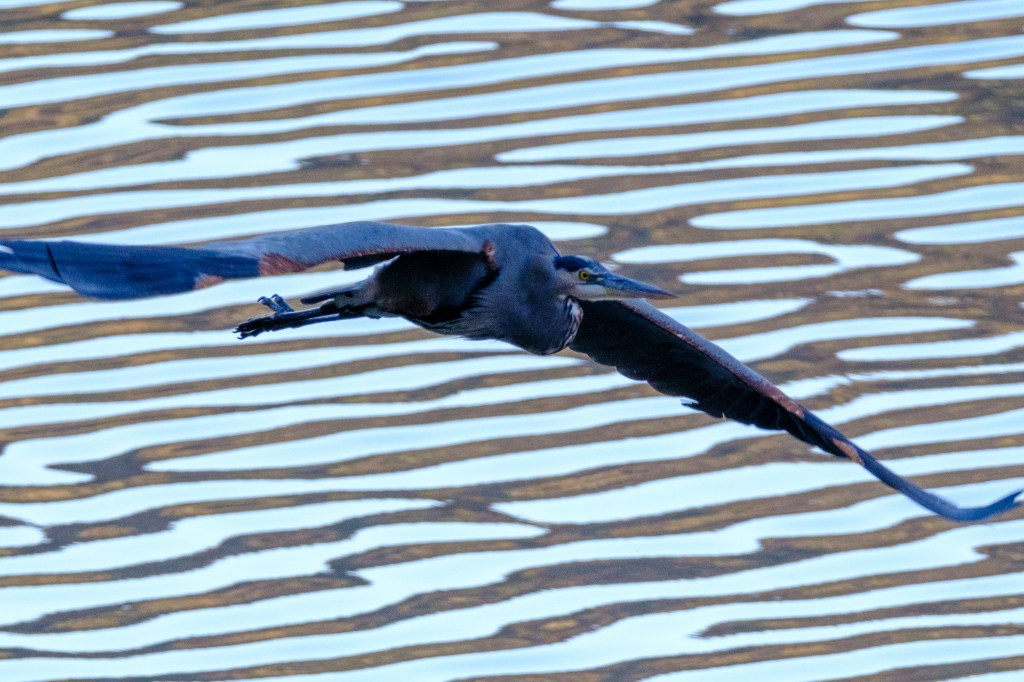
Wings and reflection form a circle. Sometimes wing-tips touch the water.
Neck still mostly extended. The head and legs hang below the body. Ungainly look.

Birds descended from dinosaurs, but I find that hard to grasp when I see a Bald Eagle. But I can easily imagine the Heron below is a dinosaur.
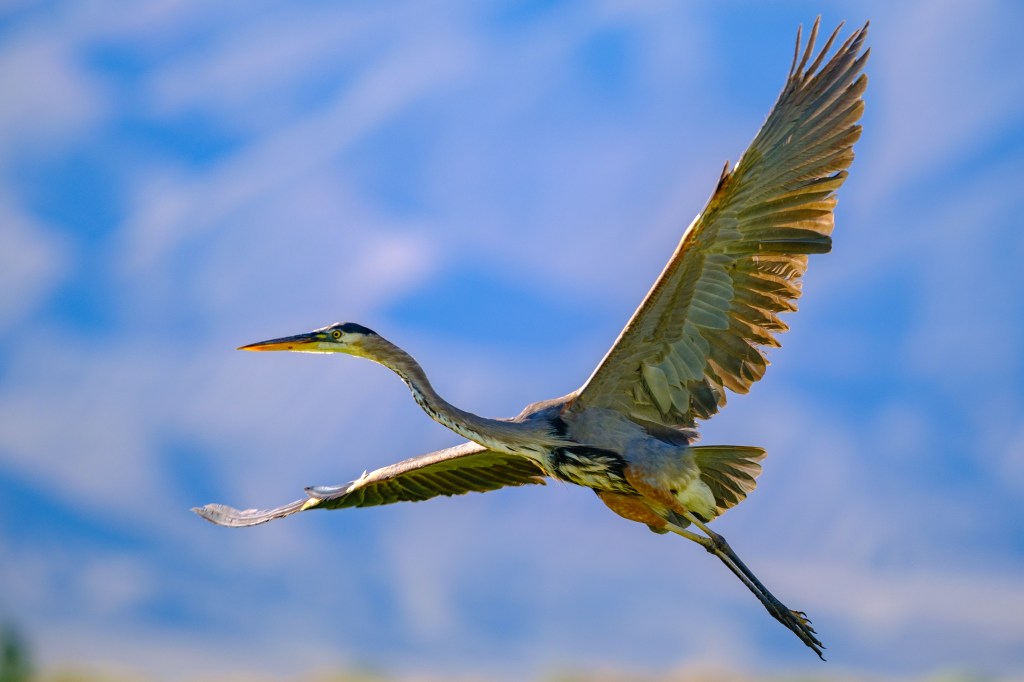
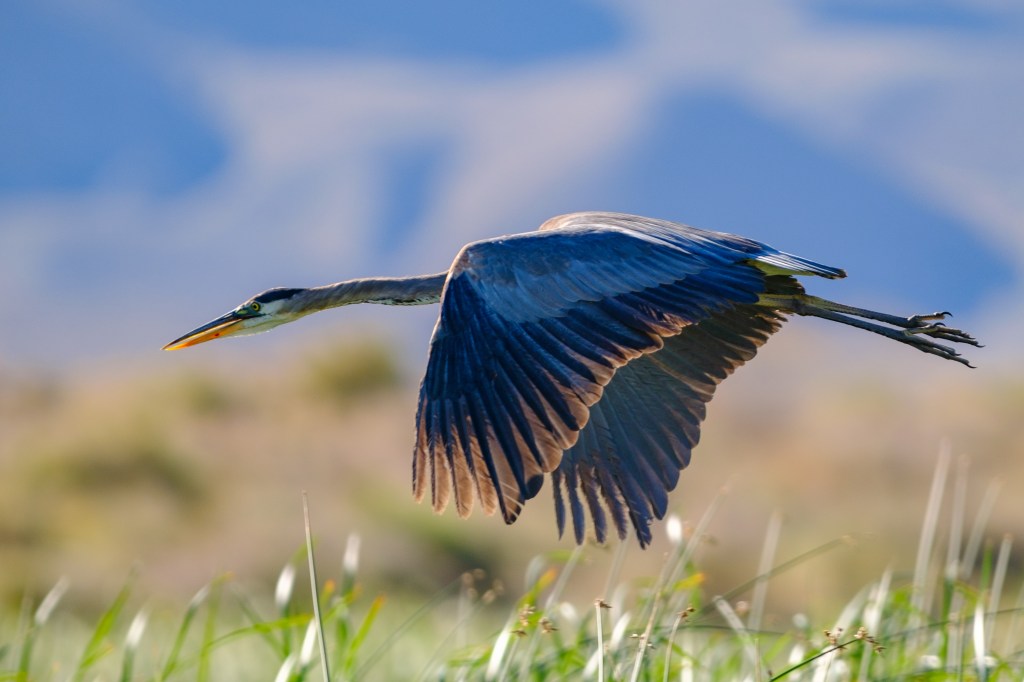
Nice view of the big feet
Heron cruising over Pleasant Valley Reservoir, early morning.

Portraits.

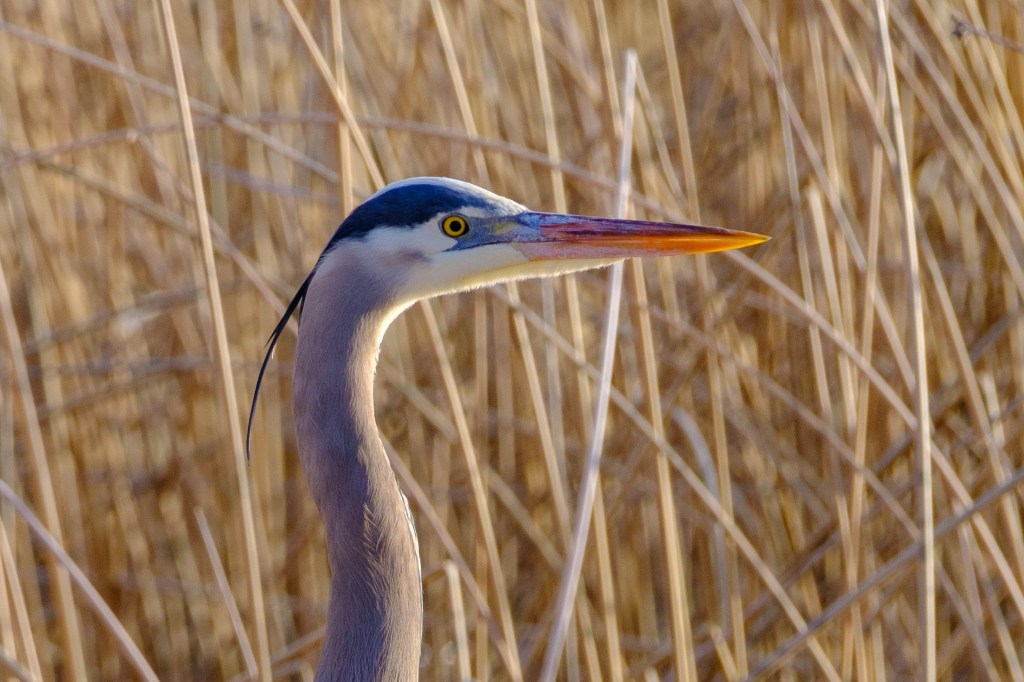
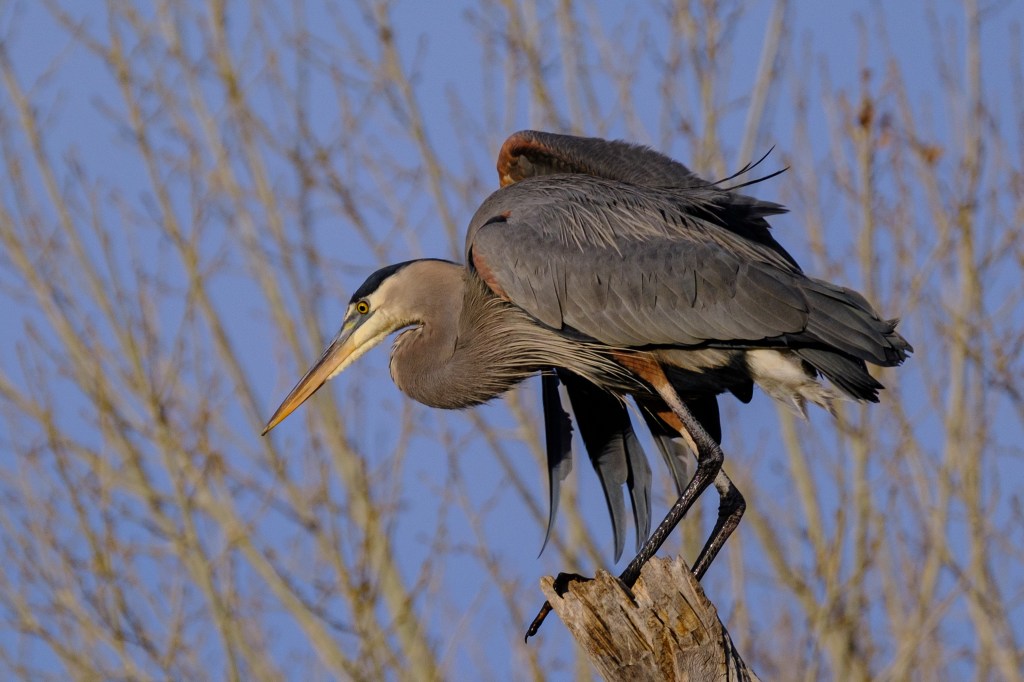
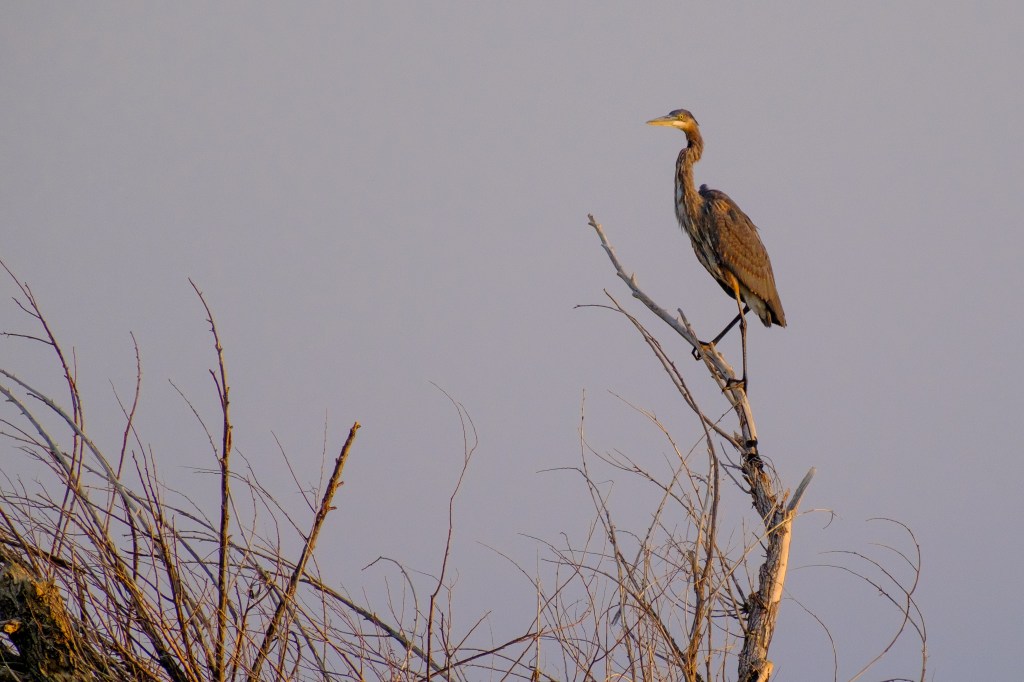
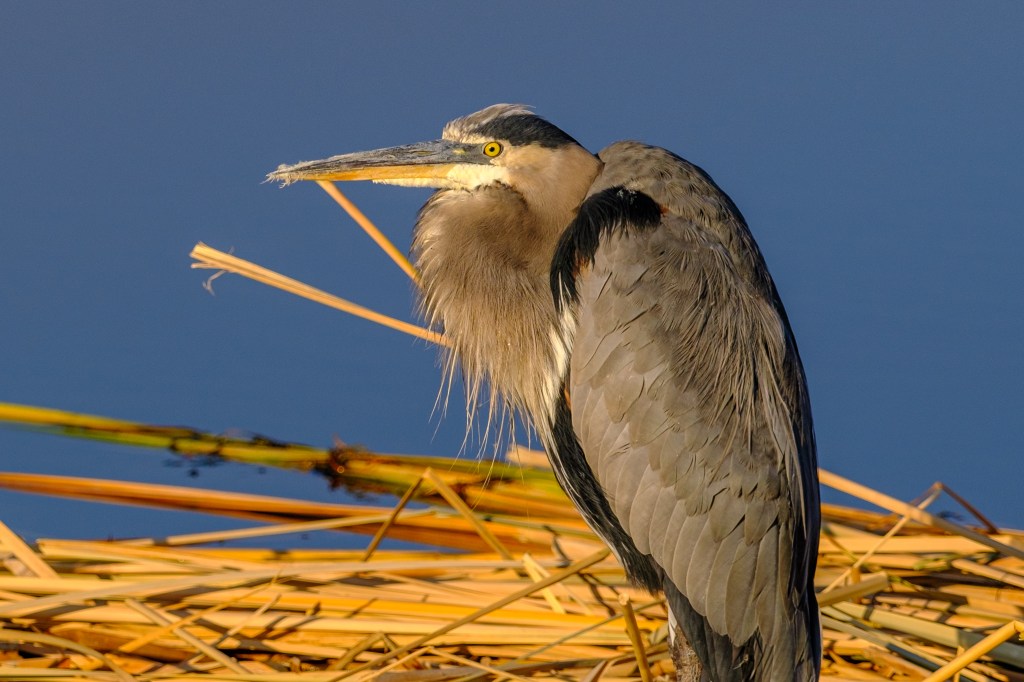
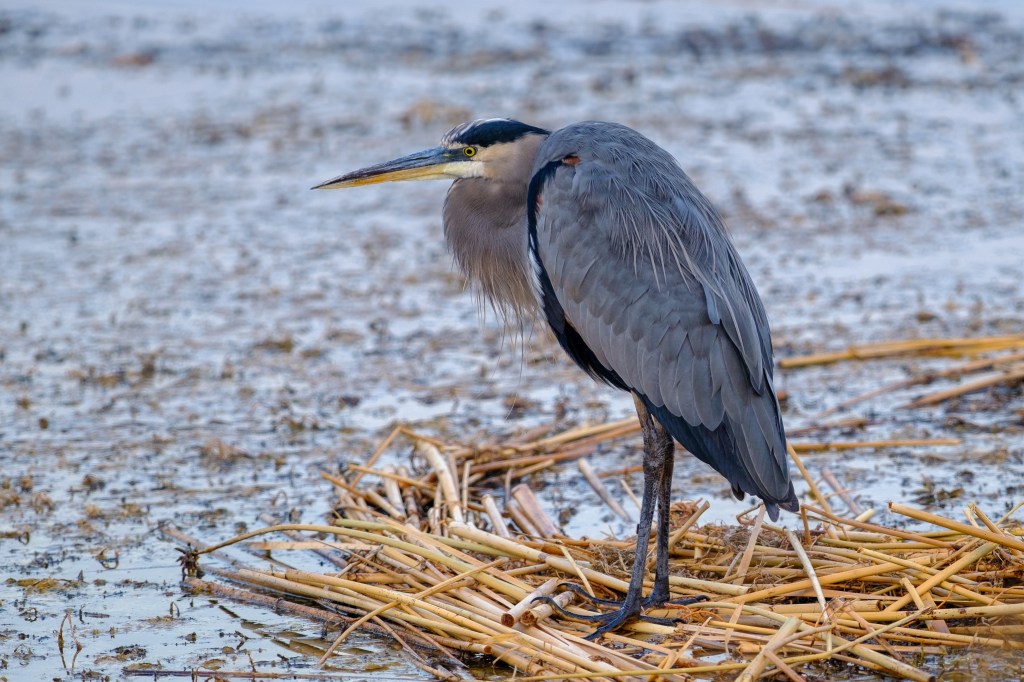
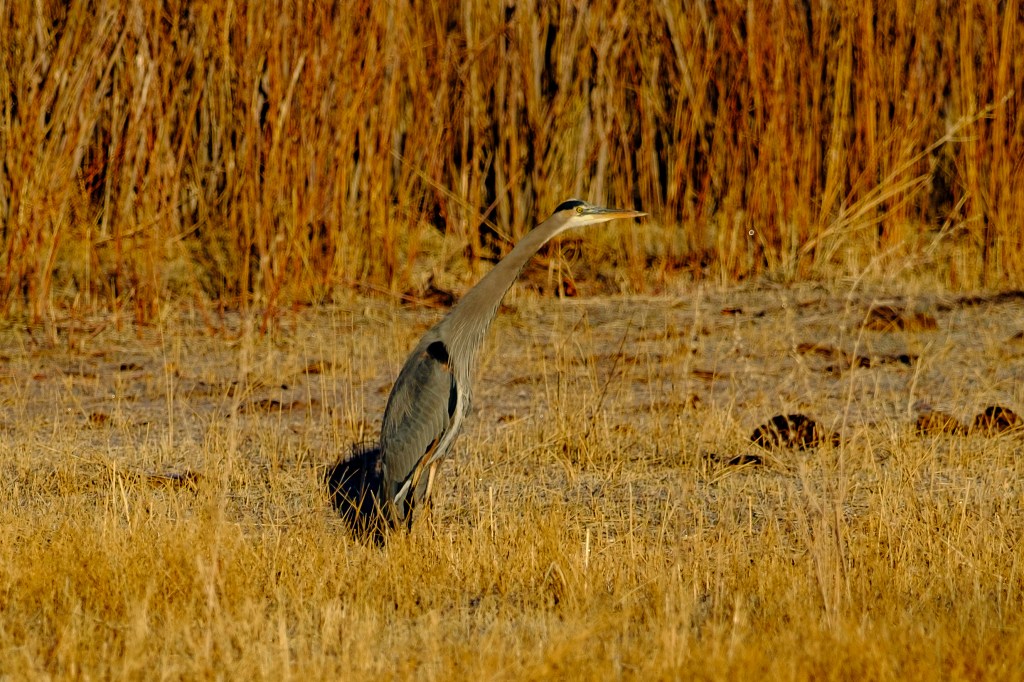
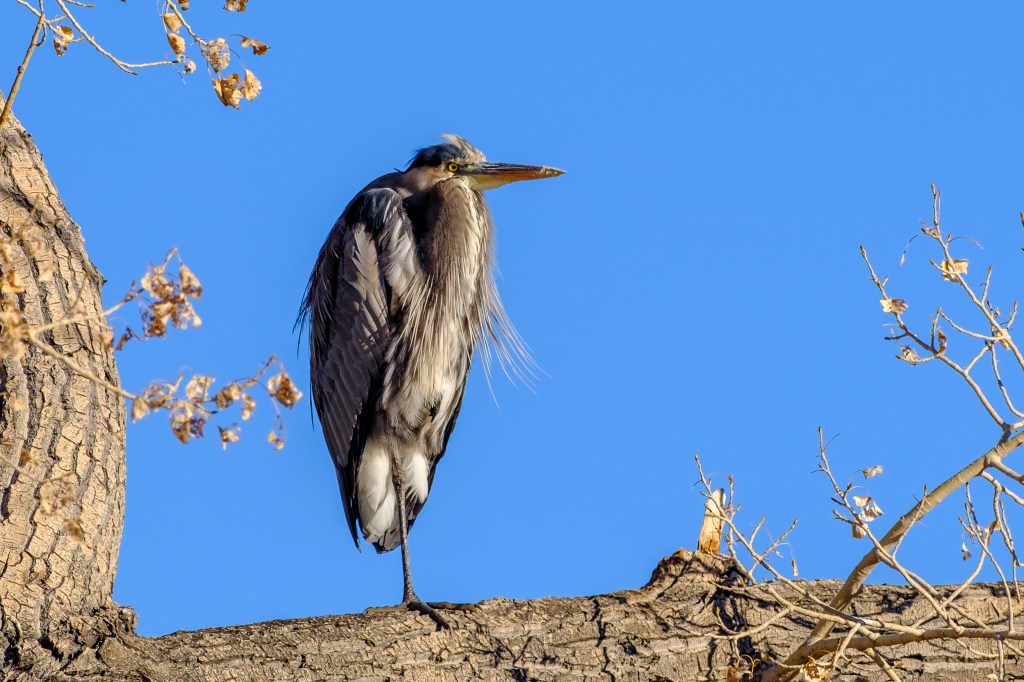
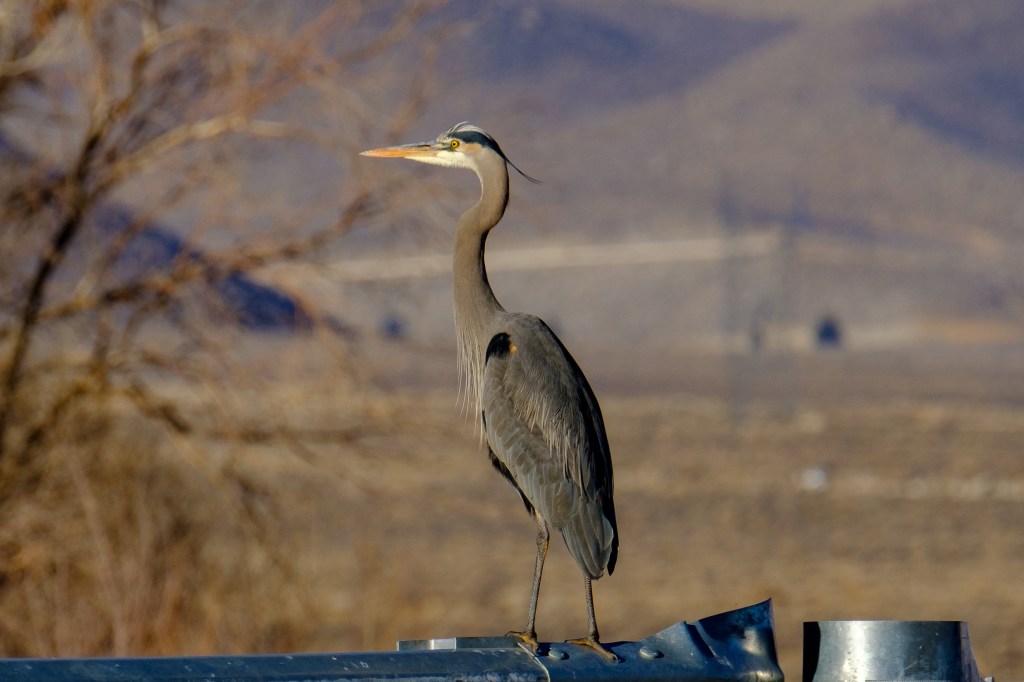
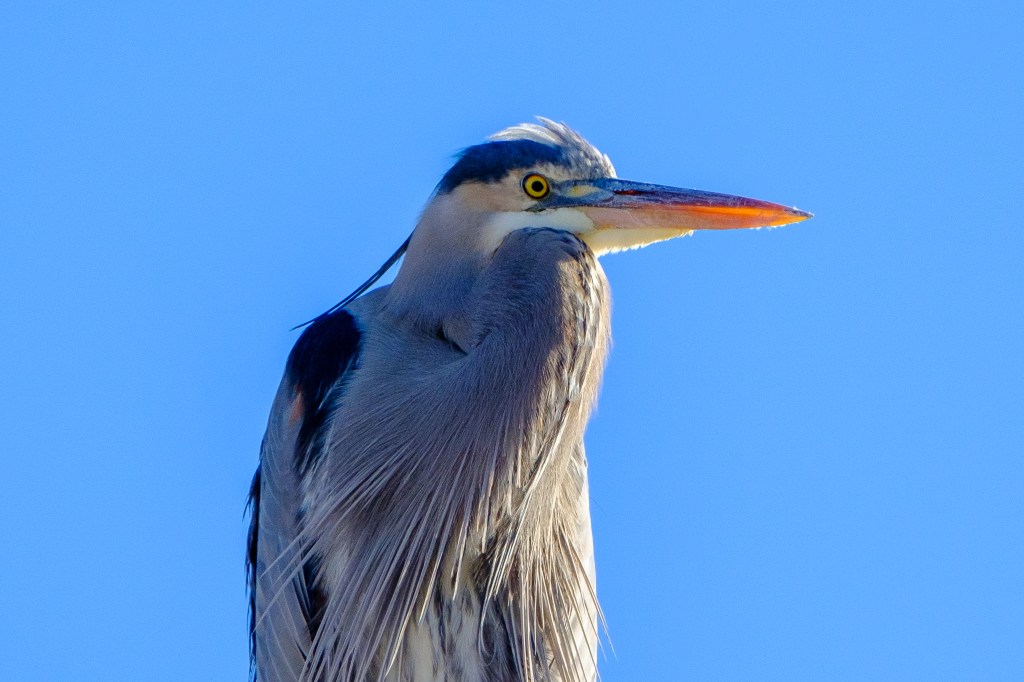
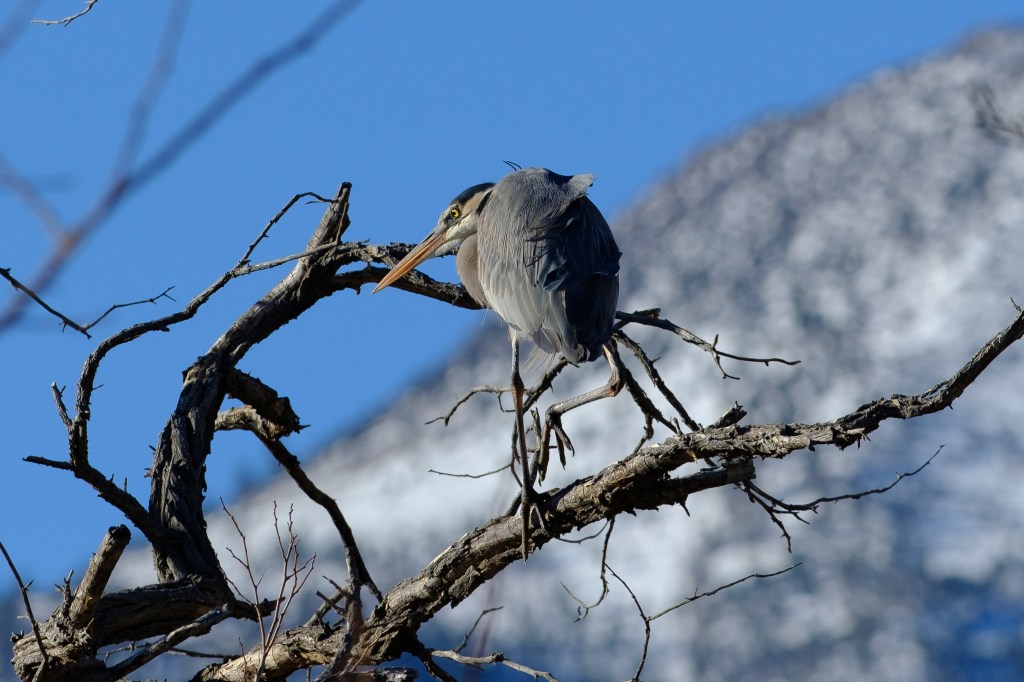
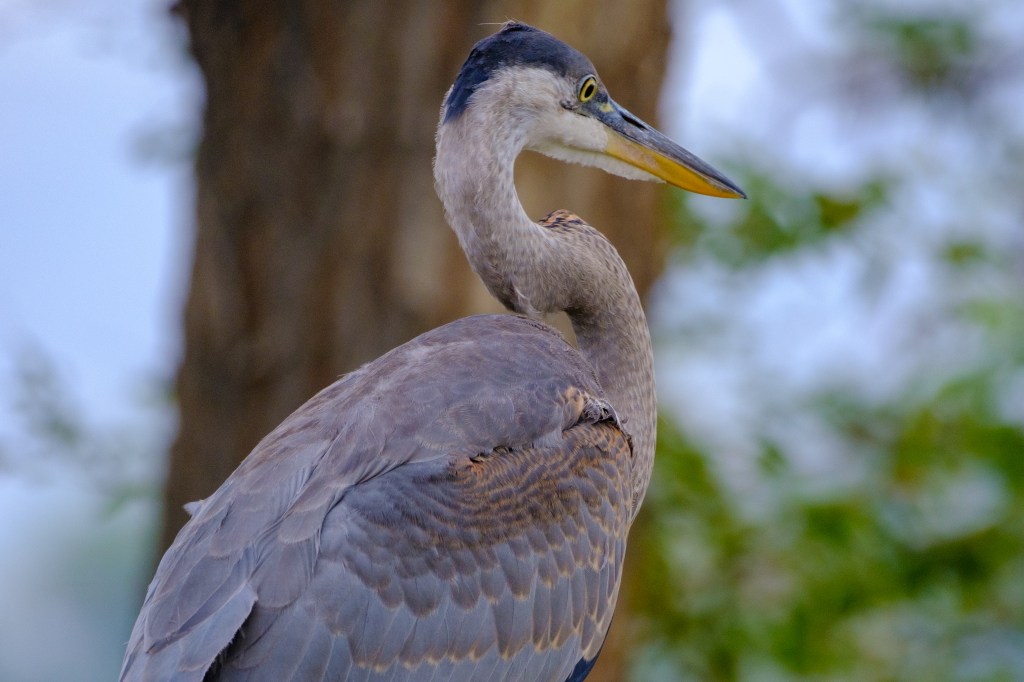
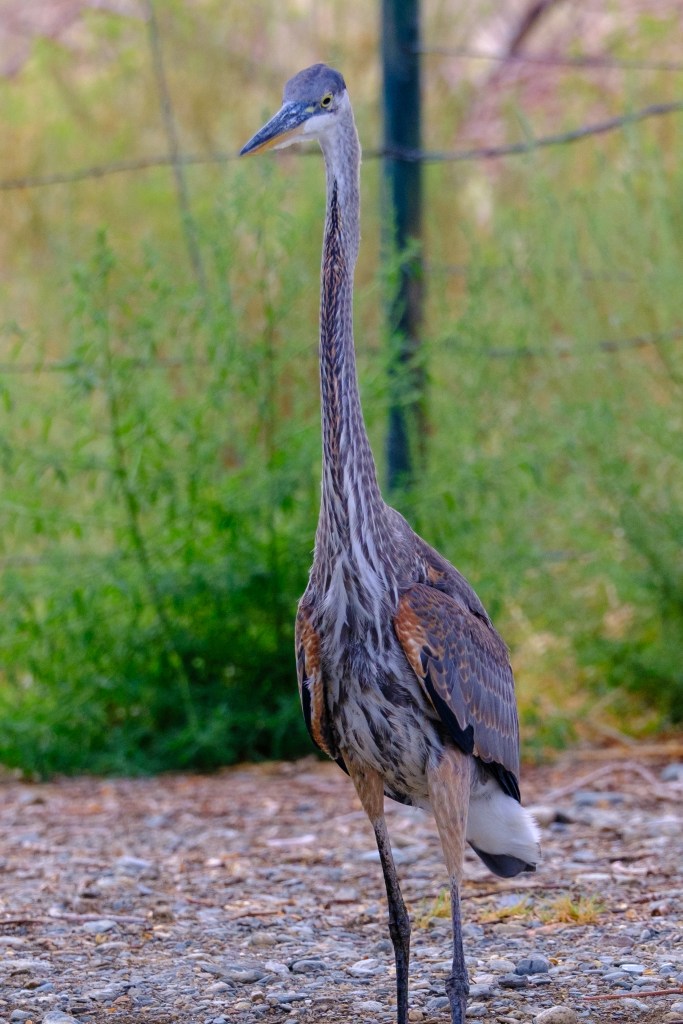
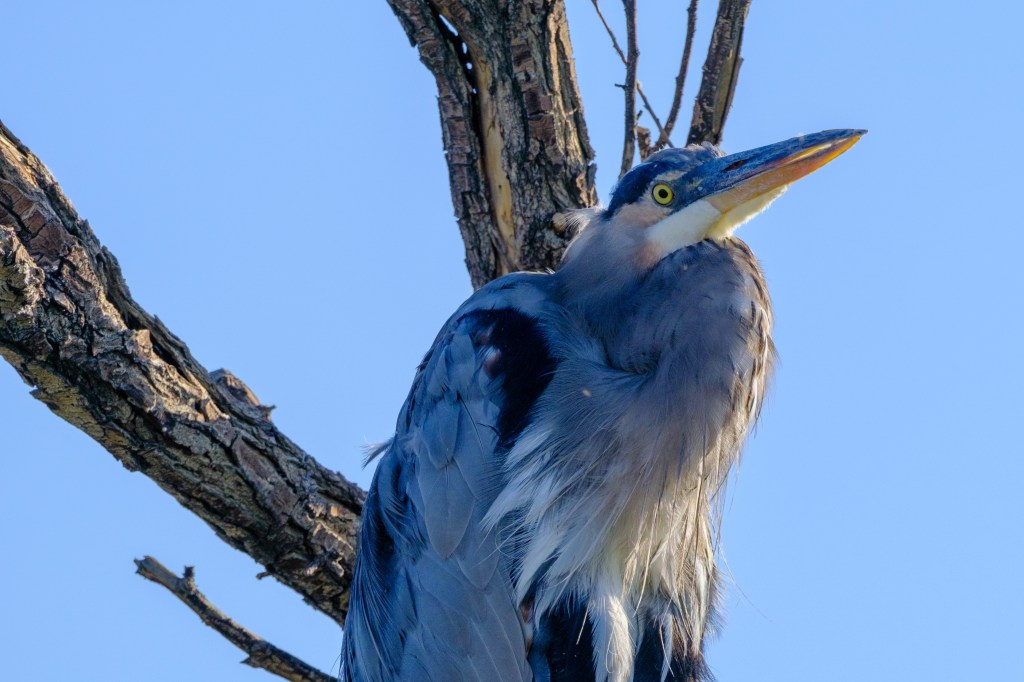
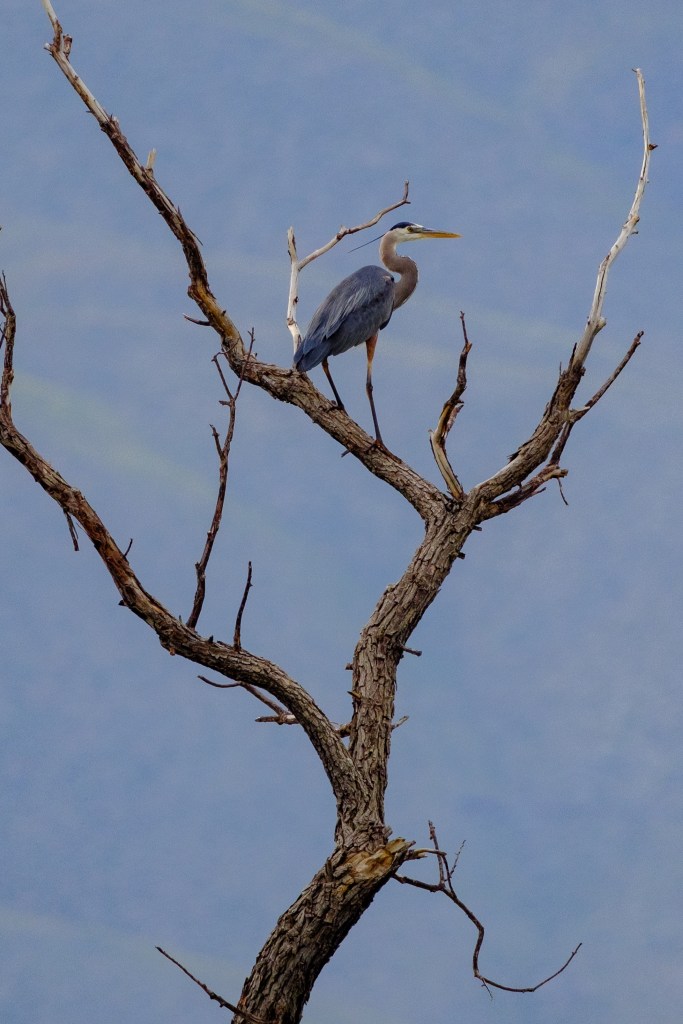
I selected a portfolio of portraits to show Herons in a variety of places and poses. Their eyes look like sewn-on yellow buttons. The giant toes and hooked talons are remarkable. There is usually reddish coloration of thighs, wrists, and shoulders. They like to perch high up on poles, branches, and bridge structures. I picked many photos for unusual lighting or colors.

Red thighs look like knickers

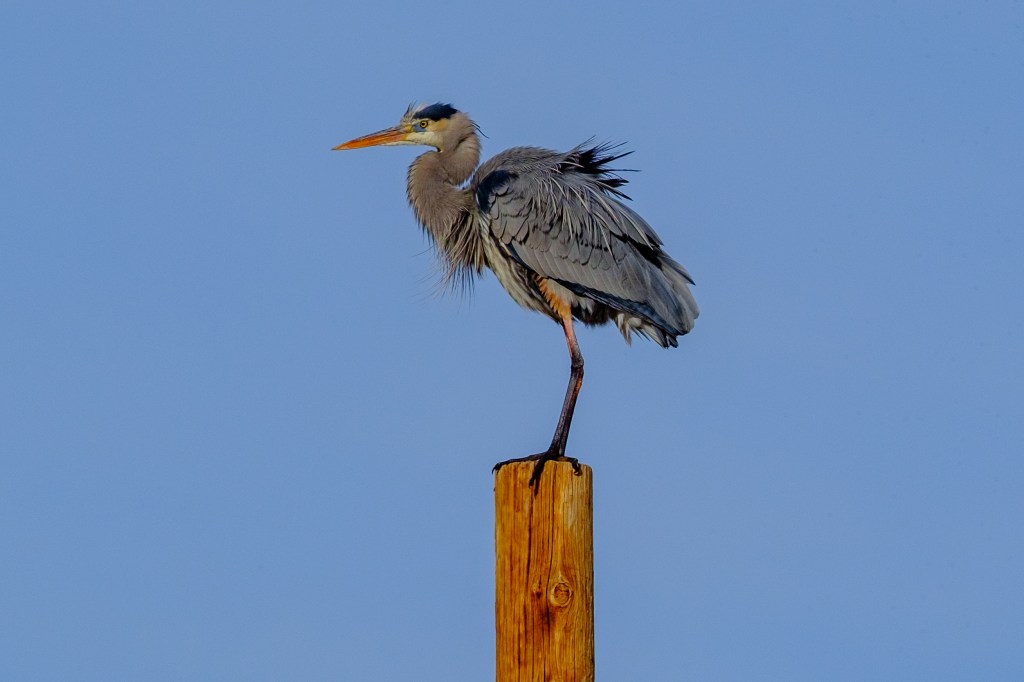
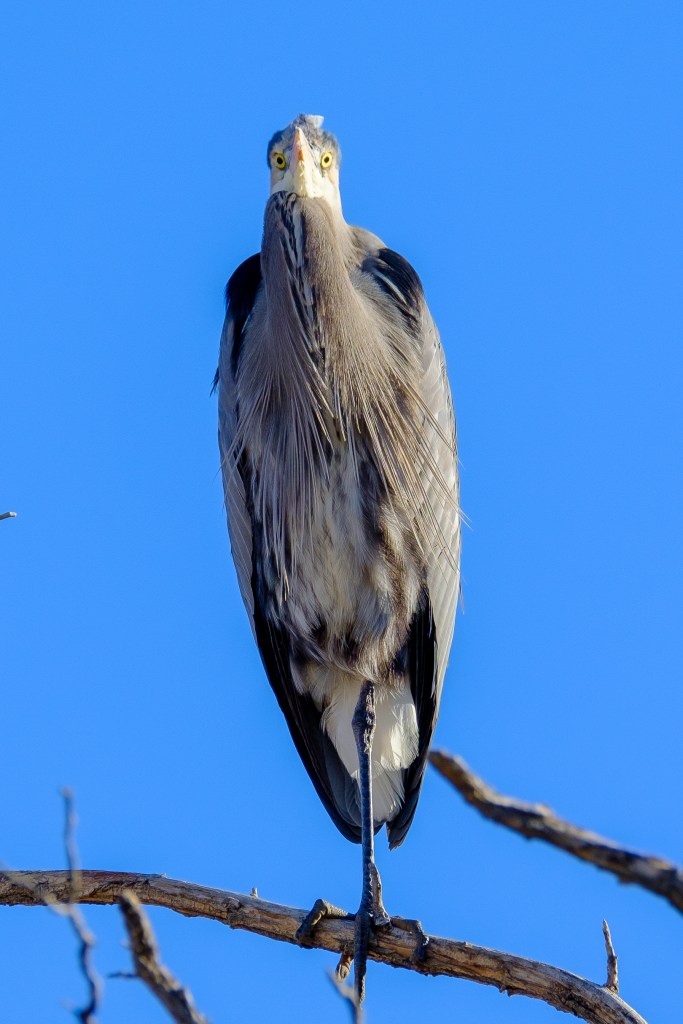
Herons often prefer to stand on one leg. They will do this even on windy days. They will lift up one leg and it will disappear into the feathers on their belly. All birds will stand on one leg, but this is more obvious in large birds such as Herons and Hawks. Sometimes a few toes will protrude from the feathers. The one-legged stance seems like a tricky and unnecessary balancing act. Humans have balance sensors, the vestibular system, in their ears; this helps us stand upright with our eyes closed. Birds have similar balancing sensors in their ears, but have another balance sensor in their pelvis, so they can move their heads independently of their bodies while perched on a bobbing branch. To stand on one leg they must have their foot right under their center of mass. They have a knob in their pelvis which allows them to lean on and lock-off the leg they are standing on.
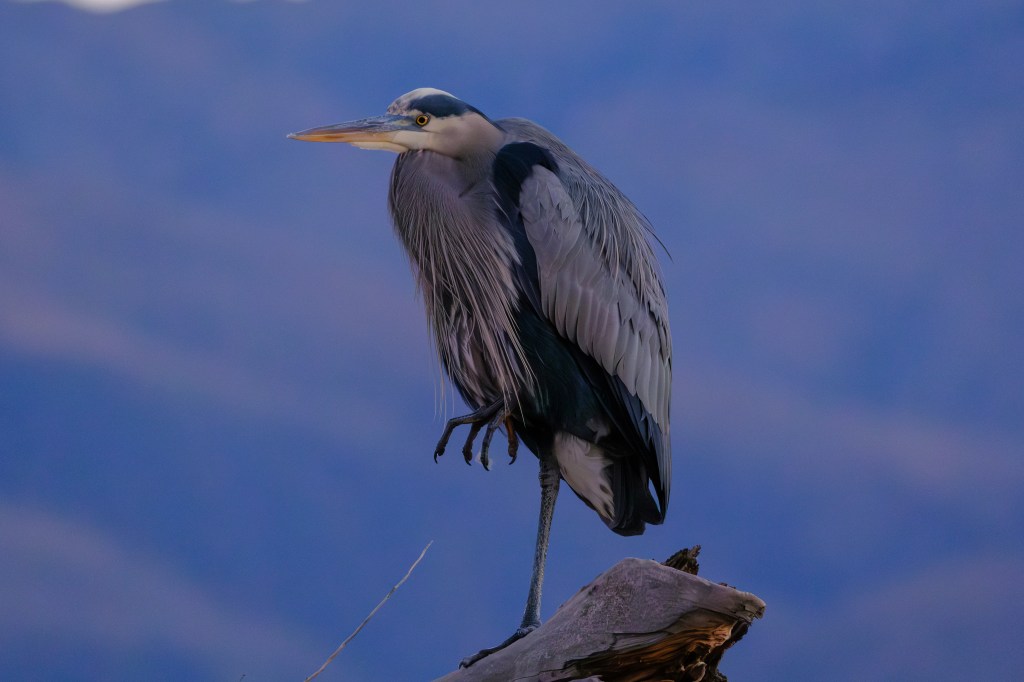
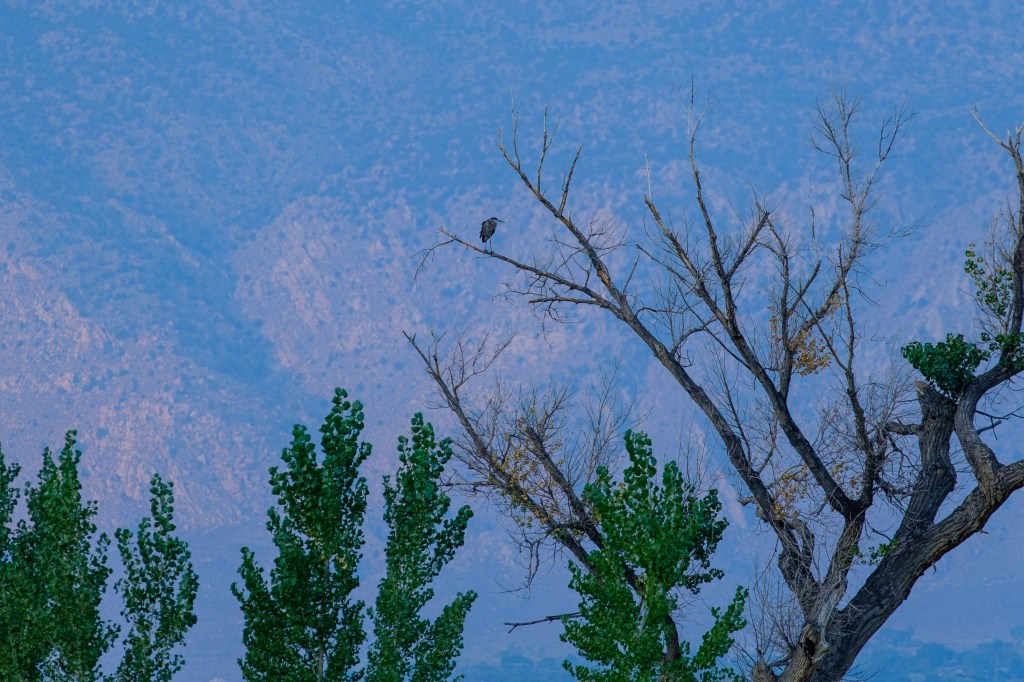
Roberta and I were walking near the canal, talking as usual. Suddenly this bird appeared out of the dark.
Legs appear to be made from carbon fiber.
What is this bird looking at?
Crossing a road.
Look ma, no hands.
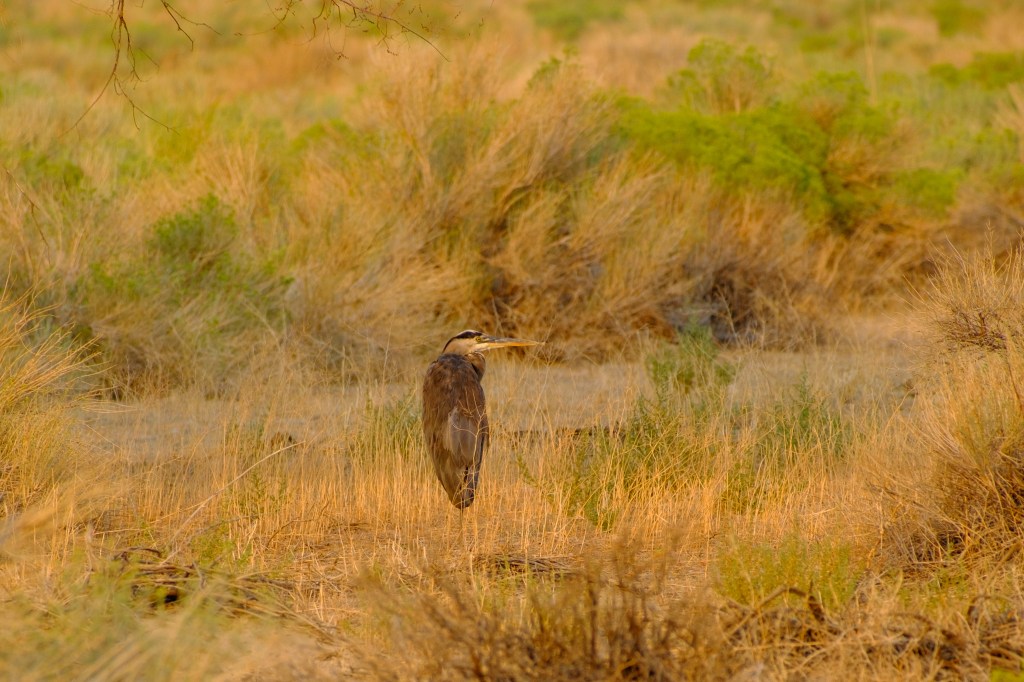
They are often in fields, looking for mice or insects. Note one-legged stance.
Recent snow storm.
What is the reason for this pose?
Standing on right leg. Left foot partly visible in feathers of lower body.
Standing on a bridge railing.
Hard to see where the neck actually is.
Standing on one leg. Face and head very narrow. Giant toes and talons.
Wind pushes from the right, lifting pony tail and other feathers. Despite wind, bird moves on one leg.
Shadows can bring out colors.
Smoke from forest fires helped create this lighting.
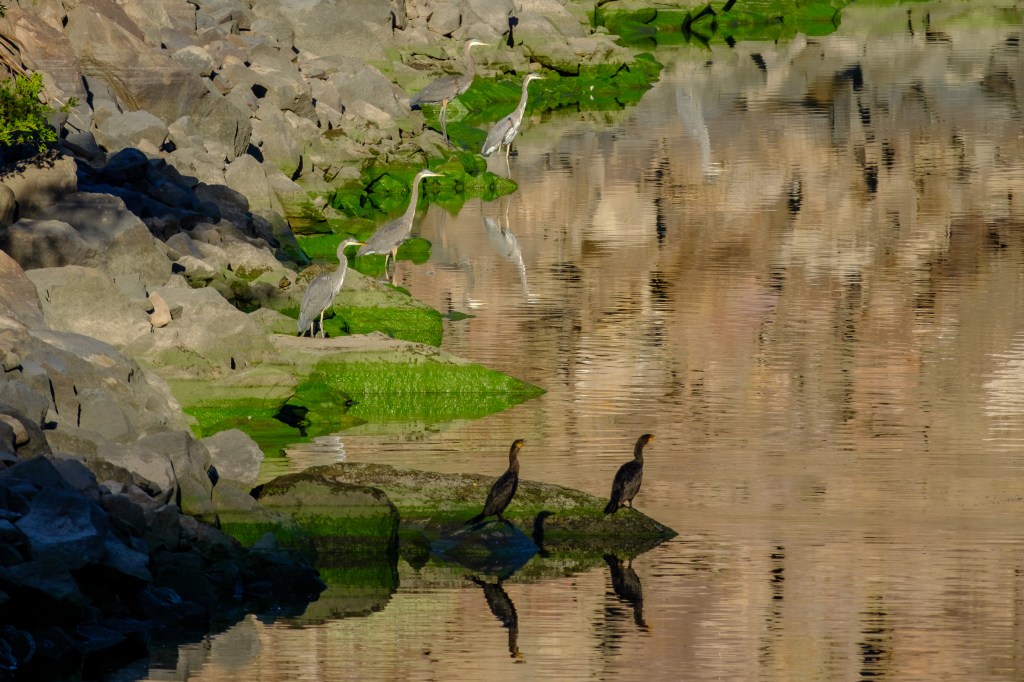
Four Herons, two Double-crested Cormorants. Pleasant Valley Reservoir.

Takeoff

Gravity binds humans to the earth. We travel freely in two dimensions: back and forth, side to side. But our ability to move up and down is limited. We can climb a cliff or descend a cavern, but we must cling to a surface or tether ourselves with rope. Without equipment, our muscles can only lift us into the air for a moment. The ballerina, high-jumper, or gymnast is focused on landing even before they take off. Balloons, wingsuits, hang-gliders, Piper Cubs, jets, and rockets let us stay aloft longer. With a boarding pass, any human can fly faster and higher than a falcon. Yet clever engineering provides only temporary and complicated release from the ground. Our usual lives are earthbound.
Birds, however, live in three dimensions. Hundreds of times a day, herons and hummingbirds take to the air using only muscles and feathers. They make this transition as easily as we step off a curb. Some can fly for days without landing. Some sleep in the air, fight in the air, and eat in the air. Not all birds fly. Some birds near Bishop prefer the ground; Roadrunners and California Quail. But the essence of most birds is flight.

To photograph a flying bird, I often start with a non-flying bird on a branch, on the ground, or floating on a pond. I aim the camera and let it automatically focus and set the lens aperture. I take pictures of the perched bird. Then I wait.

If nothing happens in a minute, I continue my walk. But if the bird takes off, or seems likely to do that, I depress the shutter button and keep it down while panning the camera to follow the bird. This method sometimes captures the moment of takeoff, when a bird transitions from earth to air. This blog article displays photos of bird launches.

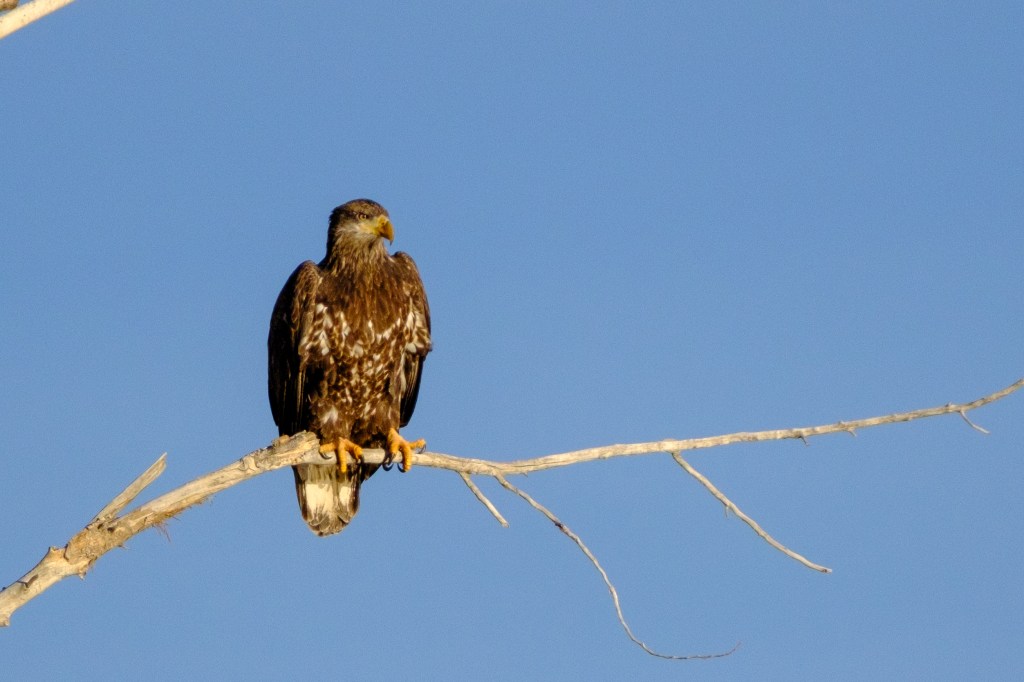
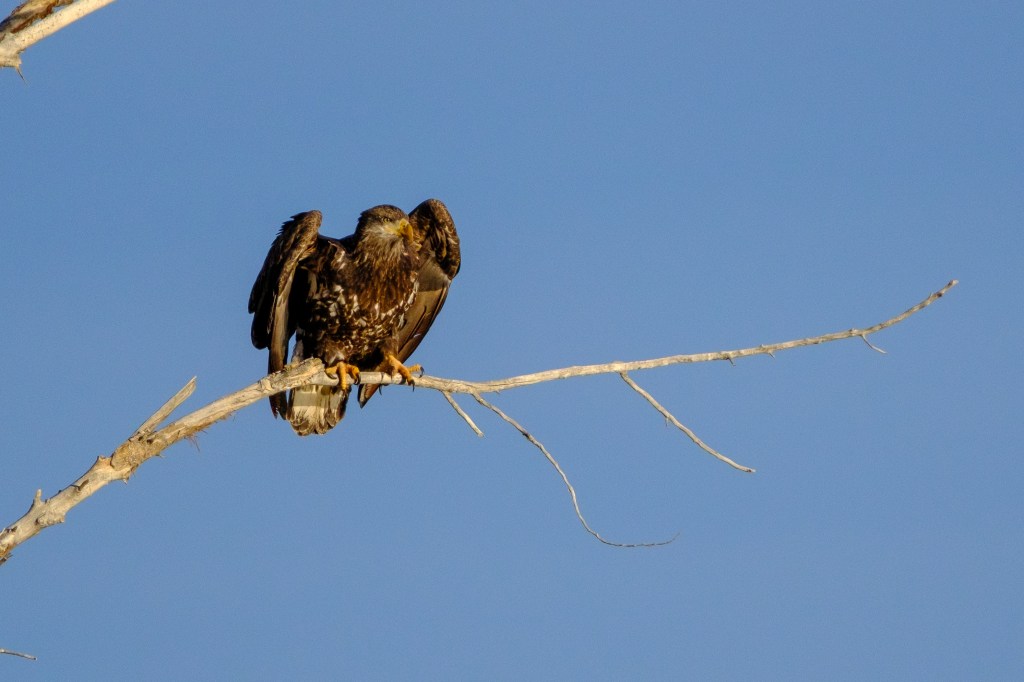
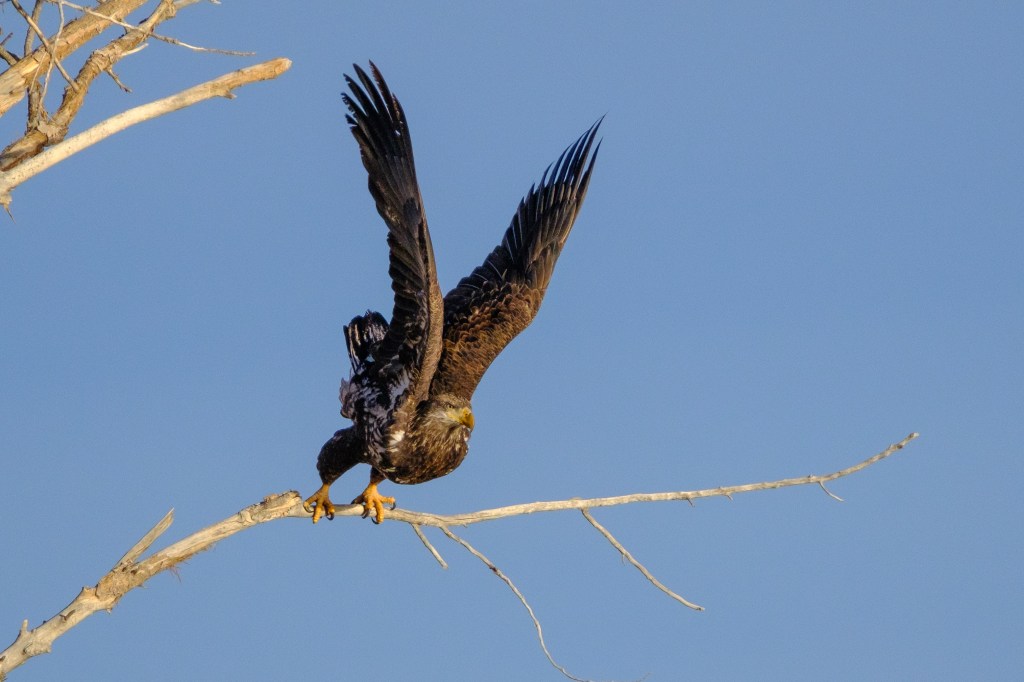
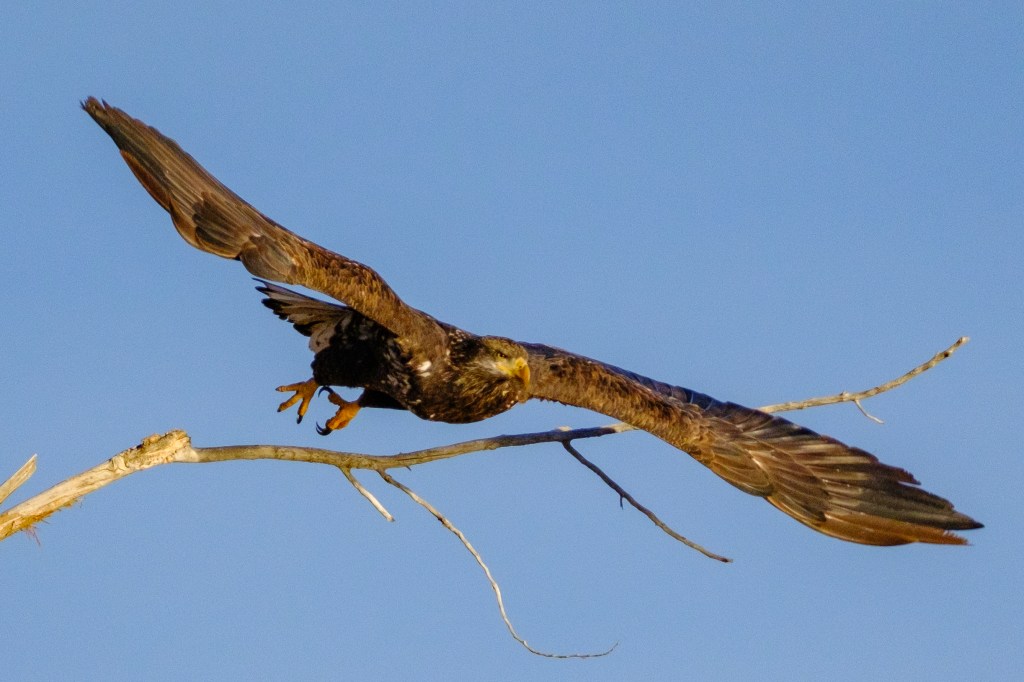
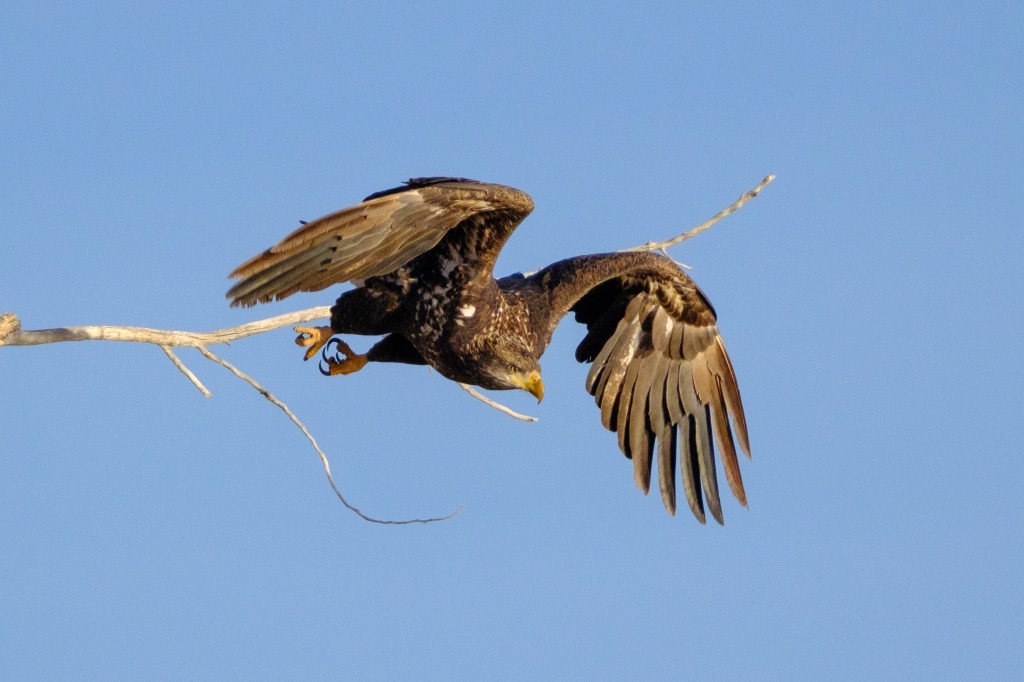
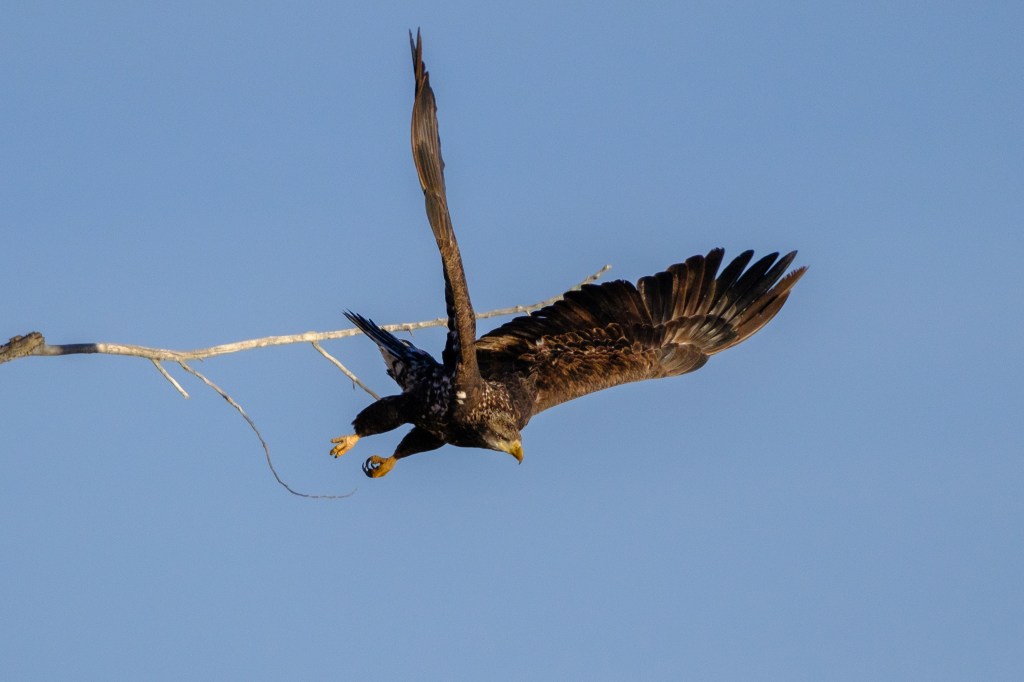
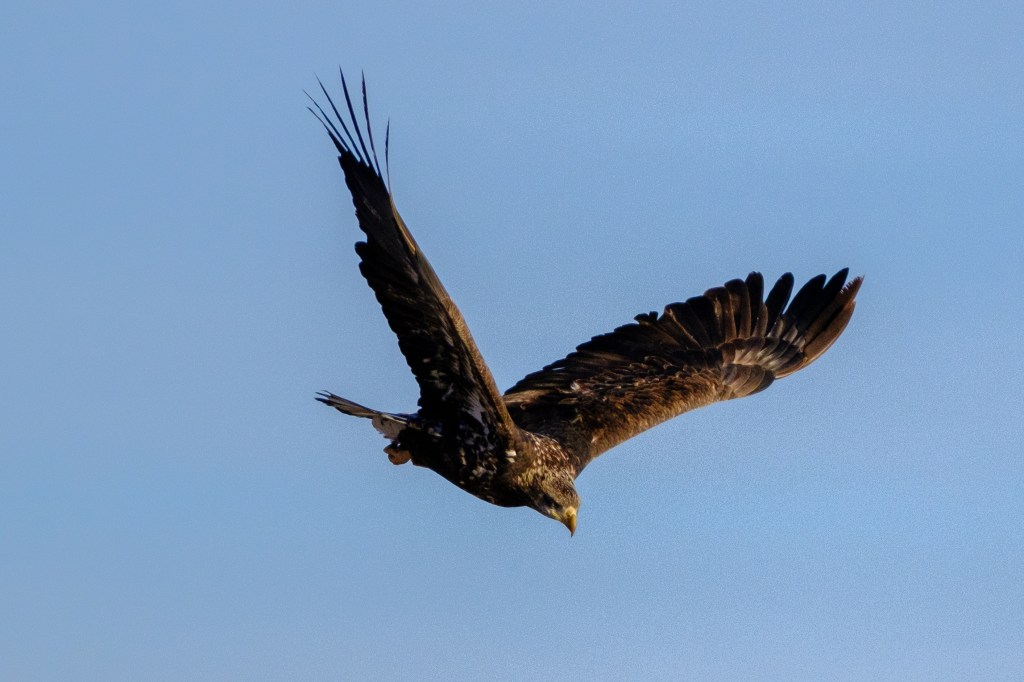
Bald Eagles appear at the Buckley Ponds from November to February. They come to eat fish and American Coots. Below are images of a juvenile Bald Eagle at the Buckley Ponds in January of 2024. The bird used a common liftoff routine: leap and flap. First the legs crouch and the wings start to rise. The wings unfurl as high as possible. Then the legs push off the branch as the wings come down to push on the air. If the bird starts high enough, it may dive to increase speed. Faster airflow over the wings produces lift, so the bird stays aloft using less energy. In this sequence of photos, the time from first movement to leaving the branch was one second. The time from the first photo to the last was 4 seconds.

By pushing off with its legs, the bird gains airspeed to produce lift. There is another advantage to a push; it lets the bird get clear of branches or wires before using the wings. This may prevent injuries.

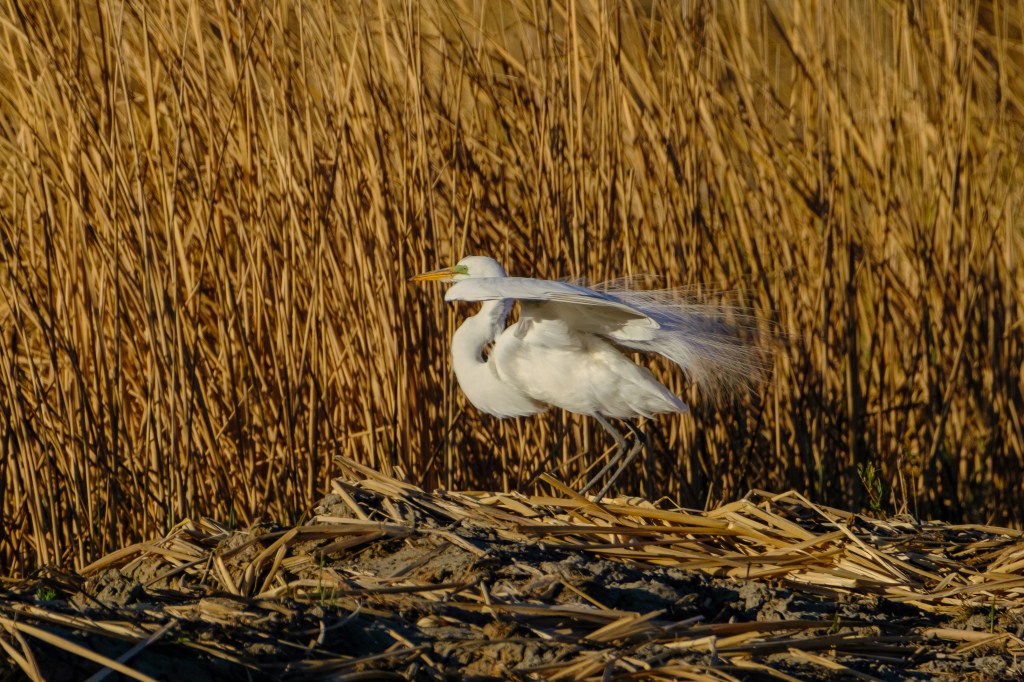
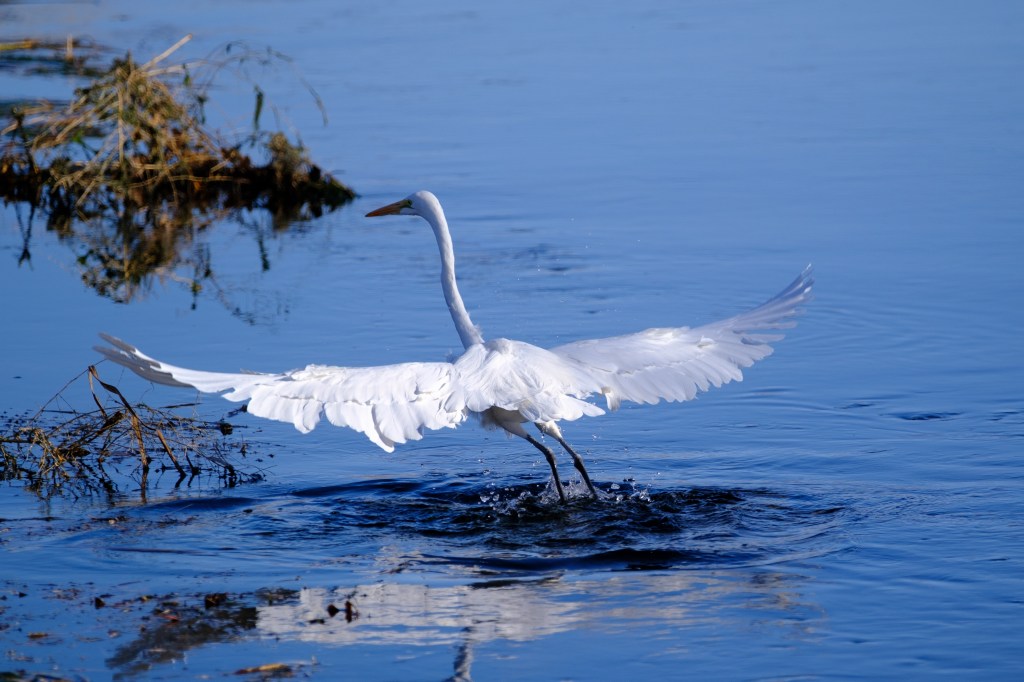
A Great Egret uses a similar leap and flap technique, pushing off the bottom of the Bishop Creek Canal with its long legs.

Great Egret. Bishop Creek Canal.

Another Great Egret crouches to start flight from the shore of the Buckley Ponds. The area between the eye and bill, the “lore,” is green. This color appears during mating season. The filamentous feathers (plumes) that trail behind are also part of mating plumage.
Belted Kingfishers are common along the Bishop Creek Canal. They don’t like my approach and the photo below shows a typical response. The bird always flies off away from me. For a moment it seems suicidal, plunging down. Then a burst of flapping lifts it up.

Belted Kingfisher. Bishop Creek Canal.

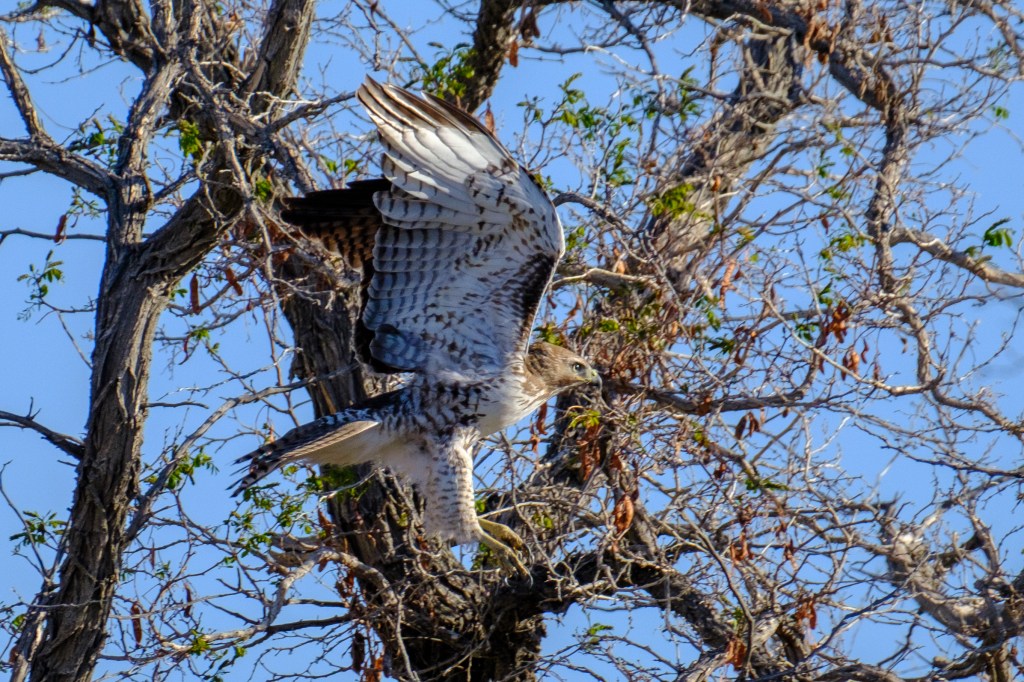
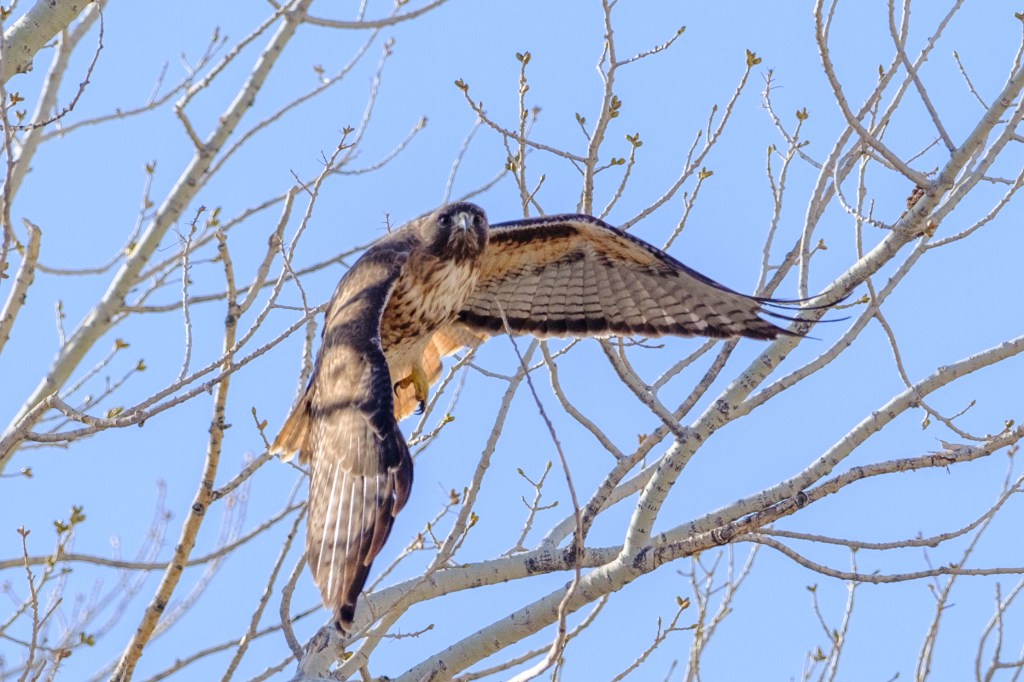
Red-tailed hawks push off hard with their feet, then a couple of wing flaps gets them into forward flight and the feet retract up.

Red-tailed Hawk. Bishop Creek Canal.

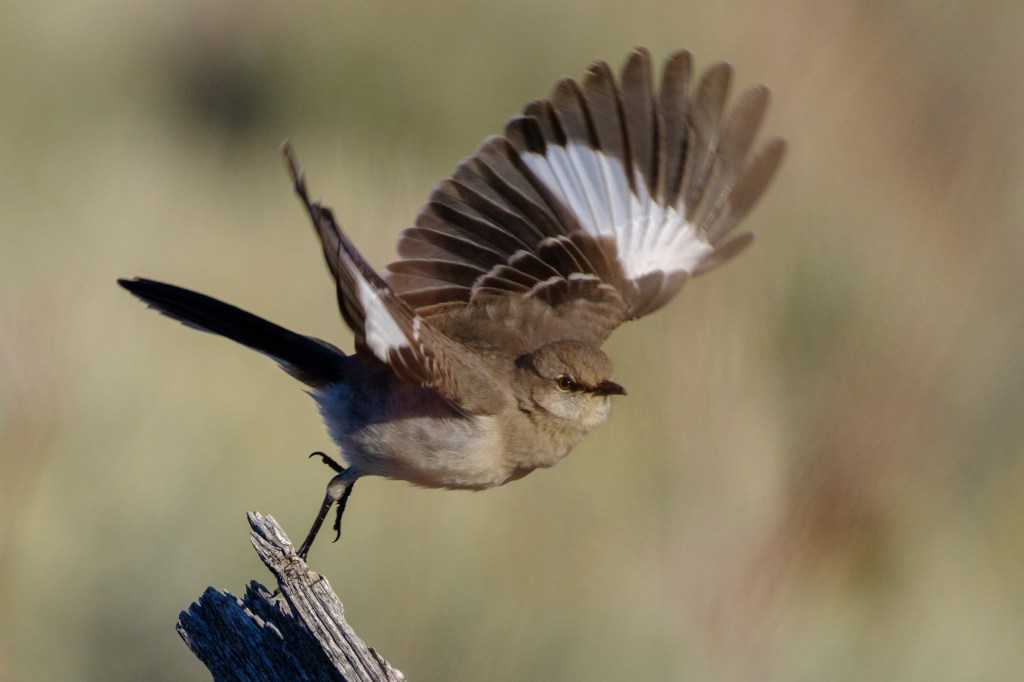
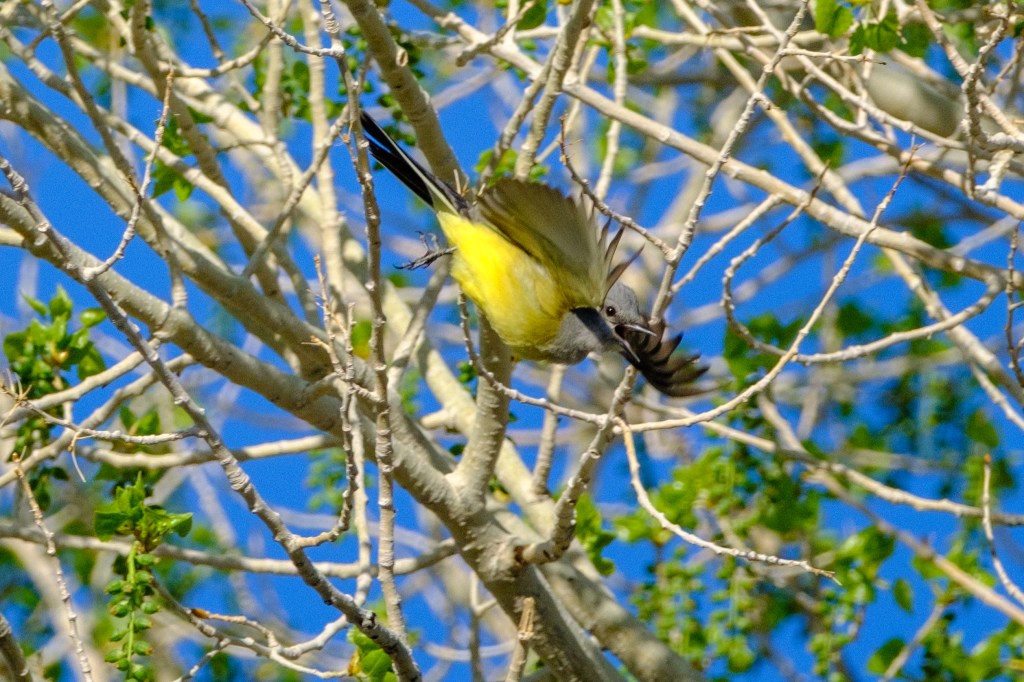
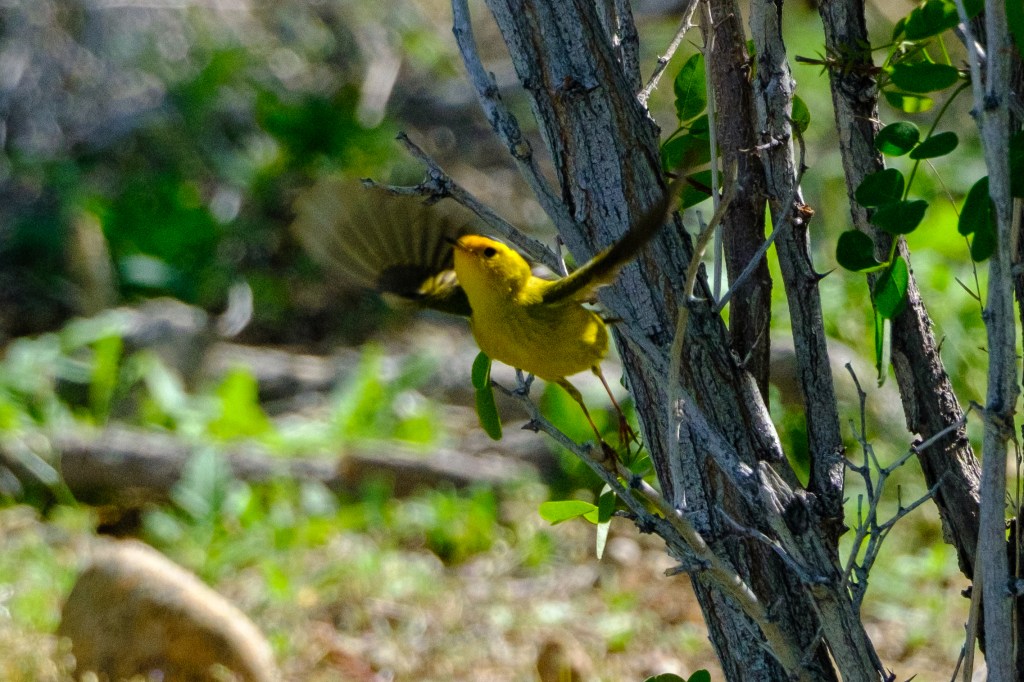
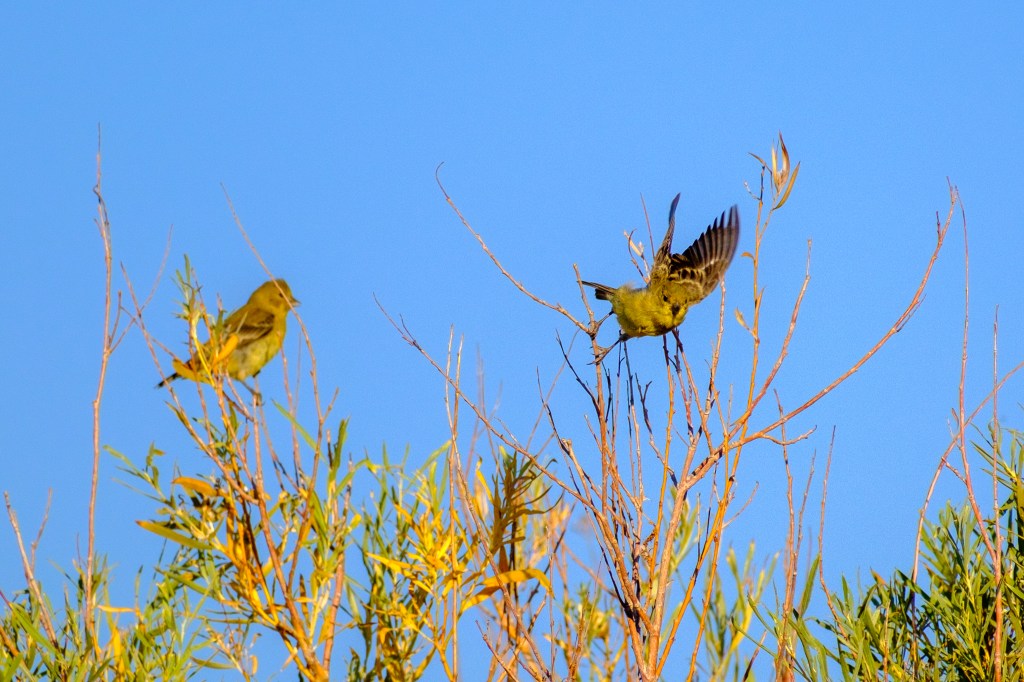
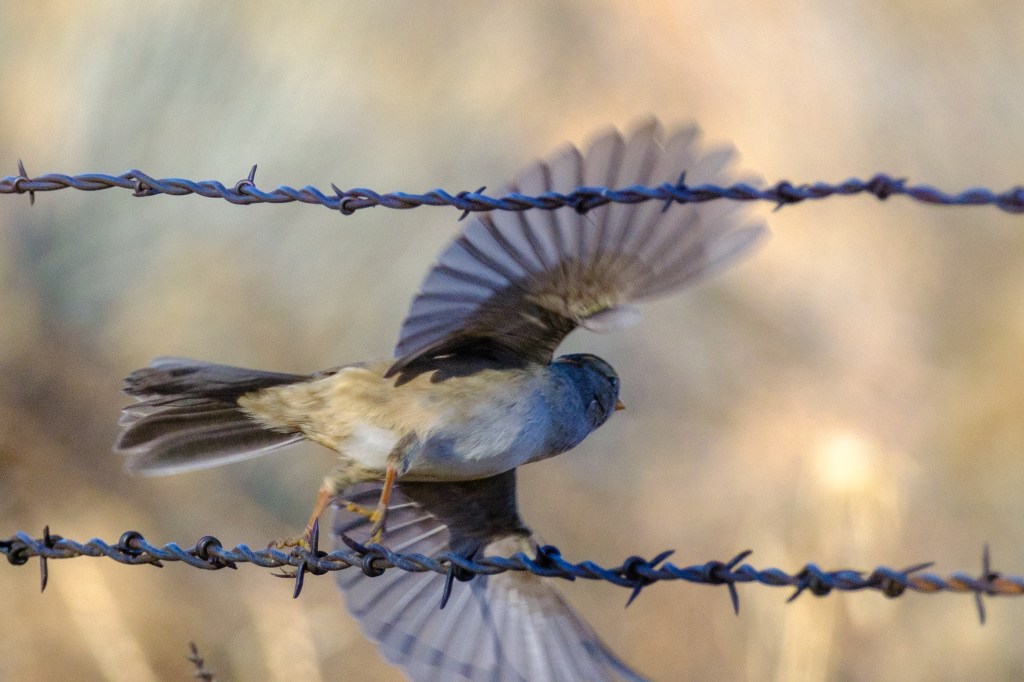
Below are several photos that show songbirds blasting off from brush near the Bishop Creek Canal.

Northern Mockingbird. Gus Cashbaugh Lane, near Bishop Creek Canal.
Western Kingbird. Bishop Creek Canal.
Yellow-rumped Warbler. Bishop Creek Canal.
Wilson’s Warbler. Bishop Creek Canal.
Bullock’s Oriole. Bishop Creek Canal.
Lesser Goldfinch. Bishop Creek Canal.
White-crowned Sparrow. Bishop Creek Canal.

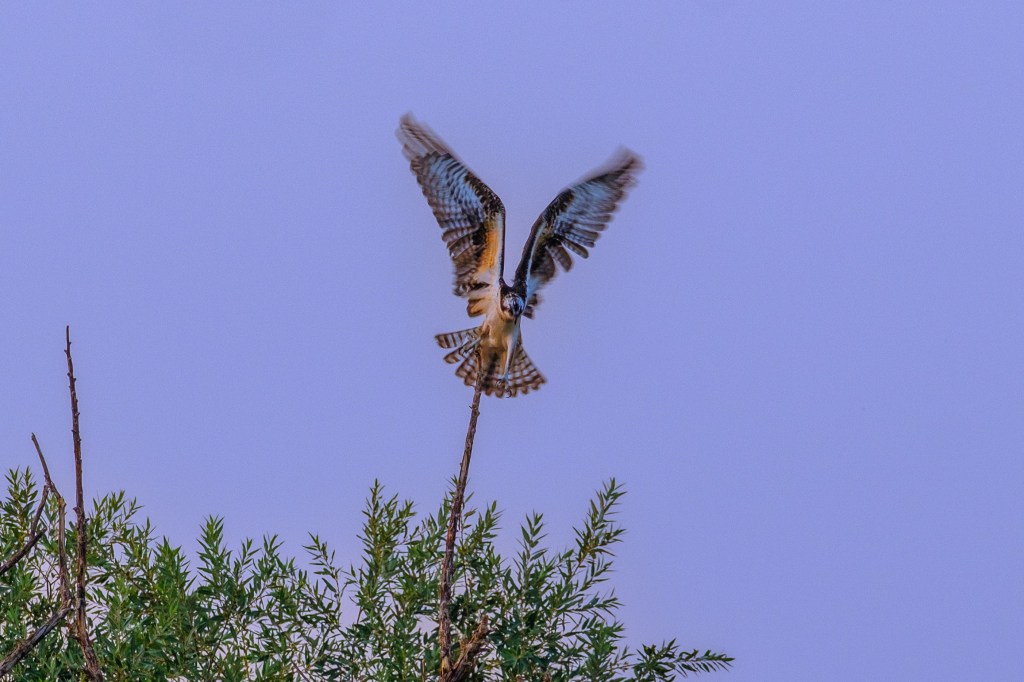
The Osprey below did not push off. It daintily stepped into space, like a person stepping into a jacuzzi. It fell for a moment and then the wings grabbed the air.

Osprey. Bishop Creek Canal.

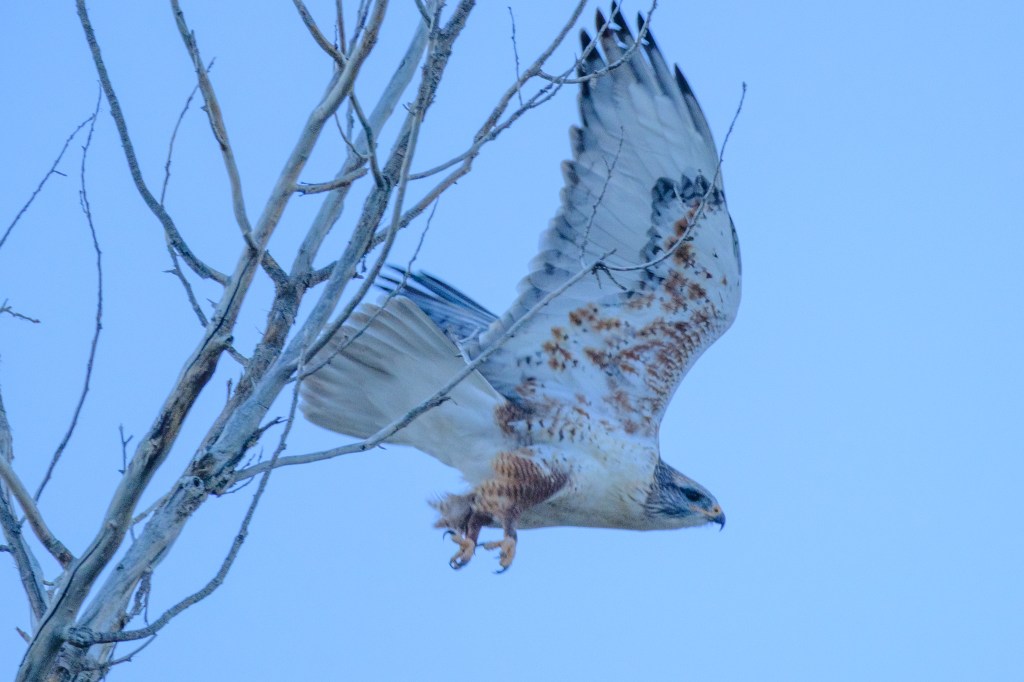
In the morning shade, a Ferruginous Hawk launches.

Ferruginous Hawk. Gus Cashbaugh Lane, near Bishop Creek Canal.

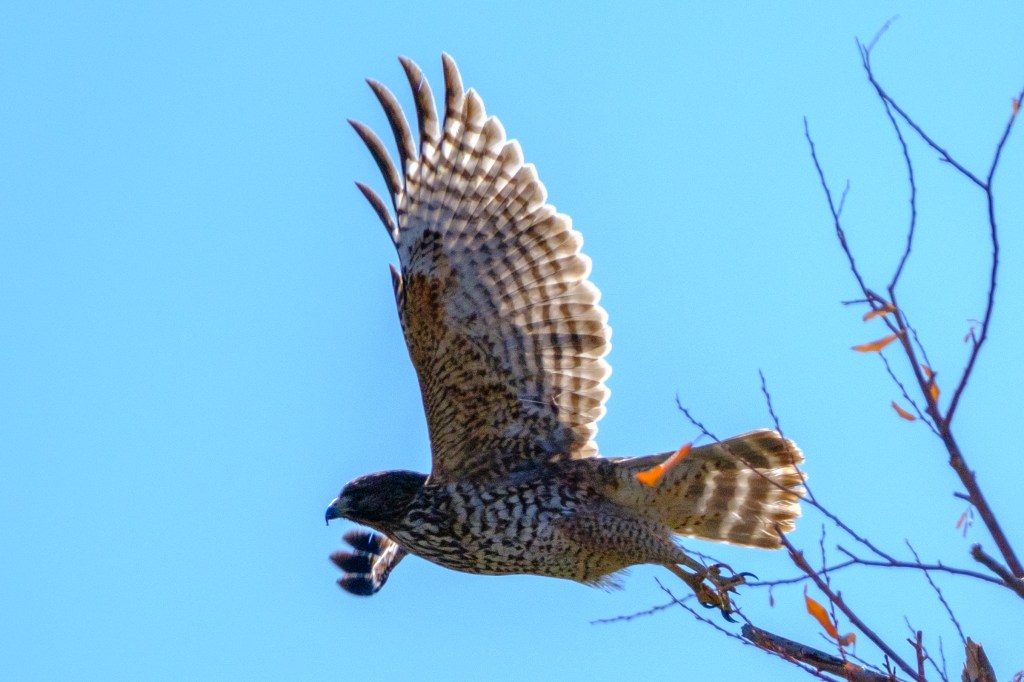
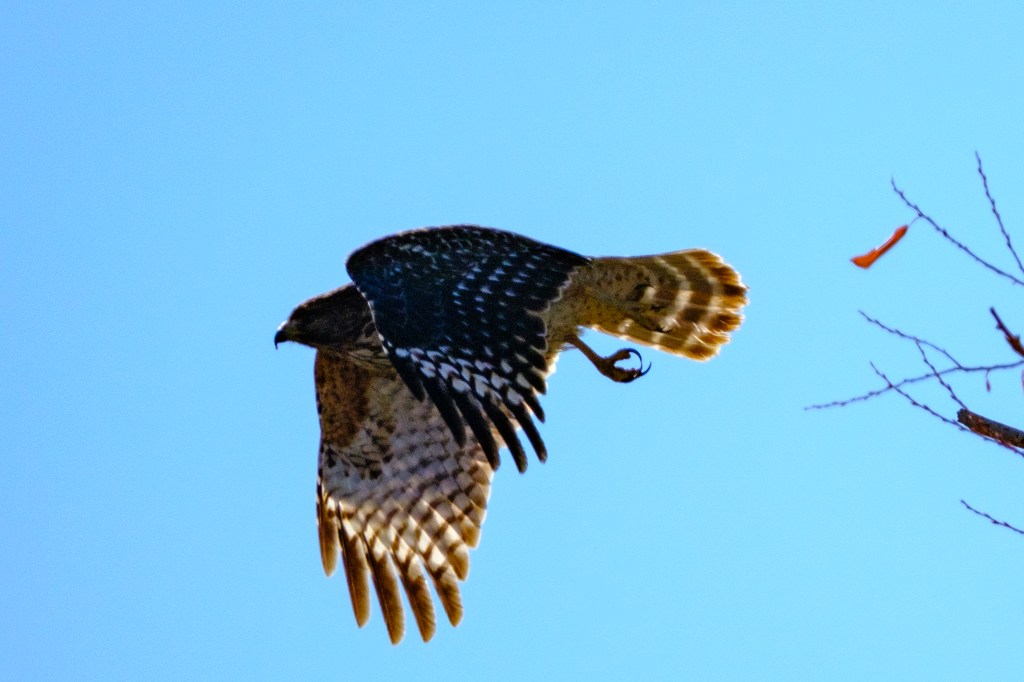
The next two photos show a Red-shouldered Hawk leaping from a tree. In the second photo you can see a feature of this bird; “windows” in the wings. The wings have long primary feathers near the tips. In the near wing there is a band of white color several inches from the tips of the feathers. This colored band is somewhat translucent; in the far wing, light shines through this “window.” Also note the landing gear retracting upward to streamline the bird.

Red-shouldered Hawk. Warm Springs Road near Bishop Creek Canal.

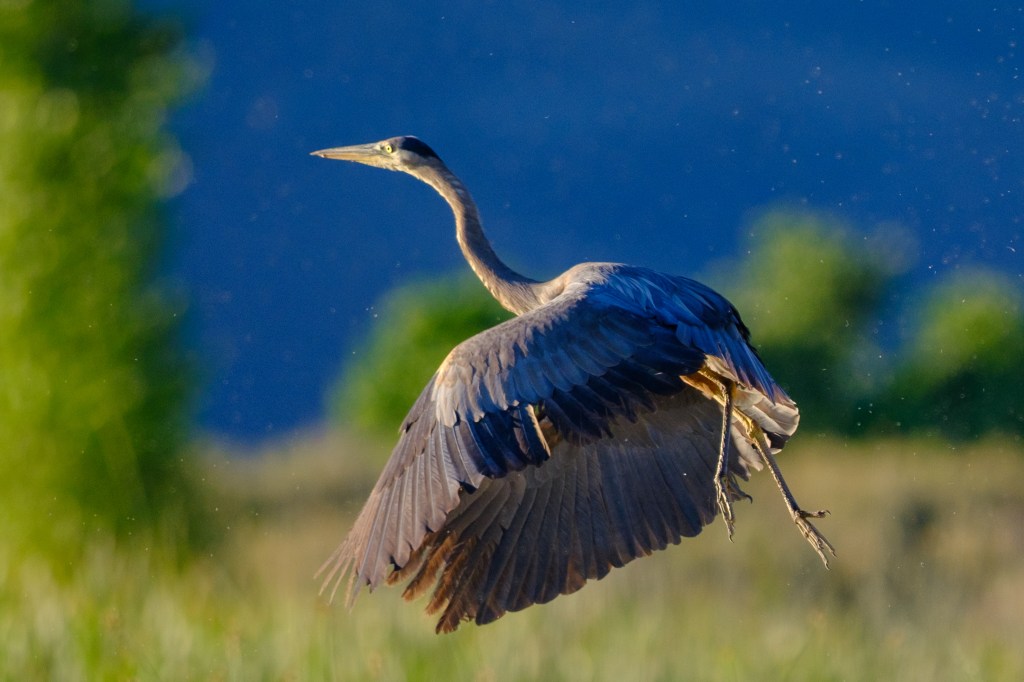
Great Blue Herons crouch, then jump up, as shown in the next three photos. For a moment it looks as if the Heron will crash, but powerful wing beats keep them aloft. In the third photo there are white specks in the air; those are mosquitos in the morning light.

Great Blue Heron. Bishop Creek Canal.
Great Blue Heron. Buckley Ponds

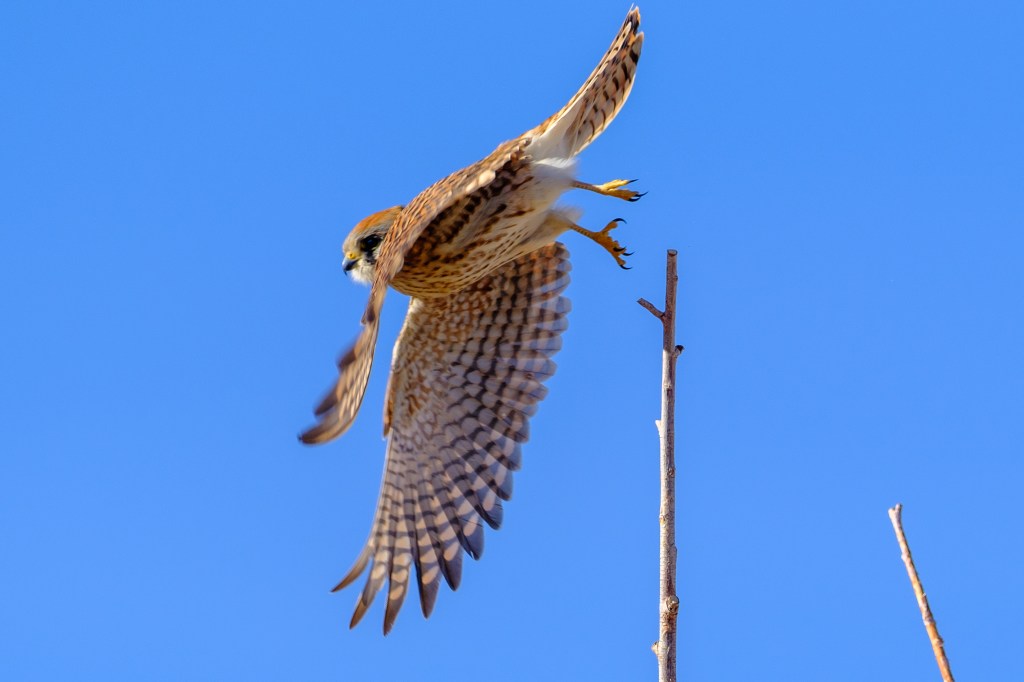
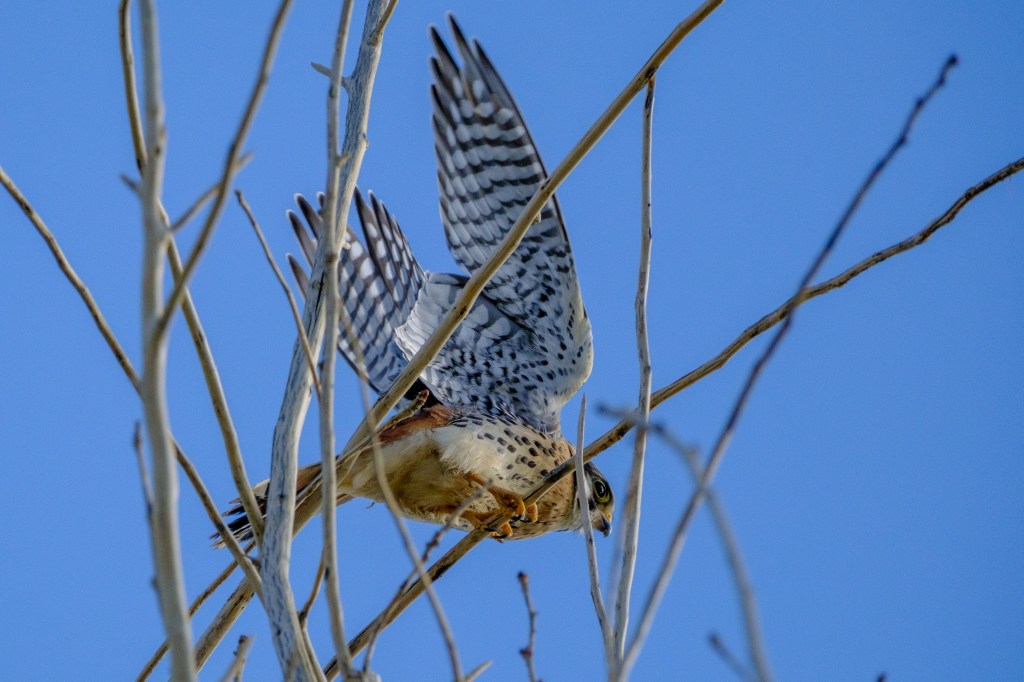
A female American Kestrel has just left her perch. Her wings are rusty-brown. In the second photo, a male Kestrel has started to crouch and spread his wings. His wings are blue-grey.

American Kestrel (female). Bishop Creek Canal.
American Kestrel (male). Buckley Ponds.

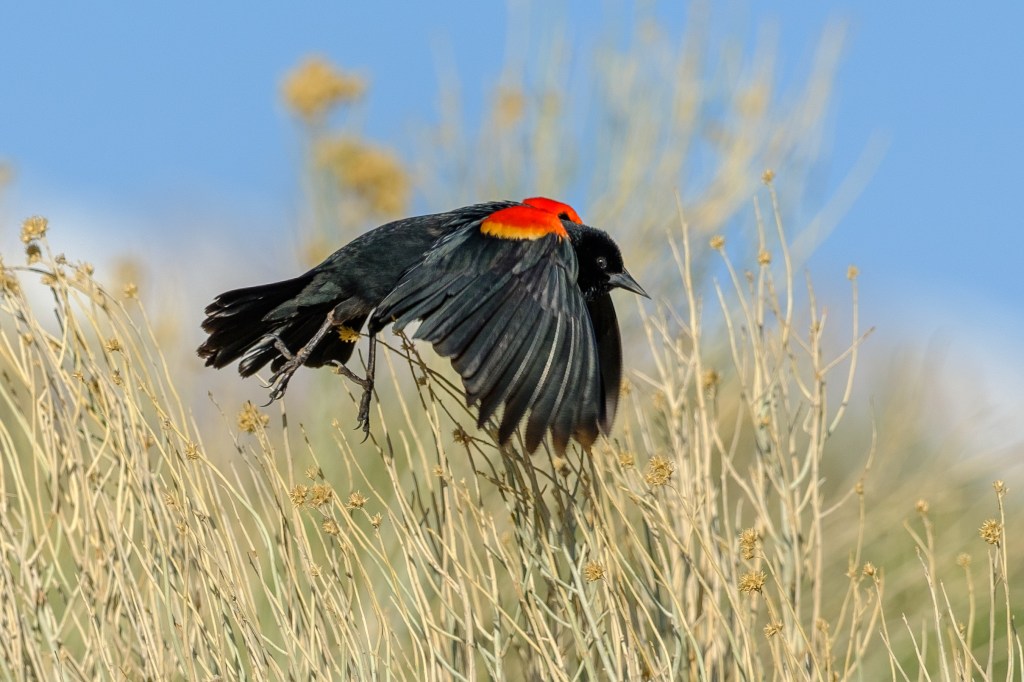
Lots of birds are at the Buckley Ponds. A Red-winged Blackbird uses the leap and flap method. These birds gather in the hundreds in spring and stay for months, raising their young.

Red-winged Blackbird leaps from Rabbitbrush. Buckley Ponds.

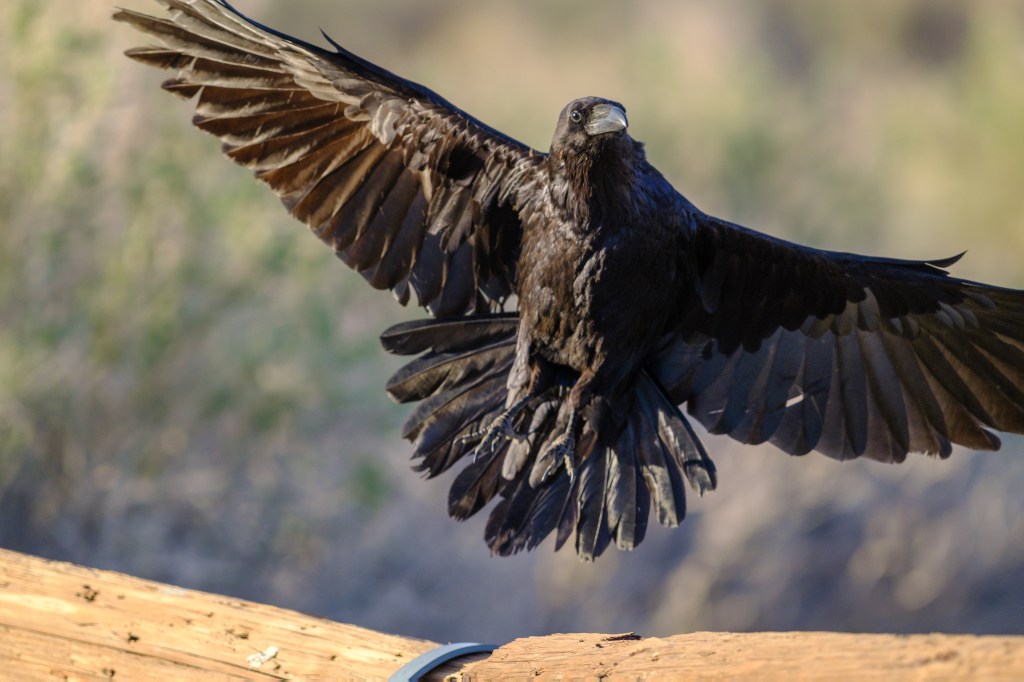
The Common Raven does not like to be photographed. They depart when I point the lens at them. This one springs from a wooden barrier.

Common Raven. Buckley Ponds.

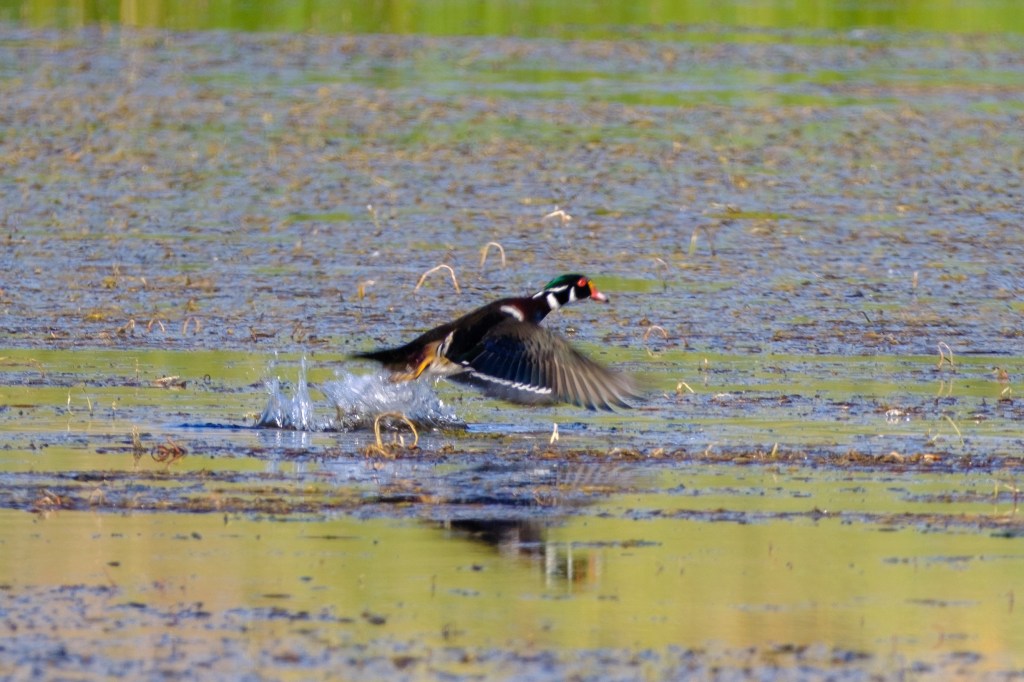
A Wood Duck uses webbed feet to shove off the water at the Buckley Ponds.

Wood Duck (male). Buckley Ponds.

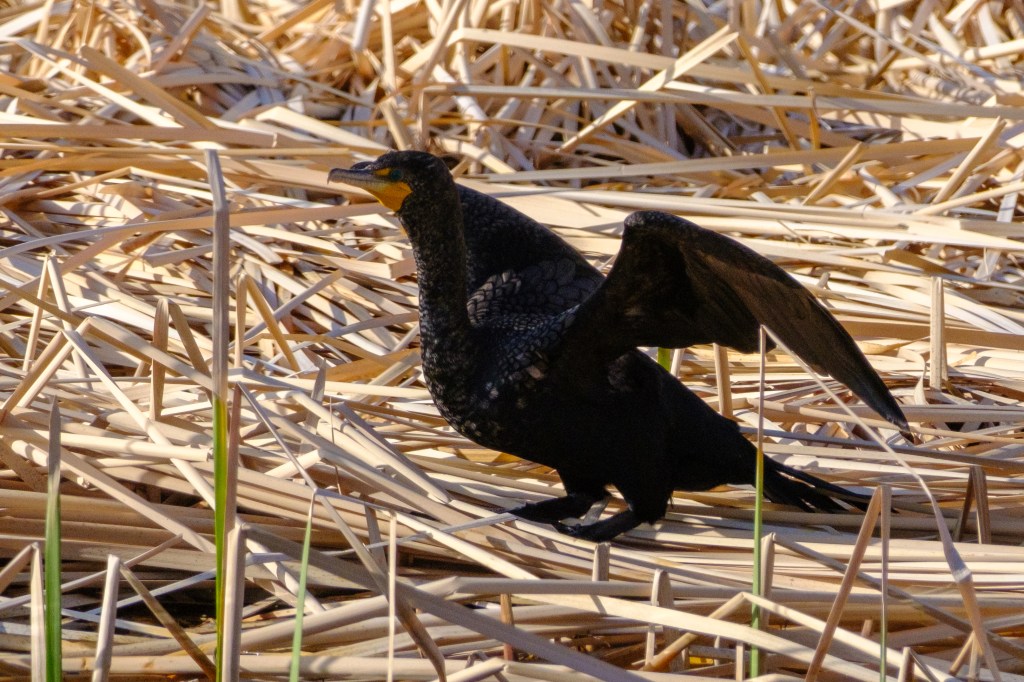
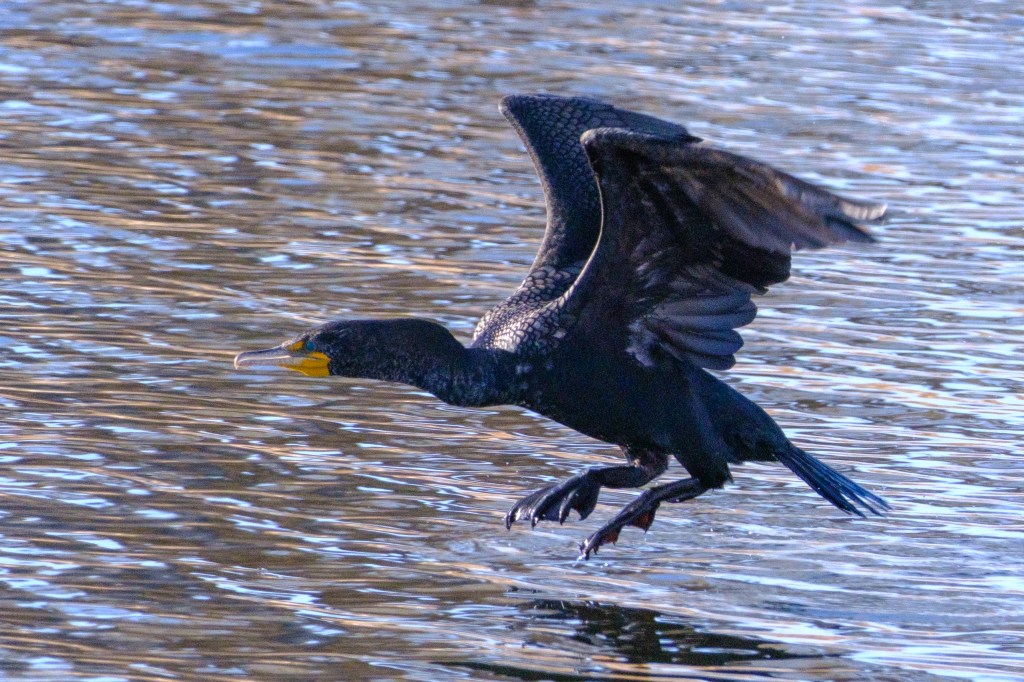
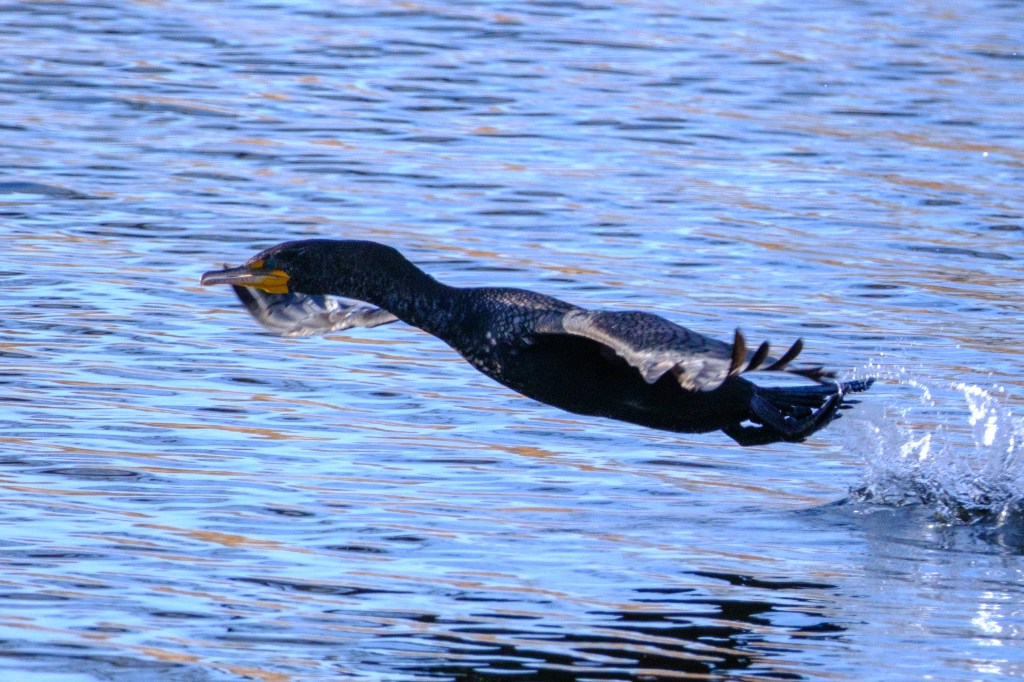
Double-Crested Cormorants are the only cormorant species in the Eastern Sierra. This one vaults over the water and then shoves on the water with its webbed feet. Each push is synchronized with a wing downbeat. The second photo shows preparation for a push; I think the bird looks like a dragon from Game of Thrones.

Double-crested Cormorant. Buckley Ponds.

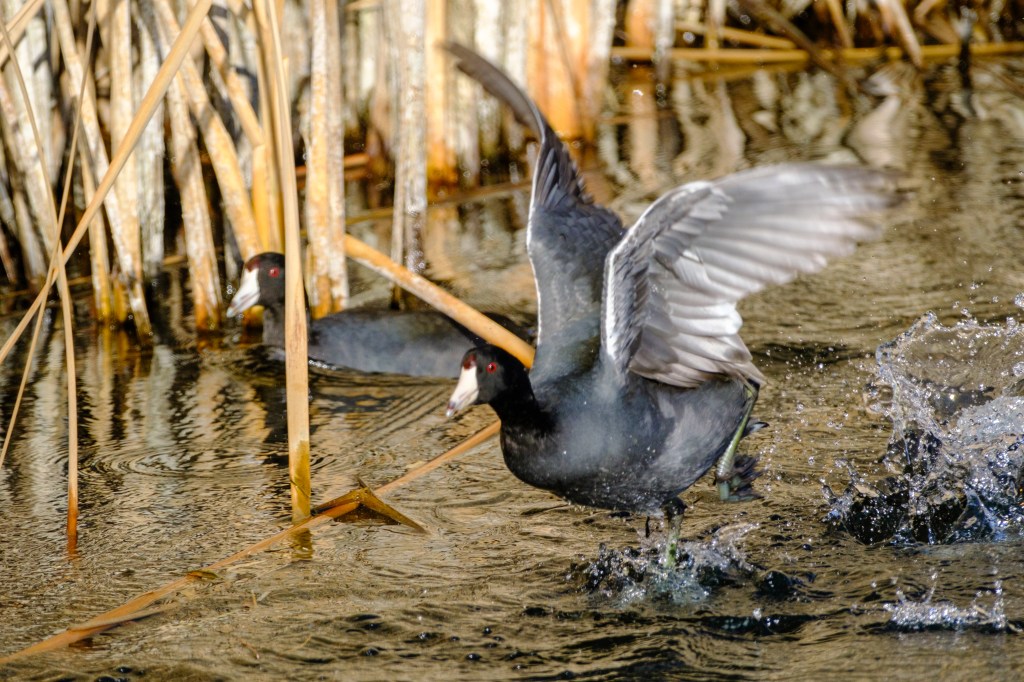
About three hundred American Coots winter at the Buckley Ponds. Their green feet propel them on the surface, splashing like mad to climb into the air. The whole operation is noisy and graceless. When a Bald Eagle swoops over the Ponds, dozens of panicked Coots try to slosh their way to safety.

American Coot. Rawson Canal next to Buckley Ponds.

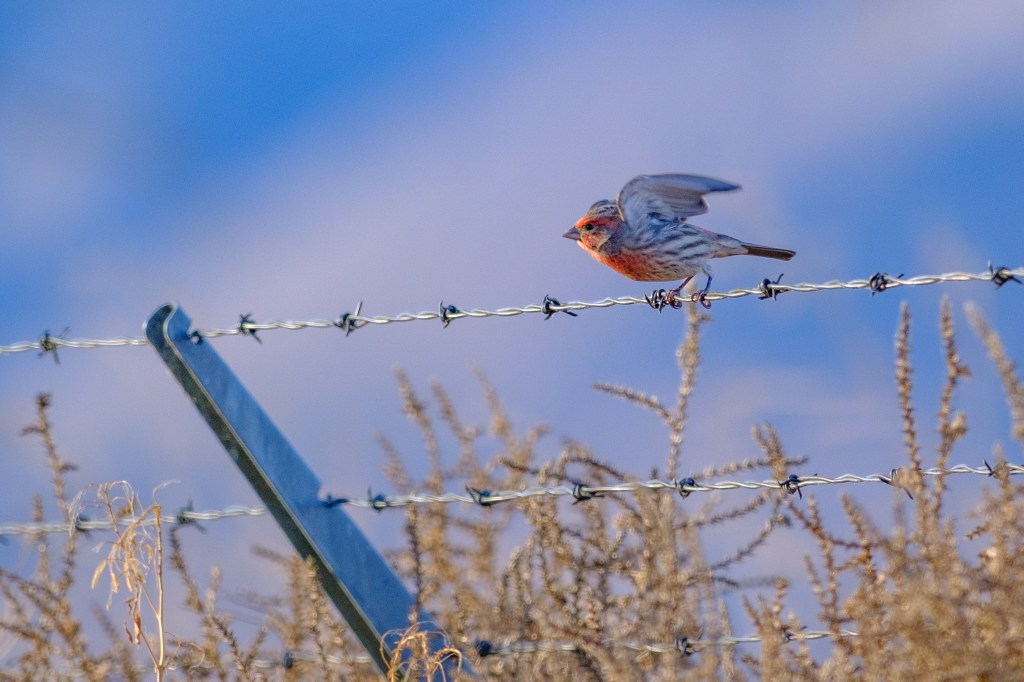
The House Finch below leaves the fence that surrounds the Bishop Sewage Ponds.

House Finch, South Airport Road.

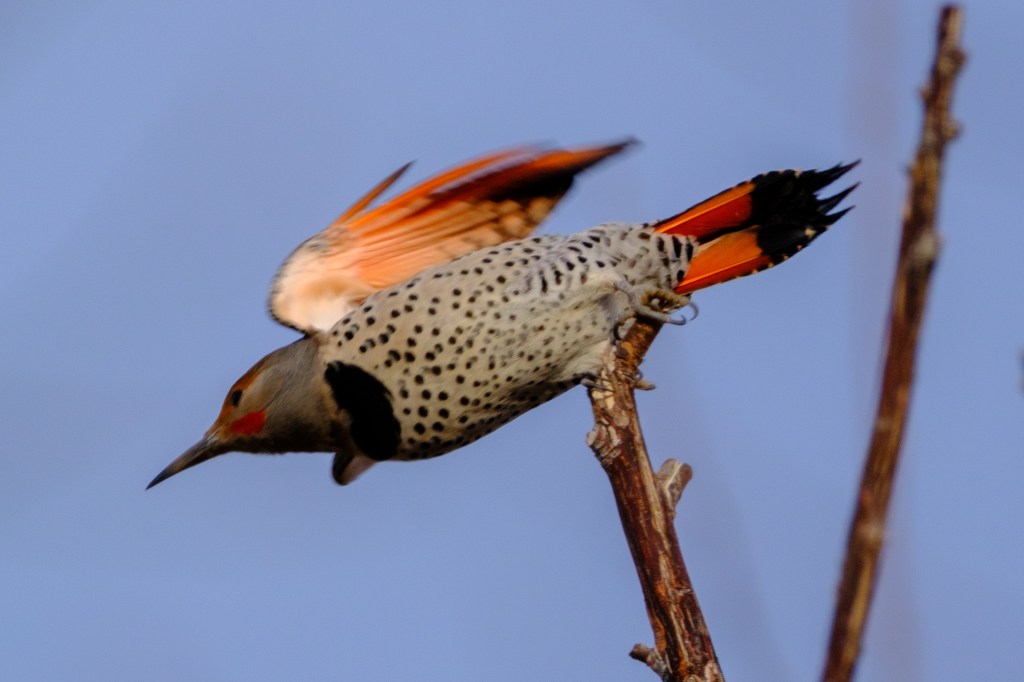
A male Northern Flicker blasts off on South Airport Road.

Northern Flicker, South Airport Road.

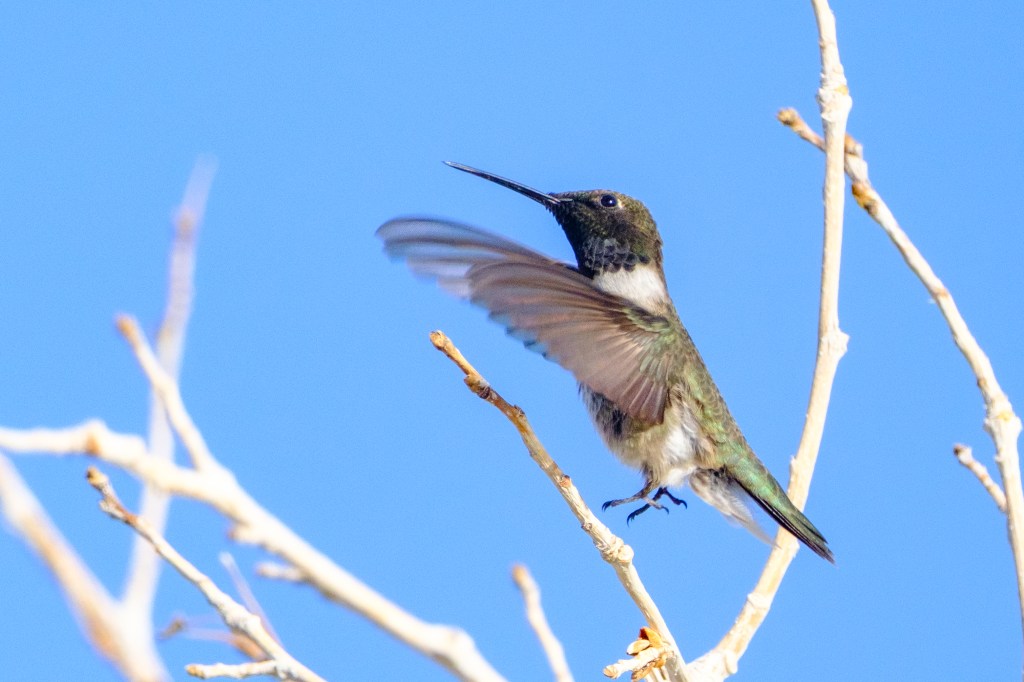
Many birds, such as Kestrels, Kingfishers, and Harriers, can fly in place for a while, but they need some wind to do this. According to Sibley, only hummingbirds can truly hover. The hummingbird can flap its wings so fast that it just rises up, as demonstrated by a Black-chinned Hummingbird.

Black-chinned Hummingbird. Green Gate road off Dixon Lane.

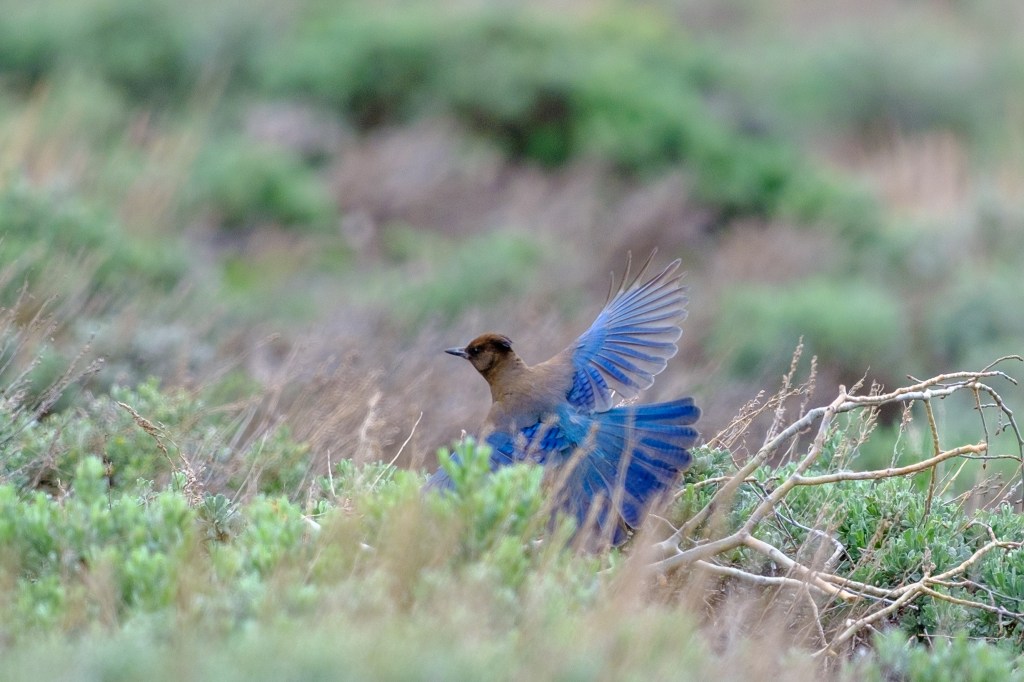
A Steller’s Jay on McGee Creek starts to fly.

Steller’s Jay. McGee Creek.

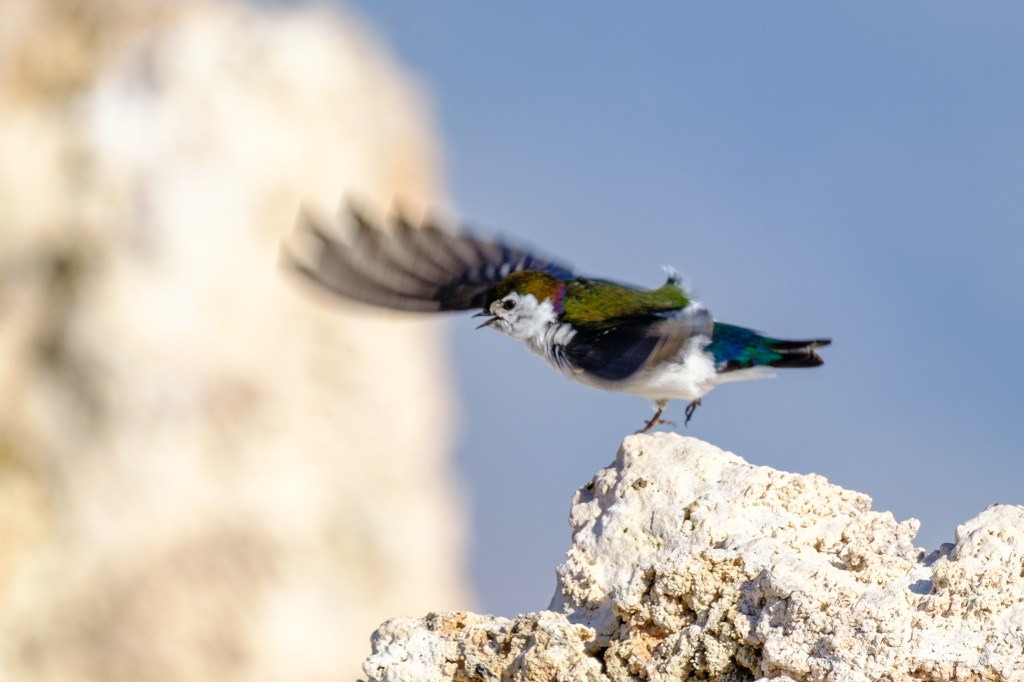
This Violet-Green Swallow is cleared for takeoff from a tufa tower at Mono Lake. These pocket-rockets are hard to photograph when flying, so I try to focus when they land on the tufa. Their rest breaks are short and they soon rocket off to hunt bugs in the air.

Violet-green Swallow. South Beach, Mono Lake.