
Nepal is shaped like a rectangle: 500 miles wide from west to east and 120 miles from north to south. The country covers the area where the Indian tectonic plate slides under the Eurasian plate. This collision pushes up the surface, forming the Himalayas. The northern third of Nepal borders Tibet and is covered by gigantic, glaciated peaks. The middle tier consists of ridges and valleys, with small villages and rice paddies, while the southern third meets lowlands and jungle in India. Only 14 peaks on Earth rise above 8000 meters (26,250 feet); 8 of these, including Everest, lie within Nepal or on its northern border with China.
Annapurna, one of the 8000-meter peaks, rises near the center of Nepal. It is part of a bowl-shaped ring of mountains. The center of the bowl is the Annapurna Sanctuary; its floor is at 14,000 feet and the walls are above 20,000 feet. A river, the Modi Khola, drains this gigantic bowl by exciting to the south through a narrow slot, between Hiunchuli and Machapuchare. The peaks that form the walls of the bowl, clockwise, are Hiunchuli (21,132 ft), Annapurna South, Fang, Annapurna, Roc Noir, Glacier Dome, Gangapurna, Annapurna III, and Machapuchare (Fishtail Peak, 22,963 ft). The entrance to the sanctuary is a trail system in the deep gorge of the Modi Khola.
Hiunchuli was first climbed in 1971 by an American team led by a former Peace Corps volunteer. During the 70s there were six attempts to repeat this climb. A 1979 Japanese expedition ended when 3 climbers were killed by an avalanche near Basecamp. In 1981, I was invited to attempt the second ascent of this peak by Eric Simonson, a professional guide who I met during a 1979 attempt on Annapurna. Eric asked me and Bob Wilson to work as assistant guides; in return for our work, we paid only a minimal fee to cover costs.
THE APPROACH
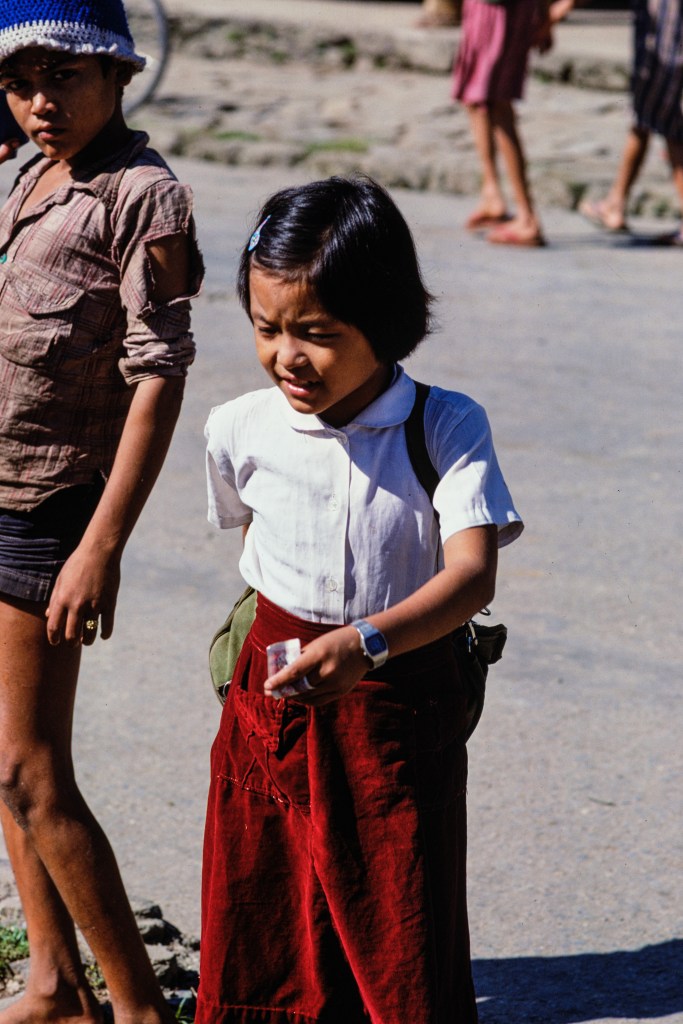
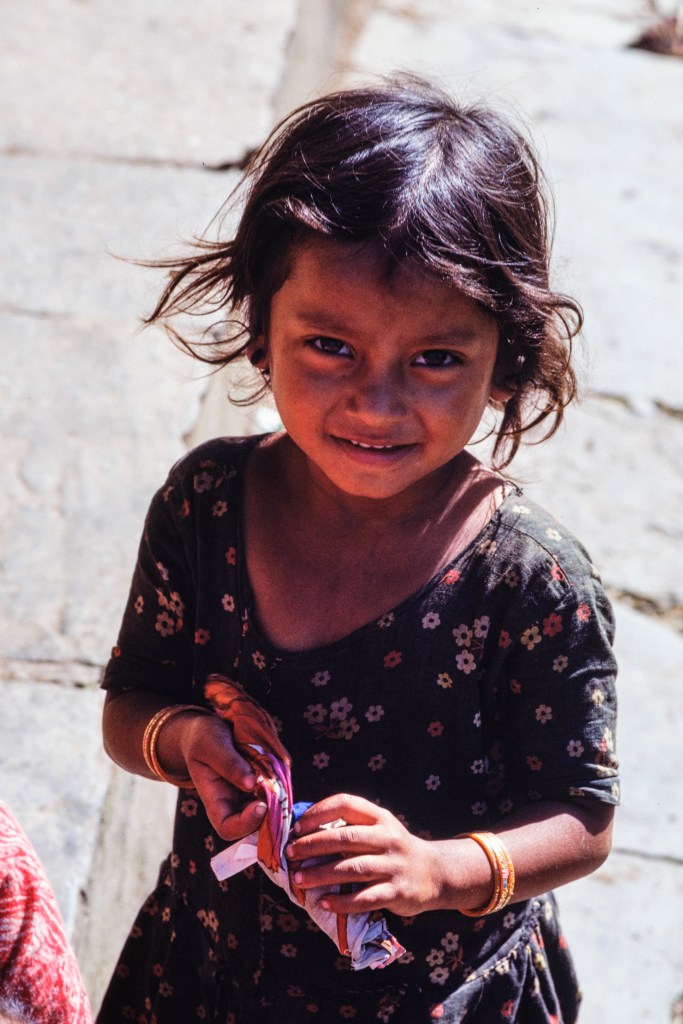
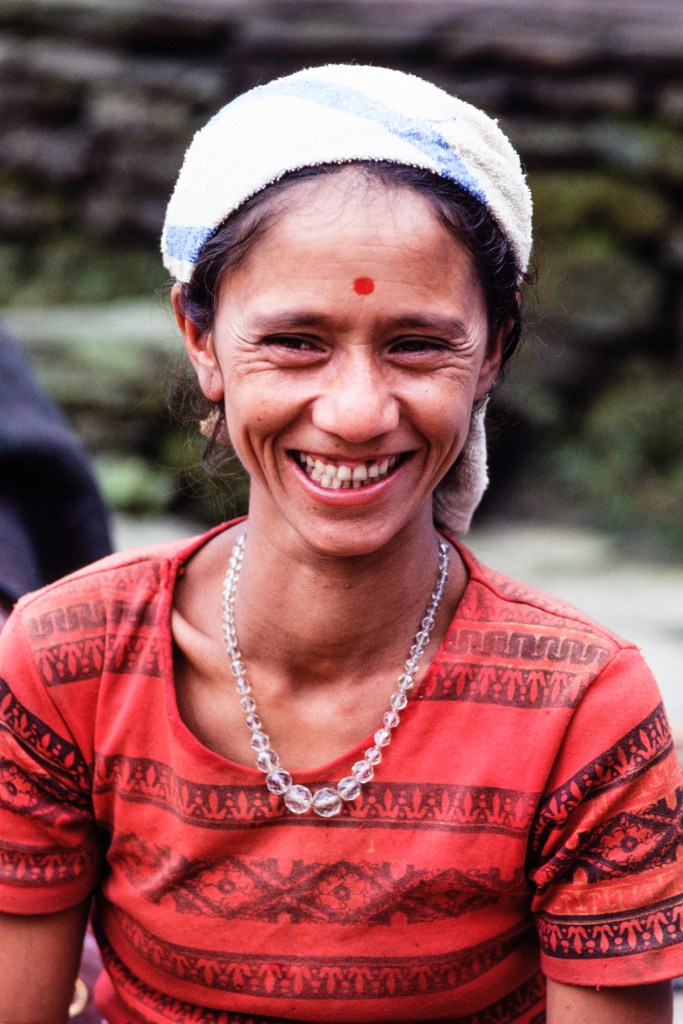
I arrived in Kathmandu on 9/15/81. We started our approach hike from near Pokhara on 9/19. Our path dropped down to the Modi Khola, then up the other side to a camp in forest on 9/22. My photos include portraits of the local people; a mix of religions (Hindu, Buddhist, other) and ethnic groups (Gurung, Tamang, etc.) (The famous Sherpa people live about 200 miles east near Everest.) Farming and tourism support the area we hiked through. Gurkha soldiers are recruited from this region. The Gurkha Kingdom fought the British East India company to a draw in 1816. The Gurkhas were tough and repelled a British assault by luring the attackers into a field of stinging nettles. The British recognized a good thing and recruited Gurkhas into special units of the British army in India and later elsewhere. Today Gurkha military units serve in the British, Nepali, and Indian armies, and as UN peacekeepers. The Royal Gurkha Rifles recently served in Helmand Province, Afghanistan. Central Nepal has many retired Gurkha troops who receive army pensions, while other families are supported by relatives still serving in the military.
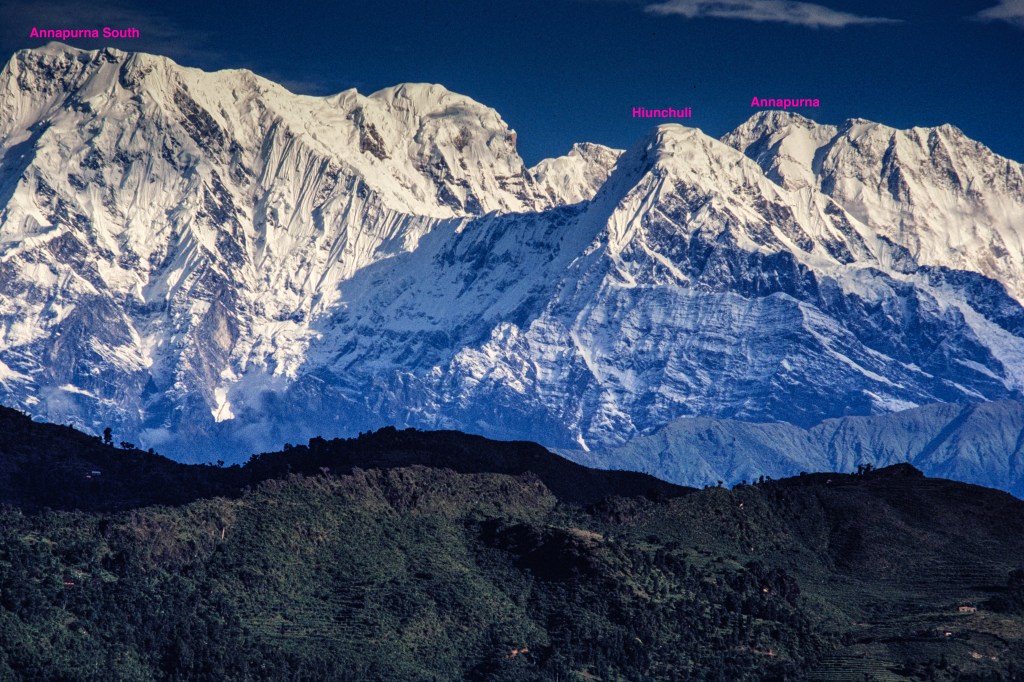
The photo below shows Hiunchuli (21,132 ft). To the left is Annapurna South (23,684 ft), and in the background is the summit of Annapurna (26,545 ft). The Modi Khola gorge is out of sight to the right.
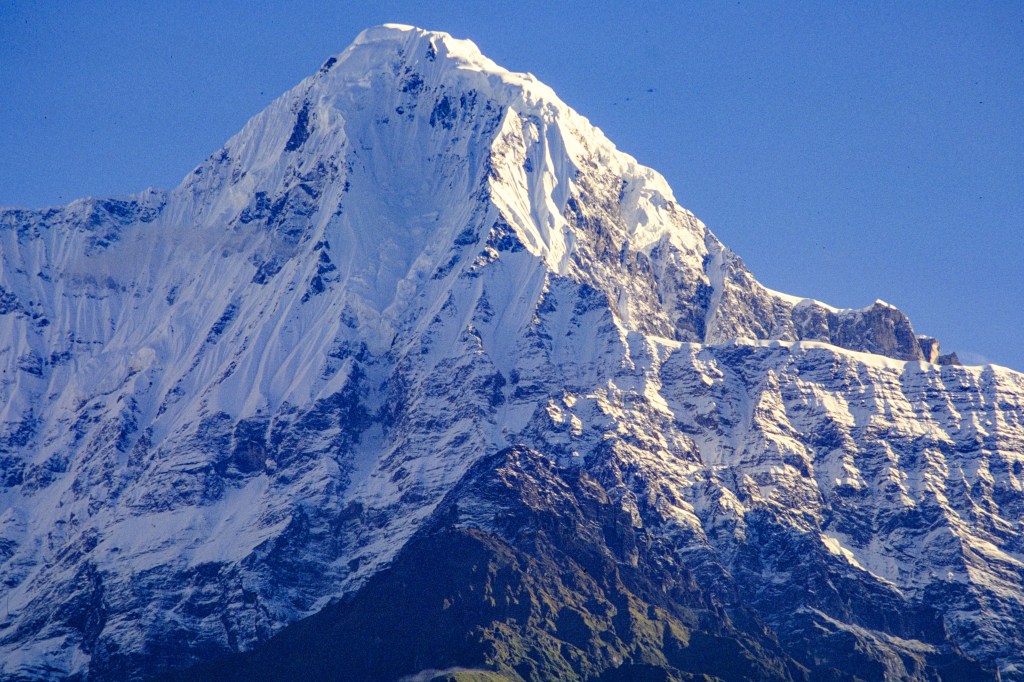
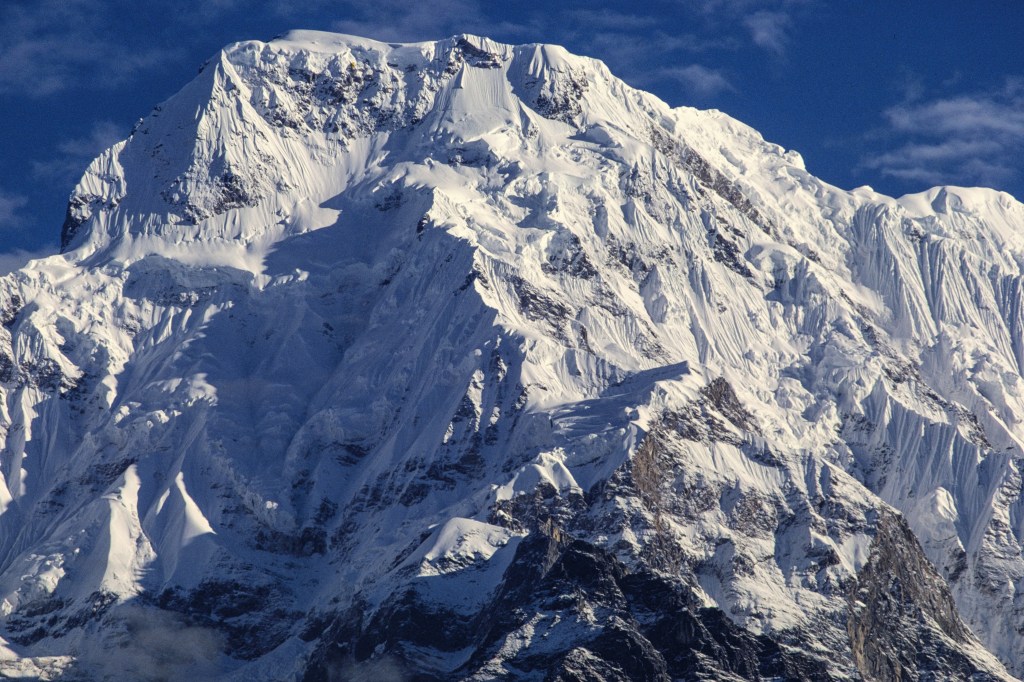
Below is a telephoto view of Hiunchuli. The upper part of our route followed the skyline on the right.
The next 11 photos are portraits of people that we met.
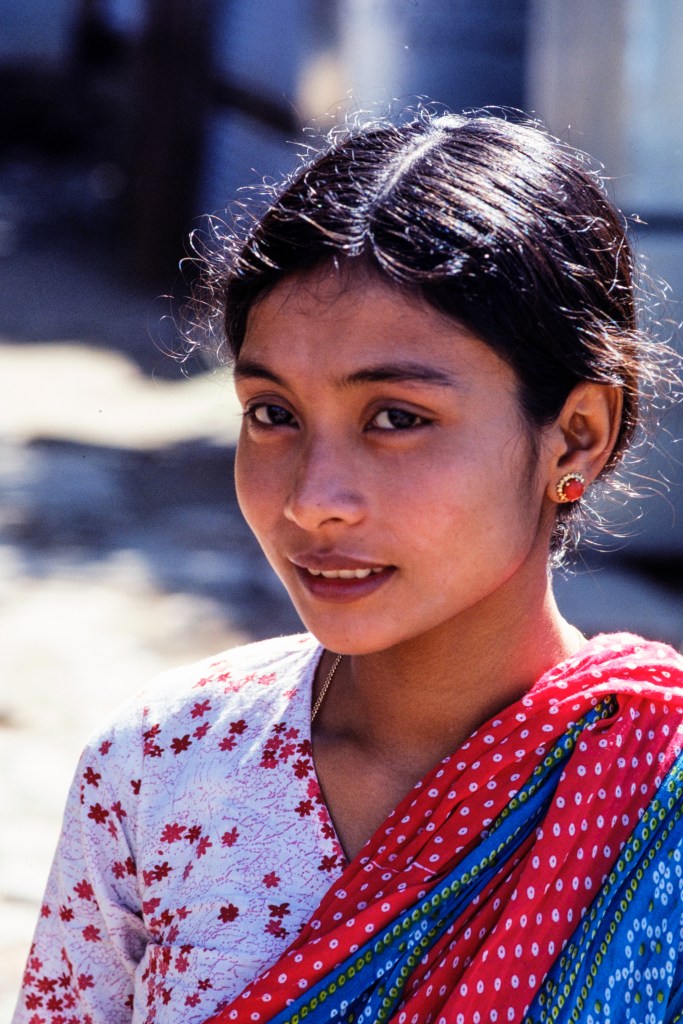
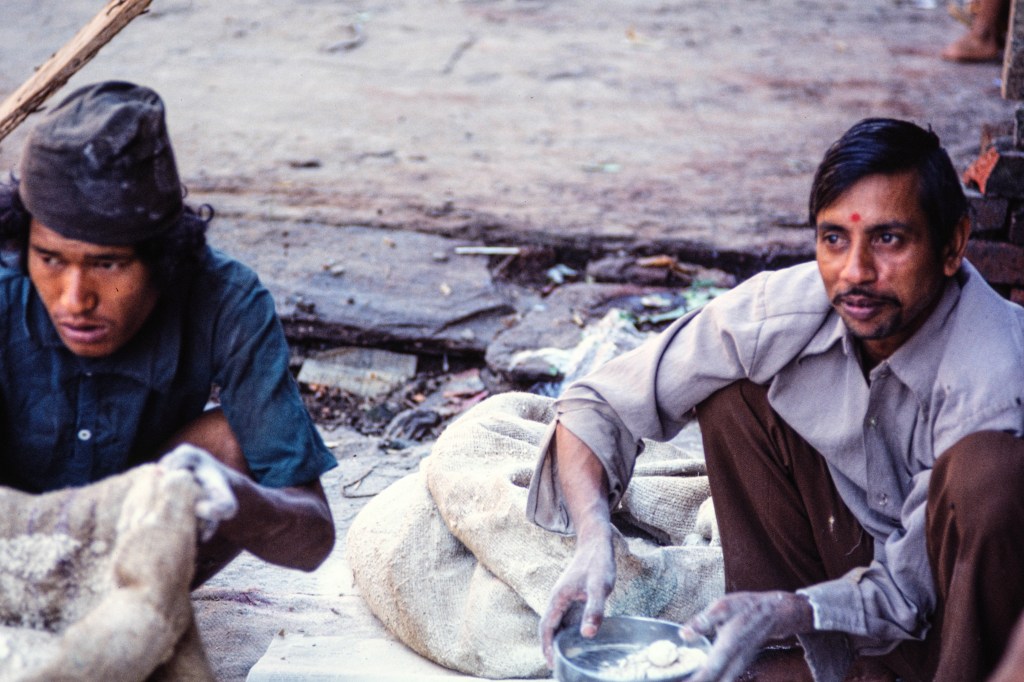
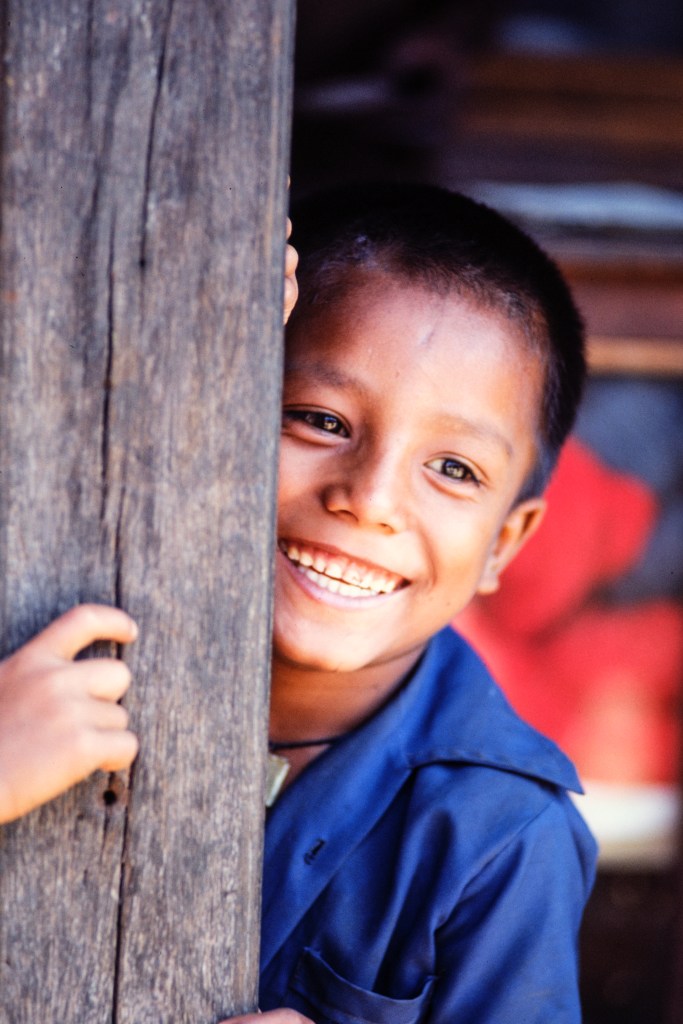
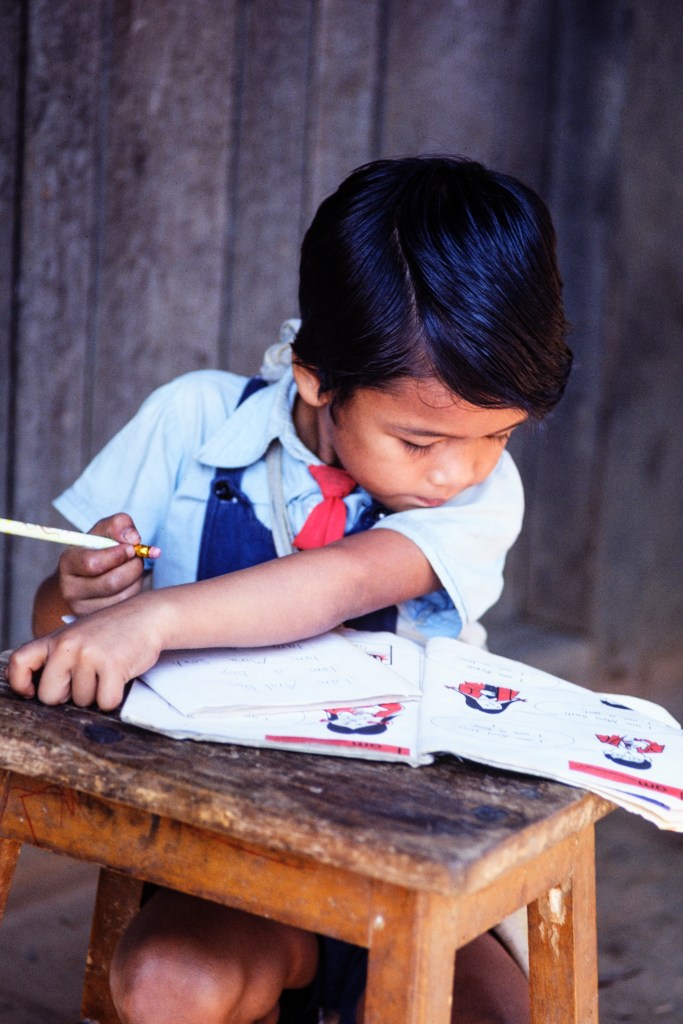
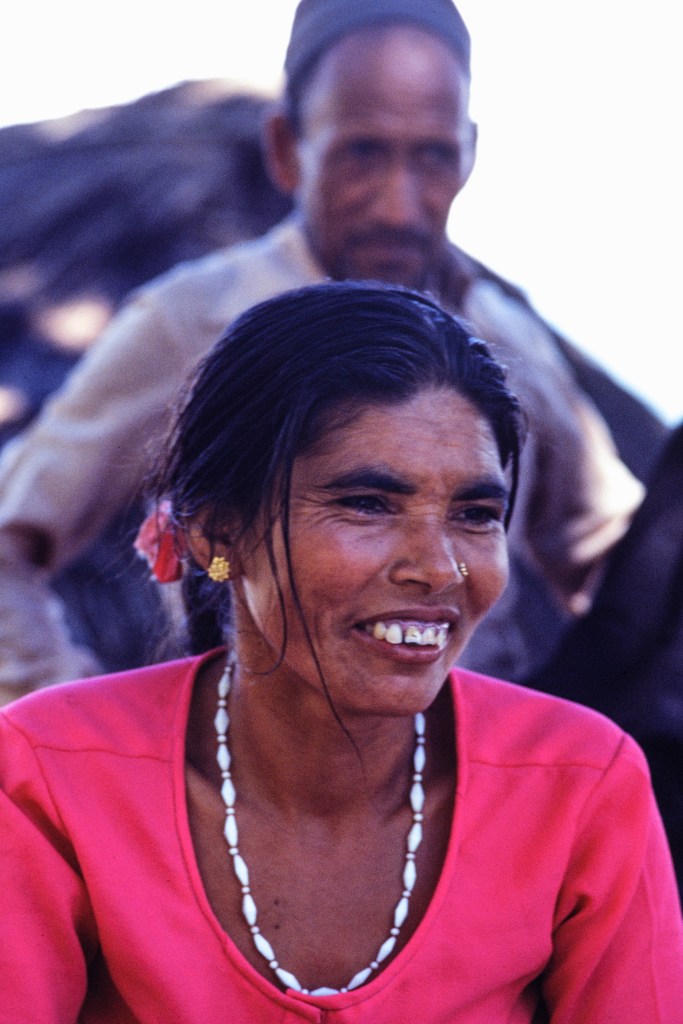
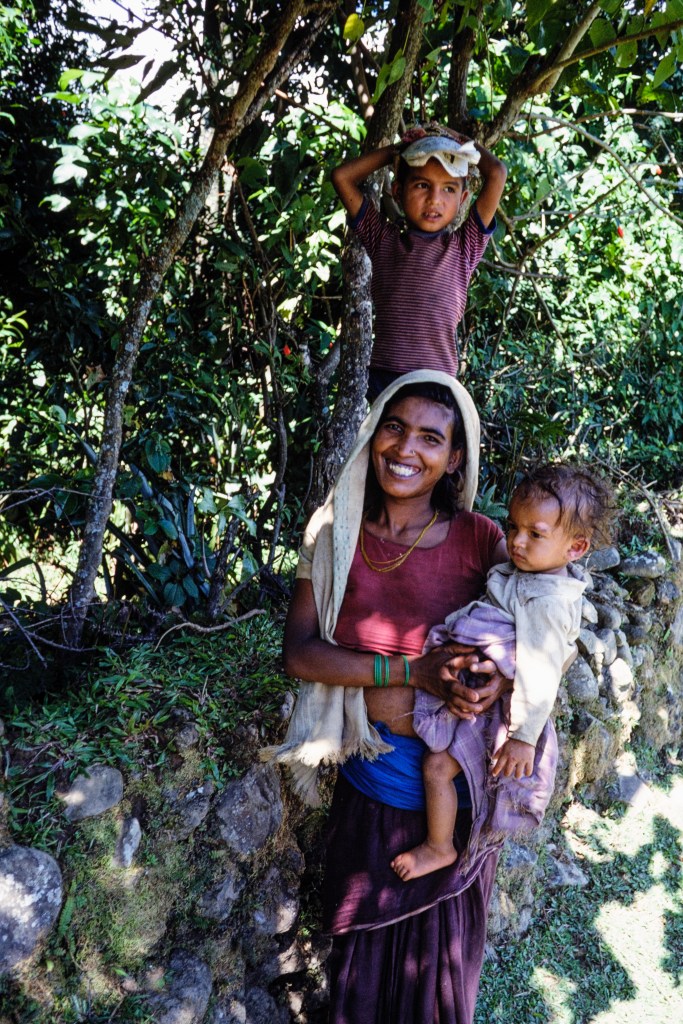
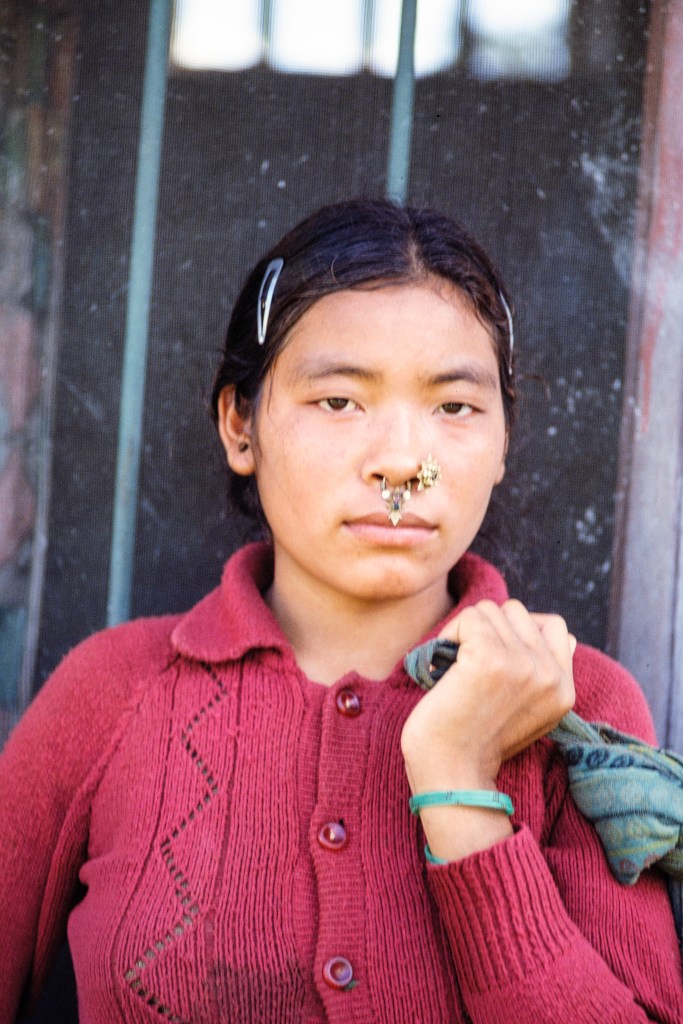
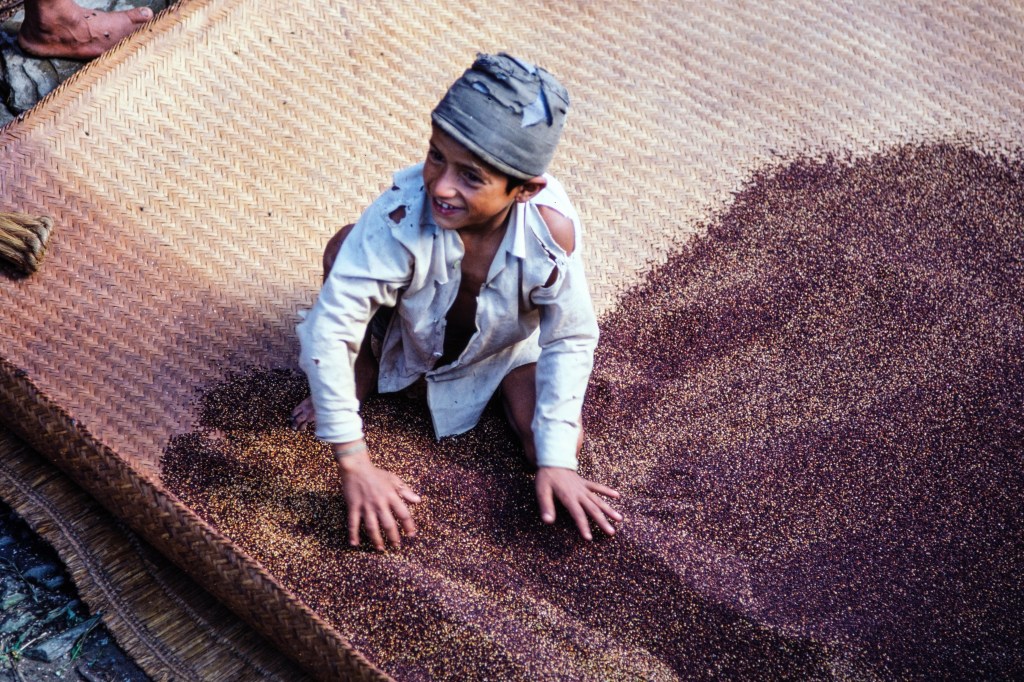
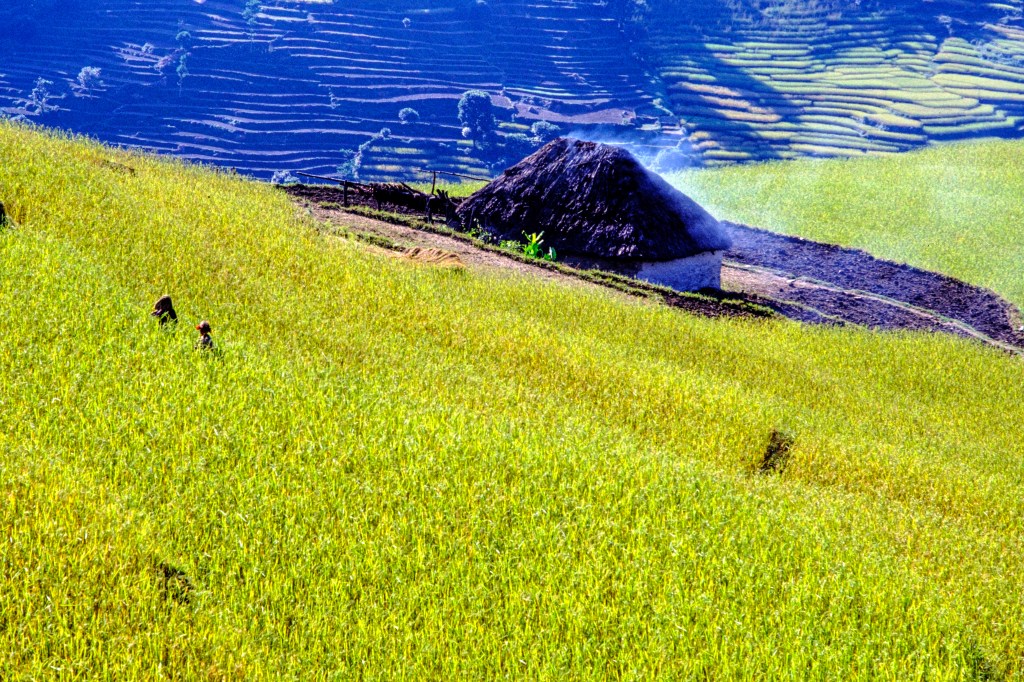
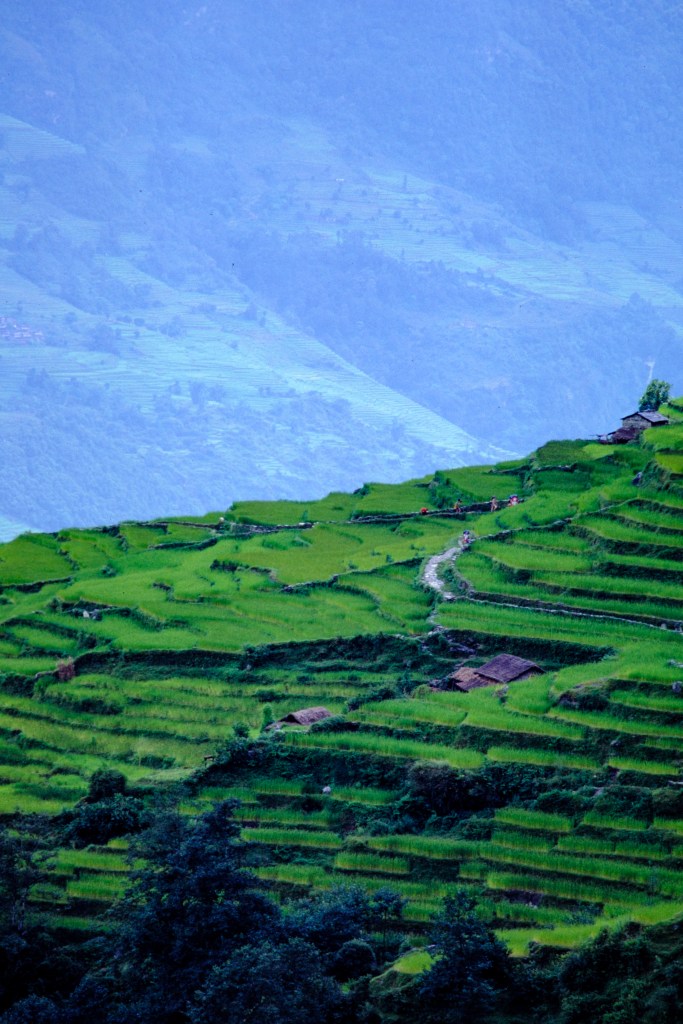
We passed through terraced fields with crops. In the photo below, smoke from cooking envelopes a home. There is no chimney, so the smoke just filters through the thatched roof. The inside is thick with smoke.
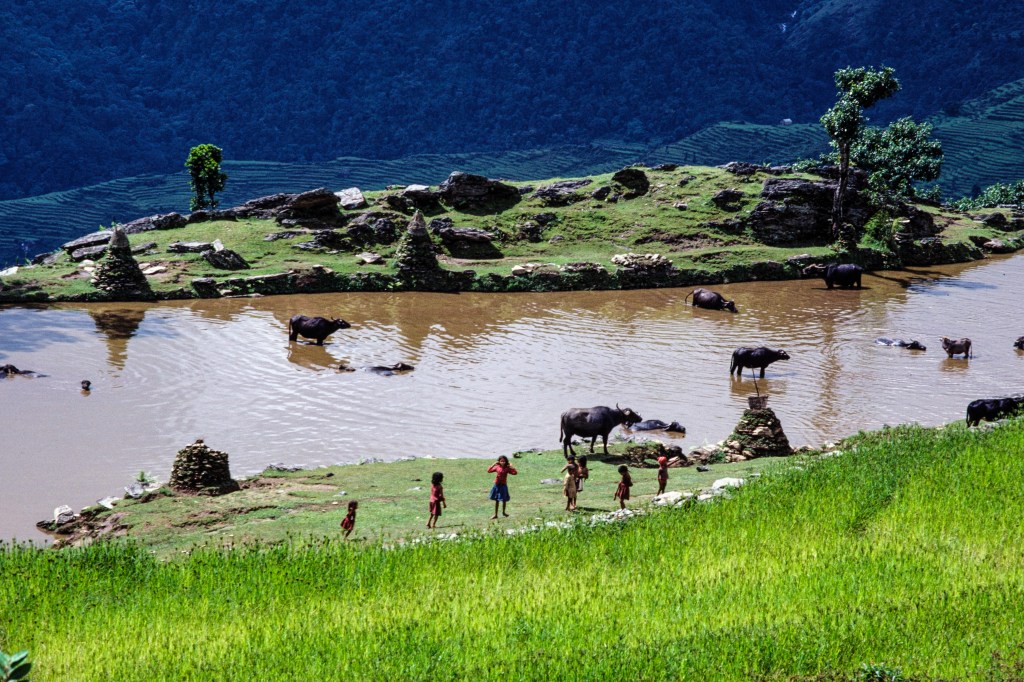
Children and water buffalo.
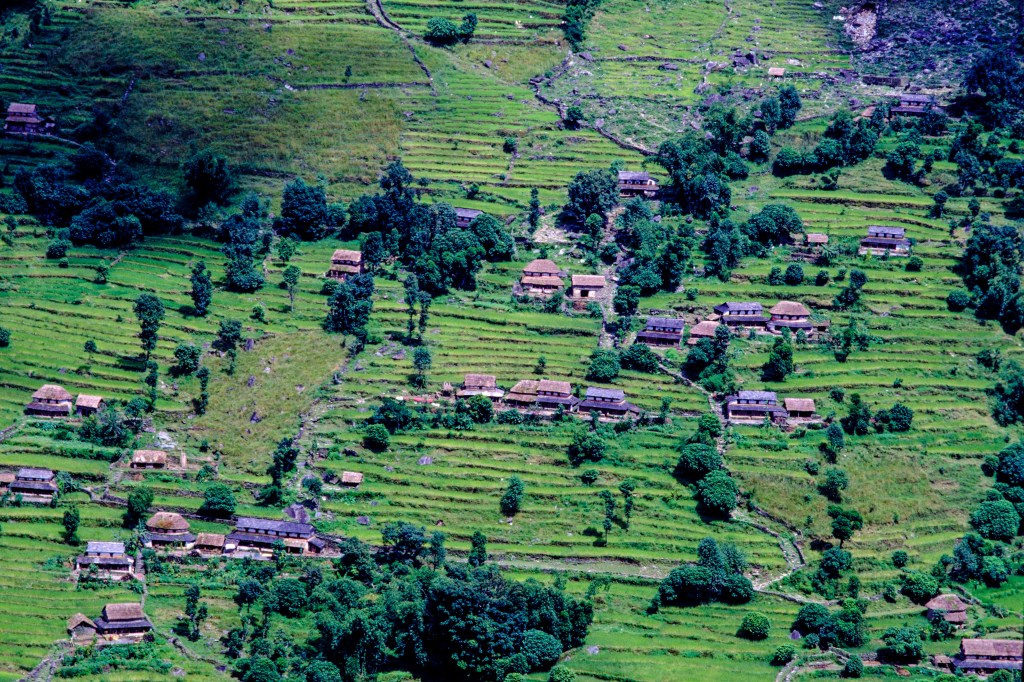
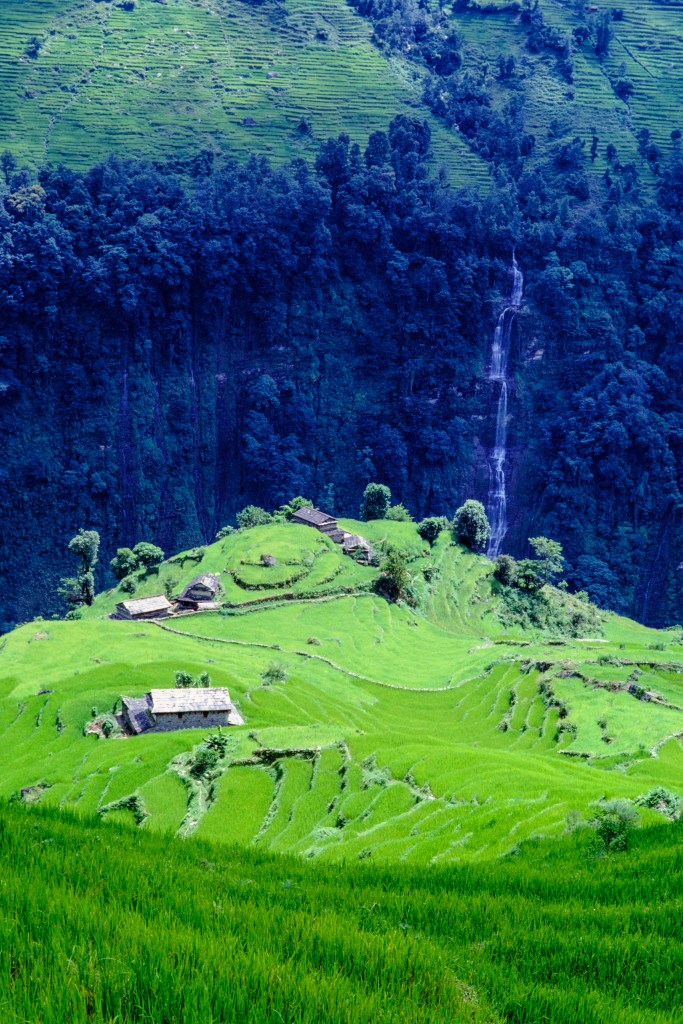
As you can see, below, this area looks fairly prosperous for a poor country.
Below is a view into the narrow chasm of the Modi Khola. Our trail was on the left (west) side. The shadowed wall on the left is the lower part of Hiunchuli. Getting from the river valley up onto the peak is hard.
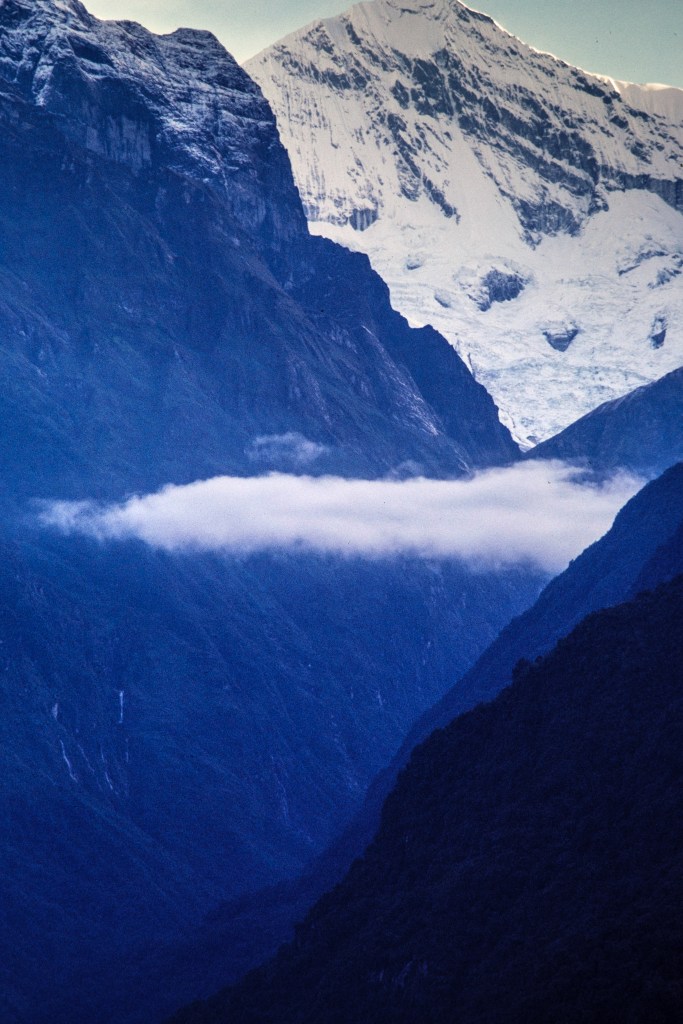
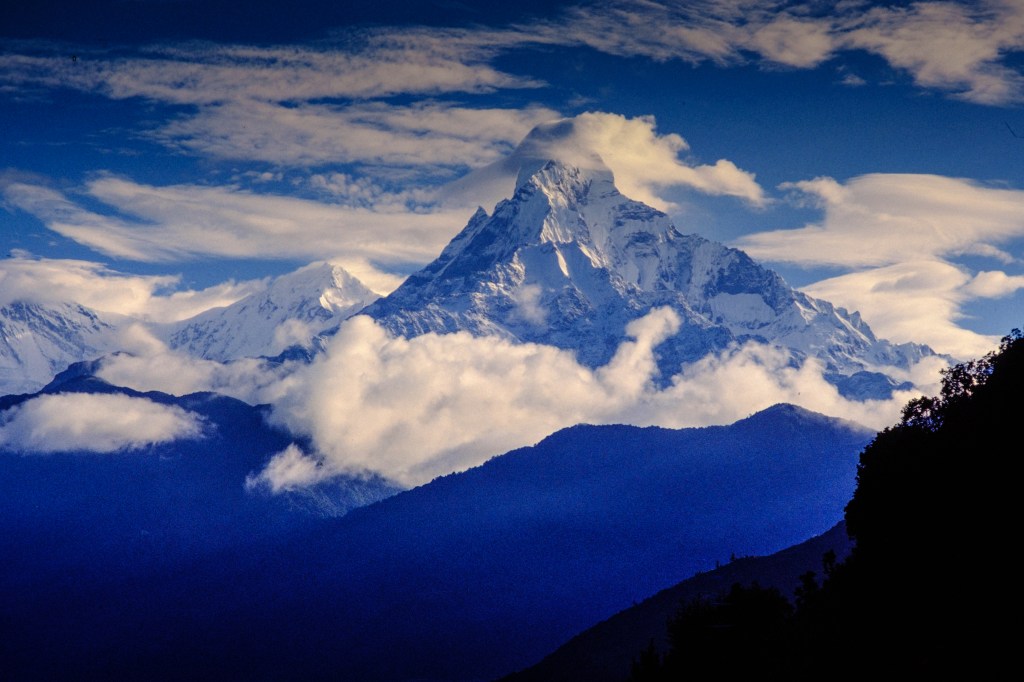
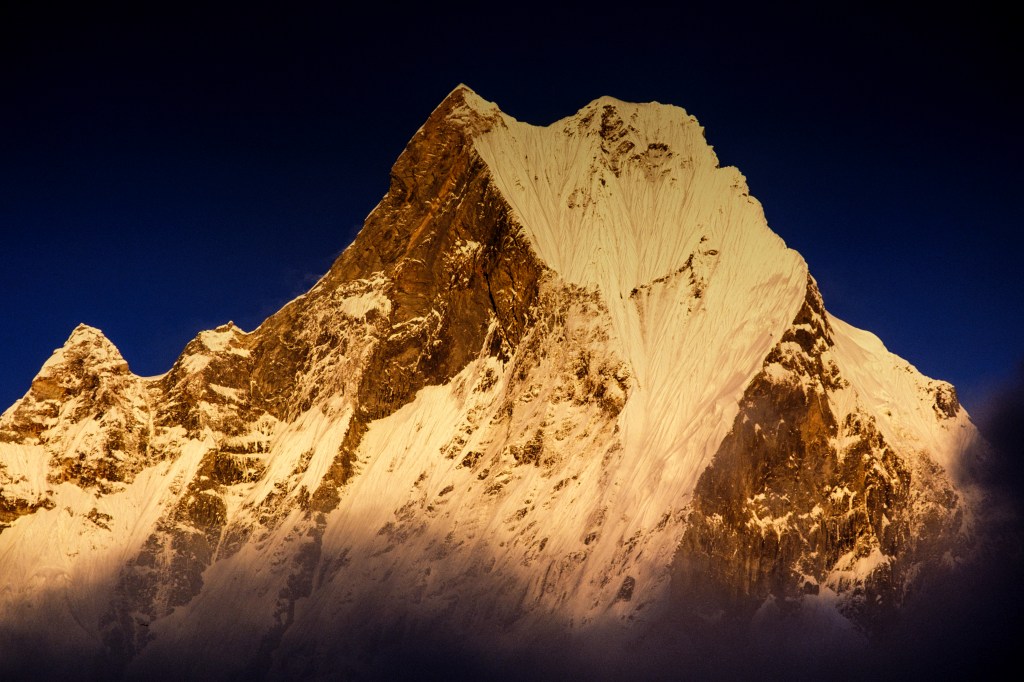
A view of Machapuchare.
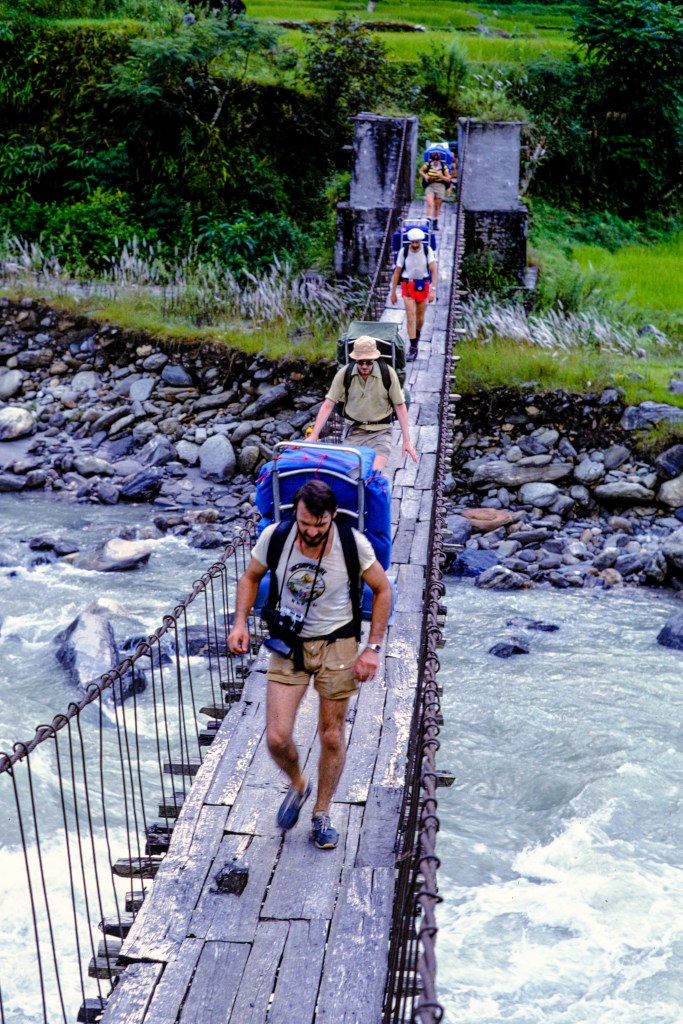
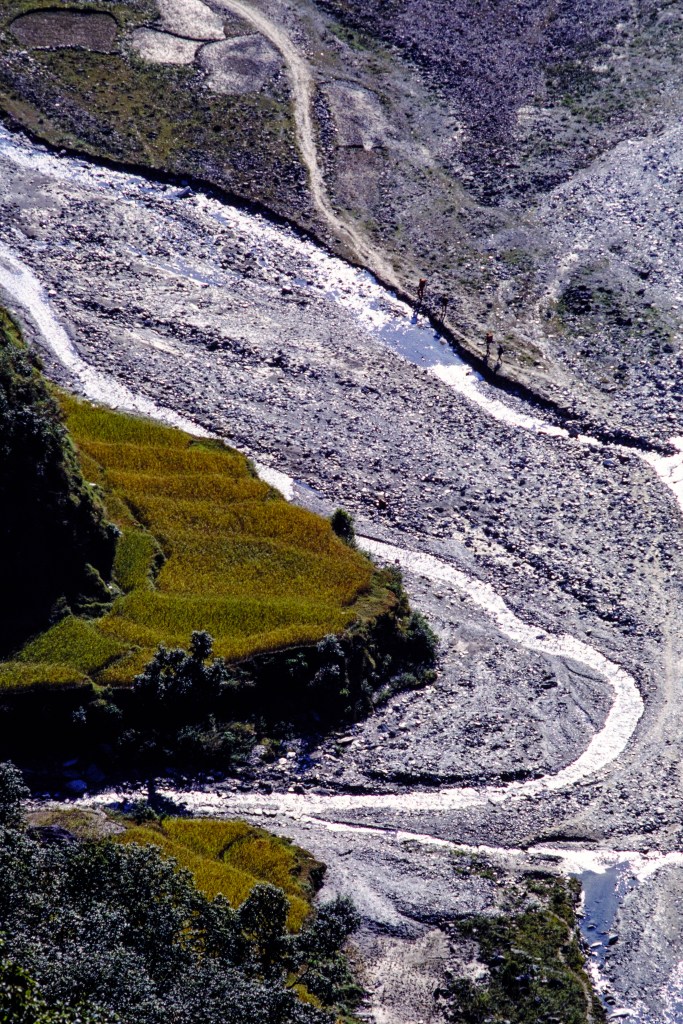
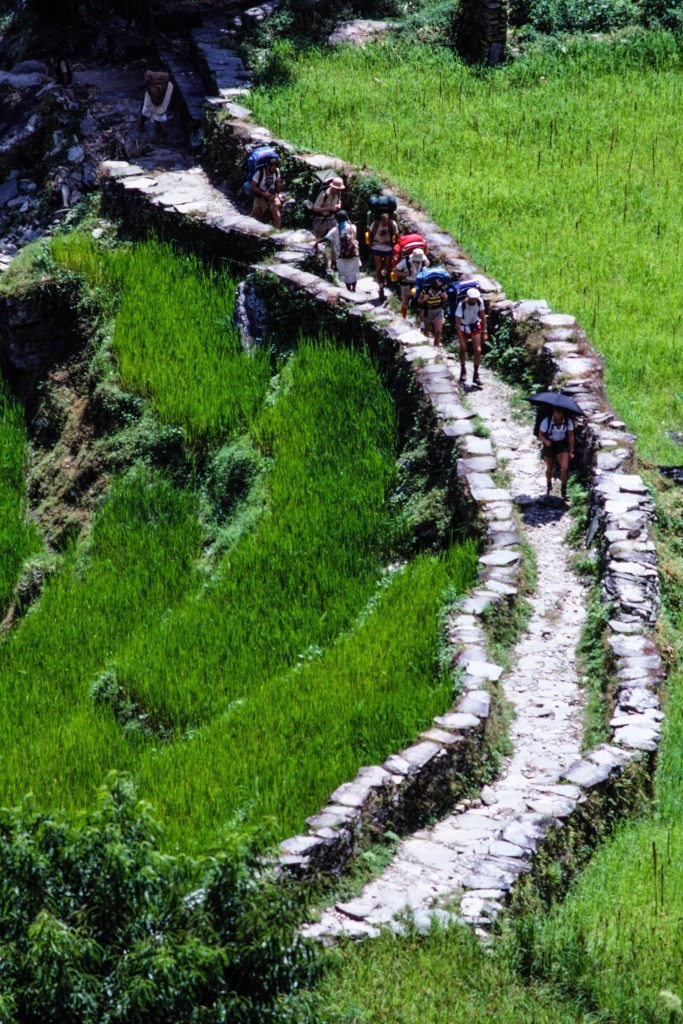
We used a sturdy suspension bridge and excellent paths.
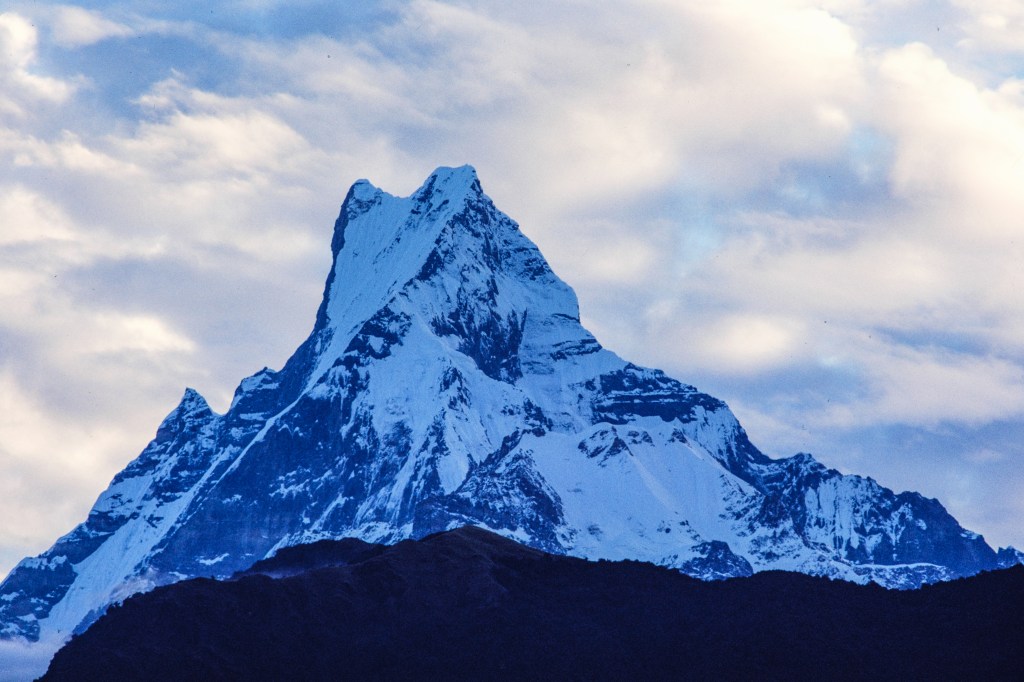
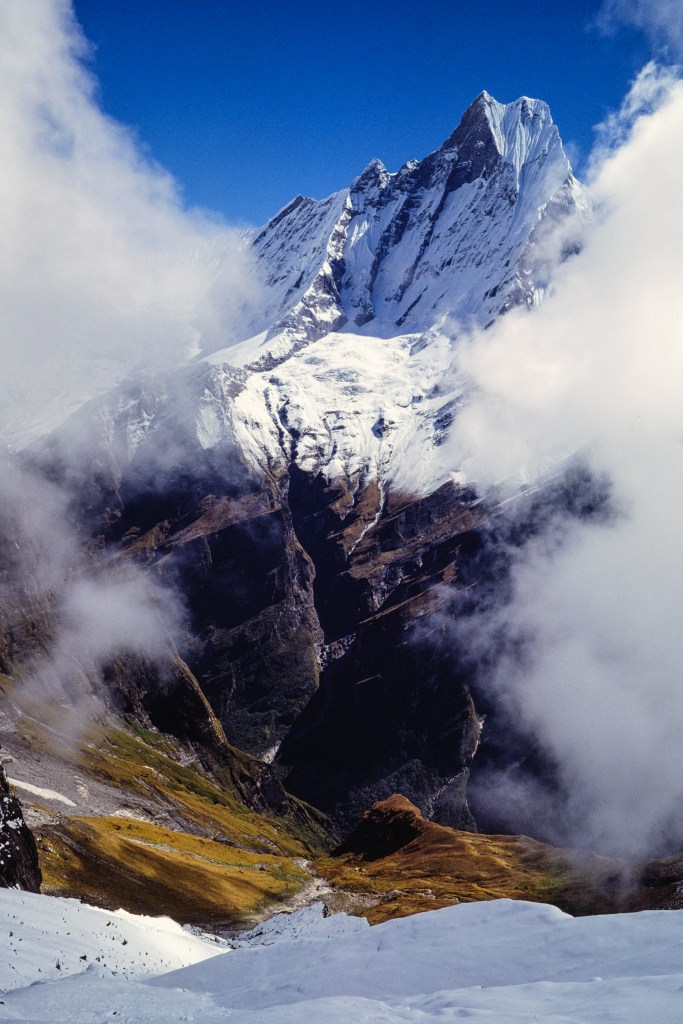
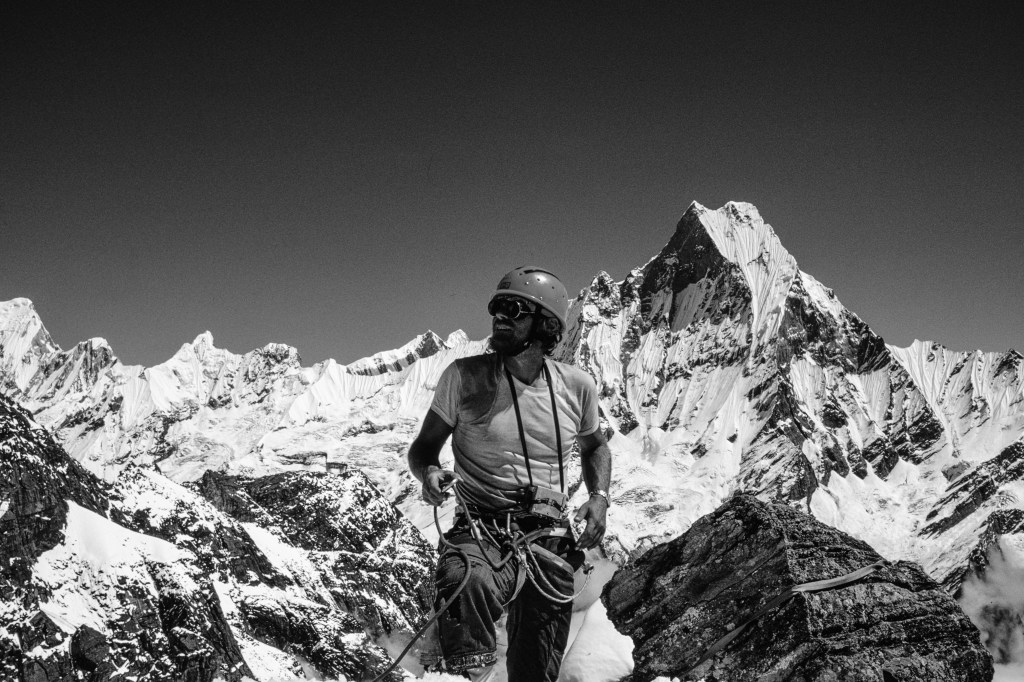
A closer view of Machapuchare, below. This is called the Fish’s Peak or Fishtail Peak because of the shape of its summit.
And Hiunchuli.
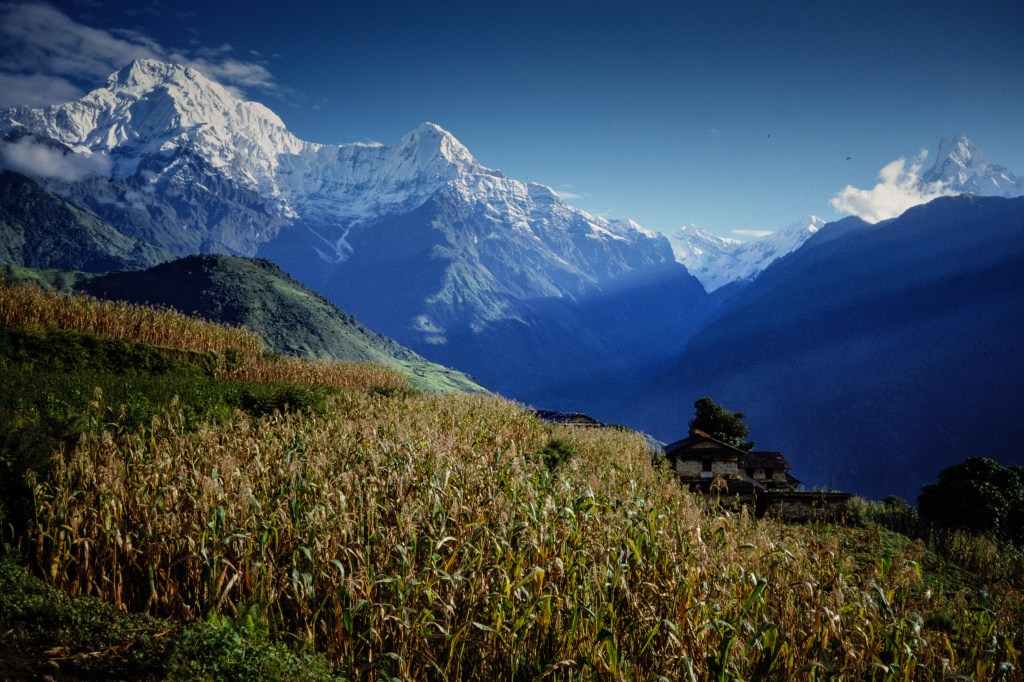
The next view shows Annapurna South on the left, Hiunchuli a little left of center, then the shadowed slot of the Modi Khola, and Machapuchare on the far right.
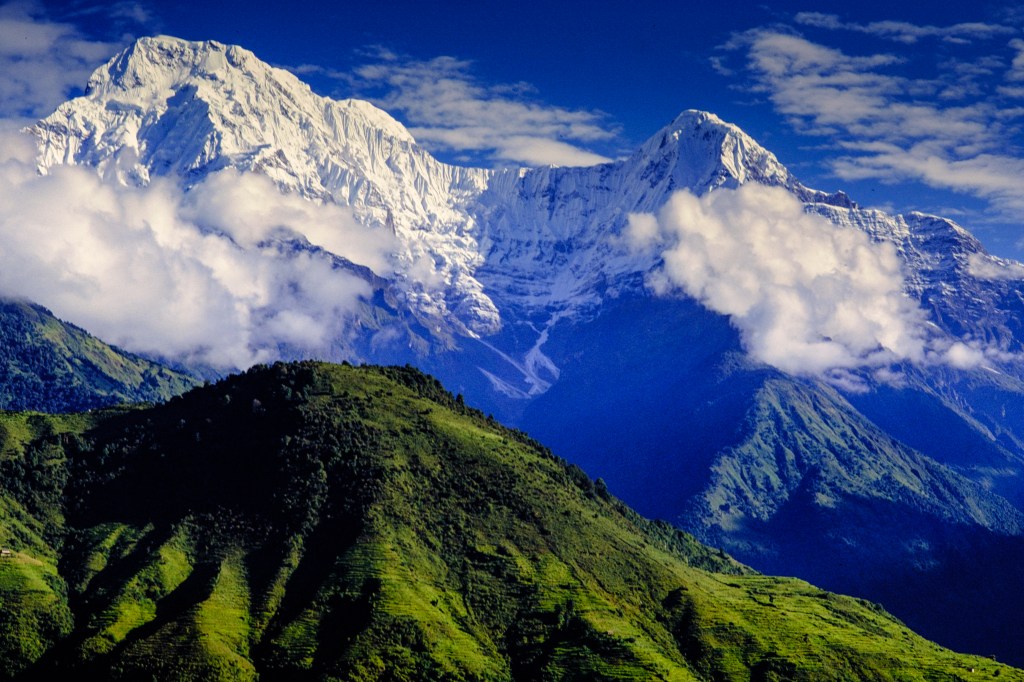
Another view of Annapurna South and Hiunchuli.
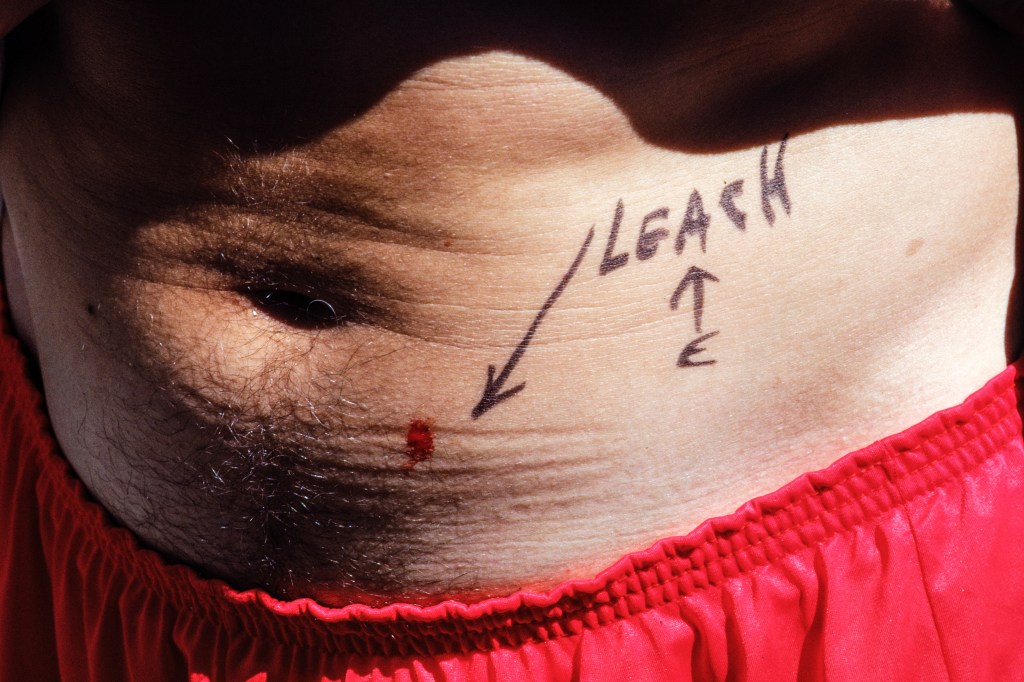
We arrived at the end of the monsoon season, so the forest was full of leeches. Photo below shows one that attached itself for a meal.
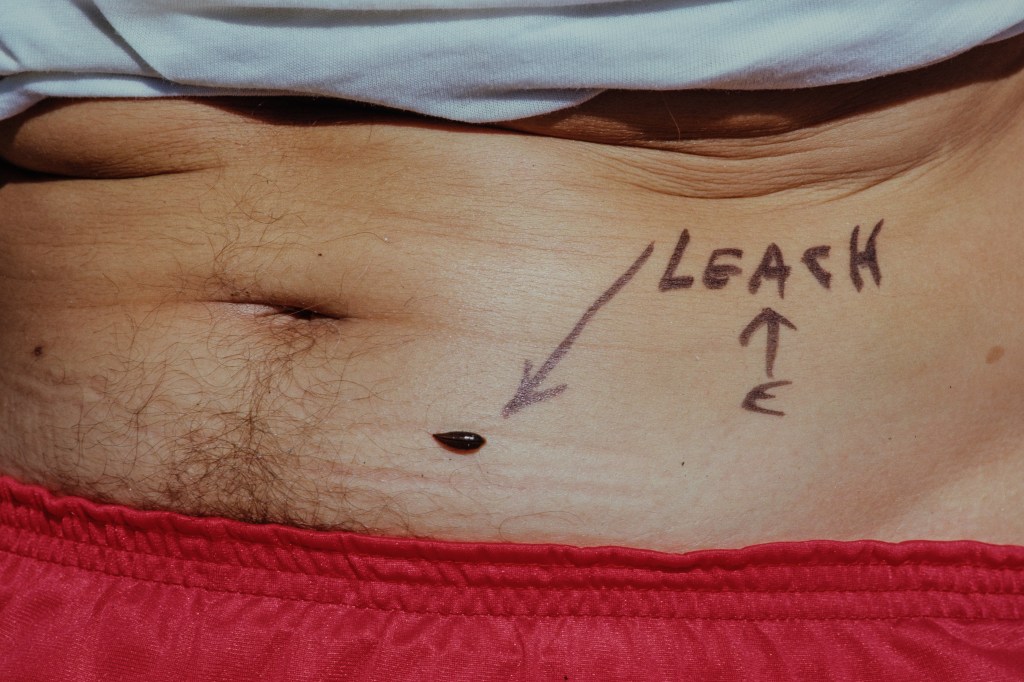
Leeches secrete an anticoagulant so that the host’s blood will flow easily. You can see this below. No one is going to bleed to death, but it takes a while for the wound to scab over.
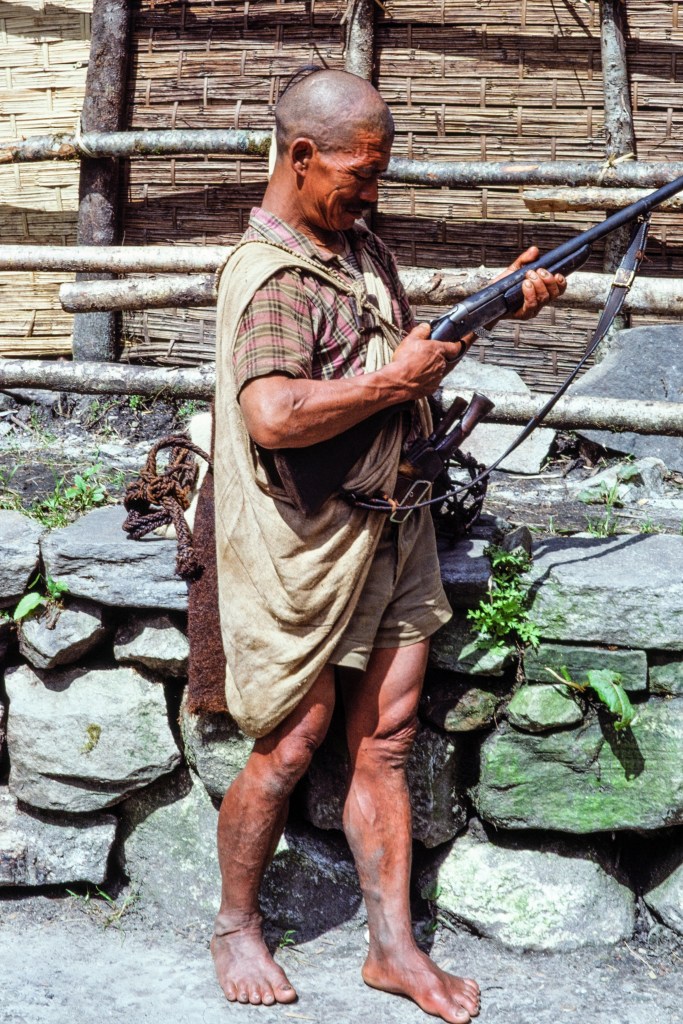
The man below is a local hunter with a very old gun. His Gurkha knives, Kukris, stick out of his belt.
THE CLIMB
On 9/22 we camped near the trail at 9000 feet on the west side of the river. On 9/23 some of us explored above our camp to find a route through the jungle and get up onto the mountain. This involved a lot of thrashing in brush on steep terrain. The next day, we moved up to a temporary camp at 13,100 feet, and on 9/25 we moved to a better location at 13,200 feet. The route to Basecamp was so steep that two of our clients quit the expedition and hiked back to Kathmandu. A third client made the decision to not go above Basecamp.
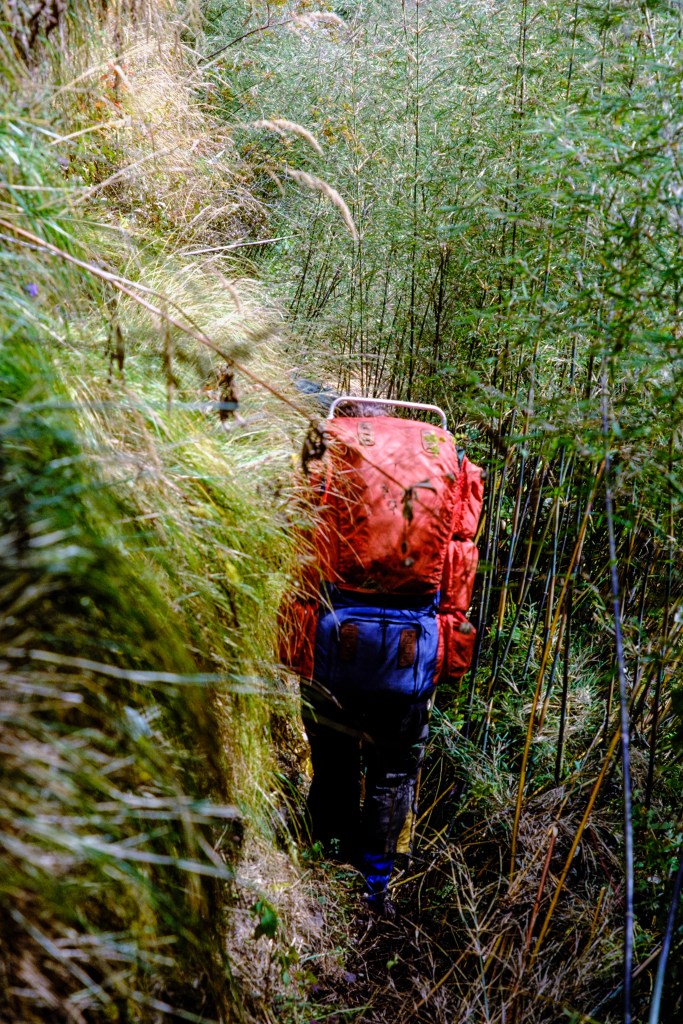
The picture below shows the dense vegetation.
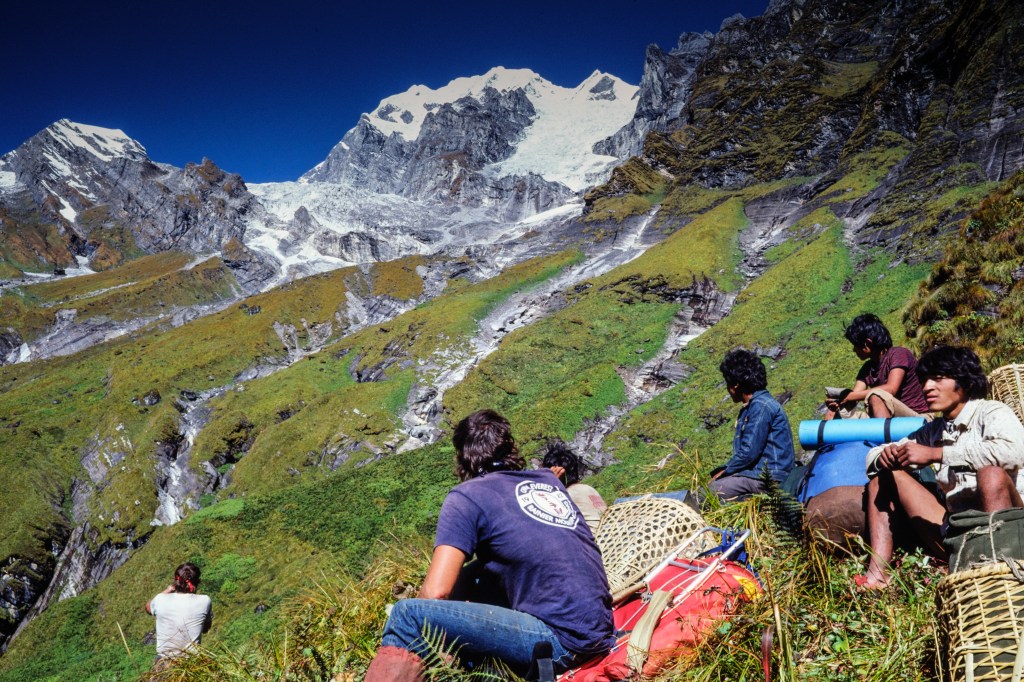
In the next photo, Simonson and porters look at the terrain we must cross to get to our Basecamp, which will be in the flat meadows at the far left of the photo.
The view below looks back at our route. I added a yellow circle around a member of our team. From that spot, our “trail” went down through vegetation and up to where I was standing with my camera. Several previous expeditions failed because they were never able to get to Basecamp.
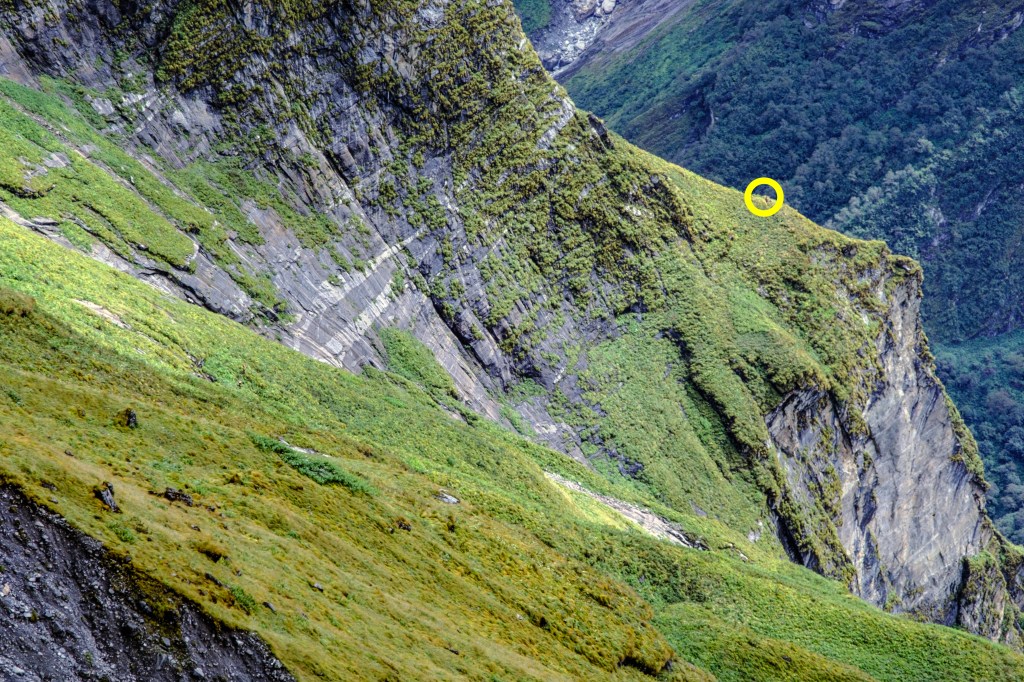
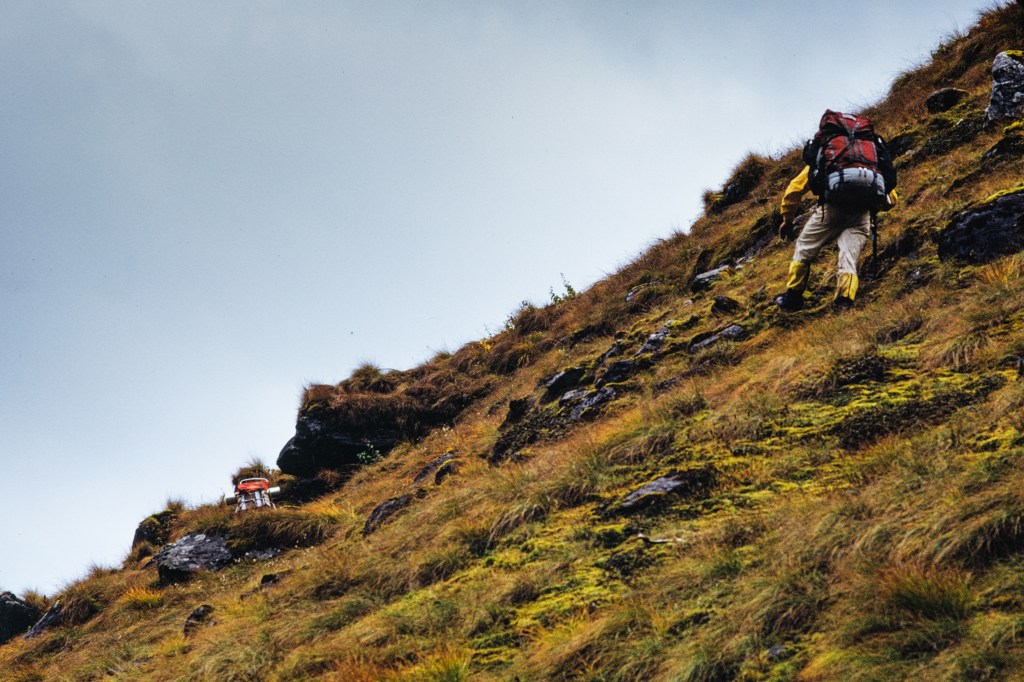
Image below shows two people walking the “trail” to Basecamp.
At Basecamp, the final climbing group now consisted of 3 guides and 6 clients. Simonson was just starting his guiding business. He selected this peak because the approach was not too long, the permit was cheap, and he wanted to make the second ascent. His clients were mostly people he had previously guided on Mt. Rainier and Denali. Most were fit, but had little climbing skill or experience. It is not surprising that three people quit after reaching Basecamp. The climb was more threatening than they expected.
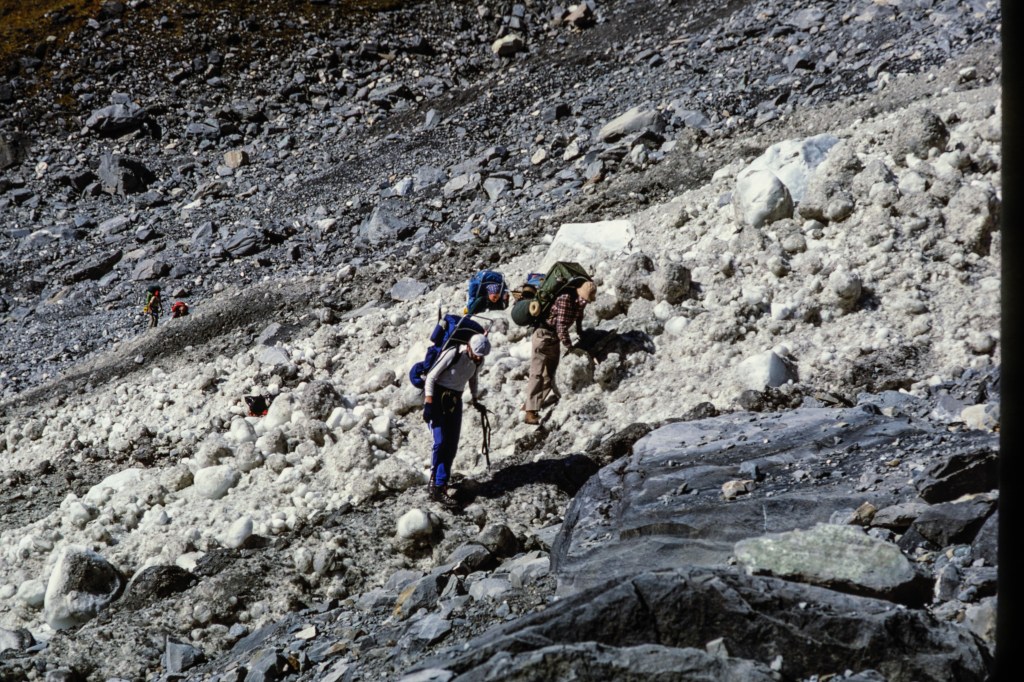
As you approach Basecamp, you cross a wide gully of dirt and rocks torn out of the grassy slope. An avalanche swept across this gash in 1979, killing three Japanese climbers. We hurried when crossing this area; I got my crossing time down to 4 minutes.
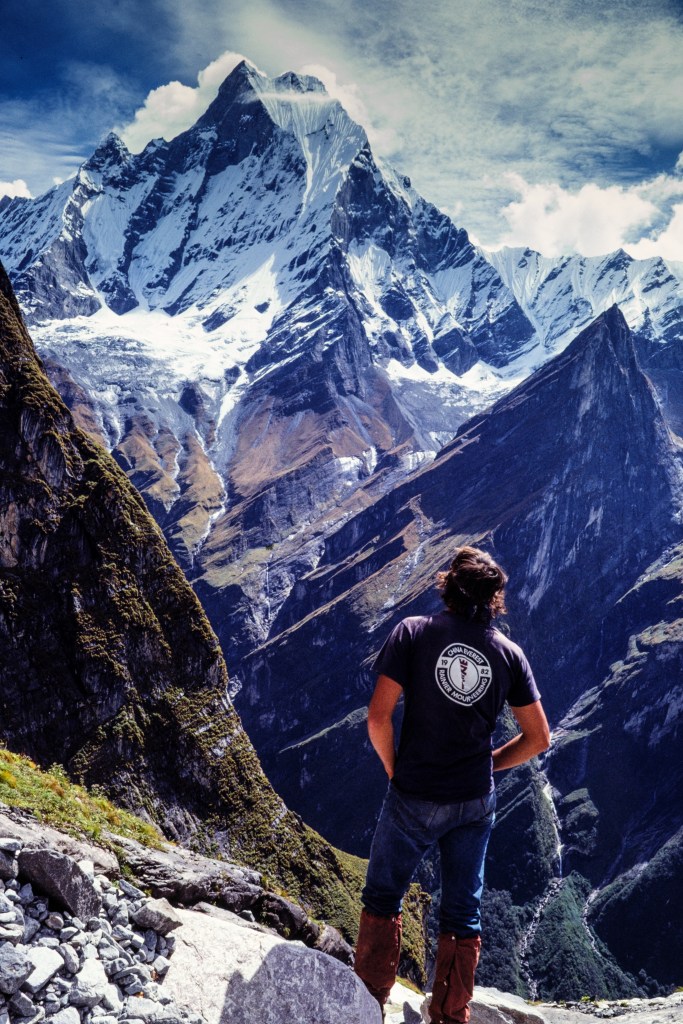
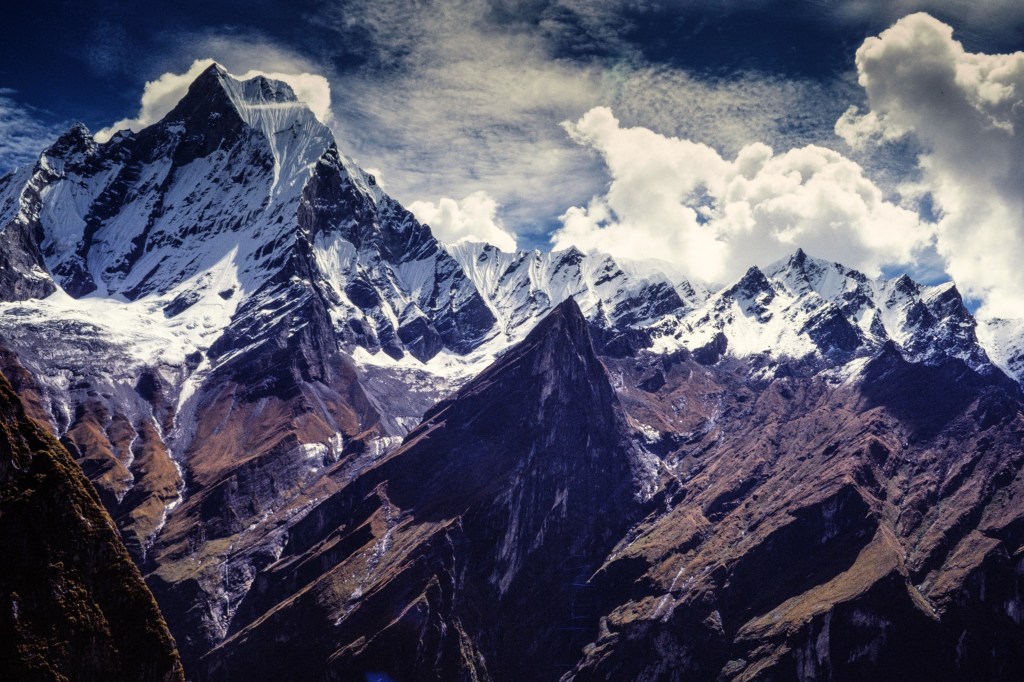
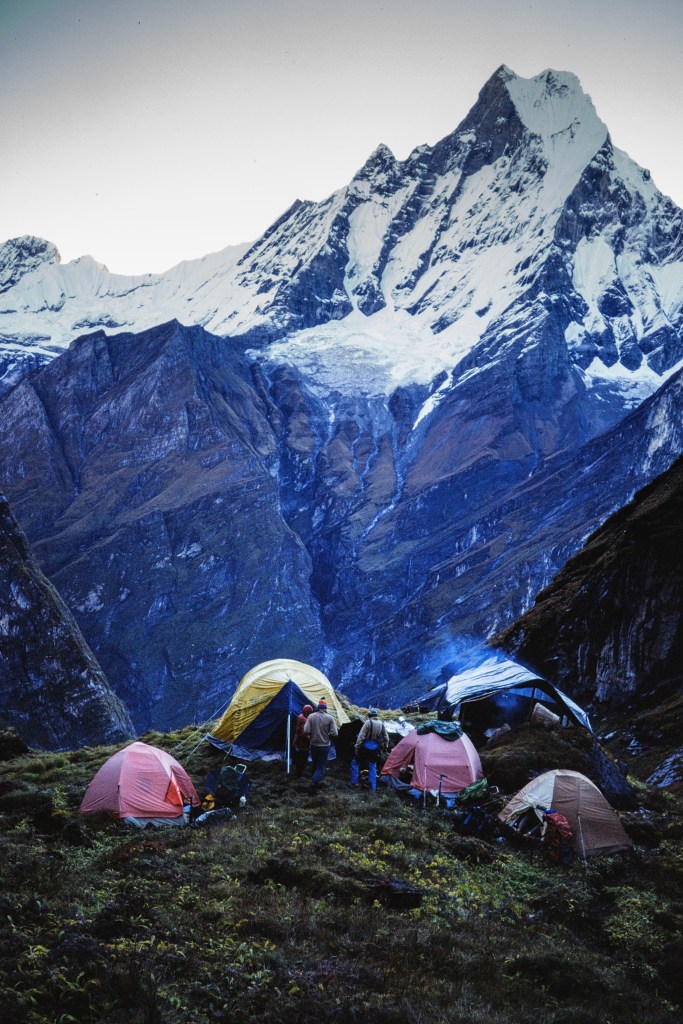
The next three pictures show views of Machapuchare from Basecamp.
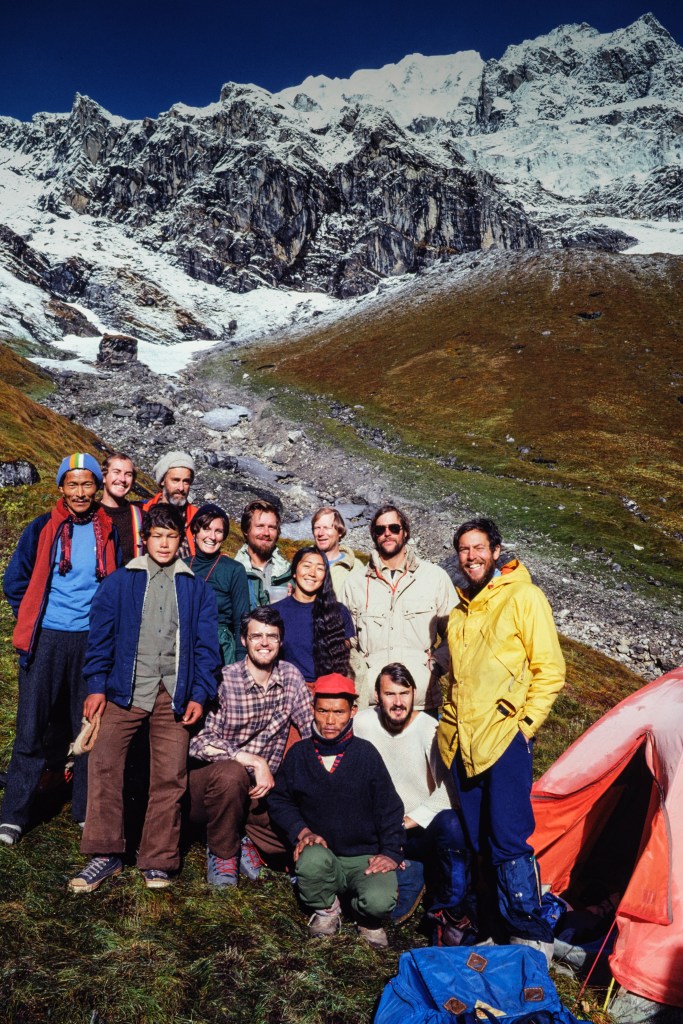
The next photo shows our climbing team, plus Nepali support staff who would remain at Basecamp. I am the guy in the yellow jacket with the black hair and white teeth.
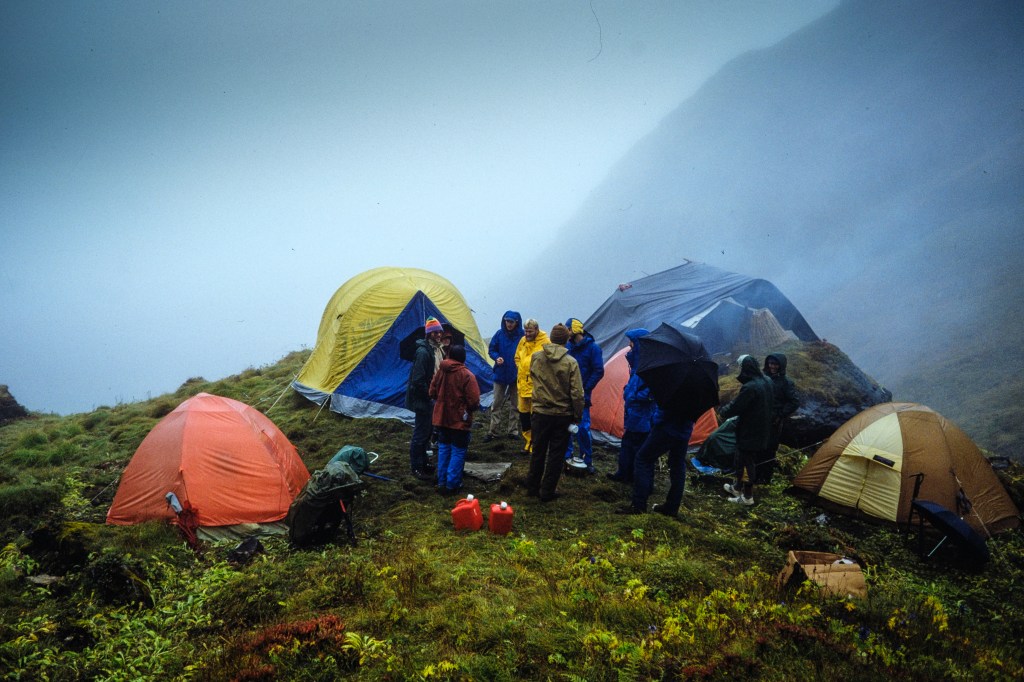
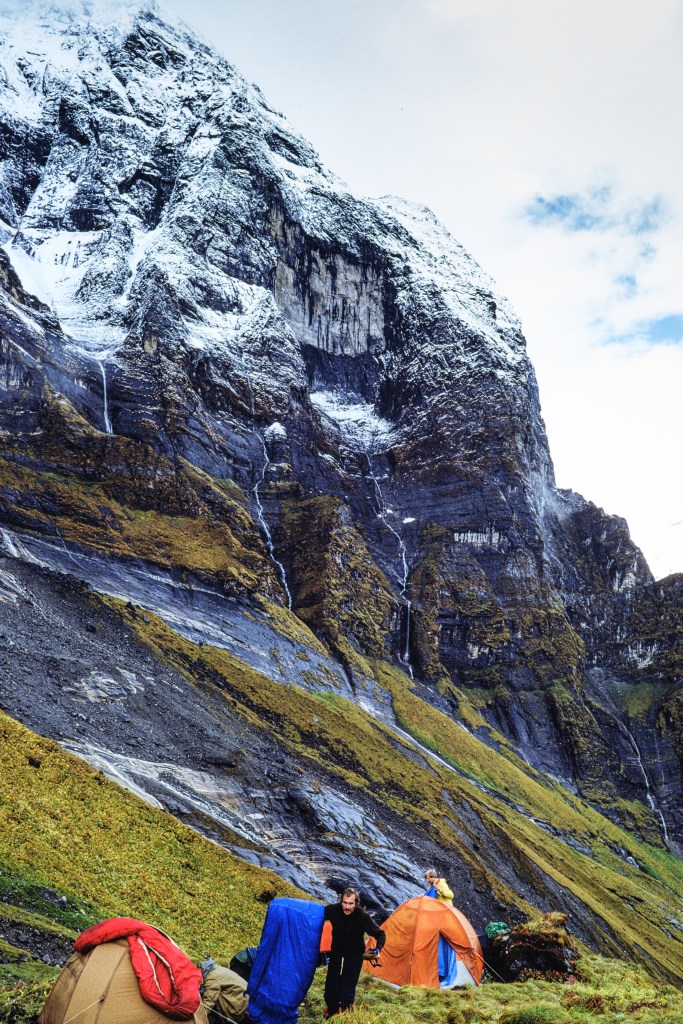
The monsoon rains were not finished yet. For three days it poured buckets, soaking our gear. Two clients had so much water in their tent that they cut a hole in the floor. Bad idea — more water came in the hole. Next photo shows our soggy home.
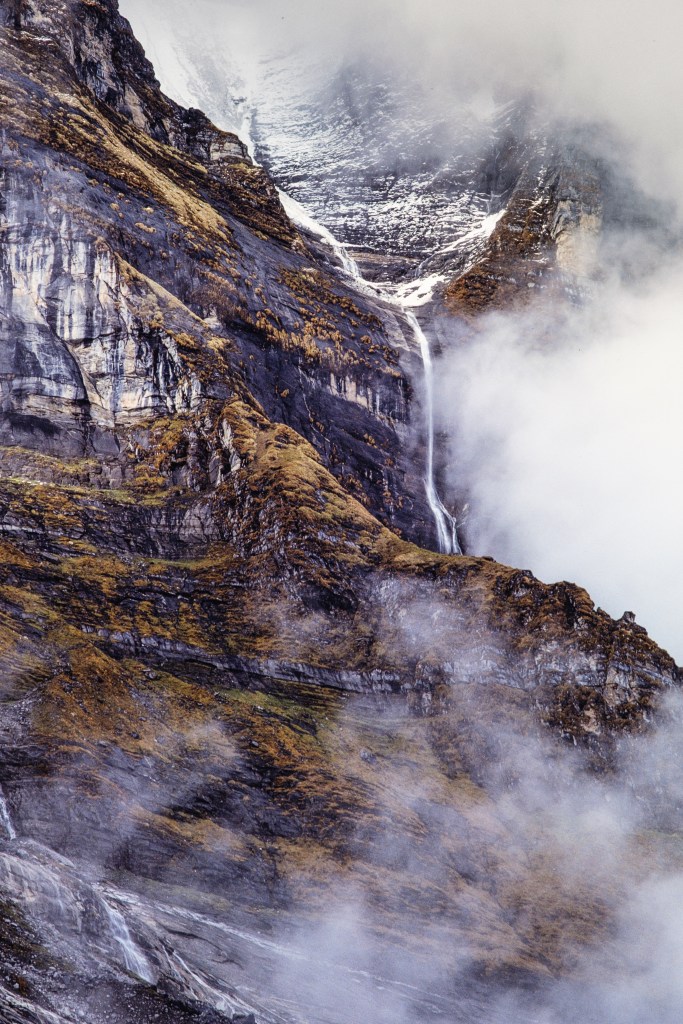
Water poured off the cliffs
Machapuchare looked lovely when the clouds cleared.
The bad weather did us a favor; it gave everyone three days to rest and acclimatize. When the clouds cleared, we dried our gear.
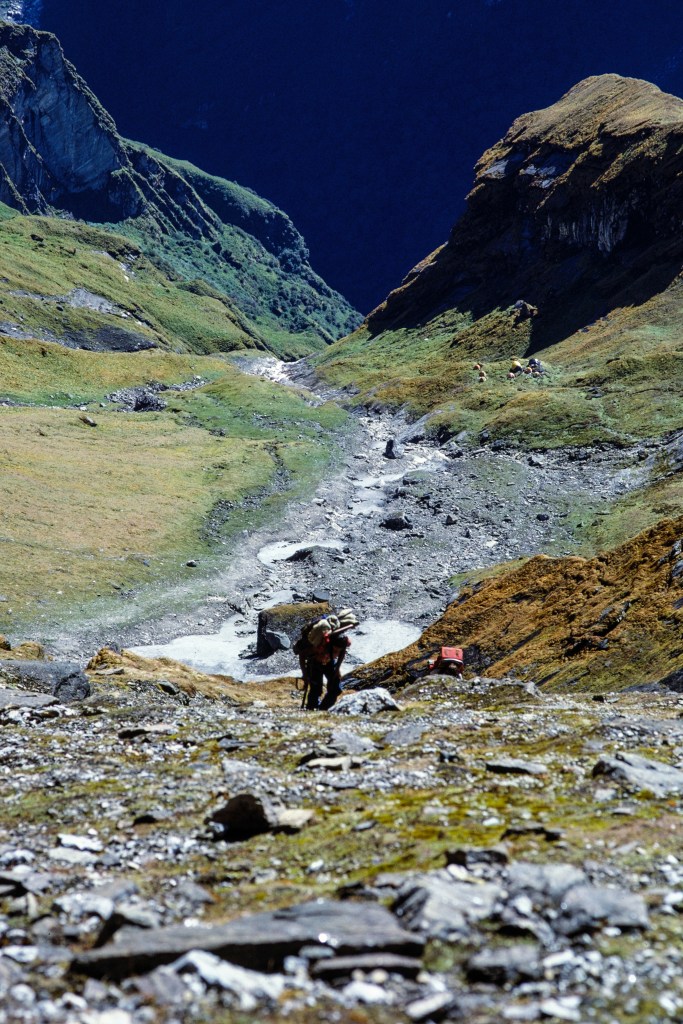
On Oct 1 we moved up to Camp 1, at 15,700 ft. Lovely to walk in the sun. Note Basecamp tents in two of the pictures below.
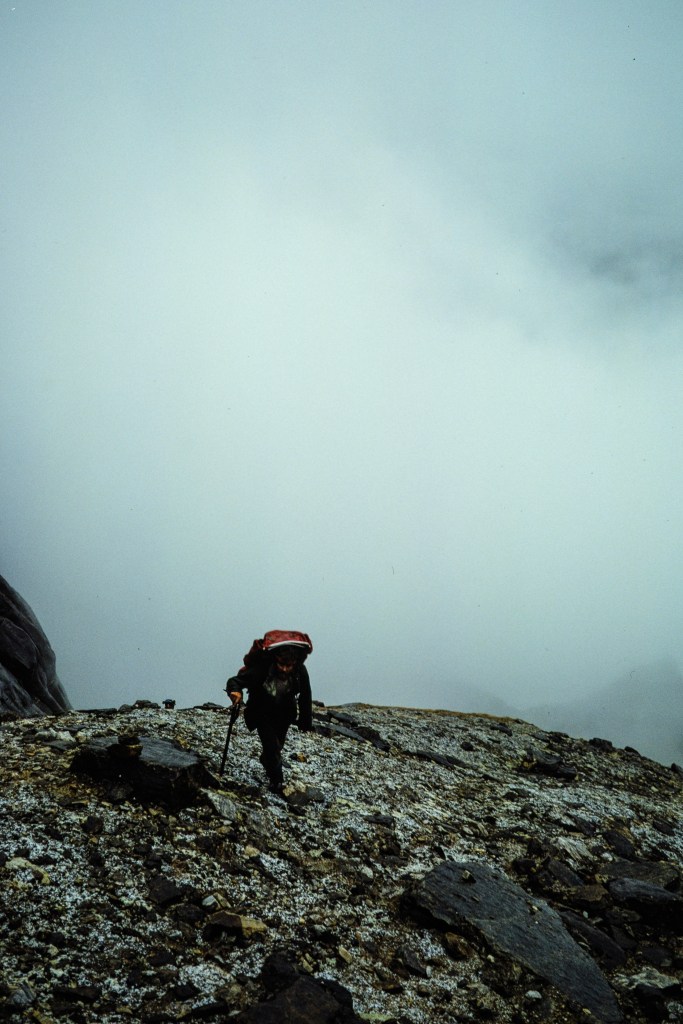
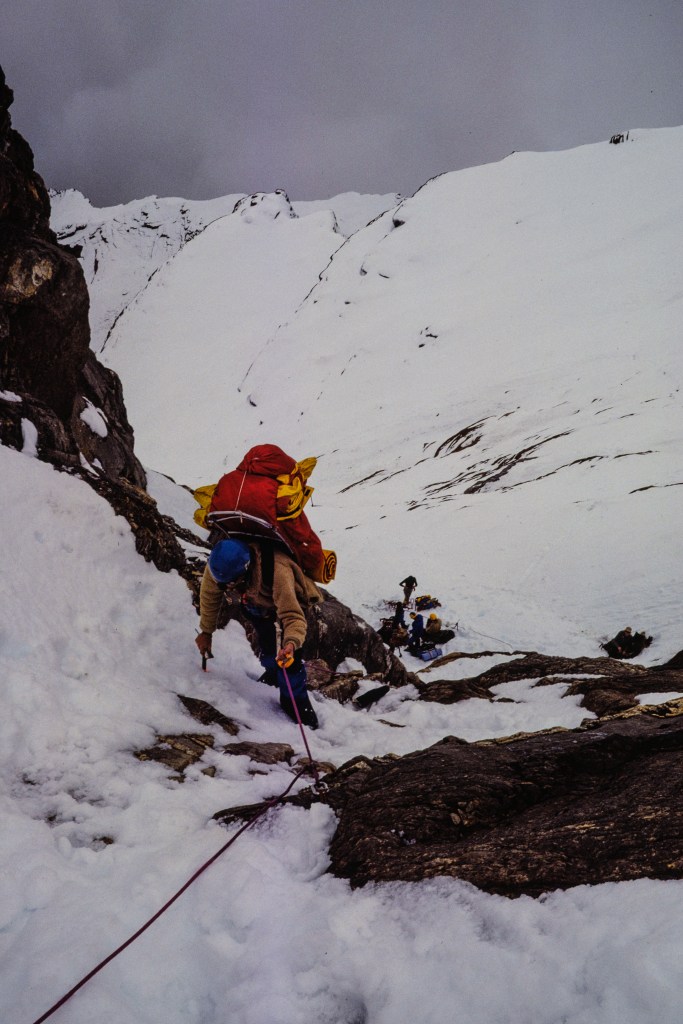
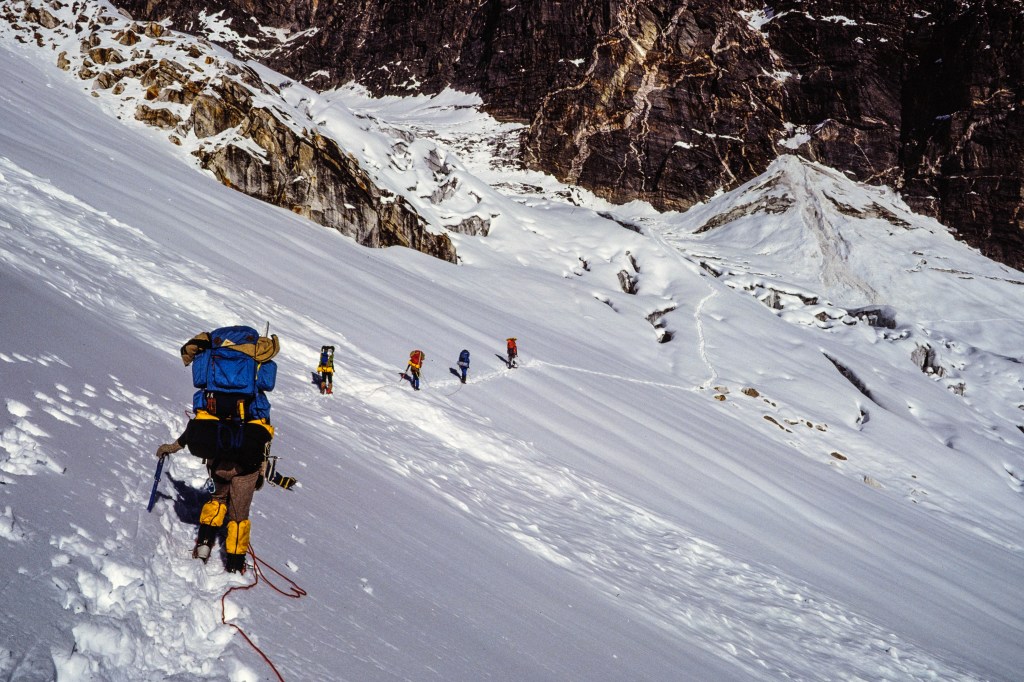
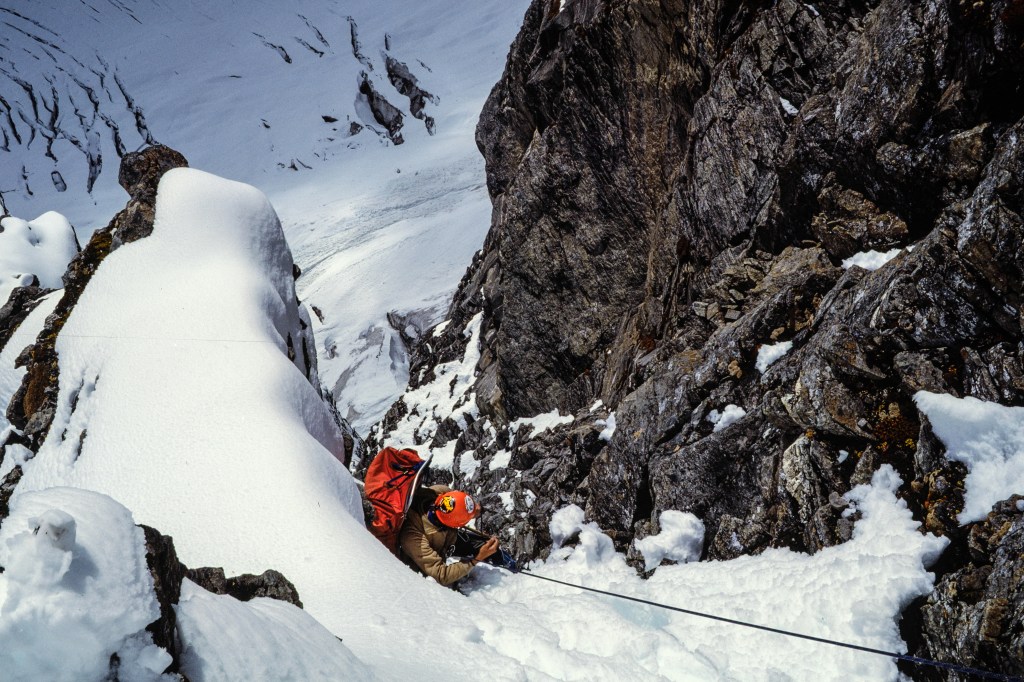
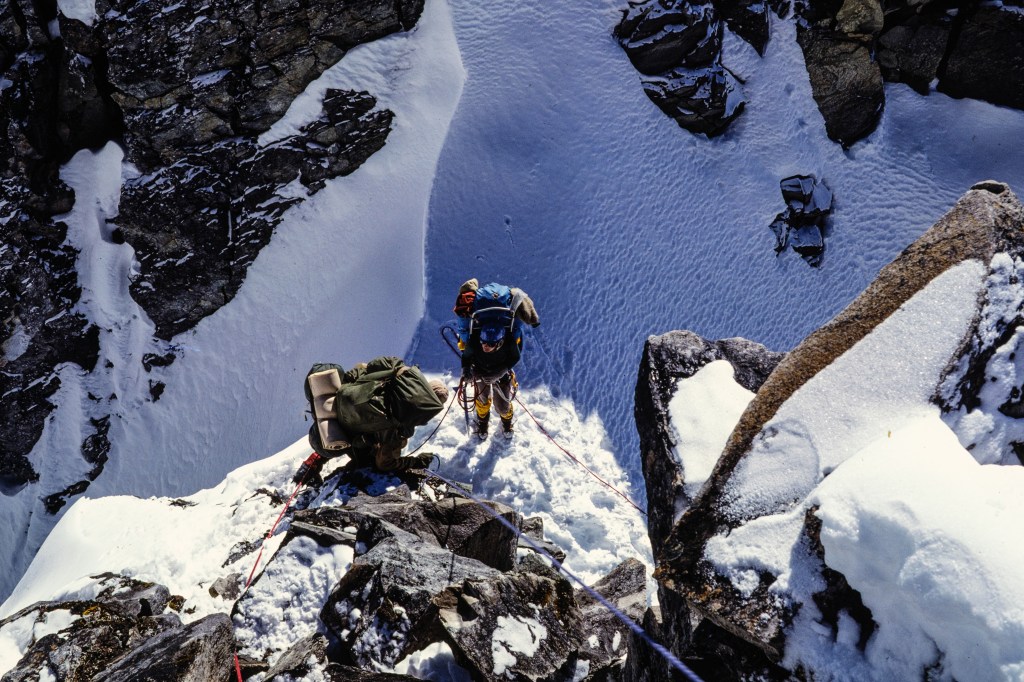
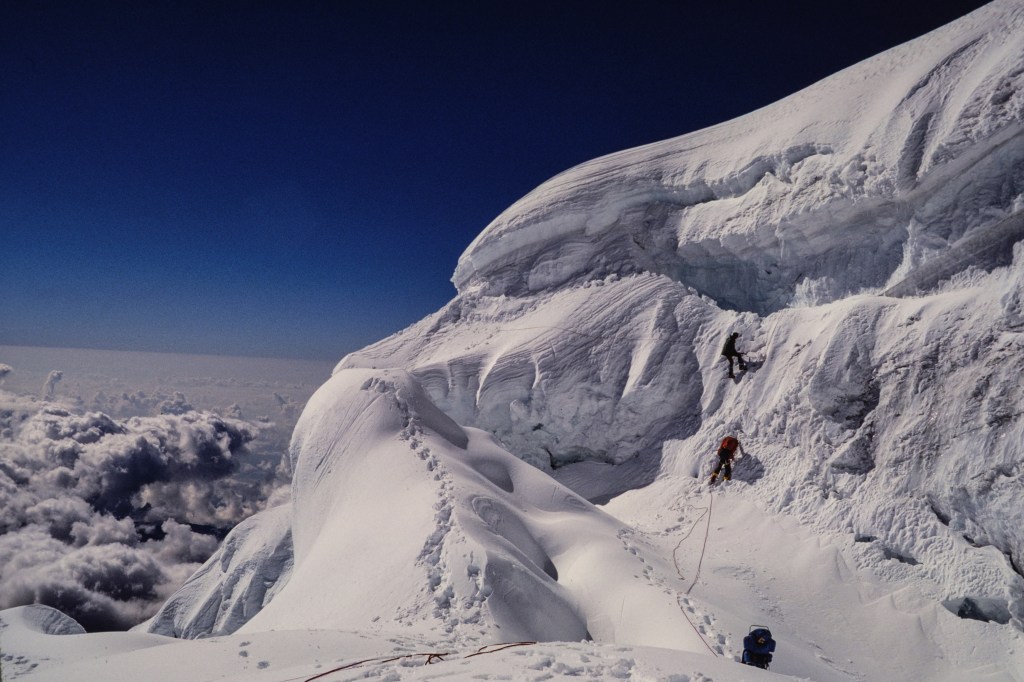
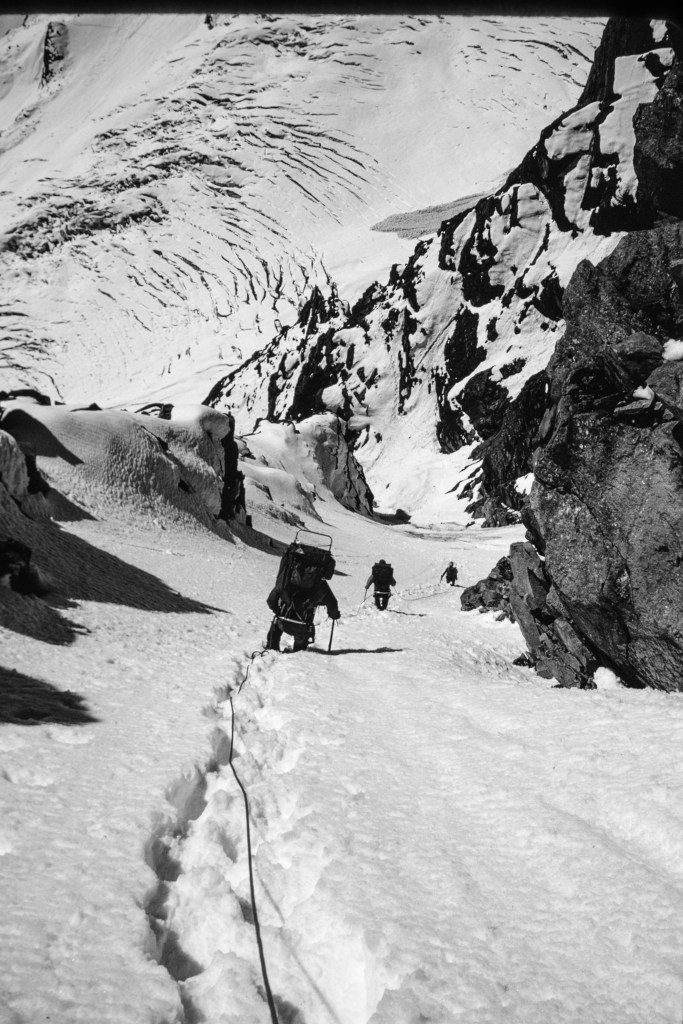
The photo below shows a climber who is pulling up on a rope that is anchored to the rock. Simonson, Wilson, and I carried up hundreds of feet of rope and attached this to steep parts of the route. We anchored this “fixed line” to rock or snow using ice screws, snow pickets, pitons, nuts, and slings. Climbers use a clamp, called an ascender or jumar, that grips the fixed line and is attached to the climber. This makes for safer travel when shuttling loads on steep terrain. It means the clients do not always have to be attached to the guides – instead, they are attached to the fixed line.
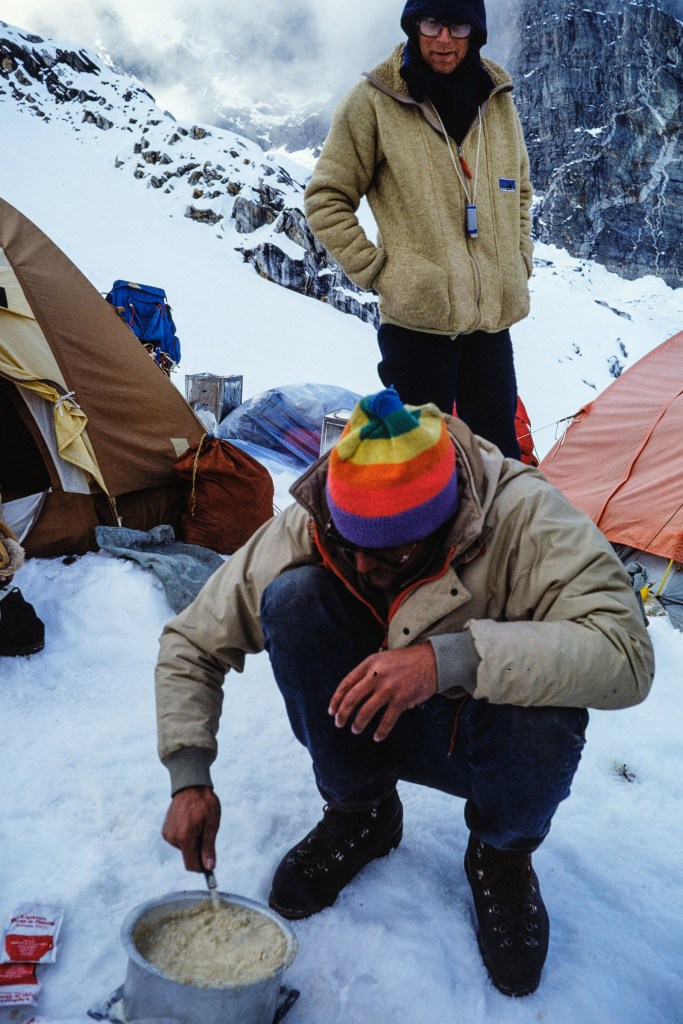
At Camp 1, Simonson stirs a pot of “food.” Looks yummy!
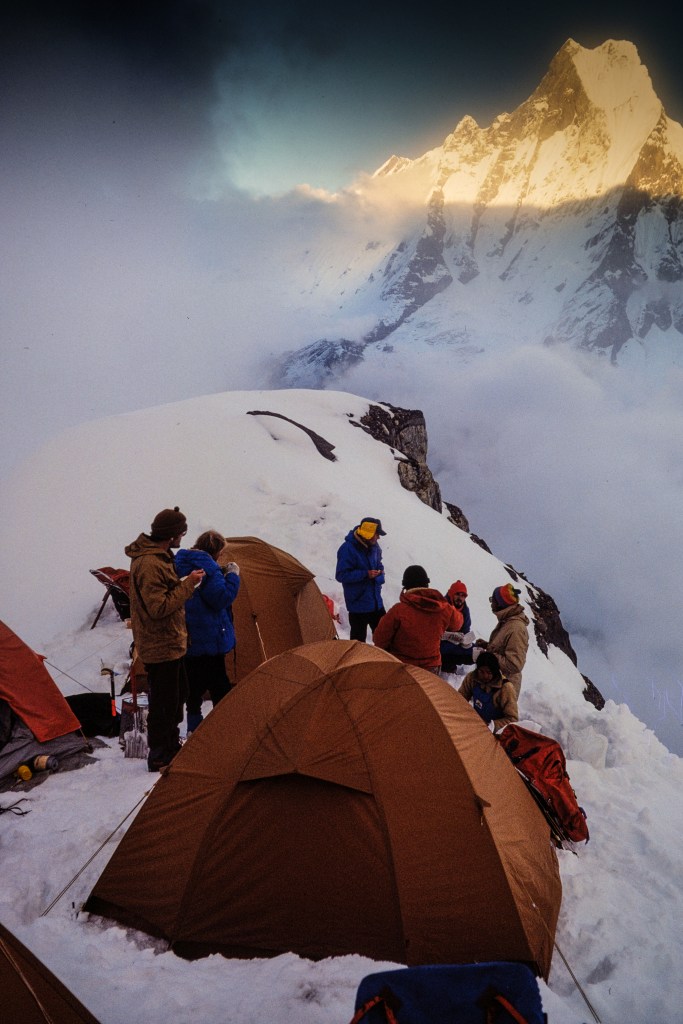
Our first evening meal at Camp 1.
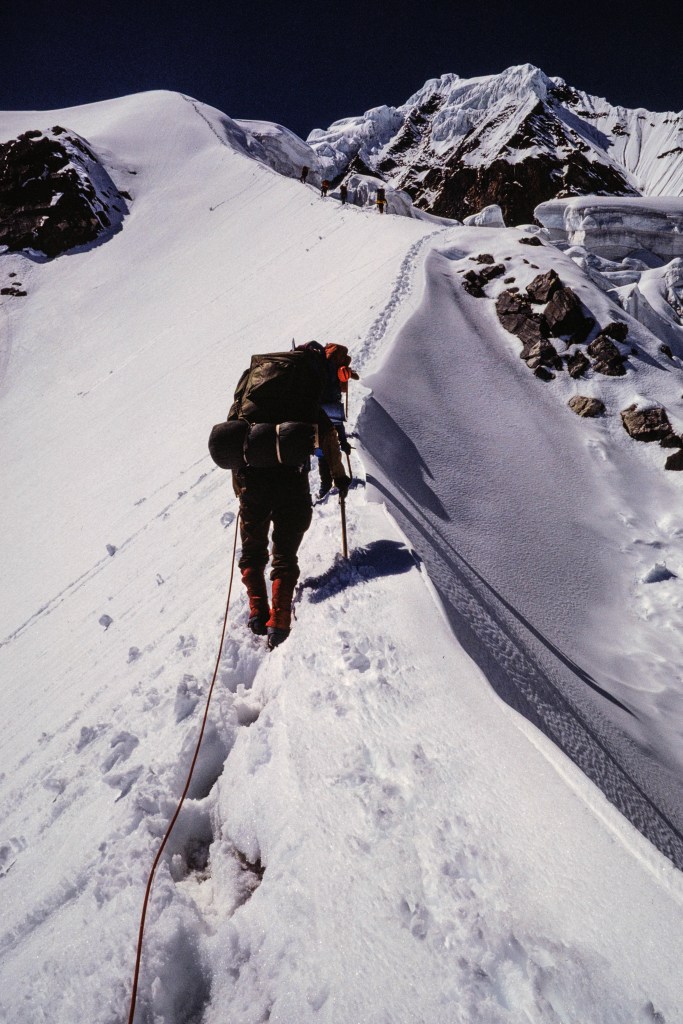
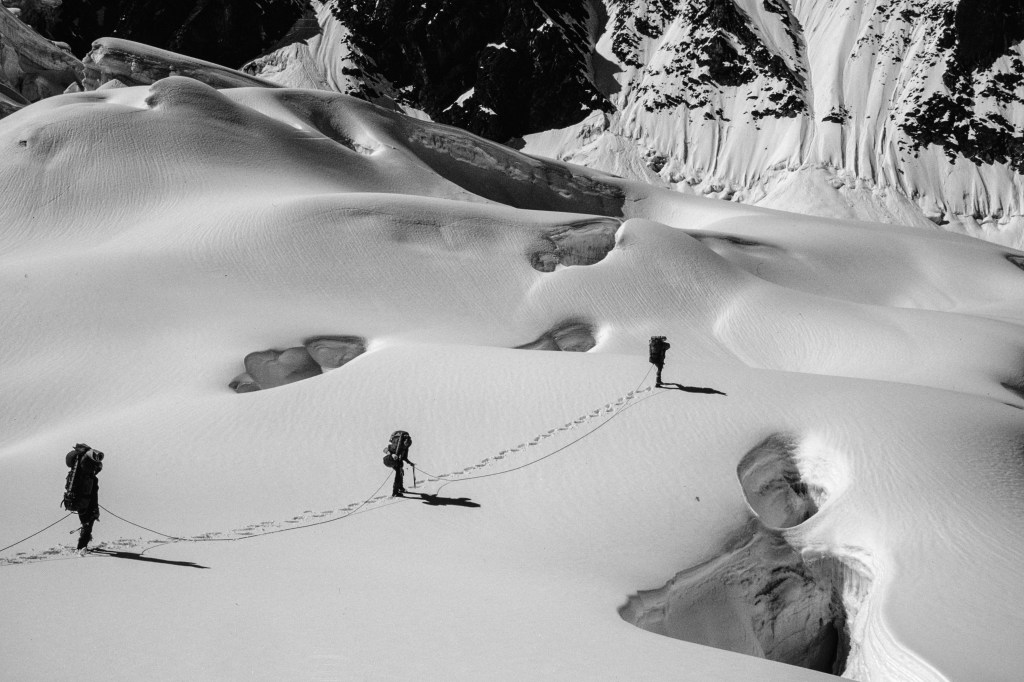
In addition to installing fixed line, guides provide two additional services. First, guides find the route. Guides lead up the steep sections. We find a path through the fields of crevasses. Route finding is a physical and mental drain; the person leading must constantly decide where to go. Those that follow just have to put their feet where the guide stepped. Second, we kick the steps. Walking in deep snow is work. At altitude, this is a penance. Experienced leaders learn to set a steady pace; step and breath, pause, step and breath, pause… Endless. One hundred steps, one hundred more. Over and over. The work that the first person performs is enormous. A good leader sets a pace that everyone can follow, without needing a rest, for an hour or so.
Parts of the climb were steep with lots of air below. The Nepalese government classifies Hiunchuli as a “trekking peak,” but it is harder than most peaks in this category and involves serious risk. A fatal fall is possible and other hazards included falling rock (note the helmets in some photos), snow and rock avalanches, and crevasse falls. Even though the guides try to protect the clients, this is not a safe endeavor.
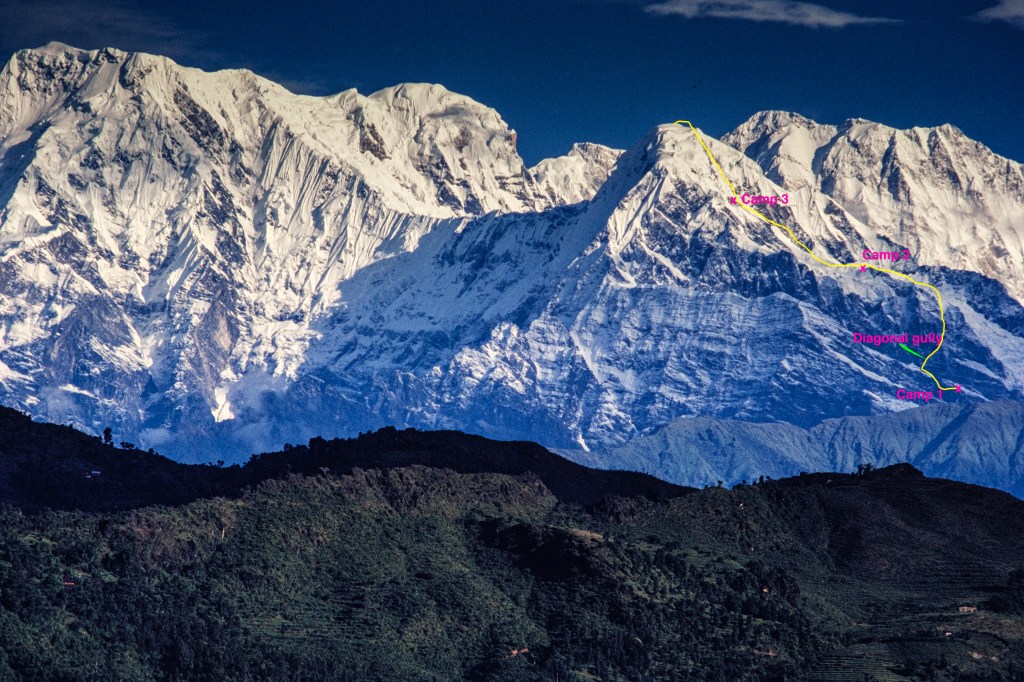
On Oct 2, Simonson, Wilson, and I placed fixed line in a steep, diagonal gully. The next photo shows the location of our 3 camps and the route, including the diagonal gully.
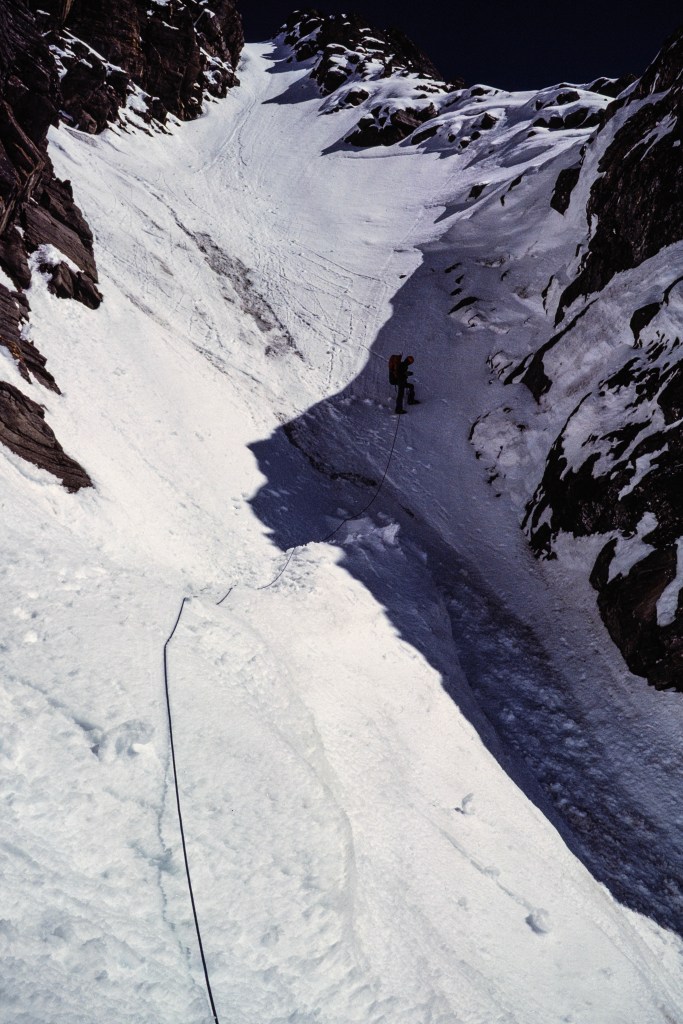
The diagonal gully is on left side of the next picture, our Camp 1 can be seen near the middle.
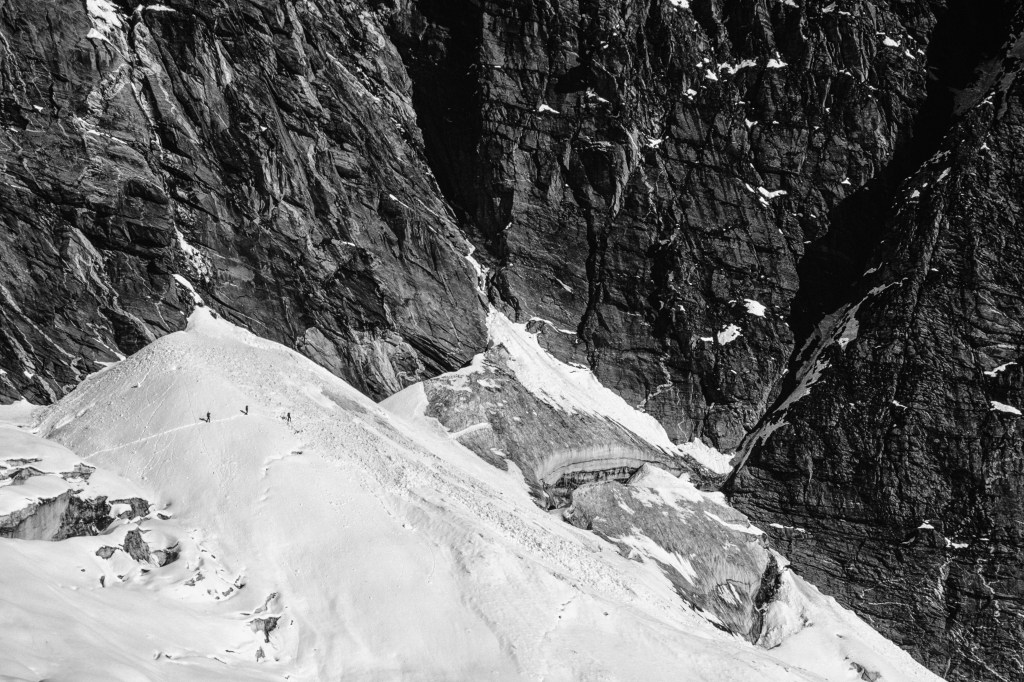
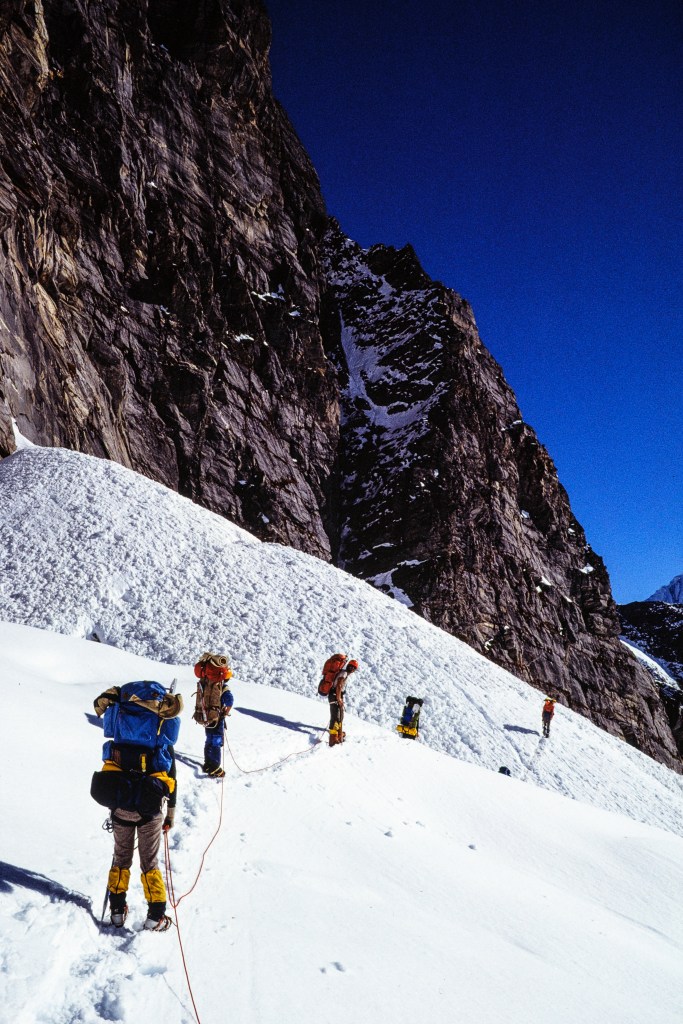
The next several pictures show climbers approaching the gully, crossing an avalanche area, entering the gully, and climbing up to a ridge.
In the photo below, 3 climbers on the left have stopped just before they have to cross debris from an avalanche. The diagonal gully is on the right.
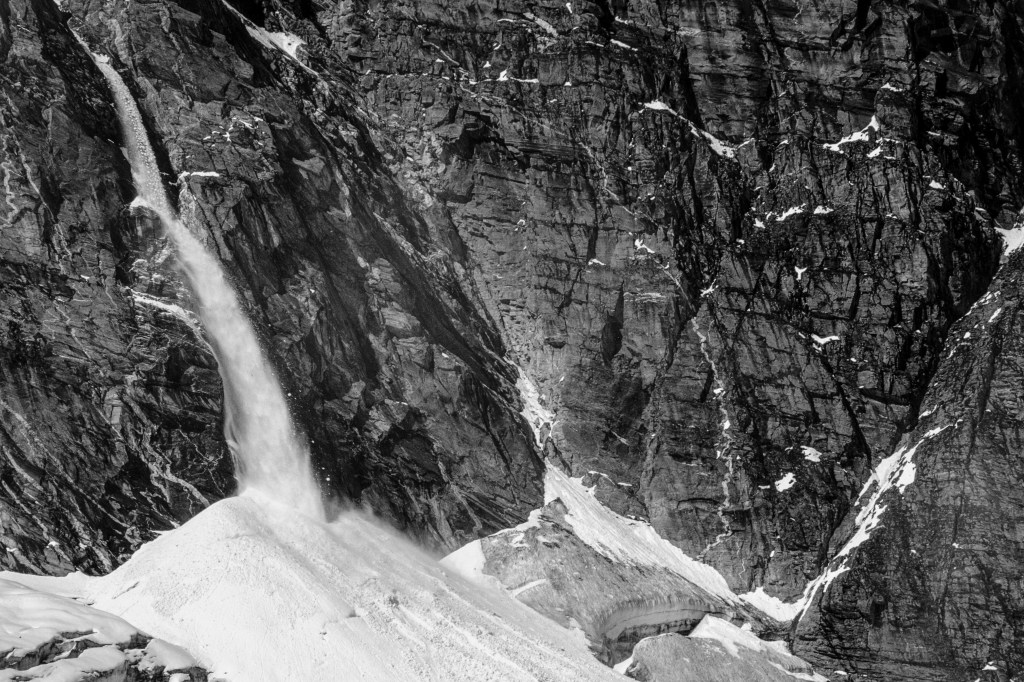
In the photo below, an avalanche comes down near where the climbers were in the previous photo.
In picture below, the avalanche debris is right in front of the climbers. The gully is further away in shadow.
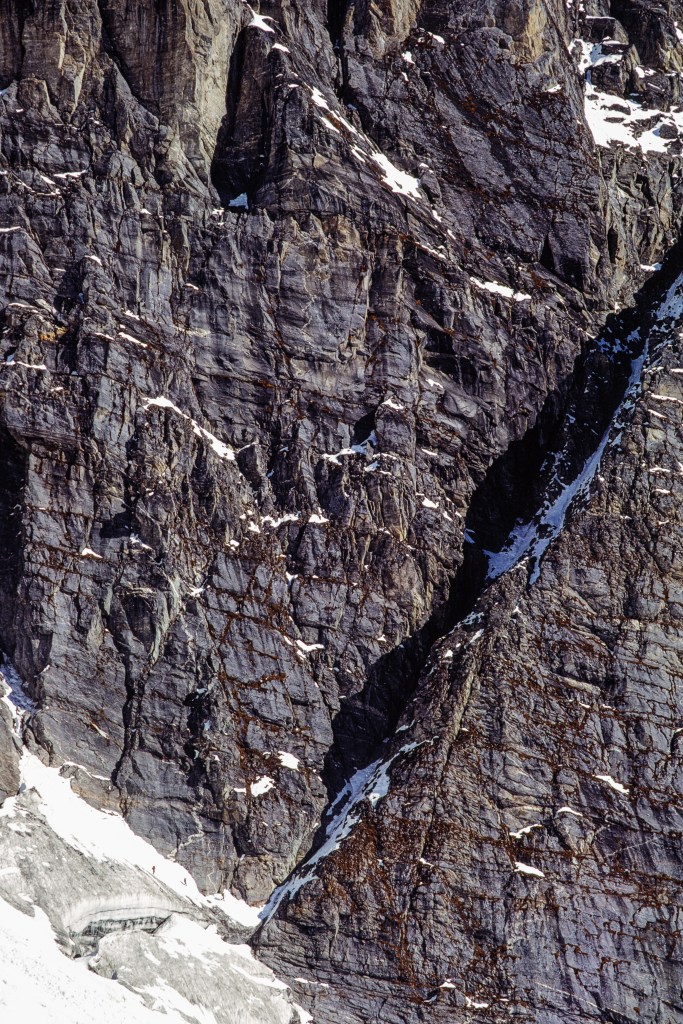
Below, you can see three climbers about to enter the diagonal gully.
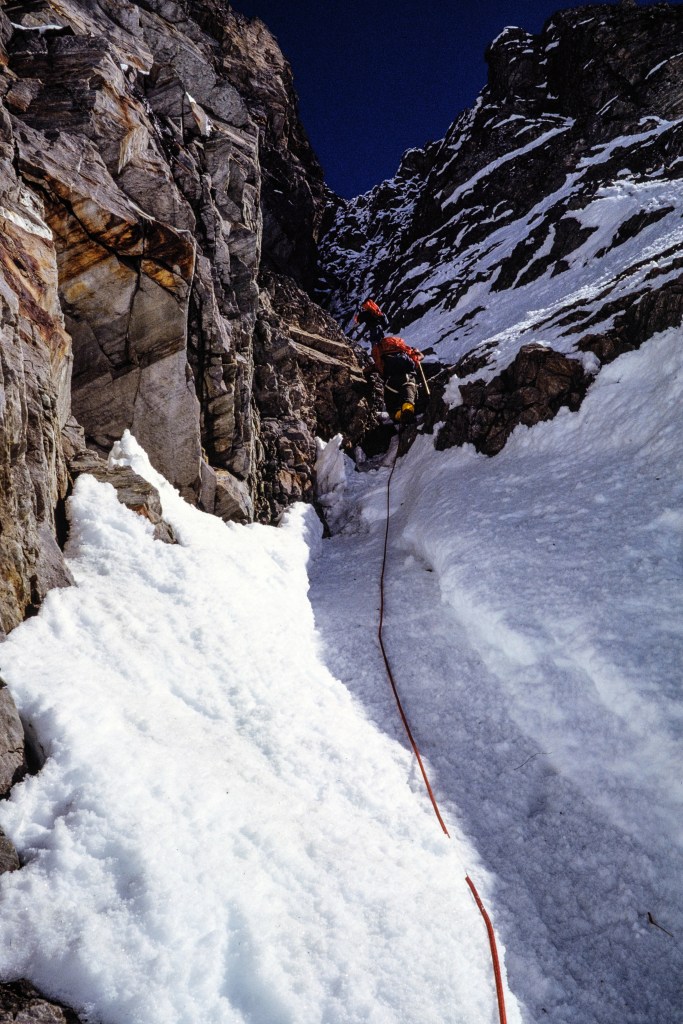
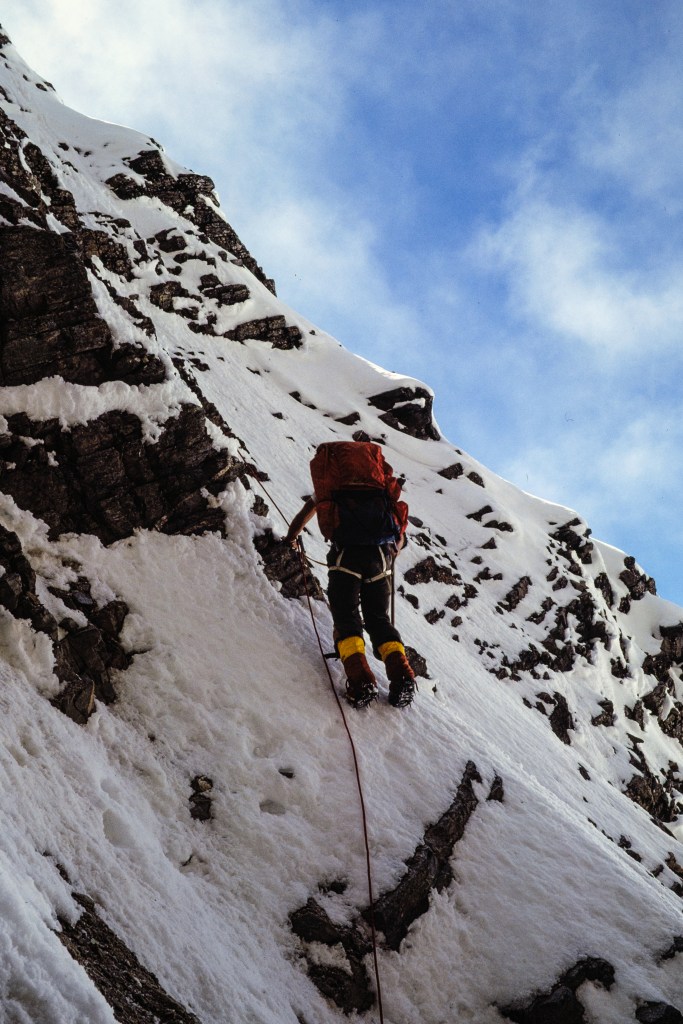
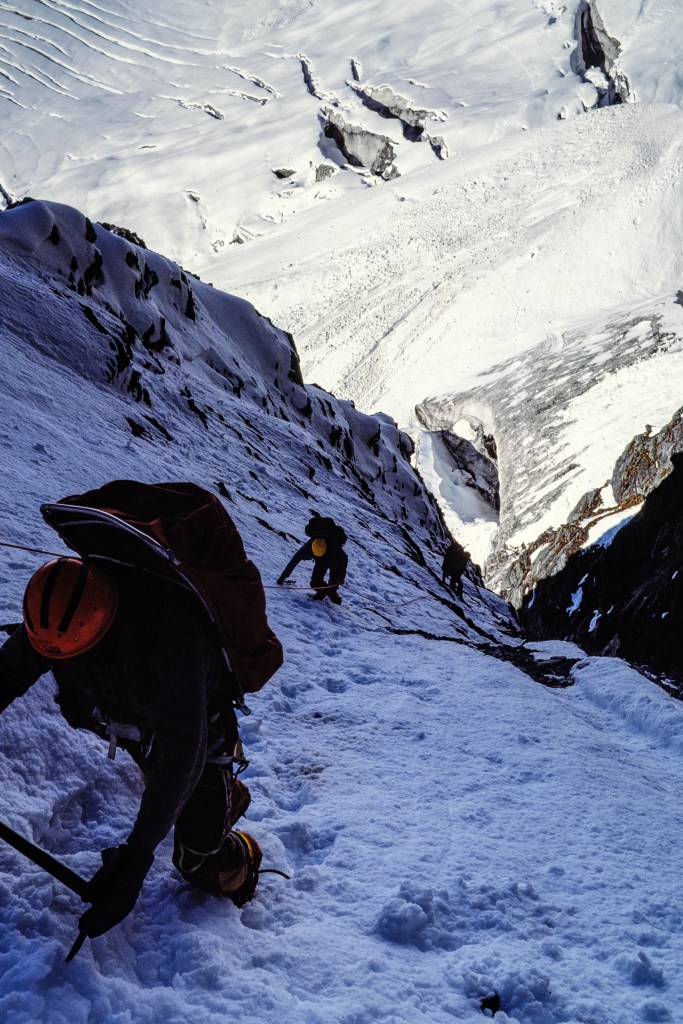
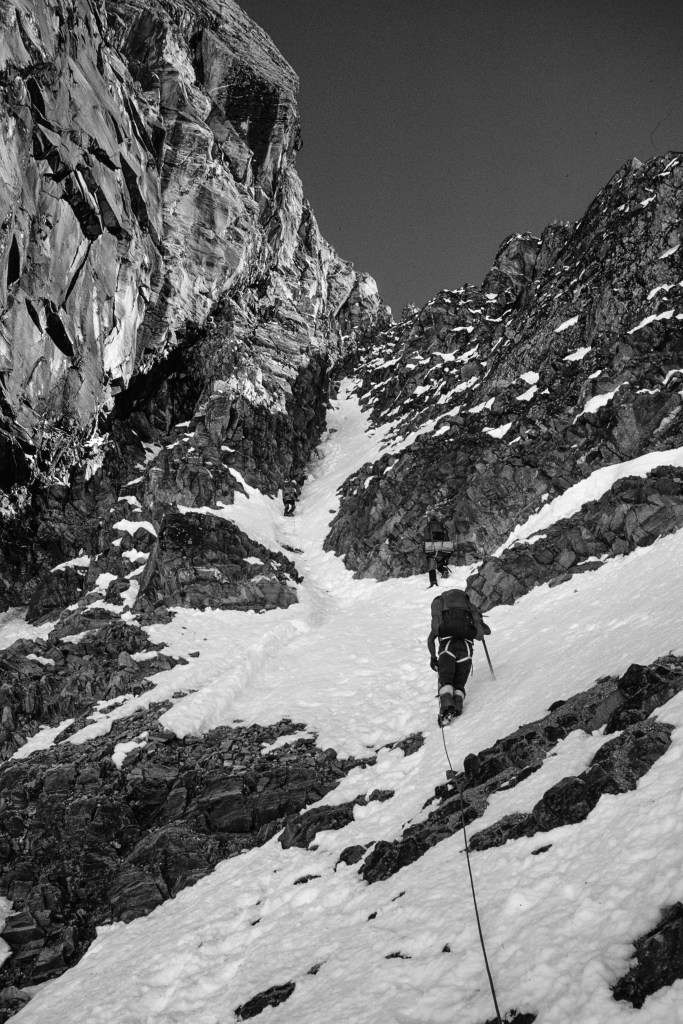
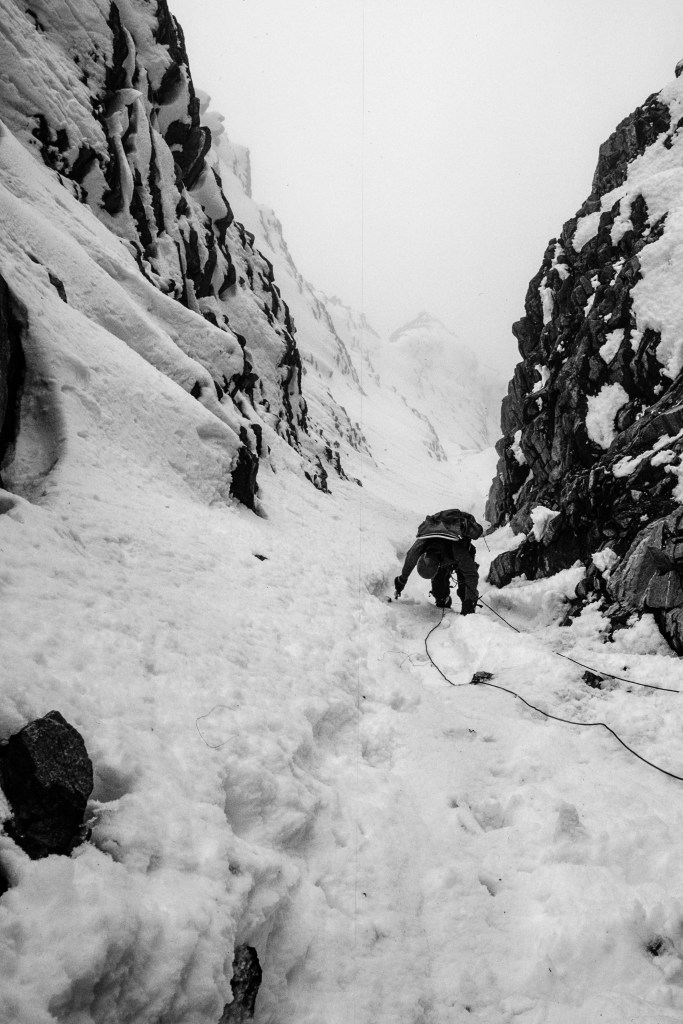
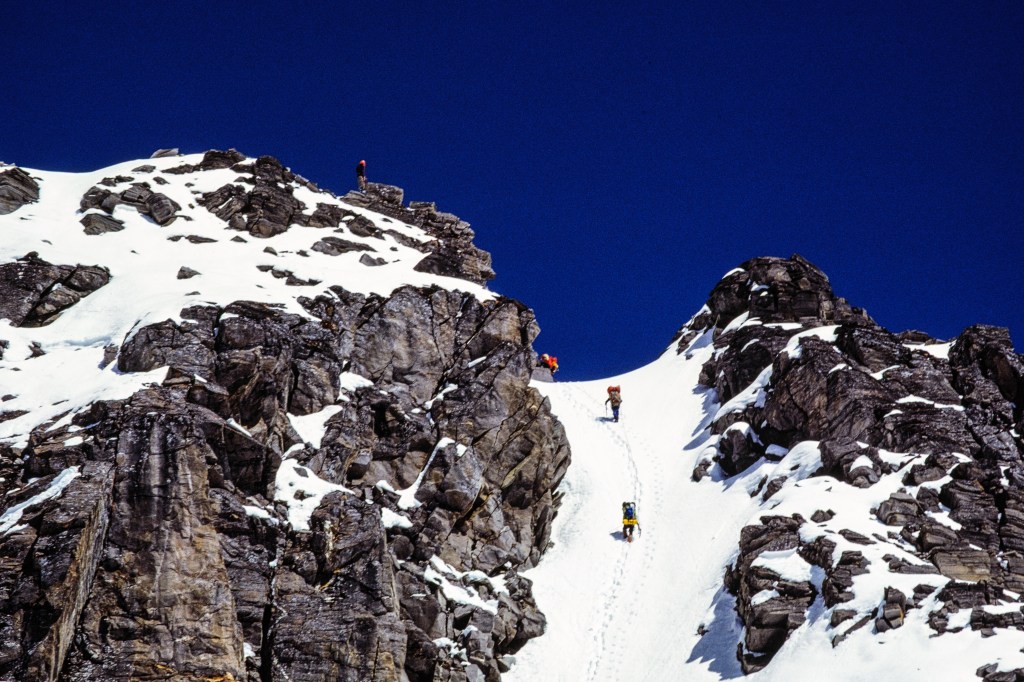
Finally we emerged on a ridge of snow and rock.
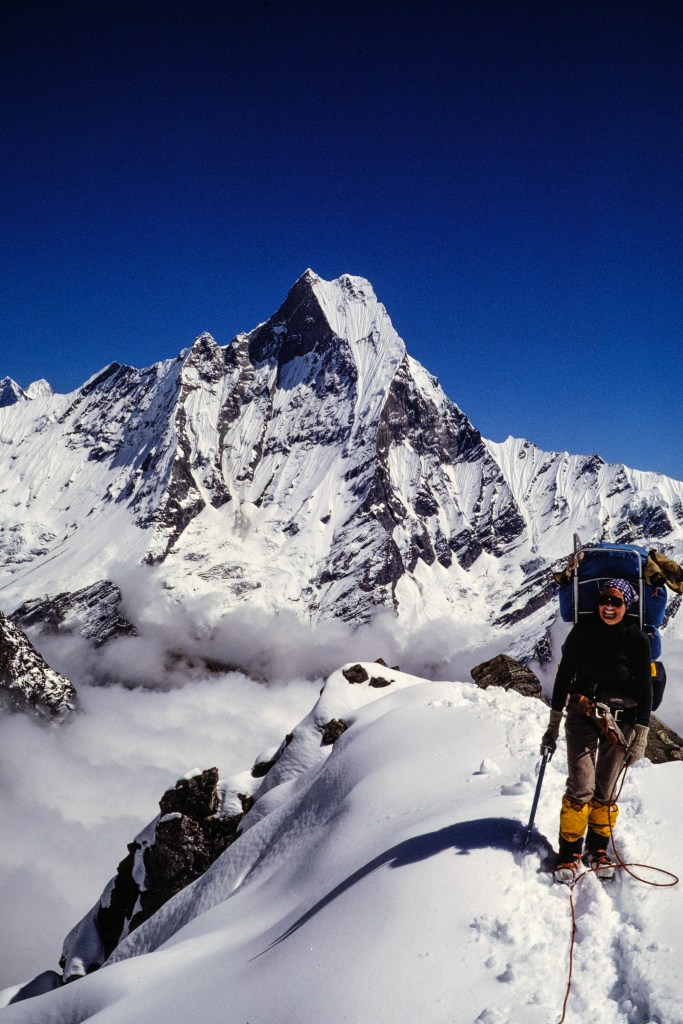
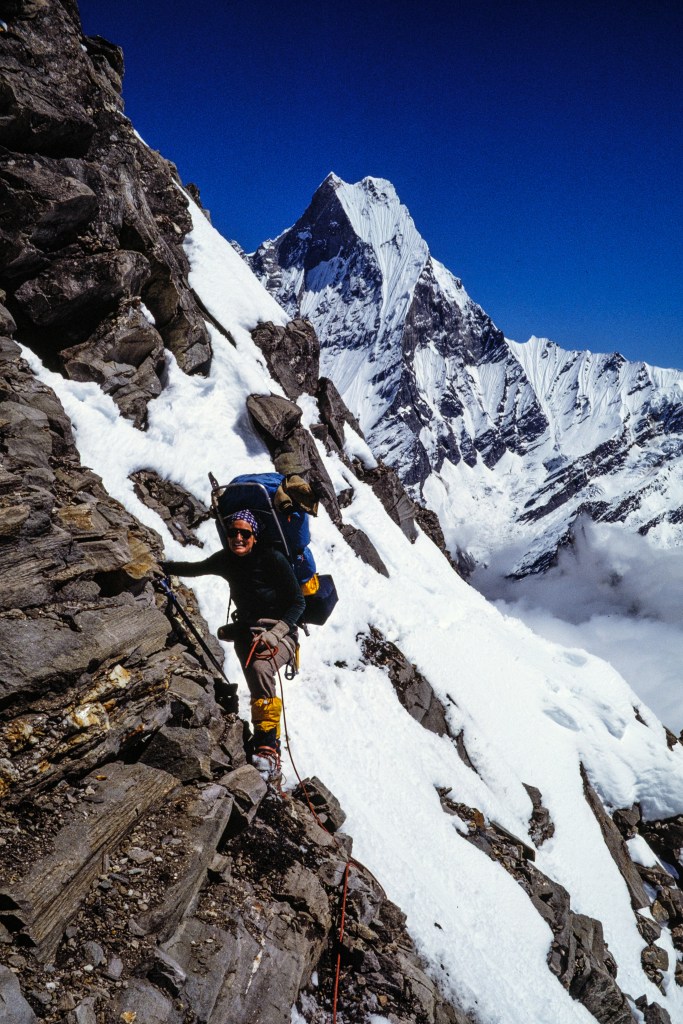
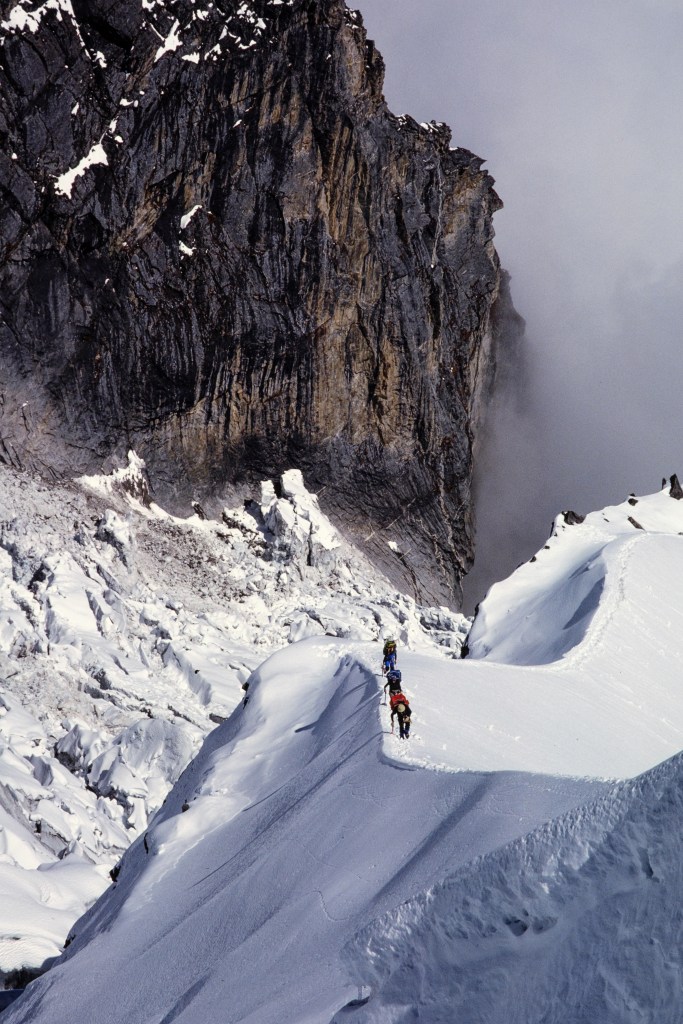
On Oct 3 we moved into Camp 2 at 17,300 feet.
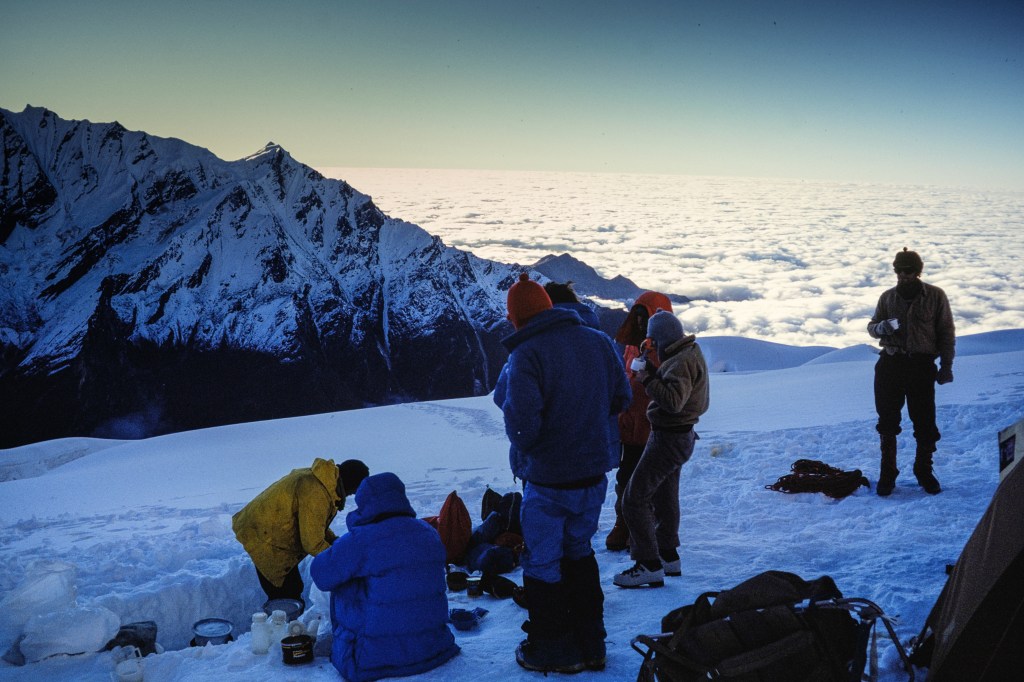
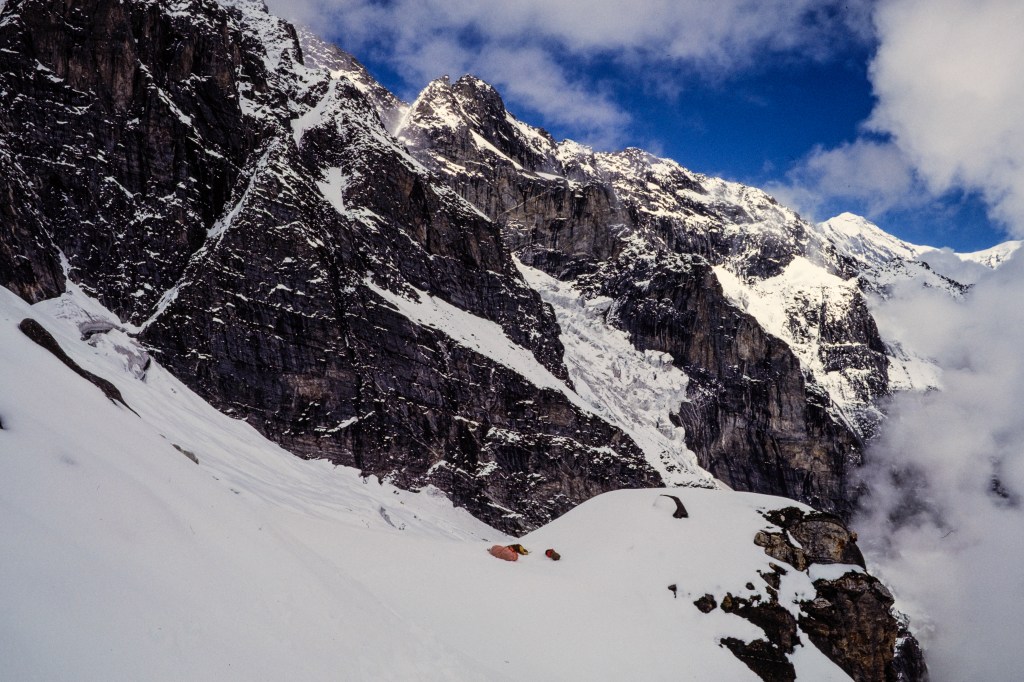
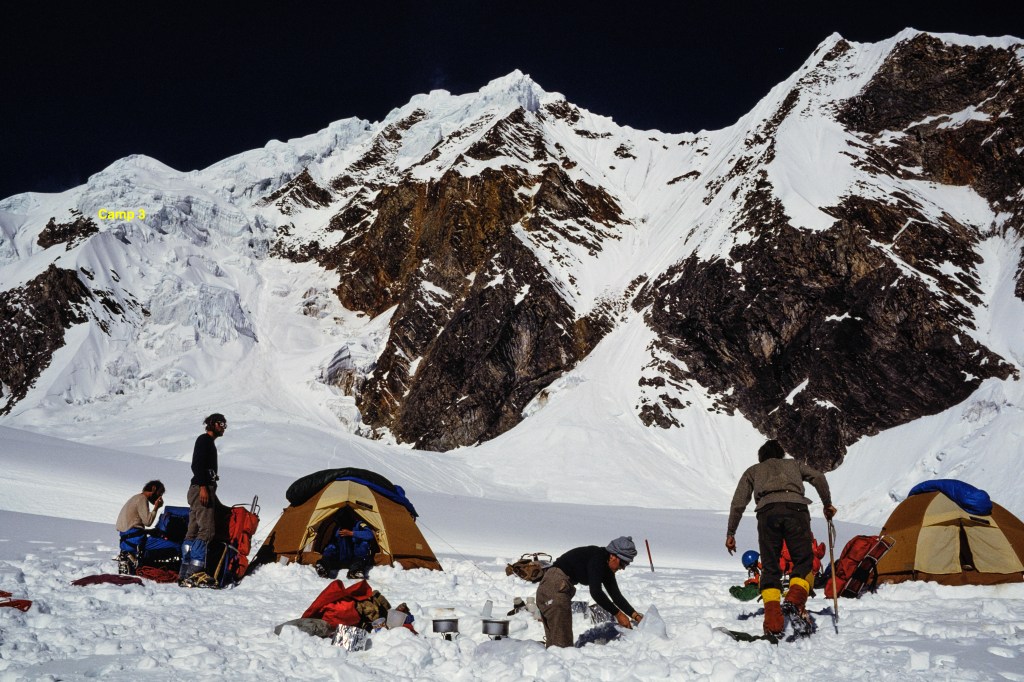
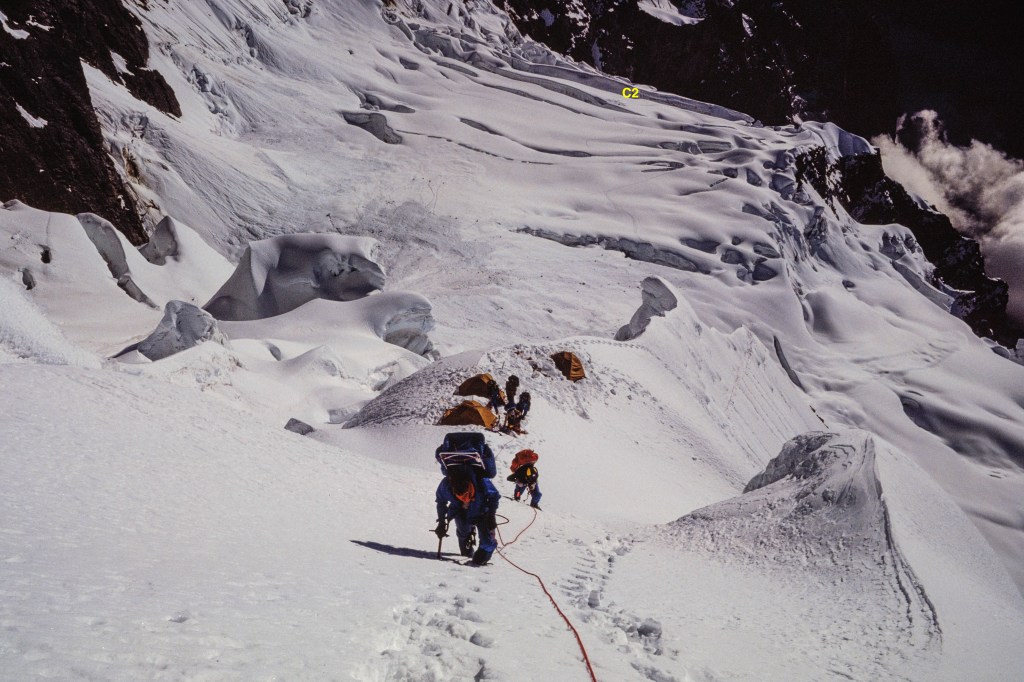
The photo below shows Camp 2, with the location of our future Camp 3 marked in upper left.
The photo below shows Simonson and Wilson putting in fixed line on the route to Camp 3.
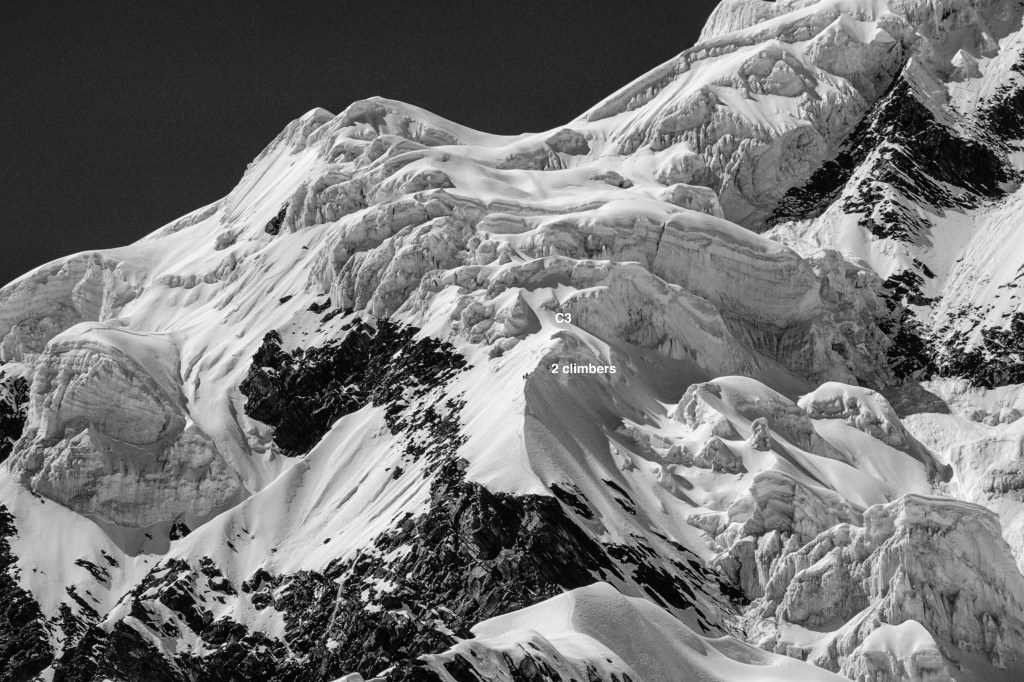
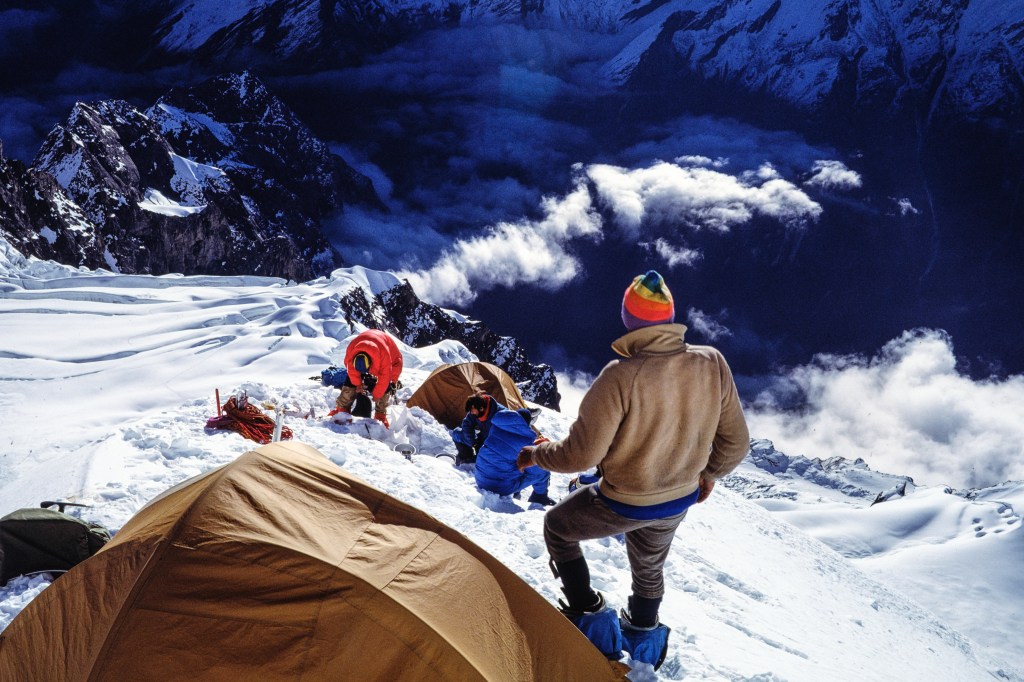
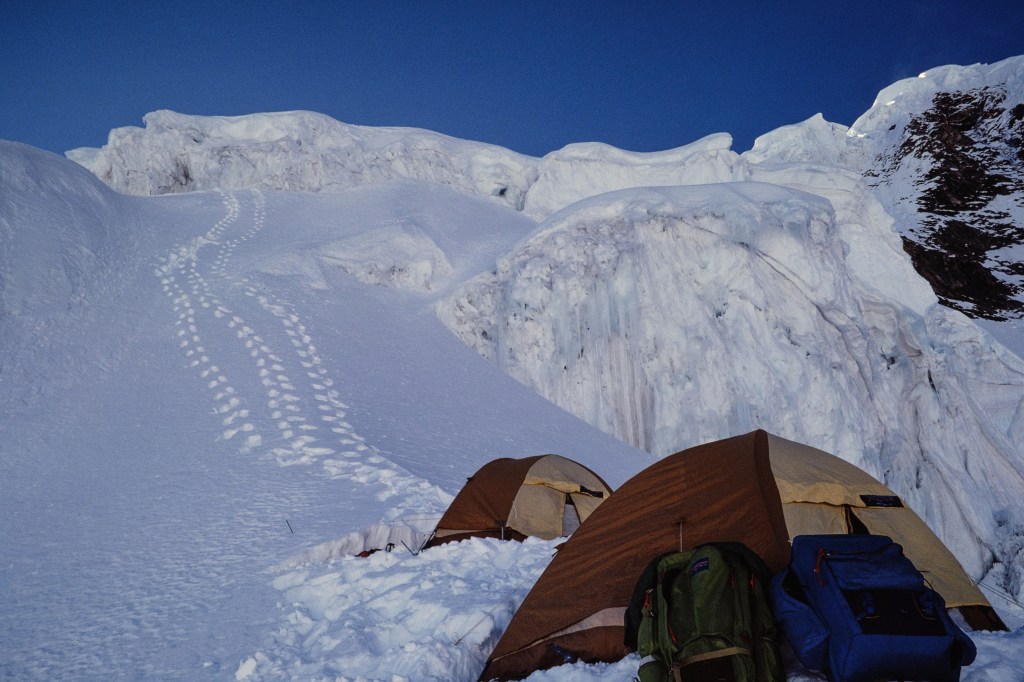
The next set of photos shows our move up to Camp 3, 18,700 feet, on Oct 7.
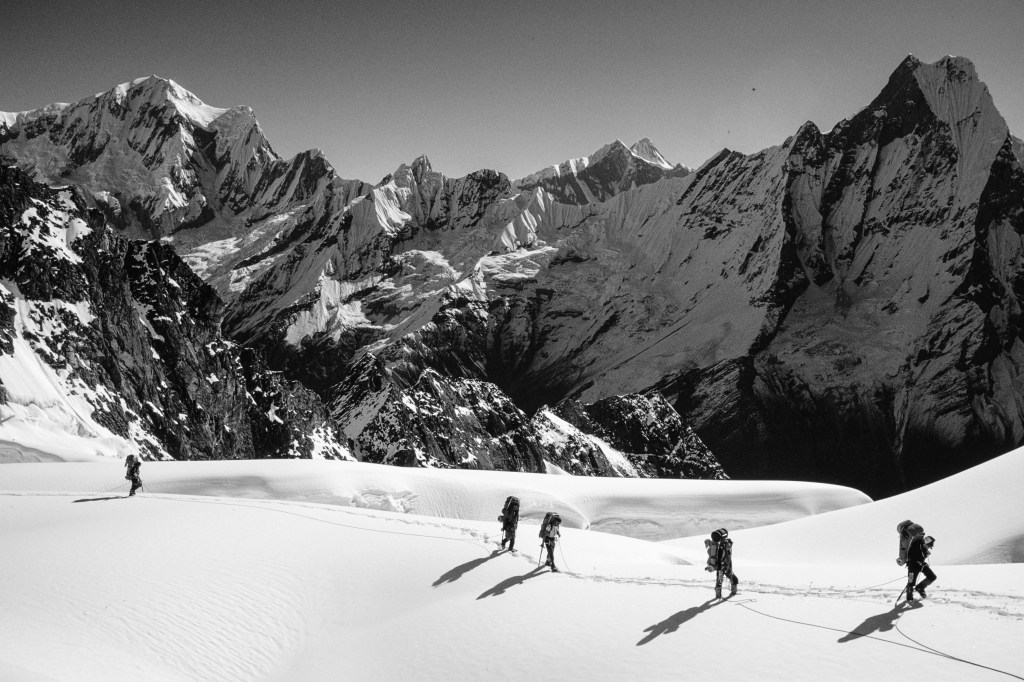
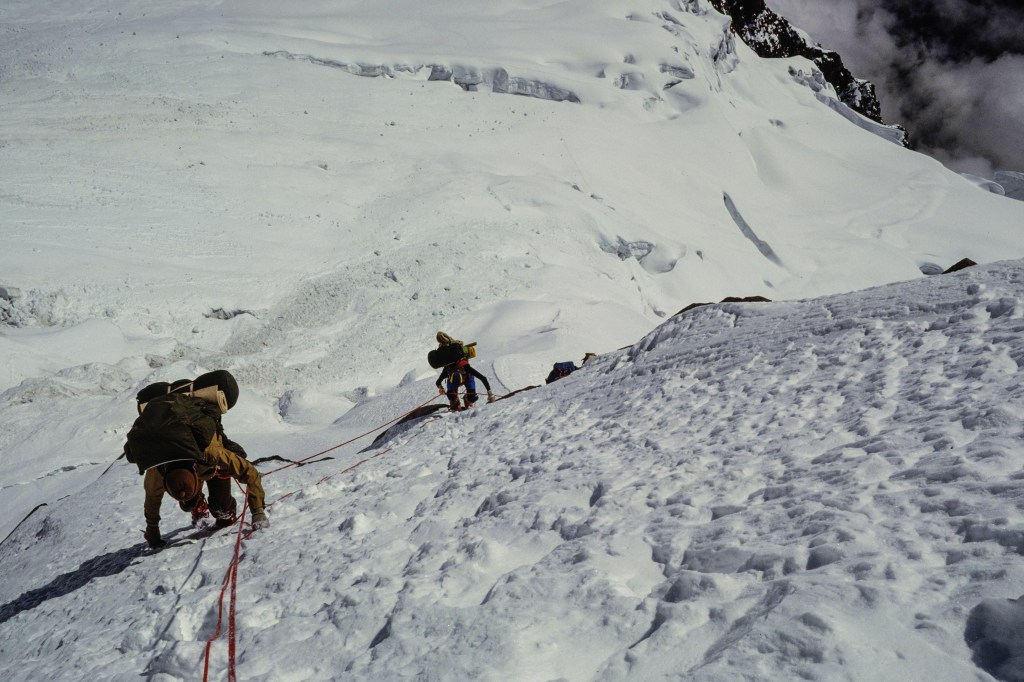
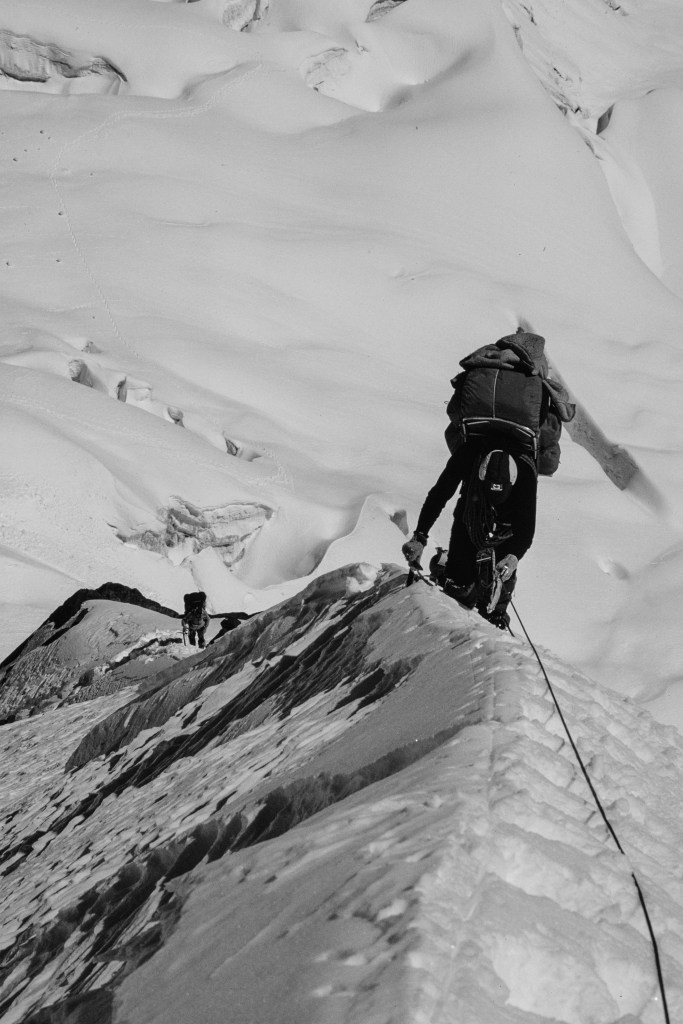
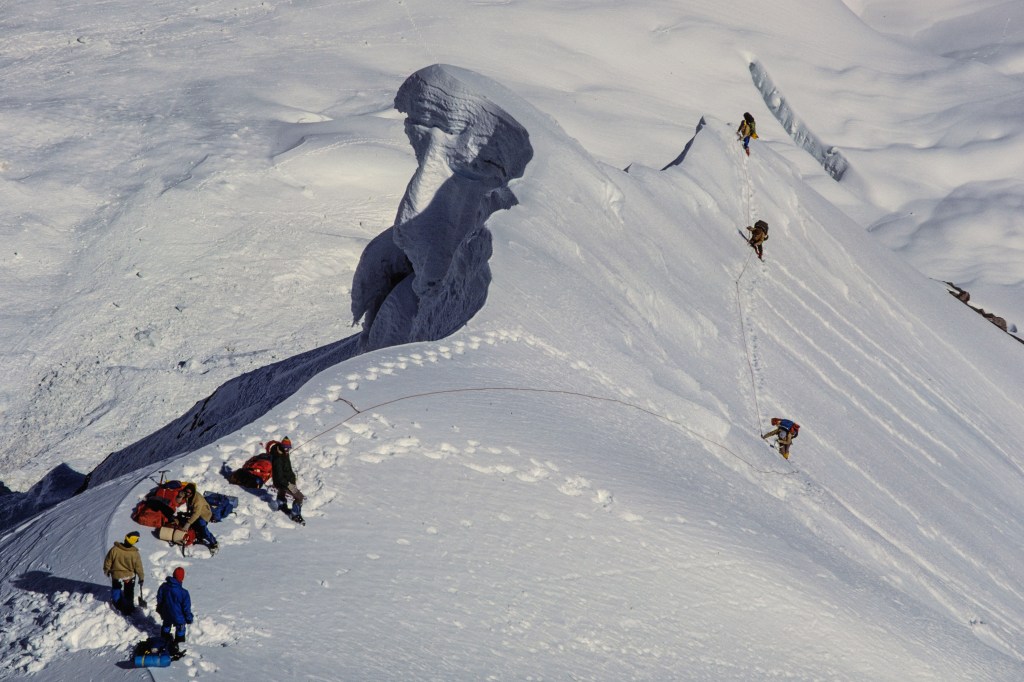
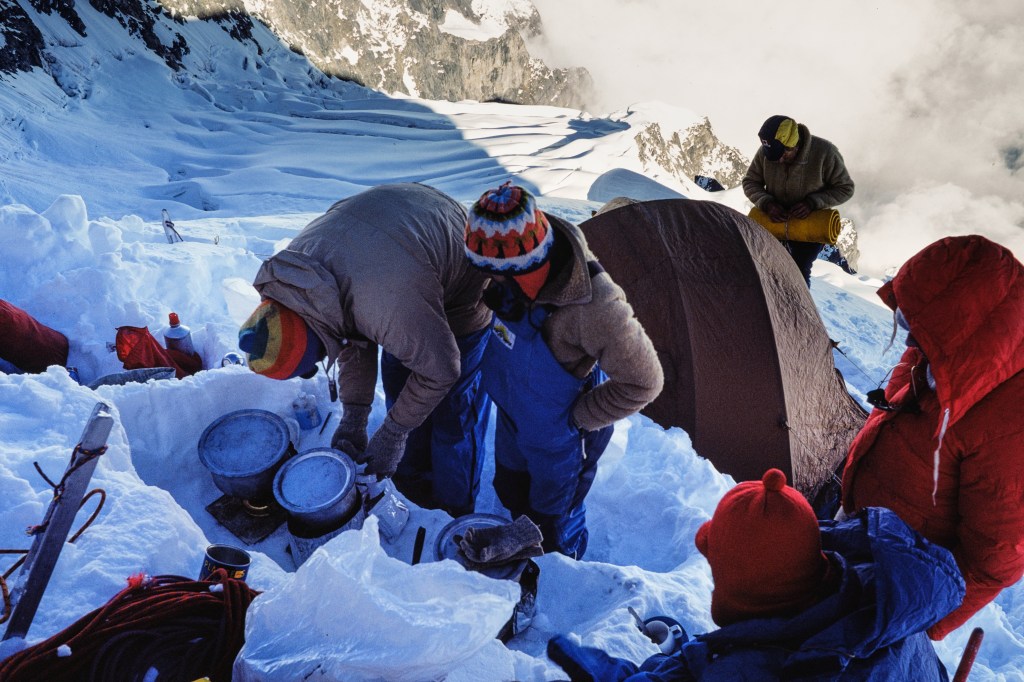
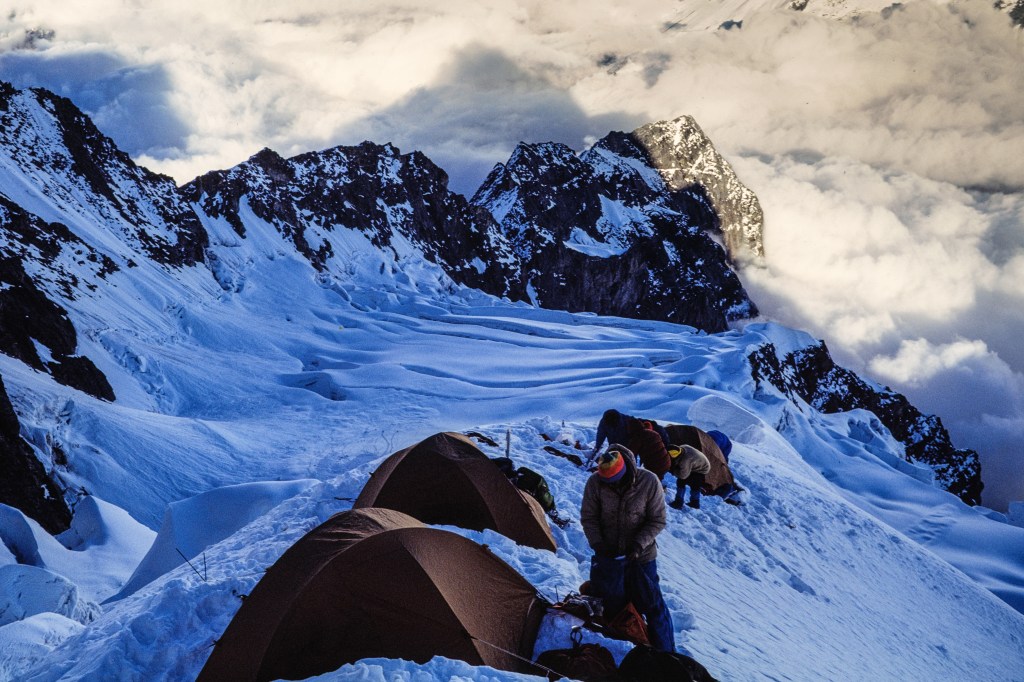
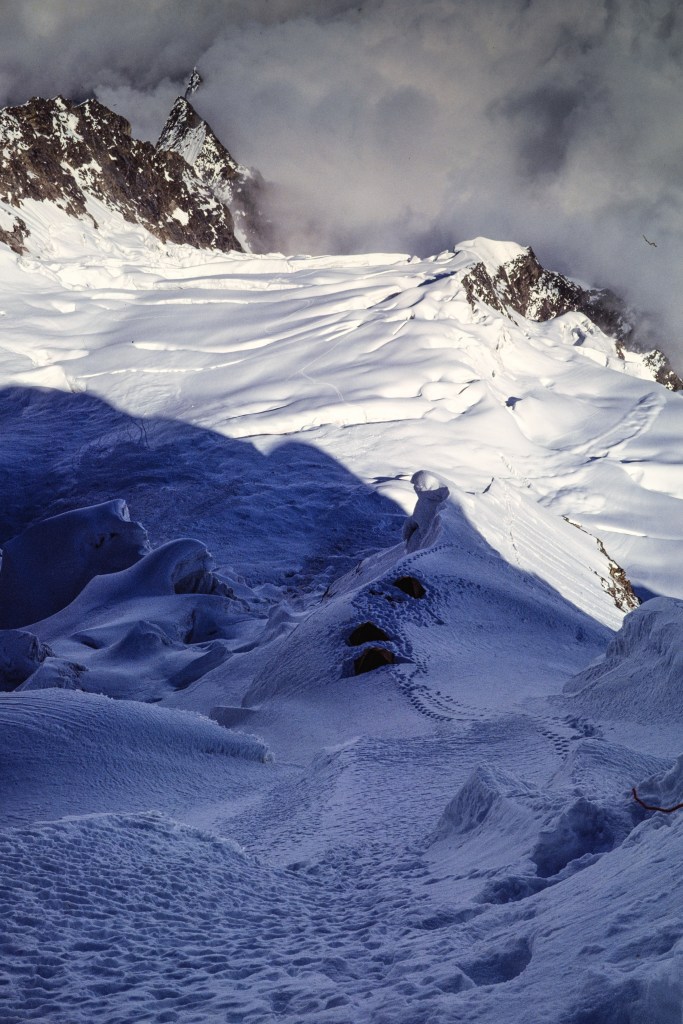
On Oct 8 we set out for the summit: 21,132 feet.
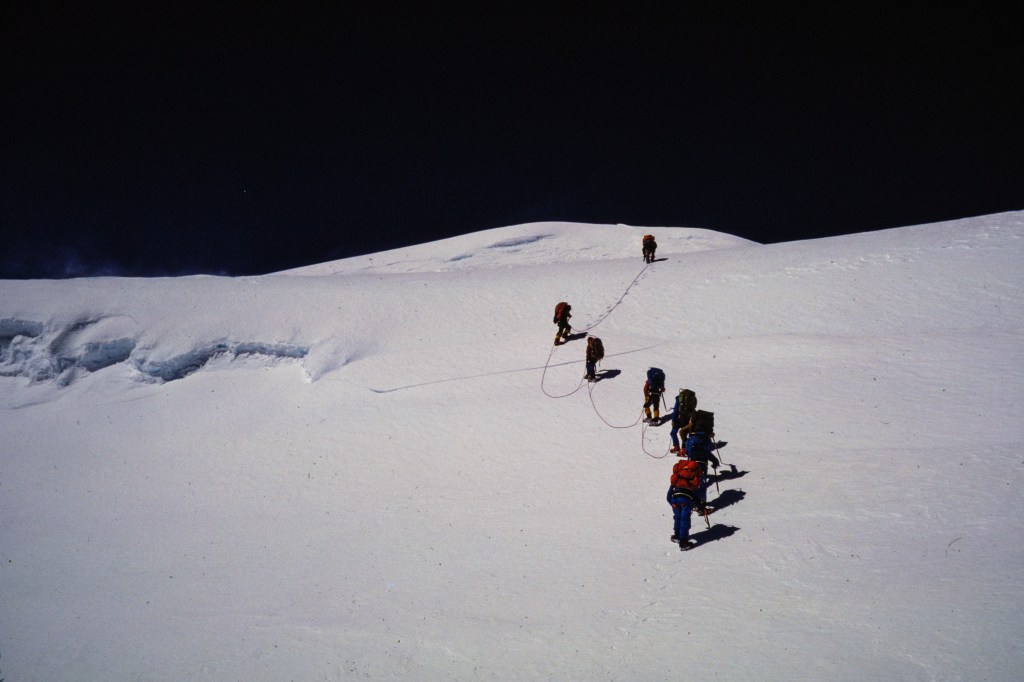
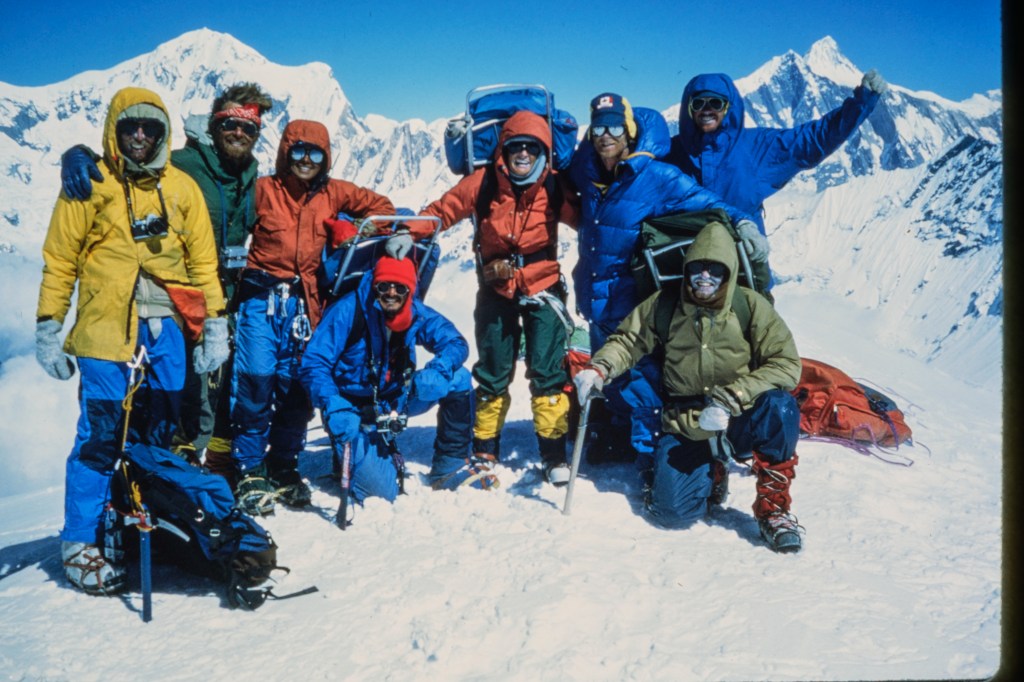
Next photo shows us on top.
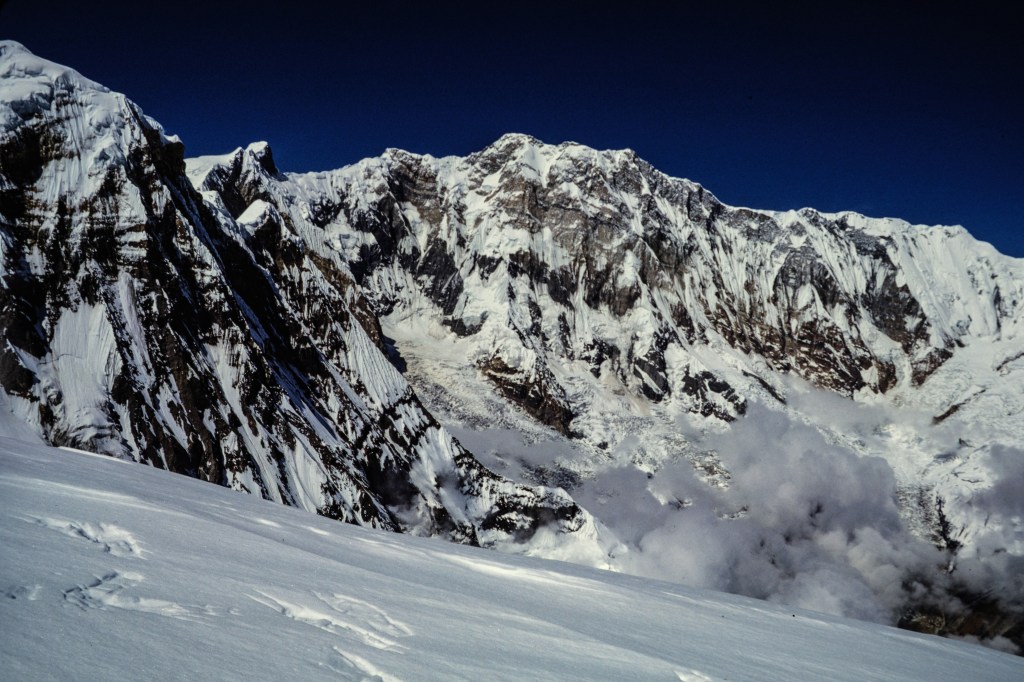
A view of Annapurna’s great south face.
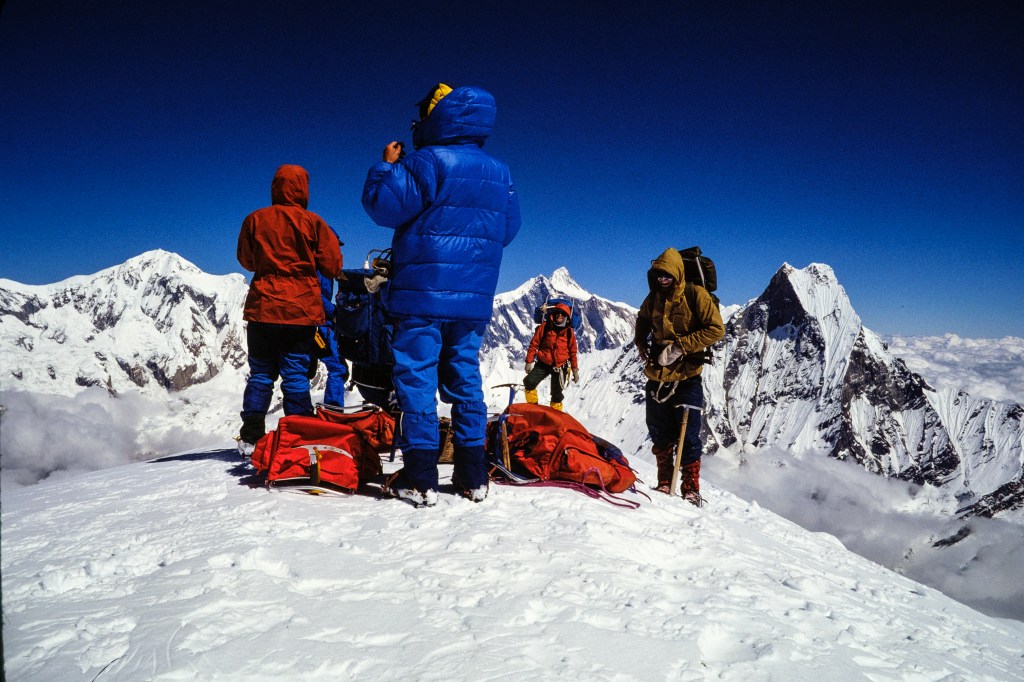
Group picture on top. I am in the yellow parka with the camera hanging around my neck.
THE DESCENT
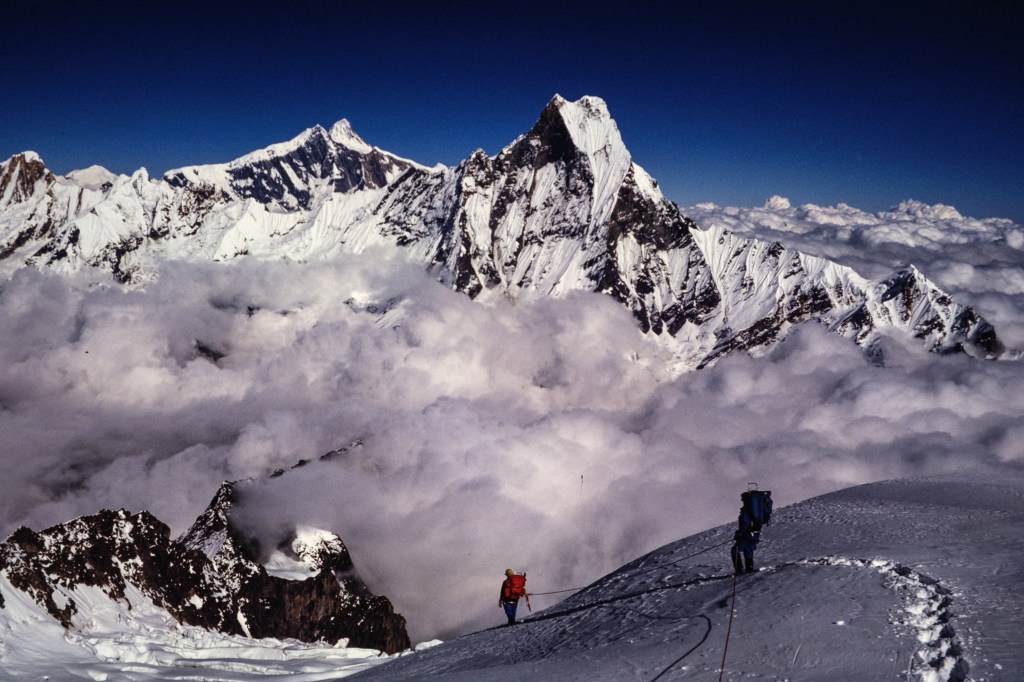
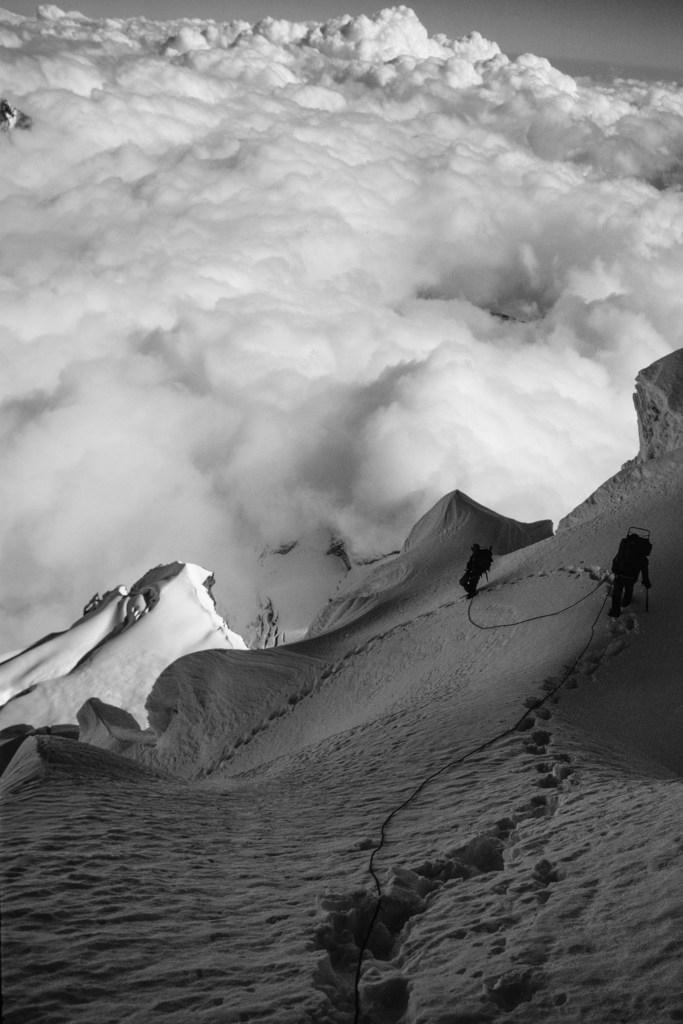
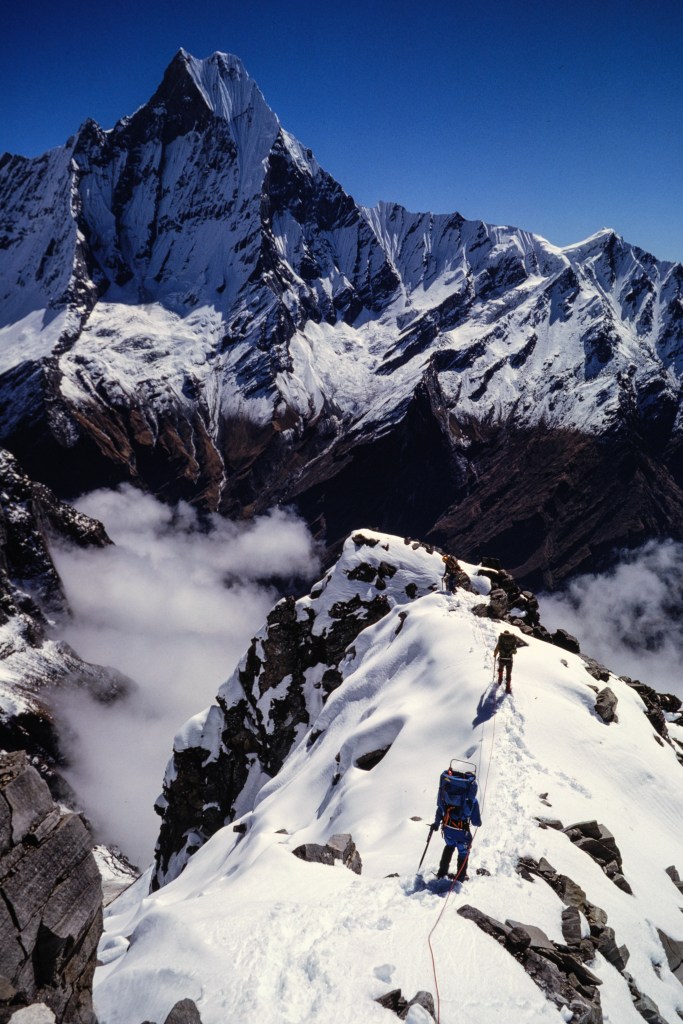
The next photo shows the area where an avalanche killed three climbers in 1979. We always tried to cross this quickly. Note the fresh blocks of snow and ice that fell while we were up on the mountain.
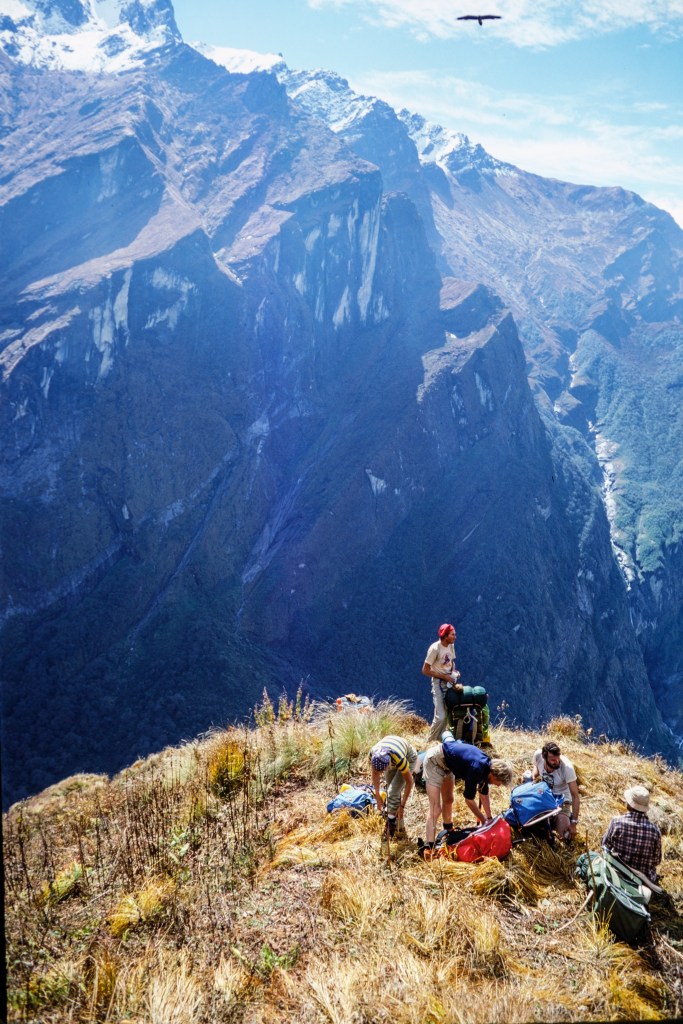
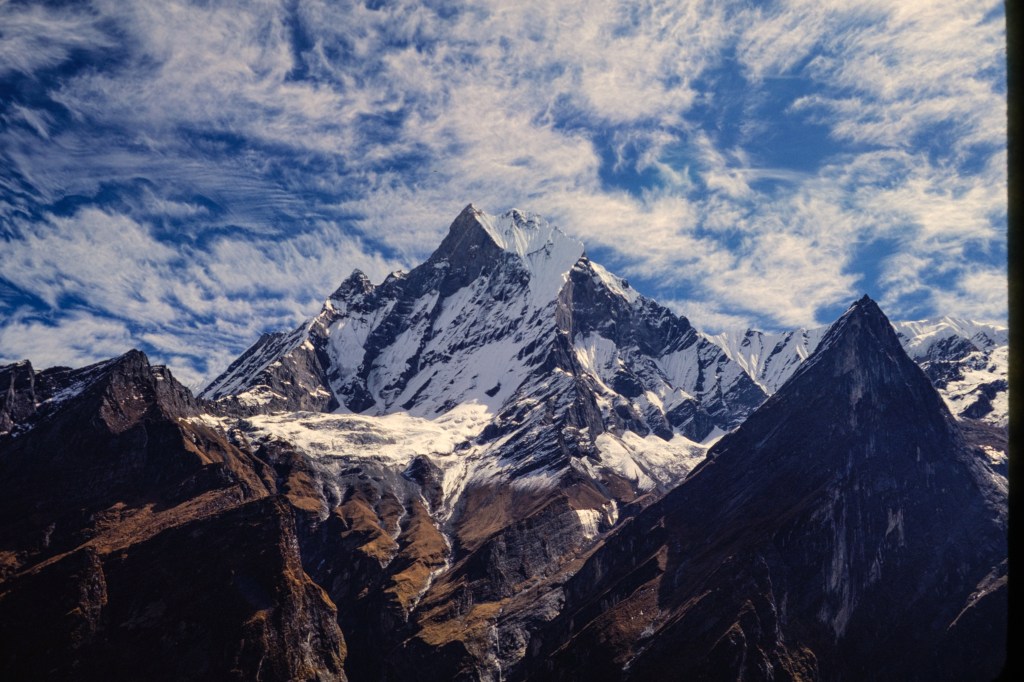
Two final views.
A FEW FINAL COMMENTS
By Oct 12 we were back to the Modi Khola, safely off the mountain. I detoured upstream to the Annapurna Sanctuary for a night, then back downstream to rejoin the group. I contracted giardia on this detour and had a tough hike back to Kathmandu. You don’t need the details. I was back in the USA by Oct 20. This was a fun climb for me and I think most of the clients enjoyed it as well. I feel bad for the three clients who turned around; this must have been very disappointing for them.
Simonson was an excellent leader; strong, relaxed, confident. The food was not great, but sufficient. Up high we cooked ramen noodles for supper, throwing in cans of tuna or chicken. This was filling, easy, and quick to make, and provided necessary liquid. The cooking and clean-up chores were rotated across the group, a style I liked. The clients were generally strong. Aside from one client, most had little climbing skill. But they all pulled their weight. Considering how scary this must have been for some of them, they did well. I’ve searched on the internet and cannot find any evidence that anyone has successfully summited Hiunchuli after our climb. Is that true?
In 1998 I returned to this area with Roberta and some friends; Mike Jauregui, Susan Olson, their 10 year-old son, Kevin, and Mike’s older boys, Phillip and John. We all hiked up through the Modi Khola gorge to camp in the Annapurna Sanctuary, a spectacular location.
COMMENTS ABOUT THE PICTURES
The original photographs for this show were my Kodachrome slides, taken on the climb in 1981. I later photographed those slides with a digital camera and processed the electronic images in Lightroom. I edited some pictures into black & white for variety. You may notice marks left by dust in some pictures; I try to remove dust before photographing the slides, but it is hard to get all of it.
You may have noticed that a lot of the pictures in this show used a vertical or “portrait” mode format. That format was more popular before computer screens encouraged a wide or “landscape” framing.
 Birds of Bishop