
Red-tails are in every state. They perch on telephone poles, watching for hapless rodents. Or soar in lazy circles, often in pairs, using sharp vision to spot a moving meal. Hollywood uses the high-pitched scream of this bird to signify wilderness. Keith Hanson writes that this sound “bestows a ‘sense of the wild’ in macho truck ads.” This is our most common raptor; the one I learned to recognize before all others. Its line-backer body has broad shoulders and then tapers toward the tail. A brutish thug, 2.5 pounds of muscle with a 50” wingspan.
I see Red-tails everywhere near Bishop, but getting good photos is not easy. They spot me at a distance, then fly off if I approach. I can get closer in a car, but if I exit or even poke the lens out the window, they vanish. In the air, they often whip by before I can shoot. But because they are common, I have managed to get some images which I will share.
Red-tails all have the same basic shape, face, and beak, but they vary a lot in coloration. Birders group them as light morphs, rufous (or intermediate) morphs, and dark morphs. The word “morph” is just jargon for morphology, a word for the “form” or look of a living creature. Let’s examine these color variations:
LIGHT MORPH
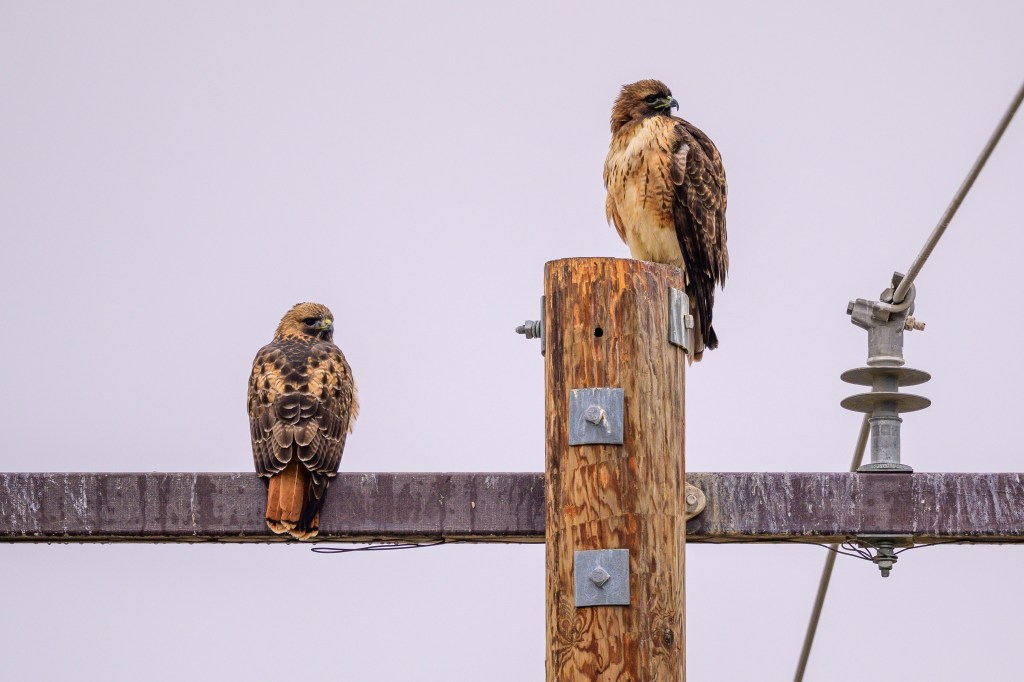
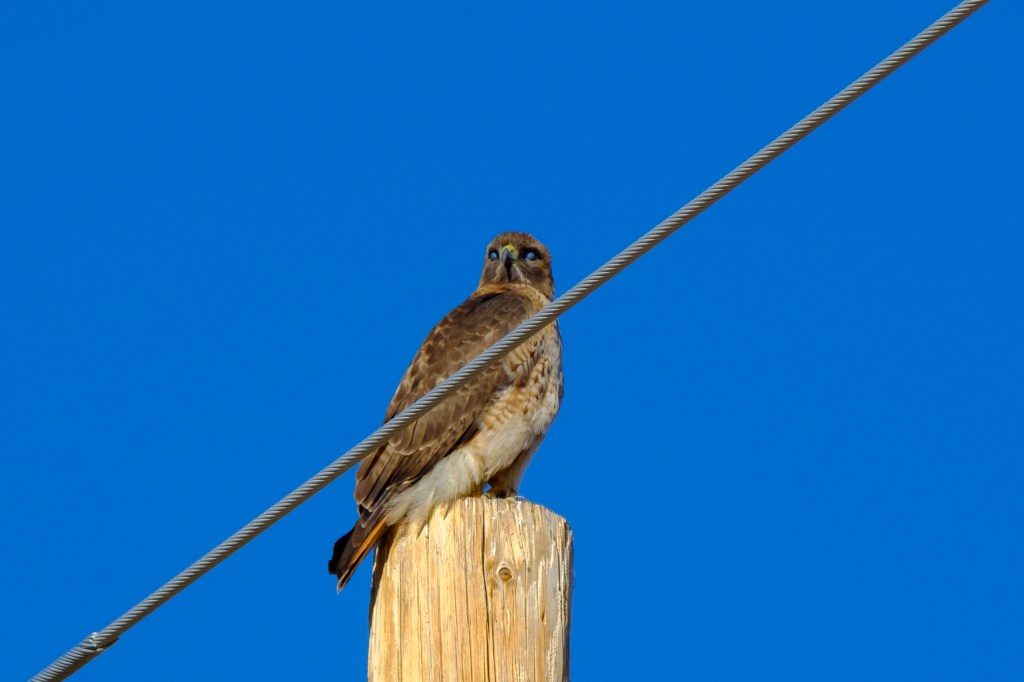
Light colored birds are the most common. They have a mainly white chest and belly. Check out the hawks in the first picture, below. The hawk on the right has a mostly white front with a band or cummerbund of darker feathers across the belly. The bird on the left displays the classic red tail, which all adult Hawks have. The beaks are not that long and have a nasty hook at the end. The bird on the left has white spotting on its back in a “V” shape. Both birds have a spiky haircut; not all red-tails have this, but I find this “hair”-do helps for identification. The perch, on top of a phone or power poll is classic. Both birds look bulky with wide shoulders. If you are a loan-shark and need to collect, these are the birds to hire.
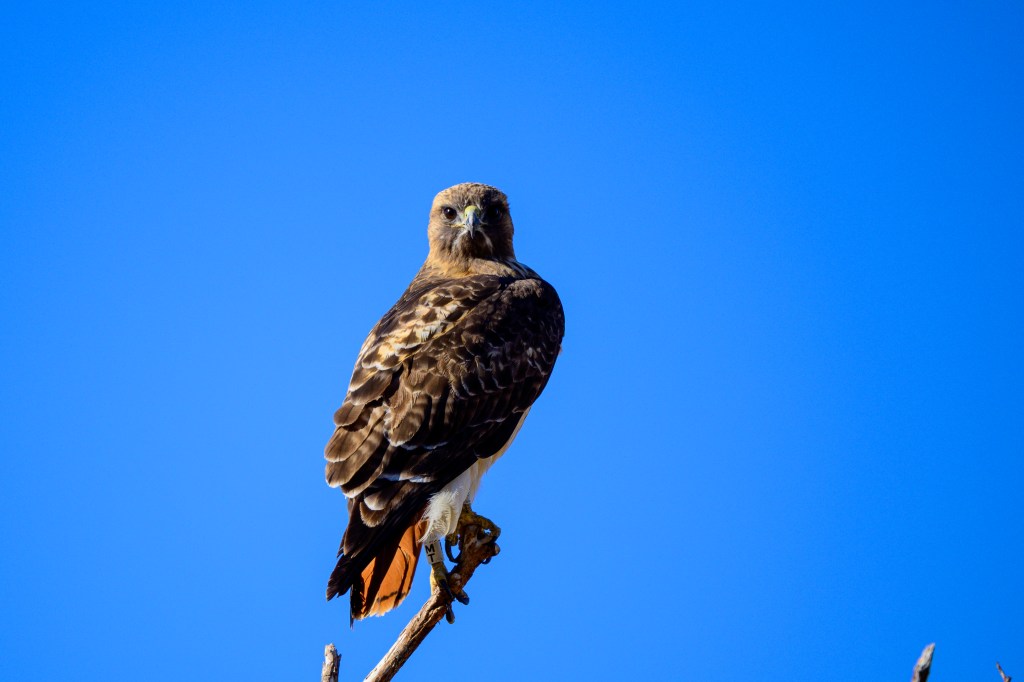
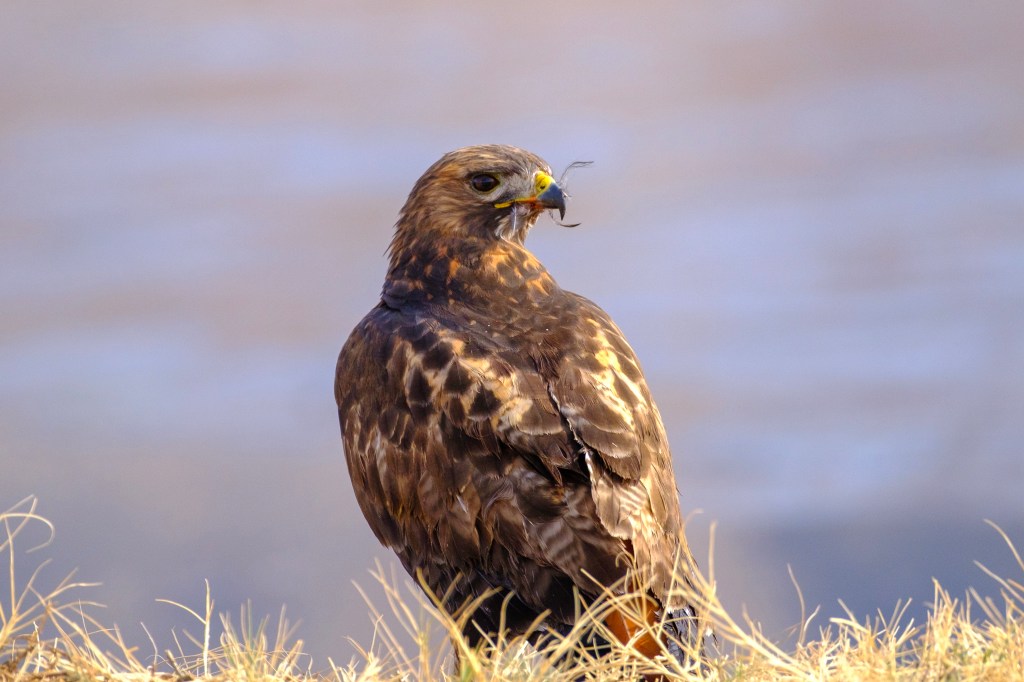
The next bird shows the cummerbund nicely. The eye is brown; juveniles have a pale or yellow eye. The talons are long and sharp.
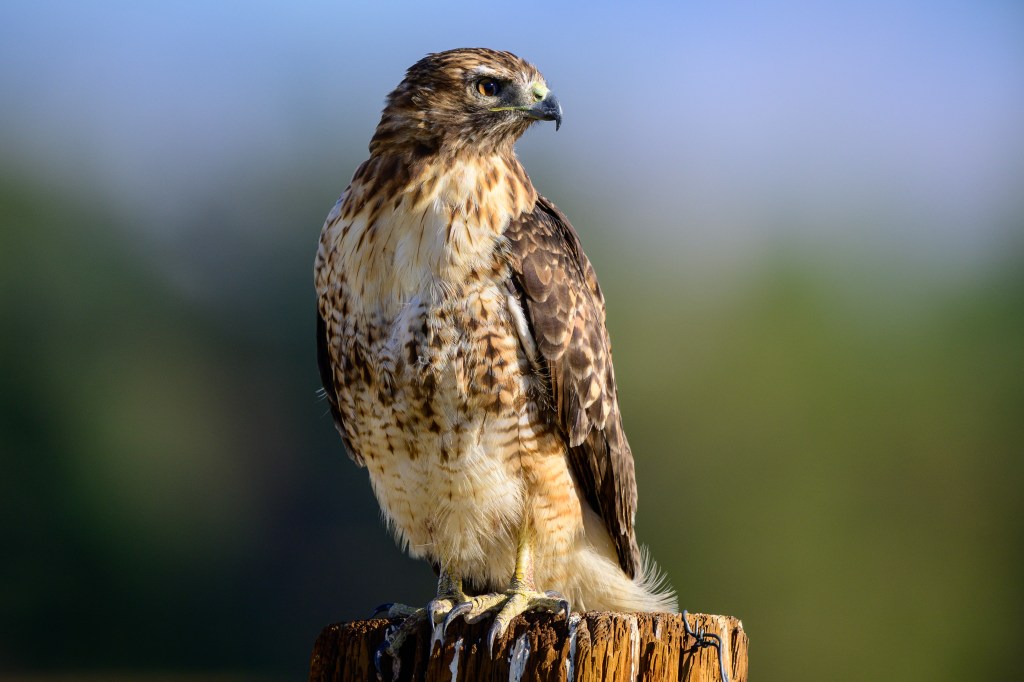
Below, a Hawk displays the belly-band of darker feathers, the spiky hair-do, and the short beak with a hook, plus broad chest and shoulders.
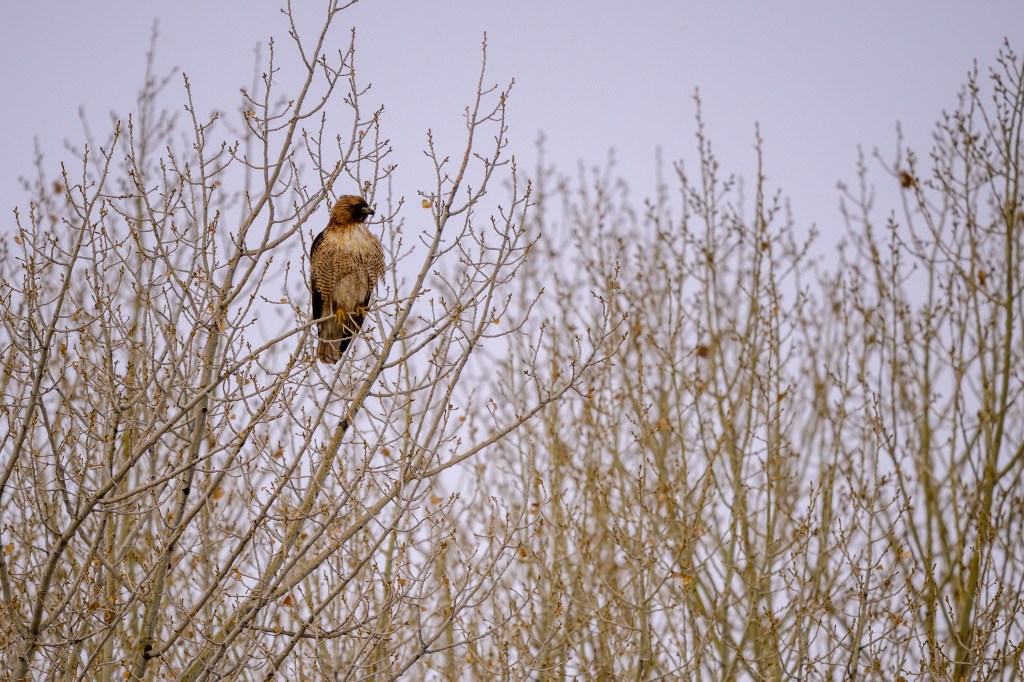
The next Hawk has smooth “hair” and the classic chest and beak. We cannot see the red color of the tail, because only the dorsal aspect of the tail is red.
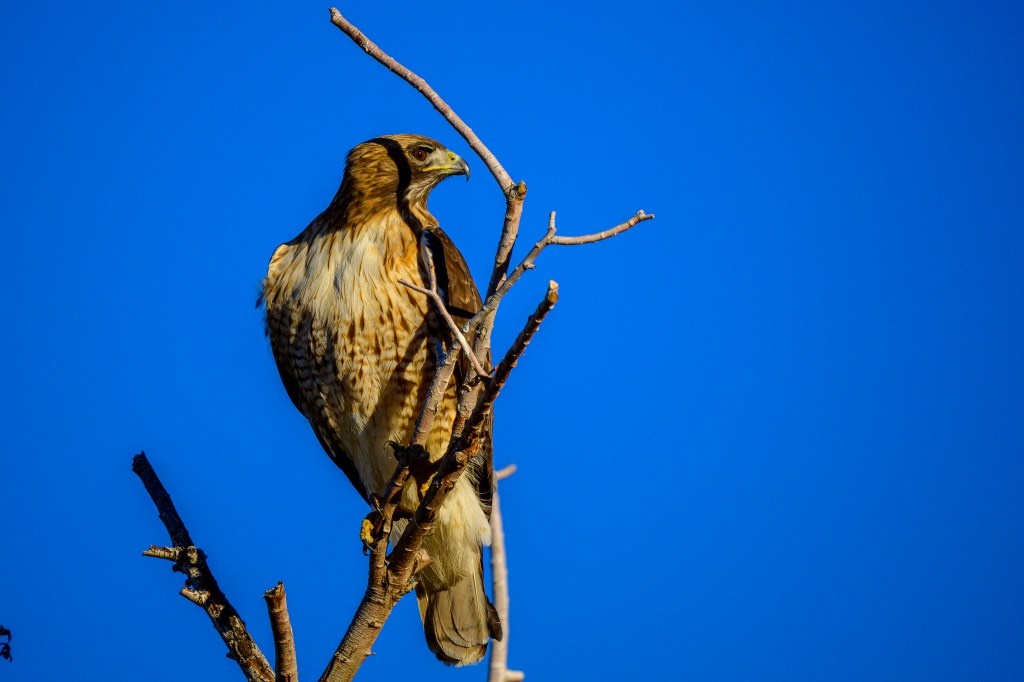
RUFOUS MORPH
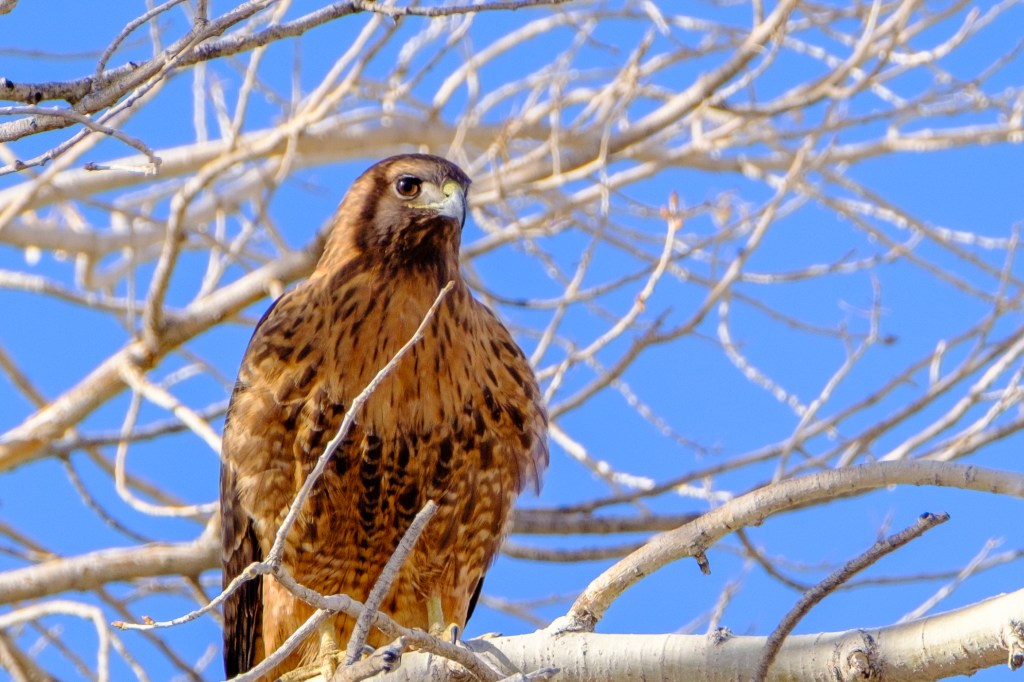
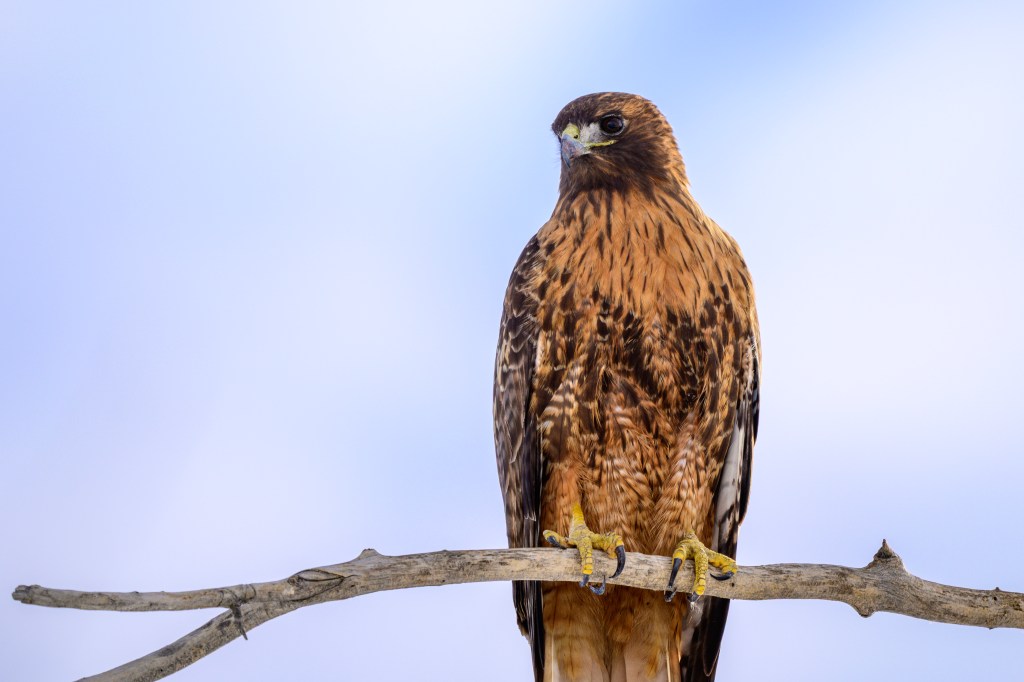
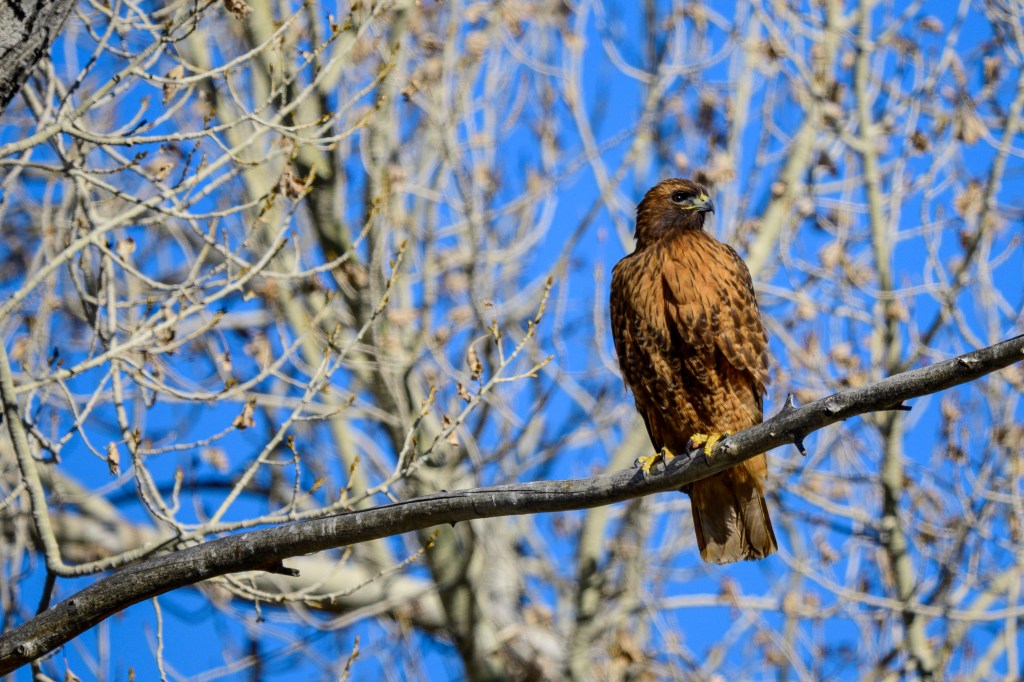
Below are three Red-tails with red colored chests and bellies. All show the cummerbund and other common features of Red-tails. Check the awesome talons.
DARK MORPH
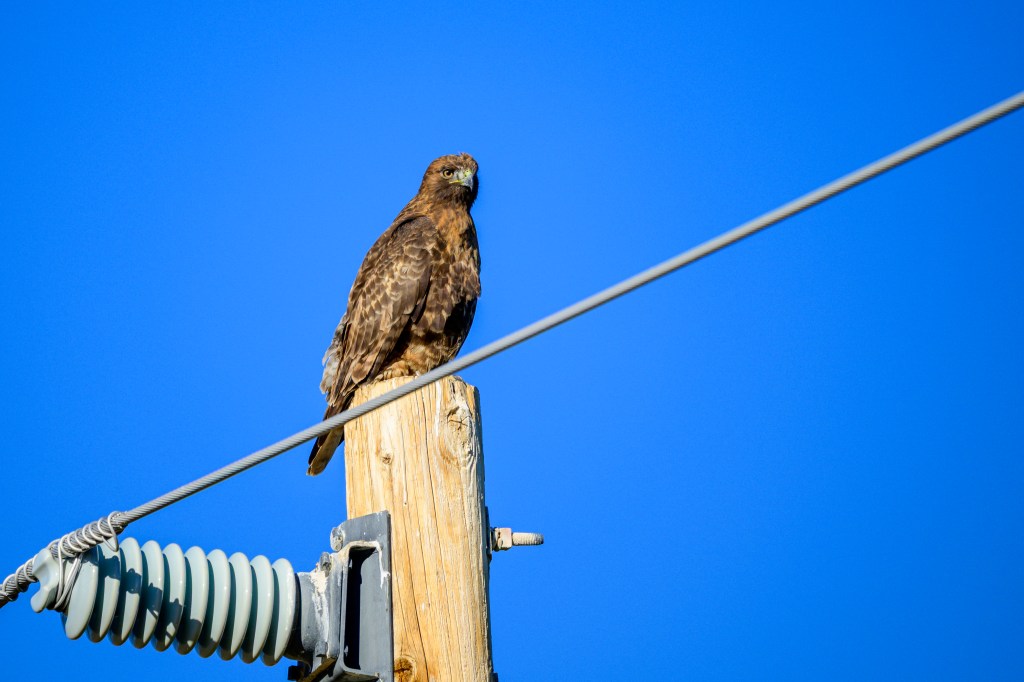
Dark Red-tails, nearly black, are the least common.
JUVENILES
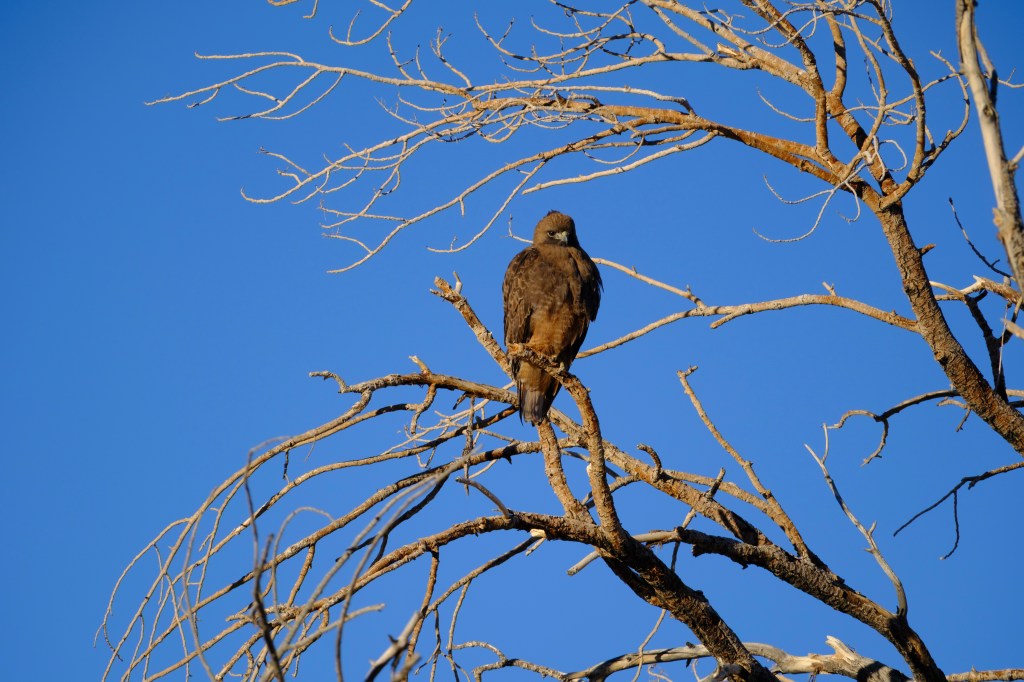
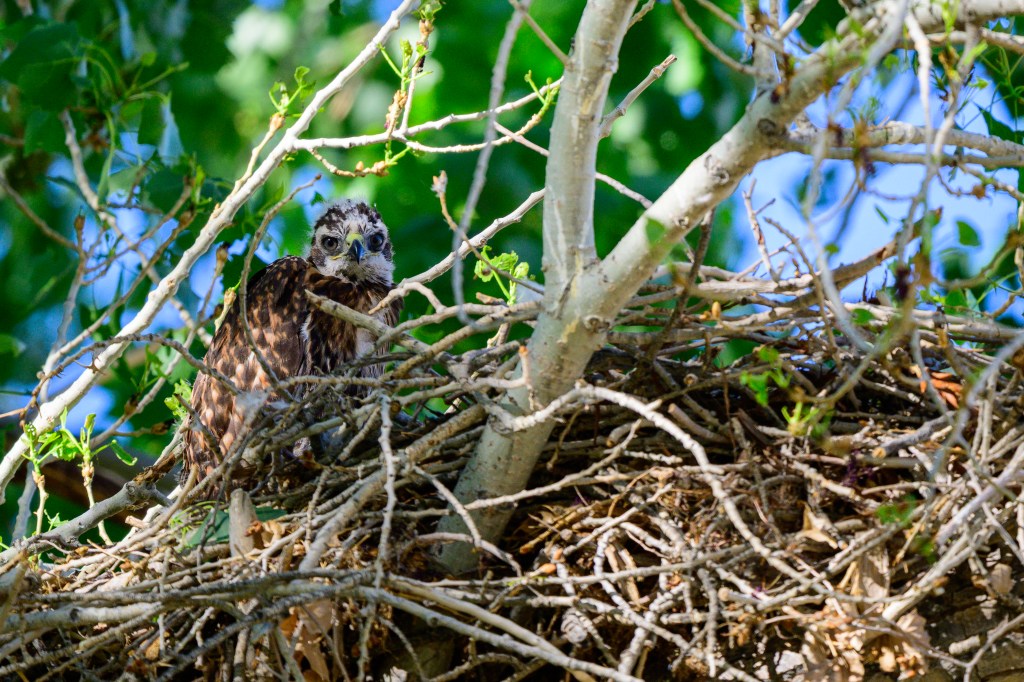
Young Red-tails do not have red tails. The tail is brown/grey with narrow black stripes. Between ages 1 and 2, the juvenile tail feathers fall out and are replaced with brick-red feathers. At about that time the eyes turn from yellow to brown.
PORTRAITS
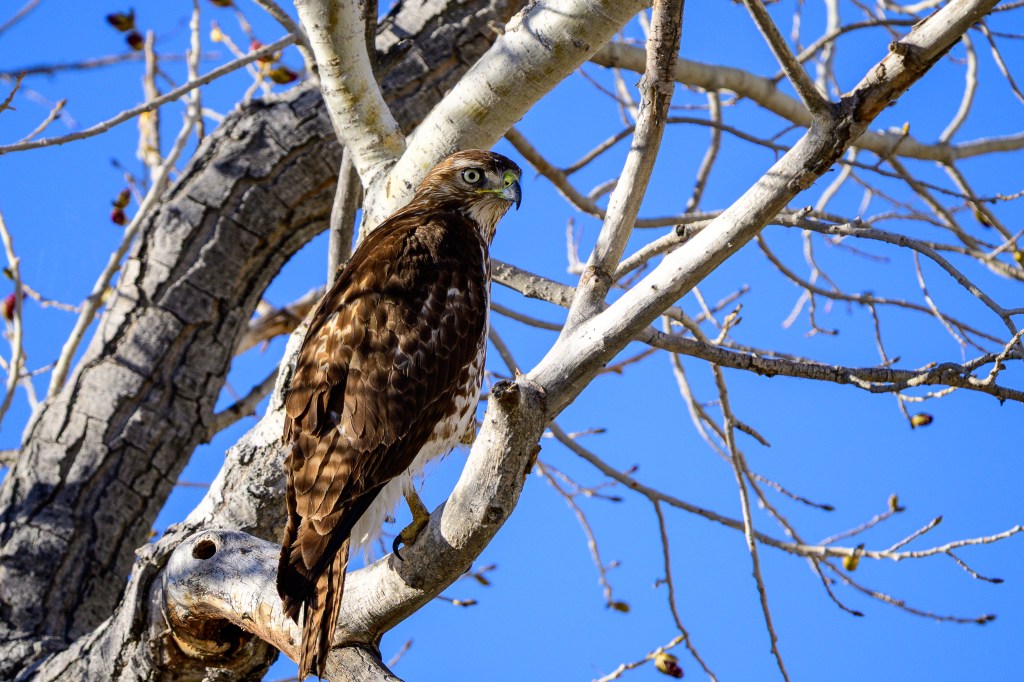
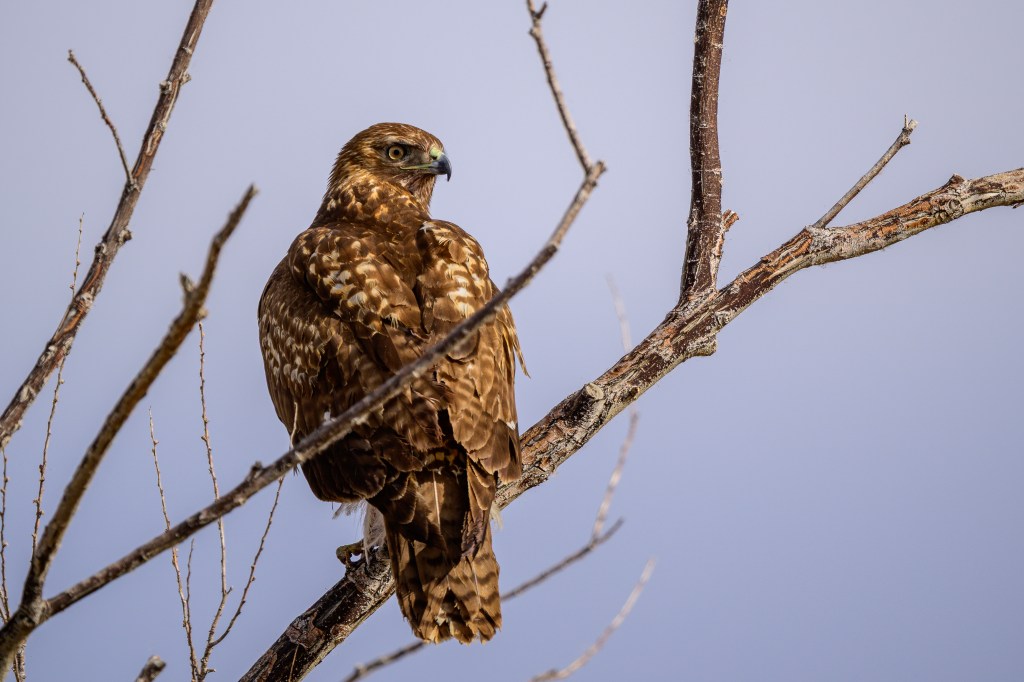
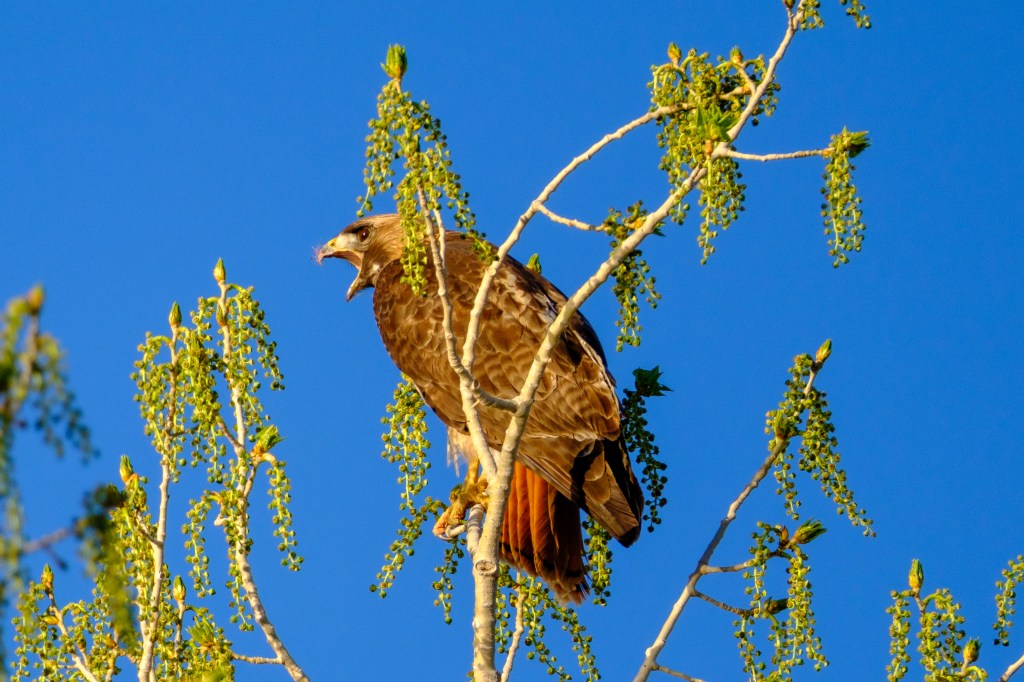
The next 23 pictures show a variety of perched Red-tails and I added a few comments.
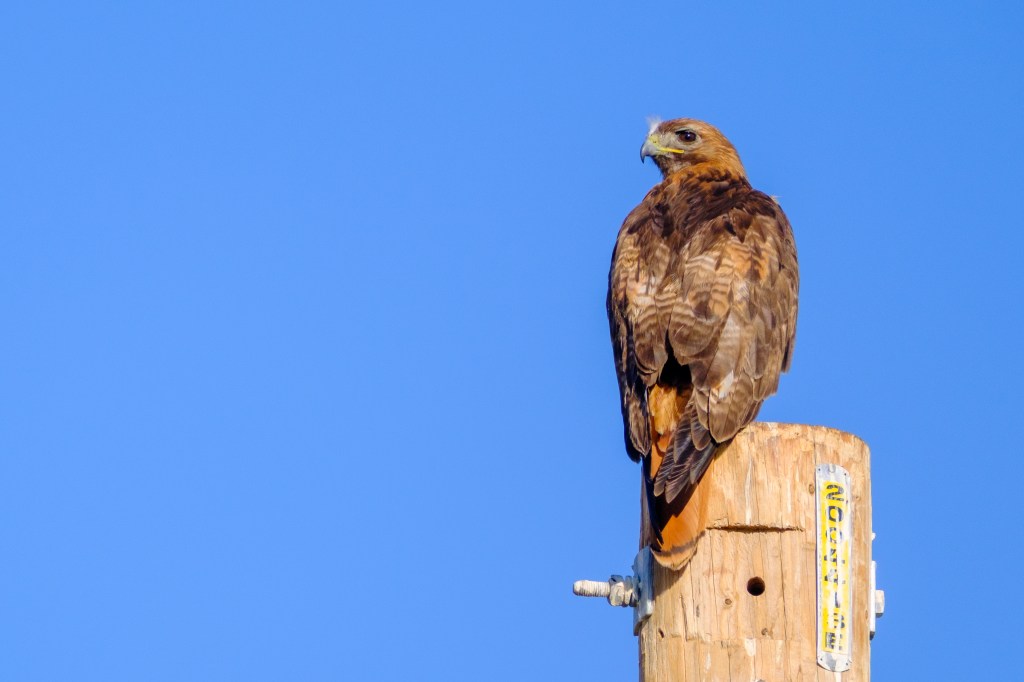
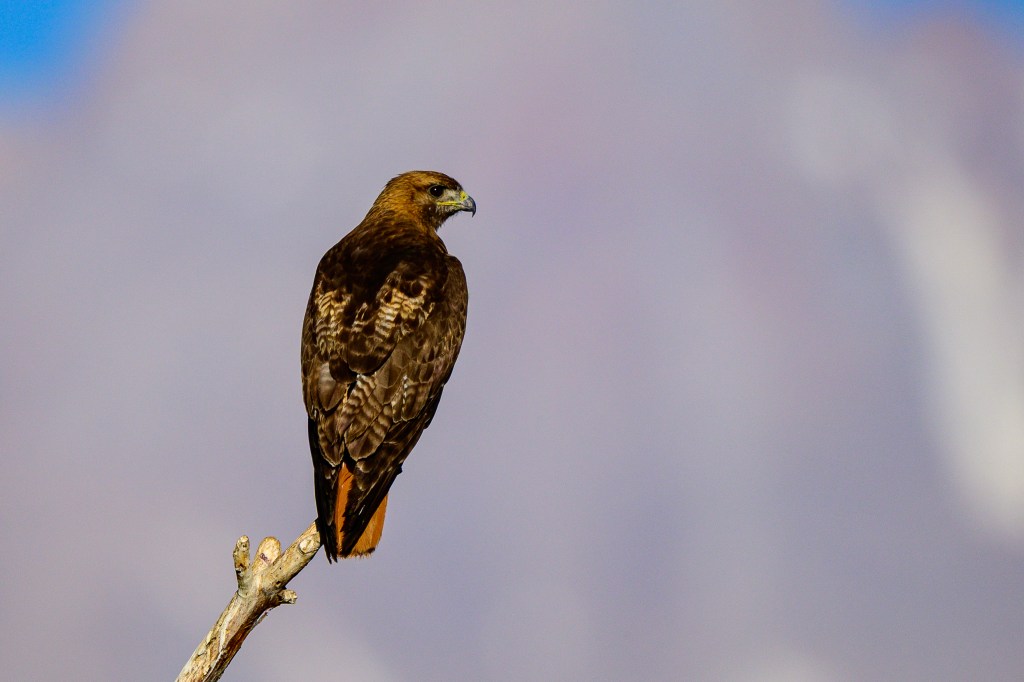
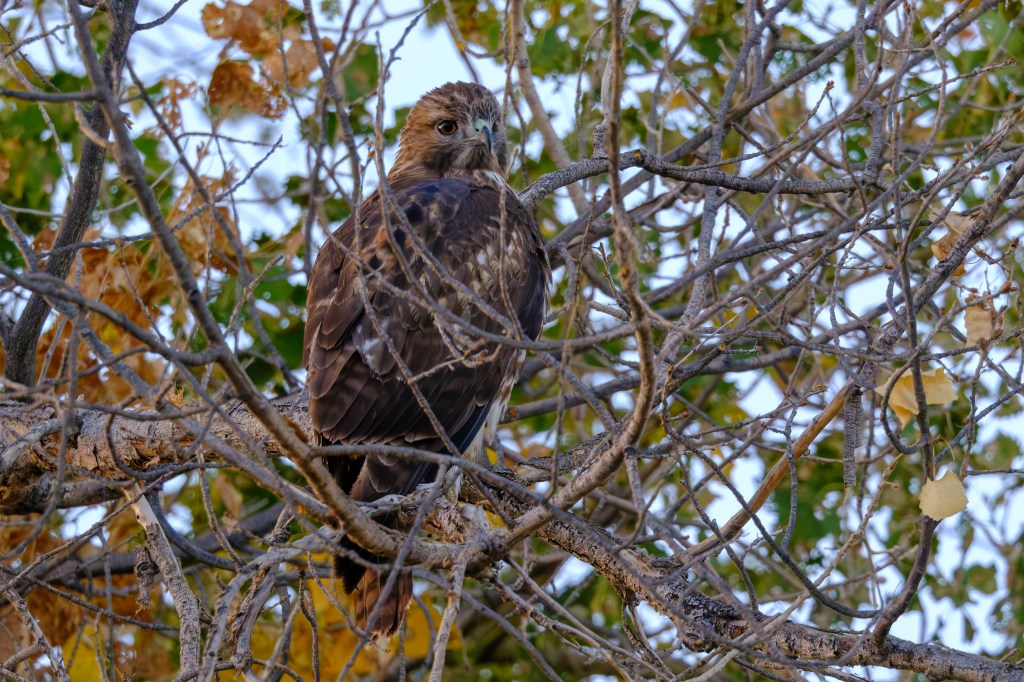
Snow falls on the bird below.
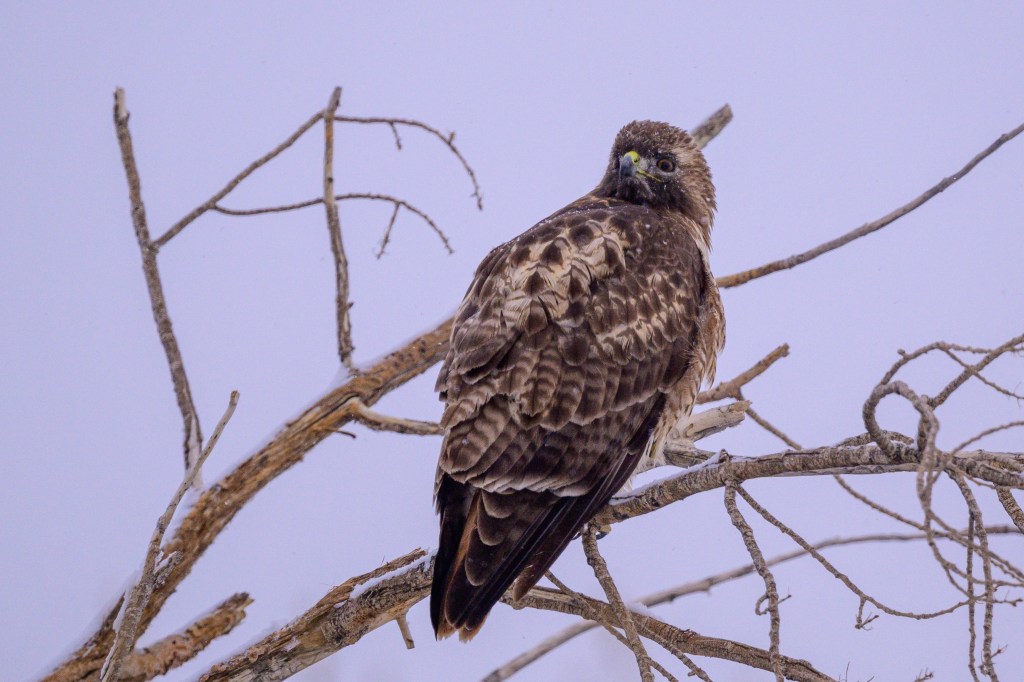
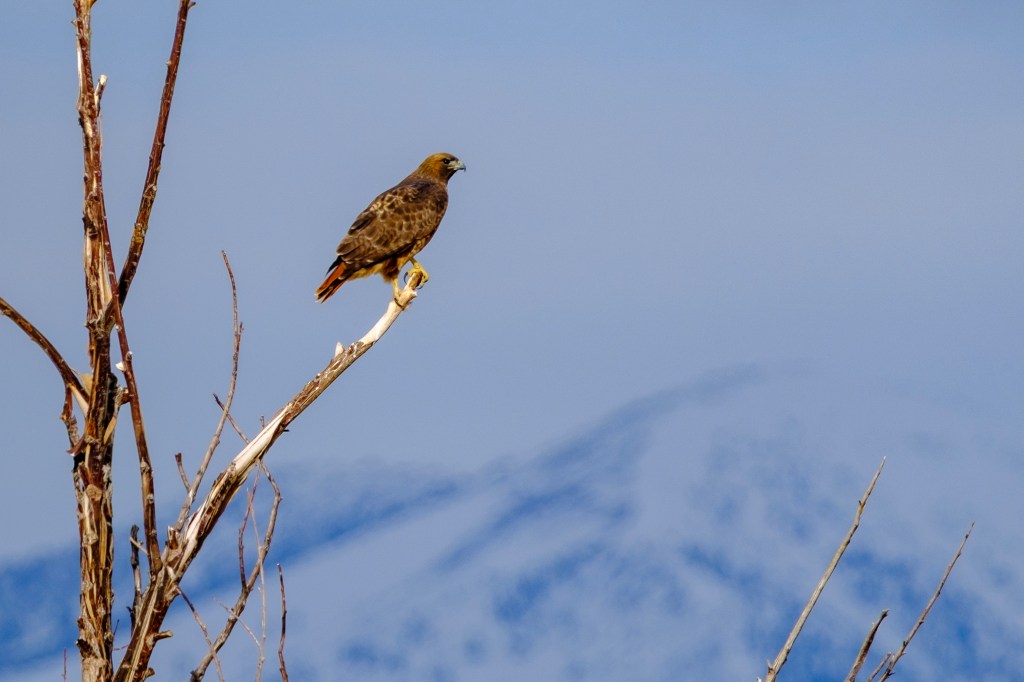
They love a high perch.
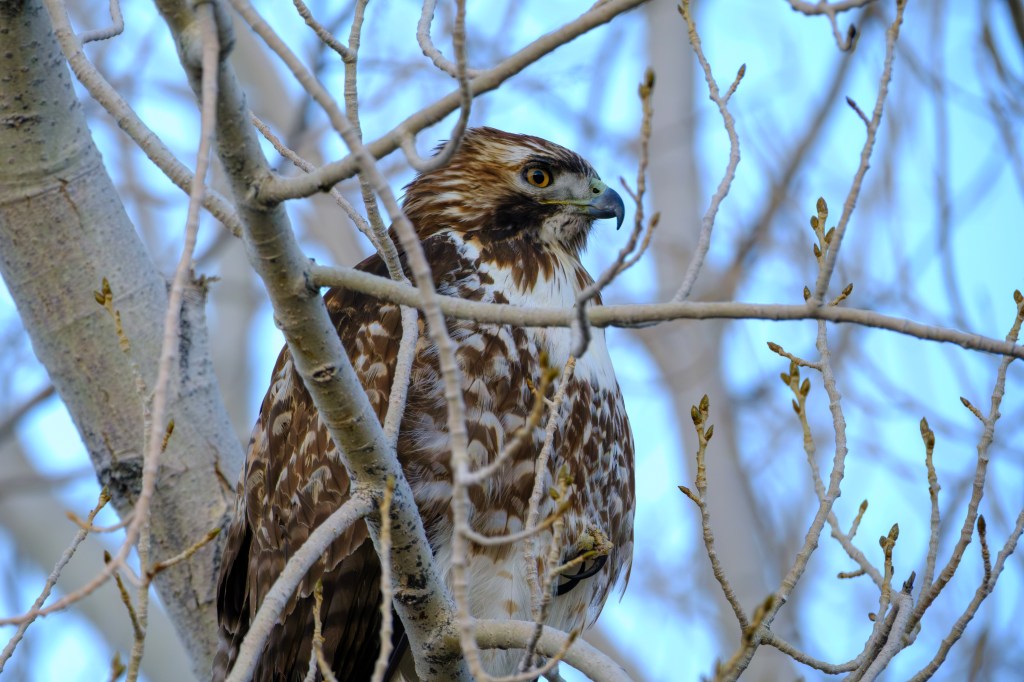
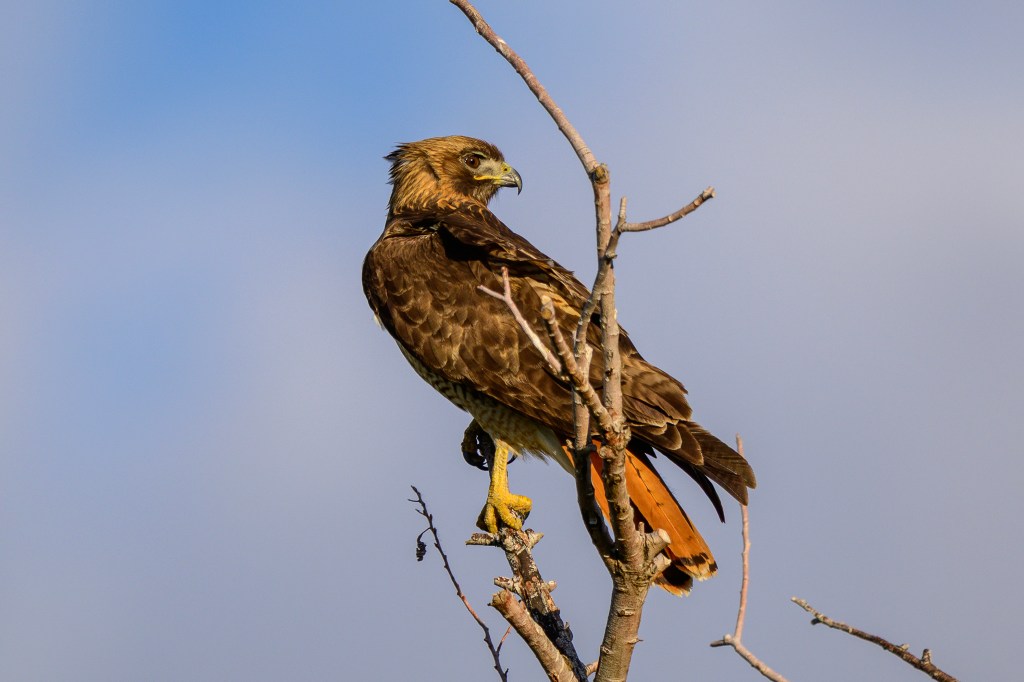
In the photo above, did you notice that the bird has one foot sticking out of the feathers on its belly? Lots of raptors do this, but it seems particularly common among Red-tails. They stand on one leg, bury the other leg in their feathers, and seem to have a foot growing out of their non-existent belly-button.
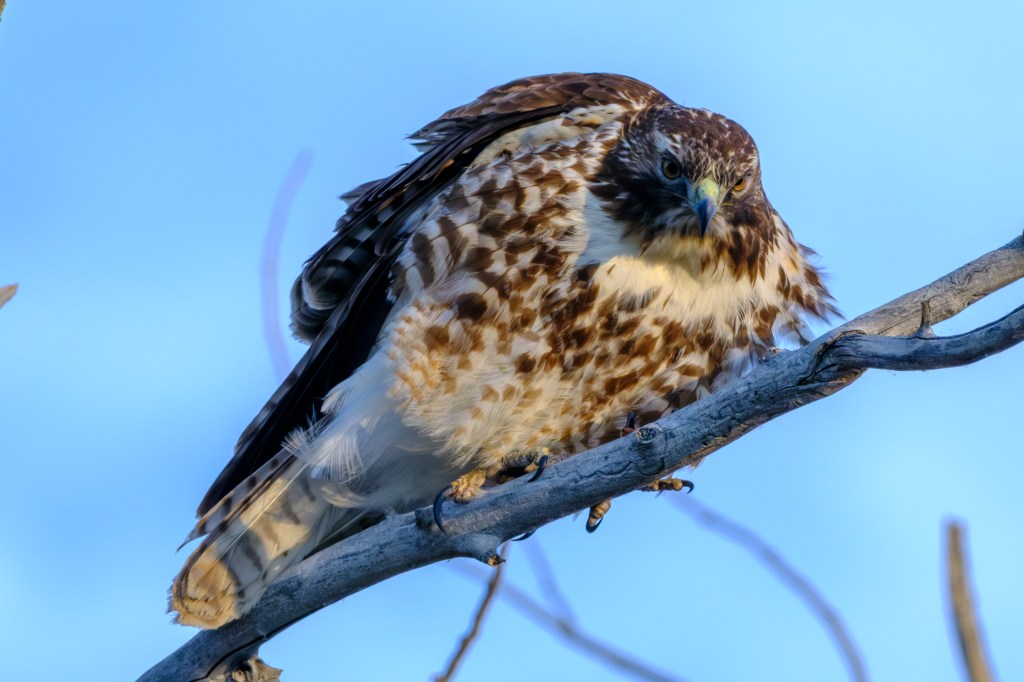
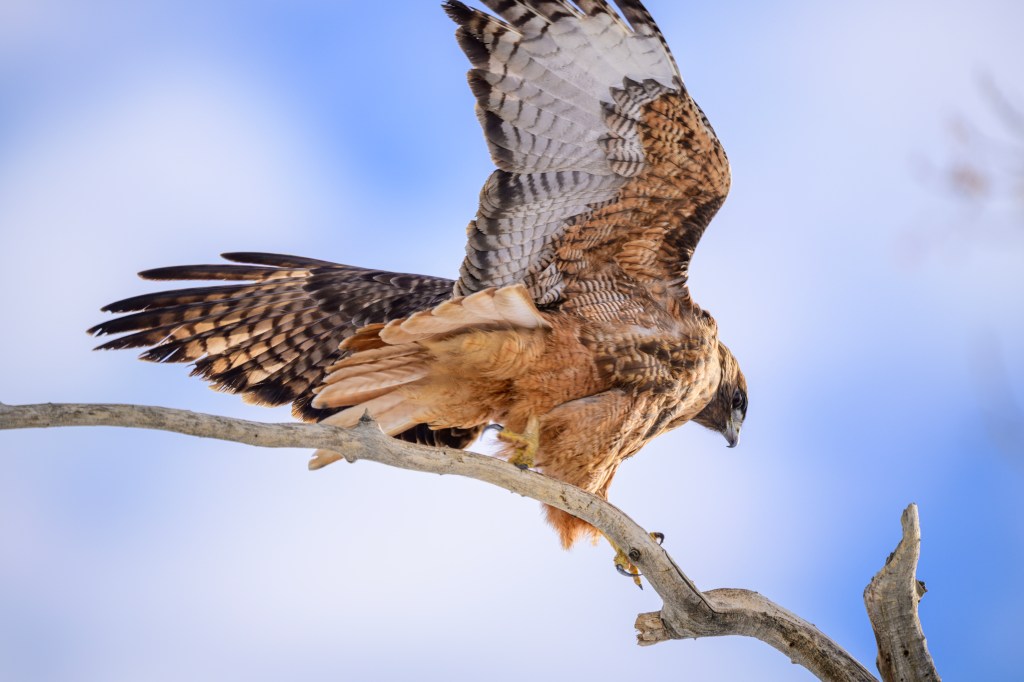
Bird below was changing its position on the limb. Look at the talons.
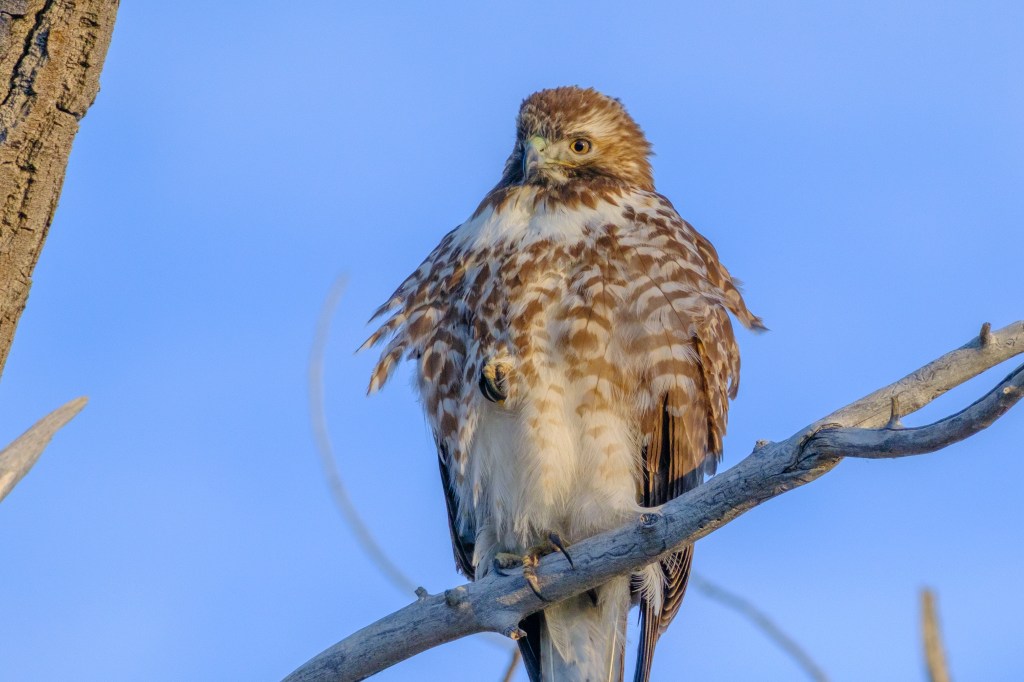
Bird below has one foot protruding from belly feathers. Looks as if it has two right feet.
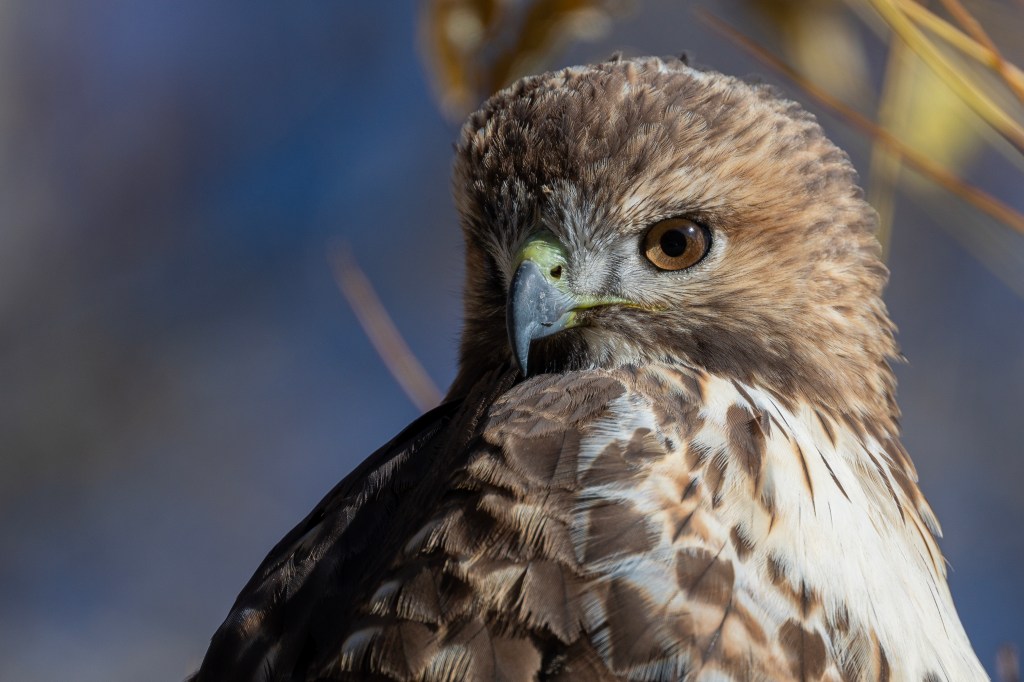
Birds have a “nictitating membrane” which can cover the eye to protect it. The membrane of a Red-tail is thick and very blue. Gives the bird a creepy look, like a zombie-hawk.
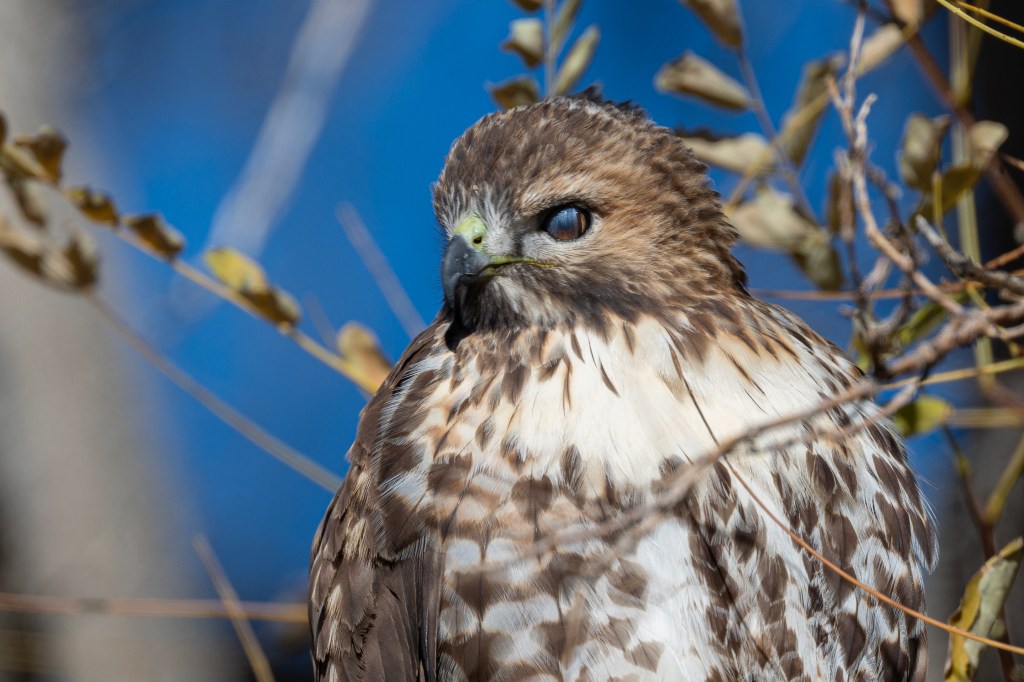
Another shot of the nictitating membrane.
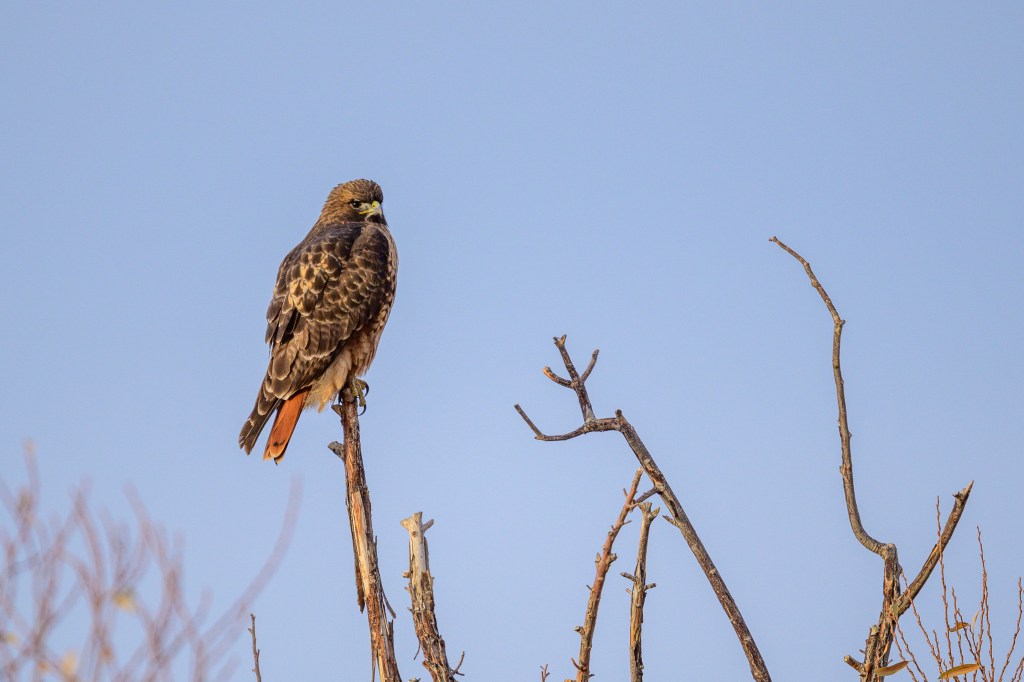
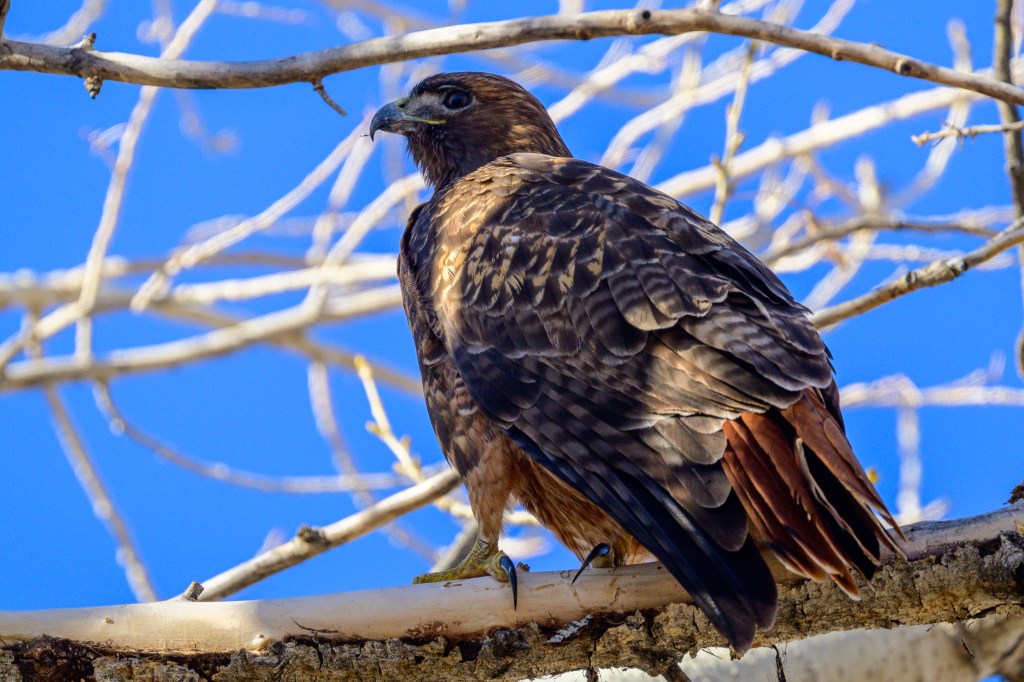
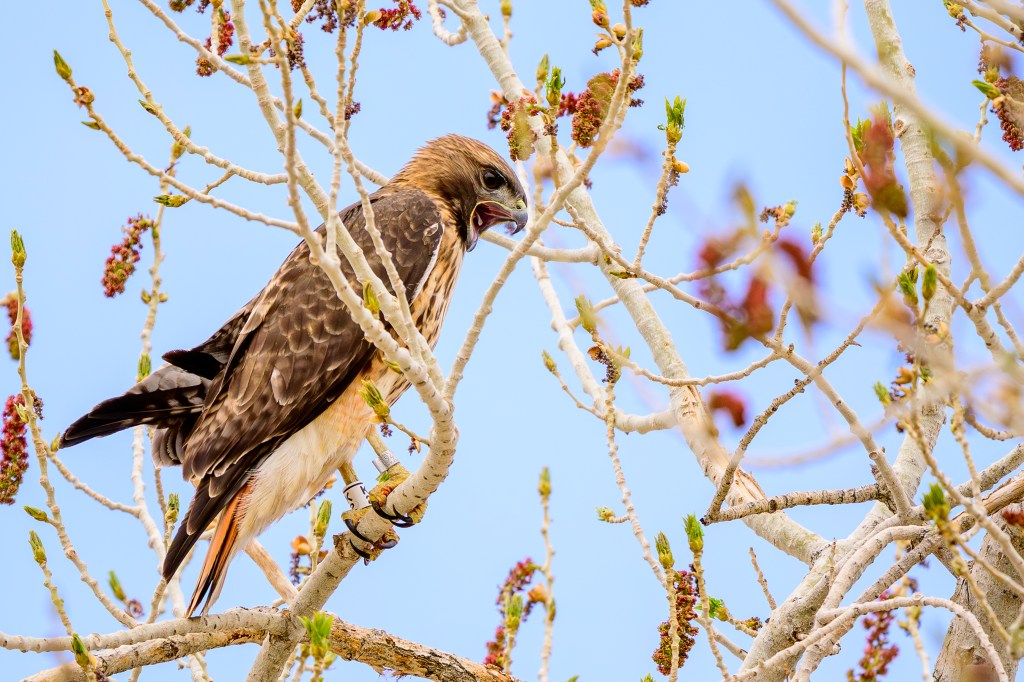
The next four photos show a young Hawk. The branch under the left foot broke and the bird fell off the tree. Two pictures show the struggle to get back to a perch. Then the bird looks around, thinking “I hope no one saw that.”
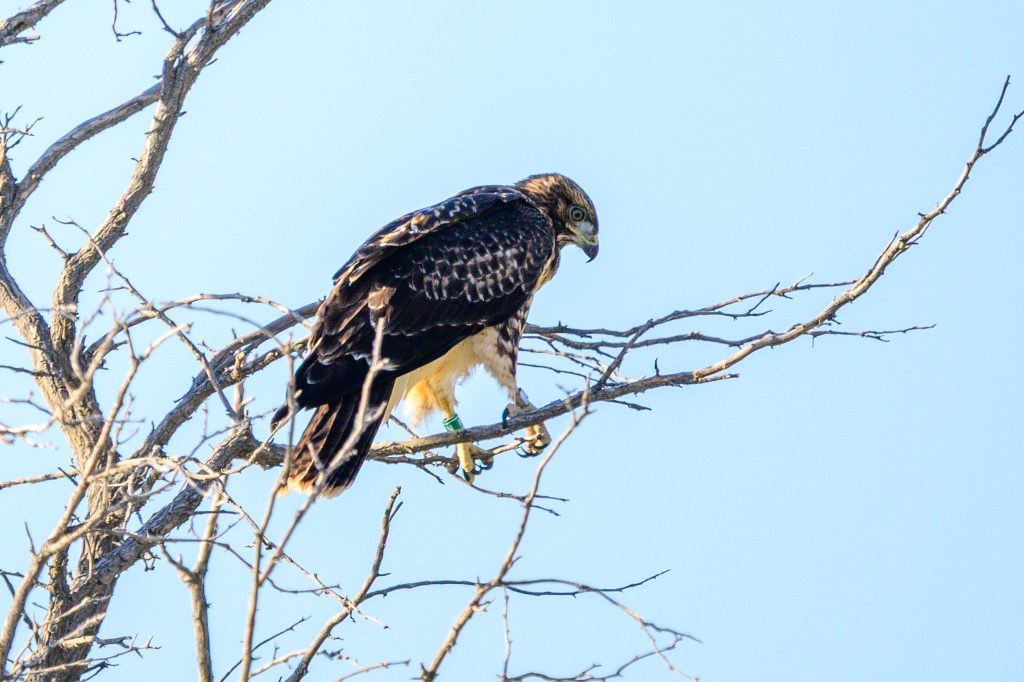
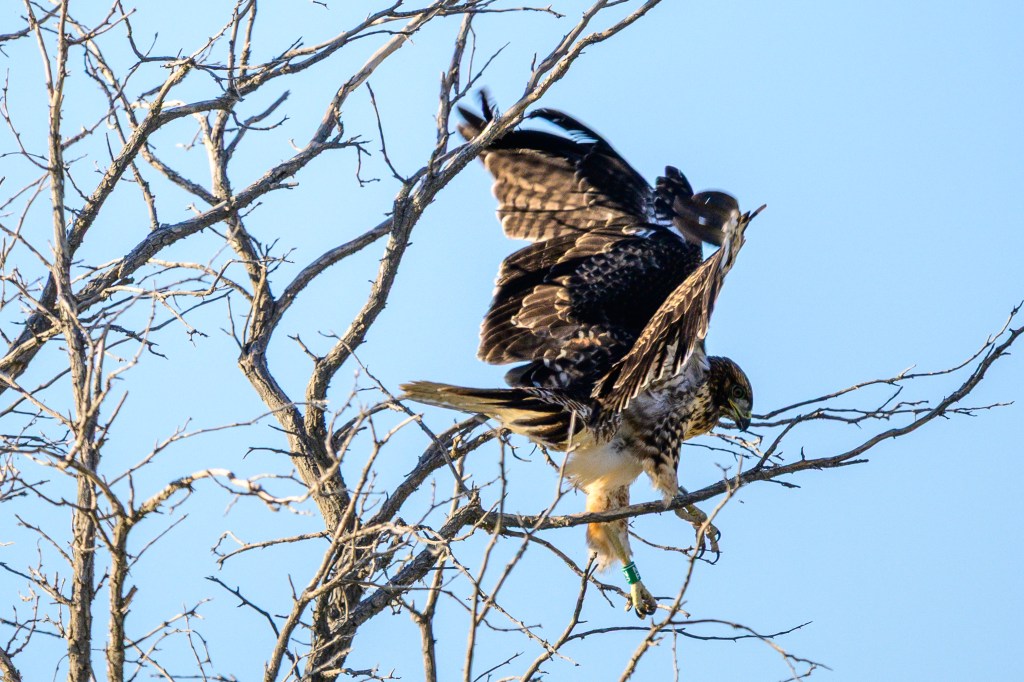
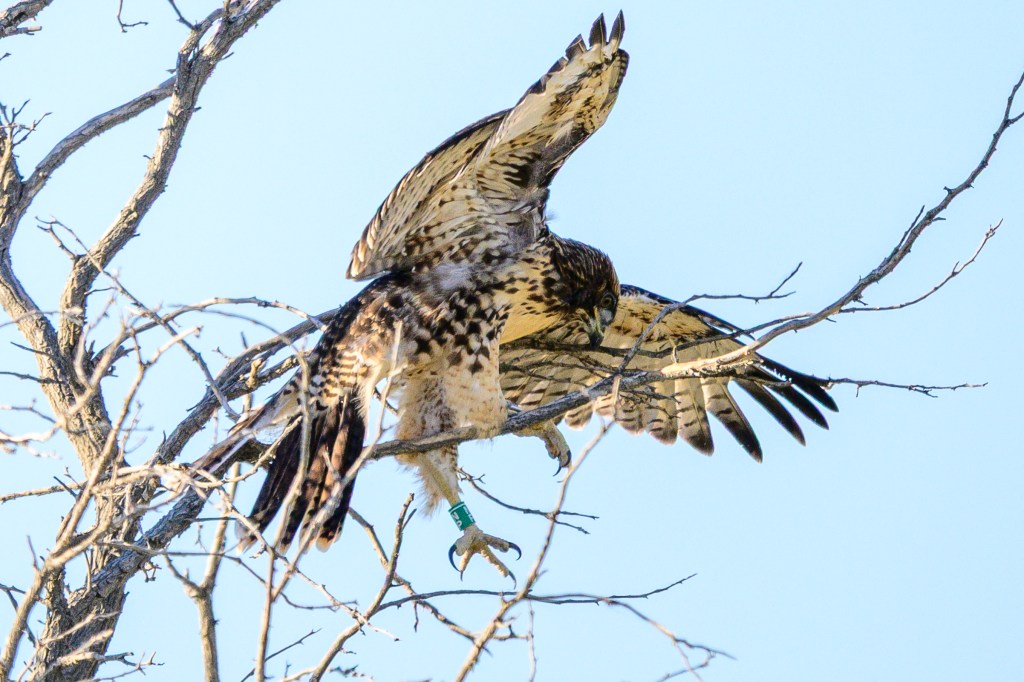
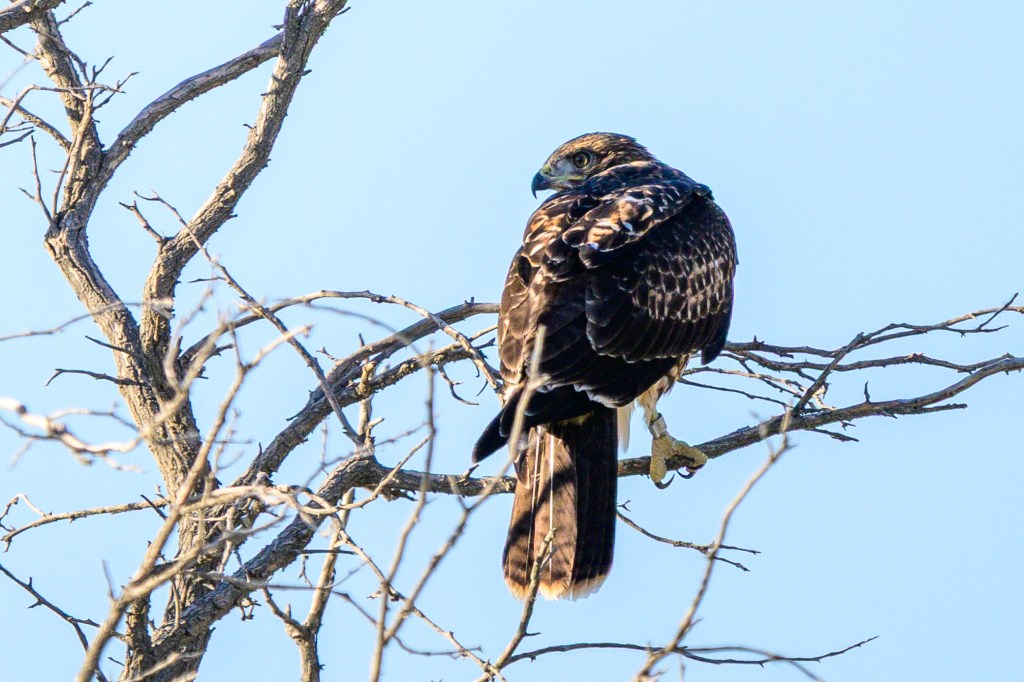
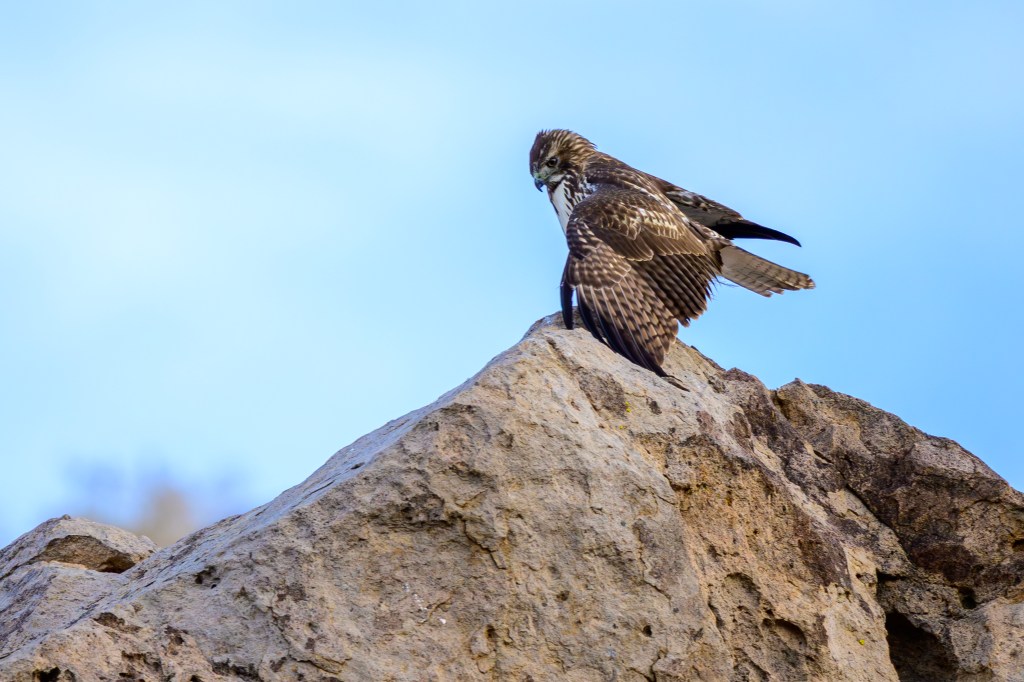
Bird below uses its wing to help with balance.
FLIGHT
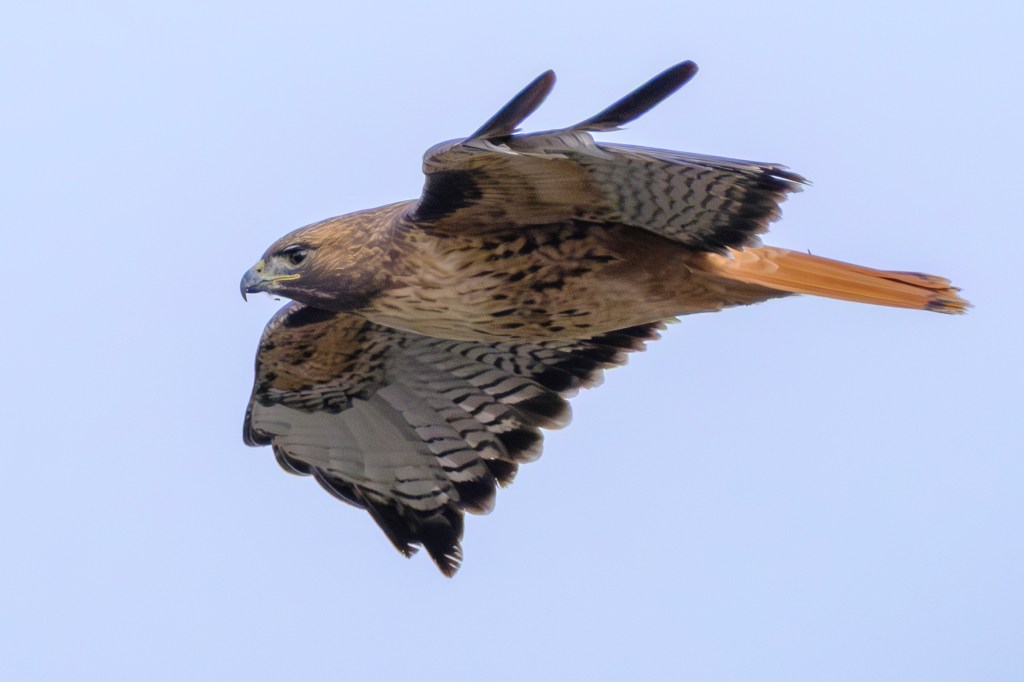
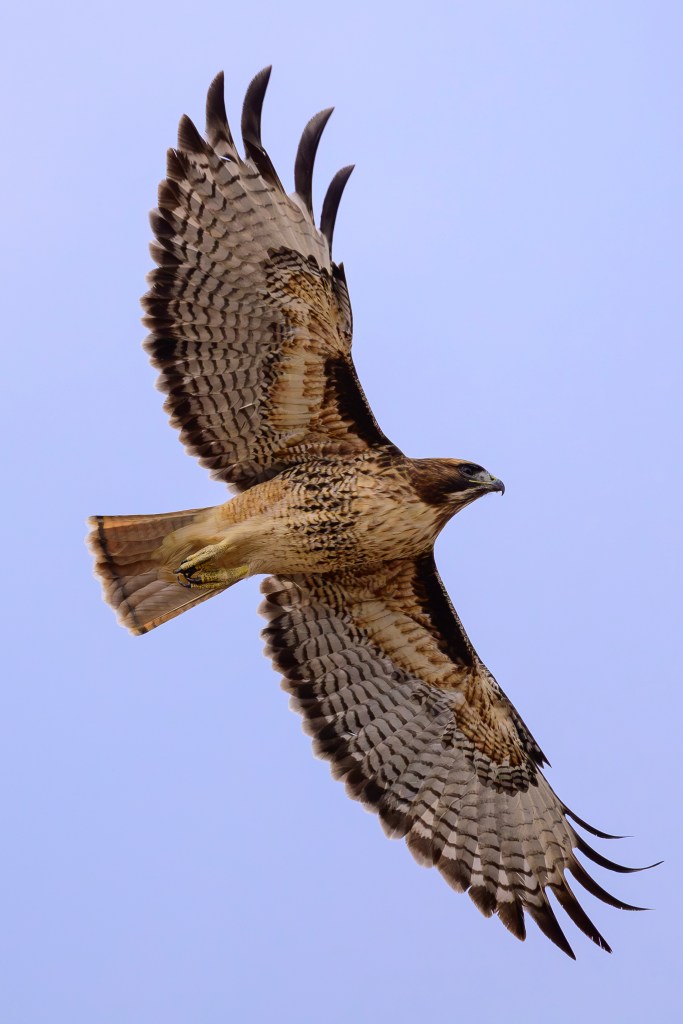
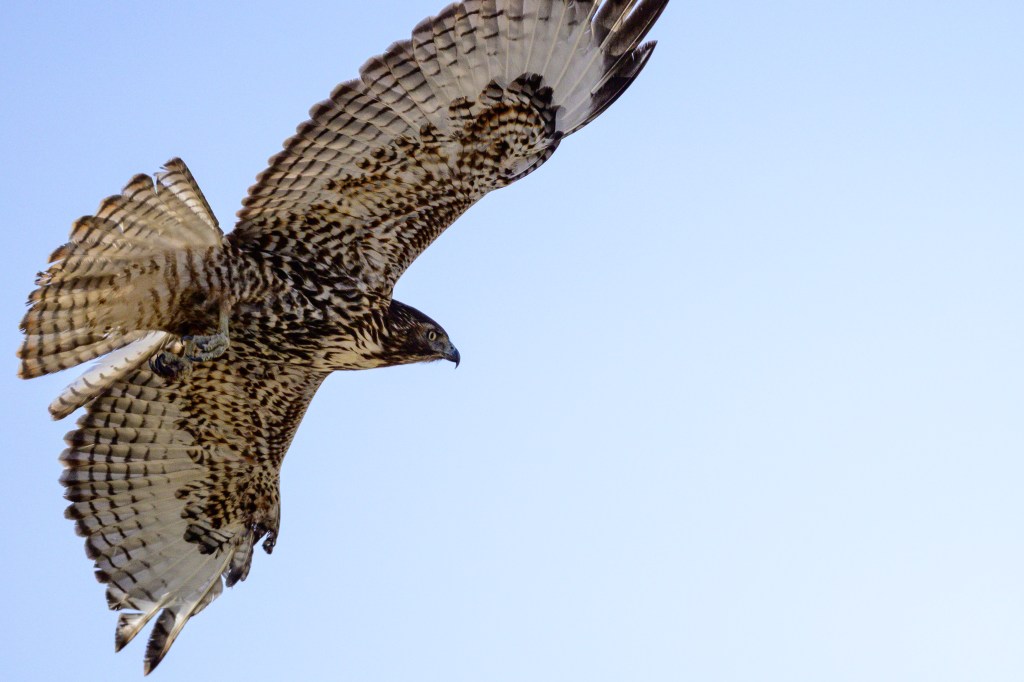
Note the feathered leggings. The leading edge of the underside of the wing, from head to wrist (the bend in the wing), is black. This leading edge is called the patagium, so we can sound sophisticated by saying the Red-tail has a dark patagium or a dark patagial mark or patagial stripe. This feature is a great way to identify this bird from below. This is a young bird. You can tell because 1) the tail is gray with black bands, 2) the eye is yellow, and 3) the trailing (back) edge of the wing is not all black.
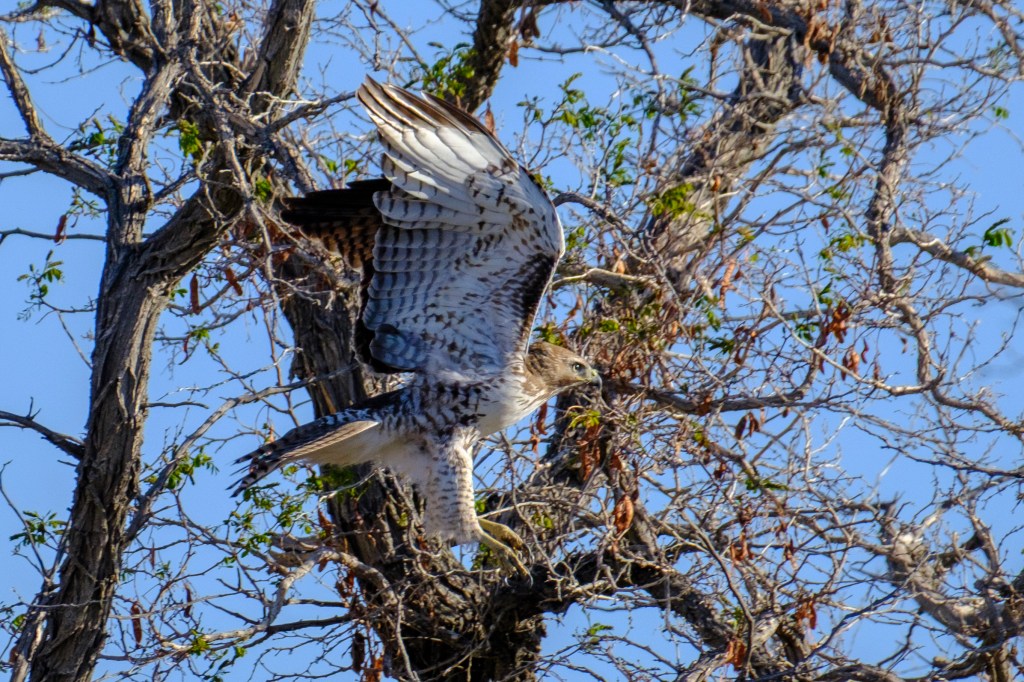
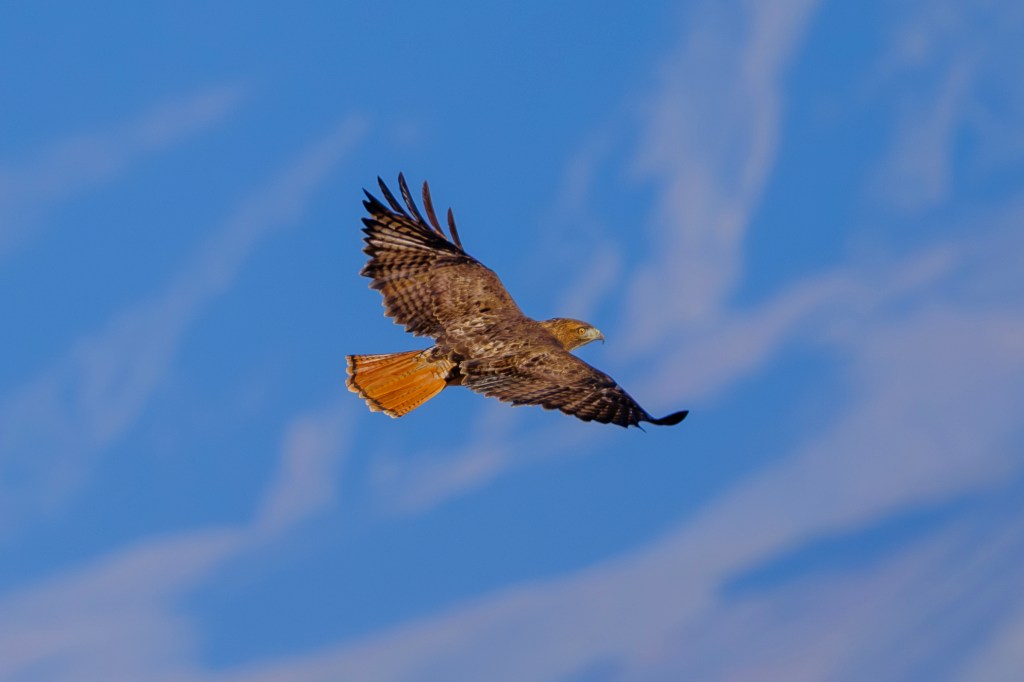
The next bird also demonstrates the feathered leggings. This is a mature bird. You can see the brown eye, the red tail, and the back edge of the wing is black.
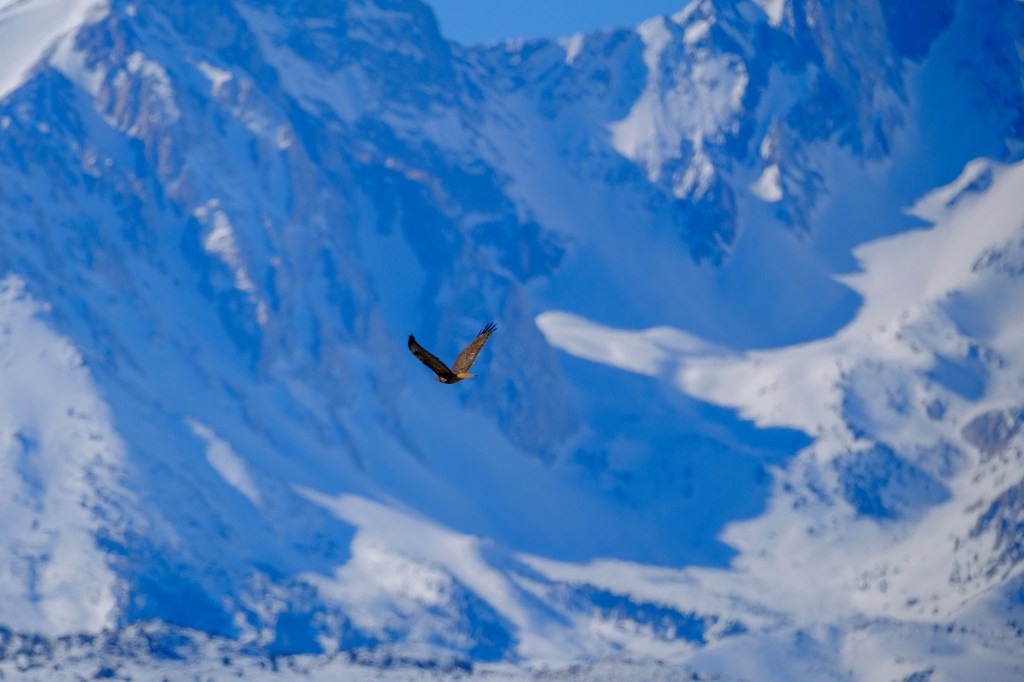
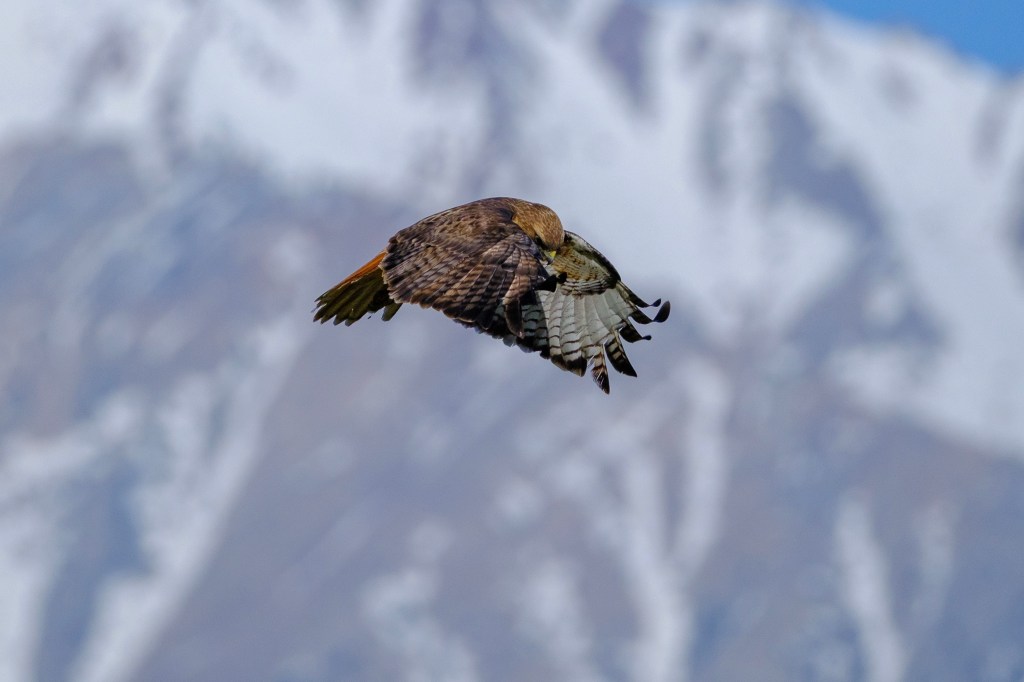
The bird below is hovering while it searches for a meal. Red-tails don’t hover often, but they can do this with help from a headwind.
The next bird is very dark; probably a dark morph.
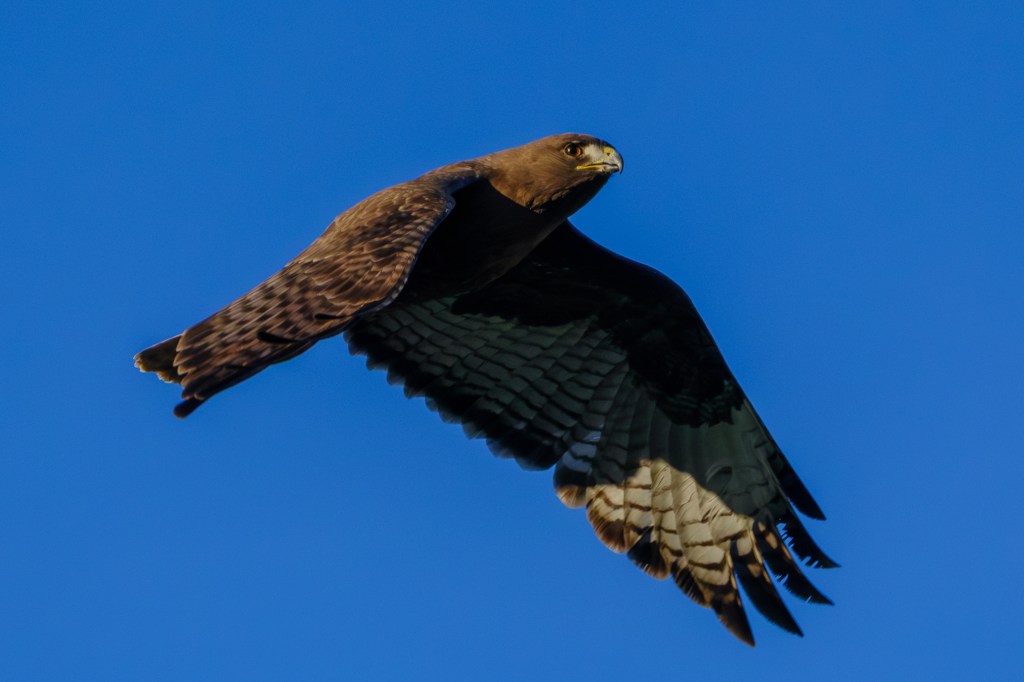
Below you can see the dark stripe on the trailing edge of the wing and the dark patagial area on the leading edge.
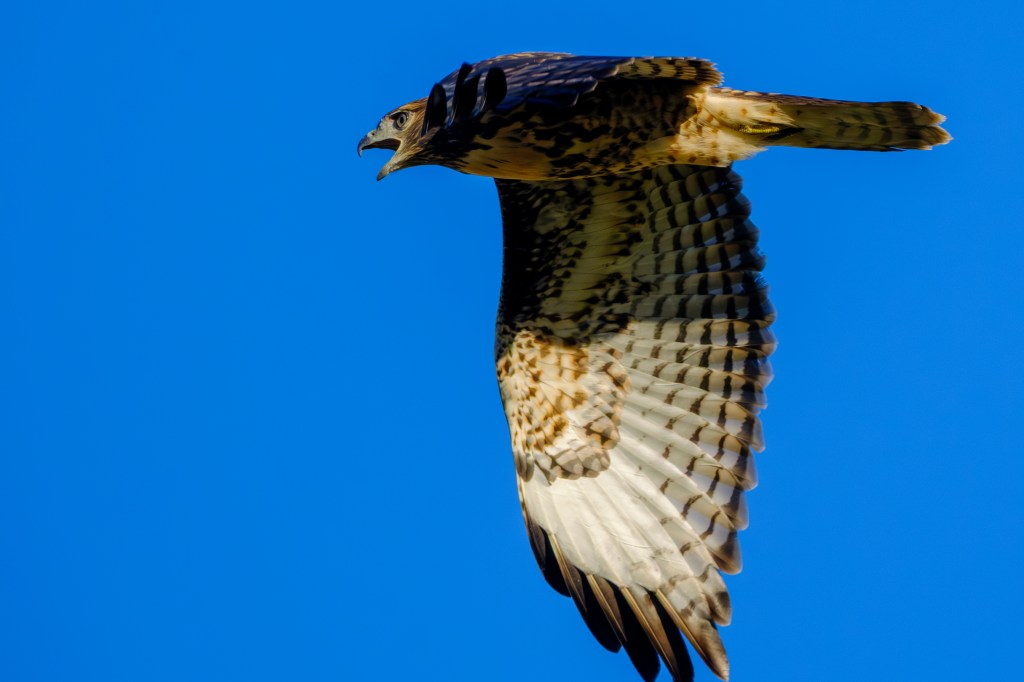
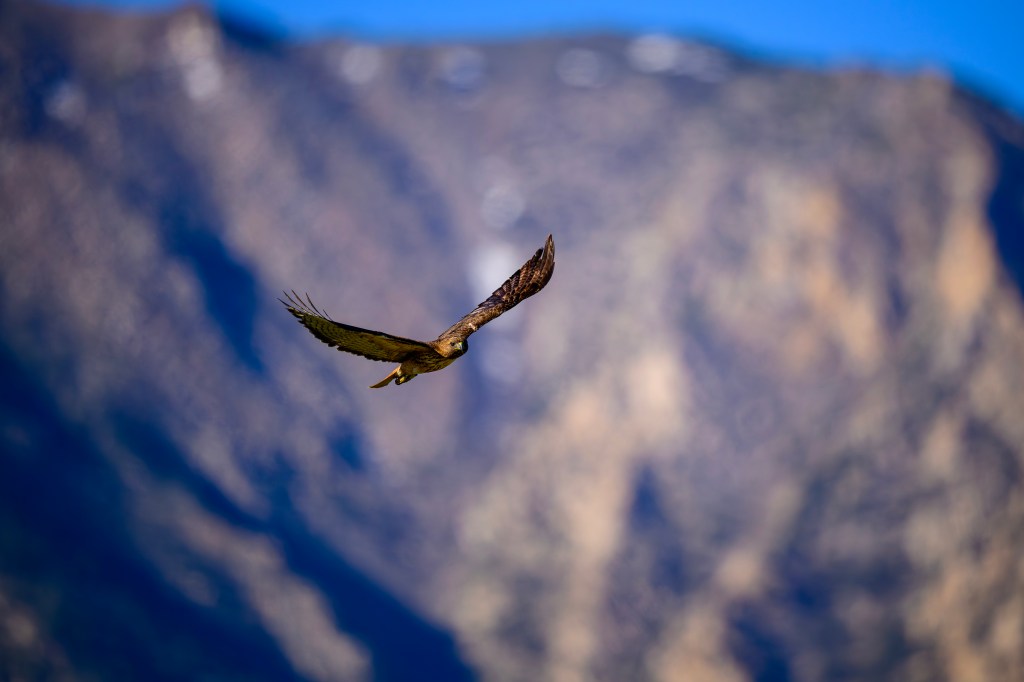
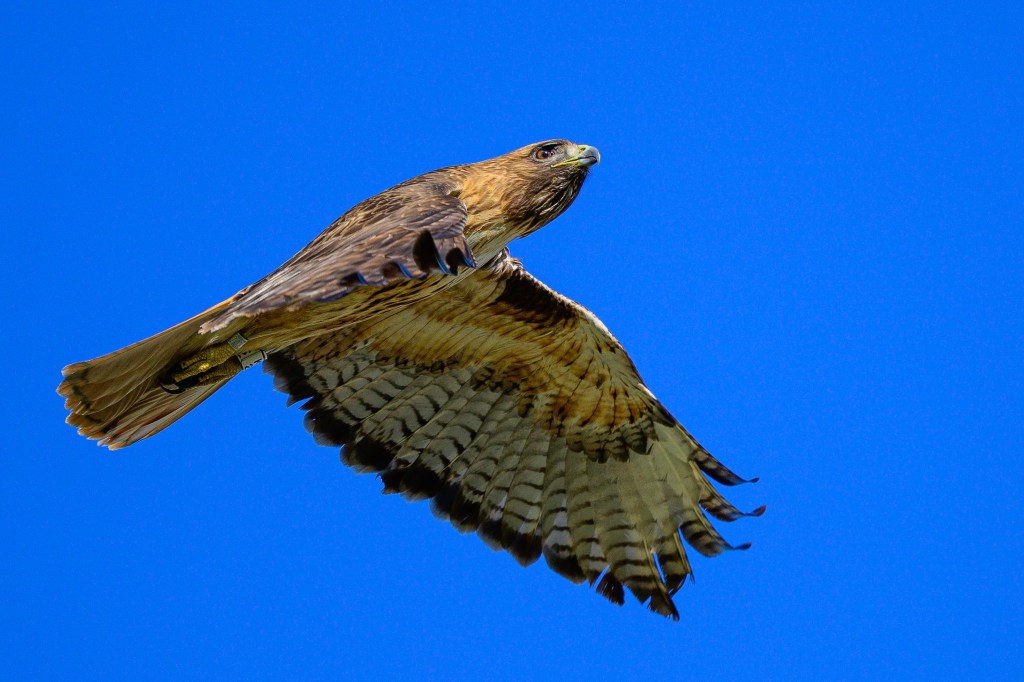
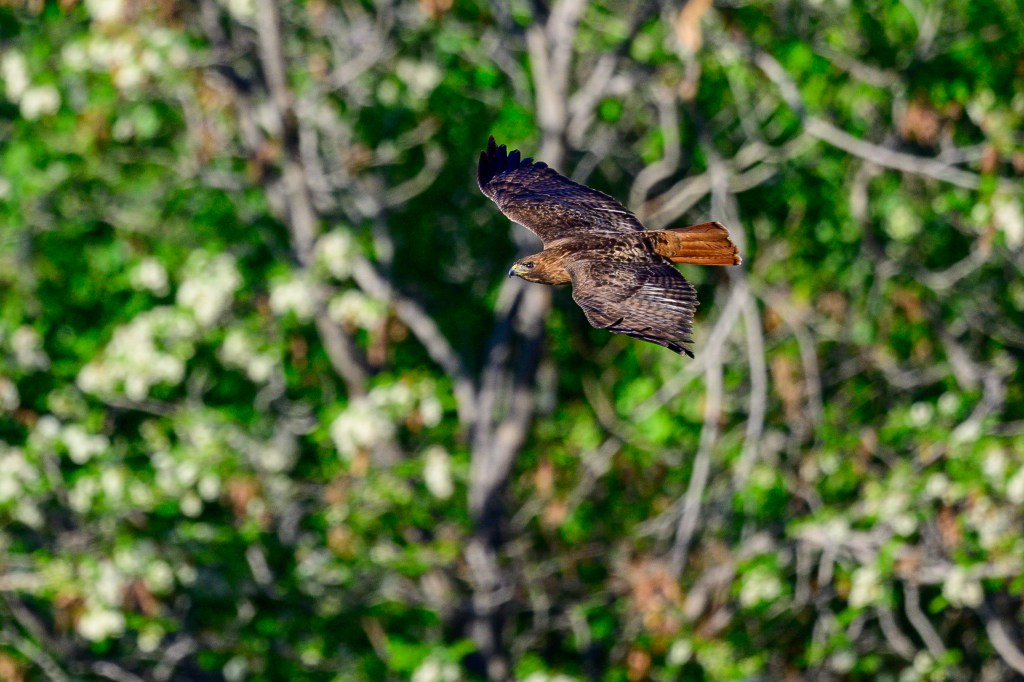
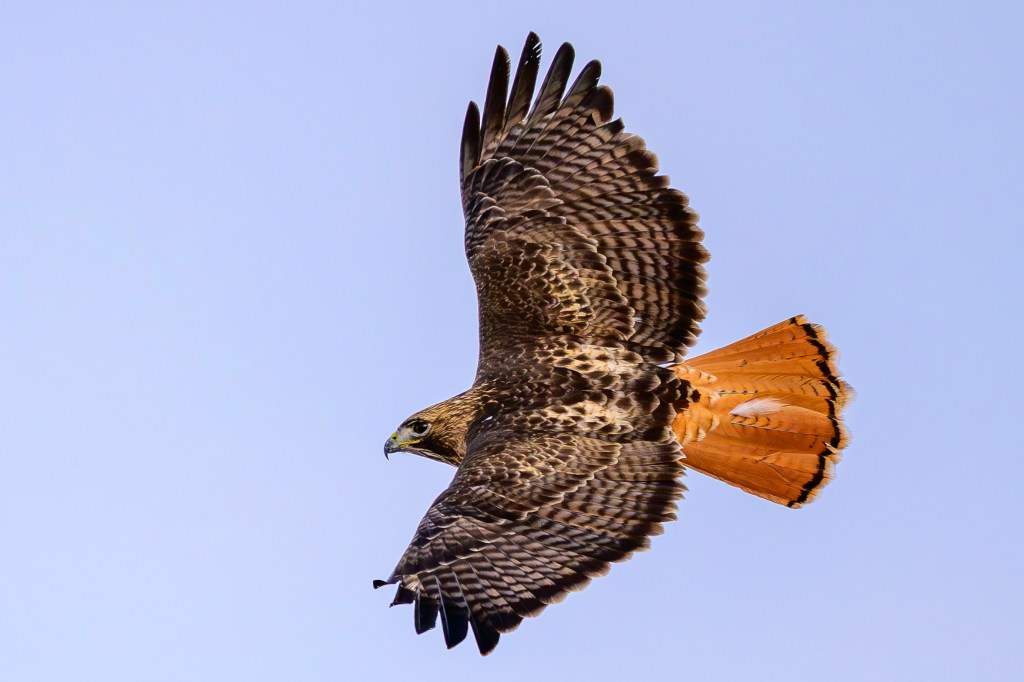
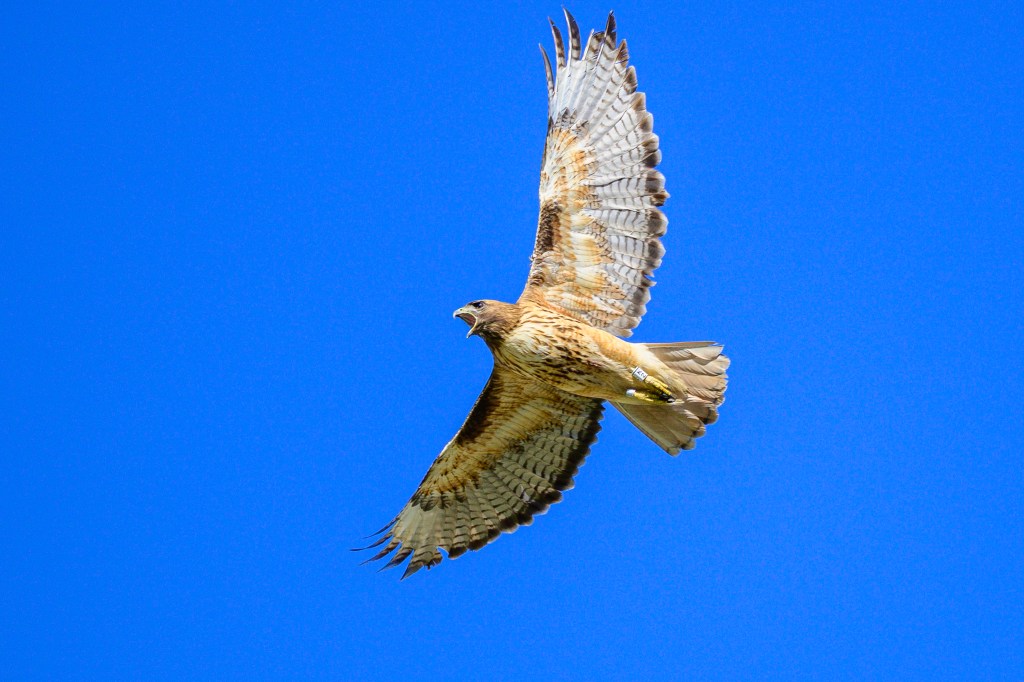
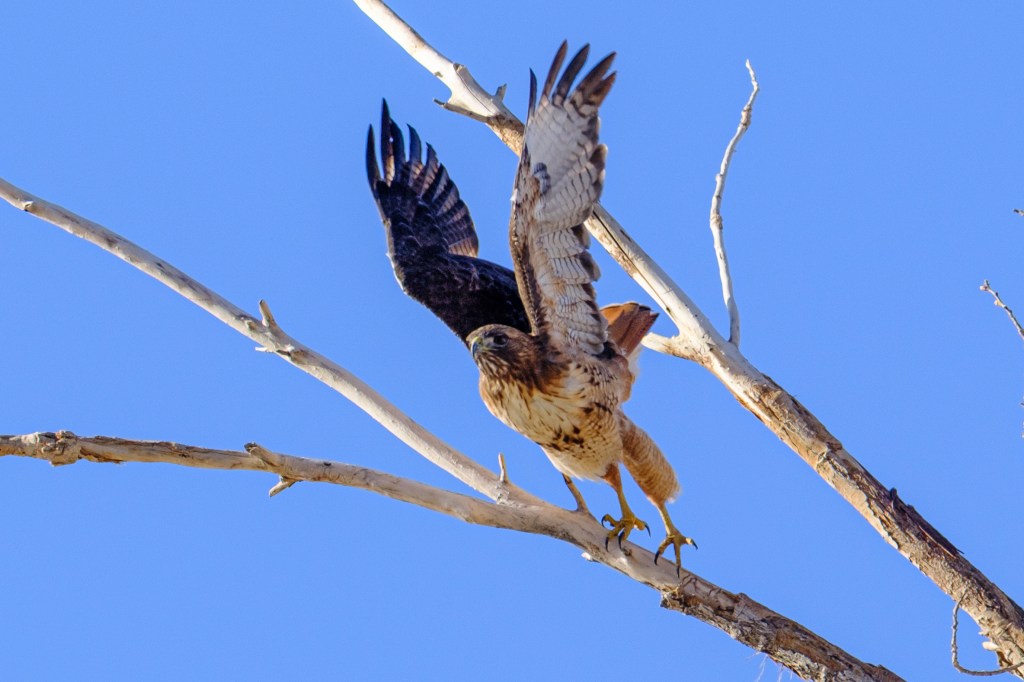
Below a juvenile bird has just launched into the air. The tail is not red and is very worn.
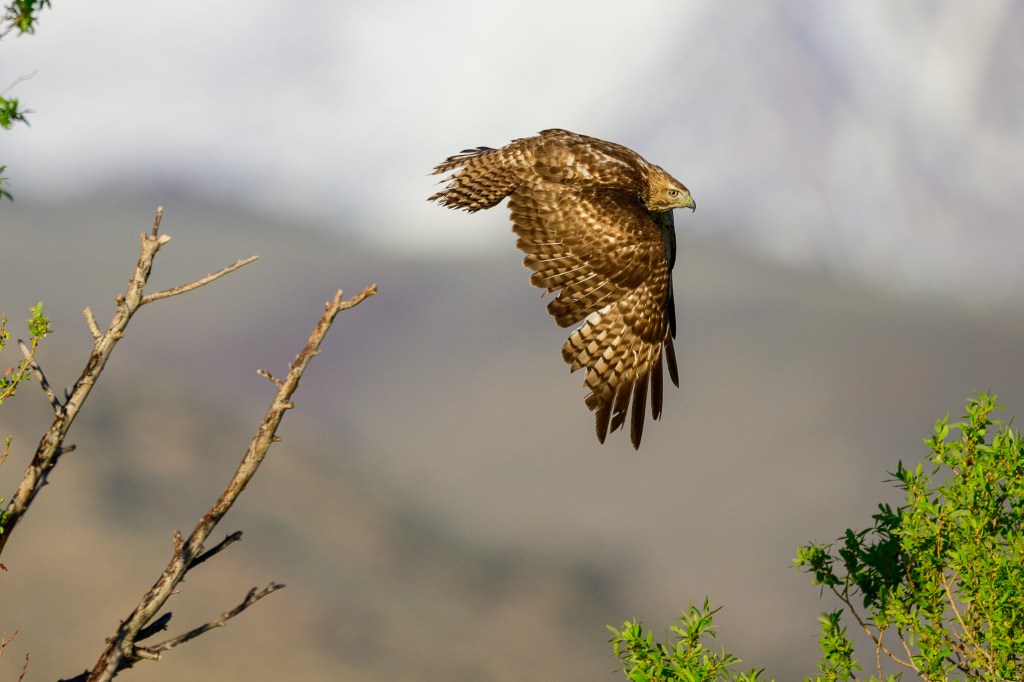
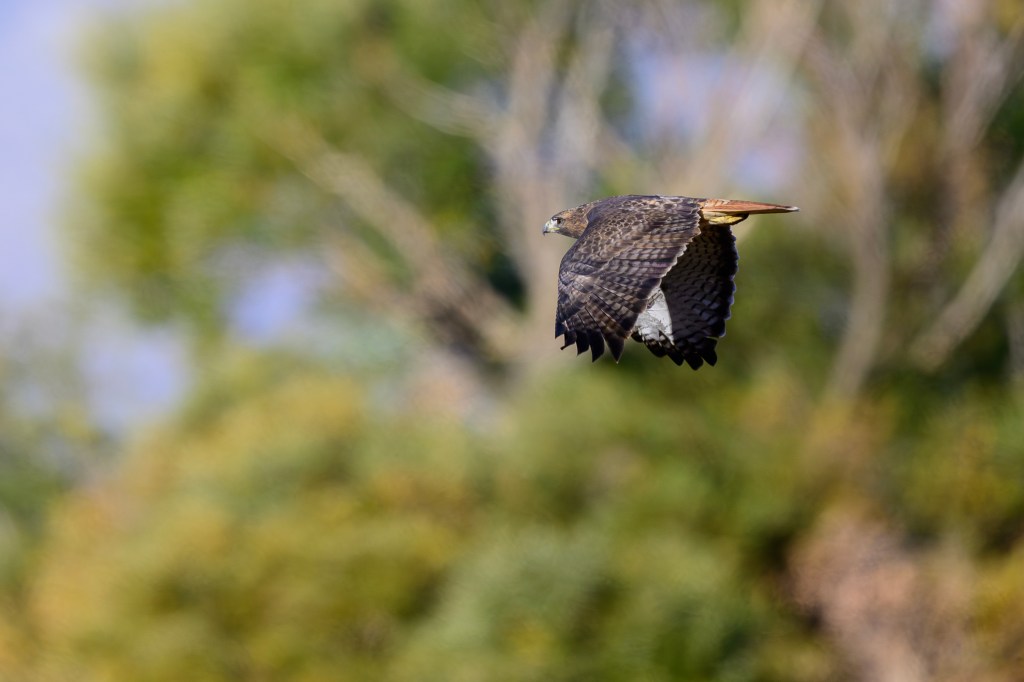
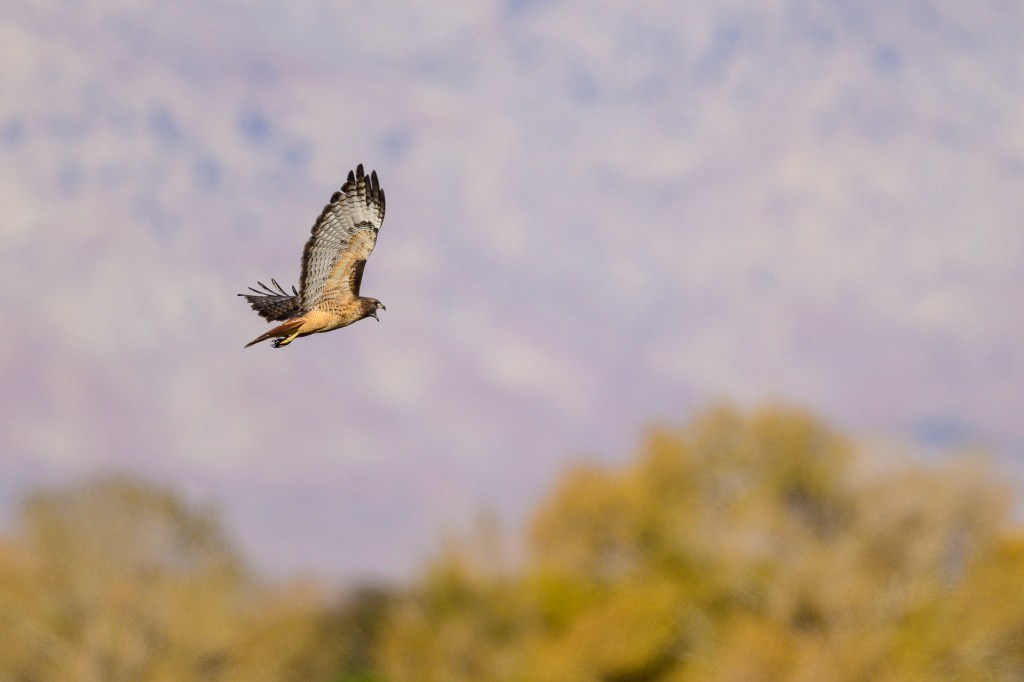
The next Hawk has a “V” of white blotches on its back and a spiky hairdo. It is a juvenile Red-tail with yellow eyes and striped tail.
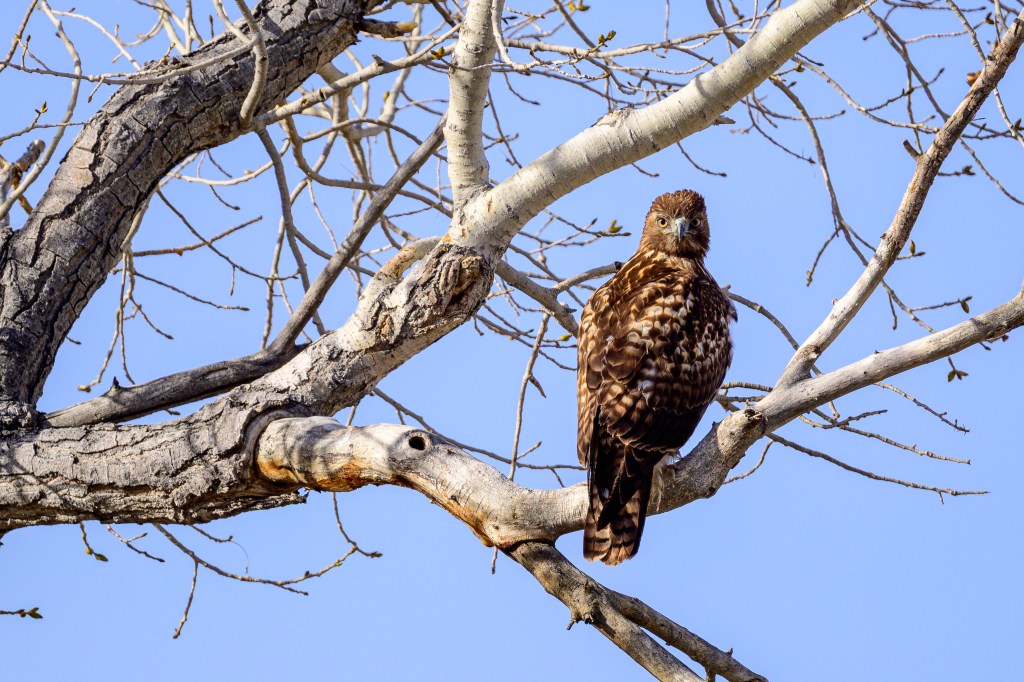
But when this same bird took off, the patagial area lacks the uniform black that I expected. It is a mix of black and white. I think the dark area is not fully developed in this young Hawk.
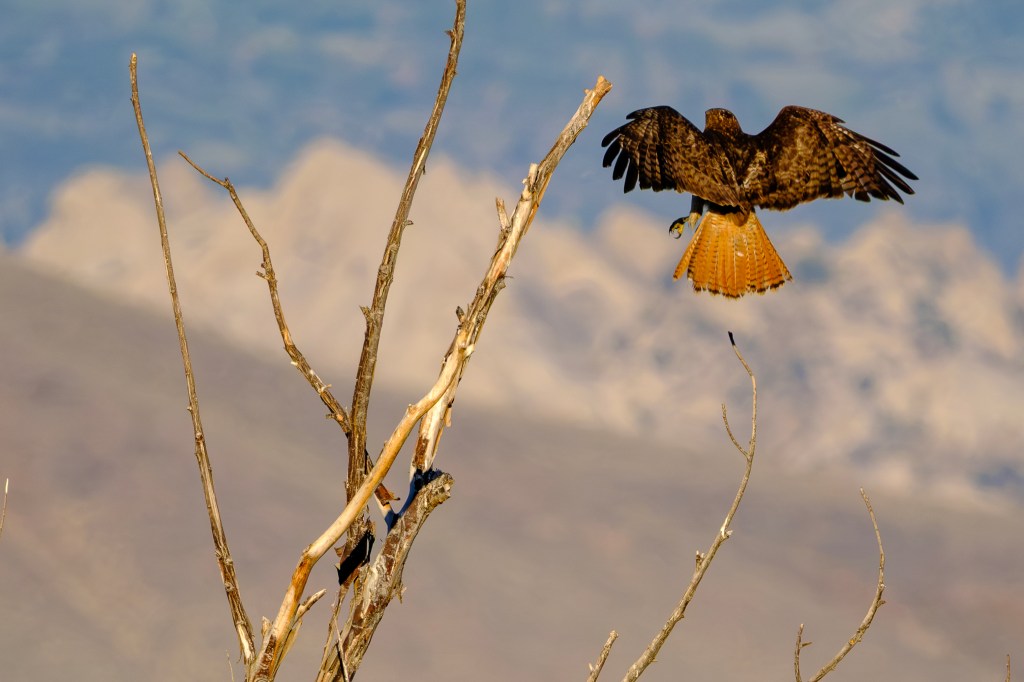
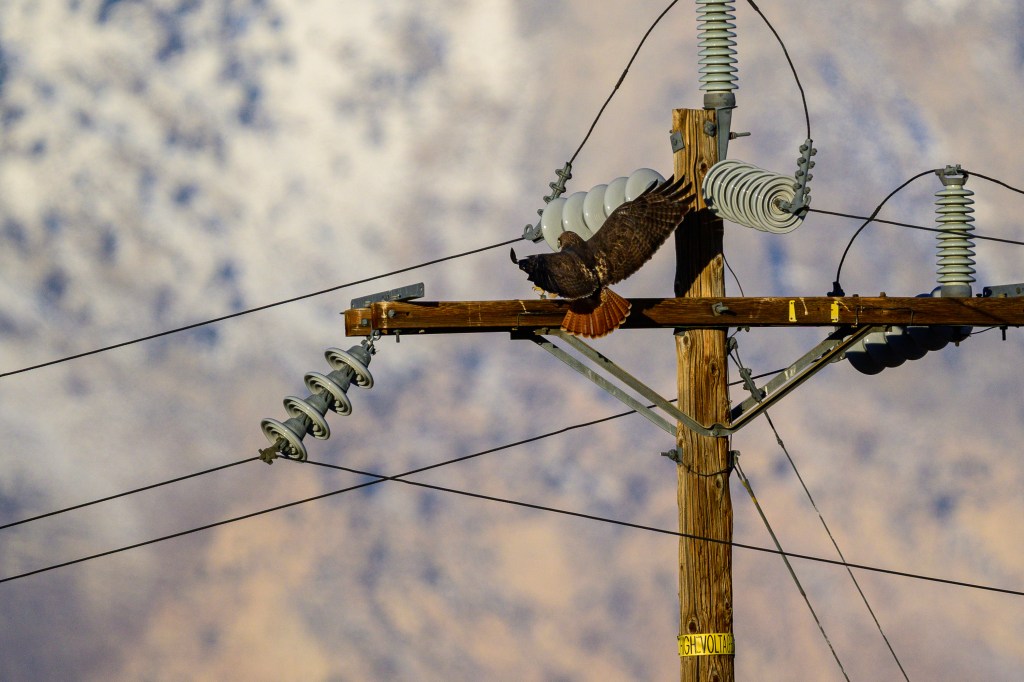
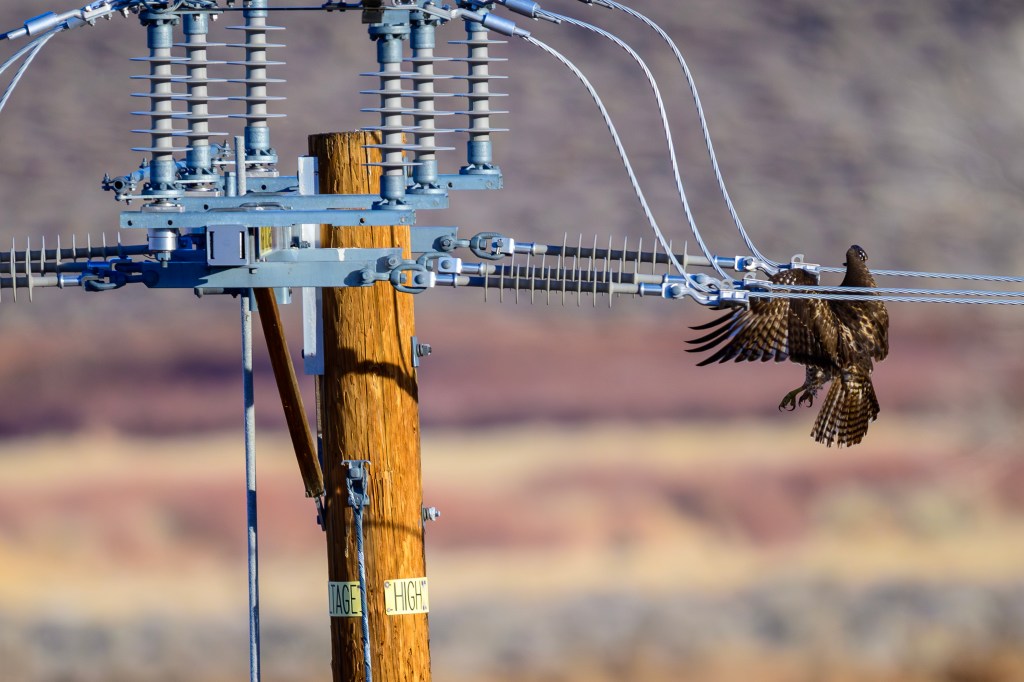
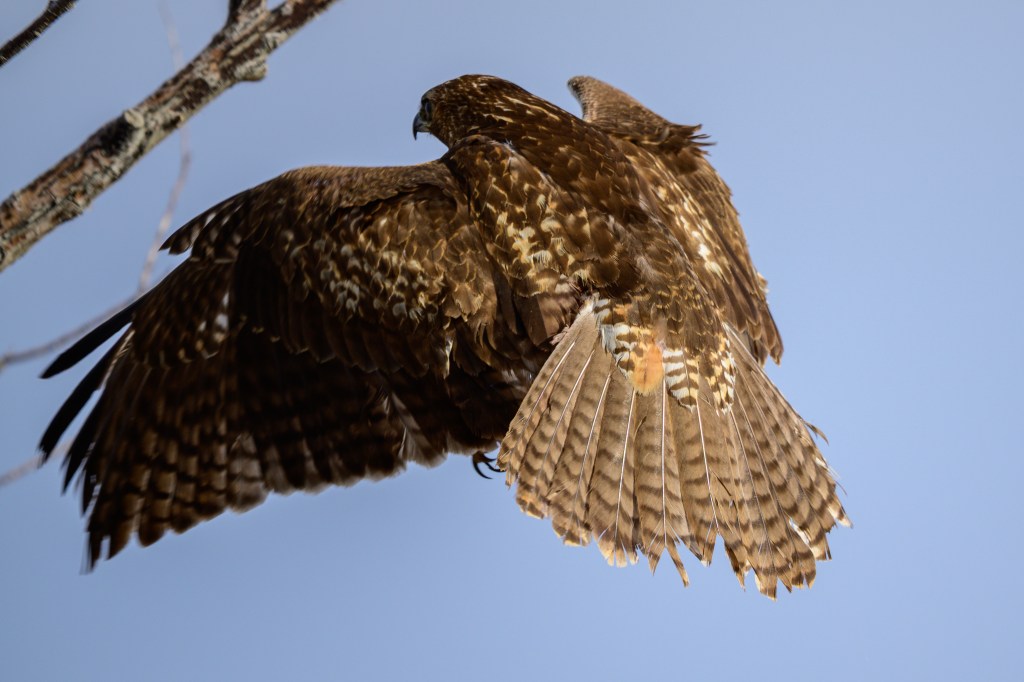
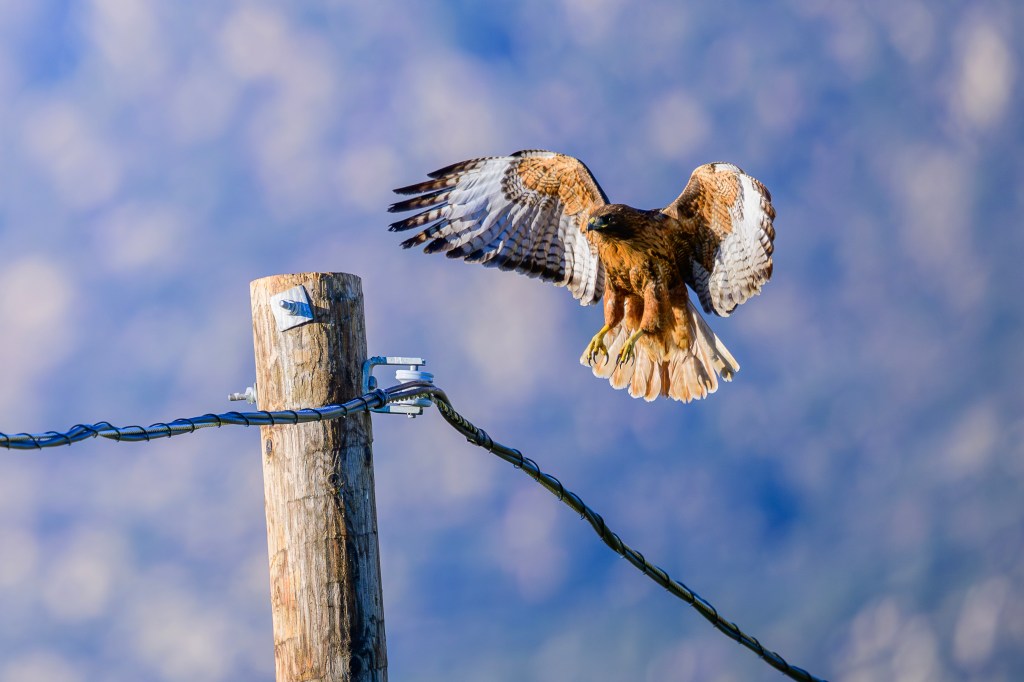
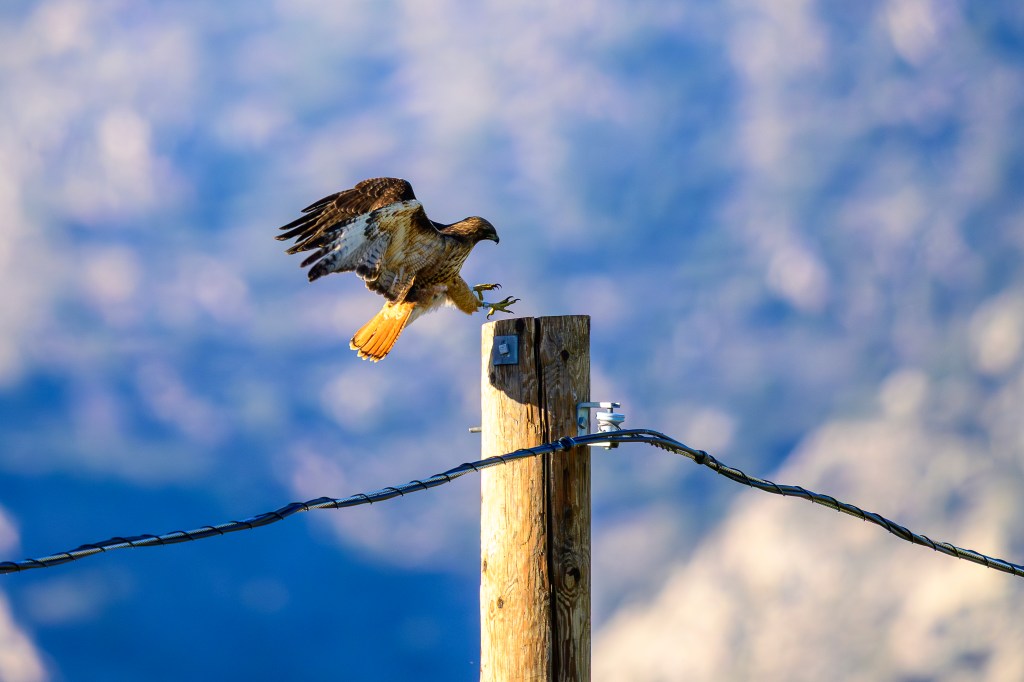
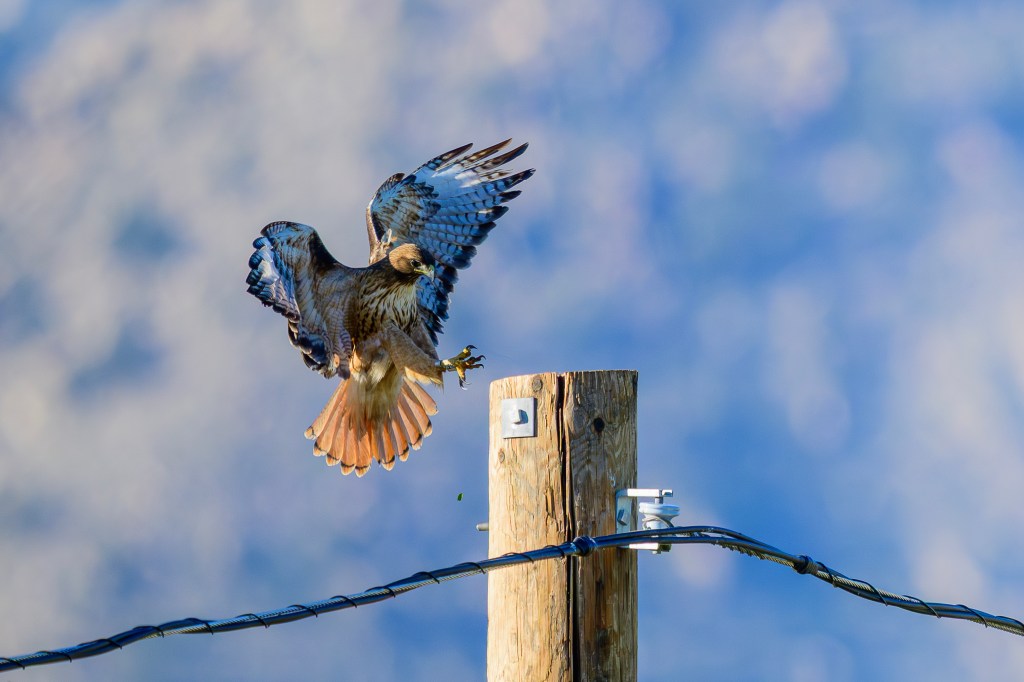
When a bird lands, it often flies a level or descending line to its perch. But Red-tails often fly at an altitude below the perch. At the last moment, they flair their wings and tail and use their speed to rise up to the perch. This looks dramatic and shows off their flying skill. In the last three pictures, the same bird makes 3 landings on the same pole.
HARRASSMENT
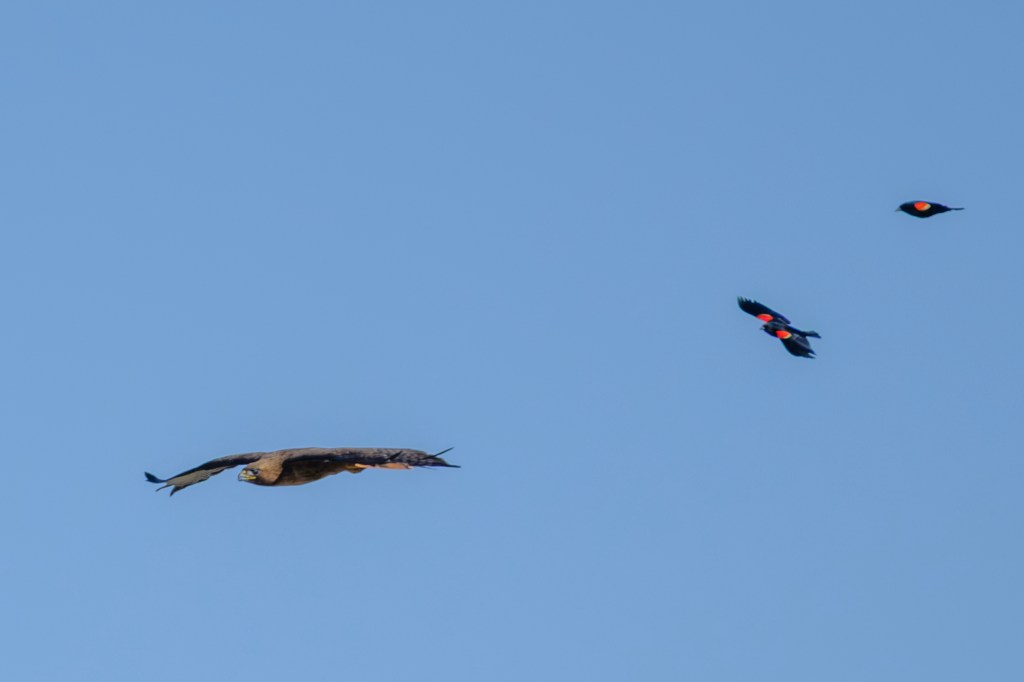
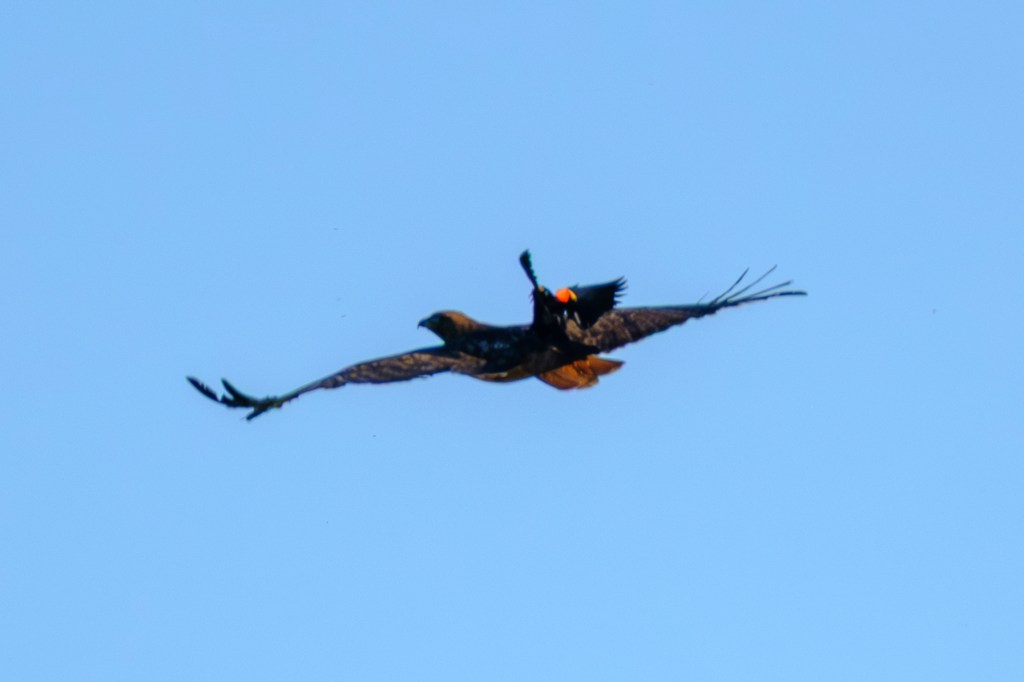
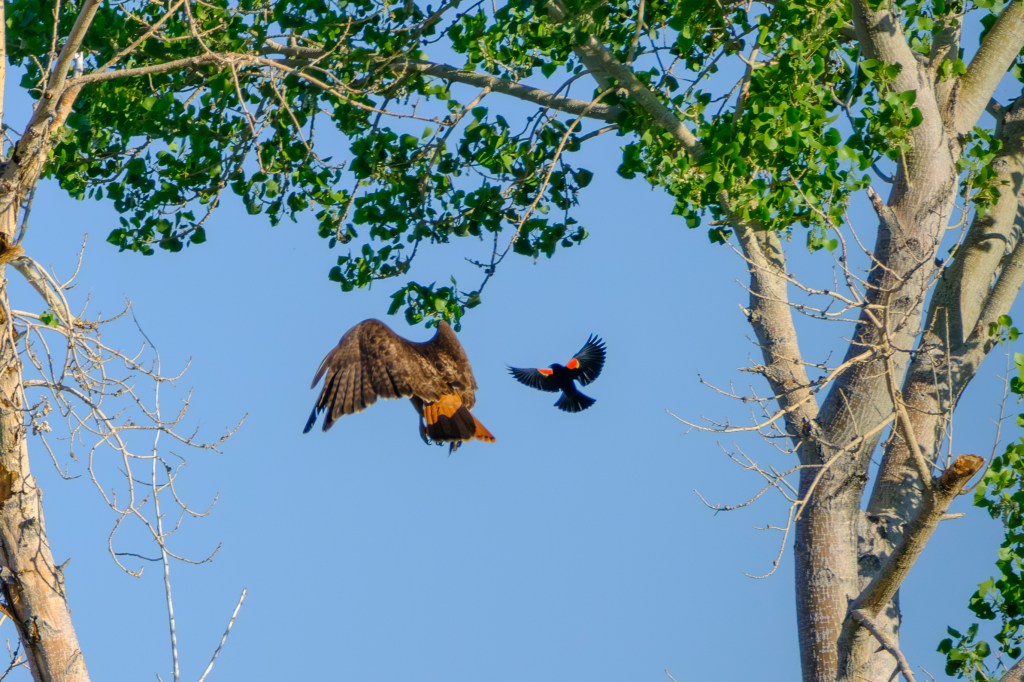
I have described Red-tails as avian bullies. But what goes around, comes around. Blackbirds, crows, and ravens often harass and attack Red-tails. See the evidence below.
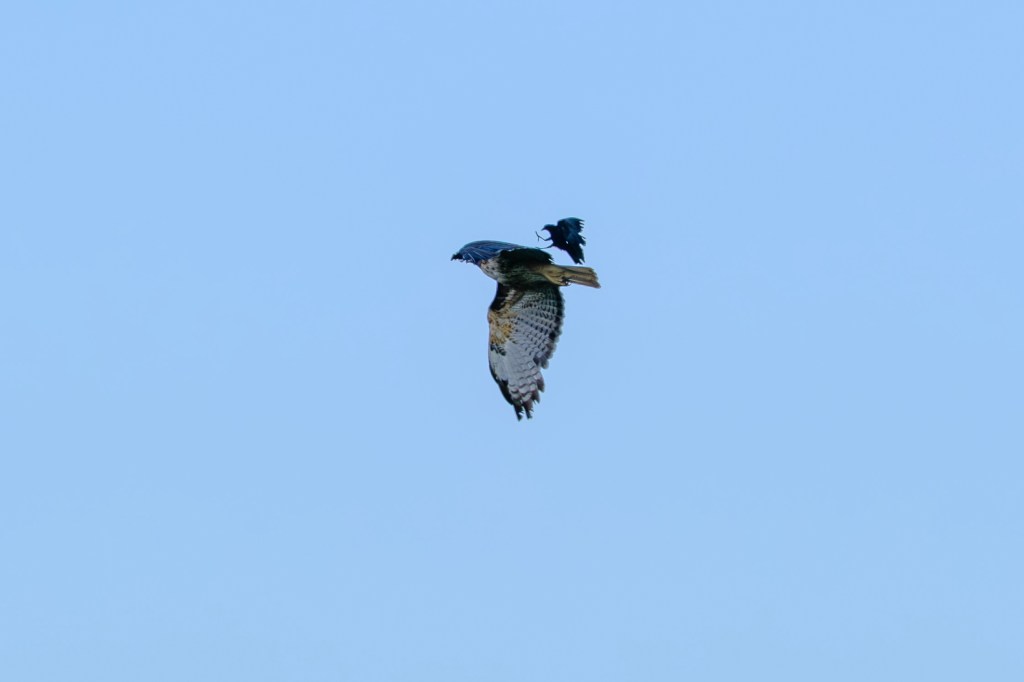
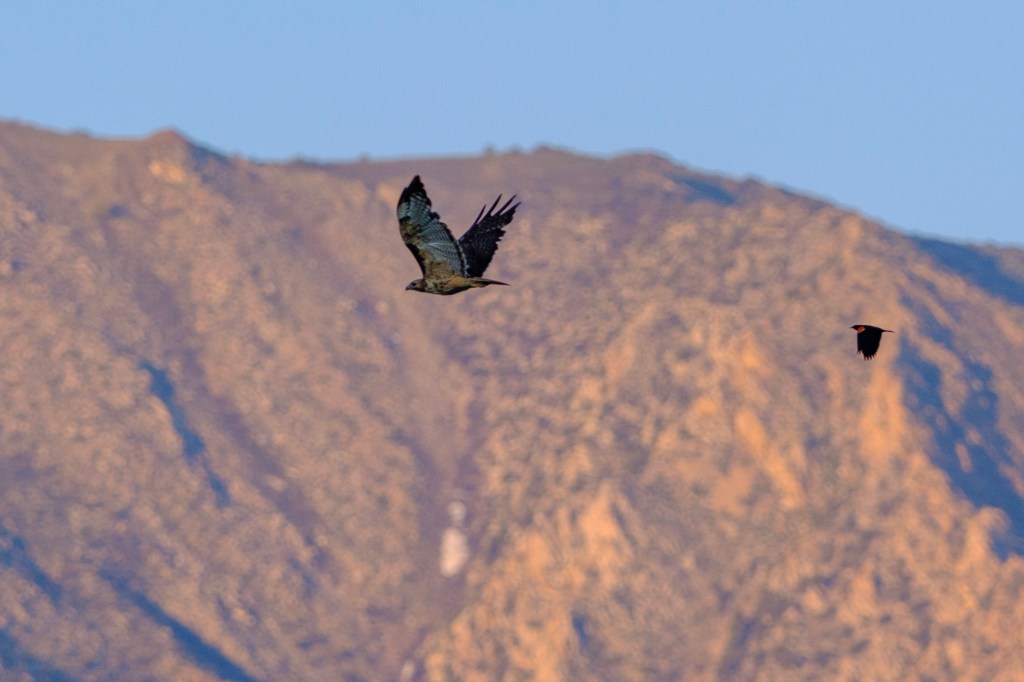
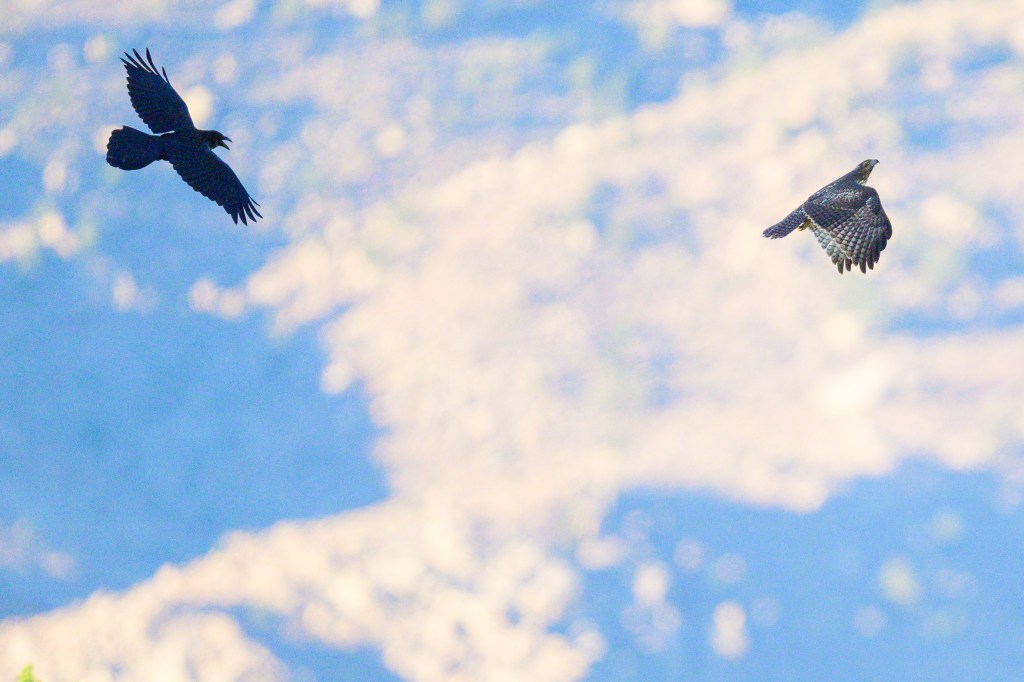
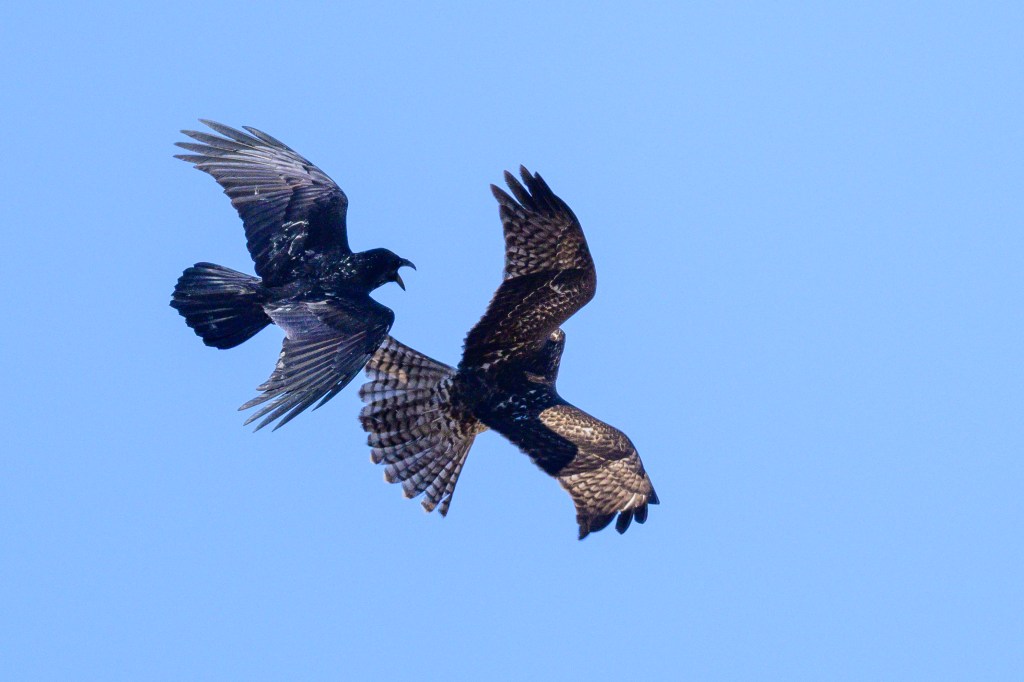
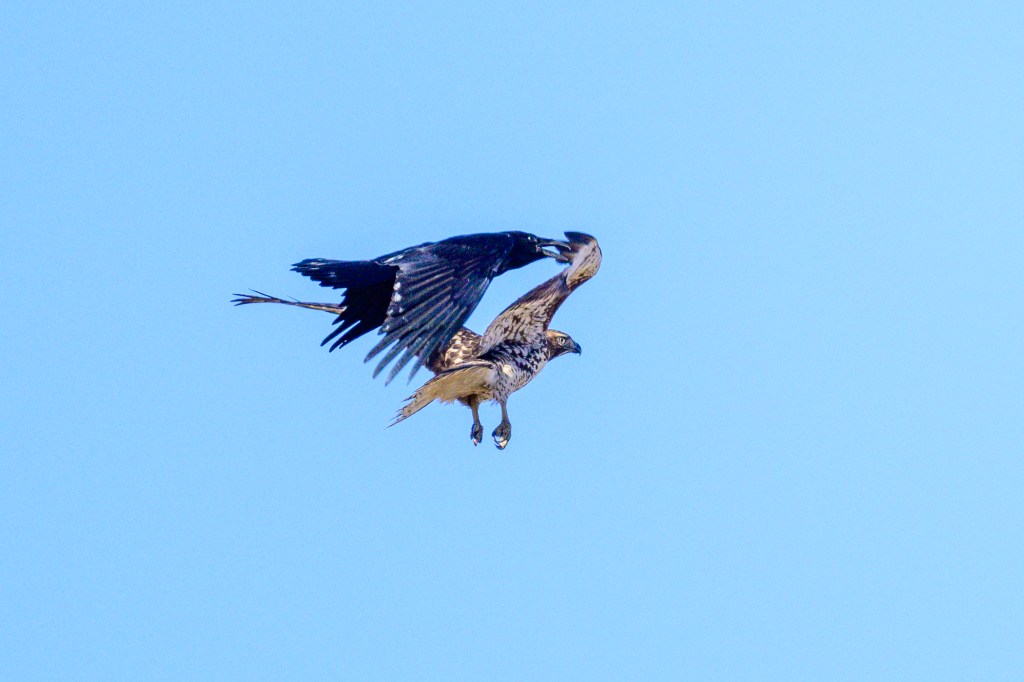
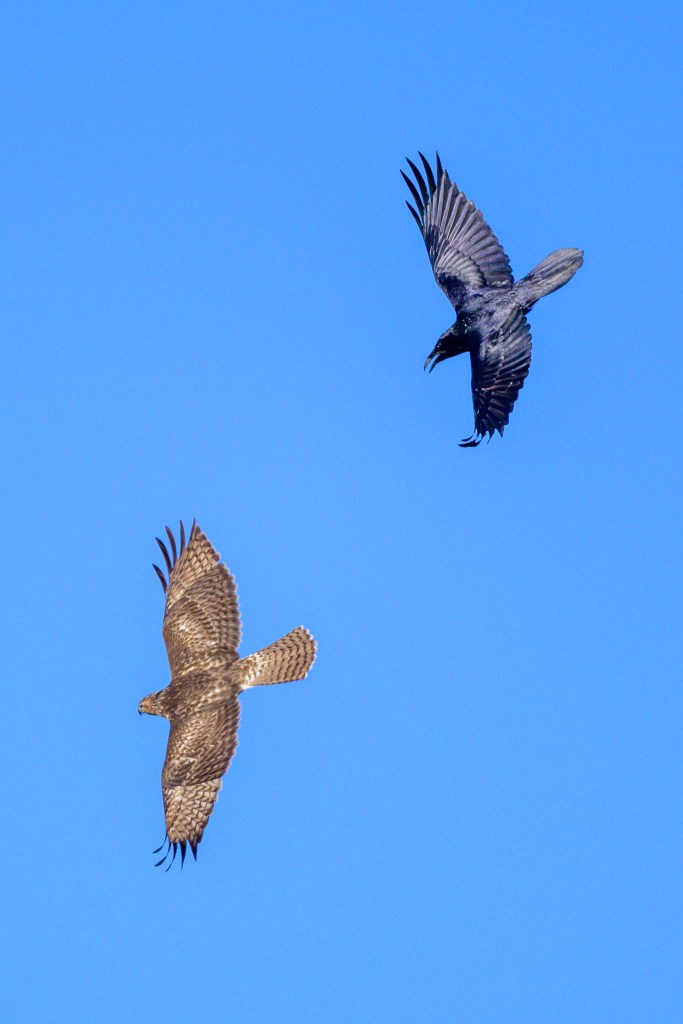
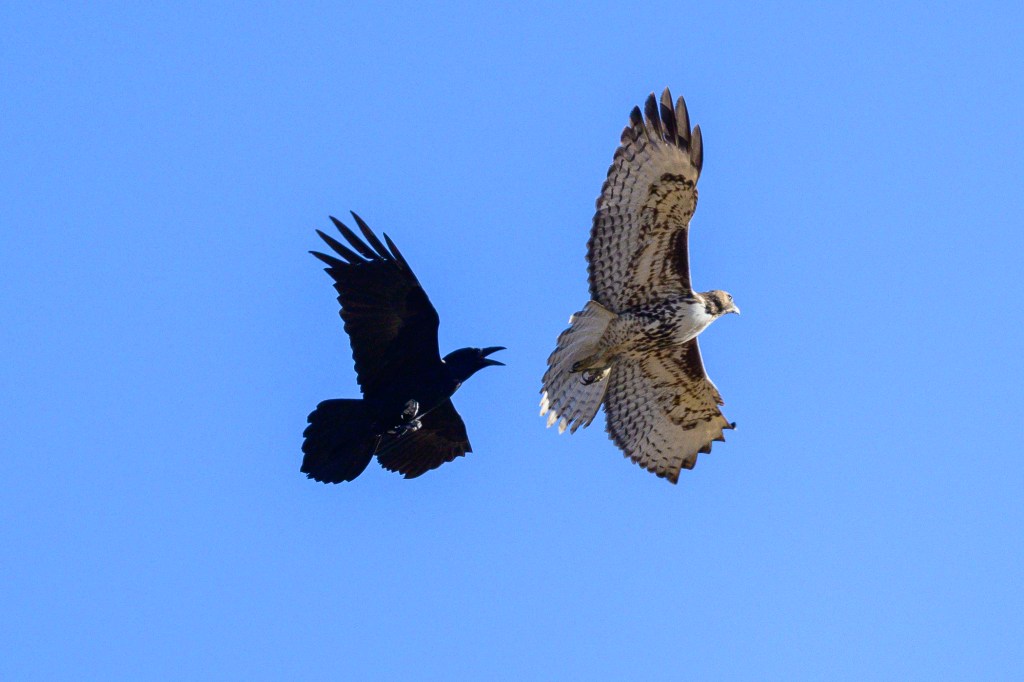
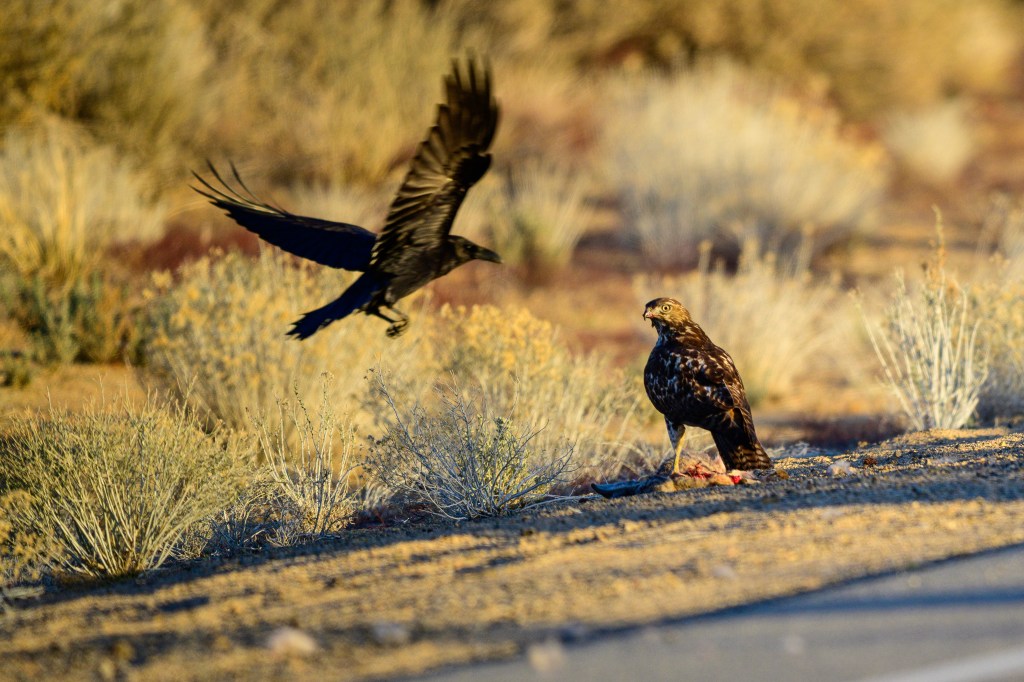
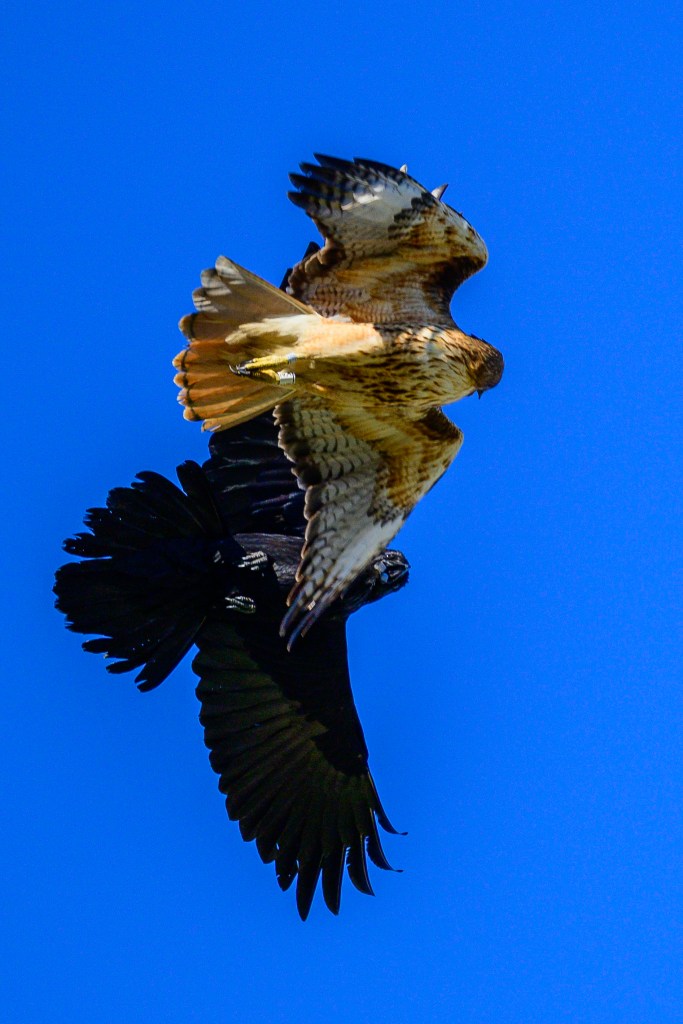
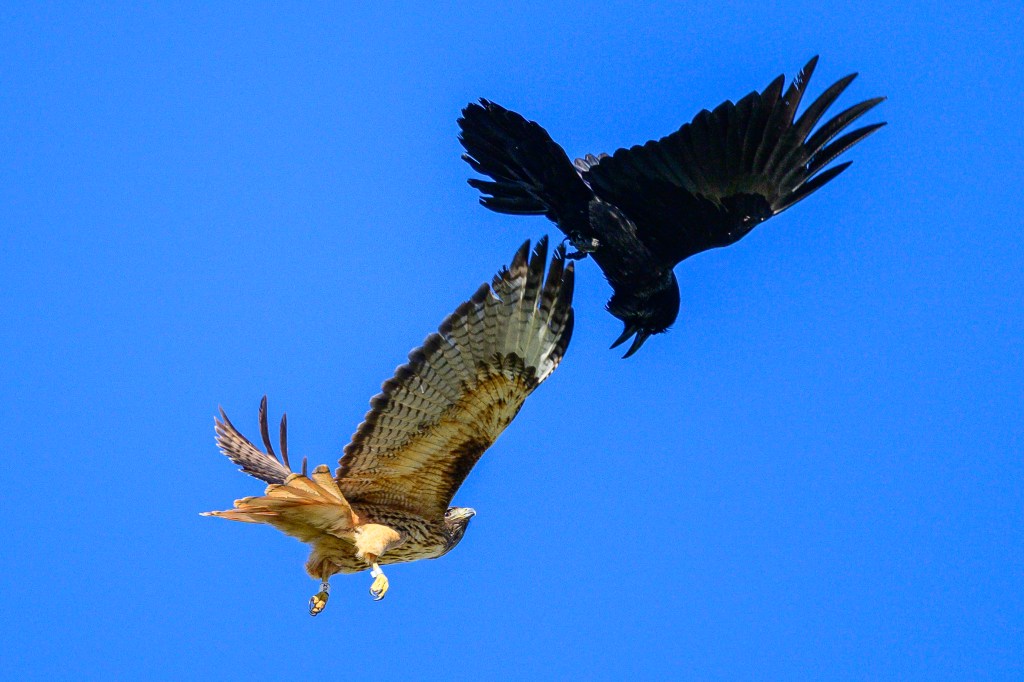
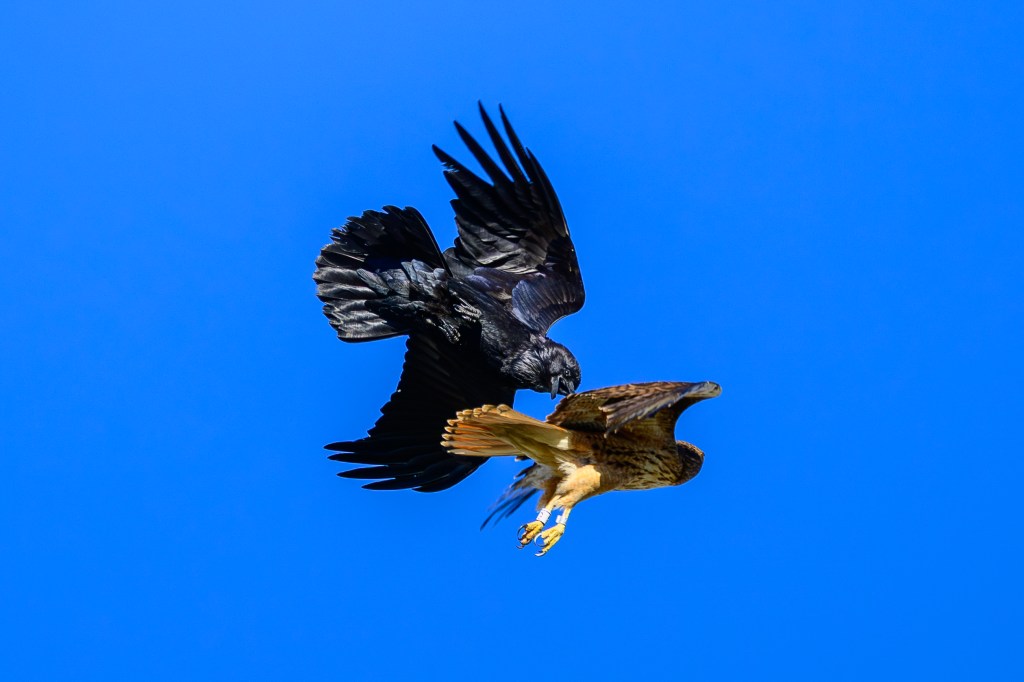
FEEDING
In December of 2021 I was walking around the Buckley Ponds. As I came around a bend, I surprised a Snow Goose. (And it surprised me.) It took off and circled behind me. An hour later I came near the same spot and discovered that a Bald Eagle had killed and eaten the Goose. The pond ice was covered in white feathers and blood. After the Eagle was sated, a Red-tail seized some of the Goose, which you can see in the bloody foot.
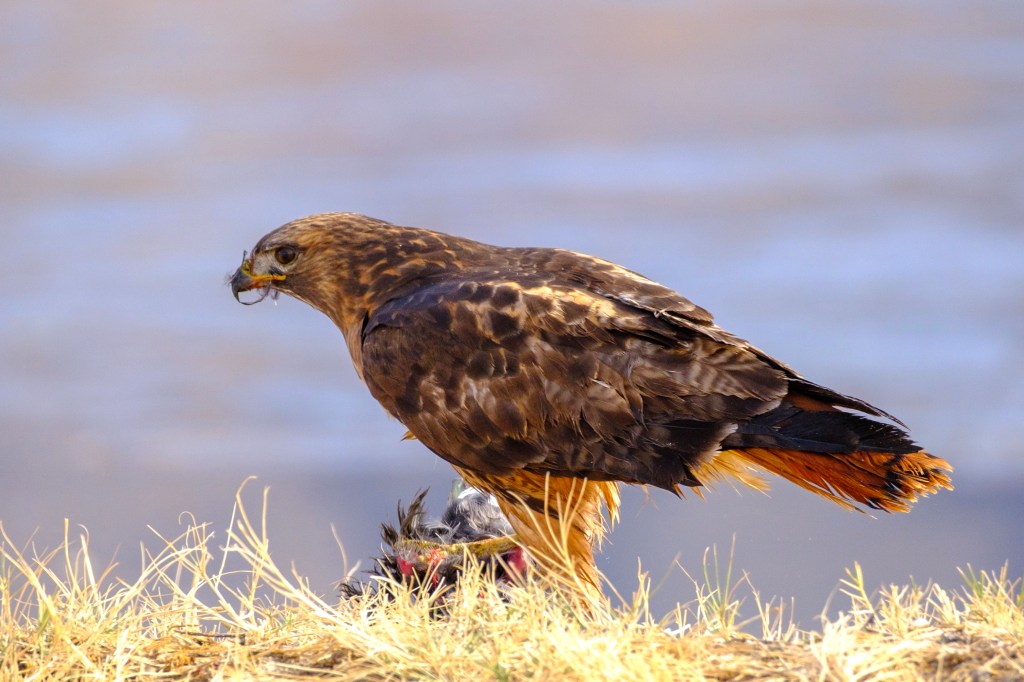
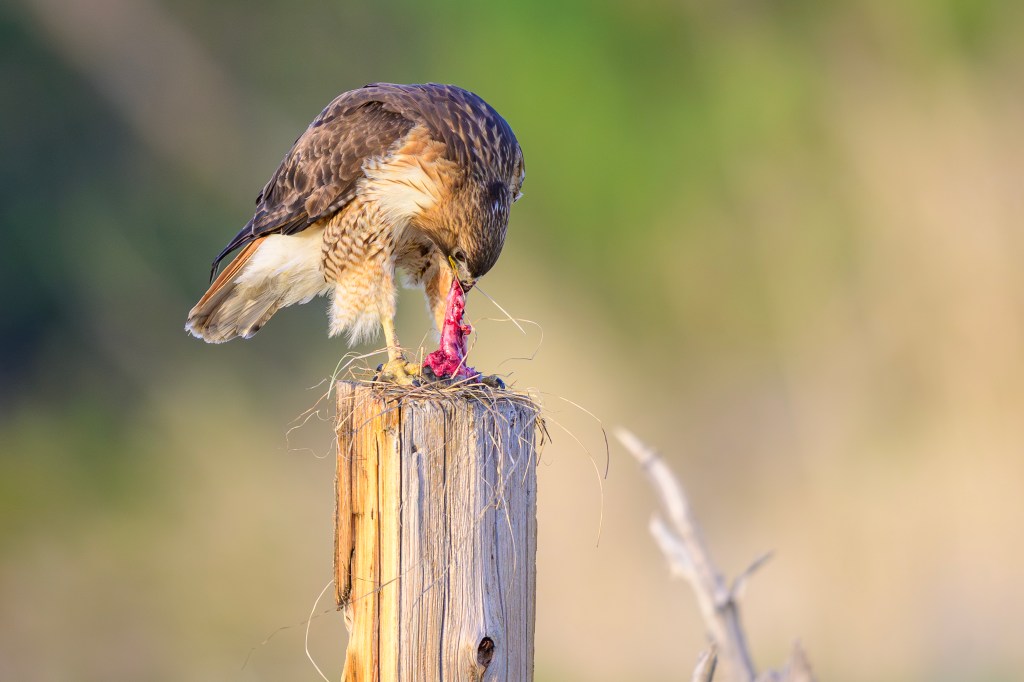
At the Conservation Open Space Area, a Red-tail snatched up a rodent and devoured it on a fence post. In the second photo the bird has a big chunk of mouse — it choked down that entire piece. Birds have no teeth and they can’t use utensils. Other birds may try to snatch away any food. So being able to gobble a meal is a useful tactic. This is eating to live, not living to eat.
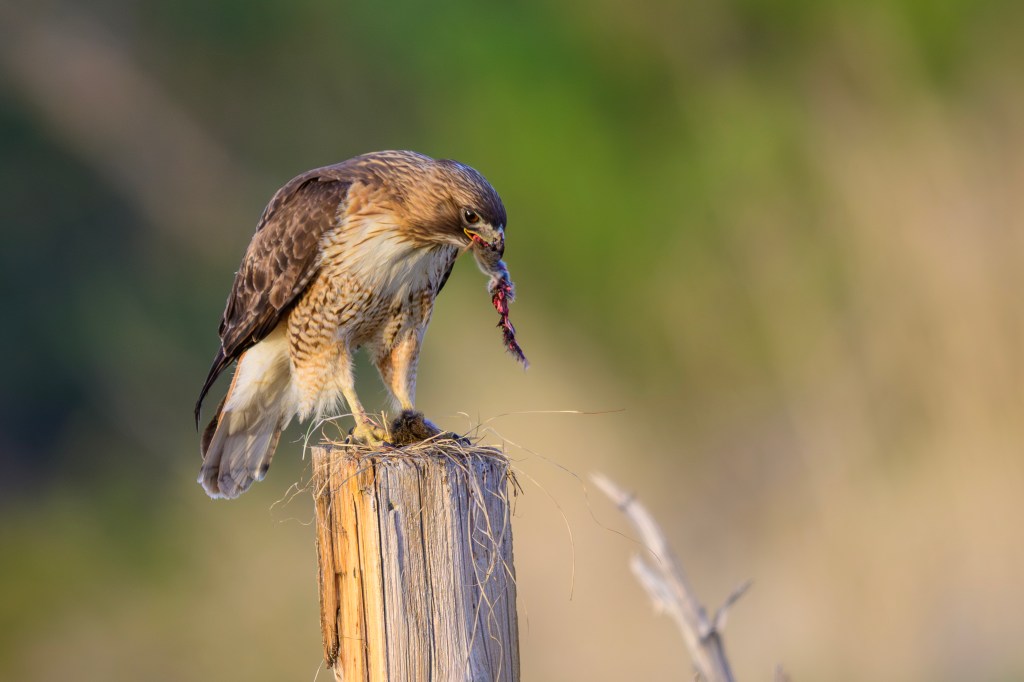
The Red-tail below is clutching a critter.
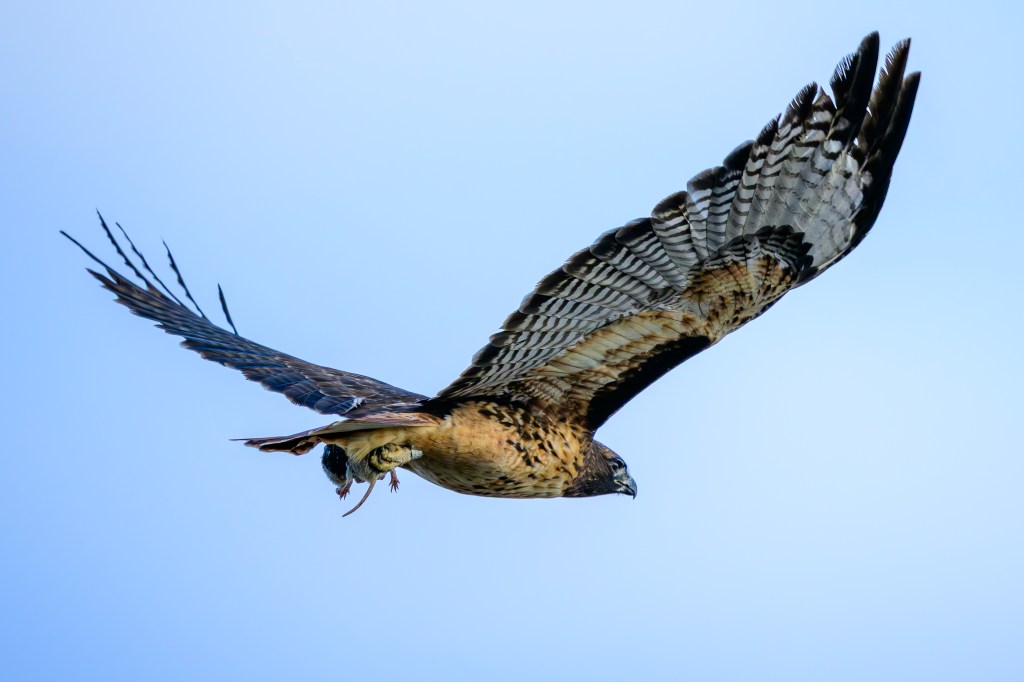
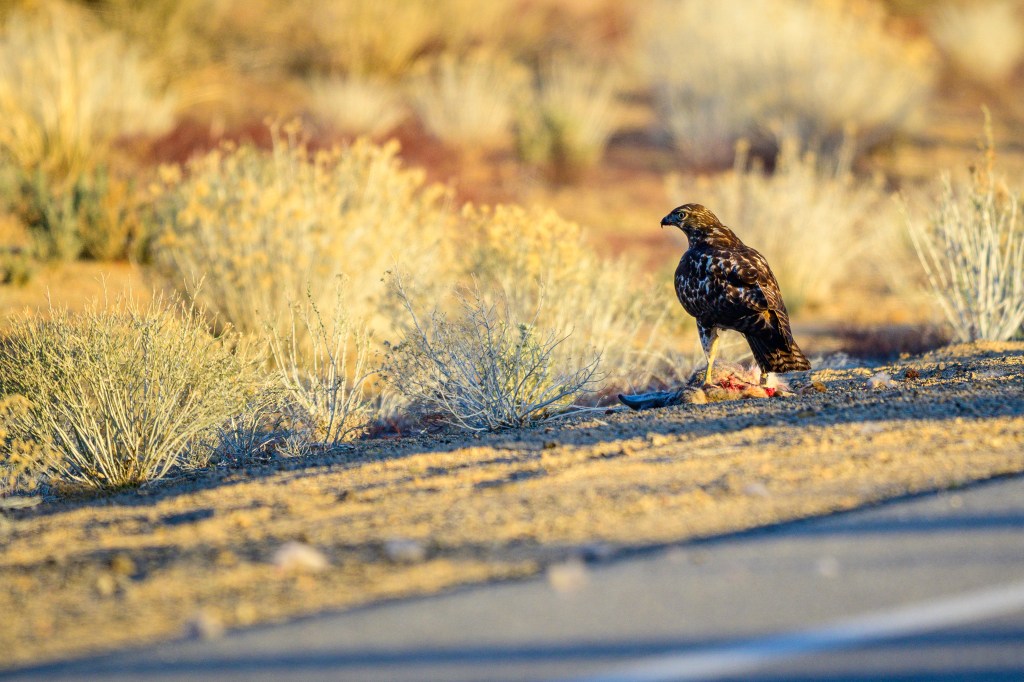
A juvenile Red-tail below dined on a Desert Cottontail along Ed Powers Road.
PAIRS
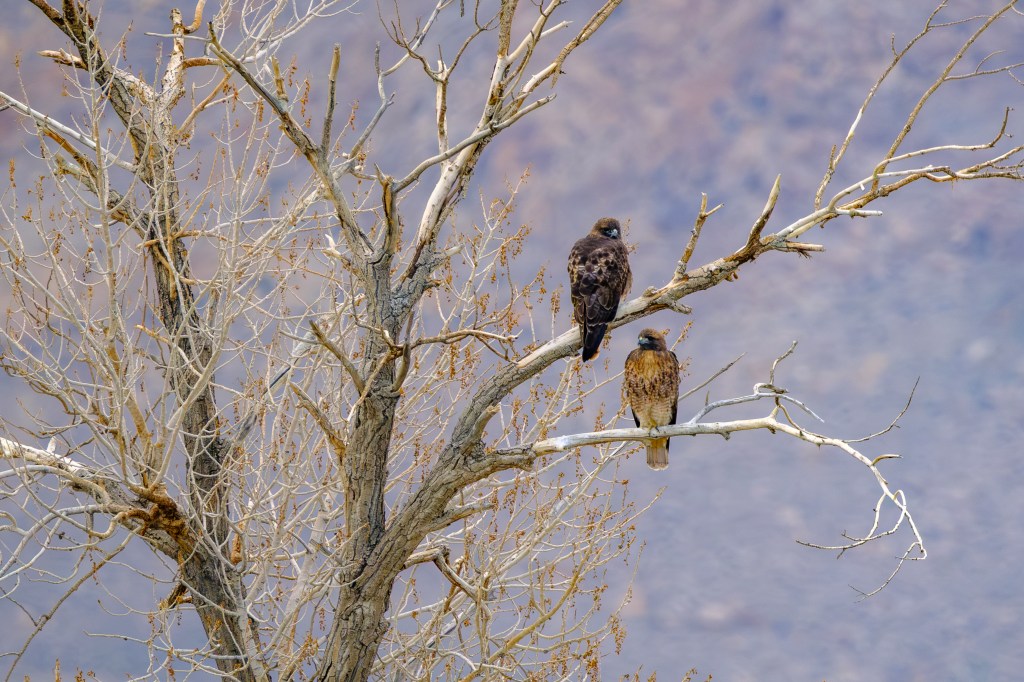
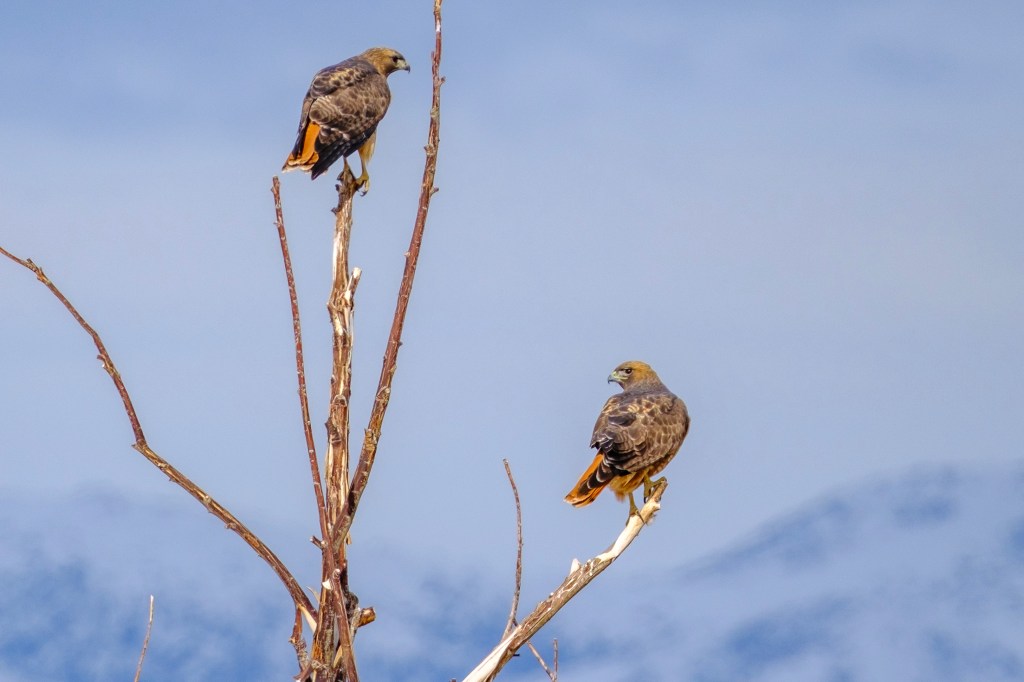
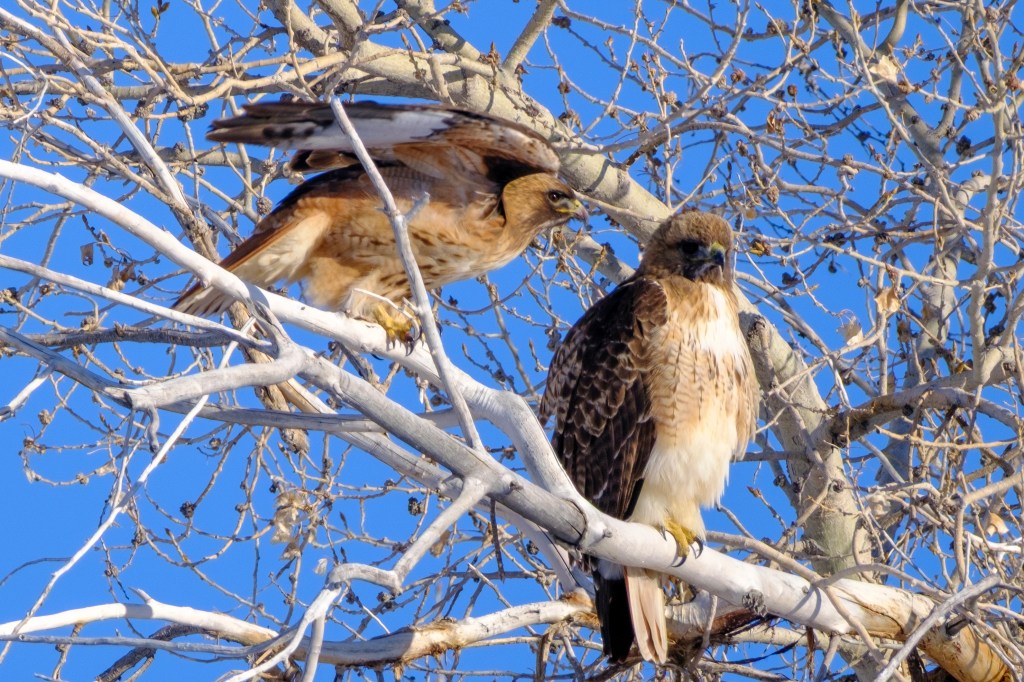
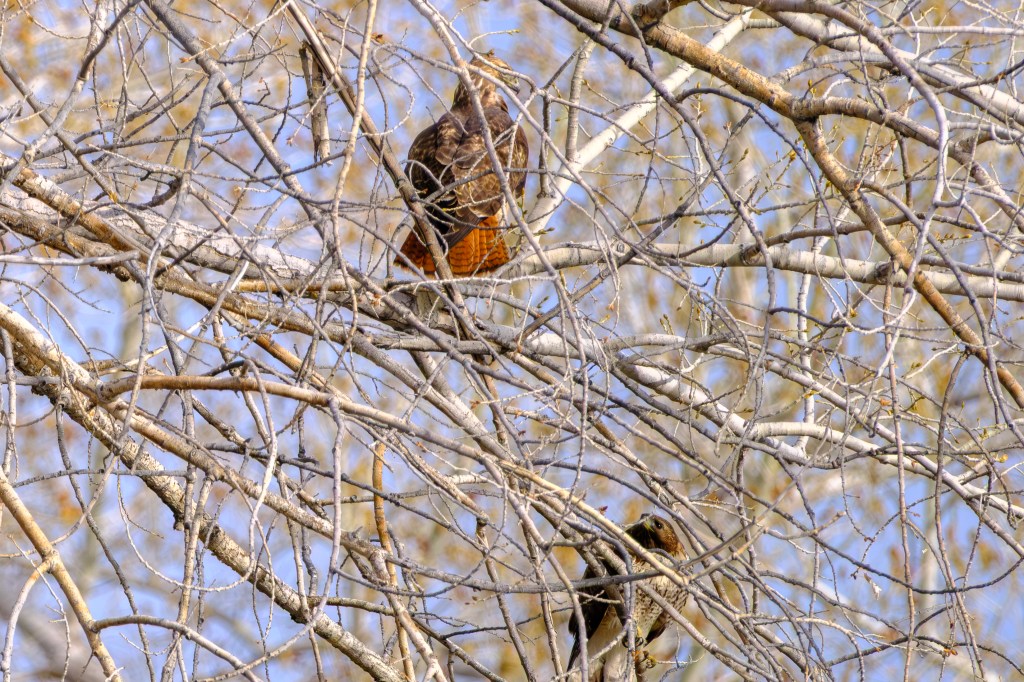
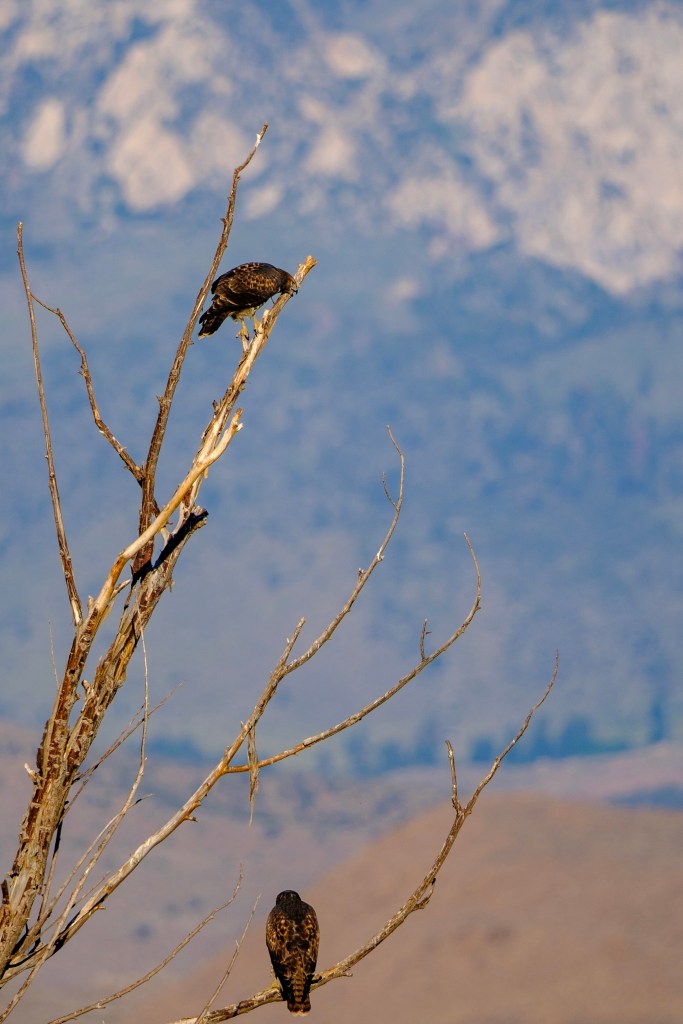
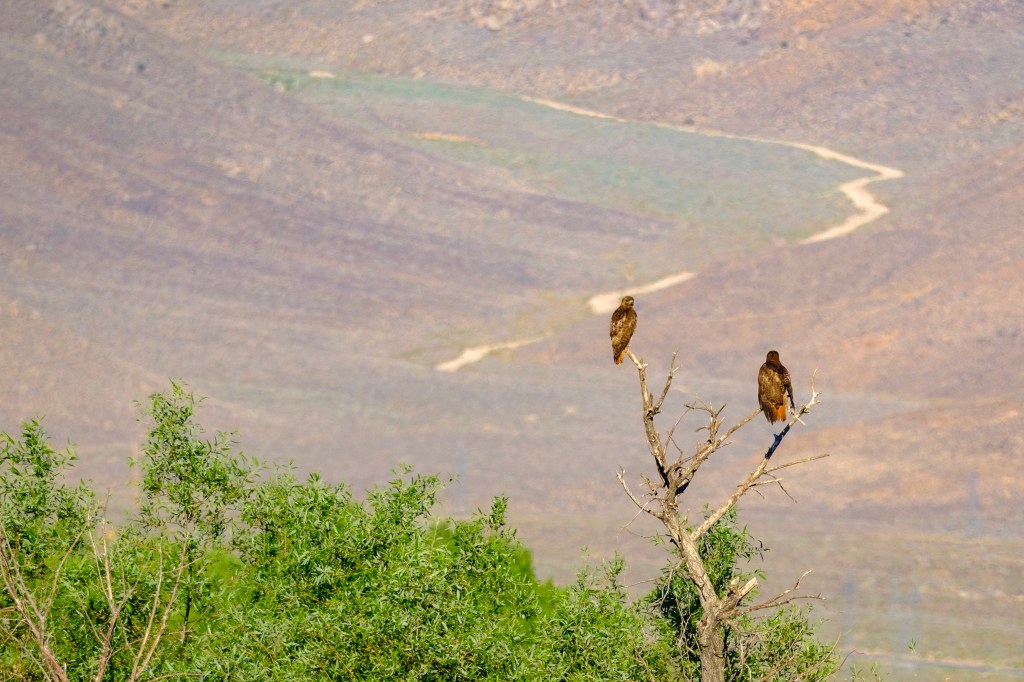
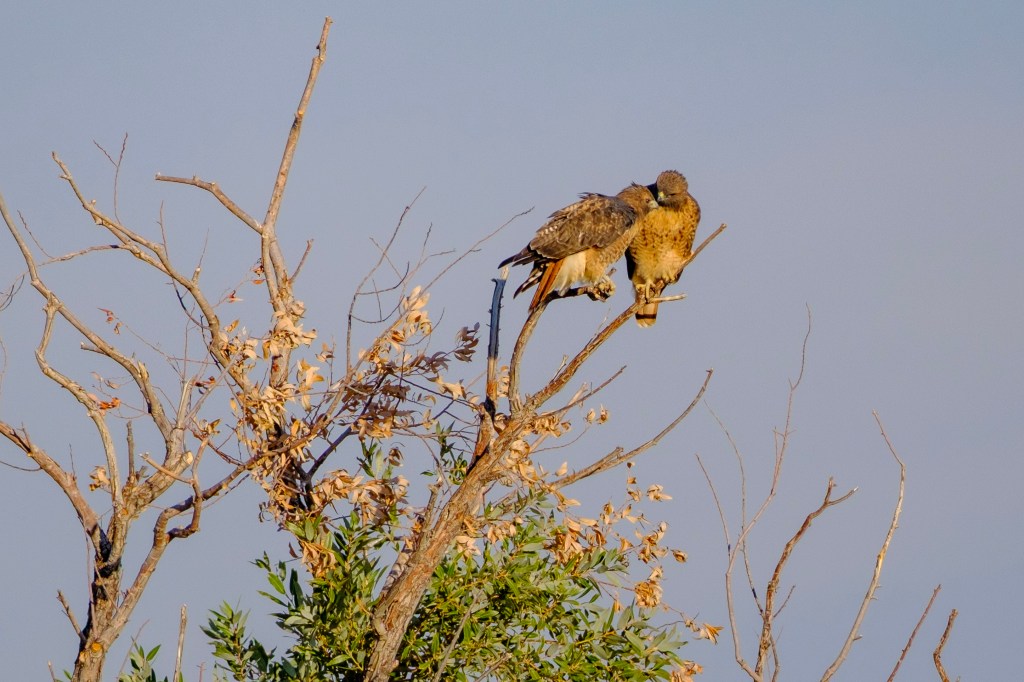
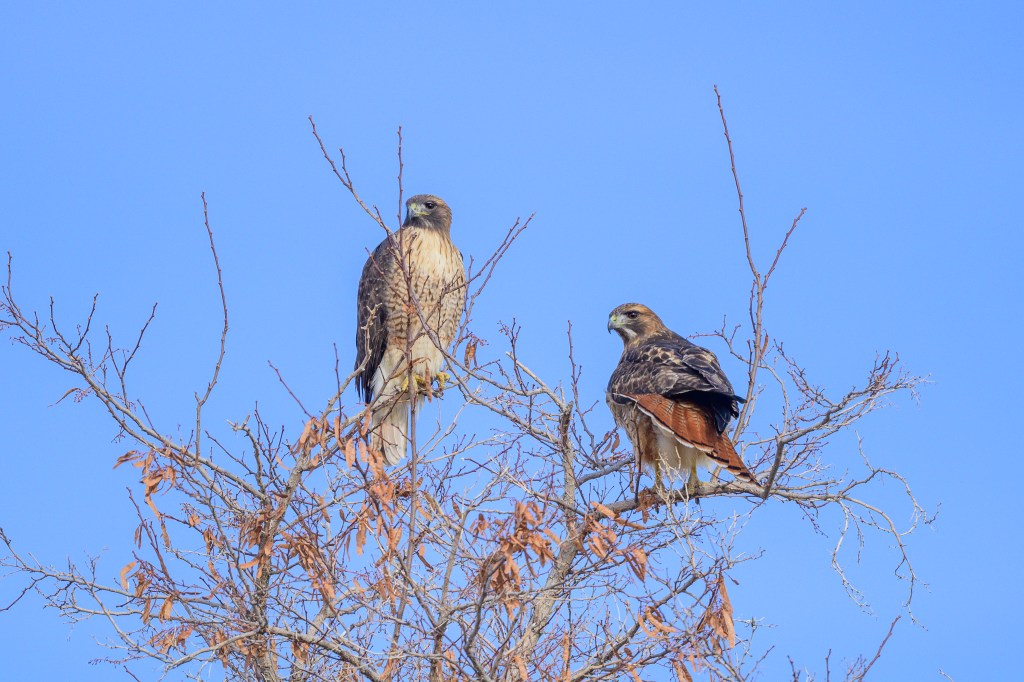
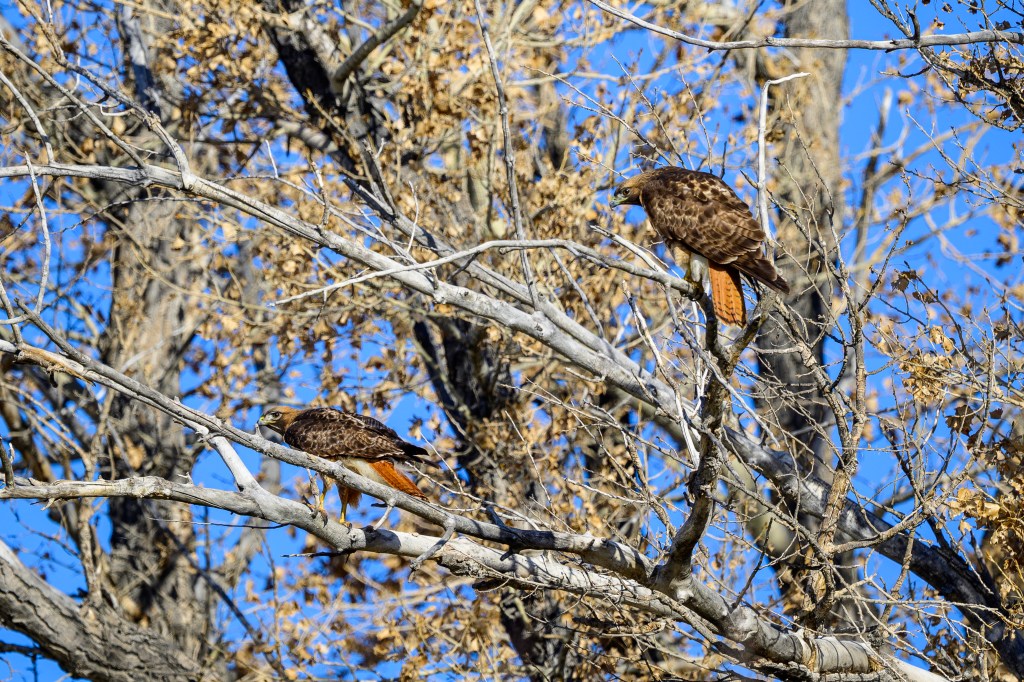
Red-tails often appear in pairs, both on perches and in flight. Mating pairs hang out, as well as siblings.
WHAT’S IN A NAME?
In my blogs, I’ve griped about some names applied to birds; for example, it annoys me that Bewick’s Wren is named for an Englishman who never saw this bird. In the case of the Red-tailed Hawk, the English name seems fitting. But the scientific name, Buteo jamaicensis, seems silly. Red-tails live from Canada to Mexico, Florida to Oregon. I love Bob Marley’s music, but calling this bird the Jamaican Hawk says nothing about this bird. The name arose because of how Europeans named birds two centuries ago. John Latham, an English physician and ornithologist, received a dead specimen of this raptor from a friend in Jamaica and published a description in 1781. In 1788, German naturalist Johann Friedrich Gmelin used Latham’s description in an edition of Carl Linnaeus’s book, and called the bird Falco jamaicensis. Later, the bird was reclassified from falcon to hawk.
INSULTS
In this post I called Red-tails bullies and thugs. I used disparaging words to add humor. But my insults are unfair to Red-tails. We should not describe birds as good or bad as if they were human. A century ago, hawks were called cruel and malevolent. They were slaughtered because they sometimes ate songbirds or chickens. States paid bounties for dead hawks. These attitudes and policies were misguided. Whether we believe God or evolution created Hawks, we should not criticize them for what they kill and eat. They cannot select tofu as their protein option. They are carnivorous birds that act to ensure the survival of their species.
FINAL COMMENT
To create this post, I reviewed over 1700 Red-tail photos in my computer. But getting a bird photo is like fishing; you remember the one that got away. One winter I was walking along Airport Road, lost in thought. I happened to look up and realized a Red-tail was in the air, just ten feet off the ground and 30 feet away. The bird was “kiting,” hanging motionless in the wind. By the time I came to my senses and raised the camera, this close encounter was gone.

