I selected bird pictures from the 2024-25 winter. All were shot in the Eastern Sierra, most close to Bishop. All were taken with my new full-frame camera, the Nikon Z8. I picked 60 photos that had some special appeal to me.
The Buckley Ponds
Horned Larks hang out in flocks of 30-40 birds. They hop about on the ground, scratch for food, and then take-off in unison to zoom about. They seem skittish, nervous, and hyperactive.
The Song Sparrow below was trying to find food on the ice. In the second image, the bird is executing a Hamill camel. If this term is not familiar, look up Dorothy Hamill.
A mature Cooper’s Hawk was in the trees on the Rawson Canal.
A Bewick’s Wren weighs 1/3 of an oz, but can bellow out over a dozen melodies. I often hear this bird, but cannot find it in thickets. Sometimes it poses politely, as shown below.
This Cinnamon Teal looks a little comical with his beak open.
The Ruddy Duck below looks calm and relaxed. I like the way his paddling churns up the water in his wake.
This Pied-billed Grebe also seemed tranquil, but then suddenly spit out water.
A male Redhead cruised by and then turned to fly over me.
The Eared Grebe below does not have the characteristic “ears” (tufts of feathers) that appear in mating season. It dives for food in the second shot.
Most of my flight photos of Red-tailed Hawks show the underside of this bird. But this hawk banked so that I captured a good view of its back and the red tail feathers. Note the messy white feather in the middle of the tail. Blackbirds will often chase and attack these hawks. Was the white feather partly pulled out by a Red-winged Blackbird?
Northern Harriers patrol low over open areas. I usually identify them by this flight pattern and the prominent band of white feathers where the tail meets the body. The white rump is easy to spot as the birds twist and turn over the sagebrush.
A Harrier couple was hunting at the ponds and in the surrounding desert. Back and forth, back and forth, over the brush. The female, seen below, wears a brown outfit.
The male sports a conservative gray suit, a dignified look.
I parked along the Rawson Canal, a little north of the ponds, and walked about, hoping to get more shots of the Harriers. I was tracking the brown female when the gray male came close, as seen below. I was pumped when I saw the encounter in the viewfinder. The camera was shooting 12 frames per second with a shutter speed of 1/2000. I wasn’t initially sure if I captured the action, or if the image was well focused. Later, when I saw the images on my computer, I was pleased. The camera caught sharp pictures of this split-second meeting.
In the next two pictures, the female hovered while the male plunges toward earth. But no bird hit the ground. These superb fliers were in control.
The next photo shows the female continuing her patrol of the desert.
The COSA
The COSA (Conservation Open Space Area) is a 25-acre plot of land right in Bishop, managed by the Bishop Paiute Tribe. It is just north of the Forest Service Office Building and the Hospital. On the east is a school and to the west is a health clinic. There are 1.2 miles of popular trails. Birds of all kinds frequent this area.
This winter a pair of Wood Ducks were often here. The colors of the male are so gaudy that they seem comical.
A Ring-necked Duck, below, was bathing itself in the pond.
Female Mallards have lovely feather patterns. I like the first Mallard photo for the reflection.
As we were leaving the COSA, we surprised two Mallards in a small drainage ditch. The ditch behind the female was in shadow, creating a portrait that reveals detail against a black background. A Mallard counterpart to Vermeer’s Girl with a Pearl Earring.
A Sharp-shinned Hawk yielded two photos that I liked.
A Great Egret lands, using wings to brake and legs to reach out for a perch.
A Red-shouldered Hawk.
European Starlings have intricate patterns.
A Song Sparrow.
A Ruby-crowned Kinglet weighs ¼ of an ounce. Hard to photograph because they won’t hold still. It is wearing spectacles.
A male House Finch looks as if it was dipped head-first in red powder.
I liked the feather detail in this image of a Eurasian-Collared Dove. This bird species originated in India, spread throughout Asia and Europe around 1600, arrived in North America about 50 years ago. They are now the most common dove in the Bishop area.
A Northern Mockingbird peeks around a branch.
Airport Road
The intersection of South Airport Road and Gus Cashbaugh Lane is a good place to find birds.
A flock of Canada Geese is heading south in March. The wrong direction!
Another flock of Geese heads north, with the Sierra in the background.
This Mountain Bluebird appeared in early March.
A male Northern Flicker.
Western Meadowlarks perch on the fences along the road. Their loud and lovely song is often heard here. In the first photo you can see the bird’s tongue. I managed to catch the bird in the air.
Pleasant Valley Reservoir
In winter the reservoir is used by all sorts of water birds, plus others.
The image below shows four Double-crested Cormorants. One thinks it is performing on Dancing with the Stars. The nearest bird is trying to ignore this display, while two other birds look on in shock.
A group of Ring-necked Ducks tries to take-off in a panic.
A Yellow-rumped Warbler displays the reason for its name.
A male Bufflehead tries to get airborne by pushing off the water with its pink feet.
The American Dipper (previously the Water Ouzel) was John Muir’s favorite bird. If you hike in the Sierra and take a break near a forested stream, you can watch this bird as it flies upstream and downstream near the water surface. It may dive into the water and re-emerge in another spot. When it lands on a rock, it bobs up and down as if it was doing squats. My favorite Dipper encounter was in Shinumo Creek in the Grand Canyon. I was wading down the creek bed; the clear water was about a foot deep, placidly flowing over a bottom of rock and sand. I watched a dipper that was walking about underwater searching for bugs. In the photo below, the Dipper was looking for food where the Owens River flows into the reservoir.
Miscellaneous places
Across the street from my house, a flock of male Brewer’s Blackbirds mingled with female Red-winged Blackbirds.
On Brockman Lane, a Red-shouldered Hawk was sounding off.
On Warm Springs Road, a Red-tailed Hawk was yelling.
A quartet of European Starlings rehearses with their conductor along the Bishop Creek Canal.
In January a couple of Sandhill Cranes spent three days feeding in a mowed alfalfa field north of the Bishop-Sunland Landfill. These Cranes are common on the West side of the Sierra. These two must have made a wrong turn.
A male American Kestrel perches on a power line near the Bishop Landfill.
A Great Blue Heron in a tree near Dixon Lane.
Another Great Blue Heron flies away from me at Klondike Lake, south of Bishop. Note missing feathers on right wing.
A male Bufflehead tries to take off from a pond near Klondike Lake.
Three Ruddy Ducks launching at Owens Lake.
Finally one of the Ruddy Ducks is in the air, its wing-tip dipping into the smooth water.
I first climbed in Africa in 1984; a failed attempt on Mt Kenya (in Kenya) and a successful climb of the Western Breach route on Kilimanjaro (in Tanzania), the highest summit (19,340 ft) in Africa. In July 1990 I returned to Mt. Kenya with my friend, Bart O’Brien. This post uses digitized slides from that trip. The photos of me were, obviously, taken by Bart.
Safari photos
First we spent a week visiting some of Kenya’s game parks. The photo below shows Zebras and Hartebeests on the Serengeti.
Wildebeests below.
Cheetah eating a gazelle.
Lone Elephant.
Elephant family.
Lion King; not the musical.
Hyenas eating a Zebra-burger.
Great White Pelicans.
Leopard.
Thompson’s Gazelle.
Reticulated Giraffe.
Approach to Mt. Kenya
Mt Kenya had a volcanic origin. Later it was covered by ice which severely eroded the rock; what remains is the interior plug of the original volcano. This created steep towers of hard rock with a rough texture; ideal for climbing. Most visitors to Mt Kenya hike up Pt. Lenana (16,355 feet), a peak which only requires walking; perhaps 10,000 ascents per year. The main summit of Mt Kenya, Batian (17,057 feet), involves roped climbing and has about 50 ascents per year. Batian was first climbed in 1899 by Halford Mackinder (English geologist), and two professional guides, Cesar Ollier and Josef Brocherel. The West Ridge, rated 5.8 in difficulty, was first climbed in 1930 by Eric Shipton and Bill Tilman. Both men were English coffee growers who later left Africa and became famous explorers of peaks in Asia and elsewhere. (I met Shipton in 1975 in Portland, Oregon, when he showed slides of trips to Tibet and Everest in the 1930s.)
Bart and I planned to spend 2+ weeks in the park; our main goal was to climb Mt Kenya’s West Ridge. We hired 3 porters to help carry our gear to climbing routes on the north side of the peak. Over two days we hiked the Sirimon Route to a tarn near the Kami Hut, at 14,600 feet, arriving on July 19. The porters left us here.
Mt Kenya’s main summit in the distance,
The porters enter the Mackinder Valley
Bart near our tent in Mackinder Valley.
Lobelia, a lovely plant.
A forest of Giant Groundsel.
Kami Tarn, 14,600 ft. Our blue tent is near center of photo.
Fresh snow.
Initial climbs
The Kami Tarn was our home for 8 nights. On July 21 we climbed Pt. Peter (15,607).
Josef Glacier from Pt. Peter.
Oblong Tarn and Hausberg Tarn.
Bart uses a rappel to descend.
The next day we climbed Pt Dutton (16,207), shown below.
Bart leads up.
Peter follows. Kami Tarn and our tent, a blue dot, are in upper right.
Peter contemplates his fate. Note how rope runs through an anchor set in the rock.
Laundry day.
Bart demonstrates clean, but frozen, socks.
On July 23, we climbed Pt Lenana (16,355), then rested on 7/24. Below, Peter smiles on top of Lenana. Only a little gray in his beard back then.
People hiking up Pt Lenana from Austrian Hut.
Nelion, Mt Kenya’s second highest summit (17,021 ft.) The true summit, Batian, is hidden behind Nelion.
Upper part of the Chogoria route which I hiked in 1984.
The West Ridge
We were now acclimated and ready to attempt the summit, Batian, via the West Ridge. We sorted gear, each preparing a small pack with extra clothing, sleeping pads, bivouac sacs, some food, 1 quart of water, climbing gear. No sleeping bags. The plan was to go light and fast, sleeping one night on the climb.
A glossary of some climbing terms used in this blog:
Roped climbing: About two centuries ago, ropes were introduced for climbing. Imagine two guys on a ledge. (Guys invented this sorry scheme.) Each ties himself to one end of a rope. The leader starts up. If the leader falls, he lands on the ledge; the rope offers him no help. If he falls past the ledge, he pulls off the second climber and both die. Imagine the leader climbs up 100 feet. He stops, tries to find a strong position, and pulls the rope up to assist the second climber. If the second climber falls, the leader tries to keep a grip on the rope. This wretched method was used for a century.
The old method of roped climbing produced many disasters. Edward Whymper (English) made the first ascent of the Matterhorn in 1865. On the descent, the 7 climbers were roped together. Douglas Haddow slipped, he pulled Michel Croz off the rock, and their combined weight pulled off Charles Haddon and Francis Douglas. Whymper and the Taugwalders (father and son) would have been pulled off as well, but the rope broke above Douglas; 4 men died, 3 survived. So one man slipped and the rope killed 3 more.
Belaying. Eventually climbers invented the belay. When the leader climbs, the second anchors himself to the rock with rope, pitons, other devices, and strong webbing. If the leader falls, the second will probably live thanks to his anchor. When the leader has climbed 100 feet to the next ledge, he stops and anchors himself to the rock. Then the second climber removes his anchor and comes up. This arrangement is called “belaying.” If the second falls, he may get banged up, but he should not fall far if the leader holds the rope.
Anchors. Climbers realized that anchors could be used between the climber and the belayer. The leader climbs while the belayer pays out rope. The leader may spot a crack after 20 feet. She puts an anchor in that crack, attaches a carabiner (snaplink) with webbing, and runs the rope through the carabiner. Now she climbs up 10 feet more. If she falls, the belayer holds the rope and the leader only drops 10 feet below the last anchor. Remarkably, this works. I’ve fallen more than once and I’m still alive. Placing anchors is a skill; they must be strong, placed quickly, and easily removed by the second climber.
Rappels. To get down some cliffs, climbers set up an anchor, attach nylon webbing, and slide half the rope through the webbing. If the rope is 150 feet long, the two 75-foot halves hang down from the anchor. The climber, using a metal device, slides down the rope. A lot can go wrong. You can slide off the end of the rope, you can detach from the rope, the anchor can fail, the rope can be cut, and more. But if you do this right, rappelling provides a fast descent.
Verglas. Clear ice on rock, hard to see, very slippery. Same thing as “black ice” on the highway; black, because you see the asphalt through the invisible ice.
July 24
Rest and get ready. Bart frets a bit about the route. He is the better climber, so he will lead, place all the anchors. The responsibility for finding the route rests on him. My job is to follow as fast as I can, be cheerful, quickly remove each anchor, and return the gear to him in neat order when I get to his belay station.
July 25
Breakfast 5am, on the go at 6. Fast hiking, then scrambling. At 7:50 we are at the notch between Pt Dutton and the Petit Gendarme. We climb about 100 feet – there is a lot of air below and we rope up. We are now on the West Ridge. We reach the top of the Petit Gendarme at 9am. Then climb and rappel down into a deep notch. Long traverses put us below the Grand Gendarme; really steep as we head up to a large ledge, around 11am.
Photo below shows the West Ridge Route from the Northwest.
In photo below, the Petit Gendarme is above Bart’s head. Grand Gendarme off to the left. We roped up soon after this photo was taken.
Looking down on Pt. Dutton.
Peter passes summit of Petit Gendarme.
Bart belaying on ridge of Petit Gendarme. We have to descend into the space behind him, then climb to the ledge in sunlight on the left.
Photo below is a view from a distant point, showing the Petit Gendarme on the right and Grand Gendarme near the middle.
Bart follows ledges on side of Grand Gendarme.
View looking back at Petit Gendarme.
Bart climbing up the Grand Gendarme.
This distant view shows the big ledge on top of the Grand Gendarme. In the previous photo, Bart was on the wall a little to the right of this picture’s center.
A bite to eat, a sip of water.
Up to a steep wall; Bart shoots up without his pack, hauls it after him. I follow. We are now past the hardest spots, but the ridge goes on and on. It is like being in an airplane, looking down on one side or the other.
We reach Shipton’s Notch. Bart belays me.
A few more hard sections, and then easier.
A distant view of the final section of the West Ridge. Batian on left skyline. Firman’s Tower is the pinnacle about 25% of the way from the right margin of the photo.
At 2:50 pm we are on top of Batian, 17,055, the summit of Mt Kenya.
We have been moving for 9 hours. We decide to descend the standard North Face route. Back to Shipton’s notch, then further, then downclimbing and 2 rappels. We make a mistake — we follow old rappel anchors down, but they lead nowhere. We have to climb back up. We are tired and want to rest. But no whining or cursing. Back up two hundred feet, on to the North Ridge, 2 more rappels, and we find flat spots near Firmin’s Tower. We each have a small ledge with a rock wall to keep us from the void. It is 6:40 pm. The shadow of the peak falls on the clouds below. By 7 it is dark. The temperature plunges.
Bart gets ready for a cold night.
Top of Firman’s Tower.
Shadow of the summit on top of clouds.
July 26
The equatorial night was 11 hours; I slept 4 hours. I shivered from 3am to dawn. Finally, the sun warms us. I finished all my water the previous day. Bart saved a pint, but it froze in his bivy sack; he cannot drink the ice. Below, Bart sits up as the sun reaches him.
We start down at 7:45am. First, 6 rappels.
Concentrate; no more mistakes. Scramble down an amphitheater. Two more rappels, then climb down a gully, then 2 more rappels. At 10:30 we are walking. Water flows from the Krapf glacier. We drink and drink and drink. By noon we are in camp. Rest. We are so happy. 12 hours of sleep. July 27 is a rest day.
Around the mountain
July 28
We move camp. No porters now. But we are fit and 11 days of food are gone. Bart’s load is 100 lb., mine is 75. In 4 hours we hike to the south side of the mountain, set up camp. Nearby is a group of 12 friendly British climbers; medical students and registrars from St. Mary’s Hospital in London.
Bart with 100 pounds of gear.
Hausberg tarn on left, Oblong tarn on right. Trail in middle.
Emerald Tarn.
Darwin Glacier, Pt. John.
West Ridge on left skyline. Tyndall Glacier, Tyndall Tarn.
The British camp, with dining tent, outhouse, etc.
Our pathetic little camp. Bart shakes fresh snow off the tent fly.
Final climbs and hikes
July 28-31
Rain, mist, snow. Dayhikes, scrambles up peaks named for Shipton and Tilman. The Brits invite us to dinner. We exchange stories and get to know them.
Batian seen on left, Nelion in cloud on right. Gates of the Mist in between. Diamond Glacier and Diamond Couloir below the Gates.
Climbers in the Diamond Couloir.
Tyndall Glacier.
Ice cave.
We climbed Shipton Peak and Tilman Peak in mist.
Tragedy
Aug 1
Four of the Brits hiked around the mountain on July 30, then climbed the North Face route to sleep on ledges above Firmin’s Tower. On July 31 they headed to the summit. Bill was leading, roped to Elunid. He slipped, yelled “Oh my God,” and flew downward. Elunid was not anchored, so the rope yanked her after Bill. Jim and Jed searched the area; they found blood, but no bodies. They descended. Now the Brits want us to help find Bill and Looney. We gather gear, quickly hike around the peak. Bart and I opt to climb the Krapf Rognon (15,748), a rock hulk, and use binoculars to view locations further east of the searched area. Our guess was right. We spot the broken bodies in a giant gulley. I cry for a while. We scramble down and tell others at the Kami Hut. John Omirah, a climbing ranger for the park, is in charge. (He played the role of a tracker in the movie, Gorillas in the Mist. Sigourney Weaver played Diane Fossey.) He says porters will remove the bodies the next day. Bart and I hike back to camp.
The North side, with West Ridge on skyline. The Krapf Rognon is the bulky rock blob in the lower left of photo.
The bodies.
Park rangers. John Omirah on the right with helmet.
Aug 2
We sleep in, but John Omirah wakes us. The bodies lie above a 100 foot cliff and porters cannot reach them. Can we help? At 7:30 we leave and by 9 we are at Kami Hut. We collect some ropes and reach the base of the gully by 11:30. Bart leads up and places an anchor. Omirah and I enter the gully — steep, loose, dangerous. I’ve never seen humans pulverized like this. We drop the bodies below the cliff, where they can be retrieved. By 2:30 we are done. All of us are shaken. A cup of tea at Kami Hut, then 2 hours back to our tent.
What can we say about these senseless deaths? One strategy is to find mistakes. The recent rain and mist made verglas likely, especially in the morning. Bill probably slipped on ice that he never saw. There were no anchors, so once Bill fell, Elunid was doomed. Bart and I climbed through this area on July 25, using belays and anchors. You will be safe if you just avoid mistakes.
This blame-the-victim approach is common. An annual report, Accidents in North American Mountaineering, is published by the American Alpine Club. This is a ghoulish litany of deaths in the previous year. Accounts are followed by a list of mistakes that were made. When I started climbing, I began to realize that some “mistakes” were irrelevant. For example, a solo hiker would stumble off a cliff and die; the analysis criticized the hiker for being alone. But 1) had there been a companion, the hiker would still have died and 2) are we supposed to never go alone? Over the years, the reports became more thoughtful. Less “that would never happen to me” and more “but for the Grace of God…” Often the dead were doing what many climbers would do. And ran out of luck.
Another way to think about climbing deaths is to acknowledge that climbing is insanely dangerous – it is all a mistake. Climbing, like any sport, has no useful objective; put a ball in a hoop, run fastest to the tape, reach the summit. Sport is for amusement, challenge, diversion. When you step into the batter’s box or the starting blocks, your risk of death is minimal. That isn’t true for climbing. Some climbing magazines have obituary columns; most of those listed are young. I’ve done over a 1000 climbs. Friends died on expeditions with me and on domestic peaks. I’ve stepped over frozen bodies. I’ve seen climbers die. I’ve narrowly missed death several times. Why did I accept these risks? Was it an addiction – foolish, but irresistible? A type of gambling in which the bet limit is your life?
Edward Whymper wrote, “Climb if you will, but remember that courage and strength are nought without prudence, and that a momentary negligence may destroy the happiness of a lifetime. Do nothing in haste; look well to each step; and from the beginning think what may be the end.” Poetic advice, but illusory. If you climb, haste is often necessary and unbroken prudence is a fantasy. Want prudence? — stay home. I don’t believe life should be risk-free or that the person who lives longest wins. But the chances many climbers take, myself included, seem hard to justify.
While we were on Mt Kenya we came across several metal plaques, affixed to rocks, commemorating dead climbers. They are the alpine equivalent of the white crosses that mark fatal crash sites on highways.
Last climb and hike out.
Aug 3
I want to stay in camp, but I know Bart wants to climb Pt John (16,020). We make quick work of this peak in a mild snow storm. We are smiling on top. Rappel off and back to camp. I later learn that Bart did the climb because he thought I wanted to go. Dinner with the Brits.
Pt. John.
Peter hangs on and smiles for the camera.
Darwin Glacier.
Peter on top. Diamond Couloir behind his right elbow.
View of the Diamond Couloir.
Aug 4
A long slog with heavy loads gets us off the mountain via the Naro Moro route. Reach Nairobi the next day. Below, Peter eats food off of his heavy load.
Final view of the south side of Mt Kenya. Batian in center, with west ridge on left. Diamond Glacier and Nelion just right of center. Pt. John in the Y of the dead Groundsel limbs.
The West Ridge of Mt Kenya is one of my favorite climbs; 30 hours of exciting effort. But the meaningless deaths cast a shadow on this memory.
Anecdote from my 1984 trip:
Brad Neiman and I shouldered giant packs (about 90 lb. each: 10 days of food plus camping and climbing gear) and began a 3-day walk to reach the peak via the Chogoria route; a scenic path which we had to ourselves. We staggered along in the forest and found a sleeping Cape Buffalo that was 25 feet away. He stood up and looked grumpy. This animal weighs 1500 lb. Wikipedia says: “One of the “big five” African game, it is known as “the Black Death” or “the widow-maker,” and is widely regarded as a very dangerous animal. According to some estimates, it gores and kills over 200 people every year…” Brad was a little ahead of me; with just a few steps he vanished into the jungle. I stupidly stood there and lifted my camera to take a picture. Brilliant! The buffalo charged; I turned and waddled away, knowing that I would be gored and trampled in two seconds. But after 100 feet, I was still alive; I looked back and saw the buffalo had stopped — I circled past the buffalo and joined Brad.
The Bald Eagle is low-hanging fruit for a photographer. These big birds (10 pounds, wingspan 6.5 feet) often perch on a bare limb. With just a smartphone you can capture a classic pose: the fierce bird surveying its realm. The distinct white head makes it simple for the casual observer to spot and identify this bird. Even when flying, getting a photo is not hard due to the bird’s large size and straight path.
Bald Eagles show up at the Buckley Ponds near Bishop in November and depart in February. People get excited if they spot an eagle. When they see me walking with my camera, they love to tell me about this bird. I try to cheerfully thank them, suppressing a grumpy urge to say that I’ve been photographing the bird for weeks. Eagles so excite the public that I own five guidebooks that feature a Bald or Golden Eagle on the cover: The Audubon Society Encyclopedia of North American Birds, Smithsonian Birds of North America, National Geographic Complete Birds of North America, The Crossley ID Guide Raptors, and Birds of the Great Basin: A Natural History. Publishers know that eagles sell.
In winter, Bald Eagles can be found in several areas close to Bishop: Airport Road, Warm Springs Road, north of Dixon Lane, the alfalfa fields near the dump. I’ve seen them year-round at the Pleasant Valley Reservoir. They show up near Big Pine, Tinemaha Reservoir, and Mono Lake. In summer they can be found at Sabrina Lake (9200 feet) and Convict Lake (7900 feet).
Classic Poses of Mature Eagles
I’ll start with photos that show mature Bald Eagles in a classic perched pose. These birds are impressive. They look muscular and fierce. You can think of them as gangsters of the avian world. The first eight photos were taken at the Buckley Ponds and were selected because they also show some of the surrounding landscape.
Take another look at the last two photos. They show the same bird. Did you notice the scattered white blotches on the back of the bird? This bird has excrement on its back, undoubtedly from another Eagle that was flying above it. This majestic bird needs a bath.
The next 6 photos show Eagles at the Pleasant Valley Reservoir. They dine on fish and sometimes other birds. The first photo, showing an eagle surrounded by tree branches, is one of my favorites.
The Eagle below is at Sabrina Lake in August. A nice fishing spot for Eagles and people.
Eagle below checks out the electrical grid north of Bishop.
The next five photos are all Eagle portraits taken at the Buckley Ponds. It is often possible to get fairly close to these birds. Of course a telephoto lens helps.
Bald Eagles Have White Heads, Right?
In February of 2022, I saw a mature Bald Eagle near the Bishop Creek Canal. Then Roberta spotted a dark-colored eagle nearby. I examined my photos and realized that the second bird was a juvenile Bald Eagle, with a pale belly and scattered white feathers on the neck. Until that encounter, I thought all Bald Eagles had white heads.
Bald Eagles take about 5 years to develop their dramatic white head and tail. In their first year, they have dark brown heads and bills that are black. This change with age was worked out by bird artist Charles Wilson Peale in 1797; by the 1820s this was well-known to bird experts. Two centuries passed before I got the message. I lived in Seattle for over a decade and saw many Bald Eagles. Not once did I notice a juvenile Bald Eagle; this shows that you see only what you look for. Young Bald Eagles can be distinguished from Golden Eagles by several features; a pale belly, no golden feathers on the neck, white wing pits, lots of white color under the wings, a tail with messy-white feathers, lower legs free of feathers, brown eyes that become yellow with age, dark beaks that become bicolored and then yellow, massive beaks with a sharp hook at the end. Bald Eagles hang out with other Bald Eagles. Bald Eagles favor water and prefer to eat fish. Golden Eagles like cliffs and rabbits. In 2022, looked through my photo library and realized every “Golden” eagle in my collection was a young Bald Eagle.
Below I show photos of Bald Eagles ordered, approximately, from age one year to age 4 years. If you are a birding expert and think my age estimates are off, let me know.
One year old
The massive, hooked beak, below, tells you this is a Bald Eagle.
Alfalfa fields near the Bishop dump, below.
Age two years
Age 3 years
Age 4 years. By now the head is almost white, the eyes yellow, the beak nearly all yellow.
Flight
Below, an Eagle over Convict Lake, October, looking for fish. This was one of my first eagle photos: 2018. I did not even need a telephoto lens.
White Mountain in the background below:
Below, a young eagle hunting at the Buckley Ponds. When the Eagle takes off, dozens of American Coots go wild trying to fly or swim away from the Eagle’s path.
In December of 2022, I was walking on Warm Springs Road. I saw two birds flying toward me and I started shooting. These were two young Eagles. As they flew past, one Eagle braked and slowed, while the other bird did a barrel-role and displayed its talons. This behavior is sometimes described as a mating ritual. Or were they were just having fun? These are some of my favorite photos. How I wish I could see something like this again.
Below are 4 photos that show a young Eagle landing in a Cottonwood at the Buckely Ponds. It overshoots a bit, failing to stick the landing; then it balances properly. In the last photo you can see the bird’s tongue.
A young Bald Eagle takes off at the Buckley Ponds and swoops low over the ground.
A young Bald Eagle soars above the Pleasant Valley Reservoir.
In January of 2025, a 4-year old Eagle takes off at the Buckley Ponds. One of my favorite Eagle photos.
Eating
Double-crested Cormorants catch fish at the Pleasant Valley Reservoir. The Eagle below caught a Cormorant. You can see the Eagle is tearing apart its prey.
The Eagle below was perched at the Buckley Ponds on Dec 18, 2021:
A few days later, on Dec 22, I walked alone at the Ponds. It was 26 degrees and the Ponds were mostly frozen. I rounded a corner and found a Snow Goose on the road. I was surprised and so was the Goose; it flew off before I could get a photo. An hour later I came back to my car and saw an Eagle eating on the frozen lake; the fluffy stuff on the ice is white down, the remains of the Snow Goose. Blood, flesh, and bones were mixed with the down.
The Eagle flew off. You can see it below and even make out blood on the beak and feet. Some snow is on the ground.
The next photo, below, shows the Eagle perched, with blood on beak and toes. Compare with the picture shown above for Dec 18. This is the same perch and probably the same Eagle.
A Northern Harrier then arrived and tried to steal some of the remaining flesh; the Eagle chased the Harrier off. Later in the day, I came back to the Ponds and found a Red-tailed Hawk had managed to get some of the Goose meat. So three raptors dined on Goose that day. I wondered if my sudden appearance caused the Goose to carelessly fly into the path of the Eagle?
Below are 2 photos of the Red-tail, with Goose feathers on its beak:
The next picture shows a young Eagle flying near the Buckley Ponds. The bird is clutching something and seems to be pecking or biting whatever was in its talons.
Miscellaneous
The photo below shows a group of Crows harassing a Bald Eagle near Airport Road. The Eagle looks downcast.
The next two photos show a Crow chasing a Bald Eagle.
The next 4 photos show a Bald Eagle cleaning its beak on a branch near the Buckley Ponds. The bird cries out in the last two pictures.
The final photo shows the talons of a young Eagle.
A Fictional Eagle
Kenn Kaufman’s new (2024) book, The Birds that Audubon Missed: Discovery and Desire in the American Wilderness, describes how John James Audubon created a fictitious bird which he called the “Bird of Washington, Falco washingtonii.” Audubon claimed that this was a newly discovered species of eagle, 25% larger than a Bald Eagle, with a wingspan over ten feet. He did this to sell subscriptions for his expensive book series, Birds of America, which was printed in Britain starting in 1827. Audubon knew that Eagles sell. Recently, historians discovered that Audubon’s painting of this counterfeit bird was plagiarized from an illustration of a generic raptor in a book by Abraham Rees.
My blog is focused on birds of the Eastern Sierra, from Owens Lake to Mono Lake. But this post focuses on the coast near Fort Bragg, about half-way between San Francisco and Oregon. The geography here is simple: from west to east is the Pacific ocean, then a shallow shore with rocky islands, sometimes a strip of beach, followed by cliffs topped by flat headlands. Then the earth rises into low coastal mountains that are covered by wet forests. Fort Bragg lies on a narrow stretch of flat land between the ocean and the forests.
Roberta and I walk paths on the coastal bluffs. To the north of town is an old logging haul road that leads to Mackerricher State Park. To the south is Mendocino Headlands State Park. A timber mill used to occupy the scenic land between Fort Bragg and the ocean. The mill closed in 2002, leaving the bluffs with rusted buildings, waste, and weeds. In the last few years the town cleaned up some of this land and built the Noyo Headlands Park, which provides gorgeous walks overlooking the Pacific. The new trails have benches and signs that describe the area’s history and wildlife. The coast is alive with wildlife; birds, deer, rodents, seals, Grey whales, shellfish, etc.
These photos were taken on trips we made from 2021 through 2025; a cumulative period of about 20 days. I’ll periodically comment about whether a bird can be found in the Eastern Sierra.
Brown Pelicans in Flight
Decimated by DDT in the 60’s, populations have recovered. Weight 8 lb, wingspan 6.5 feet. Awkward on land, but graceful aeronauts. When they plunge-dive for fish, their beaks can fill with 10 quarts of sea-water. Easy to identify; no other creature looks like this. Easy to photograph in the air because of they are so big and they have a predictable flight path; a few wing-beats lift them up, then they glide down, then up again, with little change in direction. The Brown Pelicans are birds of the coast and the Mississippi River valley. (In the Owens Valley, we have the much bigger American White Pelican; weight 16 lb, wingspan 9 feet.)
The young pelicans are browner, with a brown and grey head. The mature pelicans have white heads and necks.
Below two Pelicans look ghostly as they fly over the forest.
Large number of Pelicans flying south in a V-formation.
Pelicans on Land
On land, Pelicans obsessively preen their feathers. Occasionally one takes off, flies over the waves, and lands again in a different spot. Are they just visiting other Pelicans? Are they testing their feathers, checking if the preening is satisfactory? There are hundreds of them in the area in fall, but they vanish in winter. These photos were taken at the Mendocino Headlands in the fall.
There were probably 100 Pelicans in the scene below and maybe 1000 more on nearby bluffs. The black birds on the right are Pelagic Cormorants. A few Western Gulls, very white, are scattered about.
A close-up of preening behavior.
Brown pelicans and Pelagic Cormorants.
Everyone is busy.
Cormorants
The Double-crested Cormorant has yellow-orange color around the bill. This bird lives on the coast and is the only cormorant found inland. Near Bishop, this bird hangs out above the dam of the Pleasant Valley Reservoir. They also appear at the Buckley Ponds.
The Pelagic Cormorant swims on the water, then dives up to 120 feet for fish.
Brandt’s Cormorant has a blue patch under the bill when in breeding plumage.
White plumes on the neck are part of the breeding wardrobe of Brandt’s Cormorants.
Western Gulls
Western Gulls are common here. Immature birds are dark, adults white and grey with pink legs. (A warning: gull identification can be difficult. The species often look similar. And these birds change their look as they grow older. I have met birders who say: “I don’t do gulls.” If you think some of these are not Western Gulls, let me know.)
Young gull.
Northern Harrier
This raptor hunts rodents by cruising low and slow over the ground. It often flies looking straight down, sort of like a person who is looking at their phone instead of watching where they are going. While it appears they might run into a tree, they are agile flyers, able to navigate confined areas and turn on a dime. I once saw a Harrier fly at speed under a low strand of barbed wire. When they spot a rodent, they drop quickly. They sometimes hunt in pairs. At the coast, they cruise the coastal bluffs. This bird is common over the fields near Bishop.
The Harrier below is looking down.
Note the white rump in the image below. The Harrier is the only raptor with this distinctive butt.
Another feature is the ruff of feathers around the face.
The view below may be the last thing a mouse sees.
Black Oystercatchers
Clownish in appearance, with yellow eye, red eye-ring and bill, dark feathers, and pink legs. Toes seem to have toenails. A bird created by a comedian. They can chisel mollusks off rocks and then pry the shells open.
White-tailed Kite
White-tailed Kites live on the West Coast, in the Southwest, and along the Gulf of Mexico. They rarely visit the Owens Valley; I have never seen one near Bishop. They hunt by hovering, ready to drop and grab small rodents. The white wings look angelic, but the red eyes look devilish. For the last 3 years I’ve seen these birds at the coast.
Hovering, ready to grab a vole. A mixture of angel and devil.
Other seabirds
Snowy Plovers, shown flying below, appear sometimes in the Owens Valley. I resent these birds. Humans are banned from many California beaches, to protect the eggs that stupid plovers lay on the sand. If you leave your iPhone on a beach and someone steps on it, I feel that is on you. I feel the same way about plover eggs. (Ok, I agree we should protect the Snowy Plover. But still…)
The Black-bellied Plover, seen below, breeds in the Arctic. In non-breeding plumage, the black-belly is absent.
Black Turnstone below. Breeds in Alaska, winters on the coast.
A colony of Common Murees.
Pigeon Guillemots, below.
Surf Scoter is a sea duck. The male is very colorful.
Other Water Birds
The next 3 birds are common both on the coast and in the Eastern Sierra.
Western Grebes are famous for doing a water dance. A mating pair will join each other in “walking” on the water surface. The bird below was single, but practicing this dance in the surf.
Canada Goose posing with ice plants.
A Great Egret at a pond in Mackerricher State Park.
Other Land Birds
The next group of “land” bird photos shows birds that are common to both the Coast and the Eastern Sierra.
The Turkey Vulture is a bird that only a mother could love. But they are terrific flyers who sail gracefully on the wind. The bird below was with a vulture group on the beach.
A White-crowned Sparrow eating vegetation.
A Song Sparrow doing its thing. You can see the bird’s tiny tongue.
The Savannah Sparrow has a yellow eyebrow.
A Western Meadowlark.
California Quail (male).
Black Phoebe.
Female House Finch.
Red-tailed Hawk amid ice plant.
Common Raven. They are big on the coast. People feed them and this makes it easy to get close for a portrait.
The coastal ravens remind me to the large and aggressive ravens in Death Valley, particularly at the Stovepipe Wells Campground. Those birds will hop about on the picnic tables, trying to eat your food. Years ago I composed a limerick about Death Valley Ravens:
There once was a Raven named Bruce
Who was almost as big as a goose.
He would knock over campers
To steal food from their hampers.
And I’m afraid he is still on the loose.
Animals
Mule deer on the headlands.
California Ground Squirrel. They dig thousands of holes on the headlands and beg for food.
California Ground Squirrel eating ice plant.
Black-tailed Jackrabbit. Note tattered ears.
Brown Garden Snail.
Northern Sea-lions.
Harbor Seals. Why do they have mustache whiskers and eyebrows?
Miscellaneous sights
The Mendocino Coast Botanical Gardens always have something interesting. Below is an Opuntia – prickly pear cactus.
Rhododendron.
Point Cabrillo Light Station.
When you visit the coast, it is good to have a guide. Especially someone with sharp eyes who can find birds and other wildlife. I highly recommend the guide below. Her vast knowledge and cheerful attitude will make your walk more enjoyable.
A Little History
Fort Bragg (pop 7000) was founded in 1857 as a military post to oversee the Mendocino Indian Reservation. The government later opened the area to settlers, forcing the Indians to abandon their coastal property for a smaller area in the forests. The officer who set up the new camp named it for another officer that he knew from the Mexican-American War: Braxton Bragg, a man from North Carolina who never saw the California town that bears his name. Bragg enslaved people on his Louisiana sugar plantation and was later a Confederate General. Wikipedia says he was “generally considered among the worst generals of the Civil War.” He was hated by many troops because of his rigid discipline and disliked by many superior officers for his bad temper and quarrelsome habits. Bragg lost nearly all of his battles. The better-known Fort Bragg, the U.S. Army base in North Carolina with 50,000 troops, was renamed Fort Liberty in 2022. There has been some effort to change the name of Fort Bragg, California, but Braxton Bragg continues to be memorialized here. Signs saying “Fort Bragg Forever” can be seen in some yards around the town.
On February 10, 2025, at about the time I published this post, the name of Fort Liberty in North Carolina was changed to Fort Bragg by Defense Secretary Pete Hegseth. The Secretary says the new name is to honor Roland L. Bragg, a private who was awarded a Silver Star in World War II.
In late December, 2024, Roberta and I were driving home after a bird walk. I was bemoaning how the Owens Valley had changed in ways that birds cannot control. Airports, canals, cars, cattle, highways, homes, and telephone lines have all appeared in the last two centuries. Birds, here for millennia, have no say in these changes.
But for the Red-shouldered Hawk (RSHA), my lament is mistaken. They are newcomers. These birds live east of the Great Plains. They are absent from the Plains, the Rockies, and the Intermountain West. But they reappear on the west side of the Sierra, inhabiting forests near rivers in California’s Central Valley. So there is a giant territory, from the Sierra crest almost to the Mississippi, where you will not find these birds.
They were absent from Inyo County until 1968, when the dead body of a Red-shouldered Hawk was found in Death Valley. During the 1970s, they moved into the Bishop area. Now they live here year-round, nesting and raising their young. They are on tree branches and power lines all over Bishop and the surrounding fields. They control the land along West Line Street from downtown to Riata Road. One of these hawks hunts patiently from a Line Street telephone cable; I drive past this bird 50 times a year.
I graduated from medical school and moved to California in 1970 to start my internship at Stanford. In June I drove over Tioga Pass and down Highway 395 for the first time. In 2002, I settled in Bishop. So I feel some kinship with our local Red-shouldered Hawks; I imitated their move to this area.
Size
Red-shouldered Hawks are a medium-sized raptor. Smaller than a Red-tail, larger than a Cooper’s. Here is a table of size and weight (numbers from Sibley’s guide) for some local raptors:
Length (inches) Weight (pounds)
Bald Eagle 31 9.5
Ferruginous Hawk 23 3.5
Red-tailed Hawk 19 2.4
Swainson’s Hawk 19 1.9
Peregrine Falcon 16 1.6
Red-shouldered Hawk 17 1.4
Northern Harrier 18 1
Cooper’s Hawk 16.5 1
Prairie Falcon 16 1.6
Sharp-shinned Hawk 11 0.3
American Kestrel 9 0.3
Appearance
The first photo below shows a mature Red-shouldered Hawk near the Bishop Creek Canal. I had recently purchased a telephoto lens and was excited to find this bird. These hawks are not that skittish; I was able to approach within a 100 feet or so and the bird let me take a hundred pictures. The red color of the chest continues onto the wing, giving the bird its name. Lower on the body the red feathers form horizonal lines. The characteristic that stands out most to me are the white markings on the black feathers, visible on the side and back. These white spots contribute to the bird’s Latin name: Buteo lineatus = lined hawk. If it were up to me, this would be called the “Spotted Hawk,” for the white spots or blotches on the back.
Above, the right eye looks like a black marble, while the left eye shows a brown iris around the black pupil. The eyes of many raptors look fierce, but the eyes of this hawk look like those of a harmless kitten.
Birds have a nictitating membrane, a translucent “third eyelid” that arises near the nose and can be drawn across the eye to clean, moisten, and protect it. There are other creatures with this membrane, such as sharks, beavers, and cats. See photo below.
Red-shouldered Hawks are “still-hunters” or “perch-hunters.” They sit on a branch or wire and look down, patiently watching for prey. While they do this, they look hunched over; see photo below. When they spot a rodent or insect, they will swoop down and grab it. Instead of flying down, they may just topple forward (or backward) and drop, falling quickly with little movement. Their folded wings snap open just before they hit the ground. I’ve seen this twice; it looks as if the bird just fainted and fell off the wire. See the hunting posture below.
The next two pictures show a Hawk on Line Street near Barlow Lane. In the second photo a breeze lifted up the feathers on the neck.
The photo below shows a pair of Red-shouldered Hawks on Barlow Lane, near Line Street.
The bird in the next picture was on Dixon Lane near the Green Gate road; this is where Great Horned Owls raise their young.
Just north of Line Street is the Conservation Open Space Area (COSA), run by the Bishop Paiute Tribe. The following 3 photos show a Red-shouldered Hawk that was present during the Christmas Bird Count. The first photo shows the spotted or linear pattern on the back. In the second and third pictures, look for a red spot on the left foot; blood from a recent victim.
A few days later I returned to the COSA and again saw a Red-shouldered Hawk. Same one? First I show a frontal view. Then a view of the back. The tip of the tail is white, most of the tail is black with thin white bands. The primary feather tips lie on top of the tail, but fail to reach the tail-tip. A curtain of white feathers lies on top of the primaries. From the back, the red-shoulders and breast are often invisible, but the feather pattern I’ve just described helps identify this bird.
The next photo shows the back of a bird at the Buckley Ponds. I can make out 4, possibly 5, white bands on the tail. The long primary feathers overlap the tail and above them is a horizontal “skirt” of feathers.
Another view of a bird on Dixon Lane. You cannot see the red shoulders, but the white-black patterns are a giveaway.
Juvenile Red-shouldered Hawks look rougher, the upper chest has red streaks, the lines across the body are less distinct. The next four photos show birds that I think are juveniles.
These hawks love telephone lines. If you see a raptor on a line, think of this bird first. The first photo below was taken near the Bishop dump, the next four pictures on Line Street near Barlow Lane. The bird in the last 3 photos is there almost every week, searching for food; if it is not the same bird, they must be related. The last picture shows two of these hawks.
Preening
An immature Hawk at the Buckley Ponds was preening; It was licking feathers, trying to tear them out, and generally contorting itself. Why is the lower eyelid so swollen in some images?
A week later I saw another immature Hawk, or perhaps the same one, imitating Linda Blair in the Exorcist.
Flight
Unlike some raptors, these birds do not usually engage in long flights. I have photographed them covering short distances, moving from one perch to another.
In courtship displays, the male bird is willing to soar upwards for hundreds of feet, then plunge to earth with wings folded, pulling up just before cratering. I hope to see this someday.
The picture below shows a RSHA landing on a post near the Bishop Creek Canal. At the end of each wing are long, dark, primary feathers. At the base of the primary feathers is a band of white; this is sometimes described as a translucent window, crescent, or comma. This feature can help identify the bird in flight. This translucent band can be seen below.
The following two photos show a RSHA taking off on Warm Springs Road. Both photos show the band of whiter feathers near the ends of the wings.
A Red-shouldered Hawk takes off on the Bishop Creek Canal. Left wing shows the band of light color.
Two more pictures show a RSHA landing at the Buckley Ponds.
On Barlow Lane, one Hawk takes off while its mate looks on.
The next two photos show a bird flying away in the forest of the Conservation Open Space Area.
Feeding
The United Methodist Church is in downtown Bishop. Roberta was finishing up a chore in the Soup Kitchen and I was waiting in the car. I noticed a hawk in a nearby tree and stepped out to get some pictures. It was a RSHA tearing apart a rodent; perhaps a Norway Rat? Birds have no teeth. Raptors rip their food apart, choking down the pieces. They have no manners. The bird looks like a fierce gargoyle in some images. These pictures were taken within a 7 minute interval; no leisurely dining for this bird. The bird kept thrashing the rodent about, changing position, and flying short distances. If you ever wished to be reincarnated as a bird, consider having to eat like this.
Fun fact
Red-shouldered Hawks are not the only raptors new to Inyo County. Bald Eagles were not recorded in the County until 1967. Now we see them every winter at the Buckley Ponds, Pleasant Valley Reservoir, and other locations. So Red-shouldered Hawks, Bald Eagles, and Peter are all fairly new to Inyo County. Other new arrivals are Great-tailed Grackles (1970) and Eurasian Collared Doves (2002).
Two seconds of action
Roberta and I walked north on Barlow, then turned west onto Line Street. Across the road, I saw a Red-shouldered Hawk fall backwards off a telephone pole. Just before it smashed on the ground, the wings popped out. This converted the falling momentum to horizontal flight and the bird shot across Line Street, a foot above the pavement. There was a mouse in grass near the road edge; it saw the Hawk, but too late. All over in two seconds.
November’s blog was a bit technical, with few photos. This month, December, will have more photos, fewer words. I selected pictures from 2022; 38 show birds or other creatures, 10 show landscapes.
Some Water Birds
Mallards are usually found at Bishop City Park. They sleep in my backyard and they float on our local ponds and canals. During breeding season the males have bright green heads, but the light angle can make the head look purple, blue, or black. For years, I thought there were two species of Mallards until I saw a duck that seemed to change its color right in front of me. The male below has a head that seems to be half black and half green.
Mallards, Airport Road, Bishop
The male below posed at the Bishop City Park, letting me photograph detail in the feathers.
Mallard, Bishop City Park
Mallards take off with explosive force; their wings boost them up by pushing down on the water. At Airport Road, Roberta and I have been startled when 100 ducks take off at once. The picture below shows a quacking Mallard that just took off from the Buckley Ponds.
Mallard, Buckley Ponds
Buffleheads are easy to identify; the male below was in breeding plumage at the Buckley Ponds in March.
Bufflehead, Buckley Ponds, Bishop
American Wigeons are often at the City Park.
American Wigeon. Bishop City Park.
Male Wood Ducks have implausible colors.
Wood Ducks. Buckley Ponds, Bishop.
Years ago a friend showed us shorebirds in the Owens Valley. I was amazed and amused to learn that we have sandpipers (Least, Western, and Spotted) in our local desert.
Spotted Sandpiper. Buckley Ponds, Bishop.
Occasionally a tern will turn (pun!) up at the Buckley Ponds. When there are two of them, we always say “One good tern deserves another.” Lame, I admit! The Caspian Tern winters on the coast, breeds in the Great Basin. A spectacular bird.
Caspian Tern. Buckley Ponds, Bishop.
Some Small Birds
Rock Wrens are common at the Pleasant Valley Reservoir.
Rock Wren. Pleasant Valley Reservoir, Bishop.
The Calliope Hummingbird winters in southern Mexico, breeds in the Sierra.
Calliope Hummingbird. McGee Creek, Sierra Nevada.
Cliff Swallows build their mud nests on the side of the Mono Basin Visitor’s Center in Lee Vining. The fledglings want food in early July.
Cliff Swallow fledgling. Lee Vining.Cliff Swallow learning to fly. Lee Vining, Mono Lake.
Violet-green Swallows are found on the tufa towers of Mono Lake, where they hunt for bugs in the air.
Violet-green Swallow. South Beach, Mono Lake.
I mistake House Finches for sparrows, but the red color and fat beaks make them easy to identify in photos.
House Finches. Bishop Creek Canal.
Green-tailed Towhees are often found near Convict Lake and in McGee Creek canyon.
Green-tailed Towhee. McGee Creek, Sierra.
Ash-throated Flycatcher. An “ordinary” bird that is lovely when you look closely.
Ash-throated Flycatcher. Buckley Ponds.
A Few Bigger Birds
The Ladder-backed Woodpecker has a distinctive back.
Ladder-backed Woodpecker. Bishop Creek Canal.
The Hairy Woodpecker is common in the Owens Valley, but this one was in the Arboretum in Reno.
Hairy Woodpecker. Arboretum, Beno NV.
This Robin was putting on a show at the Arboretum in Reno.
American Robin. Arboretum, Reno NV.
A Blue Grosbeak looks unreal.
Blue Grosbeak. Buckley Ponds, Bishop.
White-faced Ibis migrant past Bishop in large flocks. They look dramatic against the mountains.
White-faced Ibis. Buckley Ponds.
A juvenile Western Bluebird poses on a post.
Western Bluebird. Bishop Creek Canal.
The Eurasian Collared Dove has become the most common dove in the Owens Valley. This bird only arrived in California about 30 years ago.
Eurasian Collared Dove. Bishop Creek Canal.
Red-winged Blackbirds show up in late February and sing incessantly for months.
Red-winged Blackbird. Buckley Ponds.
It looks as if this Bald Eagle is chatting with a Raven. I suspect the Raven is harassing the eagle.
Bald Eagle. Common Raven. Buckley Ponds.
Birds spend a lot of time preening — taking care of their feathers. This Red-shouldered Hawk was tearing out feathers, licking them, and generally going nuts at the Buckley Ponds.
Animals
American Pikas live in the high Sierra.
American Pika. Bishop Pass Trail.
Mule deer are in our mountains and in the fields and desert near Bishop. This one is partly wet because she just crossed the Rawson Canal. They are named for their ears.
Mule Deer. Buckley Ponds.
The Coast at Fort Bragg
Roberta and I visit Fort Bragg about once a year. Recently Fort Bragg built the Noyo Headlands trail on the bluffs between the ocean and a defunct lumber mill. Snails cross this trail.
Brown Garden Snail. Fort Bragg, CA
Below a Black Oystercatcher seems to be wearing nail polish.
Black Oystercatcher. Fort Bragg, CA.
The Common Raven is common around Bishop. But they are hard to approach. At the coast, where people sometimes feed them, they are easier to photograph.
Common Raven. Fort Bragg, CA.
Brown Pelicans are easy to photograph because they are big and they fly in predictable lines.
Scenes Without Birds
If you drive 2.5 hours south of Bishop, you can camp amid the Trona Pinnacles. These are tufa (calcium carbonate) formations from an ancient lake. They were featured in a Star Trek episode.
Trona Pinnacles. Trona, CA.
Bryce Canyon National Park in February.
Bryce Canyon National Park, Utah.
The Painted Desert seen from Petrified Forest National Park in Arizona. Creek in foreground is Lithodendron Wash. Pilot Rock is the distant butte against the sky.
Petrified trees litter Petrified Forest National Park.
In February, the Airport Fire started near Bishop’s airport. It jumped to the cottonwoods along the Owens River. High winds pushed the flames south along the stream for over 15 miles, threatening Big Pine. I took photos looking across Klondike Lake.
Roberta and I drove east of 395 on Aberdeen Road to photograph the sunrise on the Sierra. The first photo shows Cardinal Mountain in twilight at 6:49am. Six minutes later the sun cleared the Inyo Mountains behind me and the same scene was lit by red alpenglow. Both photos show a dark band of rock on the top of the ridge. This is a roof pendant. The dark rock on top is older volcanic or sedimentary rock. Molten granite rose up under this dark layer and cooled. The dark older rock eroded away across most of the Sierra. But in some places, such as here, the old rocks remained as a layer on top of the younger granite.
McGee Creek (and nearby Convict Creek) both have colorful twisted layers of sedimentary rock. The telephoto shot below shows ridges of different rock types that cover the north wall of the canyon.
In October, the aspens change colors. This panorama shot was taken up the canyon from the Bishop Creek Lodge.
A friend asked if I did anything to modify the colors in my bird photos. The short answer is “Yes.” This blog expands on that answer.
Painters make color choices. When we see a painting by Turner or Monet or Wyeth, we understand that the colors might not be those of the original scene. Sometimes painters of nature are criticized for their color choices. In 2005 I saw a painting by Albert Bierstadt (b. 1830, d. 1902) at the Huntington Library. It showed sunrise over a mountain lake; the sky had flame-red clouds. Commentary next to the picture said that the colors were unrealistic. I suspect the writer was a city-dweller with little exposure to colors in nature. Bierstadt often added fantastical elements to his landscape paintings. But in this lake painting, I thought he captured cloud colors that were realistic. In Bishop I often see flame-red clouds. My wife and I step outside in PJs to enjoy these short displays before sunrise.
Early photos were black and white; so photography started with distorted colors. Our world, after all, is not black and white. Some photographers exaggerated the contrast in their black and white photos. Ansel Adams, for example, used film development methods that created iconic, but unrealistic, images of Half Dome and other scenes.
A variety of color processes for photos were introduced around 1900. Kodachrome 35mm camera film appeared in 1936. I used Kodachrome for years; the colors were pleasing and for years they were the standard for landscapes. With film the colors were baked into a picture; most photographers had no control over color after taking the shot. The choice of film, say Kodak’s Kodachrome or Fujifilm’s Velvia, would determine the final colors.
Now cameras use electronic sensors instead of film. The sensors are made up of tiny photo sites or pixels (pixel = picture element). Lots of them. Most of my bird pictures have been taken with a Fujifilm 26.16 megapixel sensor; over 26 million pixels. Each pixel measures the amount of light that hits it when a picture is taken. But pixels cannot record color; they just measure light intensity. To capture color data, there is a filter in front of each pixel; each pixel just records the intensity of Red, Green, or Blue light. Yellow light is a combination of red and green; if a bird’s beak is yellow, some pixels will record the amount of red light from the beak and others will record the amount of green; none will record yellow. Twenty-five percent of the pixels record Red light intensity only, 25% record Blue light, and 50% record Green light. Then the camera does some wizardry. Let’s pick one random pixel; call it “Pixel Sue.” Say Pixel Sue recorded Green light intensity only. What was the actual color of the light that hit Pixel Sue? Pixel Sue has nearby pixels that recorded the intensity of Blue light. Let’s imagine the intensity of light on the nearest Blue pixel was five times the amount of Green light on Pixel Sue. This suggests the actual color for Pixel Sue might be a mix of about 5 Blue units and 1 Green unit; Blue with a touch of Green. Some Red light pixels are also near Pixel Sue; depending on the light strength on nearby Red light pixels, some red color should be added to the guess for true color for Pixel Sue. The camera will estimate that the true color at the location of Pixel Sue is some mixture of Red, Green, and Blue. It will do this for 26 million pixels!
Not all sensors are alike and not all cameras process the pixel data in the same way. Companies such as Sony, Canon, Nikon, Fujifilm, etc., all have engineers who determine the “color science” for assigning colors to pixels. So when you buy a camera, you have already made some choice about colors.
A delightful 9-minute video by Camon Crocker explains how digital cameras determine colors. Crocker looks like a high-school student, his speaking manner is captivating, and the presentation is polished and enlightening (a pun!):
I set my camera to record large RAW files that contain all the intensity and color estimates for each photo. I later import the RAW files into Adobe Lightroom Classic on my computer and process the images. Last, I export a JPEG file (JPEG = Joint Photographic Experts Group) to my computer’s hard drive and upload that JPEG image to my blog. My goal is to show others the colors of the birds I photograph. Even if I make no color-specific adjustments to the photo, a JPEG file requires a color profile to interpret the data in the RAW file. The color profile used by a camera, phone, or computer will influence how colors look on my computer and in the final JPEG file. I’ll say more about color profiles later. Furthermore, different computers and monitors will display colors differently; the JPEG image created on my Apple iMac may look different on another monitor.
Flame-red clouds near Bishop
On a December morning, Roberta and I drove to Round Valley, near Bishop, to photograph the sunrise on Mt Tom. At 7am, while the sun was still behind the White Mountains, the cloudy sky turned a flame-red that reminded me of the Bierstadt painting I discussed earlier; see the photo below. This photo is flawed; the foreground is just a dark blob and in the middle is an unattractive, power pole. But the cloud colors look realistic to me. I created this image by starting with a Fujifilm Velvia color profile and adjusted using Lightroom’s controls for exposure, shadows, highlights, and contrast.
DECEMBER SUNRISE NEAR BISHOP.
How do I know the cloud colors above are “realistic”? I remember what I saw and tried to reproduce that memory. But memory is flawed and I could be wrong. I could have taken a picture and looked at that to refresh my memory. Oh, wait … I did take a picture. You can see the problem here; we use memory of color to determine color.
The next image shows the same photo with only one change: I used Adobe Lightroom’s “Standard” color profile. The clouds are now all wrong; hardly any red at all. The Adobe Standard profile is supposed to reveal what the camera’s sensor really recorded. In this case, it did a lousy job of showing the cloud colors.
Sunrise near Bishop.
The human eye and brain have MUCH more dynamic range than a camera. The foreground is featureless in the two images above, but my eyes were able to see the red clouds, the sagebrush, a dirt road, a pipeline, power poles, and snow on the Sierra peaks. All these are shown in the image below, because I increased the overall exposure and further boosted the light in the shadowed areas. Now the clouds are washed out and there is an unrealistic red glow on the sagebrush.
My point is that getting close to what your eyes saw may require several adjustments, including changes that influence colors.
My goal on that December morning was to photograph the sunrise on Mt. Tom, which I show below. I think this is how Mt. Tom looked that morning, but I can’t really be sure.
Spotted Towhee and Color Profiles
In February of 2021 I was driving near Bishop and a bird flew into bushes on my side of the car. I stopped, pushed the lens out the window, and pressed the button. The sky was bright blue and the bird looked like a dark blob in the viewfinder. After I got home, I found I had my first photos of a Spotted Towhee. The image below shows the Towhee with no adjustments. The only color choice I made was to use Fujifilm’s Velvia profile. The bird is too dark because the bright sky caused the camera to underexpose the overall picture. It is hard to see feather details or colors.
The next photo, below, is the same picture, but this time I used Lightroom to make the bird brighter. Now the Towhee has a dramatic red eye, black head, white streaks brushed onto black feathers, a white underbelly, and bright rust on its side. Are these colors correct? I think they are similar to the colors in several guidebooks. But how do I know those books are precisely correct? I can’t compare my photo with a memory of an actual Towhee; I’ve never been less than 50 feet from a Towhee. All my knowledge of Towhee colors comes from my photographs. To really see a Towhee, I would need to kill one and stuff it.
Both photos above were taken using the Fujifilm Velvia color profile. Velvia was a film that Fujifilm introduced in 1990. If you look up “Velvia” in Wikipedia you will find these remarks:
“[Velvia] has brighter and generally more accurate color reproduction (though many see its high color saturation as unrealistic)… Kodachrome 25 fell out of popularity a few years after Velvia was introduced (in part because of Kodak’s lack of interest in promoting their film)… Kodachrome 25 had previously been considered the film to which all other films had been compared…
“Velvia has very saturated colors under daylight, high contrast, and exceptional sharpness. These characteristics make it the slide film of choice for many nature photographers.”
I switched from Kodachrome to Velvia in the early 1990s. In my Fuji cameras, I can use a variety of electronic color profiles that try to simulate color films that Fujifilm used to make; Provia, Velvia, Astia, Classic Chrome, Pro Neg Hi, Eterna Bleach Bypass, and others. Velvia is also called Vivid and Fujifilm describes it as “Vibrant Reproduction, ideal for landscape and nature.” Some nature photographers argue that softer colors and less contrast are now preferred over colors that “pop.” In addition to these Fujifilm film simulations, Lightroom software lets me apply Adobe color profiles to RAW photos; Standard, Color, Landscape, Portrait, Vivid, and many others. Below is the same Towhee picture with the same shadow correction, but using the Adobe Standard color profile. The sky is now more washed out, the rust color is less red, more brown.
Books and websites provide advice about color profiles in Lightroom. You have to choose some profile to see a RAW image. Scott Kelby, an author of many books about digital photo processing and Lightroom, had these comments in 2018: Lightroom “used to process that RAW image using a profile Adobe Lightroom engineers created 11+ years ago, which they felt provided the most accurate interpretation of what your camera captured. This profile…was called ‘Adobe Standard.’ I used to joke it should be named ‘Adobe Dull’ because the result was so flat looking, but it was very accurate as to what the camera captured.” [The “very accurate” claim seems hard to reconcile with the poor job Adobe Standard did for the cloud colors I showed earlier.]
In 2018, Adobe introduced a profile called “Adobe Color” which is now the default interpretation for RAW files in Lightroom. Kelby thinks this profile, which adds “warmth, contrast, and vibrance” is a better starting place for processing RAW files. But with my Fuji cameras, I start with the Velvia profile.
Whatever initial profile you pick, Lightroom offers many other commands for color: exposure, tint, white balance, dehaze, vibrance, saturation, and more. I often use the exposure controls and sometimes add vibrance or dehaze. Lightroom even allows the user to change specific colors, such as red or yellow; I don’t use these color-specific controls. (Many other software packages are available for photo processing, and these also have commands for color: Capture One, Luminar, Topaz, and others.)
California Quail
To show how choice of color profile influences a photo, I will show a California Quail with three different profiles. As you move from one image to the next, pick a single feature and see how its color is affected. For example, pick the orange light reflector that is nailed to the post. Or the orange on the bird’s belly. Or study the background.
First, let me use Adobe Standard:
The next image uses Adobe Color, the current default in Lightroom:
And the last image uses Fujifilm’s Velvia:
There were trees with green leaves behind the bird, but the blurred background has almost no green in the Adobe Standard image. There is a hint of green in the Adobe Color image and obvious green in the Velvia profile. The mountain photographer, Galen Rowell, wrote years ago that Velvia film showed green colors with more punch compared with Kodachrome.
House Sparrow
Let me show 3 images of a House Sparrow, again using the same three color profiles. First, Adobe Standard.
Then Adobe Color.
Last, Fujifilm Velvia.
The changes in the rufous feathers are the most obvious. But look at the background vegetation, which was green. Or study the black beak, or the eye, or the talons. Which profile would you use?
Bald Eagle
Let me apply the same three color profiles to a mature Bald Eagle. This bird just ate a Snow Goose at the Buckley Ponds. There is fresh goose-blood on the beak and talons. As you look at the images, look at the color of the blood, the beak, the tree, and the sky.
Adobe Standard profile.
Adobe Color.
Fujifilm Velvia.
I selected the Bald Eagle images above because I think the differences between the 3 color profiles are more subtle than they were, say, for the House Sparrow. You have to really study the images to pick out the differences.
Below is an immature Bald Eagle near Big Pine. She seems offended by my presence. The blurry shape above and to the side of the bird’s head is a foreground branch that is out of focus. Examine how the beak, mouth, eyes, feathers, tree, and sky change from one profile to the next:
Adobe Standard.
Adobe Color
Fujifilm Velvia
Enough about color profiles. My view is that the Adobe Standard profile is awful, but the other two are acceptable. Your mileage may vary.
American White Pelican
Usually my goal is to show how a bird looks in nature. But sometimes I prefer a picture for other reasons, even if it does not show what my eyes saw. I’m now printing greeting cards with bird photos and I have printed one card showing an American White Pelican. The card shows the bird exceptionally well, but the background fails to show what I actually saw. I’ll explain below.
White Pelicans are mostly an inland bird of the American west. They cruise ponderously over the Owens valley in long lines, the feathered version of an Air Force C5-Galaxy. The first 3 photos below show a flock passing in front of the White Mountains.
The next two pictures show Pelicans relaxing and fishing on the Buckley Ponds. Juvenile birds have a pink tinge to their beak; see left side of second image.
At Bishop City Park I saw a lone pelican boating about. In the first photo, notice the lumpy growth on the top of the beak. This bump appears during breeding season. I trimmed the image so that you can see the bird’s reflection in the water. This photo is unusual, because aside from picking Velvia as the color profile, I made no other adjustments to this picture. Because I was close to the bird, the camera correctly determined the exposure from the bird’s white body. The result was a sharp photo with lots of feather detail. You can see lines of light reflected by water onto the feathers. Because the exposure was set for the white bird, the background was underexposed.
American White Pelican. Bishop City Park.
Next I cropped the image to remove most of the reflection in the foreground. The result is an ethereal bird, floating in space. I used this image on the greeting card.
The photo below is the same bird, but exposure was increased, the background was lightened, highlights suppressed. This picture is closer to what my eye saw; this was a sunny day and the water surrounding the bird was nicely lit. A nice picture, but a different mood because the background is now visible. I prefer the previous images with a dark background. Call my choice artistic license.
In the last photo, below, I created the Flamingo-Pelican, a ghastly cross between a White Pelican and an American Flamingo. I used the color mixer controls in Lightroom and added red to the picture, to show how color adjustment is possible in software.
Color printing
Printing a photo on paper involves color issues. In the past I have sent electronic images to print labs. The results have been mixed. I have some excellent prints from Bishop Art Supply. But other prints are too dark or dull. So I decided to learn about printing. This year I bought my first inkjet printer, an Epson SureColor P900, and I started to learn more about color.
In order to get a print to look like the image on your computer screen, you should calibrate your monitor. I bought a device from Datacolor, a company with headquarters in Switzerland. This gadget adjusts the colors on my computer to fit a standard profile. This way the computer and printer are using the same colors. My iMac monitor automatically adjusts brightness according how much light is in the room. I turned this auto adjustment off so that the monitor remains at the same brightness level for printing. I purchased printer papers and learned to send a color profile to the printer for each paper type, such as Red River Polar 60lb Matte and Hahnemuehle Photo Rag Satin. Who knew colors were so complicated? Fortunately, this technology has been mature for a while and it works.
A Common Raven is hard to photograph. Bishop ravens are willing to let me get close, but they fly off when I point a big telephoto lens at them. I suspect they have met people who shoot at them. Furthermore, it is hard to get the right lighting to show the details in their black features. Near Fort Bragg, CA, people feed the ravens. The birds are pretty tame. Below is a Common Raven on the Noyo Headlands Trail. She posed for me against a sky of fog and cloud; the photo looks like a studio portrait. You can see texture and color variations in the feathers. I’m currently testing different papers to make a print that I like for this picture. Making prints has caused me to think differently about some pictures.
A final comment:
Roberta, who helps spot birds that I miss, sometimes can’t resist mocking my photo efforts. She likes my pictures. But when the image of a bird shows up on my computer monitor, she often says “I see you Photoshopped that bird to make it look nice.” I used to defend myself, but now I just role my eyes and smile. I can’t win.
The ancient Greek myths tell us that the First Bird, Archaeopteryx, bargained with the Gods. In a swap for the gift of flight, the Bird gave up his arms, hands, and fingers in exchange for feathered wings. But Zeus let the Bird keep his legs, feet, toes, and talons, which the Bird could use for carrying, climbing, diving, eating, fighting, hopping, hovering, jumping, landing, mating, paddling, perching, preening, running, scratching, swimming, taking off, wading, and walking.
Ok, I made up that Greek myth. But that was, in effect, the bargain that birds made when they evolved from dinosaurs. They exchanged their arms for wings, but kept feet which they later modified. This essay shows pictures of bird feet, a feature of birds that I’ve come to notice through photography.
The Four-toed Foot
The Red-winged Blackbird demonstrates the prototype of an avian foot; three toes point forward, one toe points backward. Each toe has a long claw or talon. Falconers wear gloves to protect their arms from sharp talons; but even a tiny blackbird has claws that look sharp and long.
The photo below shows the three forward toes and single backward toe of both feet. The backwards toe, the hallux, is equivalent to our big toe.
The next photo reveals the sharpness of the talons of the left foot. Talons, or claws, grow constantly; they are kept to a reasonable length by wear and tear. The bird’s position in the photo looks stressful, clinging to an upright limb. It looks like a pole dancer at a nightclub. [Full disclosure: I have never seen a pole dancer, aside from movie scenes.] But birds use this type of side-perch all the time, so it must be easy for them. Bird toes have a clever design. The tendon in each toe has bumps on its surface. Once the bird grips something, the tendon bumps mesh with corresponding notches in the surrounding tendon sheath. Sibley writes that this locks off the tendon much like a plastic zip tie. The bird can maintain its grip with little muscular effort.
The bird below is a female Red-winged Blackbird. We can see the first joint in her leg. Is that her knee? If so, her knee seems to bend backwards compared with our knees. This impression is wrong. The long bone from the first joint down to the toes is actually the tarsus, equivalent to the mid-bones of the human foot. What we call the foot of a bird is just the toes. The first joint that we see in the photo is the heel, not the knee. Birds literally walk and perch on tip-toe. The actual knee and femur are usually hidden by feathers and flesh.
There are variations on this prototypical bird foot. Some birds have two toes or three, some have webbing, some have lobes, some have two toes forward and two backwards, and so on. A few of these variations will appear later.
Foot portraits
Raptors
I’ll start with raptors, because their toes and talons are so big and dramatic. The raptor-foot photos all show that yellow is the fashion choice for these carnivores.
The talons of a Bald Eagle are fearsome. These should not be legal.
A juvenile Cooper’s Hawk uses a powerline in my backyard to hunt for birds.
Juvenile Cooper’s Hawk. Bishop CA.
A Red-shouldered Hawk shows off its talons.
Red-shouldered Hawk. Buckley Ponds.
A Peregrine Falcon brings its reign of terror to the Bishop Creek Canal. These hunters kill birds by either grabbing them in the air or by slamming into them with their big feet. Their feet must be tough as they use them like boxing gloves with daggers.
Peregrine Falcon. Bishop Creek Canal.
A Prairie Falcon poses next.
Prairie Falcon. Warm Springs Road, Bishop.
The next few photos show Red-tailed Hawks. First, a classic pose shows how the feet grab a branch. The bird seems to let part of the branch rest in its “palm.” You will later see a Western Meadowlark use a similar pose.
Red-tailed Hawk. Bishop Creek Canal.
Then a nice view of talons.
Red-tailed Hawk. Bishop Creek Canal.
The photo below shows a common habit of Red-tails and some other birds. The bird perches on one foot, then hides the other foot in its belly feathers. It looks as if it is growing a foot out of a belly-button. Except birds don’t have belly buttons.
Red-tailed Hawk. Bishop Creek Canal.
The next 3 photos show a young Red-tail that lifts its left foot and hides it in its feathers. Why do this? Their feet have little blood flow and are very resistant to cold. Still, perhaps it has to do with minimizing heat lose. Or perhaps this just feels comfortable for the bird.
Young Red-tailed Hawk. Buckley Ponds.
Songbirds
Let’s move on to the feet of songbirds. Their feet look similar from one bird to the next, although the color varies. The first two pictures show a female Brewer’s Blackbird. She lifts her foot and turns herself around on a strand of barbed wire. Bird’s have terrific balance. It used to be thought that birds could perch on a branch because they had a very tight grip. But in fact their grip is often loose and the key is superb balance. Birds have one balance center in their brain and another in the pelvis. They are all miniature Simone Biles.
A male Brewer’s Blackbird is feeding on alkali flies at Mono Lake. The yellow eye gives him an angry look.
How does a Black-billed Magpie manage that long tail?
Black-billed Magpie. Bishop Creek Canal.Logger-head Shrike. Bishop Creek Canal.
Western Meadowlark. The position shown here is used by many birds. One foot rests right on the end of a branch; it is as if the branch is covered by the palm of a hand. The other foot holds on below. For another example, see the first photo of a Red-tailed Hawk, shown above.
Western Meadowlark. Bishop Creek Canal.Yellow-rumped Warbler. Bishop Creek Canal.
Fun fact about Towhees. Apparently the origin of the word “Towhee” is unknown.
Spotted Towhee. Bishop Creek Canal.Green-tailed Towhee. Convict Lake.
Northern Mockingbird. This spread-legged stance is common, even though it looks awkward. When they perch, birds are constantly balancing over their feet, with little effort. They can sleep all night on a branch, even in a wind.
Northern Mocking Bird. Airport Road.House Sparrow. Line St, Bishop.Lazuli Bunting. Near Airport Road, Bishop.Blue Grosbeak, male. Bishop Creek Canal.
Bewick’s Wren. These little guys hide in bushes and sing and sing; really noisy.
Bewick’s Wren. Gus Cashbaugh Lane, Bishop.
Rock Wren, trying to eat a grasshopper.
Rock Wren. Pleasant Valley Reservoir, Bishop.
A Violet-green Swallow. For some reason, she let me get very close.
Violet-green Swallow. Mono Lake.
European Starlings. These birds are famous for flying in large flocks; murmurations. Their toes seem strangely long.
European Starling. Bishop Creek Canal.
Water Birds
Birds that swim and wade have distinctive feet. A female Mallard has large webbed feet for swimming and wading. She has three forward toes, joined by webbing. And a rear-facing toe that is very small.
Female Mallard. Bishop City Park. Male in background.
Mallard ducklings already have big feet. Instead of a large rear-pointing toe, they have a short pointed toe. This is their remnant of the big toe, the hallux. You can see this toe in the duckling on the left.
Mallards. Bishop City Park.
A Common Merganser is shouting at a male Mallard. Both of them have a stubby hallux pointing to the rear. Why do both have orange-red feet?
Common Merganser, Mallards. Bishop City Park.
A Wood Duck is a strange sight up in tree. They are called Wood Ducks because they have adapted to living in trees; but it still looks funny. The webbed feet wrap partly around the branch.
Wood Duck, male. Gus Cashbaugh Lane, Bishop.
The American Coot has lobes on the side of its toes, instead of webbing. These lobes help with paddling. Big green feet.
American Coot. Buckley Ponds.American Coot. Buckley Ponds.
The webbed foot of a Tundra Swan is enormous.
Tundra Swan. Klondike Lake, near Big Pine CA. (Foreground bird is a Greater White-fronted Goose.)
A Great Blue Heron lifts its giant foot and then hides it in its belly feathers. You can still see a little bit of a toe in the second photo. Roberta and I were walking in the early morning; so dark that we almost walked into this bird.
Great Blue Heron. Bishop Creek Canal.
The foot of a Great Egret is gigantic.
Great Egret. Bishop Creek Canal.
The Black-Crowned Night Heron is a wading bird with big feet. I think these lovely birds look like a colorful football. I wish I could see them more often, but they hunt at night; our schedules do not overlap much.
Black Crowned Night Heron. Buckley Ponds.
The American Avocet has nearly translucent legs and feet. This bird looks very full of itself.
American Avocet. Owens Lake.
The Black-necked Stilt looks like a cartoon bird. Seriously, pink legs? Remember, everything below the backwards “knee” is actually the foot.
Black-necked Stilt. Airport Road.
A young California Gull perches at the Bishop City Park. Note the short, spiky toe at the back of the “foot.”
Young California Gull. Bishop City Park.
A Snowy Egret wears yellow socks.
Snowy Egret. Owens Lake.
Miscellaneous Birds
A Mexican Jay in Big Bend National Park, Texas, grasps the sharp spine of a Harvard Agave. These spines are seriously dangerous — very sharp and strong. But the Jay can deal with it.
Mexican Jay. Big Bend National Park, Texas.
This Blue-footed Booby (yes, real name) was photographed in the Galapagos Islands by my friend Bart O’Brien in 2023. Nice photo of a great bird! I’ve seen these birds when kayaking in Baja, but I have no photos of them.
Bart brought home a Booby as a present for me. I was going to let it free at the Buckley Ponds near Bishop. But Bart had to hide this gift from customs and sadly it was strangled by a pair of socks in his luggage. I had it stuffed and mounted in my yard.
Blue-footed Booby, stuffed. Bishop.
Feet in Flight
In the air, the legs of a bird are less than useless. They add weight and create air resistance. For a bird trying to travel, it makes sense to abandon its feet and rent a new pair when it lands. In flight, birds copy the approach of a jet airplane. They fold up their landing gear into an aerodynamic position, then lower it on return to earth.
The Bald Eagle shows the strategy most used by raptors; fold up the feet and stow them out of the way, under the tail feathers.
Bald Eagle. Buckley Ponds.
The Red-tailed Hawk uses the same method, although the stowage below the tail is a bit sloppy in the photo below.
Red-tailed Hawk. Airport Road, Bishop.
A Northern Harrier will often let its feet hang down a bit. This bird flies low, finds its victims, and suddenly drops. So high speed is often not important and having the feet ready to grasp an unsuspecting mouse is handy.
Northern Harrier, female. Buckley Ponds.
A House Finch shows perfect technique, quickly stowing the landing gear for flight.
House Finch. Airport Road, Bishop
A Western Meadowlark brings up its feet quickly after take-off.
Western Meadowlark. Gus Cashbaugh Lane, Bishop.
A Great Blue Heron has no place to hide its legs and feet. They are just too long. So it lifts the legs up and hold the toes out to minimize drag in the air. Sort of like an airplane dragging the luggage behind.
Great Blue Heron. Bishop Creek Canal.
Several other wading/swimming birds also drag their feet behind them, raised up as best they can.
White-faced Ibis. Owens Lake. Sierra in background.American Avocet. Owens Lake.American Coot. Buckley Ponds.
American White Pelicans can stow their big orange feet under their tail feathers. The ones shown below were part of a large flock flying in front of the White Mountains. These birds have 9-foot wingspans and weigh 16 pounds. They are the biggest North American bird, after the California Condor. Watching them cruise through the Owens Valley is a terrific sight.
American White Pelicans. Buckley Ponds.
A Greater White-fronted Goose does a fine job of hiding its webbed feet under the tail.
Greater White-Fronted Goose. Klondike Lake, Big Pine.
A Common Merganser has bright orange-red at both ends.
Common Merganser. Pleasant Valley Reservoir, Bishop.
Mallards tuck up their webbed feet.
Mallards. Male on left, female right. Bishop Creek Canal.
The feet of a Common Tern are tiny — you can barely see them in the photo below.
Common Tern. Buckley Ponds.
Landing
Bird toes have to be tough. They contact rough wood, barbed wire, dirt, and rock. Every day they absorb the shock of landing, over and over. Here are some landing photos.
Great Egret. Bishop Creek Canal.American Coot. Buckley Ponds.Red-tailed Hawk. Airport Road.Ferruginous Hawk. Gus Cashbaugh Lane.Bald Eagle, juvenile. Buckley Ponds.
An Osprey lands on a nest at Mono Lake. Note that both legs have bands on them. They look like handcuffs.
Osprey. Mono Lake.
Preening and Scratching
Birds use their feet to manage their feathers and to scratch themselves. The first photo shows a Bald Eagle that had dirt and vegetation on its beak and head. She is trying to clean up.
Bald Eagle. Buckley Ponds.
Violet-green Swallow scratching itself.
Violet-green Swallow. Mono Lake.
Prairie Falcon scratching. Putting those talons right near an eye looks hazardous.
Prairie Falcon. Gus Cashbaugh Lane.
Northern Mockingbird scratching and going nuts. Why?
Northern Mockingbird. Airport Road.
Owl scratches near its face.
Great Horned Owl. Green Gate Road.
Mating and Courtship
A male bird mounts the back of the female, so of course the feet are involved. Below we see a pair of Cooper’s Hawks. She has her right foot wrapped around a dead bird, probably an Eurasian Collared-Dove. The male Hawk has to take care not to hurt her with his talons.
Cooper’s hawks. Line St, Bishop.
California Gulls mating at Owens Lake. Get a room!
A male (grey color) and female (brown) Northern Harrier were hunting back and forth over the Buckley Ponds. Suddenly they flew up, displaying their talons toward each other. This looks like aggression, but it is actually a form of courtship display. A split-second later they flew apart and resumed the hunt.
Northern Harriers. Female above, male below. Buckley Ponds.
I saw two Bald Eagles high up and started shooting pictures. They were juveniles, maybe three years old. At first they flew side by side, but then one flew upward, rolled on its back, displayed its talons, and then completed the roll to an upright position. The other Eagle braked, hovered, and held out its talons. This is a courtship display. I was lucky to see this.
Ice and Snow
Birds can get frostbite, but that is rare. Their toes contain bone, tendons, only a few nerves and blood vessels, no muscles, and a tough outer sheath. Apparently their feet tolerate cold and heat well. Below we see Coots on ice. When the Buckley Ponds freeze, Coots lose their watery protection and they are cut off from food. Fortunately for Coots, the freezes are usually short.
American Coot. Buckley Ponds.American Coots. Buckley Ponds.
A male California Quail hunts for food in the snow near Dixon Lane, north of Bishop.
California Quail, male. Dixon Lane, Bishop.
Hovering
When a bird hovers, its feet can be useful in the air. The bird lets the feet hang down to catch the wind and slow their forward speed. Birds often hover to hunt.
White-tailed Kites at the California coast, hunting over the headlands. The first photo shows a creature that looks like a white demon.
White-trailed Kite. Fort Bragg, CA.White-tailed Kite. Fort Bragg, CA
Northern Harrier (male) at the coast near Fort Bragg. The coastal meadows have lots of squirrels, highly valued by these hawks.
Northern Harrier, male. Fort Bragg, CA
A Swainson’s Hawk hunting over a meadow in Yellowstone National Park.
Swainson’s Hawk. Yellowstone National Park.
Red-tailed Hawk hovers over a field near Bishop.
Red-tailed Hawk. Airport Road.
A Black-throated Hummingbird takes off near Bishop. This is true hovering; all the other photos show birds that can only “hover” by flying into a breeze.
Black-throated Hummingbird. Green Gate Road.
A Belted Kingfisher hovers at the Buckley Ponds The bird had just dived into the water and I think the hovering, which involved a lot of wing-flapping, was mostly to get rid of water on its feathers.
Belted Kingfisher. Buckley Ponds.
Aggression
Birds can attack with beaks or feet. First we see a Red-winged Blackbird using its feet to attack a Red-tailed Hawk.
Below, a Red-winged Blackbird attacks a Swainson’s Hawk. The Hawk’s eye looks strangely blue because it is covered by the nictitating membrane. The Hawk can see through this membrane, but it helps protect the eye.
Last, a Blackbird attacks a Raven. The Blackbird is using its feet. Why can’t birds be friends?
Common Raven, Red-winged Blackbird. Buckley Ponds.
Eating and Hunting
A Hairy Woodpecker uses its feet to climb and hang on to a tree limb, while hunting for bugs.
Hairy Woodpecker. Gus Cashbaugh Lane.
A Bald Eagle uses its feet to hold down a Double-crested Cormorant, while the beak tears apart the victim.
Bald Eagle eating Double-crested Cormorant. Pleasant Valley Reservoir, Bishop.
A Bald Eagle in the air bites into something it is holding. The bird may be snacking on the go. Or using its beak to kill a victim that is still struggling. Earlier I mentioned that bird toes use a mechanism similar to a zip tie, so the bird can easily hold prey that may be struggling or slippery.
Bald Eagle, juvenile. Buckley Ponds.
A Bald Eagle in a tree, shown below, has blood on both the beak and the toes. The Eagle killed a Snow Goose at the Buckley Ponds. Then it tore the Goose apart and ate most of it in less than an hour, leaving a pile of feathers and bones. A Northern Harrier stole part of the meat, as did the Red-tailed Hawk shown in the next photo.
Bald Eagle. Buckley Ponds.
Red-tailed Hawk with part of a Snow Goose clutched in its talons. Note feathers on beak. And blood.
Red-tailed Hawk. Buckley Ponds.
In the next three photos, a Red-shouldered Hawk tears apart a rodent (Norway Rat?) near the Methodist Church in Bishop.
A female Cooper’s Hawk is in a tree in downtown Bishop. She is clutching her kill, probably a Eurasian Collared-Dove. She is calling out to her mate, who soon will arrive for sex and a meal.
Cooper’s hawk, female. Line St, Bishop.
A Northern Harrier is carrying a rodent. You can see the tail.
Northern Harrier. Bishop Creek Canal.
The Osprey below plunged into the Pleasant Valley Reservoir and caught a trout. The bird then rocketed along the shore. Osprey’s have spiked scales on their toes to help them hold a slippery fish. They carry the fish with the head pointed forward, to reduce air resistance.
Osprey and trout. Pleasant Valley Reservoir.
(There is a technical aspect to the Osprey photo that I will describe. The lake was still in morning shadow and I was using a shutter speed of 1/2000 second, to prevent blurring due to motion. The low light resulted in a high ISO (6400) which produced a grainy (noisy) looking photo. But modern Lightroom software allowed me to reduce the noise in the photo by smoothing out the color changes from one pixel to the next. The result is a better picture. Digital cameras and software keep making clever improvements to produce better images.)
A story about bird feet: In 1965 I helped start a weekly newspaper, The Southern Courier, in Alabama. We covered news about civil rights and the Black community, stories that were not in the local press. Part of my job was to help with distribution, which led me Andalusia where William Shakespeare (yes, that was his name) was our local distributor. He was born to poor Black farmers around 1930 and grew up with his siblings in a small home with a dirt floor. His family could not afford to waste food, so when he was the youngest, he was given the chicken feet. He recalled, with a smile, that he was probably three years-old before he realized there were chicken parts other than feet. Mr. Shakespeare now owned an excellent fried chicken restaurant with a small dining room. He vowed to never eat chicken feet again.
In their book about Sierra Nevada birds, Beedy and Pandolfino wrote: “Eagles may get all the press, but Great Horned Owls are really the top predator of the North American bird world. They feed primarily on rodents and rabbits but will kill almost any animal they can carry, including birds, snakes, fish, and even animals other predators avoid completely, like porcupines and skunks. They can fly away with prey as much as three times their own weight and are known to kill house cats, small dogs, geese, and Great Blue Herons on occasion.”
Roberta and I have seen Great Horned Owls near Bishop at the Bishop Creek Canal, Airport Road, and the Buckley Ponds. One reliable location is a dirt road that branches off Dixon Lane. The road is lined with cottonwoods and owls sometimes raise their young there. In January or February, a pair of owls will occupy a nest that was built by Red-tailed Hawks. Eggs arrive in March and babies appear in April. Two months later the fledglings are learning to fly. We have seen from 1 to 4 baby owls in the spring. Dozens of people walk this road every day, often with dogs, but the owls still like the location. This year there were 4 fledglings and I was able to collect some photos.
An adult Great Horned Owl is almost 2 feet long, has a wing-span of 3.5 feet, and weighs 3 pounds; a little bigger than a Red-tailed Hawk. In daytime, the owls sit on the ground or branches and blend in with surrounding trees. At night they use incredible hearing and eye-sight to hunt.
When a bird flies through the air, the feathers create turbulence that produces sound. You can sometimes hear a whooshing noise when a large flock of Phalaropes or Blackbirds flies past. When a Common Raven flies nearby, up to 100 feet away, I often hear the sound of each wing-beat. The bird is constantly surrounded by this noise when flying. Most owls, however, use their ears to locate prey in the dark. These night hunters have evolved special feathers that smooth the airflow and muffle the sound of the wing slicing the air. Silent flight enables an owl to locate faint sounds that give away the victim’s position. The other night creatures do not hear the danger until it is too late.
Adult Owl Portraits
Below are photos of a typical owl, hiding in shadow behind branches. This is frustrating; it makes me want to carry hedge clippers so I can get a good photo. To find an owl, Roberta and I use camera or binoculars to study shaded areas. Often we spot an “owl” that turns out to be a stump or branch. One day we could not find an owl that we were sure was there; until we looked up and realized it was sitting on a branch just 4 feet above Roberta’s head.
There are two owls in this picture. Can you find them?Owl hiding near the Buckley Ponds
Sometimes adults are easy to spot. This seems to be especially true in early morning, when they are sitting with fledglings. Here are a few adult portraits.
The feathers are the same color as the tree bark.
Look closely at the “horns” in the picture above. They are just feathers. They have nothing to do with hearing. Some authors suggest they help with camouflage.
Adult owl on nest. Why does she appear to have red eye-shadow?
Fledgling Owl Photos
The youngest fledglings look ridiculous. They have white feathers and no “horns.” In just a few months they start to look like adults. By fall they go off to live on their own. Here are pictures of babies, starting with the youngest:
The white-feathered fledgling has blood on its mouth from a recent meal.Two babies look out from their nest.“Horns” start to appear. Feathers on legs and toes.No “horns” yet. White feathers still on head and feet.Learning to fly.Left foot seems to show 3 toes in forward position.Siblings. The owl in shadow looks older.Siblings hanging out.Good view of “horn” feathers.Looking very grown up.
The “X” feet
Most birds have 4 toes; 3 point forwards, 1 points back. This is true of hawks, herons, sparrows, etc. But owls have one toe that can point forwards or backwards. When that toe points to the rear, their feet look like a large “X.” See the photos below. Having a powerful grip and sharp talons is useful for grabbing squirming prey. But other predator birds do not have this “X” formation; birds with this kind of “X” foot include cuckoos, woodpeckers, and parrots.
Fledgling owl shows its “X” foot.Same owl shows two toes pointing forward on both feet. Sharp talons.
Outdoor dining
The next section is R rated for violence, blood, and atrocious table manners. When owls catch prey, they carry it back to their daytime hiding area, so they can eat in peace. They dismember the body, often decapitating the victim. Next they choke down large chunks. Photos below show a fledgling that cuts a mouse in half and swallows the headless body. You can see the feet and tail sticking out of owl’s mouth. The faint-of-heart should skip these photos.
Siblings. The lower owl is having breakfast.Rodent tartare, a favorite.Half a mouse in one swallow.Mouse tail and feet visible.What a pig!Birds have no teeth. Just gulp it down.Almost finished.Burp!
Sometimes I like to daydream about being born-again as a bird and having the power of flight. Photos like those above just kill those dreams.
Three short owl anecdotes:
1. Just after Christmas 2009, I did a loop hike in Death Valley with three friends. One morning we were walking on a dirt road which had a few inches of snow. Dan Ward, who sees things that I miss, pointed out that every 100 feet or so, there were rodent tracks and nearby feather marks. An owl had been hunting mice and it probably missed a few kills. Then Dan found a spot with similar markings and drops of blood in the snow; a mouse did not live to see the sunrise.
2. In 1985 I was leaving Kings Canyon National Park to get home to Visalia. It was late, the narrow paved road was pitch black. As my headlights came around a curve, the beams illuminated a Great Horned Owl descending over a mouse. The mouse changed direction at the last moment and the owl missed. This was a 2-second Nature Channel moment. The only thing missing was David Attenborough saying “The owl went hungry, but the mouse lived to see another day.”
3. Roberta and I like to walk; I carry a camera and often she spots a bird. We still haven’t learned to communicate well, partly because we both get too excited. We are not yet a well-oiled machine. In February of 2024, we were walking on the grassy headlands above the ocean near Fort Bragg, California. Roberta spotted a small owl in the grass just a dozen feet in front of us and she started yelling: “Owl! Owl!” I started yelling “What? Where?” The photo below was the result. We need to step up our game.
I’ve photographed birds for 5 years. Previously, for decades, I spent time as a mountain climber/photographer. I’ve done over a thousand climbs and I spent years shooting Kodachrome slides on five continents. This article is about Mt. Waddington, my favorite climb.
Mt. Waddington is in the British Columbia Coast Range, between the Klinaklini and Homathko Rivers. Bad weather and the remote location conceal the peak; it was not discovered until 1925. At 13,186 ft, it is higher than any peak in the better-known Canadian Rockies. For a decade, climbers from the US and Canada attempted to reach the summit. The peak was known to climbers during this competitive era and it is featured in books about the history of climbing in North America. Two US climbers, Fritz Weissner and Bill House, reached the top in 1936. Many climbers today are unaware of this isolated area. This is a region of dangerous rivers, dense forests, giant glaciers, and grizzly bears.
Waddington rises 7000 feet above the Tiedemann Glacier
The usual route to the top is marked.View of our route from where the helicopter landed.The upper part of the mountain. Central summit tower is about 1000 feet tall.
The map below shows Waddington is about 100 miles northwest of Vancouver. To get there in 1980, you had to drive about 500 miles; first east on Highway 1, then north to Williams Lake, then west on gravel road to Tatla Lake, past towns with Russian-style churches, then south to the helicopter service owned by Mike King.
Our 1980 attempt
I learned of Waddington when I started climbing in 1967. By July 1980, I had 100 climbs under my belt, including Denali and big peaks in Peru and Asia. Chris LaRocca (then a college student) and I decided to tackle Waddington. We flew by helicopter to the Tiedemann Glacier at the base of our route. As the chopper circled to land, I saw a world of rock and ice; stunning, but intimidating. No plants, little color, no life. This was before satellite phones and personal locator beacons; if we had trouble, no one was going to help us. I considered asking the pilot to just fly us back out. But we stayed for 2 weeks.
I am in the blue shirt. The other guy is Chris. We both have zinc oxide on our noses. This portrait taken at the Plummer hut, after our time on Waddington.Mike King of White Saddle HelicoptersThe helicopter flew over this terrain. To get there on foot would be a nightmare.Rainy knob is the low hill of rock and ice in middle foreground. Behind it is the Bravo Icefall.Tent, gear, and Chris, on Rainy Knob.
For the next two days we weaved through the crevasses and seracs of the Bravo Glacier. Four Canadians died here in 1960, crushed by falling ice.
Bravo Icefall. Try to follow our track. Can you find one of our dead-ends — look in upper centerThis was our high point — we gave up here in 1980.
Although we crossed the Bravo Icefall, we failed to get very far above it. We retreated, crossed the Tiedemann Glacier, and climbed up to the Plummer Hut. We managed to do three climbs from there.
We climbed this slope to the Plummer Hut, which is out of sight in upper right.Chris carries a heavy load.Plummer Hut, built by climbers, in the middle. We climbed Claw Peak, the rock tower on the left.Tiedemann Glacier on left.The hut and a sea of summits.Is this cobbler? Or cheesecake? We were hungry!Crevasses everywhere.Tiedemann Glacier below the hut.
Our 1981 attempt.
After our 1980 failure, we gathered more information and plotted a return in 1981. We invited Gus Benner and Joe Davidson to join us; they foolishly agreed.
Fine dining at White Saddle Helicopters. Gus mugs for the camera on left, Joe stirs his tea, Chris seems lost in thought.We climb up to Rainy Knob. Note how deep my footprints are.Camp on Rainy Knob.Telephoto view of upper part of Bravo Icefall. Long, diagonal gash in the snow near middle of photo is the bergschrund. We must cross this and climb to the ridge above.I am trying to cross the bergschrund on the left. I could see way down into the dark depths of the glacier. Gus belays me at the right.I’m up! Note the small avalanches coming down. Our tents near Bravo Peak. Elevation. 9800 feet.
The Worst Night
July 17-18. The worst night – pure misery. My diary notes (written July 19) describe this: “We left camp at 5:15am, hoping to make the top. The route winds up steep, crevassed snow slopes. By 10am we were at the base of the summit tower…. We climb about 700 feet of rock and ice, protecting ourselves with ice screws, nuts, and pitons…. At 5pm we made the bad decision to bivy [bivouac = sleep in the open]. Chris and I shared a small ledge. It started to snow heavily at 6pm. We and our gear were tied off to the rock. Chris sat on the pack and I sat on the rope. [In the photo below, we were sitting on the summit tower, to the right of the gap between the Tooth and the Summit.]
“What followed was the most miserable night of my life. It snowed steadily to 9pm, then fitfully to 2am. My wool knickers were soaked and so was part of my parka. The wind was the worst, bringing unbearable chill. Leaning against the rock wall was too cold, so I sat hunched over my knees all night.
“…Had the storm gone on full force all night, some or all of us would probably have died from hypothermia. I cannot express in words how agonizing the cold was. All night I shivered on and off, and my teeth chattered. I did exercises to stay warm and used mental games to pass the time. Whenever I checked my watch, only 15 minutes had gone by – I tried to wait longer, but the elapsed time was always just 15 minutes. Chris was the youngest and I think he suffered the most. He asked if we would die. I said ‘absolutely not’ with all the authority I could muster, but I doubt he was convinced.
“At 4am the sun began to lighten the sky and it was clear we would survive… the sun did not really warm us until 6am and around 7 we slowly stood up and moved about. No one suggested going up. We set up the first rappel and started down about 8:30am. I was still shivering. By 2pm we were off the rock tower. For 3 more hours we slogged back to the tents in wet snow. We repeatedly sank to our crotches and set off wet avalanches. Melted snow and drank the water, then slept for 13 hours.”
Telephoto view of the SE ridge, on left, and Tooth, Summit, and NW summit towers. Dusk.
July 19. We rested. Chris and I climbed nearby Bravo Peak. On July 20 we moved our camp to the base of the final tower, about 11,800. Because of wind, we built snow walls around our tents.
SE ridge and summit tower.SE ridge, the Tooth, and Summit. Tracks from failed effort are visible.Joe moving camp up the SE ridge. Bravo Peak in upper right corner of photo.Chris moving up.New high camp with snow walls. Route to the top lies near center of rock tower.Mts Combatant, Tiedemann, and Asperity in background.Mt MundaySummit. Route goes up the snow gully in lower middle, then into the shadowed rock cleft in center.
The Best Day
Diary entry: “July 21. Awake 2am. Ready to go by 4, but still too dark — we catnap with our boots on until 5:30. Then we start. As soon as we go my mood changes – I am excited, happy, and feel strong. Up to the notch between the main summit and the Tooth. Into a long rock gully. We are climbing on both rock and ice, wearing crampons which scrape on the rock. We protect ourselves with pitons and nuts in rock, screws in the ice. A chockstone blocks progress in the gully – we quickly overcome this by stepping up on nylon sling. Exit the gully on a ledge to left, then up and back right into the slot. Then the slope breaks back and we are on easier mixed rock and snow. I hear Gus call out – he is on top, 2pm. The top is a tiny snow tower; only two can go up at a time – are we actually standing on anything solid? Peaks stretch away for miles. Lovely sun. Then down and down and down, a mix of rappels and downclimbing with ice tools. At 9:30pm we are back at the tents. Water, food. I am smiling as I fall asleep.”
Chris. Note tents above his helmet. Bravo Peak in upper left.Gap between Tooth and summit.Gus and Joe. Chockstone above Gus’s orange helmet.The Tooth. We are almost level with its summit.I am on top. Gus and Joe are just below, starting descent. Our tents are on snow above their heads.Chris joins me on top. A happy fellow. The Tooth is below his right elbow.The NW summit.Rappeling down.Chris rappels. Note crampons on his feet.Descending the next day.Gus and Joe. Bravo Peak in background.Rappel to the bergschrund. Avalanche debris below.Crossing the bergschrund.
Aftermath
We hiked up to the Plummer Hut and climbed additional peaks (Heartstone, Dentiform, Serra III).
Gus and Joe approach the hut.Hut on left, Bravo Peak in middle, Waddington in cloud on right.Avalanche pours off Waddington.Dawn view from the hut.Summits everywhere.Mount Heartstone.Climbing Heartstone.Heartstone.Descending a slope.Dentiform. We climbed this.Serra III; highest point near middle. Gus and I climbed this.Serra III from Tellot Glacier. Route goes to snow notch on left, then right up ridge.Gus coming up Serra III. My boot is in lower left.View from Serra III.Our taxi arrives. Time to go home.

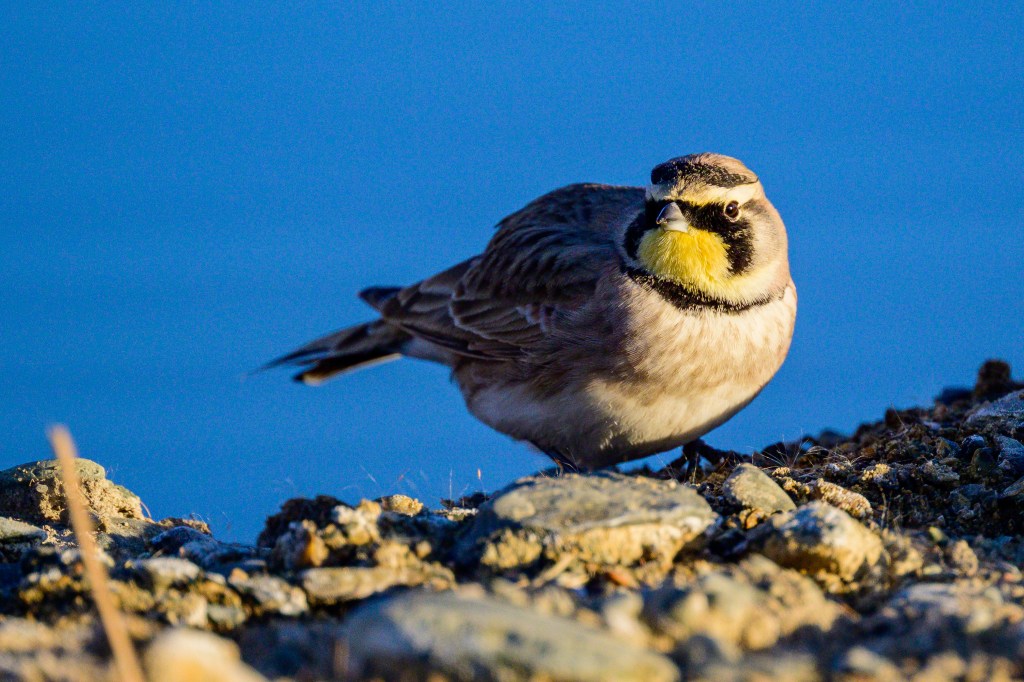
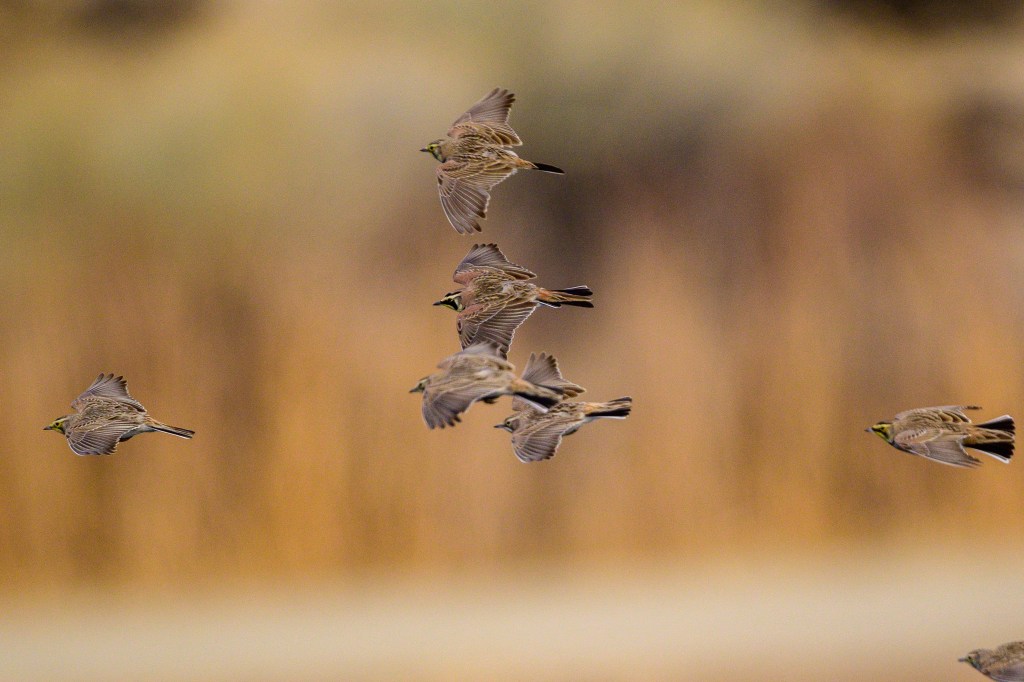

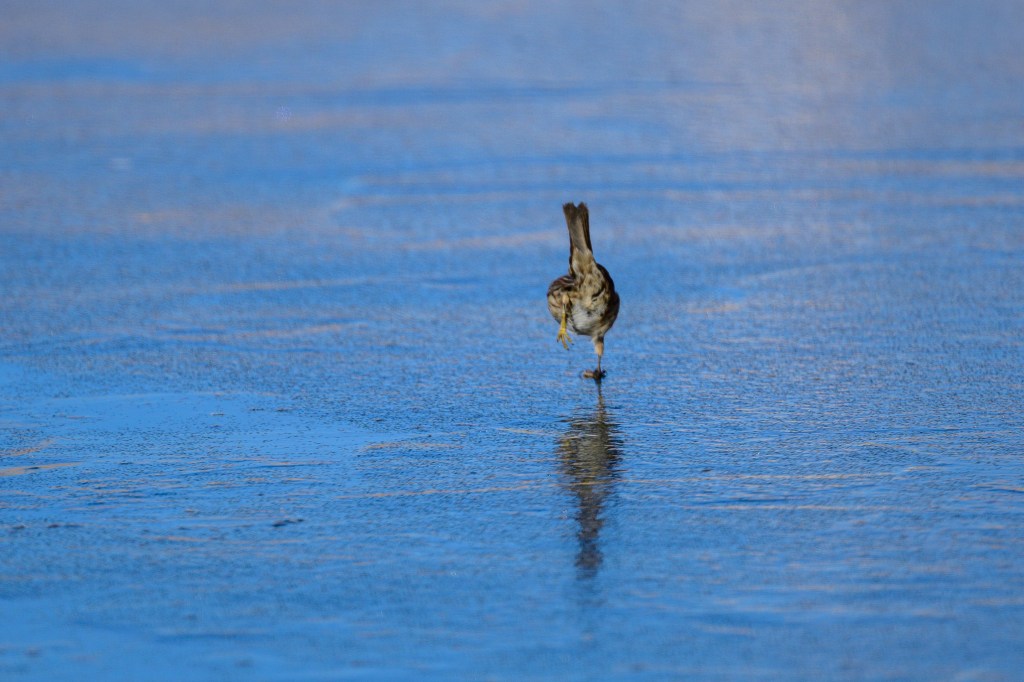
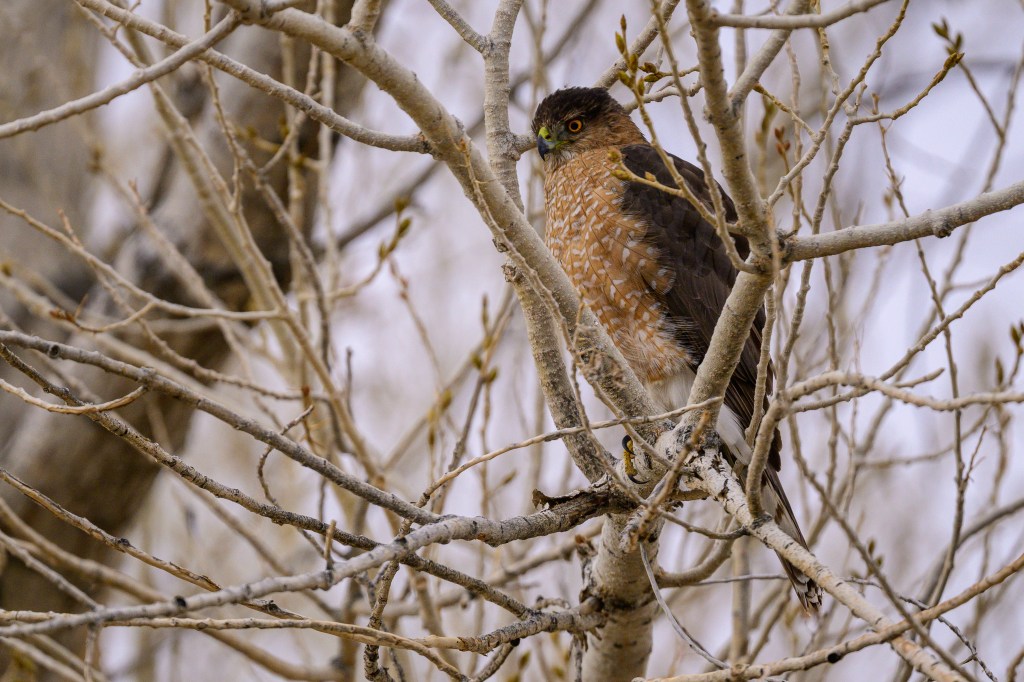
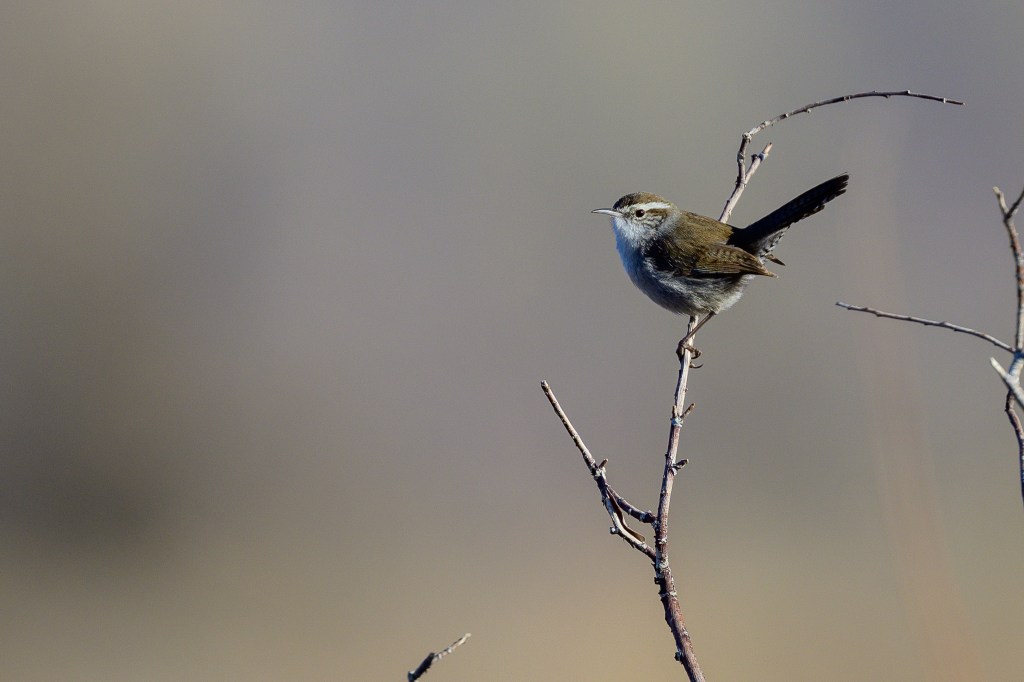
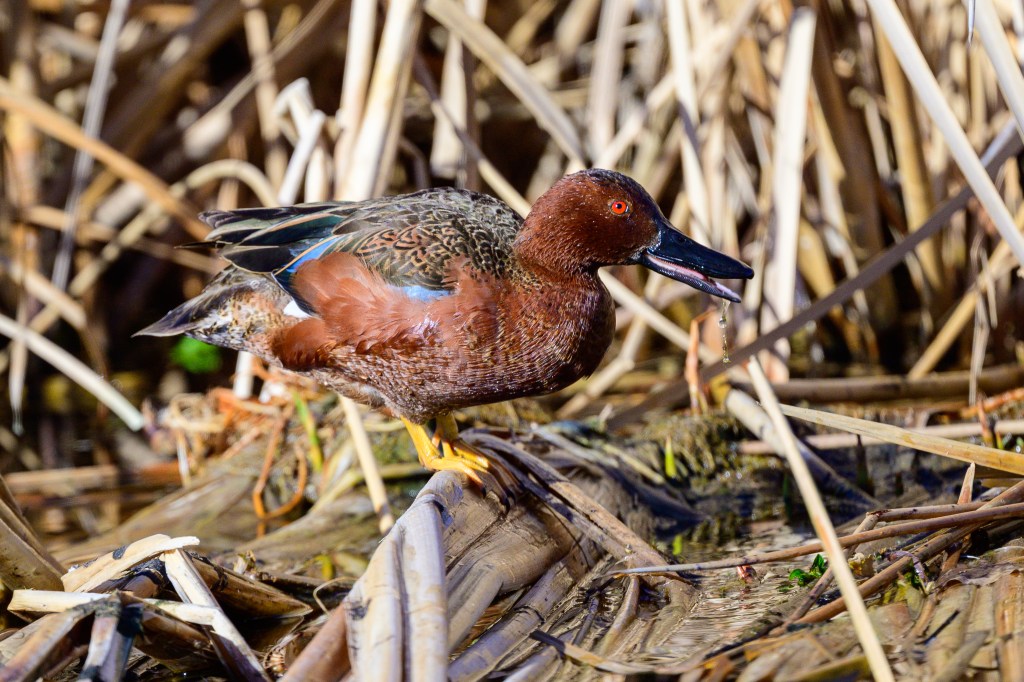
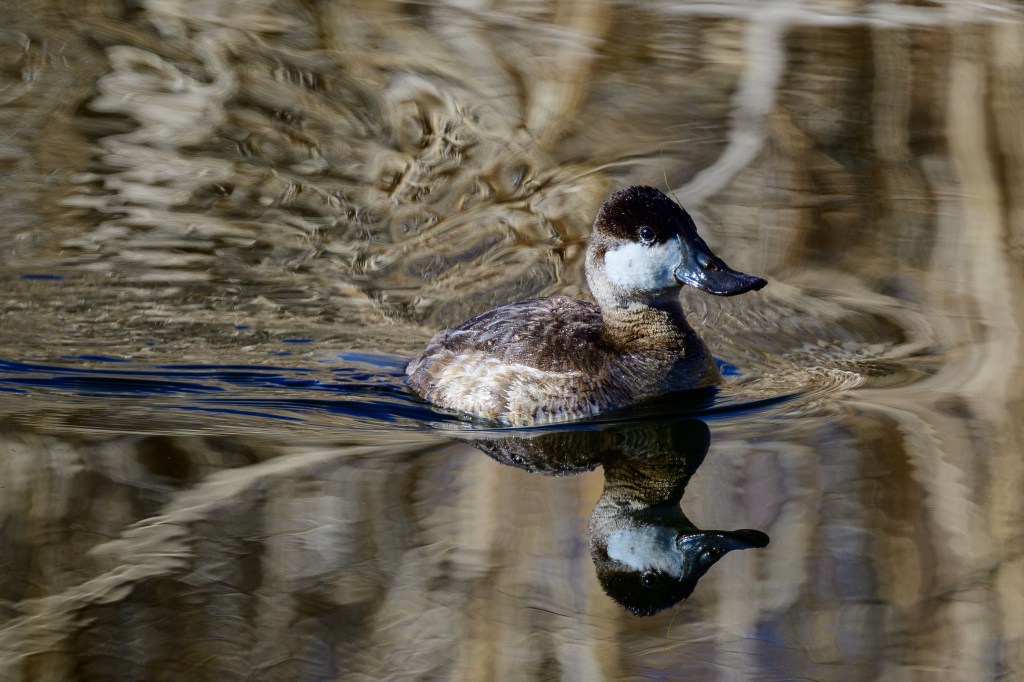
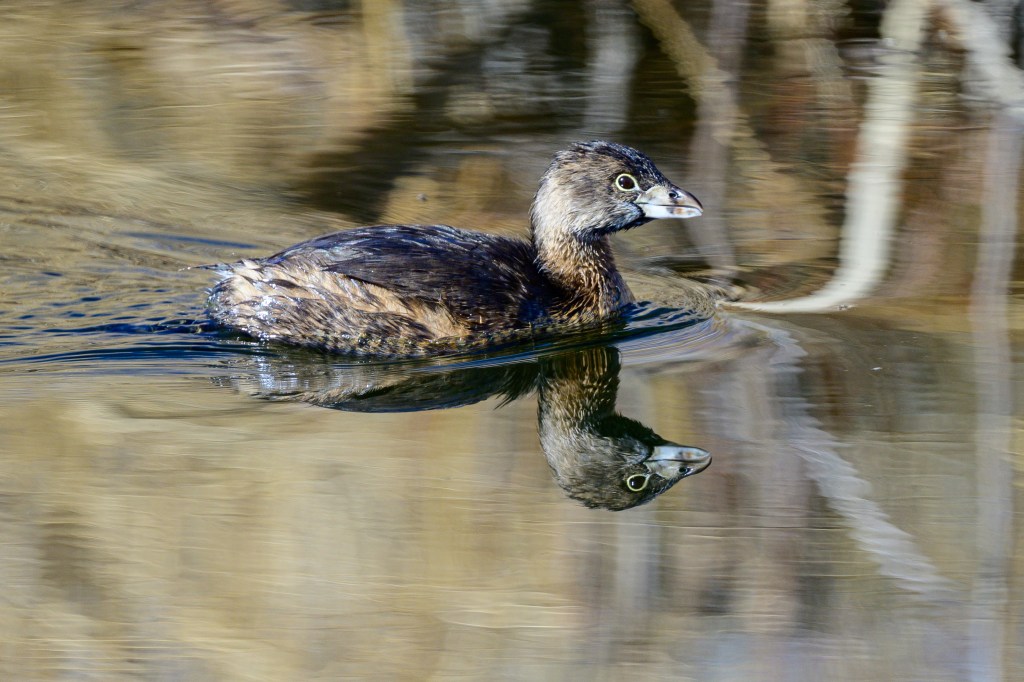
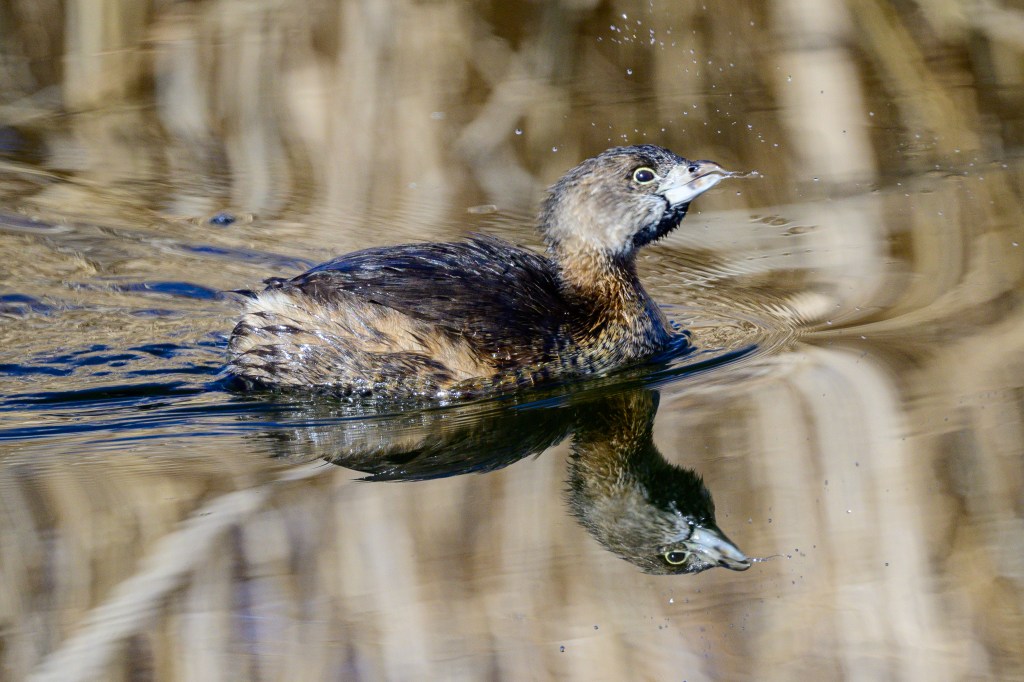
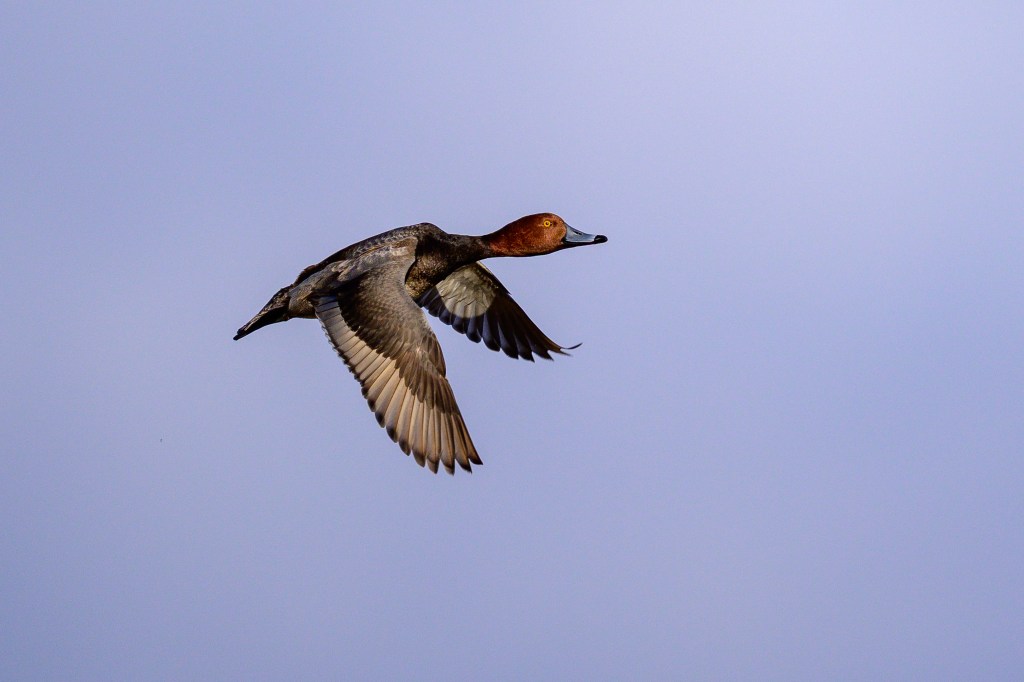
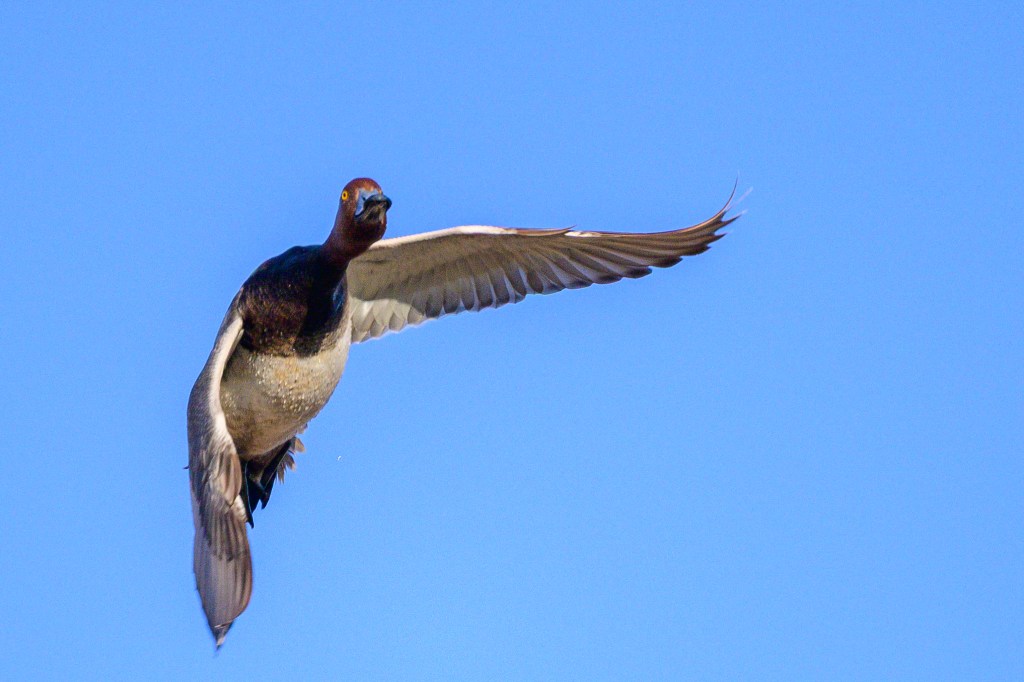
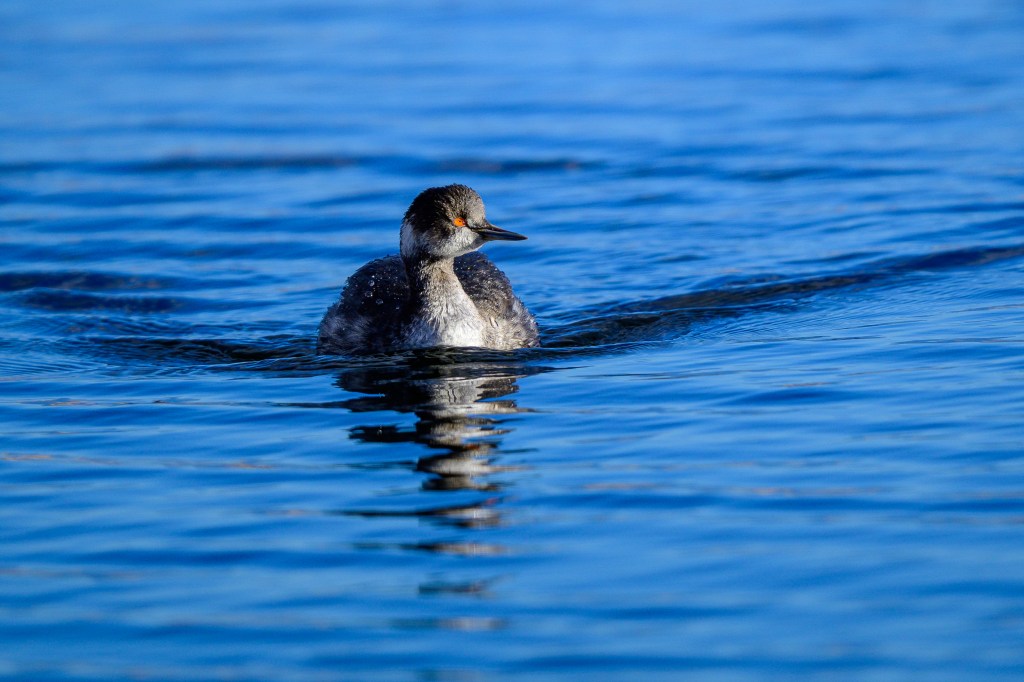
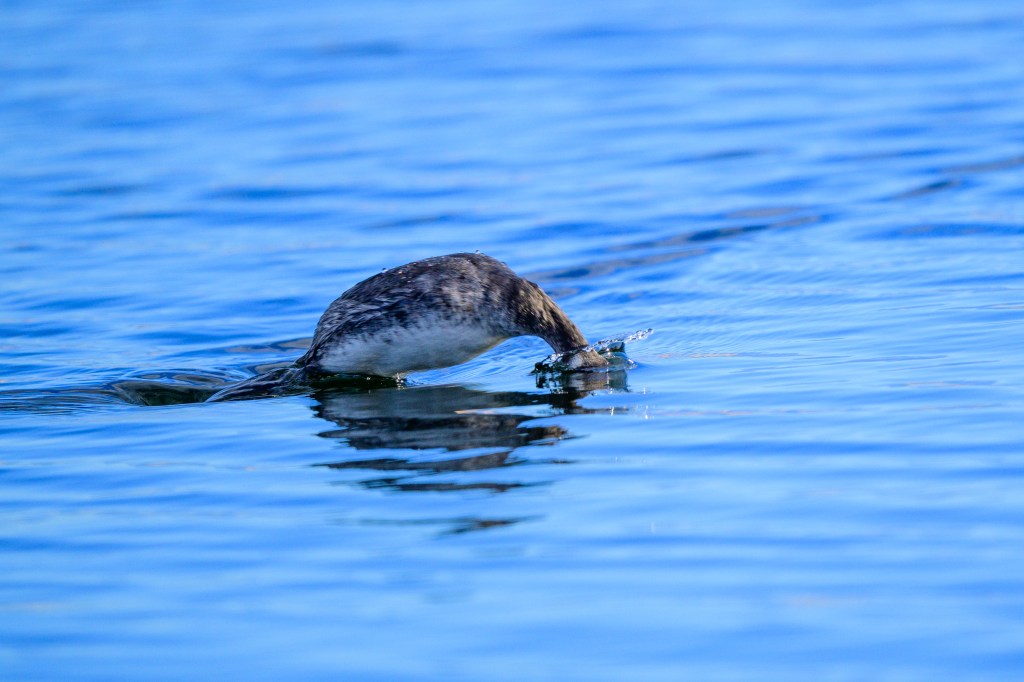

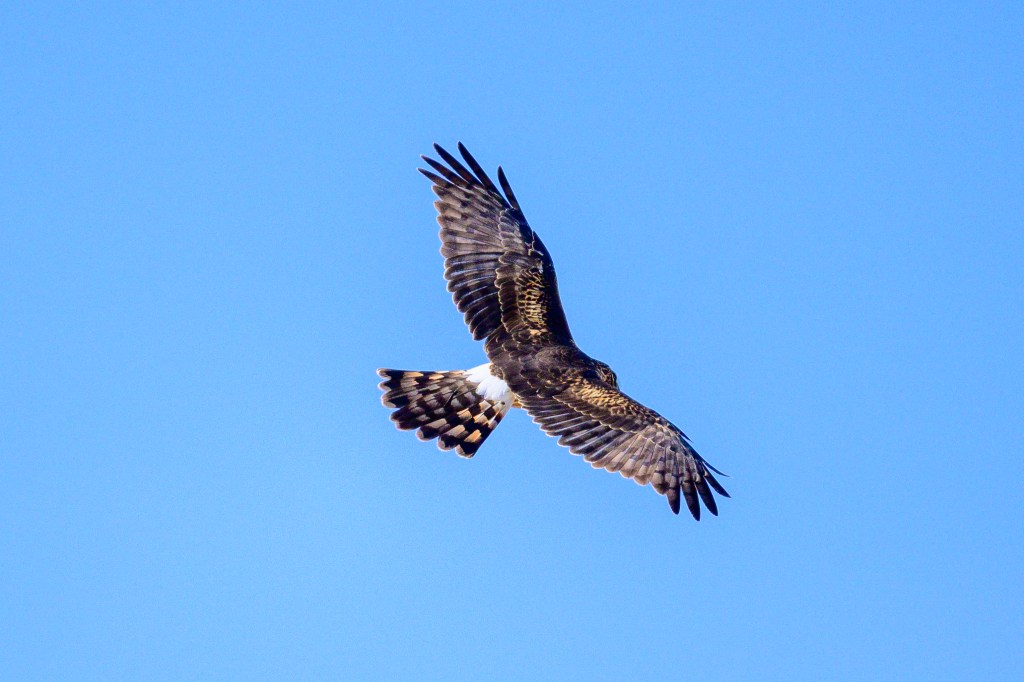

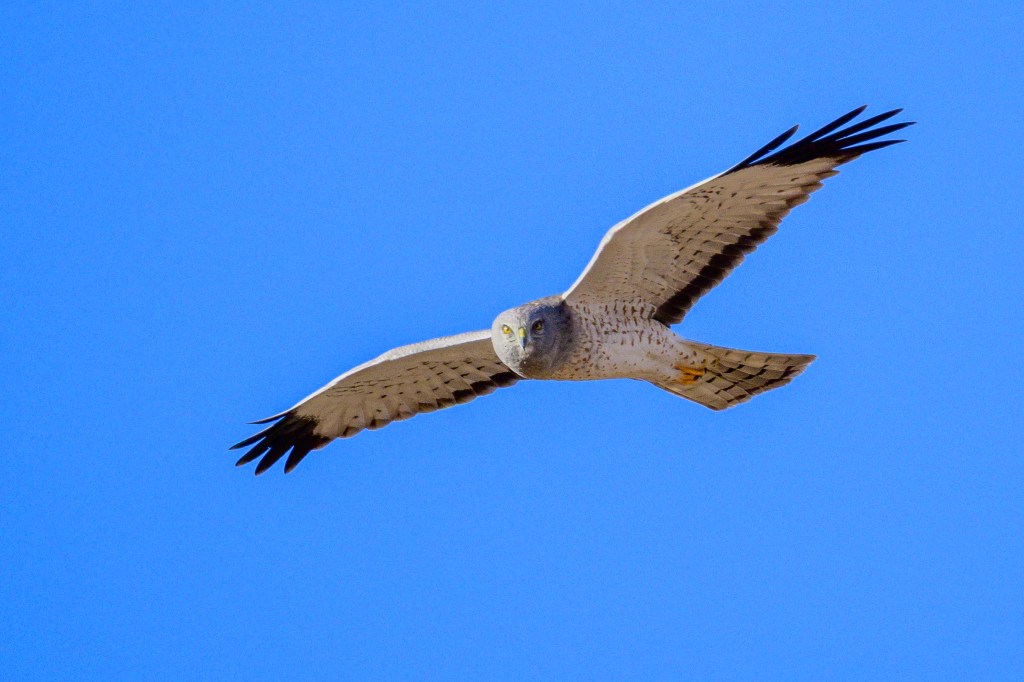
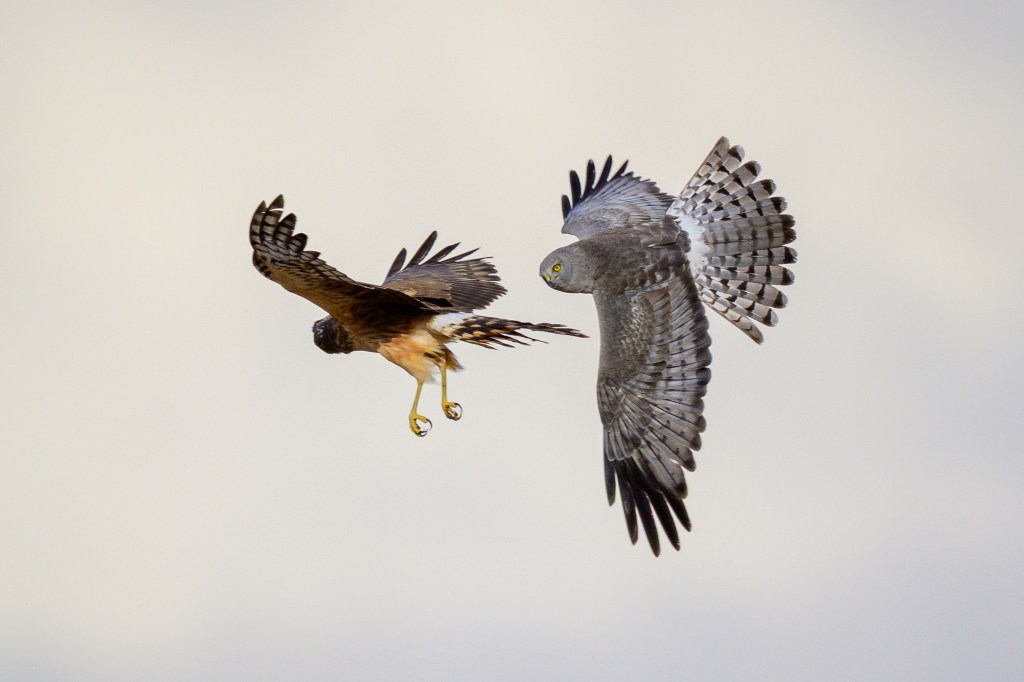
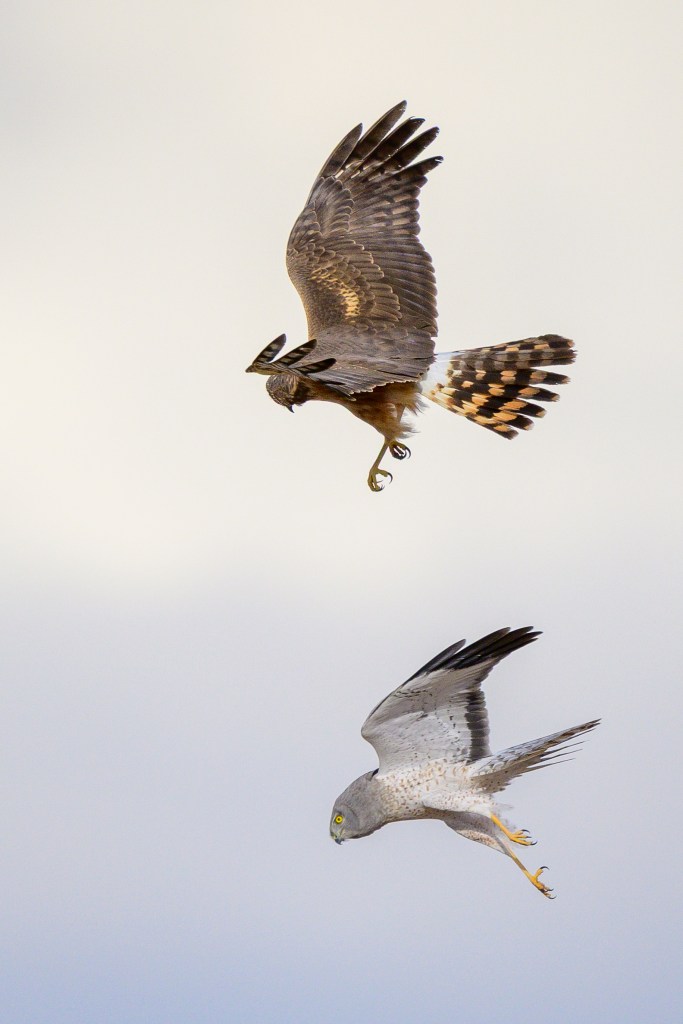
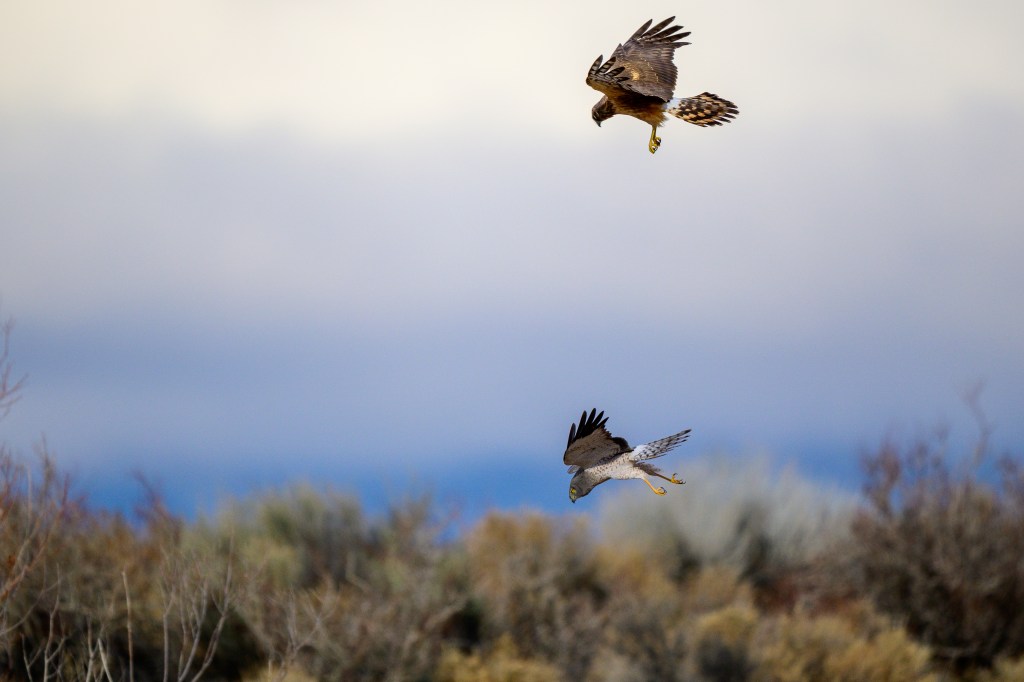
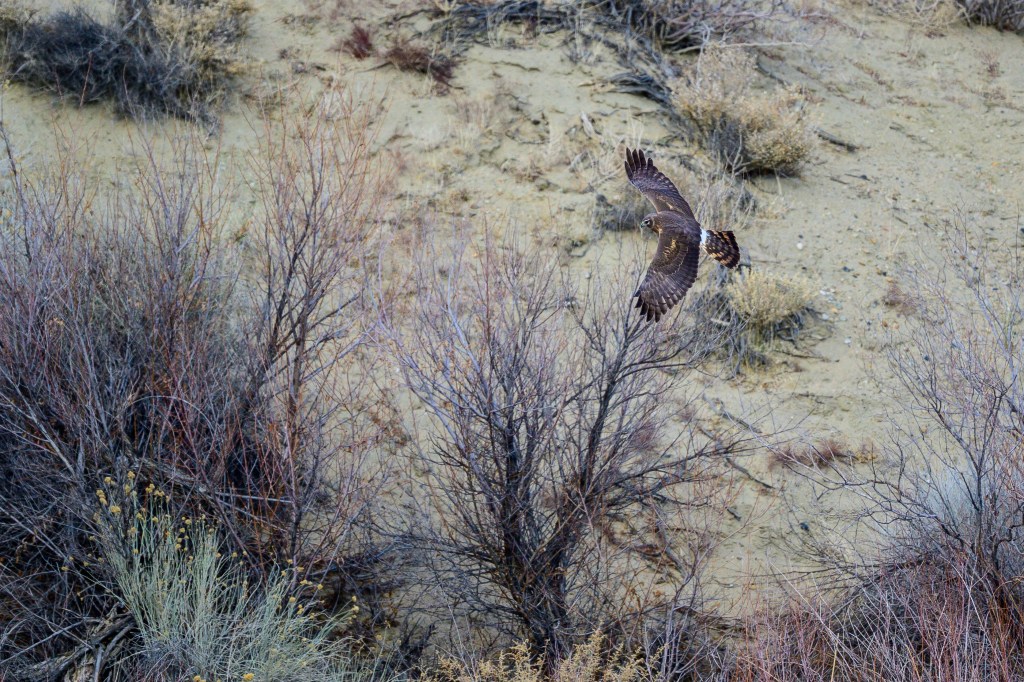


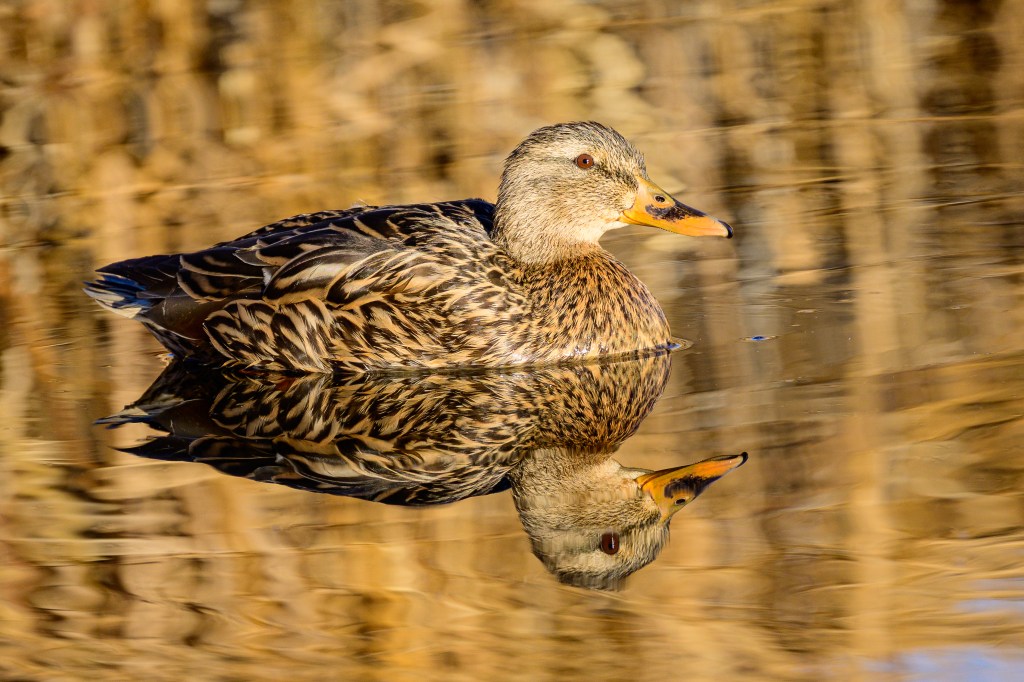

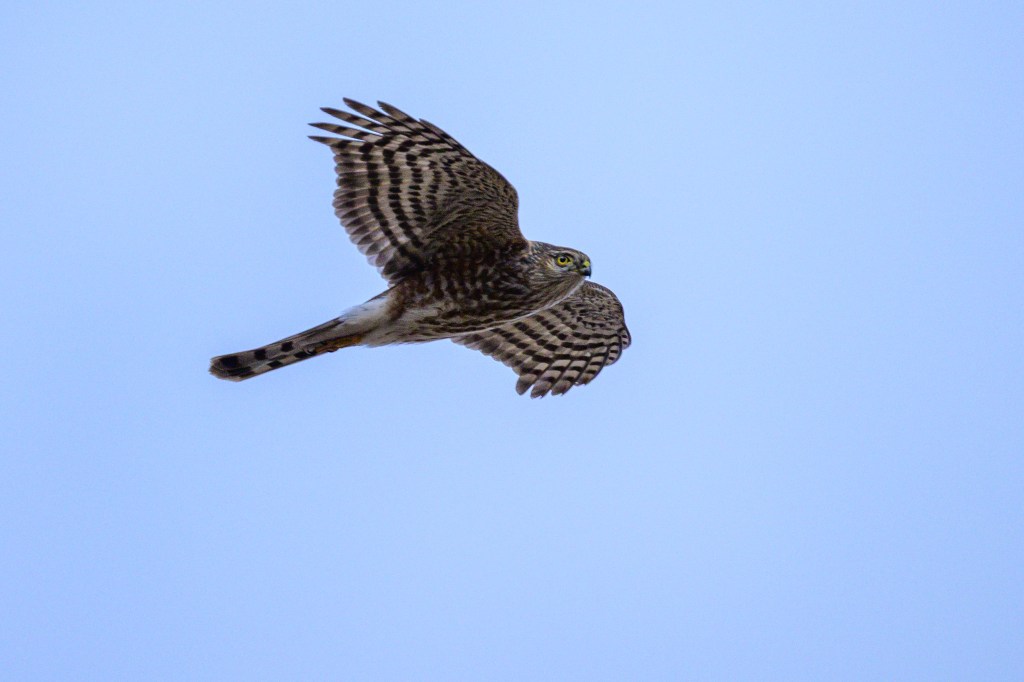
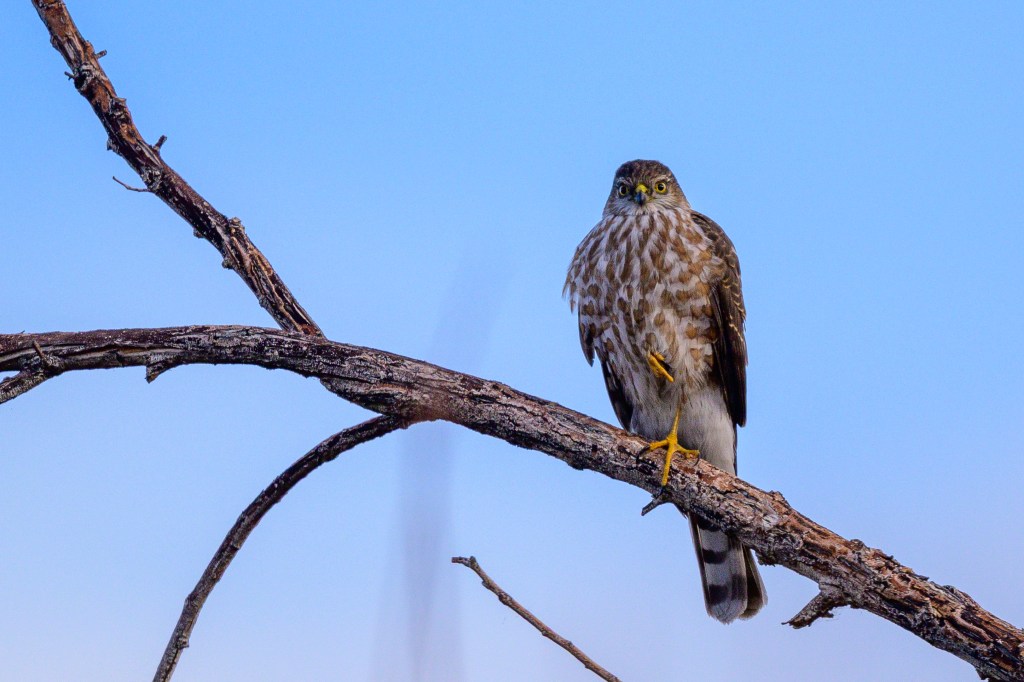
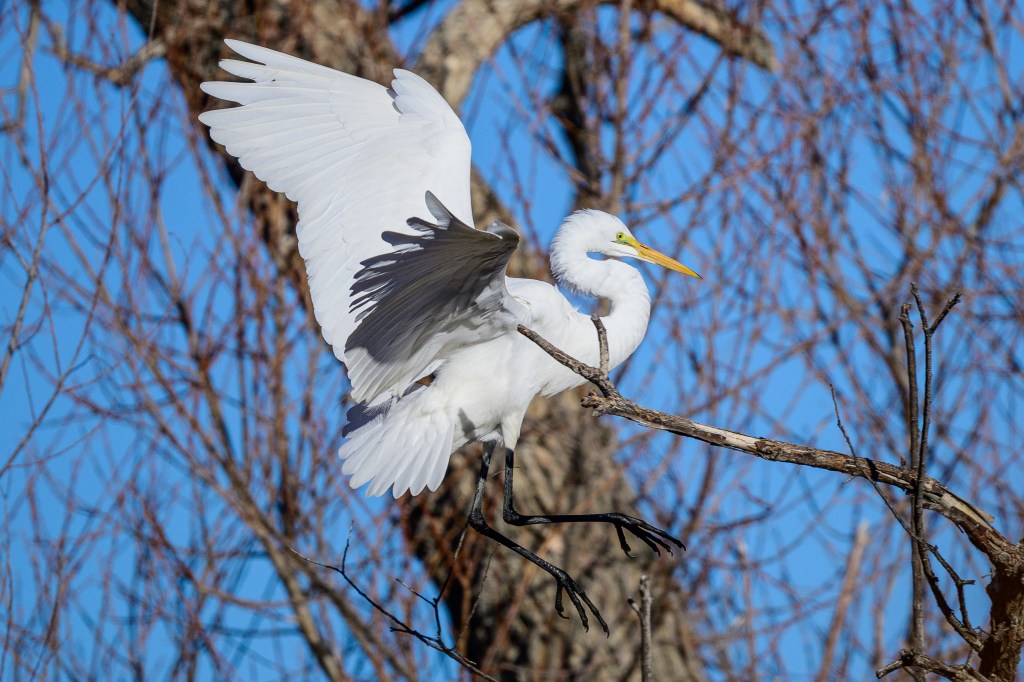
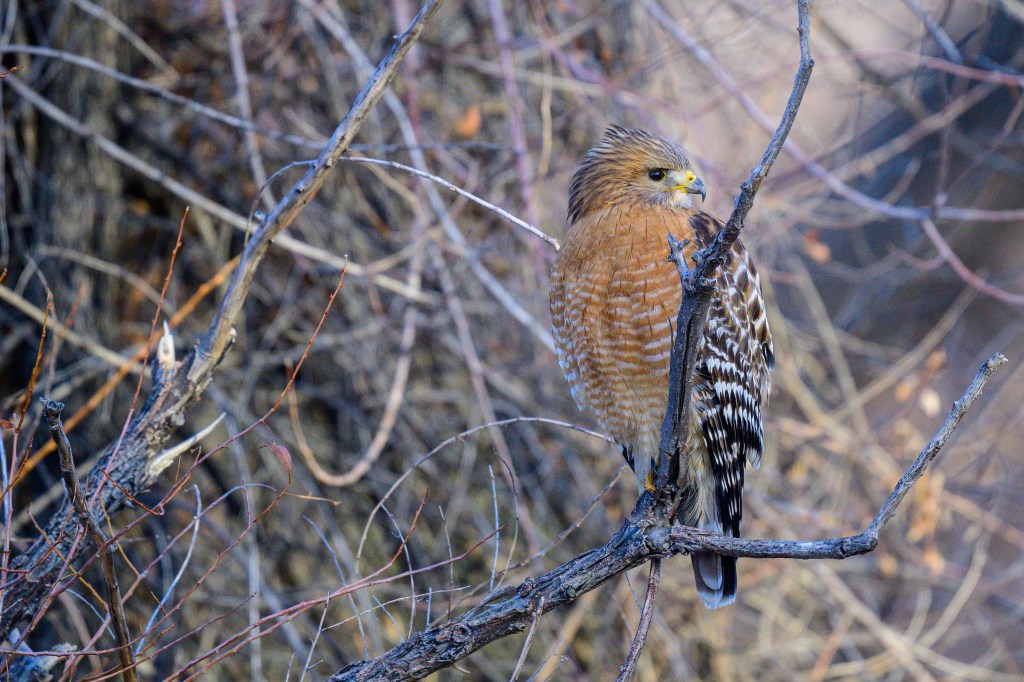
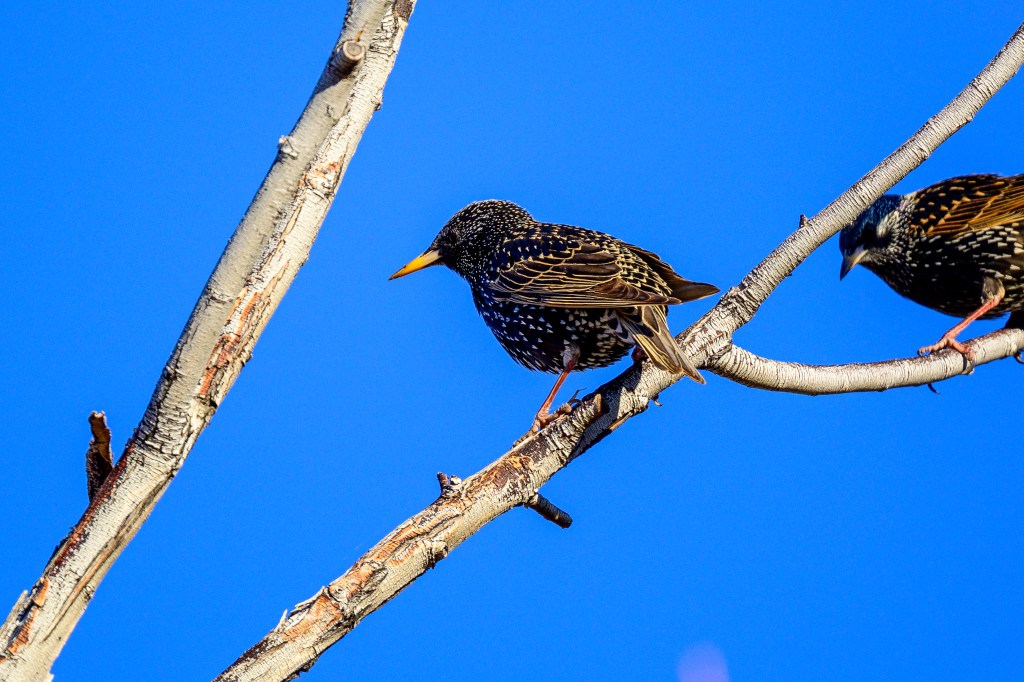
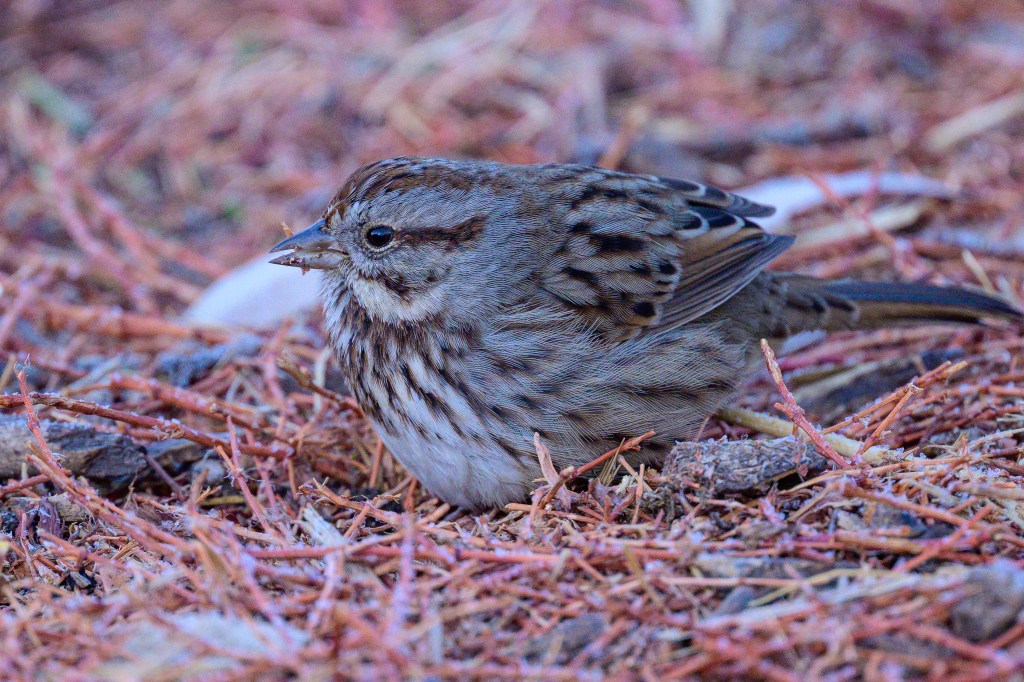
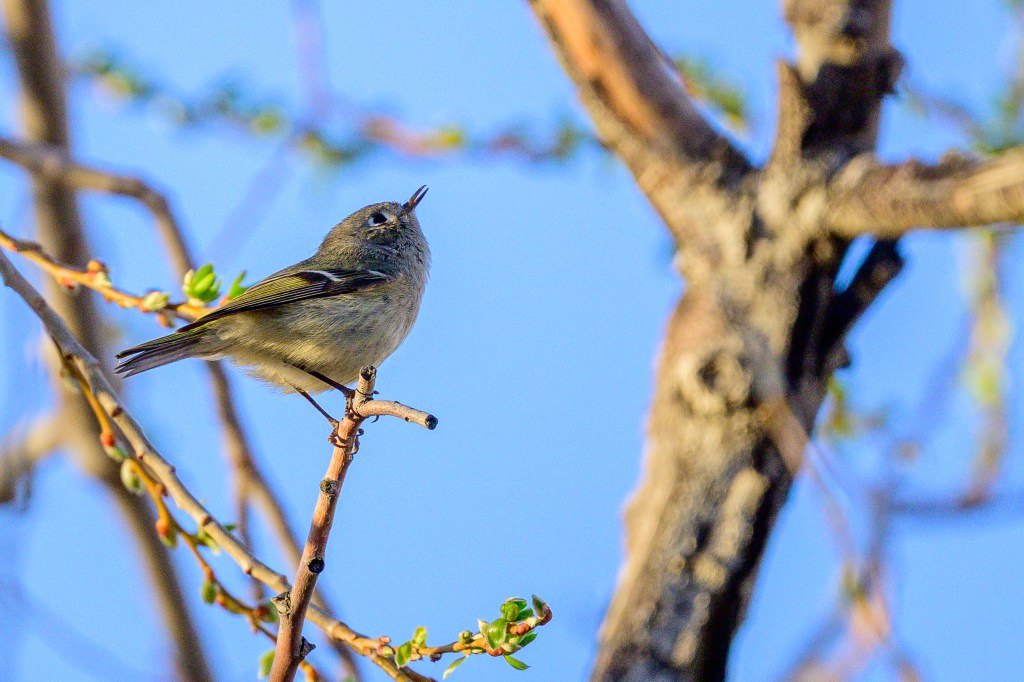
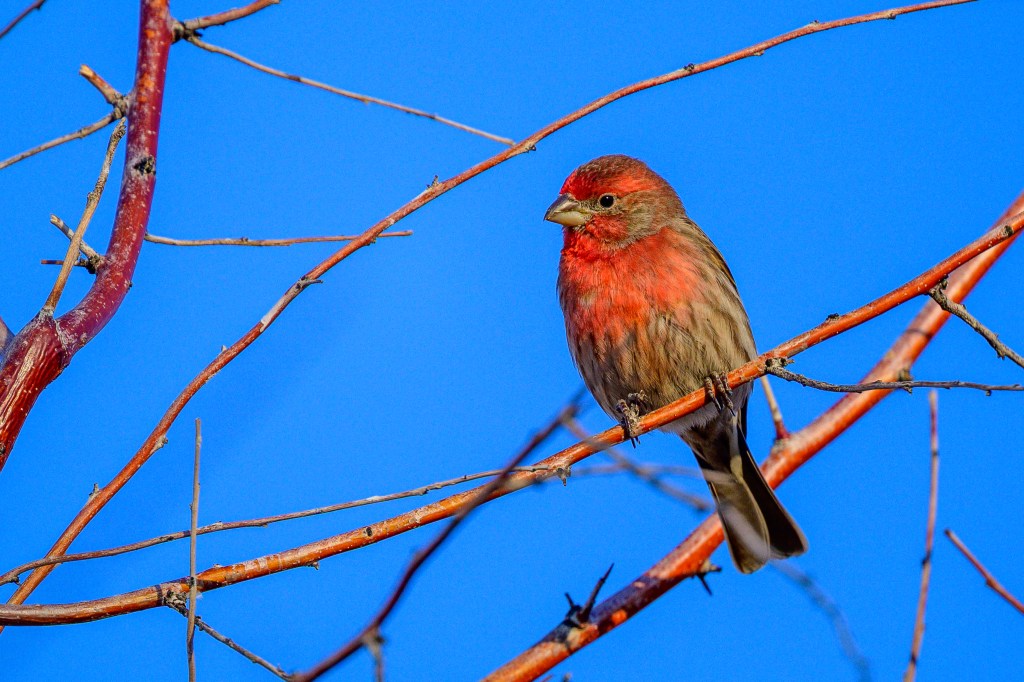

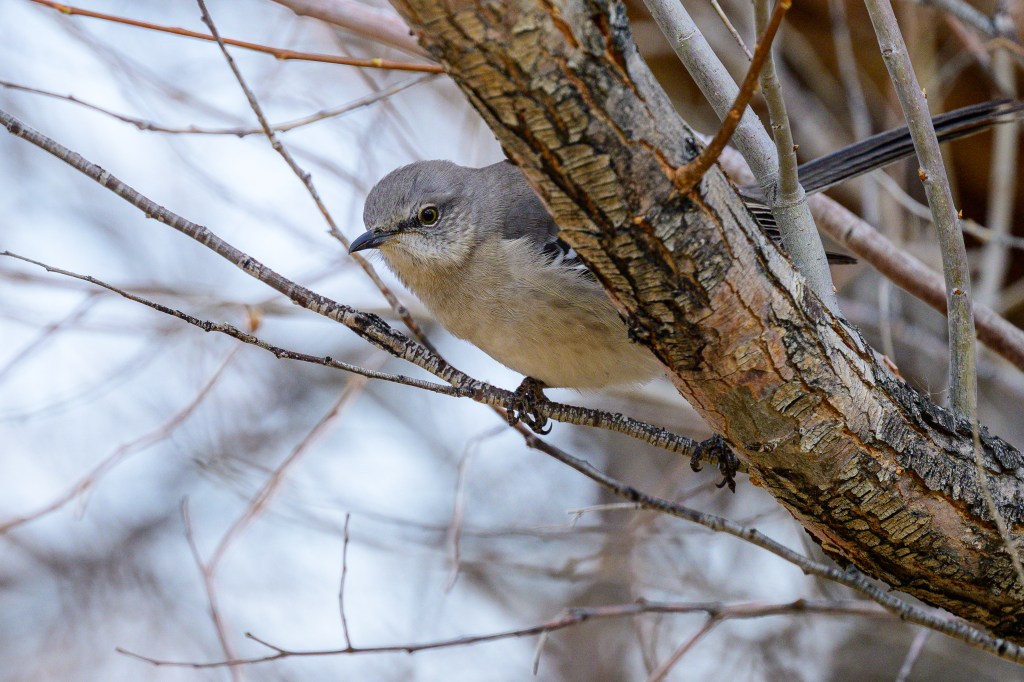
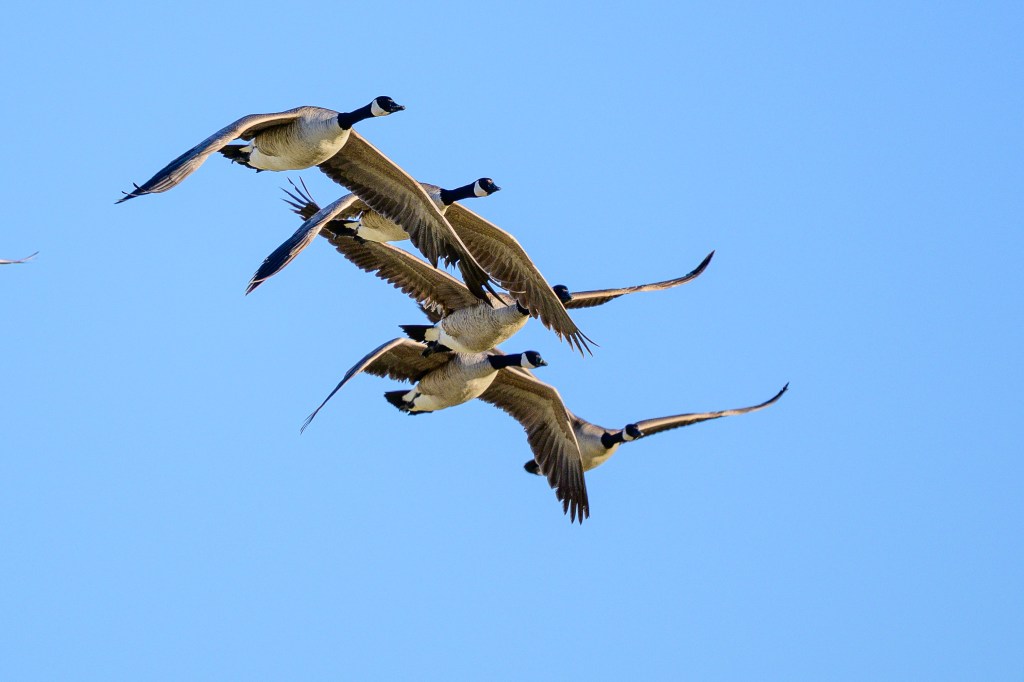

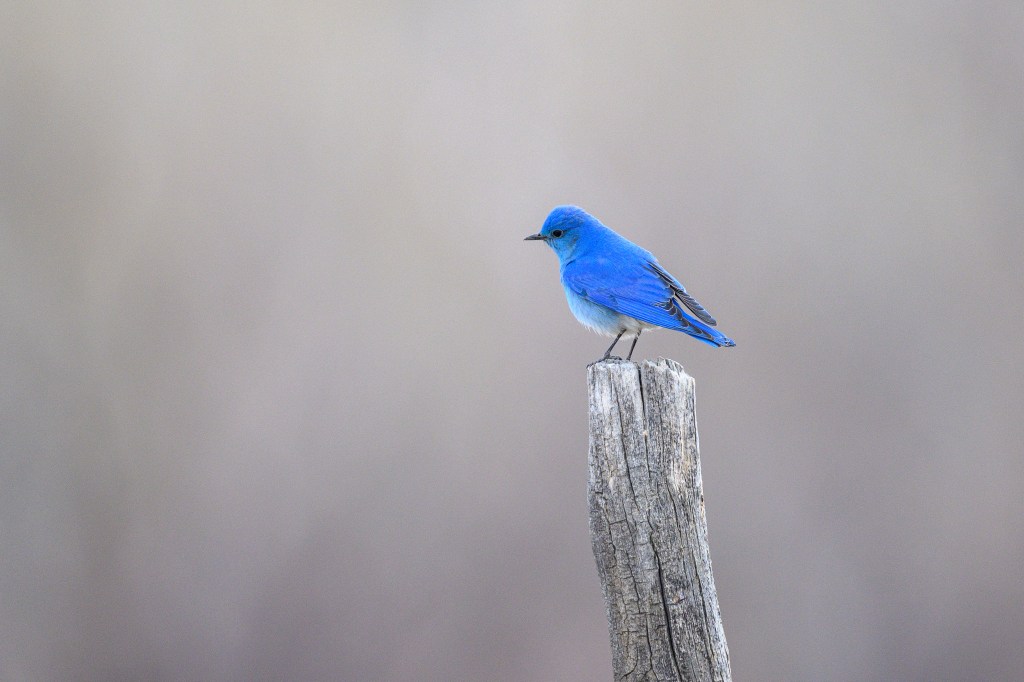

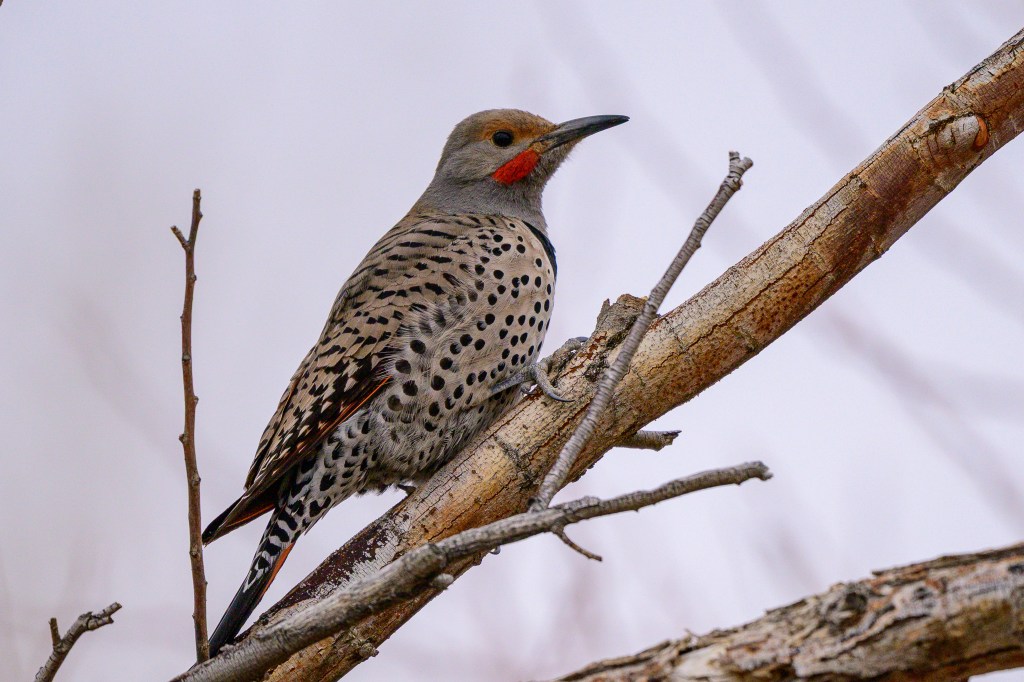
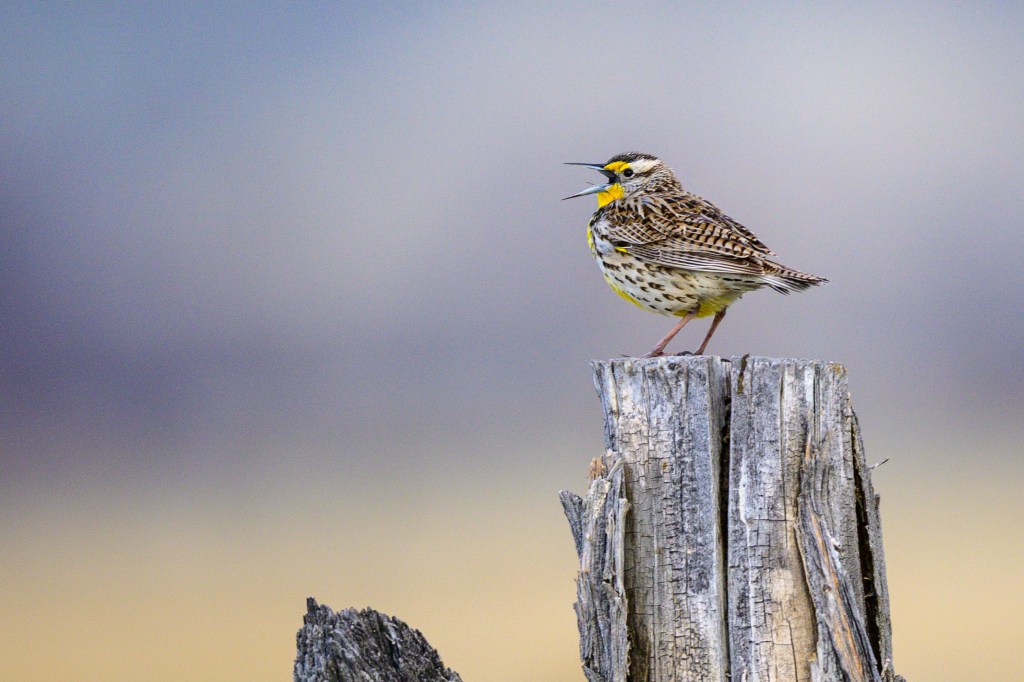
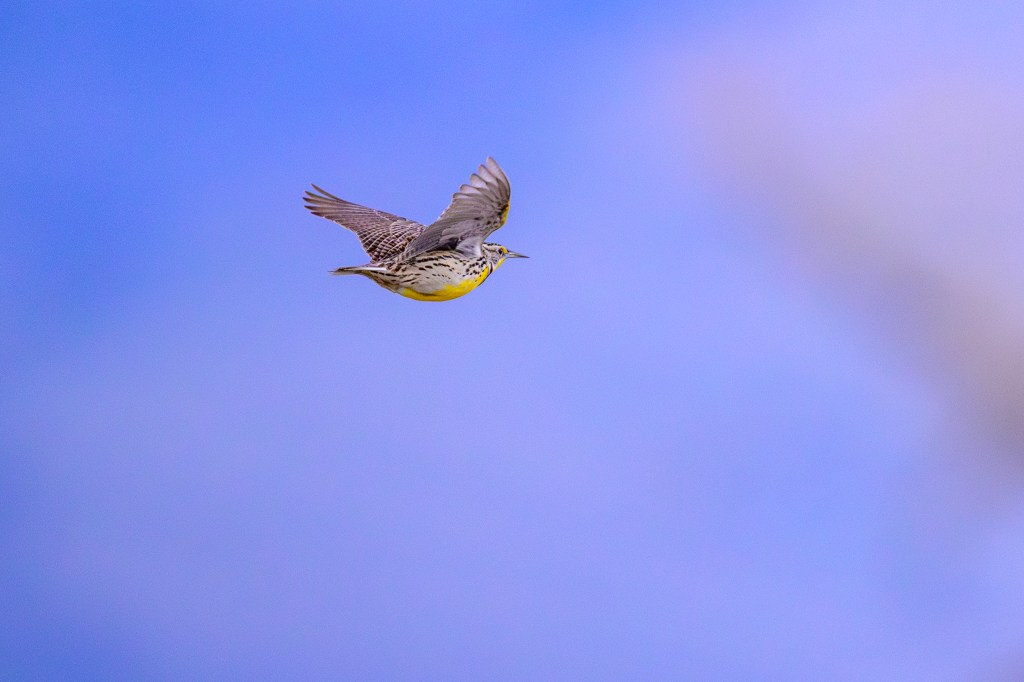

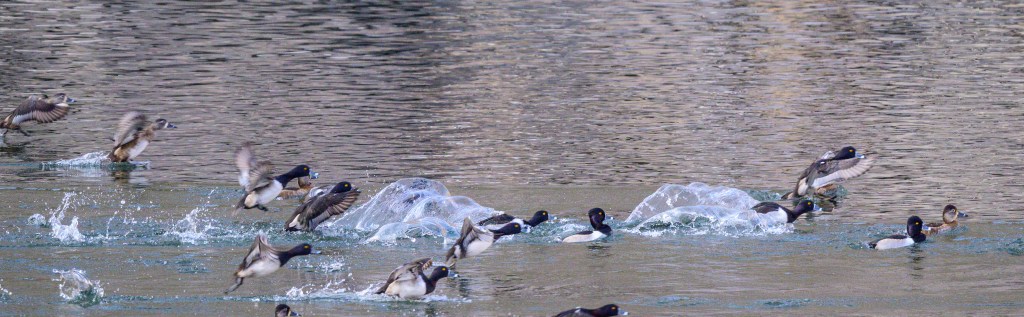
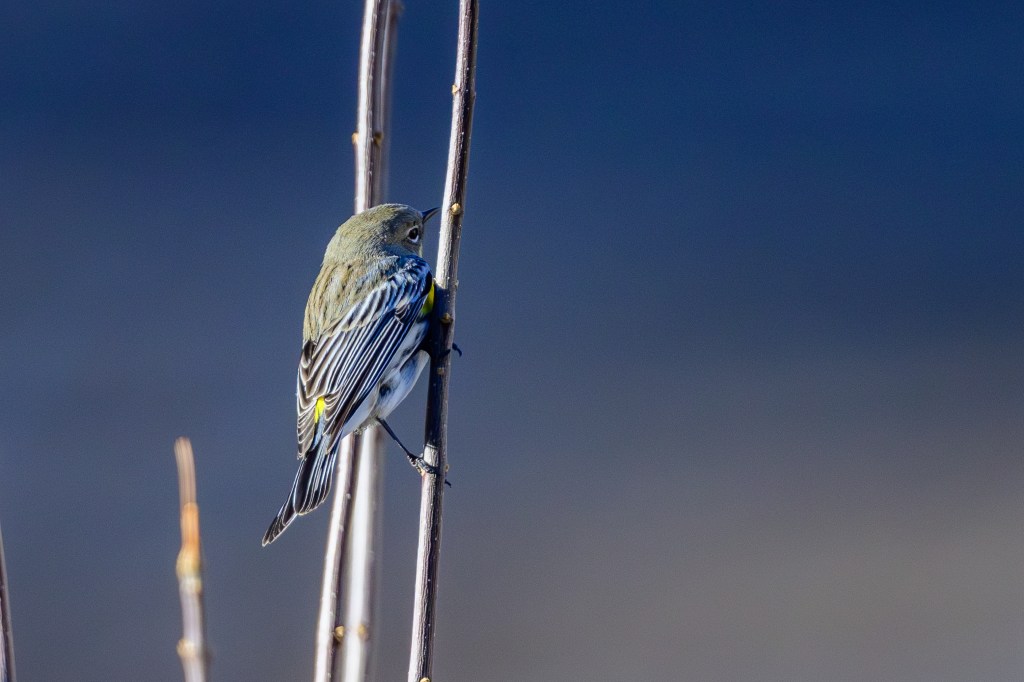
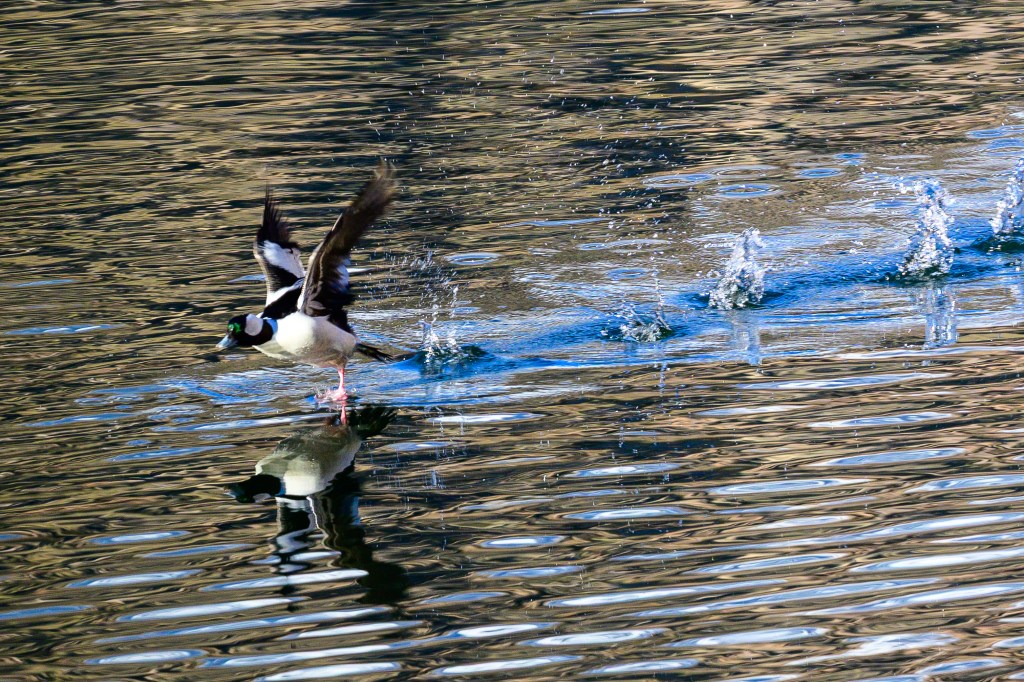
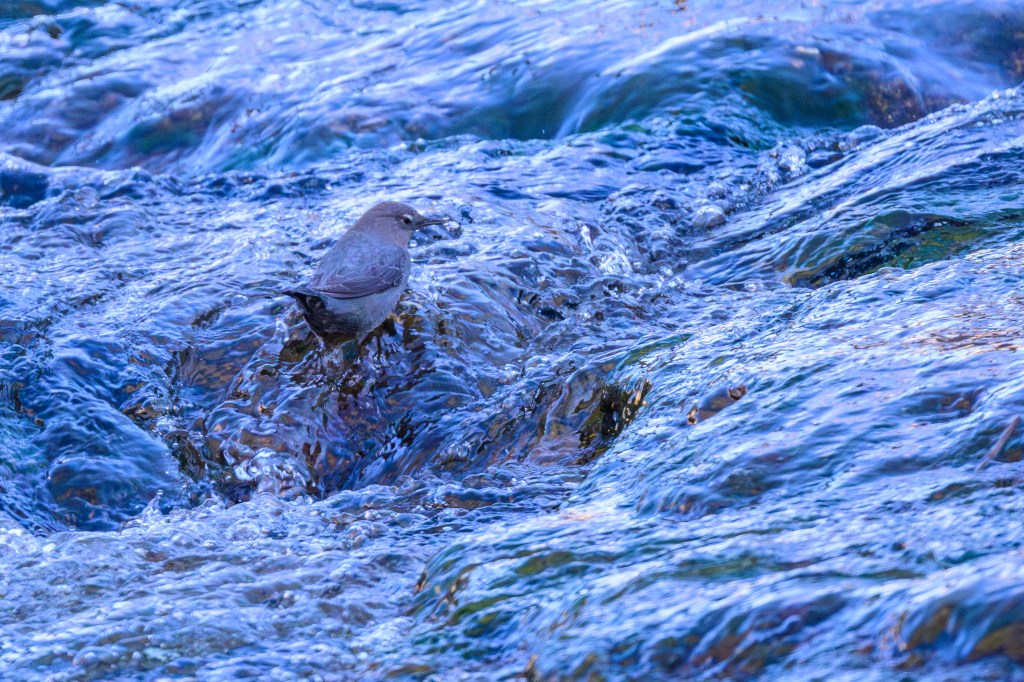

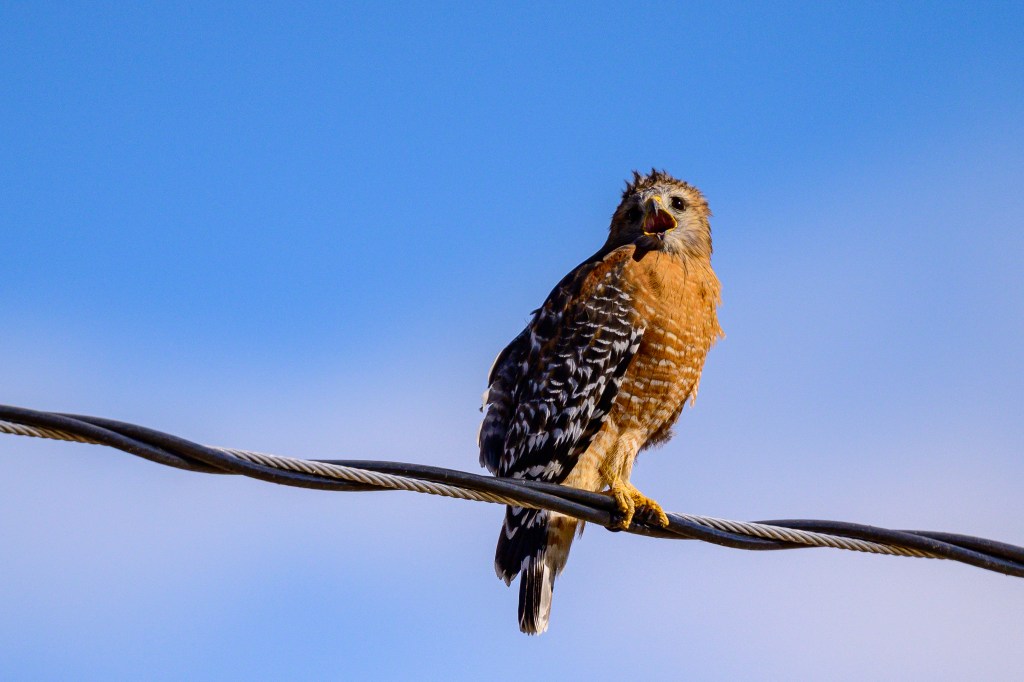
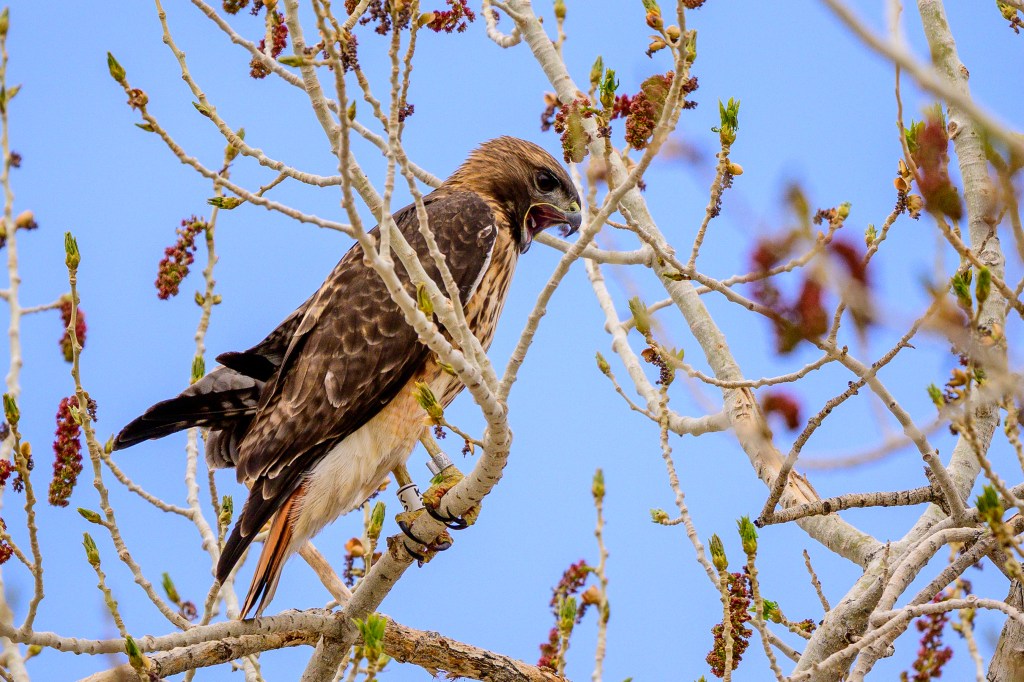
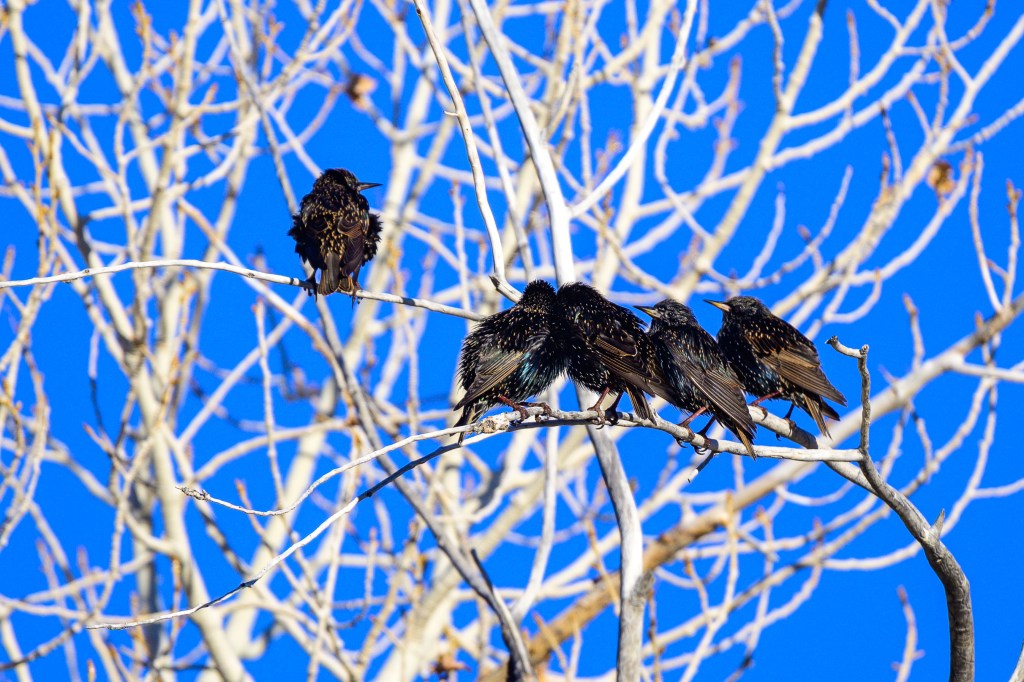
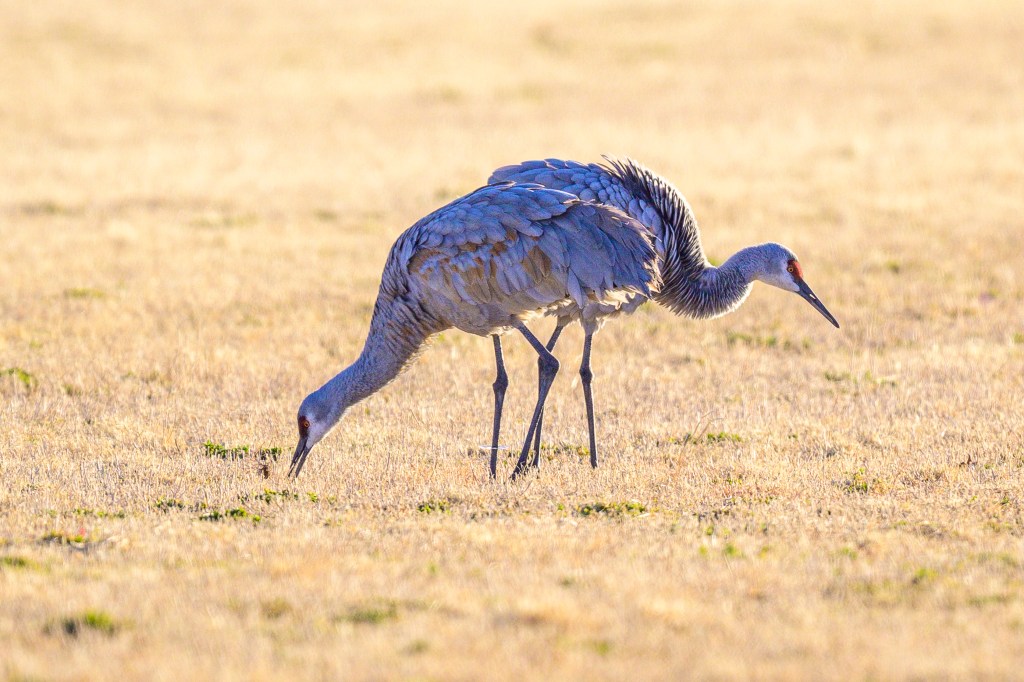

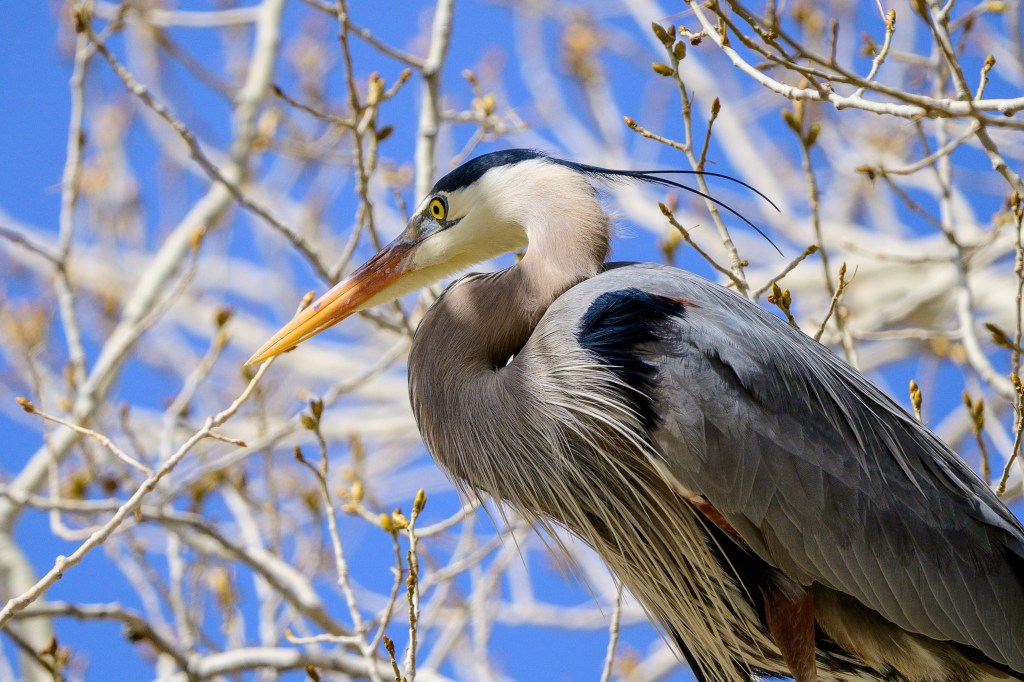

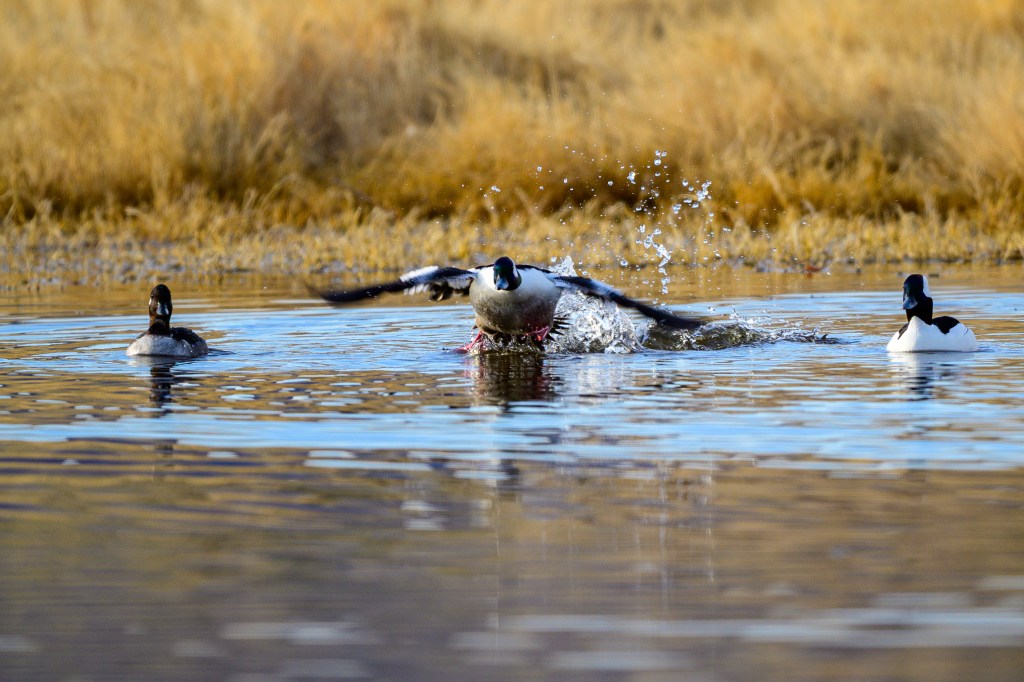
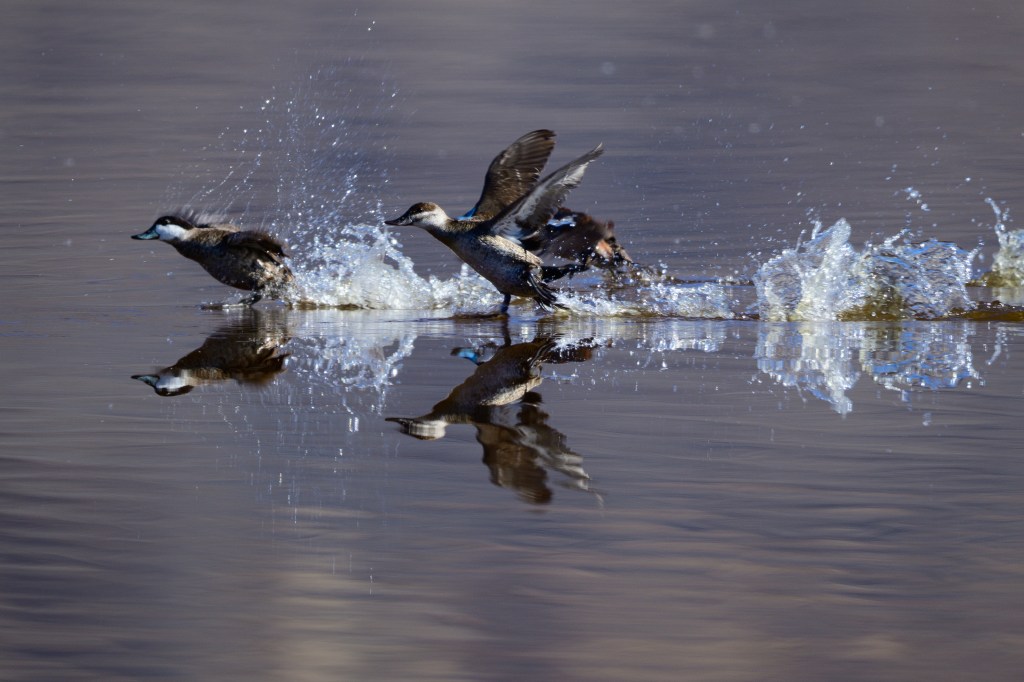
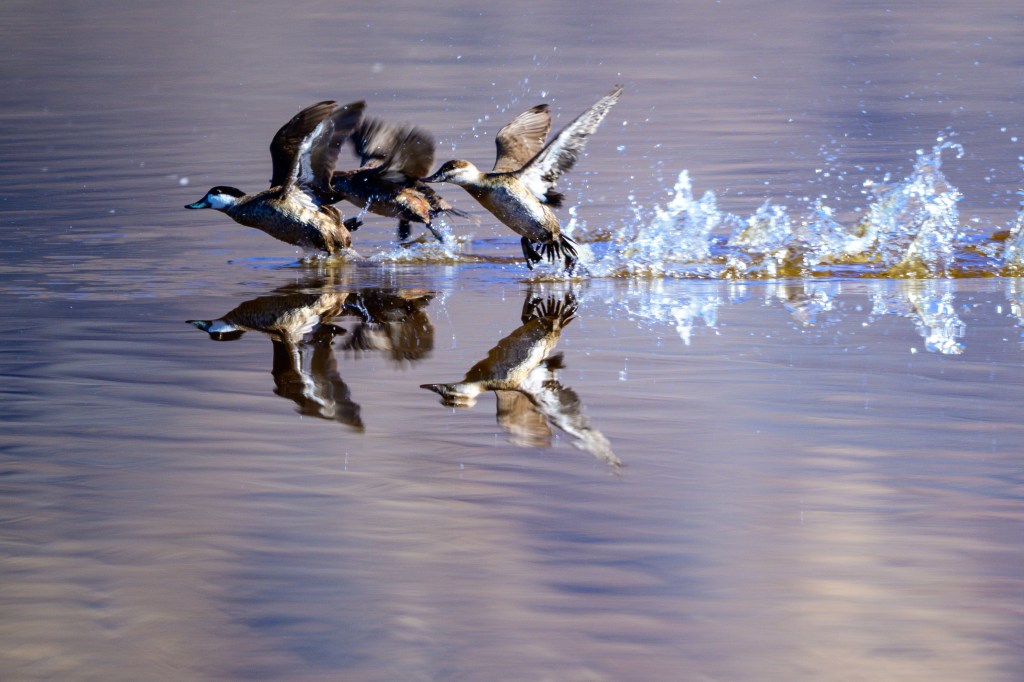
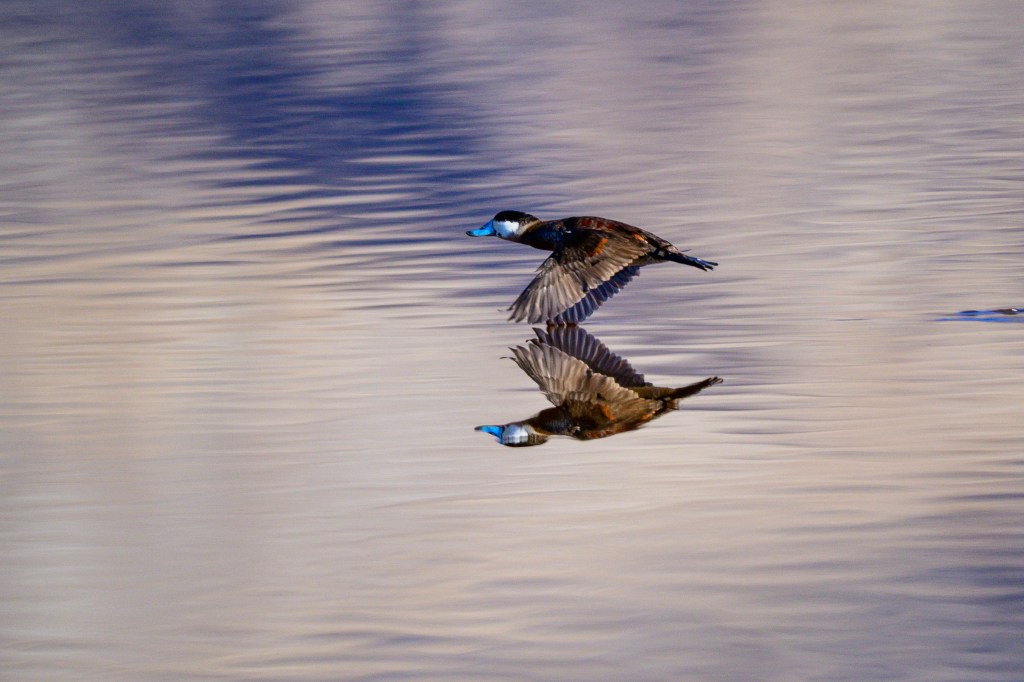
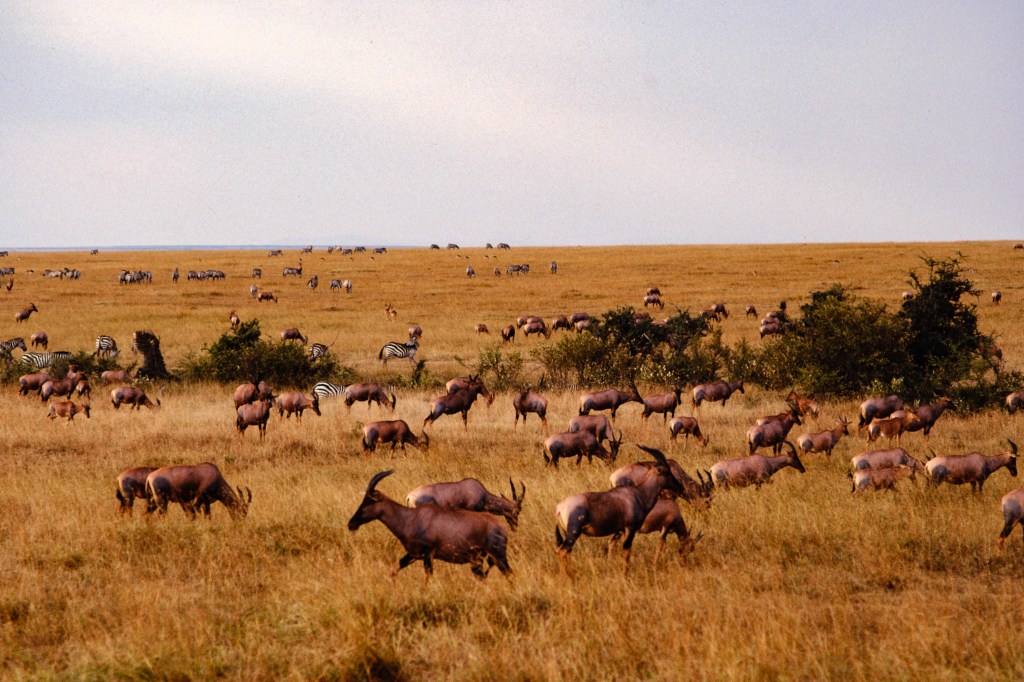
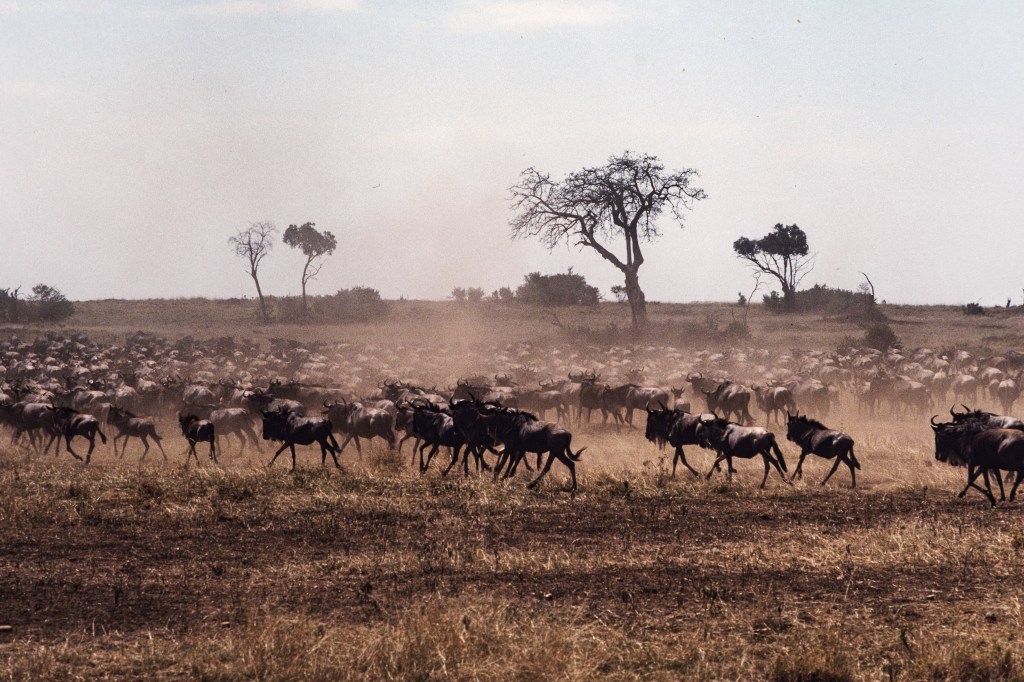
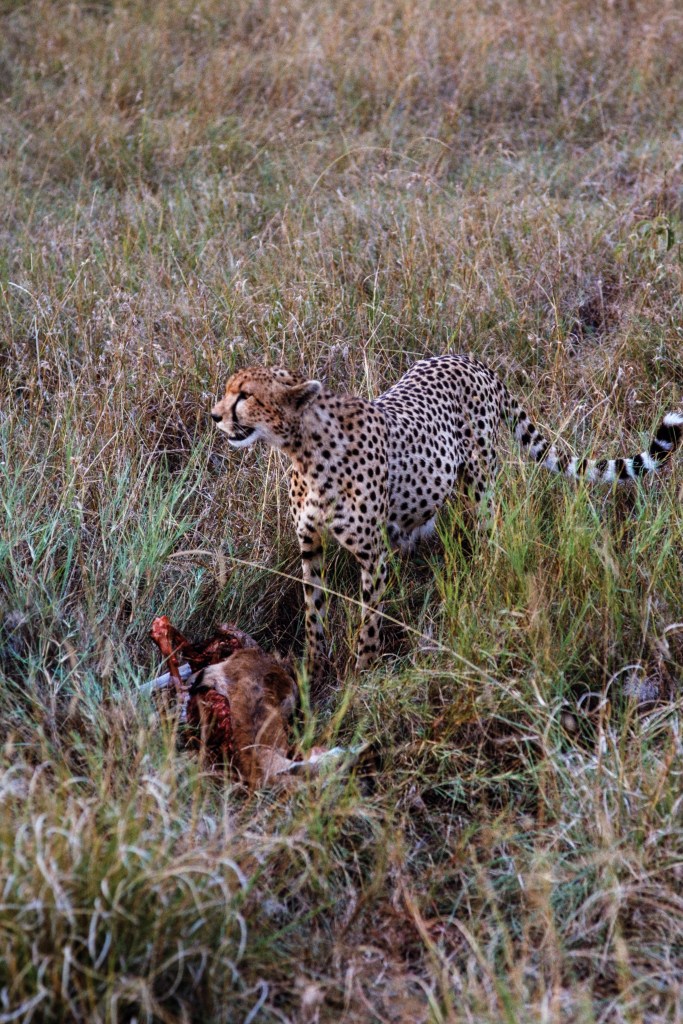
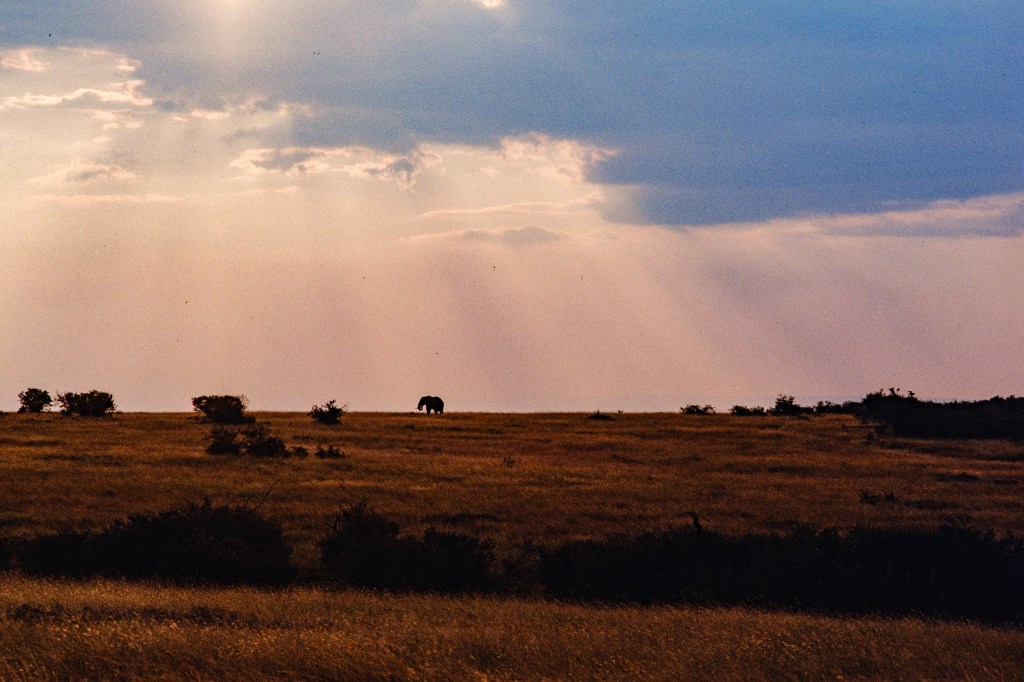
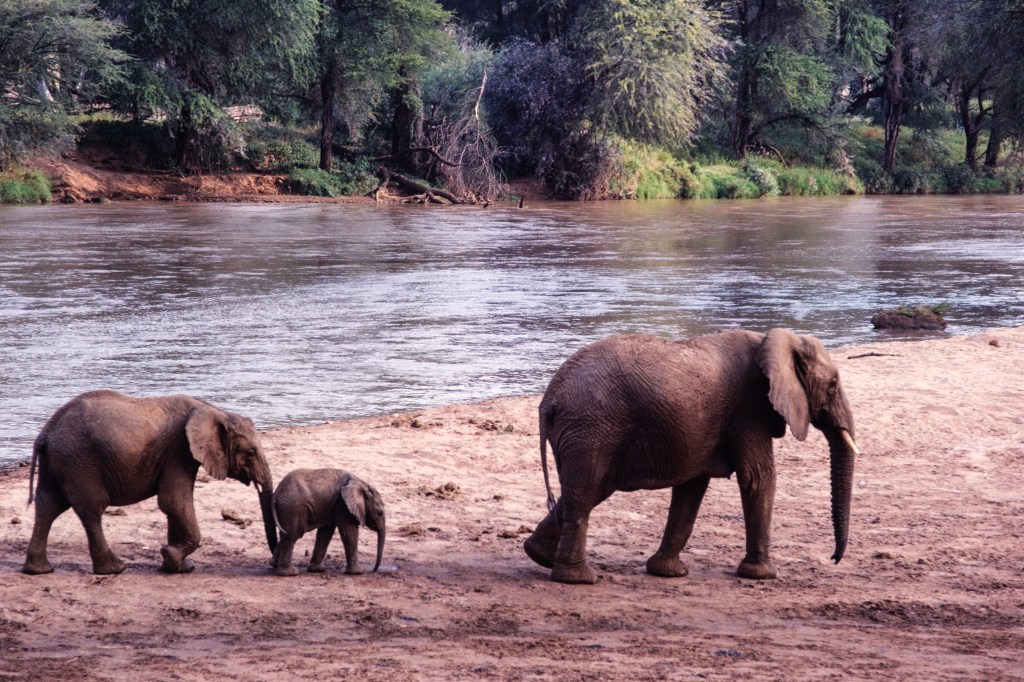
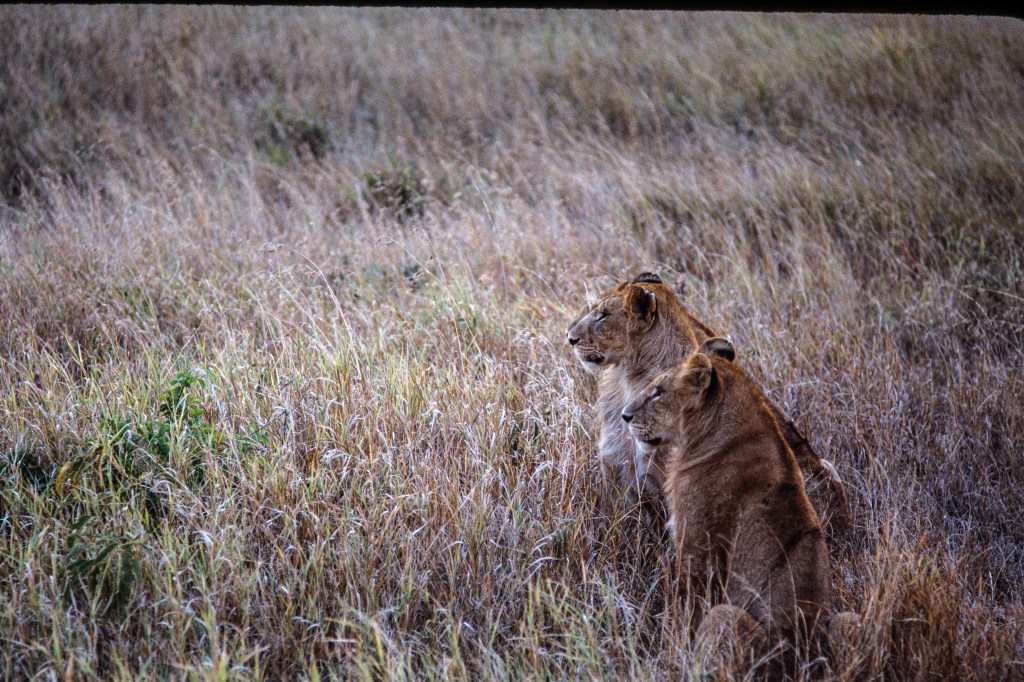

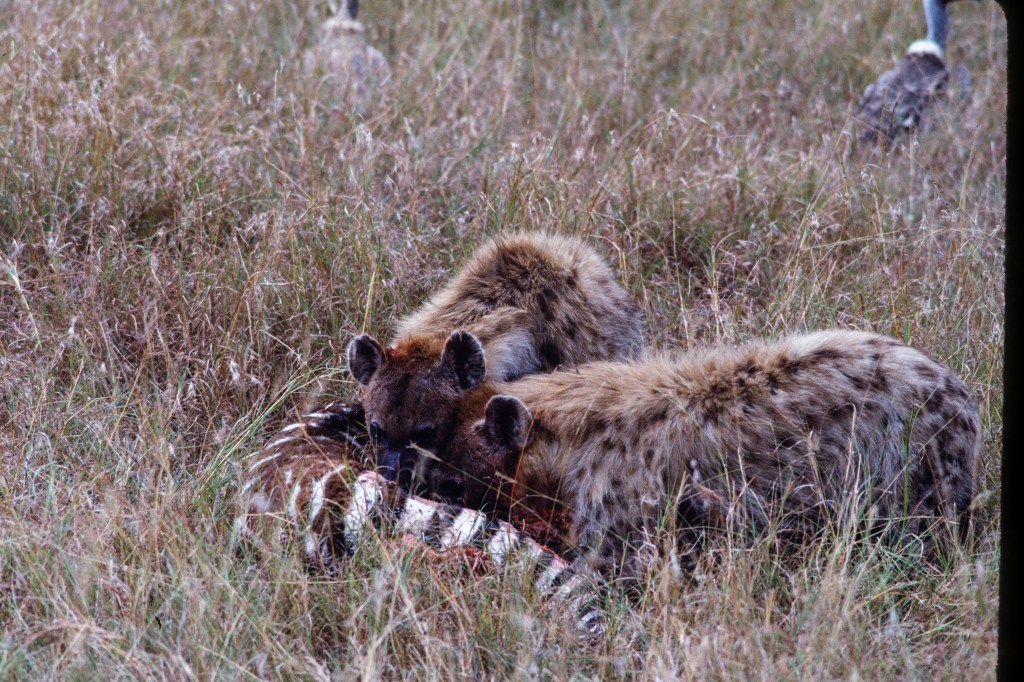
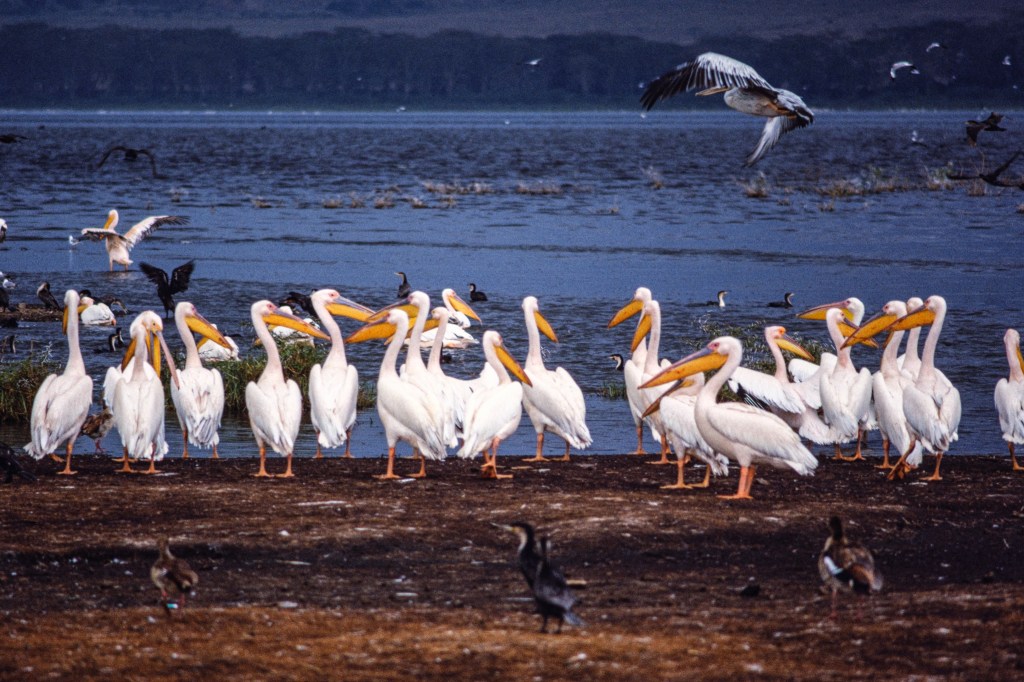
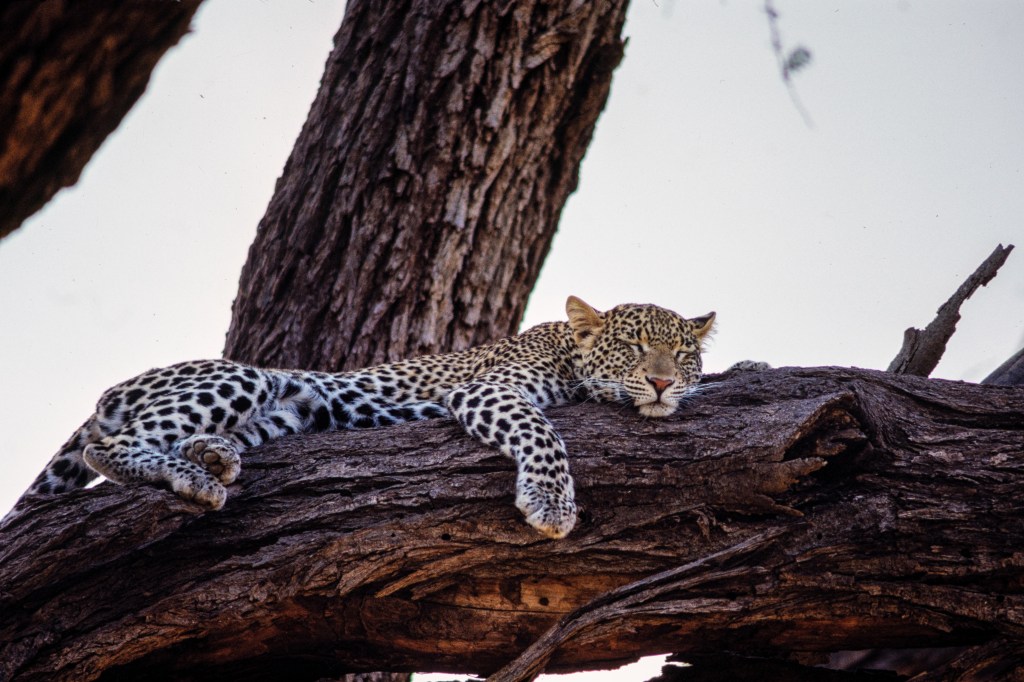
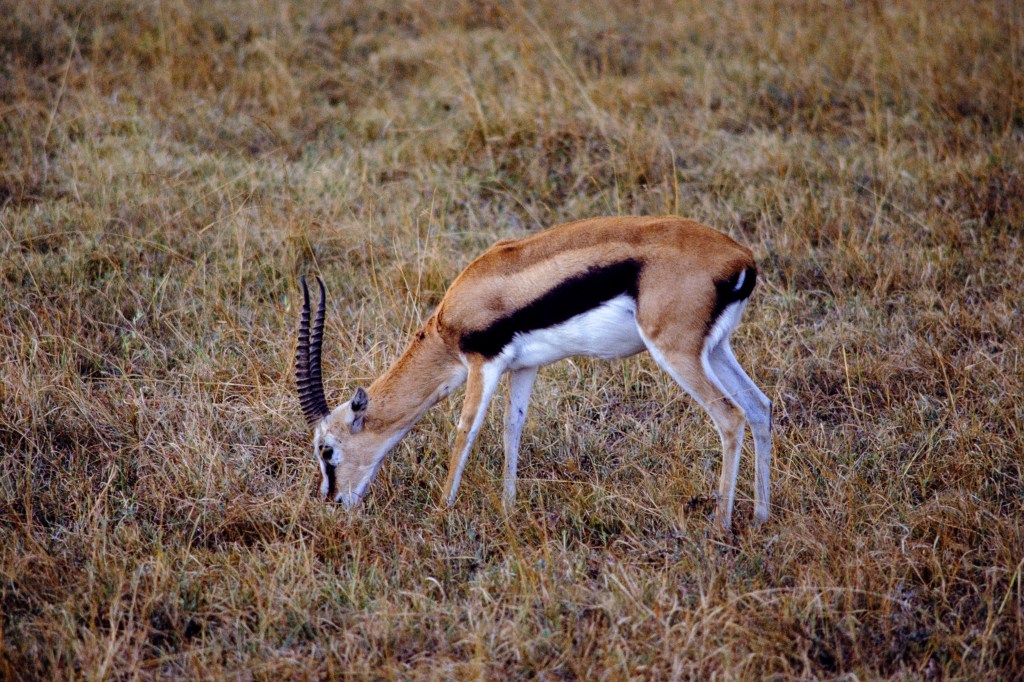
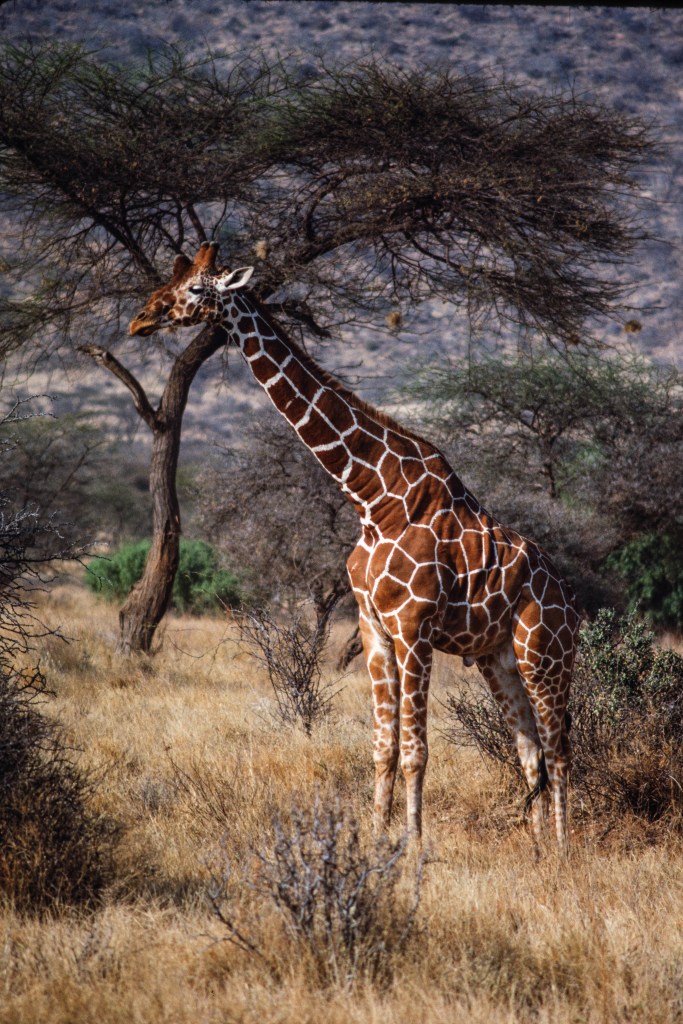
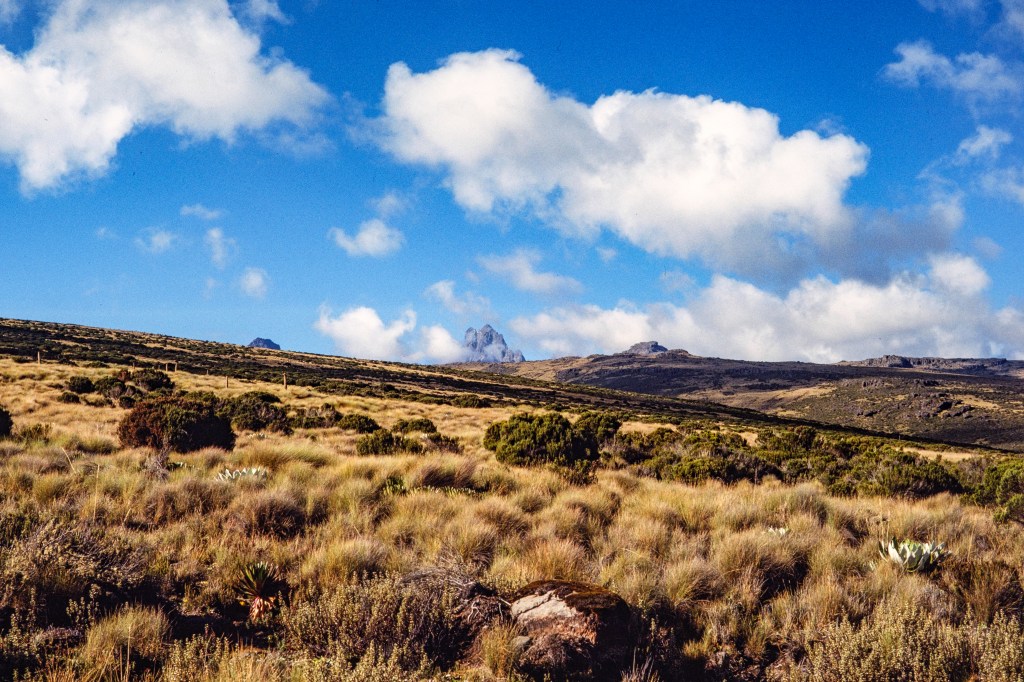

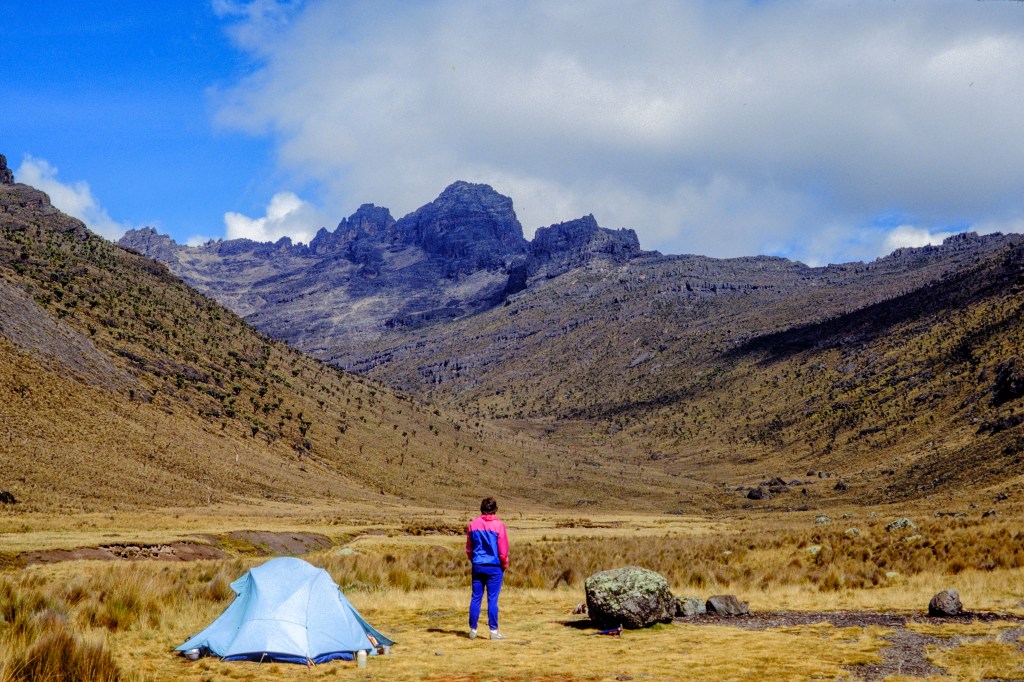

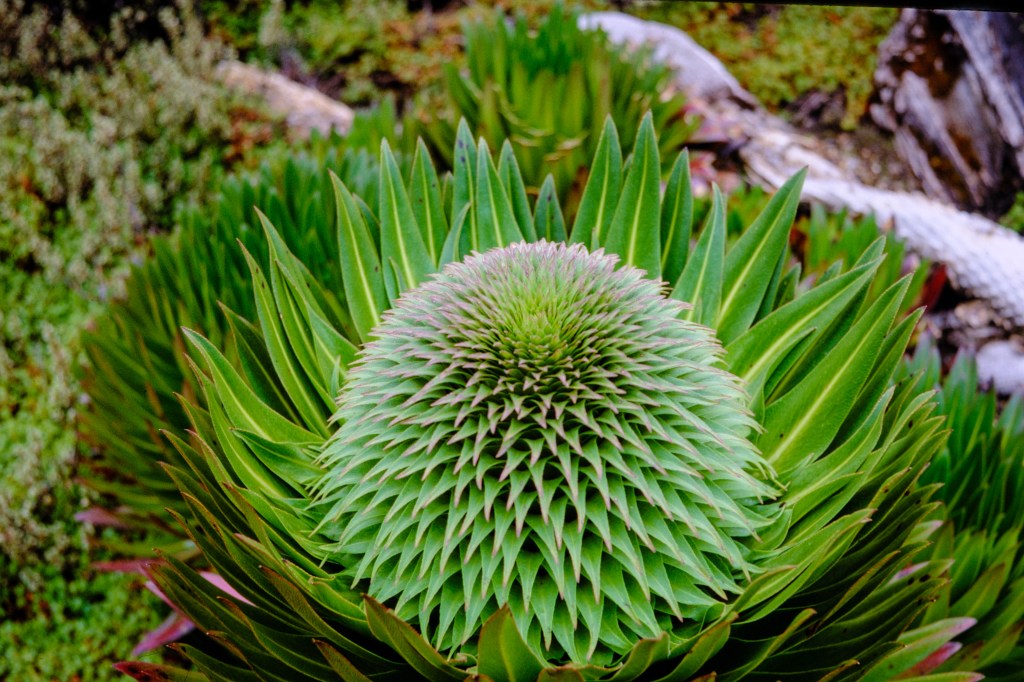
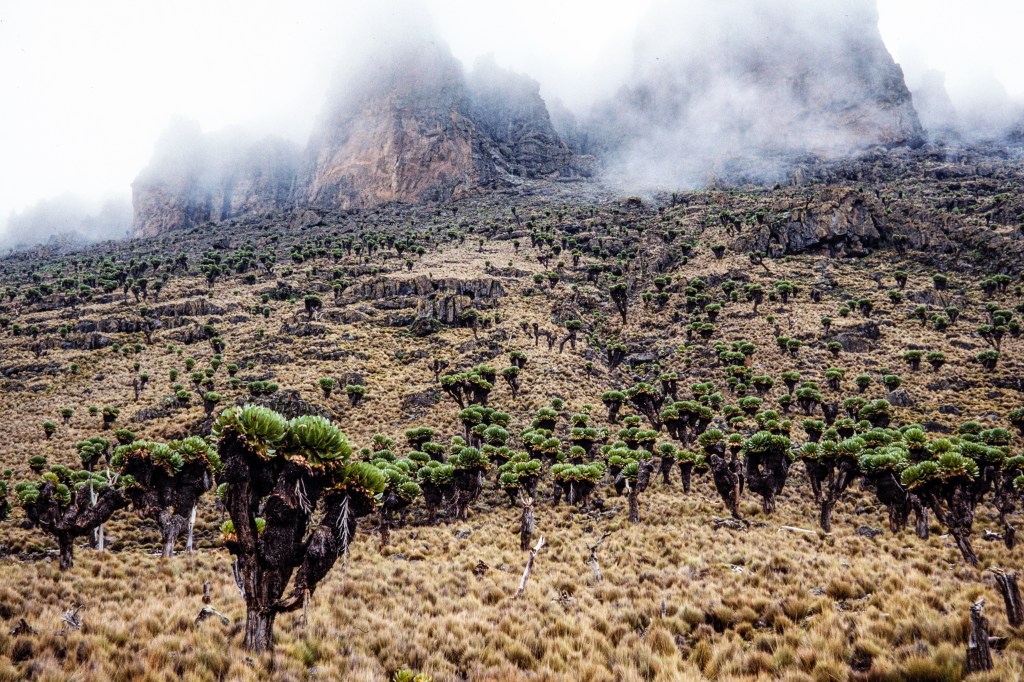
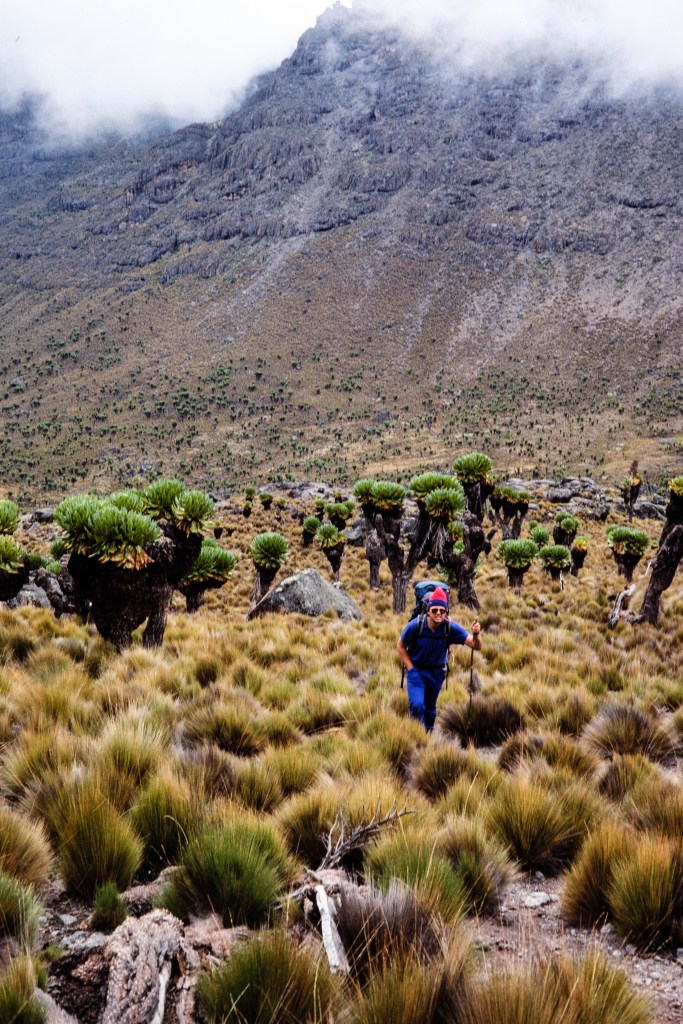
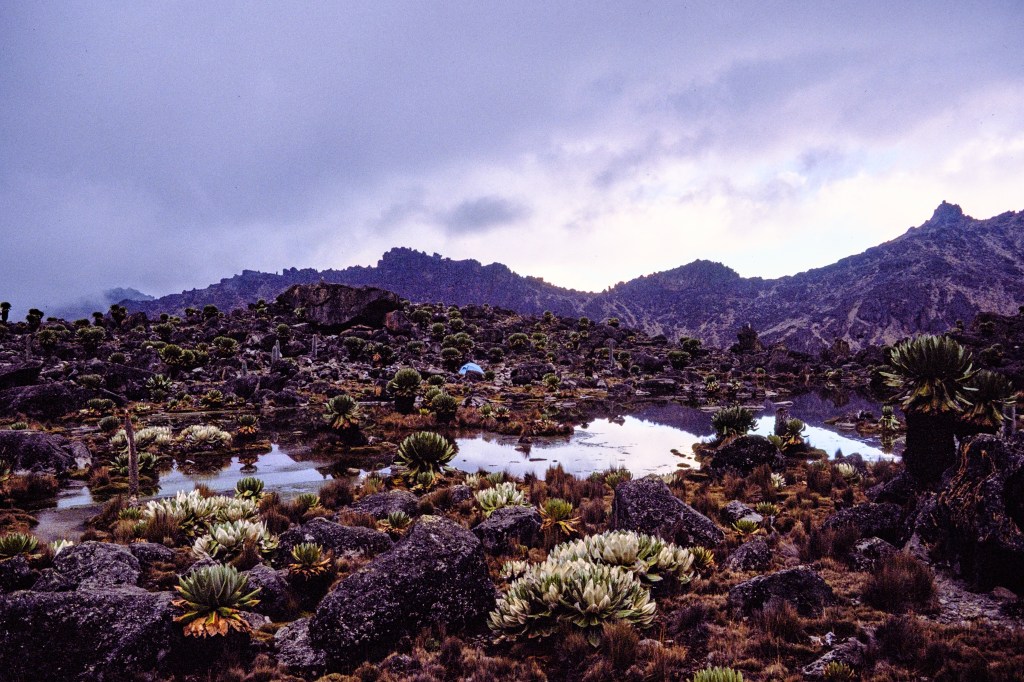
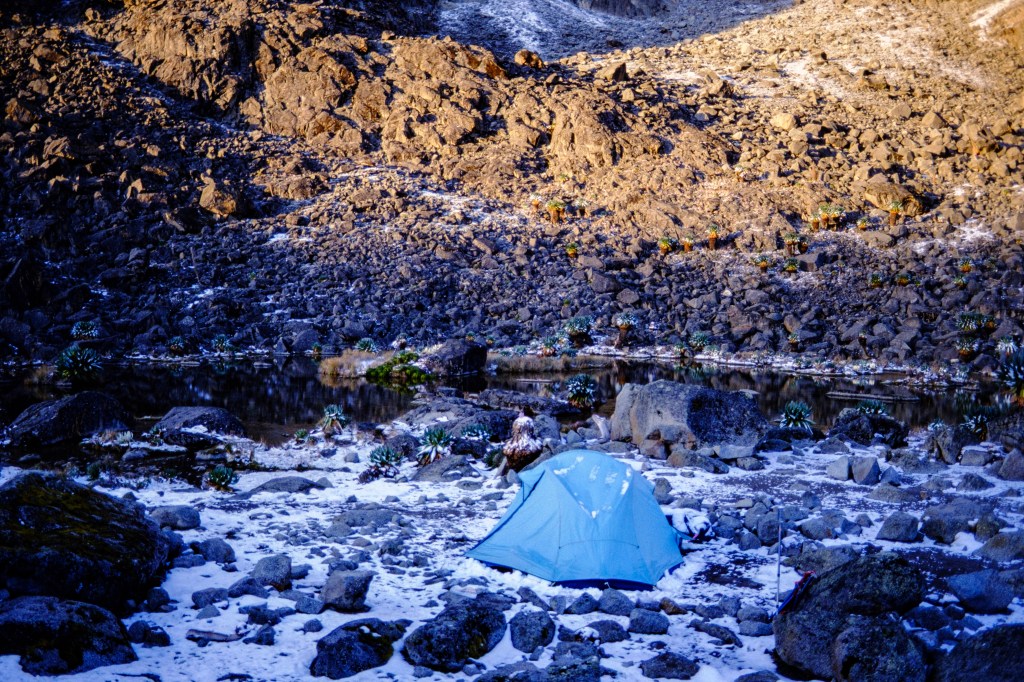
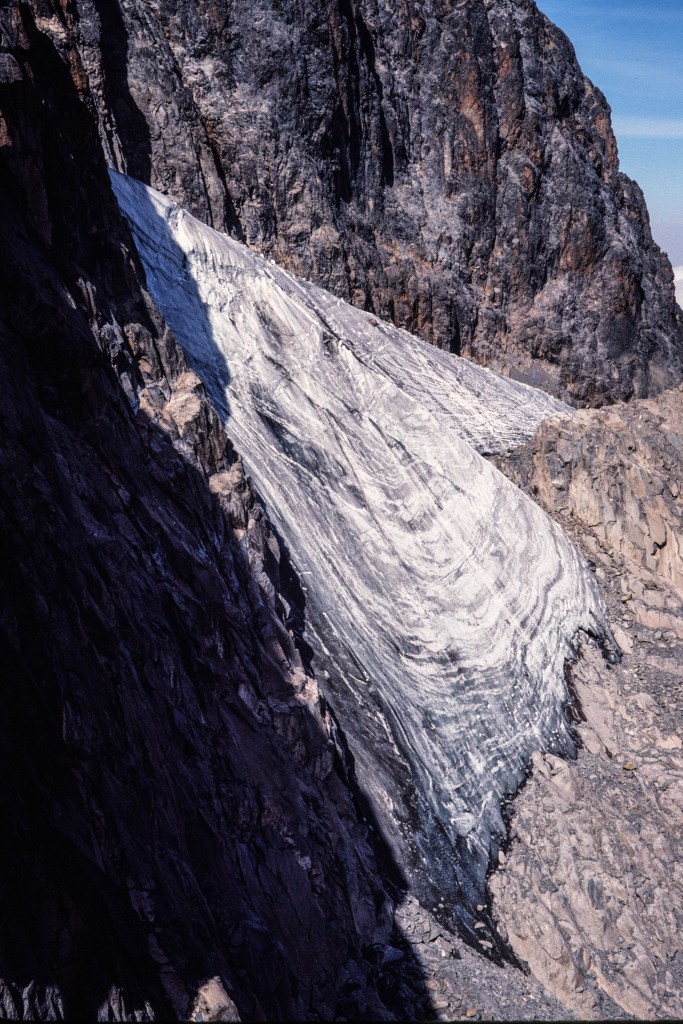
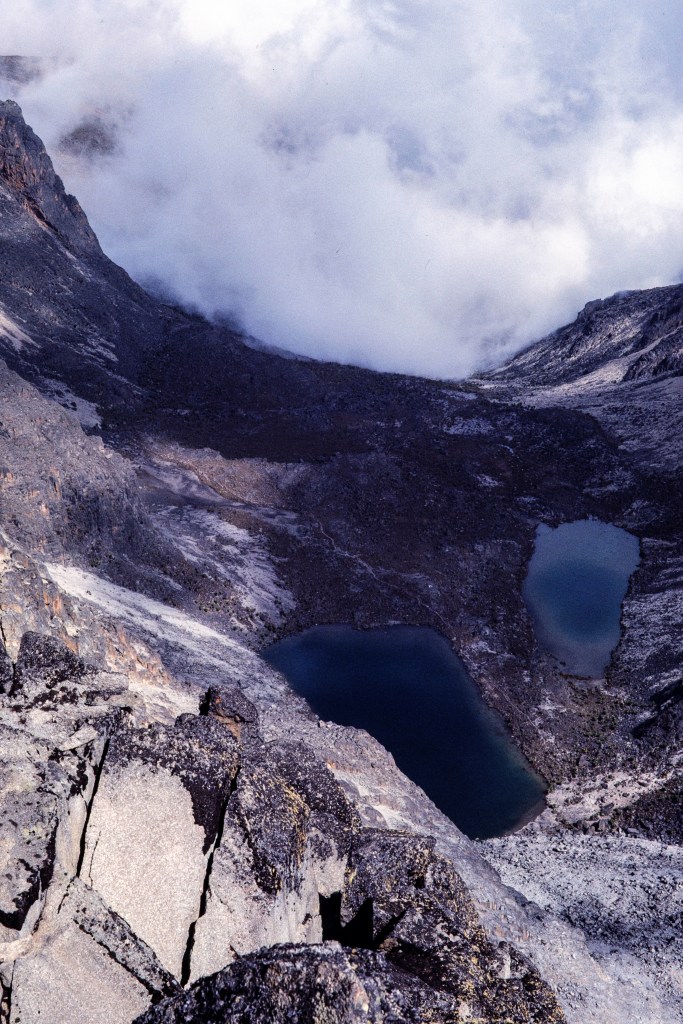
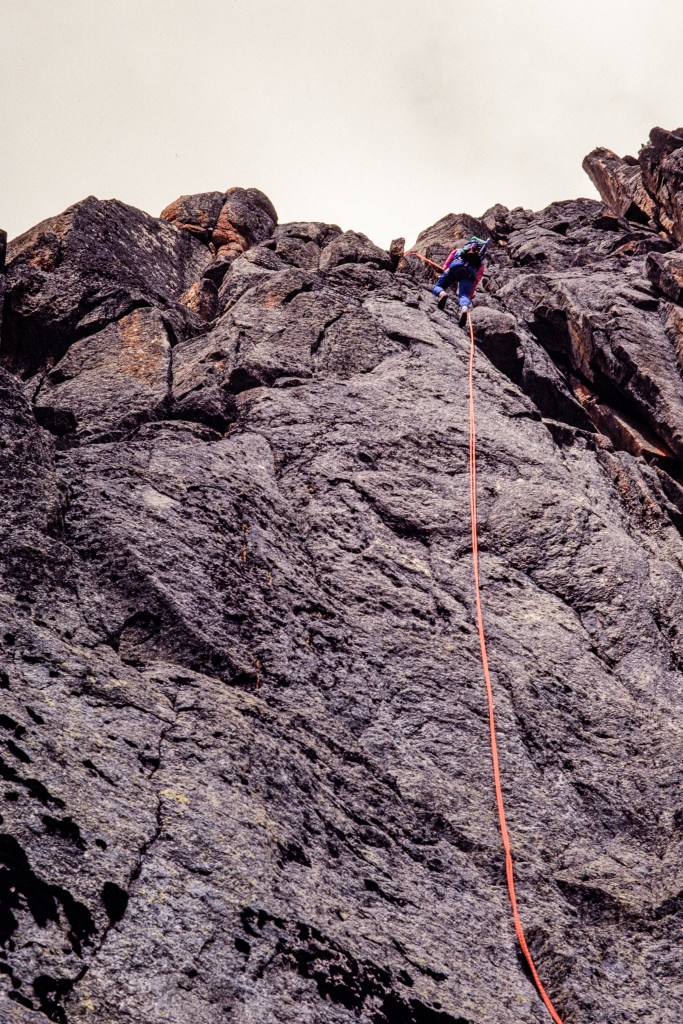
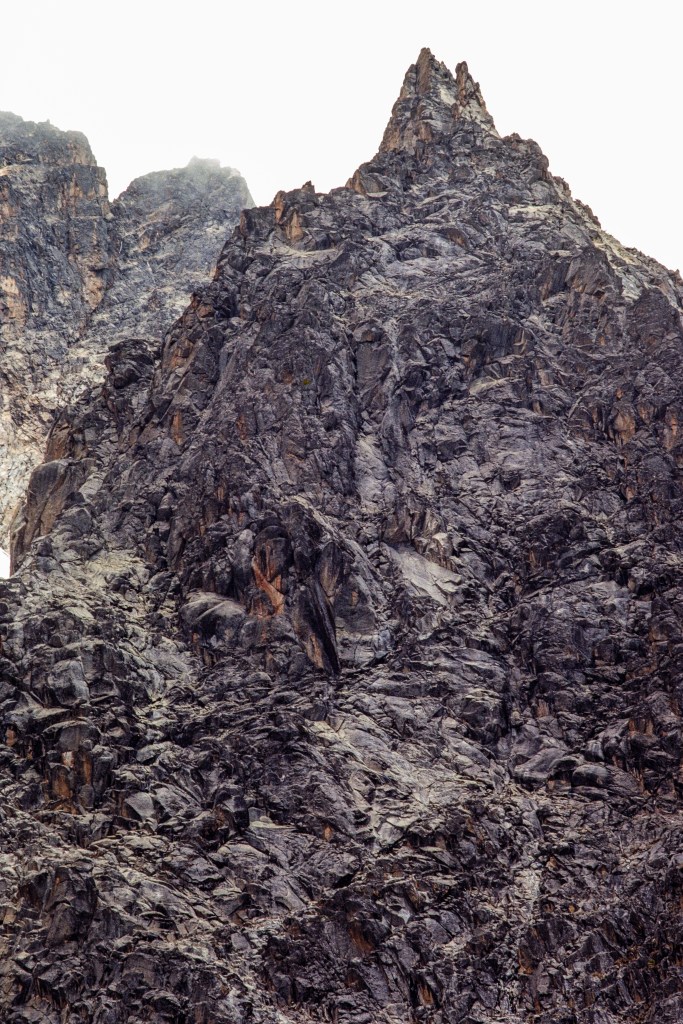
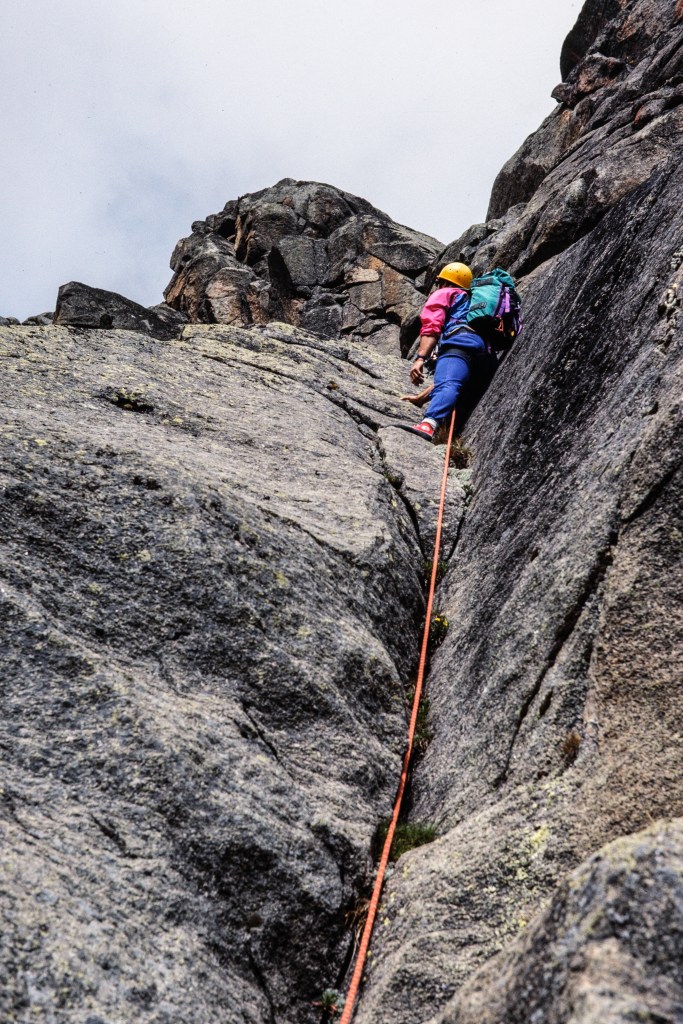
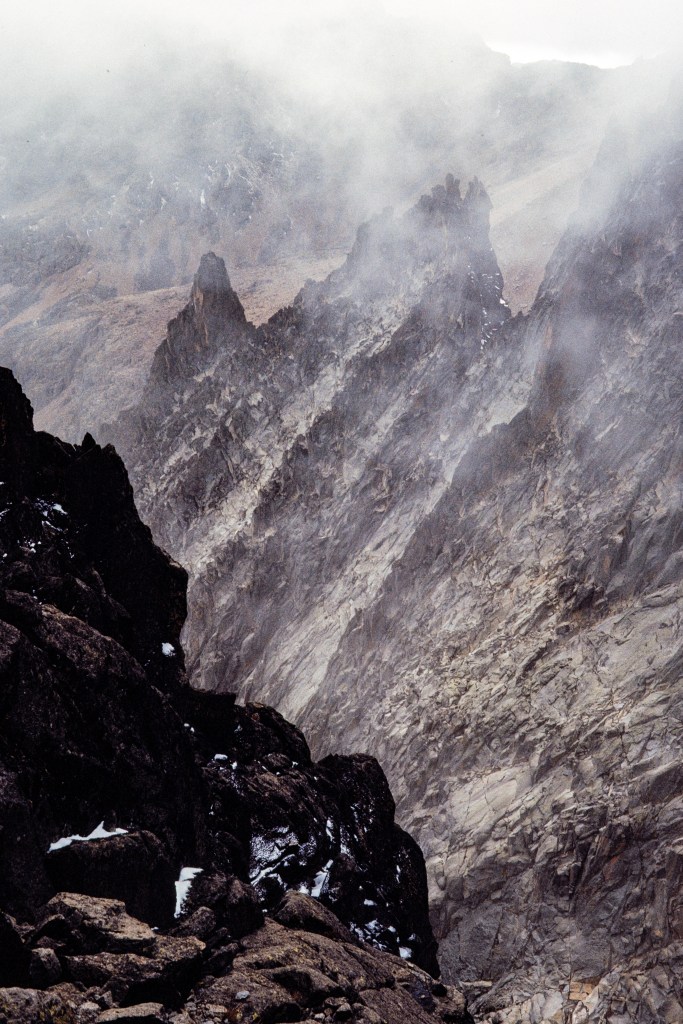
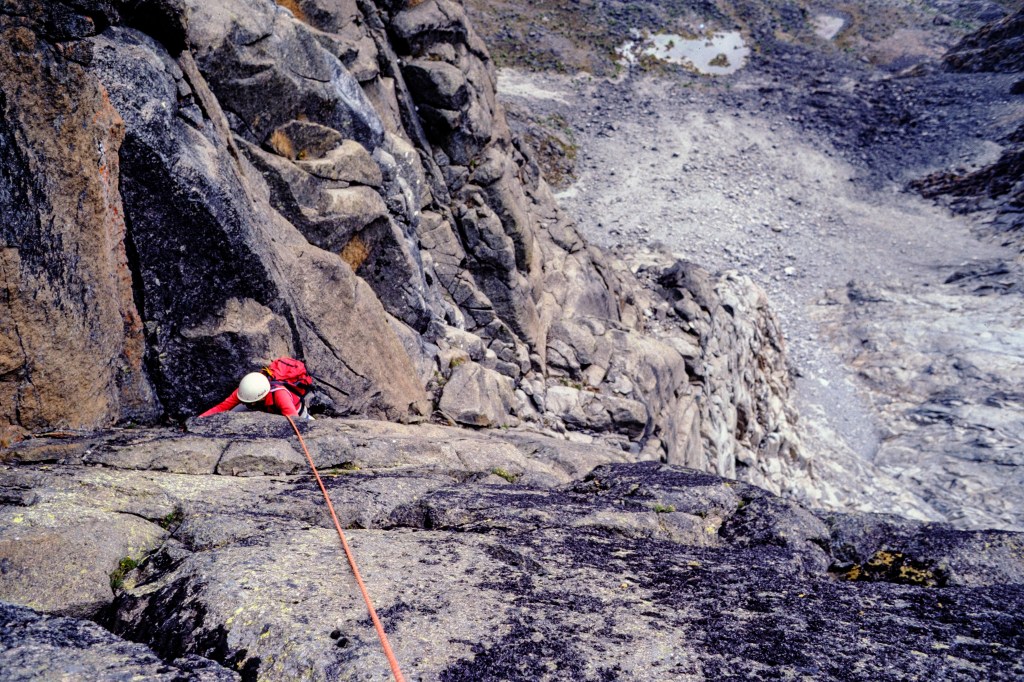
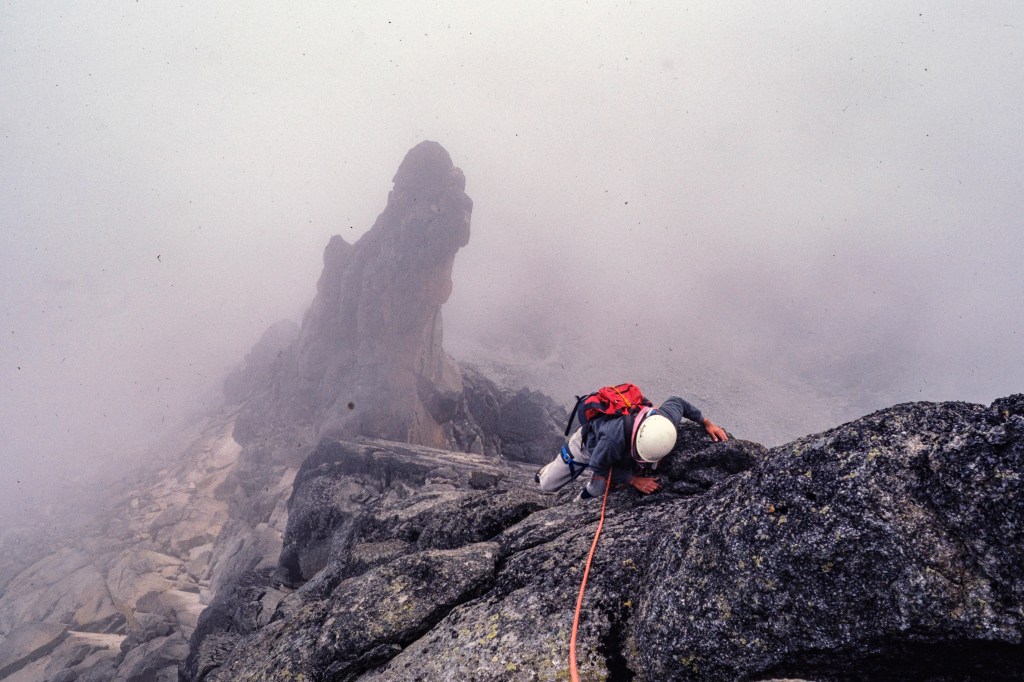
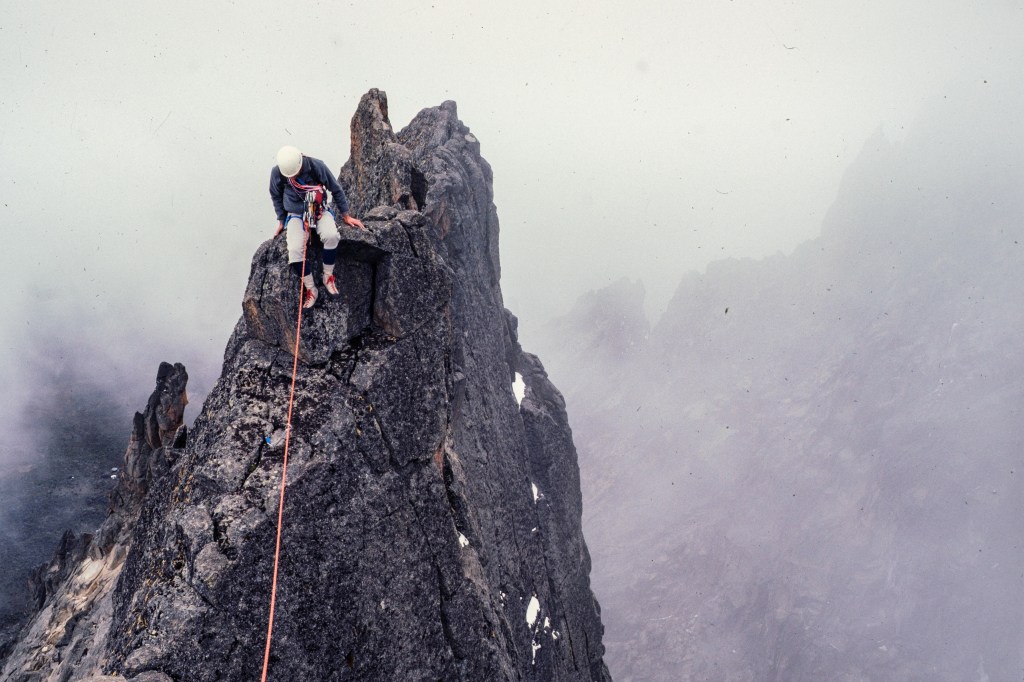
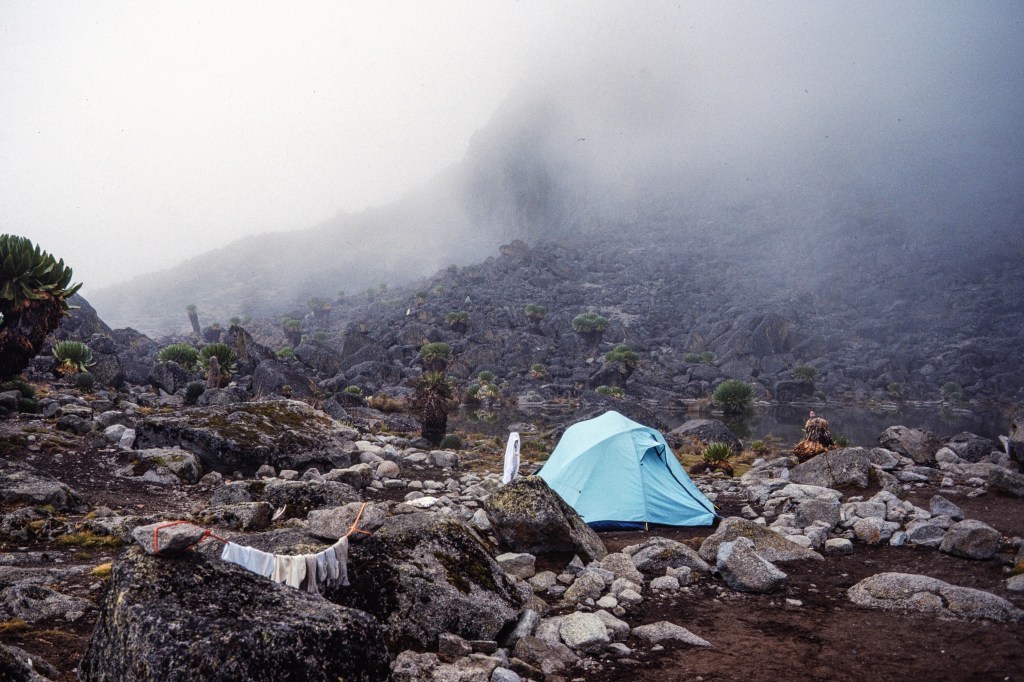
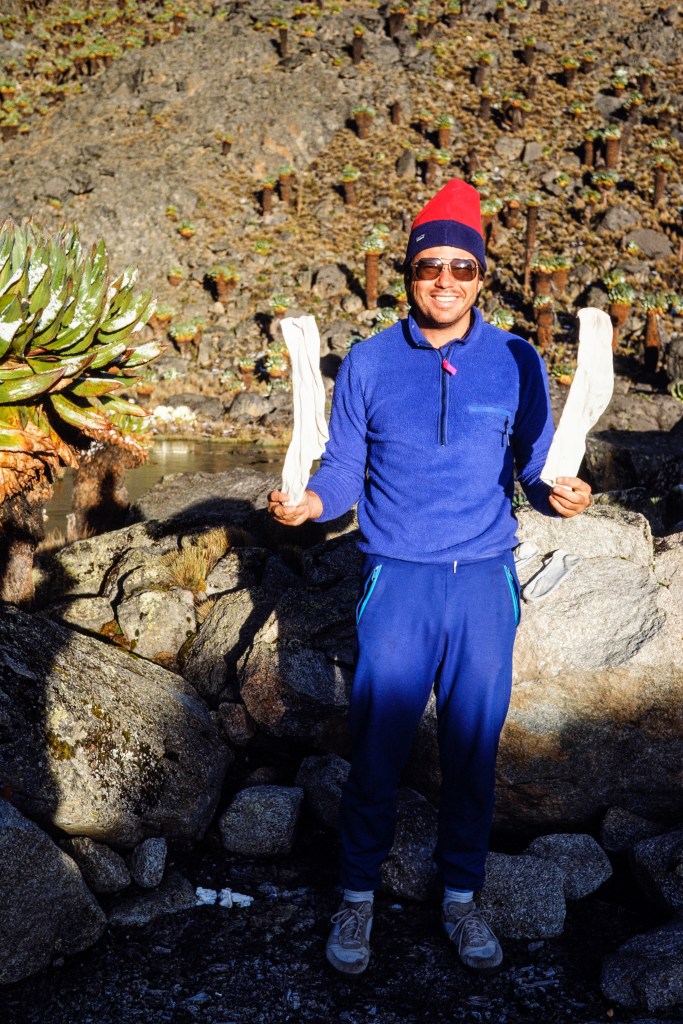
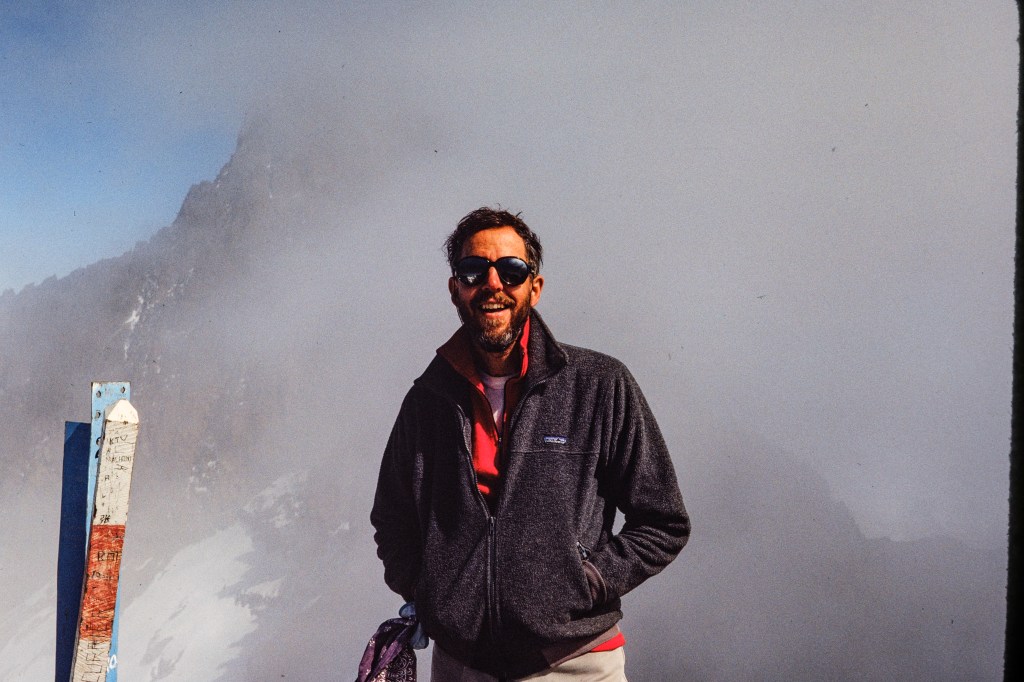
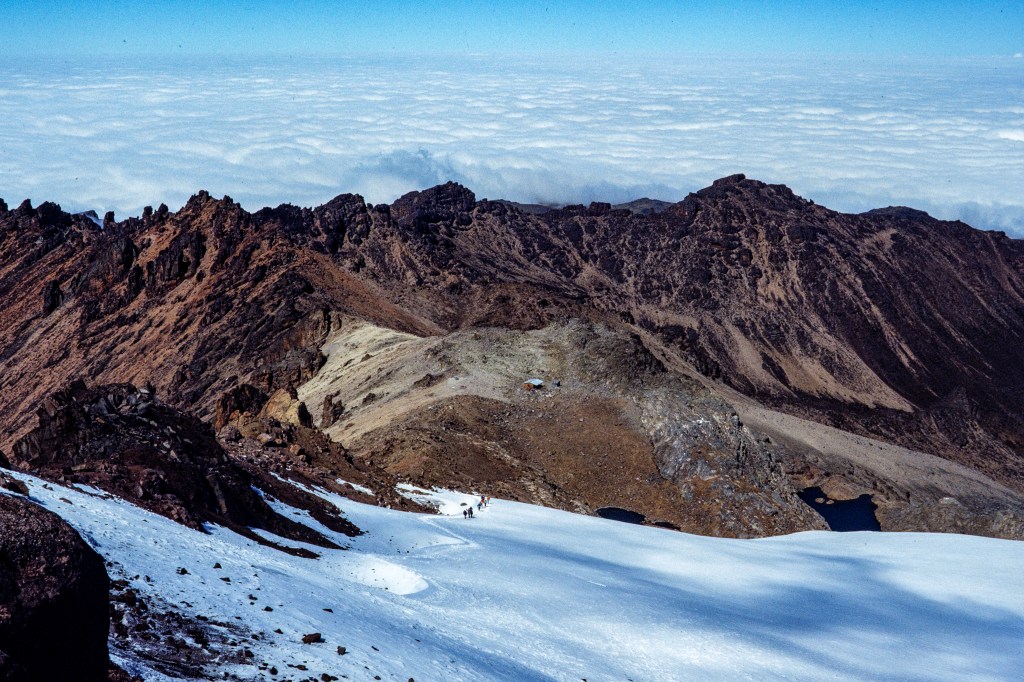
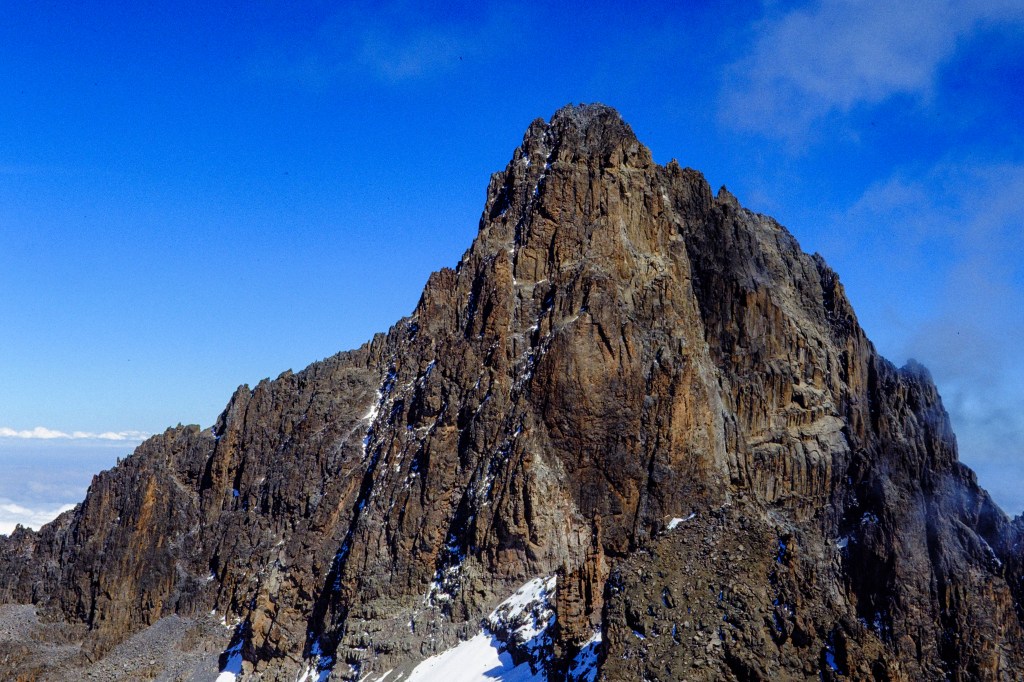
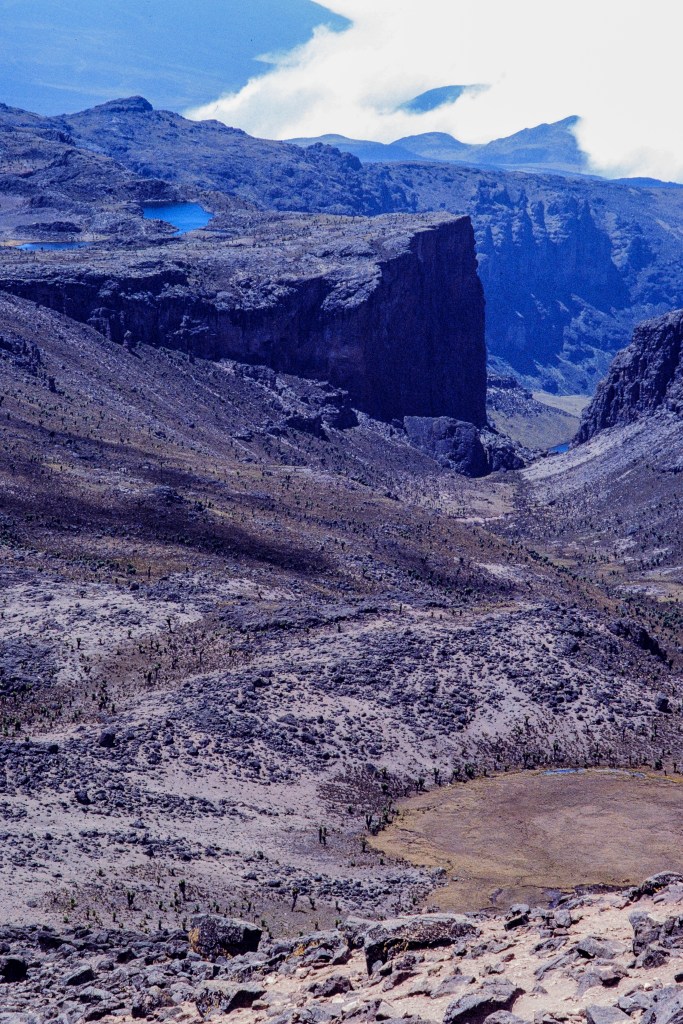
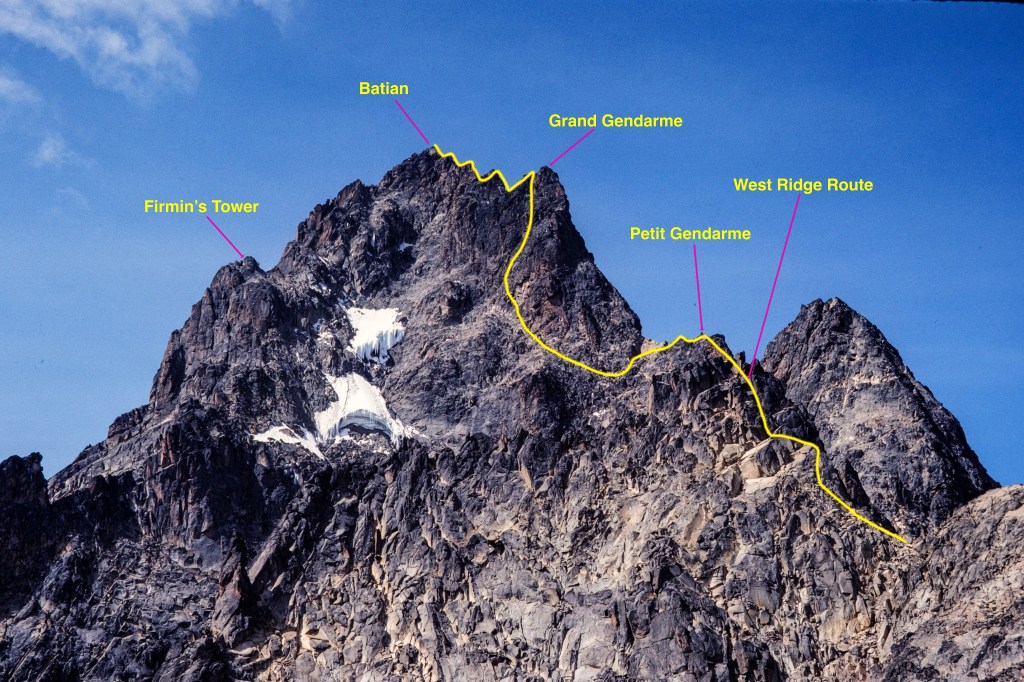


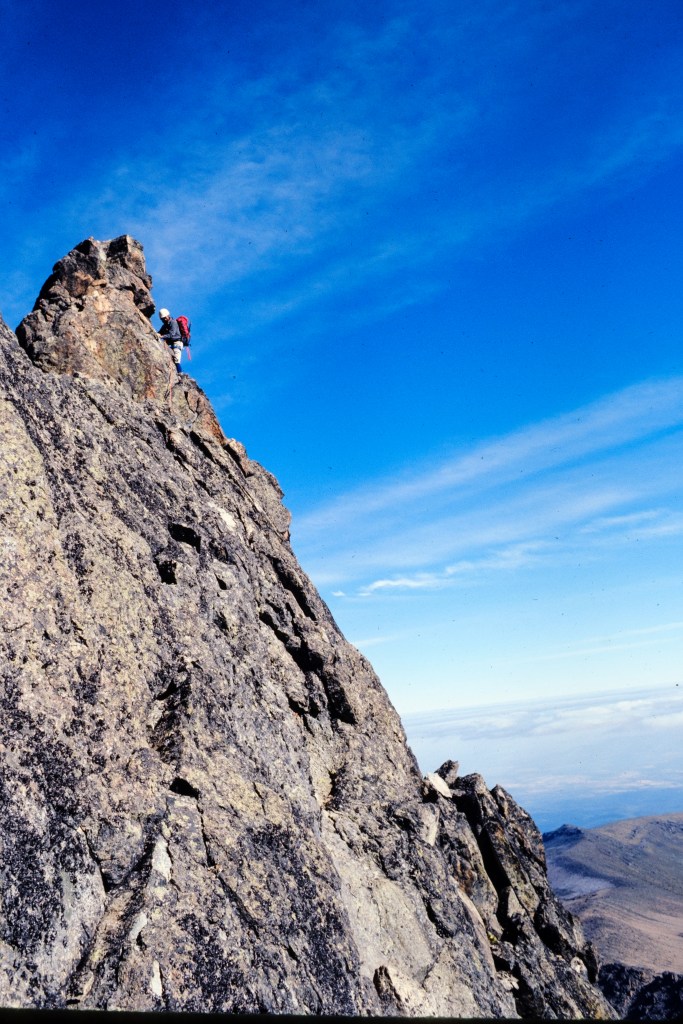
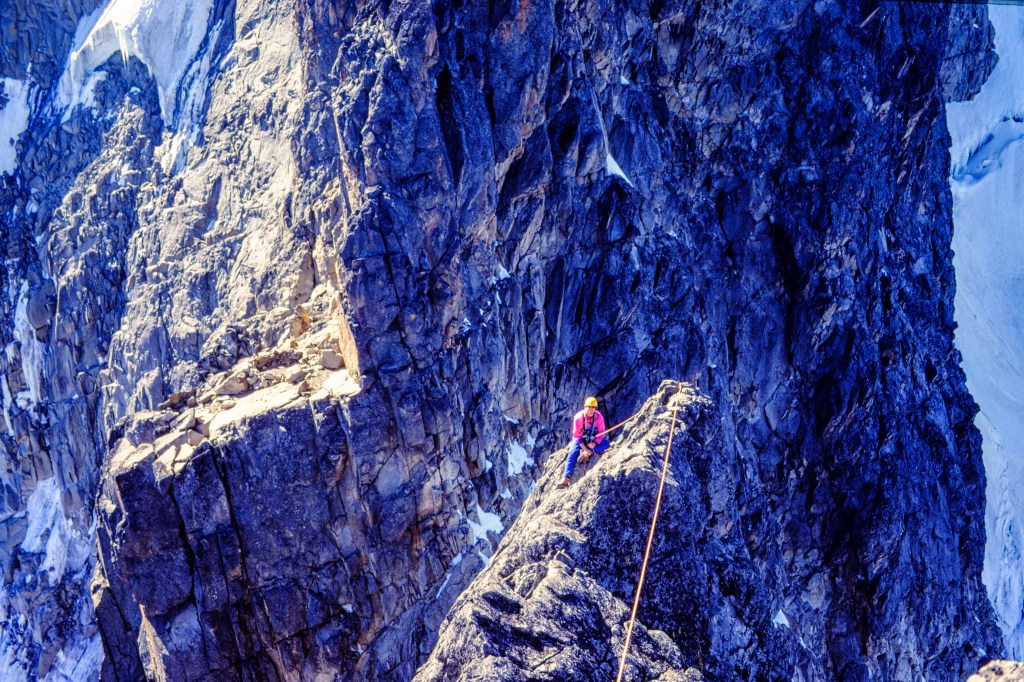
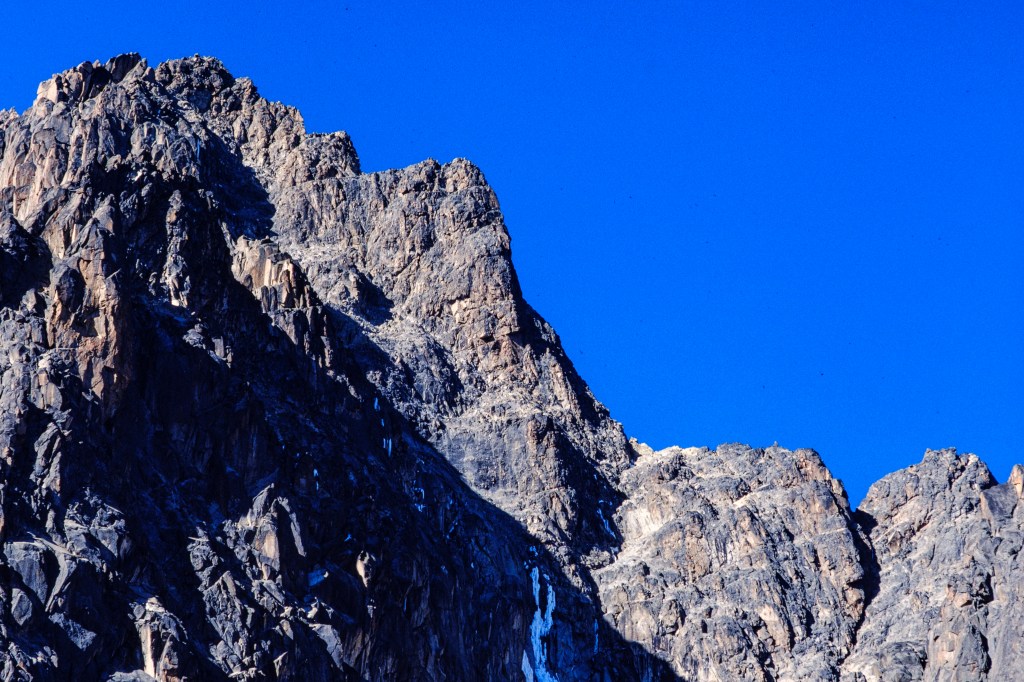

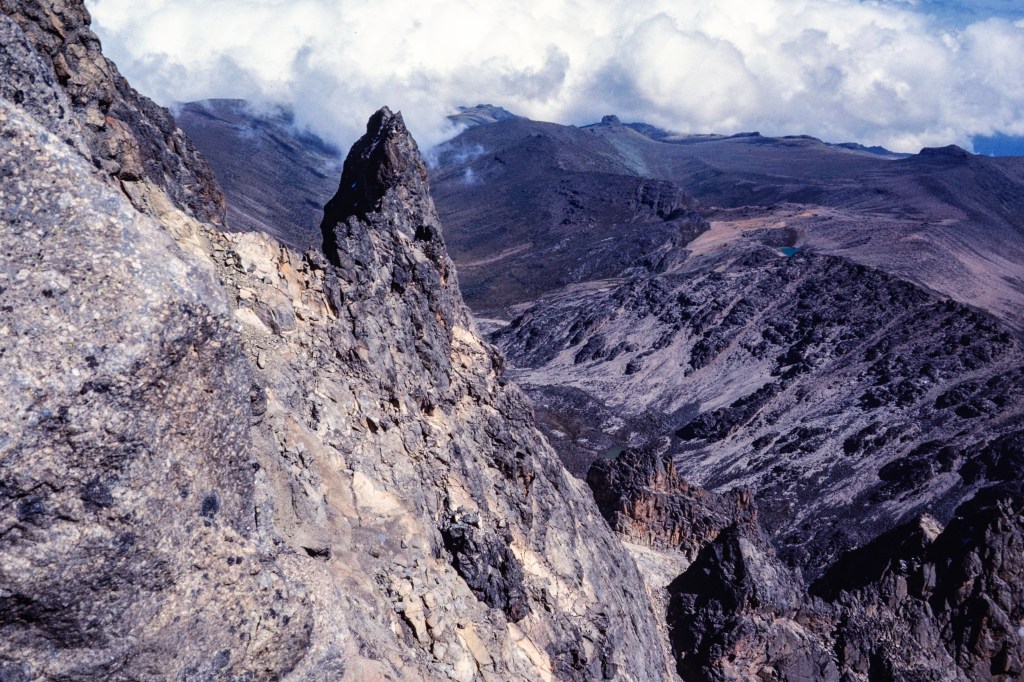
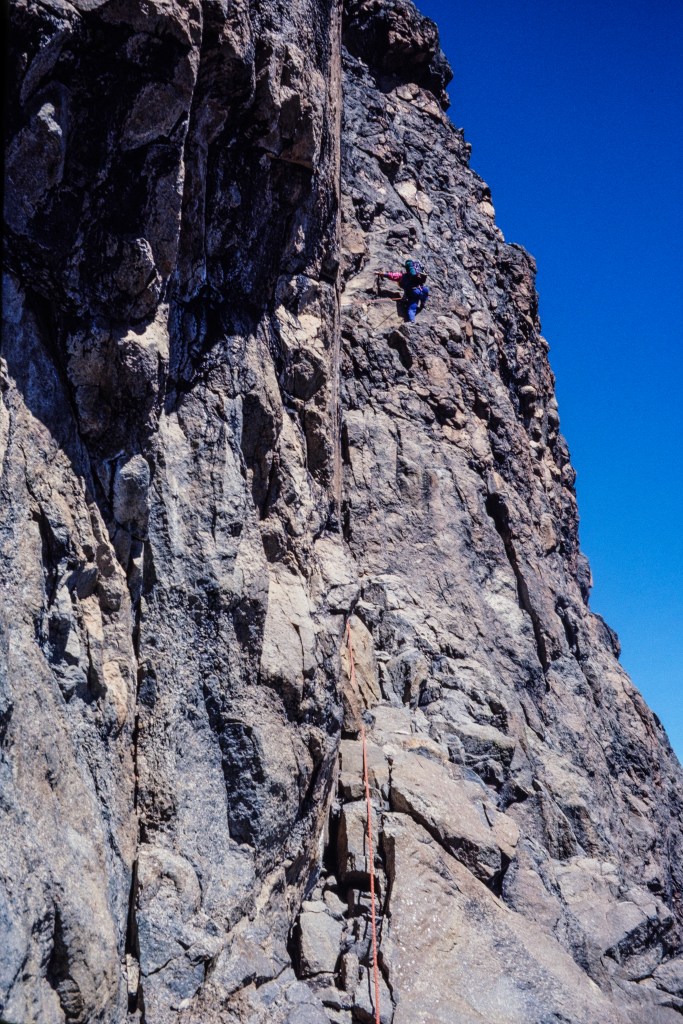

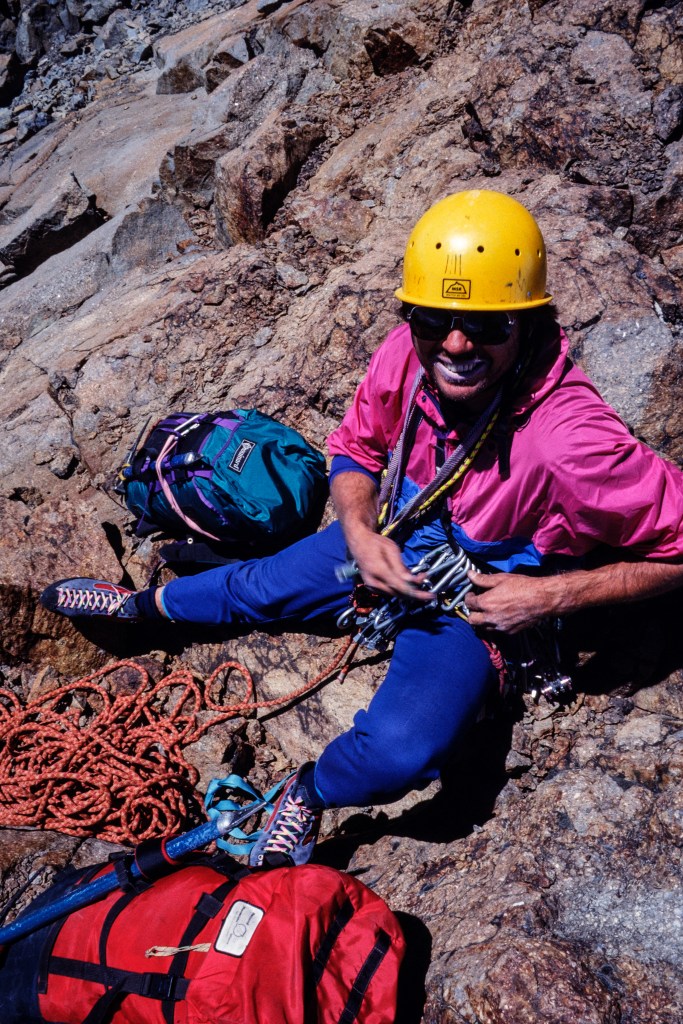
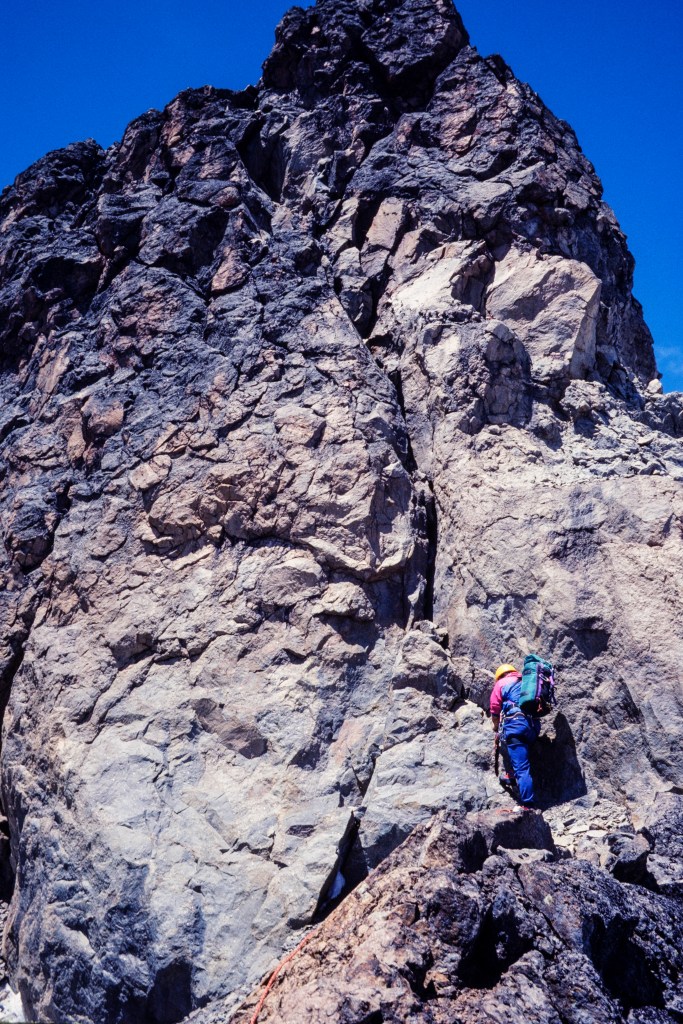
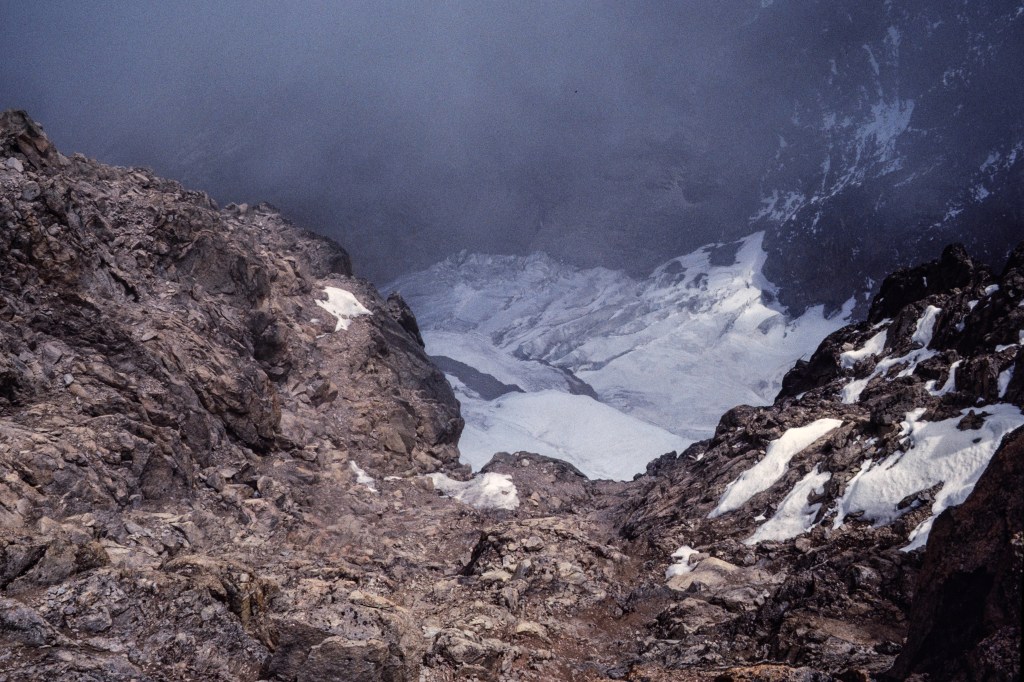

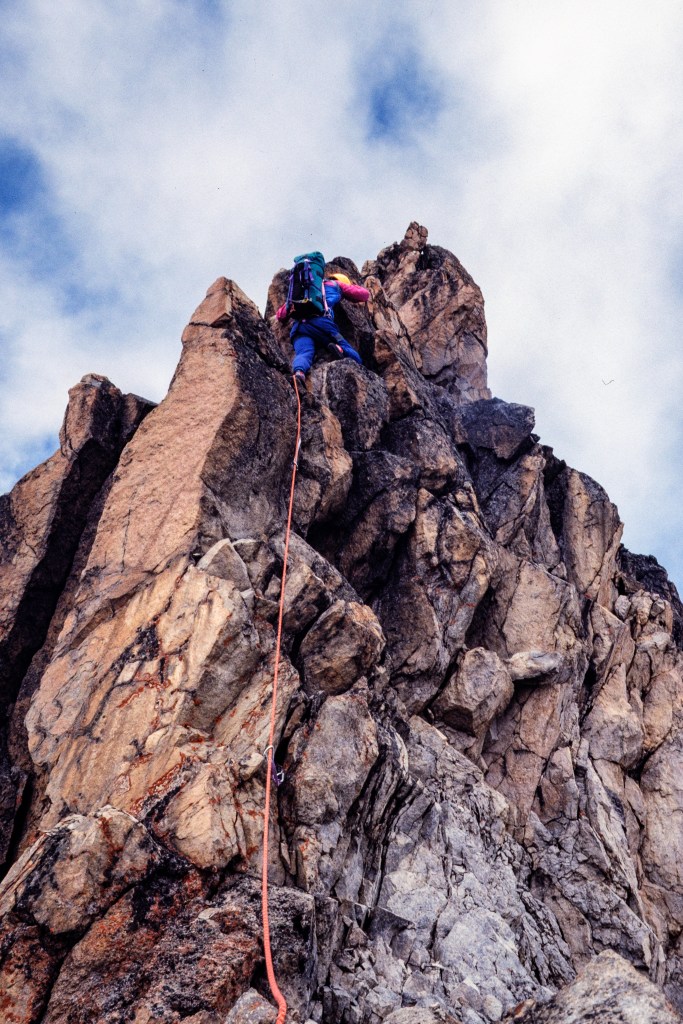
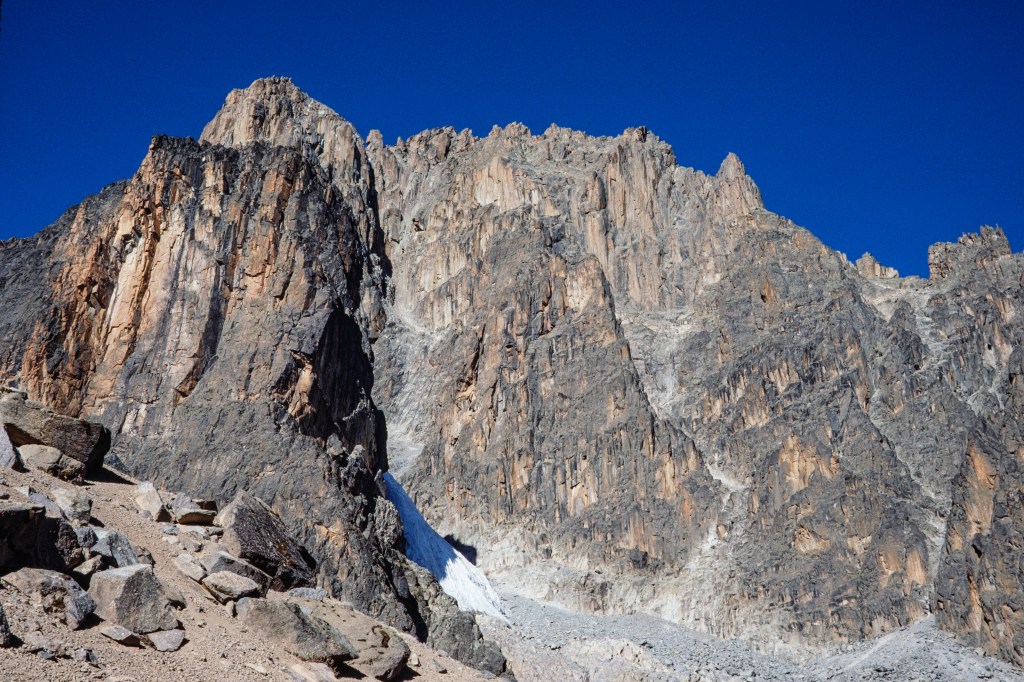
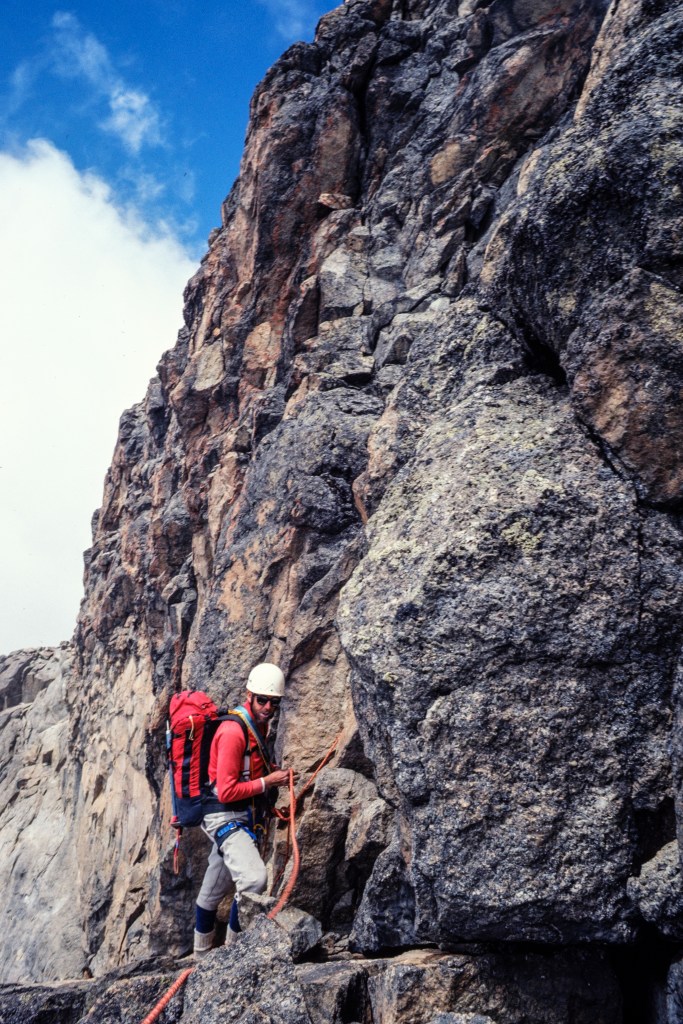
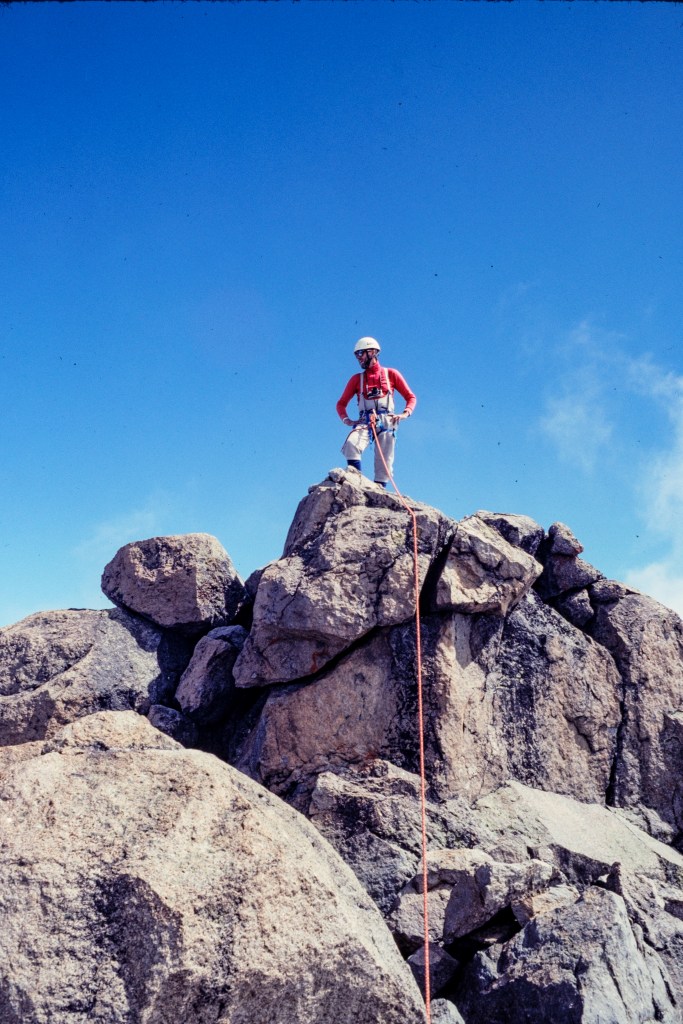
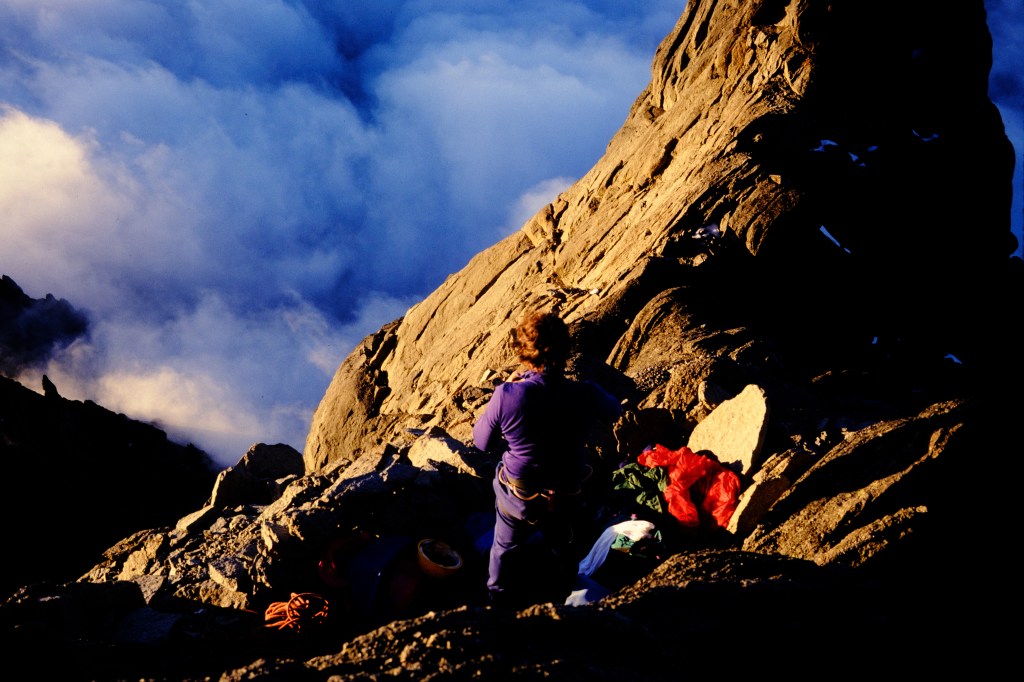
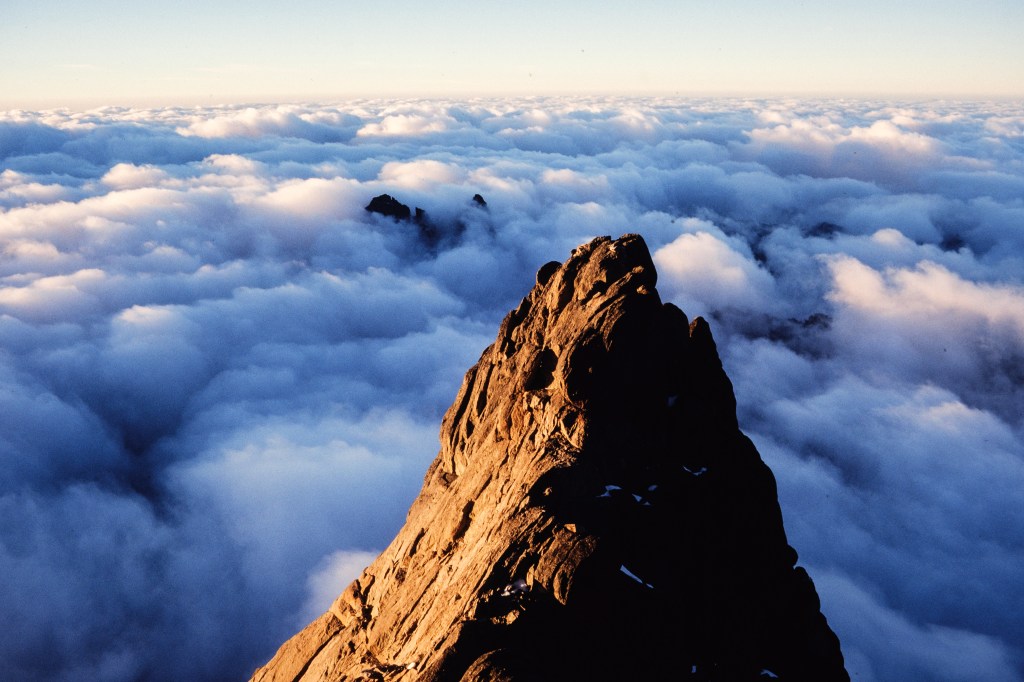
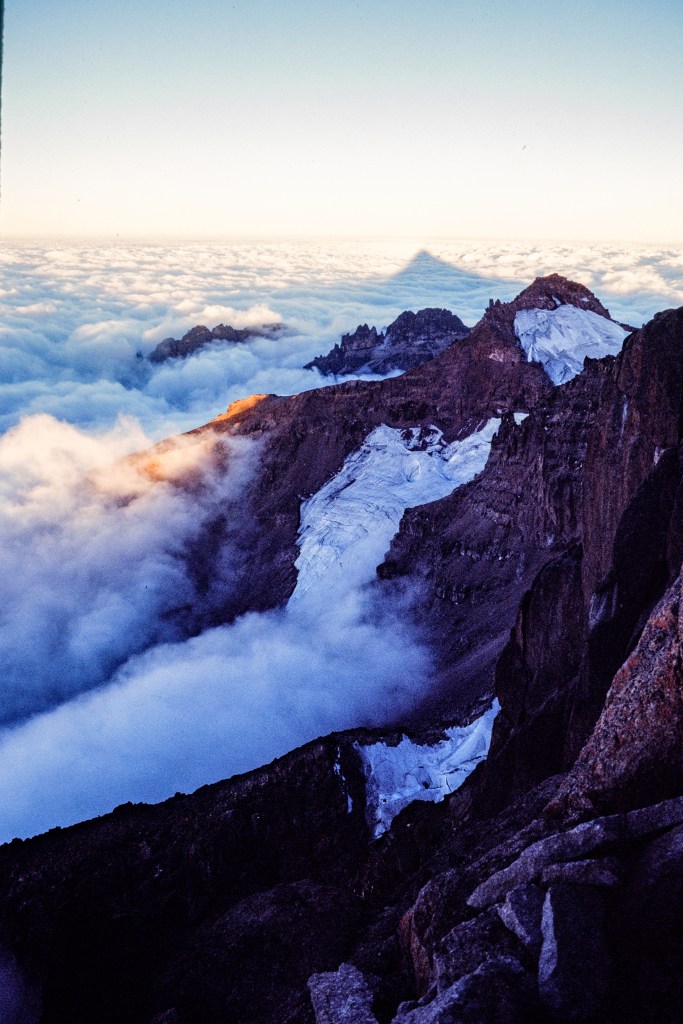


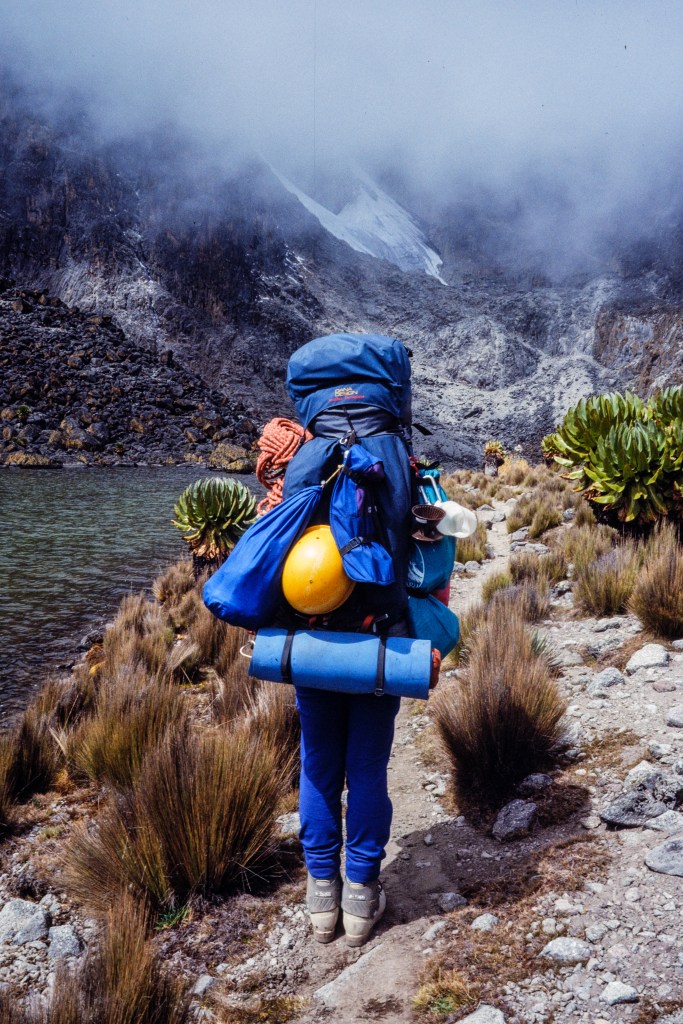
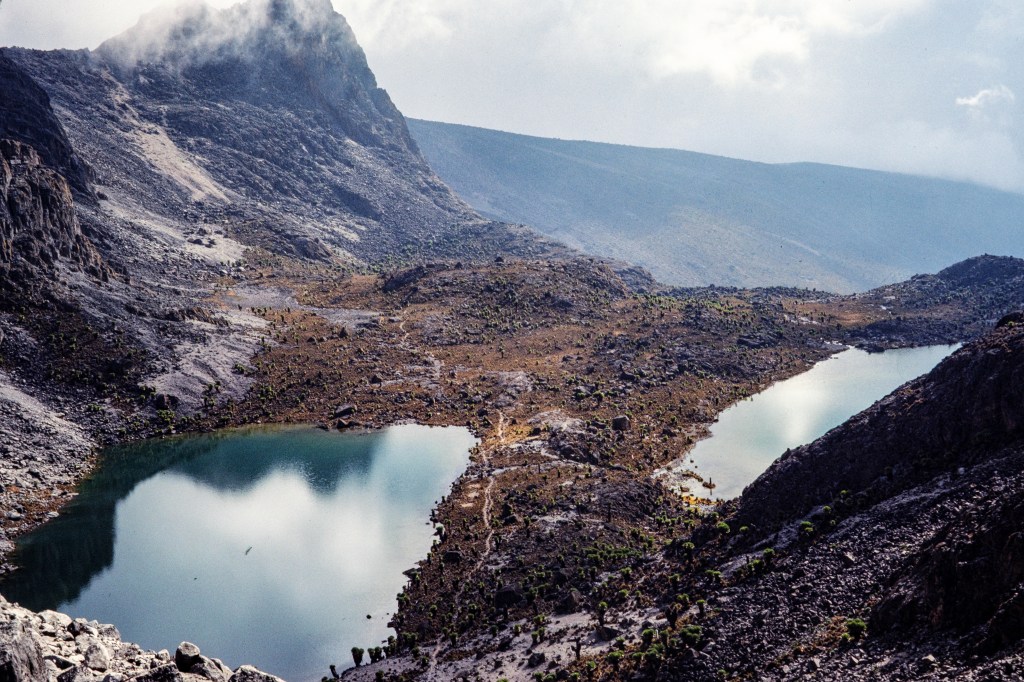
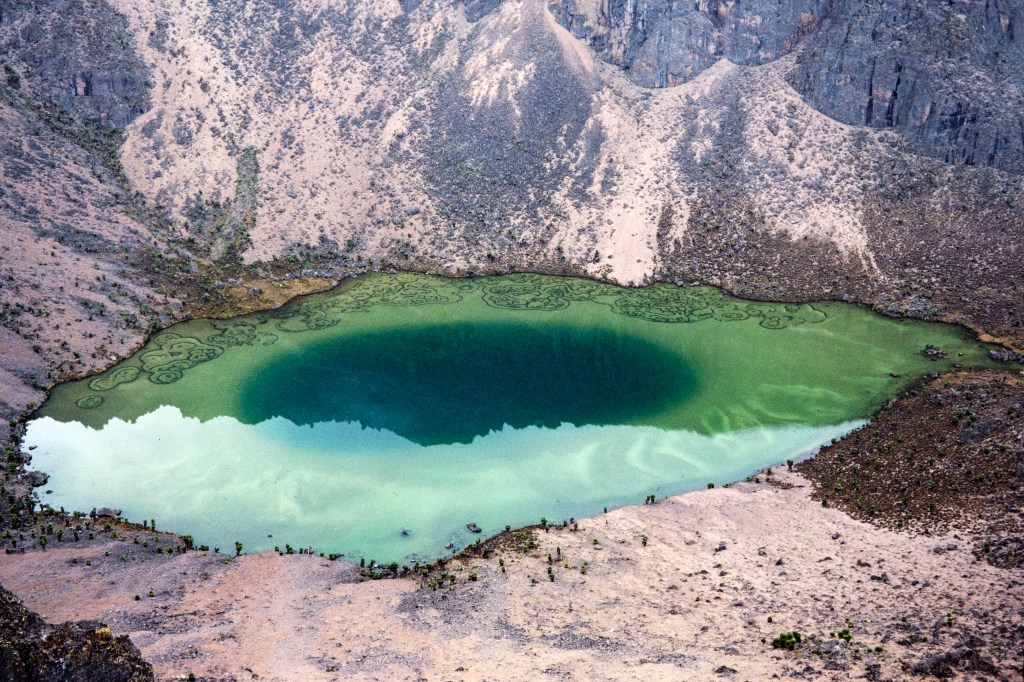
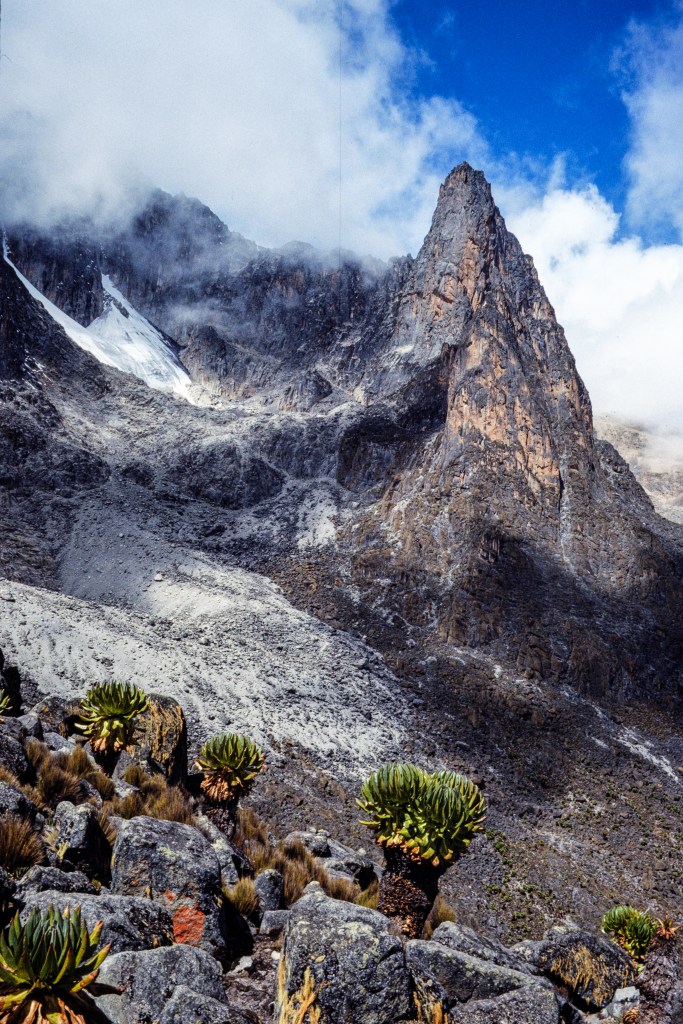
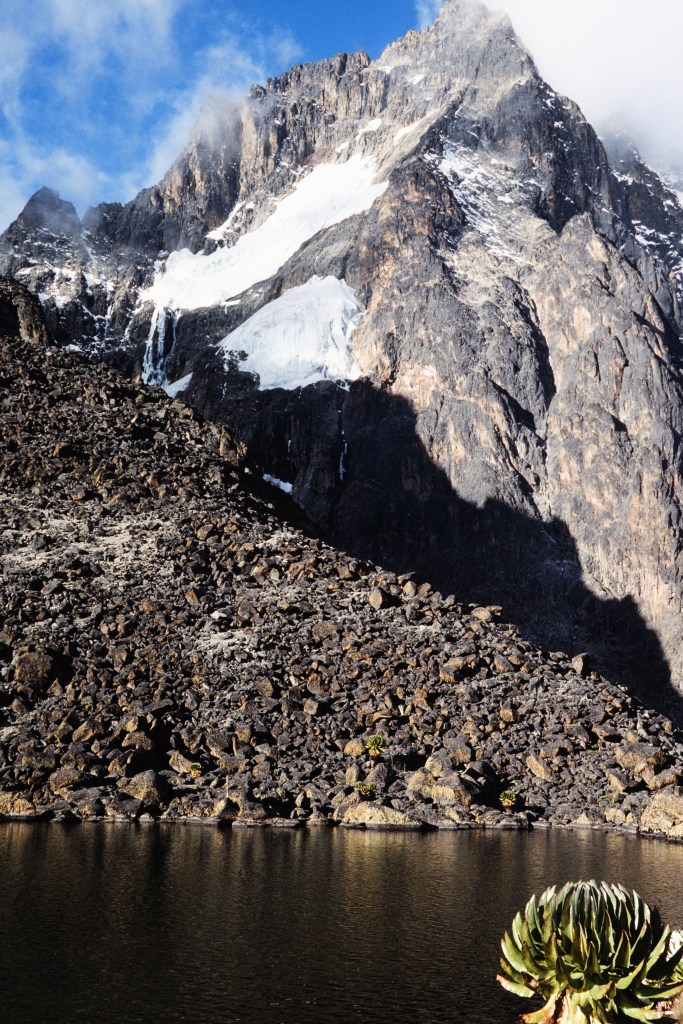
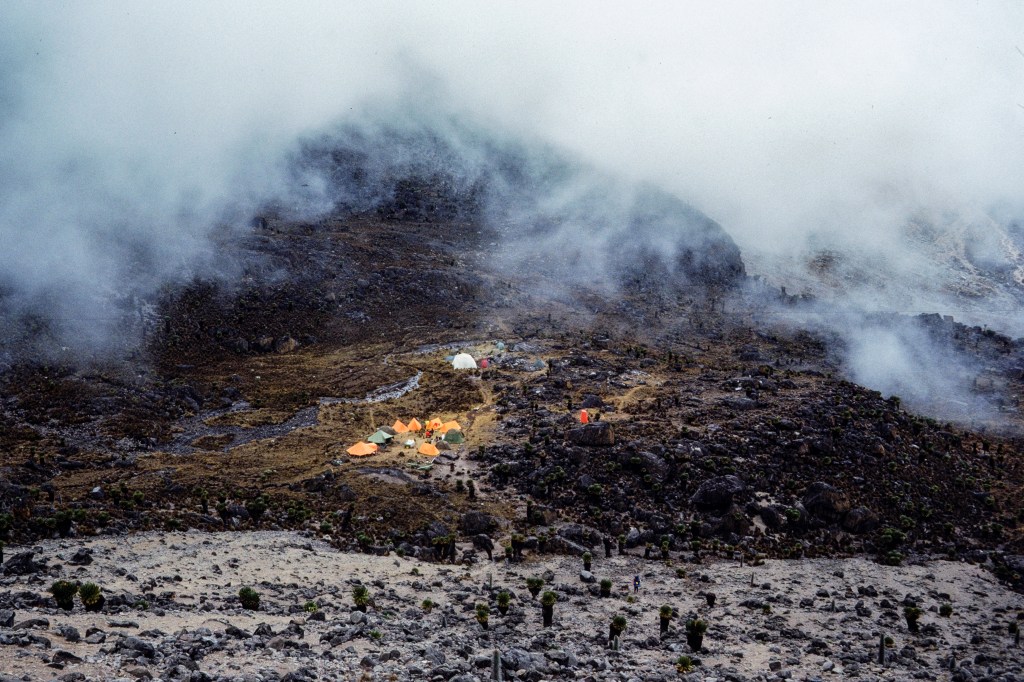
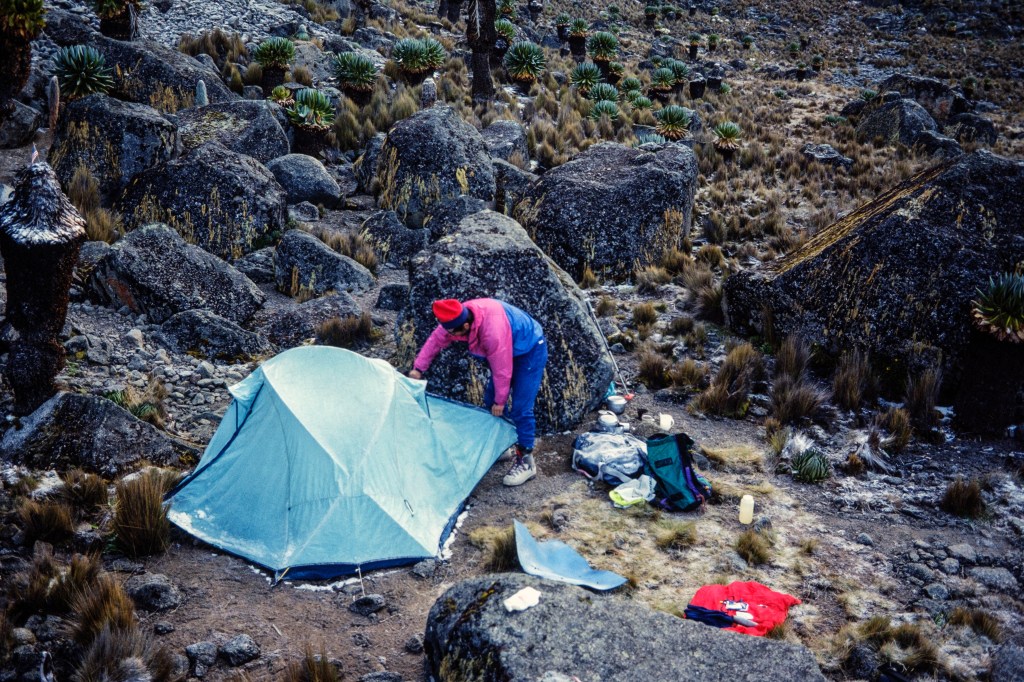
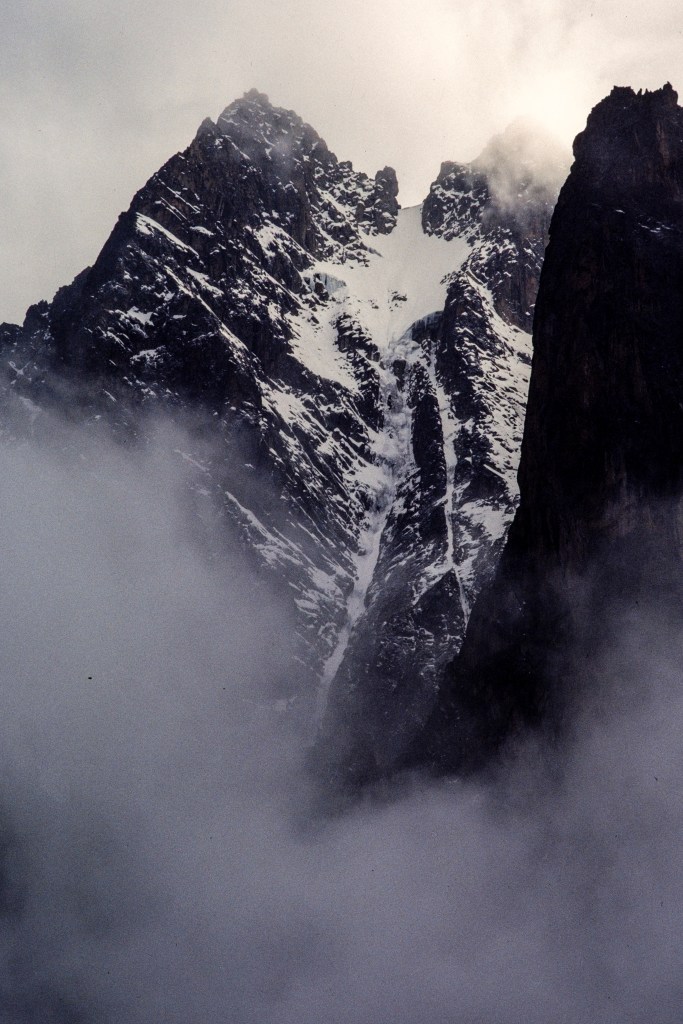
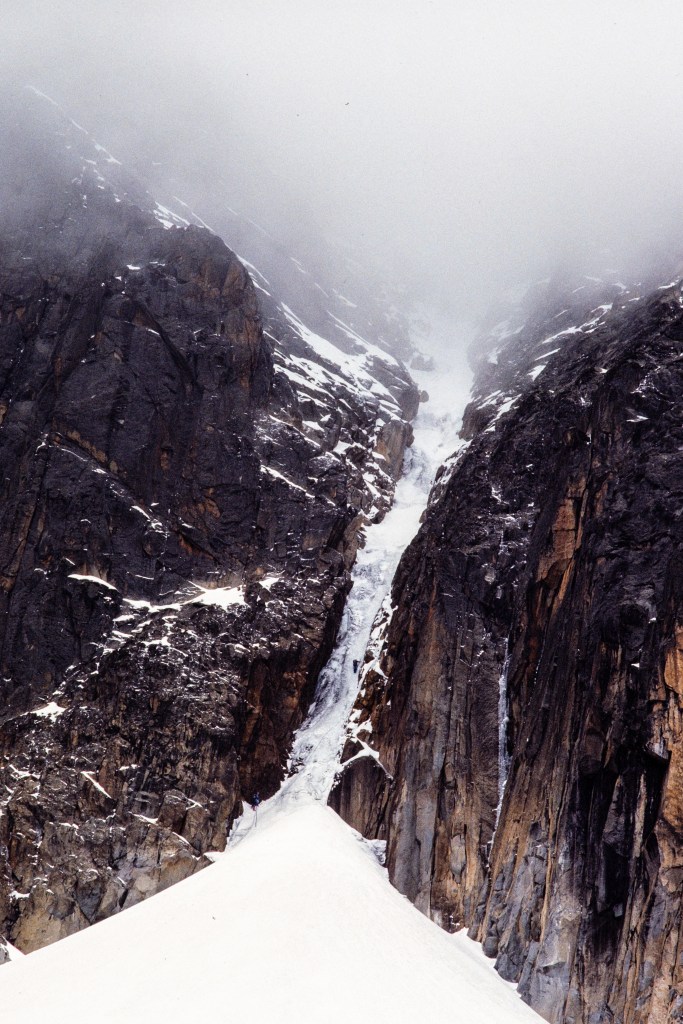

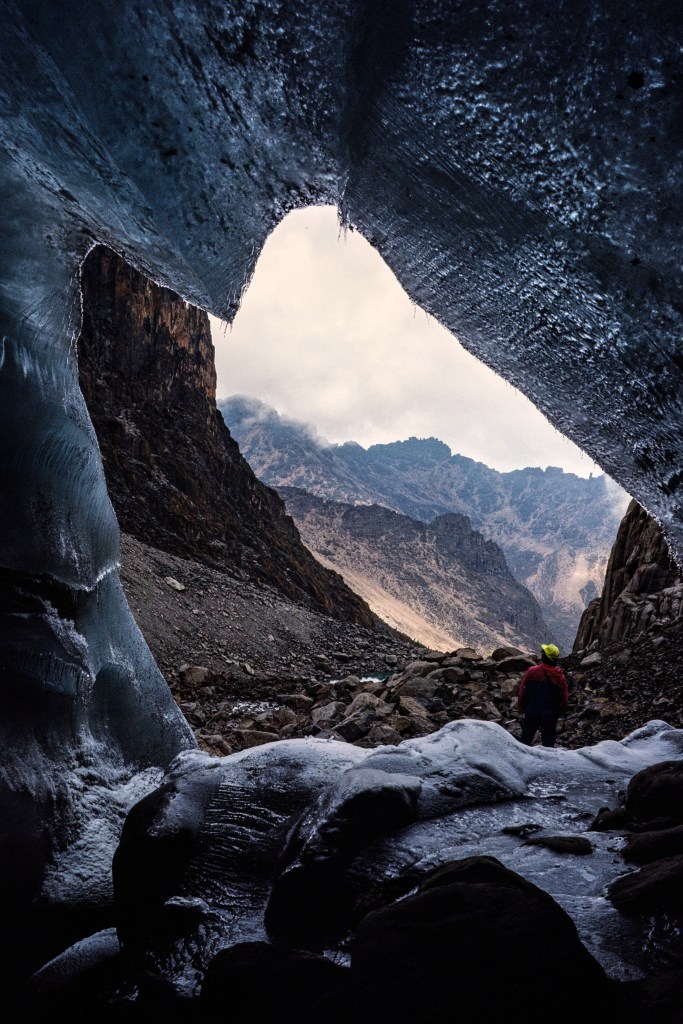
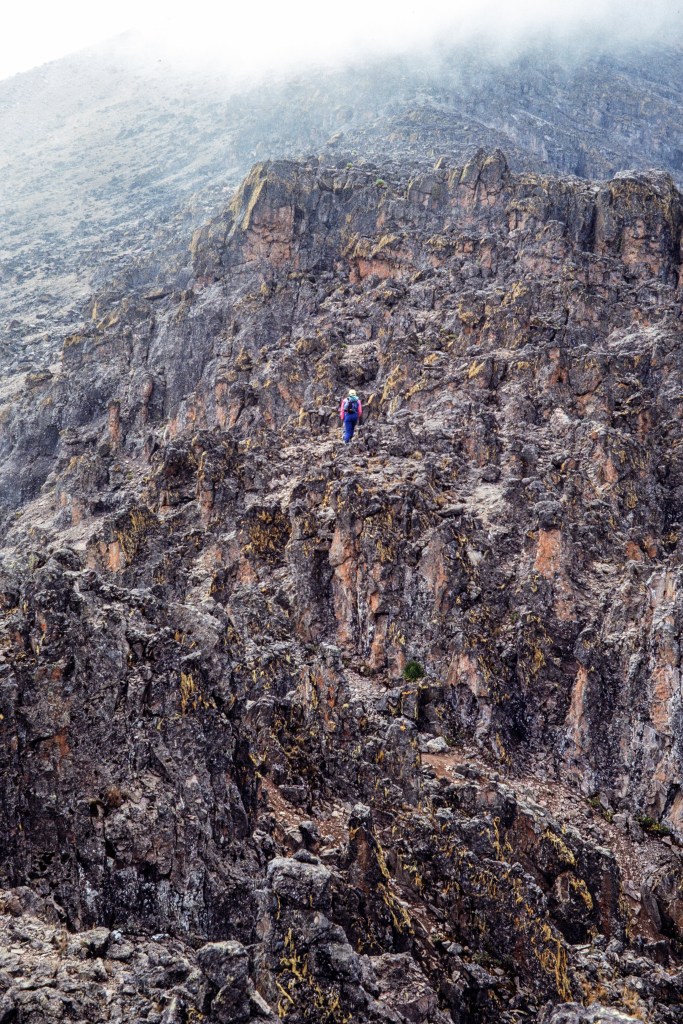
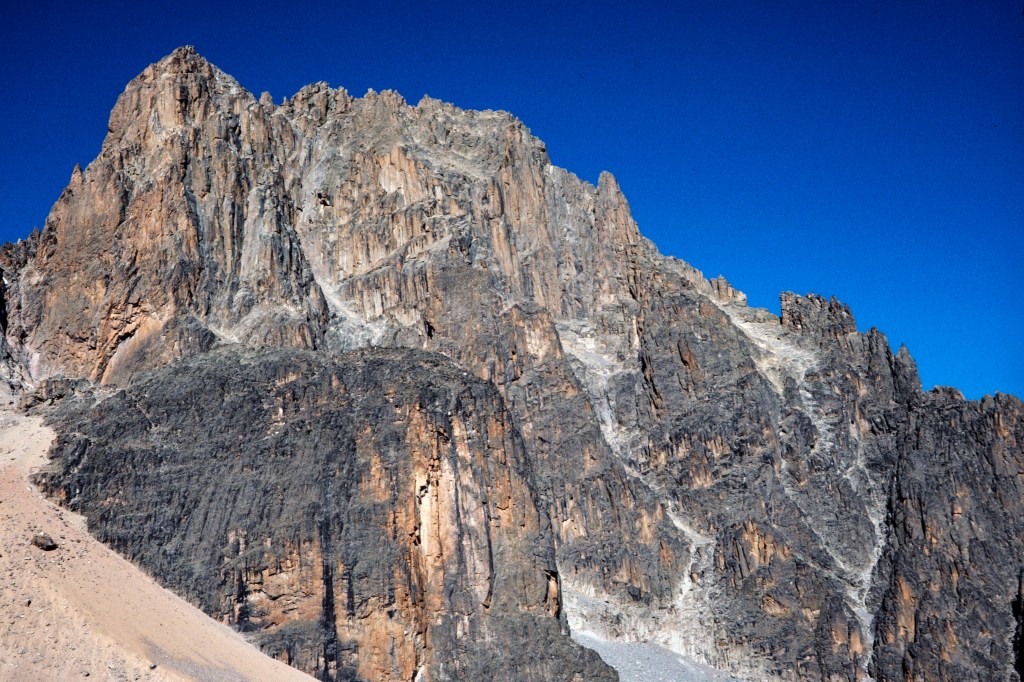

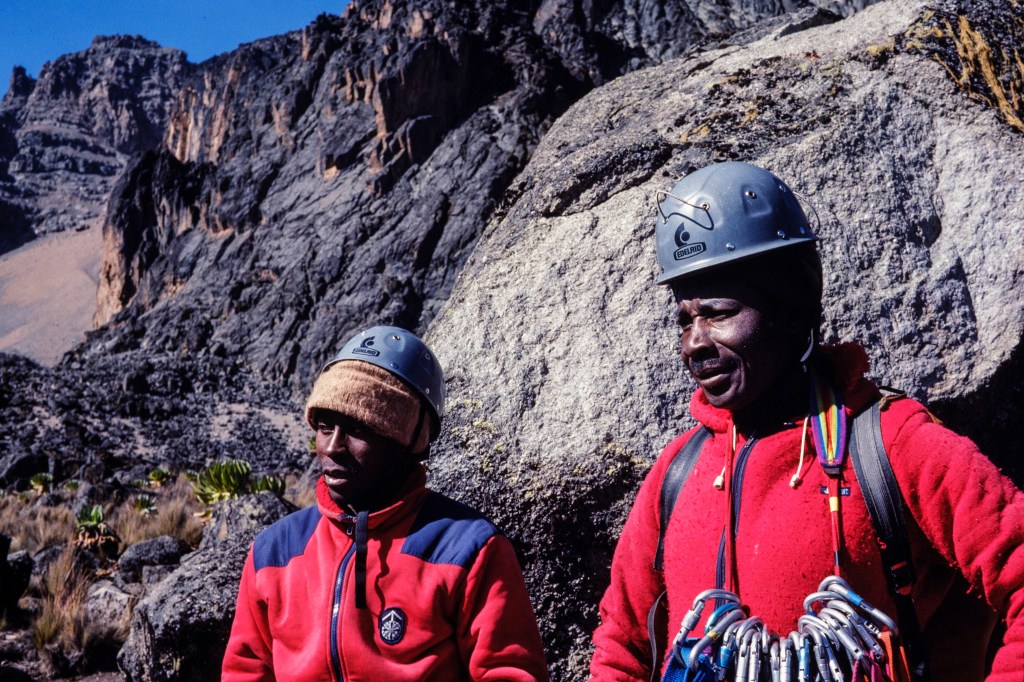
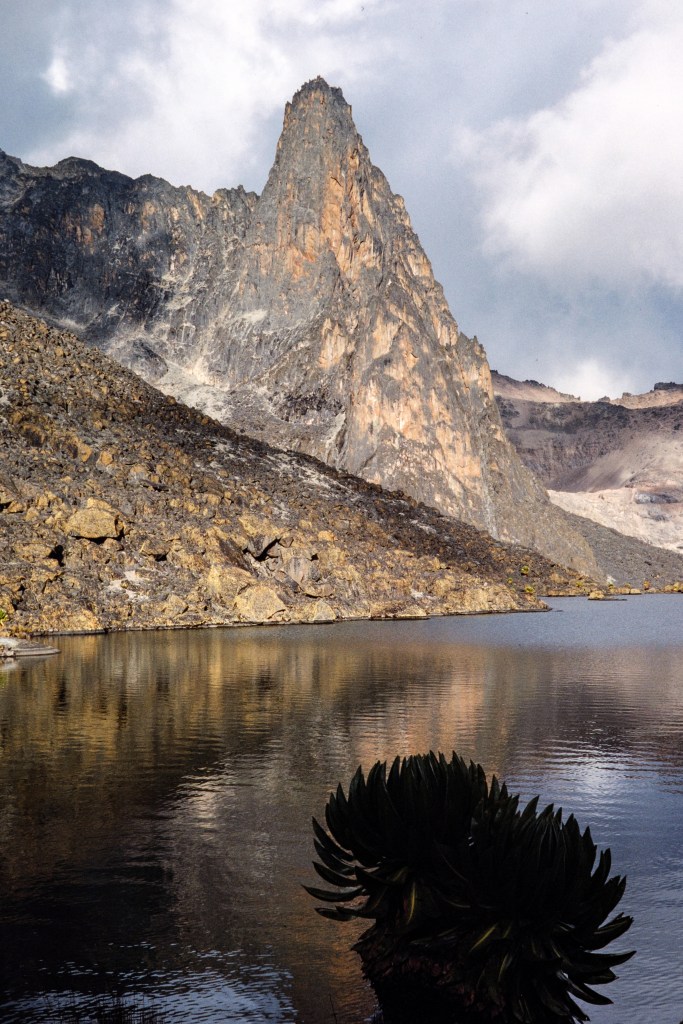
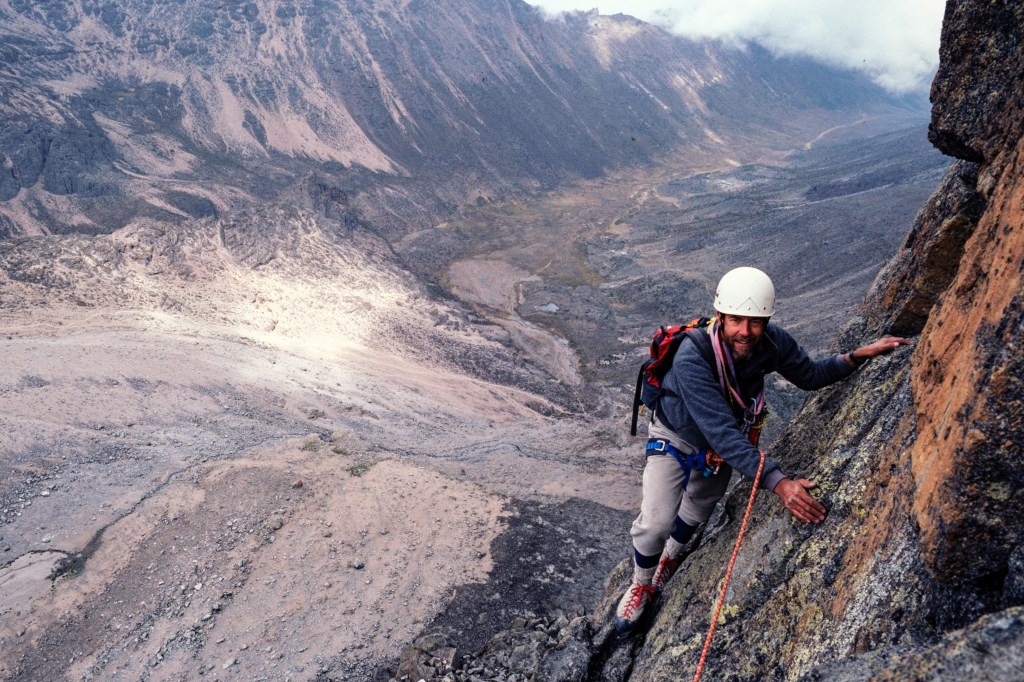
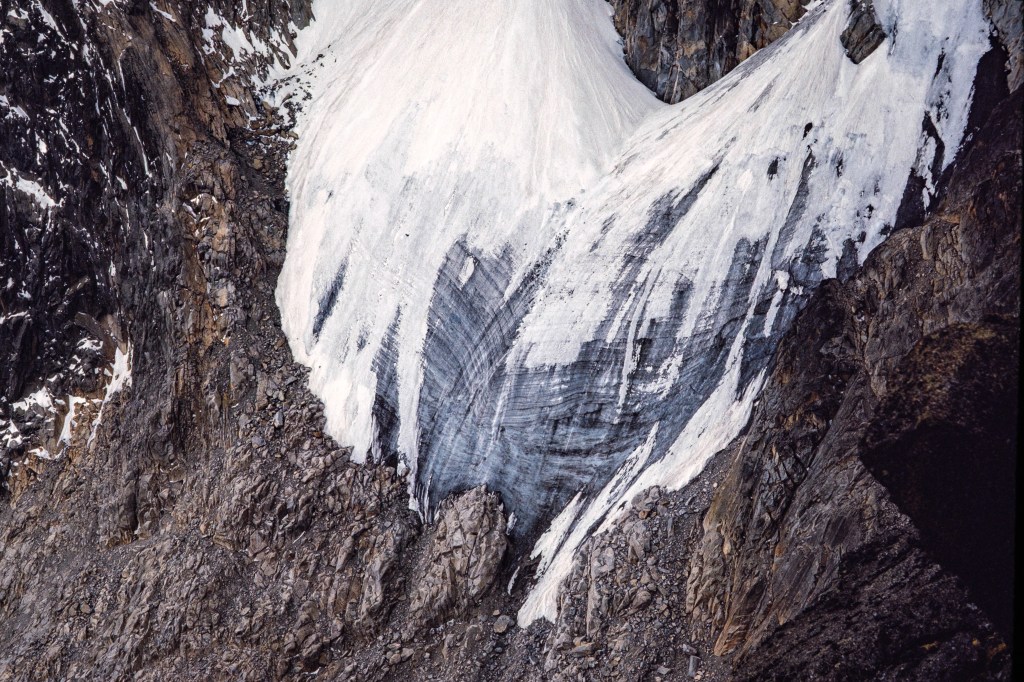
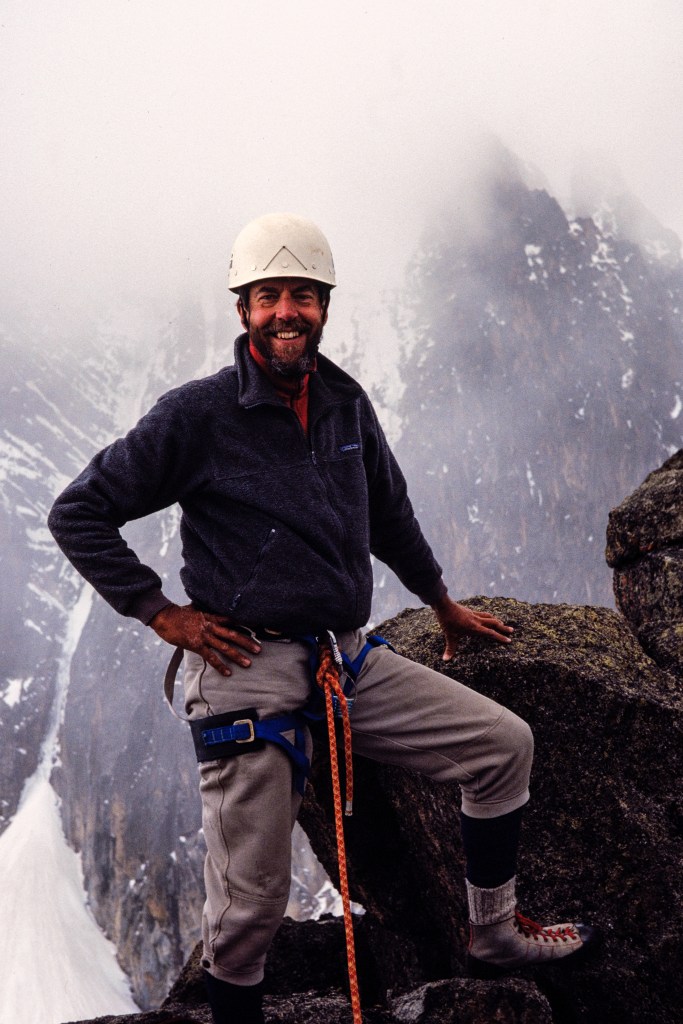
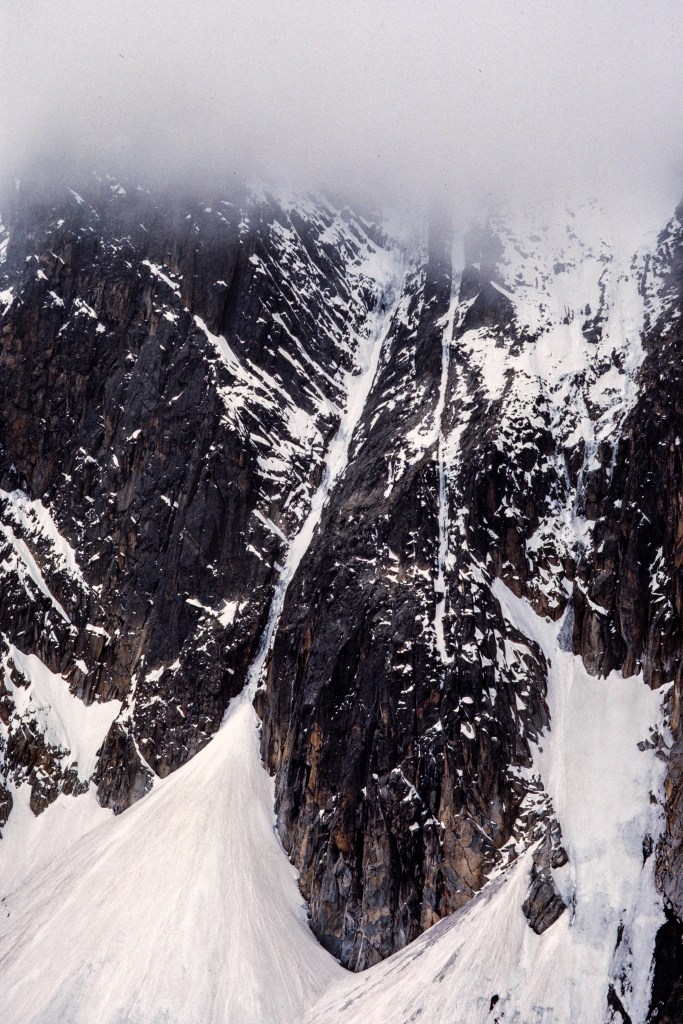
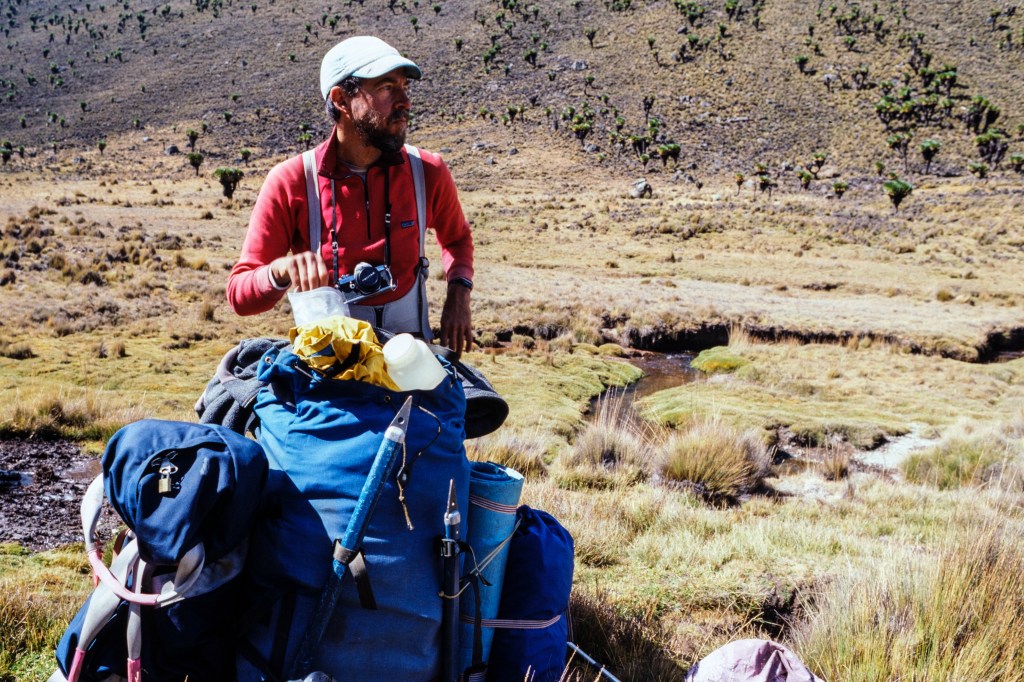
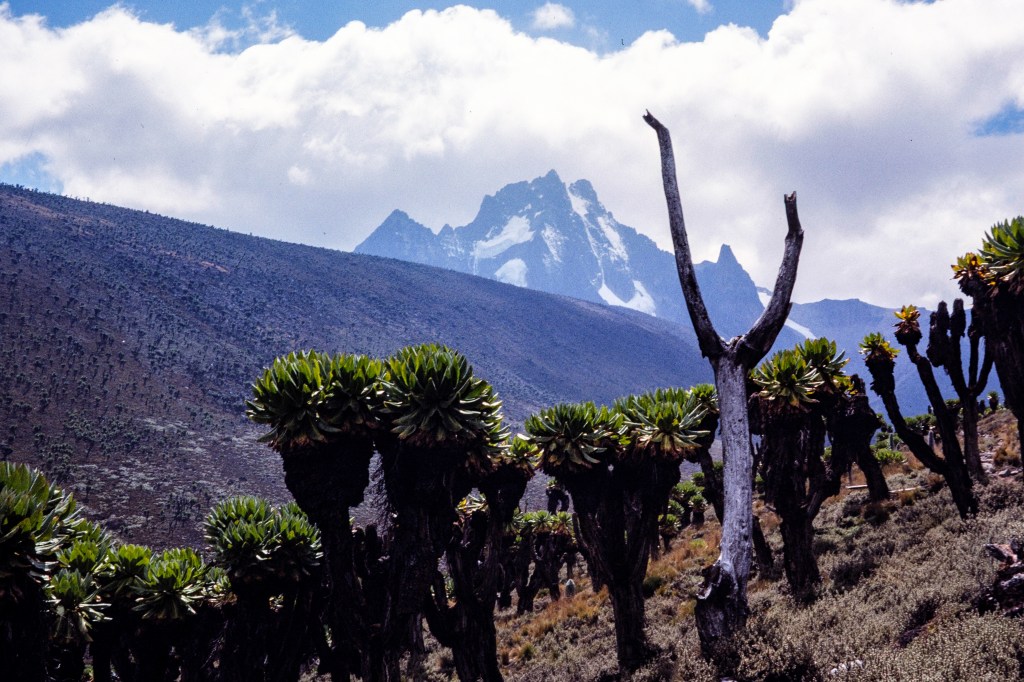

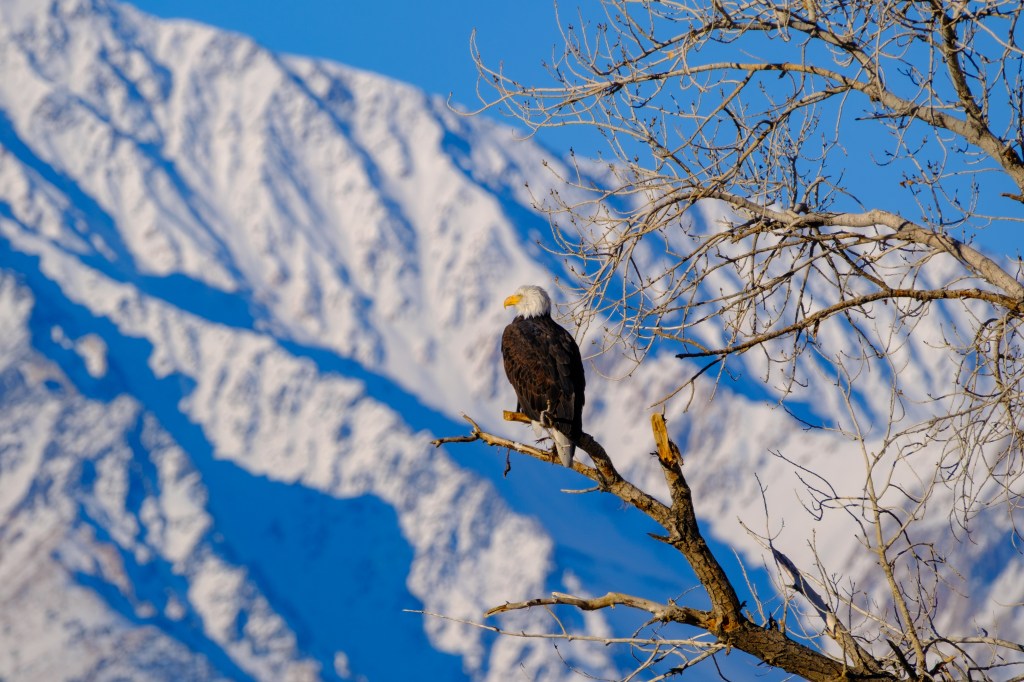
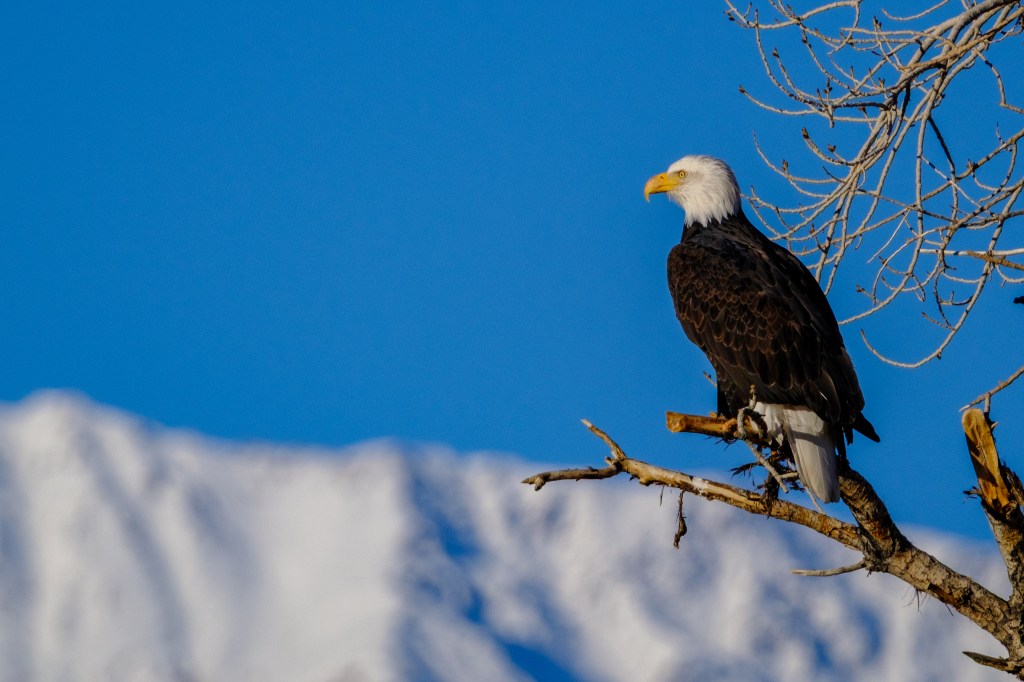

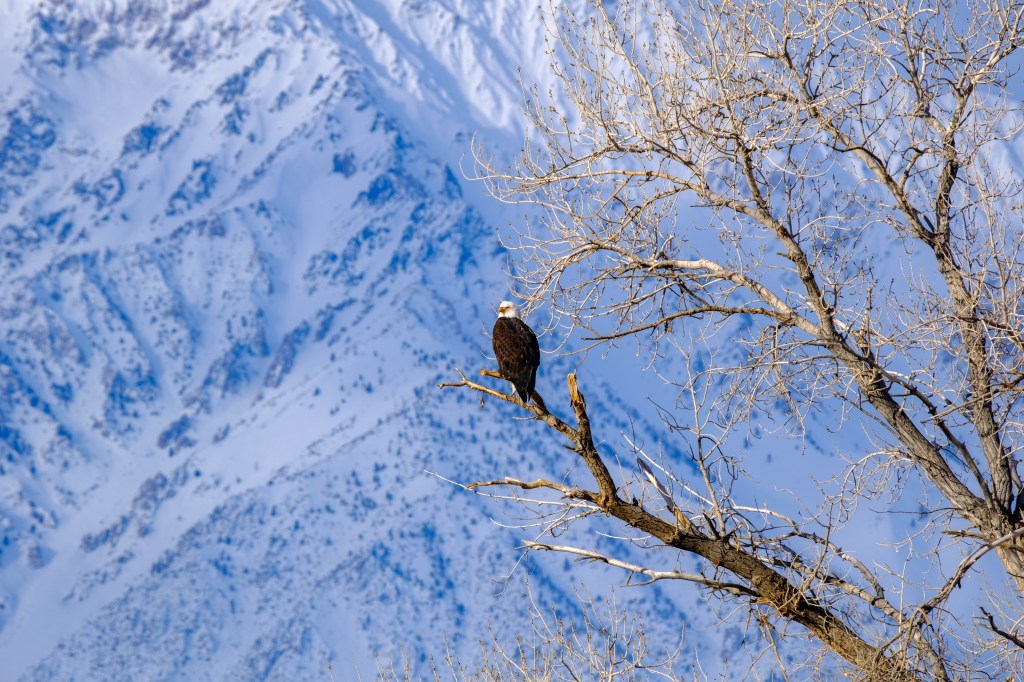
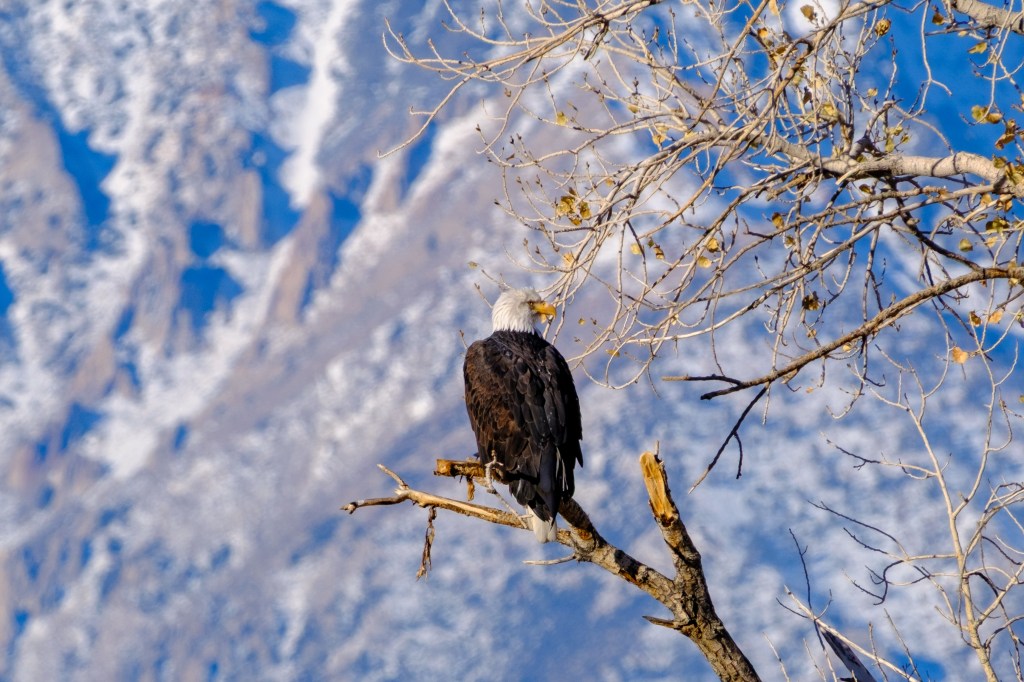
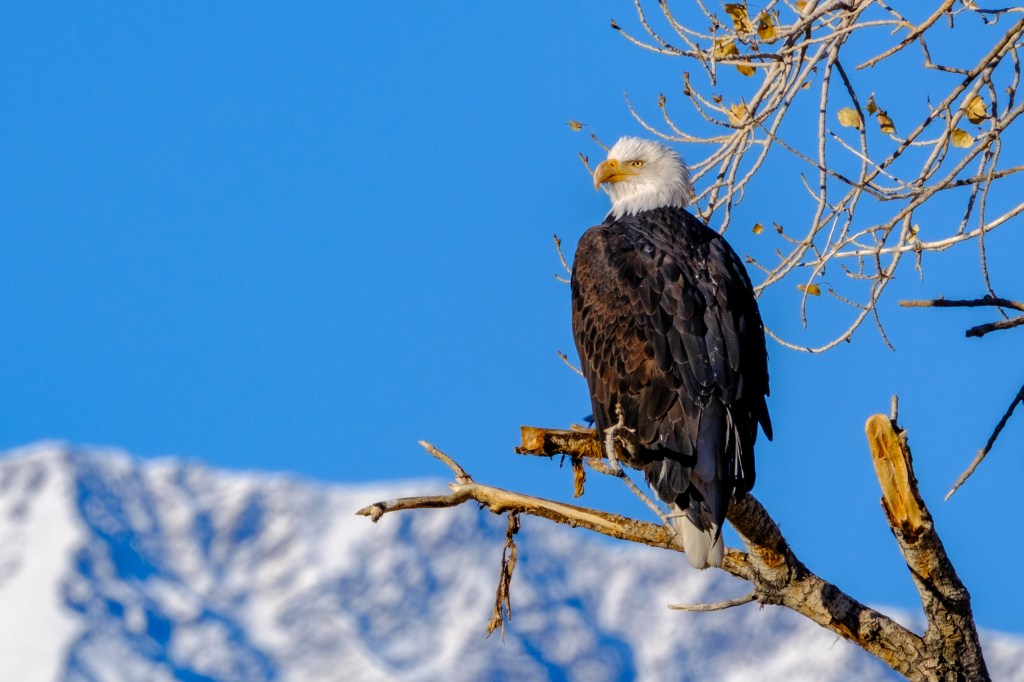
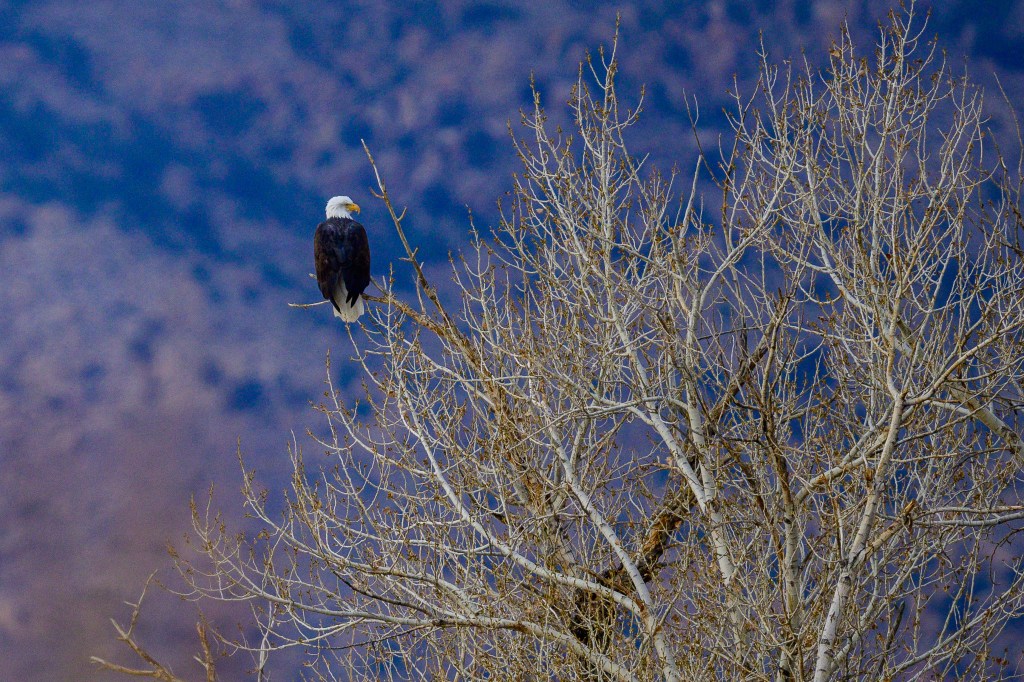
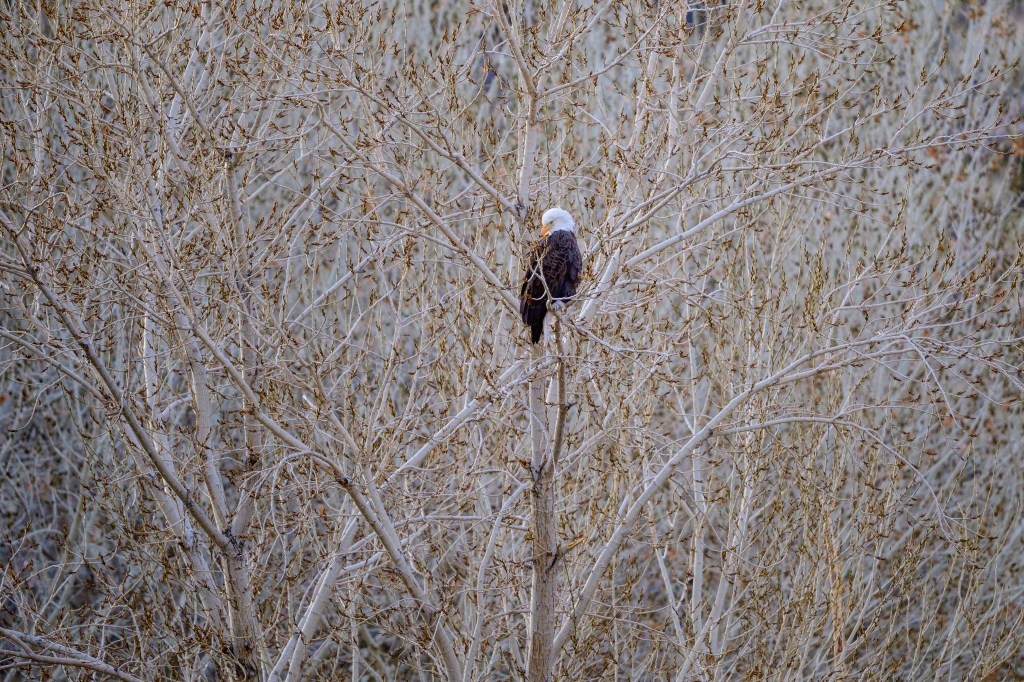
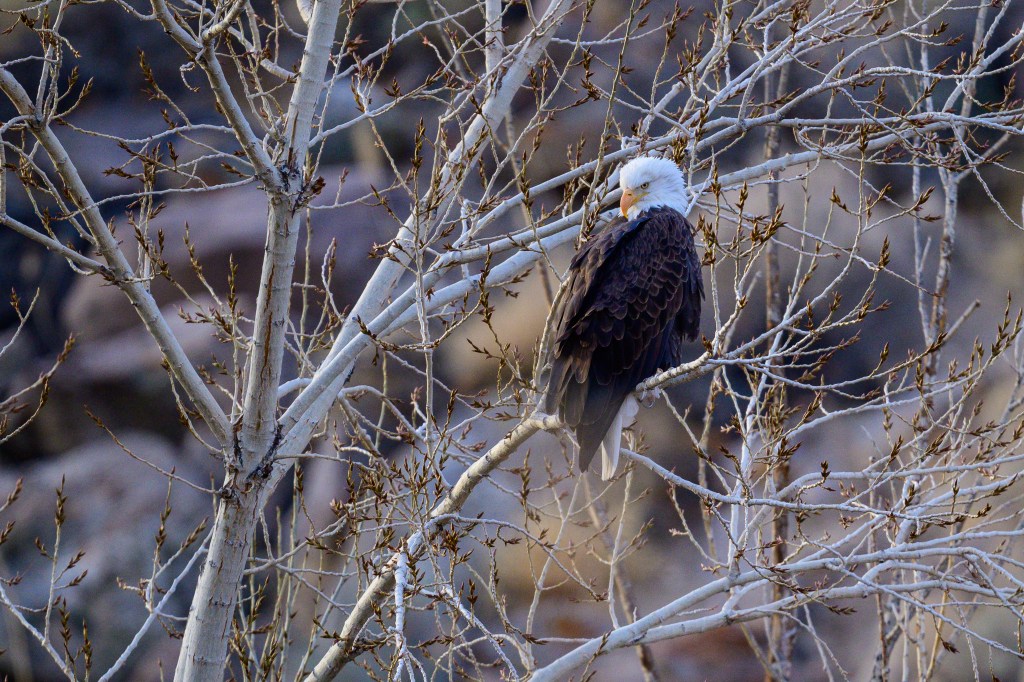
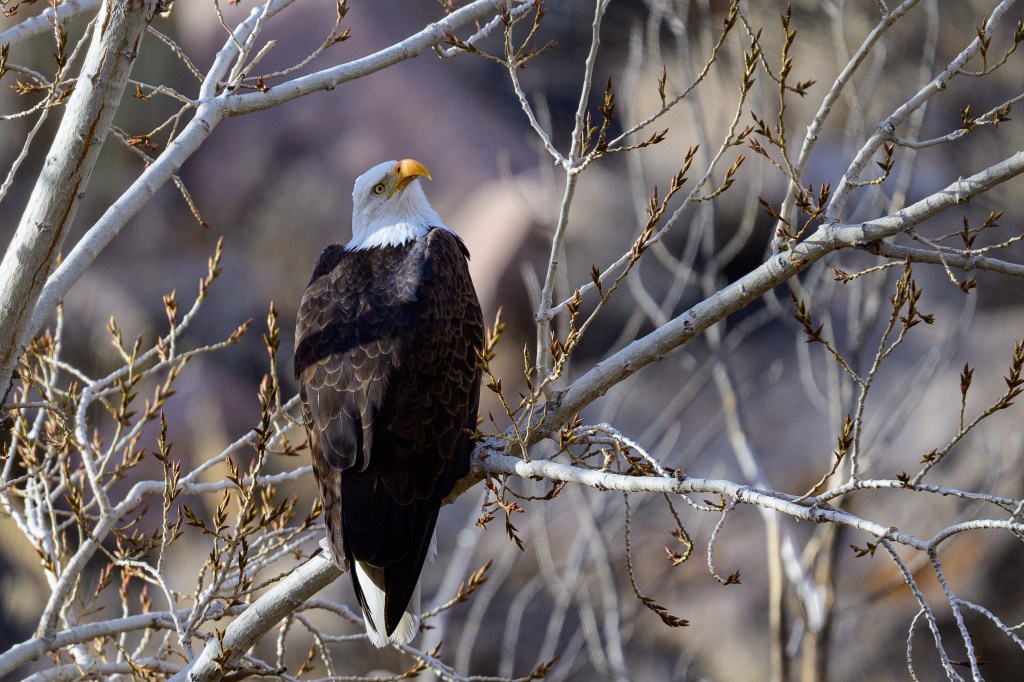

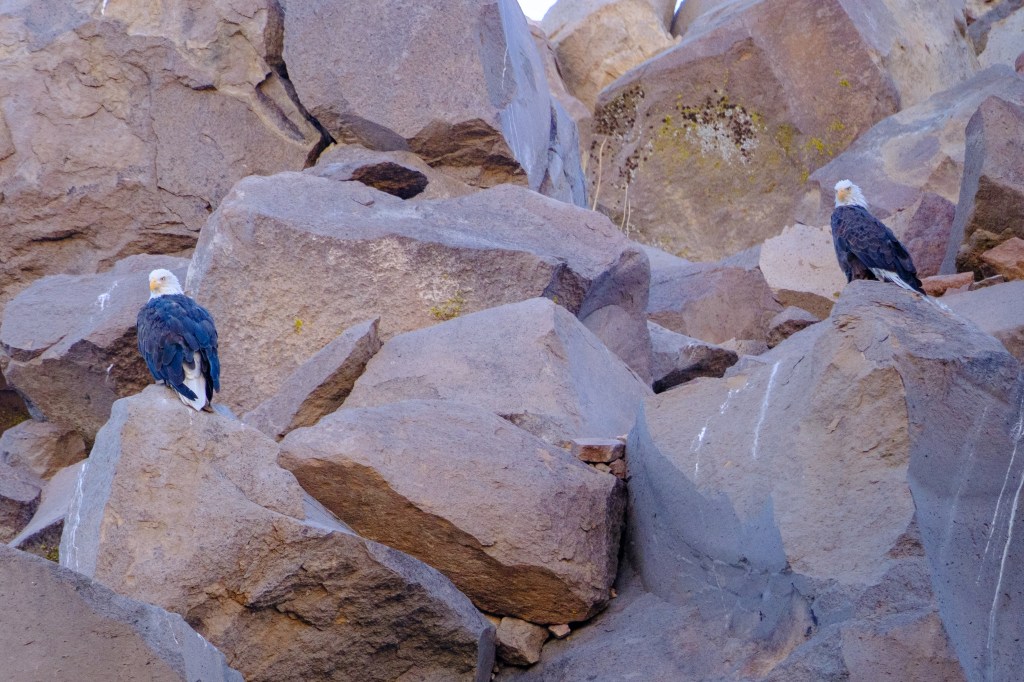
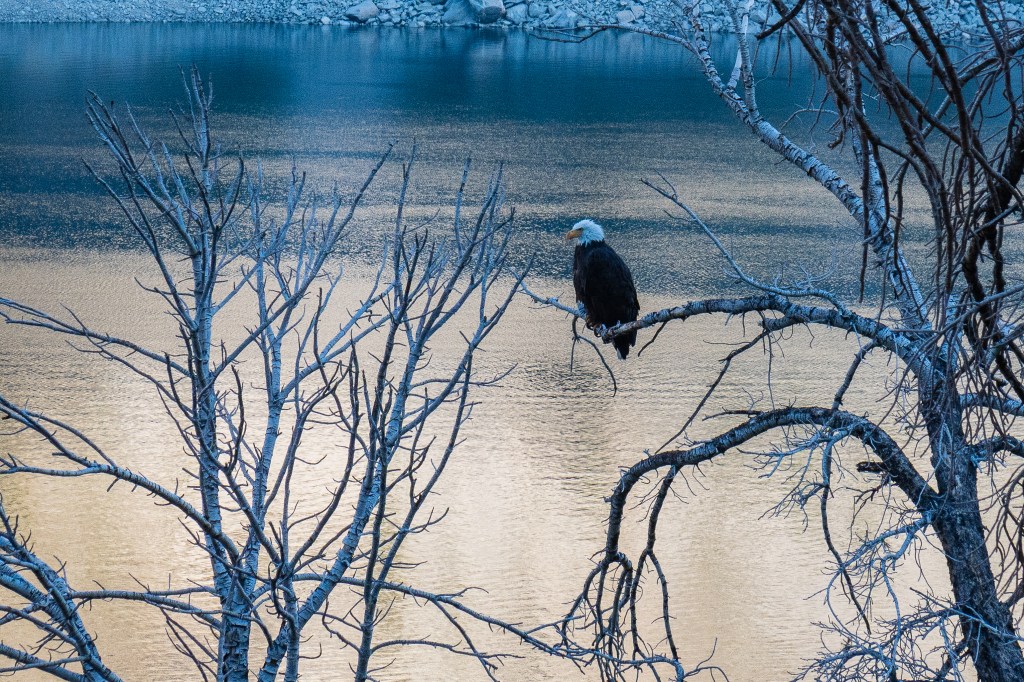
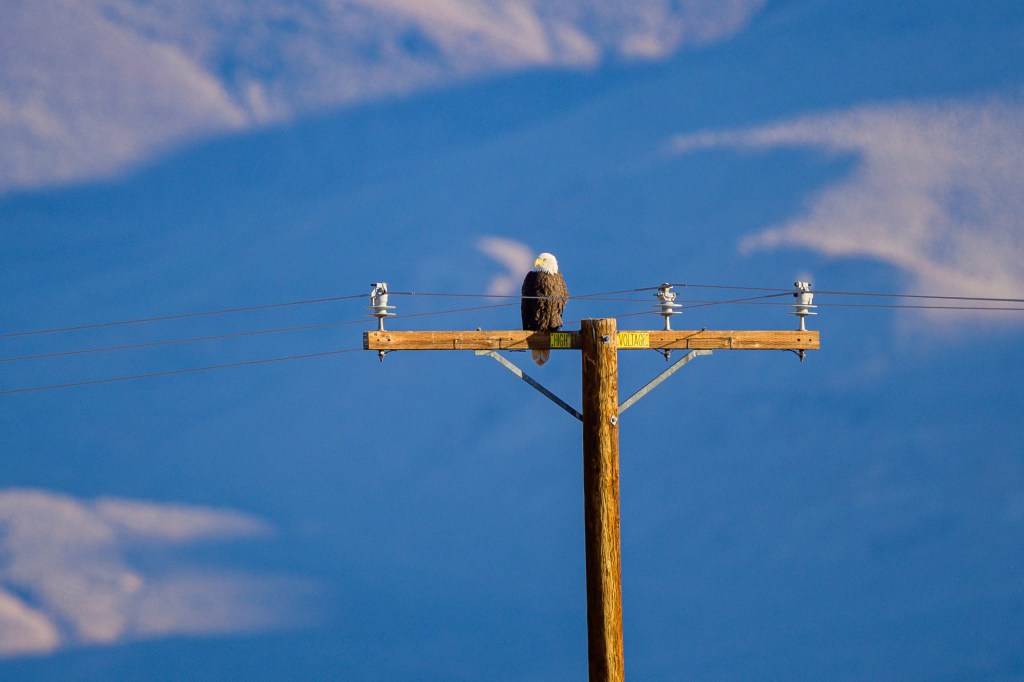
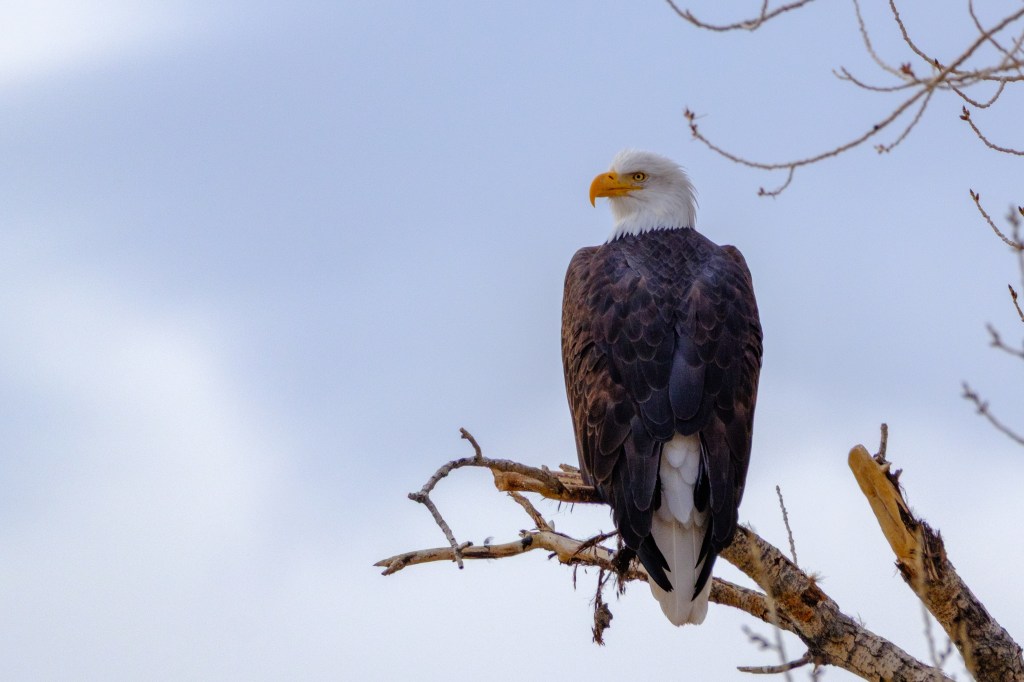
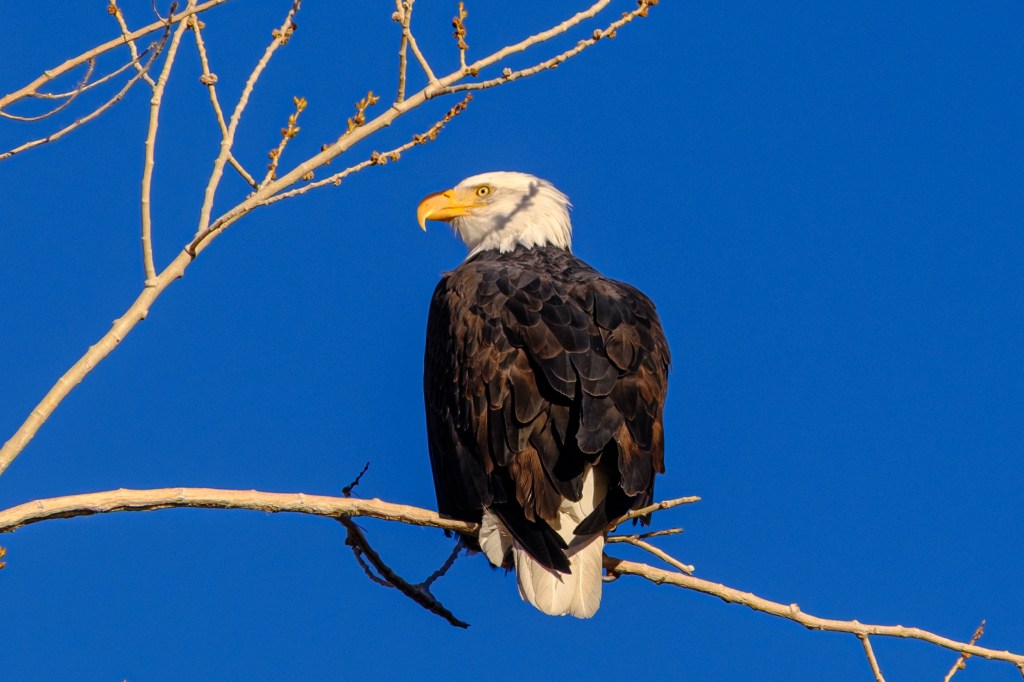
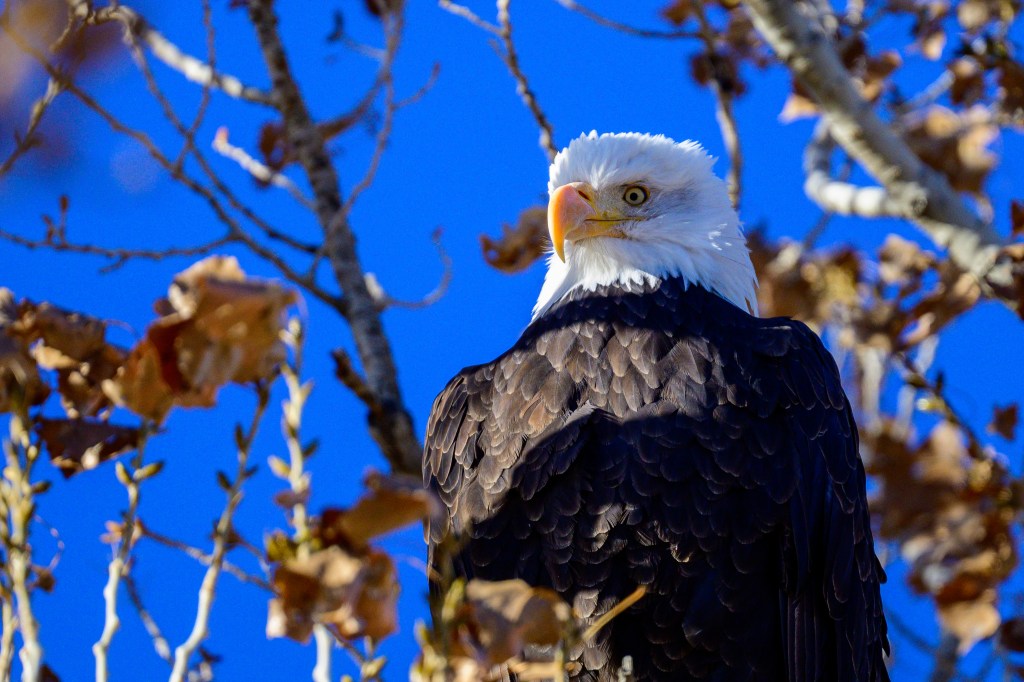
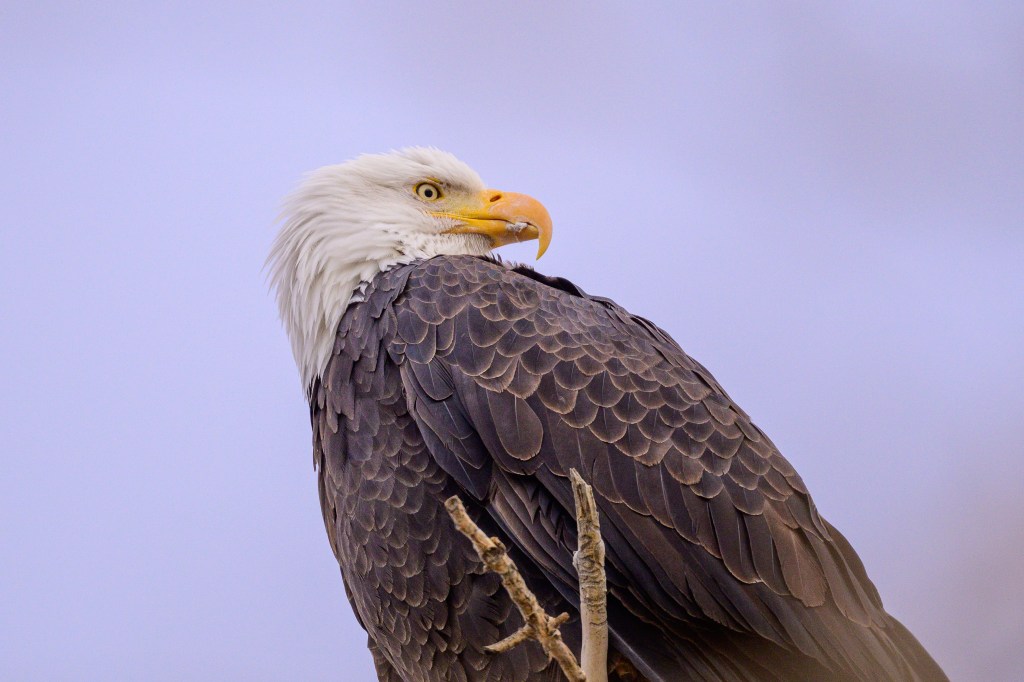
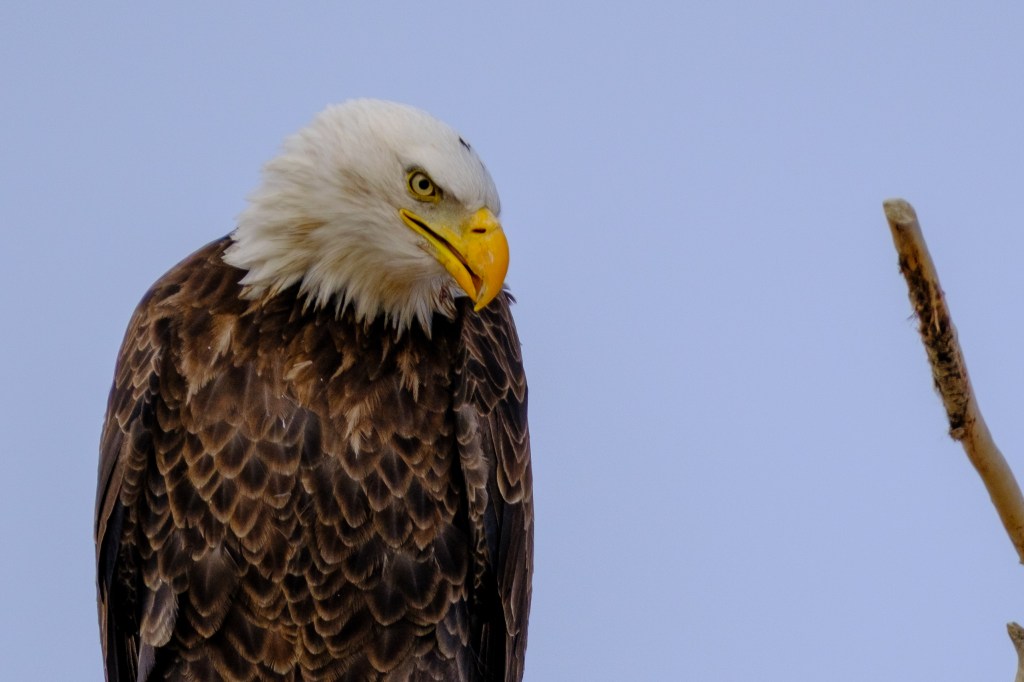
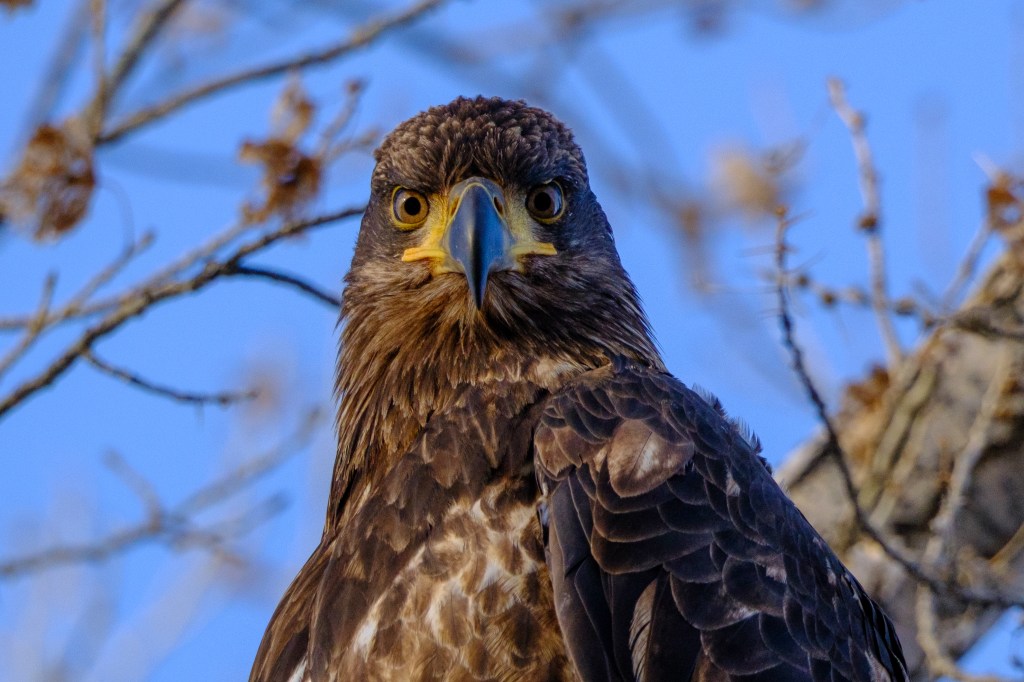
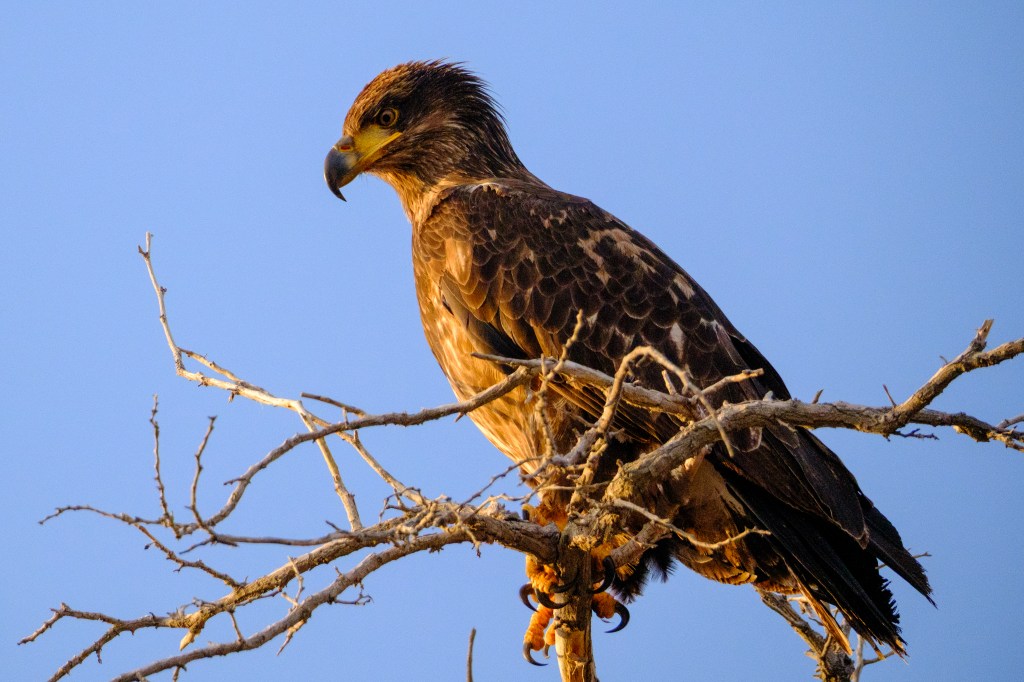
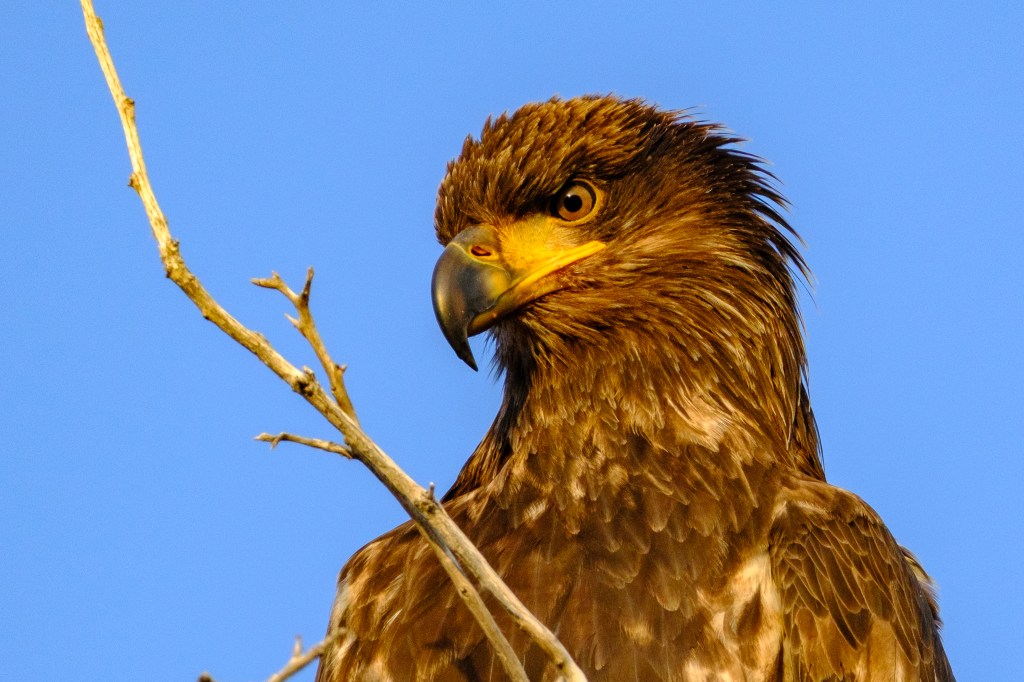
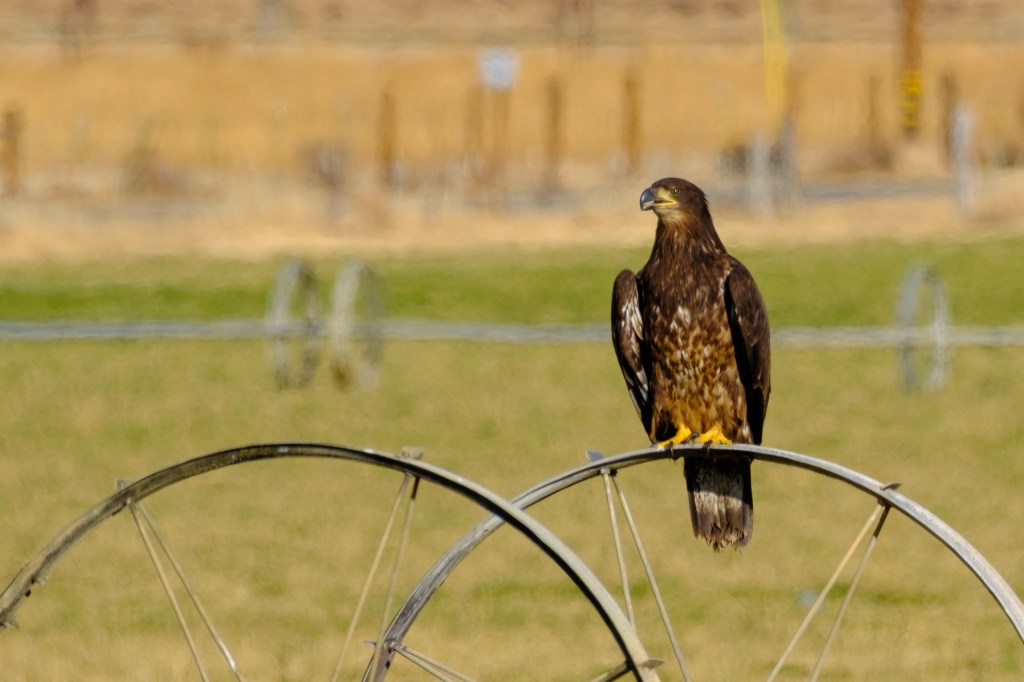

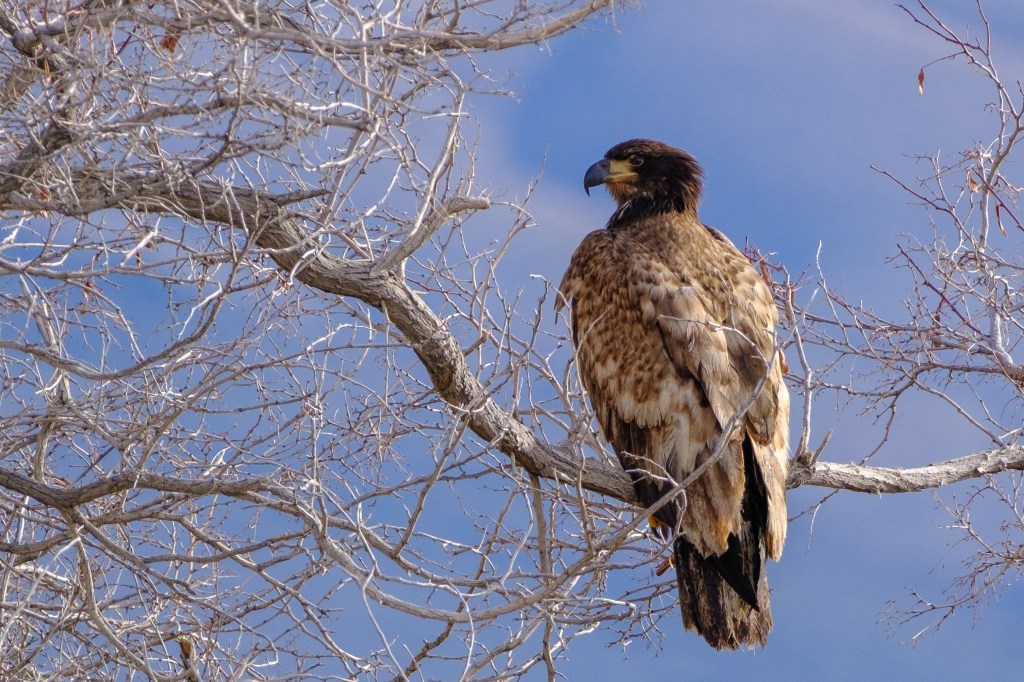


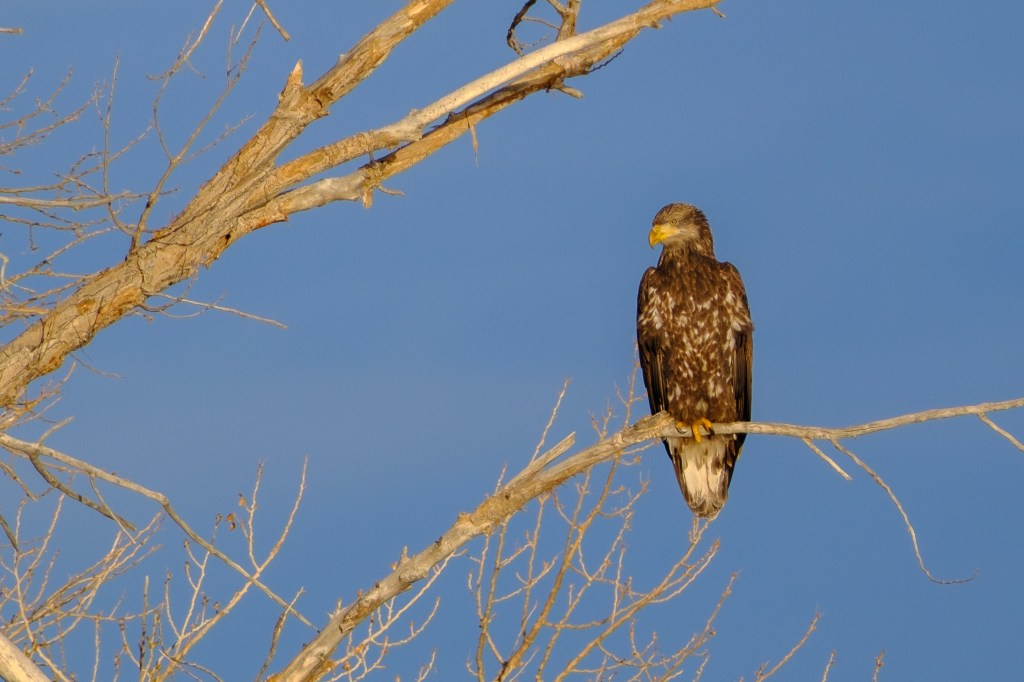
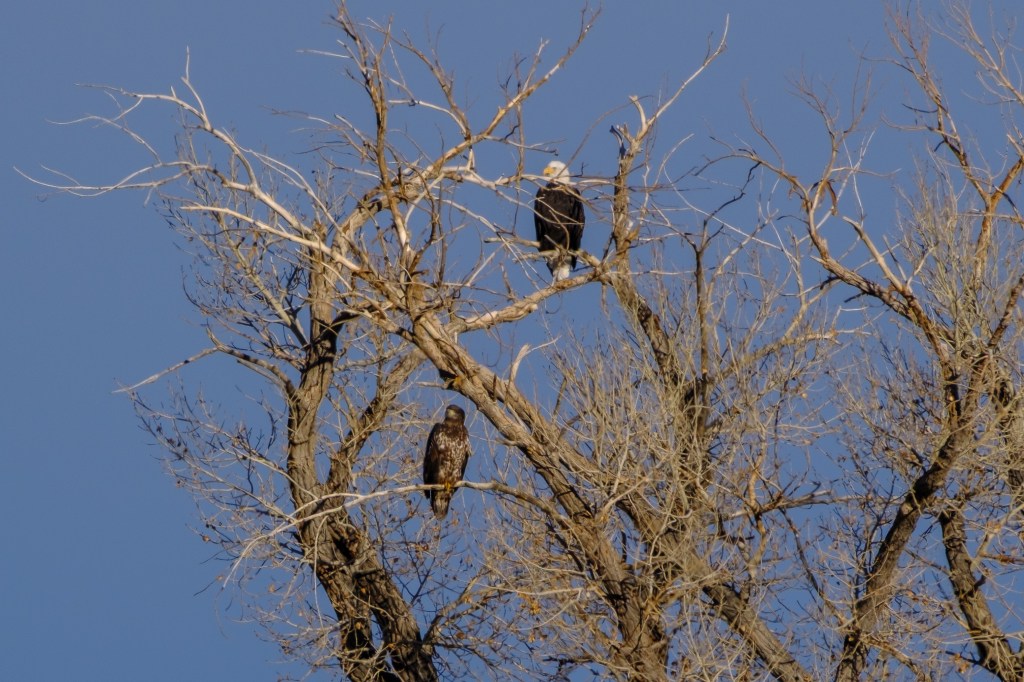
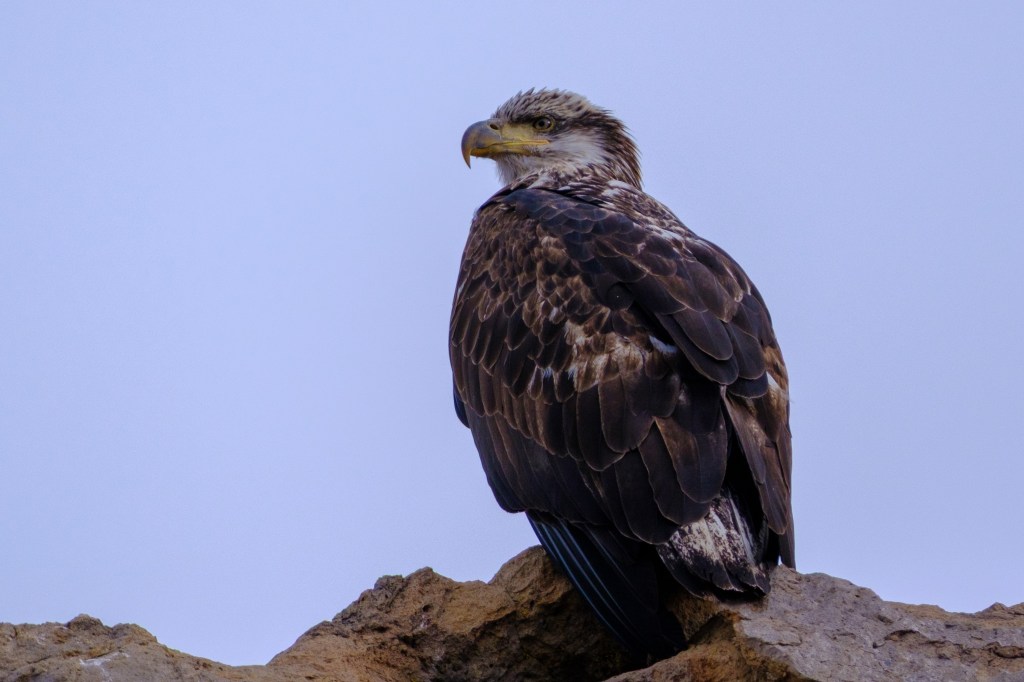
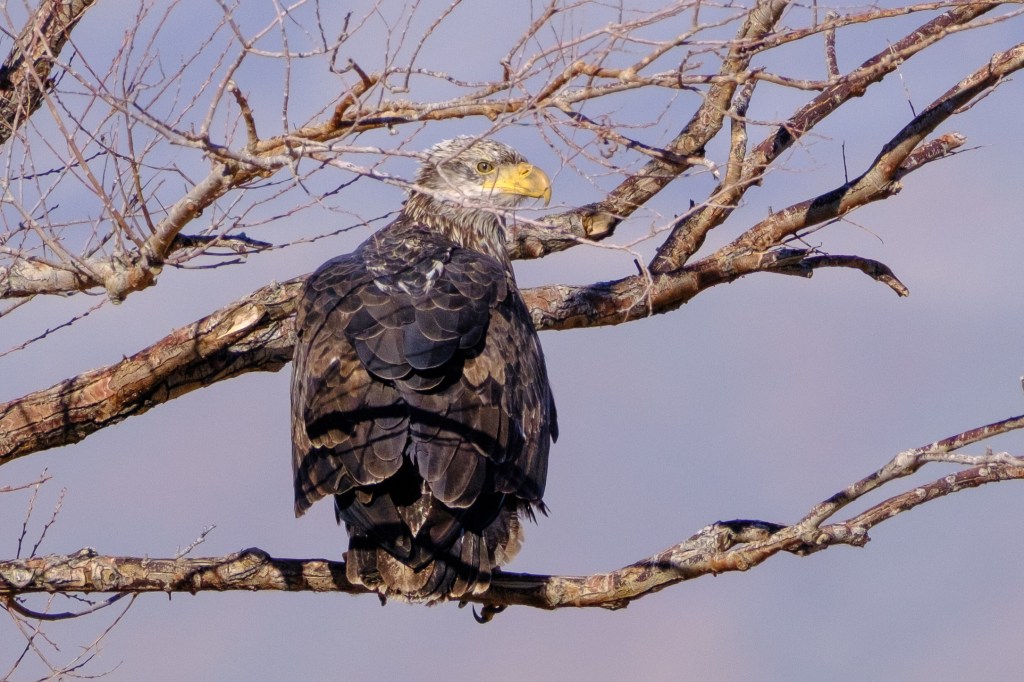
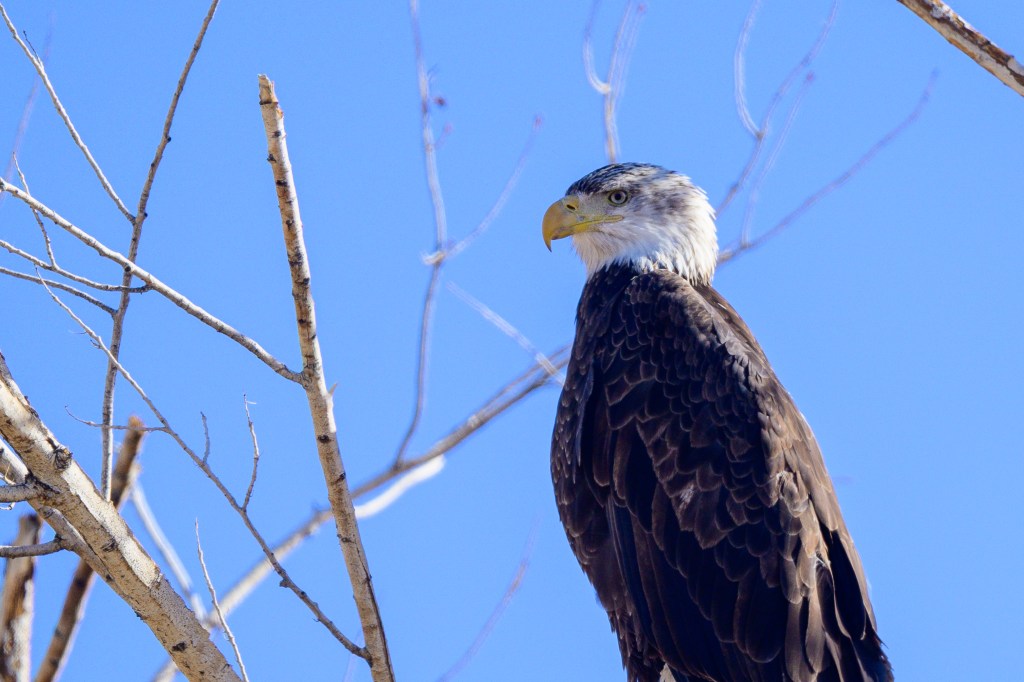
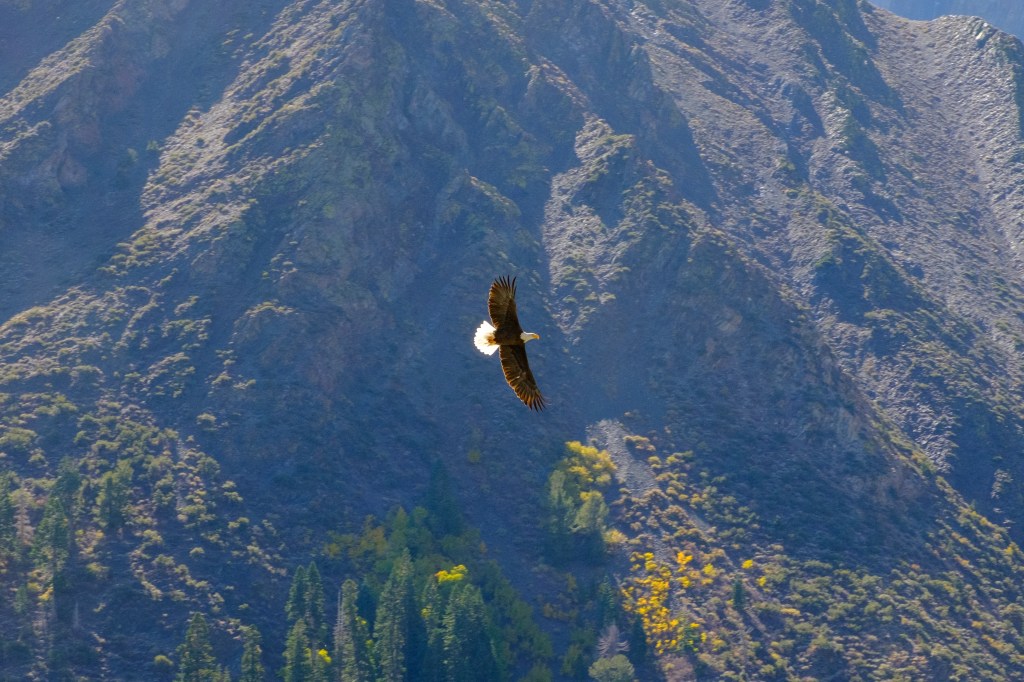
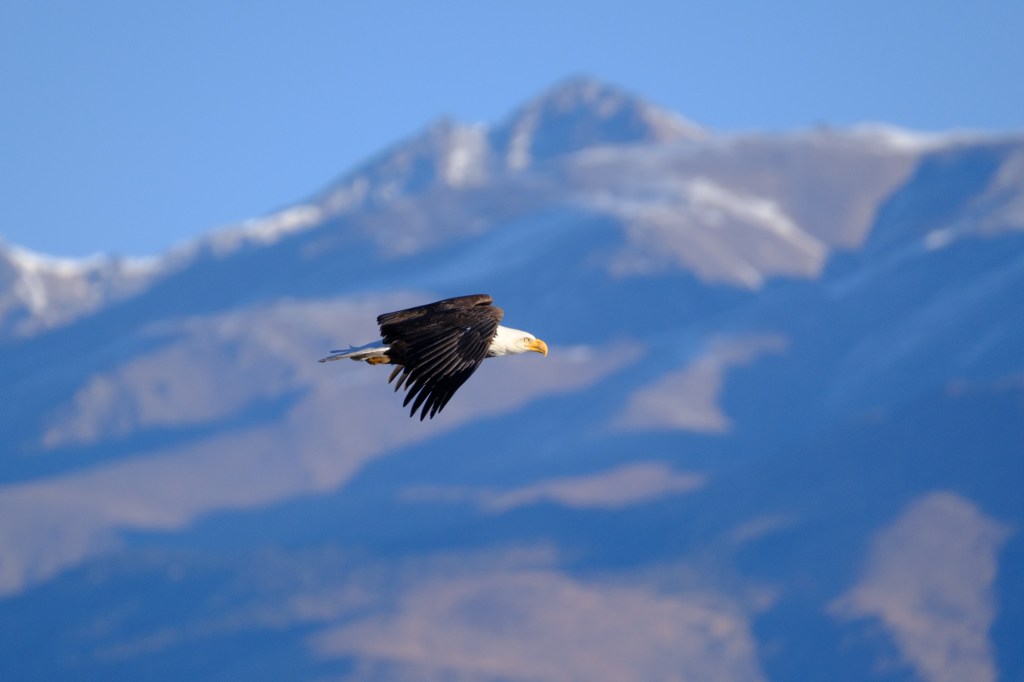
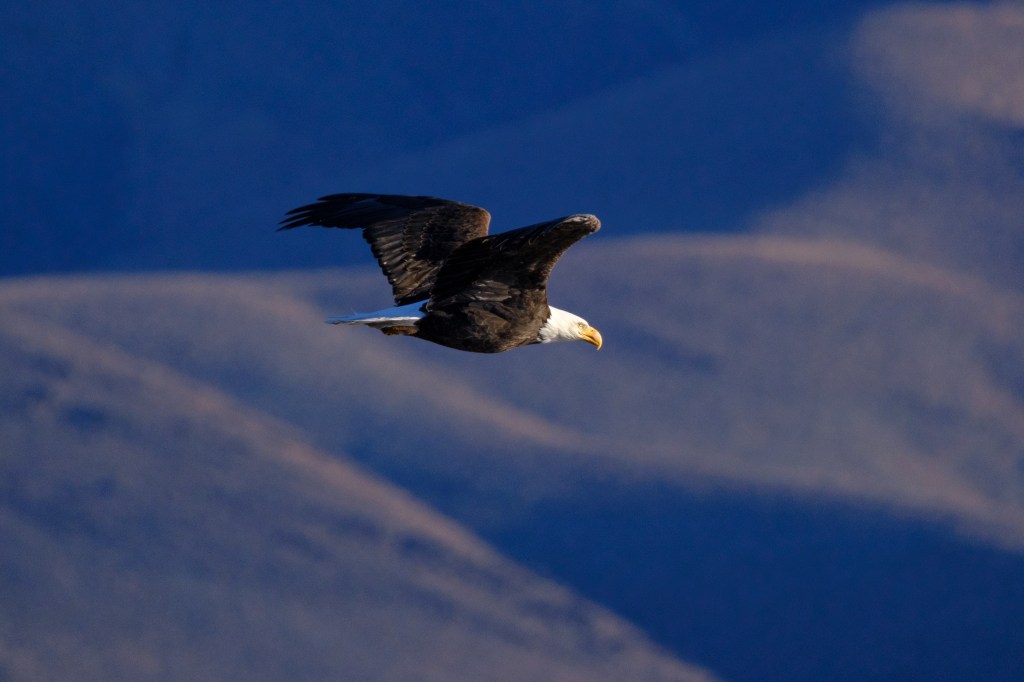
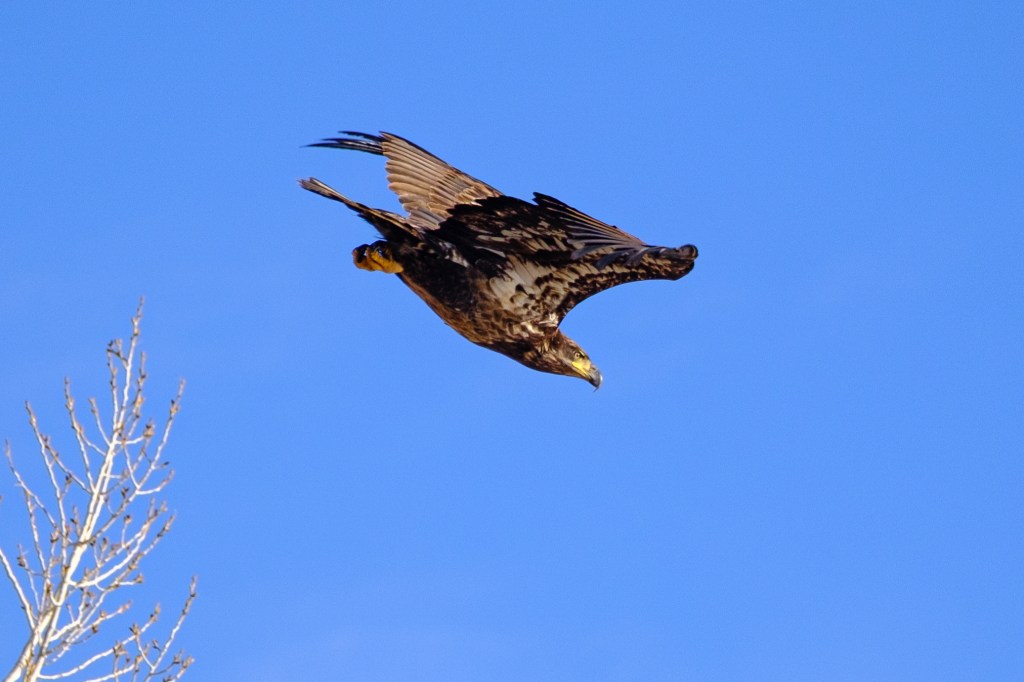
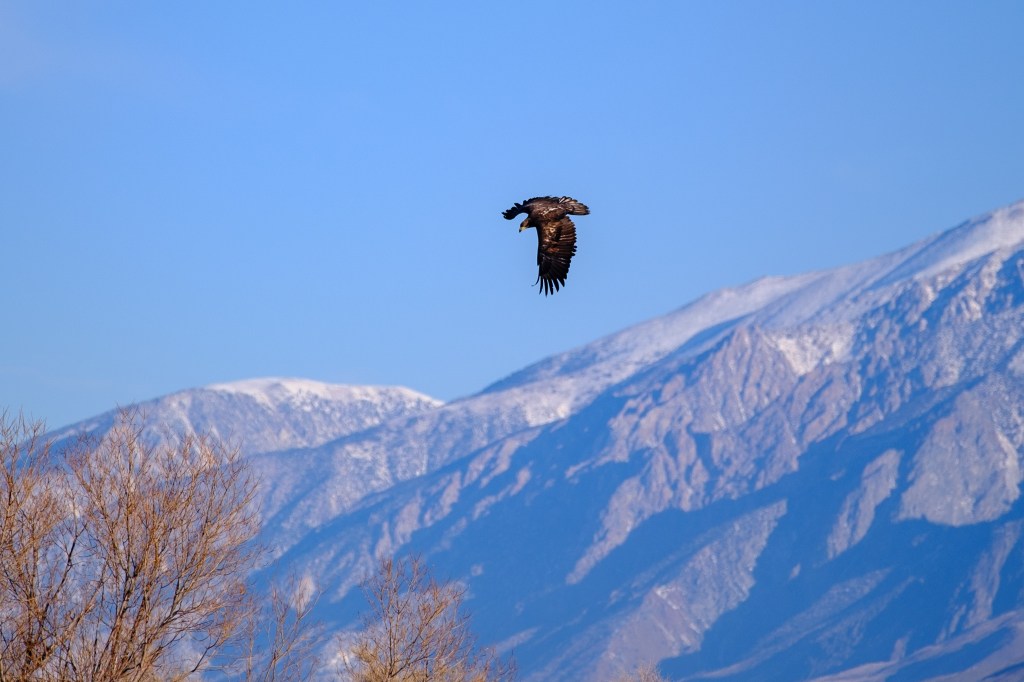

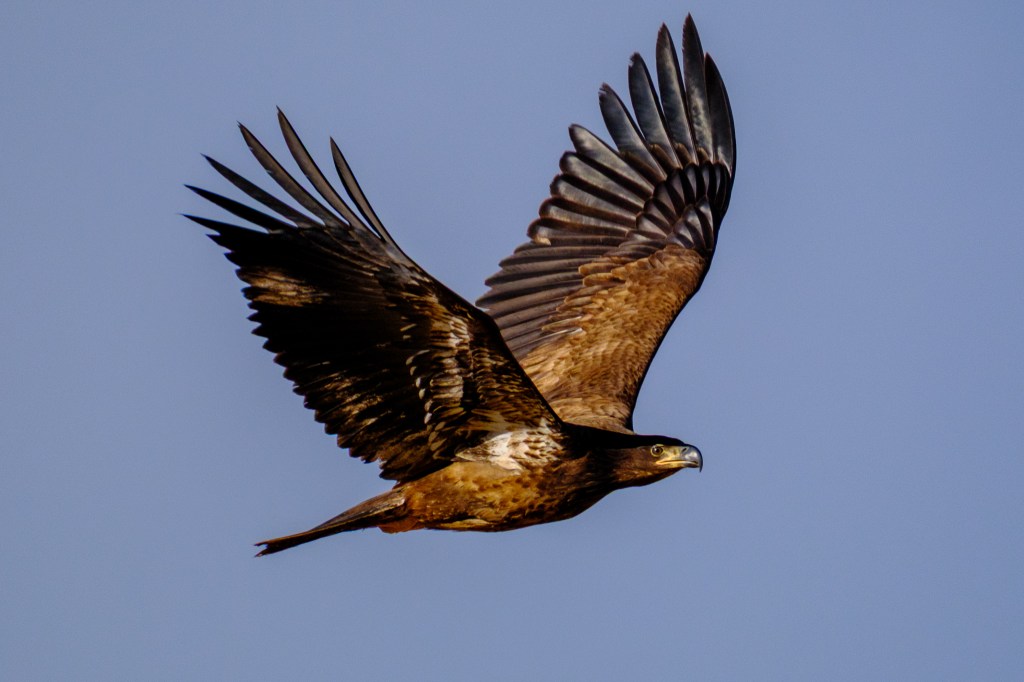
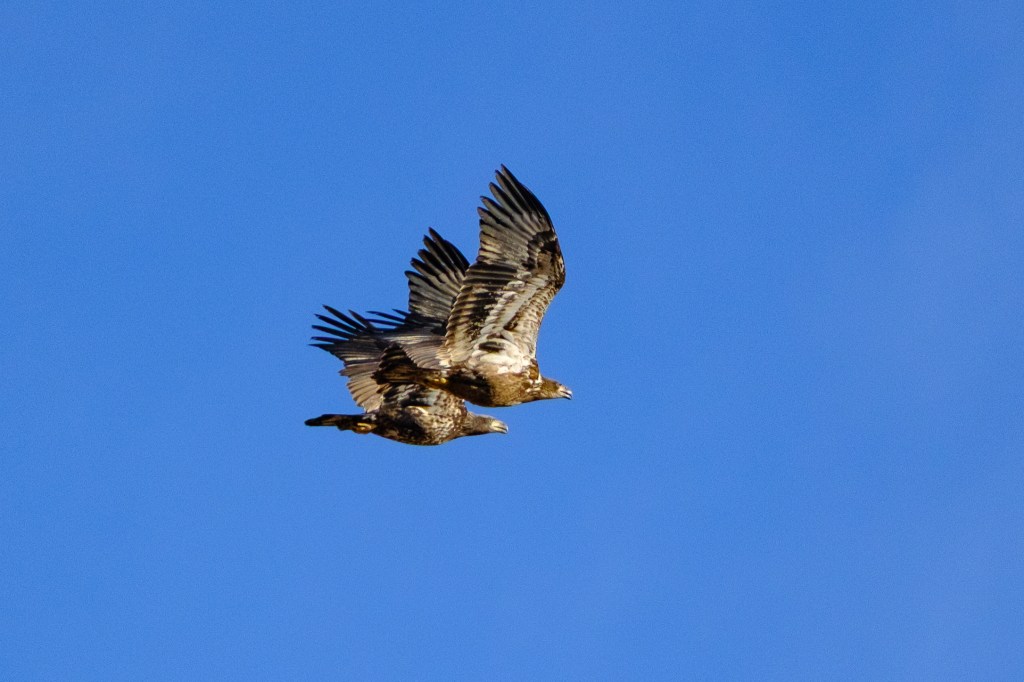
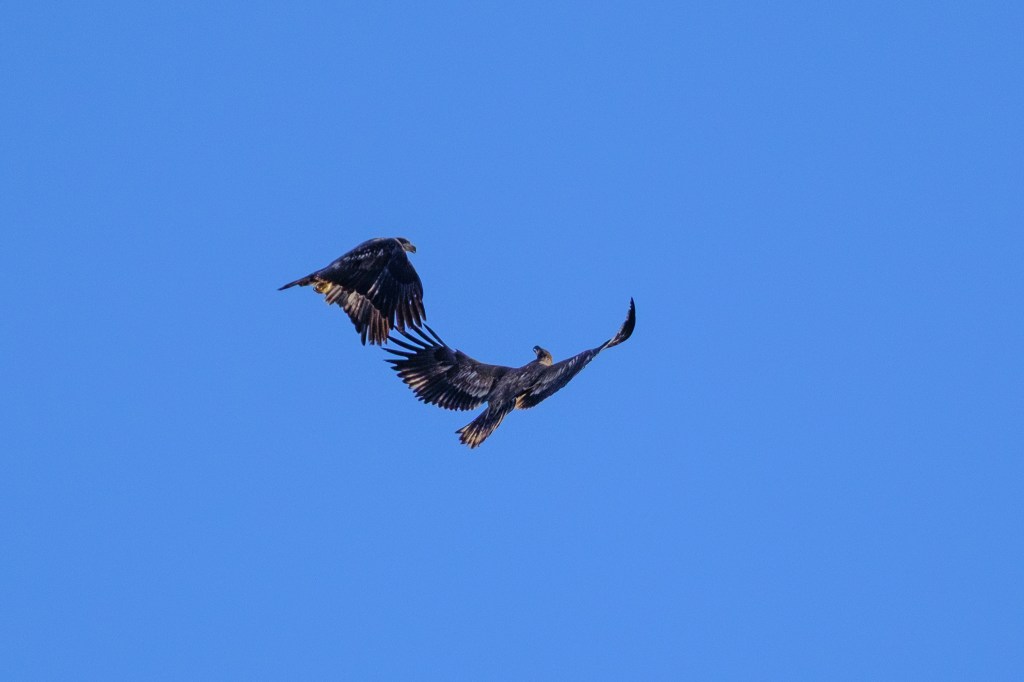
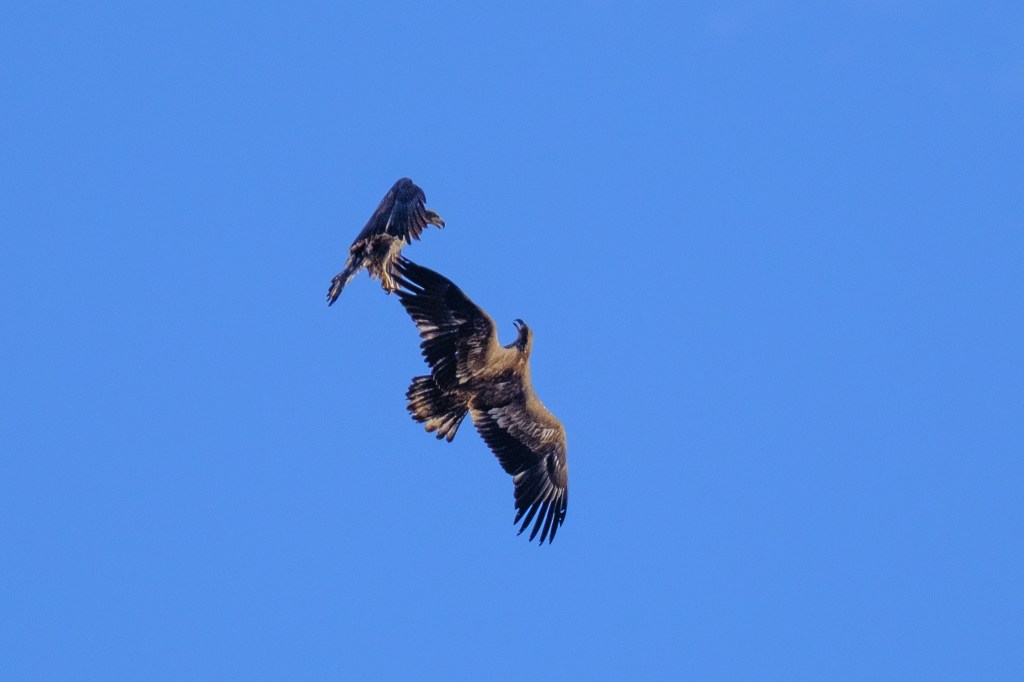


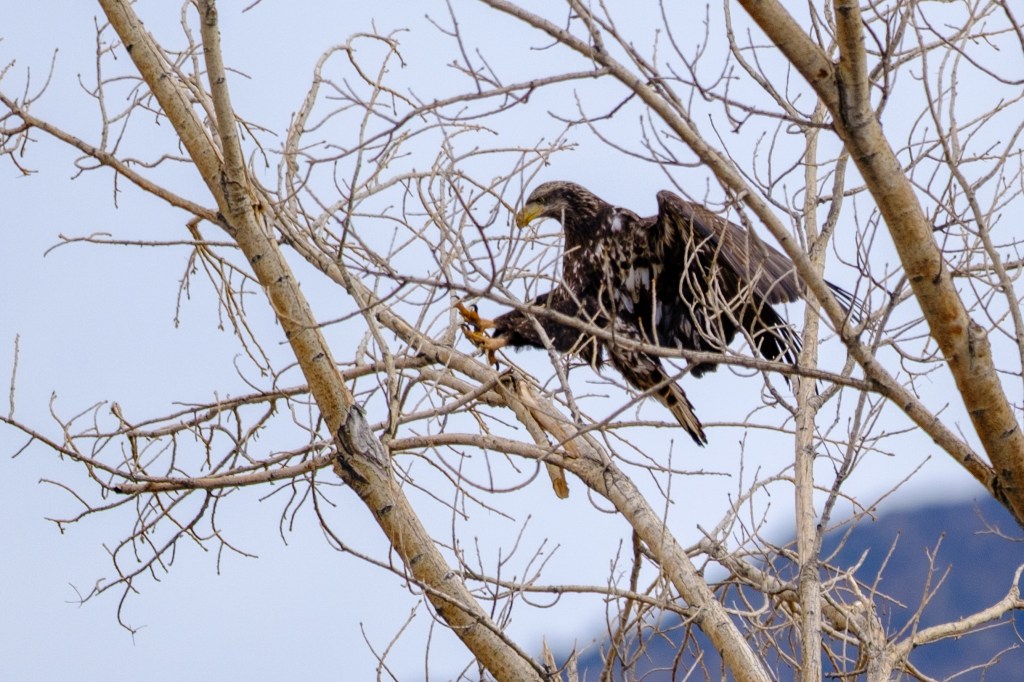

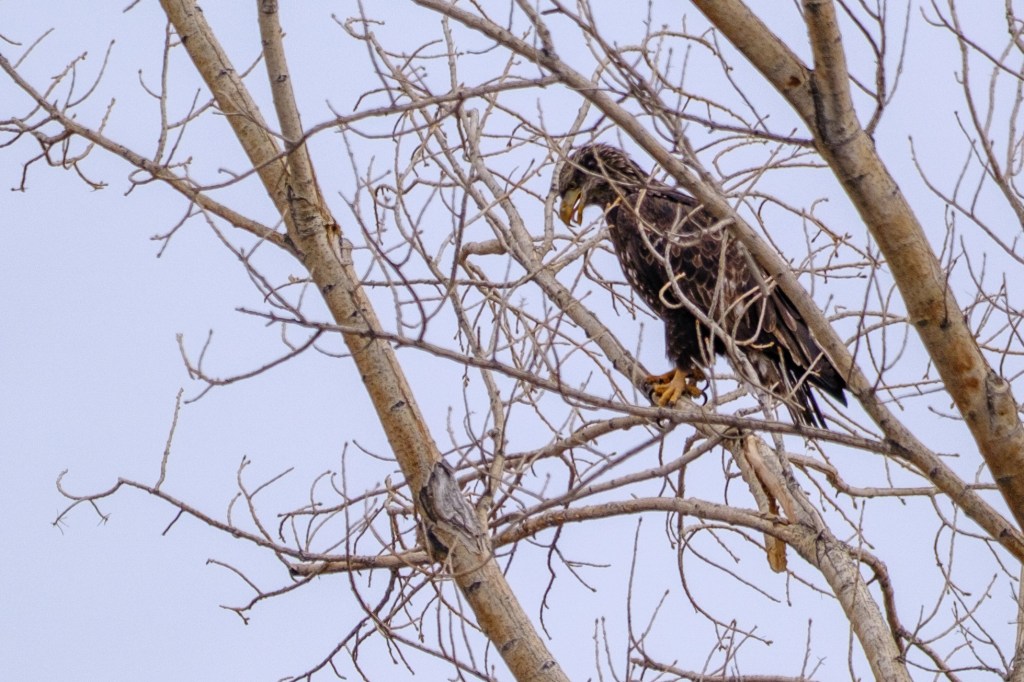


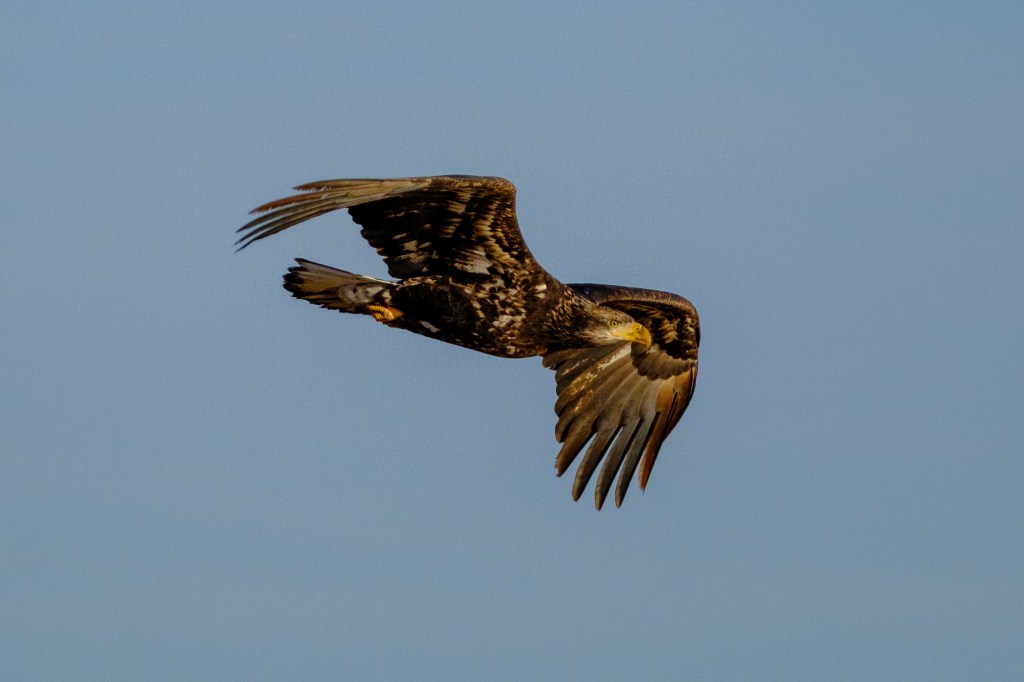
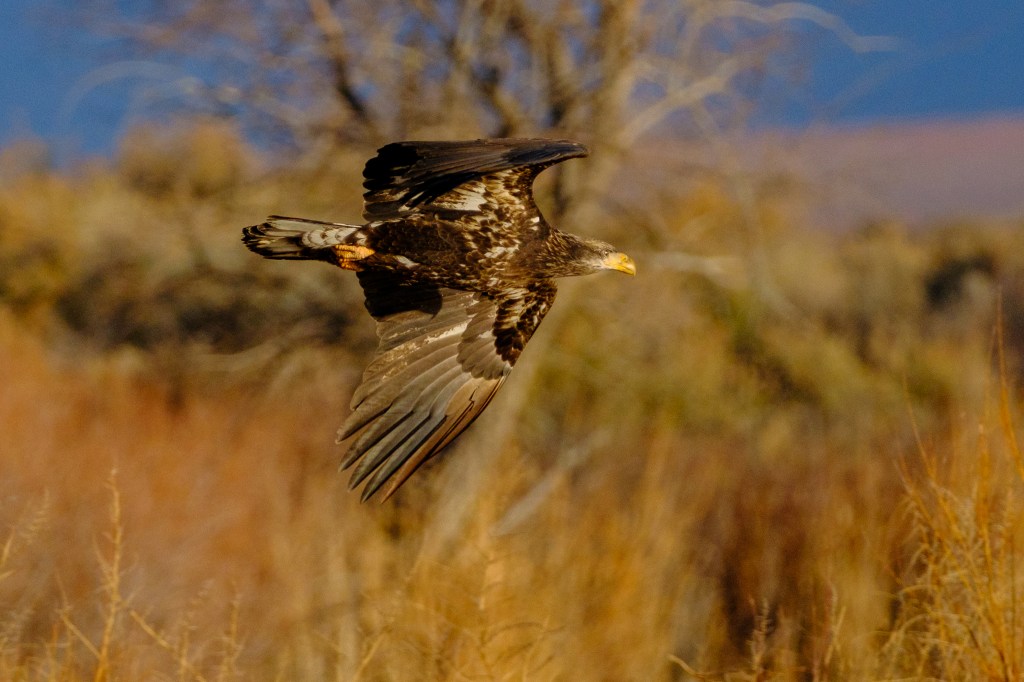
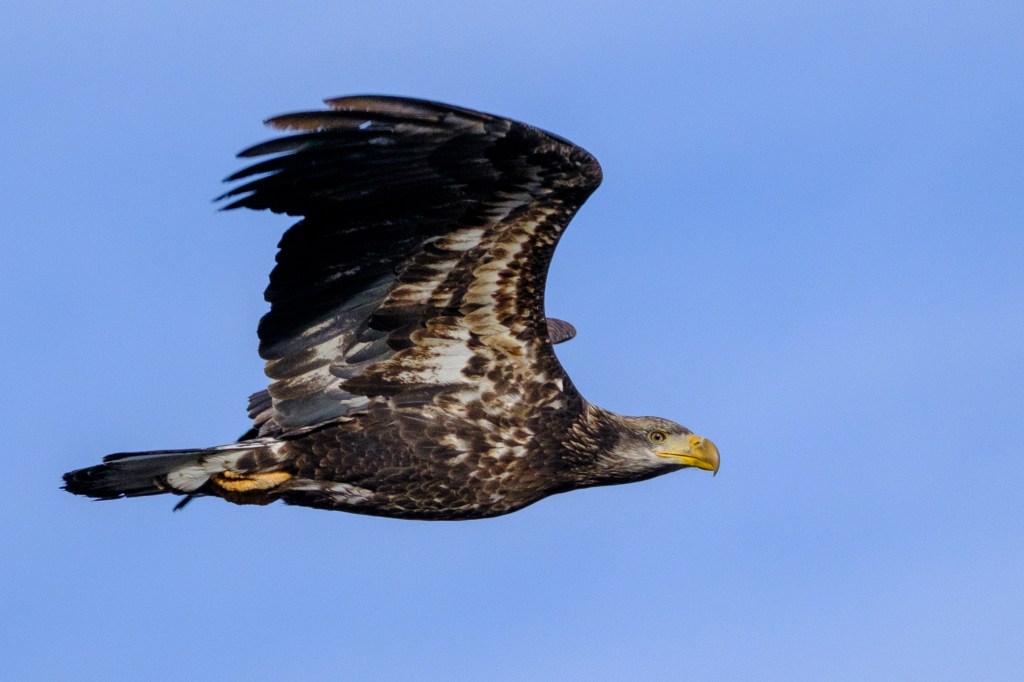


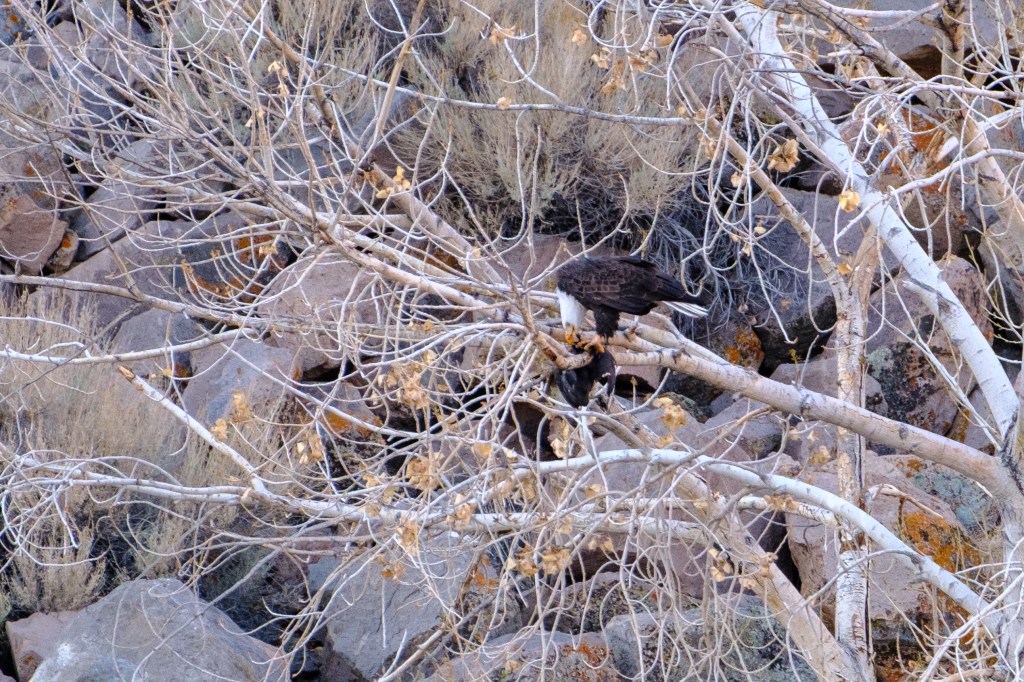
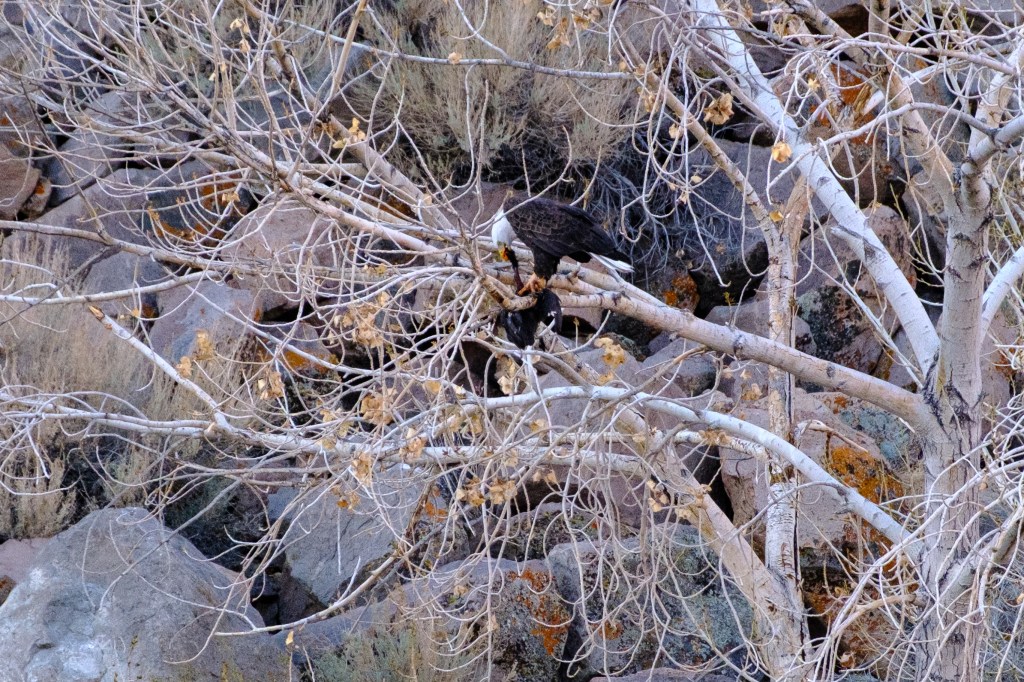
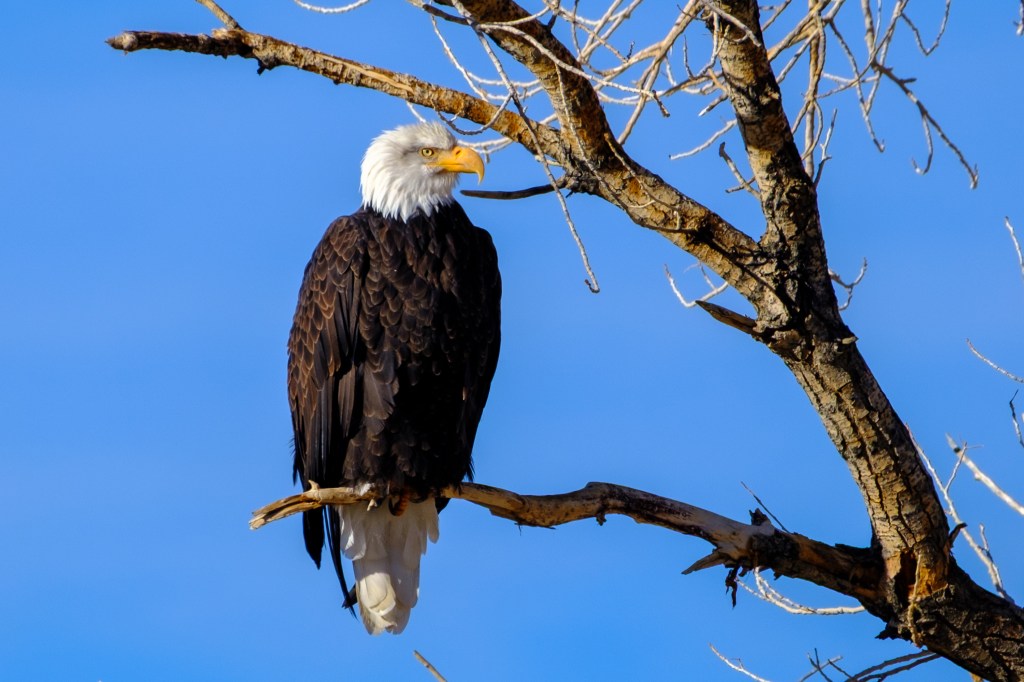
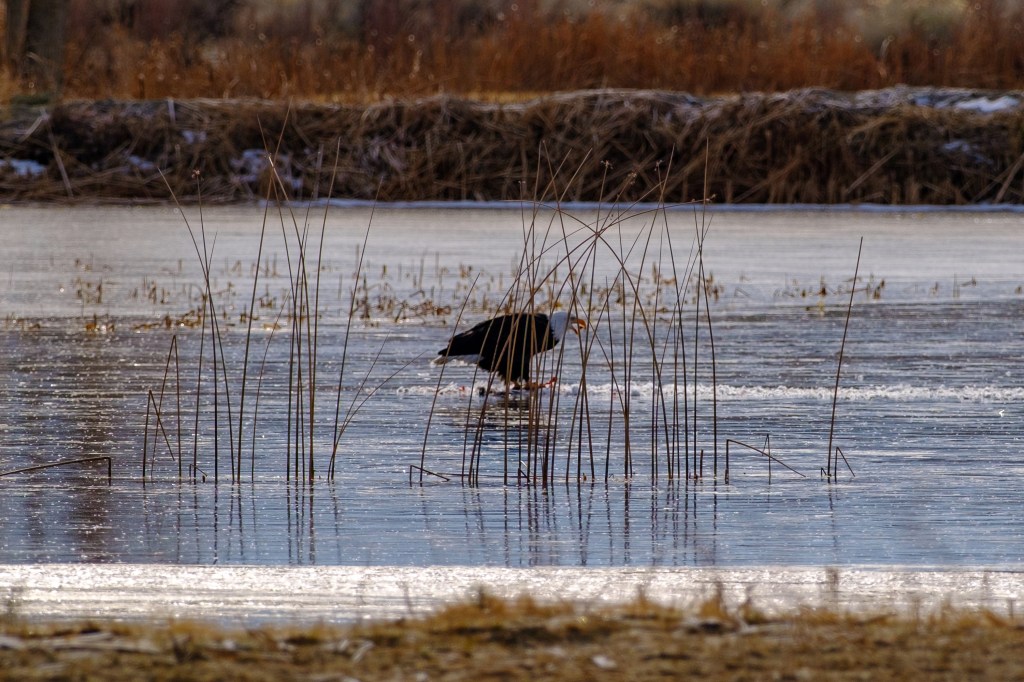
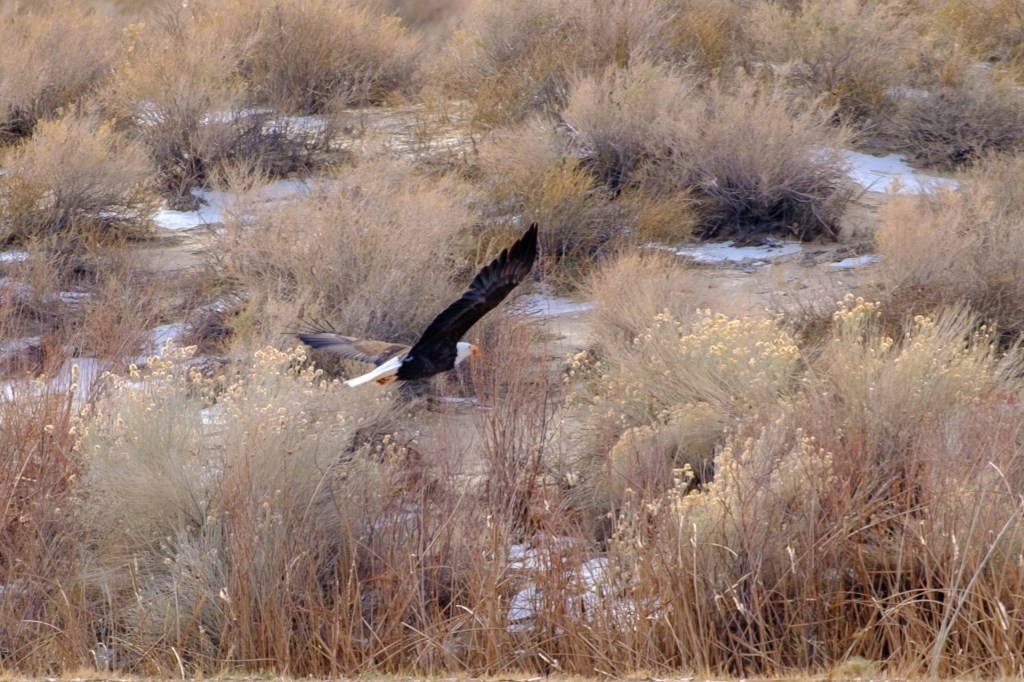
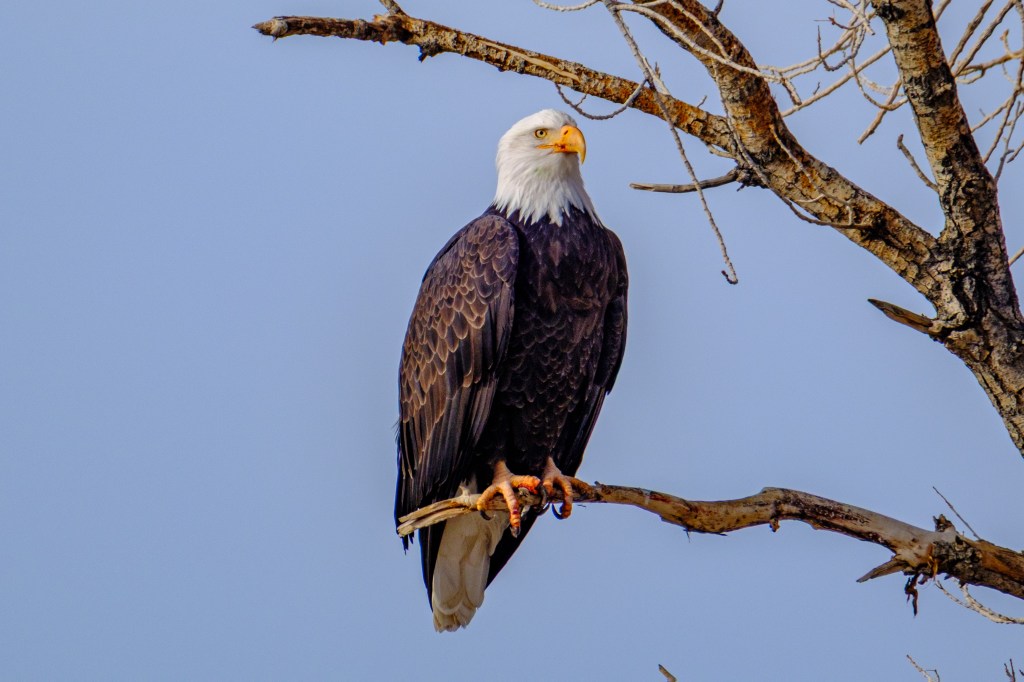
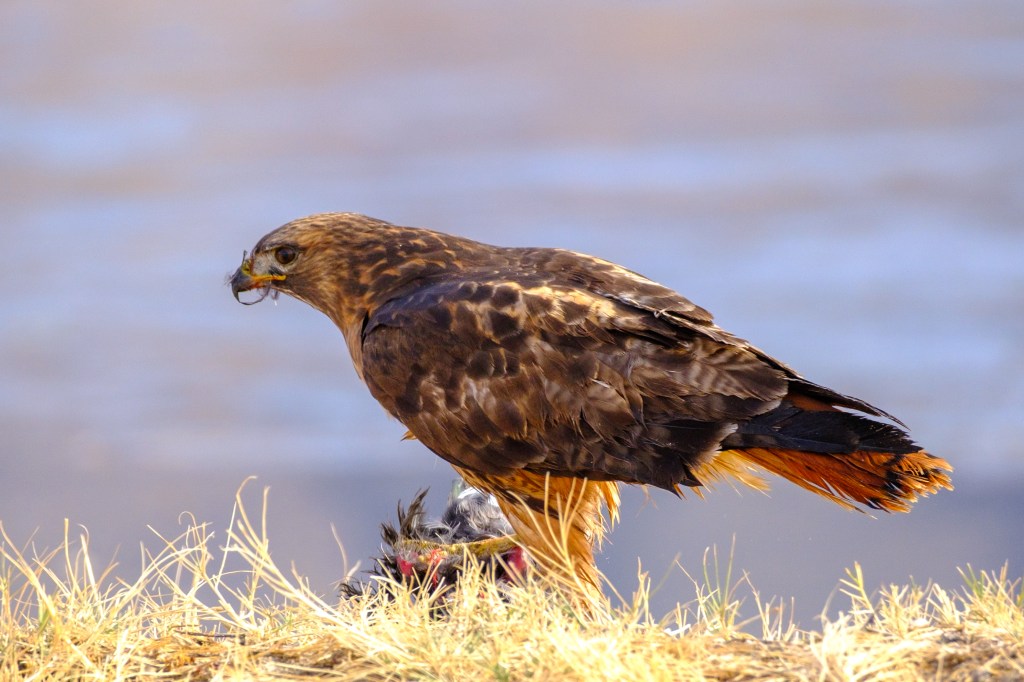
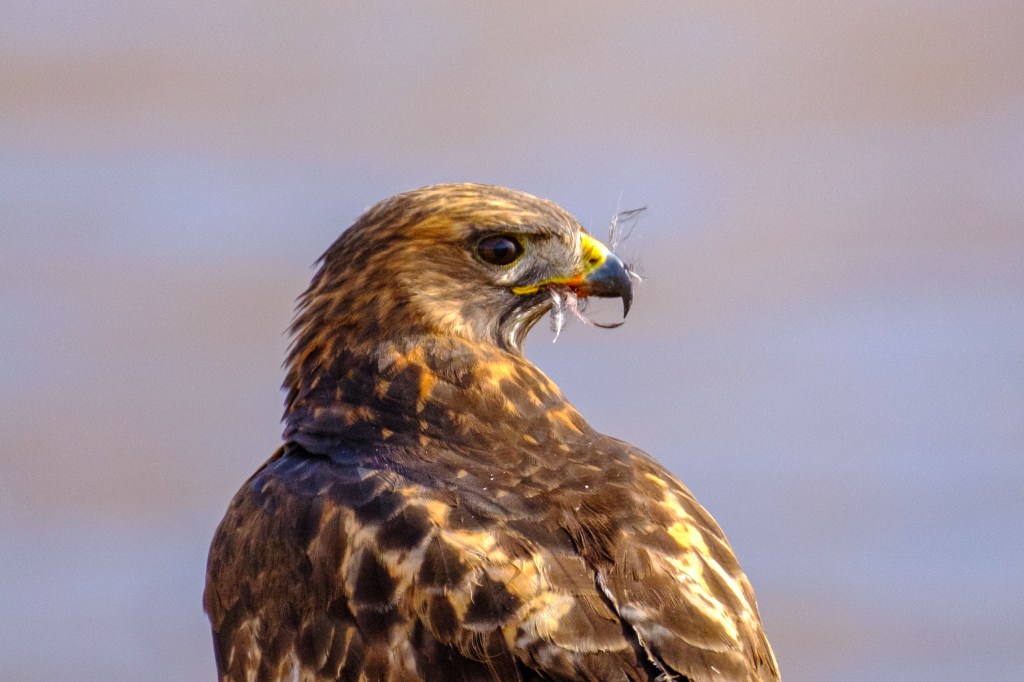


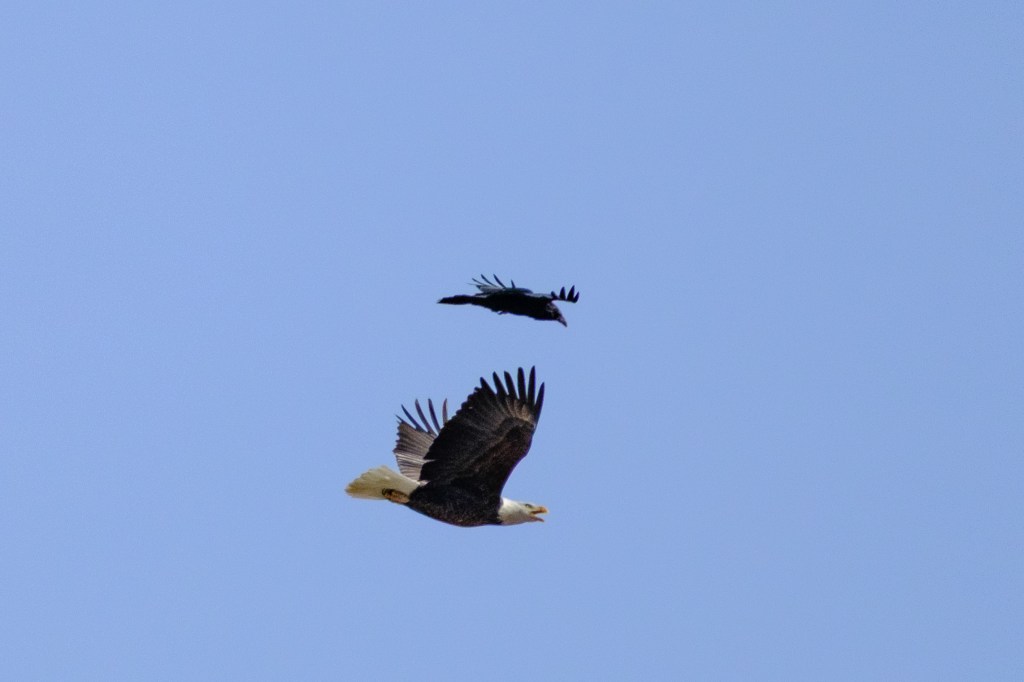
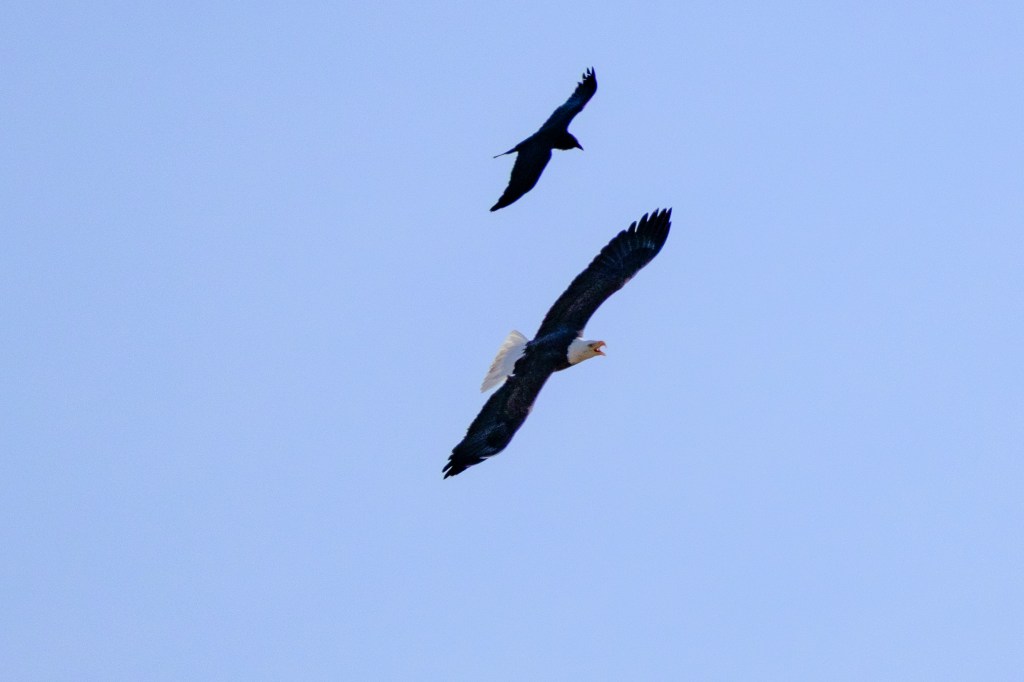
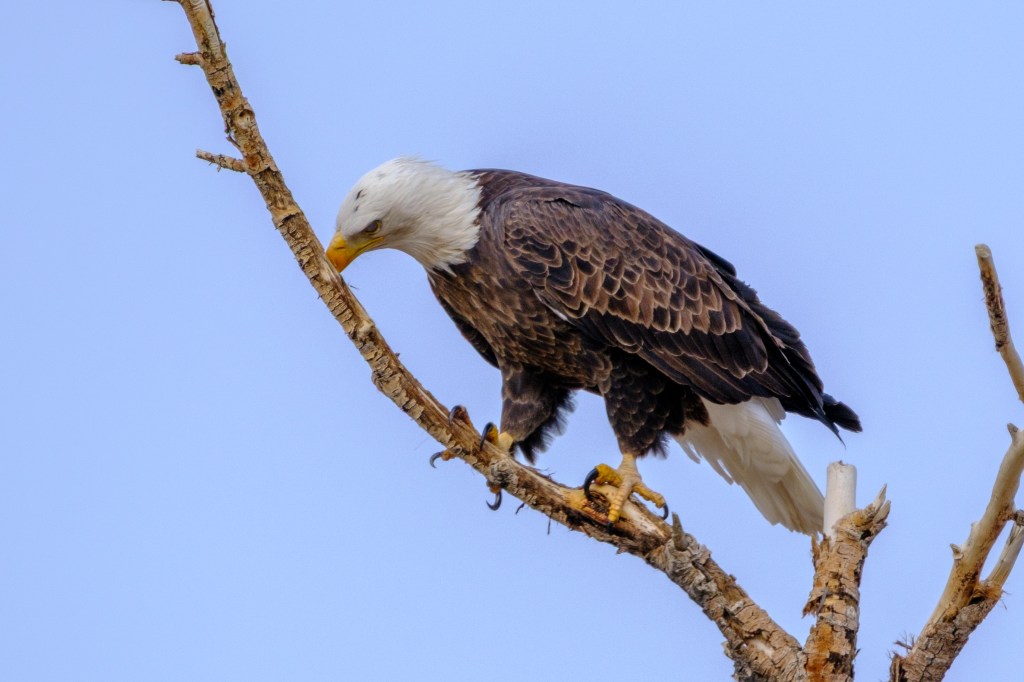
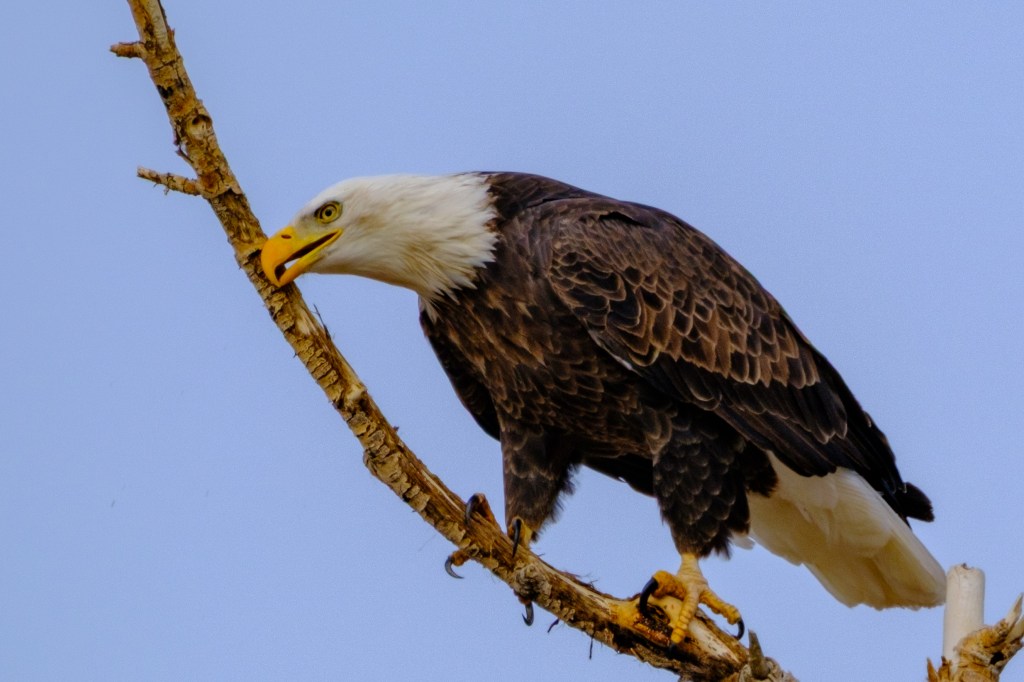
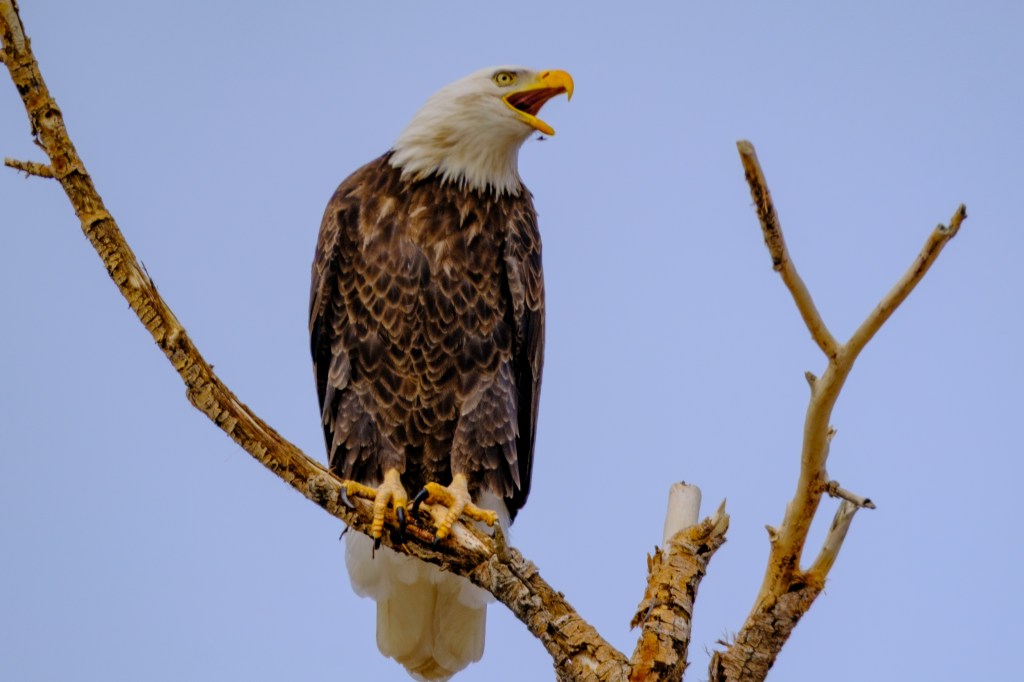
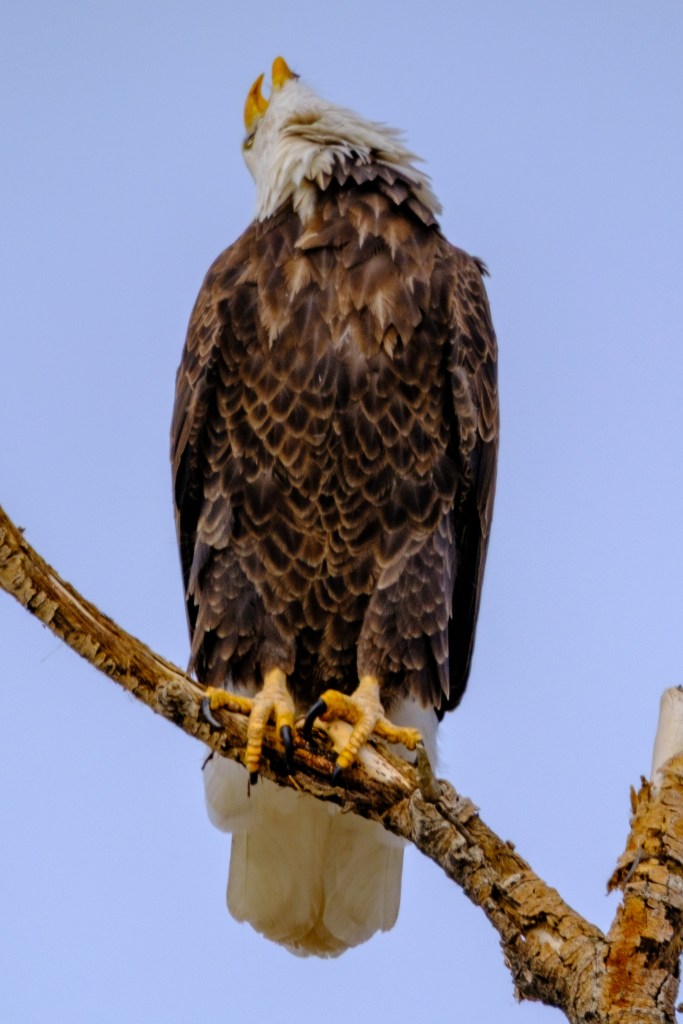
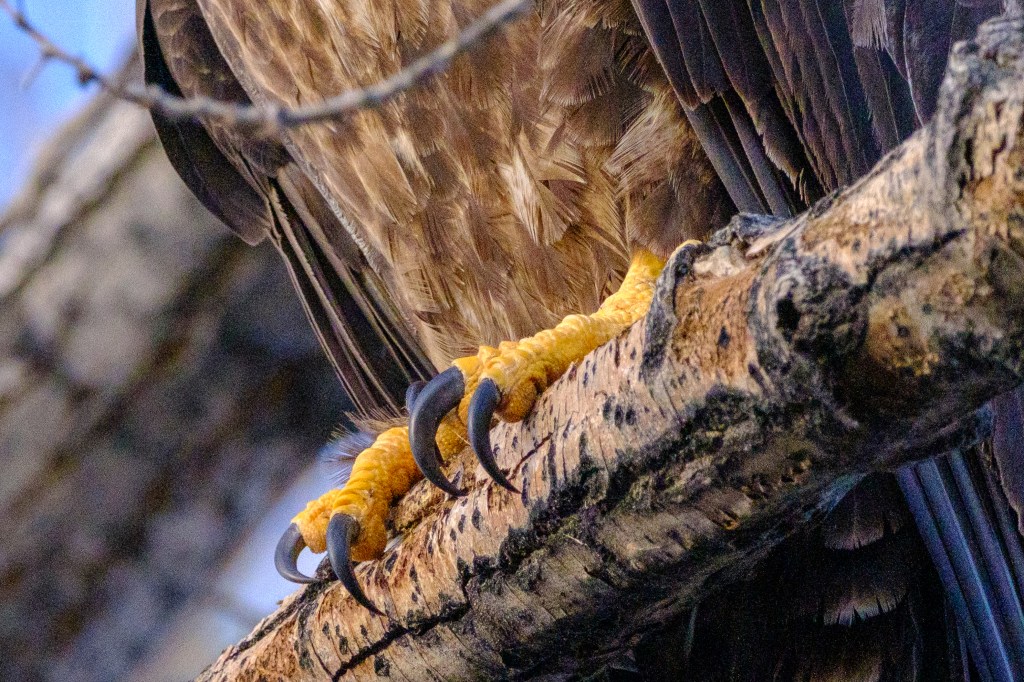
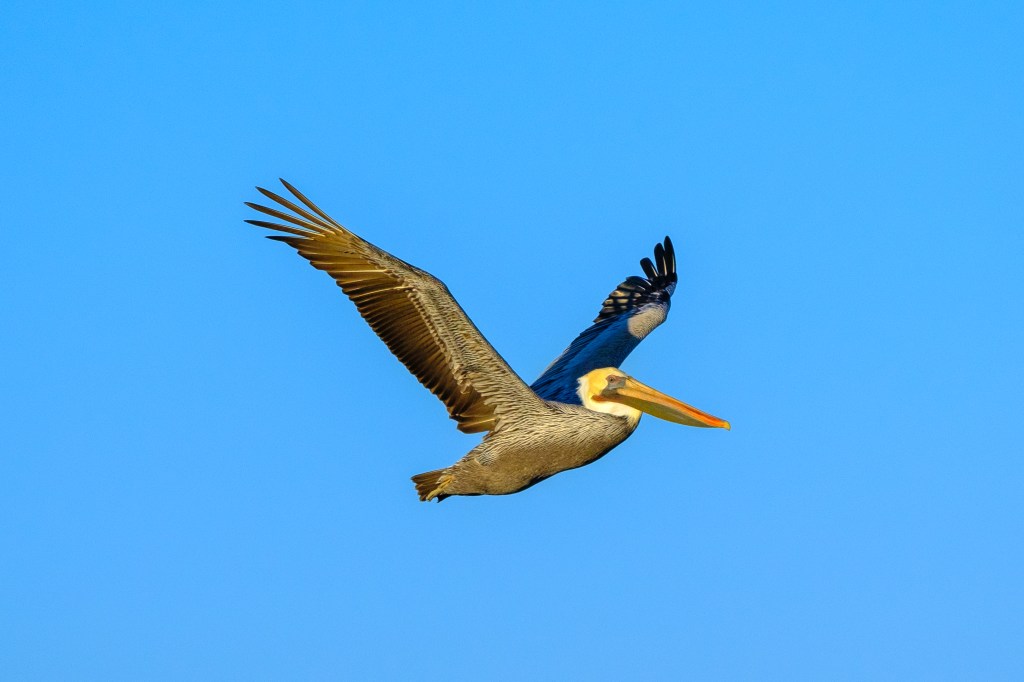

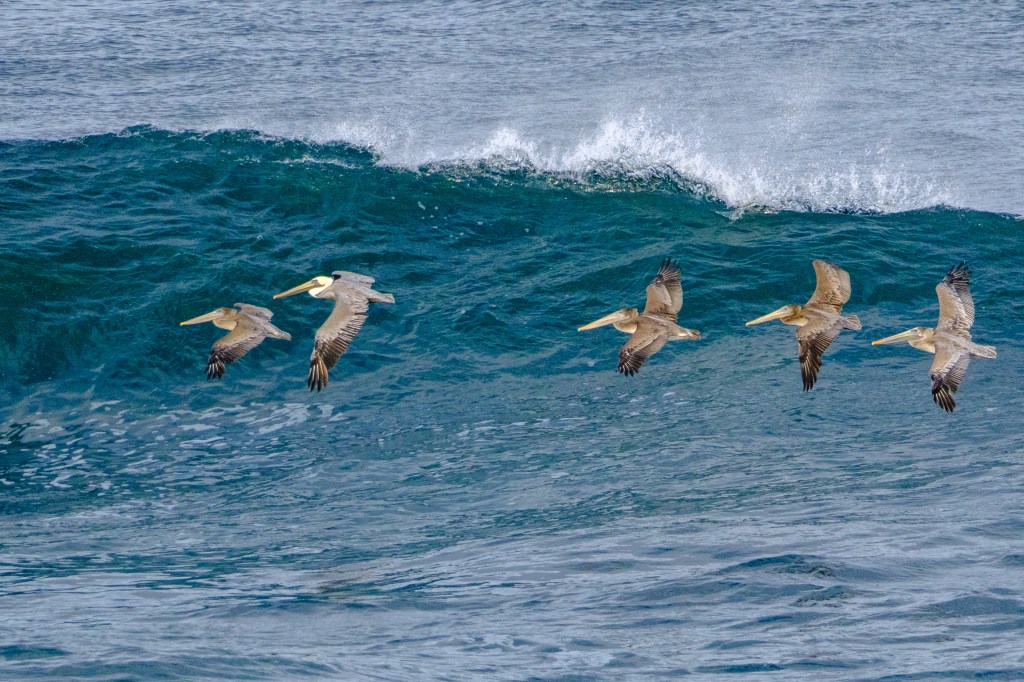
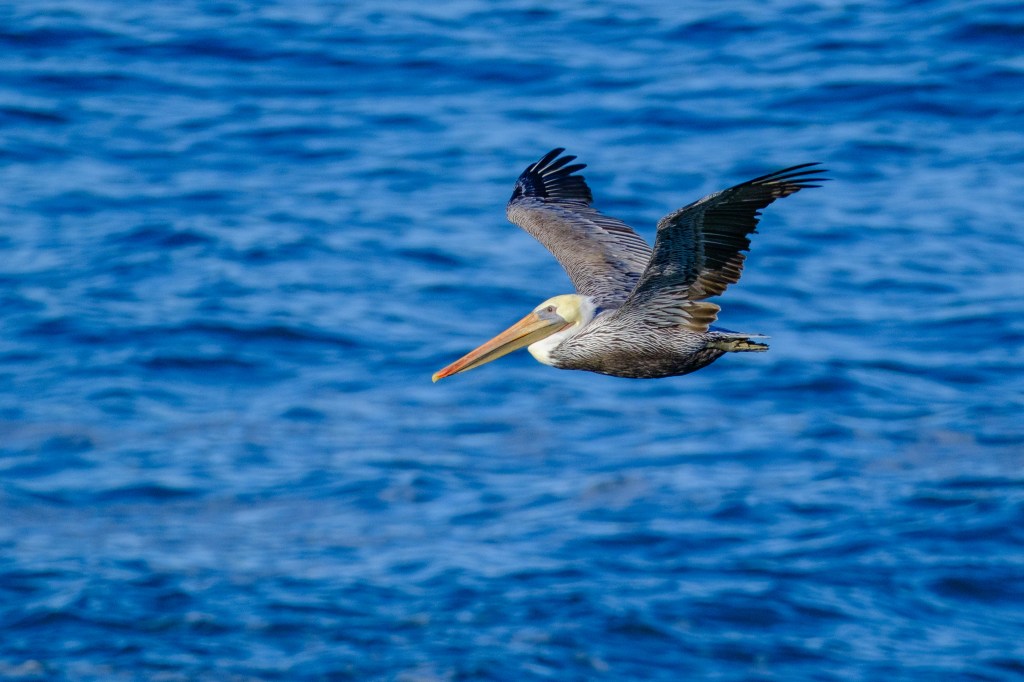
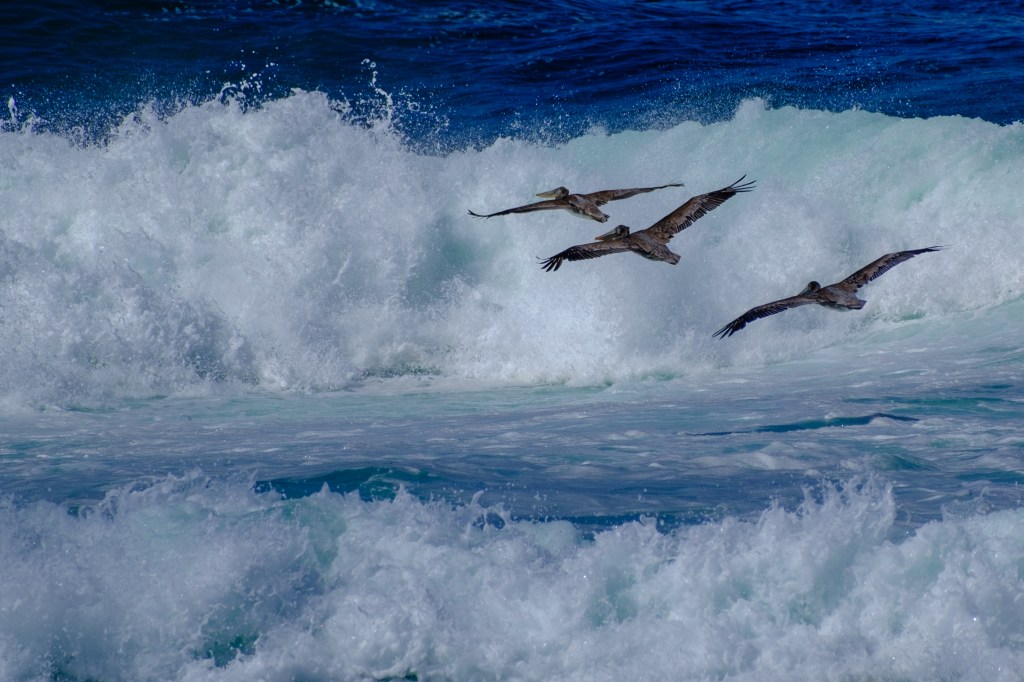
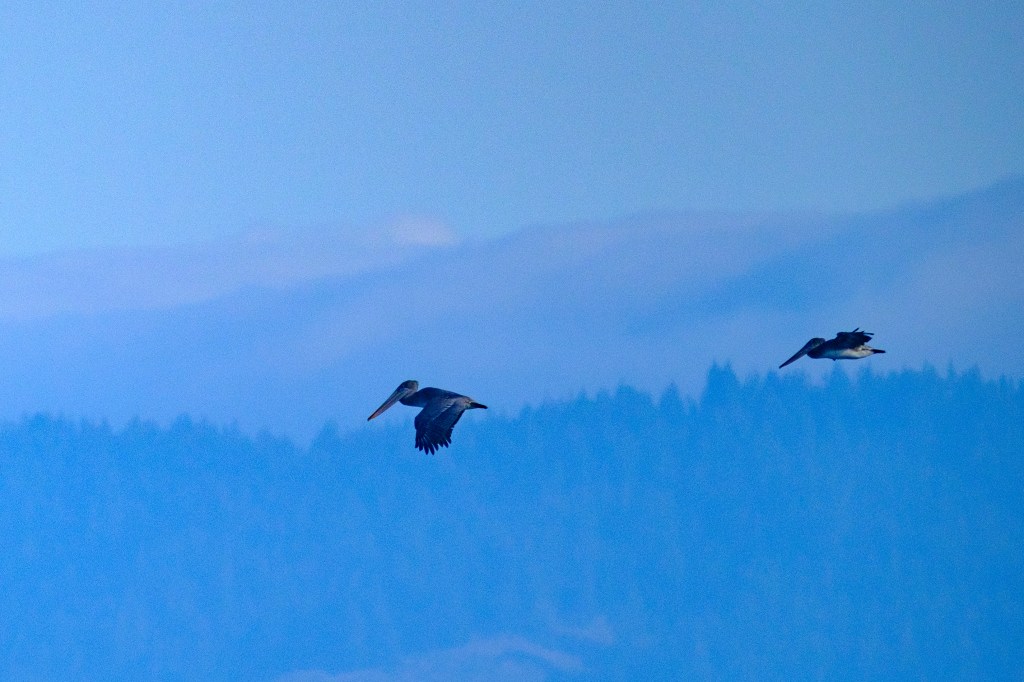
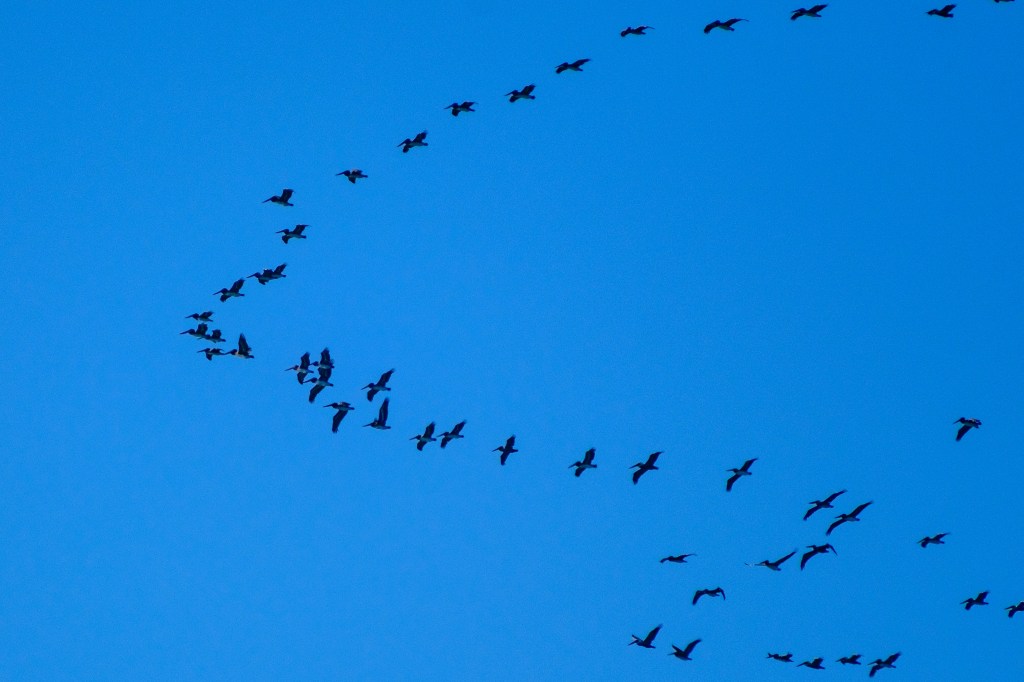
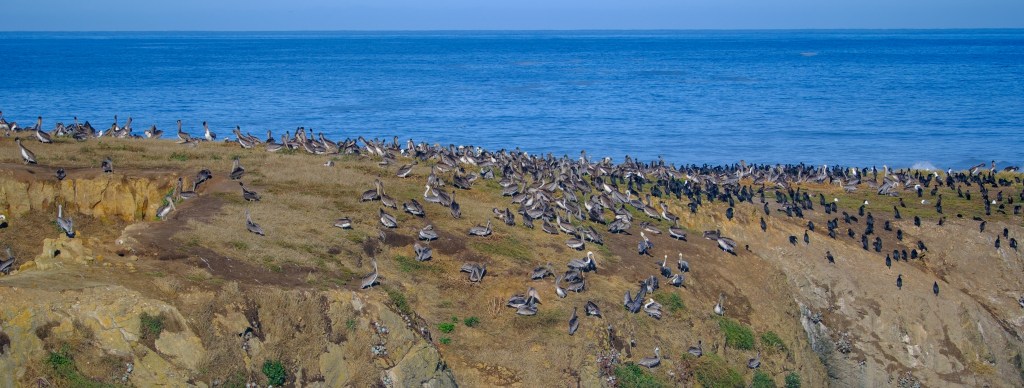
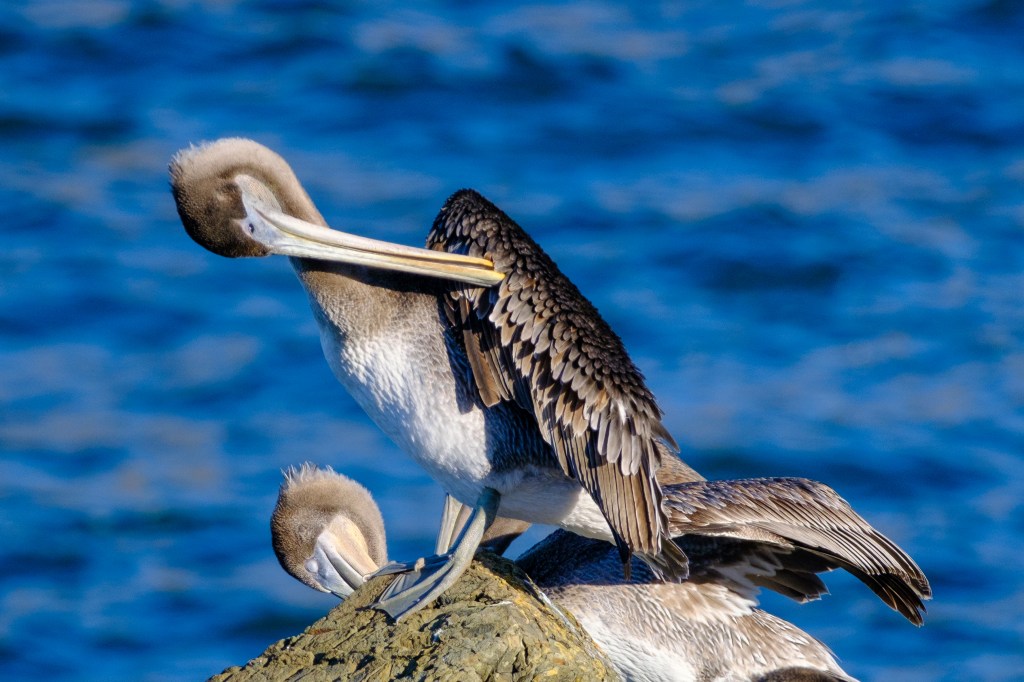
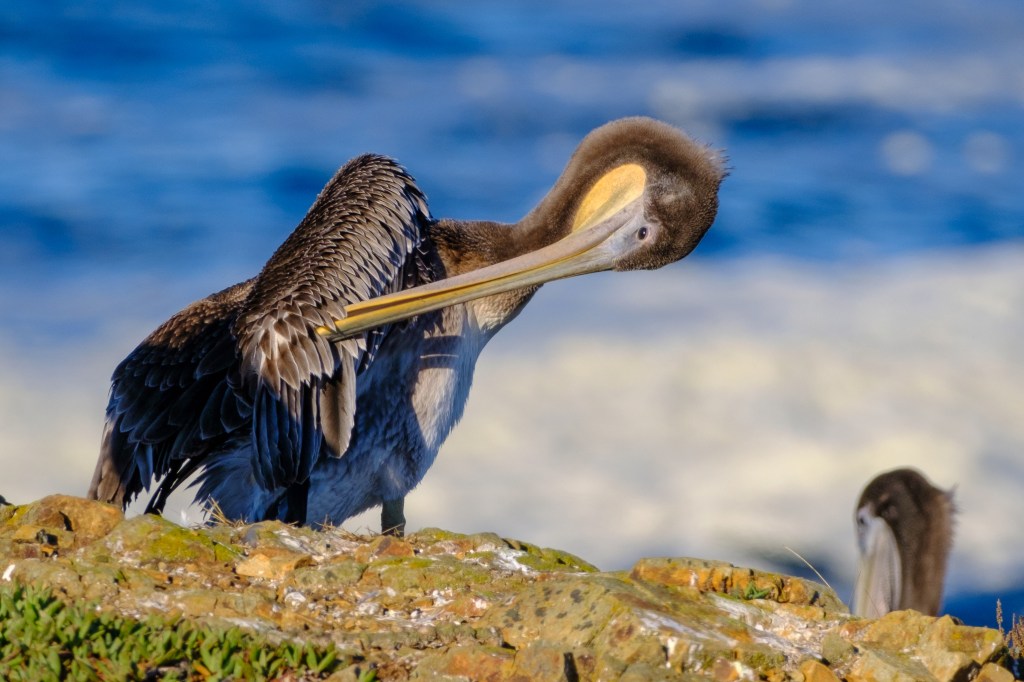
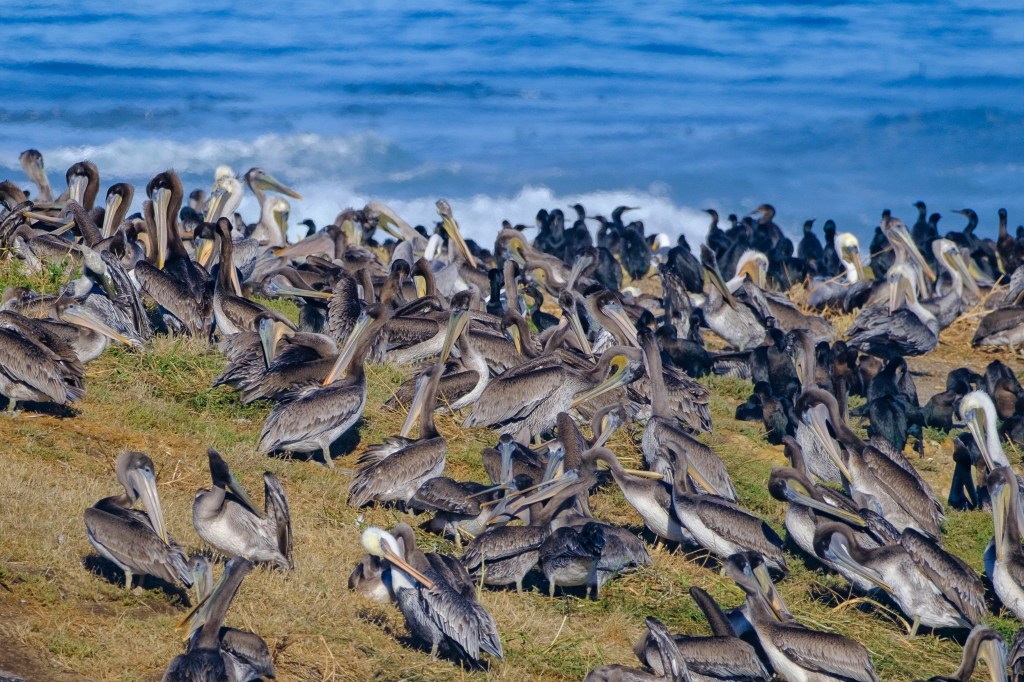
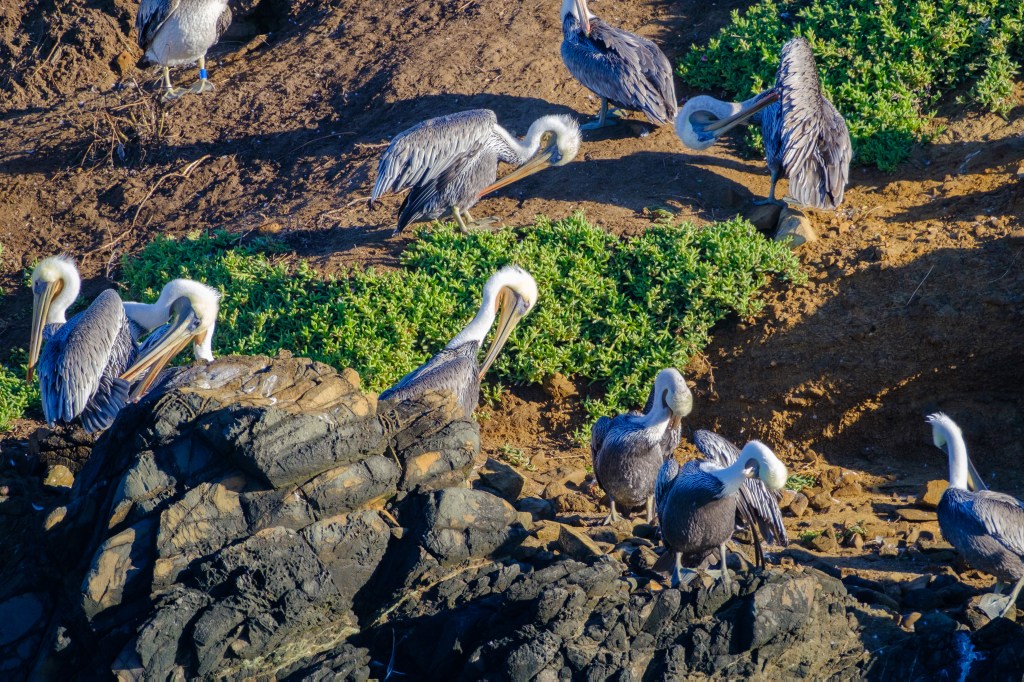
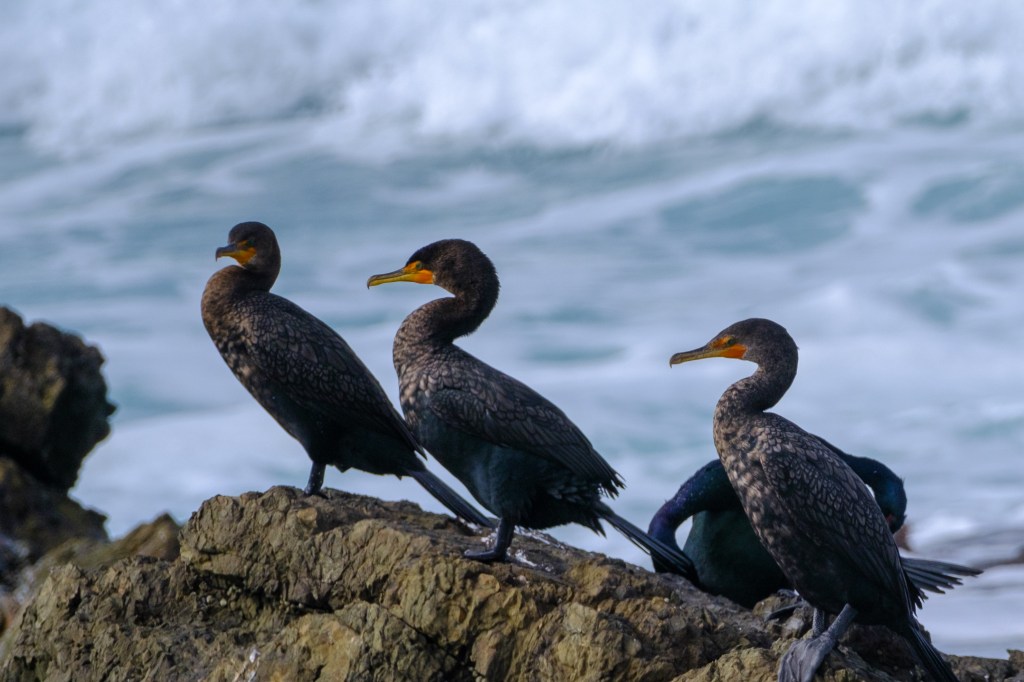
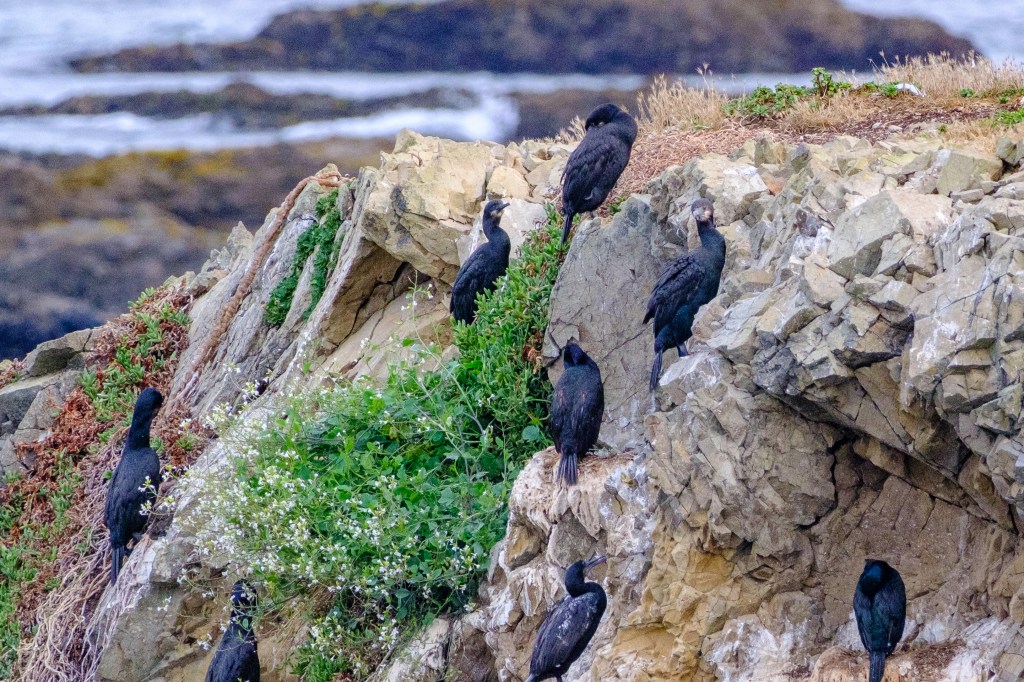
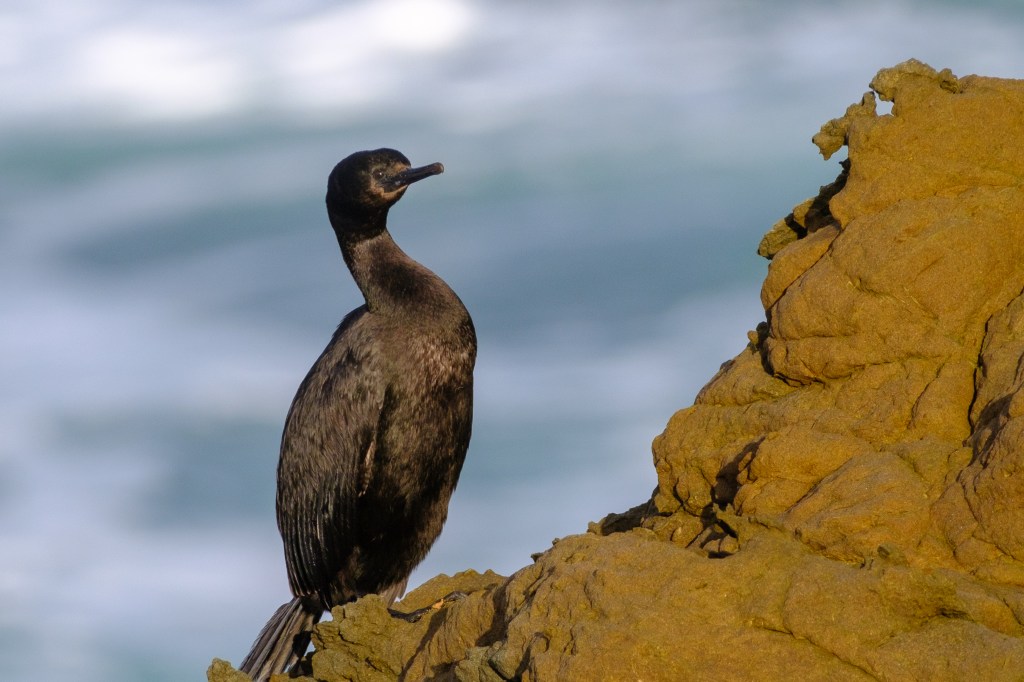
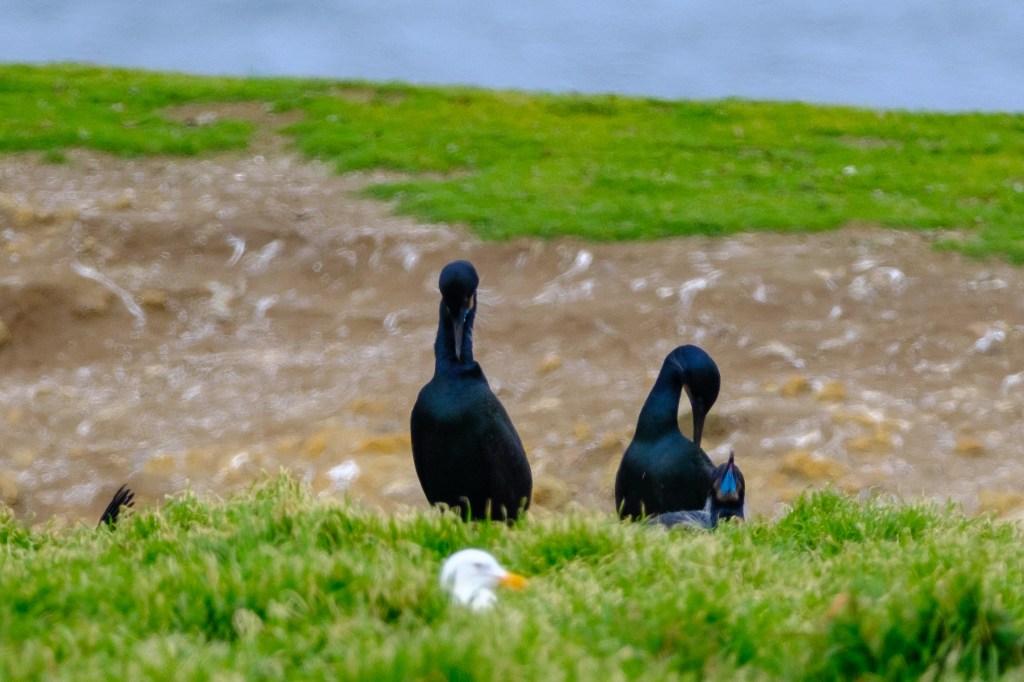
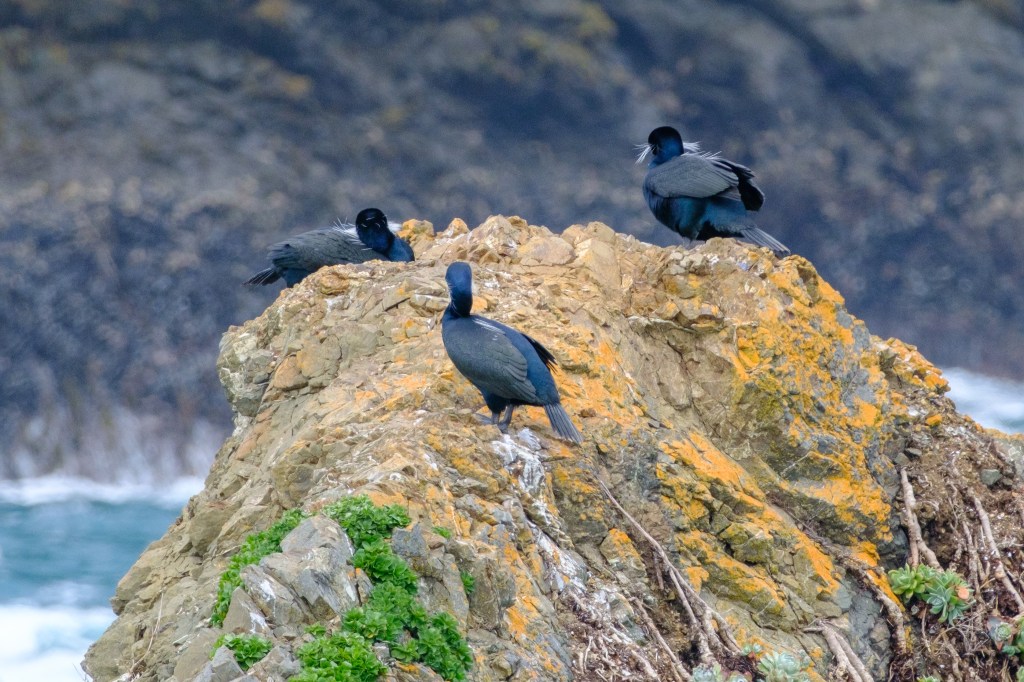
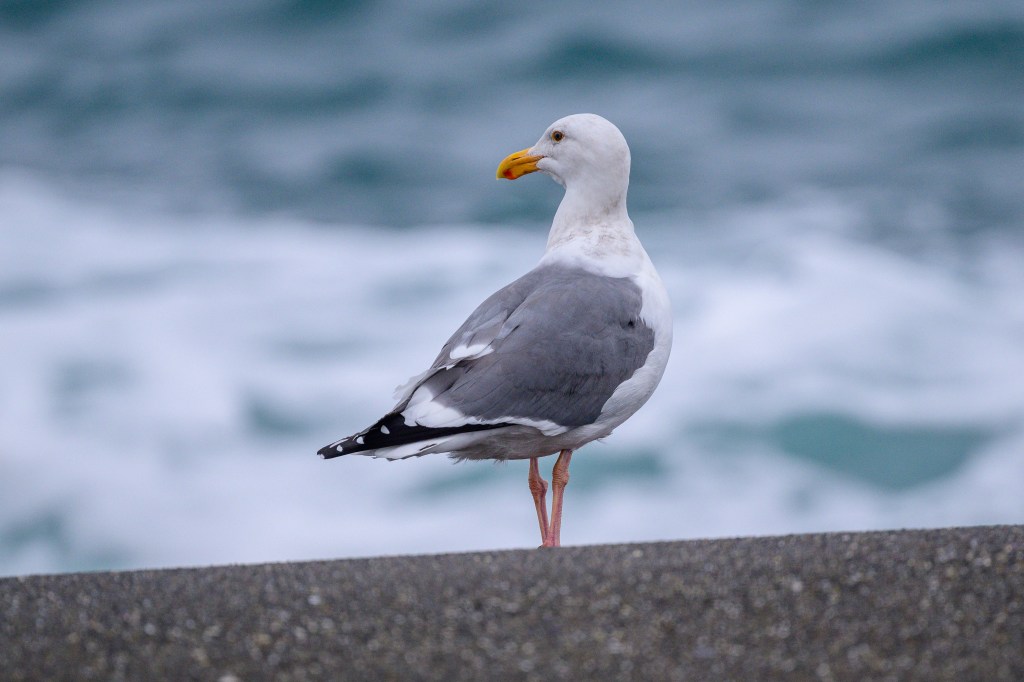
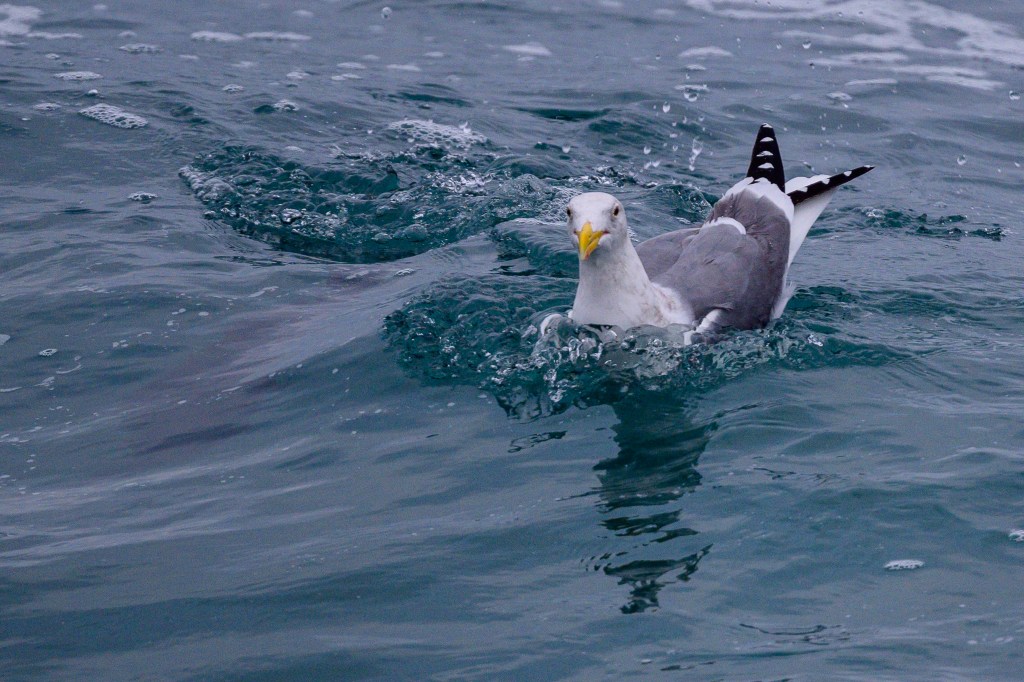


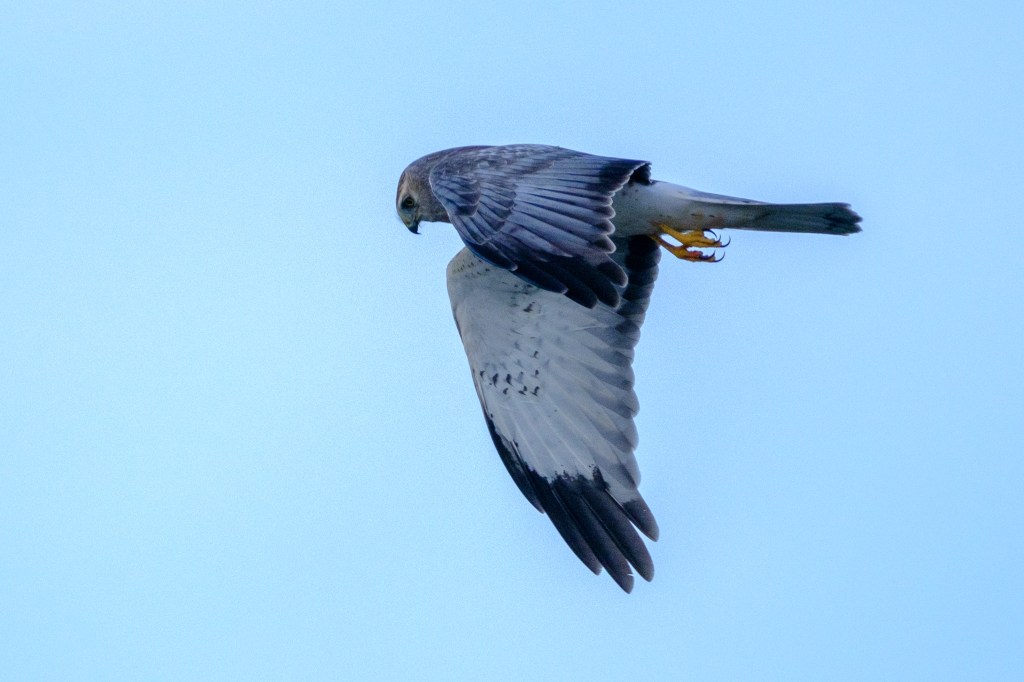
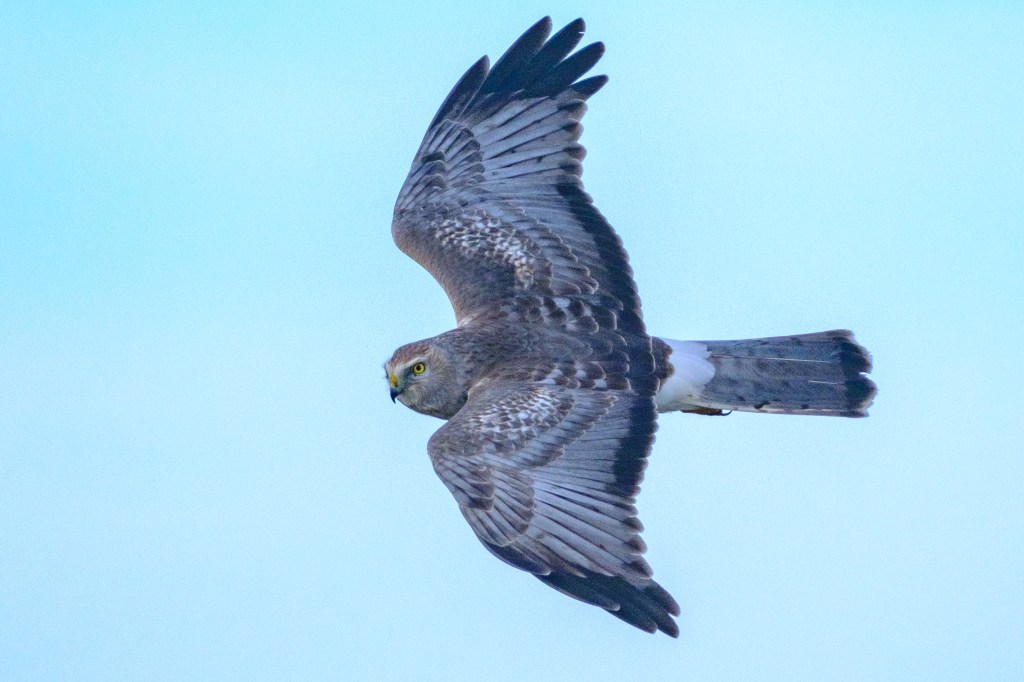
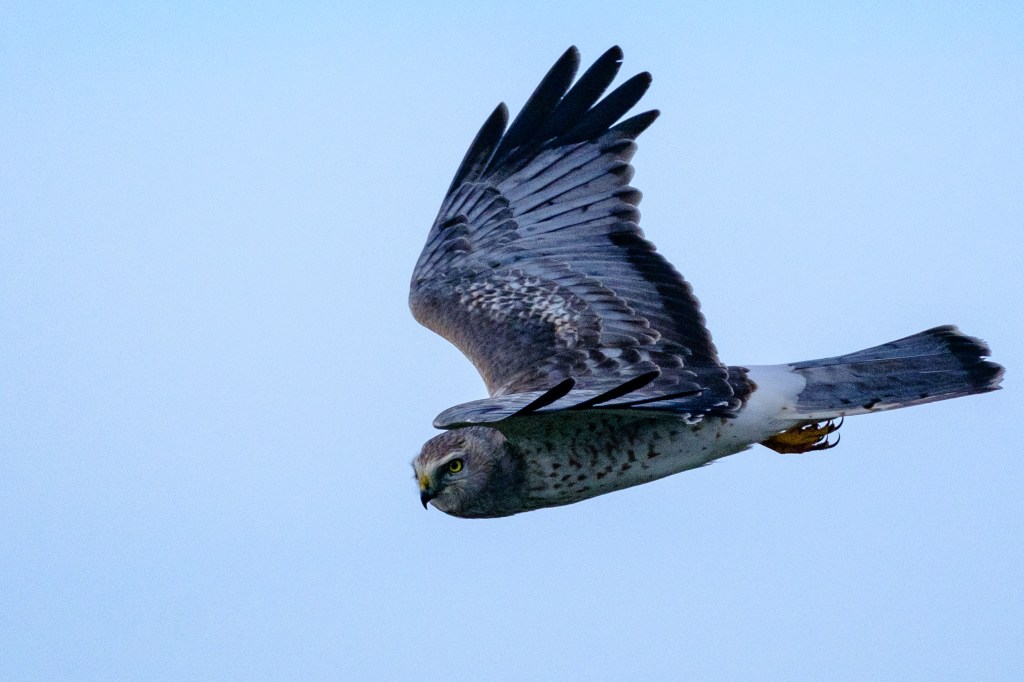
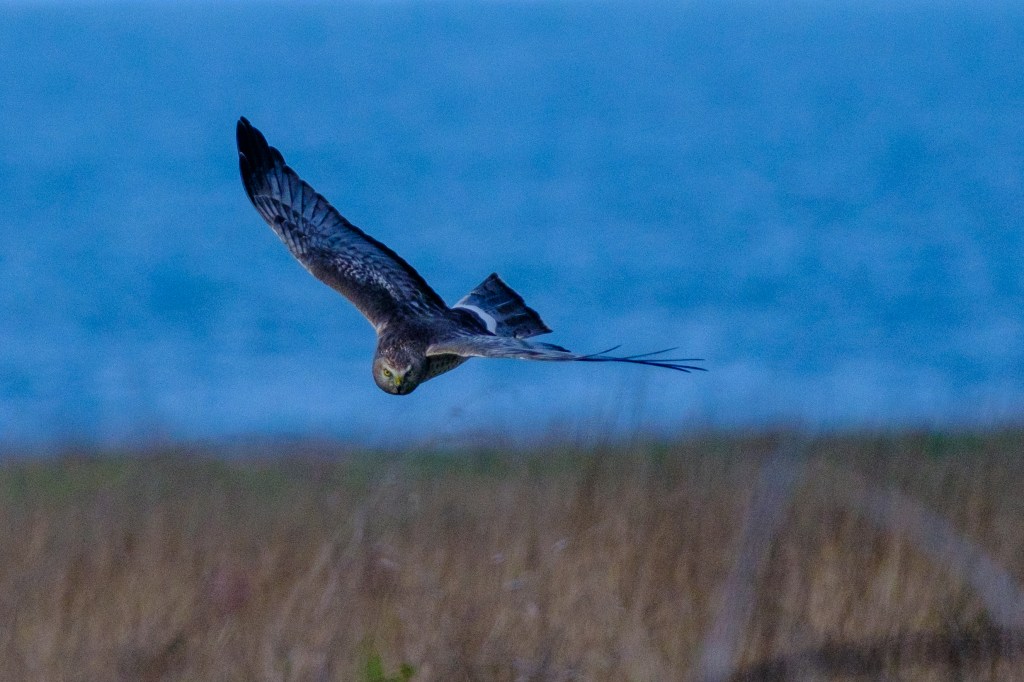
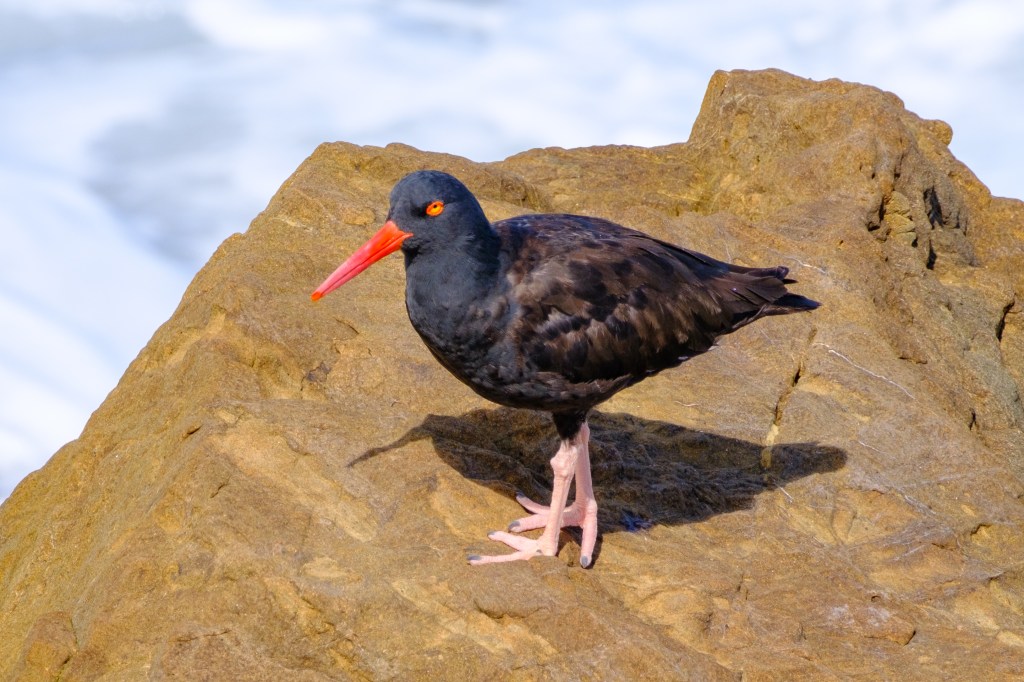
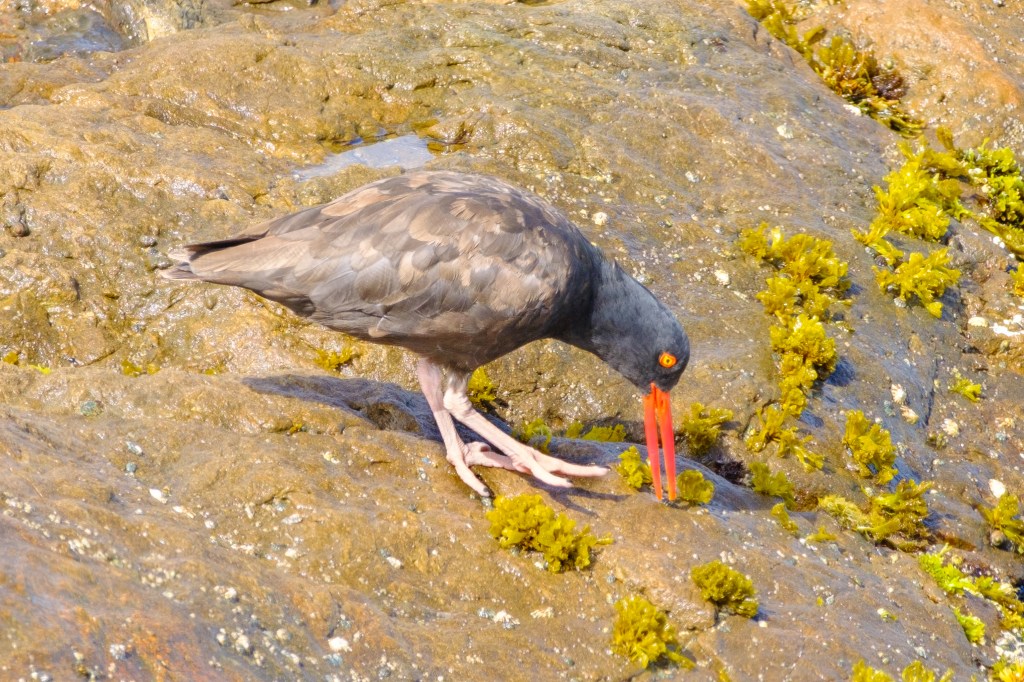
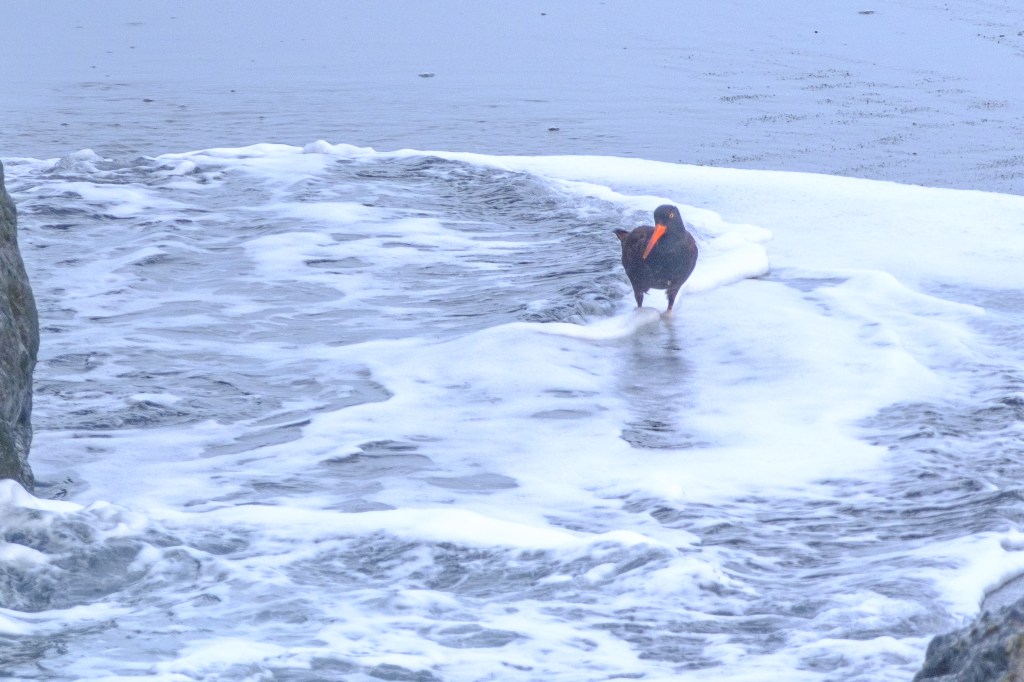
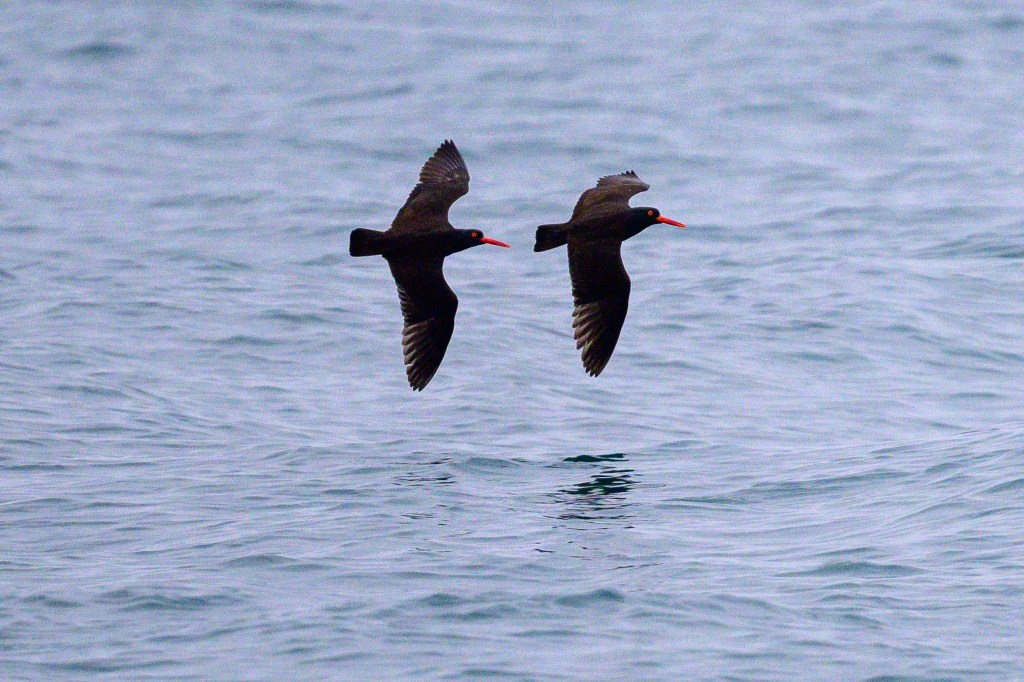
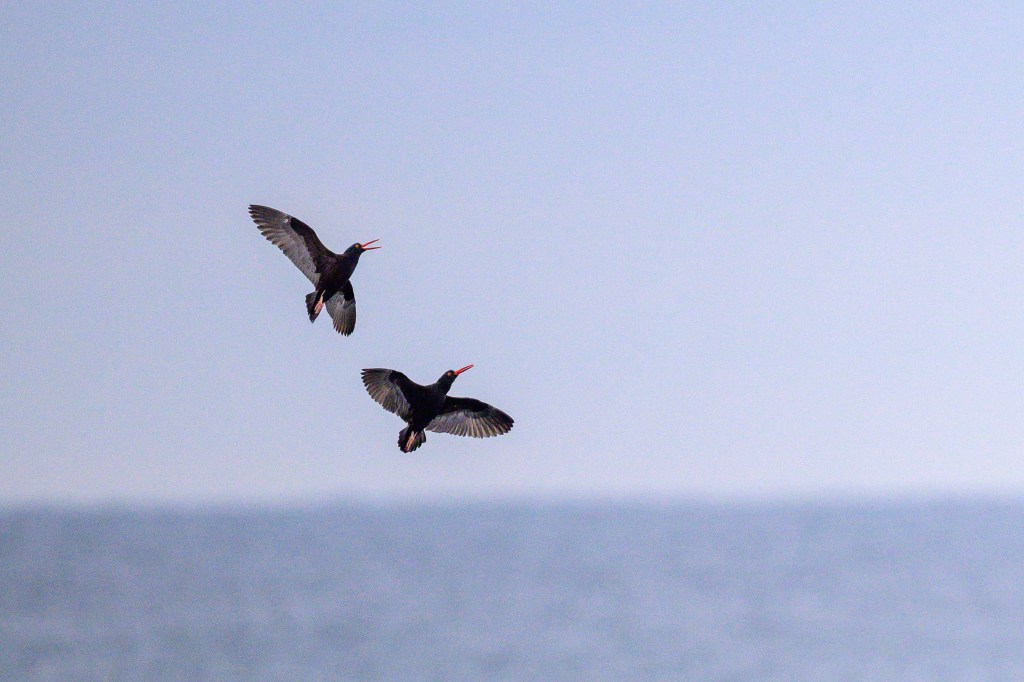
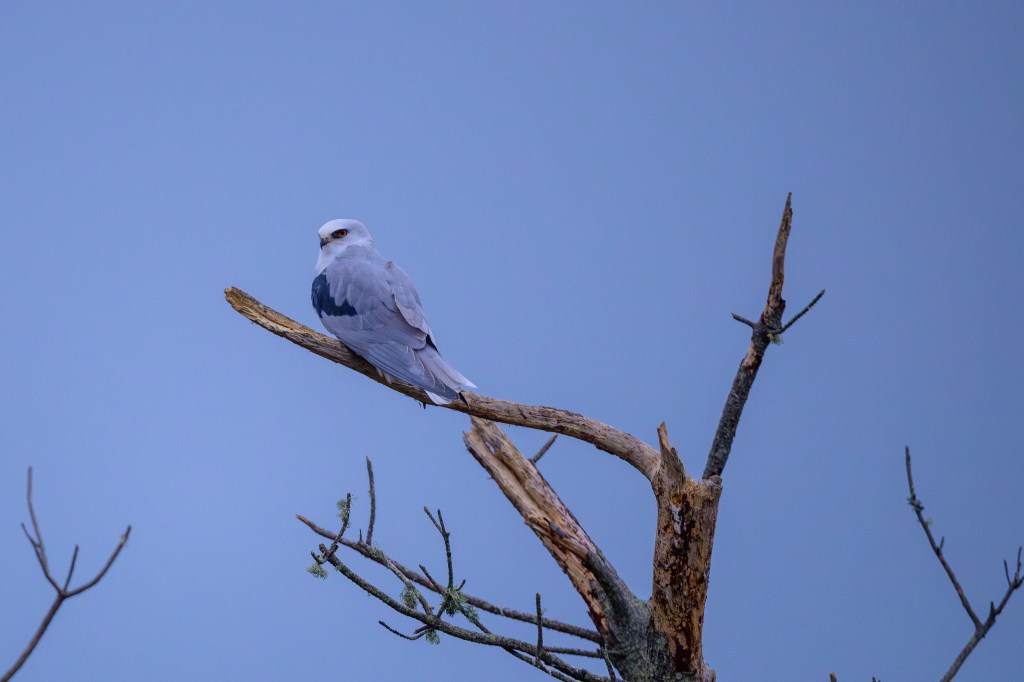
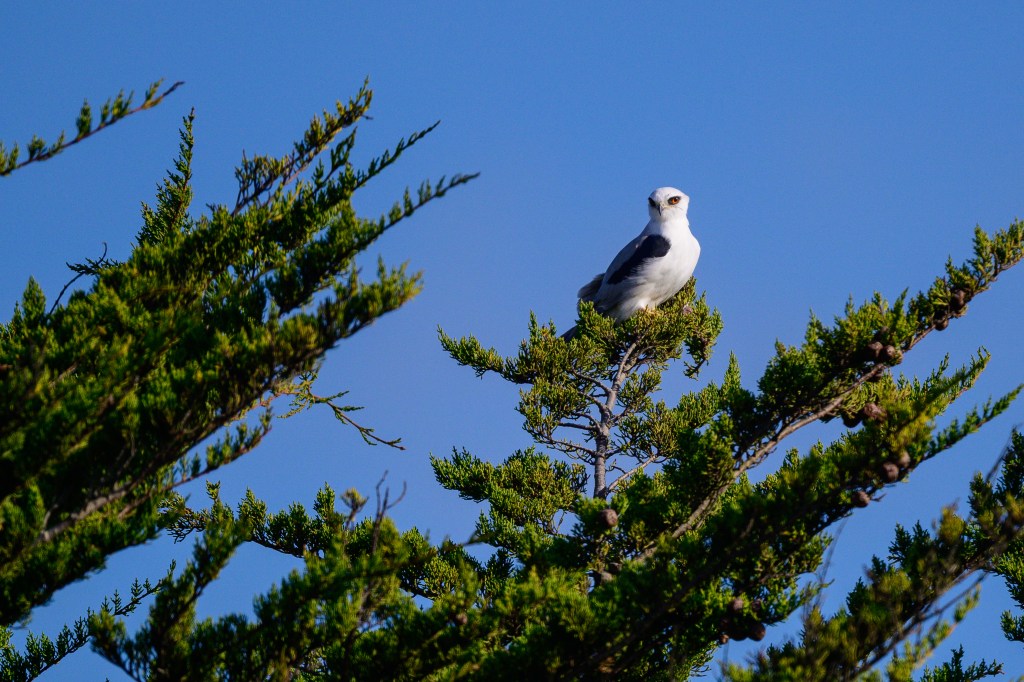
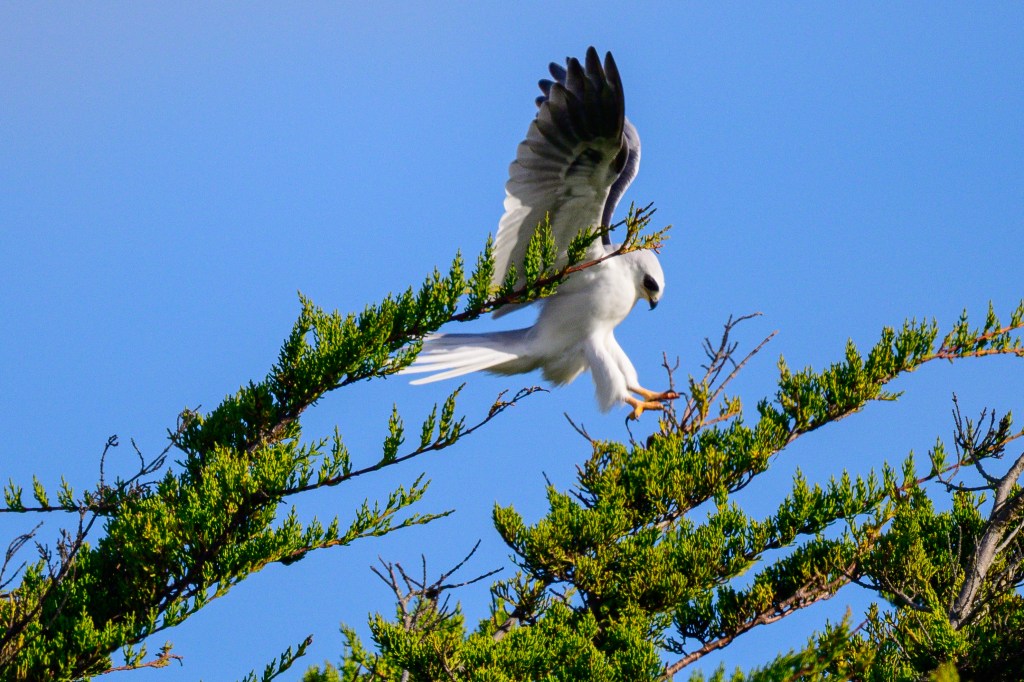
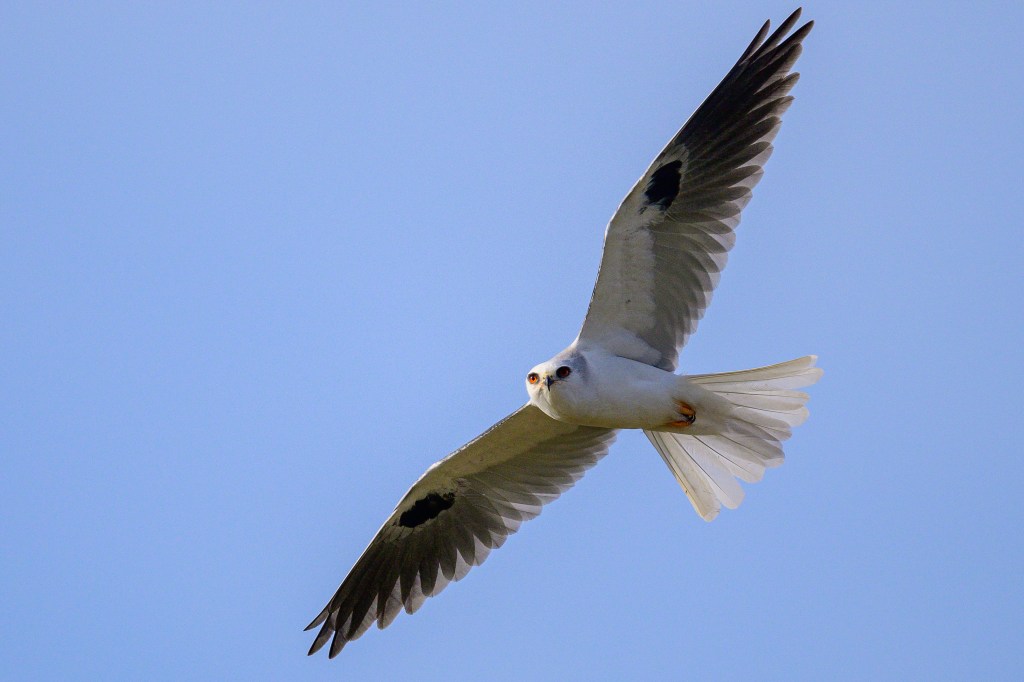
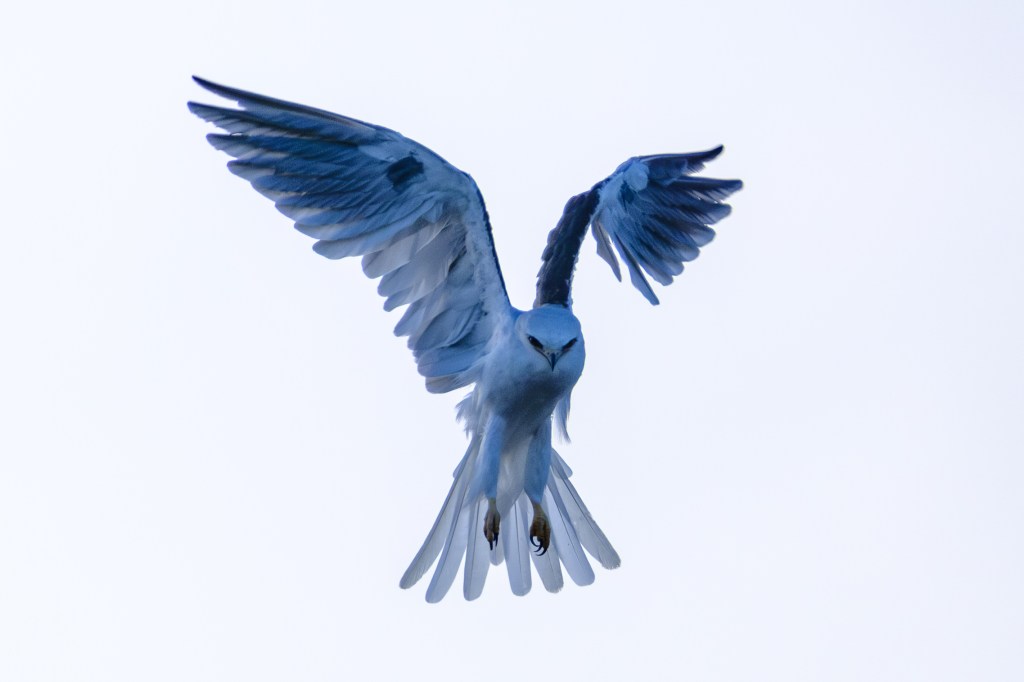
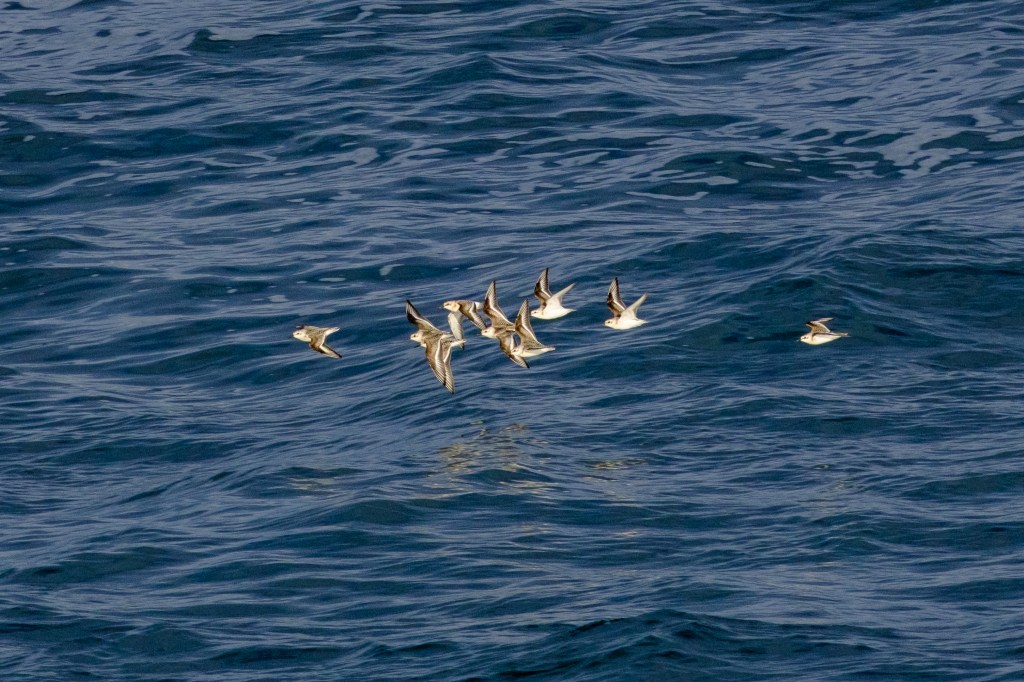

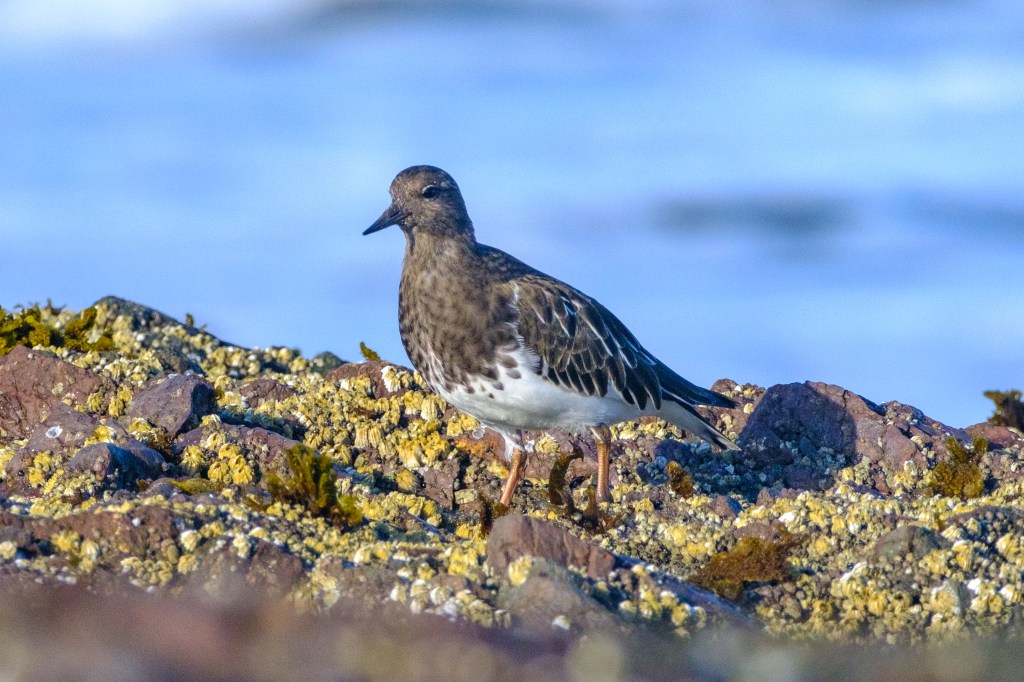
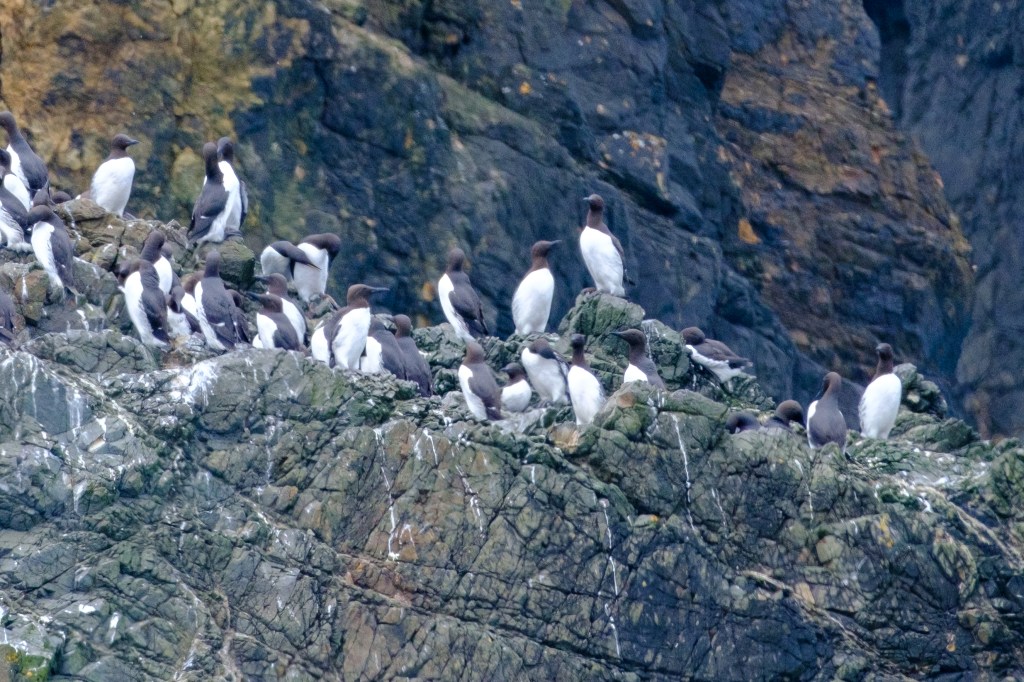
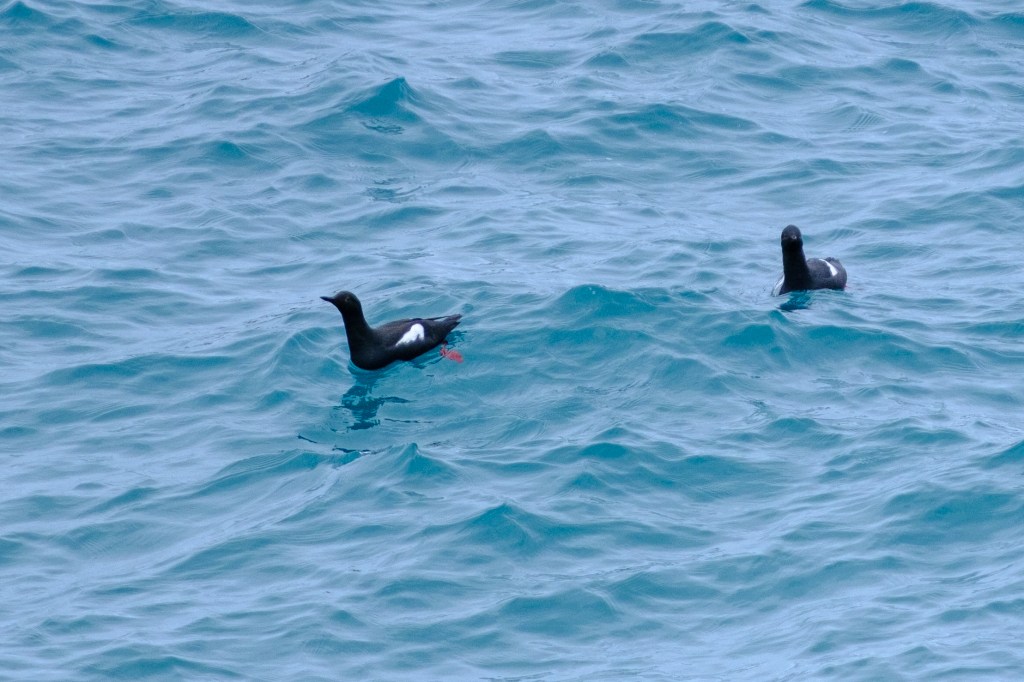
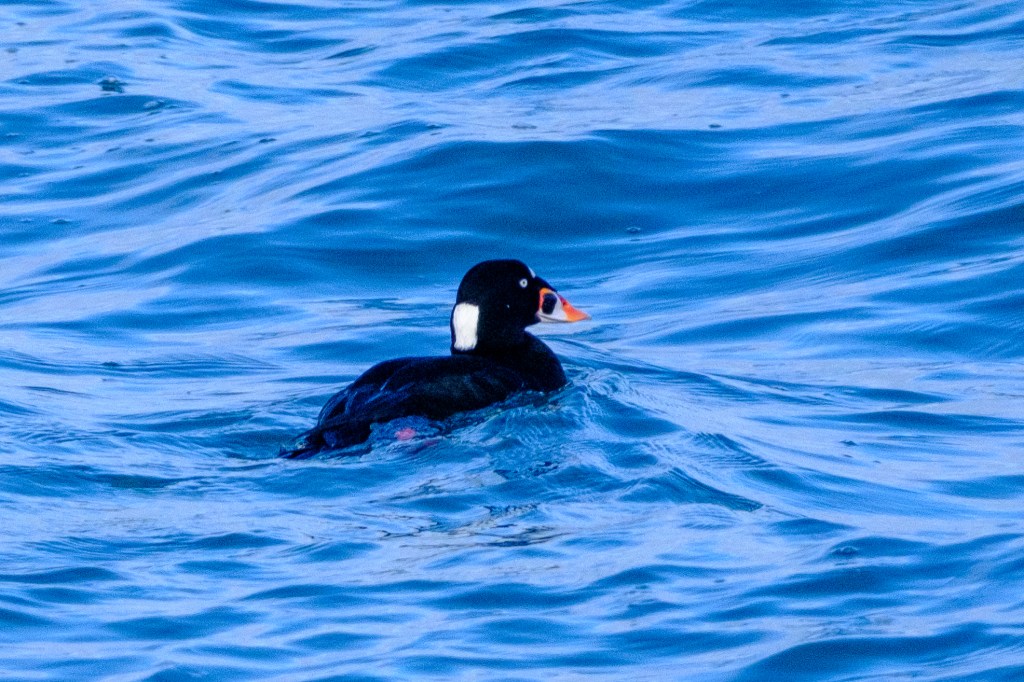
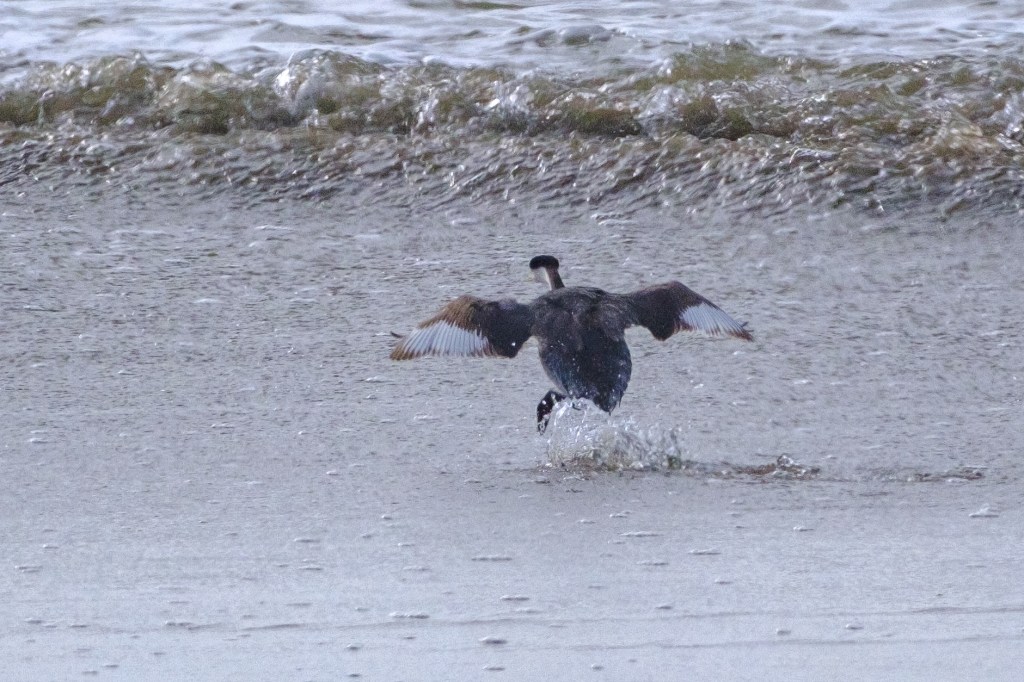
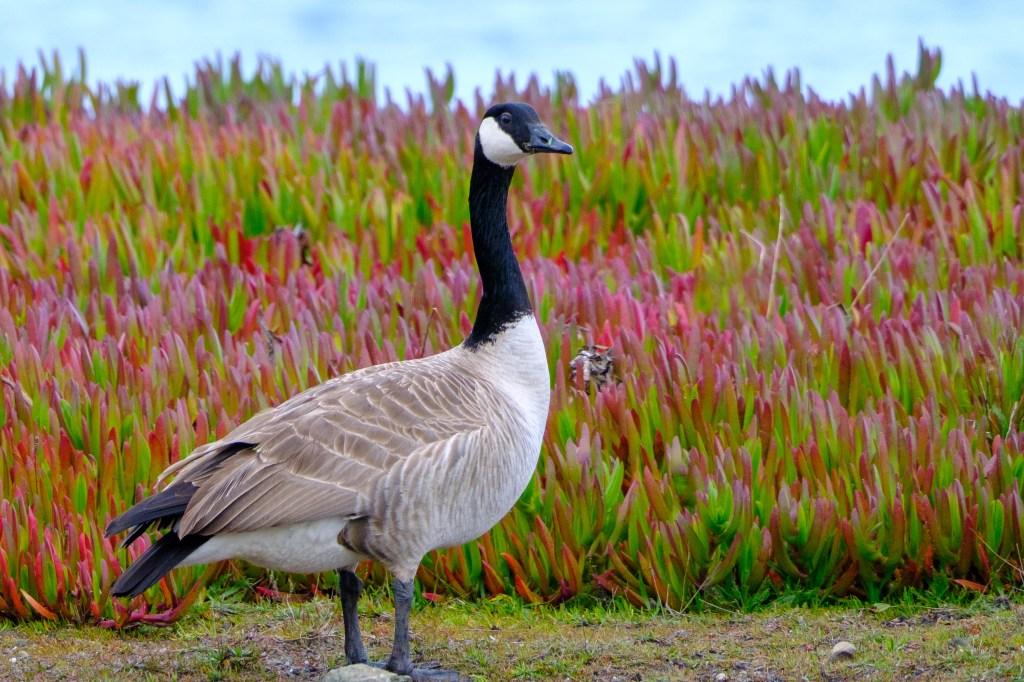

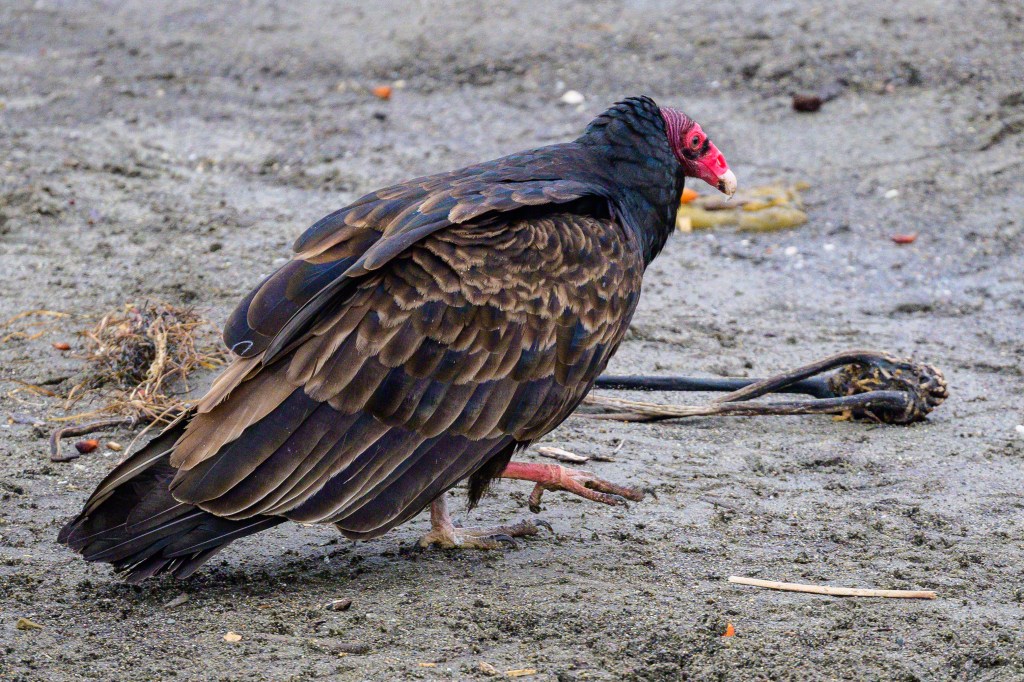
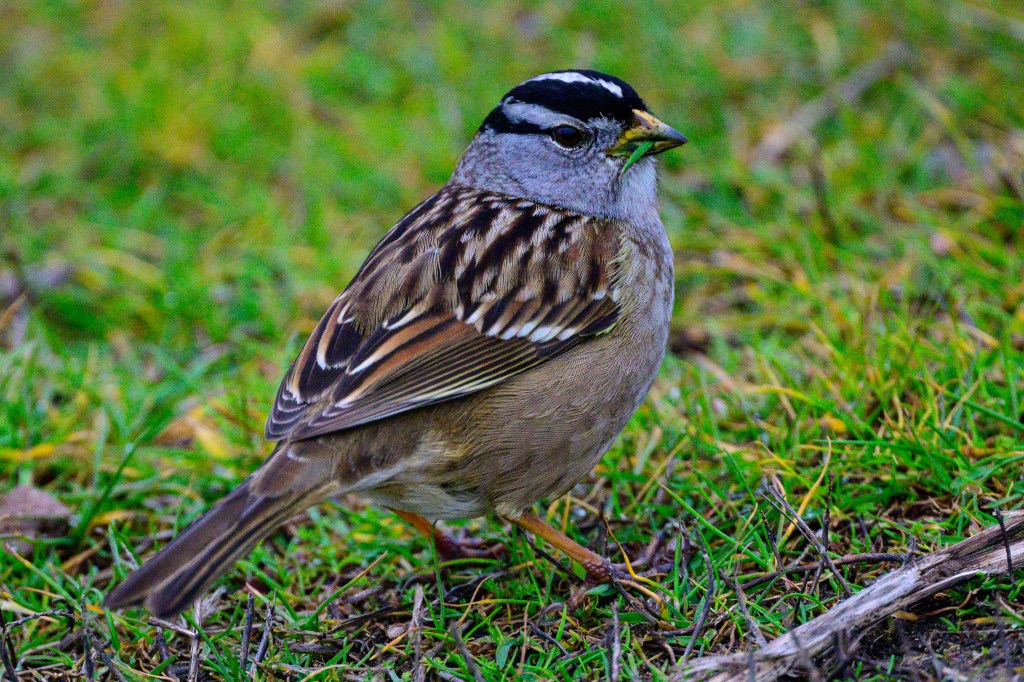
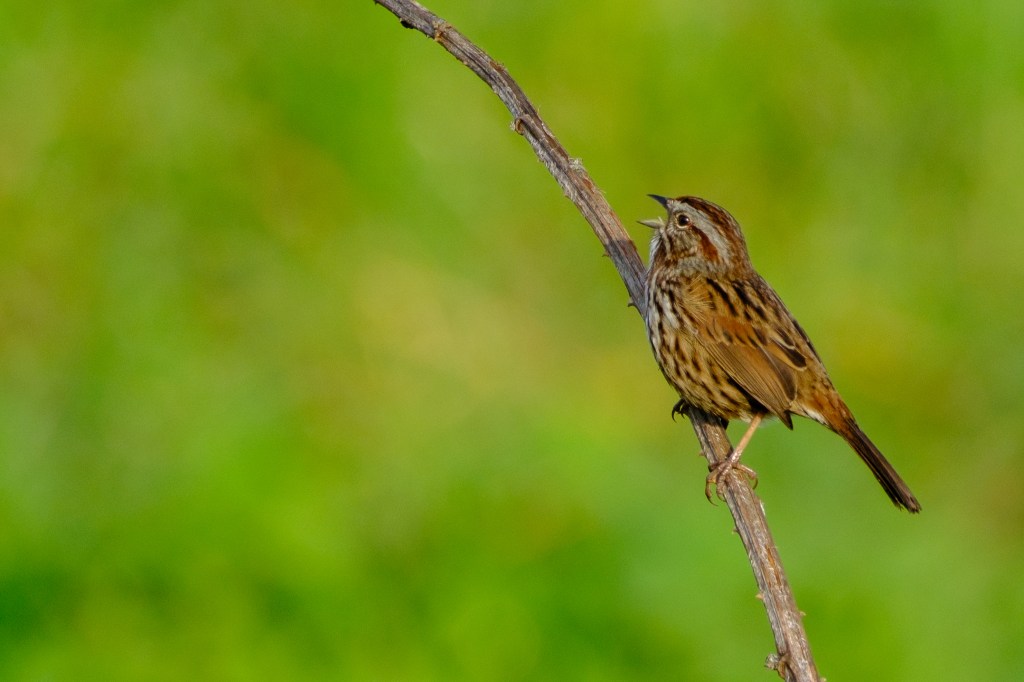
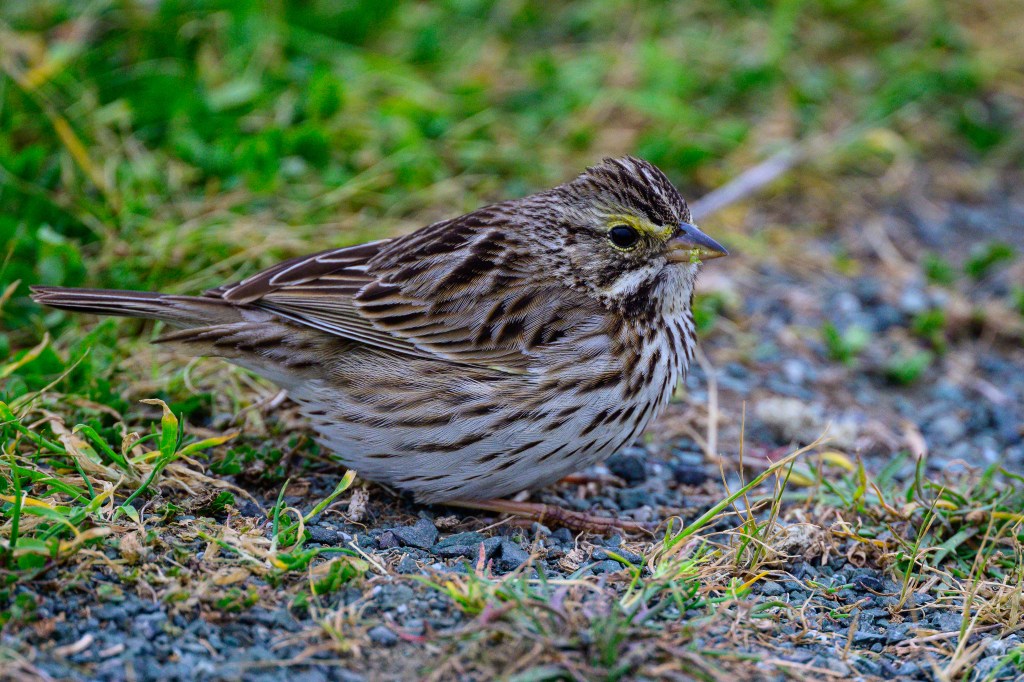
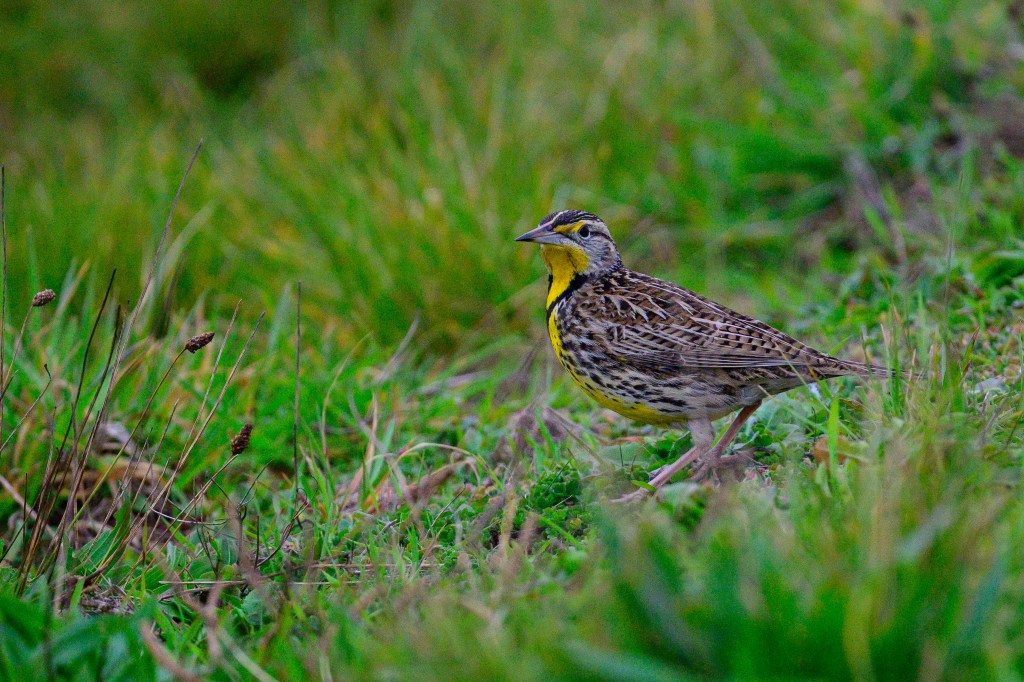
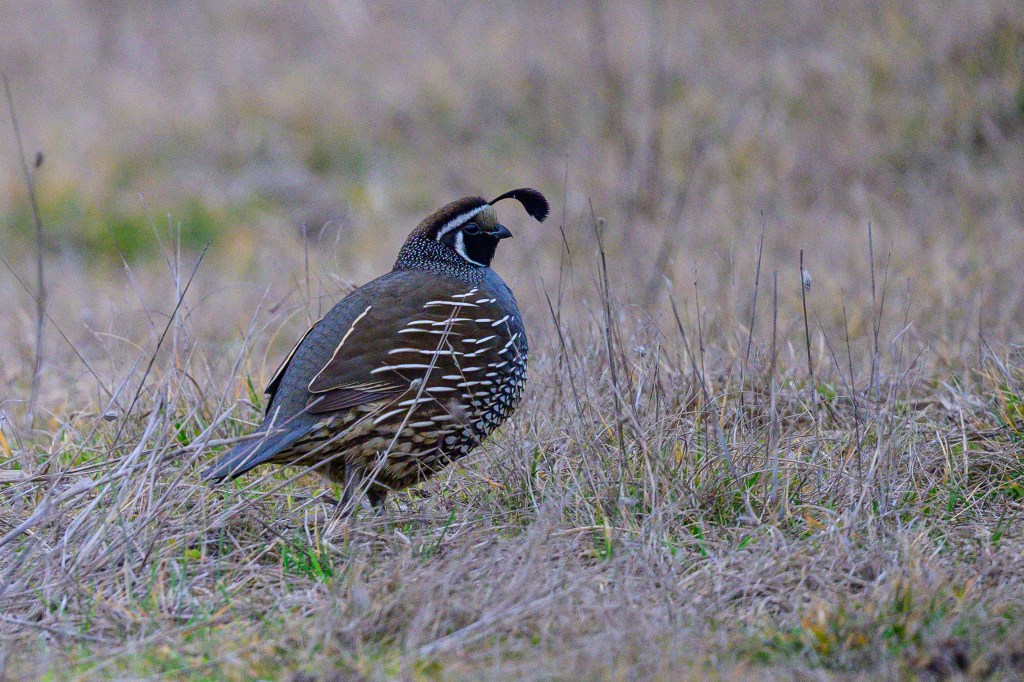
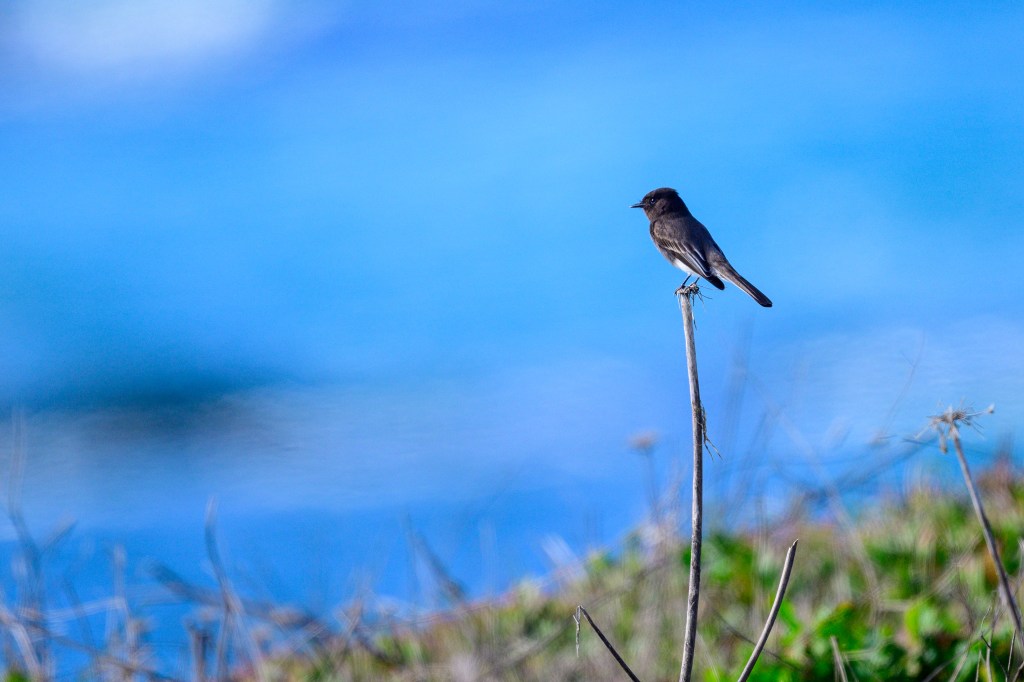
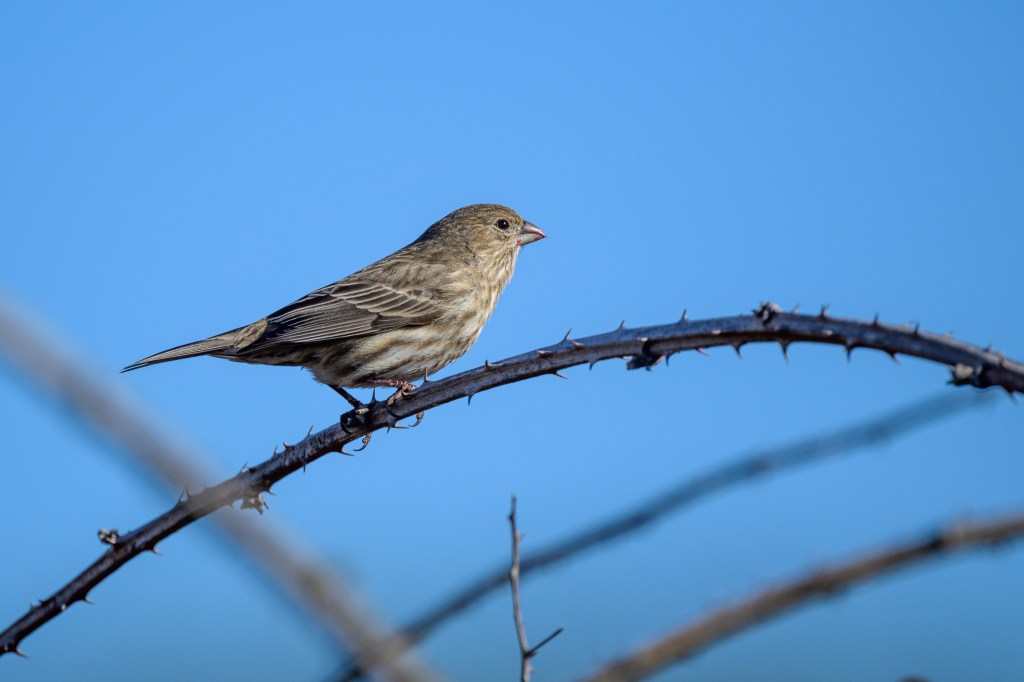

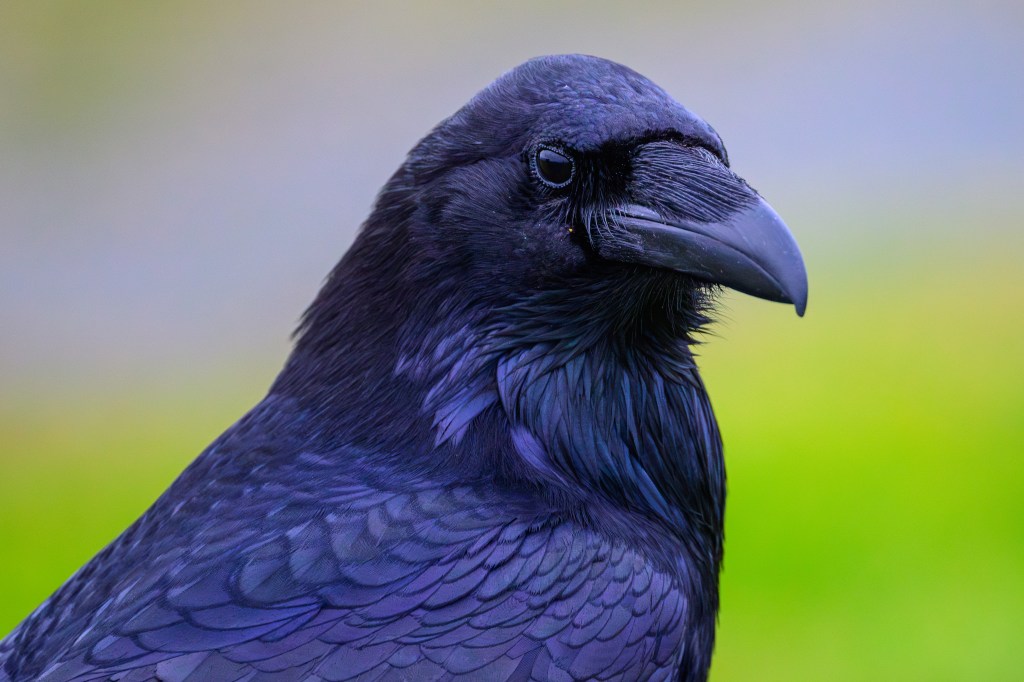
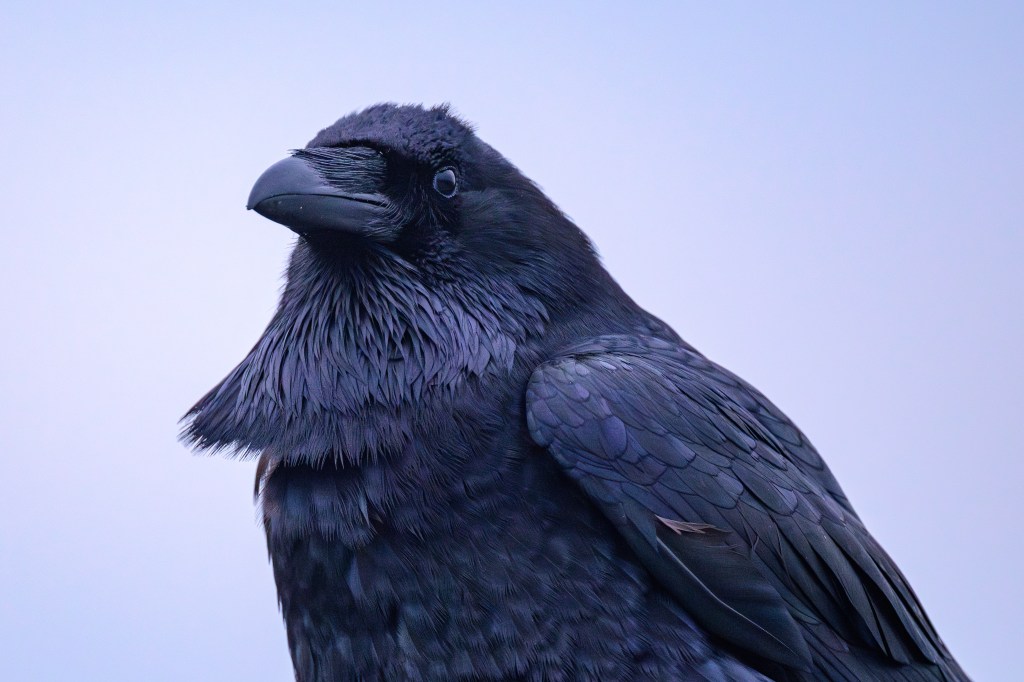
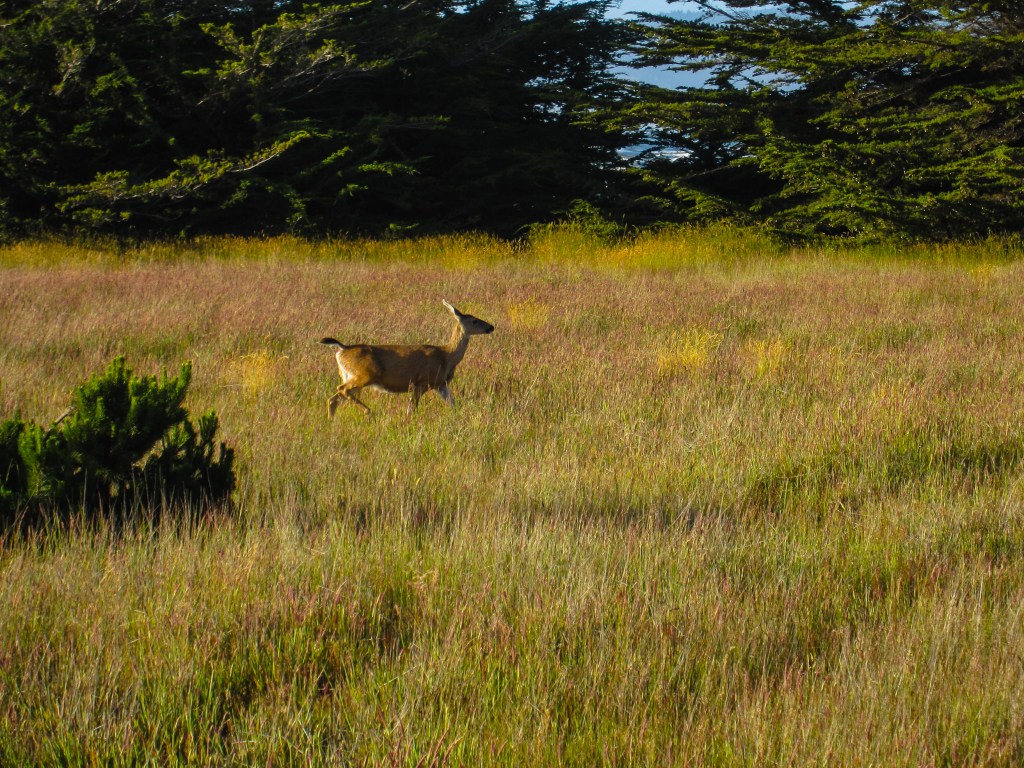
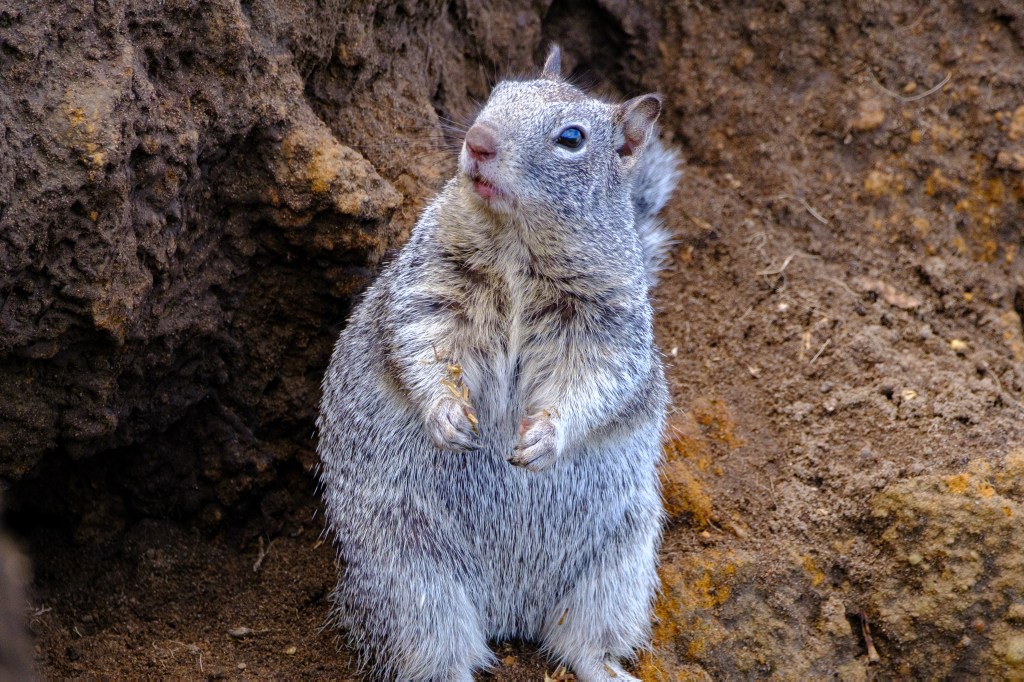
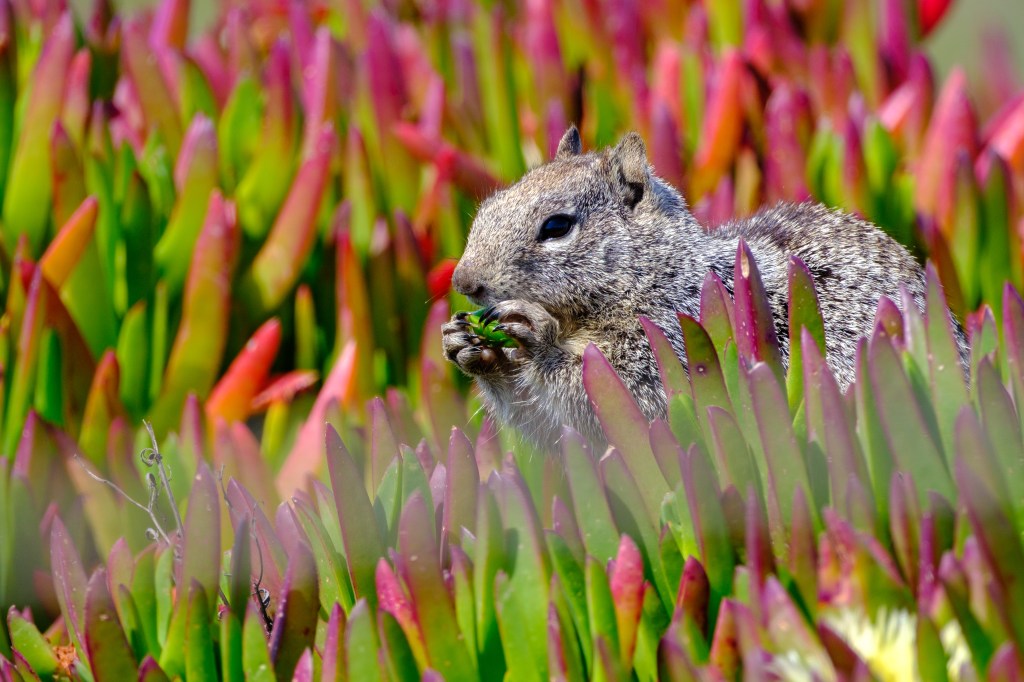
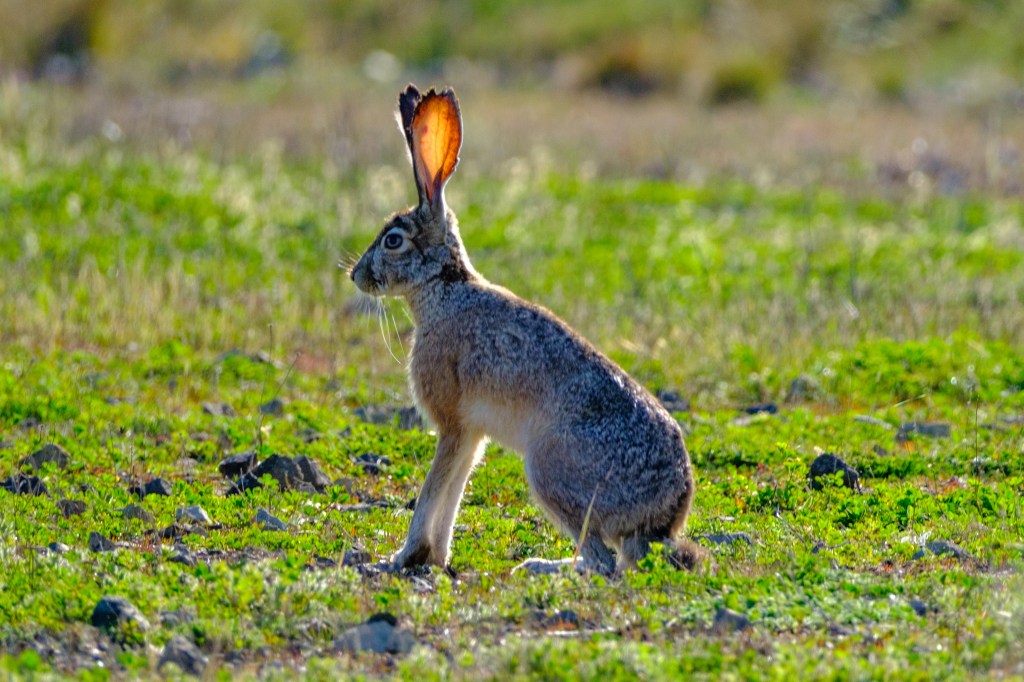
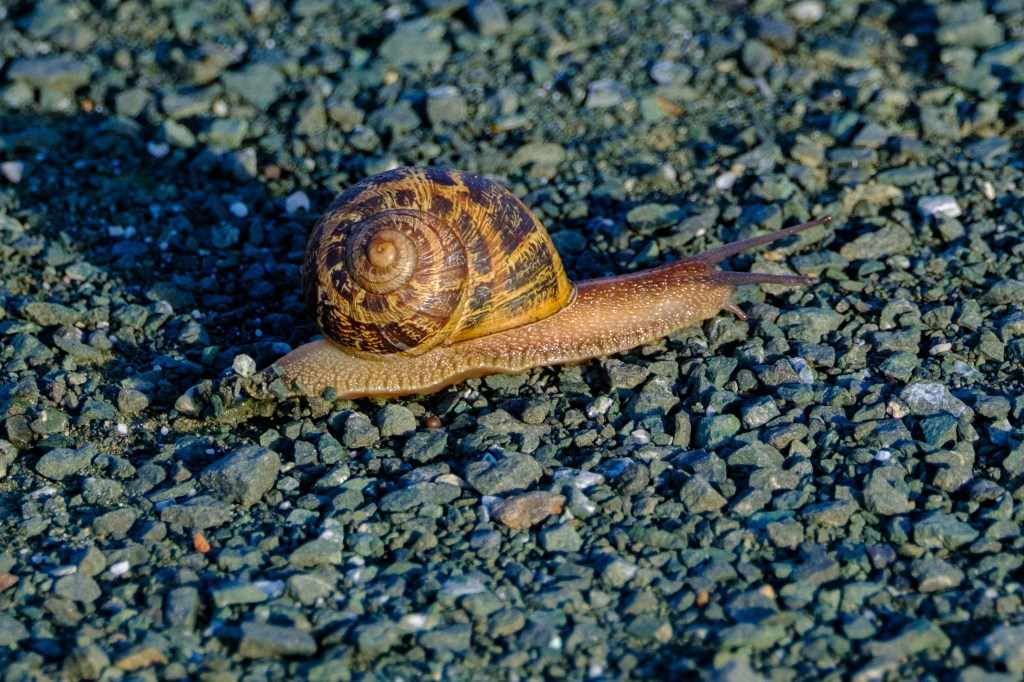
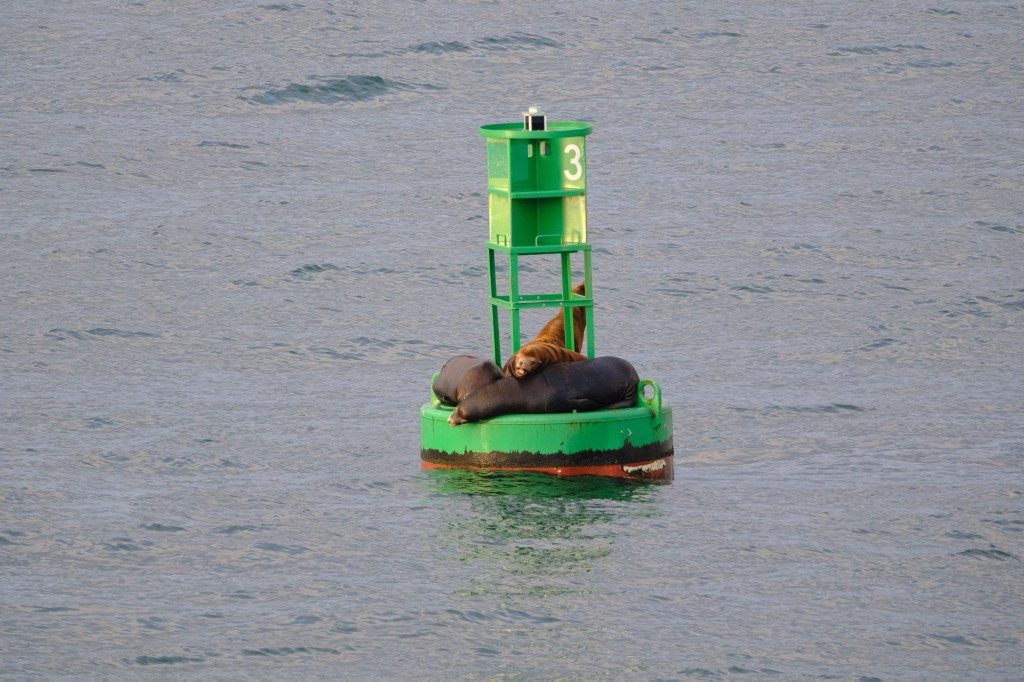
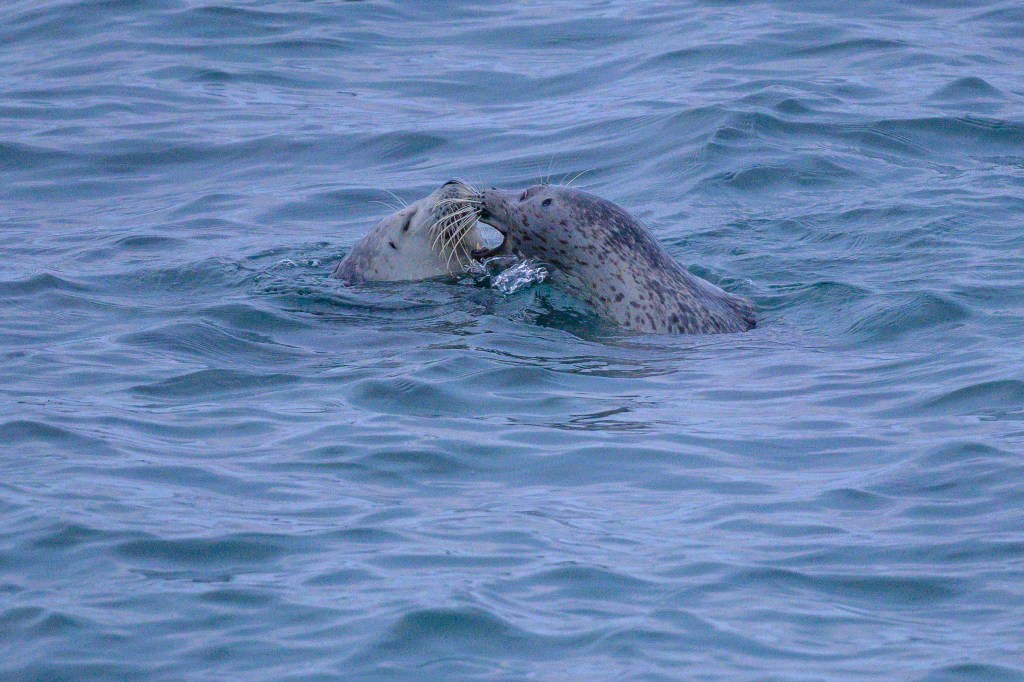
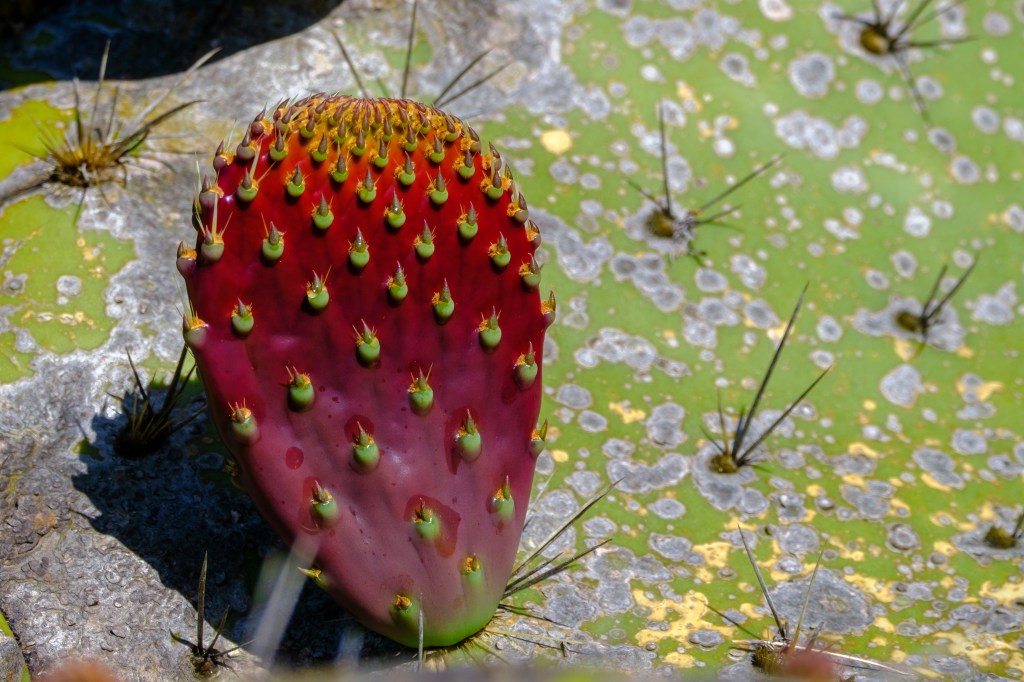
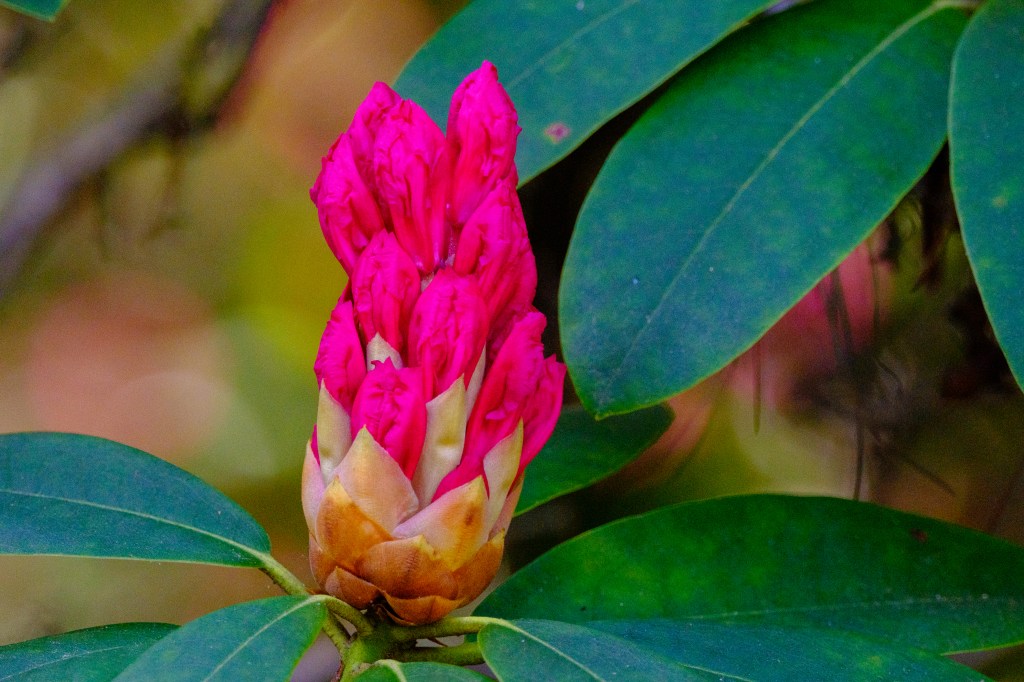
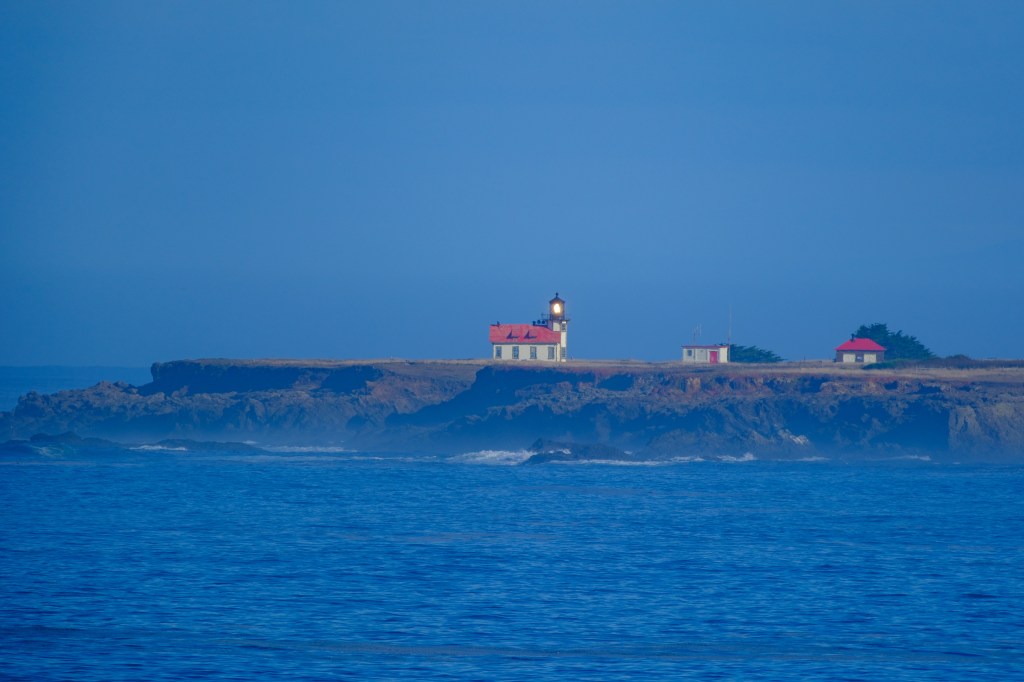
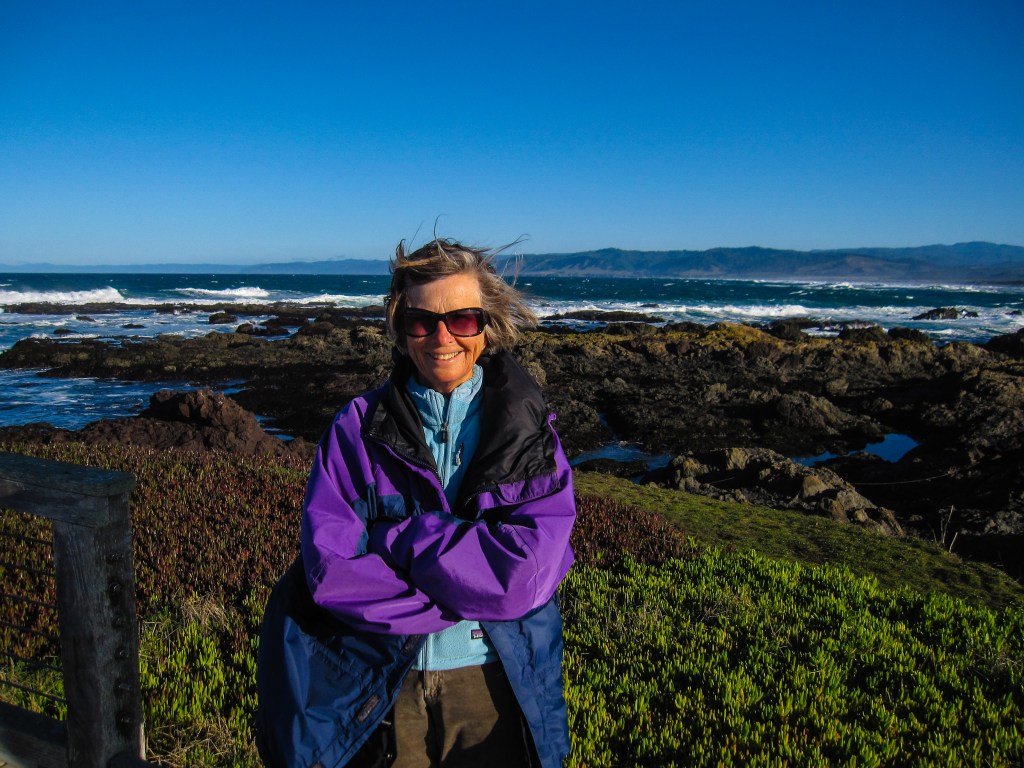
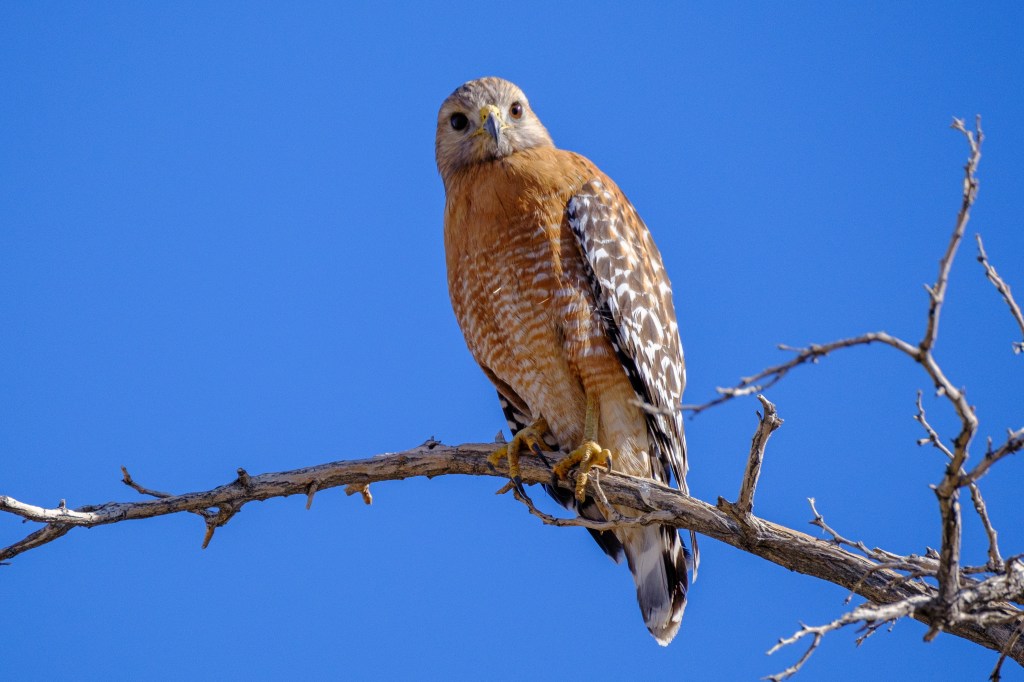

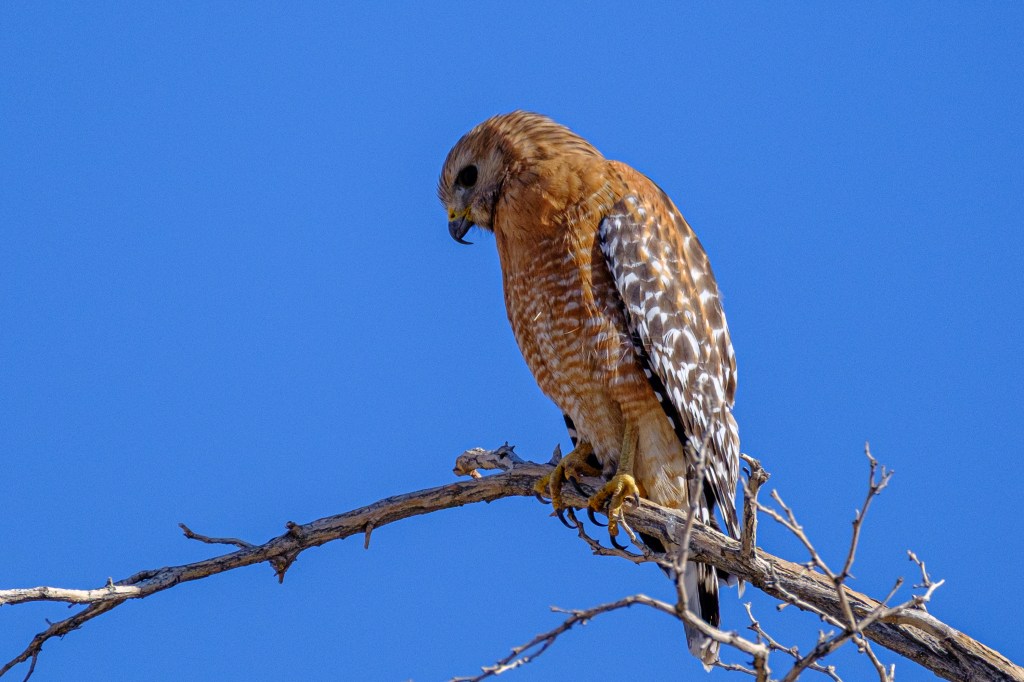
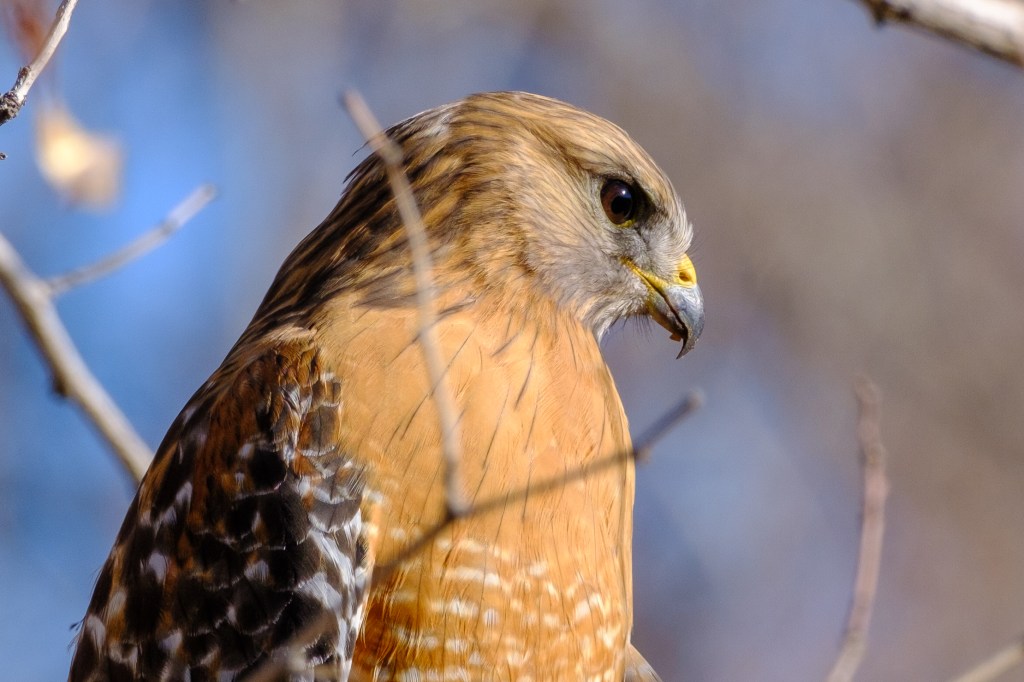
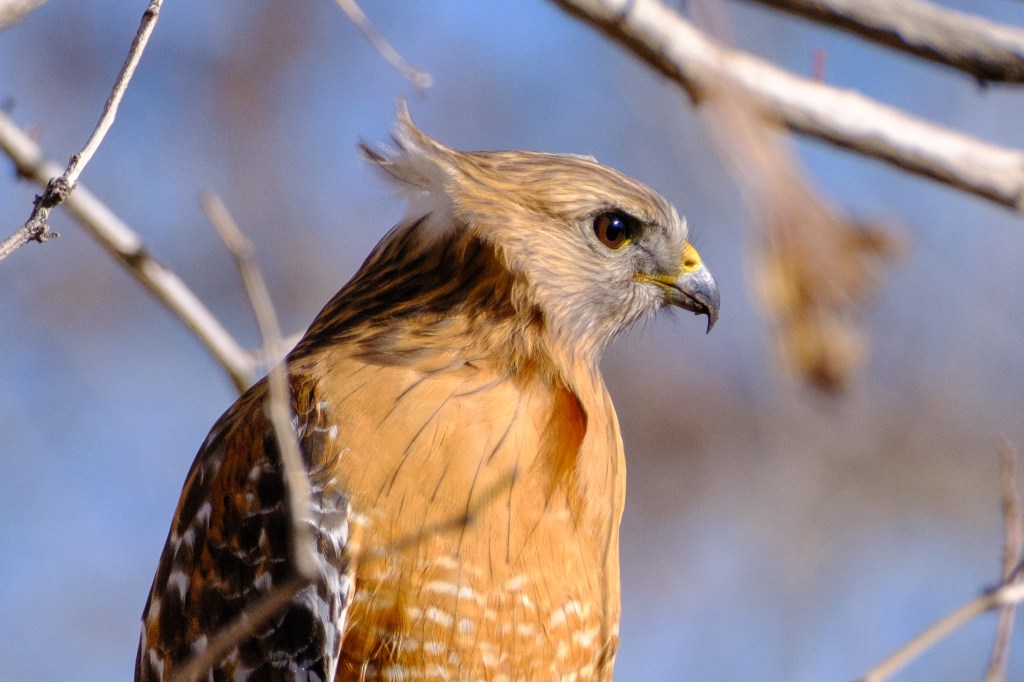
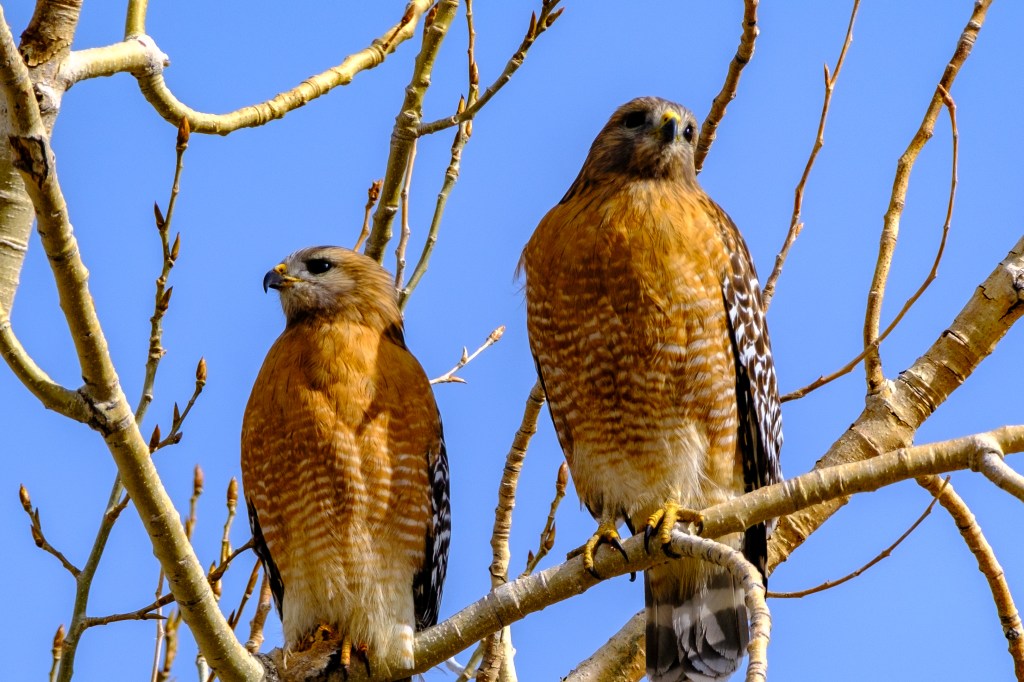
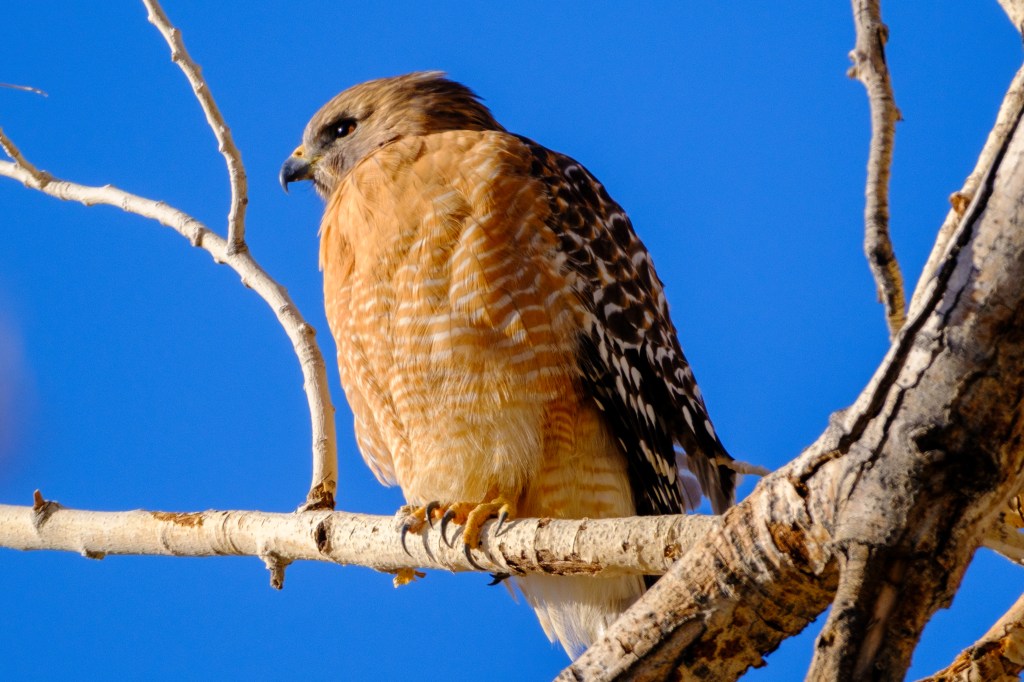
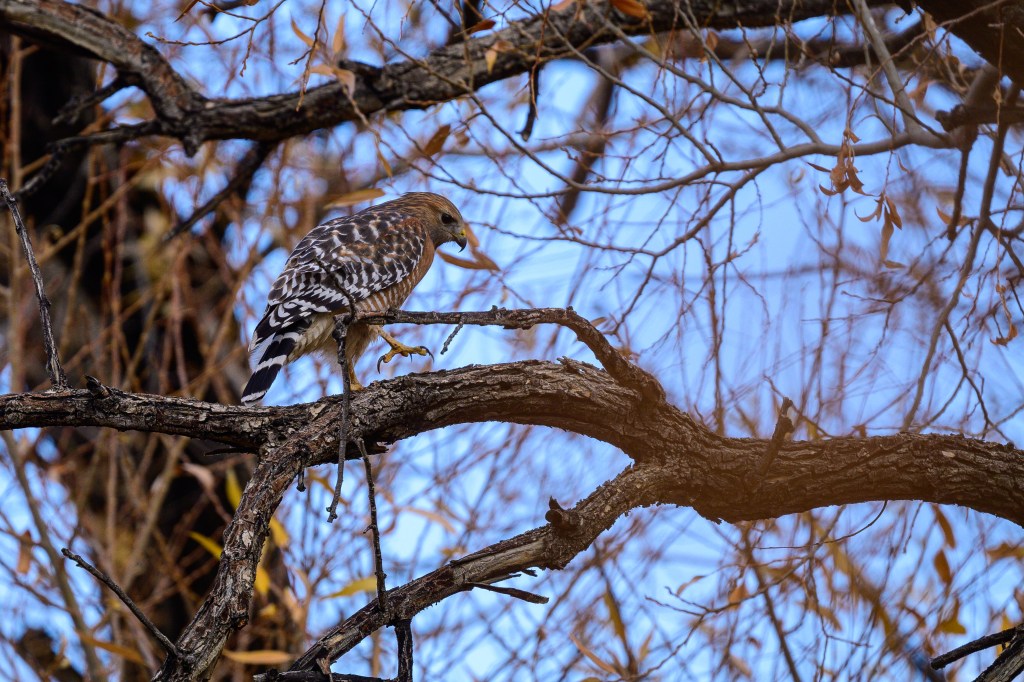
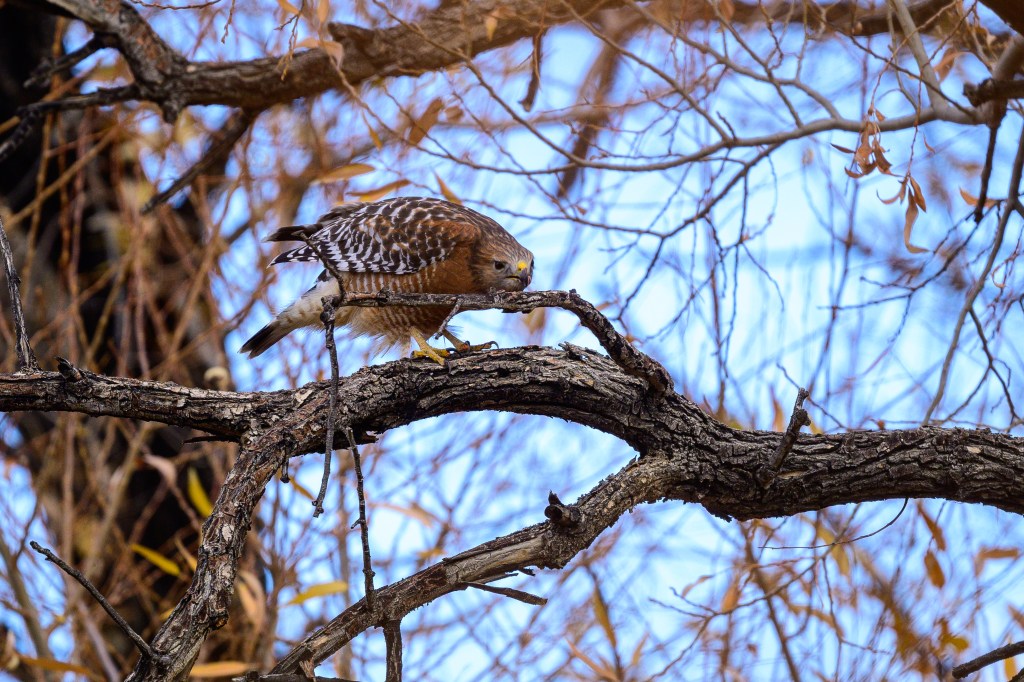
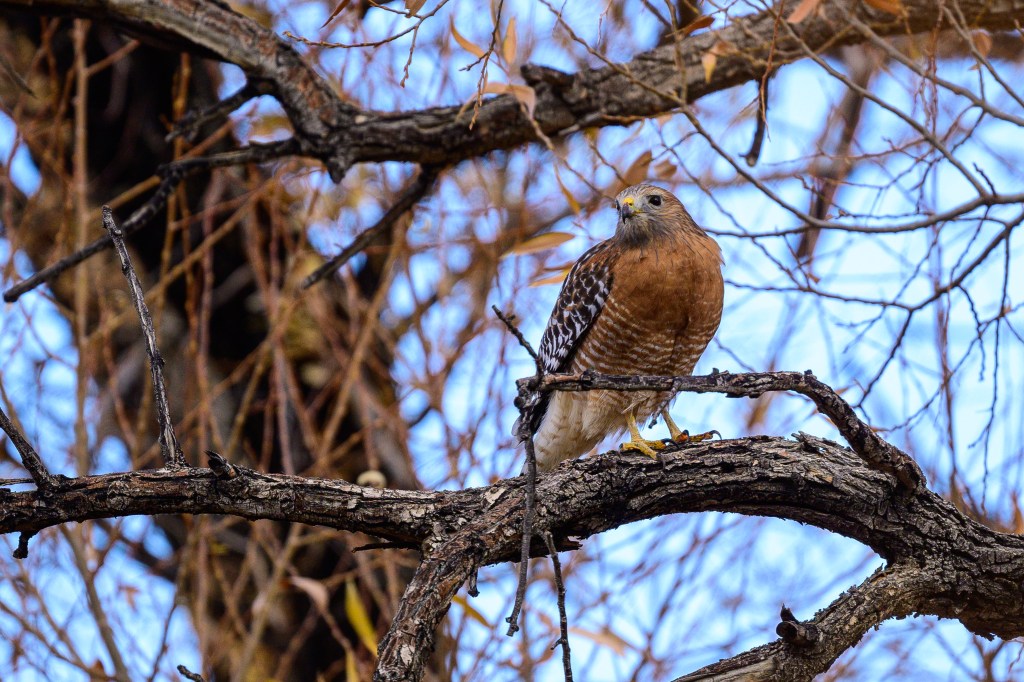


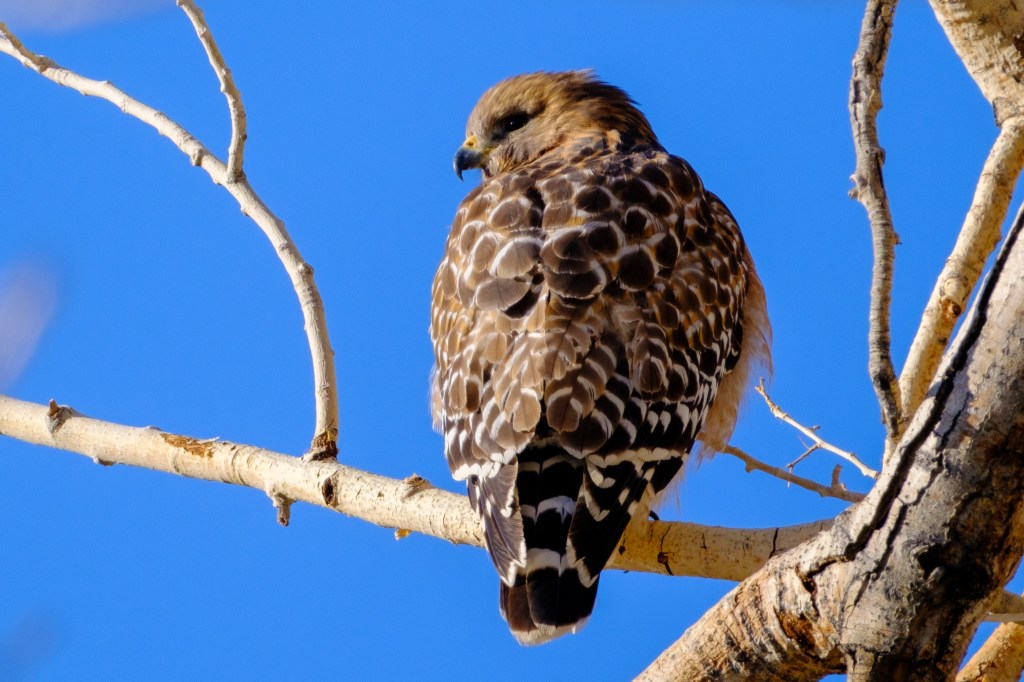
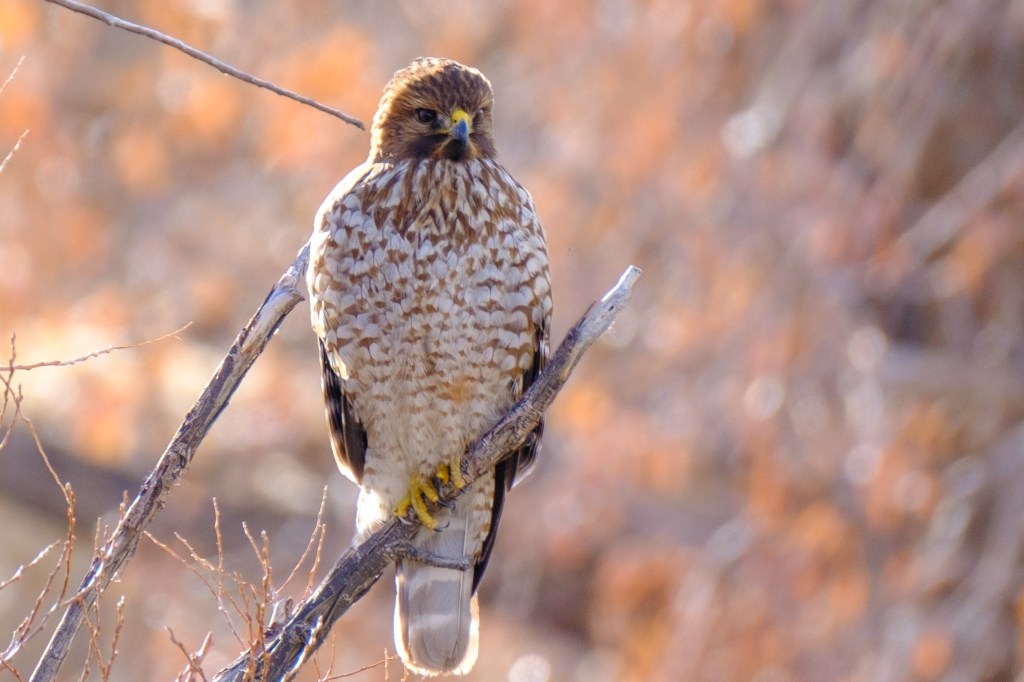
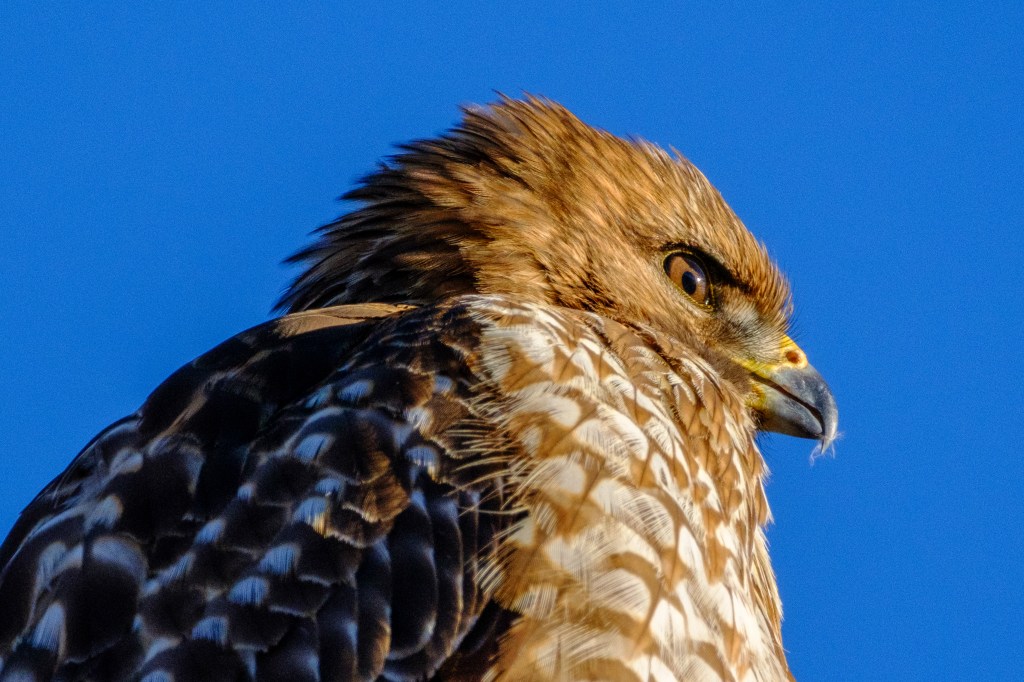
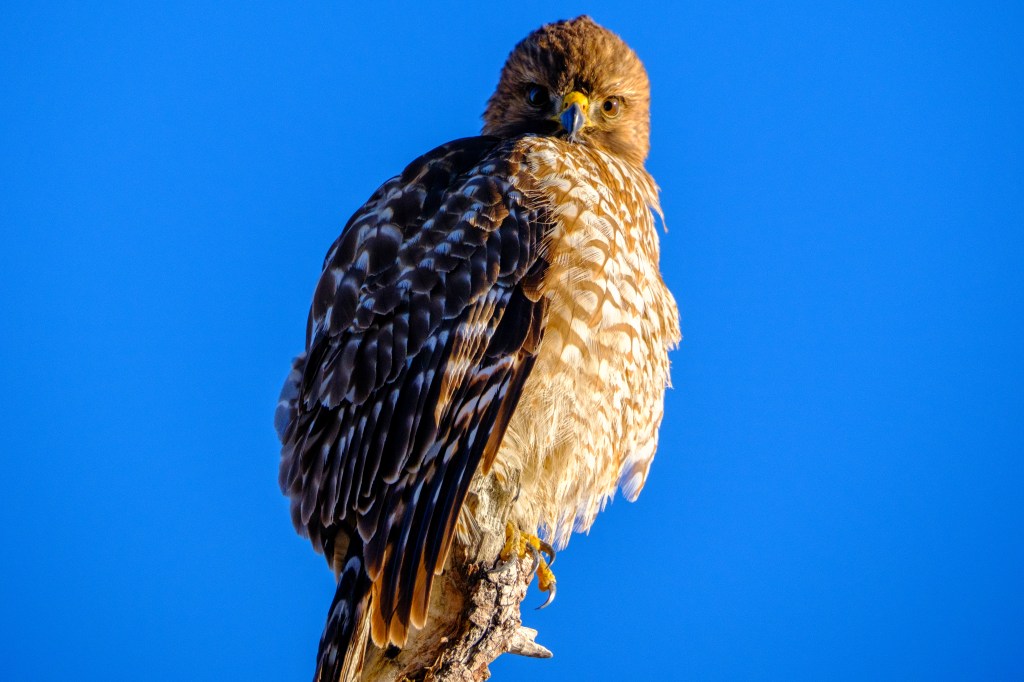
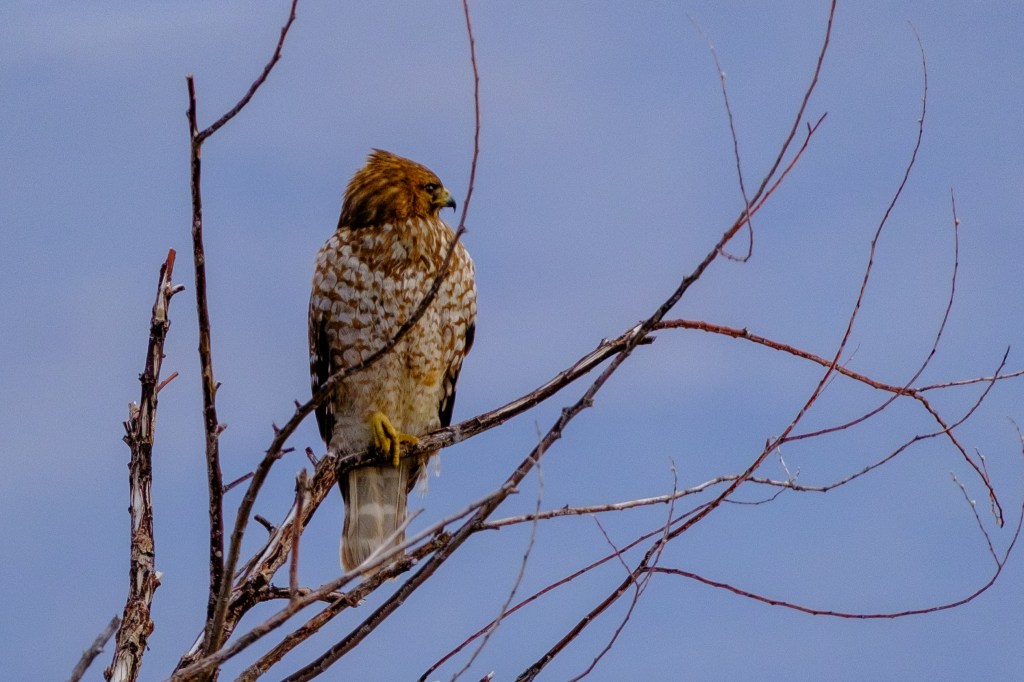
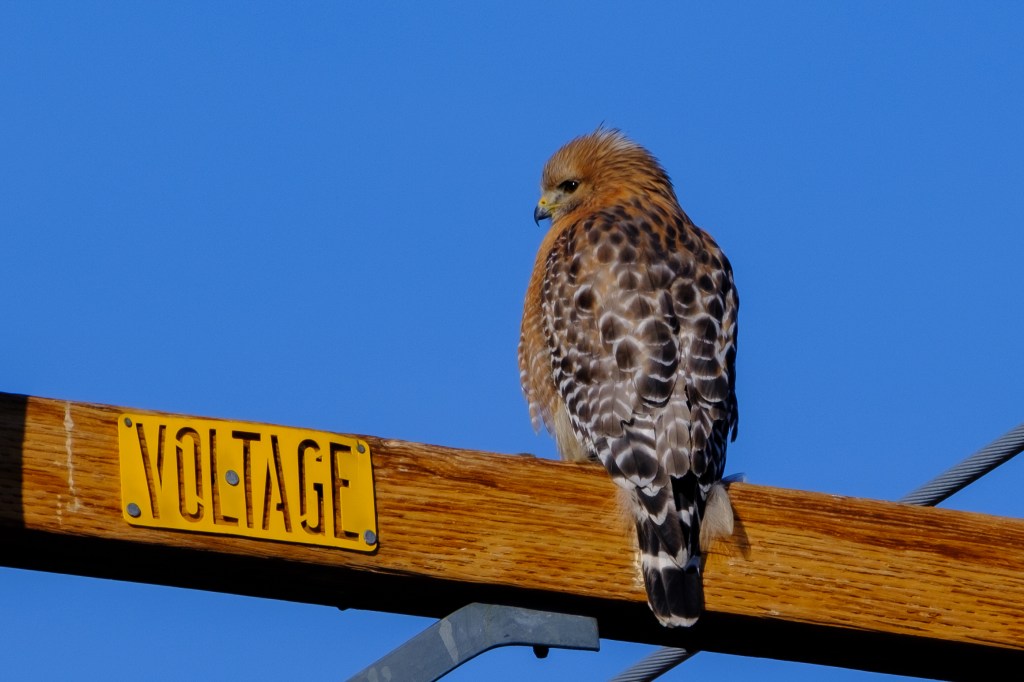

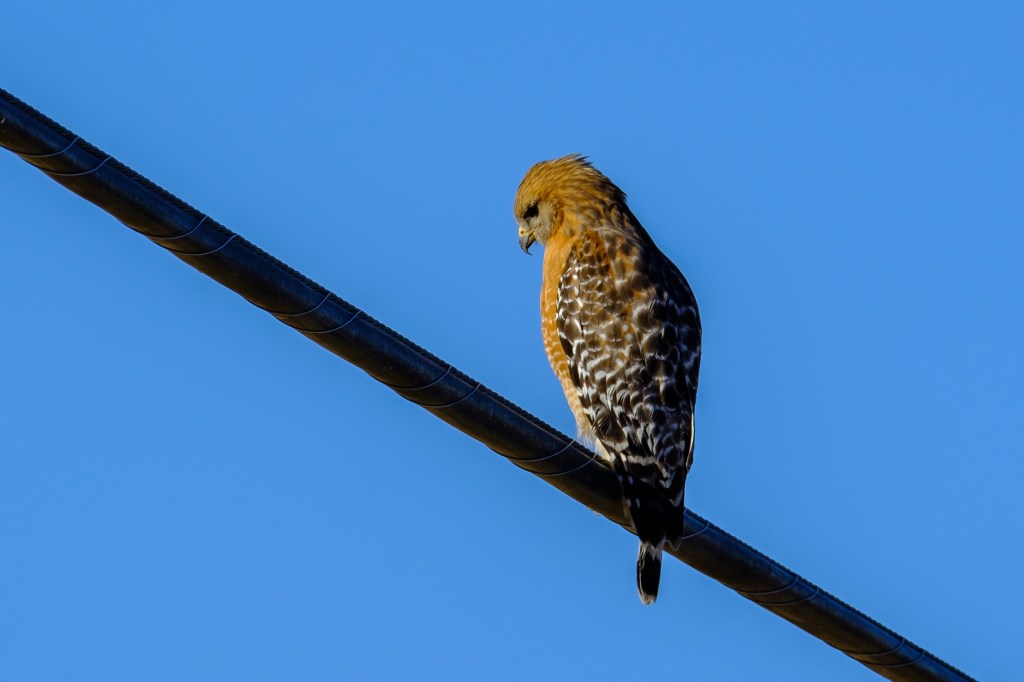
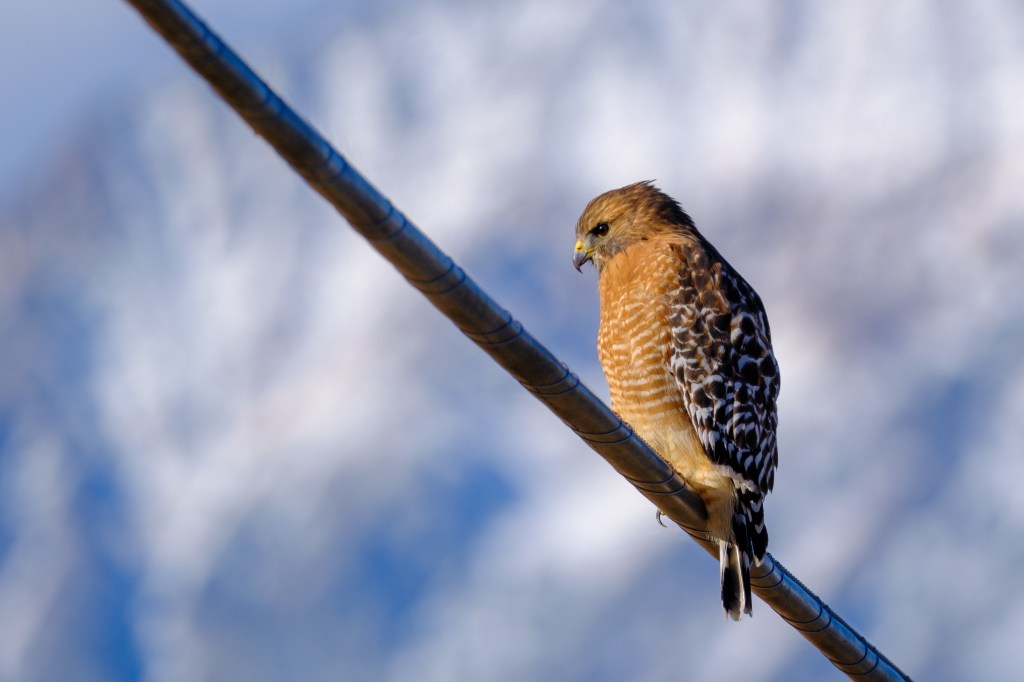
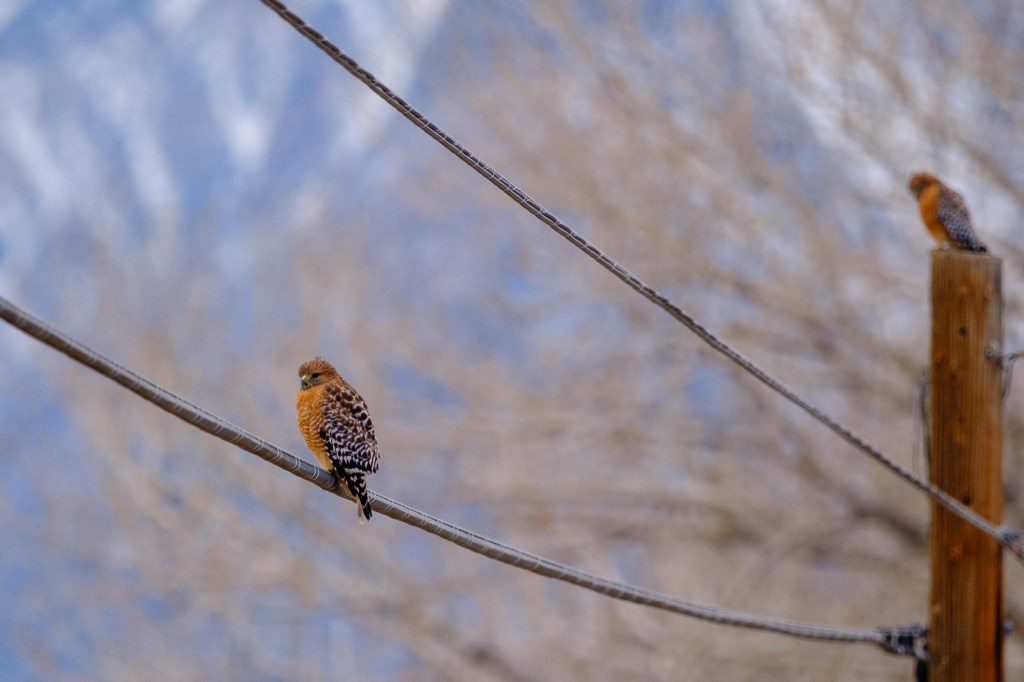
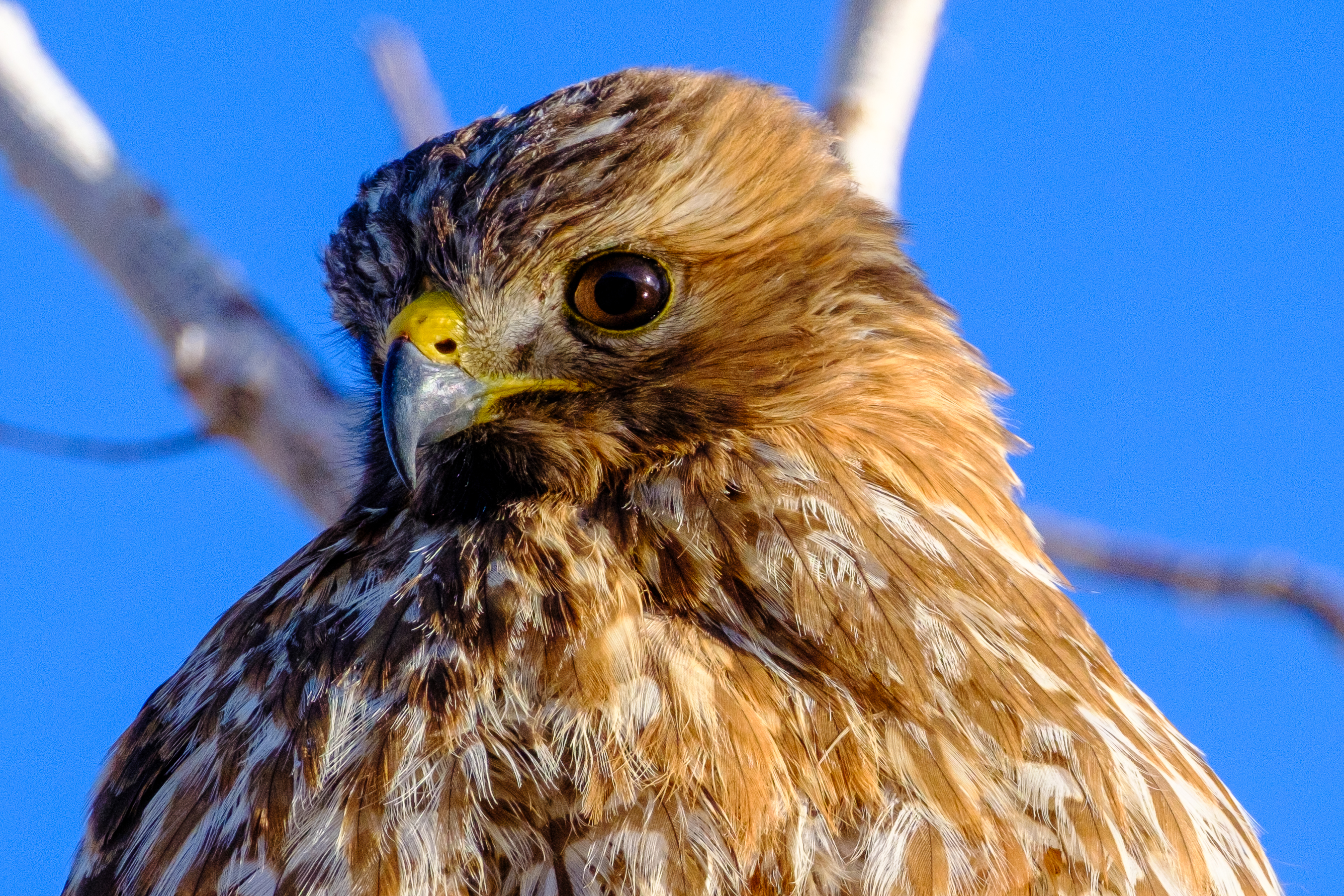
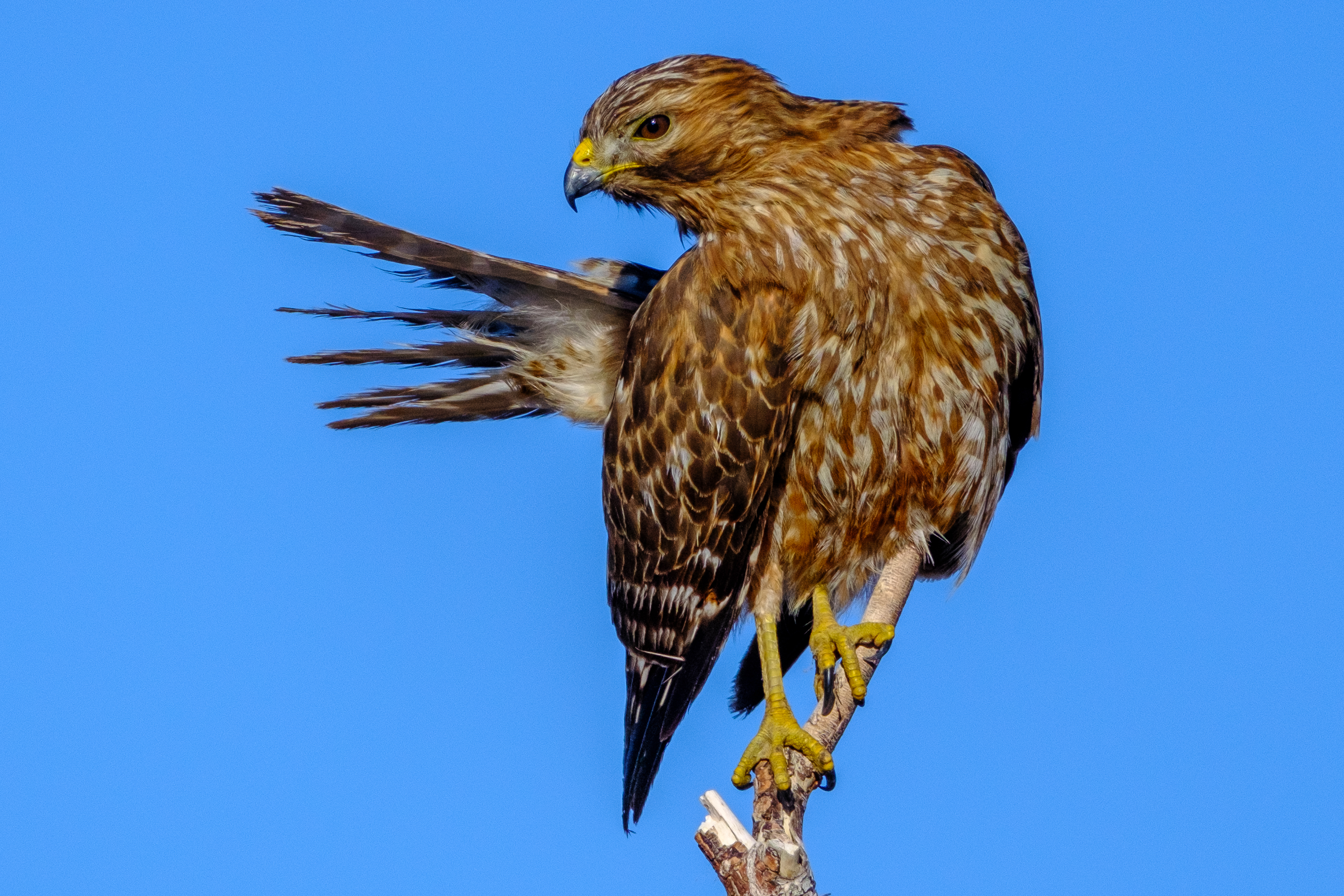
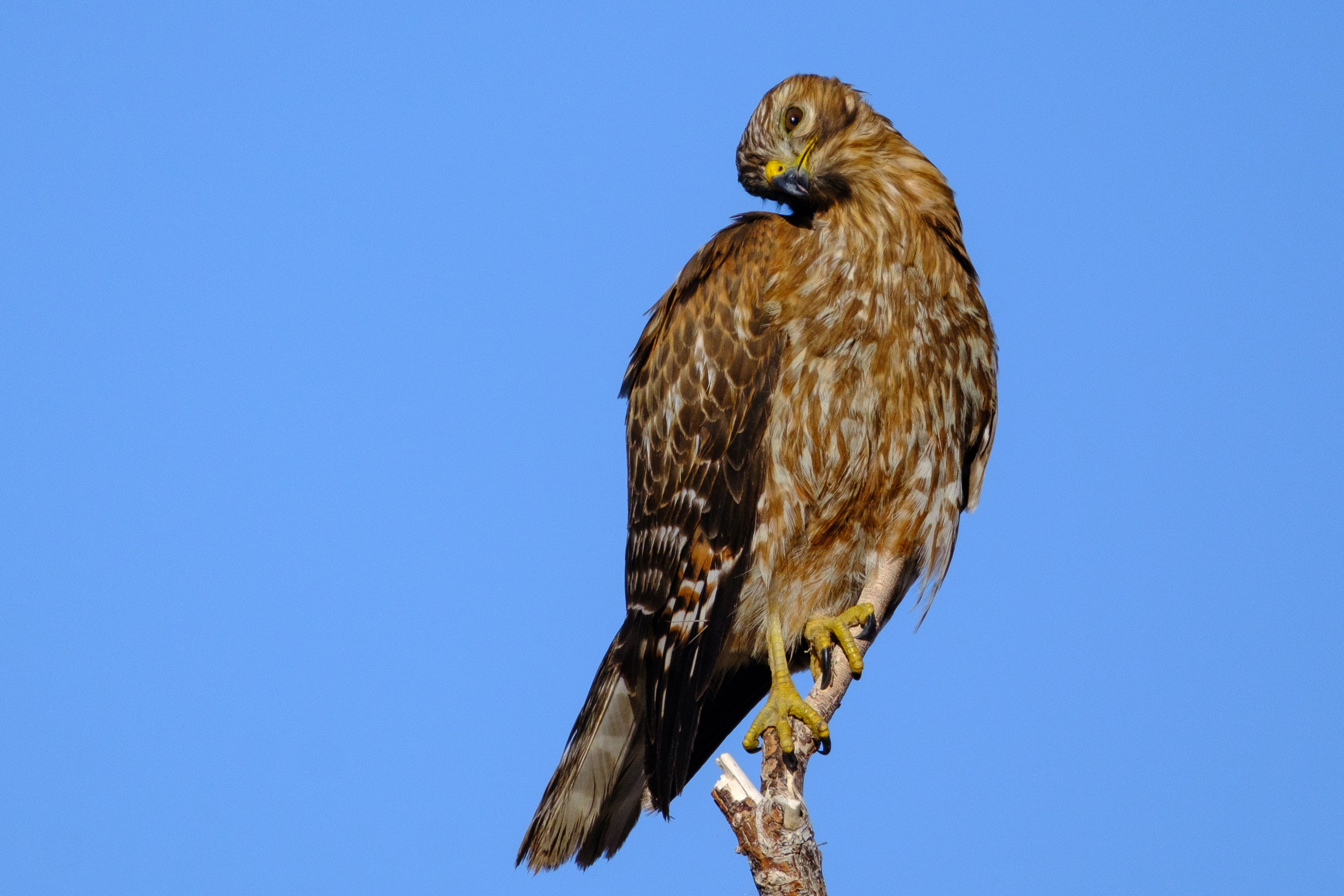
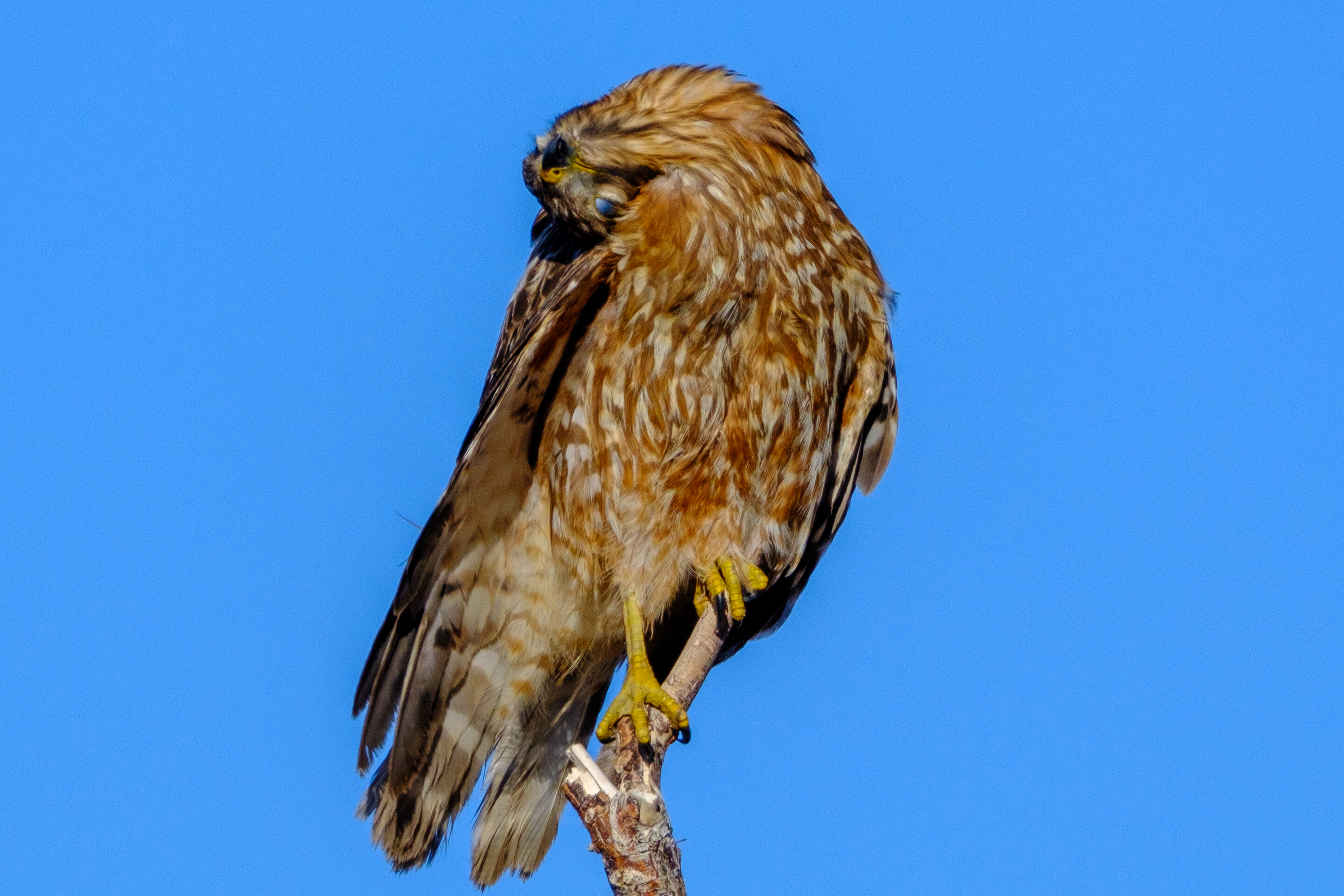
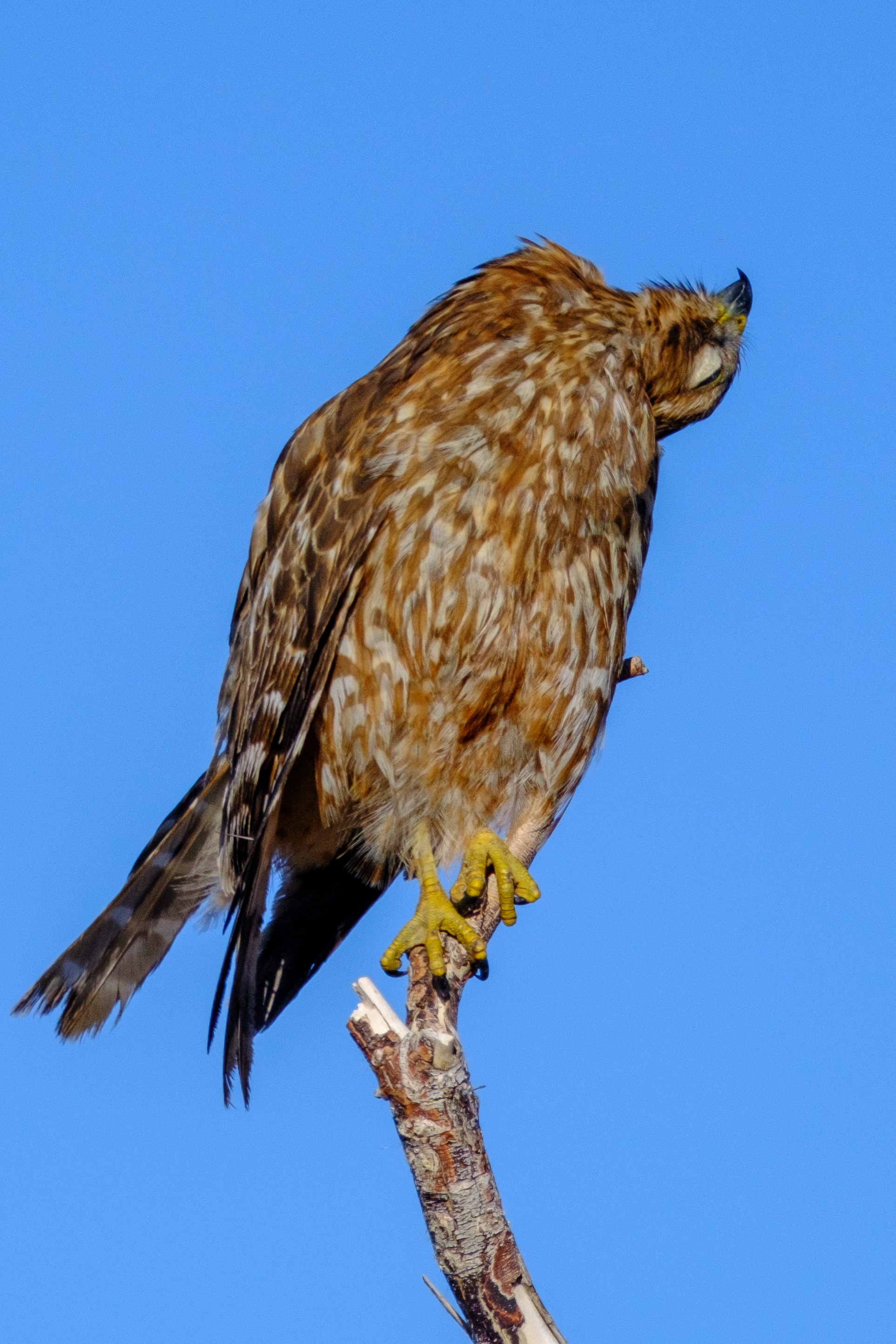
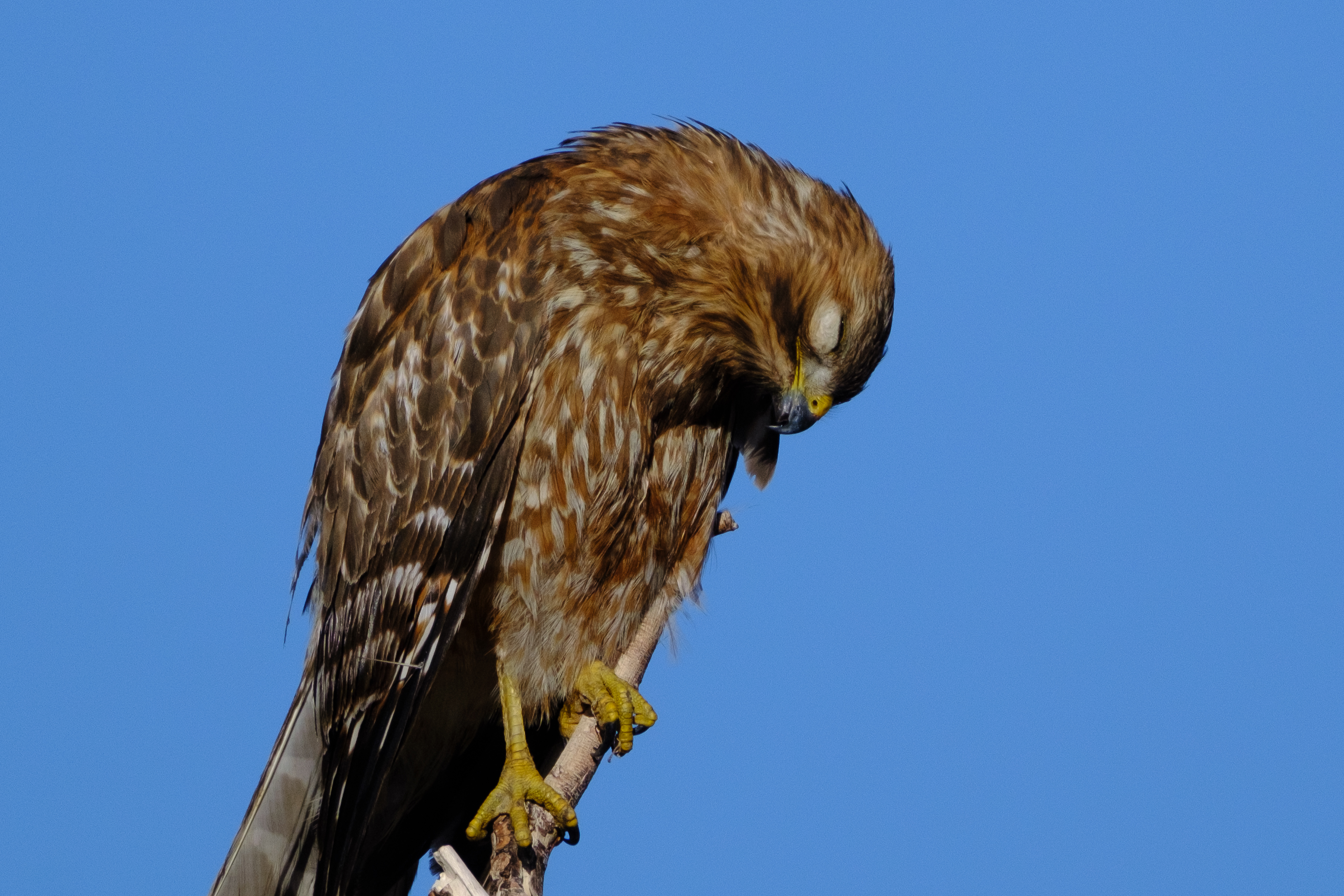
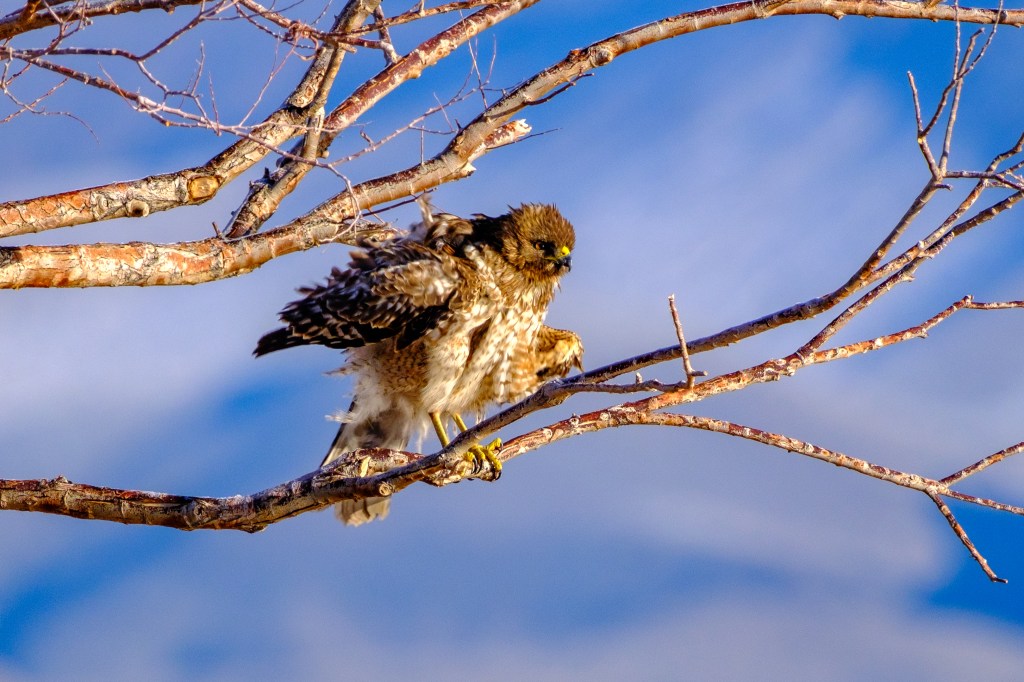


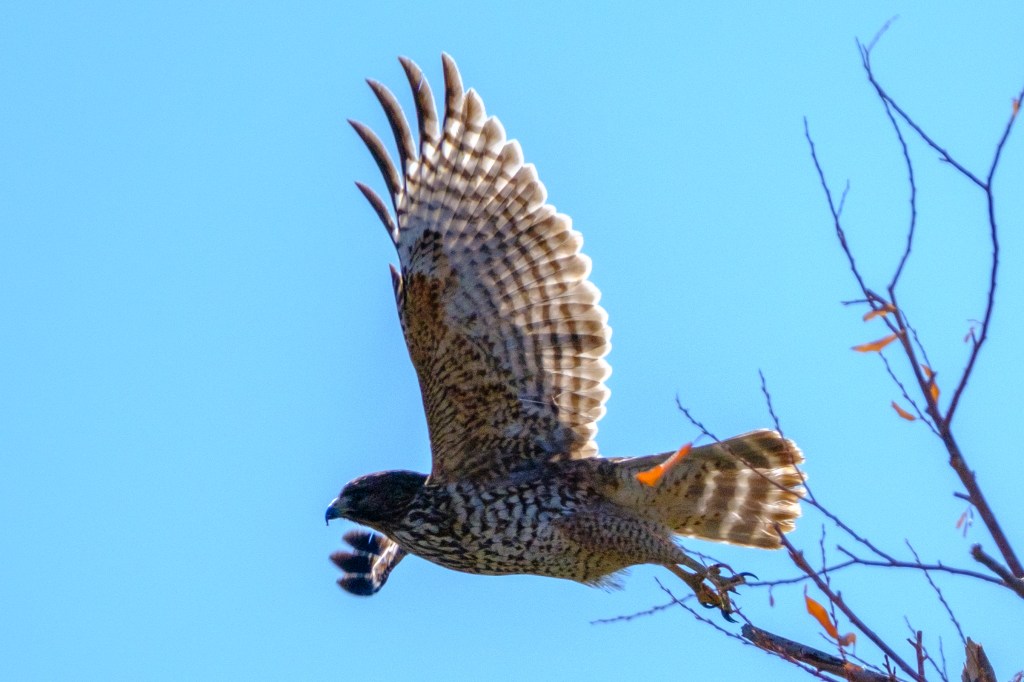
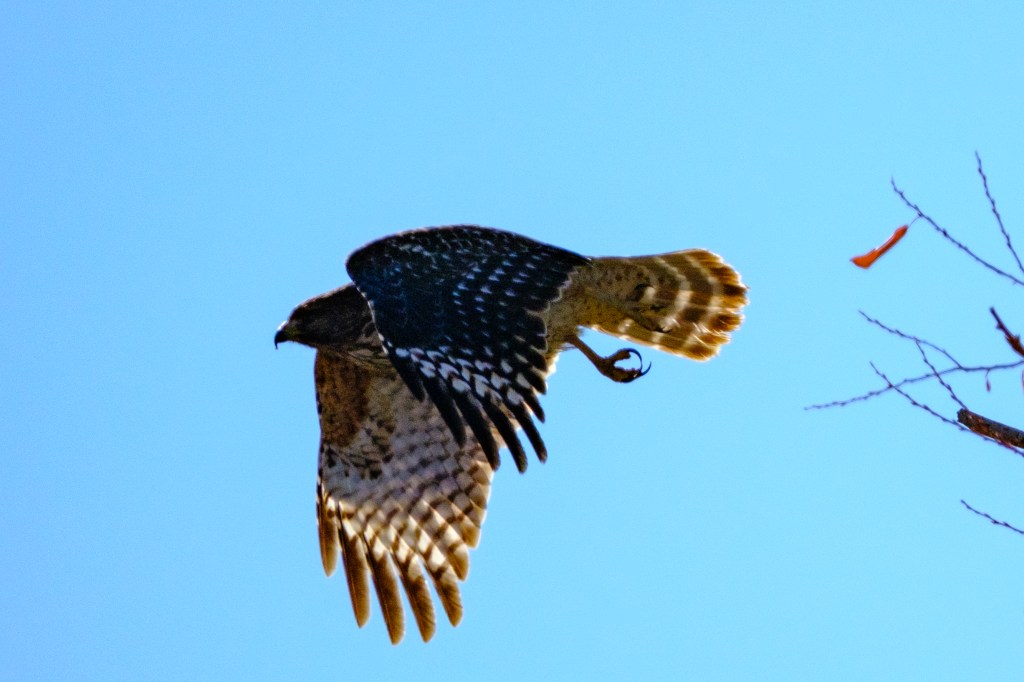
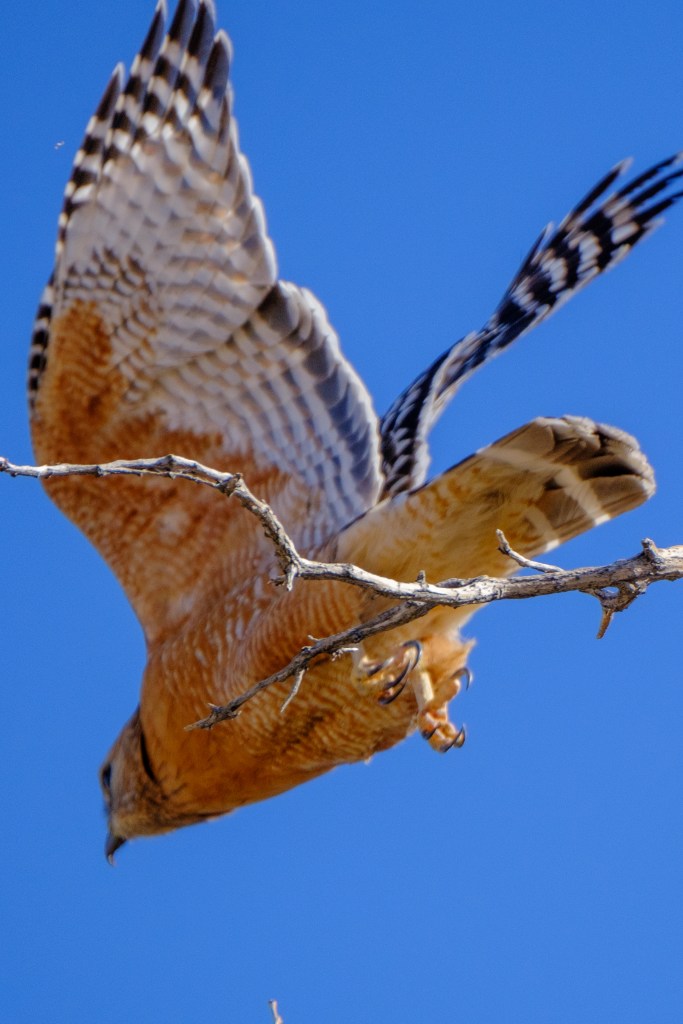
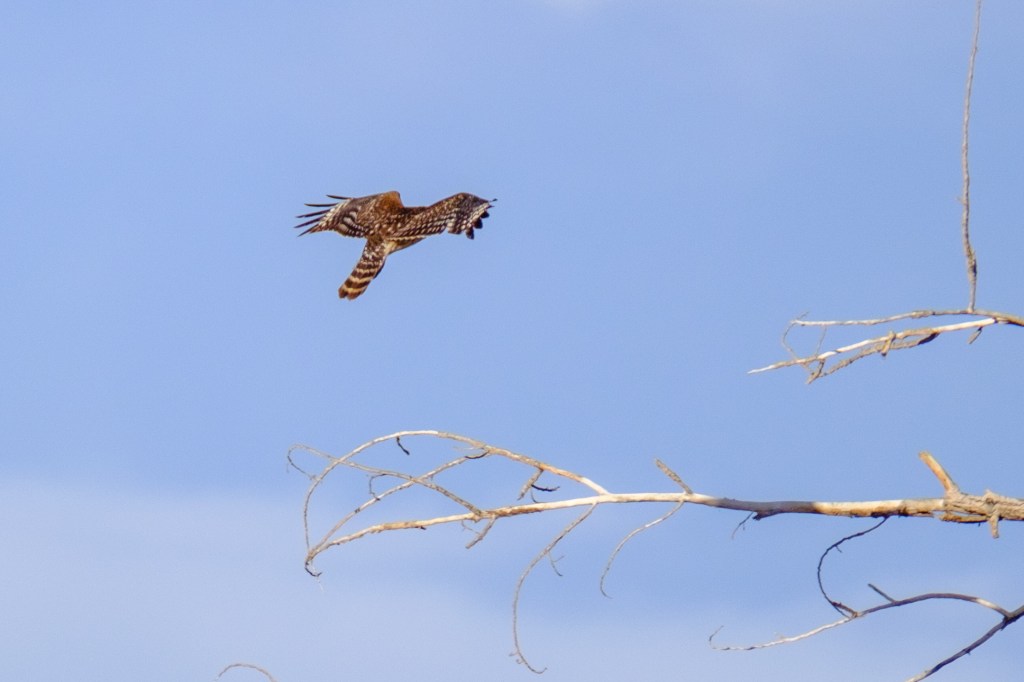
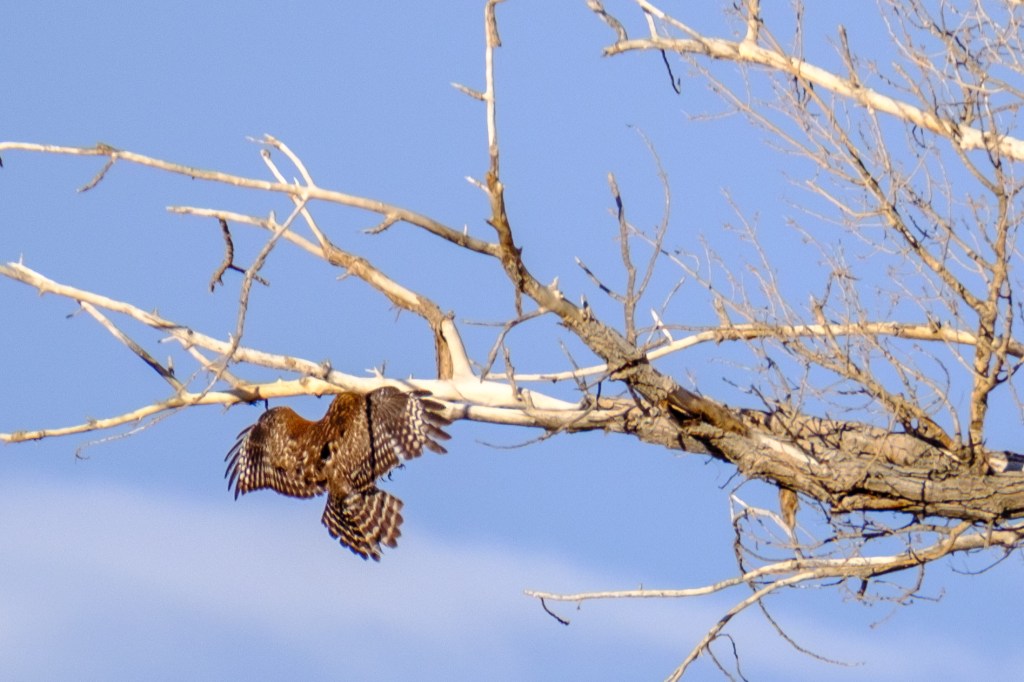
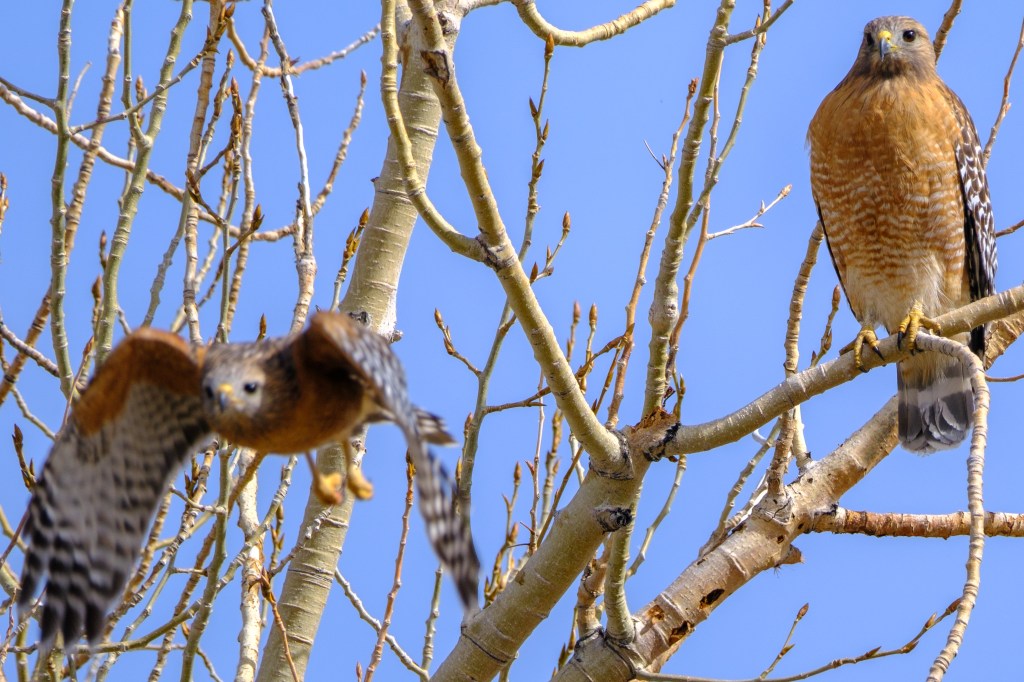
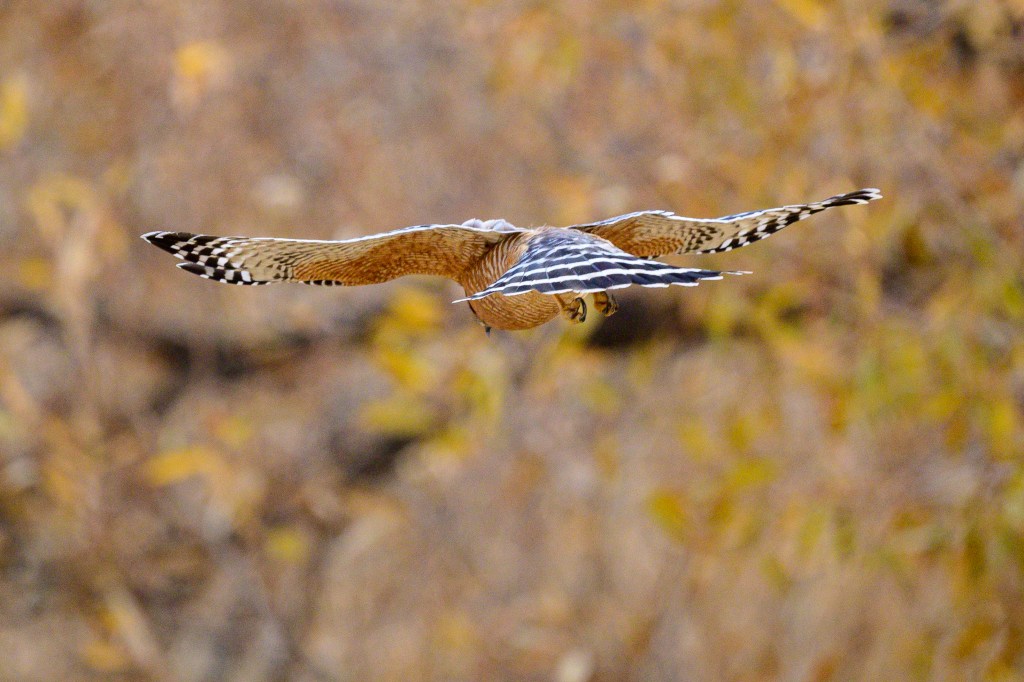
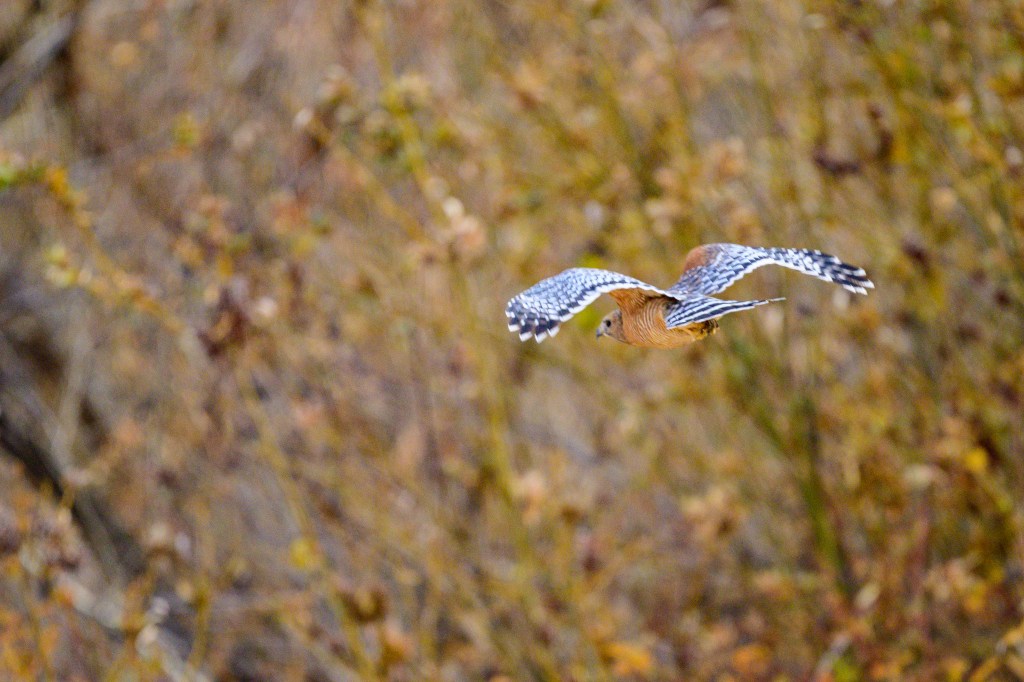
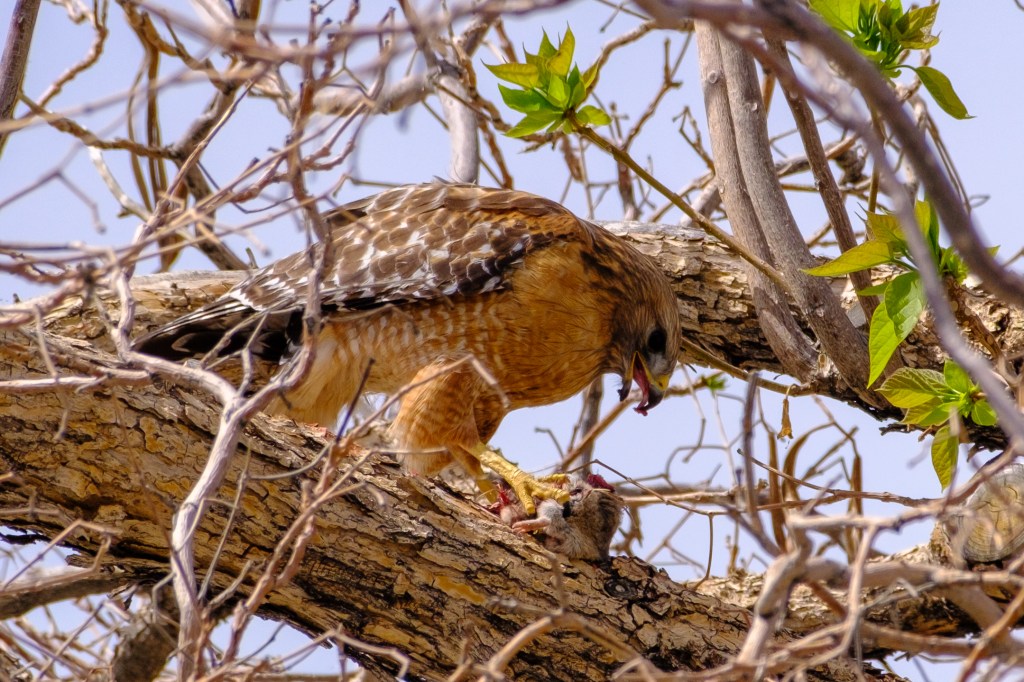
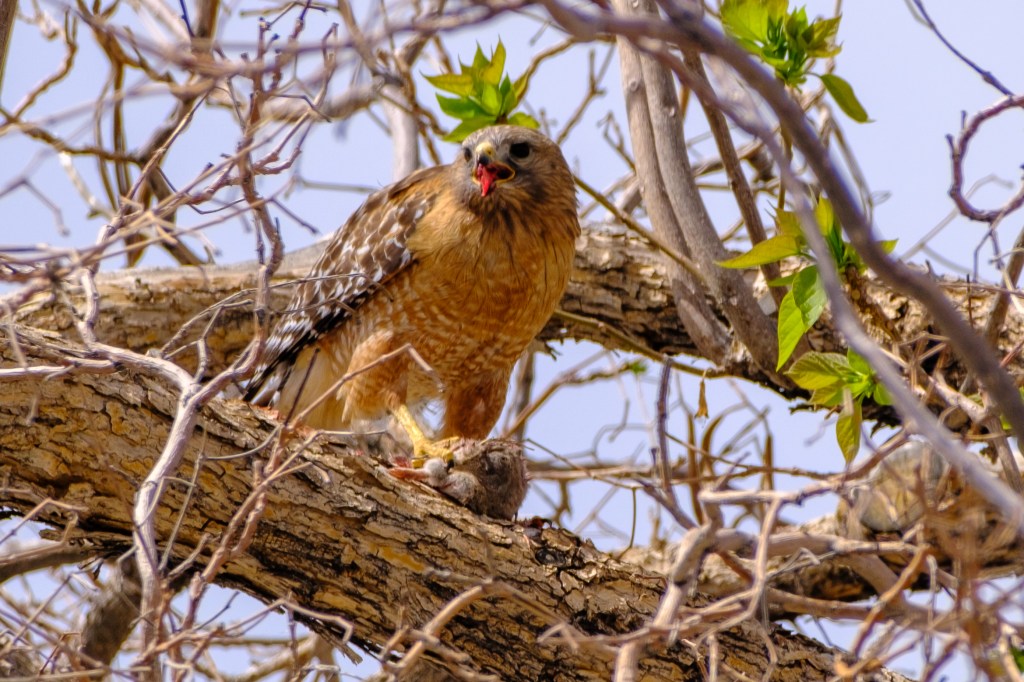
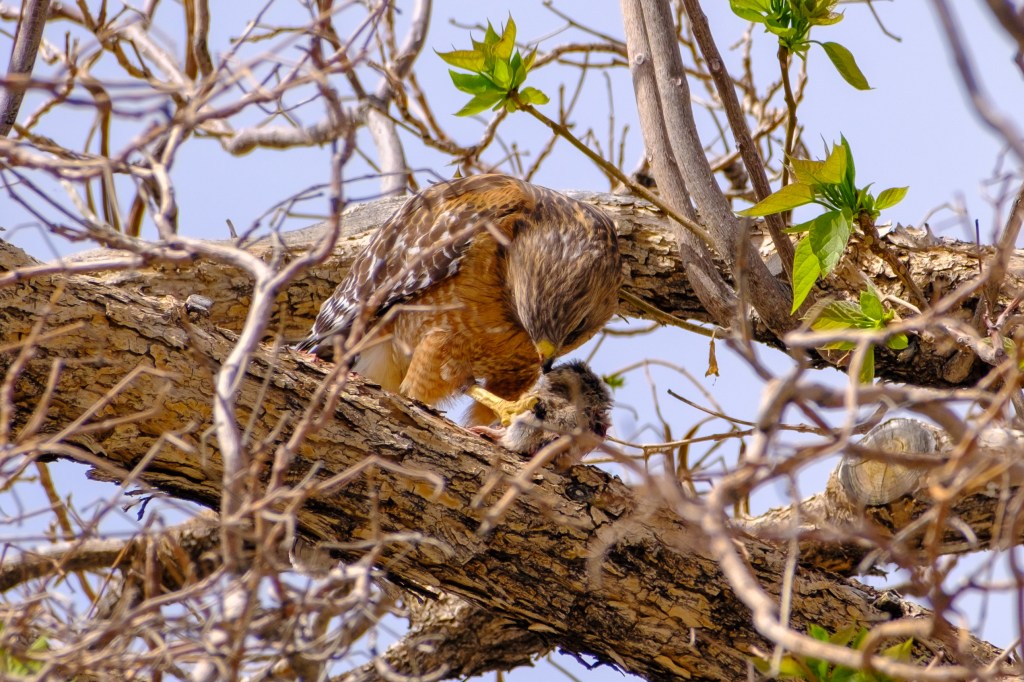
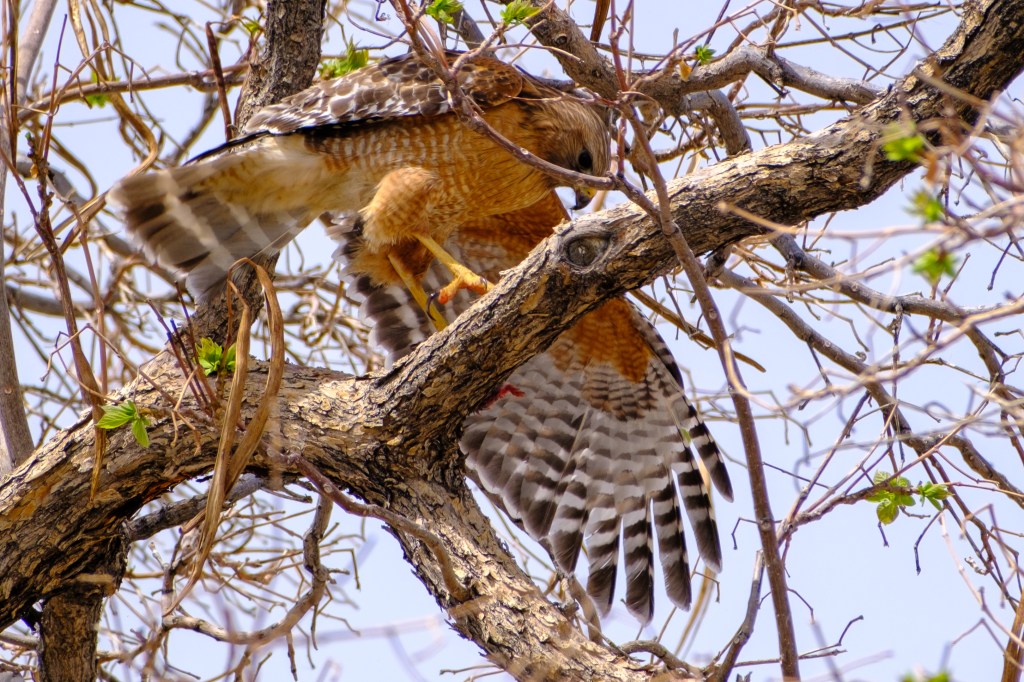
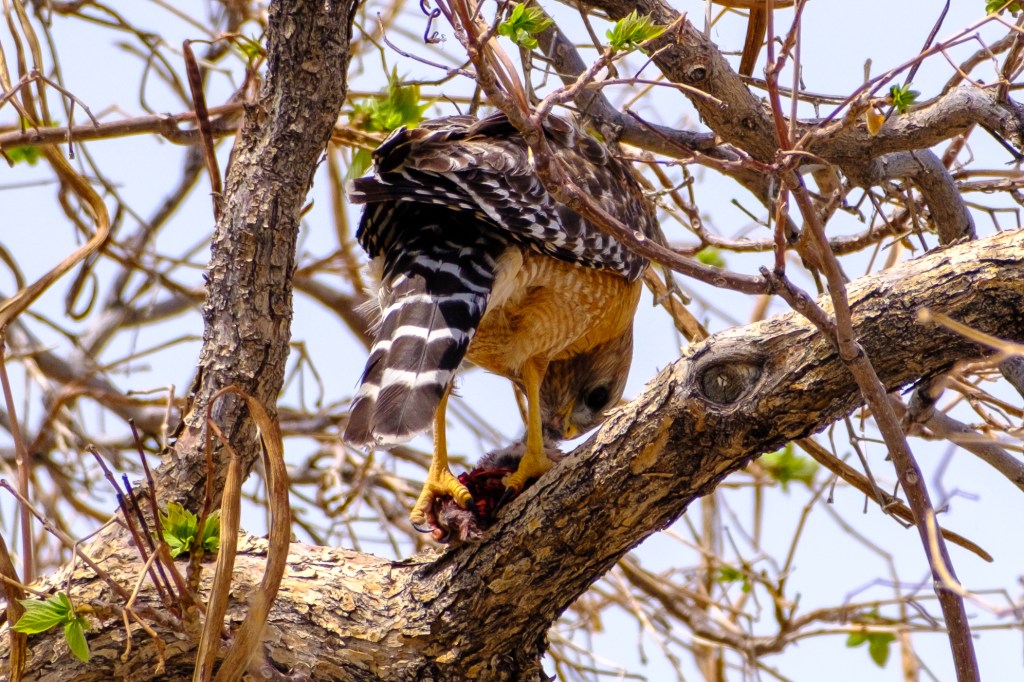
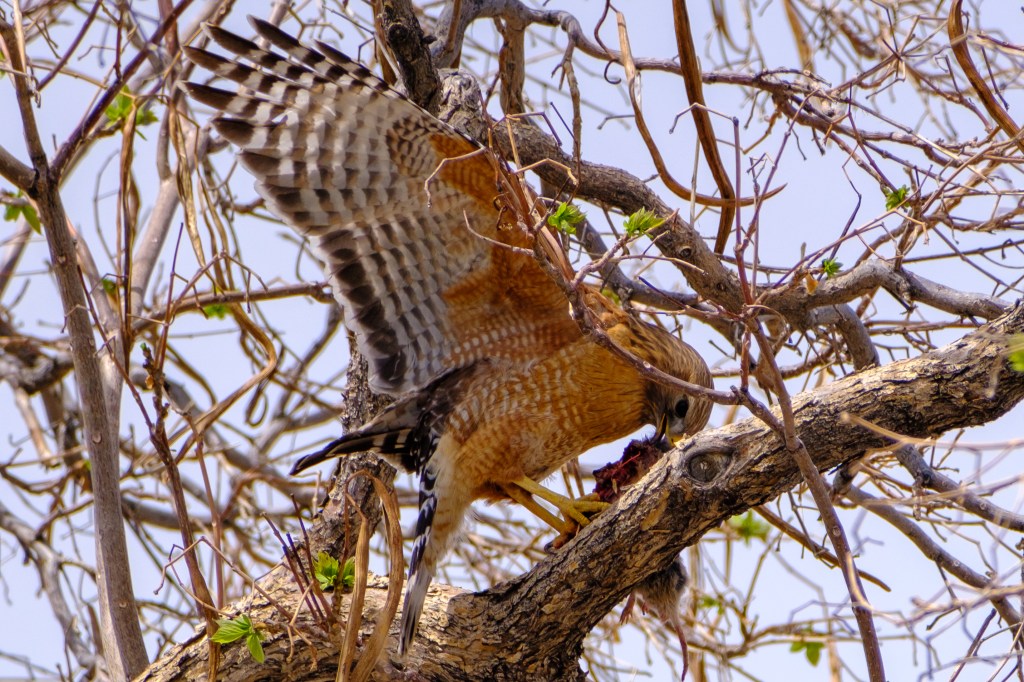
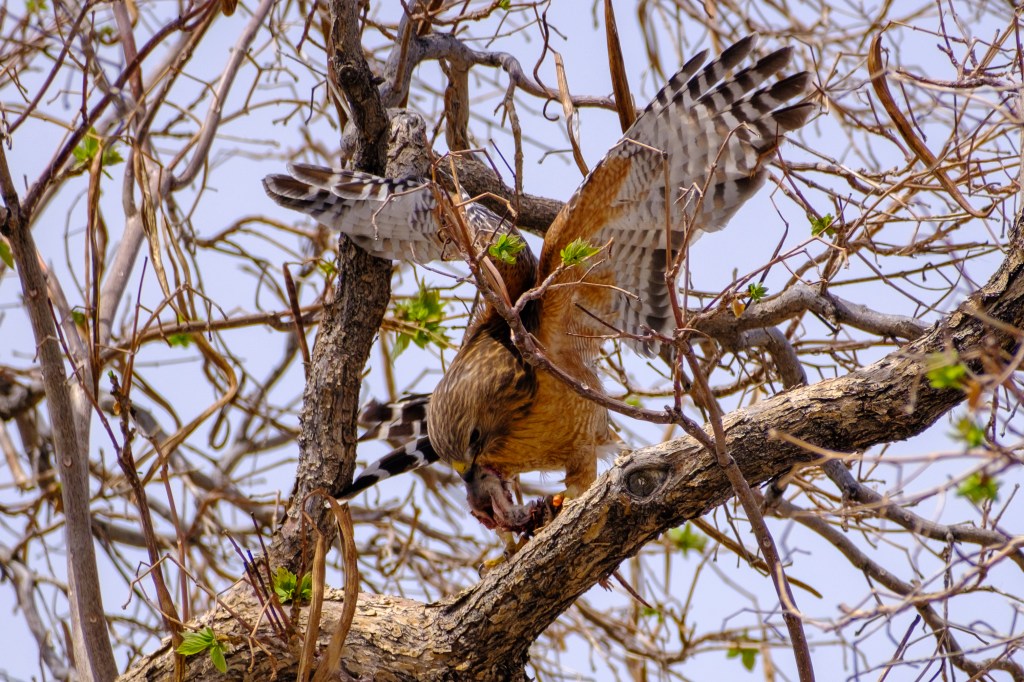
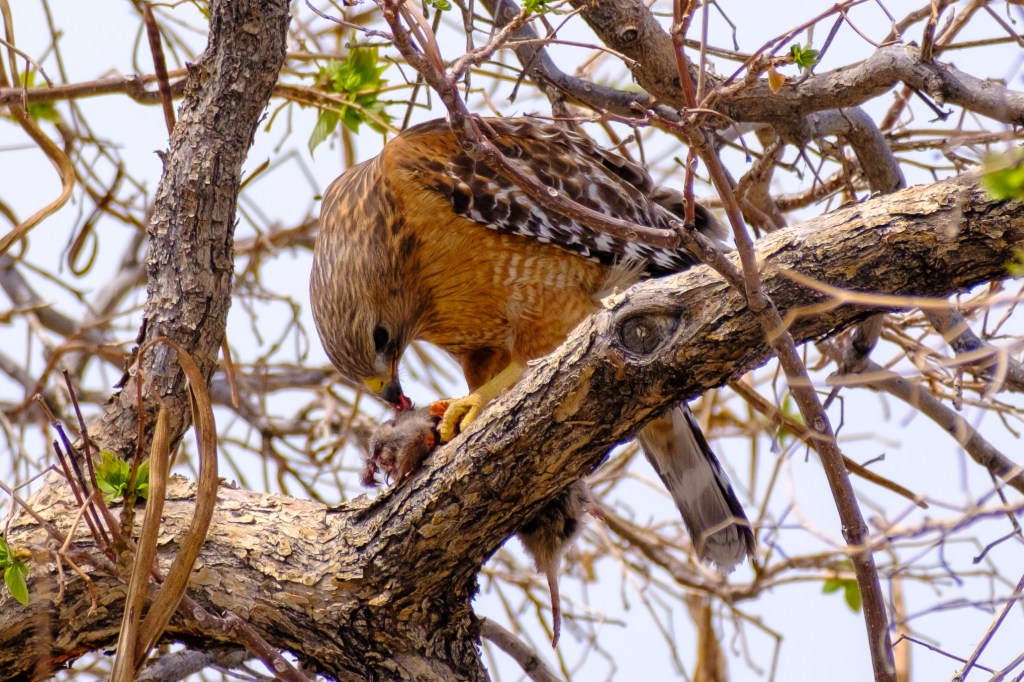
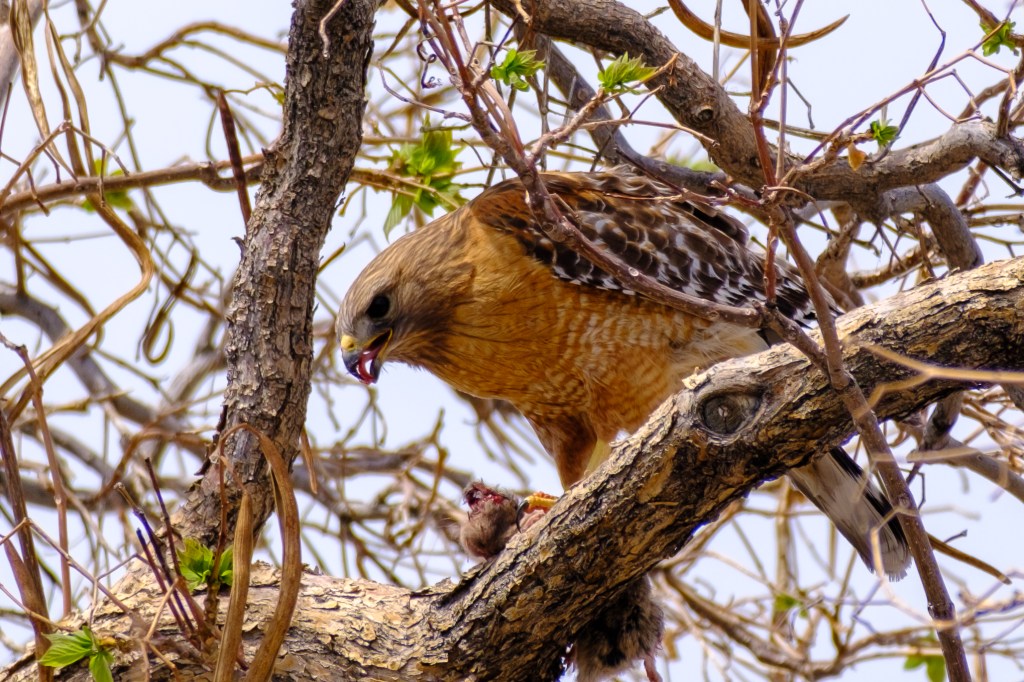


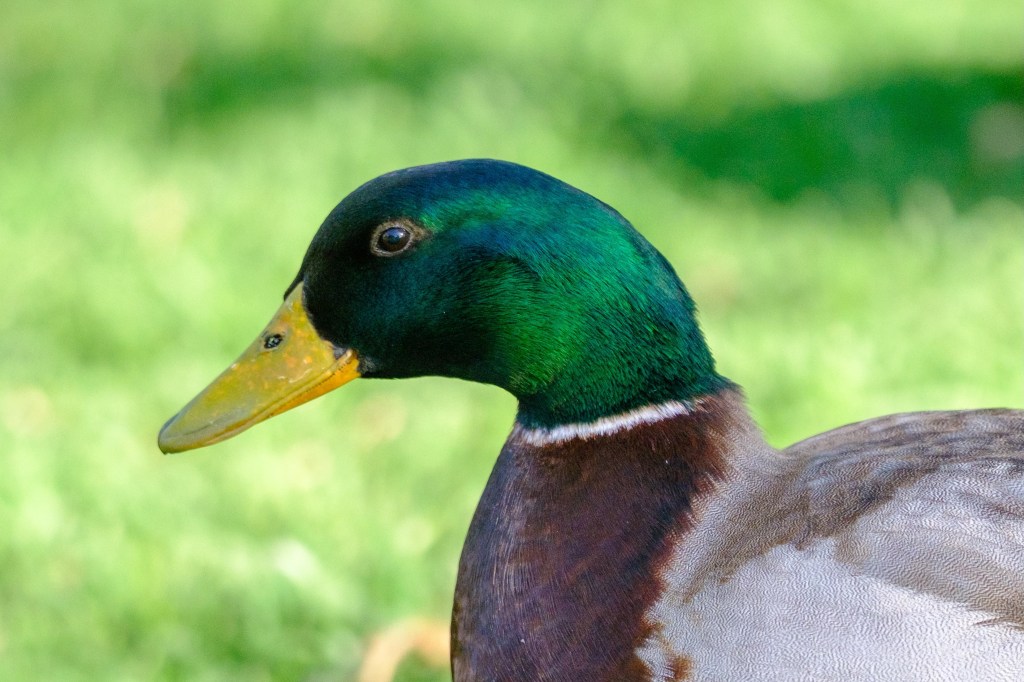
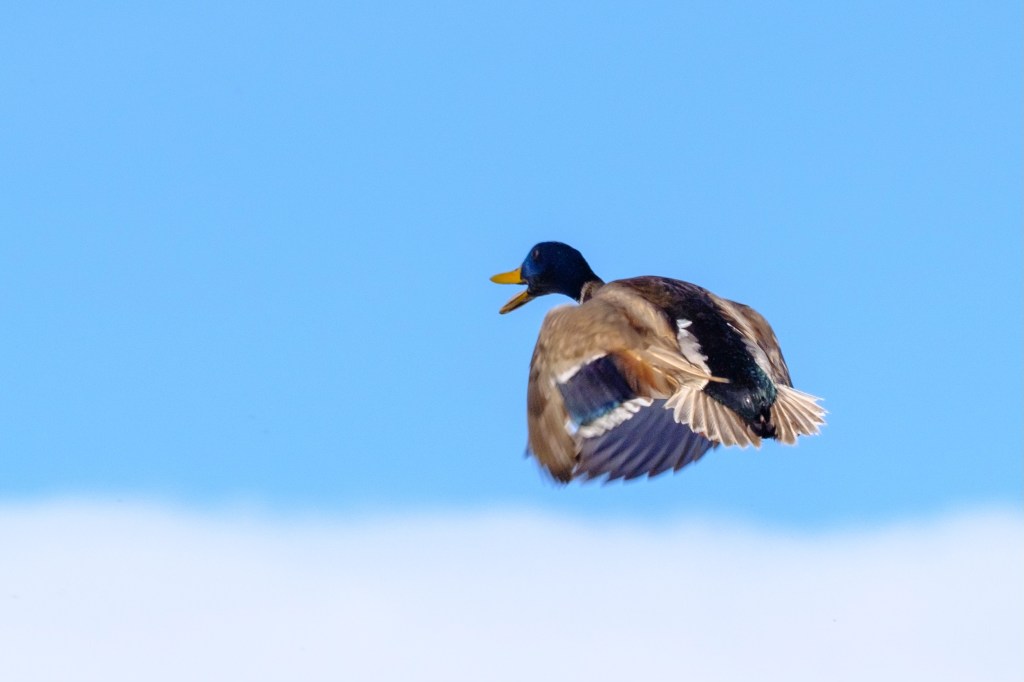
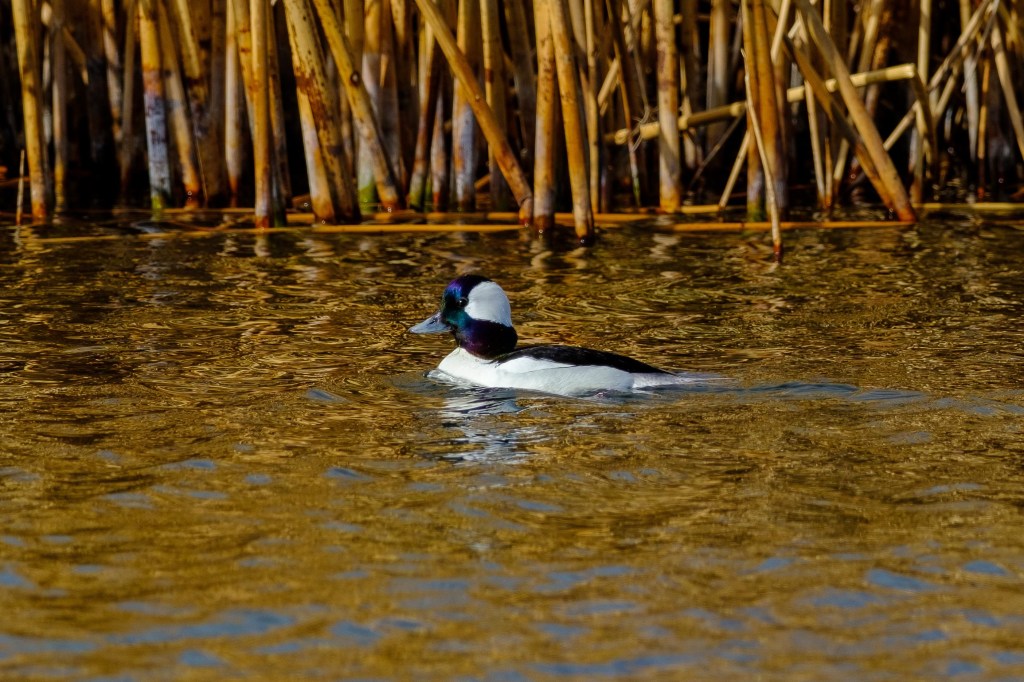
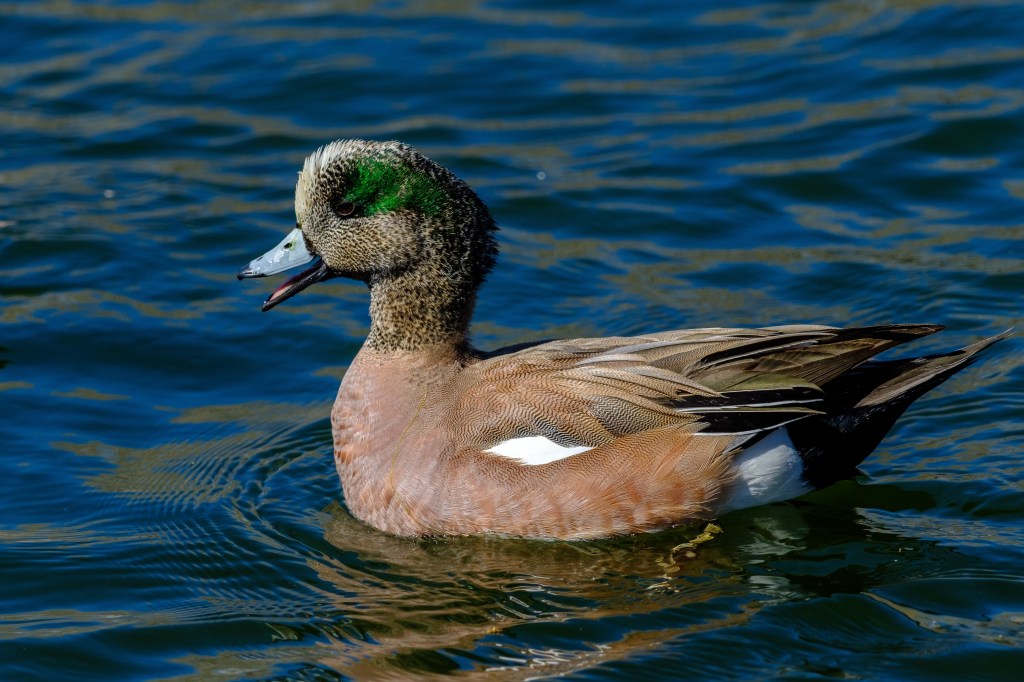
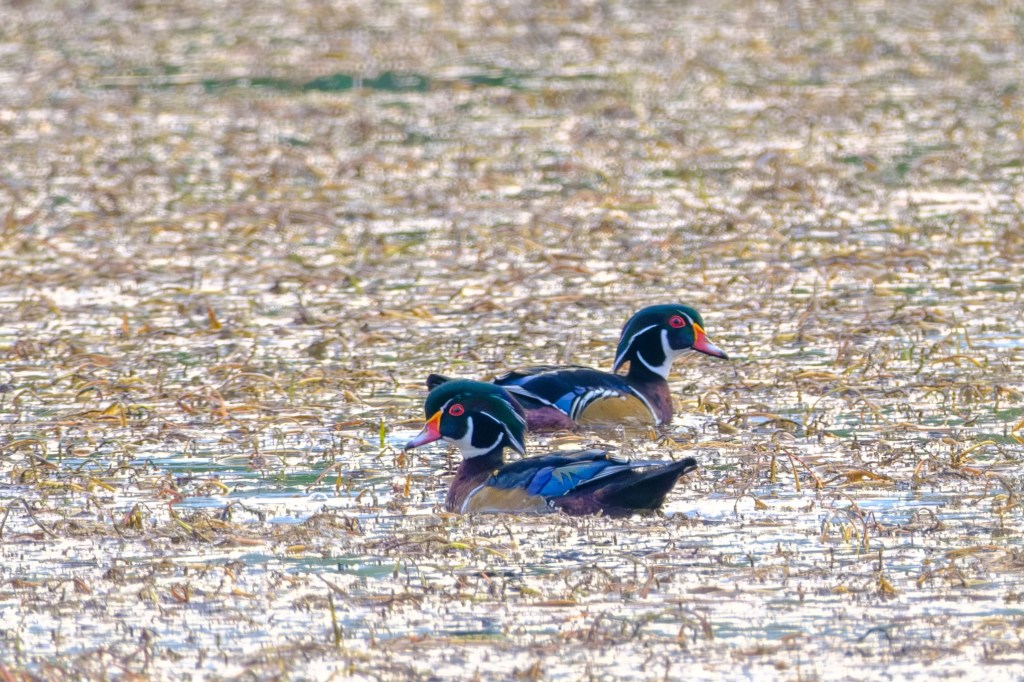
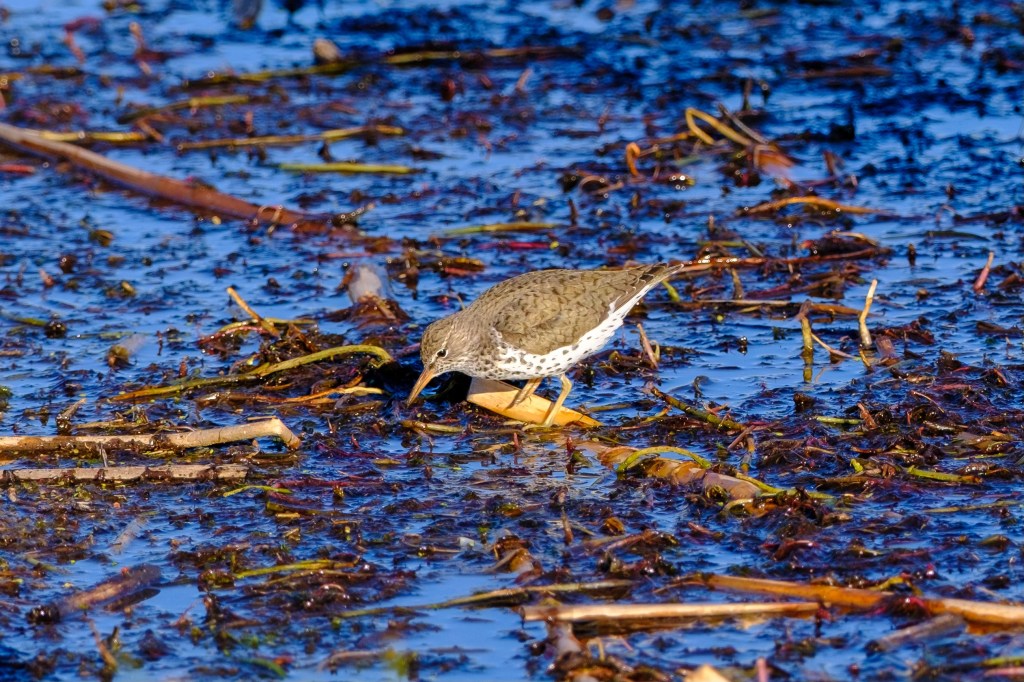
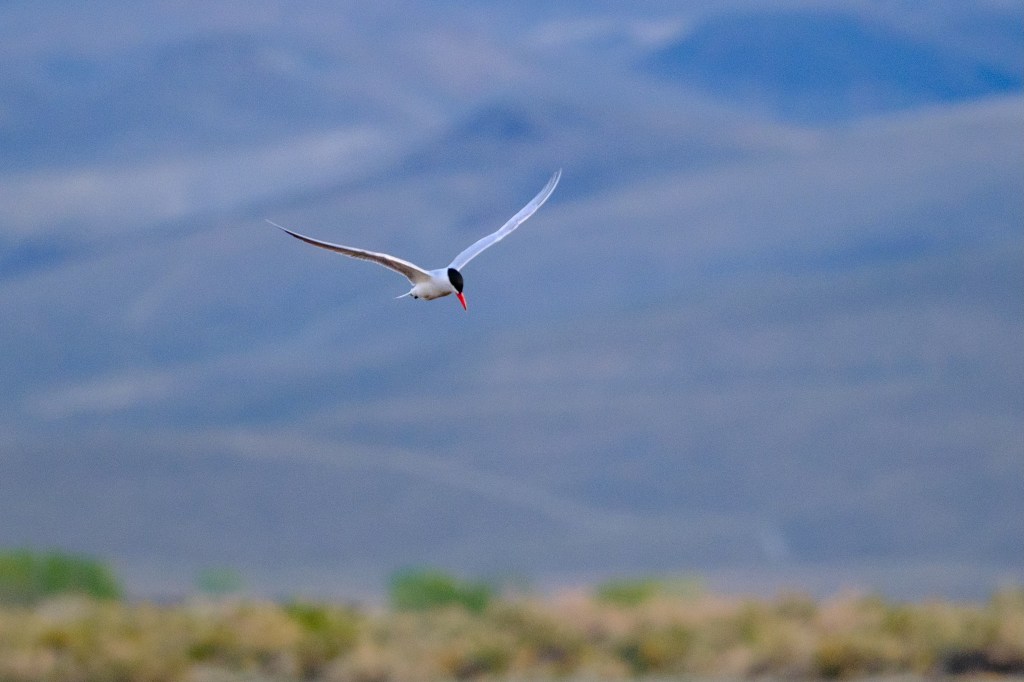
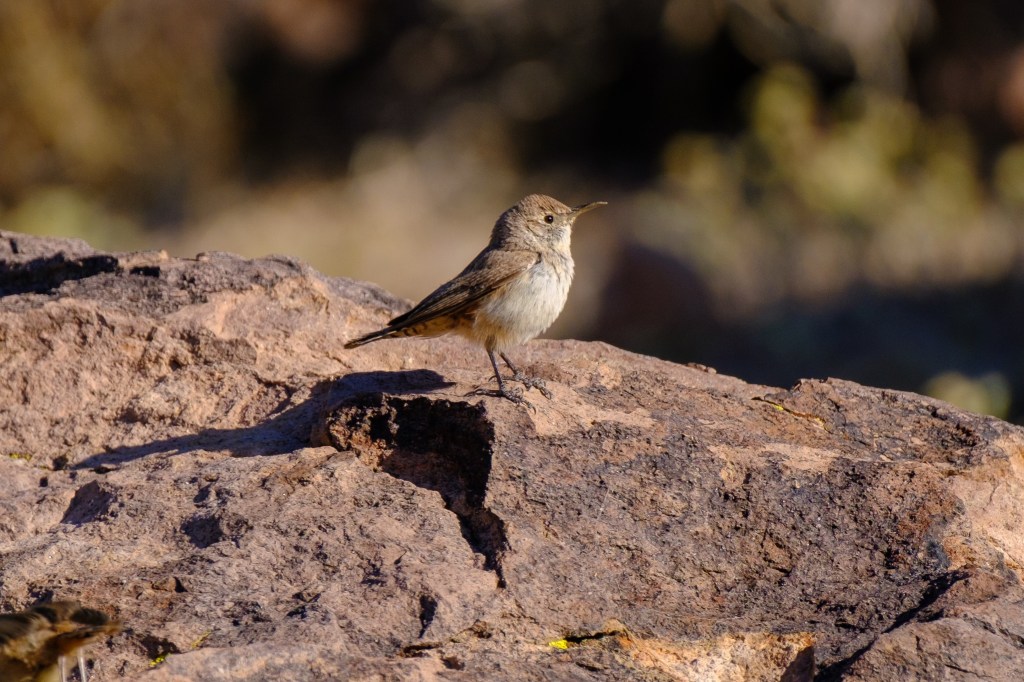
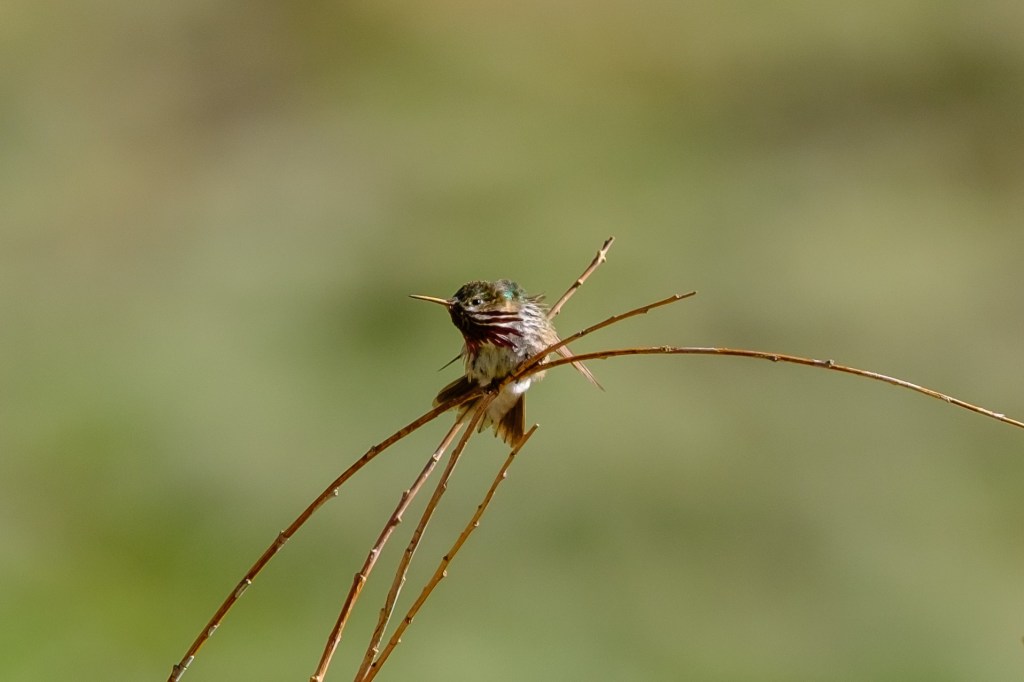
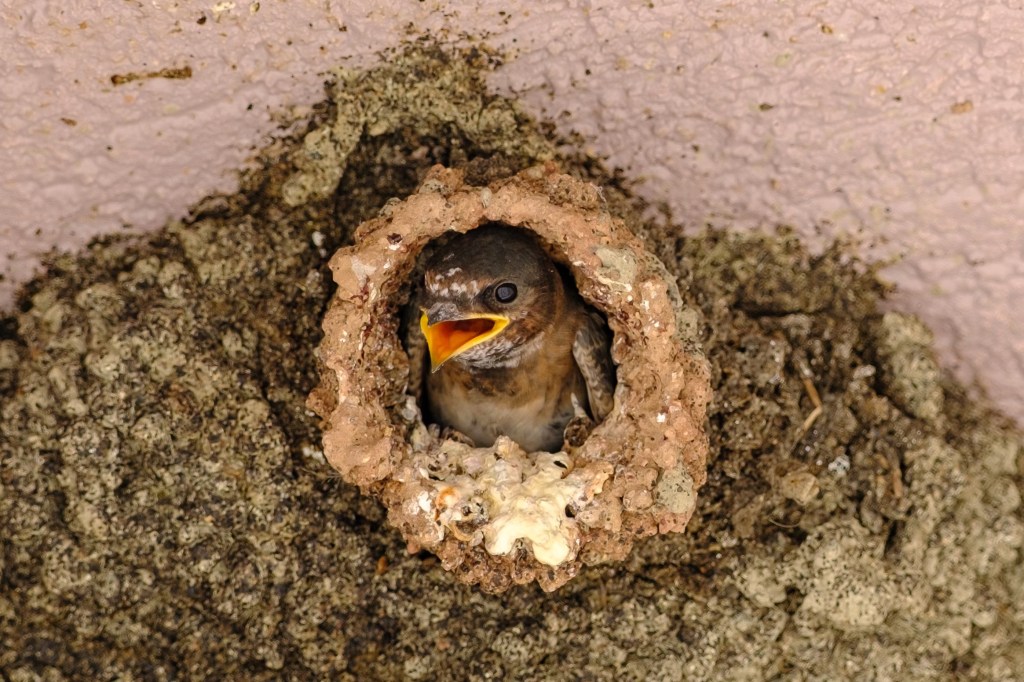
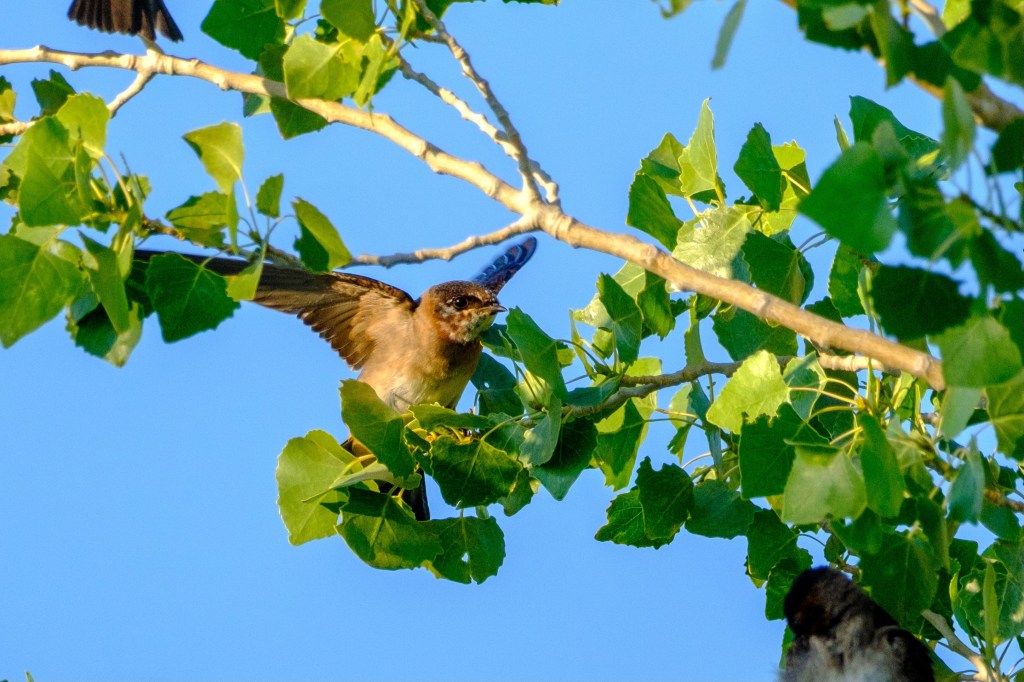

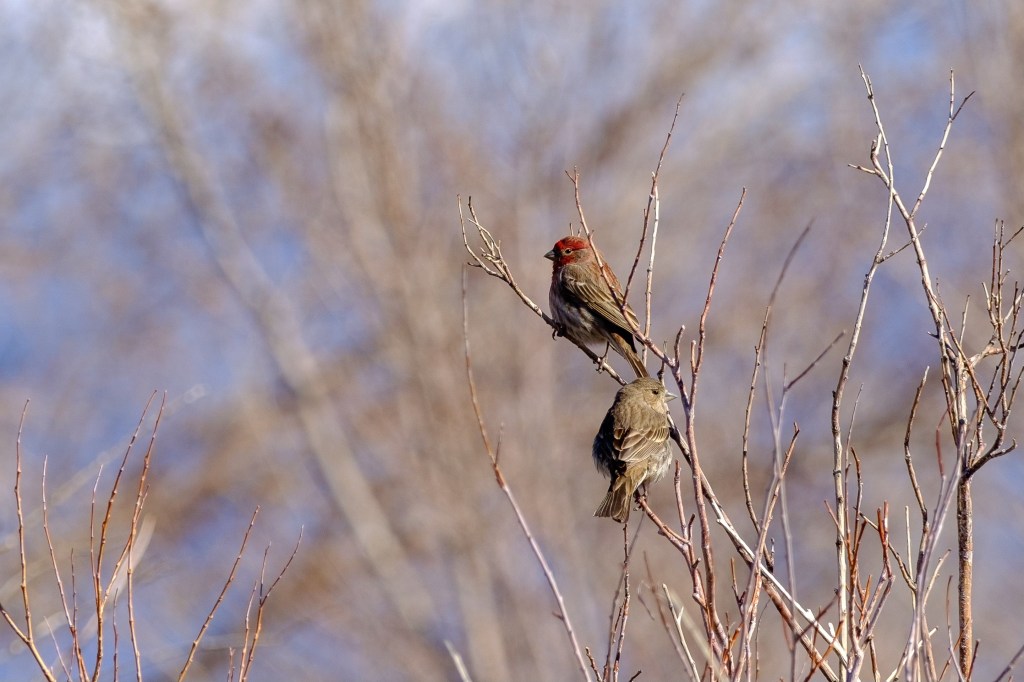
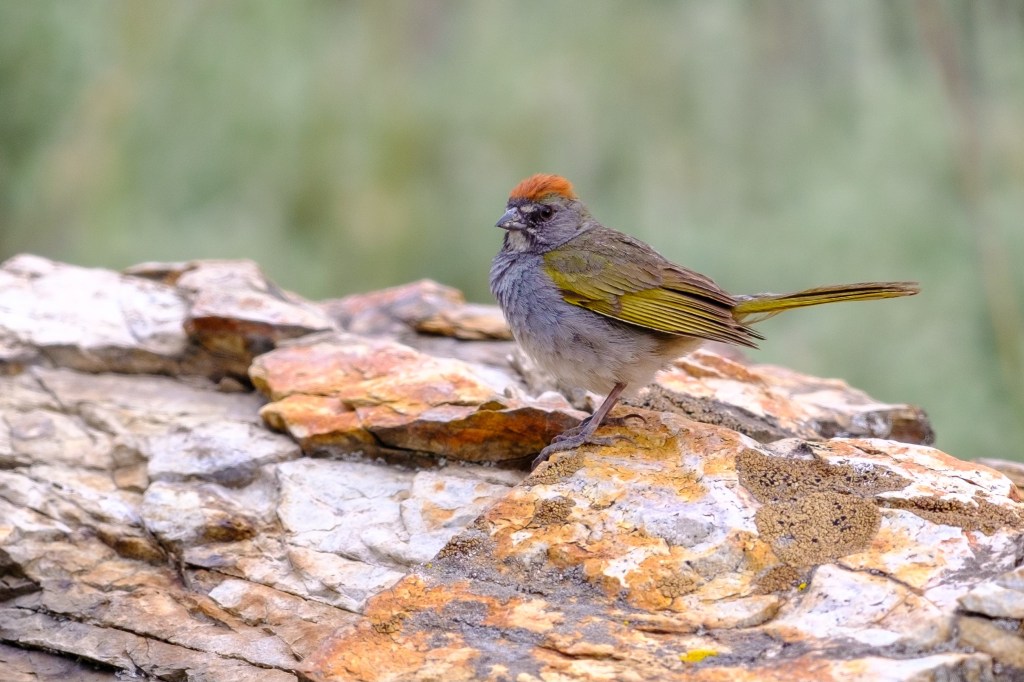
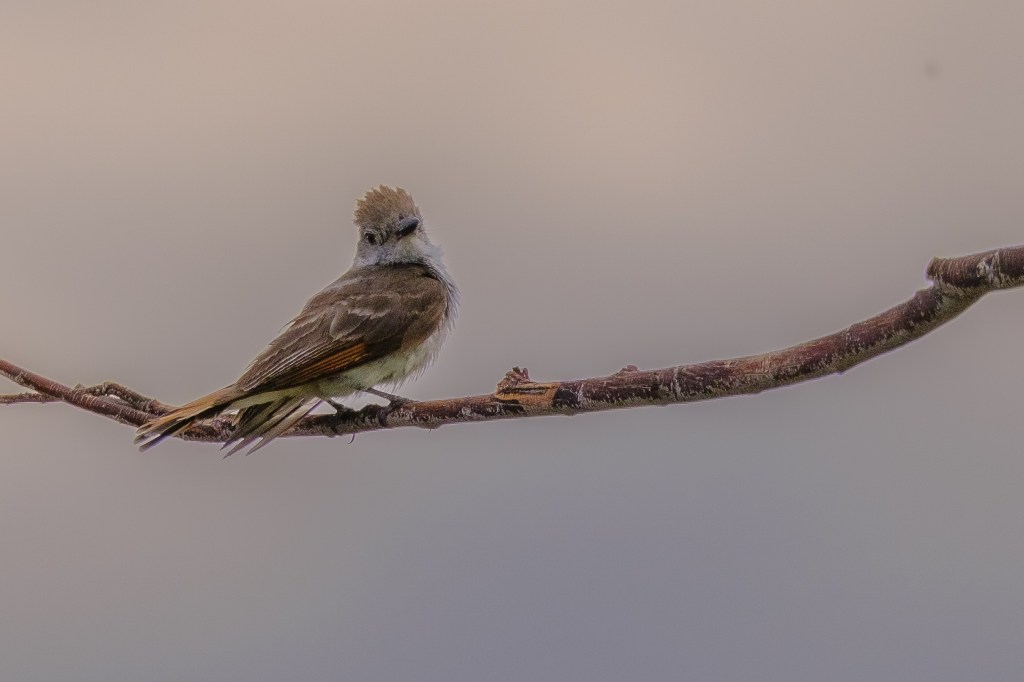
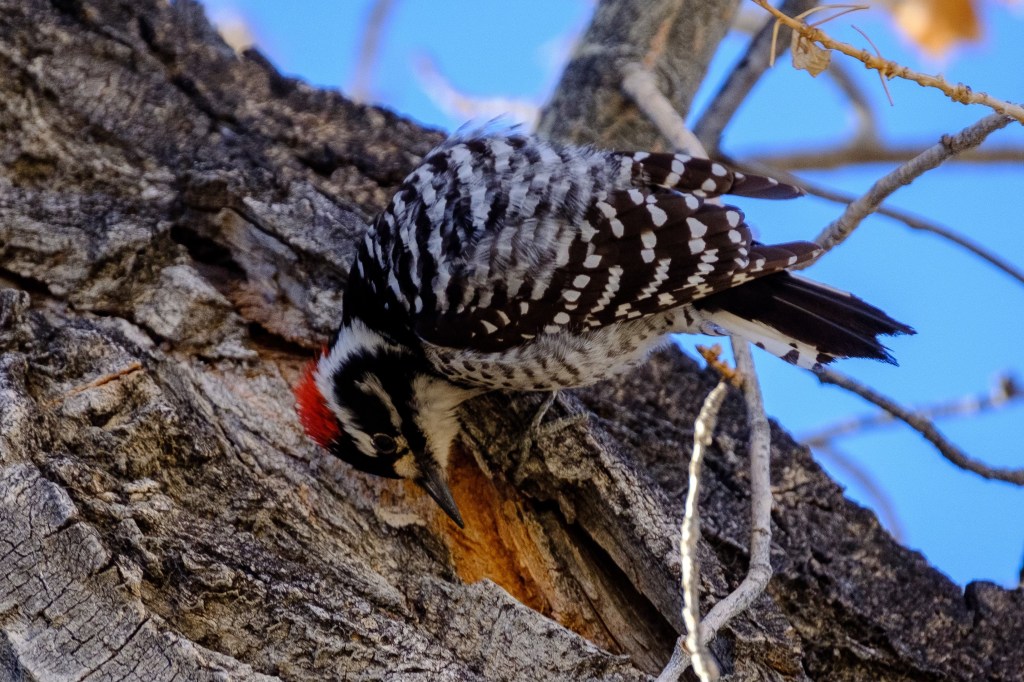
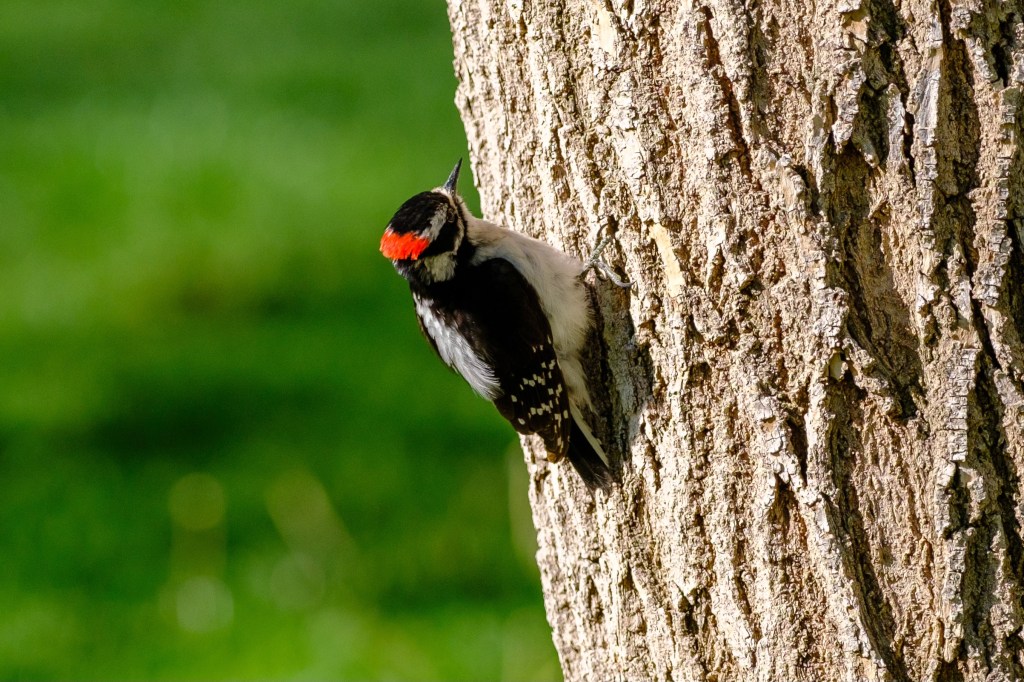
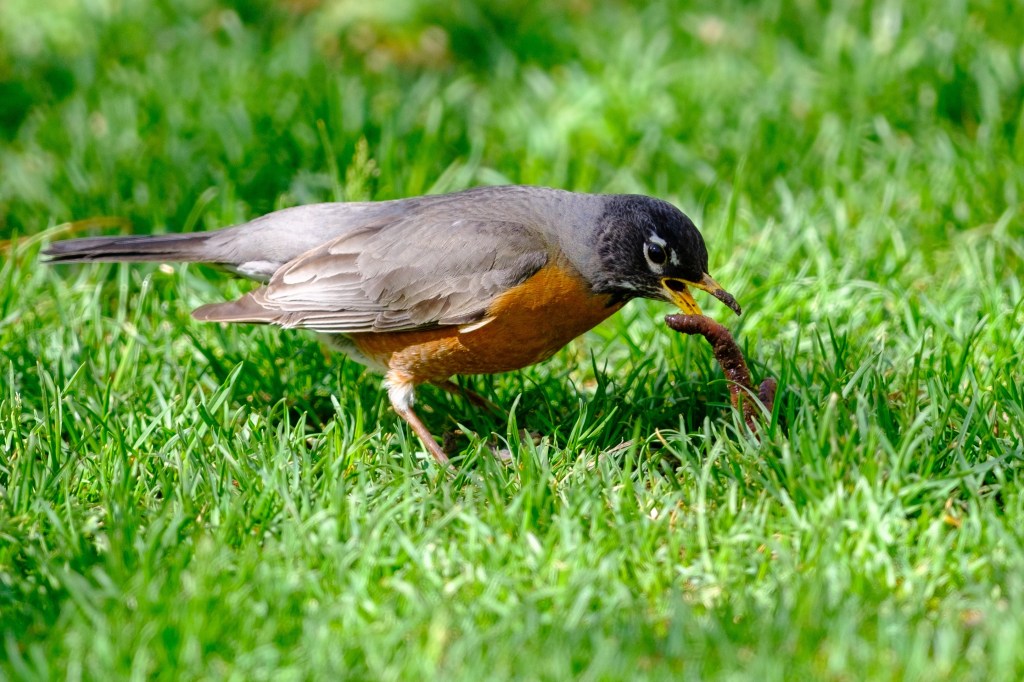
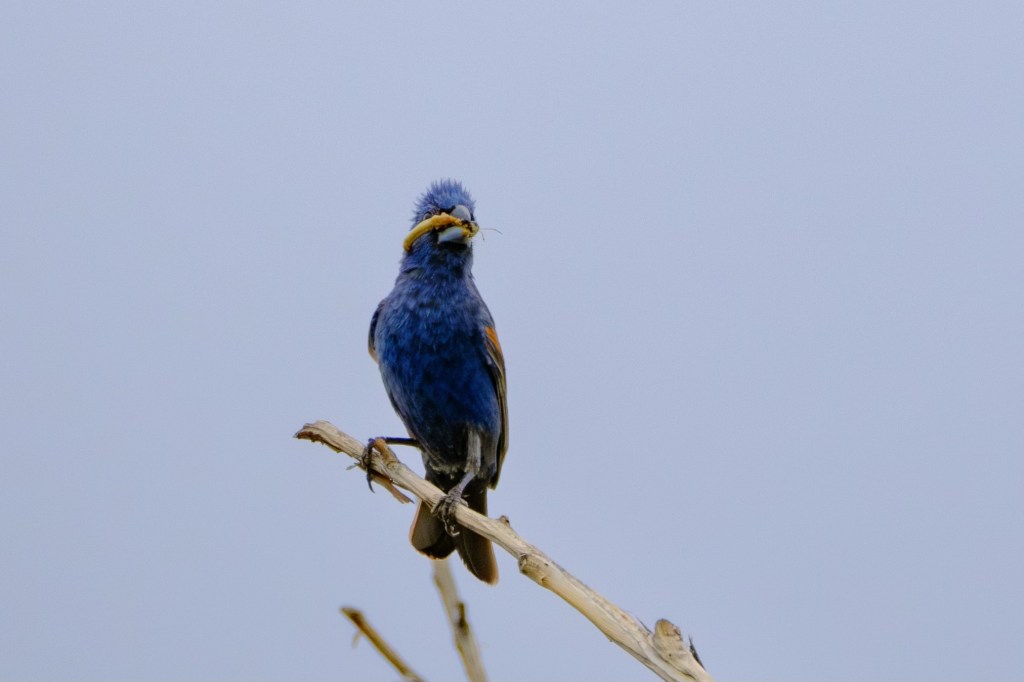
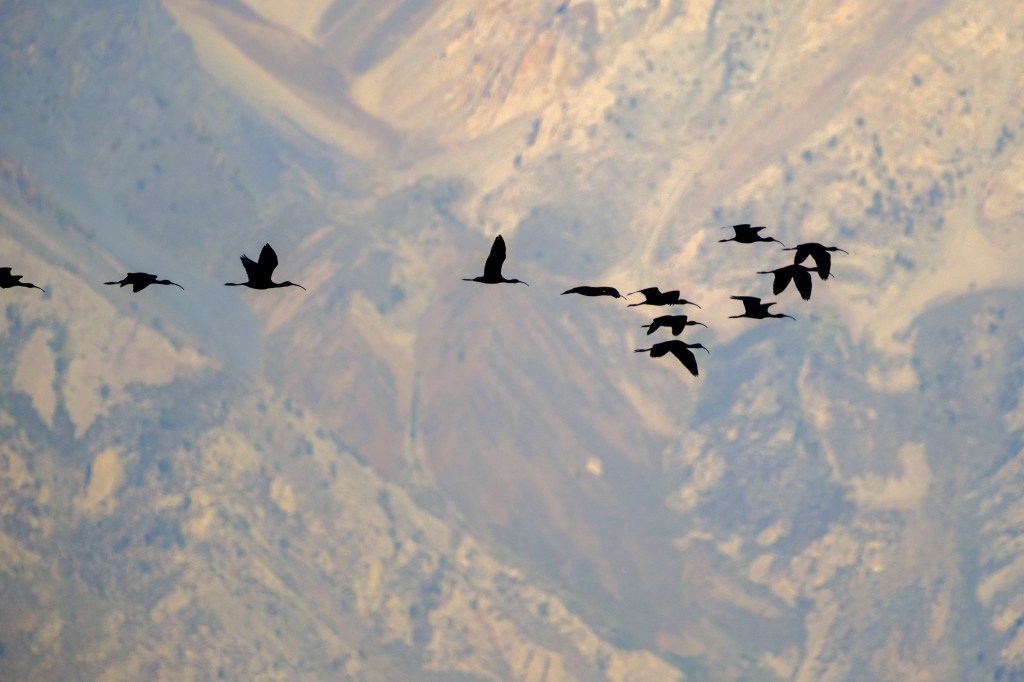
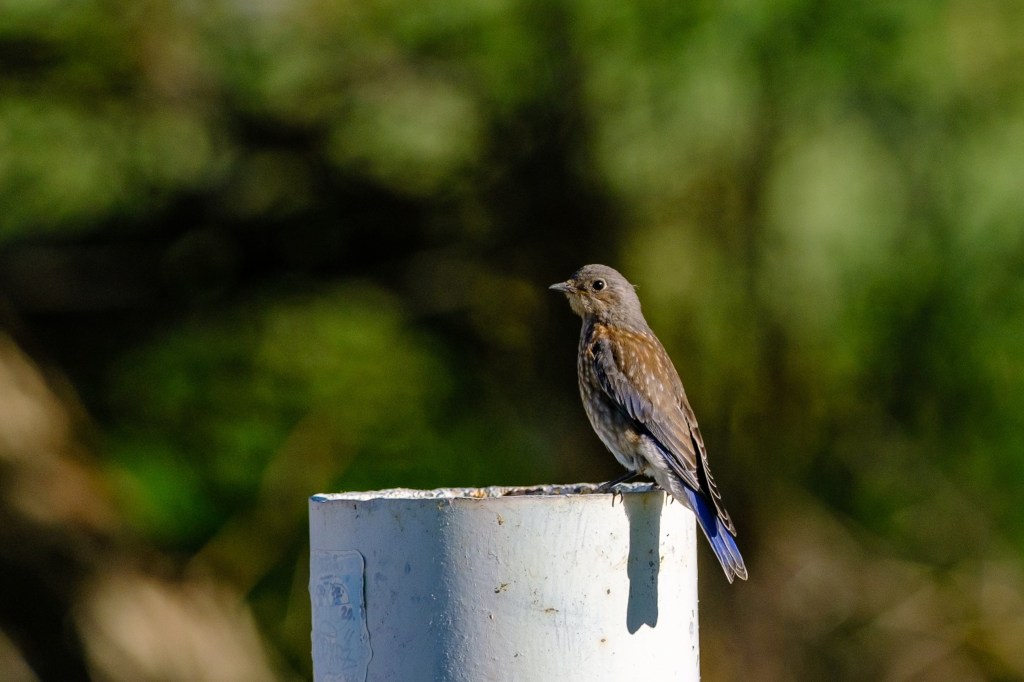
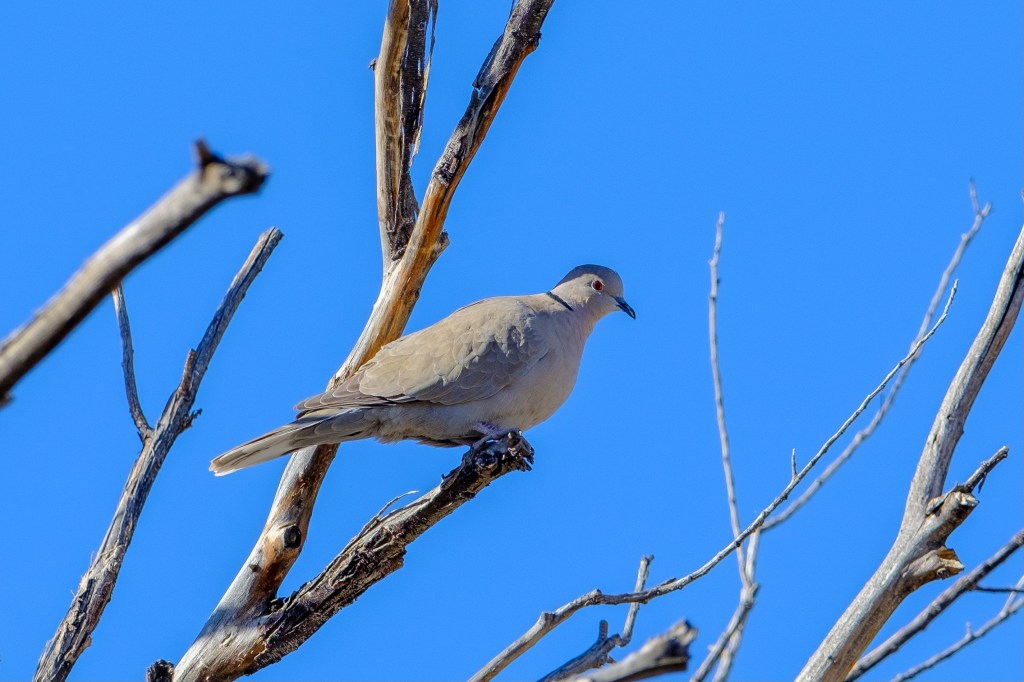
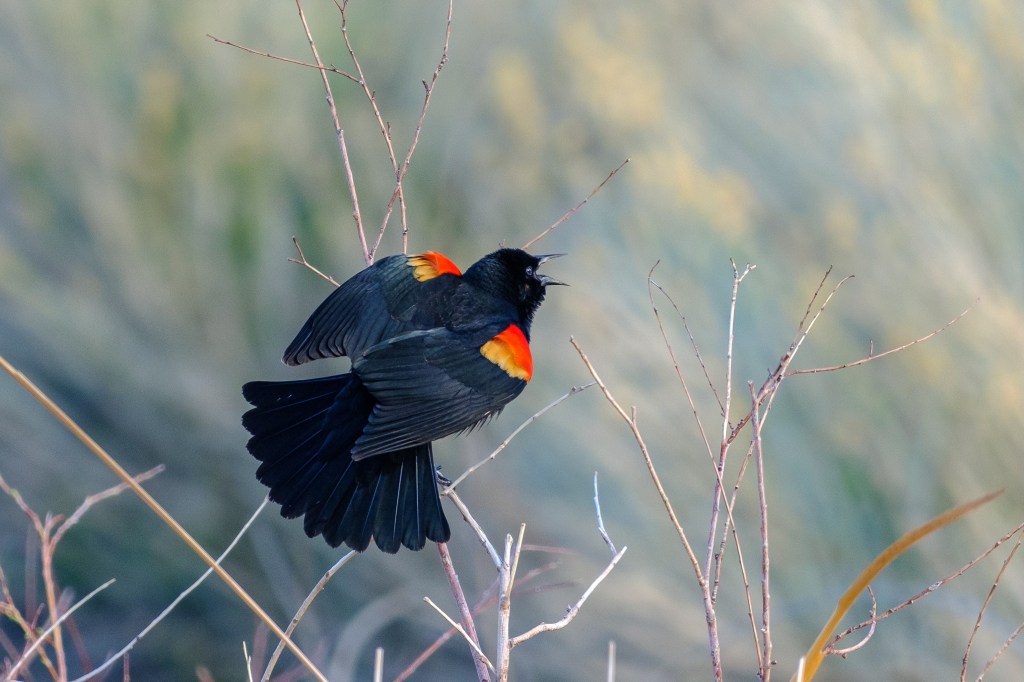
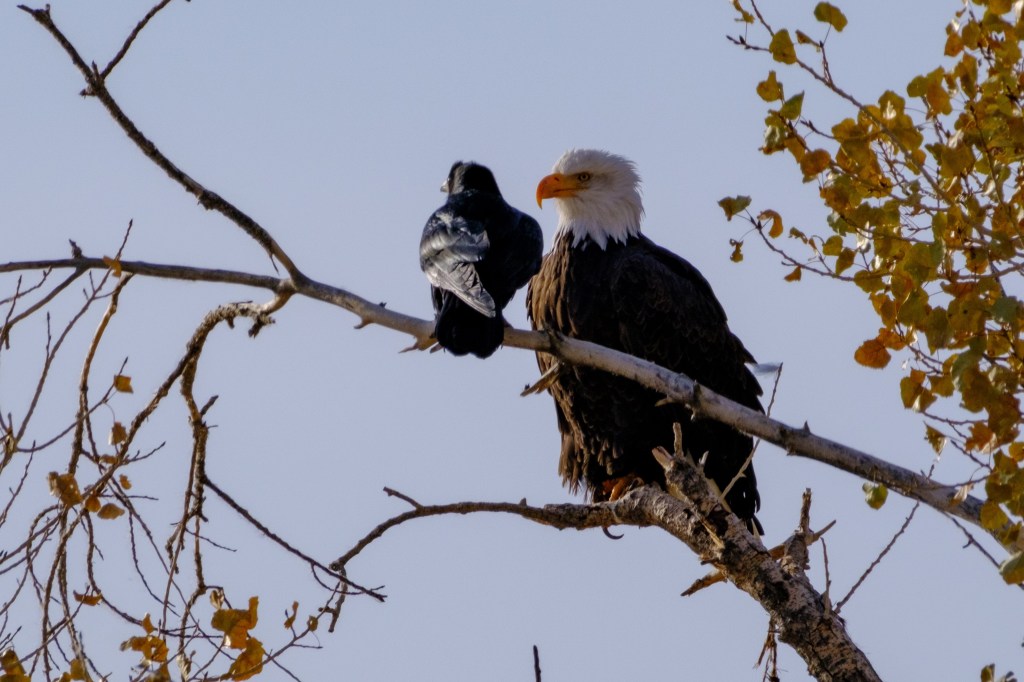
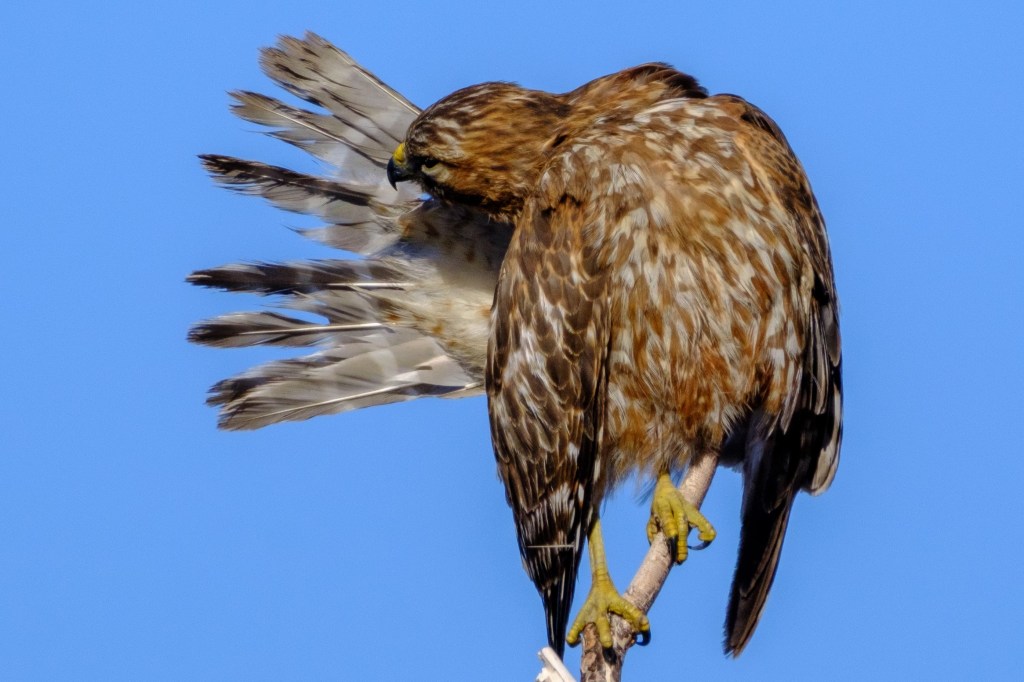
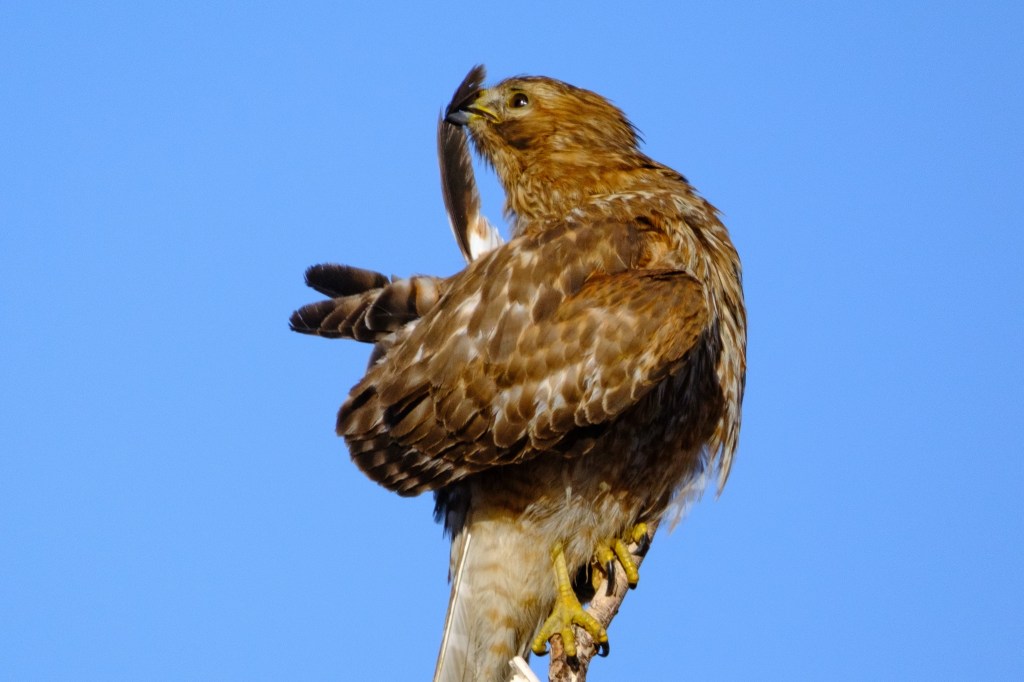
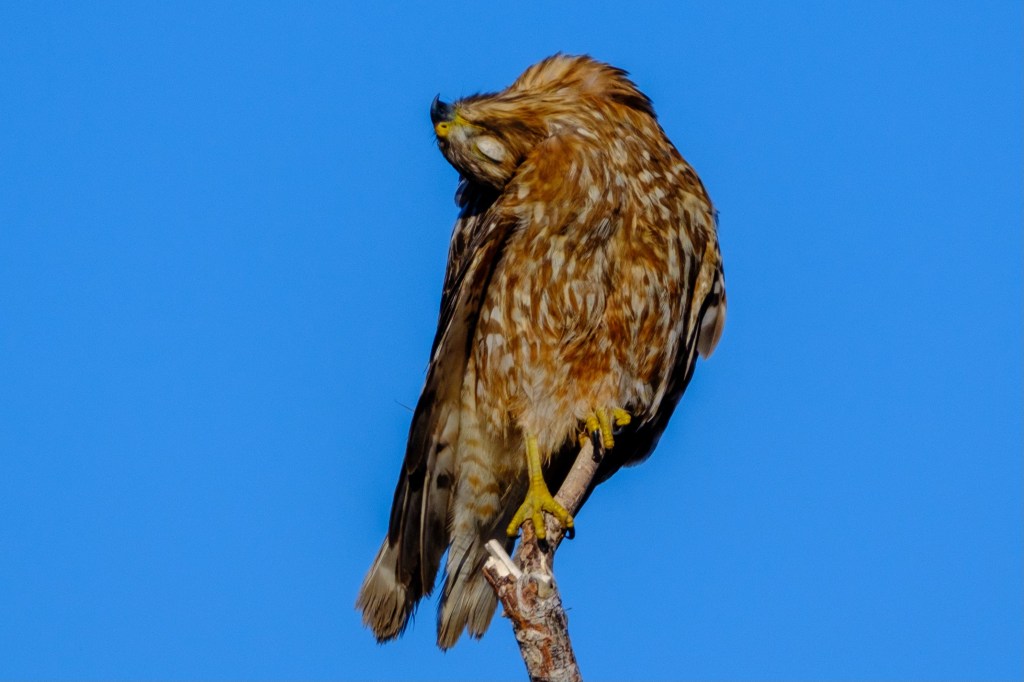
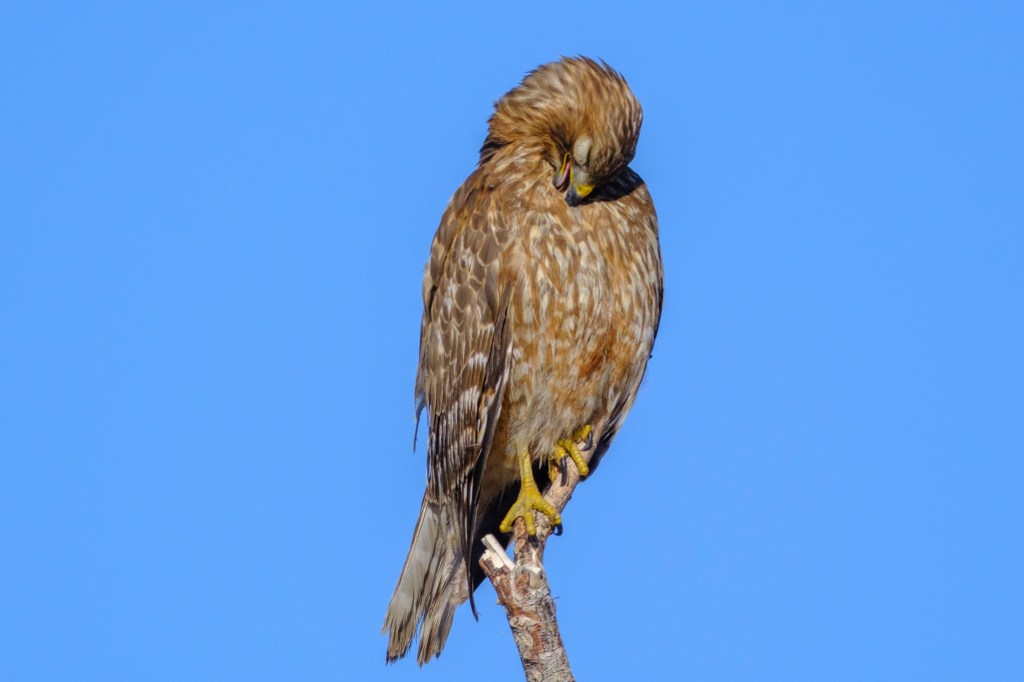
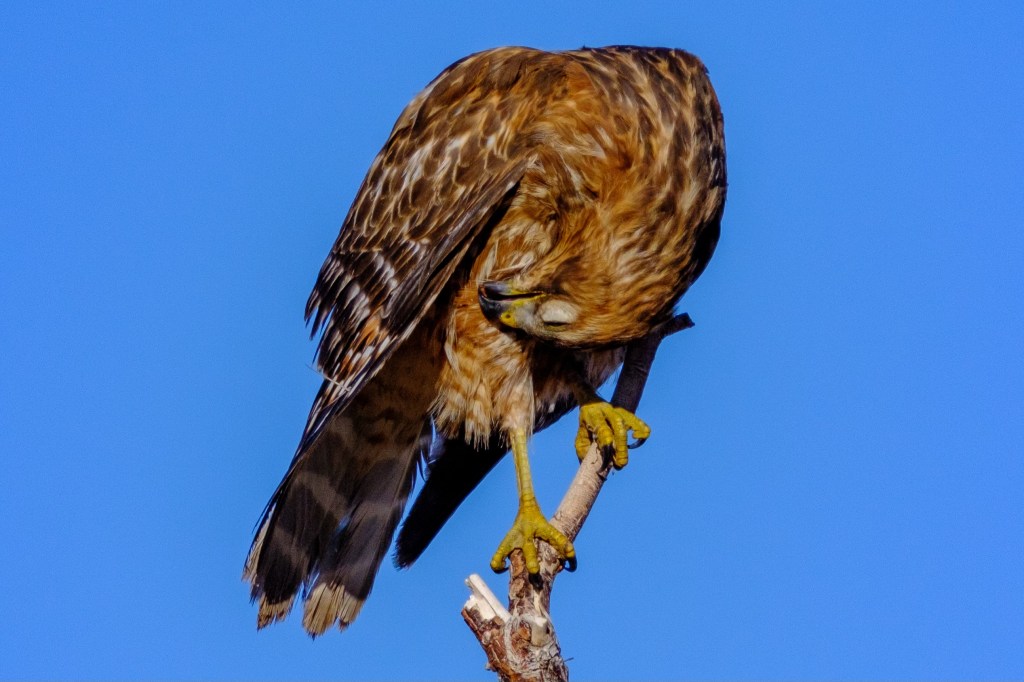
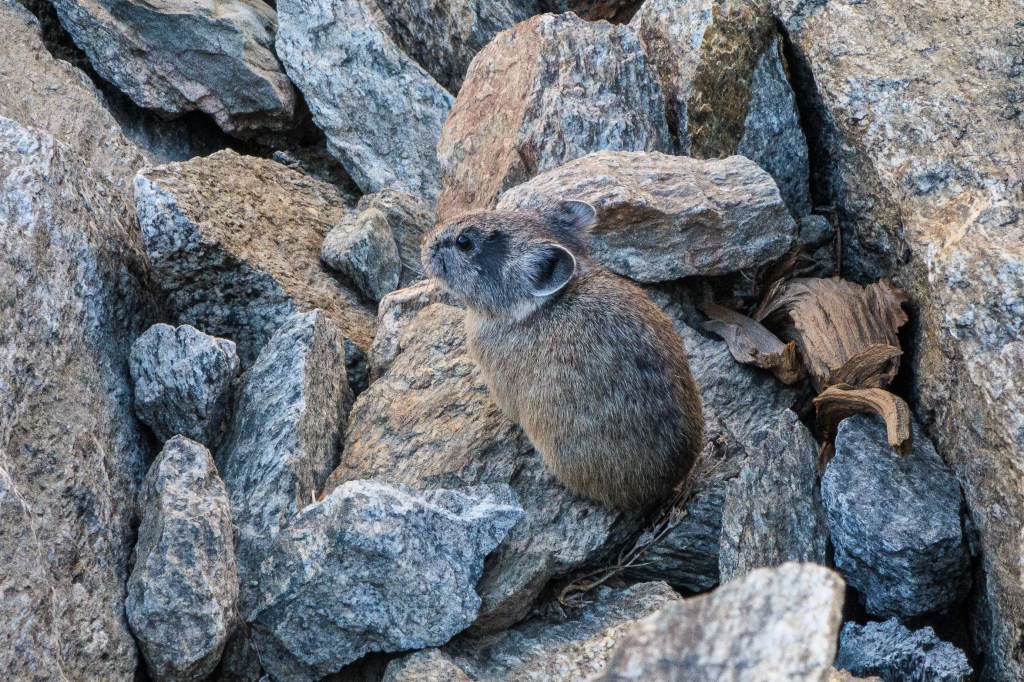
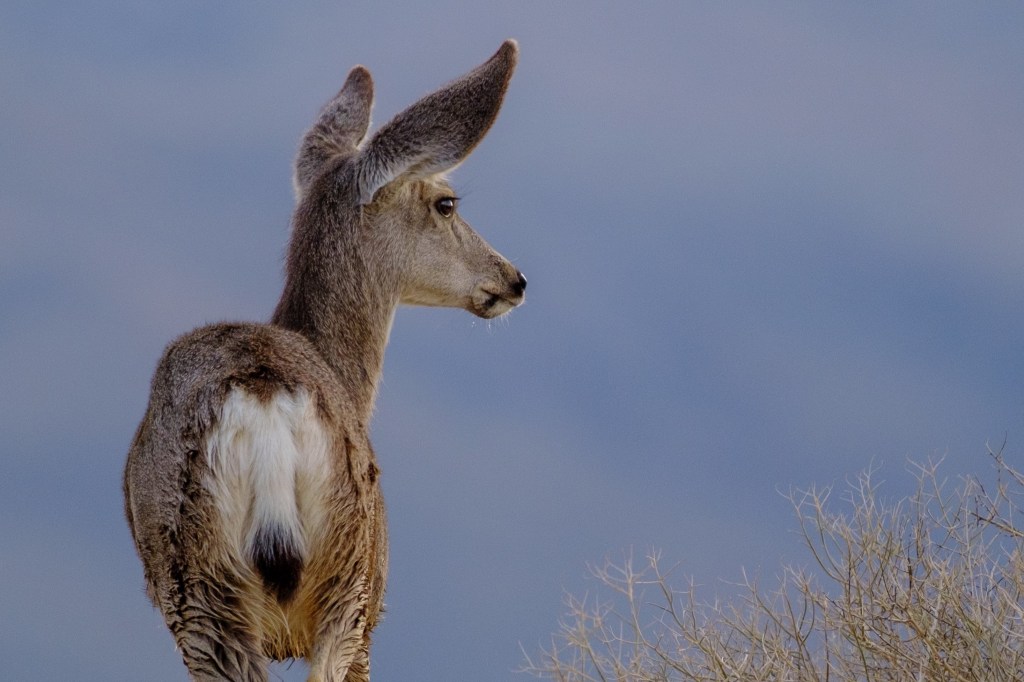
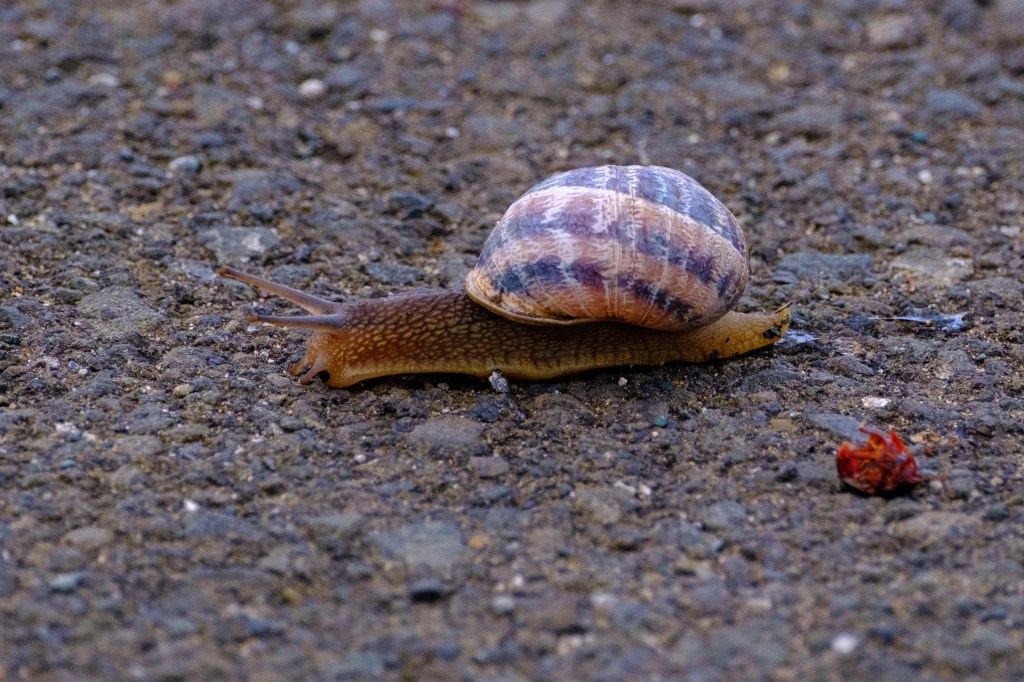
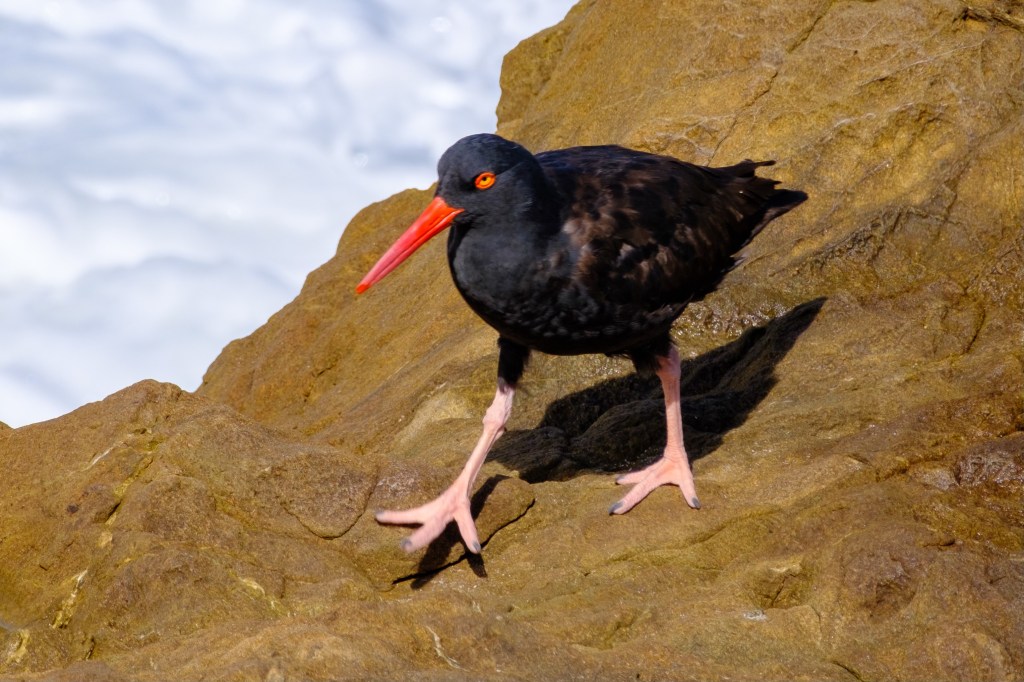
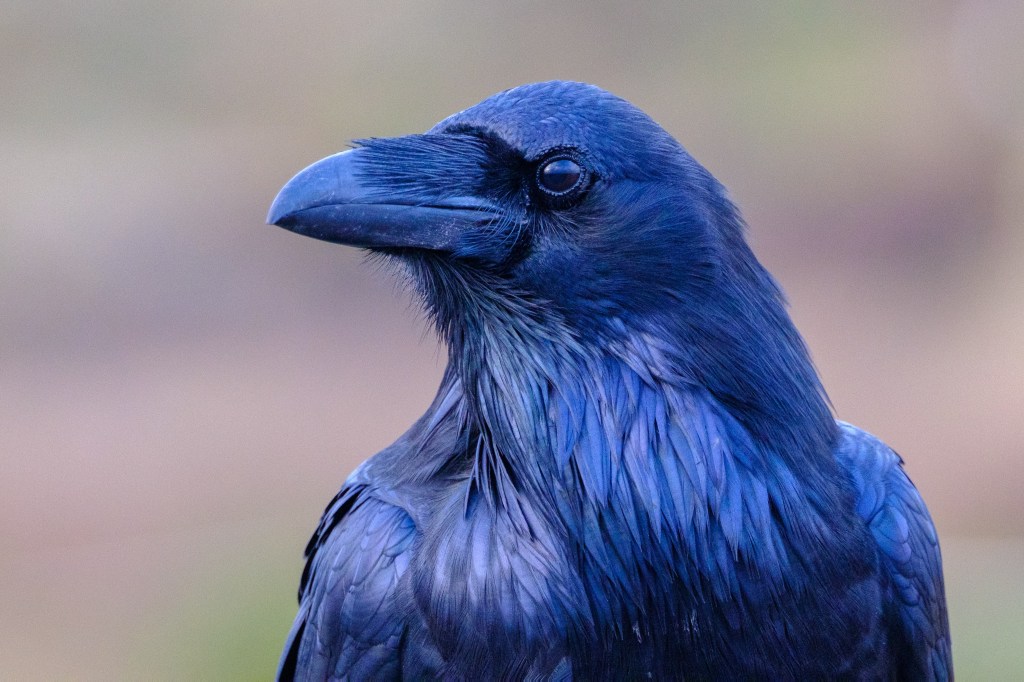
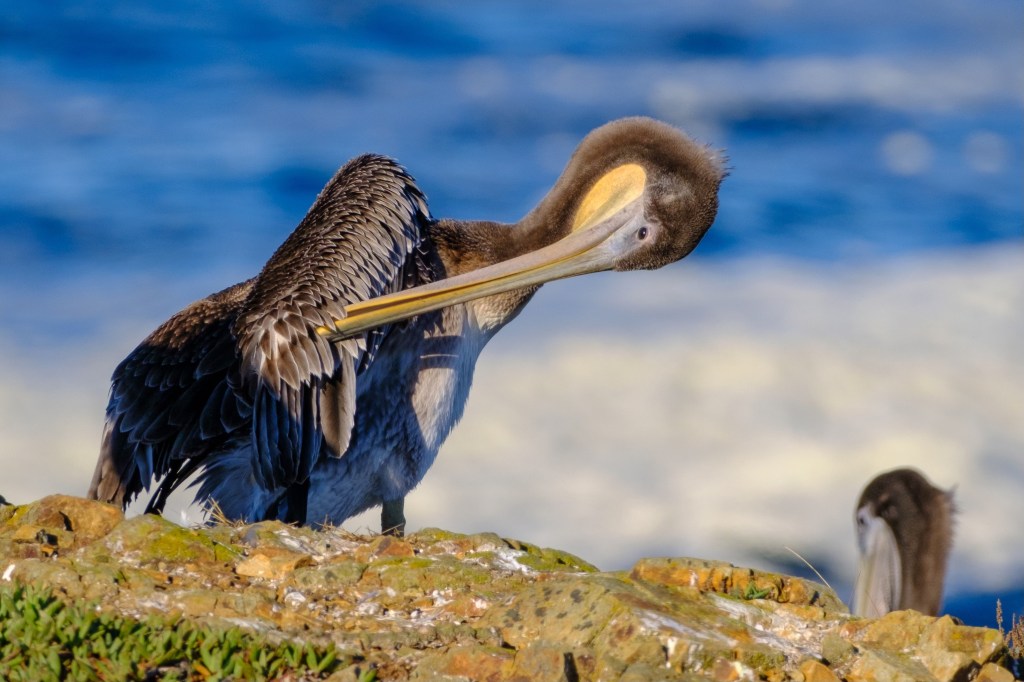
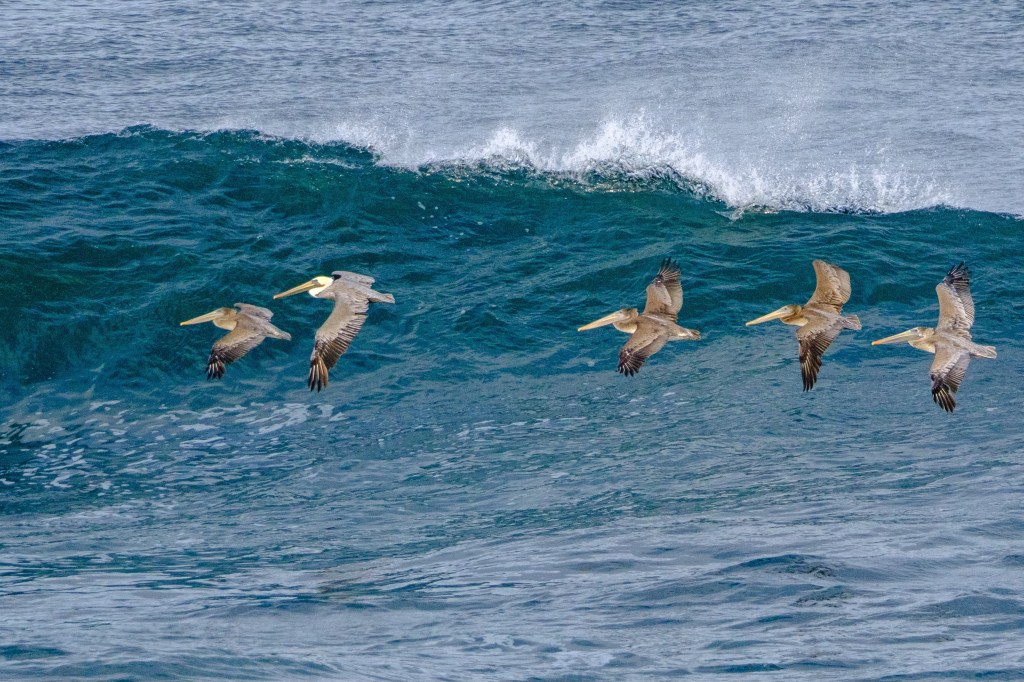
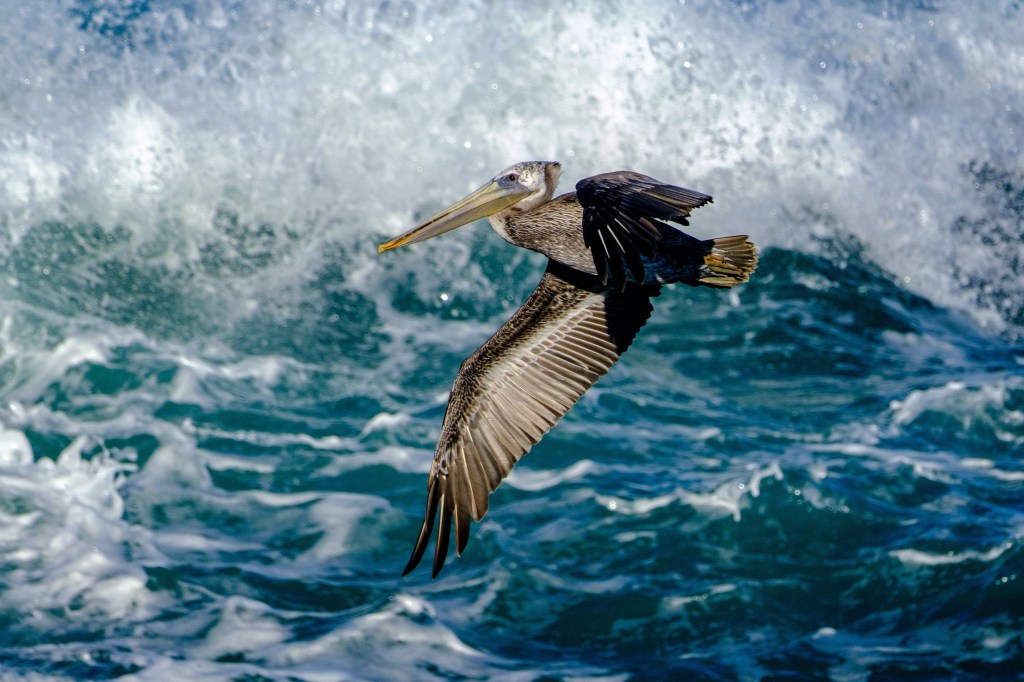
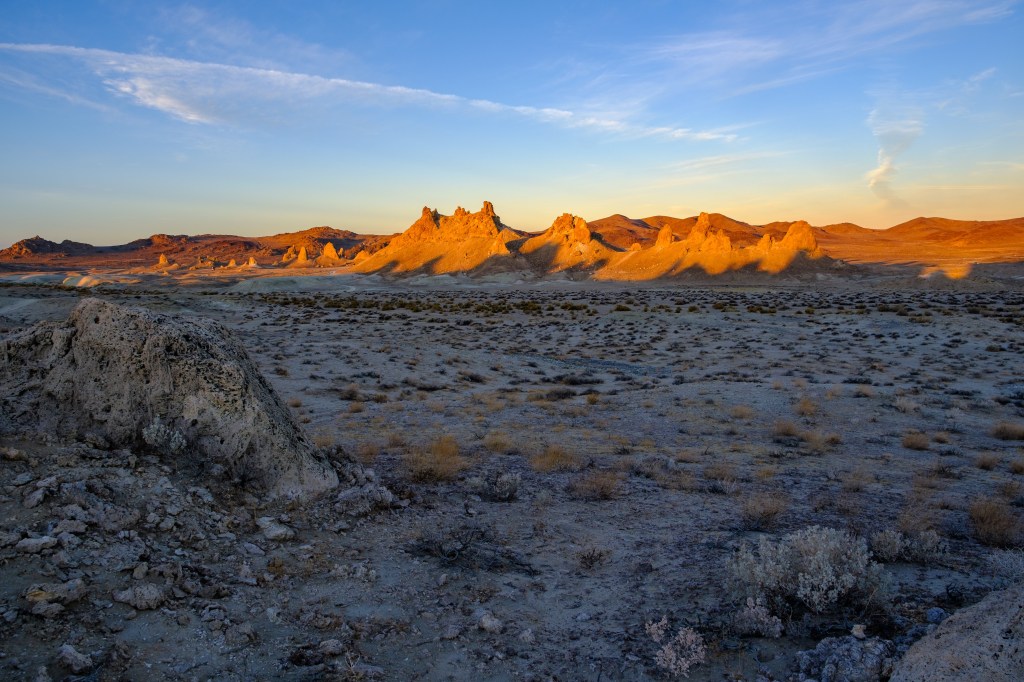
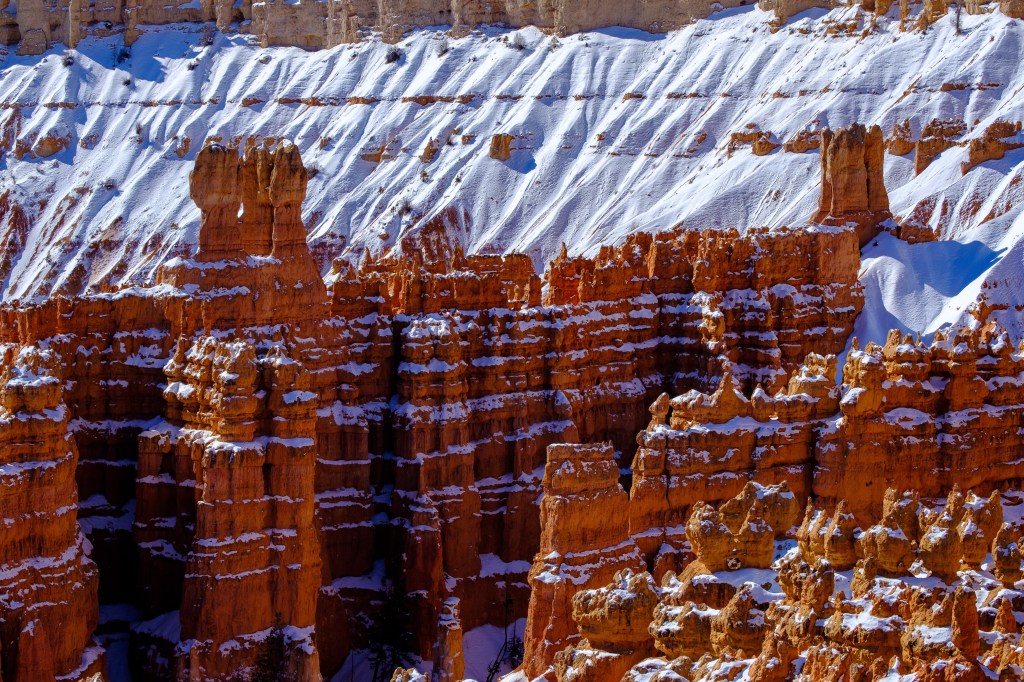
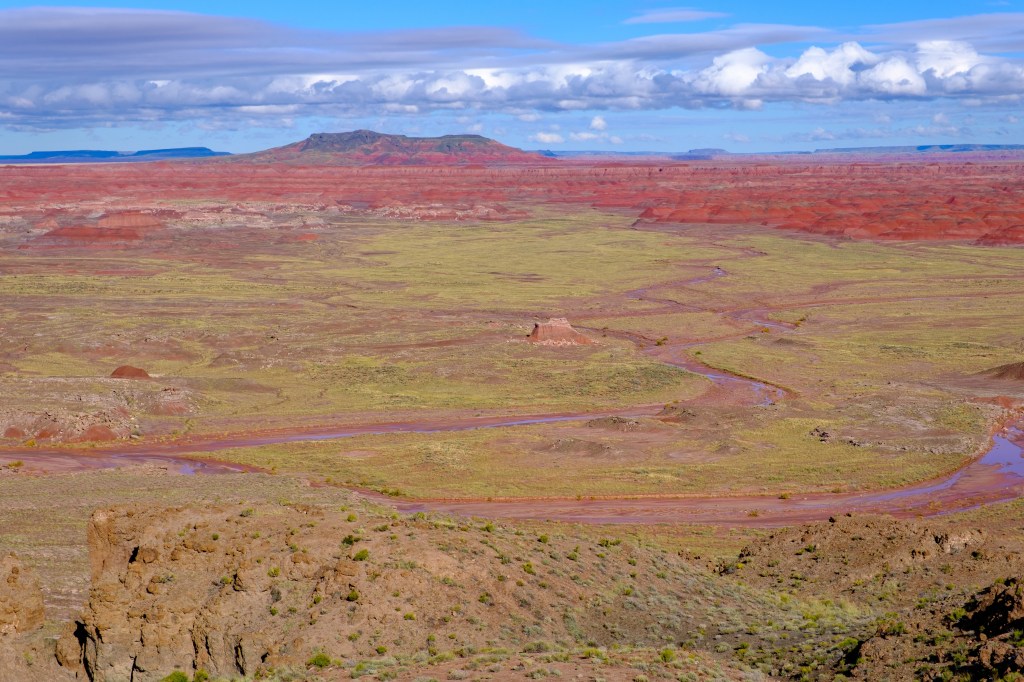
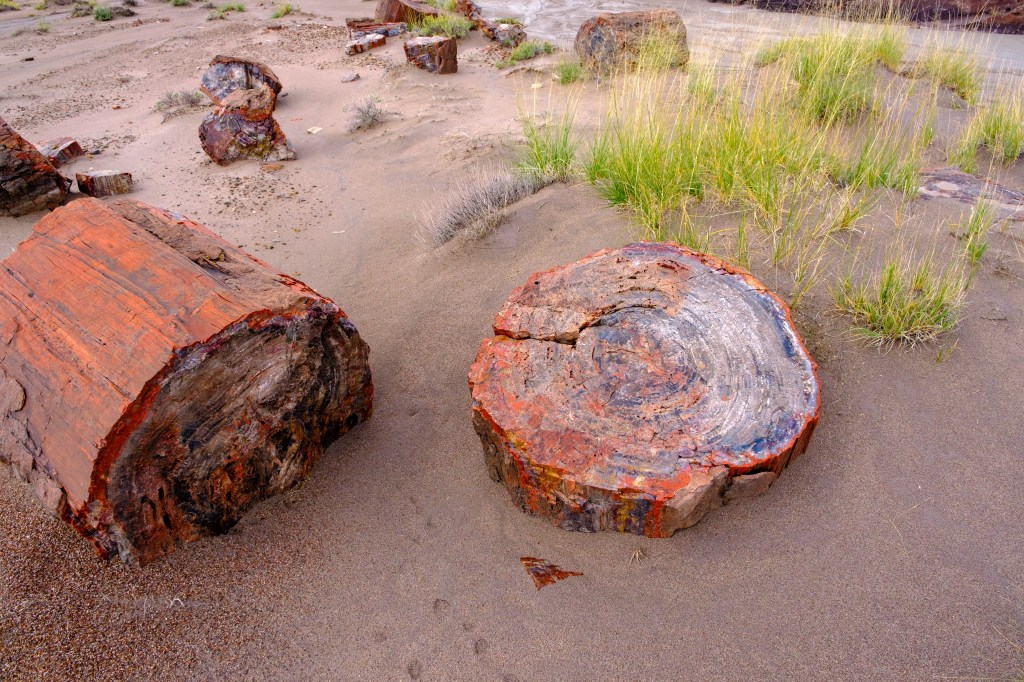
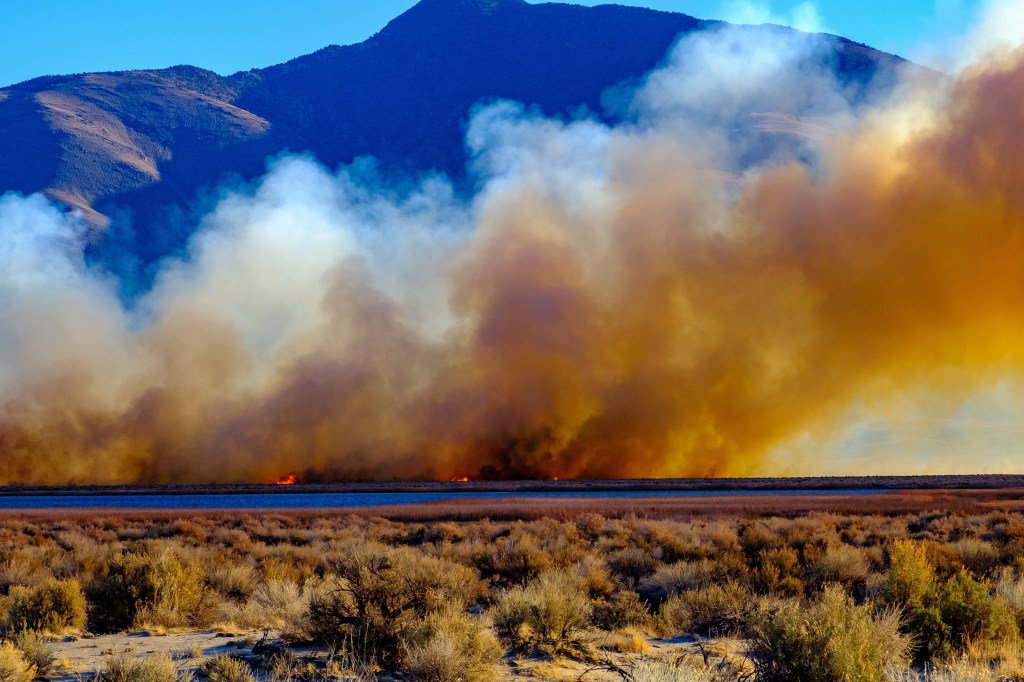
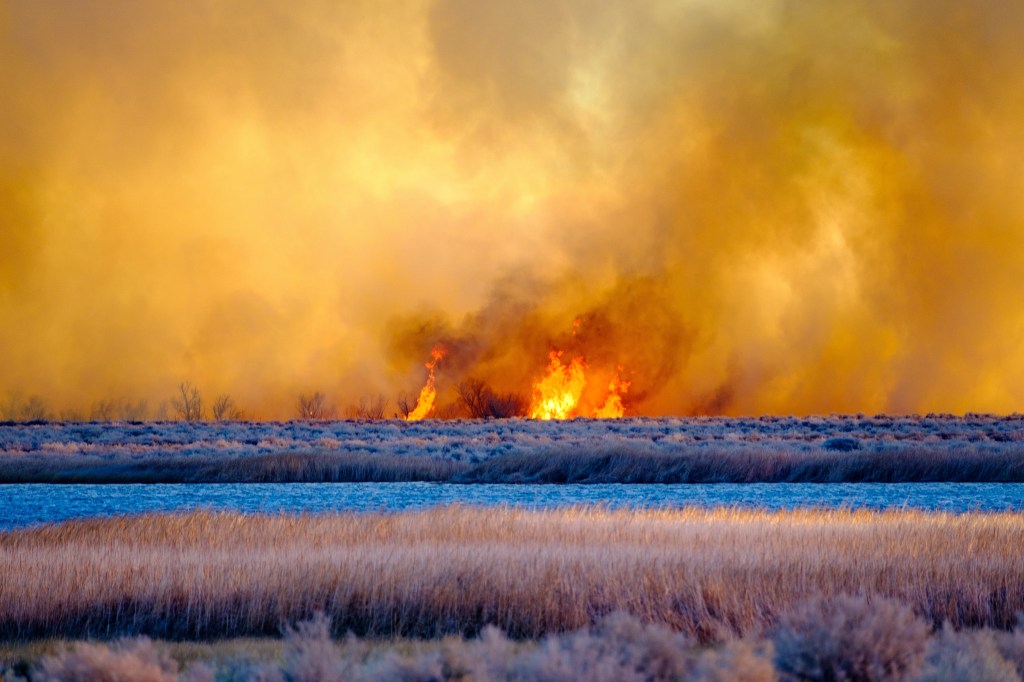
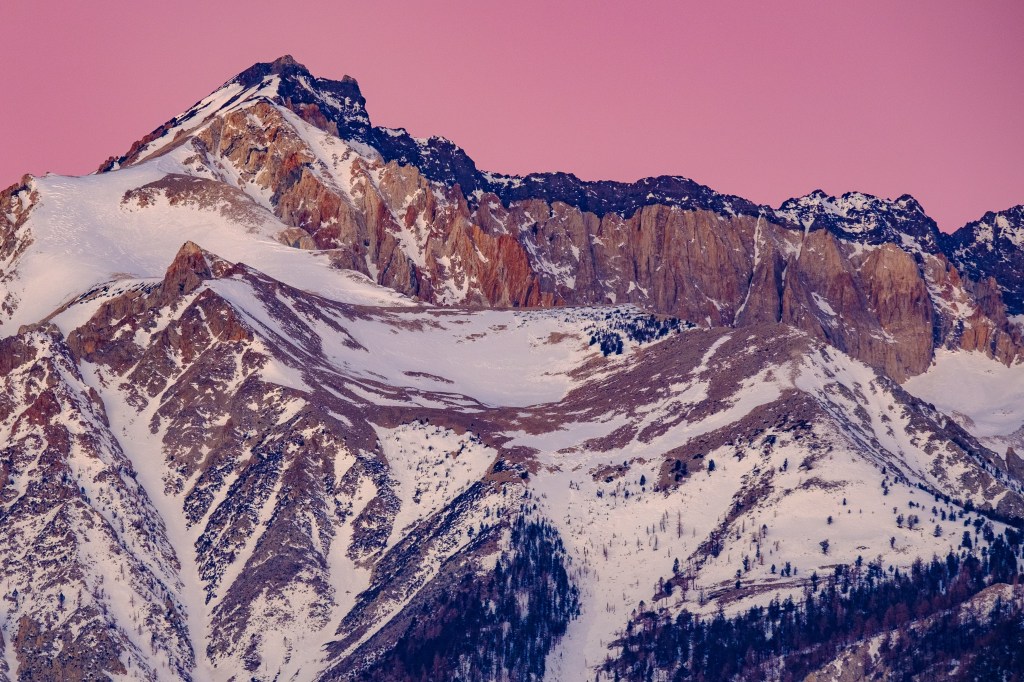

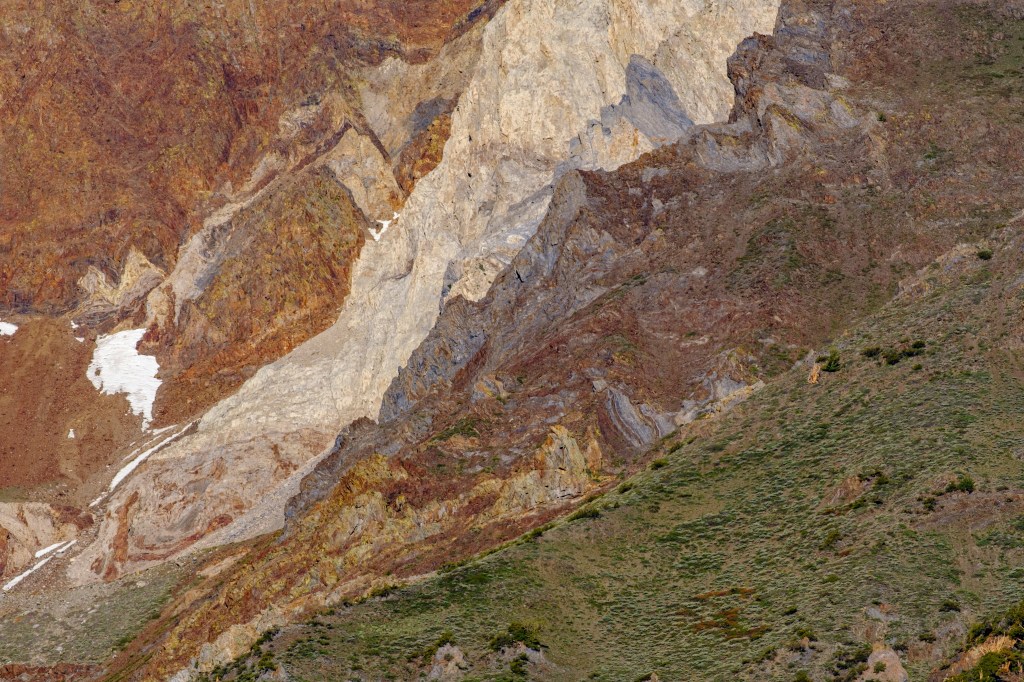
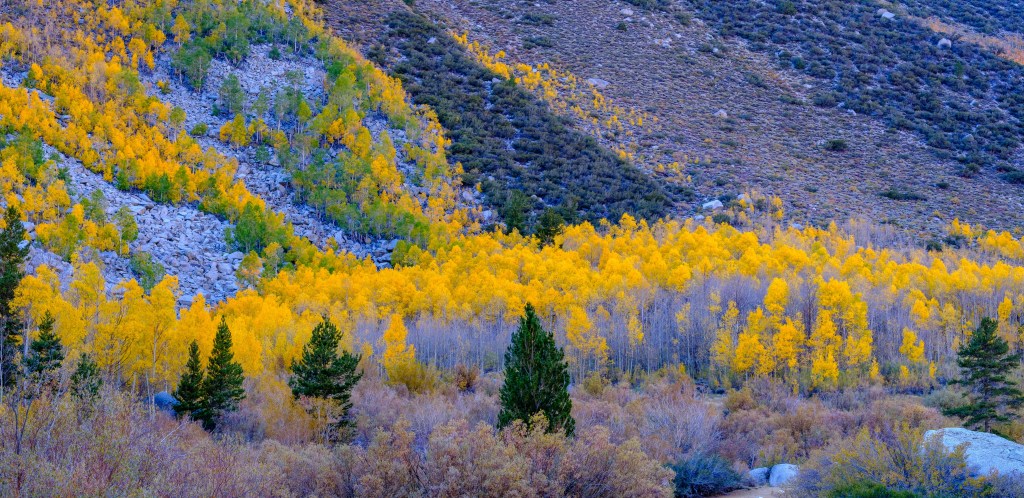

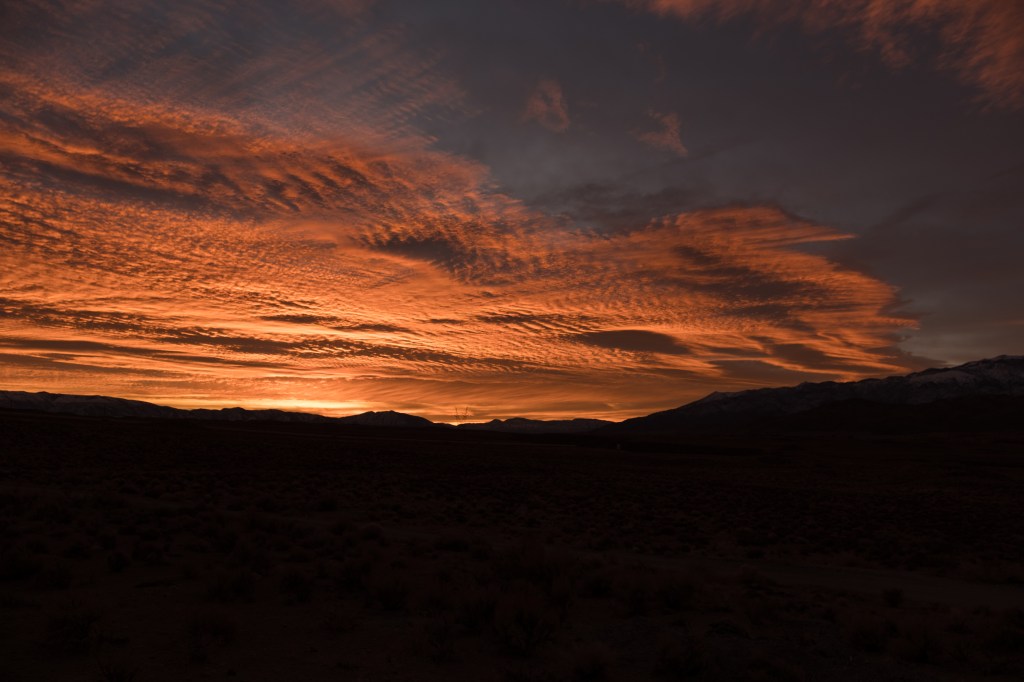


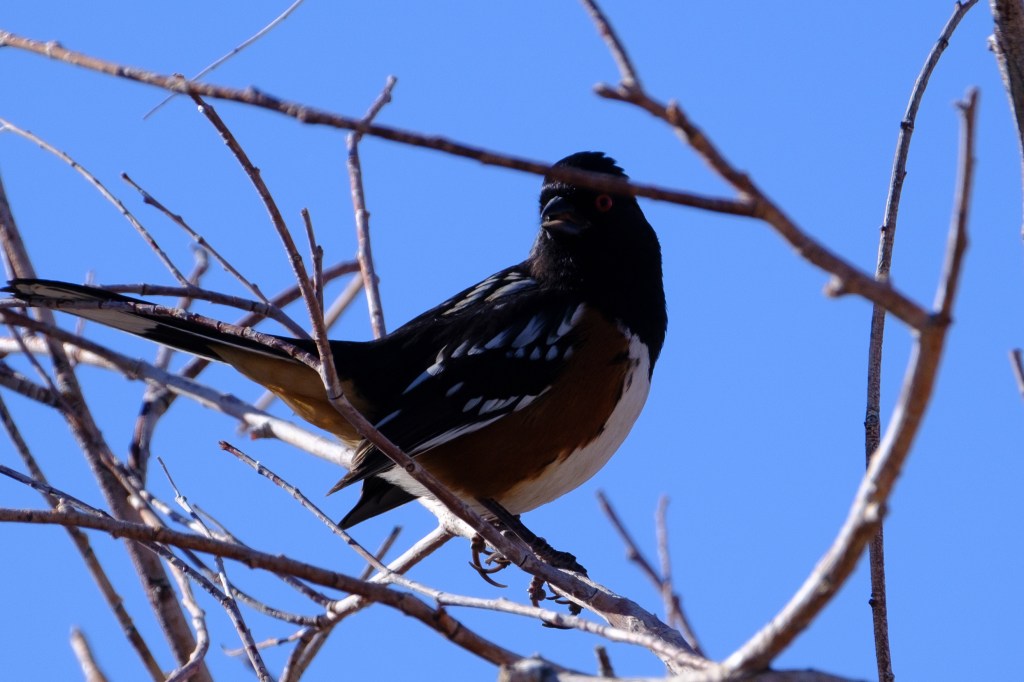
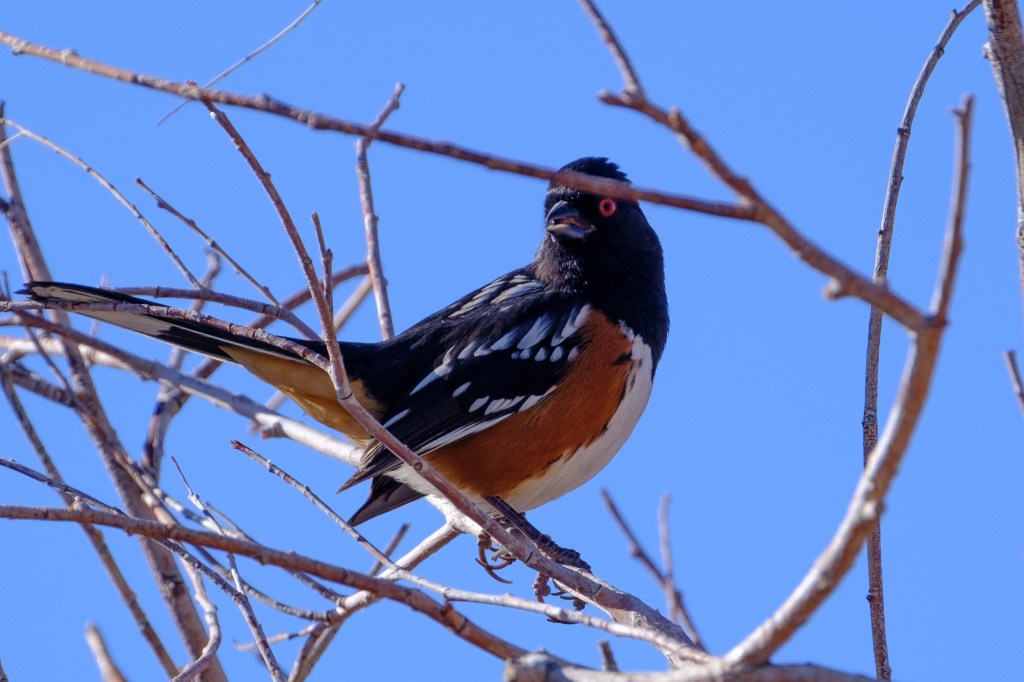
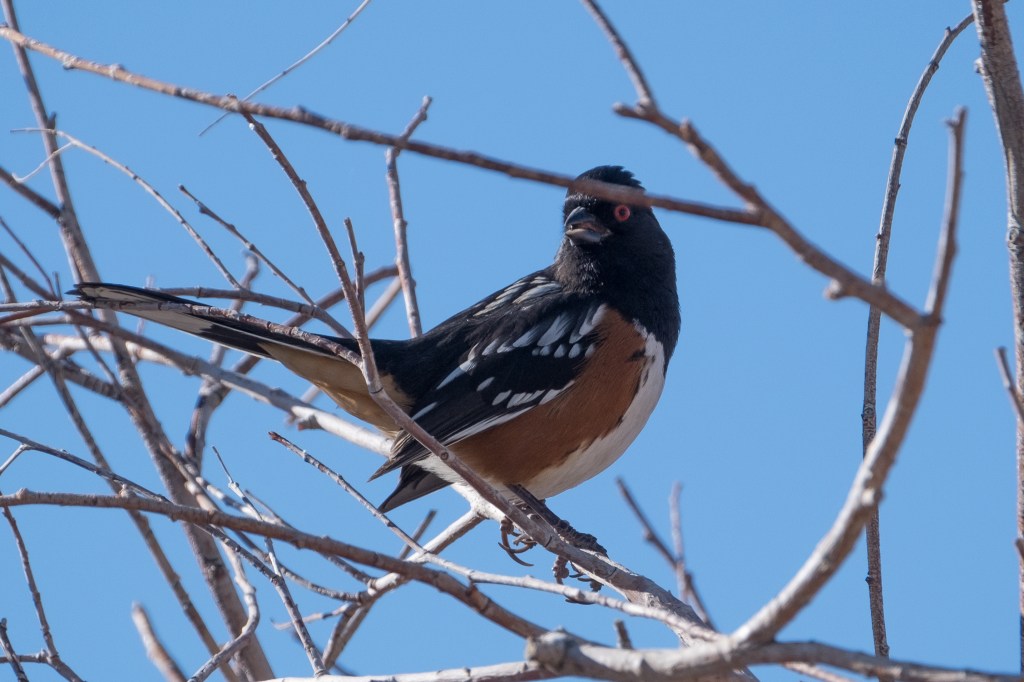
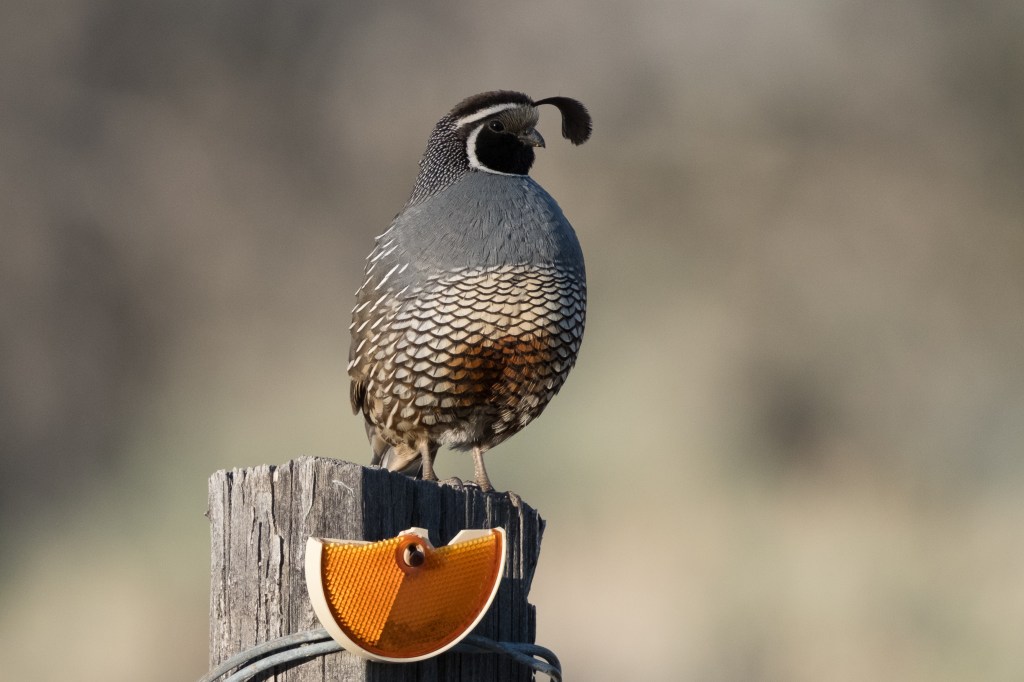
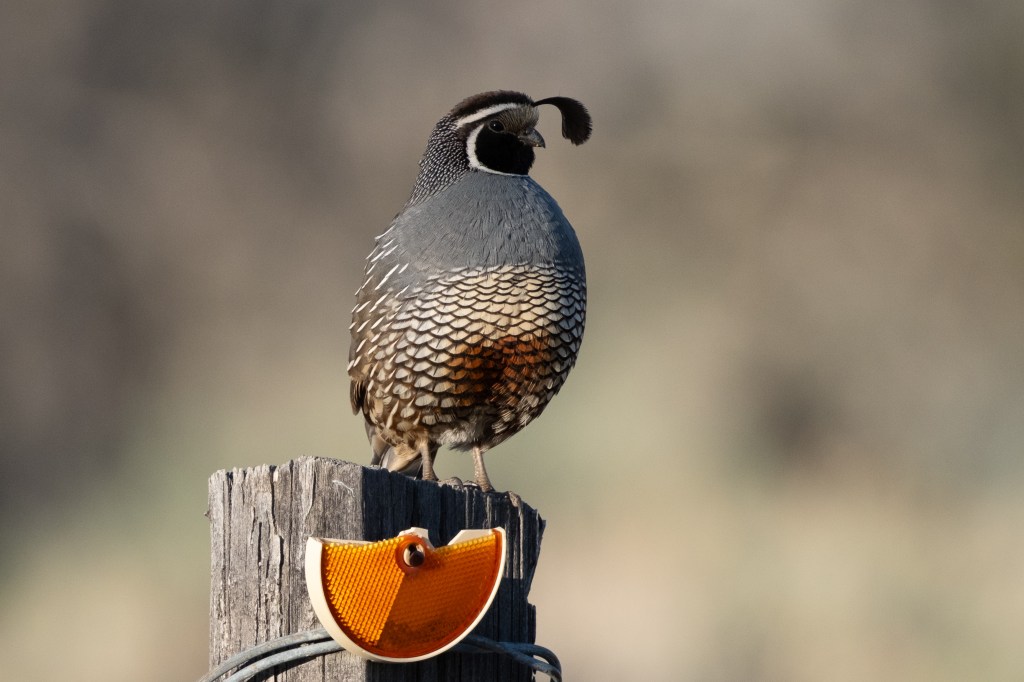
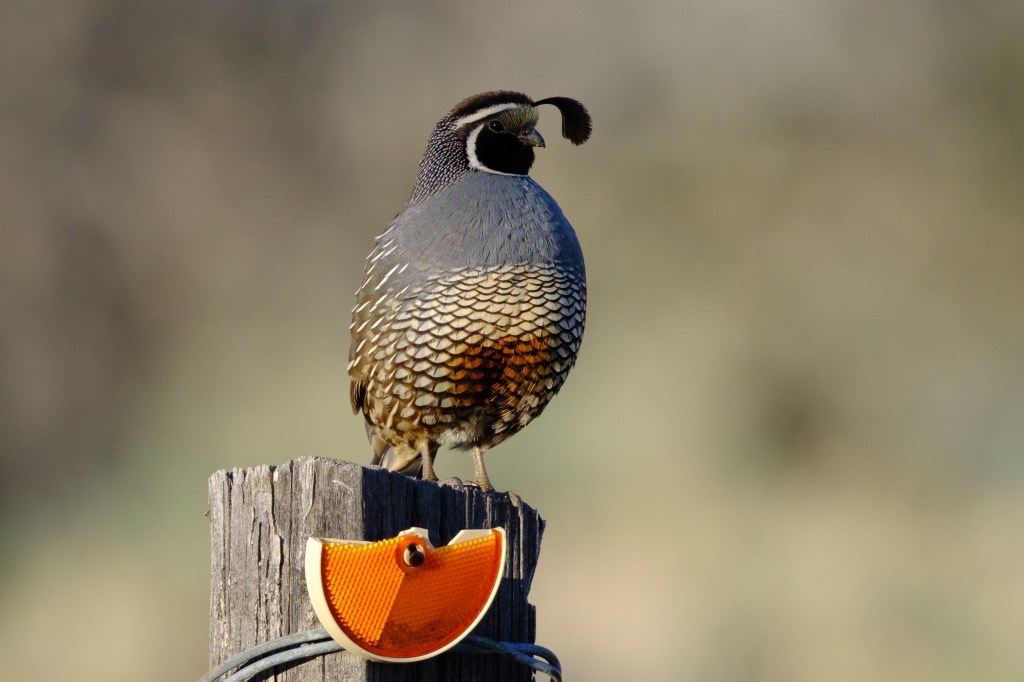
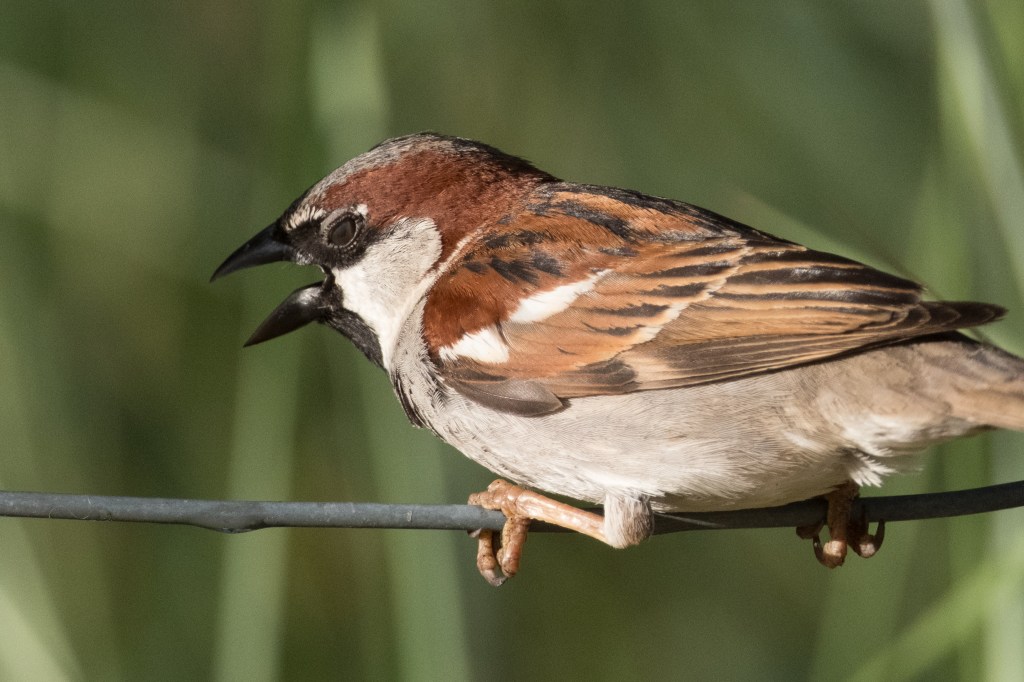
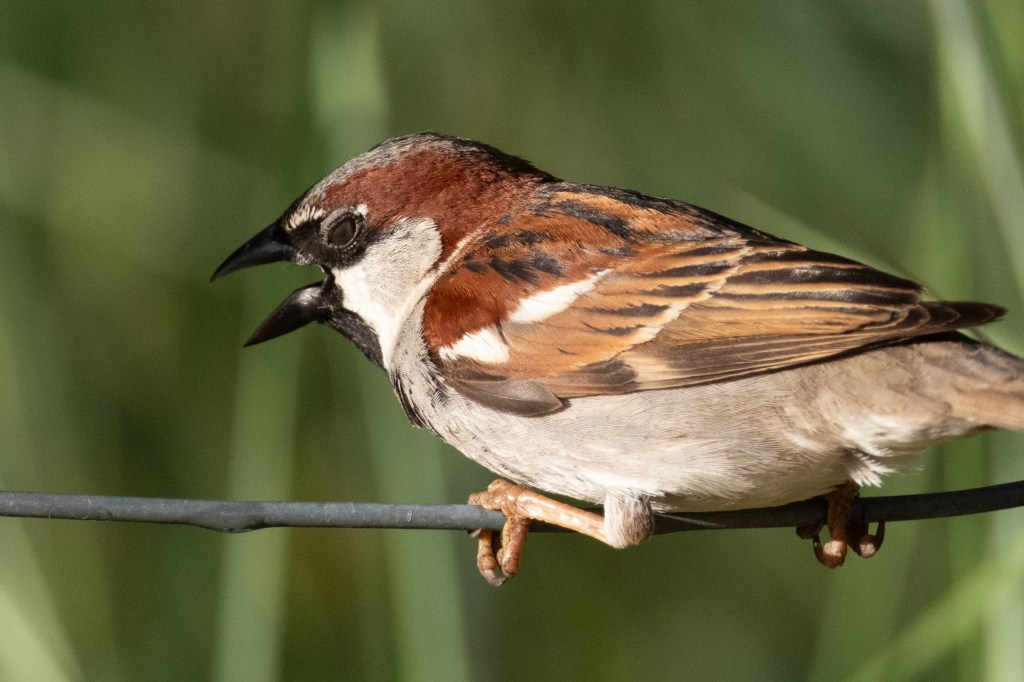
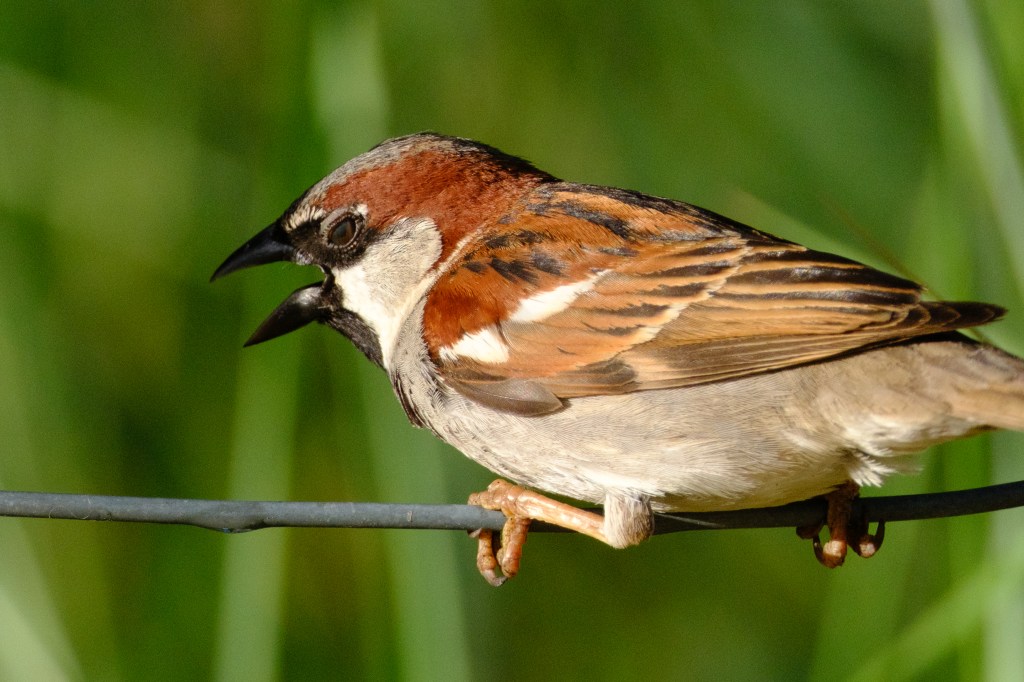
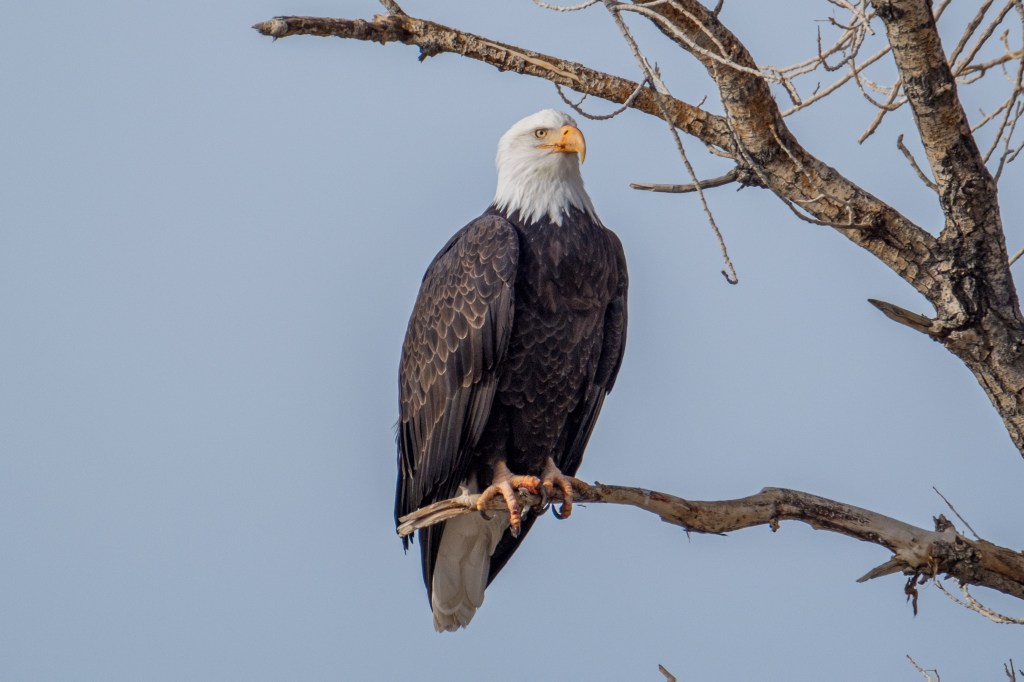
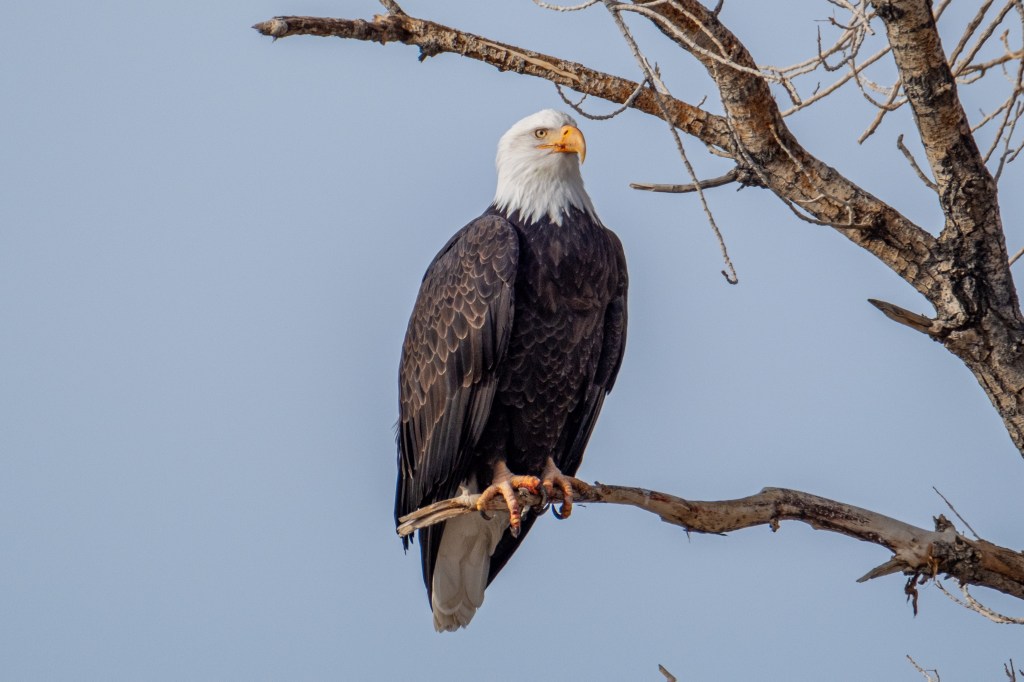


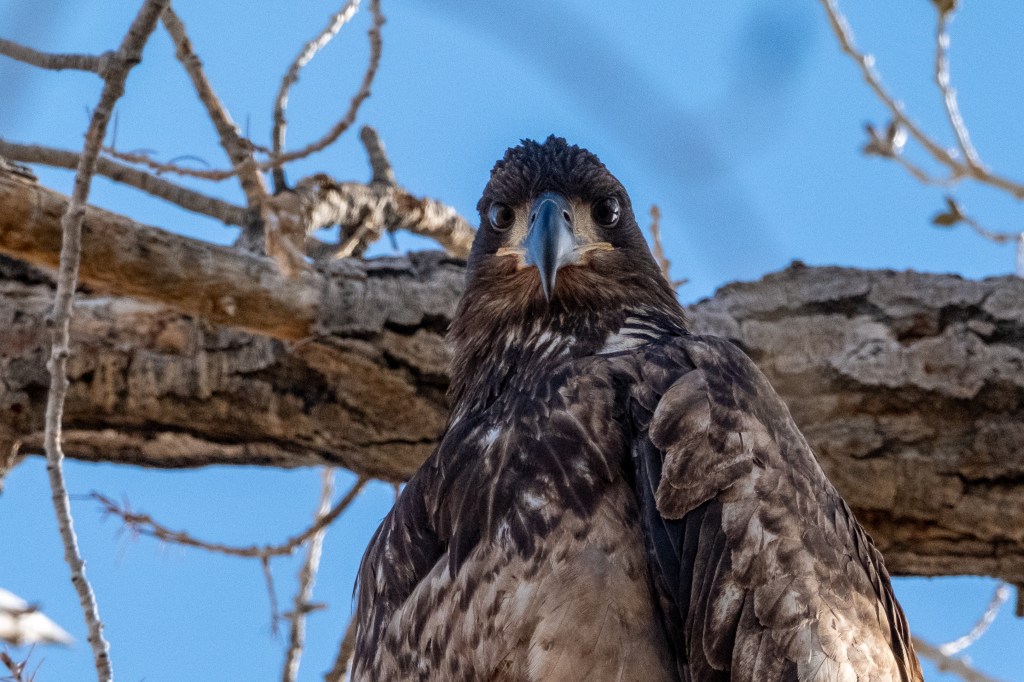
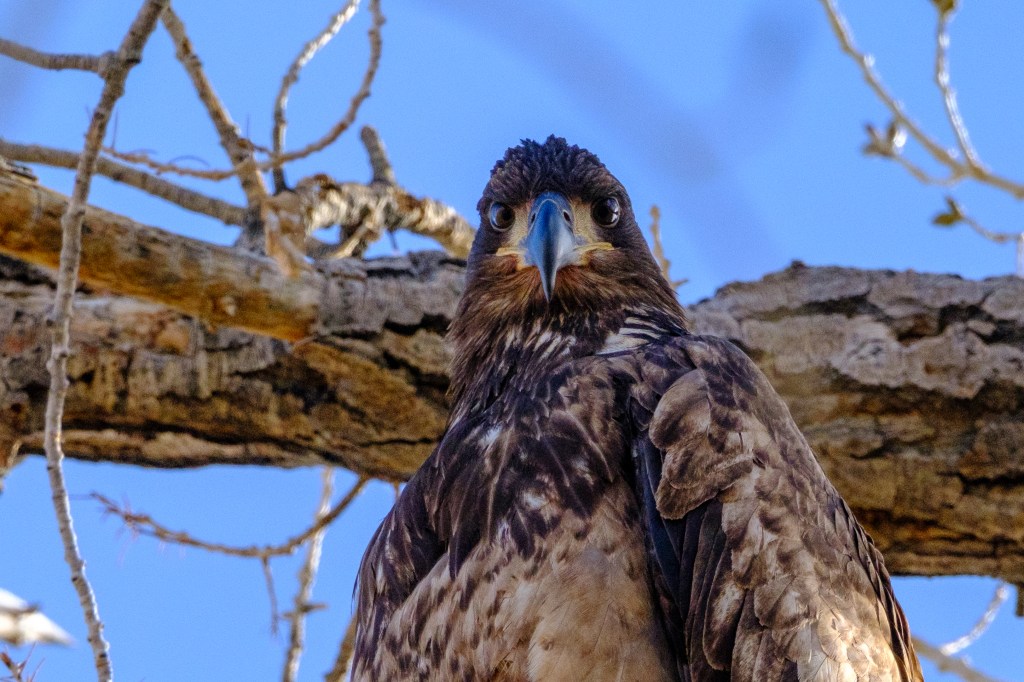
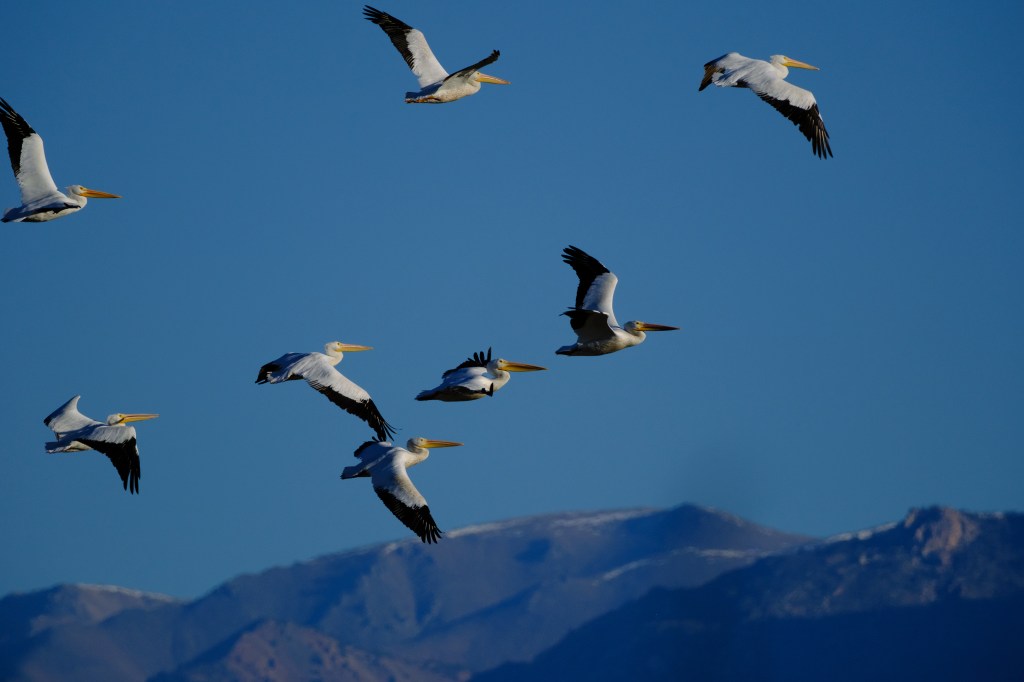
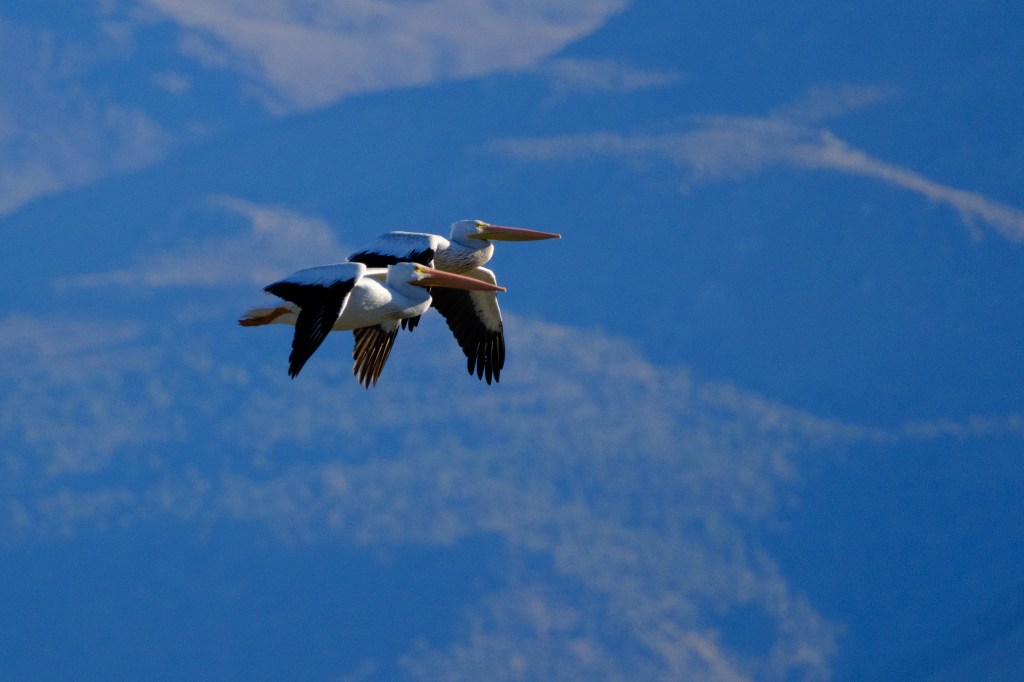
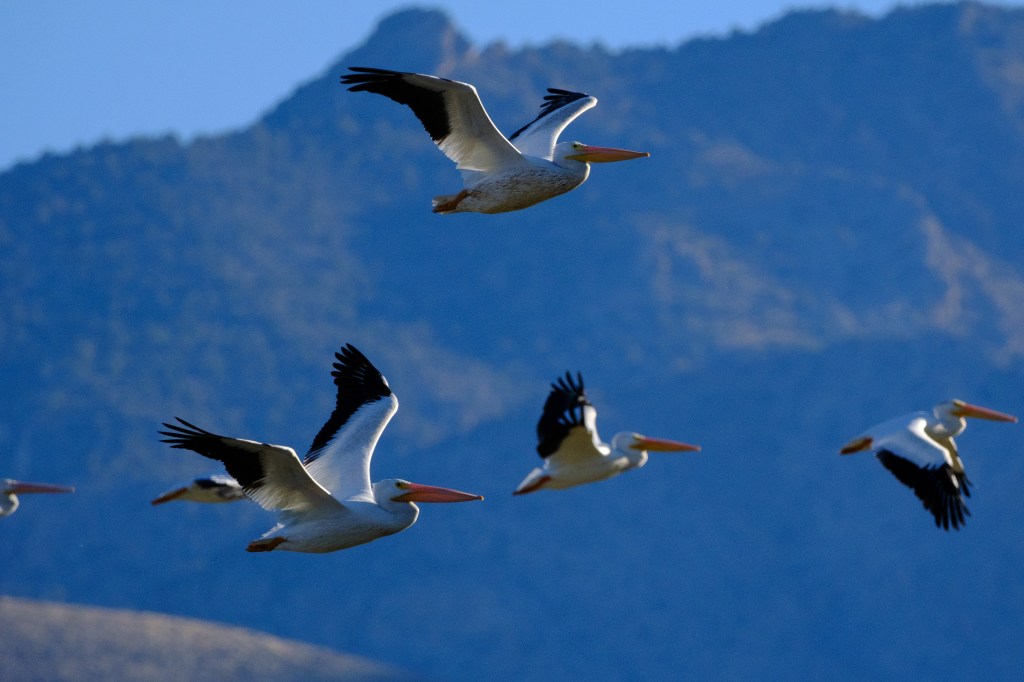
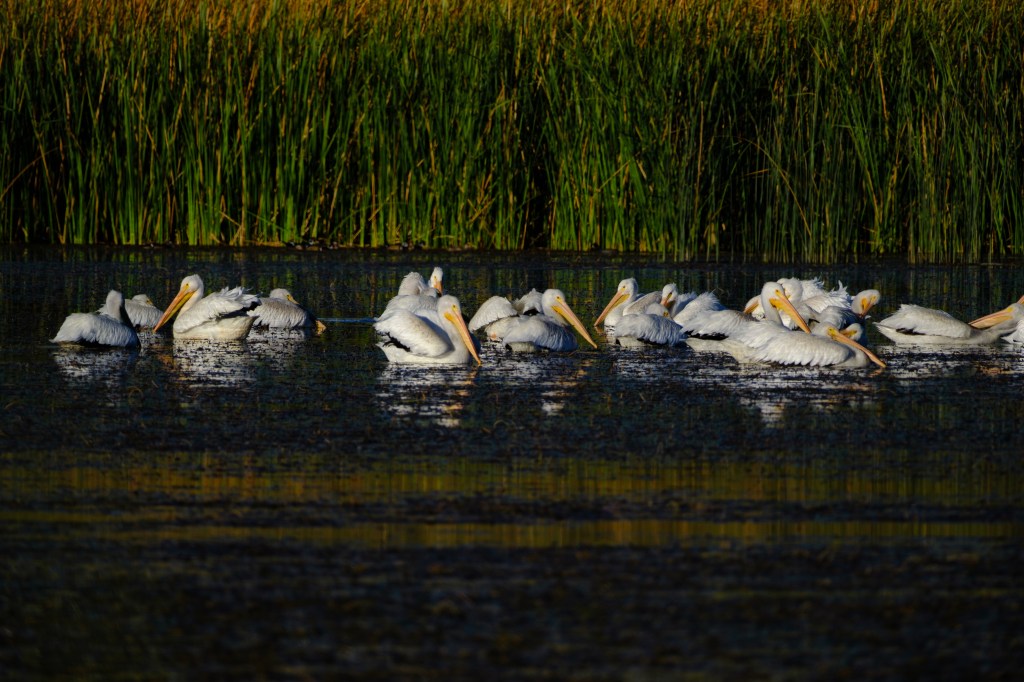
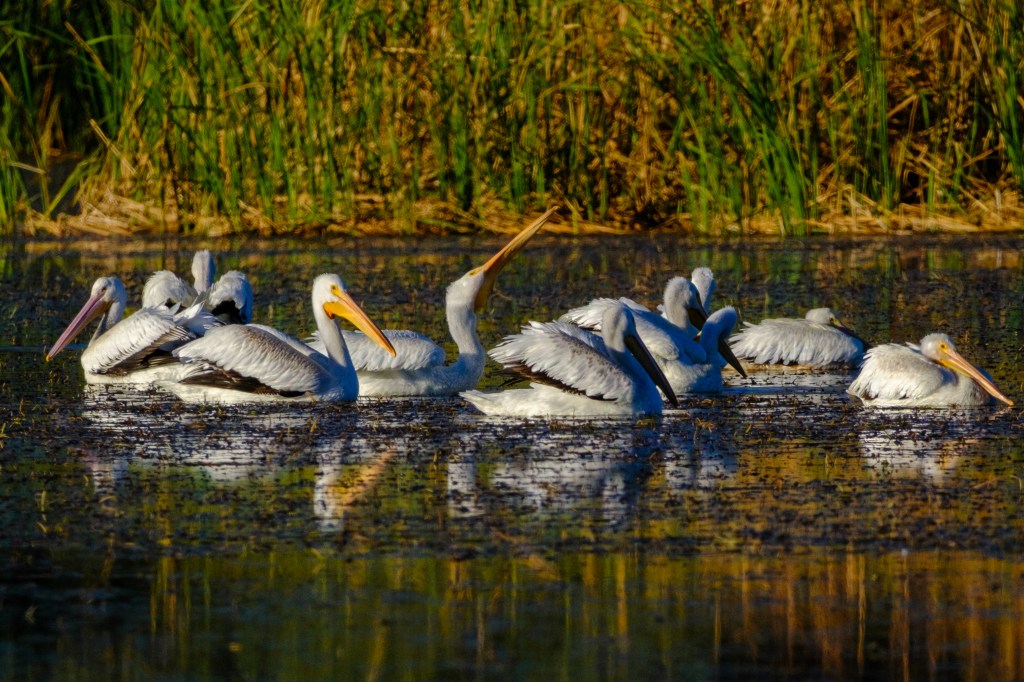

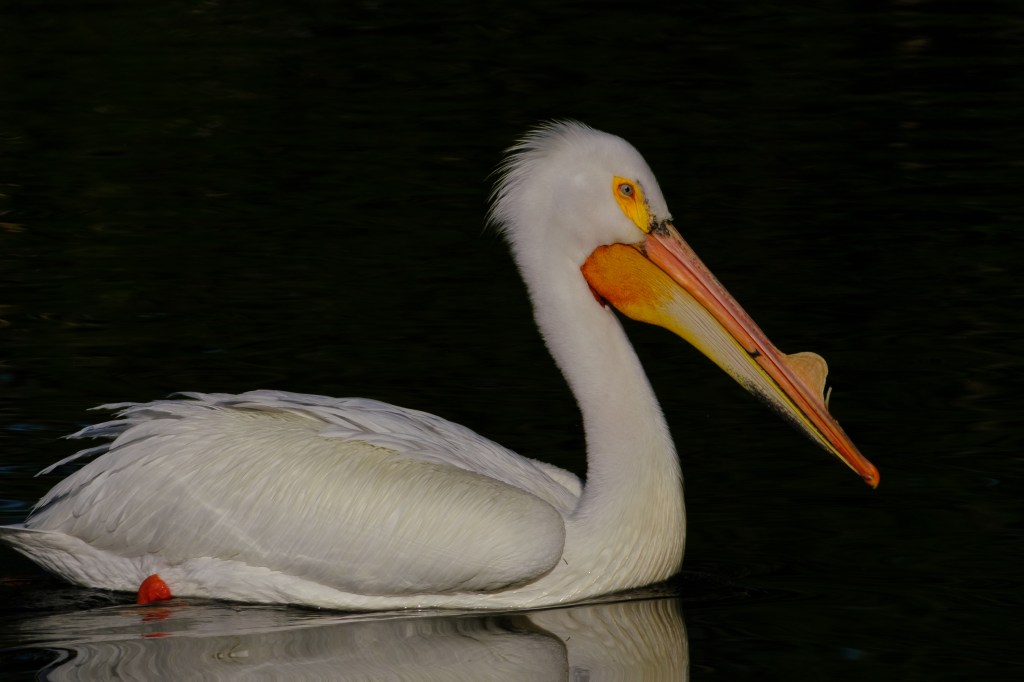
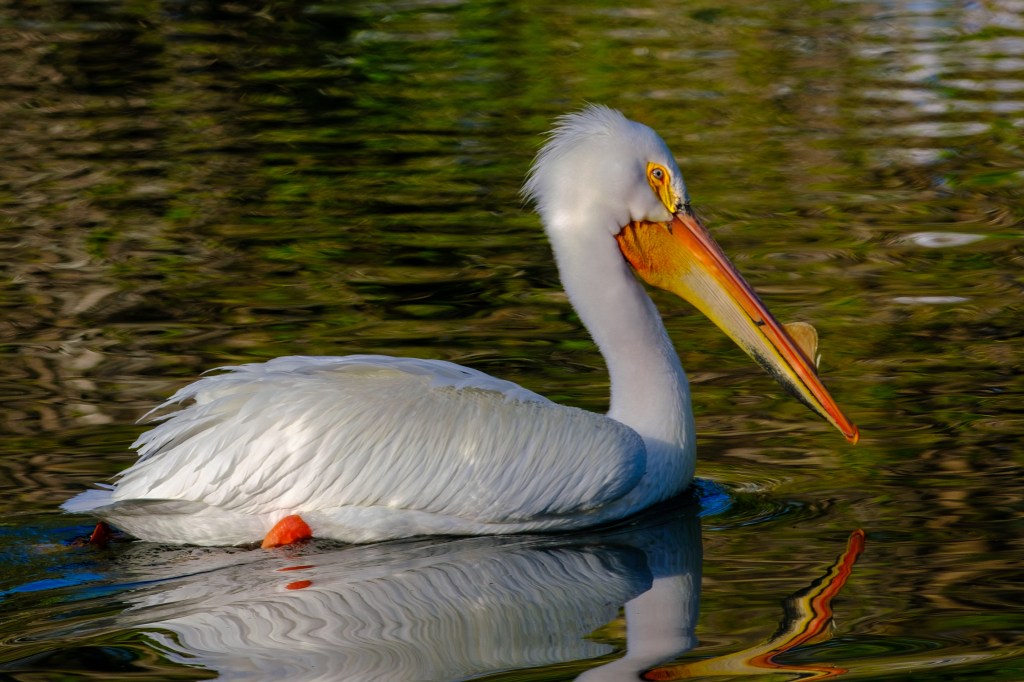
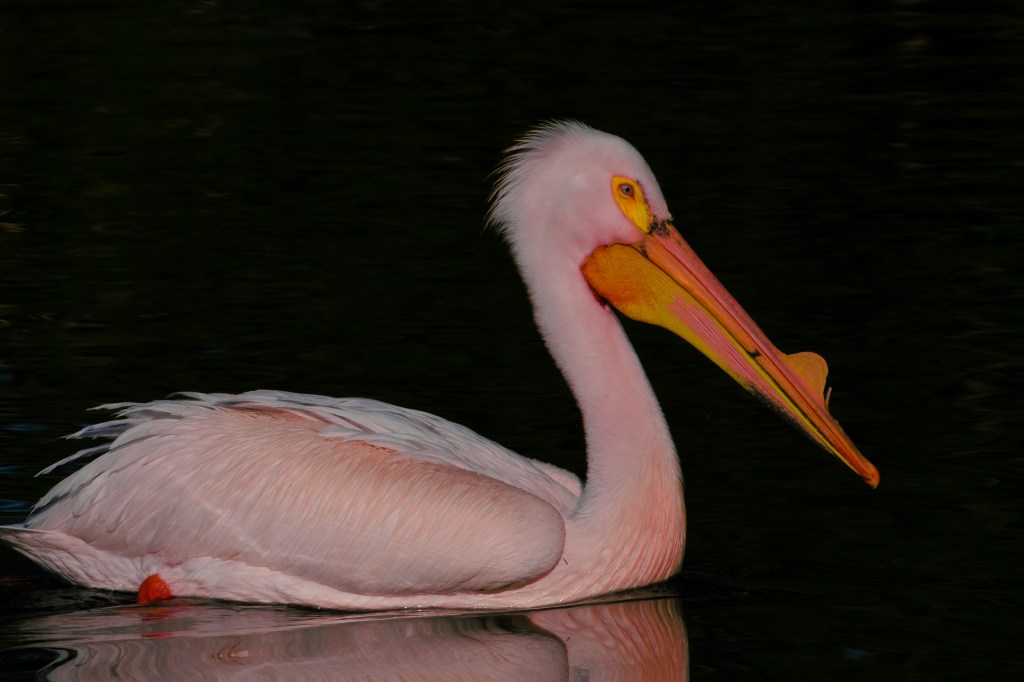
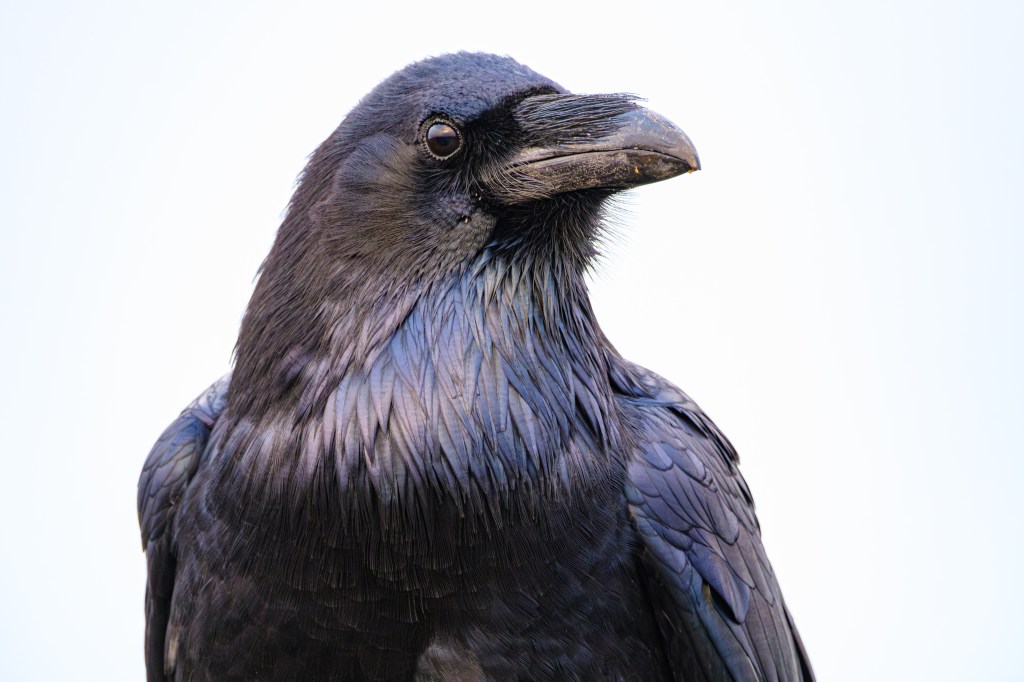
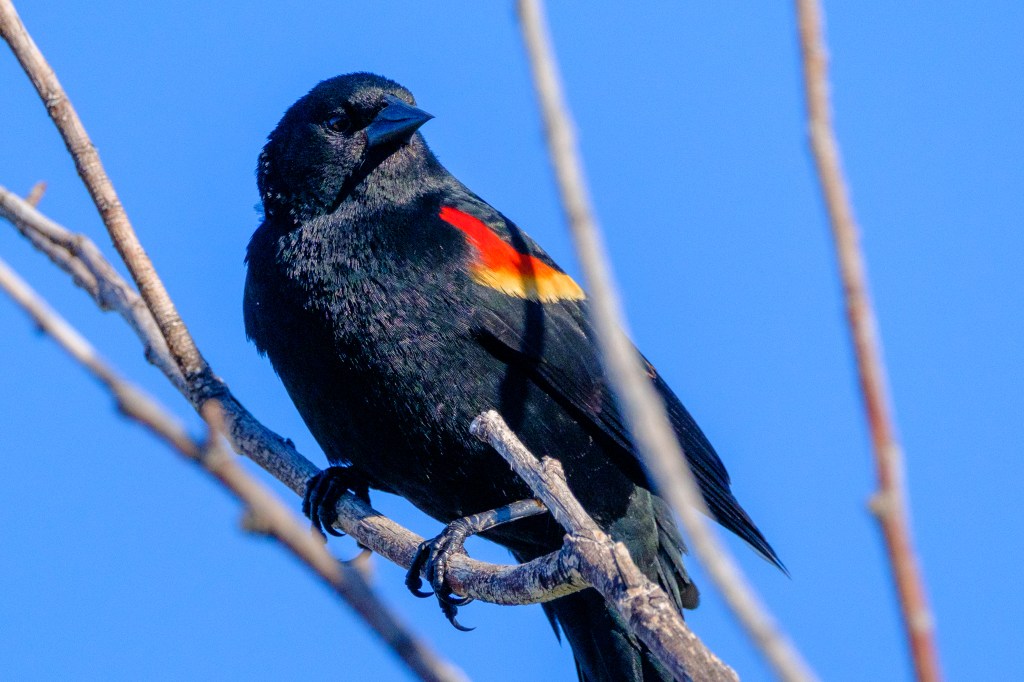
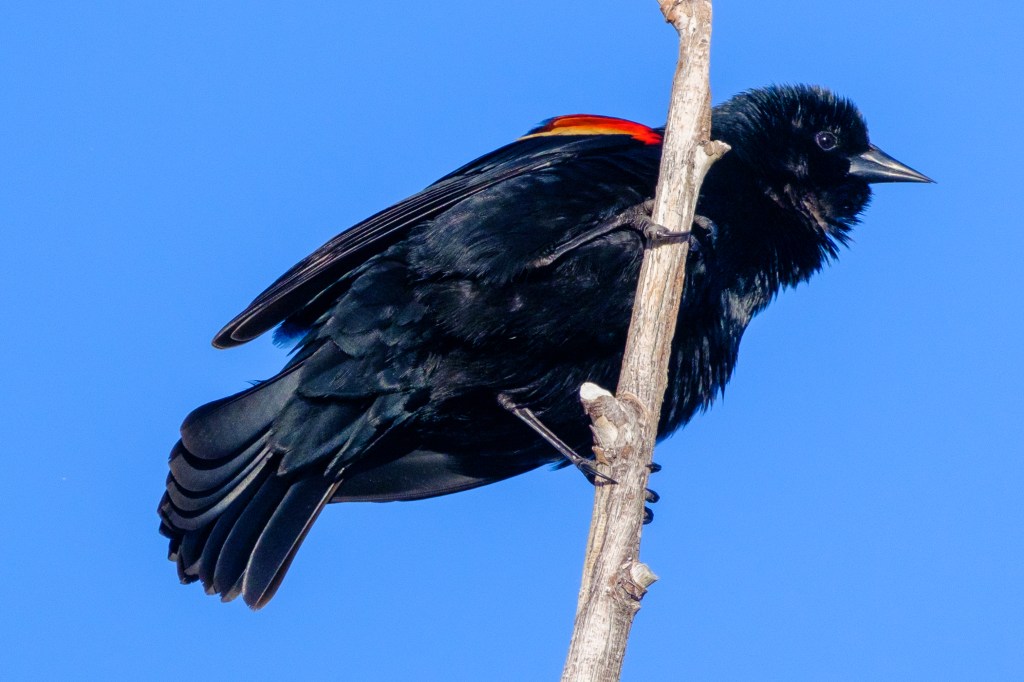
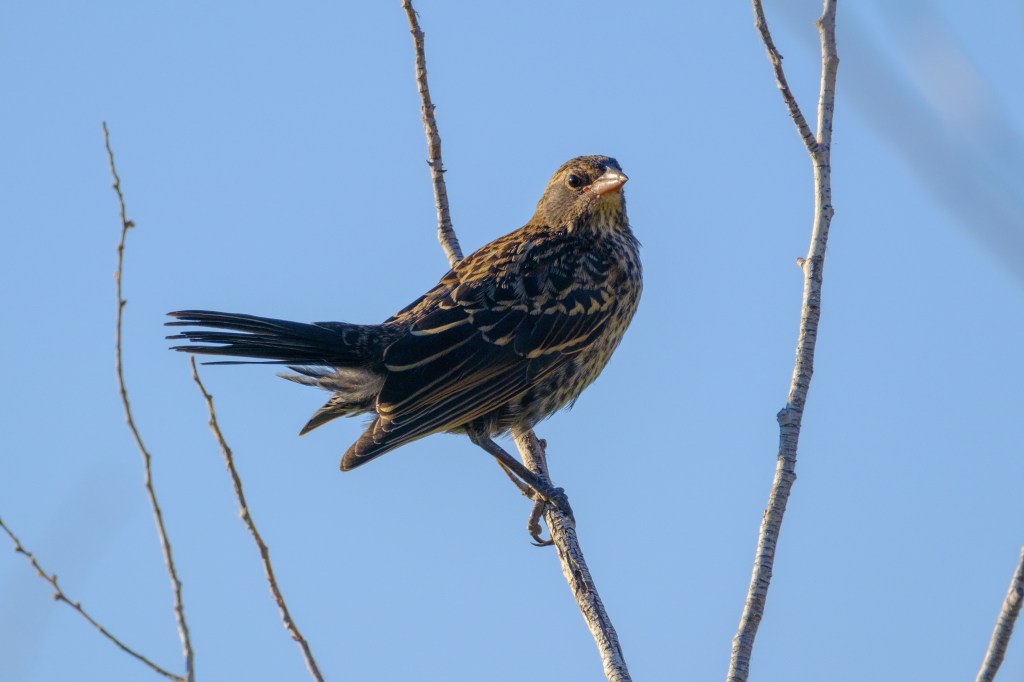
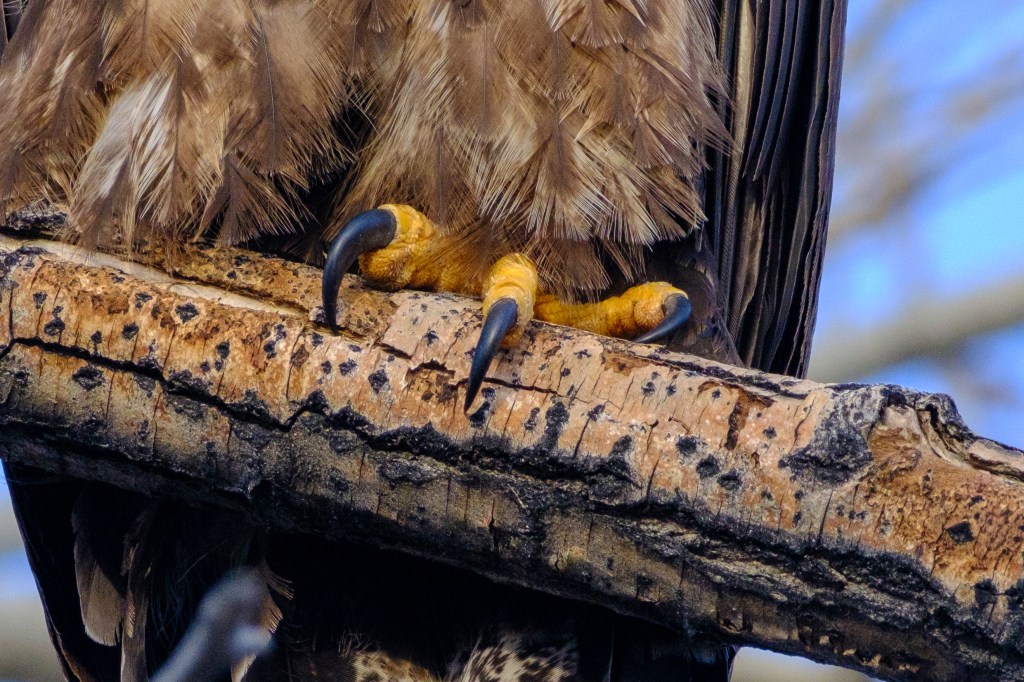
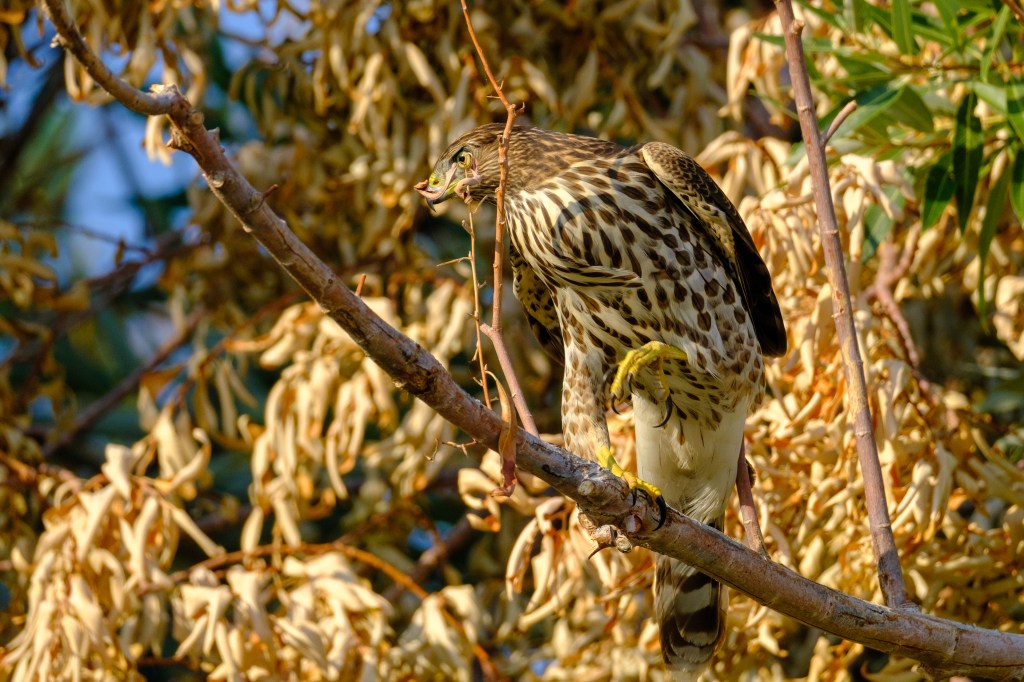
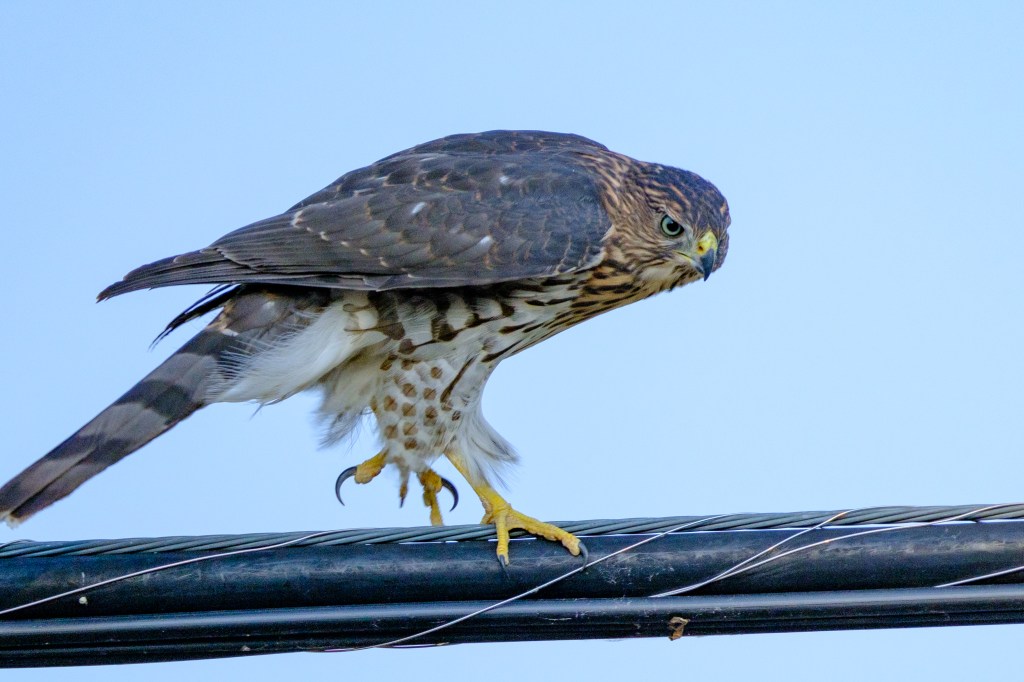
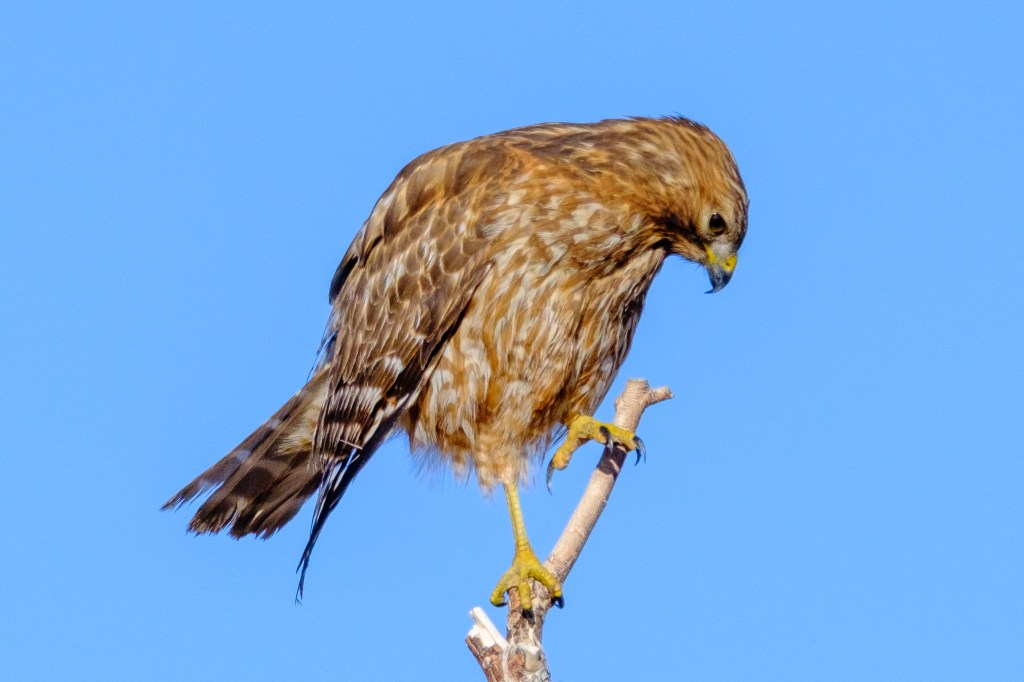
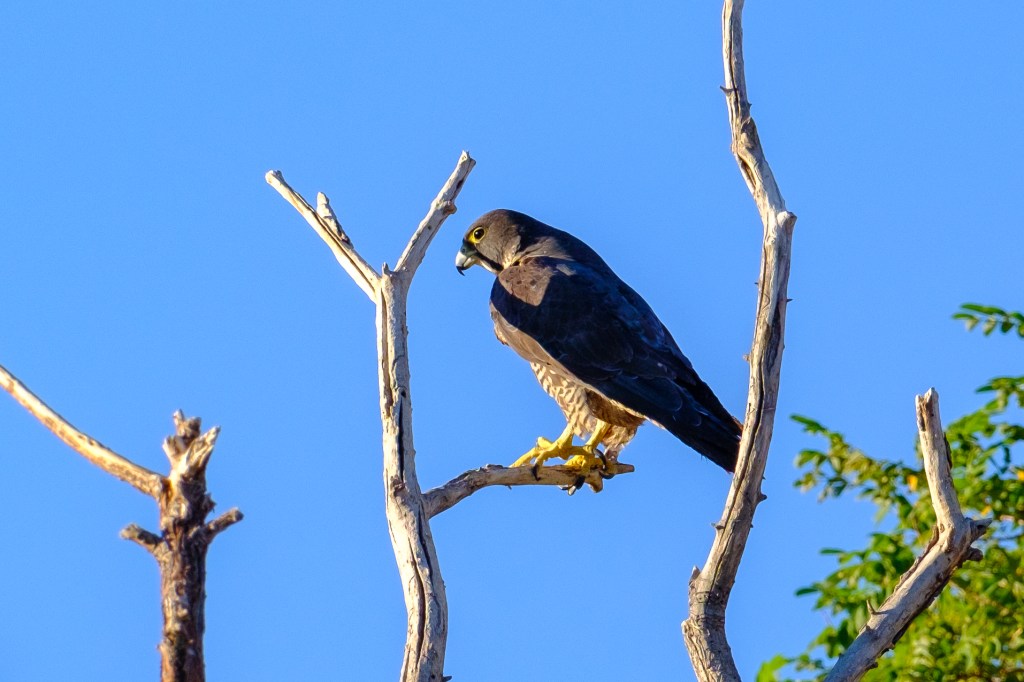
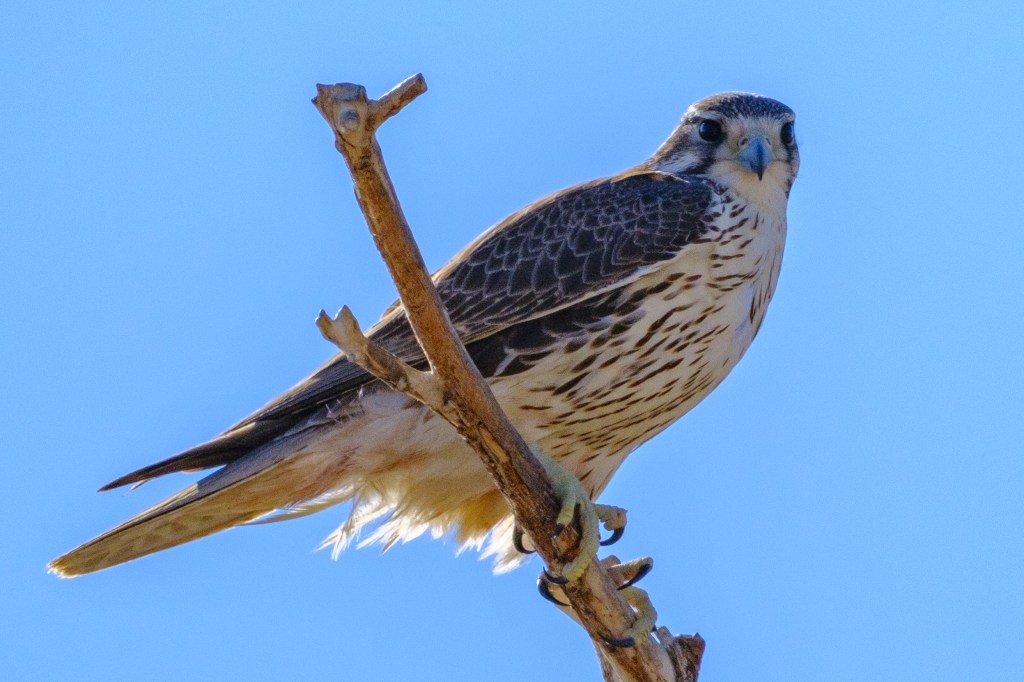
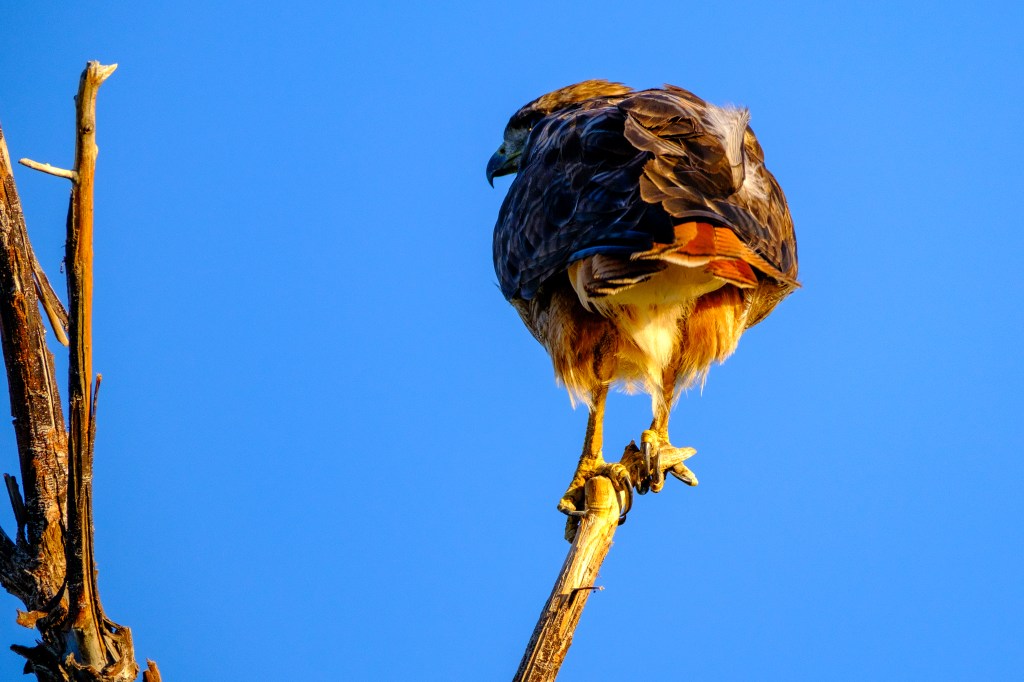
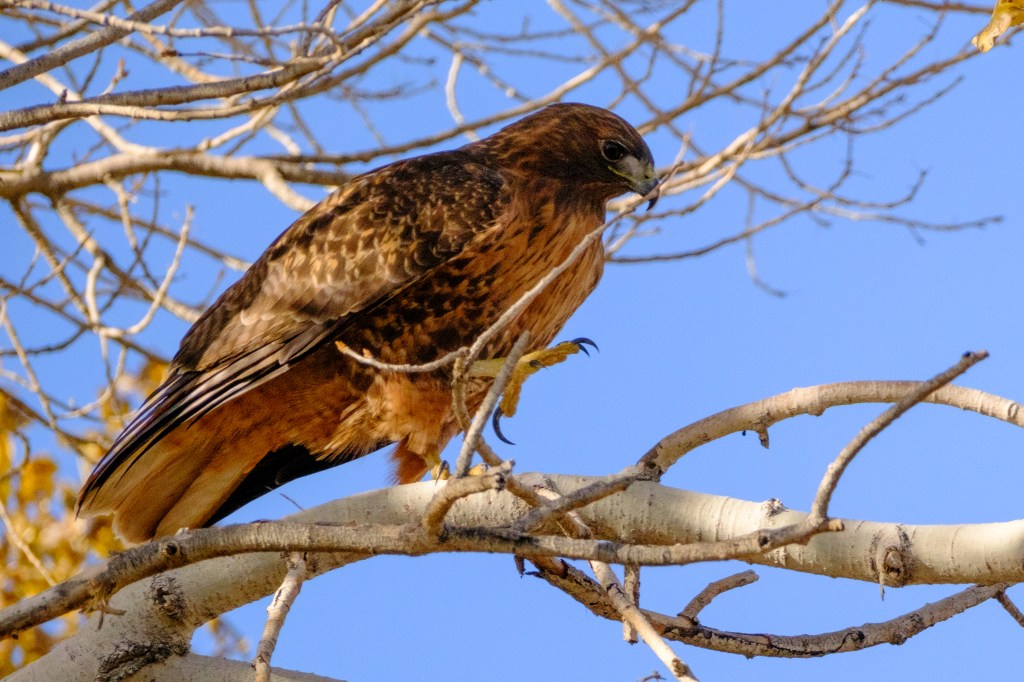
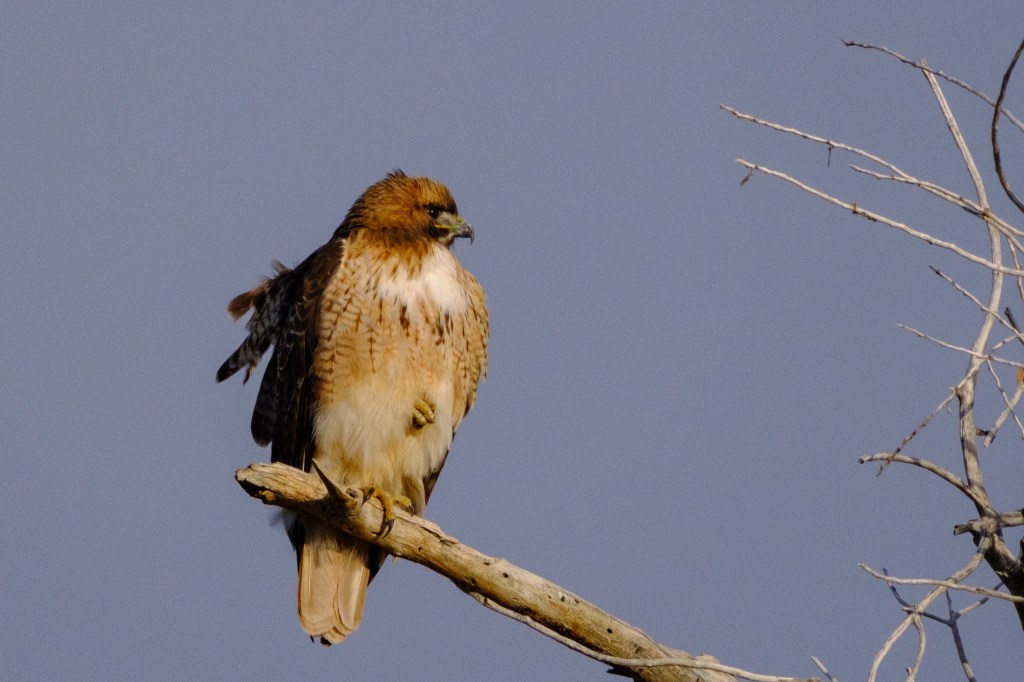
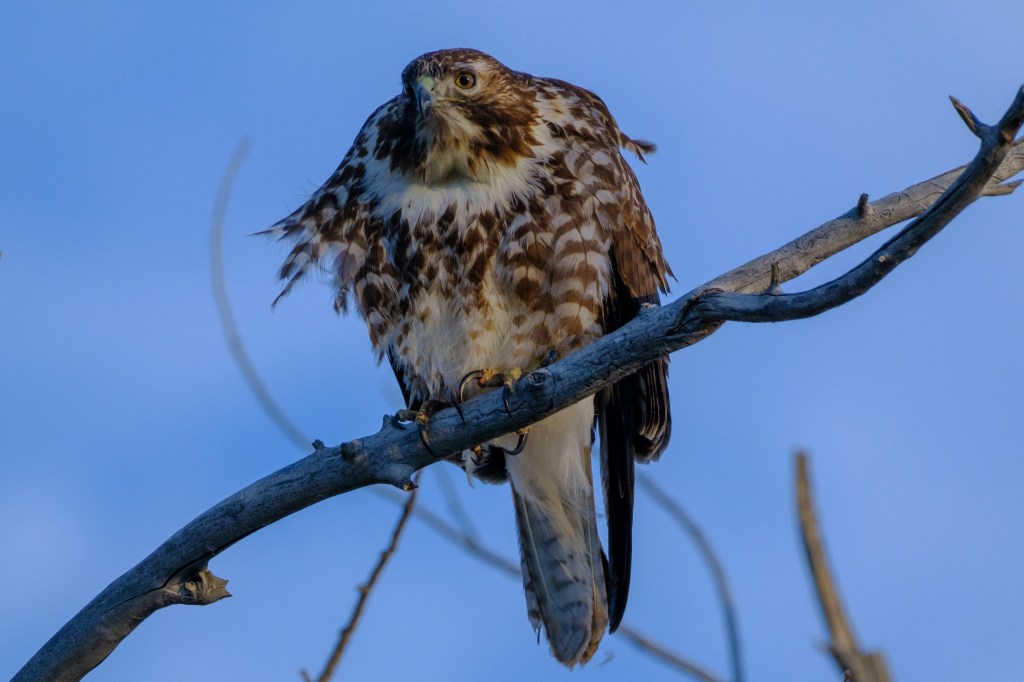
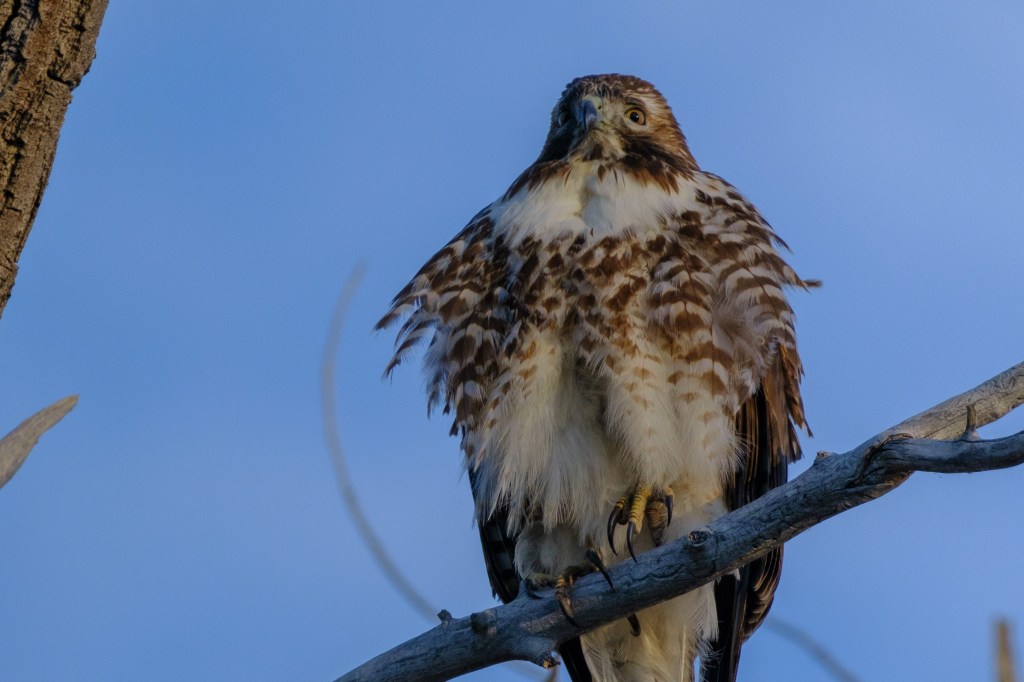
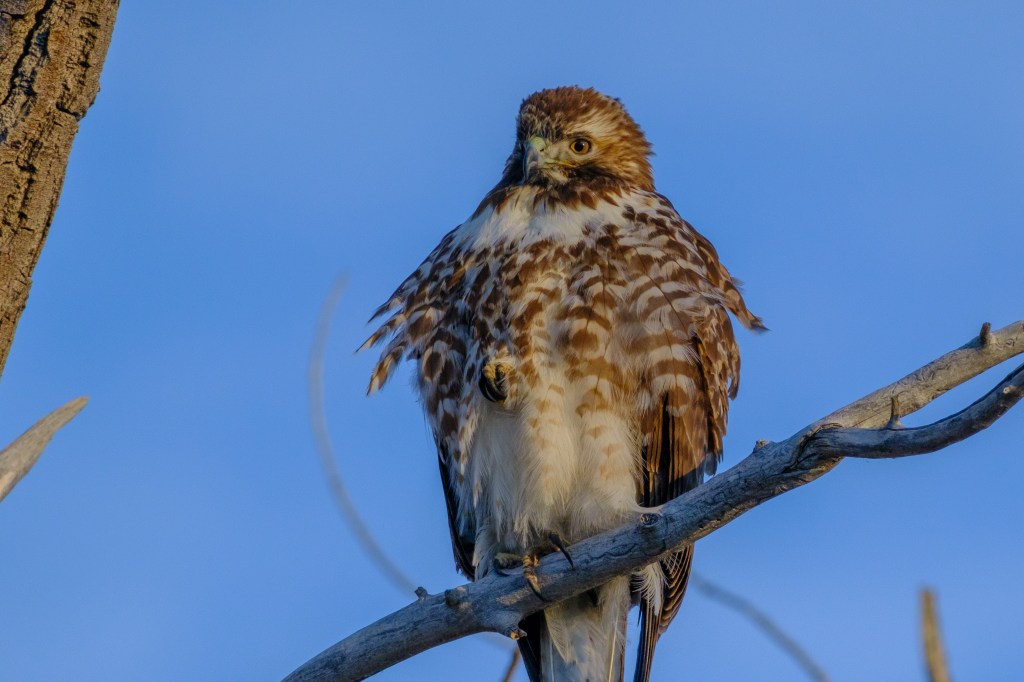

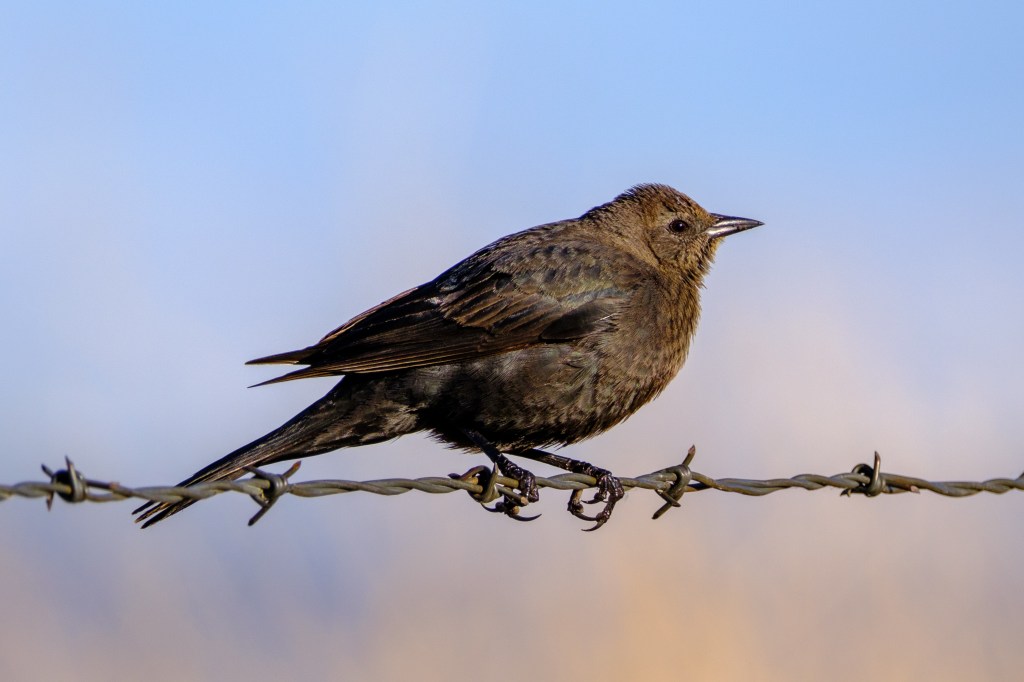
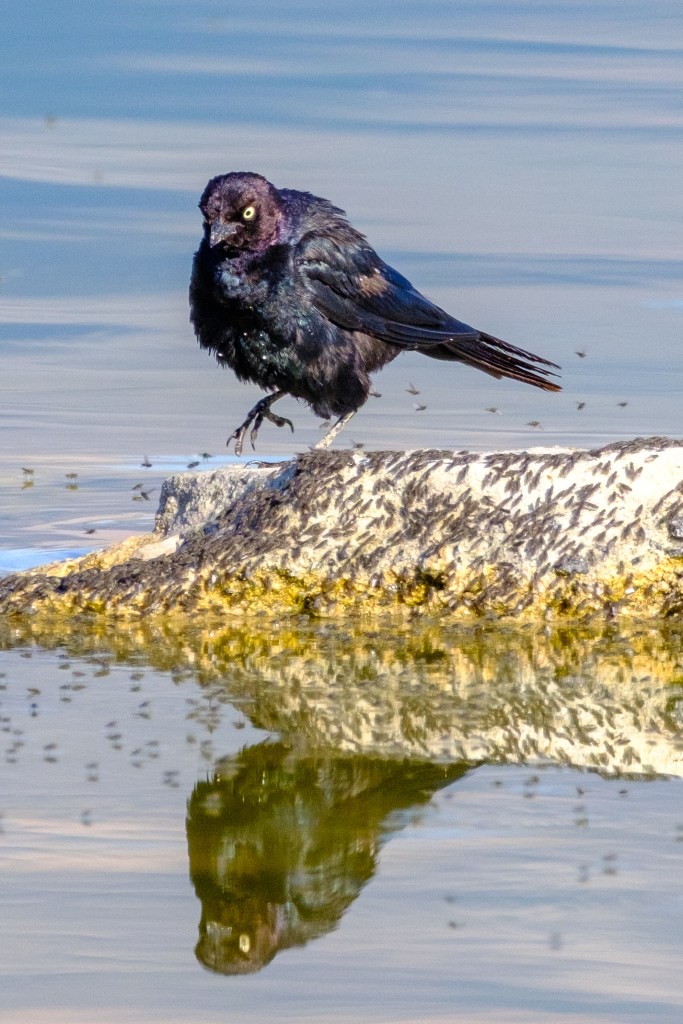
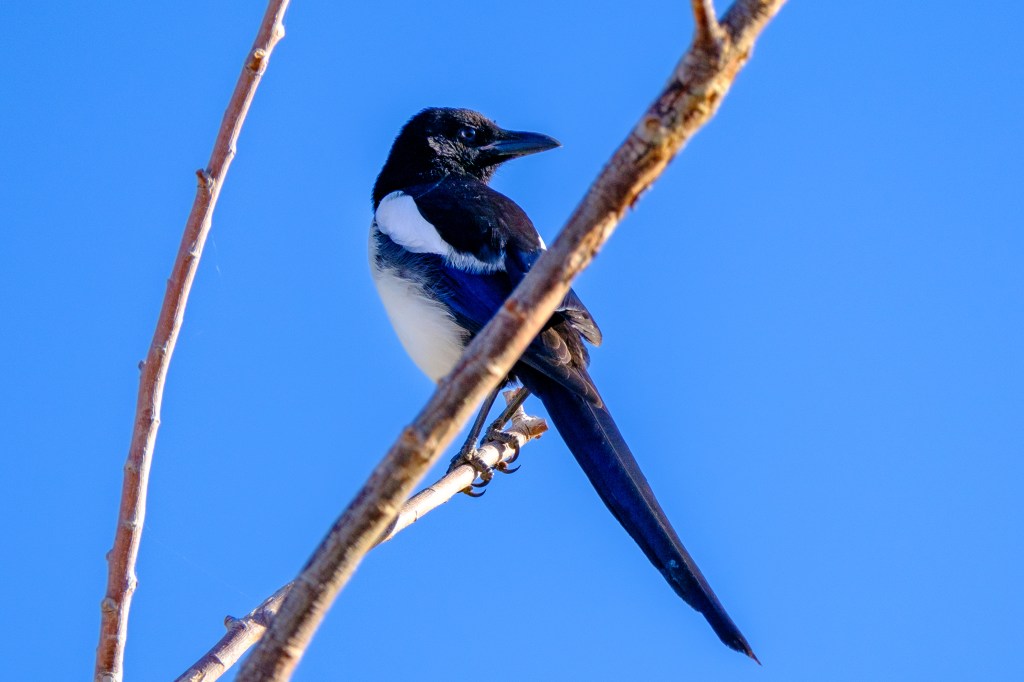
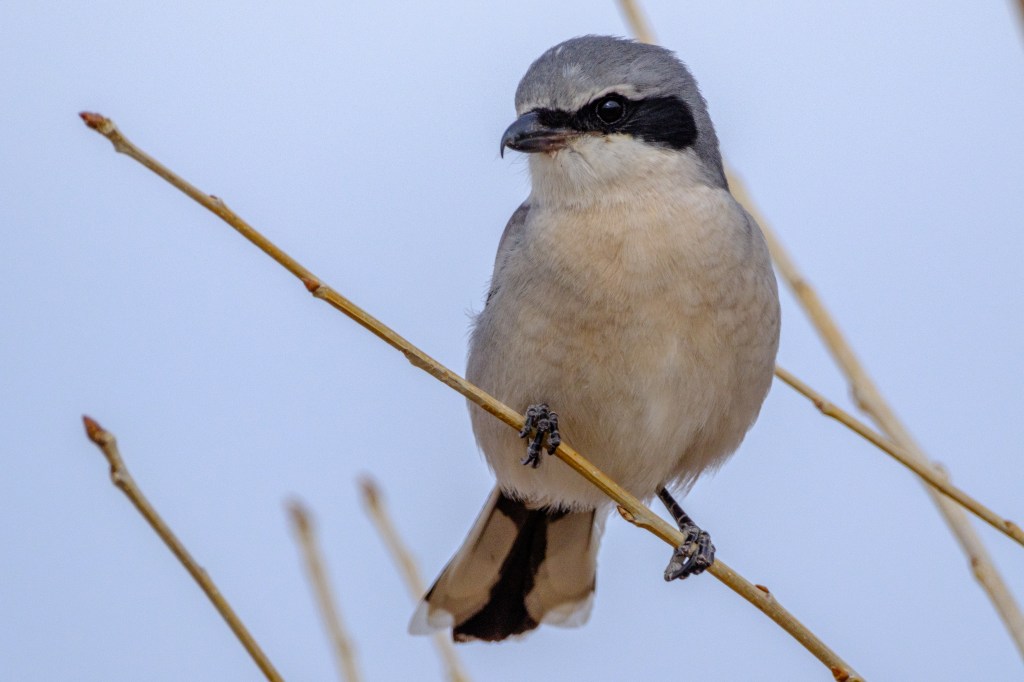
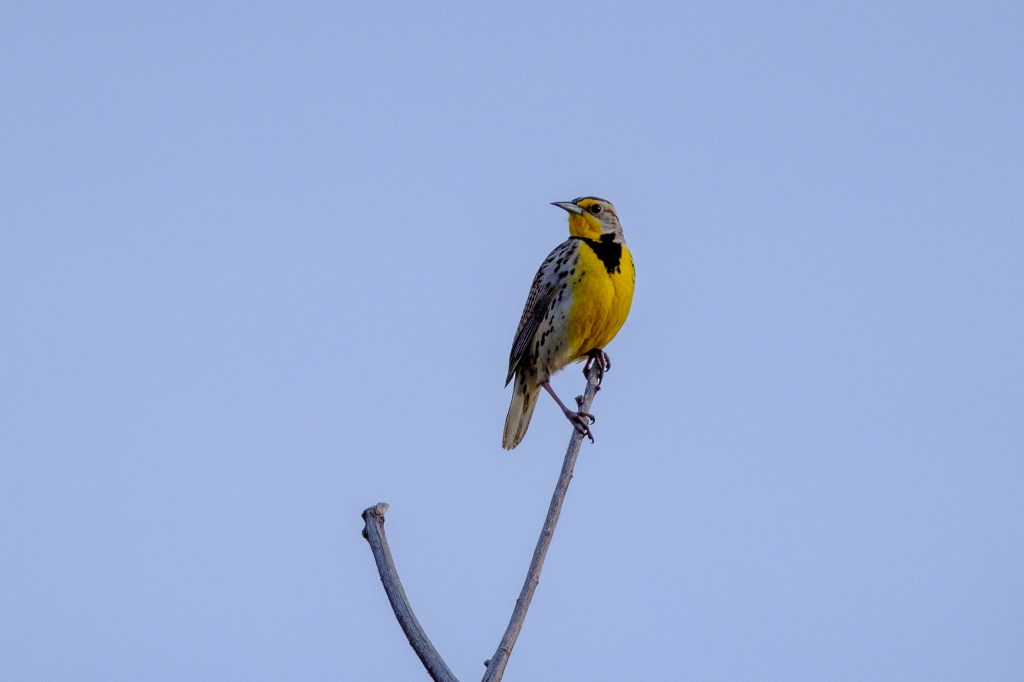

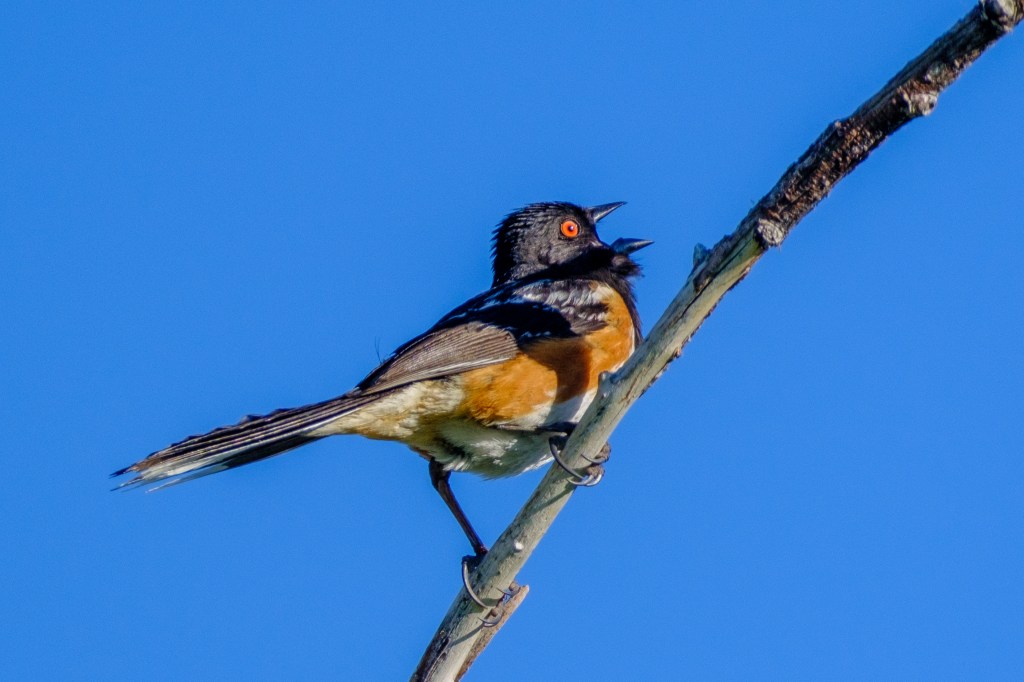
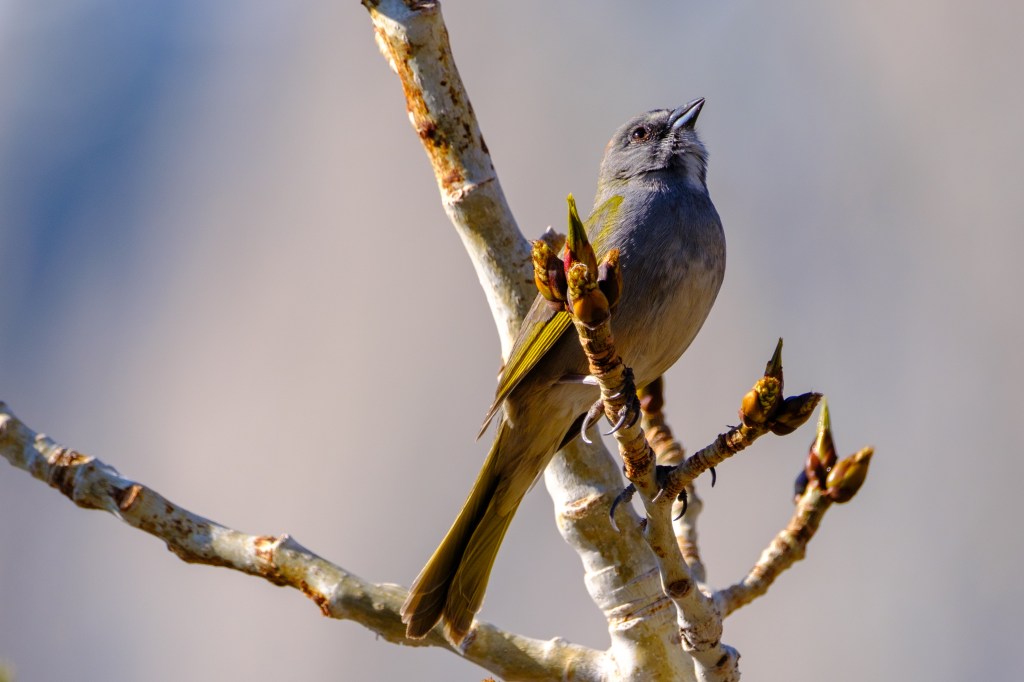
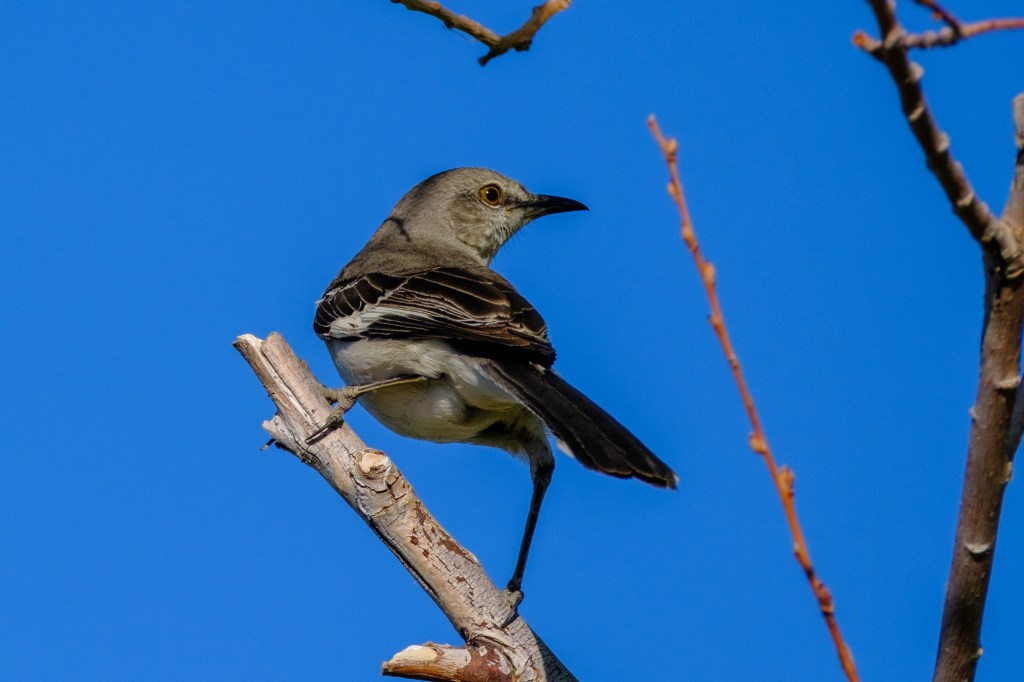
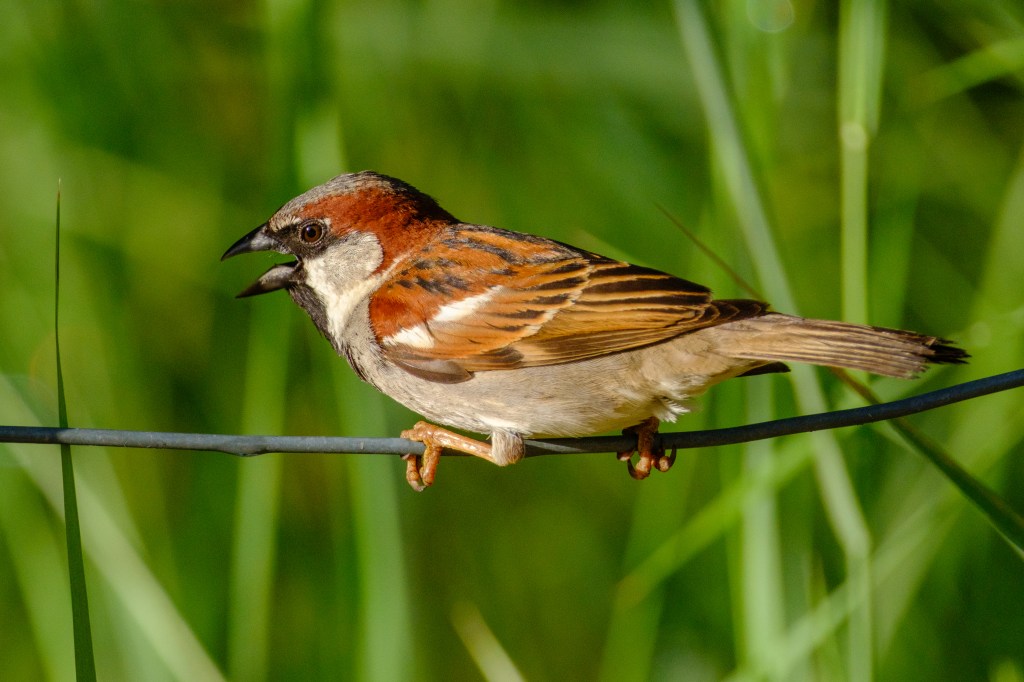
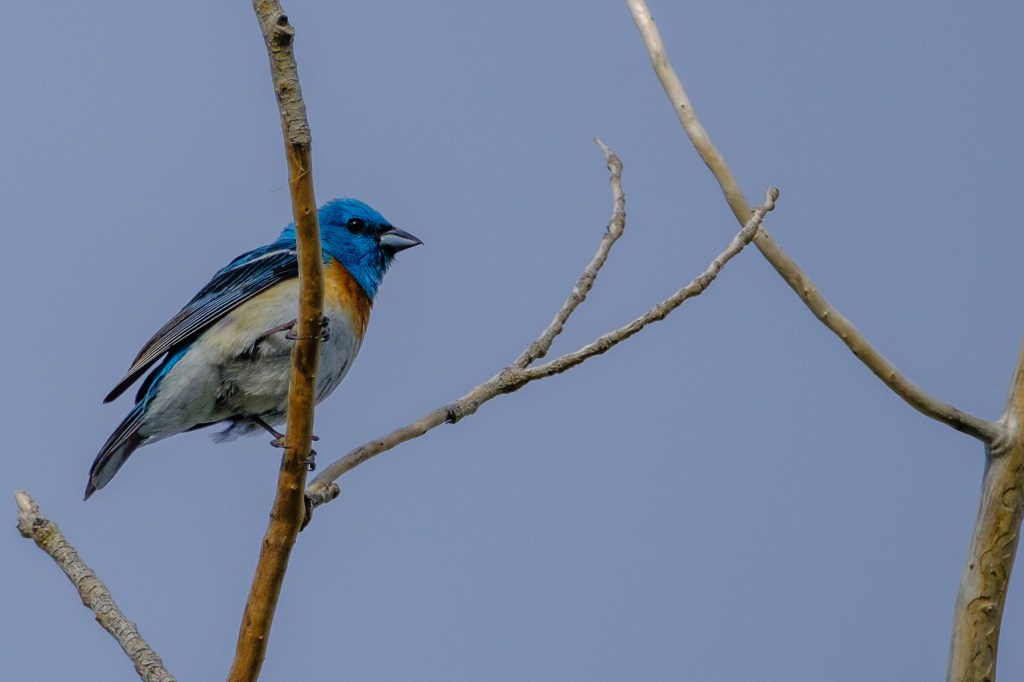
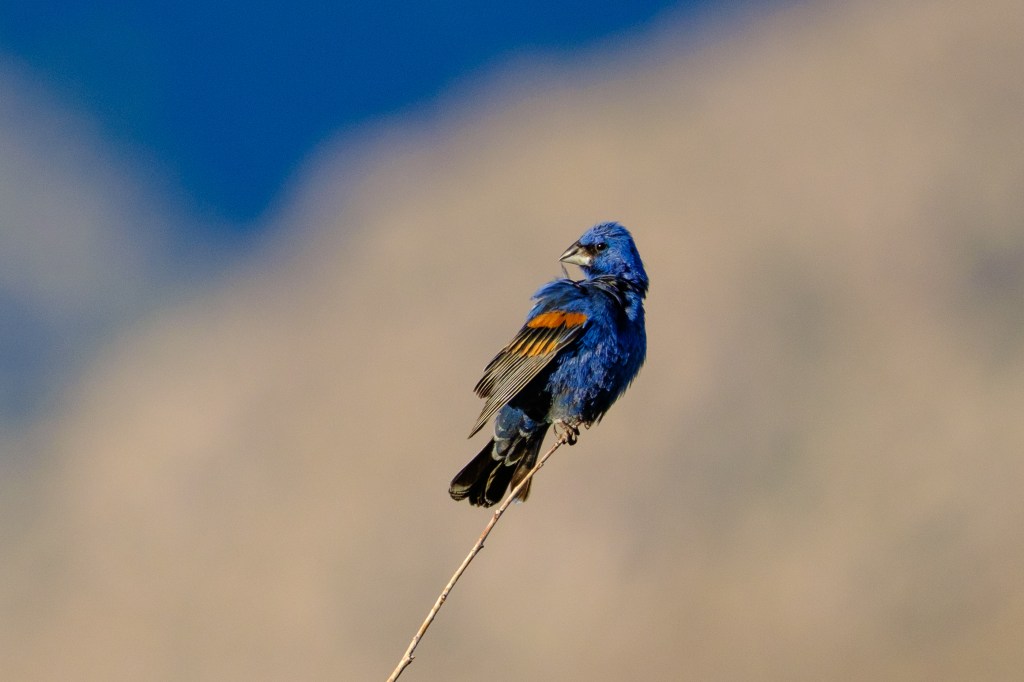
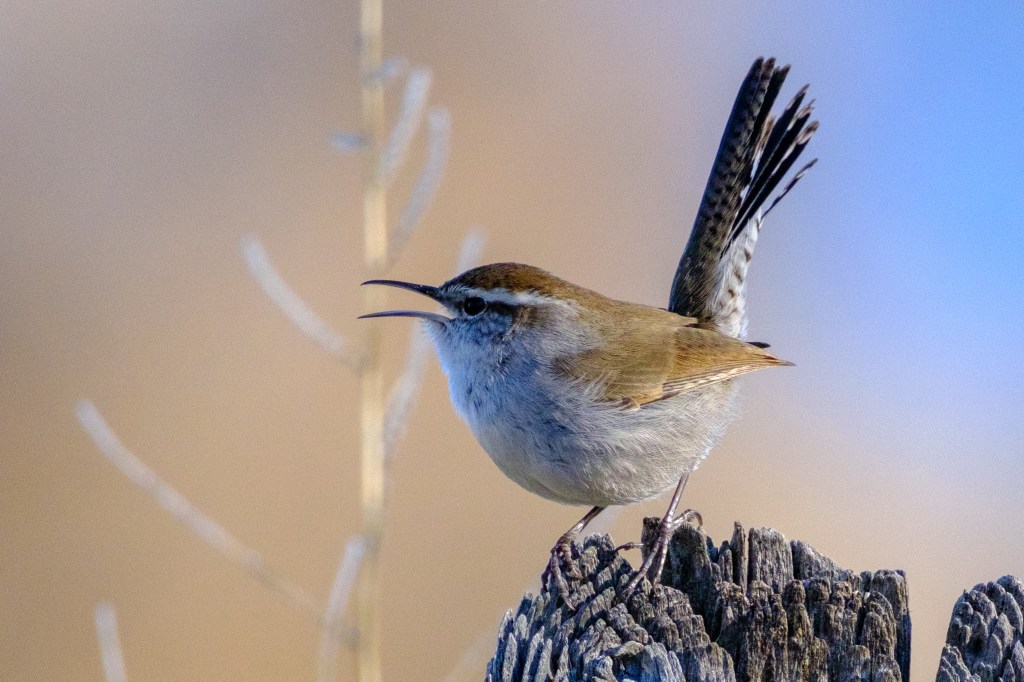
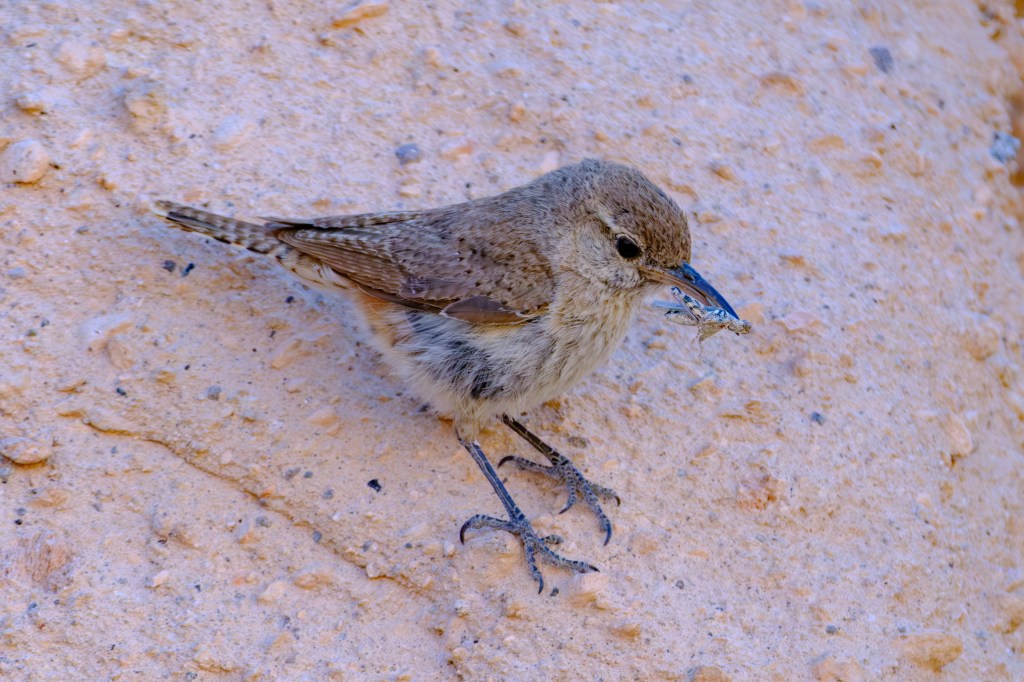
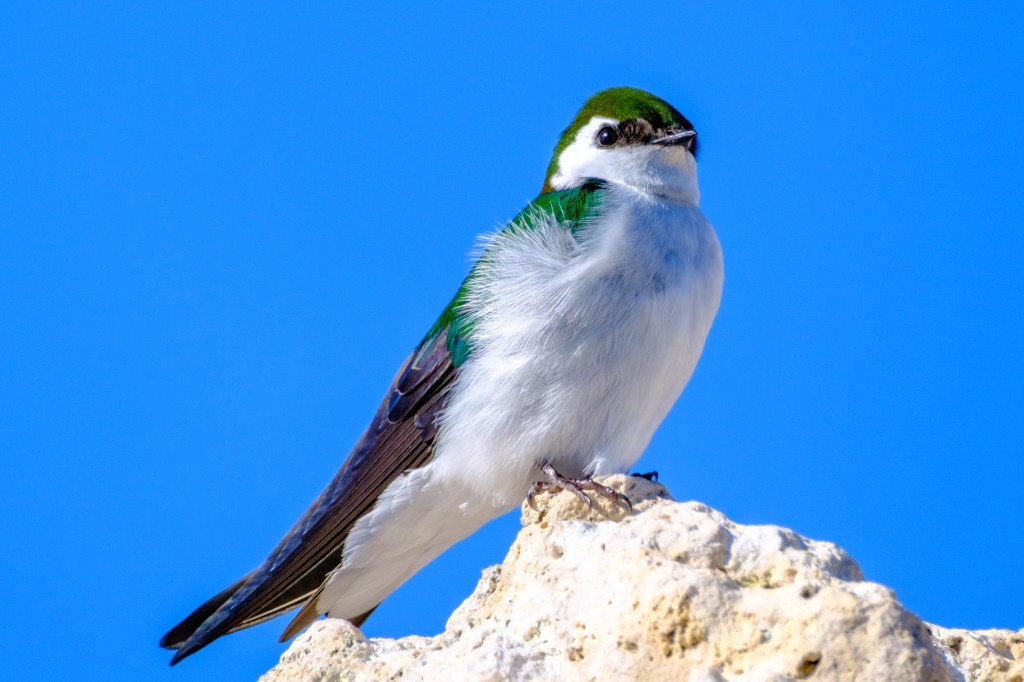
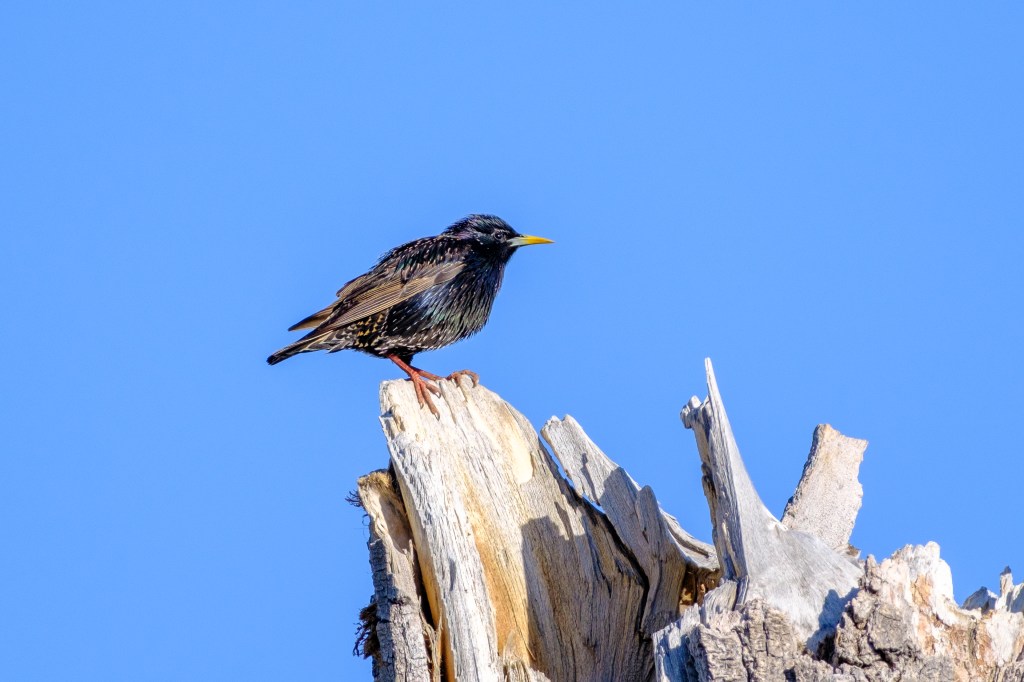
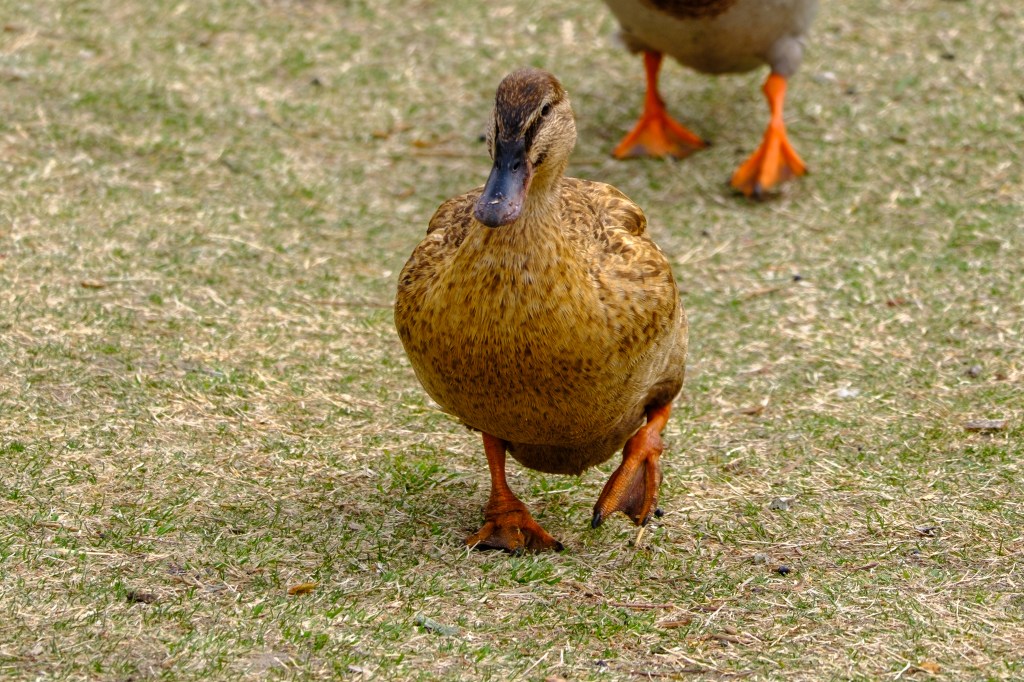
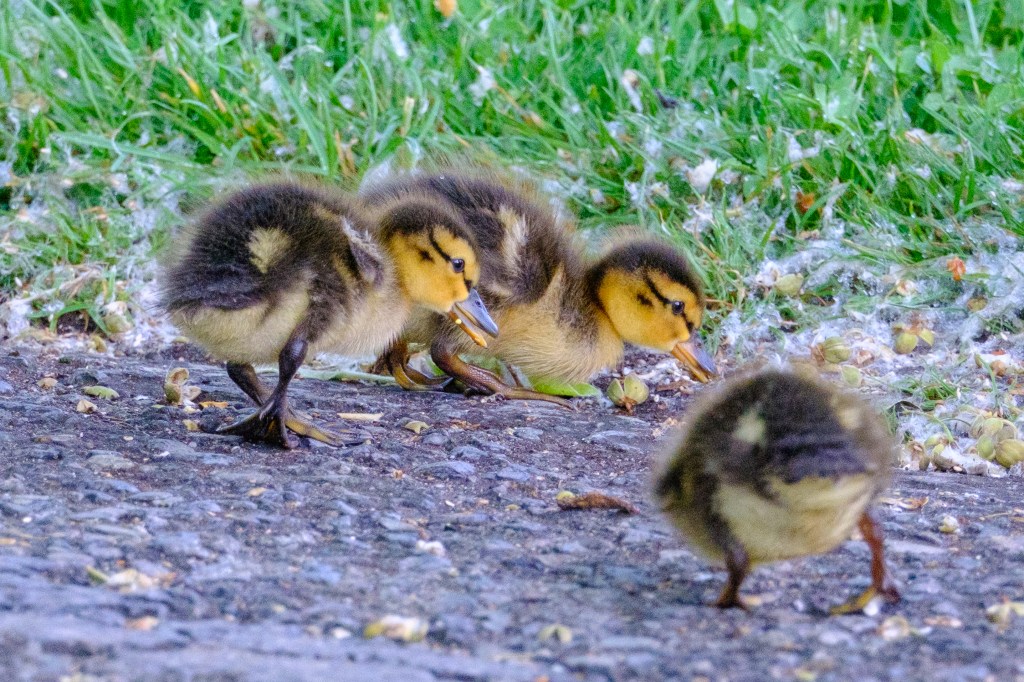
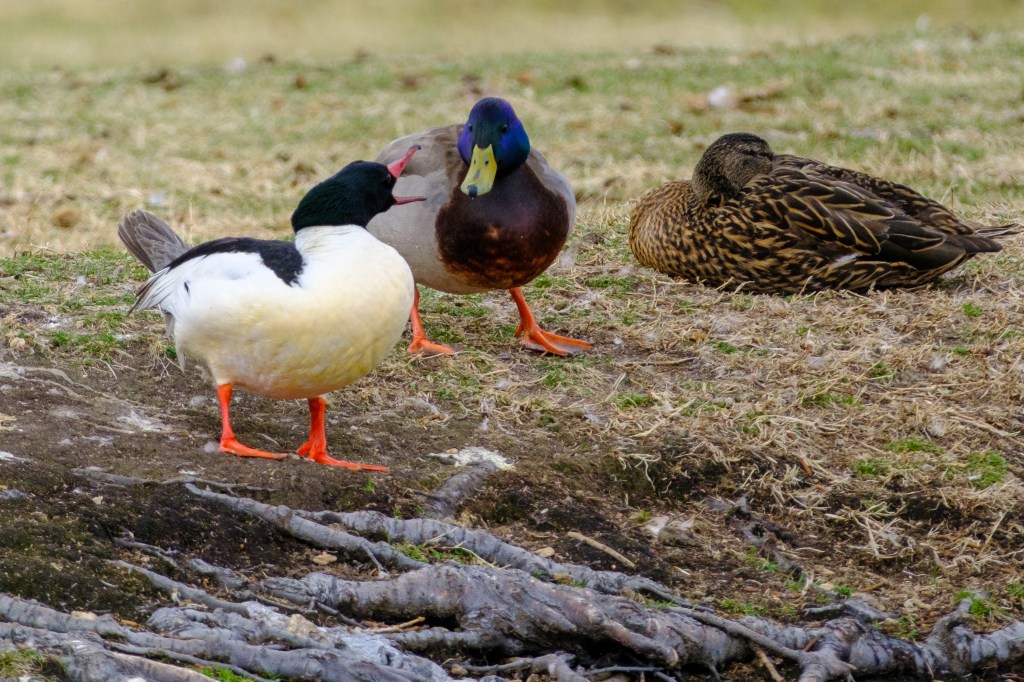
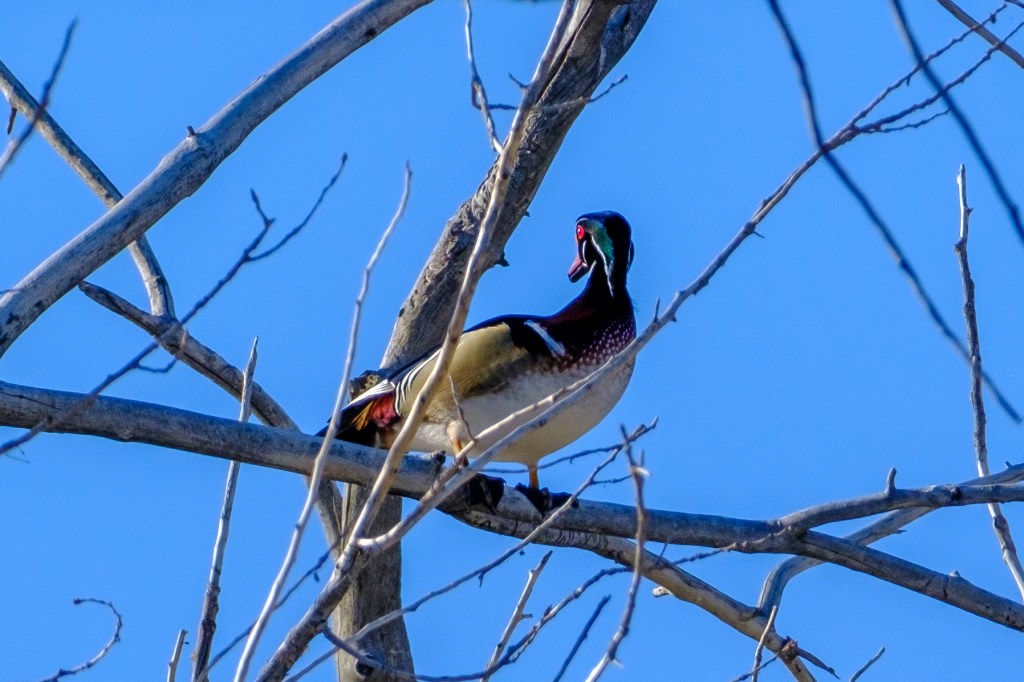
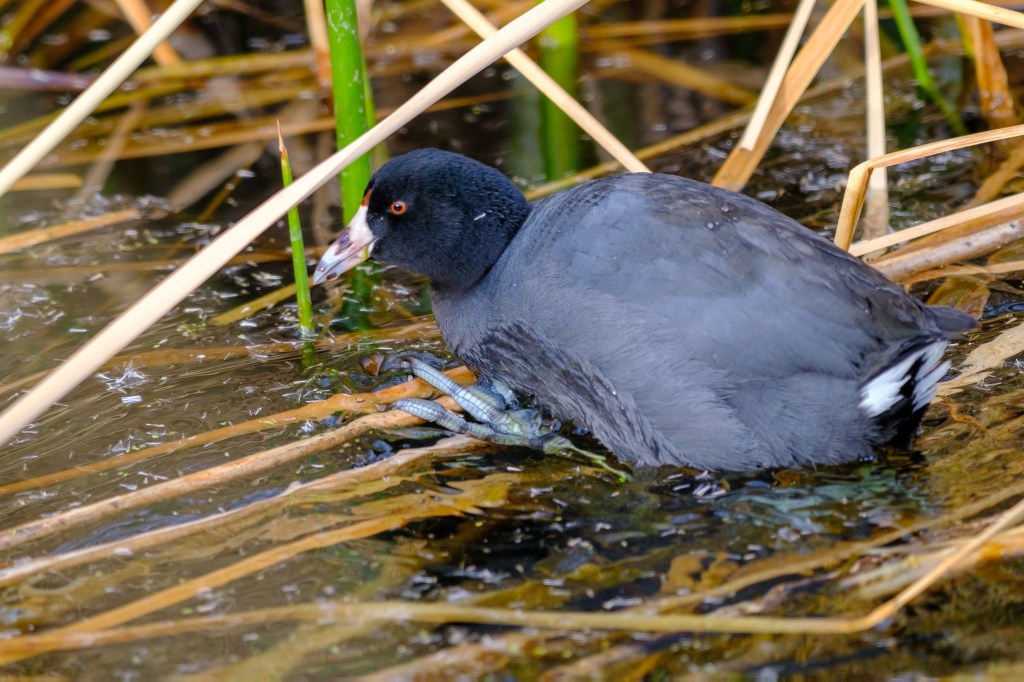
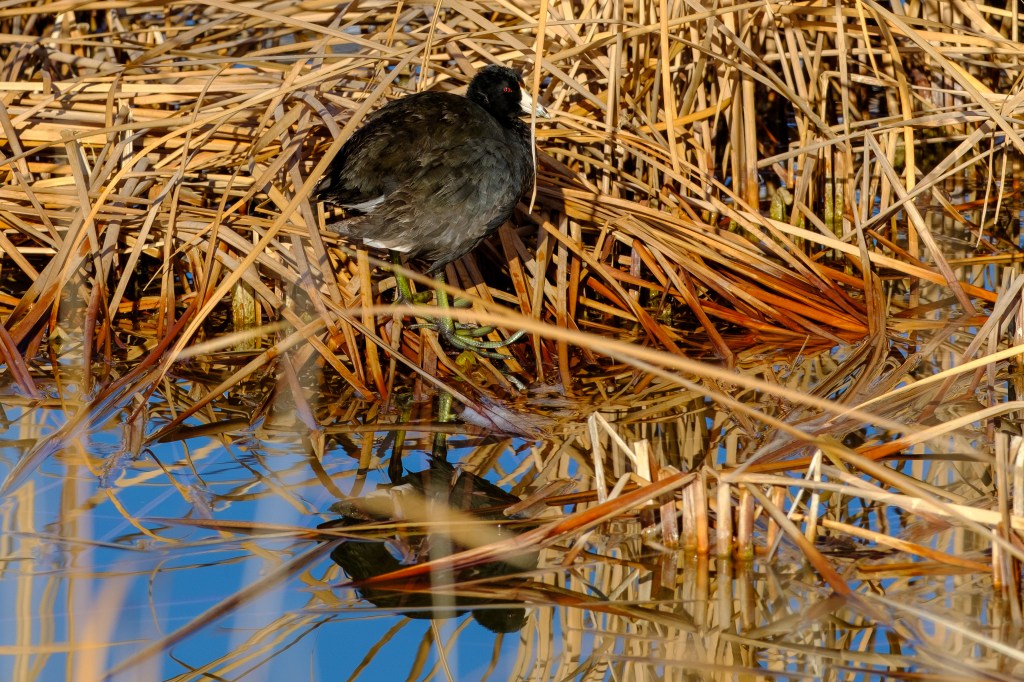
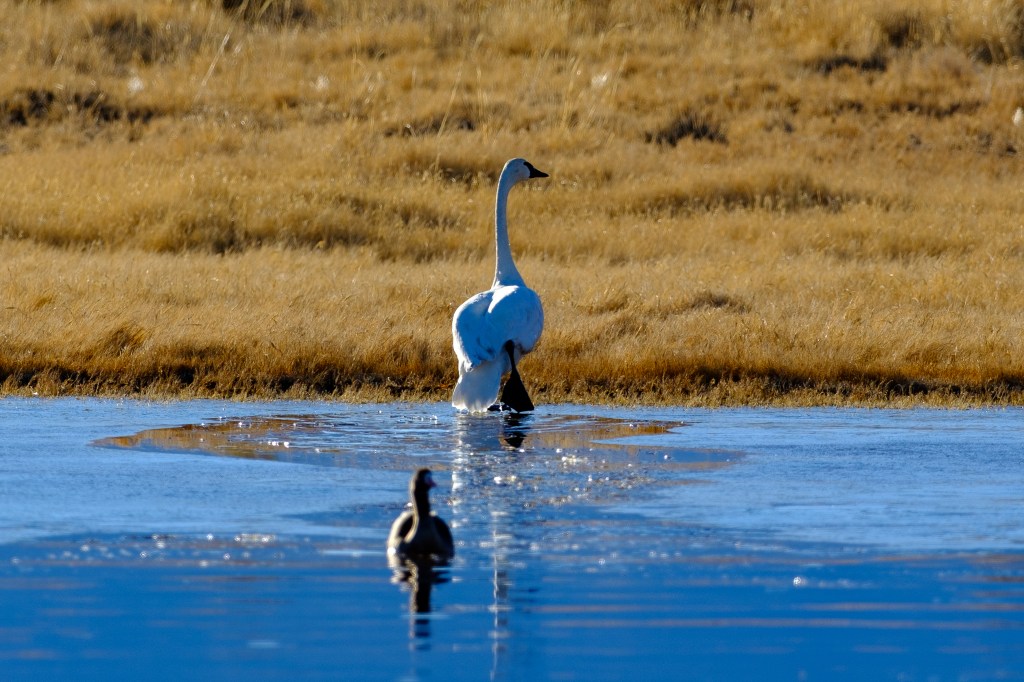
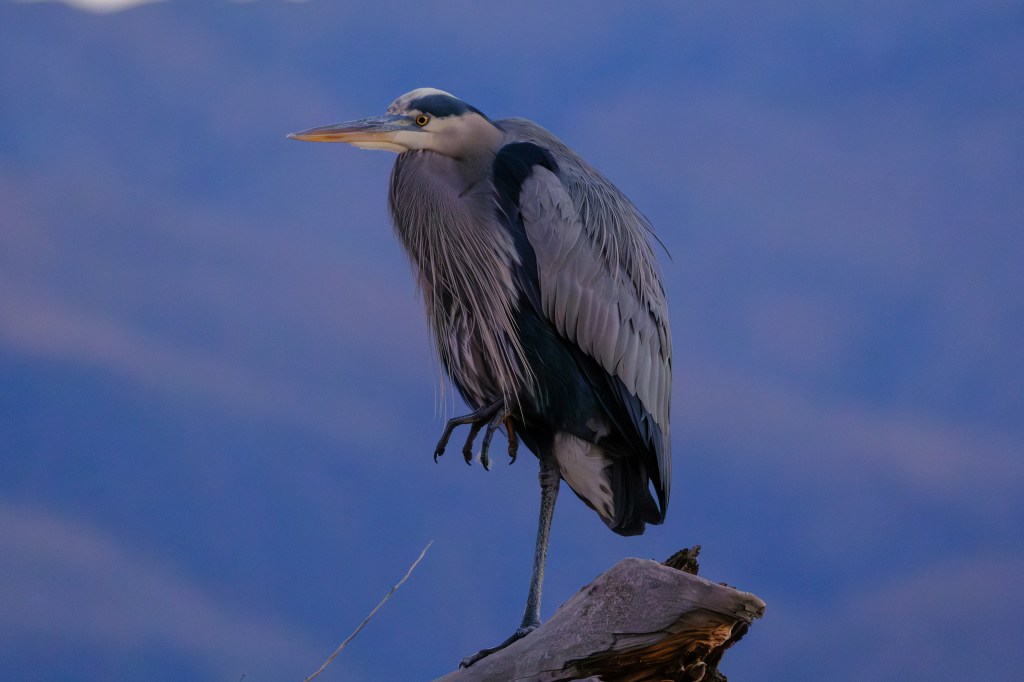
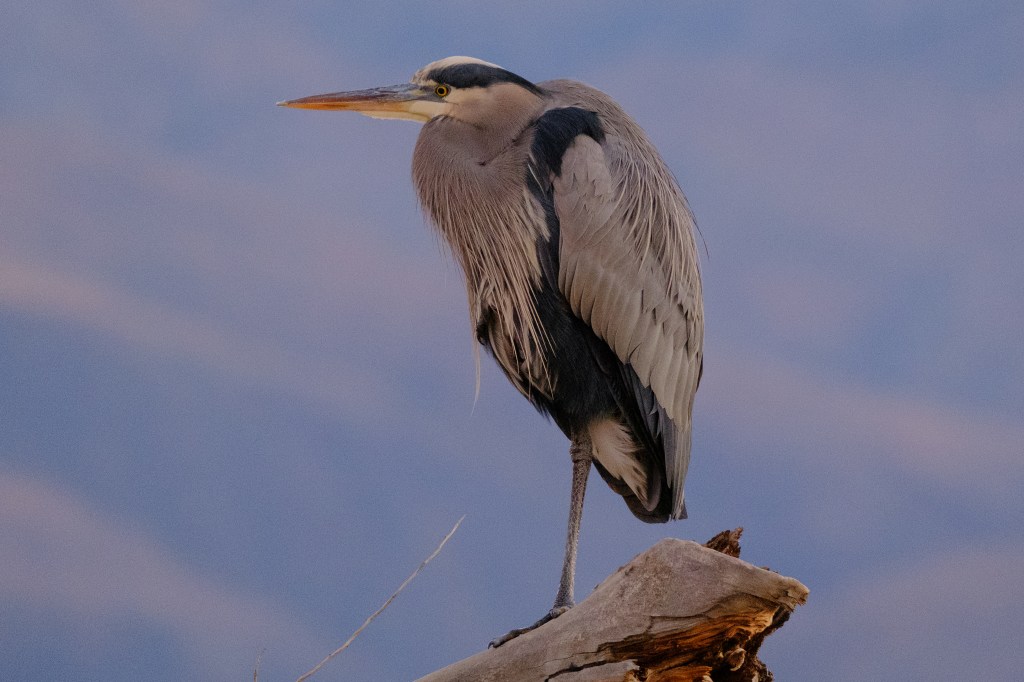
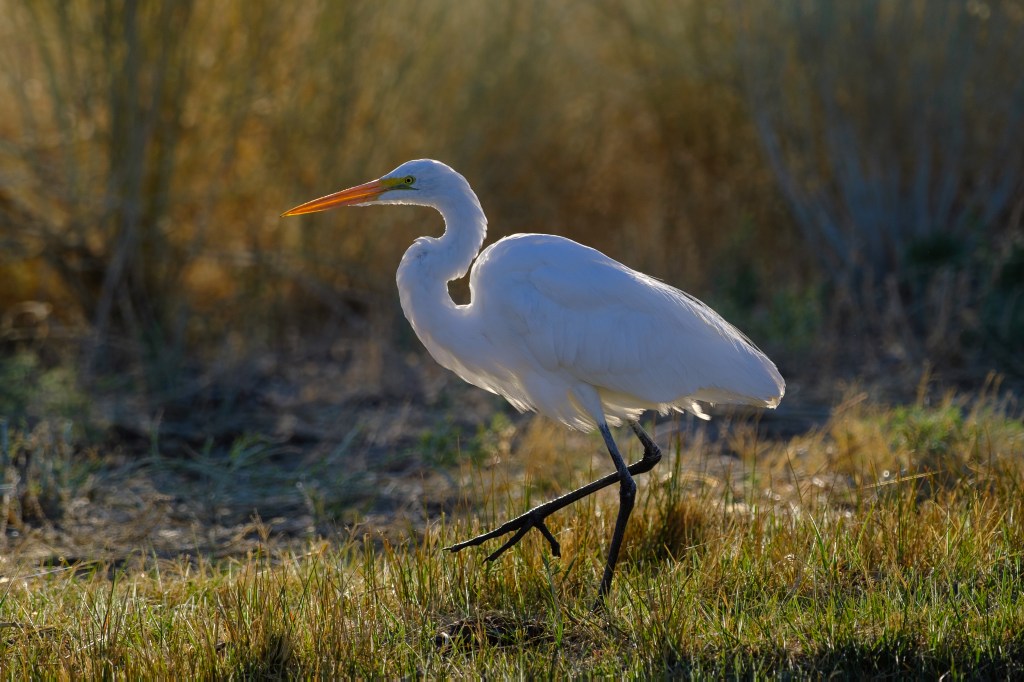
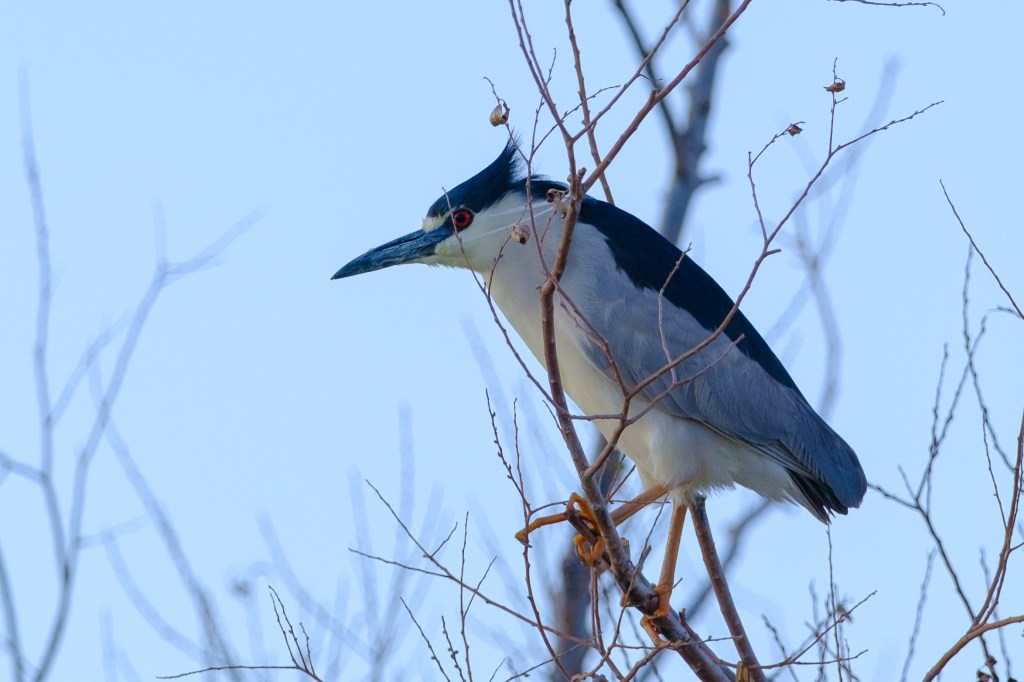
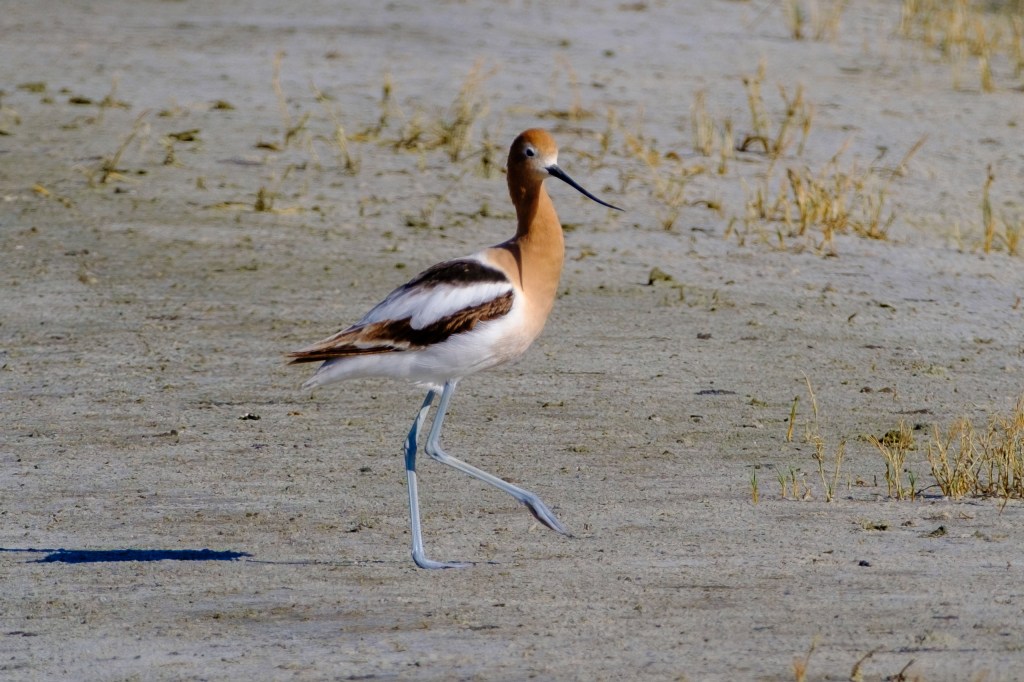
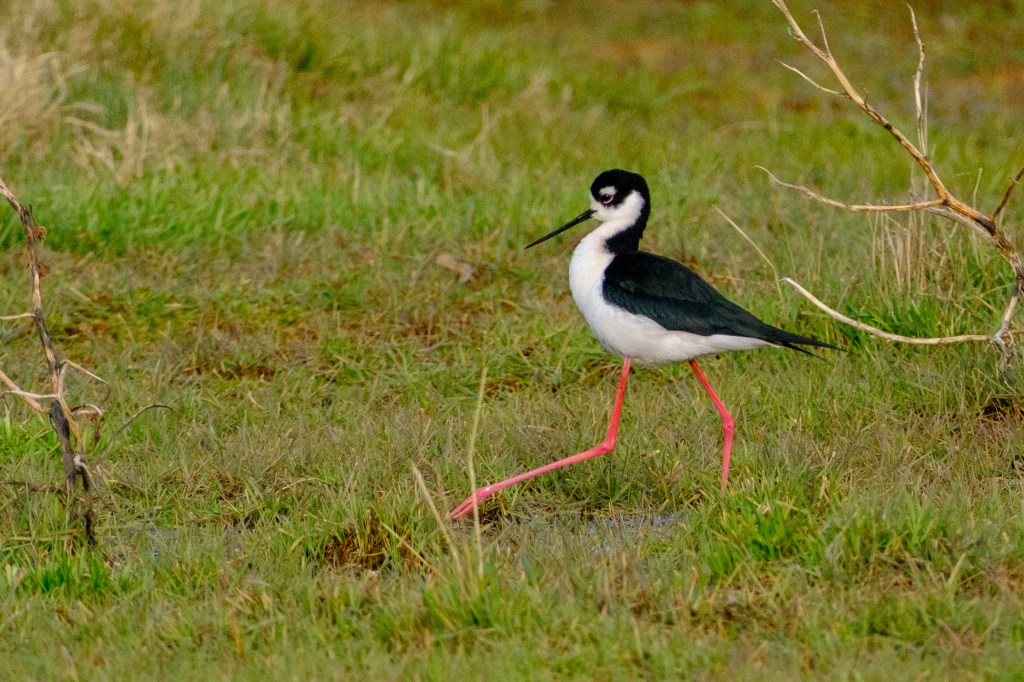
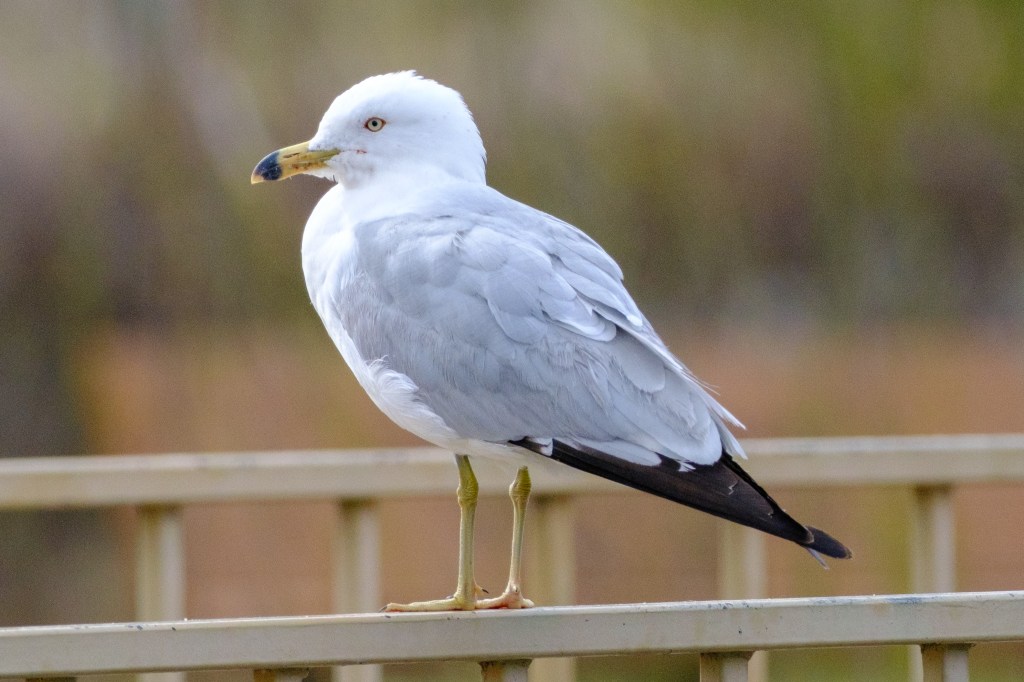

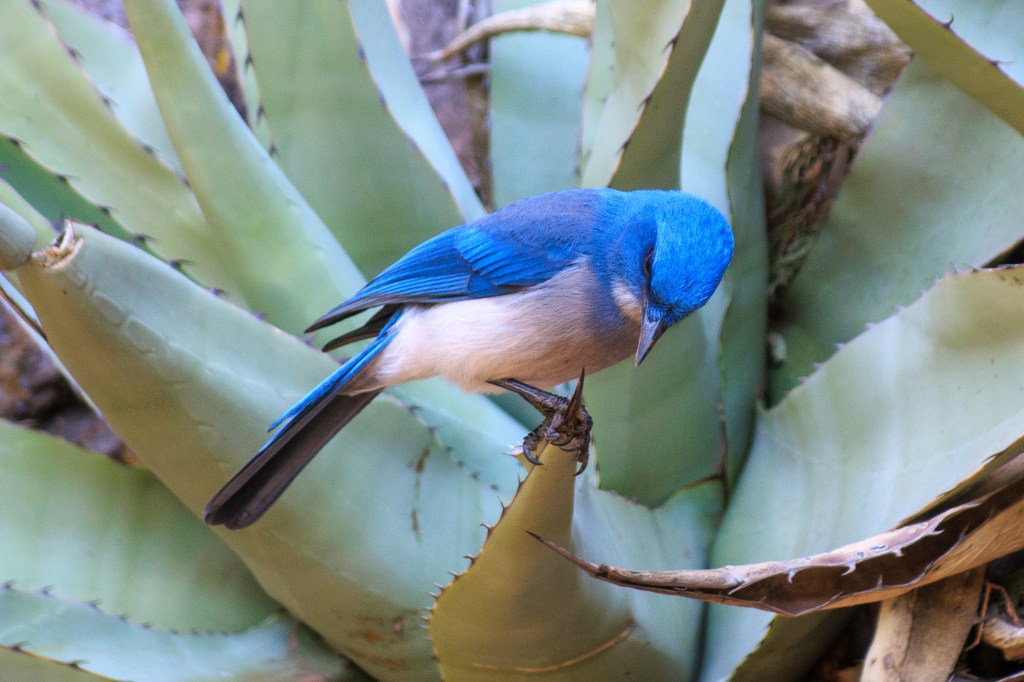
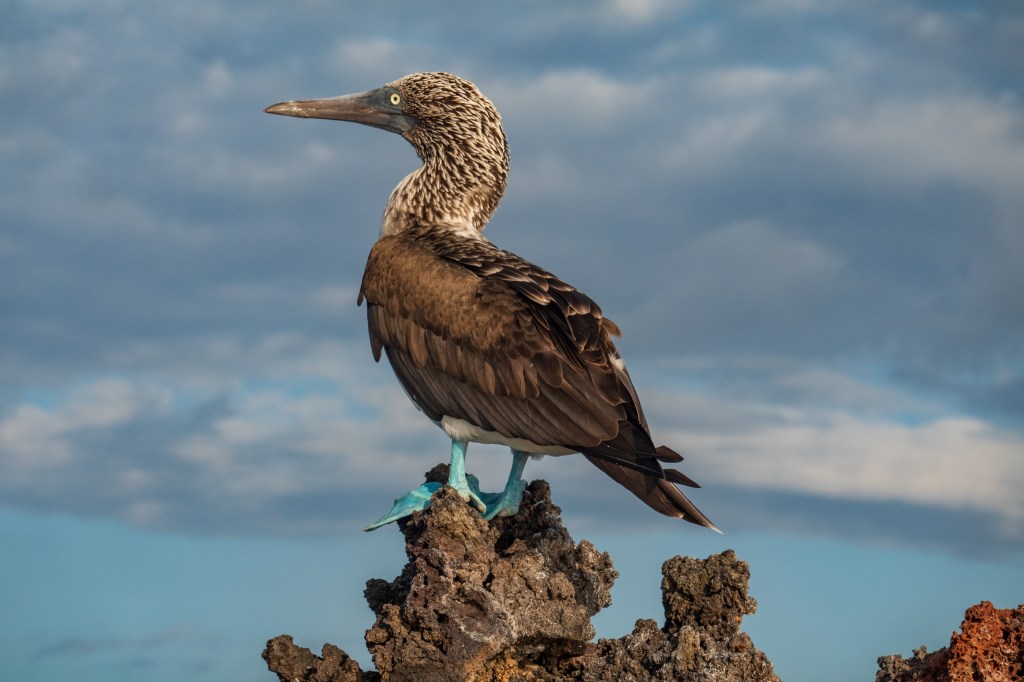
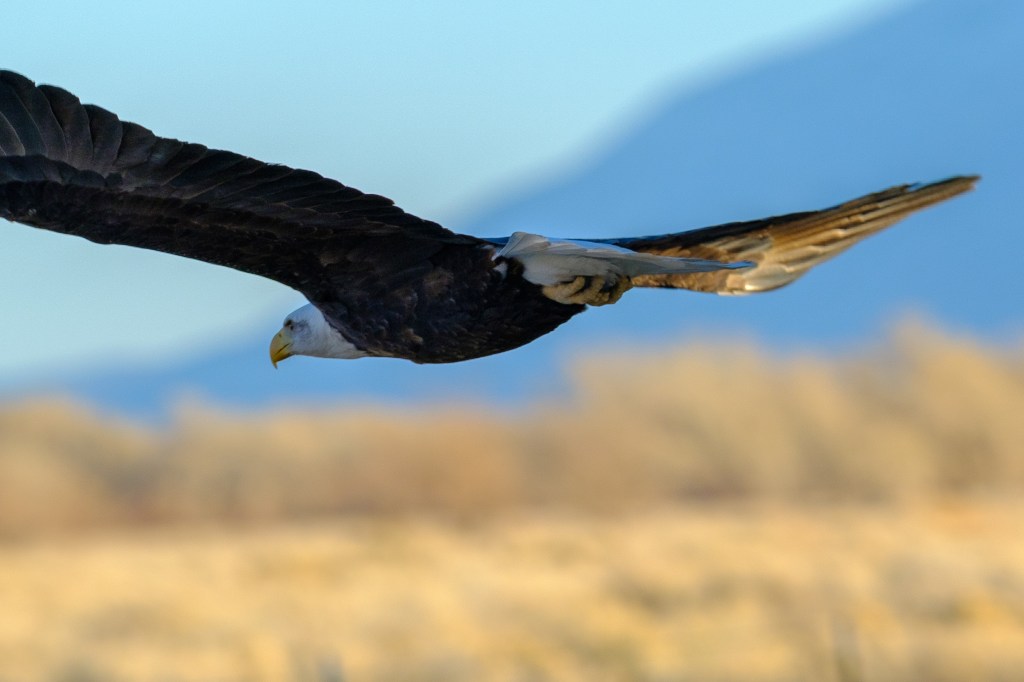
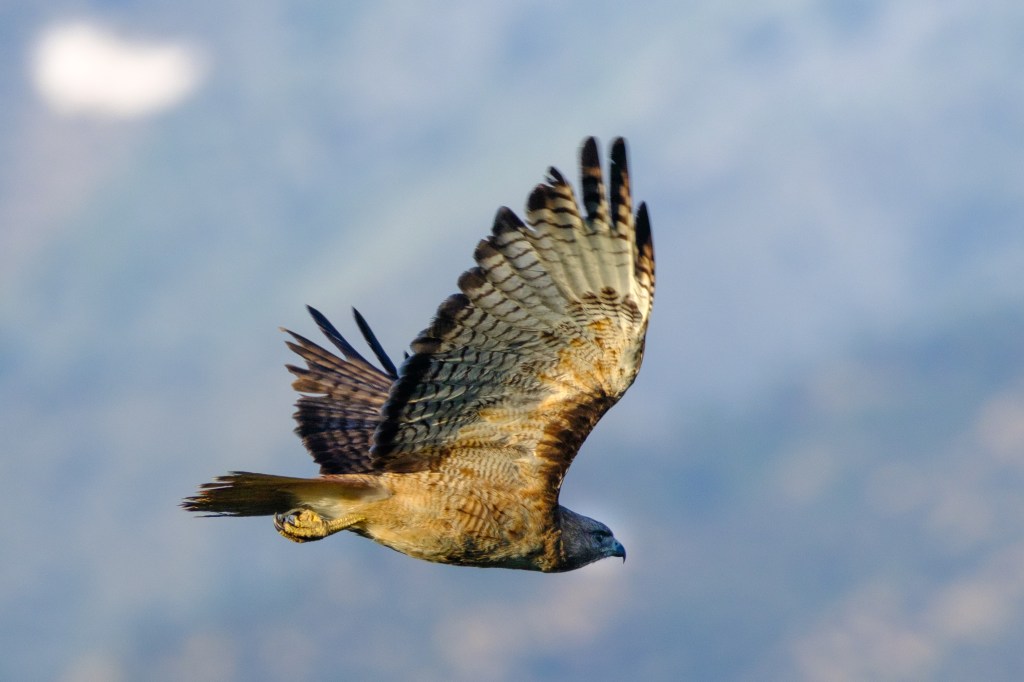
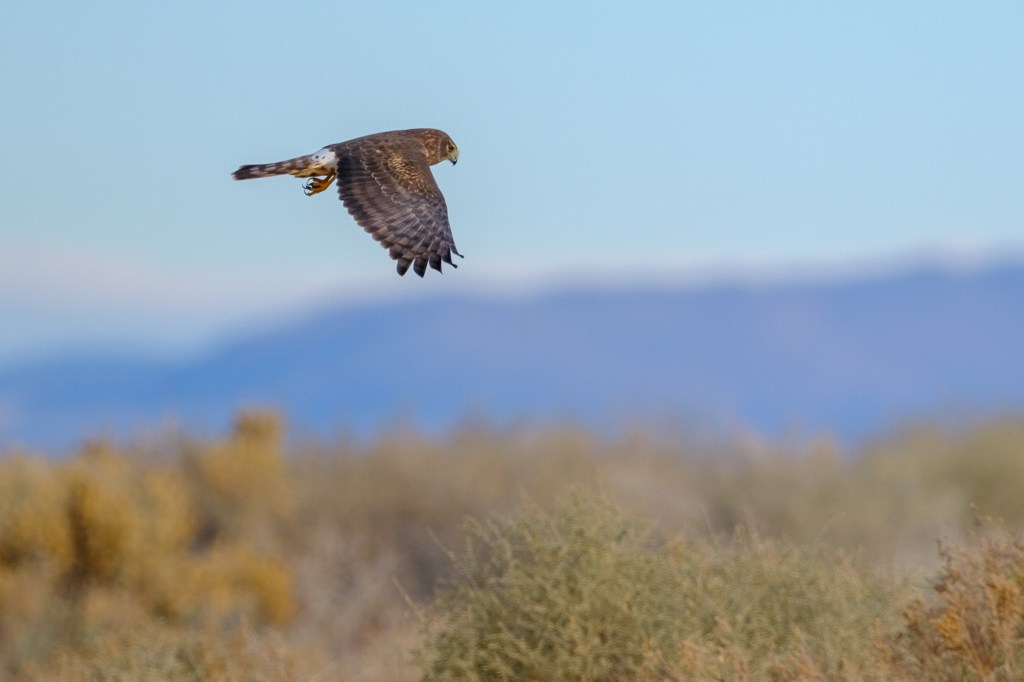
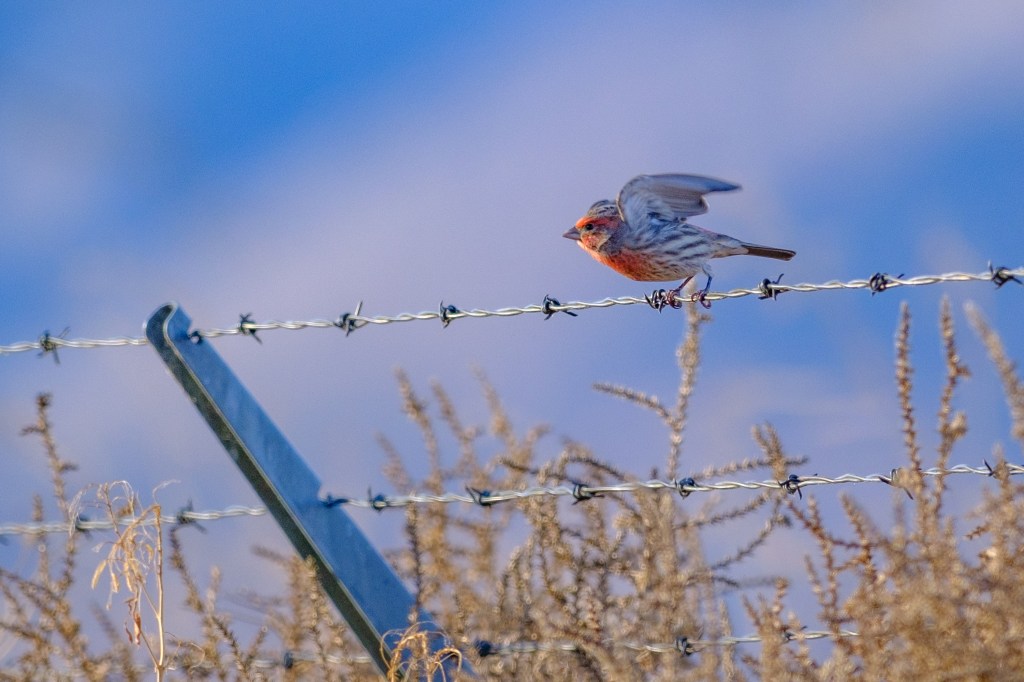
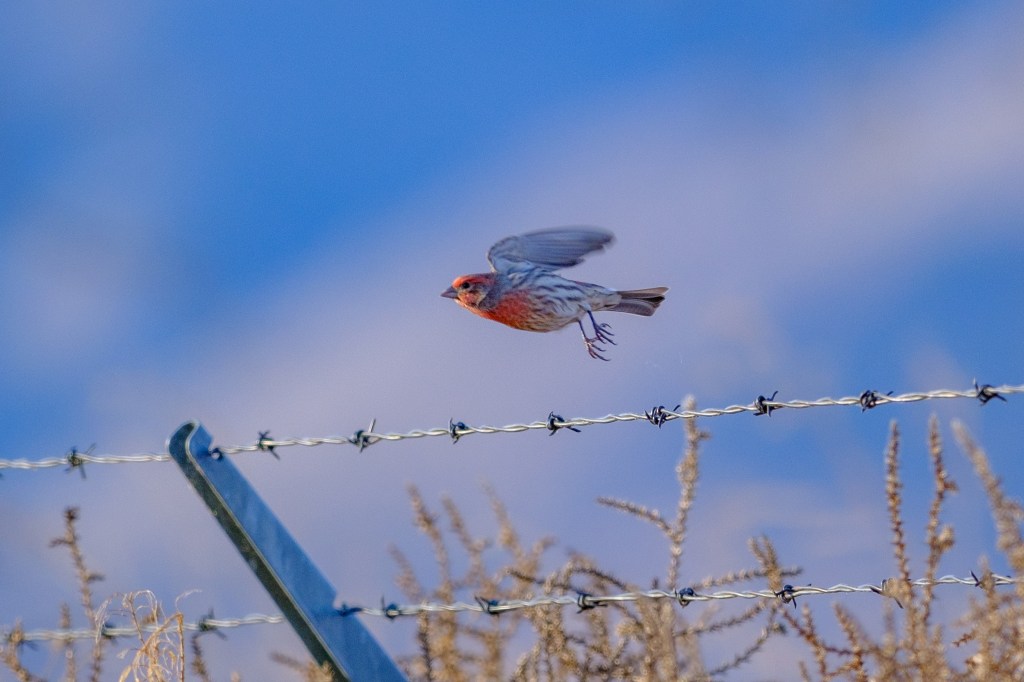
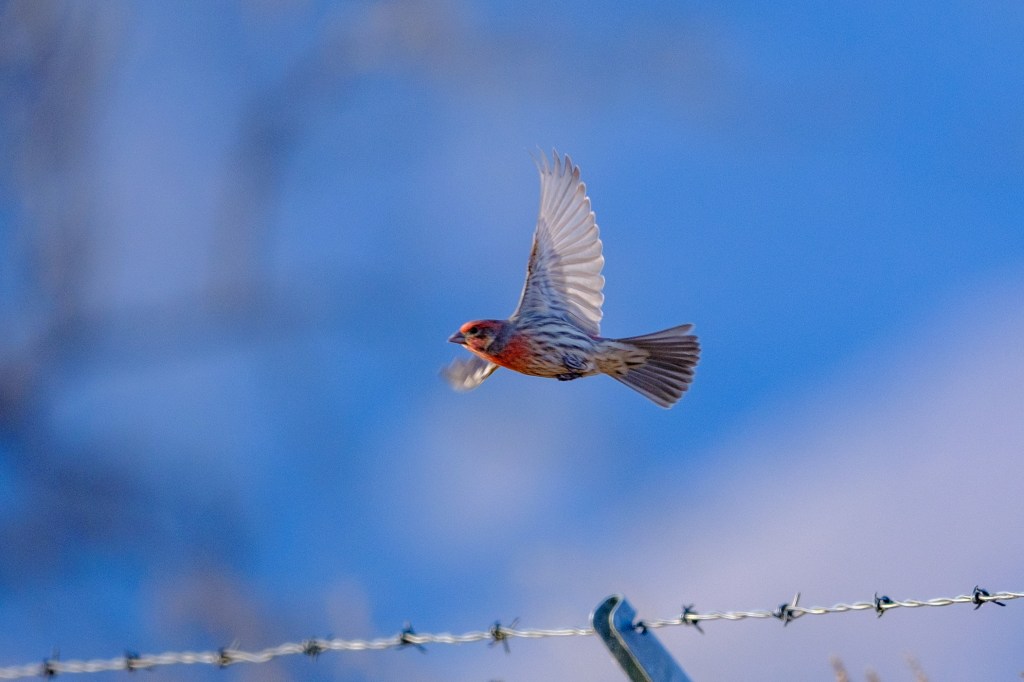
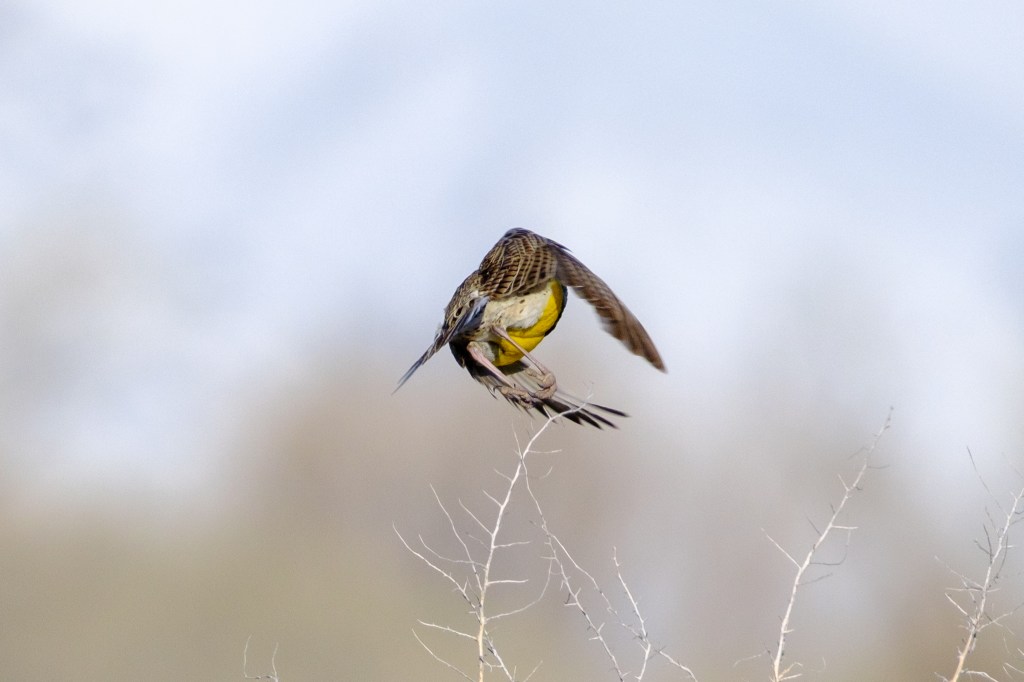
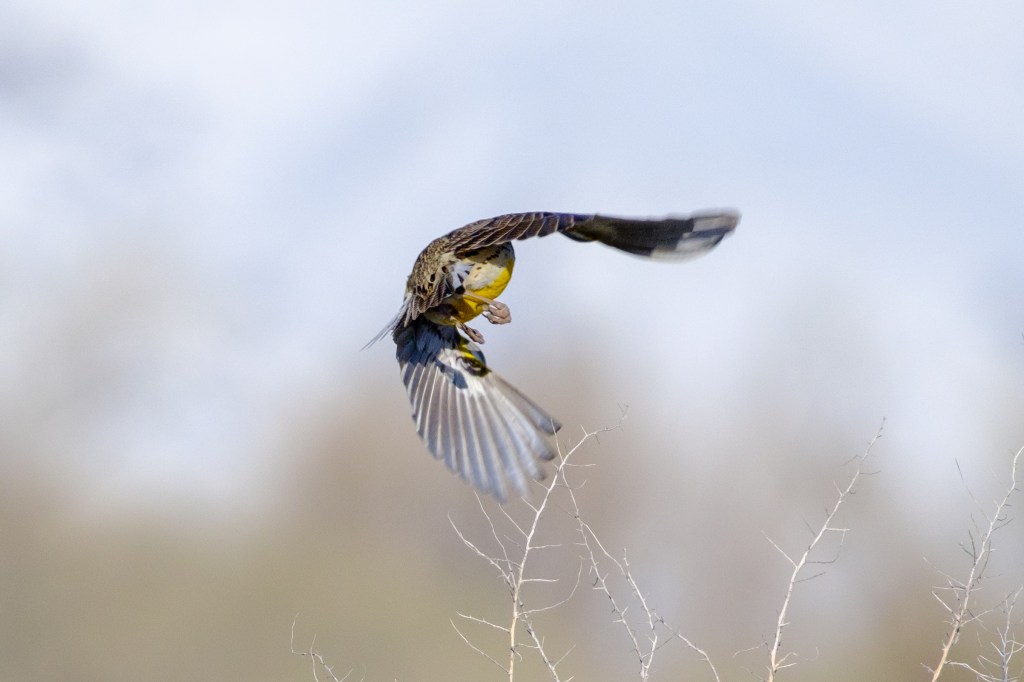
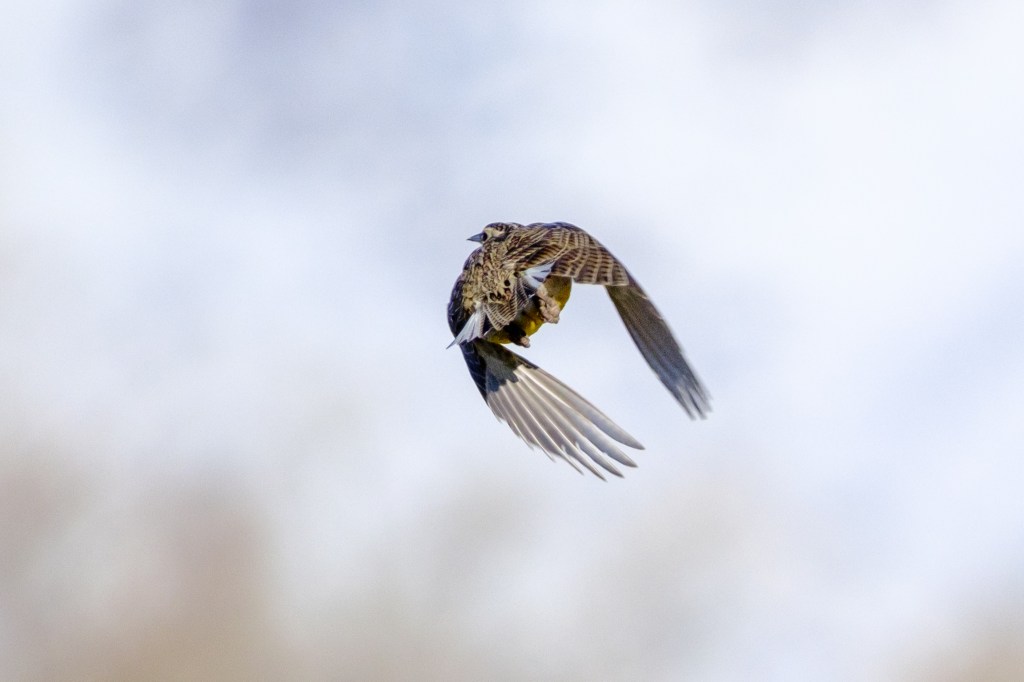


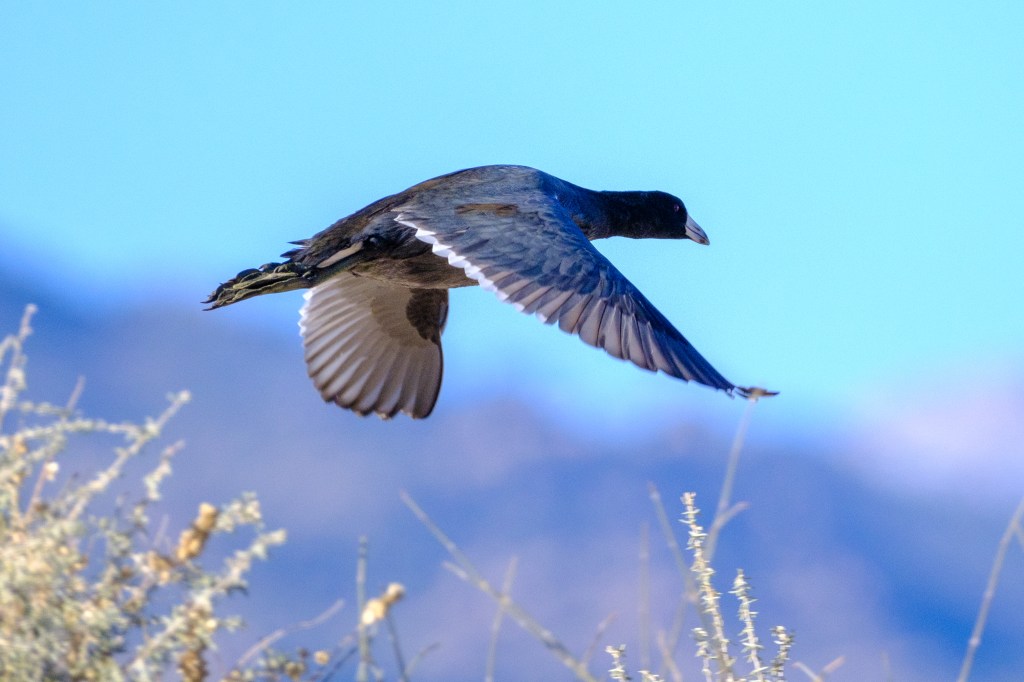

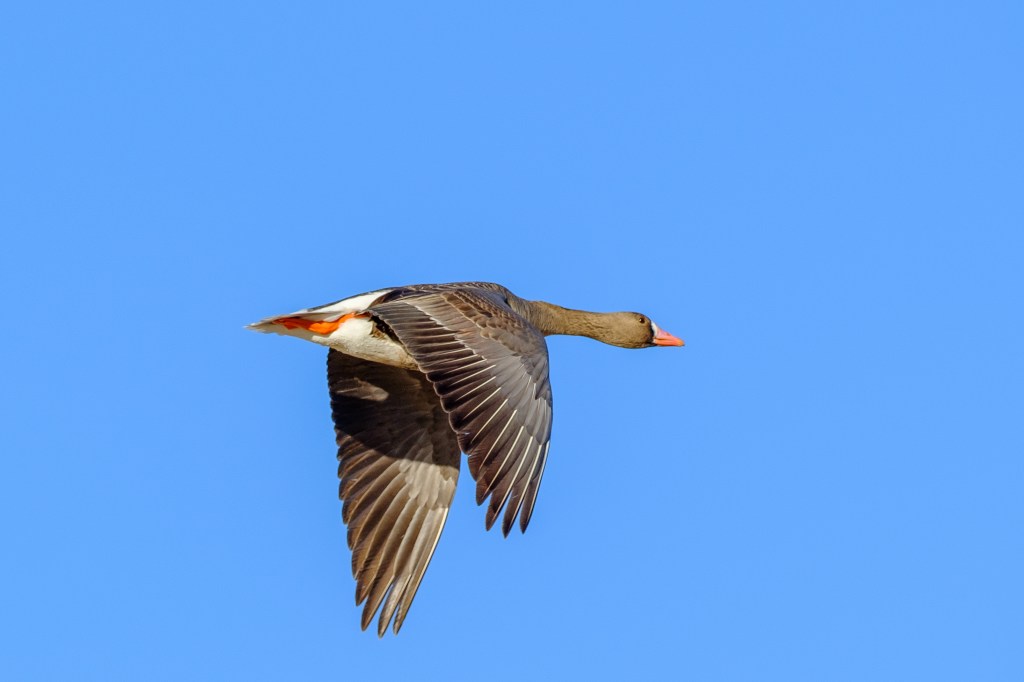


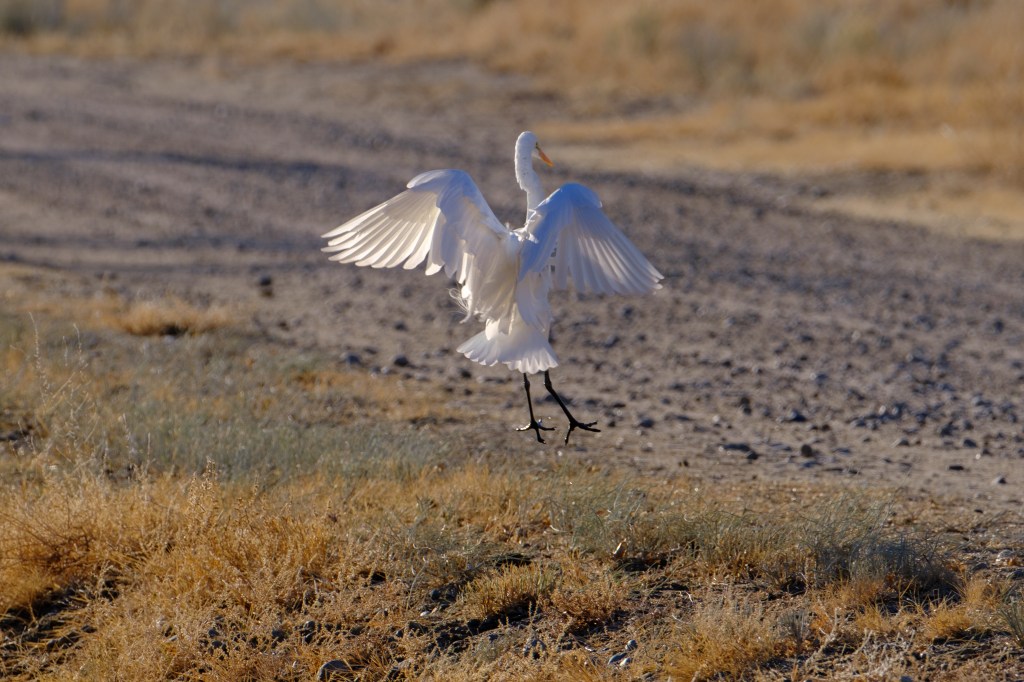
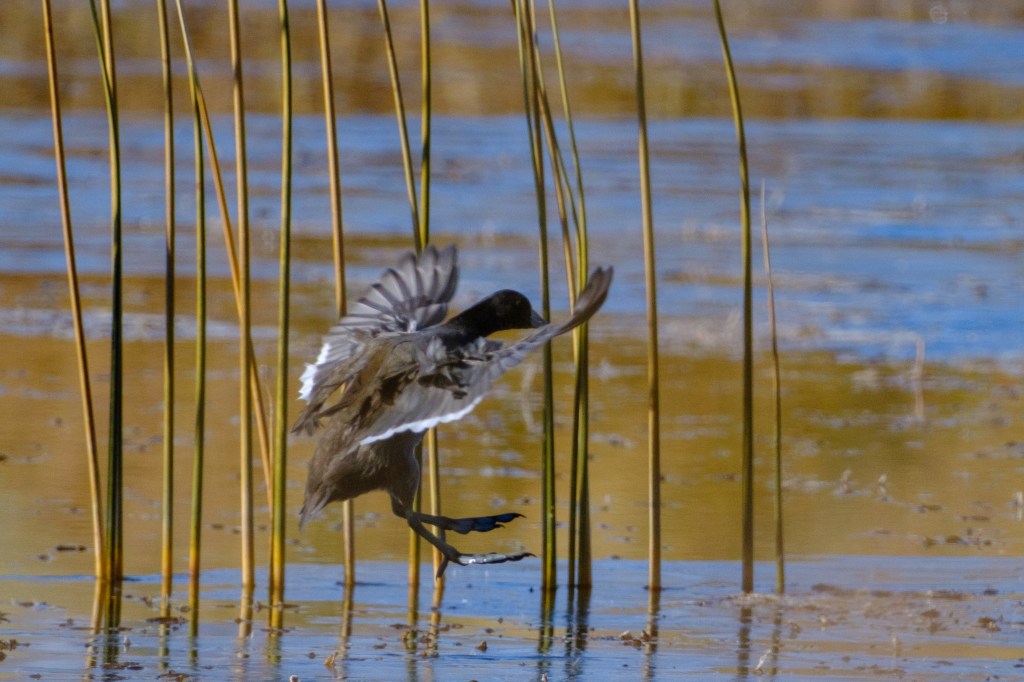
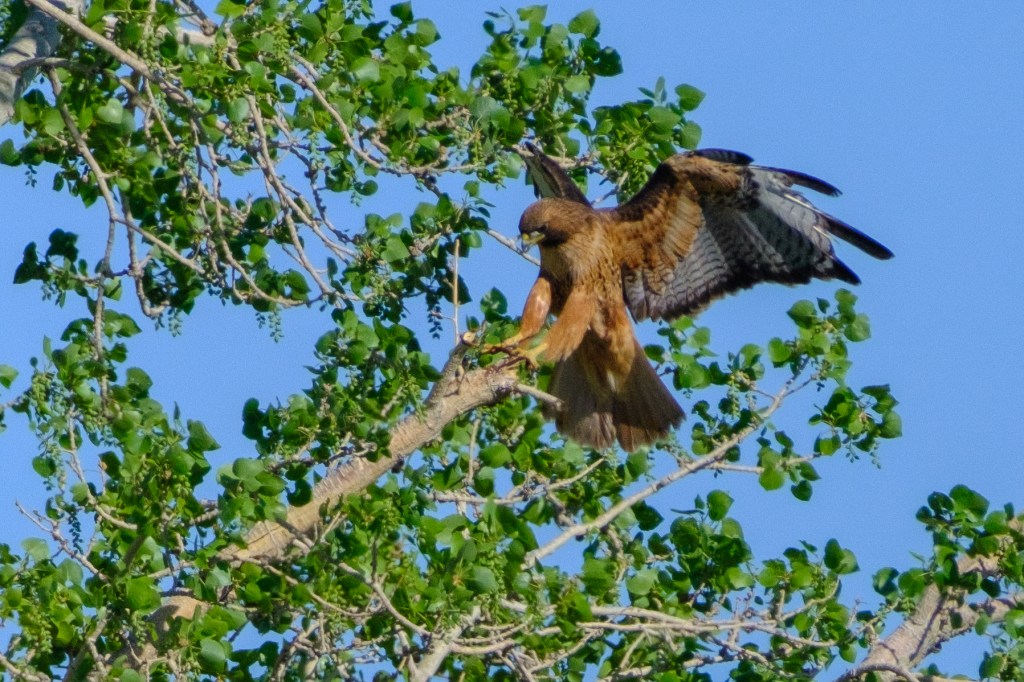
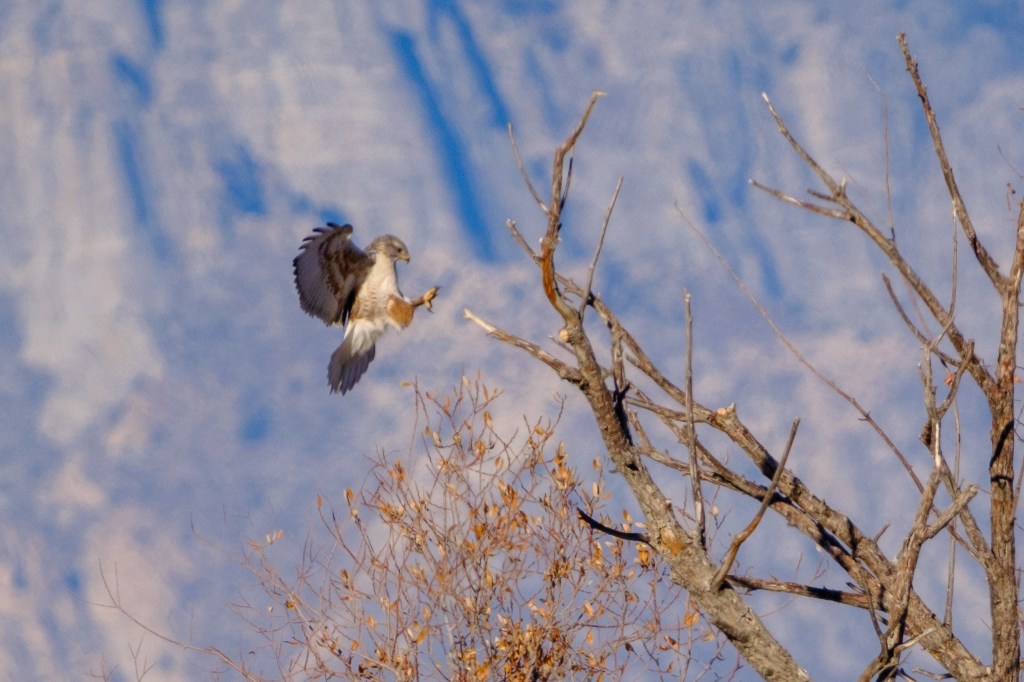
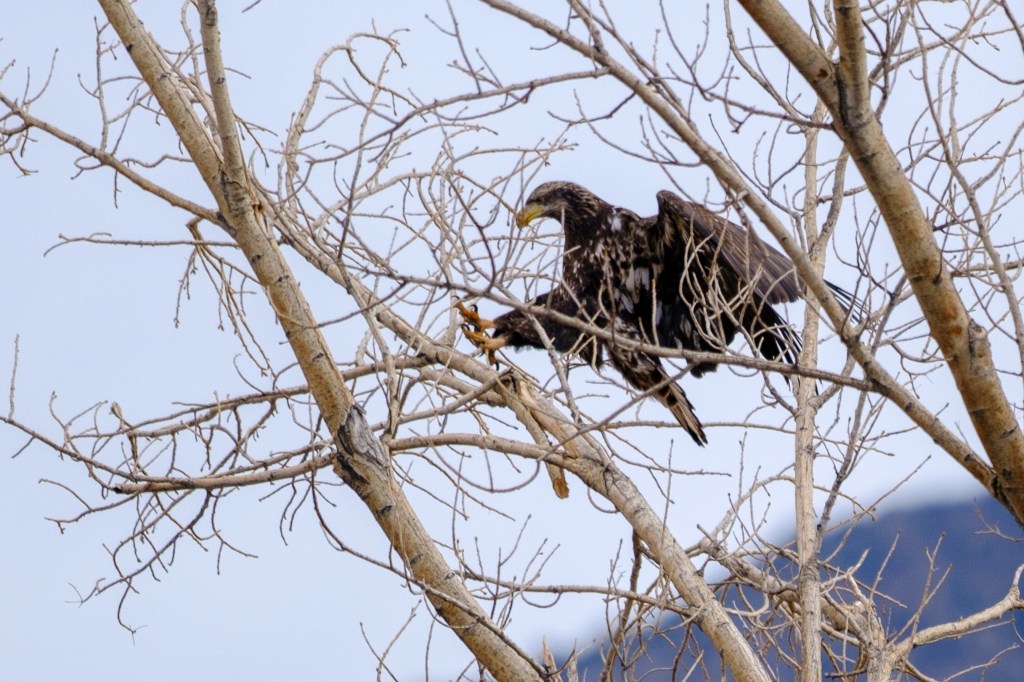

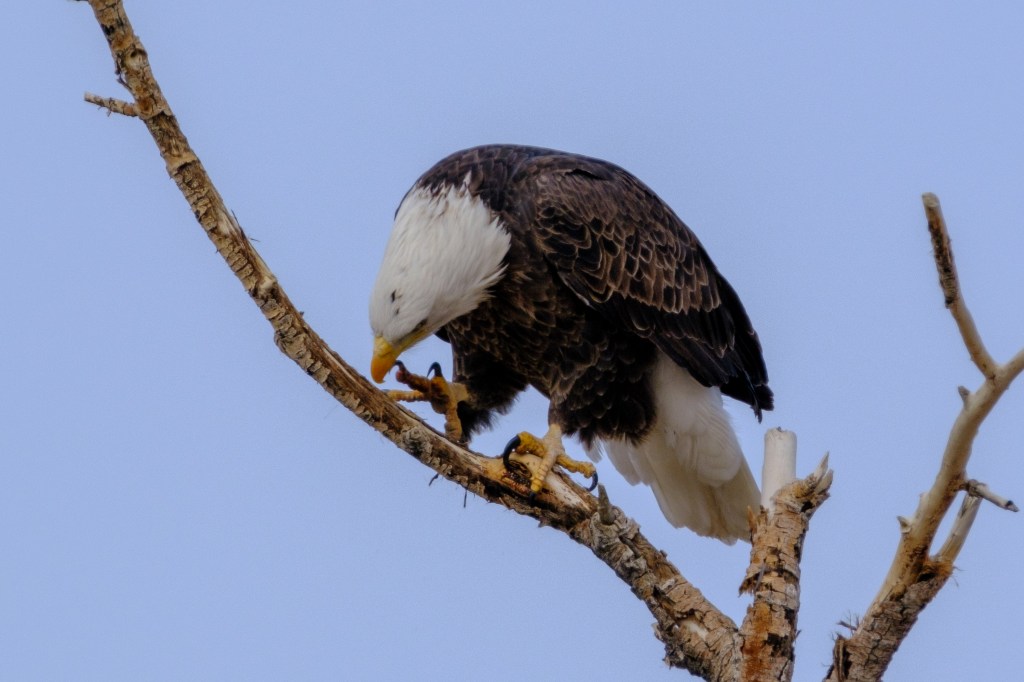
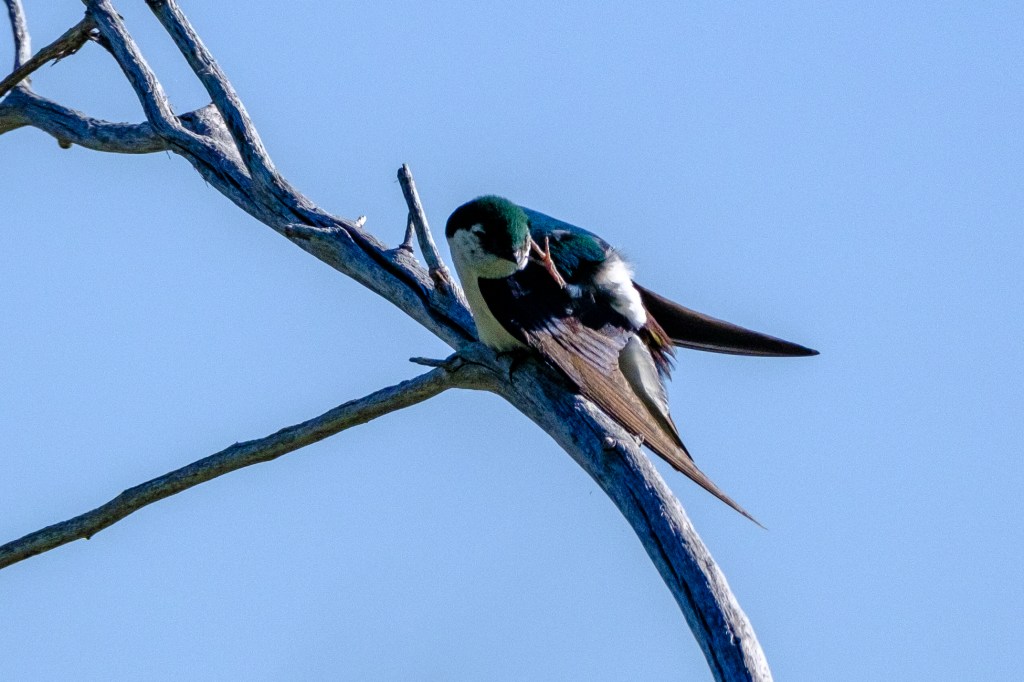
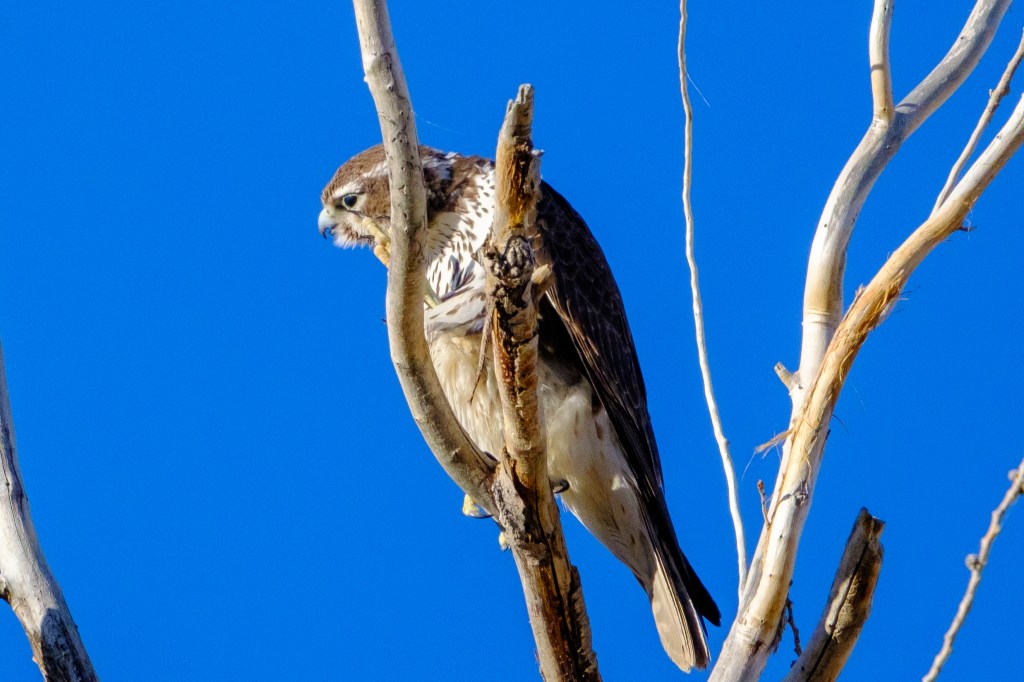

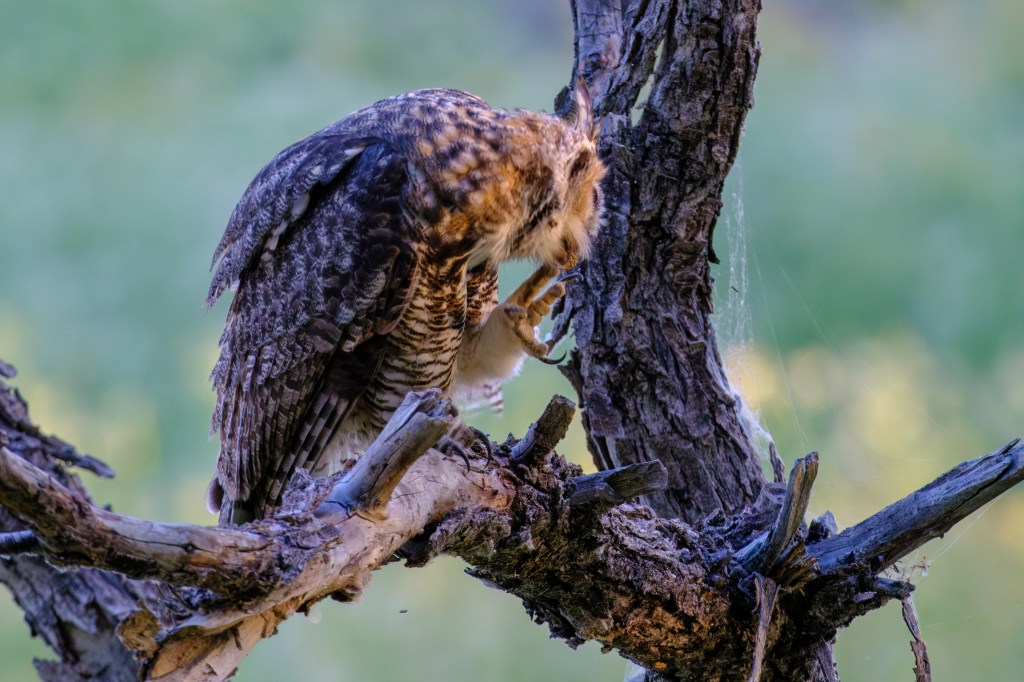
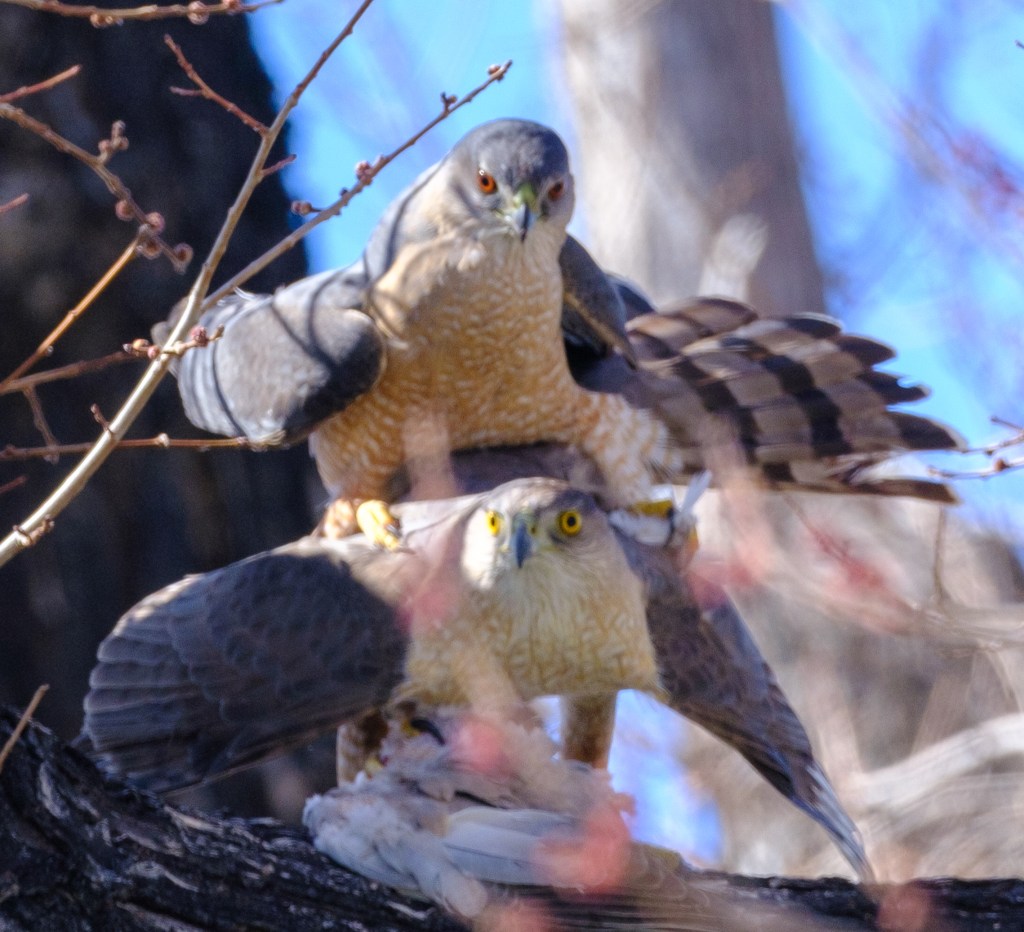
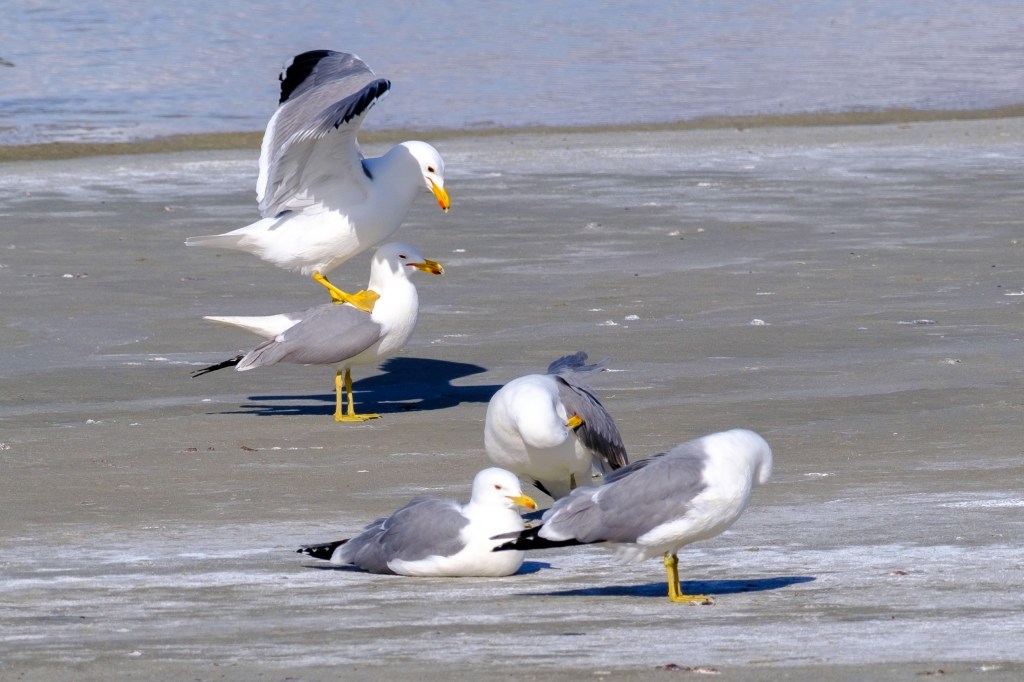
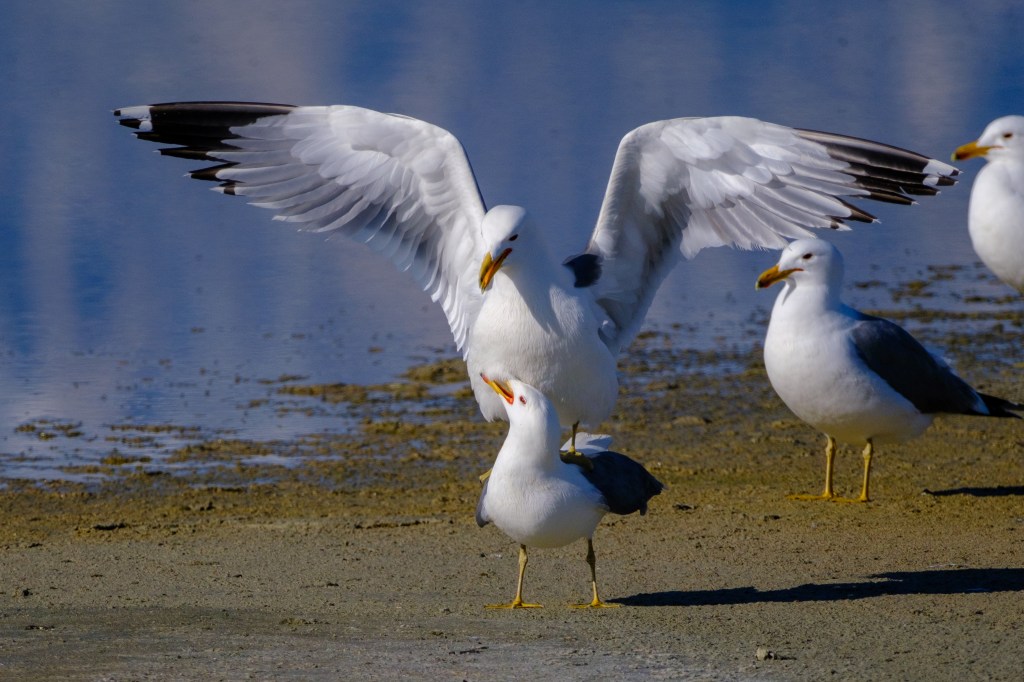
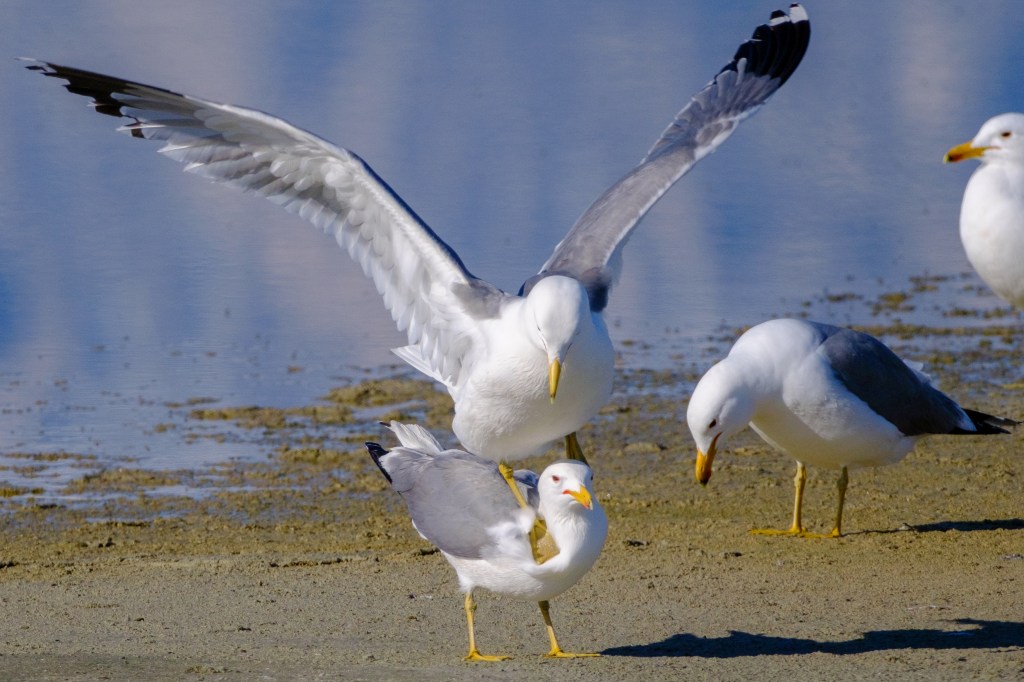
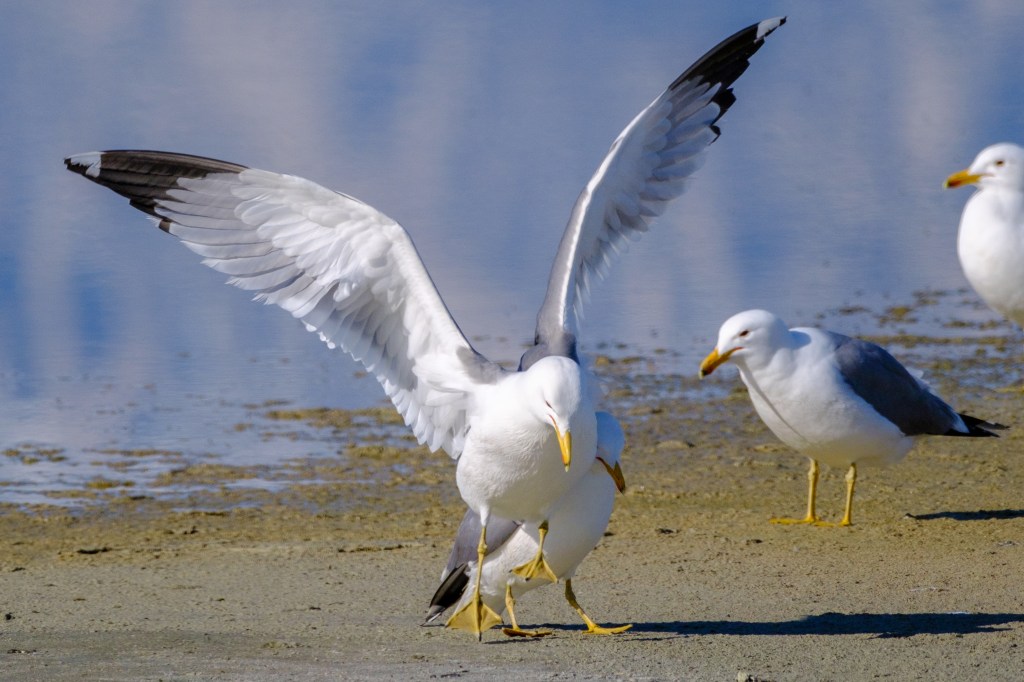
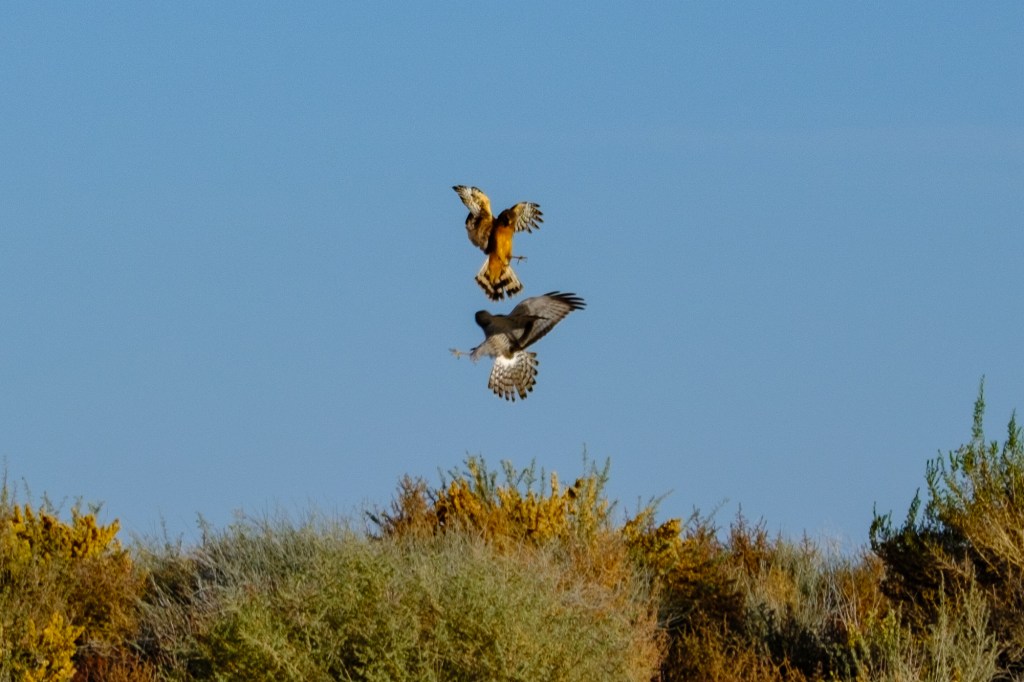
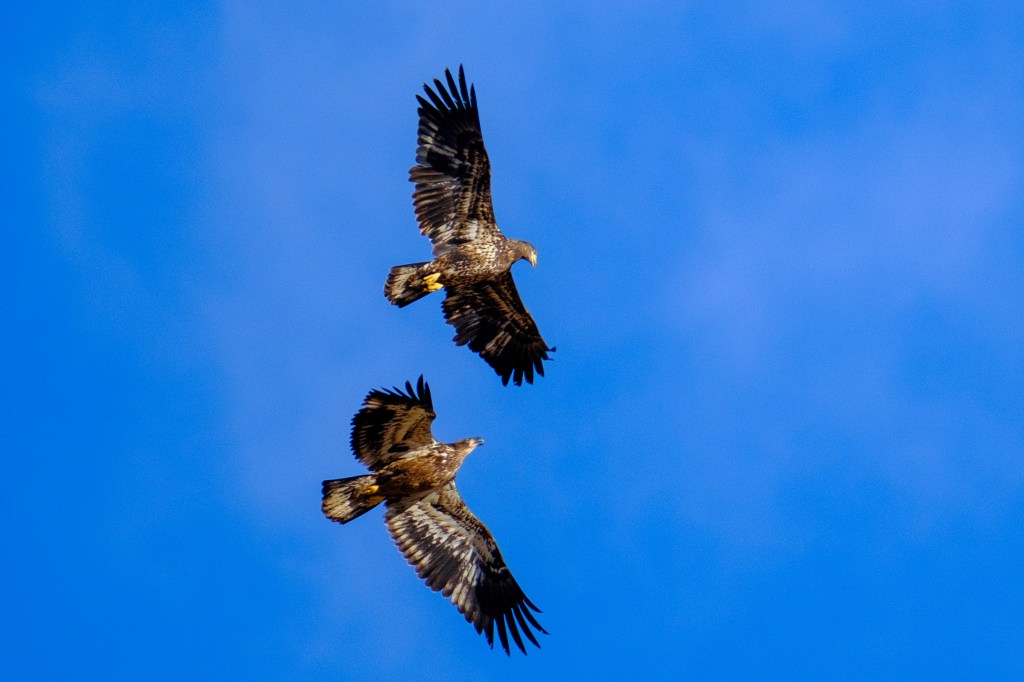
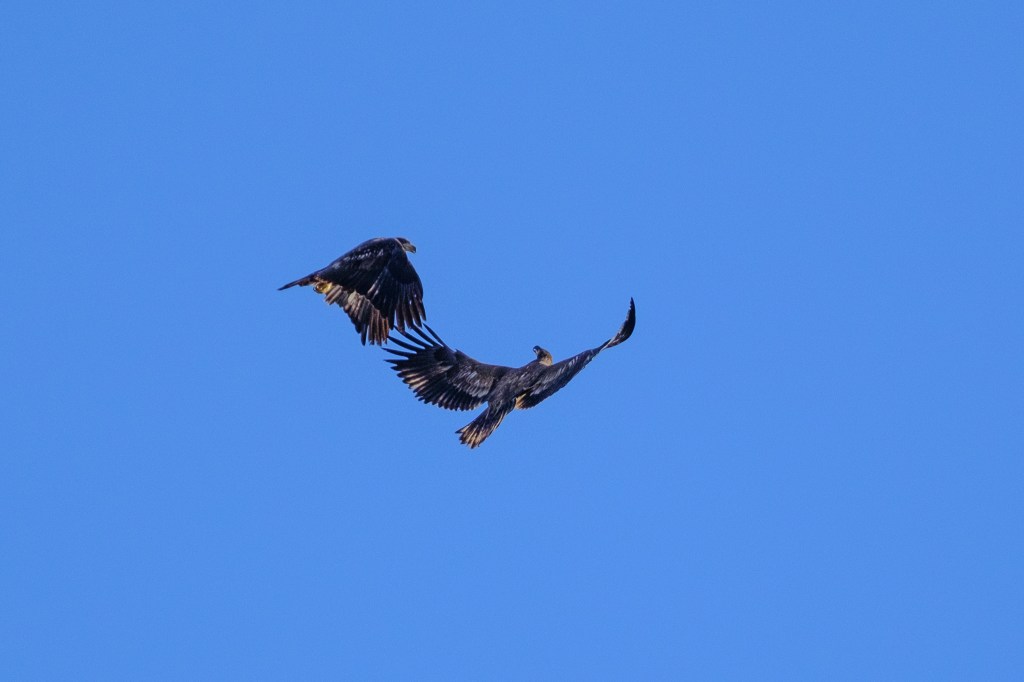
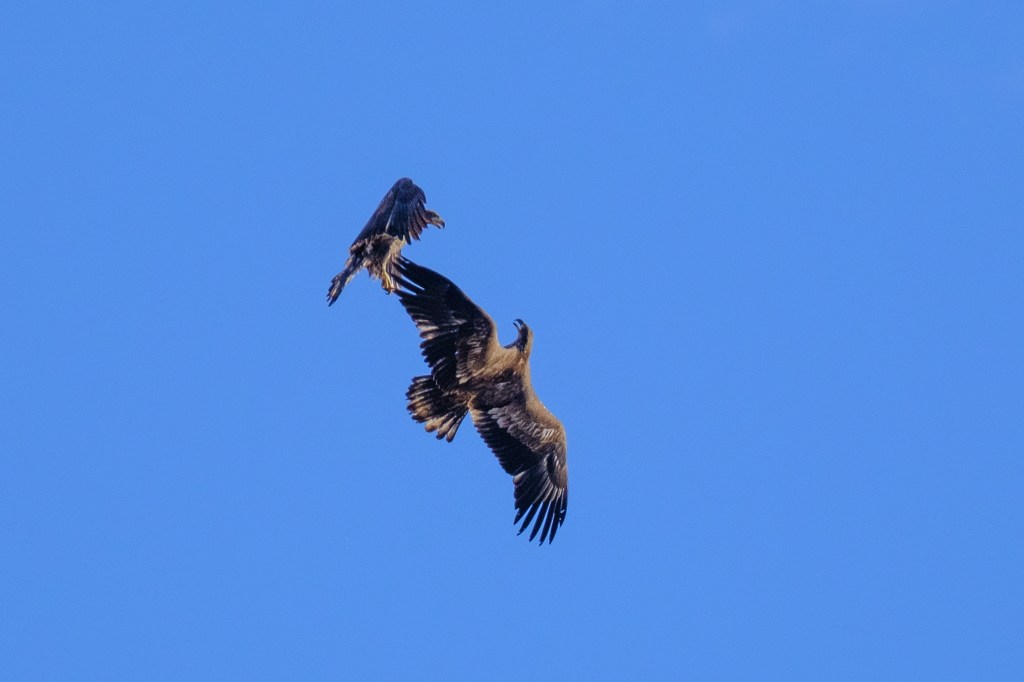
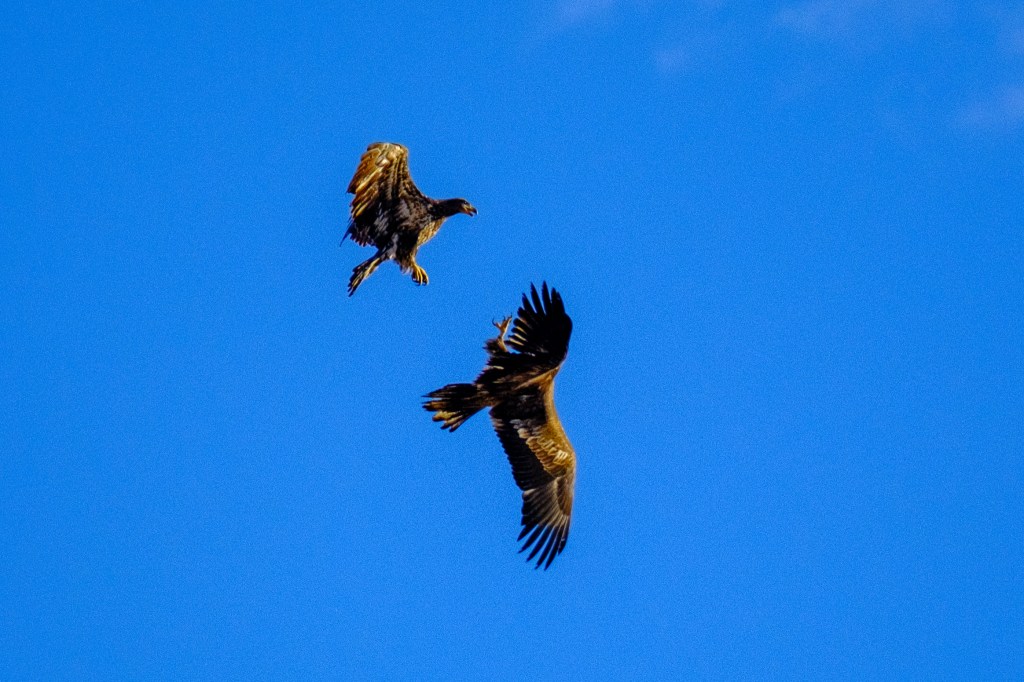


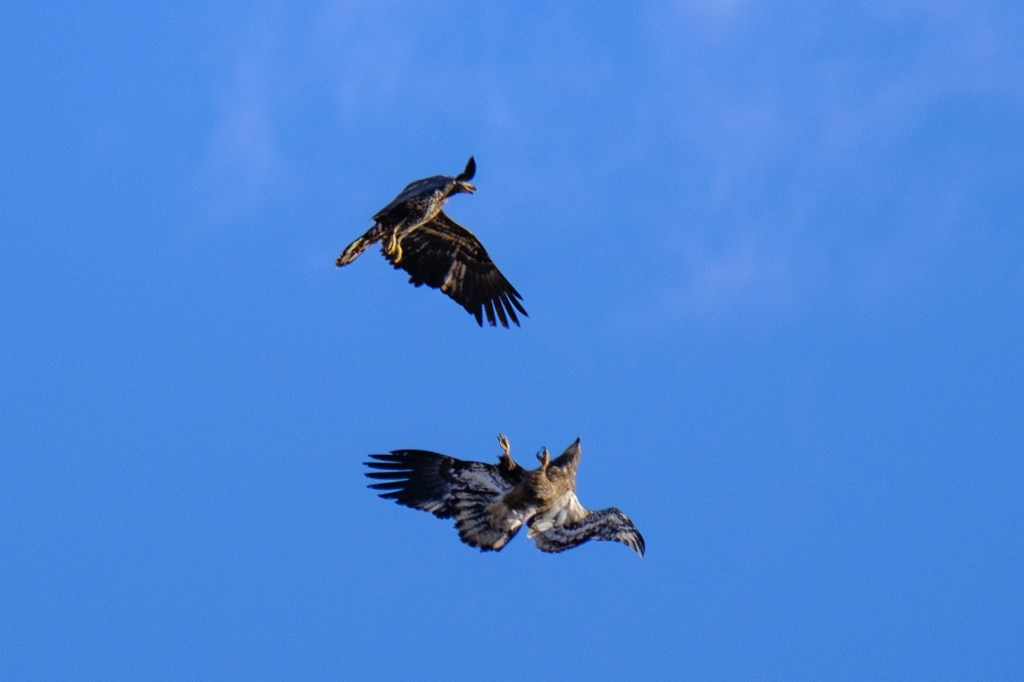

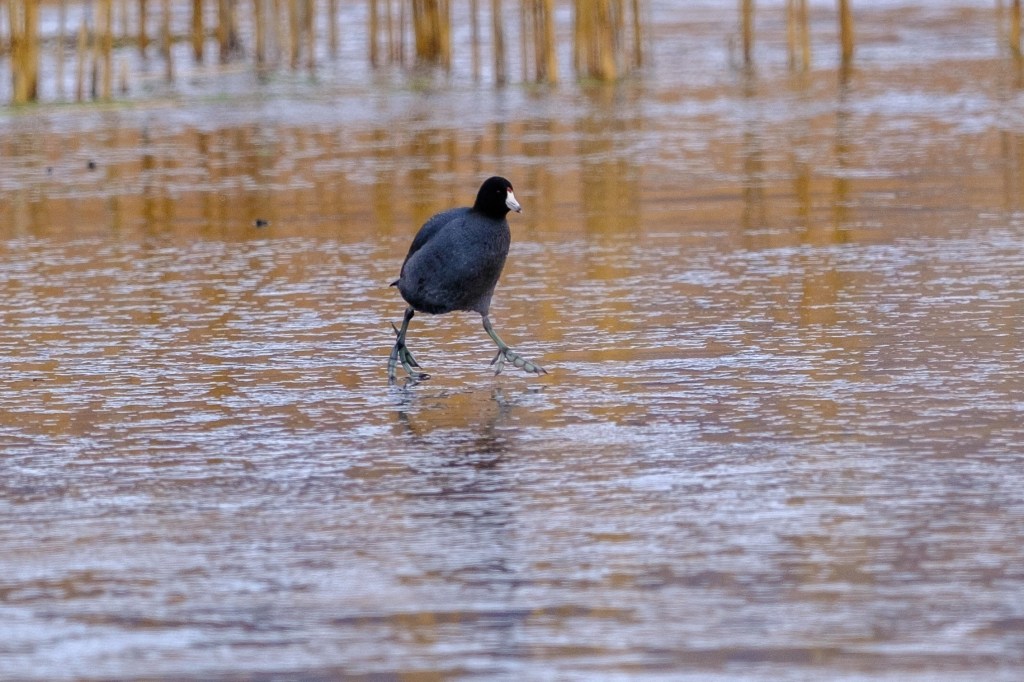
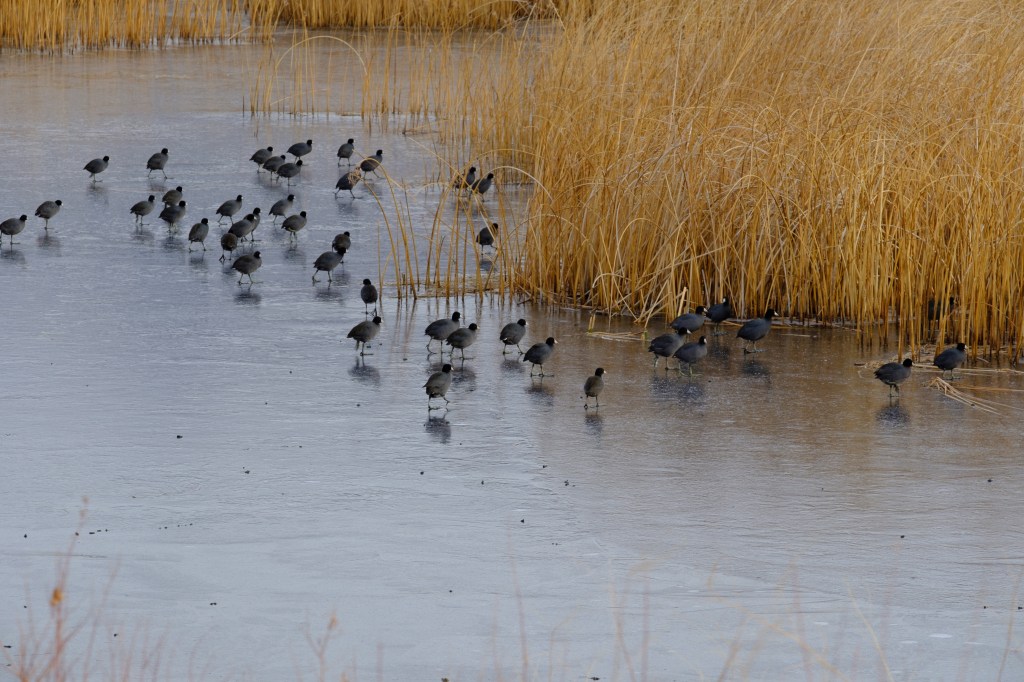

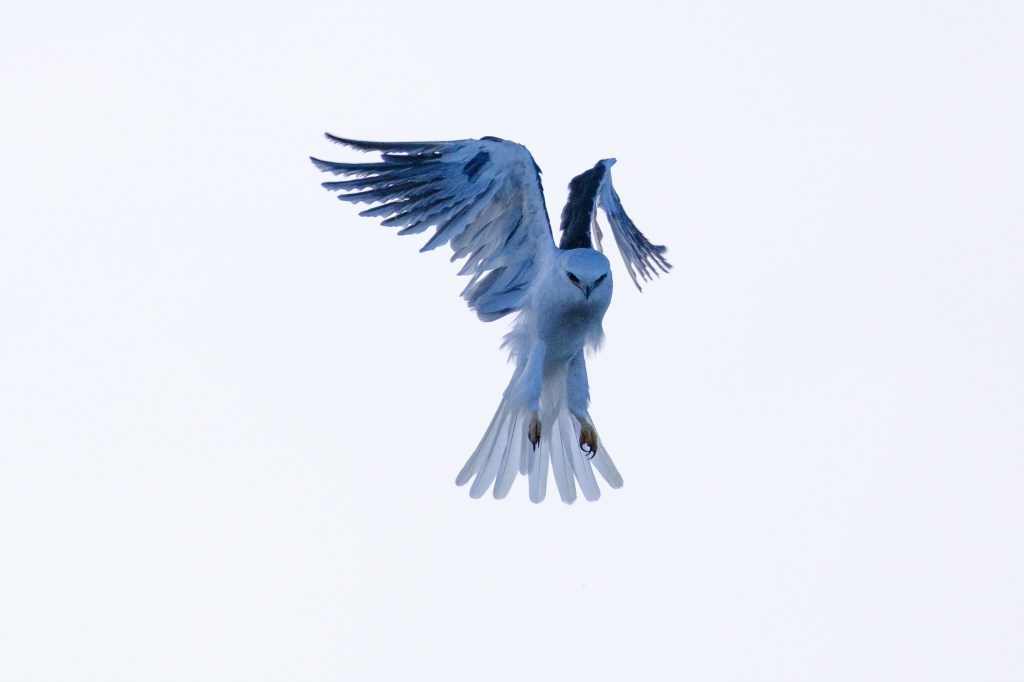
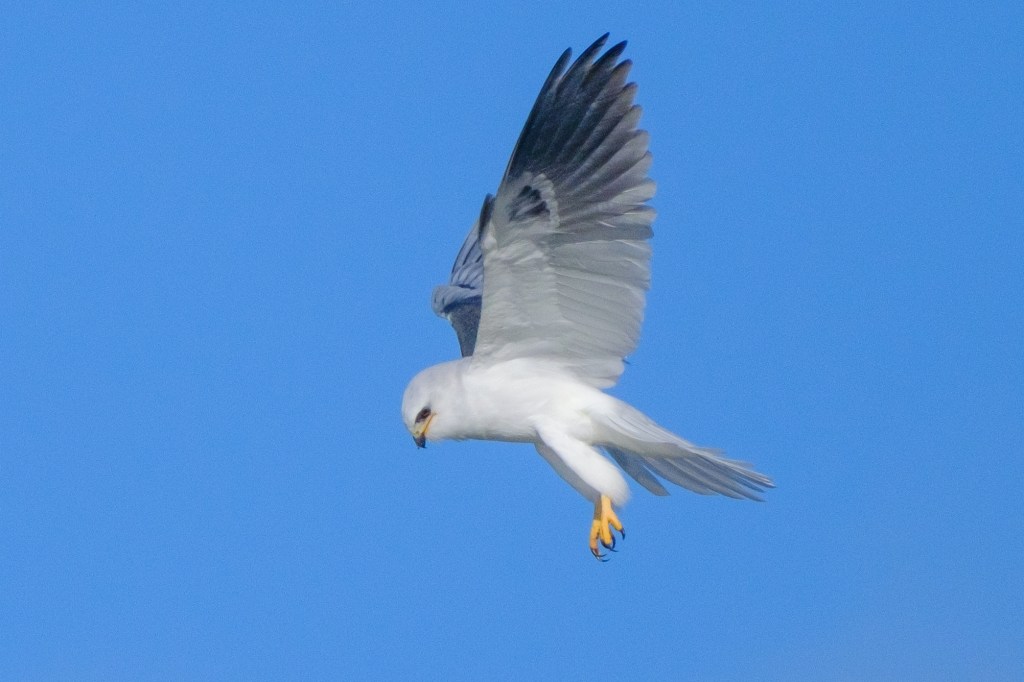
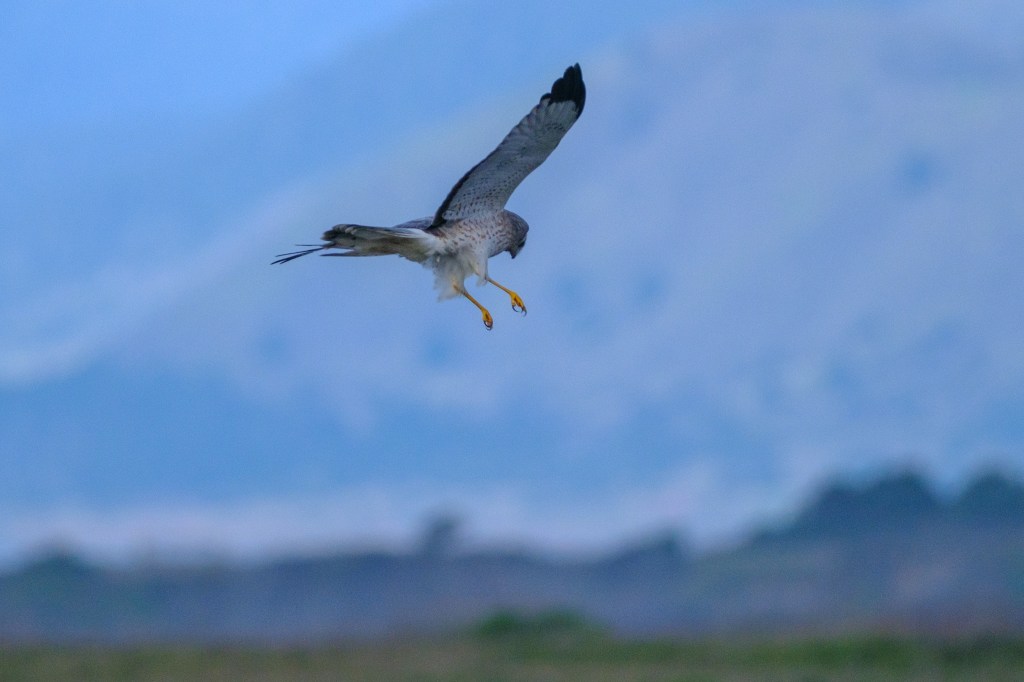
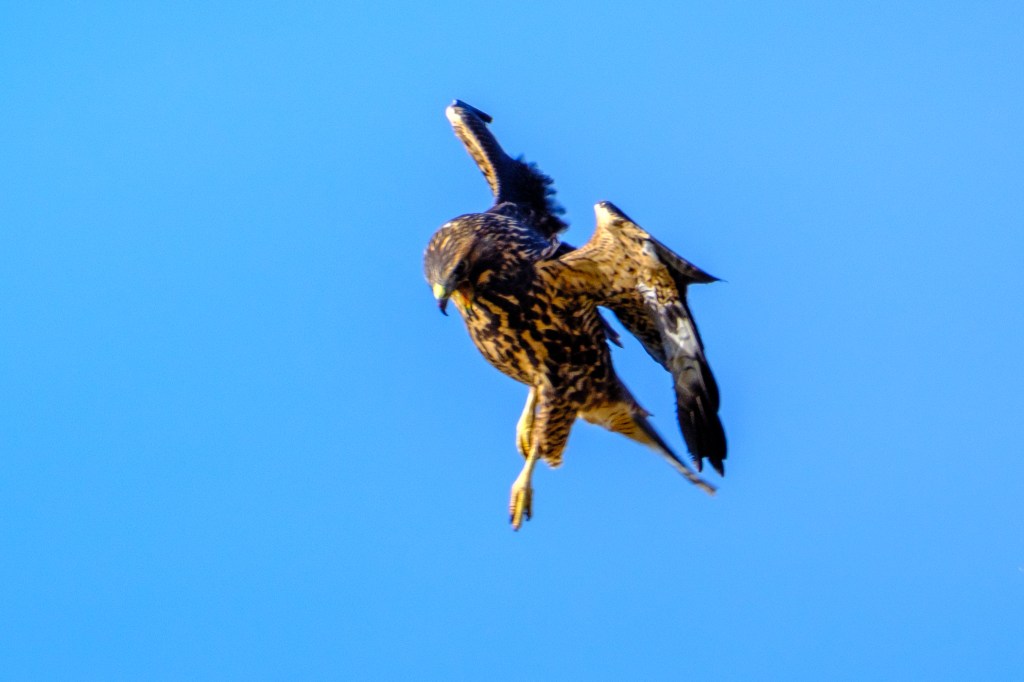
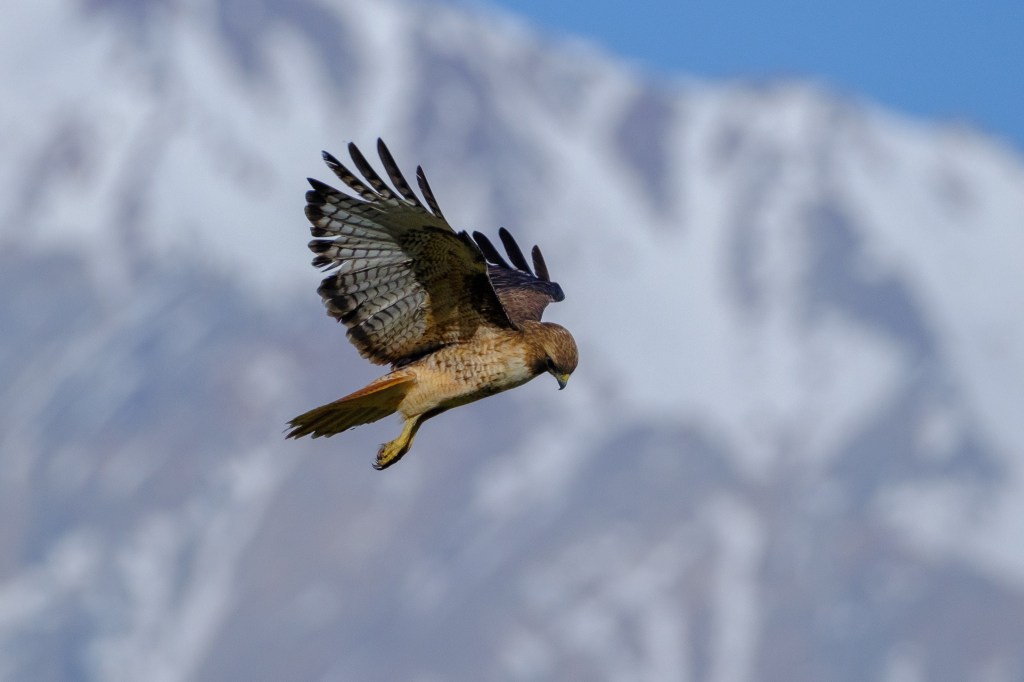
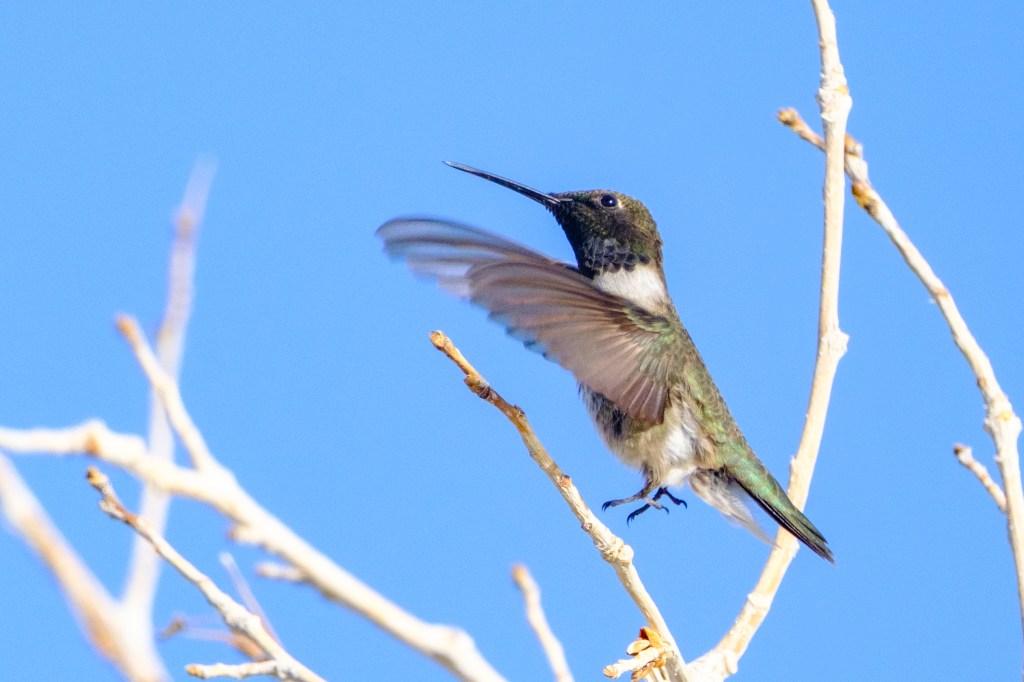

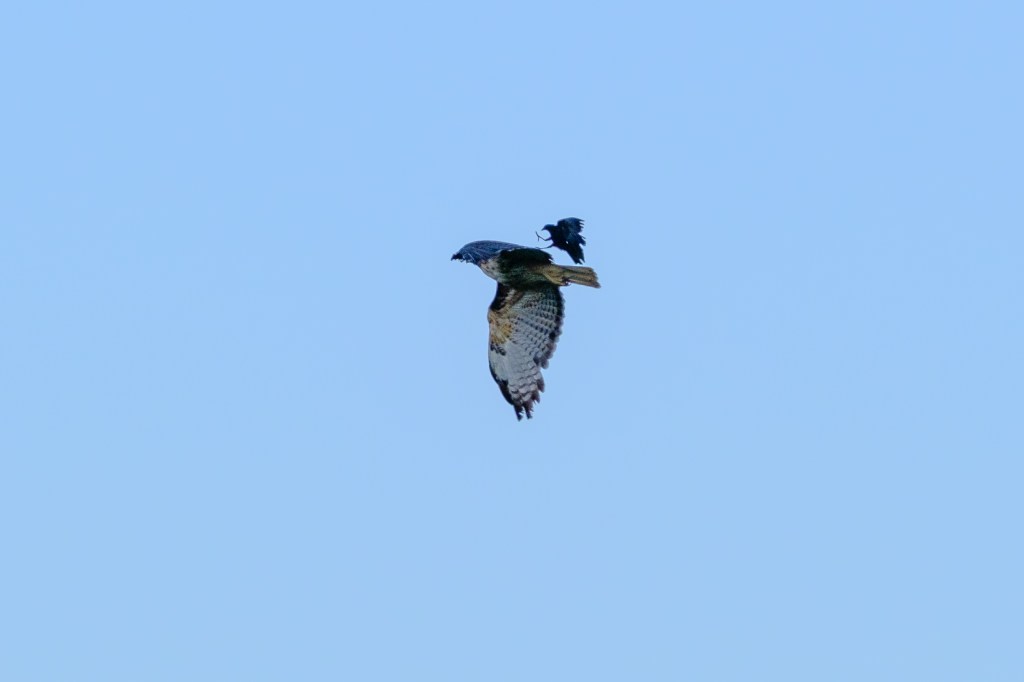
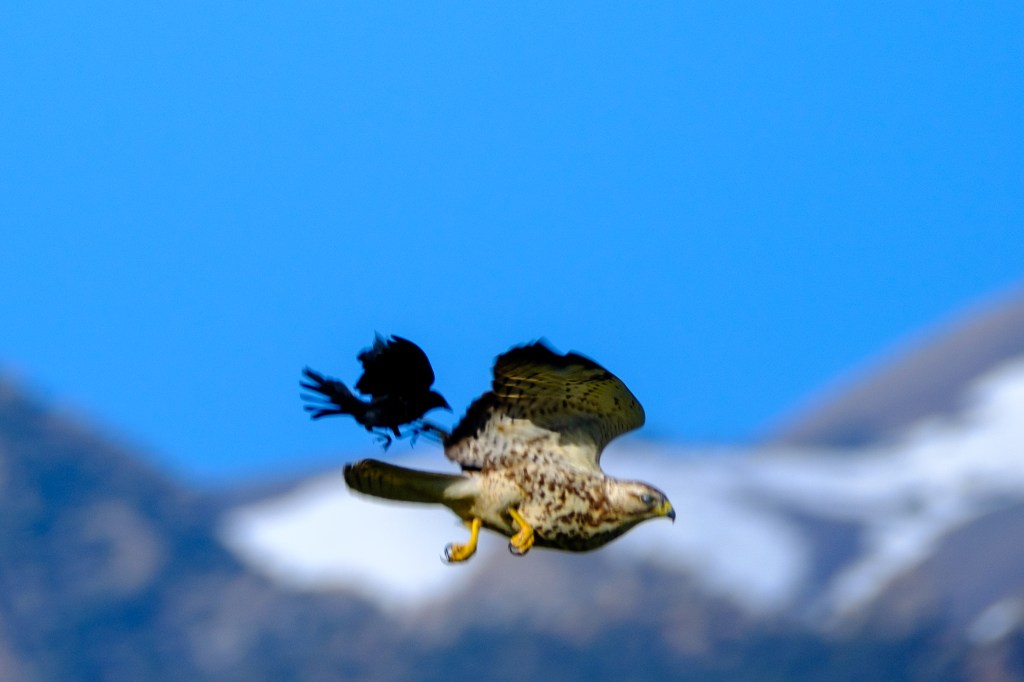
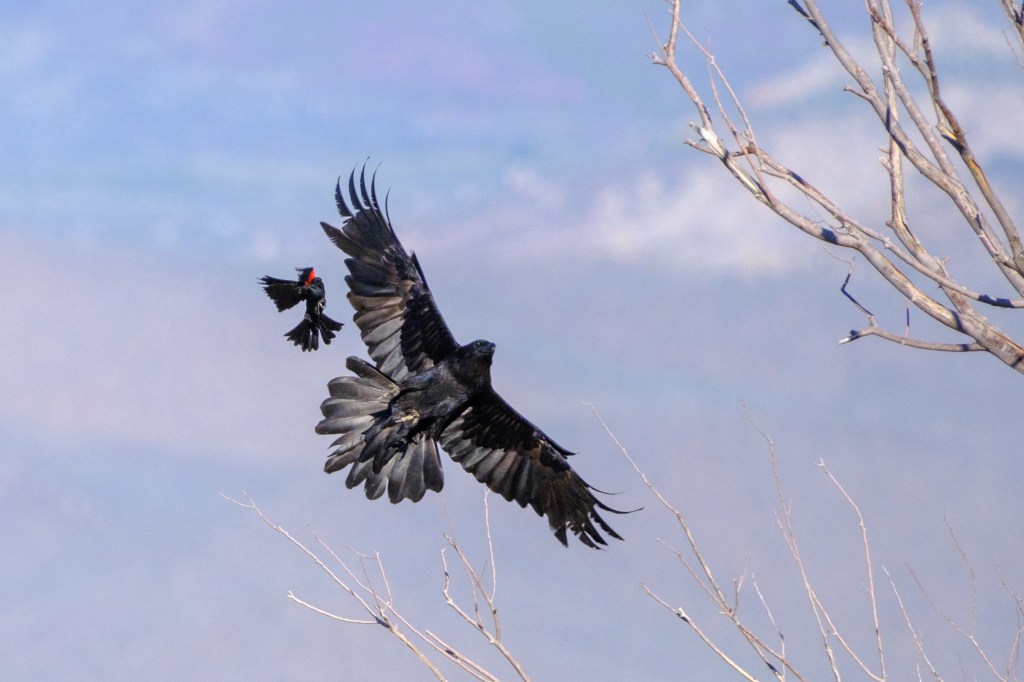
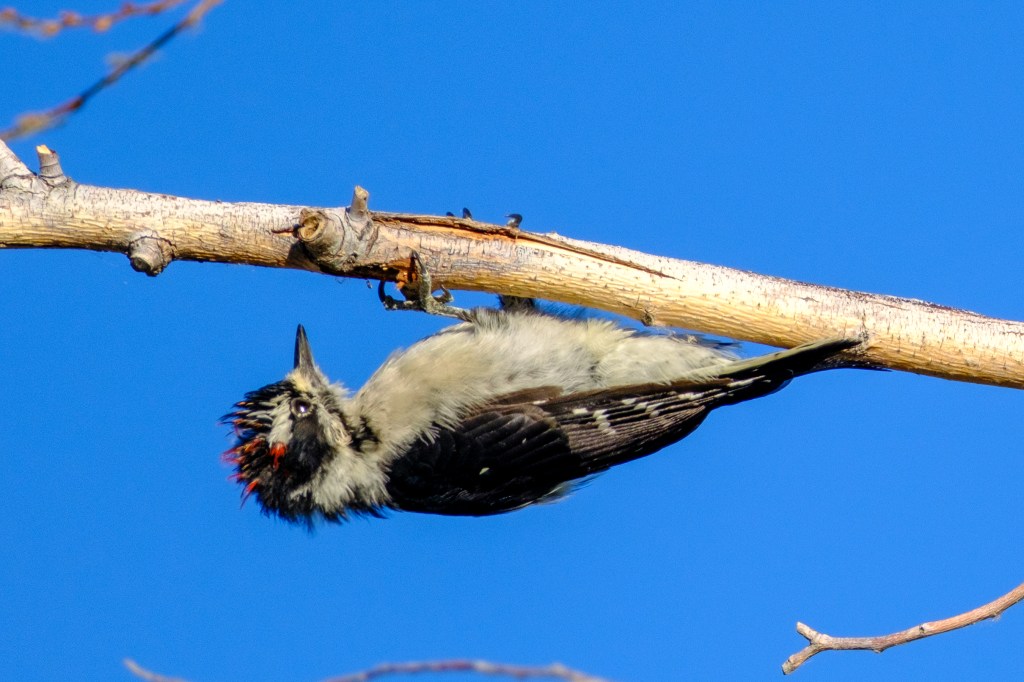
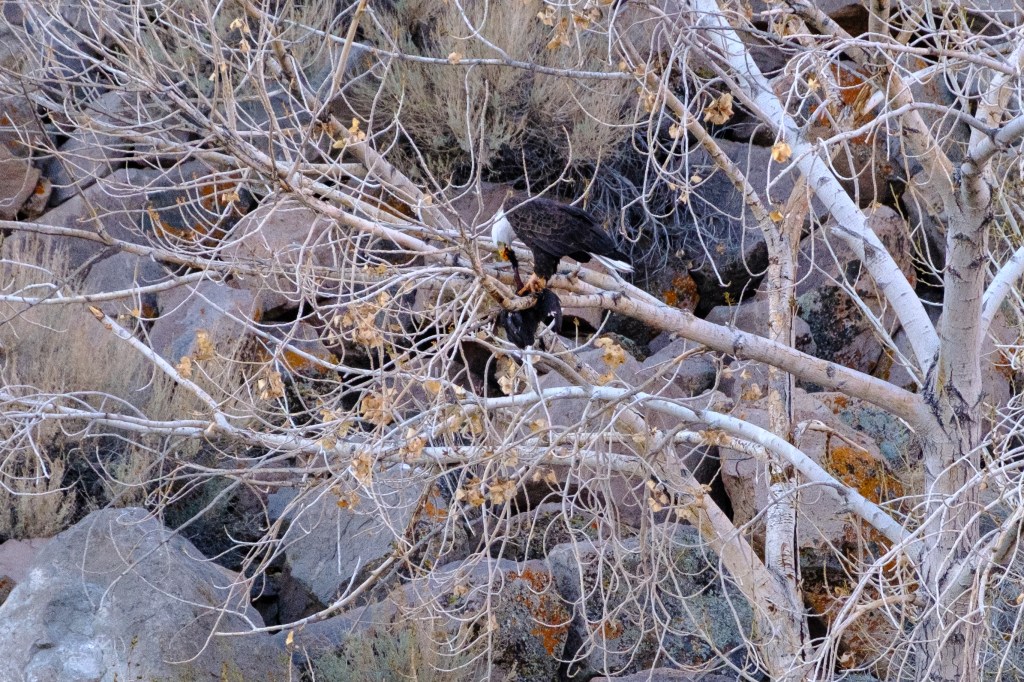
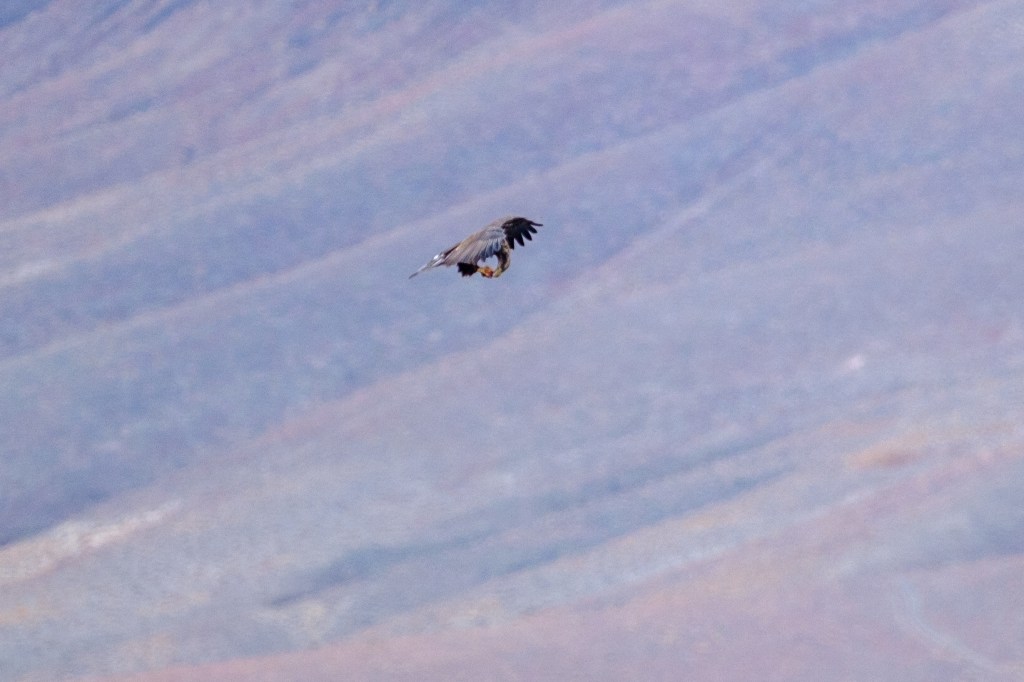
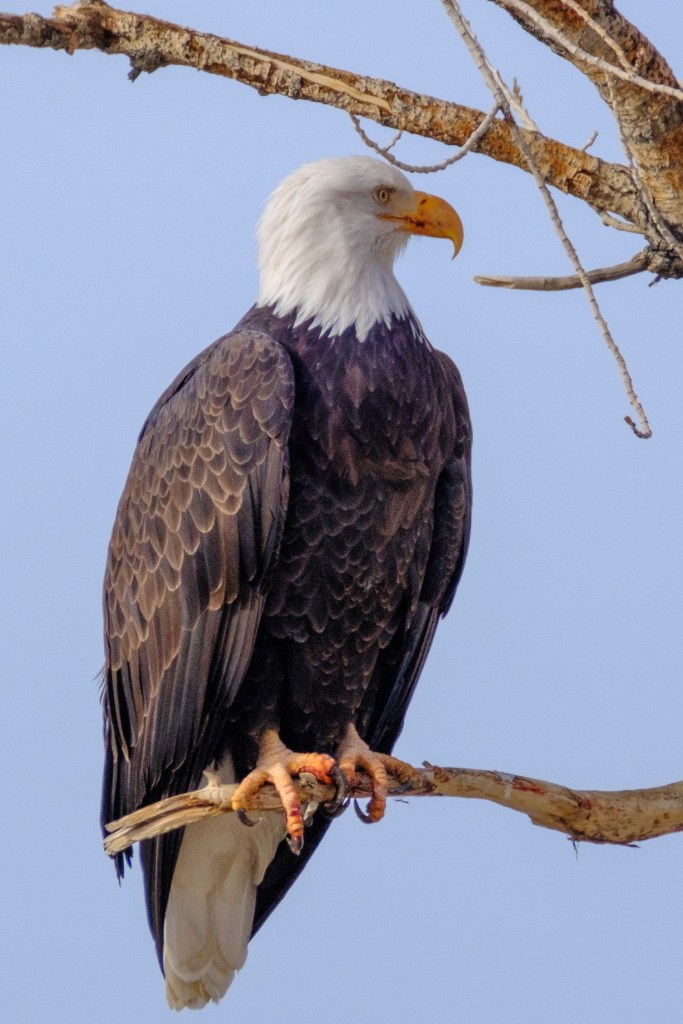
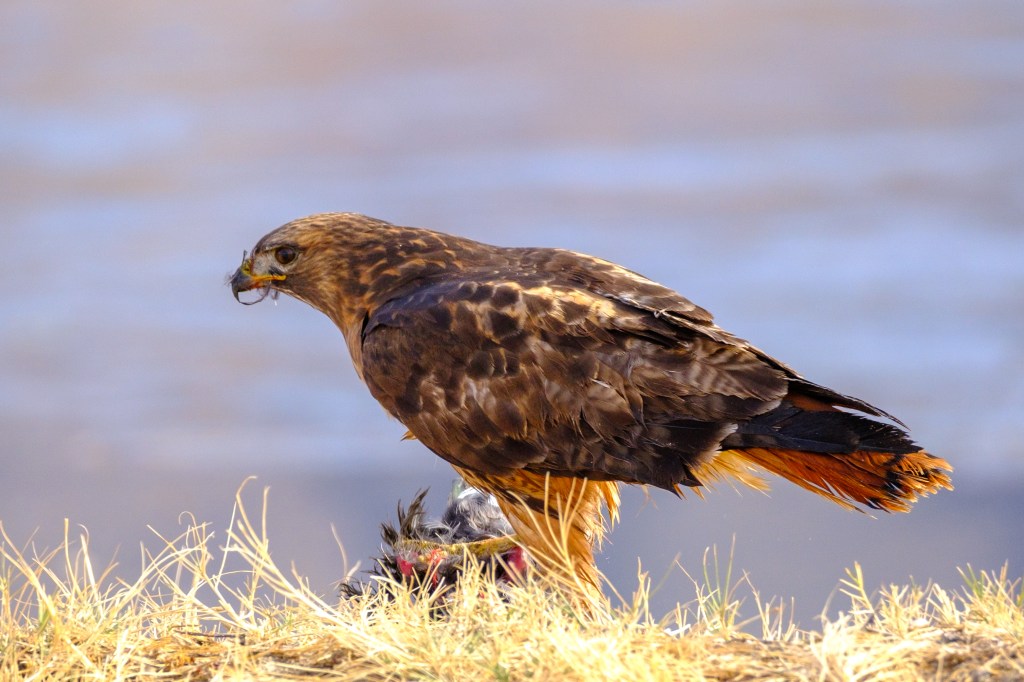
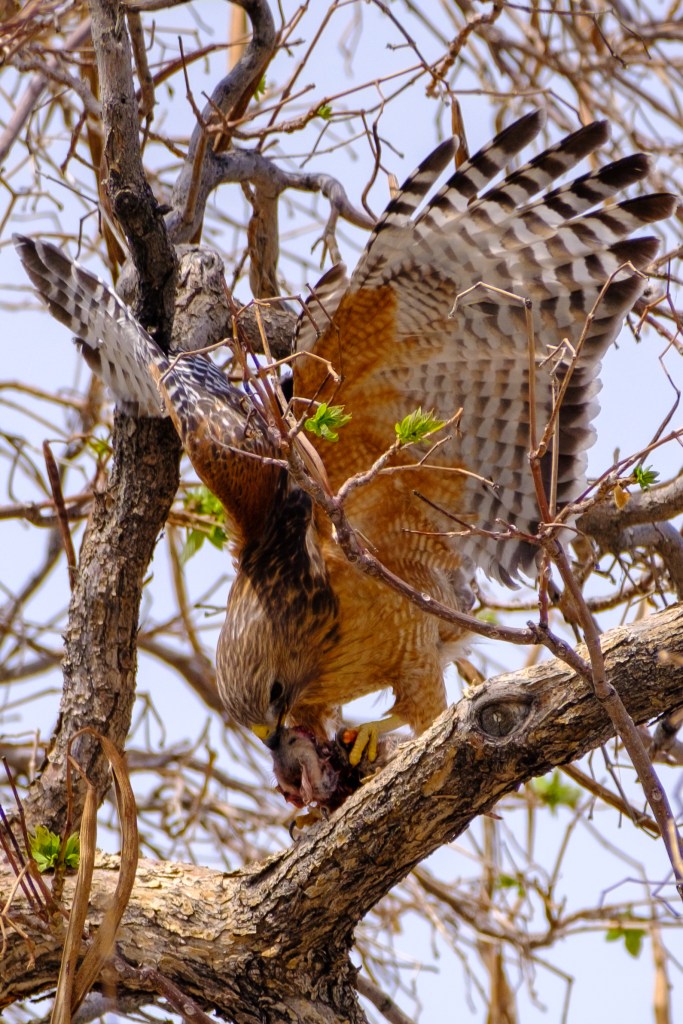

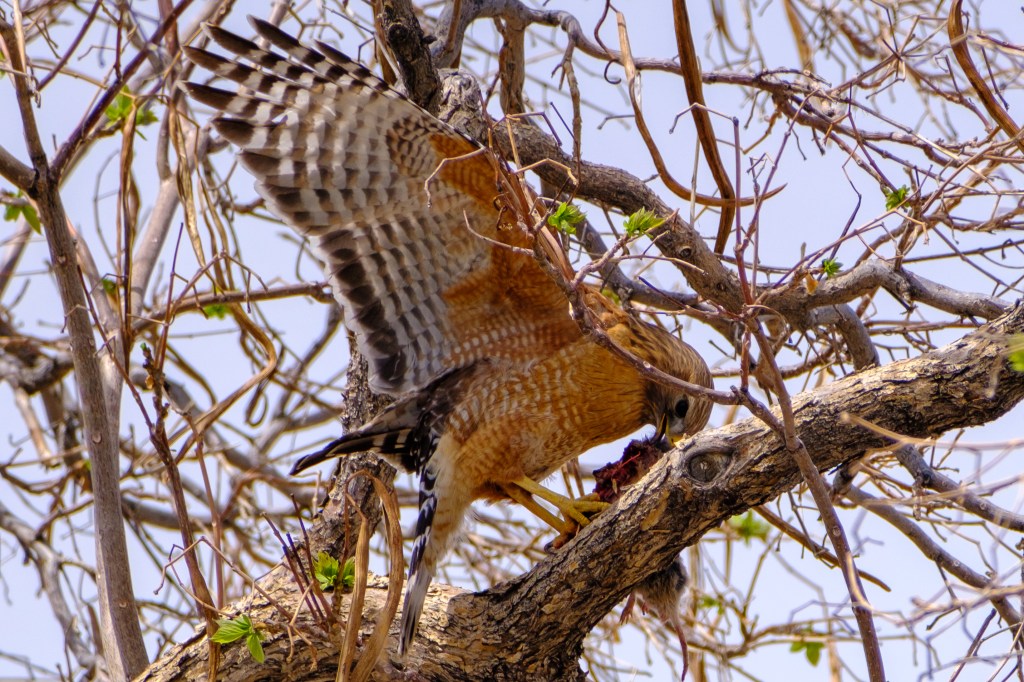

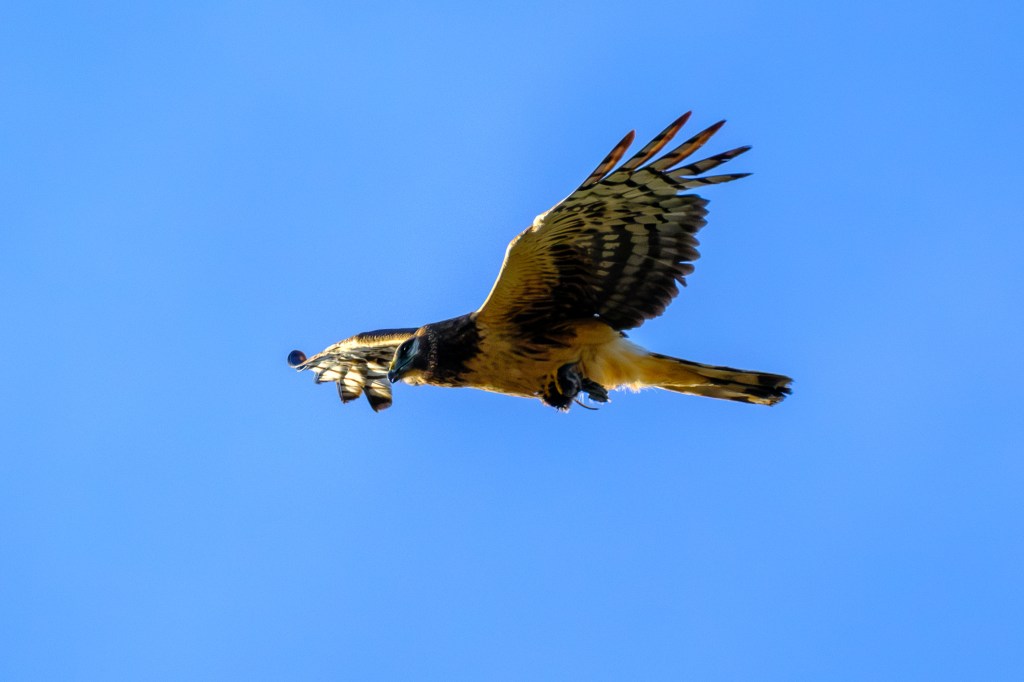
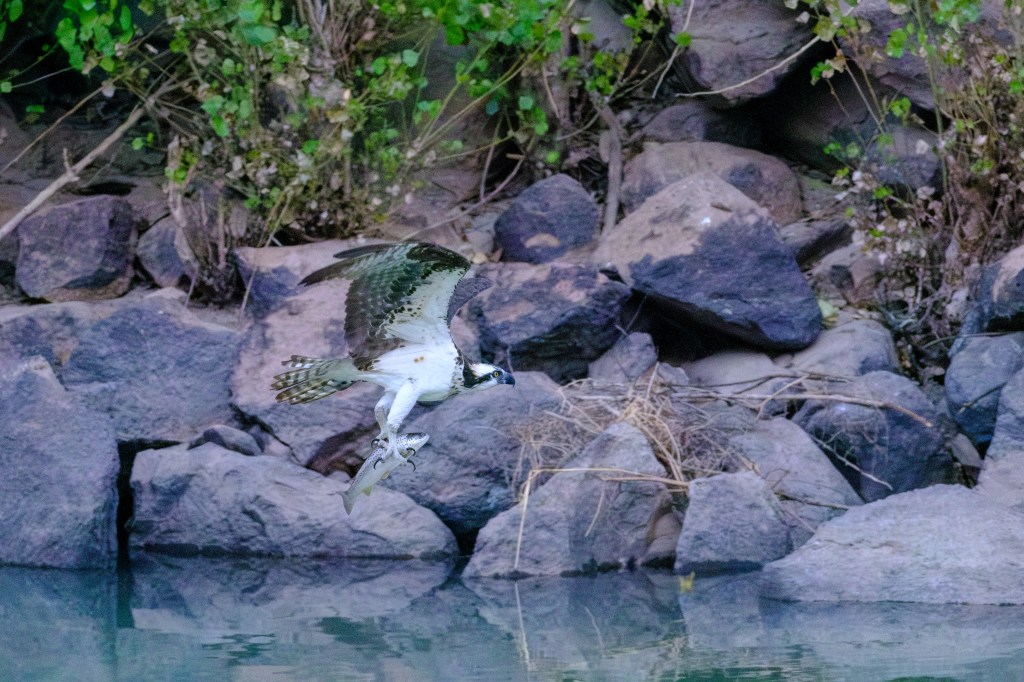
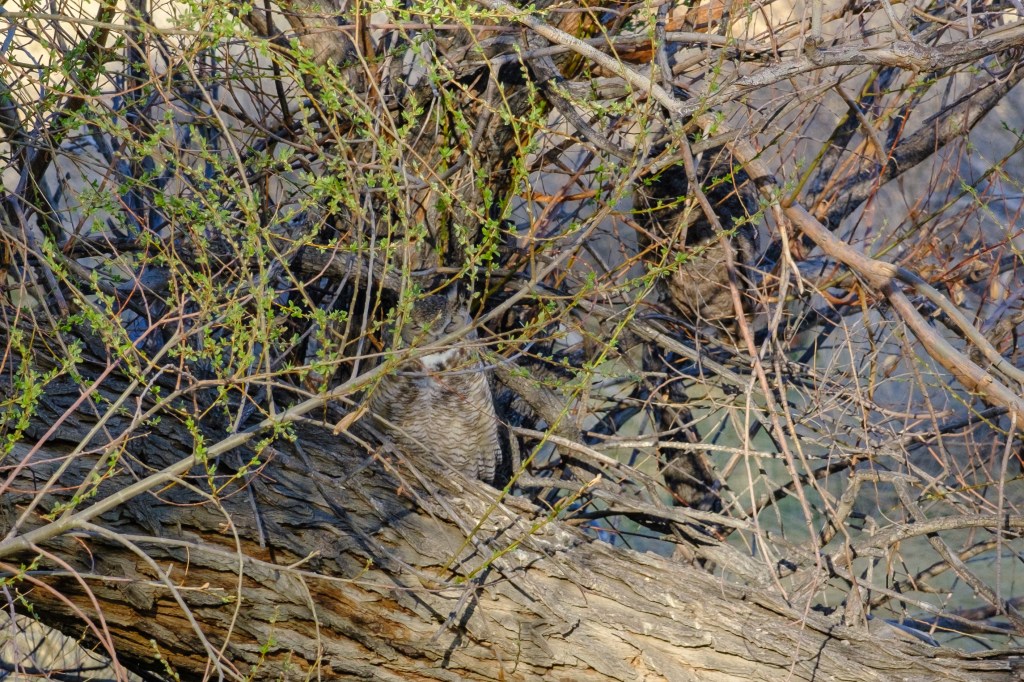
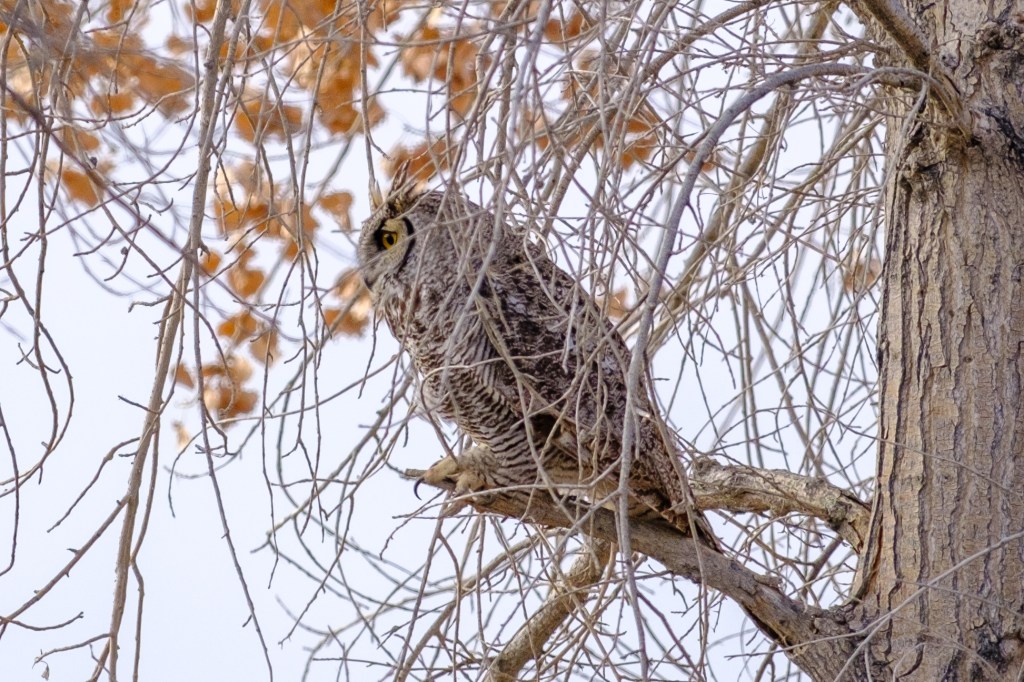
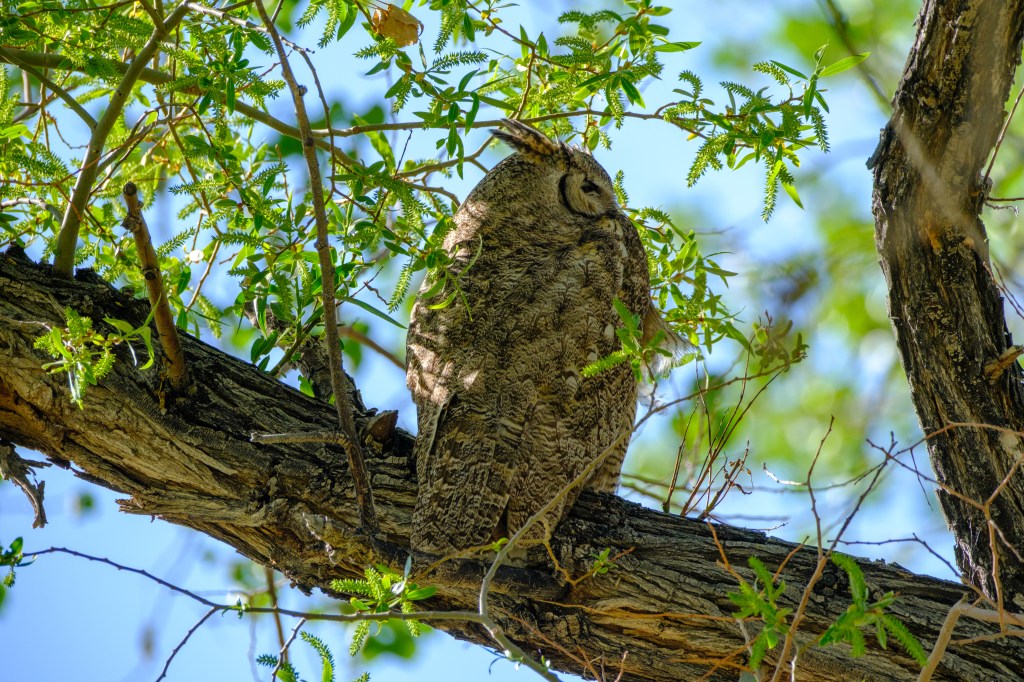
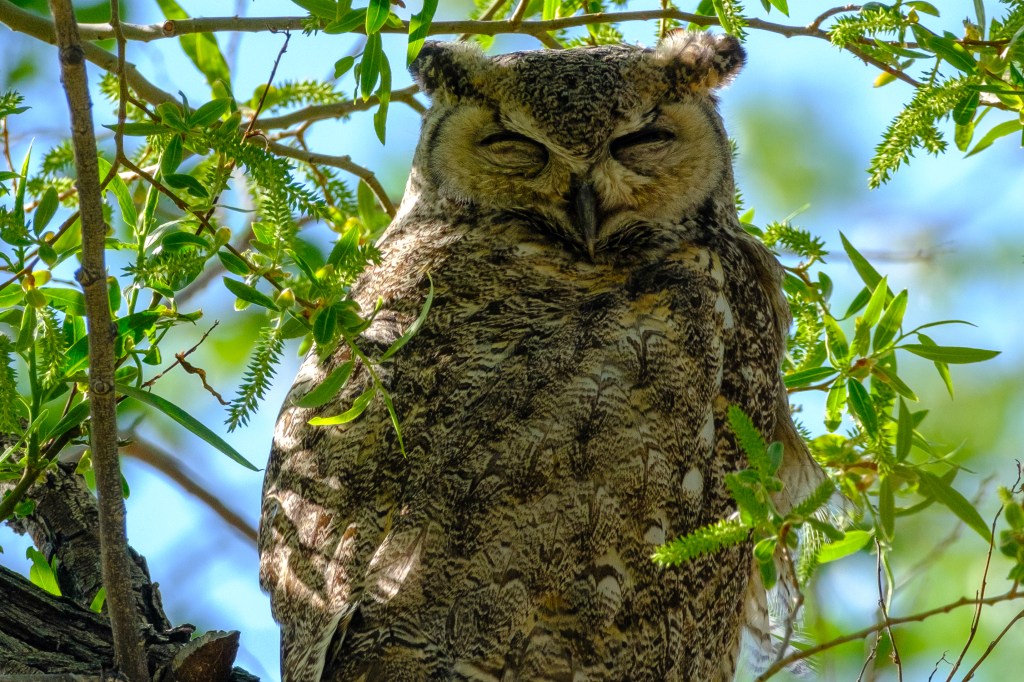
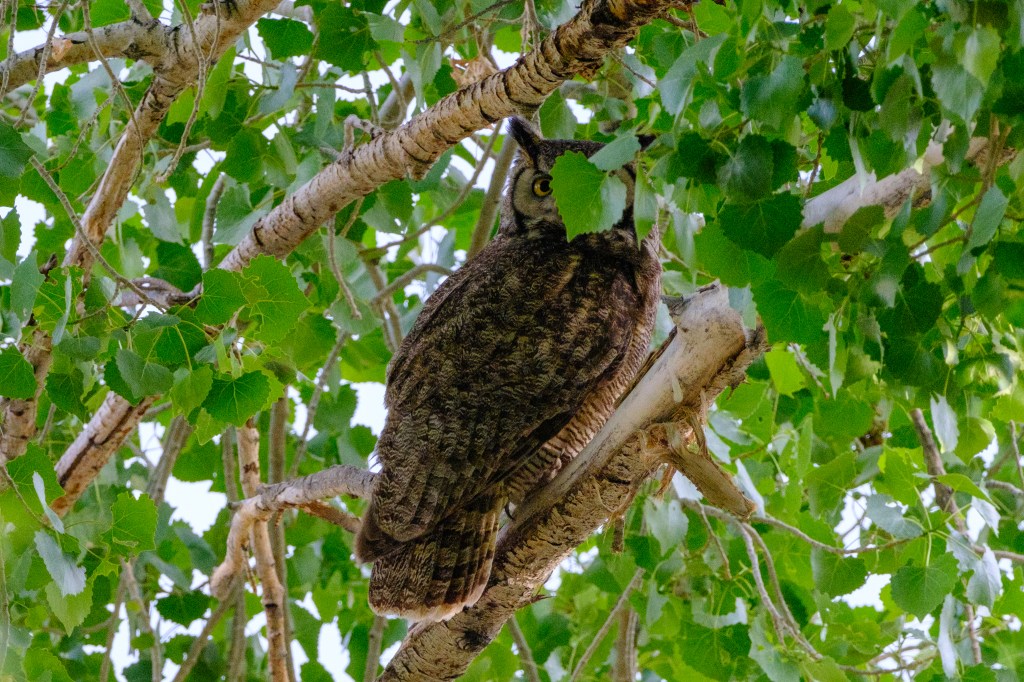
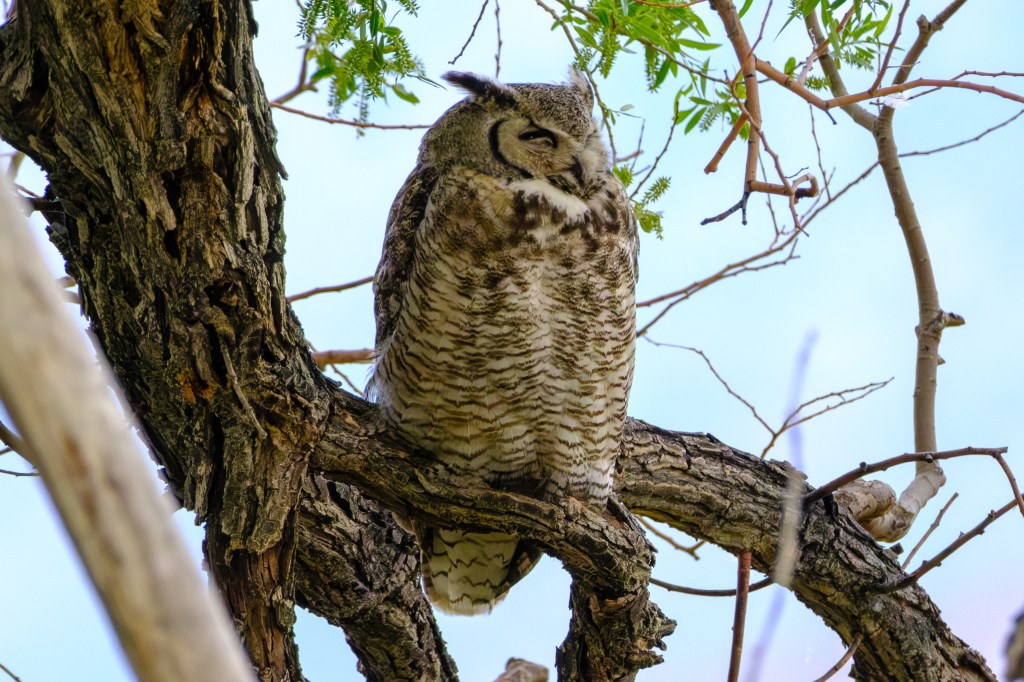
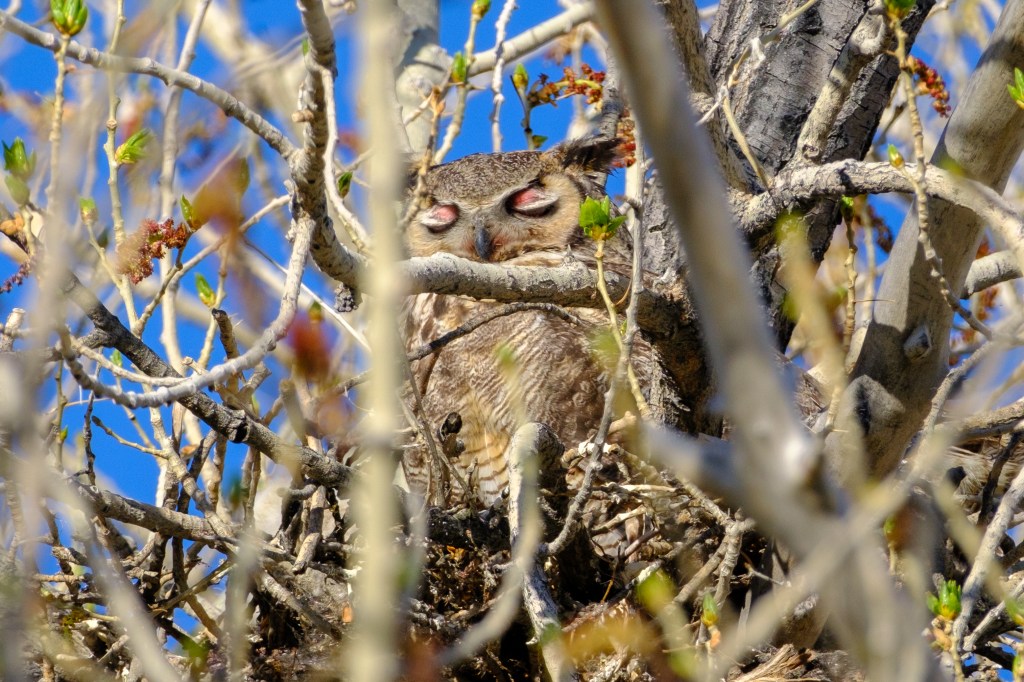
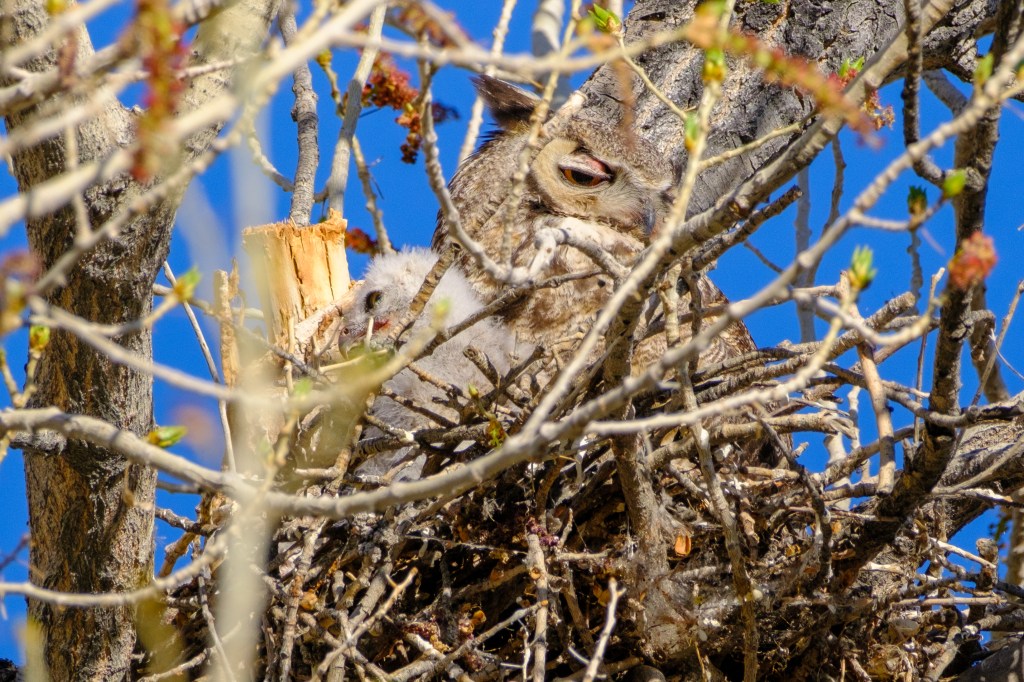

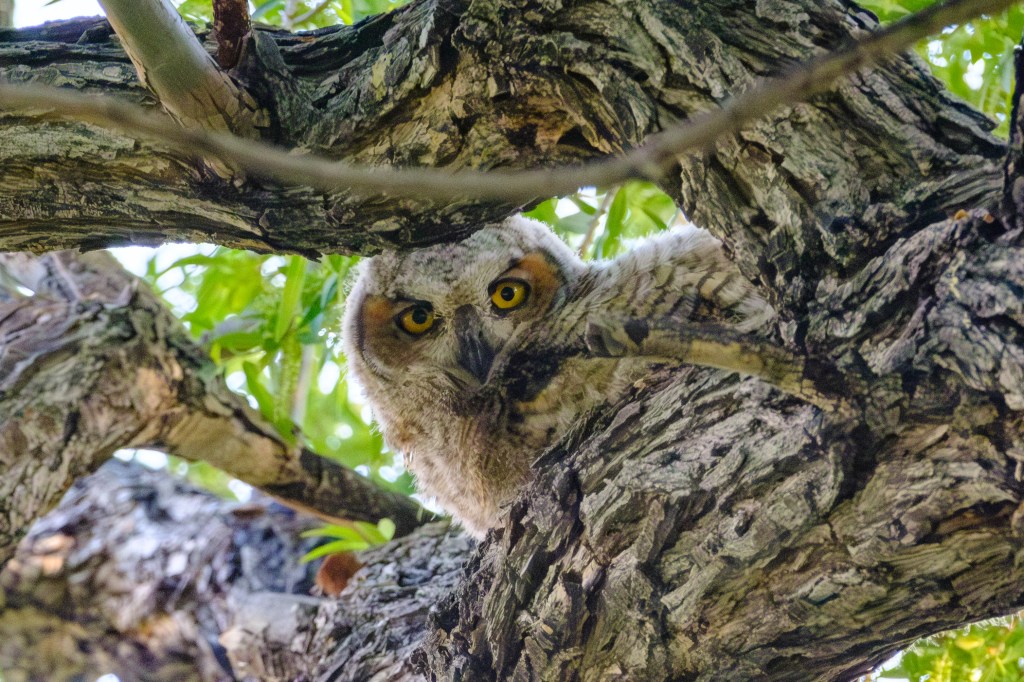
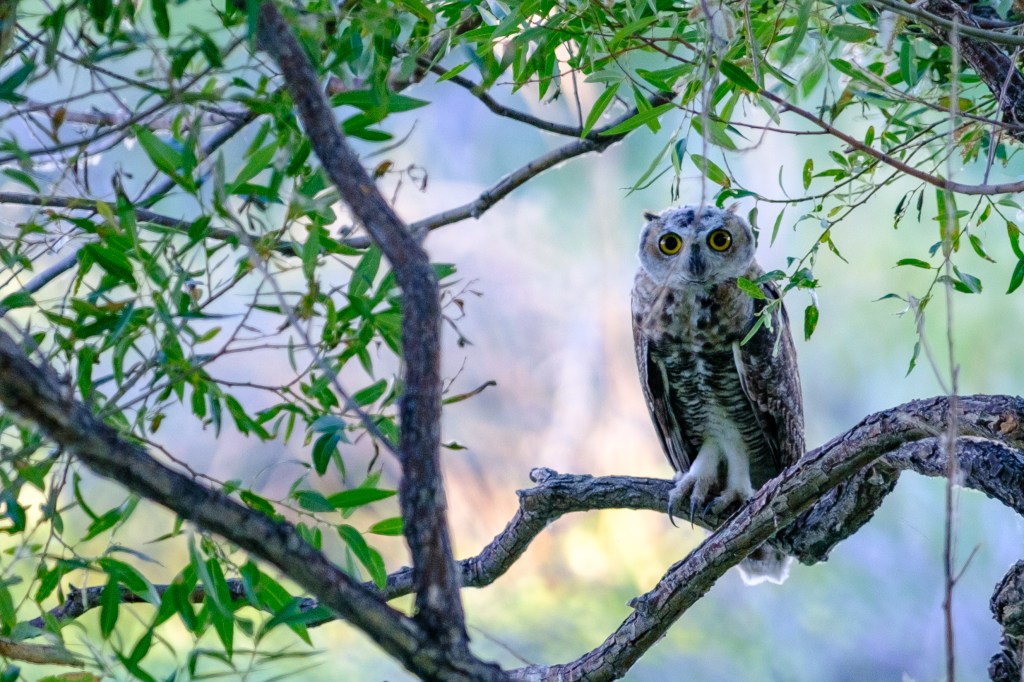
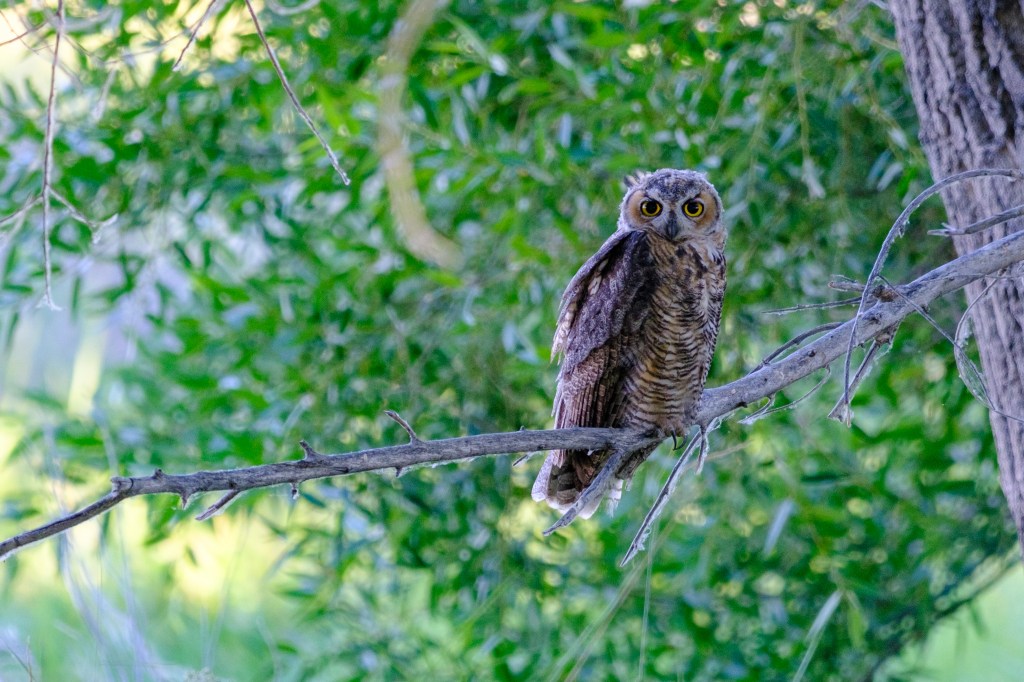
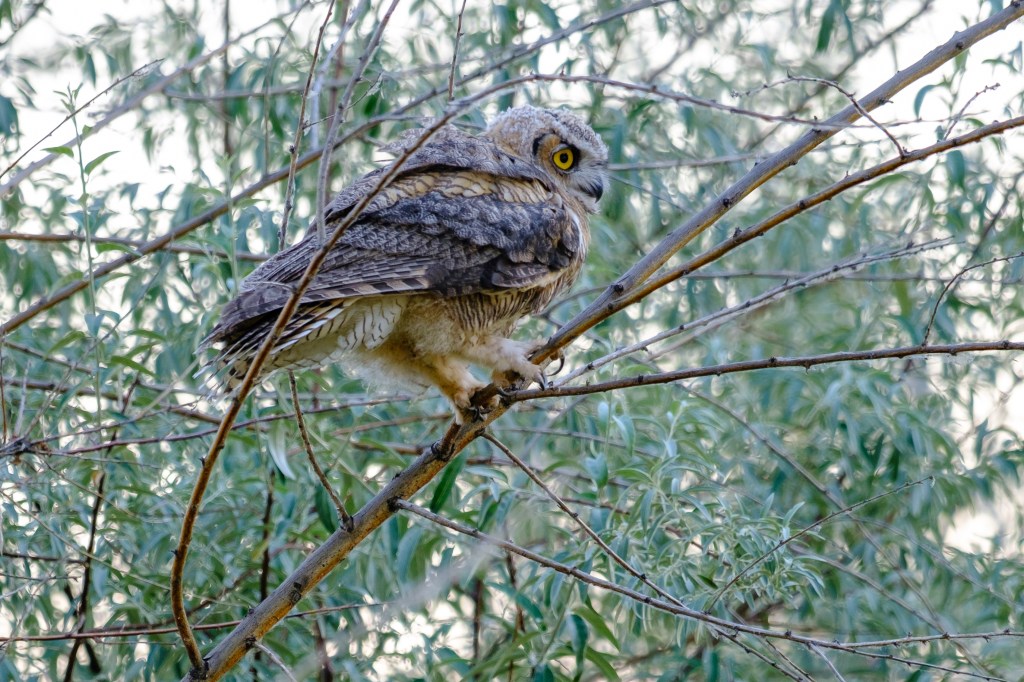
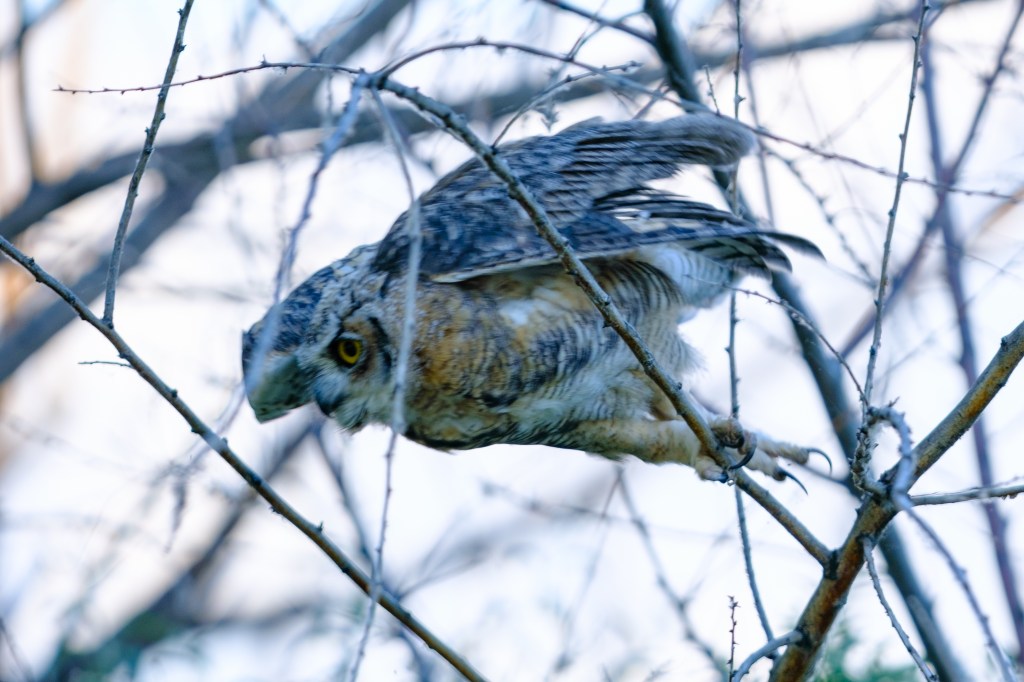

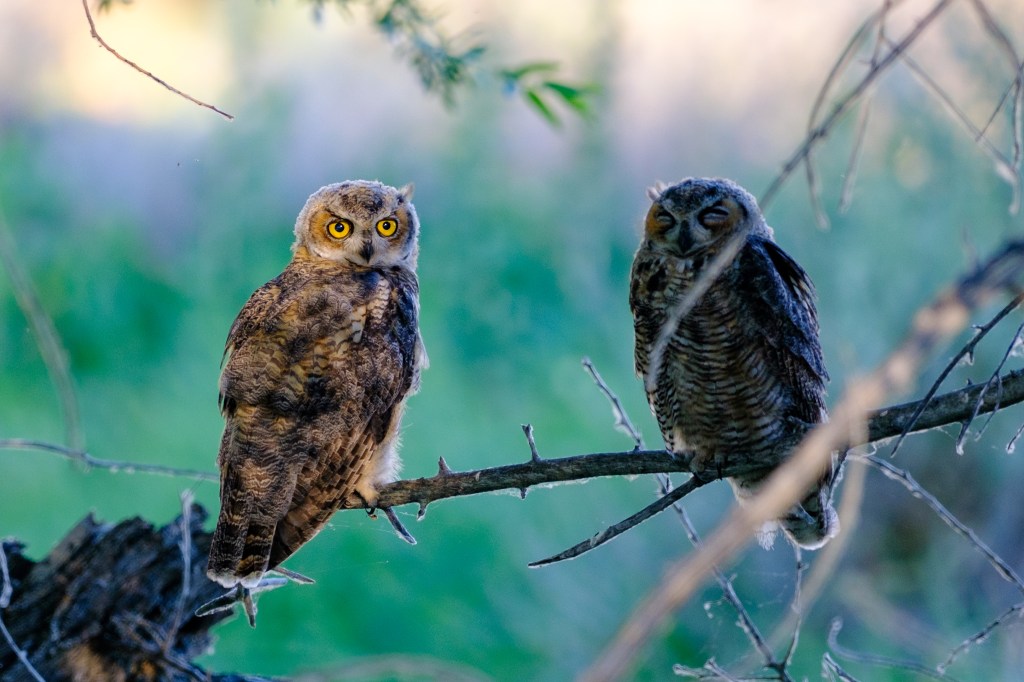
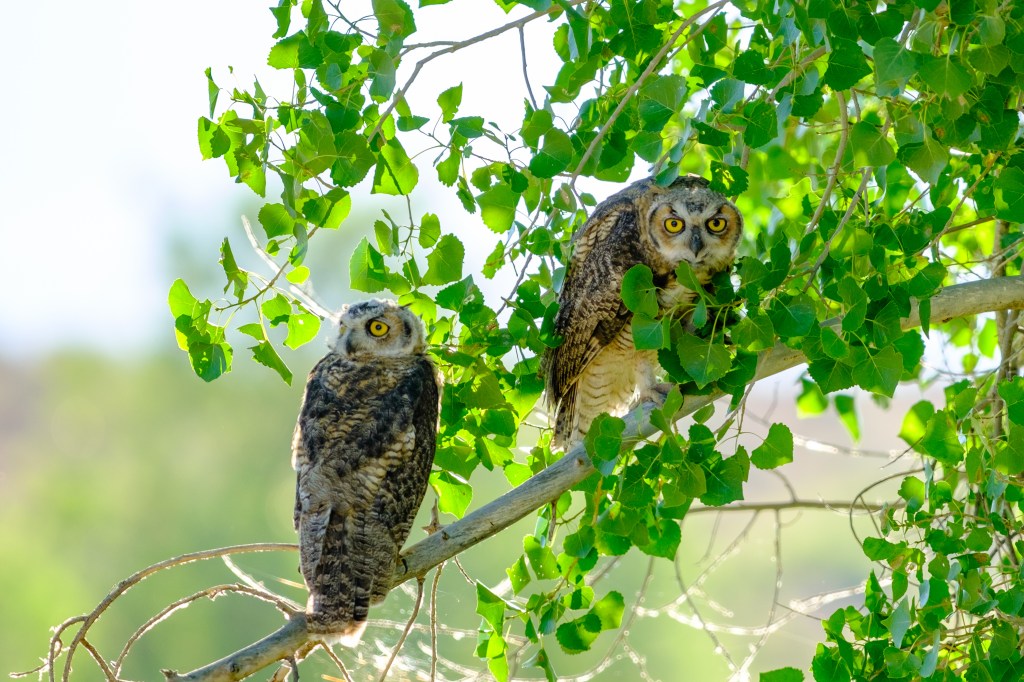


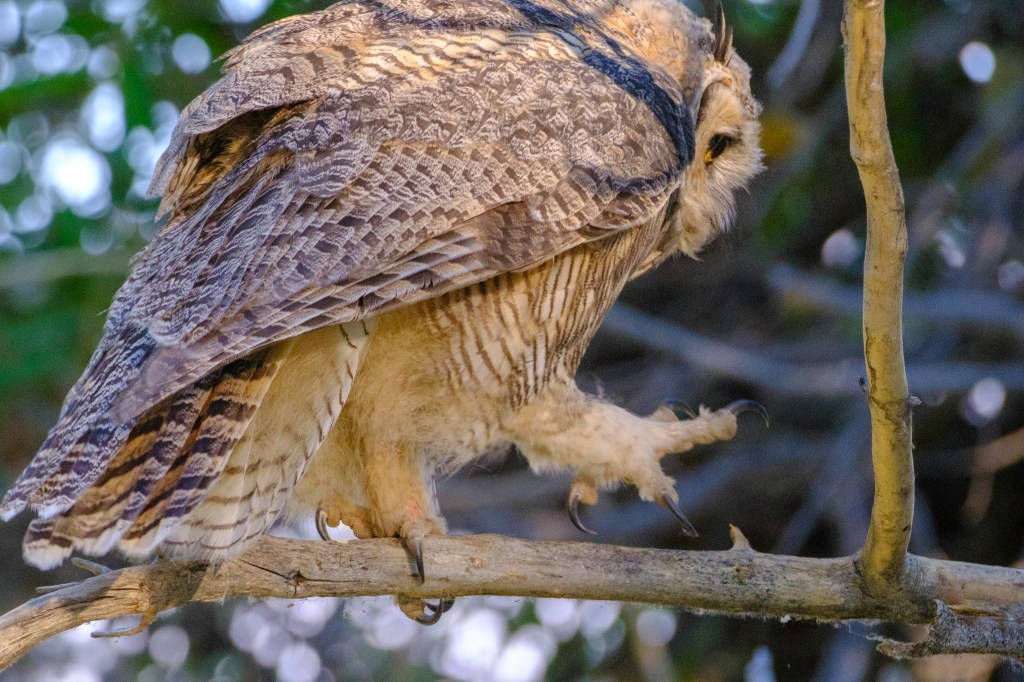
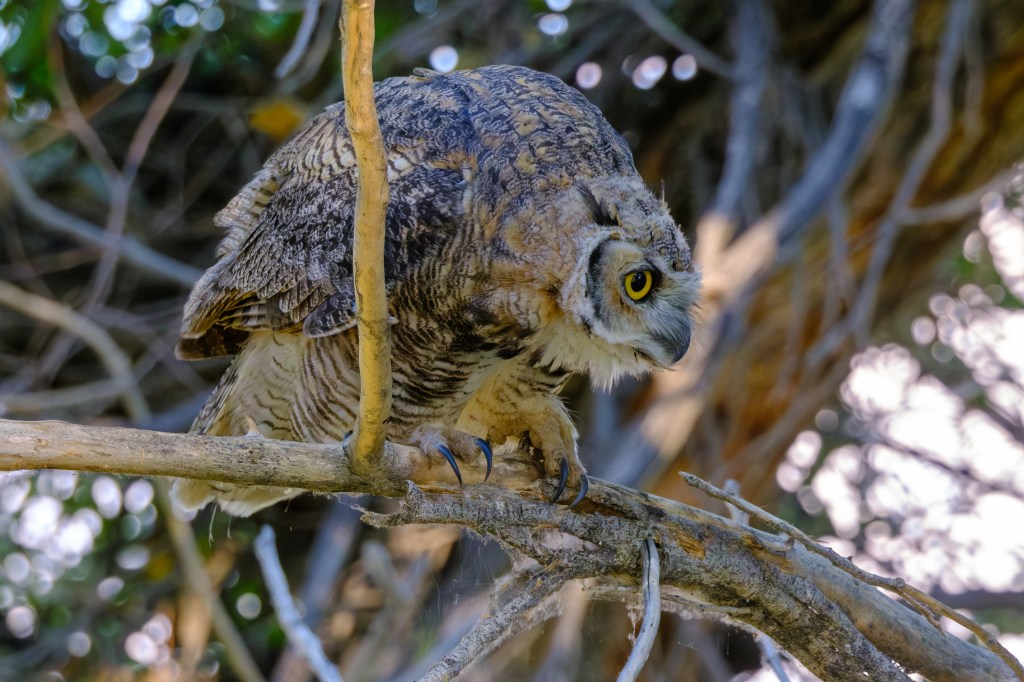
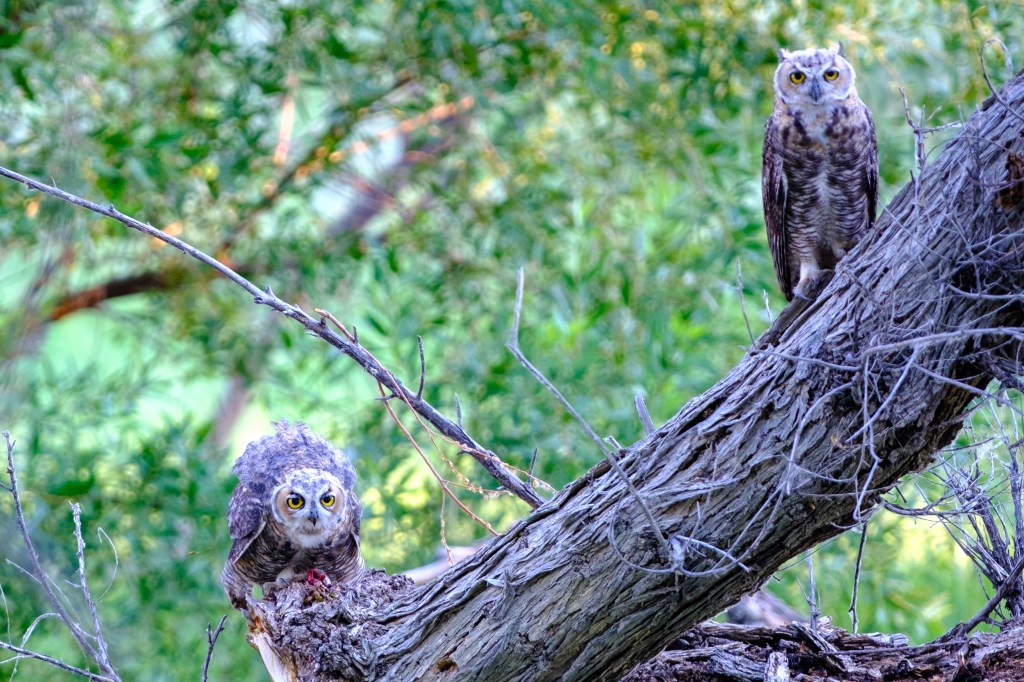

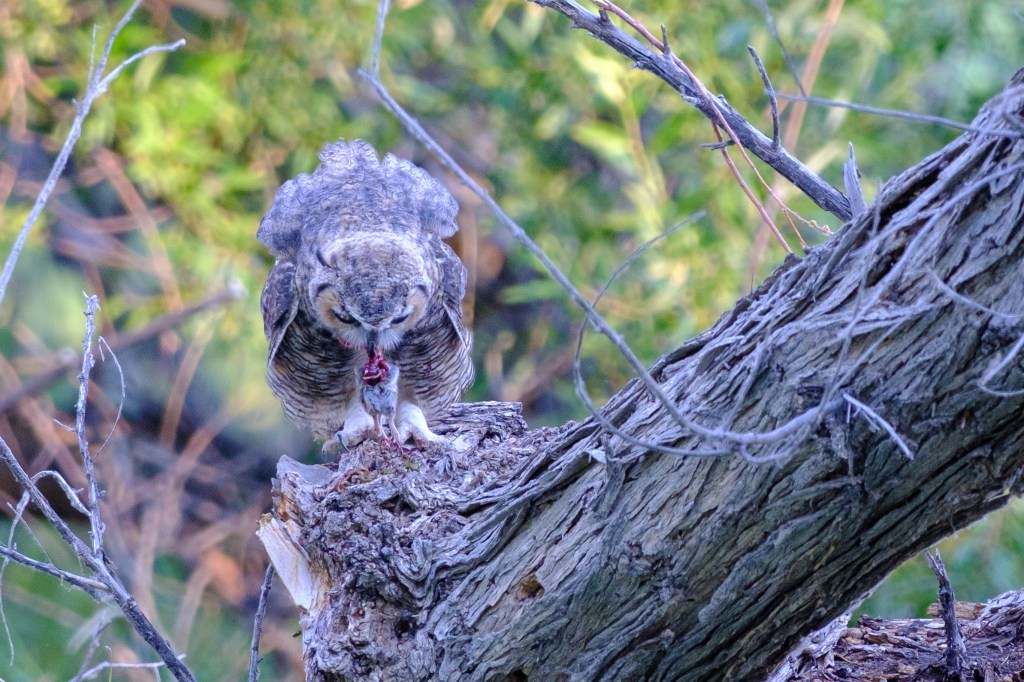
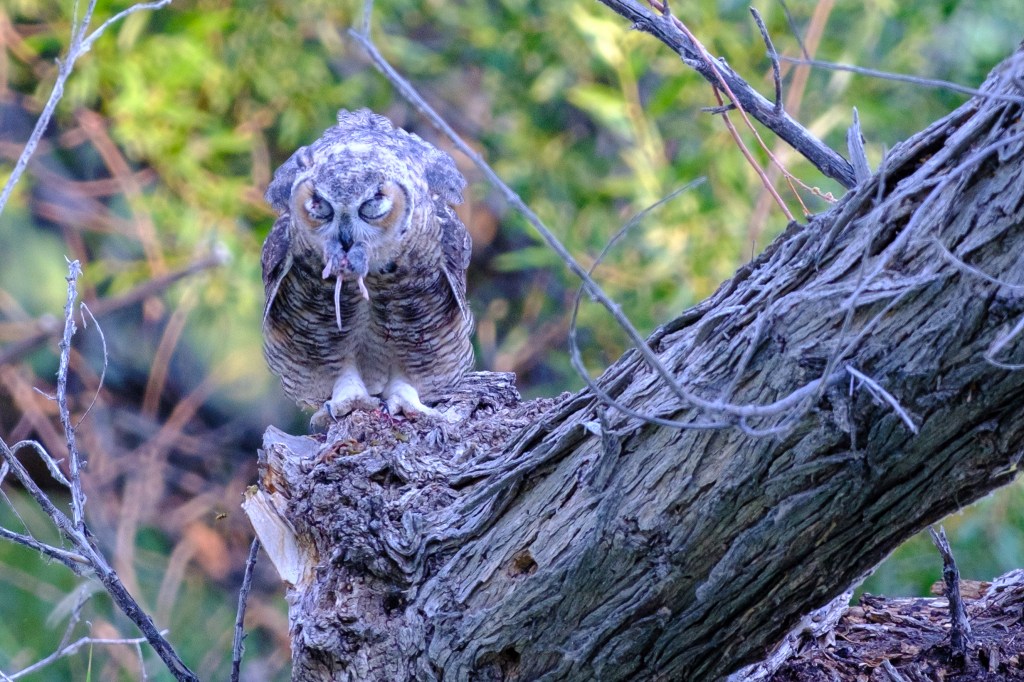
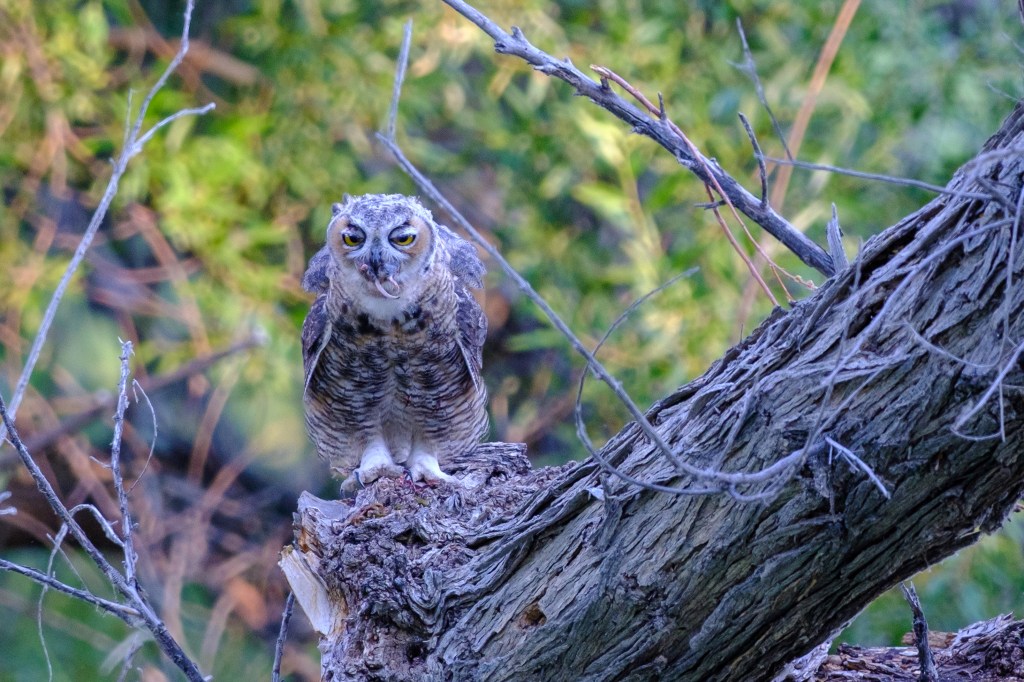
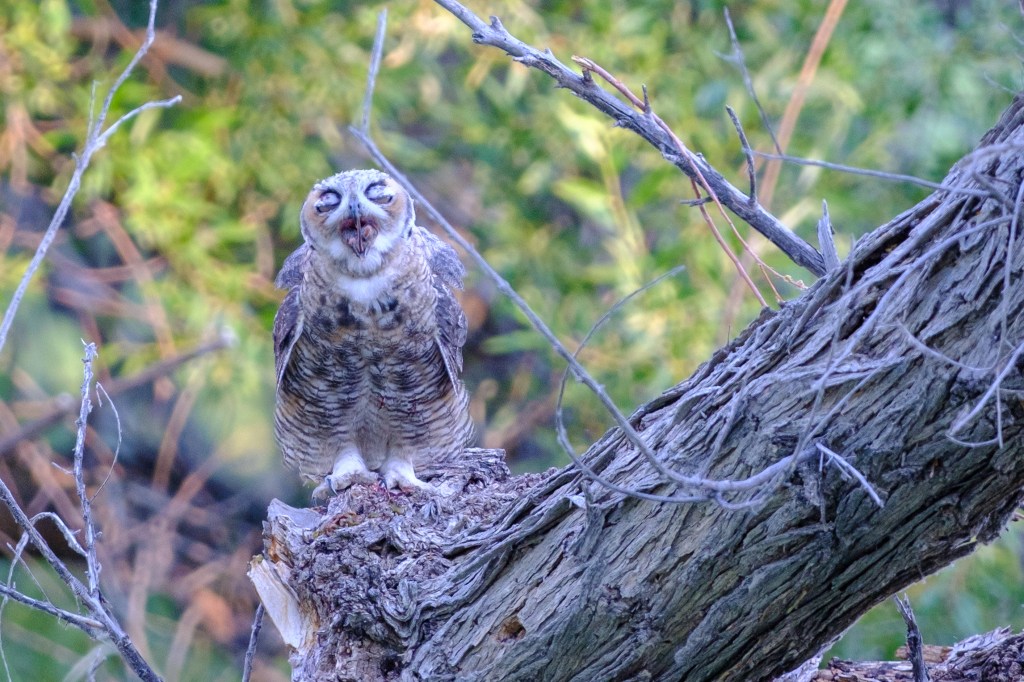
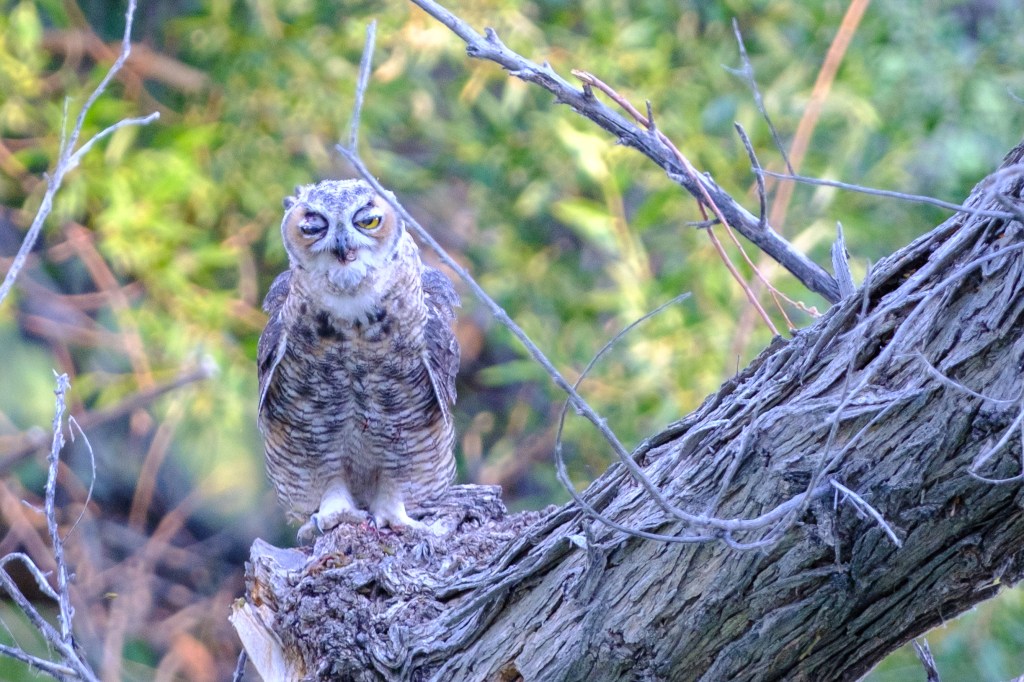
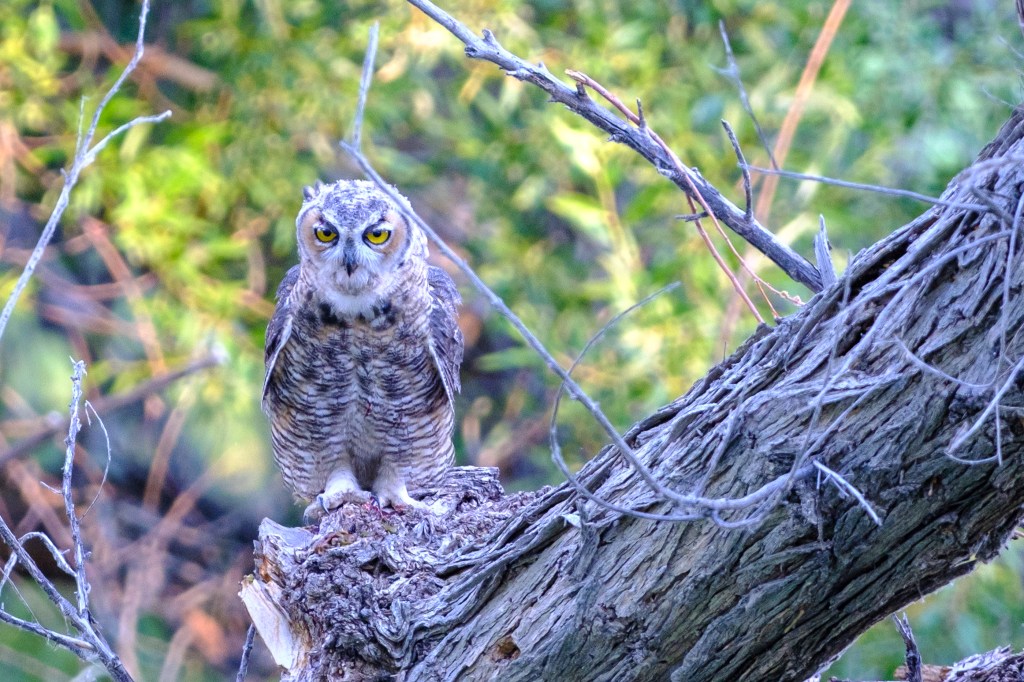

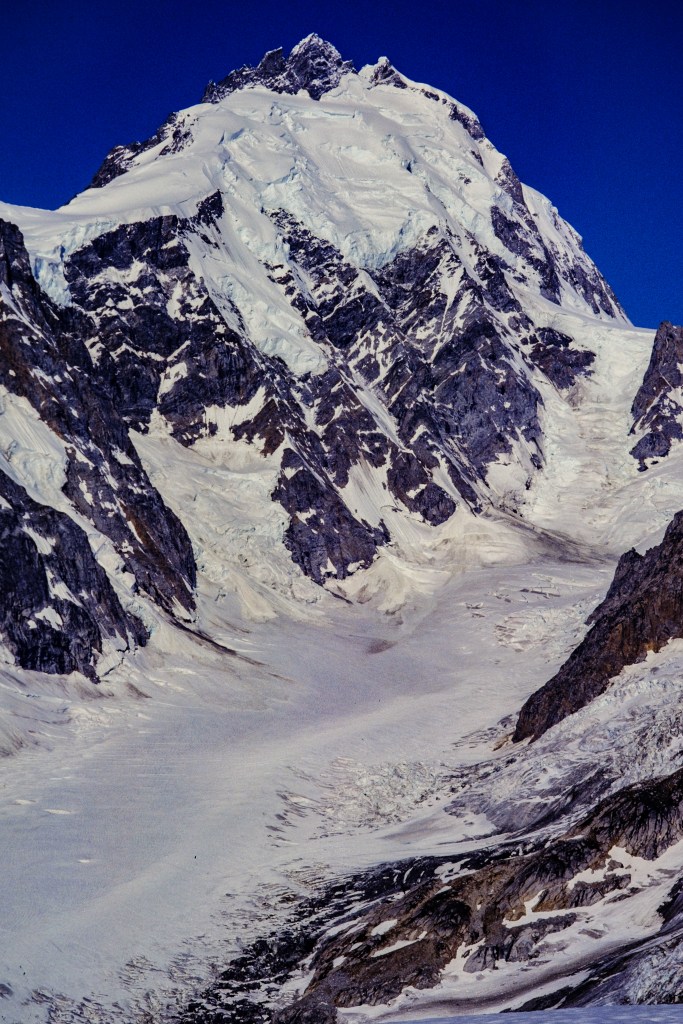
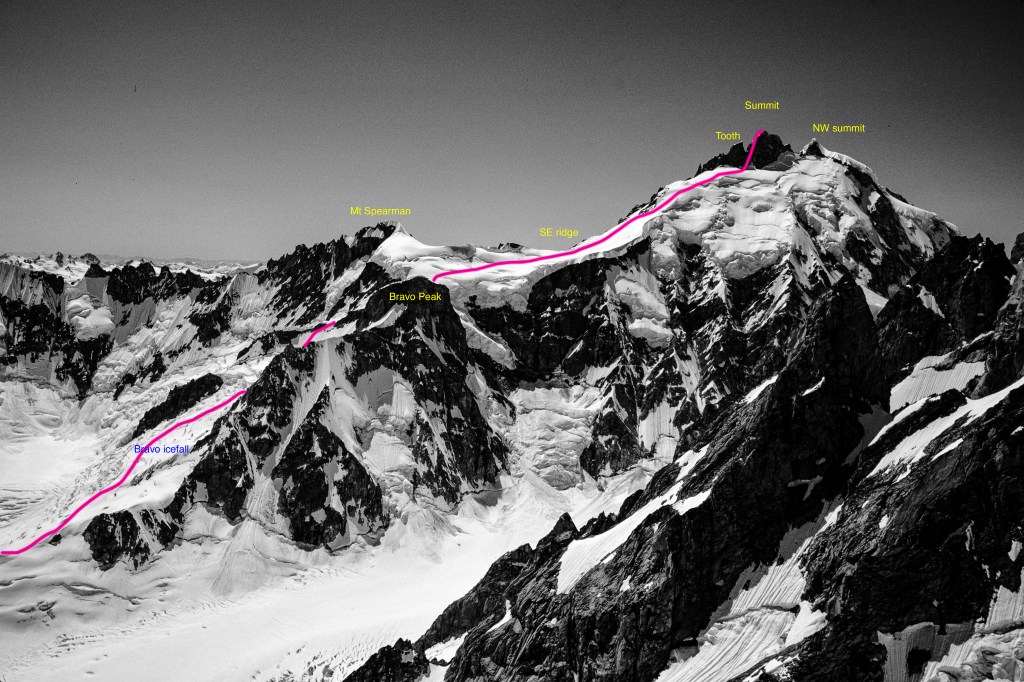
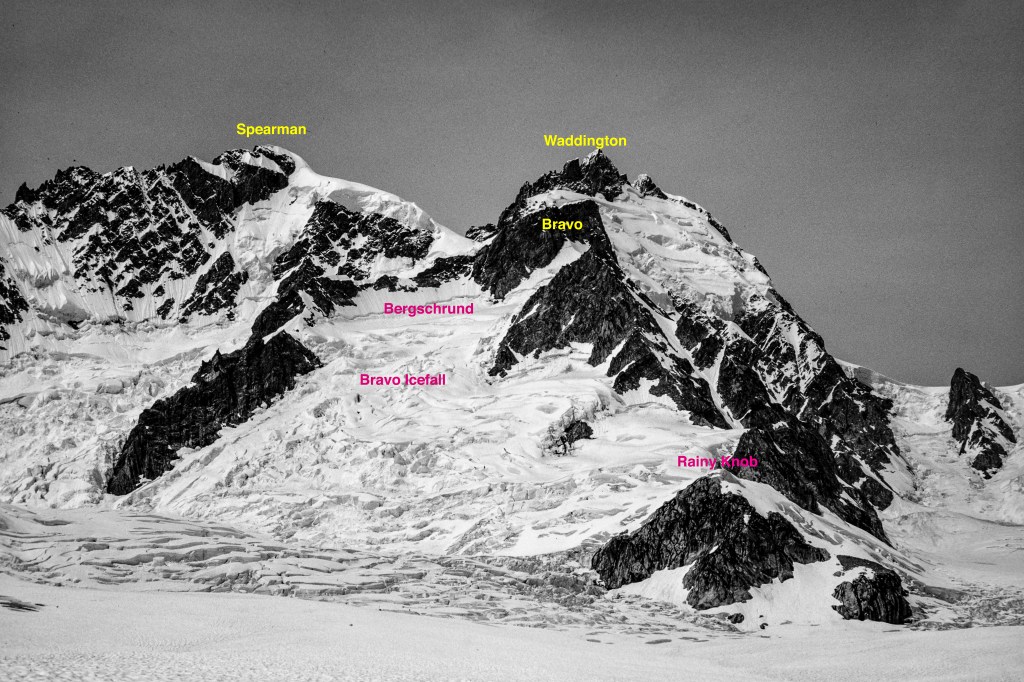
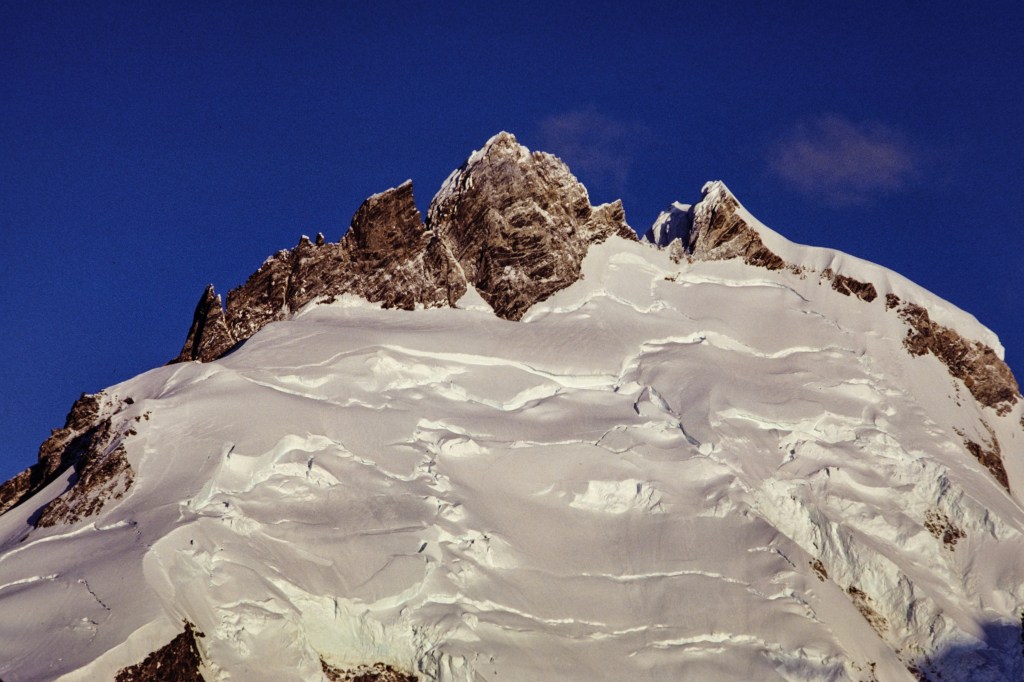
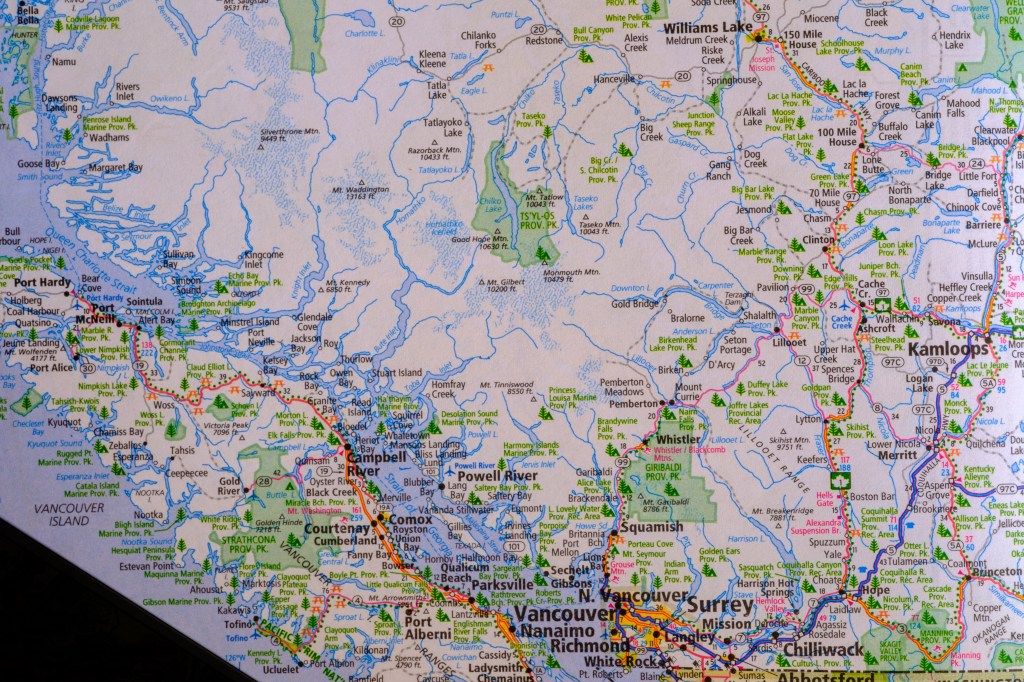
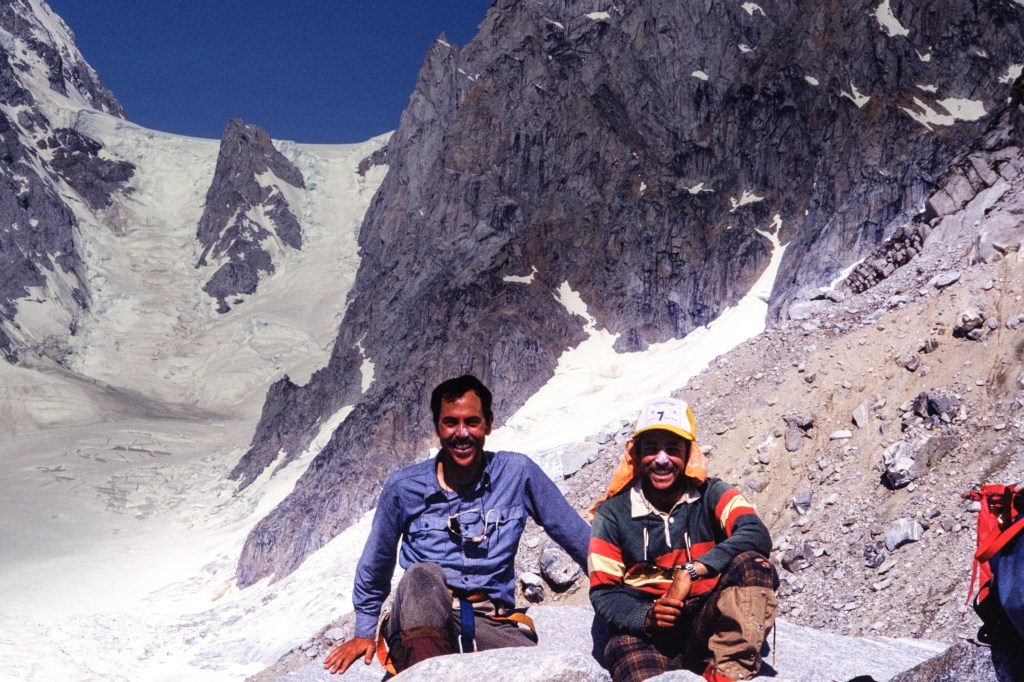
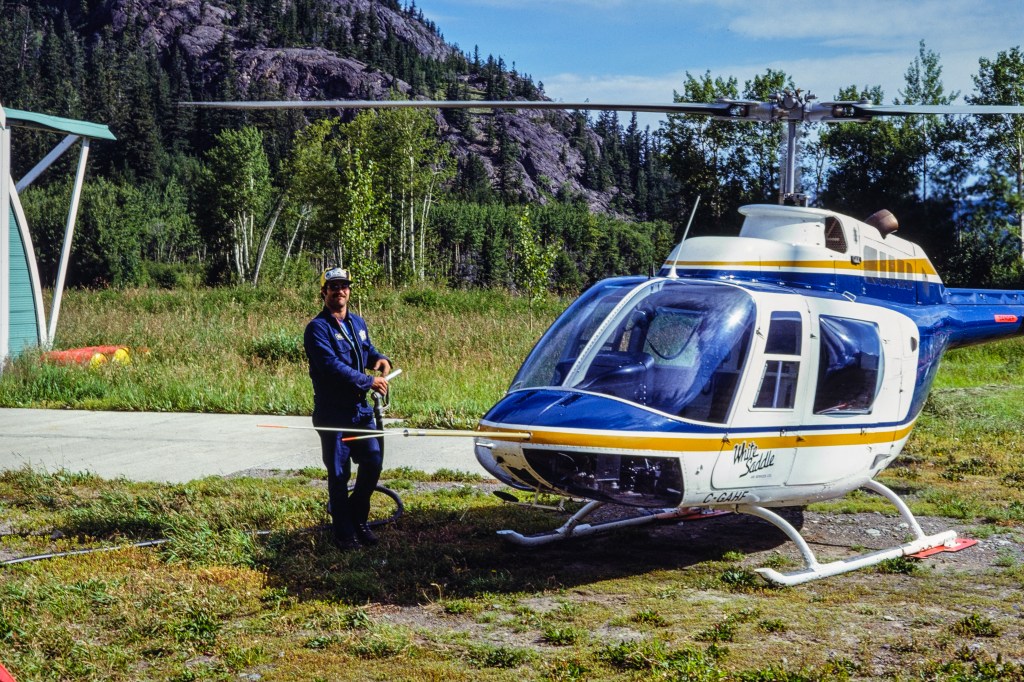
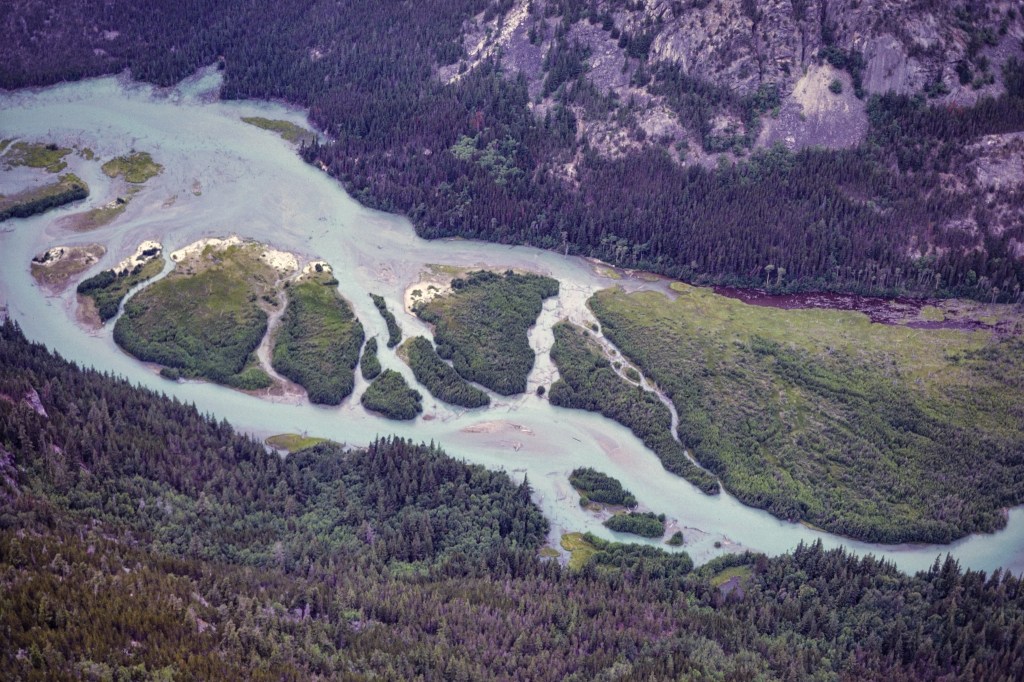
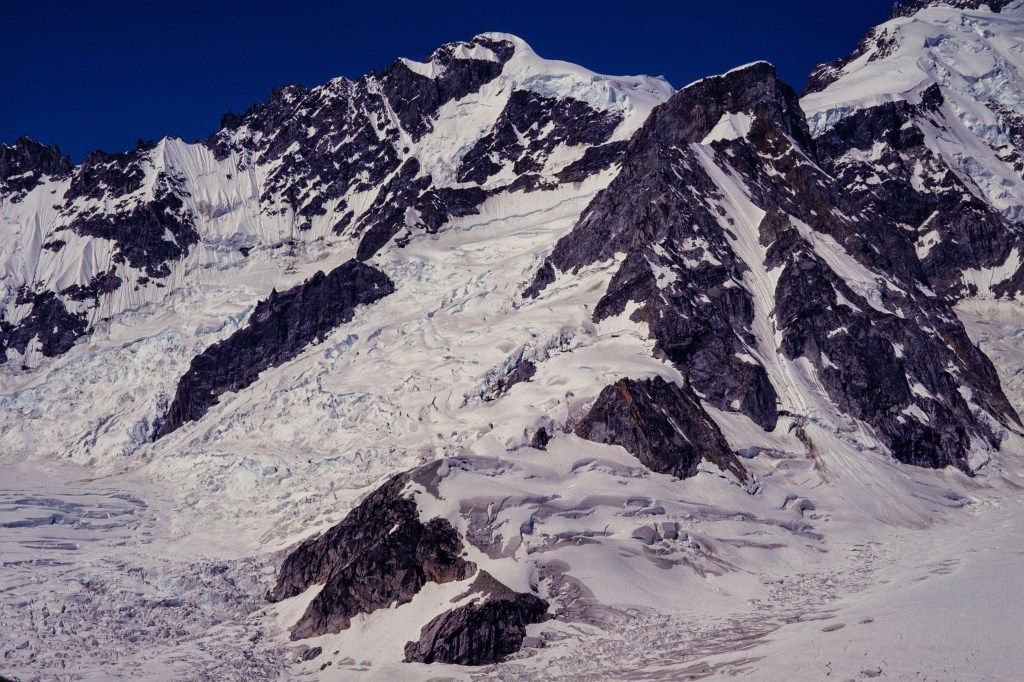
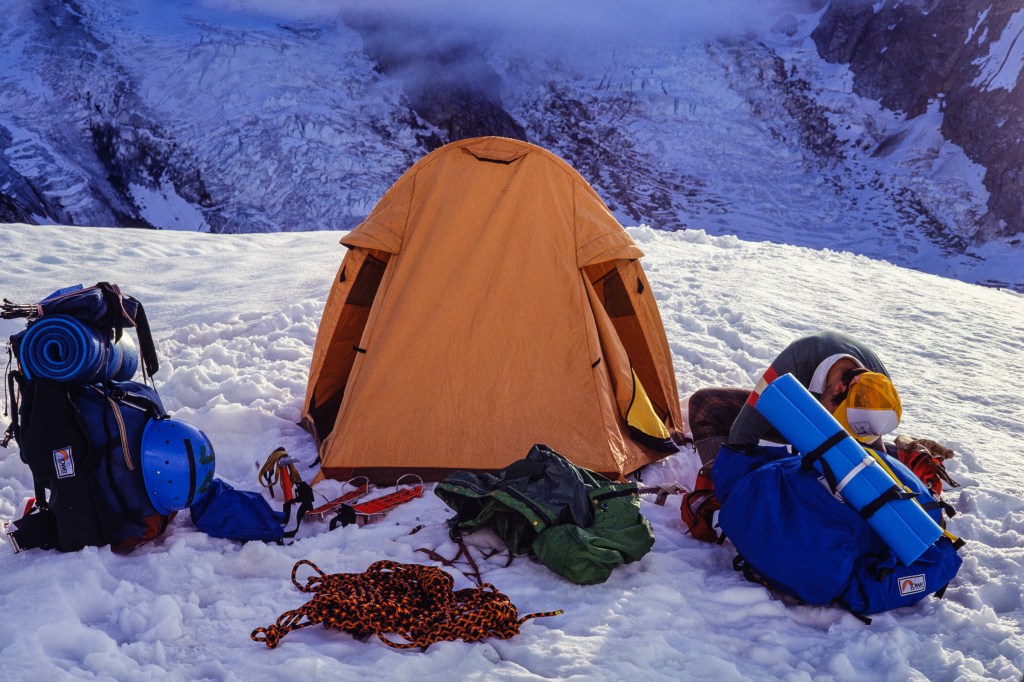
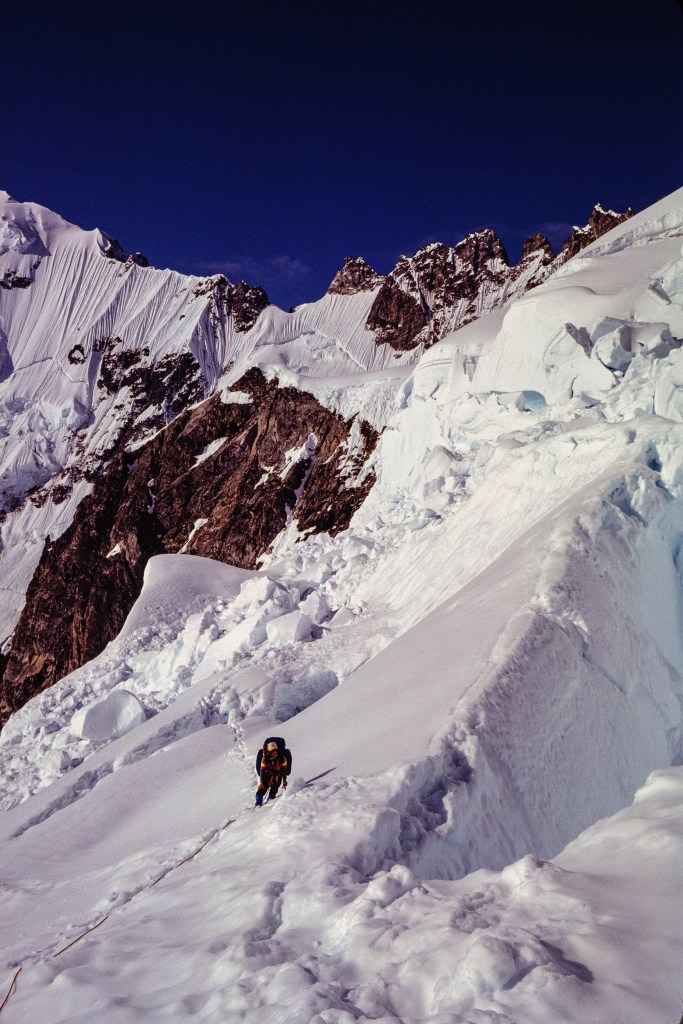
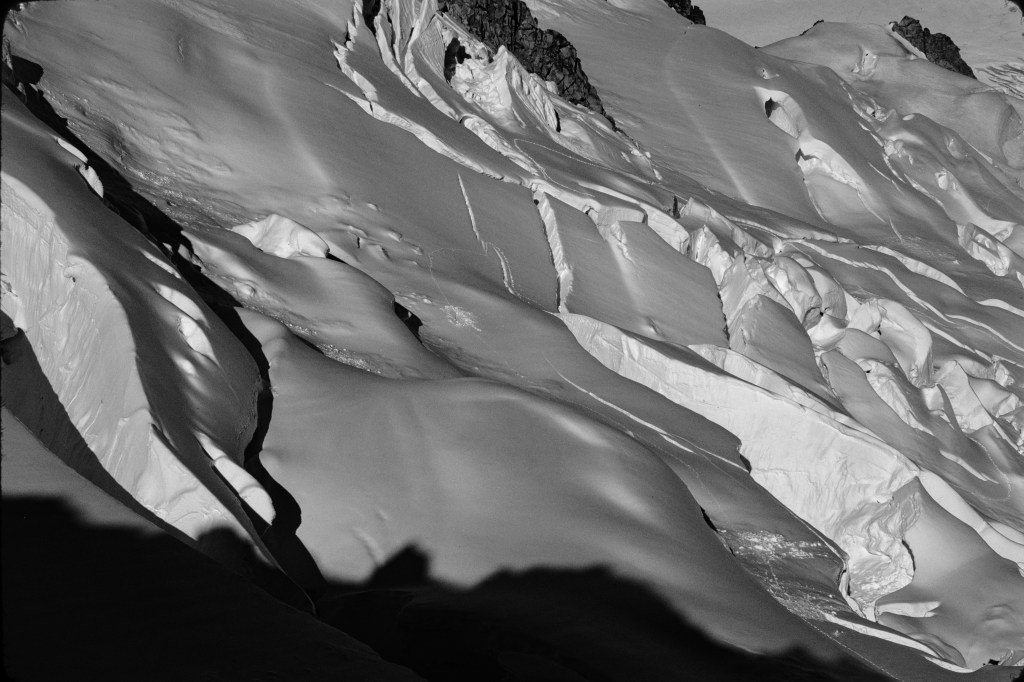
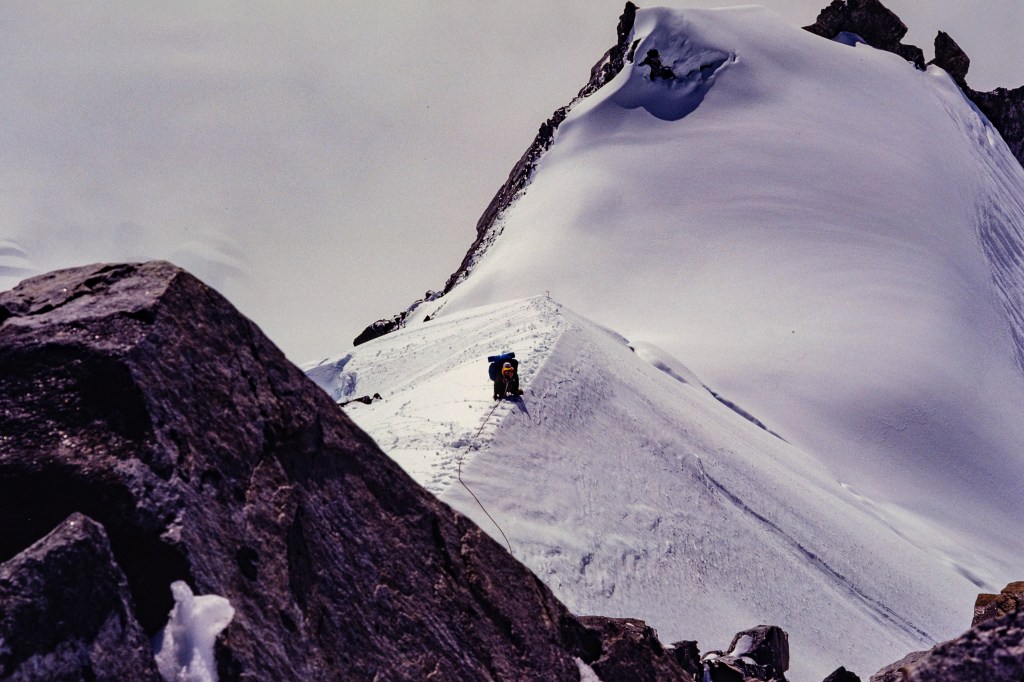
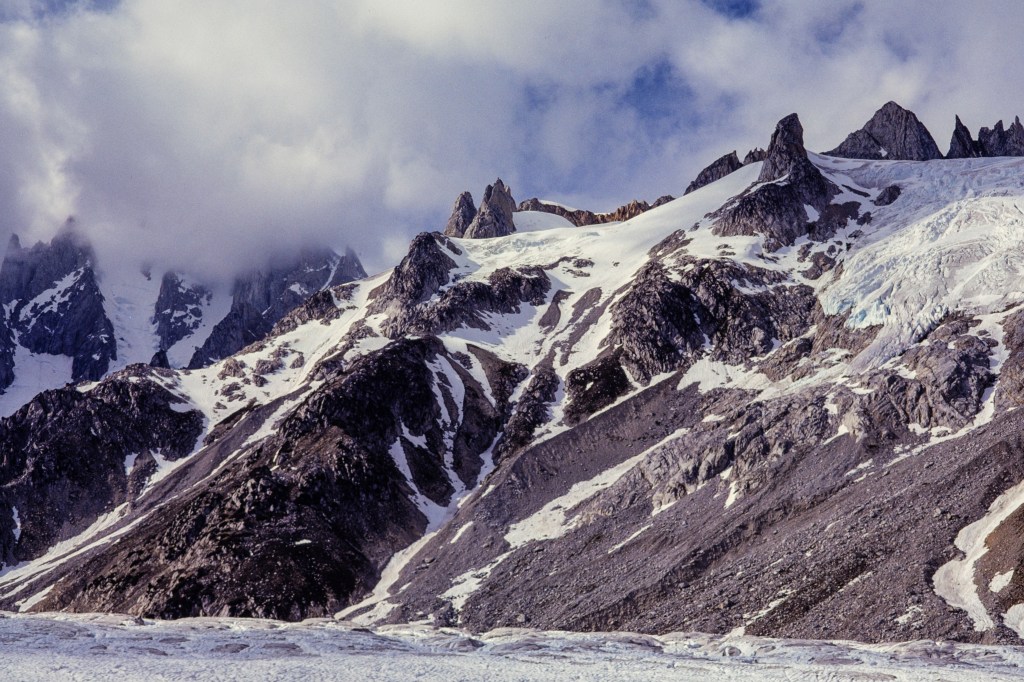
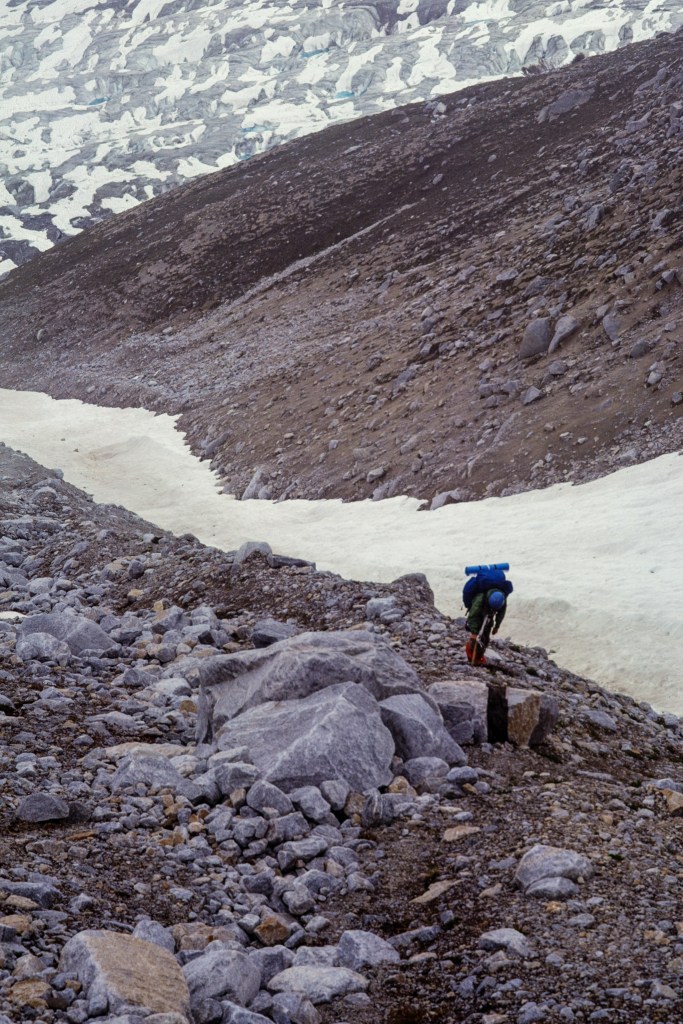
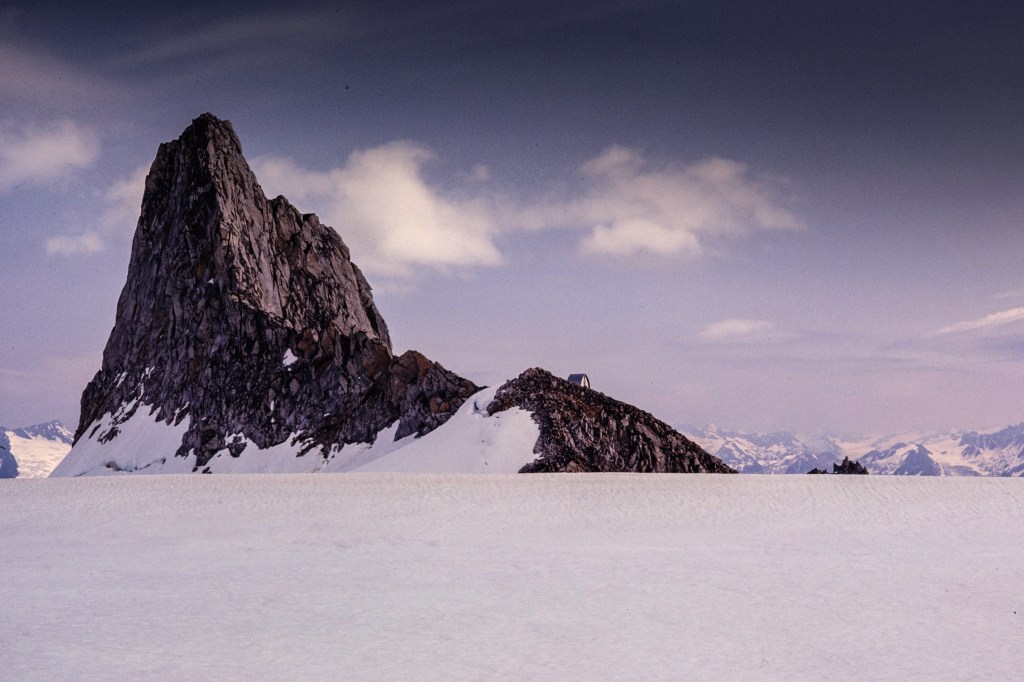
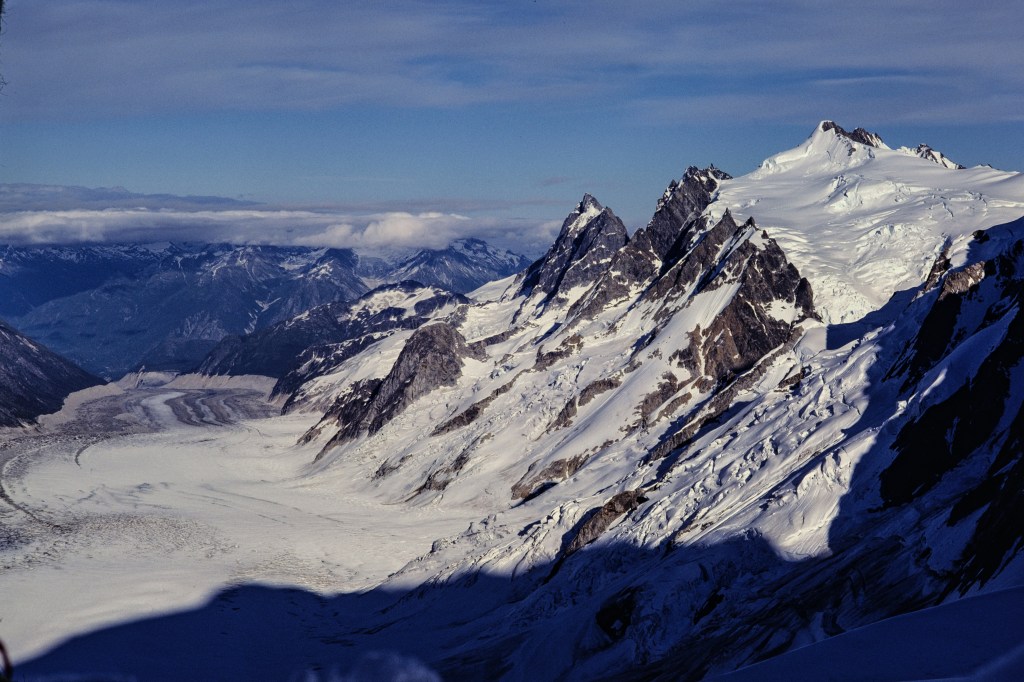
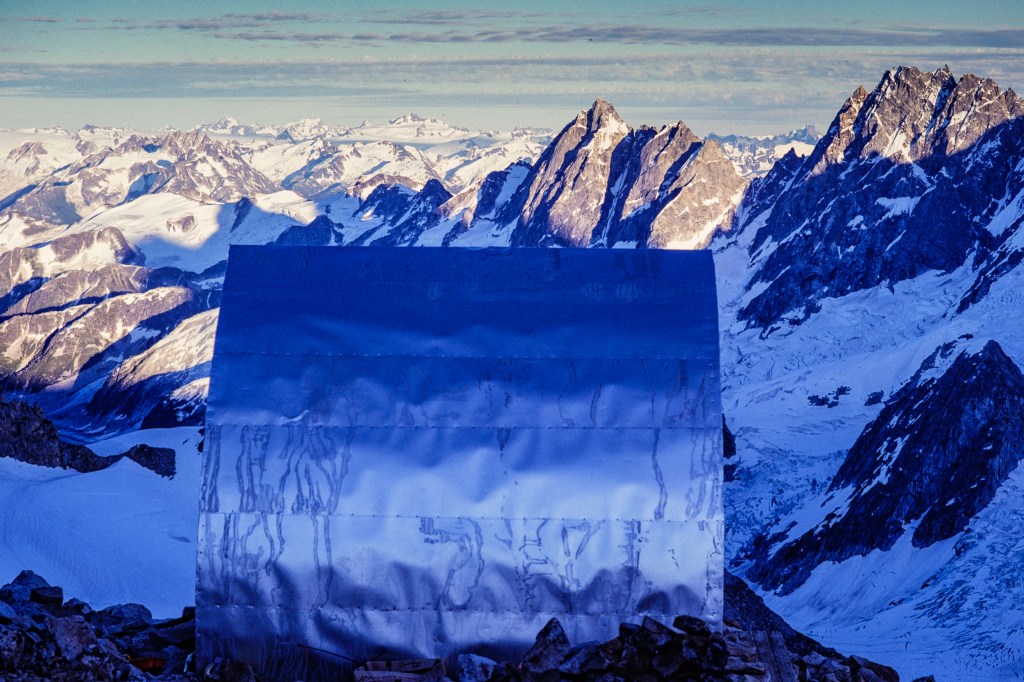
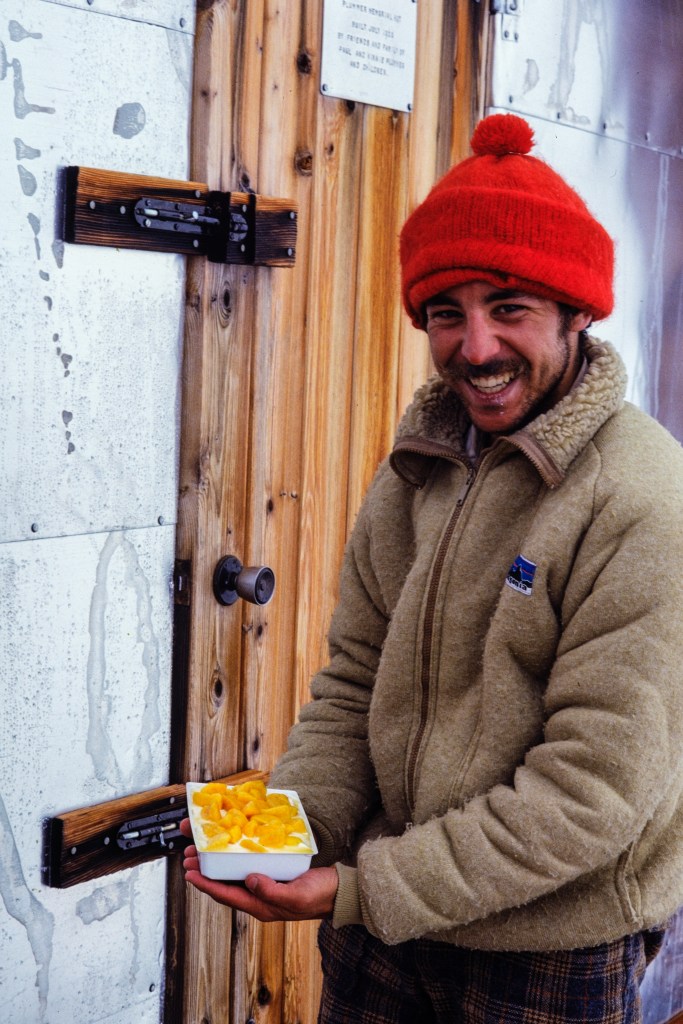
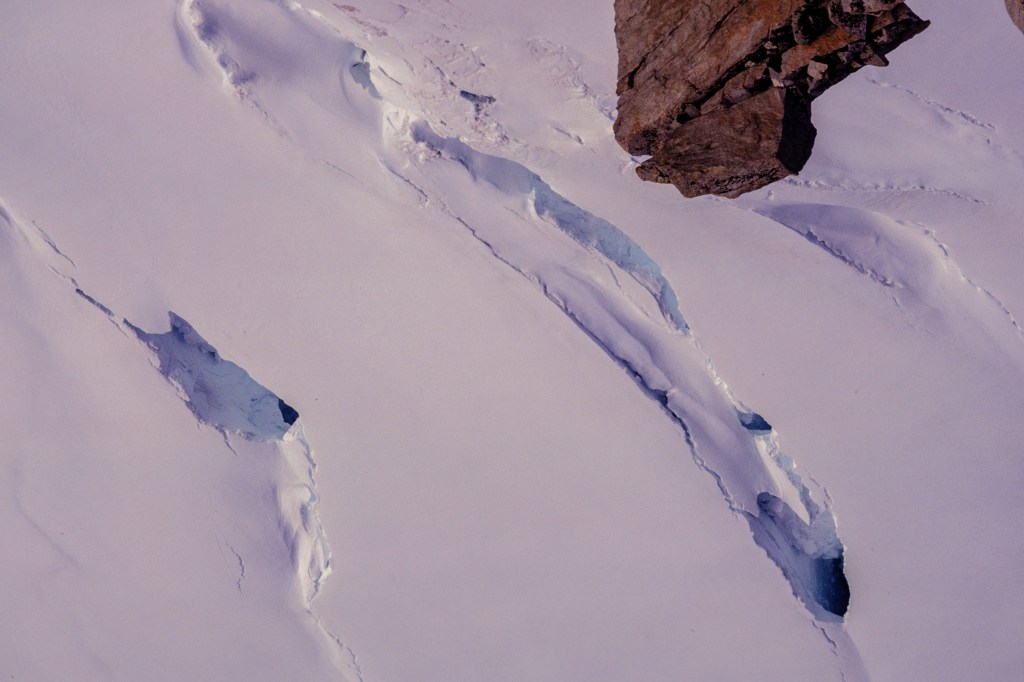

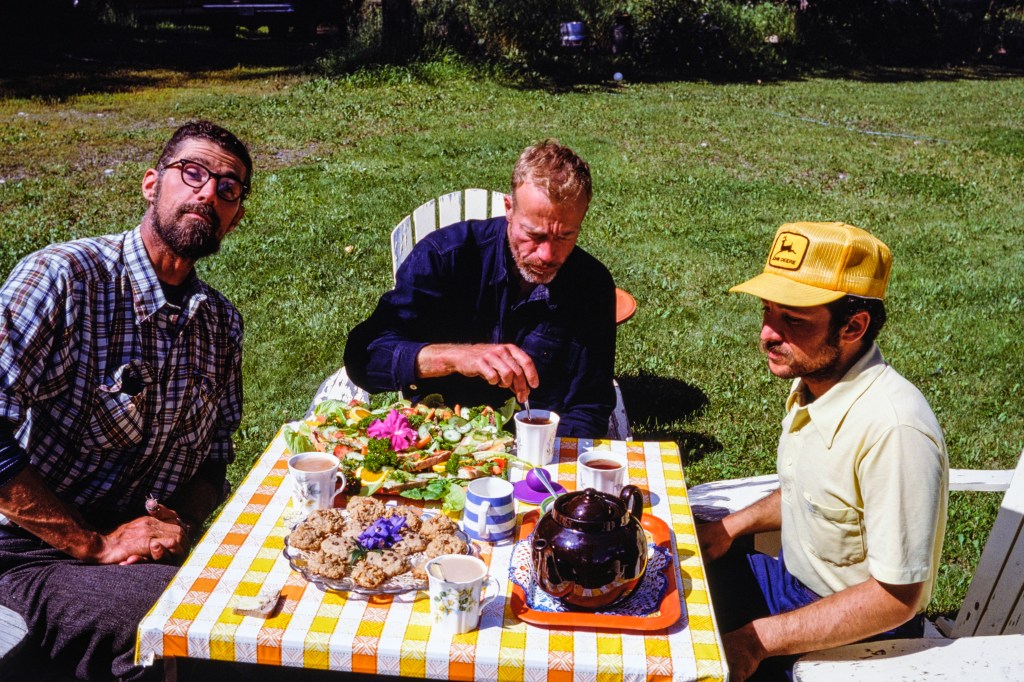
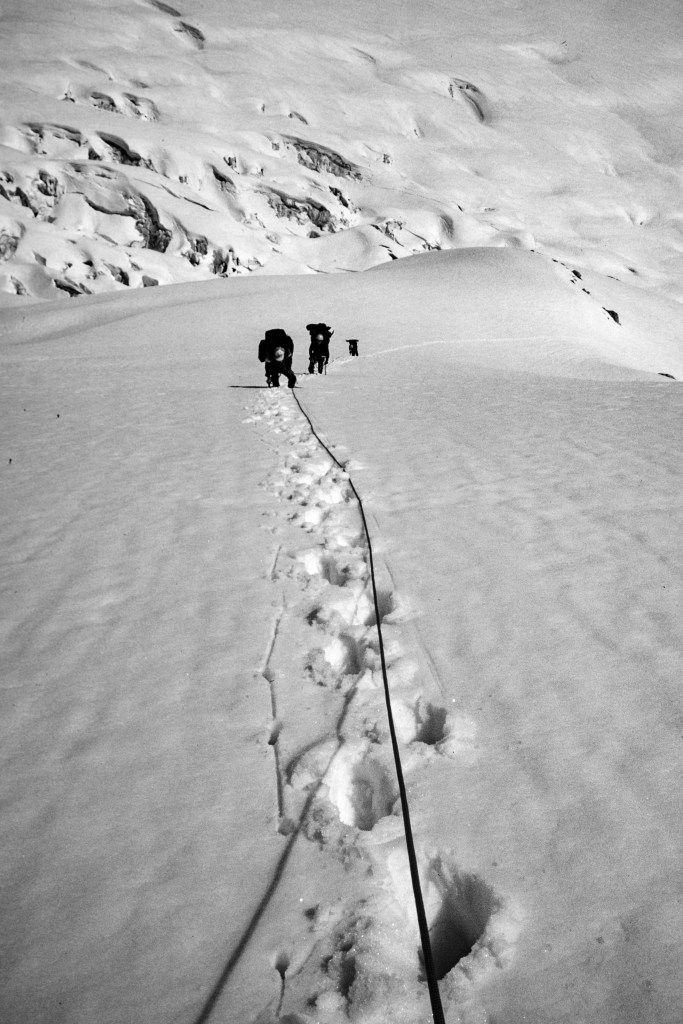
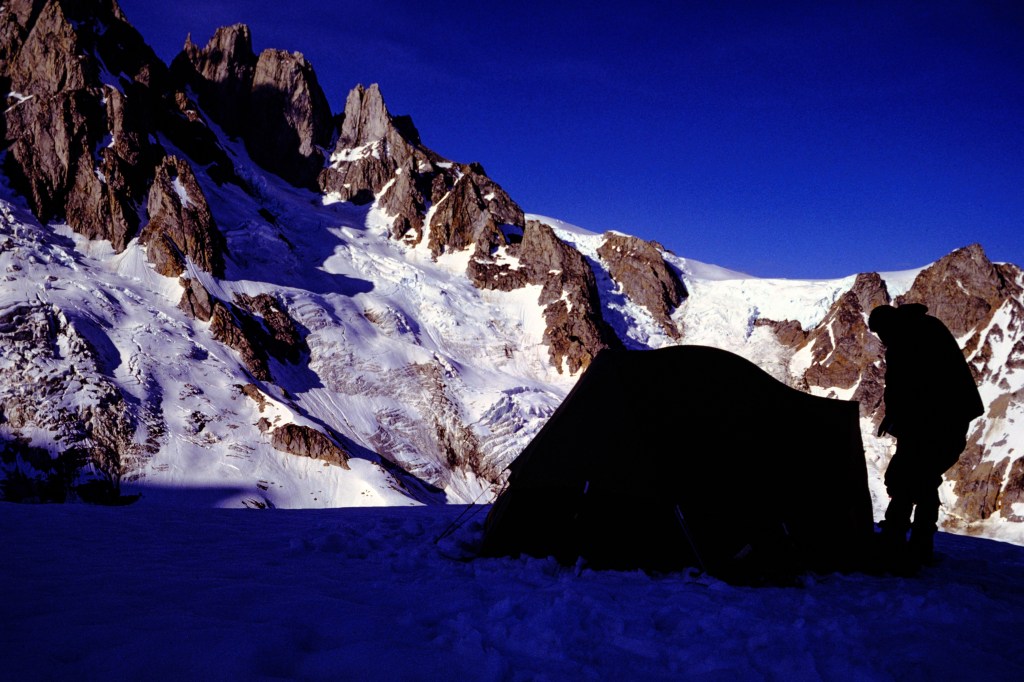
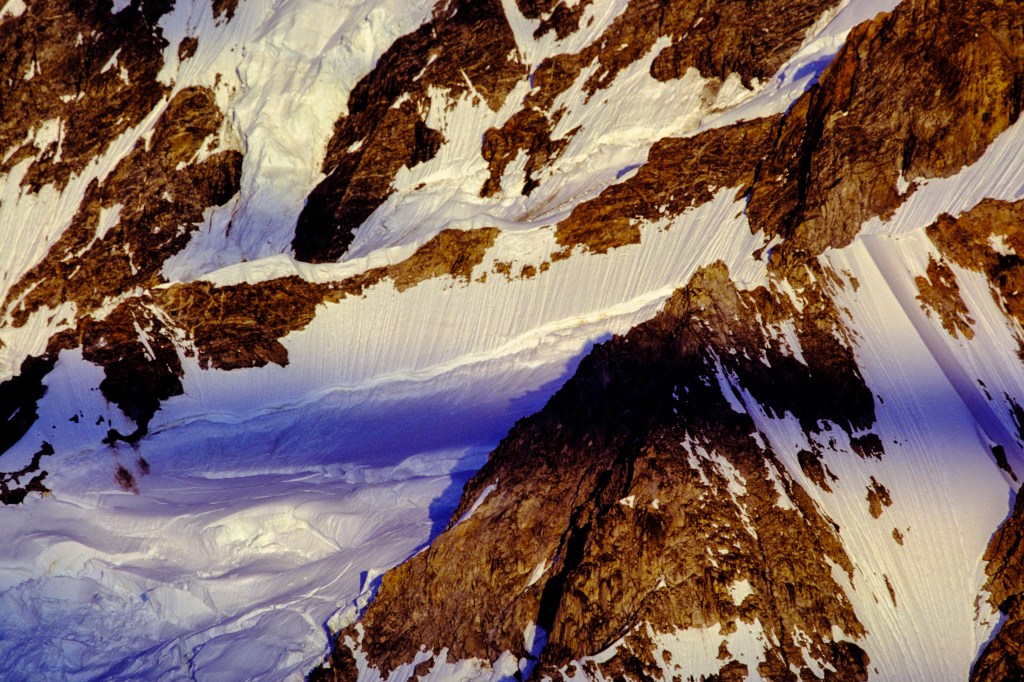

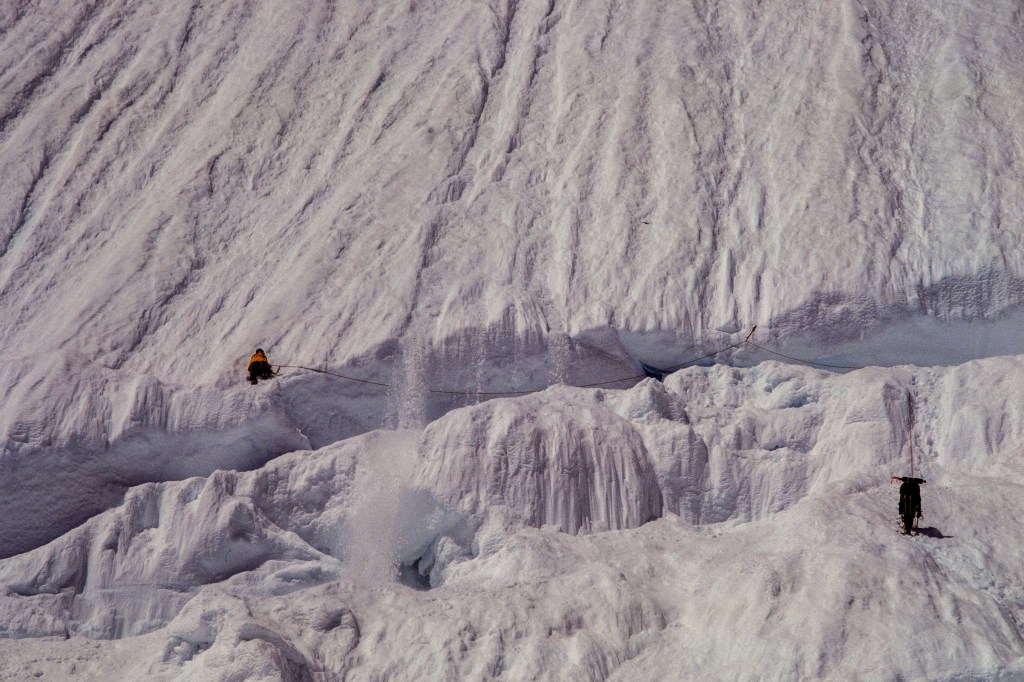
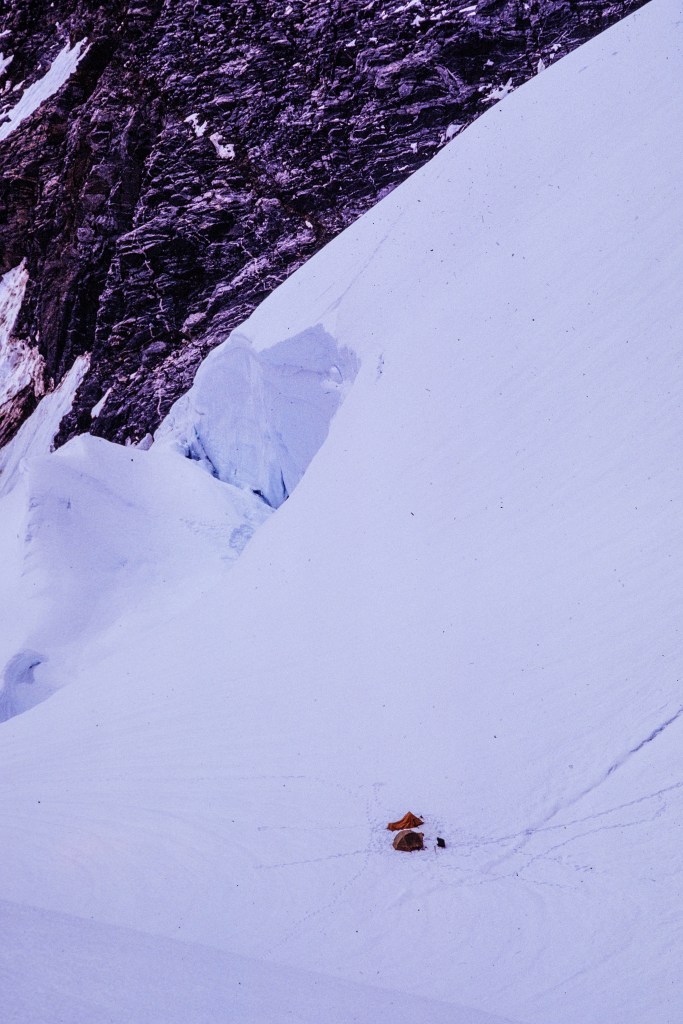
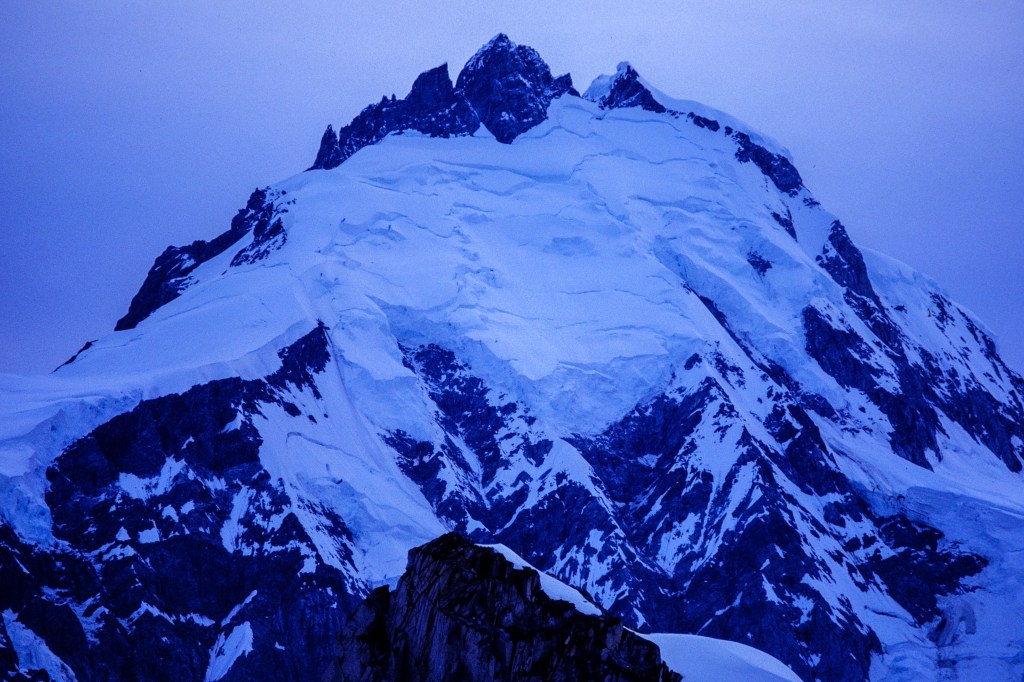
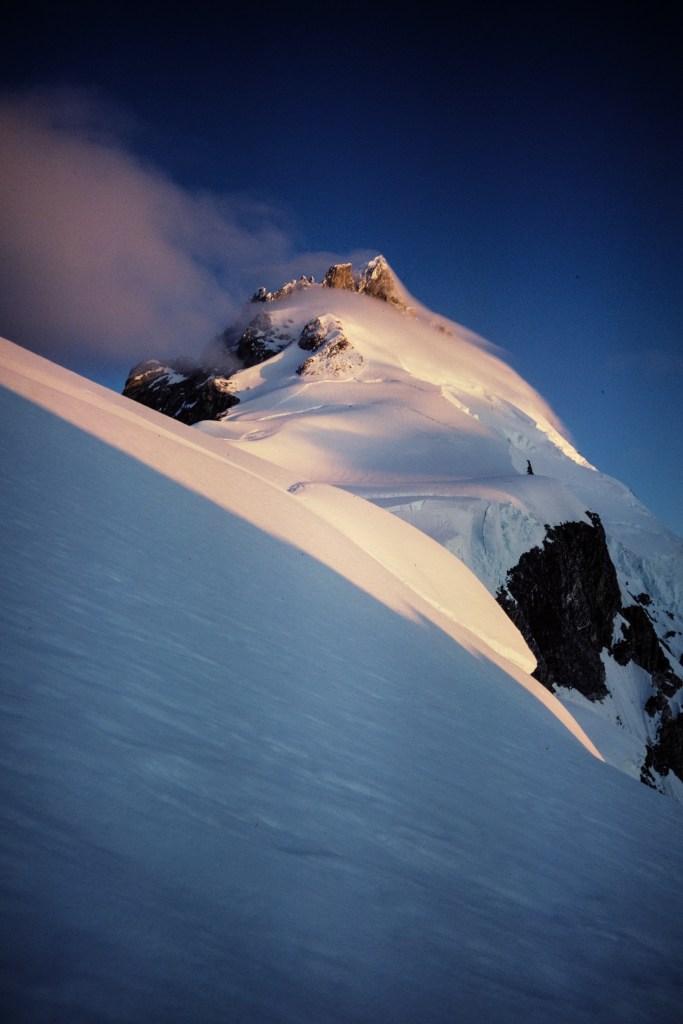


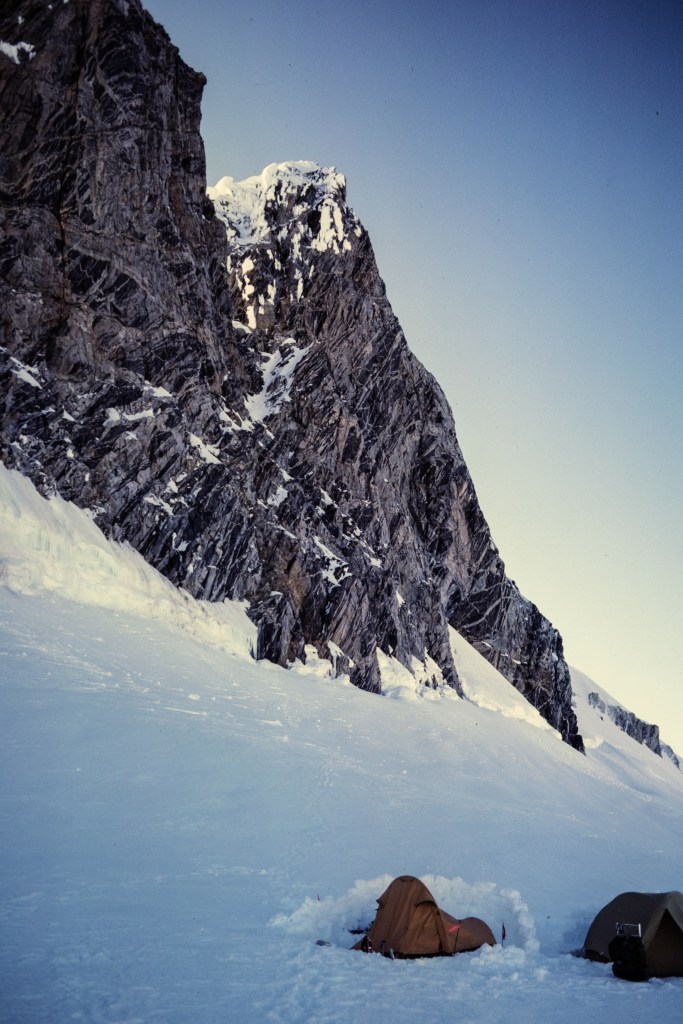
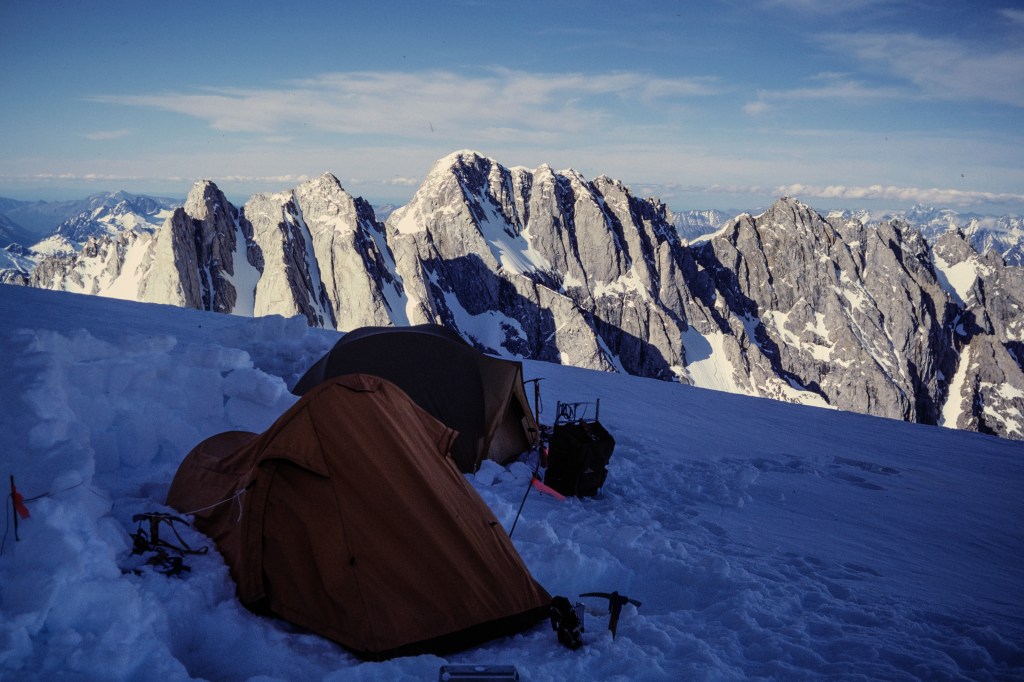
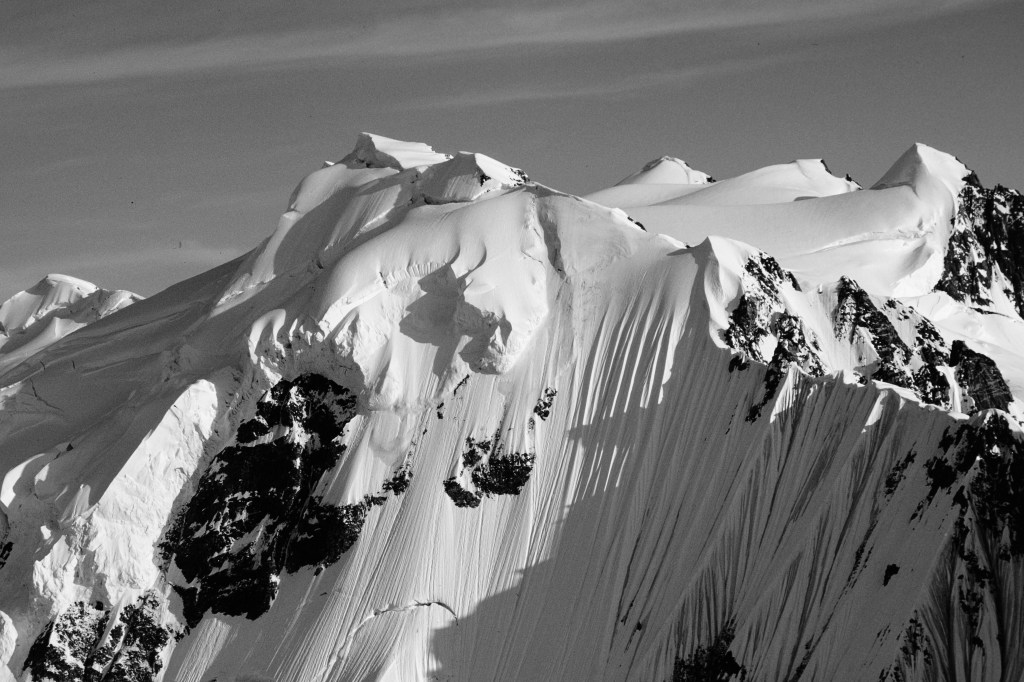
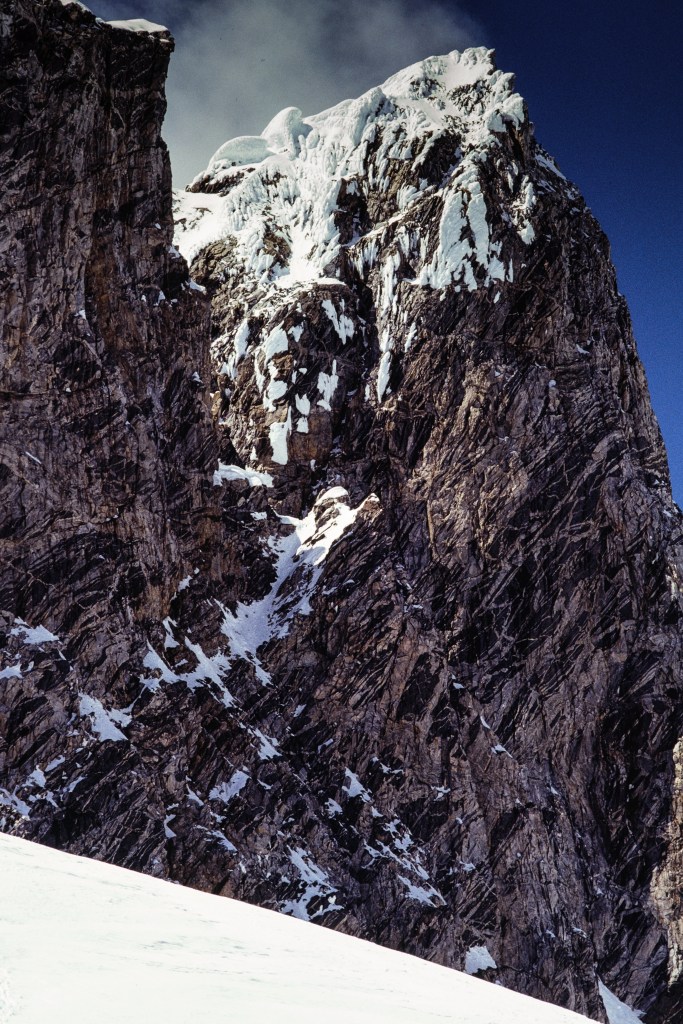
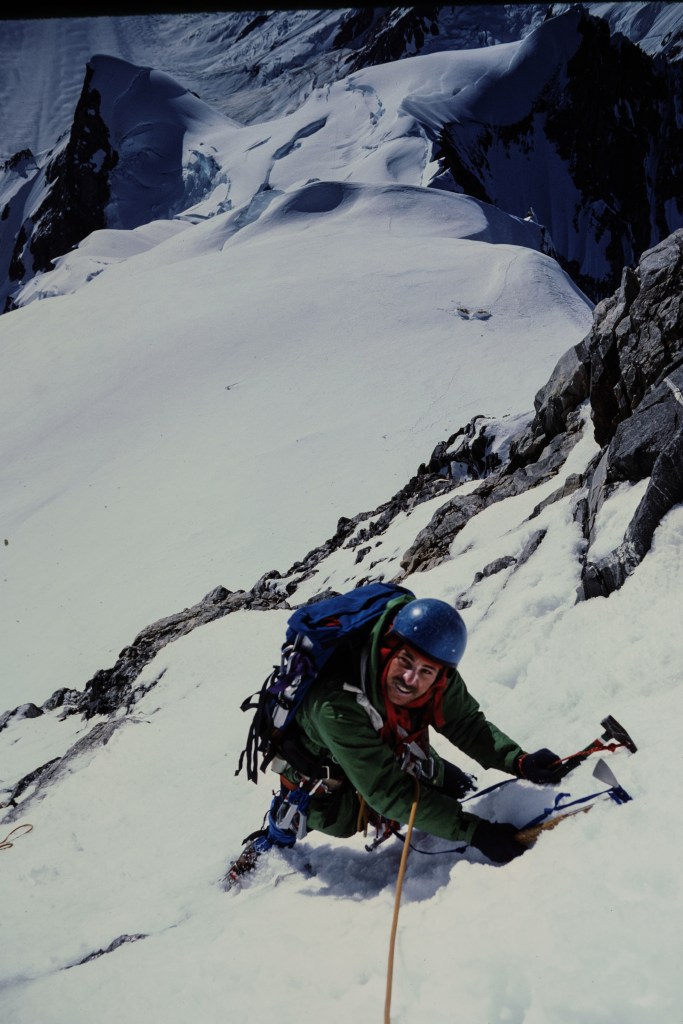
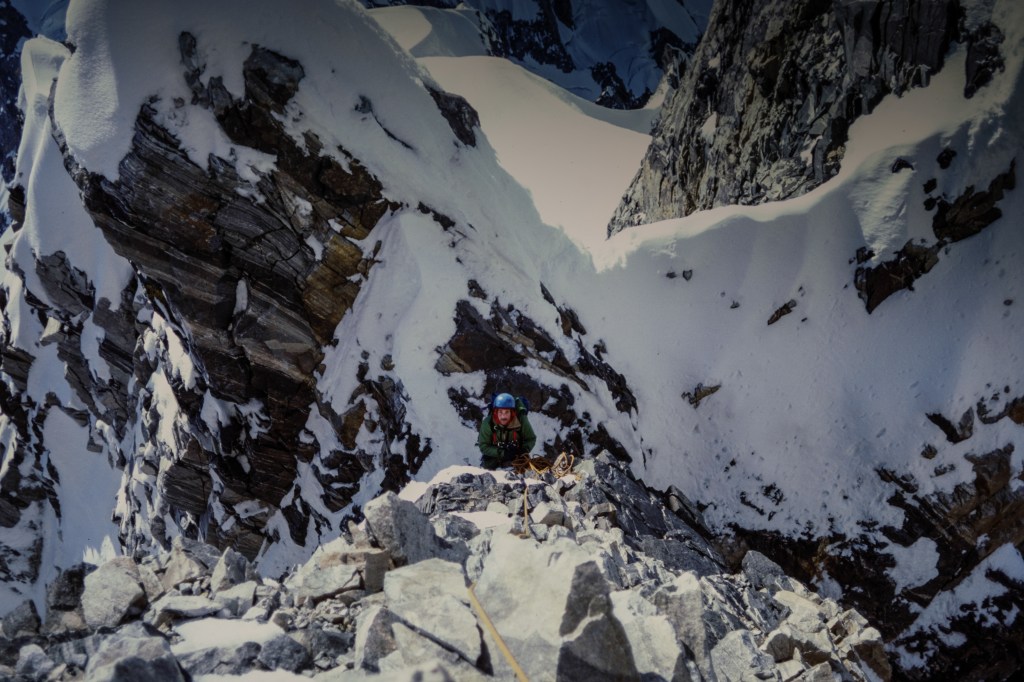
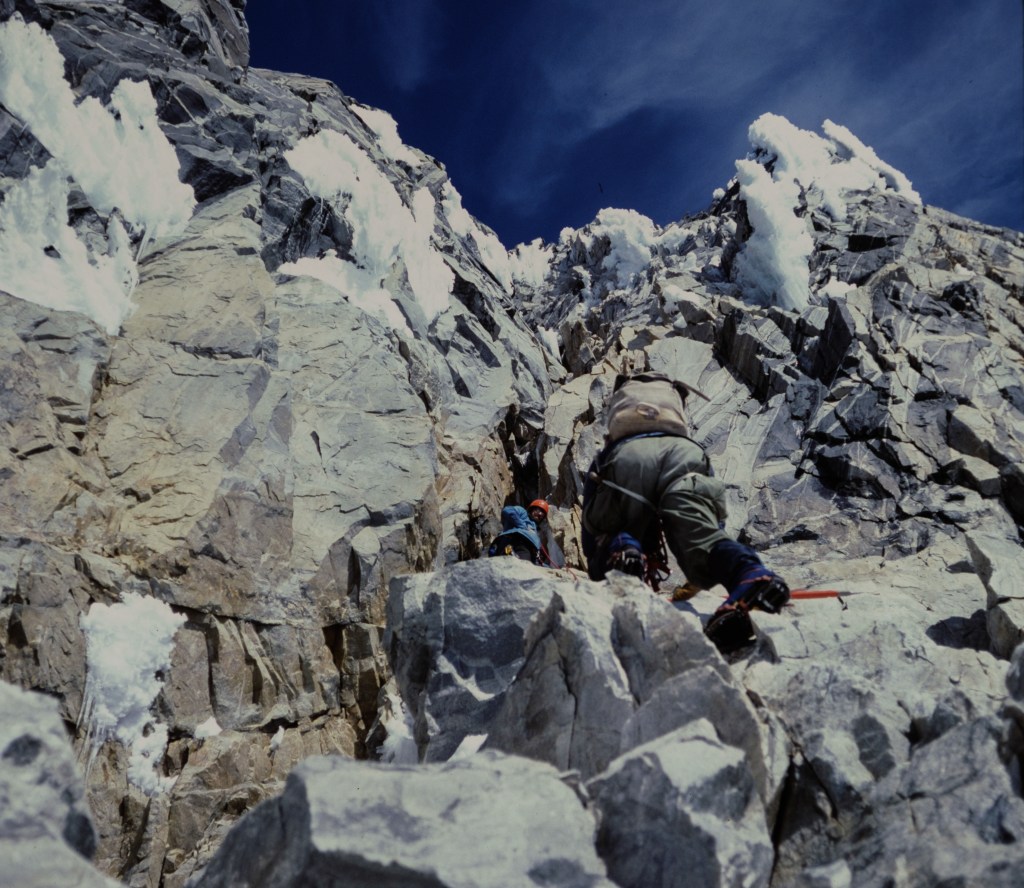
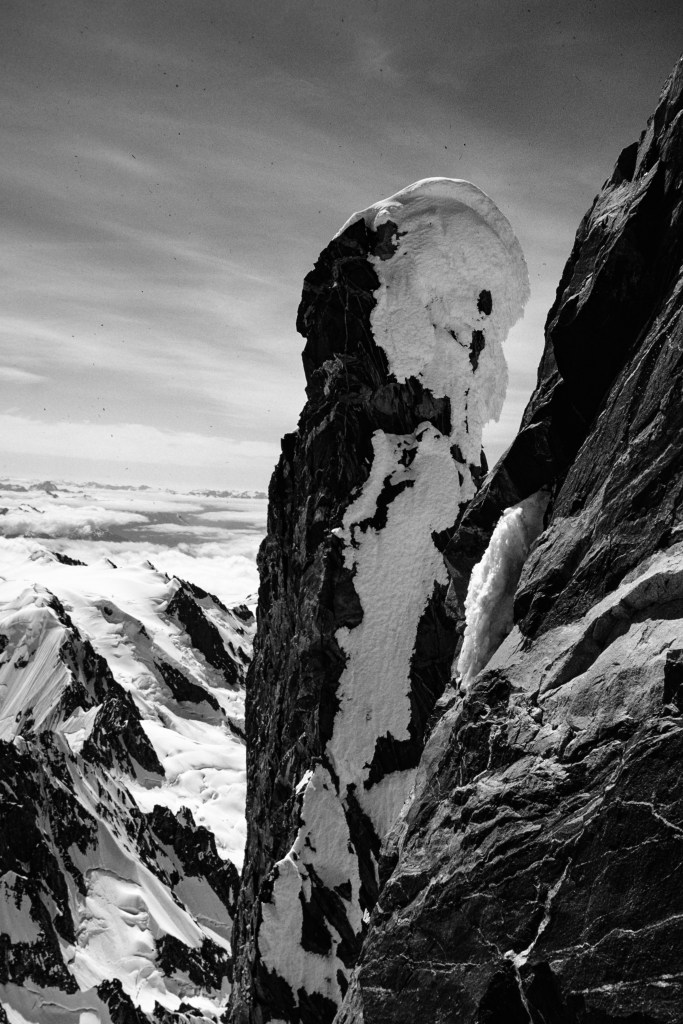
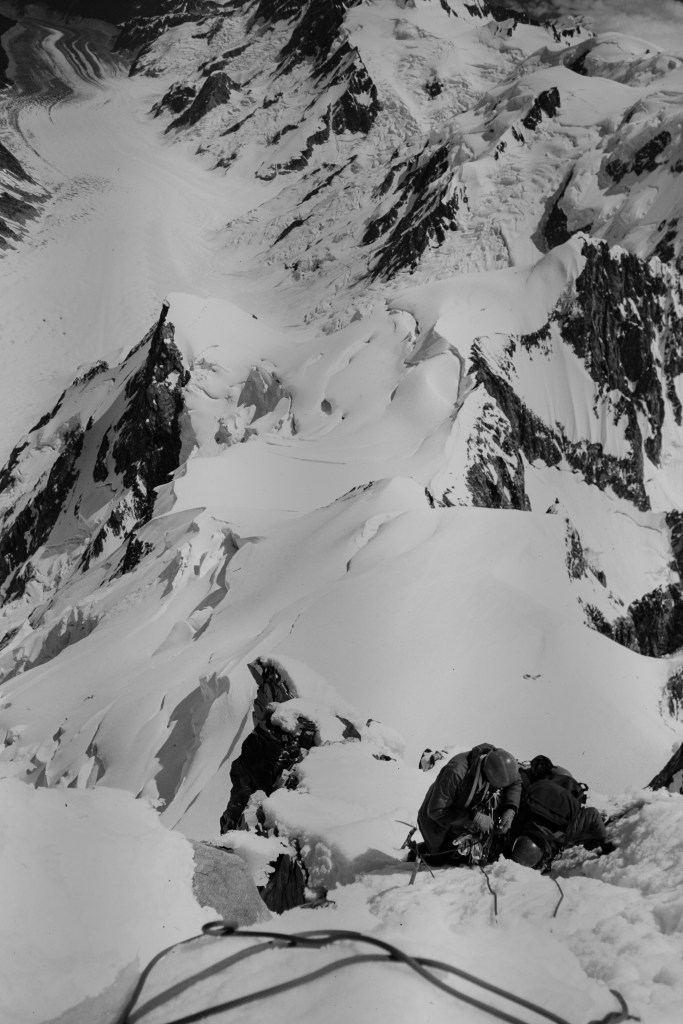
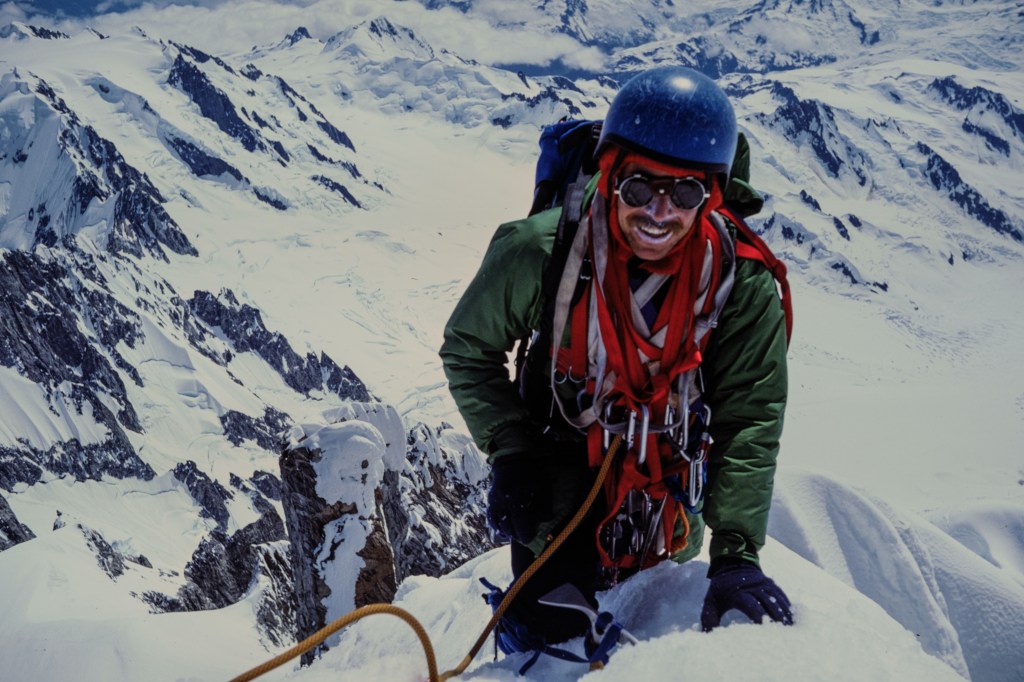
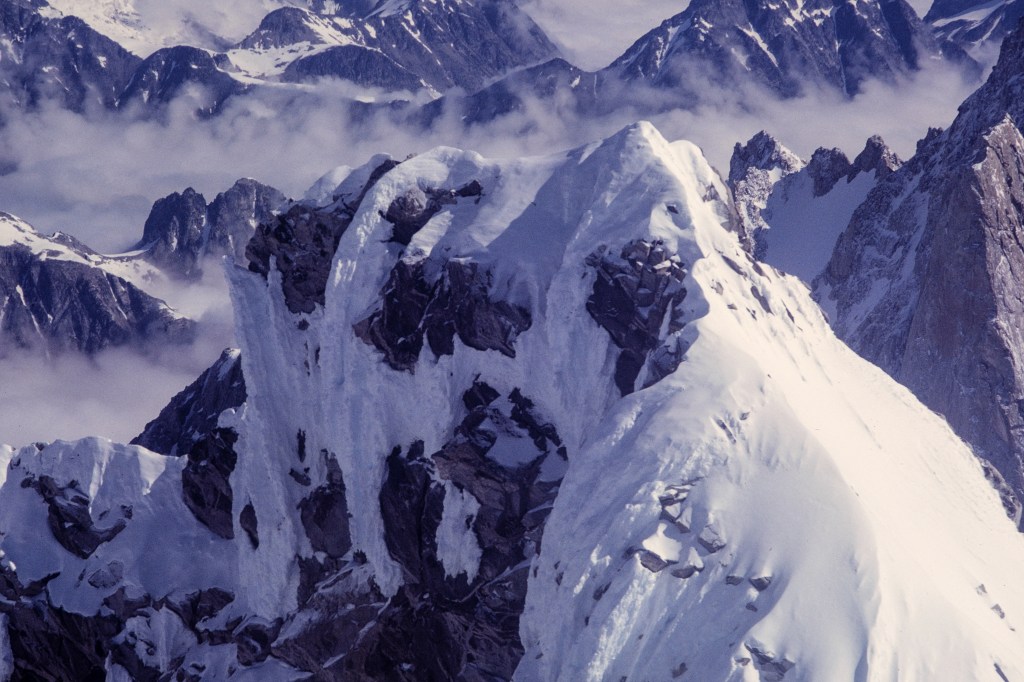
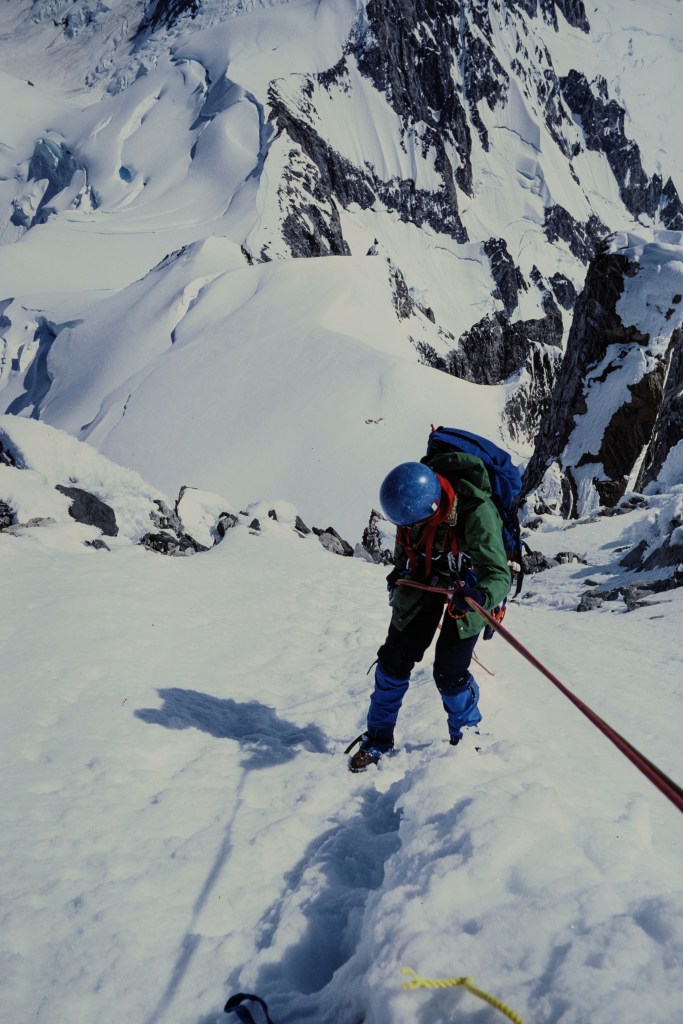
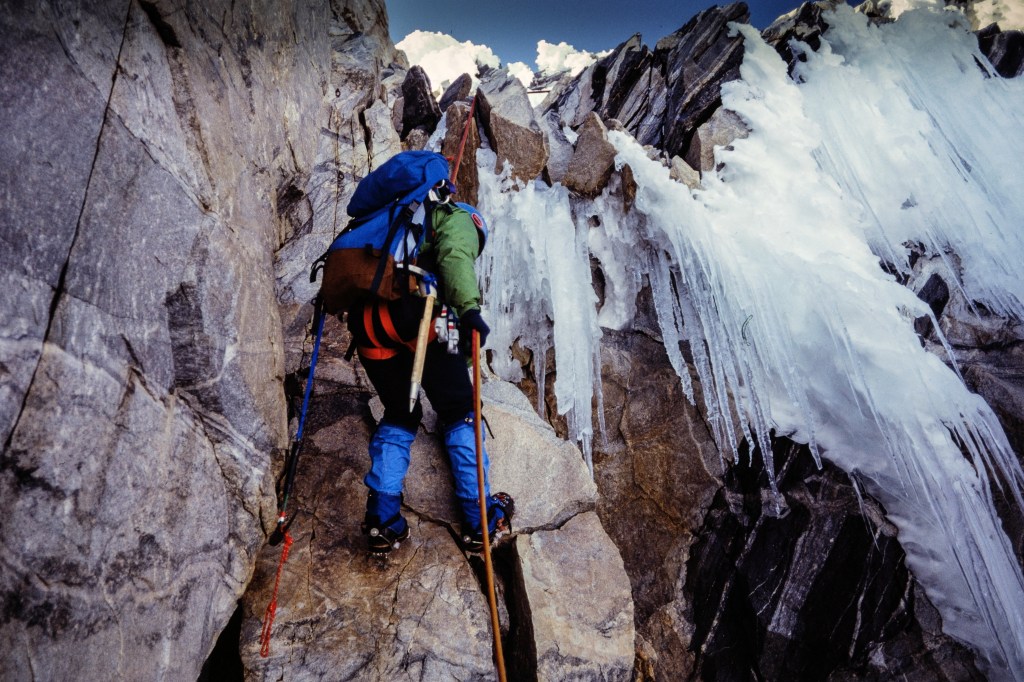
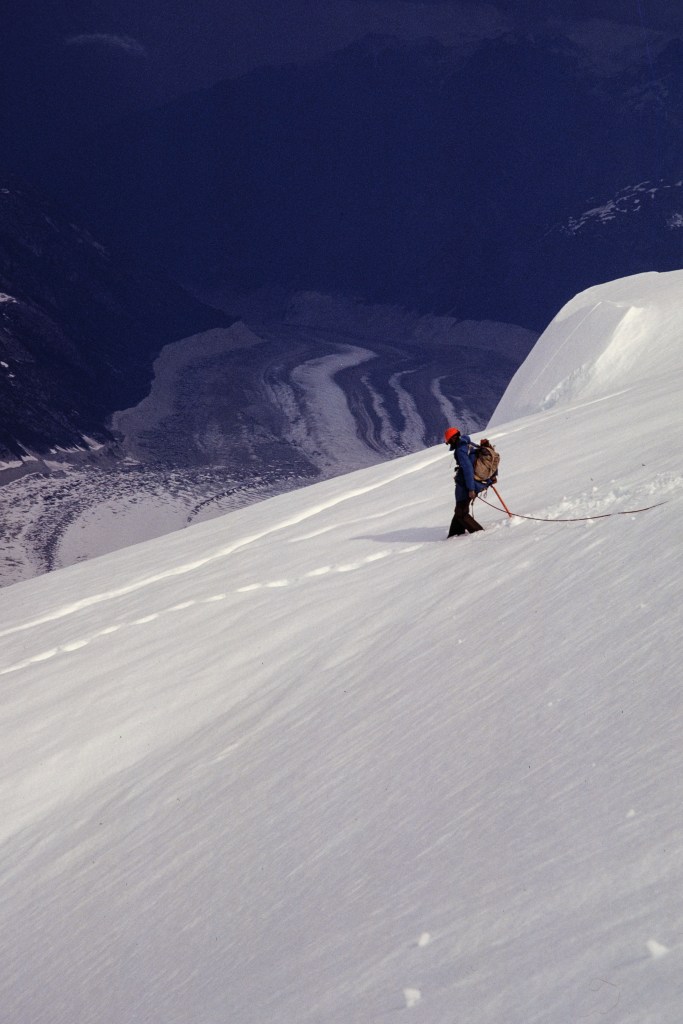
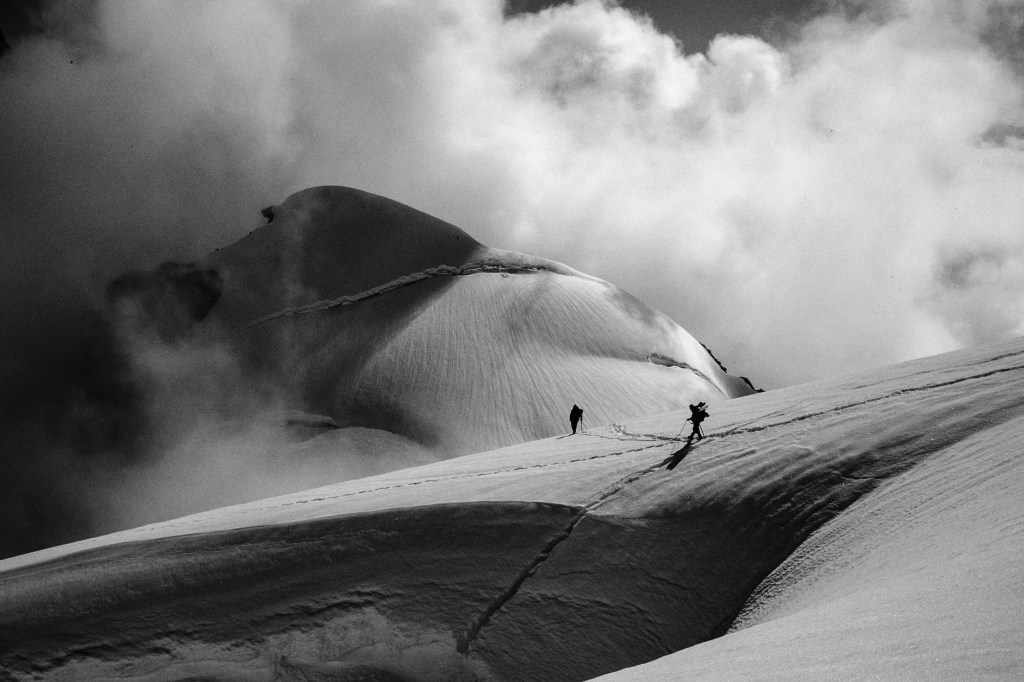
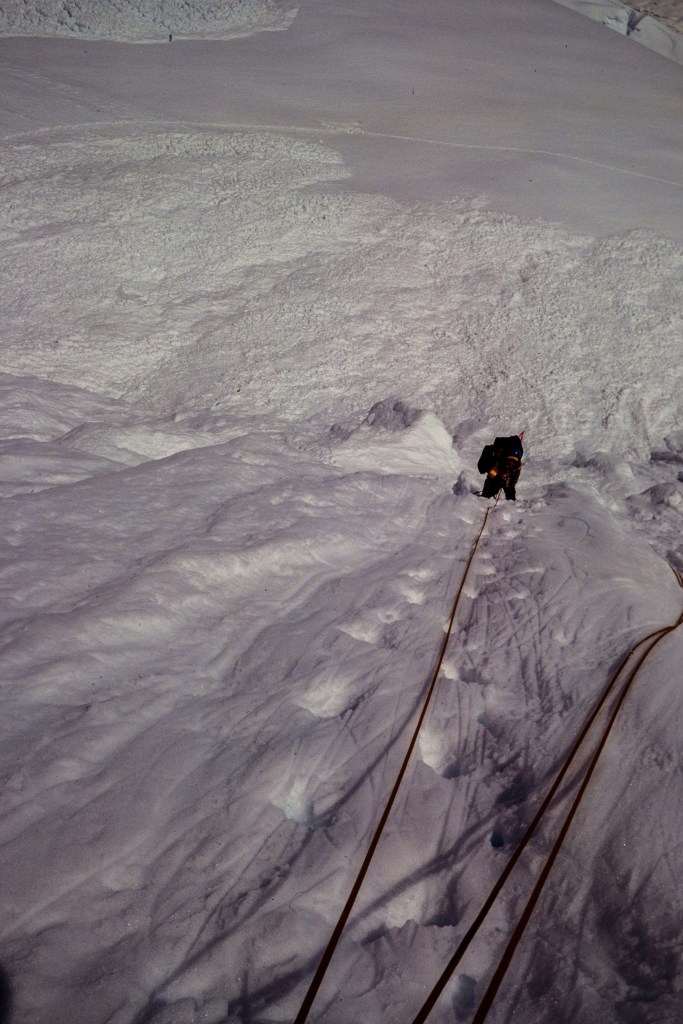
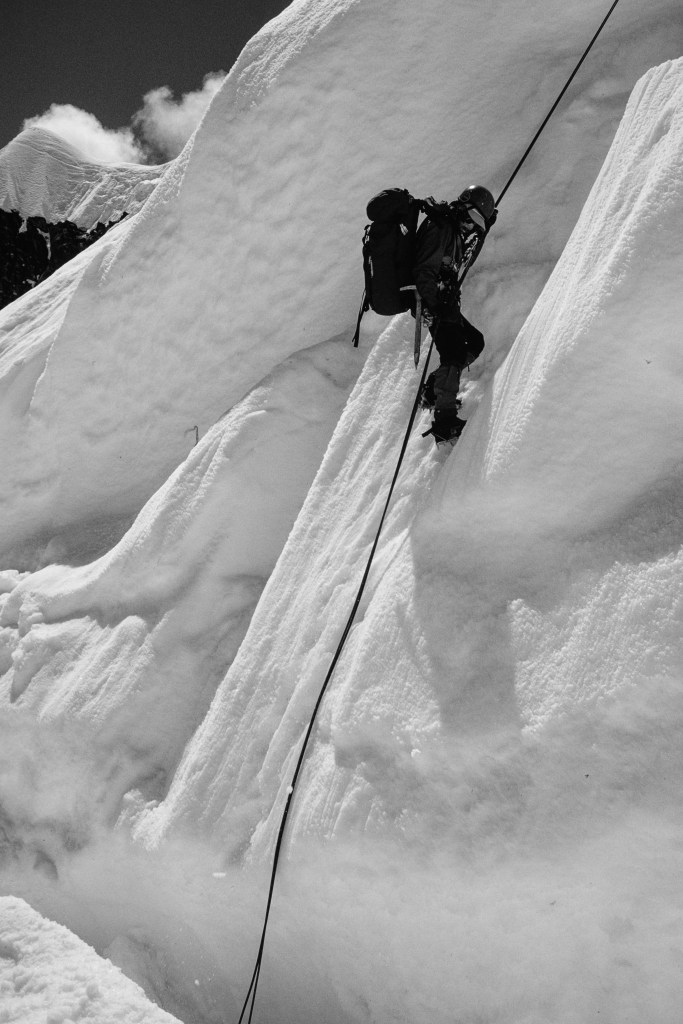

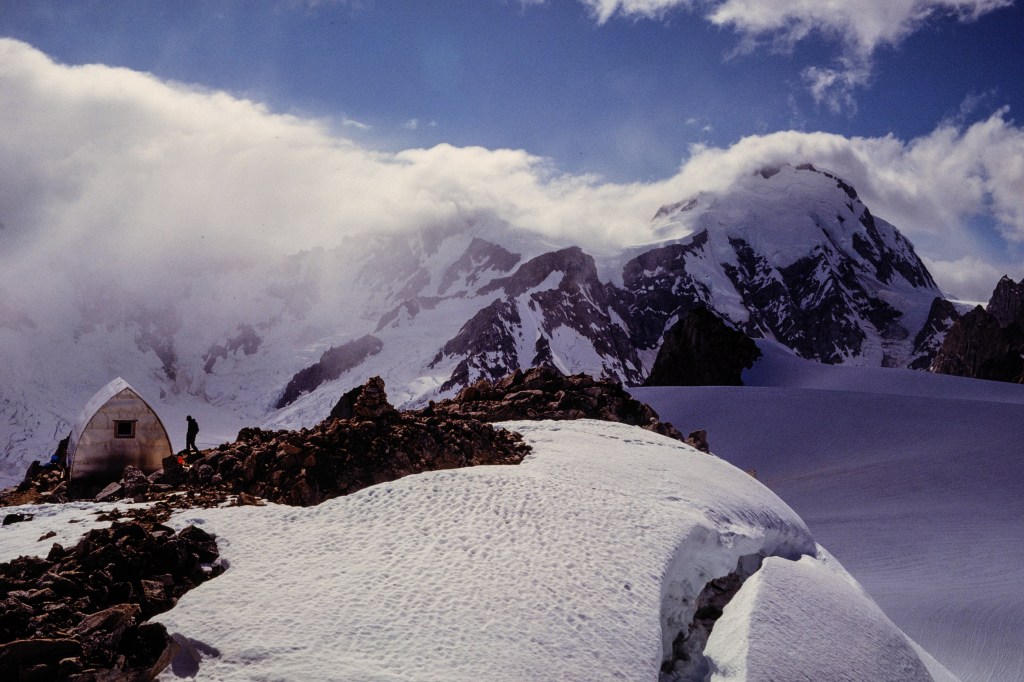

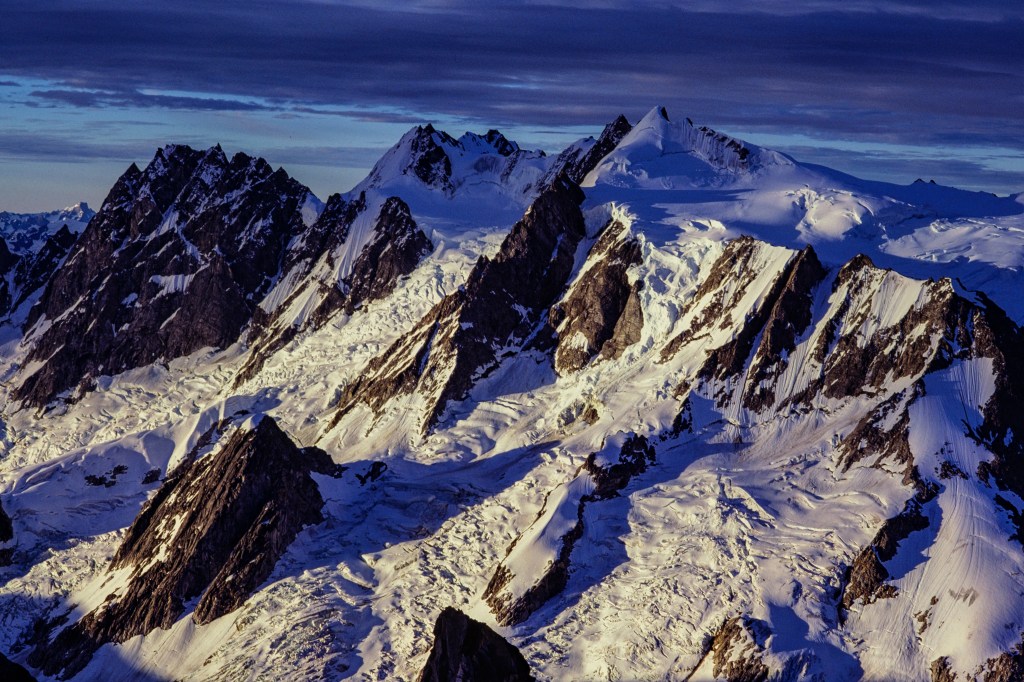
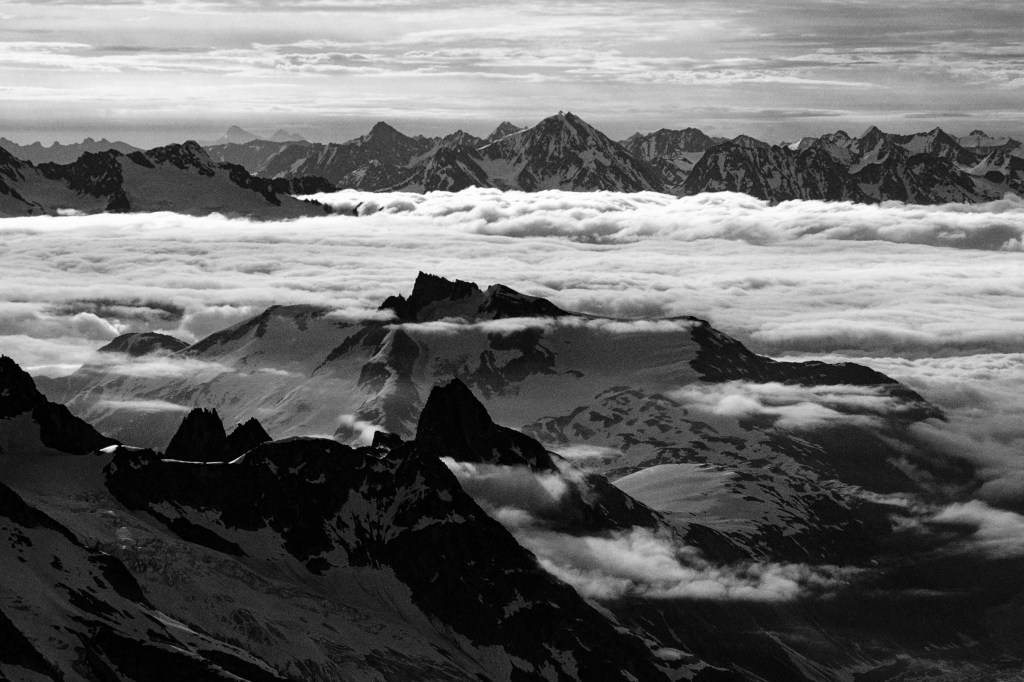
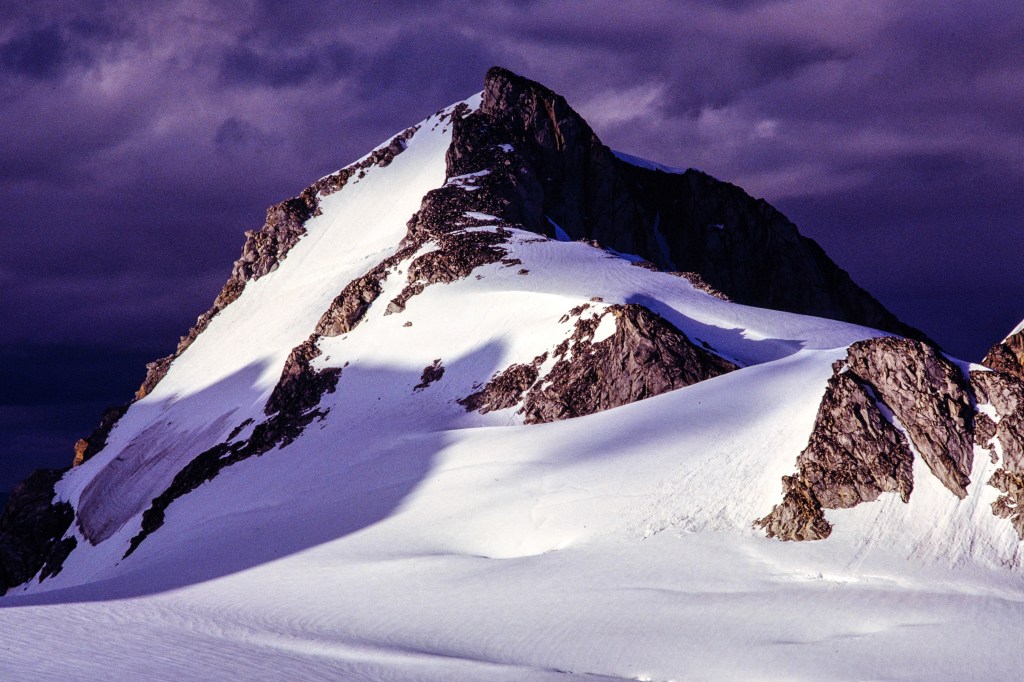
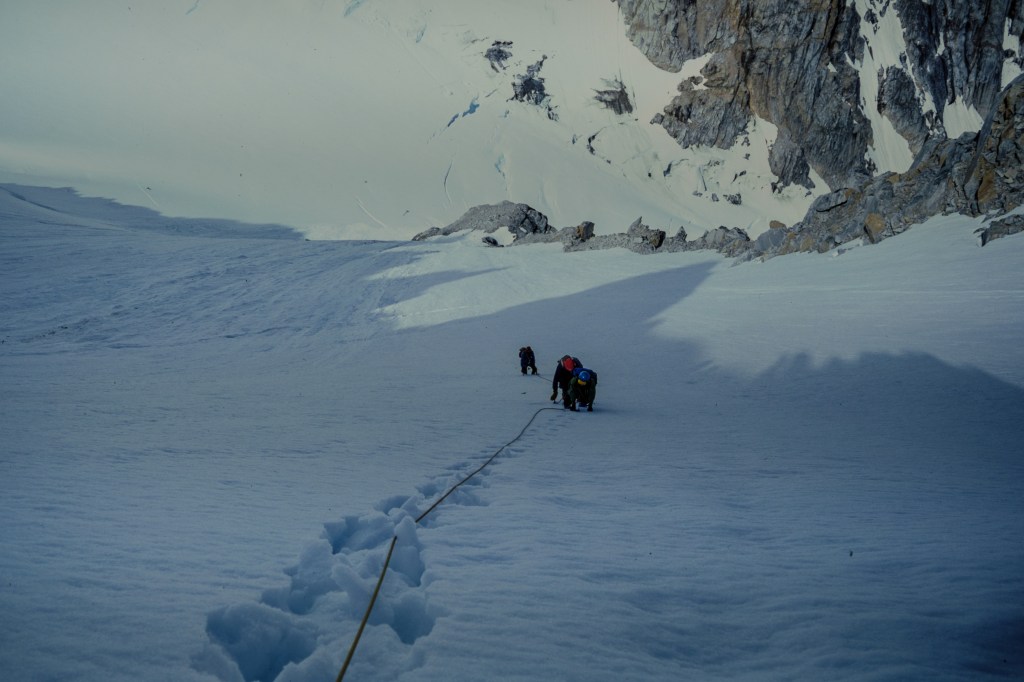
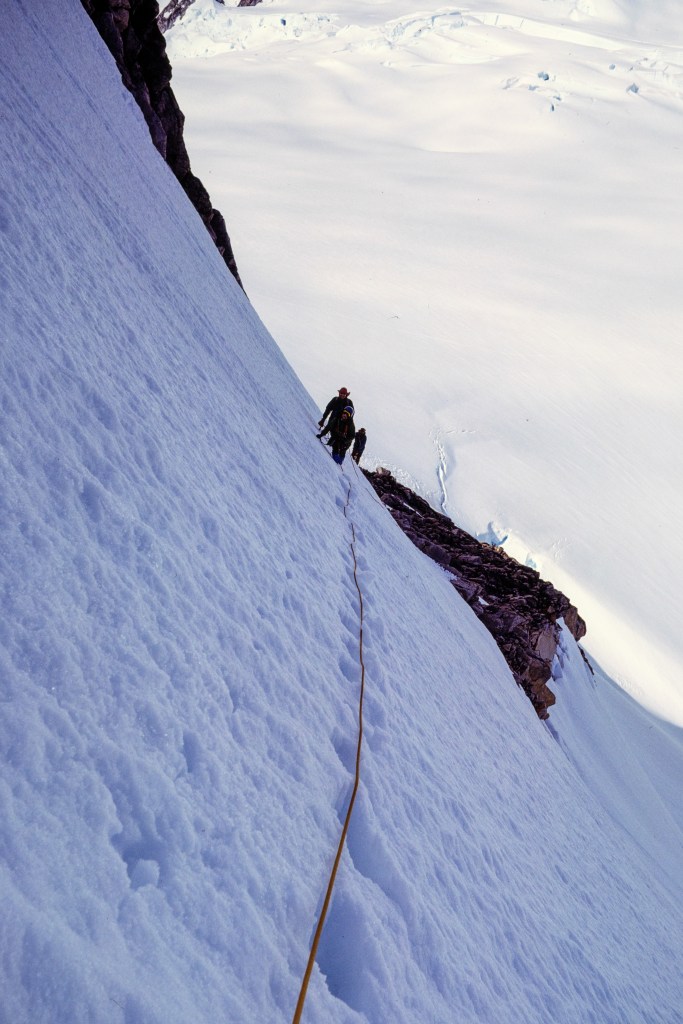
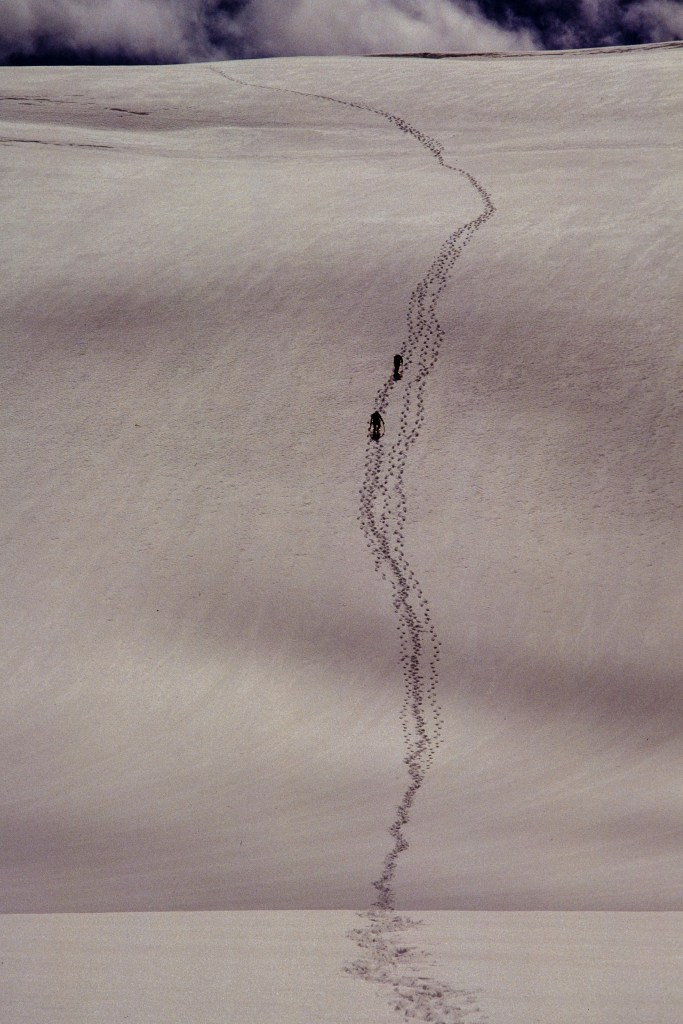
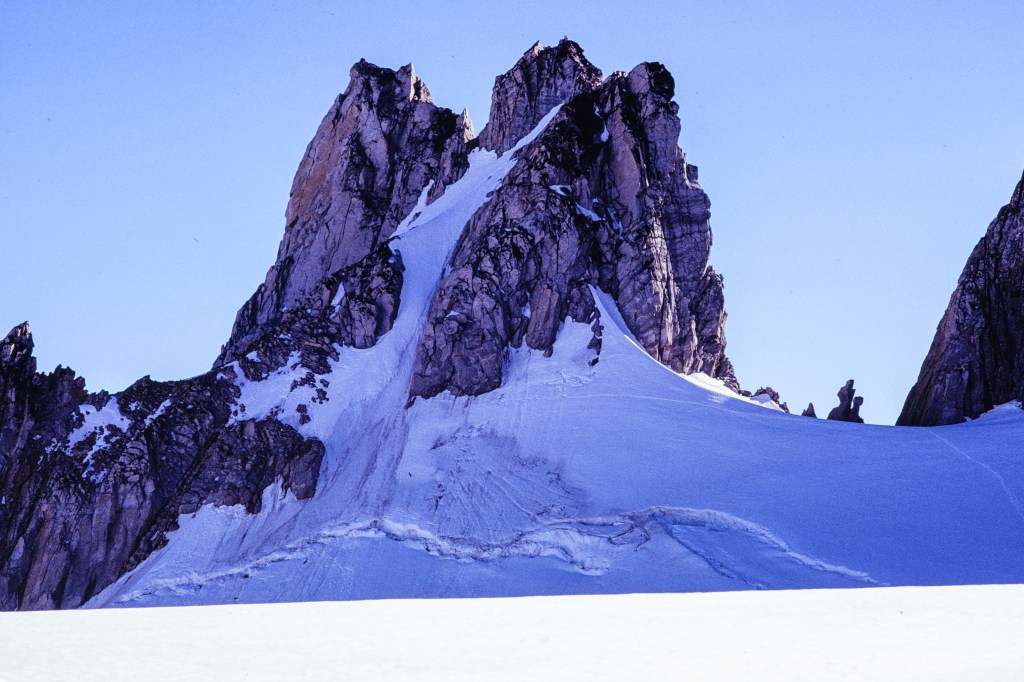

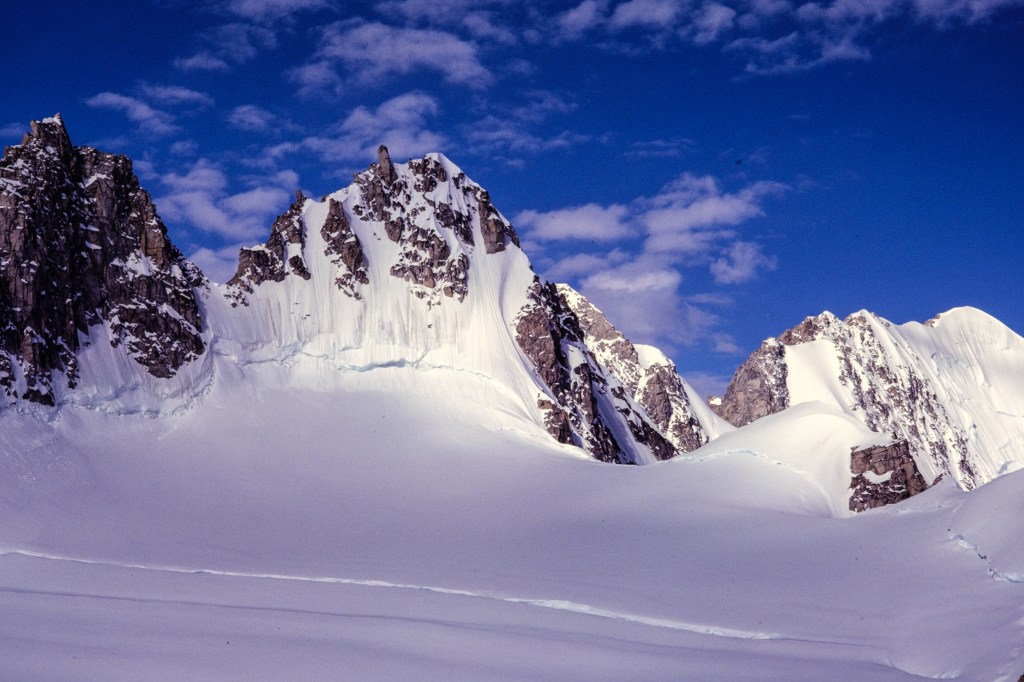
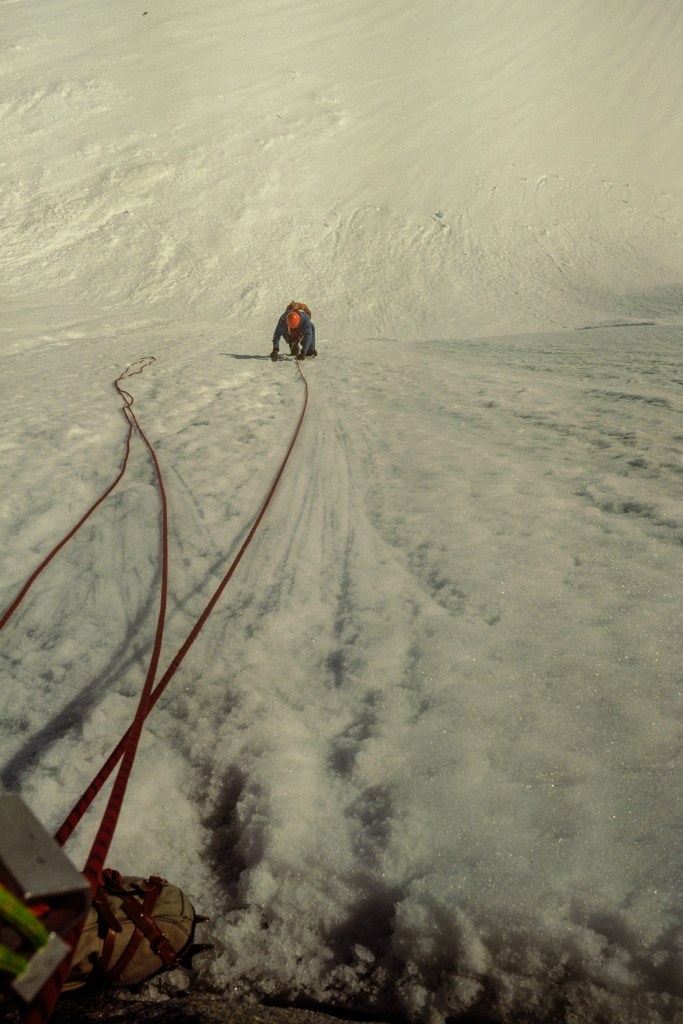
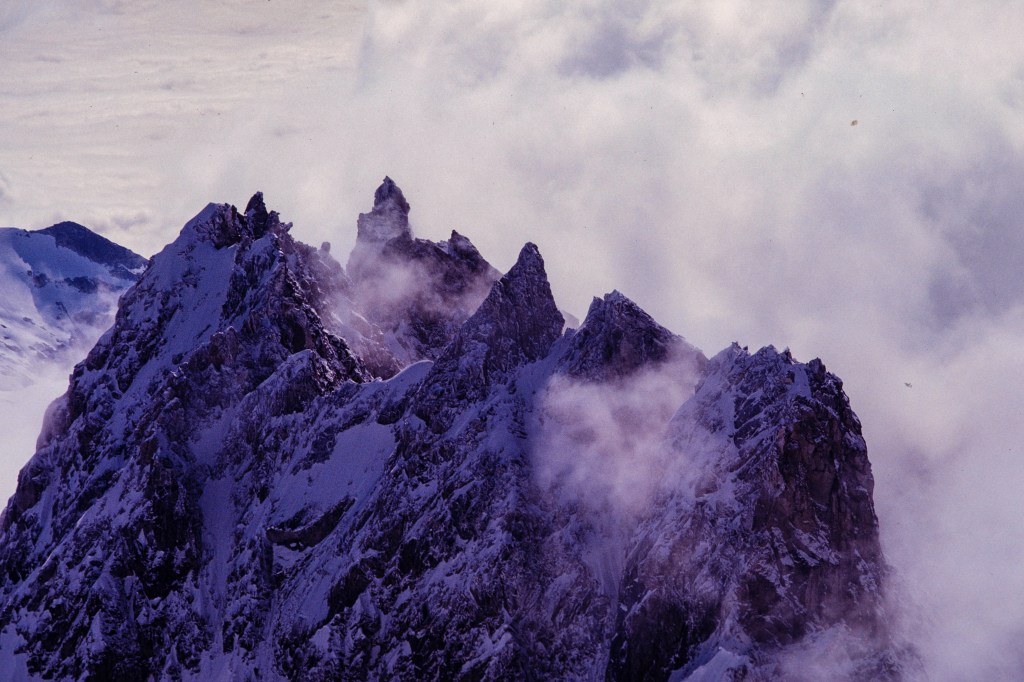
 Birds of Bishop