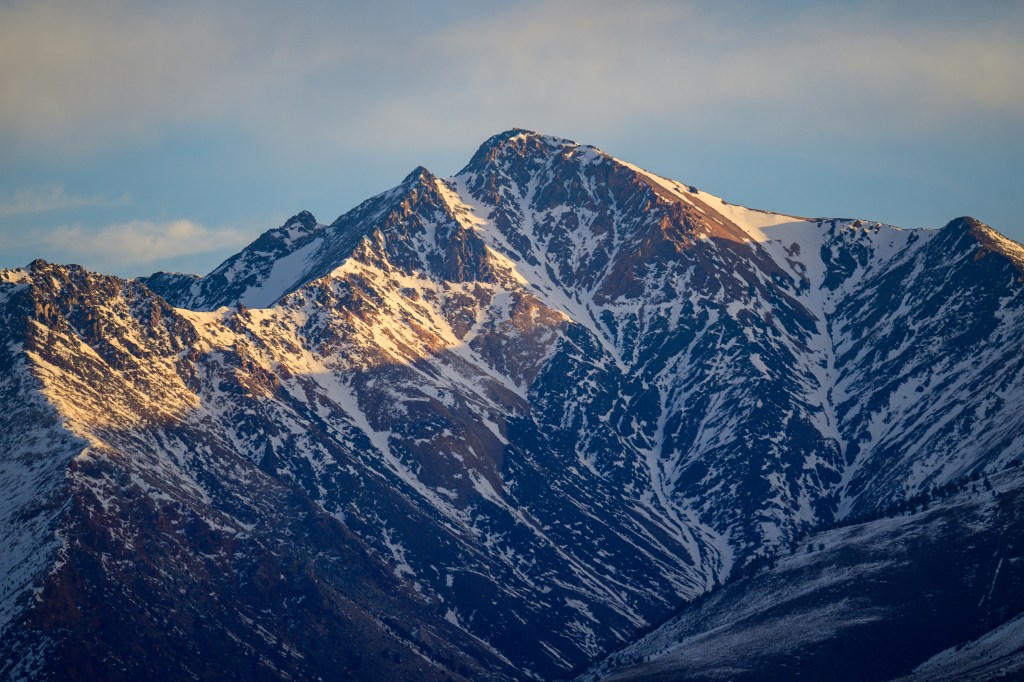
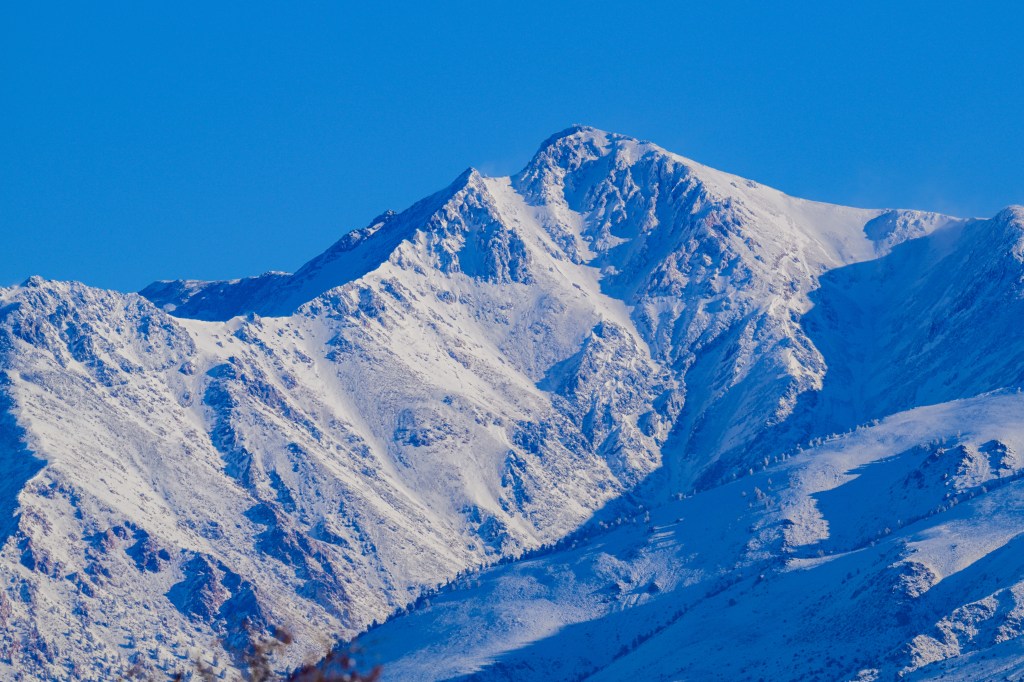
A selection of pictures, mostly of birds, taken in the Eastern Sierra during January, February, and March of 2026. I wanted to display the variety of creatures and sights in this area. I grouped pictures by species and used a minimum of text.
ANIMALS
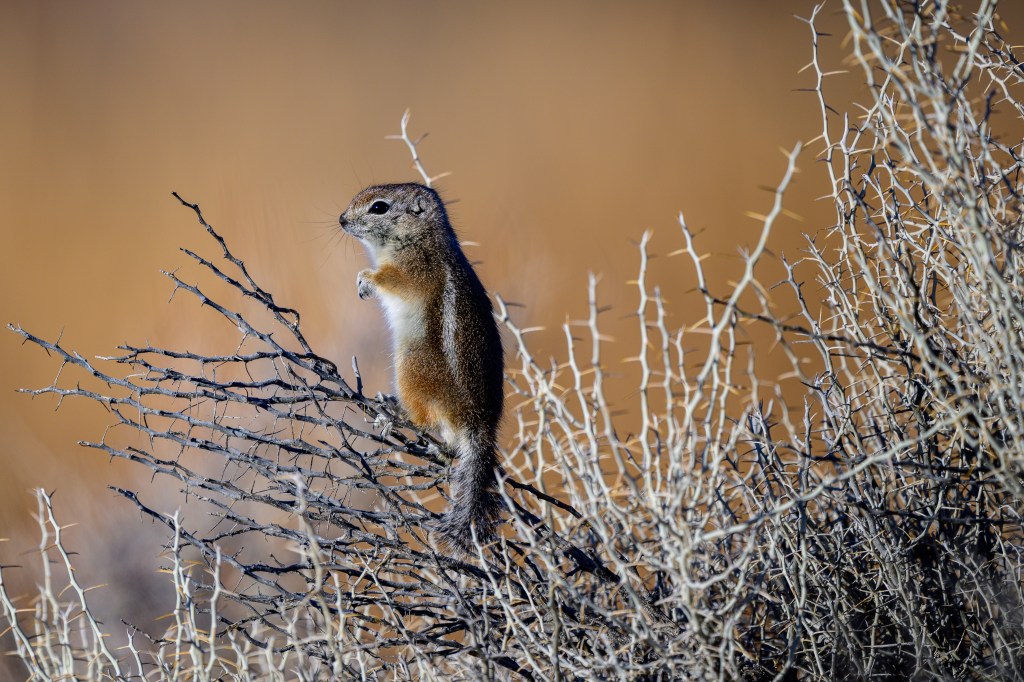
A White-tailed Antelope Squirrel at the Buckley Ponds. How did it get to this perch without being punctured to death by spines?
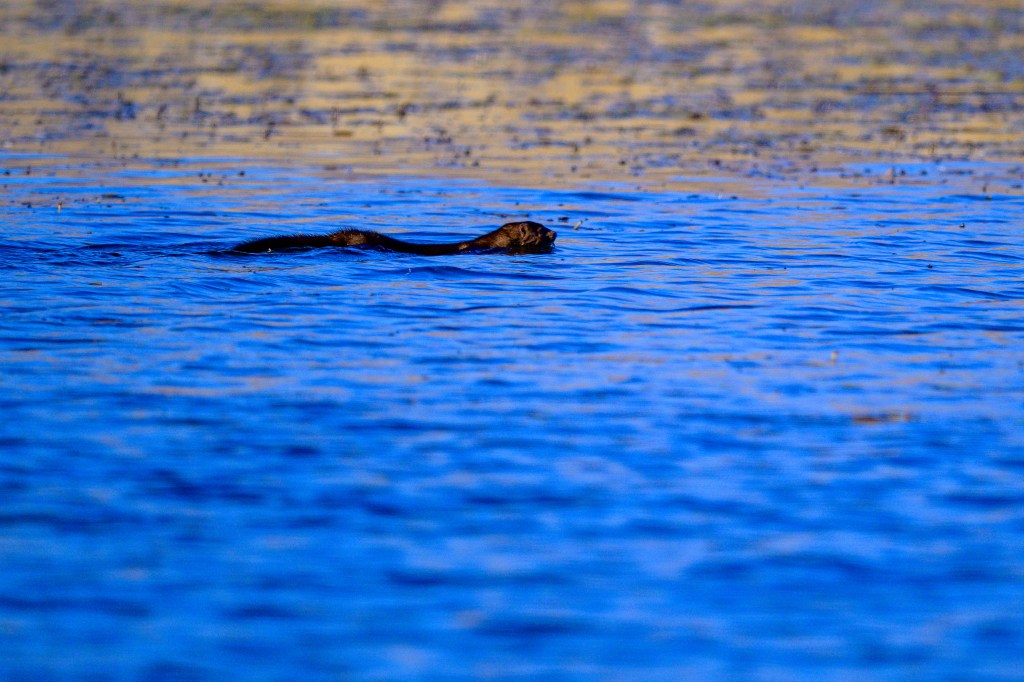
An American Mink swims at the Ponds in February.
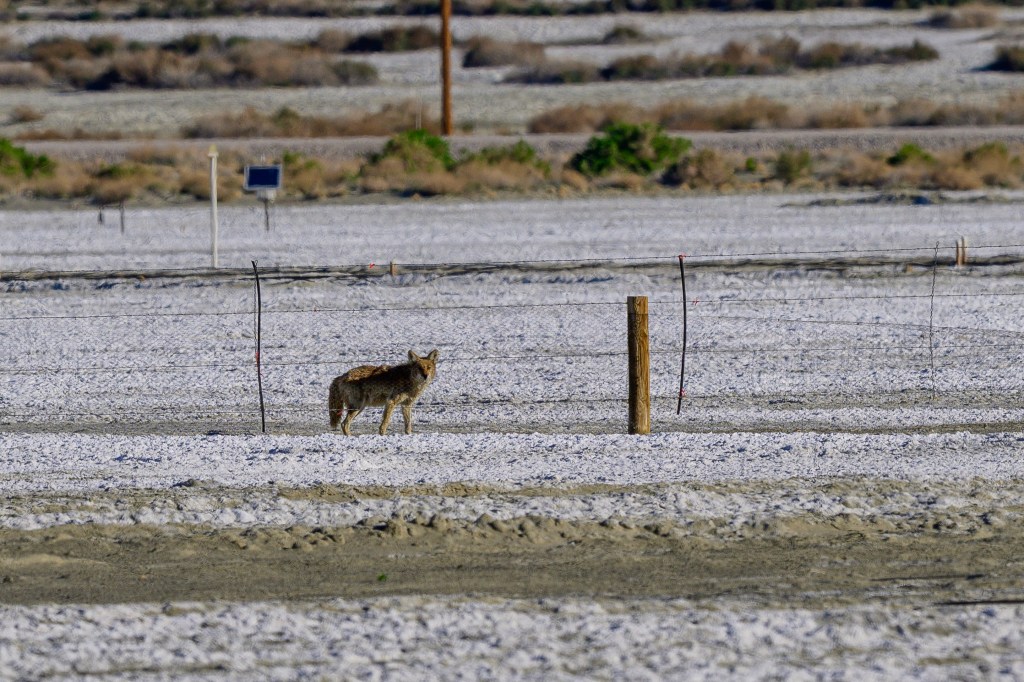
A Coyote watches me from afar on waterless section of Owens Lake.
SNOW GOOSE
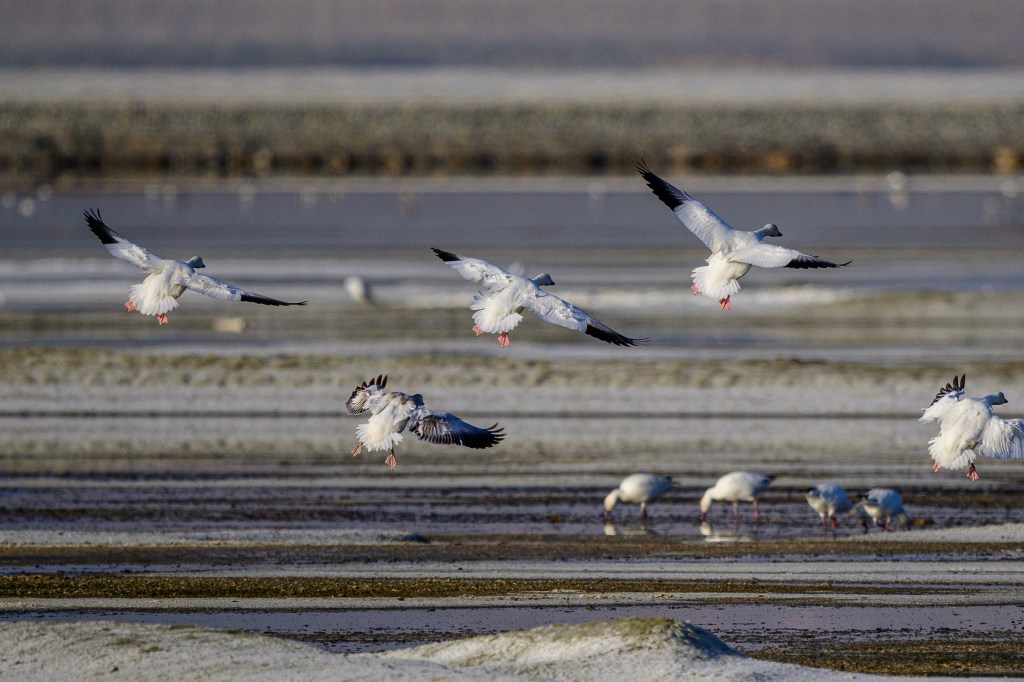
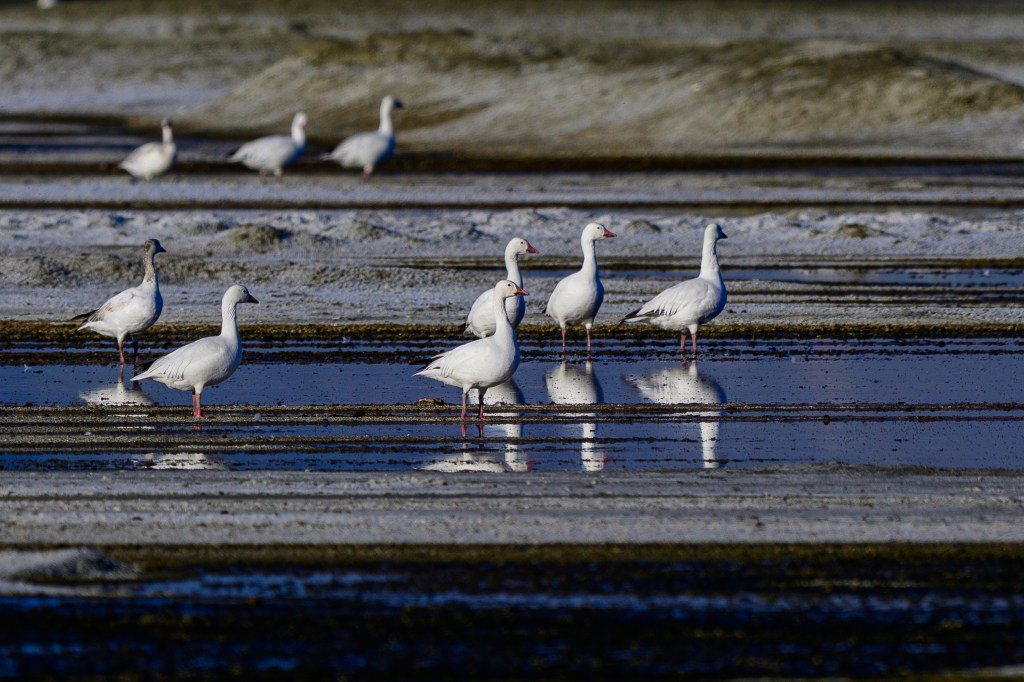
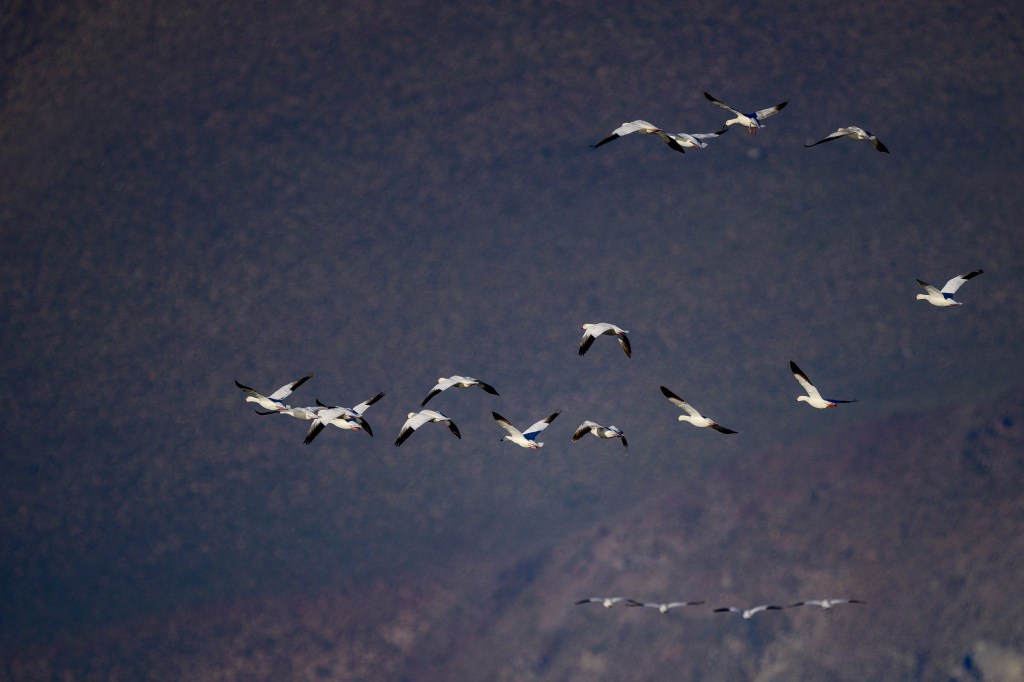
On March 24, we found 500 Snow Geese at the Owens Lake. Their long black primary feathers contrast nicely with their white plumage when they are in the air.
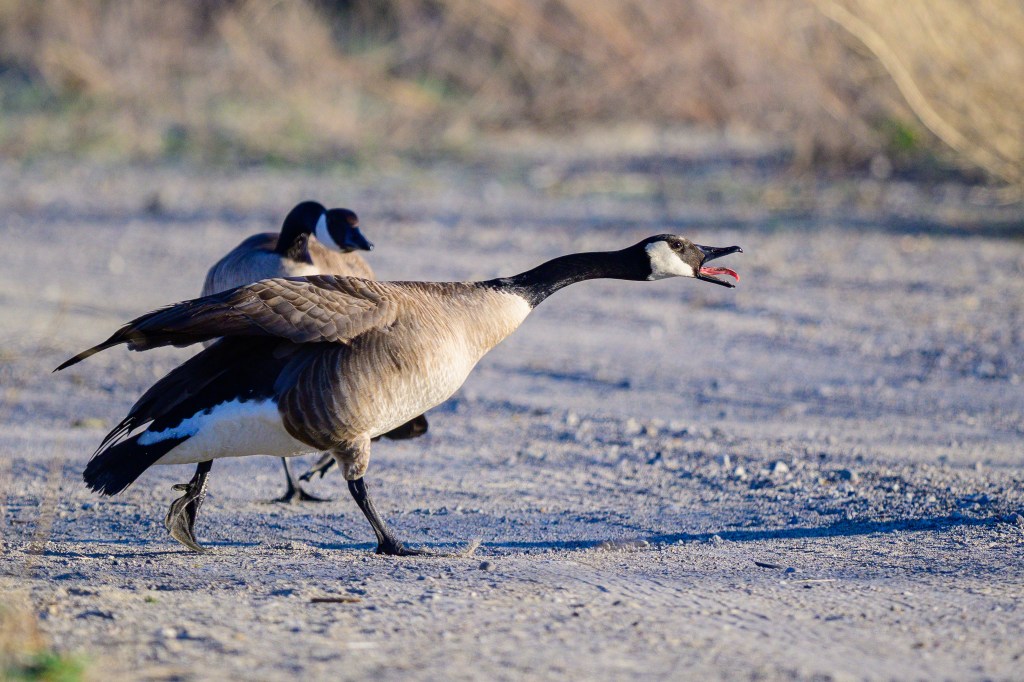
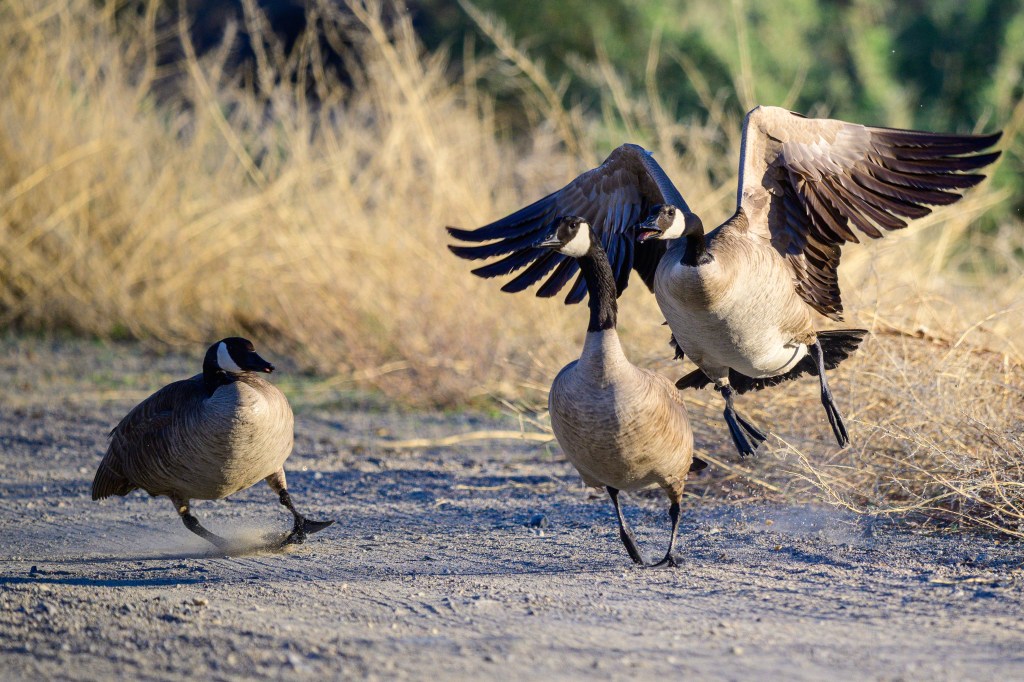
CANADA GOOSE
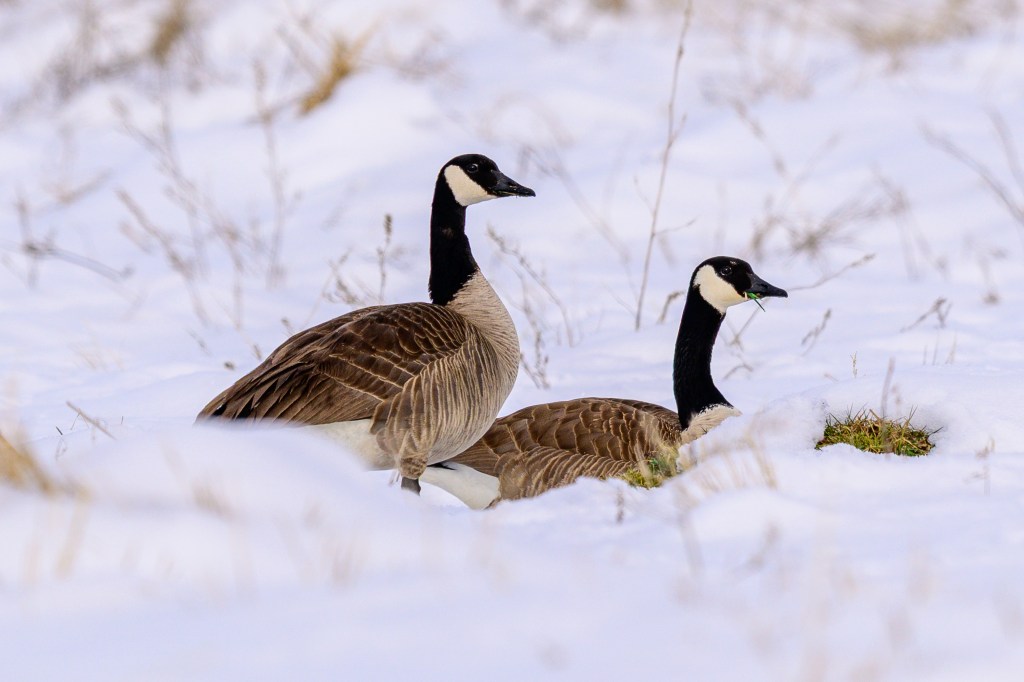
Geese feeding near Airport Road after a snowfall.
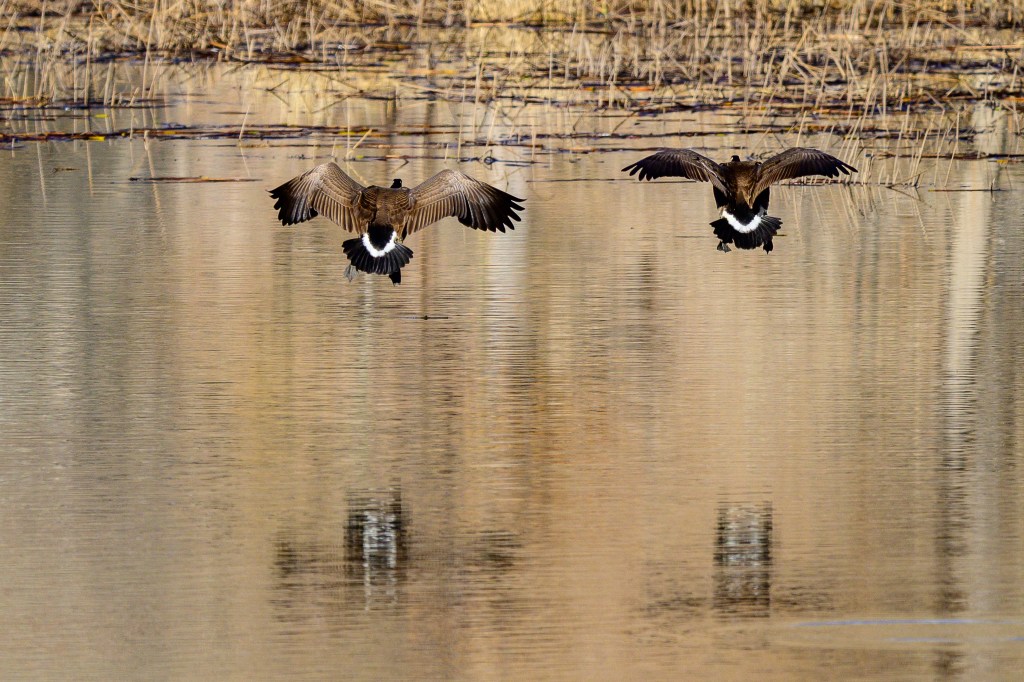
Two geese land on parallel runways at the Pleasant Valley Reservoir.
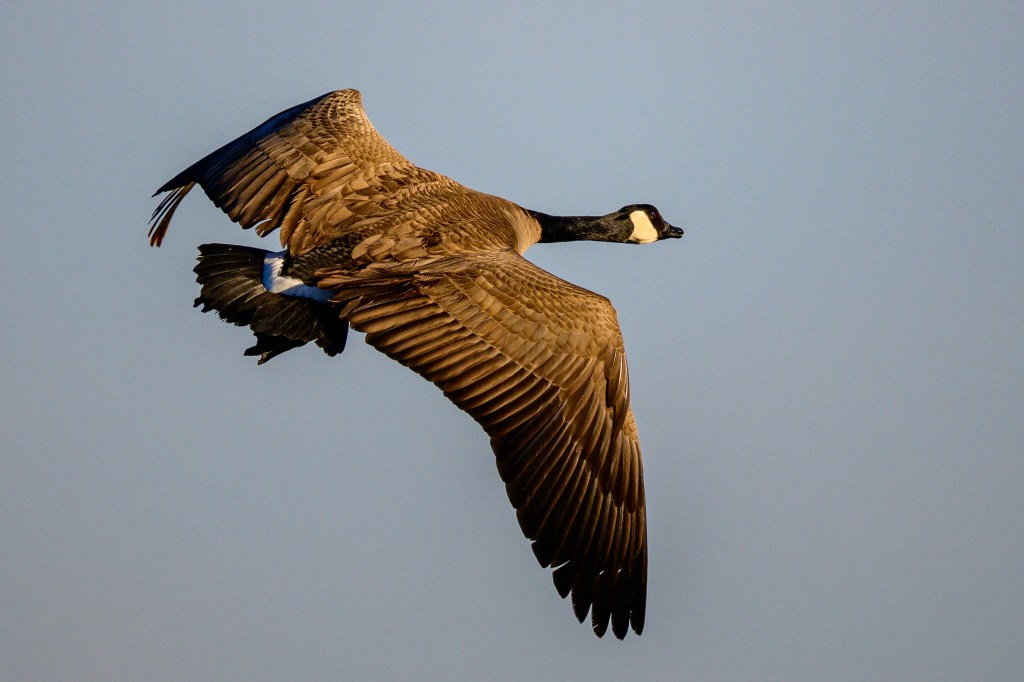
Morning sun lights up a goose at the Ponds.
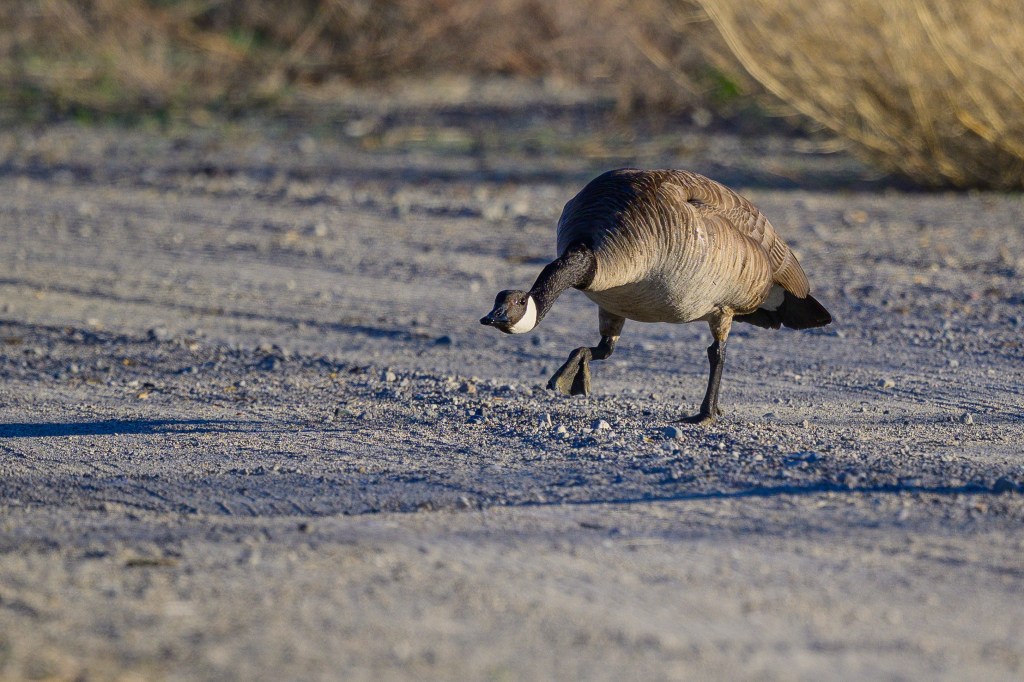
Male geese brawl over a lady at the Ponds.
CINNAMON TEAL
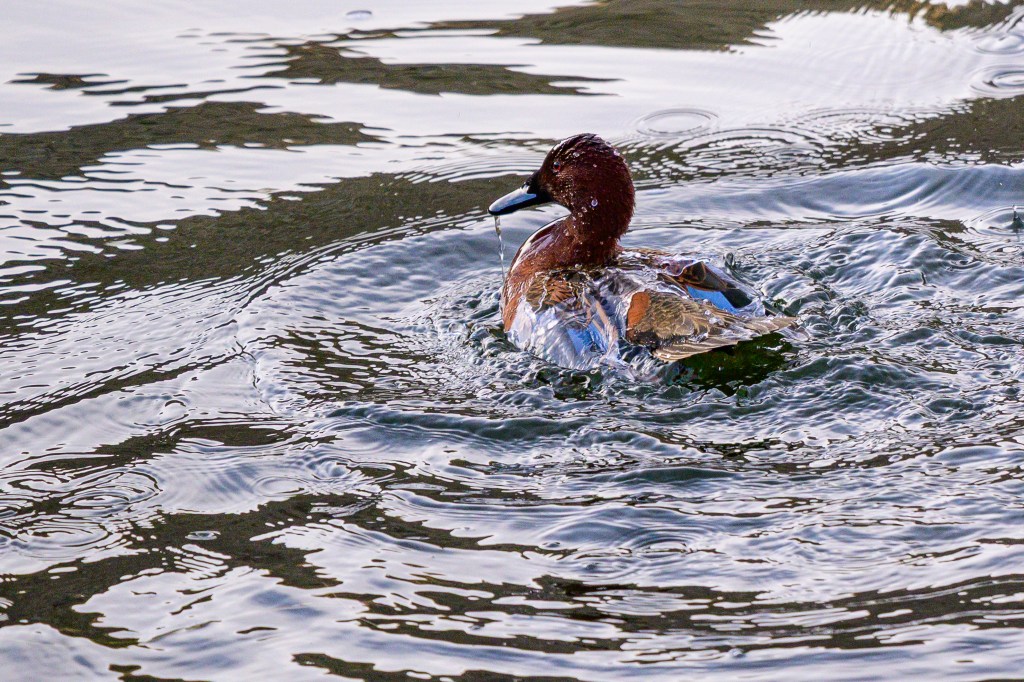
A male Teal shows that water really does roll off a duck’s back.
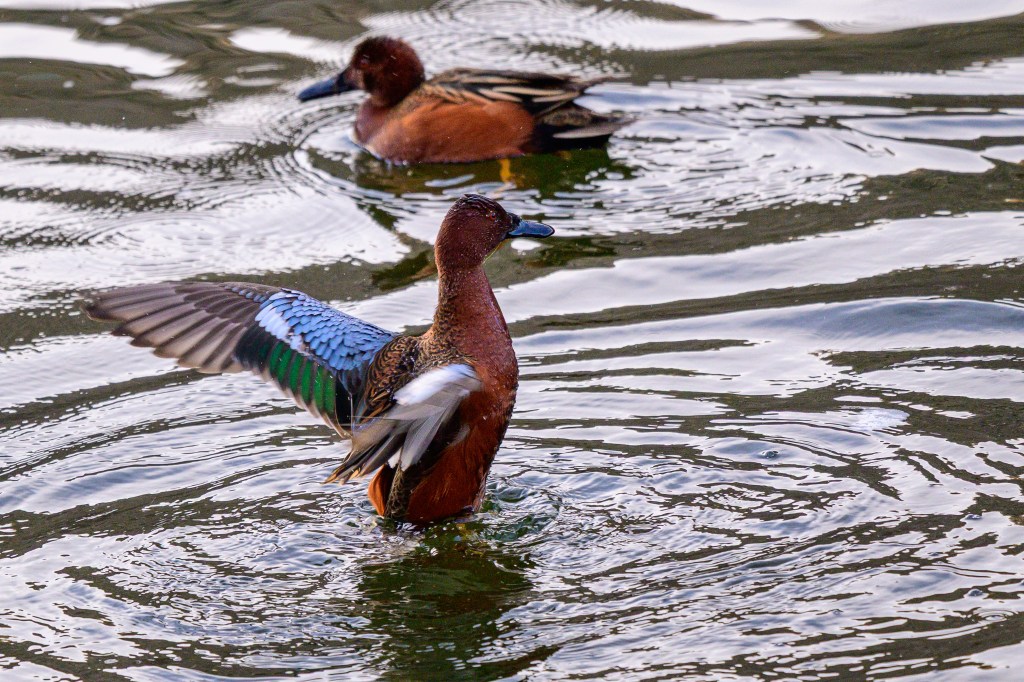
These birds are colorful!
GADWALL
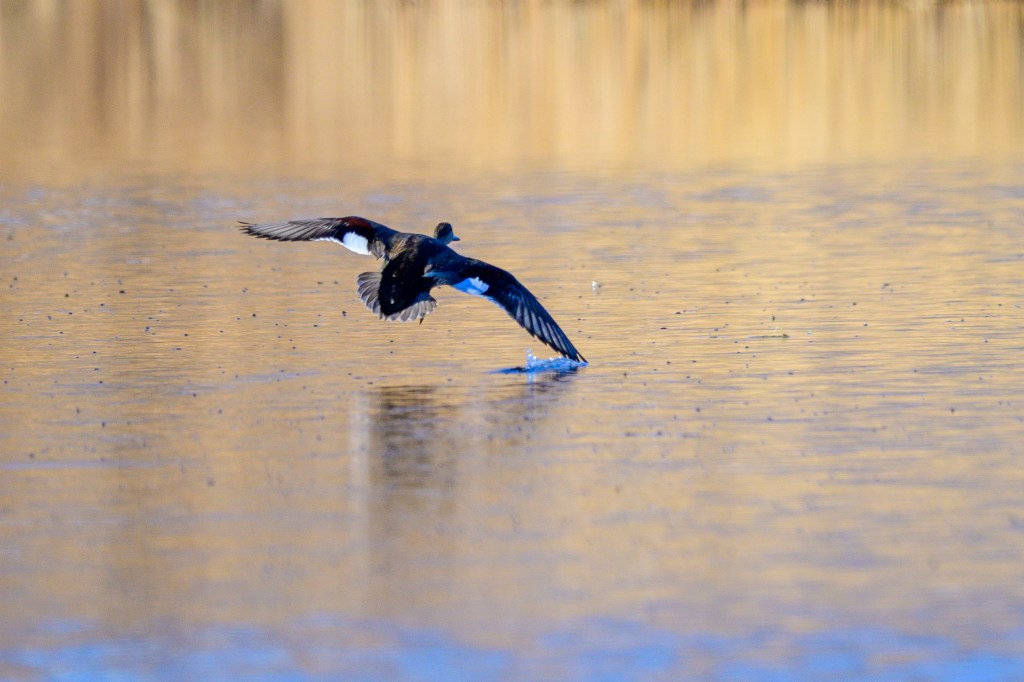
A Gadwall uses a wingtip to assist its landing.
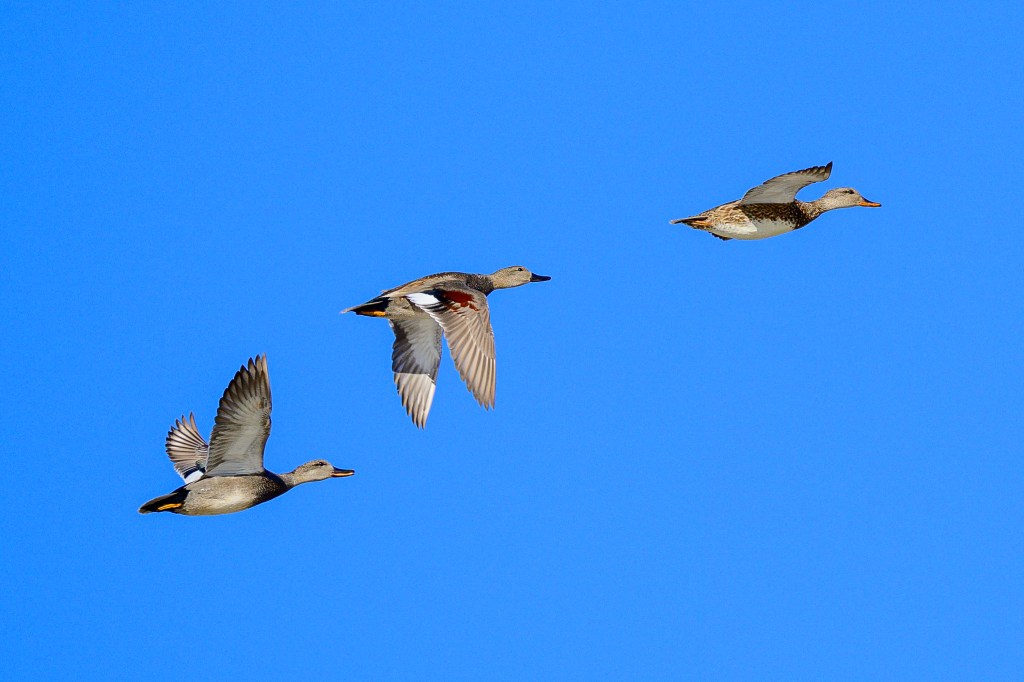
Gadwalls fly over the Owens Lake.
MALLARD
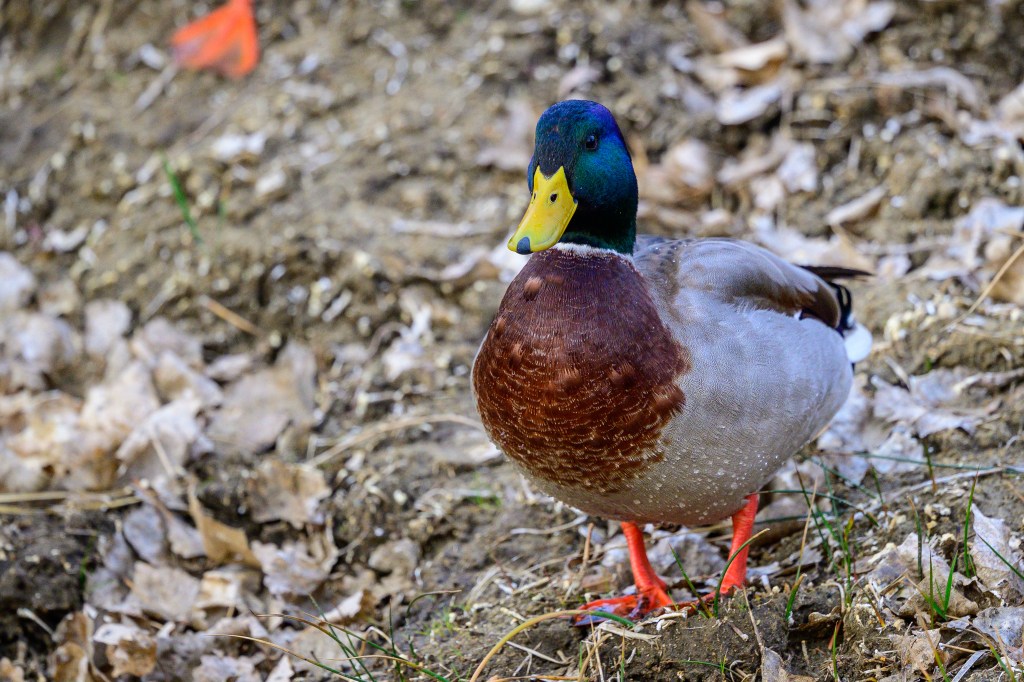
A male walks along a canal on the north side of Bishop.
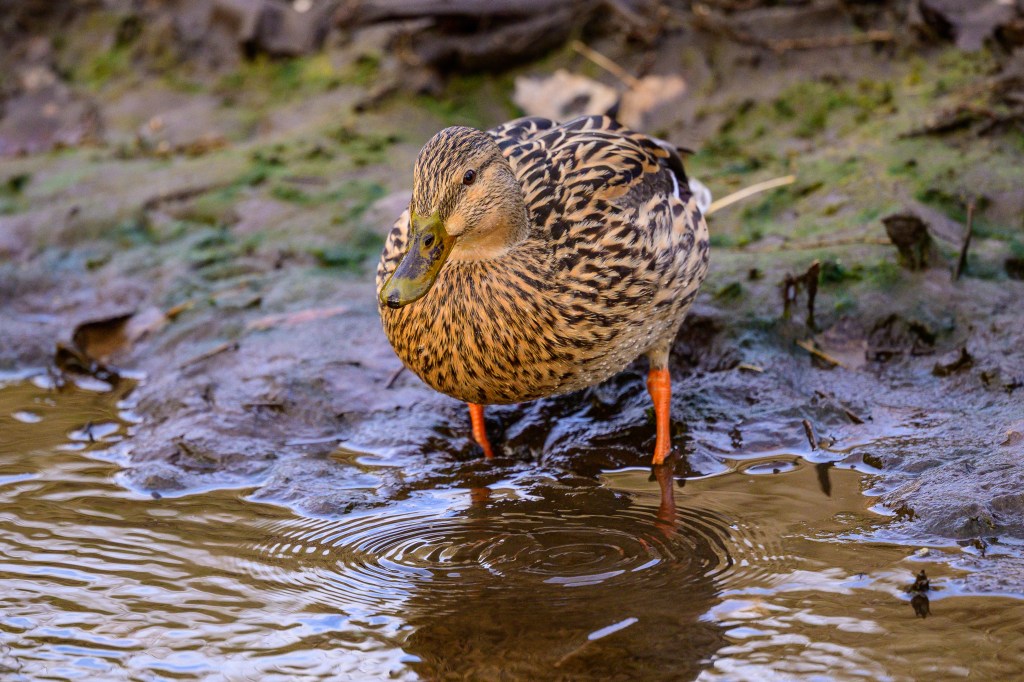
A female does the same.
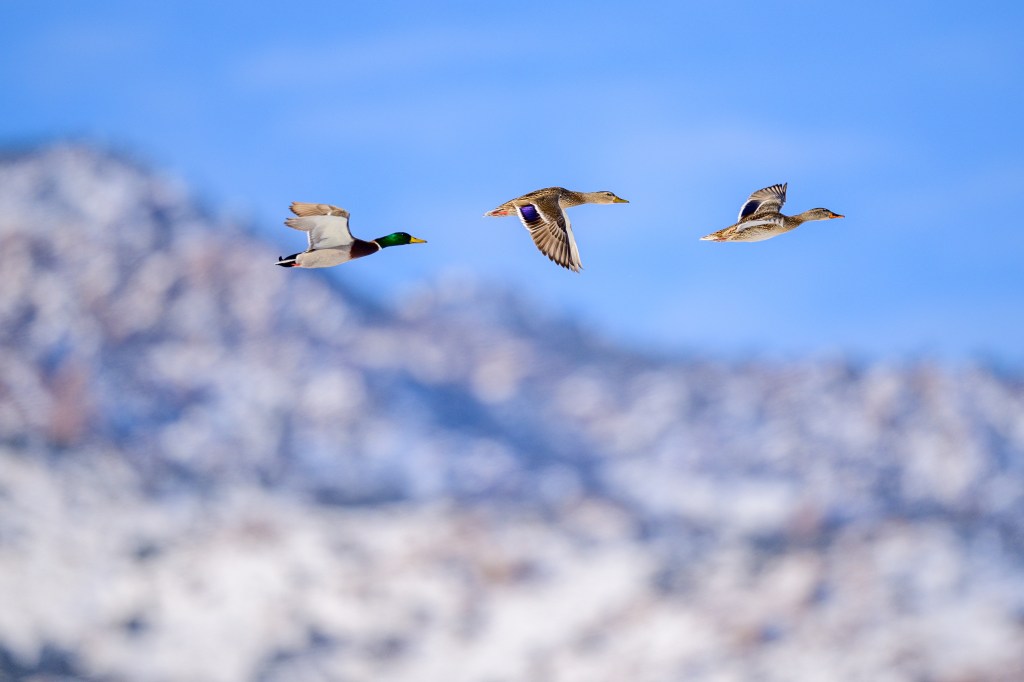
Flying in front of the Sierra.
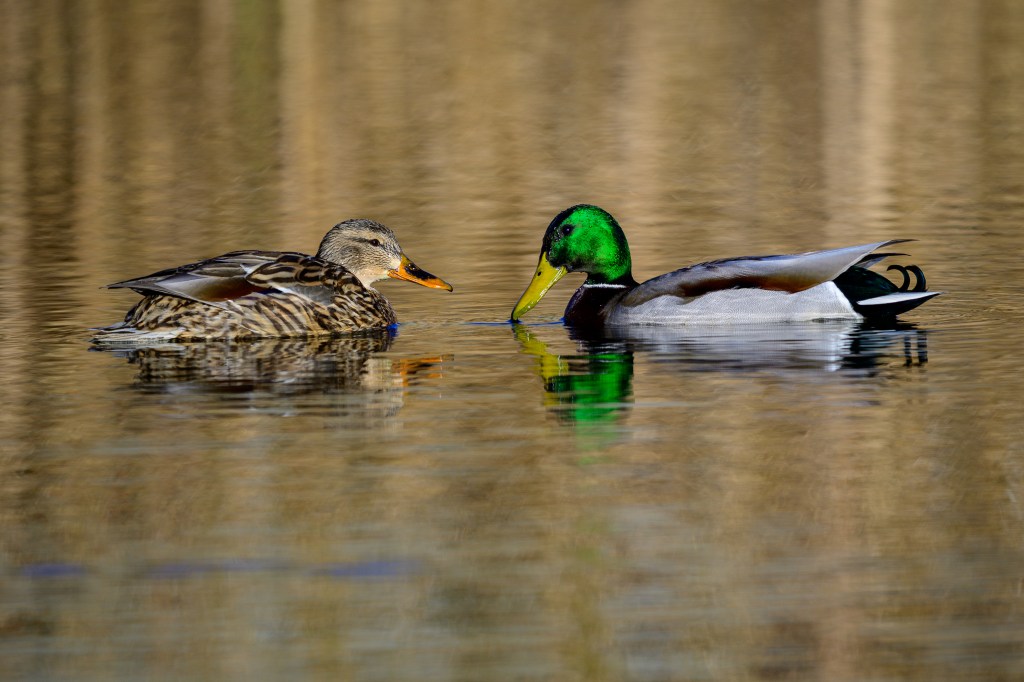
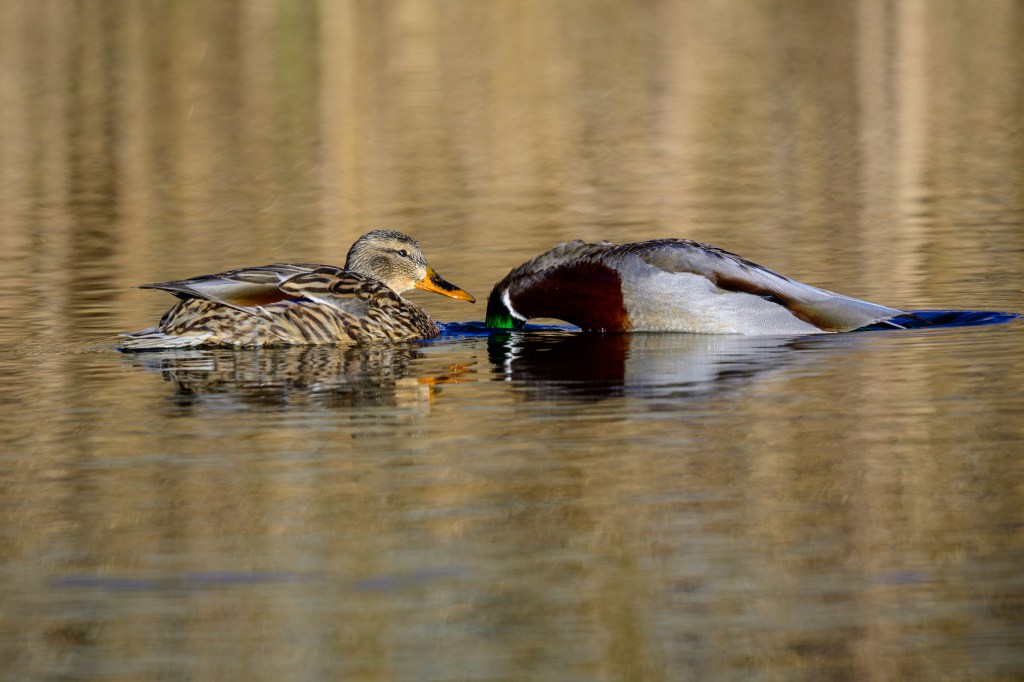
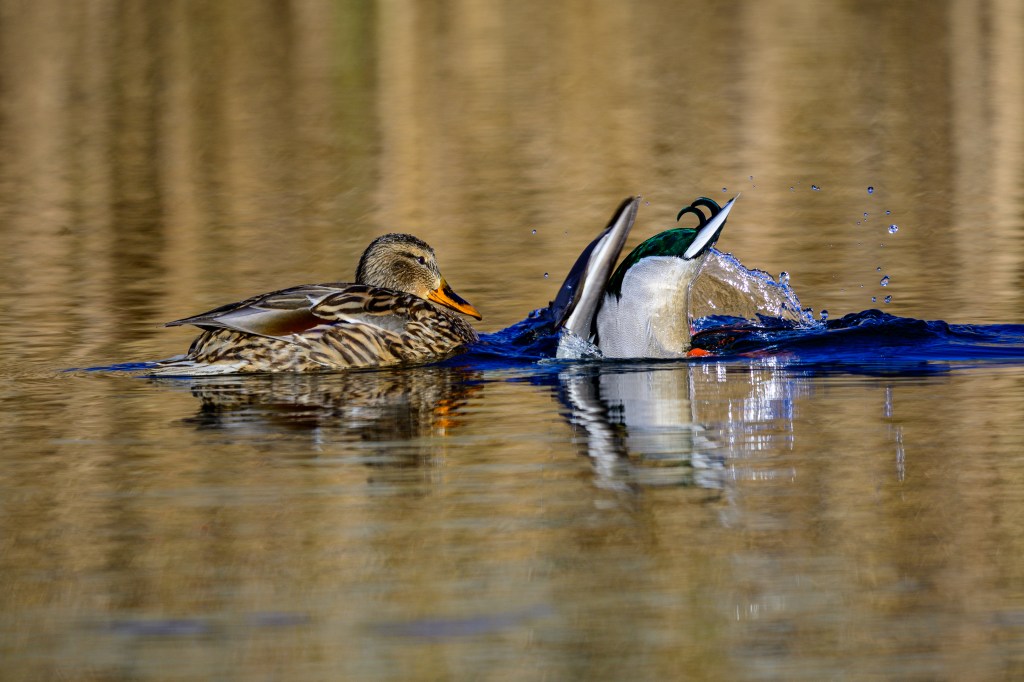
A male and female Mallard chat at the Conservation Open Space Area (COSA). Then the male exhibits rude behavior.
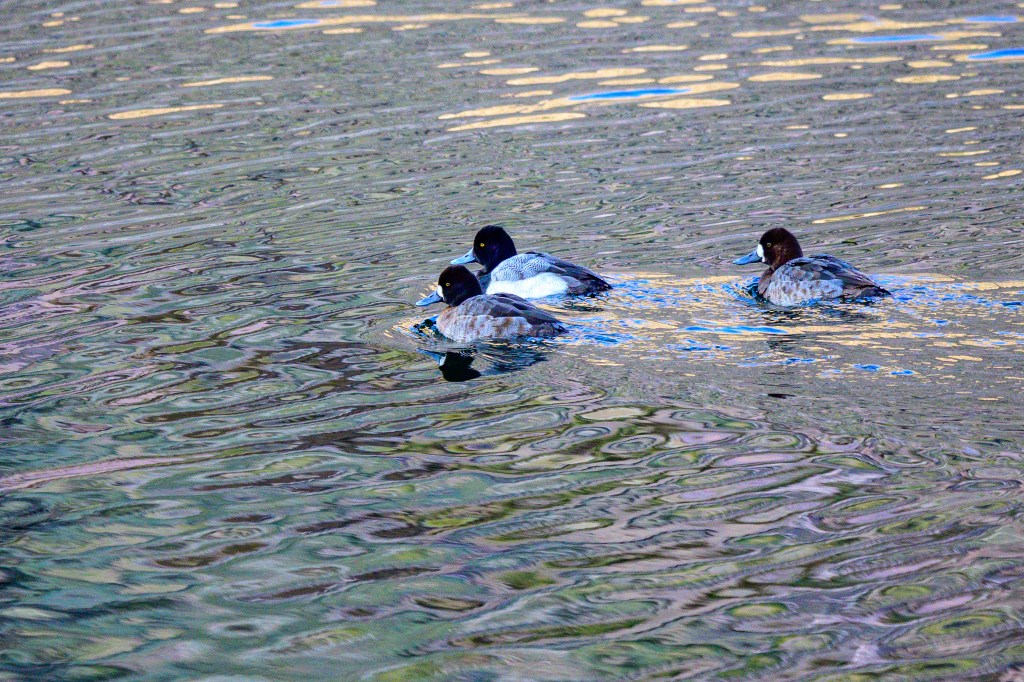
LESSER SCAUP
Scaups on the Pleasant Valley Reservoir.
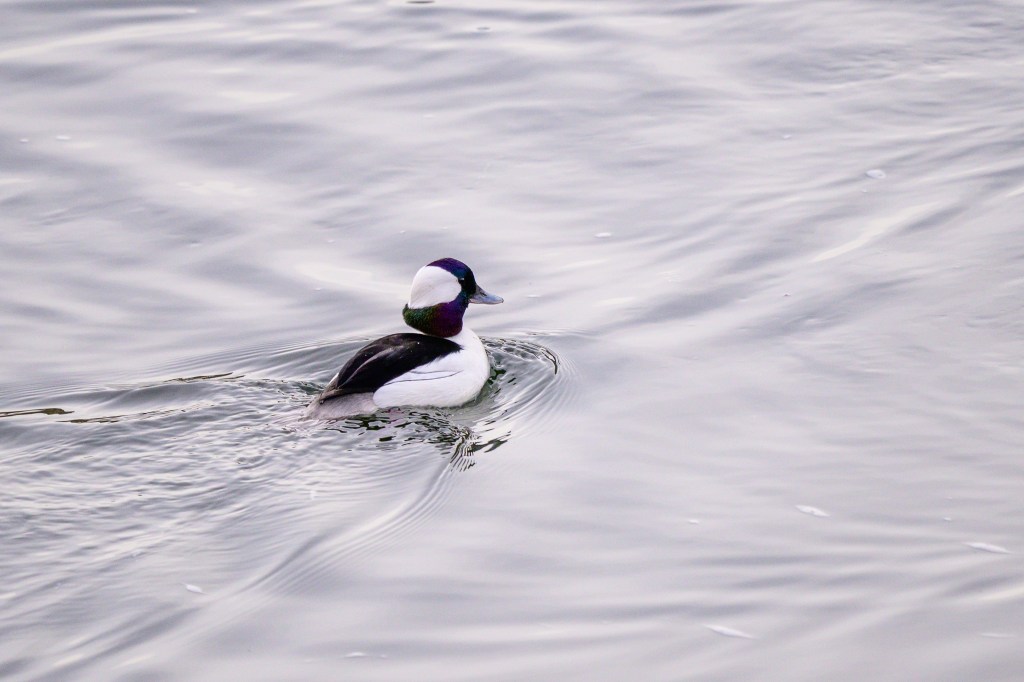
BUFFLEHEAD
A male at the Reservoir.
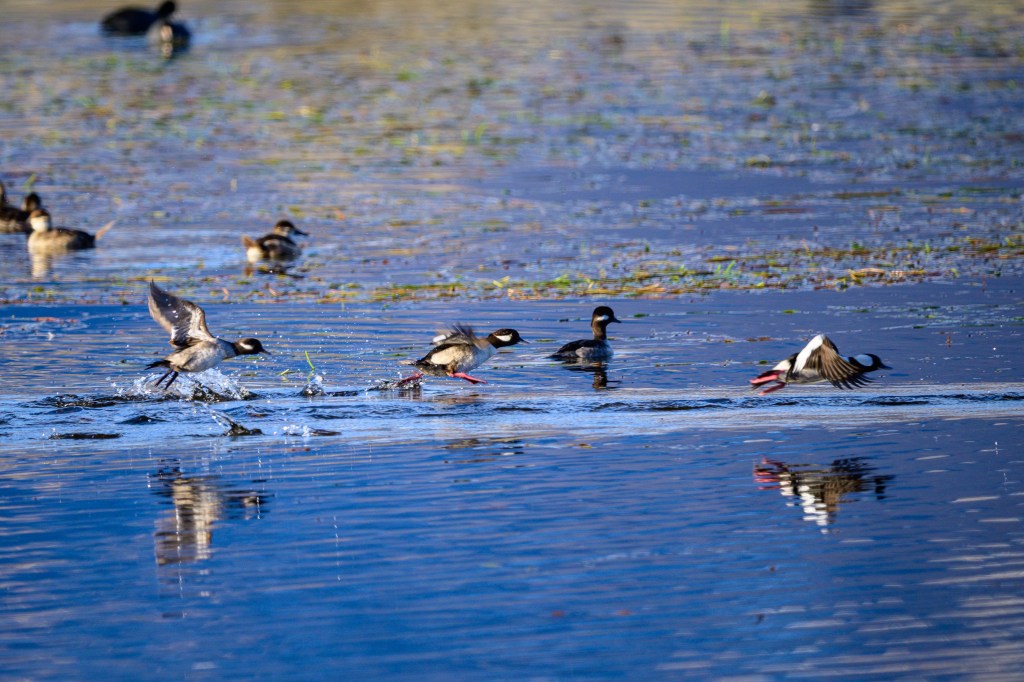
Buffleheads take off from the Ponds by pushing with their feet.
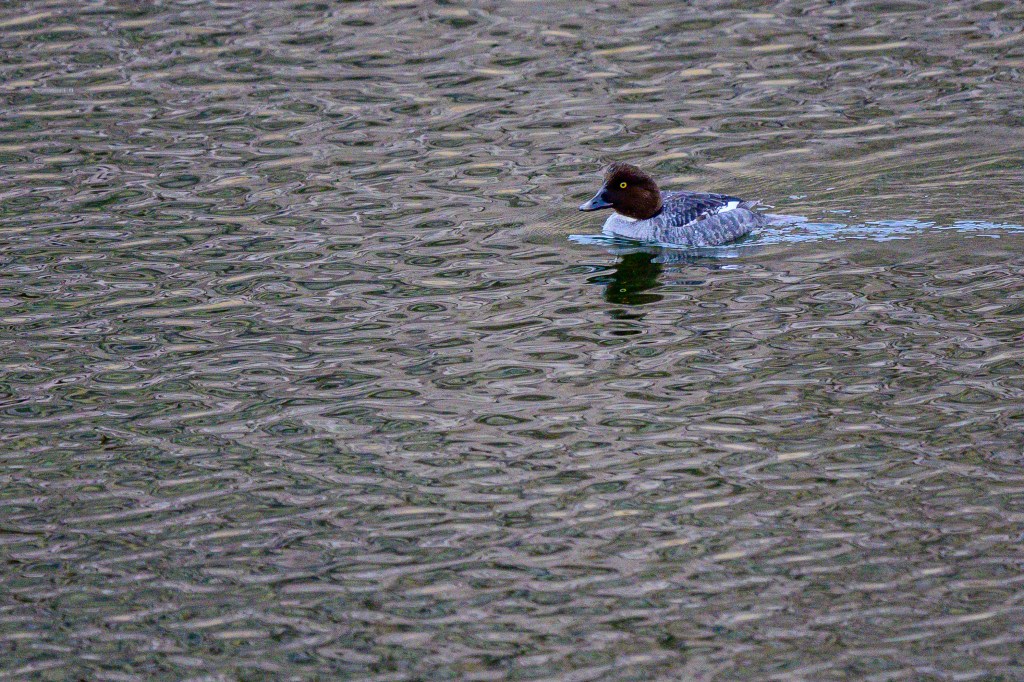
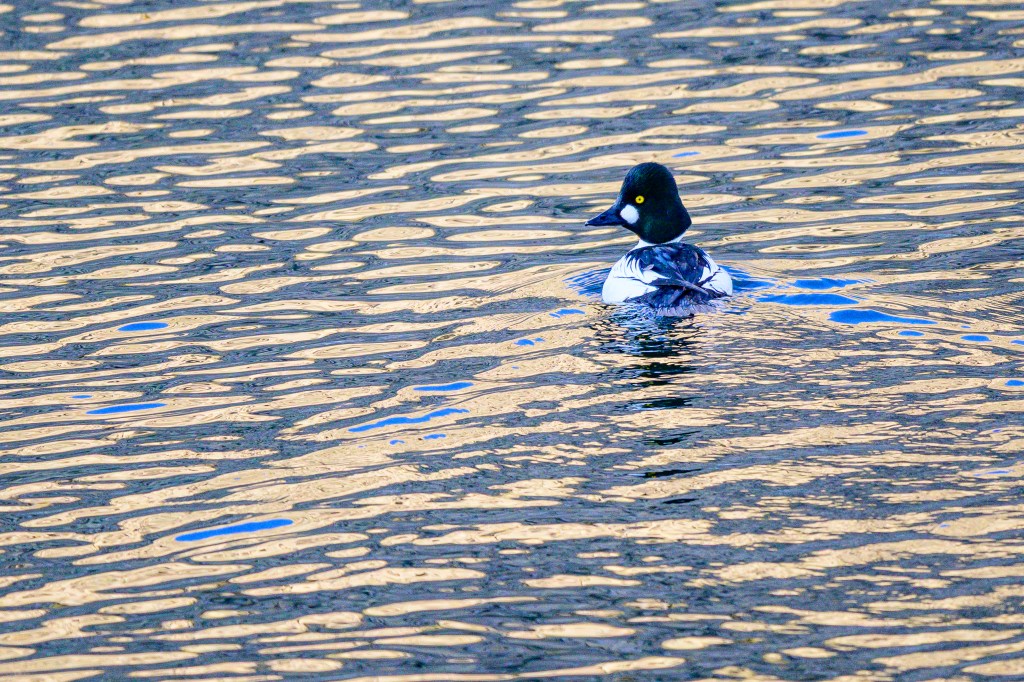
COMMON GOLDENEYE
A female at the Reservoir. The eye is … well, you know.
The green head of a male looks almost black in this light.
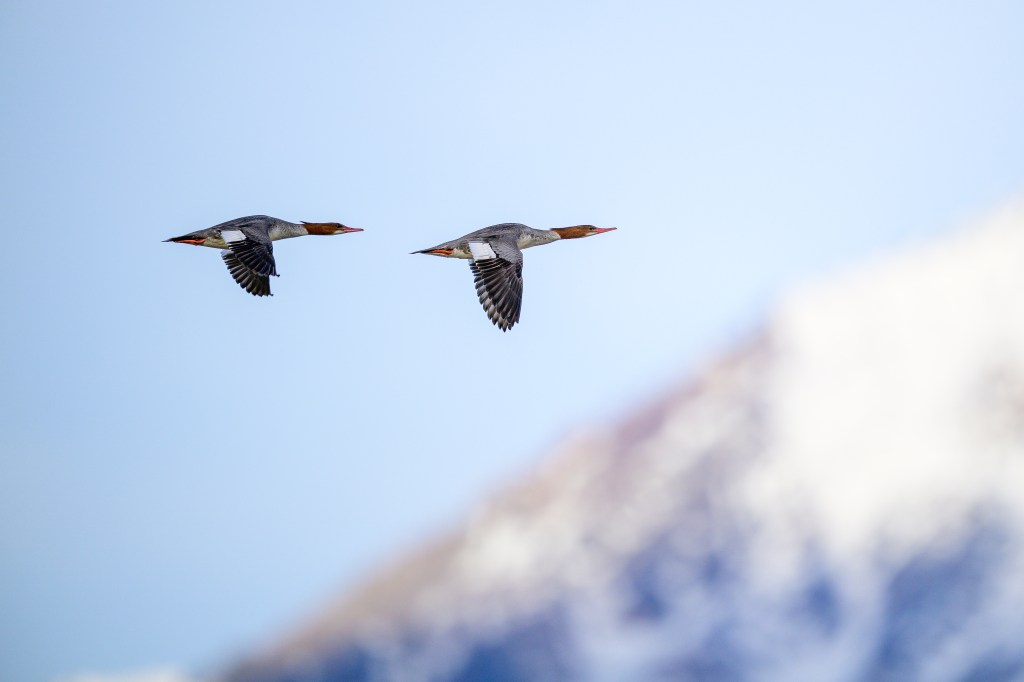
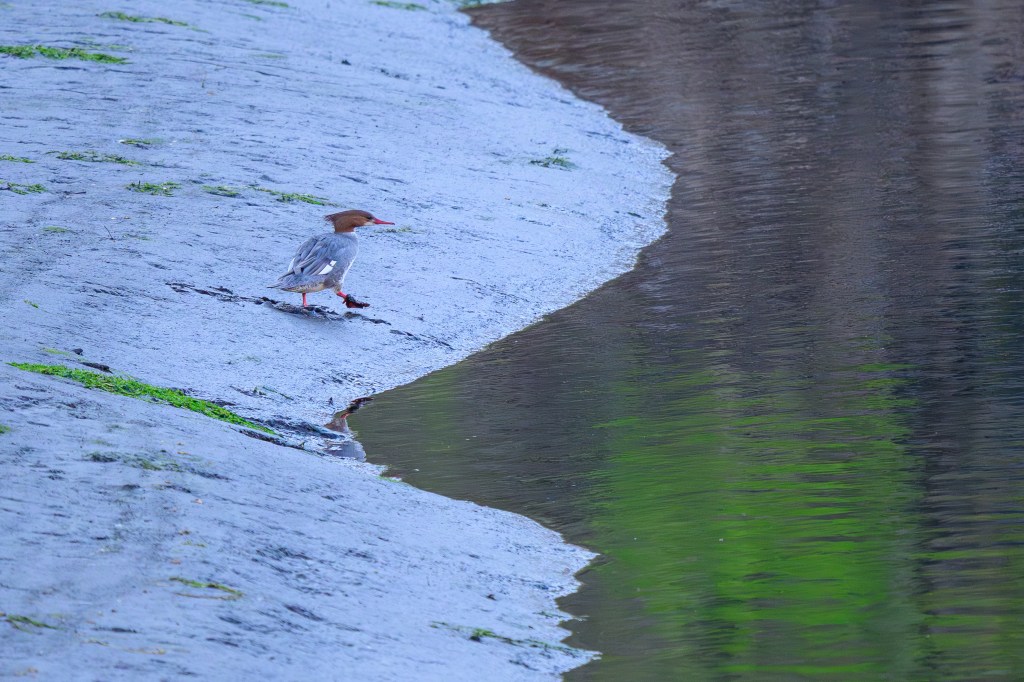
COMMON MERGANSER
Two females fly past Mt. Tom.
Walking through mud at the Reservoir.
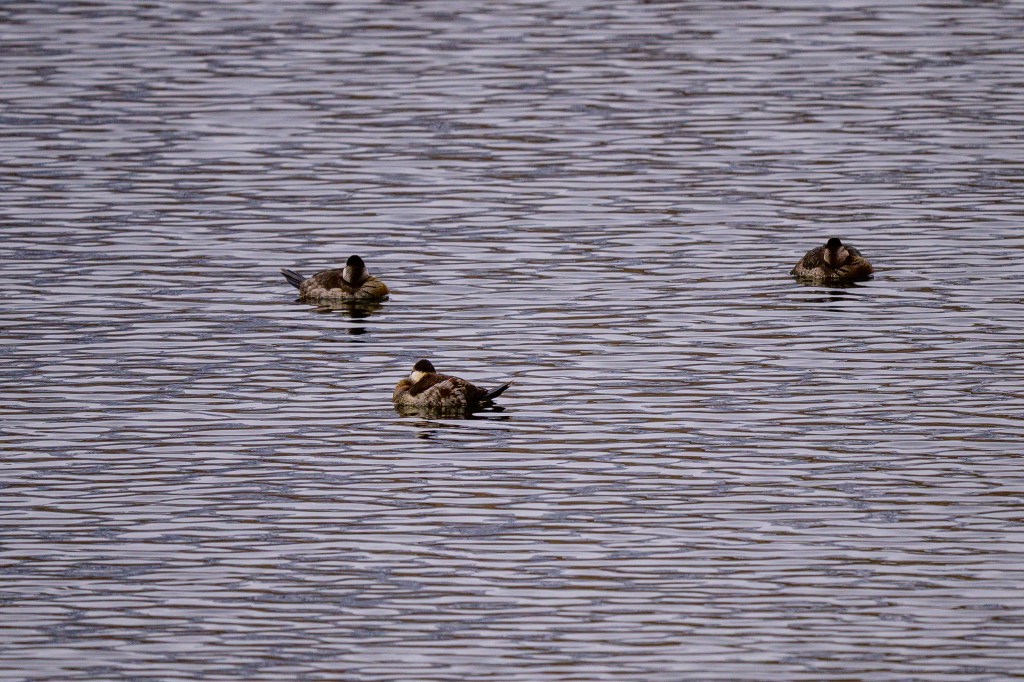
RUDDY DUCK
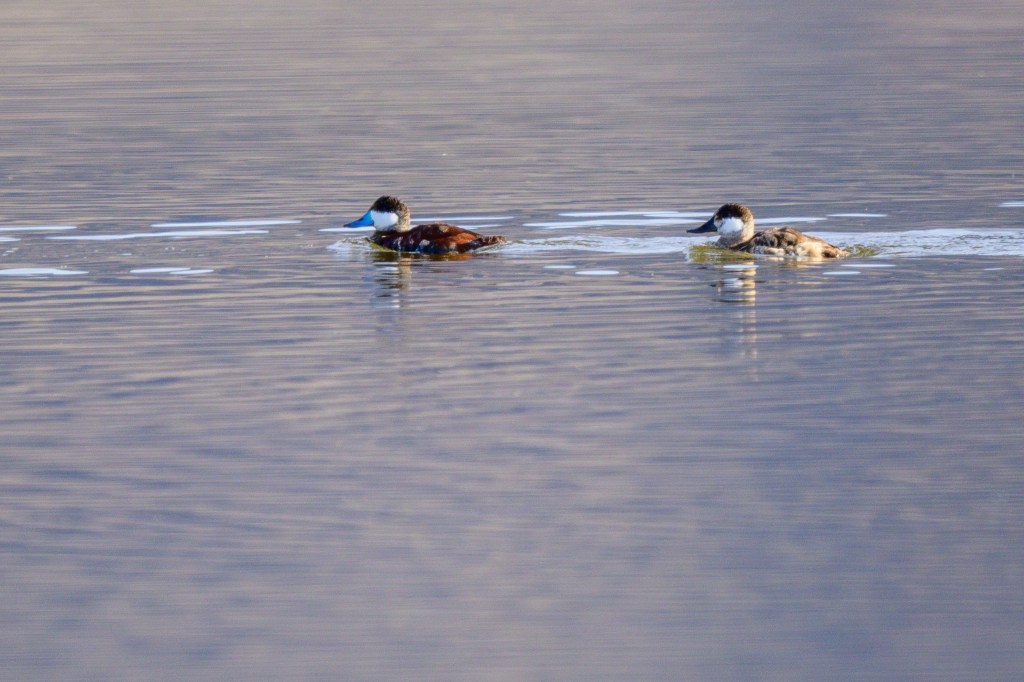
Three Ruddy Ducks nap at the Reservoir. They are called stifftails.
Two males at Owens Lake. The lead duck wears his breeding outfit, a blue bill and red feathers.
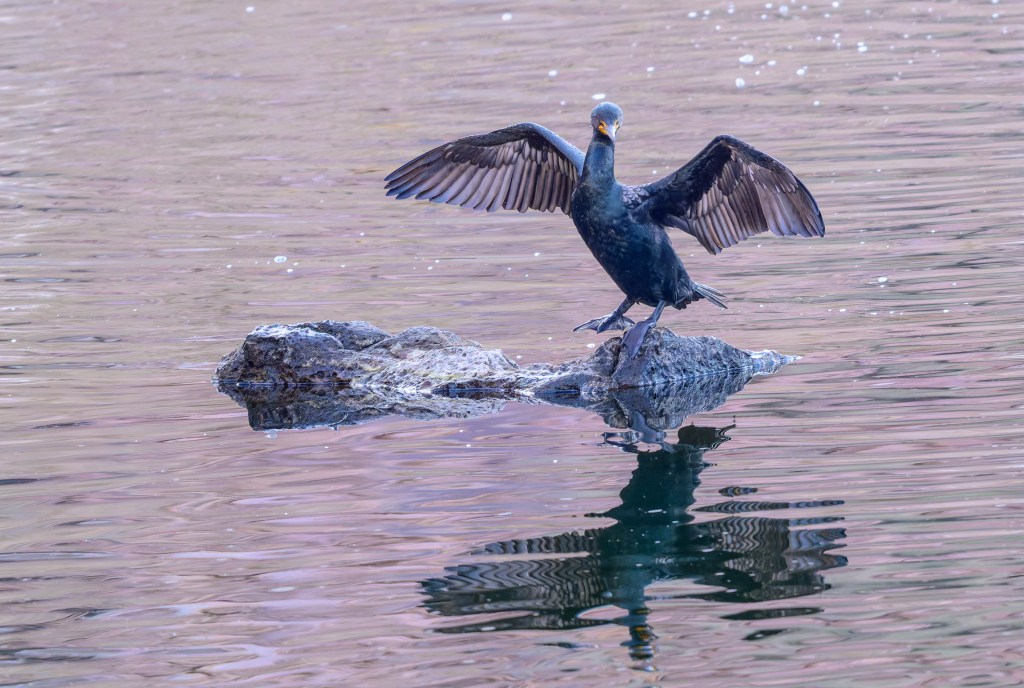
DOUBLE-CRESTED CORMORANT
This bird seems to be dancing with its reflection.
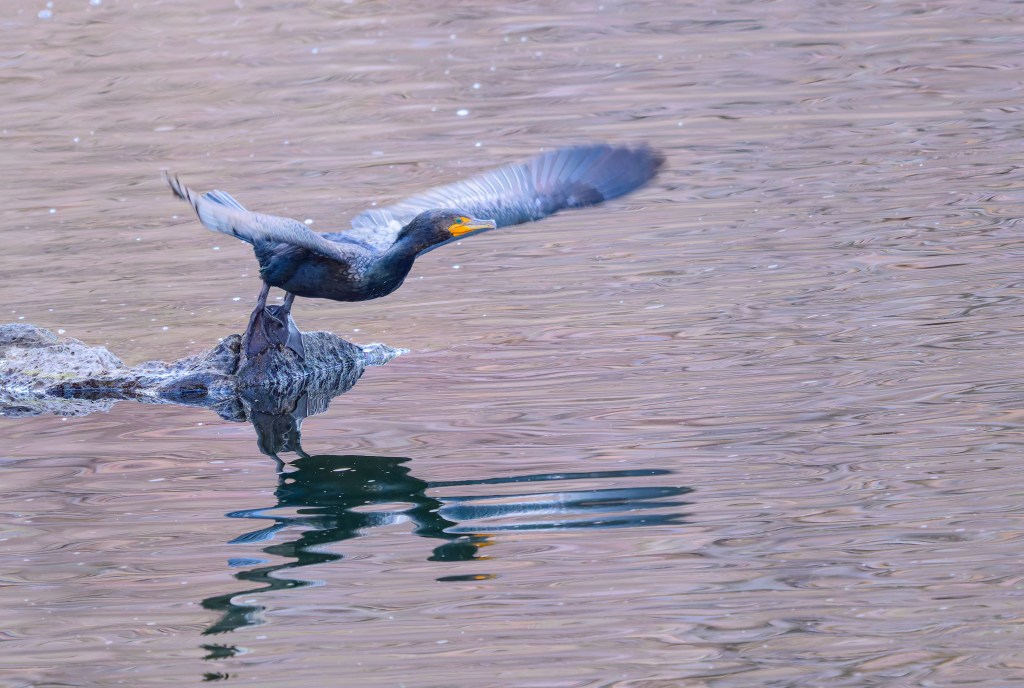
Take-off.
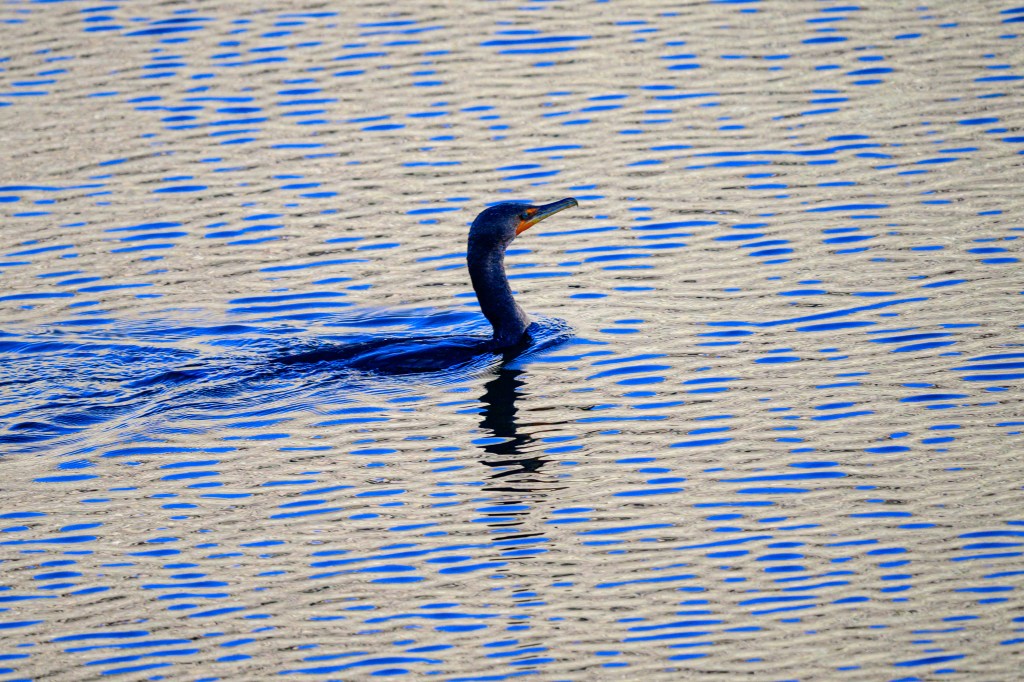
These birds often ride low in the water. The neck and head look like a periscope sticking up from a sub.
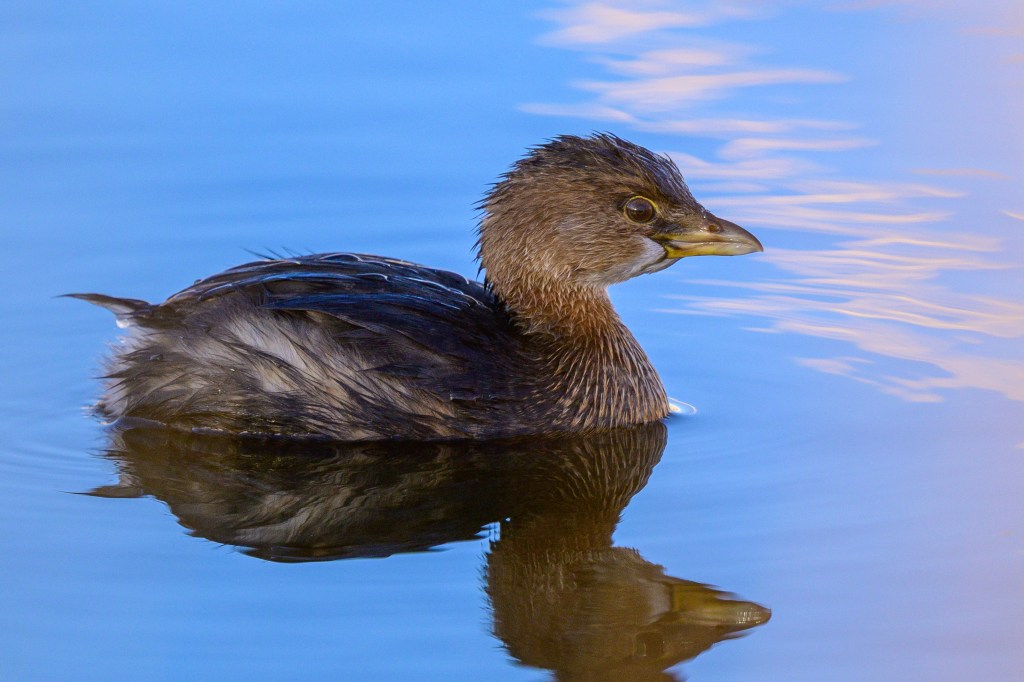
PIED-BILLED GREBE
These grebes are shy, but in February I managed to get a close-up at the Ponds.
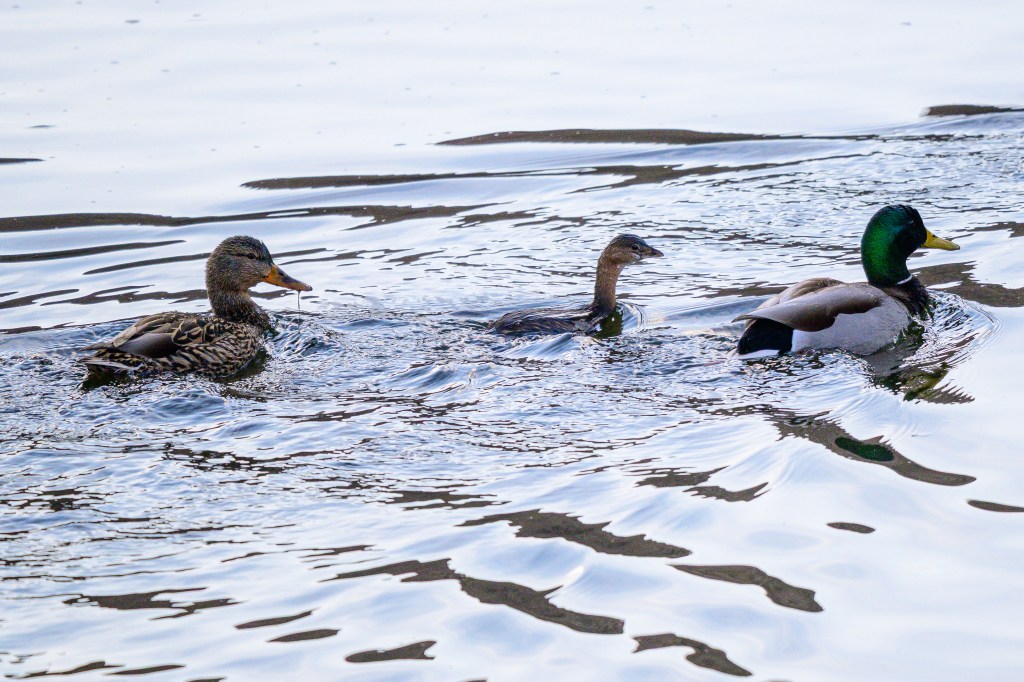
At the Reservoir, a Pied-billed Grebe joins a Mallard family.
AMERICAN WHITE PELICAN
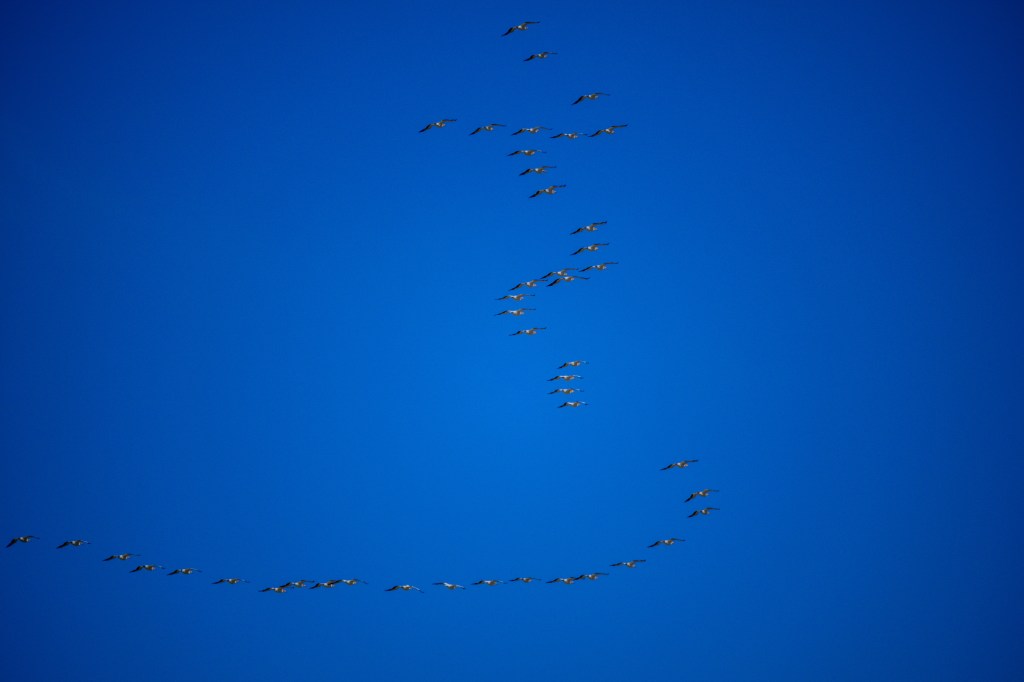
We were driving north on 395 when Roberta spotted 100 Pelicans right above us. We pulled over at the elk viewing area and watched the birds circle above; they were using thermal uplift to gain height.
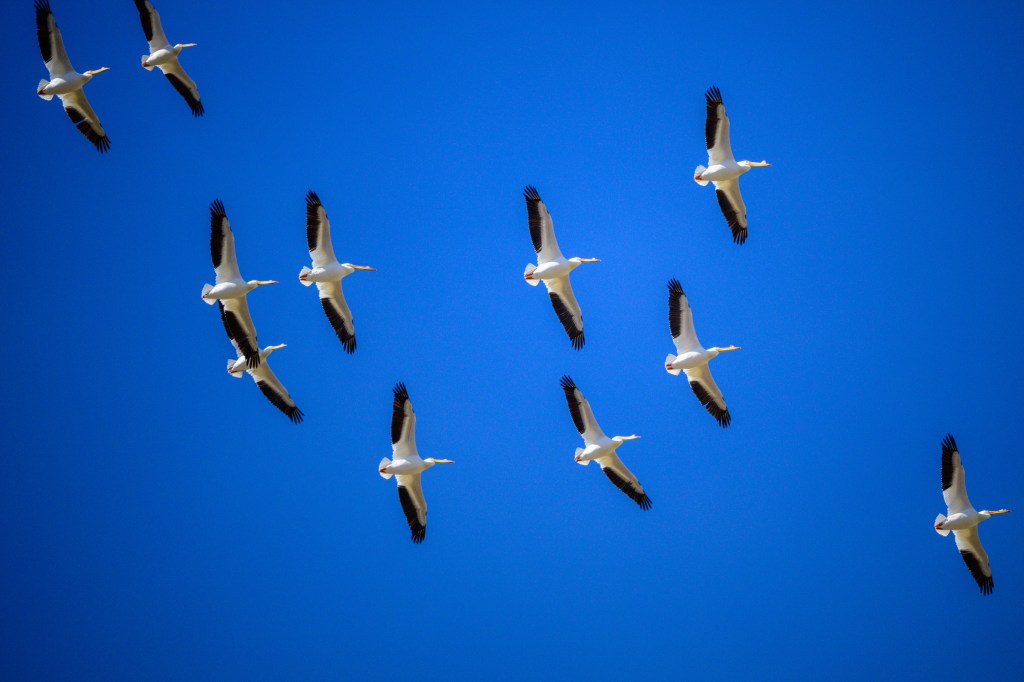
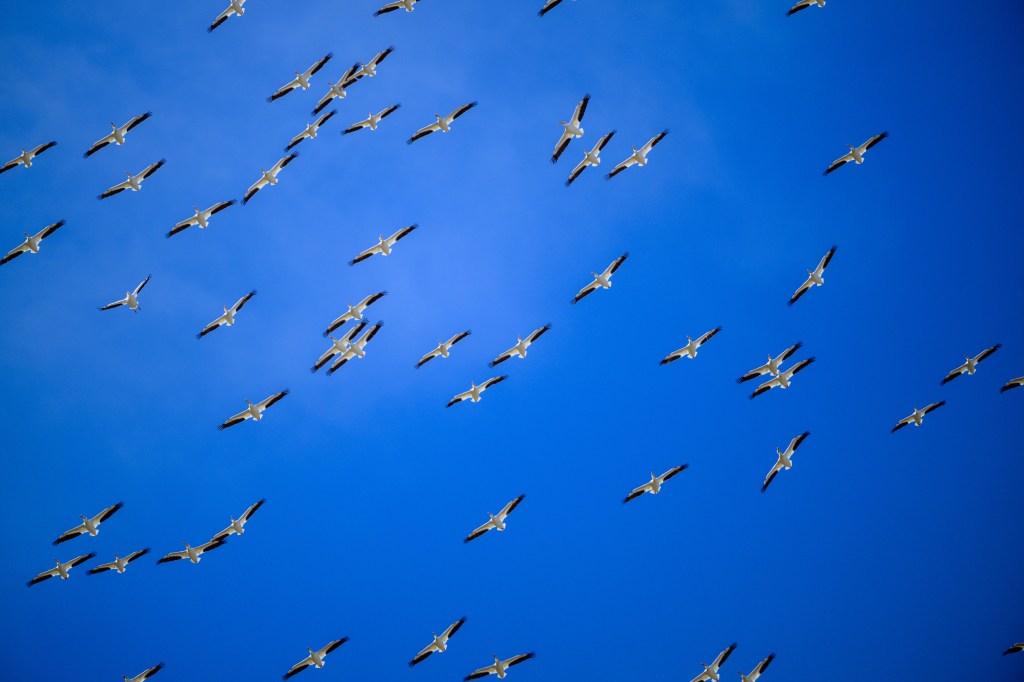
Finally they headed north.
CALIFORNIA GULL
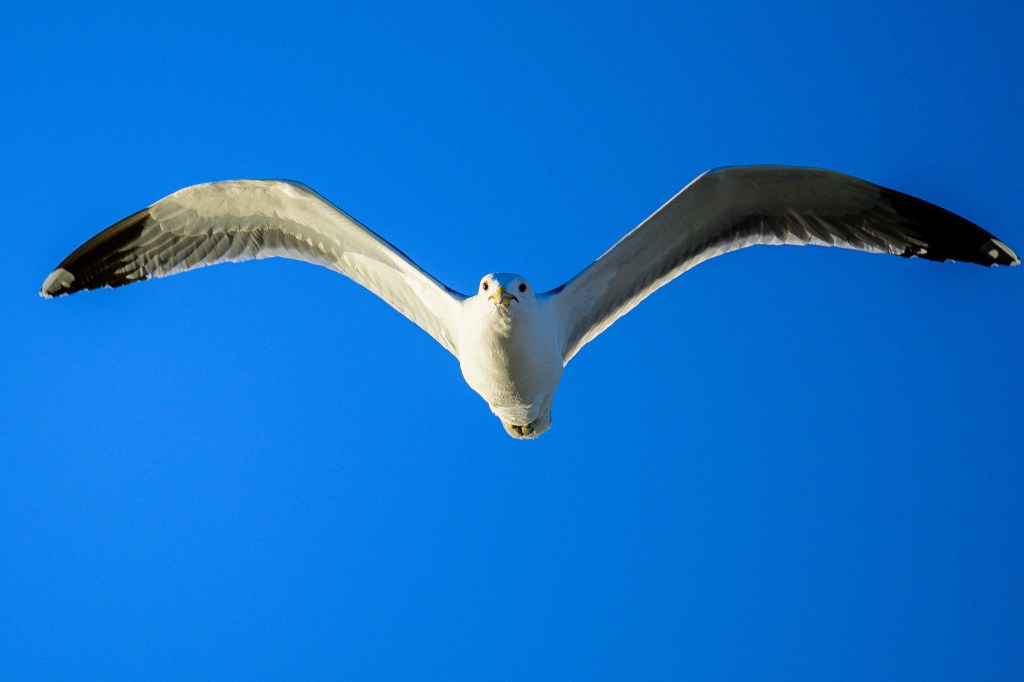
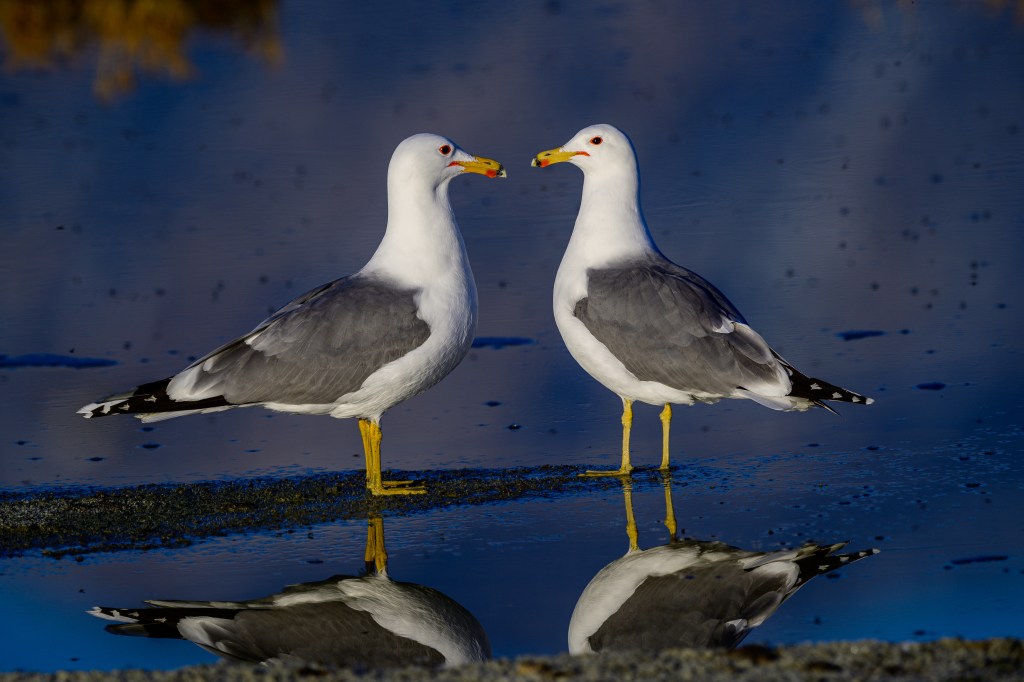
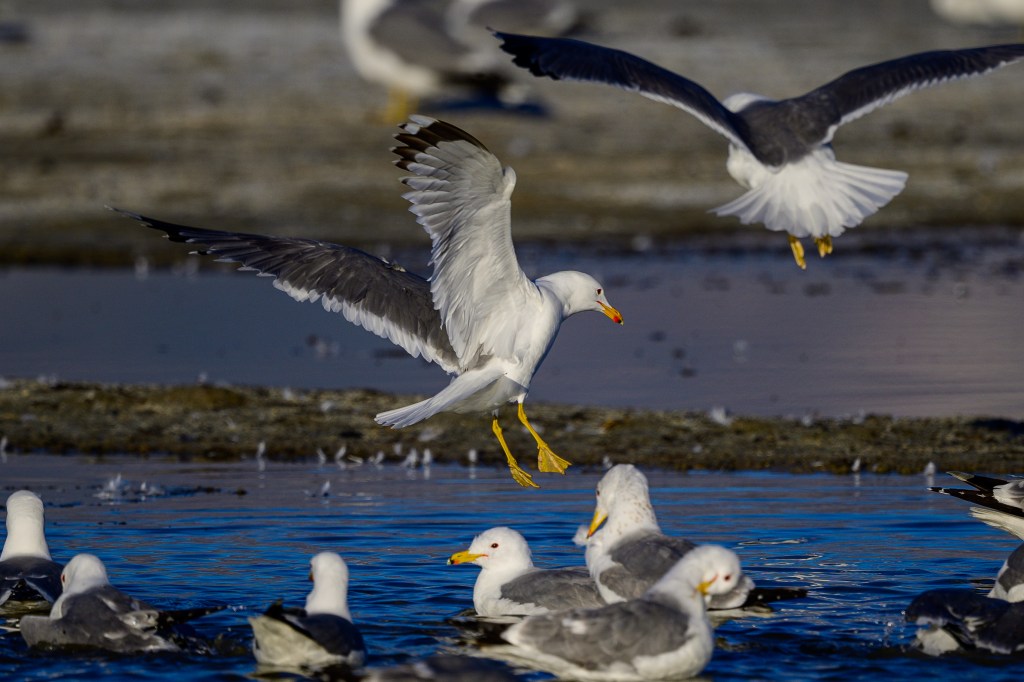
These Gulls were at Owens Lake.
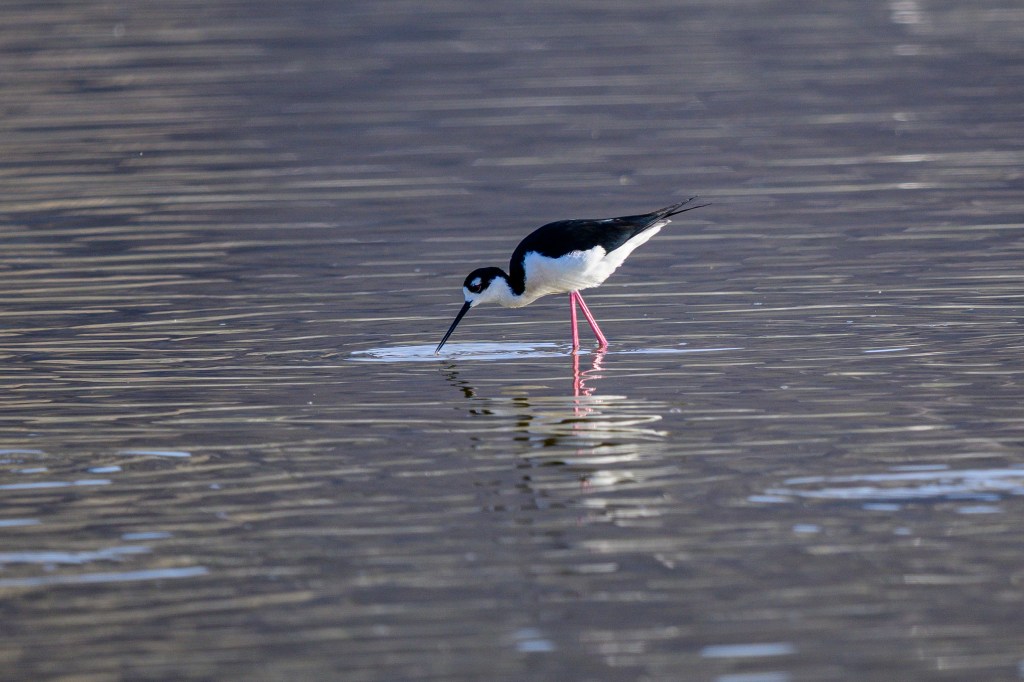
BLACK-NECKED STILT
Black, white, and pink at Owens Lake.
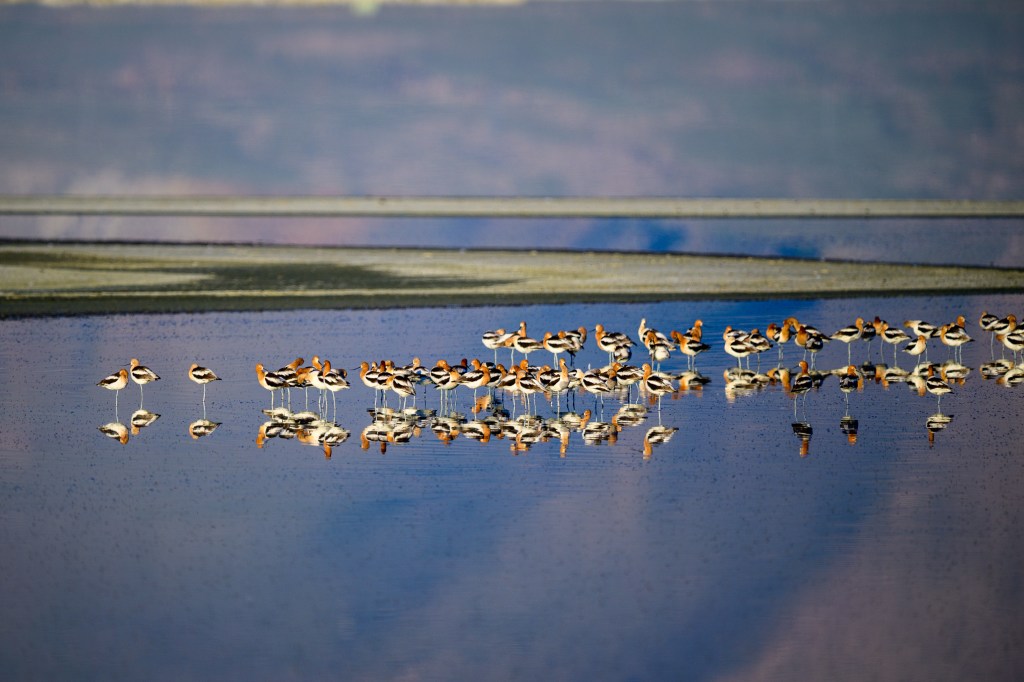
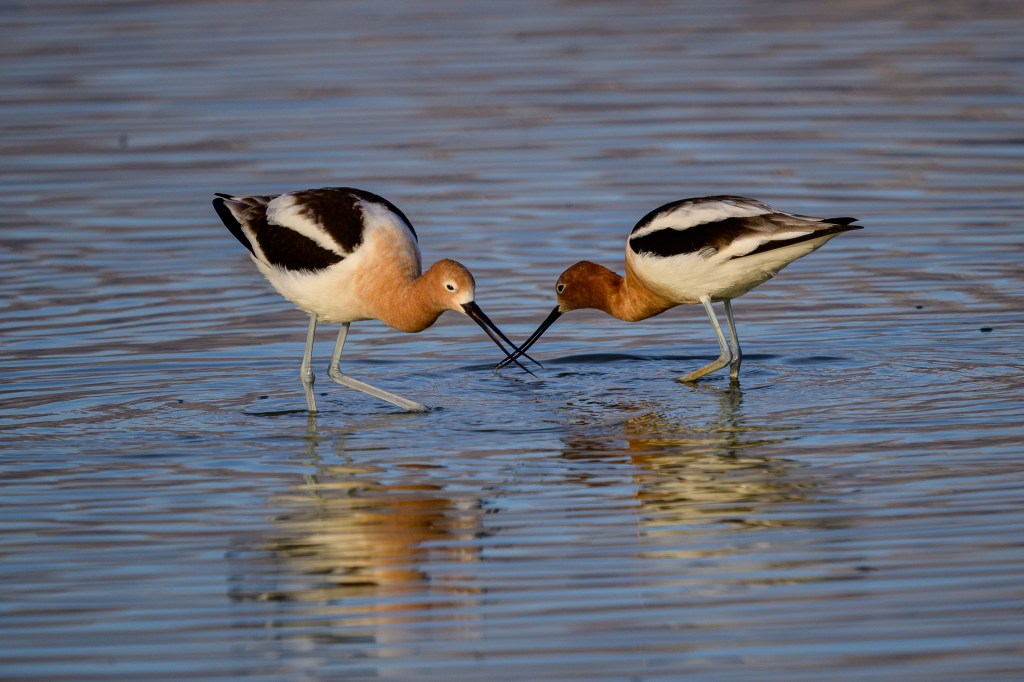
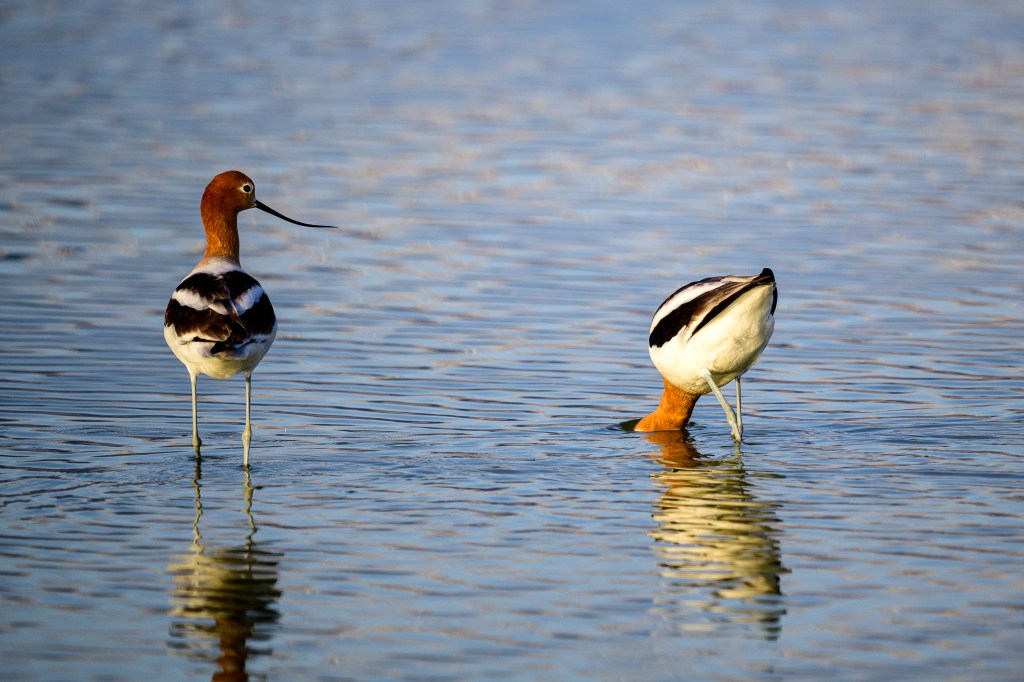
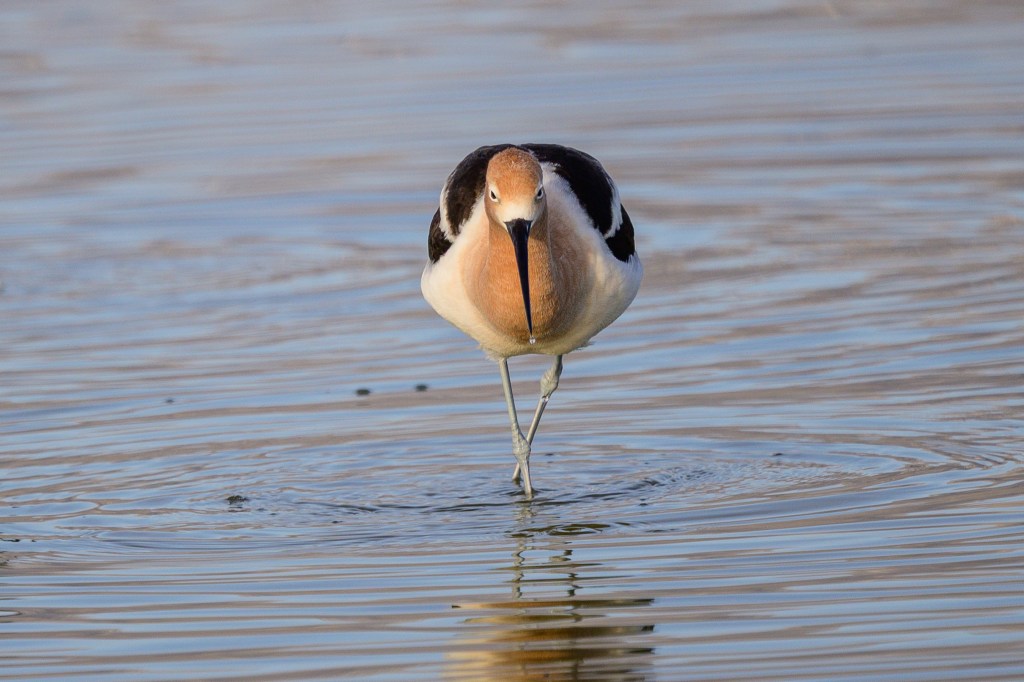
AMERICAN AVOCET
Avocets at Owens Lake.
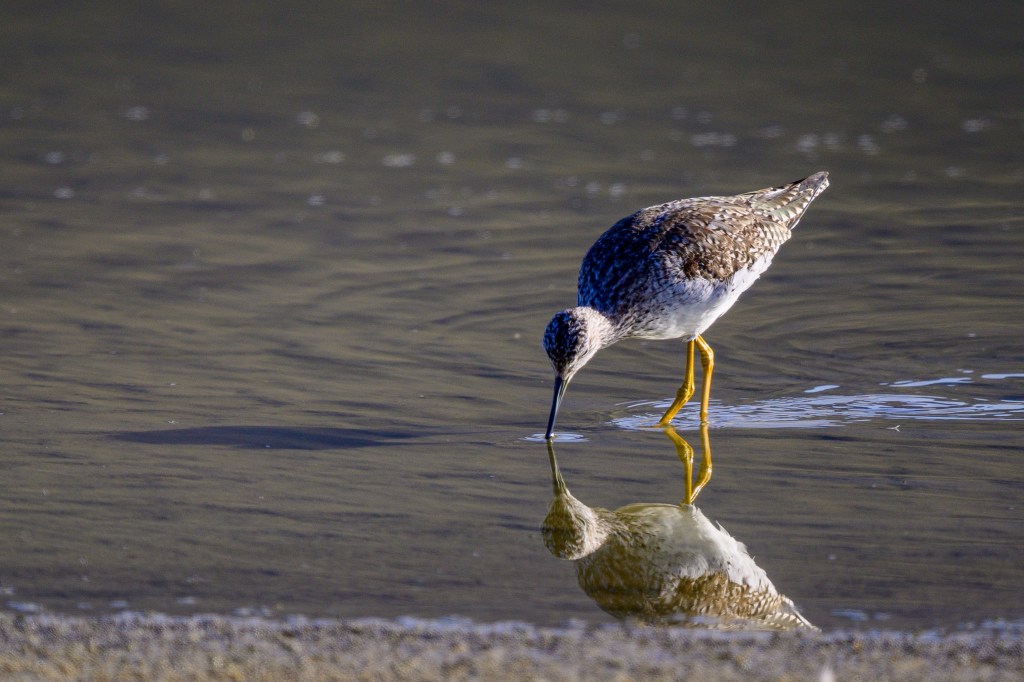
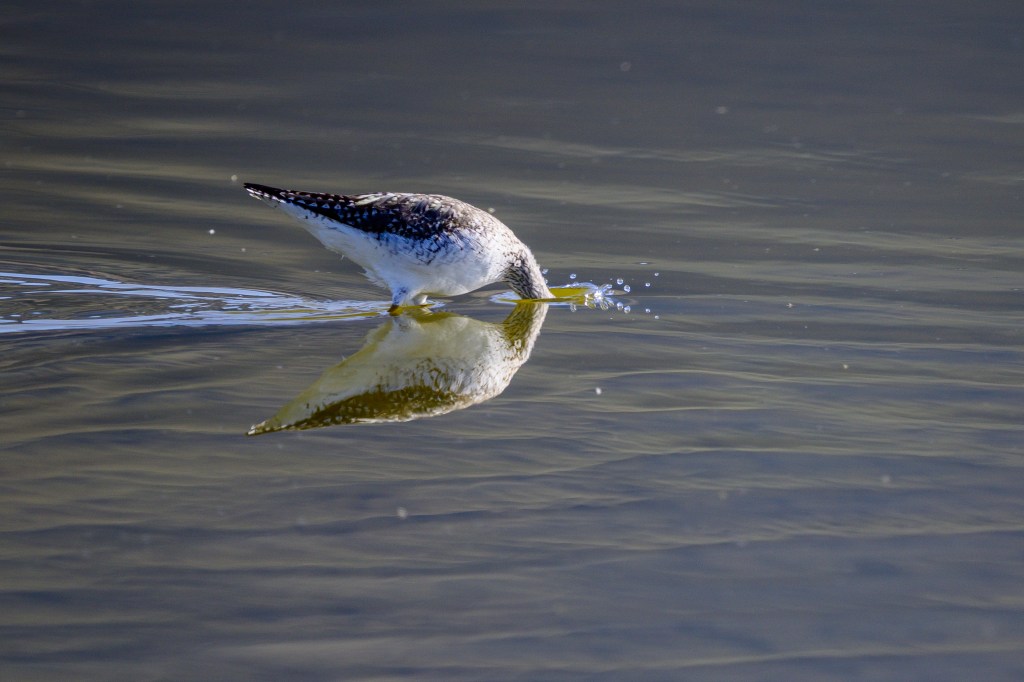
GREATER YELLOWLEGS
A narcissist kisses its reflection at Owens Lake.
Then it goes all in.
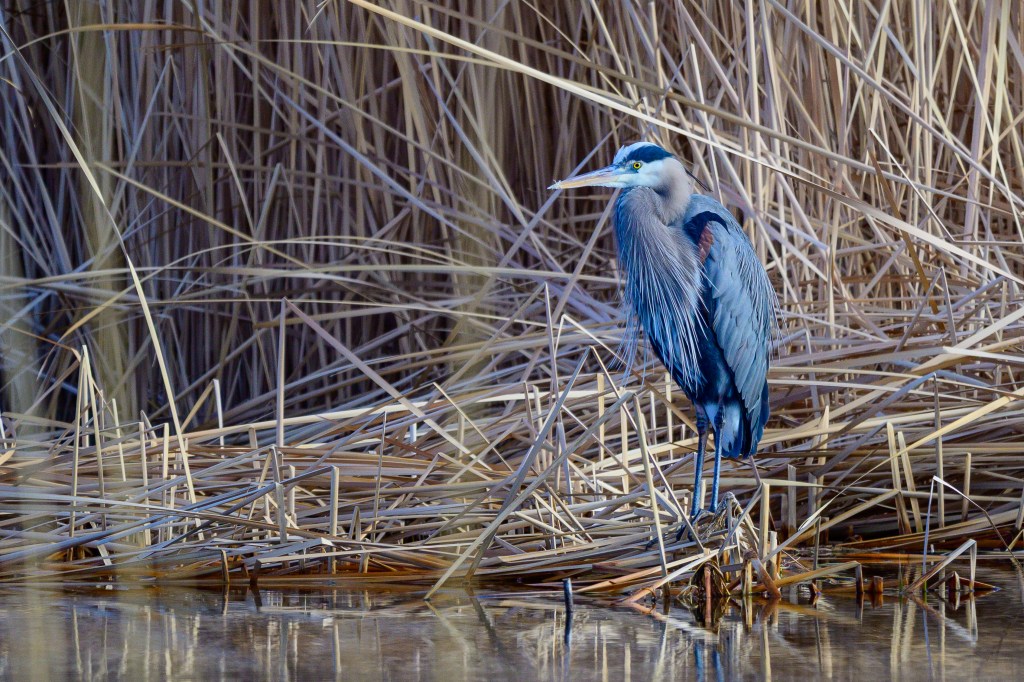
GREAT BLUE HERON
The first two photos were taken near the Pleasant Valley Reservoir.
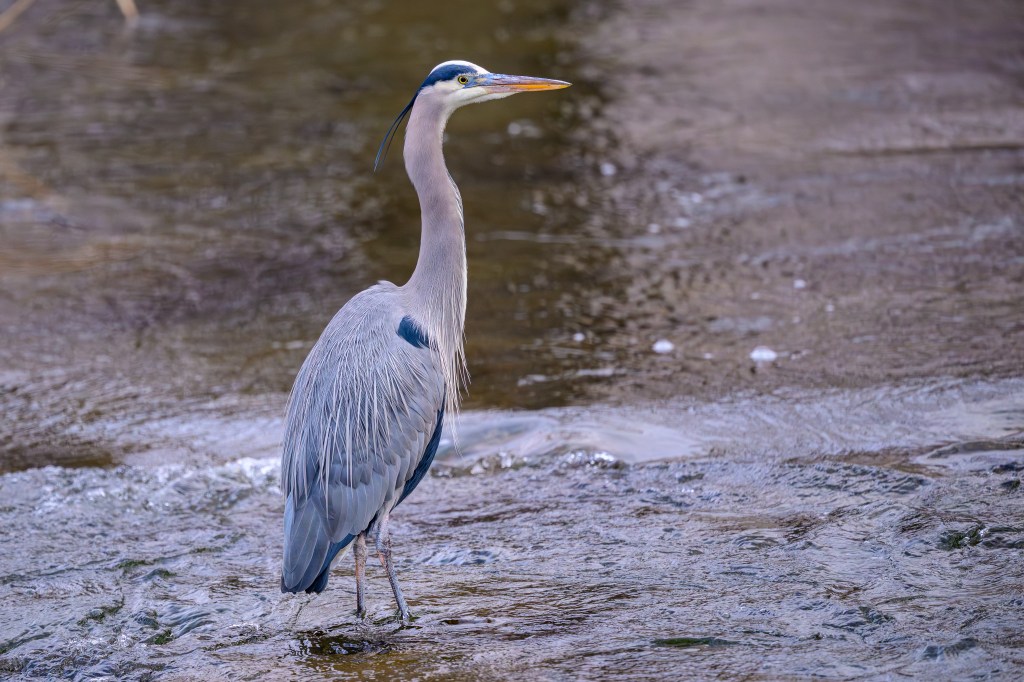
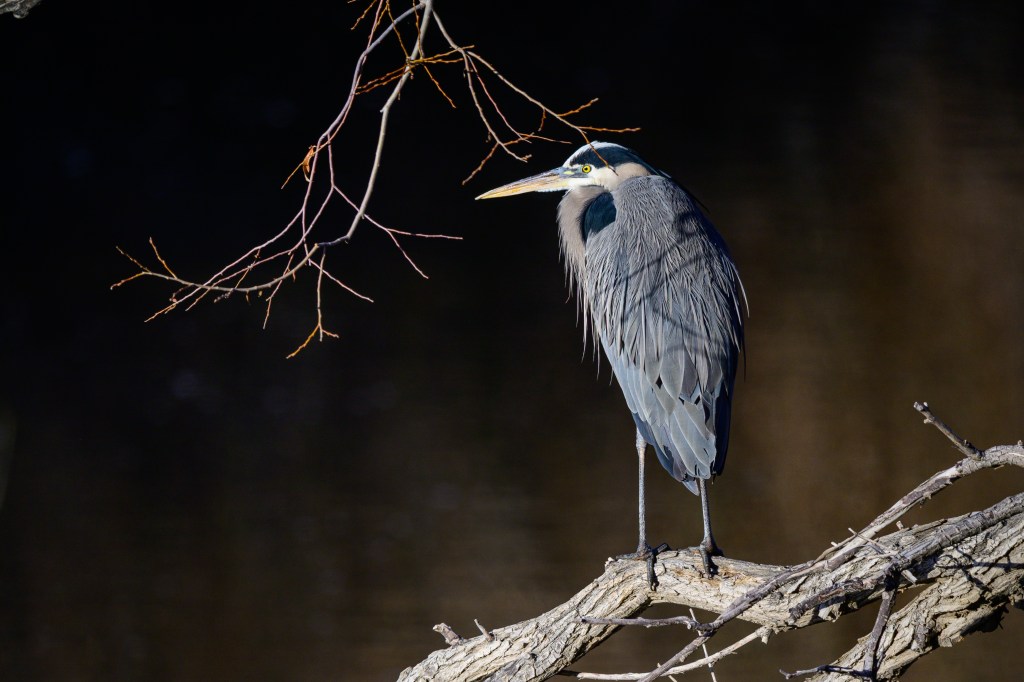
Next two pictures were taken near the Bishop Creek Canal.
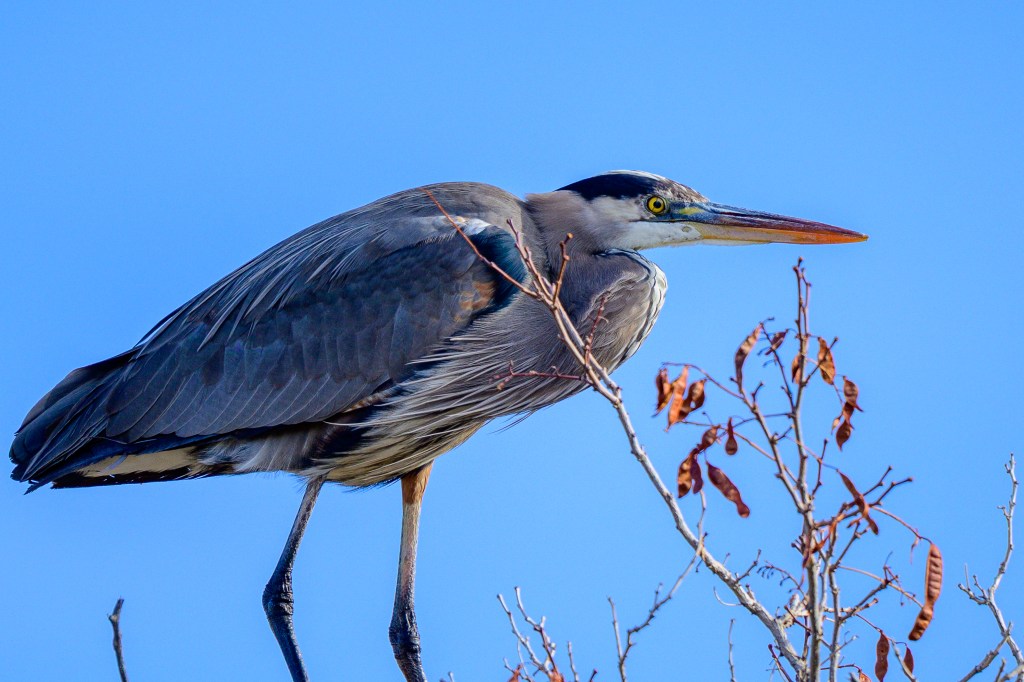
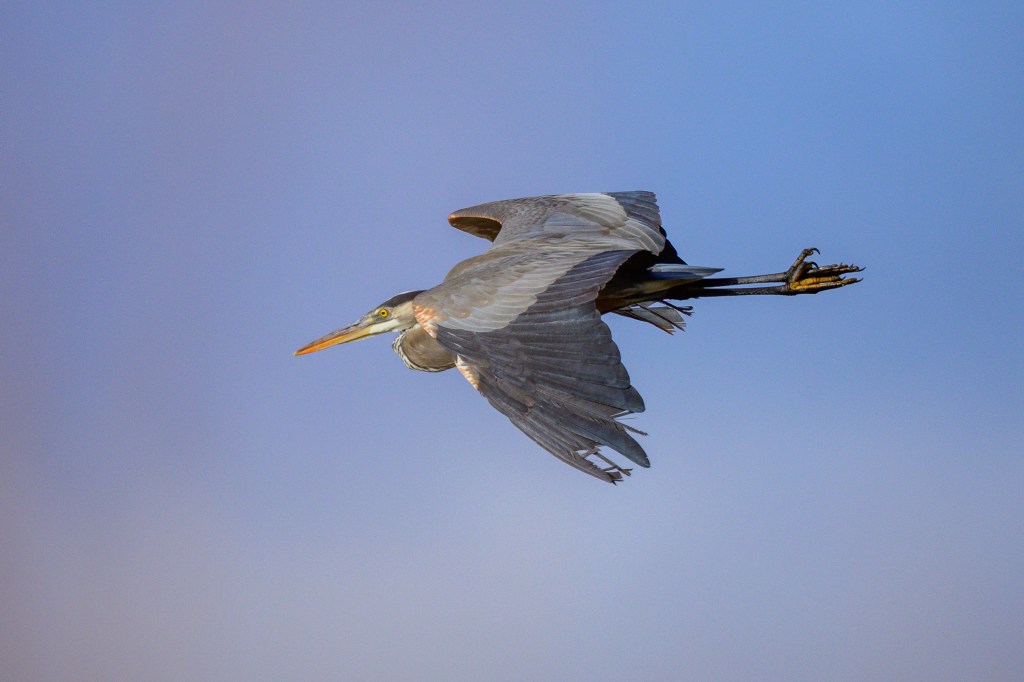
Last is a Heron at the Buckley Ponds.
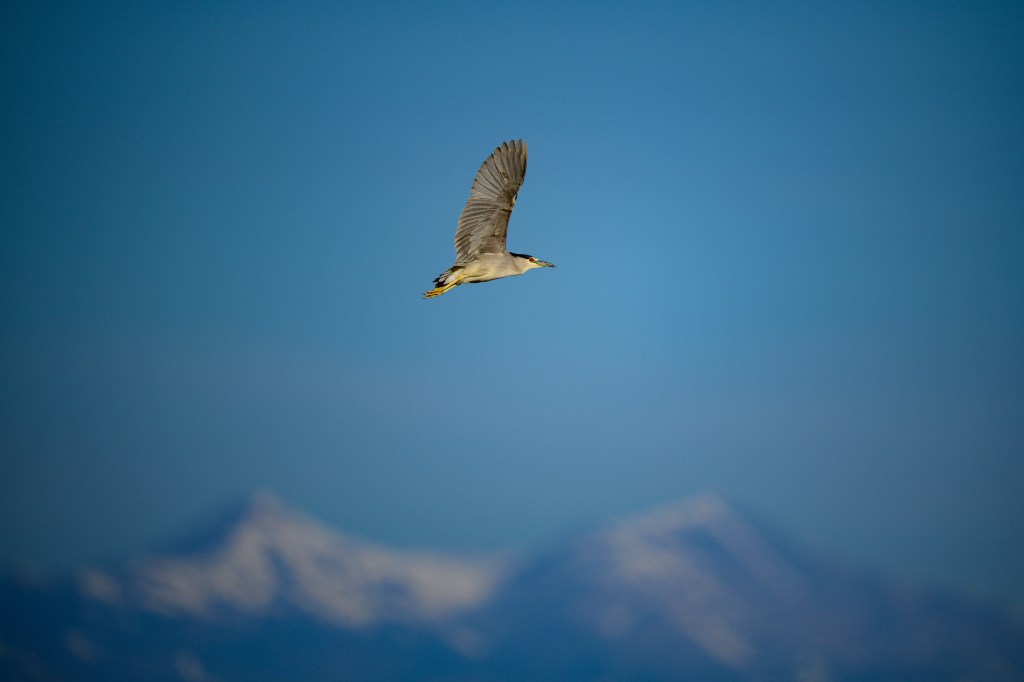
BLACK-CROWNED NIGHT HERON
This small heron was flying over Owens Lake.
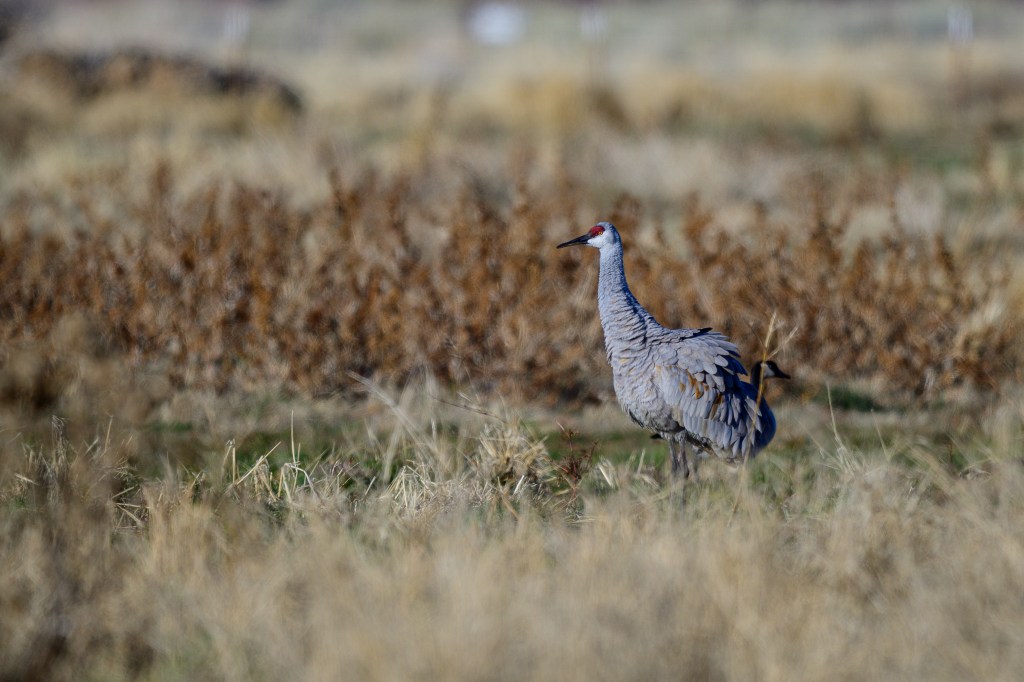
SANDHILL CRANE
A single Crane appeared near Airport Road in January.
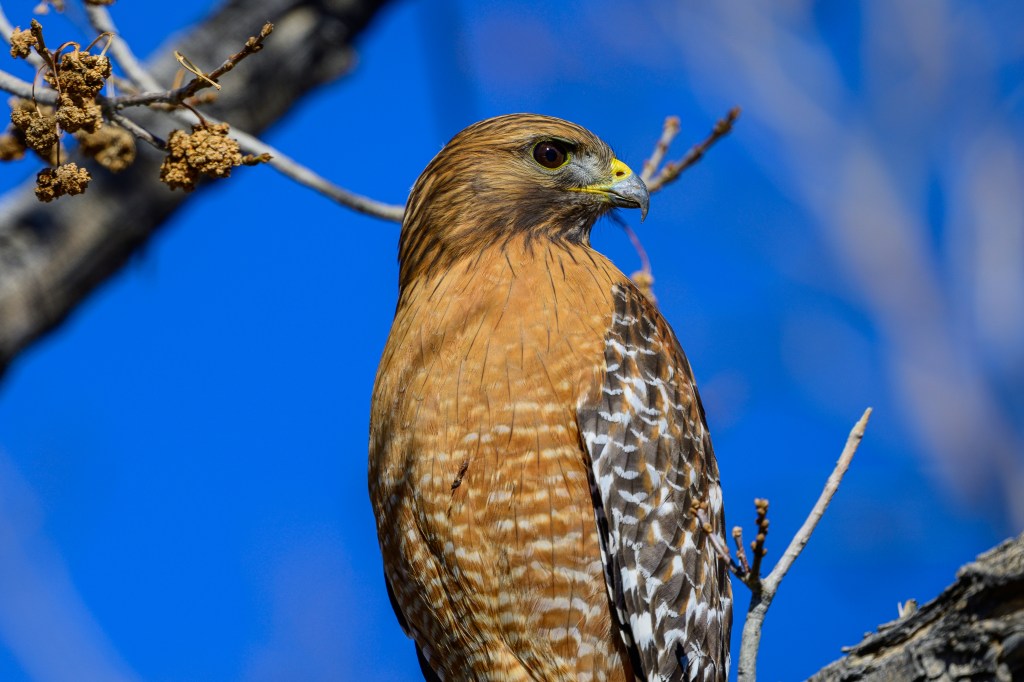
RED-SHOULDERED HAWK
This hawk was in a tree right near my home.
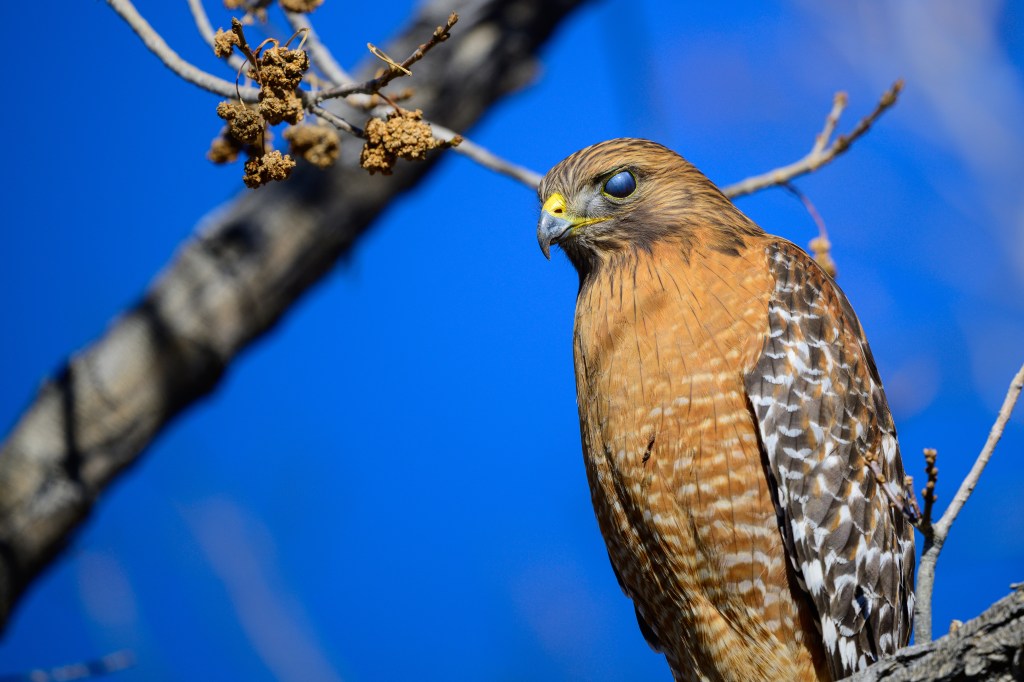
Birds have a nictitating membrane which can protect their eye. Think of this like a pair of googles. If you are flying at 30 mph and encounter bugs in the air, this protection is handy. The membrane creates a zombie-like appearance in some birds.
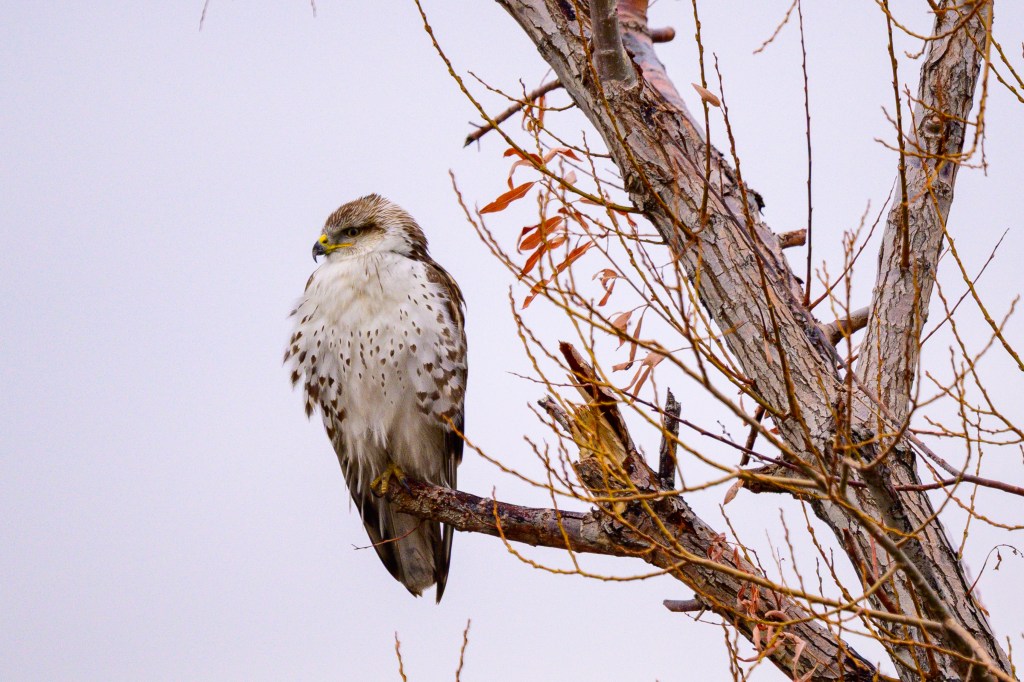
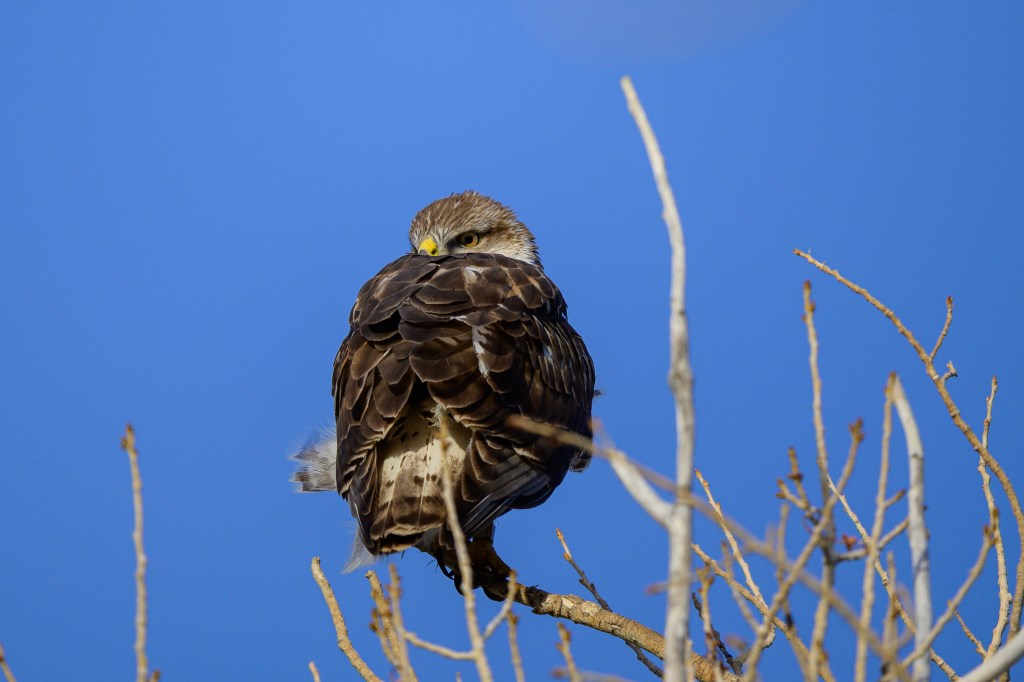
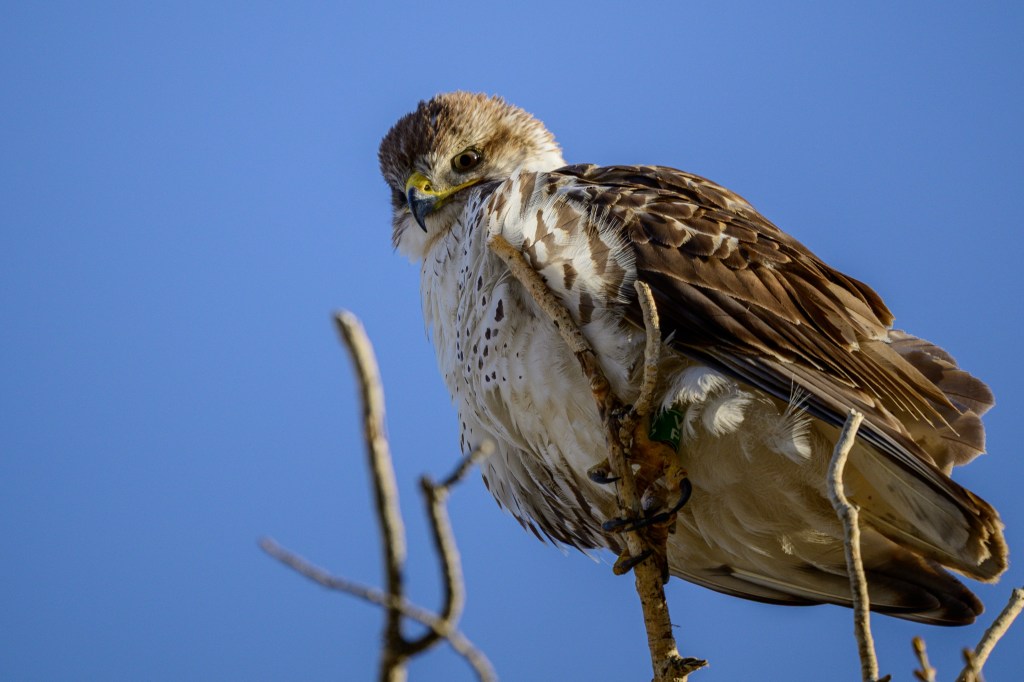
FERRUGINOUS HAWK
These white-chested hawks appear in winter.
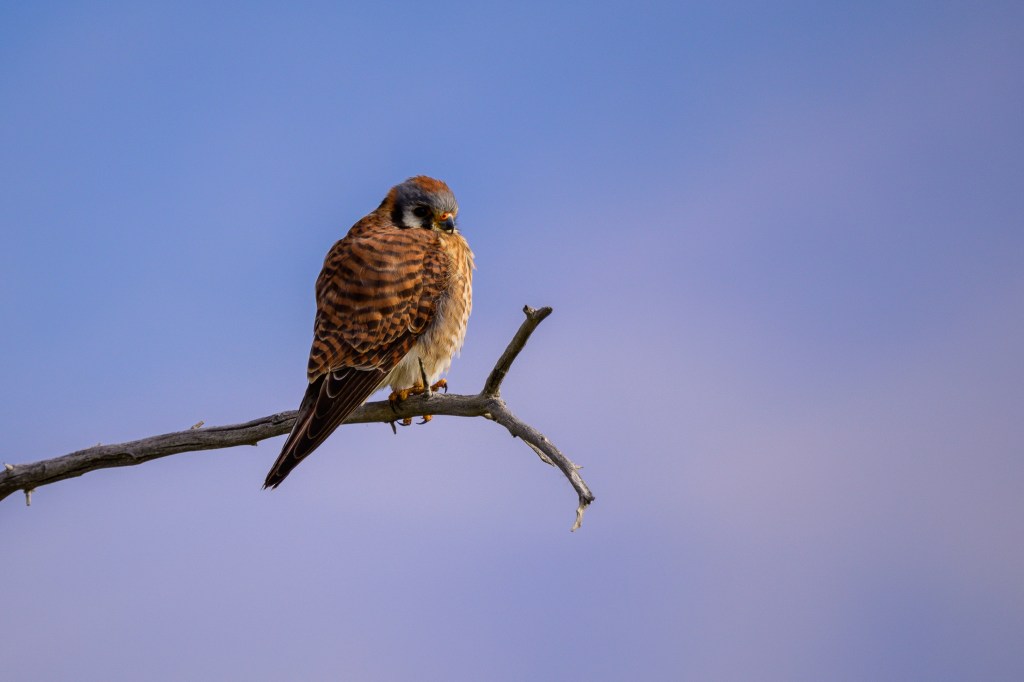
AMERICAN KESTREL
A female on Sunland Road.
GREATER ROADRUNNER
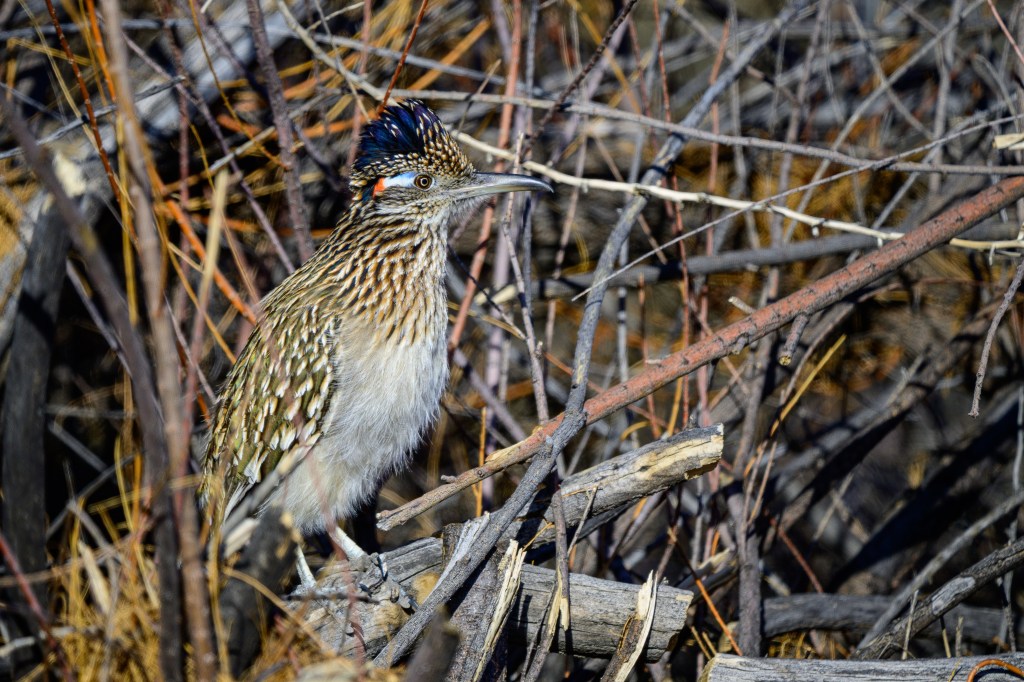
I sometimes see a Roadrunner on Warm Springs Road. They look brown at a distance, but close-up they have some bright green feathers.
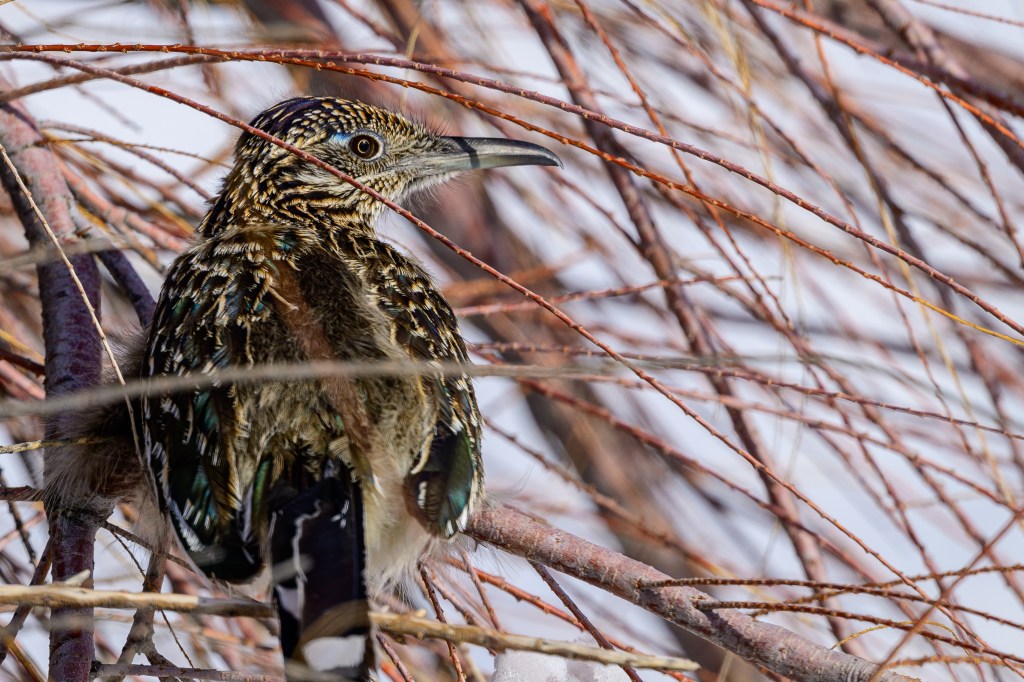
In the second photo, the bird raises the feathers on its head.
NORTHERN FLICKER
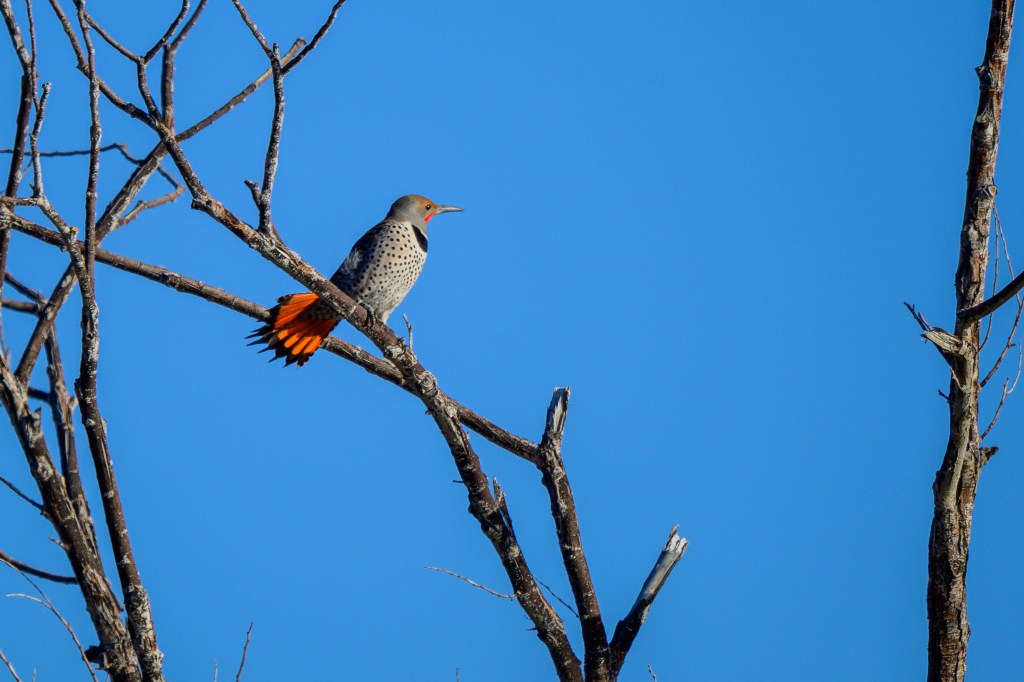
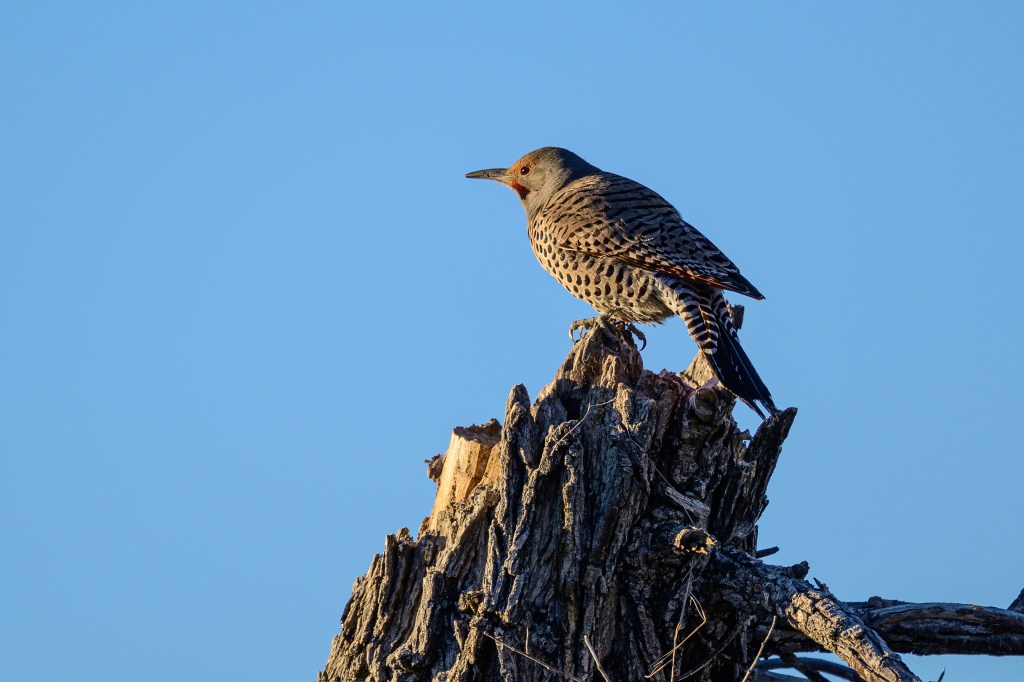
Our most common woodpecker. The first photo was taken at the Ponds, the second at the COSA.
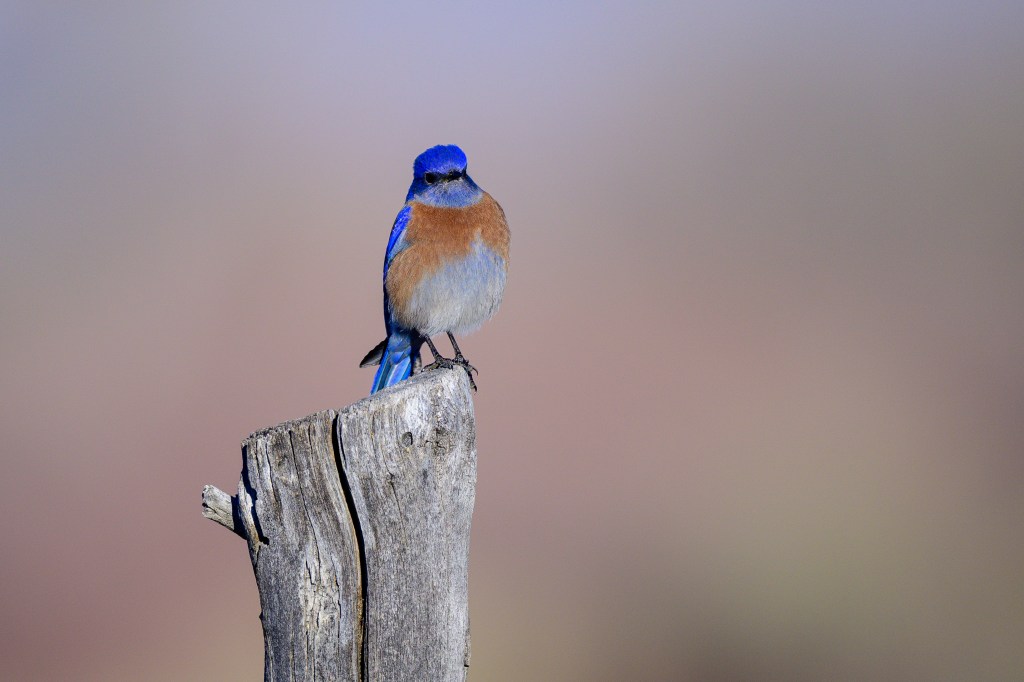
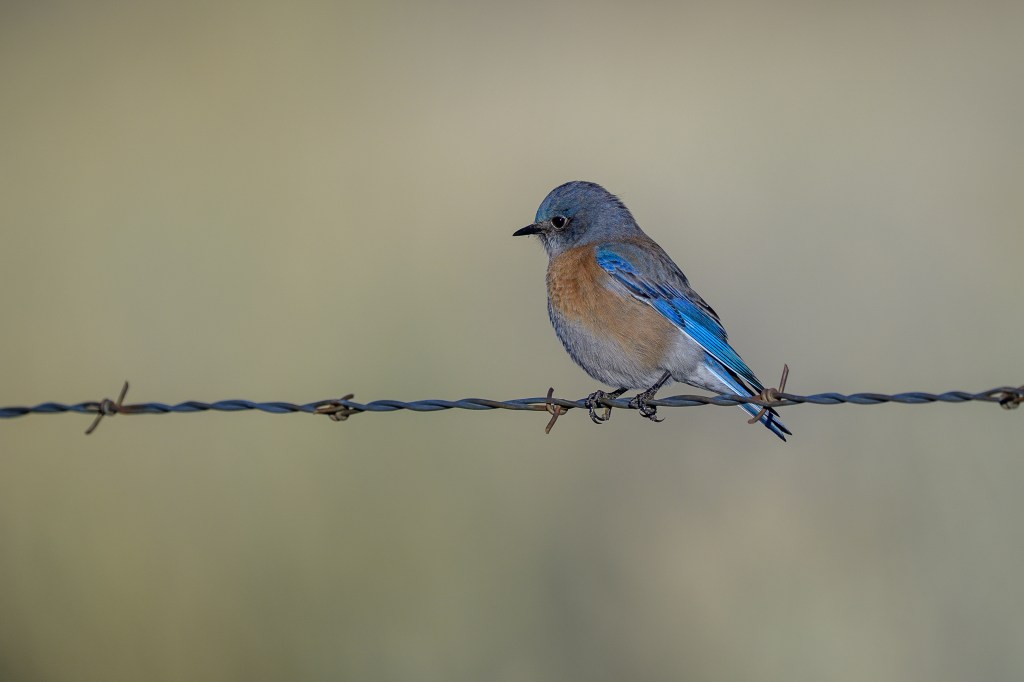
WESTERN BLUEBIRD
First photo shows a male, second a female. The colors are so dramatic that they make the photo look manipulated.
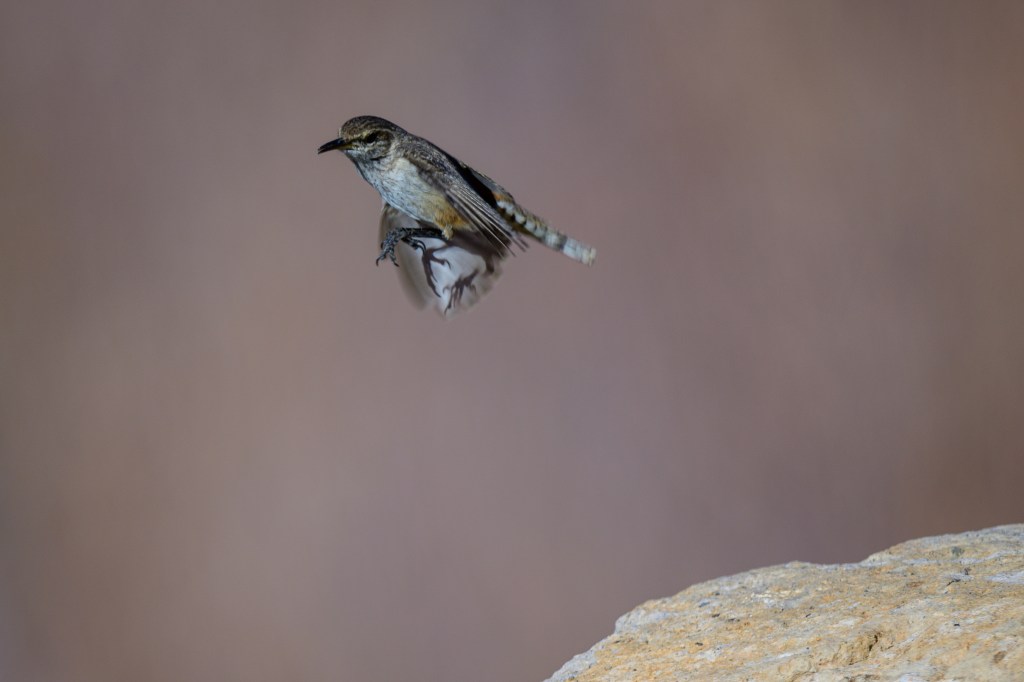
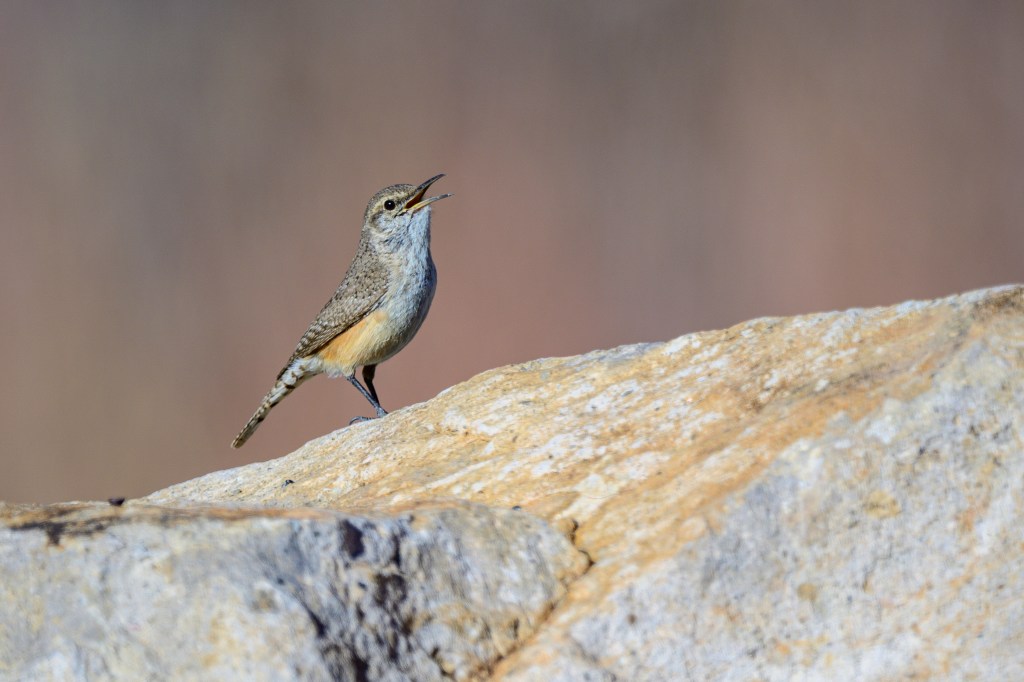
ROCK WRENS
These little birds let me get close. They often sing and sing. Or they hop about, looking for bugs. The road along the Reservoir winds past tons of basalt boulders. Rock Wrens seem to own these rocks.
This critter has a bug in its beak.
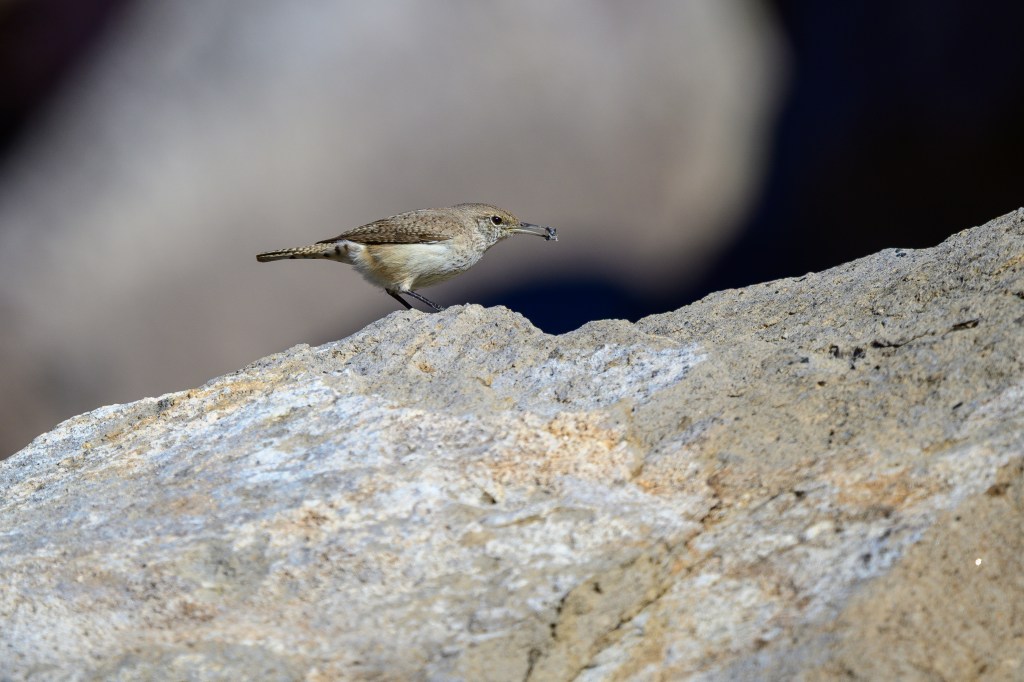
A Rock Wren eyes a breakfast bug.
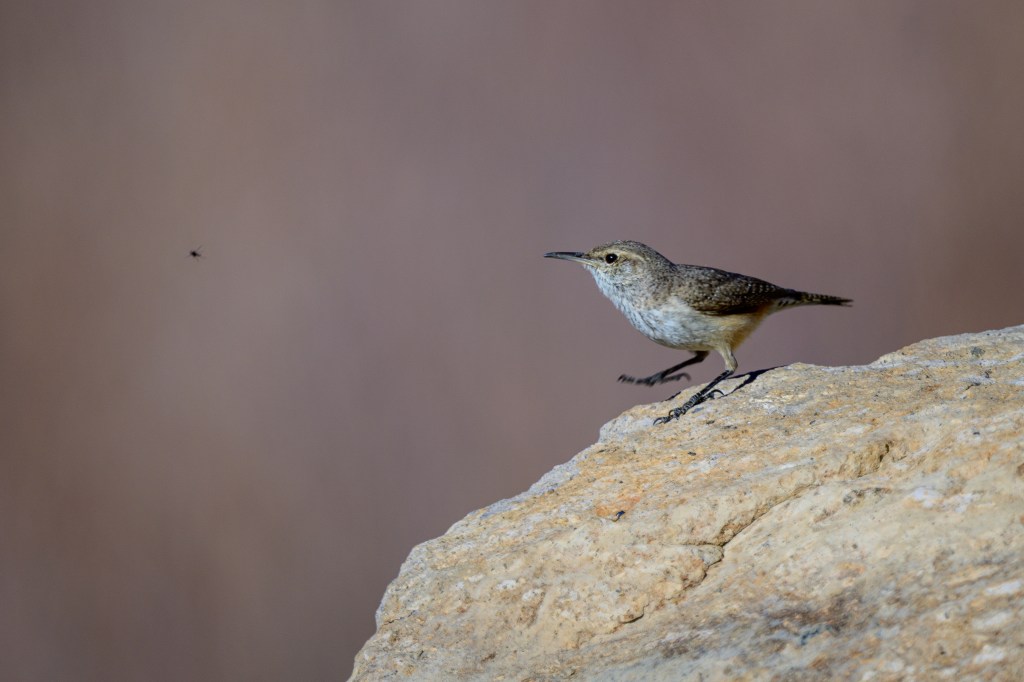
The Wren jumps! Did it score a bug?
If it isn’t eating, it is singing.
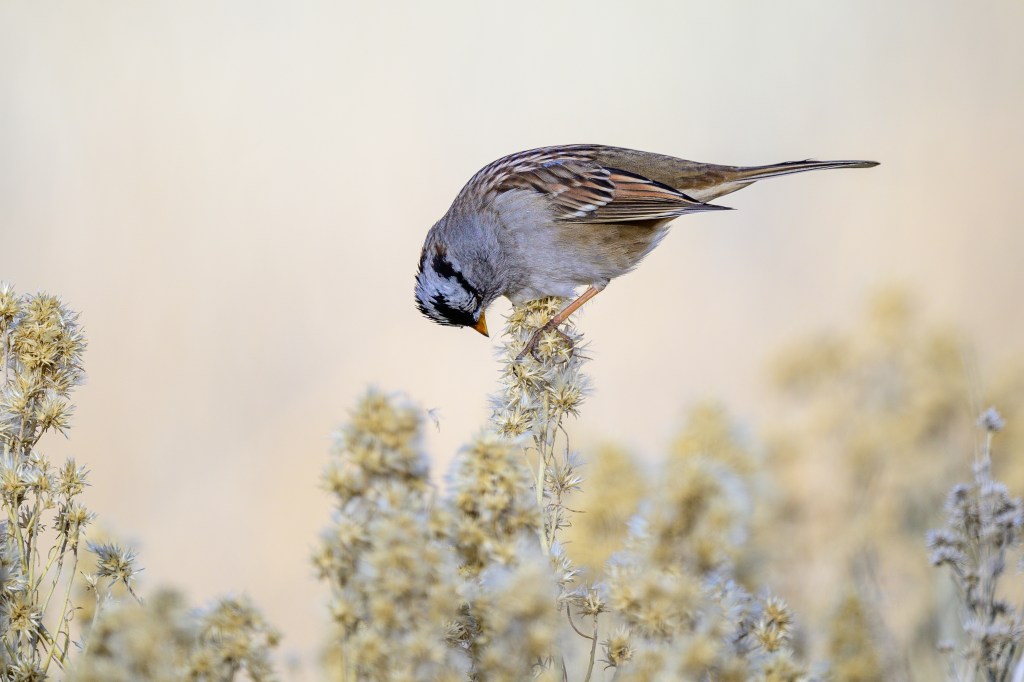
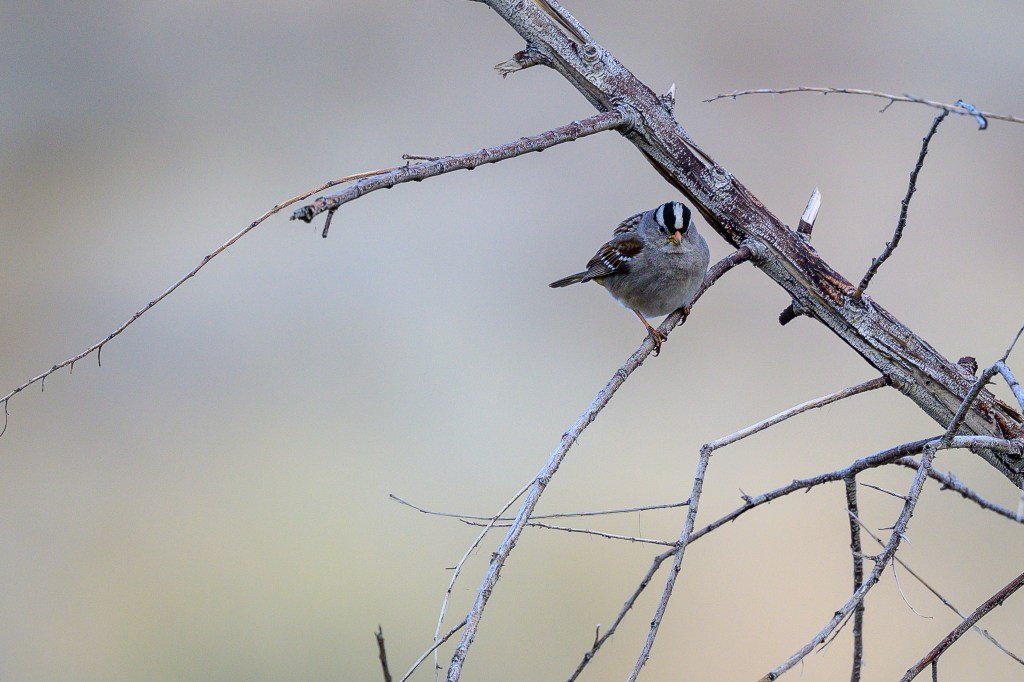
WHITE-CROWNED SPARROW
The most common Sparrow near Bishop
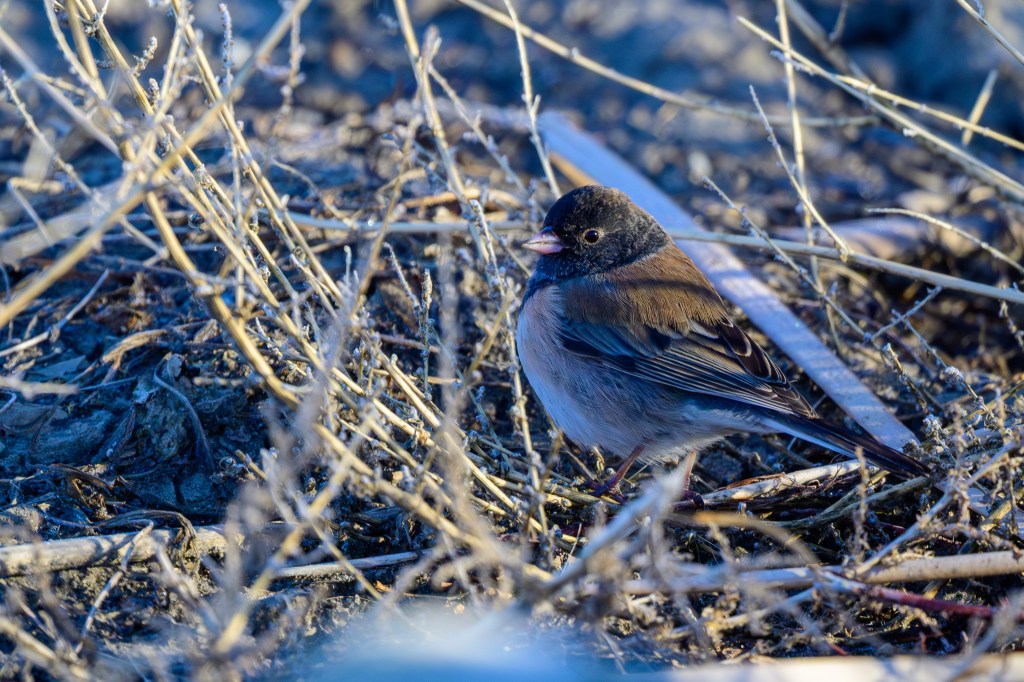
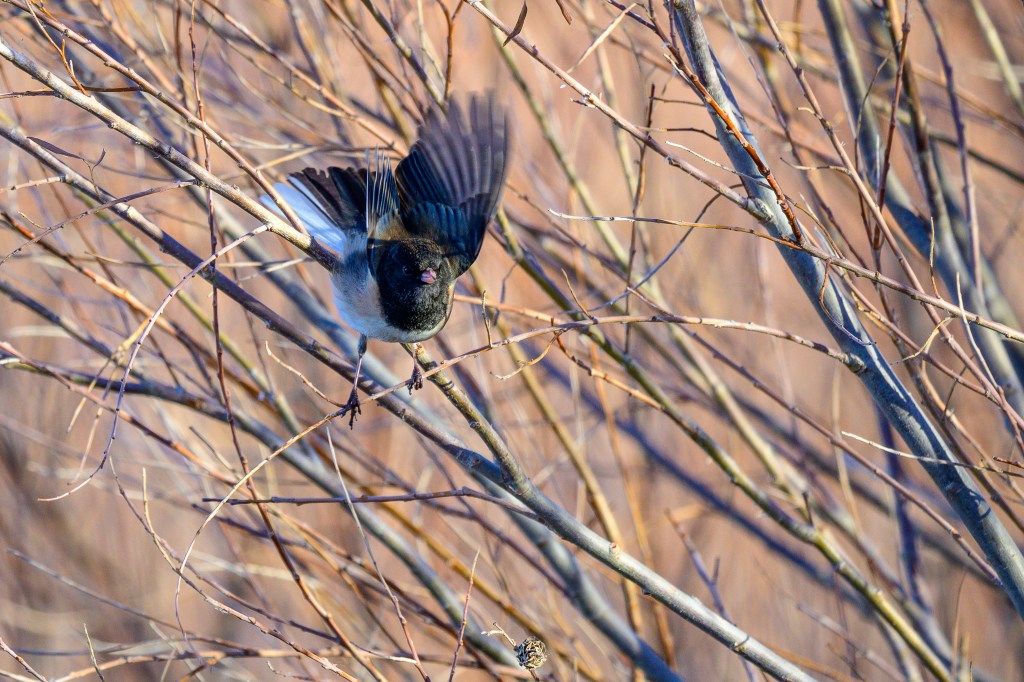
DARK-EYED JUNCO
Juncos at the Ponds in January.
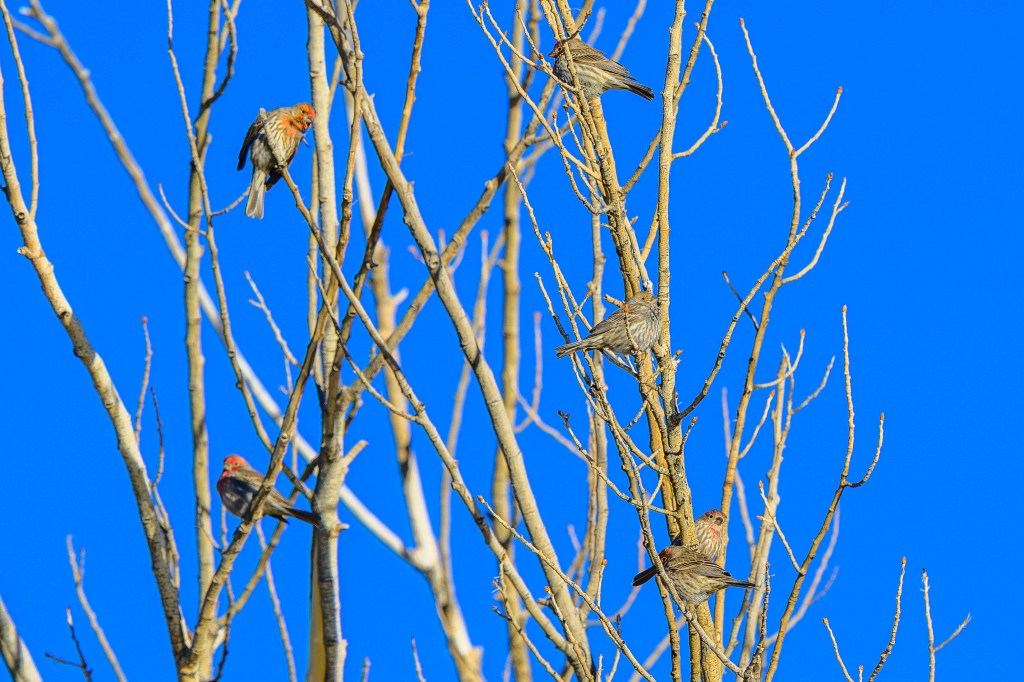
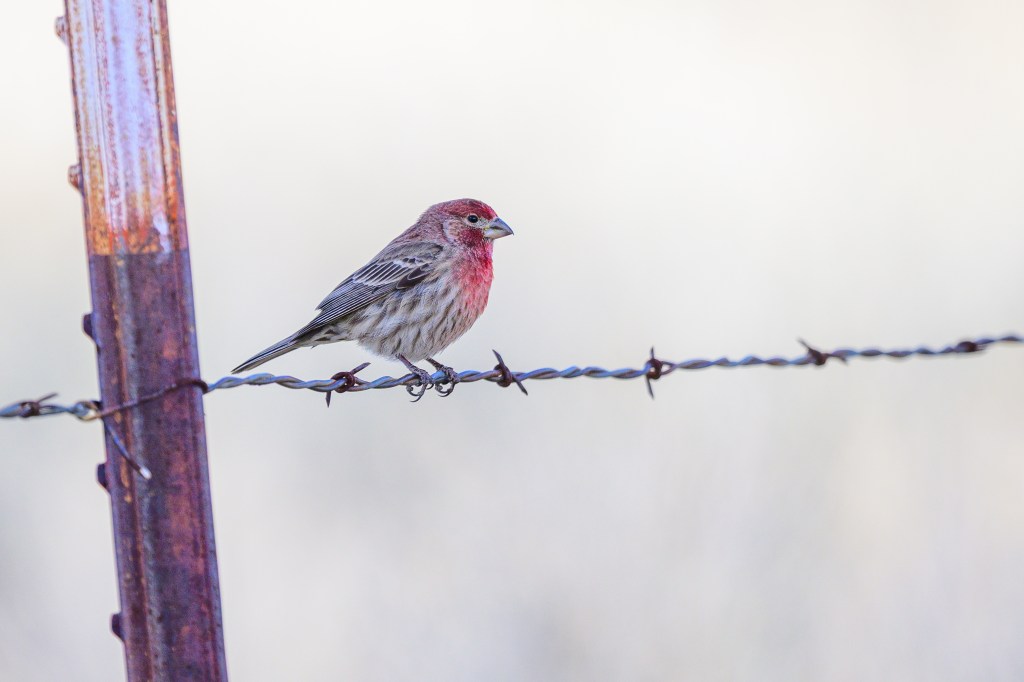
HOUSE FINCH
Six Finches at the Ponds
One male at Bishop Creek Canal.
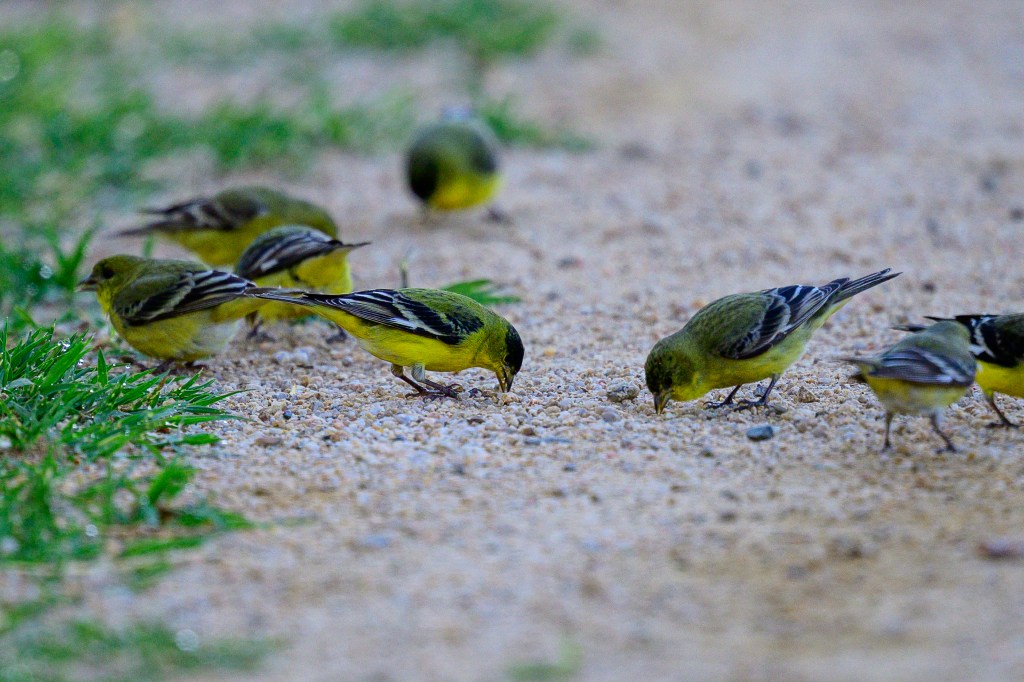
LESSER GOLDFINCH
Lessers dining at the COSA.
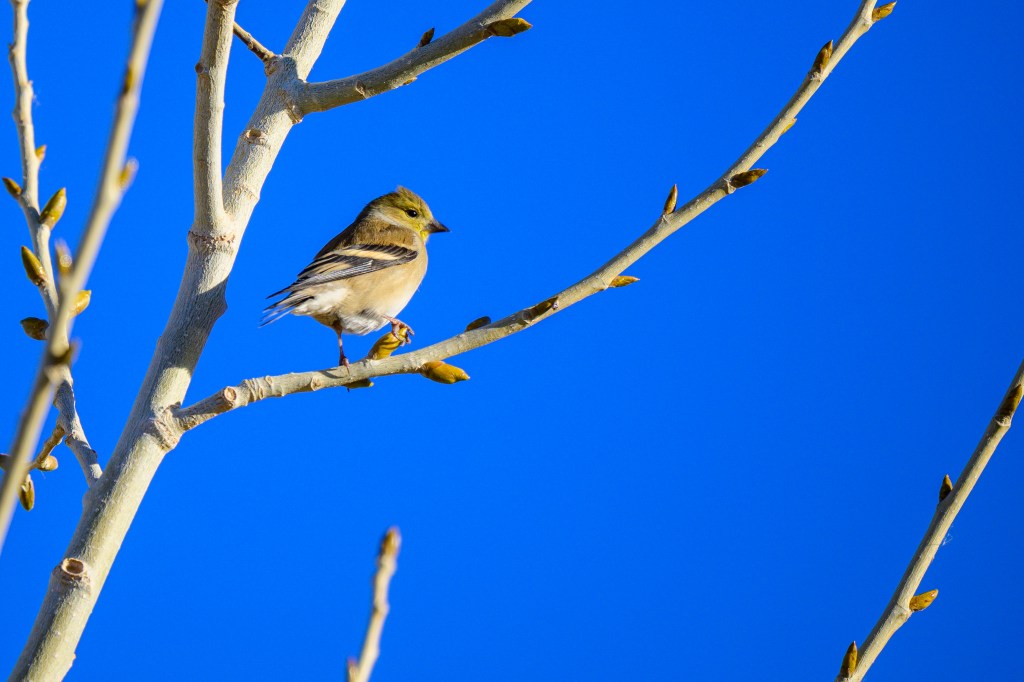
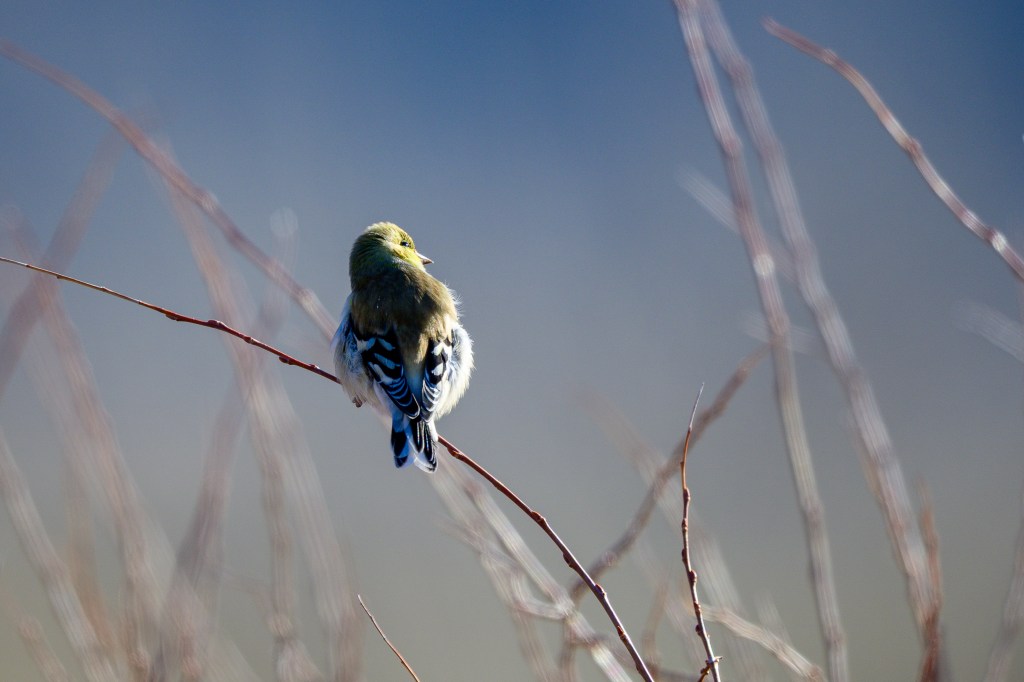
AMERICAN GOLDFINCH
American Goldfinches at the Ponds
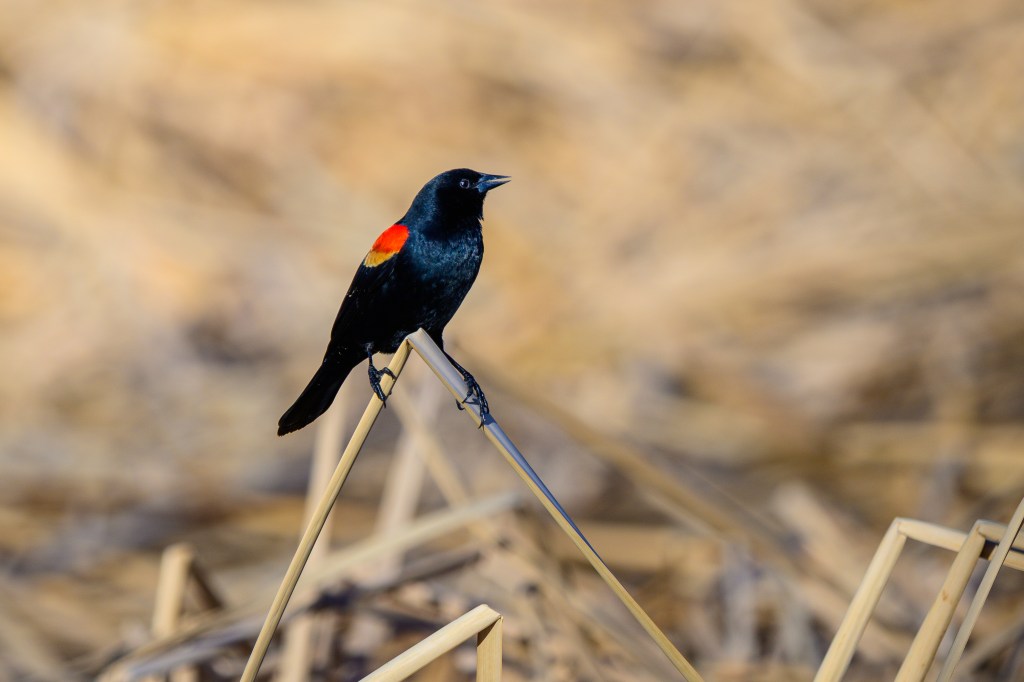
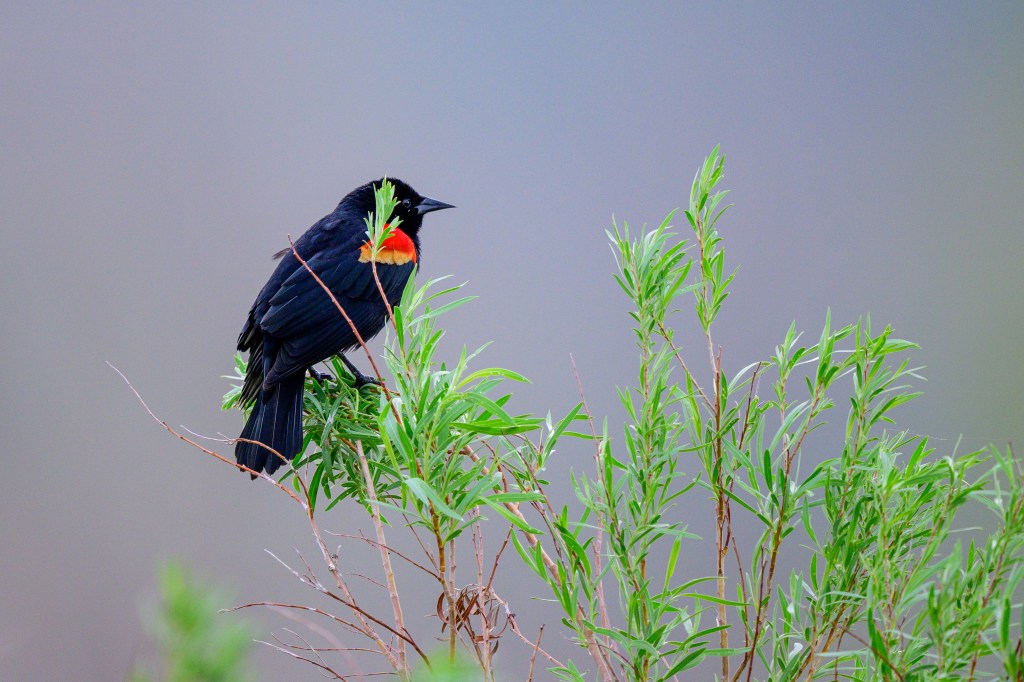
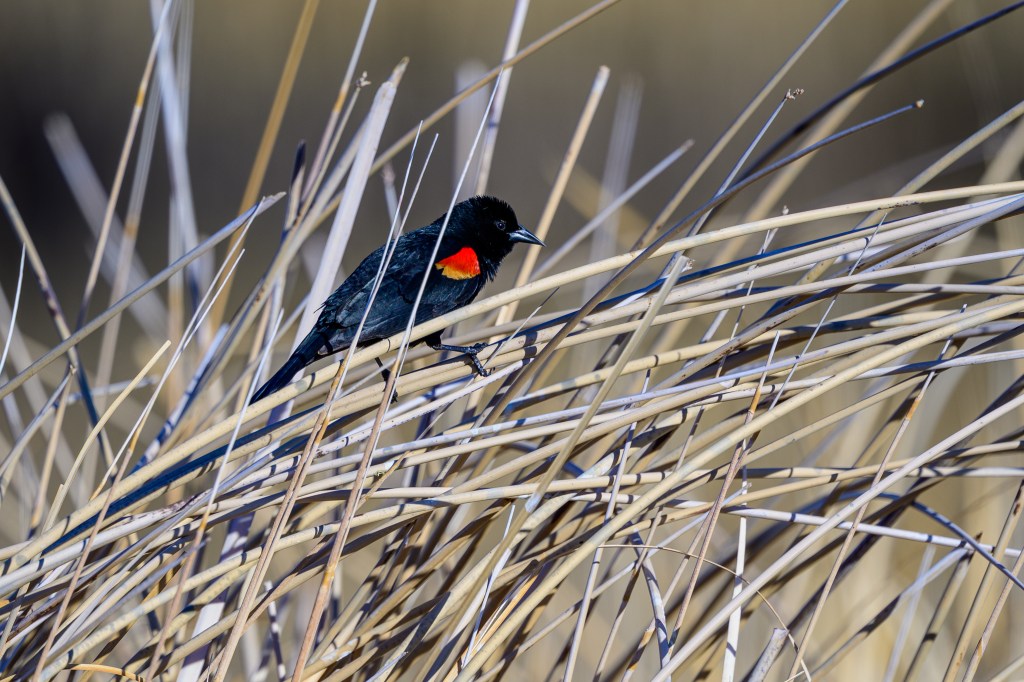
RED-WINGED BLACKBIRD
These birds show up in late February. And then they sing and sing and sing, for months on end. First two photos at Buckley Ponds, third at Owens Lake.
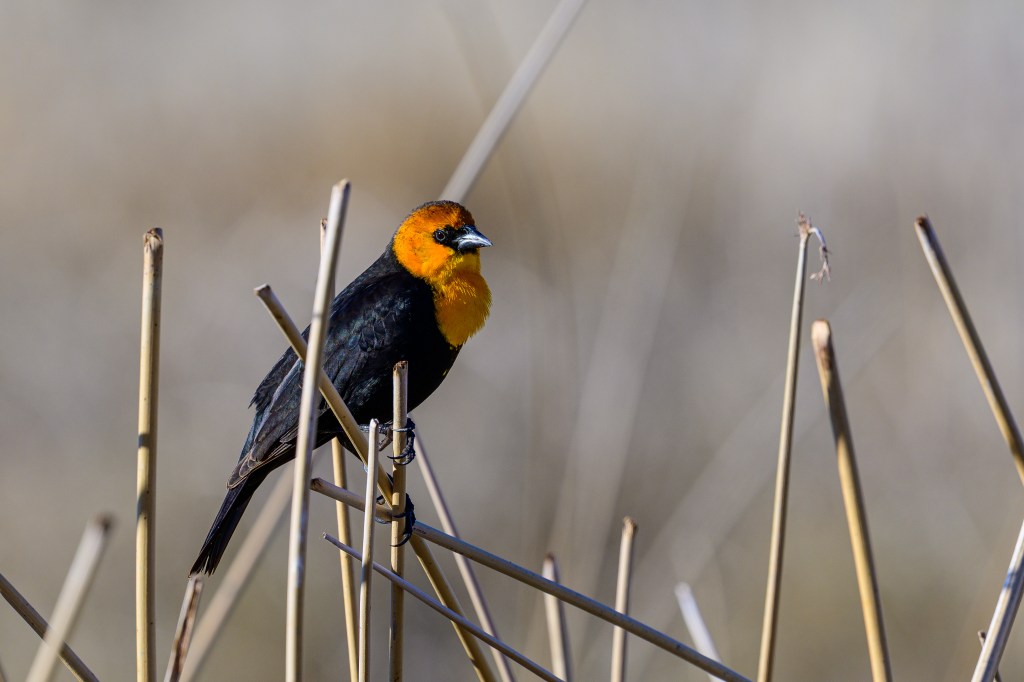
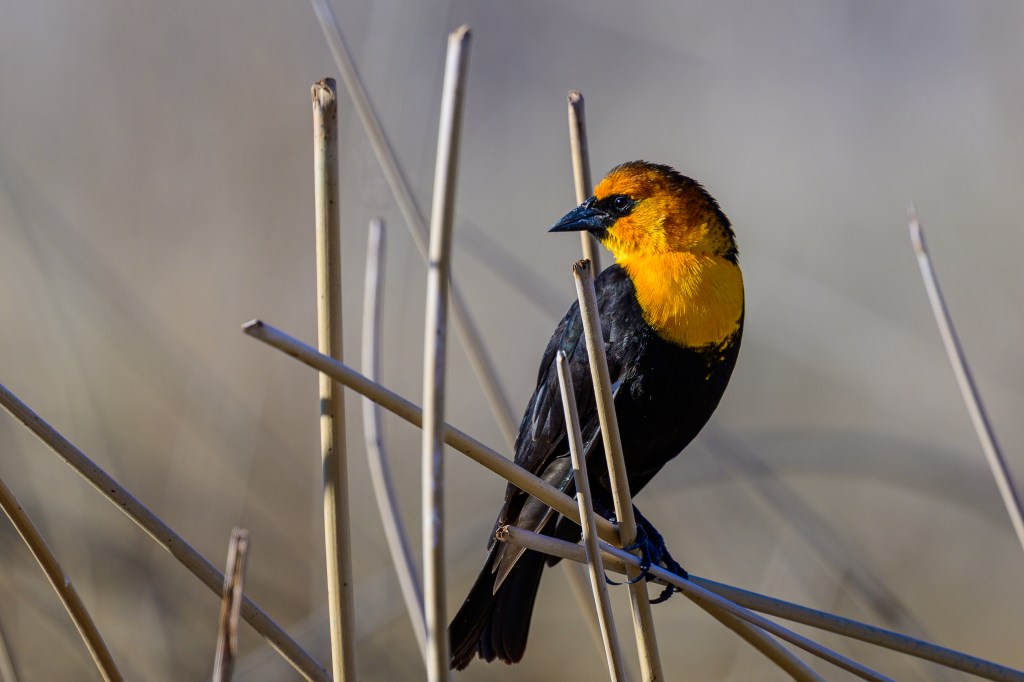
YELLOW-HEADED BLACKBIRD
Gorgeous bird with an awful song. Sounds as if it is being strangled. Photos at Owens Lake.
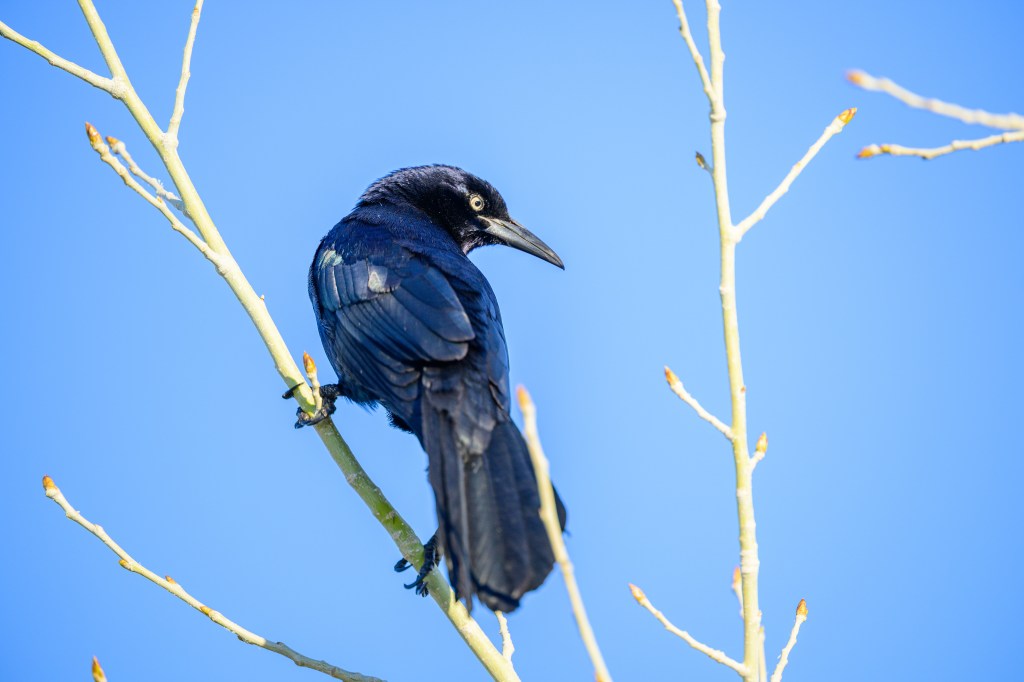
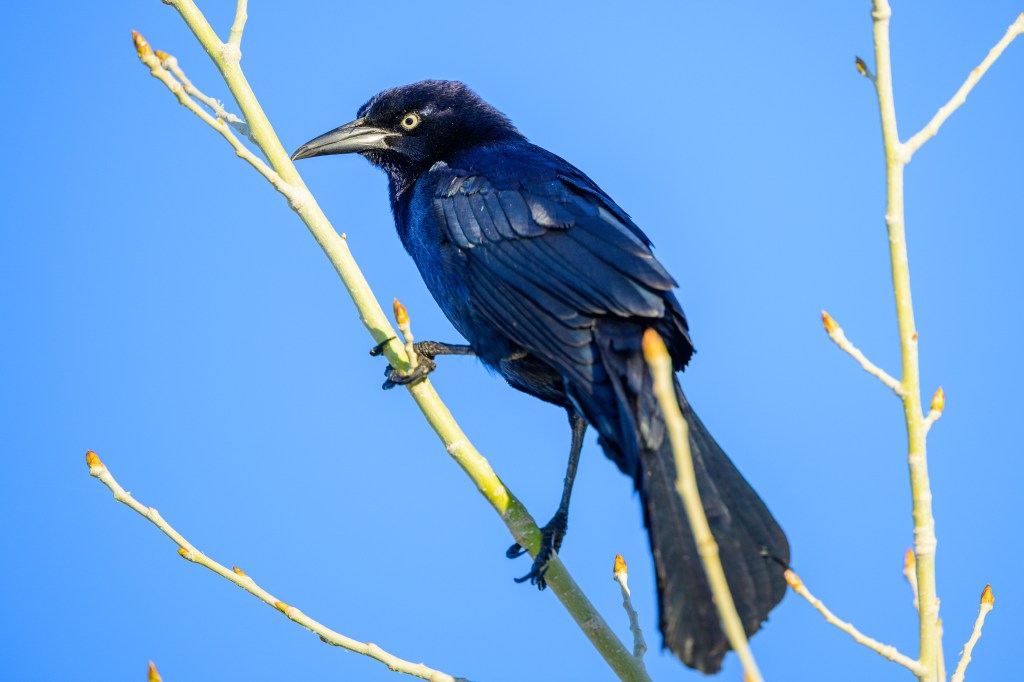
GREAT-TAILED GRACKLE
Looks like an elongated Brewer’s Blackbird.
NOT BIRDS
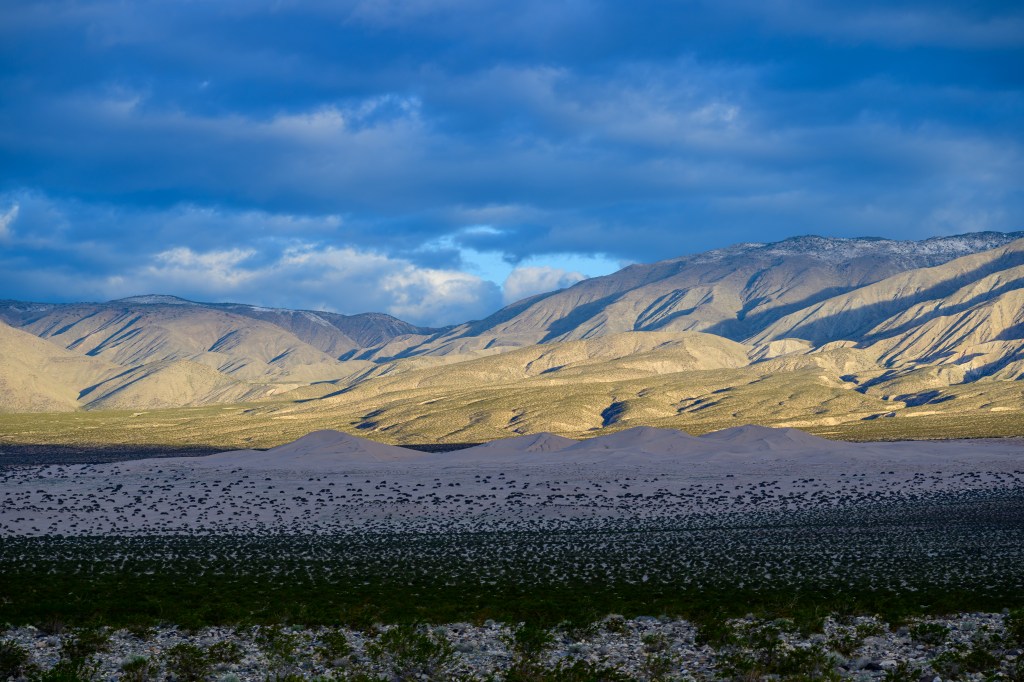
There are other things to see besides birds. First, the Panamint Dunes in shadow in Death Valley.
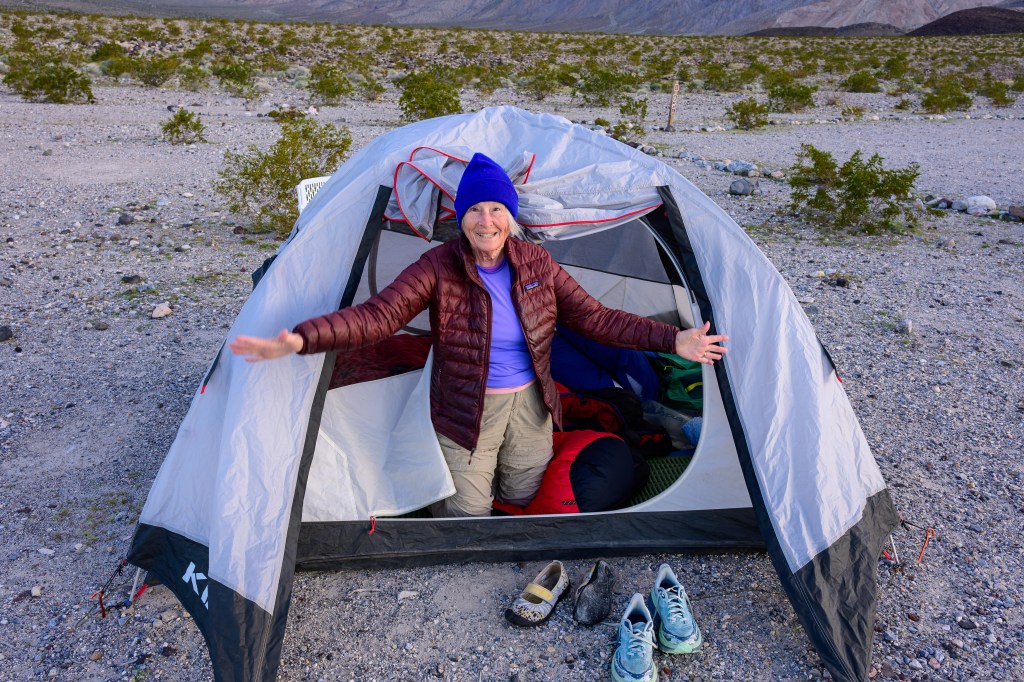
Camper below shows how to wake up and greet the day in Panamint Valley.
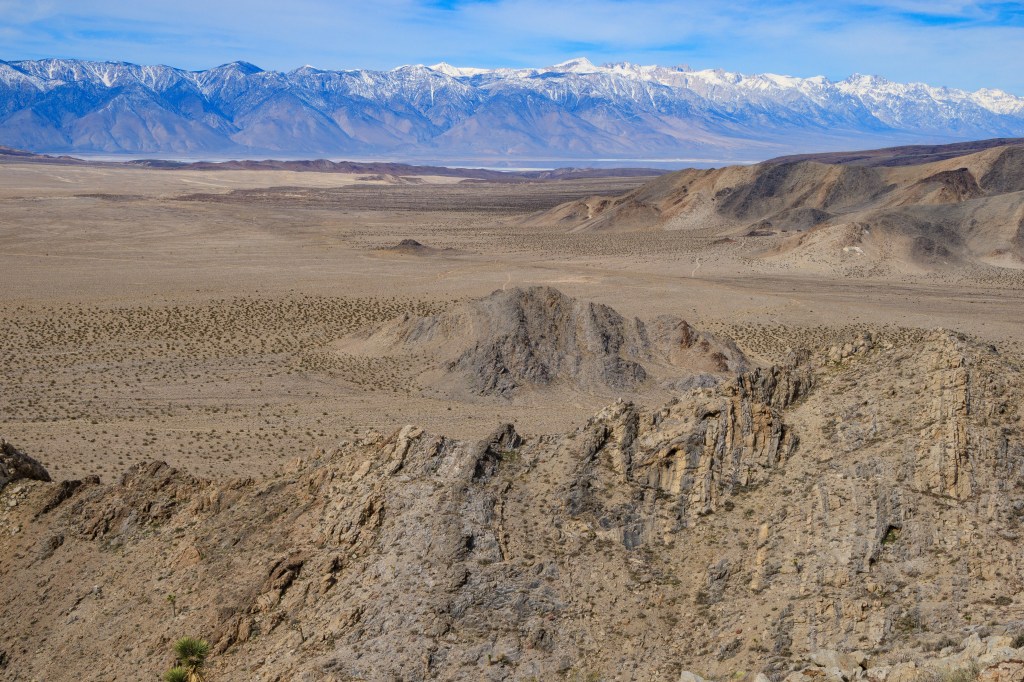
View of the Sierra from Talc Peak near Death Valley. Owens Lake visible in distance.
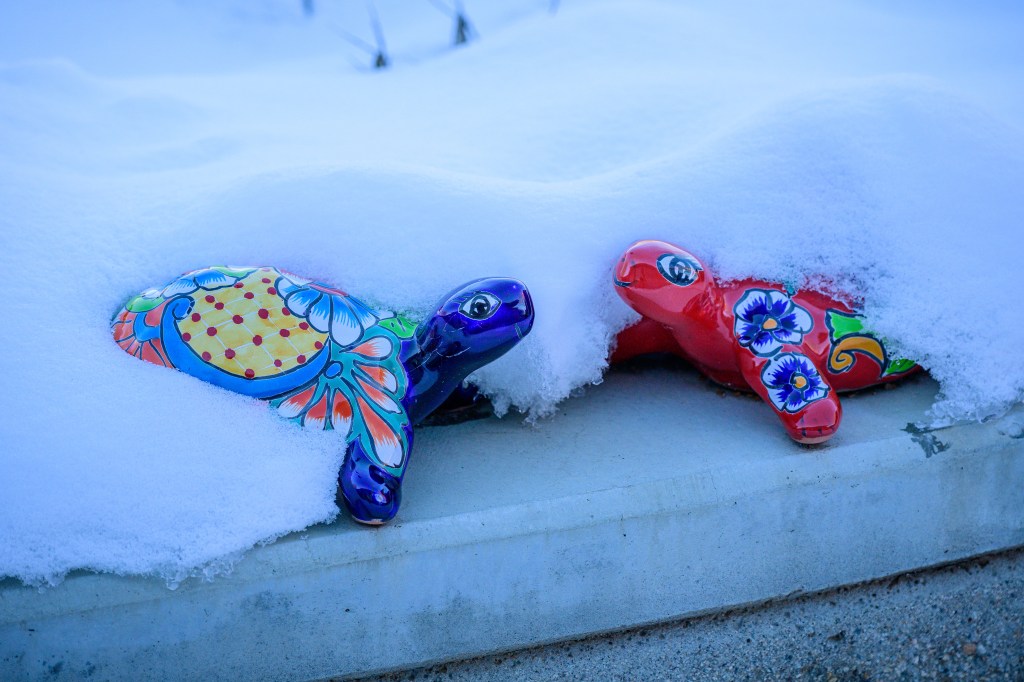
Backyard tortoises remain cheerful under fresh snow.
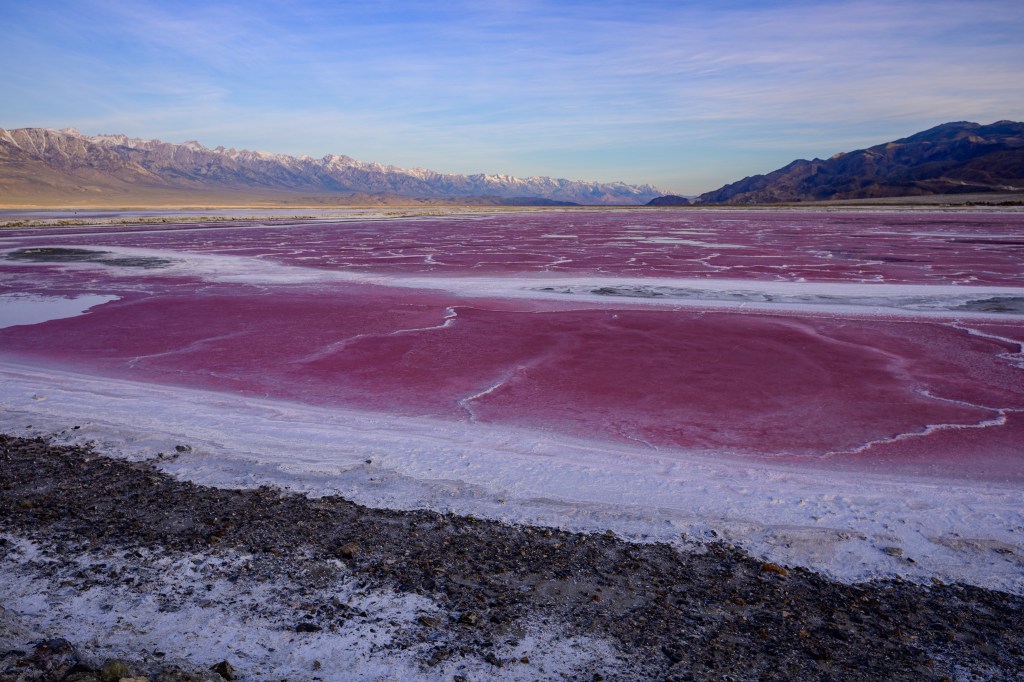
Much of Owens Lake consists of separate salt pans. This one has turned red, probably due to algae. Sierra in the distance.
The White Mountains lie east of Bishop and the highest summit, White Mountain Peak (14,252), is easy to see from town. The peak had little snow in January, but more and after a storm in February. If you blow up these photos, you can make out a building on the summit. This is the Summit Hut, which belongs to the University of California White Mountain Research Center. The Center supports studies of plant and animal life at high altitude.