
Birds are busy in spring — migrating, building nests, raising babies. This produced a lot of photos and I decided to organize them by region. This blog covers three areas north of Bishop: Mono Lake, Crowley Lake, and Pleasant Valley Reservoir.
MONO LAKE, THE SOUTH TUFA AREA
Mono Lake is a one hour drive north of Bishop.
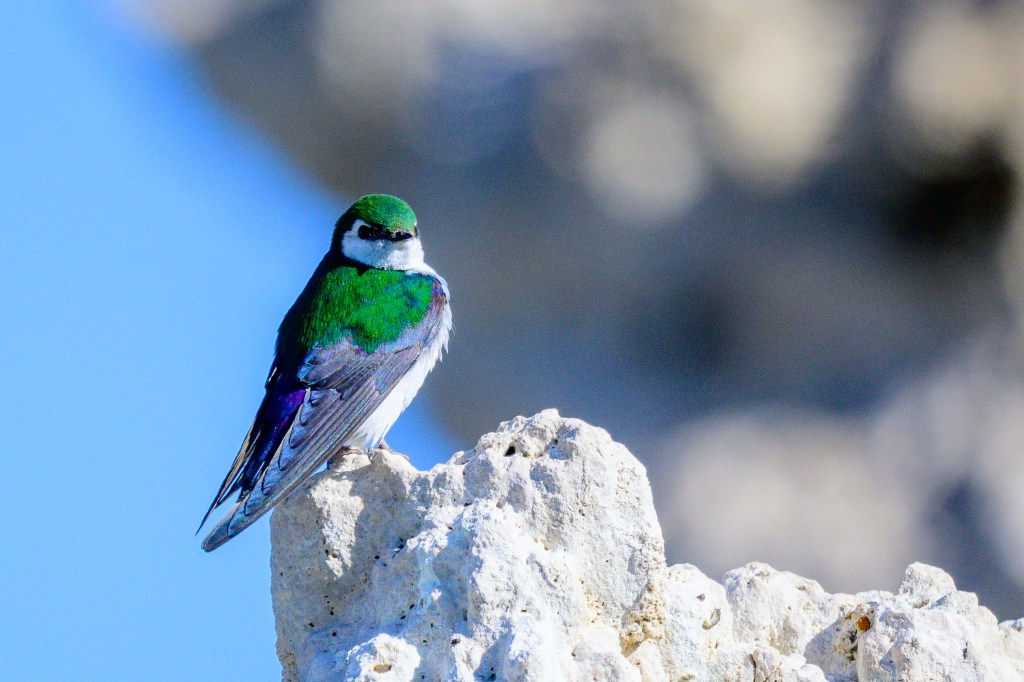
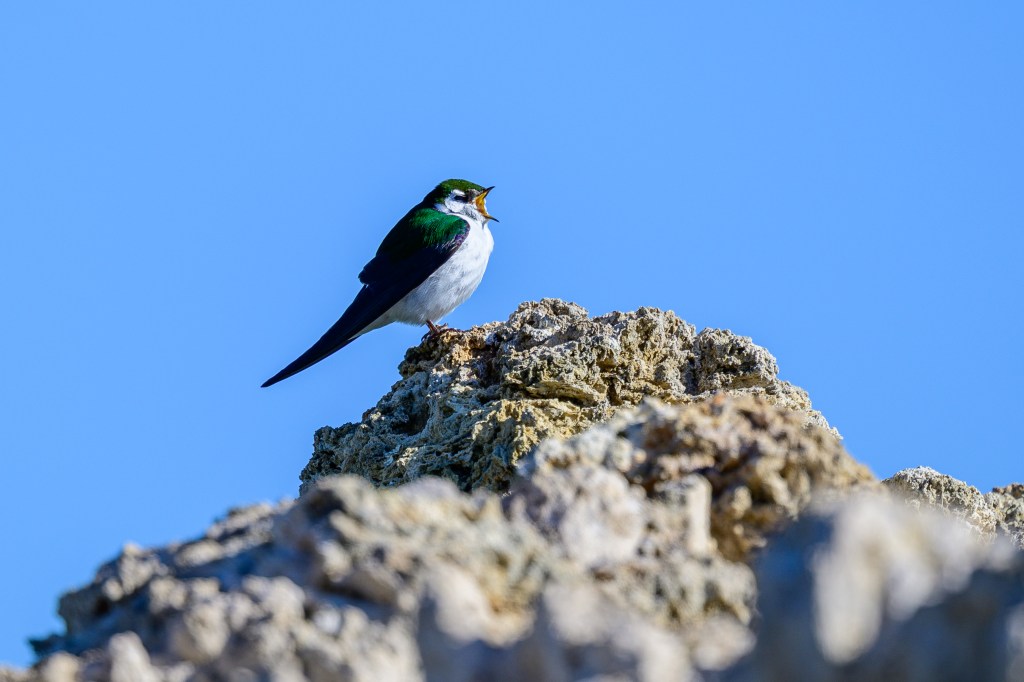
Violet-green Swallows are tiny fighter jets that catch insects in the air. They wear flashy colors.
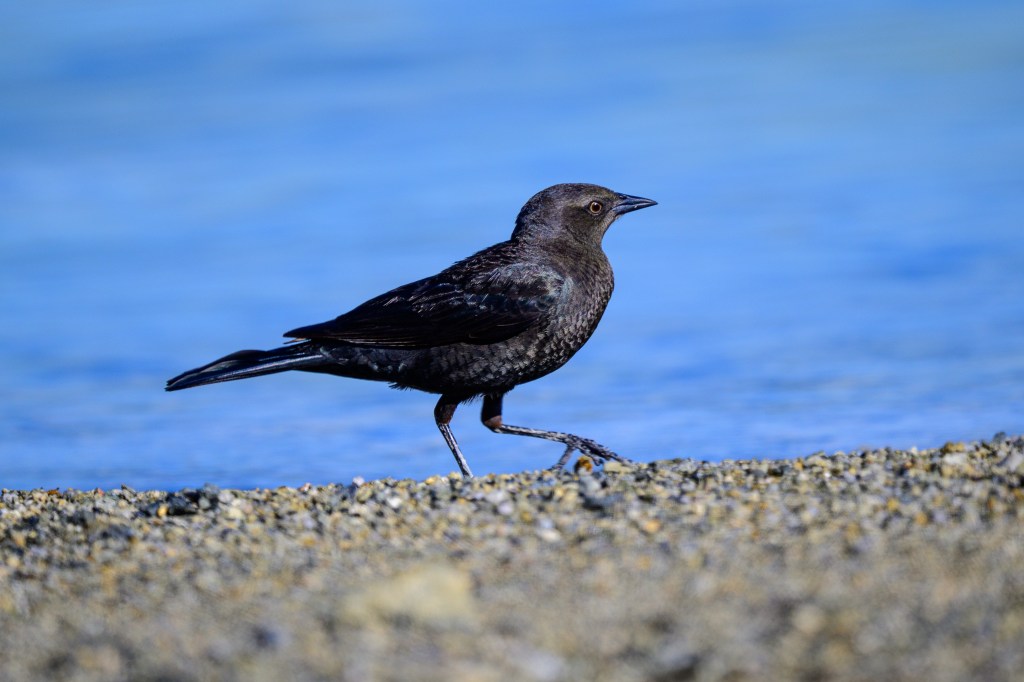
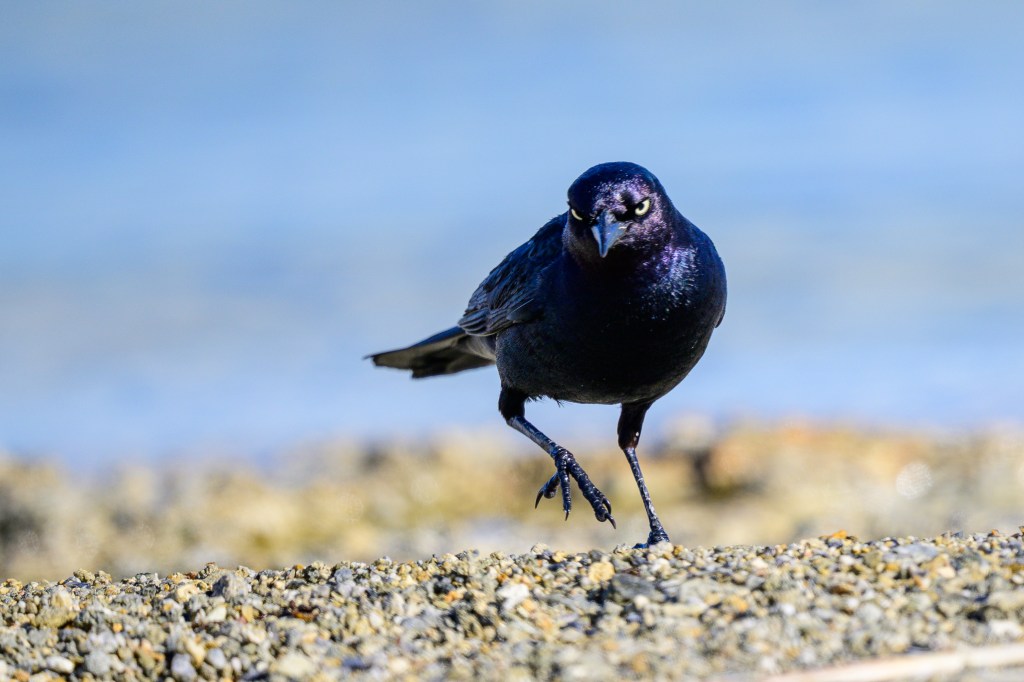
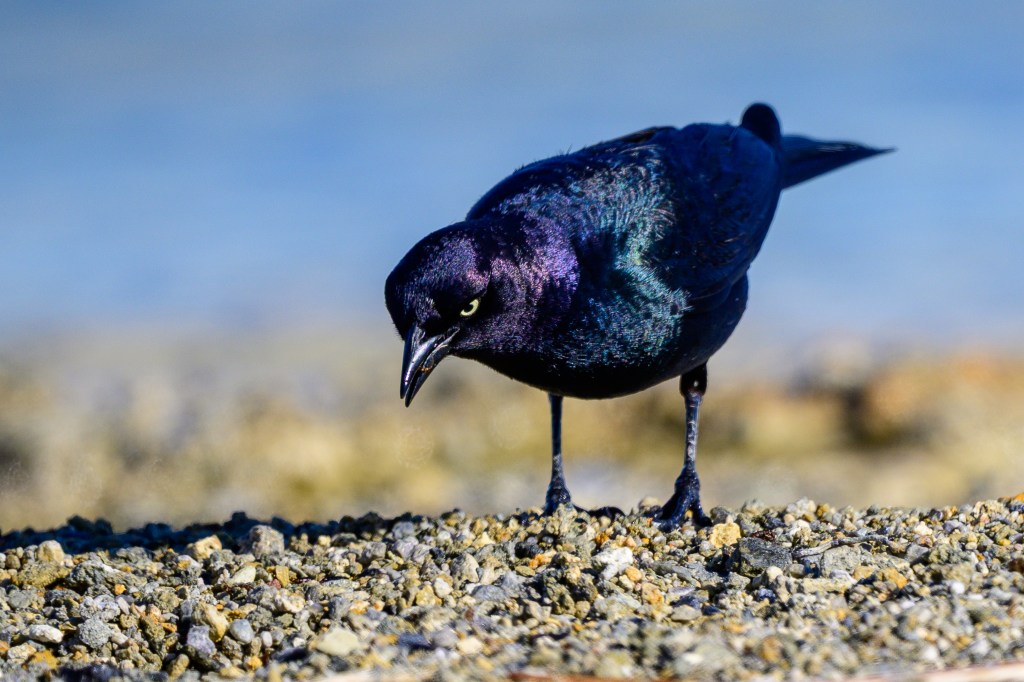
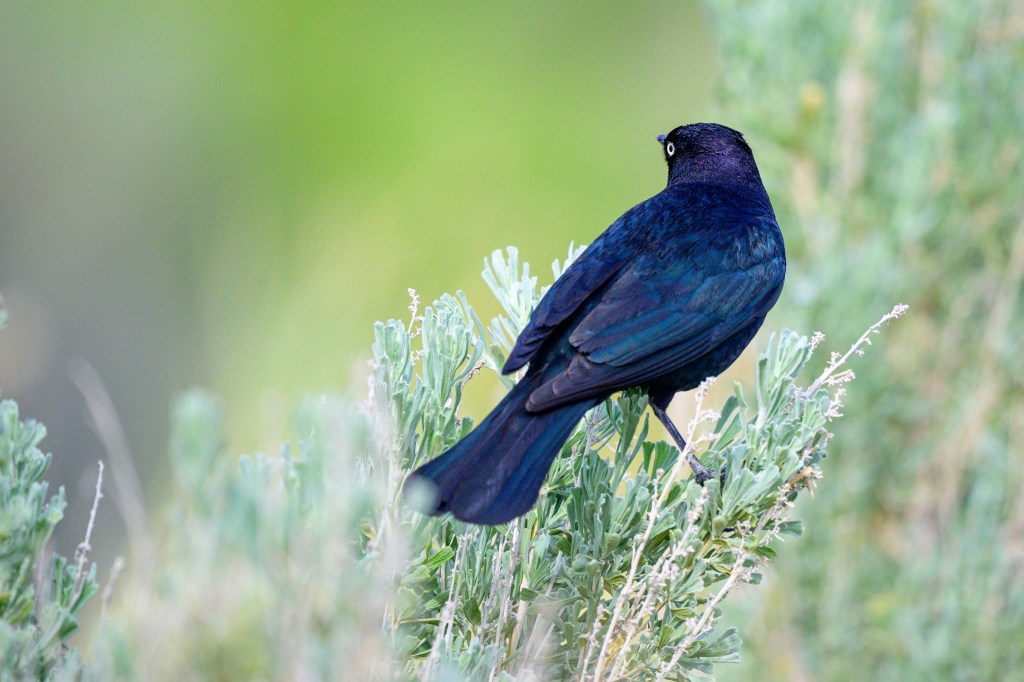
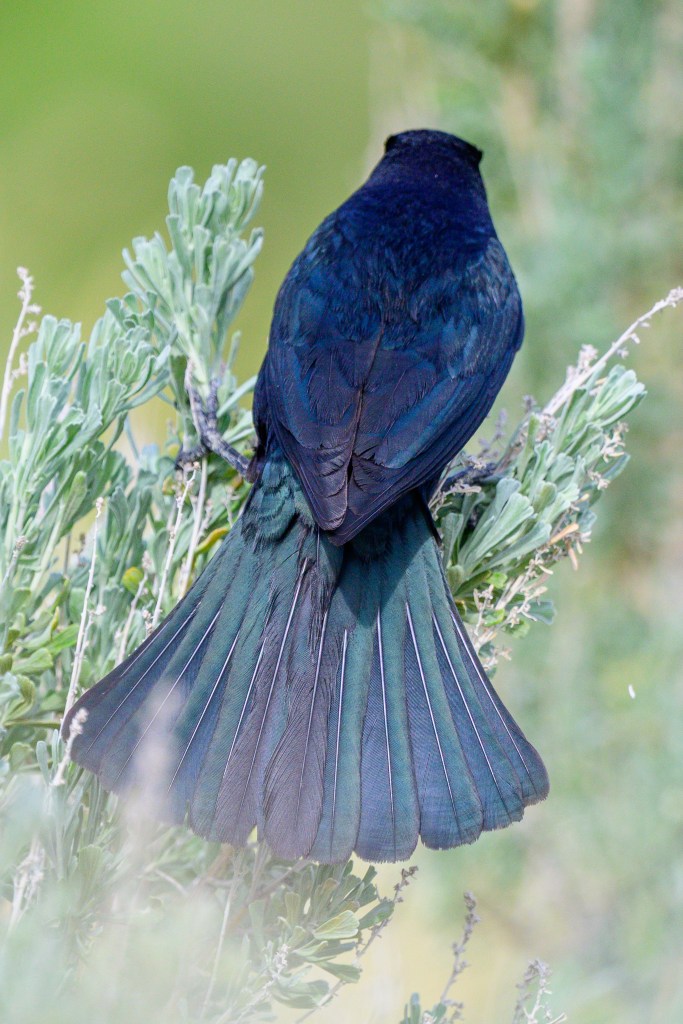
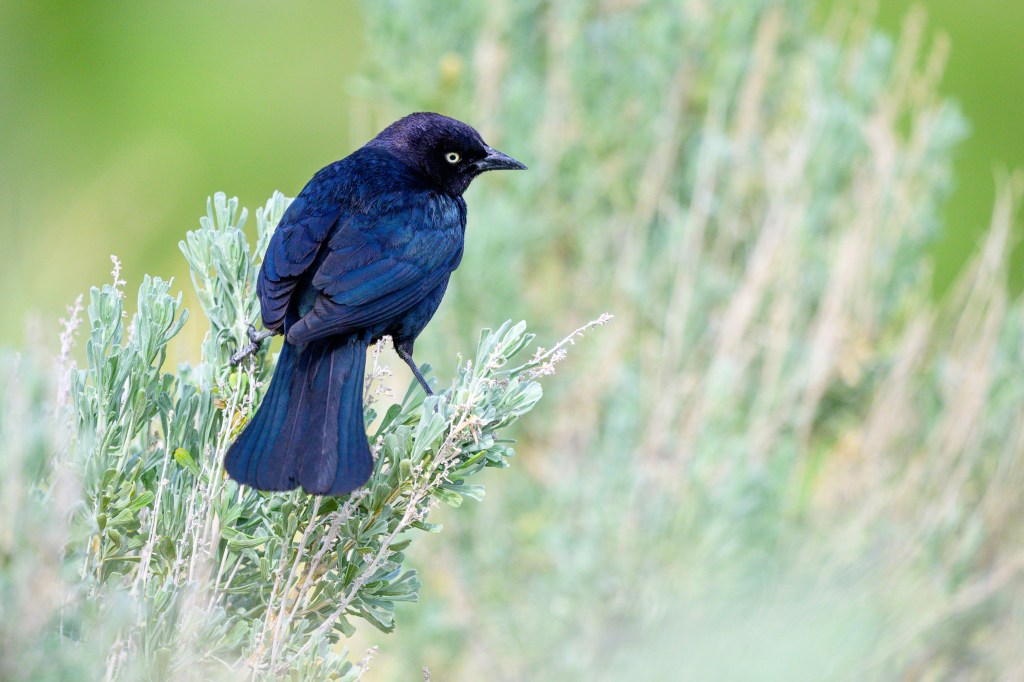
Brewer’s Blackbirds stalk the beaches and perch in the sagebrush, eating alkali flies.
A female wears a brown/black ensemble.
Males wear iridescent purple/black. Their yellow eyes look threatening.
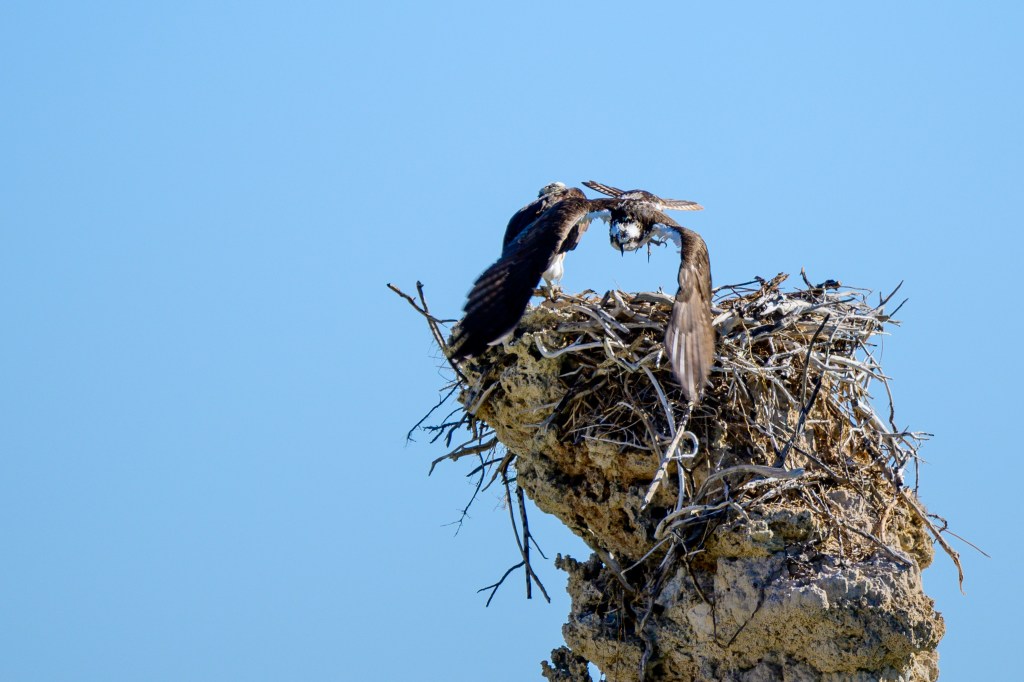
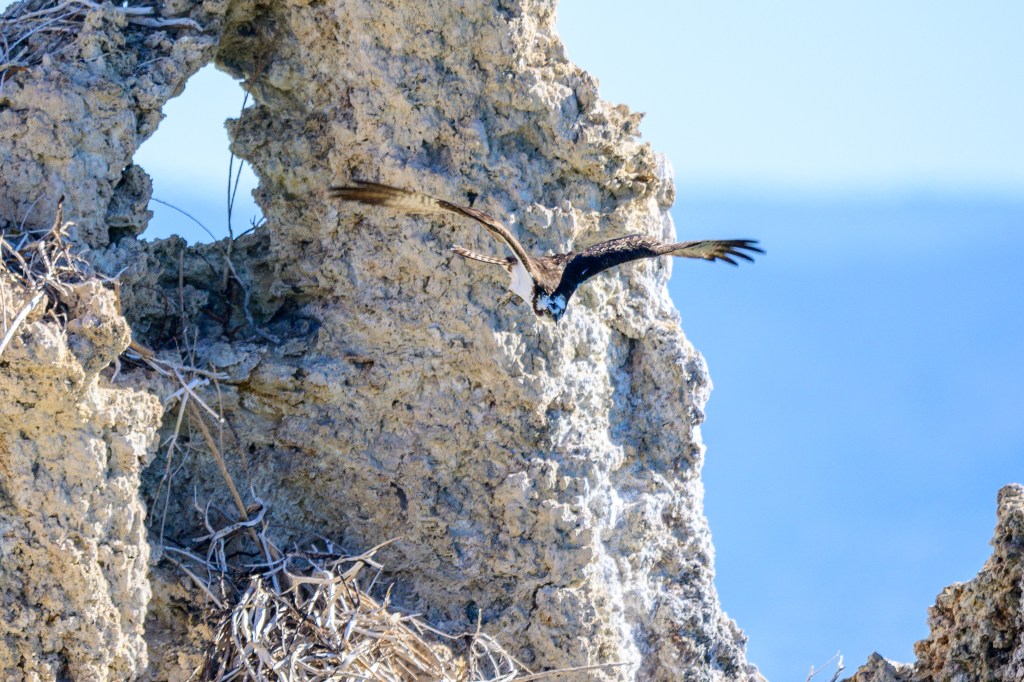
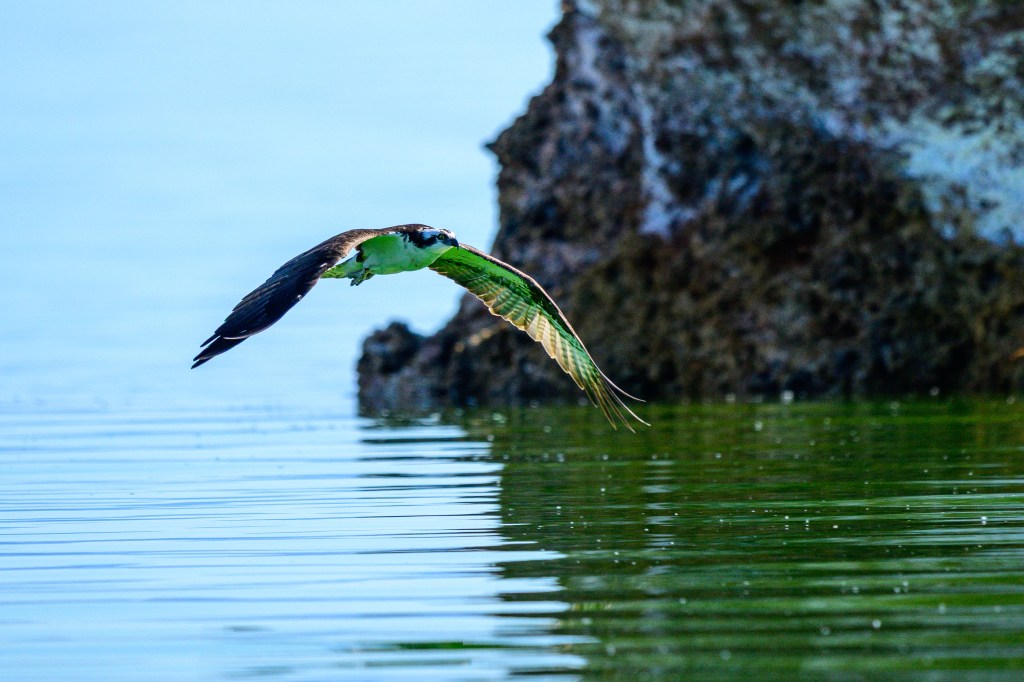
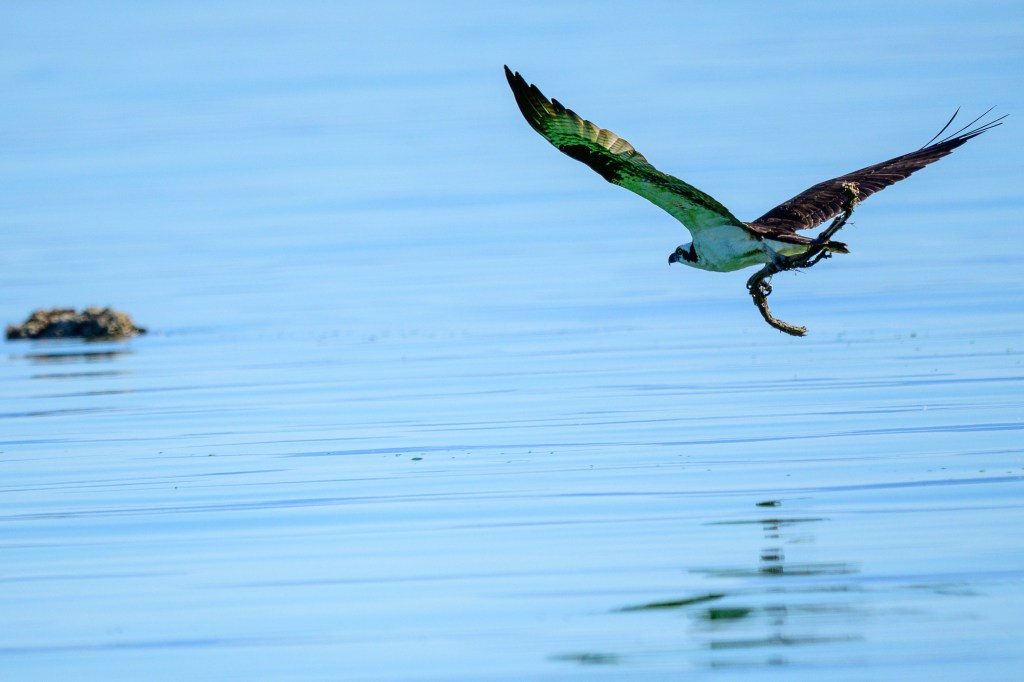
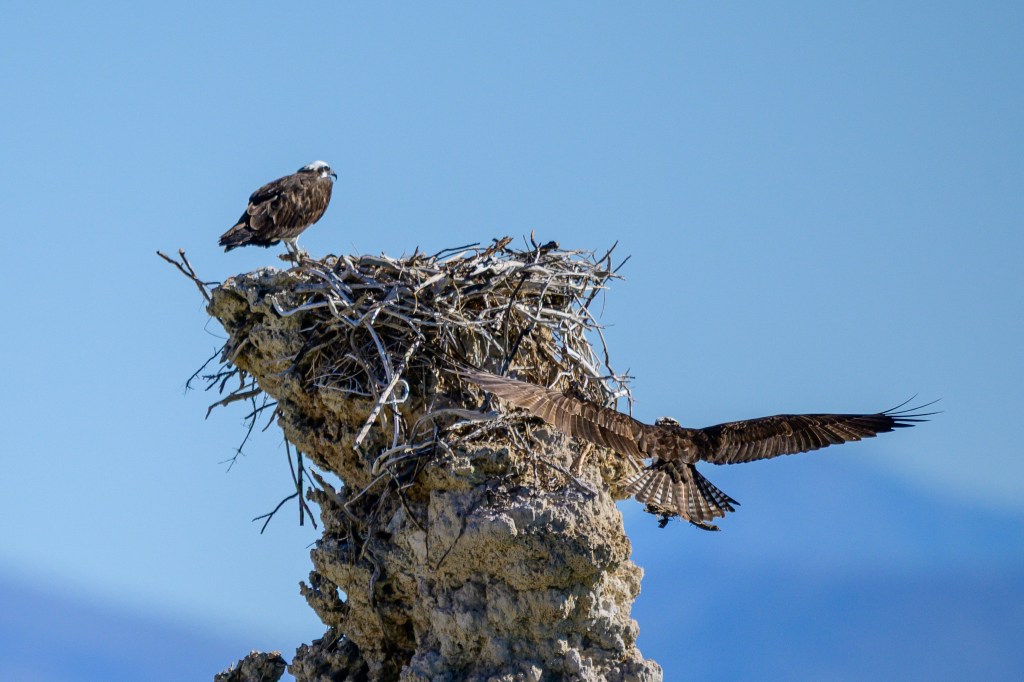
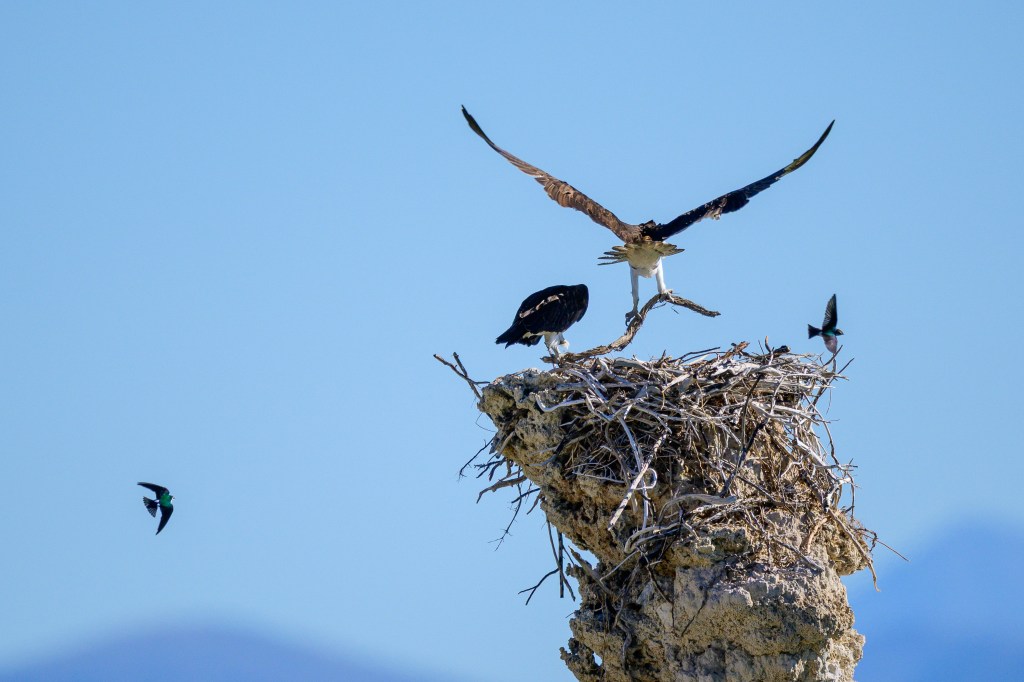
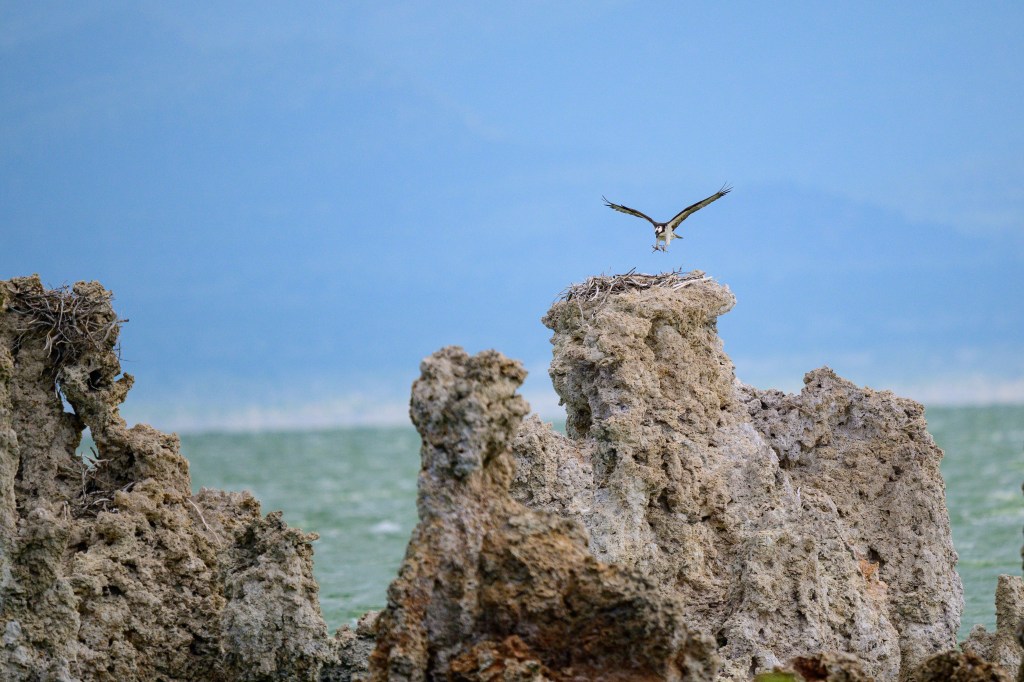
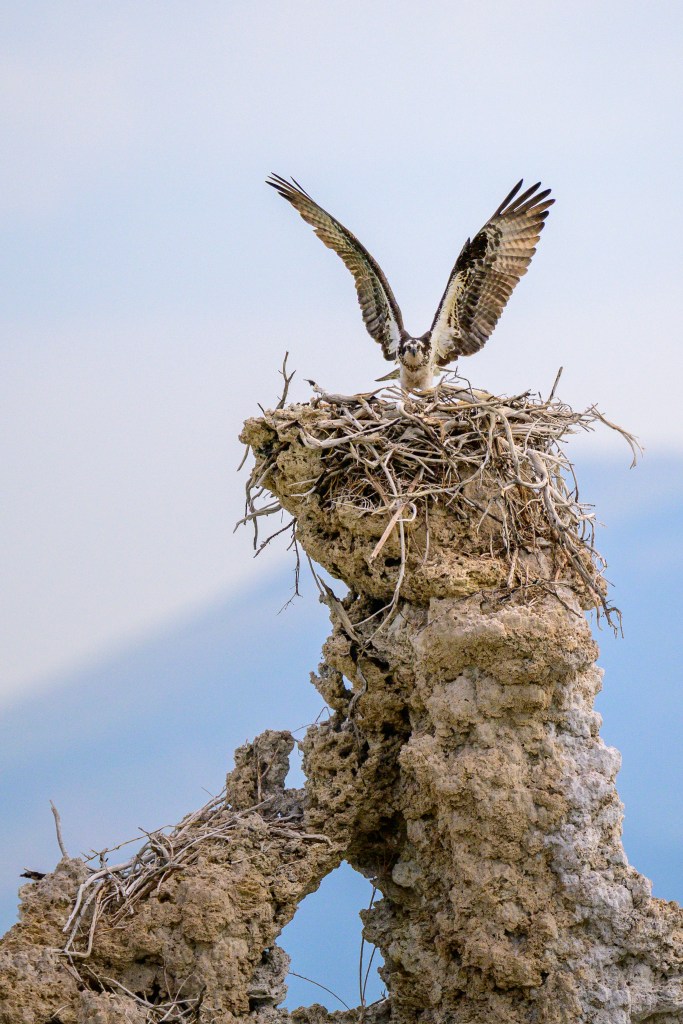
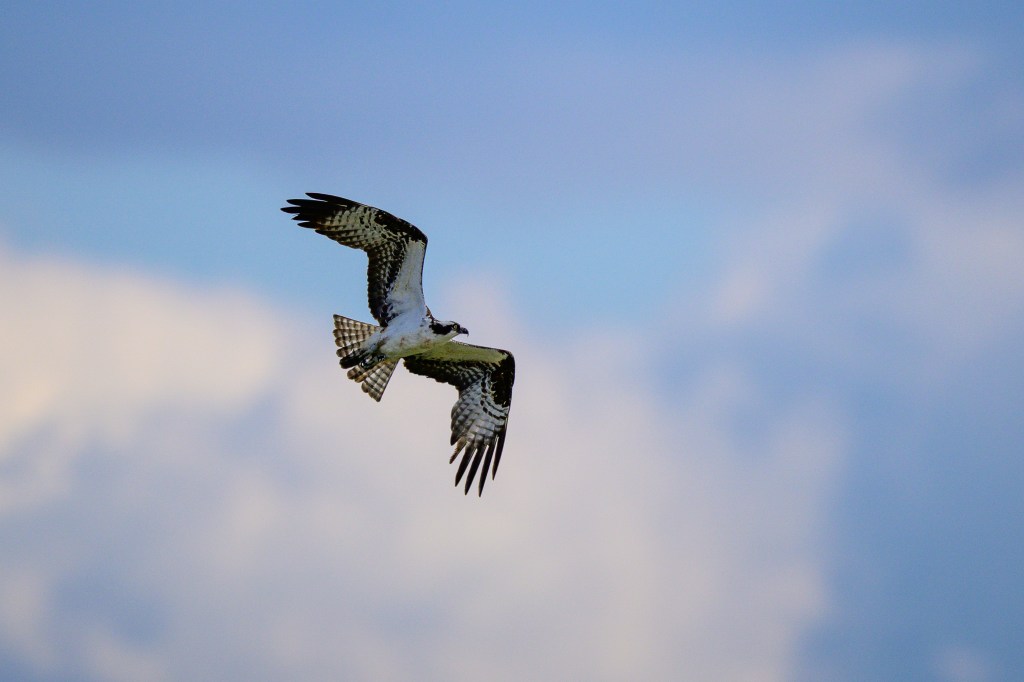
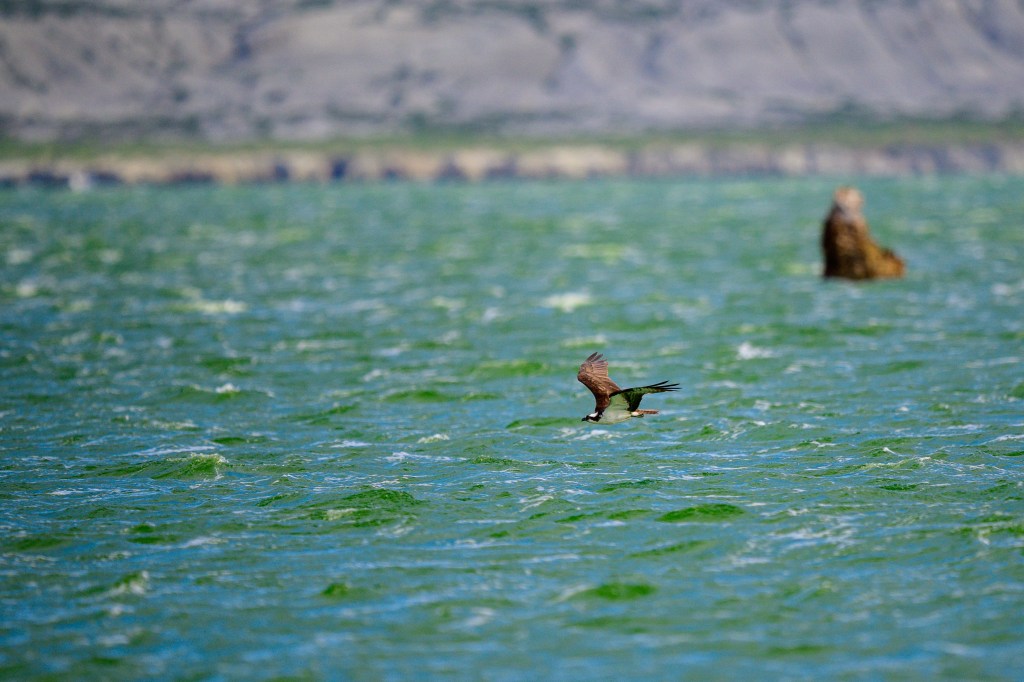
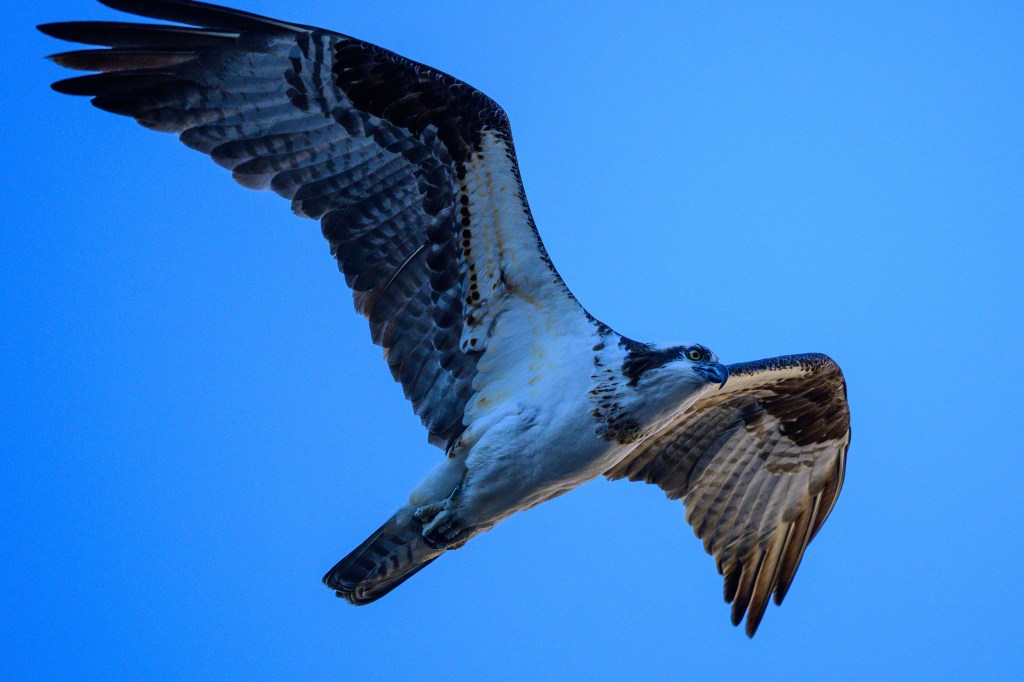
Ospreys use the tufa towers as safe nesting locations to raise their kids. There are no fish in Mono Lake, so the adults commute to Rush Creek or Grant Lake when they need groceries. Below, an osprey leaves a nest. As it flies over the lake, reflected light from the water produces a green color under the wings. Later the bird returns with a stick for the nest.
In the photo below, two violet-green swallows fly past the nest.
More Osprey photos below.
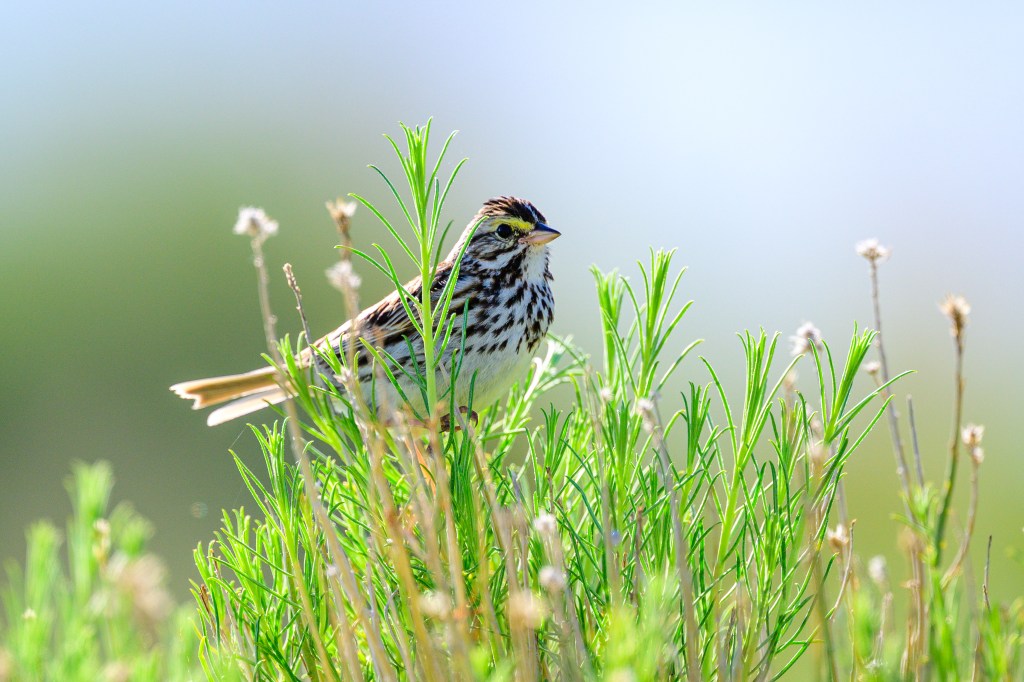
Savannah sparrows, with yellow eyebrows, are common here.

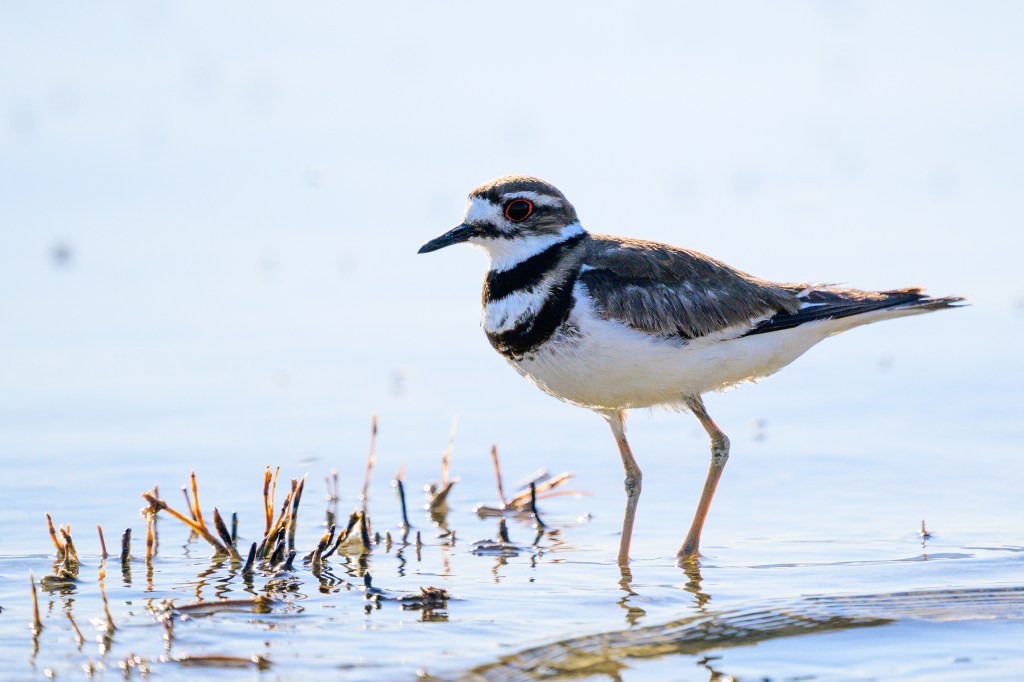
A Killdeer, with red glasses, strolls in the shallows.
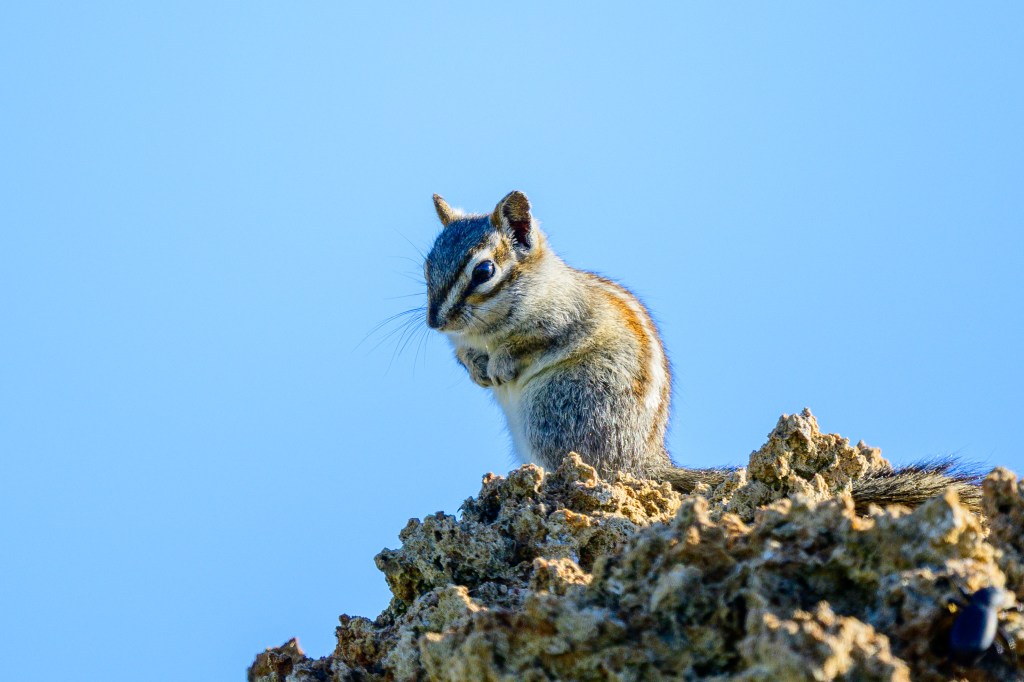
A Least Chipmunk stands on a tufa tower.

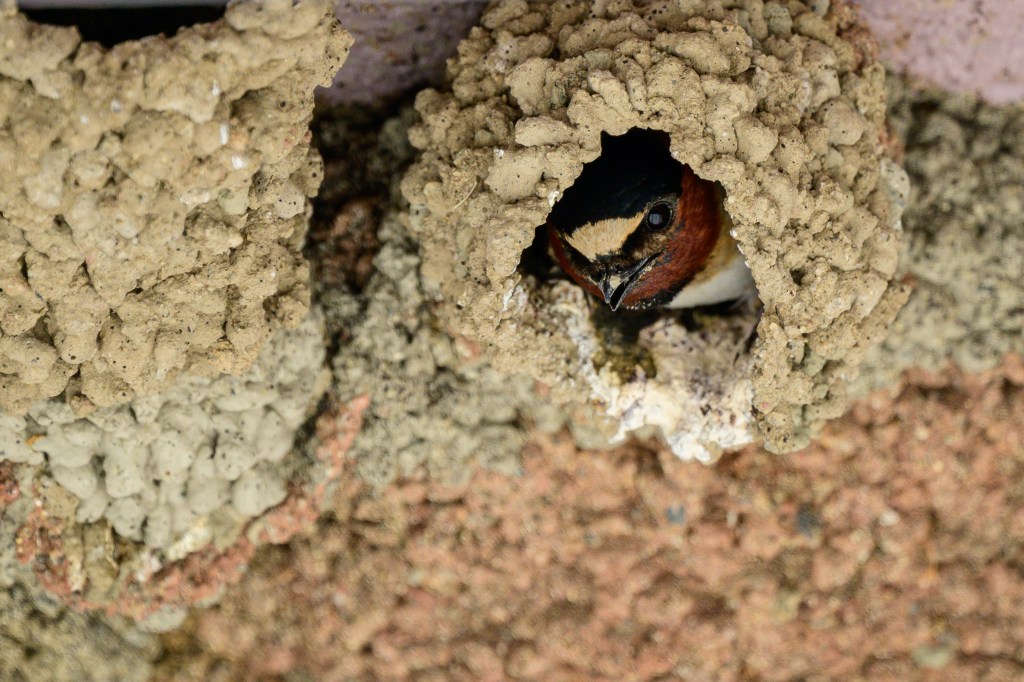
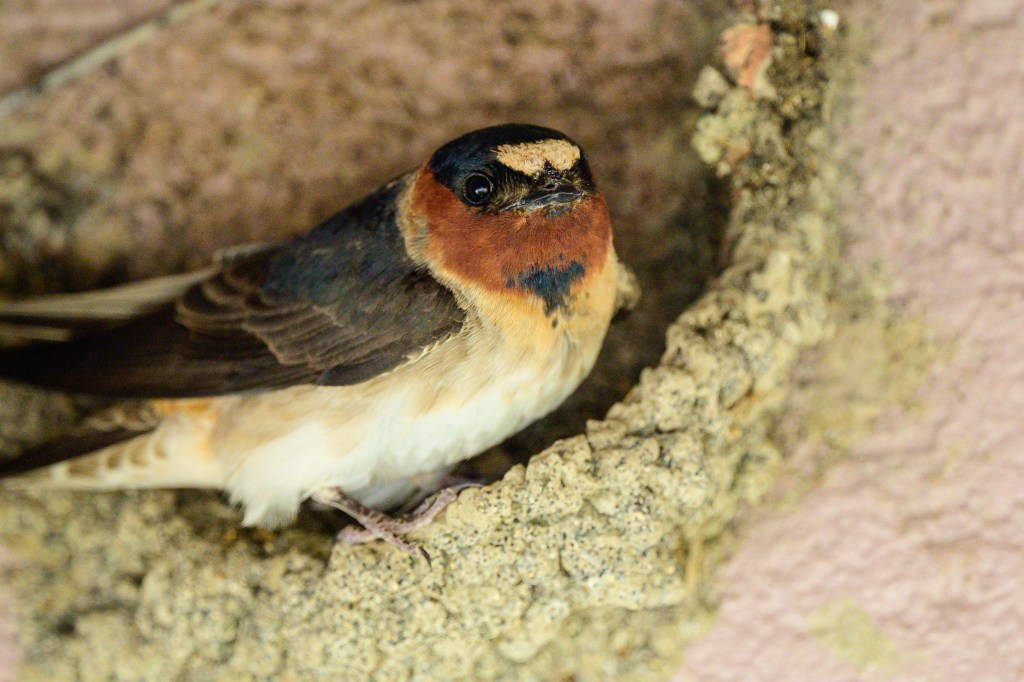
Adult Cliff Swallows were in mud nests at the Visitor’s Center.
CROWLEY LAKE, THE INLET
If you drive 30 minutes north of Bishop on Highway 395, you reach the Long Valley Caldera: 20 miles long, 10 miles wide. This supervolcano blew up 760,000 years ago, sending ash as far as Nebraska. The biggest supervolcano eruptions in US geological history were 1) Wah Wah Springs (Utah/Nevada), 2) La Garita in Colorado, 3) Yellowstone, and 4) Long Valley. Long Valley has several hot springs and a small geothermal power plant.
The Owens River flows through this basin producing marshes and a small lake. In 1941, Los Angeles built a dam to store water in the lake, creating a popular place for boating, kayaking, and fishing. The lake is named for Father John J. Crowley (1891-1940); born in Ireland, he became the priest for the Eastern Sierra in 1919. He celebrated a mass on the summit of Mt. Whitney in 1934.
Dirt roads reach the place where the Owens River flows into the lake. Roberta and I visited twice in June.
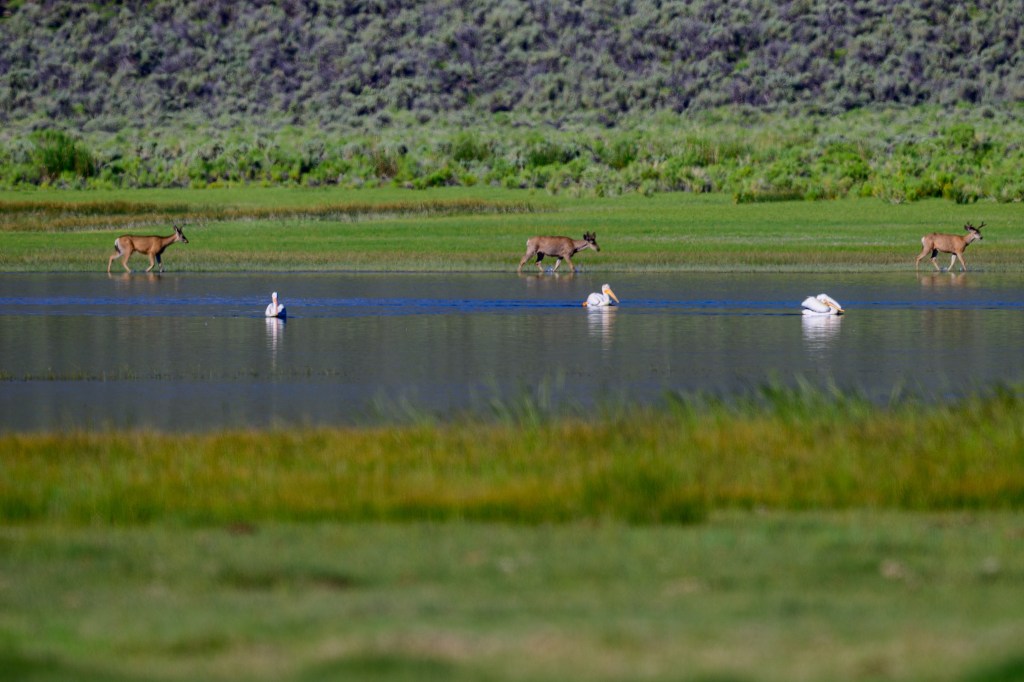
American White Pelicans are gigantic; our heaviest bird after the California Condor. They gather in groups on the lake and soar past the Sierra. They land by using their feet as skis.
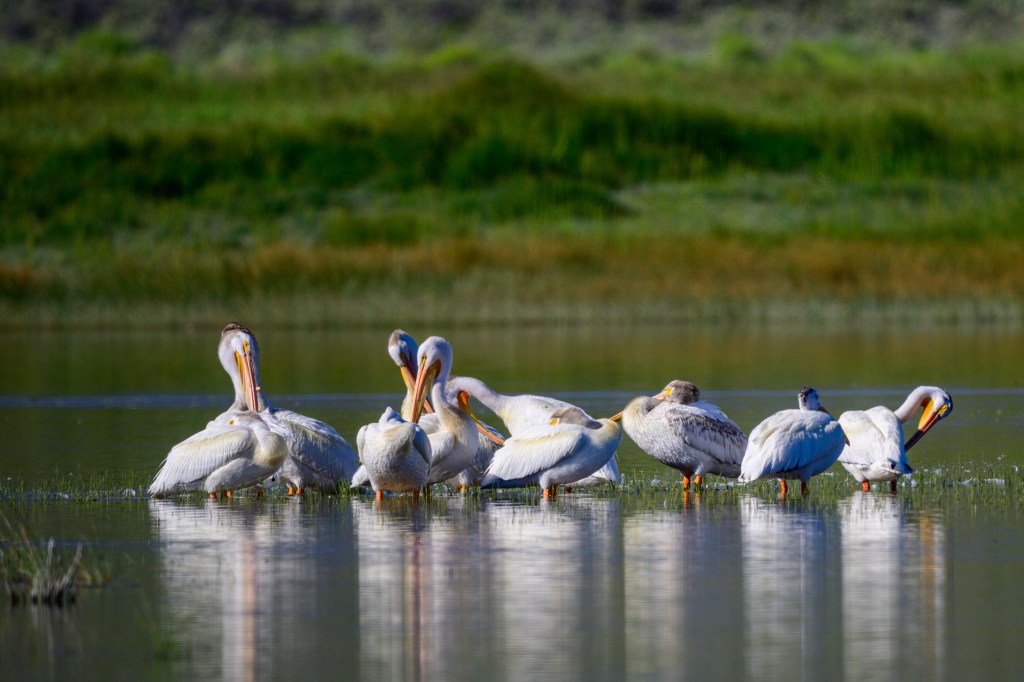
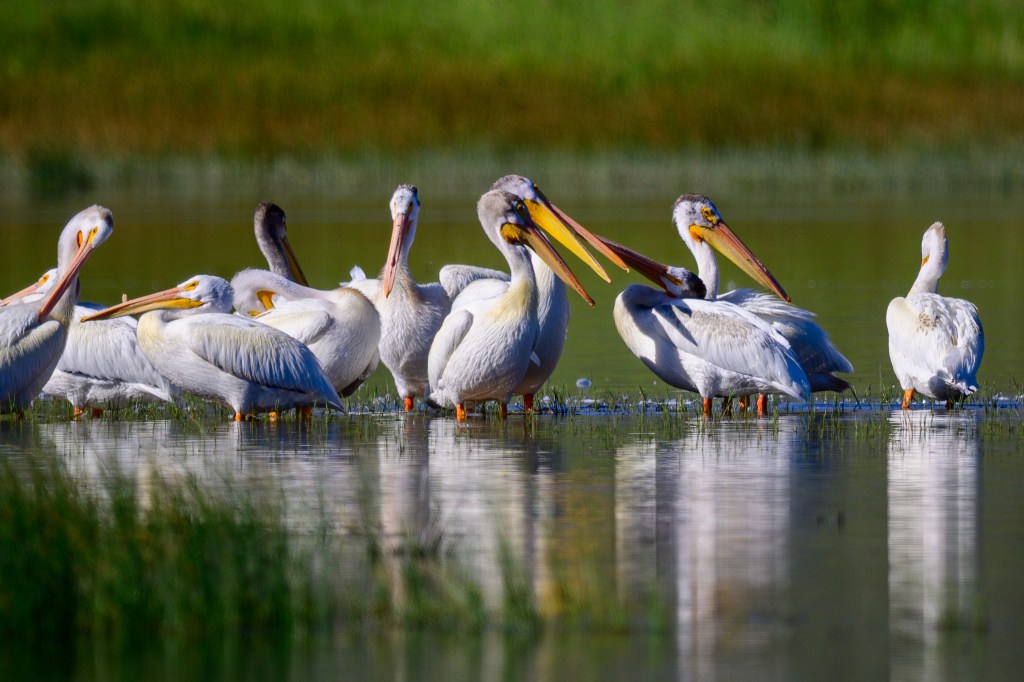
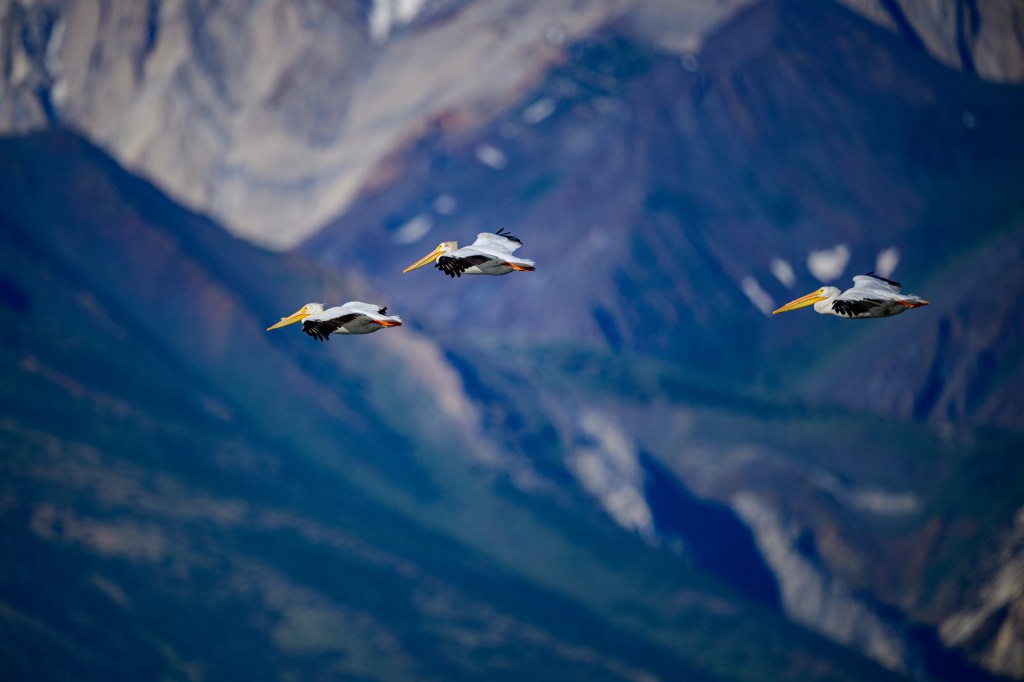
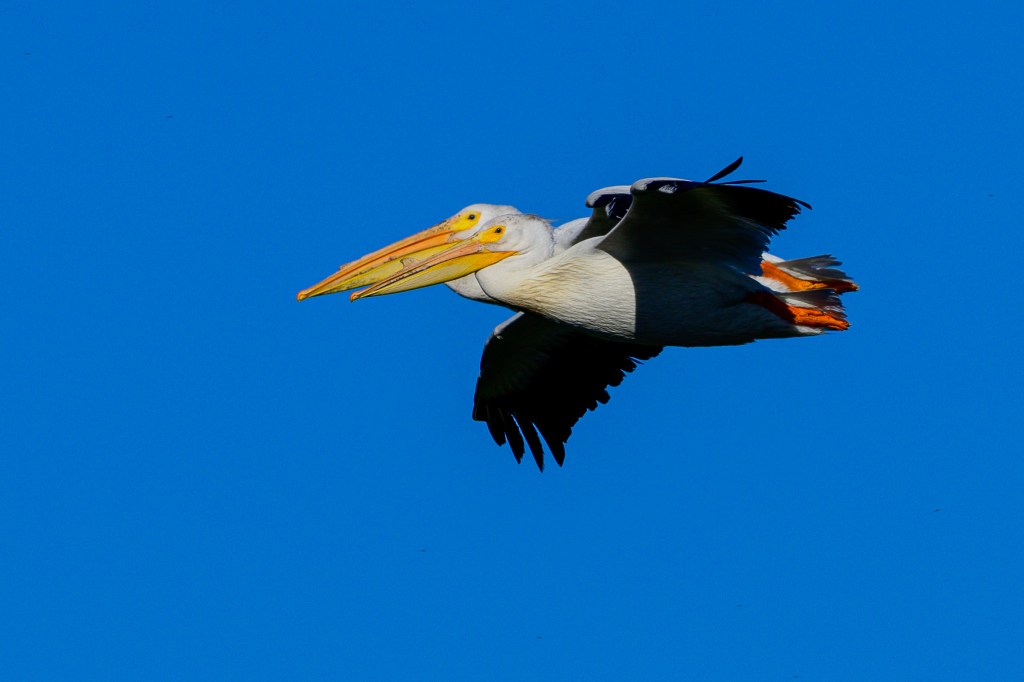
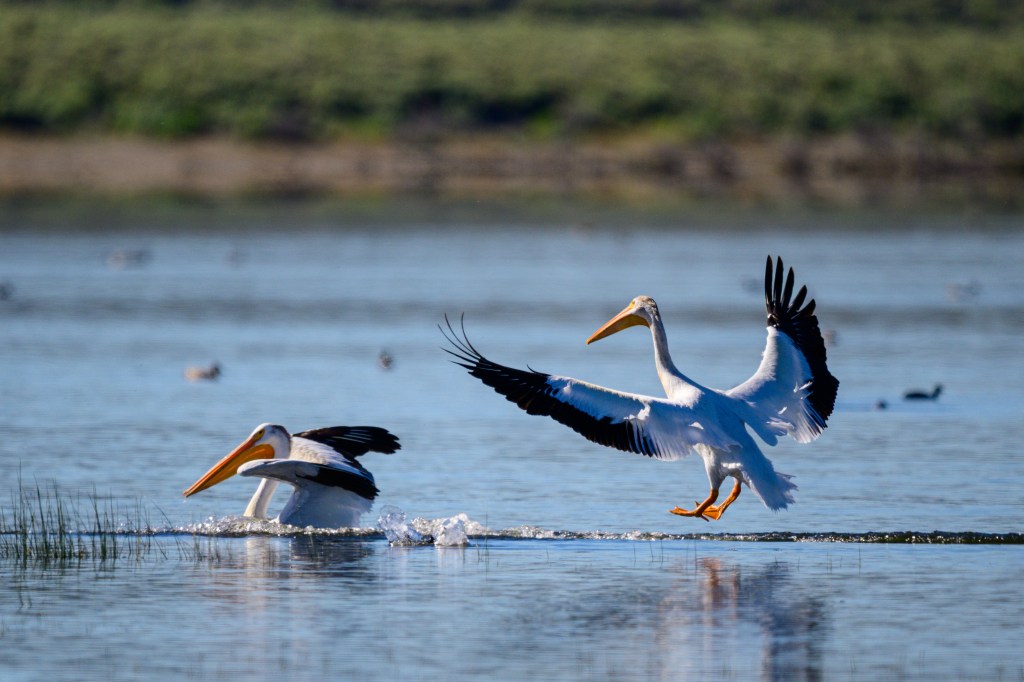
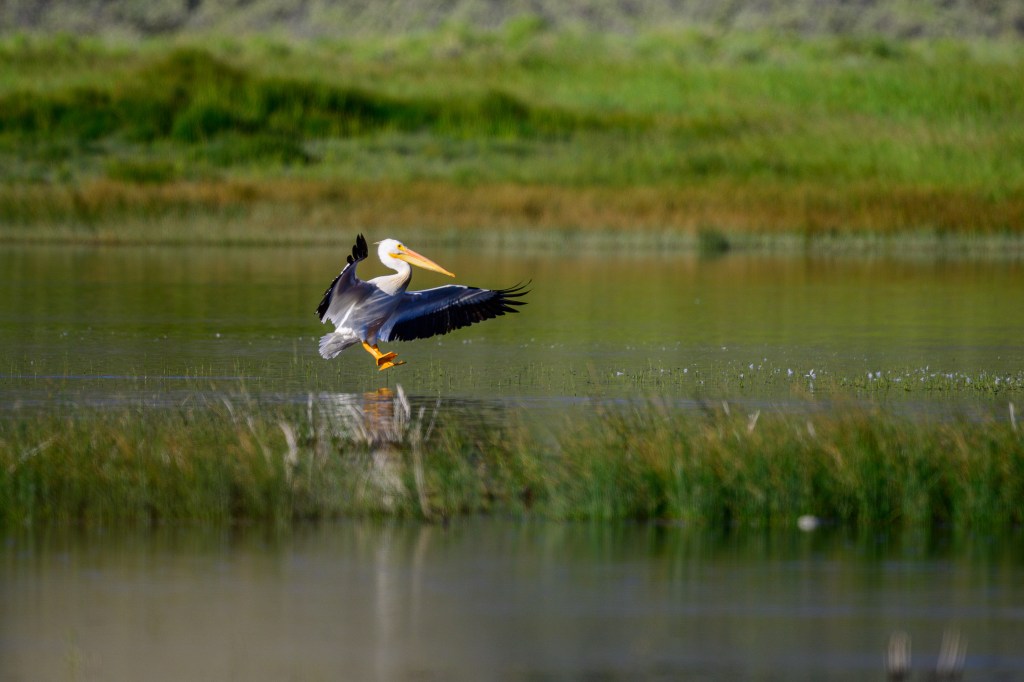
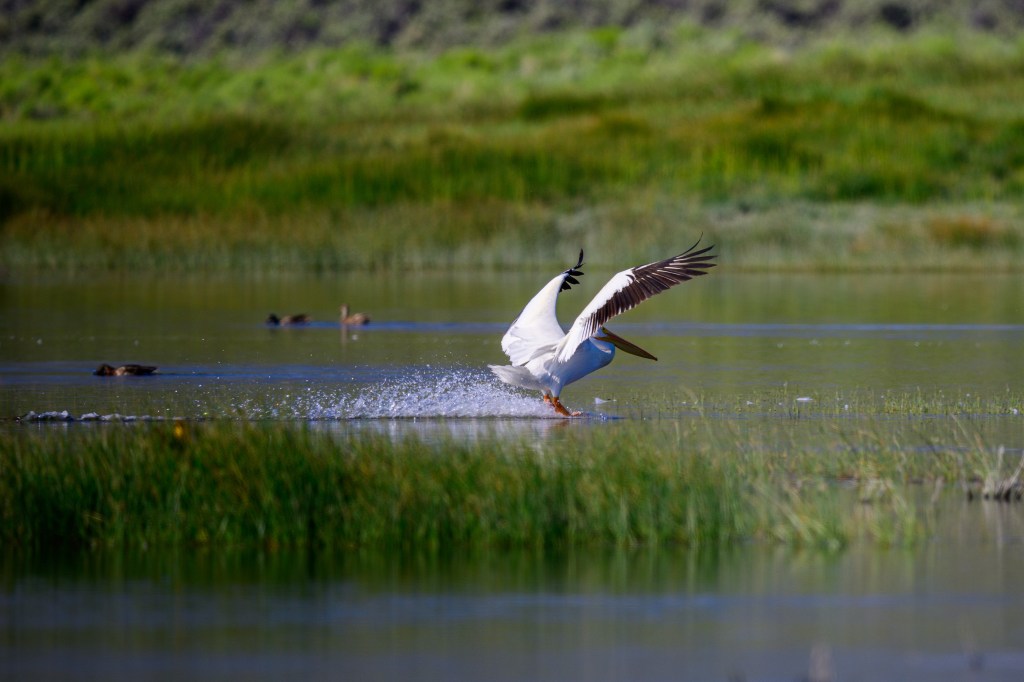
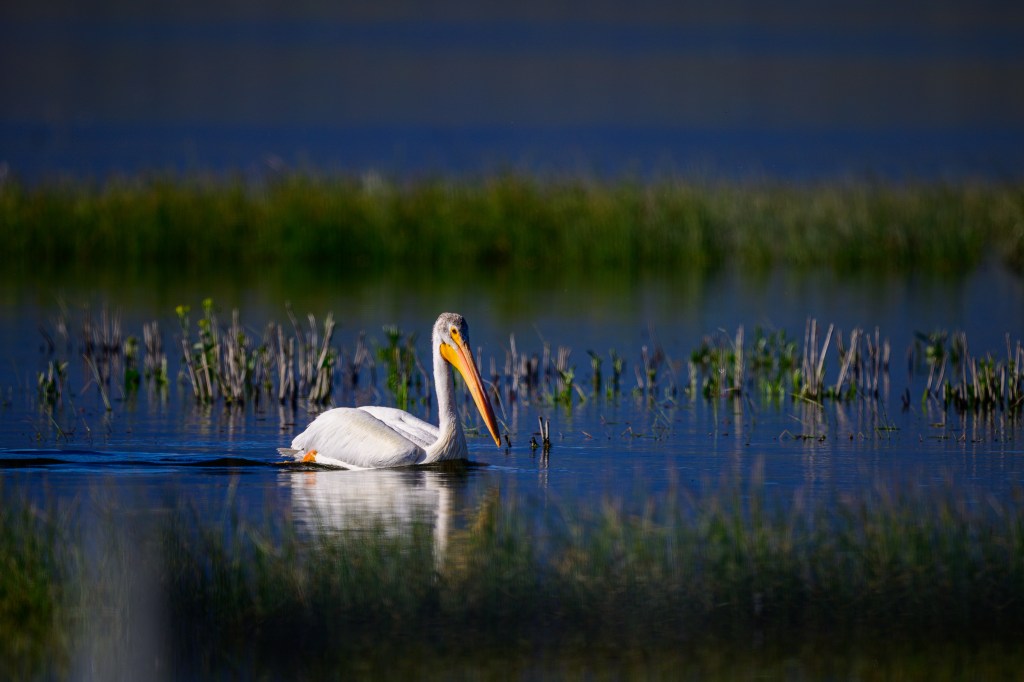
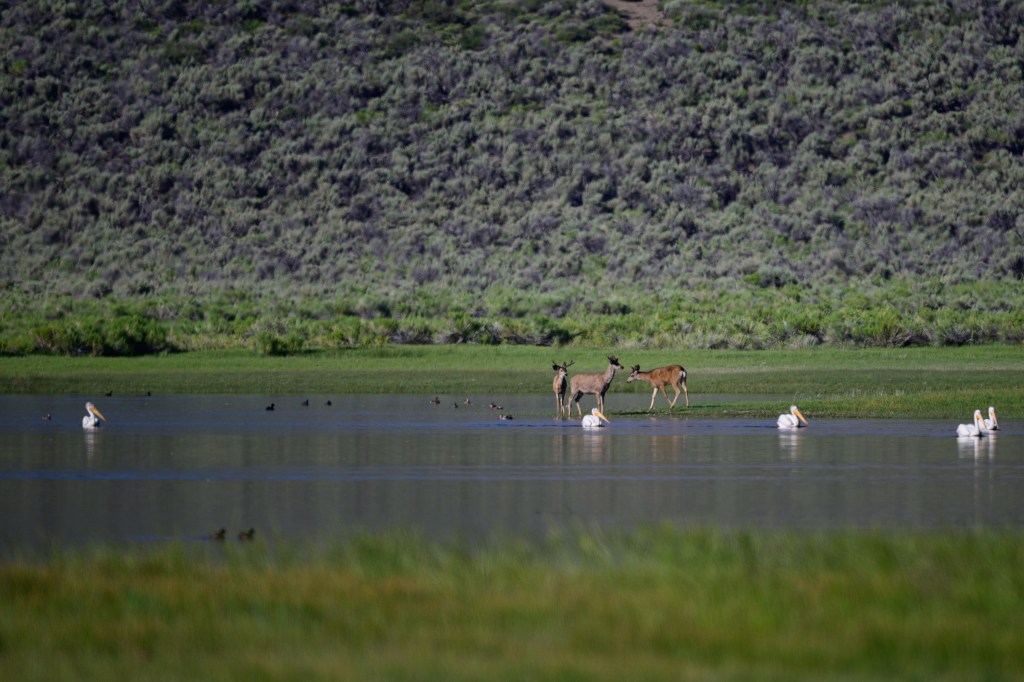
Three Mule Deer showed up. I imagine these are carnivorous deer that were stalking the pelicans; not true, of course, but it sort of looks that way, doesn’t it?
Savannah Sparrows were common.
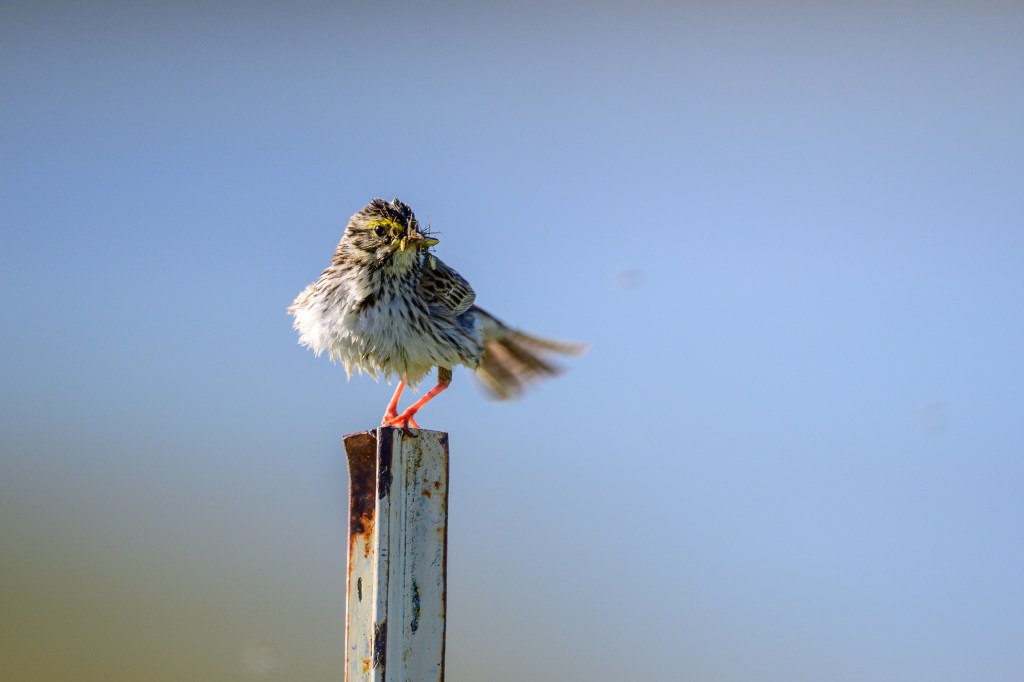
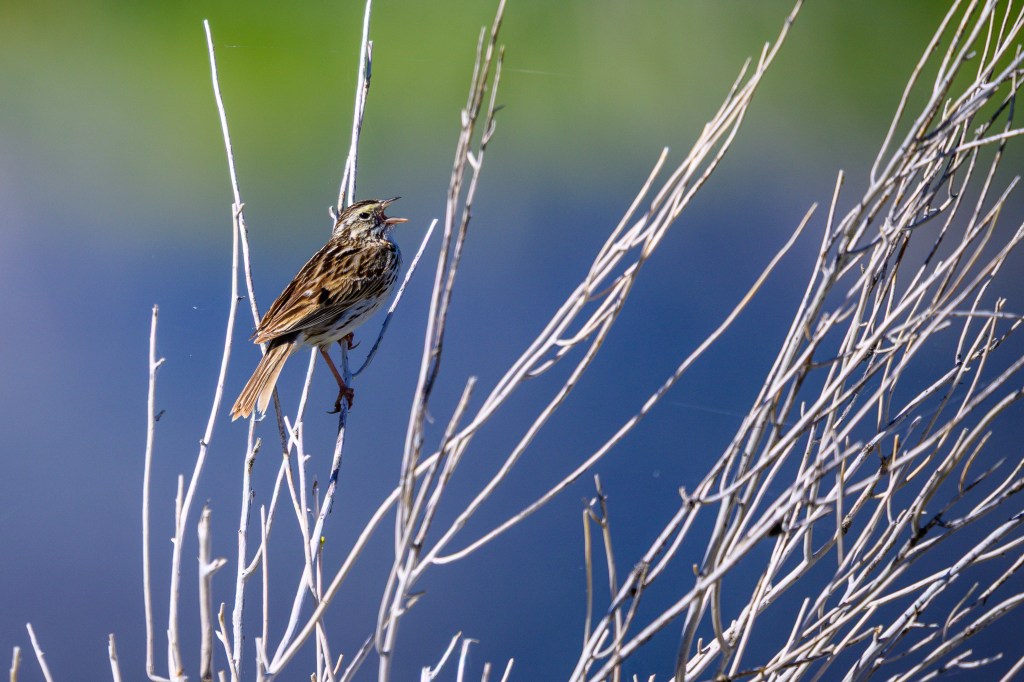
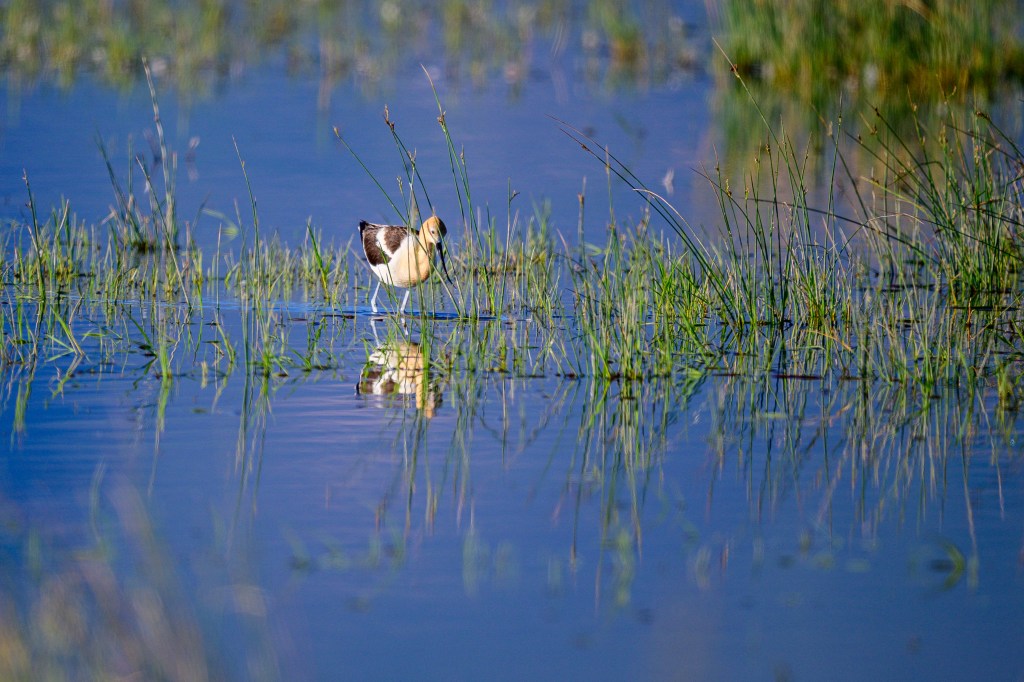
There was a great variety of birds.
American Avocet.
Yellow-headed Blackbird.

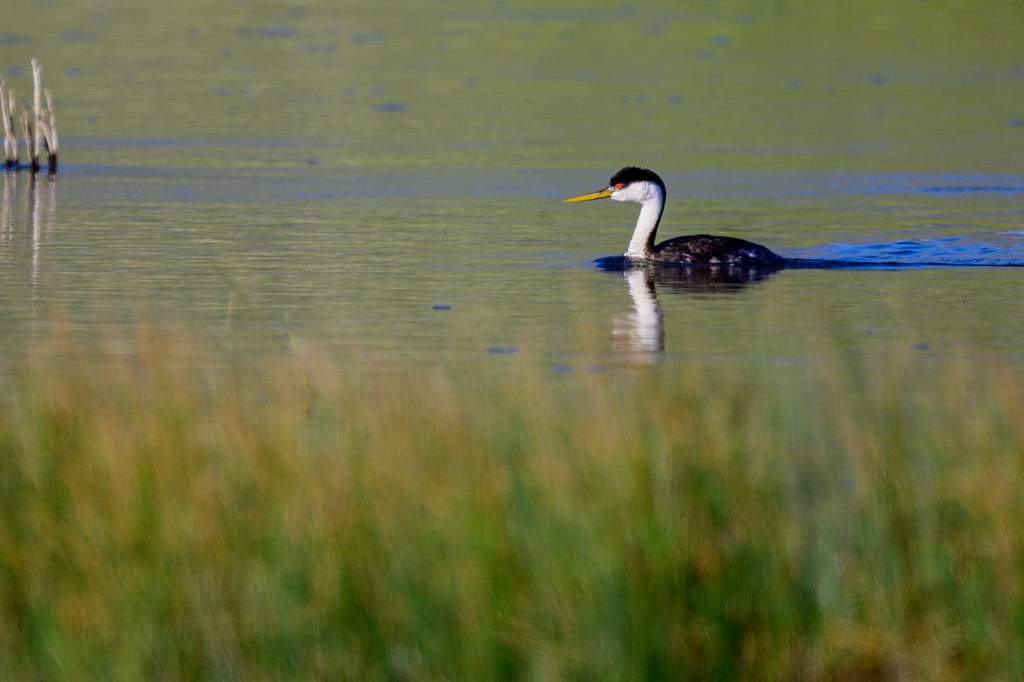
Western Grebe
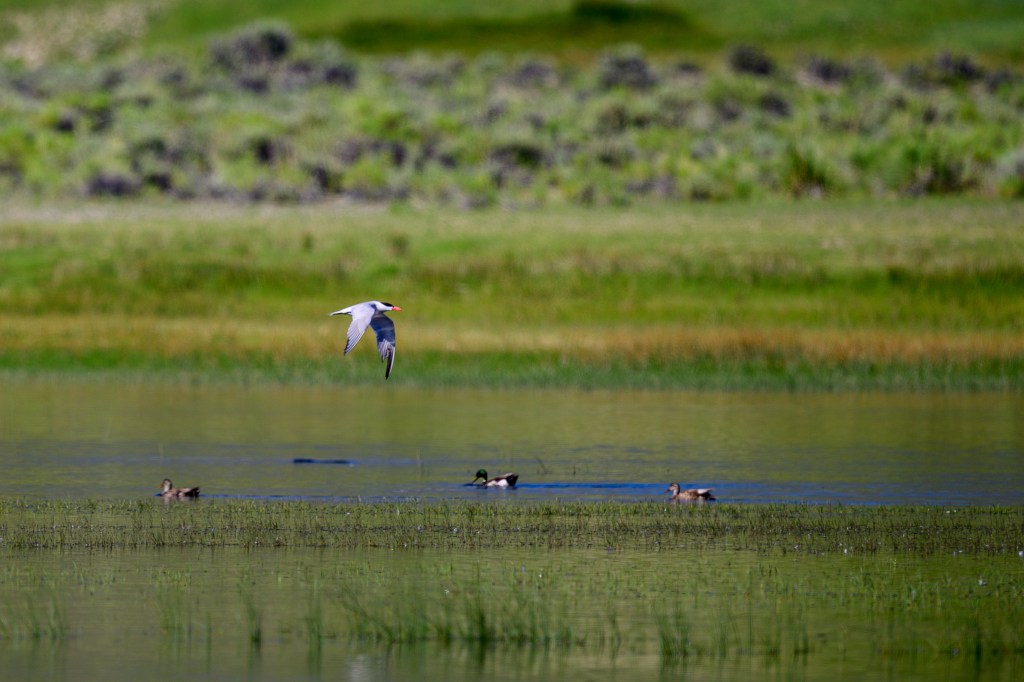
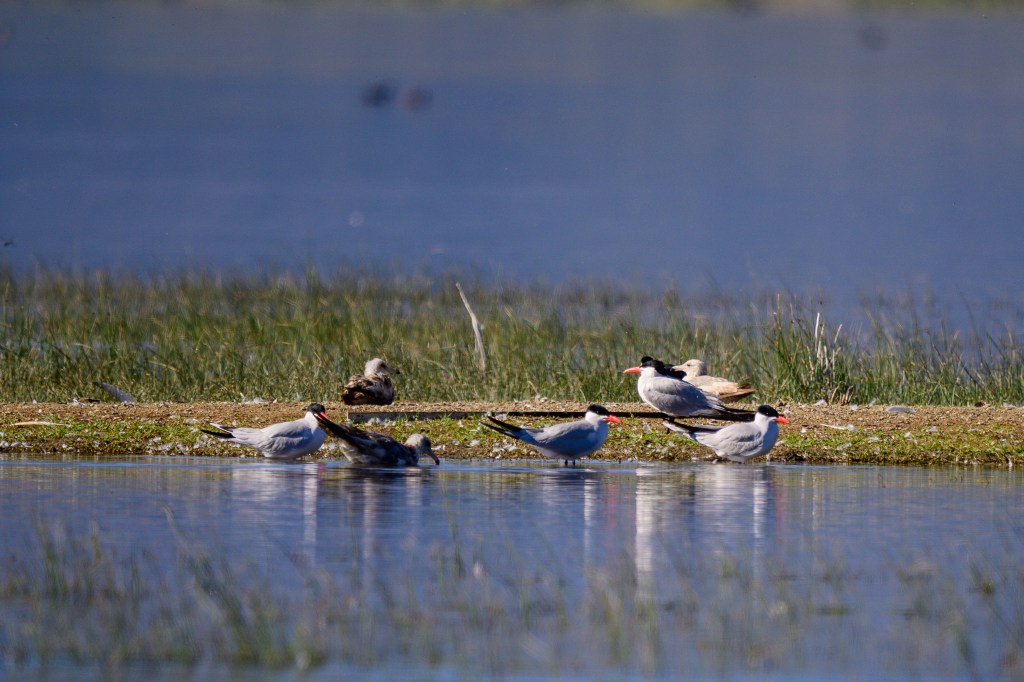
Caspian Terns with their black caps and orange beaks.
Eared Grebes

Brewer’s Blackbird.

A flock of Gadwalls. You can also find a Mallard and at least two Cinnamon Teals near the bottom of the photo
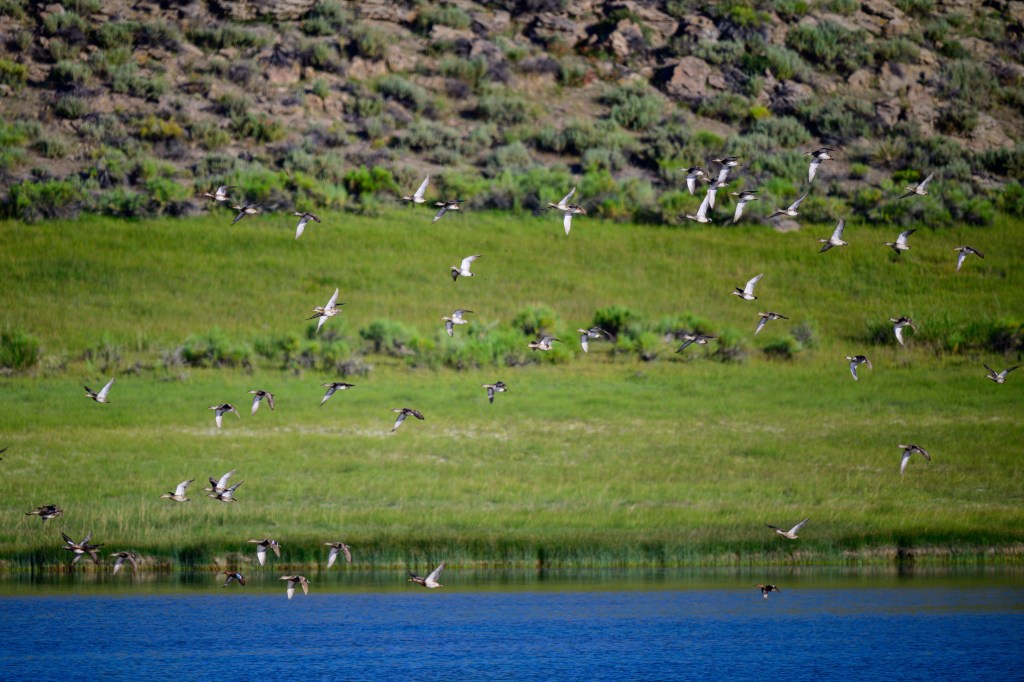
Gadwall in the lead, Cinnamon Teal following.
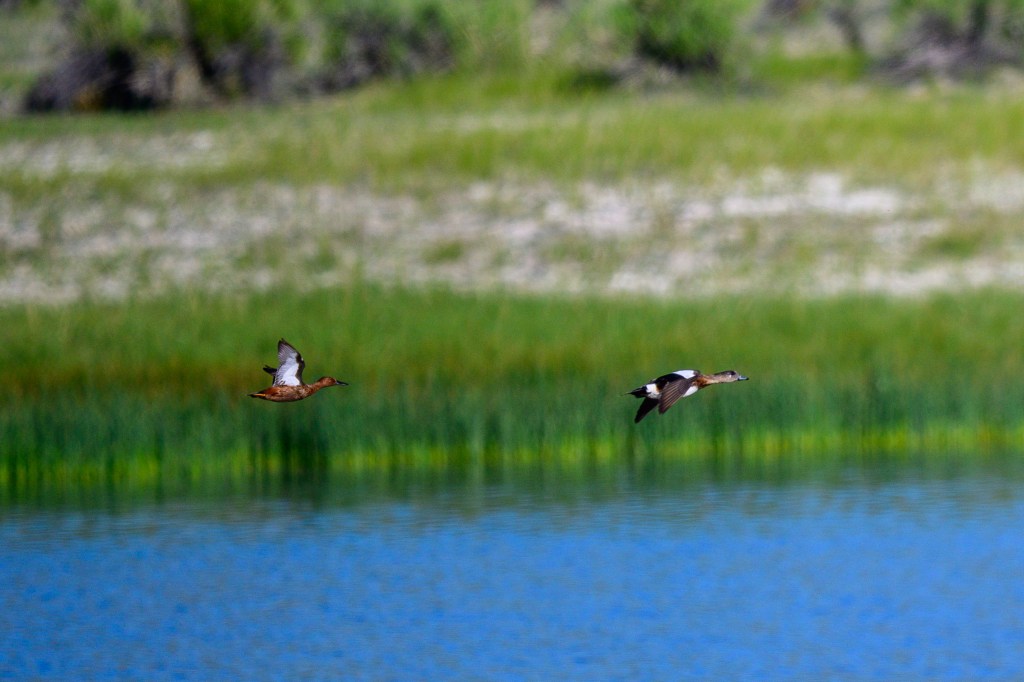
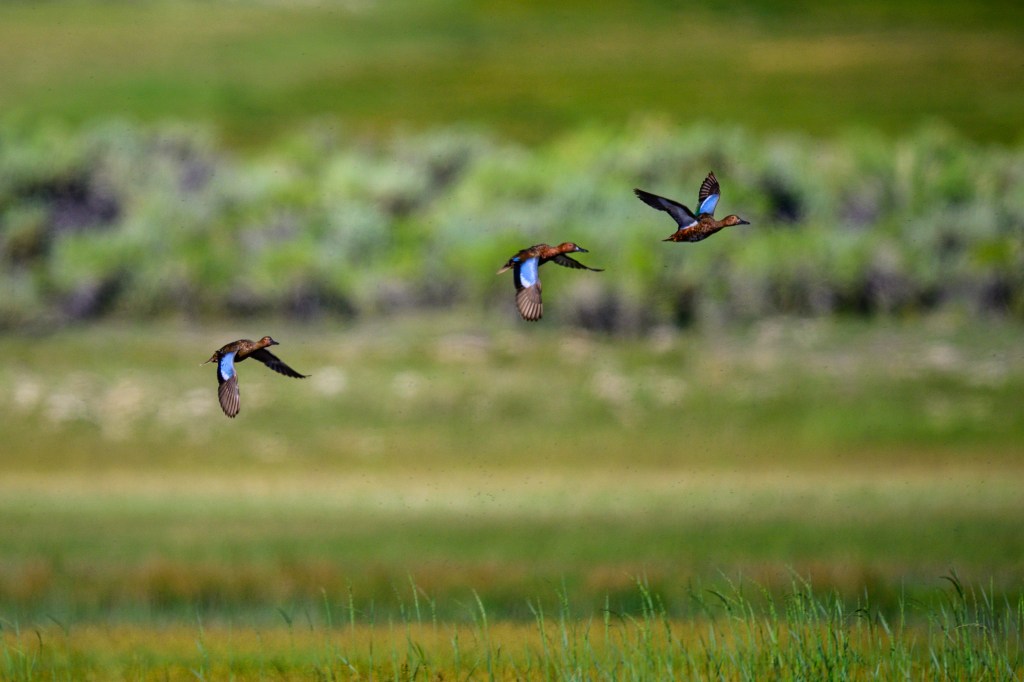
Cinnamon Teals.
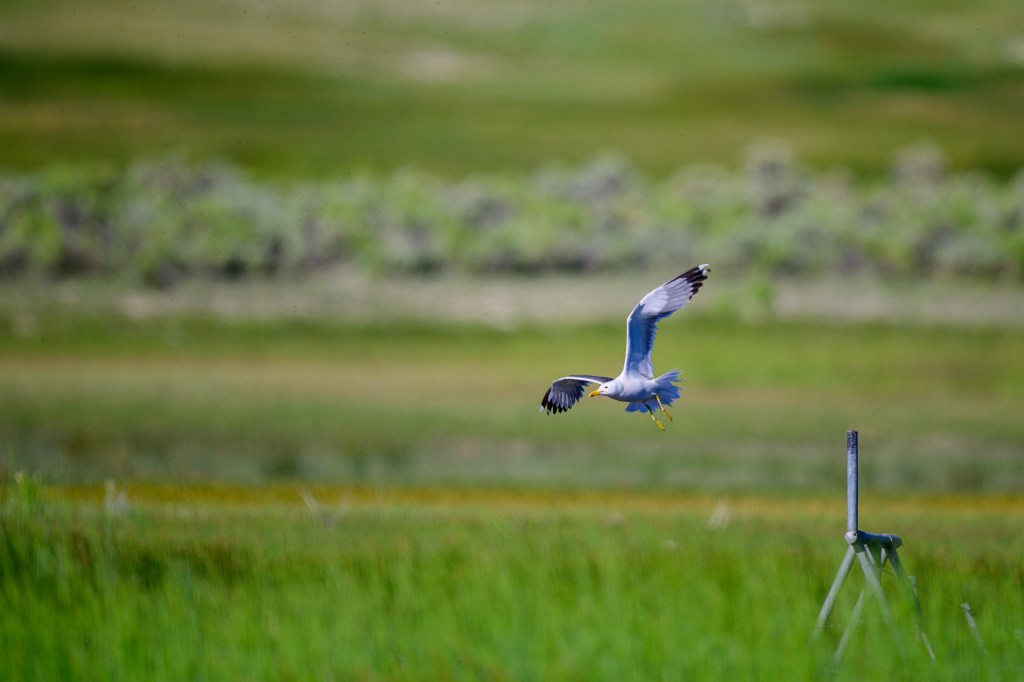
There were plenty of California Gulls, the most common Sierra gull. The first photo shows an adult, the rest show juveniles.
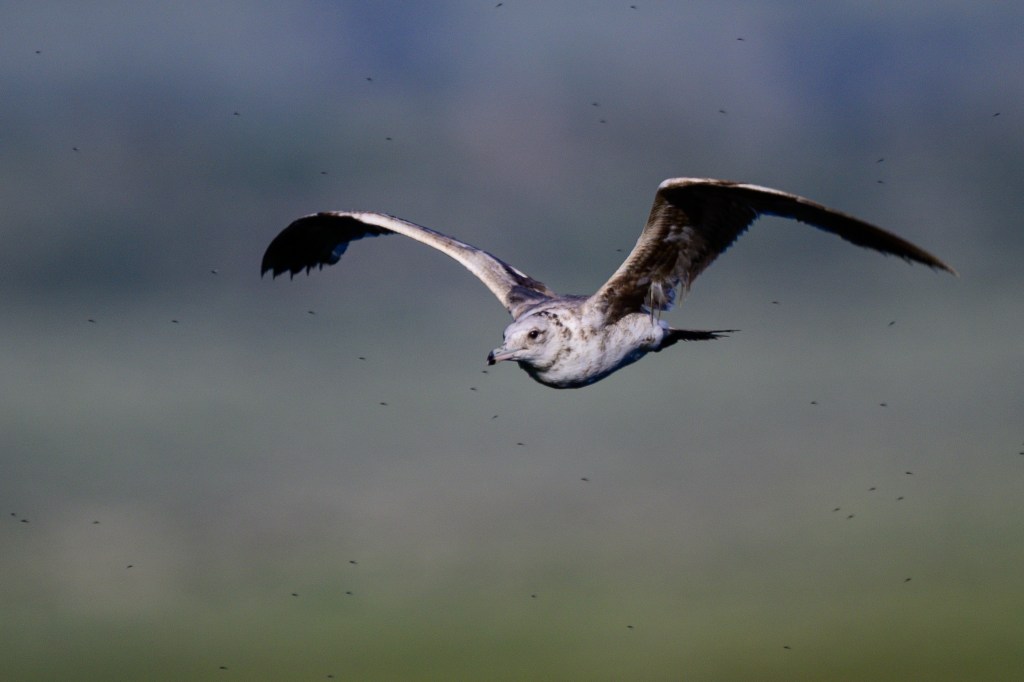
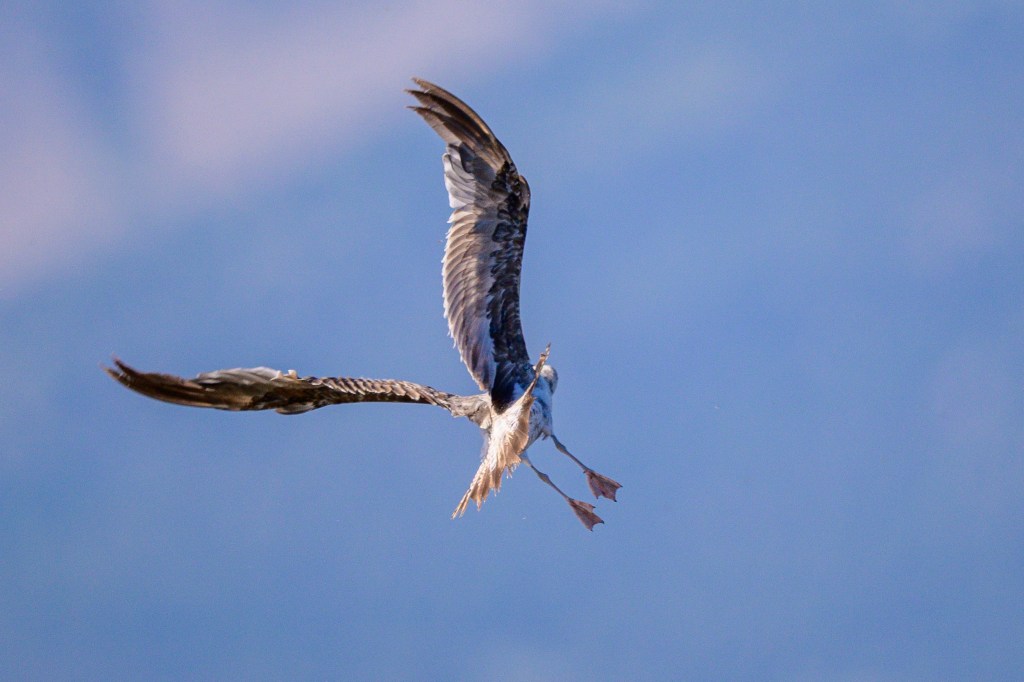
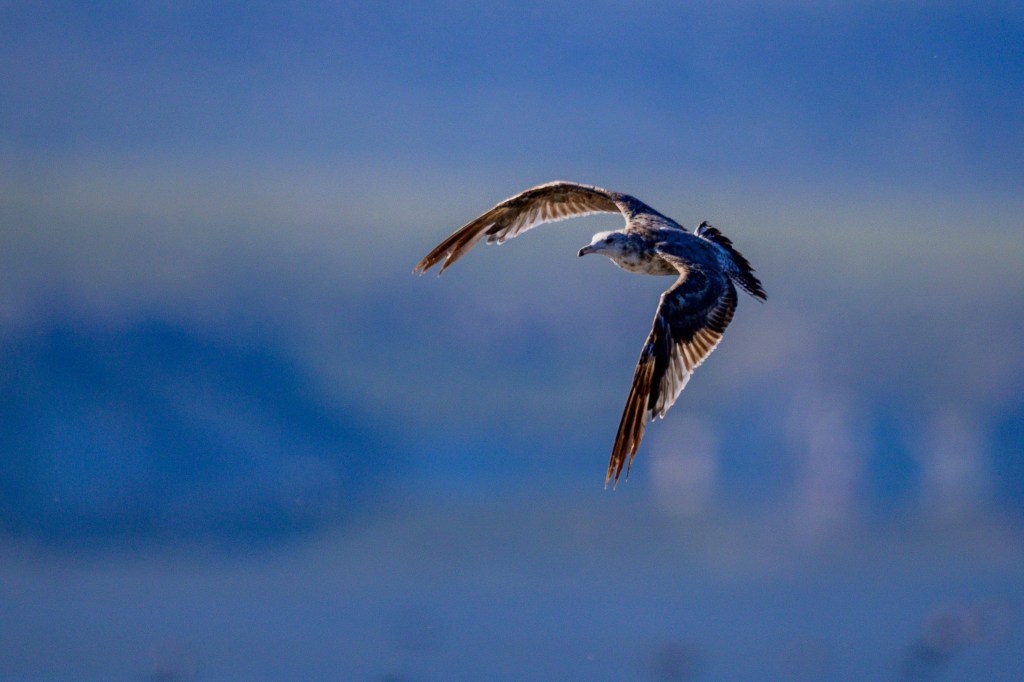
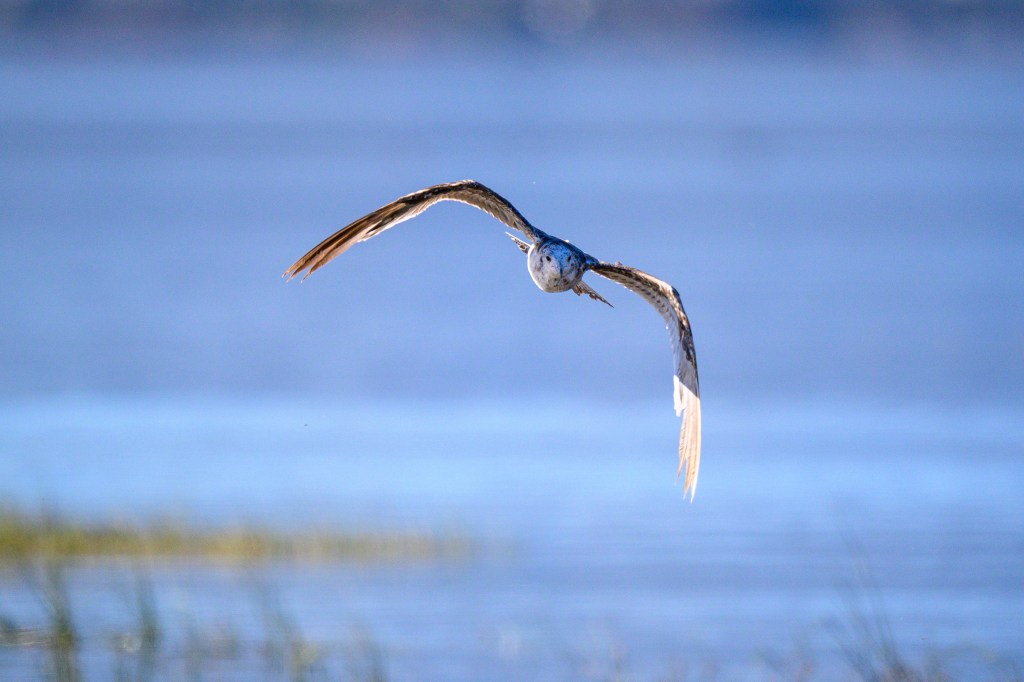
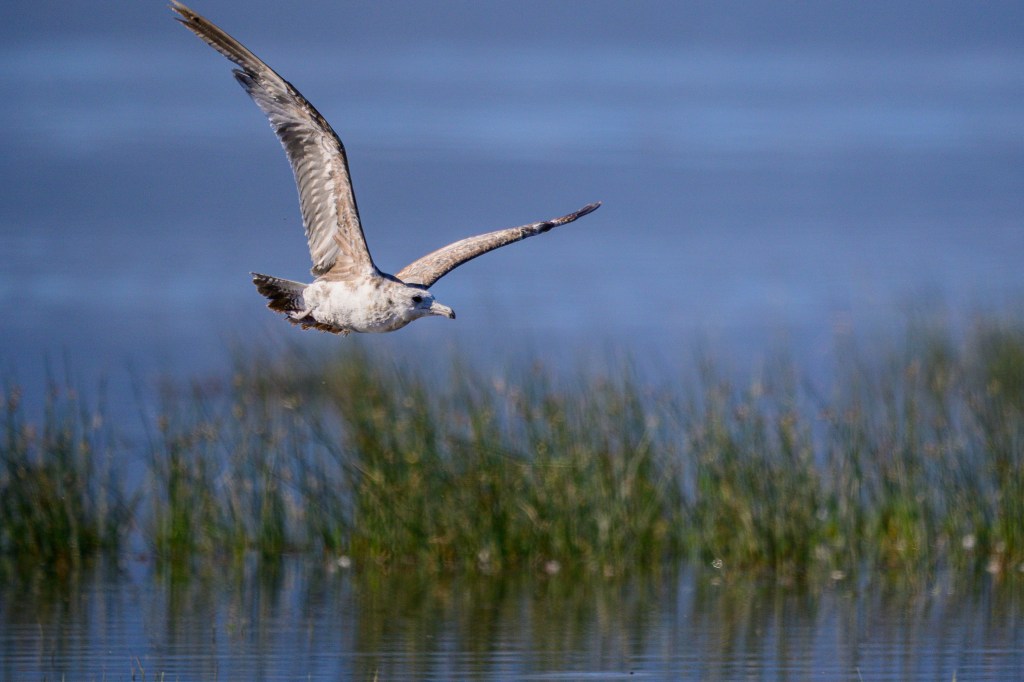
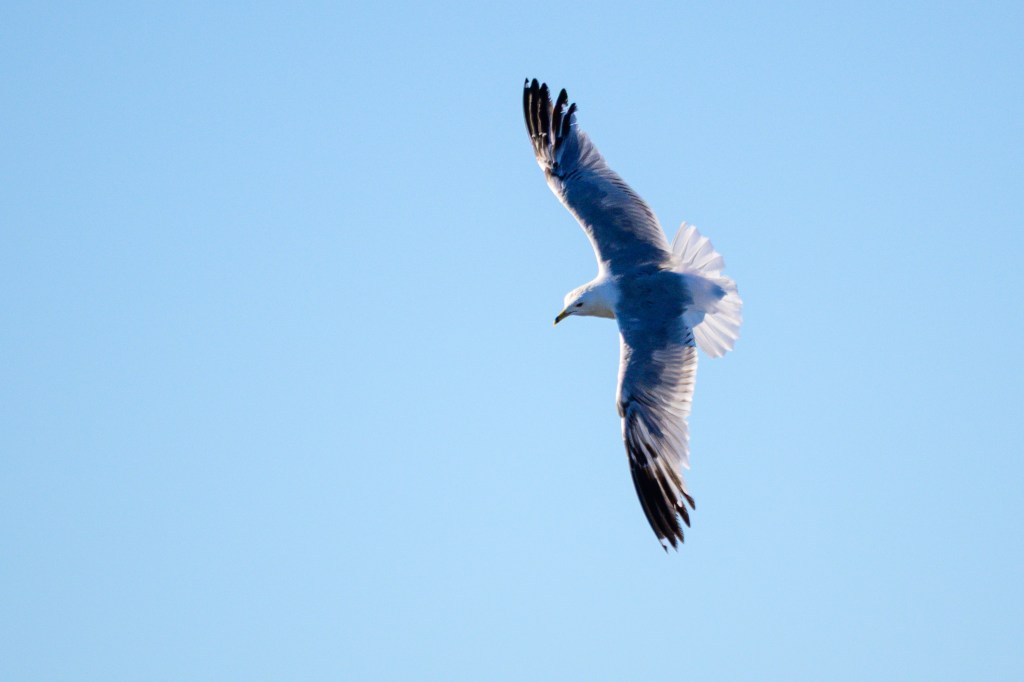
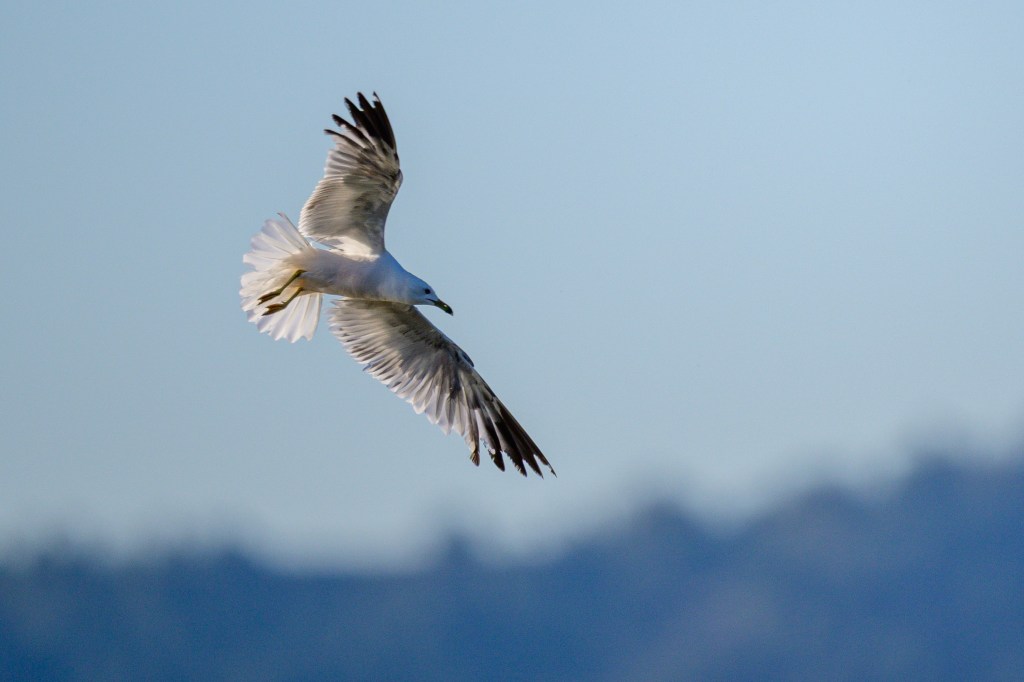
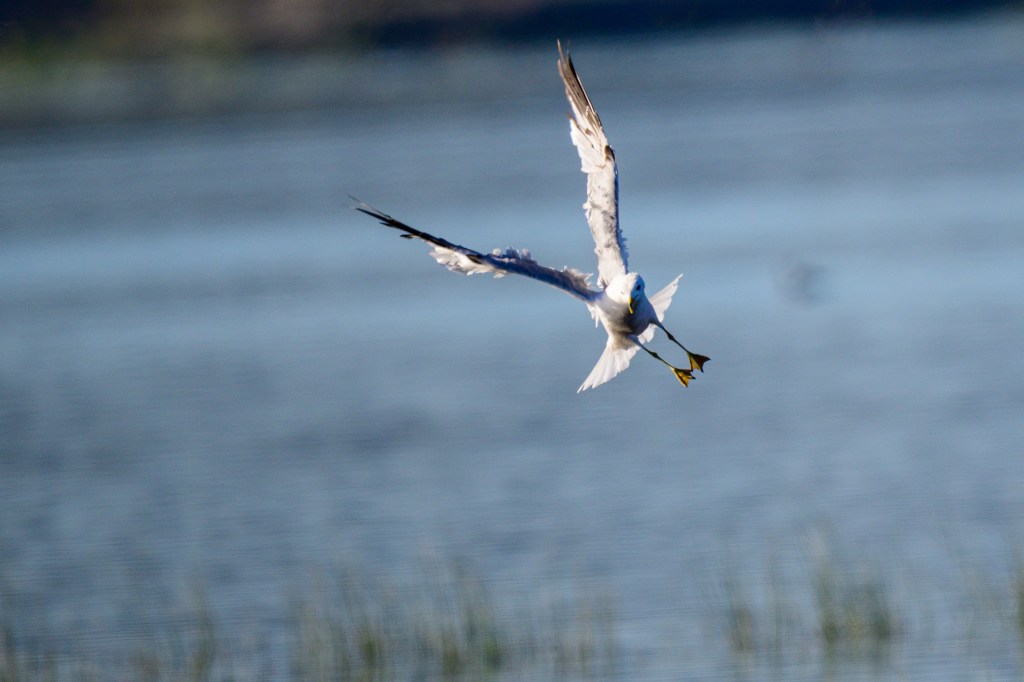
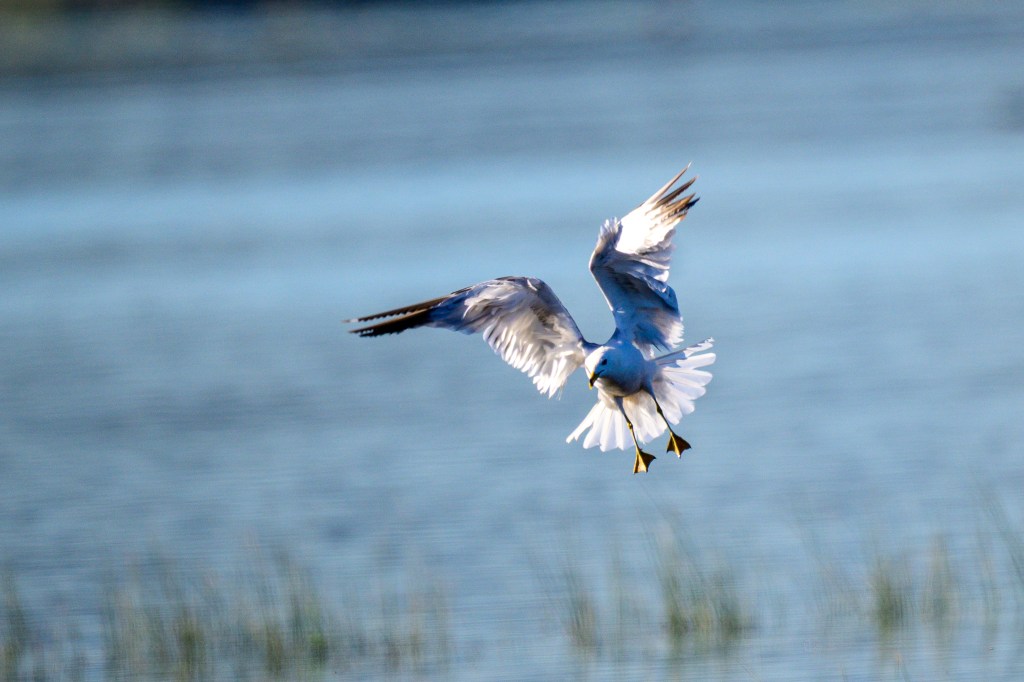
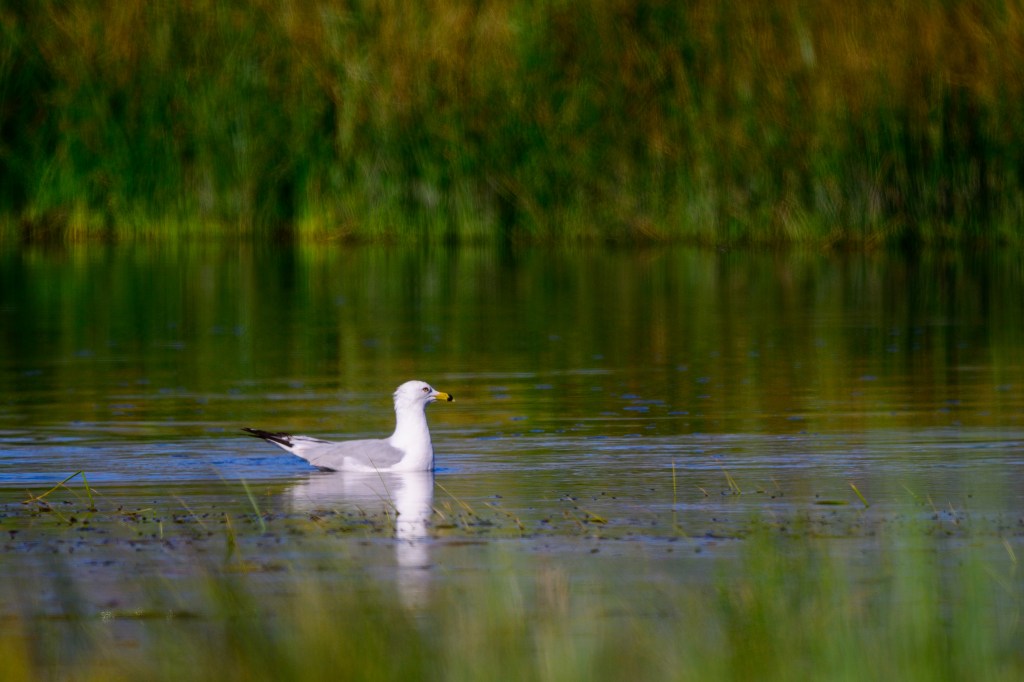
We visited Crowley as members of a group from the Mono Basin Bird Chautauqua, an annual festival for gonzo birders. All of these people are better at bird identification than I am. But my camera images gave me a rare moment of victory on the first day; a Ring-billed Gull that everyone else missed. The next six photos show this gull circling and landing. In the third image, the bird flared its wing coverts to bleed off speed; it looks like a ragged mess of fluff. This is not how a California Gull looks when it lands. I examined my photos more closely and realized the beak was narrow and lacked the red spot of a Cal Gull. Cool — my first pictures of this species.

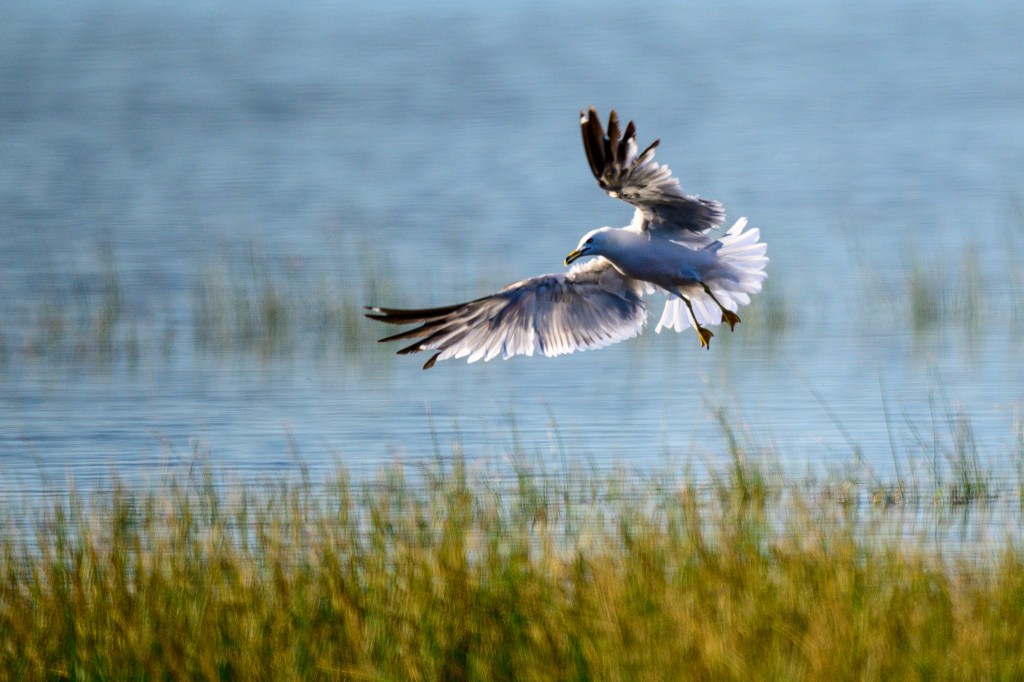
The next 3 photos show another Ring-billed Gull. The ring on the bill is more obvious here. The third image made me laugh — what is this bird doing?
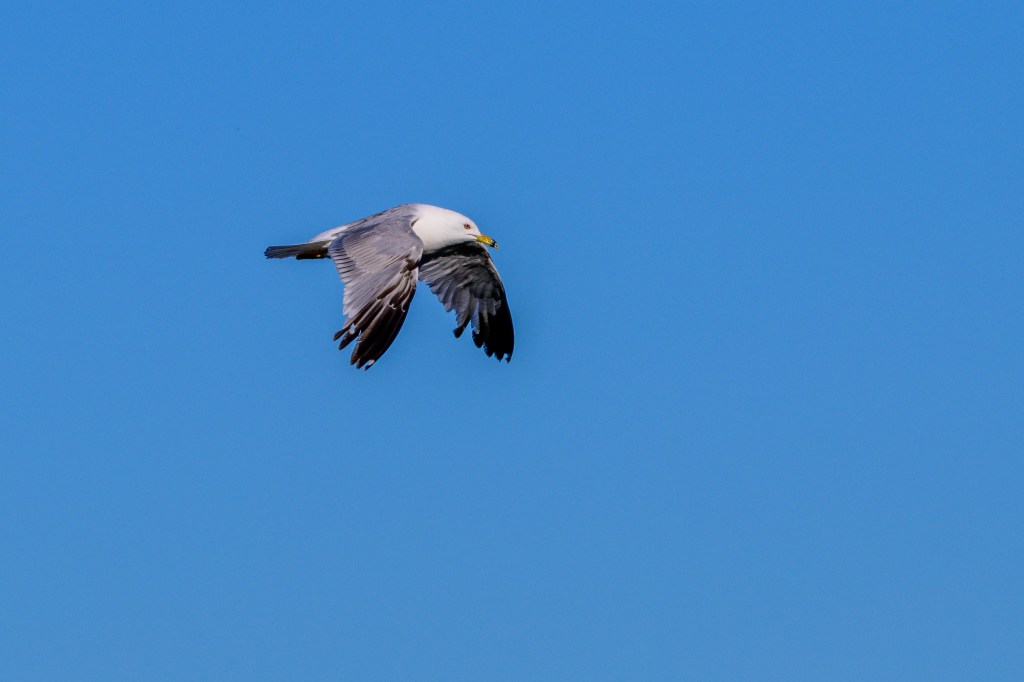
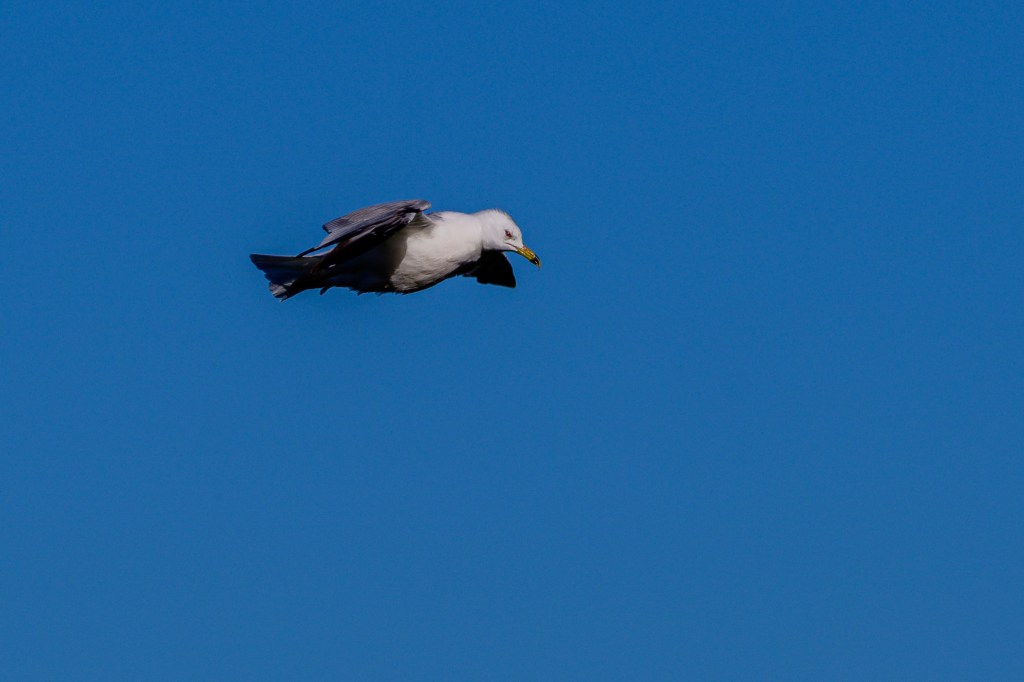
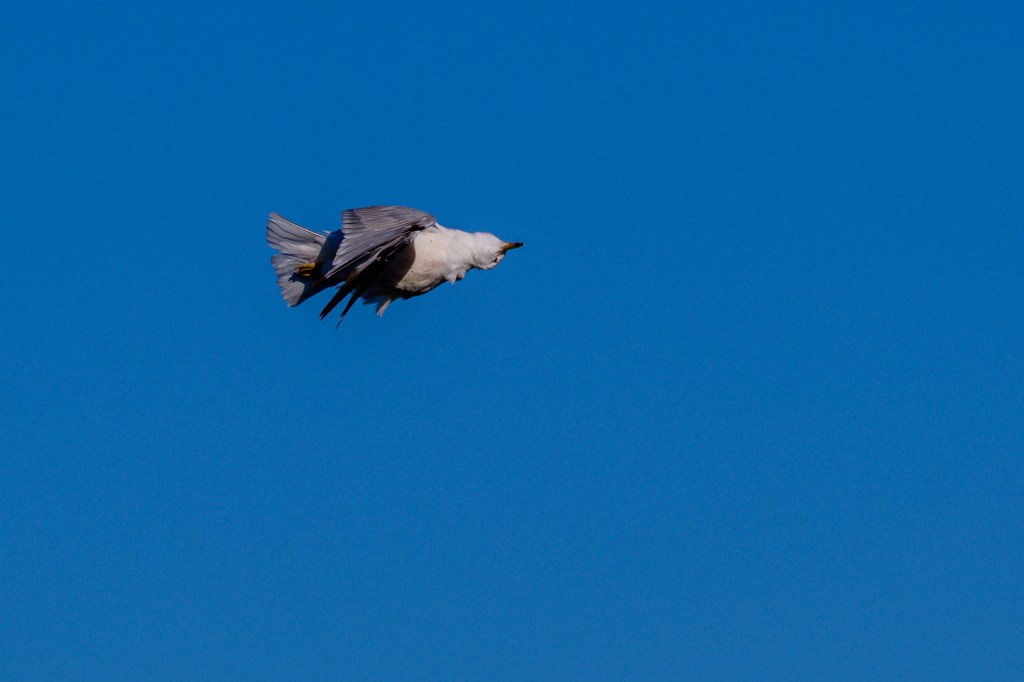
On our second morning at Crowley, the photo below shows the first gull we saw; Ring-billed. Everyone saw this.
PLEASANT VALLEY RESERVOIR, CONTROL GORGE POWER PLANT
Drive 15 minutes north of Bishop and you reach the spot where the Owens River enters the Pleasant Valley Reservoir. We park at the Control Gorge power station and then walk two miles on a paved road overlooking the water.
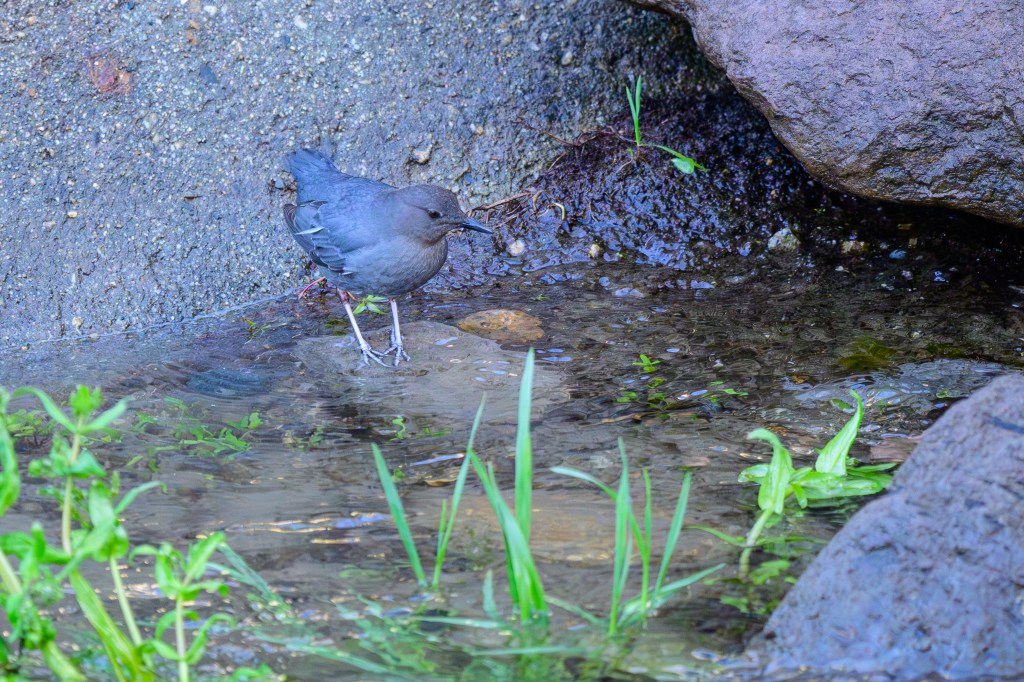
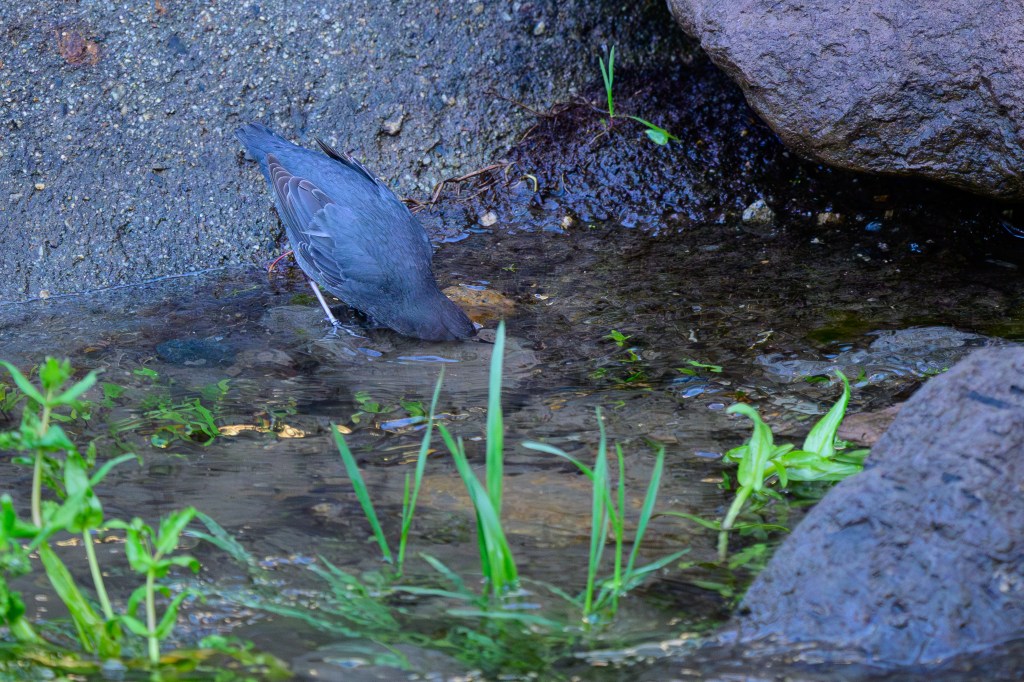
American Dipper
Dippers are always near flowing water. They find food under the water, sometimes submerging in a stream and walking on the bottom. This particular Dipper lives at the Owens River right near the power station.
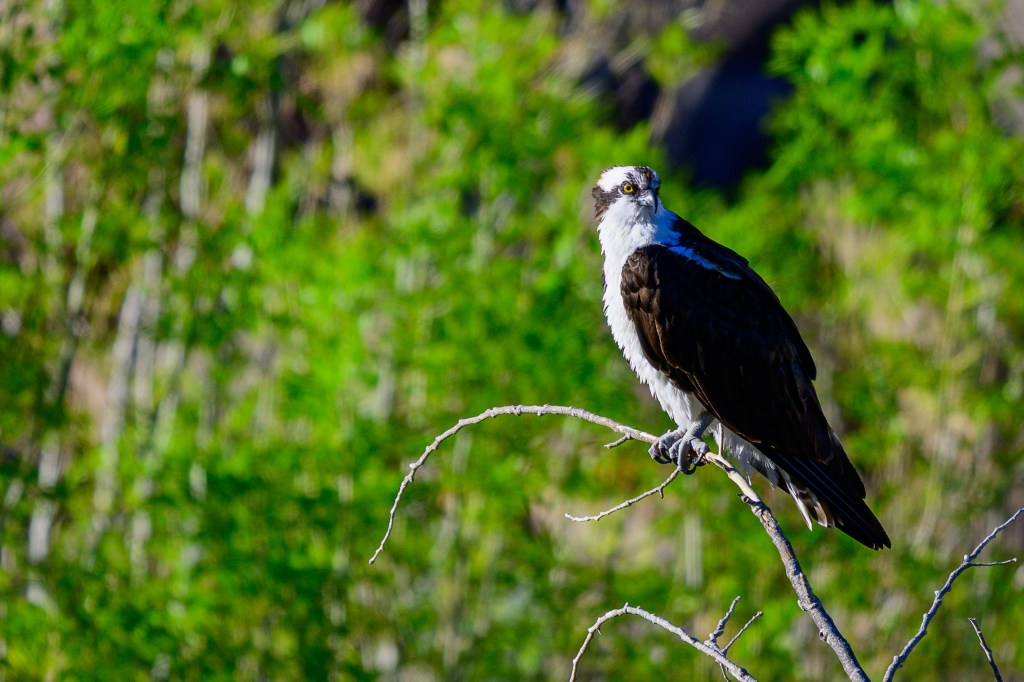
Ospreys catch fish in the Reservoir.
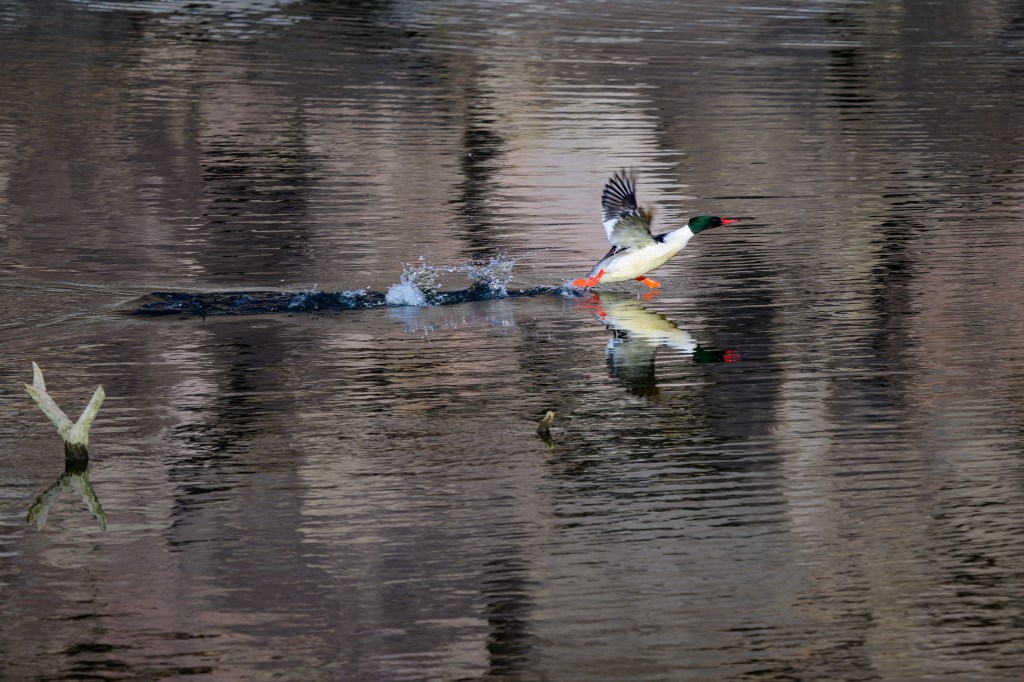
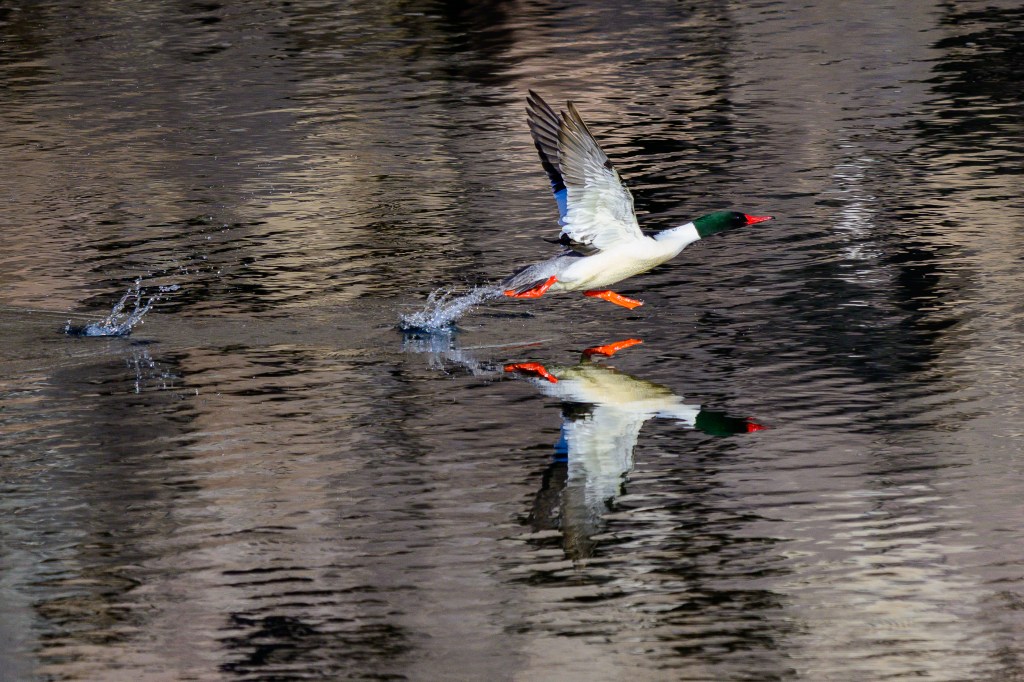
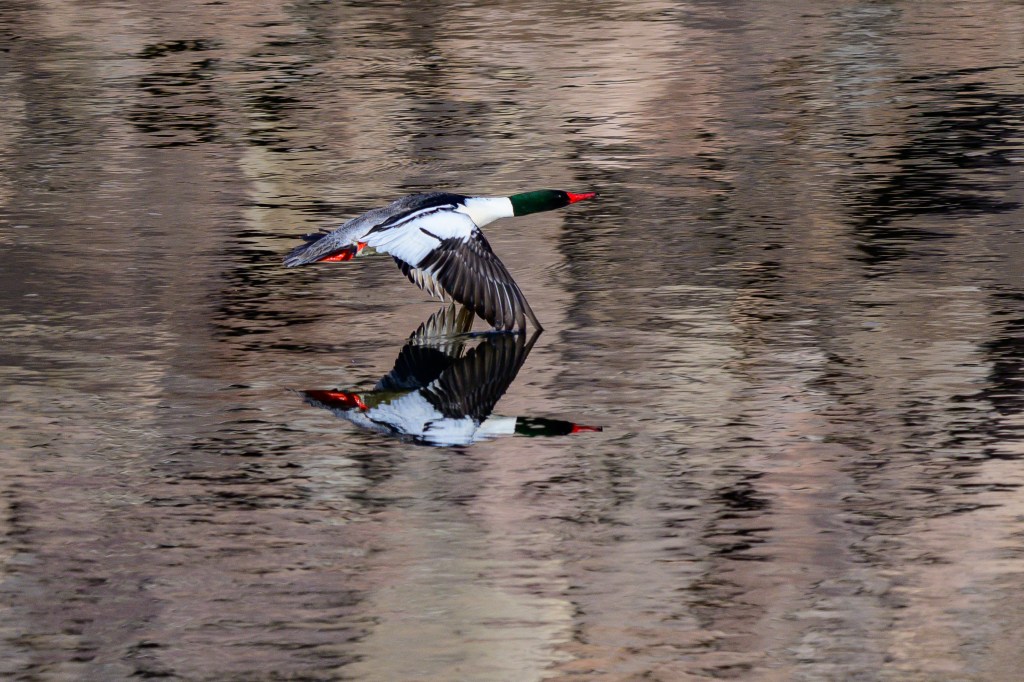
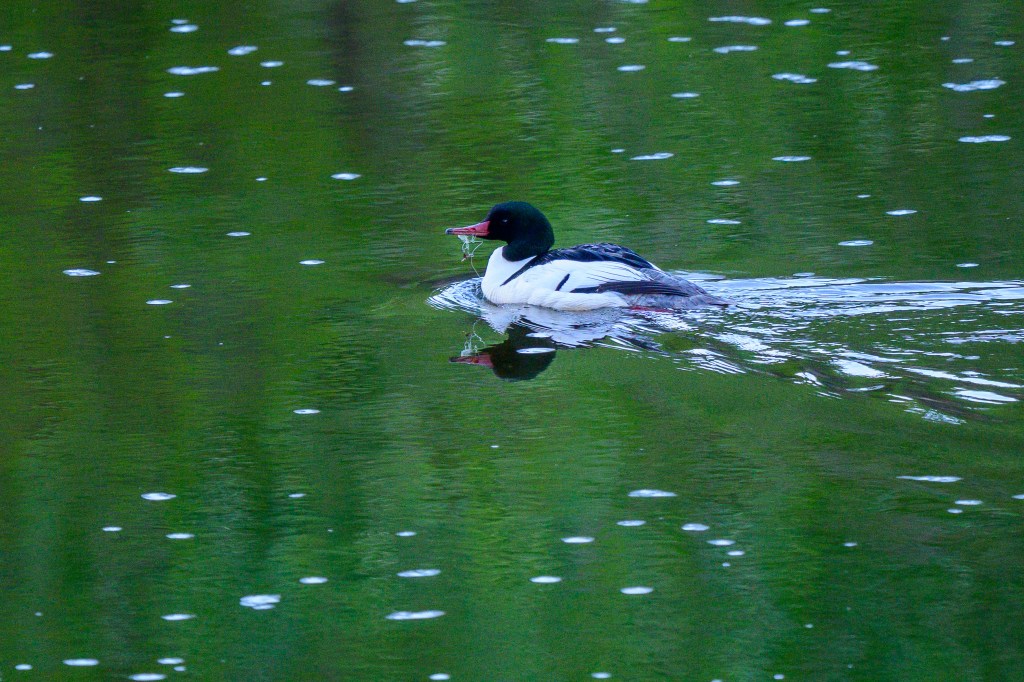
A male Common Merganser launches itself with help from its feet.
The next photo is sad. You can see fishing line tangled in the beak of a Merganser. A hook may be stuck in the beak. Along some local streams, there are plastic tubes where fisherman can dispose of tangled line that might endanger local wildlife. But I have other photos of hooks embedded in ducks.
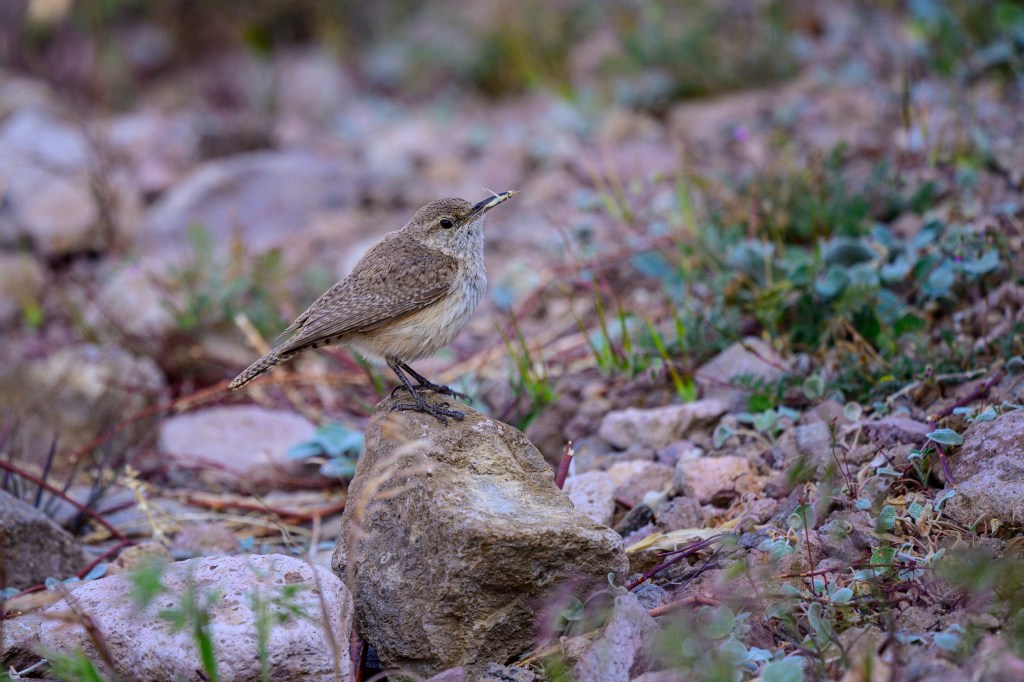
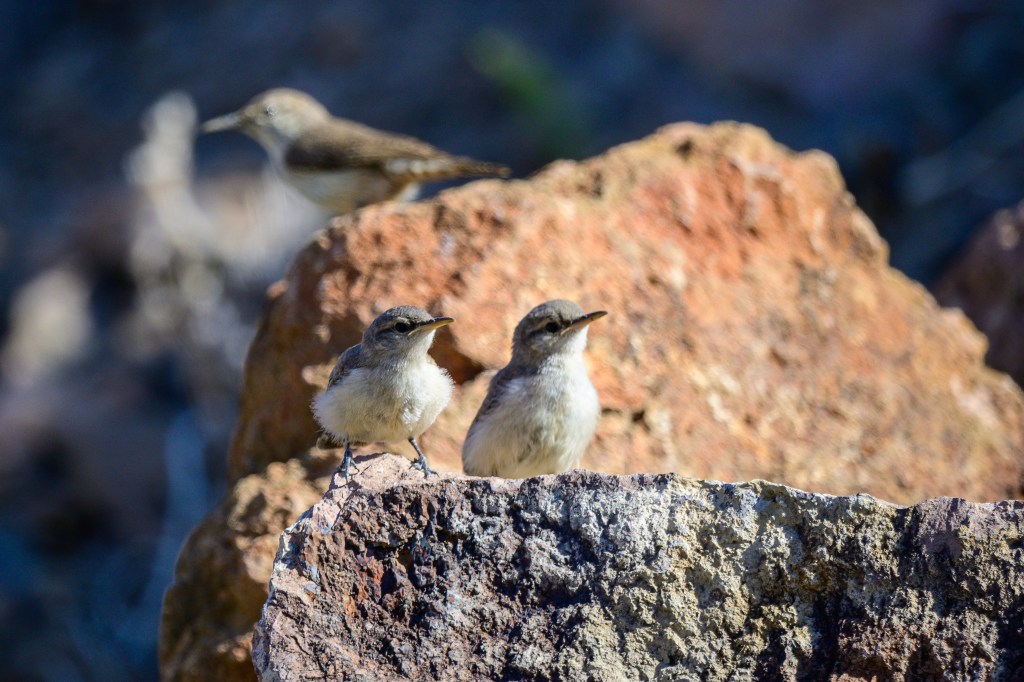
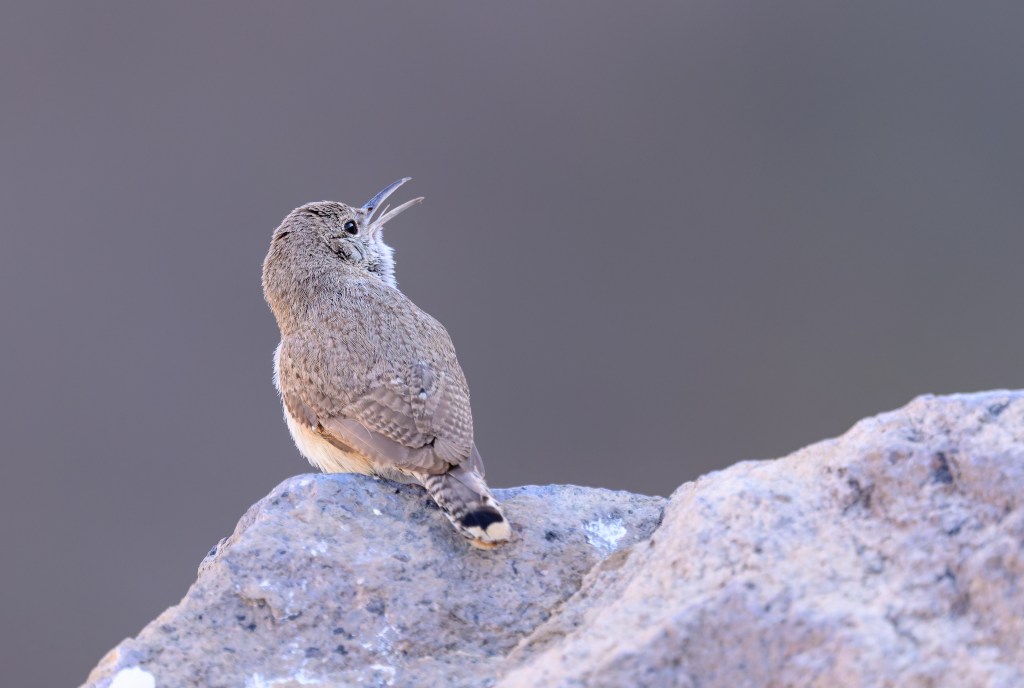
Rock Wrens are common here. Two photos show juvenile birds.

Black Phobe.

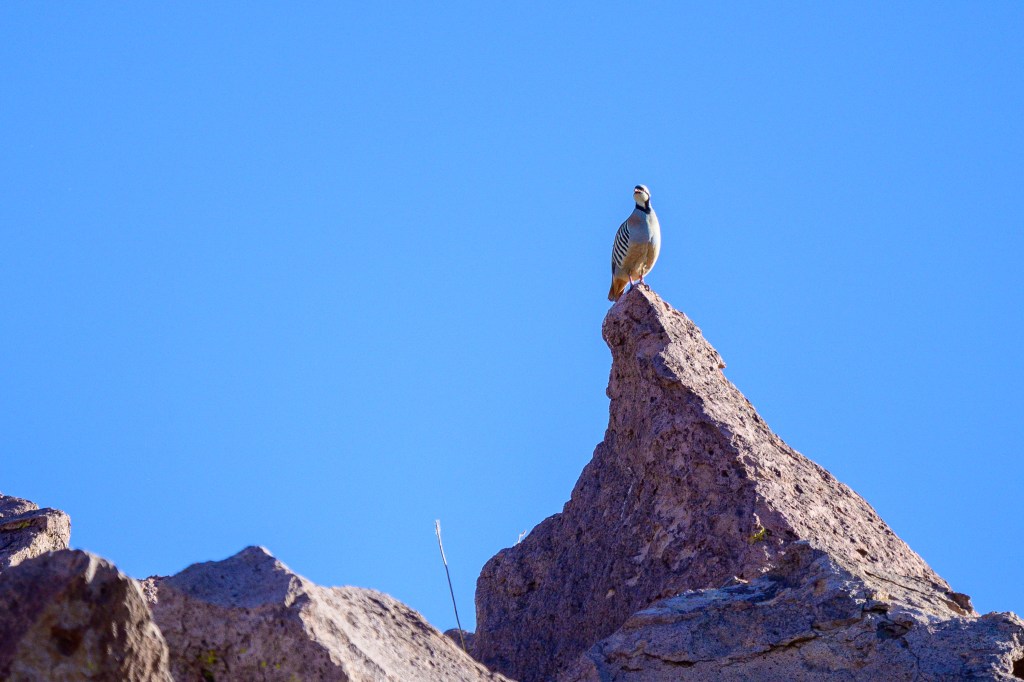
Chukar, a European game bird introduced for hunters. I often hear these birds clucking, but rarely get to see one.
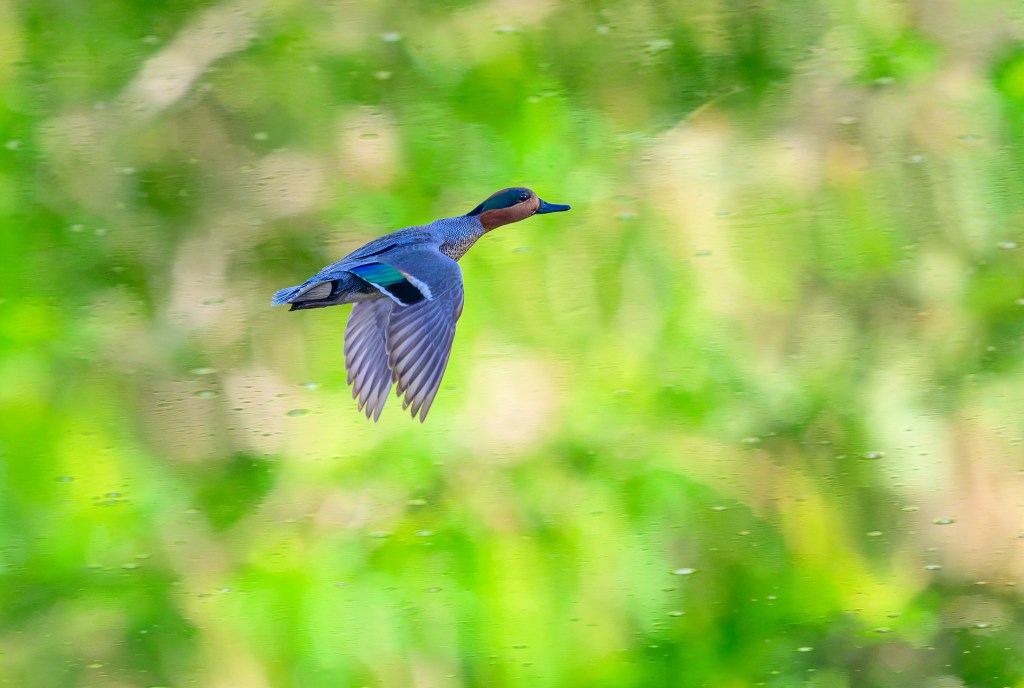
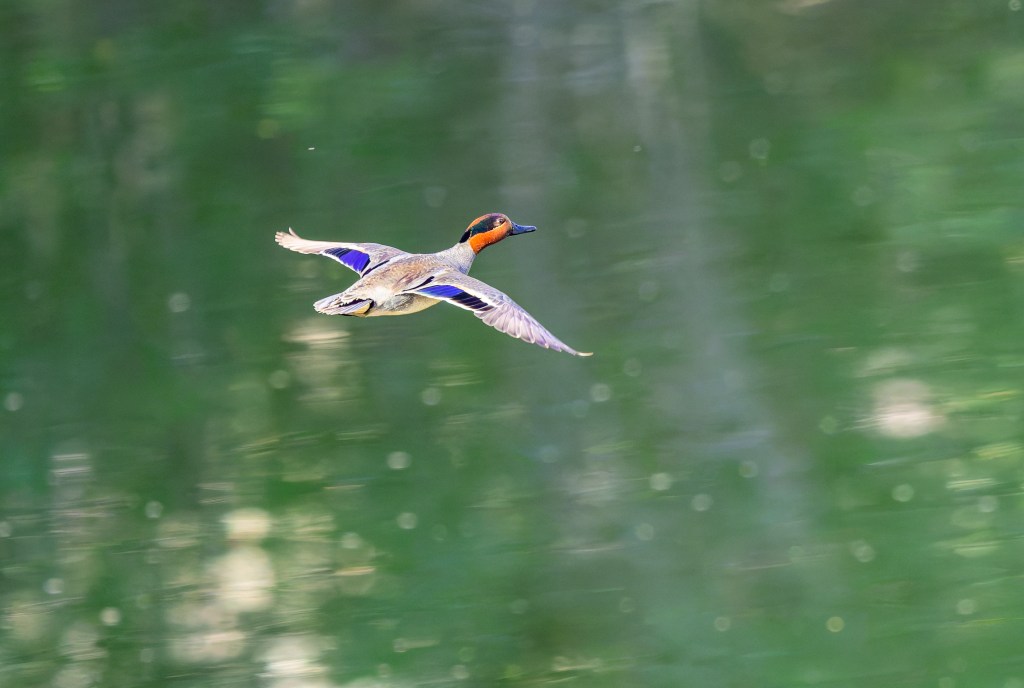
Duck feathers show a lot of color variation depending on lighting angle. The next three photos show a Green-winged Teal. The colors of the wings and head change with the light.

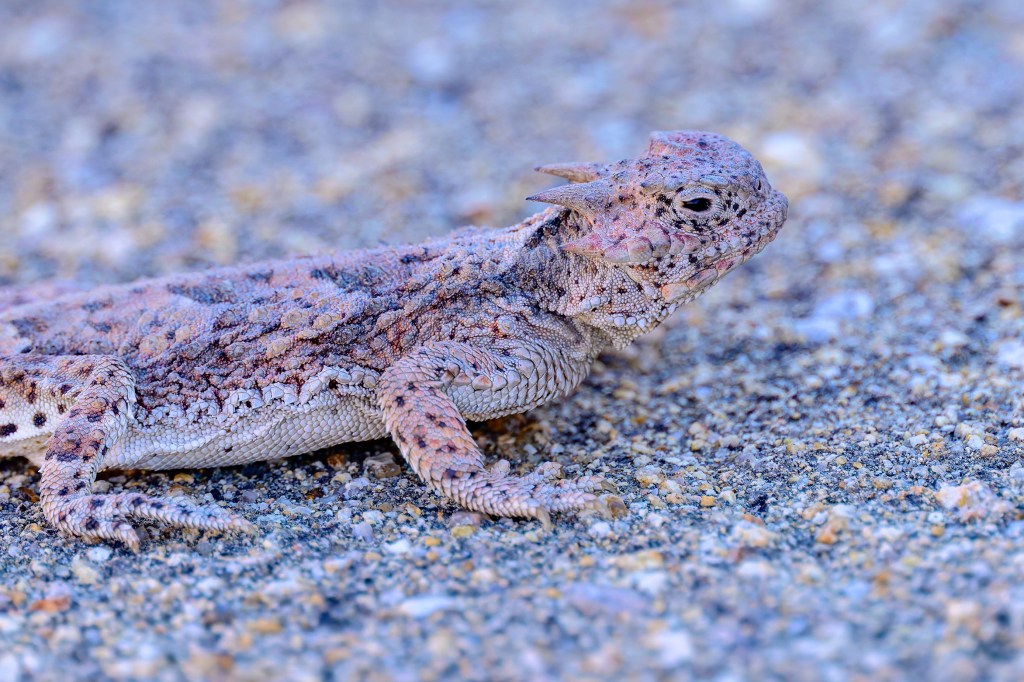
A Desert Horned Lizard, aka Horny Toad, was parked on the road. I had to back up several feet to get it in focus with my long telephoto lens.
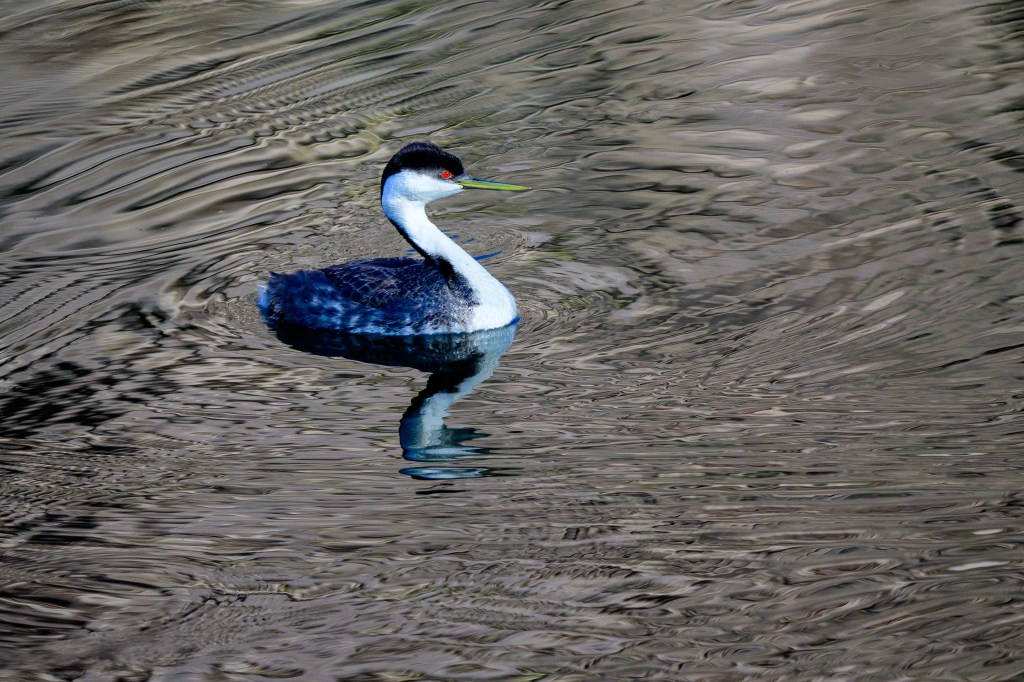
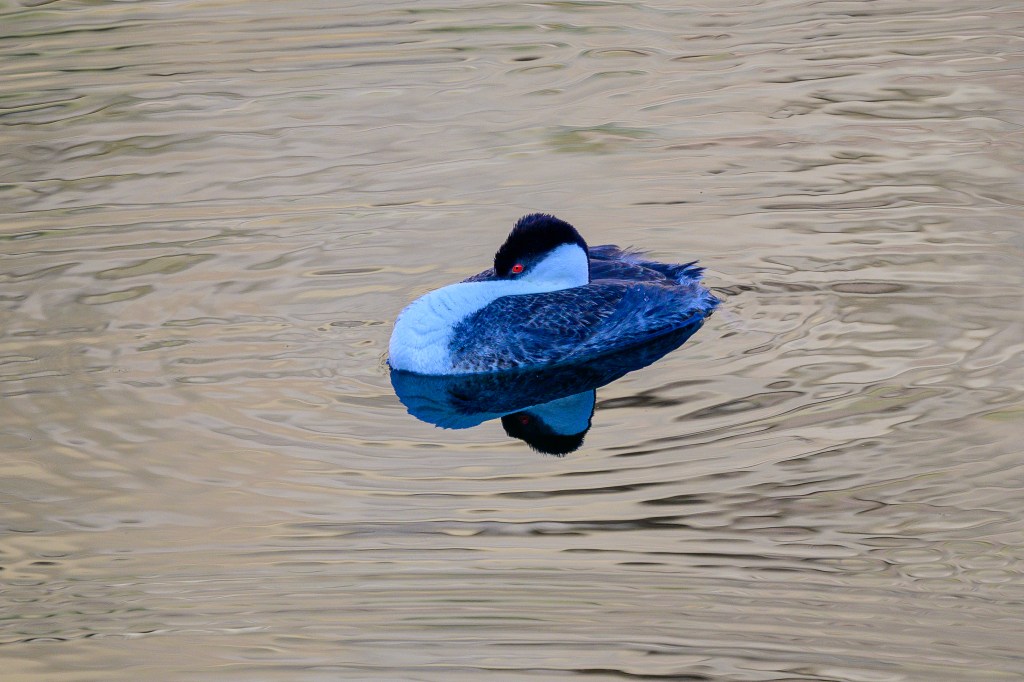
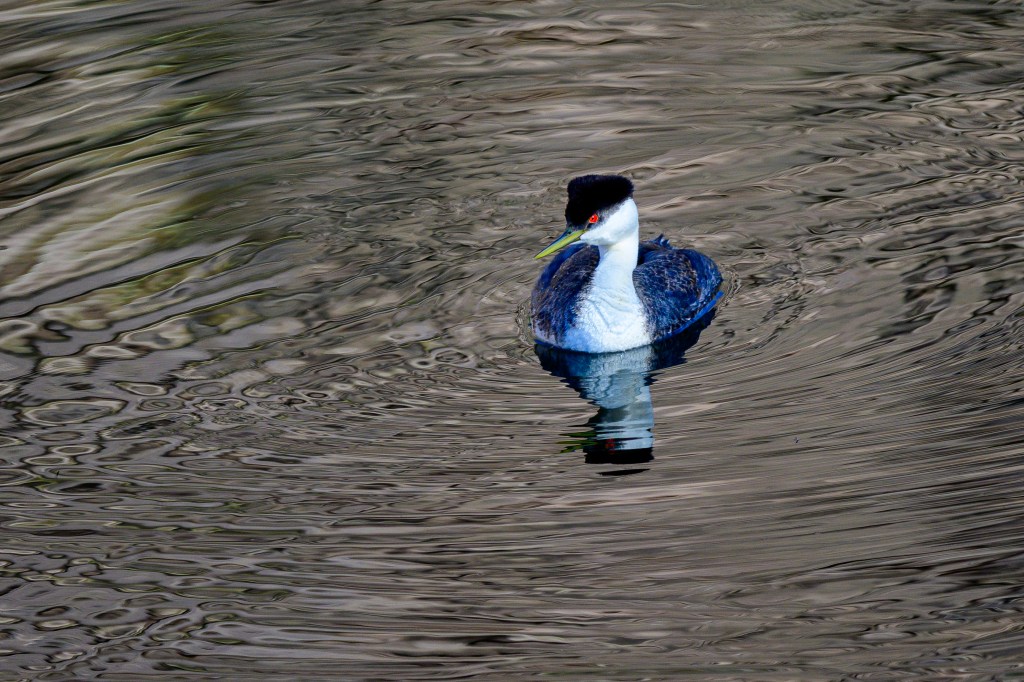
Western Grebe.
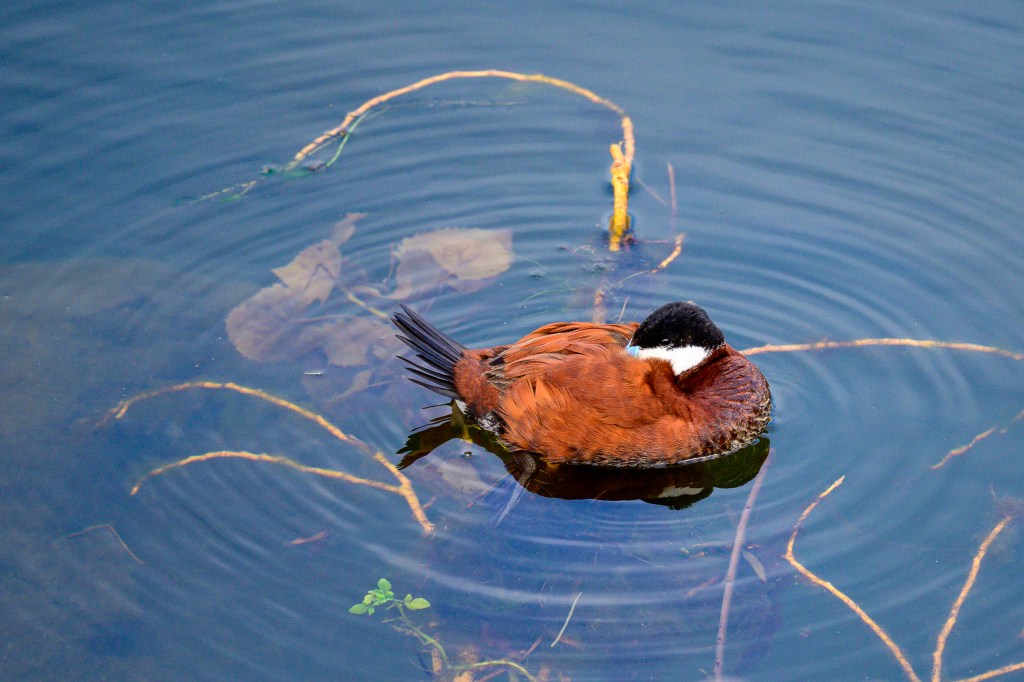
A male Ruddy Duck adopts gaudy colors during breeding season.

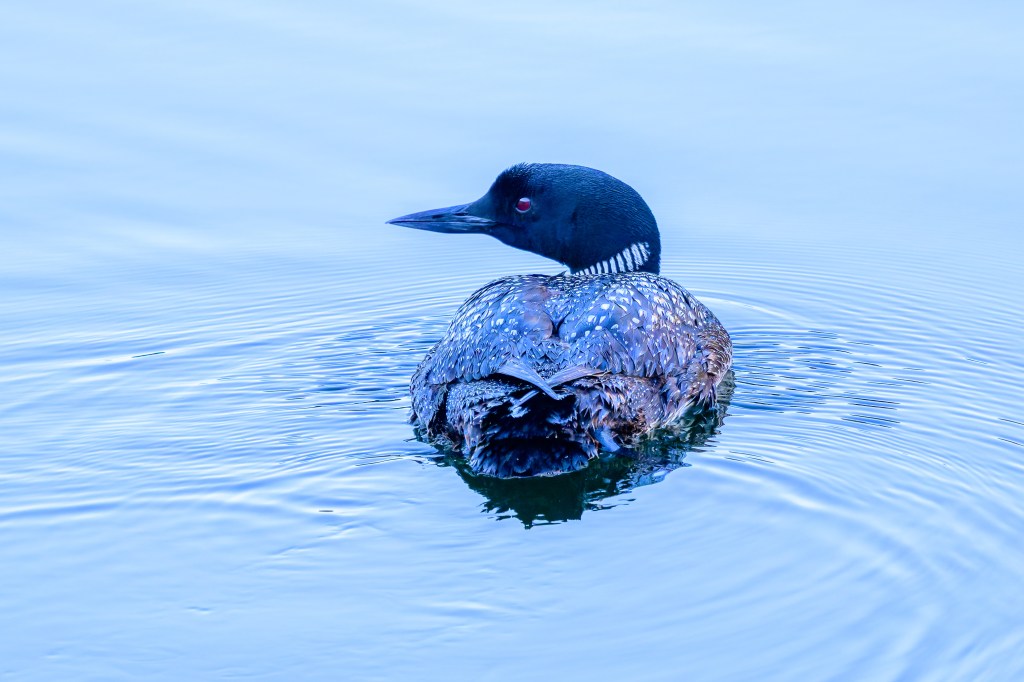
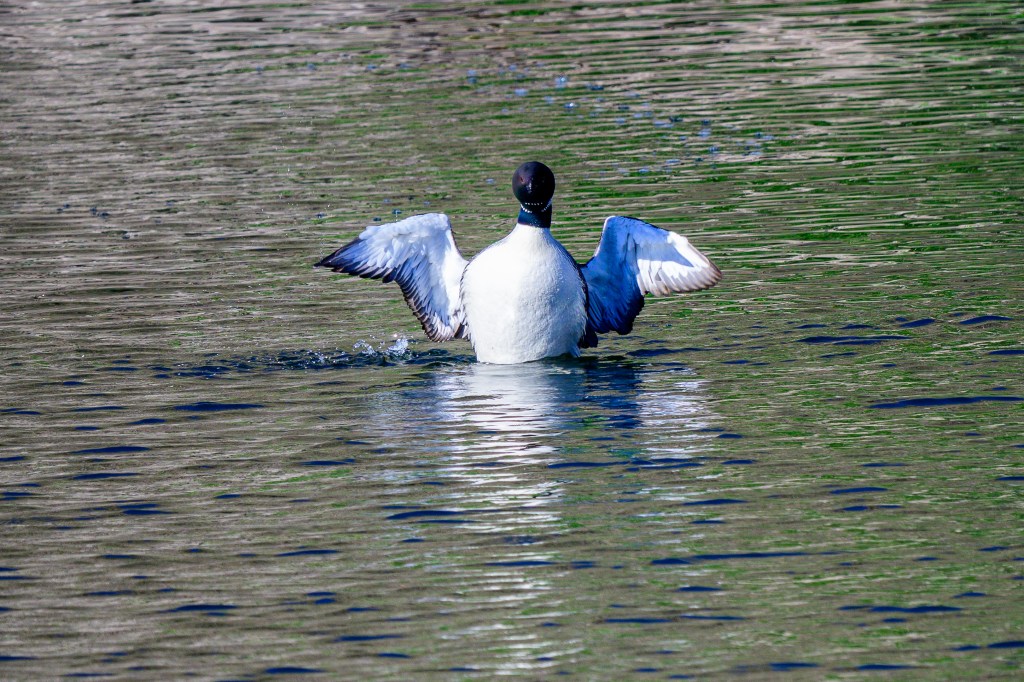
We sometimes see a Common Loon on the Reservoir. It is almost always solitary.

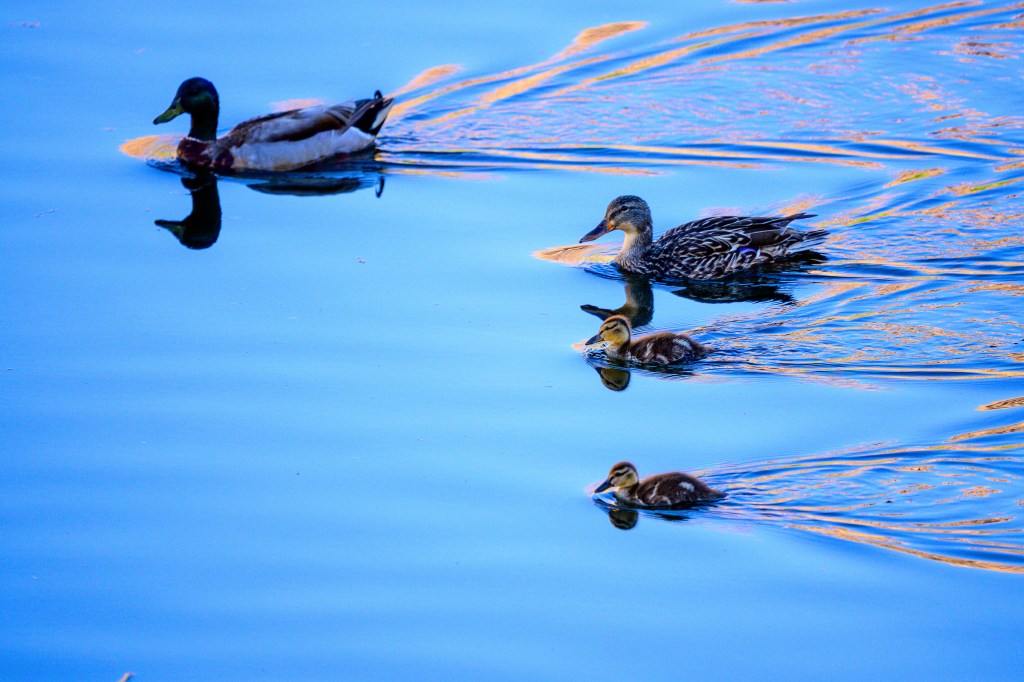
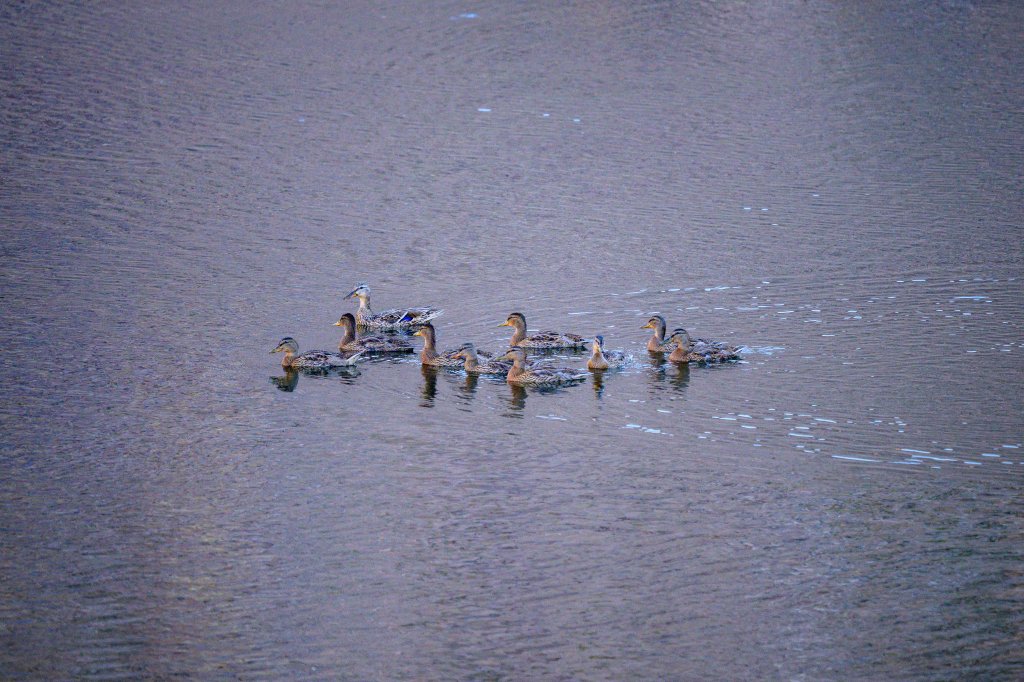
Mallards have lots of babies.

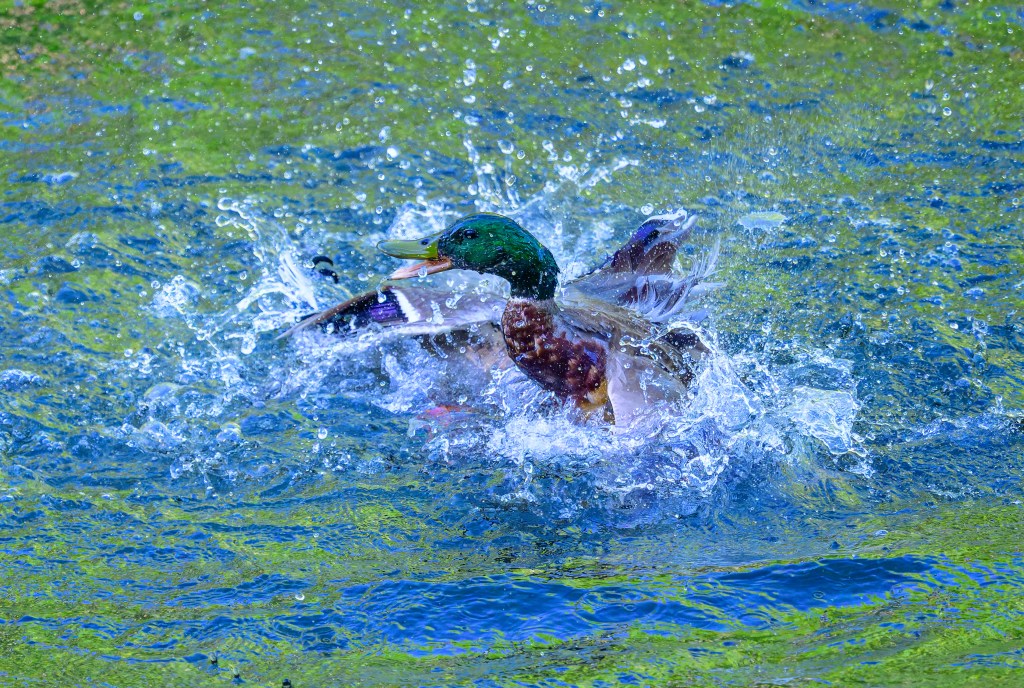
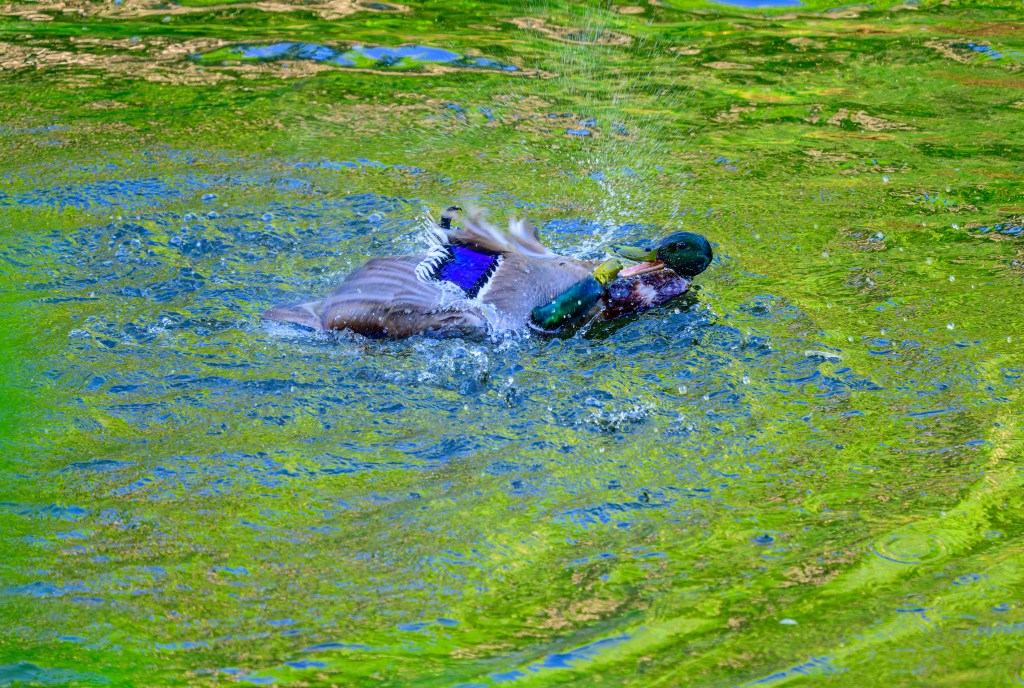
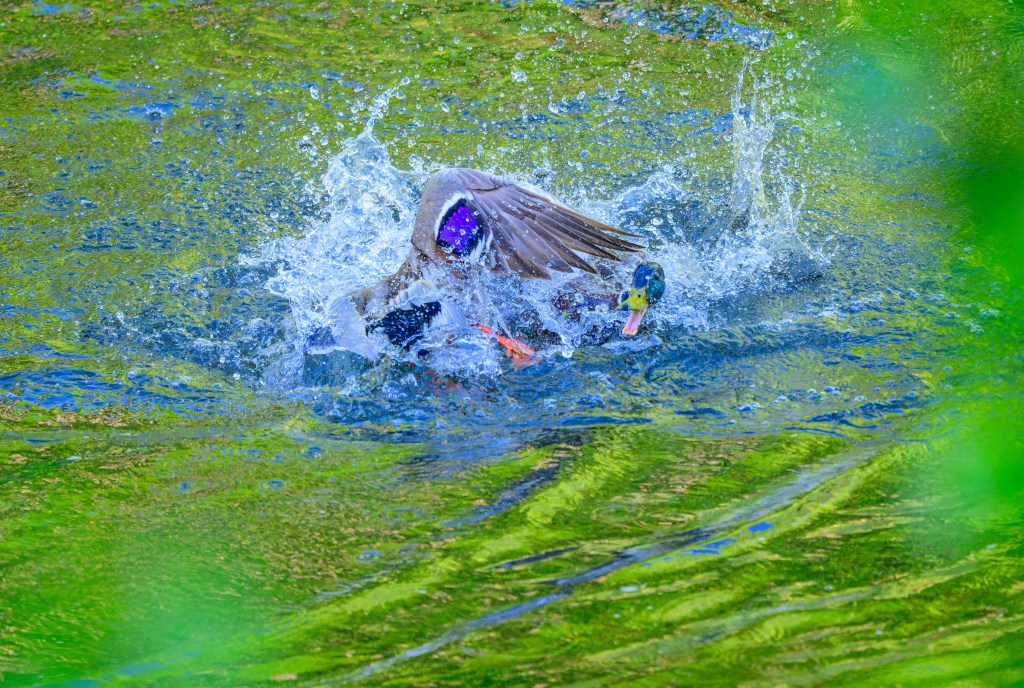
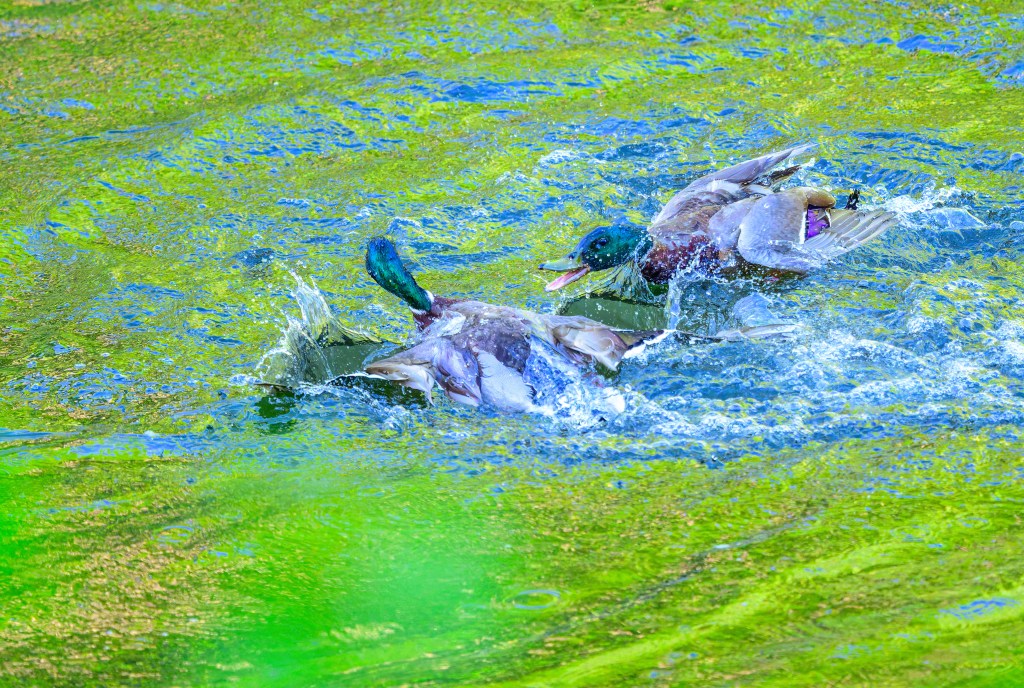
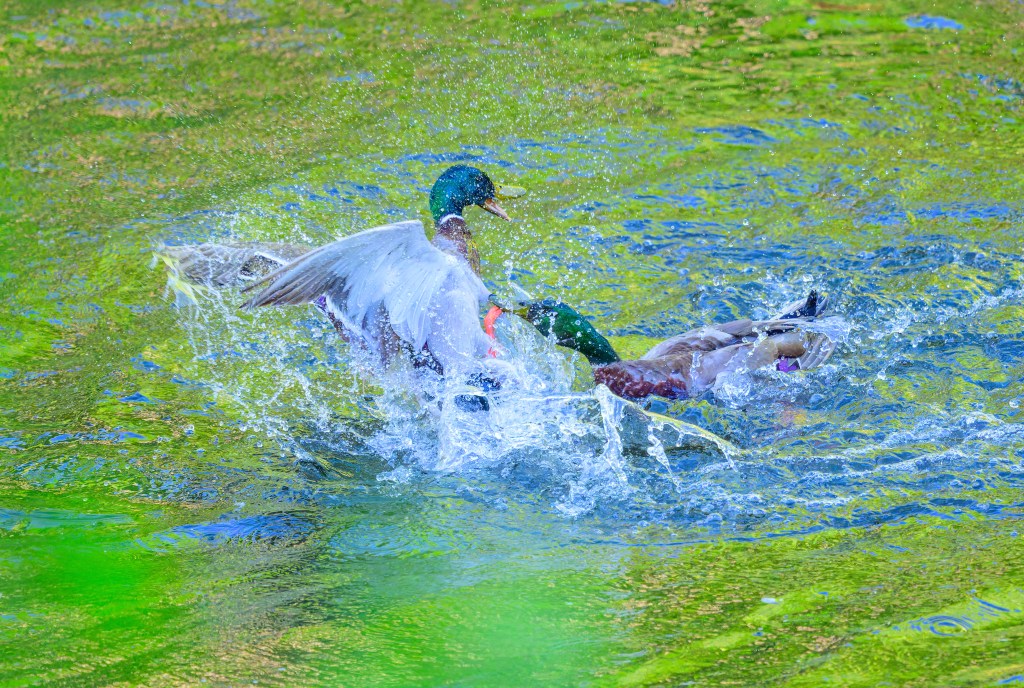
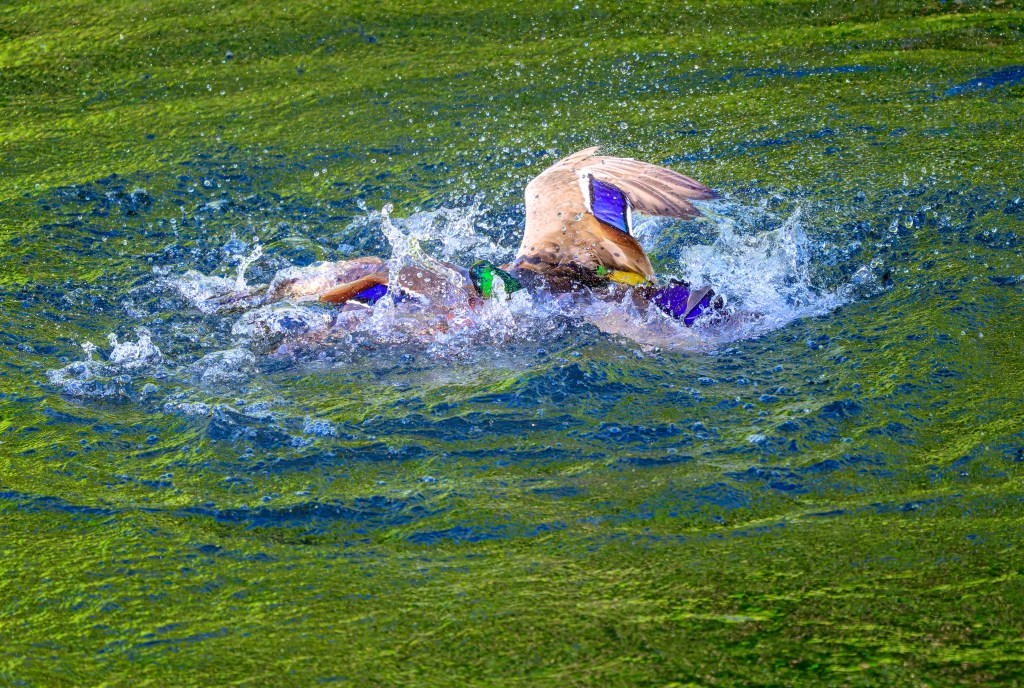
Male Mallards can be aggressive during breeding season. In May I photographed a short cage fight. In two images you can see one bird biting the other. The combat ended after a minute, when one duck gave up and staggered ashore.

FINAL COMMENT
We live in the high desert. But the locations in this blog are places with water. Many birds make use of water; for their food (fish, frogs, vegetation, insects), for protection (in the water or reeds or trees), or for a drink. I stalk birds in wet locations because so many congregate there.
 Birds of Bishop