
This post showcases bird photos from Spring, 2026. This time I selected pictures from five locations in or close to Bishop: the Green Gate path north of Dixon Lane, the Conservation Open Space Area (COSA), Airport Road, Buckley Ponds, and Warm Springs Road.
GREEN GATE
A dirt road heads north from the west end of Dixon Lane. A Green Gate keeps cars off this road. People use this path to walk, jog or exercise their dogs.
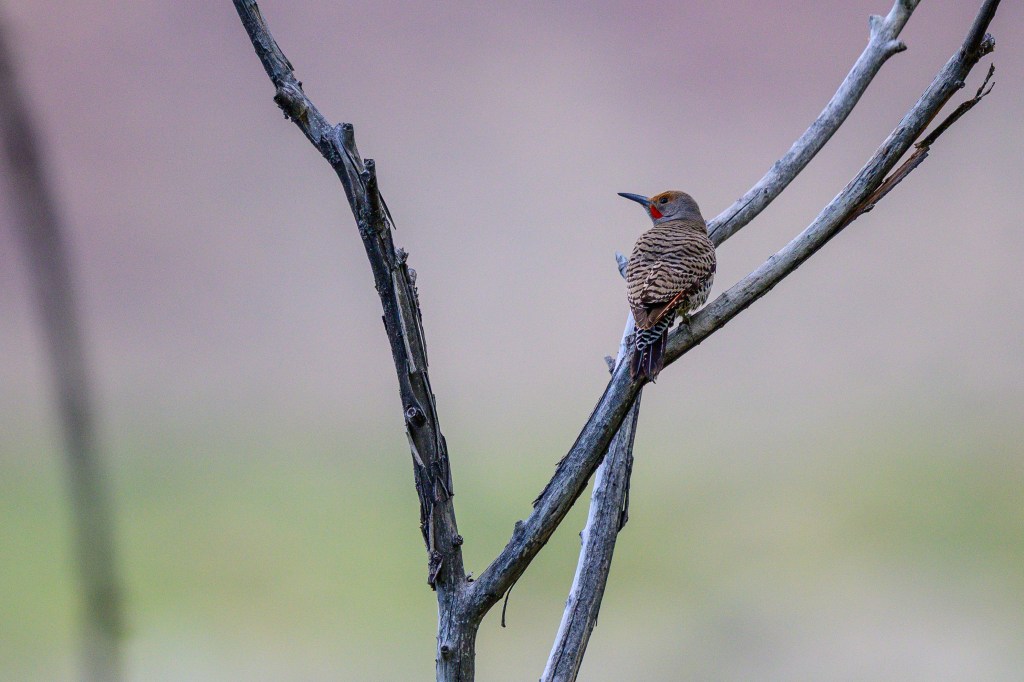
Northern Flickers are common all around Bishop.
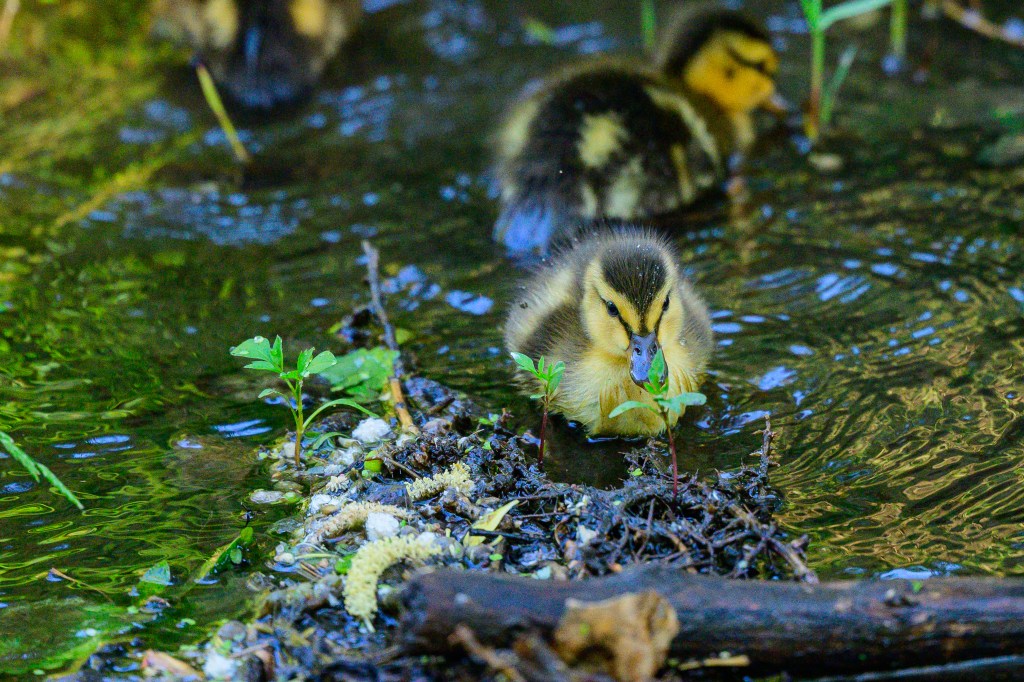
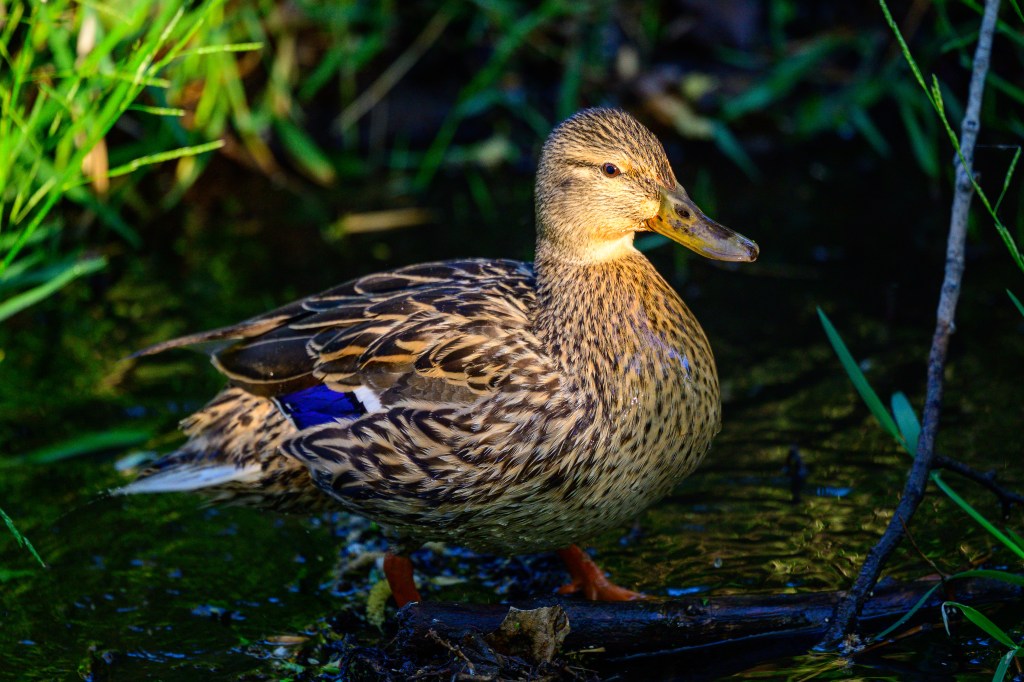
Baby Mallard with a proud mother float in an irrigation ditch.
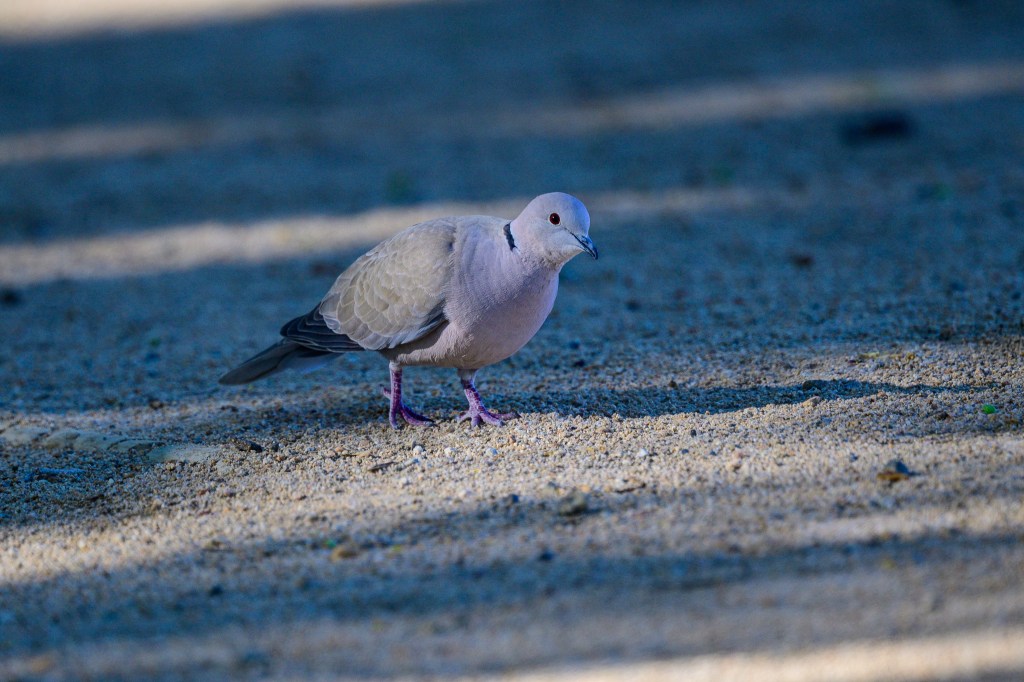
A European Collard-Dove has purple feet.
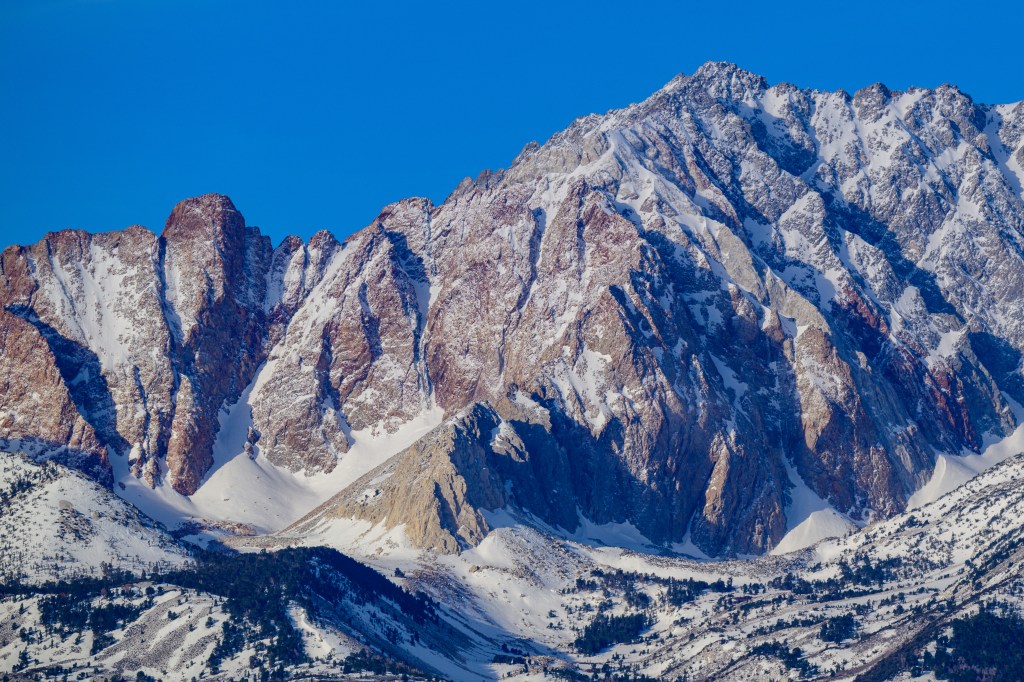
The Green Gate path has a nice view of the red-colored Piute Crags on the left and Mt. Emerson on the right.
CONSERVATION OPEN SPACE AREA (COSA)
The COSA has a few acres of trees, brush, and meadow, right downtown near the elementary school, hospital, and the Owens Valley Paiute Shoshone Cultural Center.
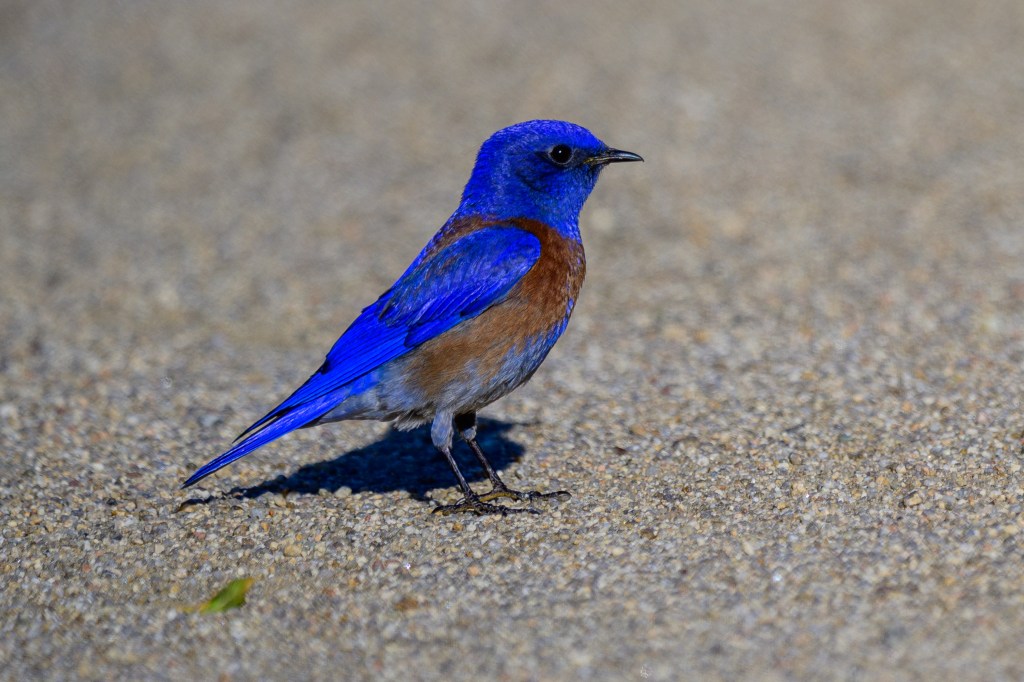
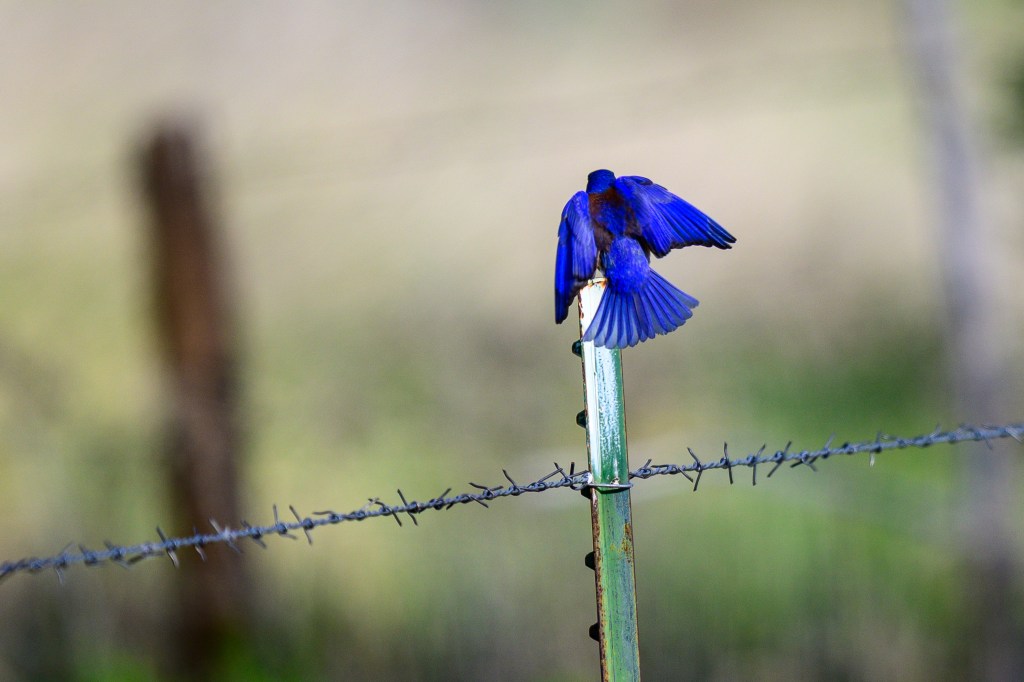
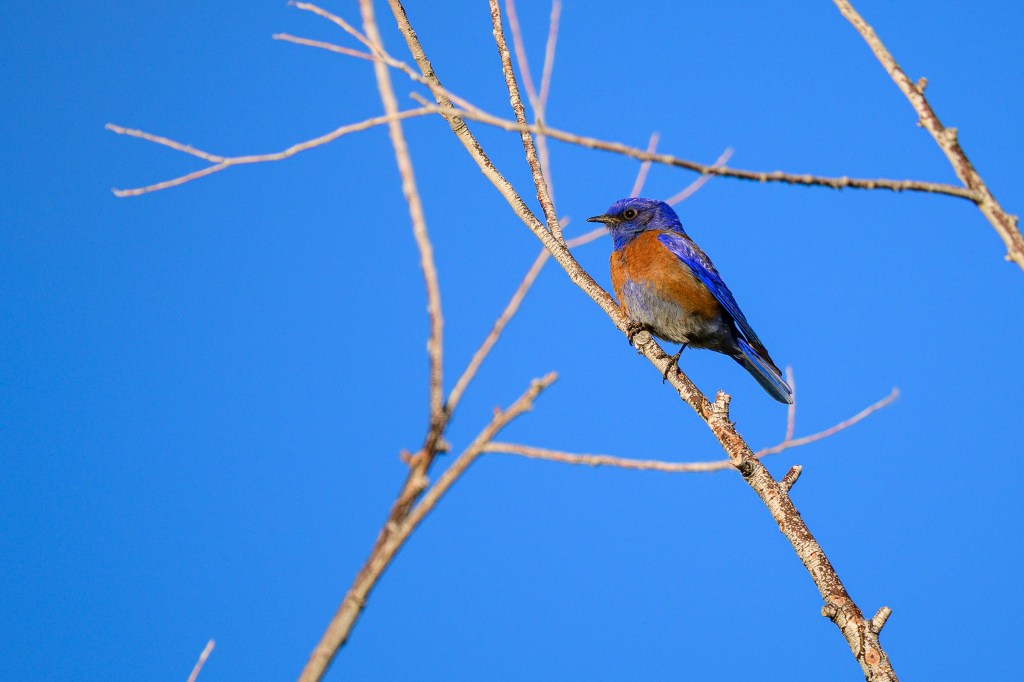
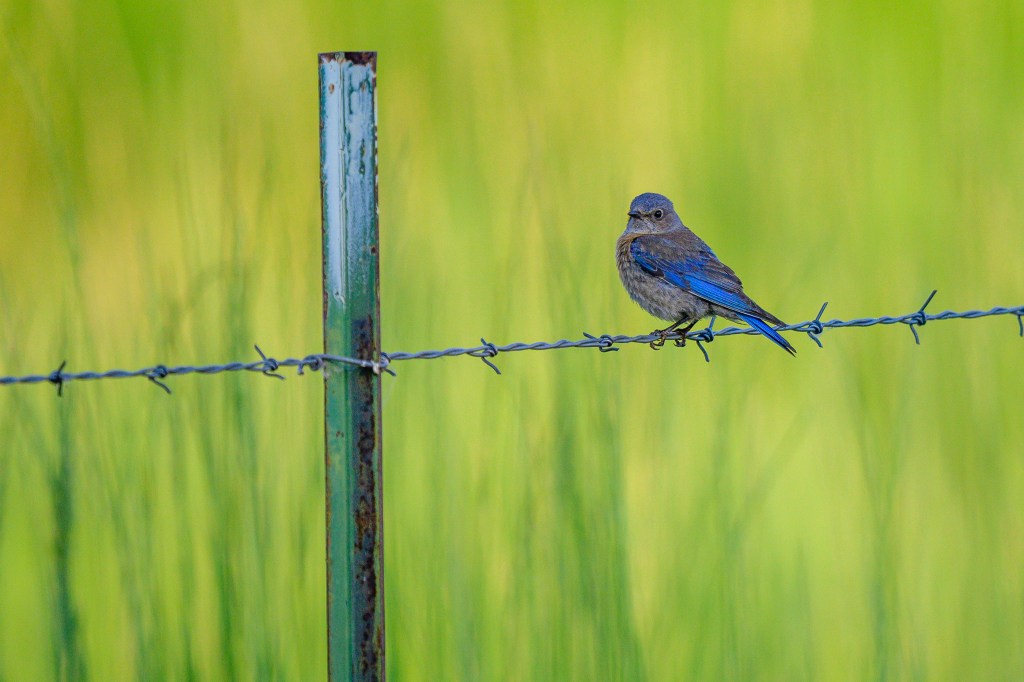
Western Bluebirds love this area. Below is a collection of 8 images. Their colors are so gaudy that they are hard to believe.
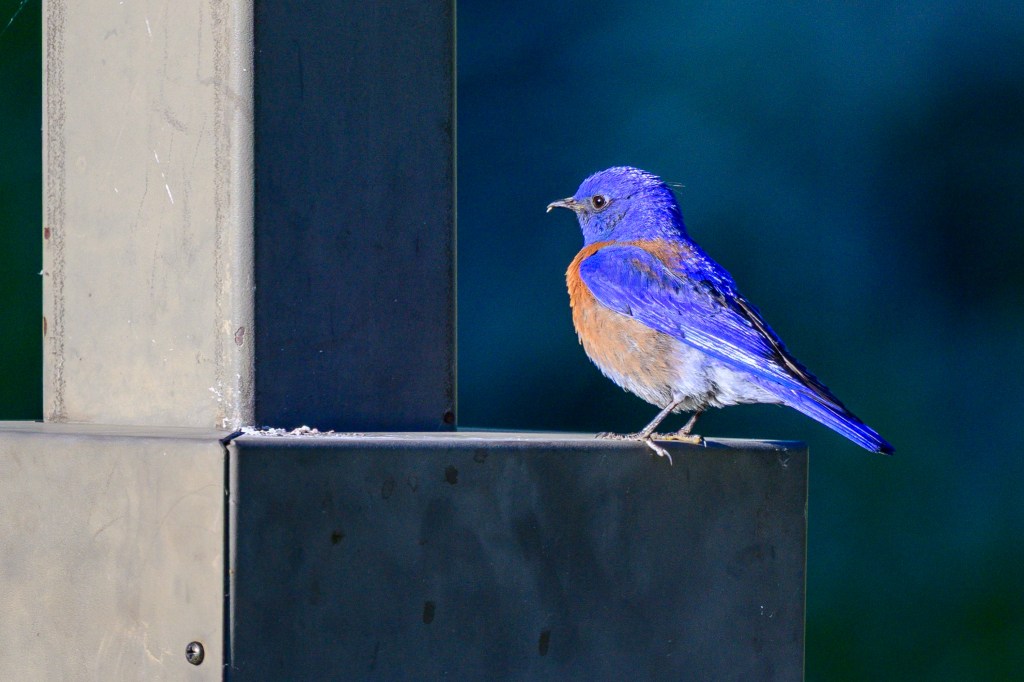
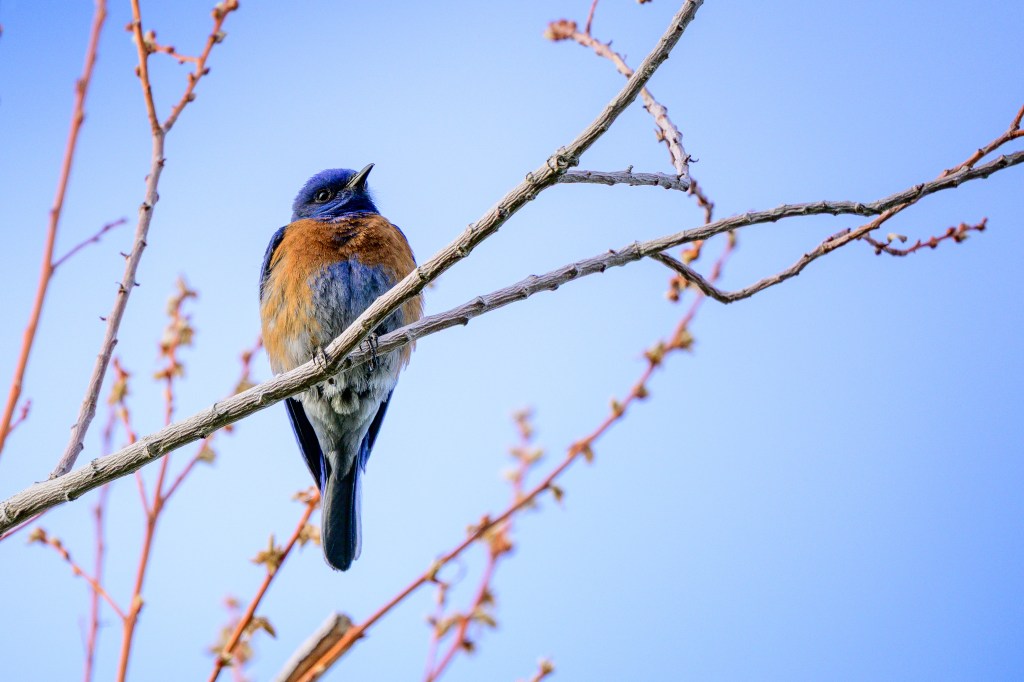
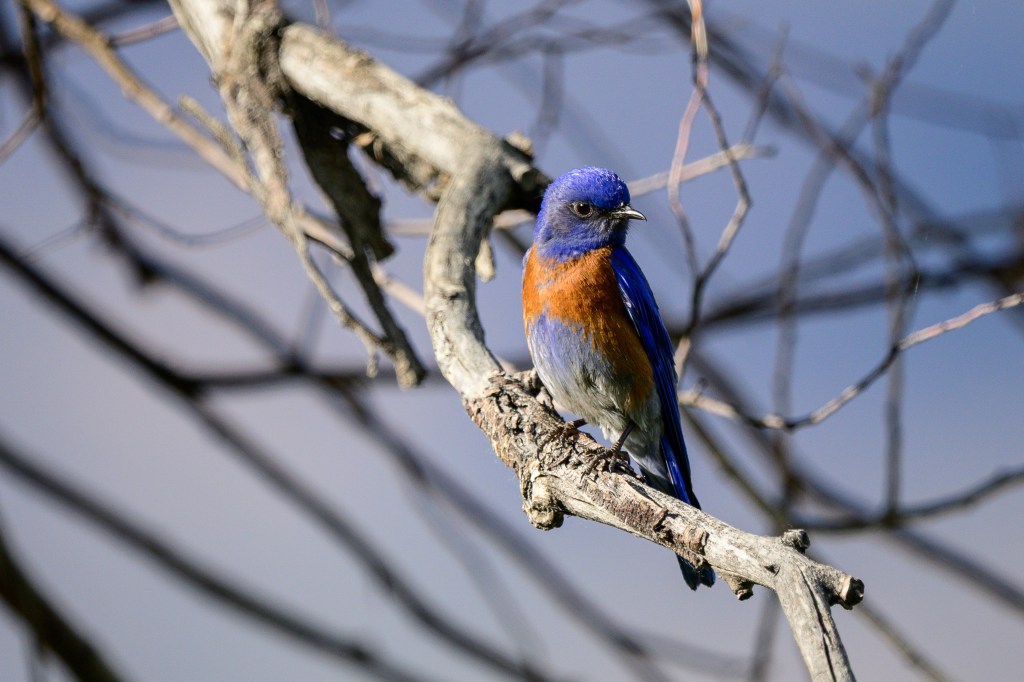
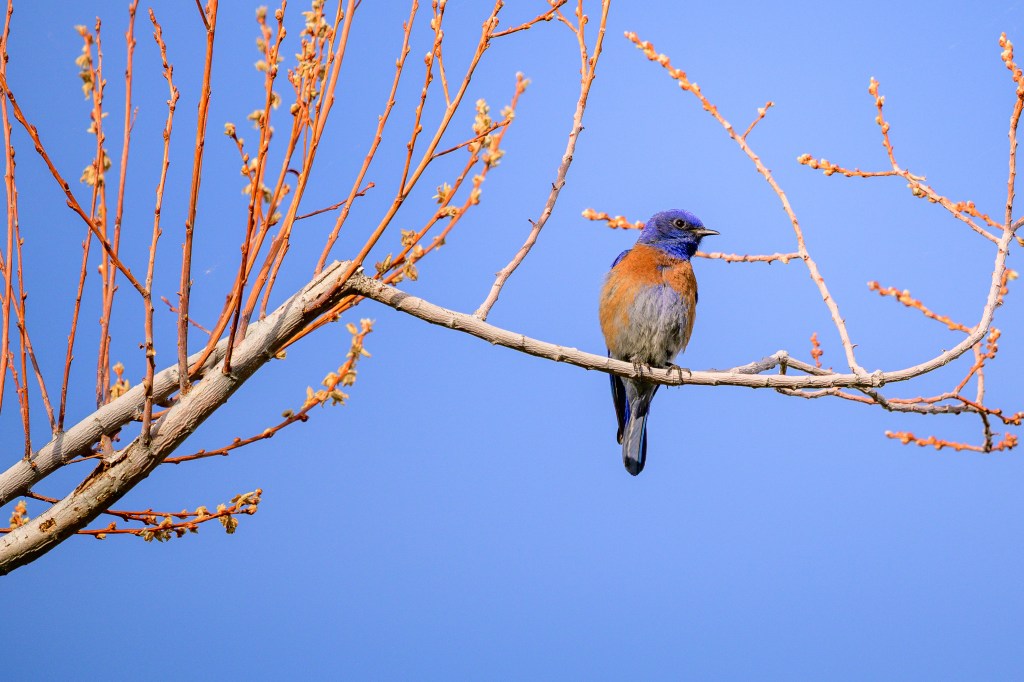
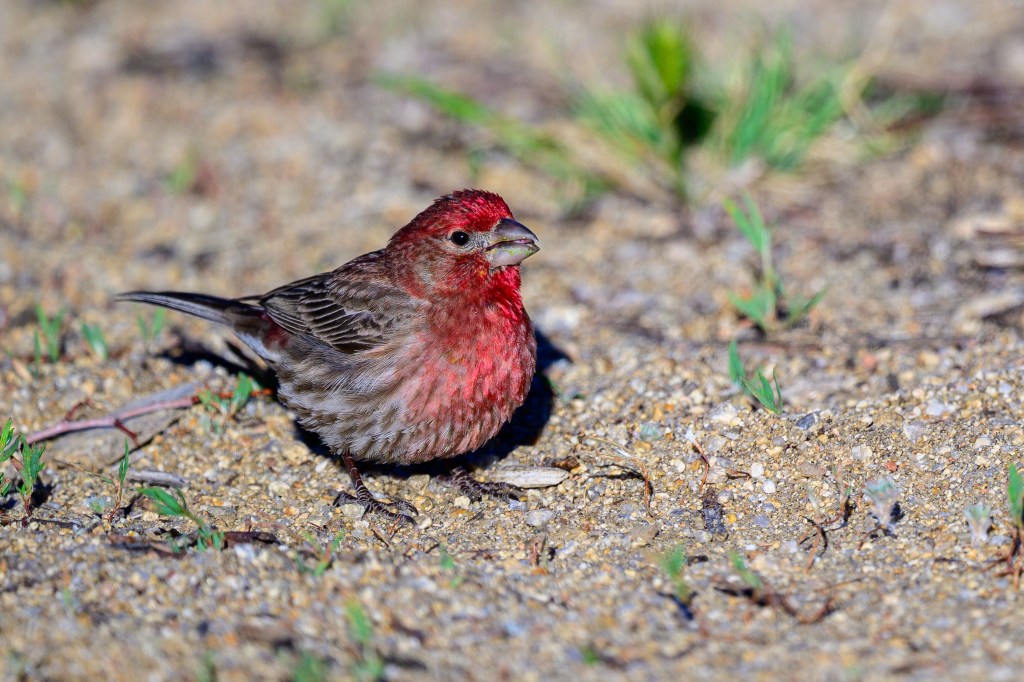
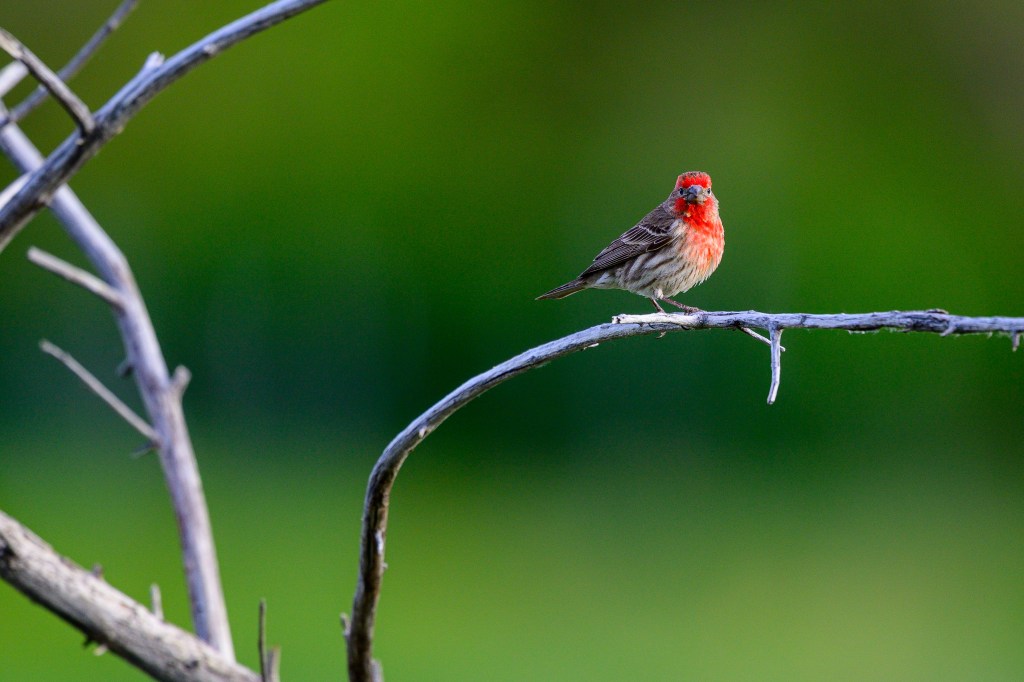
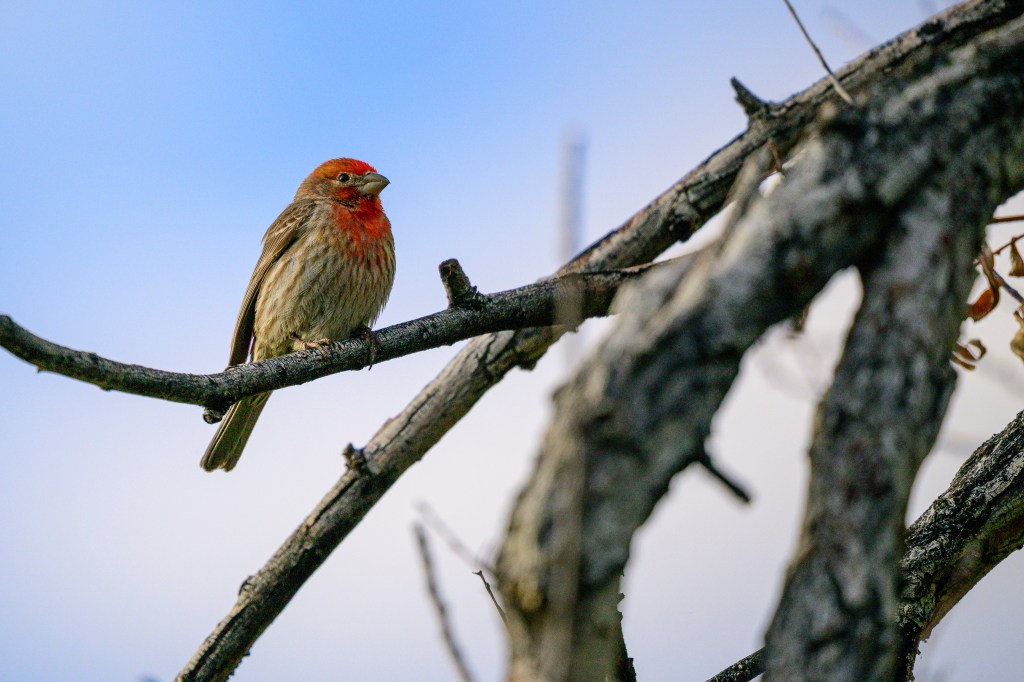
House Finches look like big sparrows that fell into a bucket of red paint.
A Black-chinned Hummingbird.
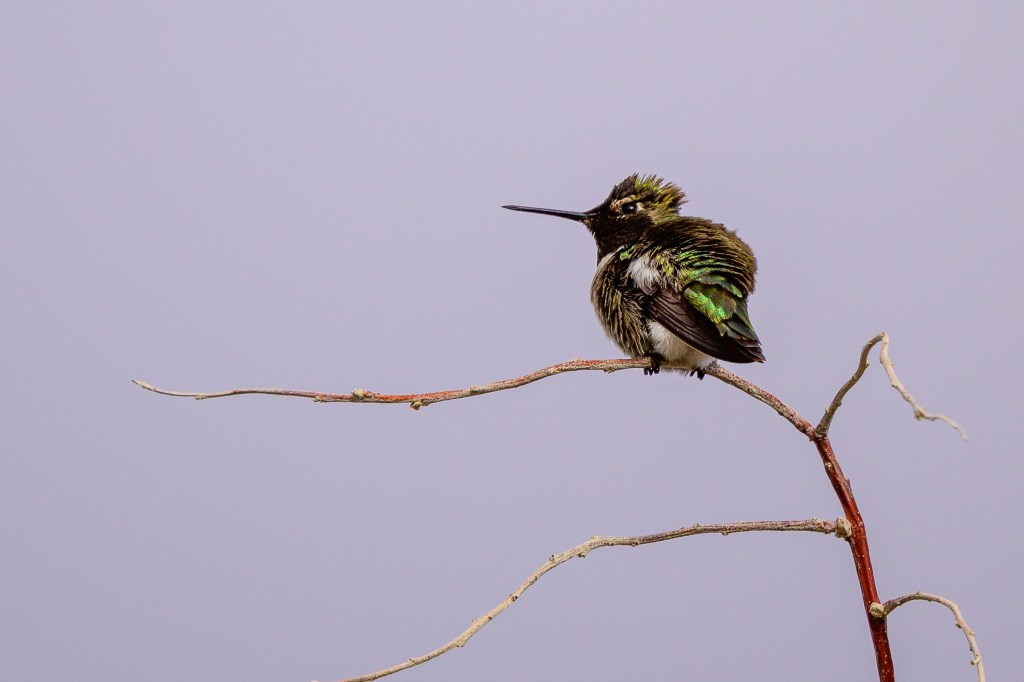
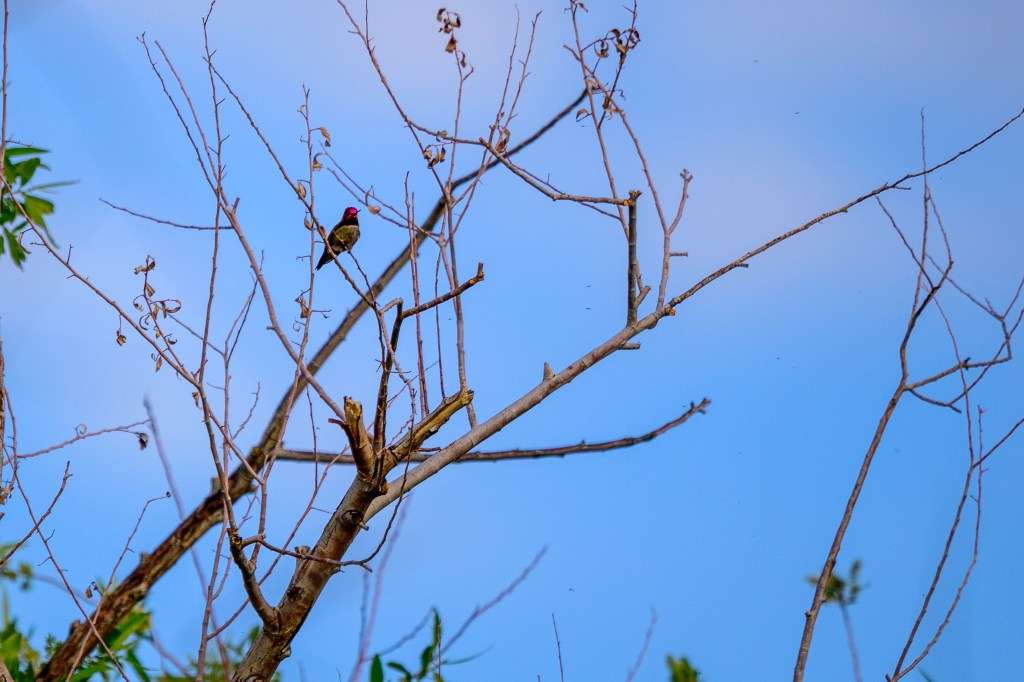
Anna’s Hummingbird.
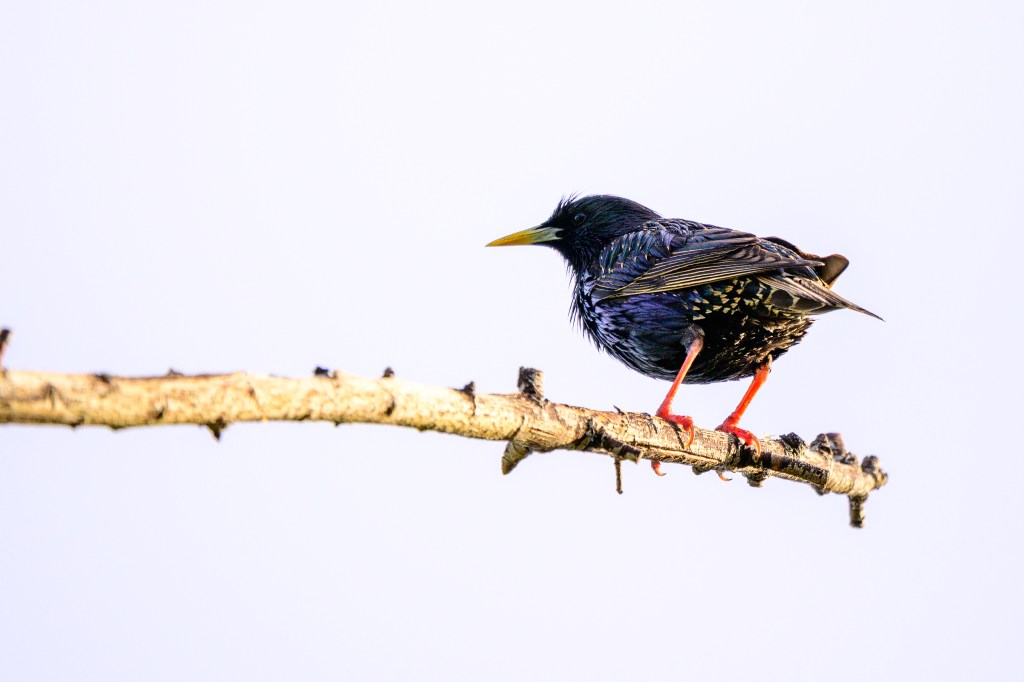
European Starlings look black from a distance. Close-up, you can see that they wear expensive plumage tipped with gold.
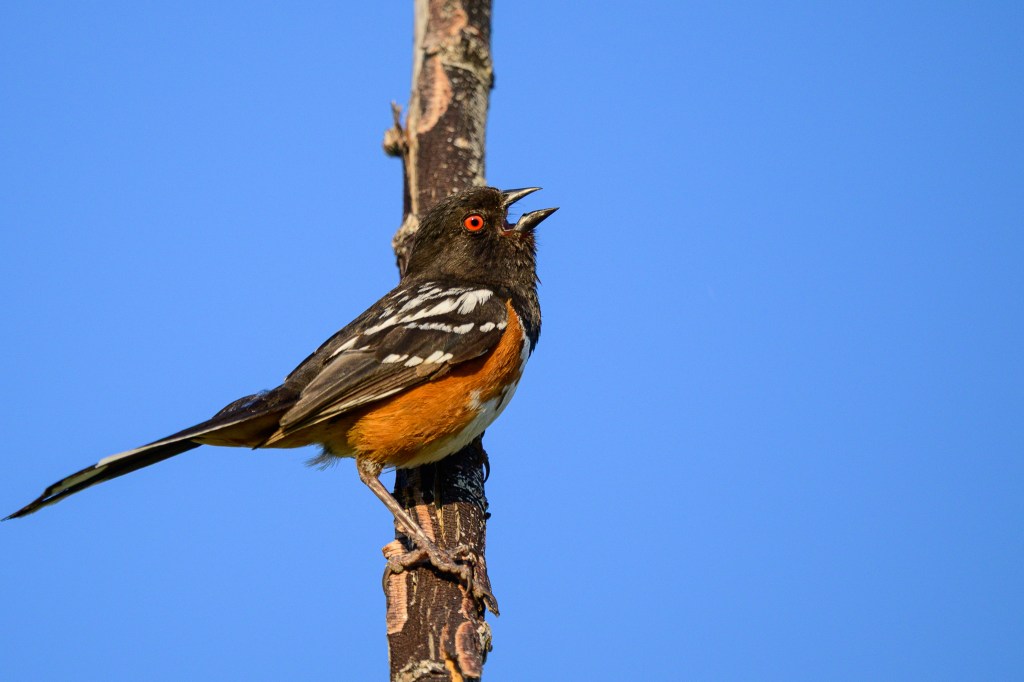
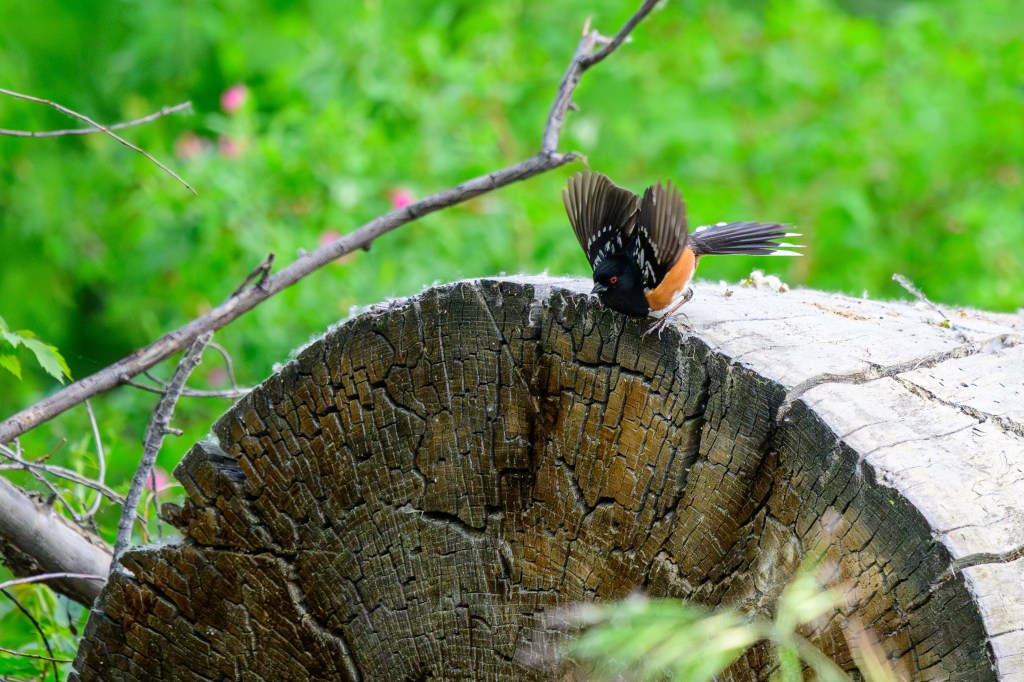
Spotted Towhees love to sing.
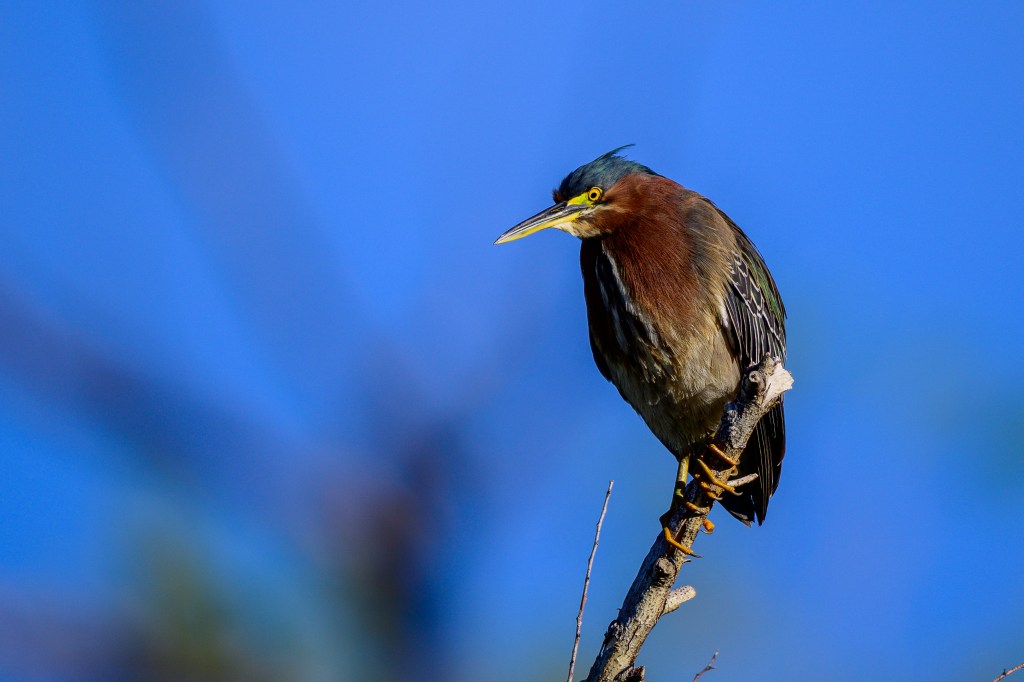
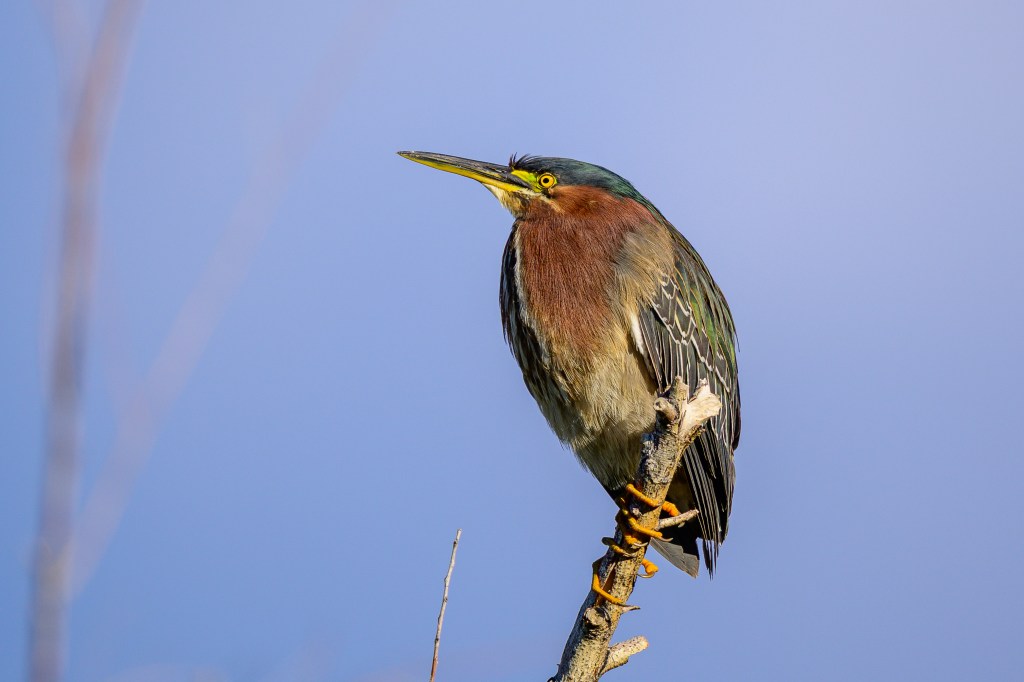
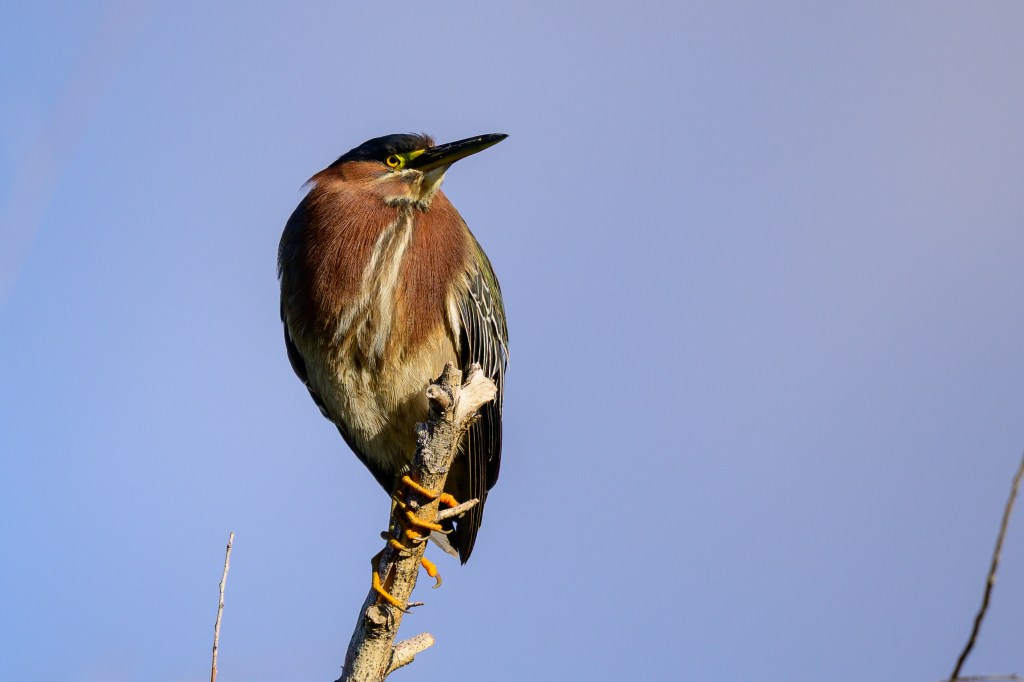
One morning we met two friends who were watching a Green Heron. I foolishly made too much noise and the bird flew off. But we circled back and got lucky. This bird is a colorful football with big yellow toes.
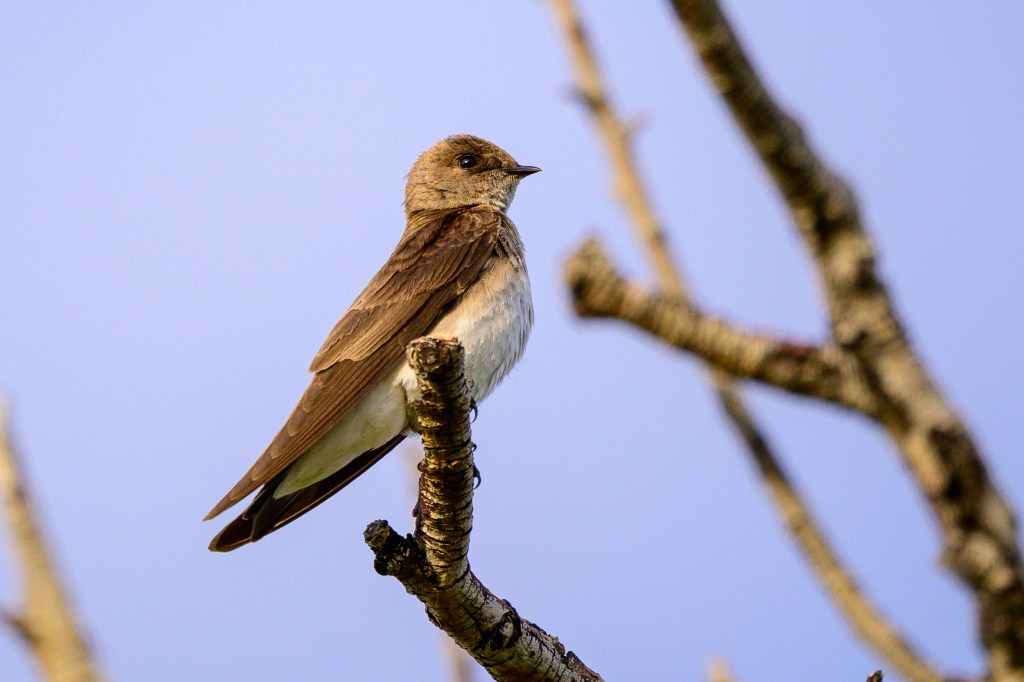
The Northern Rough-winged Swallow has a name that is too big for a small bird.
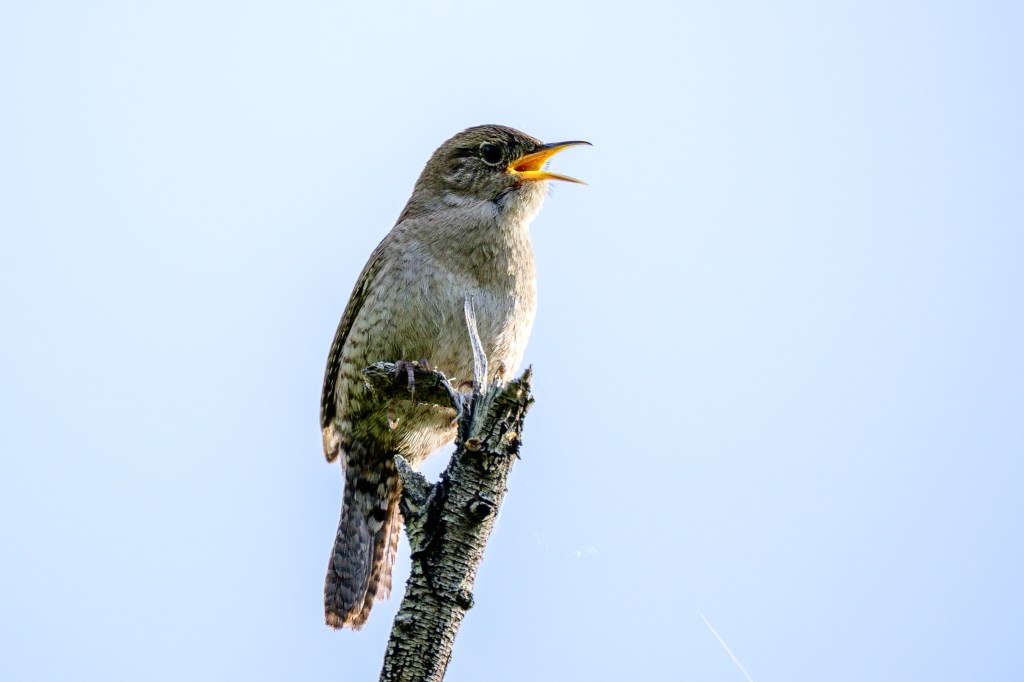
Even smaller is the noisy House Wren. This creature sings and sings and sings.
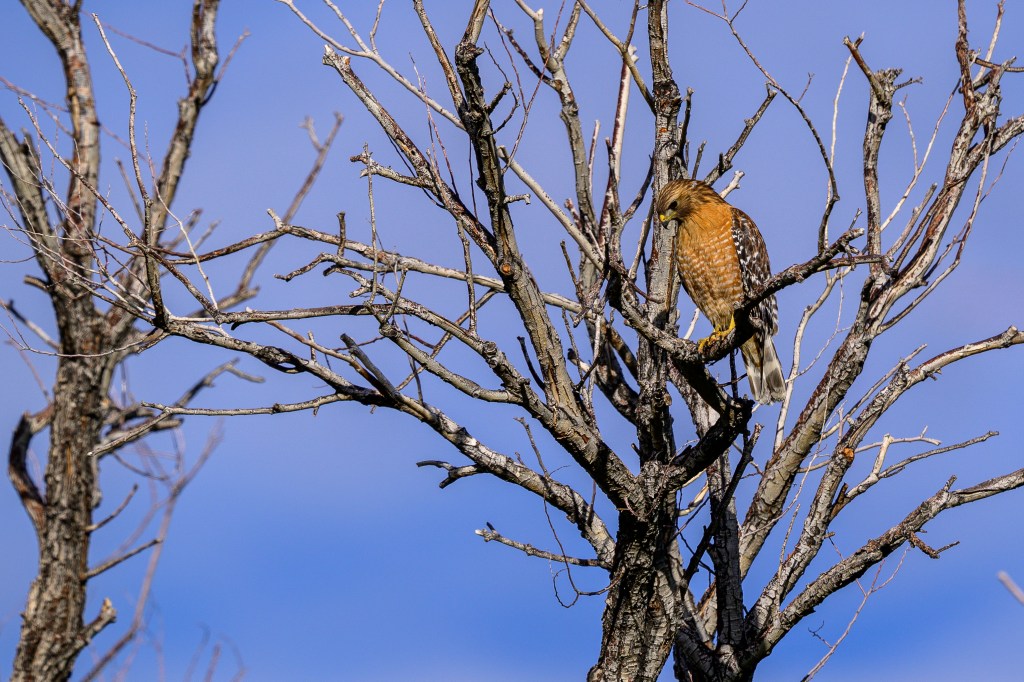
Red-shouldered Hawks are common here. They hunch forward to look down for movement. They can topple over and reach the ground in a second. Mice beware.
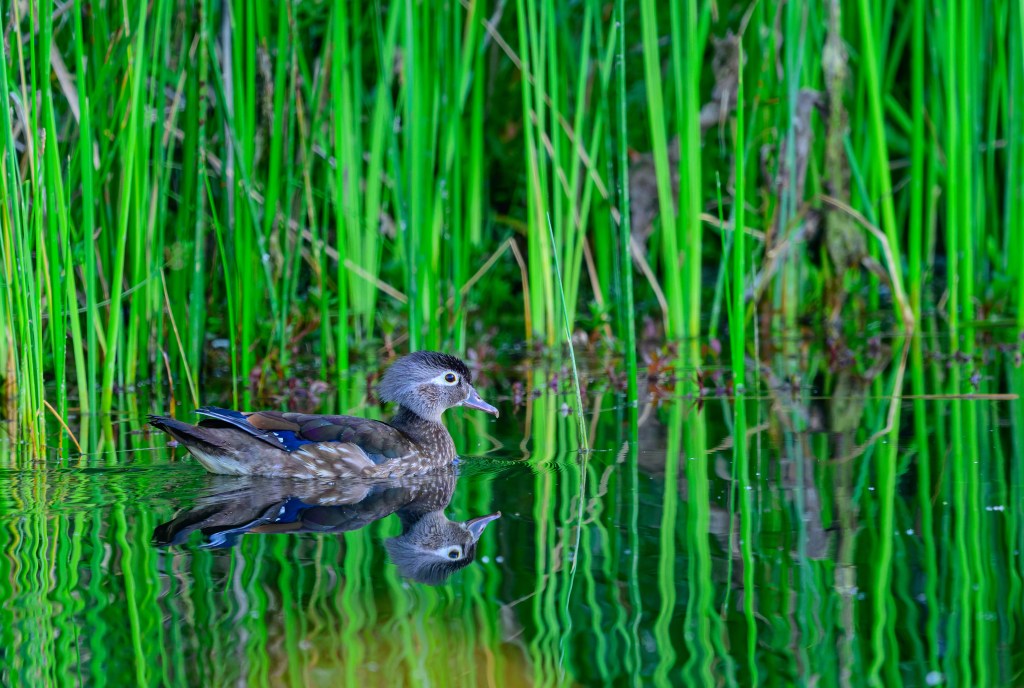
A female Wood Duck, below, is a gorgeous bird. Not as garish as her male counterpart, she displays calm beauty and grace.
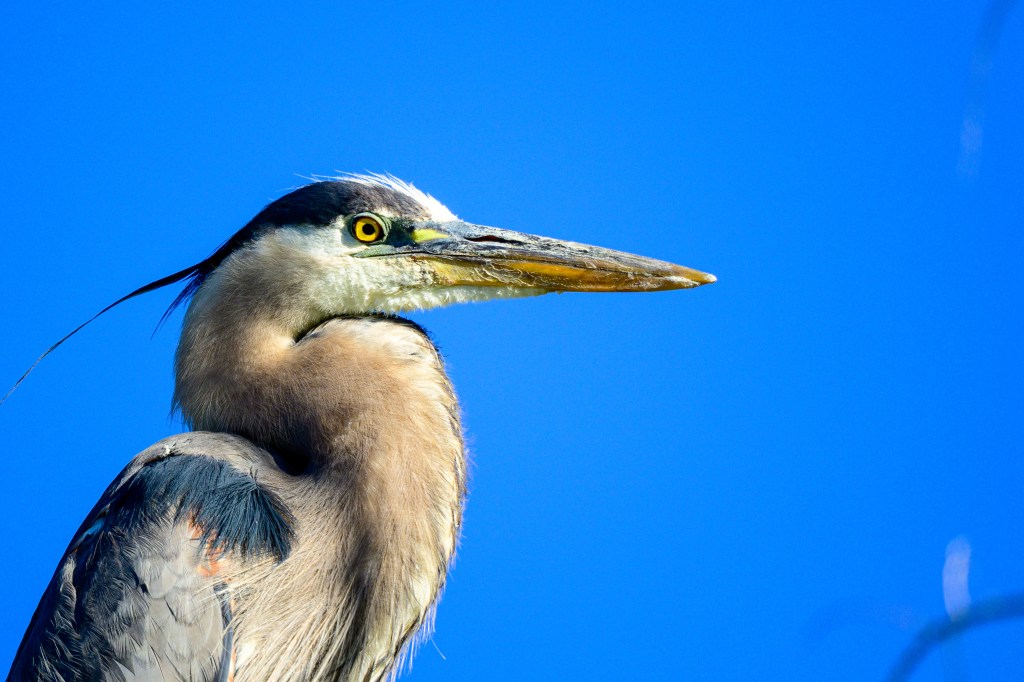
Great Blue Herons love to perch high up on tree limbs. This puzzles me, as their food is down on the ground or in water. Maybe they feel protected up high or just like the view? The bird below was moving its head and beak a lot, as if it was eating. When I later studied the photos, I realized it was cleaning its bill on the bark.
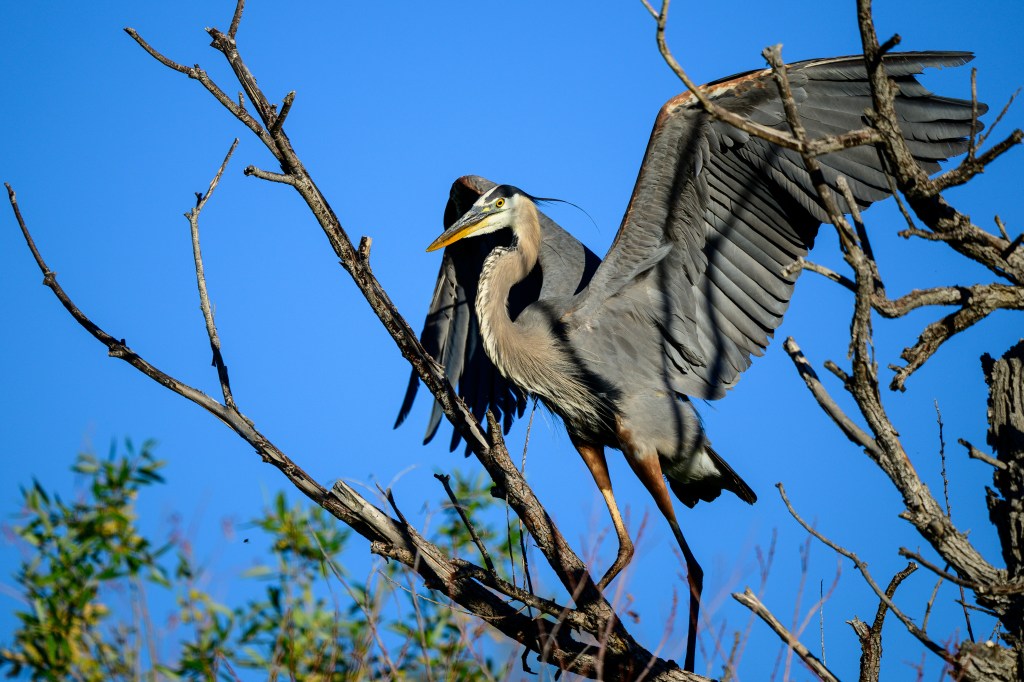
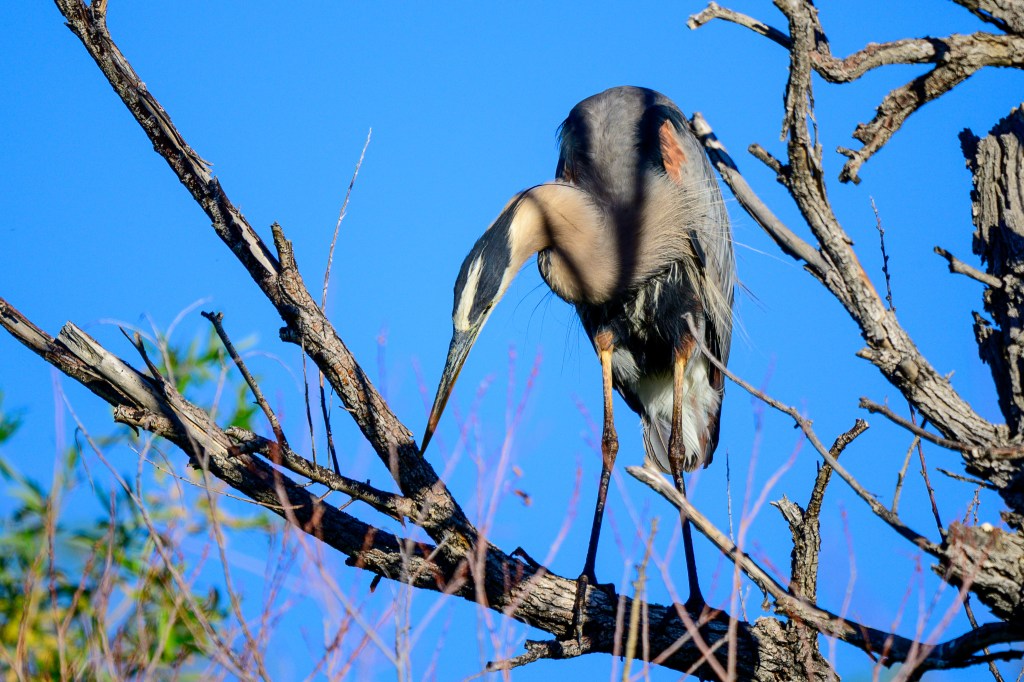
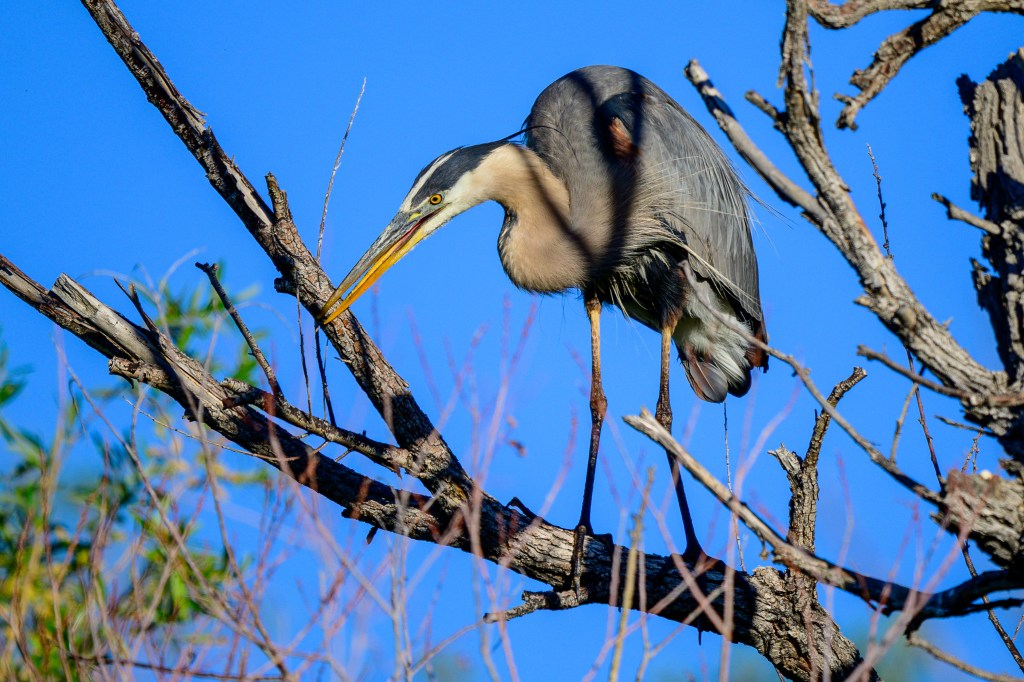
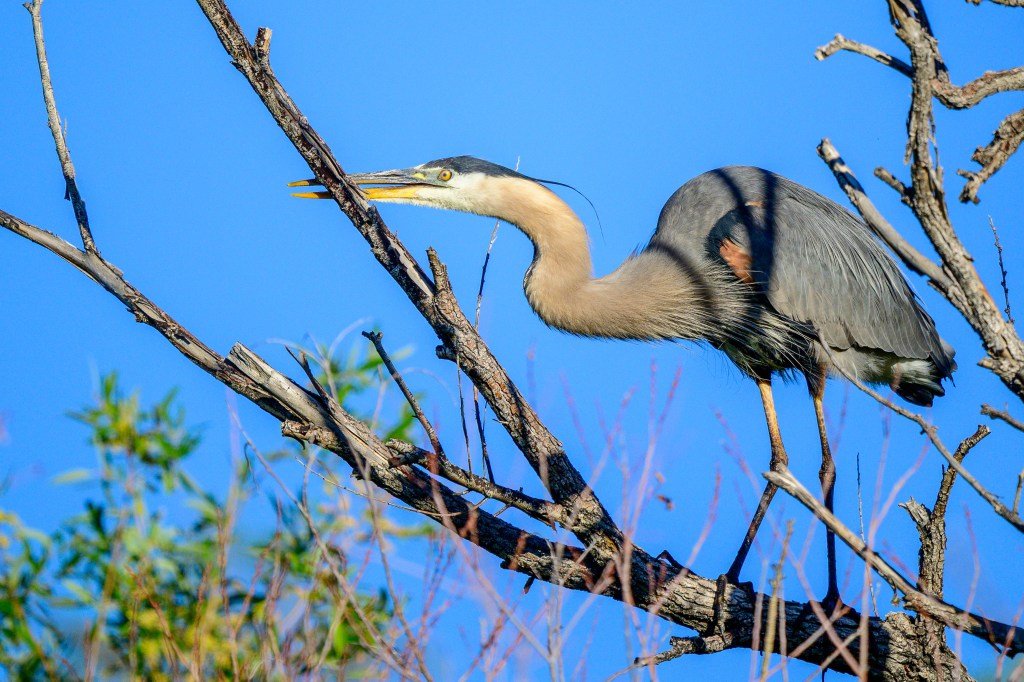
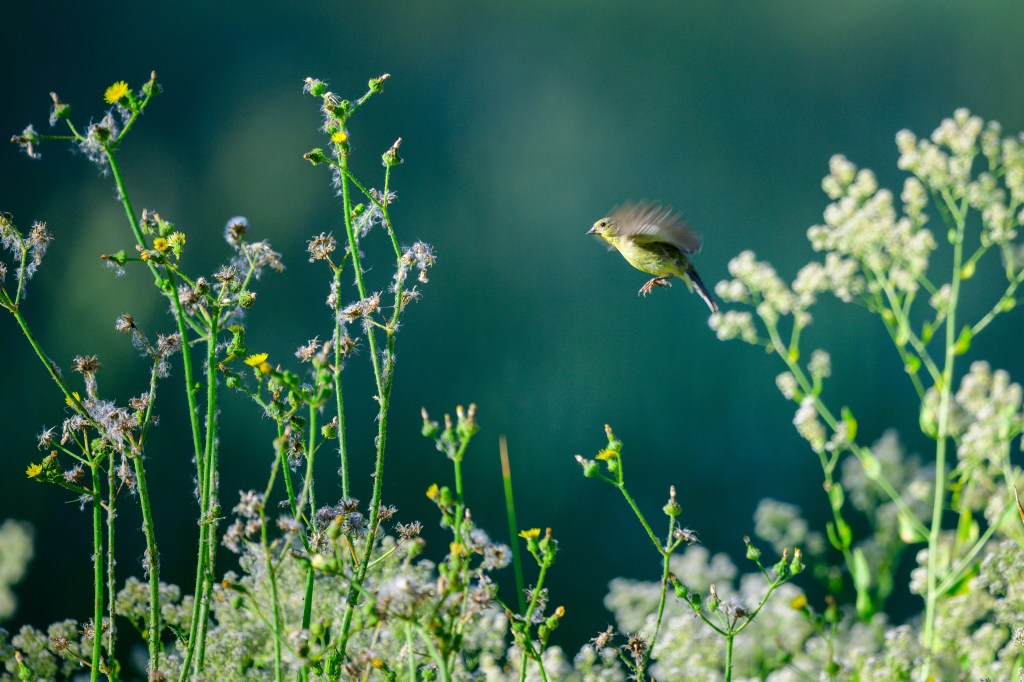
A Lesser Goldfinch makes a leap.
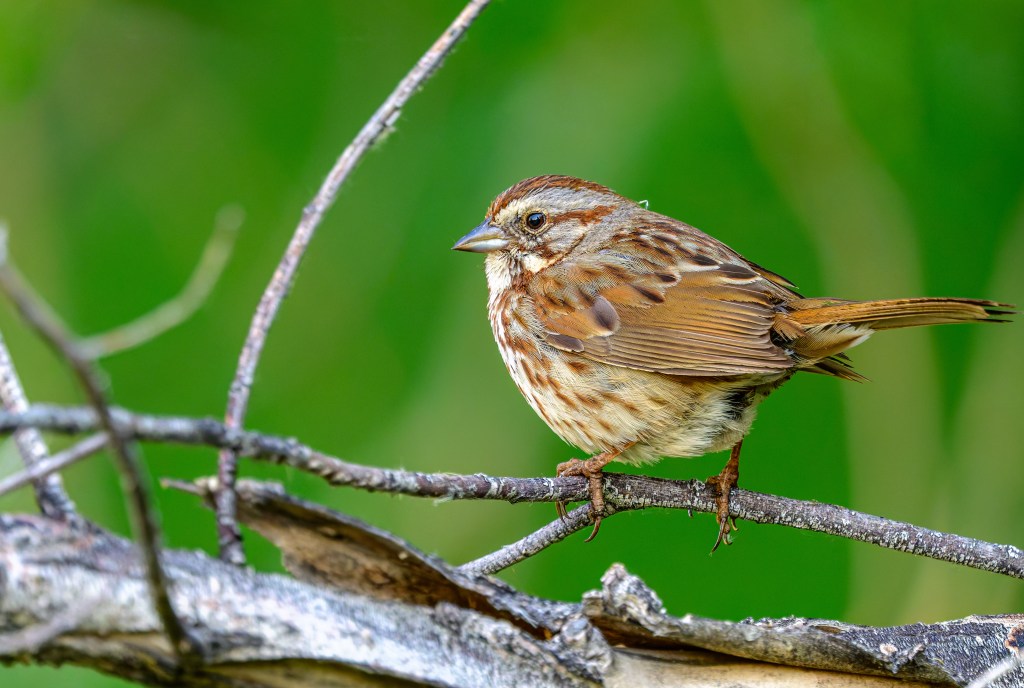
Song Sparrows have intricate patterns and colors in their feathers.
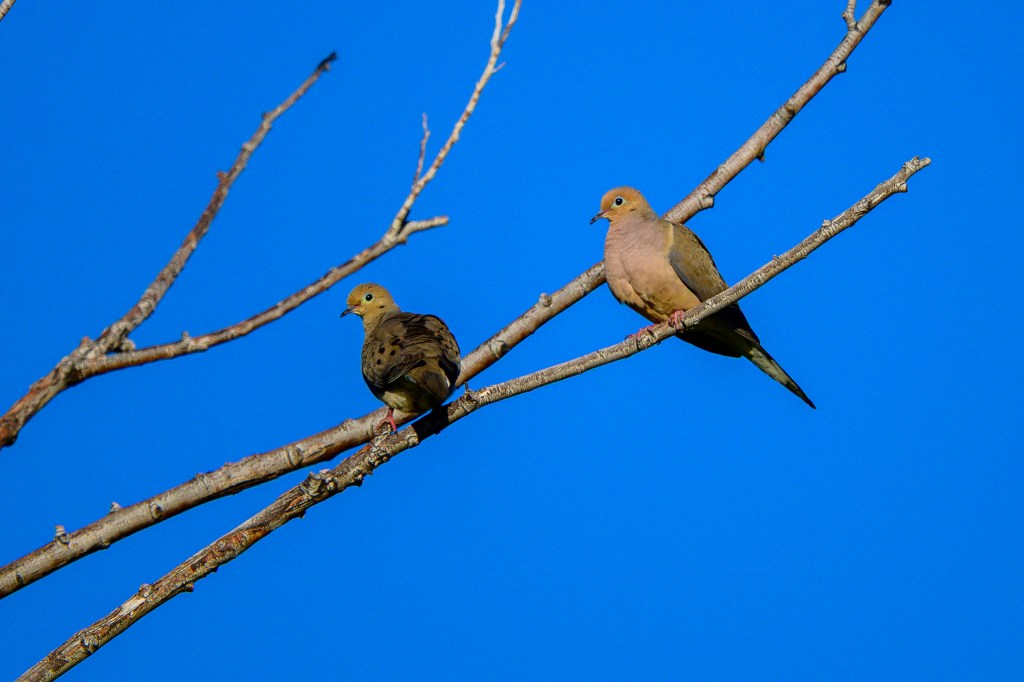
Two Mourning Doves watch me closely.
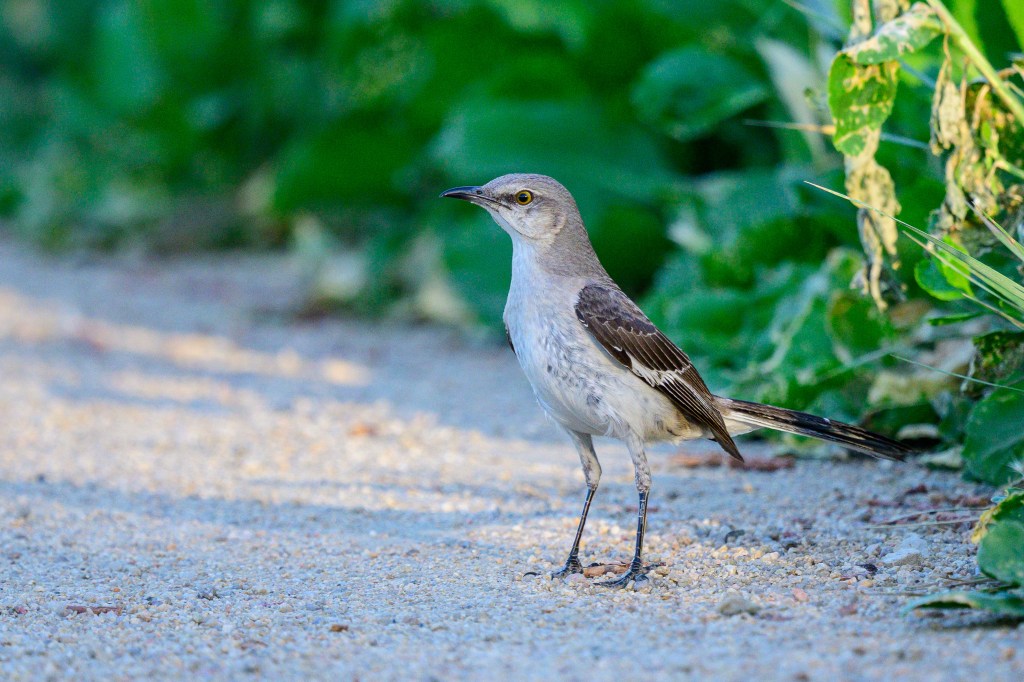
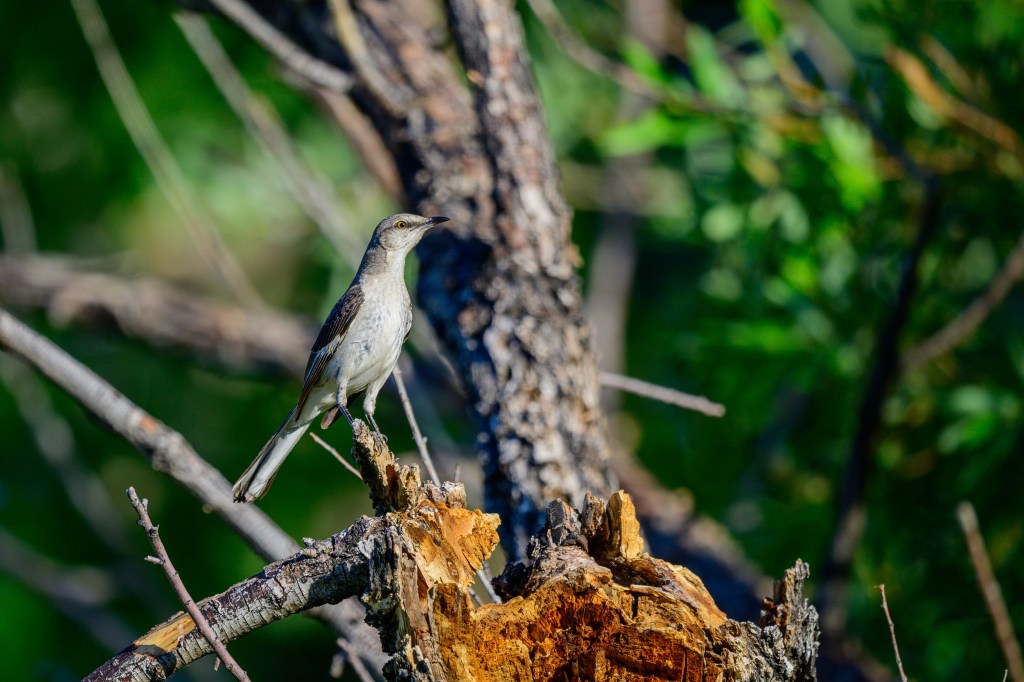
A Northern Mockingbird looks indignant.
A few not birds:
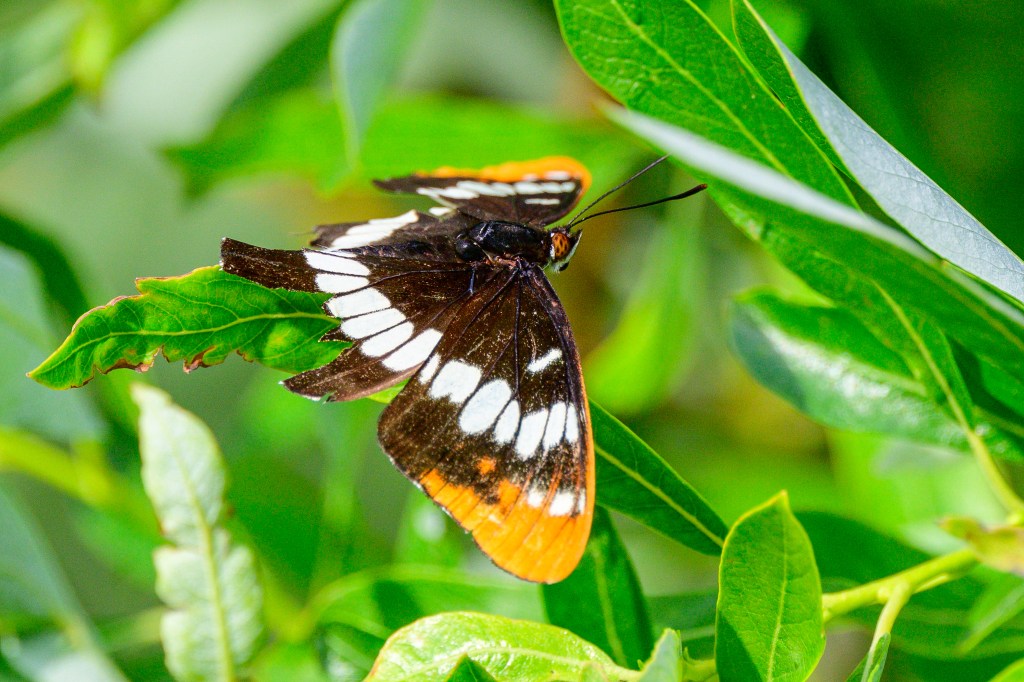
Lorquin’s Admiral looks a bit worn and dusty. (Naming credit to Nancy Overholtz.)
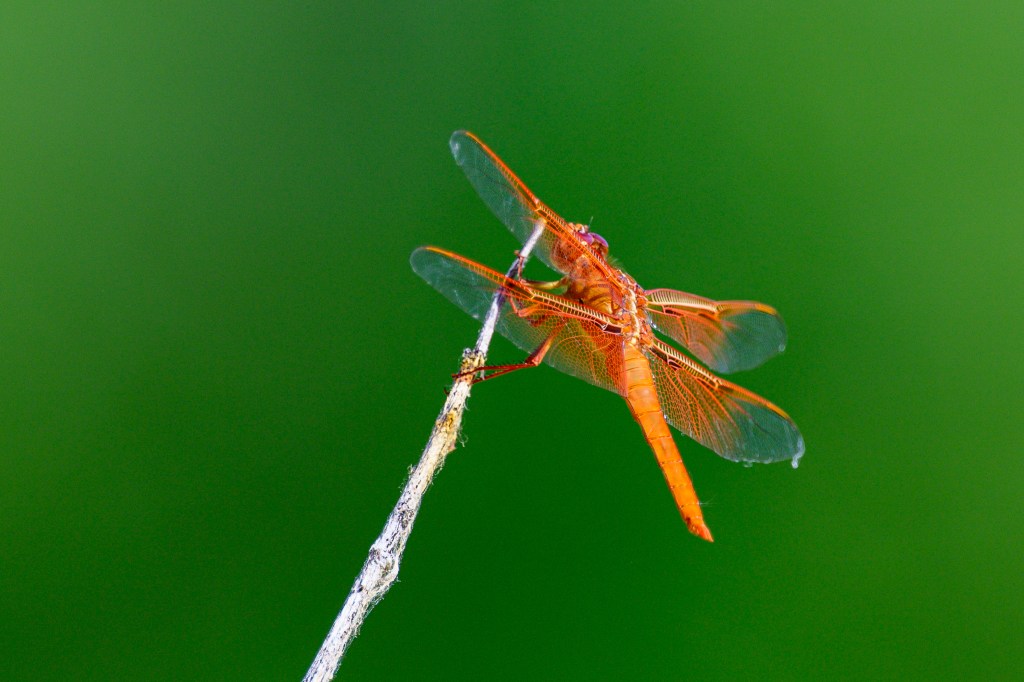
A Flame Skimmer Dragonfly. I use a telephoto lens, so I had to back up to get this image. (Naming credit to Alexa Carleton.)
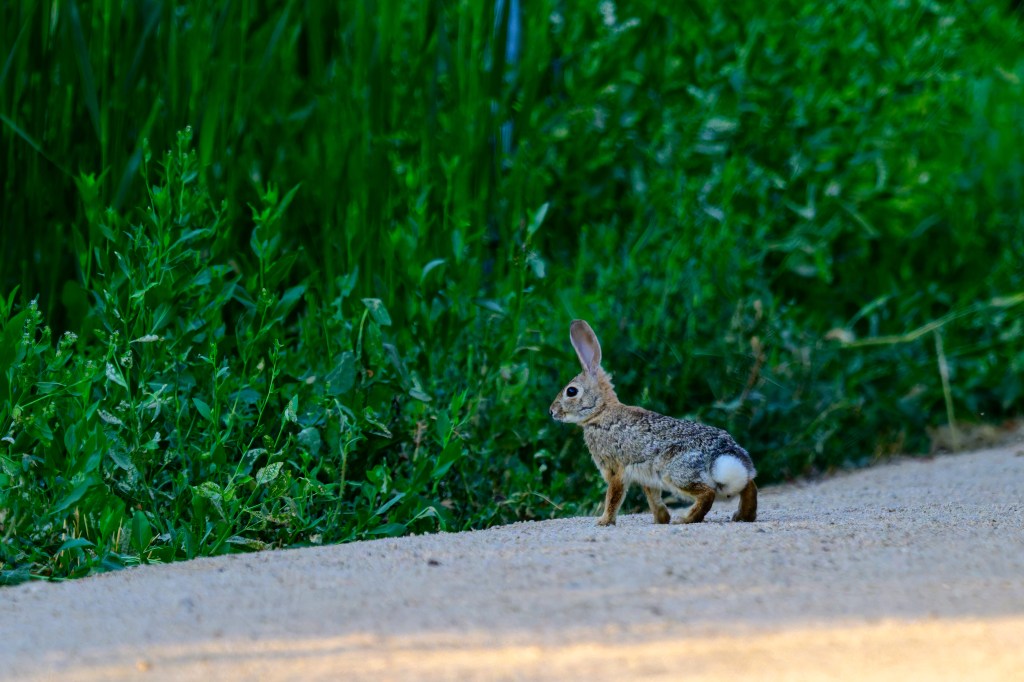
The COSA area has dense thickets. We sometimes see Desert Cottontails on the paths, but I imagine there are hundreds in the brush, watching us with their large bunny eyes.
AIRPORT ROAD
We like to walk on Airport Road south of Line Street and include part of Gus Cashbaugh Lane in our stroll.
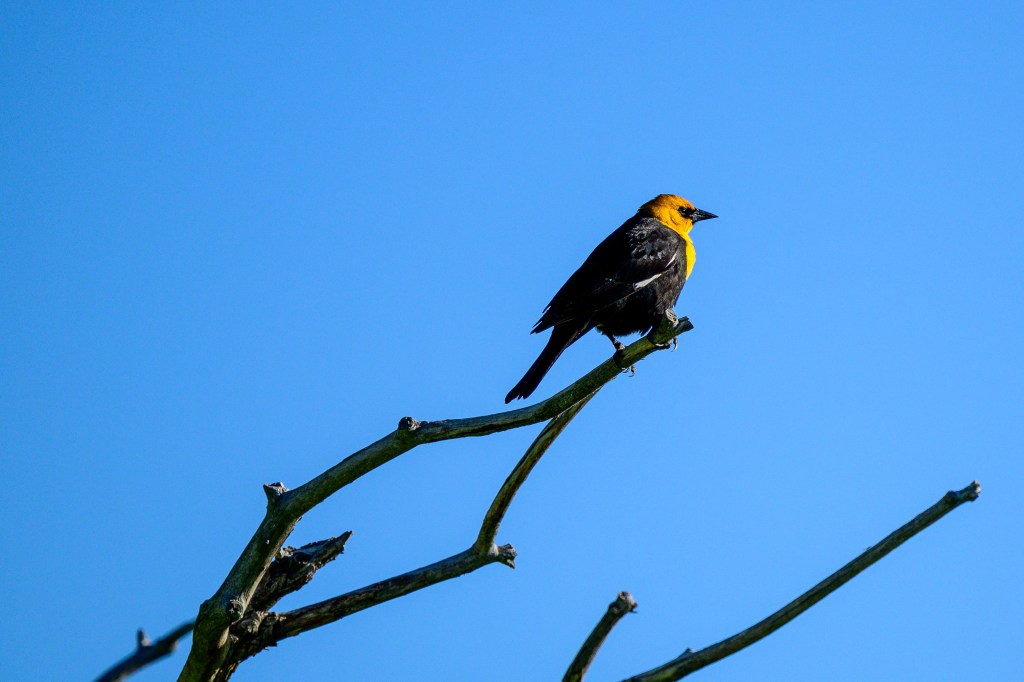
Yellow-headed Blackbirds are flamboyant.
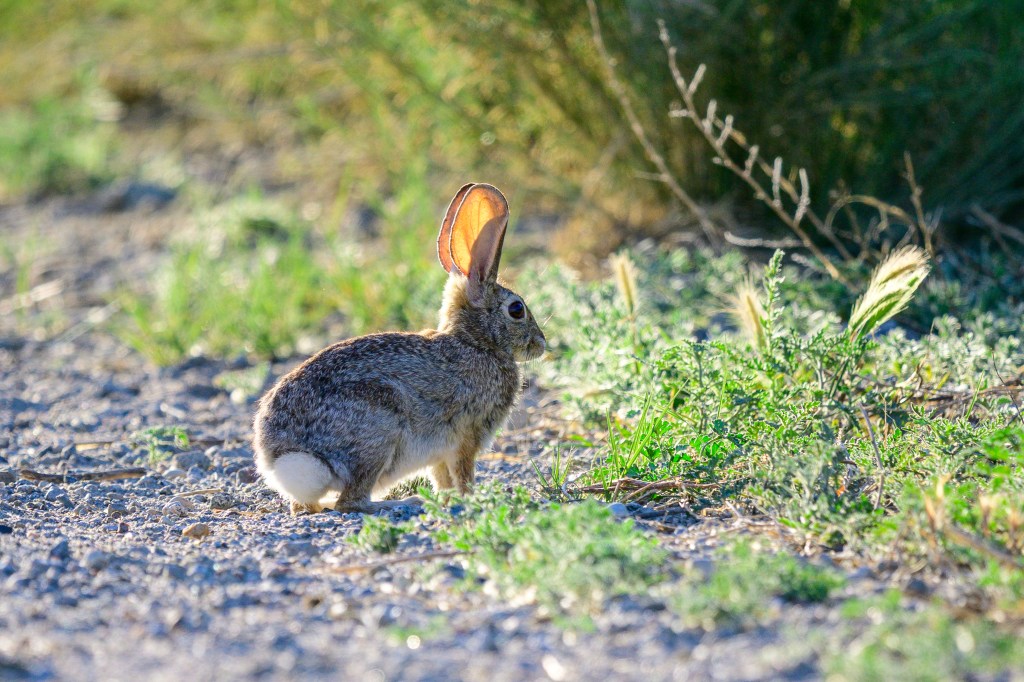
Desert Cottontails are common here.
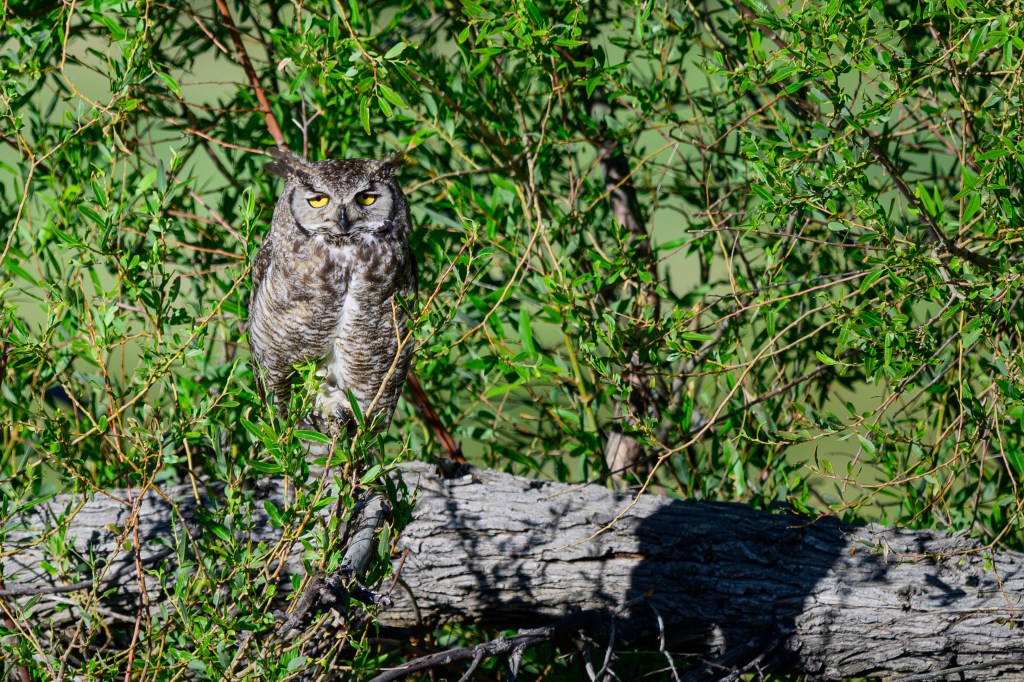
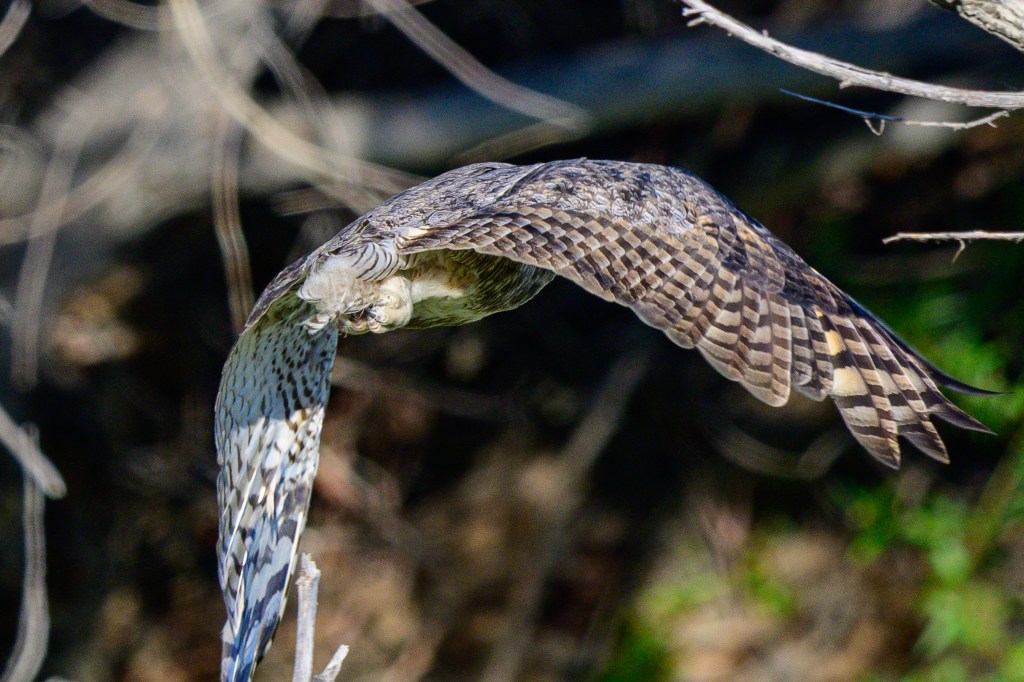
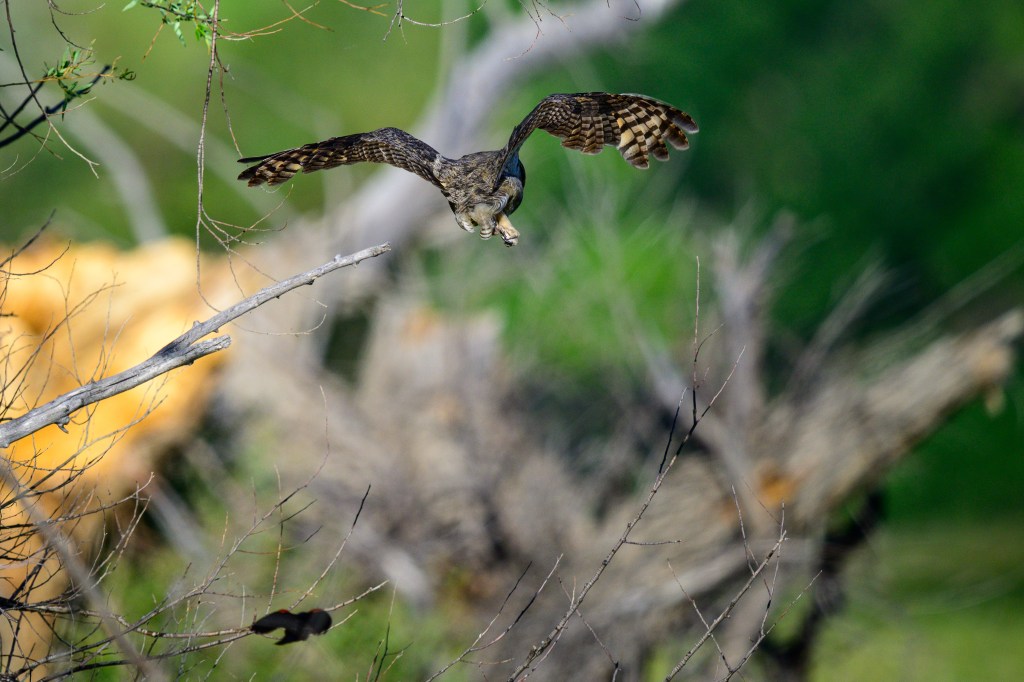
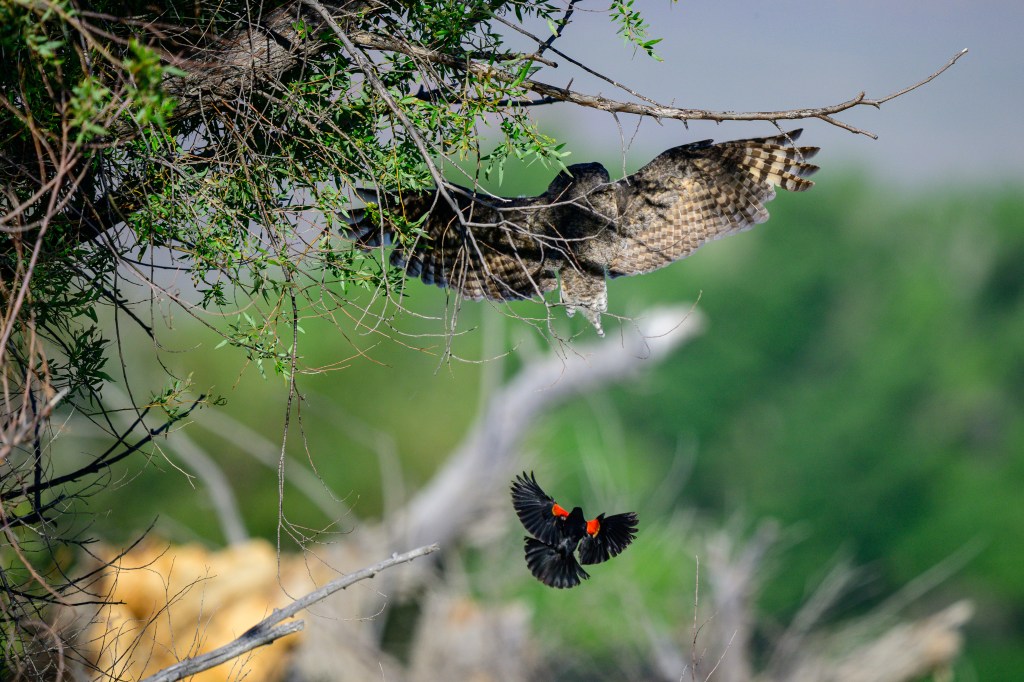
One morning we saw a Great Horned Owl. It soon flew off. I thought it was avoiding us, but the pictures revealed the owl was escaping from a Red-shouldered Blackbird. Amazes me how a small songbird is so ready to confront a heavy-weight raptor.
BUCKLEY PONDS
The Ponds are located a couple of miles east of Bishop; we can drive there in 15 minutes.
Walking at the Ponds in the early morning is a treat, even if there are no birds. From this location you get great views of the mountains.
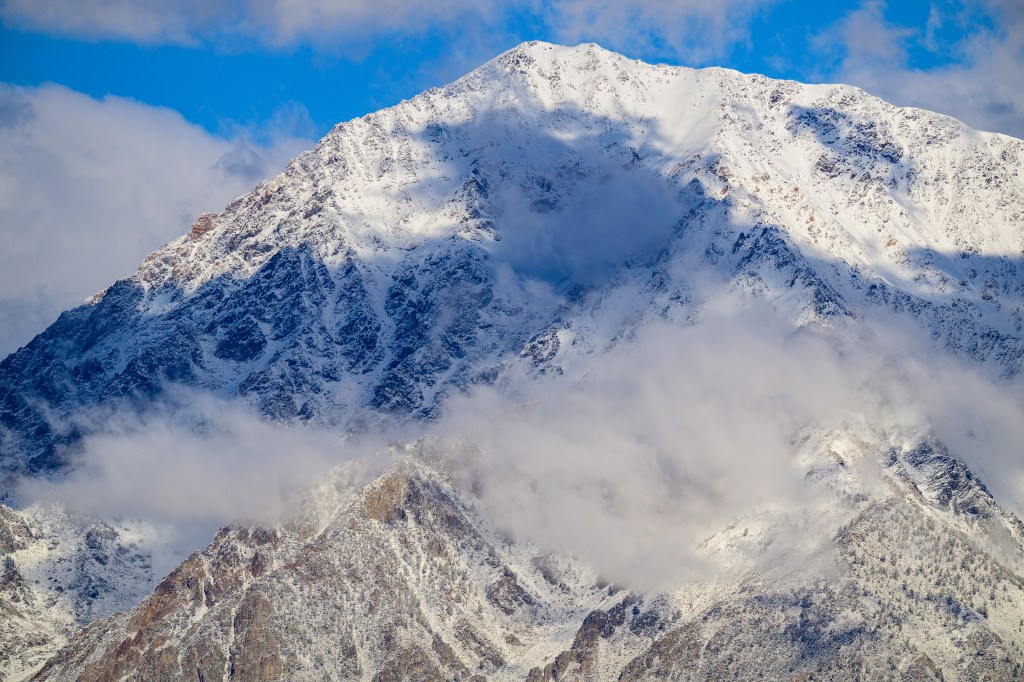
Clouds drift below the Piute Crags and Mount Emerson.
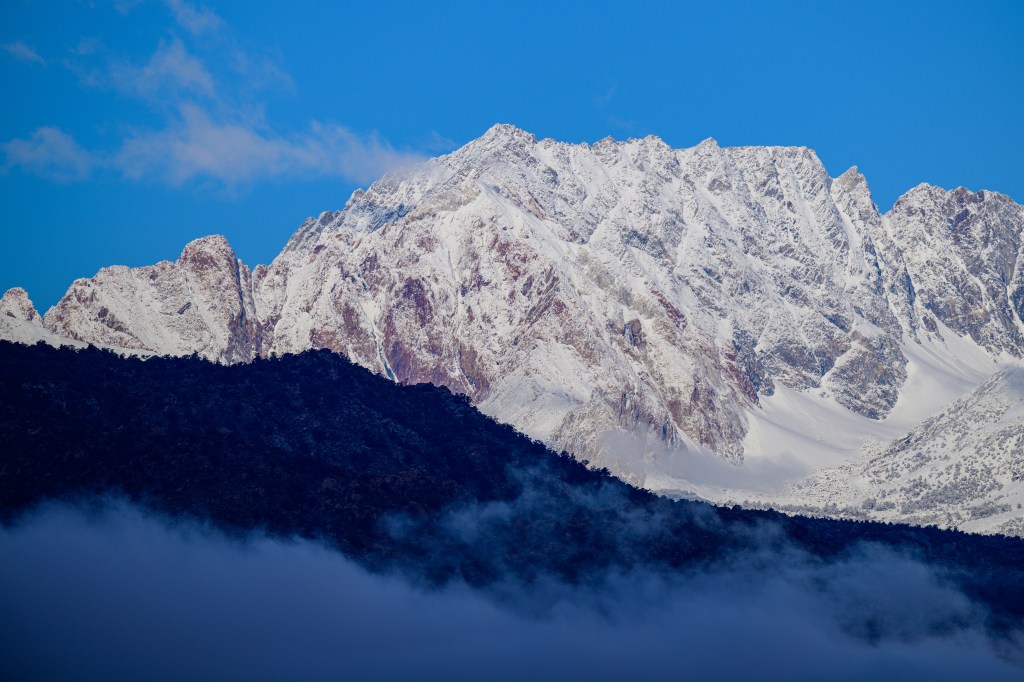
Mount Tom looks impressive with fresh snow.
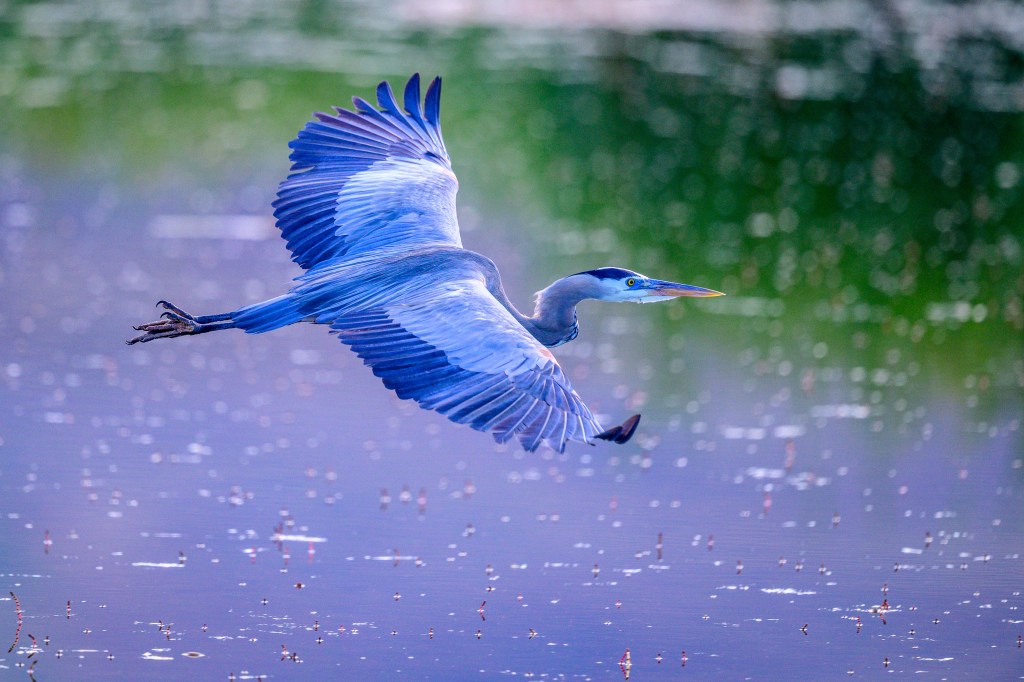
Great Blue Herons are often here.
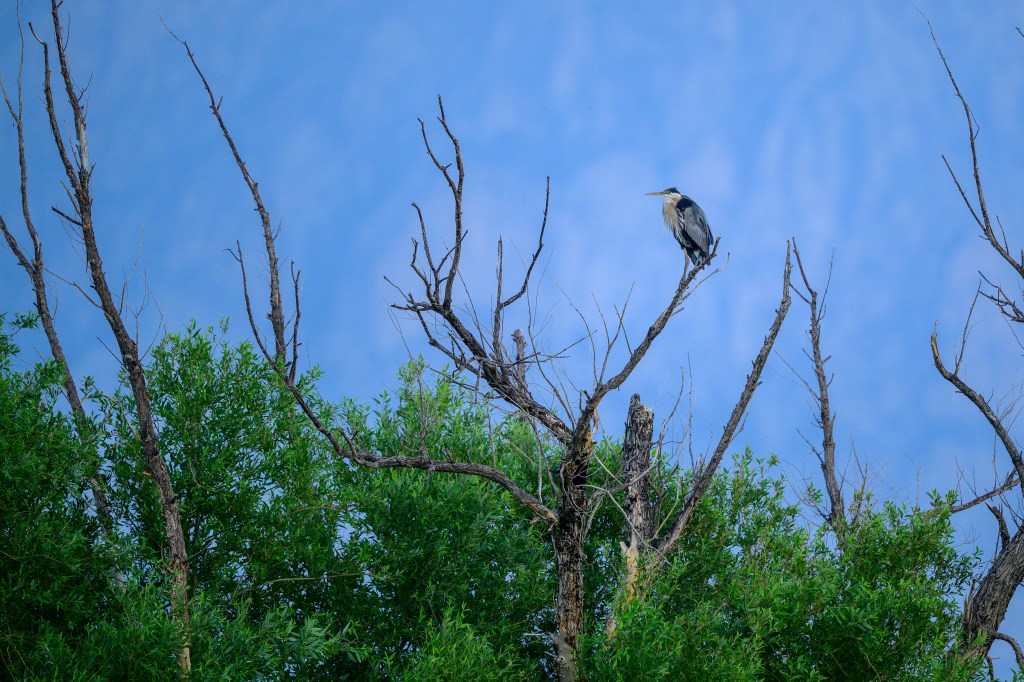
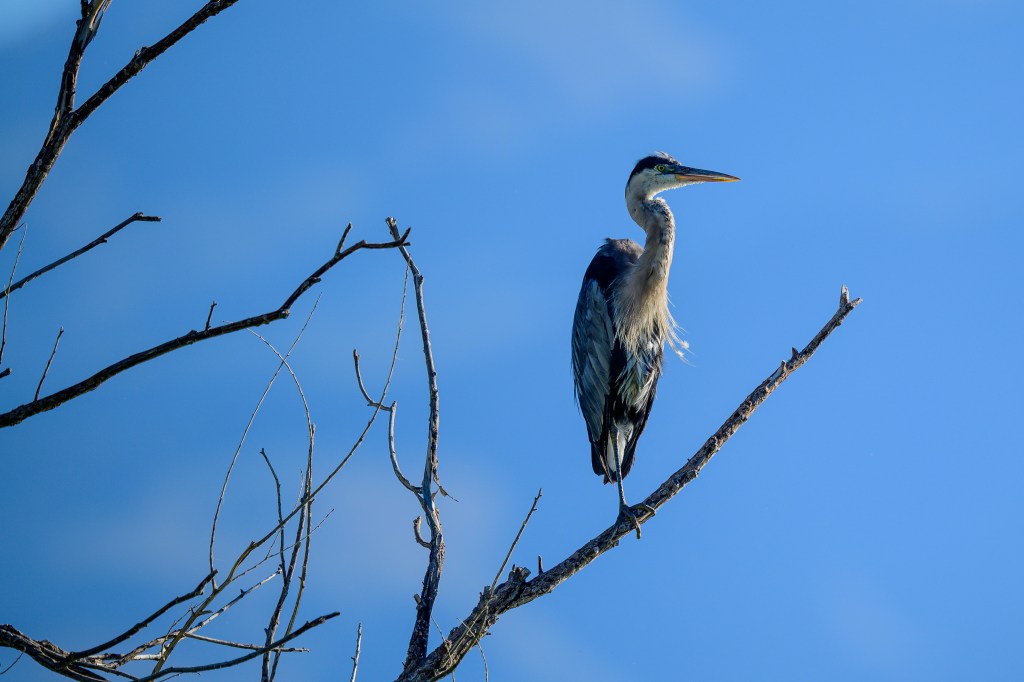
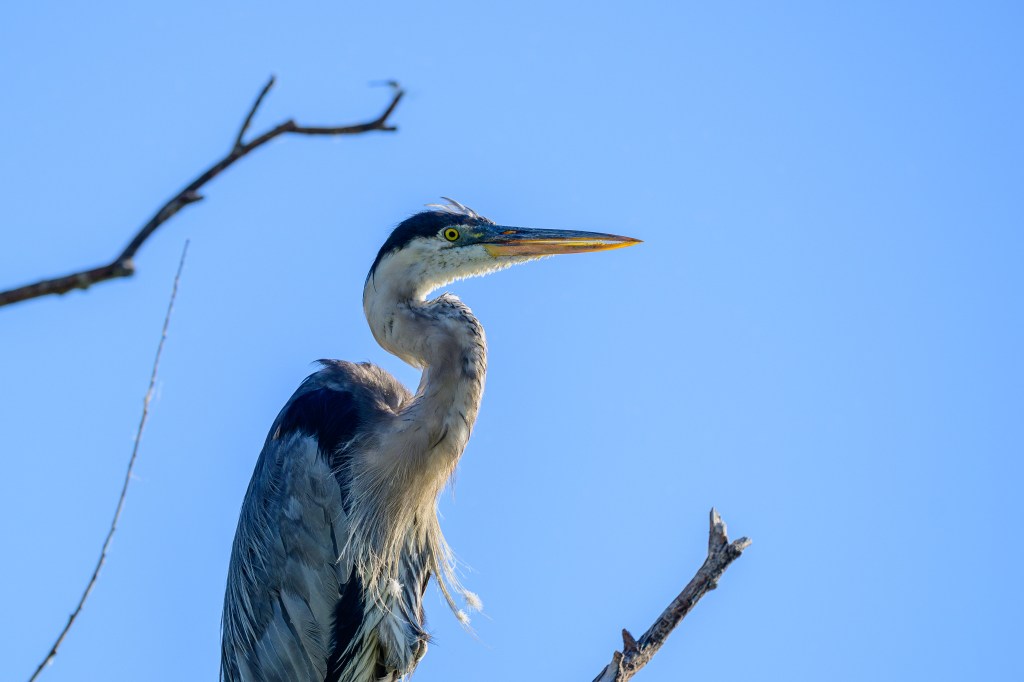
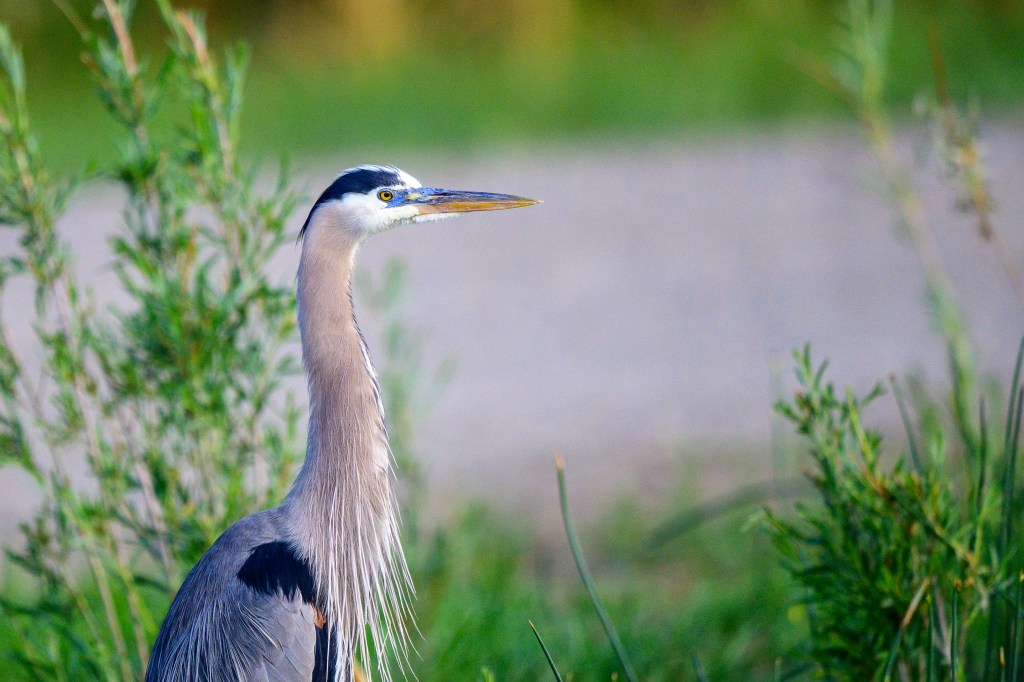
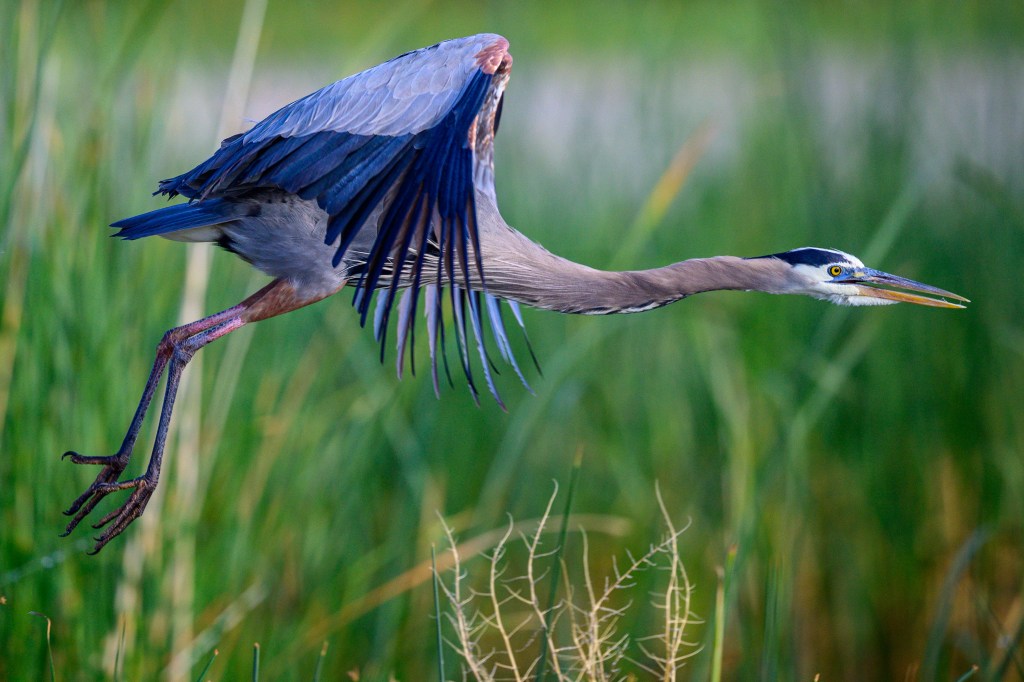
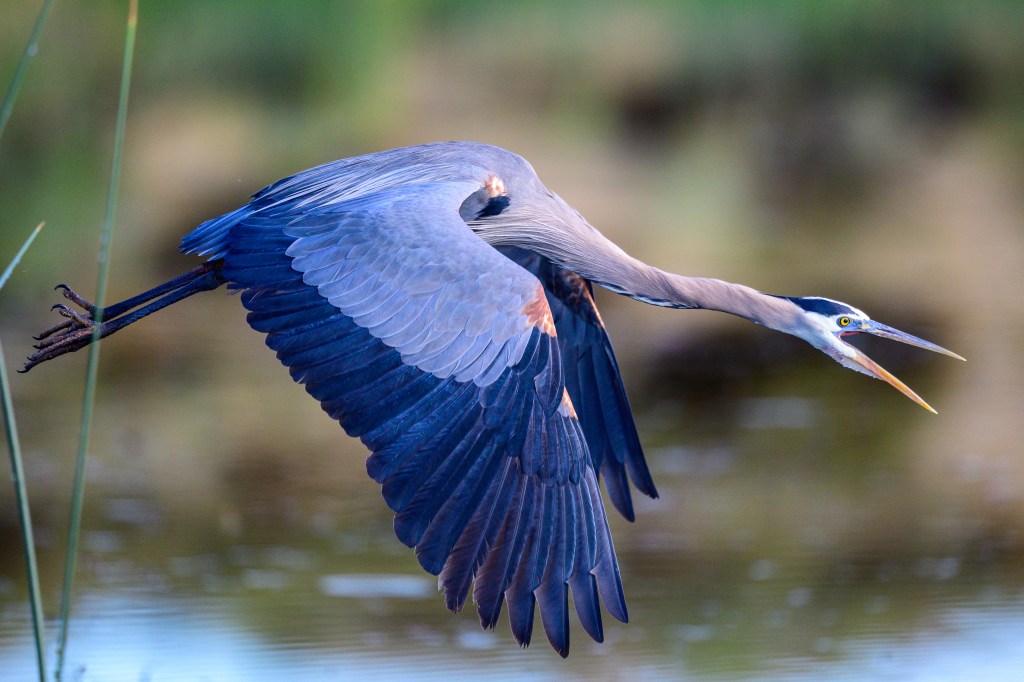
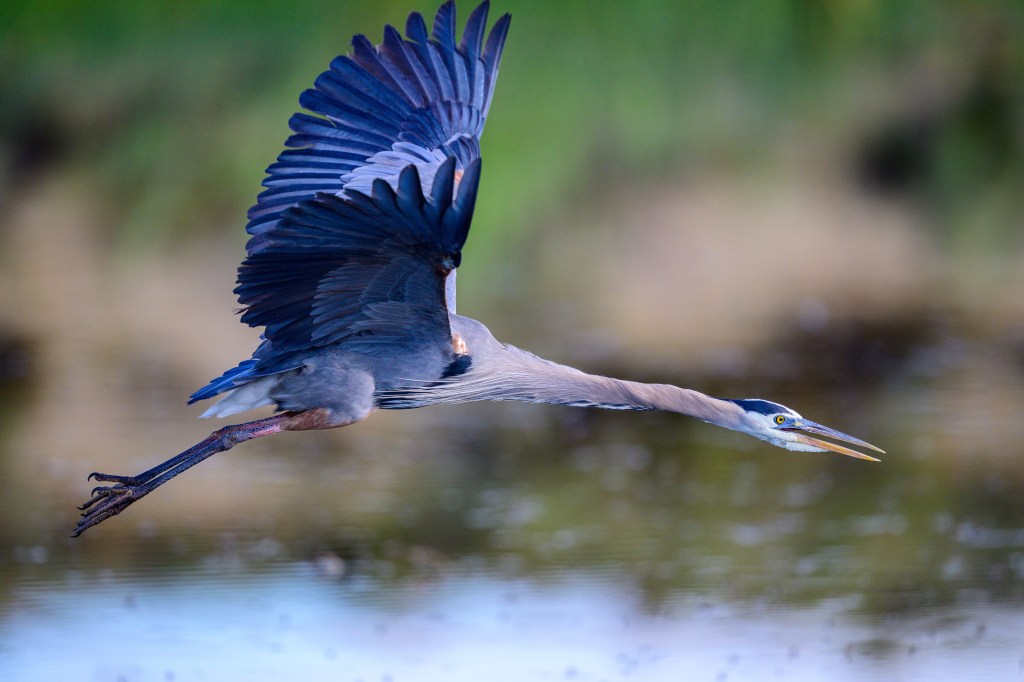
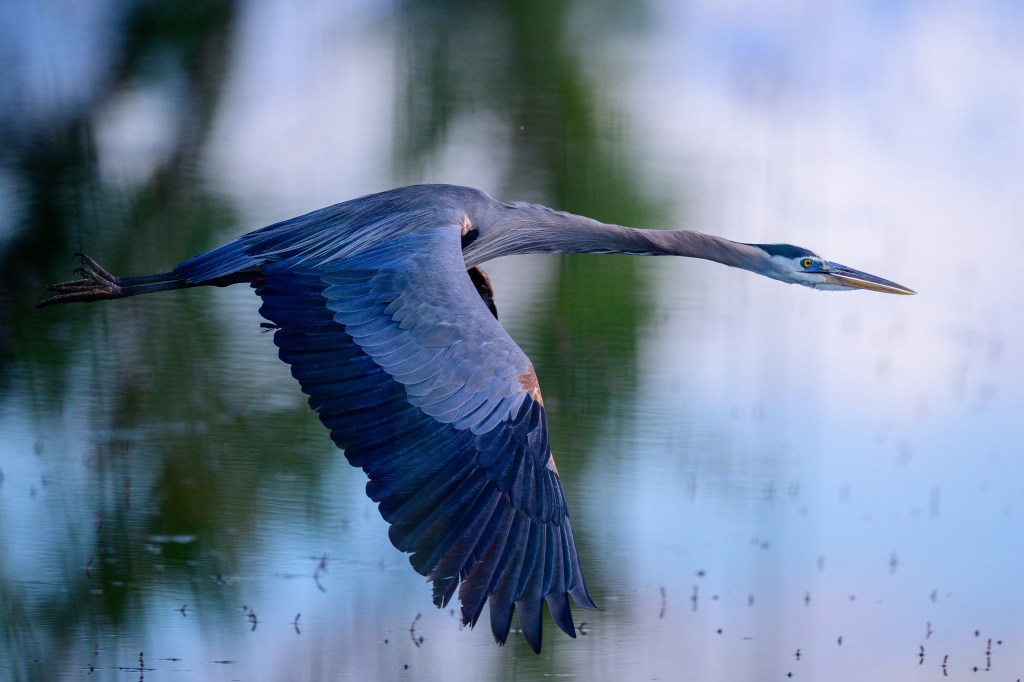
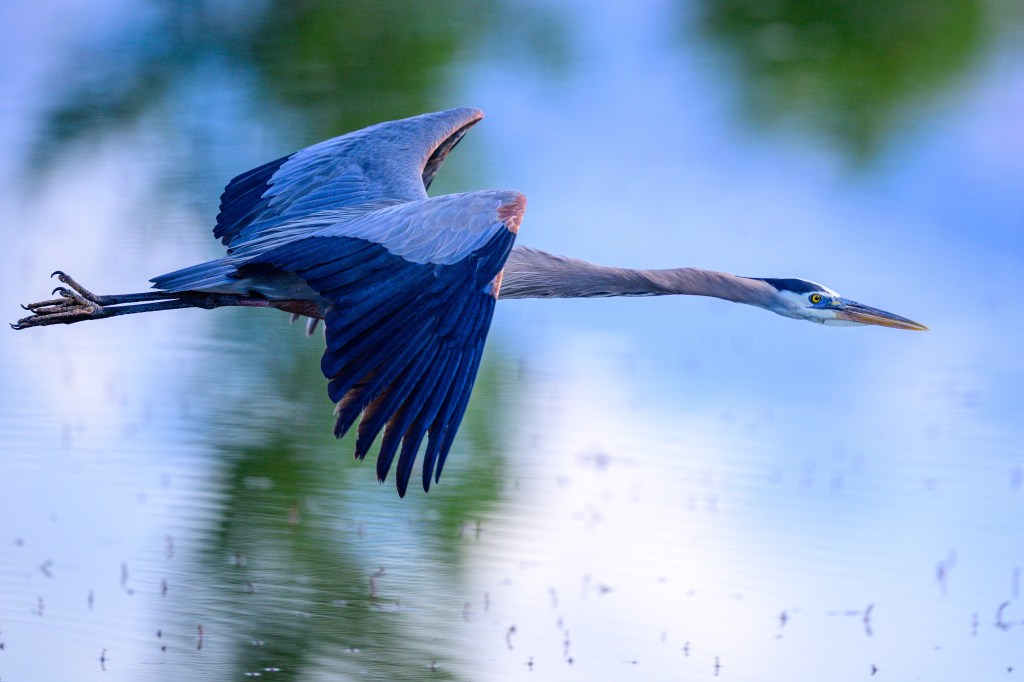
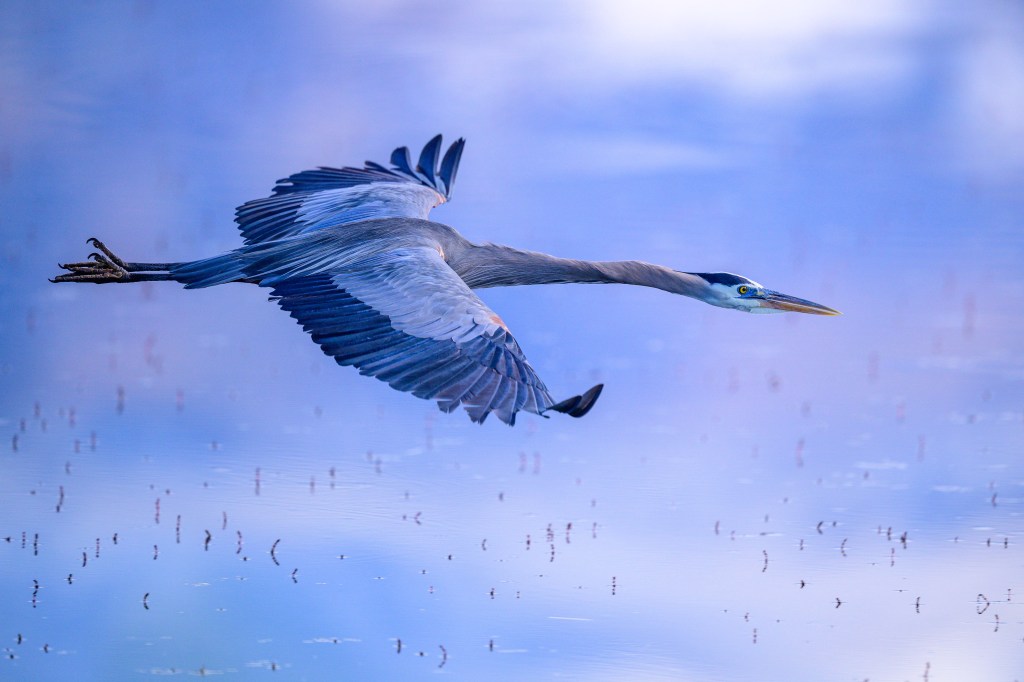
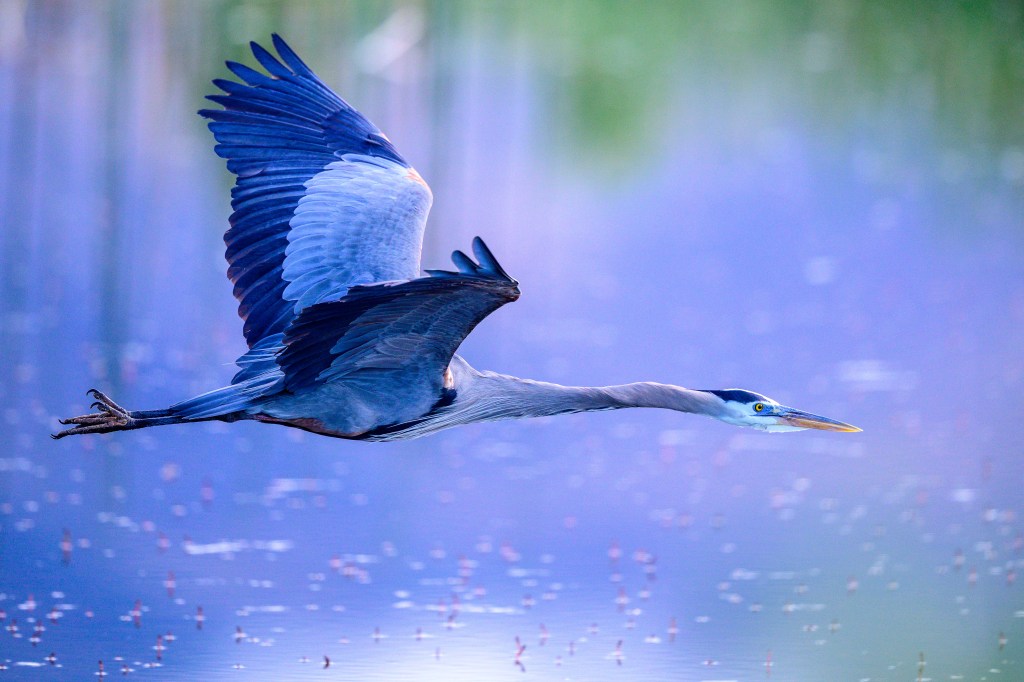
The first bird I photographed in flight was a Great Blue Heron in 2020. I was thrilled that I could keep a flying bird centered in the eyepiece. Photographing birds in the air became a goal and over the years I have had a lot of practice. Herons are relatively easy to capture: a big target flying smoothly in one direction. The camera will keep focusing as I swivel my body to keep up, taking 12 pictures per second. Some birds fly directly away from me, showing only their butts. Herons, however, often fly past me, making them better targets. I have hundreds of images of Herons in the air, but the ten pictures that follow are some of the best I have ever captured. The first photo shows the bird at rest. I then prepared myself for the take-off. Everything came together in six seconds of photographic excitement; sharp focus, good lighting, interesting background. You can see the position of the neck during flight: initially straight, finally curved. The pictures also show the initial outraged croak, followed by silence.
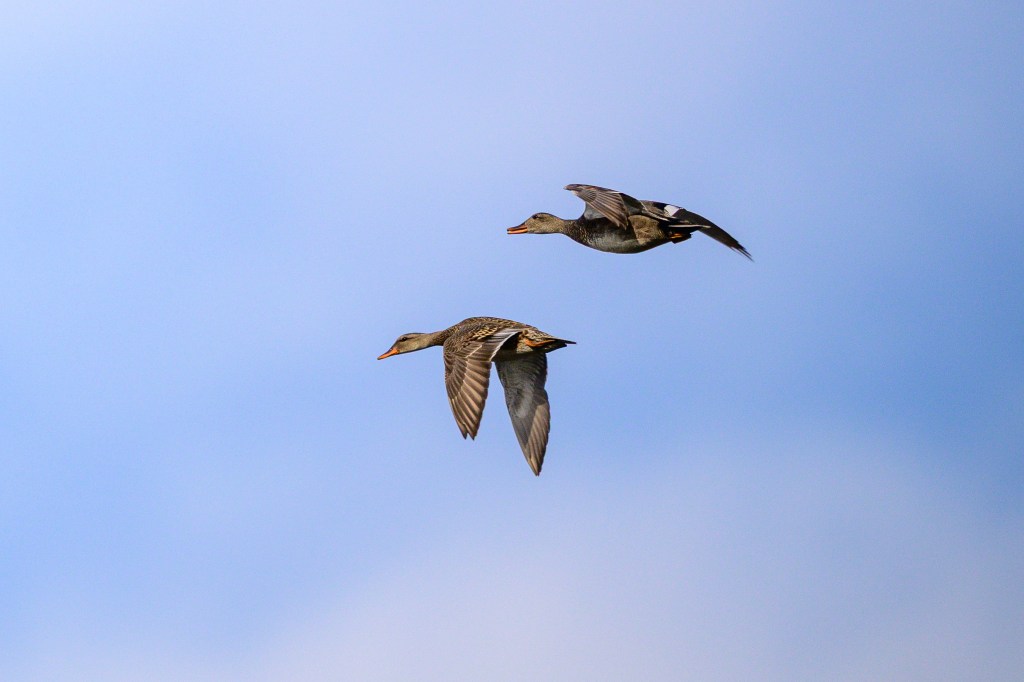
Gadwalls in flight.
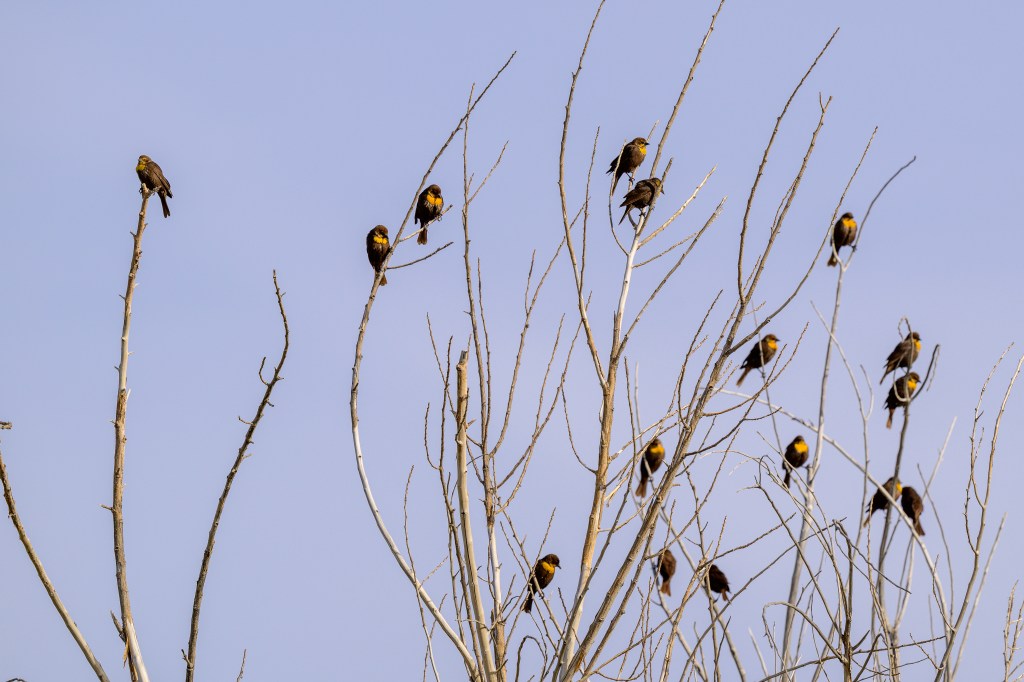
A flock of Yellow-headed Blackbirds.
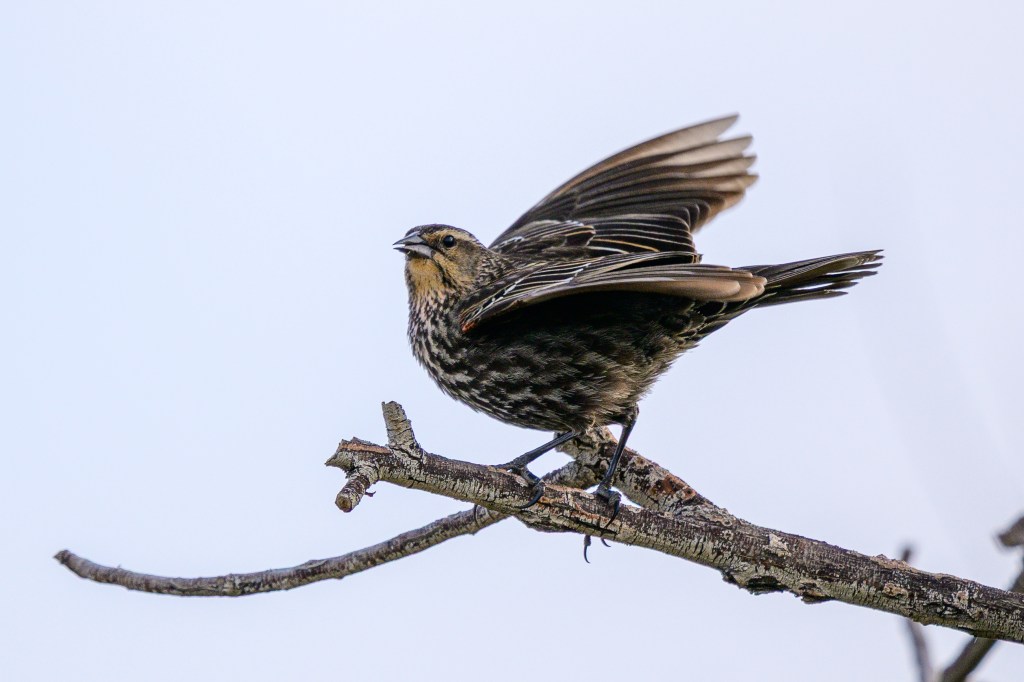
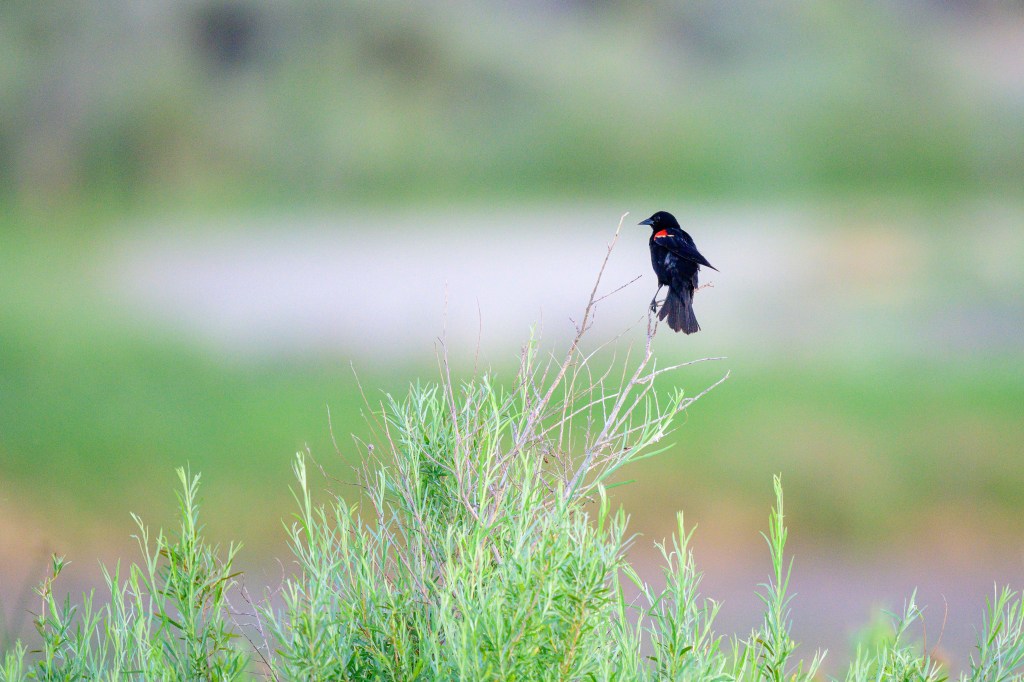
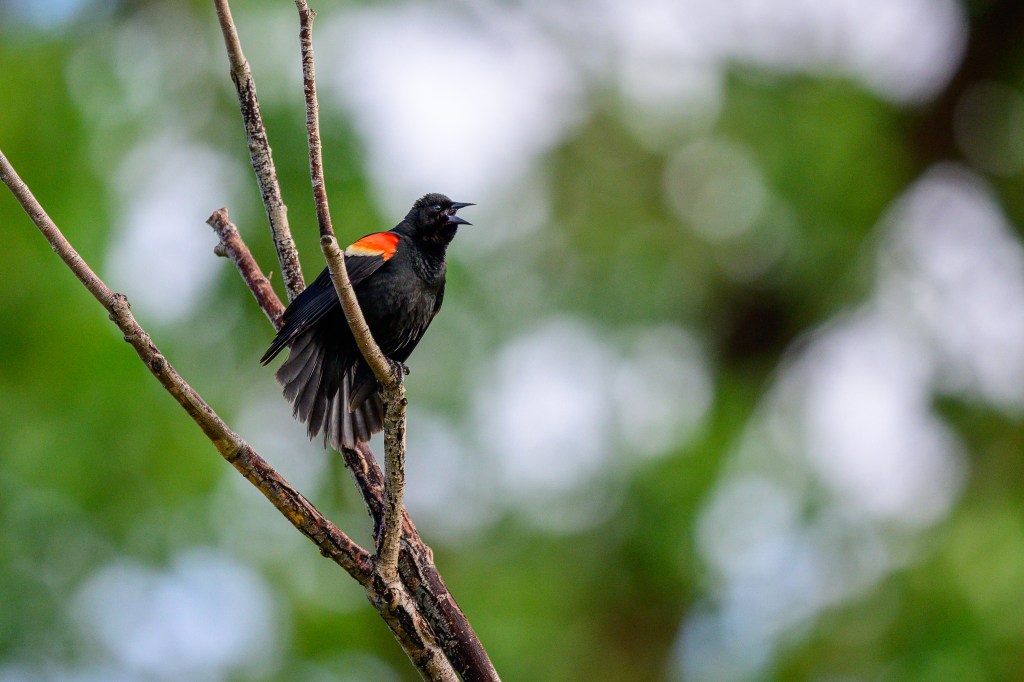
From late February to June, Red-winged Blackbirds surround the Ponds. Their song has a warbling trill that initially excites me; Spring is here! By June, I gripe that they need to button it. The first picture shows the intricate color pattern of a female. The last photo shows the energetic bellowing of a male.
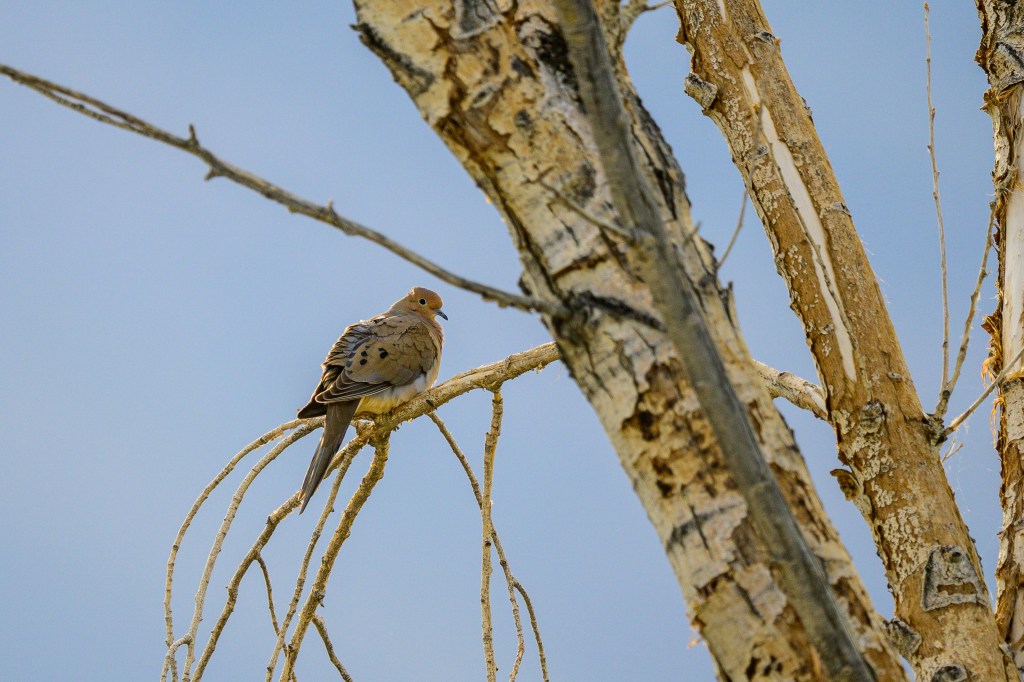
Mourning Doves have a blue eye ring, soft brown color, black spots on the wing, pointed tail. For years I thought these were Morning Doves and their soft cooing was celebrating the new day. I later realized that the correct name had a “u” and their calls were lamentations. By omitting one letter, I mistook grief for joy.
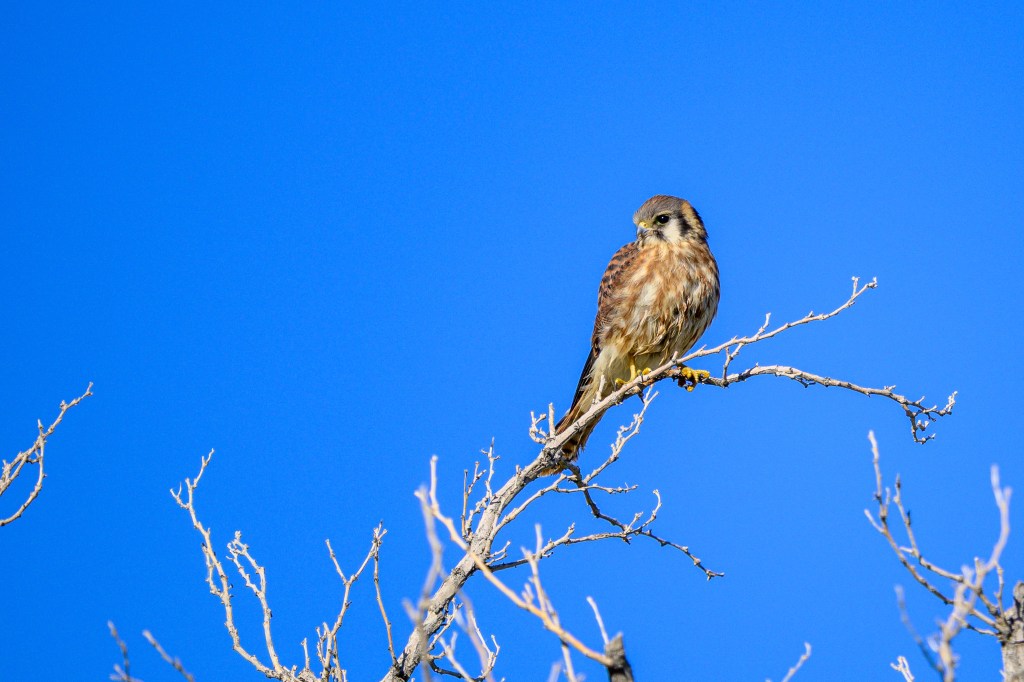
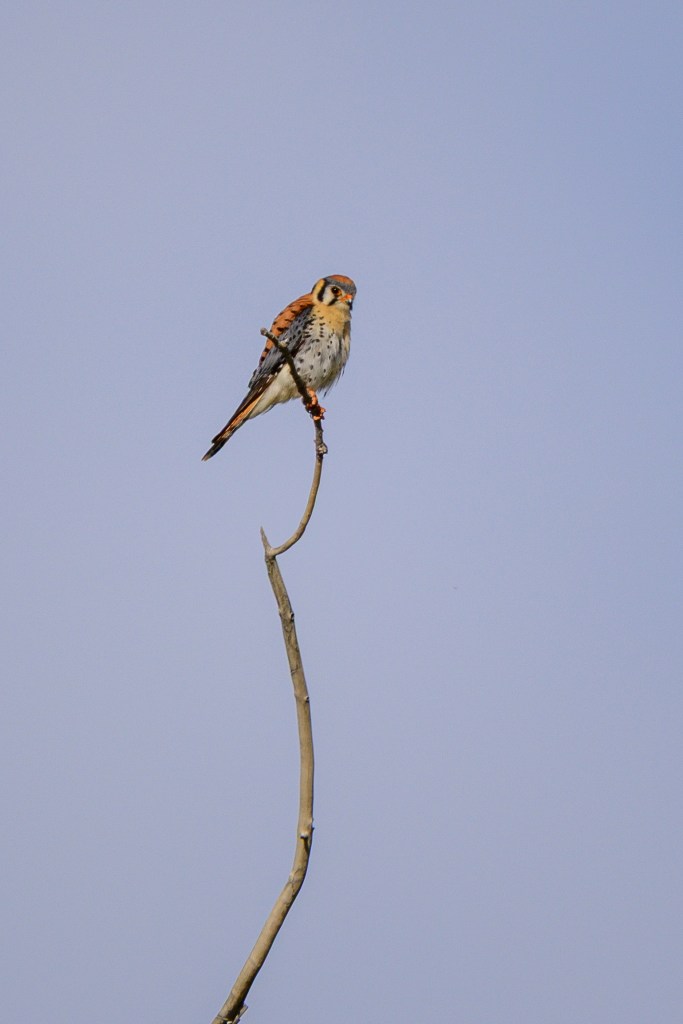
American Kestrels love to perch near the Ponds. The first photo shows a female, the second a male.
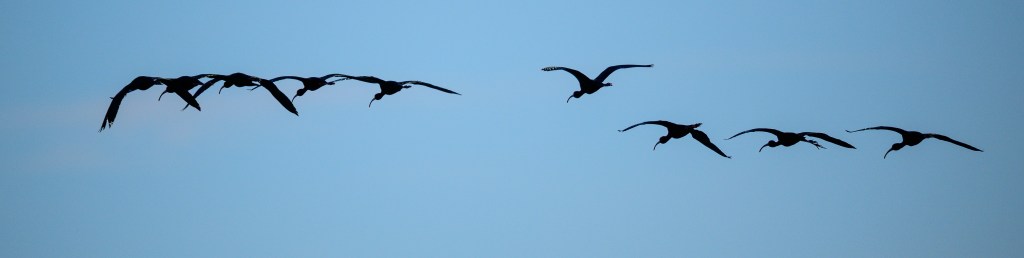
Flocks of White-faced Ibis often cruise above the ponds just before the sun comes up. Where did they spend the night? Where are they going so early?
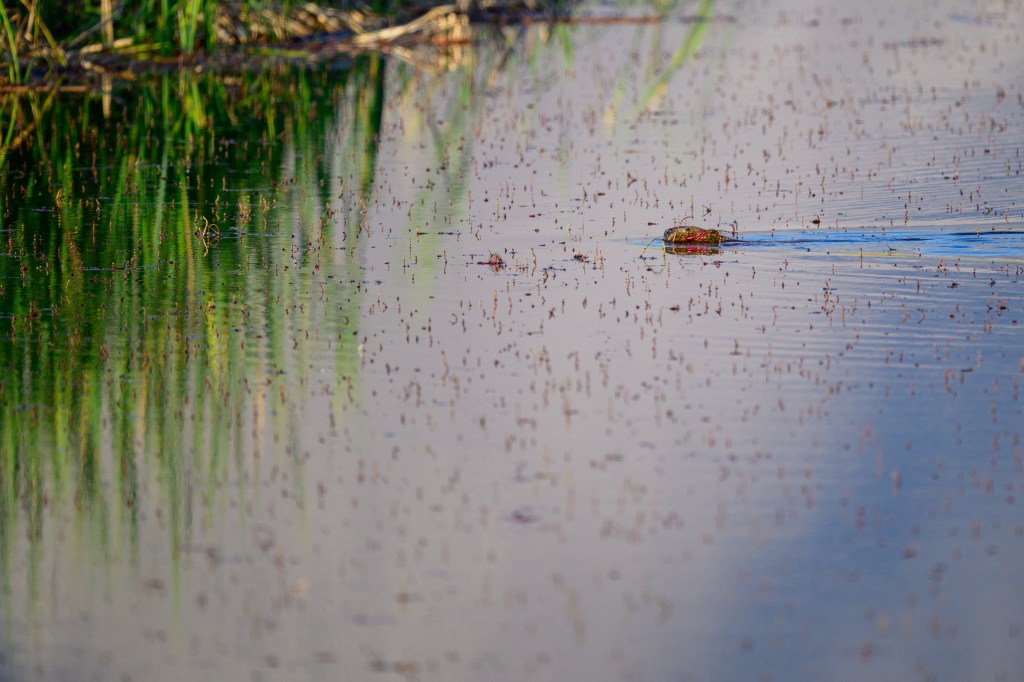
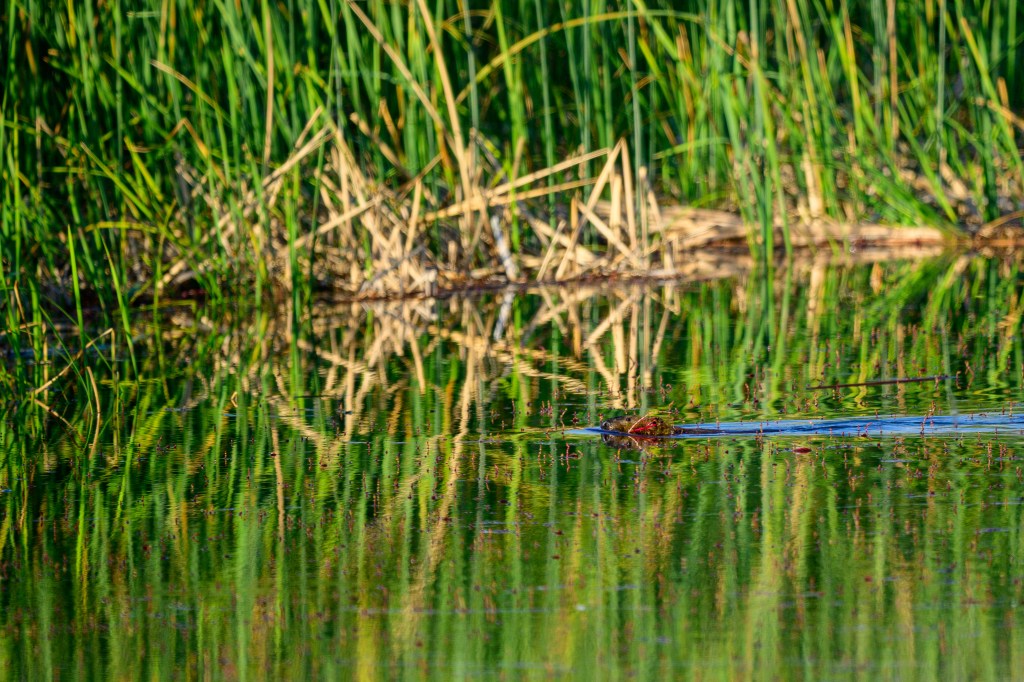
Every time we walk around the ponds we can see wavy paths on the dirt roads. These are made by beavers dragging their tails as they move from one pond to the next. Always a thrill to see one stick its head above the water.
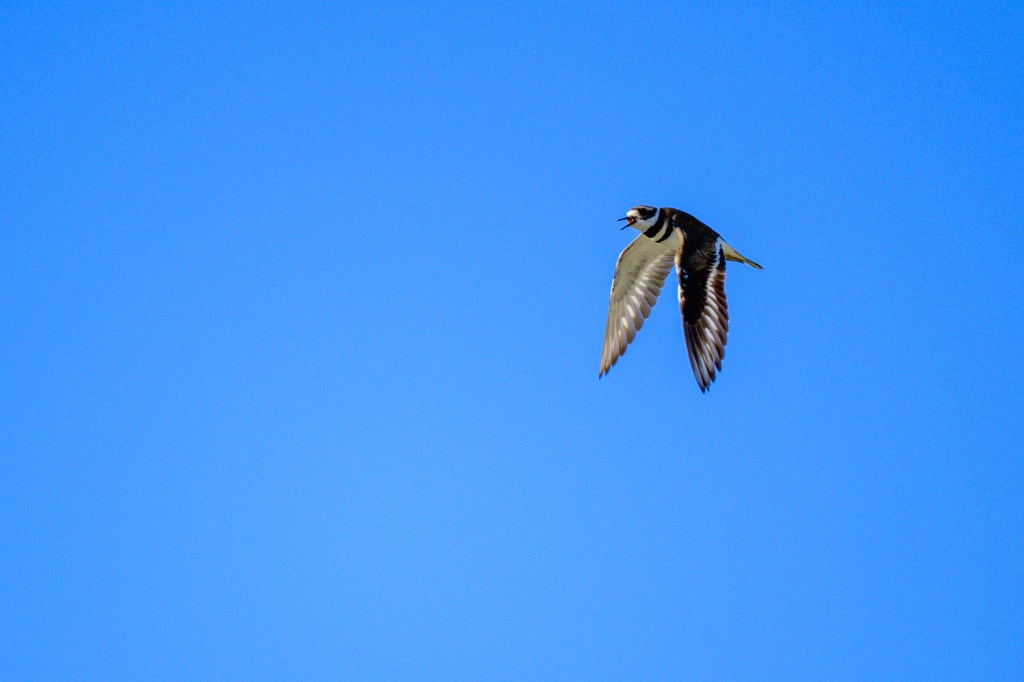
A Killdeer.
A Cliff Swallow zooms above its reflection, but the water surface seems to be invisible.
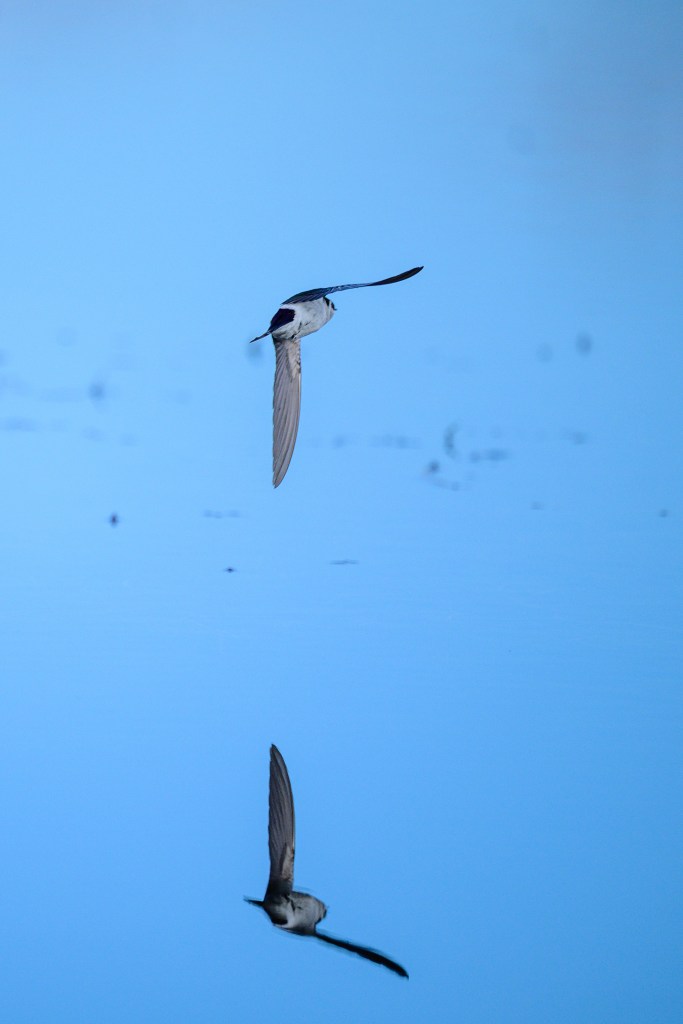
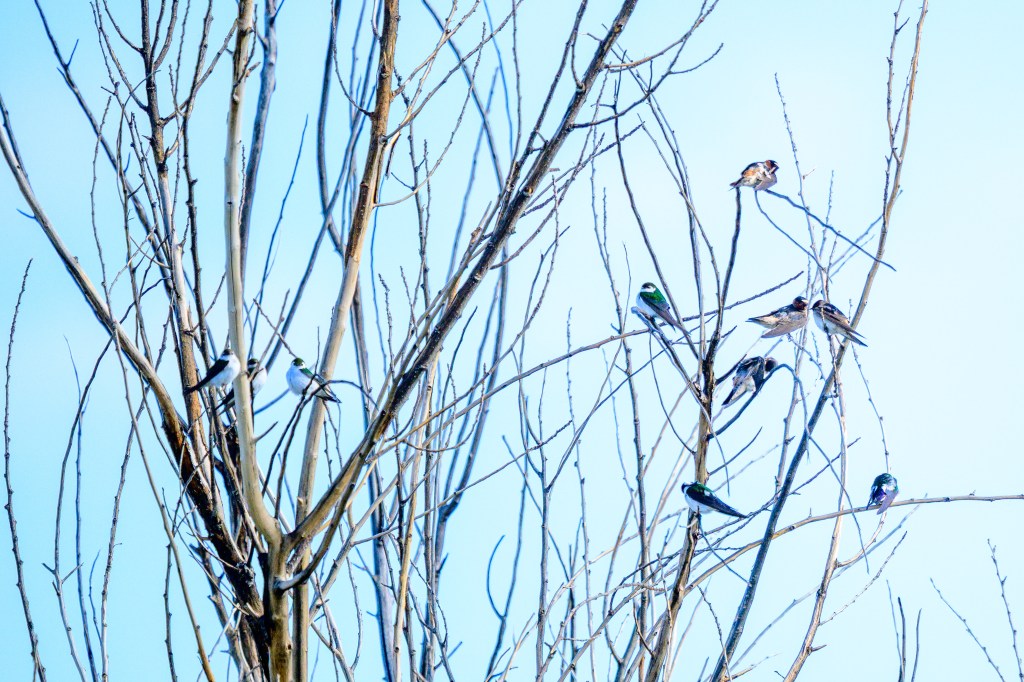
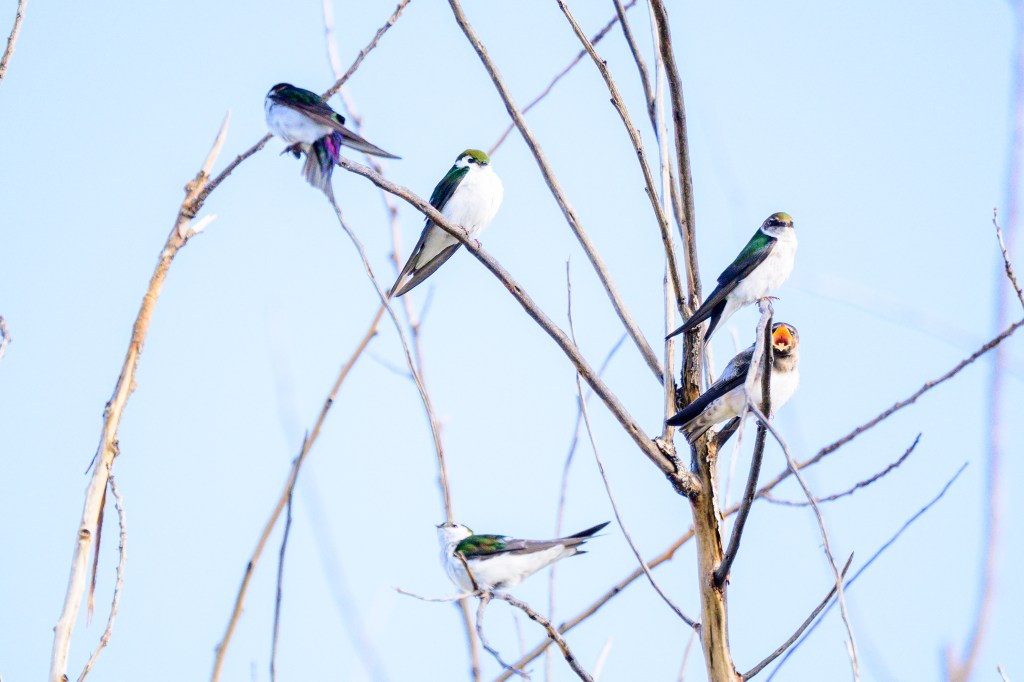
At dawn, swallows dart over the water, snatching insects from the air. Both pictures show Violet-green and Cliff Swallows.
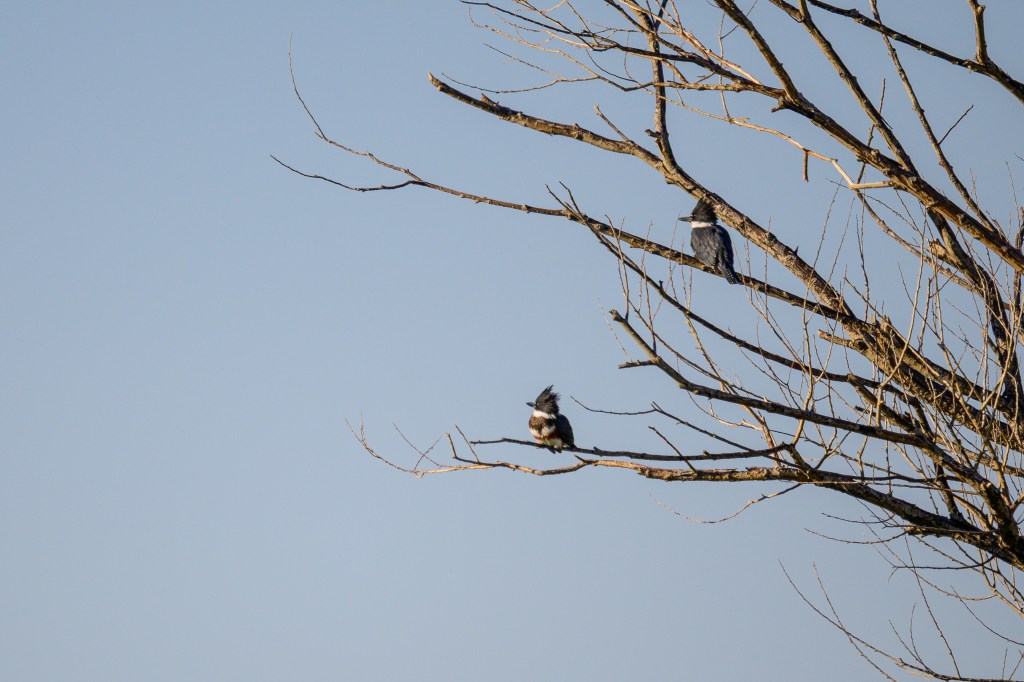
Belted Kingfisher’s are common. I am not good at recognizing bird calls, but the machine-gun chittering of this bird is one I know. I often hear them before I see them. Keith Hansen’s book says, “Unreservedly vocal. Translated, kingfisher’s clamorous rants would not be appropriate for children under eighteen!”
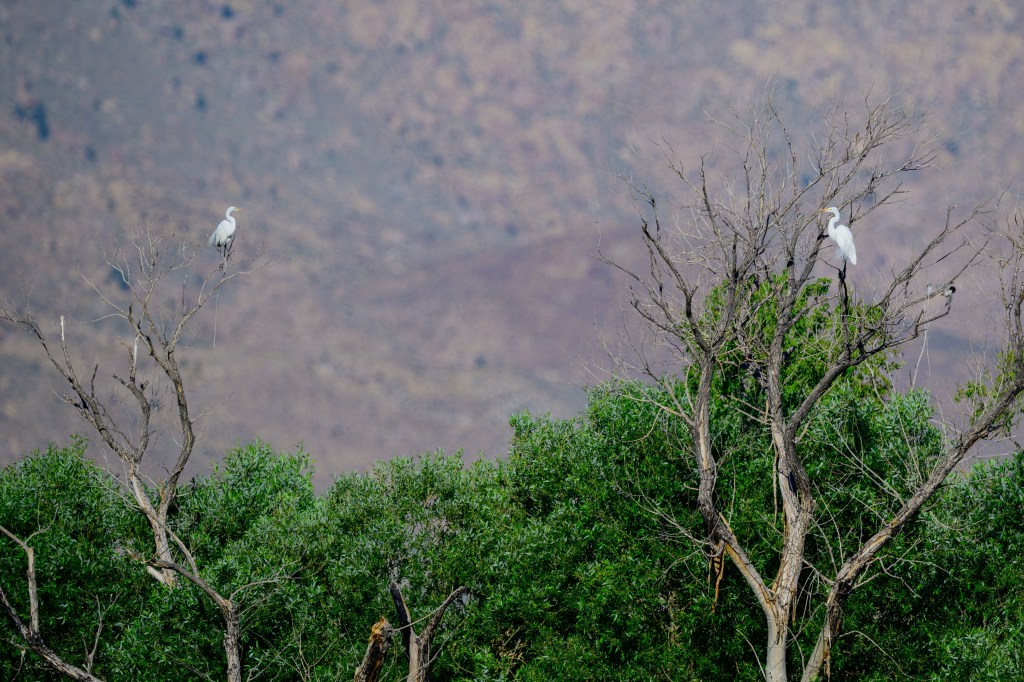
When I see Great Egrets, I think of a tropical jungle.
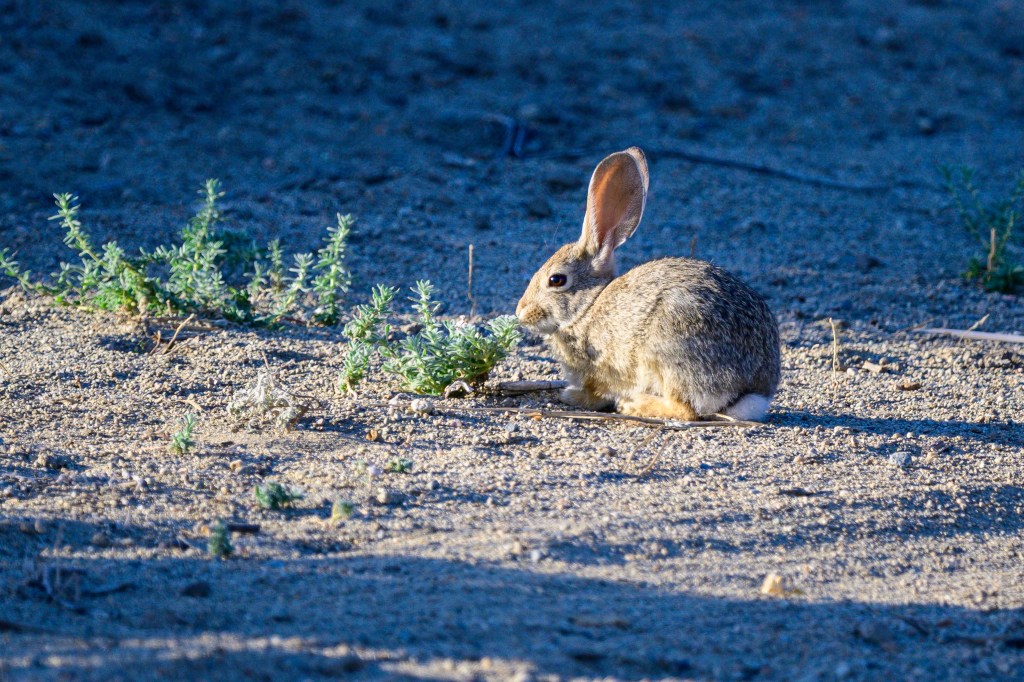
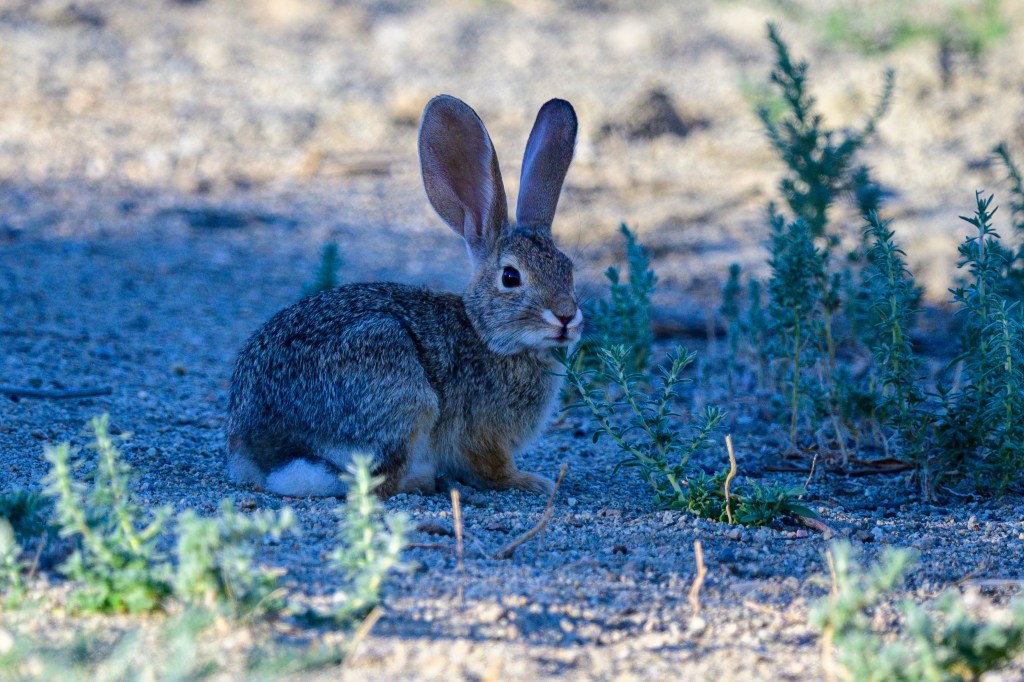
Not birds; Desert Cottontails can be seen on the roads.
WARM SPRINGS ROAD
In this area I usually take pictures from the car. The road is paved and straight, fenced on both sides, lined by meadows, sage brush, and intermittent trees. I drive along with the window open. If I spot a bird I park on the shoulder, have Roberta hand me the camera, and poke the big lens out the window.
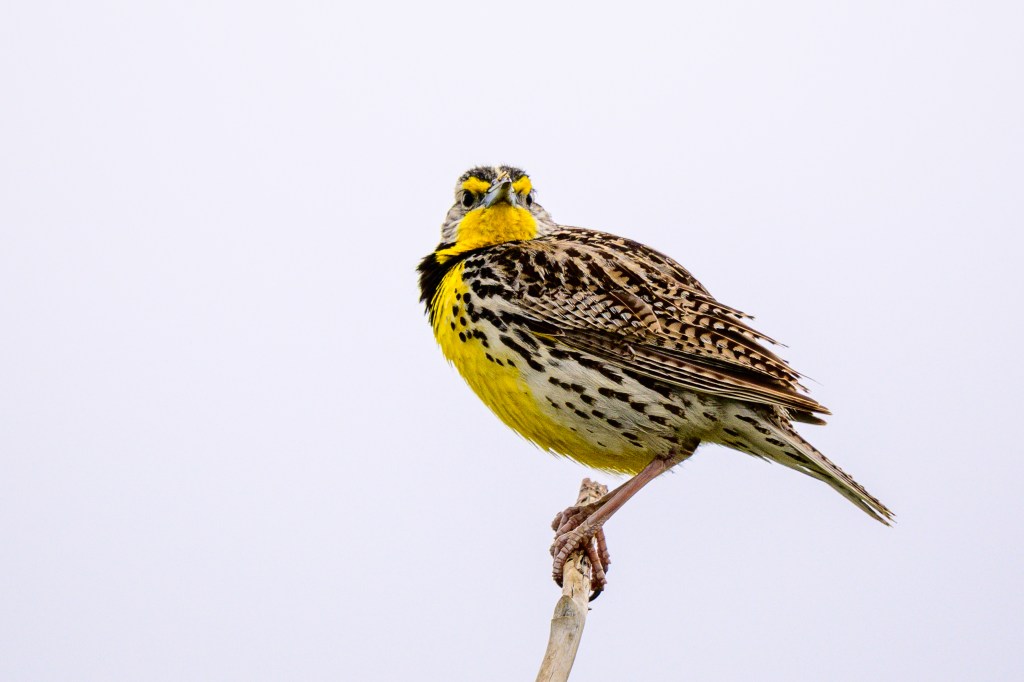
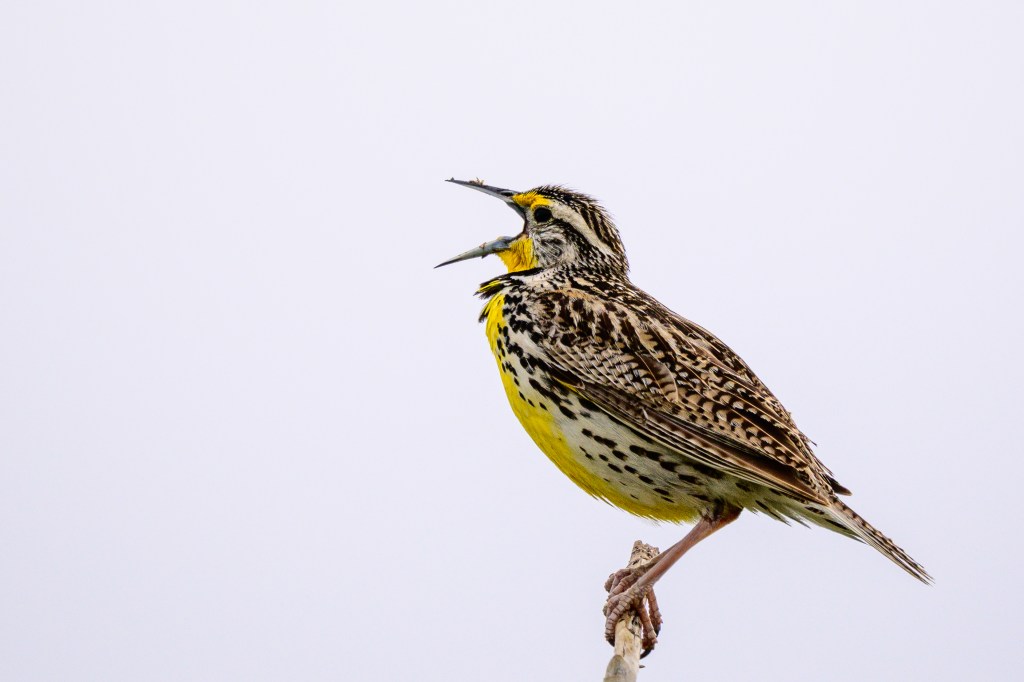
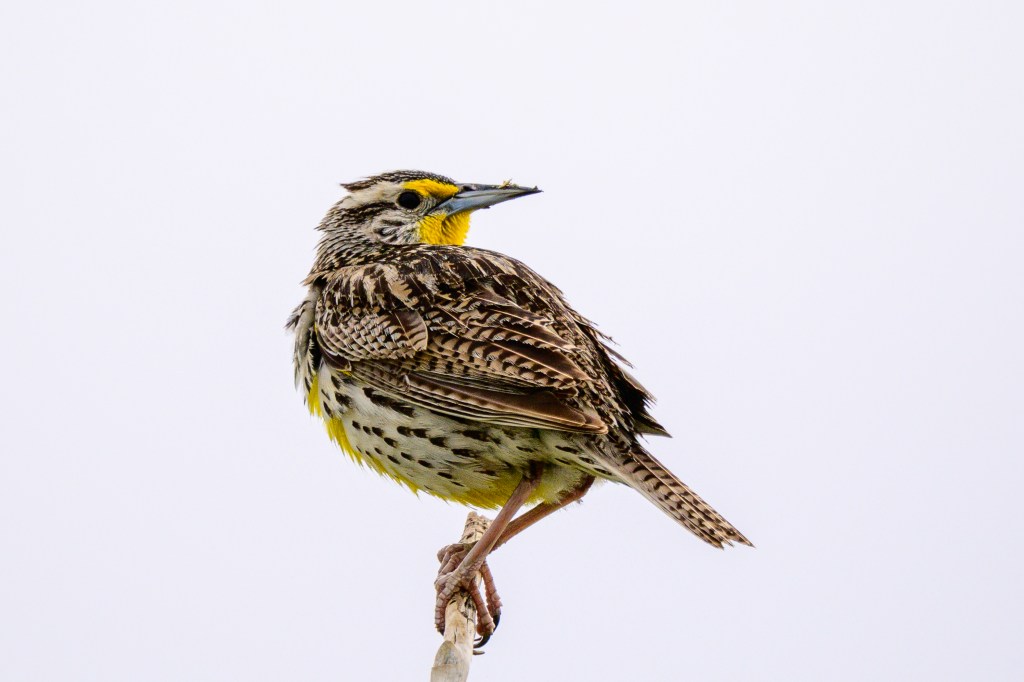
A Western Meadowlark let me get close.
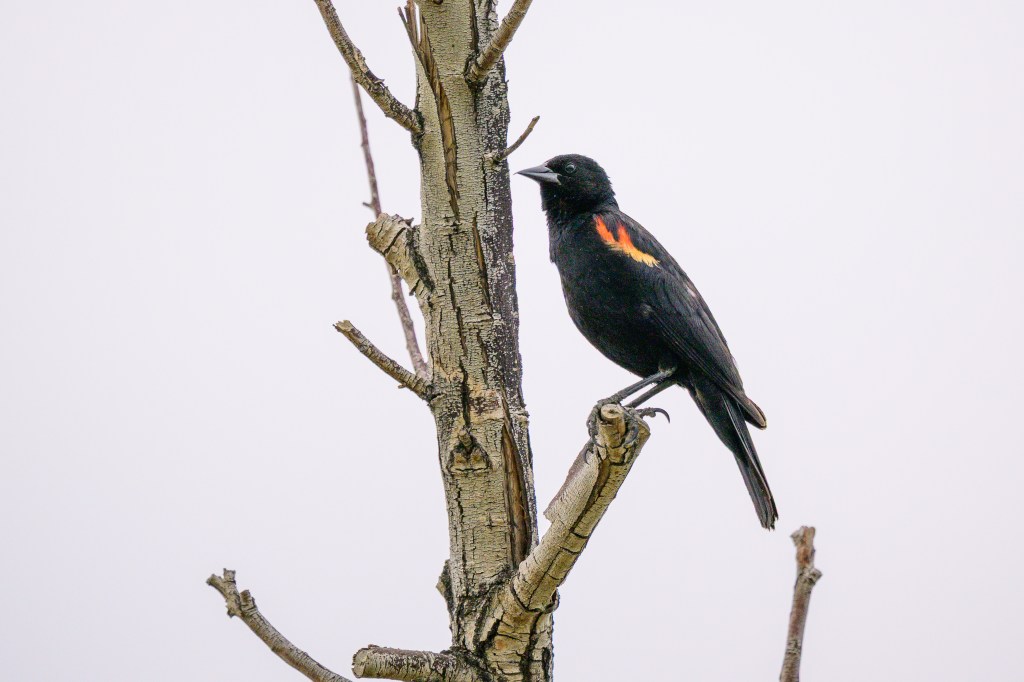
A Red-winged Blackbird shows its colors.
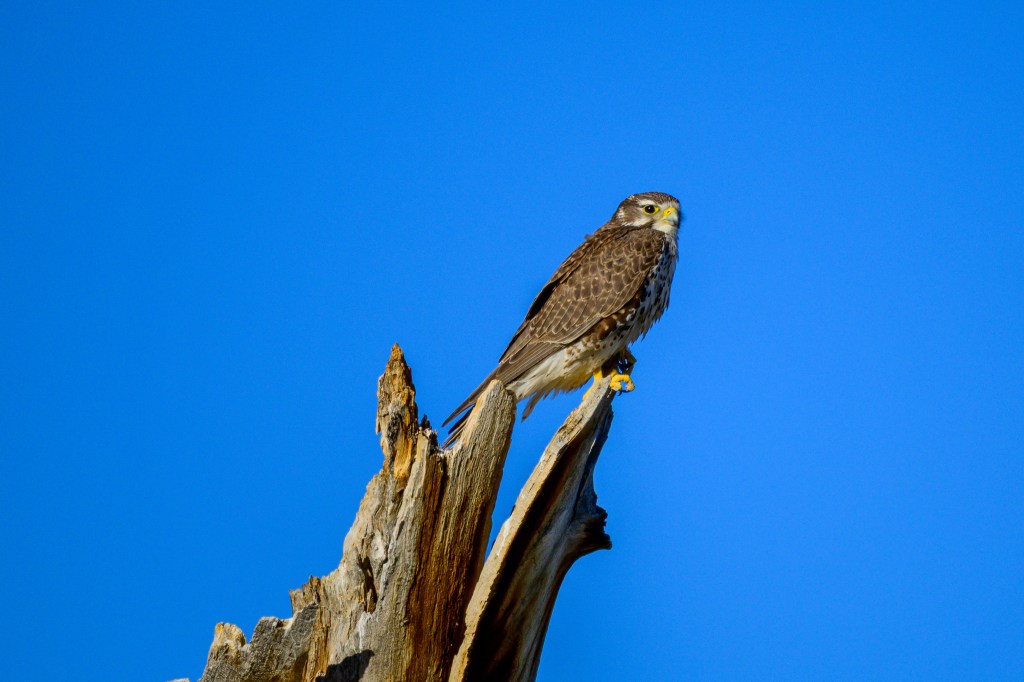
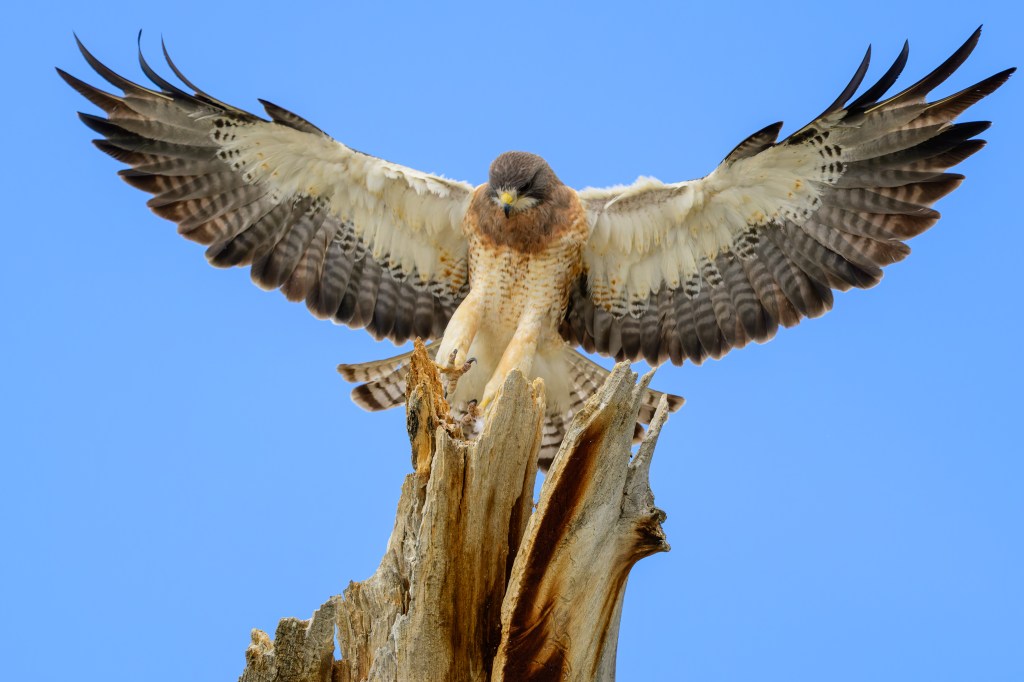
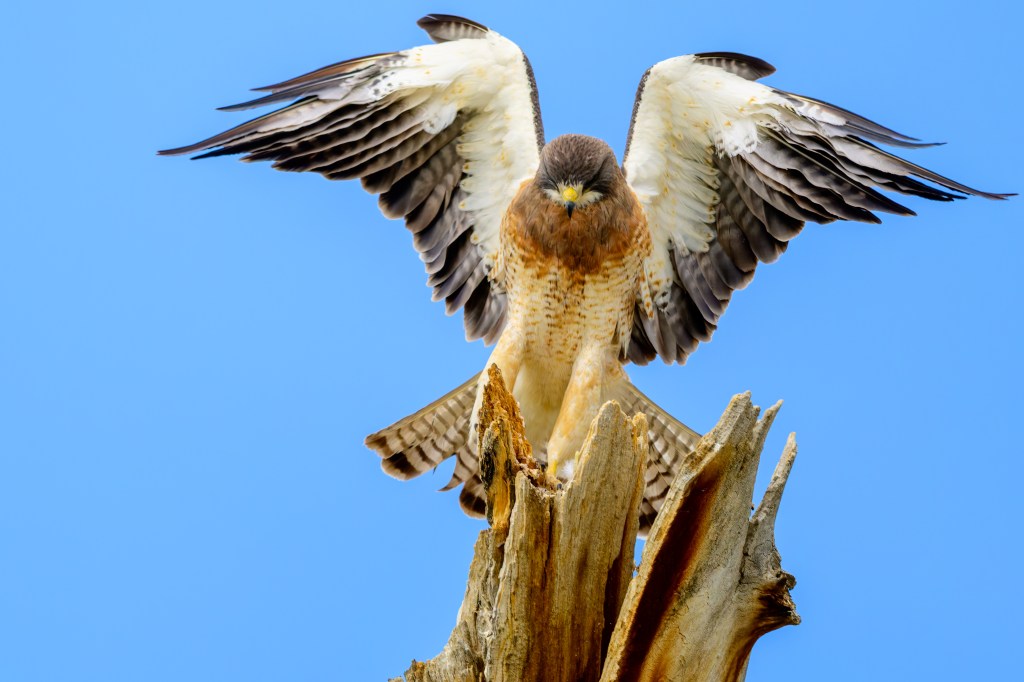
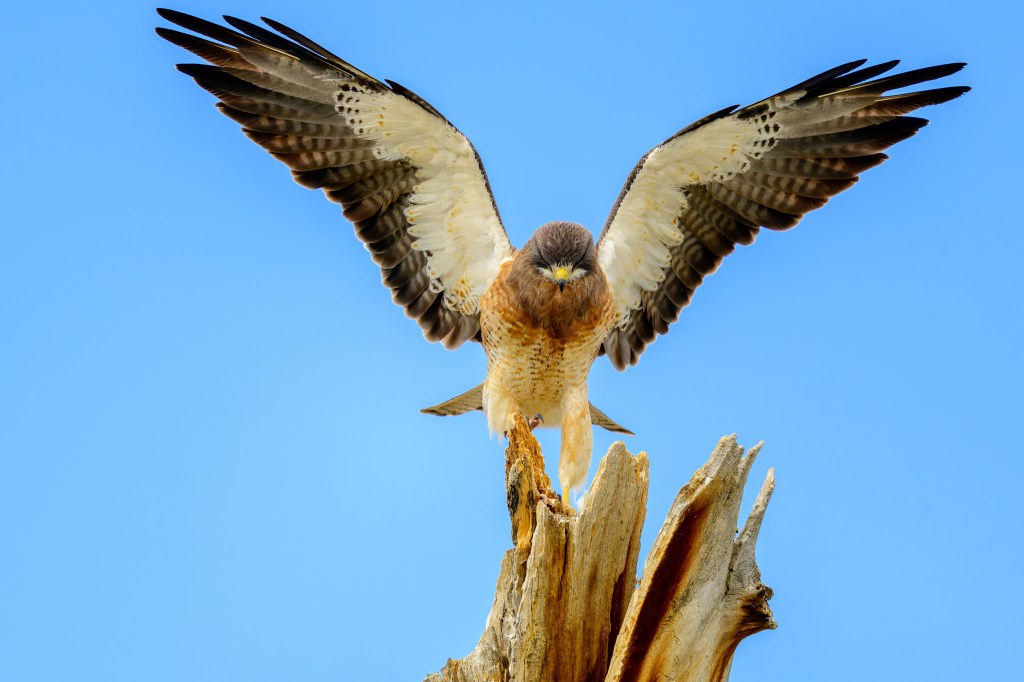
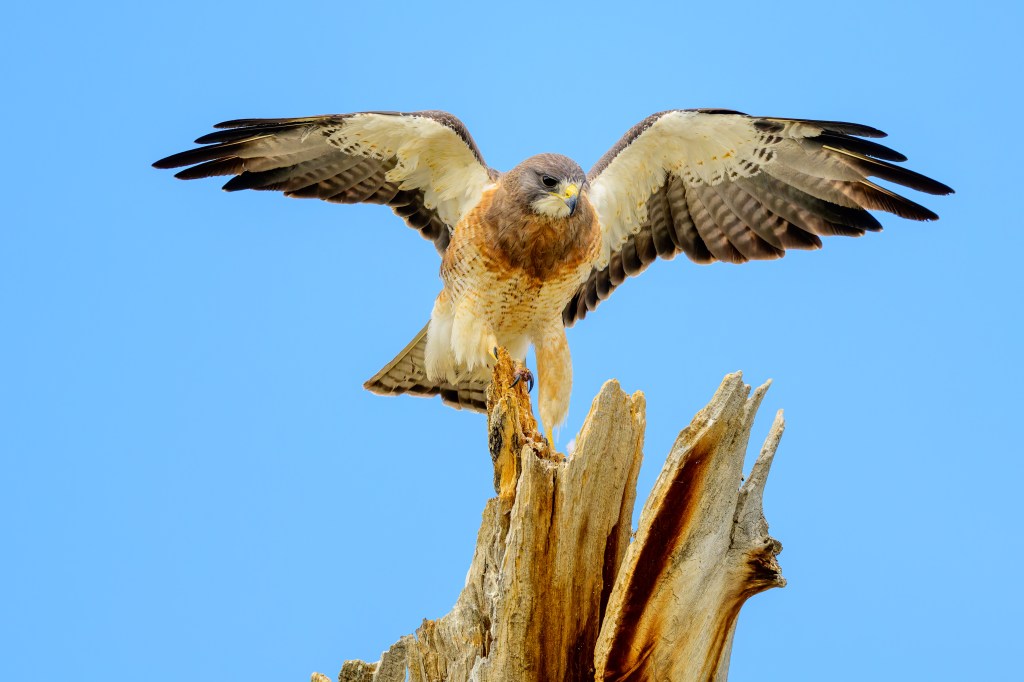
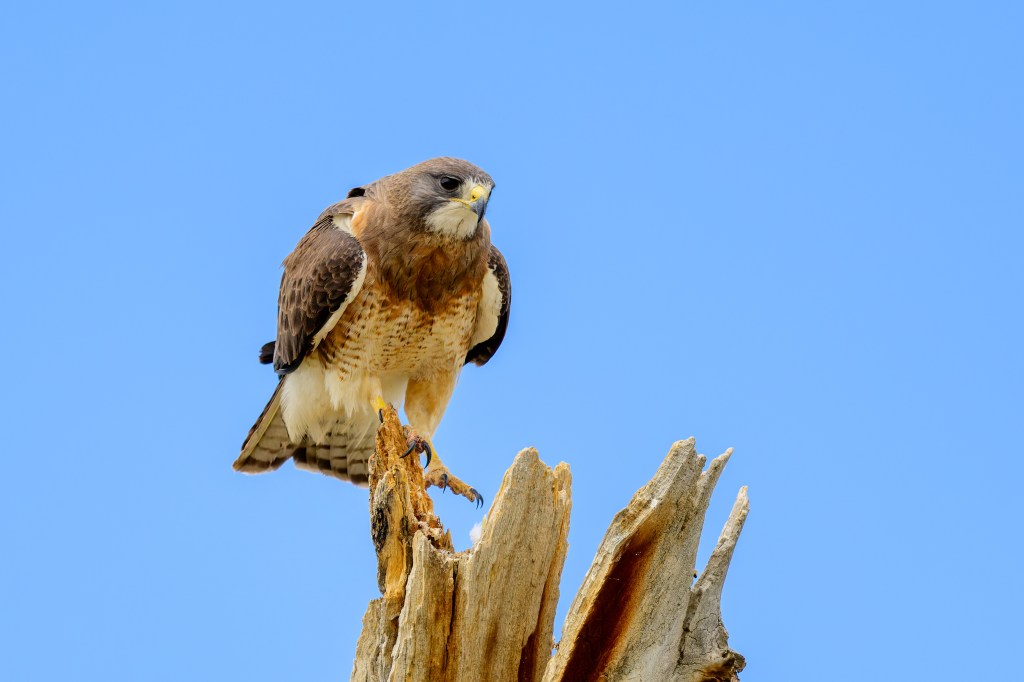
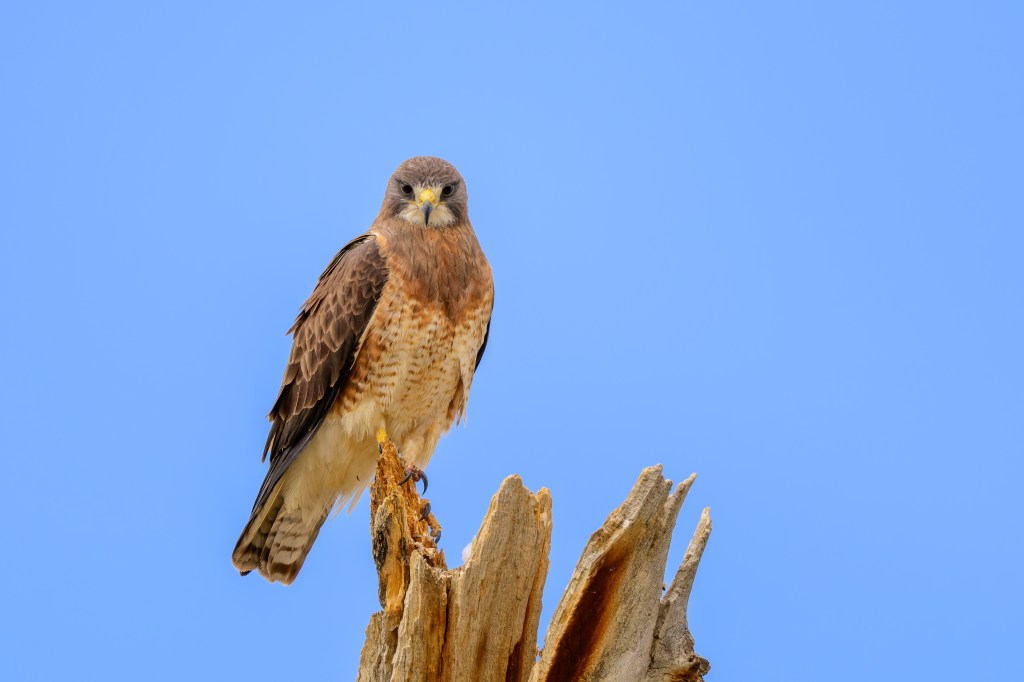
Along the road is a sagebrush flat with a dead cottonwood. The tree broke off about 20 feet above the ground and raptors love to perch on this tower. The first picture shows a Prairie Falcon.
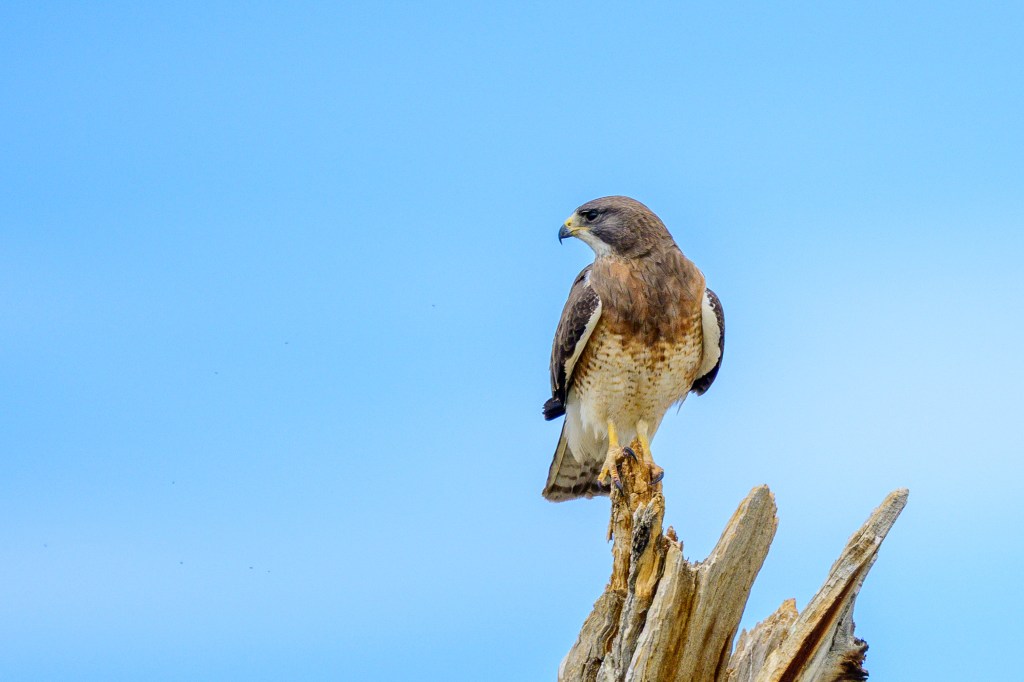
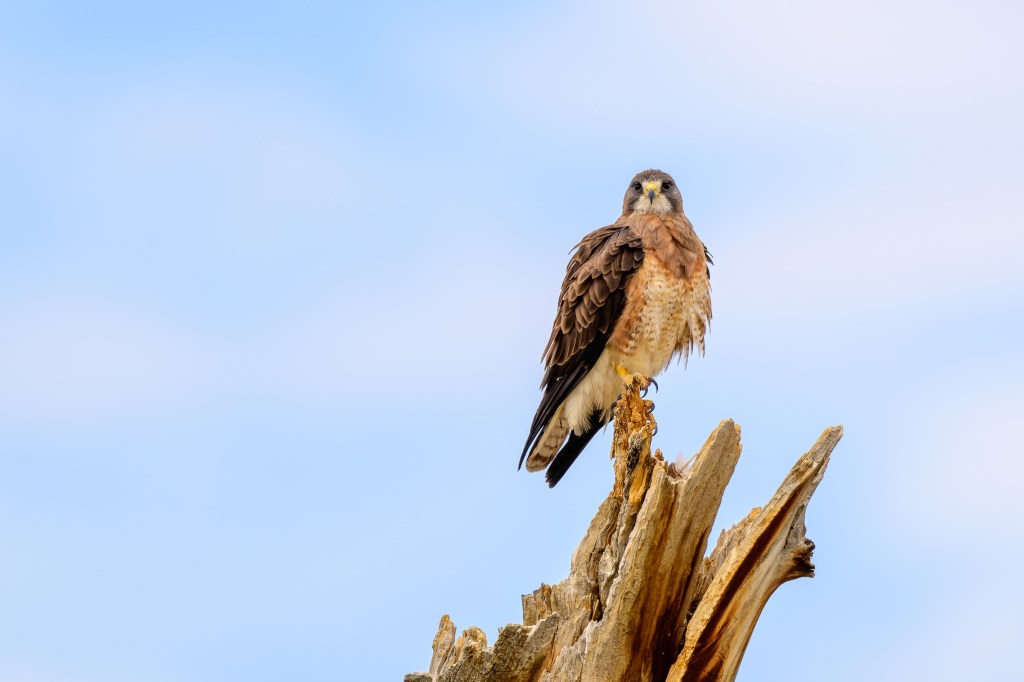
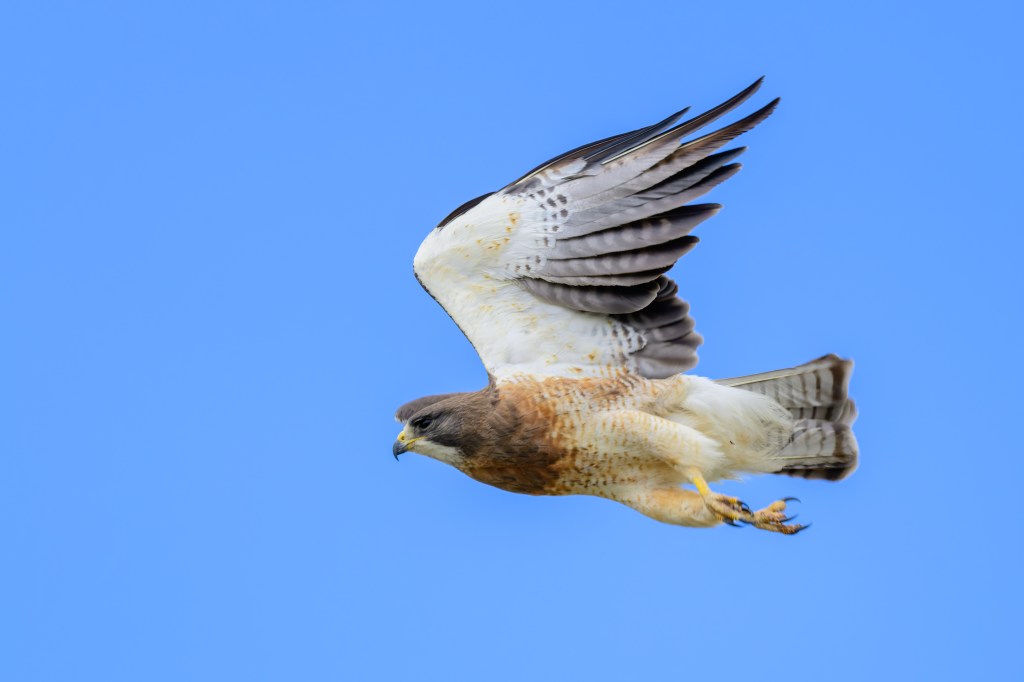
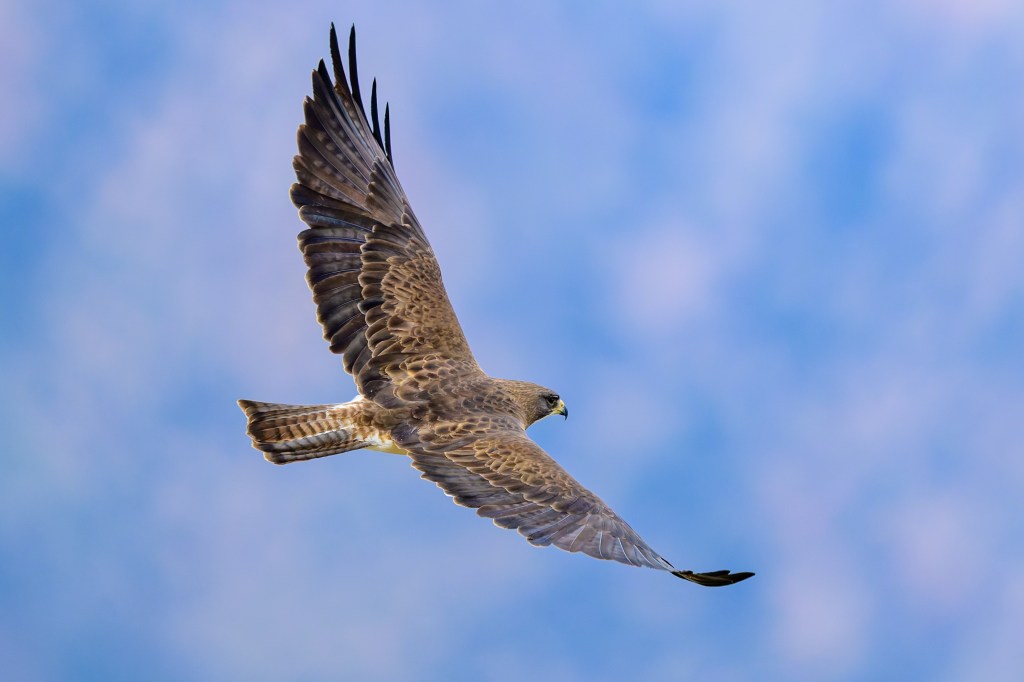
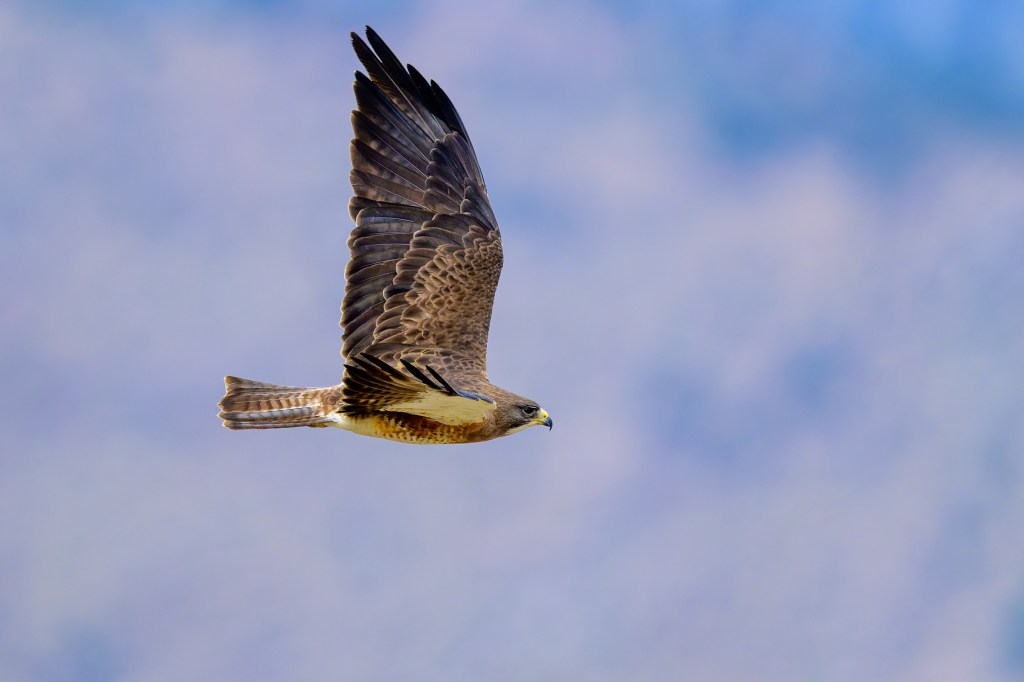
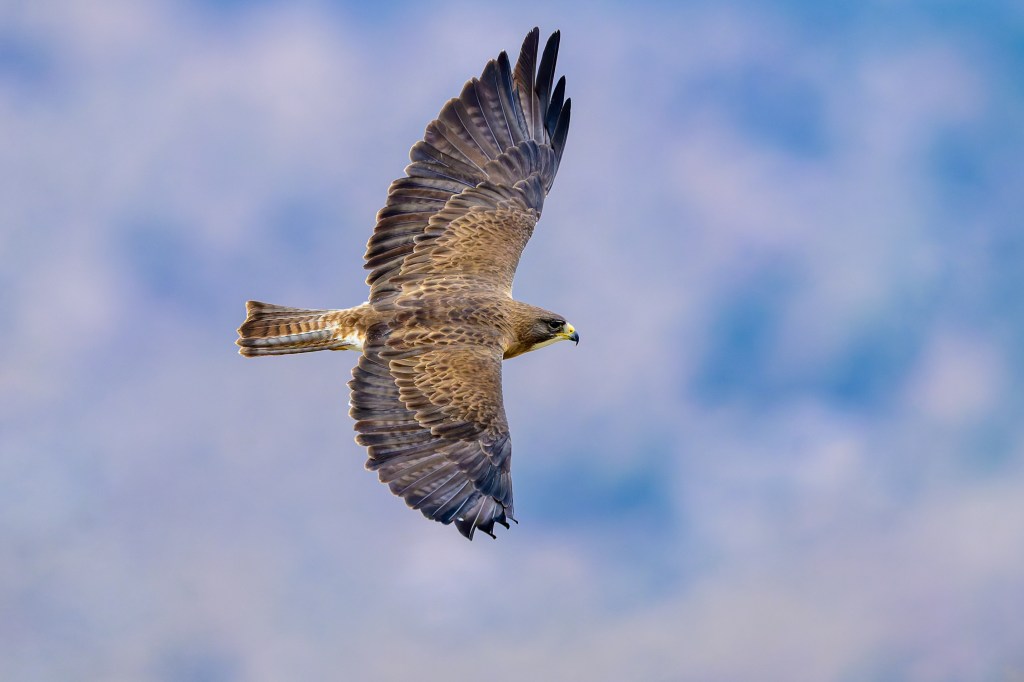
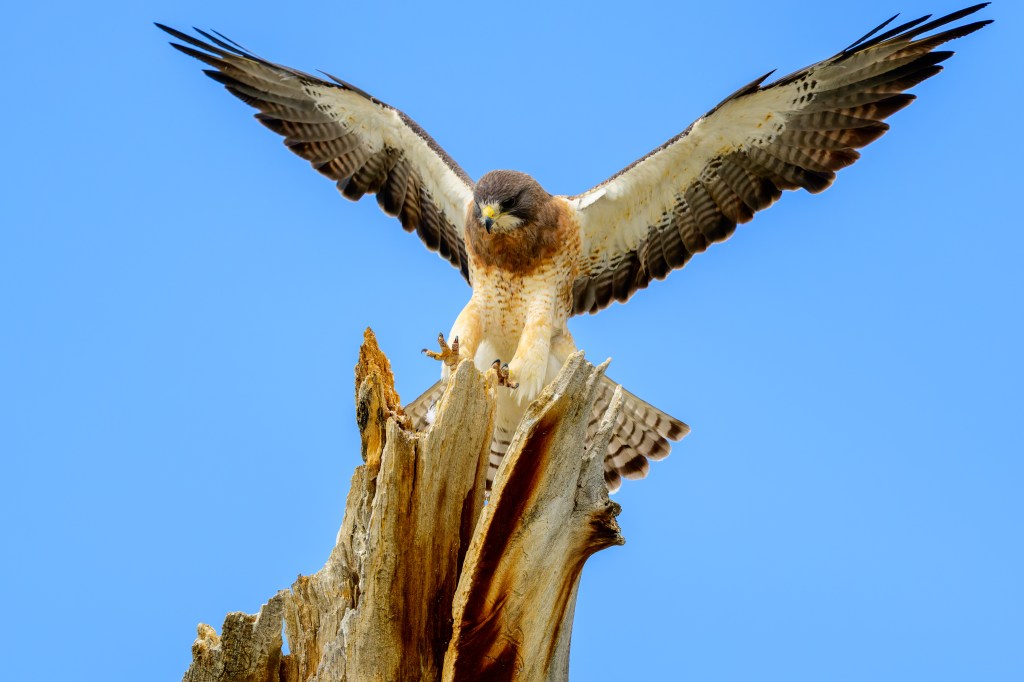
Swainson’s Hawks, which winter from Mexico to Argentina, are fond of this cottonwood. I photographed one here in 2025. One, perhaps the same bird, showed up this spring. Getting pictures of this attractive raptor is a treat. This year I got lucky. On June 26, I drove out on Warm Springs Road and photographed the perched bird at 9:28 am. I had a short walk on the Buckley Ponds, then drove back and parked to photograph the same Hawk again at 9:51. The sun’s position was behind me and the day was cloudy; this made for excellent light on the bird. The Hawk then flew off. I was in position to capture this flight. After making a lazy circle, the Hawk returned and I caught the landing as the bird came right at me. The last photo was taken at 9:53. The next 13 photos are some of best flight images I’ve ever taken. I’ll probably never see something like this again.
FINAL COMMENT
Two flight sequences in this blog, one involving a Great Blue Heron and the other featuring a Swainson’s Hawk, are among my favorite bird photos. Getting good flight pictures involves luck; I can’t control what birds do. What I can do is prepare myself for a moment when luck gives me a chance. And I have to get out there with the birds. Equipment, preparation, and luck won’t create pictures if I am at my desk.

