
This post will show only two bird species in unusual photos that I took recently. Plus a few pictures of local aspens in their fall colors.
Do birds play? The index of the Sibley Guide to Bird Life & Behavior does not contain an entry for “play.” But we easily recognize playful animal behavior when a dog chases a stick or a kitten swats a ball of yarn. Similarly, there are times when wild animals, including birds, appear to play. For example, Common Ravens will do a barrel roll in flight for no obvious reason. Northern Harriers often hunt together and then fly toward each other with their legs and talons extended. This looks like play to me. The photos in this blog capture playful behavior.
IMMATURE GREAT HORNED OWL
On Oct 8, 2026, Roberta and I went out to look for owls in cottonwoods north of Dixon Lane. We arrived about 6:40am; it was light enough to see where we were stepping, but I had little hope for getting photos in the dark. Within ten minutes we could hear high-pitched cries of a young owl. This loud racket came from about 50 feet away in some trees on the other side of an irrigation canal. In the gloom I could make out a young owl, thrashing about and calling. I took a bunch of photos, but I expected they would be useless, because it was still so dark. The owl kept moving about and we both worried that it was in distress. Its right foot seemed to be stuck to a piece of dead wood.
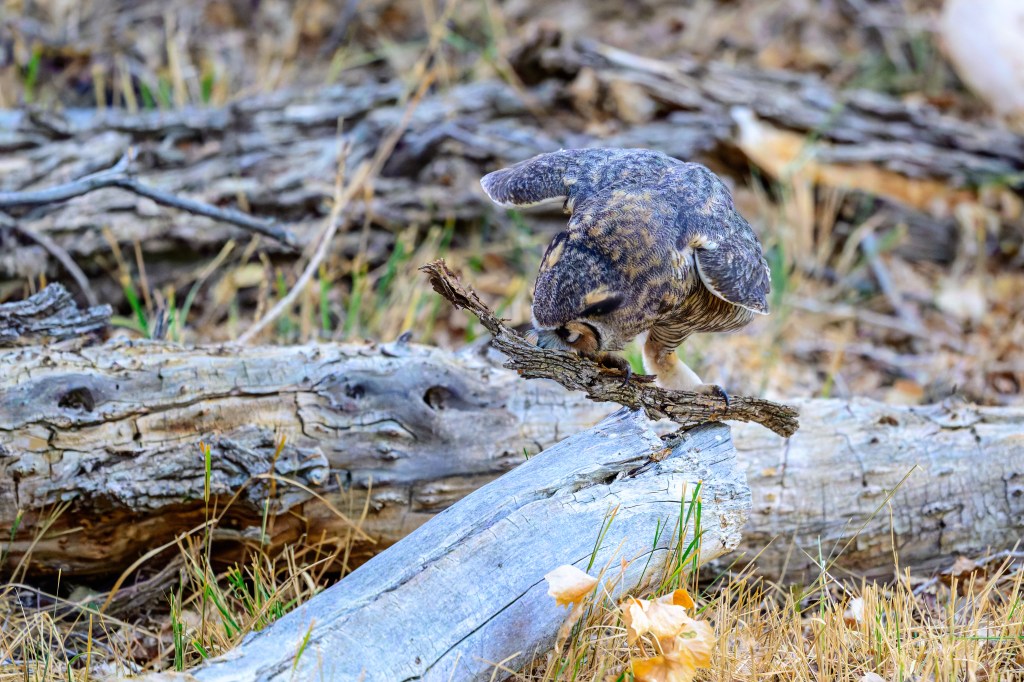
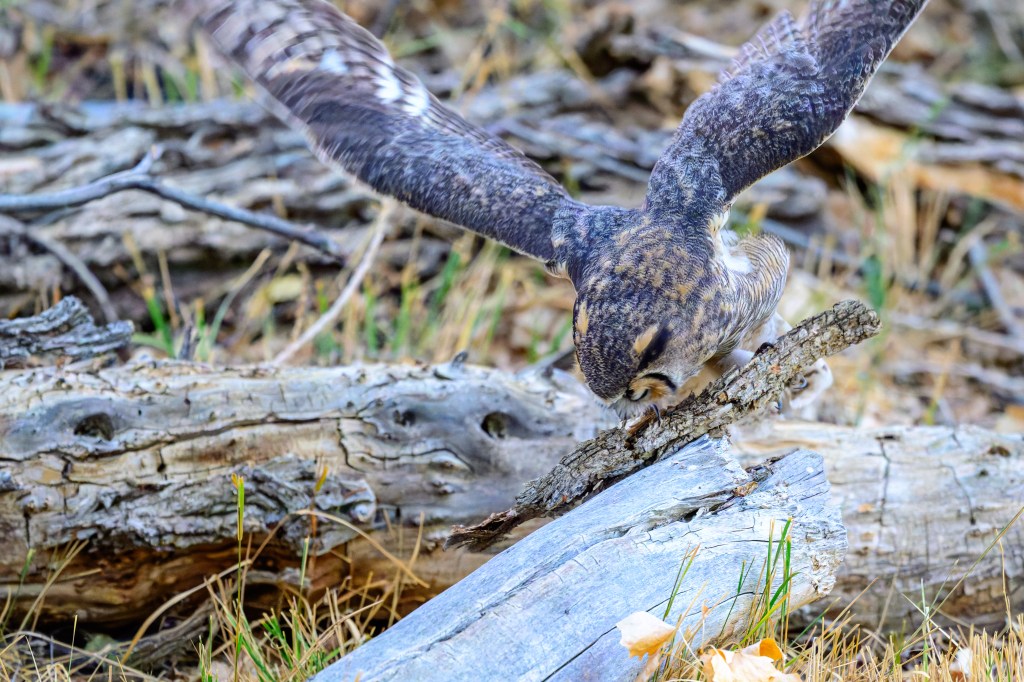
Later, on my computer, I was able to recover good photos using special software that can remove “noise” from each image. It turns out that this owl, probably born in April, was playing with a piece of wood, just as a dog would worry a bone.
Initially the owl was just standing on a dead cottonwood trunk. Both feet were free of anything.
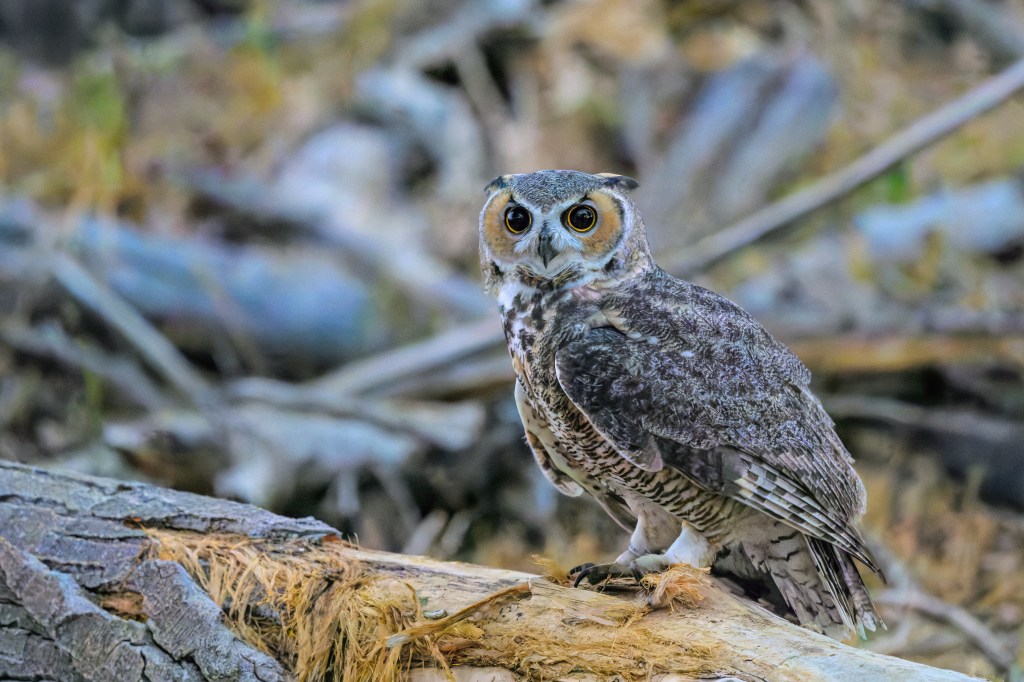
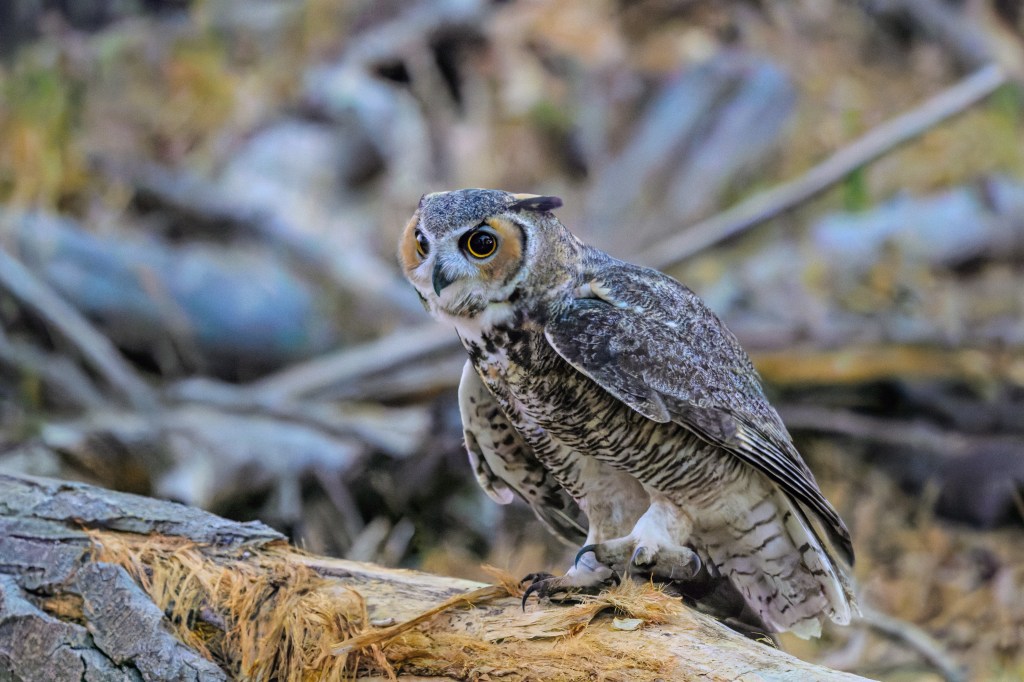
But then it jumped down and seemed to struggle with something.
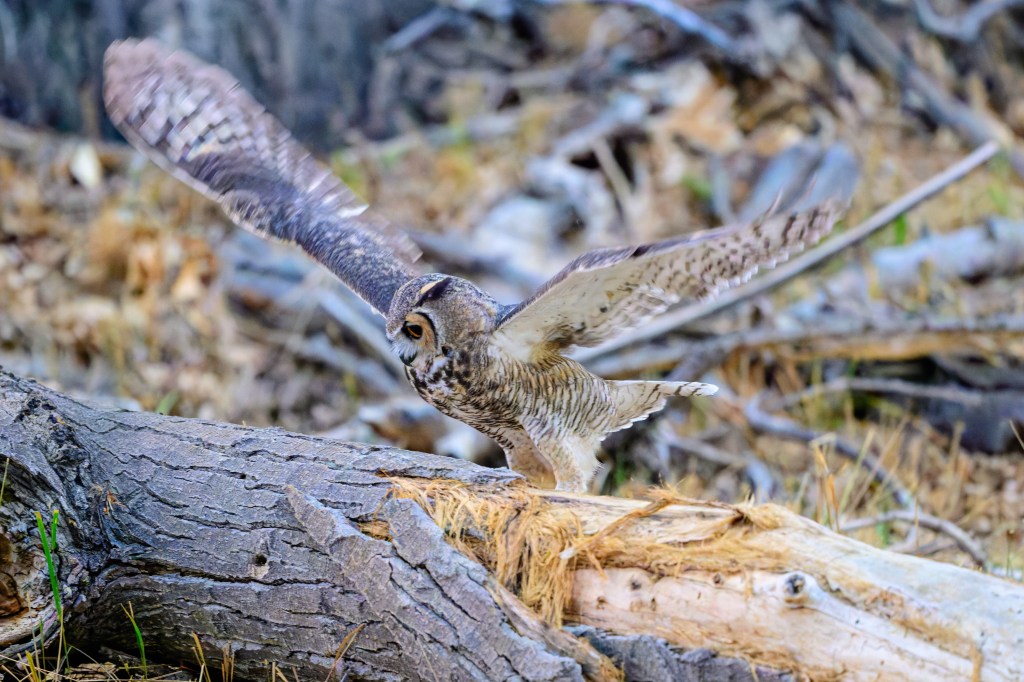
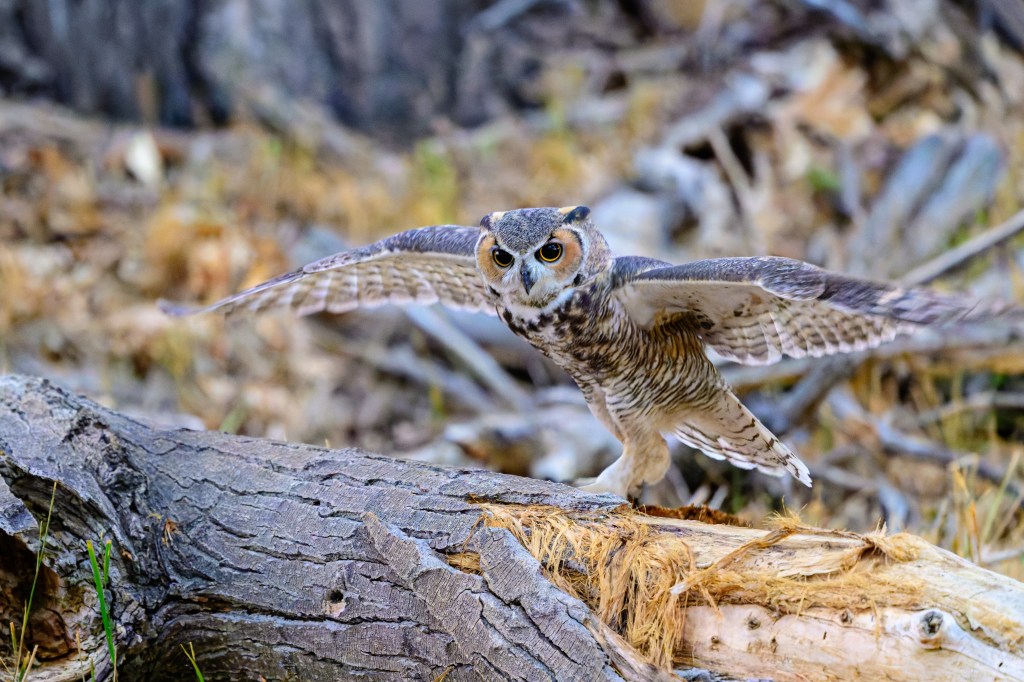
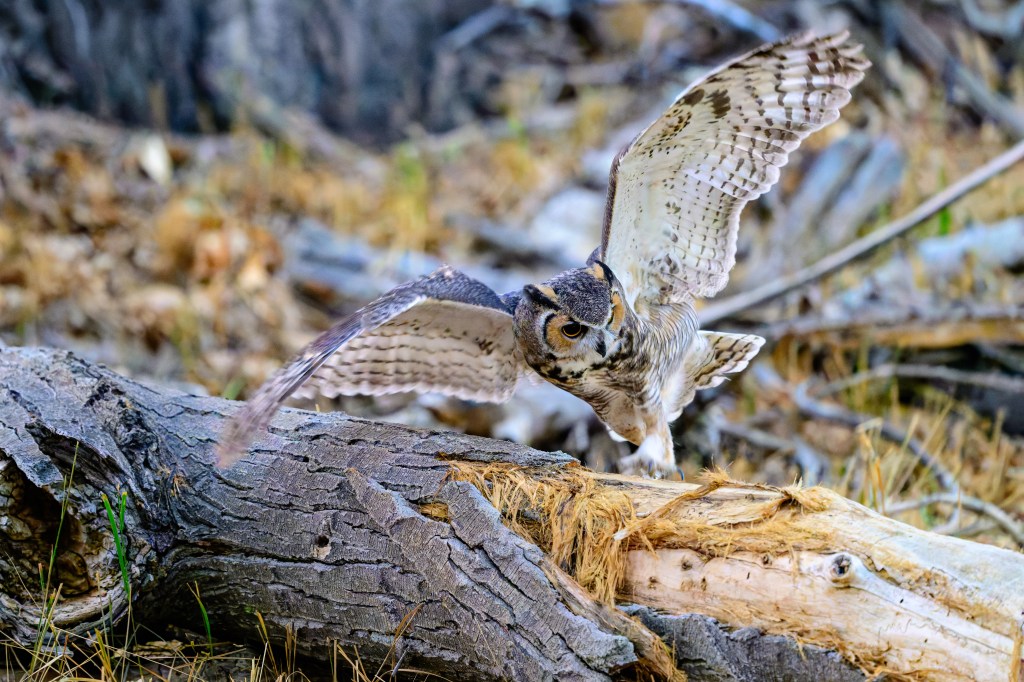
The next two photos show the owl clutching a piece of wood in the talons of the right foot.
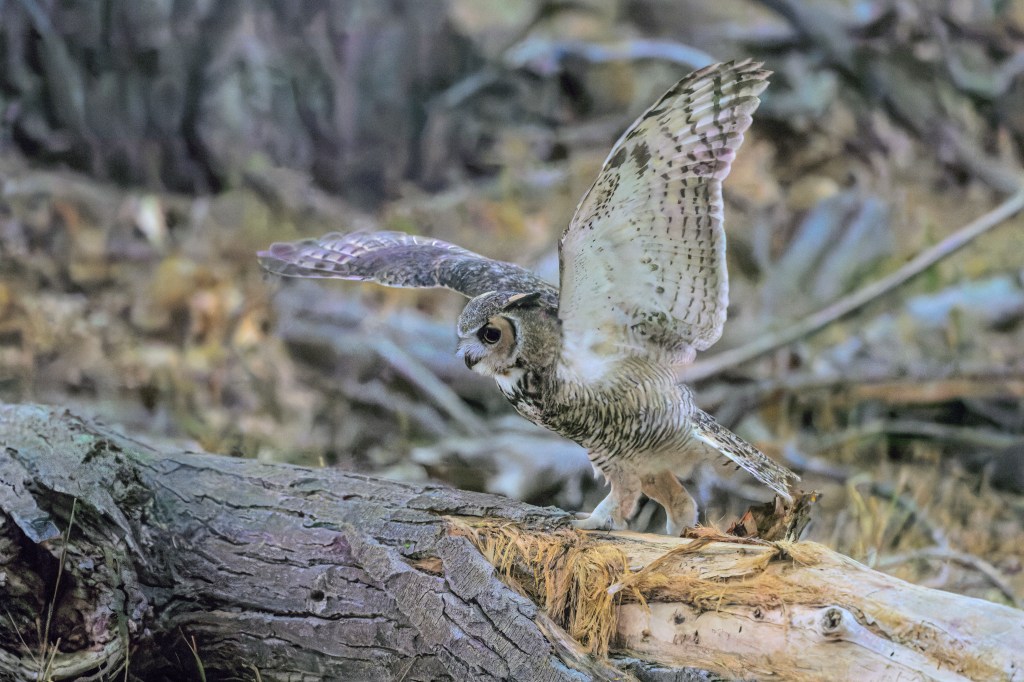
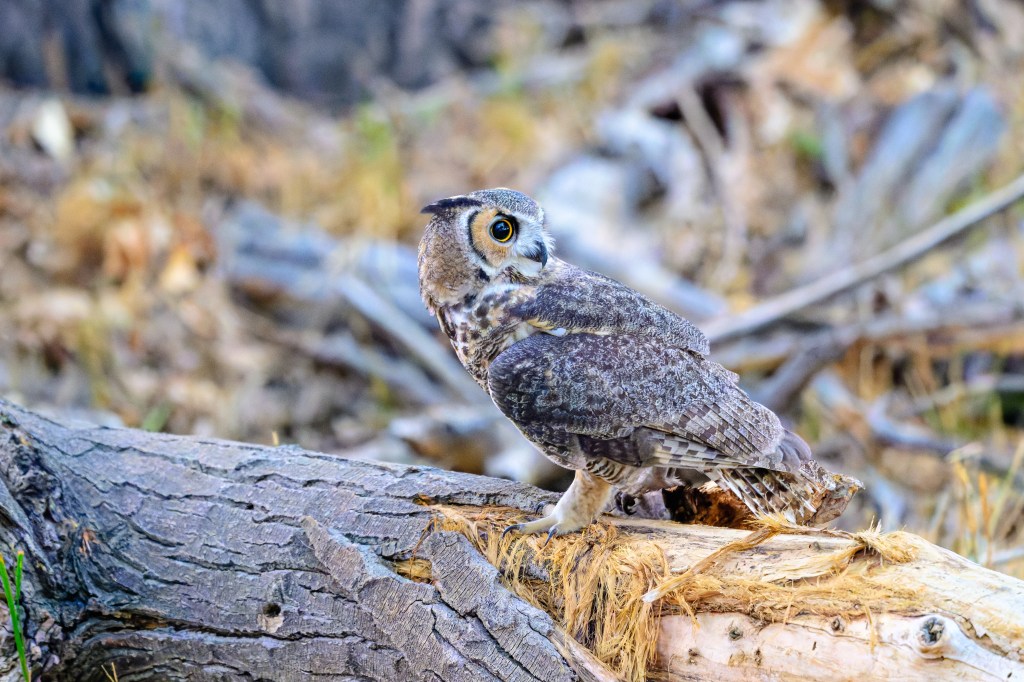
It flies a short distance and wrestles with the wood on the ground.
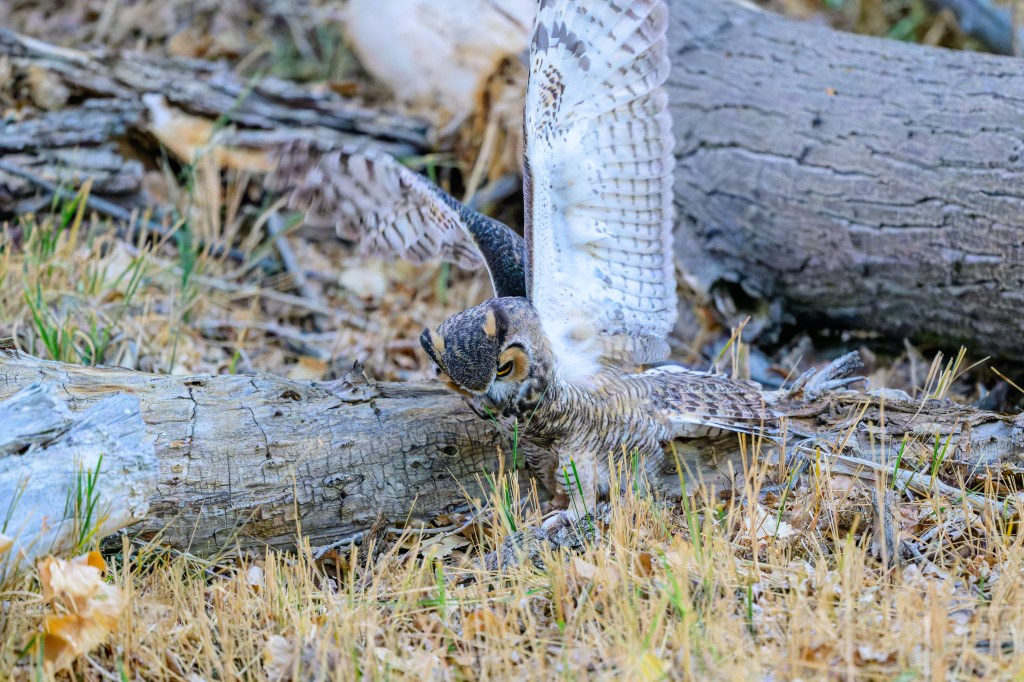
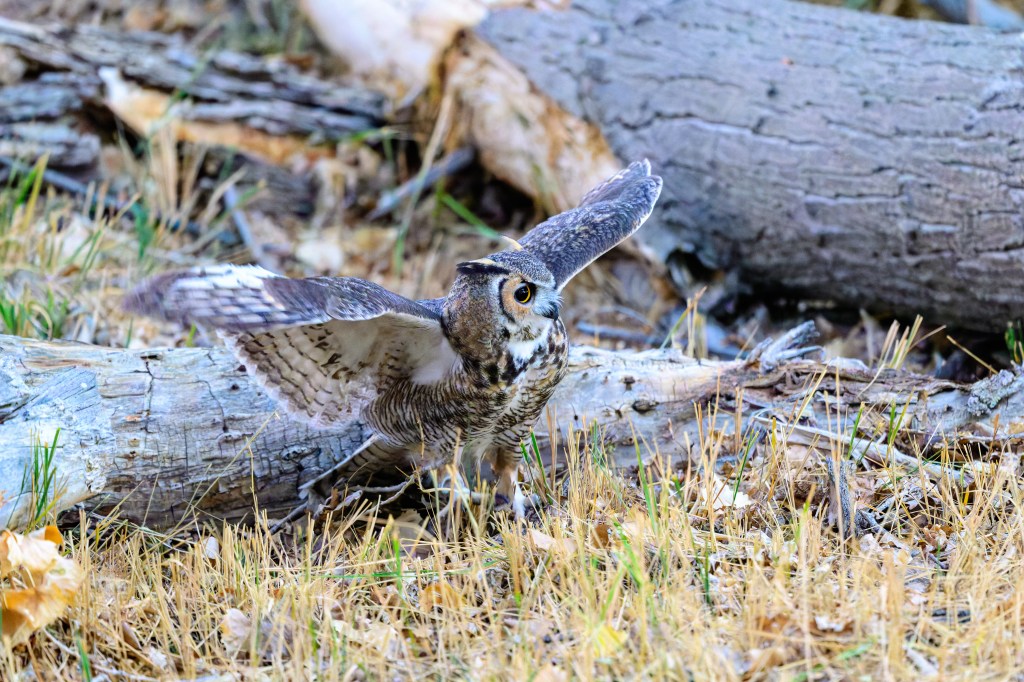
The owl carries the wood to a log where it repeatedly bites the wood and moves it about.
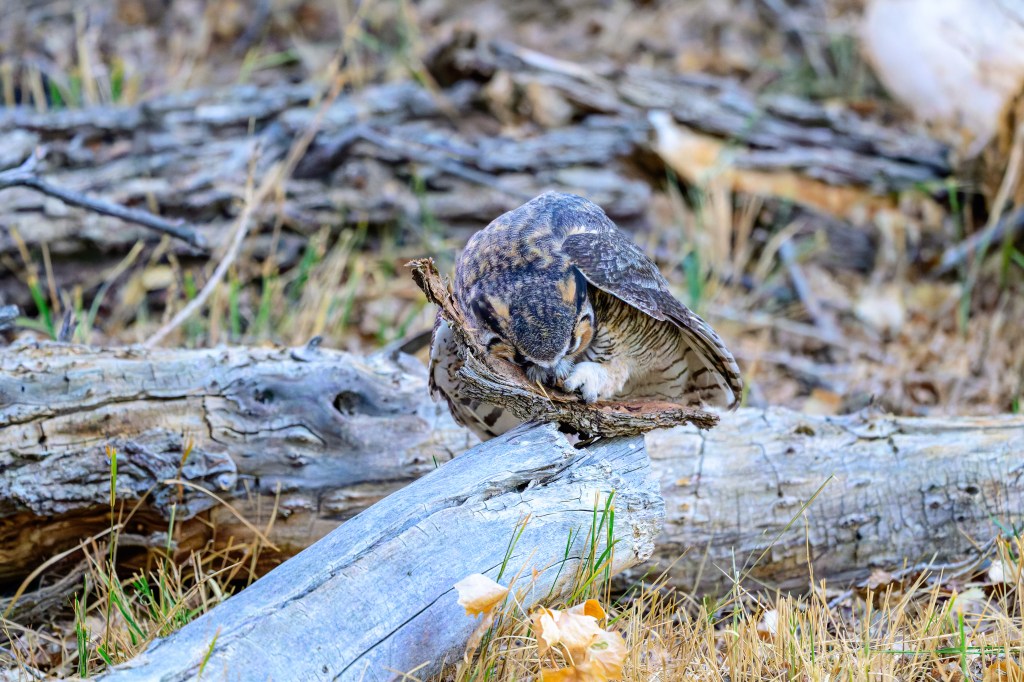
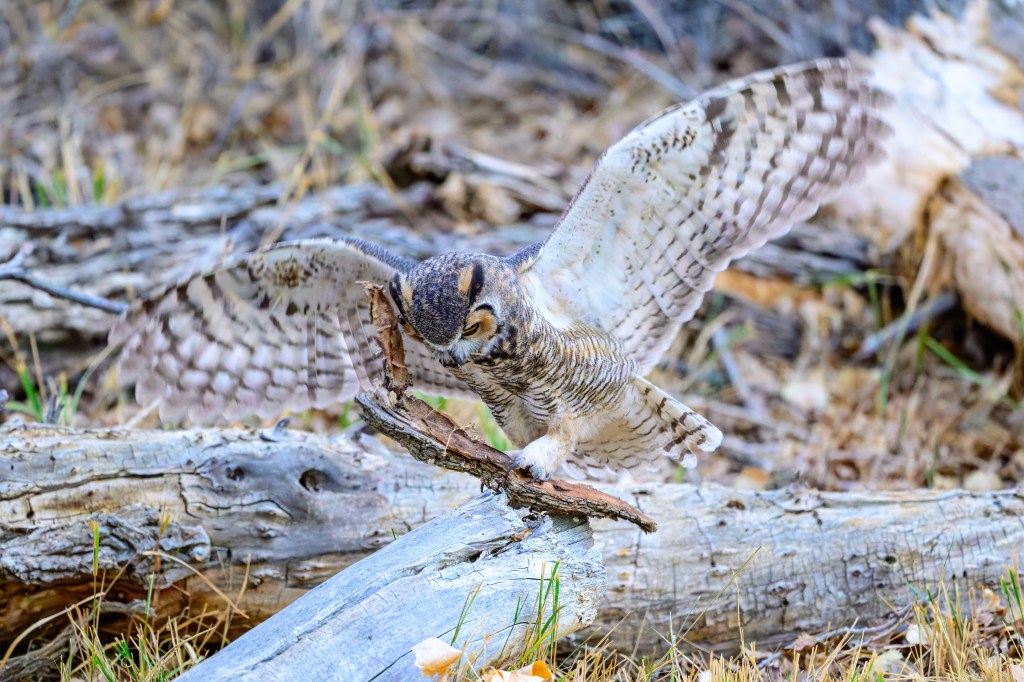
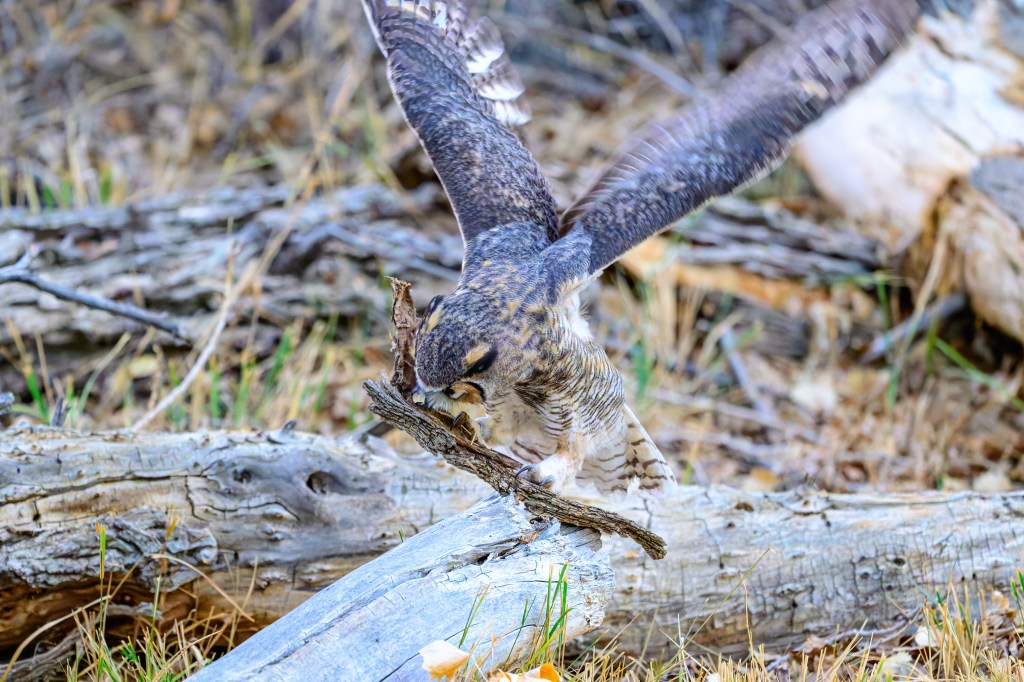
In the next image the owl lifts the wood up a bit. And then rocks it back and forth.
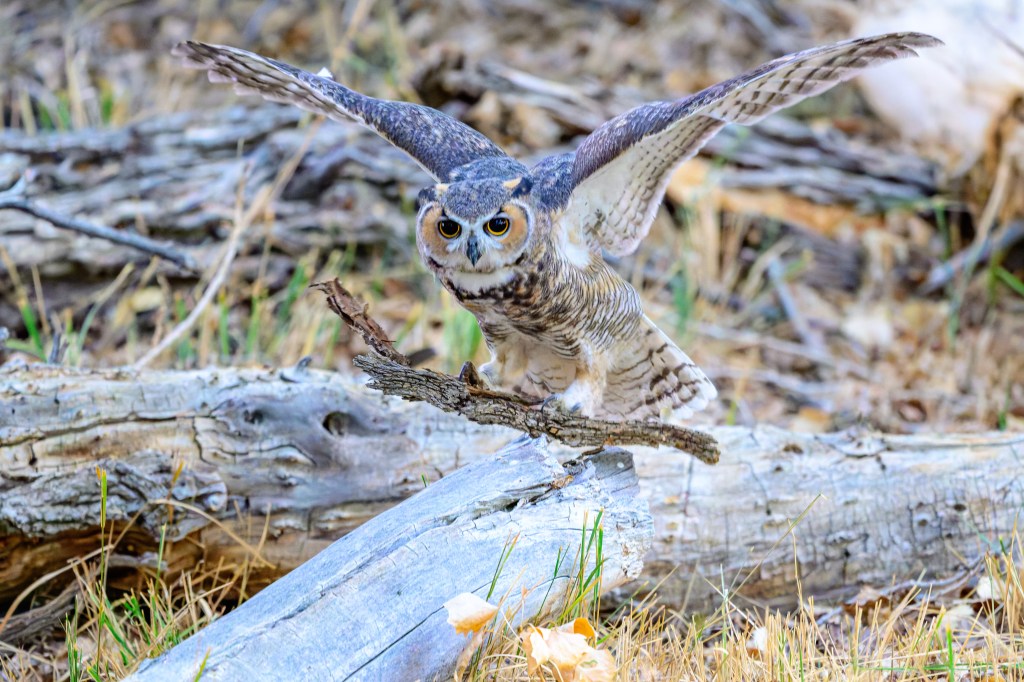
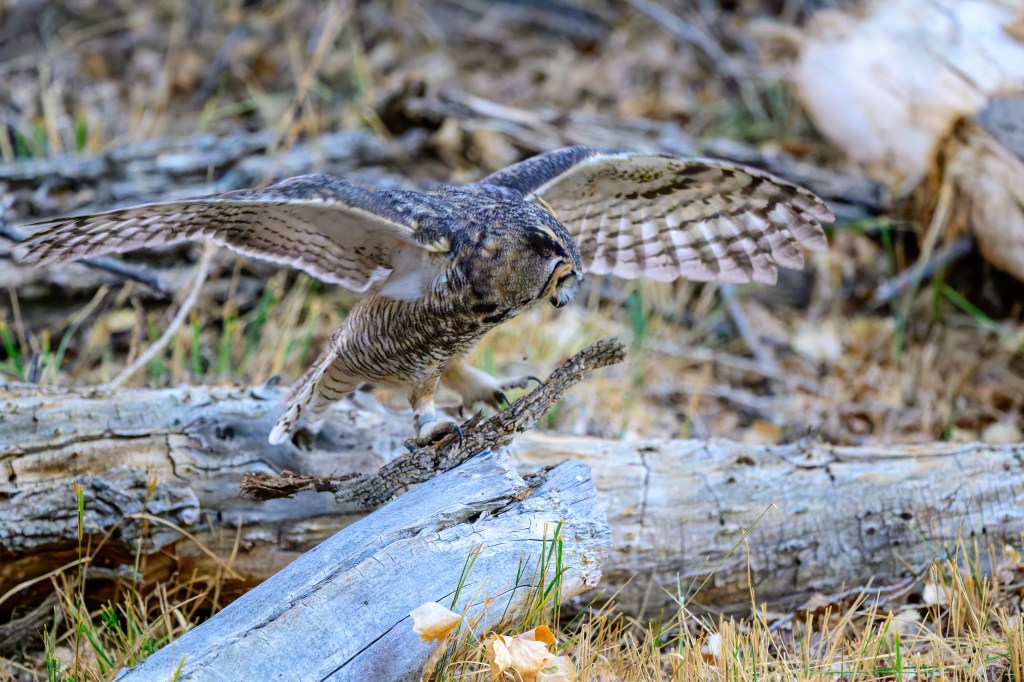
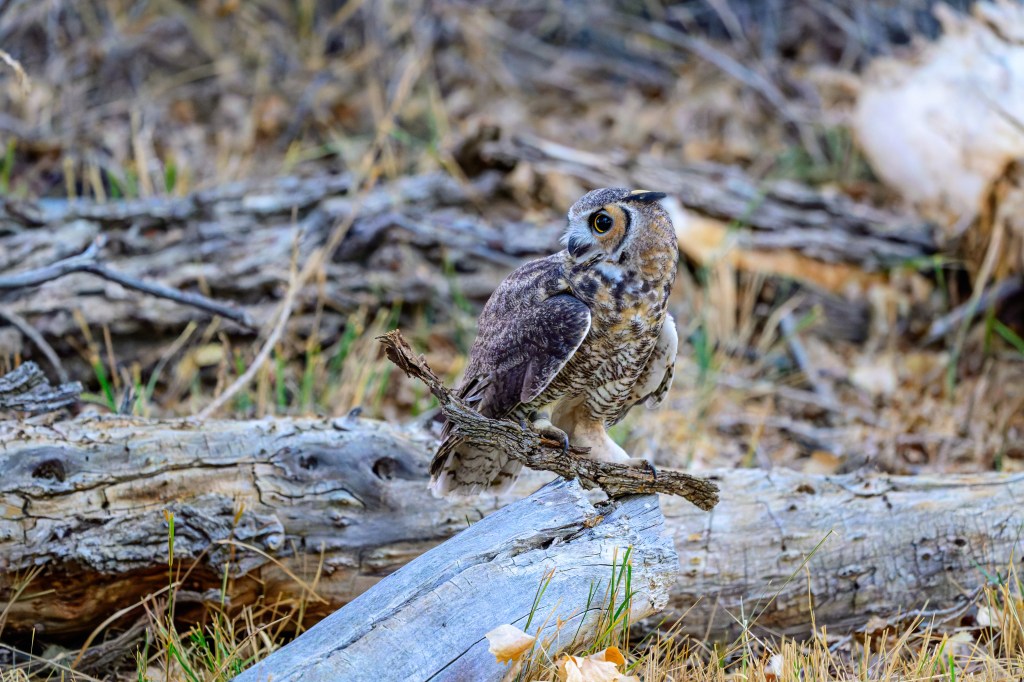
The owl flies up to another cottonwood branch, still holding the piece of wood. The next four images show the owl and the wood, with yellow flowers of rabbitbrush on the right. Notice how the feathers on the owl’s back mimic the color and texture of the cottonwood.
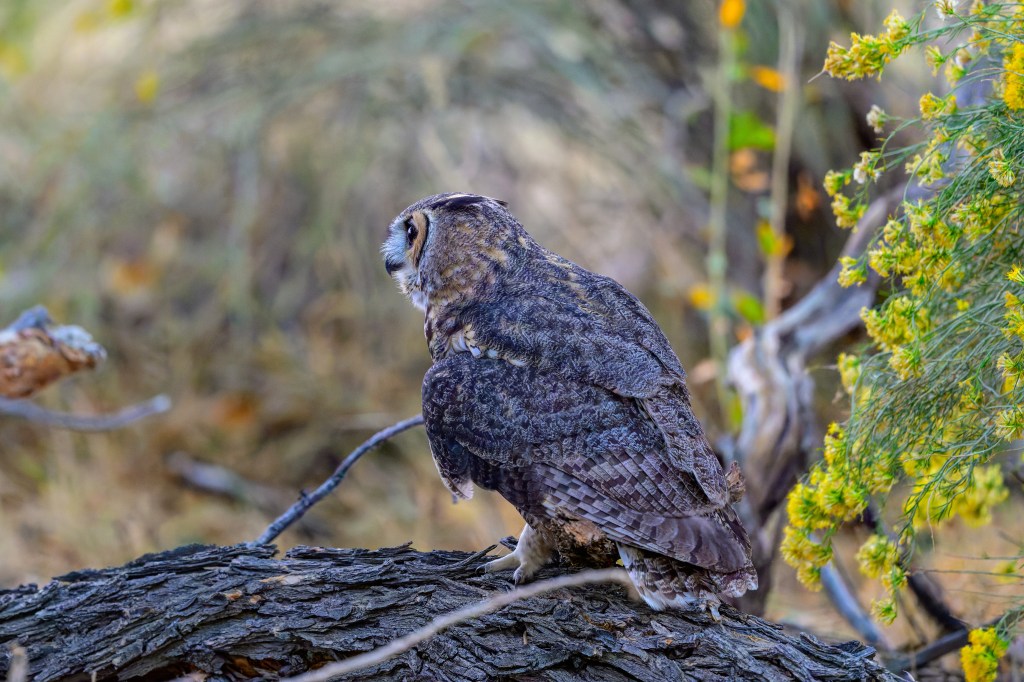
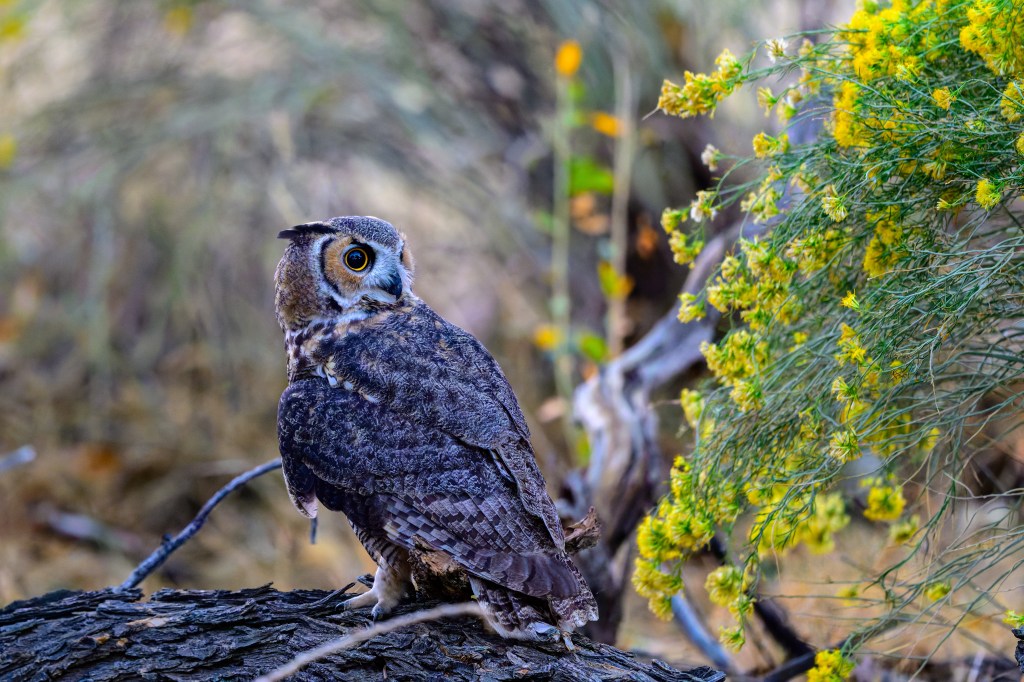
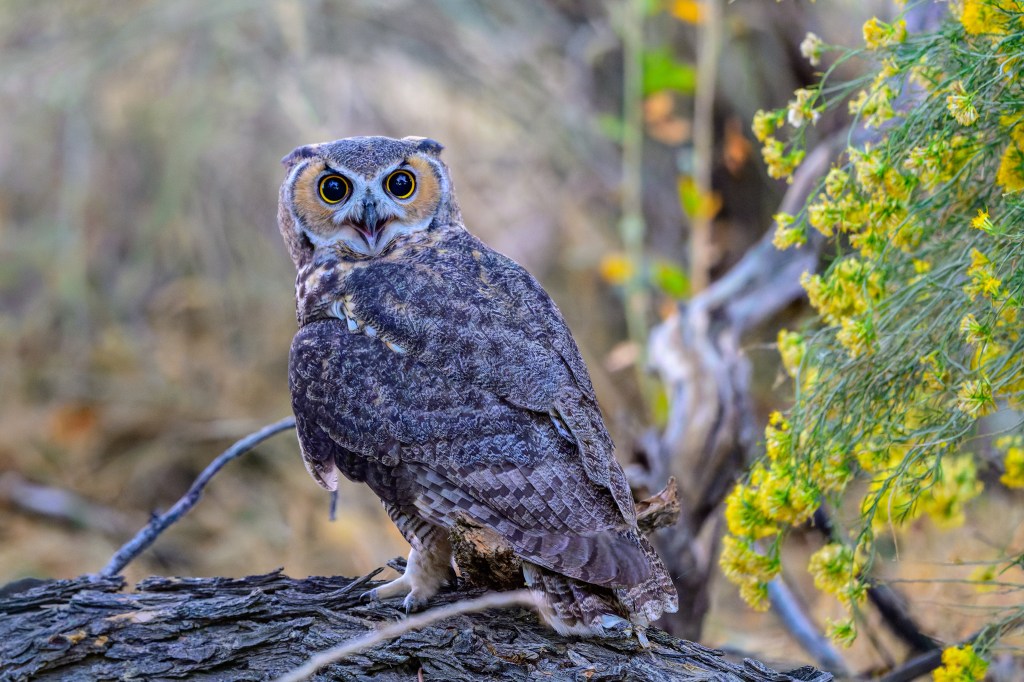
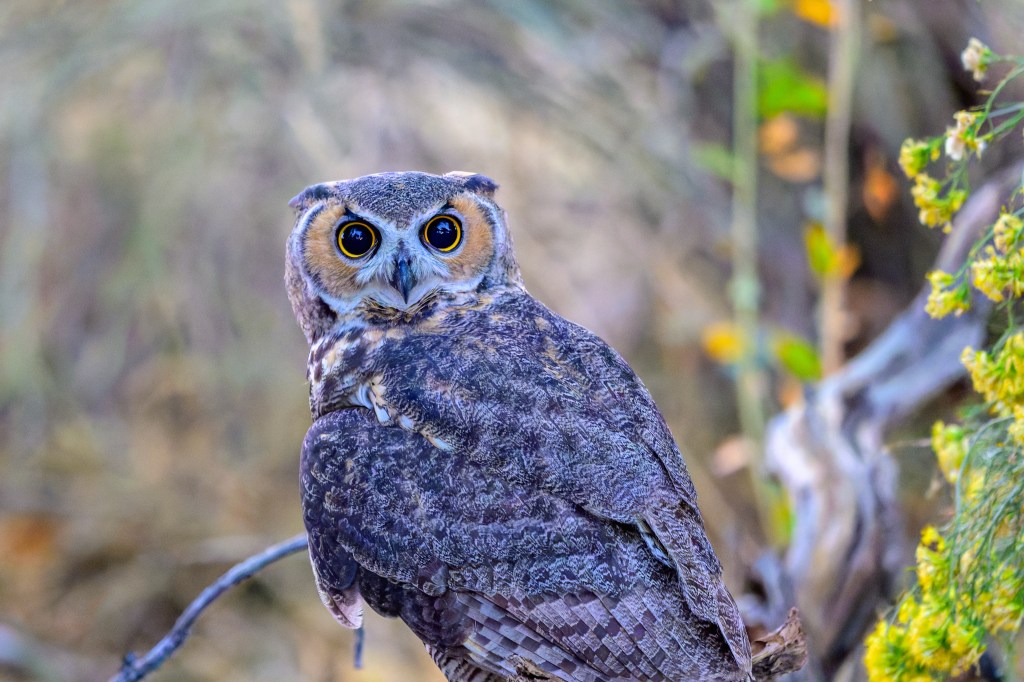
Finally the owl flies up onto an old stump. The owl looks like an extension of the tree. It still clutches the piece of wood. Note the band on the right leg. In the last photo, the owl flies off with its toy and a tiny piece of wood falls away.
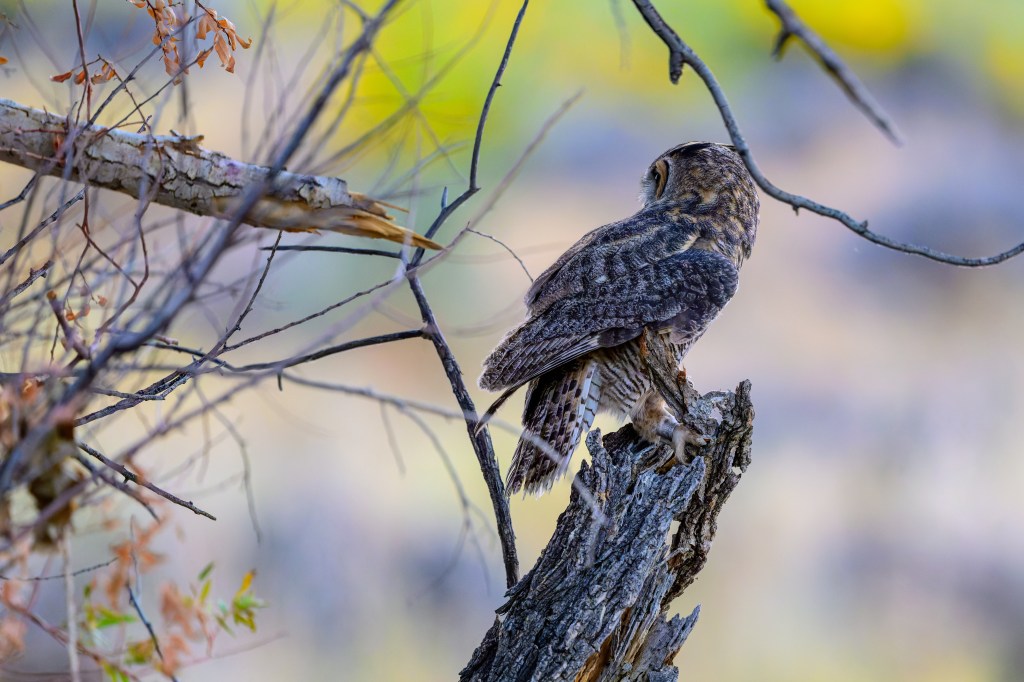
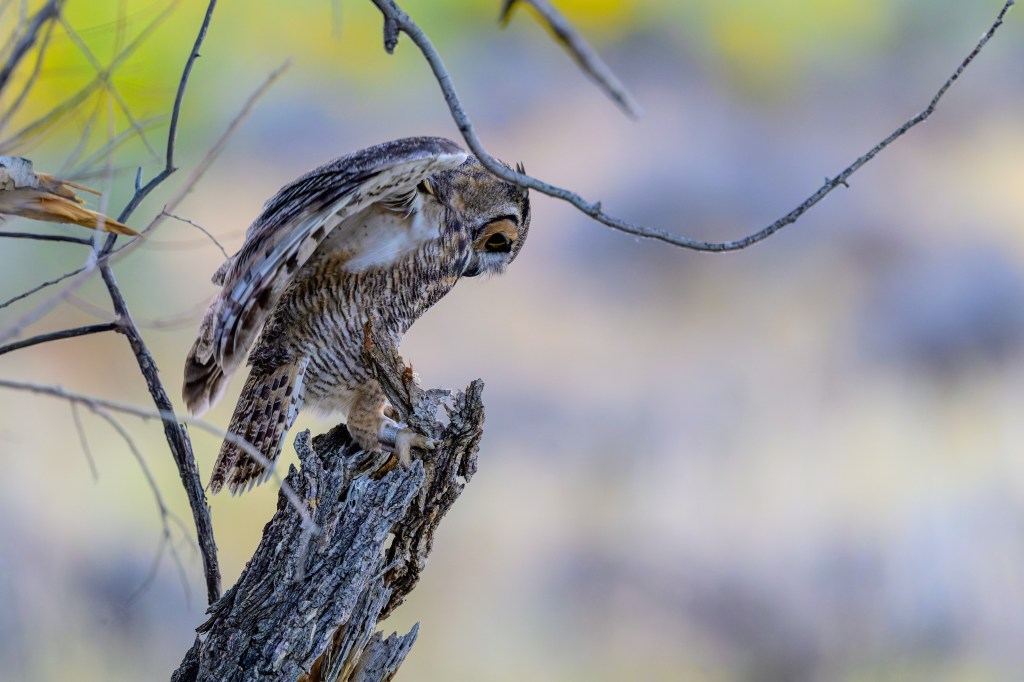
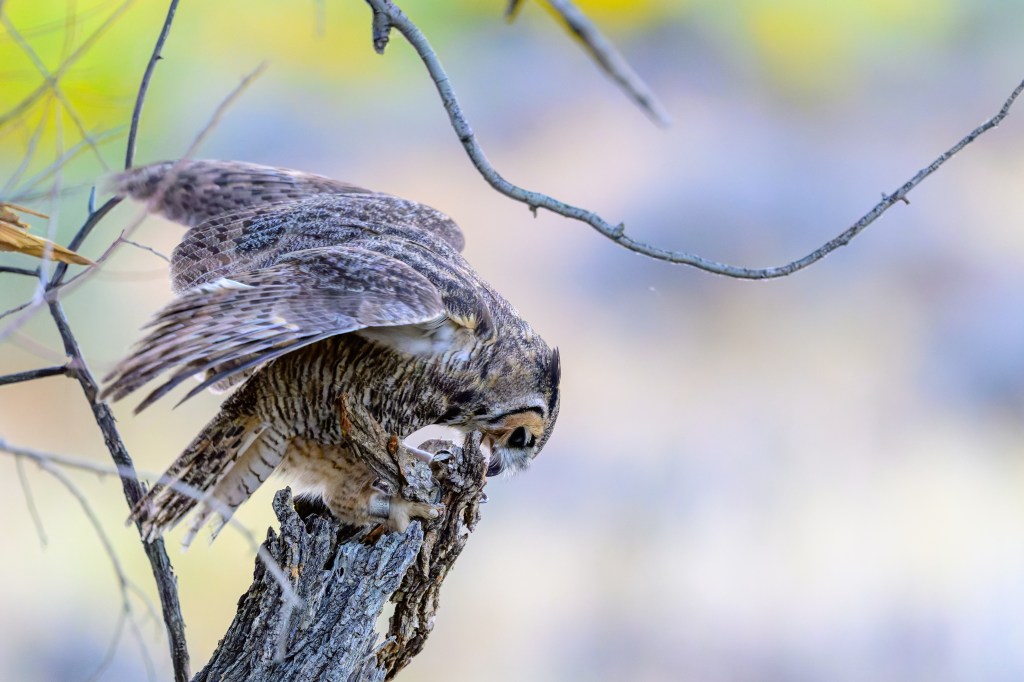
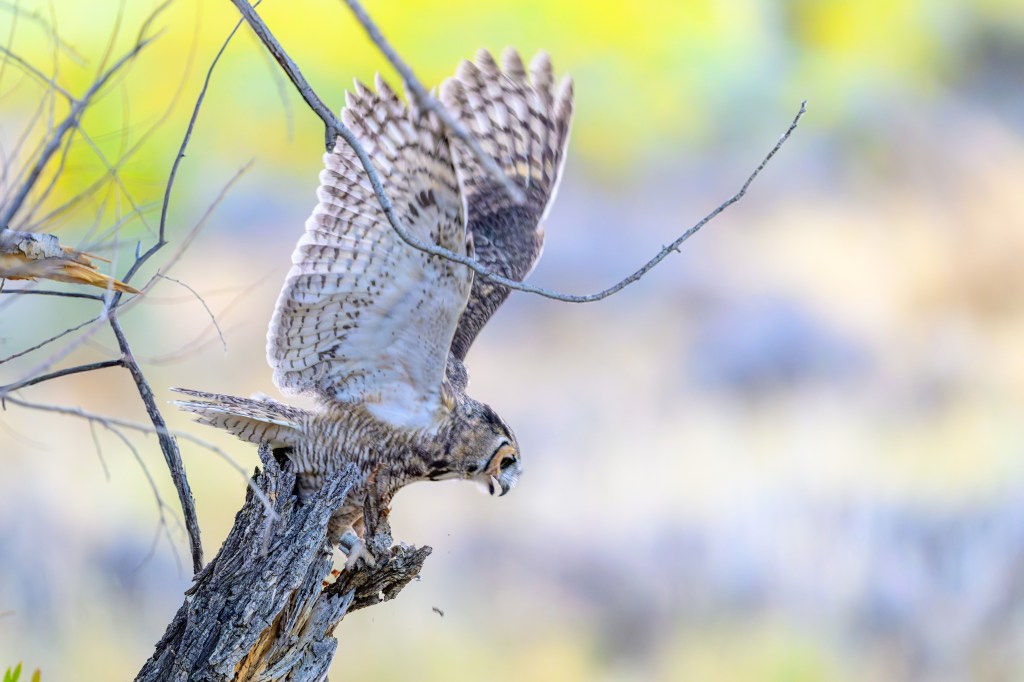
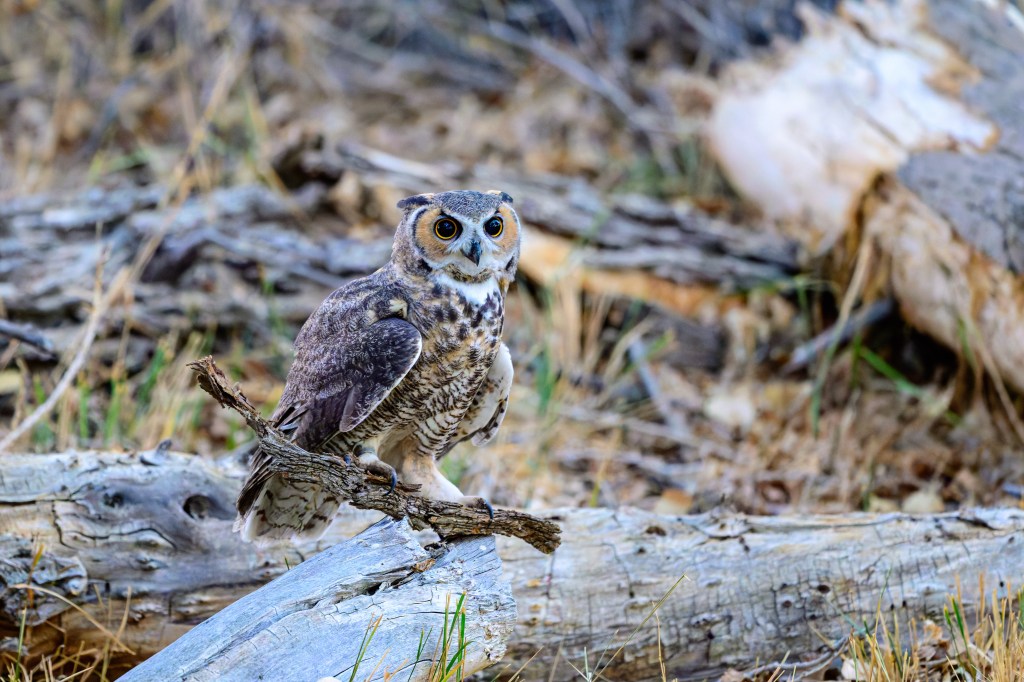
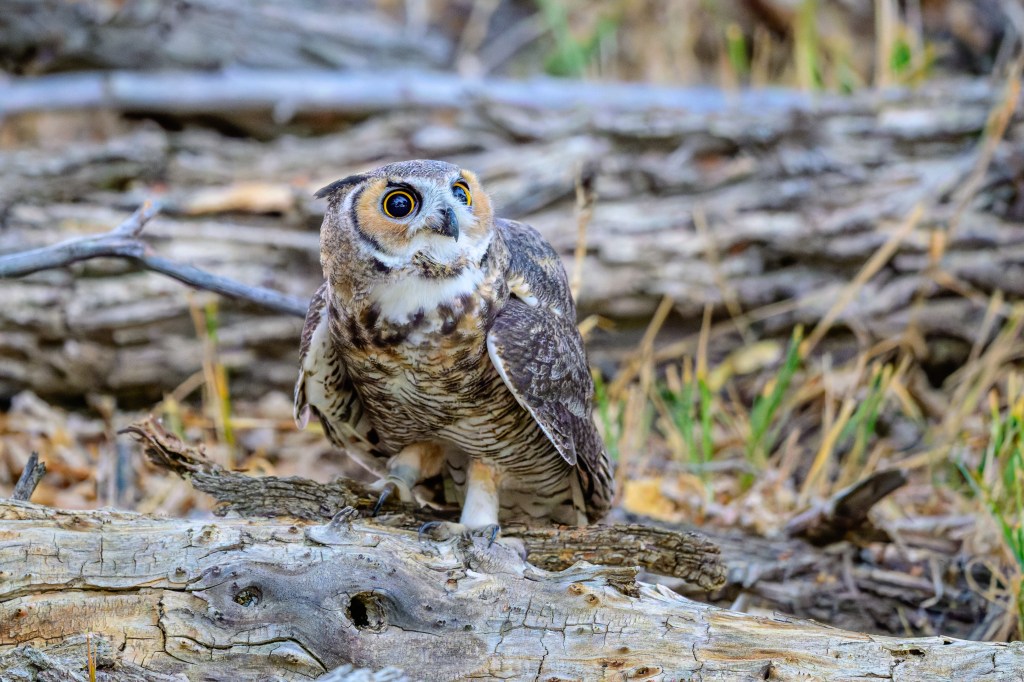
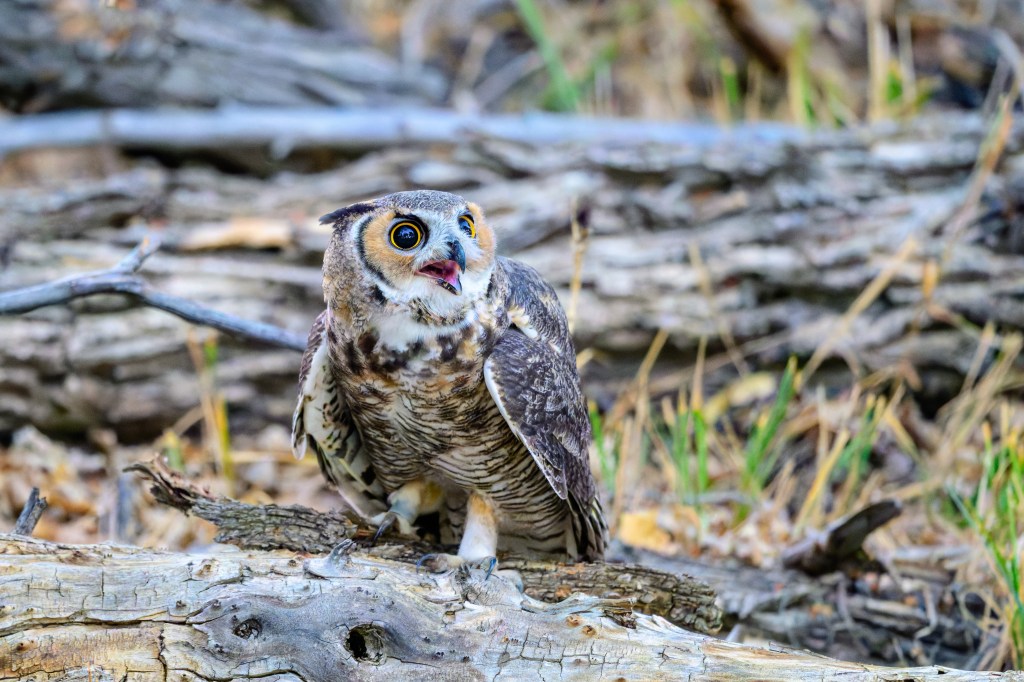
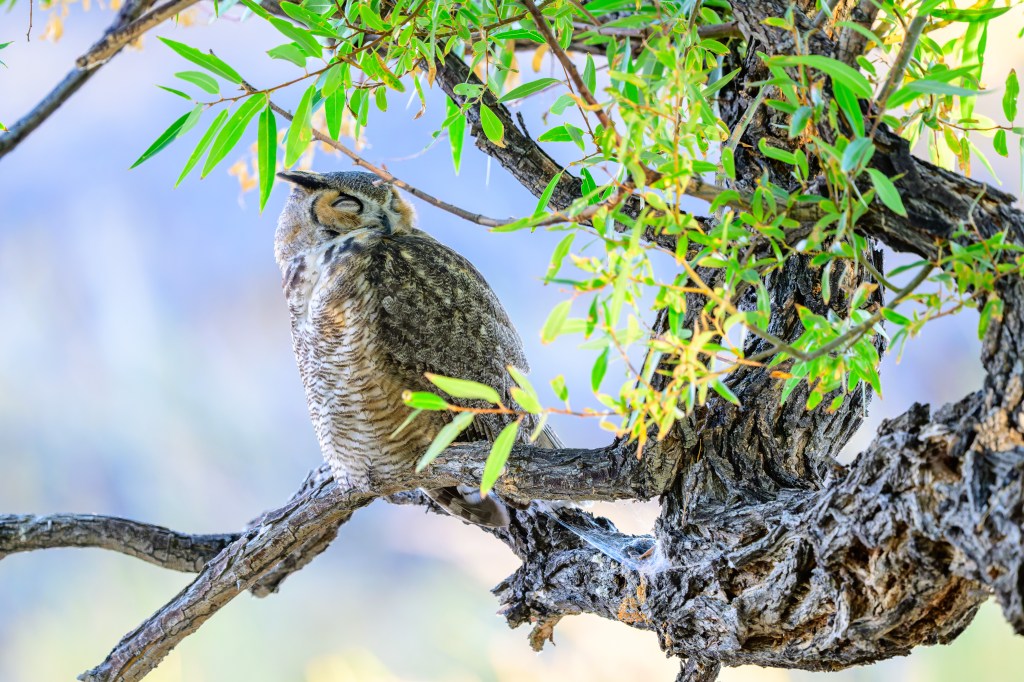
How do we know this is a young owl? First, the playful behavior sends a message. Overall, the owl is smaller and less bulky compared with a mature owl. The colorful feathers around the eyes are well separated, from the eye outward, into concentric bands of white, brown, black, and white. The ears are small and the feathers do not look worn. Compare with a mature owl that we saw the same morning:
SOME COMMENTS ABOUT PHOTOGRAPHY SOFTWARE
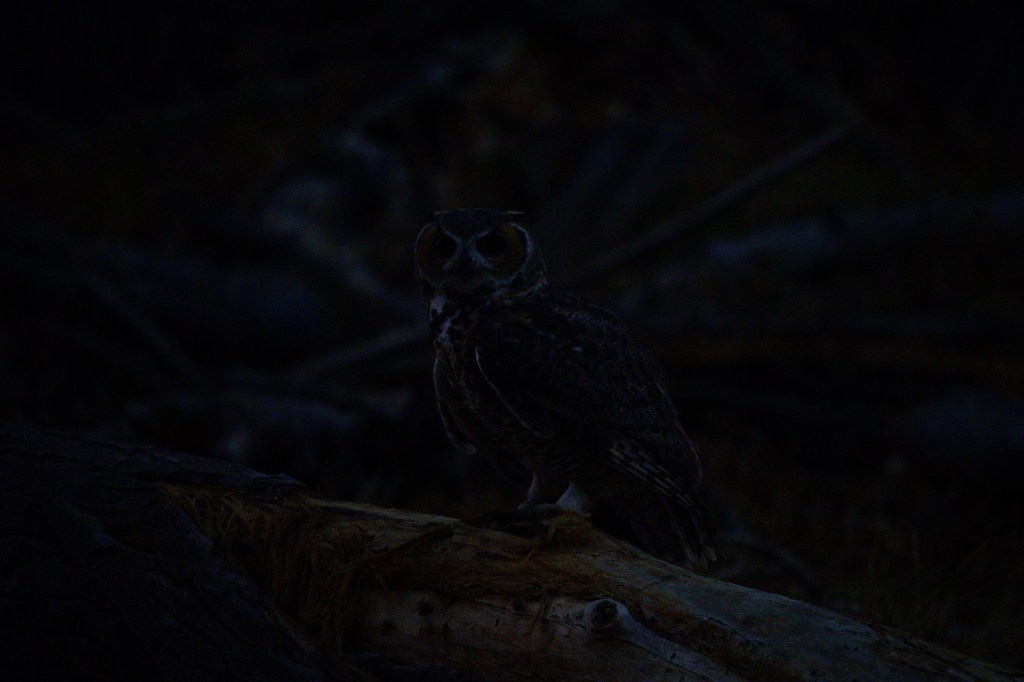
It was very dark when I took the owl photos. But my photos look sharp and clear. How is that possible? I use Adobe Lightroom Classic on a desktop computer to process and store my photos. In April of 2023, Lightroom introduced a new command, “Denoise,” to remove random electronic noise from photos. This command works well when the noise level is not too great. But my owl images had a lot of noise; they were badly underexposed with high ISO levels of 12800.
Let me show you what I mean. Below is a photo as it appeared with no processing on my computer. You can barely see the owl’s face in this photo:
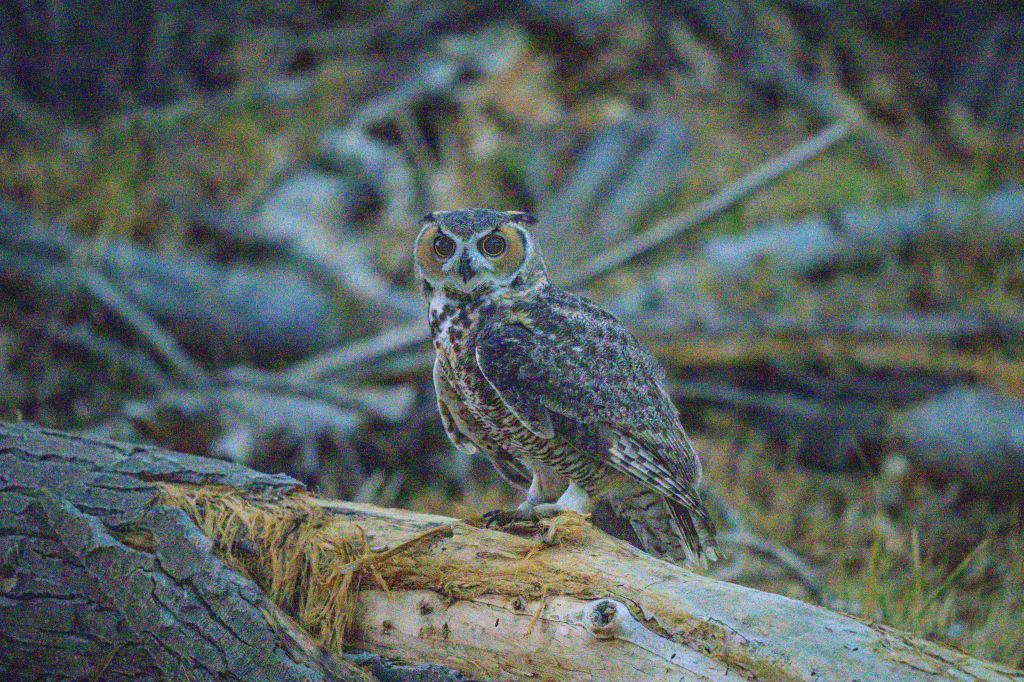
I then made two changes to this photograph in Lightroom. I boosted the light in the shadows to a level of +82, which makes dark areas brighter. And I moved the slider that adjusts exposure to a high level: +3.25. This makes it possible to see the owl and the tree trunk, but throughout the picture there are grainy dots of green, blue, and other colors. Nothing looks sharp:
Just a couple of years ago I would have discarded a photo with the noise levels in the picture above. But in March of 2026, noise removal software called DxO PureRaw 6 was released. (DxO is a French company that originally had the name “Digital Optics” — they abbreviated this to DO and threw in an X.) There are favorable reviews about this program in online discussions; for example, PetaPixel. My friend Jon McConachie bought this software and suggested I try it. The software corrects for lens distortions, recovers detail, and removes noise. I applied DxO to the owl photos in Lightroom and then processed the image further in Lightroom:
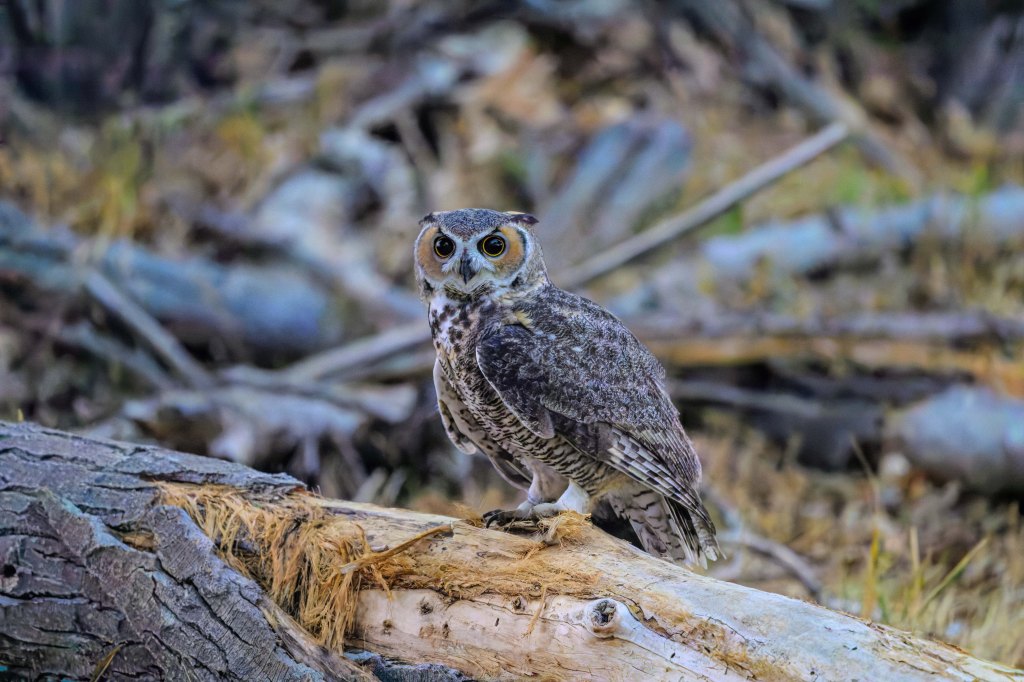
The result above is miraculous. For a single payment of $140, I have the power to transform some terrible photos into terrific images. There are disadvantages to this software. First, it replaces the original image with a new one; you cannot undo the process. You can, if you wish, keep both the original photo and the processed picture, but I take thousands of bird photos and I don’t want to waste computer storage space by turning each picture into two files. In addition, the process takes about one minute per photo. I take thousands of bird photos every week, so I use DxO only on some of those pictures.
BELTED KINGFISHERS
Kingfishers are common near Bishop; this medium-sized bird likes to perch near the Bishop Creek Canal, the Pleasant Valley Reservoir, and the Owens River. They have a punk hair-do made of black spikes. The males are gray-blue, black, and white, while the females add a sash of rusty feathers. Their heads seems too big for their bodies, giving them a chunky appearance. I often hear them before I see them. Keith Hansen wrote “Unreservedly vocal. Translated, kingfisher’s clamorous rants would not be appropriate for children under eighteen! Bold, raucous, in-your-face… With dry rattle, advertises its presence with the cadence and sweet appeal of a rapidly firing machine gun.”
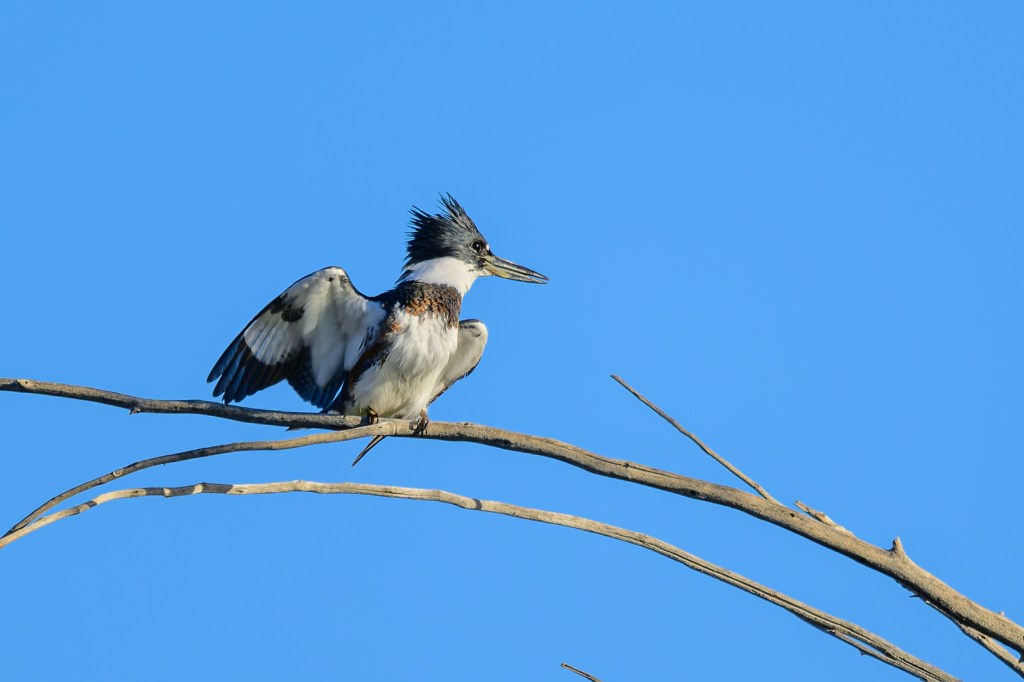
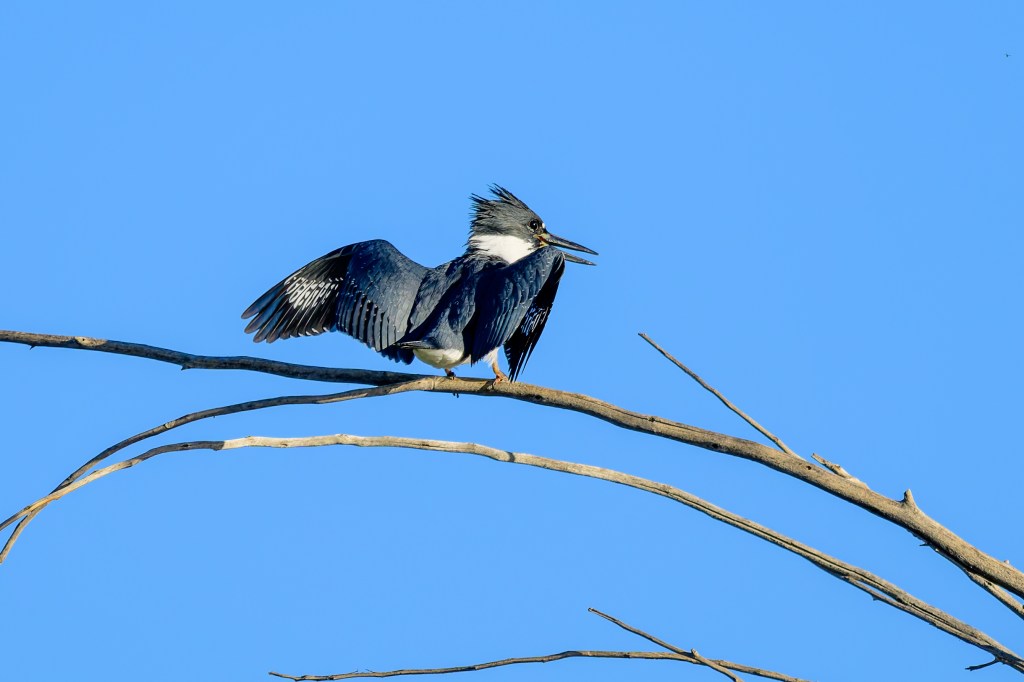
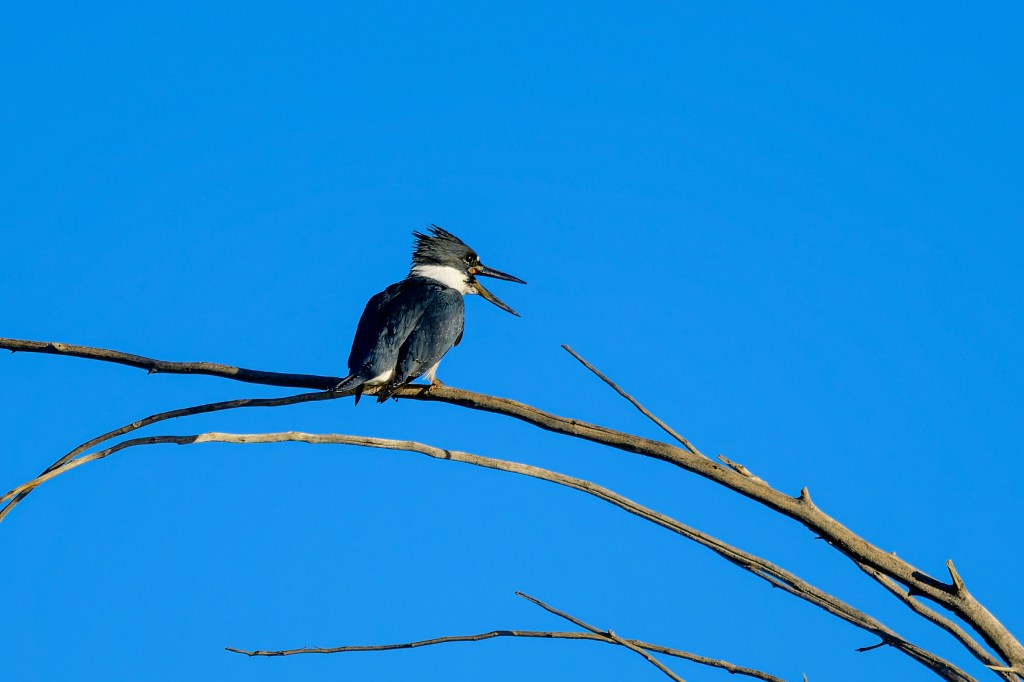
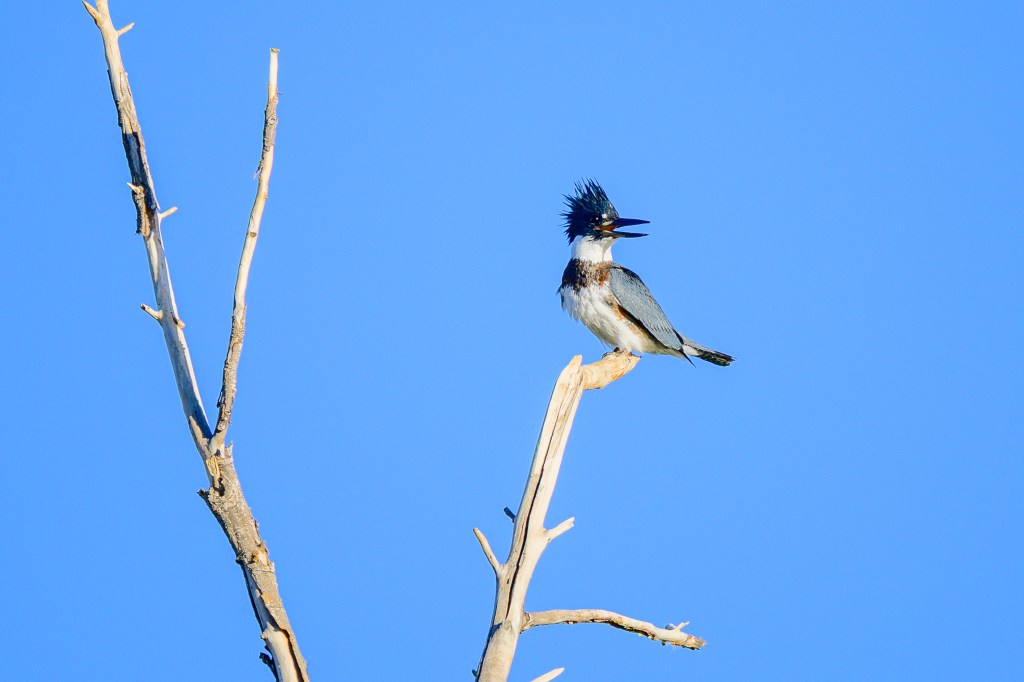
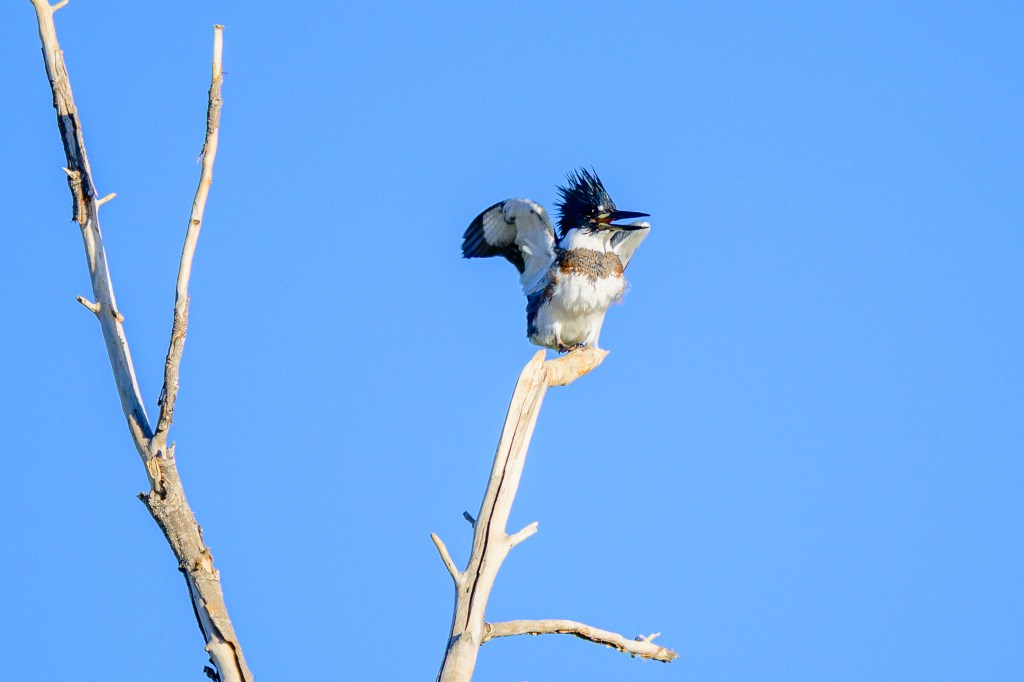
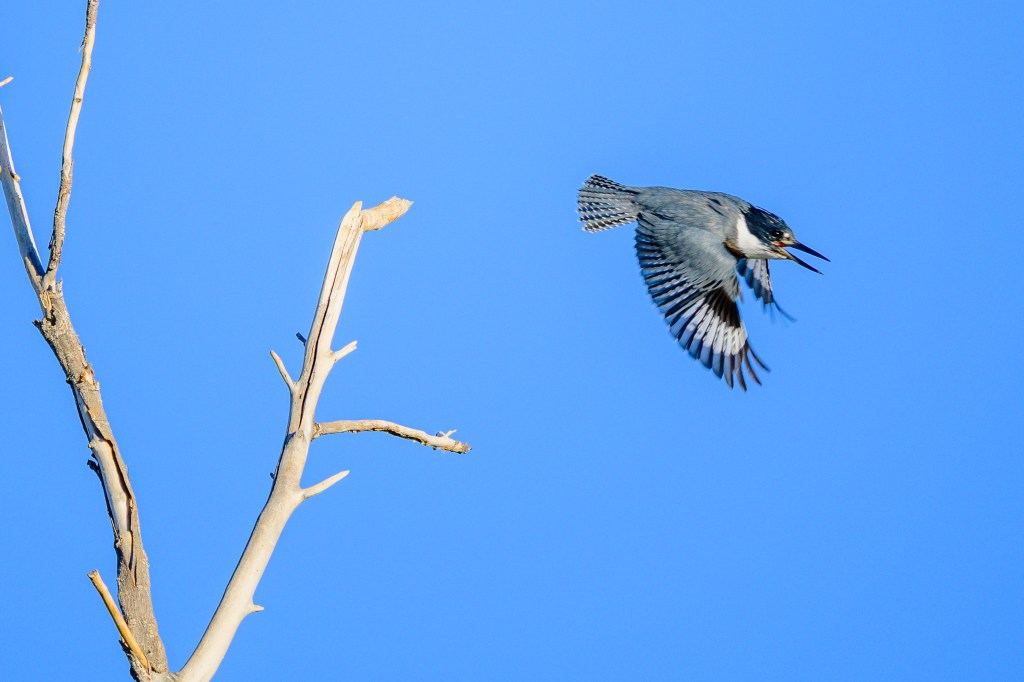
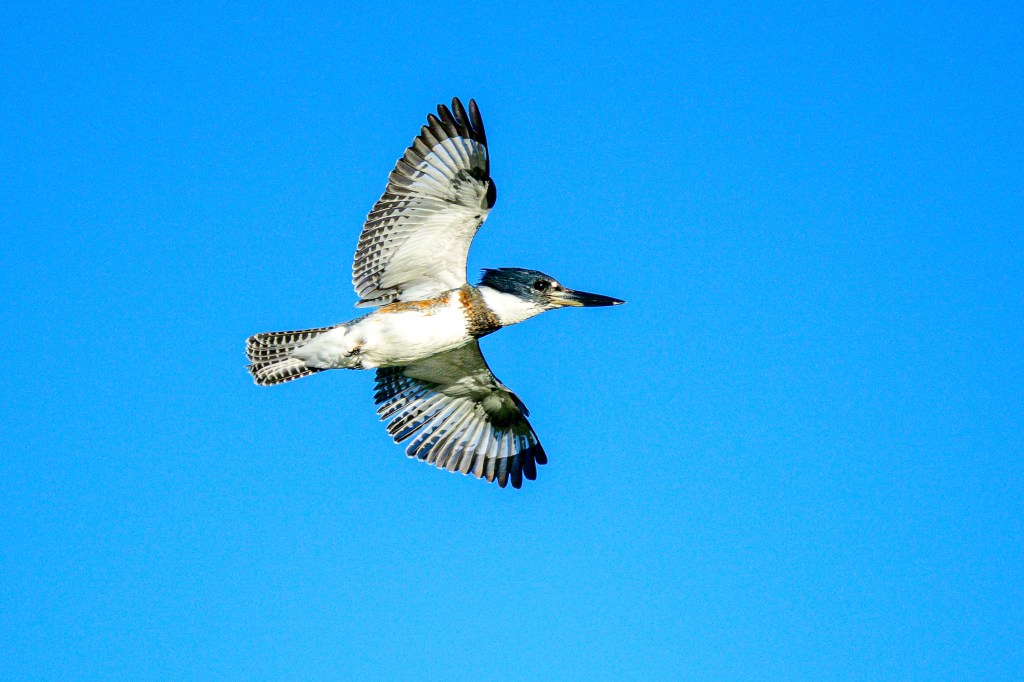
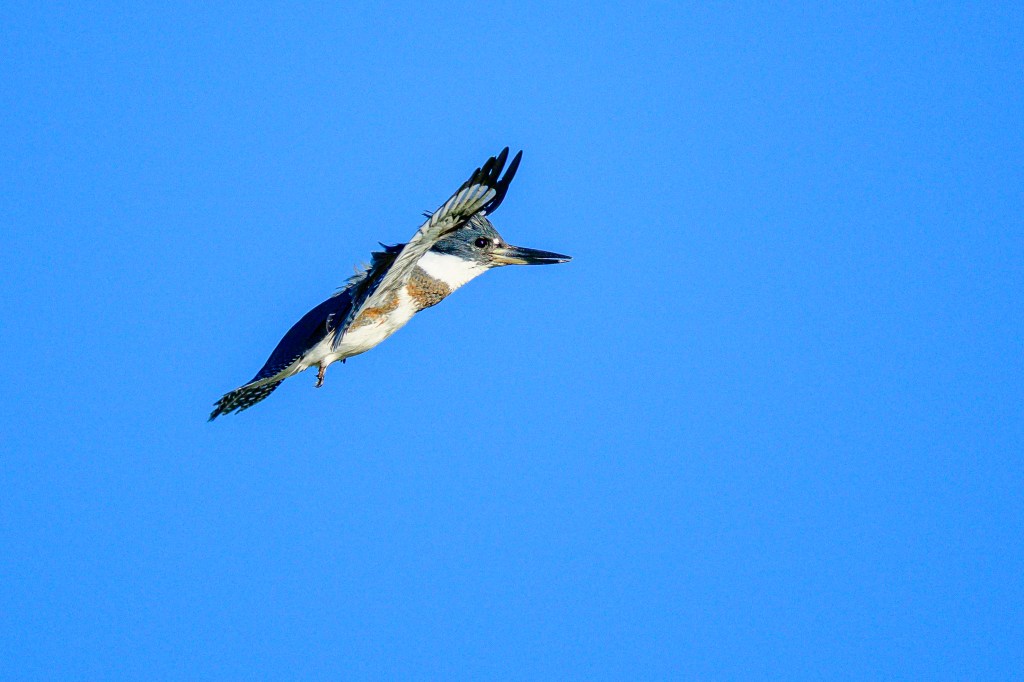
Usually these birds are shy; it is hard for me to get near. Bird photographer Richard Crossley writes: “…they are a devil to get close to or photo well.” But on September 8, 2026, two Kingfishers were at the Buckley Ponds, flying back and forth, without any concern that Roberta and I were walking by. I took a lot of pictures. Neither bird has the belt of an adult female. Both bird have white collars and just below those collars is a band of blue features; in adult birds, those collar feathers are blue. But in both of these birds, the collar feathers are a mix of blue and rust. I think these birds are young siblings. They zoomed past each other, making a constant racket.
In the first photo, note the blue/rust collar and the spiked “hair.” There is a white spot in front of each eye.
Note big mouth, open to make noise:
In the next image, the eye looks weird because it is covered by the protective nictitating membrane.
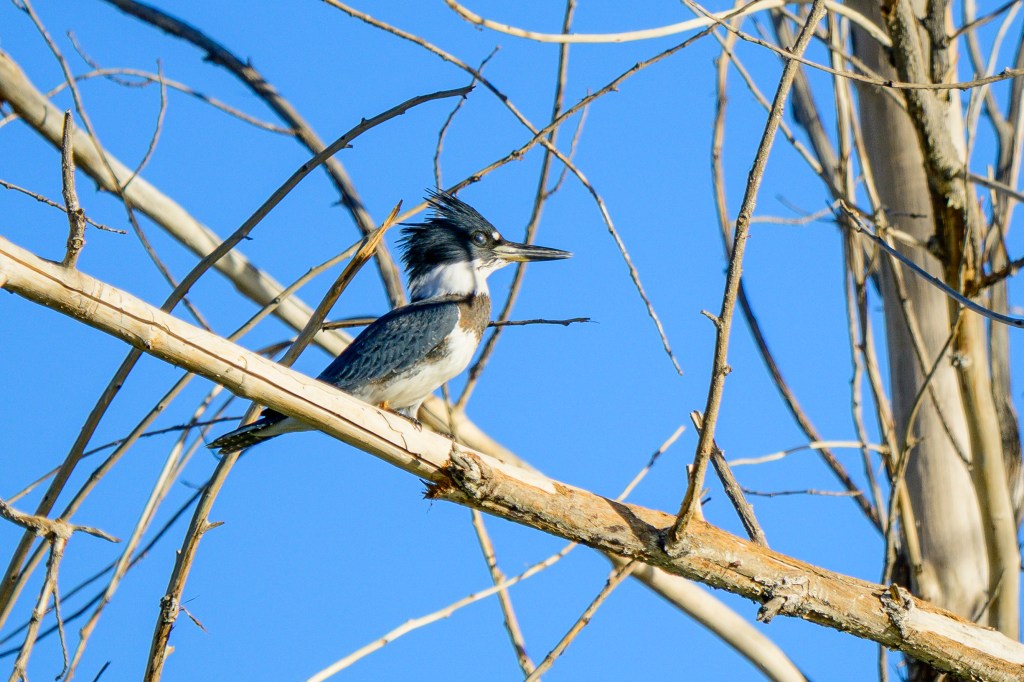
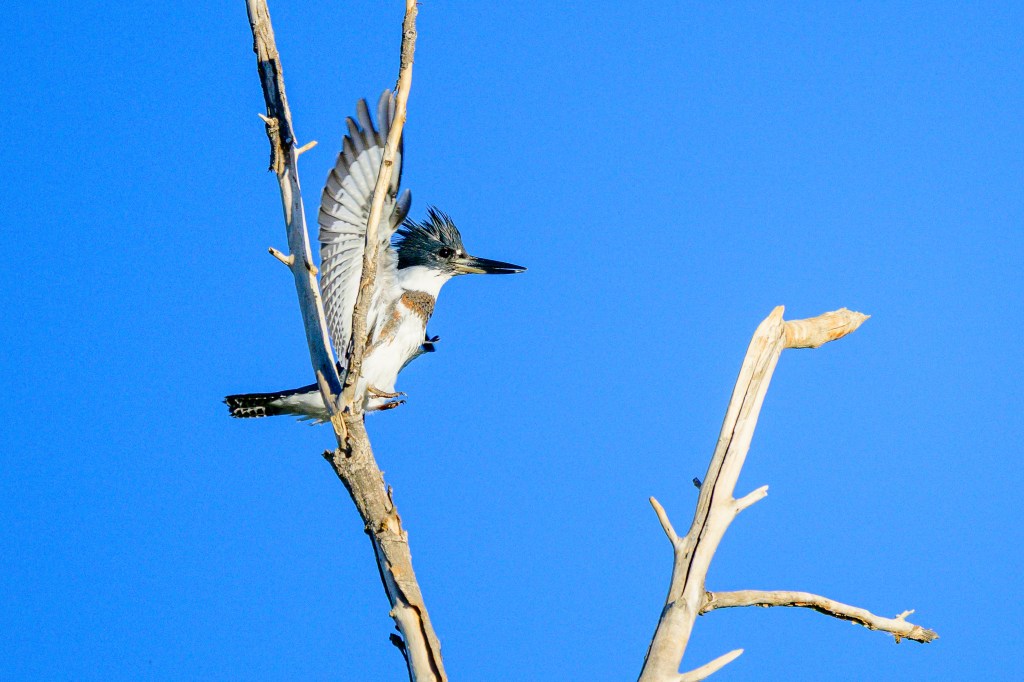
Perched bird takes off:
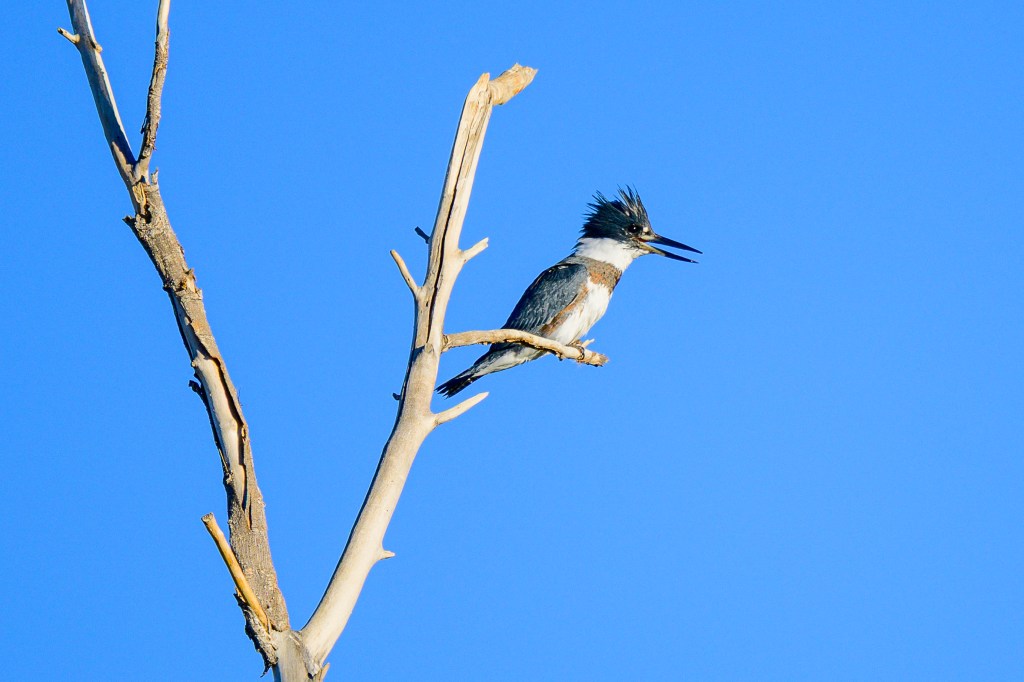
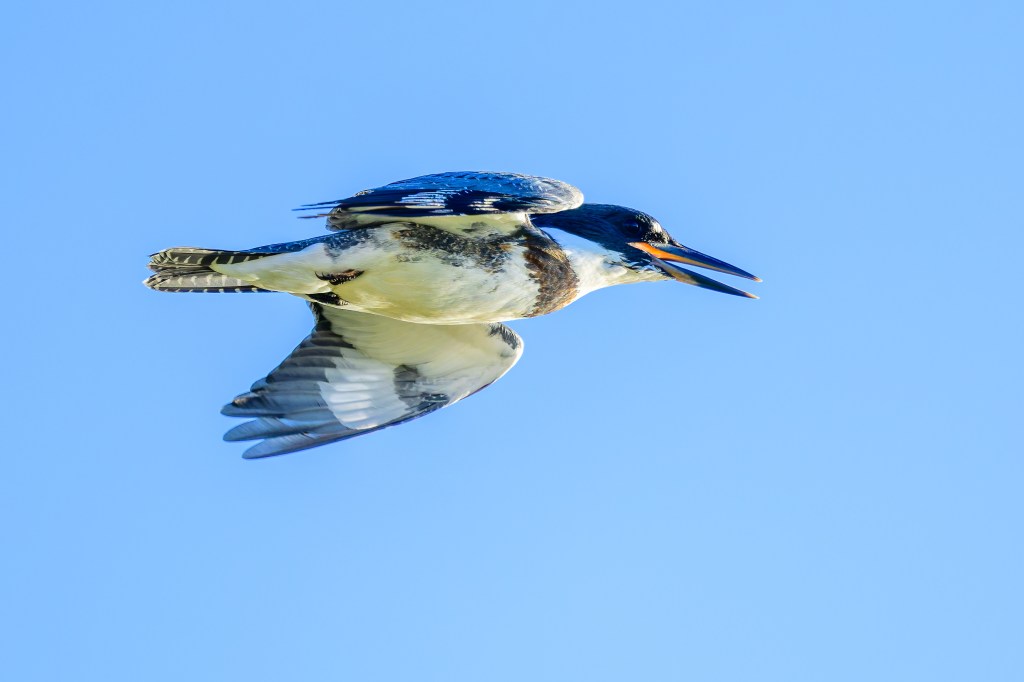
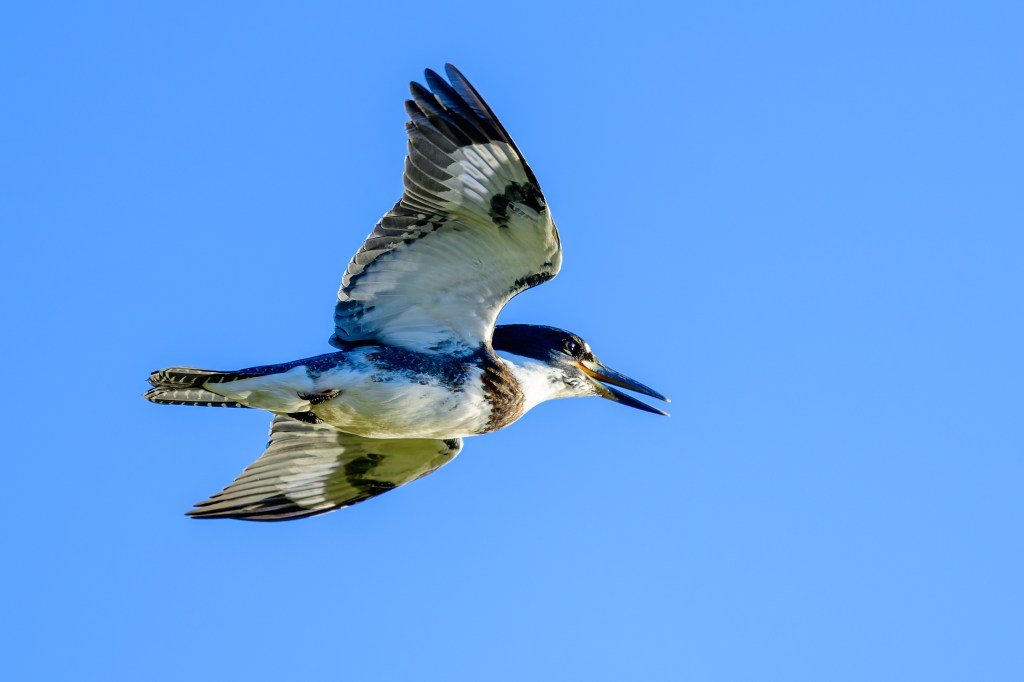
Bird perches, flies off, then lands:
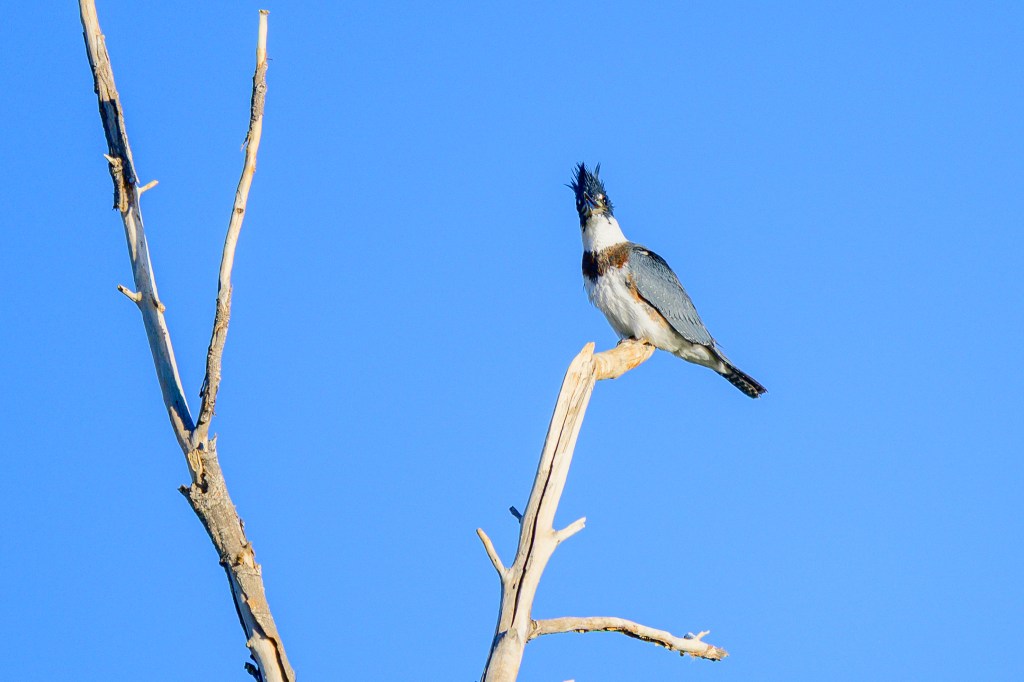
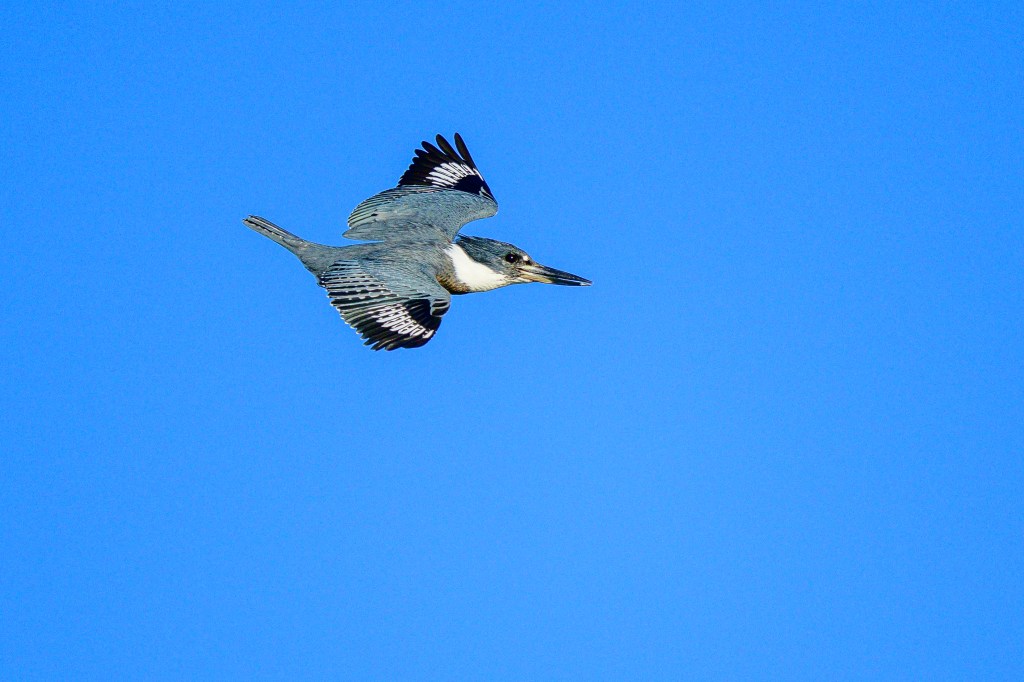
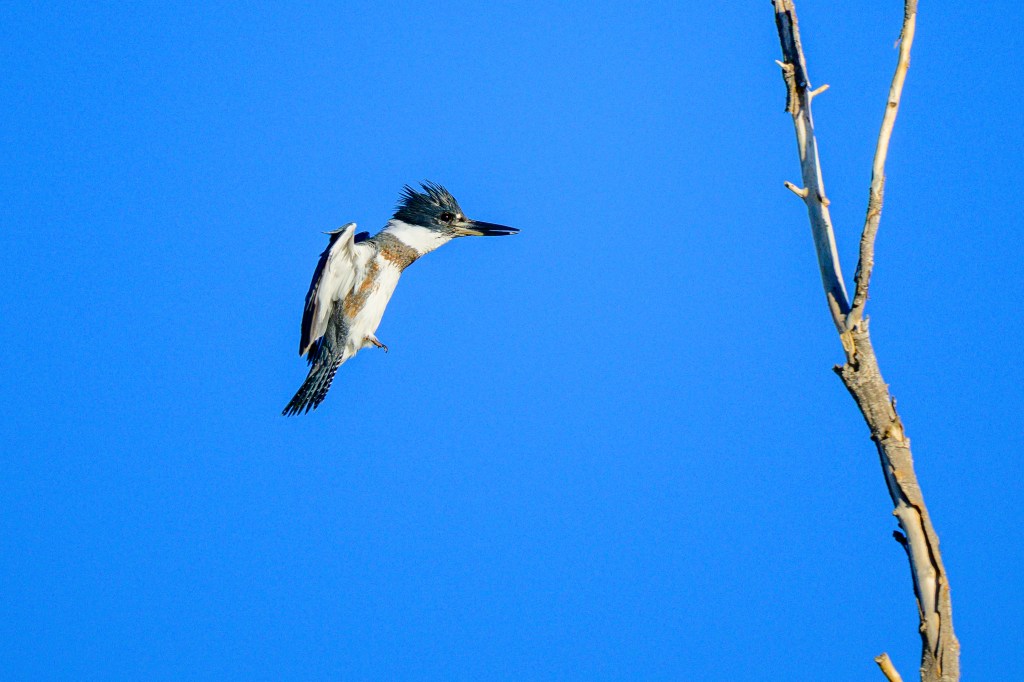
The next photo, showing the short legs extended for landing, is my favorite.
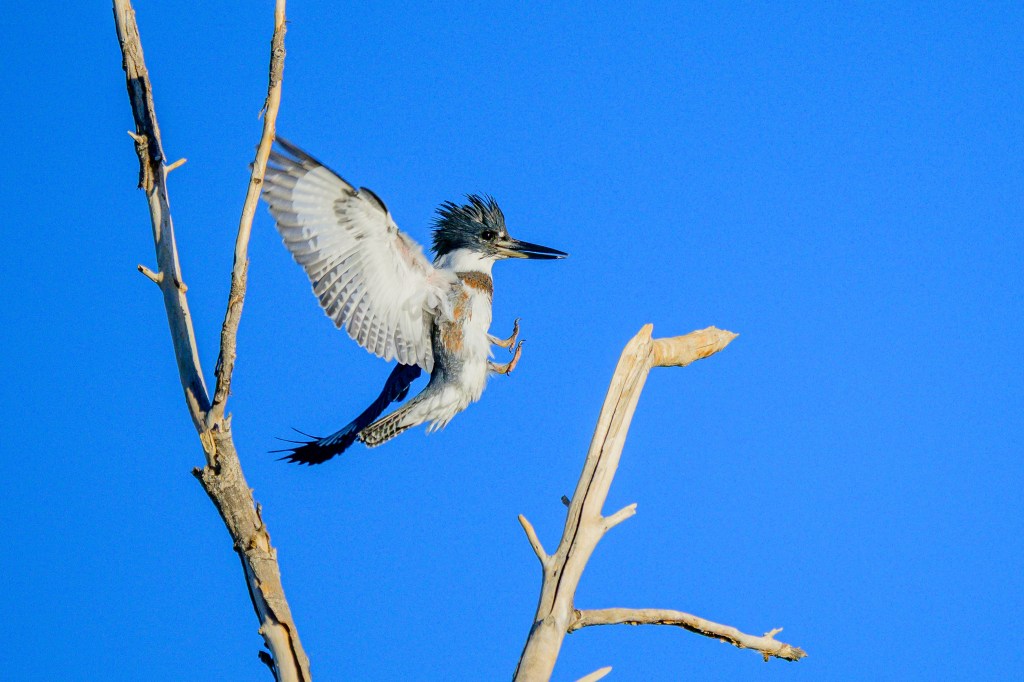
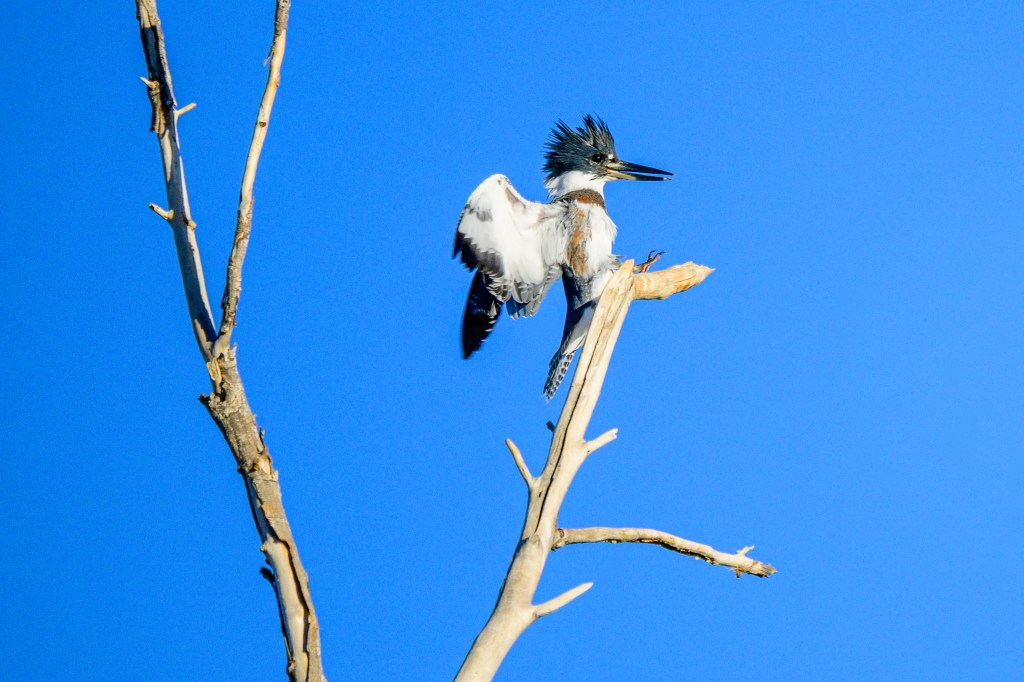
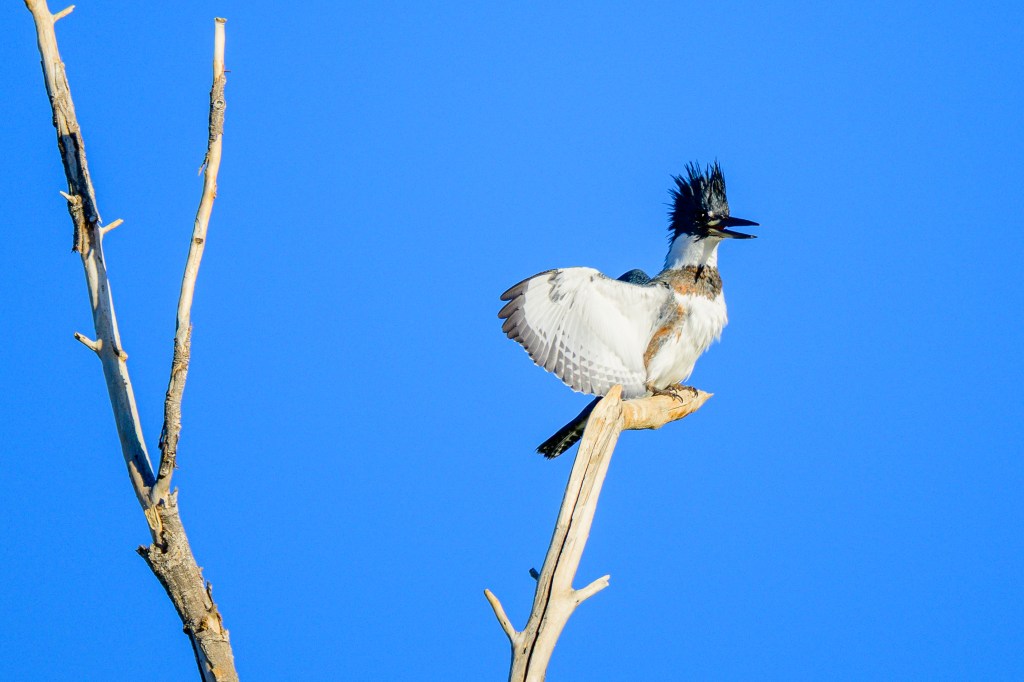
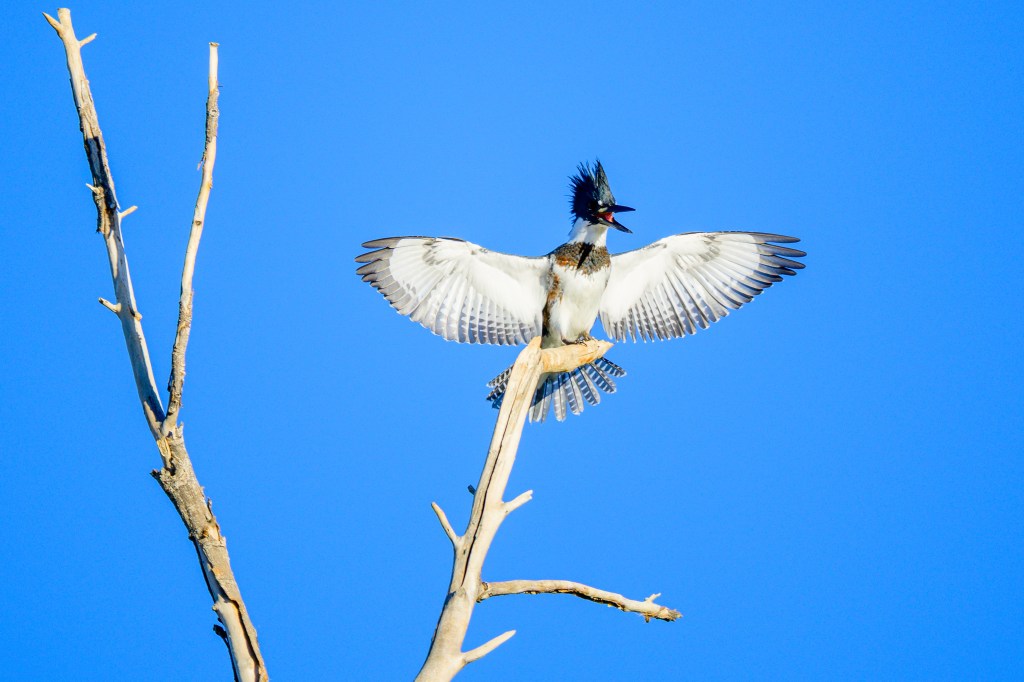
The bird becomes hysterical, as its sibling approaches and flies past. Such excitement! The bird goes ape! (Can a bird go ape?)
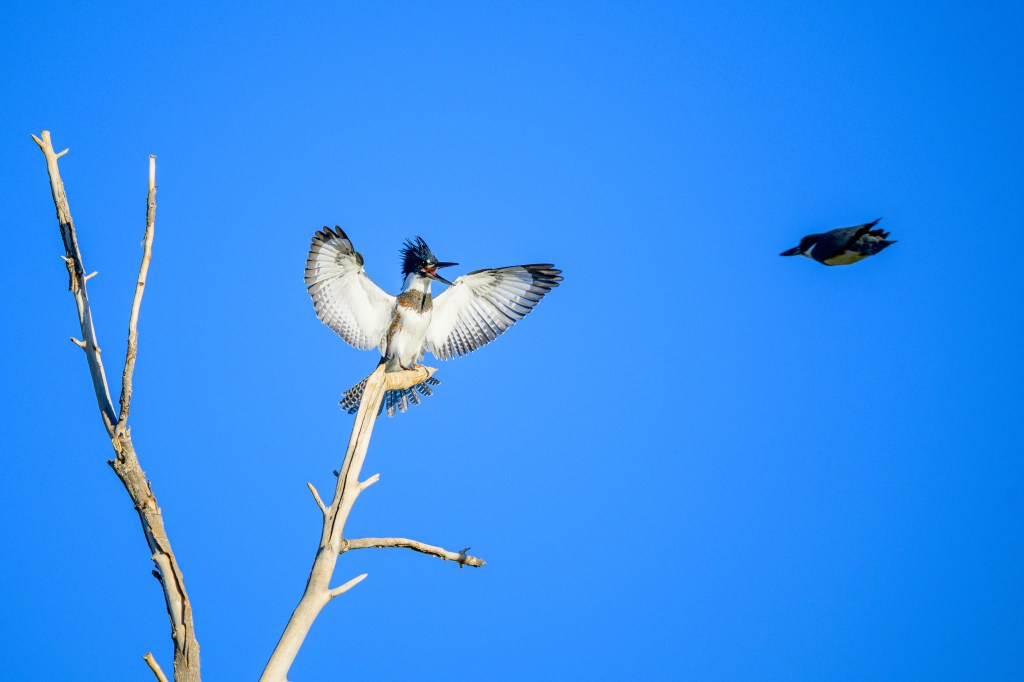
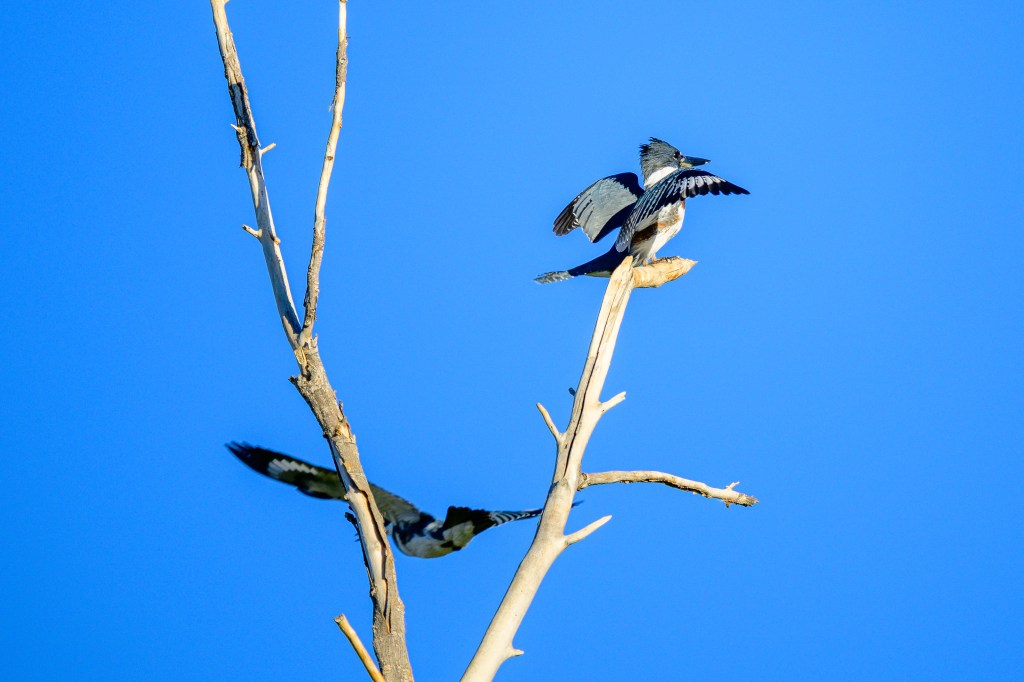
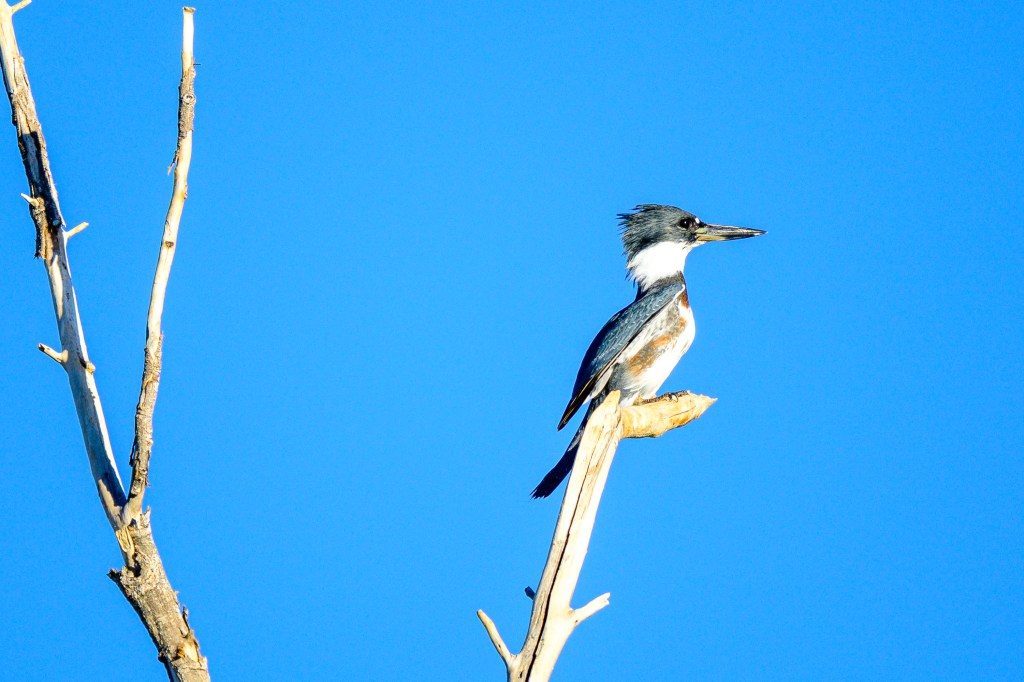
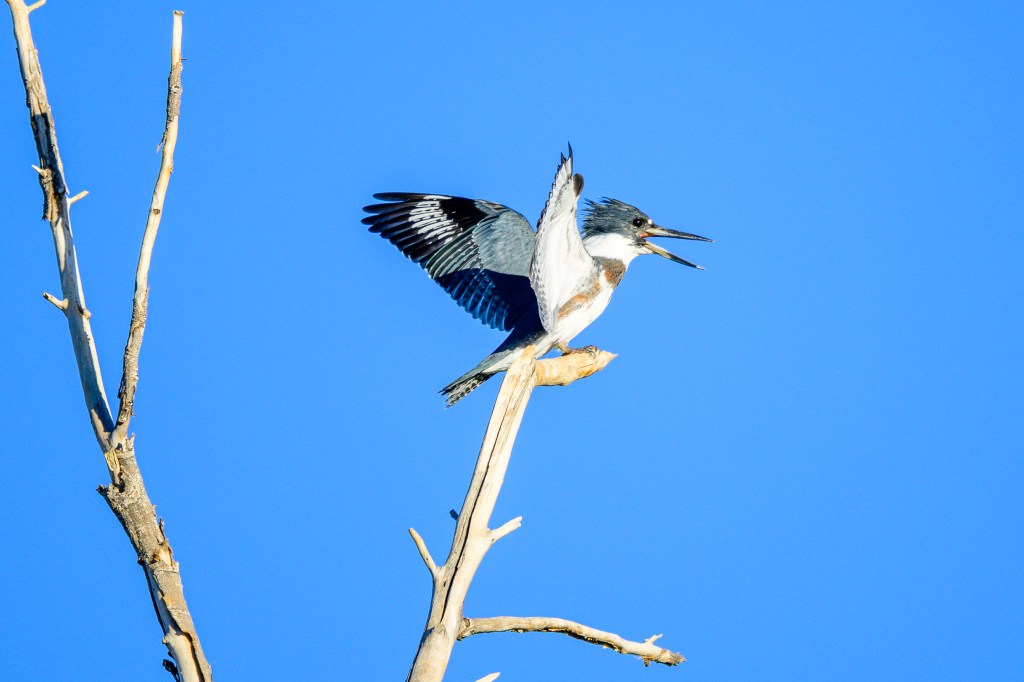
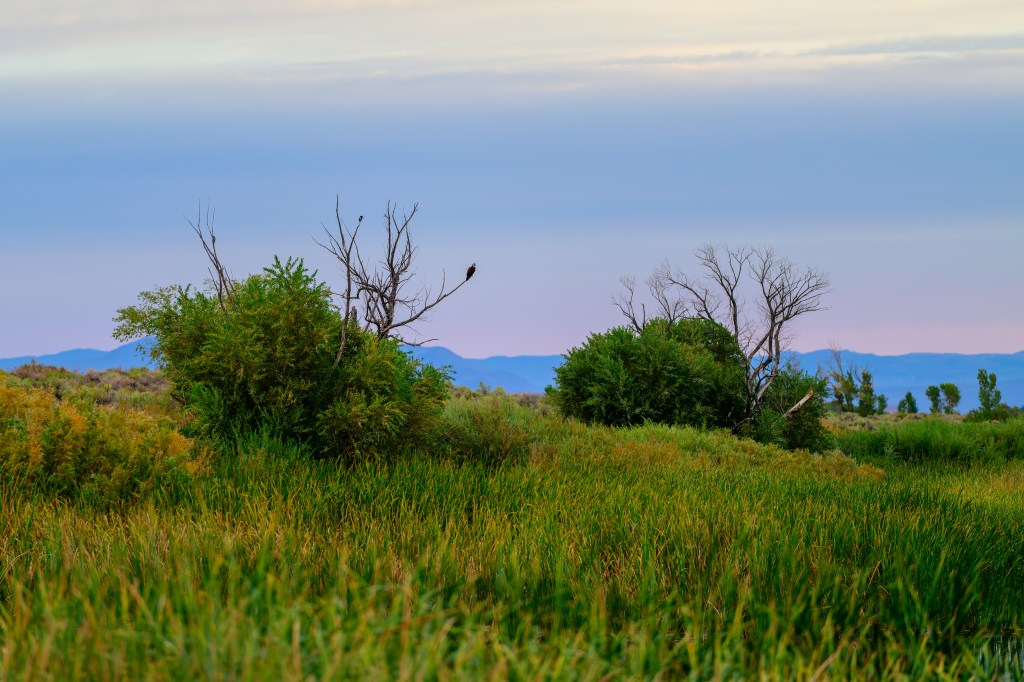
On September 20, a single Kingfisher was at the Ponds. In the first photo, there are three birds in the tree on the left. I’m not sure what the one on the far left is. The one in the middle is a Kingfisher, and the one on the right is an Osprey:
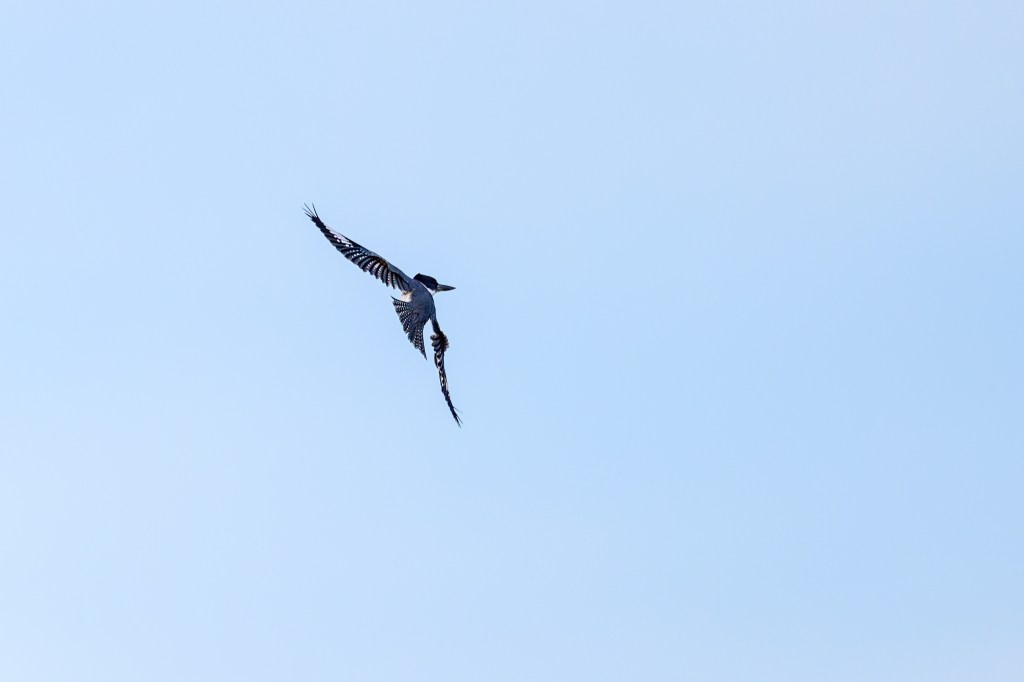
A Kingfisher banks a turn:
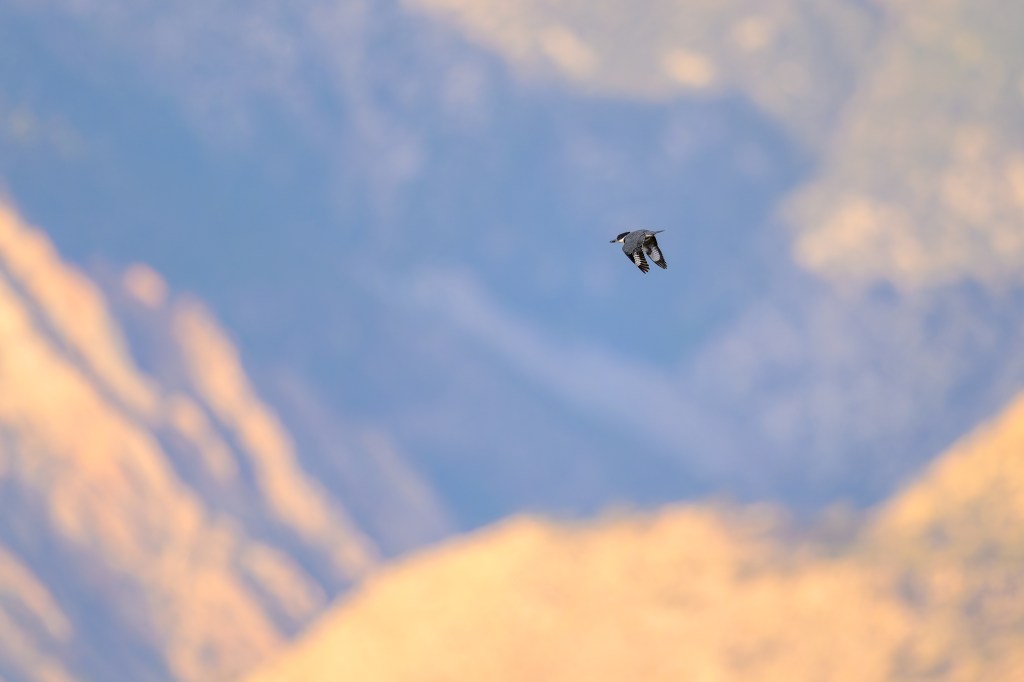
Kingfisher flies in front of the Sierra:
ASPENS IN FALL
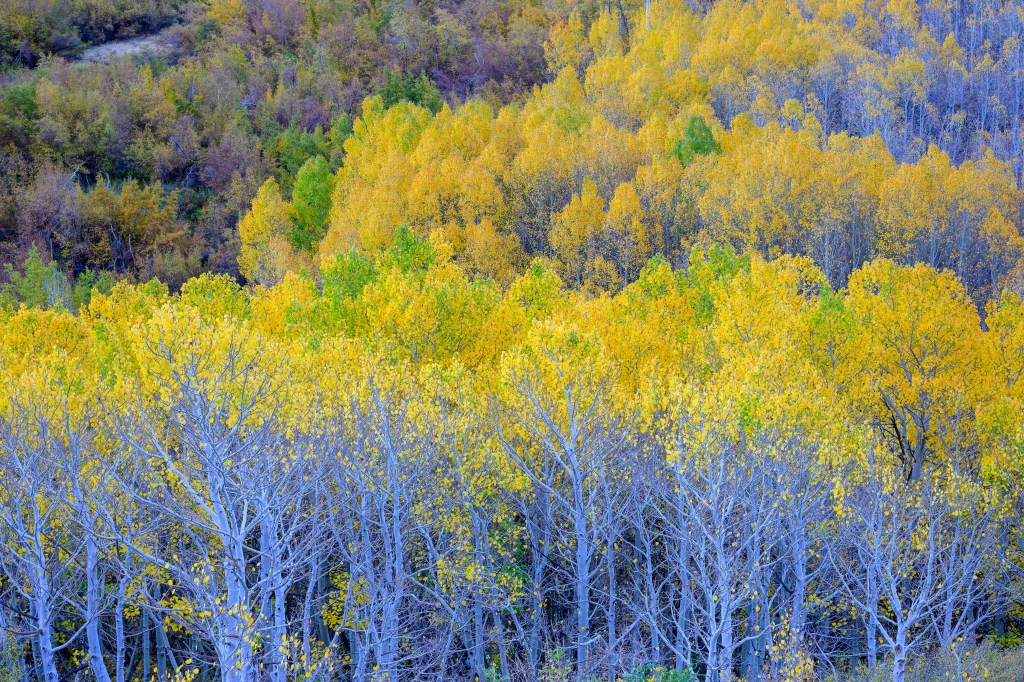
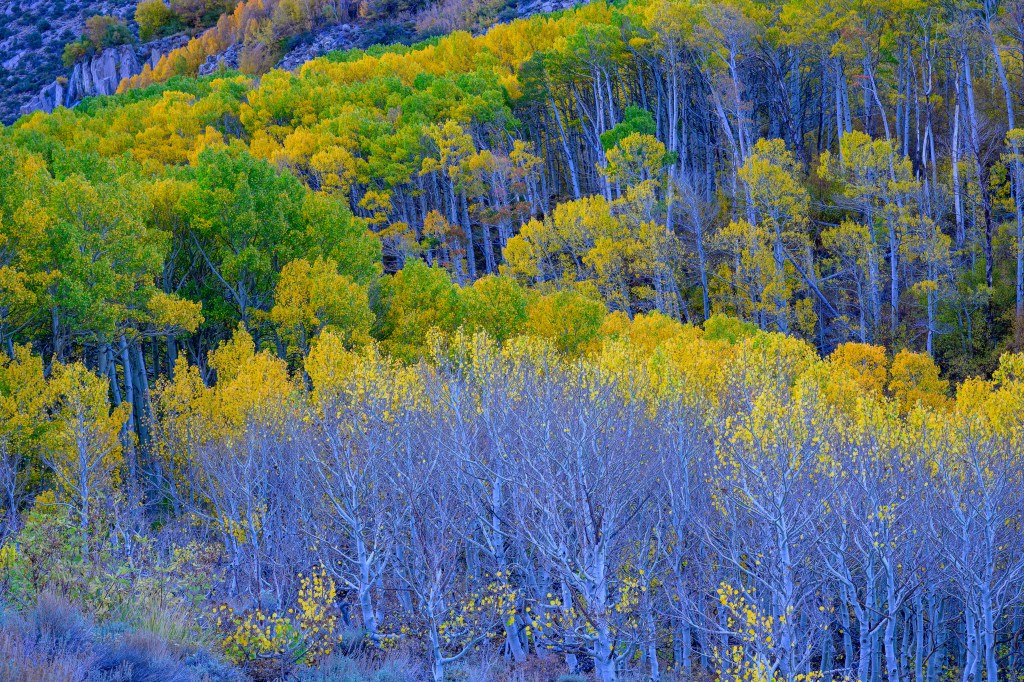
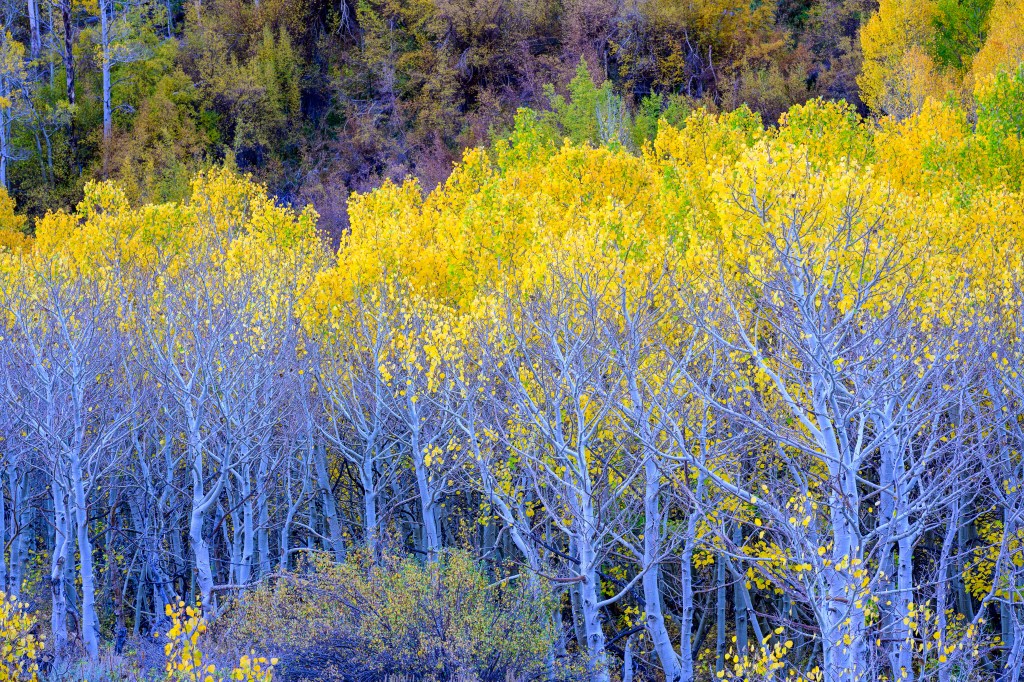
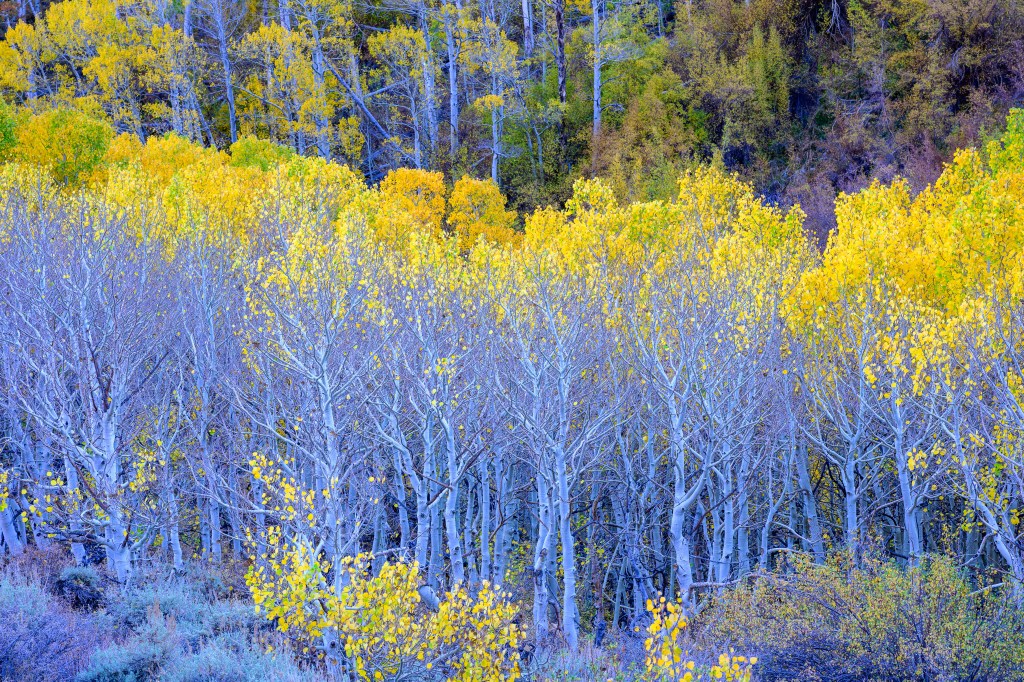
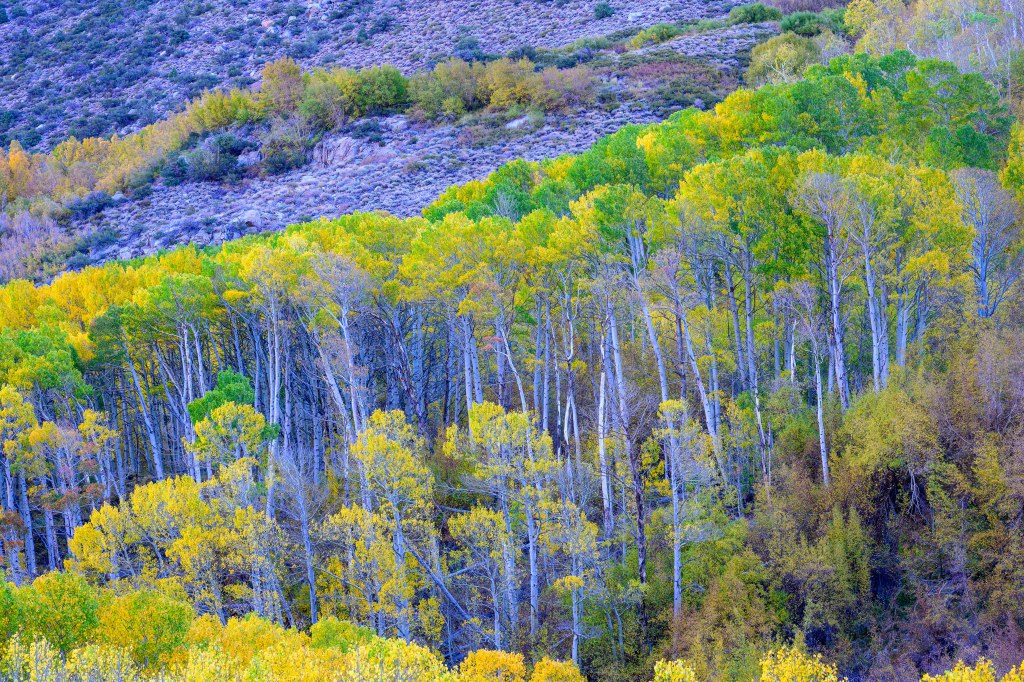
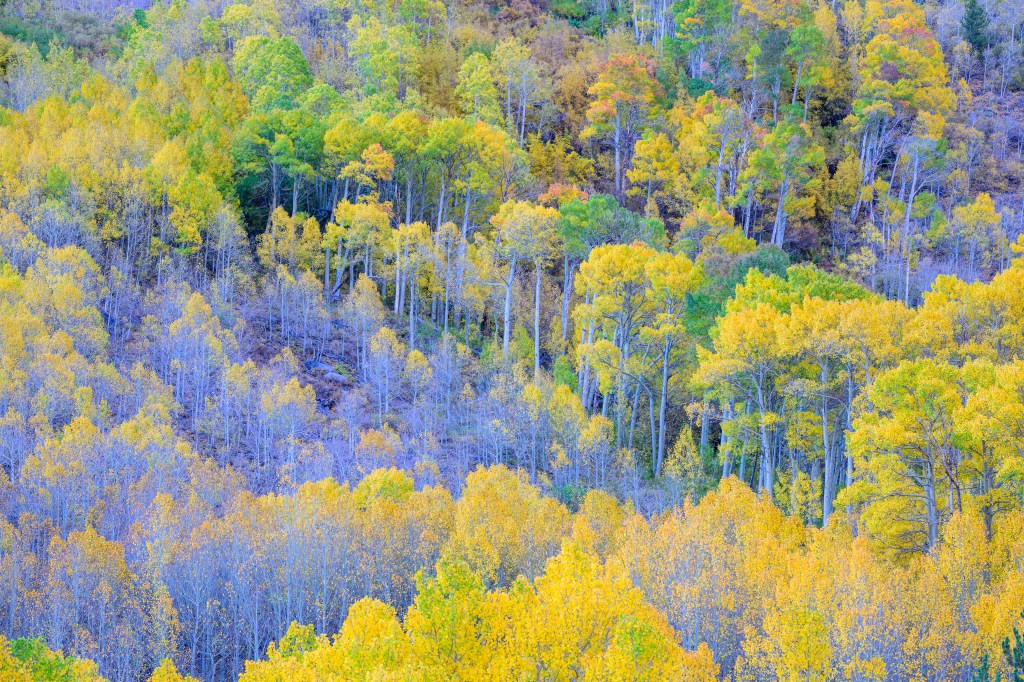
I selected a few photos of local fall colors.
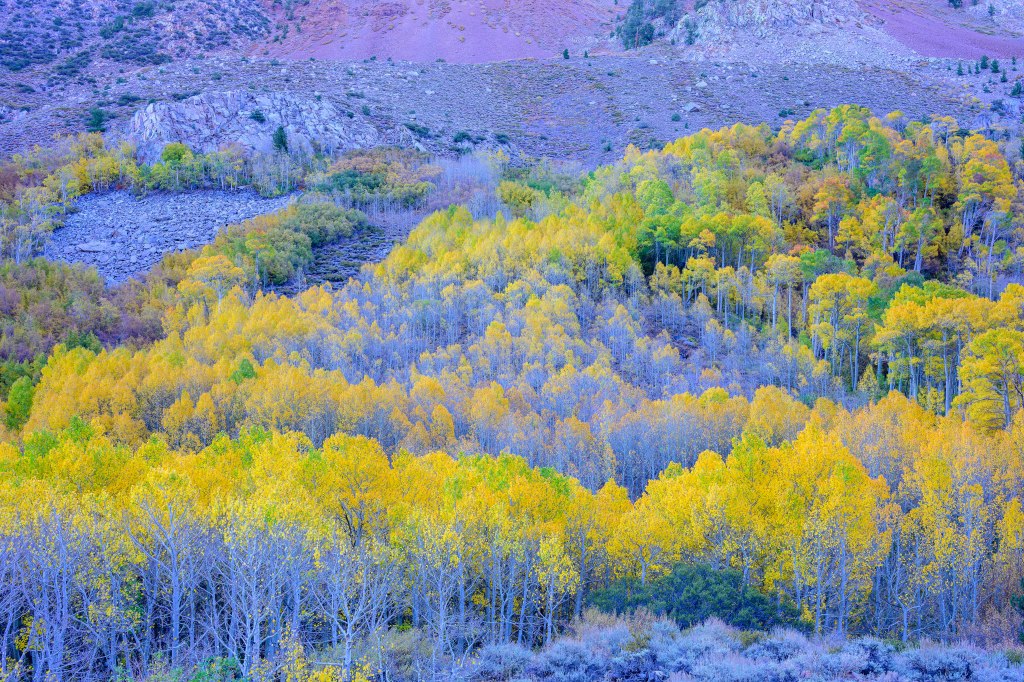
All summer the local Quaking Aspens let their green leaves shake in the slightest breeze. Around October 1 the leaves turn yellow, with some orange and red. By the end of the month the trunks are naked, ready for winter. On October 3 we drove up along Bishop Creek to check out the colors. This was a mistake. There was plenty of color, but on Saturday tourists were everywhere. Cars stopped in the middle of the road, vehicles weaved about as drivers searched for trees and parking. We watched in horror as a young man made a U-turn on a blind curve.
I came back on October 8, before sunrise. Few people, but wind made it hard to photograph the details I wanted. Early on October 10 we both went back and I took photos with my camera on a tripod. I picked seven shots that I liked.
FINAL COMMENT
We should be careful about attributing human behaviors or emotions to animals. I agree with Henry Beston, who wrote in The Outermost House: “The animal shall not be measured by man. In a world older and more complete than ours, they move finished and complete, gifted with extensions of the senses we have lost or never attained, living by voices we shall never hear. They are not brethren, they are not underlings; they are other nations, caught with ourselves in the net of life, fellow prisoners of the splendor and travail of the earth.”
But I believe that many animals can feel pain, hunger, grief, affection, and pleasure. Their actions are not all part of a joyless struggle for survival. The young owl I photographed looked as if it was having fun being a tough owl with that stick. When those two Kingfishers flew back and forth, ignoring me, I think they were playing.

